Bad Company
by Megan Greenwell · 18 Apr 2025 · 385pp · 103,818 words
Capitalism and Freedom, but it was his New York Times essay eight years later that popularized his “shareholder theory,” revolutionized MBA curricula across the country, and set the stage for the rise of private equity. “The social responsibility of business is to increase its profits,” the headline announced; the three thousand words that followed warned that
…
the Local (Cambridge: Cambridge University Press, 2024), 26. The sole interest: Milton Friedman, “A Friedman Doctrine—The Social Responsibility of Business Is to Increase Its Profits,” New York Times, September 13, 1970, https://www.nytimes.com/1970/09/13/archives/a-friedman-doctrine-the-social-responsibility-of-business-is-to.html. Between 2013 and 2023: Yang Liu and Lue Xiong, “Leverage in
…
.org/10.2139/ssrn.3423290. Even Berle and Means: Appelbaum and Batt, Private Equity at Work, 46. “The manager of such a corporation”: Friedman, “A Friedman Doctrine.” “When [private equity]”: Feldman and Kenney, Private Equity and the Demise of the Local, 30. One: Liz Charles Lazarus: The sections of this chapter about
…
, 118th Cong., 2nd sess., April 3, 2024, https://www.govinfo.gov/content/pkg/CHRG-118shrg55874/pdf/CHRG-118shrg55874.pdf. “No individual can coerce”: Friedman, “A Friedman Doctrine.” More than half of Republicans: “Americans and Billionaires Survey,” Harris Poll Thought Leadership Practice, August 2024, https://theharrispoll.com/wp-content/uploads/2024/07/Americans
…
, 91 September 11 terrorist attacks/effects, 15 Serota, Kenneth, 122–1123 Service Employees International Union, 222 7 Habits of Highly Effective People, The (Covey), 186 shareholder theory, xv, xxi, 34, 200, 235 Sheen, Charlie, 80 Shell, Eric description/character, 186–187 Riverton new hospital and, 186–189, 191, 195 Shemesh, Avi, 61
The Key Man: The True Story of How the Global Elite Was Duped by a Capitalist Fairy Tale
by Simon Clark and Will Louch · 14 Jul 2021 · 403pp · 105,550 words
consensus of the modern era. Shareholder theory had ruled Western capitalism since the American economist Milton Friedman formulated it in the 1960s. The sole purpose of a company was to make as much money as possible for shareholders, he said. “There is one and only one social responsibility of business—to use its resources and engage
…
in activities designed to increase its profits,” Friedman wrote, “so long as it stays within the rules of the game, which is to say, engages in open and free competition without deception or fraud.” The problem with shareholder theory’s exclusive focus
…
, data.worldbank.org/indicator/NY.GDP.PCAP.CD?locations=PK for shareholders: Milton Friedman, “A Friedman Doctrine—The Social Responsibility of Business Is to Increase Its Profits,” New York Times, September 13, 1970, www.nytimes.com/1970/09/13/archives/a-friedman-doctrine-the-social-responsibility-of-business-is-to.html “a new alternative”: Nick O’Donohoe, Christina Leijonhufvud, and Yasemin Saltuk
The Glass Half-Empty: Debunking the Myth of Progress in the Twenty-First Century
by Rodrigo Aguilera · 10 Mar 2020 · 356pp · 106,161 words
illegally, particularly when the amoral nature of laissez-faire means your only moral duty is to your bottom line. “There is one and only one social responsibility of business”, declared Milton Friedman in 1970, “to use its resources and engage in activities designed to increase its profits”.29 Add to this that such behavior
…
do so at the expense of shareholders themselves. This “principal-agent problem”7 has been extensively documented in economics, and while many economists take the shareholder-theory view that executive pay is designed to align with shareholder incentives (such as through stock options linked to firm performance) in order to address this
…
York Times, 30 Apr. 2014, https://www.nytimes.com/2014/05/04/magazine/only-one-top-banker-jail-financial-crisis.html 29 Friedman, M., “The Social Responsibility of Business is to Increase its Profits”, New York Times Magazine, 13 Sep. 1970, http://umich.edu/~thecore/doc/Friedman.pdf 30 Wolf, N., “This Global Financial
Unelected Power: The Quest for Legitimacy in Central Banking and the Regulatory State
by Paul Tucker · 21 Apr 2018 · 920pp · 233,102 words
Watanuki, Crisis of Democracy. 3 The Purposes and Functional Modes of the Administrative State MARKET FAILURE AND GOVERNMENT FAILURE There is one and only one social responsibility of business—to use its resources to increase its profits so long as it stays within the rules of the game. —Milton Friedman, New York Times, 19701
…
on Banking and Currency, 1133–78. Washington, DC: US Government Printing Office. ________. The Optimum Quantity of Money. New Brunswick, NJ: Transaction Publishers, 1969. ________. “A Friedman Doctrine: The Social Responsibility of Business Is to Increase Its Profits.” New York Times, September 13, 1970. Friendly, Henry J. The Federal Administrative Agencies: The Need for Better Definition of Standards
Tailspin: The People and Forces Behind America's Fifty-Year Fall--And Those Fighting to Reverse It
by Steven Brill · 28 May 2018 · 519pp · 155,332 words
free market privatization of longtime governmental functions, such as education—famously wrote an article in The New York Times Magazine in 1970 declaring that “The social responsibility of business is to increase its profits.” The management of a corporation, he argued, worked for its shareholders and only its shareholders. If managers paid attention to
…
Social Responsibility of a Business Is to Increase Its Profits,” September 13, 1970, http://www.nytimes.com/1970/09/13/archives/a-friedman-doctrine-the-social-responsibility-of-business-is-to.html. “Theory of the Firm”: Michael Jensen and William Meckling, “Theory of the Firm: Managerial Behavior, Agency Costs and Ownership Structure,” Journal of
Evil Geniuses: The Unmaking of America: A Recent History
by Kurt Andersen · 14 Sep 2020 · 486pp · 150,849 words
written by Milton Friedman, the University of Chicago libertarian economist, and published across five pages of The New York Times Magazine under the headline A FRIEDMAN DOCTRINE—THE SOCIAL RESPONSIBILITY OF BUSINESS IS TO INCREASE ITS PROFITS. Friedman had become famous during the 1960s, as the decade of free speech and anything-goes outlandishness made his
…
do their own thing, including selfish businessmen angry about the intensified suspicion of business. For those readers, seeing the righteous candor and militancy of the Friedman Doctrine in The New York fucking Times a year after Woodstock was thrilling, liberating. Capitalists of the world, unite! You have nothing to lose but your
…
. But they distort him. Smith also argued in favor of sensible government intervention to improve and optimize free markets. Within a few years of the Friedman Doctrine, elite executives-in-training internalized and felt free to espouse it. Asked in a class in the late 1970s at Harvard Business School about a
…
American Institutions.” He reused the “system is under broad attack” meme as well as the Milton Friedman quote and added his own version of the Friedman Doctrine’s class-suicide trope. “One of the bewildering paradoxes of our time is the extent to which the enterprise system tolerates, if not participates in
…
, Charles Koch published a stylish-looking San Francisco–based magazine called Libertarian Review. In it he wrote an essay that reiterated the gists of the Friedman Doctrine and the Powell Memo but went further, arguing that their “movement…for radical social change” must seek to take over American conservatism, radicalize it. Businesspeople
…
was skeptical of Social Security and government unemployment benefits and even generous health insurance provided by employers. A decade after the Times Magazine delivered the Friedman Doctrine and eight months before Reagan was elected president, it published a long, gushing profile of Feldstein for its 3 million Sunday readers, headlined SUPERSTAR OF
…
and neighbors and classmates who happened to work at banks or in real estate or the vicinity of C-suites. Starting in the 1970s, the Friedman Doctrine and its extrapolations freed and encouraged businesspeople and the rich to go ahead and conform to the left-wing caricatures of them, to be rapacious
…
what worked for the U.S. economy for its first century, before modern corporations existed, was how things should work today. It was like the Friedman Doctrine, which turned a reasonable capitalist truism (profits are essential) into a simple-minded, unhinged, socially destructive monomania (only profits matter). As movements, originalism in the
…
the USA! In just four minutes, Gekko summarized and incarnated the U.S. political economy’s new doctrine. It was Libertarian Economics for Dummies, the Friedman Doctrine dramatized, a stump speech for money and its manipulation as the root of all glory. And in the movie, Gekko’s audience responds with wild
…
as square while risk-taking and self-gratification were celebrated. In finance, starting in the 1970s, fusing if it feels good, do it with the Friedman Doctrine meant that the pursuit of maximum profit for oneself as well as for one’s company trumped every other value or motive, so recklessness and
…
of Chicago’s Hertz, a libertarian professor specifically commissioned two business school colleagues, both University of Chicago–trained, to write a paper elaborating on the Friedman Doctrine.*7 That became, when it was finally published in 1976, “Theory of the Firm,” which made the new callousness seem scientific and which became the
…
are other ways that increasing insecurity and increasing inequality got built into the political economy and became features of the system more than bugs. The Friedman Doctrine in 1970 begat the shareholder supremacy movement in the 1980s, which begat an unraveling of all the old norms concerning loyalty and decency of businesses
…
industry will be. Here again is a case that seems to me to illustrate the suicidal impulse of the business community. Three decades after his Friedman Doctrine condemned decent executives for indulging a “suicidal impulse” by pledging their companies would try to serve the public good, he was still at it: businesspeople
…
of the Business Roundtable felt obliged to issue a new “Statement on the Purpose of a Corporation,” more or less disavowing their adoption of the Friedman Doctrine decades before. The force awakened. And now? Perhaps the pandemic and/or the resulting recession and/or the protests against racist policing will become triggering
The Quiet Coup: Neoliberalism and the Looting of America
by Mehrsa Baradaran · 7 May 2024 · 470pp · 158,007 words
of responsibility, then we are concerned.”21 Two weeks after GM made its announcement, The New York Times Magazine ran an article titled “A Friedman Doctrine: The Social Responsibility of Business Is to Increase Its Profits.” On the page opposite Milton Friedman’s words, the Times placed a picture of James Roche at a podium under
…
puppets of the intellectual forces that have been undermining the basis of a free society.” Friedman moved from one insult to another. He dismissed the “social responsibility of business,” a phrase he continually put inside quotation marks despite its clear meaning in the law and the business community, as empty “nonsense,” faddish and unscientific
…
History of the United States, 1867–1960, 63 “Neoliberalism and Its Prospects,” xxxix, 46 “The Role of Government in Education,” 221 Friedman, Rose, 91 “Friedman Doctrine, A: The Social Responsibility of Business Is to Increase Its Profits,” 79–80 fringe lending, 212, 213, 215 Fritz, Harrison, 332 Frontera, Ernesto, 337 FTX, 342–45 Fukuyama, Francis, 38
…
, xxiv, 320–21 social problems, using markets to solve, 165 social programs, 238, 270, 316 “Social Psychology of the World’s Religions, The” (Weber), 219 Social Responsibilities of Business, Company, and Community, 1900–1960 (Heald), 83 Social Responsibilities of the Businessman, The (Bowen), 83 social responsibility, 82–84 social security, 15, 19, 57, 184
Woke, Inc: Inside Corporate America's Social Justice Scam
by Vivek Ramaswamy · 16 Aug 2021 · 344pp · 104,522 words
Milton Friedman’s famous 1970 defense of shareholder capitalism, a few economists made a meek last-ditch attempt to resist this trend by defending “the Friedman Doctrine.” But their arguments were at best persuasive only to other economists accustomed to speaking in the parlance of economic efficiency, lacking the moral sheen of
…
. “A Free Market Manifesto That Changed the World, Reconsidered.” The New York Times, 11 Sept. 2020, www.nytimes.com/2020/09/11/business/dealbook/milton-friedman-doctrine-social-responsibility-of-business.html. 10. Tyler Halloran, “A Brief History of the Corporate Form and Why It Matters,” Fordham Journal of Corporate & Financial Law. news.law.fordham.edu
…
Report, University of Michigan: Ann Arbor 1-38. CHAPTER 6 1. Friedman, Milton. “A Friedman Doctrine—The Social Responsibility of Business Is to Increase Its Profits.” The New York Times, 13 Sept. 1970, www.nytimes.com/1970/09/13/archives/a-friedman-doctrine-the-social-responsibility-of-business-is-to.html. 2. Schwab, Klaus. “Davos Manifesto 1973: A Code of Ethics for
Power and Progress: Our Thousand-Year Struggle Over Technology and Prosperity
by Daron Acemoglu and Simon Johnson · 15 May 2023 · 619pp · 177,548 words
published in September 1970 in the New York Times Magazine, immodestly titled “A Friedman Doctrine.” Friedman argued that the “social responsibility” of business was misconstrued. Business should care only about making profits and generating high returns for their shareholders. Simply put, “The social responsibility of business is to increase its profits.” Friedman articulated an idea that was already in the
…
air. The previous decades had witnessed stinging criticisms of government regulations and more voices in favor of the market mechanism. Nevertheless, the impact of the Friedman doctrine is hard to exaggerate. At one
…
created for shareholders. This meant giving managers big bonuses and stock options in order to focus them on boosting the company’s stock price. The Friedman doctrine, along with the Jensen amendment, brought us the “shareholder value revolution”: corporations and managers should strive to maximize market value. Unregulated markets, combined with the
…
sorts of efforts at moneymaking, for boosting profits was in alignment with the common good. Some companies pushed this even further. The combination of the Friedman doctrine and the lavish stock options to top executives motivated several executives to venture into gray areas and then into the red. The journey of the
…
high wages, by social norms of sharing the benefits of growth, and even by ideas of “welfare capitalism,” as we saw in Chapter 7. The Friedman doctrine pushed in a different direction: good CEOs did not have to pay high wages. Their social responsibility was solely to the shareholders. Many high-profile
…
CEOs, such as General Electric’s Jack Welch, heeded the advice and took a tough stance against wage raises. Nowhere can the impact of the Friedman doctrine be seen more clearly than in business schools. The 1970s were the beginning of the professionalization of managers, and the share of managers trained in
…
business degree. By 2020, this number exceeded 43 percent. Many faculty at business schools embraced the Friedman doctrine and shared this vision with aspiring managers. Recent research shows that managers who attended business schools started implementing the Friedman doctrine, especially when it came to wage setting. They stopped wage growth in their firms, compared
…
pay themselves more handsomely than other managers. Resistance to the New Deal, accompanied by the antiregulation, antilabor philosophical stances of some business executives and the Friedman doctrine, was not enough, however. In the early 1970s, wholesale deregulation and dismantling the labor movement were fringe ideas, even if more businesses were becoming vocal
…
interpreted as a failure of the existing system and signs that the US economy was not working anymore. A course correction was needed, and the Friedman doctrine and its bolstering of the power of businesses against regulations and organized labor came to be seen as the answer. Ideas that used to be
…
of the last several decades meant that this was not likely to happen: the eclipse of worker power. A Lost Cause The effects of the Friedman doctrine on wage setting may have been as important as its direct impact. If managers maximizing shareholder value were on the side of the angels, then
…
anything standing on their path was a distraction or—worse—an impediment to the common good. Hence, the Friedman doctrine gave an additional impetus to managers to campaign against the labor movement. Despite American unions’ important role in the shared prosperity of the decades that
…
direction of technology would also have to move in an antilabor direction. This is where digital technologies enter the story, in a big way. The Friedman doctrine encouraged corporations to increase profits by whatever means necessary, and by the 1980s, this idea was embraced by the corporate sector. Executive compensation, in the
…
Andersen also pushed cost cutting. As these ideas were increasingly preached by articulate management experts, it became harder for workers to resist. Just like the Friedman doctrine, Reengineering the Corporation crystallized ideas and practices that were already being implemented. By the time the book came out, several large US corporations had used
…
. US technologies and business strategies spread more broadly, even if countries differed in how they adopted and configured automation technologies, as we have seen. The Friedman doctrine and ideas related to the use of digital tools in order to cut costs influenced business practices in the United Kingdom and the rest of
…
understood unless we recognize the new digital vision that emerged in the 1980s. This vision combined the drive to cut labor costs, rooted in the Friedman doctrine, with elements of the hacker ethic, but abandoned the philosophy of early hackers such as Lee Felsenstein that was antielitist and suspicious of corporate power
…
in Chapter 8 that managers with business-school educations tend to reduce wages and cut labor costs, presumably because of the lingering influence of the Friedman doctrine—the idea that the only purpose and responsibility of business is to make profits. A powerful new narrative about shared prosperity can be a counterweight
…
workflow inside an Amazon fulfillment center. 30. Digital surveillance with Chinese characteristics: a machine for checking social credit scores in China. 31. Milton Friedman: “The social responsibility of business is to increase its profits.” 32. Ralph Nader: “The unconstrained behavior of big business is subordinating our democracy to the control of a corporate plutocracy
…
views at the University of Chicago and Stanford’s Hoover Institution can be found in Appelbaum (2019). On the Side of Angels and Shareholders. “A Friedman Doctrine” is the title of Friedman (1970). Background and context for Friedman are in Appelbaum (2019, Chapter 1). For what we call the Jensen amendment, see
…
-self-driving-car-chief-wants-tech-on-the-market-within-five. Friedman, Milton. 1970. “A Friedman Doctrine—the Social Responsibility of Business Is to Increase Its Profits.” New York Times, September 13. www.nytimes.com/1970/09/13/archives/a-friedman-doctrine-the-social-responsibility-of-business-is-to.html. Gaither, Sarah E., Evan P. Apfelbaum, Hannah J. Birnbaum, Laura G. Babbitt
The Myth of the Rational Market: A History of Risk, Reward, and Delusion on Wall Street
by Justin Fox · 29 May 2009 · 461pp · 128,421 words
by government action, they ought to be held to high standards of civic responsibility. Friedman had a different take. “There is one and only one social responsibility of business—to use its resources and engage in activities designed to increase its profits so long as it stays within the rules of the game, which
…
generally seen as the founding document of the public choice school, although Tullock credits earlier works by Scottish scholar Duncan Black. 21. Milton Friedman, “A Friedman Doctrine—The Social Responsibility of Business is to Increase its Profits,” New York Times Magazine, Sept. 13, 1970, 32–33, 122. 22. New York Times Magazine, Letters, Oct. 4, 1970

Exponential: How Accelerating Technology Is Leaving Us Behind and What to Do About It
by Azeem Azhar · 6 Sep 2021 · 447pp · 111,991 words
Stakeholder Capitalism: A Global Economy That Works for Progress, People and Planet
by Klaus Schwab · 7 Jan 2021 · 460pp · 107,454 words
System Error: Where Big Tech Went Wrong and How We Can Reboot
by Rob Reich, Mehran Sahami and Jeremy M. Weinstein · 6 Sep 2021
The Heart of Business: Leadership Principles for the Next Era of Capitalism
by Hubert Joly · 14 Jun 2021 · 265pp · 75,202 words
The Man Who Broke Capitalism: How Jack Welch Gutted the Heartland and Crushed the Soul of Corporate America—and How to Undo His Legacy
by David Gelles · 30 May 2022 · 318pp · 91,957 words
The Raging 2020s: Companies, Countries, People - and the Fight for Our Future
by Alec Ross · 13 Sep 2021 · 363pp · 109,077 words
The Golden Passport: Harvard Business School, the Limits of Capitalism, and the Moral Failure of the MBA Elite
by Duff McDonald · 24 Apr 2017 · 827pp · 239,762 words
Stakeholder Capitalism: A Global Economy That Works for Progress, People and Planet
by Klaus Schwab and Peter Vanham · 27 Jan 2021 · 460pp · 107,454 words
Lab Rats: How Silicon Valley Made Work Miserable for the Rest of Us
by Dan Lyons · 22 Oct 2018 · 252pp · 78,780 words

Empire of AI: Dreams and Nightmares in Sam Altman's OpenAI
by Karen Hao · 19 May 2025 · 660pp · 179,531 words
Tomorrow's Capitalist: My Search for the Soul of Business
by Alan Murray · 15 Dec 2022 · 263pp · 77,786 words
This Could Be Our Future: A Manifesto for a More Generous World
by Yancey Strickler · 29 Oct 2019 · 254pp · 61,387 words
Power, for All: How It Really Works and Why It's Everyone's Business
by Julie Battilana and Tiziana Casciaro · 30 Aug 2021 · 345pp · 92,063 words
Ultra-Processed People: The Science Behind Food That Isn't Food
by Chris van Tulleken · 26 Jun 2023 · 448pp · 123,273 words
Triumph of the Yuppies: America, the Eighties, and the Creation of an Unequal Nation
by Tom McGrath · 3 Jun 2024 · 326pp · 103,034 words
Flying Blind: The 737 MAX Tragedy and the Fall of Boeing
by Peter Robison · 29 Nov 2021 · 382pp · 105,657 words
Let My People Go Surfing
by Yvon Chouinard · 20 Jun 2006 · 201pp · 64,545 words
Corporate Finance: Theory and Practice
by Pierre Vernimmen, Pascal Quiry, Maurizio Dallocchio, Yann le Fur and Antonio Salvi · 16 Oct 2017 · 1,544pp · 391,691 words
Dear Chairman: Boardroom Battles and the Rise of Shareholder Activism
by Jeff Gramm · 23 Feb 2016 · 384pp · 103,658 words
Makers and Takers: The Rise of Finance and the Fall of American Business
by Rana Foroohar · 16 May 2016 · 515pp · 132,295 words
The Enlightened Capitalists
by James O'Toole · 29 Dec 2018 · 716pp · 192,143 words
Fortunes of Change: The Rise of the Liberal Rich and the Remaking of America
by David Callahan · 9 Aug 2010
Capitalism and Freedom
by Milton Friedman · 1 Jan 1962 · 275pp · 77,955 words
The Right to Earn a Living: Economic Freedom and the Law
by Timothy Sandefur · 16 Aug 2010 · 399pp · 155,913 words
The Second Curve: Thoughts on Reinventing Society
by Charles Handy · 12 Mar 2015 · 164pp · 57,068 words
Money and Power: How Goldman Sachs Came to Rule the World
by William D. Cohan · 11 Apr 2011 · 1,073pp · 302,361 words
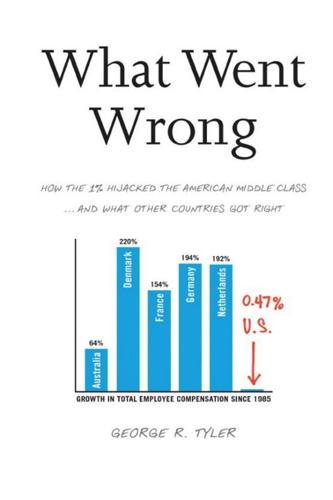
What Went Wrong: How the 1% Hijacked the American Middle Class . . . And What Other Countries Got Right
by George R. Tyler · 15 Jul 2013 · 772pp · 203,182 words
The Most Human Human: What Talking With Computers Teaches Us About What It Means to Be Alive
by Brian Christian · 1 Mar 2011 · 370pp · 94,968 words
WTF?: What's the Future and Why It's Up to Us
by Tim O'Reilly · 9 Oct 2017 · 561pp · 157,589 words
The Myth of Capitalism: Monopolies and the Death of Competition
by Jonathan Tepper · 20 Nov 2018 · 417pp · 97,577 words
The Bank That Lived a Little: Barclays in the Age of the Very Free Market
by Philip Augar · 4 Jul 2018 · 457pp · 143,967 words
The Job: The Future of Work in the Modern Era
by Ellen Ruppel Shell · 22 Oct 2018 · 402pp · 126,835 words
Dirty Secrets How Tax Havens Destroy the Economy
by Richard Murphy · 14 Sep 2017 · 241pp · 63,981 words
Transaction Man: The Rise of the Deal and the Decline of the American Dream
by Nicholas Lemann · 9 Sep 2019 · 354pp · 118,970 words
Brave New Work: Are You Ready to Reinvent Your Organization?
by Aaron Dignan · 1 Feb 2019 · 309pp · 81,975 words
We Are the Nerds: The Birth and Tumultuous Life of Reddit, the Internet's Culture Laboratory
by Christine Lagorio-Chafkin · 1 Oct 2018
How Boards Work: And How They Can Work Better in a Chaotic World
by Dambisa Moyo · 3 May 2021 · 272pp · 76,154 words
Green Swans: The Coming Boom in Regenerative Capitalism
by John Elkington · 6 Apr 2020 · 384pp · 93,754 words
Competition Overdose: How Free Market Mythology Transformed Us From Citizen Kings to Market Servants
by Maurice E. Stucke and Ariel Ezrachi · 14 May 2020 · 511pp · 132,682 words
Reimagining Capitalism in a World on Fire
by Rebecca Henderson · 27 Apr 2020 · 330pp · 99,044 words

The Lonely Century: How Isolation Imperils Our Future
by Noreena Hertz · 13 May 2020 · 506pp · 133,134 words
Vulture Capitalism: Corporate Crimes, Backdoor Bailouts, and the Death of Freedom
by Grace Blakeley · 11 Mar 2024 · 371pp · 137,268 words
Leadership by Algorithm: Who Leads and Who Follows in the AI Era?
by David de Cremer · 25 May 2020 · 241pp · 70,307 words
The Impulse Society: America in the Age of Instant Gratification
by Paul Roberts · 1 Sep 2014 · 324pp · 92,805 words
Licence to be Bad
by Jonathan Aldred · 5 Jun 2019 · 453pp · 111,010 words
Conscious Capitalism, With a New Preface by the Authors: Liberating the Heroic Spirit of Business
by John Mackey, Rajendra Sisodia and Bill George · 7 Jan 2014 · 335pp · 104,850 words

The Classical School
by Callum Williams · 19 May 2020 · 288pp · 89,781 words
The Googlization of Everything:
by Siva Vaidhyanathan · 1 Jan 2010 · 281pp · 95,852 words
Doughnut Economics: Seven Ways to Think Like a 21st-Century Economist
by Kate Raworth · 22 Mar 2017 · 403pp · 111,119 words
The Happiness Industry: How the Government and Big Business Sold Us Well-Being
by William Davies · 11 May 2015 · 317pp · 87,566 words
Bourgeois Dignity: Why Economics Can't Explain the Modern World
by Deirdre N. McCloskey · 15 Nov 2011 · 1,205pp · 308,891 words
Free Market Missionaries: The Corporate Manipulation of Community Values
by Sharon Beder · 30 Sep 2006 · 273pp · 34,920 words
The Fissured Workplace
by David Weil · 17 Feb 2014 · 518pp · 147,036 words
Mythology of Work: How Capitalism Persists Despite Itself
by Peter Fleming · 14 Jun 2015 · 320pp · 86,372 words
Business Lessons From a Radical Industrialist
by Ray C. Anderson · 28 Mar 2011 · 412pp · 113,782 words
The Finance Curse: How Global Finance Is Making Us All Poorer
by Nicholas Shaxson · 10 Oct 2018 · 482pp · 149,351 words
A World of Three Zeros: The New Economics of Zero Poverty, Zero Unemployment, and Zero Carbon Emissions
by Muhammad Yunus · 25 Sep 2017 · 278pp · 74,880 words
Move Fast and Break Things: How Facebook, Google, and Amazon Cornered Culture and Undermined Democracy
by Jonathan Taplin · 17 Apr 2017 · 222pp · 70,132 words
Winners Take All: The Elite Charade of Changing the World
by Anand Giridharadas · 27 Aug 2018 · 296pp · 98,018 words
Capitalism in America: A History
by Adrian Wooldridge and Alan Greenspan · 15 Oct 2018 · 585pp · 151,239 words
How to Speak Money: What the Money People Say--And What It Really Means
by John Lanchester · 5 Oct 2014 · 261pp · 86,905 words
Philanthrocapitalism
by Matthew Bishop, Michael Green and Bill Clinton · 29 Sep 2008 · 401pp · 115,959 words
Small Change: Why Business Won't Save the World
by Michael Edwards · 4 Jan 2010
Rockonomics: A Backstage Tour of What the Music Industry Can Teach Us About Economics and Life
by Alan B. Krueger · 3 Jun 2019
Masters of Management: How the Business Gurus and Their Ideas Have Changed the World—for Better and for Worse
by Adrian Wooldridge · 29 Nov 2011 · 460pp · 131,579 words
Big Business: A Love Letter to an American Anti-Hero
by Tyler Cowen · 8 Apr 2019 · 297pp · 84,009 words
WEconomy: You Can Find Meaning, Make a Living, and Change the World
by Craig Kielburger, Holly Branson, Marc Kielburger, Sir Richard Branson and Sheryl Sandberg · 7 Mar 2018 · 335pp · 96,002 words
The Third Pillar: How Markets and the State Leave the Community Behind
by Raghuram Rajan · 26 Feb 2019 · 596pp · 163,682 words
We the Corporations: How American Businesses Won Their Civil Rights
by Adam Winkler · 27 Feb 2018 · 581pp · 162,518 words
The Big Nine: How the Tech Titans and Their Thinking Machines Could Warp Humanity
by Amy Webb · 5 Mar 2019 · 340pp · 97,723 words
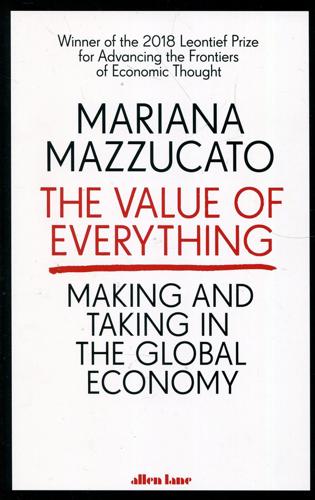
Value of Everything: An Antidote to Chaos The
by Mariana Mazzucato · 25 Apr 2018 · 457pp · 125,329 words
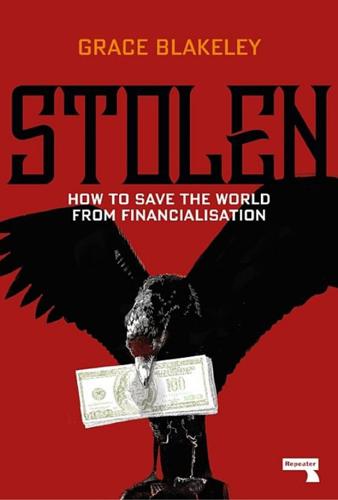
Stolen: How to Save the World From Financialisation
by Grace Blakeley · 9 Sep 2019 · 263pp · 80,594 words
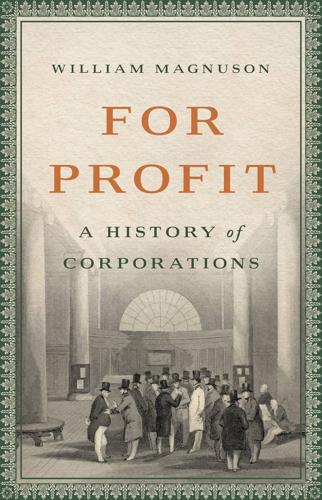
For Profit: A History of Corporations
by William Magnuson · 8 Nov 2022 · 356pp · 116,083 words

Supremacy: AI, ChatGPT, and the Race That Will Change the World
by Parmy Olson · 284pp · 96,087 words
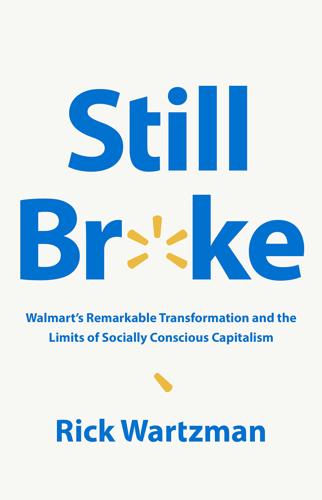
Still Broke: Walmart's Remarkable Transformation and the Limits of Socially Conscious Capitalism
by Rick Wartzman · 15 Nov 2022 · 215pp · 69,370 words
The Alternative: How to Build a Just Economy
by Nick Romeo · 15 Jan 2024 · 343pp · 103,376 words
Cancelling Billionaires Before They Cancel Us: The Urgent Case for a Wealth Tax
by Linda McQuaig and Neil Brooks · 3 Mar 2026 · 291pp · 83,422 words
Money and Government: The Past and Future of Economics
by Robert Skidelsky · 13 Nov 2018

Gaza in Crisis: Reflections on Israel's War Against the Palestinians
by Ilan Pappé, Noam Chomsky and Frank Barat · 9 Nov 2010 · 279pp · 72,659 words
The Future of Capitalism: Facing the New Anxieties
by Paul Collier · 4 Dec 2018 · 310pp · 85,995 words
Restarting the Future: How to Fix the Intangible Economy
by Jonathan Haskel and Stian Westlake · 4 Apr 2022 · 338pp · 85,566 words