The Invisible Web: Uncovering Information Sources Search Engines Can't See
by Gary Price, Chris Sherman and Danny Sullivan · 2 Jan 2003 · 481pp · 121,669 words
Net Search Tools . . . . . . . . . . . . . . . . . . . . . . . . . . . . . . . . . .3 Enquire Within Upon Everything . . . . . . . . . . . . . . . . . . . . . . . .8 Weaving the Web . . . . . . . . . . . . . . . . . . . . . . . . . . . . . . . . . . . . .10 Early Web Navigation . . . . . . . . . . . . . . . . . . . . . . . . . . . . . . . . .12 The First Search Engines . . . . . . . . . . . . . . . . . . . . . . . . . . . . . . .13 Chapter 2 - Information Seeking on the Visible Web . . .17 Browsing vs. Searching . . . . . . . . . . . . . . . . . . . . . . . . . . . . . . . .19 Web Directories . . . . . . . . . . . . . . . . . . . . . . . . . . . . . . . . . . . . . .22 How Web Directories Work . . . . . . . . . . . . . . . . . . . . . .22 Issues with Web Directories . . . . . . . . . . . . . . . . . . . . .24 Search Engines
…
. . . . . . . . . . . . . . . . .109 Build Your Own Toolkit . . . . . . . . . . . . . . . . . . . . . . . . . . . . . . .111 Table of Contents ix Chapter 7 - Case Studies . . . . . . . . . . . . . . . . . . . . . . . . . . . . . . . .115 Case 1 - Historical Stock Quotes . . . . . . . . . . . . . . . . . . . . . . .115 Case 2 - Patent Information . . . . . . . . . . . . . . . . . . . . . . . . . . .117 Case 3 - Real-Time Tracking . . . . . . . . . . . . . . . . . . . . . . . . . . .119 Case 4 - Locating an Out of Print Book . . . . . . . . . . . . . . . . . .120 Case 5 - Telephone Numbers and Zip Codes . . . . . . . . . . . . .121 Case
…
and Architecture Resources . . . . . . . . . . . . .151 Reference . . . . . . . . . . . . . . . . . . . . . . . . . . . . . . . . . . . . . . . . . . .152 Chapter 11 - Bibliographies and Library Catalogs . . . . .153 Bibliographies . . . . . . . . . . . . . . . . . . . . . . . . . . . . . . . . . . . . . .154 Library Catalogs . . . . . . . . . . . . . . . . . . . . . . . . . . . . . . . . . . . . .160 Chapter 12 - Business and Investing . . . . . . . . . . . . . . . . . . .163 Company Information and Research . . . . . . . . . . . . . . . . . . .164 Consumer Resources . . . . . . . . . . . . . . . . . . . . . . . . . . . . . . . . .169 Economics—United States . . . . . . . . . . . . . . . . . . . . . . . . . . . .169 Economics—World . . . . . . . . . . . . . . . . . . . . . . . . . . . . . . . . . .173 Financial Institutions . . . . . . . . . . . . . . . . . . . . . . . . . . . . . . . .175 General Business Resources . . . . . . . . . . . . . . . . . . . . . . . . . . .176 Government Contracts . . . . . . . . . . . . . . . . . . . . . . . . . . . . . . .177
…
Industry-Specific Resources . . . . . . . . . . . . . . . . . . . . . . . . . . .178 Investment Resources . . . . . . . . . . . . . . . . . . . . . . . . . . . . . . . .182 x The Invisible Web Jobs and Career Information . . . . . . . . . . . . . . . . . . . . . . . . . .185 Lookup Services . . . . . . . . . . . . . . . . . . . . . . . . . . . . . . . . . . . . .187 Marketing Resources . . . . . . . . . . . . . . . . . . . . . . . . . . . . . . . . .188 Pension Resources . . . . . . . . . . . . . . . . . . . . . . . . . . . . . . . . . . .189 Personal Finances . . . . . . . . . . . . . . . . . . . . . . . . . . . . . . . . . . .190 Philanthropy and Non-Profit Resources . . . . . . . . . . . . . . . .190 Research and Development . . . . . . . . . . . . . . . . . . . . . . . . . . .192 Real
…
- Computers and Internet . . . . . . . . . . . . . . . . . .199 Computers and Computing . . . . . . . . . . . . . . . . . . . . . . . . . . .200 Internet Resources . . . . . . . . . . . . . . . . . . . . . . . . . . . . . . . . . . .203 Chapter 14 - Education . . . . . . . . . . . . . . . . . . . . . . . . . . . . . . . . .207 Classroom and Teacher Support . . . . . . . . . . . . . . . . . . . . . . .208 Directories and Locators . . . . . . . . . . . . . . . . . . . . . . . . . . . . .209 Financial Information and Scholarships . . . . . . . . . . . . . . . .212 General Education Resources . . . . . . . . . . . . . . . . . . . . . . . . .213 Statistics . . . . . . . . . . . . . . . . . . . . . . . . . . . . . . . . . . . . . . . . . . .215 Chapter 15 - Entertainment . . . . . . . . . . . . . . . . . . . . . . . . . . . .217 Amusements . . . . . . . . . . . . . . . . . . . . . . . . . . . . . . . . . . . . . . . .218 General Entertainment Resources . . . . . . . . . . . . . . . . . . . . .218 Movies and Cinema . . . . . . . . . . . . . . . . . . . . . . . . . . . . . . . . . .219 Music . . . . . . . . . . . . . . . . . . . . . . . . . . . . . . . . . . . . . . . . . . . . .
…
.221 Performances and Events . . . . . . . . . . . . . . . . . . . . . . . . . . . . .224 Chapter 16 - Government Information and Data . . . . . .227 Directories and Locators . . . . . . . . . . . . . . . . . . . . . . . . . . . . .228 General Government Resources . . . . . . . . . . . . . . . . . . . . . . .230 Government Documents . . . . . . . . . . . . . . . . . . . . . . . . . . . . .231 Government Officials . . . . . . . . . . . . . . . . . . . . . . . . . . . . . . . .234 Government Programs . . . . . . . . . . . . . . . . . . . . . . . . . . . . . . .235 Politics, Policy, and International Relations
…
Veterans and Currently Serving Military . . . . . . . . . . . . . . . .299 Chapter 22 - Public Records . . . . . . . . . . . . . . . . . . . . . . . . . . . .301 General Public Records Resources . . . . . . . . . . . . . . . . . . . . .302 Location-Specific Public Records . . . . . . . . . . . . . . . . . . . . . .303 Chapter 23 - Real-Time Information . . . . . . . . . . . . . . . . . . .311 Environment . . . . . . . . . . . . . . . . . . . . . . . . . . . . . . . . . . . . . . . .312 Government . . . . . . . . . . . . . . . . . . . . . . . . . . . . . . . . . . . . . . . .313 Miscellaneous Tracking . . . . . . . . . . . . . . . . . . . . . . . . . . . . . . .314 Space and Satellite . . . . . . . . . . . . . . . . . . . . . . . . . . . . . . . . . . .314 Stock Quotes . . . . . . . . . . . . . . . . . . . . . . . . . . . . . . . . . . . . . . . .315 Transportation . . . . . . . . . . . . . . . . . . . . . . . . . . . . . . . . . . . . . .315 Weather . . . . . . . . . . . . . . . . . . . . . . . . . . . . . . . . . . . . . . . . . . . .317 Chapter 24 - Reference . . . . . . . . . . . . . . . . . . . . . . . . . . . . . . . . .319 Associations . . . . . . . . . . . . . . . . . . . . . . . . . . . . . . . . . . . . . . .
…
AskERIC . . . . .83 INTA Trademark Checklist vs. Delphion Intellectual Property Network . . . . . . . . . . . . . . . . . . . . . . . . . . . . . . . . . .84 Hoover’s vs. Thomas Register of American Manufacturers . . . . . . . . . . . . . . . . . . . . . . . . . . . . . . . . . . . .85 WebMD vs. National Health Information Center Health Information Resource Database . . . . . . . . . . . . . . .86 Table 5.3 Table 5.4 xiii xiv This Page Intentionally Left Blank Foreword Internet search engines, not readily available to
…
protocol called Z39.50 that was in wide use at the time. In essence, WAIS provided a single computer-to-computer protocol for searching for information. This information could be text, pictures, voice, or formatted documents. The quality of the search results was a direct result of how effectively each server
…
Kingdom (http://www.royalmail.com/quick_tools/ postcodes/default.htm) provide postal code look-up tools. 102 The Invisible Web 20. Basic Demographic Information. Demographic information from the U.S. Census and other sources can be a boon to marketers or anyone needing details about specific communities. One of many excellent
…
AltaVista provides a link to a page with additional “facts about” the company, including a capsule overview, news, details of Web domains owned, and financial information. Information maintained by government Web sites or academic institutions is inherently more trustworthy than other types of Web content, but it’s still important to look
…
Directory of Resources for Foreign Language Programs http://www.cal.org/ericcll “This Web-based directory of resources for improving elementary foreign language programs provides information about and links to national associations, professional organizations, state foreign language offices, funders, publishers of language learning materials, centers, clearinghouses, instructional materials Web sites
…
for about 20,000 themes from Classical and Folksong repertoires. When searching for recordings and scores of particular works, we usually rely on title information. When title information is not available but melodies can be recalled, they can be searched using Themefinder.” Search Form URL: See Main Page UBL Ultimate Band
…
.gov/ “The CHID is a bibliographic database produced by health-related agencies of the Federal Government. This database provides titles, abstracts, and availability information for health information and health education resources.” Search Form URL: http://chid.nih.gov/detail/detail.html DNA Patent Database http://208.201.146.119/ “The DPD
…
http://www.atsdr.cdc.gov/atsdrhome.html “HazDat, the Agency for Toxic Substances and Disease Registry’s Hazardous Substance Release/Health Effects Database, is the scientific and administrative database developed to provide access to information on the release of hazardous substances from Superfund sites or from emergency events and on the effects of
…
hazardous substances on the health of human populations.” 248 The Invisible Web Search Form URL: http://www.atsdr
…
SPOT Tennessee http://web.utk.edu/~chrg/hit/main/SPOT/frames/SPOT/ nfindex.htm 310 This Page Intentionally Left Blank CHAPTER 23 Real-Time Information Real-time information is probably the “purest” type of Invisible Web data, and it’s not likely that general-purpose search engines will ever make any effort
…
Database, and the Nuclear Explosions Database • Environmental Resources, including the ENTRI (Environmental Treaties Database), Envirofacts from the Environmental Protection Agency, and NatureServe, authoritative conservation information on more than 50,000 plants, animals, and ecological communities • General Science Resources, such as the PrePRINT Network, a gateway to preprint servers; sciBase,
…
Chart and graph tools are also available. Search Form URL: See Main Page Tsunami Database (Events) http://www.ngdc.noaa.gov/seg/hazard/tsu.shtml “This database provides information on tsunami events from 49 B.C. to the present in the Mediterranean and Caribbean Seas, and the Atlantic, Indian, and Pacific
…
Oceans.” Search Form URL: See Main Page Related Resources: Tsunami Database (Runups) http://www.ngdc.noaa.gov/seg/hazard/tsrnsrch.html Research and Development
…
in Social Sciences—Institutions, Specialists, Periodicals http://www.unesco.org/ “11,000 worldwide references to social science research and training institutions, specialists, documentation and information services, and social science periodicals; references to peace, human rights, and international law training and research institutions.” Search Form URL: http://www.unesco.org/general
…
eng/infoserv/ db/dare.html National Recreation Database B (Some full-text), Canada http://www.lin.ca/htdocs/rcentre.cfm Produced by the Leisure Information Network. Contains information on “practical resources from the front lines.” Search Form URL: http://www.lin.ca/htdocs/findrs.cfm Related Resources: Youth at Risk Success
…
Whereis Street Atlas, 337 Australian Business Register (ABR), 165 Australian Geological Survey Organization (AGSO), 354 Australian Government Index of Publications (AGIP), 231 Australian Legal Information Institute, 278–279 Australian Literary and Historical Texts, 263 Australian National Shipwreck Database, 263 Australian Patents Databases, 277 Australian War Memorial Databases, 299 authority content
…
(Oregon), 304 Charities Search (Minnesota), 304 ChemFinder.Com, 349 ChemGuide, 349 Chemical Accidents, Historical Incident Reports, 358 Chemical Acronyms Database, 349 ChemIDplus, 349 chemistry information resources, 348–350, 356 Chemistry Preprint Server, 349 Chemweb, 348–349 Chicagoland Expressway Congestion Map, 316 Child Abuse and Neglect Clearinghouse Organizations Database, 274–275
…
(U.K.), 299 Community College Finder, 211 Community Database (Alaska), 304 Community Health Indicators, 249 Community of Science Workbench Databases, 363 companies. See business information resources Company Information, 164–169 CompanySleuth, 165 Compaq, 29, 65, 72, 284 Compass (British Museum Materials), 160 competitive intelligence resources, 39–40, 100 Compilation of Provincial
…
231 Database of Tax-Exempt Organizations, 191, 192 Section 527 Notice Search for, 302 International Atomic Energy Agency (IAEA), 354–355 Index 421 International Bibliographic Information on Dietary Supplements (IBIDS), 253 International Boundary News Database, 237 International Classification of Functioning, Disability, and Health, 250 International Digest of Health Legislation, 248
…
Real-Time Data, 314–315 Technical Reports Server, 364 TechTracS/TechFinder, 193 NASDAQ, 184 National Academy Press, 159 National Adoption Directory, 298 National Adoption Information Clearinghouse, 298 National Aeronautics and Space Administration. See NASA National Agriculture Statistics Service Published Estimates Database, 171 National Airspace System Status, 316 National Archeological Database
…
— Reports, 370–371 National Archival Information Locator (NAIL), 157 National Archives and Records Administration (NARA), 157 National Archives of Canada (ArchiviaNet), 157 National Association of Counties, 228 National Association of
Digital Dead End: Fighting for Social Justice in the Information Age
by Virginia Eubanks · 1 Feb 2011 · 289pp · 99,936 words
The Popular Technology Workshops are dedicated to fostering a vibrant people’s movement to promote economic equity, political participation, and social justice in the information age. More information about the organization can be found at <http://www.digitaldeadend.com>. Acknowledgments This book was inspired and enriched by the work of countless people
…
young children and schizophrenics. Many of us in the United States have engaged in a massive, collective, consensual hallucination about the power of technology, particularly information technology (IT), to “level the playing field,” create xvi Introduction broad-based economic and social equality, and nurture transparency and accountability in democratic governance.
…
reshape your world. It hinted at the complicated relationship between personal experience and expertise in mass mobilization, and gestured toward the transformative power of experiencing information firsthand rather than just reading about it. The event also illustrated some of the challenges of participatory work. Participatory projects, even those that are
…
issues. Although access is an important part of the high-tech equity puzzle, it is not adequate for developing strategies to combat inequalities of the information age that are not material or distributional, such as cultural recognition, institutional discrimination, health and safety issues, environmental injustice, nonparticipatory or ambiguous decision-making
…
model of hightech equity based on resisting oppression, acknowledging difference as a resource, and fostering democratic and participatory decision making. Social Location: Grounding the Information Revolution Feminist scholars have offered important insights into the relationships among science, technology, and society.4 But there are crucial gaps in feminist social studies
…
centered on three issues: cyberspace, cyborgs, and pipelines. Feminist work on cyberspace tends to explore discursive practices online and the representation of women in informational contexts.5 Feminists theorizing the cyborg6—a hybrid figure that embodies contemporary anxiety about the crossing of boundaries between animal, human, and technology—concentrate on
…
contrast, intersectional approaches to studying how social location shapes all women’s experience with technology in their everyday lives make the structural violence of the information age visible. Rendering oppression visible makes it available for intervention and change. Intersectional approaches acknowledge the various ways that gender, race, class, and other
…
ignore and marginalize intragroup differences. It is just these differences—particularly the growing inequality among women by race and class—that define injustice in the information age.11 Intersectional approaches make hightech equity issues visible that single-issue, “women and technology” analyses obscure: the superexploited labor that provides the scaffolding
…
provides an opportunity for political learning, 30 Chapter 2 teaching lessons about social worth, competence, opportunities, rights, responsibilities, and risks. These technologies—including management information systems, electronic benefits transfer systems, closed-circuit television surveillance systems, and biometrics systems such as automatic fingerprint identification, hand geometry, and retinal scanning—help create
…
mobilization. Most technology policy, firmly planted in the tradition of universal access, ignores nondistributional issues and misrepresents the empirical realities of living in the information age, offering individualized and market solutions to broadly structural problems. The overreliance on the distributive paradigm in digital divide policy and programming is at the
…
economic, and political privilege play in creating the digital divide, naming social capital, status, and consumption as motivations for the haves to become “information keepers,” invested in hoarding information resources and reproducing systems of inequality. This critique is particularly important because it challenges the distributive paradigm at its very core. While distributional
…
as a framework allows us to see complex processes of exploitation, marginalization, powerlessness, cultural imperialism, and violence8 as central to the inequities of the information age. Identifying these systems of domination provides opportunities for intervention and change. In addition to focusing on getting poor and working-class women into the
…
economic growth and revitalizing cities. In the early 2000s, Troy underwent a speculative growth spurt when municipal, educational, and business leaders focused on bringing the information economy to the region. Word among homeowners, downtown businesses, commercial developers, and local government officials was that Troy, long challenged by a stagnant economy1
…
interests of social and workplace efficiency. Though women in the YWCA community often found their high-tech work fulfilling, they faced many of the hazards of low-wage information economy employment, including job contingency and outsourcing, insufficient wages, little employer investment in training and reskilling, and health risks. To try to manage
…
women have disproportionately borne the costs of social reproduction, including childrearing, elder care, and community caretaking responsibilities. The costs of suspending a career path in information occupations to fulfill social reproduction responsibilities are particularly high, as employers offer few resources to make reskilling possible.23 This is particularly vexing for women
…
every detail of their lives is known and freely Technologies of Citizenship 83 shared among powerful players: caseworkers, employers, politicians, and police. Rules for information gathering, sharing, and retrieval are obscure, and mechanisms ensuring accountability are rare. Finally, IT systems and the specialized expertise that sustain them fragment the knowledge
…
act to limit clients’ opportunity, mobility, and self-determination. 2. Welfare administration technology seems increasingly opaque, unpredictable, and arbitrary to its clients. Rules for information gathering, sharing, and retrieval are obscure, and mechanisms ensuring accountability are rare. 3. IT systems and the specialized expertise that sustain them extract and fragment
…
and administrators, and because neoliberalism and privatization have resulted in the outsourcing of many of the duties of public assistance programs to nongovernmental organizations, client information is accessed by dozens of widely dispersed and largely invisible people and agencies.8 The 1996 Personal Responsibility and Work Opportunity Reconciliation Act both limits
…
, transportation vouchers, Medicaid, housing assistance, child care, emergency cash assistance, and other basic necessities of life. Under these conditions, notions of “free choice” and “informed consent” are stretched to their breaking points.9 Even when client confidentiality is specifically protected, as in the case of domestic violence victims10 or youthful
…
records from when you are a teenager, but they find out.” Under pressure to sign away their privacy in exchange for benefits, and rarely informed how their information is being shared, clients often feel that they trade away their rights, and every detail of their lives, in exchange for the basic
…
most common form of technology training that these women receive. Through their program experiences, women in the YWCA community learned to see the deployment of information systems as an invasive, autonomous, and unresponsive process, Technologies of Citizenship 97 unconstrained by formal rules and unconcerned with transparency of process. Their degraded
…
and therefore felt a high level of responsibility for political action and education on behalf of the general public. Different technologies—social service programs and information systems alike—produce different forms of citizenship. Soss concludes his article about participation in social assistance programs by explaining that participation in more democratic programs
…
As Winner reminds us, “Different ideas of social and political life entail different technologies for their realization. One can create systems of production, energy, transportation, information handling, and so forth that are compatible with the growth of autonomous, selfdetermining individuals in a democratic polity. Or one can build, perhaps unwittingly, technical
…
reflexive, nondoctrinaire approach to collective, participatory learning. It inspires insight by building on what emerges from the everyday life experiences of participants in workshops or informal classes. My understanding of popular education stems from three primary sources: Jane Addams and the Settlement House movement, Myles Horton and the Highlander Folk
…
and we were initially uncomfortable asking interviewees direct questions about their experiences with public assistance. Composite stories offered respondents a way to depersonalize their own information by identifying (or not) with semifictional characters. The “composite and response” process allowed us to interrupt the extractive and demeaning interview experiences many community
…
and social change central to popular education, participatory action research, and participatory design.19 Differentiating critical technological citizenship from “training for integration into the information economy” was crucial for developing a strong relationship with women in the YWCA community, as some participants felt forced by the larger society to become
…
coherence and provide few resources for developing critical technological citizenship. WYMSM found that the real work of popular technology was contextualizing everyday experiences in the information age through collaborative research and education projects. Skill building and participatory design of technological tools were important but secondary by-products of the far
…
equity to address these broader technopolitical issues. We think too little about citizenship, too little about the kind of social contract we want for the information age. Cognitive Justice and Critical Technological Citizenship 133 Technologies of Political Articulation Initially, many women in the YWCA community had an ambivalent relationship to
…
engaged, collective inquiry Cognitive Justice and Critical Technological Citizenship 151 across difference, because all knowledge is local knowledge and every standpoint can produce important information for analyzing our shared world.10 For WYMSM member Julia Soto Lebentritt, what worked best about WYMSM was the cooperative process we developed to create
…
for involvement, participants are chosen to reflect the age, gender, educational, occupational, and geographic diversity of Denmark. The group gathers for several informal meetings to receive background information on the question under investigation, formulate an approach to the topic, and draft questions for the conference itself. The DBT provides a professional
…
to the city movement provides an important challenge to hightech development boosterism and neoliberal governance, connecting an analysis of the rise of the two-tier information economy and gentrification with a commitment to building collective political power among dispossessed communities in global cities. In my hometown, ARISE (A Regional Initiative
…
to local conditions, included multiple researchers from a variety of social locations, and required immediate relevance to community problems and situations, the research methods that inform this book are many, varied, and drawn from across the social sciences and humanities. The research methods I used included interviews; composite stories; quantitative
…
facilitate the identification and sharing of community and individual assets by connecting resourceful people in low-income neighborhoods. The community asset bank, prototyped by RPI information technology undergraduate Jes Constantine, draws on the asset-based community development model for sharing material and intellectual resources between local residents and institutions. Though
…
technology regions. Thus, regional development schemes that focus on high-tech industries trade commitments to broad-based equity for economic growth (McCall 2001, 190). 12. Information technologies, rather than being stable, neutral tools, are technologies of citizenship. For Barbara Cruikshank, technologies of citizenship are those discourses, programs and tactics “aimed
…
’s position on universal access was a commitment “to wire every classroom, every library, every hospital, and every clinic to the national and international information infrastructure.” At the International Telecommunication Union World Telecommunication Development Conference later that year, he “called for all nations of the world to co-operate in
…
insecurity, for example, is highly mediated by both structural dislocation and persistent racial and gender divisions of labor. New “configurations of inequality” attendant on the information economy are widely variable, and geographically defined. Leslie McCall (2001) explores four regions: industrial Detroit, postindustrial Dallas, high-tech St. Louis, and immigrant Miami.
…
create significant labor market shocks for people, increasing the risk of serious misfortune. (222–223). 24. Nevertheless, the policy presumption that low-income people are information or technology poor has shown remarkable persistence. Claims that the poor “lack 230 Notes to Chapter 5 knowledge, professionalism, networking . . . and training” (Attali 2000)
…
away from structural redistributive solutions to those based on the role of individual citizens as consumers (of government services such as public assistance or of informational products and devices). Policymaking in both areas takes place in a political and social context marked by neoliberalism, devolution, and decentralization, which profoundly influences
…
243 Domestic Workers United. 2009. Domestic Worker’s Bill of Rights. <http://www .domesticworkersunited.org/campaigns.php> (accessed May 17, 2010). Drennan, Matthew. 2002. The Information Economy and American Cities. Baltimore, MD: Johns Hopkins University Press. Drucker, Peter F. 1993. Post-Capitalist Society. New York: HarperCollins. Dyson, Esther. 1997. Release
…
New York: Vintage. Polletta, Francesca. 2002. Freedom Is an Endless Meeting: Democracy in American Social Movements. Chicago: University of Chicago Press. President’s Information Technology Advisory Committee. 1999. Information Technology Research: Investing in Our Future. Report to the President. <http://www.ccic .gov/ac/report> (accessed July 20, 2004). Puckett, Jim,
…
55–57, 61 wages, 65–66 and women, 71–77, 156–157 and working class, 57, 61–64, 78, 152, 156–158 Information keepers, 42 Information poverty, 93 262 Information technology (IT) advantages of, 23 ambivalence toward, 10–11 and citizenship, 29–31, 89 effects of, 82–83 and equity, 152 feminist analyses
The Information State: Politics in the Age of Total Control
by Jacob Siegel · 24 Mar 2026 · 348pp · 103,246 words
and parasitic bots. Misinformation, a term for unintentional falsehoods as distinguished from disinformation’s deliberate lies, is overflowing online, along with every other kind of information. Online echo chambers not only contribute to political polarization, they produce a mutual incomprehension that makes it nearly impossible to engage in productive dialogue or
…
“a society’s ability to maintain control—at all levels from interpersonal to international relations—will be directly proportional to the development of its information technologies.” * * * For millennia, information technologies have been intertwined with the development of human civilization. The earliest civilizations in Mesopotamia, Egypt, China, and India were built on river
…
buildings aided the policing and administrative functions of its ruling power. And all those techniques, being inherently organizational in character, relied on the control of information. In America, as in Europe, industrial society experienced a crisis in the late nineteenth century, driven by extreme concentrations of wealth, poverty, and inequality.
…
: “For the first time in US history the previously competing interests of press, government, and business were fused into a single centralized bureaucracy, disseminating information that penetrated virtually every aspect of American daily life.” Following Wilson, leading progressives reversed their early opposition to the war and came to champion it
…
converted society’s civilian institutions into a standing reserve on hand for use in wartime while instilling deference to the power of secret institutions. 3 INFORMATION War and machines evolved together. Construction on the first general-purpose digital computer, called the Electronic Numerical Integrator and Computer, or ENIAC, began in
…
specialized definition suited to someone dealing in cryptic codes and the transmission of electrical signals. It was not meant to replace the older meaning of information nor to provide the basis for new social arrangements. Shannon repeatedly warned people against interpreting his technical descriptions through metaphors. Yet the more powerful
…
as a whole. The entire edifice of human civilization, with its branching and hierarchical organizations and cellular subdivisions, its countless individual minds inputting and outputting information through their thoughts and actions, constituted a single self-regulating megamachine. Much to Wiener’s later dismay, many of the most enthusiastic adopters of
…
understanding of the “coded” nature of being diffused across different industries and fields, it remade them in its image. Computers manifested and mastered the informational flood. As production of the machines proliferated in the postwar period and their processing power rapidly accelerated, their contents and operating systems spilled over into
…
every sector of society. Information offered Cold War military planners something more valuable than another instrument of violence. It gave them a power to control without directly exerting force that
…
target aircraft, the computers automatically aimed antiair weapons at the incoming threat. Computers in different DCs communicated remotely over phone lines and modems, synchronizing information across the system and generating a common operating picture. Older radar arrays had relied on human operators using grease pencils to continuously update the location
…
them operating their own internal communications channels, the military had become increasingly hard to manage. As the number of organizations grew, “the amount of information needed to coordinate their performance grows not arithmetically but geometrically,” noted van Creveld. That required more computers, which promised to make the situation more manageable
…
adapt to their environments—first precision nuclear missiles and eventually high-tech home appliances running on microchips. They shared the same essential capacity to process information. Which meant that machines everywhere, embedded in everything, were taking on characteristics of the mind. Because computers were so adept at analyzing data, all
…
of people who worked with their heads, thus massively multiplying their mental ‘muscle.’ It allowed office workers to control and process previously unimaginable amounts of information.” Jobs previously performed by American workers could be relocated overseas to countries with cheaper labor costs and fewer regulations. Fittingly, the semiconductor industry was
…
private service providers for pennies on the dollar. It was another turning point. A globe-spanning surveillance and communications weapon integral to the Pentagon’s information warfare strategies would increasingly become a medium through which millions, and then billions, of people communicated, worked, bought things, and sought simulations of sex,
…
,” he wrote, “there occurs a fluidity of the categories of natural resources … almost any natural resource can be substituted for any other as levels of information rise.” Information seeped out of every surface. In the flood, physical things lost their innate and irreplaceable forms and became tokens of symbolic exchange. * * * The
…
paper repeated that pledge at regular intervals over the years, including in editorials in 1990 and 2000. A RAND Corporation report from 1996, titled “Strategic Information Warfare,” announced as a foregone conclusion “the blurring of clear geographical, bureaucratic, jurisdictional, and even conceptual boundaries”—mentioning in particular the increased blurring of
…
goals. Defined as the “capability to influence perceptions, perform computer network defense and attack missions, conduct electronic warfare, and carry out other protective actions,” information operations feature prominently in the document’s plans to “reorient the US global military posture.” A new field of military-academic research and specialization took
…
a public that it deemed incapable of grasping the treacherous intricacies of superpower competition and international terrorism. Bill Bray, a retired navy captain, describes how information warfare caught on not through rigorous mission analysis but rather through “paper-thin power point briefs, exhortations, platitudes, a frenetic impatience fueled by the
…
not only Internet firms like Google that expanded through the state of exception. To target terrorist financing, the US Treasury Department gained access to the information held by nominally neutral international financial bodies like the Society for Worldwide Interbank Financial Telecommunication (SWIFT). The Treasury also used its newly attained authority
…
the world closer together.” Google promised to make all knowledge instantly accessible. Often the two ideals proved incompatible. The ability to instantly access and transmit information turned out to be quite valuable to people forming angry mobs, spreading political propaganda, sowing distrust, fomenting sectarian violence, and otherwise generally rending the
…
also in countering the employment of hybrid tactics,” wrote one Estonian defense expert in 2015. Instead what they got was a vast new apparatus of informational surveillance and influence: US-funded NGOs, para-governmental civic organizations, and NATO agencies that fought Russian propaganda while censoring political speech. * * * Across eastern Europe,
…
an equally pervasive security apparatus. By focusing on messaging and social media narratives without effectively stopping Russia’s advances, US officials expanded their infrastructure of information control. * * * It is not speculation to say that the Obama administration tried to dictate the beliefs held by hundreds of millions of Americans by
…
channel allowed security officials to communicate directly with social media executives about accounts they wanted to flag or take down. Censorship became a routine and informal agreement between the various parties who had been brought together in the fight against disinformation. Fact-checkers, content moderators, nonprofit anti–hate speech representatives
…
the sun. In October 2017, two academics affiliated with Harvard’s Shorenstein Center on Media, Politics and Public Policy published an influential report titled “Information Disorder.” Conceptually, the paper showed the disinformation field evolving from its military and intelligence origins into a generalized theory of society. The very term disorder
…
counterinsurgency against American citizens. The pandemic dumped jet fuel into the counter-disinformation machine while extending its controls into the physical world. That brought the information state into people’s everyday lives. This was something different from Russiagate, which was essentially a political crime against abstractions like the “rule of
…
well) has been rigorously excluded.” Lasch concluded: “Control has become their obsession. In their drive to insulate themselves against risk and contingency—against the unpredictable hazards that afflict human life—the thinking classes have seceded not just from the common world around them but from reality itself.” The response to first
…
, Facebook, and Google were neither fully private enterprises nor open public squares, but something else: closely guarded artificial environments that combined politics, news, entertainment, information, and social engineering into a single medium. Shaping that medium was the task of officials—in both the public and private sectors—who operated between
…
party-based machine of technocratic rule was, if not shattered, then seriously hobbled: no small accomplishment. And yet much of the technical infrastructure of the information state, while dormant, remained fundamentally intact. The Internet remained an arena of mass surveillance and collective psychosis. Invisible, interactive algorithms were still being used
…
Press, 1986), 8. “Materials that emphasize time” Harold A. Innis, Empire and Communications (University of Toronto Press, 1972), 7. “Because of its fleeting relevance, information” Byung-Chul Han, Infocracy: Digitalization and the Crisis of Democracy, trans. Daniel Steuer (Polity Press, 2022), 18. “it covers the surface of society” Alexis de
…
, 1899), 333. “the consciousness of the mechanized world” Jacques Ellul, The Technological Society, trans. John Wilkinson (Vintage Books, 1964), 6. “It is information that creates” Jacques Ellul, “Information and Propaganda,” Diogenes 5, no. 18 (1957): 61–77, https://doi.org/10.1177/039219215700501805. 1: REVOLUTIONS OF CONTROL Socrates tells a story
…
“The Invasion of Privacy,” Atlantic, February 1964, https://www.theatlantic.com/magazine/archive/1964/02/the-invasion-of-privacy/658514/. “With its insatiable appetite for information” Arthur R. Miller, “The National Data Center and Personal Privacy,” Atlantic, November 1967, https://www.theatlantic.com/magazine/archive/1967/11/the-national-data-center
…
.reaganlibrary.gov/archives/speech/remarks-and-question-and-answer-session-students-and-faculty-moscow-state. “Knowledge came to rival” Alan D. Campen, ed., The First Information War: The Story of Communications, Computers and Intelligence Systems in the Persian Gulf War (AFCEA International Press, 1992), x. “Throughout the national security” John
…
for Private Blocking and Screening of Offensive Material,” https://www.govinfo.gov/content/pkg/USCODE-2020-title47/html/USCODE-2020-title47.htm. “means of moving information” Herbert Marshall McLuhan, Understanding Me: Lectures and Interviews (McClelland & Stewart, 2010), 30. “There shall be open borders” Robert L. Bartley, “Liberty’s Flame Beckons
…
.defense.gov/Portals/70/Documents/quadrennial/QDR2001.pdf. “The real target in modern conflict” D. H. Dearth, “Critical Infrastructures and the Human Target in Information Operations,” Journal of Information Warfare 1, no. 2 (2001): 62–67, https://www.jstor.org/stable/26486095. Italics original. “aggressive campaigns” Maureen Dowd, “Office of Strategic
…
December 3, 2020, https://www.govinfo.gov/content/pkg/CHRG-116shrg43069/html/CHRG-116shrg43069.htm. Igor Danchenko Rowan Scarborough, “Durham’s Latest ‘Russiagate’ Bombshells: FBI Informant Danchenko Made Up Key Parts of Steele Dossier,” Washington Times, September 19, 2022, https://www.washingtontimes.com/news/2022/sep/19/durhams-latest-russiagate-bombshells
…
on Massive Digital Data Systems (MDDS) project Obama administration and Operation Mockingbird recruiting ad report on Russian interference in US elections top-down control of information See also Brennan, John; Hayden, Michael; Morell, Michael; Panetta, Leon centralization ChatGPT Cheney, Dick Chertoff, Michael Church, Frank Church committee Churchill, Winston civil rights,
…
(Edwards) Cobb, Frank I. Codevilla, Angelo Cohen, Jared COINTELPRO Colbert, Jean-Baptiste Cold War Cole, David combat development and test centers (CDTCs) Committee on Public Information (CPI) Communications Decency Act (1996) communism compass, invention of the Congregation for the Propagation of the Faith (Propaganda Fide) Control Revolution, The (Beniger) corruption Cotton
…
-a-Lago raid Mueller investigation Steele dossier and Federal Trade Commission Ferdinand, Franz Fernandez, Richard financial crisis of 2008 financialization Firestone, Shulamith First Amendment First Information War, The (Campen) First World War FISA court Fonda, Jane Foreign Intelligence Surveillance Act (1978) Fourth Amendment Fridman, Ofer From Counterculture to Cyberculture (Turner)
…
operation) improvised explosive devices (IEDs) industrialization Industrial Revolution Industrial Workers of the World Infiltration Surveillance Center (ISC) information, definitions and etymology of “Information Disorder” (report) information economy information management Information Operations Roadmap (Pentagon) information pathologies information state, definition of information superiority information theory Innis, Harold Interface Message Processor (IMP) International Fact-Checking Network (IFCN) Internet Covert Operations Program (iCOP
…
United States Capitol riot Jobs, Steve Johnson, Jeh Johnson, Lyndon Joint Comprehensive Plan of Action (Iran nuclear deal) Jones, Doug Jordan, John M. Journal of Information Warfare Kay, Alan Kazin, Michael Kemp, Brian Kennan, George Kennedy, John Fitzgerald Kennedy, Robert F., Jr. Kennedy, Robert F., Sr. Kessler, Glenn Keyworth, George
…
Edward Terman, Frederick Thiel, Peter Third Great Awakening Thomas, Charles S. TikTok Tocqueville, Alexis de Toffler, Alvin Tolkien, J. R. R. tool-using cultures Total Information Awareness (TIA) program transgender rights and issues Trudeau, Justin Truman, Harry Trump, Donald assassination attempt on first term of January 6 Capitol riot and presidential
The Master Switch: The Rise and Fall of Information Empires
by Tim Wu · 2 Nov 2010 · 418pp · 128,965 words
the twenty-first, through which the flow and nature of content would be strictly controlled for reasons of commerce. History shows a typical progression of information technologies: from somebody’s hobby to somebody’s industry; from jury-rigged contraption to slick production marvel; from a freely accessible channel to one
…
about each, and there have been no few such volumes. But this book will focus on chronicling the turning points of the twentieth century’s information landscape: those particular, decisive moments when a medium opens or closes. The pattern is distinctive. Every few decades, a new communications technology appears, bright
…
vulgar) and the reliability or security of service. From industry’s perspective, the invention may inspire other dissatisfactions: a threat to the revenues of existing information channels that the new technology makes less essential, if not obsolete; a difficulty commoditizing (i.e., making a salable product out of) the technology’
…
. At its heart lies some perfected engine for providing a steady return on capital. In exchange for making the trains run on time (to hazard an extreme comparison), he gains a certain measure of control over the medium’s potential for enabling individual expression and technical innovation—control such as
…
for communications policy makers. More than anything, it showed what kind of political advantage a discriminatory network can confer. When the major channels for moving information are loyal to one party, its effects, while often invisible, can be profound. It also showed how a single communications monopolist can use its
…
company to consume its potential successors in their infancy. Understanding this effect is critical to understanding the Cycle, and for that matter, the history of information technology. It may sometimes seem that invention and technological advance are a natural, orderly process, but this is an illusion. Whatever technological reality we
…
radically commoditized content, it is well to remember that Homer had no expectation of royalties. Nor has the fact of payment for many types of information—books, newspapers, music—extinguished the will to communicate unremunerated. Well before the Internet, in a world without paid downloads, before even commercial television, the
…
the studios] to take unwanted films were denied access to films marketed by other distributors.…”38 Again we must confront the reality that cultural and information industries pose special problems for standard industrial analysis, complicating the rules of supply and demand by virtue of the product’s less tangible forms of
…
have invented and marketed it. Nor was uselessness the gravest threat. Foreign attachments created outside Bell’s design and control standards posed all manner of hazard, including power surges up the phone lines that might electrocute Bell repairmen and send them falling to their deaths. On cross-examination by Tuttle’s
…
a moment the oddness of this phenomenon in a putatively free-market economy. The government was deciding, in effect, when a product that posed no hazard to public health would be “ready” for sale. Consider, too, how incongruous this was in a society under the First Amendment: a medium with
…
of every controlled economy, even the universally dazzling example of China today. As Friedrich Hayek would later argue, how can the government possibly have enough information to know when something as unpredictable as technology is “ready”? What fate might have befallen the telephone, the radio, motion pictures—or, more recently,
…
Conversely, television would be nothing more than visible radio. And so we see the now familiar effect of a vertically integrated industry subsuming a new information medium, wresting control of it from a disorganized industry that in all likelihood would have nurtured more experimentation and more diverse ideas of what television
…
Justice Department. And an impractical, highly abstract academic project became, eventually, the first universal network: the Internet. Part III tells the story of how information monopolies disintegrate. An industry is dominated by one ruler, an oligarchy or trust of some sort. What forces can break such hegemony? CHAPTER 11 The
…
defense did AT&T seem that the Defense Department would intervene forcefully to prevent the company’s breakup by antitrust suit in 1956, citing a “hazard to national security.” Fittingly, during the 1950s, AT&T, for its part, adopted the notably Orwellian slogan “Communications Is the Foundation of Democracy.”2
…
weary soldiers lifted by celluloid apparitions of Betty Grable. But as long as the studios had friends in Washington, their empire was secure. In every information industry, the government mediated what would have otherwise surely been a more tumultuous course of the Cycle. Theorists of industrial evolution, Schumpeter foremost, have
…
ordinarily something one can patent, nor can creativity be satisfactorily quantified. But in considering whether government action was worthwhile, let us not, particularly where information and culture industries are concerned, fall into the trap of looking to results that only econometrics can reveal. Films are not screwdrivers. As with all
…
different about this network as compared with radio, television, and the telephone system. Licklider and other early Internet founders believed that they were building an information network like none other. Some of its innovations, like packet switching, were obviously radical even in their day. Yet as we have seen time
…
shall see.* Still, one cannot overlook President Nixon’s immediate and personal motivation to help out the cable industry. In an increasingly pernicious ecosystem of information created by his perceived enemies, the networks reporting on the war in Vietnam and Watergate, he had identified their natural predator. The president had
…
obscure and largely forgotten regimes, the new FCC played surrogate parent to the Internet firms that would later tear apart the traditional media industries and information empires, transforming the nation. TO THE BREAKUP Whereas in the 1970s the FCC saw itself as cultivating a garden of new and promising firms,
…
do not do so well, however, is initiate the sort of creative destruction that revolutionizes industries and ultimately multiplies productivity and value. And where information is the ultimate commodity, the multiplier effect is incalculably great. It is too much to ask of any corporate entity—pace Theodore Vail—to be
…
band, even those owned by an entity as given to strict controls as AT&T. It was truly a first in human history: an electronic information network independent of the physical infrastructure over which it ran. The invention of encapsulation also permitted the famous “layered” structure of the Internet, whereby
…
and mature to give up most of their authority to a central government. The designs of the first two constitutions were therefore constrained—indeed, overwhelmingly informed—by the imperative of preserving states’ rights, in order to have any hope of ratification. Similarly, the Internet’s founders were forced, however fortunate
…
prevented monopoly and all centralized systems from realizing these efficiencies, in Hayek’s view, was a fundamental failure to appreciate human limitations. With perfect information, a central planner could effect the best of all possible arrangements, but no such planner could ever hope to have all the relevant facts of
…
1990s it began to seem inevitable that just two industries, the Bell companies and the media conglomerates, would soon control everything in the world of information. CHAPTER 16 Turner Does Television In the summer of 2008 I asked Ralph Lee Smith, folk musician, dulcimer virtuoso, and evangelist of cable television,
…
put it: “Despite extensive research, the motives for conglomerate mergers are still largely unknown.”4 Nonetheless, the conglomerate is the dominant organizational form for information industries of the late twentieth and early twenty-first centuries; here and abroad it is inseparable from the production of the lion’s share of
…
that preceded it, the conglomerate can be the worst enemy or the best friend of the cultural economy. With its hefty capitalization, it offers the information industries financial stability, and potentially a great freedom to explore risky projects. Yet despite that promise, the conglomerate can as easily become a hidebound,
…
started as an impulse to group media concerns with other types of businesses had by virtue of the intellectual property revolution reconfigured the landscape of information industries exclusive of telecommunications. The homogeneous giant enterprises that dominated the first half of this book had, by the 1990s, given way to a
…
Committee’s hearing room, with unusual intensity in his voice, Chairman Specter, a former prosecutor, questioned Whitacre precisely and slowly: “Does AT&T provide customer information to any law enforcement agency?” “We follow the law, Senator,” answered Whitacre. “That is not an answer, Mr. Whitacre. You know that.” “That’s
…
than any other phenomenon we have considered, the return of AT&T—that perennial phoenix—would seem to prove the irrevocability of the Cycle of information empires, their eternal return to consolidated order however great the disruptive forces of creative destruction. After all, despite the explicit wishes and mighty efforts
…
Time Warner, and Comcast-Disney. Eventually everything on the Internet would have been owned by one of them. That would have made for a tidier information economy, centered mainly on two mega-industries: the media conglomerates and the telephone companies. But something went wrong. Microsoft stopped buying media. Disney rejected
…
old media, Google’s founders continued to style themselves the challengers to the existing order, to the most basic assumptions about the proper organization of information, the nature of property, the duties of the American corporation, and even the purpose of life. They envisioned taking the Internet revolution into every
…
more evenly matched. APPLE’S RADICAL ORIGINS Apple is a schizophrenic company: a self-professed revolutionary closely allied with both of the greatest forces in information, the entertainment conglomerates and the telecommunications industry. To work out this contradiction we need to return to Apple’s origins and see how far
…
from it, is doubtless his greatest contribution to society. It was almost unimaginable at the time: a device that made ordinary individuals sovereign over information by means of computational powers they could tailor to their individual needs. Even if that sovereignty was limited by the primitive capacities of the Apple
…
are ultimately trial balloons, experiments of a kind, or a way of enhancing the primacy of the core business of search, whether by creating complementary information resources or simply engendering the goodwill that comes of offering cool stuff for free. The second Google difference is in its corporate structure. The firm
…
or distributing a recording, has enabled virtually anyone to prove his worth as a filmmaker or a singer. But the feasibility of such a quasiutopian information economy depends on an open communications infrastructure that facilitates individual expression, not mass conformity. There is, as with all competing visions of the good,
…
in forms of individual expression, can never be properly understood as “normal” industries, ones dealing in virtually any other sort of commodity.* Today, the information industries are collectively embedded in our existence in a way unprecedented in industrial history, involving every dimension of our national and personal lives—economic, yes
…
the former and only moderate regulation of the latter. Among the great questions of our time is whether our approach to the power of information should be informed by a sense of that power’s political consequences, subject to our ingrained habit of balancing and checking any great power. Or should we
…
laissez-faire approach, the old television-as-toaster thinking that prevailed in the late twentiety century, is no longer feasible. To leave the economy of information, and power over this commodity, subject solely to the traditional ad hoc ways of dealing with concentrations of industrial power—in other words, to
…
seem to propose a high degree of regulatory involvement, along the lines taken by the New Deal agencies. And indeed, following the logic that the information and news media peform a vital public function, most nations in the twentieth century, even liberal democracies, have simply made broadcasting, telephony, and the
…
government also keep its distance and not intervene in the market to favor any technology, network monopoly, or integration of the major functions of an information industry. Such interference—often to preserve an industry that figures mightily in the national economy (in a sense, too big to fail)—is ultimately
…
by preventing stagnation and repression of business innovation, especially repression abetted by the state. It also promotes vitality and innovation in different parts of the information economy by preventing one layer from smothering the others. There was, as I’ve allowed, much to admire about the internal efficiency of AT&
…
to nondiscriminatory policies. For such firms, also described as “public callings,” freedom and opportunity for profit come with responsibility as well. In the American information industries, such duties were first imputed to the telegraph and telephone companies by the Taft administration in 1910; once it is recognized that a network
…
one over another stream of traffic, among other manipulations. The Internet’s nature affords many options, but whatever may be the justification, a vibrant information economy cannot countenance discrimination at a level so basic as transmission on a public network. If the carrier is determined to capture greater profits, the
…
51: 2 (Summer 1977), 208–35. 7. The Gillette advertisements discussed evolving fashions in facial hair and the benefits of a safety razor. For more information about early radio advertising, see Marc Weinberger et al., Effective Radio Advertising (New York: Lexington Books, 1994), 3–4. 8. The early sponsored programs
…
Film Pioneer, Dies. Producer First Signed Mary Pickford, Chaplin. A Founder of First National Pictures,” New York Times, November 25, 1945, Obituaries. 2. For more information about Paramount’s block booking scheme and Tally, see Tino Balio, United Artists: The Company Built by the Stars (Madison: University of Wisconsin Press, 1976
…
Publishing, 2005). 6. “A Protocol for Packet Network Intercommunication” in Jeremy M. Norman, ed., From Gutenberg to the Internet: A Sourcebook on the History of Information Technology (Novato, CA: historyofscience.com, 2005) 871–90. 7. As quoted in Alfred L. Malabre, Jr., Lost Prophets: An Insider’s History of the
The Information: A History, a Theory, a Flood
by James Gleick · 1 Mar 2011 · 855pp · 178,507 words
African drummer it is essential. Another specialized language provides a perfect analog: the language of aviation radio. Numbers and letters make up much of the information passed between pilots and air traffic controllers: altitudes, vectors, aircraft tail numbers, runway and taxiway identifiers, radio frequencies. This is critical communication over a
…
locomotion lay in its outracing every previous means of communication. Trains lost track of one another. Until the most regular and disciplined scheduling was imposed, hazard ran with every movement. One Sunday Babbage and Brunel, operating in different engines, barely avoided smashing into each other. Other people, too, worried about
…
.♦ He offered this provocation in order to make his purpose utterly clear. Shannon needed, if he were to create a theory, to hijack the word information. “ ‘Information’ here,” he wrote, “although related to the everyday meaning of the word, should not be confused with it.” Like Nyquist and Hartley before him,
…
in heat,” to be carried away by the blood or by ventilating and cooling apparatus. But this is really beside the point, Wiener said. “Information is information, not matter or energy. No materialism which does not admit this can survive at the present day.” Now came a time of excitement. “We
…
by each subsequent letter. When the subject guesses the next letter with confidence, it is redundant, and the arrival of the letter contributes no new information. Information is surprise. The others brimmed with questions about different languages, different prose styles, ideographic writing, and phonemes. One psychologist asked whether newspaper writing would
…
important of all, the business of processing it.”♦ With psychologists, anthropologists, linguists, economists, and all sorts of social scientists climbing aboard the bandwagon of information theory, some mathematicians and engineers were uncomfortable. Shannon himself called it a bandwagon. In 1956 he wrote a short warning notice—four paragraphs: “Our fellow
…
softer, easier, platitudinous work flooding across disciplinary boundaries. The typical paper, he said, “discusses the surprisingly close relationship between the vocabulary and conceptual framework of information theory and that of psychology (or genetics, or linguistics, or psychiatry, or business organization).… The concepts of structure, pattern, entropy, noise, transmitter, receiver, and
…
external surroundings to produce in toto a burstwise advance in evolution that is far beyond anything to hit the evolutionary scene yet.… I shall not hazard a theory of the selection of ideas.♦ No need. Others were willing. Richard Dawkins made his own connection between the evolution of genes and
…
himself, he had to amend that: “It was obviously predictable that manufactured electronic computers, too, would eventually play host to self-replicating patterns of information.”♦ Information was passing from one computer to another “when their owners pass floppy discs around,” and he could see another phenomenon on the near horizon: computers
…
contains a late surprise: E: 10101010101010101010101010101010101010101010101013 The telegraph operator (or theorist, or compression algorithm) must pay attention to the whole message. Nonetheless, the extra information is minimal; the message can still be compressed, wherever pattern exists. We may say it contains a redundant part and an arbitrary part. It was
…
who became Bennett’s mentor at IBM, Rolf Landauer, an exile from Nazi Germany.♦ Landauer devoted his career to establishing the physical basis of information. “Information Is Physical” was the title of one famous paper, meant to remind the community that computation requires physical objects and obeys the laws of physics
…
fast that it swallows your whole town before you can even rise to your feet.”♦ A more familiar metaphor is the cloud. All that information—all that information capacity—looms over us, not quite visible, not quite tangible, but awfully real; amorphous, spectral; hovering nearby, yet not situated in any one
…
impose order on the chaos of sensations. The truth seems harder to find amid the multitude of plausible fictions. After “information theory” came to be, so did “information overload,” “information glut,” “information anxiety,” and “information fatigue,” the last recognized by the OED in 2009 as a timely syndrome: “Apathy, indifference, or mental exhaustion arising
…
“confusio rerum,” he says, “accompanied by a confusio verborum.” Confused mass of new things; confusion of words. Natural history was born to channel information. When new information technologies alter the existing landscape, they bring disruption: new channels and new dams rerouting the flow of irrigation and transport. The balance between creators
…
lynch mobs, flash mobs, crusades, mass hysteria, herd mentality, goose-stepping, conformity, groupthink—all potentially magnified by network effects and studied under the rubric of information cascades. Collective judgment has appealing possibilities; collective self-deception and collective evil have already left a cataclysmic record. But knowledge in the network is different
…
“Valdemar’s Tongue, Poe’s Telegraphy,” ELH 72 (2005): 637. ♦ “WHAT MIGHT NOT BE GATHERED SOME DAY”: Andrew Wynter, “The Electric Telegraph,” 133. ♦ “MUCH IMPORTANT INFORMATION … CONSISTING OF MESSAGES”: Alfred Vail, The American Electro Magnetic Telegraph, viii. ♦ THE GIVING, PRINTING, STAMPING, OR OTHERWISE TRANSMITTING: Agreement between Cooke and Wheatstone, 1843, in
…
Claude Shannon, 27 January 1949, Manuscript Division, Library of Congress. ♦ “SOMETHING OF A DELAYED ACTION BOMB”: John R. Pierce, “The Early Days of Information Theory,” IEEE Transactions on Information Theory 19, no. 1 (1973): 4. ♦ “THE FUNDAMENTAL PROBLEM OF COMMUNICATION”: Claude Elwood Shannon and Warren Weaver, The Mathematical Theory of Communication (
…
, Omni (August 1987), in Claude Shannon, Collected Papers, xxiii. ♦ “BITS STORAGE CAPACITY”: Handwritten note, 12 July 1949, Manuscript Division, Library of Congress. 8. THE INFORMATIONAL TURN ♦ “IT IS PROBABLY DANGEROUS TO USE THIS THEORY”: Heinz von Foerster, ed., Cybernetics: Circular Causal and Feedback Mechanisms in Biological and Social Systems: Transactions
…
Cordeschi, The Discovery of the Artificial: Behavior, Mind, and Machines Before and Beyond Cybernetics (Dordrecht, Netherlands: Springer, 2002), 163. ♦ FOUND RESEARCHERS TO BE “WELL-INFORMED”: Norbert Wiener, Cybernetics, 23. ♦ “ABOUT FIFTEEN PEOPLE WHO HAD WIENER’S IDEAS”: John Bates to Grey Walter, quoted in Owen Holland, “The First Biologically Inspired
…
: Questing for the Essence of Mind and Pattern (New York: Basic Books, 1985), 671. ♦ “THE NUCLEUS OF A LIVING CELL IS A STOREHOUSE OF INFORMATION”: George Gamow, “Information Transfer in the Living Cell,” Scientific American 193, no. 10 (October 1955): 70. ♦ UNNECESSARY IF SOME TRIPLETS MADE “SENSE”: Francis Crick, “General Nature
…
. Dennett, Consciousness Explained (Boston: Little, Brown, 1991), 204. ♦ “GENES CANNOT BE SELFISH”: Mary Midgley, “Gene-Juggling,” Philosophy 54 (October 1979). ♦ “A MEME … IS AN INFORMATION PACKET”: Daniel C. Dennett, “Memes: Myths, Misunderstandings, and Misgivings,” draft for Chapel Hill lecture, October 1998, http://ase.tufts.edu/cogstud/papers/MEMEMYTH.FIN.htm
…
2002): 14–21. ♦ “ABSOLUTE CERTAINTY IS LIKE GOD”: Interview, Gregory J. Chaitin, 14 September 2009. ♦ “GOD NOT ONLY PLAYS DICE”: Foreword to Cristian S. Calude, Information and Randomness: An Algorithmic Perspective (Berlin: Springer, 2002), viii. ♦ “CHARMINGLY CAPTURED THE ESSENCE”: Joseph Ford, “Directions in Classical Chaos,” in Directions in Chaos, ed. Hao
…
Research Center Report RC 7483 (1979). ———. “The Thermodynamics of Computation—A Review.” International Journal of Theoretical Physics 21, no. 12 (1982): 906–40. ———. “Dissipation, Information, Computational Complexity and the Definition of Organization.” In Emerging Syntheses in Science, edited by D. Pines, 297–313. Santa Fe: Santa Fe Institute, 1985. ———. “Demons
…
(2000): 270–77. ———. “Notes on Landauer’s Principle, Reversible Computation, and Maxwell’s Demon.” arXiv:physics 0210005 v2 (2003). ———. “Publicity, Privacy, and Permanence of Information.” In Quantum Computing: Back Action 2006, AIP Conference Proceedings 864, edited by Debabrata Goswami. Melville, N.Y.: American Institute of Physics, 2006. Bennett, Charles H
…
, Present and Future. New York: Random House, 1963. Bikhchandani, Sushil, David Hirshleifer, and Ivo Welch. “A Theory of Fads, Fashion, Custom, and Cultural Change as Informational Cascades.” Journal of Political Economy 100, no. 5 (1992): 992–1026. Blackmore, Susan. The Meme Machine. Oxford: Oxford University Press, 1999. Blair, Ann. “Reading
…
–31. Briggs, Henry. Logarithmicall Arithmetike: Or Tables of Logarithmes for Absolute Numbers from an Unite to 100000. London: George Miller, 1631. Brillouin, Léon. Science and Information Theory. New York: Academic Press, 1956. Broadbent, Donald E. Perception and Communication. Oxford: Pergamon Press, 1958. Bromley, Allan G. “The Evolution of Babbage’s
…
Croarken, Raymond Flood, and Eleanor Robson, eds. The History of Mathematical Tables: From Sumer to Spreadsheets. Oxford: Oxford University Press, 2003. Campbell, Jeremy. Grammatical Man: Information, Entropy, Language, and Life. New York: Simon & Schuster, 1982. Campbell, Robert V. D. “Evolution of Automatic Computation.” In Proceedings of the 1952 ACM National
…
and Turing: Essays on Complexity, 1970–2007. Singapore: World Scientific, 2007. Chandler, Alfred D., and Cortada, James W., eds. “A Nation Transformed By Information: How Information Has Shaped the United States from Colonial Times to the Present.” (2000). Chentsov, Nicolai N. “The Unfathomable Influence of Kolmogorov.” The Annals of Statistics 18
…
, no. 1 (1953): 22–43. ———. On Human Communication. Cambridge, Mass.: MIT Press, 1957. Chomsky, Noam. “Three Models for the Description of Language.” IRE Transactions on Information Theory 2, no. 3 (1956): 113–24. ———. Reflections on Language. New York: Pantheon, 1975. Chrisley, Ronald, ed. Artificial Intelligence: Critical Concepts. London: Routledge, 2000.
…
1 (1996): 44–52. Genosko, Gary. Marshall McLuhan: Critical Evaluations in Cultural Theory. Abingdon, U.K.: Routledge, 2005. Geoghegan, Bernard Dionysius. “The Historiographic Conceptualization of Information: A Critical Survey.” Annals of the History of Computing (2008): 66–81. Gerovitch, Slava. From Newspeak to Cyberspeak: A History of Soviet Cybernetics. Cambridge, Mass
…
Countries Traversed By the Lines. London: Macmillan, 1874. Goldstein, Rebecca. Incompleteness: The Proof and Paradox of Kurt Gödel. New York: Atlas, 2005. Goldstine, Herman H. “Information Theory.” Science 133, no. 3462 (1961): 1395–99. ———. The Computer: From Pascal to Von Neumann. Princeton, N.J.: Princeton University Press, 1973. Goodwin, Astley
…
, Jack, and Ian Watt. “The Consequences of Literacy.” Comparative Studies in Society and History 5, no. 3 (1963): 304–45. Goonatilake, Susantha. The Evolution of Information: Lineages in Gene, Culture and Artefact. London: Pinter, 1991. Gorman, Michael E. Transforming Nature: Ethics, Invention and Discovery. Boston: Kluwer Academic, 1998. Gould, Stephen
…
.” Philosophy of Science 65, no. 3 (1998): 472–501. Harris, Roy. Rethinking Writing. Bloomington: Indiana University Press, 2000. Hartley, Ralph V. L. “Transmission of Information.” Bell System Technical Journal 7 (1928): 535–63. Havelock, Eric A. Preface to Plato. Cambridge, Mass.: Harvard University Press, 1963. ———. The Muse Learns to Write
…
the Ancient World. New York: Hastings House, 1978. Hawking, Stephen. God Created the Integers: The Mathematical Breakthroughs That Changed History. Philadelphia: Running Press, 2005. ———. “Information Loss in Black Holes.” Physical Review D 72, arXiv:hep-th/0507 171v2, 2005. Hayles, N. Katherine. How We Became Posthuman: Virtual Bodies in Cybernetics
…
Hackett Publishing, 2005. Jackson, Willis, ed. Communication Theory. New York: Academic Press, 1953. James, William. Principles of Psychology. Chicago: Encyclopædia Britannica, 1952. Jaynes, Edwin T. “Information Theory and Statistical Mechanics.” Physical Review 106, no. 4 (1957): 620–30. ———. “Where Do We Stand on Maximum Entropy.” In The Maximum Entropy Formalism, edited
…
Oxford: Oxford University Press, 2003. Rochberg, Francesca. The Heavenly Writing: Divination, Horoscopy, and Astronomy in Mesopotamian Culture. Cambridge: Cambridge University Press, 2004. Roederer, Juan G. Information and Its Role in Nature. Berlin: Springer, 2005. Rogers, Everett M. “Claude Shannon’s Cryptography Research during World War II and the Mathematical Theory of
…
Laboratories, 1993. Shannon, Claude Elwood, and Warren Weaver. The Mathematical Theory of Communication. Urbana: University of Illinois Press, 1949. Shenk, David. Data Smog: Surviving the Information Glut. New York: HarperCollins, 1997. Shieber, Stuart M., ed. The Turing Test: Verbal Behavior as the Hallmark of Intelligence. Cambridge, Mass.: MIT Press, 2004.
…
Translated by Chris Turner. London: Verso, 2000. von Baeyer, Hans Christian. Maxwell’s Demon: Why Warmth Disperses and Time Passes. New York: Random House, 1998. ———. Information: The New Language of Science. Cambridge, Mass.: Harvard University Press, 2004. von Foerster, Heinz. Cybernetics: Circular Causal and Feedback Mechanisms in Biological and Social Systems
…
Sciences, 1730–1850.” Isis 82:1 (1991): 24–49. ———. Encyclopædic Visions: Scientific Dictionaries and Enlightenment Culture. Cambridge: Cambridge University Press, 2001. Yockey, Hubert P. Information Theory, Evolution, and the Origin of Life. Cambridge: Cambridge University Press, 2005. Young, Peter. Person to Person: The International Impact of the Telephone. Cambridge: Granta
…
5.1, 5.2 commercial interest in telephony, 6.1, 6.2 cost of computation, 13.1, 13.2 costs of computer memory in information cloud as information science of number table production, 4.1, 4.2, 4.3, 4.4 origins of mathematics and Edison, Thomas A., 5.1, 12.
…
King, William Klüver, Heinrich knowledge curse of omniscience, epl.1, epl.2 emergence of global consciousness, epl.1, epl.2, epl.3 epistemological theory of information information overload and, 15.1, 15.2, 15.3 limits to scientific investigation, 12.1, 12.2 in literate cultures, 2.1, 2.2, 2.
…
logic Thomas, Thomas Thomson, James Thomson, William, Lord Kelvin, 9.1, 9.2, 9.3 “Three Approaches to the Definition of the Concept ‘Amount of Information’” (Kolmogorov) Three Letter Code for Condensed Telegraphic and Inscrutably Secret Messages and Correspondence (Scott) “Three Models for the Description of Language” (Chomsky) THROBAC time

Confessions of a Wall Street Analyst: A True Story of Inside Information and Corruption in the Stock Market
by Daniel Reingold and Jennifer Reingold · 1 Jan 2006 · 506pp · 146,607 words
of the telecom wars, an attorney who was general counsel at Teleport and is now director of policy research at the Columbia Institute for Tele-Information (CITI) at the Columbia Graduate School of Business. I thank Bob and CITI’s longtime director and professor of finance and economics at Columbia,
…
. Though I certainly hadn’t believed everything Bernie had said over the years, I’d never had reason to question the authenticity of the financial information the company reported. Nor, unfortunately, had the other Wall Street analysts, the bankers, the lawyers, or even the auditors. Bernie’s company had been
…
types of wrongdoing—fraud at WorldCom and dishonest research on the Street—but had ignored other equally egregious practices, such as the leaking of inside information, which were at the core of the Wall Street scandals of the 1980s but never really went away. Many people were never called to
…
aggressive investigators of corporate wrongdoings in history. Sometimes the beneficiaries were professional institutional investors. Sometimes the benefits flowed to Wall Street analysts, who used inside information to parlay themselves into positions of power and influence in the stock market. At other times, it was corporate executives, whose advance knowledge of
…
took it, would be to pitch MCI to both of these newly minted groups of research analysts. That meant explaining MCI’s strategy, providing financial information, interpreting regulatory decisions, and doing whatever was necessary to help these influential people make their investment decisions. Hopefully, of course, their opinions would be
…
stock reacted positively on earnings day. In practice, that meant two things. If it had been a bad quarter, we needed to leak that information slowly and quietly, so that the stock would drop during the week or two before the earnings announcement, but without generating any media attention. That
…
from the investment banking of [sic] and merger and acquisition activities of the Firm,” it read. “Rigid rules ensure the separation of association and information. A basic tenet of our philosophy is that research must have integrity and therefore requires absolute and impartial freedom of judgment.”2 In practice, however
…
without possibly running afoul of insider-trading rules. If he told his wife, his colleague, or his plumber, he’d be improperly sharing proprietary inside information with other people. The wall that Ed was referring to going “over” was something commonly known on the Street as the Chinese Wall. Meant to
…
waves in history. President Clinton signed it on February 8, in a midday ceremony at the Library of Congress. Al Gore, claiming credit for his “information superhighway” legislation, was present, as was Reed Hundt, Gore’s high school buddy and chairman of the Federal Communications Commission. Over the next four years
…
before being sent to clients, to make sure that analysts had a reasonable basis for recommendations and also to keep them from inadvertently publishing confidential information about a banking client. The SEC’s regulations at the time stated that a research analyst could not write about a company if his
…
me that Salomon condoned it or, at the least, ignored it, thereby reinforcing his behavior. Whether or not he was using not-yet-public information prior to Frontier’s acquisition of ALC, or whether he was bypassing a compliance review or simply making unsupported, outlandish accusations, he pushed the line
…
the high price WorldCom had paid that I missed it entirely. He called it “IP,” or Internet protocol, the new technology by which Internet information would flow through the world’s communications networks. Crowe’s notion was that the Internet was going to change the world, and that MFS and
…
Hyatt’s ballroom for the meeting, which normally we wouldn’t have done. We couldn’t flag the schedule change, since it was confidential information and astute buy-siders would quickly suspect something was up. Last-minute events such as CEO or CFO cancellations were watched closely by professional investors
…
had access to the same facts. The factual summaries were really written for Merrill’s retail brokers and, indirectly, their individual clients whose only other information source would be newspapers and CNBC. Now, I’m no securities lawyer. But I figured the other firms involved in the deal, Salomon Smith
…
course, it was impossible to know where the original leak had come from. It was equally impossible to know whether Jack had obtained this confidential information while over the Wall—that is, while he and Salomon Smith Barney were advising WorldCom in the negotiations with Sprint. Perhaps he was merely
…
users of technology and telecom equipment. The tech companies he handled, such as Lucent, Cisco, and numerous Web startups, would love to have better information flow about the telecom service companies and certainly would want their investment banker to be able to make introductions. On my end, I figured that
…
. As always, we were competing—this time, to attract the most influential speakers and attendees, who would, hopefully, bring to light some important new information. In Palm Springs, Bernie Ebbers and Scott Sullivan of WorldCom were the most popular speakers, and rightfully so, since the company’s stock continued to
…
, it was foolish to ignore him: he was better connected with this company than anyone, and he’d certainly come up with critical information before. If this information was true, however, it was a terrifying number for anyone who owned WorldCom, since if the revenue numbers came out that low, the
…
have absorbed, analyzed, written, and gotten compliance approval in those 33 minutes. I’ve never understood what WorldCom gained by giving Jack advance notice and information. First, there was the legal risk; second, this treatment bolstered his credibility to the point that people believed him more than WorldCom’s own
…
leaks, or “whispers” as they were known, disadvantaged not only the general public but also those professionals who were not the first to get important information from a company. Once Regulation FD (Fair Disclosure) went into effect in October of 2000, all of these whispers from a company to an
…
of relying on management guidance. I also thought it would have an unintended effect of creating more stock-price volatility because companies would hold back information until there was enough to merit issuing a press release, which would then create a shock. This was because Reg FD made it no
…
came up craps. There were big shots who truly believed that their companies were changing the world, and others who used their insider connections and information to take advantage of a bubble. No longer big swinging dicks, geniuses, or industry power brokers, suddenly everyone on Wall Street bore the scent
…
, Merrill hadn’t really been all that successful in the technology banking sphere, and neither of these analysts seemed to have used their insider information and connections to vault themselves to power the way many thought Grubman had. But Jack quickly became the third Musketeer in this very public hanging
…
the meeting I hosted with Global Crossing that called into question the sustainability of the company’s revenue growth. He denied having any inside negative information and then, in a masterful public relations move, announced that he would contribute $25 million to restore some of the 401(k) losses suffered
…
If analysts and others knew they’d go to jail when caught, the laws would deter over-the-Wall analysts from disclosing not-yet-public information. Vigorous enforcement would also deter corporate executives from using misleading or fraudulent accounting to give them time to sell shares when they are aware—but
…
the biggest investors. Rather than trusting in the inherent fairness of the markets, individuals buying stocks should assume that they will never receive the same information as the professionals. It’s an insider’s world, and it always will be. Let me explain. The Middleman’s Dilemma Real estate agents
…
sellers are willing to accept. However, if supply or demand is distorted by things like the unfair allocations of IPO shares or selectively disclosing nonpublic information, all of which you’ve read about in this book, it’s a different story. There is, however, something quite unusual about the securities
…
quantities (of reports, morning calls, buy-side client meetings, and phone calls), trading volumes, and trading profits, although this, too, creates a conflict—who gets information from the analyst first, outside investors or internal traders? It might clean up the banking conflict, and analyst pay might fall significantly, but this arrangement
…
The key is to keep analysts and all outsiders away from observing actual board deliberations. That is what creates the potential for analysts revealing inside information. 6. Each Analyst Must Have a Certain Percentage of Sell Recommendations in His Portfolio This is not officially part of the NASD’s new rules
…
comfort. What Needs to Be Done 1. Stop Making Crime Pay: Vigorously Prosecute Insider Trading Investment banks are sieves when it comes to insider information. Sometimes it is as simple as a driver or corporate security guard overhearing a conversation or noticing that some high-level executives from another company
…
only way to put an end to the cycle is to make it clear that insider trading in any form, including knowingly trafficking in inside information, will get you substantial time in the clink. Anyone who acts illegally as a tipper or tippee, including lawyers, secretaries, drivers, delivery services, printers,
…
That would have tremendous deterrent impact. As we’ve seen, the enforcement of insider-trading laws has been spotty at best. The spread of inside information is much more pervasive than people know, and it will continue to flourish until the law is vigorously enforced by securities regulators and government prosecutors
…
need to prove the insider had knowledge of the fraud or used material, nonpublic information in the decision to sell. 3. End Analysts’ Wall Crossings In the end, going over the Wall is just not worth the hazards. It has become an experience that offers more risks than rewards. The potential for
…
disclosure of nonpublic inside information is simply too great. The Chinese Wall should be rebuilt to what it was supposed to
…
strategy. Stronger enforcement of insider-trading rules can help to reduce some but not all of this unevenness. Nevertheless, individual investors should assume that the information and advice they receive regarding individual stocks are stale and, to a large degree, already incorporated into stock prices. Even the majority of professional
…
deck is stacked against them, since it is only a minority of well-connected, high-commission-paying, deal-absorbing institutions that receive the favored information flow. In my opinion, it’s better to buy stock indexes or broad-based mutual funds where the edge one professional fund manager may have
…
-distance companies—AT&T, MCI, Sprint, and LDDS (subsequently renamed WorldCom and MCI WorldCom). insider tipping—Occurs when an insider (“tipper”) deliberately passes on information that he knows is material and nonpublic to an outsider (“tippee”), in violation of a fiduciary duty to the issuer, where the insider’s intent
…
analysts (cont.) earnings of evolving role of Fair Disclosure rule and Grubman model of highest-paid incentivized bonuses and inherent conflicts faced by inside information and intimidation of investigations of investment bank interaction with investment bank severance from IPO boom and as keys to massive deals new NASD standards for
…
. W. Business Week Buy rating analyst offering of buy-side analysts Global Telecom CEO Conferences and Grubman’s tactics and I.I. rankings by inside information and proprietary calls and quarterly earnings and Cable & Wireless cable television Calpoint Cannada, Charles Capital Group capitalism Capital Research Carter, Les Carter Stone Case,
…
investors and Cohen, Ido Cohen, Sandy Cohrs, Dan Comcast Comfort, Stephanie Committee to Encourage Corporate Philanthropy compliance review computers. See also Internet confidential information. See inside information conflicts of interest analysts and government investigations of No-Action Letter and public disclosure of reform proposals Congress Qwest and Global Crossing hearings WorldCom
…
service provider intimidation investment banks Chinese Wall and competition and Crowe’s grading criteria for earnings of fines paid by foreign telecom privatization and inside information leaks and investigations of IPO fees for IPO spinning and bad year in 1990 of M&A league tables and merger fees and as
…
analysts; research reports; specific firms Investment Dealers’ Digest, IP (Internet protocol) IPOs analyst’s commission and analyst’s role in boom in inequality in information about investigation of restricted periods for share allocation and spinning and IRUs Israel J&W Seligman Jackson, Al Jacobs, Howard Jacobs, Jeff Johnson, Abby Johnson
…
Andy Weller hire proposal and mergers and acquisitions analyst reports and antitrust and arbitrageurs and bidding war and cellular companies and Chinese Wall and inside information and league tables long-distance resellers and reform proposals for reforms and Telecom Act as impetus for undervalued stocks and See also specific companies Merrill
…
from benefits of positive biased and misleading compliance review of factual summaries and fraud and “grandma” approach to independence of independent research firms and insider information and investigations of investment banking fees and mandated multiple independent marketing of pending merger deals and “reasonable basis” for Reingold’s first retail brokers
…
Columbia’s Graduate School of Business. JENNIFER REINGOLD is a senior writer at Fast Company magazine. www.wallstreetconfessions.com Visit www.AuthorTracker.com for exclusive information on your favorite HarperCollins author. ALSO WITH JENNIFER REINGOLD Final Accounting: Ambition, Greed, and the Fall of Arthur Andersen by Barbara Ley Toffler, with
…
-book on-screen. No part of this text may be reproduced, transmitted, down-loaded, decompiled, reverse engineered, or stored in or introduced into any information storage and retrieval system, in any form or by any means, whether electronic or mechanical, now known or hereinafter invented, without the express written permission
You Are What You Read
by Jodie Jackson · 3 Apr 2019 · 145pp · 41,453 words
We are told a manufactured and manipulated version of the truth. Sometimes it is not the truth at all. I found this deeply worrying; the information we consume through the news becomes our basis for understanding the world. This then creates a filter through which we see things and influences how
…
we feel, talk about and respond to global, local and even personal challenges. The overwhelmingly negative and sensationalised information I was getting from the news appeared excessively confrontational in its tone and it made me feel like the world was going down the drain
…
challenges that we face; I was inspired by the initiatives, advancements and solutions being implemented to creatively tackle these problems that we are so well informed on. I was introduced to courageous examples of resilience and progress in the face of adversity with stories such as investigating the approaches to the
…
, actions and behaviours. The consequences are less visible but just as potent. The news is one of the most powerful and most negative streams of information we inescapably consume. Watching the news affects our mood, our beliefs, our understanding of the world, our relationship to other people and our politics, but
…
had either remained the same or doubled.3 This statistic highlights a kind of ignorance that comes not from being uninformed but from being ill-informed. This is because if people were uninformed, they would have no knowledge about global poverty, and their answers would have simply been guesswork. In
…
, 2018, America: 1960 vs. 2010, available at: https://www.businessinsider.com/america-1960-vs-2010-2011-1?IR=T 6 Lewis, S., ‘From Journalism to Information: The Transformation of the Knight Foundation and News Innovation’, Mass Communication and Society, 15(3), 2012, pp. 309–34. 7 Lippmann, W., Public opinion, Dover
…
happening globally that we are not able to experience first-hand. These stories also help us make sense of events that we do experience, providing information and analysis about the wider context in which they have occurred. This is of huge benefit to us; before mass communication, we only knew of
…
through a network of people, known as gatekeepers, before we receive it. One of the first to identify the existence of gates and gatekeepers along information channels was psychologist Kurt Lewin. He identified that there are points along the communication channel where decisions are made about what stays in and what
…
, arguably one of the most influential sociologists of the twentieth century, called this the ‘schemata of interpretation’, which is a framework used to transform meaningless information into something meaningful.13 This is done through the choice of words and images used to tell the story, the phrases used to describe significant
…
exciting than the versions told by other news organisations. The problem with manipulating the truth for commercial reasons is that it stops us being truly informed on the issues. * * * Early in 2017 I experienced the wonderful joy of having my first child, a smiley little girl we called Ariana. Not long
…
the versions told by others. The problem with manipulating the truth for this kind of commercial reckoning is that it interferes with us being accurately informed on an issue. A good, albeit controversial, example of the impact this spinning of the truth can have is the recent referendum concerning whether or
…
could have reliably attributed this increase to migrants inside the EU in any case as the data was sourced from the Health and Social Care Information Centre (now NHS digital), which does not record the nationality of patients. InFacts (a journalistic enterprise dedicated to fact-checking news stories relating to Brexit
…
were not yet any human implications. This kind of overzealous celebration of research findings overstates their importance and can create the same kind of sensationalised informational hazards that create confusion rather than clarity. The more obvious misleading headlines often generate a sufficient amount of outrage to create pressure to issue a correction
…
. However, these retractions or corrections of inaccuracies are relatively ineffective.3 This is because our brain is biased towards the first piece of information we are presented with; this is known in psychology as the anchoring effect. Psychologists have known for years that how we are introduced to a
…
need to wait for a retraction; we could instinctively know it to be fabricated but still be subtly influenced by it. As far as misleading information goes, the headline is often the worst culprit, because its very purpose is compromised. It is not created to accurately summarise the article but it
…
Correspondent, Delayed Gratification or The Week. Headlines are not the only pitfall to avoid when arming yourself against being misinformed by the news. A common informational hazard is that the news tends to report more on the extraordinary rather than the ordinary. The psychological paradox of this is that the more we
…
systemic ignorance on global issues. This ignorance is a worrying feat for democracy. In order for citizens to make decisions, they rely on having accurate information. As Harvard professor Thomas E. Patterson wrote in his brilliant book The Vanishing Voter, ‘Although it is unreasonable to expect the press to shoulder the
…
affairs. We have a duty to educate ourselves. However, it is difficult to do so in our current media environment that is filled with misleading information, distorted representation of issues and skewed reporting incentives that prioritise audience engagement over accuracy in some cases. As we continue to look at how the
…
’, Journal of Personality and Social Psychology, 73, 1997, pp. 437–46. 5 Andrew, B., ‘Media-generated shortcuts: Do newspaper headlines present another roadblock for low-information rationality?’, The International Journal of Press/Politics, 12, 2007, pp. 24–43. 6 Althaus, S., Edy, J., Entman, R. and Phalen, P., ‘Revising the indexing
…
media.’8 This illustrates the important responsibility news organisations have to help make the world a better place. In these cases, the importance of the information is not judged on profitability but instead on its social impact and its consequences. In his book A Force for Good, Rodger Streitmatter, a professor
…
the instinctive appetites of the public has been criticised on the grounds that it leads to a dumbing down of journalism, which undermines the critical informative role the news plays in a democratic society.18 News organisations’ fear of being boring has forced them to overcompensate with excessive promotion of conflict
…
is eroding the quality and credibility of the news. There is a clear difference between exposing wrongdoings with the intention of providing the clarity and information needed to mobilise change, and creating negative news stories that simply prey on our morbid curiosity. This is usually the point of distinction between good
…
–16. 5 Knobloch-Westerwick, S., Carpentier, F., Blumhojf, A. and Nickel, N., ‘Selective Exposure Effects for Positive and Negative News: Testing the Robustness of the Informational Utility Model’, Journalism & Mass Communication Quarterly, 82(1), 2005, pp. 181–95. 6 Ireland, A., Joseph Pulitzer: Reminiscences of a Secretary (An Adventure with a
…
lead to lower mood levels, cause anxiety, contribute to a feeling of helplessness, increase feelings of contempt and hostility towards others and desensitise people to information. It has also created an environment where we care less about the world and the people around us. * * * In the early stages of my research
…
dispirited answers included comments like depressed, paranoid, hopeless, insignificant and scared about our future. The news is supposed to empower people by enlightening them with information that they otherwise may not have known. It should also help them zoom out of their personal lives and allow them to feel connected to
…
the more comforting thought that ‘ignorance is bliss’. People that avoid the news are often judged because of the enormous social pressure to be well informed. If you don’t know the detail of global policies, domestic issues and the latest corruption, you are often tarnished with the disapproving titles of
…
more stable type of anxiety can lure us into a psychological trap: people with a baseline level of anxiety tend to seek out more threatening information, which intensifies their feelings of anxiety, potentially spiraling into a negative news addiction.13 Fundamentally, we experience these feelings of anxiety because we are continuously
…
to a stimulus after continuously being exposed to it. This occurs in order to prevent ourselves from becoming overwhelmed by all of the sensory and information input we experience daily. Ironically, this only encourages more excess because when the audience watching, reading or listening to the news shows less interest, the
…
action, we are instead immobilised by apathy.29 In other words, we are becoming more cynical. The late US journalist David S. Broder, referred to informally as ‘the dean of the Washington press corps’, warned: ‘Cynicism is an epidemic right now … It saps people’s confidence in politics and public officials
…
this kind of thinking, because their work demands that we challenge the accepted norms and forces us to continuously look at things differently, allowing new information to spur change. It seems ironic that many journalists do not appear to challenge themselves to change in the same way as they do others
…
world in which we live. They use all of the tools of investigative reporting to explain the what and the how of responses and provide information that can enable people to become empowered to address their own problems, whether locally or globally. Finally, these stories demonstrate that reporting on solutions doesn
…
start a wave so high everybody would see it. Although I believed with every fibre in my being that we should have access to more information about progress and possibility, one of the continuous challenges I faced was that this belief was founded only on personal experience; it was simply anecdotal
…
was appreciative of what I had to say. I was especially poorly received by one London university journalism professor. He took passionate issue with the information I was sharing with his students about the potential benefits of solutions-based journalism for both the industry and media consumers. The Q&A section
…
someone else’s optimistic expectation as unrealistic? Furthermore, optimists, rather than naïvely sticking their heads in the sand, tend to more competently engage with negative information and are able to use more active coping strategies.6 These strategies mean they are more likely to engage with and approach the problem that
…
be pitted against each other to decide which one is most important. Instead we need to recognise the value of both as serving an important informative function in the press. We need to acknowledge the world’s achievements alongside its failings in order to understand the world more accurately. Media institutions
…
of any business, and so we should be under no illusion that the editorial decisions of news organisations are driven simply by a desire to inform the public with balanced and accurate news coverage – factors such as profit, viewer numbers, clicks and targets all play a very central role in
…
is contrary to the interests of their viewers. Because of this commercially driven negativity bias, we are being denied the opportunity to access agenda-free information, one of the United Nation’s ‘most basic freedoms’. Rupert Murdoch, in his address to the American Society of Newspaper Editors in 2005, suggests the
…
only understand an issue at a superficial level, we will only be able to come up with a superficial solution. We require consistent, high-quality information, including information from experts, and this is what we should demand, search for, and be prepared to pay for. Lara Setrakian, a former journalist at ABC
…
in Liberia, Guinea and Sierra Leone, with many news organisations citing government incompetence as the reason for the uncontrolled spread. However, we were much less informed about how countries like Mali, Senegal and Nigeria contained fewer than thirty Ebola cases collectively. There were many news organisations that had a variation of
…
health experts have since said that the way in which this was reported caused more deaths because the inflamed sense of panic combined with inaccurate information made it more difficult to solve the problem at ground level.10 It is essential for the media industry, then, to resist the temptation
…
their insights, but with respect for the deeper understanding of the issues that they are qualified to offer. It is reckless to rely on superficial information to make life-changing decisions. Our progress in society, medicine, technology and business has come from the dedicated practice of individuals to become experts in
…
kind of journalism into the mainstream through our consumer demand for it. Although this book has focused on the news, it is replicable for many informational inputs, including television, magazines and social media. Figures from Nielsen show that in 2016, on average, Americans watched five hours of television each day.3
…
profits by having the largest audience possible in order to earn more from advertising. News companies, therefore, can be incentivised to prioritise the most profitable information over the most important. In this pursuit of profit, organisations churn out stories in order to appear on the first page of search engines like
…
audience engagement. Eli Pariser, activist and chief executive of Upworthy, termed this ‘the filter bubble’. He describes it as ‘your own personal, unique universe of information that you live in online’.10 Eli points out that although this digital universe is controlled for you, it is not created by you – you
…
ends up inflating our filter bubble rather than bursting it. In our modern consumer environment, we have an immediate availability of products, entertainment, food and information. With this abundance of choice, coupled with speedy service, we face a daily battle between what is good for us in the long term (which
…
responsibility needed to help us broaden our world view. What Eli Pariser suggests we should be doing, however, is taking a more eudaemonic approach, consuming information that values importance over immediacy, that challenges us and even makes us uncomfortable by providing other points of view, forcing us to grow and learn
…
felt so trust the process and take a longer-term view. If you include solutions in your media diet, you are giving yourself the necessary information needed, over time, to feel inspired. By seeing others progress and develop in the face of personal, local, national or global challenges, it ignites
A Mind at Play: How Claude Shannon Invented the Information Age
by Jimmy Soni and Rob Goodman · 17 Jul 2017 · 415pp · 114,840 words
the Assistance of Dr. Claude E. Shannon” 23 The Man-Machines 24 The Game of Kings 25 Constructive Dissatisfaction 3 * * * * * * 26 Professor Shannon 27 Inside Information 28 A Gadgeteer’s Paradise 29 Peculiar Motions 30 Kyoto 31 The Illness 32 Aftershocks Photographs Acknowledgments About the Authors Illustration Credits Notes Bibliography Index
…
have had their reward. —W. H. AUDEN INTRODUCTION * * * * * * The thin, white-haired man had spent hours wandering in and out of meetings at the International Information Theory Symposium in Brighton, England, before the rumors of his identity began to proliferate. At first the autograph seekers came in a trickle, and then
…
new vision of technology, a vision that treated different types of machinery (radar, amplifiers, electric motors, computers) in analytically similar terms—paving the way for information theory, systems engineering, and classical control theory. These efforts produced not only new weapons but also a vision of signals and systems. Through ideas and
…
three Bell Labs wunderkinds: It turns out that there were three certified geniuses at BTL [Bell Telephone Laboratories] at the same time, Claude Shannon of information theory fame, John Pierce, of communication satellite and traveling wave amplifier fame, and Barney. Apparently the three of those people were intellectually INSUFFERABLE. They were
…
explained why, in the 1920s, sending an image over phone lines took so impractically long: phone lines lacked the bandwidth for something so complicated. Treating information, bandwidth, and time as three precise, swappable quantities could show which ideas for sending messages were “within the realm of physical possibility”—and which shouldn
…
to the engineering problem.” From the start, “A Mathematical Theory of Communication” demonstrated that Shannon had digested what was most incisive from the pioneers of information science. Where Nyquist used the vague concept of “intelligence” and Hartley struggled to explain the value of discarding the psychological and semantic, Shannon took it
…
cryptography, David Kahn, explained it like this: “Roughly, redundancy means that more symbols are transmitted in a message than are actually needed to bear the information.” Information resolves our uncertainty; redundancy is every part of a message that tells us nothing new. Whenever we can guess what comes next, we’re in
…
that noise had to be endured. The means of mitigating noise had hardly changed, in principle, since Wildman Whitehouse fried the great undersea cable. Transmitting information, common sense said, was like transmitting power. Expensively and precariously adding more power remained the best answer—shouting through the static, as it were, brute
…
of determining which molecules were which would cost enough energy to offset any savings that Maxwell’s Demon proposed to achieve. In other words—learning information about particles costs energy. Shannon, however, had not read Szilard’s work when he wrote his 1948 paper. 17 * * * * * * Building a Bandwagon He would
…
further, ignoring letters, colleagues, and projects, and spending his time and attention absorbed by the puzzles that interested him most. Shannon had earned this right—information theory was painstaking work—and he found himself drawn now to new problems and fresh horizons, including some that seemed, to colleagues, borderline ridiculous for
…
departments, mathematics and engineering. “He was really lionized. He was going to be the luminary that led the electrical engineering department into the future of information theory,” said Trenchard More, a former Shannon student. * * * Initially, it seems, Shannon’s mere presence at MIT was powerful. It was a mark of
…
Lyndon B. Johnson would present Claude Shannon with the National Medal of Science, in honor of “brilliant contributions to the mathematical theories of communications and information processing.” On February 6, 1967, the Shannons joined the assembled guests in the East Room of the White House, where President Johnson dedicated his remarks
…
.” That he was beginning to forget things was, to many of those closest to him, simply a sign that he was succumbing to the normal hazards of age. Soon, though, he was forgetting the way home from the grocery store and unable to remember phone numbers, names, faces. His hand began
…
130. “As a young boy”: Shannon, interviewed by Hagemeyer, February 28, 1977. “He and my brother”: Quoted in Julie Kettlewell, “Gaylord Honors ‘Father to the Information Theory,’ ” Otsego Herald Times, September 3, 1998. “Claude was the brains”: Quoted in Melinda Cerny, “Engineering Industry Honors Shannon, His Hometown,” Otsego Herald Times, September
…
for the Massachusetts Institute of Technology,” MIT Libraries, Institute Archives and Special Collections, libraries.mit.edu/archives/exhibits/freeman. “an electrical switch”: James Gleick, The Information: A History, a Theory, a Flood (New York: Pantheon, 2011), 173. “As a material machine”: W. E. Johnson, “The Logical Calculus,” Mind: A Quarterly
…
,” New York Times, November 28, 1995. “We became friends”: Arthur L. Norberg, “An Interview with Bernard More Oliver,” Charles Babbage Institute for the History of Information Processing, August 9, 1985. “One day I was talking casually”: John Pierce, “Creative Thinking,” lecture, 1951. cowrote a key paper: Bernard More Oliver, John
…
to Inquire into the Construction of Submarine Telegraph Cables (London: Eyre & Spottiswoode, 1861), 237. “bullied”: Clarke, Voice Across the Sea. Chapter 15: From Intelligence to Information most complex machines: See Mindell, Between Human and Machine, 107ff. came to understand heat: See Matthew Crawford, Shop Class as Soulcraft: An Inquiry into the
…
Shannon: One Man’s Approach to Problem Solving,” IEEE Communications Magazine 22, no. 6 (May 1984): 123. “a ball rolling,” etc.: Ralph Hartley, “Transmission of Information,” Bell System Technical Journal 7, no. 3 (July 1928): 536–38. a 20-letter telegram: Guizzo, “The Essential Message,” 25. “practical engineering value”: Hartley, “
…
Transmission of Information,” 539. “within the realm”: Ibid., 563. “very bright in some ways”: Shannon, interviewed by Hagemeyer, February 28, 1977. “appears to have taken”: Pierce, An Introduction
…
Story of Secret Writing (New York: Macmillan, 1953), 749. “I wrote”: Price, “Oral History: Claude E. Shannon.” “Roughly, redundancy means”: Ibid. 744. “MST PPL”: Shannon, “Information Theory,” in Encyclopaedia Britannica, 14th ed., reprinted in Claude Elwood Shannon: Collected Papers, 216. “When we write English”: Shannon, “Mathematical Theory,” 25. “certain known results
…
Dembart, “Book Review: Putting on Thinking Caps Over Artificial Intelligence,” Los Angeles Times, August 15, 1989. “While, of course”: R. J. McEliece, The Theory of Information and Coding: Student Edition (New York: Cambridge University Press, 2004), 13. “Weaver became the expositor”: Ronald R. Kline, The Cybernetics Moment: Or Why We Call
…
, 1949, Institute of Communications Research, Record Series 13/5/1, University of Illinois Archives. bestselling: Jorge Reina Schement and Brent D. Ruben, Between Communication and Information 4 (New Brunswick, NJ: Transaction, 1993), 53. “There could very easily”: Letter from Weaver to Ridenour, November 17, 1949, Shannon Papers, quoted in Kline.
…
of Claude Shannon—Interview by Anthony Liversidge,” in Claude Elwood Shannon: Collected Papers, xxii. “We did all this”: Quoted in Timothy Johnson, “Claude Elwood Shannon: Information Theorist,” Shannon Papers. “Hello”: Bell Labs, “Claude Shannon Demonstrates Machine Learning,” www.youtube.com/watch?v=vPKkXibQXGA. “I was told that”: Henry Pollak, interviewed by
…
.edu/digitalhistory/links/cached/chapter6/6_19b_surveyresponse.htm. “a three-sided verandah”: National Register of Historic Places application, Edmund Dwight House, Massachusetts Cultural Resource Information System, mhc-macris.net/Details.aspx?MhcId=WNT.19. “Although he continued”: Robert E. Kahn, “A Tribute to Claude E. Shannon,” IEEE Communications Magazine, July
…
Robert Gallager, interviewed by the authors, August 8, 2014. “I think that this present century”: Quoted in Gertner, The Idea Factory, 317. Chapter 27: Inside Information “Much of the conversation”: Peggy Shannon, interviewed by the authors, December 9, 2015. “I had a good opinion”: “Profile of Claude Shannon—Interview by Anthony
…
xxiv–xxv. “used common sense”: Peggy Shannon, interviewed by the authors, December 9, 2015. “I make my money”: Price, “Claude E. Shannon: An Interview.” “Inside information”: Poundstone, Fortune’s Formula, 21. Chapter 28: A Gadgeteer’s Paradise “The secretary warned me,” etc.: Edward O. Thorp, “The Invention of the First Wearable
…
for-the-first-time. Acknowledgments “Modern man”: Arthur Koestler, The Act of Creation (London: Hutchinson, 1976), 264. Bibliography Books and Articles Aftab, Omar, et al. “Information Theory and the Digital Age.” web.mit.edu/6.933/www/Fall2001/Shannon2.pdf. Allen, Garland E. “The Eugenics Record Office at Cold Spring Harbor
…
64. Anderson, Benedict. Imagined Communities: Reflections on the Origin and Spread of Nationalism. Rev. ed. New York: Verso, 2006. Aspray, William. “The Scientific Conceptualization of Information: A Survey.” IEEE Annals of the History of Computing 7, no. 2 (1985): 117–40. “The Atlantic Telegraph Expedition.” Times (London), July 15, 1858. Auden
…
Laying, 1858–1958. London: Muller, 1958. “Claude Shannon Demonstrates Machine Learning.” Bell Laboratories, 2014. www.youtube.com/watch?v=vPKkXibQXGA. “Claude Shannon: Father of the Information Age.” University of California Television, 2002. www.youtube.com/watch?v=z2Whj_nL-x8. Clymer, A. Ben. “The Mechanical Analog Computers of Hannibal Ford and
…
Arbor, 1824–1974. Ann Arbor: Michigan Historical Collections/Bentley Historical Library Ann Arbor Sesquicentennial Committee, 1974. Conway, Flo, and Jim Siegelman. Dark Hero of the Information Age: In Search of Norbert Wiener, The Father of Cybernetics. New York: Basic, 2005. Cook, Gareth. “The Singular Mind of Terry Tao.” New York
…
American Mathematical Monthly 41, no. 3 (March 1934): 188–89. “Enrico Rastelli.” Vanity Fair, February 1932, 49. Ephremides, Anthony. “Claude E. Shannon 1916–2001.” IEEE Information Theory Society Newsletter, March 2001. Feynman, Richard P. Surely You’re Joking, Mr. Feynman. Reprint ed. New York: Norton, 1997. Fisher, Lawrence. “Bernard M. Oliver
…
, 2001. Graham, C. Wallace, et al., eds. 1934 Michiganensian. Ann Arbor, Michigan, 1934. Guizzo, Erico Marui. “The Essential Message: Claude Shannon and the Making of Information Theory.” MS diss., Massachusetts Institute of Technology, 2003. Hamming, Richard. “You and Your Research.” Lecture, Bell Communications Research Colloquium Seminar, March 7, 1986. www.cs
…
Harpster, Jack. John Ogden, The Pilgrim (1609–1682): A Man of More than Ordinary Mark. Cranbury, NJ: Associated University Presses, 2006. Hartley, Ralph. “Transmission of Information,” Bell System Technical Journal 7, no. 3 (July 1928): 535–63. Hartree, D. R. “The Bush Differential Analyzer and Its Applications.” Nature 146 (September 7
…
July 2001, 18–22. Kaplan, Fred. “Scientists at War.” American Heritage 34, no. 4 (June 1983): 49–64. Kettlewell, Julie. “Gaylord Honors ‘Father to the Information Theory.’ ” Otsego Herald Times, September 3, 1998. Kimball, Warren F., ed. Churchill and Roosevelt: The Complete Correspondence. Vol. 3. Princeton, NJ: Princeton University Press, 1984
…
Cables.” In Rudyard Kipling’s Verse. Garden City, NY: Doubleday, Page, 1922. Kline, Ronald R. The Cybernetics Moment: Or Why We Call Our Age the Information Age. Baltimore: Johns Hopkins University Press, 2015. Koestler, Arthur. The Act of Creation. London: Hutchinson, 1976. Lewbel, Arthur. “A Personal Tribute to Claude Shannon.”
…
of Mathematical Genius and Nobel Laureate John Nash. New York: Simon & Schuster, 1998. National Register of Historic Places application. Edmund Dwight House. Massachusetts Cultural Resource Information System. mhc-macris.net/Details.aspx?MhcId=WNT.19. Norberg, Arthur L. “An Interview with Bernard More Oliver.” Charles Babbage Institute for the History of
…
rudimentary example of, 204, 205–7 Ashkelon, Israel, 261 automobiles, 265 “Baby Ford,” 27 Baghdad, 250 Baker, Bill, 226 “Bandwagon, The” (Shannon), 189–92 bandwidth, information and, 127–28, 135–36 Banquet, The (Xenophon), 253 Barbara’s Philippine Journey (Burks), 52 Bardeen, John, 67 Barnard, Chester, 166–67 Baruch, Bernard, 240
…
Fire Control” (NDRC project), 85–89 “Mathematical Theory of Communication, A” (Shannon), xiii–xiv, 138, 235, 262 response to, 165–69, 172–74 see also information theory Mathematical Theory of Communication, The (Shannon and Weaver), 168–69, 172–74 “Mathematical Theory of Cryptography—Case 208078, A” (Shannon), 101–2 Mathematician’s
…
Time, 22, 188, 205 Tonga, Tongans, 252–53 transatlantic telegraph cable, 119–24, 157, 158 transatlantic telephony, first successful experiment in, 130–31 “Transmission of Information” (Hartley), 131 transmission speed, redundancy and, 154–56 Tufts University, 176 Tukey, John, 141 TUNNY, 96 turbo codes, 325n Turing, Alan, xiii, 42–43,
…
2017 by Jimmy Soni and Rob Goodman All rights reserved, including the right to reproduce this book or portions thereof in any form whatsoever. For information, address Simon & Schuster Subsidiary Rights Department, 1230 Avenue of the Americas, New York, NY 10020. First Simon & Schuster hardcover edition July 2017 SIMON & SCHUSTER
…
and colophon are registered trademarks of Simon & Schuster, Inc. For information about special discounts for bulk purchases, please contact Simon & Schuster Special Sales at 1-866-506-1949 or business@simonandschuster.com. The Simon & Schuster Speakers
…
and Photocell/Shutterstock Library of Congress Cataloging-in-Publication Data Names: Soni, Jimmy. | Goodman, Rob. Title: A mind at play : how Claude Shannon invented the information age / by Jimmy Soni and Rob Goodman. Description: New York : Simon & Schuster, 2017. | Includes bibliographical references and index. Identifiers: LCCN 2016050944 (print) | LCCN 2016051979 (ebook
…
) | ISBN 9781476766690 (trade pbk. : alk. paper) | ISBN 9781476766706 (ebook) Subjects: LCSH: Shannon, Claude Elwood, 1916–2001. | Mathematicians—United States—Biography. | Electrical engineers—United States—Biography. | Information theory. Classification: LCC QA29.S423 S66 2017 (print) | LCC QA29.S423 (ebook) | DDC 003/.54092 [B] —dc23 LC record available at https://lccn.loc.gov

Fancy Bear Goes Phishing: The Dark History of the Information Age, in Five Extraordinary Hacks
by Scott J. Shapiro · 523pp · 154,042 words
Labs, and General Electric, therefore, decided to develop a complete multiuser operating system as a replacement for batch processing. They called it Multics, for Multiplexed Information and Computing Service. The Multics team designed its time-sharing with security in mind. Multics pioneered many security controls still in use today—one of
…
is irresponsible. Gordon faulted universities for their lack of leadership. She especially disapproved of programming classes using virus code in homework assignments. This behavior legitimates hazardous upcode. “Whether we like it or not, our own actions and words communicate to the next generation what is acceptable socially, ethically, and legally and
…
socialite from Beverly Hills, the T-Mobile website allowed him to reset Paris’s password. With the new password, he had access to her personal information. That information—contacts, emails, photos, notes—was not on her phone. It was in the cloud, on T-Mobile’s web server, to which Cameron now
…
issued a security certificate attesting that www.wellsfargo.com is owned and controlled by Wells Fargo Bank, clients are almost certainly handing over their financial information to their bank and not to some impersonating hacker. Website security, therefore, depends on downcode and upcode. Browser downcode looks for data—the security
…
Billy Rinehart was not so fortunate. Fancy Bear became more aggressive. On April 6, while Yermakov trawled through Billy Rinehart’s social media accounts for information to weaponize, Lukashev prepared another phishing attack. Instead of security alerts, these messages directed staffers to “campaign data.” Each email contained a link to
…
the NSA created, programs with creepy names like MUSCULAR (intelligence sharing between NSA and GCHQ, Government Communications Headquarters, the British equivalent of the NSA); BOUNDLESS INFORMANT (data-mining project for foreign intelligence collection); QUANTUM (ultrafast servers used to redirect internet traffic); and XKEYSCORE (enormous, searchable database of foreign collections intelligence). In
…
email, detailing Trump’s long history of business failures, extramarital affairs, and racist comments. To rebut Wasserman Schultz’s claim that no personal or financial information was stolen, Guccifer posted fundraising spreadsheets, complete with donor names, addresses, emails, and amount donated. Records attached to another Podesta email showed seven-figure
…
do.” Probing core infrastructure, however, is standard for nation-states. Intelligence agencies routinely delve deep into the technical guts of the internet for spying and information collection. The scale of the attacks also suggested actors with large budgets and immense capabilities. Schneier compared the testing to America’s Cold War practice
…
with whom subscribers have corresponded. These records may allow investigators to move laterally through the criminal conspiracy, figuring out the attacker’s partners and seeking information about the attacker. To get access to content, such as email messages, photographs, texts, Skype messages, and social media posts, agents must escalate even
…
warrant, investigators can piece together a criminal conspiracy, insofar as cybercriminals usually communicate electronically with one another. If the grand jury, after hearing all the information gathered via subpoena, d-orders, and search warrants, is convinced that probable cause exists to believe that the target is engaging, or has engaged, in
…
will see miles of vendors hyping a different silver bullet. They pitch “next-generation” everything: firewalls, antimalware software, intrusion- detection services, intrusion-prevention services, security-information and event-management utilities, network-traffic analyzers, document taggers, log visualizers, and unified threat-management dashboards. If you ask vendors what separates their products from
…
not hack or rely on sophisticated technical skills. Consider “market” cybercrimes—the online sale of contraband such as Social Security numbers, identity documents, credit card information, prescription drugs, illicit drugs, weapons, malware, child sexual abuse materials, body parts, and sex. Participation in these illicit markets merely requires knowing how to
…
account on cryptocurrency exchanges is like opening a bank account. Customers have to provide their Social Security numbers, government-issued identification, and other personal identifying information. These Bitcoin owners are therefore not completely anonymous. Their exchange knows who they are. Since Bitcoin transactions are public and cryptocurrency exchanges know the true
…
The SolarWinds hack was espionage. The supply-chain attack was designed to infiltrate the networks of U.S. government organizations and major corporations to collect information relevant to Russia’s national security. Espionage is different from the cybercrime we have been discussing. Cybercrime is usually committed by private individuals who are
…
benefit—usually money, but also fame, fun, revenge, or some ideological objective. Espionage is usually committed by state actors acting on orders from superiors seeking information relevant to state objectives. Striking back for the SolarWinds hack would be akin to retaliating against Russia for building more aircraft carriers: acting in its
…
agreement stated that the two countries would not “conduct or knowingly support cyber-enabled theft of intellectual property, including trade secrets or other confidential business information, with the intent of providing competitive advantages to companies or commercial sectors.” The last qualification was crucial to both countries. The United States and China
…
collection, how it ruthlessly hacks adversaries overseas and widely shares data with allies. But those revelations about menacing-sounding programs such as MUSCULAR and BOUNDLESS INFORMANT were to come later. The first stories written about the leaks focused on domestic surveillance instead. “The National Security Agency is currently collecting the telephone
…
soil under limited conditions without a FISA warrant. There was one big problem: the surveillance programs that Obama approved and Snowden revealed collected vastly more information than a plain reading of the new FISA legislation allowed. The Guardian and The Washington Post reported, however, that the Foreign Intelligence Surveillance Court had
…
Interview, a comedy about the assassination of North Korean leader Kim Jong Un, North Korean hackers wiped the Sony network clean, exfiltrating and releasing personal information about Sony employees and executive salaries, embarrassing emails, plans for future movies, and copies of unreleased films. North Korea has never claimed responsibility for these
…
other states from using the internet infrastructure on its territory—fiber-optic cables, routers, web servers, DNS servers—to hack political organizations and release the information. It might also forbid economic espionage. States that want to dabble in nonkinetic cyberattacks can form their own clubs with others who tolerate this behavior
…
presented at the Spring Joint Computer Conference in Atlantic City, April 18–20, 1967, sponsored by the New Jersey branch of the American Federation of Information Processing Societies. Papers included Bernard Peters, “Security Considerations in a Multi-programmed Computers System,” Spring Joint Computer Conference, 1967, http://www.ukcert.org.uk/
…
SecurityConsiderationsInMulti-ProgrammedComputerSystem_p283-Peters.pdf; Willis H. Ware, “Security and Privacy in Computer Systems”; and H. E. Peterson and R. Turn, “System Implications of Information Privacy.” ARPA also commissioned a report on computer security in 1967, eventually published in 1970 as “Security Controls for Computer Systems: Report of Defense Science
…
13, 1983. look into it: Kaplan, “‘WarGames’ and Cybersecurity’s Debt.” NSDD-145: National Security Decision Directive Number 145, National Policy on Telecommunications and Automated Information Systems Security, September 17, 1984, https://irp.fas.org/offdocs/nsdd145.htm. address “cybercrime”: The federal government itself was the largest consumer of computer products
…
pass through. When the Morris worm hit, military administrators disconnected those bridges, thereby containing the damage. provide logical proofs: MacKenzie and Pottinger, “Mathematics, Technology,” 46. information security needs: See, e.g., Michael Warner, “Cybersecurity: A Pre-history,” Intelligence and National Security, 2012; Stephen B. Lipner, “The Birth and Death of the
…
short for “newbie,” a person who is inexperienced in a particular sphere or activity, especially computing or the use of the internet. most experienced: Biographical information at https://en.wikipedia.org/wiki/Mark_Rasch. “The government will prove”: Rasch, Morris transcript, 97. “Robert Tappan Morris”: 18 USC §1030 (numbering added). “
…
attack does not strike at downcode directly, by exploiting software bugs; it does so indirectly by observing how software runs on hardware and deducing sensitive information from these physical observations. Here are three examples of side-channel attacks. 1) Power analysis attacks: Like all computer programs, an encryption algorithm requires
…
(Winword.)Concept,” Virus Bulletin, September 1995, 8–9, https://www.virusbulletin.com/uploads/pdf/magazine/1995/ 199509.pdf; Sarah Gordon, “What Is Wild?,” 20th National Information Systems Security Conference, 1997, csrc.nist.gov/csrc/media/publications/conference-paper/1997/10/10/proceedings-of-the-20th-nissc-1997/documents/177.pdf. Word
…
-19-relief-scams/155537/. See also Michele Slatalla and Joshua Quittner, Masters of Deception: The Gang That Ruled Cyberspace (New York: Harper Perennial, 1995). security information over the phone: Krebs, “Paris Hilton Hack Started.” generous with session tokens: “Paris Hilton’s Phonebook Hacked, Posted Online (+ How It Could Have Been
…
dangerous: Emma J. Williams and Danielle Polage, “How Persuasive Is Phishing Email? The Role of Authentic Design, Influence and Current Events in Email Judgements,” Behavior & Information Technology 38, no. 2 (2019): 184–97. John Mulaney: Video clip at https://www.youtube.com/watch?v=ButlizwQXnU. sent the email: ThreatConnect Research Team
…
access memory containing sensitive passwords, which can then be extracted by malicious hackers. Two speculative execution attacks are particularly notable: 1) SPECTRE: Computers store sensitive information in protected memory addresses. SPECTRE functions by prompting the CPU to speculatively execute on protected memory. During the speculation, the CPU copies the contents of
…
Entities, https://www.rusprofile.ru/egrul?ogrn=1097746760836. Kill Chain: Eric M. Hutchins, Michael J. Cloppert, and Rohan M. Amin, “Intelligence-Driven Computer Network Defense Informed by Analysis of Adversary Campaigns and Intrusion Kill Chains,” Lockheed Martin Corporation, https://www.lockheedmartin.com/content/dam/lockheed-martin/rms/documents/cyber/LM-White
…
17, 2016, https://web.archive.org/web/20221001000000*/https://threatconnect.com/blog/tapping-into-democratic-national-committee/. in the domain name: MIS stands for Management Information Systems. On April 22: “Interview of Shawn Henry,” Interview by Executive Session, Permanent Select Committee on Intelligence, U.S. House of Representatives, Washington, DC,
…
likely-a-russian-government-attempt-to-cover-up-their-own-hack. “That’s how a blown operation”: thaddeus t. grugq, “The Russian Way of Cyberwar: Information, Disinformation and Influence,” Medium, January 10, 2017, https://medium.com/@thegrugq/the-russian-way-of-cyberwar-edb9d52b4876. anomalies quickly emerged: Some analysts initially suspected that
…
Day, “Inside Story.” This company runs “bulletproof” servers, so named because THCServers refuses to cooperate with law enforcement. The Romanian company ignores state requests for information. Professor Thomas Rid: Thomas Rid, @RidT, “.@pwnallthethings Remarkably the same C2 IP,” Twitter, July 8, 2016, https://twitter.com/ridt/status/751325844002529280. In addition
…
still alive,” Twitter, October 21, 2016, https://twitter.com/WikiLeaks/status/789574436219449345?ref_src=twsrc%5Etfw. The map is from DownDetector, a platform that provides information on service issues. See Blumenthal and Wiese, “Hacked Home Devices.” Julian Assange’s internet connection: WikiLeaks claims that Ecuador shut off Assange’s internet after
…
gov/opa/press-release/file/1017596/download. half a million computers: Brian Krebs confirmed that Josiah had contributed to Qbot: Krebs, “Who Is Anna-Senpai?” Information on Qbot can be found at Phil Muncaster, “Massive Qbot Botnet Strikes 500,000 Machines Through WordPress,” Infosecurity Magazine, October 8, 2014, https://www.infosecurity
…
See, e.g., Gabriella Coleman, Hacker, Hoaxer, Whistleblower, Spy: The Many Faces of Anonymous (London: Verso, 2014). Economic analysis: See, e.g., Ross Anderson, “Why Information Security Is Hard—An Economic Perspective,” Proceedings 17th Annual Computer Security Applications Conference, 2001, https://www.acsac.org/2001/papers/110.pdf. Sociology: Jonathan Lusthaus
…
, Nowhere to Hide: Investigating the Use of Unilateral Alternatives to Extradition in U.S. Prosecutions of Transnational Cybercrime (DPhil diss., Oxford University, 2021). corporate-earnings information: Henry Meyer, Irina Reznik, and Hugo Miller, “U.S. Catches Kremlin Insider Who May Have Secrets of 2016 Hack,” Reuters, January 3, 2022, https://
…
York: PublicAffairs, 2019). failed to patch: Dan Goodin, “Failure to Patch Two-Month-Old Bug Led to Massive Equifax Breach,” September 13, 2017, arstechnica.com/information-technology/2017/09/massive-equifax-breach-caused-by-failure-to-patch-two-month-old-bug. Attackers exploited Apache Struts CVE-2017-5638. Marriott International: Peter
…
standing to sue, parties must allege that they have suffered a “legally cognizable injury.” Courts have been reluctant, however, to regard having one’s personal information available for sale on a cybercriminal forum treated as a legally cognizable injury, deeming it too speculative: Jeff Kosseff, Cybersecurity Law (Hoboken, NJ: John Wiley
…
, not the Master Boot Record, but the idea is the same: corrupting the disk’s index, its mapping between physical space and digital information, to render the indexed information unavailable. Cyber Partisans: Ylenia Gostoli, “How I Became the Spokesperson for a Secretive Belarusian ‘Hacktivist’ Group,” TRTWorld, February 10, 2022, https://www.
…
; on Turing; 2001: A Space Odyssey; WarGames impact and Mr. Robot (television show) MtE, see Mutation Engine Mudge (hacker) mudges Mueller, Robert Mulaney, John Multiplexed Information and Computing Service (Multics) multiuser systems: CTSS; Multics Munson (judge) Murphy viruses Mutation Engine (MtE) Nakashima, Ellen NASA National Security Agency (NSA): cyberespionage tactics of

The Demon in the Machine: How Hidden Webs of Information Are Finally Solving the Mystery of Life
by Paul Davies · 31 Jan 2019 · 253pp · 83,473 words
from the level of DNA, through cellular mechanisms, up to neuroscience and social organization, extending even to a planetary scale. Looking through the lens of information theory, the picture of life that emerges is very far from the traditional account of biology, which emphasizes anatomy and physiology. Many people have helped
…
Wisconsin, Madison, and his colleagues Larissa Albantakis, and Erik Hoel, now at Columbia University, patiently tried to de-convolve my muddled thinking about integrated information. The Santa Fe Institute has also been a source of inspiration: David Krakauer and David Wolpert have dazzled me with their erudition. Michael Levin at
…
of nanotechnology, the emerging field of far-from-equilibrium thermodynamics and the enigmatic domain of quantum physics. The unifying feature of all these subjects is information, a concept at once familiar and pragmatic but also abstract and mathematical, lying at the foundation of both biology and physics. Charles Darwin famously
…
twenty different amino acids, there have to be twenty different aminoacyl-tRNA synthetases. Notice that aminoacyl-tRNA synthetases are the crucial link in the information chain. Biological information is stored in one type of molecule (DNA, a nucleic acid, which uses a triplet code with a four-letter alphabet), but it
…
the molecular level, on a nanoscale, within living cells.fn6 Furthermore, quantum mechanics – Schrödinger’s own brainchild – was needed to explain the stability of the information storage. Although the genetic material was unknown, Schrödinger concluded it would involve a molecule with a definite structure which he termed ‘an aperiodic crystal’. It
…
, acknowledged that Schrödinger’s book had given them essential food for thought in elucidating the form and function of the elusive genetic material. Today, the informational basis of life has permeated every aspect of science. Biologists say that genes (definite sequences of bases in DNA) contain ‘coded instructions’ that are
…
reign supreme in the computing business. No wonder IBM was interested. Sadly, Landauer poured cold water on this dream by arguing that when the information processed in a computer involves logically irreversible operations (as in the arithmetic example above), there will inevitably be heat dissipated when the system is reset
…
a big impact on the commercialization of nanotechnology, but probably a smaller impact on kitchen appliances. ENGINES OF LIFE: THE DEMONS IN YOUR CELLS ‘Information is the currency of life.’ Christoph Adami19 Though Maxwell would doubtless have been delighted to see the advent of practical demonology, he could scarcely have
…
guessed that the interplay of information and energy involved has been exploited by living organisms for billions of years. Living cells, it turns out, contain a host of exquisitely efficient
…
will fulfil a vital task; junk will do nothing of significance. The difference is analogous to Shakespeare versus a random jumble of letters. For genetic information to attain functionality, there has to be a molecular milieu – a global context – that recognizes the instructions and responds appropriately. Organisms are prediction machines.
…
At the level of the organism as a whole, information is gathered from an unpredictable and fluctuating environment, manipulated internally and an optimal response initiated. Examples include a bacterium swimming towards a source of food
…
biology.11 Increasingly, he pointed out, scientists will seek to map molecular and biochemical processes into the biological equivalent of electronic circuit boards: Focusing on information flow will help us to understand better how cells and organisms work … We need to describe the molecular interactions and biochemical transformations that take place
…
property of life: regulating the production of proteins. Organisms cleverly monitor their environment and respond appropriately. Even bacteria can detect changes around them, process that information and implement the necessary instructions to alter their state to advantage. Mostly, the alteration involves boosting or suppressing the production of certain proteins. Making the
…
protein–protein interactions, and, for complex animals, neural networks. These various networks are not independent but couple to each other to form nested and interlocking information flows. There are also many additional mechanisms for transcription factors to regulate cellular processes, either individually or in groups, including acting on mRNA directly or
…
In this case, the nuclear demons quite literally ‘pull the strings’ and open, not a shutter, but an elaborately wound package that encases the relevant information-bearing genes. Significantly, cancer cells often manifest a noticeably different chromatin architecture, implying an altered gene expression profile; I shall revisit that topic in the
…
a protein in the liver, or maybe quieter spots suggesting that some cells are not getting enough oxygen, oestrogen or calcium. The study of information flow and information clustering would provide a diagnostic tool far more powerful than the battery of chemical tests used today. Treatment would focus on establishing healthy, balanced
…
many ant-to-ant encounters across a whole colony and the power of the collective information processing escalates. Ants are not alone in their ability to deploy some form of swarm decision-making, even, one might hazard, swarm intelligence. Bird flocks and fish schools also act in unison, swooping and swerving
…
rules repeated lots of times can add up to something pretty sophisticated. My ant colleagues at ASU are investigating the concept of ‘distributed computation’, applying information theory to the species Temnothorax rugatulus, which forms colonies with relatively few workers (less than 300), making them easier to track. The goal is
…
planets. THE MYSTERY OF MORPHOGENESIS Of all the astonishing capabilities of life, morphogenesis – the development of form – is one of the most striking. Somehow, information etched into the one-dimensional structure of DNA and compacted into a volume one-billionth that of a pea unleashes a choreography of exquisite precision
…
vertically, cascading down the generations, providing the foundation for natural selection and evolutionary change. And it is here, at the intersection of Darwinism and information theory, that the magic puzzle box of life is now springing its biggest surprises. 4 Darwinism 2.0 ‘Nothing in biology makes sense except in
…
much later in development, most strikingly in the face of the frog-to-be. Electrical pre-patterning appears to guide morphogenesis by somehow storing information about the three-dimensional final form and enabling distant regions of the embryo to communicate and make decisions about large-scale growth and morphology. Embryo
…
on their morphology. Yet, somehow, the physical properties of the organism (in this case, the stable states of the electric circuits) convey altered morphological information from one generation to the next. Fig. 12. Two-headed worm created by Michael Levin at Tufts University using manipulation of electrical polarity. The worm
…
a spectrum of processes, from haphazard to focused and directed) that evolved for good biological purposes. The biologist Eva Jablonka describes adaptive mutations as an ‘informed search’. She concludes, ‘The cell’s chances of finding a mutational solution are enhanced because its evolutionary past has constructed a system that supplies intelligent
…
the earliest phase of multicelled life. When the cancer switch is flipped, there will be systematic disruption in both the genetic and epigenetic regulators of information flow, as the cells recapitulate the very different circumstances of early embryo development. This will involve both changes to the way regulatory genes are
…
focus of quantum engineering today is quantum computing. Consider this statistic. A quantum computer with just 270 entangled particles (entangled = spookily linked) could deploy more information-processing power than the entire observable universe harnessed as a conventional (bit-manipulating) computer. That’s because a quantum computer’s power rises exponentially with
…
and multicellularity: all involved marked physical alterations. But the true significance lay not with changes in form or complexity but with the concomitant reorganization of informational architecture. Each step represented a mammoth ‘software upgrade’. And the biggest upgrade of all began about 500 million years ago with the appearance of a
…
same as the number of stars in the galaxy) and each neuron connects with hundreds, maybe thousands, of others to form a vast network of information flow. Billions of rapid-firing neurons send elaborate cascades of electrochemical signals coursing through the network. Somehow, out of this electrical melee coherent consciousness
…
discussions, the committee has a lower value of Ф because it is not fully integrated. There are inevitably many unanswered questions arising from identifying integrated information with consciousness, not least the extent to which actual neural function resembles the activities of logic circuits. Although computer comparisons are commonplace, most neuroscientists do
…
general mathematical analysis to investigate the effects of aggregating microscopic variables in some way (such as by black boxing – see here), using something called ‘effective information theory’.15 He set out to find how agents, with their associated intentions and goal-oriented behaviour, can emerge from the underlying microscopic physics, which
…
too. And that’s what Penrose suggests is the case. More precisely, he claims that some microtubules threading through the interior of neurons might process information quantum mechanically, thus greatly boosting the processing power of the neural system and, somehow, generating consciousness on the way.17 In arriving at this
…
to come by, and quantum mechanics has sprung surprises before. I earlier described how Giulio Tononi and his colleagues have defined a quantity called integrated information, denoted Ф, which they offer as a mathematical measure of the degree of consciousness. Their ideas provide another way to link quantum mechanics to
…
normal rules of quantum physics applied to atoms that were presented by Schrödinger in the 1920s. But for a sufficiently complex system with significant integrated information (for example, a human observer), Ф would become important, eventually bringing about the wave function’s collapse – that is, projection into a single concrete
…
the-computational-foundation-of-life-20170126/ Steven Benner, Life, the Universe and the Scientific Method (The FfAME Press, 2009) Paul Davies and Niels Gregersen (eds.), Information and the Nature of Reality: From Physics to Metaphysics (Cambridge University Press, 2010) Nick Lane, The Vital Question: Energy, Evolution and the Origins of Complex
…
1984) Erwin Schrödinger, What is Life? (Cambridge University Press, 1944; Canto edn, 2012) Sara Walker, Paul Davies and George Ellis (eds.), From Matter to Life: Information and Causality (Cambridge University Press, 2017) Carl Woese, ‘A new biology for a new century’, Microbiology and Molecular Biology Reviews, vol. 68, no. 2, 173
…
Modern Computer, Game Theory, Nuclear Deterrence, and Much More (American Mathematical Society; 2nd edn, 1999) J. P. S. Peterson et al., ‘Experimental demonstration of information to energy conversion in a quantum system at the Landauer limit’, Proceedings of The Royal Society A, vol. 472, issue 2188 (2016): 20150813 Takahiro Sagawa
…
Statistical Mechanics (2014); doi: 10.1088/1742-5468/2014/03/P03025 Jimmy Soni and Rob Goodman, A Mind at Play: How Claude Shannon Invented the Information Age (Simon and Schuster, 2017) 3. THE LOGIC OF LIFE Gregory Chaitin, The Unknowable: Discrete Mathematics and Theoretical Computer Science (Springer, 1999) Peter Csermely,
…
Machine Universality of the Game of Life: Emergence, Complexity and Computation (Springer, 2015) Stephen Wolfram, A New Kind of Science (Wolfram Media, 2002) Hubert Yockey, Information Theory, Evolution and the Origin of Life (Cambridge University Press, 2005) 4. DARWINISM 2.0 Nessa Carey, The Epigenetics Revolution: How Modern Biology is Rewriting
…
. Eric Smith and Harold Morowitz, The Origin and Nature of Life on Earth (Cambridge University Press, 2016). 7. Bernd-Olaf Küppers, ‘The nucleation of semantic information in prebiotic matter’, in: E. Domingo and P. Schuster (eds.), Quasispecies: From Theory to Experimental Systems. Current Topics in Microbiology and Immunology, vol. 392,
…
23–42. See also Carlo Rovelli, ‘Meaning and intentionality = information + evolution’, in: A. Aguirre, B. Foster and Z. Merali (eds.), Wandering Towards a Goal: How Can Mindless Mathematical Laws Give Rise to Aims and Intention
…
s Ratchet (Basic Books, 2012), p. 136. 2. Claude Shannon, The Mathematical Theory of Communication (University of Illinois Press, 1949). 3. Christoph Adami, ‘What is information?’, Philosophical Transactions of The Royal Society, A 374: 20150230 (2016). 4. Leo Szilárd, ‘On the decrease of entropy in a thermodynamic system by the intervention
…
See, for example, ‘Ion channels as Maxwell demons’, in: Werner Loewenstein, The Touchstone of Life (Oxford University Press, 1999). 11. Giulio Tononi et al., ‘Integrated information theory: from consciousness to its physical substrate’, Perspectives, vol. 17, 450 (2016). 12. Larissa Albantakis, ‘A tale of two animats: what does it take to
…
have goals?’, FQXi prize essay (2016). 13. Masafumi Oizumi, Larissa Albantakis and Giulio Tononi, ‘From the phenomenology to the mechanisms of consciousness: integrated information theory 3.0’, PLoS Computational Biology, vol. 10, issue 5, e1003588 (May 2014). 14. Titus Lucretius Carus, De rerum natura, Book II, line 216.
…
. A proposal somewhat along these lines has also been made by a group of physicists at Oxford University. See Kobi Kremnizer and André Ranchin, ‘Integrated information-induced quantum collapse’, Foundations of Physics, vol. 45, issue 8, 889–99 (2015). 20. David Chalmers, The Character of Consciousness (Oxford University Press, 2010).
…
take a set of three infinitely long numbers to specify its exact location in three-dimensional space. And if just one particle has infinite information, the total information content of the universe will certainly be infinite. fn9 Like Schrödinger and many others, Szilárd eventually fled Nazi Europe. He travelled to England
Big Data and the Welfare State: How the Information Revolution Threatens Social Solidarity
by Torben Iversen and Philipp Rehm · 18 May 2022
The Misfit Economy: Lessons in Creativity From Pirates, Hackers, Gangsters and Other Informal Entrepreneurs
by Alexa Clay and Kyra Maya Phillips · 23 Jun 2015 · 210pp · 56,667 words
Information: A Very Short Introduction
by Luciano Floridi · 25 Feb 2010 · 137pp · 36,231 words
The Organized Mind: Thinking Straight in the Age of Information Overload
by Daniel J. Levitin · 18 Aug 2014 · 685pp · 203,949 words
Influence: Science and Practice
by Robert B. Cialdini · 1 Jan 1984 · 405pp · 121,531 words
Small Wars, Big Data: The Information Revolution in Modern Conflict
by Eli Berman, Joseph H. Felter, Jacob N. Shapiro and Vestal Mcintyre · 12 May 2018 · 517pp · 147,591 words
Social Life of Information
by John Seely Brown and Paul Duguid · 2 Feb 2000 · 791pp · 85,159 words

Cataloging the World: Paul Otlet and the Birth of the Information Age
by Alex Wright · 6 Jun 2014
The Black Box Society: The Secret Algorithms That Control Money and Information
by Frank Pasquale · 17 Nov 2014 · 320pp · 87,853 words
How Not to Network a Nation: The Uneasy History of the Soviet Internet (Information Policy)
by Benjamin Peters · 2 Jun 2016 · 518pp · 107,836 words

Nexus: A Brief History of Information Networks From the Stone Age to AI
by Yuval Noah Harari · 9 Sep 2024 · 566pp · 169,013 words
Empire of AI: Dreams and Nightmares in Sam Altman's OpenAI
by Karen Hao · 19 May 2025 · 660pp · 179,531 words
Superintelligence: Paths, Dangers, Strategies
by Nick Bostrom · 3 Jun 2014 · 574pp · 164,509 words

The Prince of the Marshes: And Other Occupational Hazards of a Year in Iraq
by Rory Stewart · 1 Jan 2005 · 407pp · 123,587 words
The Precipice: Existential Risk and the Future of Humanity
by Toby Ord · 24 Mar 2020 · 513pp · 152,381 words
Endless Money: The Moral Hazards of Socialism
by William Baker and Addison Wiggin · 2 Nov 2009 · 444pp · 151,136 words
Survival of the Richest: Escape Fantasies of the Tech Billionaires
by Douglas Rushkoff · 7 Sep 2022 · 205pp · 61,903 words
Intertwingled: Information Changes Everything
by Peter Morville · 14 May 2014 · 165pp · 50,798 words
The Diet Myth: Why America's Obsessions With Weight Is Hazardous to Your Health
by Paul Campos · 4 May 2005
The Doomsday Calculation: How an Equation That Predicts the Future Is Transforming Everything We Know About Life and the Universe
by William Poundstone · 3 Jun 2019 · 283pp · 81,376 words
Ignition!: An Informal History of Liquid Rocket Propellants
by John Drury Clark · 14 Jun 1972 · 673pp · 88,905 words

The New Dark Ages
by James Marriott · 3 Sep 2026 · 157pp · 49,475 words

In the Realm of the Last Man
by Francis Fukuyama · 3 Jul 2026

Trading and Exchanges: Market Microstructure for Practitioners
by Larry Harris · 2 Jan 2003 · 1,164pp · 309,327 words
Confidence Game: How a Hedge Fund Manager Called Wall Street's Bluff
by Christine S. Richard · 26 Apr 2010 · 459pp · 118,959 words
Hacking Exposed: Network Security Secrets and Solutions
by Stuart McClure, Joel Scambray and George Kurtz · 15 Feb 2001 · 260pp · 40,943 words

Frommer's California 2009
by Matthew Poole, Harry Basch, Mark Hiss and Erika Lenkert · 2 Jan 2009
Multitool Linux: Practical Uses for Open Source Software
by Michael Schwarz, Jeremy Anderson and Peter Curtis · 7 May 2002

Frommer's Mexico 2009
by David Baird, Lynne Bairstow, Joy Hepp and Juan Christiano · 2 Sep 2008 · 803pp · 415,953 words

Everybody's Guide to Small Claims Court
by Ralph E. Warner · 2 Jan 1978

Frommer's London 2009
by Darwin Porter and Danforth Prince · 25 Aug 2008
Stealth of Nations
by Robert Neuwirth · 18 Oct 2011 · 340pp · 91,387 words

Frommer's Caribbean 2010
by Christina Paulette Colón, Alexis Lipsitz Flippin, Darwin Porter, Danforth Prince and John Marino · 2 Jan 1989
The Transparent Society: Will Technology Force Us to Choose Between Privacy and Freedom?
by David Brin · 1 Jan 1998 · 205pp · 18,208 words

Frommer's Denver, Boulder & Colorado Springs
by Eric Peterson · 1 Jan 2005
One Minute to Midnight: Kennedy, Khrushchev and Castro on the Brink of Nuclear War
by Michael Dobbs · 3 Sep 2008 · 631pp · 171,391 words

Frommer's Cuba
by Claire Boobbyer · 2 Jan 2004 · 324pp · 166,630 words
Talk Is Cheap: Switching to Internet Telephones
by James E. Gaskin · 15 Mar 2005 · 731pp · 134,263 words
Triumph of the City: How Our Greatest Invention Makes Us Richer, Smarter, Greener, Healthier, and Happier
by Edward L. Glaeser · 1 Jan 2011 · 598pp · 140,612 words
Cosmos
by Carl Sagan · 1 Jan 1980 · 404pp · 131,034 words
The Irrational Economist: Making Decisions in a Dangerous World
by Erwann Michel-Kerjan and Paul Slovic · 5 Jan 2010 · 411pp · 108,119 words
Digital Photography: The Missing Manual
by Chris Grover and Barbara Brundage · 7 Jul 2006
The Diamond Age
by Neal Stephenson · 2 May 2000 · 611pp · 186,716 words
When Things Start to Think
by Neil A. Gershenfeld · 15 Feb 1999 · 238pp · 46 words
Consent of the Networked: The Worldwide Struggle for Internet Freedom
by Rebecca MacKinnon · 31 Jan 2012 · 390pp · 96,624 words
Microtrends: The Small Forces Behind Tomorrow's Big Changes
by Mark Penn and E. Kinney Zalesne · 5 Sep 2007 · 458pp · 134,028 words

Lonely Planet Mexico
by John Noble, Kate Armstrong, Greg Benchwick, Nate Cavalieri, Gregor Clark, John Hecht, Beth Kohn, Emily Matchar, Freda Moon and Ellee Thalheimer · 2 Jan 1992

USA's Best Trips
by Sara Benson · 23 May 2010 · 941pp · 237,152 words
The New Division of Labor: How Computers Are Creating the Next Job Market
by Frank Levy and Richard J. Murnane · 11 Apr 2004 · 187pp · 55,801 words
MacroWikinomics: Rebooting Business and the World
by Don Tapscott and Anthony D. Williams · 28 Sep 2010 · 552pp · 168,518 words
Free to Choose: A Personal Statement
by Milton Friedman and Rose D. Friedman · 2 Jan 1980 · 376pp · 118,542 words
Turing's Cathedral
by George Dyson · 6 Mar 2012

Pity the Nation: Lebanon at War
by Robert Fisk · 1 Jan 1990 · 1,208pp · 364,966 words
The Sovereign Individual: How to Survive and Thrive During the Collapse of the Welfare State
by James Dale Davidson and William Rees-Mogg · 3 Feb 1997 · 582pp · 160,693 words

How to Form Your Own California Corporation
by Anthony Mancuso · 2 Jan 1977
The Data Journalism Handbook
by Jonathan Gray, Lucy Chambers and Liliana Bounegru · 9 May 2012

Italy
by Damien Simonis · 31 Jul 2010
Kingpin: How One Hacker Took Over the Billion-Dollar Cybercrime Underground
by Kevin Poulsen · 22 Feb 2011 · 264pp · 79,589 words

Data Mining: Concepts, Models, Methods, and Algorithms
by Mehmed Kantardzić · 2 Jan 2003 · 721pp · 197,134 words
The Best of 2600: A Hacker Odyssey
by Emmanuel Goldstein · 28 Jul 2008 · 889pp · 433,897 words

The New Science of Asset Allocation: Risk Management in a Multi-Asset World
by Thomas Schneeweis, Garry B. Crowder and Hossein Kazemi · 8 Mar 2010 · 317pp · 106,130 words

Great Britain
by David Else and Fionn Davenport · 2 Jan 2007

Greece
by Korina Miller · 1 Mar 2010
Zero to Sold: How to Start, Run, and Sell a Bootstrapped Business
by Arvid Kahl · 24 Jun 2020 · 461pp · 106,027 words

Active Measures: The Secret History of Disinformation and Political Warfare
by Thomas Rid

Building Secure and Reliable Systems: Best Practices for Designing, Implementing, and Maintaining Systems
by Heather Adkins, Betsy Beyer, Paul Blankinship, Ana Oprea, Piotr Lewandowski and Adam Stubblefield · 29 Mar 2020 · 1,380pp · 190,710 words
Aftershocks: Pandemic Politics and the End of the Old International Order
by Colin Kahl and Thomas Wright · 23 Aug 2021 · 652pp · 172,428 words
The Imagineers of War: The Untold History of DARPA, the Pentagon Agency That Changed the World
by Sharon Weinberger · 14 Sep 2017 · 578pp · 169,586 words

Eternity
by Greg Bear · 2 Jan 1988 · 523pp · 129,580 words
Eon
by Greg Bear · 2 Jan 1985 · 641pp · 153,921 words
JavaScript Cookbook
by Shelley Powers · 23 Jul 2010 · 1,038pp · 137,468 words
Too Big to Know: Rethinking Knowledge Now That the Facts Aren't the Facts, Experts Are Everywhere, and the Smartest Person in the Room Is the Room
by David Weinberger · 14 Jul 2011 · 369pp · 80,355 words

Central Europe Travel Guide
by Lonely Planet
The Misbehavior of Markets: A Fractal View of Financial Turbulence
by Benoit Mandelbrot and Richard L. Hudson · 7 Mar 2006 · 364pp · 101,286 words
I Live in the Future & Here's How It Works: Why Your World, Work, and Brain Are Being Creatively Disrupted
by Nick Bilton · 13 Sep 2010 · 236pp · 77,098 words
Where Good Ideas Come from: The Natural History of Innovation
by Steven Johnson · 5 Oct 2010 · 298pp · 81,200 words
Cyber War: The Next Threat to National Security and What to Do About It
by Richard A. Clarke and Robert Knake · 15 Dec 2010 · 282pp · 92,998 words
Immigration worldwide: policies, practices, and trends
by Uma Anand Segal, Doreen Elliott and Nazneen S. Mayadas · 19 Jan 2010 · 492pp · 70,082 words

The fortune at the bottom of the pyramid
by C. K. Prahalad · 15 Jan 2005 · 423pp · 149,033 words

The Wars of Afghanistan
by Peter Tomsen · 30 May 2011 · 1,118pp · 309,029 words

The Defence of the Realm
by Christopher Andrew · 2 Aug 2010 · 1,744pp · 458,385 words

California
by Sara Benson · 15 Oct 2010
Thinking, Fast and Slow
by Daniel Kahneman · 24 Oct 2011 · 654pp · 191,864 words

England
by David Else · 14 Oct 2010

Frommer's Washington State
by Karl Samson · 2 Nov 2010 · 388pp · 211,314 words
The Googlization of Everything:
by Siva Vaidhyanathan · 1 Jan 2010 · 281pp · 95,852 words

Hawaii
by Jeff Campbell · 4 Nov 2009
The Net Delusion: The Dark Side of Internet Freedom
by Evgeny Morozov · 16 Nov 2010 · 538pp · 141,822 words

Fodor's Costa Rica 2012
by Fodor's · 6 Oct 2011

Frommer's Mexico 2008
by David Baird, Juan Cristiano, Lynne Bairstow and Emily Hughey Quinn · 21 Sep 2007
The Great War for Civilisation: The Conquest of the Middle East
by Robert Fisk · 2 Jan 2005 · 1,800pp · 596,972 words

Frommer's New Mexico
by Lesley S. King · 2 Jan 1999 · 420pp · 219,075 words
Command and Control: Nuclear Weapons, the Damascus Accident, and the Illusion ofSafety
by Eric Schlosser · 16 Sep 2013 · 956pp · 267,746 words

Frommer's California 2007
by Harry Basch, Mark Hiss, Erika Lenkert and Matthew Richard Poole · 6 Dec 2006 · 769pp · 397,677 words
The Singularity Is Near: When Humans Transcend Biology
by Ray Kurzweil · 14 Jul 2005 · 761pp · 231,902 words
Six Days of War: June 1967 and the Making of the Modern Middle East
by Michael B. Oren · 2 Jun 2003 · 687pp · 209,474 words

Switzerland
by Damien Simonis, Sarah Johnstone and Nicola Williams · 31 May 2006
Fire in the Valley: The Birth and Death of the Personal Computer
by Michael Swaine and Paul Freiberger · 19 Oct 2014 · 459pp · 140,010 words
Fatal System Error: The Hunt for the New Crime Lords Who Are Bringing Down the Internet
by Joseph Menn · 26 Jan 2010 · 362pp · 86,195 words

Fiasco: The American Military Adventure in Iraq
by Thomas E. Ricks · 30 Jul 2007 · 516pp · 1,220 words
The Transhumanist Reader
by Max More and Natasha Vita-More · 4 Mar 2013 · 798pp · 240,182 words
The Second Machine Age: Work, Progress, and Prosperity in a Time of Brilliant Technologies
by Erik Brynjolfsson and Andrew McAfee · 20 Jan 2014 · 339pp · 88,732 words
We-Think: Mass Innovation, Not Mass Production
by Charles Leadbeater · 9 Dec 2010 · 313pp · 84,312 words
Shake Hands With the Devil: The Failure of Humanity in Rwanda
by Romeo Dallaire and Brent Beardsley · 9 Aug 2004 · 897pp · 210,566 words
Stigum's Money Market, 4E
by Marcia Stigum and Anthony Crescenzi · 9 Feb 2007 · 1,202pp · 424,886 words
The Idealist: Aaron Swartz and the Rise of Free Culture on the Internet
by Justin Peters · 11 Feb 2013 · 397pp · 102,910 words
Conspiracy of Fools: A True Story
by Kurt Eichenwald · 14 Mar 2005 · 992pp · 292,389 words

New Market Wizards: Conversations With America's Top Traders
by Jack D. Schwager · 28 Jan 1994 · 512pp · 162,977 words

The Road Not Taken: Edward Lansdale and the American Tragedy in Vietnam
by Max Boot · 9 Jan 2018 · 972pp · 259,764 words

Theory and Practice of Group Psychotherapy
by Irvin D. Yalom and Molyn Leszcz · 1 Jan 1967
Cryptoassets: The Innovative Investor's Guide to Bitcoin and Beyond: The Innovative Investor's Guide to Bitcoin and Beyond
by Chris Burniske and Jack Tatar · 19 Oct 2017 · 416pp · 106,532 words

Psychopathy: An Introduction to Biological Findings and Their Implications
by Andrea L. Glenn and Adrian Raine · 7 Mar 2014
Automating Inequality
by Virginia Eubanks · 294pp · 77,356 words
Traffic: Why We Drive the Way We Do (And What It Says About Us)
by Tom Vanderbilt · 28 Jul 2008 · 512pp · 165,704 words
Augmented: Life in the Smart Lane
by Brett King · 5 May 2016 · 385pp · 111,113 words

Not a Good Day to Die: The Untold Story of Operation Anaconda
by Sean Naylor · 1 Mar 2005 · 615pp · 191,843 words

The Road Ahead
by Bill Gates, Nathan Myhrvold and Peter Rinearson · 15 Nov 1995 · 317pp · 101,074 words

Sardinia Travel Guide
by Lonely Planet · 890pp · 133,829 words
On Intelligence
by Jeff Hawkins and Sandra Blakeslee · 1 Jan 2004 · 246pp · 81,625 words
Lessons-Learned-in-Software-Testing-A-Context-Driven-Approach
by Anson-QA

The Rights of the People
by David K. Shipler · 18 Apr 2011 · 495pp · 154,046 words
Reactive Messaging Patterns With the Actor Model: Applications and Integration in Scala and Akka
by Vaughn Vernon · 16 Aug 2015
Complexity: A Guided Tour
by Melanie Mitchell · 31 Mar 2009 · 524pp · 120,182 words

The Woman Who Smashed Codes: A True Story of Love, Spies, and the Unlikely Heroine Who Outwitted America's Enemies
by Jason Fagone · 25 Sep 2017 · 592pp · 152,445 words

Three Felonies a Day: How the Feds Target the Innocent
by Harvey Silverglate · 6 Jun 2011 · 389pp · 136,320 words

Beautiful Architecture: Leading Thinkers Reveal the Hidden Beauty in Software Design
by Diomidis Spinellis and Georgios Gousios · 30 Dec 2008 · 680pp · 157,865 words
The Investment Checklist: The Art of In-Depth Research
by Michael Shearn · 8 Nov 2011 · 400pp · 124,678 words
Producing Open Source Software: How to Run a Successful Free Software Project
by Karl Fogel · 13 Oct 2005

Northern California Travel Guide
by Lonely Planet

The Rough Guide to Cape Town, Winelands & Garden Route
by Rough Guides, James Bembridge and Barbara McCrea · 4 Jan 2018 · 641pp · 147,719 words
Super Pumped: The Battle for Uber
by Mike Isaac · 2 Sep 2019 · 444pp · 127,259 words

Coastal California Travel Guide
by Lonely Planet

Self Build Simplified
by Barry Sutcliffe · 7 Jun 2016

Construction Project Management
by S. Keoki Sears · 7 Feb 2015
Disrupt and Deny: Spies, Special Forces, and the Secret Pursuit of British Foreign Policy
by Rory Cormac · 14 Jun 2018 · 407pp

Germany Travel Guide
by Lonely Planet

Lonely Planet Eastern Europe
by Lonely Planet, Mark Baker, Tamara Sheward, Anita Isalska, Hugh McNaughtan, Lorna Parkes, Greg Bloom, Marc Di Duca, Peter Dragicevich, Tom Masters, Leonid Ragozin, Tim Richards and Simon Richmond · 30 Sep 2017

Legacy: Gangsters, Corruption and the London Olympics
by Michael Gillard · 24 Jul 2019 · 365pp · 102,306 words

Getting the Builders in : How to Manage Homebuilding and Renovation Projects
by Sales, Leonard John. · 19 Sep 2008

Dirty Secrets How Tax Havens Destroy the Economy
by Richard Murphy · 14 Sep 2017 · 241pp · 63,981 words

The Secret World: A History of Intelligence
by Christopher Andrew · 27 Jun 2018
Beyond Weird
by Philip Ball · 22 Mar 2018 · 277pp · 87,082 words
The Code: Silicon Valley and the Remaking of America
by Margaret O'Mara · 8 Jul 2019
Between Human and Machine: Feedback, Control, and Computing Before Cybernetics
by David A. Mindell · 10 Oct 2002 · 759pp · 166,687 words
Possible Minds: Twenty-Five Ways of Looking at AI
by John Brockman · 19 Feb 2019 · 339pp · 94,769 words
Model Thinker: What You Need to Know to Make Data Work for You
by Scott E. Page · 27 Nov 2018 · 543pp · 153,550 words
Crypto: How the Code Rebels Beat the Government Saving Privacy in the Digital Age
by Steven Levy · 15 Jan 2002 · 468pp · 137,055 words

Seeking SRE: Conversations About Running Production Systems at Scale
by David N. Blank-Edelman · 16 Sep 2018
An Impeccable Spy: Richard Sorge, Stalin’s Master Agent
by Owen Matthews · 21 Mar 2019 · 589pp · 162,849 words
The Mind Is Flat: The Illusion of Mental Depth and the Improvised Mind
by Nick Chater · 28 Mar 2018 · 263pp · 81,527 words
The Metric Society: On the Quantification of the Social
by Steffen Mau · 12 Jun 2017 · 254pp · 69,276 words

Kissinger: A Biography
by Walter Isaacson · 26 Sep 2005 · 1,330pp · 372,940 words
The Price of Tomorrow: Why Deflation Is the Key to an Abundant Future
by Jeff Booth · 14 Jan 2020 · 180pp · 55,805 words
Neurodiversity at Work: Drive Innovation, Performance and Productivity With a Neurodiverse Workforce
by Amanda Kirby and Theo Smith · 2 Aug 2021 · 424pp · 114,820 words
Calling Bullshit: The Art of Scepticism in a Data-Driven World
by Jevin D. West and Carl T. Bergstrom · 3 Aug 2020
Rebel Ideas: The Power of Diverse Thinking
by Matthew Syed · 9 Sep 2019 · 280pp · 76,638 words

Reaper Force: The Inside Story of Britain’s Drone Wars
by Dr Peter Lee · 14 Jul 2019

Full Catastrophe Living (Revised Edition): Using the Wisdom of Your Body and Mind to Face Stress, Pain, and Illness
by Jon Kabat-Zinn · 23 Sep 2013 · 706pp · 237,378 words
Dawn of the Code War: America's Battle Against Russia, China, and the Rising Global Cyber Threat
by John P. Carlin and Garrett M. Graff · 15 Oct 2018 · 568pp · 164,014 words
Peer-to-Peer
by Andy Oram · 26 Feb 2001 · 673pp · 164,804 words

Lonely Planet Cancun, Cozumel & the Yucatan (Travel Guide)
by Lonely Planet, John Hecht and Lucas Vidgen · 31 Jul 2016

The Great Good Place: Cafes, Coffee Shops, Bookstores, Bars, Hair Salons, and Other Hangouts at the Heart of a Community
by Ray Oldenburg · 17 Aug 1999

Chaos Engineering: System Resiliency in Practice
by Casey Rosenthal and Nora Jones · 27 Apr 2020 · 419pp · 102,488 words
News and How to Use It: What to Believe in a Fake News World
by Alan Rusbridger · 26 Nov 2020 · 371pp · 109,320 words
Reset
by Ronald J. Deibert · 14 Aug 2020
King Richard: Nixon and Watergate--An American Tragedy
by Michael Dobbs · 24 May 2021 · 426pp · 117,722 words

Lonely Planet Scotland
by Lonely Planet

Lonely Planet Scotland
by Lonely Planet
Data Action: Using Data for Public Good
by Sarah Williams · 14 Sep 2020

Lonely Planet Scotland's Highlands & Islands
by Lonely Planet
Your Computer Is on Fire
by Thomas S. Mullaney, Benjamin Peters, Mar Hicks and Kavita Philip · 9 Mar 2021 · 661pp · 156,009 words

An Ugly Truth: Inside Facebook's Battle for Domination
by Sheera Frenkel and Cecilia Kang · 12 Jul 2021 · 372pp · 100,947 words
Architecting Modern Data Platforms: A Guide to Enterprise Hadoop at Scale
by Jan Kunigk, Ian Buss, Paul Wilkinson and Lars George · 8 Jan 2019 · 1,409pp · 205,237 words

J.K. Lasser's Your Income Tax 2022: For Preparing Your 2021 Tax Return
by J. K. Lasser Institute · 21 Dec 2021

War of Shadows: Codebreakers, Spies, and the Secret Struggle to Drive the Nazis From the Middle East
by Gershom Gorenberg · 19 Jan 2021 · 555pp · 163,712 words
The Coming Wave: Technology, Power, and the Twenty-First Century's Greatest Dilemma
by Mustafa Suleyman · 4 Sep 2023 · 444pp · 117,770 words
Snow Crash
by Neal Stephenson · 15 Jul 2003 · 550pp · 160,356 words
The Long Game: China's Grand Strategy to Displace American Order
by Rush Doshi · 24 Jun 2021 · 816pp · 191,889 words
Ghost in the Wires: My Adventures as the World's Most Wanted Hacker
by Kevin Mitnick · 14 Aug 2011

Air Crashes and Miracle Landings: 60 Narratives
by Christopher Bartlett · 11 Apr 2010 · 543pp · 143,135 words
The Laundromat : Inside the Panama Papers, Illicit Money Networks, and the Global Elite
by Jake Bernstein · 14 Oct 2019 · 470pp · 125,992 words
Blood in the Machine: The Origins of the Rebellion Against Big Tech
by Brian Merchant · 25 Sep 2023 · 524pp · 154,652 words

The Immortal Life of Henrietta Lacks
by Rebecca Skloot · 2 Feb 2010 · 370pp · 114,741 words

How to Talk to a Science Denier: Conversations With Flat Earthers, Climate Deniers, and Others Who Defy Reason
by Lee McIntyre · 14 Sep 2021 · 407pp · 108,030 words

Insight Guides South America (Travel Guide eBook)
by Insight Guides · 15 Dec 2022

The Rough Guide to South America on a Budget (Travel Guide eBook)
by Rough Guides · 1 Jan 2019 · 1,909pp · 531,728 words
Crash of the Titans: Greed, Hubris, the Fall of Merrill Lynch, and the Near-Collapse of Bank of America
by Greg Farrell · 2 Nov 2010 · 526pp · 158,913 words
The Ransomware Hunting Team: A Band of Misfits' Improbable Crusade to Save the World From Cybercrime
by Renee Dudley and Daniel Golden · 24 Oct 2022 · 392pp · 114,189 words

1,000 Places to See in the United States and Canada Before You Die, Updated Ed.
by Patricia Schultz · 13 May 2007 · 2,323pp · 550,739 words

Robert's Rules of Order Newly Revised, 12th Edition
by Henry M. Robert Iii, Daniel H. Honemann and Thomas J. Balch · 24 Aug 2020 · 1,006pp · 272,324 words

Germany
by Andrea Schulte-Peevers · 17 Oct 2010

Dead or Alive
by Tom Clancy and Grant (CON) Blackwood · 7 Dec 2010 · 795pp · 212,447 words

A History of British Motorways
by G. Charlesworth · 1 Jan 1984
Cities Under Siege: The New Military Urbanism
by Stephen Graham · 30 Oct 2009 · 717pp · 150,288 words
The Boom: How Fracking Ignited the American Energy Revolution and Changed the World
by Russell Gold · 7 Apr 2014 · 423pp · 118,002 words
The Billion-Dollar Molecule
by Barry Werth · 543pp · 163,997 words

Foundation's Edge
by Isaac Asimov · 28 Dec 2010
Quicksilver
by Neal Stephenson · 9 Sep 2004 · 1,178pp · 388,227 words

The Rough Guide to Chile & Easter Island (Travel Guide with Free eBook)
by Rough Guides · 15 Mar 2023 · 885pp · 238,165 words
Red Moon Rising
by Matthew Brzezinski · 2 Jan 2007 · 497pp · 124,144 words
Simple Rules: How to Thrive in a Complex World
by Donald Sull and Kathleen M. Eisenhardt · 20 Apr 2015 · 294pp · 82,438 words

The mote in God's eye
by Larry Niven; Jerry Pournelle · 30 Jan 2011 · 729pp · 195,181 words

Lonely Planet Western Balkans
by Lonely Planet, Peter Dragicevich, Mark Baker, Stuart Butler, Anthony Ham, Jessica Lee, Vesna Maric, Kevin Raub and Brana Vladisavljevic · 1 Oct 2019 · 990pp · 250,044 words

Why Airplanes Crash: Aviation Safety in a Changing World
by Clinton V. Oster, John S. Strong and C. Kurt Zorn · 28 May 1992 · 217pp · 152 words
The confusion
by Neal Stephenson · 13 Apr 2004 · 1,020pp · 339,564 words
Flow: The Psychology of Optimal Experience
by Mihaly Csikszentmihalyi · 1 Jul 2008 · 453pp · 132,400 words
The system of the world
by Neal Stephenson · 21 Sep 2004 · 1,199pp · 384,780 words

Armed Humanitarians
by Nathan Hodge · 1 Sep 2011 · 390pp · 119,527 words
Confessions of a Microfinance Heretic
by Hugh Sinclair · 4 Oct 2012 · 346pp · 101,763 words

Bosnia and Herzegovina
by Tim. Clancy · 15 Mar 2022 · 716pp · 209,067 words
The C++ Programming Language
by Bjarne Stroustrup · 2 Jan 1986 · 923pp · 516,602 words

The Secret of Our Success: How Culture Is Driving Human Evolution, Domesticating Our Species, and Making Us Smarter
by Joseph Henrich · 27 Oct 2015 · 631pp · 177,227 words
No Ordinary Disruption: The Four Global Forces Breaking All the Trends
by Richard Dobbs and James Manyika · 12 May 2015 · 389pp · 87,758 words

The Rough Guide to Portugal (Travel Guide eBook)
by Rough Guides · 1 Mar 2023 · 919pp · 252,171 words
How to Stand Up to a Dictator
by Maria Ressa · 19 Oct 2022

Fodor's Barcelona
by Fodor's · 5 Apr 2011

The Science of Fear: How the Culture of Fear Manipulates Your Brain
by Daniel Gardner · 23 Jun 2009 · 542pp · 132,010 words

The Mythical Man-Month
by Brooks, Jr. Frederick P. · 1 Jan 1975 · 259pp · 67,456 words
The Price of Everything: And the Hidden Logic of Value
by Eduardo Porter · 4 Jan 2011 · 353pp · 98,267 words
A Mathematician Plays the Stock Market
by John Allen Paulos · 1 Jan 2003 · 295pp · 66,824 words
Emotional Ignorance: Lost and Found in the Science of Emotion
by Dean Burnett · 10 Jan 2023 · 536pp · 126,051 words

The Siege of Mecca: The 1979 Uprising at Islam's Holiest Shrine
by Yaroslav Trofimov · 9 Sep 2008 · 304pp · 87,031 words

Memoirs of Extraordinary Popular Delusions and the Madness of Crowds - the Original Classic Edition
by Charles MacKay · 14 Jun 2012 · 343pp · 41,228 words
I You We Them
by Dan Gretton

Moon Portugal
by Carrie-Marie Bratley · 15 Mar 2021 · 743pp · 193,663 words
Bernie Madoff, the Wizard of Lies: Inside the Infamous $65 Billion Swindle
by Diana B. Henriques · 1 Aug 2011 · 598pp · 169,194 words

Lonely Planet London
by Lonely Planet · 22 Apr 2012
Who Gets What — and Why: The New Economics of Matchmaking and Market Design
by Alvin E. Roth · 1 Jun 2015 · 282pp · 80,907 words
Strategy: A History
by Lawrence Freedman · 31 Oct 2013 · 1,073pp · 314,528 words

The Pleasure of Finding Things Out: The Best Short Works of Richard P. Feynman
by Richard P. Feynman and Jeffrey Robbins · 1 Jan 1999 · 261pp · 86,261 words

The Essays of Warren Buffett: Lessons for Corporate America
by Warren E. Buffett and Lawrence A. Cunningham · 2 Jan 1997 · 219pp · 15,438 words
Ship It!: A Practical Guide to Successful Software Projects
by Jared R. Richardson and William A. Gwaltney · 15 Mar 2005 · 203pp · 14,242 words

Caribbean Islands
by Lonely Planet

Life's Greatest Secret: The Race to Crack the Genetic Code
by Matthew Cobb · 6 Jul 2015 · 608pp · 150,324 words

Ashes to Ashes: America's Hundred-Year Cigarette War, the Public Health, and the Unabashed Triumph of Philip Morris
by Richard Kluger · 1 Jan 1996 · 1,157pp · 379,558 words

Egypt
by Matthew Firestone · 13 Oct 2010

Trick or Treatment: The Undeniable Facts About Alternative Medicine
by Edzard Ernst and Simon Singh · 17 Aug 2008 · 357pp · 110,072 words
When Free Markets Fail: Saving the Market When It Can't Save Itself (Wiley Corporate F&A)
by Scott McCleskey · 10 Mar 2011

Sexual Intelligence: What We Really Want From Sex and How to Get It
by Marty Klein · 7 Feb 2012 · 235pp · 64,858 words

Southwest USA Travel Guide
by Lonely Planet

Colorado
by Lonely Planet

Coastal California
by Lonely Planet

The Disappearing Act
by Florence de Changy · 24 Dec 2020

Western USA
by Lonely Planet

Thinking in Systems: A Primer
by Meadows. Donella and Diana Wright · 3 Dec 2008 · 243pp · 66,908 words

The Gospel of Food: Everything You Think You Know About Food Is Wrong
by Barry Glassner · 15 Feb 2007 · 300pp · 65,976 words
An Economist Gets Lunch: New Rules for Everyday Foodies
by Tyler Cowen · 11 Apr 2012 · 364pp · 102,528 words

Monte Carlo Simulation and Finance
by Don L. McLeish · 1 Apr 2005

The Panic Virus: The True Story Behind the Vaccine-Autism Controversy
by Seth Mnookin · 3 Jan 2012 · 566pp · 153,259 words

Birth of the Euro
by Otmar Issing · 20 Oct 2008 · 276pp · 82,603 words

The Rough Guide to England
by Rough Guides · 29 Mar 2018

More Guns, Less Crime: Understanding Crime and Gun-Control Laws
by John R. Lott · 15 May 2010 · 456pp · 185,658 words
Only Humans Need Apply: Winners and Losers in the Age of Smart Machines
by Thomas H. Davenport and Julia Kirby · 23 May 2016 · 347pp · 97,721 words
Who’s Raising the Kids?: Big Tech, Big Business, and the Lives of Children
by Susan Linn · 12 Sep 2022 · 415pp · 102,982 words

The Lucky Years: How to Thrive in the Brave New World of Health
by David B. Agus · 29 Dec 2015 · 346pp · 92,984 words
Fault Lines: How Hidden Fractures Still Threaten the World Economy
by Raghuram Rajan · 24 May 2010 · 358pp · 106,729 words

NeuroTribes: The Legacy of Autism and the Future of Neurodiversity
by Steve Silberman · 24 Aug 2015 · 786pp · 195,810 words

Whole Earth Discipline: An Ecopragmatist Manifesto
by Stewart Brand · 15 Mar 2009 · 422pp · 113,525 words

Schild's Ladder
by Greg Egan · 31 Dec 2003 · 353pp · 101,130 words
The Dead Hand: The Untold Story of the Cold War Arms Race and Its Dangerous Legacy
by David Hoffman · 1 Jan 2009 · 719pp · 209,224 words
The Equality Machine: Harnessing Digital Technology for a Brighter, More Inclusive Future
by Orly Lobel · 17 Oct 2022 · 370pp · 112,809 words
The Men Who United the States: America's Explorers, Inventors, Eccentrics and Mavericks, and the Creation of One Nation, Indivisible
by Simon Winchester · 14 Oct 2013 · 501pp · 145,097 words
What Happened to Goldman Sachs: An Insider's Story of Organizational Drift and Its Unintended Consequences
by Steven G. Mandis · 9 Sep 2013 · 413pp · 117,782 words

Thinking in Pictures: And Other Reports From My Life With Autism
by Temple Grandin · 10 Jan 2006 · 291pp · 92,406 words

Hacking Capitalism
by Söderberg, Johan; Söderberg, Johan;
Barbarians at the Gate: The Fall of RJR Nabisco
by Bryan Burrough and John Helyar · 1 Jan 1990 · 713pp · 203,688 words
Spam Nation: The Inside Story of Organized Cybercrime-From Global Epidemic to Your Front Door
by Brian Krebs · 18 Nov 2014 · 252pp · 75,349 words
Freakonomics: A Rogue Economist Explores the Hidden Side of Everything
by Steven D. Levitt and Stephen J. Dubner · 11 Apr 2005 · 339pp · 95,988 words
Exceptional People: How Migration Shaped Our World and Will Define Our Future
by Ian Goldin, Geoffrey Cameron and Meera Balarajan · 20 Dec 2010 · 482pp · 117,962 words
The Dollar Meltdown: Surviving the Coming Currency Crisis With Gold, Oil, and Other Unconventional Investments
by Charles Goyette · 29 Oct 2009 · 287pp · 81,970 words

Geek Heresy: Rescuing Social Change From the Cult of Technology
by Kentaro Toyama · 25 May 2015 · 494pp · 116,739 words

The Secret Life of Bletchley Park: The WWII Codebreaking Centre and the Men and Women Who Worked There
by Sinclair McKay · 24 May 2010 · 351pp · 107,966 words
Street Smart: The Rise of Cities and the Fall of Cars
by Samuel I. Schwartz · 17 Aug 2015 · 340pp · 92,904 words

The River Cottage Fish Book: The Definitive Guide to Sourcing and Cooking Sustainable Fish and Shellfish
by Hugh Fearnley-Whittingstall · 19 Nov 2007

Handbook of Modeling High-Frequency Data in Finance
by Frederi G. Viens, Maria C. Mariani and Ionut Florescu · 20 Dec 2011 · 443pp · 51,804 words

Safe Food: The Politics of Food Safety
by Marion Nestle · 1 Jan 2010 · 736pp · 147,021 words
A Culture of Growth: The Origins of the Modern Economy
by Joel Mokyr · 8 Jan 2016 · 687pp · 189,243 words
Ethics in Investment Banking
by John N. Reynolds and Edmund Newell · 8 Nov 2011 · 193pp · 11,060 words
Rise of the Warrior Cop: The Militarization of America's Police Forces
by Radley Balko · 14 Jun 2013 · 465pp · 134,575 words
From Counterculture to Cyberculture: Stewart Brand, the Whole Earth Network, and the Rise of Digital Utopianism
by Fred Turner · 31 Aug 2006 · 339pp · 57,031 words
Why Nations Fail: The Origins of Power, Prosperity, and Poverty
by Daron Acemoglu and James Robinson · 20 Mar 2012 · 547pp · 172,226 words
Blackwater: The Rise of the World's Most Powerful Mercenary Army
by Jeremy Scahill · 1 Jan 2007 · 924pp · 198,159 words

Ireland (Lonely Planet, 9th Edition)
by Fionn Davenport · 15 Jan 2010
The Bogleheads' Guide to Investing
by Taylor Larimore, Michael Leboeuf and Mel Lindauer · 1 Jan 2006 · 335pp · 94,657 words
Clojure Programming
by Chas Emerick, Brian Carper and Christophe Grand · 15 Aug 2011 · 999pp · 194,942 words

Dirty Wars: The World Is a Battlefield
by Jeremy Scahill · 22 Apr 2013 · 1,117pp · 305,620 words

Cocaine Nation: How the White Trade Took Over the World
by Thomas Feiling · 20 Jul 2010 · 376pp · 121,254 words
Shortchanged: Life and Debt in the Fringe Economy
by Howard Karger · 9 Sep 2005 · 299pp · 83,854 words
GCHQ
by Richard Aldrich · 10 Jun 2010 · 826pp · 231,966 words
Everybody Loses: The Tumultuous Rise of American Sports Gambling
by Danny Funt · 20 Jan 2026 · 285pp · 100,897 words

The Thyroid Diet
by Mary J. Shomon · 31 Aug 2004 · 384pp · 90,089 words

Fodor's Hawaii 2012
by Fodor's Travel Publications · 15 Nov 2011

Amritsar 1919: An Empire of Fear and the Making of a Massacre
by Kim Wagner · 26 Mar 2019

Costa Rica
by Matthew Firestone, Carolina Miranda and César G. Soriano · 2 Jan 2008
My Life as a Quant: Reflections on Physics and Finance
by Emanuel Derman · 1 Jan 2004 · 313pp · 101,403 words
Don't Be Evil: How Big Tech Betrayed Its Founding Principles--And All of US
by Rana Foroohar · 5 Nov 2019 · 380pp · 109,724 words
Nerds on Wall Street: Math, Machines and Wired Markets
by David J. Leinweber · 31 Dec 2008 · 402pp · 110,972 words

Infotopia: How Many Minds Produce Knowledge
by Cass R. Sunstein · 23 Aug 2006

Memory Machines: The Evolution of Hypertext
by Belinda Barnet · 14 Jul 2013 · 193pp · 19,478 words

Framing Class: Media Representations of Wealth and Poverty in America
by Diana Elizabeth Kendall · 27 Jul 2005 · 311pp · 130,761 words
Extremely Hardcore: Inside Elon Musk's Twitter
by Zoë Schiffer · 13 Feb 2024 · 343pp · 92,693 words
Fixed: Why Personal Finance is Broken and How to Make it Work for Everyone
by John Y. Campbell and Tarun Ramadorai · 25 Jul 2025
Raw Data Is an Oxymoron
by Lisa Gitelman · 25 Jan 2013
Extreme Money: Masters of the Universe and the Cult of Risk
by Satyajit Das · 14 Oct 2011 · 741pp · 179,454 words
The WikiLeaks Files: The World According to US Empire
by Wikileaks · 24 Aug 2015 · 708pp · 176,708 words
Ghost Work: How to Stop Silicon Valley From Building a New Global Underclass
by Mary L. Gray and Siddharth Suri · 6 May 2019 · 346pp · 97,330 words
Patriot Games
by Tom Clancy · 2 Jan 1987
The Third Industrial Revolution: How Lateral Power Is Transforming Energy, the Economy, and the World
by Jeremy Rifkin · 27 Sep 2011 · 443pp · 112,800 words

Rainbow Six
by Tom Clancy · 2 Jan 1998
Darwin Among the Machines
by George Dyson · 28 Mar 2012 · 463pp · 118,936 words

Red Rabbit
by Tom Clancy and Scott Brick · 2 Jan 2002
Narrative Economics: How Stories Go Viral and Drive Major Economic Events
by Robert J. Shiller · 14 Oct 2019 · 611pp · 130,419 words
Red Storm Rising
by Tom Clancy · 2 Jan 1986
Near and Distant Neighbors: A New History of Soviet Intelligence
by Jonathan Haslam · 21 Sep 2015 · 525pp · 131,496 words

The Sum of All Fears
by Tom Clancy · 2 Jan 1989
The Teeth of the Tiger
by Tom Clancy · 2 Jan 1998 · 553pp · 151,139 words

Ancestral Night
by Elizabeth Bear · 5 Mar 2019 · 596pp · 163,351 words

Machine: A White Space Novel
by Elizabeth Bear · 5 Oct 2020 · 537pp · 146,610 words

Without Remorse
by Tom Clancy · 2 Jan 1993
The Future of the Internet: And How to Stop It
by Jonathan Zittrain · 27 May 2009 · 629pp · 142,393 words

The Secrets of Station X: How the Bletchley Park codebreakers helped win the war
by Michael Smith · 30 Oct 2011 · 440pp · 109,150 words

Lonely Planet Bolivia
by Lonely Planet, Isabel Albiston, Michael Grosberg and Mark Johanson · 31 May 2019 · 716pp · 196,546 words

The Rough Guide to Argentina
by Rough Guides · 22 Nov 2024 · 1,093pp · 300,468 words
Dark Pools: The Rise of the Machine Traders and the Rigging of the U.S. Stock Market
by Scott Patterson · 11 Jun 2012 · 356pp · 105,533 words

Redwood: The Untold Story of the Cold War's Most Extraordinary Spy
by Ben Macintyre · 14 Sep 2026 · 531pp · 144,389 words

Lonely Planet Iceland
by Lonely Planet

Asset and Risk Management: Risk Oriented Finance
by Louis Esch, Robert Kieffer and Thierry Lopez · 28 Nov 2005 · 416pp · 39,022 words

France (Lonely Planet, 8th Edition)
by Nicola Williams · 14 Oct 2010
Console Wars: Sega, Nintendo, and the Battle That Defined a Generation
by Blake J. Harris · 12 May 2014

Sweden
by Becky Ohlsen · 19 Jun 2009

Fodor's Normandy, Brittany & the Best of the North With Paris
by Fodor's · 18 Apr 2011

The Rough Guide to Norway
by Phil Lee · 25 Nov 2013
Testing Extreme Programming
by Lisa Crispin and Tip House · 15 Apr 2003 · 448pp · 84,462 words
They Don't Represent Us: Reclaiming Our Democracy
by Lawrence Lessig · 5 Nov 2019 · 404pp · 115,108 words
Wealth Without a Job: The Entrepreneur's Guide to Freedom and Security Beyond the 9 to 5 Lifestyle
by Phil Laut and Andy Fuehl · 12 Sep 2004 · 290pp · 98,699 words
Winning Now, Winning Later
by David M. Cote · 17 Apr 2020 · 297pp · 93,882 words

Golden Holocaust: Origins of the Cigarette Catastrophe and the Case for Abolition
by Robert N. Proctor · 28 Feb 2012 · 1,199pp · 332,563 words
J.K. Lasser's Your Income Tax
by J K Lasser Institute · 30 Oct 2012 · 2,045pp · 566,714 words

Europe by Eurail 2023
by Laverne Ferguson-Kosinski and C. Darren Price · 8 Jan 2023 · 570pp · 186,017 words

Policing the Open Road
by Sarah A. Seo

The Clock Mirage: Our Myth of Measured Time
by Joseph Mazur · 20 Apr 2020 · 283pp · 85,906 words
The Radical Fund: How a Band of Visionaries and a Million Dollars Upended America
by John Fabian Witt · 14 Oct 2025 · 735pp · 279,360 words
Age of Greed: The Triumph of Finance and the Decline of America, 1970 to the Present
by Jeff Madrick · 11 Jun 2012 · 840pp · 202,245 words

Exponential: How Accelerating Technology Is Leaving Us Behind and What to Do About It
by Azeem Azhar · 6 Sep 2021 · 447pp · 111,991 words

Valley of Death: How Big Tech Is Fueling the Future of War
by Sharon Weinberger · 21 Sep 2026 · 281pp · 98,857 words

Stacy Mitchell
by Big-Box Swindle The True Cost of Mega-Retailers and the Fight for America's Independent Businesses (2006)
The 9/11 Wars
by Jason Burke · 1 Sep 2011 · 885pp · 271,563 words
The Four Pillars of Investing: Lessons for Building a Winning Portfolio
by William J. Bernstein · 26 Apr 2002 · 407pp · 114,478 words
Rigged: How the Media, Big Tech, and the Democrats Seized Our Elections
by Mollie Hemingway · 11 Oct 2021 · 595pp · 143,394 words

The Atlas of AI: Power, Politics, and the Planetary Costs of Artificial Intelligence
by Kate Crawford · 5 Apr 2021 · 355pp · 89,587 words

Revelation Space
by Alastair Reynolds · 1 Jan 2000 · 804pp · 212,335 words
The Market for Force: The Consequences of Privatizing Security
by Deborah D. Avant · 17 Oct 2010 · 872pp · 135,196 words

Overdosed America: The Broken Promise of American Medicine
by John Abramson · 20 Sep 2004 · 436pp · 123,488 words

Lonely Planet Andalucia: Chapter From Spain Travel Guide
by Lonely Planet · 31 May 2012

The End of Accounting and the Path Forward for Investors and Managers (Wiley Finance)
by Feng Gu · 26 Jun 2016
Collapse: How Societies Choose to Fail or Succeed
by Jared Diamond · 2 Jan 2008 · 801pp · 242,104 words

Reinventing the Bazaar: A Natural History of Markets
by John McMillan · 1 Jan 2002 · 350pp · 103,988 words

Southeast Asia on a Shoestring Travel Guide
by Lonely Planet · 30 May 2012

Legacy
by Greg Bear · 1 Jan 1995 · 523pp · 149,772 words
More Money Than God: Hedge Funds and the Making of a New Elite
by Sebastian Mallaby · 9 Jun 2010 · 584pp · 187,436 words

Lonely Planet China (Travel Guide)
by Lonely Planet and Shawn Low · 1 Apr 2015 · 3,292pp · 537,795 words
High Performance JavaScript
by Nicholas C. Zakas · 15 Mar 2010 · 375pp · 66,268 words
ANSI Common LISP
by Paul Graham · 12 Nov 1995 · 450pp · 569 words

Networks of Outrage and Hope: Social Movements in the Internet Age
by Manuel Castells · 19 Aug 2012 · 291pp · 90,200 words
The Fissured Workplace
by David Weil · 17 Feb 2014 · 518pp · 147,036 words
Rise and Kill First: The Secret History of Israel's Targeted Assassinations
by Ronen Bergman · 30 Jan 2018 · 1,071pp · 295,220 words
How to Create a Mind: The Secret of Human Thought Revealed
by Ray Kurzweil · 13 Nov 2012 · 372pp · 101,174 words
Red-Blooded Risk: The Secret History of Wall Street
by Aaron Brown and Eric Kim · 10 Oct 2011 · 483pp · 141,836 words

Paper Machines: About Cards & Catalogs, 1548-1929
by Markus Krajewski and Peter Krapp · 18 Aug 2011 · 222pp · 74,587 words
A Colossal Failure of Common Sense: The Inside Story of the Collapse of Lehman Brothers
by Lawrence G. Mcdonald and Patrick Robinson · 21 Jul 2009 · 430pp · 140,405 words
The Moral Landscape: How Science Can Determine Human Values
by Sam Harris · 5 Oct 2010 · 412pp · 115,266 words
A Random Walk Down Wall Street: The Time-Tested Strategy for Successful Investing
by Burton G. Malkiel · 10 Jan 2011 · 416pp · 118,592 words
New Dark Age: Technology and the End of the Future
by James Bridle · 18 Jun 2018 · 301pp · 85,263 words

After the Cataclysm
by Noam Chomsky · 17 Dec 2014

Baghdad Without a Map and Other Misadventures in Arabia
by Tony Horwitz · 1 Jan 1991 · 302pp · 91,517 words
The Panama Papers: Breaking the Story of How the Rich and Powerful Hide Their Money
by Frederik Obermaier · 17 Jun 2016 · 372pp · 109,536 words
Spooked: The Trump Dossier, Black Cube, and the Rise of Private Spies
by Barry Meier · 17 May 2021 · 319pp · 89,192 words
Crapshoot Investing: How Tech-Savvy Traders and Clueless Regulators Turned the Stock Market Into a Casino
by Jim McTague · 1 Mar 2011 · 280pp · 73,420 words

A Peace to End All Peace: The Fall of the Ottoman Empire and the Creation of the Modern Middle East
by David Fromkin · 2 Jan 1989 · 681pp · 214,967 words
From Gutenberg to Google: electronic representations of literary texts
by Peter L. Shillingsburg · 15 Jan 2006 · 224pp · 12,941 words

The Infinite Book: A Short Guide to the Boundless, Timeless and Endless
by John D. Barrow · 1 Aug 2005 · 292pp · 88,319 words

The Body Keeps the Score: Brain, Mind, and Body in the Healing of Trauma
by Bessel van Der Kolk M. D. · 7 Sep 2015 · 600pp · 174,620 words
Rebooting India: Realizing a Billion Aspirations
by Nandan Nilekani · 4 Feb 2016 · 332pp · 100,601 words
Rigged Money: Beating Wall Street at Its Own Game
by Lee Munson · 6 Dec 2011 · 236pp · 77,735 words

How to Read a Book
by Mortimer J. Adler and Charles van Doren · 14 Jun 1972 · 444pp · 139,784 words

The Cold War
by Robert Cowley · 5 May 1992 · 546pp · 176,169 words

Scandinavia
by Andy Symington · 24 Feb 2012
The Pentagon: A History
by Steve Vogel · 26 May 2008 · 760pp · 218,087 words
Code Complete (Developer Best Practices)
by Steve McConnell · 8 Jun 2004 · 1,758pp · 342,766 words
That Used to Be Us
by Thomas L. Friedman and Michael Mandelbaum · 1 Sep 2011 · 441pp · 136,954 words
Power at Ground Zero: Politics, Money, and the Remaking of Lower Manhattan
by Lynne B. Sagalyn · 8 Sep 2016 · 1,797pp · 390,698 words

Language and Mind
by Noam Chomsky · 1 Jan 1968
Never Let a Serious Crisis Go to Waste: How Neoliberalism Survived the Financial Meltdown
by Philip Mirowski · 24 Jun 2013 · 662pp · 180,546 words
Bad Data Handbook
by Q. Ethan McCallum · 14 Nov 2012 · 398pp · 86,855 words
Version Control With Git: Powerful Tools and Techniques for Collaborative Software Development
by Jon Loeliger and Matthew McCullough · 14 Aug 2012
Engineers of Dreams: Great Bridge Builders and the Spanning of America
by Henry Petroski · 2 Jan 1995
The Pencil: A History of Design and Circumstance
by Henry Petroski · 2 Jan 1990 · 490pp · 150,172 words

Architects of Intelligence
by Martin Ford · 16 Nov 2018 · 586pp · 186,548 words
Smarter Than You Think: How Technology Is Changing Our Minds for the Better
by Clive Thompson · 11 Sep 2013 · 397pp · 110,130 words

Central America
by Carolyn McCarthy, Greg Benchwick, Joshua Samuel Brown, Alex Egerton, Matthew Firestone, Kevin Raub, Tom Spurling and Lucas Vidgen · 2 Jan 2001
Real World Haskell
by Bryan O'Sullivan, John Goerzen, Donald Stewart and Donald Bruce Stewart · 2 Dec 2008 · 1,065pp · 229,099 words
Human + Machine: Reimagining Work in the Age of AI
by Paul R. Daugherty and H. James Wilson · 15 Jan 2018 · 523pp · 61,179 words
The Idea Factory: Bell Labs and the Great Age of American Innovation
by Jon Gertner · 15 Mar 2012 · 550pp · 154,725 words
Necessary Illusions
by Noam Chomsky · 1 Sep 1995

Scotland Travel Guide
by Lonely Planet

The Weightless World: Strategies for Managing the Digital Economy
by Diane Coyle · 29 Oct 1998 · 49,604 words
The Age of Surveillance Capitalism
by Shoshana Zuboff · 15 Jan 2019 · 918pp · 257,605 words
Freedom Without Borders
by Hoyt L. Barber · 23 Feb 2012 · 192pp · 72,822 words
Too big to fail: the inside story of how Wall Street and Washington fought to save the financial system from crisis--and themselves
by Andrew Ross Sorkin · 15 Oct 2009 · 351pp · 102,379 words
Portfolios of the poor: how the world's poor live on $2 a day
by Daryl Collins, Jonathan Morduch and Stuart Rutherford · 15 Jan 2009 · 296pp · 87,299 words

Dark Matters: On the Surveillance of Blackness
by Simone Browne · 1 Oct 2015 · 326pp · 84,180 words
Map Scripting 101: An Example-Driven Guide to Building Interactive Maps With Bing, Yahoo!, and Google Maps
by Adam Duvander · 14 Aug 2010 · 415pp · 95,261 words

Fodor's Hawaii 2013
by Fodor's · 22 Jul 2012
Matter
by Iain M. Banks · 14 Jan 2011 · 348pp · 185,704 words

A Demon of Our Own Design: Markets, Hedge Funds, and the Perils of Financial Innovation
by Richard Bookstaber · 5 Apr 2007 · 289pp · 113,211 words
Oil Panic and the Global Crisis: Predictions and Myths
by Steven M. Gorelick · 9 Dec 2009 · 257pp · 94,168 words

Take the Money and Run: Sovereign Wealth Funds and the Demise of American Prosperity
by Eric C. Anderson · 15 Jan 2009 · 264pp · 115,489 words

Designing Search: UX Strategies for Ecommerce Success
by Greg Nudelman and Pabini Gabriel-Petit · 8 May 2011
All the Devils Are Here
by Bethany McLean · 19 Oct 2010 · 543pp · 157,991 words
Shadow Work: The Unpaid, Unseen Jobs That Fill Your Day
by Craig Lambert · 30 Apr 2015 · 229pp · 72,431 words
Excession
by Iain M. Banks · 14 Jan 2011 · 298pp · 151,238 words
Artificial Intelligence: A Modern Approach
by Stuart Russell and Peter Norvig · 14 Jul 2019 · 2,466pp · 668,761 words
IBM and the Holocaust
by Edwin Black · 30 Jun 2001 · 735pp · 214,791 words
Winner-Take-All Politics: How Washington Made the Rich Richer-And Turned Its Back on the Middle Class
by Paul Pierson and Jacob S. Hacker · 14 Sep 2010 · 602pp · 120,848 words

The Five-Year Party: How Colleges Have Given Up on Educating Your Child and What You Can Do About It
by Craig Brandon · 17 Aug 2010 · 282pp · 26,931 words

The Washington Connection and Third World Fascism
by Noam Chomsky · 24 Oct 2014

Fateful Triangle: The United States, Israel, and the Palestinians (Updated Edition) (South End Press Classics Series)
by Noam Chomsky · 1 Apr 1999

The Prefect
by Alastair Reynolds · 2 Jan 2007 · 764pp · 188,807 words
Liars and Outliers: How Security Holds Society Together
by Bruce Schneier · 14 Feb 2012 · 503pp · 131,064 words

The Moral Animal: Evolutionary Psychology and Everyday Life
by Robert Wright · 1 Jan 1994 · 604pp · 161,455 words

Fodor's Dordogne & the Best of Southwest France With Paris
by Fodor's Travel Publications Inc. · 18 Apr 2011

Fodor's Costa Rica 2013
by Fodor's Travel Publications Inc. · 1 Oct 2012
Virus of the Mind
by Richard Brodie · 4 Jun 2009 · 289pp · 22,394 words
Thinking in Bets
by Annie Duke · 6 Feb 2018 · 288pp · 81,253 words
Frommer's Irreverent Guide to San Francisco
by Matthew Richard Poole · 17 Mar 2006 · 255pp · 90,456 words

What Every Body Is Saying: An Ex-FBI Agent's Guide to Speed-Reading People
by Joe Navarro and Marvin Karlins · 22 Feb 2011 · 291pp · 73,972 words

Alpha Trader
by Brent Donnelly · 11 May 2021

Culture works: the political economy of culture
by Richard Maxwell · 15 Jan 2001 · 268pp · 112,708 words
A People's History of the United States
by Howard Zinn · 2 Jan 1977 · 913pp · 299,770 words
Rationality: From AI to Zombies
by Eliezer Yudkowsky · 11 Mar 2015 · 1,737pp · 491,616 words
Pandora's Star
by Peter F. Hamilton · 2 Mar 2004 · 1,234pp · 356,472 words
Machine, Platform, Crowd: Harnessing Our Digital Future
by Andrew McAfee and Erik Brynjolfsson · 26 Jun 2017 · 472pp · 117,093 words
Amusing Ourselves to Death: Public Discourse in the Age of Show Business
by Neil Postman and Jeff Riggenbach Ph. · 1 Apr 2013 · 204pp · 61,491 words
Homo Deus: A Brief History of Tomorrow
by Yuval Noah Harari · 1 Mar 2015 · 479pp · 144,453 words

Judas Unchained
by Peter F. Hamilton · 1 Jan 2006 · 1,386pp · 379,115 words
Red Plenty
by Francis Spufford · 1 Jan 2007 · 544pp · 168,076 words

Radical Technologies: The Design of Everyday Life
by Adam Greenfield · 29 May 2017 · 410pp · 119,823 words
Utopia Is Creepy: And Other Provocations
by Nicholas Carr · 5 Sep 2016 · 391pp · 105,382 words
Adaptive Markets: Financial Evolution at the Speed of Thought
by Andrew W. Lo · 3 Apr 2017 · 733pp · 179,391 words

The Mark Inside: A Perfect Swindle, a Cunning Revenge, and a Small History of the Big Con
by Amy Reading · 6 Mar 2012 · 349pp · 112,333 words

Understanding Power
by Noam Chomsky · 26 Jul 2010

Why the West Rules--For Now: The Patterns of History, and What They Reveal About the Future
by Ian Morris · 11 Oct 2010 · 1,152pp · 266,246 words
Den of Thieves
by James B. Stewart · 14 Oct 1991 · 706pp · 206,202 words
The Economic Singularity: Artificial Intelligence and the Death of Capitalism
by Calum Chace · 17 Jul 2016 · 477pp · 75,408 words
Ours to Hack and to Own: The Rise of Platform Cooperativism, a New Vision for the Future of Work and a Fairer Internet
by Trebor Scholz and Nathan Schneider · 14 Aug 2017 · 237pp · 67,154 words
Turning the Tide
by Noam Chomsky · 14 Sep 2015
Ten Billion Tomorrows: How Science Fiction Technology Became Reality and Shapes the Future
by Brian Clegg · 8 Dec 2015 · 315pp · 92,151 words
The Driver in the Driverless Car: How Our Technology Choices Will Create the Future
by Vivek Wadhwa and Alex Salkever · 2 Apr 2017 · 181pp · 52,147 words
The Golden Passport: Harvard Business School, the Limits of Capitalism, and the Moral Failure of the MBA Elite
by Duff McDonald · 24 Apr 2017 · 827pp · 239,762 words
Algorithms to Live By: The Computer Science of Human Decisions
by Brian Christian and Tom Griffiths · 4 Apr 2016 · 523pp · 143,139 words

The Generals: American Military Command From World War II to Today
by Thomas E. Ricks · 14 Oct 2012 · 812pp · 180,057 words

The Chomsky Reader
by Noam Chomsky · 11 Sep 1987

The Best Interface Is No Interface: The Simple Path to Brilliant Technology (Voices That Matter)
by Golden Krishna · 10 Feb 2015 · 271pp · 62,538 words
Where Wizards Stay Up Late: The Origins of the Internet
by Katie Hafner and Matthew Lyon · 1 Jan 1996 · 352pp · 96,532 words
The Future of the Professions: How Technology Will Transform the Work of Human Experts
by Richard Susskind and Daniel Susskind · 24 Aug 2015 · 742pp · 137,937 words
Good Money: Birmingham Button Makers, the Royal Mint, and the Beginnings of Modern Coinage, 1775-1821
by George Anthony Selgin · 13 Jul 2008 · 386pp
Weapons of Math Destruction: How Big Data Increases Inequality and Threatens Democracy
by Cathy O'Neil · 5 Sep 2016 · 252pp · 72,473 words
Capital in the Twenty-First Century
by Thomas Piketty · 10 Mar 2014 · 935pp · 267,358 words
The Hacker Crackdown
by Bruce Sterling · 15 Mar 1992 · 345pp · 105,722 words
Time Paradox
by Philip G. Zimbardo and John Boyd · 1 Jan 2008 · 297pp · 96,509 words

The Orbital Perspective: Lessons in Seeing the Big Picture From a Journey of 71 Million Miles
by Astronaut Ron Garan and Muhammad Yunus · 2 Feb 2015

Fodor's California 2014
by Fodor's · 5 Nov 2013 · 1,540pp · 400,759 words

Deadly Choices: How the Anti-Vaccine Movement Threatens Us All
by Paul A. Offit M.D. · 28 Dec 2010 · 377pp · 89,000 words

Pound Foolish: Exposing the Dark Side of the Personal Finance Industry
by Helaine Olen · 27 Dec 2012 · 375pp · 105,067 words

Ghosts of Empire: Britain's Legacies in the Modern World
by Kwasi Kwarteng · 14 Aug 2011 · 670pp · 169,815 words
The Pentagon's Brain: An Uncensored History of DARPA, America's Top-Secret Military Research Agency
by Annie Jacobsen · 14 Sep 2015 · 558pp · 164,627 words
Getting Things Done: The Art of Stress-Free Productivity
by David Allen · 31 Dec 2002 · 300pp · 79,315 words

How the Mind Works
by Steven Pinker · 1 Jan 1997 · 913pp · 265,787 words
What Technology Wants
by Kevin Kelly · 14 Jul 2010 · 476pp · 132,042 words
The Stuff of Thought: Language as a Window Into Human Nature
by Steven Pinker · 10 Sep 2007 · 698pp · 198,203 words

City for Sale: The Transformation of San Francisco
by Chester W. Hartman and Sarah Carnochan · 15 Feb 2002 · 518pp · 170,126 words

Egypt Travel Guide
by Lonely Planet
The Undoing Project: A Friendship That Changed Our Minds
by Michael Lewis · 6 Dec 2016 · 336pp · 113,519 words
The Skeptical Economist: Revealing the Ethics Inside Economics
by Jonathan Aldred · 1 Jan 2009 · 339pp · 105,938 words
My Start-Up Life: What A
by Ben Casnocha and Marc Benioff · 7 May 2007 · 207pp · 63,071 words
The Tangled Web: A Guide to Securing Modern Web Applications
by Michal Zalewski · 26 Nov 2011 · 570pp · 115,722 words

The Future of Technology
by Tom Standage · 31 Aug 2005
Affluenza: The All-Consuming Epidemic
by John de Graaf, David Wann, Thomas H Naylor and David Horsey · 1 Jan 2001 · 378pp · 102,966 words
Money and Power: How Goldman Sachs Came to Rule the World
by William D. Cohan · 11 Apr 2011 · 1,073pp · 302,361 words
A Game as Old as Empire: The Secret World of Economic Hit Men and the Web of Global Corruption
by Steven Hiatt; John Perkins · 1 Jan 2006 · 497pp · 123,718 words
A More Beautiful Question: The Power of Inquiry to Spark Breakthrough Ideas
by Warren Berger · 4 Mar 2014 · 374pp · 89,725 words

1494: How a Family Feud in Medieval Spain Divided the World in Half
by Stephen R. Bown · 15 Feb 2011 · 295pp · 92,670 words

Hunting in the Shadows: The Pursuit of Al Qa'ida Since 9/11: The Pursuit of Al Qa'ida Since 9/11
by Seth G. Jones · 29 Apr 2012 · 649pp · 172,080 words
Every Nation for Itself: Winners and Losers in a G-Zero World
by Ian Bremmer · 30 Apr 2012 · 234pp · 63,149 words

Between Silk and Cyanide: A Codemaker's War, 1941-1945
by Leo Marks · 1 Jan 1998 · 677pp · 195,722 words

Lonely Planet Cape Town & the Garden Route (Travel Guide)
by Lucy Corne · 1 Sep 2015 · 1,203pp · 124,556 words

Places of the Heart: The Psychogeography of Everyday Life
by Colin Ellard · 14 May 2015 · 313pp · 92,053 words
The Most Human Human: What Talking With Computers Teaches Us About What It Means to Be Alive
by Brian Christian · 1 Mar 2011 · 370pp · 94,968 words

The Great Escape: Health, Wealth, and the Origins of Inequality
by Angus Deaton · 15 Mar 2013 · 374pp · 114,660 words
What Got You Here Won't Get You There: How Successful People Become Even More Successful
by Marshall Goldsmith and Mark Reiter · 9 Jan 2007 · 280pp · 82,623 words
The Paypal Wars: Battles With Ebay, the Media, the Mafia, and the Rest of Planet Earth
by Eric M. Jackson · 15 Jan 2004 · 398pp · 108,889 words
Debunking Economics - Revised, Expanded and Integrated Edition: The Naked Emperor Dethroned?
by Steve Keen · 21 Sep 2011 · 823pp · 220,581 words
#Republic: Divided Democracy in the Age of Social Media
by Cass R. Sunstein · 7 Mar 2017 · 437pp · 105,934 words
Darwin's Dangerous Idea: Evolution and the Meanings of Life
by Daniel C. Dennett · 15 Jan 1995 · 846pp · 232,630 words

Roads: An Anthropology of Infrastructure and Expertise (Expertise: Cultures and Technologies of Knowledge)
by Penny Harvey and Hannah Knox · 22 Jun 2015 · 262pp · 73,439 words
Black Code: Inside the Battle for Cyberspace
by Ronald J. Deibert · 13 May 2013 · 317pp · 98,745 words

Dangerous Personalities: An FBI Profiler Shows You How to Identify and Protect Yourself From Harmful People
by Joe Navarro and Toni Sciarra Poynter · 6 Oct 2014 · 261pp · 71,798 words

What Makes Narcissists Tick
by Kathleen Krajco

The Dangerous Case of Donald Trump: 27 Psychiatrists and Mental Health Experts Assess a President
by Bandy X. Lee · 2 Oct 2017 · 369pp · 105,819 words
Days of Fire: Bush and Cheney in the White House
by Peter Baker · 21 Oct 2013
50 Psychology Classics
by Tom Butler-Bowdon · 14 Oct 2007 · 363pp · 109,374 words
The Wisdom of Crowds
by James Surowiecki · 1 Jan 2004 · 326pp · 106,053 words

Made to Stick: Why Some Ideas Survive and Others Die
by Chip Heath and Dan Heath · 18 Dec 2006 · 313pp · 94,490 words
The Future of War
by Lawrence Freedman · 9 Oct 2017 · 592pp · 161,798 words
A World of Three Zeros: The New Economics of Zero Poverty, Zero Unemployment, and Zero Carbon Emissions
by Muhammad Yunus · 25 Sep 2017 · 278pp · 74,880 words

Blindside: How to Anticipate Forcing Events and Wild Cards in Global Politics
by Francis Fukuyama · 27 Aug 2007
What Would Google Do?
by Jeff Jarvis · 15 Feb 2009 · 299pp · 91,839 words

The Medical Detectives
by Berton Roueche · 1 Jan 1980 · 421pp · 147,305 words
You Are Here: From the Compass to GPS, the History and Future of How We Find Ourselves
by Hiawatha Bray · 31 Mar 2014 · 316pp · 90,165 words

Countdown to Zero Day: Stuxnet and the Launch of the World's First Digital Weapon
by Kim Zetter · 11 Nov 2014 · 492pp · 153,565 words
The Climb: Tragic Ambitions on Everest
by Anatoli Boukreev · 16 Jul 1999 · 386pp · 127,839 words

Pure, White and Deadly: How Sugar Is Killing Us and What We Can Do to Stop It
by John Yudkin · 1 Nov 2012 · 239pp · 77,436 words
Range: Why Generalists Triumph in a Specialized World
by David Epstein · 1 Mar 2019 · 406pp · 109,794 words

A Man for All Markets
by Edward O. Thorp · 15 Nov 2016 · 505pp · 142,118 words
Chasing the Moon: The People, the Politics, and the Promise That Launched America Into the Space Age
by Robert Stone and Alan Andres · 3 Jun 2019
Innovation and Its Enemies
by Calestous Juma · 20 Mar 2017
The Wealth of Networks: How Social Production Transforms Markets and Freedom
by Yochai Benkler · 14 May 2006 · 678pp · 216,204 words
The First American: The Life and Times of Benjamin Franklin
by H. W. Brands · 1 Jan 2000 · 961pp · 302,613 words

Class Acts: Service and Inequality in Luxury Hotels
by Rachel Sherman · 18 Dec 2006 · 380pp · 153,701 words
Citizens of London: The Americans Who Stood With Britain in Its Darkest, Finest Hour
by Lynne Olson · 2 Feb 2010 · 564pp · 178,408 words

The New Harvest: Agricultural Innovation in Africa
by Calestous Juma · 27 May 2017

House of Suns
by Alastair Reynolds · 16 Apr 2008 · 635pp · 186,208 words
The Zero Marginal Cost Society: The Internet of Things, the Collaborative Commons, and the Eclipse of Capitalism
by Jeremy Rifkin · 31 Mar 2014 · 565pp · 151,129 words
The power broker : Robert Moses and the fall of New York
by Caro, Robert A · 14 Apr 1975
Americana: A 400-Year History of American Capitalism
by Bhu Srinivasan · 25 Sep 2017 · 801pp · 209,348 words
Enlightenment Now: The Case for Reason, Science, Humanism, and Progress
by Steven Pinker · 13 Feb 2018 · 1,034pp · 241,773 words
Secrets of Sand Hill Road: Venture Capital and How to Get It
by Scott Kupor · 3 Jun 2019 · 340pp · 100,151 words
Mistakes Were Made (But Not by Me): Why We Justify Foolish Beliefs, Bad Decisions, and Hurtful Acts
by Carol Tavris and Elliot Aronson · 6 May 2007 · 420pp · 98,309 words

The Pot Book: A Complete Guide to Cannabis
by Julie Holland · 22 Sep 2010 · 694pp · 197,804 words
The Spider Network: The Wild Story of a Math Genius, a Gang of Backstabbing Bankers, and One of the Greatest Scams in Financial History
by David Enrich · 21 Mar 2017 · 513pp · 141,153 words

Political Ponerology (A Science on the Nature of Evil Adjusted for Political Purposes)
by Andrew M. Lobaczewski · 1 Jan 2006 · 396pp · 116,332 words

Extreme Ownership: How U.S. Navy SEALs Lead and Win
by Jocko Willink and Leif Babin · 19 Oct 2015 · 300pp · 85,043 words

Frommer's Israel
by Robert Ullian · 31 Mar 1998
Daemon
by Daniel Suarez · 1 Dec 2006 · 562pp · 146,544 words
Future Files: A Brief History of the Next 50 Years
by Richard Watson · 1 Jan 2008
The Captured Economy: How the Powerful Enrich Themselves, Slow Down Growth, and Increase Inequality
by Brink Lindsey · 12 Oct 2017 · 288pp · 64,771 words

Frommer's Egypt
by Matthew Carrington · 8 Sep 2008

The Impact of Early Life Trauma on Health and Disease
by Lanius, Ruth A.; Vermetten, Eric; Pain, Clare · 11 Jan 2011

The Gifted Adult: A Revolutionary Guide for Liberating Everyday Genius(tm)
by Mary-Elaine Jacobsen · 2 Nov 1999 · 435pp · 136,906 words
Thieves of State: Why Corruption Threatens Global Security
by Sarah Chayes · 19 Jan 2015 · 352pp · 90,622 words

Great North Road
by Peter F. Hamilton · 26 Sep 2012 · 1,266pp · 344,635 words

Trading Risk: Enhanced Profitability Through Risk Control
by Kenneth L. Grant · 1 Sep 2004

Lonely Planet Norway (Travel Guide)
by Lonely Planet and Donna Wheeler · 1 Apr 2015 · 1,510pp · 218,417 words

The Rough Guide to Jamaica
by Thomas, Polly,Henzell, Laura.,Coates, Rob.,Vaitilingam, Adam.
The End of Absence: Reclaiming What We've Lost in a World of Constant Connection
by Michael Harris · 6 Aug 2014 · 259pp · 73,193 words
Competing on Analytics: The New Science of Winning
by Thomas H. Davenport and Jeanne G. Harris · 6 Mar 2007 · 233pp · 67,596 words
Merchants of Truth: The Business of News and the Fight for Facts
by Jill Abramson · 5 Feb 2019 · 788pp · 223,004 words
The Knowledge Illusion
by Steven Sloman · 10 Feb 2017 · 313pp · 91,098 words
The Intelligence Trap: Revolutionise Your Thinking and Make Wiser Decisions
by David Robson · 7 Mar 2019 · 417pp · 103,458 words
The Manager’s Path
by Camille Fournier · 7 Mar 2017
Dawn of the New Everything: Encounters With Reality and Virtual Reality
by Jaron Lanier · 21 Nov 2017 · 480pp · 123,979 words
Rise of the Machines: A Cybernetic History
by Thomas Rid · 27 Jun 2016 · 509pp · 132,327 words

Skin in the Game: Hidden Asymmetries in Daily Life
by Nassim Nicholas Taleb · 20 Feb 2018 · 306pp · 82,765 words
Private Empire: ExxonMobil and American Power
by Steve Coll · 30 Apr 2012 · 944pp · 243,883 words
Democracy and Prosperity: Reinventing Capitalism Through a Turbulent Century
by Torben Iversen and David Soskice · 5 Feb 2019 · 550pp · 124,073 words

Sorting Things Out: Classification and Its Consequences (Inside Technology)
by Geoffrey C. Bowker · 24 Aug 2000
Pinpoint: How GPS Is Changing Our World
by Greg Milner · 4 May 2016 · 385pp · 103,561 words
The Man Who Saved the Union: Ulysses Grant in War and Peace
by H. W. Brands · 1 Oct 2012 · 939pp · 274,289 words
The Case Against Education: Why the Education System Is a Waste of Time and Money
by Bryan Caplan · 16 Jan 2018 · 636pp · 140,406 words
Collision of Empires: The War on the Eastern Front in 1914
by Prit Buttar · 19 Jun 2014 · 602pp · 186,977 words
Soonish: Ten Emerging Technologies That'll Improve And/or Ruin Everything
by Kelly Weinersmith and Zach Weinersmith · 16 Oct 2017 · 398pp · 105,032 words

One Day in December: Celia Sánchez and the Cuban Revolution
by Nancy Stout · 2 Feb 2013 · 519pp · 160,846 words
Seeing Like a State: How Certain Schemes to Improve the Human Condition Have Failed
by James C. Scott · 8 Feb 1999 · 607pp · 185,487 words

Addiction by Design: Machine Gambling in Las Vegas
by Natasha Dow Schüll · 15 Jan 2012 · 632pp · 166,729 words
The Book of Why: The New Science of Cause and Effect
by Judea Pearl and Dana Mackenzie · 1 Mar 2018

Advances in Artificial General Intelligence: Concepts, Architectures and Algorithms: Proceedings of the Agi Workshop 2006
by Ben Goertzel and Pei Wang · 1 Jan 2007 · 303pp · 67,891 words

The Other Slavery: The Uncovered Story of Indian Enslavement in America
by Andrés Reséndez · 11 Apr 2016 · 532pp · 162,509 words
Gray Day: My Undercover Mission to Expose America's First Cyber Spy
by Eric O'Neill · 1 Mar 2019 · 299pp · 88,375 words
Industry 4.0: The Industrial Internet of Things
by Alasdair Gilchrist · 27 Jun 2016

Manage Your Home Build & Renovation Project: How to Create Your Dream Home on Time, in Budget and Without Stress
by David Cambridge · 14 May 2013 · 208pp · 37,561 words

The Patient Will See You Now: The Future of Medicine Is in Your Hands
by Eric Topol · 6 Jan 2015 · 588pp · 131,025 words
People, Power, and Profits: Progressive Capitalism for an Age of Discontent
by Joseph E. Stiglitz · 22 Apr 2019 · 462pp · 129,022 words
Busy
by Tony Crabbe · 7 Jul 2015 · 254pp · 81,009 words
The Art of Software Security Assessment: Identifying and Preventing Software Vulnerabilities
by Justin Schuh · 20 Nov 2006 · 2,054pp · 359,149 words
The Third Pillar: How Markets and the State Leave the Community Behind
by Raghuram Rajan · 26 Feb 2019 · 596pp · 163,682 words
Transaction Man: The Rise of the Deal and the Decline of the American Dream
by Nicholas Lemann · 9 Sep 2019 · 354pp · 118,970 words

Noam Chomsky: A Life of Dissent
by Robert F. Barsky · 2 Feb 1997

Who Owns England?: How We Lost Our Green and Pleasant Land, and How to Take It Back
by Guy Shrubsole · 1 May 2019 · 505pp · 133,661 words
George Marshall: Defender of the Republic
by David L. Roll · 8 Jul 2019

This Chair Rocks: A Manifiesto Against Ageism
by Ashton Applewhite · 10 Feb 2016 · 312pp · 84,421 words
Digital Accounting: The Effects of the Internet and Erp on Accounting
by Ashutosh Deshmukh · 13 Dec 2005

A History of the Bible: The Story of the World's Most Influential Book
by John Barton · 3 Jun 2019 · 904pp · 246,845 words
The Dream Machine: The Untold History of the Notorious V-22 Osprey
by Richard Whittle · 26 Apr 2010 · 616pp · 189,609 words
The Ultimate Engineer: The Remarkable Life of NASA's Visionary Leader George M. Low
by Richard Jurek · 2 Dec 2019 · 431pp · 118,074 words
The Meritocracy Trap: How America's Foundational Myth Feeds Inequality, Dismantles the Middle Class, and Devours the Elite
by Daniel Markovits · 14 Sep 2019 · 976pp · 235,576 words
Presidents of War
by Michael Beschloss · 8 Oct 2018

From Peoples into Nations
by John Connelly · 11 Nov 2019
Imagining India
by Nandan Nilekani · 25 Nov 2008 · 777pp · 186,993 words

Londongrad: From Russia With Cash; The Inside Story of the Oligarchs
by Mark Hollingsworth and Stewart Lansley · 22 Jul 2009 · 471pp · 127,852 words

The Coming Plague: Newly Emerging Diseases in a World Out of Balance
by Laurie Garrett · 31 Oct 1994 · 1,293pp · 357,735 words
The Blood of Heroes: The 13-Day Struggle for the Alamo--And the Sacrifice That Forged a Nation
by James Donovan · 14 May 2012 · 474pp · 149,248 words
Betrayal of Trust: The Collapse of Global Public Health
by Laurie Garrett · 15 Feb 2000

The Secret Barrister: Stories of the Law and How It's Broken
by Secret Barrister · 1 Jul 2018 · 372pp · 116,005 words
Strangers on a Bridge: The Case of Colonel Abel and Francis Gary Powers
by James Donovan
The Stack: On Software and Sovereignty
by Benjamin H. Bratton · 19 Feb 2016 · 903pp · 235,753 words

America in the World: A History of U.S. Diplomacy and Foreign Policy
by Robert B. Zoellick · 3 Aug 2020
Write Great Code, Volume 2
by Randall Hyde · 6 Aug 2012 · 828pp · 205,338 words

A Terrible Glory: Custer and the Little Bighorn - the Last Great Battle of the American West
by James Donovan · 24 Mar 2008
Kleptopia: How Dirty Money Is Conquering the World
by Tom Burgis · 7 Sep 2020 · 476pp · 139,761 words

Chernobyl: The History of a Nuclear Catastrophe
by Serhii Plokhy · 1 Mar 2018 · 465pp · 140,800 words
Lurking: How a Person Became a User
by Joanne McNeil · 25 Feb 2020 · 239pp · 80,319 words

Mossad: The Greatest Missions of the Israeli Secret Service
by Michael Bar-Zohar and Nissim Mishal · 1 Jan 2010 · 427pp · 127,496 words
Rewriting the Rules of the European Economy: An Agenda for Growth and Shared Prosperity
by Joseph E. Stiglitz · 28 Jan 2020 · 408pp · 108,985 words
Human Compatible: Artificial Intelligence and the Problem of Control
by Stuart Russell · 7 Oct 2019 · 416pp · 112,268 words
The Hype Machine: How Social Media Disrupts Our Elections, Our Economy, and Our Health--And How We Must Adapt
by Sinan Aral · 14 Sep 2020 · 475pp · 134,707 words

The Concepts and Practice of Mathematical Finance
by Mark S. Joshi · 24 Dec 2003
Reaganland: America's Right Turn 1976-1980
by Rick Perlstein · 17 Aug 2020
Bounce: Mozart, Federer, Picasso, Beckham, and the Science of Success
by Matthew Syed · 19 Apr 2010 · 304pp · 84,396 words

To Sleep in a Sea of Stars
by Christopher Paolini · 14 Sep 2020 · 1,171pp · 309,640 words
Capital Ideas Evolving
by Peter L. Bernstein · 3 May 2007
Adam Smith: Father of Economics
by Jesse Norman · 30 Jun 2018
Next Stop Execution: The Autobiography of Oleg Gordievsky
by Oleg Gordievsky · 13 Apr 2015 · 438pp · 146,246 words

Live and Let Spy: BRIXMIS - the Last Cold War Mission
by Steve Gibson · 2 Mar 2012 · 377pp · 121,996 words

Radical Cities: Across Latin America in Search of a New Architecture
by Justin McGuirk · 15 Feb 2014 · 246pp · 76,561 words

Lonely Planet Iceland (Travel Guide)
by Lonely Planet, Carolyn Bain and Alexis Averbuck · 31 Mar 2015

Effective Modern C++: 42 Specific Ways to Improve Your Use of C++11 and C++14
by Scott Meyers · 15 Mar 2014 · 556pp · 109,516 words
The Billion Dollar Spy: A True Story of Cold War Espionage and Betrayal
by David E. Hoffman · 9 May 2016

Lonely Planet Norway
by Lonely Planet

With the End in Mind
by Kathryn Mannix · 29 Dec 2017 · 316pp · 101,950 words
Termites of the State: Why Complexity Leads to Inequality
by Vito Tanzi · 28 Dec 2017
Buffett
by Roger Lowenstein · 24 Jul 2013 · 612pp · 179,328 words

Ma’am Darling
by Craig Brown · 28 Jul 2017

Lonely Planet Cancun, Cozumel & the Yucatan (Travel Guide)
by Lonely Planet, John Hecht and Sandra Bao · 31 Jul 2013
The Cleaner: The True Story of One of the World's Most Successful Money Launderers
by Bruce Aitken · 2 Mar 2017
More Than You Know: Finding Financial Wisdom in Unconventional Places (Updated and Expanded)
by Michael J. Mauboussin · 1 Jan 2006 · 348pp · 83,490 words

Gnomon
by Nick Harkaway · 18 Oct 2017 · 778pp · 239,744 words
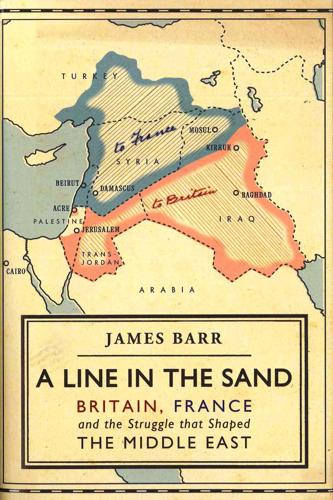
A Line in the Sand: Britain, France and the Struggle for the Mastery of the Middle East
by James Barr · 15 Feb 2011 · 750pp · 169,026 words
How Emotions Are Made: The New Science of the Mind and Brain
by Lisa Feldman Barrett · 6 Mar 2017
Permanent Record
by Edward Snowden · 16 Sep 2019 · 324pp · 106,699 words
Can It Happen Here?: Authoritarianism in America
by Cass R. Sunstein · 6 Mar 2018 · 434pp · 117,327 words

The Problem of Political Authority: An Examination of the Right to Coerce and the Duty to Obey
by Michael Huemer · 29 Oct 2012 · 577pp · 149,554 words

Greece Travel Guide
by Lonely Planet

Discover Caribbean Islands
by Lonely Planet

Smart Grid Standards
by Takuro Sato · 17 Nov 2015

Going Dark: The Secret Social Lives of Extremists
by Julia Ebner · 20 Feb 2020 · 309pp · 79,414 words
Blockchain Revolution: How the Technology Behind Bitcoin Is Changing Money, Business, and the World
by Don Tapscott and Alex Tapscott · 9 May 2016 · 515pp · 126,820 words

Lonely Planet Ireland
by Lonely Planet
The Economists' Hour: How the False Prophets of Free Markets Fractured Our Society
by Binyamin Appelbaum · 4 Sep 2019 · 614pp · 174,226 words
The Winner-Take-All Society: Why the Few at the Top Get So Much More Than the Rest of Us
by Robert H. Frank, Philip J. Cook · 2 May 2011

Discover Greece Travel Guide
by Lonely Planet
Designing Data-Intensive Applications: The Big Ideas Behind Reliable, Scalable, and Maintainable Systems
by Martin Kleppmann · 16 Mar 2017 · 1,237pp · 227,370 words
Competition Demystified
by Bruce C. Greenwald · 31 Aug 2016 · 482pp · 125,973 words
Value Investing: From Graham to Buffett and Beyond
by Bruce C. N. Greenwald, Judd Kahn, Paul D. Sonkin and Michael van Biema · 26 Jan 2004 · 306pp · 97,211 words
A Framework for Understanding Poverty
by Ruby K. Payne · 4 May 2012 · 178pp · 47,457 words
Tower of Basel: The Shadowy History of the Secret Bank That Runs the World
by Adam Lebor · 28 May 2013 · 438pp · 109,306 words

What We Cannot Know: Explorations at the Edge of Knowledge
by Marcus Du Sautoy · 18 May 2016

Robot Rules: Regulating Artificial Intelligence
by Jacob Turner · 29 Oct 2018 · 688pp · 147,571 words
Artificial Unintelligence: How Computers Misunderstand the World
by Meredith Broussard · 19 Apr 2018 · 245pp · 83,272 words
Tailspin: The People and Forces Behind America's Fifty-Year Fall--And Those Fighting to Reverse It
by Steven Brill · 28 May 2018 · 519pp · 155,332 words
Concentrated Investing
by Allen C. Benello · 7 Dec 2016
If Mayors Ruled the World: Dysfunctional Nations, Rising Cities
by Benjamin R. Barber · 5 Nov 2013 · 501pp · 145,943 words

DarkMarket: Cyberthieves, Cybercops and You
by Misha Glenny · 3 Oct 2011 · 274pp · 85,557 words

Principles of Corporate Finance
by Richard A. Brealey, Stewart C. Myers and Franklin Allen · 15 Feb 2014

A History of Modern Britain
by Andrew Marr · 2 Jul 2009 · 872pp · 259,208 words

Financial Statement Analysis: A Practitioner's Guide
by Martin S. Fridson and Fernando Alvarez · 31 May 2011
The Wires of War: Technology and the Global Struggle for Power
by Jacob Helberg · 11 Oct 2021 · 521pp · 118,183 words
Bad Blood: Secrets and Lies in a Silicon Valley Startup
by John Carreyrou · 20 May 2018 · 359pp · 110,488 words

Sandy Hook: An American Tragedy and the Battle for Truth
by Elizabeth Williamson · 8 Mar 2022 · 574pp · 148,233 words
What Algorithms Want: Imagination in the Age of Computing
by Ed Finn · 10 Mar 2017 · 285pp · 86,853 words
Netflixed: The Epic Battle for America's Eyeballs
by Gina Keating · 10 Oct 2012 · 347pp · 91,318 words

The Sinner and the Saint: Dostoevsky and the Gentleman Murderer Who Inspired a Masterpiece
by Kevin Birmingham · 16 Nov 2021 · 559pp · 155,777 words

Custodians of the Internet: Platforms, Content Moderation, and the Hidden Decisions That Shape Social Media
by Tarleton Gillespie · 25 Jun 2018 · 390pp · 109,519 words
Mastering Ethereum: Building Smart Contracts and DApps
by Andreas M. Antonopoulos and Gavin Wood Ph. D. · 23 Dec 2018 · 960pp · 125,049 words

Persian Gulf Command: A History of the Second World War in Iran and Iraq
by Ashley Jackson · 15 May 2018 · 714pp · 188,602 words

Tomorrow's Lawyers: An Introduction to Your Future
by Richard Susskind · 10 Jan 2013 · 160pp · 45,516 words

Underground
by Suelette Dreyfus · 1 Jan 2011 · 547pp · 160,071 words
The Cold War: A World History
by Odd Arne Westad · 4 Sep 2017 · 846pp · 250,145 words
We Are Bellingcat: Global Crime, Online Sleuths, and the Bold Future of News
by Eliot Higgins · 2 Mar 2021 · 277pp · 70,506 words
The Big Score
by Michael S. Malone · 20 Jul 2021
Catch and Kill: Lies, Spies, and a Conspiracy to Protect Predators
by Ronan Farrow · 14 Oct 2019 · 390pp · 115,303 words

Vanished Kingdoms: The History of Half-Forgotten Europe
by Norman Davies · 27 Sep 2011

Worms Eat My Garbage, 35th Anniversary Edition: How to Set Up and Maintain a Worm Composting System: Compost Food Waste, Produce Fertilizer for Houseplants and Garden, and Educate Your Kids and Family
by Mary Appelhof and Joanne Olszewski · 26 Dec 2017 · 181pp · 44,220 words
The Master and His Emissary: The Divided Brain and the Making of the Western World
by Iain McGilchrist · 8 Oct 2012
Capital Ideas: The Improbable Origins of Modern Wall Street
by Peter L. Bernstein · 19 Jun 2005 · 425pp · 122,223 words
The Power Law: Venture Capital and the Making of the New Future
by Sebastian Mallaby · 1 Feb 2022 · 935pp · 197,338 words

The Rough Guide to Morocco
by Rough Guides
How to Be a Liberal: The Story of Liberalism and the Fight for Its Life
by Ian Dunt · 15 Oct 2020

Evidence-Based Technical Analysis: Applying the Scientific Method and Statistical Inference to Trading Signals
by David Aronson · 1 Nov 2006
The Plague Year: America in the Time of Covid
by Lawrence Wright · 7 Jun 2021 · 391pp · 112,312 words
Howard Rheingold
by The Virtual Community Homesteading on the Electronic Frontier-Perseus Books (1993) · 26 Apr 2012

The End of Illness
by David B. Agus · 15 Oct 2012 · 433pp · 106,048 words
Smart Mobs: The Next Social Revolution
by Howard Rheingold · 24 Dec 2011

Accessory to War: The Unspoken Alliance Between Astrophysics and the Military
by Neil Degrasse Tyson and Avis Lang · 10 Sep 2018 · 745pp · 207,187 words

Ghost Road: Beyond the Driverless Car
by Anthony M. Townsend · 15 Jun 2020 · 362pp · 97,288 words
Truth, Lies, and O-Rings: Inside the Space Shuttle Challenger Disaster
by Allan J McDonald and James R. Hansen · 25 Apr 2009 · 787pp · 249,157 words

The Search for Life on Mars
by Elizabeth Howell · 14 Apr 2020 · 530pp · 145,220 words
Tools for Thought: The History and Future of Mind-Expanding Technology
by Howard Rheingold · 14 May 2000 · 352pp · 120,202 words
Dark Mirror: Edward Snowden and the Surveillance State
by Barton Gellman · 20 May 2020 · 562pp · 153,825 words

Rick Steves Florence & Tuscany 2017
by Rick Steves · 8 Nov 2016 · 920pp · 237,085 words

Lawrence in Arabia: War, Deceit, Imperial Folly and the Making of the Modern Middle East
by Scott Anderson · 5 Aug 2013
User Friendly: How the Hidden Rules of Design Are Changing the Way We Live, Work & Play
by Cliff Kuang and Robert Fabricant · 7 Nov 2019

The Rough Guide to Egypt (Rough Guide to...)
by Dan Richardson and Daniel Jacobs · 1 Feb 2013

Egypt Travel Guide
by Lonely Planet

Florence & Tuscany
by Lonely Planet · 928pp · 159,837 words

Cuba Travel Guide
by Lonely Planet
The Alignment Problem: Machine Learning and Human Values
by Brian Christian · 5 Oct 2020 · 625pp · 167,349 words
Broad Band: The Untold Story of the Women Who Made the Internet
by Claire L. Evans · 6 Mar 2018 · 371pp · 93,570 words
Lifespan: Why We Age—and Why We Don't Have To
by David A. Sinclair and Matthew D. Laplante · 9 Sep 2019

Mycelium Running: How Mushrooms Can Help Save the World
by Paul Stamets · 14 Apr 2005 · 732pp · 151,889 words

Site Reliability Engineering: How Google Runs Production Systems
by Betsy Beyer, Chris Jones, Jennifer Petoff and Niall Richard Murphy · 15 Apr 2016 · 719pp · 181,090 words
file:///C:/Documents%20and%...
by vpavan

Whole Earth: The Many Lives of Stewart Brand
by John Markoff · 22 Mar 2022 · 573pp · 142,376 words

Order Without Design: How Markets Shape Cities
by Alain Bertaud · 9 Nov 2018 · 769pp · 169,096 words

This Book Could Fix Your Life: The Science of Self Help
by New Scientist and Helen Thomson · 7 Jan 2021 · 442pp · 85,640 words

Hate Inc.: Why Today’s Media Makes Us Despise One Another
by Matt Taibbi · 7 Oct 2019 · 357pp · 99,456 words

The Blockchain Alternative: Rethinking Macroeconomic Policy and Economic Theory
by Kariappa Bheemaiah · 26 Feb 2017 · 492pp · 118,882 words

The Genetic Lottery: Why DNA Matters for Social Equality
by Kathryn Paige Harden · 20 Sep 2021 · 375pp · 102,166 words
How to Fix the Future: Staying Human in the Digital Age
by Andrew Keen · 1 Mar 2018 · 308pp · 85,880 words

Explaining Humans: What Science Can Teach Us About Life, Love and Relationships
by Camilla Pang · 12 Mar 2020 · 256pp · 67,563 words
The Controlled Demolition of the American Empire
by Jeff Berwick and Charlie Robinson · 14 Apr 2020 · 491pp · 141,690 words
I, Warbot: The Dawn of Artificially Intelligent Conflict
by Kenneth Payne · 16 Jun 2021 · 339pp · 92,785 words
The Autonomous Revolution: Reclaiming the Future We’ve Sold to Machines
by William Davidow and Michael Malone · 18 Feb 2020 · 304pp · 80,143 words
Autonomous Driving: How the Driverless Revolution Will Change the World
by Andreas Herrmann, Walter Brenner and Rupert Stadler · 25 Mar 2018
To Sell Is Human: The Surprising Truth About Moving Others
by Daniel H. Pink · 1 Dec 2012 · 243pp · 61,237 words

Apollo's Arrow: The Profound and Enduring Impact of Coronavirus on the Way We Live
by Nicholas A. Christakis · 27 Oct 2020 · 475pp · 127,389 words
On the Edge: The Art of Risking Everything
by Nate Silver · 12 Aug 2024 · 848pp · 227,015 words
Mapmatics: How We Navigate the World Through Numbers
by Paulina Rowinska · 5 Jun 2024 · 361pp · 100,834 words

One Day in August: Ian Fleming, Enigma, and the Deadly Raid on Dieppe
by David O’keefe · 5 Nov 2020 · 1,243pp · 167,097 words

Journey to the Edge of Reason: The Life of Kurt Gödel
by Stephen Budiansky · 10 May 2021 · 406pp · 108,266 words
The International Brigades: Fascism, Freedom and the Spanish Civil War
by Giles Tremlett · 14 Oct 2020 · 2,238pp · 239,238 words
UNIX® Network Programming, Volume 1: The Sockets Networking API, 3rd Edition
by W. Richard Stevens, Bill Fenner, Andrew M. Rudoff · 8 Jun 2013
The Data Detective: Ten Easy Rules to Make Sense of Statistics
by Tim Harford · 2 Feb 2021 · 428pp · 103,544 words
The Code Breaker: Jennifer Doudna, Gene Editing, and the Future of the Human Race
by Walter Isaacson · 9 Mar 2021 · 700pp · 160,604 words
Built on a Lie: The Rise and Fall of Neil Woodford and the Fate of Middle England’s Money
by Owen Walker · 4 Mar 2021 · 278pp · 82,771 words

Public Places, Urban Spaces: The Dimensions of Urban Design
by Matthew Carmona, Tim Heath, Steve Tiesdell and Taner Oc · 15 Feb 2010 · 1,233pp · 239,800 words

Empire of Pain: The Secret History of the Sackler Dynasty
by Patrick Radden Keefe · 12 Apr 2021 · 712pp · 212,334 words
May Contain Lies: How Stories, Statistics, and Studies Exploit Our Biases—And What We Can Do About It
by Alex Edmans · 13 May 2024 · 315pp · 87,035 words
Code Dependent: Living in the Shadow of AI
by Madhumita Murgia · 20 Mar 2024 · 336pp · 91,806 words

Squeezed: What You Don't Know About Orange Juice
by Alissa Hamilton · 26 Apr 2010 · 243pp · 69,667 words
After the Gig: How the Sharing Economy Got Hijacked and How to Win It Back
by Juliet Schor, William Attwood-Charles and Mehmet Cansoy · 15 Mar 2020 · 296pp · 83,254 words

1491
by Charles C. Mann · 8 Aug 2005 · 666pp · 189,883 words
Working Backwards: Insights, Stories, and Secrets From Inside Amazon
by Colin Bryar and Bill Carr · 9 Feb 2021 · 302pp · 100,493 words
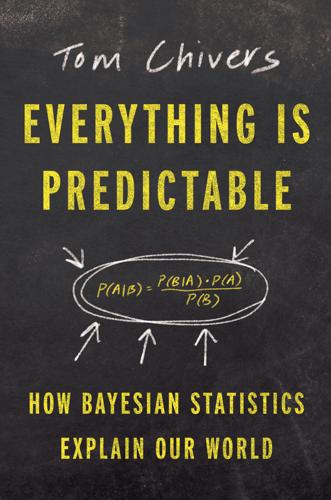
Everything Is Predictable: How Bayesian Statistics Explain Our World
by Tom Chivers · 6 May 2024 · 283pp · 102,484 words

Checkmate in Berlin: The Cold War Showdown That Shaped the Modern World
by Giles Milton · 26 May 2021
The First Tycoon
by T.J. Stiles · 14 Aug 2009

The Rough Guide to Seoul
by Rough Guides · 26 Sep 2018 · 305pp · 87,259 words
The Art of Scalability: Scalable Web Architecture, Processes, and Organizations for the Modern Enterprise
by Martin L. Abbott and Michael T. Fisher · 1 Dec 2009
Becoming Kim Jong Un: A Former CIA Officer's Insights Into North Korea's Enigmatic Young Dictator
by Jung H. Pak · 14 Apr 2020 · 395pp · 103,437 words

Deep Nutrition: Why Your Genes Need Traditional Food
by Catherine Shanahan M. D. · 2 Jan 2017 · 659pp · 190,874 words
The Year 1000: When Explorers Connected the World―and Globalization Began
by Valerie Hansen · 13 Apr 2020

We Are Electric: Inside the 200-Year Hunt for Our Body's Bioelectric Code, and What the Future Holds
by Sally Adee · 27 Feb 2023 · 329pp · 101,233 words
The Price of Silence: The Duke Lacrosse Scandal
by William D. Cohan · 8 Apr 2014 · 1,061pp · 341,217 words

Lonely Planet Washington, Oregon & the Pacific Northwest
by Lonely Planet · 1,006pp · 243,928 words

The Rough Guide to Wales
by Rough Guides · 14 Oct 2024 · 882pp · 240,215 words

Age of the City: Why Our Future Will Be Won or Lost Together
by Ian Goldin and Tom Lee-Devlin · 21 Jun 2023 · 248pp · 73,689 words

Fodor's Oregon
by Fodor's Travel Guides · 13 Jun 2023 · 590pp · 156,001 words
The Last Tycoons: The Secret History of Lazard Frères & Co.
by William D. Cohan · 25 Dec 2015 · 1,009pp · 329,520 words

Life's Edge: The Search for What It Means to Be Alive
by Carl Zimmer · 9 Mar 2021 · 392pp · 109,945 words

Moon Coastal Oregon
by Judy Jewell and W. C. McRae · 13 Jul 2020 · 366pp · 105,894 words
Number Go Up: Inside Crypto's Wild Rise and Staggering Fall
by Zeke Faux · 11 Sep 2023 · 385pp · 106,848 words

Shielded: How the Police Became Untouchable
by Joanna Schwartz · 14 Feb 2023 · 422pp · 114,817 words

Moon Oregon Trail Road Trip: Historic Sites, Small Towns, and Scenic Landscapes Along the Legendary Westward Route
by Katrina Emery and Moon Travel Guides · 27 Jul 2020 · 608pp · 184,703 words

Vaxxers: The Inside Story of the Oxford AstraZeneca Vaccine and the Race Against the Virus
by Sarah Gilbert and Catherine Green · 7 Jul 2021 · 296pp · 96,568 words
For Profit: A History of Corporations
by William Magnuson · 8 Nov 2022 · 356pp · 116,083 words
The Greatest Capitalist Who Ever Lived: Tom Watson Jr. And the Epic Story of How IBM Created the Digital Age
by Ralph Watson McElvenny and Marc Wortman · 14 Oct 2023 · 567pp · 171,072 words
A First-Class Catastrophe: The Road to Black Monday, the Worst Day in Wall Street History
by Diana B. Henriques · 18 Sep 2017 · 526pp · 144,019 words

Lonely Planet Brazil
by Lonely Planet · 1,410pp · 363,093 words
Of a Fire on the Moon
by Norman Mailer · 2 Jun 2014 · 477pp · 165,458 words

The Rough Guide to Australia (Travel Guide eBook)
by Rough Guides · 14 Oct 2023 · 1,955pp · 521,661 words

Sweden Travel Guide
by Lonely Planet
Luxury Fever: Why Money Fails to Satisfy in an Era of Excess
by Robert H. Frank · 15 Jan 1999 · 416pp · 112,159 words
Corporate Finance: Theory and Practice
by Pierre Vernimmen, Pascal Quiry, Maurizio Dallocchio, Yann le Fur and Antonio Salvi · 16 Oct 2017 · 1,544pp · 391,691 words

There Is Nothing for You Here: Finding Opportunity in the Twenty-First Century
by Fiona Hill · 4 Oct 2021 · 569pp · 165,510 words

The Rough Guide to Sweden (Travel Guide eBook)
by Rough Guides · 1 Nov 2019

Nonzero: The Logic of Human Destiny
by Robert Wright · 28 Dec 2010
Map of a Nation: A Biography of the Ordnance Survey
by Rachel Hewitt · 6 Jul 2011 · 595pp · 162,258 words

The Rough Guide to Devon & Cornwall
by Robert Andrews
Scary Smart: The Future of Artificial Intelligence and How You Can Save Our World
by Mo Gawdat · 29 Sep 2021 · 259pp · 84,261 words

Power, for All: How It Really Works and Why It's Everyone's Business
by Julie Battilana and Tiziana Casciaro · 30 Aug 2021 · 345pp · 92,063 words

The Rough Guide to New York City
by Rough Guides · 21 May 2018
Risk: A User's Guide
by Stanley McChrystal and Anna Butrico · 4 Oct 2021 · 489pp · 106,008 words
Very Bad People: The Inside Story of the Fight Against the World’s Network of Corruption
by Patrick Alley · 17 Mar 2022 · 384pp · 121,574 words
Good Profit: How Creating Value for Others Built One of the World's Most Successful Companies
by Charles de Ganahl Koch · 14 Sep 2015 · 261pp · 74,471 words

American Gun: The True Story of the AR-15
by Cameron McWhirter and Zusha Elinson · 25 Sep 2023 · 525pp · 166,724 words

The Survival of the City: Human Flourishing in an Age of Isolation
by Edward Glaeser and David Cutler · 14 Sep 2021 · 735pp · 165,375 words

The Rough Guide to France (Travel Guide eBook)
by Rough Guides · 1 Aug 2019 · 1,994pp · 548,894 words
Don't Even Think About It: Why Our Brains Are Wired to Ignore Climate Change
by George Marshall · 18 Aug 2014 · 298pp · 85,386 words
When the Heavens Went on Sale: The Misfits and Geniuses Racing to Put Space Within Reach
by Ashlee Vance · 8 May 2023 · 558pp · 175,965 words

The Science of Hate: How Prejudice Becomes Hate and What We Can Do to Stop It
by Matthew Williams · 23 Mar 2021 · 592pp · 125,186 words
The Raging 2020s: Companies, Countries, People - and the Fight for Our Future
by Alec Ross · 13 Sep 2021 · 363pp · 109,077 words
Dangerous Ideas: A Brief History of Censorship in the West, From the Ancients to Fake News
by Eric Berkowitz · 3 May 2021 · 412pp · 115,048 words

The Making of the Atomic Bomb
by Richard Rhodes · 17 Sep 2012 · 1,437pp · 384,709 words

Making Sense of Chaos: A Better Economics for a Better World
by J. Doyne Farmer · 24 Apr 2024 · 406pp · 114,438 words

The Constitution of Knowledge: A Defense of Truth
by Jonathan Rauch · 21 Jun 2021 · 446pp · 109,157 words

American Prometheus: The Triumph and Tragedy of J. Robert Oppenheimer
by Kai Bird and Martin J. Sherwin · 18 Dec 2007 · 1,041pp · 317,136 words

Lonely Planet Kenya
by Lonely Planet

Mauritius, Réunion & Seychelles Travel Guide
by Lonely Planet · 1,429pp · 189,336 words

Andrew Carnegie
by David Nasaw · 15 Nov 2007 · 1,230pp · 357,848 words

Enemies and Neighbours: Arabs and Jews in Palestine and Israel, 1917-2017
by Ian Black · 2 Nov 2017 · 674pp · 201,633 words
Attention Factory: The Story of TikTok and China's ByteDance
by Matthew Brennan · 9 Oct 2020 · 282pp · 63,385 words

The Rough Guide to Mexico
by Rough Guides · 15 Jan 2022

Insight Guides Pocket Helsinki
by Insight Guides · 12 Dec 2017
IRL: Finding Realness, Meaning, and Belonging in Our Digital Lives
by Chris Stedman · 19 Oct 2020 · 307pp · 101,998 words

The Mini Rough Guide to Helsinki
by Rough Guides · 9 Nov 2023

Doppelganger: A Trip Into the Mirror World
by Naomi Klein · 11 Sep 2023
These Strange New Minds: How AI Learned to Talk and What It Means
by Christopher Summerfield · 11 Mar 2025 · 412pp · 122,298 words

The Rough Guide to Finland
by Rough Guides · 31 May 2010 · 493pp · 155,660 words
Four Battlegrounds
by Paul Scharre · 18 Jan 2023
The Singularity Is Nearer: When We Merge with AI
by Ray Kurzweil · 25 Jun 2024

Antwerp: The Glory Years
by Michael Pye · 4 Aug 2021 · 409pp · 107,511 words

Fodor's Essential Belgium
by Fodor's Travel Guides · 23 Aug 2022

Insight Guides Iceland
by Insight Guides · 6 Dec 2024 · 415pp · 110,831 words
The Brussels Effect: How the European Union Rules the World
by Anu Bradford · 14 Sep 2020 · 696pp · 184,001 words

The Rough Guide to New Zealand: Travel Guide eBook
by Rough Guides · 1 Jan 2024 · 1,383pp · 367,401 words
The Dark Cloud: How the Digital World Is Costing the Earth
by Guillaume Pitron · 14 Jun 2023 · 271pp · 79,355 words

Sickening: How Big Pharma Broke American Health Care and How We Can Repair It
by John Abramson · 15 Dec 2022 · 362pp · 97,473 words

The Library: A Fragile History
by Arthur Der Weduwen and Andrew Pettegree · 14 Oct 2021 · 457pp · 173,326 words

Uncontrolled Spread: Why COVID-19 Crushed Us and How We Can Defeat the Next Pandemic
by Scott Gottlieb · 20 Sep 2021
The Dawn of Everything: A New History of Humanity
by David Graeber and David Wengrow · 18 Oct 2021
System Error: Where Big Tech Went Wrong and How We Can Reboot
by Rob Reich, Mehran Sahami and Jeremy M. Weinstein · 6 Sep 2021
The Elements of Choice: Why the Way We Decide Matters
by Eric J. Johnson · 12 Oct 2021 · 362pp · 103,087 words

Sorting Things Out: Classification and Its Consequences
by Geoffrey C. Bowker and Susan Leigh Star · 25 Aug 2000 · 357pp · 125,142 words
Power and Progress: Our Thousand-Year Struggle Over Technology and Prosperity
by Daron Acemoglu and Simon Johnson · 15 May 2023 · 619pp · 177,548 words

Deep Time Reckoning: How Future Thinking Can Help Earth Now
by Vincent Ialenti · 22 Sep 2020 · 224pp · 69,593 words

Beautiful Solutions: A Toolbox for Liberation
by Elandria Williams, Eli Feghali, Rachel Plattus and Nathan Schneider · 15 Dec 2024 · 346pp · 84,111 words
Your Face Belongs to Us: A Secretive Startup's Quest to End Privacy as We Know It
by Kashmir Hill · 19 Sep 2023 · 487pp · 124,008 words

The Rough Guide To Devon & Cornwall
by Rough Guides · 29 Apr 2024 · 558pp · 147,947 words
The Sirens' Call: How Attention Became the World's Most Endangered Resource
by Chris Hayes · 28 Jan 2025 · 359pp · 100,761 words

Addiction by Design: Machine Gambling in Las Vegas
by Natasha Dow Schüll · 19 Aug 2012
The Rebel and the Kingdom: The True Story of the Secret Mission to Overthrow the North Korean Regime
by Bradley Hope · 1 Nov 2022 · 257pp · 77,612 words

Earth Wars: The Battle for Global Resources
by Geoff Hiscock · 23 Apr 2012 · 363pp · 101,082 words

Creating a Life Together: Practical Tools to Grow Ecovillages and Intentional Communities
by Diana Leafe Christian · 1 Jan 2003

The World of Caffeine: The Science and Culture of the World's Most Popular Drug
by Bennett Alan Weinberg and Bonnie K. Bealer · 5 Dec 2000 · 559pp · 174,054 words

Drugs Without the Hot Air
by David Nutt · 30 May 2012 · 605pp · 110,673 words
As Gods: A Moral History of the Genetic Age
by Matthew Cobb · 15 Nov 2022 · 772pp · 150,109 words

After Tamerlane: The Global History of Empire Since 1405
by John Darwin · 5 Feb 2008 · 650pp · 203,191 words
Tomorrowland: Our Journey From Science Fiction to Science Fact
by Steven Kotler · 11 May 2015 · 294pp · 80,084 words

Scuba Diving
by Dennis K. Graver · 14 Mar 2017 · 288pp · 90,114 words

Finding Community: How to Join an Ecovillage or Intentional Community
by Diana Leafe Christian · 14 Jun 2007
Inside the Robot Kingdom: Japan, Mechatronics and the Coming Robotopia
by Frederik L. Schodt · 31 Mar 1988 · 361pp · 83,886 words
Like, Comment, Subscribe: Inside YouTube's Chaotic Rise to World Domination
by Mark Bergen · 5 Sep 2022 · 642pp · 141,888 words
Waging a Good War: A Military History of the Civil Rights Movement, 1954-1968
by Thomas E. Ricks · 3 Oct 2022 · 482pp · 150,822 words
The Empire Project: The Rise and Fall of the British World-System, 1830–1970
by John Darwin · 23 Sep 2009
Cheap: The High Cost of Discount Culture
by Ellen Ruppel Shell · 2 Jul 2009 · 387pp · 110,820 words
How Music Got Free: The End of an Industry, the Turn of the Century, and the Patient Zero of Piracy
by Stephen Witt · 15 Jun 2015 · 315pp · 93,522 words
The End of Policing
by Alex S. Vitale · 9 Oct 2017 · 318pp · 82,452 words
Blood Music
by Greg Bear · 19 May 2014

Manias, Panics and Crashes: A History of Financial Crises, Sixth Edition
by Kindleberger, Charles P. and Robert Z., Aliber · 9 Aug 2011
Occupying Wall Street: The Inside Story of an Action That Changed America
by Writers For The 99% · 17 Dec 2011 · 173pp · 54,729 words
Working Effectively With Legacy Code
by Michael Feathers · 14 Jul 2004 · 508pp · 120,339 words
Transport for Humans: Are We Nearly There Yet?
by Pete Dyson and Rory Sutherland · 15 Jan 2021 · 342pp · 72,927 words
The Clash of the Cultures
by John C. Bogle · 30 Jun 2012 · 339pp · 109,331 words

Gravity's Rainbow
by Thomas Pynchon · 15 Jan 2000 · 1,051pp · 334,334 words

To Serve God and Wal-Mart: The Making of Christian Free Enterprise
by Bethany Moreton · 15 May 2009 · 391pp · 22,799 words

Build: An Unorthodox Guide to Making Things Worth Making
by Tony Fadell · 2 May 2022 · 411pp · 119,022 words

Lonely Planet Mongolia (Travel Guide)
by Lonely Planet, Trent Holden, Adam Karlin, Michael Kohn, Adam Skolnick and Thomas O'Malley · 1 Jul 2018
A Natural History of Beer
by Rob DeSalle · 14 Jun 2019

Lonely Planet Central Asia (Travel Guide)
by Lonely Planet, Stephen Lioy, Anna Kaminski, Bradley Mayhew and Jenny Walker · 1 Jun 2018 · 1,046pp · 271,638 words

Forward the Foundation
by Isaac Asimov · 22 Feb 2012
Words That Work: It's Not What You Say, It's What People Hear
by Dr. Frank Luntz · 2 Jan 2007
Numbers Rule Your World: The Hidden Influence of Probability and Statistics on Everything You Do
by Kaiser Fung · 25 Jan 2010 · 227pp · 62,177 words
Power Button: A History of Pleasure, Panic, and the Politics of Pushing
by Rachel Plotnick · 24 Sep 2018 · 359pp · 105,248 words
The Talent Code: Greatest Isn't Born, It's Grown, Here's How
by Daniel Coyle · 27 Apr 2009 · 257pp · 68,203 words
Show Me the Bodies: How We Let Grenfell Happen
by Peter Apps · 10 Nov 2022 · 279pp · 85,552 words
Into the Raging Sea
by Rachel Slade · 4 Apr 2018 · 390pp · 109,438 words

Checkpoint Charlie
by Iain MacGregor · 5 Nov 2019 · 401pp · 119,043 words

Finding Zero: A Mathematician's Odyssey to Uncover the Origins of Numbers
by Amir D. Aczel · 6 Jan 2015 · 204pp · 60,319 words

Intern: A Doctor's Initiation
by Sandeep Jauhar · 26 Dec 2007 · 327pp · 103,978 words
Inside British Intelligence
by Gordon Thomas

The Gifted Adult: A Revolutionary Guide for Liberating Everyday Genius(tm)
by Mary-Elaine Jacobsen · 18 Feb 2015 · 435pp · 136,741 words

Hiding in Plain Sight: The Invention of Donald Trump and the Erosion of America
by Sarah Kendzior · 6 Apr 2020
Libertarian Idea
by Jan Narveson · 15 Dec 1988 · 371pp · 36,271 words
Stocks for the Long Run 5/E: the Definitive Guide to Financial Market Returns & Long-Term Investment Strategies
by Jeremy Siegel · 7 Jan 2014 · 517pp · 139,477 words
The Soul of a New Machine
by Tracy Kidder · 1 Jan 1981 · 299pp · 99,080 words

Lonely Planet Turkey
by Lonely Planet · 1,236pp · 320,184 words

Relic
by Alan Dean Foster · 13 Aug 2018 · 318pp · 93,545 words

Who Stole the American Dream?
by Hedrick Smith · 10 Sep 2012 · 598pp · 172,137 words
Tribe of Mentors: Short Life Advice From the Best in the World
by Timothy Ferriss · 14 Jun 2017 · 579pp · 183,063 words
The Right to Earn a Living: Economic Freedom and the Law
by Timothy Sandefur · 16 Aug 2010 · 399pp · 155,913 words

Advanced Software Testing—Vol. 3, 2nd Edition
by Jamie L. Mitchell and Rex Black · 15 Feb 2015
Made to Break: Technology and Obsolescence in America
by Giles Slade · 14 Apr 2006 · 384pp · 89,250 words
Frenemies: The Epic Disruption of the Ad Business
by Ken Auletta · 4 Jun 2018 · 379pp · 109,223 words
Visual Thinking: The Hidden Gifts of People Who Think in Pictures, Patterns, and Abstractions
by Temple Grandin, Ph.d. · 11 Oct 2022
The Geek Way: The Radical Mindset That Drives Extraordinary Results
by Andrew McAfee · 14 Nov 2023 · 381pp · 113,173 words
Win Every Argument: The Art of Debating, Persuading, and Public Speaking
by Mehdi Hasan · 27 Feb 2023 · 307pp · 93,073 words
Wealth and Poverty: A New Edition for the Twenty-First Century
by George Gilder · 30 Apr 1981 · 590pp · 153,208 words
Deep Utopia: Life and Meaning in a Solved World
by Nick Bostrom · 26 Mar 2024 · 547pp · 173,909 words
Two and Twenty: How the Masters of Private Equity Always Win
by Sachin Khajuria · 13 Jun 2022 · 229pp · 75,606 words

Doomsday Book
by Connie Willis · 1 Jan 1992 · 741pp · 208,654 words

Nerdy, Shy, and Socially Inappropriate
by Cynthia Kim · 20 Sep 2014

Nuclear War: A Scenario
by Annie Jacobsen · 25 Mar 2024 · 444pp · 105,807 words

Thomas Cromwell: A Life
by Diarmaid MacCulloch · 26 Sep 2018
The Death of Truth: Notes on Falsehood in the Age of Trump
by Michiko Kakutani · 17 Jul 2018 · 137pp · 38,925 words

Why We Drive: Toward a Philosophy of the Open Road
by Matthew B. Crawford · 8 Jun 2020 · 386pp · 113,709 words
Think Like an Engineer: Use Systematic Thinking to Solve Everyday Challenges & Unlock the Inherent Values in Them
by Mushtak Al-Atabi · 26 Aug 2014 · 204pp · 66,619 words

Leviathan Wakes
by James S. A. Corey · 14 Jun 2011 · 648pp · 170,770 words
Slouching Towards Utopia: An Economic History of the Twentieth Century
by J. Bradford Delong · 6 Apr 2020 · 593pp · 183,240 words
Pay Any Price: Greed, Power, and Endless War
by James Risen · 15 Feb 2014 · 339pp · 99,674 words

Escape From Model Land: How Mathematical Models Can Lead Us Astray and What We Can Do About It
by Erica Thompson · 6 Dec 2022 · 250pp · 79,360 words
SuperFreakonomics
by Steven D. Levitt and Stephen J. Dubner · 19 Oct 2009 · 302pp · 83,116 words

Challenger: A True Story of Heroism and Disaster on the Edge of Space
by Adam Higginbotham · 14 May 2024 · 523pp · 204,889 words
When Work Disappears: The World of the New Urban Poor
by William Julius Wilson · 1 Jan 1996 · 399pp · 116,828 words
The Crisis of Crowding: Quant Copycats, Ugly Models, and the New Crash Normal
by Ludwig B. Chincarini · 29 Jul 2012 · 701pp · 199,010 words

Market Wizards: Interviews With Top Traders
by Jack D. Schwager · 7 Feb 2012 · 499pp · 148,160 words

Time Travel: A History
by James Gleick · 26 Sep 2016 · 257pp · 80,100 words
Vulture Capitalism: Corporate Crimes, Backdoor Bailouts, and the Death of Freedom
by Grace Blakeley · 11 Mar 2024 · 371pp · 137,268 words
The Burning Shore: How Hitler's U-Boats Brought World War II to America
by Ed Offley · 25 Mar 2014 · 309pp · 84,539 words
Norco '80: The True Story of the Most Spectacular Bank Robbery in American History
by Peter Houlahan · 10 Jun 2019
Vultures' Picnic: In Pursuit of Petroleum Pigs, Power Pirates, and High-Finance Carnivores
by Greg Palast · 14 Nov 2011 · 493pp · 132,290 words
Chokepoint Capitalism
by Rebecca Giblin and Cory Doctorow · 26 Sep 2022 · 396pp · 113,613 words
A Hacker's Mind: How the Powerful Bend Society's Rules, and How to Bend Them Back
by Bruce Schneier · 7 Feb 2023 · 306pp · 82,909 words

Palo Alto: A History of California, Capitalism, and the World
by Malcolm Harris · 14 Feb 2023 · 864pp · 272,918 words

Bali & Lombok Travel Guide
by Lonely Planet
Palace Coup: The Billionaire Brawl Over the Bankrupt Caesars Gaming Empire
by Sujeet Indap and Max Frumes · 16 Mar 2021 · 362pp · 116,497 words
Radical Abundance: How a Revolution in Nanotechnology Will Change Civilization
by K. Eric Drexler · 6 May 2013 · 445pp · 105,255 words
Iron Curtain: The Crushing of Eastern Europe, 1945-1956
by Anne Applebaum · 30 Oct 2012 · 934pp · 232,651 words
Post Wall: Rebuilding the World After 1989
by Kristina Spohr · 23 Sep 2019 · 1,123pp · 328,357 words

Energy and Civilization: A History
by Vaclav Smil · 11 May 2017
Inside the Nudge Unit: How Small Changes Can Make a Big Difference
by David Halpern · 26 Aug 2015 · 387pp · 120,155 words
Falling Behind: Explaining the Development Gap Between Latin America and the United States
by Francis Fukuyama · 1 Jan 2006
The Middleman Economy: How Brokers, Agents, Dealers, and Everyday Matchmakers Create Value and Profit
by Marina Krakovsky · 14 Sep 2015 · 270pp · 79,180 words
Being Wrong: Adventures in the Margin of Error
by Kathryn Schulz · 7 Jun 2010 · 486pp · 148,485 words
The Big Book of Words You Should Know: Over 3,000 Words Every Person Should Be Able to Use (And a Few That You Probably Shouldn't)
by David Olsen, Michelle Bevilacqua and Justin Cord Hayes · 28 Jan 2009 · 663pp · 119,916 words
The Genius Within: Unlocking Your Brain's Potential
by David Adam · 6 Feb 2018 · 258pp · 79,503 words

The Great Bridge: The Epic Story of the Building of the Brooklyn Bridge
by David McCullough · 1 Jun 2001 · 848pp · 240,351 words

Practical Manual of Thyroid and Parathyroid Disease
by Asit Arora, Neil Tolley and R. Michael Tuttle · 2 Jan 2009 · 228pp · 119,593 words
The Enlightened Capitalists
by James O'Toole · 29 Dec 2018 · 716pp · 192,143 words

The Narrow Corridor: States, Societies, and the Fate of Liberty
by Daron Acemoglu and James A. Robinson · 23 Sep 2019 · 809pp · 237,921 words

Home Comforts: The Art and Science of Keeping House
by Cheryl Mendelson · 4 Nov 1999 · 1,631pp · 468,342 words

Break Free from OCD: Overcoming Obsessive Compulsive Disorder with CBT
by Paul M. Salkovskis · 8 Sep 2011 · 263pp · 70,706 words
Planet of Slums
by Mike Davis · 1 Mar 2006 · 232pp
City: A Guidebook for the Urban Age
by P. D. Smith · 19 Jun 2012
Globalists
by Quinn Slobodian · 16 Mar 2018 · 451pp · 142,662 words
Team Geek
by Brian W. Fitzpatrick and Ben Collins-Sussman · 6 Jul 2012 · 209pp · 54,638 words
Growth: From Microorganisms to Megacities
by Vaclav Smil · 23 Sep 2019
Profiting Without Producing: How Finance Exploits Us All
by Costas Lapavitsas · 14 Aug 2013 · 554pp · 158,687 words
The Outlaw Ocean: Journeys Across the Last Untamed Frontier
by Ian Urbina · 19 Aug 2019

The Food Revolution: How Your Diet Can Help Save Your Life and Our World
by John Robbins · 14 Sep 2010 · 468pp · 150,206 words
The Great Reversal: How America Gave Up on Free Markets
by Thomas Philippon · 29 Oct 2019 · 401pp · 109,892 words

Gambling Man
by Lionel Barber · 3 Oct 2024 · 424pp · 123,730 words
Good Economics for Hard Times: Better Answers to Our Biggest Problems
by Abhijit V. Banerjee and Esther Duflo · 12 Nov 2019 · 470pp · 148,730 words
The Confidence Game: The Psychology of the Con and Why We Fall for It Every Time
by Maria Konnikova · 28 Jan 2016 · 384pp · 118,572 words
Engineering Security
by Peter Gutmann

Sex, Lies, and Pharmaceuticals: How Drug Companies Plan to Profit From Female Sexual Dysfunction
by Ray Moynihan and Barbara Mintzes · 1 Oct 2010 · 269pp · 77,042 words

The Way We Eat: Why Our Food Choices Matter
by Peter Singer and Jim Mason · 1 May 2006 · 400pp · 129,320 words
The Divide: American Injustice in the Age of the Wealth Gap
by Matt Taibbi · 8 Apr 2014 · 455pp · 138,716 words
Open Space: From Earth to Eternity--the Global Race to Explore and Conquer the Cosmos
by David Ariosto · 24 Mar 2026 · 433pp · 116,344 words

Indelible City: Dispossession and Defiance in Hong Kong
by Louisa Lim · 19 Apr 2022

One Less Car: Bicycling and the Politics of Automobility
by Zack Furness and Zachary Mooradian Furness · 28 Mar 2010 · 532pp · 155,470 words

Unequal Britain: Equalities in Britain Since 1945
by Pat Thane · 18 Apr 2010 · 241pp · 90,538 words
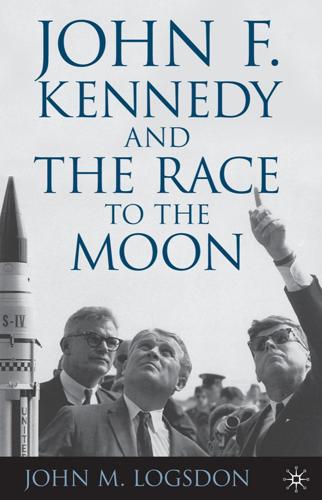
John F. Kennedy and the Race to the Moon (Palgrave Studies in the History of Science and Technology)
by John M. Logsdon · 15 Dec 2010 · 306pp · 36,032 words

How to Buy Property at Auction: The Essential Guide to Winning Property and Buy-To-Let Bargains
by Samantha Collett · 20 Mar 2014 · 218pp · 60,935 words
Culture and Prosperity: The Truth About Markets - Why Some Nations Are Rich but Most Remain Poor
by John Kay · 24 May 2004 · 436pp · 76 words
From Bacteria to Bach and Back: The Evolution of Minds
by Daniel C. Dennett · 7 Feb 2017 · 573pp · 157,767 words
The Invisible Hands: Top Hedge Fund Traders on Bubbles, Crashes, and Real Money
by Steven Drobny · 18 Mar 2010 · 537pp · 144,318 words
The Establishment: And How They Get Away With It
by Owen Jones · 3 Sep 2014 · 388pp · 125,472 words
This Changes Everything: Capitalism vs. The Climate
by Naomi Klein · 15 Sep 2014 · 829pp · 229,566 words

In the Shadow of the Moon: A Challenging Journey to Tranquility, 1965-1969
by Francis French, Colin Burgess and Walter Cunningham · 1 Jun 2010 · 628pp · 170,668 words

No Such Thing as Society
by Andy McSmith · 19 Nov 2010 · 613pp · 151,140 words
Life Inc.: How the World Became a Corporation and How to Take It Back
by Douglas Rushkoff · 1 Jun 2009 · 422pp · 131,666 words
Living in a Material World: The Commodity Connection
by Kevin Morrison · 15 Jul 2008 · 311pp · 17,232 words
Big Blues: The Unmaking of IBM
by Paul Carroll · 19 Sep 1994

True Color: The Strange and Spectacular Quest to Define Color--From Azure to Zinc Pink
by Kory Stamper · 30 Mar 2026 · 354pp · 96,619 words

The Victorian City: Everyday Life in Dickens' London
by Judith Flanders · 14 Oct 2012 · 683pp · 203,624 words

Meat: A Benign Extravagance
by Simon Fairlie · 14 Jun 2010 · 614pp · 176,458 words

The Berlin Wall: A World Divided, 1961-1989
by Frederick Taylor · 26 May 2008 · 564pp · 182,946 words
Children of Ruin
by Adrian Tchaikovsky · 13 May 2019 · 471pp · 147,210 words
Common Wealth: Economics for a Crowded Planet
by Jeffrey Sachs · 1 Jan 2008 · 421pp · 125,417 words
Adapt: Why Success Always Starts With Failure
by Tim Harford · 1 Jun 2011 · 459pp · 103,153 words

Aerotropolis
by John D. Kasarda and Greg Lindsay · 2 Jan 2009 · 603pp · 182,781 words

Cyprus Travel Guide
by Lonely Planet

Frommer's Kauai
by Jeanette Foster · 27 Feb 2004 · 260pp · 130,109 words
Lightning Beneath the Sea
by James M. Tabor · 15 Aug 2026
The Elements of Power: A Story of War, Technology, and the Dirtiest Supply Chain on Earth
by Nicolas Niarchos · 20 Jan 2026 · 654pp · 170,150 words
The Signal and the Noise: Why So Many Predictions Fail-But Some Don't
by Nate Silver · 31 Aug 2012 · 829pp · 186,976 words
Fluke: Chance, Chaos, and Why Everything We Do Matters
by Brian Klaas · 23 Jan 2024 · 250pp · 96,870 words

Irrational Exuberance: With a New Preface by the Author
by Robert J. Shiller · 15 Feb 2000 · 319pp · 106,772 words

Ayn Rand and the World She Made
by Anne C. Heller · 27 Oct 2009 · 756pp · 228,797 words

The Brilliant Disaster: JFK, Castro, and America's Doomed Invasion of Cuba's Bay of Pigs
by Jim Rasenberger · 4 Apr 2011 · 742pp · 202,902 words
The Productive Programmer
by Neal Ford · 8 Dec 2008 · 224pp · 48,804 words
Our Dollar, Your Problem: An Insider’s View of Seven Turbulent Decades of Global Finance, and the Road Ahead
by Kenneth Rogoff · 27 Feb 2025 · 330pp · 127,791 words

Economists and the Powerful
by Norbert Haring, Norbert H. Ring and Niall Douglas · 30 Sep 2012 · 261pp · 103,244 words
Red Roulette: An Insider's Story of Wealth, Power, Corruption, and Vengeance in Today's China
by Desmond Shum · 6 Sep 2021 · 277pp · 85,191 words

Space Chronicles: Facing the Ultimate Frontier
by Neil Degrasse Tyson and Avis Lang · 27 Feb 2012 · 476pp · 118,381 words
How Money Became Dangerous
by Christopher Varelas · 15 Oct 2019 · 477pp · 144,329 words
The Theory That Would Not Die: How Bayes' Rule Cracked the Enigma Code, Hunted Down Russian Submarines, and Emerged Triumphant From Two Centuries of Controversy
by Sharon Bertsch McGrayne · 16 May 2011 · 561pp · 120,899 words

Against All Enemies
by Tom Clancy and Peter Telep · 13 Jun 2011 · 640pp · 177,786 words
The Authoritarian Moment: How the Left Weaponized America's Institutions Against Dissent
by Ben Shapiro · 26 Jul 2021 · 309pp · 81,243 words

Glasgow: The Real Mean City
by Malcolm Archibald · 31 Mar 2013 · 258pp · 85,971 words

The Rough Guide to Madeira and the Azores
by Rough Guides · 26 Mar 2025