A Man for All Markets
by Edward O. Thorp · 15 Nov 2016 · 505pp · 142,118 words
one-day trading volume of 37.9 million shares. The price peaked at $165 before closing at $95. The portion of PalmPilot sold in the IPO was deliberately set well below demand and led to a buying frenzy and price spurt typical at the time for tech stock
…
IPOs. So far, this just repeated what we had often seen during the previous eighteen months of the tech stock boom. Now for the market inefficiency.
…
At Thursday’s closing the market priced PalmPilot at $53.4 billion, yet it valued 3Com, which still owned 94 percent of PalmPilot, at “only” $28 billion. But that means the market valued
…
3Com’s 94 percent of PalmPilot at $50 billion, so it valued the rest of 3Com at negative $22 billion! Analysts, however, estimated the value of the rest of 3Com at between $5 billion and $8.5 billion. And within six months
…
or so, 3Com intended to distribute these PalmPilot shares to its shareholders. Anticipating this, my
…
son, Jeff, had called me a few days earlier to mobilize capital for this possible opportunity. You could buy PALM directly in the IPO (to get IPO stock you had to be “connected”) or
…
at wildly gyrating, much higher prices in the “aftermarket,” when it began trading. Or you could buy PALM indirectly by buying COMS and waiting a few months to get
…
1.35 shares of PALM for each share of COMS owned. Moreover
…
, you would also have a share in the post-spin-off business of 3Com, which was profitable and would have $8 cash per share. Jeff estimated the stock would then
…
market theorists to answer these questions: Why were people willing to pay $14,850 for 135 shares of PALM when they could have paid $7,000, and why were some investors buying PALM stock at a price that set a value of $53 billion for the company instead of acquiring it at
…
a price of less than half as much by buying it via 3Com stock? It’s not a question of information. The
…
terms were simple, public, and known in advance. How could Jeff and I exploit this? One approach was to buy 3Com, wait six months or so, then sell off both the
…
PalmPilot shares we would get from 3Com and the remaining 3Com stub. But what if 3Com and PalmPilot were both substantially overpriced now and their prices fell drastically by then
…
? There was reason to believe this might happen. First, COMS had run from about $50 two months earlier to over $100 just before the IPO, in anticipation
…
friends, who runs a $2.7 billion convertible hedge fund, was able to short two hundred thousand shares of PALM and had previously bought COMS at a much lower price, anticipating the pre-IPO run-up. As The Wall Street Journal pointed out, in the few days when arbitrageurs (hedgers) could borrow
…
more shares of PALM, they might have been able to reduce the disparity if they sold short PALM and bought 3Com, as in our example. Here we see
Market Sense and Nonsense
by Jack D. Schwager · 5 Oct 2012 · 297pp · 91,141 words
examples provide compelling illustrations of apparent drastic mispricings, they fall short of the solidity of a mathematical proof of mispricing due to investor irrationality. The Palm/3Com episode provides such incontrovertible evidence of investor irrationality and prices that can be shown to be mathematically incorrect. On March 2, 2000
…
, 3Com sold approximately 5 percent of its holdings in Palm, most of it in an IPO. The Palm shares were issued at $38. Palm, the leading manufacturer of handheld computers at the time, was a much sought-after offering
…
, and the shares were sharply bid up on the first day. At one point, prices more than quadrupled the IPO price, reaching
…
a daily (and all-time) high of $165. Palm finished the first day at a closing price of $95.06. Since 3Com retained 95 percent ownership of Palm, 3Com shareholders indirectly owned 1.5 Palm shares
…
for each 3Com share, based on the respective number of outstanding shares in each company. Ironically
…
, despite the buying frenzy in Palm, 3Com shares fell 21 percent on the day of the IPO, closing at 81.181. Based on the implicit embedded holding of Palm shares, 3Com shares should have closed at a price of at least
…
who were able to short Palm and buy 3Com profited handsomely, while Palm investors who bought shares indirectly by buying 3Com fared tremendously better than investors who purchased Palm shares directly. Gaining advantage through obvious mispricings for a high-profile IPO that was prominently discussed in the financial press is something that should have
…
lost over 99 percent of what their value had been on the close of the IPO day. Figure 2.2 Palm (Split-Adjusted), 2000–2002 Source: moneycentral.msn.com. The fact that some mispricings, such as Palm/3Com, can be demonstrated with mathematical certainty lends credence to the view that numerous other cases of

Beyond the Random Walk: A Guide to Stock Market Anomalies and Low Risk Investing
by Vijay Singal · 15 Jun 2004 · 369pp · 128,349 words
institutional features limit trading. This is especially true for restrictions on short selling. For example, it is not possible to short-sell initial public offerings (IPOs) for a few days after the issue because shares are not available to borrow. The mispricing, if any, may persist for a few days, until
…
short selling becomes possible. Again in the case of IPOs, the underwriters engage in price stabilization activities that can, in some cases, keep the price at an inflated level for almost a month. A case
…
in point is the spin-off of Palm by 3Com. 3Com sold a fraction of Palm as an IPO in March 2000 but retained 95 percent of its shares. At that time it announced that it would spin off the remaining
…
worthless without Palm, 3Com’s share price should have been approximately 1.5 times Palm’s share price because a single 3Com share gave the right to own 1.5 Palm shares. On the first trading day after the IPO, Palm’s price was $95. Using the ratio of 1.5:1, 3Com’s
The Intelligent Investor (Collins Business Essentials)
by Benjamin Graham and Jason Zweig · 1 Jan 1949 · 670pp · 194,502 words
% of its Palm, Inc. subsidiary to the public. The remaining 95% of Palm’s stock would be spun off to 3Com’s shareholders in the next few months; for each share of 3Com they held, investors would receive 1.525 shares of Palm. So there were two ways you could get 100 shares of
…
Palm: By trying to elbow your way into the IPO, or by buying 66 shares of 3Com and waiting until the parent

Principles of Corporate Finance
by Richard A. Brealey, Stewart C. Myers and Franklin Allen · 15 Feb 2014
an initial public offering, and then spin off the remaining 95% of Palm shares by giving 3Com shareholders about 1.5 Palm shares for each 3Com share that they owned. The Palm carve-out occurred at close to the peak of the high-tech boom and got off to a dazzling start. The
…
shares were issued in the IPO at $38 each. On the first day of trading the stock price touched $165 before closing at
Alpha Trader
by Brent Donnelly · 11 May 2021
thing at the time was handheld gadgets so everyone wanted to own PALM and their awesome Palm Pilots. Nobody cared about poor old 3COM and their dial-up modems and PCMCIA cards. The day of the PALM IPO, PALM closed at $95, giving it a market value of $54B. 3COM’s closing price of
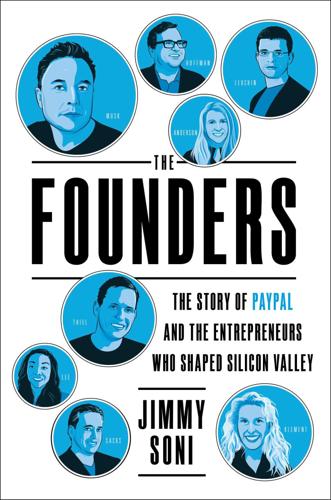
The Founders: The Story of Paypal and the Entrepreneurs Who Shaped Silicon Valley
by Jimmy Soni · 22 Feb 2022 · 505pp · 161,581 words
PalmPilot] platform,” Scott Banister admitted. “Many, many people out here were.” By 1999, more than five million people owned Palm devices, and 3Com, Palm’s parent company, was even exploring a Palm spin-off IPO. The Confinity team felt confident it could surf this handheld device growth wave. The team purchased advertising in magazines devoted
Misbehaving: The Making of Behavioral Economics
by Richard H. Thaler · 10 May 2015 · 500pp · 145,005 words
investments. A single share of 3Com included 1.5 shares of Palm plus an interest in the remaining parts of 3Com, or what in the finance literature is called the “stub value” of 3Com. In a rational world, the price of a 3Com share would be equal to the value of the stub plus
…
1.5 times the price of Palm. Investment bankers marketing the shares of
…
Palm to be sold in the initial public offering had to
…
determine what price to charge. As excitement about the IPO kept building, they kept
Losing the Signal: The Spectacular Rise and Fall of BlackBerry
by Jacquie McNish and Sean Silcoff · 6 Apr 2015 · 327pp · 102,322 words
on Business Magazine, March 31, 2000. 6 / TOP THIS 1 After buying Palm in 1995, U.S. Robotics was subsequently taken over by 3Com in 1997. 2 Beth Piskora, “$1.07B in His Palm; CEO Is a Big Winner as IPO Rockets to $53B,” New York Post, March 3, 2000. 3 The 1994 Simon