The Economists' Hour: How the False Prophets of Free Markets Fractured Our Society
by Binyamin Appelbaum · 4 Sep 2019 · 614pp · 174,226 words
leading figures are relatively well-known, like Milton Friedman, who had a greater influence on American life than any other economist of his era, and Arthur Laffer, who sketched a curve on a cocktail napkin in 1974 that helped to make tax cuts a staple of Republican economic policy. Others may be
…
the cause of supply-side economics, a pair of Technicolor Boswells emerged to help Mundell sell his ideas in the United States. The first was Arthur Laffer, an irrepressibly cheerful economist blissfully untroubled by the on-the-one-hand, on-the-other-hand tendencies of his tribe. When offering economic advice, Laffer
…
society we have known for two hundred years, the ideal of a government by consent of the governed, will simply cease to exist.”60 After Arthur Laffer moved to southern California in 1976, Justin Dart, a drugstore magnate and a member of Reagan’s “kitchen cabinet” of old friends, introduced the economist
…
. It is my considered opinion that the Smithsonian, Rumsfeld, and Cheney are, to varying degrees, confused about the facts. See Binyamin Appelbaum, “This Is Not Arthur Laffer’s Famous Napkin,” New York Times, October 13, 2017. 21. Howard R. Vane and Chris Mulhearn, “Interview with Robert A. Mundell,” Journal of Economic Perspectives
…
political process, consulting.” See Paul Blustein, “Supply-Side Theories Became Federal Policy with Unusual Speed,” Wall Street Journal, October 8, 1981. 43. Sue E. Jares, “Arthur Laffer Is a Man with All the Reasons for a Big Tax Cut,” People, April 7, 1979. 44. Kit R. Roane, Joe Rubin, and Dan McKinney
…
of, ref1, ref2, ref3, ref4, ref5; on John F. Kennedy, ref1, ref2; on John Maynard Keynes, ref1, ref2, ref3; on labor unions, ref1, ref2; on Arthur Laffer, ref1; on macroeconomic policy, ref1; textbooks of, ref2, ref3, ref1, ref2, ref3, ref4; on trade, ref1 Schelling, Thomas, ref1, ref2, ref3 Schmidt, Helmut, ref1, ref2
…
Yat-sen, ref1, ref2 Sun Yun-suan, ref1 supply-side economics: and deficit spending, ref1; and European integration, ref1, ref2; and inflation, ref1, ref2; and Arthur Laffer, ref1, ref2, ref3, ref4; Wilbur Mills on, ref1, ref2; model of, ref1, ref2; and Robert Mundell, ref1; and Ronald Reagan, ref1; and taxation, ref1, ref2
…
, ref3, ref4, ref5, ref6; and Walter Heller, ref1; as influence on human behavior, ref1, ref2, ref3; and Keynesian economics, ref1, ref2, ref3, ref4, ref5, ref6; Arthur Laffer on, ref1, ref2, ref3, ref4, 128, ref5, ref6; and Andrew Mellon, ref1; Robert Mundell on, ref1, ref2, ref3, ref4, ref5, ref6, ref7; and Richard Nixon
Narrative Economics: How Stories Go Viral and Drive Major Economic Events
by Robert J. Shiller · 14 Oct 2019 · 611pp · 130,419 words
much it did in the United States and the United Kingdom. FIGURE 5.1. Frequency of Appearance of the Laffer Curve The economic narrative of Arthur Laffer’s dinner napkin diagram about the effects of taxes on the economy shows a sharp epidemic around 1980 and a secondary epidemic after 2000. Sources
Wealth and Poverty: A New Edition for the Twenty-First Century
by George Gilder · 30 Apr 1981 · 590pp · 153,208 words
-side economists of the Reagan era are Alan Reynolds, who is still outwitting all the demand siders in his work Income and Wealth, the irrepressible Arthur Laffer of Laffer curve fame (lower marginal tax rates tend to yield more revenues), and the indefatigably savvy and inspirational Steve Forbes. Most erstwhile supply-side
…
of potential competitors and substitutes at home or abroad. To the question of how many companies an industry needs in order to be competitive, economist Arthur Laffer answers: one. It will compete against the threat of future rivals. Its monopoly can be maintained only as long as the price is kept low
…
example, a zero rate will bring in no revenue, and a 100 percent rate will also bring in nothing because it would halt taxable activity. Arthur Laffer’s contribution, though, as his ebullient Boswell, Jude Wanniski made clear in The Way the World Works, was not chiefly a mathematical formula, but a
…
former football player trained in physical education, Congressman Jack Kemp; a Wall Street Journal editorial writer with little economic training, Jude Wanniski; and an economist, Arthur Laffer, who was widely seen as most “unsound” by all his more prestigious colleagues. Part of the problem was a confusion between tax rates and tax
…
me and my generation. Now I have a feeling that we are becoming a nation of hustlers because of bad laws!28 Gunnar Myrdal, meet Arthur Laffer. In the late 1970s Governor Carlos Romero Barcelo of Puerto Rico was so fortunate as to meet Laffer; and Jude Wanniski, who had also conferred
…
jobs, and tax revenues continued to rise, creating a $1 billion surplus in the state’s accounts. The only economist who predicted such results was Arthur Laffer. For liberals concerned with the distribution of income, moreover, the Laffer curve offers a promise as seductive as any of the Keynesian strictures against austerity
…
changes in the weather and accumulated debts that cannot be subdued by taxes. Joining the chorus of decline was a formidable team of conservative economists: Arthur Laffer, Stephen Moore, Peter Tanous, and Larry Kudlow. Laffer and his coauthors published in 2008 a book entitled The End of Prosperity. It declared, “We are
…
Milton Friedman, Friedrich von Hayek, Ayn Rand, and William F. Buckley Jr., who were widely derided at the time they shaped my early economic ideas, Arthur Laffer, Irving Kristol, and Jude Wanniski are unpopular figures even among the professional economists who have taught me most. It so happens that the kind of
…
Kudlow, Larry Kuznets, Simon Kuznets curve Kwakiutl L labor, capitalization of elasticity of Labor Department labor market, equal rights agencies and restrictions labor unions Laffer, Arthur Laffer curve and Lafferite economics Laissez-faire land. See real estate land grant agricultural colleges Lasch, Christopher lasers Latin America Latvia Lauder, Estée Law Enforcement Assistance
Samuelson Friedman: The Battle Over the Free Market
by Nicholas Wapshott · 2 Aug 2021 · 453pp · 122,586 words
should never believe in a miracle beforehand. It is hard enough to do so after the fact.”23 The conservative hero of the hour was Arthur Laffer,24 who, over lunch in 1974 with Wanniski, Donald Rumsfeld (then Gerald Ford’s chief of staff), and Rumsfeld’s deputy Dick Cheney, had drawn
…
a lecture at a conference in Chicago titled “Why They are Laughing at Laffer.” “In one of my writings I referred to him as Dr. Arthur Laffer, thinking naturally that he was a Stanford PhD,” wrote Samuelson. “Somebody in Washington, perhaps it was Joseph Pechman,30 subsequently kidded me for pinning on
…
8, 1980. 7.“Election Perspective,” Newsweek, November 10, 1980, p. 94. 8.The other members were Arthur F. Burns, Paul McCracken, Herbert Stein, Alan Greenspan, Arthur Laffer, James Lynn, William Simon, Thomas Sowell, and Charles E. Walker. 9.Anderson, Revolution, pp. 267–68. 10.Friedman and Friedman, Two Lucky People, p. 394
…
the theory of supply-side economics include Robert Mundell (October 24, 1932–), professor of economics at Columbia University and Nobel Prize winner for economics, 1999; Arthur Laffer, whose Laffer Curve contends that there is a sweet spot at which a reduction in taxation can deliver higher revenues; and Jude Thaddeus Wanniski (June
…
on German economic affairs at the U.S. Department of State, 1944–1945, and professor of economics at Williams College and Stanford University. 32.Samuelson, “Arthur Laffer: Here’s my account.” Duke Samuelson archive. 33.He was finally awarded a PhD by Chicago in 1972. 34.Quoted in Eric Alterman, Sound and
…
Fury: The Making of the Punditocracy (Cornell, Ithaca, N.Y., 1999), p. 171. 35.Samuelson, “Arthur Laffer: Here’s my account.” Duke Samuelson archive. 36.The Economic Recovery Tax Act of 1981 cut the highest personal income tax rate from 70 to
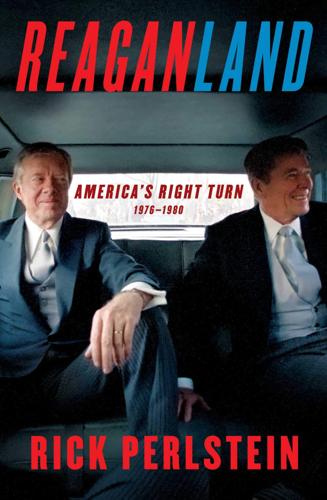
Reaganland: America's Right Turn 1976-1980
by Rick Perlstein · 17 Aug 2020
economist’s predictions, which had relied on only four variables when most such forecasting models used hundreds. He left Washington a laughingstock. His name was Arthur Laffer. Another was something of an eccentric: as a professor at Columbia University, he had written a series of classic scholarly papers in the early 1960s
…
had failed to convince her that the world was round not flat.” In 1975, he asked Kristol if he was interested in an article explaining Arthur Laffer’s magical curve. “Write it, and I’ll run it,” Kristol responded. Wanniski worked on it over four weekends. His piece, “The Mundell-Laffer Hypothesis
…
pharmaceutical magnate, hosted a dinner party for the Reagan social clique known “the Group” one evening, though Reagan himself was out of town. Guests included Arthur Laffer and William Simon, the former Ford treasury secretary and best-selling conservative author. The conversation turned to the New Jersey Senate race. Asked Laffer, “Hey
…
, which would cut personal income taxes by 30 percent.” He called the response to that message “nothing short of phenomenal.” In California, Robert Novak met Arthur Laffer—“spouting ideas a mile a minute and sipping wine on the patio of his $225,000 home in Palos Verdes on a sun-drenched afternoon
…
. Conservatives had long carped, concerning the goodies liberals voted citizens from government coffers, “No one shoots Santa Claus.” Then new-fangled “supply-side” economists like Arthur Laffer (First Image, with his famous curve) insisted that across-the-board income tax cuts performed fiscal miracles. Other economists, even conservatives like Milton Friedman, called
…
Populist Right (New York: Anchor Books, 2012), 278. “ramp for the expansion” Paul Craig Roberts, “The Breakdown of the Keynesian Model,” Public Interest, Summer 1978. Arthur Laffer Jonathan Chait, The Big Con: Crackpot Economists and the Fleecing of America (New York: Houghton Mifflin Harcourt, 2007), 14. Robert A. Mundell Paul Krugman, Peddling
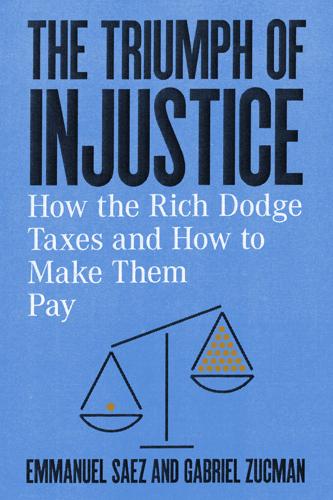
The Triumph of Injustice: How the Rich Dodge Taxes and How to Make Them Pay
by Emmanuel Saez and Gabriel Zucman · 14 Oct 2019 · 232pp · 70,361 words
30s. The lower the rate, the higher the revenue! We see here a striking illustration of “Laffer-curve” logic, named after the supply-side economist Arthur Laffer who popularized it in the 1970s. On this view, slashing tax rates boosts revenues. Even a rate of 0%, which on first blush may seem
…
of their zero tax rate. There is one small difference between the prosperity of tax havens and the one predicted by supply-side prophets. In Arthur Laffer’s world, people work more, businesses invest more extensively, innovators innovate more relentlessly when taxes are low—and global GDP rises. In the real world
…
Since 2015, visitors to the National Museum of American History in Washington, DC, have been able to admire a cloth napkin with a drawing by Arthur Laffer. Although perhaps not the original napkin on which Laffer drew his namesake curve at the restaurant Two Continents in 1974—more likely a keepsake created
Evil Geniuses: The Unmaking of America: A Recent History
by Kurt Andersen · 14 Sep 2020 · 486pp · 150,849 words
Review-Journal. One of his duties was cultivating and handling a young economist at the University of Chicago business school—ambitious, eccentric, second-tier—named Arthur Laffer. Laffer’s particular brand of old wine in a new bottle was the idea that by dramatically slashing tax rates on big business and the
…
were just being their shortsighted uneducated-palooka selves. When Hart ran a second time for president in 1988, one of his tax policy advisers was Arthur Laffer, the inventor of supply-side economics. When Jerry Brown ran for the 1992 Democratic nomination, he also sought Laffer’s help to devise some kind
…
-outs that gutted the law’s untaxed-foreign-hoard provisions. One of the designers of those tax cuts was Stephen Moore, a poor man’s Arthur Laffer who’d joined up early with candidate Trump. Moore is a pure creature of the right-wing counter-Establishment—M.A. (but no Ph.D
…
government policies. For the former, he directly advised Trump, as a member of the Economic Recovery Task Force along with his pals Larry Kudlow and Arthur Laffer. Trump held regular conference calls with those three, known in the White House as “Laffer’s guys”—according to The Washington Post, “Trump takes them
Fully Grown: Why a Stagnant Economy Is a Sign of Success
by Dietrich Vollrath · 6 Jan 2020 · 295pp · 90,821 words
competitiveness. ALEC is a think tank and lobbying group that promotes limited government and free markets, according to its own promotional materials. Laffer refers to Arthur Laffer, of the eponymous curve that relates tax revenues to tax rates. ALEC and Laffer combined information on several measures of state economic policies to determine
The Finance Curse: How Global Finance Is Making Us All Poorer
by Nicholas Shaxson · 10 Oct 2018 · 482pp · 149,351 words
lowered taxes,’ Brownback said. The tax cuts, he promised, would be ‘a shot of adrenaline’ in the heart of the Kansas economy. He flew in Arthur Laffer, a gravel-voiced economist famous for the Laffer curve, an economics graph that the academic drew on a cocktail napkin for Dick Cheney in a
…
: ‘Competitiveness: A Dangerous Obsession’ 105 Labour Party 77, 97, 102–5, 132, 192, 220, 247, 257 Lack, Simon 214; The Hedge Fund Mirage 214 Laffer, Arthur/Laffer curve 244–5, 254 Lazonick, Bill 225, 226 Leaver, Professor Adam 207, 224–5, 234 Lehman Brothers 140, 162–4 Leigh-Pemberton, Robin 145 LeRoy
Keynes Hayek: The Clash That Defined Modern Economics
by Nicholas Wapshott · 10 Oct 2011 · 494pp · 132,975 words
’s personal experience of high income taxes led him to believe tax cuts would inspire Americans to work harder, a policy advocated by EPAB member Arthur Laffer.60 Over dinner in December 1974 with President Ford’s chief of staff, Donald Rumsfeld, and his deputy, Dick Cheney, Laffer had argued that there
…
changed his mind, running a “Fed bashing” whispering campaign to the press and Congress that put blame for the bad economic news on Volcker. 60 Arthur Laffer (1940– ), American fiscal conservative economist and libertarian and professor at the University of Chicago Graduate School of Business. 61 Collected Writings, vol. 9: Essays in
…
Steven M. Gillon, The Democrats’ Dilemma: Walter F. Mondale and the Liberal Legacy (Columbia University Press, New York, 1995), p. 371. 65 All figures from Arthur Laffer, The Laffer Curve: Past, Present and Future, Executive Summary Backgrounder No. 1765 (Heritage Foundation, Washington, D.C., June 2004). 66 Jerry Tempalski, “Revenue Effects of
Licence to be Bad
by Jonathan Aldred · 5 Jun 2019 · 453pp · 111,010 words
Who Needs the Fed?: What Taylor Swift, Uber, and Robots Tell Us About Money, Credit, and Why We Should Abolish America's Central Bank
by John Tamny · 30 Apr 2016 · 268pp · 74,724 words
An Extraordinary Time: The End of the Postwar Boom and the Return of the Ordinary Economy
by Marc Levinson · 31 Jul 2016 · 409pp · 118,448 words
The Man Who Knew: The Life and Times of Alan Greenspan
by Sebastian Mallaby · 10 Oct 2016 · 1,242pp · 317,903 words

The Narrow Corridor: States, Societies, and the Fate of Liberty
by Daron Acemoglu and James A. Robinson · 23 Sep 2019 · 809pp · 237,921 words
The Age of Entitlement: America Since the Sixties
by Christopher Caldwell · 21 Jan 2020 · 450pp · 113,173 words
Money and Government: The Past and Future of Economics
by Robert Skidelsky · 13 Nov 2018
Markets, State, and People: Economics for Public Policy
by Diane Coyle · 14 Jan 2020 · 384pp · 108,414 words
Age of Greed: The Triumph of Finance and the Decline of America, 1970 to the Present
by Jeff Madrick · 11 Jun 2012 · 840pp · 202,245 words
How to Speak Money: What the Money People Say--And What It Really Means
by John Lanchester · 5 Oct 2014 · 261pp · 86,905 words
Understanding Asset Allocation: An Intuitive Approach to Maximizing Your Portfolio
by Victor A. Canto · 2 Jan 2005 · 337pp · 89,075 words

Abundance
by Ezra Klein and Derek Thompson · 18 Mar 2025 · 227pp · 84,566 words
The Great Divergence: America's Growing Inequality Crisis and What We Can Do About It
by Timothy Noah · 23 Apr 2012 · 309pp · 91,581 words
Extreme Money: Masters of the Universe and the Cult of Risk
by Satyajit Das · 14 Oct 2011 · 741pp · 179,454 words

Cryptoassets: The Innovative Investor's Guide to Bitcoin and Beyond: The Innovative Investor's Guide to Bitcoin and Beyond
by Chris Burniske and Jack Tatar · 19 Oct 2017 · 416pp · 106,532 words
Two Nations, Indivisible: A History of Inequality in America: A History of Inequality in America
by Jamie Bronstein · 29 Oct 2016 · 332pp · 89,668 words
Naked Economics: Undressing the Dismal Science (Fully Revised and Updated)
by Charles Wheelan · 18 Apr 2010 · 386pp · 122,595 words
Move Fast and Break Things: How Facebook, Google, and Amazon Cornered Culture and Undermined Democracy
by Jonathan Taplin · 17 Apr 2017 · 222pp · 70,132 words

Nine Crises: Fifty Years of Covering the British Economy From Devaluation to Brexit
by William Keegan · 24 Jan 2019 · 309pp · 85,584 words
An Empire of Wealth: Rise of American Economy Power 1607-2000
by John Steele Gordon · 12 Oct 2009 · 519pp · 148,131 words

Nomads: The Wanderers Who Shaped Our World
by Anthony Sattin · 25 May 2022 · 412pp · 121,164 words
Hawai'I Becalmed: Economic Lessons of the 1990s
by Christopher Grandy · 30 Sep 2002 · 145pp · 43,599 words
Wall Street: How It Works And for Whom
by Doug Henwood · 30 Aug 1998 · 586pp · 159,901 words
A Brief History of Neoliberalism
by David Harvey · 2 Jan 1995 · 318pp · 85,824 words
Capitalism: Money, Morals and Markets
by John Plender · 27 Jul 2015 · 355pp · 92,571 words
Capitalism 4.0: The Birth of a New Economy in the Aftermath of Crisis
by Anatole Kaletsky · 22 Jun 2010 · 484pp · 136,735 words
How Markets Fail: The Logic of Economic Calamities
by John Cassidy · 10 Nov 2009 · 545pp · 137,789 words
Crashed: How a Decade of Financial Crises Changed the World
by Adam Tooze · 31 Jul 2018 · 1,066pp · 273,703 words
Basic Economics
by Thomas Sowell · 1 Jan 2000 · 850pp · 254,117 words
Conscience of a Conservative: A Rejection of Destructive Politics and a Return to Principle
by Jeff Flake · 31 Jul 2017 · 138pp · 43,748 words
Triumph of the Yuppies: America, the Eighties, and the Creation of an Unequal Nation
by Tom McGrath · 3 Jun 2024 · 326pp · 103,034 words
The Great American Stickup: How Reagan Republicans and Clinton Democrats Enriched Wall Street While Mugging Main Street
by Robert Scheer · 14 Apr 2010 · 257pp · 64,763 words

The Impulse Society: America in the Age of Instant Gratification
by Paul Roberts · 1 Sep 2014 · 324pp · 92,805 words
A Fine Mess
by T. R. Reid · 13 Mar 2017 · 363pp · 92,422 words

To Serve God and Wal-Mart: The Making of Christian Free Enterprise
by Bethany Moreton · 15 May 2009 · 391pp · 22,799 words
The End of Work: Why Your Passion Can Become Your Job
by John Tamny · 6 May 2018 · 165pp · 47,193 words
The Deficit Myth: Modern Monetary Theory and the Birth of the People's Economy
by Stephanie Kelton · 8 Jun 2020 · 338pp · 104,684 words
The Scandal of Money
by George Gilder · 23 Feb 2016 · 209pp · 53,236 words
Dark Money: The Hidden History of the Billionaires Behind the Rise of the Radical Right
by Jane Mayer · 19 Jan 2016 · 558pp · 168,179 words