Big Tech
description: label for large technology companies including Alphabet (Google), Amazon, Apple, Meta Platforms and Microsoft
351 results
Billion Dollar Burger: Inside Big Tech's Race for the Future of Food
by Chase Purdy · 15 Jun 2020 · 232pp · 63,803 words
Penguin to continue to publish books for every reader. Library of Congress Cataloging-in-Publication Data Names: Purdy, Chase, author. Title: Billion dollar burger: inside big tech’s race for the future of food / Chase Purdy. Description: [New York] : Portfolio/Penguin, [2020] | Includes bibliographical references and index. Identifiers: LCCN 2019056850 (print) | LCCN

Blood in the Machine: The Origins of the Rebellion Against Big Tech
by Brian Merchant · 25 Sep 2023 · 524pp · 154,652 words
Workers Rising, November 2020 The New Luddites Christian Smalls, June 2022 Douglas Schifter, 2018 Afterword Are the Robots Coming for Our Jobs? How Uprisings Against Big Tech Begin Acknowledgments Discover More About the Author Also by Brian Merchant Selected Bibliography Notes For Russell, Aldus, and Corrina—now and future machine breakers. Explore
…
thunderous uprising that followed. It’s also a story about the twenty-first century, when calls of “The robots are coming for our jobs” and “Big Tech is becoming too powerful” are everywhere, and economic conditions look all too familiar to historians of the Industrial Revolution. In the eighteenth century, merchants, business
…
where work—even for the so-called middle class, even for white-collar workers—is increasingly informal, precarious, and organized by inscrutable and unaccountable technologies. Big Tech’s algorithms help dictate whether we get hired for a job, how much we’ll earn, and whether we’ll keep it. These companies invest
…
workers, service-sector employees on the brink of automation, overworked manufacturing laborers, and a citizenry increasingly angered by the apparent unimpeachability and unperturbability of the big tech companies—is showing new signs of rage, and who can blame the monster? Things did not end well for the poets. Dismissed by Byron, a
…
Ongweso Jr. and social scientist Jathan Sadowski, and produced by Jereme Brown. TMK embraces Luddism as a framework for exploring—and excoriating—the dominance of Big Tech and Silicon Valley. It quickly became a must-listen for tech critics and insiders alike, and for workers trying to navigate the world that
…
Big Tech made. “I have been pleasantly surprised and shocked, to be honest,” Sadowski said, laughing, over a Zoom call with his cohost. “This crop of people,
…
’s Cambridge Analytica scandal, growing concerns over Google and Amazon’s monopoly power, and so on—demonstrates a deep-seated anger at the domination of Big Tech, but that it has already been co-opted by the industry. Techlash was shortlisted for Oxford English Dictionary’s 2018 word of the year. It
…
Breaking Things at Work. “We may discover each other through our myriad of antagonistic practices in their incredible diversity.” So far, of the so-called Big Tech companies, Meta, the parent company of Facebook, has probably attracted the most widespread ire, at least in the media, for its role in allowing misinformation
…
to target vulnerable groups for unthinkable violence, as in the case of Myanmar and its Rohingya minority. Mark Zuckerberg consistently polls as the least popular big tech CEO for a reason.1 But in the 2020s, there is plenty of ire to go around. And the targets for the deeper, more incendiary
…
anger are big tech companies that are undermining standards of work. Big tech companies that clearly and openly embrace technologies that are shifting and degrading not just working conditions but how people work, period
…
. Big tech companies whose leaders are openly hostile to their workers—crushing union drives, enacting oppressive, maddening workplace policies, and breaking labor laws, knowing they have the
…
economic might to clean up their messes later. Big tech companies whose leaders are the richest men on the planet, or are aiming to get there. Big tech companies that have long operated under the general impression that they are unassailable, and that are finding
…
—what he calls “union drip”—Smalls was still easing into his role as the working class’s chief ambassador in the growing organized skirmish against Big Tech. He was charismatic but unpolished, and gripped the microphone nervously beneath his full-throated calls for workers to stand up and fight. “I spent three
…
make back their investment in 3.7 years, and who send the savings upstream—they’re the ones coming for your job. How Uprisings against Big Tech Begin The reason that there are so many similarities between today and the time of the Luddites is that little has fundamentally changed about our
…
productive technologies, and the workers at their whims. But clearly such tension does not always lead to widespread violent insurrection. So how do uprisings against Big Tech and the machine owners begin? When entrepreneurs and executives deploy new technologies intended to replace skilled work, confound or elude regulations, or degrade traditional jobs
…
, identities, and good jobs, and the simultaneous increase of domination by the entrepreneurs, factory owners, and their allies. It is an age dominated utterly by Big Tech. The time is again ripe for targeting the “machinery hurtful to commonality”—the gig app platforms, the fulfillment-center surveillance, the delivery robots, the AI
…
before the rebel workers of this new machine age see the injustices of the algorithmic platforms as too much to bear, the surveillance apparatus of Big Tech too intrusive, the robotic pace of work too ruthlessly body-breaking. And if they feel the rage of Frankenstein’s monster, rebooted in a new
…
big shout out to the incredible team at Little, Brown, who made sure that the story of the Luddites and the resurgence of rebelliousness against big tech would get all the glory it deserved; to my production editor, Linda Arends, for a thorough, bang-up job with designing and producing the book
Rigged: How the Media, Big Tech, and the Democrats Seized Our Elections
by Mollie Hemingway · 11 Oct 2021 · 595pp · 143,394 words
know the effect flooding the system with tens of millions of mail-in ballots had on their vote. They deserve to know how and why Big Tech and the corporate political media manipulated the news to support certain political narratives while censoring stories they now admit were true. They deserve to know
…
fake news stories that the media ran to hamstring the Trump campaign and tilt the election in Biden’s favor. And with the assistance of Big Tech, the media could exert more influence on censoring conservative opinion than ever. CHAPTER SIX Stifling Debates It was a scene straight out of a movie
…
for women and minorities, and that we should keep their struggle at the forefront of our minds,” a Facebook employee told Bokhari, author of #DELETED: Big Tech’s Battle to Erase the Trump Movement and Steal the Election. “There were numerous cases of employees sending anti-Trump propaganda, invitations to protests, and
…
writing, the outcome of Project Veritas’s libel suit is unresolved. The Veritas report was just one piece of explosive news that the media and Big Tech censored before the election. It is an instructive example in how different groups conspired to throw the game to Joe Biden. Facebook once touted its
…
. In fact, nobody even really figured it out until Ball’s article and the emails in Green Bay came to light months after the fact. “Big Tech got meaner, bigger, stronger, and they were crazed,” Trump says, reflecting on their election meddling by means of censorship and algorithms. And as for the
…
it about the establishment’s giving a pass to the ne’er-do-well son of a politician. At every point, the media and their Big Tech allies deliberately controlled the information surrounding a major political corruption story involving a man who is now president, who knowingly let his family exploit his
…
censor the distribution of the story from other media outlets, part of a pattern of controlling discourse to favor political allies. The media, polling, and Big Tech rigging alone would have been enough to cause Republicans to doubt any election loss, but what Democrats did to the manner in which people vote
…
12, 2018, https://www.breitbart.com/tech/2018/09/12/leaked-video-google-leaderships-dismayed-reaction-to-trump-election/. 2. Ibid. 3. Allum Bokhari, #DELETED: Big Tech’s Battle to Erase the Trump Movement and Steal the Election (New York: Center Street, 2020), 29. 4. Ibid., 423. 5. Sheera Frenkel, “Renegade Facebook
…
Expose,” New York Post, October 14, 2020, https://nypost.com/2020/10/14/facebook-twitter-block-the-post-from-posting/. 10. “Fact: Big Media and Big Tech Stole the 2020 Election,” NewsBusters, November 9, 2020, https://www.newsbusters.org/blogs/nb/nb-staff/2020/11/09/fact-big-media-and
…
-big-tech-stole-2020-election. 11. Ibid. 12. Adam Entous, “Will Hunter Biden Jeopardize His Father’s Campaign?,” New Yorker, July 1, 2019, https://www.newyorker.com/
World Without Mind: The Existential Threat of Big Tech
by Franklin Foer · 31 Aug 2017 · 281pp · 71,242 words
to publish books for every reader. LIBRARY OF CONGRESS CATALOGING-IN-PUBLICATION DATA Names: Foer, Franklin, author. Title: World without mind: the existential threat of big tech / Franklin Foer. Description: New York: Penguin Press, [2017] | Includes bibliographical references and index. Identifiers: LCCN 2017008656 (print) | LCCN 2017020819 (ebook) | ISBN 9781101981139 (ebook) | ISBN 9781101981115
…
OF HISTORY 3. MARK ZUCKERBERG’S WAR ON FREE WILL 4. JEFF BEZOS DISRUPTS KNOWLEDGE 5. KEEPERS OF THE BIG GATE IN THE SKY 6. BIG TECH’S SMOKE-FILLED ROOM SECTION II WORLD WITHOUT MIND 7. THE VIRALITY VIRUS 8. DEATH OF THE AUTHOR SECTION III TAKE BACK THE MIND 9
…
the worldview that emerges. In fact, it is something much closer to the opposite of a libertarian’s veneration of the heroic, solitary individual. The big tech companies believe we’re fundamentally social beings, born to collective existence. They invest their faith in the network, the wisdom of crowds, collaboration. They harbor
…
empowerment of the “user”—but their worldview rolls over it. Even the ubiquitous invocation of users is telling, a passive, bureaucratic description of us. The big tech companies—the Europeans have charmingly, and correctly, lumped them together as GAFA (Google, Apple, Facebook, Amazon)—are shredding the principles that protect individuality. Their devices
…
overwhelming hold on that market. Such dominance endows these companies with the ability to remake the markets they control. As with the food giants, the big tech companies have given rise to a new science that aims to construct products that pander to the tastes of their consumers. They want to overhaul
…
gigantism as a fact of economic life. In the great office parks south of San Francisco, monopoly is a spiritual yearning, a concept unabashedly embraced. Big tech considers the concentration of power in its companies—in the networks they control—an urgent social good, the precursor to global harmony, a necessary condition
…
better and colonize Mars. But Silicon Valley is hardly distinguished by the hegemonic egos of its leaders, especially relative to finance or media. What makes Big Tech different is that it pursues these projects with a theological sense of conviction—which makes its efforts both wondrous and dangerous. At the epicenter of
…
WAR ON FREE WILL SILICON VALLEY GRADUATED from the counterculture, but not really. All the values it professes are the values of the sixties. The big tech companies present themselves as platforms for personal liberation, just as Stewart Brand preached. Everyone has the right to speak their mind on social media, to
…
fantasies about the Engineer King. A very different version of this dream, however, has come to fruition, in the form of the CEOs of the big tech companies. We’re not ruled by engineers, not yet, but they have become the dominant force in American life, the highest, most influential tier of
…
becomes unusable. “Searching and filtering are all that stand between this world and the Library of Babel,” the science writer James Gleick has argued. • • • THE BIG TECH COMPANIES didn’t just benefit from the economic collapse of knowledge. They maneuvered to shred the value of knowledge, so that old media would come
…
—although streaming services have begun to weaken its decade-long grip on the business. It’s sometimes hard to grasp the pecuniary motives of the big tech companies, because they strike such an idealistic pose. There’s no doubt that they believe in their own righteousness, but they also practice corporate gamesmanship
…
, told company brass in 2006 that Google must “pressure premium content providers to change their model to free.” It’s a perfectly rational stance. The big tech companies become far more valuable if they serve as a gateway to free knowledge, if they provide a portal to an open and comprehensive collection
…
has already come to depend on the whims of one company. Even if he were a benevolent monopolist, that would be a terrifying prospect. Six BIG TECH’S SMOKE-FILLED ROOM THE ALGORITHM IS A NOVEL PROBLEM for democracy. Technology companies boast, with little shyness, about how they can nudge users toward
…
Valley has infiltrated the profession, from both within and without. Over the past decade, journalism has come to depend unhealthily on Facebook and Google. The big tech companies supply journalism with an enormous percentage of its audience—and therefore a big chunk of revenue. This gives Silicon Valley influence over the entire
…
grasp of Facebook, but dependence also breeds cowardice. The prisoner lies on the cot dreaming of escape plans that will never hatch. Dependence on the big tech companies is increasingly the plight of the worker and the entrepreneur. Drivers maintain erratic patterns of sleep because of Uber’s shifting whims. Companies that
…
, too. Their idealism dictated that they resist his idealism. They didn’t want to work for a publication whose ethos more clearly aligned with the big tech companies than with journalism. They were willing to pay careful attention to Facebook, but didn’t want their jobs defined by it. The bust-up
…
care for the donations that the tech companies send to Democrats, but they have no ideological interest in placing them under the thumb of government. Big tech has created a corporate paradise, which will prevail, until it doesn’t. • • • THE TECH COMPANIES have so mastered Washington, they have acquired such cultural prestige
…
of the books it sells. It tracks the passages that we underline—and shares those markings with our fellow readers. It remains a fortress of big tech, umbilically connected to an exclusive store. The Kindle is an effective simulation of a book, yet it’s still a simulation. It was predicted that
…
to study in groups, to execute projects as teams. Our workplaces have been stripped of walls so that the organization functions as a unit. The big tech companies also propel us to join the crowd—they provide us with the trending topics and their algorithms suggest that we read the same articles
…
, 2000), 1. When Time-Life, the blue whale of publishing, wanted to inhale Random House: Bennett Cerf, At Random (Random House, 1977), 285. CHAPTER SIX: BIG TECH’S SMOKE-FILLED ROOM “Victorian Internet”: Tom Standage, The Victorian Internet (Bloomsbury, 2014), 215. The Western Union monopoly had many accomplices: Paul Starr, The Creation
System Error: Where Big Tech Went Wrong and How We Can Reboot
by Rob Reich, Mehran Sahami and Jeremy M. Weinstein · 6 Sep 2021
delivered most prominently by Trump himself, despite more than sixty failed lawsuits challenging election results and thorough refutations by election officials across the country. The big tech platforms had been a key conduit for the accusations of election fraud for months before. On January 6, they finally woke up to the horror
…
The platforms’ rebuke of Trump’s election disinformation was also an alarm bell about how much power is concentrated in the hands of a few big tech companies. The president of the United States—often touted as the “leader of the free world”—was unceremoniously stripped of his favorite means of communicating
…
the United States, it cast an unmistakable light on the extraordinary power that technology and, more significantly, the people who develop it have over us. Big tech’s role in and reaction to the events that led to the storming of the US Capitol only highlight the concerns about technology that have
…
reports of privacy breaches and stories of behavior manipulation resulting from vast troves of data mined by large companies have made it commonplace to view big tech through a dark lens. Some argue that the internet, smartphones, and computers have delivered to us a set of devices hell-bent on hijacking
…
tech companies from within. And for those outside of the tech sector, there was a clear desire to take stock of the power of big tech and reckon with their own sense of powerlessness to shape its direction. Though it was not a surprise to see that these issues were salient
…
How to think about what should be done, and why, is what we need to grapple with. The bloom is off the rose of the big tech companies. We no longer hear so much gushing about the internet as a tool for putting a library into everyone’s hands, social media as
…
to Doerr’s book that “I think it’s worked out pretty well for us.” Of course, OKRs are not the only management philosophy among big tech companies, although they are espoused by many of them. But they are emblematic of how readily the engineering mindset of measurement and optimization has ballooned
…
large, have tremendous economic power and tremendous political power. And they’re spending hundreds of millions of dollars to try to protect the status quo.” Big tech is also spending millions to lobby European regulators to ward off efforts to limit digital advertising, contributing to what some call a “Washingtonization of Brussels
…
a few is dangerous to democracy—especially when digital platforms control content. The era of self-regulation is over.” That remains to be seen. Big tech will not submit to regulation without a fight. One outcome is clear: we are in a different land from the one in which John Perry
…
reminder to employees of how quickly a dominant company can be left behind. Even if the market position of a company seems secure, China’s big tech companies are growing like mad. Only the Paranoid Survive is the title of former Intel CEO Andy Grove’s book for good reason. In
…
power, too, lobbying to preserve the core elements of the Telecommunications Act and seeking to prevent meaningful antitrust enforcement. In 2020, with antitrust actions against big tech companies finally in motion, the degree of their coordination to prevent regulation became apparent. In just one example, a government lawsuit revealed the extent of
…
so compelling in principle begins to run into trouble. Let’s start with the idea of a competitive marketplace. The best current example of a big tech company deeply committed to privacy is Apple. Indeed, the company’s CEO, Tim Cook, has made the battle for privacy a hallmark of his
…
that is now widely understood: if you’re not paying for the product, you are the product. The real customers of many of the big tech companies are the advertisers, and what they’re paying for is the ability to target their messages ever more precisely to consumers, based on their
…
reforms on data protection. Even as government officials sought to resurrect legislation in Obama’s second term, the tech industry mounted a furious lobbying campaign. Big tech convinced lawmakers to gut the bill, forcing a retreat from the idea of consumer privacy as an inherent right. By the end of the process
…
called a “private right of action”—the ability of individuals who have been wronged by a company to sue in court—though lobbying by the big tech companies watered down this provision in the final draft. Also like GDPR, CCPA applies to any companies that do business in California, not only
…
particular man a form of bullying? Is it hate speech or bullying in some contexts but not in others? These are the questions that the big tech platforms confront endlessly. The decisions they make can affect billions of people. For Facebook, with more than 2.8 billion active users, Mark Zuckerberg
…
any universal declaration of a right to free expression. Facebook’s control over content is a fearsome power. Critics of one stripe complain that the big tech companies exercise too much control and ban or delete too much. They thwart the ideal of free speech, cherished in liberal democratic societies and central
…
speech constituted 7 or 8 out of every 10,000 pieces of content viewed by users. Rather than relying on the voluntary efforts of the big tech companies, should democratic governments impose rules and standards on the companies? Democratic societies strive to protect individual dignity, as evidenced by human rights documents
…
these [community standards] policies is made up of around 30,000 people. . . . they review more than two million pieces of content every day.” Indeed, the big tech platforms should be credited for taking an aggressive stance toward content moderation and hiring armies of content moderators. But being a content moderator comes with
…
malicious intent, shows the shortcomings of relying entirely on technology to solve content moderation problems. A Supreme Court for Facebook? The mission statements of the big tech companies are grandiose visions of making the world a better place. But as the problems of polarization, misinformation, and hate speech have become clearer, all
…
simply because they owned the railroad tracks. Finally, we need an aggressive strategy of preventing and reversing anti-competitive mergers and acquisitions. The fact that big tech platforms are so dominant—and so rich—means that they simply buy up any competitors that represent a threat to their position. An example of
…
us by technologists. It need not be so. There are many actions we can take as an initial line of defense against the disruptions of big tech in our personal, professional, and civic lives. Perhaps the most important first step is one you’ve already taken by getting to this point
…
seeking to spread misinformation. But ultimately, we can’t—and shouldn’t have to—rely on personal action alone to confront the disruptions caused by big tech. As we’ve argued throughout this book, we need to bring our collective action to bear if we want technology to respect the wider
…
not just marketplaces but the values that we hold dear and are core to the healthy functioning of democratic societies. What we confront today in big tech’s disruptions is not a question about pop-up boxes concerning our privacy choices or whether to delete Facebook. Systemic problems require system-wide solutions
…
2018 presaged greater government involvement in regulating the tech sector. In Washington, DC, a bipartisan coalition opened hearings regarding antitrust action against a number of big tech companies just before the November 2020 election. And CCPA has stimulated potential action by Congress to enact federal privacy legislation across all fifty states. The
…
pandemic. But building government expertise in technology, especially in light of the growing calls by politicians and citizens alike to rein in the power of big tech, would be a step in the right direction. Rebooting the System Creating an alternative future that can engage all of us in the tensions and
…
Silicon Valley and until recently hadn’t found many fans in the United States. Many US politicians and regulators have accepted the argument that the big tech companies have earned their dominance—that it is a reflection of the high-quality services they provide and nothing more. Even President Obama maligned Vestager
…
’s investigations into big tech as sour grapes. In an interview in 2015, he said, “their service providers who, you know, can’t compete with ours—are essentially trying
…
there.” But in recent years, the terrain has been changing fast. Both citizens and politicians are concerned about the untrammeled power and market domination of big tech. And there is increasing recognition that their power isn’t only a result of their high-quality products. Instead, their dominance reflects unique features of
…
and playing catch-up to Vestager and her EU colleagues. In late 2020, a flood of major lawsuits was filed in US courts against the big tech companies. The Federal Trade Commission and forty-eight US state attorneys general took aim at Facebook, arguing that the company had achieved its dominance
…
the right direction. And she has a growing chorus of voices behind her, including in the United States. An agenda to limit the power of big tech companies has three key components. The first is addressing the huge power imbalance between companies and consumers when it comes to control over users’ personal
…
offered by China. We admit that it’s a strange time to be mounting a defense of democracy and civic empowerment as the antidote to big tech’s current predicaments. The public’s faith in our governing institutions is at historic lows. Yet we must also remember that the distrust in
…
/the-tragedy-of-tech-companies-getting-the-regulation-they-want/. “When [antitrust] laws”: Bobby Allyn and Shannon Bond, “4 Key Takeaways from Washington’s Big Tech Hearing on ‘Monopoly Power,’” National Public Radio, July 30, 2020, https://www.npr.org/2020/07/30/896952403/4-key-takeaways-from-washingtons
…
positive-about-tech-companies-impact-on-the-u-s/; Ina Fried, “40% of Americans Believe Artificial Intelligence Needs More Regulation,” Axios, https://www.axios.com/big-tech-industry-global-trust-9b7c6c3c-98f1-4e80-8275-cf52446b1515.html. Indeed, a growing number: Karen Hao, “The Coming War on the Hidden Algorithms That Trap People
…
Justice League, 241 Algorithms to Live By (Christian and Griffiths), 14 Allen, Danielle, xi, 70 Amazon, 4–5, 64–65, 79–82, 180. See also big tech platforms Andreessen, Marc, 30, 42 Andreessen Horowitz, 42, 45 anonymizing and de-anonymizing, 130–31 antitrust, 45, 48–49, 55, 57, 63–64, 136,
…
, 64–65 differential privacy technology, 131–32 Microsoft’s bail out of, 257 partnership with Google, 113 privacy by design, 134–35, 149 See also big tech platforms Aristotle, 66, 67, 172–73 artificial general intelligence (AGI), 159–60, 234 artificial intelligence (AI) AI arms race between China and the US,
…
Tim, 29, 126, 149–50 Bezos, Jeff, 30. See also Amazon bias elimination, 80–82, 86–87, 101, 105–6 Biden, Joe, 222, 228, 261 big tech platforms agenda to limit power of, 255 antitrust actions vs., 63, 227–28, 241, 253 balancing competing values vs. empowering workers, 179–80, 258 benefits
…
of automation without responsibility for displaced workers, 176 beyond self-regulation, 216–21 building deep neural networks, 162 China’s big tech companies, 51 Congress and the tech leaders, 63–65 constrain market dominance of, 256–57 costs and benefits, xxvi–xxix criticism of content, bipartisan, 189
…
–28, 31–34 rethinking the role of corporations, 181 stakeholder capitalism, 256 tax-related subsidies for, 179 VCs and scalability of businesses, xxviii See also big tech platforms BuzzFeed News, 193 California, 47–49, 94–97, 98, 99–100, 146–47 California Consumer Privacy Act (CCPA), 145–47, 238, 241 Californians
…
fairness, 91 China, 51, 170–71, 263 Christchurch, New Zealand, terrorist attack, 189 Churchill, Winston, 73–74, 200 Cicilline, David N., 47–48, 64 citizens big tech vs., xxviii governing vs. being governed by technologists, xxviii–xxix, 68–69, 257–63 greater productivity vs. human flourishing, 169 as hobbits and hooligans, 66
…
European Union antitrust actions against Google, 228–29 GDPR data protection, 142–45, 147, 238, 241 social safety nets, 185–86 Vestager’s roadblocks to big tech, 252–53, 255 Everyday Sexism Project, 220 expert rulers’ incentive to maintain their status, 68 externalities, xxvi, 48, 73, 200, 260 extremists right to
…
#StopProfitForHate campaign vs., 224–25 study of privacy settings, 137 Terms of Service excerpt, 118–19 Zuckerberg appears before House committee, 64–65 See also big tech platforms facial recognition aerial surveillance systems, 112 deep learning, 161–62 downstream applications, 17 Facebook sued for using, 46–47 human supervision requirement, 85 loss
…
), 54–55 internet and COVID-19, xii–xiv. See also COVID-19 pandemic; free speech and the internet internet service providers (ISPs), 62. See also big tech platforms ISM Connect, 111–12 Jasanoff, Sheila, 231 Jefferson, Thomas, 198 Jeopardy (TV game show), 157 Jiankui, He, 249 JSTOR (scholarly repository), xxiv–xxv
…
in tech, 25, 52, 67 life expectancy, 170 life hacking, 14 linear programming, 12 Link, Terry, 46 Lives of Others, The (movie), 143 lobbying by big tech companies, 46–49, 63, 146, 147, 253 Loomis, Eric, 88 Luckey, Palmer, 167–68 Lynch, Jennifer, 119 machine learning, 80, 82–87, 89–94,
…
ethics, xxix–xxx Plato, 65–66, 67, 75 politicians effect of regulations, or lack of, on digital tech, 53–59, 60–63 lobbying by big tech, 146–47, 253, 261 power of a newswire monopoly, 57 power of economists and political philosophers, 10 power through lobbying, 46, 47–49 stepping up
…
xxii, 44 regret minimization framework, 30 regulations overview, 53 antitrust-based, 55–59, 227–28 based on OTA nonpartisan information, 258 constrain market dominance of big tech companies, 256–57 for creating healthy market competition, 229–30 government’s complicity in absence of, 59–63 matching tech sector innovation with appropriate regulatory
…
, 21 leaders surprised by ways the platform could do harm, 254 Trump’s access denied after January 6, 2021, xi–xii, 187–88 See also big tech platforms ultimatum game, 91 unicorns, 37–38, 39, 43 United Kingdom, 165, 218, 254, 260–62 United Nations Development Programme (UNDP), 173 United States
…
expression, democracy, individual dignity at risk online, 190–91 freedom as, 172–73 goals assessment for evaluating efficiency vs. values, 15–16 replacing governance by big tech with process of deciding, xxix resolving trade-offs between rival values, xxxi–xxxiii, 45 at risk from new, unregulated innovations, 56 of tech leaders as
Who’s Raising the Kids?: Big Tech, Big Business, and the Lives of Children
by Susan Linn · 12 Sep 2022 · 415pp · 102,982 words
Susan Linn Consuming Kids: The Hostile Takeover of Childhood The Case for Make Believe: Saving Play in a Commercialized World Who’s Raising the Kids? Big Tech, Big Business, and the Lives of Children Susan Linn FOR MARLEY AND IZZY, WITH LOVE This society transforms its children into consumers making them want
…
? 6: The Nagging Problem of Pester Power 7: Divisive Devices 8: Bias for Sale 9: Branded Learning 10: Big Tech Goes to School 11: Is That Hope? 12: Resistance Parenting: Suggestions for Keeping Big Tech and Big Business at Bay 13: Making a Difference for Everybody’s Kids Afterword Acknowledgments Appendix: Model Edtech Policy
…
attention, invades our privacy and our children’s, and monetizes our personal information by subjecting us to inescapable, data-driven advertising. We need to regulate Big Tech, especially in how companies target children. And, while we marvel at the amazing intelligence of the machines that are here, and of those to come
…
more egregious of these: CTA Digital’s iPotty with Activity Seat for iPad. Back in 2013, extrinsically motivating kids with time on an iPad was Big Tech’s solution for toilet training. The iPotty won Fairplay’s Worst Toy of the Year award that year, and I’m happy to say it
…
“a clear effort by Amazon to get kids to use its voice assistant instead of the Google assistant or Apple’s Siri.”36 It’s Big Tech’s version of a battle for lifetime brand loyalty. A huge problem with the Echo Dot Kids Edition, according to a 2019 complaint to the
…
to work for a night at a local McDonald’s franchise.8 Children’s in-school access to technology might be brought to them by Big Tech companies like Google or Amazon, whose business models thrive on collecting and monetizing children’s personal information, or companies like Apple, that are intent on
…
transformed the way corporations distribute teaching materials in schools. But the creators and owners of those platforms also create SEMS. In the summer of 2017, Big Tech joined the host of other giant industries creating curricula to address the very problems they cause. That’s when Google launched Be Internet Awesome, school
…
’s culpability in promoting disinformation, scams, assaults on privacy, various digital addictions, cyberbullying, children’s exposure to pornography, and more. Google wasn’t the only Big Tech company receiving bad press (Meta, for instance, was under fire for enabling Russian interference in the 2016 U.S. presidential election). But in 2015, Google
…
world and at risk for credit card debt as young adults need to understand the temptations and consequences of spending money they don’t have. Big Tech companies, profiting from selling personal information to advertisers, need users who don’t think much about privacy policies. Children, as the objects of surveillance that
…
capacity for critical thinking. *Bernays called it propaganda or public relations, but basically he was talking about what we now call advertising or marketing. 10 Big Tech Goes to School I wonder how many times my kids’ teachers use the word “Google” in any given class. “Assignments” and “book reports” are now
…
-food marketing to kids4 More than fourteen years later, not much has changed—children are still heavily targeted with ads for junk food.5 And Big Tech is no different. The roots of any particular social ill often lie in deeper systemic problems. Today’s commercial assault on children is tied to
…
technologies, and the consolidation of media ownership. That’s why we need to address broader sociopolitical issues that leave children more vulnerable to exploitation by Big Tech and other industries that thrive on marketing to kids. Campaign finance reform, especially reversing the current practice of allowing corporations to funnel unlimited funds to
…
the more egregious tech-based forms of marketing to children. As a news headline in the Australian Financial Review proclaimed, “Finally the World takes on Big Tech.”12 Of course, the phrase “takes on” is key. It’s true that governments around the world are taking steps to curb the power of
…
online has grown strong enough that legislators are finally looking for ways to curb it. And, for the first time ever, legislative efforts to restrict Big Tech’s exploitation of children have the explicit support of a sitting U.S. president. In his 2022 State of the Union address, President Joe Biden
…
. Currently, the FTC chair, Lina Kahn, has a history of calling for regulation of huge tech conglomerates.22 For first time, it’s possible that Big Tech would no longer have license to invade the privacy of children and teens in the United States and exploit their personal information for profit. One
…
-free educational content for children and funding for academic research on the impact of screen-based media and content on children. States are also challenging Big Tech and the entertainment industry. State legislatures around the country have passed, or are considering, bills to protect children’s privacy online and to prevent tech
…
been introduced that require teaching media literacy in schools.29 I believe there’s value in helping kids learn to decode media messages and identify Big Tech’s marketing techniques, but my support comes with a caveat. Media literacy is important, but it’s crucial to remember that we cannot and should
…
to manipulation by tech and entertainment companies, it’s neither fair nor reasonable to expect children to protect themselves. 12 Resistance Parenting: Suggestions for Keeping Big Tech and Big Business at Bay Navigating technology for children can be overwhelming. The truth is your child doesn’t need apps to “keep up,” “catch
…
beckoning omnipresence of captivating and seductive technologies designed to capture, hold, and monetize our attention and our children’s. The most consistent and insidious way Big Tech and big businesses harm kids is to lure them to digital devices from birth, keep them hooked, and train them to be unthinking and uncritical
…
raising children, smartphones are probably the most pernicious of all tech devices. We carry them everywhere and use them excessively. In doing so, we provide Big Tech with tons of information about who we are, where we go, who our friends are, and more. In return, we are constantly bombarded with personalized
…
and how you take any of these steps will depend on your time, resources, passions, and inclinations. It is, however, a terrible mistake to afford Big Tech and big business unfettered license to interfere with children’s relationships, values, and learning, or any aspect of their development. Children need to be raised
…
in Brazil, and the 5Rights Foundation in the United Kingdom are all working separately and collectively to change the laws, policies, and practices that favor Big Tech and big business over children. Check out these and other organizations listed in the resources to see how you can get involved. It’s still
…
Nora and Rachael reached out to national organizations for support and guidance. Today, especially when it comes to concerns about the oversized and underregulated role Big Tech plays in children’s lives, it’s easier than ever to find allies. Check out Fairplay’s Screen Time Action Network, a coalition of more
…
influential force in educating peers, parents, and younger kids. It’s encouraging that teens are speaking out and raising their own concerns about the influence Big Tech has on their lives.10 Some young people have formed their own support and advocacy groups, such as the Log Off movement.11 That young
…
the more harmful business practices of major technology companies bodes well for a future generation of adults who recognize the importance of curbing the influence Big Tech has on the lives of children and want to do something about it. Of course, most people don’t have the time or resources to
…
support established advocacy groups, especially those that make it a policy not to accept corporate funding. These all work in their own way to prevent Big Tech and big business from exploiting children. Most of these advocacy groups engage in public education, and some host conferences to bring together committed individuals and
…
consumerism and unthinking brand loyalty.14 I’ve been fortunate, in writing this book, to have wide-ranging conversations with all sorts of people about Big Tech and big business in the lives of children. Some shared their immediate concerns and some shared worries about the future. One tech executive told me
…
has now branded the metaverse. None of these qualities or skills can be taught or inspired by corporations looking to exploit kids for profit. Preventing Big Tech and big business from targeting kids is not a panacea. In and of itself, it won’t end hunger, poverty, or war. But here’s
…
Regional School District in Massachusetts. *Visit screenfree.org for information, suggestions, and materials. Afterword Life goes on. Books end. Events in the overlapping worlds of Big Tech and big business evolve (or devolve) with astonishing rapidity. So, within weeks of my sending off what was supposed to be the absolute final draft
…
Years Podcast, dey.org/early-child hood-education-podcasts. Resources Each in their own way, the organizations listed below work to curb the power of Big Tech and big business to interfere with children’s healthy development. To my knowledge, none of the organizations listed partner with or accept donations from tech
…
families really need. Together, we’ll create a world where kids can be kids, free from the false promises of marketers and the manipulations of Big Tech. Screen Time Action Network at Fairplay screentimenetwork.org A global coalition of practitioners, educators, advocates, activists, parents, and caregivers working to promote a healthy childhood
…
, 18. 22. Matt Richtel, “Children’s Screen Time Has Soared in the Pandemic, Alarming Parents and Researchers,” New York Times, January 16, 2021. 23. Holding Big Tech Accountable: Legislation to Build a Safer Internet: Hearings Before the Subcommittee on Consumer Protection and Commerce of the Committee on Energy and Commerce, 117th Congress
…
Toronto Press, 2011), 48–60. 67. Howard Zinn, The Politics of History: With a New Introduction (Bloomington: University of Illinois Press, 1990), 24. CHAPTER 10: BIG TECH GOES TO SCHOOL Lisa Cline, email message to author, July 9, 2021. 1. Let’s Make a Sandwich, produced by Simmel-Meservey in collaboration with
…
-it-facebook-pauses-plans-for-instagram-for-kids. 12. John Davidson, “Finally, the World Takes on Big Tech,” Australian Financial Review, December 23, 2020, www.proquest.com/docview/2471684612/citation/F64199E3B2C84FDCPQ/1. 13. Ari Ezra Waldman, “How Big Tech Turns Privacy Laws into Privacy Theater,” Slate, December 2, 2021. 14. “Age Appropriate Design: A
…
, castor.house.gov/news/documentsingle.aspx?DocumentID=403677. 22. Shannon Bond, “New FTC Chair Lina Khan Wants to Redefine Monopoly Power for the Age of Big Tech,” NPR, July 1, 2021, www.npr.org/2021/07/01/1011907383/new-ftc-chair-lina-khan-wants-to-redefine-monopoly-power-for-the-age-of
…
-big-tech. 23. “Blackburn & Blumenthal Introduce Comprehensive Kids’ Online Safety Legislation,” February 16, 2022, www.blackburn.senate.gov/2022/2/blackburn-blumenthal-introduce-comprehensive-kids-online-safety-
…
, 2014, https://bits.blogs.nytimes.com/2014/04/21/inbloom-student-data-repository-to-close. 10. Elaine Meyer, “How Gen Z Is Fighting Back Against Big Tech,” Yes! Media, November 24, 2021. 11. Log Off: A Movement Dedicated to Rethinking Social Media by Teens for Teens, www.logoffmovement.org. 12. “Sponsors and
…
complaint about Prodigy, 187, 233 and false advertising at Your Baby Can Read, 145–46 Google and YouTube investigations, 4, 177 and legislation to end Big Tech’s exploitation of children, 135, 202–4 and television advertising to children, 113 Filene, Edward, 168–69 Finance Parks, 163–64 financial literacy materials produced
…
), 159 Lancet (journal), 83 language acquisition, children’s, 41–42 Lanier, Jaron, 130 Larian, Isaac, 85, 86 Latinx communities, 155–57 legislative efforts to limit Big Tech and protect the rights of children, 199–205, 230 Britain’s Age-Appropriate Design Code, 200–201, 203 COPPA, 135, 201–3 KIDS Act, 204
Don't Be Evil: Bad Bosses, Fake Promises, and My Escape From Big Tech
by Claire Stapleton · 3 Aug 2026 · 299pp · 89,604 words
months at least, I eventually resumed with a fervor, thirst for it). I didn’t really care to know what was happening in Trump or Big Tech’s America. It was like I had a force field around me, with very little transmitted in or out. When we’d be up in
…
thread about how dispiriting the news was and what it stirred up: everything she’d endured to survive and succeed in the boys’ club of Big Tech. Women piled on all day. One shared a tragicomic anecdote from TGIF on International Women’s Day the year before: A Googler had asked Larry
…
moment in tech.” We were buoyed by adrenaline, hope, a sense of invincibility. The world was witnessing what it looked like when women inside the Big Tech machine said: enough. Chapter 14 We are building a foundation upon which so, so much will stand, Meredith said in our multi-hour Zoom on
…
where, in April, there had been a literal shooting on campus. It felt like a stunning, surreal manifestation of the growing vitriol toward YouTube and Big Tech that we saw all too clearly every day on social media. The story is this: A vegan YouTube creator drove up from LA with a
…
different personalities,” they called it, or our varying degrees of commitment to “rocking it”), connecting my story to the group’s system-level view of Big Tech and its endless quest for power helped a lot. Their analysis made sense of it all: how Google fed on these contradictions, how it sold
…
in the industry through her work at NYU’s AI Now Institute. There had always been an inherent tension—she was an outspoken critic of Big Tech—but Google had welcomed it, and her, for years—her work made Google look more responsible and self-aware about the issues than it was
…
advisory role under Lina Khan, a rare appointment that signaled how seriously Washington was beginning to take the voices of people who’d actually seen Big Tech from the inside (that moment would prove short-lived once Trump came back into office). Then Meredith was named President of the Signal Foundation, the
…
encrypted messaging app. She now threads the needle—criticizing Big Tech while occupying a powerful perch within it—one of the few who can sit across from governments and executives and hold her line on consolidation
…
no answers to the big, burning questions of how a person should be (or what they should do to make their bread) in this crazy Big Tech bullshit jobs landscape. That didn’t stop people from asking me, and in the years that followed leaving, I became something of an agony aunt
…
speak up and push back when your moral sensors are blaring. * * * One email, from someone weighing whether to “go public” with their story at a Big Tech company, asked me if, at the end of the day, I thought that what I’d done was worth it. There were shades of Celie
Don't Be Evil: How Big Tech Betrayed Its Founding Principles--And All of US
by Rana Foroohar · 5 Nov 2019 · 380pp · 109,724 words
That’s something that many people in the Valley didn’t want to acknowledge. The “attention merchants,” as Columbia University academic Tim Wu has labeled Big Tech firms, use behavioral persuasion, troves of personal data, and network effects to achieve monopoly power, which ultimately affords them political power, which in turn
…
the world more free and open, despite plenty of evidence to the contrary. The Valley has clearly moved away from its hippie, entrepreneurial roots. Big Tech chief executives are as rapaciously capitalist as any financier, but often with an added libertarian bent. Theirs is a worldview in which anything and everything
…
Trump presidency, given the Russian election meddling on his behalf via the same platforms. Liberals, on the other hand, are divided in their attitudes toward Big Tech. The corporate wing of the party, made up of representatives such as Senator Chuck Schumer of New York, believes in “self-regulation” for Silicon
…
a retooling of many diverse rules and regulations that are supported (or opposed) by a jumble of disparate interest groups. Meanwhile, the titans of Big Tech—who are often accused of being disproportionately liberal (they are really more libertarian)—are busy throwing support to whichever party will best serve their interests
…
is why they’ve been silently upping their lobbying presence in Washington, both overtly and covertly. If you combine IT, electronics, and platform technologies, Big Tech is now the second largest lobbying group in our nation’s capital, right behind Big Pharma, with Google’s parent company Alphabet frequently weighing in
…
islands that would operate outside of U.S. government jurisdiction, while he and other tech billionaires maintain hideaways in New Zealand. * * * — IN THE MEANTIME, Big Tech itself—like Big Finance before it—has controlled the narrative, using complexity to obfuscate. I cannot tell you how many conversations I have had with
…
cause a tremendous amount of disruption for citizens whose privacy is being compromised and workers whose jobs are being automated. * * * — HOW IS IT that Big Tech has, in a matter of just twenty years, so reshaped our economy? Key to understanding that is this: Many platform technology firms operate as natural
…
forty hours straight. (The maker of the game, Tencent, subsequently instituted time limits for minors and immediately suffered a stock setback.) More troubling still, Big Tech seems to have no qualms about exploiting the mental anguish to which they contribute. Facebook, for example, has knowingly used persuasive technologies to target depressed
…
platform tech firms. All human activity—the things we post, our videos, our books, our inventions—is potentially raw material to be commodified by Big Tech. “Google is to surveillance capitalism what the Ford Motor Company and General Motors were to mass-production-based managerial capitalism,” she writes.11 Nearly everything
…
better. As with the people who took subprime mortgages from big banks, there was a huge information asymmetry in the dealings of the publishers with Big Tech, which was holding pretty much all the important inside information about just how valuable the digital monetization of searching such content could be. Google
…
Large technology companies use cartel-like methods to protect what is perhaps their most valuable resource: their employees. Consider the agreements among a number of Big Tech firms not to poach one another’s employees. When companies attempt to lower their potential labor costs by agreeing, via a backroom handshake, to
…
of attention, and a need to allocate that attention efficiently among the overabundance of information sources that might consume it.” The cognitive capture wrought by Big Tech is so all-encompassing, so distracting, it can be hard to see clearly. Certainly it’s hard to think clearly, given that technology forces
…
that everything rich people had today, the middle classes and eventually the working classes would have tomorrow, thanks to the price-crunching effects of technology. (Big Tech critic Evgeny Morozov later rephrased it in perhaps a more factually accurate way: “Luxury is already here, it’s just not very evenly distributed.”) Right
…
and quantified the idea. The economist who wrote it, Zoltan Pozsar, forensically analyzed the $1 trillion in corporate savings parked in offshore accounts, mostly by Big Tech firms. The largest and most intellectual-property-rich 10 percent of companies—Apple, Microsoft, Cisco, Oracle, and Alphabet among them—controlled 80 percent of
…
Omarova asks. She’s not the only one worried. In June 2019, Christine Lagarde, the head of the International Monetary Fund, sounded the alarm about Big Tech, questioning whether the largest tech platform firms could destabilize the global financial system.26 In December 2018, Agustín Carstens, the general manager of the Bank
…
Alibaba, Facebook, Tencent, Baidu, eBay, and other companies in the global credit markets, calling them “one of the greatest challenges” to financial regulators today. “Will Big Tech’s involvement in finance lead to a more diverse and competitive financial system, or to new forms of concentration, market power, and systemic importance?” he
…
system?” It’s a question that is ever more pressing as Facebook attempts to launch its own cryptocurrency. The jury is still out on whether Big Tech will destabilize global finance. Meanwhile, Carstens and regulators in both the United States and Europe are looking carefully at whether the predictive algorithms and
…
Amazon, Facebook, and others moving into the finance business are increasing or decreasing stability in the financial sector. One particular area of concern is how Big Tech firms use machines rather than human relationships to judge customers (thus circumventing many of the “know your customer” rules that govern traditional banking). As the
…
There are also questions about whether they might cut and run at the first sign of market trouble, destabilizing the credit markets in the process. “Big Tech lending does not involve human intervention of a long-term relationship with the client,” said Carstens. “These loans are strictly transactional, typically short-term credit
…
Follow the Money All the money is, of course, about controlling the policy debate in Washington. Whenever there are moves by politicians to rein in Big Tech, the companies can trot out their paid-for experts. Witness the congressional hearings on monopolies in 2019 following Democrat Elizabeth Warren’s calls to break
…
up Big Tech firms.8 The experts giving testimony included Joshua Wright, a former Trump adviser and professor at George Mason University, who had written academic research
…
campaign communications, acting as “quasi digital consultants…shaping digital strategy, content, and execution.”18 Far from being neutral platforms or even just traditional media players, Big Tech has moved into the political consultant space, becoming “active agents in political processes.” “The Biggest Kingmaker on Earth” While far from the only tech company
…
rights of individuals should be a casualty of turf wars among big corporations. Simply set different rules for individuals versus large companies. And yet, Big Tech–funded groups like the Electronic Frontier Foundation (which certainly has many good civil liberty intentions behind what it does, but also receives millions in funding
…
more power for the Internet service providers would squash innovation on the Internet and unfairly penalize small businesses. A number of critics would argue that Big Tech companies themselves are a bigger risk to innovation than the telecom companies, in large part because of the network effects that make them natural
…
needed. And yet, because politicians—not to mention nonprofit think tank experts, academics, and even some journalists—have been so cognitively captured by the usual Big Tech narrative, that hasn’t yet happened. Here, the fiction they have invented about Europe is instructive. Many American businesspeople and some politicians rail against “
…
of political campaigning. At the 2016 Democratic National Convention in Philadelphia as well as at the 2016 Conservative Political Action Conference (CPAC) in Maryland, Big Tech firms had a huge presence. In Philly, Google took over an entire industrial space where politicians and staff could mingle with tech workers. The company
…
that “these firms serve as quasi-digital consultants,” shaping “strategy, content and execution.” And from the point of view of the campaigns, why not? Big Tech firms could serve as “free labor,” which is how Nu Wexler, associate communications director at Twitter in 2017, put it in an internal communication. Wexler
…
stakeholder rather than merely shareholder well-being—as a number of Democratic candidates, including Elizabeth Warren, have proposed. Meanwhile, rather than swallowing the claim that Big Tech companies are somehow national champions, we should take a closer look at our own digital ecosystem. Large U.S. incumbents are crushing innovation. Educational
…
Rather than crush innovation, the ICC ushered in a period of prosperity by allowing technology benefits to be widely shared. Many experts would argue that Big Tech companies with strong network effects are natural monopolies and should be regulated like utilities, with government oversight to make sure that they can’t prevent
…
public conversation, and has been proposed by a number of policy makers, including Massachusetts senator and Democratic presidential candidate Elizabeth Warren. She has also compared Big Tech to the railroads and believes that companies with more than $25 billion in global revenue should not be allowed to own a platform “utility”
…
left to sift through rival stories in the press.” Companies should be prepared to make themselves open to algorithmic audits, as suggested by mathematician and Big Tech critic Cathy O’Neil, in case of complaints or concerns about algorithmic bias that could allow for discrimination in the workplace, healthcare, education, and
…
to ensuring a functioning democracy. A Digital New Deal The prospect of massive technology-related job displacement is a major source of public anxiety about Big Tech—so much so that a relatively unknown entrepreneur named Andrew Yang, the founder of a nonprofit organization that links college graduates to start-up
…
Chicago School, neoliberal economic ideas, as well as political libertarianism, both of which have led in turn to some of the excesses of Big Tech. And so it goes. Big Tech’s size and scale and speed have made it difficult to track and control. But we are beginning to understand exactly what we
…
Angeles, the Cops Can Track Your Every Move,” Wired, November 13, 2018. 23. Richard Waters, Shannon Bond, and Hannah Murphy, “Global Regulators’ Net Tightens Around Big Tech,” Financial Times, June 6, 2019, page 14. 24. Frenkel et al., “Delay, Deny, and Deflect.” 25. Jia Lynn Yang and Nina Easton, “Obama and
…
2018; Andrea Peterson and Jake Laperruque, “Amazon Pushes ICE to Buy Its Face Recognition Surveillance Tech,” Daily Beast, October 23, 2018. 28. Rana Foroohar, “Release Big Tech’s Grip on Power,” Financial Times, June 18, 2017. 29. Ibid. 30. Steven Levy, In the Plex: How Google Thinks, Works, and Shapes Our Lives
…
Allowing Ads for Payday Lenders,” NPR, May 11, 2016. 36. Rana Foroohar, “Dangers of Digital Democracy,” Financial Times, January 28, 2018. 37. Rana Foroohar, “Big Tech Must Pay for Access to America’s ‘Digital Oil,’ ” Financial Times, April 7, 2019. 38. Jennifer Valentino-DeVries et al., “Your Apps Know Where You
…
January 2017). 53. Robert Shapiro and Siddhartha Aneja, “Who Owns Americans’ Personal Information and What Is It Worth?” Future Majority, March 8, 2019. 54. Foroohar, “Big Tech Must Pay for Access to America’s ‘Digital Oil.’ ” 55. Colby Smith, “Peak Buybacks?” Financial Times, November 7, 2018. 56. Nico Grant and Ian King
…
2008. 17. Rana Foroohar, “Echoes of Wall Street in Silicon Valley’s Grip on Money and Power,” Financial Times, July 3, 2017. 18. Rana Foroohar, “Big Tech Can No Longer Be Allowed to Police Itself,” Financial Times, August 27, 2017. Chapter 3: Advertising and Its Discontents 1. Scott Shane, “These Are the
…
on Millions of Android Phones Tracked User Behavior to Execute a Multimillion-Dollar Ad Fraud Scheme,” BuzzFeed News, October 23, 2018. 10. Rana Foroohar, “Big Tech’s Unhealthy Obsession with Hyper-Targeted Ads,” Financial Times, October 28, 2018; Mark Warner to FTC on Google Digital Ad Fraud, accessed May 9, 2019
…
Business Model Is Getting Kids Hooked on Gambling Through Video Games,” Business Insider, November 28, 2018. 32. Tim Bradshaw and Hannah Kuchler, “Smartphone Addiction: Big Tech’s Balancing Act on Responsibility over Revenue,” Financial Times, July 23, 2018. 33. Valentino-DeVries et al., “Your Apps Know Where You Were Last Night
…
June 4, 2018, https://www.apple.com/newsroom/2018/06/ios-12-introduces-new-features-to-reduce-interruptions-and-manage-screen-time/. 36. Rana Foroohar, “Big Tech’s Unhealthy Obsession with Hyper-Targeted Ads,” Financial Times, October 28, 2018. 37. Author interview with Chaslot in 2018. Chapter 7: The Network Effect 1
…
Reading Co.,” https://casetext.com/case/united-states-v-reading-co. 18. Charles Francis Adams Jr., Railroads: Their Origins and Problems (1878). 19. Rana Foroohar, “Big Tech Is America’s New ‘Railroad Problem,’ ” Financial Times, June 16, 2019. 20. Author interview with Walker in 2019. 21. Charles Duhigg, “The Case Against Google
…
27. Cathy O’Neil, Weapons of Math Destruction: How Big Data Increases Inequality and Threatens Democracy (New York: Crown, 2016), 143–44. 28. Agustín Carstens, “Big Tech in Finance and New Challenges for Public Policy,” keynote address at the FT Banking Summit, London, December 4, 2018. 29. Rana Foroohar, “Political Ads on
…
, 2012. 28. Tiku, “How Google Influences the Conversation in Washington.” 29. Yang and Easton, “Obama and Google (A Love Story).” 30. Rana Foroohar, “Why Big Tech Wants to Keep the Net Neutral,” Financial Times, December 17, 2017. 31. Rana Foroohar, “Back to My Roots,” Financial Times, September 17, 2018. 32. Cecilia
…
to Stop Silicon Valley from Building a New Global Underclass. New York: Houghton Mifflin Harcourt, 2019. Greene, Lucie. Silicon States: The Power and Politics of Big Tech and What It Means for Our Future. Berkeley, Calif.: Counterpoint, 2018. Greenfield, Kent. Corporations Are People Too (And They Should Act Like It). New

The Ages of Globalization
by Jeffrey D. Sachs · 2 Jun 2020
larger brains with greatly increased cognitive power. Hominin brains are voracious users of energy, not too different from the energy-intensive data centers of the big-tech companies. The brains of anatomically modern humans, or Homo sapiens, are around 2 percent of our body mass, but consume around 20 percent of our
The Politics of Bitcoin: Software as Right-Wing Extremism
by David Golumbia · 25 Sep 2016 · 87pp · 25,823 words
Obamacare and throwing millions of struggling Americans back into the ranks of the uninsured and prematurely dying—nevertheless, they are accessories, and very consciously so. Big Tech’s larger political goals are in alignment with the old extraction industry’s: undermining the countervailing power of government and public politics to weaken its

Free Speech And Why It Matters
by Andrew Doyle · 24 Feb 2021 · 137pp · 35,041 words
Algospeak: How Social Media Is Transforming the Future of Language
by Adam Aleksic · 15 Jul 2025 · 278pp · 71,701 words
Orwell Versus the Terrorists: A Digital Short
by Jamie Bartlett · 12 Feb 2015 · 50pp · 15,603 words
The Unknowers: How Strategic Ignorance Rules the World
by Linsey McGoey · 14 Sep 2019
The Internet Is Not What You Think It Is: A History, a Philosophy, a Warning
by Justin E. H. Smith · 22 Mar 2022 · 198pp · 59,351 words
Dark Laboratory: On Columbus, the Caribbean, and the Origins of the Climate Crisis
by Tao Leigh. Goffe · 14 Mar 2025 · 441pp · 122,013 words
The Alternative: How to Build a Just Economy
by Nick Romeo · 15 Jan 2024 · 343pp · 103,376 words

The Library: A Fragile History
by Arthur Der Weduwen and Andrew Pettegree · 14 Oct 2021 · 457pp · 173,326 words

Radical Markets: Uprooting Capitalism and Democracy for a Just Society
by Eric Posner and E. Weyl · 14 May 2018 · 463pp · 105,197 words

Butler to the World: How Britain Became the Servant of Tycoons, Tax Dodgers, Kleptocrats and Criminals
by Oliver Bullough · 10 Mar 2022 · 257pp · 80,698 words
Dangerous Ideas: A Brief History of Censorship in the West, From the Ancients to Fake News
by Eric Berkowitz · 3 May 2021 · 412pp · 115,048 words

The Brussels Effect: How the European Union Rules the World
by Anu Bradford · 14 Sep 2020 · 696pp · 184,001 words

Starstruck: The Business of Celebrity
by Currid · 9 Nov 2010 · 332pp · 91,780 words
After Nations: The Making and Unmaking of a World Order
by Rana Dasgupta · 27 Apr 2026 · 686pp · 188,424 words
How to Do Nothing
by Jenny Odell · 8 Apr 2019 · 243pp · 76,686 words

Ways of Being: Beyond Human Intelligence
by James Bridle · 6 Apr 2022 · 502pp · 132,062 words
Lurking: How a Person Became a User
by Joanne McNeil · 25 Feb 2020 · 239pp · 80,319 words
100 Things We've Lost to the Internet
by Pamela Paul · 14 Oct 2021 · 194pp · 54,355 words

Austin Like a Local
by DK · 171pp · 34,369 words

Long Game: How Long-Term Thinker Shorthb
by Dorie Clark · 14 Oct 2021 · 201pp · 60,431 words
Seriously Curious: The Facts and Figures That Turn Our World Upside Down
by Tom Standage · 27 Nov 2018 · 215pp · 59,188 words
Demystifying Smart Cities
by Anders Lisdorf

Designing Web APIs: Building APIs That Developers Love
by Brenda Jin, Saurabh Sahni and Amir Shevat · 28 Aug 2018
The Levelling: What’s Next After Globalization
by Michael O’sullivan · 28 May 2019 · 756pp · 120,818 words

Paper Girl: A Memoir of Home and Family in a Fractured America
by Beth Macy · 6 Oct 2025 · 373pp · 97,653 words

Cobalt Red: How the Blood of the Congo Powers Our Lives
by Siddharth Kara · 30 Jan 2023 · 302pp · 96,609 words

Escape From Model Land: How Mathematical Models Can Lead Us Astray and What We Can Do About It
by Erica Thompson · 6 Dec 2022 · 250pp · 79,360 words

Superbloom: How Technologies of Connection Tear Us Apart
by Nicholas Carr · 28 Jan 2025 · 231pp · 85,135 words

Blockchain Chicken Farm: And Other Stories of Tech in China's Countryside
by Xiaowei Wang · 12 Oct 2020 · 196pp · 61,981 words
Geek Sublime: The Beauty of Code, the Code of Beauty
by Vikram Chandra · 7 Nov 2013 · 239pp · 64,812 words
The Corruption of Capitalism: Why Rentiers Thrive and Work Does Not Pay
by Guy Standing · 13 Jul 2016 · 443pp · 98,113 words
Platform Capitalism
by Nick Srnicek · 22 Dec 2016 · 116pp · 31,356 words

The Currency Cold War: Cash and Cryptography, Hash Rates and Hegemony
by David G. W. Birch · 14 Apr 2020 · 247pp · 60,543 words

San Francisco Like a Local
by DK Eyewitness · 4 Oct 2021 · 268pp · 35,416 words
The Code of Capital: How the Law Creates Wealth and Inequality
by Katharina Pistor · 27 May 2019 · 316pp · 117,228 words
The Metaverse: And How It Will Revolutionize Everything
by Matthew Ball · 18 Jul 2022 · 412pp · 116,685 words
The Thinking Machine: Jensen Huang, Nvidia, and the World's Most Coveted Microchip
by Stephen Witt · 8 Apr 2025 · 260pp · 82,629 words
The Means of Prediction: How AI Really Works (And Who Benefits)
by Maximilian Kasy · 15 Jan 2025 · 209pp · 63,332 words

How the Railways Will Fix the Future: Rediscovering the Essential Brilliance of the Iron Road
by Gareth Dennis · 12 Nov 2024 · 261pp · 76,645 words
The Dying Citizen: How Progressive Elites, Tribalism, and Globalization Are Destroying the Idea of America
by Victor Davis Hanson · 15 Nov 2021 · 458pp · 132,912 words

The Undertow: Scenes From a Slow Civil War
by Jeff Sharlet · 21 Mar 2023 · 308pp · 97,480 words

San Francisco Like a Local: By the People Who Call It Home
by Dk Eyewitness · 5 Apr 2023 · 168pp · 33,200 words
Who Is Government?: The Untold Story of Public Service
by Michael Lewis · 18 Mar 2025 · 186pp · 61,027 words
How Boards Work: And How They Can Work Better in a Chaotic World
by Dambisa Moyo · 3 May 2021 · 272pp · 76,154 words

Stolen: How to Save the World From Financialisation
by Grace Blakeley · 9 Sep 2019 · 263pp · 80,594 words
Ghost Work: How to Stop Silicon Valley From Building a New Global Underclass
by Mary L. Gray and Siddharth Suri · 6 May 2019 · 346pp · 97,330 words
Palaces for the People: How Social Infrastructure Can Help Fight Inequality, Polarization, and the Decline of Civic Life
by Eric Klinenberg · 10 Sep 2018 · 281pp · 83,505 words
Dual Transformation: How to Reposition Today's Business While Creating the Future
by Scott D. Anthony and Mark W. Johnson · 27 Mar 2017 · 293pp · 78,439 words

The New Silk Roads: The Present and Future of the World
by Peter Frankopan · 14 Jun 2018 · 352pp · 80,030 words

Working in Public: The Making and Maintenance of Open Source Software
by Nadia Eghbal · 3 Aug 2020 · 1,136pp · 73,489 words
How Democracy Ends
by David Runciman · 9 May 2018 · 245pp · 72,893 words
Dark Territory: The Secret History of Cyber War
by Fred Kaplan · 1 Mar 2016 · 383pp · 105,021 words

Whistleblower: My Journey to Silicon Valley and Fight for Justice at Uber
by Susan Fowler · 18 Feb 2020 · 205pp · 71,872 words
Angrynomics
by Eric Lonergan and Mark Blyth · 15 Jun 2020 · 194pp · 56,074 words
Amateurs!: How We Built Internet Culture and Why It Matters
by Joanna Walsh · 22 Sep 2025 · 255pp · 80,203 words
Rule of the Robots: How Artificial Intelligence Will Transform Everything
by Martin Ford · 13 Sep 2021 · 288pp · 86,995 words
The Science and Technology of Growing Young: An Insider's Guide to the Breakthroughs That Will Dramatically Extend Our Lifespan . . . And What You Can Do Right Now
by Sergey Young · 23 Aug 2021 · 326pp · 88,968 words
The Price Is Wrong: Why Capitalism Won't Save the Planet
by Brett Christophers · 12 Mar 2024 · 557pp · 154,324 words

Last Best Hope: America in Crisis and Renewal
by George Packer · 14 Jun 2021 · 173pp · 55,328 words

The Price of Time: The Real Story of Interest
by Edward Chancellor · 15 Aug 2022 · 829pp · 187,394 words
The Hidden Globe: How Wealth Hacks the World
by Atossa Araxia Abrahamian · 7 Oct 2024 · 336pp · 104,899 words

Shocks, Crises, and False Alarms: How to Assess True Macroeconomic Risk
by Philipp Carlsson-Szlezak and Paul Swartz · 8 Jul 2024 · 259pp · 89,637 words

Character Limit: How Elon Musk Destroyed Twitter
by Kate Conger and Ryan Mac · 17 Sep 2024

News and How to Use It: What to Believe in a Fake News World
by Alan Rusbridger · 26 Nov 2020 · 371pp · 109,320 words
The Measure of Progress: Counting What Really Matters
by Diane Coyle · 15 Apr 2025 · 321pp · 112,477 words
Growth: A Reckoning
by Daniel Susskind · 16 Apr 2024 · 358pp · 109,930 words

The Authoritarian Moment: How the Left Weaponized America's Institutions Against Dissent
by Ben Shapiro · 26 Jul 2021 · 309pp · 81,243 words

Time Management for System Administrators
by Thomas A.Limoncelli · 1 Jan 2005 · 270pp · 75,473 words

More Everything Forever: AI Overlords, Space Empires, and Silicon Valley's Crusade to Control the Fate of Humanity
by Adam Becker · 14 Jun 2025 · 381pp · 119,533 words
We Are as Gods: A Survival Guide for the Age of Abundance
by Peter H. Diamandis and Steven Kotler · 13 Apr 2026 · 225pp · 76,418 words

Ten Arguments for Deleting Your Social Media Accounts Right Now
by Jaron Lanier · 28 May 2018 · 151pp · 39,757 words
Information Doesn't Want to Be Free: Laws for the Internet Age
by Cory Doctorow, Amanda Palmer and Neil Gaiman · 18 Nov 2014 · 170pp · 51,205 words

Whiplash: How to Survive Our Faster Future
by Joi Ito and Jeff Howe · 6 Dec 2016 · 254pp · 76,064 words
The Economics of Belonging: A Radical Plan to Win Back the Left Behind and Achieve Prosperity for All
by Martin Sandbu · 15 Jun 2020 · 322pp · 84,580 words
Bulletproof Problem Solving
by Charles Conn and Robert McLean · 6 Mar 2019
Economic Dignity
by Gene Sperling · 14 Sep 2020 · 667pp · 149,811 words
The Loop: How Technology Is Creating a World Without Choices and How to Fight Back
by Jacob Ward · 25 Jan 2022 · 292pp · 94,660 words

Democracy and Prosperity: Reinventing Capitalism Through a Turbulent Century
by Torben Iversen and David Soskice · 5 Feb 2019 · 550pp · 124,073 words
After the Fall: Being American in the World We've Made
by Ben Rhodes · 1 Jun 2021 · 342pp · 114,118 words
The Twittering Machine
by Richard Seymour · 20 Aug 2019 · 297pp · 83,651 words
Meantime: The Brilliant 'Unputdownable Crime Novel' From Frankie Boyle
by Frankie Boyle · 20 Jul 2022 · 286pp · 86,480 words
Abolish Silicon Valley: How to Liberate Technology From Capitalism
by Wendy Liu · 22 Mar 2020 · 223pp · 71,414 words

Against the Machine: On the Unmaking of Humanity
by Paul Kingsnorth · 23 Sep 2025 · 388pp · 110,920 words
Just Keep Buying: Proven Ways to Save Money and Build Your Wealth
by Nick Maggiulli · 15 May 2022 · 287pp · 62,824 words
The Great Wave: The Era of Radical Disruption and the Rise of the Outsider
by Michiko Kakutani · 20 Feb 2024 · 262pp · 69,328 words
The Man Who Broke Capitalism: How Jack Welch Gutted the Heartland and Crushed the Soul of Corporate America—and How to Undo His Legacy
by David Gelles · 30 May 2022 · 318pp · 91,957 words
Money in the Metaverse: Digital Assets, Online Identities, Spatial Computing and Why Virtual Worlds Mean Real Business
by David G. W. Birch and Victoria Richardson · 28 Apr 2024 · 249pp · 74,201 words

AI in Museums: Reflections, Perspectives and Applications
by Sonja Thiel and Johannes C. Bernhardt · 31 Dec 2023 · 321pp · 113,564 words
The Corona Crash: How the Pandemic Will Change Capitalism
by Grace Blakeley · 14 Oct 2020 · 82pp · 24,150 words

Beautiful Solutions: A Toolbox for Liberation
by Elandria Williams, Eli Feghali, Rachel Plattus and Nathan Schneider · 15 Dec 2024 · 346pp · 84,111 words

The Story of Your Life: How Social Media Shapes the Way We Experience Everything
by Kathryn Jezer-Morton · 4 Aug 2026
Recoding America: Why Government Is Failing in the Digital Age and How We Can Do Better
by Jennifer Pahlka · 12 Jun 2023 · 288pp · 96,204 words
Battle for the Bird: Jack Dorsey, Elon Musk, and the $44 Billion Fight for Twitter's Soul
by Kurt Wagner · 20 Feb 2024 · 332pp · 127,754 words

Cities Are Good for You: The Genius of the Metropolis
by Leo Hollis · 31 Mar 2013 · 385pp · 118,314 words

Boom: Bubbles and the End of Stagnation
by Byrne Hobart and Tobias Huber · 29 Oct 2024 · 292pp · 106,826 words
The Mysterious Mr. Nakamoto: A Fifteen-Year Quest to Unmask the Secret Genius Behind Crypto
by Benjamin Wallace · 18 Mar 2025 · 431pp · 116,274 words
These Strange New Minds: How AI Learned to Talk and What It Means
by Christopher Summerfield · 11 Mar 2025 · 412pp · 122,298 words
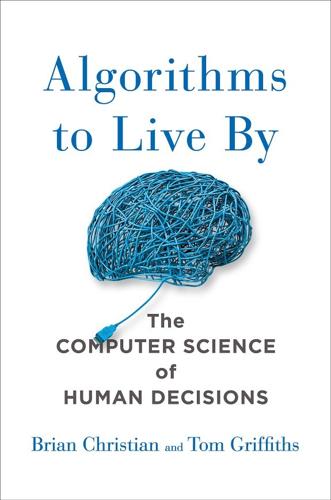
Algorithms to Live By: The Computer Science of Human Decisions
by Brian Christian and Tom Griffiths · 4 Apr 2016 · 523pp · 143,139 words

The Nanny State Made Me: A Story of Britain and How to Save It
by Stuart Maconie · 5 Mar 2020 · 300pp · 106,520 words

Exponential: How Accelerating Technology Is Leaving Us Behind and What to Do About It
by Azeem Azhar · 6 Sep 2021 · 447pp · 111,991 words
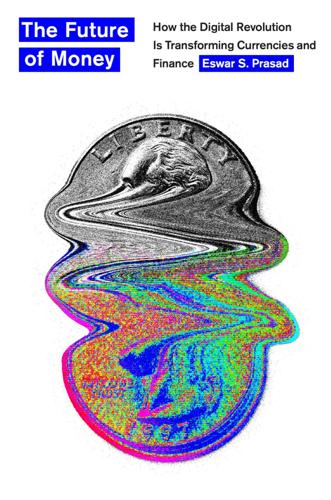
The Future of Money: How the Digital Revolution Is Transforming Currencies and Finance
by Eswar S. Prasad · 27 Sep 2021 · 661pp · 185,701 words
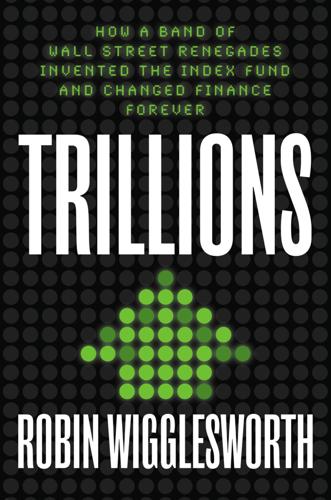
Trillions: How a Band of Wall Street Renegades Invented the Index Fund and Changed Finance Forever
by Robin Wigglesworth · 11 Oct 2021 · 432pp · 106,612 words
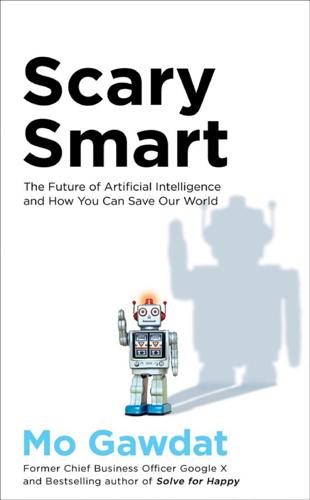
Scary Smart: The Future of Artificial Intelligence and How You Can Save Our World
by Mo Gawdat · 29 Sep 2021 · 259pp · 84,261 words
Hatching Twitter
by Nick Bilton · 5 Nov 2013 · 304pp · 93,494 words
How to Kill a City: The Real Story of Gentrification
by Peter Moskowitz · 7 Mar 2017 · 288pp · 83,690 words
The Snowden Files: The Inside Story of the World's Most Wanted Man
by Luke Harding · 7 Feb 2014 · 266pp · 80,018 words
The Year Without Pants: Wordpress.com and the Future of Work
by Scott Berkun · 9 Sep 2013 · 361pp · 76,849 words
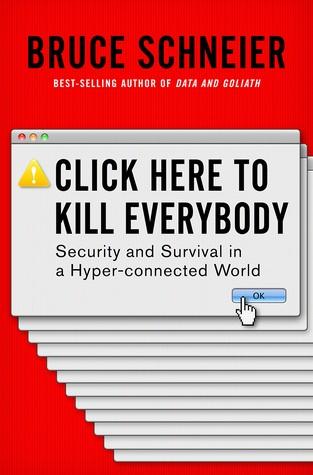
Click Here to Kill Everybody: Security and Survival in a Hyper-Connected World
by Bruce Schneier · 3 Sep 2018 · 448pp · 117,325 words
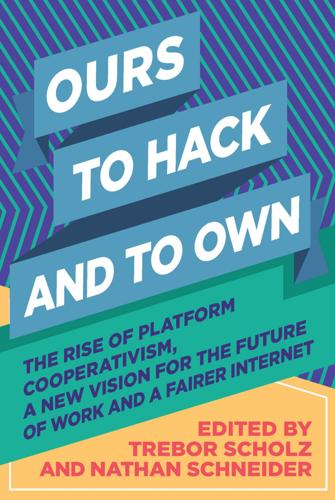
Ours to Hack and to Own: The Rise of Platform Cooperativism, a New Vision for the Future of Work and a Fairer Internet
by Trebor Scholz and Nathan Schneider · 14 Aug 2017 · 237pp · 67,154 words

Brexit and Ireland: The Dangers, the Opportunities, and the Inside Story of the Irish Response
by Tony Connelly · 4 Oct 2017 · 356pp · 112,271 words
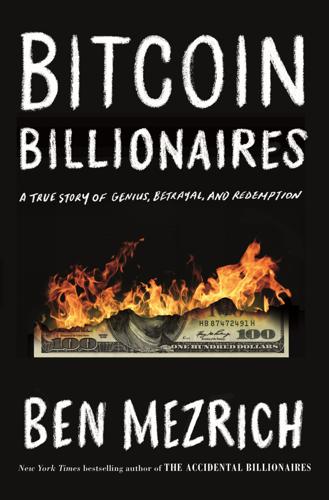
Bitcoin Billionaires: A True Story of Genius, Betrayal, and Redemption
by Ben Mezrich · 20 May 2019 · 304pp · 91,566 words

Sunbelt Blues: The Failure of American Housing
by Andrew Ross · 25 Oct 2021 · 301pp · 90,276 words
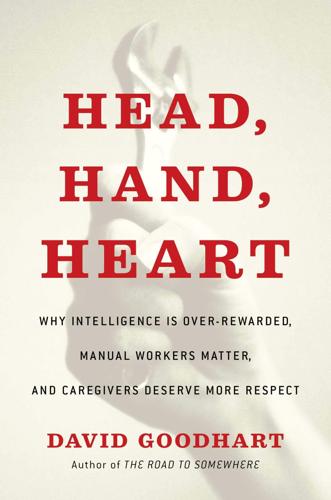
Head, Hand, Heart: Why Intelligence Is Over-Rewarded, Manual Workers Matter, and Caregivers Deserve More Respect
by David Goodhart · 7 Sep 2020 · 463pp · 115,103 words

Mindf*ck: Cambridge Analytica and the Plot to Break America
by Christopher Wylie · 8 Oct 2019

Mine!: How the Hidden Rules of Ownership Control Our Lives
by Michael A. Heller and James Salzman · 2 Mar 2021 · 332pp · 100,245 words
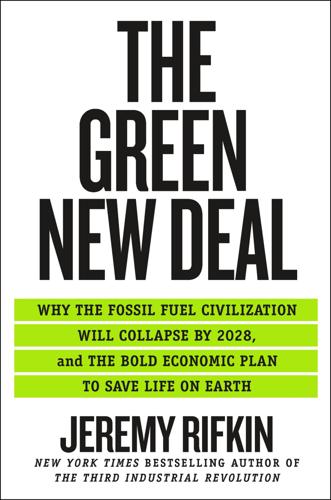
The Green New Deal: Why the Fossil Fuel Civilization Will Collapse by 2028, and the Bold Economic Plan to Save Life on Earth
by Jeremy Rifkin · 9 Sep 2019 · 327pp · 84,627 words
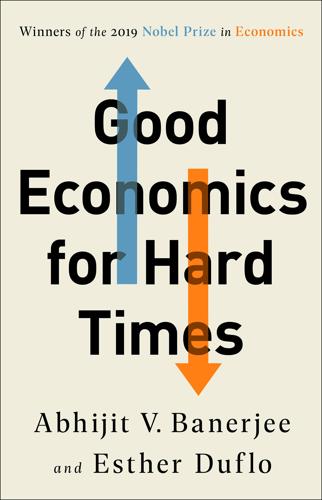
Good Economics for Hard Times: Better Answers to Our Biggest Problems
by Abhijit V. Banerjee and Esther Duflo · 12 Nov 2019 · 470pp · 148,730 words

This Could Be Our Future: A Manifesto for a More Generous World
by Yancey Strickler · 29 Oct 2019 · 254pp · 61,387 words

Cashing Out: Win the Wealth Game by Walking Away
by Julien Saunders and Kiersten Saunders · 13 Jun 2022 · 268pp · 64,786 words

Artificial Intelligence: A Guide for Thinking Humans
by Melanie Mitchell · 14 Oct 2019 · 350pp · 98,077 words

Artificial Unintelligence: How Computers Misunderstand the World
by Meredith Broussard · 19 Apr 2018 · 245pp · 83,272 words
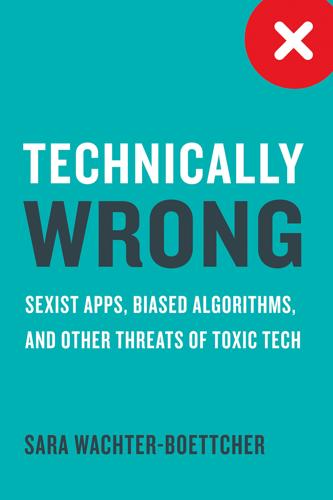
Technically Wrong: Sexist Apps, Biased Algorithms, and Other Threats of Toxic Tech
by Sara Wachter-Boettcher · 9 Oct 2017 · 223pp · 60,909 words

Going Dark: The Secret Social Lives of Extremists
by Julia Ebner · 20 Feb 2020 · 309pp · 79,414 words
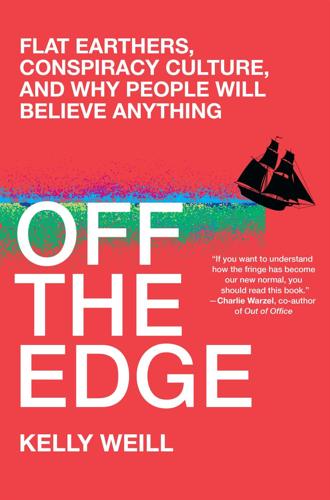
Off the Edge: Flat Earthers, Conspiracy Culture, and Why People Will Believe Anything
by Kelly Weill · 22 Feb 2022
Internet for the People: The Fight for Our Digital Future
by Ben Tarnoff · 13 Jun 2022 · 234pp · 67,589 words

Power, for All: How It Really Works and Why It's Everyone's Business
by Julie Battilana and Tiziana Casciaro · 30 Aug 2021 · 345pp · 92,063 words
The Coming Wave: Technology, Power, and the Twenty-First Century's Greatest Dilemma
by Mustafa Suleyman · 4 Sep 2023 · 444pp · 117,770 words

The Survival of the City: Human Flourishing in an Age of Isolation
by Edward Glaeser and David Cutler · 14 Sep 2021 · 735pp · 165,375 words
Big Data and the Welfare State: How the Information Revolution Threatens Social Solidarity
by Torben Iversen and Philipp Rehm · 18 May 2022
The Identity Trap: A Story of Ideas and Power in Our Time
by Yascha Mounk · 26 Sep 2023

How to Stand Up to a Dictator
by Maria Ressa · 19 Oct 2022
Two and Twenty: How the Masters of Private Equity Always Win
by Sachin Khajuria · 13 Jun 2022 · 229pp · 75,606 words

Other Pandemic: How QAnon Contaminated the World
by James Ball · 19 Jul 2023 · 317pp · 87,048 words
Extremely Hardcore: Inside Elon Musk's Twitter
by Zoë Schiffer · 13 Feb 2024 · 343pp · 92,693 words
For Profit: A History of Corporations
by William Magnuson · 8 Nov 2022 · 356pp · 116,083 words
The Dark Cloud: How the Digital World Is Costing the Earth
by Guillaume Pitron · 14 Jun 2023 · 271pp · 79,355 words
Careless People: A Cautionary Tale of Power, Greed, and Lost Idealism
by Sarah Wynn-Williams · 11 Mar 2025 · 370pp · 115,318 words
Hype: How Scammers, Grifters, and Con Artists Are Taking Over the Internet―and Why We're Following
by Gabrielle Bluestone · 5 Apr 2021 · 329pp · 100,162 words

The Controlled Demolition of the American Empire
by Jeff Berwick and Charlie Robinson · 14 Apr 2020 · 491pp · 141,690 words
The Curse of Bigness: Antitrust in the New Gilded Age
by Tim Wu · 14 Jun 2018 · 128pp · 38,847 words

The Smart Wife: Why Siri, Alexa, and Other Smart Home Devices Need a Feminist Reboot
by Yolande Strengers and Jenny Kennedy · 14 Apr 2020
Futureproof: 9 Rules for Humans in the Age of Automation
by Kevin Roose · 9 Mar 2021 · 208pp · 57,602 words

The System: Who Rigged It, How We Fix It
by Robert B. Reich · 24 Mar 2020 · 154pp · 47,880 words
Shutdown: How COVID Shook the World's Economy
by Adam Tooze · 15 Nov 2021 · 561pp · 138,158 words
The People vs Tech: How the Internet Is Killing Democracy (And How We Save It)
by Jamie Bartlett · 4 Apr 2018 · 170pp · 49,193 words
Always Day One: How the Tech Titans Plan to Stay on Top Forever
by Alex Kantrowitz · 6 Apr 2020 · 260pp · 67,823 words
Working Backwards: Insights, Stories, and Secrets From Inside Amazon
by Colin Bryar and Bill Carr · 9 Feb 2021 · 302pp · 100,493 words
There Is Nothing for You Here: Finding Opportunity in the Twenty-First Century
by Fiona Hill · 4 Oct 2021 · 569pp · 165,510 words
Capitalism Without Capital: The Rise of the Intangible Economy
by Jonathan Haskel and Stian Westlake · 7 Nov 2017 · 346pp · 89,180 words
The Information State: Politics in the Age of Total Control
by Jacob Siegel · 24 Mar 2026 · 348pp · 103,246 words
Mutiny: The Rise and Revolt of the College-Educated Working Class
by Noam Scheiber · 6 Apr 2026 · 399pp · 120,332 words

The Revolutionary Center: The Lost Genius of Liberalism
by Adrian Wooldridge · 7 Apr 2026 · 342pp · 129,097 words
The Wealth of Humans: Work, Power, and Status in the Twenty-First Century
by Ryan Avent · 20 Sep 2016 · 323pp · 90,868 words
Move Fast and Break Things: How Facebook, Google, and Amazon Cornered Culture and Undermined Democracy
by Jonathan Taplin · 17 Apr 2017 · 222pp · 70,132 words

Why We Drive: Toward a Philosophy of the Open Road
by Matthew B. Crawford · 8 Jun 2020 · 386pp · 113,709 words

Superclass: The Global Power Elite and the World They Are Making
by David Rothkopf · 18 Mar 2008 · 535pp · 158,863 words
There Is No Planet B: A Handbook for the Make or Break Years
by Mike Berners-Lee · 27 Feb 2019
Secrets of Sand Hill Road: Venture Capital and How to Get It
by Scott Kupor · 3 Jun 2019 · 340pp · 100,151 words

The Perfect Weapon: War, Sabotage, and Fear in the Cyber Age
by David E. Sanger · 18 Jun 2018 · 394pp · 117,982 words

12 Bytes: How We Got Here. Where We Might Go Next
by Jeanette Winterson · 15 Mar 2021 · 256pp · 73,068 words

Whole Earth: The Many Lives of Stewart Brand
by John Markoff · 22 Mar 2022 · 573pp · 142,376 words
The Great Reversal: How America Gave Up on Free Markets
by Thomas Philippon · 29 Oct 2019 · 401pp · 109,892 words
Restarting the Future: How to Fix the Intangible Economy
by Jonathan Haskel and Stian Westlake · 4 Apr 2022 · 338pp · 85,566 words

How to Work Without Losing Your Mind
by Cate Sevilla · 14 Jan 2021
An Ugly Truth: Inside Facebook's Battle for Domination
by Sheera Frenkel and Cecilia Kang · 12 Jul 2021 · 372pp · 100,947 words
The Chaos Machine: The Inside Story of How Social Media Rewired Our Minds and Our World
by Max Fisher · 5 Sep 2022 · 439pp · 131,081 words
Tools and Weapons: The Promise and the Peril of the Digital Age
by Brad Smith and Carol Ann Browne · 9 Sep 2019 · 482pp · 121,173 words
Easy Money: Cryptocurrency, Casino Capitalism, and the Golden Age of Fraud
by Ben McKenzie and Jacob Silverman · 17 Jul 2023 · 329pp · 99,504 words
MegaThreats: Ten Dangerous Trends That Imperil Our Future, and How to Survive Them
by Nouriel Roubini · 17 Oct 2022 · 328pp · 96,678 words
Decoding the World: A Roadmap for the Questioner
by Po Bronson · 14 Jul 2020 · 320pp · 95,629 words

Number Go Up: Inside Crypto's Wild Rise and Staggering Fall
by Zeke Faux · 11 Sep 2023 · 385pp · 106,848 words
You've Been Played: How Corporations, Governments, and Schools Use Games to Control Us All
by Adrian Hon · 14 Sep 2022 · 371pp · 107,141 words
Money Men: A Hot Startup, a Billion Dollar Fraud, a Fight for the Truth
by Dan McCrum · 15 Jun 2022 · 361pp · 117,566 words
Rocket Dreams: Musk, Bezos and the Trillion-Dollar Space Race
by Christian Davenport · 6 Sep 2025 · 441pp · 127,950 words

This Is for Everyone: The Captivating Memoir From the Inventor of the World Wide Web
by Tim Berners-Lee · 8 Sep 2025 · 347pp · 100,038 words
Democracy for Sale: Dark Money and Dirty Politics
by Peter Geoghegan · 2 Jan 2020 · 388pp · 111,099 words
The Raging 2020s: Companies, Countries, People - and the Fight for Our Future
by Alec Ross · 13 Sep 2021 · 363pp · 109,077 words
Wonder Boy: Tony Hsieh, Zappos, and the Myth of Happiness in Silicon Valley
by Angel Au-Yeung and David Jeans · 25 Apr 2023 · 427pp · 134,098 words

Blank Space: A Cultural History of the Twenty-First Century
by W. David Marx · 18 Nov 2025 · 642pp · 142,332 words
Walled Culture: How Big Content Uses Technology and the Law to Lock Down Culture and Keep Creators Poor
by Glyn Moody · 26 Sep 2022 · 295pp · 66,912 words
The Rise and Fall of the Neoliberal Order: America and the World in the Free Market Era
by Gary Gerstle · 14 Oct 2022 · 655pp · 156,367 words
Survival of the Richest: Escape Fantasies of the Tech Billionaires
by Douglas Rushkoff · 7 Sep 2022 · 205pp · 61,903 words
A Hacker's Mind: How the Powerful Bend Society's Rules, and How to Bend Them Back
by Bruce Schneier · 7 Feb 2023 · 306pp · 82,909 words
Work Won't Love You Back: How Devotion to Our Jobs Keeps Us Exploited, Exhausted, and Alone
by Sarah Jaffe · 26 Jan 2021 · 490pp · 153,455 words

The Quiet Damage: QAnon and the Destruction of the American Family
by Jesselyn Cook · 22 Jul 2024 · 321pp · 95,778 words

Nexus: A Brief History of Information Networks From the Stone Age to AI
by Yuval Noah Harari · 9 Sep 2024 · 566pp · 169,013 words
Code Dependent: Living in the Shadow of AI
by Madhumita Murgia · 20 Mar 2024 · 336pp · 91,806 words
The Equality Machine: Harnessing Digital Technology for a Brighter, More Inclusive Future
by Orly Lobel · 17 Oct 2022 · 370pp · 112,809 words
Unit X: How the Pentagon and Silicon Valley Are Transforming the Future of War
by Raj M. Shah and Christopher Kirchhoff · 8 Jul 2024 · 272pp · 103,638 words
The Long History of the Future: Why Tomorrow's Technology Still Isn't Here
by Nicole Kobie · 3 Jul 2024 · 348pp · 119,358 words
The Quiet Coup: Neoliberalism and the Looting of America
by Mehrsa Baradaran · 7 May 2024 · 470pp · 158,007 words

Dark Mirror: Edward Snowden and the Surveillance State
by Barton Gellman · 20 May 2020 · 562pp · 153,825 words
Apple in China: The Capture of the World's Greatest Company
by Patrick McGee · 13 May 2025 · 377pp · 138,306 words
Fed Up!: Success, Excess and Crisis Through the Eyes of a Hedge Fund Macro Trader
by Colin Lancaster · 3 May 2021 · 245pp · 75,397 words
Stakeholder Capitalism: A Global Economy That Works for Progress, People and Planet
by Klaus Schwab and Peter Vanham · 27 Jan 2021 · 460pp · 107,454 words

Hope Dies Last: Visionary People Across the World, Fighting to Find Us a Future
by Alan Weisman · 21 Apr 2025 · 599pp · 149,014 words
The Optimist: Sam Altman, OpenAI, and the Race to Invent the Future
by Keach Hagey · 19 May 2025 · 439pp · 125,379 words

Empire of AI: Dreams and Nightmares in Sam Altman's OpenAI
by Karen Hao · 19 May 2025 · 660pp · 179,531 words
Live Work Work Work Die: A Journey Into the Savage Heart of Silicon Valley
by Corey Pein · 23 Apr 2018 · 282pp · 81,873 words
This Is How They Tell Me the World Ends: The Cyberweapons Arms Race
by Nicole Perlroth · 9 Feb 2021 · 651pp · 186,130 words
The Truth Machine: The Blockchain and the Future of Everything
by Paul Vigna and Michael J. Casey · 27 Feb 2018 · 348pp · 97,277 words
Measure What Matters: How Google, Bono, and the Gates Foundation Rock the World With OKRs
by John Doerr · 23 Apr 2018 · 280pp · 71,268 words
How to Turn Down a Billion Dollars: The Snapchat Story
by Billy Gallagher · 13 Feb 2018 · 359pp · 96,019 words

Searches: Selfhood in the Digital Age
by Vauhini Vara · 8 Apr 2025 · 301pp · 105,209 words

The Myth of the Rational Market: A History of Risk, Reward, and Delusion on Wall Street
by Justin Fox · 29 May 2009 · 461pp · 128,421 words
Rentier Capitalism: Who Owns the Economy, and Who Pays for It?
by Brett Christophers · 17 Nov 2020 · 614pp · 168,545 words

Microserfs
by Douglas Coupland · 14 Feb 1995
The Myth of Artificial Intelligence: Why Computers Can't Think the Way We Do
by Erik J. Larson · 5 Apr 2021
New Laws of Robotics: Defending Human Expertise in the Age of AI
by Frank Pasquale · 14 May 2020 · 1,172pp · 114,305 words
Dogfight: How Apple and Google Went to War and Started a Revolution
by Fred Vogelstein · 12 Nov 2013 · 275pp · 84,418 words
Kings of Crypto: One Startup's Quest to Take Cryptocurrency Out of Silicon Valley and Onto Wall Street
by Jeff John Roberts · 15 Dec 2020 · 226pp · 65,516 words
Reset
by Ronald J. Deibert · 14 Aug 2020
Stakeholder Capitalism: A Global Economy That Works for Progress, People and Planet
by Klaus Schwab · 7 Jan 2021 · 460pp · 107,454 words

American Marxism
by Mark R. Levin · 12 Jul 2021 · 314pp · 88,524 words
Our Dollar, Your Problem: An Insider’s View of Seven Turbulent Decades of Global Finance, and the Road Ahead
by Kenneth Rogoff · 27 Feb 2025 · 330pp · 127,791 words

The Everything Blueprint: The Microchip Design That Changed the World
by James Ashton · 11 May 2023 · 401pp · 113,586 words
Mood Machine: The Rise of Spotify and the Costs of the Perfect Playlist
by Liz Pelly · 7 Jan 2025 · 293pp · 104,461 words
How Money Became Dangerous
by Christopher Varelas · 15 Oct 2019 · 477pp · 144,329 words

The Infinity Machine: Demis Hassabis, DeepMind, and the Quest for Superintelligence
by Sebastian Mallaby; · 30 Mar 2026 · 607pp · 161,998 words

Scarcity Brain: Fix Your Craving Mindset and Rewire Your Habits to Thrive With Enough
by Michael Easter · 25 Sep 2023 · 318pp · 95,383 words

Prophecy: Prediction, Power, and the Fight for the Future, from Ancient Oracles to AI
by Carissa Véliz · 21 Apr 2026 · 503pp · 129,255 words
Terms of Service: Social Media and the Price of Constant Connection
by Jacob Silverman · 17 Mar 2015 · 527pp · 147,690 words
This Changes Everything: Capitalism vs. The Climate
by Naomi Klein · 15 Sep 2014 · 829pp · 229,566 words
Philanthrocapitalism
by Matthew Bishop, Michael Green and Bill Clinton · 29 Sep 2008 · 401pp · 115,959 words
Brotopia: Breaking Up the Boys' Club of Silicon Valley
by Emily Chang · 6 Feb 2018 · 334pp · 104,382 words
The Internet Is Not the Answer
by Andrew Keen · 5 Jan 2015 · 361pp · 81,068 words
Digital Disconnect: How Capitalism Is Turning the Internet Against Democracy
by Robert W. McChesney · 5 Mar 2013 · 476pp · 125,219 words

Zucked: Waking Up to the Facebook Catastrophe
by Roger McNamee · 1 Jan 2019 · 382pp · 105,819 words
The Ones We've Been Waiting For: How a New Generation of Leaders Will Transform America
by Charlotte Alter · 18 Feb 2020 · 504pp · 129,087 words
People, Power, and Profits: Progressive Capitalism for an Age of Discontent
by Joseph E. Stiglitz · 22 Apr 2019 · 462pp · 129,022 words
The Globotics Upheaval: Globalisation, Robotics and the Future of Work
by Richard Baldwin · 10 Jan 2019 · 301pp · 89,076 words
Lessons from the Titans: What Companies in the New Economy Can Learn from the Great Industrial Giants to Drive Sustainable Success
by Scott Davis, Carter Copeland and Rob Wertheimer · 13 Jul 2020 · 372pp · 101,678 words

The Infinite Machine: How an Army of Crypto-Hackers Is Building the Next Internet With Ethereum
by Camila Russo · 13 Jul 2020 · 349pp · 102,827 words
The Hype Machine: How Social Media Disrupts Our Elections, Our Economy, and Our Health--And How We Must Adapt
by Sinan Aral · 14 Sep 2020 · 475pp · 134,707 words

Cult of the Dead Cow: How the Original Hacking Supergroup Might Just Save the World
by Joseph Menn · 3 Jun 2019 · 302pp · 85,877 words
App Kid: How a Child of Immigrants Grabbed a Piece of the American Dream
by Michael Sayman · 20 Sep 2021 · 285pp · 91,144 words

Deep Medicine: How Artificial Intelligence Can Make Healthcare Human Again
by Eric Topol · 1 Jan 2019 · 424pp · 114,905 words
The Future Is Faster Than You Think: How Converging Technologies Are Transforming Business, Industries, and Our Lives
by Peter H. Diamandis and Steven Kotler · 28 Jan 2020 · 501pp · 114,888 words

Architects of Intelligence
by Martin Ford · 16 Nov 2018 · 586pp · 186,548 words

Sandy Hook: An American Tragedy and the Battle for Truth
by Elizabeth Williamson · 8 Mar 2022 · 574pp · 148,233 words
The Nation City: Why Mayors Are Now Running the World
by Rahm Emanuel · 25 Feb 2020 · 212pp · 69,846 words
The System: Who Owns the Internet, and How It Owns Us
by James Ball · 19 Aug 2020 · 268pp · 76,702 words

The Smartphone Society
by Nicole Aschoff
New Power: How Power Works in Our Hyperconnected World--And How to Make It Work for You
by Jeremy Heimans and Henry Timms · 2 Apr 2018 · 416pp · 100,130 words
Talk to Me: How Voice Computing Will Transform the Way We Live, Work, and Think
by James Vlahos · 1 Mar 2019 · 392pp · 108,745 words
Subscribed: Why the Subscription Model Will Be Your Company's Future - and What to Do About It
by Tien Tzuo and Gabe Weisert · 4 Jun 2018 · 244pp · 66,977 words
AIQ: How People and Machines Are Smarter Together
by Nick Polson and James Scott · 14 May 2018 · 301pp · 85,126 words
The Coming of Neo-Feudalism: A Warning to the Global Middle Class
by Joel Kotkin · 11 May 2020 · 393pp · 91,257 words
The Founders: The Story of Paypal and the Entrepreneurs Who Shaped Silicon Valley
by Jimmy Soni · 22 Feb 2022 · 505pp · 161,581 words
Binge Times: Inside Hollywood's Furious Billion-Dollar Battle to Take Down Netflix
by Dade Hayes and Dawn Chmielewski · 18 Apr 2022 · 414pp · 117,581 words
How I Built This: The Unexpected Paths to Success From the World's Most Inspiring Entrepreneurs
by Guy Raz · 14 Sep 2020 · 361pp · 107,461 words

There's a War Going on but No One Can See It
by Huib Modderkolk · 1 Sep 2021 · 295pp · 84,843 words
The Revolution That Wasn't: GameStop, Reddit, and the Fleecing of Small Investors
by Spencer Jakab · 1 Feb 2022 · 420pp · 94,064 words
Traffic: Genius, Rivalry, and Delusion in the Billion-Dollar Race to Go Viral
by Ben Smith · 2 May 2023

The Lonely Century: How Isolation Imperils Our Future
by Noreena Hertz · 13 May 2020 · 506pp · 133,134 words
Targeted: The Cambridge Analytica Whistleblower's Inside Story of How Big Data, Trump, and Facebook Broke Democracy and How It Can Happen Again
by Brittany Kaiser · 21 Oct 2019 · 391pp · 123,597 words
Power and Progress: Our Thousand-Year Struggle Over Technology and Prosperity
by Daron Acemoglu and Simon Johnson · 15 May 2023 · 619pp · 177,548 words

The Capitalist Manifesto
by Johan Norberg · 14 Jun 2023 · 295pp · 87,204 words
Your Computer Is on Fire
by Thomas S. Mullaney, Benjamin Peters, Mar Hicks and Kavita Philip · 9 Mar 2021 · 661pp · 156,009 words
The Pay Off: How Changing the Way We Pay Changes Everything
by Gottfried Leibbrandt and Natasha de Teran · 14 Jul 2021 · 326pp · 91,532 words
Like, Comment, Subscribe: Inside YouTube's Chaotic Rise to World Domination
by Mark Bergen · 5 Sep 2022 · 642pp · 141,888 words
Woke, Inc: Inside Corporate America's Social Justice Scam
by Vivek Ramaswamy · 16 Aug 2021 · 344pp · 104,522 words

Elon Musk
by Walter Isaacson · 11 Sep 2023 · 562pp · 201,502 words

Nothing Personal: My Secret Life in the Dating App Inferno
by Nancy Jo Sales · 17 May 2021 · 445pp · 135,648 words

The Powerful and the Damned: Private Diaries in Turbulent Times
by Lionel Barber · 5 Nov 2020

Doppelganger: A Trip Into the Mirror World
by Naomi Klein · 11 Sep 2023

Build: An Unorthodox Guide to Making Things Worth Making
by Tony Fadell · 2 May 2022 · 411pp · 119,022 words
Upscale: What It Takes to Scale a Startup. By the People Who've Done It.
by James Silver · 15 Nov 2018 · 291pp · 90,771 words

Golden Gates: Fighting for Housing in America
by Conor Dougherty · 18 Feb 2020 · 331pp · 95,582 words
Tomorrow's Capitalist: My Search for the Soul of Business
by Alan Murray · 15 Dec 2022 · 263pp · 77,786 words
Tech Titans of China: How China's Tech Sector Is Challenging the World by Innovating Faster, Working Harder, and Going Global
by Rebecca Fannin · 2 Sep 2019 · 269pp · 70,543 words

The Age of Extraction: How Tech Platforms Conquered the Economy and Threaten Our Future Prosperity
by Tim Wu · 4 Nov 2025 · 246pp · 65,143 words

Your Face Belongs to Us: A Secretive Startup's Quest to End Privacy as We Know It
by Kashmir Hill · 19 Sep 2023 · 487pp · 124,008 words
Pandora's Box: How Guts, Guile, and Greed Upended TV
by Peter Biskind · 6 Nov 2023 · 543pp · 143,084 words

Gilded Rage: Elon Musk and the Radicalization of Silicon Valley
by Jacob Silverman · 9 Oct 2025 · 312pp · 103,645 words
Stolen Focus: Why You Can't Pay Attention--And How to Think Deeply Again
by Johann Hari · 25 Jan 2022 · 390pp · 120,864 words

Attention Factory: The Story of TikTok and China's ByteDance
by Matthew Brennan · 9 Oct 2020 · 282pp · 63,385 words
One Billion Americans: The Case for Thinking Bigger
by Matthew Yglesias · 14 Sep 2020
The Wires of War: Technology and the Global Struggle for Power
by Jacob Helberg · 11 Oct 2021 · 521pp · 118,183 words
Nothing but Net: 10 Timeless Stock-Picking Lessons From One of Wall Street’s Top Tech Analysts
by Mark Mahaney · 9 Nov 2021 · 311pp · 90,172 words

The Big Fix: How Companies Capture Markets and Harm Canadians
by Denise Hearn and Vass Bednar · 14 Oct 2024 · 175pp · 46,192 words

Androids: The Team That Built the Android Operating System
by Chet Haase · 12 Aug 2021 · 580pp · 125,129 words
The Reverse Centaur's Guide to Life After AI: How to Think About Artificial Intelligence—Before It's Too Late
by Cory Doctorow · 22 Jun 2026 · 175pp · 51,295 words
Vulture Capitalism: Corporate Crimes, Backdoor Bailouts, and the Death of Freedom
by Grace Blakeley · 11 Mar 2024 · 371pp · 137,268 words
Billionaire, Nerd, Savior, King: Bill Gates and His Quest to Shape Our World
by Anupreeta Das · 12 Aug 2024 · 315pp · 115,894 words
Amazon Unbound: Jeff Bezos and the Invention of a Global Empire
by Brad Stone · 10 May 2021 · 569pp · 156,139 words

Supremacy: AI, ChatGPT, and the Race That Will Change the World
by Parmy Olson · 284pp · 96,087 words

Building and Dwelling: Ethics for the City
by Richard Sennett · 9 Apr 2018
Makers and Takers: The Rise of Finance and the Fall of American Business
by Rana Foroohar · 16 May 2016 · 515pp · 132,295 words

Fulfillment: Winning and Losing in One-Click America
by Alec MacGillis · 16 Mar 2021 · 426pp · 136,925 words
Thank You for Being Late: An Optimist's Guide to Thriving in the Age of Accelerations
by Thomas L. Friedman · 22 Nov 2016 · 602pp · 177,874 words
Bezonomics: How Amazon Is Changing Our Lives and What the World's Best Companies Are Learning From It
by Brian Dumaine · 11 May 2020 · 411pp · 98,128 words

Chokepoints: American Power in the Age of Economic Warfare
by Edward Fishman · 25 Feb 2025 · 884pp · 221,861 words
Why Startups Fail: A New Roadmap for Entrepreneurial Success
by Tom Eisenmann · 29 Mar 2021 · 387pp · 106,753 words
Fortunes of Change: The Rise of the Liberal Rich and the Remaking of America
by David Callahan · 9 Aug 2010

The Patient Will See You Now: The Future of Medicine Is in Your Hands
by Eric Topol · 6 Jan 2015 · 588pp · 131,025 words

Dawn of the New Everything: Encounters With Reality and Virtual Reality
by Jaron Lanier · 21 Nov 2017 · 480pp · 123,979 words
Apple: The First 50 Years
by David Pogue · 10 Mar 2026 · 686pp · 216,944 words
Hacking Politics: How Geeks, Progressives, the Tea Party, Gamers, Anarchists and Suits Teamed Up to Defeat SOPA and Save the Internet
by David Moon, Patrick Ruffini, David Segal, Aaron Swartz, Lawrence Lessig, Cory Doctorow, Zoe Lofgren, Jamie Laurie, Ron Paul, Mike Masnick, Kim Dotcom, Tiffiniy Cheng, Alexis Ohanian, Nicole Powers and Josh Levy · 30 Apr 2013 · 452pp · 134,502 words
Smart Cities: Big Data, Civic Hackers, and the Quest for a New Utopia
by Anthony M. Townsend · 29 Sep 2013 · 464pp · 127,283 words
The Big Nine: How the Tech Titans and Their Thinking Machines Could Warp Humanity
by Amy Webb · 5 Mar 2019 · 340pp · 97,723 words
Coders: The Making of a New Tribe and the Remaking of the World
by Clive Thompson · 26 Mar 2019 · 499pp · 144,278 words
Chaos Monkeys: Obscene Fortune and Random Failure in Silicon Valley
by Antonio Garcia Martinez · 27 Jun 2016 · 559pp · 155,372 words
Lab Rats: How Silicon Valley Made Work Miserable for the Rest of Us
by Dan Lyons · 22 Oct 2018 · 252pp · 78,780 words
Disrupted: My Misadventure in the Start-Up Bubble
by Dan Lyons · 4 Apr 2016 · 284pp · 92,688 words
The Manager’s Path
by Camille Fournier · 7 Mar 2017
Facebook: The Inside Story
by Steven Levy · 25 Feb 2020 · 706pp · 202,591 words
Hedgehogging
by Barton Biggs · 3 Jan 2005
The Four: How Amazon, Apple, Facebook, and Google Divided and Conquered the World
by Scott Galloway · 2 Oct 2017 · 305pp · 79,303 words
Future Politics: Living Together in a World Transformed by Tech
by Jamie Susskind · 3 Sep 2018 · 533pp
The Age of Surveillance Capitalism
by Shoshana Zuboff · 15 Jan 2019 · 918pp · 257,605 words
Merchants of Truth: The Business of News and the Fight for Facts
by Jill Abramson · 5 Feb 2019 · 788pp · 223,004 words
Big Business: A Love Letter to an American Anti-Hero
by Tyler Cowen · 8 Apr 2019 · 297pp · 84,009 words
Confessions of a Crypto Millionaire: My Unlikely Escape From Corporate America
by Dan Conway · 8 Sep 2019 · 218pp · 68,648 words
The Code: Silicon Valley and the Remaking of America
by Margaret O'Mara · 8 Jul 2019
A World Without Work: Technology, Automation, and How We Should Respond
by Daniel Susskind · 14 Jan 2020 · 419pp · 109,241 words
How to Fix the Future: Staying Human in the Digital Age
by Andrew Keen · 1 Mar 2018 · 308pp · 85,880 words
The Costs of Connection: How Data Is Colonizing Human Life and Appropriating It for Capitalism
by Nick Couldry and Ulises A. Mejias · 19 Aug 2019 · 458pp · 116,832 words
The Myth of Capitalism: Monopolies and the Death of Competition
by Jonathan Tepper · 20 Nov 2018 · 417pp · 97,577 words
Super Pumped: The Battle for Uber
by Mike Isaac · 2 Sep 2019 · 444pp · 127,259 words
The Power Law: Venture Capital and the Making of the New Future
by Sebastian Mallaby · 1 Feb 2022 · 935pp · 197,338 words
It's Not TV: The Spectacular Rise, Revolution, and Future of HBO
by Felix Gillette and John Koblin · 1 Nov 2022 · 575pp · 140,384 words
Digital Empires: The Global Battle to Regulate Technology
by Anu Bradford · 25 Sep 2023 · 898pp · 236,779 words
Human Frontiers: The Future of Big Ideas in an Age of Small Thinking
by Michael Bhaskar · 2 Nov 2021
Ask Your Developer: How to Harness the Power of Software Developers and Win in the 21st Century
by Jeff Lawson · 12 Jan 2021 · 282pp · 85,658 words
Genius Makers: The Mavericks Who Brought A. I. To Google, Facebook, and the World
by Cade Metz · 15 Mar 2021 · 414pp · 109,622 words

Enshittification: Why Everything Suddenly Got Worse and What to Do About It
by Cory Doctorow · 6 Oct 2025 · 313pp · 94,415 words
The Pyramid of Lies: Lex Greensill and the Billion-Dollar Scandal
by Duncan Mavin · 20 Jul 2022 · 345pp · 100,989 words
The Bill Gates Problem: Reckoning With the Myth of the Good Billionaire
by Tim Schwab · 13 Nov 2023 · 618pp · 179,407 words
Cloudmoney: Cash, Cards, Crypto, and the War for Our Wallets
by Brett Scott · 4 Jul 2022 · 308pp · 85,850 words
The Contrarian: Peter Thiel and Silicon Valley's Pursuit of Power
by Max Chafkin · 14 Sep 2021 · 524pp · 130,909 words
Chokepoint Capitalism
by Rebecca Giblin and Cory Doctorow · 26 Sep 2022 · 396pp · 113,613 words

Palo Alto: A History of California, Capitalism, and the World
by Malcolm Harris · 14 Feb 2023 · 864pp · 272,918 words
On the Edge: The Art of Risking Everything
by Nate Silver · 12 Aug 2024 · 848pp · 227,015 words
Buy Now, Pay Later: The Extraordinary Story of Afterpay
by Jonathan Shapiro and James Eyers · 2 Aug 2021 · 444pp · 124,631 words

Four Battlegrounds
by Paul Scharre · 18 Jan 2023
The Geek Way: The Radical Mindset That Drives Extraordinary Results
by Andrew McAfee · 14 Nov 2023 · 381pp · 113,173 words

Gambling Man
by Lionel Barber · 3 Oct 2024 · 424pp · 123,730 words

What If We Get It Right?: Visions of Climate Futures
by Ayana Elizabeth Johnson · 17 Sep 2024 · 588pp · 160,825 words

Vassal State
by Angus Hanton · 25 Mar 2024 · 277pp · 81,718 words

A Man in Full: A Novel
by Tom Wolfe · 31 Mar 2010 · 970pp · 302,110 words