Blitzscaling
description: a strategy for rapid business growth at the risk of operational scalability
24 results
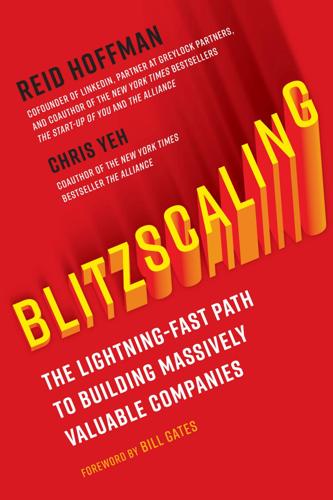
Blitzscaling: The Lightning-Fast Path to Building Massively Valuable Companies
by Reid Hoffman and Chris Yeh · 14 Apr 2018 · 286pp · 87,401 words
and its colophon are trademarks of Penguin Random House LLC. Library of Congress Cataloging-in-Publication Data Names: Hoffman, Reid, author. | Yeh, Chris, author. Title: Blitzscaling : the lightning-fast path to creating massively valuable businesses / by Reid Hoffman and Chris Yeh. Description: First edition. | New York : Currency, [2018] | Includes bibliographical
…
Business Model Innovation Analyzing a Few Billion-Dollar Business Models Part III: Strategy Innovation When Should I Start to Blitzscale? When Should I Stop Blitzscaling? Can I Choose Not to Blitzscale? Blitzscaling Is Iterative How Blitzscaling Strategy Changes in Each Stage How the Role of the Founder Changes in Each Stage Part IV: Management Innovation
…
Need for Change Part V: The Broader Landscape of Blitzscaling Blitzscaling Beyond High Tech Blitzscaling Within a Larger Organization Blitzscaling Beyond Business Blitzscaling in Greater Silicon Valley Other Blitzscaling Regions to Watch China: The Land of Blitzscaling Defending Against Blitzscaling Part VI: Responsible Blitzscaling Blitzscaling in Society Framework for Responsible Blitzscaling The Response Spectrum Balancing Responsibility and Velocity as the Organization
…
to take on the Samwers—and they wanted to win. But how? The key was an aggressive, all-out program of growth that we call blitzscaling. Blitzscaling drives “lightning” growth by prioritizing speed over efficiency, even in an environment of uncertainty. It’s a set of specific strategies and tactics that allowed
…
reap incredible rewards much more rapidly than at any other point in history. We call the strategy and mindset they can use to get there “blitzscaling.” Blitzscaling is a strategy and set of techniques for driving and managing extremely rapid growth that prioritize speed over efficiency in an environment of uncertainty. Put
…
This quest will take us all over the globe, but one place in particular stands out. SILICON VALLEY: THE PERFECT PLACE TO DECODE BLITZSCALING Although companies have successfully blitzscaled on every continent except for Antarctica, the most prominent and most concentrated set of examples comes from California’s Silicon Valley. And while
…
set of frameworks and strategies for leaders, entrepreneurs, and intrapreneurs to adapt to their own needs and circumstances. A QUICK NOTE ON THE TERM “BLITZSCALING” The term “blitzscaling” derives from the twentieth-century usage of “blitz” as a way of describing a sudden, all-out effort. The first usage of blitz
…
and colloquial use of the term in nonmilitary contexts make it the best fit for the concepts discussed in this book. PART I What Is Blitzscaling? Blitzscaling is what we call both the general framework and the specific techniques that allow companies to achieve massive scale at incredible speed. If you’re
…
invest. And because the network that connects investors—especially within a tight-knit ecosystem like Silicon Valley—can disseminate this information quickly and broadly, a blitzscaling company can raise capital on a massive scale. This capital infusion can fuel explosive growth, which shrinks the confidence intervals even further. Paradoxically, globalization
…
people it employs, we’ll define the stages based on the number of employees in the company, or its organizational scale. THE FIVE STAGES OF BLITZSCALING Stage 1 (Family) 1–9 employees Stage 2 (Tribe) 10s of employees Stage 3 (Village) 100s of employees Stage 4 (City) 1000s of employees
…
, but today its technological prowess in cloud computing, automated logistics, and voice recognition help to maintain its dominance. In fact, the megacompanies built by blitzscaling are often the ones buying the technology innovators, much as Google bought DeepMind and Facebook bought Oculus. Technology innovation is a key factor in retaining
…
be risky to bet the company, as Walt Disney did when he borrowed against his own life insurance to build Disneyland, but it’s not blitzscaling. Blitzscaling would have involved inefficiencies like paying construction crews to work twenty-four hours a day in order to get Disneyland open a few months earlier
…
it was too late; even the desperation play of aligning themselves with Microsoft as its exclusive Windows Phone partner couldn’t reverse the decline. Because blitzscaling often requires spending significant amounts of capital in ways that traditional business wisdom would consider “wasteful,” implementing a financial strategy that supports this aggressive spending
…
motivations for this book is to help entrepreneurs from around the world emulate these successes by teaching them how to systematically design their businesses for blitzscaling. When you design your business model to leverage network effects, you can succeed anywhere. DESIGNING TO MAXIMIZE GROWTH: THE TWO GROWTH LIMITERS Building key
…
then held accountable those who were pulling the levers directly. Stage 5 (Nation): The Founder Figures Out How to Pull the Organization Back from Blitzscaling and Start Blitzscaling New Product Lines and Business Units Even though managing a Nation-stage company has some things in common with managing a traditional business, it
…
its size makes it difficult to apply traditional management techniques designed for environments in which 15 percent represents brisk annual growth. As a result, successful blitzscalers have to implement management innovations to steer their burgeoning organizations through their growing pains. The upcoming sections will discuss how. PART IV Management Innovation
…
turn to (short of pestering the founders) if they thought certain practices, such as activities related to software or coding standards, needed to change.” Blitzscaling organizations need organization, not just to coordinate their many resources and activities, but in order to maximize speed. The organization’s collective learning rate—especially
…
to act quickly on those key insights and seize the competitive advantage. TRANSITION #4: DIALOGUE TO BROADCASTING One area that undergoes the most change during blitzscaling is the internal communications process. As the company grows, you have to shift from informal, in-person, individual conversations to formal, electronic, “push” broadcasting
…
and successful enough to need to globalize, but small enough to not have the internal skills to do so. RULE 3: TOLERATE “BAD” MANAGEMENT When blitzscaling, speed is more important than having a “well-run” organization. Under normal circumstances, you should strive for organizational coherence and stability. Chaotic, unstable organizations
…
in Electrical Engineering and Computer Science [EECS] at UC Berkeley) would allow him to effectively synchronize culturally with Larry and cofounder Sergey Brin. In blitzscaling companies, culture becomes increasingly important—and increasingly difficult to maintain—as the organization grows. In the beginning, the bond that employees form in the early
…
society as a whole. Homogeneity harms companies because groupthink reduces the resilience and adaptability of the companies, and it harms society if those many opportunities blitzscaling provides aren’t fully open to all qualified people, whatever their gender, sexuality, religion, or ancestry. One of the ugliest manifestations of these problems
…
our global economy. Because it is such an important topic, we’ll devote an entire section of this chapter solely to examining blitzscaling in China. BLITZSCALING BEYOND HIGH TECH While blitzscaling is probably most applicable to high tech, its techniques can benefit any industry in which opportunities can demonstrate strong growth factors (
…
Ward were “land men,” specialists who went out into the field to negotiate mineral rights leases with landowners. This expertise would be key to their blitzscaling effort. In the late 1990s, the combination of horizontal drilling and improved hydraulic fracturing techniques (fracking) made extracting hydrocarbons from shale rock formations economically
…
disadvantages over doing so within a start-up. It’s critical to be realistic—start-ups have some inherent advantages when it comes to blitzscaling. Blitzscaling is all about speed and risk taking, and with far less to lose, start-ups are much more nimble. Established companies that want to
…
s response to the competitive threat of Airbnb. ADVANTAGE #2: ITERATION Another advantage that established companies have is the ability to make multiple, iterative blitzscaling attempts. Blitzscaling is a risky strategy, and you might not achieve success on the first try. You need to have enough capital to stay in the
…
PUBLIC MARKET PRESSURE Finally, established companies that are publicly traded face an additional set of pressures to deliver short-term (i.e., quarterly) financial results. Blitzscaling generally requires sacrificing short-term efficiency (and thus financial results) to achieve long-term value creation. Privately held companies are usually closely held; this can
…
competition. In the business world (and certain nonbusiness organizations like political campaigns), competition—specifically, beating that competition—is one of the most important motivations for blitzscaling. In contrast, the Gates Foundation would welcome another major player that spent billions of dollars to try to “beat” the Gates Foundation to achieving
…
Colorado, and even New York City. Over in Europe, cities like London, Stockholm, and Berlin (where the Samwer brothers’ Rocket Internet is attempting to industrialize blitzscaling as a business model, with notable successes and failures) have begun producing interesting companies as well. According to research at Wharton, Stockholm actually produces the
…
a leading center for cybersecurity companies and is also home to a thriving venture capital community. Even Australia has produced successful technology companies like Atlassian. Blitzscaling in emerging ecosystems poses both different challenges and different opportunities. Emerging ecosystems lack many of the platforms that established ecosystems like Silicon Valley or,
…
provide—for example, payment systems and shipping vendors, let alone professional service providers (lawyers, accountants, etc.), experienced executives, and aggressive venture capitalists. This makes blitzscaling more difficult and leads to slower rates of growth. It’s far easier to leverage existing platforms than to build your own. On the other
…
paying jobs, and executives who serve as moral role models and leaders of society. The unfortunate truth is that for all the good that blitzscaling produces, blitzscaling organizations can be guilty of the same sins committed by other types of companies, and face some inherent challenges even when trying to behave
…
This can result in problematic corporate cultures, adversarial relationships with regulators, and questionable decision making. These challenges are real but shouldn’t discourage us from blitzscaling. The art lies in marrying responsibility and velocity so that we are able to successfully capture the first-scaler advantage while still developing and adhering
…
everything from business productivity software (Slack) to entertainment (Netflix). Even the concentration of capital that scale has produced isn’t all bad; it has allowed blitzscalers to tackle “moonshots” like space travel (SpaceX) and autonomous vehicles (Google’s Waymo) that may dramatically improve our lives. As opposed to reflexively calling
…
a Parliamentary committee, Zuckerberg had no obligation to do so. Such are the limitations of regulating businesses in a globalized world. BLITZSCALING IN SOCIETY Responsible blitzscaling matters because successful blitzscalers often reach a point where they are more than just a business; they actually affect the fabric of the society in which
…
talented employees and a healthy market of consumers. To paraphrase Warren Buffett, we win the “ovarian lottery” when we’re born into blitzscaling ecosystems. Moreover, responsible blitzscaling can actually protect against legislation that threatens to slow growth trajectories. Regulation typically arises when government believes that an industry isn’t behaving responsibly
…
, America (along with many other nations) has environmental regulations because companies were once polluting with abandon and causing harm to citizens and nature. Smart blitzscalers realize that self-regulating can actually delay or preempt government regulation. Entrepreneurs often complain that regulators write bad policy because they don’t understand the
…
of business; self-regulation lets businesses apply their expertise to finding the most cost-effective ways to achieve social goals. FRAMEWORK FOR RESPONSIBLE BLITZSCALING The key to blitzscaling responsibly without sacrificing pace of growth is developing the ability to distinguish between various forms of risk. Our suggested framework for risk evaluation
…
and developments in this field have occurred so quickly that it is difficult for governments to create intelligent regulatory regimes to manage these risks. Responsible blitzscalers should give serious considerations to systemic risks and seek structural dialogue that involves a broad set of stakeholders rather than defying or stonewalling regulators.
…
risks and figure out the least costly interventions to reduce them while still encouraging rapid innovation. The systemic/nonsystemic distinction is dynamic, not static, and blitzscalers should be prepared to change their approach accordingly. For example, Facebook has been extensively criticized for its role in the 2016 US presidential election,
…
to every business—remember, all companies are becoming tech companies—the speed of technological change is increasing the speed of change for every business. Understanding blitzscaling allows established businesses to better anticipate and adapt to changes in the market landscape. Some changes might blow over. But others will change everything,
…
collection/featured-essays-for-assignment-1-f8b34938e5e2 Oguzhan Atay Robert Chun Jorge Cueto Axel Ericsson Jocelyn Neff THE BEST OF ESSAY 2 medium.com/cs183c-blitzscaling-class-collection/featured-essays-for-assignment-2-c620149f8eb5 Jorge Cueto Skylar Dorosin Aaron Kalb Jocelyn Neff A SAMPLE OF FINAL REFLECTIONS Chaitanya Asawa: medium.

The Age of Extraction: How Tech Platforms Conquered the Economy and Threaten Our Future Prosperity
by Tim Wu · 4 Nov 2025 · 246pp · 65,143 words
were others who always suspected the opposite: that big, scaled businesses would come to rule the Internet. The two books that made that prediction were Blitzscaling by Reid Hoffman and Chris Yeh and Zero to One by Peter Thiel, one of the PayPal founders. To the dismay of many, they were
…
right. In Blitzscaling, Hoffman and Yeh argued that everything about the twenty-first century greatly favored the rise of scaled platform businesses and that businesses faced a choice
…
: scale or die. They defined “blitzscaling” as “the science and art of rapidly building out a company to serve a large and usually global market, with the goal of becoming the
…
first mover at scale.”[2] They also opined that “software has a natural affinity with blitzscaling, because the marginal costs of serving any size market are virtually zero.”[3] Thiel took these ideas one step further, encouraging every tech business to
…
have more room to inhabit a beneficent greatness: “wider latitude to care about its workers, its products, and its impact on the wider world.”[10] Blitzscaling and Zero to One ended up capturing the real spirit of the 2010s. Over that decade, every major platform raced to acquire scale-based monopoly
…
to be at the pinnacle, have suffered a litany of size- and management-related problems and sunk into lengthy declines. There is little doubt that blitzscaling worked for the platforms of the 2010s. But whether it worked for the country is a different question. That’s why if industrial scale were
…
excessive growth followed by collapse can do lasting damage to any industry and any nation, leaving behind regions devastated and slow to recover. The book Blitzscaling tells only half the story. It does not tell firms how to deal with the hangover of getting too big, too fast, nor tell a
…
-review-guys-american-kitchen-bar-in-times-square.html. BACK TO NOTE REFERENCE 1 Tim Sullivan, “Blitzscaling,” Harvard Business Review, April 2016, https://hbr.org/2016/04/blitzscaling?ref=refind. BACK TO NOTE REFERENCE 2 Sullivan, “Blitzscaling.” BACK TO NOTE REFERENCE 3 Peter Thiel and Blake Masters, Zero to One: Notes on Startups
…
Business, 2014). BACK TO NOTE REFERENCE 4 T. Boone Pickens, Boone (Boston: Houghton Mifflin, 1987). BACK TO NOTE REFERENCE 5 Sullivan, “Blitzscaling.” BACK TO NOTE REFERENCE 6 Reid Hoffman and Chris Yeh, Blitzscaling: The Lightning-Fast Path to Building Massively Valuable Companies (New York: Currency, 2018). BACK TO NOTE REFERENCE 7 Sullivan
…
, “Blitzscaling.” BACK TO NOTE REFERENCE 8 Friedrich Wilhelm Nietzsche, Beyond Good and Evil: Prelude to a Philosophy of the Future, trans. R. J. Hollingdale (New York:
…
, Peter, 127–28 Bezos, Jeff, 6, 9 Biden, Joseph, 108 Bitcoin, 147 hacking/theft of, 148–50 premise of, 144–46 BlackRock, 150 Blackstone, 110 Blitzscaling (Hoffman/Yeh), 60–62, 65 blockchain, 144, 145n Board of Trade, British, 83 Boeing, 35, 64 Bork, Robert, 30 Borsa, Alexander, 108 Brandeis, Louis, 134
…
–101 as modern autocracy, 117 tsarist era of, 108, 121, 129–30 S Sackett, Tim, 167 Saint-Domingue (now Haiti), 120–22 scaling, 130 via blitzscaling, 60–62, 64–65 definition of, 58–59 denying of, via buyouts, 36, 46–47, 52, 56, 62–64, 71–72, 139, 161 diseconomies of
…
media. See also specific platforms feedback as retention strategy for, 77 profits from, 66–70 social safety nets, 7, 152, 156 software industry, 22, 111 blitzscaling by, 60 bundling of hardware with, 25–26, 30–32 computer platformization’s impact on, 18, 23, 32–35 Sony Electronics, 73 Soul Machines, 4
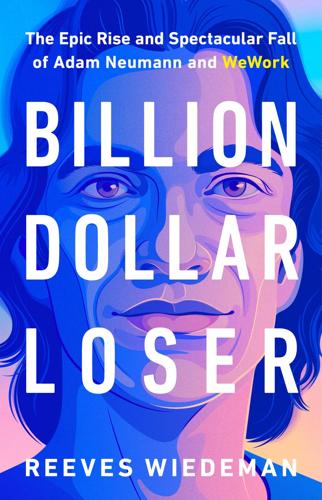
Billion Dollar Loser: The Epic Rise and Spectacular Fall of Adam Neumann and WeWork
by Reeves Wiedeman · 19 Oct 2020 · 303pp · 100,516 words
Field Chapter Eight: Greater Fools Chapter Nine: WeLive Chapter Ten: Manage the Nickel Chapter Eleven: Mr. Ten Times Chapter Twelve: Me Over We Chapter Thirteen: Blitzscaling Chapter Fourteen: The Holy Grail Chapter Fifteen: WeGrow Chapter Sixteen: Game of Thrones Chapter Seventeen: Operationalize Love Chapter Eighteen: A WeWork Wedding Chapter Nineteen: Fortitude
…
end—yes, there are a few companies, we hear about them, they lose a lot of money every month. Don’t build that.” Chapter Thirteen Blitzscaling A FEW WEEKS AFTER WeWork’s gargantuan SoftBank deal was announced, Jamie Hodari met Adam early one morning at Francis S. Gabreski Airport, which serves
…
encouraging Adam to do precisely what Masa was enabling. WeWork’s growth-at-all-costs plan epitomized an increasingly popular Silicon Valley strategy known as blitzscaling, a term coined by Reid Hoffman, the cofounder of LinkedIn, who had begun teaching a course on the subject at Stanford—“CS183C: Technology-Enabled
…
Blitzscaling.” In a follow-up book, Hoffman acknowledged that blitzscaling could seem counterintuitive. “It involves purposefully and intentionally doing things that don’t make sense according to traditional business thinking,” he
…
a profit but simply to acquire market share. In a perfect world, you became too big to fail. Hoffman admitted that blitzscaling had its dangers. In a final section, titled “Responsible Blitzscaling,” he said there was a difficult balance required “in marrying responsibility and velocity” and that while start-up founders “may
…
the kind of negative PR that befell Kalanick and Uber. Adam expressed little interest in slowing down. One morning in early 2018, with his own blitzscaling campaign fully operational, Adam flew to Seattle to meet with Howard Schultz, the former CEO of Starbucks. WeWork was thinking of expanding into retail. When
…
they met, Schultz gave Adam a piece of advice. After Starbucks started to take off—blitzscaling before the word even existed—Schultz said that he wished he had taken six months to stop growing so that Starbucks could have ironed out
…
’s voice, their “energy.” Rebekah was plotting second and third locations in San Francisco and Israel before the first WeGrow was even open—early education, blitzscaled. Speed and adaptation had been crucial to WeWork’s early success, but education wasn’t necessarily the best place for constant experimentation. “They would always
…
someone like Gomel, and the other mid-career executives joining WeWork’s senior ranks from more traditional companies, this was a rare opportunity to experience blitzscaling outside the tech world, and to reap the riches that could come with it. It quickly became clear to many of Gomel’s new colleagues
…
that he was being groomed to potentially be WeWork’s next CEO: Adam would step down, having led the company through its blitzscaling phase, becoming chairman of WeWork’s board, where he could continue pushing his vision while a seasoned operator like Gomel led WeWork into a new
…
attorneys. She often echoed a goal Adam had set out for the company of laying off 20 percent of WeWork’s staff every year—a blitzscaled version of Jack Welch’s belief that the bottom 10 percent of a company’s workers should be regularly culled. “We met those expectations, and
…
with several thousand employees. Miguel had let his architecture license expire, and his role in the design process had diminished as the job became a blitzscaled version of American Apparel’s expansion from a decade before. Managing a team of architects and designers that had grown to more than a hundred
Why Startups Fail: A New Roadmap for Entrepreneurial Success
by Tom Eisenmann · 29 Mar 2021 · 387pp · 106,753 words
up. Sometimes, to conserve manpower, a startup will simply let the backlog of unanswered queries grow unchecked, frustrating customers. As Reid Hoffman says, “For many blitzscaling companies, the key rule is ‘Provide whatever customer service you can as long as it doesn’t slow you down…and that may mean no
…
for Ch. 2’s discussion of network effects, for analysis of factors that encourage startups to accelerate customer acquisition, see Reid Hoffman and Chris Yeh, Blitzscaling: The Lightning-Fast Path to Building Massively Valuable Companies (New York: Currency, 2018); Albert Wenger, “Hard Choices: Growth vs. Profitability,” Continuations blog, Oct. 12, 2015
…
human capital management challenges in scaling startups are available in Ben Horowitz, The Hard Thing about Hard Things (New York: HarperCollins, 2014); Hoffman and Yeh, Blitzscaling, Part IV; Blumberg, Startup CEO, Part 2; Sam Altman, “Later Stage Advice for Startups,” Y Combinator blog, July 6, 2016; Brian Halligan, “Scale-Up Leadership
…
: HarperCollins, 2019). For additional perspectives on managing a scaling startup’s culture, see Horowitz, The Hard Thing; Blumberg, Startup CEO, Ch. 9; Hoffman and Yeh, Blitzscaling, Part IV; Dharmesh Shah, “Does HubSpot Walk the Talk on Its Culture Code?” OnStartups blog, Apr. 11, 2013; Kristi Riordan, “You Hire for Culture, but
…
the next paragraph. According to press accounts: Shontell, “Tech Titanic.” While Fab had some issues: Shontell, “Tech Titanic.” As Reid Hoffman says: Hoffman and Yeh, Blitzscaling, pp. 217–218. “A startup is a company”: Paul Graham, “Startup = Growth,” Paul Graham blog, Sept. 2012. Network Effects: For references regarding network effects, see
The Startup Way: Making Entrepreneurship a Fundamental Discipline of Every Enterprise
by Eric Ries · 15 Mar 2017 · 406pp · 105,602 words
not only needed in established enterprises. It is also a huge part of the power of Silicon Valley (see LinkedIn co-founder Reid Hoffman’s blitzscaling thesis1) To date, cross-training has taken the form of esoteric knowledge passed down from investors and founders to the next generation. But we can
…
1. See AnnaLee Saxenian’s Regional Advantage: Culture and Competition in Silicon Valley and Route 128 (Cambridge, MA: Harvard University Press, 1996); Reid Hoffman’s blitzscaling thesis (Part Three Introduction, note 1); and the TechStars Manifesto (Chapter 7, note 5). 2. The term “ambidextrous organization” was coined by Robert Duncan in
…
to build a real startup without even a part-time CFO have learned this lesson the hard way. PART THREE 1. hbr.org/2016/04/blitzscaling. CHAPTER 10 1. I belong to the Peter Drucker school of gurus: drucker.institute/about-peter-f-drucker. 2. fakesteve.net/2010/04/an-open

Capitalism in America: A History
by Adrian Wooldridge and Alan Greenspan · 15 Oct 2018 · 585pp · 151,239 words
as fast as possible, turning their lower costs into barriers to entry. (Reid Hoffman, the founder of LinkedIn, calls the modern equivalent of this technique “blitzscaling.”)19 They integrated “forward” and “backward.” And they tried to drive sales as high as possible by cutting costs and mass advertising. The final area
…
. 17. Richard White, Railroaded: The Transcontinentals and the Making of Modern America (New York: W. W. Norton, 2011), 2. 18. Ibid., 209. 19. Tim Sullivan, “Blitzscaling,” Harvard Business Review, April 2016. 20. Charles Morris, The Tycoons: How Andrew Carnegie, John D. Rockefeller, Jay Gould, and J. P. Morgan Invented the American
…
Bill of Rights, 157 birthrates, 11, 274, 363 Bismarck, Otto von, 247 bison, 116–17 Black, Fischer, 383 Blackstone, William, 30, 419 Blaine, James, 167 “blitzscaling,” 140 Bloch, Richard and Henry, 293 BNP Paribas, 374 Boesky, Ivan, 338 Bogardus, James, 110 bonanza farms, 114–15 boom-bust cycle, 41–42 bootlegging

Transaction Man: The Rise of the Deal and the Decline of the American Dream
by Nicholas Lemann · 9 Sep 2019 · 354pp · 118,970 words
pushing. To the distress of its public relations department, which didn’t appreciate the association with the Third Reich, Hoffman likes to use the term “blitzscaling” to describe his preferred way of doing business. That was the ethos at LinkedIn. Hoffman hired a chief executive officer named Jeff Weiner, a man
…
a small notebook out of his pocket and reading an agenda of topics he’d written beforehand in a tiny, indecipherable scrawl: the course on blitzscaling he was teaching at Stanford; the latest video games; politics; wealth management; whether artificial intelligence was more promising than augmented reality, or vice versa. Then
…
relic of the pretechnological past, and that there was no reason to fear power when it was in the right hands. In the book on blitzscaling that he wrote after teaching his course on the subject at Stanford, he brought up Louis Brandeis’s suspicion of bigness, but only to dismiss
…
Hoffman’s association with Silicon Valley: Reid Hoffman’s story comes from author’s interviews with Hoffman. “At PayPal, we broke the rules”: Reid Hoffman, Blitzscaling, Currency, 2018, 180. “a massively better idea”: Author’s interview with Reid Hoffman. Six Degrees: Jeffrey Travers and Stanley Milgram, “An Experimental Study of the
…
of Sociology, Volume 78, Number 6 (May 1973), 1360–80. “much as levies were imposed”: Hoffman, Blitzscaling, 84. As a young engineer: Author’s interview with Bob Metcalfe. “First prize is a Cadillac Eldorado”: Hoffman, Blitzscaling, 11. In 2014 Hoffman and two of his protégés: See Reid Hoffman, Ben Casnocha, and Chris
…
ants”: Mark Pincus, Revolution of the Ants, Mark Pincus blog, July 30, 2004. Nonzero: Robert Wright, Nonzero, Pantheon, 1999. “We disagree with this position”: Hoffman, Blitzscaling, 280. “Open Letter on the Digital Economy”: http://openletteronthedigitaleconomy.org. “uncollared workers”: Simon Rothman, “The Rise of the Uncollared Worker and the Future of the
…
Black, Fischer black Americans, discrimination faced by; in housing; in policing Black Monday Black Panthers Black-Scholes formula Blackstone Blagojevich, Rod Blankenbeckler, Frank Blankfein, Lloyd blitzscaling Bloom, Ron Bloomberg, Michael Bohac, Ben bonds; as fixed-income; high-risk; in WWI Booth, David Bork, Robert Born, Brooksley Boyce, Neith Brandeis, Louis D

The Power Law: Venture Capital and the Making of the New Future
by Sebastian Mallaby · 1 Feb 2022 · 935pp · 197,338 words
the network flywheel in motion. To get to scale before rivals challenged it, Uber would have to splurge on subsidizing rides; it would have to “blitzscale,” to use a term that swept the Valley a bit later. Back in 2005, Paul Graham had complained that VCs stuffed startups with too much
…
an option to invest an additional $88 million at some point in the next six months. It was a warning to rivals: Uber could out-blitzscale anyone. By now Gurley was coming to see Uber as much more than OpenTable for black cars. The affordable UberX service signaled that the company
…
$100 million into Uber’s rival Lyft. It announced technology-sharing alliances with Uber’s adversaries in other regions, including India and Southeast Asia. The blitzscaling wars had gone global. Gurley and David Bonderman were furious. Kalanick’s job was to cement his supremacy in his core markets, not burn capital
…
there was a chance that he was wrong. This humongous new war chest would empower Uber to buy more market share, and in a global blitzscaling war the biggest spender stood to win a prize of unimaginable value. Weighing his belief in corporate governance against his respect for network effects, Gurley
…
, there is the third broad area of complaint: that venture capital encourages out-of-control disrupters. This line of criticism is often a reaction against “blitzscaling” at companies such as Uber. Coined by Reid Hoffman, a venture capitalist at Greylock and before that the founder of LinkedIn, the term referred originally
…
network industries, winner-takes-all logic obliges startups to race for scale before competitors achieve it.[28] But, in the hands of less thoughtful investors, “blitzscaling” has come to mean little more than “get rich quick,” a phrase to be filed alongside other notorious war cries, from Masayoshi Son’s injunction
…
to be “crazier, faster, bigger” to Mark Zuckerberg’s call to “move fast and break things.” Even the recipients of blitzscaling war chests have started to call foul. In 2019, the entrepreneur Jason Fried declared that venture capital “kills more businesses than it helps,” because large
…
to kill it,” Fried said bluntly.[29] Noting the multitude of VC-backed companies that fail, the entrepreneur Tim O’Reilly offers a provocative idea. “Blitzscaling isn’t really a recipe for success but rather survivorship bias masquerading as a strategy.”[30] Yet the O’Reilly critique is less an indictment
…
be creative. But if dislocation stems not from technology but rather from technology finance, the judgment may be different. When venture capitalists pour money into blitzscaling, the result is a pack of unicorns that can sell their products below cost, disrupting incumbents not necessarily because they are technologically superior but rather
…
it should be fair. If the market is rigged, it loses legitimacy. No economic system is perfectly free from distortions, so the question is whether blitzscaling rises to the level where the distortions are pernicious. If it could be shown that subsidized unicorns are elbowing aside more efficient incumbents, then
…
blitzscaling might be harming the overall efficiency of the economy. At the height of the blitzscaling frenzy in 2018, two academics tried to make this claim. “Money-losing firms can continue operating and undercutting
…
enjoy economies of scale, strong brands, government regulations that they have helped to shape, and established relationships with distributors and suppliers. Given these incumbent advantages, blitzscaling that helps insurgents may be a leveler, not a distorter. In ride hailing, for example, the incumbent taxi operators often had municipal regulators in their
…
pockets. Cheap venture dollars served to balance that unfair advantage.[33] “You can make the case that if Uber and Lyft and Airbnb hadn’t blitzscaled, they would have been tied up in bureaucratic red tape, and the future they are trying to build wouldn’t just have happened more slowly
…
, a really huge amount of venture dollars might represent an overcorrection: when buccaneers like Masayoshi Son are setting the pace, the anti-blitzscaling critique may have merit. But buccaneer blitzscaling is not the fault of venture capital as it is usually practiced: recall that Bill Gurley was horrified by Uber’s burn
…
rate. After the humiliation of WeWork, even Son claimed to be chastened. One last point about blitzscaling is worth noting. The goal of the
…
blitzscaler is to establish market power—something approaching monopoly. This can harm society in three ways: overmighty companies may underpay suppliers and workers
…
it really isn’t true that venture capital is unsuited to socially useful industries such as cleantech. Nor is the “go big or go home” blitzscaling mentality generally extreme enough to harm the efficiency of the economy. As technology permeates every corner of life, democratic societies are right to worry about
…
either graduate or undergraduate study. See Kerby, “Where Did You Go to School?” BACK TO NOTE REFERENCE 27 Tim Sullivan, “Blitzscaling,” Harvard Business Review, April 2016, hbr.org/2016/04/blitzscaling. BACK TO NOTE REFERENCE 28 Eric Johnson, “‘Venture Capital Money Kills More Businesses Than It Helps,’ Says Basecamp CEO Jason Fried
…
, 84 Adams, Rick, 132–44, 436n “adjacent possibilities,” 131 Adobe, 98 adventure capital, 17–18, 25–27 Airbnb, 302, 353 Andreessen Horowitz’s investment, 298 blitzscaling, 387 Sequoia Capital’s investment, 304, 315, 455n Alcorn, Allan, 425n Alibaba, 226–31, 232–34, 241–42, 392, 446–47n Chinese government actions against
…
Uber, 353 power law and, 7 Trump’s criticism of, 402 Big Tech, 15, 380, 388 Bill, Jobs., 82 BlackBerry, 331 Black Lives Matter, 385 “blitzscaling,” 357, 362, 364, 385–88 Blue Box, 110–11 Bochner, Steve, 329 Boeing, 12, 395 Bohemian Grove, 92 Bolger, John, 116 Bonderman, David, 358, 360
…
the world,” 296, 309 Sohu, 226, 233, 279–82 Son, Masayoshi, 154–60, 171, 439n Alibaba investment, 229–31, 377, 446n background of, 154, 438n blitzscaling and, 387–88 “crazier, faster, bigger,” 348, 373, 385 Rieschel and, 222, 446n Uber investment, 370–71 Vision Fund, 155, 346–47, 459n WeWork investment
…
U Uber, 349–71 Andreessen Horowitz’s investment, 353–55, 378 Benchmark Capital’s investment, 172, 349–56, 358–71, 372, 380, 440n, 458n, 459n blitzscaling, 357–59, 362, 364, 385, 387 in China, 362–63, 364 Didi Kuaidi, 362, 363, 364, 459n Founders Fund and, 211, 444n Greyball, 365–66
Masters of Scale: Surprising Truths From the World's Most Successful Entrepreneurs
by Reid Hoffman, June Cohen and Deron Triff · 14 Oct 2021 · 309pp · 96,168 words
like Airbnb, Facebook, Zynga, Aurora, and Dropbox, among many others. Reid has even created new and original language on the subject, such as the term “blitzscaling,” which refers to the pursuit of aggressive growth by prioritizing speed over efficiency, or risk-intelligent scaling. So as the host of the Masters of
…
create something big, you need a lot of space. This is why “The Contrarian Principle” is one of the four underlying principles in my book Blitzscaling. Being contrarian and right gives you a critical head start on achieving scale. We see this all the time with truly big ideas. In the
…
, Paul would codify this advice in his famous essay “Do Things That Don’t Scale,” which also serves as #6 of my Counterintuitive Rules of Blitzscaling. * * * — In this chapter, we’ll dig into what happens—or should happen—during the critical early days of launching your product, a pre-scale moment
…
foundation. User feedback ensures you won’t build a dozen floors on an unstable swamp.This advice may seem paradoxical to readers of my book Blitzscaling, in which I articulate the counterintuitive rule, “Ignore Your Customers.” The common thread between “engage one-on-one with passionate customers” and “ignore your customers
…
quickly and decisively you act. (I write more about the importance of speed, and what you can do to outpace your competition, in my book Blitzscaling.) Her concerns about the dark side of online interactions only deepened after word of her acrimonious breakup with Tinder got out—and she found herself
…
that never ends. Culture underlies everything that you do as a company: hiring talent, building and executing strategy, shaping customer engagement. Hence, in my book Blitzscaling, I outline many entrepreneurial business challenges that can be solved later—even challenges as extreme as business model or operating financial model—but make the
…
), and experienced executives (who can lead massive teams). You can read more about “Generalists to Specialists” and “Contributors to Managers to Executives” in my book Blitzscaling. * * * — As important as it is to hire the right people, it can be just as important to consider who you don’t want to hire
…
from my mistakes, we have a rule that nobody should interview while tired.” I’m a huge fan of shortcuts. I wrote an entire book (Blitzscaling) on the importance of speed, and company-growing hacks are practically the guiding spirit of Masters of Scale. But there are a few times and
…
manage the transition into multiple products, product lines, or even business units. This is what I described as the “Single Focus to Multithreading” transition in Blitzscaling. So a critical question for any startup is figuring out how to apportion their resources between their existing, successful products and the new verticals or
…
contingency plan? The answer to that question is: Who has time for contingency plans? To be not only the first mover but also the first blitzscaler in a new market, you have to seize every opportunity for growth—even if it means getting in over your head sometimes. Let fires burn
…
. Which is why “Reid’s rule” for raising money is: Raise more than you think you need. (It’s right there in his last book, Blitzscaling. Rule #8, “Raise Too Much Money.”) Because if there’s one thing you can be sure of as an entrepreneur, you are guaranteed to run
…
of strategic patience—of knowing who we are and what we stand for.” I generally favor blitzscaling, or superfast growth. It’s a proven method of getting explosive momentum behind your idea. I believe that blitzscaling, or the pursuit of rapid growth by prioritizing speed over efficiency, even in the face of
…
is to reach critical scale first, generating long-term competitive advantages that make it nearly impossible for any competitor to overtake you. In order to blitzscale, you need a war chest—and you need it fast, so you can outpace your competition. This need for speed is why I almost always
…
encourage entrepreneurs to raise money—and raise more than they think they need. I do realize that not everyone feels comfortable with blitzscaling. Prioritizing speed over efficiency feels risky—and it is! However, it’s easy to err too far on the side of caution, and there’s
…
; you’ll also be wasting your window of opportunity. You can read more about this topic in Blitzscaling, where “Launch a Product That Embarrasses You” is #4 on my list of Counterintuitive Rules of Blitzscaling. * * * — One of the biggest champions of experimentation in Silicon Valley has been Mark Zuckerberg, whose early mantra
…
Sunday to keep them in the loop on what’s top of mind for him. You can read more about this transition in my book Blitzscaling, where “Dialogue to Broadcasting” is one of the key transitions of scaling. That dialogue requires more than words. Part of maintaining that consistent drumbeat is
…
disciplined, with rules of engagement, lines of communication, and long-term strategy. You can read more about ethical pirates and commanding admirals in my book Blitzscaling, where we discuss the key transition from pirate to navy. As the company grew increasingly complex, there was a new imperative: Google needed more product
…
Aurora and Convoy get to scale. His unique understanding of consumer behavior and a clear-eyed ability to guide startups from inception through ramped-up “blitzscaling” has made him a sought-after advisor, partner, and investor. Reid was a board observer for Airbnb and currently serves as a board director for
…
Center. Reid is a frequent public speaker, known for his approachability and skill at explaining complex topics with lucidity. He is the co-author of Blitzscaling and two bestselling books: The Start-up of You and The Alliance. He is the longtime host of the podcast Masters of Scale. PHOTO: © LORI
The Airbnb Story: How Three Ordinary Guys Disrupted an Industry, Made Billions...and Created Plenty of Controversy
by Leigh Gallagher · 14 Feb 2017 · 290pp · 87,549 words
a signal—there would be no reason to exist,” Chesky said during an interview with Reid Hoffman at Hoffman’s Stanford University class “Technology-Enabled Blitzscaling.”) Sure enough, soon the Samwer brothers made a proposition to Airbnb to sell it Wimdu. It prompted a major moment of soul-searching for Airbnb
…
, as we will see, a significant departure. “I know how to start a product—I started one,” Chesky told an audience at Reid Hoffman’s “Blitzscaling” course at Stanford. “But how do you start a new product inside an existing business that’s successful?” Chesky assumed it would be just like
…
, 2013, https://www.youtube.com/watch?v=6yPfxcqEXhE. 7 trapped in his job: Ibid. 10 in his underwear: Ibid. 11 friends would ask: Reid Hoffman, “Blitzscaling 18: Brian Chesky on Launching Airbnb and the Challenges of Scale,” Stanford University, November 30, 2015, https://www.youtube.com/watch?v=W608u6sBFpo. 13 (“until
…
ten thousand listings: Alexia Tsotsis, “Airbnb Freaks Out Over Wimdu,” TechCrunch, June 9, 2011, https://techcrunch.com/2011/06/09/airbnb. 49 (“Technology-Enabled Blitzscaling”): Reid Hoffman, “Blitzscaling 18: Brian Chesky on Launching Airbnb and the Challenges of Scale,” Stanford University, November 30, 2015, https://www.youtube.com/watch?v=W608u6sBFpo. 55
…
It Seems,” Fortune, July 12, 2016, http://fortune.com/2016/07/12/airbnb-discrimination-hiring/. 188 “business that’s successful?”: Reid Hoffman and Brian Chesky, “Blitzscaling 18: Brian Chesky on Launching Airbnb and the Challenges of Scale,” Stanford University, November 30, 2015, https://www.youtube.com/watch?v=W608u6sBFpo. Chapter 8
…
, Conrad, 139 Hilton hotels, 141–42, 152, 167 hiring, 25, 35–38, 49–50, 55, 56–57 Hoffman, Reid as adviser, 49–50, 164, 197 “Blitzscaling” course, 188 on Chesky, 167–68 on growth, 56, 199 as investor, 46–47 NYC politics, 121 on uniqueness, 62 Holder, Eric, 102, 171 Holiday
Tools and Weapons: The Promise and the Peril of the Digital Age
by Brad Smith and Carol Ann Browne · 9 Sep 2019 · 482pp · 121,173 words

Uncanny Valley: A Memoir
by Anna Wiener · 14 Jan 2020 · 237pp · 74,109 words
System Error: Where Big Tech Went Wrong and How We Can Reboot
by Rob Reich, Mehran Sahami and Jeremy M. Weinstein · 6 Sep 2021
The Contrarian: Peter Thiel and Silicon Valley's Pursuit of Power
by Max Chafkin · 14 Sep 2021 · 524pp · 130,909 words

Exponential: How Accelerating Technology Is Leaving Us Behind and What to Do About It
by Azeem Azhar · 6 Sep 2021 · 447pp · 111,991 words
Trillions: How a Band of Wall Street Renegades Invented the Index Fund and Changed Finance Forever
by Robin Wigglesworth · 11 Oct 2021 · 432pp · 106,612 words
Extreme Teams: Why Pixar, Netflix, AirBnB, and Other Cutting-Edge Companies Succeed Where Most Fail
by Robert Bruce Shaw, James Foster and Brilliance Audio · 14 Oct 2017 · 280pp · 82,355 words

Ghost Road: Beyond the Driverless Car
by Anthony M. Townsend · 15 Jun 2020 · 362pp · 97,288 words
The Geek Way: The Radical Mindset That Drives Extraordinary Results
by Andrew McAfee · 14 Nov 2023 · 381pp · 113,173 words
Open for Business Harnessing the Power of Platform Ecosystems
by Lauren Turner Claire, Laure Claire Reillier and Benoit Reillier · 14 Oct 2017 · 240pp · 78,436 words
How I Built This: The Unexpected Paths to Success From the World's Most Inspiring Entrepreneurs
by Guy Raz · 14 Sep 2020 · 361pp · 107,461 words
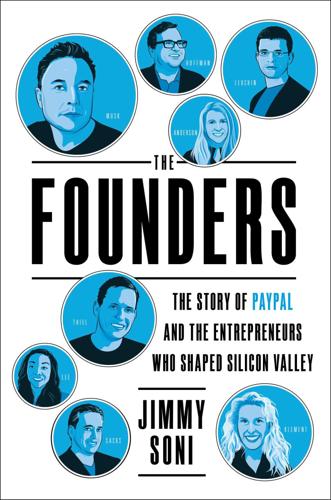
The Founders: The Story of Paypal and the Entrepreneurs Who Shaped Silicon Valley
by Jimmy Soni · 22 Feb 2022 · 505pp · 161,581 words

WTF?: What's the Future and Why It's Up to Us
by Tim O'Reilly · 9 Oct 2017 · 561pp · 157,589 words

More From Less: The Surprising Story of How We Learned to Prosper Using Fewer Resources – and What Happens Next
by Andrew McAfee · 30 Sep 2019 · 372pp · 94,153 words