The London Compendium
by Ed Glinert · 30 Jun 2004 · 1,088pp · 297,362 words
Road Kensington Gore Prince’s Gate (ii) south of Cromwell Road Cromwell Place Gloucester Road Harrington Road Queen’s Gate Reece Mews Selwood Terrace The Brixton riots BELGRAVIA, SW1 Belgravia, the flower boxes, and the awnings over doors, and the front walls painted different shades of cream. The gracious living in red
…
in the local squats, where their refusal to conform to the established social codes and to respect (white) authority provoked hostility from the police. The Brixton riots On three occasions – 1981, 1985 and 1995 – Brixton has witnessed considerable unrest as simmering local tension, mostly caused by policing methods, has boiled over into
…
serious violence. The first Brixton riots, 10–13 April 1981 Early in 1981 plainclothes police stop nearly 1,000 people (mostly black) in Brixton on suspicion (‘sus’) that they have committed
…
, they ruin their case by using the operation as an excuse to indulge in racial harassment that causes much resentment locally, resulting in the first Brixton riots. • Friday 10 April 1981. Two police officers on foot patrol stop a black youth who is being chased by a group of black men along
…
into the disturbances, finds that the riots were spontaneous and that there was no premeditated plan by outside agitators to destroy the area. The second Brixton riots, 28 September 1985 Four years later Brixton erupts again as police officers and youths, mostly black, clash following a police raid on 22 Normandy Road
…
230 people, over half of whom are white, arrested. The following day the area is flooded with riot police to prevent further trouble. The third Brixton riots, 13 December 1995 The third and most recent riots, supposedly organized by men with mobiles to outflank the police, occurred after the death in police
…
of Jamaica, visits Notting Hill. Stopping in the street to talk to a black man, he is told by the police to move on. • The Brixton riots, p. 404. After the riots community leaders helped ease tension through such bodies as the Notting Hill Housing Trust, which took advantage of the 1965
…
, 385, 390 cults 24, 83, 152, 153, 341–342 martyrs 7, 385, 390 Methodism 12, 82 (see also Wesley, John) see also cathedrals, Jews riots Brixton riots 404–405 Gordon riots 10, 88, 115, 124, 125, 156, 362, 363, 385, 386 Notting Hill race riots 448–449, 461–462 rivers 20, 57
Migrant City: A New History of London
by Panikos Panayi · 4 Feb 2020
and Lady Leonora Speyer, 1921. Historic Collection / Alamy Stock Photo. 13. Anti-German riots in East London, May 1915. Chronicle / Alamy Stock Photo. 14. The Brixton riots, 1981. © Metropolitan Police Authority / Mary Evans / Mary Evans Picture Library Ltd / age fotostock. 15. Racist activity in East London during the 1970s. Kenneth Leech, Brick
…
this group during the second half of the twentieth century. Like the East End Jewish ghetto, Brixton symbolized both deprivation, which ultimately led to the Brixton riots of the early 1980s123 accentuated by a type of police persecution which Jews never experienced, and a reconstruction of the homeland. This was encouraged both
…
of stop-and-search tactics, which had characterized relations between the police and the black population, played a major role in the outbreak of the Brixton riots in April 198184 and the Broadwater Farm disturbances in Tottenham in October 1985 following the death of Cynthia Jarrett during a search of her home
…
property on Chrisp Street in the East End in May 1915 followed the sinking of the passenger liner Lusitania by a German submarine. 14. The Brixton riots of 1981 broke out as a reaction against inner-city deprivation and persecution which involved the Metropolitan Police. 15. During the 1970s, the East End
…
and the Persuaders, and helped to form the London Community Gospel Choir partly as a reaction against the negative images of black youth following the Brixton riots of 1981 and evolving from the Latter Rain Outpuring Revival Choir, in which Meade played a key role. The London Community Gospel Choir would establish
No Such Thing as Society
by Andy McSmith · 19 Nov 2010 · 613pp · 151,140 words
another 122 police officers and 3 members of the public had been injured, and 61 police vehicles and 26 private cars were damaged.19 The Brixton riots were given a vast amount of publicity, making it an obvious risk that copycat riots would break out somewhere. In fact, there were six quiet
…
houses Granada Television and the 1980s housing in Stockbridge Village. Lord Scarman, who was asked by the government to report on the causes of the Brixton riot, took the Heseltine view and made several recommendations to improve relations with the police, including positive discrimination. All this was ignored, but the government enshrined
…
for the first time since the 1920s, blacks and asians – Abbott, Boateng, Grant and Vaz – had made it to the House of Commons. After the Brixton riots, a lawyer named Rudy Narayan was chosen to head a new Brixton Defence Committee, until the local youths decided that he was too much of
…
by the genuine tributes culled from upmarket newspapers. But the most extraordinary aspect of the show was the way it went for the police. The Brixton riots had given the Special Patrol Group (SPG) in particular an unenviable reputation, though Not …’s best known creation, Constable Savage, was a uniformed beat copper
…
early 1980s, Harvey Proctor, the pro-hanging, anti-EEC MP for Billericay, was one of the most right-wing politicians in the land. After the Brixton riots, he addressed an anti-immigration meeting, with known fascists in the audience, and called for ‘compulsory repatriation for those foreigners who riot, loot and commit
Lonely Planet England
by Lonely Planet · 907pp · 235,091 words
the neoliberal Thatcher government (1979–90). Thatcher’s radical programme of cuts and privatisation led to many confrontations between protestors and police. In 1981, the Brixton riots broke out over racism and police brutality. The 1984–85 Miners’ Strikes divided workers and communities and were sometimes violently dispersed. And the 1990 Poll
London: The Autobiography
by Jon E. Lewis · 25 Aug 2009 · 655pp · 151,111 words
FRANK KEATING Enter Mrs Thatcher, 4 May 1979 MARGARET THATCHER The SAS Storm the Iranian Embassy, Prince’s Gate, May 1980 ANONYMOUS SAS TROOPER The Brixton Riots, 10–12 April 1981 MARTIN HUCKERBY Docklands: Days in the Life of a Bethnal Green GP, c. 1986–90 DAVID WIDGERY The Funeral Procession of
…
, stretching back as it does to the massacre of the Jews in 1189. Indeed, violence of all sorts seems imprinted in London’s DNA. The Brixton riots of 1981 were just one part of a chain of Mob outbursts against the Establishment, beginning with the Tallage riots of 1194. The Krays, meanwhile
…
we in Britain will not tolerate terrorists. The world must learn this.’ It was a fine personal gesture and rounded the operation off perfectly. The Brixton Riots, 10–12 April 1981 Martin Huckerby Huckerby was a journalist on The Times. AT 8 PM on Saturday night Brixton was burning. A pillar of
…
/Veronica Bowater John Howard, ‘London Hospitals’, quoted in English Historical Documents, vol. XI, 1783–1832, ed. A. Aspinall and Anthony Smith, 1959 Martin Huckerby, ‘The Brixton Riots’ (originally ‘Looters Moved in as Flames Spread’), The Times, 13 April 1981. Copyright © 1981 News International. Reprinted by permission H.M. Hyndman, ‘A Socialist March
A History of Modern Britain
by Andrew Marr · 2 Jul 2009 · 872pp · 259,208 words
Lawson, to pile up supplies of coal at the power stations; stocks had steadily grown, while consumption and production both fell. After the Toxteth and Brixton riots the police had been retrained and equipped with full riot gear without which, ministers later confessed, they would have been unable to beat the miners
Mad Mobs and Englishmen? Myths and Realities of the 2011 Riots
by Steve Reicher and Cliff Stott · 18 Nov 2011 · 162pp · 34,454 words
very different phenomena involving different dynamics, arising from different motivations and involving different groups of people. The Scarman report acknowledged the same complexities in the Brixton riot of 1981.67 However, for all the complexities involved, and the difficulties of separating out who participated and for what reason, Kerner’s team still
…
by any organization or group, international, national or local.’66 Agitator theories were equally popular in explaining the UK riots of the 1980s. Following the Brixton riots of July 1981, the Conservative MP William Shelton blamed left-wingers, saying that ‘they believe that in our inner cities they have found the Achilles
…
’ who had been spotted at similar events.84 Again an enquiry was set up to investigate these and other claims. The Scarman report into the Brixton riot concluded that while it was certainly true that outsiders tried to take advantage of circumstances and that they may have urged radical action, there was
…
describing the inception of a riot. Many examples could be brought to bear, but consider just this one, from the Scarman report into the 1981 Brixton riot. Lord Scarman argues that indignation, resentment and suspicion of the police ‘produced the attitudes and beliefs which underlay the disturbances, providing the tinder ready to
…
also signals the failure of previous non-violent attempts to rectify the grievance. This was abundantly clear in the British riots of the 1980s. The Brixton riot of 1981 didn’t start after Michael Bailey’s death, which was believed at the time to have been a consequence of police brutality. It
…
something that many view as so negative? We saw this in the case of a group of young women looters from Croydon. After the 1985 Brixton riot the Daily Express wrote: The mobs who surged through shattered shop window stripping shelves were fired by a sense of excitement and bravado. There were
Hello World: Being Human in the Age of Algorithms
by Hannah Fry · 17 Sep 2018 · 296pp · 78,631 words
Law 74–5 Jukebox 192 junk algorithms 200 Just Noticeable Difference 74 justice 49–78 algorithms and 54–6 justification for 77 appeals process 51 Brixton riots 49–51 by country Australia 53 Canada 54 England 54 Ireland 54 Scotland 54 United States 53, 54 Wales 54 discretion of judges 53 discrimination
How to Be a Liberal: The Story of Liberalism and the Fight for Its Life
by Ian Dunt · 15 Oct 2020
, 3 Breivik, Anders 1 Brexit EU referendum 1 government response and May 1 Johnson as prime minister 1 Trump and nationalism 1 Bridges, George 1 Brixton riots 1 Brown, Gordon 1, 2 brownshirts 1, 2, 3, 4 Brown, Winthrop 1 Bruno, Giordano 1 Buchenwald camp 1 Burghart, Devin 1 Burke, Edmund 1
Age of the City: Why Our Future Will Be Won or Lost Together
by Ian Goldin and Tom Lee-Devlin · 21 Jun 2023 · 248pp · 73,689 words
infant mortality here ‘levelling up’ here life expectancy here mayoralties here per capita emissions here per capita incomes here remote working here social housing here Brixton riots here broadcasting here Bronze Age here, here, here, here bronze, and shift to iron here Brooks, David here Brynjolfsson, Eric here Burgess, Ernest here bushmeat
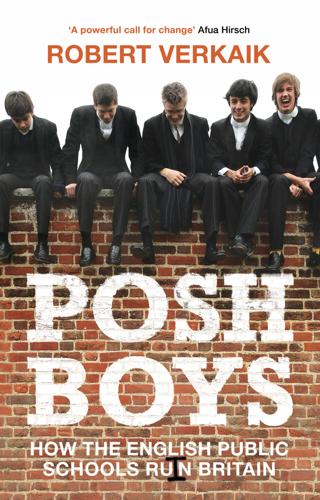
Posh Boys: How English Public Schools Ruin Britain
by Robert Verkaik · 14 Apr 2018 · 419pp · 119,476 words
Protest and Power: The Battle for the Labour Party
by David Kogan · 17 Apr 2019 · 458pp · 136,405 words
Step by Step the Life in My Journeys
by Simon Reeve · 15 Aug 2019 · 309pp · 99,744 words
My Shit Life So Far
by Frankie Boyle · 30 Sep 2009