Cambridge Analytica
description: a British political consulting firm involved in data mining and analysis for electoral processes
153 results
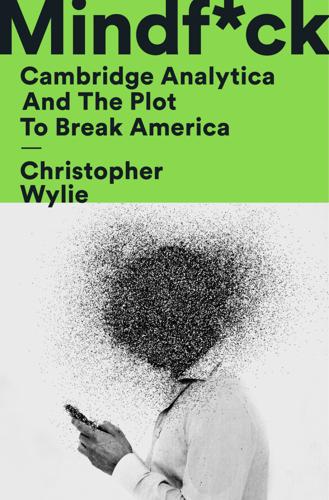
Mindf*ck: Cambridge Analytica and the Plot to Break America
by Christopher Wylie · 8 Oct 2019
Page Copyright Epigraph Chapter 1: Genesis Chapter 2: Lessons in Failure Chapter 3: We Fight Terror in Prada Chapter 4: Steve from America Chapter 5: Cambridge Analytica Chapter 6: Trojan Horses Chapter 7: The Dark Triad Chapter 8: From Russia with Likes Chapter 9: Crimes Against Democracy Chapter 10: The Apprentice Chapter
…
information about what had happened between the Trump campaign and Russia, but no one had been able to connect the dots. I provided evidence tying Cambridge Analytica to Donald Trump, Facebook, Russian intelligence, international hackers, and Brexit. This evidence revealed how both an obscure foreign contractor engaged in illegal activity and
…
ascendancy. In this new war, the American voter became a target of confusion, manipulation, and deception. Truth was replaced by alternative narratives and virtual realities. Cambridge Analytica first piloted this new warfare in Africa and tropical islands around the world. The firm experimented with scaled online disinformation, fake news, and mass profiling
…
that room with two large binders, each containing several hundred pages of documents. The first binder contained emails, memos, and documents showing the extent of Cambridge Analytica’s data-harvesting operation. This material demonstrated that the company had recruited hackers, hired personnel with known links to Russian intelligence, and engaged in bribery
…
, extortion, and disinformation campaigns in elections around the world. There were confidential legal memos from lawyers warning Steve Bannon about Cambridge Analytica’s violations of the Foreign Agents Registration Act, as well as a cache of documents describing how the firm exploited Facebook to access more than
…
believe there was a nexus of Russian state-sponsored activity in London during the 2016 presidential election and Brexit campaigns? Yes. Was there communication between Cambridge Analytica and WikiLeaks? Yes. I finally saw glimmers of understanding coming into the committee members’ eyes. Facebook is no longer just a company, I told
…
who writes long-winded essays attacking democracy and virtually everything about how modern societies are ordered. Moldbug’s views on “truth” influenced Bannon and what Cambridge Analytica would become. Moldbug has written that “nonsense is a more effective organizing tool than the truth,” and Bannon embraced this. “Anyone can believe in
…
rights to SCL’s work, creating a bizarre situation where the subsidiary actually owned the core assets of its “parent.” SCL and Cambridge Analytica then signed an exclusivity agreement whereby Cambridge Analytica would transfer all of its contracts to SCL, and SCL’s personnel would service the actual delivery and work on behalf of
…
to identify people who exhibited neuroticism and dark-triad traits, and those who were more prone to impulsive anger or conspiratorial thinking than average citizens. Cambridge Analytica would target them, introducing narratives via Facebook groups, ads, or articles that the firm knew from internal testing were likely to inflame the very narrow
…
difference between a user endlessly swiping for more content and a gambler pulling the slot machine lever over and over. * * * — IN THE SUMMER OF 2014, Cambridge Analytica began developing fake pages on Facebook and other platforms that looked like real forums, groups, and news sources. This was an extremely common tactic that
…
deployed systematically via social media, blogs, groups, and forums. Bannon’s first request of our team was to study who felt oppressed by political correctness. Cambridge Analytica found that, because people often overestimate how much others notice them, spotlighting socially uncomfortable situations was an effective prime for eliciting bias in target cohorts
…
parodied the “hicks” of flyover country, but social media represented an extraordinary opportunity to rub “regular” Americans’ noses in the snobbery of coastal elites. Cambridge Analytica began to use this content to touch on an implied belief about racial competition for attention and resources—that race relations were a zero-sum
…
groups and urban liberals. Bannon was convinced that if you showed people what political correctness “really meant,” they would wake up to the truth. So Cambridge Analytica started asking subjects if the thought of their daughter marrying a Mexican immigrant made them feel uncomfortable. For subjects who denied discomfort with the idea
…
dictating America’s destiny. CHAPTER 8 FROM RUSSIA WITH LIKES - Keeping true to its origins in foreign information operations, there were new characters arriving at Cambridge Analytica’s London office almost daily. The firm became a revolving door of foreign politicians, fixers, security agencies, and businessmen with their scantily clad private secretaries
…
prospective client that CA executives became both very giddy and unusually elusive about. In the spring of 2014, the large Russian oil company Lukoil contacted Cambridge Analytica and began asking questions. At first, Nix handled the conversations, but soon the oil executives wanted answers that he was incapable of providing. He
…
to be a project that needed special intelligence services or scaled disinformation operations on social media. (As the memo was internal, it referenced SCL; Cambridge Analytica was merely a front-facing brand for American clients that was entirely staffed by SCL personnel.) “SCL retains a number of retired intelligence and security
…
online, but Kogan’s research was well suited to targeting voters with authoritarian personality traits, identifying narratives that would activate their support. After Kogan joined Cambridge Analytica’s project, CA’s internal psychology team started replicating some of his research from Russia: profiling people who were high in neuroticism and dark-triad
…
influencing an American campaign or PAC at the local, state, or federal level. The memo recommended that Nix immediately recuse himself from substantial management of Cambridge Analytica until “loopholes” could be explored. The Bracewell & Giuliani memo suggested “filtering” the work of CA’s foreign nationals through U.S. citizens. After reading
…
at the insecurities and vulnerabilities of a nation. My actions were inexcusable, and I will always live with the shame. * * * — JUST BEFORE I LEFT Cambridge Analytica, the firm was planning more election work in Nigeria. As Nix had explained to Lukoil in his presentation about rumor campaigns, the African nation was
…
St. Kitts and Nevis, an island nation in the Caribbean. The hacking of private medical information and emails was disturbing enough, but the propaganda videos Cambridge Analytica produced were much worse. The ads, which were placed on mainstream networks, including Google, were targeted to areas of Nigeria where the population leaned pro
…
, a prominent right-wing politician, became the figurehead for Leave.EU. After Steve Bannon introduced Banks and Farage to the American billionaire Robert Mercer, Cambridge Analytica signed on to the Brexit campaign to service Leave.EU with its algorithms and digital targeting. It was announced that Brittany Kaiser would become Leave
…
Canada and was legally called AggregateIQ, but it signed an intellectual property agreement that granted SCL the rights to its work. SCL and, later, Cambridge Analytica frequently took advantage of a network of offshore companies registered under different names. Similar to the strategies employed by tax avoidance schemes, this network of
…
companies around the world helped Cambridge Analytica bypass the scrutiny of electoral or data privacy regulators. AIQ’s headquarters was a brick building on Pandora Avenue, only a block from the ocean
…
a scaled information operation deployed by AIQ, and the problem with Remain was that they completely failed to understand what they were up against. As Cambridge Analytica identified, provoking anger and indignation reduced the need for full rational explanations and would put voters into a more indiscriminately punitive mindset. CA found that
…
for the firm had ultimately been passed on to certain U.S. political campaigns. As Trump continued to gain ground, their curiosity grew. I described Cambridge Analytica’s tactics of voter manipulation—how the firm identified and targeted people with neurotic or conspiratorial predispositions, then disseminated propaganda designed to deepen and accentuate
…
those traits. I explained how, after obtaining people’s data from Facebook, Cambridge Analytica could in some cases predict their behavior better than their own spouses could, and how the firm was using that information to, in effect, radicalize
…
who were not representing the White House. The topic was the U.S. election and what was happening in the Republican Party with respect to Cambridge Analytica, including its massive surveillance database and its potential relationships with foreign intelligence agencies. Someone from the White House group asked if we could talk outside
…
in a child sex ring being run out of a Washington, D.C., pizza parlor. My mind kept returning to the connections among Cambridge Analytica, the Russian government, and Assange. Cambridge Analytica seemed to have its dirty hands in every dirty part of this campaign. * * * — ON THE NIGHT OF the election, I was
…
I told her bluntly. Even a well-informed journalist like Cadwalladr struggled at first to understand all the layers and connections of the Cambridge Analytica narrative. Was SCL part of Cambridge Analytica, or the other way around? Where did AIQ fit in? And even when she had the basic details nailed down, there was
…
consuming and expansive legal battle. Instead of fighting an obviously spurious lawsuit, the paper agreed to remove Schmidt’s name several weeks after publication. Then Cambridge Analytica threatened to sue over the same article. And even though The Guardian had documents, emails, and files that confirmed everything I had told them, they
…
t even defend its own journalism. An additional complication was the super NDA that prohibited me from revealing details about my work at Cambridge Analytica. The whole point of Cambridge Analytica making me sign it was that it seriously increased my legal liability, and I had no doubt that my old employers would attempt
…
meetings, Ranjan met with chief data officer Alexander Tayler and managing director Mark Turnbull in private rooms at a hotel near Westminster. The executives pitched Cambridge Analytica’s data analysis work and suggested intelligence-gathering services, but nothing concrete came out of the meetings. They seemed cagey, hedging in how they talked
…
the conversation. Two meetings took place at this restaurant. At the first, Turnbull laid the groundwork for some of the more questionable services Cambridge Analytica offered. He told Ranjan that Cambridge Analytica could do some digging about the Sri Lankan minister, saying they would “find all the skeletons in his closet, quietly, discreetly, and
…
the devastating sting exposing Nix. The channel also released an interview with the defeated 2016 Democratic presidential candidate, Hillary Clinton, who described the allegations about Cambridge Analytica as “very disturbing.” In the interview, Clinton said, “When you have a massive propaganda effort to prevent people from thinking straight, because they’re
…
data leaks in the social network’s history.” Reporters Matthew Rosenberg and Nicholas Confessore, bylined with Cadwalladr, also connected the dots between Bannon, Mercer, and Cambridge Analytica and explained in detail how they had used Facebook data to propel Trump to victory. In London, the British authorities had already been investigating both
…
a dramatic standoff ensued between ICO agents, British police, and Facebook’s “forensic auditors.” Facebook’s auditors were ordered to drop everything and immediately leave Cambridge Analytica’s offices, and they agreed to stand down. Elizabeth Denham, the U.K. information commissioner, was so incensed by Facebook’s actions that she made
…
recordings and screenshots of the documents to the British authorities. We also notified the Americans, because we saw evidence that the Russians were speaking with Cambridge Analytica clients immediately before and after the clients met with the Trump campaign. We eventually had a meeting with California congressman Adam Schiff, then the ranking
…
legally barred from donating or substantively interfering in British political campaigns. So the Brexiteers were told by the billionaire that the data and services of Cambridge Analytica could be useful, and Bannon offered to help. Farage, Banks, and company accepted Bannon’s offer, consummating the emerging Anglo-American alt-right alliance
…
user behavior into profit, platforms need to know everything about their users’ behavior, while their users know nothing of the platform’s behavior. As Cambridge Analytica discovered, this becomes the perfect environment to incubate propaganda. With the advent of home automation hubs such as Amazon Alexa and Google Home, we are
…
the U.K. Cabinet Office on foreign affairs projects, sitting in the highest levels of the British government. In America there were no consequences for Cambridge Analytica, either. The company knowingly and willfully violated the Foreign Agents Registration Act. It conducted operations to suppress African American voters. It defrauded Facebook users and
…
menaced them with disgusting content. It exposed hundreds of millions of private records of American citizens to hostile foreign states. And yet nothing happened, because Cambridge Analytica was set up for jurisdictional arbitrage. Tax evasion frequently involves setting up shell companies on tropical islands all around the world in an attempt to
…
cringeworthy public hearings in Parliament in which he blamed the “global liberal media” for his company’s demise. After I came forward with the Cambridge Analytica story, Brittany Kaiser rebranded herself as a whistleblower and hired a PR manager to start booking interviews. She attended a parliamentary hearing in which she
…
data project, which launched something called the Internet of Value Omniledger, apparently intended to unleash our “data freedom.” Like Kaiser, several other former executives from Cambridge Analytica went on to found their own data companies. CA’s former head of product Matt Oczkowski founded a firm called Data Propria (Latin for “Personal
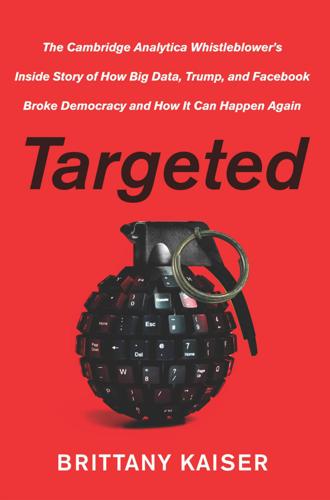
Targeted: The Cambridge Analytica Whistleblower's Inside Story of How Big Data, Trump, and Facebook Broke Democracy and How It Can Happen Again
by Brittany Kaiser · 21 Oct 2019 · 391pp · 123,597 words
That involved more scientific and precise ways of putting people into categories: “Democrat,” “environmentalist,” “optimist,” “activist,” and the like. And for years, the SCL Group, Cambridge Analytica’s parent company, had been identifying and sorting people using the most sophisticated method in behavioral psychology, which gave it the capability of turning what
…
found (on their cell phones, computers, tablets, on television) and through any kind of medium you could imagine (from audio to social media), using “microtargeting.” Cambridge Analytica could isolate individuals and literally cause them to think, vote, and act differently from how they had before. It spent its clients’ money on communications
…
The Obama Democrats had dominated the digital communications space since 2007. The Republicans lagged sorely behind in technology innovation. After their crushing defeat in 2012, Cambridge Analytica had come along to level the playing field in a representative democracy by giving the Republicans the technology they lacked. As for what Nix could
…
direction you, the client, wanted them to go. He clicked over to yet another slide. It read, “Data Analytics, Social Sciences, Behavior and Psychology.” Cambridge Analytica had grown out of the SCL Group, which itself had evolved from something called the Behavioural Dynamics Institute, or BDI, a consortium of some sixty
…
academic institutions and hundreds of psychologists. Cambridge Analytica now employed in-house psychologists who, instead of pollsters, designed political surveys and used the results to segment people. They used “psychographics” to understand people
…
, things had changed so much. Alexander said that data was an incredible “natural resource.” It was the “new oil,” available in vast quantities, and Cambridge Analytica was on track to become the largest and most influential data and analytics firm in the world. It was an unprecedented opportunity for those with
…
over to Schmidt, he shared with me that it was Sophie Schmidt, Eric’s daughter, who had been partly responsible for inspiring the inception of Cambridge Analytica. The party was going swimmingly until my phone buzzed: the Nigerians had arrived and were downstairs, just outside the apartment building. We had planned
…
the same time for his competition. The Bushes were the kind of family who demanded single-minded loyalty from those with whom they worked. The Cambridge Analytica data team busied themselves preparing for the 2016 U.S. presidential election by interpreting the results of the 2014 midterms. In their glass box,
…
imagine, the use of the Friends API became prolific, amounting to a great payday for Facebook. And it allowed more than forty thousand developers, including Cambridge Analytica, to take advantage of this loophole and harvest data on unsuspecting Facebook users. Cambridge was always collecting and refreshing its data, staying completely up to
…
clicked on “yes” and accepted electronic “cookies” or clicked “agree” to “terms of service” on any site, not just Facebook or third-party apps. Cambridge Analytica bought this fresh data from companies such as Experian, which has followed people throughout their digital lives, through every move and every purchase, collecting as
…
the French doors and made my way around to the computer stations, introducing myself. The people in the room reminded me of my colleagues at Cambridge Analytica—young, bright, although everyone there was American—and clearly seemed just as devoted as SCL employees to whatever they were working on. They identified
…
was now “embedded” in the Cruz campaign and deploying a powerful secret psyops weapon for targeting vulnerable voters. Behind the plot was the owner of Cambridge Analytica, Robert Mercer, who was, according to the Davies piece, a Dr. Evil–like American billionaire whose motivation was to disrupt the U.S. political
…
Facebook, the article said, collecting the data under the guise of doing academic research and then turning around and selling it for commercial purposes to Cambridge Analytica. If the terms and conditions hadn’t stated explicitly that the data was being collected for commercial use, then Kogan was not supposed to
…
phone, with the exception of one hurried person in our temporary New York office who had inexplicably hung up on the reporter. The article made Cambridge Analytica look venomous, and horribly guilty. The implication was that CA had not only infiltrated the biggest and safest social media platform in the world,
…
What’s more, Tayler argued, the Kogan models were virtually useless because they performed only slightly better than random during testing. Kogan had merely provided Cambridge Analytica with a basic proof of concept that personality modeling could be done and be effective, nothing more. Cambridge gathered its own data, did its own
…
to actual victory. As upset as Kellyanne had been about the prospect of our working with Trump, the fallout from the Guardian’s splash about Cambridge Analytica, Dr. Aleksandr Kogan, the Cruz campaign, and Facebook proved even more troublesome. Kellyanne was livid. She felt that the article tainted Cruz, and it
…
continued to haunt KtP1’s relationship with Cambridge Analytica for months after. I remember being in the Alexandria office one day when Sabhita Raju arrived and, biting her tongue, headed into a meeting to
…
more clearly the longer I was at Cambridge. As time passed, I never let myself forget that she was the powerhouse that made everything at Cambridge Analytica—and, eventually, Trumpworld—happen. After I’d pitched Corey Lewandowski in September 2015, the negotiations stumbled, but they never stopped. I had drawn up
…
operations. The problem was that Parscale had no data science or data-driven communications experience, so Bekah knew that Trump needed Cambridge. When the early Cambridge Analytica team (which consisted of Matt Oczkowski, Molly Schweickert, and a handful of data scientists) arrived on the scene in San Antonio in June, they
…
Trump was recorded in 2005 giving full expression to his misogyny and entitlement, boasting about grabbing women and forcing himself upon them against their will, Cambridge Analytica’s data scientists ran a model on a test group of persuadable voters in key swing states. Nicknamed the “pussy model,” it was designed
…
at Stanford, he had started out at Cambridge University, at the Psychometrics Centre. In the article, he claimed to have created the psychographic testing that Cambridge Analytica had used in the Trump campaign, and he suggested that Dr. Kogan had stolen it and sold it illicitly to Cambridge. What was worse,
…
microtargeting” work that CA had apparently copyrighted. In response to the article, the company issued a statement reminiscent of the one from the year before: “Cambridge Analytica does not use data from Facebook,” the release said. It also said that Cambridge had had no dealings with Dr. Michal Kosinski. Cambridge “does
…
moment Donald Trump was announced as the next U.S. president. Alexander and Bekah seized the moment to reorganize and rebrand the company. With the Cambridge Analytica name instantly the most visible part of the business, Cambridge absorbed the SCL Group. Under the Cambridge umbrella, Alexander and Bekah created a new
…
either had been made up by those who couldn’t accept Hillary’s crushing defeat or, perhaps, had been negligible when compared with our own. Cambridge Analytica, and not some outside government, had secured Trump’s presidency, we believed, and the focus on Russia was considered disruptive to the new administration
…
in enormous, loopy letters: We Made America Great Again Together! I froze. We? What had Flynn meant by that? Had he and Alexander or Cambridge Analytica worked together more than I thought? From what I understood, he was consulting to SCL, as Alexander celebrated his appointment (an obvious direct route to
…
Arron and Nigel? I could only guess. As it was, the ICO’s investigation determined there was “no evidence of a working relationship between [Cambridge Analytica] and Leave.EU proceeding beyond this initial phase.”2 A few days later, on a Saturday, an investigative journalist named Carole Cadwalladr published an article
…
in the Guardian that took a long, hard look at what she alleged was a connection between Cambridge Analytica, Leave.EU, and Robert Mercer. Coming hot on the heels of the Das Magazin piece, which had slightly rattled Cambridge’s cage with claims
…
’s new blockchain plans. It seemed that Alexander had seen the light regarding blockchain, which meant that his thinking on data and privacy had evolved. Cambridge Analytica, the proposal read, “passionately believes that consumer data belongs to the consumer . . . and wants to develop a mechanism to give back control to the
…
Brexiteers claimed. Alexander hadn’t been invited to share his insights about the dissemination of fake news. He had been summoned there to account for Cambridge Analytica’s complicity in it. The DCMS comprised eleven members, nine of whom were present that day. Its chair was Damian Collins, a no-nonsense,
…
as well? What was Cambridge’s relationship to Facebook? What about Dr. Aleksandr Kogan? Did the company obey relevant laws in foreign countries? Had Cambridge Analytica or the SCL Group carried out political campaigns in a third country on behalf of someone else? What was the difference between the SCL Group
…
and Cambridge Analytica? Did they share information and resources? Why was a controversial American figure like Steve Bannon on the company’s board? Alexander took each question
…
wondering why I had asked its organizers to print “DATA”—for Digital Asset Trade Association, the blockchain lobbying nonprofit I’d recently cofounded—instead of “Cambridge Analytica” on my nametag. 18 Restart MARCH 16–21, 2018 I will always wonder if Alexander saw it coming, the first swing of the wrecking
…
former colleagues. Late in the day, Facebook’s vice president and deputy general counsel, Paul Grewal, had released a statement that Facebook was suspending Cambridge Analytica from its platform. Facebook had recently received information—the statement didn’t say from where—that Cambridge had not acted in good faith in 2015
…
now of a story in which he revealed those secrets to the world. Carole’s article was entitled “Revealed: 50 Million Facebook Profiles Harvested for Cambridge Analytica in Major Data Breach.” A subhead read, “‘I Made Steve Bannon’s Psychological Warfare Tool’: Meet the Data War Whistleblower.” Chris’s allegations, if
…
Canadian from Victoria, British Columbia, with serious learning disabilities who was supposedly a savant at coding and claimed to have been “research director” at Cambridge Analytica. He even described himself as a difficult-to-grok figure: a gay vegan who ended up creating “Steve Bannon’s psychological warfare mindfuck tool.”4
…
for Cambridge arrived on the afternoon of that day, Monday, March 19. England’s Channel 4 had been conducting a four-month undercover sting of Cambridge Analytica. The report, which chronicled meetings with Alexander Nix, Mark Turnbull, and Dr. Alex Tayler, was so damning that it was painful to watch. Reporters
…
after the Channel 4 piece of the night before. That morning, Cambridge had issued a statement that read, “We entirely refute any allegation that Cambridge Analytica or any of its affiliates use entrapment, bribes, or so-called honey traps for any purpose whatsoever.” It was a short while before Alexander called
…
policies for developers to share data without people’s consent, so we immediately banned Kogan’s app from our platform, and demanded that Kogan and Cambridge Analytica formally certify that they had deleted all improperly acquired data. They provided these certifications.” The company had endeavored as early as 2014, Zuckerberg wrote, “
…
the ICO and parliamentary inquiries, I am concerned about where the Brexit and campaign support conversation has gone. And, besides Alexander, while many former Cambridge Analytica staff were bright, well-meaning professionals, some were definitely the opposite—and they are up to their old tricks and have not yet been brought
…
archive/2017/01/no-one-knows-what-the-powerful-mercers-really-want/514529/. 6.Mary Spicuzza and Daniel Bice, “Wisconsin GOP Operative Mark Block Details Cambridge Analytica Meeting on Yacht,” Journal Sentinel, March 29, 2018, https://www.jsonline.com/story/news/politics/2018/03/29/wisconsin-operative-mark-block-details-meetings-
…
Family Backing Donald Trump Really Want?” 4.Matt Oczkowski, Molly Schweickert, “DJT Debrief Document. Trump Make America Great Again; Understanding the Voting Electorate,” PowerPoint presentation, Cambridge Analytica office, New York, December 7, 2016. 5.Lauren Etter, Vernon Silver, and Sarah Frier, “How Facebook’s Political Unit Enables the Dark Art of Digital
…
-in-eu-yen-slips. 2.Aaron Wherry, “Canadian Company Linked to Data Scandal Pushes Back at Whistleblower’s Claims: AggregateIQ Denies Links to Scandal-Plagued Cambridge Analytica,” CBC, April 24, 2018, https://www.cbc.ca/news/politics/aggregate-iq-mps-cambridge-wylie-brexit-1.4633388. 13: POSTMORTEM 1. Nancy Scola, “How
…
-access. 15: QUAKE 1.Luke Fortney, “Blockchain Explained,” Investopedia, n.d., https://www.investopedia.com/terms/b/blockchain.asp. 2. Ellen Barry, “Long Before Cambridge Analytica, a Belief in the ‘Power of the Subliminal,’” New York Times, April 20, 2018, https://www.nytimes.com/2018/04/20/world/europe/oakes-scl
…
Cadwalladr, “How Trump Consultants Exploited the Facebook Data of Millions,” New York Times, March 17, 2018, https://www.nytimes.com/2018/03/17/us/politics/cambridge-analytica-trump-campaign.html. 4.Carole Cadwalladr, “‘I Made Steve Bannon’s Psychological Warfare Tool’: Meet the Data War Whistleblower,” Guardian, March 18, 2018, https://
…
,” Guardian, March 21, 2018, https://www.theguardian.com/uk-news/2018/mar/21/facebook-row-i-am-being-used-as-scapegoat-says-academic-aleksandr-kogan-cambridge-analytica. 2.Selena Larson, “Investors Sue Facebook Following Data Harvesting Scandal,” CNN, March 21, 2018, https://money.cnn.com/2018/03/20/technology/business/investors
…
away. (Calais, 2016) Onstage with Kellyanne Conway at the Conservative Political Action Conference (CPAC) 2016, discussing how the “myth of electability” has vanished. That year, Cambridge Analytica was a sponsor of the conference. (February 2016) Donald Trump signing his own face on the cover of Time magazine during his entrance to the
The Infinity Machine: Demis Hassabis, DeepMind, and the Quest for Superintelligence
by Sebastian Mallaby; · 30 Mar 2026 · 607pp · 161,998 words
the allegations in the public spotlight for a year or so.[38] In 2018, moreover, the public anger at big-tech surveillance reached a peak: Cambridge Analytica, a political consulting firm, was found to have harvested data on up to eighty-seven million Facebook users without consent, using it to target voters
…
Brown, Noam, 438n36 Brown, Peter, 232 Buchanan, Ben, 329–33, 435n20 Bullfrog video game production company, 12–15, 17–19, 29–30, 42–43 C Cambridge Analytica, 189 Campbell, Murray, 194–95, 416n2 cancer screening, 179, 188–89 Canetti, Elias, 40 Card, Orson Scott, 1–2 Carr, Gary, 403n25 CERN, 376, 387
The Information State: Politics in the Age of Total Control
by Jacob Siegel · 24 Mar 2026 · 348pp · 103,246 words
the 2016 vote; the existence of a vast web of Russian social media influencers purported by groups like the Hamilton 68 initiative; the impact of Cambridge Analytica on the 2016 vote; and the allegation by a roster of former senior US intelligence officials that reporting on Hunter Biden’s laptops was likely
…
tied to a Russian disinformation campaign. These claims were debunked in subsequent court proceedings (Cambridge Analytica), in reporting (trolls farms and the Steele dossier), by the release of internal documents (Hamilton 68), and by US courts (Hunter Biden’s laptops). “dumping
Prophecy: Prediction, Power, and the Fight for the Future, from Ancient Oracles to AI
by Carissa Véliz · 21 Apr 2026 · 503pp · 129,255 words
Age of Extraction: How Tech Platforms Conquered the Economy and Threaten Our Future Prosperity. New York: Alfred A. Knopf, 2025. Wylie, Christopher. Mindf*ck: Inside Cambridge Analytica’s Plot to Break the World. London: Profile, 2019. Yates, Kit. How to Expect the Unexpected: The Science of Making Predictions and the Art of
Facebook: The Inside Story
by Steven Levy · 25 Feb 2020 · 706pp · 202,591 words
, when news came that Facebook had allowed personal information of up to 87 million users to end up in the hands of a company called Cambridge Analytica, which allegedly used the data to target vulnerable voters with misinformation. Facebook bit-flipped from Most Admired Company to Most Reviled. Governments on three continents
…
in Palo Alto. Obviously, after the 2016 election and crises like fake news, state-sponsored manipulation, live-streaming of suicides and massacres, rampant hate speech, Cambridge Analytica, data breaches, privacy violations, untimely employee departures, and Mark Zuckerberg allegedly serving Twitter CEO Jack Dorsey an undercooked goat, the Facebook narrative was drastically altered
…
preexisting app, Facebook allowed him continued access to user data during the one-year transition. If Facebook had enforced its new rules immediately, the GSR–Cambridge Analytica partnership would have ended. Without the friend information he accessed during the grace period, Kogan would have been able to provide only a tiny fraction
…
at Facebook put eyes on it. * * * • • • WITH STILLWELL AND Kosinski out, Kogan could not use their prediction system for the data he was gathering for Cambridge Analytica. So he revised his app to gather information for SCL. Instead of harvesting data from Mechanical Turk, he acquired his “seeders” from a commercial company
…
Kosinski and Stillwell had done in analyzing the data to predict traits. In a May email to Wylie he suggested a couple dozen things that Cambridge Analytica might want to flag in the profiles, from political proclivities to “sensational” interests in subjects ranging from guns to “black magic.” The data-gathering process
…
researching duties, put together the story: how Kogan had gathered the data for a research project and then, violating Facebook’s standards, sold it to Cambridge Analytica. The Cruz campaign insisted that all was kosher. “My understanding is all the information is acquired legally and ethically with the permission of the users
…
Hendrix. It turns out that for months, the people in the Platform organization had been trying to deal with data misappropriation by political organizations, specifically Cambridge Analytica. Hendrix had been on the thread. On September 22, a political consulting firm in DC had asked Facebook if it could clarify the rules about
…
using its data in campaigns. The request was spurred by competitors who seemed to be breaking those rules. “The largest and most aggressive [violator] being Cambridge Analytica, a sketchy (to say the least) data modeling company that has penetrated our market deeply,” wrote the consultant, asking Facebook to investigate the company. For
…
the next few months, with not much urgency, various people in the Developer Operations organization gathered information. It didn’t concentrate on Cambridge Analytica, but explored the practice of data scraping by political consultants in general. It lit on a right-wing site called ForAmerica, which was in the
…
employee on October 21. But the investigation, if it could be called that, hardly went deep. Then The Guardian story dropped, and suddenly learning about Cambridge Analytica was a higher priority. In the frantic emailing inside the company, one employee unearthed an unsettling fact: “It looks like Facebook has worked with this
…
, including the apparently undeleted profiles and personality summaries provided by Kogan. What Facebook did not do for more than a year after learning about the Cambridge Analytica data abuse was get a formal affirmation that Cambridge had deleted the data. (Facebook’s excuse: its outside law firm was negotiating.) While Kogan had
…
campaign, even as Nix had been boasting to his clients, current and prospective, about the huge database he had. Meanwhile, Facebook was a partner to Cambridge Analytica, which was a major political advertiser, enjoying support and advice from Facebook’s Advertising team. At any time during the election, Facebook could have threatened
…
information of 87 million Facebook users. Or Facebook could have demanded an audit. It did not. But it did collect millions of advertising dollars from Cambridge Analytica, without checking whether the money might be the fruit of the unauthorized profile data. In accepting advertising money, it accepted the company’s claims that
…
whether the company’s election efforts used Facebook profiles, though The New York Times reported that it had seen the raw data in Cambridge Analytica’s files, and former Cambridge Analytica executive Brittany Kaiser says that the data was indeed part of the election targeting. And at no time during 2016 or 2017 did
…
users that their personal information had been operationalized—and their own News Feeds manipulated—for political purposes. There is still a raging debate about whether Cambridge Analytica’s data operation made any difference in the campaign’s outcome. Before Trump was elected, the Cruz campaign had concluded that the data was not
…
in an Amazon warehouse), Cadwalladr had become fascinated with what she perceived as the pernicious influence of big tech companies. In 2016, she began investigating Cambridge Analytica. She wrote a series of articles about the company—its involvement in Brexit, its methods, its ties to Robert Mercer and the ultraconservative movement that
…
all data was deleted.” So, in its ongoing crusade to “improve the safety and experience of everyone on Facebook” the company was banning the wrongdoers Cambridge Analytica, Kogan, and Wylie. Reading this without context, the move seemed to depict Facebook as a vigilant protector of user data. The announcement would be viewed
…
from their leaders. Instead, the company sent its deputy general counsel Grewal—who had only days earlier menaced The Guardian with his letter—to explain Cambridge Analytica to the company. The absence of Sandberg and Zuckerberg was a morale breaker. “I was sympathetic to the employees,” says Grewal. “No matter how well
…
have changed. But Facebook was still breaking things. And Mark Zuckerberg was off to a very bad start to his year of rebuilding trust. * * * • • • AFTER CAMBRIDGE ANALYTICA, Zuckerberg could no longer ignore Congress’s cries that he submit to public hearings. Facebook’s lobbyists and lawyers began negotiating. It was a sign
…
break and said, “Let’s go on.” “That’s when I knew we were all right,” says Grewal. Zuckerberg’s comment on Cambridge Analytica: “When we heard back from Cambridge Analytica that they had told us they weren’t using the data and had deleted it, we considered it a closed case. In retrospect
…
all-hands meeting like one of the conquerors he had so admired as a young Latin student. But the upbeat mood was temporary. Investigations regarding Cambridge Analytica would continue for years. Within a few months, other venues would conduct their investigations, and be frustrated when Zuckerberg sent subordinates to appear in his
…
, officials would turn from Facebook’s designated punching bag and address an empty chair reserved for the boss, directing pointed questions about every detail of Cambridge Analytica, and what it said about the company’s practices. It was almost anticlimactic when, in September 2019, documents unsealed from a class-action lawsuit against
…
American ingenuity, was greeted with hostility. A recurrent theme was the company’s corporate rap sheet. For instance, Representative Nydia Velázquez of New York invoked Cambridge Analytica and Facebook’s broken promise not to merge WhatsApp data with its other databases. Zuckerberg, who appeared for much of the six-hour session as
…
Zuckerberg, the man who set out to connect a world that was perhaps not ready to be connected, and did it anyway. After Beacon, after Cambridge Analytica, after News Feed–fueled violence in multiple countries, after fines for civil rights violations, privacy misrepresentations, and security breaches from the FTC, SEC, EU, and
…
resolution: Mark Zuckerberg posted on Facebook on January 4, 2018. CHAPTER SIXTEEN: Clown Show news of this broke: Though there had been previous reporting, the Cambridge Analytica/Facebook story broke through on March 17, 2018, with simultaneous publication in The Guardian/Observer (Carole Cadwalladr and Emma Harrison, “Revealed: 50 Million Facebook Profiles
…
Harvested for Cambridge Analytica in Major Data Breach”) and the New York Times (Matthew Rosenberg, Nicholas Confessore, and Carole Cadwalladr, “How Trump Consultants Exploited the Facebook Data of Millions
…
copy: This brochure was among a cache of documents that Wylie submitted to UK Parliament. Wylie also explains his background and involvement with Cambridge Analytica in his book, Mindf*ck: Cambridge Analytica and the Plot to Break America (Random House, 2019). “We’ll give you total freedom”: Carole Cadwalladr, “‘I Made Steve Bannon’s
…
. The name came from Bannon: Wylie testimony. Obama campaign: Elizabeth Dwoskin and Tony Romm, “Facebook’s Rules for Accessing User Data Lured More Than Just Cambridge Analytica,” Washington Post, March 19, 2018. Graph API V1: Facebook explained how Kogan’s app took advantage of the Open Graph in its June 29, 2018
…
simply used Google: Wylie’s explanation came in a document he submitted to UK Parliament after his testimony, “A Response to Misstatements in Relation to Cambridge Analytica Introductory Background to the Companies.” With Stillwell and Kosinski out: A solid account of the timeline of Kogan and SCL’s experiment can be found
…
Is Revolutionizing Our Science” at a brown-bag lunch at the psychology department on December 2, 2014. headed to a party: Brittany Kaiser, Targeted: The Cambridge Analytica Whistleblower’s Inside Story of How Big Data, Trump, and Facebook Broke Democracy and How It Can Happen Again (HarperCollins, 2019), 147. a Politico article
…
, December 11, 2015. for months: The internal email chain preceding and directly following the 2015 Guardian story was released in 2019 as a part of Cambridge Analytica civil litigation. Hendrix also contacted: Kaiser, Targeted, 159. deleted the data: In District of Columbia v. Facebook, the complaint cited the dates that Kogan and
…
false and misleading are explicit in “Securities and Exchange Commission vs Facebook, Inc,” July 24, 2019. The document presents yet another damning timeline of the Cambridge Analytica episode. Facebook paid $100 million to settle the SEC complaint. “Our investigation”: Mattathias Schwartz, “Facebook Failed to Protect 30 Million Users from Having Their Data
…
Harvested by Trump Campaign Affiliate,” The Intercept, March 30, 2017. “Several days ago”: VP & Deputy General Counsel of Facebook Paul Grewal, “Suspending Cambridge Analytica and SCL Group from Facebook,” Facebook Newsroom, March 16, 2018. “I think the feedback”: Nicholas Thompson, “Mark Zuckerberg Talks to WIRED About Facebook’s Privacy
…
house, 96–97 and Open Registration, 144 on redesign, 139 on Sandberg’s management, 197 on status updates inspired by Twitter, 259 Callan, Aela, 436 Cambridge Analytica banned from FB, 425 congressional hearings following, 427–30 and data deletion demanded by FB, 419, 420–21, 422, 424–25 FB’s caution following
…
practices of (see privacy) redesigns of, 113, 138–39, 259–63, 525 reputation of, 11–12, 398, 484–85, 525 scandals (see specific scandals, including Cambridge Analytica and Russian interference in US presidential election) security (see security measures of Facebook) server space required for, 66, 67, 97–98, 100, 105, 115 Terms
…
, 435, 438, 454 as threat to democracy, 362 Zuckerberg’s “crazy idea” comment on, 10, 360–61, 370 Zuckerberg’s perspectives on, 523 See also Cambridge Analytica Family collection of apps, 511–12, 513–14 Fanning, Shawn, 79–80 Farmville app, 162–63 Farrakhan, Louis, 459 Faust, Drew, 382 Federal Trade Commission
…
, 225 and privacy defaults, 267 and trust of users in FB, 235 and WhatsApp, 322, 323 See also Data Science team growth of Facebook and Cambridge Analytica, 399 and contact scraping, 215–16 emphasis placed on, 214, 234–35, 399, 524 expansion into high schools, 120–21 expansion to other college campuses
…
Feed of FB advertisements in, 138, 181, 295–98, 475, 477 algorithms feeding and filtering, 127–28, 142, 163, 172, 260–61, 385, 391 and Cambridge Analytica, 399 and content publishers, 387–90, 391 criticisms of, 385–86 and customer support issues, 250 design and implementation of, 14, 123–31, 139–40
…
, 178 Place app of Facebook, 310–11 Platform of Facebook and App Review rules, 413 apps suspended from, 430–31 benefits of, 153–54 and Cambridge Analytica, 418 and Causes app of Parker and Green, 155, 162, 164 and developers who were potential competitors, 174 and F8 developers conference, 154, 157–58
…
FB, 355, 357, 486 and Trending Topics controversy, 341–42, 345, 346 Trump elected president, 9, 360, 494 voter suppression in, 353, 374 See also Cambridge Analytica; Clinton presidential campaign, 2016; Trump presidential campaign, 2016 presidential election of 2020, 11–12 Pritchard, Marc, 474, 477 privacy and ads on News Feed, 475
…
availability of user data to public, 402, 404 and Cambridge Analytica, 427, 429 and cell-phone numbers shared on FB, 71, 101 changes in default settings for (2009), 263–67 and congressional hearings, 429 and damaging
…
, John, 400, 401, 415–16 Sandberg, Sheryl and author’s research, 15 background of, 190–92 and business plan of Facebook, 198, 199–200 and Cambridge Analytica, 419, 425–26 and Congressional Black Caucus, 469–70 congressional testimony of, 468–69 criticisms of, 356 and culture of FB, 237–38, 243 and
…
win of, 348 and Russian election interference, 366, 378, 379 Twitter account of, 340 Trump presidential campaign, 2016 anti-Hillary ads run by, 353 and Cambridge Analytica, 399, 420, 421, 427 effort put into FB, 351–52, 354 targeted ads of, 351–53 voter suppression by, 353 trust and Beacon, 187 and
…
changes in default privacy settings, 265, 267 and Dating feature, 464–65 FB’s efforts to restore, 484 following Cambridge Analytica crisis, 464–65 and growth of Facebook, 235 importance of, to FB’s success, 121 and users’ distrust of apps, 170 truth, Facebook’s reluctance
Zucked: Waking Up to the Facebook Catastrophe
by Roger McNamee · 1 Jan 2019 · 382pp · 105,819 words
Harris and Mr. McNamee Go to Washington 6 Congress Gets Serious 7 The Facebook Way 8 Facebook Digs in Its Heels 9 The Pollster 10 Cambridge Analytica Changes Everything 11 Days of Reckoning 12 Success? 13 The Future of Society 14 The Future of You Epilogue Acknowledgments Appendix 1: Memo to Zuck
…
had emerged, and no one inside the company leaked any data to support the investigations. But the pressure on Facebook was about to intensify. 10 Cambridge Analytica Changes Everything Once a new technology rolls over you, if you’re not part of the steamroller, you’re part of the road. —STEWART BRAND
…
problem rather than a humanitarian crisis. On March 16, all hell broke loose. It began when Facebook announced the suspension of a political consulting firm, Cambridge Analytica, and its parent, SCL Group, from the platform. This turned out to be an attempt to preempt a huge story that broke the following day
…
used them to build a powerful software program to predict and influence choices at the ballot box. A whistleblower has revealed to the Observer how Cambridge Analytica—a company owned by the hedge fund billionaire Robert Mercer, and headed at the time by Trump’s key adviser Steve Bannon—used personal information
…
exploit what we knew about them and target their inner demons. That was the basis the entire company was built on.” The story suggested that Cambridge Analytica had exploited a researcher at Cambridge University, Aleksandr Kogan, to harvest and misappropriate fifty million user profiles from Facebook. Kogan, a researcher who was
…
Cambridge University had originally rejected Kogan’s request to access its data, leading Kogan and his partner, Joseph Chancellor, to start a company, funded by Cambridge Analytica, that would create a new data set of American voters. They created a personality test that would target Facebook users and recruited test takers from
…
In the world of market research, there is considerable doubt about how well psychographics work in their current form, but that issue did not prevent Cambridge Analytica from finding clients, mostly on the far right. To serve the US market, SCL needed to obey federal election laws. It created a US
…
voters in a matter of months and turned to Kogan to get one. According to Wylie, the Kogan data set formed the foundation of Cambridge Analytica’s business. Cambridge Analytica’s election-centric focus clearly violated Facebook’s terms of service, which did not permit commercial uses of Kogan’s data set, but Wylie
…
reported that Facebook made no attempt to verify that Kogan had complied. At the time that Kogan and Cambridge Analytica misappropriated fifty million user profiles, Facebook was operating under a 2011 consent decree with the FTC that barred Facebook from deceptive practices with respect to
…
with which Kogan had harvested fifty million profiles. Facebook made it easy. Speculation by journalists and pundits about legal issues that might arise from the Cambridge Analytica story lit up Twitter for hours. Legal analysts focused on the possibility of a data breach that might have placed Facebook in violation of state
…
Facebook’s advertising tools allow targeting by demographics and interests but are otherwise anonymous. Tying the voter files to the user profiles would have enabled Cambridge Analytica to target advertising inside Facebook with exceptional precision, particularly if one of the goals was voter suppression. In 2016, the winner in the electoral college
…
them. In the end, psychographics probably didn’t matter to the Trump campaign. They had more powerful weapons available to them, in the form of Cambridge Analytica’s data set of thirty million enhanced voter files and Facebook’s targeting tools and employees. After the initial bombshell story, The Guardian published a
…
again, the focus at Facebook was on protecting against legal liability, not on protecting users. Facebook’s argument that it had been a victim of Cambridge Analytica fell apart when Slate’s April Glaser reminded her readers that the company had hired and continued to employ Joseph Chancellor, who had been Aleksandr
…
Kogan’s partner in the startup that harvested Facebook user profiles on behalf of Cambridge Analytica. Facebook had known about the connection between Cambridge Analytica and Kogan/Chancellor since at least December 2015. They should have been really angry at Kogan and Chancellor for misappropriating the
…
of recent revelations. The Facebook/Kogan/Chancellor link had originally been reported by The Intercept in March 2017, and it had connected the dots from Cambridge Analytica to Kogan to Chancellor to Facebook in a way that did not make anyone look good. Facebook eventually placed Chancellor on administrative leave. If the
…
relationship between Facebook, Kogan, and Cambridge Analytica had been known since late 2015, why was this story a much bigger deal the second time around? The short answer is that context had
…
now knew that the Russians had exploited Facebook to sow discord among Americans and then support Donald Trump’s presidential candidacy. We also knew that Cambridge Analytica had been the Trump campaign’s primary advisor for digital operations and that Facebook had embedded three employees in the Trump campaign to support that
…
Trump to win, and successful Facebook advertising in key states was one of them. The new context made it hard to escape the conclusion that Cambridge Analytica and the Trump campaign had exploited Facebook, just as the Russians had. Little had been learned about Facebook’s engagement with Russian agents, but
…
there could be little doubt that Facebook had willingly engaged with Kogan, Cambridge Analytica, and the Trump campaign. It was entirely possible that Facebook employees had played a direct role in the success of Trump’s digital strategy on
…
time at the company. If it had been greater, they almost certainly would have exercised their right to audit and inspect Kogan and Cambridge Analytica to ensure compliance. The Cambridge Analytica story caused our team to rethink everything we knew about two things: the number of people who might have been affected by Facebook
…
of applications had one million users, and every one would have had access to the friends lists of four times as many Facebook users as Cambridge Analytica. The odds that any Facebook user in the 2010–14 period escaped data harvesting are vanishingly small. Other than a handful of tweets from
…
executives like Alex Stamos, Facebook kept quiet for five days after the Cambridge Analytica story broke. The only news from Facebook also related to Stamos, who announced that he planned to leave the company in five months. Journalists and
…
transcript, it was obvious she had not admitted anything substantive or committed Facebook to any material change. This made her failure in the first post–Cambridge Analytica interviews shocking. As Zuck had done, Sheryl seemed to choose interviewers who might not probe deeply. It didn’t help. She left a bad
…
data Facebook has acquired since the day the data set was harvested. The following day, a second whistle-blower emerged from Cambridge Analytica. Unlike Christopher Wylie, who had been at Cambridge Analytica from the start but left prior to the 2016 election, Brittany Kaiser was a senior executive who worked on both Brexit and
…
Individuals should be able to monetise their own data—that’s their own human value—not to be exploited.” In her Guardian interview, Kaiser contradicted Cambridge Analytica’s repeated assertions that it had not worked on the Leave campaign during Brexit. Kaiser said that two different organizations affiliated with Leave had entered
…
into data-sharing relationships with Cambridge Analytica. No money had changed hands, she said, but there had been an exchange of value. The Guardian explained that such an exchange may have
…
violated UK election law. The Cambridge Analytica story was growing into a tsunami. Notwithstanding Brexit, the UK government still knew how to conduct an investigation. In all probability, it would not be
…
was already struggling to manage all the bad news. The threat from the UK would make that much harder. 11 Days of Reckoning Facebook’s Cambridge Analytica scandal has everything: peculiar billionaires, a once-adored startup turned monolith, a political mercenary who resembles a Bond villain and his shadowy psychographic profiling firm
…
lively debate about the internet platforms. Should there be limits on Facebook, Google, and others? Had they gone too far? If the data set that Cambridge Analytica misappropriated from Facebook had not played a role in the 2016 presidential election, policy makers and the public might have dismissed the story of misappropriated
…
user data as “businesses being businesses.” If Facebook employees had not worked with Cambridge Analytica inside the Trump campaign only months after the data-misappropriation scandal first broke in December 2015, Facebook might have had a viable alibi. As things
…
provides access to a wide range of content, and is always available. It enables activists to organize events. Even ads on Facebook can be useful. Cambridge Analytica filled in an unwritten portion of the Facebook story related to the true cost. Convenience and connection on Facebook may not have a sticker price
…
industry, it has not prevented the operating system from dominating the cell phone market, with a global share in excess of 80 percent. Like the Cambridge Analytica story, the Facebook/Android news made a security threat real for millions of users. Now that reporters and users were looking for it, they
…
Major technology companies have exploited both users’ trust and the persuasive technology in their platforms to minimize political fallout and protect their business models. Until Cambridge Analytica, it worked. As new stories emerged almost daily that reinforced the narrative that Facebook had failed at self-regulation, Zuck rejected calls for heads to
…
regulatory action. As usual, the announcements featured sleight of hand. First, Facebook banned data brokers. While this sounded like a move that might prevent future Cambridge Analyticas, what it actually did was move Facebook closer to a data monopoly on its platform. Advertisers acquire data from brokers in order to improve ad
…
they leveraged it where they could. Their challenge was made easier by the wide range of harms. It was hard to keep up. Anecdotes like Cambridge Analytica, Russian election interference, ethnic cleansing in Myanmar, and the rising suicide rate among teens attracted attention, but most users could not understand how products they
…
with forty-four billion dollars in cash and marketable securities. On the conference call with investors, Zuck made a quick reference to the hearings and Cambridge Analytica, but anyone expecting a mea culpa would have been disappointed. In combination with the reviews of his testimony before Congress, the earnings report restored Zuck
…
privacy and encourage innovation, understood we have a long journey in front of us. Facebook had come through two huge scandals—the Russian interference and Cambridge Analytica—and two sets of congressional hearings, with only a few dings in its reputation to show for it. The business itself was running at
…
the long run, but the impact on governments may be significant. If policy makers insist on change, the decisive factor may be that Cambridge Analytica was not a hack. Cambridge Analytica was able to harvest nearly eighty-seven million Facebook profiles without user permission because Facebook encouraged third-party app vendors to do this
…
brought our team into the orbit of The Guardian and The Washington Post. In partnership with The Observer in the UK, The Guardian broke the Cambridge Analytica story. We worked with Paul Lewis, Olivia Solon, Julia Carrie Wong, and Amana Fontanella-Khan. Thank you all! At The Washington Post, we worked
…
NewsHour for giving me an opportunity to share the story with their audience. ITN’s Channel 4 in the United Kingdom broke giant stories about Cambridge Analytica and Facebook. Thank you to all the teams who produced those stories. Huge thanks to all the radio programs that dug into the Facebook
…
thing is how consistent the personalities and behaviors depicted in these stories are with the Facebook people caught in the glare of election interference and Cambridge Analytica. There are several good books about the culture in Silicon Valley. A good place to start is Brotopia: Breaking Up the Boys’ Club of
…
ran out of money, got a gig in advertising technology at Facebook, and was there during the formative years of the business practices that enabled Cambridge Analytica. Through the lens of this book, you will get a clear view of the culture and internal practices of Facebook and other platforms. Valley of
…
, 273, 280, 281 Bushnell, Nolan, 34 Business Insider, 141 BuzzFeed, 204 California, 227–28 environmental regulations in, 201 secession movement, 114, 115 Cambodia, 215, 246 Cambridge Analytica, 78, 180–98, 199, 202–4, 207, 208, 210, 213, 216–18, 251, 259 Cambridge University, 181 Candy Crush, 191, 269 capitalism, 200, 201,
…
banks and, 231–32 Beacon, 60, 62, 64, 142 behavior modification and, 63, 278 Black Lives Matter and, 8, 243 Bosworth memo and, 204–6 Cambridge Analytica and, 78, 180–98, 199, 202–4, 207, 208, 210, 213, 216–18, 251, 259 Center for Humane Technology and, 166–67 changing personal
…
by, 17 photo tagging on, 59, 63, 68, 98–99 Platform, 188, 190–91 Portal, 281 presidential election and, 183, 190, 232, 278; see also Cambridge Analytica; Russia privacy settings of, 97 privacy threatened by, 246 public health threatened by, 246 regulation and, 112, 280 Russian interference and, 90, 115–17, 119
…
253, 261 Jones and Infowars and, 228–29 Zittrain, Jonathan, 226 Zuckerberg, Mark, 3, 16, 53–79, 141–49, 229, 233, 239 Andreessen and, 58 Cambridge Analytica and, 192–93, 216–18 congressional testimony of, 209–12, 216, 217 and criticisms of Facebook, 3, 65, 95–96, 141, 143, 146, 149, 158
Democracy for Sale: Dark Money and Dirty Politics
by Peter Geoghegan · 2 Jan 2020 · 388pp · 111,099 words
– by the National Crime Agency, amid concerns about the sources of his record Brexit contributions. The trail continued, stretching far beyond Britain’s shores – from Cambridge Analytica, Steve Bannon and leading figures in Donald Trump’s America to Matteo Salvini, Viktor Orbán and Europe’s insurgent far right. There were corporate-funded
…
death in 2019. The pair bankrolled countless conservative think tanks and politicians. Trump’s biggest backers included hedge fund billionaire Robert Mercer, whose data firm Cambridge Analytica also worked on Trump’s presidential campaign. In America, elections involving hundreds of millions of voters have become contests decided, in key constituencies, by a
…
game”. The final third of the book examines how technology has transformed politics and created endless new opportunities for dark money to corrode it. From Cambridge Analytica to the British Conservative Party ‘shit-posting’ on social media during the 2019 general election, we will see how online political advertising has been revolutionised
…
come to light. Elsewhere, Carole Cadwalladr, writing for the Observer and the Guardian, has been a tireless campaigning journalist on everything from Arron Banks to Cambridge Analytica. BBC Northern Ireland’s Spotlight team revealed crucial new material about the DUP’s bank-breaking donations. The investigative unit at Channel 4 News broke
…
citizens. There were reasons for this heightened sensitivity. We are all (slightly) more wary of how our personal information is used, especially by political campaigners. Cambridge Analytica shut down in 2018, following a scandal about the massive misuse of Facebook data from tens of millions of users. But there was another reason
…
raft of pro-Brexit groups to appeal to less traditionally Eurosceptic voters. They all had catchy names. Out & Proud. Green Leaves. Mark Gettleson, a former Cambridge Analytica consultant, designed the concepts for Vote Leave’s faux grassroots groups. Gettleson and Darren Grimes had worked together before, on Norman Lamb’s unsuccessful bid
…
for the Liberal Democrat leadership in 2015 (along with future Cambridge Analytica whistleblower Chris Wylie). Gettleson’s ginger groups would all fade into history, except for one: BeLeave. In the crucial final weeks before 23 June 2016
…
, in the spring of 2018, the company became embroiled in one of the most controversial political scandals of recent times: the operations of Cambridge Analytica. As Carole Cadwalladr revealed, Cambridge Analytica had illegally harvested millions of US Facebook users’ data for political advertising ahead of the 2016 US presidential campaign. The London-based company
…
”. Vote Leave’s biggest digital supplier had been banned by the platform on which it had pushed over a billion ads at British voters. With Cambridge Analytica accused of everything from hiring prostitutes to bribing opposition politicians to coordinating voter suppression campaigns, the question of who the people behind AIQ were – and
…
’s only sustained examination of electoral malfeasance during the 2016 referendum and beyond. Everyone from experts in online misinformation to senior staff at Facebook and Cambridge Analytica had been brought before Collins’s committee. The inquiry initially began as a bipartisan examination of the spread of disinformation, inspired by the efforts in
…
hedge fund billionaire and Trump backer Robert Mercer. His daughter Rebekah sat on the board, alongside Nigel Farage’s friend Steve Bannon. At the time, Cambridge Analytica was working on Republican presidential hopeful Ted Cruz’s campaign, boasting of using psychological data gleaned from tens of millions of Facebook users.41 This
…
(Ashcroft did not fund Leave.EU, but his imprint published The Bad Boys of Brexit, which was ghost-written by his close collaborator Isabel Oakeshott.) Cambridge Analytica appeared keener to help with US fundraising. On 25 October 2015, the day after Banks had emailed his advisors and Steve Bannon about attracting American
…
donors for his campaign, a Cambridge Analytica employee replied, saying that the firm could develop a proposal that would include “US-based fundraising strategies”.46 (Banks said that this proposal was never
…
many ballot measure campaigns here in the US”.49) Banks later told British regulators that after “initial discussions” Leave.EU decided not to work with Cambridge Analytica.50 But the email correspondence I received from my source raised questions about the depth of this account. Banks had told the Information Commissioner that
…
money on Facebook ads with an unheralded company in British Columbia as it had invested in the entire Stormont campaign the previous month. According to Cambridge Analytica whistleblower Chris Wylie, the DUP were simply a front organisation to allow Vote Leave to go beyond spending limits imposed by election laws. Wylie claimed
…
like a who’s who of American libertarianism: the Coors brewing dynasty, the Kochs, hedge fund billionaire Robert Mercer and his daughter Rebekah, who bankrolled Cambridge Analytica, Breitbart News and Donald Trump. The Mercers were also fond of British Conservatives: in 2005, Robert funded the creation of the Margaret Thatcher Center for
…
it looked like a raid. Eighteen people, most in bright blue jackets with ‘Enforcement’ embossed across the back, filed through the revolving doors and into Cambridge Analytica’s offices. The receptionist looked surprised. Behind them television cameras rolled. The cavalry had arrived. But in one important sense this wasn’t a raid
…
parties across the world rushed to play down their links to Nix and the empire he ran from offices in London and New York. The Cambridge Analytica scandal sparked fevered questions about the unregulated Wild West of digital politics. What exactly are political campaigns doing online? Is technology destroying democracy? Can anything
…
what a British parliamentary inquiry called Silicon Valley’s “digital gangsters”? * By the time the ICO’s enforcement officials walked into 55 New Oxford Street, Cambridge Analytica had already become a byword for political manipulation and malfeasance. Nix, a bespectacled Old Etonian who dresses well but not ostentatiously, had publicly bragged about
…
the power of Cambridge Analytica’s sophisticated psychographics and online targeting during the 2016 presidential election. He was even more loose-lipped in private. Speaking with an undercover reporter from
…
Channel 4 News posing as a potential client, he boasted that Cambridge Analytica could entrap rival candidates in fake bribery stings. The company, he said, had hired sex workers to seduce opposition politicians and had set up proxy
…
campaigns to feed untraceable political misinformation into social media.3 A whistleblower, Cambridge Analytica’s pink-haired former research director Chris Wylie, revealed to Carole Cadwalladr that his company had harvested Facebook data from 50 million users and used
…
was set up in 2013 as an offshoot of a London-based private military contractor called Strategic Communications Laboratories (SCL), which specialised in psychological operations. Cambridge Analytica executives had boasted that it and SCL had worked in more than two hundred elections. Former employee Brittany Kaiser said that the Facebook data scandal
…
was part of a much bigger global influencing operation that worked with governments, intelligence services, commercial companies and political campaigns around the world.6 Cambridge Analytica used mass communication ‘psy-ops’ to disrupt democracy, not enhance it. In Nigeria, the firm created videos that erroneously claimed an opposition Muslim candidate wanted
…
evidently highly thought of by Whitehall mandarins; the company was awarded contracts by the British government and delivered training to the Ministry of Defence.9 Cambridge Analytica took the political techniques developed by SCL and others – including the US government, which has a history of international electoral interference stretching back decades – and
…
social media, populist movements wouldn’t exist,” Bannon told me. “[Matteo] Salvini, [Jair] Bolsonaro, Farage, even Trump would not exist.” For all its revolutionary talk, Cambridge Analytica’s core strategy was quite simple, and far from unique: it targeted voters on social media with resonant political messages. More than 300 companies around
…
accents and apparent intellectual self-confidence for marks with deep pockets. The effectiveness of micro-targeting voters on social media is hotly disputed. But whether Cambridge Analytica were a group of hucksters or Machiavellian geniuses matters far less than how they were able to operate without censure for so long and what
…
as Kanto, was hired by anti-abortion activists in Ireland,52 has run elections for a pharmaceutical trade body and even worked with trade unions. Cambridge Analytica’s parent company, SCL, bought its mobile canvassing app.† College Green’s offices have also hosted events with visiting Republican Party activists.53 The moving
…
worked with AggregateIQ to “create a political customer relationship management software tool” for the islands’ elections. This was later used by Cambridge Analytica during US elections.73 Nix denied that Cambridge Analytica had engaged in voter suppression, but research suggests that this kind of negative campaigning does dissuade people from voting. The same study
…
evidence that digital electoral interference really works is patchy, at best. Suspected Russian meddling failed to change the outcome in a number of European elections. Cambridge Analytica’s candidates often lost. Are we overestimating the size of the threat to democracy? Do a few dodgy ads and untruths on social media really
…
to obscure the source of their donations through different financial vehicles. The same dark money machinery had, she said, been deployed in other countries that Cambridge Analytica worked in, including the UK. Electoral interference is likely to get worse, not better. So how will we respond to the growing crisis of dark
…
its work on a project to build a censored search engine for China and cloud services for the fossil fuel industry.7 And after the Cambridge Analytica scandal broke in 2018, a group of ‘Raging Grannies’ demonstrated outside Facebook’s sprawling, Frank Gehry-designed head office in Silicon Valley, declaring that “privacy
…
Brexit referendum was won’, Spectator, January 2017. 54 Carole Cadwalladr and Mark Townsend, ‘Revealed: the ties that bound Vote Leave’s data firm to controversial Cambridge Analytica’, Guardian, March 2018. 55 Carole Cadwalladr, ‘“I made Steve Bannon’s psychological warfare tool”: meet the data war whistleblower’, Guardian, March 2018. 56 Sam Coates
…
Harry Davies, ‘Ted Cruz using firm that harvested data on millions of unwitting Facebook users’, Guardian, December 2015. 42 Peter Geoghegan, ‘Brexit bankroller Arron Banks, Cambridge Analytica and Steve Bannon – explosive emails reveal fresh links’, openDemocracy, November 2018. 43 Arron Banks, The Bad Boys of Brexit: Tales of Mischief, Mayhem & Guerrilla Warfare
…
Boys of Brexit: Tales of Mischief, Mayhem & Guerrilla Warfare in the EU Referendum Campaign (London, 2016), p. 9. 46 Peter Geoghegan, ‘Brexit bankroller Arron Banks, Cambridge Analytica and Steve Bannon – explosive emails reveal fresh links’, openDemocracy, November 2018. 47 Peter Geoghegan and Jenna Corderoy, ‘Revealed: Arron Banks Brexit campaign’s “secret” meetings
…
with Cambridge Analytica’, openDemocracy, December 2018. 48 Carole Cadwalladr, ‘Revealed: how US billionaire helped to back Brexit’, Guardian, February 2017. 49 Elaina Plott, ‘Five Questions for Gerry Gunster
…
, the DC Strategist Who Ran the “Leave” Campaign’, Washingtonian, June 2016. 50 Peter Geoghegan, ‘Brexit bankroller Arron Banks, Cambridge Analytica and Steve Bannon – explosive emails reveal fresh links’, openDemocracy, November 2018. 51 Peter Geoghegan and Jenna Corderoy, ‘Revealed: Arron Banks Brexit campaign’s “secret” meetings
…
with Cambridge Analytica’, openDemocracy, December 2018. 52 Ed Caesar, ‘The Chaotic Triumph of Arron Banks, the “Bad Boy of Brexit”’, New Yorker, March 2019. 53 Digital, Culture, Media
…
Reclusive Hedge-Fund Tycoon Behind the Trump Presidency’, New Yorker, March 2017. 11 Curt Devine, Donie O’Sullivan and Drew Griffin, ‘How Steve Bannon used Cambridge Analytica to further his alt-right vision for America’, CNN, May 2018. 12 Amber Macintyre, ‘Who’s Working for Your Vote’, Tactical Tech, November 2018. See
…
Waterson, ‘Lynton Crosby’s firm in illegal lobbying inquiry over Boris Johnson link’, Guardian, October 2019. 66 Hadas Gold, ‘Facebook agrees to pay fine over Cambridge Analytica’, CNN, October 2019. 67 Patrick Howell O’Neill, ‘Mozilla Calls Out Facebook for “Failing” on Ad Transparency’, Gizmodo, April 2019. 68 Kari Paul, ‘Facebook employees
…
outperform facts in Brazilian WhatsApp groups, study shows’, Poynter, October 2019. 72 Paul Hilder, ‘“They were planning on stealing the election”: Explosive new tapes reveal Cambridge Analytica CEO’s boasts of voter suppression, manipulation and bribery’, openDemocracy, January 2019. 73 Digital, Culture, Media and Sport Committee, ‘Disinformation and “fake news”: Final Report
…
Brexit Party candidate spread “propaganda” for Balkan warlord, was “bugged” by MI6’, openDemocracy, May 2019. 41 Narjas Zatat, ‘Brexit Party MEP admits secretly working for Cambridge Analytica, Channel 4 investigation shows’, Independent, July 2019. 42 Darren Loucaides, ‘Inside the Brexit Party’s general election war machine’, Wired, October 2019. 43 Michael Savage
…
Alastair Reid and Carlotta Dotto, ‘Thousands of misleading Conservative ads side-step scrutiny thanks to Facebook policy’, First Draft, December 2019. 5 Carole Cadwalladr, ‘Fresh Cambridge Analytica leak “shows global manipulation is out of control”’, Guardian, January 2020. 6 Rick Paulas and Jana Ašenbrennerová, ‘How Workers Are Fighting Back Against Big Tech
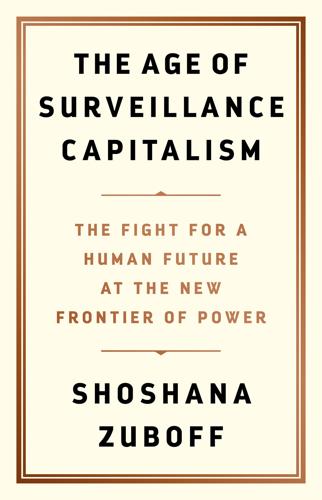
The Age of Surveillance Capitalism
by Shoshana Zuboff · 15 Jan 2019 · 918pp · 257,605 words
values from ever-smaller samples of Facebook data and meta-data. Later, it would become the model for the work of a small consultancy called Cambridge Analytica, which used the new caches of behavioral surplus for an onslaught of politically inspired behavioral micro-targeting. In a 2012 paper Kosinski and Stillwell concluded
…
messages, new products and services, and journalistic representations that appear to accept the new facts as given.73 Among this new cohort of mercenaries was Cambridge Analytica, the UK consulting firm owned by the reclusive billionaire and Donald Trump backer Robert Mercer. The firm’s CEO, Alexander Nix, boasted of its application
…
in the fabrication of Facebook’s prediction products, confirms the company’s primary orientation to its behavioral futures markets, and reveals the degree to which Cambridge Analytica’s controversial practices reflected standard operating procedures at Facebook.77 The confidential document cites Facebook’s unparalleled “machine learning expertise” aimed at meeting its customers
…
, details of friendships, and similarities with friends. It was probably no coincidence that the leaked Facebook presentation appeared around the same time that a young Cambridge Analytica mastermind-turned-whistleblower, Chris Wylie, unleashed a torrent of information on that company’s secret efforts to predict and influence individual voting behavior, quickly riveting
…
the world on the small political analytics firm and the giant source of its data: Facebook. There are many unanswered questions about the legality of Cambridge Analytica’s complex subterfuge, its actual political impact, and its relationship with Facebook. Our interest here is restricted to how its machinations shine a bright light
…
possibilities for behavioral manipulation and modification. Wylie recounts his fascination with this prospect, and, through a complicated chain of events, it was he who persuaded Cambridge Analytica to use Kosinski and Stillwell’s data to advance its owner’s political aims. The objective was “behavioral micro-targeting… influencing voters based not on
…
massive rendition operation from which Kogan successfully produced psychological profiles of somewhere between 50 and 87 million Facebook users, data that he then sold to Cambridge Analytica.81 When Facebook questioned him about his application, Kogan vowed that his research was solely for academic purposes. Indeed, mutual respect between the two parties
…
millions of people’s profiles,” Wylie admitted, “and built models to exploit what we knew about them and target their inner demons.” His summary of Cambridge Analytica’s accomplishments is a précis of the surveillance capitalist project and a rationale for its determination to render from the depths. These are the very
…
fact they are routine elements in the daily elaboration of surveillance capitalism’s methods and goals, both at Facebook and within other surveillance capitalist companies. Cambridge Analytica merely reoriented the surveillance capitalist machinery from commercial markets in behavioral futures toward guaranteed outcomes in the political sphere. It was Eric Schmidt, not Wylie
…
of democracy.84 In addition to employing surveillance capitalism’s foundational mechanisms—rendition, behavioral surplus, machine intelligence, prediction products, economies of scale, scope, and action—Cambridge Analytica’s dark adventure also exemplifies surveillance capitalism’s tactical requirements. Its operations were designed to produce ignorance through secrecy and the careful evasion of individual
…
integrate the cutting-edge methods that can conquer the next frontier, a phenomenon that we will visit in more depth in Chapter 10. Irrespective of Cambridge Analytica’s actual competence and its ultimate political impact, the plotting and planning behind its ambitions are testament to the pivotal role of rendition from the
…
and tracking Pixel tools, which would reveal the web pages where Facebook had tracked him. Dehaye probably knew more about the rogue data operations of Cambridge Analytica than anyone in the world, outside of its own staff and masterminds. His aim was a bottom-up investigative approach to uncover the secrets of
…
kind of data that would become relevant in an electoral context and thus make him, and others, vulnerable to the kinds of hidden maneuvers that Cambridge Analytica had employed. Dehaye wanted to understand how a citizen might come to ascertain the data that enabled, judging from the worldwide outrage over the revelations
…
will voluntarily provide data from the shadow text. Only law can compel this challenge to the pathological division of learning. In the wake of the Cambridge Analytica scandal in March 2018, Facebook announced it would expand the range of personal data that it allows users to download, but even these data remain
…
Promises Fade to Doubts for a Trump-Linked Data Firm,” New York Times, March 6, 2017, https://www.nytimes.com/2017/03/06/us/politics/cambridge-analytica.html; Mary-Ann Russon, “Political Revolution: How Big Data Won the US Presidency for Donald Trump,” International Business Times UK, January 20, 2017, http://www
…
-fblearner-flow-facebook-s-ai-backbone. 79. Andy Kroll, “Cloak and Data: The Real Story Behind Cambridge Analytica’s Rise and Fall,” Mother Jones, March 24, 2018, https://www.motherjones.com/politics/2018/03/cloak-and-data-cambridge-analytica-robert-mercer. 80. Carole Cadwalladr, “‘I Made Steve Bannon’s Psychological Warfare Tool’: Meet the
…
Data of Millions,” New York Times, March 17, 2018, https://www.nytimes.com/2018/03/17/us/politics/cambridge-analytica-trump-campaign.html; Emma Graham-Harrison and Carole Cadwalladr, “Revealed: 50 Million Facebook Profiles Harvested for Cambridge Analytica in Major Data Breach,” Guardian, March 17, 2018, http://www.theguardian.com/news/2018/mar/17
…
/cambridge-analytica-facebook-influence-us-election; Julia Carrie Wong and Paul Lewis, “Facebook Gave Data About 57bn Friendships to Academic,” Guardian
…
, March 22, 2018, http://www.theguardian.com/news/2018/mar/22/facebook-gave-data-about-57bn-friendships-to-academic-aleksandr-kogan; Olivia Solon, “Facebook Says Cambridge Analytica May Have Gained 37m More Users’ Data,” Guardian, April 4, 2018, http://www.theguardian.com/technology/2018/apr/04/facebook
…
-cambridge-analytica-user-data-latest-more-than-thought. 82. Paul Lewis and Julia Carrie Wong, “Facebook Employs Psychologist Whose Firm Sold Data to Cambridge Analytica,” Guardian, March 18, 2018, http://www.theguardian.com/news/2018/mar/18/facebook
…
-cambridge-analytica-joseph-chancellor-gsr. 83. Kroll, “Cloak and Data.” 84. Frederik Zuiderveen Borgesius et al., “Online Political Microtargeting: Promises
…
Broadcom, 245 Brookings Institution, 182 Bryan, William Jennings, 106–107 Business Insider, 104–105 Business View, 153 Buttarelli, Giovanni, 487 BuzzFeed, 317, 505, 509–510 Cambridge Analytica, 273, 278–279, 279–281, 282, 482–483 Cambridge University Psychometrics Centre, 273 Canada, 144, 231–232, 387, 517 Cap Gemini, 218 Capital in the
…
Edwards, Douglas, 89, 98 effective life, human need for, 11, 32–33, 43–44, 53, 256–257, 342, 347, 518 Ekman, Paul, 285 electoral politics: Cambridge Analytica’s involvement in, 278, 280; and Facebook user experiments, 299–300, 301, 436; funding for election campaigns, 43, 109; Google’s involvement in, 122–124
…
prediction imperative Fabbrini, Federico, 60 Facebook: acquisition of startups by, 103; addictive design of, 451, 456–457; Beacon program, 47–48, 91–92, 457; and Cambridge Analytica, 278–279, 279–280; content moderation on, 508–509; as content provider, 506–507; corporate governance structure, 102, 511; and disinformation, 508–509, 510, 511
…
’s essay on, 426–429; and Pentland’s work on sociometrics, 422–425; and reality mining, 420–423 rendition of the self, 270–282; and Cambridge Analytica, 278–282; and consent, 290–292; through DIALOG platform, 270–271; and Facebook personality prediction, 271–276; and IBM personality prediction, 276–278 Requirimiento (Monarchical
…
space of lived experience, 290–291. See also sovereignty of the individual self, rendition of, 270–282; and affective computing/emotion analytics, 282–290; and Cambridge Analytica, 279–282; through DIALOG platform, 270–271; and Facebook machine learning, 278–279; and Facebook personality prediction, 271–276; and IBM personality prediction, 276–278
The Hype Machine: How Social Media Disrupts Our Elections, Our Economy, and Our Health--And How We Must Adapt
by Sinan Aral · 14 Sep 2020 · 475pp · 134,707 words
from 2019, in the weeks and months before COVID hit. Before the pandemic, social media was a pariah. The #deletefacebook movement was gaining steam. The Cambridge Analytica scandal had forced Mark Zuckerberg to testify on Capitol Hill and in front of the European Parliament. Lawmakers were angling to break up the social
…
committees are investigating the role of Facebook and the rest of the Hype Machine in Russian election interference and the spread of misinformation online. The Cambridge Analytica controversy, in which a political consultancy used stolen Facebook data on 87 million Americans to target political ads, forced Mark Zuckerberg to testify in front
…
Russian political consultant Konstantin Kilimnik and that targeting persuadable voters in swing states (which is possible with such polling data) was standard operating procedure for Cambridge Analytica, the self-described “election consultancy” that used 87 million Americans’ stolen data to build predictive models of voters’ susceptibility to persuasion, and the topics and
…
content most likely to persuade them. (I will evaluate Cambridge Analytica’s “psychographic profiling” in Chapter 9.) If misinformation targeted a small but potentially meaningful number of persuadable voters in key swing states, was the right
…
worldwide. Carole Cadwalladr’s investigative reporting on the role of fake news in the Brexit vote and her work with Christopher Wiley to break the Cambridge Analytica scandal for The Guardian gave us a glimpse into the extent to which fake news has been weaponized around the world. Research by the Oxford
…
influence were off by as much as 300 to 700 percent without carefully linking exposure to behavior. The widely publicized evidence of the effectiveness of Cambridge Analytica’s voter targeting on inferred personality traits is not estimated from randomized experiments and thus plausibly suffers from similar biases. Whether we are analyzing the
…
the pandemic. A wealth of information creates a poverty of attention. —HERBERT SIMON In September 2016, as Alexander Nix, the now-disgraced former CEO of Cambridge Analytica, strode confidently onstage at the Concordia Annual Summit in New York to talk about “the power of big data in global elections,” the conference sound
…
would be caught in an undercover video claiming to use fake news propagated online to influence global elections. That same month he was removed as Cambridge Analytica’s CEO, two months before it shut its doors for good. In 2016, however, Nix was the darling of the data-driven advertising world. The
…
, the CIO of Coca-Cola, whose framework for digital engagement puts this kind of segmentation strategy three decades behind the times. Nix then described how Cambridge Analytica transformed this approach: We were able to form a model to predict the personality of every single adult in the United States….If you know
…
are. Behavioral microtargeting identifies them based on how they behave. Interest-based segments identify what people like. And psychographic targeting, championed by Alexander Nix and Cambridge Analytica, profiles people based on their personalities—for example, whether someone is extroverted or introverted. But how do each of these approaches work, and how well
…
or niche, the greater the improvement of microtargeting over random selection. So what does all this imply about Cambridge Analytica’s targeting? Can our personalities really reveal these niche interests and drive targeting performance? Cambridge Analytica Alexander Nix touted the importance of “psychographic profiling” onstage at the Concordia summit and conferences around the world
…
the most important thing needed to manipulate voter behavior because “it’s personality that drives behavior and behavior that obviously influences how you vote.” Did Cambridge Analytica genuinely have a secret sauce, or was it selling snake oil? In 2017 Sandra Matz, Michal Kosinski, Gideon Nave, and David Stillwell tested
…
Cambridge Analytica’s methods in the largest public study of psychological profiling ever conducted on Facebook. Using data from the Facebook app myPersonality, they tested the effects
…
tell this story without stopping for a moment to discuss the cloak-and-dagger intrigue connecting Kosinski, Stillwell, and the myPersonality app to the larger Cambridge Analytica scandal because, in an eyebrow-raising twist, Kosinski and Stillwell conducted their research while at Cambridge University, in the same department as Aleksandr Kogan, the
…
now-infamous Cambridge University researcher who gave psychological profiles and Facebook data on 50 million Americans to Cambridge Analytica, which then sparked the scandal that landed Mark Zuckerberg in the hot seat. Investigative reporting on the relationships among these researchers suggests that Kogan approached
…
Kosinski on behalf of an unnamed company (Cambridge Analytica) that was interested in his methods and wanted access to the myPersonality database. The reporting suggests Kosinski ultimately broke off contact with Kogan when he
…
“influencing elections.” Kogan then developed his own app, called This Is Your Digital Life, which mimicked myPersonality, and shared the data and methods with Cambridge Analytica. In 2017, Cambridge Analytica told Das Magazin that it “has had no dealings” with Kosinski and “does not use the same methodology” as he did, although, as journalist
…
John Morgan noted, Cambridge Analytica’s methods are “undeniably similar.” This cloak-and-dagger detour is important because it reveals that the Matz et al. study is as close to
…
a systematic audit of the persuasive power of Cambridge Analytica’s methods and data as is publicly available. Facebook doesn’t allow marketers to target advertisements based on personality. So rather than targeting ads based
…
to get them to click on or purchase products with targeted ads. So there’s plenty of room for skepticism about the persuasive power of Cambridge Analytica’s methods to sway elections. But, while not definitive, the Cambridge study does suggest that psychographic profiling can improve the persuasive power of the Hype
…
building Telegram. He has resisted governments’ requests to hand over data or build back doors into Telegram’s infrastructure. In the wake of Edward Snowden, Cambridge Analytica, and the release of Netflix’s The Great Hack, the reasons behind Telegram’s meteoric rise seem obvious. Individuals around the world are clamoring for
…
social distancing, misinformation and hoax cures also spread around the world, hindering public health efforts to contain the pandemic. The Transparency Paradox Immediately after the Cambridge Analytica scandal broke, in an interview by Martin Giles for the MIT Technology Review, I predicted the Hype Machine was about to face a dilemma that
…
our privacy and security, to lock down consumer data, to stop sharing private information with third parties, and to protect us from data breaches like Cambridge Analytica’s. The European General Data Protection Regulation (GDPR) and California’s Consumer Privacy Act (the most aggressive state data privacy legislation in the United States
…
,” Zuckerberg said. “So we’re calling this FB 5.” Facebook was locking down and going private. Two shocks to the system forced this shift. First, Cambridge Analytica highlighted the dangers of freely sharing the Hype Machine’s private data for behavioral targeting, election manipulation, and the broader threat to democracy. But a
…
the livestream of the horrific massacre in Christchurch, New Zealand. On March 15, 2019, three days before Carole Cadwalladr and whistleblower Christopher Wiley broke the Cambridge Analytica story in The Guardian, a sick, racist gunman livestreamed his vicious mosque attack in Christchurch on Facebook. The world saw a gory, firsthand account of
…
the effect of fake news on democracy, to the negative consequences for our mental and physical health, to the most-talked-about cost after the Cambridge Analytica scandal—our loss of privacy and the vulnerability of our consumer data. At the individual level, social media use correlates with negative effects on well
…
Chapter 11) is that interoperability requires platforms to allow third parties to access consumer data. But that very access threatens privacy and led to the Cambridge Analytica scandal of 2018. So policy makers and platforms will need to work together to thread the needle of the transparency paradox—the pressure to be
…
looking backward to unwind networks and companies that already exist. Privacy and Data Protection The potential abuses of personal data can be seen in the Cambridge Analytica scandal, predatory loans targeting low-income minorities, gender discrimination in employment advertising, and foreign election interference. The need for comprehensive privacy and data protection legislation
…
the economic surplus generated by the advertising economy. We can create enforceable privacy legislation that protects our rights and minimizes harm from data breaches like Cambridge Analytica’s. But to do so while balancing other interests requires thoughtfulness and nuance. The devil is in the details. Three global privacy approaches have emerged
…
Ukraine, 2001 Census, http://2001.ukrcensus.gov.ua/eng/results/. A more recent Crimean census, conducted by Russia in 2014 after the annexation, is disputed. Cambridge Analytica controversy: Carole Cadwalladr, “ ‘I Made Steve Bannon’s Psychological Warfare Tool’: Meet the Data War Whistleblower,” Guardian, March 18, 2018. Mark Zuckerberg to testify: Mark
…
(2009): 21544–49; Dean Eckles and Eytan Bakshy, “Bias and High-Dimensional Adjustment in Observational Studies of Peer Effects,” arXiv:1706.04692 (2017). effectiveness of Cambridge Analytica’s voter targeting on inferred personality traits: Sandra C. Matz et al., “Psychological Targeting as an Effective Approach to Digital Mass Persuasion,” Proceedings of the
…
, no. 6 (2018): 375–82. Chapter 9: The Attention Economy and the Tyranny of Trends “the power of big data in global elections”: Alexander Nix, “Cambridge Analytica—the Power of Big Data and Psychographics,” Concordia Annual Summit, New York, 2016, https://www.youtube.com/watch?v=n8Dd5aVXLCc. Nix would be caught in
…
Secrets of Trump’s Data Firm,” Channel 4 News, March 20, 2018, https://www.channel4.com/news/exposed-undercover-secrets-of-donald-trump-data-firm-cambridge-analytica. cleverly exploited this change in European privacy laws to measure the effectiveness of microtargeting: Avi Goldfarb and Catherine E. Tucker, “Privacy Regulation and Online Advertising
…
Medical Journal 349 (2014). a dilemma that would pull it in competing directions: Martin Giles, “The Cambridge Analytica Affair Reveals Facebook’s ‘Transparency Paradox,’ ” MIT Technology Review, March 19, 2018, https://www.technologyreview.com/s/610577/the-cambridge-analytica-affair-reveals-facebooks-transparency-paradox/. “the future is private”: Nick Statt, “Facebook CEO Mark Zuckerberg
An Ugly Truth: Inside Facebook's Battle for Domination
by Sheera Frenkel and Cecilia Kang · 12 Jul 2021 · 372pp · 100,947 words
Stories Are Weapons: Psychological Warfare and the American Mind
by Annalee Newitz · 3 Jun 2024 · 251pp · 68,713 words
Outnumbered: From Facebook and Google to Fake News and Filter-Bubbles – the Algorithms That Control Our Lives
by David Sumpter · 18 Jun 2018 · 276pp · 81,153 words
Apple: The First 50 Years
by David Pogue · 10 Mar 2026 · 686pp · 216,944 words
The Costs of Connection: How Data Is Colonizing Human Life and Appropriating It for Capitalism
by Nick Couldry and Ulises A. Mejias · 19 Aug 2019 · 458pp · 116,832 words
Data Action: Using Data for Public Good
by Sarah Williams · 14 Sep 2020
How to Stand Up to a Dictator
by Maria Ressa · 19 Oct 2022
The Contrarian: Peter Thiel and Silicon Valley's Pursuit of Power
by Max Chafkin · 14 Sep 2021 · 524pp · 130,909 words
The People vs Tech: How the Internet Is Killing Democracy (And How We Save It)
by Jamie Bartlett · 4 Apr 2018 · 170pp · 49,193 words
The Internet Trap: How the Digital Economy Builds Monopolies and Undermines Democracy
by Matthew Hindman · 24 Sep 2018
Your Face Belongs to Us: A Secretive Startup's Quest to End Privacy as We Know It
by Kashmir Hill · 19 Sep 2023 · 487pp · 124,008 words
The Wires of War: Technology and the Global Struggle for Power
by Jacob Helberg · 11 Oct 2021 · 521pp · 118,183 words
If Then: How Simulmatics Corporation Invented the Future
by Jill Lepore · 14 Sep 2020 · 467pp · 149,632 words
Reset
by Ronald J. Deibert · 14 Aug 2020
Digital Empires: The Global Battle to Regulate Technology
by Anu Bradford · 25 Sep 2023 · 898pp · 236,779 words
Genius Makers: The Mavericks Who Brought A. I. To Google, Facebook, and the World
by Cade Metz · 15 Mar 2021 · 414pp · 109,622 words
User Friendly: How the Hidden Rules of Design Are Changing the Way We Live, Work & Play
by Cliff Kuang and Robert Fabricant · 7 Nov 2019
Hello World: Being Human in the Age of Algorithms
by Hannah Fry · 17 Sep 2018 · 296pp · 78,631 words
Palo Alto: A History of California, Capitalism, and the World
by Malcolm Harris · 14 Feb 2023 · 864pp · 272,918 words
The Business of Platforms: Strategy in the Age of Digital Competition, Innovation, and Power
by Michael A. Cusumano, Annabelle Gawer and David B. Yoffie · 6 May 2019 · 328pp · 84,682 words
War for Eternity: Inside Bannon's Far-Right Circle of Global Power Brokers
by Benjamin R. Teitelbaum · 14 May 2020 · 307pp · 88,745 words
The Brussels Effect: How the European Union Rules the World
by Anu Bradford · 14 Sep 2020 · 696pp · 184,001 words
The Death of Truth: Notes on Falsehood in the Age of Trump
by Michiko Kakutani · 17 Jul 2018 · 137pp · 38,925 words
System Error: Where Big Tech Went Wrong and How We Can Reboot
by Rob Reich, Mehran Sahami and Jeremy M. Weinstein · 6 Sep 2021
The Data Detective: Ten Easy Rules to Make Sense of Statistics
by Tim Harford · 2 Feb 2021 · 428pp · 103,544 words
This Is Not Propaganda: Adventures in the War Against Reality
by Peter Pomerantsev · 29 Jul 2019 · 240pp · 74,182 words
Likewar: The Weaponization of Social Media
by Peter Warren Singer and Emerson T. Brooking · 15 Mar 2018
The Man Who Solved the Market: How Jim Simons Launched the Quant Revolution
by Gregory Zuckerman · 5 Nov 2019 · 407pp · 104,622 words
The Big Nine: How the Tech Titans and Their Thinking Machines Could Warp Humanity
by Amy Webb · 5 Mar 2019 · 340pp · 97,723 words
Posh Boys: How English Public Schools Ruin Britain
by Robert Verkaik · 14 Apr 2018 · 419pp · 119,476 words

Hiding in Plain Sight: The Invention of Donald Trump and the Erosion of America
by Sarah Kendzior · 6 Apr 2020
This Is for Everyone: The Captivating Memoir From the Inventor of the World Wide Web
by Tim Berners-Lee · 8 Sep 2025 · 347pp · 100,038 words
Merchants of Truth: The Business of News and the Fight for Facts
by Jill Abramson · 5 Feb 2019 · 788pp · 223,004 words
Cult of the Dead Cow: How the Original Hacking Supergroup Might Just Save the World
by Joseph Menn · 3 Jun 2019 · 302pp · 85,877 words
No Filter: The Inside Story of Instagram
by Sarah Frier · 13 Apr 2020 · 484pp · 114,613 words
When McKinsey Comes to Town: The Hidden Influence of the World's Most Powerful Consulting Firm
by Walt Bogdanich and Michael Forsythe · 3 Oct 2022 · 689pp · 134,457 words
The Creativity Code: How AI Is Learning to Write, Paint and Think
by Marcus Du Sautoy · 7 Mar 2019 · 337pp · 103,522 words
Coders: The Making of a New Tribe and the Remaking of the World
by Clive Thompson · 26 Mar 2019 · 499pp · 144,278 words
Sandy Hook: An American Tragedy and the Battle for Truth
by Elizabeth Williamson · 8 Mar 2022 · 574pp · 148,233 words
Don't Be Evil: How Big Tech Betrayed Its Founding Principles--And All of US
by Rana Foroohar · 5 Nov 2019 · 380pp · 109,724 words
Tools and Weapons: The Promise and the Peril of the Digital Age
by Brad Smith and Carol Ann Browne · 9 Sep 2019 · 482pp · 121,173 words
Billionaire, Nerd, Savior, King: Bill Gates and His Quest to Shape Our World
by Anupreeta Das · 12 Aug 2024 · 315pp · 115,894 words
My Glorious Defeats: Hacktivist, Narcissist, Anonymous: A Memoir
by Barrett Brown · 8 Jul 2024 · 332pp · 110,397 words
Rage Inside the Machine: The Prejudice of Algorithms, and How to Stop the Internet Making Bigots of Us All
by Robert Elliott Smith · 26 Jun 2019 · 370pp · 107,983 words
The AI Economy: Work, Wealth and Welfare in the Robot Age
by Roger Bootle · 4 Sep 2019 · 374pp · 111,284 words
Breaking News: The Remaking of Journalism and Why It Matters Now
by Alan Rusbridger · 14 Oct 2018 · 579pp · 160,351 words
Nervous States: Democracy and the Decline of Reason
by William Davies · 26 Feb 2019 · 349pp · 98,868 words
Snowden's Box: Trust in the Age of Surveillance
by Jessica Bruder and Dale Maharidge · 29 Mar 2020 · 159pp · 42,401 words
The Great Firewall of China
by James Griffiths; · 15 Jan 2018 · 453pp · 114,250 words
Always Day One: How the Tech Titans Plan to Stay on Top Forever
by Alex Kantrowitz · 6 Apr 2020 · 260pp · 67,823 words
Devil's Bargain: Steve Bannon, Donald Trump, and the Storming of the Presidency
by Joshua Green · 17 Jul 2017 · 296pp · 78,112 words
The Unknowers: How Strategic Ignorance Rules the World
by Linsey McGoey · 14 Sep 2019
Because Internet: Understanding the New Rules of Language
by Gretchen McCulloch · 22 Jul 2019 · 413pp · 106,479 words
How Democracy Ends
by David Runciman · 9 May 2018 · 245pp · 72,893 words
Rentier Capitalism: Who Owns the Economy, and Who Pays for It?
by Brett Christophers · 17 Nov 2020 · 614pp · 168,545 words
Searches: Selfhood in the Digital Age
by Vauhini Vara · 8 Apr 2025 · 301pp · 105,209 words
Artificial Whiteness
by Yarden Katz
The Open Revolution: New Rules for a New World
by Rufus Pollock · 29 May 2018 · 105pp · 34,444 words
New Dark Age: Technology and the End of the Future
by James Bridle · 18 Jun 2018 · 301pp · 85,263 words
21 Lessons for the 21st Century
by Yuval Noah Harari · 29 Aug 2018 · 389pp · 119,487 words
Badvertising
by Andrew Simms · 314pp · 81,529 words
The Science of Hate: How Prejudice Becomes Hate and What We Can Do to Stop It
by Matthew Williams · 23 Mar 2021 · 592pp · 125,186 words
Architects of Intelligence
by Martin Ford · 16 Nov 2018 · 586pp · 186,548 words
Rule Britannia: Brexit and the End of Empire
by Danny Dorling and Sally Tomlinson · 15 Jan 2019 · 502pp · 128,126 words
The Digital Party: Political Organisation and Online Democracy
by Paolo Gerbaudo · 19 Jul 2018 · 302pp · 84,881 words
Traffic: Genius, Rivalry, and Delusion in the Billion-Dollar Race to Go Viral
by Ben Smith · 2 May 2023
AI Superpowers: China, Silicon Valley, and the New World Order
by Kai-Fu Lee · 14 Sep 2018 · 307pp · 88,180 words
Going Dark: The Secret Social Lives of Extremists
by Julia Ebner · 20 Feb 2020 · 309pp · 79,414 words
People, Power, and Profits: Progressive Capitalism for an Age of Discontent
by Joseph E. Stiglitz · 22 Apr 2019 · 462pp · 129,022 words
Competition Overdose: How Free Market Mythology Transformed Us From Citizen Kings to Market Servants
by Maurice E. Stucke and Ariel Ezrachi · 14 May 2020 · 511pp · 132,682 words
Like, Comment, Subscribe: Inside YouTube's Chaotic Rise to World Domination
by Mark Bergen · 5 Sep 2022 · 642pp · 141,888 words
Blank Space: A Cultural History of the Twenty-First Century
by W. David Marx · 18 Nov 2025 · 642pp · 142,332 words
The Powerful and the Damned: Private Diaries in Turbulent Times
by Lionel Barber · 5 Nov 2020
New Laws of Robotics: Defending Human Expertise in the Age of AI
by Frank Pasquale · 14 May 2020 · 1,172pp · 114,305 words
Siege: Trump Under Fire
by Michael Wolff · 3 Jun 2019 · 359pp · 113,847 words
Money Men: A Hot Startup, a Billion Dollar Fraud, a Fight for the Truth
by Dan McCrum · 15 Jun 2022 · 361pp · 117,566 words
Becoming Data Literate: Building a great business, culture and leadership through data and analytics
by David Reed · 31 Aug 2021 · 168pp · 49,067 words
How Big Things Get Done: The Surprising Factors Behind Every Successful Project, From Home Renovations to Space Exploration
by Bent Flyvbjerg and Dan Gardner · 16 Feb 2023 · 353pp · 97,029 words
Death Glitch: How Techno-Solutionism Fails Us in This Life and Beyond
by Tamara Kneese · 14 Aug 2023 · 284pp · 75,744 words
Abolish Silicon Valley: How to Liberate Technology From Capitalism
by Wendy Liu · 22 Mar 2020 · 223pp · 71,414 words
Future Politics: Living Together in a World Transformed by Tech
by Jamie Susskind · 3 Sep 2018 · 533pp
Deep Medicine: How Artificial Intelligence Can Make Healthcare Human Again
by Eric Topol · 1 Jan 2019 · 424pp · 114,905 words
Your Computer Is on Fire
by Thomas S. Mullaney, Benjamin Peters, Mar Hicks and Kavita Philip · 9 Mar 2021 · 661pp · 156,009 words
The Alignment Problem: Machine Learning and Human Values
by Brian Christian · 5 Oct 2020 · 625pp · 167,349 words
Stolen Focus: Why You Can't Pay Attention--And How to Think Deeply Again
by Johann Hari · 25 Jan 2022 · 390pp · 120,864 words
They Don't Represent Us: Reclaiming Our Democracy
by Lawrence Lessig · 5 Nov 2019 · 404pp · 115,108 words
Messing With the Enemy: Surviving in a Social Media World of Hackers, Terrorists, Russians, and Fake News
by Clint Watts · 28 May 2018 · 324pp · 96,491 words
This Is Not Normal: The Collapse of Liberal Britain
by William Davies · 28 Sep 2020 · 210pp · 65,833 words
The System: Who Owns the Internet, and How It Owns Us
by James Ball · 19 Aug 2020 · 268pp · 76,702 words
How to Be a Liberal: The Story of Liberalism and the Fight for Its Life
by Ian Dunt · 15 Oct 2020
Ways of Being: Beyond Human Intelligence
by James Bridle · 6 Apr 2022 · 502pp · 132,062 words
The Bill Gates Problem: Reckoning With the Myth of the Good Billionaire
by Tim Schwab · 13 Nov 2023 · 618pp · 179,407 words
Supremacy: AI, ChatGPT, and the Race That Will Change the World
by Parmy Olson · 284pp · 96,087 words
Talk to Me: How Voice Computing Will Transform the Way We Live, Work, and Think
by James Vlahos · 1 Mar 2019 · 392pp · 108,745 words
The Coddling of the American Mind: How Good Intentions and Bad Ideas Are Setting Up a Generation for Failure
by Greg Lukianoff and Jonathan Haidt · 14 Jun 2018 · 531pp · 125,069 words
Falter: Has the Human Game Begun to Play Itself Out?
by Bill McKibben · 15 Apr 2019
Frenemies: The Epic Disruption of the Ad Business
by Ken Auletta · 4 Jun 2018 · 379pp · 109,223 words
News and How to Use It: What to Believe in a Fake News World
by Alan Rusbridger · 26 Nov 2020 · 371pp · 109,320 words
Super Pumped: The Battle for Uber
by Mike Isaac · 2 Sep 2019 · 444pp · 127,259 words
Invisible Women
by Caroline Criado Perez · 12 Mar 2019 · 480pp · 119,407 words
The Four: How Amazon, Apple, Facebook, and Google Divided and Conquered the World
by Scott Galloway · 2 Oct 2017 · 305pp · 79,303 words
Doppelganger: A Trip Into the Mirror World
by Naomi Klein · 11 Sep 2023
The Technology Trap: Capital, Labor, and Power in the Age of Automation
by Carl Benedikt Frey · 17 Jun 2019 · 626pp · 167,836 words
The Great Reversal: How America Gave Up on Free Markets
by Thomas Philippon · 29 Oct 2019 · 401pp · 109,892 words
Robot Rules: Regulating Artificial Intelligence
by Jacob Turner · 29 Oct 2018 · 688pp · 147,571 words
Men Who Hate Women: From Incels to Pickup Artists, the Truth About Extreme Misogyny and How It Affects Us All
by Laura Bates · 2 Sep 2020 · 364pp · 119,398 words
Blood in the Machine: The Origins of the Rebellion Against Big Tech
by Brian Merchant · 25 Sep 2023 · 524pp · 154,652 words
Servants of the Damned: Giant Law Firms and the Corruption of Justice
by David Enrich · 5 Oct 2022 · 373pp · 108,788 words
Can It Happen Here?: Authoritarianism in America
by Cass R. Sunstein · 6 Mar 2018 · 434pp · 117,327 words
Good Economics for Hard Times: Better Answers to Our Biggest Problems
by Abhijit V. Banerjee and Esther Duflo · 12 Nov 2019 · 470pp · 148,730 words
Artificial Intelligence: A Guide for Thinking Humans
by Melanie Mitchell · 14 Oct 2019 · 350pp · 98,077 words
Very Bad People: The Inside Story of the Fight Against the World’s Network of Corruption
by Patrick Alley · 17 Mar 2022 · 384pp · 121,574 words
Reaching for Utopia: Making Sense of an Age of Upheaval
by Jason Cowley · 15 Nov 2018 · 283pp · 87,166 words
The New Class War: Saving Democracy From the Metropolitan Elite
by Michael Lind · 20 Feb 2020
Trading at the Speed of Light: How Ultrafast Algorithms Are Transforming Financial Markets
by Donald MacKenzie · 24 May 2021 · 400pp · 121,988 words
The Autonomous Revolution: Reclaiming the Future We’ve Sold to Machines
by William Davidow and Michael Malone · 18 Feb 2020 · 304pp · 80,143 words

Vassal State
by Angus Hanton · 25 Mar 2024 · 277pp · 81,718 words
Nothing but Net: 10 Timeless Stock-Picking Lessons From One of Wall Street’s Top Tech Analysts
by Mark Mahaney · 9 Nov 2021 · 311pp · 90,172 words
The Perfect Weapon: War, Sabotage, and Fear in the Cyber Age
by David E. Sanger · 18 Jun 2018 · 394pp · 117,982 words

12 Bytes: How We Got Here. Where We Might Go Next
by Jeanette Winterson · 15 Mar 2021 · 256pp · 73,068 words
Magic Internet Money: A Book About Bitcoin
by Jesse Berger · 14 Sep 2020 · 108pp · 27,451 words
Merchants of the Right: Gun Sellers and the Crisis of American Democracy
by Jennifer Carlson · 2 May 2023 · 279pp · 100,877 words
Picnic Comma Lightning: In Search of a New Reality
by Laurence Scott · 11 Jul 2018 · 244pp · 81,334 words
Green Swans: The Coming Boom in Regenerative Capitalism
by John Elkington · 6 Apr 2020 · 384pp · 93,754 words
Strength in Numbers: How Polls Work and Why We Need Them
by G. Elliott Morris · 11 Jul 2022 · 252pp · 71,176 words
99%: Mass Impoverishment and How We Can End It
by Mark Thomas · 7 Aug 2019 · 286pp · 79,305 words
Gilded Rage: Elon Musk and the Radicalization of Silicon Valley
by Jacob Silverman · 9 Oct 2025 · 312pp · 103,645 words
Bezonomics: How Amazon Is Changing Our Lives and What the World's Best Companies Are Learning From It
by Brian Dumaine · 11 May 2020 · 411pp · 98,128 words
Weapons of Math Destruction: How Big Data Increases Inequality and Threatens Democracy
by Cathy O'Neil · 5 Sep 2016 · 252pp · 72,473 words
The Infinite Machine: How an Army of Crypto-Hackers Is Building the Next Internet With Ethereum
by Camila Russo · 13 Jul 2020 · 349pp · 102,827 words
Nothing Personal: My Secret Life in the Dating App Inferno
by Nancy Jo Sales · 17 May 2021 · 445pp · 135,648 words
Filterworld: How Algorithms Flattened Culture
by Kyle Chayka · 15 Jan 2024 · 321pp · 105,480 words
Lab Rats: How Silicon Valley Made Work Miserable for the Rest of Us
by Dan Lyons · 22 Oct 2018 · 252pp · 78,780 words
Enshittification: Why Everything Suddenly Got Worse and What to Do About It
by Cory Doctorow · 6 Oct 2025 · 313pp · 94,415 words
March of the Lemmings: Brexit in Print and Performance 2016–2019
by Stewart Lee · 2 Sep 2019 · 382pp · 117,536 words
Blitzscaling: The Lightning-Fast Path to Building Massively Valuable Companies
by Reid Hoffman and Chris Yeh · 14 Apr 2018 · 286pp · 87,401 words
Extremely Hardcore: Inside Elon Musk's Twitter
by Zoë Schiffer · 13 Feb 2024 · 343pp · 92,693 words
Ten Arguments for Deleting Your Social Media Accounts Right Now
by Jaron Lanier · 28 May 2018 · 151pp · 39,757 words
Lurking: How a Person Became a User
by Joanne McNeil · 25 Feb 2020 · 239pp · 80,319 words
Three Years in Hell: The Brexit Chronicles
by Fintan O'Toole · 5 Mar 2020 · 385pp · 121,550 words
App Kid: How a Child of Immigrants Grabbed a Piece of the American Dream
by Michael Sayman · 20 Sep 2021 · 285pp · 91,144 words
AI 2041: Ten Visions for Our Future
by Kai-Fu Lee and Qiufan Chen · 13 Sep 2021
Attention Factory: The Story of TikTok and China's ByteDance
by Matthew Brennan · 9 Oct 2020 · 282pp · 63,385 words