Carl Icahn
description: an American businessman known for his activities as an activist shareholder
117 results
When the Wolves Bite: Two Billionaires, One Company, and an Epic Wall Street Battle
by Scott Wapner · 23 Apr 2018 · 302pp · 80,287 words
About the Author AUTHOR’S NOTE This book would not have happened without the gracious cooperation of the three major parties involved in this story—Carl Icahn, Bill Ackman, and, of course, Herbalife’s now former CEO, Michael Johnson. All agreed to speak on the record about their roles. Some of the
…
it was his wife calling, Johnson walked outside into the California night and hit the green “Accept” button on his iPhone. “Hi Michael, it’s Carl Icahn,” said the voice on the other end in a friendly and engaging tone. “I don’t get this Ackman thing.” Johnson had no idea how
…
couldn’t talk—his wife had just shown up and was waving for him to hang up. It wasn’t a request. “But it’s Carl Icahn…, it’s Carl.” Johnson said, unable to even finish the sentence. Johnson sheepishly told Icahn he’d have to call him back the next day
…
seconds later, it appeared in my inbox: On March 1, 2003, on behalf of my former fund, Gotham Partners, I entered into a contract with Carl Icahn, signed by him, to sell him a 15% stake in Hallwood Realty Partners. He paid my investors $80 per share and agreed to what he
…
, congratulated me on winning, and said that he wanted to be my friend. I told him that I had no interest in being his friend. Carl Icahn is a great investor, but, in my experience, he does not keep his word. Within minutes, the release went public. “Bill Ackman Fires Back at
…
Carl Icahn” read the Business Insider headline that posted at 8:31 p.m. that night. I asked Ackman if he’d come on my show the
…
called in. Through my earpiece, John Melloy told me Icahn had been listening to the whole exchange and had called in to respond to Ackman. “Carl Icahn wants to call in and respond to you directly,” I said to Ackman. “I will give you two choices—you can hang on the phone
…
, and then we had several courts conclude that we were right, and he held us up as long as he could. The big issue about Carl Icahn is he is not used to someone standing up to him. And particularly a little guy like me in 2003. Carl can try to orchestrate
…
any person will write a check for five or six billion to buy a business we believe is fraudulent. That’s number one. Number two, Carl Icahn says he doesn’t like the behavior, it’s bad. Meanwhile, 2003 at the conference in front of 500 people
…
Carl Icahn pitched Trinity Industries, which he was short and short 22 percent of outstanding shares according to Fortune magazine. Carl, can you tell us whether that
…
Brawl,” as it soon became known, lasted for twenty-seven uninterrupted minutes. Trading volume at the NYSE dropped more than 20 percent. “Bill Ackman and Carl Icahn Just Brawled on CNBC in the Greatest Moment in Financial TV History” read the headline on Business Insider at 1 p.m. I was shell
…
-shocked. Icahn was livid. Michael Johnson, who went to church the night before Christmas, was about to get his divine intervention. 9 THE ICON Carl Icahn strolled out of the back door of his sprawling seaside estate in East Hampton, the summer playground for New York’s wealthy, sat down for
…
the company in a deal valued at $1.8 billion.30 TWA launched an all-out PR assault, running a full-page “Open Letter to Carl Icahn” in major newspapers around the country, making it clear it wasn’t interested in a deal or the financier. “If you thought we’d just
…
file were slightly less enthused. Upset over Icahn’s deep cost-cutting plans, four thousand flight attendants staged a ten-week walkout while wearing “Stop Carl Icahn” buttons. The work stoppage left the airline bare during a key travel season. Traffic suffered, and TWA had to borrow millions to keep operations going
…
’s Grand Ballroom ate it up, which only seemed to encourage Icahn to keep the one-liners coming—all, of course, at Ackman’s expense. “Carl Icahn Just Ended What May Be His Most Hilarious, Sarcastic, Awesome Interview Ever” wrote Business Insider’s Linette Lopez following the event.18 Icahn was also
…
the company. What could it be? The men in the room openly wondered. “We had a debate in the board room,” Ackman said. “Is this Carl Icahn announcing a going-private transaction? Then I said, no way, no way, Carl loves money more than he hates me, and that would be a
…
this nice presentation that you spent a lot of money on. Everybody’s clueless except for you. I don’t understand. Tell me. Why is Carl Icahn making a mistake? Show me every illegality Herbalife is doing to get this company shut down. I don’t see it, and why is everybody
…
the other side?”15 “It’s a great question,” Ackman answered. “We’ve had an army working on this project. Hundreds of people. Investigators, lawyers. Carl Icahn didn’t do the kind of due diligence we did. The nutrition club thing is designed to be secretive. This is an ingenious fraud. You
…
. I only ask that you take 13 minutes of your time to watch the first video. It will remind you that this is not about Carl Icahn, the largest beneficiary of Herbalife’s scheme as its biggest shareholder, or Pershing Square, the largest short seller of Herbalife. It is about protecting those
…
to encounter. He’d come face-to-face with some of Wall Street’s most ferocious wolves, and survived. CODA: BIG THOUGHTS Bill Ackman and Carl Icahn’s war over Herbalife, which amazingly still rages, leaves many important questions, not the least of which is, who won? While history’s scorecard—and
…
, for that matter, Wall Street’s—will show that Carl Icahn got the better of Bill Ackman in this round, identifying a true victor proves much more complicated. There’s no doubt that Icahn has profited
…
had converted the stake into put options, which would still pay off if the stock collapsed, but would eliminate the risk of being “squeezed” by Carl Icahn. “There’s been a perception that Pershing Square will have to cover our position, and we’ve just taken that way,” Ackman told me during
…
, 2003. 25. Ibid. 26. Ibid. 27. Ibid. 28. Ibid. 29. Unit Purchase Agreement by Gotham Partners and High River Limited Partnership, March 1, 2003. 30. Carl Icahn, “Icahn Unit Announces Proposal for Acquisition of Hallwood Realty Partners, L.P. at $222 Million,” July 29, 2003. 31. Azam Ahmed, “Two Wall Street Titans
…
. Ibid. 29. Ibid. 30. Ibid. Chapter 8: The Brawl 1. Juliet Chung, “Icahn Takes Herbalife Stake,” Wall Street Journal, January 16, 2013. 2. Allie Wickman, “Carl Icahn on Bloomberg TV: I Don’t Like or Respect Bill Ackman,” Benzinga, January 24, 2013. 3. Ibid. 4. Ibid. 5. CNBC, Halftime Report, January 25
…
Commission Schedule 13D CUSIP #G4412G101. 5. CNBC, Halftime Report, February 15, 2013. 6. Ken Auletta, “The Raid,” New Yorker, March 20, 2006. 7. Colin Dodds, “Carl Icahn: Success Story,” Investopedia. 8. Robert Slater, The Titans of Takeover (Philadelphia: Beard Books, 1999). 9. James Sterngold, “The Pawns Differ: Icahn Still Winning,” New York
…
Corporate Raider,” Investment News, December 7, 2014. 11. Tobias Carlisle, “The Insight That Enabled Carl Icahn to Become a Corporate Raider,” Crain’s Wealth, December 8, 2014. 12. Carlisle, “How Carl Icahn Became a Corporate Raider.” 13. Paul Richter, “Carl Icahn Relishes His Raider Role,” Los Angeles Times, June 9, 1985. 14. Slater, The Titans of
…
Takeover. 15. Ibid. 16. Ibid. 17. Ibid. 18. Ibid. 19. Carlisle, “How Carl Icahn Became a Corporate Raider.” 20. Robert Cole, “Icahn Makes Dual Offer for Dan River,” New York Times, October 26, 1982. 21. Slater, The Titans of
…
Takeover. 22. Richter, “Carl Icahn Relishes His Raider Role.” 23. Robert Cole, “ACF, Icahn Target, Prepares Next Step,” New York Times, September 20, 1983. 24. Ibid. 25. Linette Lopez
…
, “Carl Icahn Told an Amazing 8-Minute Story That Explains His Entire Philosphy About Activist Investing,” Business Insider, November 4, 2015. 26. Times Wire Services, “Chesebrough Will
…
20, 1985. 27. Robert J. Cole, “Icahn Bids $8.1 Billion for Phillips,” New York Times, February 6, 1985. 28. Ibid. 29. William Gruber, “Raider Carl Icahn—A Pirate or Patriot?” Chicago Tribune, May 12, 1985. 30. Fred R. Bleakley, “T.W.A.’s Brief, Futile Battle,” New York Times, June 24
…
, June 14, 1985. 33. Agis Salpukas, “Icahn on T.W.A. Woe: ‘We’re at Crossroads,’” New York Times, February 10, 1990. 34. Winston Williams, “Carl Icahn’s Wild Ride at TWA,” New York Times, June 22, 1986. 35. Robert E. Dallos, “Icahn Proposes Buyout to Take TWA Private,” Los Angeles Times
…
, July 23, 1987. 36. Elaine X. Grant, “TWA—Death of a Legend,” St. Louis Magazine, July 28, 2006. 37. Ibid. 38. Williams, “Carl Icahn’s Wild Ride.” 39. Grant, “TWA—Death of a Legend.” 40. Robert J. Cole, “Icahn: No Charges Made or Expected,” New York Times, November 20
…
for Takeovers,” Los Angeles Times, April 9, 2000. 49. Ken Auletta, “The Raid,” New Yorker, March 20, 2006. 50. CNN Library, “Carl Icahn Fast Facts,” April 2, 2017. 51. Andy Serwer, “Carl Icahn’s New Life as a Hedge Fund Manager,” Fortune, November 29, 2004. 52. Ibid. 53. Bloomberg News, “Icahn Bids $5.4
…
,” New York Post, July 17, 2013. 17. CNBC and Institutional Investor’s Delivering Alpha Official Transcript, The Pierre Hotel, July 17, 2013. 18. Linette Lopez, “Carl Icahn Just Ended What May Be His Most Hilarious, Sarcastic, Awesome Interview Ever,” Business Insider, July 17, 2013. 19. Duane D. Stanford, “Stiritz Sides with Icahn
…
, “Ackman Says He’ll Take Herbalife Bet to End of the Earth,” Bloomberg, November 22, 2013. 24. Ibid. 25. Trish Regan, Bloomberg Television Interview with Carl Icahn. 26. Ibid. 27. William D. Cohan, “The Big Short War,” Vanity Fair, April 2013. 28. Senator Edward J. Markey, Letter to FTC Chairwoman Edith Ramirez
…
Commission Reach Settlement Agreement,” July 15, 2016. 26. Kevin McCoy and Nathan Bomey, “Herbalife Agrees to $200M FTC Settlement,” USA Today, July 15, 2016. 27. Carl Icahn, “Carl Icahn Issues Statement in Response to Herbalife’s Settlement with the FTC,” carlicahn.com, July 15, 2016. 28. Lindsay Rittenhouse, “Herbalife Settlement Is Profound Victory,” The
…
. Chapter 15: Finale or Fakeout? 1. Michelle Celarier, “Inside Wall Street’s Greatest Feud,” Fortune, September 19, 2016. 2. Ibid. 3. Ibid. 4. David Benoit, “Carl Icahn Mulled Selling Herbalife Stake to Group That Included Bill Ackman,” Wall Street Journal, August 26, 2016. 5. CNBC, Squawk Box, August 26, 2016. 6
…
. Carl Icahn, “Carl Icahn Issues Statement Regarding Herbalife,” carlicahn.com, August 26, 2016. 7. Letter to Investors, Pershing Square Capital Management, December 7, 2016. Coda: Big Thoughts 1. Alon
The Predators' Ball: The Inside Story of Drexel Burnham and the Rise of the JunkBond Raiders
by Connie Bruck · 1 Jun 1989 · 507pp · 145,878 words
had ultimately driven Gulf into the arms of its white knight, Standard Oil of California. Then Steinberg’s Reliance had mounted its raid against Disney. Carl Icahn had launched his bid for Phillips Petroleum, after Pickens’ Mesa had taken its turn and been bought out. These raids—all financed by Drexel junk
…
to wave this particular wand. The honored guests of this conference, therefore, were the takeover artists and their biggest backers—men like T. Boone Pickens, Carl Icahn, Irwin Jacobs, Sir James Goldsmith, Oscar Wyatt, Saul Steinberg, Ivan Boesky, Carl Lindner, the Belzbergs—and lesser lights about to shine, such as Nelson Peltz
…
. It was a reunion for Milken’s high-rollers, whose camaraderie, if not collusion, he encouraged. One Drexel lawyer later recalled having seen Ivan Boesky, Carl Icahn, Carl Lindner and Irwin Jacobs huddled in a corner. “Anything could have been happening there,” he remarked with a laugh. It was a good time
…
closed, Milken would raise about $350 million for that company in a “blind pool”—for the purpose of an acquisition, but with no target identified. CARL ICAHN had been successful for years at threatening companies with a takeover only to have management buy his stock back at a premium not offered to
…
deep pockets who could be in a takeover. It was a substitute for that client we didn’t have. “That concept led to our making Carl Icahn real instead of nettlesome. Carl ended up being our Air Fund. Boone ended up being our Air Fund. We manufactured out of thin air—almost
…
junk-bond-financed hostile takeover on behalf of T. Boone Pickens, in Mesa’s run at Gulf; Saul Steinberg, in Reliance’s bid for Disney; Carl Icahn, in his bid for Phillips Petroleum; and Oscar Wyatt, in Coastal Corporation’s bid for American Natural Resources (ANR). Only one of these targets, ANR
…
stunningly displayed than in the case of Nelson Peltz and Peter May. Others he backed before and after—T. Boone Pickens, Saul Steinberg, Oscar Wyatt, Carl Icahn, Ronald Perelman, Sanford Sigoloff, William Farley—were all given access to pools of capital that they could only have fantasized about were there no Michael
…
sums of money overnight. When Peltz appealed to him for his help with Goldberg, Steiner had just raised $20 million in twenty-four hours for Carl Icahn in Icahn’s bid for Marshall Field. Steiner and Goldberg met for breakfast at the Plaza one Sunday morning in early 1983, to discuss Triangle
…
. Leon Black recalled that he and others at the firm made “probably twenty calls” to find someone to top that offer. Black brought it to Carl Icahn and to Henry Kravis, of the leveraged-buyout firm of Kohlberg Kravis Roberts. The Belzbergs and Ronald Perelman gave it a fairly cursory look. Milken
…
.” AVERY’S ACQUISITION of Uniroyal Chemical is a good example of one of Milken’s created “monsters,” Peltz, performing his function perfectly. In April 1985, Carl Icahn made an offer for the outstanding shares of Uniroyal. In response, Uniroyal’s management took the company private, with the leveraged-buyout firm of Clayton
…
running businesses. They’re financial people—financial operators, that’s for sure, but they’re not operators.” 8 Icahn-TWA: From Greenmailer to Manager-Owner CARL ICAHN was the living embodiment of a Drexel dilemma as the firm moved into financing the hostile megatakeover. The goal of Milken and his fellows was
…
. In the course of this decades-long struggle, he joined the Unitarian Church and changed his name from Melvin E. Schnall to M. Elliot Schnall. Carl Icahn, after graduating from Far Rockaway High School, went to Princeton, where he became recognized as an expert chess player, studied philosophy, and wrote an award
…
all his claims of wanting to increase the company’s value—and expose him instead as someone who had asked for greenmail. (“Everyone knew who Carl Icahn was in those days,” explained one securities lawyer. “When you’re a greenmailer, you don’t have to ask for greenmail.”) “He said he wanted
…
: Fight the proxy fight, beat him, and he’ll go away. “In those days he never made any pretense to doing something socially beneficial. The Carl Icahn of 1980 was still trying to figure out how this game was played, and what he could get away with.” For Icahn, the lawyer added
…
Congress outlawed greenmail was almost not the point. The point was, once an activity was so popularized that it was front-page news, what was Carl Icahn doing in it? He had made his fortune by entering a relatively undeveloped field, taking it farther than anyone else, and then—when it got
…
too low, and that the situation was therefore ripe for another bidder. “We decided that since a lot of our clients—Ivan Boesky, Irwin Jacobs, Carl Icahn—were rumored to be holding big positions in Phillips stock, we should try to interest someone in doing the transaction,” Drexel investment banker John Sorte
…
to investigate whether Icahn was fit to run an air carrier. It encouraged the unions to mobilize against Icahn; employees lobbied legislators and wore “Stop Carl Icahn” buttons. TWA solicited help from Congress. And in a congressional hearing in early June, one month after Icahn had surfaced with 20 percent of the
…
, abrogated its union contracts and cut wages in half. Then he had proceeded to turn the airline into a money-maker. Next to Frank Lorenzo, Carl Icahn suddenly looked good. After TWA struck its deal with Lorenzo, and Lorenzo left Icahn free with his 35 percent holding, the unions approached Icahn. TWA
…
expansively. “These are the guys shaking up management, these are the guys who are building empires.” He ticked off his favorites: his friend and client Carl Icahn; Henry Kravis of Kohlberg Kravis, with whom he had worked on that firm’s $6.2 billion buyout of the Beatrice Companies; Samuel Heyman, the
…
in the industry and has been, as Frank Considine put it, a financial operator, but not an operator—as in the case, thus far, of Carl Icahn and TWA. Some, on the other hand, do result in companies so debt-laden that their R&D budgets are starved and they become noncompetitive
…
suited his larger purpose that he was willing to grant them more autonomy than most, or even take a beating from them in a negotiation. Carl Icahn was one, and Samuel Heyman was another. Heyman is a Harvard-educated lawyer and successful real-estate developer, who had taken over GAF in 1983
…
of Boesky’s plea, the SEC issued subpoenas seeking information about trading in a dozen securities and the role in those transactions of Michael Milken, Carl Icahn, Victor Posner, Boyd Jefferies of the Los Angeles-based brokerage firm of Jefferies and Company, and others. Drexel executives knew then that their worst fears
King Icahn: The Biography of a Renegade Capitalist
by Mark Stevens · 31 May 1993 · 414pp · 108,413 words
biography of his life produced by an independent writer and read by the world. I believe this rush of vanity surprised no one more than Carl Icahn himself. A final note: there are many qualities about this germaphobic, detached, relatively loveless man but he is by far the smartest person I
…
all. THE BILLION DOLLAR EPIPHANY “I was once the rich uncle. Now he’s the rich nephew.” —Elliot Schnall In the summer of 1979, Carl Icahn, then a relatively obscure Wall Street figure with a hole-in-the-wall brokerage firm and a knack for making money in the options business
…
action over the years insist that Kingsley has earned hundreds of millions of dollars from Icahn. Still, he has never been anointed a partner. In Carl Icahn’s kingdom, there is no place for partners. Virtually all of the equity and all of the power rest with the king. “Carl is
…
person—the cheap suit, the gawky gait, the sudden tangents—you can find yourself wondering if this is really the formidable raider and financial tactician Carl Icahn, or if a poor schnook from Brooklyn is minding the store in his absence. But in time, you realize that this is, of course,
…
a bill of goods. Growing up in New York gave him a hard-boiled skepticism they didn’t teach anywhere else in the world. And Carl Icahn learned the lesson well. Bella was the strongest influence while Carl was growing up. An archetypical Jewish mother, she was forceful, demanding, kveching, prodding
…
were Jewish, middle-class and had hardly any money, you had three strikes against you.” In spite of his intellectual capacity, those who observed Carl Icahn as a young man could not have guessed that this gangly bookworm would emerge as a giant of the financial community. Through all of his
…
a refuge for all who failed to make the grade at the top-drawer clubs. It was at this safe harbor, the Prospect Club, where Carl Icahn was introduced to Princeton social life. “There were no fraternities at Princeton, so if you didn’t belong to a club you were socially
…
him the terror of the corporate world. The epiphany gained in the study of empiricism must be viewed as a watershed in the evolution of Carl Icahn. In hindsight, Princeton provided the ideal academic environment for a young man with Icahn’s temperament and intellect. A bastion of liberal arts education,
…
KIPLING, “Brother Square-Toes” —Rewards and Fairies, a verse Icahn says has influenced his business career from the earliest days. In the spring of 1960, Carl Icahn was an unemployed Princeton graduate and med school dropout with no family money, no career ambitions, and no marketable skills. Although deliriously happy to be
…
made every broker believe he was a genius on the verge of a windfall that would set him up for life. Twenty-four-year-old Carl Icahn was no exception. “I was a good salesman and so I had the ability to get clients to buy on my recommendations,” Icahn recalled.
…
patience, intelligence, determination, and the ability to concoct shrewd strategies involving intricate and interrelated moves—precisely the kind of process that had always appealed to Carl Icahn. With this in mind, he recognized that the options business—not the traditional brokering of stock and bonds—was the ideal place to launch his
…
you to sell me options on that stock.” H.B.’s initial order, for $100,000 worth of Phillips options, was a major transaction for Carl Icahn in the 1960s. He executed the order promptly and called H.B., asking him to forward a $50,000 check for the margin payment.
…
and in violation of exchange rule 342(a) (for failing to place its business activities under proper supervision and control). The Big Board also found Carl Icahn in personal violation of 342(a) for allegedly failing “to reasonably discharge his duties and obligations in connection with supervision and control of the activities
…
of censure (basically a reprimand) and a $25,000 fine for Icahn & Company as well as a censure and a $10,000 fine for Carl Icahn. To the world Icahn & Company appeared to be just another shoestring brokerage house trying to make it at the epicenter of capitalism. But a major
…
line and I become very tough. I even surprise myself. I reach a certain point in a fight where there is no turning back.” —Carl Icahn By 1977, Carl Icahn was ready to move out of the shadows and onto Wall Street’s center stage. Two decades of thinking and observing had come together
…
institutions. In this tradition, John Baird was widely acknowledged as a gentleman and an asset to the community. None of this meant a thing to Carl Icahn. Like scores of REITs created in the 1960s and early 70s to make investments in portfolios of office buildings and shopping centers, Baird & Warner
…
the company.” Icahn had yet to become a feared corporate raider, and the Blasius memo speaks volumes about corporate management’s naiveté concerning his intentions. Carl Icahn “pleased” that executives of a company in which he held a major investment would take the time to talk to him? Nonsense. As a
…
a November 3rd conversation with Icahn over continued stock purchases, Blasius noted: “In response to a direct question, he said that he was buying for Carl Icahn, not for anybody else. He said, ‘You can relax and enjoy your weekend—it is not a buyout or tender offer.’” But to make
…
mergers and breakups, that may reward everyone but the handful of overpaid executives living high off the corporate fat. This is not to say that Carl Icahn is the champion of stockholder rights he claims to be. Icahn has always sought a profit first and foremost. What motivates Icahn, however, is
…
pack of takeover bullies who would come to prominence in the 1980s. Unlike his peers—men who would pursue corporate prey without apologies to anyone—Carl Icahn found a need to justify his actions. Repeatedly he would tell the press that his cause was more than the accumulation of personal wealth.
…
stock and I’m going to do this and I’m coming in, so why don’t you sell me the company?’“ —Carl Icahn For all of his adult life, Carl Icahn has seen the world as a battle zone. On a visceral level he associates with brawn, machismo, brute power. Reflective of this
…
Tappan now joined Icahn as an investor in the Saxon raid, as did attorney Marvin Olshan. Asked why, Olshan said, “Because I was always asking Carl Icahn in various conversations what he’s buying, in a manner similar to E.F. Hutton, where the guy says, ‘My broker is E.F.
…
right side, and he’s proud of it, but he’ll only do what he does if he knows he’ll get paid for it.” —Carl Icahn With the Tappan, Baird & Warner and Saxon deals under his belt, Icahn’s strategy of identifying undervalued companies, acquiring big stock positions and then
…
our relationship friendlier but I wouldn’t have it. I considered him a mortal enemy.” —Dave Johnston, Former chairman of Dan River, Inc, on Carl Icahn Icahn intensified his pursuit of wealth in the early 1980s, a hurly-burly period in American finance. With the emerging pack of takeover titans proving
…
rise of a new kind of business force—one that sought to dismantle and restructure great corporations rather than building them from the ground up—Carl Icahn was at the head of the pack. At this stage in his career, Icahn raised the volume of his monologue on corporate democracy and
…
purely in the equipment. Some might be interested only in warehouse space. Some might not find it profitable to keep open everything they bought. . . . Carl Icahn is in the business to make money—not to see how much community good he can do. . . . In fact, what’s good for him could
…
that was obscene and I told him so.” Johnston, who also rejected what he characterized as a bribe out of hand, said, “I thought Carl Icahn was an evil person trying to take advantage of the shareholders. Foreign competition in the garment business had flooded our market here and caused great
…
one must ask, why management was beating the bushes for a buyer when it already had a buyer, cash in hand, in the name of Carl Icahn. The answer is found in an agreement prospective white knights were required to sign as a prerequisite for the privilege of taking a close-up
…
a tough motherfucker who would be oblivious to the heat. An unstoppable force. When we thought of it that way, only one name seemed right: Carl Icahn.” Contact with Icahn actually began with a call from Icahn to Leon Black, with Carl musing on the Phillips situation. At this point, the
…
world and he had emerged victorious. In retrospect, Phillips was a watershed deal, for both the evolution of Carl Icahn and the M&A craze that defined the decade. “Before Phillips, Carl Icahn was just Carl Icahn—a successful takeover guy with brass balls and a pretty good record for getting things done,” said the former
…
Drexel managing director. “But after Phillips, Carl became the Carl Icahn. The deal firmly established his image as the best intimidator, the best takeover practitioner around. “Think about it this way. For Pickens, a creature
…
of the oil patch, to launch an assault on Phillips was audacious. But for Carl Icahn, this Wall Street operative who’d never even seen an oil well and who had no ties to the business establishment, to attack Phillips, that
…
that airlines are terrific cash generators,” said Brian Freeman, an investment banker who would wind up playing a key role in the unfolding saga of Carl Icahn and TWA. “His was nothing Carl didn’t already know. It was no secret. But it had the effect of focusing him on airlines.”
…
the ability to throw out the entire board in one fell swoop, without ever calling a shareholders’ meeting. This is exactly the threat that Carl Icahn was to use throughout the whole affair and it affected our strategy at all points along the way.” Icahn launched his assault on TWA with
…
For Meyer, who had spent the bulk of his career managing an airline’s internal dynamics, coming face to face with an external force like Carl Icahn was a new and disconcerting experience. “When you sat across the table from him, you got a picture of a guy who never answered a
…
TWA shareholders. TWA employees are standing behind the airline’s ticket counters and walking down the streets of New York exhibiting big buttons saying STOP CARL ICAHN. “When we tried to hire lobbyists in Washington to convey the Icahn message to Congress, we found that none were available. TWA had retained
…
turn at the microphone, Icahn counterattacked, first challenging the notion that his pledge to keep the carrier intact was a calculated deception. Suddenly, he was Carl Icahn, Eagle Scout. “… I haven’t appreciated the efforts by TWA’s management to impugn my personal integrity and mistake the terms of my offer. As
…
shop, he gave his nephew a Tiffany framed picture of the nineteen-year-old Uncle Elliot holding the hand of a smiling three-year-old Carl Icahn, bundled up in a snowsuit. CHAIRMAN ICAHN: ROLE MODEL OR REVERSE ROBIN HOOD? “Carl takes every possible position. He’ll say black is black,
…
years for IFFA to get all of its members back on the payroll, mostly by filling slots that opened through attrition. In its battle with Carl Icahn, the International Federation of Flight Attendants clearly lost. But paradoxically, so did the man who seemed to beat them. Yes, Icahn managed to take
…
You people were on strike, weren’t you?’ When I said, ‘Yes.’ She responded, ‘Must have been terrible. What do you think of him—of Carl Icahn?’ I said, ‘I could cheerfully strangle him for all of the hurt he has caused. For the people losing their homes, for forcing me into
…
you talk about someone who exasperates you. Boy they were out to get me. . . .” A flight attendant’s complaint is hardly going to get Carl Icahn’s attention. But in this regard, he is a myopic. By focusing almost exclusively on the numbers, he had failed to consider the human element
…
take TWA private. Anyone who doubted that he would do just that—and that he would do it sooner rather than later—didn’t understand Carl Icahn’s determination to keep the leverage and the clout that goes with it. In the course of a dinner at Icahn’s house, Brain
…
the mirror and asks, ‘Mirror, mirror, who’s the meanest, most detestable son of the bitch in the world?’ “‘What! Who the hell is Carl Icahn?’” ICAHN VS. TEXACO: ANOTHER YEAR, ANOTHER $500 MILLION “When you negotiate with Carl it can seem as if he is just going around in circles
…
-and-pop shareholders who ranked the company right up there with God and country were brought to the microphones. “I feel that the comments of Carl Icahn, Boone Pickens and other raiders are full of deceit, hypocrisy and pretense,” said one. Another said, “If we give the company to Icahn it
…
the like, that’s what he was after.” On June 1, 1989, the largest single trade in the history of the New York Stock Exchange—Carl Icahn’s sale of his Texaco shares at $49 each—crossed the wire. With three prominent investment banks—Shearson Lehman Hutton, Salomon Brothers, and Goldman
…
anything wrong, I told him I was keeping it on the side, just in case. “With that, I started reading to him: ‘Dear Judge, Carl Icahn’s problems are very simple and easily understood. He cannot control his greed. He is a bottom fisher who will take no risk and believes
…
on the Minneapolis-based yachting business and Sir James Goldsmith, once the most flamboyant of raiders, took his fortune and virtually disappeared. As much as Carl Icahn might have liked to perform a disappearing act of his own, transforming himself from a high-profile raider into a behind-the-scenes investor in
…
thought they could manipulate Icahn into buying more of what he felt he didn’t need, he would show them the difference between dealing with Carl Icahn and dealing with a CEO who had risen to a level of incompetence. On one occasion, a representative of an aircraft leasing company called
…
s financial condition continued to deteriorate, along with employee morale and passenger tolerance for slipshod service and filthy planes. By 1990, TWA had become for Carl Icahn what Vietnam had become for Lyndon Johnson. “After the airline started to bleed money, Carl let his hair down with me one day,” said Jim
…
said, “There are some people who shouldn’t be allowed to run airlines and I don’t want to name names, but his initials are Carl Icahn.” In an effort to lock in Icahn’s liability, Congress passed legislation, in the form of an amendment to the Dire Emergency Supplemental Bill,
…
protection any private guarantor would receive in a similar situation.” In a letter to President Bush, Danforth summarized his feelings this way: “Do you believe Carl Icahn should be able to take a business he owns, continue to run it, but through a slick legal maneuver insulate his financial empire from liability
Deep Value
by Tobias E. Carlisle · 19 Aug 2014
enormous tail wind to investors, generating outsized returns whether they are subject to activist attention or not. We begin with former arbitrageur and option trader Carl Icahn. An avowed Graham-and-Dodd investor, Icahn understood early the advantage of owning equities as apparently appetizing as poison. He took Benjamin Graham’s investment
…
bouleverser, “to overturn,” from boule, “ball” (from Latin bulla) + verser, “to overturn” (from Latin versare, from vertere, “to turn”). O ver the fall of 1975, Carl Icahn and his right-hand man, Alfred Kingsley, hashed out a new investment strategy in the cramped offices of Icahn & Company. Located at 25 Broadway, a
…
Gardiner Coit Means. The Modern Corporation and Private Property. (New Brunswick: Transaction Publishers) 1932. 7. Ibid. 8. Ibid. 9. Anon, “‘If He Ruled the World’: Carl Icahn’s Take on Time Warner and Corporate America,” Knowledge@Wharton, February 22, 2006, Available at http://knowledge.wharton.upenn.edu/article.cfm?articleid=1392. 10
…
-icahn-idUSTRE60643J20100107. 21. Steven Bertoni. “The Raider’s Radar” Forbes, March 9, 2011. Available at http:// www.forbes.com/forbes/2011/0328/billionaires-11-profile-carl-icahn-biotechtwa-raiders-radar.html. 22. Ibid. 23. Ibid. 24. Ibid. 25. Ibid. How Hannibal Profits From His Victories 26. 27. 28. 29. 30. 31. 32
…
Dealbook, June 3, 2010. Available at http://dealbook.nytimes.com/2010/06/03/ another-view-can-biotech-survive-icahn/?ref=business. Bertoni, March 9, 2011. Carl Icahn, Schedule 14A Filing, February 23, 2010: http://www.sec.gov/ Archives/edgar/data/732485/000091062710000037/dfan14a022210.txt. Icahn Capital LP SEC Form 13F March 31
…
, 2010 Available at http://www.sec. gov/Archives/edgar/data/1412093/000114036110021805/form13fhr.txt. Ibid. Howard Anderson. “Carl Icahn’s Battle to Take Down Genzyme.” The Boston Globe, June 2, 2010. Available at http://www.boston.com/bostonglobe/ editorial_opinion/oped/articles/2010/06
…
/02/carl_icahns_battle_to_take_ down_genzyme. Icahn Capital LP SEC Schedule 14A Filing Available at http://www.sec.gov/ Archives/edgar/data/732485/000091062710000101/genzdfan14a060110.txt
…
-sanofi-idUSTRE71E4XI20110216. 53. Robert Weisman. “Genzyme agrees to $20.1b sale to drug giant.” The Boston Globe, February 16, 2011. 54. Ibid. 55. “Activist Profile: Carl Icahn.” 13DMonitor.com, June 30, 2013. Available at http://icomm-net.com/ActivistProfile.aspx?investor_id=32. 56. Carl C. Icahn, SEC Schedule 13D. May 25
…
remedying the deficiency, moving the company’s intrinsic value closer to its full “wonderful company” potential, and eliminating the market price discount in the process. Carl Icahn has described this as an arbitrage, comparable to the arbitrage he undertook as an options trader:2 What I do today still is pretty much
…
was also endemic in the oil and gas industry in the 1980s, leading to T. Boone Pickens’ attempts to restructure Gulf Oil and others, and Carl Icahn had the same complaints about the biotechnology industry in the early 2000s. Two valuation metrics well-suited to identify the characteristics that typically attract activists
…
gain in one of the largest companies on the stock market in a little under a year. The Wall Street Journal noted in an article, “Carl Icahn has proved once again that even in defeat he can turn a tidy profit.”23 CONCLUSION “There is very little altruism in finance. Wars against
…
as value investing itself. Notes 1. United States Government Printing Office. Washington. 1955. Available at http:// www4.gsb.columbia.edu/filemgr?file_id=131668. 2. Carl Icahn and Robert Shiller. “Financial Markets (ECON 252) Guest Lecture.” Yale University, November 19, 2008. 214 DEEP VALUE 3. Alon P. Brav, Wei Jiang, Randall S
…
.” Greenlight Capital, 2013. Available at https://www.greenlightcapital.com/905284.pdf. 17. Ibid. 18. Ibid. 19. Carl Icahn, “Letter to Tim Cook.” Icahn Enterprises, October 8, 2013. Available at http://www.scribd.com/doc/178753981/Carl-Icahn-s-Letter-To-Apple-s-Tim-Cook. 20. Einhorn, 2013. 21. David Benoit. “Icahn Ends Apple Push
…
With Hefty Paper Profit.” The Wall Street Journal, February 10, 2014. Applied Deep Value 215 22. Steven Russolillo. “Carl Icahn: ‘Agree Completely’ With Apple’s Bigger Buyback.” The Wall Street Journal, April 23, 2014. 23. Benoit, 2014. 24. Benjamin Graham and David Dodd. Security Analysis
…
Magazine, May 30, 2007. Available at http://money.cnn.com/magazines/fortune/fortune_archive/2007/06 /11/100060832/index.htm. 29. Ibid. 30. Andrew Feinberg. “Carl Icahn: Better Investor Than Buffett.” Kiplinger, February 2013. Available at http://www.kiplinger.com/article/investing/T052-c100-S002carl-icahn-better-investor-than-buffett.html. 31
Dear Chairman: Boardroom Battles and the Rise of Shareholder Activism
by Jeff Gramm · 23 Feb 2016 · 384pp · 103,658 words
2. Robert Young versus New York Central: The Proxyteers Storm the Vanderbilt Line 3. Warren Buffett and American Express: The Great Salad Oil Swindle 4. Carl Icahn versus Phillips Petroleum: The Rise and Fall of the Corporate Raiders 5. Ross Perot versus General Motors: The Unmaking of the Modern Corporation 6. Karla
…
American Express and sparks a minor revolt among its shareholders. Warren Buffett’s investment in the company marks a turning point in his career. CARL ICAHN AND PHILLIPS PETROLEUM Carl Icahn letter to Chairman and CEO William Douce, February 4, 1985 After a brief interlude covering Jim Ling, Harold Simmons, and Saul Steinberg, we
…
enter the corporate raider era to watch Carl Icahn’s Milken-funded frontal assault on hapless Phillips Petroleum. ROSS PEROT AND GENERAL MOTORS Ross Perot letter to Chairman and CEO Roger Smith, October 23
…
their careers as Wall Street outsiders with something to prove, and found creative ways to make money by targeting public companies. But at their core, Carl Icahn, Robert Young, Harold Simmons, Louis Wolfson, and Daniel Loeb are the same. Behind the “shareholder rights” rhetoric and larger-than-life personas are self-interested
…
communities, is also largely outside the scope of this book. For anyone who has fundamental grievances with capitalism, it will be frustrating to read about Carl Icahn demanding that Apple return cash to shareholders, without any discussion of using that money for some higher purpose that benefits society. But I’m not
…
willfully screwed their shareholders, and I’ve watched many more such situations from the sidelines. This has given me a greater appreciation for investors like Carl Icahn with a shorter-term, mercenary approach. Icahn draws a lot of ire for his ruthless attacks on companies. But every time I begin to resent
…
for fifty years. I’m a cynical bastard after a mere dozen. The longer I’ve been a professional investor, the more I relate to Carl Icahn’s complete lack of faith in public company management teams. Why give them time to screw things up when you can engineer a quick profit
…
fault line where shareholders and corporate managers and directors meet. In the pages of this book, we get to walk that line with Ross Perot, Carl Icahn, Warren Buffett, and Benjamin Graham, among others. We won’t be able to solve every governance problem at public companies, but we have some of
…
his below-the-belt dance moves. Less than thirty years later, Ozzy Osbourne bit the head off a bat while urinating on the Alamo, and Carl Icahn told a target company’s CEO, “I’m only in this for the money.”8 The biggest proxy battle of 1954—and the defining proxy
…
ignore the role markets play in influencing management teams. Every CEO interested in protecting his or her job must worry about stock price performance. As Carl Icahn once said, “You better get that price up or someone else will do it for you.”52 But what happens when the investor base misvalues
…
as a disciplinary force. In the ’80s, the hostile raiders rode strong economic growth and Michael Milken’s blank checkbook to fame and riches. 4 Carl Icahn versus Phillips Petroleum: The Rise and Fall of the Corporate Raiders “However, what I strenuously oppose is the Board not allowing the shareholders to receive
…
a fair price for all their shares.” —CARL ICAHN, 1985 ON FEBRUARY 4, 1985, Carl Icahn sent a letter to William Douce, chairman and CEO of Phillips Petroleum, offering to buy the company. He wrote that if Phillips did
…
raise the money for Icahn by selling a mixture of junk bonds and preferred stock to its network of high-yield investors. This would give Carl Icahn enough cash to buy out Phillips without borrowing a penny from any of the traditional, money-center banks. When Phillips questioned the value of Drexel
…
of Michael Milken and Drexel Burnham, The Predators’ Ball, Connie Bruck called Icahn’s battle with Phillips Petroleum “Drexel’s gala coming-out.” As for Carl Icahn, “it was a giant—almost magical—step up.”9 But within a year of the book’s publication, Milken was indicted by a grand jury
…
Nelson Peltz, but over the next twenty years, he became a superstar, one of the elder statesmen of activist investors. And of course there is Carl Icahn, brash and bold, gunning for bigger prey with every new investment. One of his latest targets is Apple, the largest company in the history of
…
, the stock market recovered its losses quickly, and the next decade would see further expansion and bigger deals. More than any of the other raiders’, Carl Icahn’s career in the 1980s exemplified the decade. He had an unlikely ascent followed by a crash that almost left him ruined. Yet today he
…
of his shares. But his tussle with Phillips showed him at his instinctive and gunslinging best. As a former Drexel managing director described it, “Carl Icahn became the Carl Icahn.”12 The deal also showcased the awesome power of Milken and Drexel, and by doing so, numbered the days for both. It was a
…
corporate raider who started his career at Phillips Petroleum, made a run at his former employer in late 1984. SURVIVAL OF THE UNFITTEST One of Carl Icahn’s famous spiels is his “anti-Darwinian” theory of management. He explains that corporate America rewards politically minded people who don’t rock the boat
…
hot topic for debate earlier that year, when Texaco spent $1.3 billion buying out the Bass brothers at a huge premium to market.16 Carl Icahn was also notorious as a greenmailer. In his fourteen deals leading up to Phillips, Icahn had taken greenmail in more than half of them. Public
…
30% of the company’s stock in the employee stock plan. Icahn thought to himself, “Well, they have got to pay more.”24 THE ARBITRAGE Carl Icahn was born in Brooklyn in 1936 and grew up in Bayswater, Queens, which abuts Far Rockaway. Like many of the key figures in the history
…
, and he’d learned a valuable lesson. He needed to put his brain to good use and develop some expertise—he needed a specialty. WHEN CARL ICAHN searched for a niche in the market where he could develop some expertise, he found options trading. The options market was illiquid, with no central
…
domination of the rapidly growing market for junk bonds drove a twenty-five-fold increase in the bank’s revenues.34 In 1985, the year Carl Icahn took on Phillips, Milken focused on a promising new niche in the market—hostile raids financed by junk bonds. At the company’s annual high
…
deals saw smaller players funded by Milken’s bonds trying to gobble up billion-dollar companies. But none of them seemed as topsy-turvy as Carl Icahn’s bid for Phillips Petroleum. Icahn first worked with Drexel to recapitalize ACF, a railcar manufacturer he’d purchased in early 1984. Milken raised $380
…
one looking like an idiot. After sleeping on it, Icahn called up Leon Black and said they should give it a try. Thus, out of Carl Icahn’s reluctance to pay a high commitment fee, and the inability of Milken’s high-yield buyers to keep a lid on inside information, the
…
a real commitment. When Pickens went after Unocal, just two months after Icahn’s attack on Phillips, Drexel charged $3.5 million for it.40 CARL ICAHN FIRED his opening shot on war-weary Phillips Petroleum on the evening of February 4, 1985 (page 220). He sent a package to the company
…
run another proxy fight at the next shareholders’ meeting. He vowed to liquidate the company if he won that proxy fight. The message was clear: Carl Icahn is not going away. ABOUT 4,500 PEOPLE packed into a gymnasium in Bartlesville for the shareholders’ meeting. Outside the building, a marching band played
…
pay $25 million for his expenses. Icahn walked away with an estimated $50 million in profits in just ten weeks.57 In an ironic twist, Carl Icahn, the reputed greenmailer, won a richer payout for Phillips shareholders, while Boone Pickens, defender of shareholders’ rights, accepted a deal most people thought was greenmail
…
end of 1986.69 Milken’s defenders say that he was persecuted for his immense wealth, as well as his role in helping raiders like Carl Icahn attack the corporate establishment. His crimes, they argue, were trivial. On this issue, they have a point. Much like Louis Wolfson going down in 1967
…
not the invention of a visionary genius. Instead, Milken greased its wheels to create artificial, indiscriminate demand for his junk bond issues. For men like Carl Icahn, Ron Perelman, and Nelson Peltz, Milken created a once-in-a-lifetime opportunity to raid America’s largest corporations. They wisely took advantage of it
…
of money; they were aided by passive institutional investors who struggled with their responsibilities as large public company shareholders. The investors sat idly by as Carl Icahn and his cohorts took candy from their babies in the form of greenmail. By the mid-’80s, their frustration was building at both greenmailing raiders
…
management teams. But they had a hard time keeping tabs on fast-moving corporate defense teams and hostile raiders. Not long after the Phillips vote, Carl Icahn told Steven Brill that he attributed his victory to the poison pill. “That turned everybody off,” he said.78 Martin Lipton didn’t argue. “Carl
…
massive pension shortfall in 1992, he got away with loaning the airline $200 million and agreeing to sponsor its pension plans for eight years. Today, Carl Icahn continues to produce stellar investment returns by capitalizing on the arbitrage between public and private market valuations that he wrote about in his 1980 memo
…
employing greenmail. At Phillips, Icahn channeled shareholders’ anger over greenmail—with the critical help of Michael Milken’s money machine—to win concessions from management. Carl Icahn was economic self-interest personified, and he was willing to wear whatever hat it took to generate profits. But there was one company Icahn didn
…
organization requires that you sometimes play politics. At the 2014 Berkshire Hathaway meeting, Buffett summed up the issue: “Social dynamics are important in board actions.” Carl Icahn disagrees. He wrote about Buffett’s abstention, “Too many board members think of the board as a fraternity or club where you must not ruffle
…
less tolerant of underperforming managers. What’s more, a group of reformers, opportunists, and gunslingers—a new generation of Benjamin Grahams and Louis Wolfsons and Carl Icahns—emerged in the form of scrappy hedge fund managers with tactics reminiscent of the Proxyteers. What they lacked in capital they made up for with
…
to be powerful, driving business headlines and shaking up the executive suites of some of America’s most iconic companies. Even superstar corporate raiders like Carl Icahn and Nelson Peltz would soon join their ranks. Hedge fund is a vestigial term that Fortune magazine’s Carol Loomis used in 1966 to describe
…
titan of industry. He graduated from Columbia with a bachelor’s degree in economics, but he was not a star student as Benjamin Graham or Carl Icahn had been. He did share one formative experience with Icahn: In his early twenties he made a ton of money speculating in the stock market
…
, Les Schwab, and Herb Kelleher. In the ranks of these lunatics, we would find many of the characters in this book, from Louis Wolfson to Carl Icahn to some of today’s activist hedge fund managers who have taken intelligent investing to extremes. My favorite book about the hedge fund business is
…
up its voting control. Hedge fund activists have waged campaigns in recent years against Apple and Microsoft, the two largest public companies in the world. Carl Icahn pressured Apple to return more capital to shareholders. Even though he didn’t rally much support from other investors, it certainly looks like his actions
…
. It was one of the first firms to utilize an activist investing strategy within a hedge fund structure. Lichtenstein’s aggressive style was modeled on Carl Icahn’s. Like Icahn, Lichtenstein operated with an urgency to generate immediate results. Many hedge fund activists will fill their proxy materials with nods to long
…
last century. It has experienced seasonal changes and taken on different forms as market conditions vary. But at its core, shareholder activism is simple. As Carl Icahn pointed out thirty-five years ago, an arbitrage exists when assets sitting in a public company are valued below what they would attract in an
…
. Peerless’s fate highlights a curious fact about public companies controlled by activist investors: They often fall prey to other activists. Investment vehicles controlled by Carl Icahn, Boone Pickens, and Harold Simmons were all targeted by activist shareholders. Robert Young’s Alleghany and Ben Heineman’s Northwest Industries were eventually swallowed by
…
—it is the reality that when enough shareholders are upset at a board or management team, one of them is almost certain to intervene. When Carl Icahn surfaced as a large shareholder of Phillips Petroleum in early 1985, he was sued in a matter of days. Nowadays his targets often greet him
…
-Go Years: The Drama and Crashing Finale of Wall Street’s Bullish 60s (New York: Wiley, 1999), 238. 54. Ibid. 55. Ibid., 258–59. 4: CARL ICAHN VERSUS PHILLIPS PETROLEUM: THE RISE AND FALL OF THE CORPORATE RAIDERS 1. Mark Stevens, King Icahn: The Biography of a Renegade Capitalist (New York: Dutton
…
, The Takeover Game (New York: Dutton, 1987), 86. 30. Stevens, King Icahn, 43. 31. Ibid., 43. 32. Ibid., 111. 33. Ken Auletta, “The Raid: How Carl Icahn Came Up Short.” New Yorker, March 2006. 34. Bruck, The Predators’ Ball, 247. 35. James Stewart, Den of Thieves (New York: Touchstone, 1992), 136. 36
…
in the first 51% for fear that they will be stuck accepting a lesser offer on the back end. 43. Stevens, King Icahn, 163. 44. Carl Icahn, letter to William C. Douce dated February 7, 1985, quoted in Phillips Petroleum Proxy Statement, February 8, 1985. 45. Intentionally triggering the poison pill seemed
…
Letter: Robert Young Exum Barbara Young Kunath Robert Ralph Young Papers (MS 1738). Manuscripts and Archives, Yale University Library Buffett Letter: Warren Buffett Icahn Letter: Carl Icahn Perot Letter: Ross Perot Scherer Letter: Karla Scherer Loeb Letter: Third Point LLC Cannell Letter: J. Carlo Cannell Levin Letter: BKF Capital Group FIRST EDITION
Netflixed: The Epic Battle for America's Eyeballs
by Gina Keating · 10 Oct 2012 · 347pp · 91,318 words
Chabbert Netflix Prize winner, French-Canadian programmer Tom Dooley Viacom, senior vice president Roger Enrico PepsiCo, chairman John Fleming Walmart, chief executive Brett Icahn Carl Icahn’s son Carl Icahn Blockbuster investor/board member Michael Jahrer Netflix Prize winner, Big Chaos team, machine learning researcher Mike Kaltschnee HackingNetflix, founder/blogger Gregg Kaplan Redbox, chief
…
privately expressed doubts to the Blockbuster executives that U.S. antitrust regulators would approve the deal. The proposal had drawn the attention of billionaire investor Carl Icahn, a former corporate raider and self-styled shareholder activist, who then planned to profit on both ends of the Blockbuster–Hollywood Video merger. Icahn sank
…
. Hastings carried himself like a depleted man, and it was clear that Kilgore was very, very worried. CHAPTER THIRTEEN THE GREAT ESCAPE (2007–2009) LATER, CARL ICAHN WOULD REFLECT that John Antioco had, in fact, done a good job in setting up Total Access, and that if Antioco had not left the
…
. As its share price dipped below $60, Wall Street joined the chorus of doom with talk of a takeover, possibly by Amazon or Microsoft. Financier Carl Icahn circled the company like a shark, biting off chunks of stock here and there until he had accumulated a 10 percent stake. As he had
…
, 72, 110–11 and Blockbuster Online, 89, 91–95, 104–5 Blockbuster’s future, plans for, 77–78, 112–13 Blockbuster turnaround by, 73–79 Carl Icahn disagreements with, 115–16, 120–21, 123–24, 151–52, 160, 170–71, 205–10 compensation/bonuses, 112, 123, 152, 205–7 credit agreements, revising
…
Securities, 209 SpeakerText, 42 Squali, Youssef, 135 Starfish Software, 16 Starz Entertainment, 225, 239–40 Stead, Ed and Blockbuster Online development, 86–89, 95 and Carl Icahn, 116, 121 and Hastings alliance attempts, 66–67, 77 leaves Blockbuster, 170 personality of, 60, 95 and video streaming plans, 77–78 Streaming video. See
The Acquirer's Multiple: How the Billionaire Contrarians of Deep Value Beat the Market
by Tobias E. Carlisle · 13 Oct 2017 · 120pp · 33,892 words
, I set out the data and my reasoning. We’ll look at the details of actual stock picks by billionaire deep-value investors: •Warren Buffett •Carl Icahn •Daniel Loeb •David Einhorn We’ll see the strategies of Buffett and his teacher, Benjamin Graham, and other contrarians, including: •billionaire trader Paul Tudor-Jones
…
when others are greedy, and greedy when others are fearful.” Said in other words, Buffett zigs when the crowd zags. Like Buffett, billionaire corporate-raider Carl Icahn is also a value investor. He has been called the “the contrarian to end all contrarians.”2 Ken Moelis, former chief of investment banking at
…
today, an icon. Di Modica has pulled off the last takeover of the 1980s, the takeover decade. The takeover decade kicked off in 1976 when Carl Icahn sent a short document to would-be investors for his new hedge fund. Dubbed The Icahn Manifesto, it set out Icahn’s plan to find
…
shareholder value” by cutting the cash on its “bloated balance sheet.”60 Einhorn wasn’t the only activist to complain about Apple’s cash pile. Carl Icahn wrote an open letter to Apple’s chief executive, Tim Cook. Icahn asked for Apple to return cash through a $150 billion buyback. Icahn wrote
…
. 60 David Einhorn. “iPrefs: Unlocking Value.” Greenlight Capital, 2013. Available at https://www.greenlightcapital.com/905284.pdf. 61 Carl Icahn, Letter to Tim Cook. Available at https://www.cnbc.com/2013/10/24/carl-icahns-letter-to-tim-cook.html 62 Carl C Icahn, Tweet, 11:21 AM, August 14, 2013. Available at https
Den of Thieves
by James B. Stewart · 14 Oct 1991 · 706pp · 206,202 words
, banker Bruno Pletscher, banker Cast of Characters U At Merrill Lynch & Co., New York Stephen Hammerman, general counsel Richard Drew, vice president, compliance Major investors Carl Icahn, corporate raider and future chairman of TWA John Mulheren, head of Jamie Securities Henry Kravis, principal, Kohlberg Kravis Roberts Inc. At Wachtell, Lipton, Rosen & Katz
…
a premium price. Conway signed on; he was intrigued at the thought of working for someone who might turn into the next Boone Pickens or Carl Icahn. His colleagues at Drexel were pleased: Conway could be counted on to steer business to his former employer. Indeed, to put his ambitious plans into
…
other loyal clients, oflFering them the chance to seize the company in Posner's stead, sure that they would top any bid Considine could muster. Carl Icahn eyed National Can seriously, even taking a large position, but eventually demurred. Ultimately another Milken protege, Nelson Peltz, bought the company. Drexel, raising a total
…
, and Milken estimated that the attendees combined could muster $1 trillion in buying power. Practically every raider, would-be raider, and raider specialist was there. Carl Icahn gave a presentation. Sir James Goldsmith, the legendary Anglo-French financier, asked questions, as did Carl Lindner. Publishing magnate Rupert Murdoch added his thoughts, with
…
for a moment; then, sounding dejected, almost like a child, he said, "No one else will." Mulheren sighed and agreed to do it. He twisted Carl Icahn's arm until he agreed to be co-sponsor and between the two of them they managed to sell all the tickets. Given the widespread
…
Roberts, Boone Pickens, John Kluge, Fred Carr, Marvin Davis, Barry Diller, William Farley, Harold Geneen, Rupert Murdoch, Steve Ross, Ron Perelman, Peter Grace, Sam Heyman, Carl Icahn, Ralph Ingersoll, Irwin Jacobs, William McGowan, David Mahoney, Martin Davis, John Malone, Peter Ueberroth, David Murdock, Jay and Robert Pritzker, Samuel and Mark Belzberg, Carl
…
world of finance: Michael Milken, the junk-bond king; Martin Siegel, Drexel's star investment banker; Boyd Jeflf-eries, the prominent West Coast broker; and Carl Icahn, the corporate raider. He could have listed even more, but Pitt always liked to promise slightly less than he would ultimately deliver, ensuring that the
…
by DavidoflFand by a witness from Mulheren's own firm who had cooperated with the government. Conspicuous by his absence was the once formidable raider Carl Icahn, who figured so prominently in the Gulf + Western manipulation charges and who had been included in Boesky's initial proflfer to the government. Icahn was
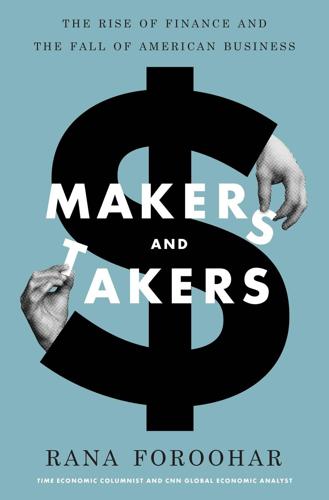
Makers and Takers: The Rise of Finance and the Fall of American Business
by Rana Foroohar · 16 May 2016 · 515pp · 132,295 words
Wall Street. Just consider that only weeks after Apple announced it would pay off investors with the $17 billion, more sharks began circling. Corporate raider Carl Icahn, one of the original barbarians at the gate who attacked companies from TWA to RJR Nabisco in the 1980s and 1990s, promptly began buying up
…
manipulation to the exclusion of real managerial skills. Chapter 4 will deconstruct our conventional wisdom around shareholder value by looking at how activist investors like Carl Icahn now call the shots at the country’s largest and most successful firms—such as Apple—at the expense of innovation and job creation. Chapter
…
become the justification for “activist” investors who, in a clever semantic trick, have today been rebranded from their previous incarnation as “corporate raiders”—people like Carl Icahn, Bill Ackman, and Daniel Loeb, who have pushed American companies to pay back their record $2 trillion cash hoard in the form of dividends and
…
believed that people like Pickens were “inventors” who brought needed discipline to America’s large and sloppily run corporations. In this line of thinking, Pickens, Carl Icahn, Henry Kravis, and other “barbarians at the gate” weren’t predators but rather protectors of capitalism, in the sense that they would swoop in and
…
an idea that America’s business educators—and the MBA students who’ll someday lead the country’s top firms—would do well to embrace. Carl Icahn, the richest man on Wall Street and perhaps the most feared corporate raider in the world, has an unexpected talent. He’s a terrific mimic
…
[meaning factories and workers] is hugely important, because that’s what slows down growth.”14 THE RISE OF CREATIVE ACCOUNTING Shareholder activism by people like Carl Icahn and the sort of buybacks being done by Apple and other large public firms are currently one of the best windows into the rise of
…
, a full 28 percent of the Fortune 500’s largest manufacturing firms received tender bids, most of them hostile, from people like T. Boone Pickens, Carl Icahn, and other corporate raiders. Firms would be spliced, diced, and spliced again, their component parts sold off to the highest bidder, who would often promptly
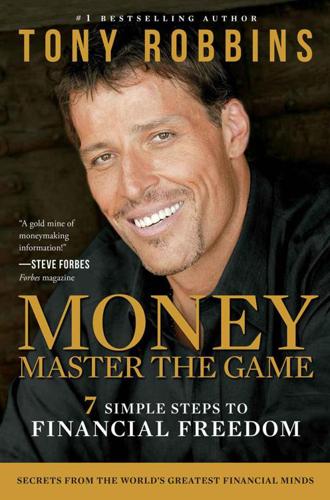
MONEY Master the Game: 7 Simple Steps to Financial Freedom
by Tony Robbins · 18 Nov 2014 · 825pp · 228,141 words
Robbins needs no introduction. He is committed to helping make life better for every investor. Every investor will find this book extremely interesting and illuminating.” —Carl Icahn, Billionaire Activist and Investor “A gold mine of moneymaking information!” —Steve Forbes, publisher of Forbes magazine and CEO of Forbes, Inc. “I have spoken at
…
Ultrawealthy (That You Can Use Too!) SECTION 6 INVEST LIKE THE .001%: THE BILLIONAIRE’S PLAYBOOK Chapter 6.0: Meet the Masters Chapter 6.1: Carl Icahn: Master of the Universe Chapter 6.2: David Swensen: A $23.9 Billion Labor of Love Chapter 6.3: John C. Bogle: The Vanguard of
…
in less than two decades; • Kyle Bass, a man who turned $30 million in investments into $2 billion in two years during the subprime crisis; • Carl Icahn, who has outperformed Warren Buffett, the market, and virtually everyone else in the last one-, five-, and ten-year cycles; • Mary Callahan Erdoes, whom many
…
in every conceivable market, never losing a dime. Some of the people you’ll be meeting in our “Billionaire’s Playbook,” such as Charles Schwab, Carl Icahn, T. Boone Pickens, Ray Dalio, and Jack Bogle, struggled when they were growing up—they weren’t born with a silver spoon in their mouth
…
, but this willpower is what makes someone a great investor. A powerful example of this principle was the day I was visiting with investment icon Carl Icahn. It was just announced that he had made a profit of nearly $800 million on his Netflix stocks. He’d bought the majority of his
…
listening to Summers and raised his hand with a question. You can only imagine the respectful “sparks” that flew. Another moment: when I learned that Carl Icahn had been a fan of Jack Bogle’s for years, but they had never met. I had the privilege of introducing these two titans. Between
…
seasons, for times of inflation and deflation, of war and peace, and, as Jack Bogle puts it, “times of sorrow and joy.” CHAPTER 6.1 CARL ICAHN: MASTER OF THE UNIVERSE * * * The Most Feared Man on Wall Street Question: When is a single tweet worth $17 billion? Answer: When
…
Carl Icahn says Apple is undervalued and announces he’s buying the stock. Within an hour of Icahn’s tweet in the summer of 2013, Apple stock
…
company, Icahn Enterprises LP (NASDAQ: IEP), or own stock in the companies he targets. The secret to his success? Even his critics will tell you Carl Icahn doesn’t just look for opportunities in business—he makes them. But most outsiders still think of him as a Wall Street caricature, a ruthless
…
vulture capitalist who pillages companies for personal gain. When you Google the term corporate raider, Icahn’s name autofills in the search bar. But Carl Icahn is challenging that creaky old stereotype. Icahn thinks of himself as a “shareholder activist.” What does that mean? “We go in and shine a light
…
talking to management about reducing its excessive pay proposal—but he didn’t want to “go to war” with Coke over the issue. In contrast, Carl Icahn is always ready for war. He’s been in the trenches many times before, making runs on companies as diverse as US Steel, Clorox, eBay
…
’s management. To the dismay of overpaid CEOs everywhere, a new generation of “activist investors” is taking up the fight Icahn started decades ago. Naturally, Carl Icahn has ticked off a lot of corporate dynamos, enemies with big clout in the media. So you’ll often hear his critics saying that he
…
interventions.” The study also found that not only were there no detrimental long-term effects, but instead, five years later these firms continued to outperform. Carl Icahn isn’t after the head of every CEO in America. He’s often acknowledged that there are some extraordinary leadership teams out there, and executives
…
1, 2000, to July 31, 2014, you would have made a total return of 1,622%, compared with 73% on the S&P 500 index! Carl Icahn wasn’t born into this life. He says he grew up “in the streets” of Far Rockaway, New York. His mother was a teacher; his
…
you have to work. You’ve met some remarkable financial geniuses and incredible human beings, such as Ray Dalio, Paul Tudor Jones, Mary Callahan Erdoes, Carl Icahn, David Swensen, Jack Bogle, Charles Schwab, and dozens of others to help guide you on your path. I’m hoping you’ll return to the
…
, more than 120 billionaires had signed up, including some of the ultrawealthy individuals in this book, such as Ray Dalio, T. Boone Pickens, Sara Blakely, Carl Icahn, and Paul Tudor Jones. (See the website, at http://givingpledge.org, to read some of the moving letters they wrote to accompany their gifts.) T
…
pessimism” we are offered our greatest opportunities. To Marc Faber, for his always-innovative investing advice and, most of all, his exuberance. To the fearless Carl Icahn, for his unbridled boldness, courage, and passion—for challenging the status quo and bringing extraordinary returns for your investors. To Mary Callahan Erdoes, the trillion
The System: Who Rigged It, How We Fix It
by Robert B. Reich · 24 Mar 2020 · 154pp · 47,880 words
The Frackers: The Outrageous Inside Story of the New Billionaire Wildcatters
by Gregory Zuckerman · 5 Nov 2013 · 483pp · 143,123 words
Americana: A 400-Year History of American Capitalism
by Bhu Srinivasan · 25 Sep 2017 · 801pp · 209,348 words
Confidence Game: How a Hedge Fund Manager Called Wall Street's Bluff
by Christine S. Richard · 26 Apr 2010 · 459pp · 118,959 words
After Steve: How Apple Became a Trillion-Dollar Company and Lost Its Soul
by Tripp Mickle · 2 May 2022 · 535pp · 149,752 words
The Founders: The Story of Paypal and the Entrepreneurs Who Shaped Silicon Valley
by Jimmy Soni · 22 Feb 2022 · 505pp · 161,581 words
The Taking of Getty Oil: Pennzoil, Texaco, and the Takeover Battle That Made History
by Steve Coll · 12 Jun 2017 · 645pp · 190,680 words
Age of Greed: The Triumph of Finance and the Decline of America, 1970 to the Present
by Jeff Madrick · 11 Jun 2012 · 840pp · 202,245 words
Dead Companies Walking
by Scott Fearon · 10 Nov 2014 · 232pp · 71,965 words
Palace Coup: The Billionaire Brawl Over the Bankrupt Caesars Gaming Empire
by Sujeet Indap and Max Frumes · 16 Mar 2021 · 362pp · 116,497 words
The Last Tycoons: The Secret History of Lazard Frères & Co.
by William D. Cohan · 25 Dec 2015 · 1,009pp · 329,520 words
Skygods: The Fall of Pan Am
by Robert Gandt · 1 Mar 1995 · 371pp · 101,792 words
All the Money in the World
by Peter W. Bernstein · 17 Dec 2008 · 538pp · 147,612 words
Hard Landing
by Thomas Petzinger and Thomas Petzinger Jr. · 1 Jan 1995 · 726pp · 210,048 words
Security Analysis
by Benjamin Graham and David Dodd · 1 Jan 1962 · 1,042pp · 266,547 words
King of Capital: The Remarkable Rise, Fall, and Rise Again of Steve Schwarzman and Blackstone
by David Carey · 7 Feb 2012 · 421pp · 128,094 words
The Impulse Society: America in the Age of Instant Gratification
by Paul Roberts · 1 Sep 2014 · 324pp · 92,805 words
Hiding in Plain Sight: The Invention of Donald Trump and the Erosion of America
by Sarah Kendzior · 6 Apr 2020
Barbarians at the Gate: The Fall of RJR Nabisco
by Bryan Burrough and John Helyar · 1 Jan 1990 · 713pp · 203,688 words
Principles of Corporate Finance
by Richard A. Brealey, Stewart C. Myers and Franklin Allen · 15 Feb 2014
100 Baggers: Stocks That Return 100-To-1 and How to Find Them
by Christopher W Mayer · 21 May 2018
Tailspin: The People and Forces Behind America's Fifty-Year Fall--And Those Fighting to Reverse It
by Steven Brill · 28 May 2018 · 519pp · 155,332 words
The Wisdom of Finance: Discovering Humanity in the World of Risk and Return
by Mihir Desai · 22 May 2017 · 239pp · 69,496 words
Data-Ism: The Revolution Transforming Decision Making, Consumer Behavior, and Almost Everything Else
by Steve Lohr · 10 Mar 2015 · 239pp · 70,206 words
The Bond King: How One Man Made a Market, Built an Empire, and Lost It All
by Mary Childs · 15 Mar 2022 · 367pp · 110,161 words
The King of Content: Sumner Redstone's Battle for Viacom, CBS, and Everlasting Control of His Media Empire
by Keach Hagey · 25 Jun 2018 · 499pp · 131,113 words
The Meritocracy Trap: How America's Foundational Myth Feeds Inequality, Dismantles the Middle Class, and Devours the Elite
by Daniel Markovits · 14 Sep 2019 · 976pp · 235,576 words
Trillions: How a Band of Wall Street Renegades Invented the Index Fund and Changed Finance Forever
by Robin Wigglesworth · 11 Oct 2021 · 432pp · 106,612 words
The War Below: Lithium, Copper, and the Global Battle to Power Our Lives
by Ernest Scheyder · 30 Jan 2024 · 355pp · 133,726 words
Black Edge: Inside Information, Dirty Money, and the Quest to Bring Down the Most Wanted Man on Wall Street
by Sheelah Kolhatkar · 7 Feb 2017 · 385pp · 118,901 words
No Is Not Enough: Resisting Trump’s Shock Politics and Winning the World We Need
by Naomi Klein · 12 Jun 2017 · 357pp · 94,852 words
Triumph of the Yuppies: America, the Eighties, and the Creation of an Unequal Nation
by Tom McGrath · 3 Jun 2024 · 326pp · 103,034 words
Fire and Fury: Inside the Trump White House
by Michael Wolff · 5 Jan 2018 · 394pp · 112,770 words
What They Do With Your Money: How the Financial System Fails Us, and How to Fix It
by Stephen Davis, Jon Lukomnik and David Pitt-Watson · 30 Apr 2016 · 304pp · 80,965 words
The Golden Passport: Harvard Business School, the Limits of Capitalism, and the Moral Failure of the MBA Elite
by Duff McDonald · 24 Apr 2017 · 827pp · 239,762 words
A First-Class Catastrophe: The Road to Black Monday, the Worst Day in Wall Street History
by Diana B. Henriques · 18 Sep 2017 · 526pp · 144,019 words
Volt Rush: The Winners and Losers in the Race to Go Green
by Henry Sanderson · 12 Sep 2022 · 292pp · 87,720 words
One Up on Wall Street
by Peter Lynch · 11 May 2012
Big Mistakes: The Best Investors and Their Worst Investments
by Michael Batnick · 21 May 2018 · 198pp · 53,264 words
The Boom: How Fracking Ignited the American Energy Revolution and Changed the World
by Russell Gold · 7 Apr 2014 · 423pp · 118,002 words
The Quest: Energy, Security, and the Remaking of the Modern World
by Daniel Yergin · 14 May 2011 · 1,373pp · 300,577 words
Trend Following: How Great Traders Make Millions in Up or Down Markets
by Michael W. Covel · 19 Mar 2007 · 467pp · 154,960 words
Extreme Money: Masters of the Universe and the Cult of Risk
by Satyajit Das · 14 Oct 2011 · 741pp · 179,454 words
The Sharing Economy: The End of Employment and the Rise of Crowd-Based Capitalism
by Arun Sundararajan · 12 May 2016 · 375pp · 88,306 words
Devil's Bargain: Steve Bannon, Donald Trump, and the Storming of the Presidency
by Joshua Green · 17 Jul 2017 · 296pp · 78,112 words
Overhaul: An Insider's Account of the Obama Administration's Emergency Rescue of the Auto Industry
by Steven Rattner · 19 Sep 2010 · 394pp · 124,743 words
The AI Economy: Work, Wealth and Welfare in the Robot Age
by Roger Bootle · 4 Sep 2019 · 374pp · 111,284 words
Television Is the New Television: The Unexpected Triumph of Old Media in the Digital Age
by Michael Wolff · 22 Jun 2015 · 172pp · 46,104 words
Disrupted: My Misadventure in the Start-Up Bubble
by Dan Lyons · 4 Apr 2016 · 284pp · 92,688 words
The Missing Billionaires: A Guide to Better Financial Decisions
by Victor Haghani and James White · 27 Aug 2023 · 314pp · 122,534 words
Transaction Man: The Rise of the Deal and the Decline of the American Dream
by Nicholas Lemann · 9 Sep 2019 · 354pp · 118,970 words
Phishing for Phools: The Economics of Manipulation and Deception
by George A. Akerlof, Robert J. Shiller and Stanley B Resor Professor Of Economics Robert J Shiller · 21 Sep 2015 · 274pp · 93,758 words
The House of Morgan: An American Banking Dynasty and the Rise of Modern Finance
by Ron Chernow · 1 Jan 1990 · 1,335pp · 336,772 words
WTF?: What's the Future and Why It's Up to Us
by Tim O'Reilly · 9 Oct 2017 · 561pp · 157,589 words
Chaos Kings: How Wall Street Traders Make Billions in the New Age of Crisis
by Scott Patterson · 5 Jun 2023 · 289pp · 95,046 words
Bezonomics: How Amazon Is Changing Our Lives and What the World's Best Companies Are Learning From It
by Brian Dumaine · 11 May 2020 · 411pp · 98,128 words
The Asylum: The Renegades Who Hijacked the World's Oil Market
by Leah McGrath Goodman · 15 Feb 2011 · 553pp · 168,111 words
All the Devils Are Here
by Bethany McLean · 19 Oct 2010 · 543pp · 157,991 words
How Markets Fail: The Logic of Economic Calamities
by John Cassidy · 10 Nov 2009 · 545pp · 137,789 words
The Myth of the Rational Market: A History of Risk, Reward, and Delusion on Wall Street
by Justin Fox · 29 May 2009 · 461pp · 128,421 words
The Man Who Broke Capitalism: How Jack Welch Gutted the Heartland and Crushed the Soul of Corporate America—and How to Undo His Legacy
by David Gelles · 30 May 2022 · 318pp · 91,957 words
The Third Pillar: How Markets and the State Leave the Community Behind
by Raghuram Rajan · 26 Feb 2019 · 596pp · 163,682 words
The Gods of New York: Egotists, Idealists, Opportunists, and the Birth of the Modern City: 1986-1990
by Jonathan Mahler · 11 Aug 2025 · 559pp · 164,804 words
Underwater: How Our American Dream of Homeownership Became a Nightmare
by Ryan Dezember · 13 Jul 2020 · 279pp · 87,875 words
Wall Street: How It Works And for Whom
by Doug Henwood · 30 Aug 1998 · 586pp · 159,901 words
The Alpha Masters: Unlocking the Genius of the World's Top Hedge Funds
by Maneet Ahuja, Myron Scholes and Mohamed El-Erian · 29 May 2012 · 302pp · 86,614 words
Losing the Signal: The Spectacular Rise and Fall of BlackBerry
by Jacquie McNish and Sean Silcoff · 6 Apr 2015 · 327pp · 102,322 words
Dual Transformation: How to Reposition Today's Business While Creating the Future
by Scott D. Anthony and Mark W. Johnson · 27 Mar 2017 · 293pp · 78,439 words
The Man Who Solved the Market: How Jim Simons Launched the Quant Revolution
by Gregory Zuckerman · 5 Nov 2019 · 407pp · 104,622 words
The Decline and Fall of IBM: End of an American Icon?
by Robert X. Cringely · 1 Jun 2014 · 232pp · 71,024 words
Who Needs the Fed?: What Taylor Swift, Uber, and Robots Tell Us About Money, Credit, and Why We Should Abolish America's Central Bank
by John Tamny · 30 Apr 2016 · 268pp · 74,724 words
Saudi America: The Truth About Fracking and How It's Changing the World
by Bethany McLean · 10 Sep 2018
Buffett
by Roger Lowenstein · 24 Jul 2013 · 612pp · 179,328 words
Circle of Greed: The Spectacular Rise and Fall of the Lawyer Who Brought Corporate America to Its Knees
by Patrick Dillon and Carl M. Cannon · 2 Mar 2010 · 613pp · 181,605 words
In Pursuit of Privilege: A History of New York City's Upper Class and the Making of a Metropolis
by Clifton Hood · 1 Nov 2016 · 641pp · 182,927 words
Tools of Titans: The Tactics, Routines, and Habits of Billionaires, Icons, and World-Class Performers
by Timothy Ferriss · 6 Dec 2016 · 669pp · 210,153 words
The Prize: The Epic Quest for Oil, Money & Power
by Daniel Yergin · 23 Dec 2008 · 1,445pp · 469,426 words
On the Edge: The Art of Risking Everything
by Nate Silver · 12 Aug 2024 · 848pp · 227,015 words
What Happened to Goldman Sachs: An Insider's Story of Organizational Drift and Its Unintended Consequences
by Steven G. Mandis · 9 Sep 2013 · 413pp · 117,782 words
The Greed Merchants: How the Investment Banks Exploited the System
by Philip Augar · 20 Apr 2005 · 290pp · 83,248 words
Too big to fail: the inside story of how Wall Street and Washington fought to save the financial system from crisis--and themselves
by Andrew Ross Sorkin · 15 Oct 2009 · 351pp · 102,379 words
740 Park: The Story of the World's Richest Apartment Building
by Michael Gross · 18 Dec 2007 · 601pp · 193,225 words
Connectography: Mapping the Future of Global Civilization
by Parag Khanna · 18 Apr 2016 · 497pp · 144,283 words
Unreal Estate: Money, Ambition, and the Lust for Land in Los Angeles
by Michael Gross · 1 Nov 2011 · 613pp · 200,826 words
The New Tycoons: Inside the Trillion Dollar Private Equity Industry That Owns Everything
by Jason Kelly · 10 Sep 2012 · 274pp · 81,008 words
The Quants
by Scott Patterson · 2 Feb 2010 · 374pp · 114,600 words
Bill Marriott: Success Is Never Final--His Life and the Decisions That Built a Hotel Empire
by Dale van Atta · 14 Aug 2019 · 520pp · 164,834 words
The Dangerous Case of Donald Trump: 27 Psychiatrists and Mental Health Experts Assess a President
by Bandy X. Lee · 2 Oct 2017 · 369pp · 105,819 words
More: The 10,000-Year Rise of the World Economy
by Philip Coggan · 6 Feb 2020 · 524pp · 155,947 words
file:///C:/Documents%20and%...
by vpavan
The Investment Checklist: The Art of In-Depth Research
by Michael Shearn · 8 Nov 2011 · 400pp · 124,678 words
The Antisocial Network: The GameStop Short Squeeze and the Ragtag Group of Amateur Traders That Brought Wall Street to Its Knees
by Ben Mezrich · 6 Sep 2021 · 239pp · 74,845 words
The Psychopath Test: A Journey Through the Madness Industry
by Jon Ronson · 12 May 2011 · 274pp · 70,481 words
Fortunes of Change: The Rise of the Liberal Rich and the Remaking of America
by David Callahan · 9 Aug 2010
The History of the Future: Oculus, Facebook, and the Revolution That Swept Virtual Reality
by Blake J. Harris · 19 Feb 2019 · 561pp · 163,916 words
Why Wall Street Matters
by William D. Cohan · 27 Feb 2017 · 113pp · 37,885 words
Liar's Poker
by Michael Lewis · 1 Jan 1989 · 314pp · 101,452 words
Jennifer Morgue
by Stross, Charles · 12 Jan 2006
Frommer's Irreverent Guide to Las Vegas
by Mary Herczog and Jordan S. Simon · 26 Mar 2004 · 266pp · 78,689 words
Company: A Short History of a Revolutionary Idea
by John Micklethwait and Adrian Wooldridge · 4 Mar 2003 · 196pp · 57,974 words
Young Money: Inside the Hidden World of Wall Street's Post-Crash Recruits
by Kevin Roose · 18 Feb 2014 · 269pp · 83,307 words
The Art of Execution: How the World's Best Investors Get It Wrong and Still Make Millions
by Lee Freeman-Shor · 8 Sep 2015 · 121pp · 31,813 words
The Smartphone Society
by Nicole Aschoff
Inflated: How Money and Debt Built the American Dream
by R. Christopher Whalen · 7 Dec 2010 · 488pp · 144,145 words
A Colossal Failure of Common Sense: The Inside Story of the Collapse of Lehman Brothers
by Lawrence G. Mcdonald and Patrick Robinson · 21 Jul 2009 · 430pp · 140,405 words
Damsel in Distressed: My Life in the Golden Age of Hedge Funds
by Dominique Mielle · 6 Sep 2021 · 195pp · 63,455 words
Targeted: The Cambridge Analytica Whistleblower's Inside Story of How Big Data, Trump, and Facebook Broke Democracy and How It Can Happen Again
by Brittany Kaiser · 21 Oct 2019 · 391pp · 123,597 words