
Big Bang
by Simon Singh · 1 Jan 2004 · 492pp · 149,259 words
their chance observations only once they had accumulated enough knowledge to put them into context. As Louis Pasteur, who himself benefited from serendipity, put it: ‘Chance favours the prepared mind.’ Walpole also highlighted this in his original letter when he described serendipity as the result of ‘accidents and sagacity’. Furthermore, those who want to be

Feral: Rewilding the Land, the Sea, and Human Life
by George Monbiot · 13 May 2013 · 424pp · 122,350 words
unexpected; in most cases the cats appear to people who had never thought about them or did not believe in them. Pasteur’s maxim–that chance favours the prepared mind–seems in this case not to apply. Nor have the tireless efforts to catch or kill these animals yielded anything more convincing. As Harpur notes
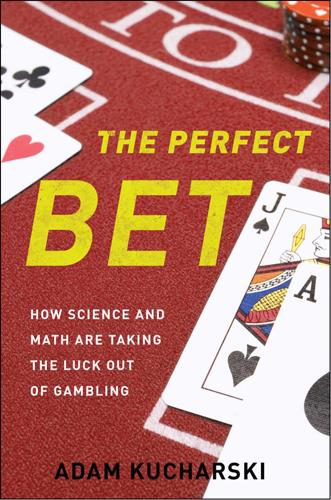
The Perfect Bet: How Science and Math Are Taking the Luck Out of Gambling
by Adam Kucharski · 23 Feb 2016 · 360pp · 85,321 words
was impossible not to suspect that there was an element of talent involved. Chemist Louis Pasteur put forward a similar philosophy in the nineteenth century. “Chance favours the prepared mind” was how he put it. Luck is rarely embedded so deeply in a situation that it can’t be altered. It might not be possible
…
-advocates/. 202“There may be such a thing as habitual luck”: Ulam, S. M. Adventures of a Mathematician (Oakland: University of California Press, 1991). 202“Chance favours the prepared mind”: Quoted in: Weiss, R. A. “HIV and the Naked Ape.” In Serendipity: Fortune and the Prepared Mind, ed. M. De Rond and I. Morley (Cambridge