Cory Doctorow

back to index

description: Canadian-British-American blogger, journalist, and science fiction author

134 results

pages: 549 words: 116,200

With a Little Help
by Cory Efram Doctorow , Jonathan Coulton and Russell Galen
Published 7 Dec 2010

.; License: Some Rights Reserved under a Creative Commons Attribution-NonCommercial-ShareAlike 3.0 license: http://creativecommons.org/licenses/by-nc-sa/ Subject: Short Stories Publisher: SiSU http://www.jus.uio.no/sisu (this copy) Date: 2010 Version Information: Sourcefile: Cory_Doctorow_-_With_a_Little_Help.sst Filetype: /home/doctorow/Documents/Projects/With: ERROR: cannot open `/home/doctorow/Documents/Projects/With' (No such file or directory) a: ERROR: cannot open `a' (No such file or directory) Little: ERROR: cannot open `Little' (No such file or directory) Help/Uploads/Cory_Doctorow_-_With_a_Little_Help.sst: ERROR: cannot open `Help/Uploads/Cory_Doctorow_-_With_a_Little_Help.sst' (No such file or directory) Source Digest: SHA256(Cory_Doctorow_-_With_a_Little_Help.sst)= efdedbf259505dd26c85d9ae7909f829c86562f6856e011640b2ed20003c7edf Generated: Generated by: Generated by: SiSU 2.6.3 of 2010w30/3 (2010-07-28) Ruby version: ruby 1.8.7 (2010-06-23 patchlevel 299) [i686-linux] Document (dal) last generated: Tue Dec 07 16:36:32 +0000 2010 Manifest A list of available output types may be available at the following url: file:///home/doctorow/sisu_www/Uploads/Cory_Doctorow_-_With_a_Little_Help/sisu_manifest.html Table of Contents Table of Contents Dedication: Publication history A note about typos and other errors Introduction by Jonathan Coulton The Things That Make Me Weak and Strange Get Engineered Away The Right Book Other Peoples' Money Scroogled Human Readable Liberation Spectrum Power Punctuation!

With a Little Help Cory Doctorow With a Little Help, Cory Doctorow Dedication: Publication history A note about typos and other errors Introduction by Jonathan Coulton The Things That Make Me Weak and Strange Get Engineered Away The Right Book Other Peoples' Money Scroogled Human Readable Liberation Spectrum Power Punctuation! Visit the Sins Constitutional Crisis Pester Power Chicken Little Epoch I'm Only In It For the Money, by Russell Galen Acknowledgements About the author typo_corrections Typo corrections Metadata SiSU Metadata, document information Manifest SiSU Manifest, alternative outputs etc.

Rights: Copyright CorDoc-Co, Ltd (UK), 2010.; License: Some Rights Reserved under a Creative Commons Attribution-NonCommercial-ShareAlike 3.0 license: http://creativecommons.org/licenses/by-nc-sa/ With a Little Help, Cory Doctorow 2 Dedication: 3 For my friends, past, present and future. No man is an island. 4 ~~-~-~-~-~-~-~-~-~-~-~-~-~-~-~-~-~-~-~-~-~-~-~-~-~-~-~-~-~-~-~-~-~-~-~-~-~-~-~-~-~-~ With a Little Help, Cory Doctorow 5 Publication history 6 "Introduction," written by Jonathan Coulton for this volume 7 "The Things that Make Me Weak and Strange Get Engineered Away" originally published on Tor.com, August 2008 8 "The Right Book" originally published in The Bookseller, June 2008 9 "Other Peoples' Money" originally published in Forbes, November 2007 10 "Scroogled" originally published in Radar, September 2007 11 "Human Readable" originally published in Future Washington, Ernest Lilley, editor (WSFA Press, 2005) 12 "Liberation Spectrum" originally published on Salon.com, 2003 13 "Power Punctuation!"

pages: 295 words: 66,912

Walled Culture: How Big Content Uses Technology and the Law to Lock Down Culture and Keep Creators Poor
by Glyn Moody
Published 26 Sep 2022

Notes 1 https://web.archive.org/web/20220615182457/https://en.wikipedia.org/wiki/Statute_of_Anne 2 https://web.archive.org/web/20220615182511/https://en.wikipedia.org/wiki/Berne_Convention 3 https://web.archive.org/web/20220615182557/https://www.plagiarismtoday.com/2021/05/13/why-did-the-united-states-wait-103-years-to-sign-the-berne-convention/ 4 https://web.archive.org/web/20220615182616/https://en.wikipedia.org/wiki/Moore%27s_law 5 https://web.archive.org/web/20220615182647/https://en.wikipedia.org/wiki/Digital_Audio_Tape 6 https://web.archive.org/web/20220615182709/https://en.wikipedia.org/wiki/Audio_Home_Recording_Act 7 https://web.archive.org/web/20220615182728/https://en.wikipedia.org/wiki/Information_superhighway 8 https://web.archive.org/web/20220615182751/https://en.wikipedia.org/wiki/National_Information_Infrastructure 9 https://web.archive.org/web/20220615182813/https://en.wikipedia.org/wiki/Bruce_Lehman 10 https://web.archive.org/web/20220614172420/https://repository.law.umich.edu/books/1/ 11 https://web.archive.org/web/20220615183505/https://michigan.law.umich.edu/faculty-and-scholarship/our-faculty/jessica-litman 12 https://web.archive.org/web/20220701120031/https://en.wikipedia.org/wiki/United_States_Patent_and_Trademark_Office 13 https://web.archive.org/web/20220701123552/https://en.wikipedia.org/wiki/Random-access_memory 14 https://web.archive.org/web/20220615183532/https://en.wikipedia.org/wiki/First-sale_doctrine 15 https://web.archive.org/web/20220615183551/https://en.wikipedia.org/wiki/CompuServe 16 https://web.archive.org/web/20220615183612/https://en.wikipedia.org/wiki/AOL 17 https://web.archive.org/web/20220614172420/https://repository.law.umich.edu/books/1/ 18 https://web.archive.org/web/20220614184956/https://en.wikipedia.org/wiki/Limitations_and_exceptions_to_copyright 19 https://web.archive.org/web/20220615183731/https://en.wikipedia.org/wiki/Digital_Future_Coalition 20 https://web.archive.org/web/20220615183751/https://en.wikipedia.org/wiki/Home_Recording_Rights_Coalition 21 https://web.archive.org/web/20220615183813/https://en.wikipedia.org/wiki/World_Intellectual_Property_Organization 22 https://web.archive.org/web/20220615183834/https://en.wikipedia.org/wiki/Policy_laundering 23 https://web.archive.org/web/20220614173121/https://en.wikipedia.org/wiki/WIPO_Copyright_Treaty 24 https://web.archive.org/web/20220615184513/https://en.wikipedia.org/wiki/Fair_use 25 https://web.archive.org/web/20220614172420/https://repository.law.umich.edu/books/1/ 26 https://web.archive.org/web/20220615184534/https://en.wikipedia.org/wiki/Digital_Millennium_Copyright_Act 27 https://web.archive.org/web/20220614185543/https://en.wikipedia.org/wiki/Information_Society_Directive 28 https://web.archive.org/web/20220615184613/https://en.wikipedia.org/wiki/Dot-com_bubble 29 https://web.archive.org/web/20220701090414/https://en.wikipedia.org/wiki/Digital_rights_management 30 https://web.archive.org/web/20220705085628/https://en.wikipedia.org/wiki/Cory_Doctorow 31 https://web.archive.org/web/20220615184637/https://walledculture.org/interview-cory-doctorow-part-1-newspapers-big-tech-link-tax-drm-and-right-to-repair/ 32 https://web.archive.org/web/20220621063129/https://en.wikipedia.org/wiki/Copyright_formalities 33 https://web.archive.org/web/20220621063142/https://en.wikipedia.org/wiki/Public_domain 34 https://web.archive.org/web/20220621063226/https://en.wikipedia.org/wiki/Orphan_work 35 https://web.archive.org/web/20220701061911/https://papers.ssrn.com/sol3/papers.cfm?

abstract_id=3639142 727 https://web.archive.org/web/20220519123413/http://ec.europa.eu/competition/publications/reports/kd0419345enn.pdf 728 https://web.archive.org/web/20220616103111/https://www.eff.org/deeplinks/2019/10/adversarial-interoperability 729 https://web.archive.org/web/20220616103132/https://knightcolumbia.org/content/protocols-not-platforms-a-technological-approach-to-free-speech 730 https://web.archive.org/web/20220329191619/https://tobin.yale.edu/sites/default/files/Digital%20Regulation%20Project%20Papers/Digital%20Regulation%20Project%20-%20Equitable%20Interoperability%20-%20Discussion%20Paper%20No%204.pdf 731 https://web.archive.org/web/20220616103205/https://walledculture.org/interview-cory-doctorow-part-2-new-publishing-models-for-creators-amazon-as-a-frenemy-and-the-internet-archive-court-case/ 732 https://web.archive.org/web/20220817084624/https:/scholarship.law.tamu.edu/facscholar/1393/ 733 https://web.archive.org/web/20220830085146/https://walledculture.org/interview-mike-masnick/ 734 https://web.archive.org/web/20220616103248/https://walledculture.org/interview-rebecca-giblin-reversion-rights-out-of-print-books-and-how-to-fix-copyright/ 735 https://web.archive.org/web/20220616103248/https://walledculture.org/interview-rebecca-giblin-reversion-rights-out-of-print-books-and-how-to-fix-copyright/ 736 https://web.archive.org/web/20220616110320/https://bandcamp.com/ 737 https://web.archive.org/web/20220616113457/https://en.wikipedia.org/wiki/Crowdfunding 738 https://web.archive.org/web/20220616110335/https://blog.bandcamp.com/2022/03/02/bandcamp-is-joining-epic/ 739 https://web.archive.org/web/20220616111850/https://get.bandcamp.help/hc/en-us/articles/360007802534-What-pricing-performs-best- 740 https://web.archive.org/web/20220616111909/https://walledculture.org/interview-evan-greer-lia-holland-rethinking-copyright-fighting-creative-monopolies-and-more/ 741 https://web.archive.org/web/20220616111928/https://kk.org/biography 742 https://web.archive.org/web/20220616111942/https://kk.org/thetechnium/1000-true-fans/ 743 https://web.archive.org/web/20220616111942/https://kk.org/thetechnium/1000-true-fans/ 744 https://web.archive.org/web/20220616111942/https://kk.org/thetechnium/1000-true-fans/ 745 https://web.archive.org/web/20220616111942/https://kk.org/thetechnium/1000-true-fans/ 746 https://web.archive.org/web/20220616113521/https://www.kickstarter.com/ 747 https://web.archive.org/web/20220616113541/https://locusmag.com/2021/03/cory-doctorow-free-markets/ 748 https://web.archive.org/web/20220616113541/https://locusmag.com/2021/03/cory-doctorow-free-markets/ 749 https://web.archive.org/web/20220701143901/https://www.atelierventures.co/team 750 https://web.archive.org/web/20220616114328/https://future.com/1000-true-fans-try-100/ 751 https://web.archive.org/web/20220616114347/https://walledculture.org/nfts-are-mostly-useless-or-worse-but-heres-one-important-way-they-could-help-creators/ 752 https://web.archive.org/web/20220830085146/https://walledculture.org/interview-mike-masnick/ 753 https://web.archive.org/web/20220616114406/https:/walledculture.org/interview-dr-andres-guadamuz-the-eu-copyright-directive-text-data-mining-web3-the-metaverse-nfts/ 754 https://web.archive.org/web/20220616114427/https://www.technollama.co.uk/can-copyright-teach-us-anything-about-nfts 755 https://web.archive.org/web/20220616114502/https://www.twitch.tv/ 756 https://web.archive.org/web/20220616114519/https://www.wired.com/story/twitch-turns-10-creator-economy/ 757 https://web.archive.org/web/20220713072402/https://www.businessofapps.com/data/twitch-statistics/ 758 https://web.archive.org/web/20220616114519/https://www.wired.com/story/twitch-turns-10-creator-economy 759 https://web.archive.org/web/20220713071951/https://www.vantagemarketresearch.com/industry-report/crowdfunding-market-1484 760 https://web.archive.org/web/20220616111909/https://walledculture.org/interview-evan-greer-lia-holland-rethinking-copyright-fighting-creative-monopolies-and-more/ 761 https://web.archive.org/web/20220616115428/https://www.wipo.int/edocs/mdocs/mdocs/en/wipo_ipr_ge_15/wipo_ipr_ge_15_t2.pdf 762 https://web.archive.org/web/20220616115440/https://en.wikipedia.org/wiki/Fashion_design_copyright_in_the_United_States 763 https://web.archive.org/web/20220616115454/https://fashionunited.com/global-fashion-industry-statistics/ Acknowledgments As the hundreds of endnotes attest, this book builds on the work and ideas of many people.

Unfortunately, people who thought they owned titles can do nothing about it, because of the DRM used alongside the main file. As Chapter 1 noted, no matter how weak or easy to break the DRM might be, its presence guarantees stronger legal protections against trying to make copies. Author, journalist, and activist Cory Doctorow told Walled Culture that the use of DRM by publishers has ironically made them dependent on Amazon.133 Since readers cannot move ebooks between different DRM platforms, they usually stick to just one, which is typically Amazon’s. To serve that large user base, publishers use Amazon’s platform for all their books, locking in more readers and helping Amazon to grow even more powerful.

pages: 624 words: 180,416

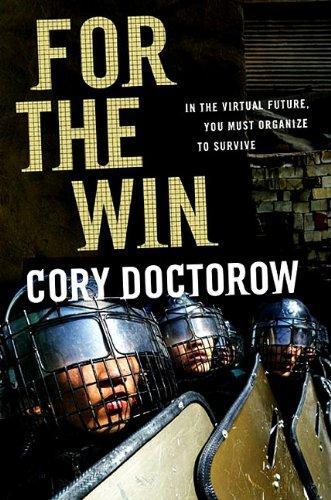
For the Win
by Cory Doctorow
Published 11 May 2010

Makers, by Cory Doctorow by Unknown Makers, by Cory Doctorow Makers, by Cory Doctorow Makers, by Cory Doctorow Makers, by Cory Doctorow Makers, by Cory Doctorow Makers, by Cory Doctorow Makers, by Cory Doctorow Makers Cory Doctorow doctorow@craphound.com Tor Books: 978-0765312792 HarperCollins UK/Voyager: 978-0007325221 Last modified 29 Oct 2009 Makers, by Cory Doctorow Makers, by Cory Doctorow Contents About this download A word to professors, librarians, and people who want to donate money to me License Dedication Part I Part II Part III Acknowledgements Makers, by Cory Doctorow Makers, by Cory Doctorow About this download There’s a dangerous group of anti-copyright activists out there who pose a clear and present danger to the future of authors and publishing.

Other Rights — In no way are any of the following rights affected by the license: Your fair dealing or fair use rights; The author’s moral rights; Rights other persons may have either in the work itself or in how the work is used, such as publicity or privacy rights. Notice — For any reuse or distribution, you must make clear to others the license terms of this work. Makers, by Cory Doctorow Makers, by Cory Doctorow Dedication: For “the risk-takers, the doers, the makers of things.” Makers, by Cory Doctorow Makers, by Cory Doctorow PART I Suzanne Church almost never had to bother with the blue blazer these days. Back at the height of the dot-boom, she’d put on her business journalist drag—blazer, blue sailcloth shirt, khaki trousers, loafers—just about every day, putting in her obligatory appearances at splashy press-conferences for high-flying IPOs and mergers.

The rights to it are controlled by my publisher, so don’t include it with your file. No DRM. The Creative Commons license prohibits sharing the file with “DRM” (sometimes called “copy-protection”) on it, and that’s fine by me. Don’t send me the book with DRM on it. If you’re converting to a format that has a DRM option, make sure it’s switched off. Makers, by Cory Doctorow Makers, by Cory Doctorow A word to professors, librarians, and people who want to... Every time I put a book online for free, I get emails from readers who want to send me donations for the book. I appreciate their generous spirit, but I’m not interested in cash donations, because my publishers are really important to me.

pages: 190 words: 53,970

Eastern standard tribe
by Cory Doctorow
Published 17 Feb 2004

Eastern Standard Tribe Cory Doctorow Copyright 2004 Cory Doctorow doctorow@craphound.com http://www.craphound.com/est Tor Books, March 2004 ISBN: 0765307596 -- * * * Blurbs: * * * "Utterly contemporary and deeply peculiar -- a hard combination to beat (or, these days, to find)." William Gibson, Author of Neuromancer -- "Cory Doctorow knocks me out. In a good way." Pat Cadigan, Author of Synners -- "Cory Doctorow is just far enough ahead of the game to give you that authentic chill of the future, and close enough to home for us to know that he's talking about where we live as well as where we're going to live; a connected world full of disconnected people.

. -- * * * Machine-readable metadata: * * * <rdf:RDF xmlns="http://web.resource.org/cc/" xmlns:dc="http://purl.org/dc/elements/1.1/" xmlns:rdf="http://www.w3.org/1999/02/22-rdf-syntax-ns#"> <Work rdf:about="http://craphound.com/est"> <dc:title>Eastern Standard Tribe</dc:title> <dc:date>2004-2-9</dc:date> <dc:description>A novel by Cory Doctorow </dc:description> <dc:creator><Agent> <dc:title>Cory Doctorow</dc:title> </Agent></dc:creator> <dc:rights><Agent> <dc:title>Cory Doctorow</dc:title> </Agent></dc:rights> <dc:type rdf:resource="http://purl.org/dc/dcmitype/Text" /> <license rdf:resource="http://creativecommons.org/licenses/by-nd-nc/1.0" /> </Work> <License rdf:about="http://creativecommons.org/licenses/by-nd-nc/1.0"> <requires rdf:resource="http://web.resource.org/cc/Attribution" /> <permits rdf:resource="http://web.resource.org/cc/Reproduction" /> <permits rdf:resource="http://web.resource.org/cc/Distribution" /> <prohibits rdf:resource="http://web.resource.org/cc/CommercialUse" /> <requires rdf:resource="http://web.resource.org/cc/Notice" /> </License> </rdf:RDF> eof

Thanks to Paul Boutin for commissioning the Wired article of the same name. Thanks to the readers and bloggers and Tribespeople who cared enough to check out my first book and liked it enough to check out this one. Thanks to Creative Commons for the licenses that give me the freedom to say "Some Rights Reserved." -- Bio Cory Doctorow (www.craphound.com) is the author of Down and Out in the Magic Kingdom, A Place So Foreign and Eight More, and The Complete Idiot's Guide to Publishing Science Fiction (with Karl Schroeder). He was raised in Toronto and lives in San Francisco, where he works for the Electronic Frontier Foundation (www.eff.org), a civil liberties group.

pages: 170 words: 51,205

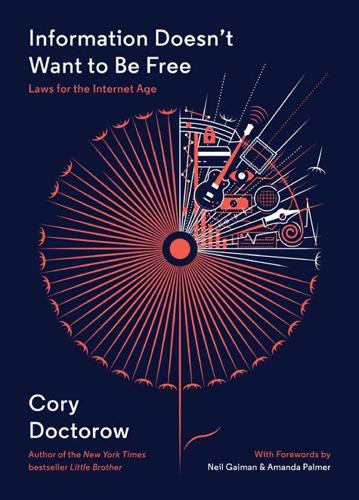
Information Doesn't Want to Be Free: Laws for the Internet Age
by Cory Doctorow , Amanda Palmer and Neil Gaiman
Published 18 Nov 2014

They propose to embed imperceptible signals in video and audio (and even text) that computers can search for, confirming that a file is in the hands of its rightful owner. A movie would thus be watermarked with its owner’s information, saying, effectively, I AM CORY DOCTOROW’S COPY OF STAR WARS. If a DVD player that isn’t registered to Cory Doctorow tries to play the movie, it’s locked out. Or, alternately, companies could look on file-sharing sites for illicit copies of their movies, use the watermarks to figure out whom those copies originated with, and sue or blackball or otherwise punish that person.

Finally, there’s the big technical problem: a watermark can’t be truly imperceptible unless you also want it to be useless. Imagine a photo with the words COPYRIGHT CORY DOCTOROW written in letters that couldn’t be seen without a powerful microscope. A copy of the photo without the copyright notice would appear functionally identical to the copyrighted version, unless you went to great lengths to inspect it. Of course, you could write COPYRIGHT CORY DOCTOROW across the photo in four-inch black letters, but you’d have a hard time selling a photo like that. Watermarkers have tried to find a middle ground, but that leaves their work exposed.

INFORMATION DOESN’T WANT TO BE FREE McSWEENEY’S SAN FRANCISCO Copyright © 2014 Cory Doctorow Cover design by Sunra Thompson. All rights reserved, including right of reproduction in whole or in part, in any form. McSweeney’s and colophon are registered trademarks of McSweeney’s, a privately held company with wildly fluctuating resources. ISBN 978-1-940450-23-0 10 9 8 7 6 5 4 3 2 1 www.mcsweeneys.net Contents FOREWORDS Neil Gaiman Amanda Palmer 0. INTRODUCTION Detente 0.1 What Makes Money? 0.2 Don’t Quit Your Day Job—Really 1. DOCTOROW’S FIRST LAW Any Time Someone Puts a Lock on Something That Belongs to You and Won’t Give You the Key, That Lock Isn’t There for Your Benefit 1.1 Anti-Circumvention Explained 1.2 Is This Copyright Protection?

pages: 444 words: 84,486

Radicalized
by Cory Doctorow
Published 19 Mar 2019

Trott) Down and Out in the Magic Kingdom A Place So Foreign and Eight More Eastern Standard Tribe Someone Comes to Town, Someone Leaves Town Overclocked: Stories of the Future Present Little Brother Content: Selected Essays on Technology, Creativity, Copyright, and the Future of the Future Makers With a Little Help Context: Further Selected Essays on Productivity, Creativity, Parenting, and Politics in the 21st Century The Great Big Beautiful Tomorrow Pirate Cinema Walkaway Radicalized Cory Doctorow www.headofzeus.com First published in the UK in 2019 by Head of Zeus Ltd Copyright © Cory Doctorow, 2019 The moral right of Cory Doctorow to be identified as the author of this work has been asserted in accordance with the Copyright, Designs and Patents Act of 1988. All rights reserved. No part of this publication may be reproduced, stored in a retrieval system, or transmitted in any form or by any means, electronic, mechanical, photocopying, recording, or otherwise, without the prior permission of both the copyright owner and the above publisher of this book.

Edward Snowden ‘The darker the hour, the better the moment for a rigorously imagined utopian fiction. Walkaway is now the best contemporary example I know of, its utopia glimpsed after fascinatingly extrapolated revolutionary struggle. A wonderful novel: everything we’ve come to expect from Cory Doctorow and more.’ William Gibson Cory Doctorow has authored the Bhagavad Gita of hacker/maker/burner/open source/git/gnu/wiki/99%/adjunct faculty/Anonymous/shareware/thingiverse/cypherpunk/LGTBQIA*/squatter/upcycling culture and zipped it down into a pretty damned tight techno-thriller with a lot of sex in it.’ Neal Stephenson ‘A hard-edged, intelligent look at our immediate future and the high and low points of human nature, incisive, compelling and plausible.’

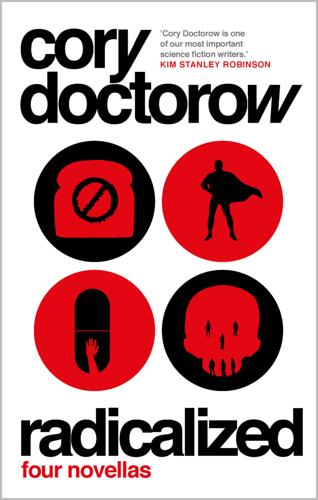
ISBN (HB): 9781789541090 ISBN (XTPB): 9781789541830 ISBN (E): 9781789541106 Typeset by Adrian McLaughlin Design: Will Staehle Author photo: Jonathan Worth Printed and bound in Great Britain by CPI Group (UK) Ltd, Croydon CR0 4YY Head of Zeus Ltd First Floor East 5–8 Hardwick Street London EC1R 4RG WWW.HEADOFZEUS.COM Contents Epigraph Also by Cory Doctorow Welcome Page Copyright Dedication Unauthorized Bread Model Minority Radicalized The Masque of the Red Death Acknowledgments About the Cory Doctorow An Invitation from the Publisher For my parents: Roz and Gord Doctorow, who taught me why we fight, and not to give up. This isn’t the kind of fight we win, it’s the kind of fight we fight. unauthorized bread THE WAY SALIMA found out that Boulangism had gone bankrupt: her toaster wouldn’t accept her bread.

pages: 171 words: 54,334

Barefoot Into Cyberspace: Adventures in Search of Techno-Utopia
by Becky Hogge , Damien Morris and Christopher Scally
Published 26 Jul 2011

“Working on the revolution here,” he types, before sending me a link to the planned “Media Freedom Bill” he hopes Iceland’s Parliament will vote to adopt soon. I glance at it – it looks interesting. A message flashes on my screen: “Wanna help?” The thing is, I’m not sure if I do. But Rop doesn’t stay online to hear my answer. * * * Later that week, I’m sitting in the Clerkenwell offices of Cory Doctorow, holding a solid gold coin worth around £1,000. It’s the Prometheus Award, bestowed on Cory in 2009 by the Libertarian Futurist Society. “It’s the most valuable award given in science fiction,” Doctorow explains, “They give you gold in case society collapses.” Sat on a red leather chair in Doctorow’s offices in Clerkenwell, I’m faced by shelving running wall-to-wall-to-ten-foot-high-ceiling, neatly stacked with the books and ephemera that define this man’s public profile.

Hung on the wall is an old Swiss cuckoo clock (Cory’s birthday present this year from his wife, gamesblogger and now Channel 4 executive, Alice Taylor), which makes itself known at half-hour intervals during the length of our interview. The scene is exactly as you would expect if you had followed BoingBoing.net for any length of time. When I was first getting into geek culture, BoingBoing.net was my guide, and Cory Doctorow my hero. The first time I met him was at the 2004 Big Brother Awards ceremony, a tongue-in-cheek annual event run by Privacy International to name and shame people who do damage to privacy and civil rights (the winners, which that year included British Gas and the NHS IT programme, rarely show up to collect their honours).

The result was certainly arresting, although given the profile of most of the protestors – young, long-haired boys and more than a handful of leather trench coats – it was also slightly menacing. A few MPs and prospective Parliamentary candidates appeared to show their support. I was there, too. Cory Doctorow had been invited to rally the troops. As he took to the soapbox, he ripped the gaffer tape from his mouth, replacing it with a steam-punk looking copper megaphone (new protest rules around Parliament Square forbid, among other things, the use of amplified sound). He began to speak: So imagine if I said to you that I had a single wire that could deliver freedom of speech, freedom of the press, freedom of assembly, access to communities, ideas and tools, access to education, civic engagement, politics, everything that matters in the 21st century.

pages: 189 words: 57,632

Content: Selected Essays on Technology, Creativity, Copyright, and the Future of the Future
by Cory Doctorow
Published 15 Sep 2008

Dedicated to the free exchange of useful information in cyberspace, it seemed at times that I had been right in suggesting then that practically every institution of the Industrial Period would try to crush, or at least own, the Internet. That's a lot of lawyers to have stacked against your cause. But we had Cory Doctorow. Had nature not provided us with a Cory Doctorow when we needed one, it would have been necessary for us to invent a time machine and go into the future to fetch another like him. That would be about the only place I can imagine finding such a creature. Cory, as you will learn from his various rants "contained" herein was perfectly suited to the task of subduing the dinosaurs of content.

Table of Contents About Doctorow: Cory Doctorow (born July 17, 1971) is a blogger, journalist and science fiction author who serves as co-editor of the blog Boing Boing. He is in favor of liberalizing copyright laws, and a proponent of the Creative Commons organisation, and uses some of their licenses for his books. Some common themes of his work include digital rights management, file sharing, Disney, and post-scarcity economics. Source: Wikipedia Also available on Feedbooks for Doctorow: I, Robot (2005) When Sysadmins Ruled the Earth (2006) Down and Out in the Magic Kingdom (2003) Little Brother (2008) After the Siege (2007) All Complex Ecosystems Have Parasites (2005) I, Row-Boat (2006) Printcrime (2006) Someone Comes to Town, Someone Leaves Town (2005) Eastern Standard Tribe (2004) Copyright: Please read the legal notice included in this e-book and/or check the copyright status in your country.

If you like this book and you want to thank me, here's what I'd ask you to do, in order of preference: Buy a copy: http://craphound.com/content/buy Donate a copy to a school or library: http://craphound.com/content/donate Send the ebook to five friends and tell them why you liked it Convert the ebook to a new file-format (see the download page for more) Now, on to the book! Copyright notice: This entire work (with the exception of the introduction by John Perry Barlow) is copyright 2008 by Cory Doctorow and released under the terms of a Creative Commons US Attribution-NonCommercial-ShareAlike license (http://creativecommons.org/licenses/by-nc-sa/3.0/us/). Some Rights Reserved. The introduction is copyright 2008 by John Perry Barlow and released under the terms of a Creative Commons US Attribution-NonCommercial-ShareAlike license (http://creativecommons.org/licenses/by-nc-sa/3.0/us/).

pages: 396 words: 113,613

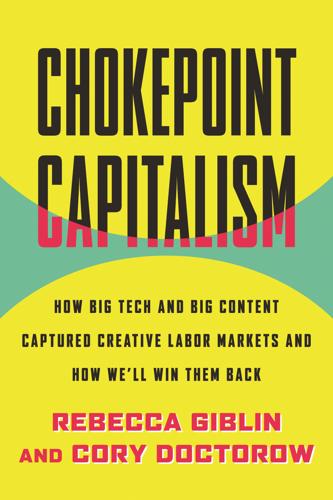
Chokepoint Capitalism
by Rebecca Giblin and Cory Doctorow
Published 26 Sep 2022

, Jan. 20, 2010, https://writenonfictionnow.com/good-news-for-pod-world-amazon-settles-antitrust-lawsuit-filed-by-booklocker. 41. Peter Sayer, “Amazon Buys Audible for US$300 Million,” Good Gear Guide, Feb. 1, 2018, https://www.goodgearguide.com.au/article/205192/amazon_buys_audible_us_300_million. 42. Cory Doctorow, “Random House Audio Abandons Audiobook DRM,” Boing Boing, Feb. 21, 2008, https://boingboing.net/2008/02/21/random-house-audio-a.html. 43. Cory Doctorow, “Google Launches a DRM-Free Audiobook Store: Finally, a Writer- and Listener-Friendly Audible Alternative!,” Boing Boing, July 20, 2018, https://boingboing.net/2018/07/20/dont-restrict-me.html. 44. Stone, The Everything Store, 48. 45.

See also interoperability Universal Music Group (UMG), 56, 59–60, 72, 73, 75–76, 77, 188 Unreal Engine, 117 “Unstoppable” (song), 3 use-it-or-lose-it rights, 194–95 Vaheesan, Sandeep, 177–78 Vanacore, David, 215 venture capitalists, 144 Verizon, 133 Vernoff, Krista, 105, 176 vertical integration, 14, 36, 42, 69, 85–87, 88, 96, 97, 148 Vessel, 133 Viacom, 127–28 video, 48 video streaming, 198, 227–28 Vimeo, 134 virtual machines, 198 wages: about, 5–6; collecting and distribution system, 223–28; minimum, 213–14; residual remuneration rights, 214–16; statutory license reform, 217–23 wage theft, 248, 256 Wanamaker, John, 49 Warner Music Group, 56, 59, 72–73, 75 Washington Post, 231, 232 wealth equality, 5 Weaver, Jane, 195 web browsers, 43 Wells Fargo, 251 West, Kanye, 160 Wettlaufer, Brianna, 229 WeWork, 102 William Morris Endeavor, 104, 106–7, 176 Williams, Craig, 53 Williams, Pharrell, 63–64 Winant, Gabriel, 150 Windows, 201–2 WI PO Copyright Treaty, 25 Wojcicki, Susan, 128 works for hire, 185–86 wrestling, professional, 251 Writers Guild of America (WGA), 105–11, 173–77, 214 Wu, Tim, 147, 149 Wylie, Andrew, 27 Xalabarder, Raquel, 214 YouTube: about, 2, 18, 56; acquired by Google, 125–29; Content ID system, 129–35; and the EU GDPR, 136–39, 144; popularity and growth, 124–25 Zuckerberg, Mark, 45, 58, 136 BEACON PRESS Boston, Massachusetts www.beacon.org Beacon Press books are published under the auspices of the Unitarian Universalist Association of Congregations. © 2022 by Rebecca Giblin and Cory Doctorow All rights reserved Printed in the United States of America 25 24 23 22 8 7 6 5 4 3 2 1 Text design and composition by Kim Arney Illustrations by Lauren Kinnard Library of Congress Cataloging-in-Publication Data Names: Giblin, Rebecca, author. | Doctorow, Cory, author. Title: Chokepoint capitalism : how to beat big tech, tame big content, and get artists paid / Rebecca Giblin and Cory Doctorow. Description: Boston : Beacon Press, [2022] | Includes bibliographical references and index. | Summary: “People are feeling squeezed because of chokepoint capitalism: exploitative businesses creating barriers to competition that let them take over markets and extract an unfair share of value.
PRAISE FOR CHOKEPOINT CAPITALISM “Are you a writer, a musician, an artist? Is Big Tech eating your brain and sucking your financial blood? Rebecca Giblin and Cory Doctorow’s Chokepoint Capitalism tells us how the vampires crashed the party and provides protective garlic. Your brain must remain your own concern, however.” —MARGARET ATWOOD, author of The Handmaid’s Tale “The story of how a few giant corporations are strangling the life out of our media ecosystem is one of the most important of the decade, and Giblin and Doctorow tell it better than anyone. Searing, essential, and incredibly readable.”

pages: 452 words: 134,502

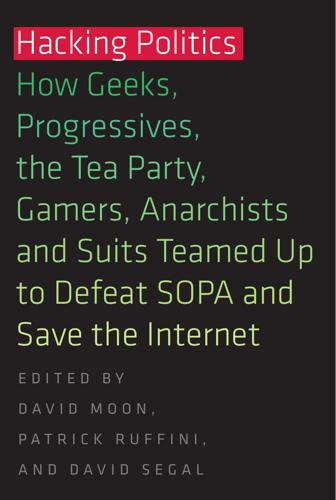
Hacking Politics: How Geeks, Progressives, the Tea Party, Gamers, Anarchists and Suits Teamed Up to Defeat SOPA and Save the Internet
by David Moon , Patrick Ruffini , David Segal , Aaron Swartz , Lawrence Lessig , Cory Doctorow , Zoe Lofgren , Jamie Laurie , Ron Paul , Mike Masnick , Kim Dotcom , Tiffiniy Cheng , Alexis Ohanian , Nicole Powers and Josh Levy
Published 30 Apr 2013

A lot of time, as it turned out—his delay held all the way through the end of that session of Congress, so that when the bill came back it had to start all over again. And since they were starting all over again, they decided they might as well give it a new name. And that’s when it began being called PIPA and eventually SOPA. THE HISTORY OF THE COPYRIGHT WARS CORY DOCTOROW Cory Doctorow (craphound.com) is a science fiction novelist, blogger, and technology activist. He is the co-editor of the popular weblog Boing Boing (boingboing.net), and a contributor to The Guardian, the New York Times, Publishers Weekly, Wired, and many other newspapers, magazines, and websites. He was formerly Director of European Affairs for the Electronic Frontier Foundation (eff.org), a non-profit civil liberties group that defends freedom in technology law, policy, standards, and treaties.

Anonymous Anonymous Anonymous Anthony Aiuto Kelly Birr Rosario Dawson Eric Decker Luke Gotszling Jim Lastinger Marian Maxwell Robert R Miles II Maxim Nekrasov Daniel R Quintiliani Michael Sriqui Eric Usher TABLE OF CONTENTS A Moment for Aaron Foreword by the Editors Hacking Politics: TLDR PART 1: The World Before SOPA/PIPA AARON SWARTZ For Me, It All Started with a Phone Call CORY DOCTOROW The History of the Copyright Wars JOSH LEVY Before SOPA There Was Net Neutrality MIKE MASNICK COICA, PIPA, and SOPA Are Censorship PART 2: The SOPA/PIPA Battle DAVID SEGAL Now I Work for Demand Progress PATRICK RUFFINI Beginning on the Right DAVID MOON Demand Progress Needs a “Washington Guy” GABRIEL LEVITT SOPA’s Elevation of Profits Over Patients: The Online Pharmacy Story PATRICK RUFFINI Lobbying Republicans Through the Summer DAVID SEGAL The Tea Party Enters the Fray DAVID SEGAL AND DAVID MOON Gamers and Justin Bieber Join the Cause DAVID MOON Clashes With the Big Guns DAVID SEGAL Labor Sides with the Bosses JONNY 5 Turning the Tide on SOPA DAVID SEGAL What Was Lamar Smith Thinking?

DAVID SEGAL That Was Amazing. Can We Do It Again Sometime? PART 5: Where Do We Go from Here? RON PAUL The Battle for Internet Freedom Is Critical for the Liberty Movement ERIN MCKEOWN A Case for Digital Activism by Artists BRAD BURNHAM On the Freedom to Innovate MARVIN AMMORI SOPA and the Popular First Amendment CORY DOCTOROW Blanket Licenses: One Path Forward in Copyright Reform LAWRENCE LESSIG The Internet Can Help Strike at the Root Conclusion Aaron Swartz speaks at the New York City anti-SOPA rally on January 18th, 2012 A MOMENT FOR AARON: 1986-2013 This book was constructed over the course of the fall, and we intended to release it earlier this winter, but then tragedy struck: our friend and colleague Aaron Swartz committed suicide on January 11th, while under federal indictment for downloading too many academic articles housed by the online cataloguing service called JSTOR.

Smart Mobs: The Next Social Revolution
by Howard Rheingold
Published 24 Dec 2011

They’re faery infrastructure, networks whose maps form weird n-dimensional topologies of surpassing beauty and chaos; mad technological hairballs run by ad-hocracies whose members each act in their own best interests. In a nutshell, peer-to-peer technology is goddamn wicked. It’s esoteric. It’s unstoppable. It’s way, way cool. —Cory Doctorow, “The Gnomes of San Jose” ETs, Worms, and ’Zillas I stumbled into my first peer-to peer ad-hocracy when I visited a friend’s office in San Francisco one night in 1999. It was a quarter past midnight during the peak of the dotcom era, which meant that the crew was going full blast at the witching hour.

It’s the same old hacker intoxication of getting a buzz from giving tools away and then coming back to find that someone else has made the tool even more useful. The power of peer-to-peer methodology is a human social power, not a mechanical one, rooted in the kind of passion that enthusiasts like Cory Doctorow demonstrate when he says: “In a nutshell, peer-to-peer technology is goddamn wicked. It’s esoteric. It’s unstoppable. It’s way, way cool.” Although Doctorow hadn’t been born when system administrators started receiving tapes in the mail, labeled “Love, Ken,” he was expressing the same spirit that drove Unix and the creation of the Internet and the Web.

Mojo Nation ceased operations as a commercial enterprise in February 2002, replaced by the noncommercial Mnet project.32 The first peer-to-peer networks linked social networks into cooperative ventures that shared computing cycles, files, and bandwidth. The next generations of p2p sociotechnology include p2p systems that share decisions and judgments. Sheep That Shit Grass Cory Doctorow, thirty-year-old online auction addict, Internet jack-of-all-symbol-manipulating trades, and award-winning science fiction writer, is also the most enthusiastic p2p proponent I’ve met. When I learned that he was working on a p2p scheme that would enable people to share their decisions about what they find interesting, I called him.

pages: 478 words: 146,480

Pirate Cinema
by Cory Doctorow
Published 2 Oct 2012

Barnes and Noble Powells Booksamillion Canada: Amazon Kindle (DRM-free) Kobo (DRM-free) Chapters/Indigo Amazon.ca Audiobook: DRM-free download * * * 8 Metadata Document Metadata: Title: Pirate Cinema Creator: Cory Doctorow Rights: Copyright CorDoc-Co, Ltd (UK), 2012.; License: https://creativecommons.org/licenses/by-nc-nd/3.0/ Subject: Novel Publisher: Tor Teen Version Information: Sourcefile: Cory_Doctorow_-_Pirate_Cinema.sst Filetype: /home/doctorow/Documents/Projects/Pirate: ERROR: cannot open `/home/doctorow/Documents/Projects/Pirate' (No such file or directory) Cinema/Cory_Doctorow_-_Pirate_Cinema.sst: ERROR: cannot open `Cinema/Cory_Doctorow_-_Pirate_Cinema.sst' (No such file or directory) Source Digest: SHA256(Cory_Doctorow_-_Pirate_Cinema.sst)= 1446dd720acec0d1d5e21395b8138b9ce0d781d58225d63547f1aa12e53be308 Generated: Generated by: Generated by: SiSU 3.3.2 of 2012w26/6 (2012-06-30) Ruby version: ruby 1.9.3p194 (2012-04-20 revision 35410) [x86_64-linux] Document (dal) last generated: 2013-05-17 05:49:17 +0100
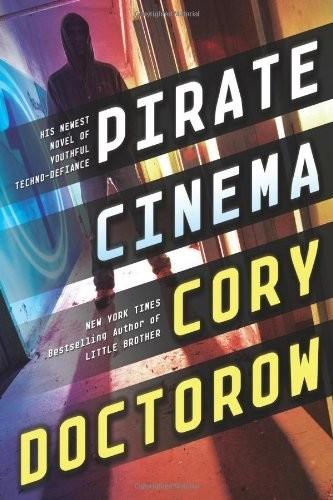
Pirate Cinema Cory Doctorow Pirate Cinema, Cory Doctorow A commercial interlude Read this first! The copyright thing About derivative works Donations and a word to teachers and librarians Commercial interlude the second Dedication Prologue: A star finds true love/A knock at the door/A family ruined/On the road/Alone Commercial interlude III: the reckoning Chapter 1: Alone no more/The Jammie Dodgers/Posh digs/Abstraction of Electricity Commercial interlude rebooted Chapter 2: Adrift/A new home/A screening in the graveyard/The anarchists! Commercial interlude: a new generation Chapter 3: Family/Feeling useless/A scandal in Parliament/A scandal at home/War!

Twilight of the commercial interludes Epilogue: Sue me/An announcement/Soldiering on Commercial interlude: a new beginning Acknowledgements Biography Twilight of the commercial interludes Creative Commons license Secret commercial interlude Metadata SiSU Metadata, document information Rights: Copyright CorDoc-Co, Ltd (UK), 2012.; License: https://creativecommons.org/licenses/by-nc-nd/3.0/ 8 Pirate Cinema, Cory Doctorow A commercial interlude Today, October 2, 2012 is the hardest it will ever be to copy things. It will never get harder. It only gets easier from here. Our grandchildren will marvel at how hard copying was in 2012. "Tell me again, Grandpa, about the years 2012, when hard-drives with the capacity to hold all the music, movies, words, photos and games ever weren't three for a buck in the check-out aisle at the grocery store!

pages: 313 words: 94,415

Enshittification: Why Everything Suddenly Got Worse and What to Do About It
by Cory Doctorow
Published 6 Oct 2025

Despite the ominous and wildly legally incomplete copyright notice at the front of this book, fair use is a thing, and it covers what you just did. 2 Technically, an “iMessage message.” 3 Cory Doctorow, Little Brother (Tor Teen, Tom Doherty Associates, 2008). 4 A more up-to-date, less gendered name for this is machine in the middle. Restoring Labor 1 “From Businesses and Banks to Colleges and Churches: Americans’ Views of U.S. Institutions,” Pew Research Center, February 2024. Also by Cory Doctorow LITTLE BROTHER Little Brother Homeland Lawful Interceptions Attack Surface Spill MARTIN HENCH Red Team Blues The Bezzle Picks and Shovels FICTION Down and Out in the Magic Kingdom Eastern Standard Tribe Someone Comes to Town, Someone Leaves Town With a Little Help Makers For the Win The Rapture of the Nerds Pirate Cinema Walkaway The Lost Cause A Place So Foreign and Eight More Overclocked The Great Big Beautiful Tomorrow Radicalized GRAPHIC NOVELS Cory Doctorow’s Futuristic Tales of the Here and Now In Real Life NONFICTION The Complete Idiot’s Guide to Publishing Science Fiction Essential Blogging Content Ebooks Context All Complex Ecosystems Have Parasites Information Doesn’t Want to Be Free Chokepoint Capitalism The Internet Con A Note About the Author Cory Doctorow is a blogger, journalist, and activist.

Also by Cory Doctorow LITTLE BROTHER Little Brother Homeland Lawful Interceptions Attack Surface Spill MARTIN HENCH Red Team Blues The Bezzle Picks and Shovels FICTION Down and Out in the Magic Kingdom Eastern Standard Tribe Someone Comes to Town, Someone Leaves Town With a Little Help Makers For the Win The Rapture of the Nerds Pirate Cinema Walkaway The Lost Cause A Place So Foreign and Eight More Overclocked The Great Big Beautiful Tomorrow Radicalized GRAPHIC NOVELS Cory Doctorow’s Futuristic Tales of the Here and Now In Real Life NONFICTION The Complete Idiot’s Guide to Publishing Science Fiction Essential Blogging Content Ebooks Context All Complex Ecosystems Have Parasites Information Doesn’t Want to Be Free Chokepoint Capitalism The Internet Con A Note About the Author Cory Doctorow is a blogger, journalist, and activist. For more than twenty years, he has worked with the Electronic Frontier Foundation on campaigns to safeguard and further our human rights online.

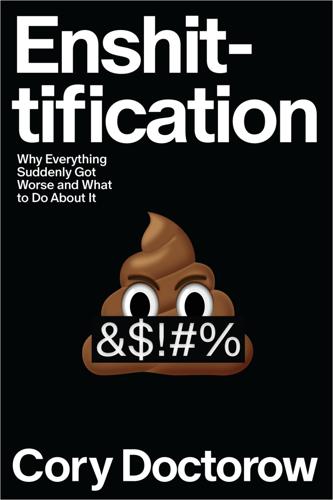
Contents Title Page Copyright Notice Dedication Epigraph Introduction Part One: The Natural History Case Study: Facebook Case Study: Amazon Case Study: iPhone Case Study: Twitter Part Two: The Pathology Part Three: The Epidemiology The End of Competition The Death of Competition Kills Regulation, Too “With an App” It’s Not Wage Theft If We Do It with an App: Uber’s Algorithmic Wage Discrimination Reverse-Centaurs and Chickenization Twiddling The End of Self-Help The End of Labor Power Tech Rights Are Worker Rights: Para and Tuyul Apps The Google Walkouts, Tech Solidarity, and Tech Unions Rent Seeking and Technofeudalism Part Four: The Cure Antitrust Is Back, Baby Antitrust Under Trump Bringing Back Regulation Privacy First The EU’s Digital Markets Act and Digital Services Act Administrability Bringing Back Self-Help The Strange Tale of Beeper Mini Repealing the Law of “Felony Contempt of Business Model” Restoring Labor There’s Bad News and There’s Good News Conclusion: Is Enshittification Just Capitalism? Acknowledgments Notes Also by Cory Doctorow A Note About the Author Copyright MCD Farrar, Straus and Giroux 120 Broadway, New York 10271 Copyright © 2025 by Cory Doctorow All rights reserved First edition, 2025 Frontispiece art by No Ideas Cover art and design by No Ideas Ebook ISBN: 978-0-374-61933-6 The publisher of this book does not authorize the use or reproduction of any part of this book in any manner for the purpose of training artificial intelligence technologies or systems.

pages: 168 words: 9,044

You're Not Fooling Anyone When You Take Your Laptop to a Coffee Shop: Scalzi on Writing
by John Scalzi
Published 28 Jan 2007

To start things off, let's combine two requests that go well together. Chris asks: Intellectual property—Where do you feel an equitable compromise lies in the fairuse/right-of-artiststo-profit-from-their-work debate? Any thoughts on the Creative Commons license, specifically as pertains to your future work? (Cory Doctorow released a couple of his novels online and in dead-tree form simultaneously, while Orson Scott Card did okay for himself with the Shadow series by releasing the first few chapters of each a few months ahead of the street date. Any plans to do something similar?) And to this I'll add a related question from Night Dog: I'd like to know what you think of fanfiction.

(Let's also not forget that both Agent and Old Man's War found their way to actual publication because they were available to be read online—no if ands or buts about it.) I'm a big believer in keeping active control of the work I produce, but part of that control is the freedom to share that work with whomever I choose. It's paid off for me, and it's paid off for others, too. All of Cory Doctorow's published novels are available online for free and he'd certainly maintain it's been a boon to the sales of his books. Orson Scott Card did indeed post not just chapters but full novels online at one point (I know because I downloaded Children of the Mind off his AOL forum) until apparently persuaded otherwise by his publisher (who is, interestingly, the same publisher who let Cory post his works online—but OSC's experience was several years back in the timestream, and times have emphatically changed).

Eventually you realize there's a positive value in the success of others, especially if you know them or are connected to them in some way. I am tickled six kinds of pink that my friend Pamela Ribon's book has been flying off the shelves and that my friend Naomi Kritzer's fantasy series has been so well received. I know Cory Doctorow only through the "Six Degrees of Separation" group-hug that's known as the blog world, but I feel invested in the fine performance of his novel because it's proof that you can put your work online and people will still choose to shell out for it in traditional form. Everyone who succeeds shows that success is possible; I've also found that those who have success usually want their friends to succeed as well.

pages: 281 words: 95,852

The Googlization of Everything:
by Siva Vaidhyanathan
Published 1 Jan 2010

See Google, “Trike with a View,” Press Centre, May 18, 2009, www.google.co.uk/intl/en/press/pressrel/20090518_street_view_trike .html. 25. Elinor Mills, “Are Google’s Moves Creeping You Out?” CNET News, June 12, 2007. 26. Siva Vaidhyanathan, “Ever Use Google Street View for Something Important?” Googlizationofeverything, blog, March 29, 2009, www.googliza tionofeverything.com. 27. Ibid. 28. Cory Doctorow, Little Brother (New York: Tor Teen, 2008). 29. Cory Doctorow, quoted in Vaidhyanathan, “Ever Use Google Street View?” 30. Jemima Kiss, “Google Wins Street View Privacy Case,” Guardian, February 19, 2009. 31. “Google Eyes Canada Rollout of Discreet Street View,” Reuters, September 24, 2007, http://uk.reuters.com; “Google’s Street View Blurred by Canadian Privacy Concerns,” CanWest News Service, www.canada.com. 32.

I met a few single mothers who had great suggestions for locating a tot lot, and an on-site building manager who had suggestions for how the city deals with code compliance. These chance encounters gave me more information than any visual tool could, and more important, they helped me to establish as sense of trust.27 Cory Doctorow, an author, blogger, and activist, told me that he had used Google Street View to describe in detail a scene in San Francisco when he was writing his successful young-adult novel Little Brother. Here is the scene from his novel: “I picked up the WiFi signal with my phone’s wifinder about three blocks up O’Farrell, just before Hyde Street, in front of a dodgy ‘Asian Massage Parlor’ with a red blinking CLOSED sign in the window.

It dodged the legal and philosophical questions at the heart of the dispute, and it set up a bold new system for book research and distribution that, instead of promoting access to knowledge, raised even more questions: the lack of competition, increased monopolization, and the increasing privatization of the information ecosystem.5 In 2004, Google began scanning and indexing millions of books from more than twenty-five university libraries. This service has been the subject of much hyperbolic speculation. On first learning of Google’s plans, legal scholars such as Lawrence Lessig claimed that they would radically democratize information for the public, not just for academics. Authors such as Cory Doctorow initially applauded Google Books for offering ways to connect interested readers to particular texts and thus prevent small books from getting lost in the mass market. And techno-libertarians such as Kelly celebrated the transformative nature of electronic texts, arguing that Google Books would allow users to connect disparate pieces of information as they saw fit, thus evading the tyranny of the book cover and library catalog.

pages: 398 words: 120,801

Little Brother
by Cory Doctorow
Published 29 Apr 2008

This book is action-packed with tales of courage, technology, and demonstrations of digital disobedience as the technophile's civil protest." Bunnie Huang, author of HACKING THE XBOX # Cory Doctorow is a fast and furious storyteller who gets all the details of alternate reality gaming right, while offering a startling, new vision of how these games might play out in the high-stakes context of a terrorist attack. Little Brother is a brilliant novel with a bold argument: hackers and gamers might just be our country's best hope for the future. Jane McGonical, Designer, I Love Bees # The right book at the right time from the right author -- and, not entirely coincidentally, Cory Doctorow's best novel yet. John Scalzi, author of OLD MAN'S WAR # It's about growing up in the near future where things have kept going on the way they've been going, and it's about hacking as a habit of mind, but mostly it's about growing up and changing and looking at the world and asking what you can do about that.

Little Brother Cory Doctorow doctorow@craphound.com &&& READ THIS FIRST This book is distributed under a Creative Commons Attribution-NonCommercial-ShareAlike 3.0 license. That means: You are free: to Share — to copy, distribute and transmit the work to Remix — to adapt the work Under the following conditions: Attribution. You must attribute the work in the manner specified by the author or licensor (but not in any way that suggests that they endorse you or your use of the work). Noncommercial. You may not use this work for commercial purposes. Share Alike. If you alter, transform, or build upon this work, you may distribute the resulting work only under the same or similar license to this one.

John Scalzi, author of OLD MAN'S WAR # It's about growing up in the near future where things have kept going on the way they've been going, and it's about hacking as a habit of mind, but mostly it's about growing up and changing and looking at the world and asking what you can do about that. The teenage voice is pitch-perfect. I couldn't put it down, and I loved it. Jo Walton, author of FARTHING # A worthy younger sibling to Orwell's 1984, Cory Doctorow's LITTLE BROTHER is lively, precocious, and most importantly, a little scary. Brian K Vaughn, author of Y: THE LAST MAN # "Little Brother" sounds an optimistic warning. It extrapolates from current events to remind us of the ever-growing threats to liberty. But it also notes that liberty ultimately resides in our individual attitudes and actions.

pages: 448 words: 117,325

Click Here to Kill Everybody: Security and Survival in a Hyper-Connected World
by Bruce Schneier
Published 3 Sep 2018

Dan Patterson (9 Jan 2017), “Gallery: The top zero day Dark Web markets,” TechRepublic, https://www.techrepublic.com/pictures/gallery-the-top-zero-day-dark-web-markets. 162and to governments: Andy Greenberg (21 Mar 2012), “Meet the hackers who sell spies the tools to crack your PC (and get paid six-figure fees),” Forbes, http://www.forbes.com/sites/andygreenberg/2012/03/21/meet-the-hackers-who-sell-spies-the-tools-to-crack-your-pc-and-get-paid-six-figure-fees. 162Companies like Azimuth sell: Joseph Cox and Lorenzo Franceschi-Bicchierai (7 Feb 2018), “How a tiny startup became the most important hacking shop you’ve never heard of,” Vice Motherboard, https://motherboard.vice.com/en_us/article/8xdayg/iphone-zero-days-inside-azimuth-security. 162And while vendors offer bounties: Adam Segal (19 Sep 2016), “Using incentives to shape the zero-day market,” Council on Foreign Relations, https://www.cfr.org/report/using-incentives-shape-zero-day-market. 162the not-for-profit Tor Project: Tor Project (last updated 20 Sep 2017), “Policy [re Tor bug bounties],” Hacker One, Inc., https://hackerone.com/torproject. 162the cyberweapons manufacturer Zerodium: Zerodium (13 Sep 2017; expired 1 Dec 2017), “Tor browser zero-day exploits bounty (expired),” https://zerodium.com/tor.html. 163“Every offensive weapon is”: Jack Goldsmith (12 Apr 2014), “Cyber paradox: Every offensive weapon is a (potential) chink in our defense—and vice versa,” Lawfare, http://www.lawfareblog.com/2014/04/cyber-paradox-every-offensive-weapon-is-a-potential-chink-in-our-defense-and-vice-versa. 163Many people have weighed in: Joel Brenner (14 Apr 2014), “The policy tension on zero-days will not go away,” Lawfare, http://www.lawfareblog.com/2014/04/the-policy-tension-on-zero-days-will-not-go-away. 163Activist and author Cory Doctorow: Cory Doctorow (11 Mar 2014), “If GCHQ wants to improve national security it must fix our technology,” Guardian, http://www.theguardian.com/technology/2014/mar/11/gchq-national-security-technology. 163I have said similar things: Bruce Schneier (20 Feb 2014), “It’s time to break up the NSA,” CNN, http://edition.cnn.com/2014/02/20/opinion/schneier-nsa-too-big/index.html. 163Computer security expert Dan Geer: Dan Geer (3 Apr 2013), “Three policies,” http://geer.tinho.net/three.policies.2013Apr03Wed.PDF. 163Both Microsoft’s Brad Smith: Brad Smith (14 May 2017), “The need for urgent collective action to keep people safe online: Lessons from last week’s cyberattack,” Microsoft on the Issues, https://blogs.microsoft.com/on-the-issues/2017/05/14/need-urgent-collective-action-keep-people-safe-online-lessons-last-weeks-cyberattack. 163and Mozilla: Heather West (7 Mar 2017), “Mozilla statement on CIA/WikiLeaks,” Open Policy & Advocacy, https://blog.mozilla.org/netpolicy/2017/03/07/mozilla-statement-on-cia-wikileaks.

Matthew Adam Susson (Apr 2013), “Watch the world ‘burn’: Copyright, micropatent and the emergence of 3D printing,” Chapman University School of Law, http://papers.ssrn.com/sol3/papers.cfm?abstract_id=2253109. 206I worry that analogous laws: Cory Doctorow (10 Jan 2012), “Lockdown: The coming war on general-purpose computing,” Boing Boing, http://boingboing.net/2012/01/10/lockdown.html. Cory Doctorow (23 Aug 2012), “The coming civil war over general purpose computing,” Boing Boing, http://boingboing.net/2012/08/23/civilwar.html. 206With respect to radios, one solution: Kristen Ann Woyach et al. (23–26 Sep 2008), “Crime and punishment for cognitive radios,” 2008 46th Annual Allerton Conference on Communication, Control, and Computing, http://ieeexplore.ieee.org/document/4797562. 12.

But each use runs the risk that the target government will learn of the vulnerability and use it—or that the vulnerability will become public and criminals will start using it. As Harvard law professor Jack Goldsmith wrote, “Every offensive weapon is a (potential) chink in our defense—and vice versa.” Many people have weighed in on this debate. Activist and author Cory Doctorow calls it a public health problem. I have said similar things. Computer security expert Dan Geer recommends that the US government corner the vulnerabilities market and fix them all. Both Microsoft’s Brad Smith and Mozilla have commented on this, demanding more vulnerability disclosure by governments.

pages: 374 words: 97,288

The End of Ownership: Personal Property in the Digital Economy
by Aaron Perzanowski and Jason Schultz
Published 4 Nov 2016

Jon Fingas, “‘The Simpsons’ Seasons Won’t Be Available on Disc from Now On,” Engadget, April 12, 2015, http://www.engadget.com/2015/04/12/the-simpsons-drops-disc-releases/, accessed November 18, 2015. 40. Kevin Smith, “Planning for Musical Obsolescence,” Scholarly Communications @ Duke (blog), Duke University Libraries, July 28, 2014, http://blogs.library.duke.edu/scholcomm/2014/07/28/planning-for-musical-obsolescence/, accessed June 15, 2015. 41. Cory Doctorow, “Oxford English Dictionary—the Future,” Guardian (UK), August 23, 2013, http://www.theguardian.com/technology/2013/aug/23/oxford-english-dictionary-future-digitally, accessed June 15, 2015. 42. Stephen Shankland, “Adobe Launches Creative Cloud Subscription Service,” CNET, May 11, 2012, http://www.cnet.com/news/adobe-launches-creative-cloud-subscription-service/, accessed June 15, 2015. 43.

Josh Hadro, “HarperCollins Puts 26 Loan Cap on Ebook Circulations,” Library Journal, February 25, 2011, http://lj.libraryjournal.com/2011/02/technology/ebooks/harpercollins-puts-26-loan-cap-on-ebook-circulations/, accessed August 6, 2015. In response, one library then posted video of one of its analog HC copies after twenty-six lends to show that it was in near-perfect condition. Cory Doctorow, “How a HarperCollins Library Book Looks after 26 Checkouts (Pretty Good!),” Boing Boing, March 3, 2011, http://boingboing.net/2011/03/03/how-a-harpercollins.html, accessed August 6, 2015. 22. Michael Kelley, “One Year Later, HarperCollins Sticking to 26-Loan Cap, and Some Librarians Rethink Opposition,” Digital Shift, February 17, 2012, http://www.thedigitalshift.com/2012/02/ebooks/one-year-later-harpercollins-sticking-to-26-loan-cap-and-some-librarians-rethink-opposition/, accessed August 6, 2015. 23.

Apple was so committed to maintaining this tight control over the retail download market that when one-time DRM crusader RealNetworks created a software tool called Harmony that allowed customers of its competing music store to replicate FairPlay DRM so that tracks purchased from RealNetworks could be loaded on iPods, Apple called them hackers and threatened a DMCA suit. Nearly a decade later, a key Apple engineer even testified that the company’s DRM was part of an anti-competitive strategy.18 At this point, the labels figured out that the only way out of this mess was to free themselves from the chains of DRM. As Cory Doctorow explains in his book Information Doesn’t Want to Be Free: The labels came to realize that they’d been caught in yet another roach motel: their customers had bought millions of dollars’ worth of Apple-locked music, and if the labels left the iTunes Store, the listeners would be hard-pressed to follow them. ...

pages: 238 words: 73,824

Makers
by Chris Anderson
Published 1 Oct 2012

The great opportunity in the new Maker Movement is the ability to be both small and global. Both artisanal and innovative. Both high-tech and low-cost. Starting small but getting big. And, most of all, creating the sort of products that the world wants but doesn’t know it yet, because those products don’t fit neatly into the mass economics of the old model. As Cory Doctorow imagined it a few years ago in a great sci-fi book also called Makers,3 which was an inspiration for me and countless others in the movement, “The days of companies with names like ‘General Electric’ and ‘General Mills’ and ‘General Motors’ are over. The money on the table is like krill: a billion little entrepreneurial opportunities that can be discovered and exploited by smart, creative people.”

What kind of economic future does the rise of the Maker Movement predict? Is it one where Western countries like the United States regain their lost manufacturing might, but rather than with a few big industrial giants, they spawn thousands of smaller firms picking off niche markets? Remember that line from Cory Doctorow’s book: The days of companies with names like “General Electric” and “General Mills” and “General Motors” are over. The money on the table is like krill: a billion little entrepreneurial opportunities that can be discovered and exploited by smart, creative people. Call this the commercial Web model, one defined by low barriers to entry, rapid innovation, and intense entrepreneurship.

And also for playing along with my obsessions in good humor, with each child finding some project that allowed us to explore the Maker world together. My inspirations and guides in this world are many. Dale Dougherty of O’Reilly, who started Make magazine and the Maker Faire, was among the first to capture the growing movement, and Mark Frauenfelder’s enthusiasm drove it forward. Cory Doctorow inspired us all with his visions of how far it could go. So did countless blogs and Web communities, from Hackaday and Makezine to Instructables, Kickstarter, Etsy, and Quirky. In the open-hardware movement, my chief guides have been Massimo Banzi of the Arduino project, Nathan Siedle of Sparkfun, Limor Fried and Phillip Torrone of Adafruit, Bre Bettis of MakerBot Industries, and Jay Rogers of Local Motors.

pages: 377 words: 110,427

The Boy Who Could Change the World: The Writings of Aaron Swartz
by Aaron Swartz and Lawrence Lessig
Published 5 Jan 2016

Published in the United States by The New Press, New York, 2015 Distributed by Perseus Distribution LIBRARY OF CONGRESS CATALOGING-IN-PUBLICATION DATA Swartz, Aaron, 1986-2013. The boy who could change the world : the writings of Aaron Swartz / Aaron Swartz ; with an introduction by Lawrence Lessig ; part introductions by Benjamin Mako Hill, Seth Schoen, David Auerbach, David Segal, Cory Doctorow, James Grimmelmann, and Astra Taylor ; postscript by Henry Farrell. pages cm Includes bibliographical references and index. ISBN 978-1-62097-076-8 (e-book) 1.Internet—Social aspects. 2.Internet—Political aspects. 3.Intellectual property. 4.Copyright. 5.Computers--Social aspects. 6.Computer architecture. 7.Swartz, Aaron, 1986-2013—Political and social views. 8.Political culture--United States. 9.Popular culture—United States.I.

How We Stopped SOPA Computers Introduction by David Auerbach Excerpt: A Programmable Web Privacy, Accuracy, Security: Pick Two Fixing Compulsory Licensing Postel’s Law Has No Exceptions Squaring the Triangle: Secure, Decentralized, Human-Readable Names Release Late, Release Rarely Bake, Don’t Fry Building Baked Sites A Brief History of Ajax djb A Non-Programmer’s Apology Politics Introduction by David Segal How Congress Works Keynes, Explained Briefly Toward a Larger Left Professional Politicians Beware! The Attraction of the Center The Conservative Nanny State Political Entrepreneurs and Lunatics with Money Postscript by Henry Farrell Media Introduction by Cory Doctorow The Book That Changed My Life The Invention of Objectivity Shifting the Terms of Debate: How Big Business Covered Up Global Warming Making Noise: How Right-wing Think Tanks Get the Word Out Endorsing Racism: The Story of The Bell Curve Spreading Lies: How Think Tanks Ignore the Facts Saving Business: The Origins of Right-wing Think Tanks Hurting Seniors: The Attack on Social Security Fighting Back: Responses to the Mainstream Media What Journalists Don’t: Lessons from the Times Rachel Carson: Mass Murderer?

That it would only happen in a world of lumbering robots and artificial intelligence and machines that follow you around, barking orders while intermittently unsuccessfully attempting to persuade you to purchase a new pair of shoes. So it is perhaps unsurprising that one of the critics who has expressed something like this view, Cory Doctorow, is in fact a rather imaginative sci-fi novelist (amongst much else). Doctorow’s complaint is expressed in his essay “Metacrap: Putting the torch to seven straw-men of the meta-utopia.” It is also reprinted in his book of essays Content: Selected Essays on Technology, Creativity, Copyright, and the Future of the Future (2008, Tachyon Publications) which is likewise available online at http://craphound.com/content/download/.

Reset
by Ronald J. Deibert
Published 14 Aug 2020

Retrieved from https://www.vrt.be/vrtnws/en/2019/07/10/google-employees-are-eavesdropping-even-in-flemish-living-rooms/ A group of California citizens launched a class-action lawsuit: Kumandan et al. v. Google LLC et al., 5:19-cv-04286 (N.D. Cal. 2019). What … Cory Doctorow has called “peak indifference”: Doctorow, C. (2016, July 3). Peak indifference. Retrieved from https://locusmag.com/2016/07/cory-doctorow-peak-indifference/ A recent survey of American attitudes: Ladd, J. M., Tucker, J. A., & Kates, S. (2018, October 24). 2018 American Institutional Confidence Poll: The health of American democracy in an era of hyper polarization.

There’s a Groundhog Day quality to stories like these: a technology scandal is followed by shock, which is then followed by a company apology and a pledge to “do better,” which brings us around to a new normal. Rinse and repeat. Whether it’s a form of what Zuboff calls “psychic numbing” or what science fiction author Cory Doctorow has called “peak indifference” (problems seem so overwhelming that the only viable option is just to shrug and move on), it seems that no revelation about the practices surrounding surveillance capitalism is outrageous enough to separate users from their precious applications.78 Indeed, a recent survey of American attitudes undertaken by Georgetown University and NYU found that Amazon and Google were the second- and third-most trusted institutions respectively, ahead of even colleges and universities and courts.79 The direct effects of such a profound transformation in modes of communication are enormous, but the unintended consequences are likely to be far more unsettling.

Right-to-repair legislation would “force companies to support independent repairs by making manuals, parts, and diagnostic codes available, and by ending the illegal practice of voiding warranties for customers who use independent repair services,” in the words of one its most eloquent advocates, author Cory Doctorow. The COVID emergency may have helped kick the right-to-repair movement into high gear, or at least demonstrated its utility.459 With ventilators and other medical equipment in short supply, the right to repair became in some cases a matter of life and death. Technicians scrambled to circumvent the software and other controls medical device manufacturers use to prevent users from doing repairs, and widely shared repair manuals and other proprietary instructions.460 To be sure, the “right to repair” is a long way from the “right to bear arms.”

pages: 283 words: 85,824

The People's Platform: Taking Back Power and Culture in the Digital Age
by Astra Taylor
Published 4 Mar 2014

Conference after conference is held to discuss the intersection of music and new media, Gates notes, but working musicians are rarely onstage talking about their experiences or presenting their ideas, even as their work is used to lure audiences and establish lucrative ventures, not unlike the way books and CDs have long been sold as loss leaders at big chains to attract shoppers. The cultural field has become increasingly controlled by companies “whose sole contribution to the creative work,” to borrow Cory Doctorow’s biting expression, “is chaining children to factories in China and manufacturing skinny electronics” or developing the most sophisticated methods for selling our data to advertisers. It wasn’t supposed to be this way. One natural consequence of Web-based technologies was supposed to be the elimination of middlemen, or “disintermediation.”

Free culture leaders and activists sincerely believe that violating copyright—illegally downloading films and music or remixing and recontextualizing pop culture products—is an effective way to subvert corporate culture and defy market values.31 “There’s a pretty strong case to be made that ‘free’ has some inherent antipathy to capitalism,” the writer Cory Doctorow has said.32 It’s a view reflected in a documentary about the virtues of remix culture, Steal This Film II, which illustrates the rampant abuse of intellectual property by big business and the rise of file-sharing services. “This is the question that faces us today,” the voice-over says. “If the battle against sharing is already lost, and media is no longer a commodity, how will society change?”

Where copyright is concerned, there’s often a kind of dual consciousness; people want to pilfer and protect, access and control. Even those artists who have written eloquently on the fallacy of intellectual property, the ubiquity of creative influence, and the myth of originality—figures like Lewis Hyde, Jonathan Lethem, Cory Doctorow, and David Shields—reserve some, if not all, of their rights. “Who owns the words? Who owns the music and the rest of our culture?” asks Shields. “Reality cannot be copyrighted,” yet the book I quote from is. Though Richard Stallman encourages copying, he releases his writing under a no-derivatives license; he believes people should be allowed to modify all software, but he is not convinced the same holds for expressive works.

pages: 390 words: 113,737

Someone comes to town, someone leaves town
by Cory Doctorow
Published 1 Jul 2005

http://www.ctyme.com/mailman/listinfo/doctorow * * * Machine-readable metadata * * * <rdf:RDF xmlns="http://web.resource.org/cc/" xmlns:dc="http://purl.org/dc/elements/1.1/" xmlns:rdf="http://www.w3.org/1999/02/22-rdf-syntax-ns#"> <Work rdf:about="http://craphound.com/someone"> <dc:title>Someone Comes to Town, Someone Leaves Town</dc:title> <dc:date>2005-7-1</dc:date> <dc:description>A novel by Cory Doctorow </dc:description> <dc:creator><Agent> <dc:title>Cory Doctorow</dc:title> </Agent></dc:creator> <dc:rights><Agent> <dc:title>Cory Doctorow</dc:title> </Agent></dc:rights> <dc:type rdf:resource="http://purl.org/dc/dcmitype/Text" /> <license rdf:resource="http://creativecommons.org/licenses/by-nd-nc/1.0" /> </Work> <License rdf:about="http://creativecommons.org/licenses/by-nd-nc/1.0"> <requires rdf:resource="http://web.resource.org/cc/Attribution" /> <permits rdf:resource="http://web.resource.org/cc/Reproduction" /> <permits rdf:resource="http://web.resource.org/cc/Distribution" /> <prohibits rdf:resource="http://web.resource.org/cc/CommercialUse" /> <requires rdf:resource="http://web.resource.org/cc/Notice" /> </License> <rdf:RDF xmlns="http://web.resource.org/cc/" xmlns:rdf="http://www.w3.org/1999/02/22-rdf-syntax-ns#"> <License rdf:about="http://creativecommons.org/licenses/devnations/2.0/"> <permits rdf:resource="http://web.resource.org/cc/Reproduction" /> <permits rdf:resource="http://web.resource.org/cc/Distribution" /> <requires rdf:resource="http://web.resource.org/cc/Notice" /> <requires rdf:resource="http://web.resource.org/cc/Attribution" /> <permits rdf:resource="http://web.resource.org/cc/DerivativeWorks" /> <prohibits rdf:resource="http://web.resource.org/cc/HighIncomeNationUse" /> </License> </rdf:RDF> eof
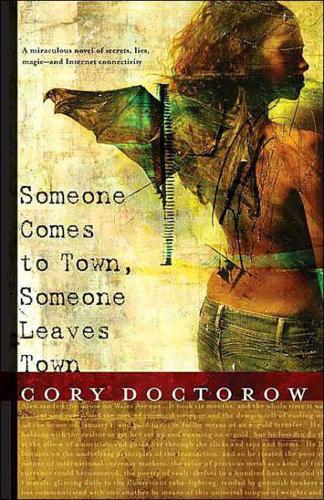
Someone Comes to Town, Someone Leaves Town Cory Doctorow doctorow@craphound.com Published by Tor Books July 2005 ISBN: 0765312786 http://craphound.com/someone Some Rights Reserved -- * * * About this book * * * This is my third novel, and as with my first, Down and Out in the Magic Kingdom (http://craphound.com/down) and my second, Eastern Standard Tribe (http://craphound.com/est), I am releasing it for free on the Internet the very same day that it ships to the stores. The books are governed by Creative Commons licenses that permit their unlimited noncommercial redistribution, which means that you're welcome to share them with anyone you think will want to see them.

"Is it okay?" "It's right," he said. "Just as it was meant to be." He returned to her arms and they kissed. "No falling in love," she said. "Perish the thought," he said. She bit his lip and he bit hers and they kissed again, and then he was asleep, and at peace. === Bio === Canadian-born Cory Doctorow (craphound.com) is the European Affairs coordinator for the Electronic Frontier Foundation (eff.org). He is the coeditor of the popular weblog Boing Boing -- boingboing.net -- with millions of visitors every month. He won the John W. Campbell Award for Best New Writer at the 2000 Hugo awards and his novel Down and Out in the Magic Kingdom (http://craphound.com/down/) won the Locus Award for Best First Novel the same year that his short story collection A Place So Foreign and Eight More (http://craphound.com/place/) won the Sunburst Award for best Canadian science fiction book.

pages: 397 words: 110,130

Smarter Than You Think: How Technology Is Changing Our Minds for the Better
by Clive Thompson
Published 11 Sep 2013

a new Magna Carta for the digital age: Tim Berners-Lee, “Long Live the Web: A Call for Continued Open Standards and Neutrality,” Scientific American, November 22, 2010, accessed March 26, 2013, www.scientificamerican.com/article.cfm?id=long-live-the-web. push for regulations: Venables, “The EU’s ‘Right to Be Forgotten.’” When student activists pressured apparel companies . . . Global Network Initiative: MacKinnon, Consent of the Networked, Kindle edition. As Cory Doctorow points out: Cory Doctorow, “We Need a Serious Critique of Net Activism,” The Guardian, January 25, 2011, accessed March 26, 2013, www.guardian.co.uk/technology/2011/jan/25/net-activism-delusion. Chapter 10: Epilogue The Jeopardy! clue popped up on the screen: Parts of my writing here on Watson appeared previously in my story “What Is I.B.M.’s Watson?”

The challenge, then, is to get people to care about their digital rights enough for governments, and companies, to respond to them. Here, too, there are glimmers of hope, in the way that citizens in Europe and the United States, aided by high-tech firms, have successfully fought ham-fisted legislation designed to let copyright holders knock Web sites and users they don’t like offline. As Cory Doctorow points out, the great gift of the Internet is in rebalancing the stakes. States have long been able to track citizens and organize armies. Today’s high tech lets them do this with much greater efficiency. But for citizens, the change has been far greater. “Every human endeavour that requires more than one person’s effort has to devote a certain amount of resources to the problem of coordination: The Internet has greatly simplified this problem (think again of the hours activists used to spend simply addressing postcards with information about an upcoming demonstration),” Doctorow writes.

This produced some delightful epiphanies: Dale Lane, “Smile!” Dale Lane (blog), April 3, 2012, accessed March 22, 2013, dalelane.co.uk/blog/?p=2092#more-2092; Dale Lane, “Has Today Been a Good Day?” Dale Lane (blog), April 16, 2012, accessed March 22, 2013, dalelane.co.uk/blog/?p=2125. analyzed the color usage in Van Gogh’s major paintings: Cory Doctorow, “Van Gogh Pie-Charts,” Boing Boing, January 29, 2011, accessed March 23, 2013, boingboing.net/2011/01/29/van-gogh-pie-charts.html. a “sentiment analysis” of the Bible: “Applying Sentiment Analysis to the Bible,” OpenBible.info, October 10, 2011, accessed March 22, 2013, www.openbible.info/blog/2011/10/applying-sentiment-analysis-to-the-bible/.

pages: 205 words: 61,903

Survival of the Richest: Escape Fantasies of the Tech Billionaires
by Douglas Rushkoff
Published 7 Sep 2022

While they may be crying all the way to the bank, these millionaire turncoats do a good job of explaining how their platforms surveilled users and then leveraged the information they collected to turn people into more extreme versions of themselves. Of course, most of them were making arguments lifted from the works of people like Sherry Turkle, Cliff Nass, Howard Rheingold, Andrew Keen, Evgeny Morozov, Astra Taylor, Richard Barbrook, Jerry Mander, Cory Doctorow, Marina Gorbis, dana boyd, Nick Carr, Mark Bauerlain, and even Raffi. Tech critics have been writing about the impact of social media manipulation on our psyche and society for decades. It’s great that the developers responsible for these misdeeds are finally agreeing with these assessments, even if they need to feel as if they’ve discovered the downsides all by themselves—like brand-new intellectual property.

Yet while he encouraged cooperation between the companies racing to develop a vaccine, he also steadfastly defended their intellectual property rights. He convinced Oxford’s researchers to do an exclusive deal with AstraZeneca, for example, arguing that if Big Pharma were not given a profit motive, we were at risk of “civilizational collapse .” As tech writer Cory Doctorow put it at the time, “despite his cuddly reputation as a philanthropist, Gates has always pursued the ideology that the world should be guarded over by monopolist-kings, dependent on their largesse (guided by their superhuman judgment) for progress.” The result was that the wealthiest countries got vaccinated, while the poorest ones were denied patent waivers to legally produce vaccine for themselves.

,” The New York Times , August 14, 2019, https:// www .nytimes .com /2019 /08 /14 /style /ghislaine -maxwell -terramar -boats -jeffrey -epstein .html. 141   For this global oligarchy : Amy Julia Harris, Frances Robles, Mike Baker, and William Rashbaum, “How a Ring of Women Allegedly Recruited Girls for Jeffrey Epstein,” New York Times , August 29, 2019, https:// www .nytimes .com /2019 /08 /29 /nyregion /jeffrey -epstein -ghislaine -maxwell .html. 141   Bill Gates has employed this logic : “Bill Gates Buys Big on a Farmland Shopping Spree,” DW , https:// www .dw .com /en /bill -gates -buys -big -on -a -farmland -shopping -spree /a -57134690. 142   “civilizational collapse” : Sissi Cao, “Bill Gates’ Comments On COVID-19 Vaccine Patent Draw Outrage,” Observer , April 27, 2021, https:// observer .com /2021 /04 /bill -gates -oppose -lifting -covid -vaccine -patent -interview /. 142   “despite his cuddly reputation” : Cory Doctorow, “Manufacturing MRNA Vaccines Is Surprisingly Straightforward,” Medium , May 6, 2021, https:// coronavirus .medium .com /manufacturing -mrna -vaccines -is -surprisingly -straightforward -despite -what -bill -gates -thinks -222cffb686ee. 142   Gates argued : Doctorow, “Manufacturing MRNA Vaccines Is Surprisingly Straightforward.” 142   new mRNA vaccines : Kis, Zoltán, Cleo Kontoravdi, Antu K.

pages: 599 words: 98,564

The Mutant Project: Inside the Global Race to Genetically Modify Humans
by Eben Kirksey
Published 10 Nov 2020

The Leukemia and Lymphoma Society has launched a sustained campaign of advocacy, targeting drug companies and device manufacturers, doctors, hospitals, insurance companies, and pharmacy benefit managers, as well as state and federal policymakers—to reduce the costs for patients and make the health care system more sustainable.8 Many cancer patients in the United States were already going for broke, mortgaging their houses or drawing on their life savings to access possible cures. Or, like Walter White—the protagonist of Breaking Bad—some were going rogue, breaking the law and basic social norms in pursuit of treatment. Others were envisioning even more disruptive pathways to affordable cancer care. Cory Doctorow’s short novella Radicalized imagines an internet chat room where people who have lost relatives to cancer are turned into militant activists. After one bereaved father talks of suicide, his newfound internet friends encourage him to not “let it go to waste.” The man becomes a suicide bomber, targeting the headquarters of the insurance company that denied his child access to a very expensive—and potentially lifesaving—experimental cancer treatment.9 As medical inequality intensifies with the biotechnology innovation economy, patients and parents are becoming increasingly desperate. 8 THE CANCER MOONSHOT Carl June—the scientist who was questioned about social inequality, ethics, and scientific profiteering by the Recombinant DNA Advisory Committee—passes as white, though in an earlier era he might have been excluded from science by the one-drop rule.

Jiankui He went on a short jaunt to Hainan, a tropical island known for beach resorts and medical tourism. The Chinese government had established a special zone for medical experimentation here, with regulations designed to promote cutting-edge medical research. The provincial government was encouraging “research that is forbidden or controlled elsewhere,” as Cory Doctorow reports in Boing Boing. The special medical zone of Hainan was inspired by Shenzhen’s special economic zone. Foreign capital was welcome alongside international “talent, technology, devices and drugs,” according to Doctorow.1 Dr. He was traveling to Hainan with John Zhang, a Chinese American gynecologist who was no stranger to controversy.

1   Peter Lane Taylor, “How Fishtown, Philadelphia Became America’s Hottest New Neighborhood,” Forbes, May 2, 2018.   2   Caroline Chen and Riley Wong, “Black Patients Miss Out on Promising Cancer Drugs,” ProPublica, September 19, 2018.   3   Emily Martin, Flexible Bodies (Boston: Beacon Press, 1994).   4   Lisa Wilkins, “Nicholas’s Story,” CaringBridge, site created on February 20, 2013, https://www.caringbridge.org/visit/nicholaswilkins.   5   Office of the Commissioner, “FDA Approval Brings First Gene Therapy to the United States,” FDA, August 30, 2017.   6   “Tisagenlecleucel (Kymriah) Approved to Treat Some Lymphomas,” National Cancer Institute, May 22, 2018.   7   Ezekiel Emanuel, “We Can’t Afford the Drugs That Could Cure Cancer,” Wall Street Journal, September 20, 2018.   8   Leukemia and Lymphoma Society, “Cost of Cancer Care,” July 25, 2018, https://www.lls.org/policy-advocacy/cost-of-cancer-care.   9   Cory Doctorow, Radicalized (New York: Tor, 2019). 8: THE CANCER MOONSHOT   1   Carl June, “The CAR-T Cell Journey and the Cancer Treatment Revolution,” November 15, 2017, https://www.curetalks.com.   2   See Emily Martin, Flexible Bodies (Boston: Beacon Press, 1994).   3   Andrew D. Fesnak, Carl H.

pages: 234 words: 67,589

Internet for the People: The Fight for Our Digital Future
by Ben Tarnoff
Published 13 Jun 2022

“Nothing about us …”: Sasha Costanza-Chock, Design Justice: Community-Led Practices to Build the Worlds We Need (Cambridge, MA: MIT Press, 2020), 93. 170, One way to do so … “Adversarial interoperability”: Cory Doctorow, “Adversarial Interoperability: Reviving an Elegant Weapon from a More Civilized Age to Slay Today’s Monopolies,” Electronic Frontier Foundation, June 7, 2019; Cory Doctorow, “Adversarial Interoperability,” Electronic Frontier Foundation, October 2, 2019. Some proposed legislation that would require social media companies to implement a degree of interoperability is the ACCESS Act of 2019 (S. 2658) and the ACCESS Act of 2021 (H.R. 3849). 170, But going on the offensive … Smith, “Technology Networks for Socially Useful Production,” 5.

But the biggest threat to the survival of the deprivatized sector will come from the tech companies themselves. Just as the telecoms have mounted a well-funded campaign to destroy community networks, we can expect a comparable corporate onslaught if the dominance of online malls were ever at risk. Better, then, to go on the offensive from the start. One way to do so is technical. The writer Cory Doctorow talks about “adversarial interoperability,” which describes a situation where one service communicates with another without the latter’s permission, or perhaps only with grudging permission secured through legislation. For example, Face-book could be made to adopt open protocols that enable other social media applications to interconnect.

pages: 278 words: 71,701

Algospeak: How Social Media Is Transforming the Future of Language
by Adam Aleksic
Published 15 Jul 2025

BACK TO NOTE REFERENCE 5 Callie Holtermann, “Why Do We Brand the Summer?,” New York Times, June 3, 2023. BACK TO NOTE REFERENCE 6 Caroline Bourque, “The Making of a Microtrend,” Business of Home, Aug. 2, 2023, businessofhome.com. BACK TO NOTE REFERENCE 7 Cory Doctorow, “The ‘Enshittification’ of TikTok,” Wired, Jan. 23, 2023. BACK TO NOTE REFERENCE 8 Cory Doctorow, “ ‘Enshittification’ Is Coming for Absolutely Everything,” FT Magazine, Feb. 8, 2024. BACK TO NOTE REFERENCE 9 “Algorithmic Attention Rents,” UCL Institute for Innovation and Public Purpose, www.ucl.ac.uk. Accessed August 26, 2024.

Meanwhile, the old preparatory school “preppy” was subdivided by social media into new aesthetic microlabels, like “old money,” “dark academia,” and “light academia,” all of which came with their own marketing, their own influencer hauls, and their own TikTok shop tie-ins.[*3] Who cares about old definitions when you can use new labels to create new demand? The real winners, of course, are the social media platforms, which take a commission from all these newly created sales. How convenient for them. * * * In 2022, the Canadian writer Cory Doctorow coined the term “enshittification” to describe the inevitable decline in quality on all social media platforms. It’s a brilliant observation, pointing at their economic priorities at three different points in time: First, social media platforms will make the experience as good as possible for their users, to build up a consistent following.

pages: 903 words: 235,753

The Stack: On Software and Sovereignty
by Benjamin H. Bratton
Published 19 Feb 2016

See Quentin Hardy and Vindu Goel, “Drones Beaming Web Access Art in the Stars for Facebook,” New York Times, March 26, 2015, http://nyti.ms/1GpPOXh. 52.  See http://chatroulette.com/ if you must. 53.  I particularly like the premise considered in Charles Stross's novel Rule 34 (New York: Ace Books, 2011), that “the singularity” is born from the accumulation of global e-mail spam becoming sentient. 54.  See Cory Doctorow's novelization of gold farmers’ plight and struggle in For the Win (New York: Tor, 2010). 55.  David Graeber's Debt: The First 5000 Years (New York: Melville Publishing, 2011) revived popular interest in debt as primary in the social ontology of money. See also Marcel Mauss's The Gift (originally published in 1925), which remains a reference for the anthropology of finance, Marcel Mauss and E.

See David Kusner, “The Real Story of Stuxnet,” IEEE Spectrum, February 23, 2013, http://spectrum.ieee.org/telecom/security/the-real-story-of-stuxnet. 13.  As well as simulations of all of these, as evidenced by the imaginary ISIS attack on Louisiana as invented by Russian mischief makers. See Cory Doctorow, “Imaginary ISIS Attack on Louisiana and the Twitterbots Who Loved It,” http://boingboing.net/2015/03/08/imaginary-isis-attack-on-louis.html. 14.  The shock and awe of military/entertainment programs is by no means exclusive to airports, but as an urban type, they are perhaps most decisively dependent on its effects.

Instead, for them, electrification is just another physical aspect alongside plastic compounds and steel wire. For better or worse, so too for computation: cars, doors, lights, window switches, and all forms of significant gateways and networked pebbles become computational media. On this general computation, Cory Doctorow observes that “the world we live in today is made of computers. We don't have cars anymore, we have computers we ride in; we don't have airplanes anymore, we have flying Solaris boxes with a big bucketful of SCADA controllers; a 3D printer is not a device, it's a peripheral, and it only works connected to a computer; a radio is no longer a crystal, it's a general-purpose computer with a fast ADC and a fast DAC and some software.”6 Sensor nets and smart surfaces transform whole landscapes into intelligent territories (or remake their dumbness in new ways).

pages: 105 words: 34,444

The Open Revolution: New Rules for a New World
by Rufus Pollock
Published 29 May 2018

.↩ Going Means Trouble and Staying Makes it Double: The Value of Licensing Recorded Music Online by Christian Handke, Bodo Balazs and Joan-Josep Vallbé in Journal of Cultural Economics 22 May 2015. Project website: https://www.ivir.nl/projects/copyright-in-an-age-of-access-alternatives-to-copyright-enforcement/ (last accessed Mar 2018).↩ The shortcomings of DRM were precisely and comically skewered by Cory Doctorow in 2004, in a talk at Microsoft Research. As he points out, a dubious aspect of DRM and anti-circumvention technology is that it enables companies to impose new restrictions on the use of information which have no basis in copyright law. http://craphound.com/msftdrm.txt↩ The same is true on the supply side of the market, where Spotify pays for the recordings it streams.

Innumerable people have shared their thoughts and time with me over the years and this book rests on their contributions. There are many more than I could adequately acknowledge and here I can only begin to thank some of those who directly contributed to the making of this book: Lionel Bently, Tanvir Chahal, Shelly Chen, Michiel De Jong, Cory Doctorow, Lottie Fenby, Ninon Godefroy, Jonathan Gray, Robert Hart, Tim Hubbard, Laura James, Adam Kariv, Liam Kavanagh, Martin Kretschmer, Geoff Mulgan, Lieke Ploger, Cressida Pollock, Karen Pollock, Gordon Pollock, Allison Randal, Andrew Rens, Esteban Ruseler, Philipp Schmidt, Tom Steinberg, Audrey Tang, Fiona Thompson, Paul Walsh, the Open Knowledge community, the Shuttleworth Fellows and many, many more.

pages: 254 words: 79,052

Evil by Design: Interaction Design to Lead Us Into Temptation
by Chris Nodder
Published 4 Jun 2013

Converting the Virtual Economy into Development Potential: Knowledge Map of the Virtual Economy. Washington, DC: infoDev/World Bank, 2011. Blizzard’s philosophy on out-of-game gold trading and power leveling: “The Consequences of Buying Gold.” (battle.net). Retrieved February 2013. Cory Doctorow quote: Lisa Poisso. “15 Minutes of Fame: Cory Doctorow on gold farming, part 2.” WOW Insider (wow.joystiq.com). August 4, 2010. Retrieved February 2013. Gympact quote: Gympact.com home page, retrieved January 2012. Offer of payment: Dan Ariely. Predictably Irrational: The Hidden Forces That Shape Our Decisions. New York: HarperCollins, 2008.

Blizzard specifically chose to build the game as a subscription rather than freemium (free to play, buy the extras you need) platform, and it suggests that players want to see it kept that way. Unfortunately, new players have a harder time “leveling up” than experienced higher-level players who already have powerful magical tools, weapons, and armor at their disposal, and who can complete more complex quests that provide higher rewards. As Cory Doctorow (who researched gold farming for his novel For theWin) says “so long as [Massively Multiplayer Online games] look the way they do now, where there's that leveling path, and so long as the ways MMOs incentive players to go on playing after a long time is by creating lots of new levels they can ascend to, and so long as ascending to new levels gives you exponentially more access to power, wealth and sorts of enjoyment than you would have had otherwise, then that market will exist.”

pages: 302 words: 74,350

I Hate the Internet: A Novel
by Jarett Kobek
Published 3 Nov 2016

These writers were also influential amongst the men who worked in subservient positions to the men who ran Silicon Valley. Baby had joined the ranks of writers like William Gibson, who wrote Neuromancer. Baby had joined the ranks of Neil Stephenson, who wrote Snow Crash and Cryptonomicon. Baby had joined the ranks of Cory Doctorow, who wrote fantasies about rebellion aimed at a teenaged audience. Despite being aimed at a teenaged audience, Cory Doctorow’s books were read by adults. Typically, these adults were UNIX systems administrators, network engineers, and Ruby developers who’d been rendered functionally illiterate by their collegiate computer science programs. When Baby was writing Annie Zero, he needed a conceptual space for the French Neo-Maoists to stage battles against the entrenched social order.

It had become a place where the greatest concern was whether or not mass produced cellphones were turning White people into Black ones. When Edward Snowden made his foray into the seedy world of hotel room revelations. he brought along some reading material. He had two books with him. The first one was the hardcover edition of Homeland by Cory Doctorow. It was published by an imprint called Tor Teen. The second book was a trade paperback of Baby’s Annie Zero. chapter twenty-four A Buzzfeed contributor wrote an article about Adeline’s twenty best tweets. Adeline was aware of Buzzfeed because Buzzfeed articles were the only things that people shared on Facebook.

pages: 121 words: 36,908

Four Futures: Life After Capitalism
by Peter Frase
Published 10 Mar 2015

The interface between the actual and the potential manifests itself most potently in the near-future fictions of those authors who place their stories just a few steps ahead of the present, like William Gibson in his early twenty-first-century series of novels (Pattern Recognition, Spook Country, Zero History) or Cory Doctorow in Homeland (and the forthcoming Walkaway). The significance of information technology, automation, surveillance, ecological destruction—themes that will echo throughout this book—recur in these novels. The political implications of different imagined worlds have also begun to come to the fore.

And while money can also buy fame, it may not always be of the sort intended, as teenager Rebecca Black discovered when her mother paid $4,000 for a music video so cringe-inducing and terrible that it became a viral media sensation.25 The most interesting questions about communist society pertain to the operation of status competitions of various kinds, after the organizing force of the capital relation has been removed. And once again, fiction is a helpful illustration. This time, however, it is not necessary to conjure starships and aliens in order to imagine the tribulations of a communist future. Cory Doctorow’s 2003 novel Down and Out in the Magic Kingdom imagines a postscarcity world that is set in a recognizable extrapolation of the present day United States.26 Just as in Star Trek, material scarcity has been superseded in this world, which is run according to the principle of “ad-hocracy,” a sort of anarchism in which society is run by groups that form and disperse without being subject to any overarching hierarchy.

pages: 159 words: 42,401

Snowden's Box: Trust in the Age of Surveillance
by Jessica Bruder and Dale Maharidge
Published 29 Mar 2020

The Snowden affair created a groundswell of concern about how ordinary people are monitored by powerful entities, from governments to tech firms and other corporate interests. It sparked a public conversation on privacy, security, and freedom in the digital age, pushing our culture — at least for a moment — past the point of what the writer Cory Doctorow calls “peak indifference.” Before Snowden came on the scene, state-run surveillance rarely made it into mainstream American discourse. One of the rare exceptions came in 1993, when officials under the Clinton administration unveiled a device called the Clipper chip and proposed installing it in telephones nationwide.

p. 5 “fosters suspicion,” undermines “cohesion and solidarity” and amounts to “a slow social suicide”: David Lyon et al., A Report on the Surveillance Society, “for the Information Commissioner by the Surveillance Studies Network” (Information Commissioner’s Office, 2006), https://ico.org.uk/media/about-the-ico/documents/1042390/surveillance-society-full-report-2006.pdf. p. 5 “peak indifference”: Cory Doctorow, “We Cannot Afford to Be Indifferent to Internet Spying,” Guardian, December 9, 2013. pp. 5–6 Clipper chip: Andi Wilson Thompson, Danielle Kehl, and Kevin Bankston, “Doomed to Repeat History? Lessons from the Crypto Wars of the 1990s,” New America, June 17, 2015, https://newamerica.org/; Steven Levy, “The Battle of the Clipper Chip,” New York Times Magazine, June 12, 1994; Philip Elmer-Dewitt, “Who Should Keep the Keys?”

pages: 306 words: 82,909

A Hacker's Mind: How the Powerful Bend Society's Rules, and How to Bend Them Back
by Bruce Schneier
Published 7 Feb 2023

What has changed over the past half-century is the extent to which computers and computer interfaces provide greater opportunities to manipulate the perceptions of others. Combined with computer algorithms and behavioral science, they change the speed and sophistication of mind-meddling, and those differences in degree lead to differences in kind. Not always, though. Writer and activist Cory Doctorow cautions us from blindly believing “the thesis that Big Tech used Big Data to create a mind-control ray to sell us fidget spinners.” At best, what I’ll be talking about in the next few chapters are cognitive nudges that push us one way or the other to varying degrees. But I think we need to be equally reluctant to ignore these techniques.

I would like to thank my research assistants: Nicholas Anway, Justin DeShazor, Simon Dickson, Derrick Flakoll, David Leftwich, and Vandinika Shukla. These were all Harvard Kennedy School students who worked with me for a few months, either over a summer or a semester. Ross Anderson, Steve Bass, Ben Buchanan, Nick Couldry, Kate Darling, Jessica Dawson, Cory Doctorow, Tim Edgar, FC (aka freakyclown), Amy Forsyth, Brett Frischmann, Bill Herdle, Trey Herr, Campbell Howe, David S. Isenberg, Dariusz Jemielniak, Richard Mallah, Will Marks, Aleecia McDonald, Roger McNamee, Jerry Michalski, Peter Neumann, Craig Newmark, Cirsten Paine, David Perry, Nathan Sanders, Marietje Schaake, Martin Schneier, James Shires, Erik Sobel, Jamie Susskind, Rahul Tongia, Arun Vishwanath, Jim Waldo, Rick Wash, Sara M.

Gonzalo Huertas (Sep 2019), “Hyperinflation in Venezuela: A stabilization handbook,” Peterson Institute for International Economics Policy Brief 19-13, https://www.piie.com/sites/default/files/documents/pb19-13.pdf. 43. COGNITIVE HACKS 181Goebbels, Hitler’s propaganda minister: Jason Stanley (2016), How Propaganda Works, Princeton University Press, https://press.princeton.edu/books/paperback/9780691173429/how-propaganda-works. 181Cory Doctorow cautions us: Cory Doctorow (26 Aug 2020), “How to destroy surveillance capitalism,” OneZero, https://onezero.medium.com/how-to-destroy-surveillance-capitalism-8135e6744d59. 44. ATTENTION AND ADDICTION 183Everyone hates pop-up ads: Ethan Zuckerman (14 Aug 2014), “The internet’s original sin,” Atlantic, https://www.theatlantic.com/technology/archive/2014/08/advertising-is-the-internets-original-sin/376041. 184Jules Chéret invented a new form: Richard H.

pages: 255 words: 80,203

Amateurs!: How We Built Internet Culture and Why It Matters
by Joanna Walsh
Published 22 Sep 2025

The opposite of copyright used to be copyleft: left-wing information libertarians believe copyright primarily generates profits for big business while keeping knowledge pay-per-view. Shawn Presser, the programmer-turned-hacker (i.e. amateur) who created Books3 said his intention was to create a training dataset that provided a resource for open-source AI development outside the machine-learning giants. Presser’s project was the sort of reverse engineering Cory Doctorow suggests in his 2023 book The Internet Con as a solution to the dominance of big data. Presser, posting as sillysaurusx on the forum Hacker News, wrote: ‘Dozens of people have told me I belong in prison for making books3. And as far as I can tell, it’s had zero economic impact on authors.’14 This is because the conditions that drove author income down by 42 per cent between 2009 and 2019 existed before the widespread use of AI.

Unlike physical space, the net is not zero sum; but there is so often nowhere else to go, particularly for the amateurs I’ve written about in 203this book, who are not hackers, techies or nerds, but who have other skills – or no formal skills at all – and who need a ready-made platform in order to make something. Twitter is a paradigm for other platforms. As they become increasingly driven by shareholder profits to the exclusion of functionality – what Cory Doctorow in 2023 called ‘enshittification’ – is it any wonder that amateurs expect more for their work than likes? Tailoring their output, they second-guess the platform’s requirements to win visibility and, with it, sponsors. Creators are back in the age of the patron. It’s often been said that the social contract of the internet was free use in exchange for data.

2012 Sianne Ngai, Our Aesthetic Categories 2012 Jayson Musson, Art Thoughtz by Hennessy Youngman, YouTube 2013 Atsuko Sato, Doge (the meme) 2013 Nedroid, The Internet 2014 Amalia Ulman, Excellences and Perfections 2014 McCoy, Dash, Quantum (first NFT) 2015 BookCorpus 2015 Anon, Cursed Images (Tumblr) 2302015 Anne Boyer, Garments Against Women 2015 Laura Bennett, ‘First-Person Industrial Complex’ 2016 Zhang Yiming, TikTok 2016 Microsoft, Tay (Twitterbot) 2017 Nick Land, ‘A Quick and Dirty Introduction to Accelerationism’ 2017 Jia Tolentino, ‘The Personal Essay Boom Is Over’ 2018 Aesthetics Wiki 2018 Barbara Hammer, The Art of Dying or (Palliative Art Making in the Age of Anxiety) 2019 Achille Mbembe, Necropolitics 2020/02 Denis Shiryaev, L’arrivée d’un train à La Ciotat 2020 Timnit Gebru, co-leader of Google’s Ethical Artificial Intelligence Team, sacked 2020 Shawn Presser, Books3 2020 Nadeem, Bethke, Reddy, StereoSet 2020 Venvonis, Vowlenu 2021 Harney, Moten, All Incomplete 2021 OpenAI, Dall-E 2021 NFT boom 2022 Kane Parsons, The Backrooms 2022 @pharmapsychotic, Clip Interrogator 2022 Elon Musk buys Twitter 2022 OpenAI, Outpainting 2022 Residents of Des Moines, Iowa, sue OpenAI over water use 2023 Reddit mod strike 2023 University of Chicago, Nightshade and Glaze 2023 Hito Steyerl, Mean Images 2023 Cory Doctorow, The Internet Con 2024 Cord Jefferson, American Fiction 2024 Claire Bishop, Disordered Attention 2024 Legacy Russell, Black Meme 2024 Reddit IPO 231 Notes 2004: Amateurs 1.Lev Grossman, ‘You – Yes, You – Are TIME’s Person of the Year’, Time, 25 December 2006. 2.developerWorks Interviews: Tim Berners-Lee, 28 July 2006. 3.Ibid. 4.Henri Lefebvre, Everyday Life in the Modern World (Allen Lane/Penguin, 1971), p. 204. 5.William Wordsworth, Samuel Taylor Coleridge, Lyrical Ballads: 1798 and 1800 (Broadview Press, 2008), p. 175. 6.Jacques Lacan, On Feminine Sexuality: The Limits of Love and Knowledge: Encore: The Seminar of Jacques Lacan, Book XX (Norton, 1999), p. 3. 7.Henri Lefebvre, Critique of Everyday Life (Verso, 2014), p. 51. 8.Ibid., p. 61. 9.Jacques Rancière, The Politics of Aesthetics, trans.

pages: 571 words: 162,958

Rewired: The Post-Cyberpunk Anthology
by James Patrick Kelly and John Kessel
Published 30 Sep 2007

He managed a tiny laugh that didn’t hurt too bad. Maybe it hadn’t been the final fight after all. Could almost make him believe in Avi’s Goddess. Almost. “Your head of the order sucks at hiding,” he whispered. And fainted. When Sysadmins Ruled the Earth Cory Doctorow If William Gibson and Bruce Sterling were the alpha cyberpunks of last century, then Charles Stross and Cory Doctorow have become the alphas of this one. Here Doctorow geeks fluently about terrorism and net culture, sorrow and idealism. He nods at all those stories about global cataclysm and the end of human civilization but then offers a decidedly PCP take on who might be best suited to do the Adam and Eve thing.

First appeared in Strange Horizons, January 3, 2005. | “The Calorie Man” © 2005 by Paolo Bacigalupi. First appeared in The Magazine of Fantasy & Science Fiction, October/November 2005. | “Search Engine” ©2006 by Mary Rosenblum. First appeared in Analog, September 2005. | “When Sysadmins Ruled the Earth” © 2006 by Cory Doctorow. First appeared in Jim Baen’s Universe, August 2006.| Contents INTRODUCTION: Hacking Cyberpunk | James Patrick Kelly & John Kessel Sterling-Kessel Correspondence Bruce Sterling | “Bicycle Repairman” Gwyneth Jones | “Red Sonja and Lessingham in Dreamland” Jonathan Lethem | “How We Got in Town and out Again” Greg Egan | “Yeyuka” Pat Cadigan | “The Final Remake of The Return of Little Latin Larry with a Completely Remastered Soundtrack and the Original Audience” William Gibson | “Thirteen Views of a Cardboard City” David Marusek | “The Wedding Album” Walter Jon Williams | “Daddy’s World” Michael Swanwick | “The Dog Said Bow-Wow” Charles Stross | “Lobsters” Paul Di Filippo | “What’s Up, Tiger Lily?”

.| Contents INTRODUCTION: Hacking Cyberpunk | James Patrick Kelly & John Kessel Sterling-Kessel Correspondence Bruce Sterling | “Bicycle Repairman” Gwyneth Jones | “Red Sonja and Lessingham in Dreamland” Jonathan Lethem | “How We Got in Town and out Again” Greg Egan | “Yeyuka” Pat Cadigan | “The Final Remake of The Return of Little Latin Larry with a Completely Remastered Soundtrack and the Original Audience” William Gibson | “Thirteen Views of a Cardboard City” David Marusek | “The Wedding Album” Walter Jon Williams | “Daddy’s World” Michael Swanwick | “The Dog Said Bow-Wow” Charles Stross | “Lobsters” Paul Di Filippo | “What’s Up, Tiger Lily?” Christopher Rowe | “The Voluntary State” Elizabeth Bear | “Two Dreams on Trains” Paolo Bacigalupi | “The Calorie Man” Mary Rosenblum | “Search Engine” Cory Doctorow | “When Sysadmins Ruled the Earth” Acknowledgments WE’D LIKE TO THANK THE FOLLOWING PEOPLE for advice, suggestions, and recommendations: Wilton Barnhardt, Richard Butner, Matthew Cheney, Gregory Frost, Eileen Gunn, Rich Horton, Kelly Link, and David Moles. Our thanks are also due to Jacob Weisman, Jill Roberts, and the other folks at Tachyon Publications who helped see this project through to completion.

pages: 313 words: 95,077

Here Comes Everybody: The Power of Organizing Without Organizations
by Clay Shirky
Published 28 Feb 2008

It’s just that the user-to-user messages were kept separate from older media, like TV and newspapers. The activities of the amateur creators are self-reinforcing. If people can share their work in an environment where they can also converse with one another, they will begin talking about the things they have shared. As the author and activist Cory Doctorow puts it, “Conversation is king. Content is just something to talk about.” The conversation that forms around shared photos, videos, weblog posts, and the like is often about how to do it better next time—how to be a better photographer or a better writer or a better programmer. The goal of getting better at something is different from the goal of being good at it; there is a pleasure in improving your abilities even if that doesn’t translate into absolute perfection.

Researchers, academic and corporate, who have provided critical insights include Yochai Benkler, danah boyd, Elizabeth Churchill, Susan Crawford, Richard Hackman, David Johnson, Valdis Krebs, Frank Lantz, Beth Noveck, Paul Resnick, Linda Stone, Jon Udell, Fernanda Viegas, Martin Wattenberg, and Ethan Zuckerman. Other writers and thinkers with whom I’ve had illuminating conversations include Cate Corcoran, Cory Doctorow, Ze Frank, Dan Gillmor, Adam Greenfield, Bruno Guissani, Jeff Howe, David Isenberg, Joi Ito, Xeni Jardin, Steven Johnson, Matt Jones, Quinn Norton, Danny O’Brien, Kevin Slavin, Alice Taylor, and David Weinberger. Business colleagues who have provided both observations and theories of mediated social dynamics include Marko Ahtisaari, Stewart Butterfield, Tom Coates, Rael Dornfest, Greg Elin, Caterina Fake, Seth Goldstein, Marc Hedlund, Scott Heiferman, Tom Hennes, J.

Two interesting pieces on social networking are: danah boyd’s “Identity Production in a Networked Culture: Why Youth Heart MySpace” (transcript of her AAAS talk from 2006 at www.danah.org/papers/AAAS2006.html), describing the forces that led to the success of those services among teens; and an untitled weblog post by Danny O’Brien (www.oblomovka.com/entries/2003/10/13) describing the tensions among public, private, and secret modes of conversation in social media. Page 94: Email is such a funny thing Merlin Mann offered that description of email at “The Strange Allure (and False Hope) of Email Bankruptcy” (www.43folderscom/2007/05/30/email-bankruptcy-2/. ). Page 99: “Conversation is king. Content is just something to talk about.” Cory Doctorow offered that observation in a blog post on BoingBoing.net entitled “Disney Exec: Piracy Is Just a Business Model” (www.boingboing.net/2006/10/10/disney-exec-piracy-i.html). Page 100: community of practice Etienne Wenger first published on this subject in Communities of Practice: Learning, Meaning and Identity, Cambridge University Press (1998), and writes more on it (and about social learning generally) at www.ewenger.com.

pages: 212 words: 49,544

WikiLeaks and the Age of Transparency
by Micah L. Sifry
Published 19 Feb 2011

They can defect at will.”44 And like it or not, this is fundamentally disruptive to the old balance of power politics. Dispersed networks and powerful encryption technologies are taking away some of the long-held advantages that state actors have had over their subjects. As Internet freedom activist (and science fiction novelist) Cory Doctorow wrote recently, “Poorly resourced individuals and groups with cheap, old computers are able to encipher their messages to an extent that they cannot be deciphered by all the secret police in the world, even if they employ every computer ever built in a gigantic, decades-long project to force the locks off the intercepted message.

Paul Kane, “House Staffers Livid Over Website,” The Washington Post, April 9, 2008, www.washingtonpost.com/wp-dyn/content/article/2008/04/08/ AR2008040803034.html. Clay Shirky, “Half-formed thought on WikiLeaks and global action,” Shirky.com, December 31, 2010, www.shirky.com/weblog/2010/12/halfformed-thought-on-wikileaks-global-action. WIKILEAKS AND THE AGE OF TRANSPARENCY 45 Cory Doctorow, “We Need a Serious Critique of Net Activism,” The Guardian, January 25, 2011, www.guardian.co.uk/technology/2011/ jan/25/net-activism-delusion. Chapter 8 1 Philip Shenon, “Civil War at WikiLeaks,” The Daily Beast, September 3, 2010, www.thedailybeast.com/blogs-and-stories/2010-09-03/wikileaksorganizers-demand-julian-assange-step-aside. 2 Marina Jimenez, “Q&A: Birgitta Jonsdottir on WikiLeaks and Twitter,” The Globe and Mail, January 12, 2011, www.theglobeandmail.com/ news/opinions/qa-birgitta-jonsdottir-on-wikileaks-and-twitter/ article1866270. 3 Mark Hosenball, “Is WikiLeaks Too Full of Itself?”

pages: 175 words: 46,192

The Big Fix: How Companies Capture Markets and Harm Canadians
by Denise Hearn and Vass Bednar
Published 14 Oct 2024

” – Kevin Carmichael, economics columnist and editor-at-large, The Logic “An essential primer to the most important economic issue facing Canadians and the world: will our lives be shaped by democratically accountable lawmakers sitting in open parliaments, or by corporate executives sitting in smoke-filled rooms?” – Cory Doctorow, author of The Internet Con and How to Destroy Surveillance Capitalism “Hearn and Bednar provide in plain English for the non-specialized reader a comprehensive overview of the ways in which lack of competitive pressure in markets deprives consumers of the opportunity to purchase the best goods and services at the best price.

The American people are ready for it.”97 This is one of the most popular antitrust cases of all time, and its effects may be felt worldwide, depending on how it plays out in court. In Chokepoint Capitalism: How Big Tech and Big Content Captured Creative Labour Markets and How We’ll Win Them Back, authors Rebecca Giblin and Cory Doctorow describe how culture has been captured by “exploitative businesses creating insurmountable barriers to competition that enable them to capture what should rightfully go to others.” While Ticketmaster is an obvious target for consumer ire, we have our own home-grown chokepoint and cultural gatekeeper in Canada that receives far less attention: the movie chain and distributor Cineplex

pages: 297 words: 103,910

Free culture: how big media uses technology and the law to lock down culture and control creativity
by Lawrence Lessig
Published 15 Nov 2004

Or put differently, if you think that type C sharing should be stopped, do you think that libraries and used book stores should be shut as well? Finally, and perhaps most importantly, file-sharing networks enable type D sharing to occur—the sharing of content that copyright owners want to have shared or for which there is no continuing copyright. This sharing clearly benefits authors and society. Science fiction author Cory Doctorow, for example, released his first novel, Down and Out in the Magic Kingdom, both free on-line and in bookstores on the same day. His (and his publisher's) thinking was that the on-line distribution would be a great advertisement for the "real" book. People would read part on-line, and then decide whether they liked the book or not.

New rules—with different freedoms, expressed in ways so that humans without lawyers can use them—are needed. Creative Commons gives people a way effectively to begin to build those rules. Why would creators participate in giving up total control? Some participate to better spread their content. Cory Doctorow, for example, is a science fiction author. His first novel, Down and Out in the Magic Kingdom, was released on-line and for free, under a Creative Commons license, on the same day that it went on sale in bookstores. Why would a publisher ever agree to this? I suspect his publisher reasoned like this: There are two groups of people out there: (1) those who will buy Cory's book whether or not it's on the Internet, and (2) those who may never hear of Cory's book, if it isn't made available for free on the Internet.

Just perfect for the moment when you're finally bored with exploring the alarm settings on your new iPhone. Bruce Sterling The Hacker Crackdown A journalist investigates the past, present, and future of computer crimes, as he attends a hacker convention, documents the extent of the computer crimes, and presents intriguing facts about hackers and their misdoings. Cory Doctorow CONTENT: Selected Essays on Technology, Creativity, Copyright and the Future of the Future Hailed by Bruce Sterling as “a political activist, gizmo freak, junk collector, programmer, entrepreneur, and all-around Renaissance geek,” the Internet’s favorite high-tech culture maven is celebrated with the first collection of his infamous articles, essays, and polemics.

pages: 359 words: 100,761

The Sirens' Call: How Attention Became the World's Most Endangered Resource
by Chris Hayes
Published 28 Jan 2025

BACK TO NOTE REFERENCE 75 Chapter 8: Reclaiming Our Minds World Happiness Report 2024, University of Oxford: Wellbeing Research Centre, March 20, 2024, accessed September 4, 2024, http://doi.org/10.18724/whr-f1p2-qj33. BACK TO NOTE REFERENCE 1 Cory Doctorow, “The ‘Enshittification’ of TikTok,” Wired, January 23, 2023, accessed September 23, 2024, www.wired.com/story/tiktok-platforms-cory-doctorow/. BACK TO NOTE REFERENCE 2 Jean M. Twenge, “The Sad State of Happiness in the United States and the Role of Digital Media,” World Happiness Report, March 20, 2019, accessed May 29, 2024, https://worldhappiness.report/ed/2019/the-sad-state-of-happiness-in-the-united-states-and-the-role-of-digital-media/.

My views are echoed by huge shares of the populace, and some of the most intensely pessimistic outlooks on the future are shared by the youngest among us.[1] This sense of doom, that the future will be worse, applies to politics and climate as well as the trajectory of technology. In 2023, the American Dialect Society named “enshittification” as its word of the year. The term was coined by tech theorist and early blogger Cory Doctorow to describe the process by which platforms go from thriving to dying: “First, they are good to their users; then they abuse their users to make things better for their business customers; finally, they abuse those business customers to claw back all the value for themselves. Then, they die. I call this enshittification.”[2] You see this process everywhere you look: the internet is getting worse day by day.

pages: 661 words: 156,009

Your Computer Is on Fire
by Thomas S. Mullaney , Benjamin Peters , Mar Hicks and Kavita Philip
Published 9 Mar 2021

It’s a series of tubes.”13 Younger, geekier Americans erupted in hilarity and in outrage. Memes proliferated, mocking the Republican senator’s industrial metaphor for the virtual world, his anachronistic image revealing, some suggested, the technological backwardness of politicians. Tech pundit Cory Doctorow blogged about Senator Stevens’s “hilariously awful explanation of the Internet”: “This man is so far away from having a coherent picture of the Internet’s functionality, it’s like hearing a caveman expound on the future of silver-birds-from-sky.”14 The image of information tubes seemed to belong to a “caveman era” in comparison to the high-speed virtual transmission of the information era.

The essay’s opening foregrounds “Mother Earth” and the cable, the “mother of all wires,” and celebrates “meatspace,” or embodied worlds. The grounding of the story in “Earth” appears to subvert virtuality’s abstraction, and the term “meatspace” appears to invert a common dream of uploading of user consciousness to a disembodied “computer.” Like Cory Doctorow in the pipes-and-tubes episode, Stephenson draws a contrast between industrial past and digital future. Unlike Doctorow, though, Stephenson celebrates pipes and tubes, or materiality, rather than virtuality. Stephenson successfully brought attention to the internet’s materiality in a decade otherwise obsessed with the virtual and drew in the history of colonial cable routes.

The ideas that excite artists like Benjamin De Kosnik and Barrett Lyon and media/technology scholars like Abigail De Kosnik and Ashwin Jacob Mathew, and the internet models that undergird this new research, are rather different from those that animate Daniel Pink’s global economic forecasts, Stephenson’s material-historical cyberpunk metaphors, or Cory Doctorow’s optimism about virtuality. As varied as the latter Western representations were at the turn of the twentieth century, they have already been surpassed by the sheer complexity, unapologetic interdisciplinarity, and transnational political nuance that characterize a new generation of global internet analysts.

pages: 524 words: 154,652

Blood in the Machine: The Origins of the Rebellion Against Big Tech
by Brian Merchant
Published 25 Sep 2023

Parrott and Michael Reich, “A Minimum Compensation Standard for Seattle TNC Drivers,” Report for the City of Seattle, July 2020, carried out in part by UC Berkeley’s Center on Wage and Employment Dynamics. The New Luddites 1. “We need a Luddite revolution” Ben Tarnoff, “To Decarbonize We Must Decomputerize: Why We Need a Luddite Revolution,” Guardian, September 18, 2019. 2. The science-fiction author Cory Doctorow Cory Doctorow, “Science Fiction Is a Luddite Literature,” Locus, January 3, 2022; also mentioned in a post on Medium, November 15, 2021, https://doctorow.medium.com/science-fiction-is-a-luddite-literature-e454bf5a5076. 3. The tech worker and author Wendy Liu, Abolish Silicon Valley: How to Liberate Technology from Capitalism (London: Repeater, 2020). 4.

“To break the machine was in a sense to break the conversion of oneself into a machine for the accumulating wealth of another,” notes cultural theorist Imani Perry. The new media and digital culture scholar Gavin Mueller published his tract Breaking Things at Work in 2021. The science-fiction author Cory Doctorow began using his platform to advocate Luddite politics—he declared all of SF a “Luddite literature.” “I love the Luddites,” Veena Dubal exclaimed. Paris Marx, writer and host of the Tech Won’t Save Us podcast, started a newsletter called The Hammer, named after the Luddites’ weapon of choice, in 2021.

Thanks also to Adrian Randall for reading, discussing, for the exhaustive work on the subject, and for all the delightfully polemical email threads. Thanks to everyone who read early drafts of the book and offered thoughtful ideas, notes, and encouragements: Mike Pearl, Paris Marx, Wendy Liu, Tim Maughan, Edward Ongweso Jr, Jathan Sadowski, Claire L. Evans, and Cory Doctorow. Thanks to Naomi Klein, Farhad Manjoo, Christopher Leonard, Malcolm Harris, Kim Kelly, and Margaret O’Mara for taking the time to dive into this Luddite lore, and for the generous words about the book. An extra special thanks to Elvia Wilk, for the close read and the next-level ideas, suggestions, and edits; thank-you, thank-you.

pages: 331 words: 104,366

Deep Thinking: Where Machine Intelligence Ends and Human Creativity Begins
by Garry Kasparov
Published 1 May 2017

And the ability to speak beyond rudimentary sounds wasn’t going to save cave dwellers from freezing or starving. Furs, fire, and spears would. See Morten H. Christiansen and Simon Kirby, eds. Language Evolution: The Hardest Problem in Science? (New York: Oxford University Press, 2003). Cory Doctorow coined the term “outboard brain.” Cory Doctorow, “My Blog, My Outboard Brain,” May 31, 2002, http://archive.oreilly.com/pub/a/javascript/2002/01/01/cory.html. “we’ve outsourced important peripheral brain functions to the silicon.” Clive Thompson, “Your Outboard Brain Knows All,” Wired, September 25, 2007. “It’s merely my autonomy that I’m losing.”

Machines are now moving seamlessly into supplementing fundamental cognitive functions like memory, as we let go of doing things that are more easily done by our computers and phones. Even before the iPhone turned smartphones into a standard accessory, the substitution effect our tech was having on our brains was an important topic. The tech writer and journalist Cory Doctorow coined the term “outboard brain” for his blogging at the website Boing Boing in 2002. He wrote that it had “not only given me a central repository of all of the fruits of my labors in the information fields, but it also has increased the volume and quality of the yield. I know more, find more, and understand better than I ever have.”

pages: 465 words: 109,653

Free Ride
by Robert Levine
Published 25 Oct 2011

It will free up space for more mobile Internet traffic, which Summers said would spur economic growth and generate employment opportunities. It will also help Google, which sees the smartphone market as a crucial source of growth. Six hours later, at a New America Foundation event hosted by Public Knowledge and CopyNight DC, the activist and science fiction novelist Cory Doctorow gave a speech titled “How Copyright Threatens Democracy.”76 The foundation offered Doctorow a serious forum, with a uniformed elevator operator to take guests to the fourth-floor conference room, where a spread of fresh fruit and cheese awaited. The tone of the presentation was less stately. Introducing Doctorow, the foundation’s program associate James Losey compared the way the summer 2010 World Cup games were not available to Americans without cable television to censorship under despotic regimes.

Creative Commons also has close ties with both Stanford and the Berkman Center at Harvard; of the group’s board members, Glenn Otis Brown, now at YouTube, went to Harvard Law School and taught a class with Lessig at Stanford; Eric Saltzman is the Berkman Center’s former executive director; and Molly Shaffer Van Houweling has been a fellow at both Stanford Law School and the Berkman Center. 74. Josh Quittner, “The Flickr Founders,” Time, April 30, 2006. 75. Oliver Lindberg, “ ‘Business Will Overcome Its Opposition to Creative Commons or Perish,’ ” TechRadar.com, July 25, 2010. 76. “How Copyright Threatens Democracy: A Conversation with Cory Doctorow” (New America Foundation office, June 28, 2010). I hired a local reporter to take notes on this event and checked Losey’s and Doctorow’s quotations against a video of the speech. 77. Ibid. 78. Tim Wu, “YouTube as Video Store,” Slate, January 29, 2010. Wu, “The Apple Two,” Slate, April 6, 2010. 79.

“Can You Hear Me Now? Why Your Cell Phone Is So Terrible: A Future Tense Event from Slate Magazine and the New America Foundation” (New America Foundation office, April 2, 2010). 16. As of February 1, 2011, Apple was worth $317.9 billion, Microsoft $239.5 billion, and Google $151.8 billion. 17. Cory Doctorow, “Why I Won’t Buy an iPad (and Think You Shouldn’t, Either),” Boing Boing (blog), April 2, 2010. 18. David Goldman, “Final Nail in Coffin for Net Neutrality?” CNNMoney.com, November 2, 2010. 19. In the Matter of Preserving the Open Internet Broadband Industry Practices (Federal Communications Commission report and order, December 23, 2010). 20.

pages: 397 words: 102,910

The Idealist: Aaron Swartz and the Rise of Free Culture on the Internet
by Justin Peters
Published 11 Feb 2013

“I got to meet lots of great Googlers and see all sorts of famous stuff.”53 On the antepenultimate night of the conference, Swartz attended a party thrown by the writer Danny O’Brien and his housemates Jon Gilbert and Quinn Norton. There, he mingled with Bram Cohen, who designed the peer-to-peer file-sharing program BitTorrent; Cory Doctorow, who ran the massively popular blog Boing Boing; Jason Kottke, whose blog kottke.org was also widely read; and plenty of others. Though he was a fifteen-year-old boy at a party thrown and attended by adults, Swartz, for the most part, fit right in. (“It wasn’t a really sophisticated scene, honestly,” Wes Felter said of the era’s tech-conference circuit.

“The wisdom of Congress’ action, however, is not within our province to second-guess.”74 That was that, and as the industrial copyright stakeholders celebrated their victory, their opponents struggled to process the predictably unhappy outcome. “It’s Over. We Lose,” Lisa Rein headlined her blog post on the Eldred decision. “So the Public loses again. Par for the course these days.”75 On the website Boing Boing, the writer Cory Doctorow expressed his sorrow: “This blog will be wearing a black armband for the next day in mourning for our shared cultural heritage as the Library of Alexandria burns anew.”76 “We’d be interested in your ideas about what to do next,” Eric Eldred wrote to the Book People mailing list hours after the court released its decision.77 While some respondents proffered new strategies and tactics, others just seemed frustrated and sad.

Swartz Goes to Washington,” Aaron Swartz: The Weblog, October 10, 2002, http://www.aaronsw.com/weblog/000650. 71 Ibid. 72 Eric Eldred to Book People mailing list, October 14, 2002, http://onlinebooks.library.upenn.edu/webbin/bparchive?year=2002&post=2002-10-14,4. 73 Swartz, “Mr. Swartz Goes to Washington.” 74 Eldred v. Ashcroft, 537 US 186 (2003). 75 Lisa Rein, “It’s Over. We Lose,” On Lisa Rein’s Radar, January 15, 2003, http://www.onlisareinsradar.com/archives/000831.php#000831. 76 Cory Doctorow, “Supreme Court rules against Eldred, Alexandria burns,” Boing Boing, January 15, 2003, http://boingboing.net/2003/01/15/supreme-court-rules.html. 77 Eric Eldred to Book People mailing list, January 15, 2003, http://onlinebooks.library.upenn.edu/webbin/bparchive?year=2003&post=2003-01-15,10. 78 Michael Hart to Book People mailing list, January 15, 2003, http://onlinebooks.library.upenn.edu/webbin/bparchive?

pages: 363 words: 109,077

The Raging 2020s: Companies, Countries, People - and the Fight for Our Future
by Alec Ross
Published 13 Sep 2021

more than forty square miles: “Walmart Inc. 2020 Annual Report,” Walmart Inc., accessed June 30, 2020, https://s2.q4cdn.com/056532643/files/doc_financials/2020/ar/Walmart_2020_Annual_Report.pdf. If it were a country: “Global 500,” https://fortune.com/global500/; “GDP (current US$),” World Bank, accessed June 30, 2020, https://data.worldbank.org/indicator/NY.GDP.MKTP.CD?most_recent_value_desc=true. As Cory Doctorow wrote: Cory Doctorow, “The People’s Republic of Walmart: How Late-Stage Capitalism Gives Way to Early-Stage Fully Automated Luxury Communism,” BoingBoing, March 5, 2019, https://boingboing.net/2019/03/05/walmart-without-capitalism.html. Walmart executives committed: Marc Gunther, “The Green Machine,” Fortune, July 31, 2006, https://archive.fortune.com/magazines/fortune/fortune_archive/2006/08/07/8382593/index.htm.

Where many intellectuals hold Walmart up as a caricature of the worst of capitalism and consumption culture, Walmart is so big and so very good at what it does that there is now a transgressive movement of leftist intellectuals who think that Walmart and its (very few) peers are laying the groundwork for socialism. As Cory Doctorow wrote, “We are now surrounded by companies and organisations that within the same order of magnitude as the Soviet economy at its apex, undertake breathtakingly efficient allocations of goods and resources, and all without markets, running as command economies.” The idea is that the socialism that failed last century could emerge smarter and stronger if it learns from companies like Walmart and Amazon about how to allocate goods and resources.

pages: 321 words: 112,477

The Measure of Progress: Counting What Really Matters
by Diane Coyle
Published 15 Apr 2025

One can also question the economic value of many of the prominent consumer-­facing digital innovations, ­whether social media or the kind of blocking that software companies use to extract consumer surplus, from printers that ­will not work if other manufacturers’ ink cartridges are used to tractors that farmers thought they had purchased but are banned from repairing themselves on the ground that John Deere claims copyright over the software needed to run them. Cory Doctorow (2023) has coined the memorable term enshittification to capture the decline in value users are getting from digital businesses with market power. ­There is research suggesting ­people are happier if prevented from using social media (Allcott et al. 2020). And yet ­there is also a vast amount of innovation taking place, in digital (generative AI, robotics), in materials science (nanotechnologies, composites), in biomedicine (mRNA, genomics, biomarkers), and in manufacturing pro­cesses (additive manufacturing, biomanufacturing), as well as rapid declines in the costs of renewables generation, potentially paving the way for a switch away from the fossil fuel energy system.

For example, manufacturers have (1) hindered access to internal components; (2) monopolized parts, manuals, and diagnostic tools; and (3) used software to impede repairs with substantially identical aftermarket parts.” It notes that the practice extends to autos and medical equipment. In fact, ­there are many examples of corporations using software and IP claims to limit competition and extract more money from customers. Activist Cory Doctorow (2023) has colourfully entitled the practice as an example of enshittification, the progressive worsening of ­things that used to work well through the exploitation of De m a t e r i a l i s a t i o n 95 market power by an intermediary platform that can progressively capture value from all sides of the market.

Dif­fer­ent types of well-­being? A cross-­cultural examination of hedonic and eudaimonic well-­being. Psychological Assessment, 28(5), 471–482. https://­doi​.­org​/­10​.­1037​/pas0000209 Doctorow, C. (2023, January 23). The “enshittification” of TikTok. Wired. https://­www​.­wired​ .­com​/­story​/­tiktok​-­platforms​-­cory​-doctorow/ Doherty, M. (2015). Reflecting factoryless goods production in the U.S. statistical system. In S. N. House­man and M. Mandel (Eds.), ­Measuring globalization: Better trade statistics for better policy: Vol. 2. Factoryless manufacturing, global supply chains, and trade in intangibles and data (pp. 13–44).

pages: 293 words: 104,461

Mood Machine: The Rise of Spotify and the Costs of the Perfect Playlist
by Liz Pelly
Published 7 Jan 2025

,” Public Books, April 21, 2022, https://www.publicbooks.org/ai-rap-synthesis-tools-black-hip-hop/. 7 Marshall, “Spotify’s Daniel Ek Praises AI’s Potential”; “The Guy Behind the Viral A.I. Drake Song,” YouTube video uploaded by @yokai, May 21, 2023. 8 Cory Doctorow, “The ‘Enshittification’ of TikTok or How, Exactly, Platforms Die,” Wired, January 23, 2023, https://www.wired.com/story/tiktok-platforms-cory-doctorow/. 9 For a basic overview of Endel, see https://endel.io/about. 10 Websites for other “personalized background music” apps: notboring.software/product/vibes, wiredvibeapp.com, lifescoremusic.com/; Mike Powell, “Natural Selection: How a New Age Hustler Sold the Sound of the World,” Pitchfork, November 2, 2016, https://pitchfork.com/features/cover-story/9971-natural-selection-how-a-new-age-hustler-sold-the-sound-of-the-world/. 11 “Passive Mindfulness with Oleg Stavitsky, CEO & Co-Founder of Endel,” The Look Up!

The major label execs didn’t have to be scared: AWAL was owned by Sony, and JVKE was one of their own. As it turned out, stream-fraud schemers were only considered as such when they didn’t personally benefit the big players in some way.7 In the hands of major labels and streambait consultants, AI was looking likely to become just another tool of what the writer Cory Doctorow called platform decay, or “enshittification,” and it was all going to be monetized by streaming. Spotify supported AI-generated music for the same reason that other industry power players were clamoring to harness its potential: it opened up a possible new pool of cheap content.8 * * * When people were paying attention, the debate about generative AI was fierce.

pages: 1,263 words: 371,402

The Year's Best Science Fiction: Twenty-Sixth Annual Collection
by Gardner Dozois
Published 23 Jun 2009

Cambias SPECIAL ECONOMICS · Maureen McHugh DAYS OF WONDER · Geoff Ryman CITY OF THE DEAD · Paul McAuley THE VOYAGE OUT · Gwyneth Jones THE ILLUSTRATED BIOGRAPHY OF LORD GRIMM · Daryl Gregory G-MEN · Kristine Kathryn Rusch THE ERDMANN NEXUS · Nancy Kress OLD FRIENDS · Garth Nix THE RAY-GUN: A LOVE STORY · James Alan Gardner LESTER YOUNG AND THE JUPITER’S MOONS’ BLUES · Gord Sellar BUTTERFLY, FALLING AT DAWN · Aliette de Bodard THE TEAR · Ian McDonald HONORABLE MENTIONS: 2008 acknowledgments The editor would like to thank the following people for their help and support: Susan Casper, Jonathan Strahan, Gordon Van Gelder, Ellen Datlow, Peter Crowther, Nicolas Gevers, Jack Dann, Mark Pontin, William Shaffer, Ian Whates, Mike Resnick, Andy Cox, Sean Wallace, Robert Wexler, Patrick Nielsen Hayden, Torie Atkinson, Jed Hartman, Eric T. Reynolds, George Mann, Jennifer Brehl, Peter Tennant, Susan Marie Groppi, Karen Meisner, John Joseph Adams, Wendy S. Delmater, Rich Horton, Mark R. Kelly, Andrew Wilson, Damien Broderick, Gary Turner, Lou Anders, Cory Doctorow, Patrick Swenson, Bridget McKenna, Marti McKenna, Jay Lake, Sheila Williams, Brian Bieniowski, Trevor Quachri, Alastair Reynolds, Michael Swanwick, Stephen Baxter, Kristine Kathryn Rusch, Nancy Kress, Greg Egan, Ian McDonald, Paul McAuley, Ted Kosmatka, Paolo Bacigalupi, Elizabeth Bear, Robert Reed, Vandana Singh, Kathleen Ann Goonan, Daryl Gregory, James Alan Gardner, Maureen McHugh, L.

The new Tor Web site, Tor.com (tor.com), a blog/community meeting ground that features lots of commentary and archives of comics and art in addition to original fiction, has quickly established itself as another important Internet destination. The best stories published there this year were excellent works by Cory Doctorow, John Scalzi, Jay Lake, and Geoff Ryman, although there were also good stories by Charles Stross, Elizabeth Bear, Steven Gould, and Brandon Sanderson. Two former print magazines that have completed a transformation to electronic-only formats, something I think we’ll inevitably see more of as time goes by, are Subterranean (subterraneanpress.com), edited by William K.

The best of the fantasy stories here are by Peter S. Beagle, Richard Parks, and Margo Lanagan. Only a whisker-thickness behind is Fast Forward 2, edited by Lou Anders. The best stories here are probably those by Paolo Bacigalupi and Ian McDonald, but the book also contains good work by Benjamin Rosenbaum and Cory Doctorow, Nancy Kress, Jack Skillingstead, Chris Nakashima-Brown, Paul Cornell, Karl Schroeder and Tobias S. Bucknell, Kristine Kathryn Rusch, Kay Kenyon, and others. Don’t let the fact that it’s being published as a YA anthology put you off—The Starry Rift, edited by Jonathan Strahan, is definitely one of the best SF anthologies of the year, everything in it fully of adult quality, and almost all of it center-core SF as well.

pages: 202 words: 62,901

The People's Republic of Walmart: How the World's Biggest Corporations Are Laying the Foundation for Socialism
by Leigh Phillips and Michal Rozworski
Published 5 Mar 2019

For that to have happened, we owe a large debt in particular to Bhaskar Sunkara, publisher of Jacobin magazine, who helped fashion our rough idea into the book you hold in your hands, championing the project all along the way. Warm thanks are also due Ben Mabie, Andy Hsiao and Duncan Ranslem, our thoughtful editors at Verso. We would both like to thank Cory Doctorow, Ross Duncan, Gemma Galdon, Sam Gindin, Scott Kilpatrick, Ken MacLeod, James Meadway, Derrick O’Keefe, Nick Srnicek, Nathan Tankus, Tadeusz Tietze and J. W. Mason for their suggestions at various phases of development. It would have been a much poorer work absent the generous gift of their time and their insightful comments.

However, there is a key difficulty: a growing consensus among computer scientists considers permanent de-identification to be impossible, not just technologically, but in principle. This is because, however rigorously you might have managed to anonymize a data set, there is always the possibility that at some point in the future, it can be compared to some other data set that is released (or leaked) in a way that re-identifies it. In personal correspondence with us, Cory Doctorow, a science fiction writer and digital rights campaigner, explained how this could work: Imagine that the NHS releases prescription data with prescribing doctor, time and place—but not patient names. Then imagine that Uber or Transport for London has a leak that releases a large set of journeys.

pages: 552 words: 168,518

MacroWikinomics: Rebooting Business and the World
by Don Tapscott and Anthony D. Williams
Published 28 Sep 2010

But last year Apple bought digital music provider Lala, and it’s likely Apple will pump up Lala’s services to offer many of the features we foresee. Reality Check: Will Streaming Audio Work? Not everyone agrees with us that streaming audio is the best solution. For a reality check, we went to the most sophisticated critic we could find and engaged him in a conversation. Cory Doctorow is not just a Web pundit on his tremendously popular site BoingBoing.net, but a social critic and novelist. Doctorow says the service would fail because people like to collect things. People want to have music collections and fill their iPods, and the amount of music that can be stored cheaply continues to increase.

This was in response to French president Nicolas Sarkozy, who had advocated, and whose government passed, a “three strikes and you’re out” law, under which Internet use would be tracked and users caught downloading would be warned twice before their Internet access would be cut off for a year.27 At least one government has abandoned any pretense that citizens have the right to make fair use of copyrighted material, and is no longer interested in trying to find the proper balance between the rights of consumers and the rights of the music labels and movie studios. In April, the UK government passed the draconian Digital Economy Act.28 Cory Doctorow, the writer we mentioned earlier, wrote an online column entitled “Digital Economy Act: This means war.” As a working artist, Doctorow says he wants just copyright rules that provide a sound framework for his negotiations with big publishers, film studios, and similar institutions. “My whole life revolves around the digital economy: running entrepreneurial businesses that thrive on copying and that exploit the net’s powerful efficiencies to realize a better return on investment.”29 But instead, the new law stifles his creativity and establishes an unprecedented realm of Web censorship in Britain.

Army; Kay Carson, MassRIDES; Fred Carter, Office of the Information and Privacy Commissioner of Ontario; Joel Cawley, IBM; Robin Chase, Zipcar; Bob Chen, Columbia University; Calvin Chin, Qifang; Aneesh Chopra, federal chief technology officer, U.S. government; Jacob Colker, The Extraordinaries; Peter Corbett, iStrategy Labs; Marilyn Cornelius, Stanford University; Jim Cortada, IBM; Robert Crandall, formerly at American Airlines; Duane Dahl, EarthLab; Ron Dembo, Zerofootprint; Sean Dennehy, CIA; John De Souza, MedHelp; Peter Diamandis, X-Prize; Paul Dickinson, Carbon Disclosure Project; Teddy Diggs, Educause; Frank DiGiammarino, executive office of the president; Cory Doctorow, Boing Boing; Chris Dorobek, FederalNewsRadio; Jodi Echakowitz, Echo; Ken Eklund, World Without Oil; Derek Elley, Ponoko; Michael Evans, University of Toronto; Niki Fenwick, Google; Ariel Ferreira, Local Motors; Matt Flannery, Kiva; Ann Florini, Brookings Institution; Maryantonett Flumian, Institute On Governance; Joe Fontana, former member of parliament in the government of Canada; Gordon and Susan Fraser, the Ravina Project; Tory Gattis, Houston Strategies; Ian Gee, Nokia; Dan Gluckman, BBC; Heather Green, Twilight; Robert Greenhill, World Economic Forum; Bill Greeves, Virginia county government; Jim Griffin, Pho; Peter Gruetter, Cisco; Simon Hampton, Google; Lisa Hansen, Twilight; Rahaf Harfoush, author; Craig Heimark, Open Models Corporation; Kim Henderson, Ministry of Citizens’ Services, government of British Columbia; Ben Heywood, PatientsLikeMe; Paul Hodgkin, Patient Opinion; Paul Hofheinz, Lisbon Council; Mathew Holt, Health 2.0; Rob Hopkins, Transition Towns; Steve Howard, Climate Group; Lee Howell, World Economic Forum; Arianna Huffington, Huffington Post; John C.

Wireless
by Charles Stross
Published 7 Jul 2009

Afterword—“Down on the Farm” Astute readers may have recognized this as a story about Bob Howard, the put-upon protagonist of my books The Atrocity Archives and The Jennifer Morgue, and a variety of other shorter works (including the Hugo-winning novella “The Concrete Jungle”). Unwirer [with Cory Doctorow] The cops caught Roscoe as he was tightening the butterfly bolts on the dish antenna he’d pitoned into the rock face opposite the Canadian side of Niagara Falls. They were state troopers, not Fed radio cops, and they pulled their cruiser onto the soft shoulder of the freeway, braking a few feet short of the soles of his boots.

He looked down at his slim silver phone, glowing with blue LEDs, a gift from Nokia. He tossed it from hand to hand, then he opened the window and chucked it three stories down to the street. It made an unsatisfying clatter as it disintegrated on the pavement. Afterword—“Unwirer” “Unwirer” was written as a collaboration between Cory Doctorow and me. It developed in 2003 in response to an anthology editor looking for alternate-history stories about science and technology. In this case, the particular departure we picked on was a legislative one. Back in the 1990s, when the music and film industries were just getting alarmed at this new fangled Internet thing, a number of really bad laws were proposed—ones that would have effectively gutted not only US use of the Internet but all comparable communications technologies.

“A Colder War” originally published in Spectrum SF #3, 2000. “MA XOS” originally published in Nature, 2005. “Down on the Farm” originally published on Tor.com, 2008. “Unwirer” originally published in ReVisions, ed. Julie E. Czerneda and Isaac Szpindel, published 2004, DAW Books, copyright © 2004 by Charles Stross and Cory Doctorow. “Snowball’s Chance” originally published in Nova Scotia: New Scottish Speculative Fiction, ed. Neil Williamson and Andrew J. Wilson, published 2005, Mercat Press. “Trunk and Disorderly” originally published in Asimov’s Science Fiction, 2007.

pages: 281 words: 71,242

World Without Mind: The Existential Threat of Big Tech
by Franklin Foer
Published 31 Aug 2017

Duplicating a movie or curating a mixtape entailed time, hassle, expense. With the Internet, those impediments disappeared entirely. Any college kid with bandwidth could download more or less every song in recorded history, without spending a penny. And even that example understates the full ramifications of new technologies. Cory Doctorow, an early pioneer of the cyber-frontier, has fairly described the condition this way: “We can’t stop copying on the Internet, because the Internet is a copying machine. Literally. There is no way to communicate on the Internet without sending copies. You might think you’re ‘loading’ a web page, but what’s really happening is that a copy is being placed on your computer, which then displays it in your browser.”

Adam Smith, it’s fair to say, didn’t anticipate Jeff Bezos: My discussion of the economics of knowledge relies on David Warsh’s excellent Knowledge and the Wealth of Nations (W.W. Norton, 2006). called “rivalry”—if I own a shovel, you can’t own that shovel: Paul M. Romer, “Endogenous Technological Change,” Journal of Political Economy 98, no. 5 (October 1990): S71–102. “We can’t stop copying on the Internet, because the Internet is a copying machine”: Cory Doctorow, Information Doesn’t Want to Be Free (McSweeney’s, 2014), 41. “The defining feature of the Internet is that it leaves resources free”: Lawrence Lessig, The Future of Ideas (Random House, 2001), 14. “Value is derived from plentitude”: Kevin Kelly, New Rules for the New Economy (Viking Penguin, 1998), 40.

pages: 457 words: 126,996

Hacker, Hoaxer, Whistleblower, Spy: The Story of Anonymous
by Gabriella Coleman
Published 4 Nov 2014

A legal notice to geohot’s web provider demanded the IP addresses of visitors to geohot’s website between 2009 and 2011. YouTube was asked to release information on those who had viewed geohot’s jailbreak video or posted comments about it. Many Internet geeks were appalled at Sony’s lawsuit; this sentiment was captured well by the science fiction writer and Internet advocate Cory Doctorow, who opined that it was “absurd and unjust for a gargantuan multinational to use its vast legal resources to crush a lone hacker whose ‘crime’ is to figure out how to do (legal) stuff with his own property.”6 Anonymous was thrown into an tizzy. The fact that geohot never sought aid (actually, he wanted nothing to do with Anonymous) is irrelevant.

Jude Memorial and Virtual Wake,” The Well, August 1, 2003, last accessed July 6, 2014, available at http://www.well.com/conf/inkwell.vue/topics/190/St-Jude-Memorial-and-Virtual-Wak-page01.html. 21. Spencer Ackerman, “Former NSA chief warns of cyber-terror attacks if Snowden apprehended,” theguardian.com, Aug. 6, 2013. 22. Cory Doctorow, “Prosecutor Stephen Heymann Told MIT that Aaron Swartz Was Like a Rapist Who Blames His Victim,” boingboing.net, Aug. 4, 2013. 23. Hal Abelson, “The Lessons of Aaron Swartz” technologyreview.com, October 4, 2013. 24. Gabriella Coleman, “Gabriella Coleman’s Favorite News Stories of the Week,” techdirt.com, Oct. 12, 2013. 25.

“Anonymous Message to Sony about Taking Down Playstation Network,” YouTube video, posted by Johnny John, April 22, 2011, last accessed June 24, 2014, available at http://www.youtube.com/watch?v=aTbLA_1nkgU. 5. “The Light It Up Contest—Geohot,” YouTube video, posted by geohot, Feb. 12, 2011, last accessed July 7, 2014, available at https://www.youtube.com/watch?v=9iUvuaChDEg. 6. Cory Doctorow, “Embattled PS3 Hacker Raises Big Bank to Fight Sony,” boingboing.net, Feb. 22, 2011. 7. Quoted in Jason Mick, “Anonymous Engages in Sony DDoS Attacks Over GeoHot PS3 Lawsuit,” dailytech.com, April 4, 2011. 8. Patrick Seybold, “Update on PlayStation Network and Qriocity,” PlayStation.com, Apr. 26, 2011, last accessed, July 11, 2014. 9.

pages: 598 words: 134,339

Data and Goliath: The Hidden Battles to Collect Your Data and Control Your World
by Bruce Schneier
Published 2 Mar 2015

When I shop at Safeway, I use a friend’s frequent shopper number. That ends up distorting the store’s surveillance of her. Sometimes this is called obfuscation, and there are lots of tricks, once you start thinking about it. You can swap retailer affinity cards with your friends and neighbors. You can dress in drag. In Cory Doctorow’s 2008 book, Little Brother, the lead character puts rocks in his shoes to alter the way he walks, to fool gait recognition systems. There is also safety in numbers. As long as there are places in the world where PETs keep people alive, the more we use them, the more secure they are. It’s like envelopes.

What I do is arbitrarily define “done” as the moment the book is due. This process allows me to get detailed feedback on the book throughout the process. Many people read all or parts of the manuscript: Ross Anderson, Steve Bass, Caspar Bowden, Cody Charette, David Campbell, Karen Cooper, Dorothy Denning, Cory Doctorow, Ryan Ellis, Addison Fischer, Camille François, Naomi Gilens, John Gilmore, Jack Goldsmith, Bob Gourley, Bill Herdle, Deborah Hurley, Chrisma Jackson, Reynol Junco, John Kelsey, Alexander Klimburg, David Levari, Stephen Leigh, Harry Lewis, Jun Li, Ken Liu, Alex Loomis, Sascha Meinrath, Aleecia M.

Ellen Nakashima (13 Oct 2014), “Russian hackers use ‘zero-day’ to hack NATO, Ukraine in cyber-spy campaign,” Washington Post, http://www.washingtonpost.com/world/national-security/russian-hackers-use-zero-day-to-hack-nato-ukraine-in-cyber-spy-campaign/2014/10/13/f2452976-52f9-11e4-892e-602188e70e9c_story.html. Some people believe the NSA: Cory Doctorow (11 Mar 2014), “If GCHQ wants to improve national security it must fix our technology,” Guardian, http://www.theguardian.com/technology/2014/mar/11/gchq-national-security-technology. Dan Geer (2013), “Three policies,” http://geer.tinho.net/three.policies.2013Apr03Wed.PDF. Others claim that this would: David E.

pages: 489 words: 148,885

Accelerando
by Stross, Charles
Published 22 Jan 2005

Among the many people who read and commented on the early drafts are: Andrew J. Wilson, Stef Pearson, Gav Inglis, Andrew Ferguson, Jack Deighton, Jane McKie, Hannu Rajaniemi, Martin Page, Stephen Christian, Simon Bisson, Paul Fraser, Dave Clements, Ken MacLeod, Damien Broderick, Damon Sicore, Cory Doctorow, Emmet O'Brien, Andrew Ducker, Warren Ellis, and Peter Hollo. (If your name isn't on this list, blame my memory – my neural prostheses are off-line.) I mentioned several friendly editors earlier: I relied on the talented midwifery of Gardner Dozois, who edited Asimov's Science Fiction Magazine at the time, and Sheila Williams, who quietly and diligently kept the wheels rolling.

A member of Walden, Prosper Gregory Leung is a veteran firefighter who believes in protecting Winter's utopian vision, but when he is wounded, he begins to learn of the terrible price that the people of Walden are paying for their paradise. Interwoven with themes of environmental responsibility, political struggle, and courage, this adventure novel nimbly combines political and social relevance with a flawless and gripping narrative from a veteran science fiction author. Cory Doctorow * * * Down and Out in the Magic Kingdom Jules is a young man barely a century old. He's lived long enough to see the cure for death and the end of scarcity, to learn ten languages and compose three symphonies...and to realize his boyhood dream of taking up residence in Disney World.Disney World!

When the DHS finally releases them, Marcus discovers that his city has become a police state where every citizen is treated like a potential terrorist. He knows that no one will believe his story, which leaves him only one option: to take down the DHS himself. * * * I, Robot "I, Robot" is a science-fiction short story by Cory Doctorow published in 2005. The story is set in the type of police state needed to ensure that only one company is allowed to make robots, and only one type of robot is allowed. The story follows single Father detective Arturo Icaza de Arana-Goldberg while he tries to track down his missing teenage daughter.

pages: 527 words: 147,690

Terms of Service: Social Media and the Price of Constant Connection
by Jacob Silverman
Published 17 Mar 2015

Jan. 9, 2010. readwrite.com/2010/01/09/facebooks_zuckerberg_says_the_age_of_privacy_is_ov. 292 “simpler”: Declan McCullagh. “Facebook event outlines ‘simpler’ privacy controls.” CNet. May 26, 2010. http://news.cnet.com/8301-13578_3-20005976-38.html 293 Facebook claims the right: Turow. The Daily You, 145. 293 “Facebook trains you”: Ciara Byrne. “Cory Doctorow: Tech Companies Exploit the Way We Undervalue Privacy.” VentureBeat. Sept. 23, 2011. venturebeat.com/2011/09/23/cory-doctorow-tech-companies-exploit-the-way-we-undervalue-privacy. 293 Schrems’s data file: Kevin J. O’Brien. “Austrian Law Student Faces Down Facebook.” New York Times. Feb. 5, 2012. nytimes.com/2012/02/06/technology/06iht-rawdata06.html. 294 “We record some of this”: Facebook Help Center.

Through these and other measures, Facebook’s great achievement has been to repeatedly chip away at the edifice of privacy and ensure that each move—each removal of a privacy control, each introduction of a new feature that exposes more user information—is eventually accepted. We are all frogs in the Facebook pot, slowly being brought to a boil. In the view of writer and digital activist Cory Doctorow, “Facebook trains you to undervalue your privacy.” As Doctorow indicates, this practice of undervaluing privacy is not so much a side effect as a core value. It’s essential to Facebook’s business model that its users feel less and less attachment to their privacy so that they can share more, churning out ever more data.

pages: 320 words: 92,799

Old Man's War
by John Scalzi
Published 2 Jan 2005

There were at least this many whom I've forgotten, and whose names I can't find in my E-mail archives. I beg their forgiveness, thank them for their efforts and promise that I'll keep better records next time. I swear. I am indebted to the following science fiction/fantasy writers and editors for their help and/or friendship, with the hope of returning both favors: Cory Doctorow, Robert Charles Wilson, Ken MacLeod, Justine Larbalestier, Scott Westerfeld, Charlie Stross, Naomi Kritzer, Mary Anne Mohanraj, Susan Marie Groppi, and most particularly Nick Sagan, whose family name I appropriated in the novel (a tribute to his father), and who in addition to becoming a good friend is a valued member of the Nick and John Mutual Ass-Kicking Society.

The story obviously resembles such novels as Starship Troopers and Time Enough for Love, but Scalzi is not just recycling classic Heinlein. He's working out new twists, variations that startle even as they satisfy." —Publishers Weekly (starred review) "Gripping and surpassingly original. It's Starship Troopers without the lectures. It's The Forever War with better sex. It's funny, it's sad, and it's true." —Cory Doctorow "I enjoyed Old Man's War immensely. A space war story with fast action, vivid characters, moral complexity, and cool speculative physics, set in a future you almost want to live into, and a universe you sincerely hope you don't live in already." —Ken MacLeod "John Scalzi is a fresh and appealing new voice, and Old Man's War is classic SF seen from a modern perspective—a fast-paced tour of a daunting, hostile universe."

pages: 307 words: 92,165

Fabricated: The New World of 3D Printing
by Hod Lipson and Melba Kurman
Published 20 Nov 2012

Only in case of a dispute by two practicing commercial entities, would allegations of patent infringement be evaluated by traditional tests of novelty, utility and non-obviousness. Striking the right balance Where is all of this headed? If the truth is stranger than fiction, maybe a good place to see what lies ahead is in a science-fiction novel. In his novel Makers, science-fiction author Cory Doctorow paints a riveting picture of a future world where 3D printers have become commonplace. The world depicted in Makers is one that’s suffering from hard times. Unemployment is high. Large segments of the population have fallen off the proverbial grid and are living in self-organized shantytowns. The action begins as two of the book’s main characters, Perry and Lester, inspire a small-scale economic revolution when they teach local people to design, 3D print and sell their own wares.

When this new generation of products emerge from the 3D printer, their debut may still not trump news of a brewing political scandal, but may hint at an even larger tsunami of change ahead. The GOLEM project’s printed evolved robot (2000). The white body was designed through evolutionary simulation and then fabricated using a 3D printer. Wires and motors were placed manually. Science fiction author Cory Doctorow said, “I'm of the opinion that science fiction writers suck at predicting the future. We mostly go around describing the present in futuristic clothes.”1 What are the futuristic clothes of 3D printing and design technologies? We’ll soon have more material options, better printing resolution, faster fabrication speed, and lower machine costs.

pages: 561 words: 157,589

WTF?: What's the Future and Why It's Up to Us
by Tim O'Reilly
Published 9 Oct 2017

These sites are still a relatively small part of the overall economy, but they have a lot to teach us about its possible future direction. Perhaps the right answer, though, is not to monetize creativity in the old way, by converting it to machine money, but to build an entirely new kind of economy. In his 2003 novel, Down and Out in the Magic Kingdom, science fiction writer and activist for a better future Cory Doctorow wrote of a future economy where advanced technology has made it essentially free to meet any physical need. The economy instead is based on a reputation currency called “whuffie.” The economic competition is to get other people to approve of and support your creative projects. Kickstarter campaigns and Facebook likes may be early prototypes of that future currency.

Bronson (New York: Holt Rinehart & Winston, 1958), 572–73. 315 price double that of a mass-produced beer: John Kell, “What You Didn’t Know About the Boom in Craft Beer,” Fortune, March 22, 2015, http://fortune.com/2016/03/22/craft-beer-sales-rise-2015/. 315 artisan goods on Etsy: Fareeha Ali, “Etsy’s Sales, Sellers and Buyers Grow in Q1,” Internet Retailer, May 4, 2016, https://www.internetretailer.com/2016/05/04/etsys-sales-sellers-and-buyers-grow-q1. 315 “more time and less stuff”: Slaughter, “How the Future of Work May Make Many of Us Happier.” 316 “I hit a million views a month”: Green, “Introducing the Internet Creators Guild.” 316 six-figure earnings playing video games: John Egger, “How Exactly Do Twitch Streamers Make a Living? Destiny Breaks It Down,” Dot Esports, April 21, 2015, https://dotesports.com/general/twitch-streaming-money-careers-destiny-1785. 317 get other people to approve of and support your creative projects: Cory Doctorow, Down and Out in the Magic Kingdom (New York: Tor Books, 2003). 318 “something you turned into money”: Hickey, Air Guitar, 45. 318 “Eat food. Not too much. Mostly plants”: Michael Pollan, In Defense of Food (New York: Penguin, 2008). 318 in family and social life: Dan Buettner, The Blue Zones, 2nd ed.

That cover was reproduced in a blog post by brian d. foy, “The Internet Was Built on O’Reilly Books,” program mingperl.com, October 28, 2015, https://www.programmingperl.org/2015/10/the-internet-was-built-on-oreilly-books/. 337 the cover story featured Charles Benton: Make, January 2005, https://www.scribd.com/doc/33542837/MAKE-Magazine-Volume-1. 337 “If you can’t open it, you don’t own it”: Phil Torrone, “Owner’s Manifesto,” Make, November 26, 2006, http://makezine.com/2006/11/26/owners-manifesto/. 338 denying them the right to repair: Cory Doctorow, Information Doesn’t Want to Be Free: Laws for the Internet Age (San Francisco: McSweeney’s, 2014). 338 who controls products that the consumers nominally own: Jason Koebler, “Why American Farmers Are Hacking Their Tractors with Ukrainian Firmware,” Vice, March 21, 2017, https://motherboard.vice.com/en_us/article/why-american-farmers-are-hacking-their-tractors-with-ukrainian-firmware. 338 we wrote a book together: Dale Dougherty and Tim O’Reilly, Unix Text Processing (Indianapolis: Hayden, 1987). 339 study of motivations of people working on open source software projects: Karim Lakhani and Robert Wolf, “Why Hackers Do What They Do: Understanding Motivation and Effort in Free/Open Source Software Projects,” in Perspectives on Free and Open Source Software, ed.

pages: 390 words: 96,624

Consent of the Networked: The Worldwide Struggle for Internet Freedom
by Rebecca MacKinnon
Published 31 Jan 2012

But text messaging can no longer be counted on in countries where the government has the resources and technical capacity to track activity on mobile networks, and where legal and constitutional protections against government interference with networks are weak or nonexistent. As free speech activist and novelist Cory Doctorow put it in a posting on the popular tech blog BoingBoing, “Mobiles are too closed, the mobile operators too vulnerable to be considered safe enough for use against powerful hostile states. Unless your mobile-driven protest ends with the collapse of the state, it’s all too likely that you and your friends will face dire reprisals.”

David Goodman, “Iran Rift Deepens with Arrest of President’s Ally,” New York Times, June 23, 2011, www.nytimes.com/2011/06/24/world/middleeast/24iran.html (accessed June 27, 2011). 54 As the anonymous editor of the underground e-mail newspaper Kyaboon told Global Voices: Fred Petrossian, “Iran: Protests Prompt Emergence of Underground Internet Newspapers,” Global Voices Online, July 16, 2009, http://globalvoicesonline.org/2009/07/16/iran-protests-prompt-emergence-of-underground-internet-newspapers. 54 Iran overtook China in 2009 as the world’s top jailer of journalists and bloggers, then tied with China in 2010: See Attacks on the Press in 2010: A Worldwide Survey by the Committee to Protect Journalists, 2011, www.cpj.org/2011/02/attacks-on-the-press-2010.php; and Attacks on the Press 2009: A Worldwide Survey by the Committee to Protect Journalists, 2010, http://cpj.org/2010/02/attacks-on-the-press-2009.php. 55 transcripts of text messaging sessions during interrogation: Internet Filtering in Iran: 2009, Open Net Initiative, June 16, 2009, http://opennet.net/research/profiles/iran. 55 people detained in 2009 reported having the contents of their own e-mails as well as other people’s e-mails read to them during interrogation: Sanja Kelly and Sarah Cook, eds., Freedom on the Net 2011: A Global Assessment of Internet and Digital Media Freedom, Freedom House, April 18, 2011, downloadable at www.freedomhouse.org/images/File/FotN/FOTN2011.pdf.Also see Farnaz Fassihi, “Iranian Crackdown Goes Global,” Wall Street Journal, December 3, 2009, http://online.wsj.com/article/SB125978649644673331.html (accessed June 27, 2011). 55 In 2011 the Iranian government announced a move to the next level: “Government Develops ‘National Internet’ to Combat International Internet’s Impact,” Reporters Without Borders, August 3, 2011, http://en.rsf.org/iran-government-develops-national-03-08-2011,40738.html (accessed August 3, 2011). 55 Another ministry official was quoted telling Iran’s news agency: Christopher Rhoads and Farnaz Fassihi, “Iran Vows to Unplug Internet,” Wall Street Journal, May 28, 2011, http://online.wsj.com/article/SB10001424052748704889404576277391449002016.html (accessed August 3, 2011). 57 “Mobiles are too closed, the mobile operators too vulnerable”: Cory Doctorow, “Report: Belarusian Mobile Operators Gave Police List of Demonstrators,” BoingBoing.net, January 15, 2011, www.boingboing.net/2011/01/15/report-belarusian-mo.html; and Hans Rosen, “Ericsson Technology Used to Wiretap in Belarus,” Dagens Nyheter, December 22, 2010, www.dn.se/nyheter/varlden/ericsson-technology-used-to-wiretap-in-belarus (all accessed August 13, 2011). 57 text messaging services went down roughly nine hours before Iran’s presidential election: Rob Faris and Rebekah Heacock, “Cracking Down on Digital Communication and Political Organizing in Iran,” Open Net Initiative, June 15, 2009, http://opennet.net/blog/2009/06/cracking-down-digital-communication-and-political-organizing-iran. 58 In 2008, a group of tech-savvy activists conducted tests that proved the Tunisian government was already using DPI: Sami Ben Gharbia, “Silencing Online Speech in Tunisia,” Global Voices Advocacy, August 20, 2008, http://advocacy.globalvoicesonline.org/2008/08/20/silencing-online-speech-in-tunisia (accessed June 27, 2011). 58 the Iranian government had also deployed DPI technology: See “Update on Internet censorship in Iran,”Tor Blog, January 20, 2011, https://blog.torproject.org/blog/update-internet-censorship-iran; and “New Blocking Activity from Iran,” Tor Blog, January 9, 2011, https://blog.torproject.org/blog/new-blocking-activity-iran. 59 DPI is an invention of companies based in the democratic West: See Christopher Rhoads and Loretta Chao, “Iran’s Web Spying Aided by Western Technology,” Wall Street Journal, June 22, 2009, http://online.wsj.com/article/SB124562668777335653.html (accessed June 27, 2011).

pages: 377 words: 97,144

Singularity Rising: Surviving and Thriving in a Smarter, Richer, and More Dangerous World
by James D. Miller
Published 14 Jun 2012

The Scott Adams Blog. http://dilbert.com/blog/entry/comparing/. Alzheimer’s Association. 2009. “2009 Alzheimer’s Disease Facts and Figures.” http://www.alz.org/national/documents/report_alzfactsfigures2009.pdf. Anissimov, Michael. June 4, 2007. “Response to Cory Doctorow on the Singularity.” Accelerating Future (blog). http://www.acceleratingfuture.com/michael/blog/2007/06/response-to-cory-doctorow-on-the-singularity/. Anissimov, Michael. January 15, 2011. “Yes, the Singularity is the Biggest Threat to Humanity.” Accelerating Future (blog). http://www.acceleratingfuture.com/michael/blog/2011/01/yes-the-singularity-is-the-biggest-threat-to-humanity/.

pages: 311 words: 94,732

The Rapture of the Nerds
by Cory Doctorow and Charles Stross
Published 3 Sep 2012

Rapture of the Nerds by Cory Doctorow and Charles Stross * * * A COMMERCIAL INTERLUDE Gondar primulon, Earthling! Welcome to the free CC-licensed ebook! We know that there's no way we could keep you from getting a free copy of this from some dodgy corner of the Internet. Rather than send you off to the kind of site you'd better visit through a proxy with your cookies turned off, we're giving you this-here free, pristine, hand-crafted ebook in a variety of formats. We hope you enjoy reading it as much as we enjoyed writing it (though, truth be told, we really enjoyed writing it). And we hope that, having read it, you rush straight out to your local bookseller and buy a copy—or, if you prefer to buy the ebook or have the smashing and lovely physical book delivered to you, here are some links that will let you reward our generosity and trust with a voluntary, non-coerced purchase of our humble article of commerce.

And Huw starts to laugh. Laugh like a drain, laugh like a monkey trapped in a bariatric chamber filled with nitrous oxide, laugh like a man in the grips of a joke that encompasses the whole cosmos. “All right, then,” he says, “let’s do it. Want a cup of tea?” * * * ABOUT THE AUTHORS Cory Doctorow is the New York Times bestselling author of Little Brother, Pirate Cinema and For the Win. He's a technology journalist and columnist for such publications as The Guardian, Publishers Weekly and Locus, and is co-owner/co-editor of the popular website Boing Boing. He's a fellow of the Electronic Frontier Foundation, a World Economic Forum Young Global Leader, and co-founded the UK-based Open Rights Group.

pages: 368 words: 96,825

Bold: How to Go Big, Create Wealth and Impact the World
by Peter H. Diamandis and Steven Kotler
Published 3 Feb 2015

To be competitive, dolls need to be made in bulk, using an injection mold process that requires one mold for each doll part. Given that each mold can cost tens of thousands of dollars to create, the start-up costs for a single doll can run you hundreds of thousands of dollars. But maybe not. Taylor is married to the science fiction writer Cory Doctorow, who knew a little about 3-D printing. (Doctorow, in a sad bit of prophecy, wrote a 2009 book, Makers, about how 3-D printers were being used by criminals and terrorists to make AK-47s.)22 She decided to see if 3-D printing offered an alternative to the traditional—that is, expensive and mass produced—making of dolls.

See http://www.kurzweilai.net/memorandum-for-members-and-affiliates-of-the-intergalactic-computer-network. 5 Chris Anderson, “The Man Who Makes the Future: Wired Icon Marc Andreessen,” Wired, April 24, 2012, http://www.wired.com/2012/04/ff_andreessen/all/. 6 Ian Peter, “History of the World Wide Web,” Net History, http://www.nethistory.info/History%20of%20the%20Internet/web.html. 7 McKinsey Global Institute, “Manufacturing the future: The next era of global growth and innovation,” McKinsey & Company, November 2012, http://www.mckinsey.com/insights/manufacturing/the_future_of_manufacturing. 8 Institute of Human Origins, “Earliest Stone Tool Evidence Revealed,” Becoming Human, August 11, 2010, http://www.becominghuman.org/node/news/earliest-stone-tool-evidence-revealed. 9 Pagan Kennedy, “Who Made That 3-D Printer,” New York Times Magazine, November 22, 2013, http://www.nytimes.com/2013/11/24/magazine/who-made-that-3-d-printer.html. 10 In full disclosure, Peter Diamandis is a member of the 3D Systems Board of Directors. 11 All Avi Reichenthal quotes come from a series of AIs conducted between 2012 and 2014. 12 Based on approximate average share price for 2014. 13 AI, June 2014. 14 AI with Jay Rogers, 2014. 15 David Szondy, “SpaceX completes qualification test of 3D-printed SuperDraco thruster,” Gizmag, May 28, 2014, http://www.gizmag.com/superdraco-test/32292/. 16 James Hagerty and Kate Linebaugh, “Next 3-D Frontier: Printed Plane Parts,” Wall Street Journal, July 14, 2012, http://online.wsj.com/news/articles/SB10001424052702303933404577505080296858896. 17 Tim Catts, “GE Turns to 3D Printers for Plane Parts,” Bloomberg Businessweek, November 27, 2013, http://www.businessweek.com/articles/2013-11-27/general-electric-turns-to-3d-printers-for-plane-parts. 18 All quotes about Made In Space come from an AI with Michael Chen conducted 2013. 19 Brian Dodson, “Launch your own satellite for US $8000,” Gizmag, April 22, 2012, http://www.gizmag.com/tubesat-personal-satellite/22211/. 20 Statista, “Statistics and facts on the Toy Industry,” Statista.com, 2012, http://www.statista.com/topics/1108/toy-industry/. 21 Unless otherwise noted, all Alice Taylor quotes and facts come from an AI conducted in 2013. 22 Cory Doctorow, Makers (New York: Tor Books, 2009). Chapter Three: Five to Change the World 1 Adrian Kingsley-Hughes, “Mobile gadgets driving massive growth in touch sensors,” ZDNet, June 18, 2013, http://www.zdnet.com/mobile-gadgets-driving-massive-growth-in-touch-sensors-7000016954/. 2 Peter Kelly-Detwiler, “Machine to Machine Connections—The Internet of Things—And Energy,” Forbes, August 6, 2013, http://www.forbes.com/sites/peterdetwiler/2013/08/06/machine-to-machine-connections-the-internet-of-things-and-energy/. 3 See http://www.shotspotter.com. 4 Clive Thompson, “No Longer Vaporware: The Internet of Things Is Finally Talking,” Wired, December 6, 2012, http://www.wired.com/2012/12/20-12-st_thompson/. 5 Brad Templeton, “Cameras or Lasers?

Geek Wisdom
by Stephen H. Segal
Published 2 Aug 2011

Bloggers are harassed for breaking controversial stories, and Facebook, one of the most ubiquitous social networks on the planet, has become little more than that guy who sits in the bushes outside your house. Ideas are bulletproof, yes, but they’re only as strong as the protections granted to those exercising them. Cory Doctorow, one of our generation’s übergeeks, achieved that status by simultaneously undertaking one career as a science-fiction novelist and another as an Internet-rights activist with the Electronic Frontier Foundation. “THERE ARE 10 KINDS OF PEOPLE IN THE WORLD: THOSE WHO UNDERSTAND BINARY, AND THOSE WHO DON’T.”

pages: 677 words: 206,548

Future Crimes: Everything Is Connected, Everyone Is Vulnerable and What We Can Do About It
by Marc Goodman
Published 24 Feb 2015

Osawa, “As Sony Counts Hacking Costs, Analysts See Billion-Dollar Repair Bill,” Wall Street Journal, May 9, 2011. 14 In that incident, data: “Target Now Says up to 110 Million Customers Victimized in Breach,” MercuryNews.​com, Feb. 5, 2014; “Pictured: Russian Teen Behind Target Hacking Attack,” Mail Online, Feb. 5, 2014. 15 As incredible as the Target hack: Nicole Perlroth and David Gelles, “Russian Hackers Amass over a Billion Internet Passwords,” New York Times, Aug. 5, 2014. 16 Physicians can even perform: Jacques Marescaux et al., “Transatlantic Robot-Assisted Telesurgery,” Nature, May 29, 2001. 17 For example, the 1969 Apollo 11: Phil Johnson, “Curiosity About Lines of Code,” IT World, Aug. 8, 2012; Saran, “Apollo 11.” 18 By the early 1980s: Steven Siceloff, “Shuttle Computers Navigate Record of Reliability,” NASA, Jan. 20, 2011. 19 Today, the software required: David McCandless, “Codebases,” Information Is Beautiful, Oct. 30, 2013; “KIB—Lines of Code (Public),” Google.​doc, https://docs.google.com/; Pollwatcher, “Healthcare.gov: 500 Million Lines of Code! That’s Insane! Update,” Daily Kos, Oct. 22, 2013. 20 “computers we ride in”: Cory Doctorow, “Lockdown,” based on a keynote speech to the Chaos Computer Congress in Berlin, Dec. 2011. 21 According to a study by Carnegie Mellon: Michelle Delio, “Linux, Fewer Bugs Than Rivals,” Wired, Dec. 14, 2004. 22 A labyrinthine electrical grid: “Northeast Blackout of 2003,” Wikipedia. 23 Computer failures also: National Commission on the BP Deepwater Horizon Oil Spill and Offshore Drilling, “Deep Water: The Gulf Oil Disaster and the Future of Offshore Drilling,” Report to the President, Jan. 2011; “Deepwater Horizon Explosion,” Wikipedia; Jeremy Repanich, “The Deepwater Horizon Spill by the Numbers,” Popular Mechanics, Aug. 10, 2010. 24 At a government hearing: Gregg Keizer, “Tech Worker Testifies of ‘Blue Screen Death’ on Oil Rig’s Computer,” Computerworld, July 23, 2010; David Hammer, “Oil Spill Hearings: Bypassed General Alarm Doomed Workers in Drilling Area, Technician Testifies,” Times-Picayune, July 23, 2010. 25 We’ve already seen this happen: Tom Simonite, “Stuxnet Tricks Copied by Computer Criminals,” MIT Technology Review, Sept. 19, 2012.

,” Mashable, June 22, 2012; Kristin Burnham, “Facebook’s WhatsApp Buy: 10 Staggering Stats,” InformationWeek, Feb. 21, 2014. 4 Put another way, every ten minutes: Verlyn Klinkenborg, “Trying to Measure the Amount of Information That Humans Create,” New York Times, Nov. 12, 2003. 5 The cost of storing: McKinsey Global Institute, Big Data: The Next Frontier for Innovation, Competition, and Productivity, May 2011; Kevin Kelly speaking at the Web 2.0 conference in 2011, http://​blip.​tv/​web2expo/​web-​2-​0-​expo-​sf-​2011-​kevin-​kelly-​4980011. 6 Across all industries: World Economic Forum, Personal Data: The Emergence of a New Asset Class, Jan. 2011. 7 Eventually, your personal details: Cory Doctorow, “Personal Data Is as Hot as Nuclear Waste,” Guardian, Jan. 15, 2008. 8 That’s one account: Emma Barnett, “Hackers Go After Facebook Sites 600,000 Times Every Day,” Telegraph, Oct. 29, 2011; Mike Jaccarino, “Facebook Hack Attacks Strike 600,000 Times per Day, Security Firm Reports,” New York Daily News, Oct. 29, 2011. 9 Because 75 percent of people: “Digital Security Firm Says Most People Use One Password for Multiple Websites,” GMA News Online, Aug. 9, 2013. 10 Many social media companies: “LinkedIn Hack,” Wikipedia; Jose Pagliery, “2 Million Facebook, Gmail, and Twitter Passwords Stolen in Massive Hack,” CNNMoney, Dec. 4, 2013. 11 Transnational organized crime groups: Elinor Mills, “Report: Most Data Breaches Tied to Organized Crime,” CNET, July 27, 2010. 12 Such was the case: Jason Kincaid, “Dropbox Security Bug Made Passwords Optional for Four Hours,” TeckCrunch, June 20, 2011. 13 Later, however, it was revealed: John Markoff, “Cyberattack on Google Said to Hit Password System,” New York Times, April 19, 2010; Kim Zetter, “Report: Google Hackers Stole Source Code of Global Password System,” Wired, April 20, 2010. 14 According to court documents: John Leyden, “Acxiom Database Hacker Jailed for 8 Years,” Register, Feb. 23, 2006; Damien Scott and Alex Bracetti, “The 11 Worst Online Security Breaches,” Complex.​com, May 9, 2012. 15 More recently, in 2013, the data broker Experian: Brian Krebs, “Experian Sold Customer Data to ID Theft Service,” Krebs on Security, Oct. 20, 2013. 16 Experian learned of the compromise: Byron Acohido, “Scammer Dupes Experian into Selling Social Security Nos,” USA Today, Oct. 21, 2013; Matthew J.

Smith, “Laptop Fingerprint Reader Destroys ‘Entire Security Model of Windows Accounts,’ ” Network World, Sept. 6, 2012. 42 Gangs in Malaysia: “Malaysia Car Thieves Steal Finger,” BBC, March 31, 2005. 43 The technique is good enough: “Biometric Fact and Fiction,” Economist, Oct. 24, 2002. 44 Other hackers have used: Evan Blass, “Play-Doh Fingers Can Fool 90% of Scanners, Sez Clarkson U. Study,” Engadget, Dec. 11, 2005. 45 In Germany in 2008: Kim Zetter, “Hackers Publish German Minister’s Fingerprint,” Wired, March 31, 2008; Cory Doctorow, “Hackers Publish Thousands of Copies of Fingerprint of German Minister Who Promotes Fingerprint Biometrics,” Boing Boing, April 1, 2008. 46 Lin paid doctors: Stuart Fox, “Chinese Woman Surgically Switches Fingerprints to Evade Japanese Immigration Officers,” Popular Science, Dec. 8, 2009. 47 Japanese police report: “Japan ‘Fake Fingerprints’ Arrest,” BBC, Dec. 7, 2009. 48 Lewis created the first-ever: Kelly Jackson Higgins, “Black Hat Researcher Hacks Biometric System,” Dark Reading, March 31, 2008. 49 Back in today’s world: Mark Brown, “Japanese Billboard Recognises Age and Gender,” Wired UK, Sept. 23, 2010. 50 If one is detected: Natasha Singer, “When No One Is Just a Face in the Crowd,” New York Times, Feb. 1, 2014. 51 A similar system: Barbara De Lollis, “Houston Hilton Installs Facial Recognition,” USA Today, Oct. 1, 2010. 52 They might: “Biometric Surveillance Means Someone Is Always Watching,” Newsweek, April 17, 2014. 53 Facial-recognition technologies: Ibid. 54 All the major Internet companies: Darren Murph, “Face.​com Acquired by Facebook for an Estimated $80 Million+, Facial Tagging Clearly at the Forefront,” Engadget, June 18, 2012. 55 Facebook’s automatic: Adam Clark Estes, “Facebook’s Doing Face Recognition Again and This Time America Doesn’t Seem to Mind,” Motherboard, Feb. 5, 2013. 56 More than a quarter of a trillion: Adi Robertson, “Facebook Users Have Uploaded a Quarter-Trillion Photos Since the Site’s Launch,” Verge, Sept. 17, 2013; “Biometrics and the Future of Identification,” NOVA Next, accessed Aug. 6, 2014. 57 In his series of revelations: “How Spy Scandal Unravelled,” BBC News, Nov. 7, 2013. 58 “facial recognition quality”: James Risen and Laura Poitras, “N.S.A.

pages: 587 words: 117,894

Cybersecurity: What Everyone Needs to Know
by P. W. Singer and Allan Friedman
Published 3 Jan 2014

This supposed episode was even featured in a 2009 episode of 60 Minutes, with pundits positing that a series of power blackouts in Brazil had been caused by cyber blackmail. It turns out the blackouts were actually just non-cyber-related failures at a single power supplier. The point here is not that cyberthreats are all just the work of a vast conspiracy or that “cyberwarfare is a meaningless buzzword coined by rapacious defense contractors,” as writer Cory Doctorow once put it. As we have explored, there are very real and very dangerous things going on in cyberspace, and, indeed, that is why we wrote this book. But these threats have to be put in their proper context and understanding. And part of that understanding requires us all to realize that there is now a lot of money to be made in the field.

The Dangers of Threat Inflation in Cybersecurity Policy,” Mercatus Center, George Mason University, April 26, 2011, http://mercatus.org/publication/loving-cyber-bomb-dangers-threat-inflation-cybersecurity-policy. hype the threats Ibid. single power supplier McGraw and Fick, “Separating Threat from the Hype,” p. 44. Cory Doctorow “The FP Survey,” p. 116. PART III: WHAT CAN WE DO? DON’T GET FOOLED: WHY CAN’T WE JUST BUILD A NEW, MORE SECURE INTERNET? “the wily hacker” William R. Cheswick and Steven M. Bellovin, Firewalls and Internet Security: Repelling the Wily Hacker (Reading, MA: Addison-Wesley, 1994). “the packet has evil intent” Steven M.

pages: 320 words: 87,853

The Black Box Society: The Secret Algorithms That Control Money and Information
by Frank Pasquale
Published 17 Nov 2014

The next, concluding chapter will bring these biases to the foreground, while exploring a path to a more intelligible society. 6 TOWARD AN INTELLIGIBLE SOCIETY NOV ELIST S SEE T H I NGS about our lives in society that we haven’t noticed yet, and tell us stories about them. These prescients are already exploring black box trends. In his story Scroogled, Cory Doctorow imagines a Google tightly integrated with the Department of Homeland Security. Doctorow’s Google is quite willing to use its control of information to influence politics—for instance, striking fear into the hearts of Congressmen by threatening to let scandalous tidbits about them rise in the rankings of its media finders.

Rule, “The Search Engine, for Better or Worse,” New York Times, March 18, 2013, http://www.nytimes.com /2013/03/19/opinion /global /the-search-engine-for-better-or-for-worse.html?pagewanted=all. The aspiration to divine omniscience recalls Gloucester’s lament about omnipotence: “As fl ies to wanton boys are we to th’ gods, / They kill us for their sport.” William Shakespeare, King Lear, Act 4, Scene 1, 36–37. 6 Toward an Intelligible Society 1. Cory Doctorow, “Scroogled” (September 17, 2007). Available at http:// blogoscoped.com /archive/2007-09-17-n72.html. 2. As cyberlaw expert James Boyle has observed, science fiction writers are among “the best social theorists of the information age.” James Boyle, “A Politics of Intellectual Property: Environmentalism for the Net?

pages: 175 words: 45,815

Automation and the Future of Work
by Aaron Benanav
Published 3 Nov 2020

See also More, Utopia, pp. 61–2; Marx, Grundrisse, pp. 711–12; Marx, Capital, vol. 1, pp. 532–3; and Kropotkin, Conquest of Bread, pp. 99–112. 30 Theodor Adorno, Minima Moralia: Reflections from Damaged Life, Verso, 2005, p. 157. 31 In a world without scarcity, people have the chance to exit from oppression back into freedom. “If I am tormented in one place, who will keep me from going someplace else?” J.J. Rousseau, The Discourses and Other Early Political Writings, Cambridge University Press, 1997, p. 158. See also Cory Doctorow, Walkaway, Tor, 2017. 32 See Stanley Aronowitz et al., “The Post-Work Manifesto,” in Stanley Aronowitz and Jonathan Cutler, eds., Post-Work: The Wages of Cybernation, London 1998. 33 Saadia, Trekonomics, p. 61. 34 Michael Lebowitz, The Socialist Alternative: Real Human Development, Monthly Review, 2010, pp. 31–45. 35 For an account of utopia amid scarcity, see Ursula K.

pages: 503 words: 131,064

Liars and Outliers: How Security Holds Society Together
by Bruce Schneier
Published 14 Feb 2012

Rebecca Kessler gave the book a badly needed final edit. Andrew Acquisti, Andrew Adams, Michael Albaugh, Ross Anderson, Marcia Ballinger, Jason Becker, David Brown, Steve Brust, Tyler Burns, Jon Callas, David Campbell, Raphael Carter, Cody Charette, Dave Clark, Ron Clarke, Chris Cocking, Karen Cooper, David Cowan, Tammy Coxen, Cory Doctorow, John Douceur, Kevin Drum, Nicole Emery, Oisin Feeley, Eric Forste, Amy Forsyth, Peter Fraser-Mackenzie, J. Carl Ganter, Edward Goldstick, Sarah Green, Rachael Greenstadt, Jim Harper, Bill Herdle, Cormac Herley, Chris Hoofnagle, Leif Huhn, Owen Imholte, David Kahn, Jerry Kang, Arlene Katz, John Kelsey, Lori Kingerly, David Leach, David Mandel, Chris Manning, Petréa Mitchell, David Modic, Josh More, Doug Morgenstern, John Mueller, Peter Neumann, Andrew Odlyzko, Evan Oslick, Gerrit Padgham, Cirsten Paine, Ross Patty, David Perry, Daniele Raffo, Coe Roberts, Peter Robinson, Dave Romm, David Ropeik, Marc Rotenberg, Stuart Schechter, Jeff Schmidt, Martin Schneier, David Schroth, Eric Seppanen, Susan Shapiro, Adam Shostack, Daniel Solove, Thomas Sprinkmeier, Nisheeth Srivastava, Frank Stajano, Mark Stewart, Steven L.

(5) This quote, widely attributed to King, is actually his paraphrase of an older quote by the abolitionist Theodore Parker from 1853: “I do not pretend to understand the moral universe. The arc is a long one. My eye reaches but little ways. I cannot calculate the curve and complete the figure by experience of sight. I can divine it by conscience. And from what I see I am sure it bends toward justice.” References Chapter 1 contain parasites Cory Doctorow (2005), “All Complex Ecosystems Have Parasites,” O'Reilly Emerging Technology Conference, San Diego, California. Christopher Langton, ed. (1994), Artificial Life III, Westview Press. their own privacy Bruce Schneier (15 Jul 2009), “Facebook Should Compete On Privacy, Not Hide It Away,” The Guardian.

pages: 470 words: 128,328

Reality Is Broken: Why Games Make Us Better and How They Can Change the World
by Jane McGonigal
Published 20 Jan 2011

“Jane McGonigal’s work has helped define a new medium, one that blends reality and fantasy and puts the lie to the idea that there is such a thing as ‘fiction’—we live every story we experience and we become every game we play. Her insights in Reality Is Broken have the elegant, compact, deadly simplicity of plutonium, and the same explosive force.” —Cory Doctorow, author of Little Brother and coeditor of Boing Boing “Jane McGonigal’s groundbreaking research offers a surprising solution to how we can build stronger communities and collaborate at extreme scales: by playing bigger and better games. And no one knows more about how to design world-changing games than McGonigal.

I could set up friendly rivalries with other authors—both friends in real life and authors that I’m a fan of. I think I would have been a lot more inspired to write if I knew I’d be able to compare my daily writing stats against the real-time stats of my favorite fiction writers—Curtis Sittenfeld, Scott Westerfeld, Cory Doctorow, and Emily Giffin. Any project or challenging hobby that we’re working on that we want to see through to completion would benefit from more gamelike feedback and ambient support. We may be looking at a future in which everything we do can be “plus”: Cooking+, Reading+, Music+. Maybe even . . .

pages: 420 words: 135,569

Imaginable: How to See the Future Coming and Feel Ready for Anything―Even Things That Seem Impossible Today
by Jane McGonigal
Published 22 Mar 2022

If you feel so inspired, I hope you’ll teach someone else the techniques you’ve learned in this chapter and in this book, so they can teach someone, and they can teach someone, and they can teach someone . . . and we can all be in on the secret together. No one person can anticipate everything. Together, we can foresee so much more. Science fiction writer and technology activist Cory Doctorow has said, “Prisoners of our own time and place, it’s hard not to feel like we’re living in the only possible world, as if everything around us is inevitable and natural—and any change is ‘unnatural.’ ”25 But social imagination makes the idea of change natural. When we see others taking ridiculous, at first, ideas seriously, it gives us permission to take them seriously too—and to come up with our own.

Pipeline,” New York Times, May 8, 2021, https://www.nytimes.com/2021/05/08/us/cyberattack-colonial-pipeline.html; Frances Robles and Nicole Perlroth, “ ‘Dangerous Stuff’: Hackers Tried to Poison Water Supply of Florida Town,” New York Times, February 8, 2021, https://www.nytimes.com/2021/02/08/us/oldsmar-florida-water-supply-hack.html; Laura Dyrda, “The 5 Most Significant Cyberattacks in Healthcare for 2020,” Becker’s Health IT, December 14, 2020, https://www.beckershospitalreview.com/cybersecurity/the-5-most-significant-cyberattacks-in-healthcare-for-2020.html. 21 Scott Ikeda, “Amazon Sidewalk’s ‘Smart Neighborhood’ Vision Raises Serious Privacy Concerns,” CPO Magazine, June 29, 2021, https://www.cpomagazine.com/data-privacy/amazon-sidewalks-smart-neighborhood-vision-raises-serious-privacy-concerns/. 22 Linda Howard, “Amazon Alexa Features You Should Turn Off Right Now to Protect Your Privacy,” UK Daily Record, July 12, 2021, https://www.dailyrecord.co.uk/lifestyle/money/amazon-alexa-features-to-disable-24516564. 23 Christina Tobacco, “Consumer Lawsuit Filed against Amazon over New ‘Sidewalk’ Network,” Law Street, July 9, 2021, https://lawstreetmedia.com/tech/consumer-lawsuit-filed-against-amazon-over-new-sidewalk-network/. 24 “The Digital Currencies That Matter,” Economist, May 8, 2021, https://www.economist.com/leaders/2021/05/08/the-digital-currencies-that-matter. 25 Cory Doctorow (@doctorow), “A key idea from sf is ‘all laws are local, and no law knows how local it is,’” Twitter, May 16, 2021, 12:03 p.m., https://twitter.com/doctorow/status/1393960274256822273. Chapter Nine 1 Christine Caine (@ChristineCaine), “Sometimes when you’re in a dark place you think you’ve been buried when you’ve actually been planted.

pages: 629 words: 142,393

The Future of the Internet: And How to Stop It
by Jonathan Zittrain
Published 27 May 2009

TiMES, Mar. 20, 2007, at C3, available at http://www.nytimes.com/2007/03/20/technology/20myspace.htmliex=1332043200&en=8e52c7903cb71959&ei=5088&partner=rssnyt&emc=rss 112. See Michael Liedtke, Google to Stop Web Video Rentals, Sales, YAHOO! NEWS, Aug. 10, 2007, http://news.yahoo.eom/s/ap/20070811/ap_on_hi_te/google_video_4 (last visited Aug. 13, 2007); Posting of Cory Doctorow to BoingBoing, Google Video Robs Customers of the Videos They “Own, http://www.boingboing.net/2007/08/10/google_video_robs_cu.html (Aug. 10, 2007, 21:34). 113. One example of this would be BitTorrent, “a peer-assisted, digital content delivery platform” that distributes the cost of sharing files by breaking them down into smaller pieces that are each supplied by separate peers in the network.

p=154 (Nov. 17, 2006, 06:55), discussing Steve Ballmer’s assertion that Linux infringes Microsoft’s patents at the Professional Association for SQL Server conference in Seattle on November 16, 2006); Roger Parloff, Microsoft Takes on the Free World, FORTUNE, May 14, 2007, http://money.cnn.com/magazines/fortune/fortune_archive/2007/05/28/100033867/index.htm?source=yahoo_quote; Posting of Cory Doctorow to BoingBoing, Ballmer: Linux Users Are Patent-Crooks http://www.boingboing.net/2006/11/17/ballmer_linux_users_.html (Nov. 17, 2006, 07:44). For more information on the third version of the General Public License, see GPLv3 Final Discussion Draft Rationale, http://gplv3.fsf.org/ rationale,pdf, at 24, and GPLv3 Process—March update, http://gplv3.fsf.org/process-definition. 71.

pages: 565 words: 151,129

The Zero Marginal Cost Society: The Internet of Things, the Collaborative Commons, and the Eclipse of Capitalism
by Jeremy Rifkin
Published 31 Mar 2014

The democratization of production fundamentally disrupts the centralized manufacturing practices of the vertically integrated Second Industrial Revolution. The radical implications of installing Fab Labs all over the world so that everyone can be a prosumer has not gone unnoticed. Again, science-fiction writers were among the first to imagine the repercussions. In Printcrime, published in 2006, Cory Doctorow described a future society in which 3D printers could print copies of physical goods. In Doctorow’s dystopian society, a powerful authoritarian government makes the 3D printing of physical copies of goods illegal. Doctorow’s protagonist, an early prosumer, is imprisoned for ten years for 3D printing.

Push to Make Manufacturing Cool,” Environment & Energy Publishing, September 18, 2013, http://www.eenews.net/stories/1059987450 (accessed November 14, 2013). 13. Andy Greenberg, “The Fab Life,” Forbes, August 13, 2008, http://www.forbes.com/2008/08/13 /diy-innovation-gershenfeld-tech-egang08-cx_ag_0813gershenfeld.html (accessed April 1, 2013). 14. Cory Doctorow, story in Over Clocked: Stories of the Future Present (New York: Thunder’s Mouth Press, 2007), 4. 15. Chris Waldo, “Will We 3-D Print Renewable Energy?,” 3d Printer, June 5, 2012, http://www.3dprinter.net/3d-printing-renewable-energy (accessed July 30, 2013). 16. “Print Me the Head of Alfredo Garcia,” Economist, August 10, 2013, http://www.econo mist.com/news/science-and-technology/21583238-new-low-cost-way-making-things-print-me -head-alfredo-garcia (accessed August 18, 2013). 17.

pages: 210 words: 56,667

The Misfit Economy: Lessons in Creativity From Pirates, Hackers, Gangsters and Other Informal Entrepreneurs
by Alexa Clay and Kyra Maya Phillips
Published 23 Jun 2015

“Science fiction writers are versed in the more technical aspects of space flight, and so there is a lot of exchange and inspiration that flows between NASA scientists and writers.” MacDonald told us that science fiction writers are sometimes invited to speak at NASA conferences. Science fiction author and blogger Cory Doctorow, for example, published a novella for Project Hieroglyph, a platform for science fiction stories. Doctorow wrote about maker-space hardware hackers and Burning Man devotees who build 3-D printing robots to send to the moon. Accompanying the story, Hieroglyph hosts on their website a discussion with scientists around the feasibility of 3-D printing on the moon.

pages: 247 words: 60,543

The Currency Cold War: Cash and Cryptography, Hash Rates and Hegemony
by David G. W. Birch
Published 14 Apr 2020

It wasn’t actually illegal to have the stuff, it was just that nobody ever did anything legitimate with it.’30 What if money as we know it vanishes as a medium of exchange? Might we find ourselves in the world of Bruce Sterling’s Distraction, where distributed servers manage reputation as currency? This theme is also present in Cory Doctorow’s Down and Out in the Magic Kingdom. I am naturally attracted to these images of a future in which identity, trust and reputation reconnect us with our neolithic heritage (a central theme of my 2014 book Identity Is the New Money) and we have dispensed with many kinds of intermediaries. Will this free us or will it fulfil the prophecy of the Book of Revelation 13:16–17 that ‘no man might buy or sell save that he has the mark, or the name of the beast, or the number of his name’?

pages: 222 words: 70,132

Move Fast and Break Things: How Facebook, Google, and Amazon Cornered Culture and Undermined Democracy
by Jonathan Taplin
Published 17 Apr 2017

Tell that to AT&T, which had to spend millions restoring its system. Barlow went on to form the Electronic Frontier Foundation, which has never met a hacker it couldn’t defend. No more defense of intellectual property for these boys—“Information wants to be free.” But of course that is a lie. As the science fiction writer Cory Doctorow has pointed out, “The desires of information are totally irrelevant to the destiny of the Internet, the creative industries, or equitable society. Information is an abstraction, and it doesn’t ‘want’ anything.” Even the most radical of the Valley’s libertarians, Peter Thiel, didn’t believe the “information wants to be free” nonsense, noting, “Every great business is built around a secret that’s hidden from the outside.”

pages: 246 words: 70,404

Come and Take It: The Gun Printer's Guide to Thinking Free
by Cody Wilson
Published 10 Oct 2016

To use his superintendence to make that design more intelligible. He must separate what is from what can never be. But the money quote was in his press release: Law enforcement should have the power to stop the proliferation of guns with a simple Google search. And I had hoped we might be able to run out the clock on them. Cory Doctorow, the Canadian-British sci-fi author, journalist, and blogger, issued a response to this move. His species of response was, like those of the bloggers with a similar digital rights position, certainly sound enough: the politicians couldn’t really get their hands on 3D printers. It was right to assure people.

pages: 252 words: 72,473

Weapons of Math Destruction: How Big Data Increases Inequality and Threatens Democracy
by Cathy O'Neil
Published 5 Sep 2016

It acknowledges that models aren’t going away: As a tool for identifying people in difficulty, they are amazing. But as a tool for punishing and disenfranchising, they’re a nightmare. Cathy O’Neil’s book is important precisely because she believes in data science. It’s a vital crash course in why we must interrogate the systems around us and demand better.” —Cory Doctorow, author of Little Brother and co-editor of Boing Boing “Many algorithms are slaves to the inequalities of power and prejudice. If you don’t want these algorithms to become your masters, read Weapons of Math Destruction by Cathy O’Neil to deconstruct the latest growing tyranny of an arrogant establishment.”

pages: 263 words: 75,610

Delete: The Virtue of Forgetting in the Digital Age
by Viktor Mayer-Schönberger
Published 1 Jan 2009

See Lenhart, and others, “Teen Content Creators,” Pew Internet & American Life Project. 5. Howard, “Analyzing Online Social Networks,” 14–16. 6. Palfrey and Gasser, Born Digital. 7. Liptak, “The Nation’s Borders, Now Guarded by the Net,” The New York Times. 8. For an intriguing fiction story along similar lines, see Cory Doctorow’s Scroogled, September 17, 2007, http://blogoscoped.com/archive/207-09-17–72.html. 9. Associated Press, “Naked Photos, E-mail Get Teens in Trouble.” 10. Null, “Drunken Pirate Says ‘Be Careful What You Post Online’ ”; Liptak, “The Nation’s Borders, Now Guarded by the Net.” 11. The functioning of MAD was detailed in a half-hour Spiegel-TV television documentary on German television channel VOX; “Discofieber in der Provinz,” Spiegel-TV, January 15, 2008, 10:15 pm, VOX, see http://www.spiegel.de/sptv/extra/0,1518,527060,00.html. 12.

Raw Data Is an Oxymoron
by Lisa Gitelman
Published 25 Jan 2013

Data Demand Care Like Drosophila and Zea Mays, contemporary ecological data may be thought of as an awkward and improbable species that has nevertheless found its perfect ecological niche. Scientific data once fit on a few sheets of paper, which could last centuries if properly stored; now, we have cultivated strains of data so densely compacted they need us to take intricate care of them. As Cory Doctorow describes in a cover article for Nature, we have created immense industrial data centers to store and process all this scientific information.11 In Welcome to the Petacenter, Doctorow stands in awe of the hundredmillion-dollar computing centers that have been established to store the tens of thousands of terabytes (a terabyte being a thousand gigabytes) of data flowing from dozens of meteorological satellites, hundreds of genomic sequencers, thousands of ecological field sites, and the millions of sensors at the Large Hadron Collider.

pages: 268 words: 76,702

The System: Who Owns the Internet, and How It Owns Us
by James Ball
Published 19 Aug 2020

aat=1&t=111&dnt=111 15https://www.eff.org/privacybadger 16https://www.eff.org/https-everywhere 17https://certbot.eff.org/ 18This is a pseudonym, but one Kidane uses in real life with his diaspora community too. 19https://uk.kantar.com/tech/social/2018/gen-z-is-the-generation-taking-a-stand-for-privacy-on-social-media/ 20Cohn notes this line of reasoning is central to Cory Doctorow’s online privacy themes in his young adult book, Little Brother. 21https://www.alexa.com/siteinfo/wikipedia.org 22https://stats.wikimedia.org/v2/#/en.wikipedia.org 23https://en.wikipedia.org/wiki/Wikipedia:Statistics 24https://foundation.wikimedia.org/wiki/2016-2017_Fundraising_Report 25https://www.vogue.co.uk/article/how-the-conduit-plans-to-change-the-world 26https://en.wikipedia.org/wiki/Bomis 27https://en.wikipedia.org/wiki/Block_of_Wikipedia_in_Turkey 28https://en.wikipedia.org/wiki/File:LE15_Gender_overall_in_2018.png 29https://www.theatlantic.com/technology/archive/2015/10/how-wikipedia-is-hostile-to-women/411619/ 30https://www.nature.com/articles/d41586-018-05947-8 31As highlighted in a Twitter thread from Demos’s Carl Miller here: https://twitter.com/carljackmiller/status/1022055586471534592 32Zittrain is the author of The Future of the Internet – And How To Stop It, which is well worth a read.

pages: 369 words: 80,355

Too Big to Know: Rethinking Knowledge Now That the Facts Aren't the Facts, Experts Are Everywhere, and the Smartest Person in the Room Is the Room
by David Weinberger
Published 14 Jul 2011

But there are disadvantages: For some, the voices of readers may function as noise, as a distraction. Second, some arguments work better rhetorically if they are presented all at once. Third, some ideas won’t do well commercially if developed in public for free. It’s not clear that our assumptions here are correct, though. The fiction writer and activist Cory Doctorow, among others, has succeeded commercially, as well as in the impact of his ideas, by giving away online access to his books even as he sells paper copies. Fourth, the published book is a traditional token of expertise and achievement. Fifth, it’s harder for us to know what to believe when many voices are audibly in contention.

pages: 313 words: 84,312

We-Think: Mass Innovation, Not Mass Production
by Charles Leadbeater
Published 9 Dec 2010

Available from http:// www.msnbc.msn.com/id/12015774/site/newsweek 16 Fred Turner, From Counterculture to Cyberculture (Chicago, IL/London: University of Chicago Press, 2006) 17 Patrice Flichy, The Internet Imaginaire (Cambridge, MA: MIT Press, 2007) 18 Charles Leadbeater, ‘The DIY State’, Prospect 130, January 2007 19 Fred Turner, op. cit. 20 John Markoff, What the Dormouse Said: How the Sixties Counterculture Shaped the Personal Computer Industry (Penguin, 2006) 21 Patrice Flichy, The Internet Imaginaire (Cambridge, MA: MIT Press, 2007) 22 Jonathan Lethem, ‘The Ecstasy of Influence’, Harper’s Magazine, February 2007 23 Garrett Hardin, ‘The Tragedy of the Commons’, Science 162 (1968), pp. 1243–48 24 Elenor Ostrom, Governing the Commons (Cambridge University Press, 1990) 25 Lawrence Lessig, Code and Other Laws of Cyberspace (New York, NY: Basic Books, 1999) and Free Culture (New York, NY: Penguin Press, 2004) 26 Melvyn Bragg, The Routes of English (BBC Factual and Learning, 2000); Melvyn Bragg, The Adventure of English (Hodder & Stoughton Ltd, 2003) 27 Jonathan Lethem, ‘The Ecstasy of Influence’, Harper’s Magazine, February 2007 28 Cory Doctorow et al., ‘On “Digital Maoism: The Hazards of the New Online Collectivism” By Jaron Lanier’, Edge (2006). http://www.edge.org/discourse/digital_ maoism.html 29 Paul A. David, ‘From Keeping “Nature’s Secrets” to the Institutionalization of “Open Science”‘, in Rishab Aiyer Ghosh (Ed.), Code (Cambridge, MA/London: MIT Press, 2005) 30 Alessandro Nuvolari, ‘Open Source Software Development: Some Historical Perspectives’, Eindhoven Centre for Innovation Studies Working Paper 03.01 (2003); Koen Frenken and Alessandro Nuvolari, ‘The Early Development of the Steam Engine: An Evolutionary Interpretation Using Complexity Theory’, Eindhoven Centre for Innovation Studies Working Paper 03.15 (2003) Chapter 3 1 Andrew Brown, In the Beginning Was the Worm (Pocket Books, 2003) 2 Eric S.

pages: 303 words: 81,071

Infinite Detail
by Tim Maughan
Published 1 Apr 2019

Beyond that there’s an almost infinite list of friends and people who helped me, influenced me, paid me, bought me lunch, or encouraged me along the way—of which this is (in no particular order) just a tiny selection: Simon Ings, Liam Young, Kate Davies, Lydia Nicholas, Sumit Paul-Choudhury, Brian Merchant, Brendan Byrne, Black Lives Matter, Ingrid Burrington, Frank Swain, Justin Pickard, Craig Willingham, Mike Wolf, Cory Doctorow, Jack Womack, Alan Tabrett, Bobi Richardson, Forsaken, Superflux, Jonathan Wright, Urmilla Deshpande, the crew of the Maersk Seletar (July 2014), Veronica Goldstein, Daniel Vazquez, everyone at FSG. And the people of Brooklyn and Bristol. A NOTE ABOUT THE AUTHOR Tim Maughan is an author and a journalist who explores issues around cities, class, culture, globalization, technology, and the future.

pages: 330 words: 85,349

Life After Cars: Freeing Ourselves From the Tyranny of the Automobile
by Sarah Goodyear , Doug Gordon and Aaron Naparstek
Published 21 Oct 2025

We’d also like to thank all of the advocates, journalists, researchers, and many others who took us along for the ride in the book and on the podcast: the volunteer leaders of the Montclair Bike Bus, Andy Hawkins, Sam Balto, John Bela, Jonathan Fertig, Patty Wiens, Filip Watteeuw, John Bauters, Michael Janz, Vignesh Swaminathan, Tom Flood, Gary Fisher, Alicia Kennedy, Peter Walker, Ed Niedermeyer, Aaron Gordon, Beth Osborne, Wes Marshall, Alissa Walker, Michael Hobbes, Jonathon Stalls, Jaume Balmes, Guille Lopez, Rosa Suri, Genis Dominguez, Mindy Roberts, Ian Walker, Tara Goddard, Angie Schmitt, Anna Zivarts, Charles T. Brown, Greg Shill, David Zipper, Gretchen Sorin, Sarah Seo, Jessica Valenti, Bob Sorokanich, Kendra Pierre-Louis, Marley Blonsky, George Hahn, Dan Savage, Donald Shoup, Cory Doctorow, Nitish Pahwa, Bernie Wagenblast, Amy Westervelt, Jamelle Bouie, David Roberts, Anil Dash, Adam Conover, Rick Steves, Derek Guy, Rollie Williams, Nicole Conlan, Bill McKibben, Ed Begley Jr., Nick Offerman, and Adam McKay. We also owe a tremendous debt of gratitude to the late professor Donald Shoup, for his wit, wisdom, and the ability to make the invisible visible.

pages: 366 words: 94,209

Throwing Rocks at the Google Bus: How Growth Became the Enemy of Prosperity
by Douglas Rushkoff
Published 1 Mar 2016

I am grateful to every person who asked a question at a talk, e-mailed me about your situation, called in to a radio show, raised your hand in class, commented on an article, or tweeted me a link. Don’t stop. I am: http://rushkoff.com, douglas@rushkoff.com, and @rushkoff on Twitter. For implanting the dream of how a digital society and economy might function, I thank Internet cultural pioneers including Howard Rheingold, Mark Pesce, David Pescovitz, Mark Frauenfelder, Xeni Jardin, Cory Doctorow, John Barlow, Jaron Lanier, RU Sirius, Andrew Mayer, Richard Metzger, Evan Williams, everyone on the Well, Richard Stallman, George P’or, Neal Gorenflo, Marina Gorbis, and Michel Bauwens. For leading digital enterprises in ways worth writing about, thanks to Scott Heiferman, Ben Knight, Zach Sims, Slava Rubin, the Robin Hood Cooperative, Enspiral, and Jimmy Wales.

pages: 343 words: 93,544

vN: The First Machine Dynasty (The Machine Dynasty Book 1)
by Madeline Ashby
Published 28 Jul 2012

Praise for vN "vN is a strikingly fresh work of mind-expanding science fiction." – iO9 "Ashby's debut is a fantastic adventure story that carries a sly philosophical payload about power and privilege, gender and race. It is often profound, and it is never boring." – Cory Doctorow "Picks up where Blade Runner left off and maps territories Ridley Scott barely even glimpsed. vN might just be the most piercing interrogation of humanoid AI since Asimov kicked it all off with the Three Laws." – Peter Watts "Will AIs be objects, or people? Caught between the category of human and everything else, we can't think about the very real entities that inhabit – and will inhabit – the excluded middle.

The Pirate's Dilemma: How Youth Culture Is Reinventing Capitalism
by Matt Mason

The League of Noble Peers, Steal This Film, August 21, 2006. www.stealthisfilm.com. The Pirate Bay, “Buy Sealand? Is it possible?” Buysealand.com, January 9, 2007. http://buysealand.com/?cat=1. Tim Berners-Lee, “Net Neutrality,” Dig.csail.mit.edu, June 21, 2006. http://dig.csail.mit.edu/breadcrumbs/node/144. Cory Doctorow, “Big Cable's ridiculous Net Neutrality smear video,” Boing Boing, October 27, 2006. www.boingboing.net/2006/10/27/big_cables_ridiculou.html. Anders Bylund, “Mark Cuban on the tiered Internet,” Arstechnica.com, February 8, 2006. http://arstechnica.com/articles/culture/cuban.ars. Nicol Wistreich, “Disney Co-Chair recognises ‘piracy is a business model’,” Netribution.co.uk, October 10, 2006. www.netribution.co.uk/2/content/view/972/182/.

pages: 384 words: 93,754

Green Swans: The Coming Boom in Regenerative Capitalism
by John Elkington
Published 6 Apr 2020

It Matters for the Whole Planet,” The New York Times, March 12, 2019. 25.Molly Taft, “Inside the Growing Climate Rebellion at Amazon,” Fast Company, June 11, 2019. 26.“Open Letter to Jeff Bezos and the Amazon Board of Directors,” Amazon Employees for Climate Justice, Medium, April 10, 2019. 27.Cory Doctorow, “Many of the Key Googler Uprising Organizers Have Quit, Citing Retaliation from Senior Management,” July 16, 2019. See also: https://boingboing.net/2019/07/16/good-luck-meredith.html. 28.“Take Action to Stop Amazonia Burning” (editorial), Nature, September 10, 2019. See https://www.nature.com/articles/d41586-019-02615-3. 29.Javier C.

pages: 915 words: 232,883

Steve Jobs
by Walter Isaacson
Published 23 Oct 2011

Among the most thoughtful proponents of an open environment is Jonathan Zittrain of Harvard. He begins his book The Future of the Internet—And How to Stop It with the scene of Jobs introducing the iPhone, and he warns of the consequences of replacing personal computers with “sterile appliances tethered to a network of control.” Even more fervent is Cory Doctorow, who wrote a manifesto called “Why I Won’t Buy an iPad” for Boing Boing. “There’s a lot of thoughtfulness and smarts that went into the design. But there’s also a palpable contempt for the owner,” he wrote. “Buying an iPad for your kids isn’t a means of jump-starting the realization that the world is yours to take apart and reassemble; it’s a way of telling your offspring that even changing the batteries is something you have to leave to the professionals.”

President Obama: Interviews with David Axelrod, Steve Jobs, John Doerr, Laurene Powell, Valerie Jarrett, Eric Schmidt, Austan Goolsbee. Third Medical Leave, 2011: Interviews with Kathryn Smith, Steve Jobs, Larry Brilliant. Visitors: Interviews with Steve Jobs, Bill Gates, Mike Slade. CHAPTER 42: LEGACY Jonathan Zittrain, The Future of the Internet—And How to Stop It (Yale, 2008), 2; Cory Doctorow, “Why I Won’t Buy an iPad,” Boing Boing, Apr. 2, 2010. INDEX Page numbers in italics refer to illustrations. Abby Road (Beatles), 412 ABC, 219, 436, 438 Academy Awards, 244, 248 Adams, Ansel, 105, 277, 330 Adams, Scott, 523 Adobe, 241, 247, 381, 518 Apple and, 514–16 Adobe Director, 363 Adobe Flash, 380, 514–15, 517 Adobe Illustrator, 242 Adobe Photoshop, 380 Adobe Premiere, 380 Advertising Age, 165, 418 Advocate, The, 280, 282 A4 (microchip), 492–93, 496 Agnelli, Susanna, 126 Aguilera, Christina, 418 Agus, David, 550 Airborne Express, 359 Air Force, U.S., 23 AirPort (base station), 466 Akers, John, 219, 231, 569 Akon (performer), 479 Aladdin (film), 439 Alcorn, Al, xiii, 42–43, 45, 52, 54, 67, 72, 74, 195 Ali, Muhammad, 307 Alinsangan, Susan, 391 Allchin, Jim, 403 Allen, Gary, 376 Allen, Paul, 59, 61 Allen, Tim, 432 Allen, Woody, 429 All One Farm (commune), 39, 50, 53, 59, 63, 103 All Things Digital conference, 463 “All Watched Over by Machines of Loving Grace” (Brautigan), 57 Alps Electronics Co., 146–47 Altair (personal computer), 59, 173 Alto (computer), 95 Amazon, 410, 531, 533 Kindle of, 503, 534 SJ on, 503–4 Amelio, Gil, xiii, 296–97, 327, 332, 335, 336, 341 Apple-NeXT deal and, 299–303 Macworld gaffe of, 307–8, 339 media and, 311–12 Newton crisis and, 309, 338 ouster of, 305–15, 324, 326 ship parable of, 310 SJ’s first meeting with, 297–98, 304, 316–17 American Express, 410 Ames, Roger, 398–99, 401, 402 Ames Research Center, 8–9 Anderson, Fred, 313, 316, 317, 332, 349, 459 backdated stock options controversy and, 450–51 Angelou, Maya, 330 “Annie” skunkworks project, 94, 109 Ansen, David, 290 “Antennagate,” 519–23 Antz (film), 427–30 Anywhere but Here (Simpson), 4, 254–55 AOL, 502 AOL Time Warner, 394–95, 398, 407 Apollo 13 (film), 290 Appel, Richard, 250, 274, 548 Apple Computer Co., 54, 90, 132, 207, 239, 295, 306–7, 308, 317–22, 394–95, 409, 512 Adobe and, 514–16 Apple Corps lawsuits against, 419–20, 523–24 applications controlled by, 516–17 art-technology connection and, 526–27 badge controversy in, 83 Blue Box and creation of, 27–30 business plan of, 76–77 collaborative culture of, 362–63 Cook Doctrine and, 488 Cook’s role in, 360–61 design mantra of, 127 design philosophy of, 344–45 design studio of, 345–47 desktop concept and, 98–99 desktop publishing and, 295–96 incorporation of, 77–78 Intel chips adopted by, 446–48 IPO of, 102–4 logo of, xviii, 68–69, 79–80 Macintosh deal and, 324–25 Microsoft out-competed by, 562–63 motto of, 69 name of, 63 NeXT and, 213–15, 217–18, 221–22, 298–300, 305–6 original partnership of, 63–66, 73 origins of, 61–63 product review process of, 336–39 products of, 565–66 retreats of, 142–45, 147, 154–55, 175, 398–99 Sculley’s reorganization of, 205–7 showcase headquarters of, 534–35 SJ as interim CEO of, 332–33, 364–65, 367 SJ ousted from, xvii–xviii, 202–6, 215–16, 217 SJ’s aesthetic and, 126–27 SJ-Scott dispute in, 83–84 SJ’s resignations from, 215–16, 217, 303–4, 557–59, 563–64 SJ’s return to, 306–8, 317–21 stock options controversy and, 365–66, 448–51, 477 turnover of board of, 318–20 uniforms idea and, 361–62 Wozniak’s departure from, 192–93 Xerox “raided” by, 96–97, 98 Apple Corps, 419–20, 523–24 Apple Foundation, 263 Apple I computer, 56, 63, 66, 163 early competition to, 69–70 first sales order for, 66–68 Wozniak and, 60–61, 67–68, 534 Apple II computer, 91, 93, 94, 109, 114, 125, 137, 138, 154, 173, 189, 192, 200, 207, 565 brochures of, 79–80 capitalization of, 72, 75, 77 circuit board of, 74–75 Commodore company and, 72–73 launch of, 80–81 Markkula and, 80–81 packaging of, 73–74 PC sales and, 160 peripherals and, 74–75 power supply of, 84, 146 sales of, 84, 92, 160 SJ’s vision of, 71–72 Snow White ad for, 132–33 VisiCalc feature of, 84 warranty of, 84 Wozniak and, 80–81, 84–85, 92, 534, 562 Apple III computer, 92–94, 154 failure of, 92–93, 160 AppleLabs, 196–98, 203, 204–6 “Apple Marketing Philosophy, The” (Markkula), 78 Apple products, see individual product names Apple Stores, 368–77, 368, 461, 470, 472, 566 checkout design of, 372 on Fifth Avenue, 376–77, 514 first opening of, 374 floors of, 375 Gap and, 370 genius bar in, 375–76 minimalist nature of, 370 product organization in, 372–74 prototypes of, 371–74 staircases of, 375 success of, 374, 376 Apple University, 461 Arab Spring, 258 Architectural Digest, 276 ARM architecture, 492–93 Arnold Worldwide, 328 Aspen Institute, xvii, 126 Associated Press, 293 AT&T, 27, 136, 521 Atari, 42–45, 52, 53, 57, 63, 72, 74, 81, 217 SJ hired by, 83–84 Atkinson, Bill, xiii, 93–94, 95, 96–97, 99, 101, 110, 111, 113, 117, 118, 122–23, 128–32, 134, 144, 179, 181, 207, 385, 470, 474, 555 Lisa Computer and, 99–101 overlapping windows concept of, 100, 323 QuickDraw program of, 169–70, 180 SJ’s worldview described by, 119–20 Atom (microchip), 492 Augmentation Research Center, 57 Auletta, Ken, 256 Autobiography of a Yogi (Yogananda), 35, 46–47, 527 Avon, 321, 481 Axelrod, David, 497, 547 Bach, Johann Sebastian, 413 Badu, Erykah, 479 Baez, Joan, 57, 153, 168, 261, 269, 412, 415 SJ’s romance with, 250–53 Ballmer, Steve, 375, 474, 569 Bank of America, 83 Barnes, Susan, 204, 212, 216 Barnicle, Mike, 312 Barrett, Craig, 448 Bartz, Carol, 545 BASIC (computer language), 59, 61, 66, 84, 94, 173, 174–75 Batman Forever (film), 290 Bauhaus movement, 126, 265, 372 Baum, Allen, 26, 60, 67, 77 Bay, Willow, 438 Bayer, Herbert, 126, 127 Beatles, 402, 412–13, 415, 418–19, 570 in move to iTunes, 523–24 Beauty and the Beast (film), 439 Beck, Glenn, 508 Be company, 297–301 Be Here Now (Ram Dass), 34, 37, 52 Belleville, Bob, 99, 145–47, 190, 200, 204 Bellini, Mario, 126 Bell Labs, 9 Bell System Technical Manual, 27–28 Berg, Paul, 211–12 Berkeley Barb, 61 Bertelsmann, 395 Bertolucci, Bernardo, 126 Betrayal (Pinter), 204 Bewkes, Jeff, 506–7 Bezos, Jeff, 503 Big Mac (computer), 212, 214 Billboard, 418, 423 bitmapping concept, 95, 97, 111 BlackBerry, 469 Black Eyed Peas, 392, 413 Black-Scholes valuation, 449 Blade Runner (film), 163 Blood on the Tracks (Dylan), 52, 208, 412 Bloomberg News, 479, 497 Blue Box design, 27–30, 73 SJ-Wozniak partnership and, 29–30 Blue Van, 498 Bob Dylan (Dylan), 412 Bohlin, Peter, 430 Bohlin Cywinski Jackson, 375 Bohr, Niels, 171 Boich, Mike, 177 Boing Boing, 563 Bono, 58, 180, 402, 406, 411, 424, 459–60 iPod deal and, 420–23 “Book of Macintosh, The” (Raskin), 109 Boston Globe, 312 “Both Sides Now” (song), 414 Bourke-White, Margaret, 330 Bourne Ultimatum, The (film), 527 Bowers, Ann, 121, 537 Brand, Stewart, 58–59 Brandenburg Concertos (Bach), 413 Braun company, 132, 343 Brautigan, Richard, 57 Breaking Away (film), 126 Breakout (game), 118 Brennan, Chrisann, xiii, 5, 31–32, 41, 49, 86, 103, 104, 119, 257, 259, 265, 279, 280–81, 486 pregnancy of, 88–90 SJ’s relationship with, 86–91 Brennan-Jobs, Lisa, xiii, 90, 140, 256, 257, 270, 542 Mona Simpson and, 282 SJ’s relationship with, 259–61, 265, 266, 278–81, 315, 486, 542, 551–52 Brilliant, Larry, 47, 106, 453 Brin, Sergey, 511–12 Brother Bear (film), 437 Brown, Bryar, 477, 549 Brown, John Seeley, 471 Brown, Tim, 32 “Brown Eyed Girl” (song), 411 Buffalo Springfield, 413 Buffett, Warren, 442 Bug’s Life, A (film), 427–30 Bumiller, Elisabeth, 411–12 Burge, Frank, 79 Burroughs company, 20 Burton, Bill, 497 Bush, George H.

Zoe's Tale
by John Scalzi

Devin Desai called me on a regular basis, which also helped to keep me from bouncing off the proverbial walls. Thanks also to Scott Westerfeld, Doselle Young, Kevin Stampfl, Shara Zoll, Daniel Mainz, Mykal Burns, Wil Wheaton, Tobias Buckell, Jay Lake, Elizabeth Bear, Sarah Monette, Nick Sagan, Charlie Stross, Teresa Nielsen Hayden, Liz Gorinsky, Karl Schroeder, Cory Doctorow, Joe Hill, my sister Heather Doan, and lots of other folks whose names escape me at the moment because I always blank out when I start making lists of names. Also, an extra special set of thanks to the readers of my blog Whatever, who had to put up with quite a lot of disruptions this year as I tried to get this book done.

pages: 360 words: 101,636

Engineering Infinity
by Jonathan Strahan
Published 28 Dec 2010

He sold early stories to Canadian magazines, and his first novel, The Claus Effect (with David Nickle) appeared in 1997. His first solo novel, Ventus, was published in 2000, and was followed by Permanence and Lady of Mazes. His most recent work is the Virga series of science fiction novels (Sun of Suns, Queen of Candesce, Pirate Sun, and The Sunless Countries). He also collaborated with Cory Doctorow on The Complete Idiot's Guide to Writing Science Fiction. Schroeder lives in East Toronto with his wife and daughter. The flight had been bumpy; the landing was equally so, to the point where Gennady was sure the old Tupolev would blow a tire. Yet his seat-mate hadn't even shifted position in two hours.

pages: 359 words: 98,396

Family Trade
by Stross, Charles
Published 6 Jan 2004

David Hartwell of Tor encouraged me further, and my wife, Feorag, lent me her own inimitable support while I worked on it. Other friends and critics helped me in one way or another; I’d like to single out for their contributions my father, Jan Goulding, Paul Cooper, Steve Glover, Andrew Wilson, Robert “Nojay” Sneddon, Cory Doctorow, Sydney Webb, and James Nicoll. Thank you all. PART 1 Pink Slip WEATHERMAN Ten and a half hours before a mounted knight with a machine gun tried to kill her, tech journalist Miriam Beckstein lost her job. Before the day was out, her pink slip would set in train a chain of events that would topple governments, trigger civil wars, and kill thousands.

pages: 323 words: 95,939

Present Shock: When Everything Happens Now
by Douglas Rushkoff
Published 21 Mar 2013

It’s amazing what creative people can come up with when there’s nobody there telling them what to do.”6 This is both a hiring tactic and good publicity. Customers want to believe the games they are playing emerge from a creative, playful group of innovators. But for such a strategy to work in the era of peer-to-peer communications, the perception must also be true. Luckily for Valve, new-media theorist Cory Doctorow got ahold of the company’s employee manual and published excerpts on the tech-culture blog BoingBoing. In Doctorow’s words, “Valve’s employee manual may just be the single best workplace manifesto I’ve ever read. Seriously: it describes a utopian Shangri-La of a workplace that makes me wish—for the first time in my life—that I had a ‘real’ job.”7 Excerpts from the manual include an org chart structured more like a feedback loop than a hierarchy, and seemingly unbelievable invitations for employees to choose their own adventures: “Since Valve is flat, people don’t join projects because they’re told to.

pages: 348 words: 98,757

The Trade of Queens
by Charles Stross
Published 16 Mar 2010

David Hartwell and Tom Doherty of Tor encouraged me further, and the editorial process benefited from the valuable assistance of Moshe Feder and Stacy Hague-Hill, not to mention Tor's outside copy editors. My wife, Karen, lent me her own inimitable support while I worked on the series. Other friends and critics helped me in one way or another; I'd like to single out for their contributions my father; also Steve Glover, Andrew Wilson, Robert "Nojay" Sneddon, Cory Doctorow, Sydney Webb, and James Nicoll. Thank you all. And then there is my army of test readers, who went over early drafts of the manuscript, asking awkward questions: Soon Lee, Charles Petit, Hugh Hancock, Martin Page, Emmet O'Brien, Dan Ritter, Erik Olson, Stephen Harris, Larry Schoen, Fragano Ledgister, Luna Black, Cat Faber, Lakeland Dawn, Harry Payne, Marcus Rowland, Carlos Wu, Doug Muir, Tom Womack, Zane Bruce, Jeff Wilson, and others—so many I've lost track of them, for which I can only apologize.

pages: 319 words: 100,984

The Moon: A History for the Future
by Oliver Morton
Published 1 May 2019

If the inverted relationship of the environment and the economy makes it an implausible place for capitalist production, it could surely be put to work as a site for consumption—as a place to take what has been made elsewhere and exchange it rather than a workshop of its own account. Or perhaps not even for consumption, but for giving. Cory Doctorow’s “The Man Who Sold the Moon” (2015) provides a magnificent 21st-century response to Heinlein’s original. Instead of a lone visionary trying to get himself to the Moon by taking advantage of others, it envisages an Earth-bound team of visionaries, hangers-on and the somewhat interested deciding to make it easier for other people to do things on the Moon by building a robot 3D printer that will turn regolith into bricks for future colonists to use.

pages: 332 words: 100,245

Mine!: How the Hidden Rules of Ownership Control Our Lives
by Michael A. Heller and James Salzman
Published 2 Mar 2021

“reserve the right to refuse”: Joel Johnson, “You Don’t Own Your Kindle Books, Amazon Reminds Customers,” NBC News, October 24, 2012. “Please know that”: Ibid. “We wish you luck”: Suw Charman-Anderson, “Amazon Ebooks Are Borrowed, Not Bought,” Forbes, October 23, 2012. All Revolvs in the world: Cory Doctorow, “Google Reaches into Customers’ Homes and Bricks Their Gadgets,” Boing Boing, April 5, 2016. “Which hardware will Google”: Arlo Gilbert, “The Time That Tony Fadell Sold Me a Container of Hummus,” Arlo Gilbert, April 3, 2016. But it is a bait-and-switch: To explore this theme further, see Aaron Perzanowski and Jason Schultz, The End of Ownership: Personal Property in the Digital Economy (Cambridge, Mass.: MIT Press, 2016).

pages: 391 words: 105,382

Utopia Is Creepy: And Other Provocations
by Nicholas Carr
Published 5 Sep 2016

Every moment is unique because every moment is disconnected from both the one that precedes it and the one that follows it. Virtuality is a state of perpetual renewal. The joy of infancy continues forever. THE IPAD LUDDITES April 7, 2010 IS IT POSSIBLE FOR a Geek God to also be a Luddite? That was the question that popped into my head as I read Cory Doctorow’s impassioned anti-iPad diatribe at Boing Boing. The device that Apple calls “magical” and “revolutionary” is, to Doctorow, a counterrevolutionary contraption conjured up through the black magic of the evil wizards at One Infinite Loop. The locked-down, self-contained design of the iPad—nary a USB port in sight, and don’t even think about loading an app that hasn’t been blessed by Steve Jobs—manifests “a palpable contempt for the owner,” writes Doctorow.

pages: 459 words: 103,153

Adapt: Why Success Always Starts With Failure
by Tim Harford
Published 1 Jun 2011

_r=1 218 The Macondo well’s manager reported problems: Julie Cart & Rong-Gong Lin II, ‘BP testimony: officials knew of key safety problem on rig’, Los Angeles Times, 21 July 2010, http://articles.latimes.com/2010/jul/21/nation/la-na-oil-spill-hearings-20100721 219 The company was showing signs of stress after a merger: Casselman, ‘Gulf rig ownehad rising tally of accidents’. 219 Oil companies, like banks, need to find ways: Elena Bloxham, ‘What BP was missing on Deepwater Horizon: a whistleblower’, CNN Money, http://money.cnn.com/2010/06/22/news/companies/bp_horizon_macondo_whistleblower.fortune/ index.htm. Transocean defended its safety record. 7 The adaptive organisation 221 ‘One doesn’t have to be a Marxist’: Gary Hamel with Bill Breen, The Future of Management (Harvard Business Press, 2007), p. 130. 221 ‘Your first try will be wrong’: Cory Doctorow, ‘How to prototype and iterate for fun and profit’, 9 November 2010, http://www.bomg-boing.net/2010/11/09/howto-prototype-and.html 222 Endler decided to test his hypothesis: Richard Dawkins, The Greatest Show on Earth (London: Bantam Press, 2009), pp. 135–9, and http://highered.mcgraw-hill.com/sites/dl/free/0072437316/120060/evolution_in_action20.pdf 225 Sales were $8 billion in 2009: Whole Foods Presentation at Jeffries 2010 Global Consumer Conference, 22 June 2010, http://www.wholefoodsmarket.com/pdfs/jefferieswebcast.pdf 226 The description of many of the management practices: Hamel with Breen, Future of Management, chapter 4. 226 Timpson has several hundred: Timpson website accessed July 2010, http://www.timpson.co.uk/ 227 And he drops in frequently: details about Timpson’s management methods, and interview with John Timpson, from In Business: Hell for Leather, broadcast Thursday, 7 August 2009, 8.30 pm, BBC Radio 4, http://www.bbc.co.uk/programmes/b00lvlv3 228 Nor do we want to allow a situation: John Kay, ‘Too big to fail?

pages: 398 words: 107,788

Coding Freedom: The Ethics and Aesthetics of Hacking
by E. Gabriella Coleman
Published 25 Nov 2012

I would like to especially thank Didier Fassin and Tanya Erzen, whose insights have made their way into this book. There are a few people who also have given important feedback on portions of this book, presented at conferences or other venues: Jelena Karanovic, Kathy Mancuso, Andrew Leonard, Nanodust, Martin Langhoff, Bill Sterner, Margot Browning, Jonas Smedegaard, Danny O’Brien, Cory Doctorow, Graham Jones, Thomas, Malaby, Alan Toner, Samir Chopra, Scott Dexter, Jonah Bossewitch, Marc Perlman, and Patrick Davison. Quinn Norton, whose expansive creativity and deep insight into all things geek aided me in toning down the academese, supplied great nuggets of wisdom and insight. Mary Murrell was kind enough to read the entire manuscript, and provide substantive insight and feedback on my arguments and the book’s structure.

pages: 605 words: 110,673

Drugs Without the Hot Air
by David Nutt
Published 30 May 2012

UIT Cambridge Ltd acknowledges trademarks as the property of their respective owners. 10 9 8 7 6 5 4 3 2 ALSO PUBLISHED BY UIT ISBN (paperback) 9780954452933 ISBN (hardback) 9781906860011 384 pages, full colour throughout “This book is a tour de force … as a work of popular science it is exemplary” The Economist “This is to energy and climate what Freakonomics is to economics.” Cory Doctorow, boingboing.net “This year’s must-read book about tackling our future energy needs.” The Guardian “If someone wants an overall view of how energy gets used, where it comes from, and the challenges in switching to new sources, this is the book to read…. I was thrilled to see a book that is scientific, numeric, broad, open-minded, and well written on a topic where a lot of narrow, obscure, non-numeric writing confuses the public.

pages: 363 words: 104,113

Clan Corporate
by Stross, Charles
Published 28 Aug 2006

Merchants-Family relationships-Fiction. 3. Family-Fiction. 4. Boston (Mass.)-Fiction. I. Title. PR6119.T79C63 2006 813’.6-dc22 2005034504 First Edition: May 2006 Printed in the United States of America For Andrew, Lorna, and James Acknowledgments Thanks are due James Nicoll, Robert “Nojay” Sneddon, Cory Doctorow, Andrew Wilson, Caitlin Blasdell, Tom Doherty, and my editors, David Hartwell and Moshe Feder. TOR BOOKS BY CHARLES STROSS The Clan Corporate The Family Trade The Hidden Family 1: Tied Down Nail lacquer, the woman called Helge reflected as she paused in the antechamber, always did two things to her: it reminded her of her mother, and it made her feel like a rebellious little girl.

pages: 422 words: 113,525

Whole Earth Discipline: An Ecopragmatist Manifesto
by Stewart Brand
Published 15 Mar 2009

Localized analysis of carbon dioxide flow is being measured in the United States by a service called CarbonTracker, by FLUXNET globally, and by a major project in India called IndoFlux. Whole regions of carbon dioxide and methane variations are being measured from space by Japan’s Ibuki satellite, launched in 2009. How do we make sense of what we measure? Blogger Cory Doctorow describes the growing flood of data as a “relentless march from kilo to mega to giga to tera to peta to exa to zetta to yotta.” To be of use to science, the data must be correlated, calibrated, synchronized, and updated. Wired observed that “Earth is peppered with high tech monitoring hardware from polar-orbiting satellites to instrument-laden buoys.

pages: 349 words: 114,038

Culture & Empire: Digital Revolution
by Pieter Hintjens
Published 11 Mar 2013

And then, it's bad because prosecutors start to push at the limits of language and meaning to get the convictions they want. It is a classic lawyer's game: you define a term, and then I will make it mean precisely the opposite, with the fewest court cases possible. It is bad science to gather data to support a hypothesis, and it is bad justice to twist a law to support a prosecution. In April 2013, Cory Doctorow wrote, of the US Department of Justice (DoJ)'s persecution of the young activist Aaron Swartz, the archetype of a Dangerous Young Man: When my friend Aaron Swartz committed suicide in January, he'd been the subject of a DoJ press-release stating that the Federal prosecutors who had indicted him were planning on imprisoning him for 25 years for violating the terms of service of a site that hosted academic journals.

pages: 447 words: 111,991

Exponential: How Accelerating Technology Is Leaving Us Behind and What to Do About It
by Azeem Azhar
Published 6 Sep 2021

Many thanks to the dozens of guests on my podcast whose ideas have helped enrich my thesis, including Laetitia Vitaud, Bill Janeway, Carissa Véliz, Tony Blair, Demis Hassabis, Sam Altman, Philip Auerswald, Scott Santens, Jeff Sachs, Andrew Yang, Jack Clark, Trent McConaghy, Michael Liebreich, Casper Klynge, Kate Raworth, Sir Richard Barrons, Joanna Bryson, Stuart Russell, Cory Doctorow, Kai-Fu Lee, Matt Clifford, Marietje Schaake, Yuval Noah Harari, Mariana Mazzucato, Mike Zelkind, Josh Hoffman, Binyamin Applebaum, Kate Crawford, Matt Ocko, Jeremy O’Brien, Sam Altman, Audrey Tang, Vijay Pande, Matt Clifford, Fei-Fei Li, Adena Friedman, Kersti Kaljulaid, Astro Teller, Deep Nishar, Cesar Hidalgo, Ian Bremmer, Brad Smith, Nicole Eagan, Meredith Whittaker, Gary Marcus, Andrew Ng, Shoshana Zuboff, Jürgen Schmidhuber, Gina Neff, Missy Cummings, Eric Topol, Cathie Wood, Michael Liebreich, Mariarosaria Taddeo and Ronit Ghose.

pages: 424 words: 114,905

Deep Medicine: How Artificial Intelligence Can Make Healthcare Human Again
by Eric Topol
Published 1 Jan 2019

This automated analysis took less than three minutes per patient, which is astounding, but the IBM Watson team’s conclusion was hyperbolic: “Molecular tumor boards empowered by cognitive computing could potentially improve patient care by providing a rapid, comprehensive approach for data analysis and consideration of up-to-date availability of clinical trials.”41 In fact, this really does not represent “cognitive computing,” a term that IBM likes to use because, according to IBM’s Ashok Kumar, it “goes beyond machine learning and deep learning.”42 I think it’s funny, since Watson merely achieved an automated rather than manual curation, or matching patient mutations with clinical trials. There were no hidden layers, no deep learning. This was hardly a comprehensive approach. The results led Cory Doctorow, a thoughtful tech pundit, to conclude that “Watson for Oncology isn’t an AI that fights cancer; it’s an unproven ‘mechanical turk.’”43 Doctorow, for those not familiar with the original mechanical turk, was referring to a fake chess-playing machine—or as he elaborated, “a human-driven engine masquerading as an artificial intelligence”—that became notorious in the eighteenth century.

pages: 457 words: 112,439

Zero History
by William Gibson
Published 6 Sep 2010

Susan Allison, to whom this book is dedicated, and who has been my editor in one sense or another since the start of my career, of course was excellent with this one. As indeed was Martha Millard, my literary agent since I first required one. Jack Womack and Paul McAuley read pages almost daily, with Paul keeping very particular track of London. Louis Lapprend was enlisted as Milgrim arrived in Paris, to similar ends. Cory Doctorow provided Sleight with Milgrim’s problematic Neo. Johan Kugelberg very kindly put me up in the club on which Cabinet is loosely based, and which is very nearly as peculiar. Sean Crawford kept Winnie honest. Larry Lunn gave me the order flow, when asked for a macguffin of ultimate scale. I don’t know anyone else who could have.

pages: 458 words: 116,832

The Costs of Connection: How Data Is Colonizing Human Life and Appropriating It for Capitalism
by Nick Couldry and Ulises A. Mejias
Published 19 Aug 2019

Buzzfeed, May 26, 2018. https://www.buzzfeed.com/amphtml/pranavdixit/india-paytm-data-sharing-government-jammu-kashmir. DLA Piper. Data Protection Laws of the World. 2018. https://www.dlapiperdataprotection.com/. Doctorow, Cory. “Let’s Get Better at Demanding Better from Tech.” Locus, March 5, 2018. https://locusmag.com/2018/03/cory-doctorow-lets-get-better-at-demanding-better-from-tech/. Doogan, Kevin. New Capitalism? Cambridge, UK: Polity, 2009. Dressel, Julia, and Hany Farid. “The Accuracy, Fairness, and Limits of Predicting Recidivism.” Science Advances 4, no. 1 (2018). http://advances.sciencemag.org/content/4/1/eaao5580. Duarte, Marisa Elena, and Morgan Vigil-Hayes.

pages: 431 words: 116,274

The Mysterious Mr. Nakamoto: A Fifteen-Year Quest to Unmask the Secret Genius Behind Crypto
by Benjamin Wallace
Published 18 Mar 2025

Greene, “Cypherpunk Bell Gets Ten Years,” The Register, August 28, 2001. GO TO NOTE REFERENCE IN TEXT “the Cypherpunks Gun Club is going shooting”: Phil Zimmermann, interview. GO TO NOTE REFERENCE IN TEXT he announced that it would explicitly exclude topics: Cory Doctorow, “CodeCon Is a P2P Event,” Boing Boing, January 18, 2002. GO TO NOTE REFERENCE IN TEXT Eric Hughes worked at DigiCash for a time: “Who Holds the Keys?,” transcript of panel discussion, Electronic Frontier Foundation, March 30, 1992. GO TO NOTE REFERENCE IN TEXT Chaum convinced Mark Twain Bank: Tom Steinert-Threlkeld, “The Buck Starts Here,” Wired, August 1, 1996.

pages: 476 words: 125,219

Digital Disconnect: How Capitalism Is Turning the Internet Against Democracy
by Robert W. McChesney
Published 5 Mar 2013

Cisco caused a stir in 2012 when it reconfigured its large cloud service so the service agreement allowed Cisco the formal right to spy on its customers’ Internet use and sell the findings. Cisco backed down from elements of the plan when the changes were publicized, but reserved the right to implement the policy in the future. See Cory Doctorow, “Cisco Locks Customers Out of Their Own Routers, Only Lets Them Back In if They Agree to Being Spied Upon and Monetized,” Boing Boing, July 3, 2012, boingboing.net/2012/07/03/cisco-locks-customers-out-of-t.html. 37. Matthew Hindman, The Myth of Digital Democracy (Princeton, NJ: Princeton University Press, 2009), 84–86.

pages: 467 words: 116,094

I Think You'll Find It's a Bit More Complicated Than That
by Ben Goldacre
Published 22 Oct 2014

124–6 Science and Technology Committee, House of Commons 196–7, 200–1, 322 Science Citation Index 22 Scientific American 261 Scott, Fiona 352, 353–5 Scottish Health Survey 106 screening for diseases xviii, 113–15, 334 Seasilver nutrient potion 387 ‘second-round’ effects 111, 112 select committees xx, 84, 196–201, 322 Sense About Science 256 Sgreccia, Bishop Elio 184 Shape Up for Summer 269 Sharp, Dr Julie 339 Shaw, Sophia 329–31 Sheffield Philharmonic Orchestra 310 Sheldrake, Rupert 190, 304 Sigman, Aric 5–8 Singh, Simon 250–4 Sky TV 371–5 smear campaigns, evidence-based 316–18 Smeed’s Law 112 Smith, Gary 104 smoking: Alzheimer’s and 20–1; ‘bioresonance’ treatment to help quit 277–8; cancer and 3, 22, 108, 109, 187; cigarette packaging 318–21; number of deaths caused by 187 Snow, John 365 Social Psychology and Personality Science 306–7 Social Text 297 Society of Biology 7 Soil Association 25, 191–2, 193 sokal hoax 297 Sonnaband, Dr Joe 285 Sorrows of Young Werther, The (Goethe) 361 South Africa, Aids in 140, 141, 182, 185–6, 273, 284, 285 South Bank University: Criminal Policy Research Unit 178–9 South Wales Evening Post 357 Spectator xxi; Aids denialism at the 283–6 Speigelhalter, David 102–3; Bicycle Helmets and the Law (editorial for BMJ co-written with Ben Goldacre) 110–13, 110n sperm donor clinics, pornography in xix, 179–82 Stanford University 262 STARFlex device 248 statins xvii statistics xvii–xviii, xix, 47–69; academic misuse of 129–31; algorithms and 52–3, 299; baseline problem 51–3; Benford’s Law 54–6; bicycle helmets and 110–13; chance and 56–8; coffee, hallucinatory effects of 64–6; datamining, terrorism and 51–3; government and xix, 147–65 see also government statistics; Down’s syndrome births, increase in 61–3; journalists find imaginary patterns in statistical noise 101–4; joy of xv; neuroscience and misuse of xviii–xix, 131–4; ‘95 per cent confidence intervals’ 59–61; one data point isn’t enough to spot a pattern 49–51; positions of ancient sites analysis 66–9; random variation 57, 61, 102, 103; relative risk reduction 115; sampling error 56–61 steroids, head injury and 207–8 Stonewall 92–4 Stott, Carol 354–5 stroke 119–20 suicide: copy-cat behaviour and reporting of xxi–xxii, 361–3; heroin addiction and 242; linked to phone masts story 333, 363–7 Sun: anti-cuts demo arrests story 155; ‘Downloading costs Billions’ story 159; pornography for sperm donors story 179–82; Sarah’s Law and 157–8 Sunday Express: Jab ‘as deadly as the Cancer’ cervical cancer story 331–4; ‘Suicides “linked to phone masts’’’ story 363–5 Sunday Sentinel, The 44 Sunday Telegraph: ‘Health Warning: Exercise Makes You Fat’ story 335–7 Sunday Times: Aids denialist reporting, 1990s and 283; ‘Public Sector Pay Races Ahead in a Recession’ story 149–52 superstition, performance and 313–15 ‘surrogate’ outcomes 119–20, 225–6, 359 surveys xvi, xviii, 87–97; abortions, GPs and 90–1; How to Lie with Statistics (Huff) 89–91; interesting form of wrong 92–4; nature of questions/leading with questions 89–91, 94–7; sample with built-in bias 89–91 Swartz, Aaron 32–4 sympathetic nervous system 144 systematic reviews 6–7, 12, 20–1, 23, 25–8, 140, 156–7, 192–3, 298, 314, 323, 336, 359 Taliban 221–4 tap water, fluoride in 22–5 teaching profession, evidence-based practice revolution in xx, 202–18 Tennison, Steve 82 Terrence Higgins Trust 187 Test of Developed Abilities (TDA) 189 Thapar, Professor Anita 40 ‘Therapeutic Touch’ 11–12 TheyWorkForYou.com 76 thinktanks xx, 180, 194–6, 227 time course 117 Time magazine 89 Times, The: ‘Down’s birth increase in a caring Britain’ story 61, 63; ‘girls really do prefer pink’ story 43; happiest places in Britain story 57; ‘The Value of Mathematics’, Reform thinktank report, coverage of 194 Trading Standards 12, 253 Traditional Chinese medicine 265 trionated particles xxii, 388–9 Trujillo, Cardinal Alfonso López 184 Turing test 392 2020health 180 Twitter 55, 257, 258, 308n, 315 UCL 198–9, 249, 252, 266; CIBER (Centre for Information Behaviour and the Evaluation of Research) 160, 161 UKUncut 155 Understanding Uncertainty website 102 Unite union 318 University College Hospital (UCH) 230, 241 University of California: Legacy Tobacco Documents Library 21 University of Chicago 285 University of Florida 134 University of Leicester 329 University of Newcastle 43n US Department of Defense 274 US Presidential Emergency Plan for Aids Relief 185 vaccine scares xxi, 85, 145, 273, 304, 331–4, 347–58, 399 vCJD 20 Velikovsky, Immanuel: Worlds in Collision 261–2 Vietnam War 231 Wakefield, Andrew 347, 354, 355, 357–8 Washington Post 39 water, drinking 11 What Works Clearing House (US government website for teachers) 214–15 Whitehall 51, 75–6 wi-fi, link to harmful effects 289–91, 293 Wightman, Jim 391–5 Wilmshurst, Dr Peter 247–50 wind farms, stranding of whales blamed on 340–1 Wine Magnet, The 122–4 Woolworths, locations of 68–9 World Aids Conference, Toronto, 2006 186 World Cancer Research Fund 337 World Health Organization (WHO) 116, 233, 289, 356 Wyatt, Professor John 197–9, 201 Wyeth ADD (pharmaceutical company) 25–6 Ying Wu 265 York University: Centre for Reviews and Dissemination at 23 YouGov 337 YouTube 258, 284 Zarrintan, Dr 144 ZenosBlog 253 Acknowledgements I have been lucky enough to be taught, corrected, calibrated, cajoled, amused, housed, helped, loved, reared, encouraged and informed by a very large number of smart and excellent people, including (each, to be clear, for only a subset of the preceeding activities): Liz Parratt, John King, Steve Rolles, Mark Pilkington, Shalinee Singh, Emily Wilson, Ian Katz, Iain Chalmers, Alex Lomas, Liam Smeeth, Ian Sample, Carl Heneghan, Richard Lehman, Kathy Flower, Ginge Tulloch, Matt Tait, Carl Reynolds, Dara Ó Briain, Paul Glasziou, Simon Wessely, Cicely Marston, Archie Cochrane, William Lee, Hind Khalifeh, Martin McKee, Cory Doctorow, Evan Harris, Muir Gray, Rob Manuel, Tobias Sargent, Anna Powell-Smith, Tjeerd van Staa, Robin Ince, Fiona Godlee, Trish Groves, Tracy Brown, Sile Lane, David Spiegelhalter, Ute-Marie Paul, Roddy Mansfield, Amanda Palmer, Rami Tzabar, George Davey-Smith, Charlotte Wattebot-O’Brien, Patrick Matthews, Amber Marks, Giles Wakely, Andy Lewis, Suzie Whitwell, Harry Metcalfe, Gimpy, David Colquhoun, Louise Burton, Simon Singh, Vaughan Bell, Nick Mailer, Milly Marston, Tom Steinberg, Mike Jay, Chris, Tom, Reg, Mum, Dad, Josh, Raph, Allie, Archie, Alice and Lou.

pages: 443 words: 123,526

Glasshouse
by Charles Stross
Published 14 Jun 2006

She smiles lazily and heads for the staircase, swinging her hips in a way that suggests she's got something other than sleep in mind. She's been a lot happier since she stopped being Sam, which she did very shortly after the panicky last-minute backup in the library basement. And so, you may be assured, am I. Good night. Acknowledgments Thanks due to: James Nicoll, Robert "Nojay" Sneddon, Cory Doctorow, Andrew J. Wilson, Caitlin Blasdell, David Clements, Sean Eric Fagan, Farah Mendlesohn, Ken MacLeod, Juliet McKenna, and all the usual suspects. "This apparatus," said the Officer, grasping a connecting rod and leaning against it, "is our previous Commandant's invention. . . . Have you heard of our previous Commandant?

pages: 494 words: 121,217

Tracers in the Dark: The Global Hunt for the Crime Lords of Cryptocurrency
by Andy Greenberg
Published 15 Nov 2022

I’m particularly grateful to John Gravois, who so thoughtfully and skillfully edited the two excerpts of the book that were published in Wired. Among all my Wired colleagues, Lily deserves another, more specific thank-you for her especially close reading of the book in draft form, which resulted in a hundred fixes, big and small. Other early readers, many of whom offered invaluable corrections and advice, include Nicolas Christin, Cory Doctorow, Garrett Graff, Dan Goodin, Caitlin Kelly, Robert McMillan, Nicole Perlroth, and Nick Weaver. My agent Eric Lupfer once again instantly believed in the potential for this book when it was still a germ of an idea, and deftly managed the deal to make it possible—all despite my inveigling him in a failed, years-earlier attempt to get any interest from publishers on this topic.

pages: 381 words: 119,533

More Everything Forever: AI Overlords, Space Empires, and Silicon Valley's Crusade to Control the Fate of Humanity
by Adam Becker
Published 14 Jun 2025

—Errol Morris, documentary filmmaker and author of The Ashtray “Our world has fallen into the clutches of billionaires who mistake dystopian science fiction stories for suggestions, rather than warnings. Speaking in my capacity as a dystopian science fiction writer, I can confirm that this isn’t merely very stupid, it’s also very, very bad.” —Cory Doctorow, author of Red Team Blues INTERVIEWS AND INTERVIEW REQUESTS INTERVIEWS David Chalmers, March 1, 2024, video call Brad DeLong, December 21, 2023, Berkeley, CA Jacob Foster, June 12, 2024, Santa Fe, NM Timnit Gebru, August 23, 2023, Palo Alto, CA David Gerard, May 27, 2023, London, UK J.

pages: 402 words: 129,876

Bad Pharma: How Medicine Is Broken, and How We Can Fix It
by Ben Goldacre
Published 1 Jan 2012

ACKNOWLEDGEMENTS, FURTHER READING AND A NOTE ON ERRORS I have been taught, corrected, calibrated, cajoled, entertained, encouraged and informed by a very large number of people, including John King, Liz Parratt, Steve Rolles, Mark Pilkington, Shalinee Singh, Alex Lomas, Liam Smeeth, Josie Long, Ian Roberts, Tim Minchin, Ian Sample, Carl Heneghan, Richard Lehman, Dara Ó Briain, Paul Glasziou, Hilda Bastian, Simon Wessely, Cicely Marston, Archie Cochrane, William Lee, Brian Cox, Sreeram Ramagopalan, Hind Khalifeh, Martin McKee, Cory Doctorow, Evan Harris, Muir Gray, Amanda Burls, Rob Manuel, Tobias Sargent, Anna Powell-Smith, Tjeerd van Staa, Robin Ince, Roddy Mansfield, Rami Tzabar, Phil Baker, George Davey-Smith, David Pescovitz, Charlotte Wattebot-O’Brien, Patrick Matthews, Giles Wakely, Claire Gerada, Andy Lewis, Suzie Whitwell, Harry Metcalfe, Gimpy, David Colquhoun, Louise Burton, Simon Singh, Vaughan Bell, Richard Peto, Louise Crow, Julian Peto, Nick Mailer, Rob Aldridge, Milly Marston, Tom Steinberg, Mike Jay, Amber Marks, Reg, Mum, Dad, Josh, Raph, Allie, and Lou.

pages: 418 words: 128,965

The Master Switch: The Rise and Fall of Information Empires
by Tim Wu
Published 2 Nov 2010

The blog post can be found at googleblog.blogspot.com/2007-11-wheres-my-gphone.html. 21. For example, in a 2007 press release, Verizon announced it was committed to allowing any wireless device and any app on its network. See news.vzw.com/news/2007/11/pr2007-11-27.html. 22. The best account of such a future is a novel by Cory Doctorow, Down and Out in the Magic Kingdom (New York: Tor Books, 2003); it is also the evident vision of the Burning Man festival. On the relationship between the tech world and Burning Man, see Fred Turner, “Burning Man at Google,” 145. ABOUT THE AUTHOR Tim Wu is an author, a policy advocate, and a professor at Columbia University.

pages: 462 words: 142,240

Iron Sunrise
by Stross, Charles
Published 28 Oct 2004

Iron Sunrise Singularity Book 2 Charles Stross For Olivia and Howard ACKNOWLEDGMENTS Thanks due to: Emmett O’Brien, Caitlin Blasdell, Andrew Wilson, Simon Bisson, Cory Doctorow, Ken McLeod, and James Nicoll. In particular I’d like to single out Emmett, for going far beyond where any reader might be expected to; Caitlin, my agent, for asking the questions that needed asking; and Geoff Miller, for an inspiring quote. PROLOGUE: WEDNESDAY CHILD IMPACT: T plus 1392 days. 18 hours, 09 minutes Wednesday ran through the darkened corridors of the station, her heart pounding.

pages: 458 words: 137,960

Ready Player One
by Ernest Cline
Published 15 Feb 2011

I did take the time to vote in the OASIS elections, however, because their outcomes actually affected me. The voting process only took me a few minutes, because I was already familiar with all of the major issues GSS had put on the ballot. It was also time to elect the president and VP of the OASIS User Council, but that was a no-brainer. Like most gunters, I voted to reelect Cory Doctorow and Wil Wheaton (again). There were no term limits, and those two geezers had been doing a kick-ass job of protecting user rights for over a decade. When I finished voting, I adjusted my haptic chair slightly and studied the command console in front of me. It was crammed with switches, buttons, keyboards, joysticks, and display screens.

pages: 515 words: 143,055

The Attention Merchants: The Epic Scramble to Get Inside Our Heads
by Tim Wu
Published 14 May 2016

Among them were: a site named the Drudge Report, launched in the 1990s, which gained much attention with its timely leaks related to a scandal surrounding President Bill Clinton’s affair with an intern; Slashdot.org, launched in 1997, to bring “news for nerds”; the Robot Wisdom, with links to news stories and aiming to establish a link between artificial intelligence and the work of James Joyce; Megnut.com and Kottke.org, the personal blogs of two Internet entrepreneurs who would eventually marry; “The Instapundit” Glenn Reynolds, a libertarian expert on the law of outer space, who gained an audience coupling his pithy one-liners with news of the day. Boing-Boing, originally a printed zine published by Mark Frauenfelder, added author Cory Doctorow and other writers to become a wildly popular blog, presenting a daily “directory of mostly wonderful things.” Those are only a few of the better known. In this golden age of “conversational content” or “user-generated media,” a following of some kind suddenly seemed within reach of just about anyone with something to say.

pages: 474 words: 130,575

Surveillance Valley: The Rise of the Military-Digital Complex
by Yasha Levine
Published 6 Feb 2018

Its advisory board included big names from the Columbia Journalism School, the Electronic Frontier Foundation, the Ford Foundation, Open Society Foundations, Google, Slack, and Mozilla. Andrew McLaughlin, the former head of Google’s public relations team who had brought in Al Gore to talk a California state senator into canceling legislation that would regulate Gmail’s email scanning program, was part of the OTF team. So was Cory Doctorow, a best-selling young adult science fiction author whose books about a totalitarian government’s surveillance were read and admired by Laura Poitras, Jacob Appelbaum, Roger Dingledine, and Edward Snowden.122 Doctorow was a huge personality in the crypto movement who could fill giant conference halls at privacy conferences.

pages: 502 words: 132,062

Ways of Being: Beyond Human Intelligence
by James Bridle
Published 6 Apr 2022

‘A Genderqueer Activist Explains What it Means to be Nonbinary on the Gender Spectrum’, Vox, 15 June 2016; https://www.vox.com/2016/6/15/11906704/genderqueer-nonbinary-lgbtq. 34. For an introduction to open-source philosophy, see Lawrence Lessig, ‘Open Code and Open Societies: Values of Internet Governance’, Sibley Lecture at the University of Georgia, 16 February 1999; or, for a fictional account of its actual implementation, I recommend Cory Doctorow, Walkaway (New York: Macmillan, 2017). For examples of distributed processing initiatives, see https://setiathome.berkeley.edu and https://foldingathome.org/. The social networks Mastodon and Scuttlebutt, the Beaker web browser and Jitsi.org web conferencing are good examples of federated and peer-to-peer network projects. 35.

pages: 487 words: 151,810

The Social Animal: The Hidden Sources of Love, Character, and Achievement
by David Brooks
Published 8 Mar 2011

They spent hours talking at cafés, bars, and parties—repeating dialogue from 30 Rock episodes, complaining about bosses, coaching each other for job interviews, and debating serious issues such as whether or not people over forty should still be allowed to wear sneakers in public when not working out. They had uproarious nostalgic conversations about who had puked on whom in college. They sent each other philosograms—little pseudo-profound texts such as “Don’t you think my narcissism is my most interesting feature?” They handed out Whuffies, a reputational currency from a Cory Doctorow novel, that were awarded to people who did things that made them no money but which were creative or just nice. They spent a lot of their time discussing core questions such as which of them was smart enough or ruthless enough to make it in the real world. Researchers have done a lot of work over the past few years analyzing social networks.

We Are the Nerds: The Birth and Tumultuous Life of Reddit, the Internet's Culture Laboratory
by Christine Lagorio-Chafkin
Published 1 Oct 2018

Sakillaris, Slowe’s girlfriend, wanted him to eat more: Swartz had grown skinny, and possessed a staunch aversion to vegetables. A pathologically picky eater, he subsisted on mostly bland, white foods, claiming that too much flavor offended his sensitive “supertaster” palate. Even his mentors tried to intervene, albeit jovially. The writer Cory Doctorow, who cofounded the beloved nerd blog Boing Boing, joked, “You’d think, this is a kid who’s really going to go somewhere—if he doesn’t die of scurvy.” Sakillaris suspected Swartz might have a form of Crohn’s disease—she spotted medicines taken by a friend of hers who’d been diagnosed with it—but she was never sure.

pages: 533

Future Politics: Living Together in a World Transformed by Tech
by Jamie Susskind
Published 3 Sep 2018

Jathan Sadowski and Frank Pasquale, ‘The Spectrum of Control: A Social Theory of the Smart City’, First Monday 20, no. 7, 6 July 2015 <http://digitalcommons.law.umaryland.edu/cgi/viewcontent. cgi?article=2545&context=fac_pubs> (accessed 1 December 2017). 45. Rob Kitchin, The Data Revolution: Big Data, Open Data, Data Infrastructures and their Consequences. (London: Sage Publications Ltd, 2014), 71. 46. See Sadowski and Pasquale, ‘Spectrum of Control’; Cory Doctorow, ‘Riot Control Drone that Fires Paintballs, Pepper-spray and Rubber Bullets at Protesters’, Boing Boing, 17 June 2014 <https://boingboing. net/2014/06/17/riot-control-drone-that-paintb.html> (accessed 7 December 2017); Desert Wolf, ‘Skunk Riot Control Copter’, <http:// www.desert-wolf.com/dw/products/unmanned-aerial-systems/ skunk-riot-control-copter.html> (accessed 1 December 2017). 47.

pages: 700 words: 201,953

The Social Life of Money
by Nigel Dodd
Published 14 May 2014

The LETS model can be found in Russell’s science fiction novel, The Great Explosion (1962) (Russell 1993), which describes an anarchist-libertarian utopia where a system of barter and gift exchange operates, using a measurement called obs (obligations) as its unit of account. Other fictional precursors to alternative monetary and credit systems include Cory Doctorow’s Down and Out in the Magic Kingdom (2003), which provided inspiration for Whuffie. Although varied in form, scale, and design, most alternative money and credit systems have a discernible set of normative goals that could certainly be described as utopian in spirit: to foster a sense of community, to build local wealth without allowing it to be siphoned off by large corporations and banks, and to provide “free” banking.

pages: 706 words: 202,591

Facebook: The Inside Story
by Steven Levy
Published 25 Feb 2020

reporter thought otherwise: Gideon Resnick, “The Facebook Billionaire Secretly Funding Trump’s Meme Machine,” Daily Beast, September 22, 2016. they were abandoning the platform: Jeff Grubb, “Some VR developers Cut Ties with Oculus over Palmer Luckey Funding Pro-Trump Memes,” VentureBeat, September 23, 2016. “We care deeply about diversity”: Cory Doctorow, “VERIFIED Mark Zuckerberg Defends Facebook’s Association with Peter Thiel,” BoingBoing, October 19, 2016. literally in people’s heads: Josh Constine, “Facebook Is Building Brain-Computer Interfaces for Typing and Skin-Hearing,” TechCrunch, April 19, 2017. name of the feature: Besides personal interviews, the background on Stories was informed by Billy Gallagher, How to Turn Down a Billion Dollars (St.

pages: 669 words: 210,153

Tools of Titans: The Tactics, Routines, and Habits of Billionaires, Icons, and World-Class Performers
by Timothy Ferriss
Published 6 Dec 2016

Harris), Tinker, Tailor, Soldier, Spy; Little Drummer’s Girl; The Russia House; The Spy Who Came in from the Cold (John le Carré), The Big Short: Inside the Doomsday Machine (Michael Lewis), The Checklist Manifesto (Atul Gawande), all of Lee Child’s books Godin, Seth: Makers; Little Brother (Cory Doctorow), Understanding Comics (Scott McCloud), Snow Crash; The Diamond Age (Neal Stephenson), Dune (Frank Herbert), Pattern Recognition (William Gibson) AUDIOBOOKS: The Recorded Works (Pema Chödrön), Debt (David Graeber), Just Kids (Patti Smith), The Art of Possibility (Rosamund Stone Zander and Benjamin Zander), Zig Ziglar’s Secrets of Closing the Sale (Zig Ziglar), The War of Art (Steven Pressfield) Goldberg, Evan: Love You Forever (Robert Munsch), Watchmen; V for Vendetta (Alan Moore), Preacher (Garth Ennis), The Hitchhiker’s Guide to the Galaxy (Douglas Adams), The Little Prince (Antoine de Saint-Exupéry) Goodman, Marc: One Police Plaza (William Caunitz), The 4-Hour Workweek (Tim Ferriss), The Singularity Is Near (Ray Kurzweil), Superintelligence: Paths, Dangers, Strategies (Nick Bostrom) Hamilton, Laird: The Bible, Natural Born Heroes (Christopher McDougall), Lord of the Rings (J.R.R.

pages: 761 words: 231,902

The Singularity Is Near: When Humans Transcend Biology
by Ray Kurzweil
Published 14 Jul 2005

(See examples below.) The paradigm is also adept at recognizing patterns, and is often combined with neural nets and other self-organizing methods. It's also a reasonable way to write computer software, particularly software that needs to find delicate balances for competing resources. In the novel usr/bin/god, Cory Doctorow, a leading science-fiction writer, uses an intriguing variation of a GA to evolve an AI. The GA generates a large number of intelligent systems based on various intricate combinations of techniques, with each combination characterized by its genetic code. These systems then evolve using a GA. .

pages: 394 words: 110,352

The Art of Community: Building the New Age of Participation
by Jono Bacon
Published 1 Aug 2009

The cofounders of the Humble Indie Bundle originally headed up an indie game studio called Wolfire Games, where they learned a lot about making games and the state of the industry. They had an indie game called Lugaru, and they wanted to find a way to promote it alongside the games made by their friends in the indie game community. They had assessed—as Cory Doctorow and others have said—that an independent creator’s number one challenge is obscurity. As indie game developers and geeks themselves, they had observed various trends through sites like Reddit, Slashdot, Ars Technica, and so on. It was clear that the gaming communities didn’t like DRM. Online sales that were package deals were very popular.

pages: 918 words: 257,605

The Age of Surveillance Capitalism
by Shoshana Zuboff
Published 15 Jan 2019

Menell, “2014: Brand Totalitarianism” (UC Berkeley Public Law Research Paper, University of California, September 4, 2013), http://papers.ssrn.com/abstract=2318492; “Move Over, Big Brother,” Economist, December 2, 2004, http://www.economist.com/node/3422918; Wojciech Borowicz, “Privacy in the Internet of Things Era,” Next Web, October 18, 2014, http://thenextweb.com/dd/2014/10/18/privacy-internet-things-era-will-nsa-know-whats-fridge; Tom Sorell and Heather Draper, “Telecare, Surveillance, and the Welfare State,” American Journal of Bioethics 12, no. 9 (2012): 36–44, https://doi.org/10.1080/15265161.2012.699137; Christina DesMarais, “This Smartphone Tracking Tech Will Give You the Creeps,” PCWorld, May 22, 2012, http://www.pcworld.com/article/255802/new_ways_to_track_you_via_your_mobile_devices_big_brother_or_good_business_.html; Rhys Blakely, “‘We Thought Google Was the Future but It’s Becoming Big Brother,’” Times, September 19, 2014, http://www.thetimes.co.uk/tto/technology/internet/article4271776.ece; CPDP Conferences, Technological Totalitarianism, Politics and Democracy, 2016, http://www.internet-history.info/media-library/mediaitem/2389-technological-totalitarianism-politics-and-democracy.html; Julian Assange, “The Banality of ‘Don’t Be Evil,’” New York Times, June 1, 2013, https://www.nytimes.com/2013/06/02/opinion/sunday/the-banality-of-googles-dont-be-evil.html; Julian Assange, “Julian Assange on Living in a Surveillance Society,” New York Times, December 4, 2014, https://www.nytimes.com/2014/12/04/opinion/julian-assange-on-living-in-a-surveillance-society.html; Michael Hirsh, “We Are All Big Brother Now,” Politico, July 23, 2015, https://www.politico.com/magazine/story/2015/07/big-brother-technology-trial-120477.html; “Apple CEO Tim Cook: Apple Pay Is Number One,” CBS News, October 28, 2014, http://www.cbsnews.com/news/apple-ceo-tim-cook-apple-pay-is-number-one; Mathias Döpfner, “An Open Letter to Eric Schmidt: Why We Fear Google,” FAZ.net, April 17, 2014, http://www.faz.net/1.2900860; Sigmar Gabriel, “Sigmar Gabriel: Political Consequences of the Google Debate,” Frankfurter Allgemeine Zeitung, May 20, 2014, http://www.faz.net/aktuell/feuilleton/debatten/the-digital-debate/sigmar-gabriel-consequences-of-the-google-debate-12948701-p6.html; Cory Doctorow, “Unchecked Surveillance Technology Is Leading Us Towards Totalitarianism,” International Business Times, May 5, 2017, http://www.ibtimes.com/unchecked-surveillance-technology-leading-us-towards-totalitarianism-opinion-2535230; Martin Schulz, “Transcript of Keynote Speech at Cpdp2016 on Technological, Totalitarianism, Politics and Democracy,” Scribd, 2016, https://www.scribd.com/document/305093114/Keynote-Speech-at-Cpdp2016-on-Technological-Totalitarianism-Politics-and-Democracy. 2.

Engineering Security
by Peter Gutmann
[716] “Promises to Keep: Technology, Law, and the Future of Entertainment”, William Fisher III, Stanford Law and Politics, 2004. [717] “Free Culture: How Big Media Uses Technology and the Law to Lock Down Culture and Control Creativity”, Lawrence Lessig, Penguin, 2004. [718] “Pirates of the Digital Millennium”, John Gantz and Jack Rochester, Financial Times Prentice Hall, 2005. [719] “Darknet: Hollywood’s War against the Digital Generation”, j.d.lasica, John Wiley and Sons, 2005. [720] “Free Culture: The Nature and Future of Creativity”, Lawrence Lessig, Penguin, 2005. [721] “Content: Selected Essays on Technology, Creativity, Copyright, and the Future of the Future”, Cory Doctorow, Tachyon Publications, 2008. [722] “Dilemmas in a General Theory of Planning”, Horst Rittel and Melvin Webber, Policy Sciences, Vol.4, No.2 (June 1973), p.155. [723] “Wicked Problems, Righteous Solutions: A Catalogue of Modern Engineering Paradigms”, Peter DeGrace and Leslie Hulet Stahl, Prentice-Hall, 1990. [724] “Wicked Problems”, Robert Lucky, IEEE Spectrum, Vol.46, No. 7 (July 2009), p.23. 444 Design [725] “Creative Thinking, Problem-solving, and Instruction”, Jakob Getzels, in “Theories of Learning and Instruction: The Sixty-third Yearbook of the National Society for the Study of Education”, 1964, p.240. [726] “How to Solve It: A New Aspect of Mathematical Method”, George Pólya, Princeton University Press, 1945. [727] “How to Solve It: Modern Heuristics (2nd ed)”, Zbigniew Michalewicz and David Fogel, Springer, 2004. [728] “Rescuing Prometheus”, Thomas Hughes, Vintage Books, 2000. [729] “A New Paradigm of Analysis”, Jonathan Rosenhead and John Mingers, in “Rational Analysis for a Problematic World Revisited (2 nd ed)”, John Wiley and Sons, 2001, p.1. [730] “Educating the Reflective Practitioner: Toward a New Design for Teaching and Learning in the Professions”, Donald Schön, Jossey-Bass, 1990. [731] “Resurrecting the Future of Operational Research”, Russell Ackoff, Journal of the Operational Research Society, Vol.30, No.3 (March 1979), p.189. [732] “Challenging Strategic Planning Assumptions: Theory, Cases, and Techniques”, Richard Mason and Ian Mitroff, Wiley-Interscience, 1981. [733] “The Strategic Choice Approach”, John Friend, in “Rational Analysis for a Problematic World Revisited (2nd ed)”, John Wiley and Sons, 2001, p.115. [734] “Planning Under Pressure (3rd ed)”, John Friend and Allen Hickling, Butterworth-Heinemann, 2005. [735] “Messing About in Problems: An Informal Structured Approach to their Identification and Management”, Colin Eden, Sue Jones, and David Sims, Pergamon Press, 1983. [736] “SODA: The Principles”, Colin Eden and Fran Ackermann, in “Rational Analysis for a Problematic World Revisited (2nd ed)”, John Wiley and Sons, 2001, p.21. [737] “SODA: Journey Making and Mapping in Practice”, Fran Ackermann and Colin Eden, in “Rational Analysis for a Problematic World Revisited (2 nd ed)”, John Wiley and Sons, 2001, p.43. [738] “The Use of Multimethodology in Practice — Results of a Survey of Practitioners”, Iain Munro and John Mingers, Journal of the Operational Research Society, Vol.53, No.4 (April 2002), p.369. [739] “Creative Problem Solving: Total Systems Intervention”, Robert Flood and Michael Jackson, John Wiley and Sons, 1991.