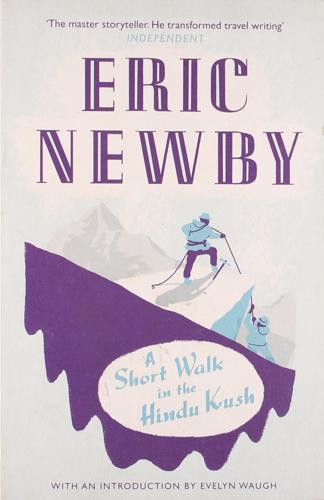
A Short Walk in the Hindu Kush
by Eric Newby · 1 Jan 1957 · 296pp · 87,567 words
A Short Walk in the Hindu Kush ERIC NEWBY Preface by Evelyn Waugh Epilogue by Hugh Carless Table of Contents Title Page Dedication Epigraph Preface Chapter One Life of a Salesman Chapter Two Death
…
de haute montagne dont les rares cols sont à plus de 5000 mètres d’altitude.’ L’Hindou Kouch et le Kaboulistan Raymond Furon Preface Mr Eric Newby must not be confused with the other English writer of the same surname. I began reading A Short Walk in the Hindu Kush in the
…
belief that it was the work of his namesake, whom I have long relished. I found something equally delightful but quite different. Mr Eric Newby, I have since learned, is the author of an exciting sea-log, The Last Grain Race, an account of how at the age of eighteen
…
we set off, he called out to Mustafa: ‘Take care, no treachery.’ Happily, Mustafa turned out to be another good companion. Long before I met Eric Newby, I had heard about him from Paul Rolo. When WW2 broke out in 1939, Paul, just graduated from Oxford, had enlisted in the Oxfordshire and
…
been transferred to PG 49 at Fontanellato near Parma. There he shared a dormitory with twenty others including Tony Davies,6 who later wrote that Eric Newby ‘had an irresponsible sense of humour, a delightful and witty personality, and quite the best physique I have seen on any man’. In July 1943
…
the Pacific; the tenth Travels (1298) by Marco Polo, while Peter Fleming’s News from Tartary (1936) comes in sixty-fourth. Where might you expect Eric Newby’s A Short Walk in the Hindu Kush to appear? Lists are liable to change but at present it takes its place at sixteenth. How
…
War and Peace: Growing up in Fascist Italy (London, Collins, 1991). Marrying Eric in 1946, she lived with him happily for over sixty years. 5. Eric Newby, A Traveller’s Life (London, Collins, 1992). 6. Tony Davies, When the Moon Rises (London, Leo Cooper, 1973). Davies made a remarkable attempt at escape
…
produced by Peter Firstbrook and directed by Amanda Theunissen. 9. In 2007, The Royal Society for Asian Affairs invited me to give a lecture on ‘Eric Newby, The Hindu Kush and The Ganges’ which was later published in Asian Affairs, vol. XXXVIII, no. III, November 2007. 10. In 1959, a group of
…
he founded Sandy Gall’s Afghanistan Appeal as a charity to provide orthopaedic equipment and workshops for disabled Afghans. 12. The Icon film Travellers’ Century: Eric Newby (TX 2008 BBC4) was directed by Harry Marshall and filmed by Benedict Allen. 13. Hallmark Hall of Fame television film Love and War 2001. Acknowledgements
…
The proud owner of a prize fighting partridge in the Ramgul. Wilfred Thesiger at sunup, Panjshir Valley. Portrait of two failures. MAPS About the Author ERIC NEWBY was born in London in 1919 and was educated at St Paul’s School. In 1938, he joined the four-masted Finnish barque Moshulu as
…
the Observer. He was made a CBE in 1994 and was awarded the Lifetime Achievement Award of the British Guild of Travel Writers in 2001. Eric Newby died in 2006. Praise From the reviews of A Short Walk in the Hindu Kush: ‘The most successful travel writer of his generation. It’s
…
’ Tales (ed.) Round Ireland in Low Gear What the Traveller Saw A Small Place in Italy A Merry Dance Around the World: The Best of Eric Newby Learning the Ropes: An Apprentice in the Last of the Windjammers Departures and Arrivals Copyright HarperPress An imprint of HarperCollinsPublishers 77–85 Fulham Palace Road
…
Published by Picador in 1974 in association with William Collins Sons Fiftieth anniversary edition published by Picador 2008 Copyright © Eric Newby 1958 Preface copyright © Evelyn Waugh 1959 Epilogue copyright © Hugh Carless 2008 Eric Newby asserts the moral right to be identified as the author of this work A catalogue record for this book is
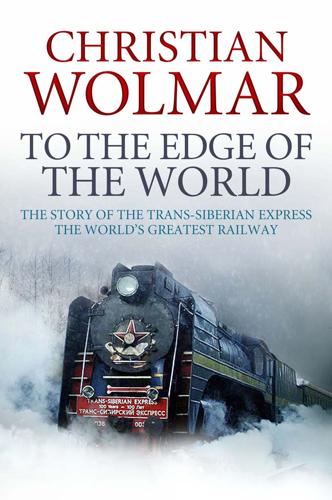
To the Edge of the World: The Story of the Trans-Siberian Express, the World's Greatest Railroad
by Christian Wolmar · 4 Aug 2014 · 323pp · 94,406 words
Trans-Siberian does only two thirds of the job. Nevertheless, it is an impressive one. The author of The Big Red Train Ride, the late Eric Newby, summed it up best: ‘There is no railway journey of comparable length anywhere in the world. The Trans-Siberian is the big train ride. All
…
that this was a serious suggestion. Sadly it was probably just a joke born of a casual remark. In any case, Chevkin, portrayed aptly by Eric Newby as ‘a man noted for his irascibility and a masterly obstructionist to boot’1 – a description that could be ascribed to many of his successors
…
other farm animals in the various districts around Chita, and the acreage sown in each of the districts around Tyumen, precisely the kind of thing Eric Newby in his book The Big Red Train Ride describes having to bear on his numerous tours of Soviet collective farms. It was born precisely of
…
on a par with the pound (but was far lower at black-market rates), made everything prohibitively expensive, although there was precious little to buy. Eric Newby, who travelled in the mid-1970s, played games with his minders, trying to dodge them whenever possible to take photographs and see places where technically
…
1934 some years later as To Peking: A Forgotten Journey from Moscow to Manchuria (1952, reprinted by Tauris Parke Paperbacks, 2009). Most recently there is Eric Newby’s The Big Red Train Ride (Weidenfeld & Nicolson, 1978), a hilarious account of a bleak journey at the height of communism, dodging the minders and
…
. 29 Westwood, A History of Russian Railways, p. 41. 30 Ibid., p. 64. 31 Quoted in ibid., p. 65. TWO: Holding on to Siberia 1 Eric Newby, The Big Red Train Ride (Penguin Books, 1980), p. 62. 2 Quoted in Tupper, To the Great Ocean, p. 39. 3 Ibid., p. 40. 4
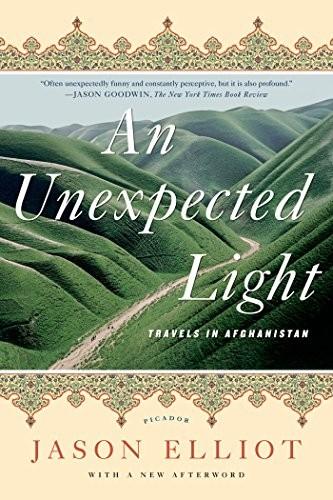
An Unexpected Light: Travels in Afghanistan
by Jason Elliot · 1 Aug 2011 · 535pp · 167,111 words
you on the London Underground. But for the most part the European eye is unaccustomed to such intensity and readily finds something intimidating in it: Eric Newby’s adventures in the Panjshīr valley and Nuristan are littered with references to ‘villanous-looking’, ‘murderous-looking’ and ‘mad-looking’ individuals, frequently ‘smelly’, ‘verminous’ and
…
age of human happiness, attained sometimes by children, more rarely by grown-ups, and it communicated its magic in some degree to all of us. Eric Newby, A Short Walk in the Hindu Kush WE HAD NOT YET REACHED the edge of the town before the first floundering. A government fighter flagged
…
. The great explorer used to escape from the heat of the Iraqi summers by taking long rambles in the Hindu Kush, where his meeting with Eric Newby and Hugh Carless produced one of the funniest endings in travel literature.* U was hopeless; but V brought to mind another of the most intriguing
…
culling of beauty from despair that will resonate long after the last page has been turned.” —Trips “Everything a travel book should be—truly memorable.” —Eric Newby “A tour de force of travel and memory: vividly evocative, courageous, and self-aware.” —Colin Thubron “An astonishing debut: one of the most remarkable travel
…
cab. He was stuffed and kept in the colour sergeants’ mess for a few years, then moved to the regimental museum in Reading. * Described in Eric Newby’s A Short Walk in the Hindu Kush, Picador, 1981. * Lieutenant (later Captain) Arthur Conolly of the 6th Bengal Native Light Cavalry was one of
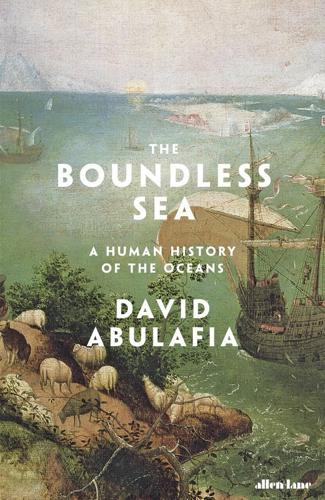
The Boundless Sea: A Human History of the Oceans
by David Abulafia · 2 Oct 2019 · 1,993pp · 478,072 words
south of New Zealand towards Cape Horn, which was generally much more manageable when travelling eastwards out of the Pacific than in the other direction: Eric Newby reported rain and snow as he rounded the cape aboard Erikson’s fast windjammer the Moshulu in 1939, but he also says that ‘the sea
Arabian Sands
by Wilfred Thesiger · 15 Sep 1959 · 403pp · 138,026 words
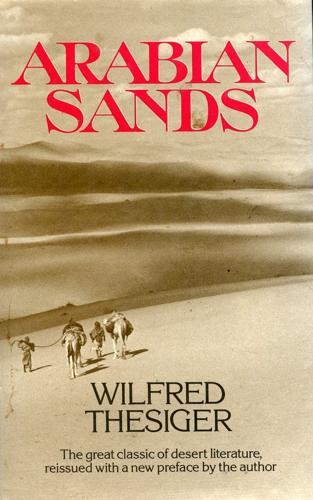
incidents typically involving public-school maharajahs, colourful crowded bus rides and reveries on ancient monuments. One of the leading exponents of the new style was Eric Newby, whose book A Short Walk in the Hindu Kush was published in the same year as Arabian Sands. Newby was a decorated Special Forces veteran
London Under
by Peter Ackroyd · 1 Nov 2011
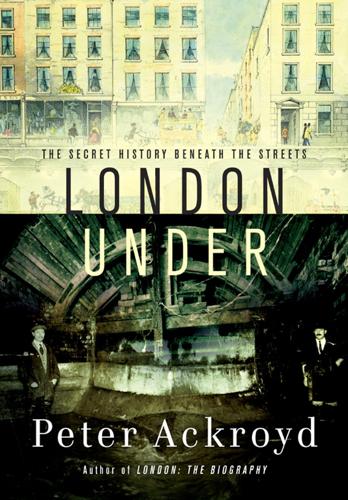
area of marsh and swamp, so that the waters of the Tyburn in the vicinity were not much used. In A Traveller’s Life (1982) Eric Newby recounts how he came upon the stream in 1963 and recalls that “the bottom of the Tyburn was littered with some bizarre sorts of jetsam
…
half before out of danger. The air was close, and made us faint. However we got safe to Holborn Bridge.…” In A Traveller’s Life Eric Newby reflected on a journey within the Tyburn sewer in the early 1960s. He was told to be alert to the presence of acetylene, petrol, carbon

Lonely Planet Florence & Tuscany
by Lonely Planet, Virginia Maxwell and Nicola Williams · 1 Dec 2013 · 874pp · 154,810 words
Sun: At Home in Italy; Bella Tuscany; In Tuscany; Every Day in Tuscany; 1996–2010) » Don McPherson (Ah! Tuscany: The Enlightenment of an Expatriate; 2006) » Eric Newby (A Small Place in Italy; 1994) The 19th Century Onwards After its stellar start during the Renaissance, Tuscany took a literary break in the 17th

Florence & Tuscany
by Lonely Planet · 928pp · 159,837 words
Sun: At Home in Italy; Bella Tuscany; In Tuscany; Every Day in Tuscany; 1996–2010) » Don McPherson ( Ah! Tuscany: The Enlightenment of an Expatriate; 2006) » Eric Newby ( A Small Place in Italy; 1994) Through Foreign Eyes The trend of setting English-language novels in Tuscany kicked off during the era of the
In the Graveyard of Empires: America's War in Afghanistan
by Seth G. Jones · 12 Apr 2009 · 566pp · 144,072 words
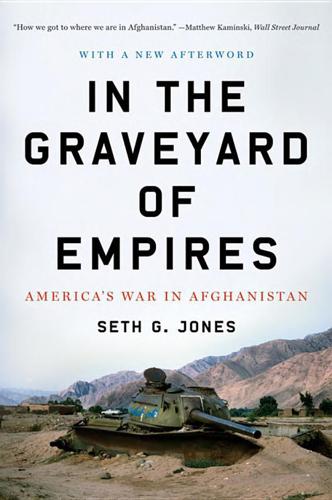
of India for such conquerors as Alexander, as well as invaders such as Genghis Khan, Timur, and Babur. And they inspired the British travel writer Eric Newby, who wrote, during his trek through the Hindu Kush, “Here on the Arayu, one of the lonely places of the earth with all the winds
…
, book 2, vol. 7, p. 147. Also see, for example, Lewis V. Cummings, Alexander the Great (Boston: Houghton Mifflin Company, 1940), pp. 280–81. 5. Eric Newby, A Short Walk in the Hindu Kush (London: Martin Secker, 1958), p. 243. 6. See, for example, Frank L. Holt, Into the Land of Bones

Cyclopedia
by William Fotheringham · 22 Sep 2011 · 428pp · 117,419 words
it because his sense of humor never flags. Probably the best constructed ending among all the fine tomes listed here. Round Ireland in Low Gear, Eric Newby Pretty eccentric tale, as the travel-writing great sets off in the depths of winter with wife Wanda to contend with Irish weather, Irish signposts
The Places in Between
by Rory Stewart · 1 Jan 2004 · 299pp · 89,342 words
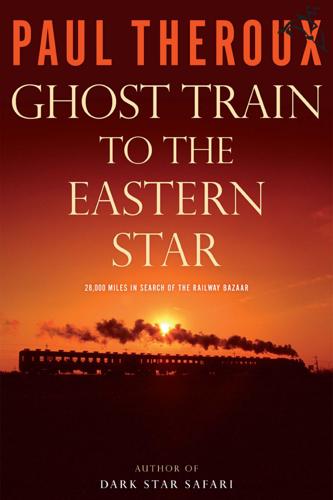
Ghost Train to the Eastern Star: On the Tracks of the Great Railway Bazaar
by Paul Theroux · 9 Sep 2008 · 651pp · 190,224 words
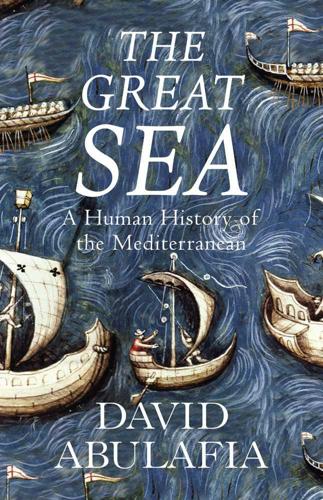
The Great Sea: A Human History of the Mediterranean
by David Abulafia · 4 May 2011 · 1,002pp · 276,865 words
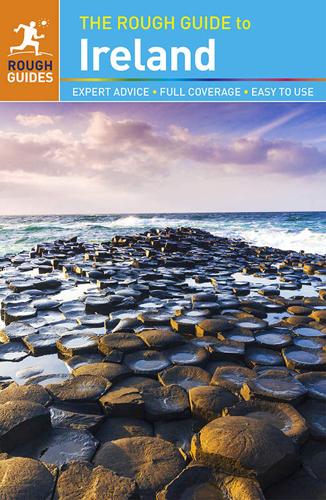
The Rough Guide to Ireland
by Clements, Paul · 2 Jun 2015
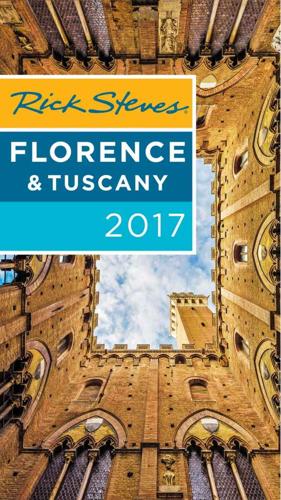
Rick Steves Florence & Tuscany 2017
by Rick Steves · 8 Nov 2016 · 920pp · 237,085 words
Independent Diplomat: Dispatches From an Unaccountable Elite
by Carne Ross · 25 Apr 2007 · 212pp · 68,690 words