
To Save Everything, Click Here: The Folly of Technological Solutionism
by Evgeny Morozov · 15 Nov 2013 · 606pp · 157,120 words
Attempt at a ‘Compositionist Manifesto,’” New Literary History 41, no. 3 (2010): 471–490. 6 a subject I address at length in The Net Delusion: Evgeny Morozov, The Net Delusion: The Dark Side of Internet Freedom (New York: PublicAffairs, 2012), 308–311. 6 In his influential book The Rhetoric of Reaction: Albert
…
those who know already”: Oakeshott, “Political Education.” 11 what’s going on in our kitchens: this section draws considerably on an earlier article of mine: Evgeny Morozov, “Stay Out of My Kitchen, Robots,” Slate, August 27, 2012, http://www.slate.com/articles/technology/future_tense/2012/08/why_you_don_t_want
…
. 6 (September 2012): 726–743; I’ve written about Sørensen’s research in my Slate column, from which the following few paragraphs are drawn: see Evgeny Morozov, “Kickstarter Will Not Save Artists from the Entertainment Industry’s Shackles,” Slate, September 25, 2012http://www.slate.com/articles/technology/future_tense/2012/09/kickstarter
…
, and the Smartest Person in the Room Is the Room (New York: Basic Books, 2012), 17. Also, this is my review of Weinberger’s book: Evgeny Morozov, “What Lies Beneath,” The Daily, January 1, 2012, http://www.thedaily.com/page/2012/01/01/010112-opinions-books-weinberger-morozov-1–3. 38 “a
…
., 125. 162 “We are entering a world”: ibid., 7. 163 already employ algorithms to produce stories automatically: for more on this, see my Slate column: Evgeny Morozov, “A Robot Stole My Pulitzer,” Slate, March 19, 2012, http://www.slate.com/articles/technology/future_tense/2012/03/narrative_science_robot_journalists_customized_news
…
the ugliest words in the English language: I’ve discussed the myth of disintermediation in a Slate column, from which this section partly draws. See Evgeny Morozov, “Muzzled by the Bots,” Slate, October 26, 2012, http://www.slate.com/articles/technology/future_tense/2012/10/disintermediation_we_aren_t_seeing_fewer_gatekeepers
…
the Room Is the Room (New York: Basic Books, 2012), 35. I’ve discussed Weinberger’s claims about Hunch in my review of his book: Evgeny Morozov, “What Lies Beneath,” The Daily, January 1, 2012, http://www.thedaily.com/page/202/01/01/010112-opinions-books-weinberger-morozov-1–3. 266 “it
…
Economic Forum, Devos Wu, Tim Wulff, Bettina Yelp YouTube Yu, Harlan Zagat Zamzee Zichermann, Gabe Zittrain, Jonathan and digital preemption Zuckerberg, Mark Zuckerman, Ethan Zynga Evgeny Morozov (@evgenymorozov) is the author of The Net Delusion: The Dark Side of Internet Freedom, a New York Times Notable Book of 2011 and winner of
…
Washington Post as “a redoubtable gadfly.” His legacy will endure in the books to come. Peter Osnos, Founder and Editor-at-Large Copyright © 2013 by Evgeny Morozov. Published in the United States by PublicAffairs™, a Member of the Perseus Books Group All rights reserved. No part of this book may be reproduced
The Net Delusion: The Dark Side of Internet Freedom
by Evgeny Morozov · 16 Nov 2010 · 538pp · 141,822 words
Xi Jingping Xing Xinhua News Agency Yahoo Yakemenko, Boris Yandex Money Yevtushenko, Yevgeny YouTube Yugoslavia Zimbabwe Zittrain, Jonathan Zizek, Slavoj Zuckerman, Ethan ABOUT THE AUTHOR Evgeny Morozov is a contributing editor to Foreign Policy and Boston Review and a Schwartz Fellow at the New American Foundation. Morozov is currently also a visiting
…
is certainly not the proudest moment in my career, especially as all those nuances were lost on most media covering the events. Copyright © 2011 by Evgeny Morozov Published in the United States by PublicAffairs™, a member of the Perseus Books Group. All rights reserved. No part of this book may be reproduced

Blank Space: A Cultural History of the Twenty-First Century
by W. David Marx · 18 Nov 2025 · 642pp · 142,332 words
-wing executives and banning a few websites, however, could not prevent all bad actors from using digital tools to sow political chaos and division. Academic Evgeny Morozov had long predicted these developments. Morozov grew up in Belarus and began his career at an NGO working to promote democracy through independent journalism. His
…
VR, May 10, 2017, https://www.roadtovr.com/oculus-founder-palmer-luckey-first-interview-since-leaving-oculus-facebook. GO TO NOTE REFERENCE IN TEXT Academic Evgeny Morozov: Noam Cohen, “The Internet’s Verbal Contrarian,” New York Times, August 14, 2013, https://www.nytimes.com/2013/08/15/business/media/the-internets-verbal
…
-contrarian.html. GO TO NOTE REFERENCE IN TEXT “internet does not”: Evgeny Morozov, “Two Decades of the Web: A Utopia No Longer,” Prospect, June 22, 2011, https://www.prospectmagazine.co.uk/ideas/technology/49273/two-decades-of-the
…
-utopia-no-longer. GO TO NOTE REFERENCE IN TEXT industry dismissed Morozov: Cohen, “Internet’s Verbal Contrarian.” GO TO NOTE REFERENCE IN TEXT “Teflon industry”: Evgeny Morozov, “Why We Are Allowed to Hate Silicon Valley,” Frankfurter Allgemeine, November 11, 2013, https://www.faz.net/aktuell/feuilleton/debatten/the-internet-ideology-why-we
Value of Everything: An Antidote to Chaos The
by Mariana Mazzucato · 25 Apr 2018 · 457pp · 125,329 words
into areas of our lives - our homes, our vehicles, even our private relationships - that were previously beyond its scope and to commodify them.65 As Evgeny Morozov has warned, it risks turning us all into ‘perpetual hustlers',66 with all of our lives up for sale, while at the same time undermining
…
, for example, are unhappy with the conditions Amazon insists upon and are asking for better ones. But they have no leverage at all, because - as Evgeny Morozov puts it - ‘there is no second Amazon they can turn to'.72 The powerful network effects in the two-sided market have entrenched these companies
…
. J. Sandel, What Money Can't Buy: The Moral Limits of Markets (London and New York: Allen Lane and Farrar, Straus and Giroux, 2013). 66. Evgeny Morozov, ‘Don't believe the hype, the “sharing economy” masks a failing economy', the Guardian, 28 September 2014: http://www.theguardian.com/commentisfree/2014/sep/28
…
/sharing-economy-internet-hype-benefits-overstated-evgeny-morozov; Evgeny Morozov, ‘Cheap cab ride? You must have missed Uber's true cost', the Guardian, 31 January 2016: http://www.theguardian.com/commentisfree/2016/jan/31/cheap
…
-cab- ride-uber-true-cost-google-wealth-taxation 67. Evgeny Morozov, ‘Where Uber and Amazon rule: welcome to the world of the platform', the Guardian, 7 June 2015: http://www.theguardian.com/technology/2015/jun/07
…
interpretation of the so-called ‘new economy'. 77. https://www.theguardian.com/commentisfree/2016/dec/04/data-populists-must-seize-information-for-benefit-of-all-evgeny-morozov 78. H. A. Simon, ‘Public administration in today's world of organizations and markets', PS: Political Science and Politics, December 2000, p. 756. 79. https
…
“sharing economy” masks a failing economy', the Guardian, 28 September 2014: http://www.theguardian.com/commentisfree/2014/sep/28/sharing- economy-internet-hype-benefits-overstated-evgeny-morozov Morozov, E., ‘Silicon Valley likes to promise “digital socialism” - but it is selling a fairy tale', the Guardian, 28 February 2015. Morozov, E., ‘Where Uber
…
of us all', the Guardian, 4 December 2016: https://www.theguardian.com/commentisfree/2016/dec/04/data- populists-must-seize-information-for-benefit-of-all-evgeny-morozov Moulton, B. R., The System of National Accounts for the New Economy: What Should Change? (Washington, DC: Bureau of Economic Analysis, US Department of Commerce
Future Politics: Living Together in a World Transformed by Tech
by Jamie Susskind · 3 Sep 2018 · 533pp
and controlled every aspect of human existence.27 Some writers have tried to pin down what they see as the ideology of our own time. Evgeny Morozov, for instance, has written of the ‘Google Doctrine’ (‘the enthusiastic belief in the liberating power of technology accompanied by the irresistible urge to enlist Silicon
…
general use or subject to constraints. It could be purchased and held by the state. It could be rented, ‘shared’, or loaned for charitable purposes. Evgeny Morozov suggests that it could accrue to a ‘national data fund, co-owned by all citizens’ with commercial access subject to heavy competition and regulation.75
…
News" VK.COM/WSNWS Notes 369 27. E. M. Forster, The Machine Stops (London: Penguin, 2011). 28. Evgeny Morozov, The Net Delusion: How Not to Liberate the World (London: Penguin, 2011), xiii. 29. Ibid. 30. Evgeny Morozov, To Save Everything, Click Here:Technology, Solutionism, and the Urge to Fix Problems That Don’t Exist
…
://www.nesta.org.uk/sites/ default/files/digital_democracy.pdf> (accessed 1 December 2017). 22. Full Fact <https://fullfact.org/> (accessed 1 December 2017). 23. Evgeny Morozov, To Save Everything Click Here:Technology, Solutionism, and the Urge to Fix Problems that Don’t Exist (London: Penguin, 2014), 119; Andy Greenberg, ‘Now Anyone
…
general point is the same. 73. Allen, Technology and Inequality, Kindle Locations 2600–2601. 74. Allen, Technology and Inequality, Kindle Locations 2592, 2645–2647. 75. Evgeny Morozov, ‘To Tackle Google’s Power, Regulators Have to Go After its Ownership of Data’, The Guardian, 2 July 2017. <https:// www.theguardian.com/technology/2017

Geek Heresy: Rescuing Social Change From the Cult of Technology
by Kentaro Toyama · 25 May 2015 · 494pp · 116,739 words
than ever.” His book is ominously subtitled What the Internet Is Doing to Our Brains. In The Net Delusion: The Dark Side of Internet Freedom, Evgeny Morozov catalogs the myriad ways in which the Internet boosts, rather than contains, the power of repressive regimes: in China, social media is a tool for
…
for health systems in public health, with the social worker’s idea of social development, with Easterly’s problem-solving systems in international development, with Evgeny Morozov’s polemic against technological solutionism, with Diane Ravitch and David L. Kirp’s critique of quick-fix approaches to American education, with 1980s communitarianism and
…
Brockman, Joseph Calamia, Amy Caldwell, Laurie Harting, Jeff Kehoe, Rafe Sagalyn, Jeevan Sivasubramaniam, Anna Sproul-Latimer, Andrew Stuart, and Elizabeth Wales. Authors Ben Mezrich and Evgeny Morozov provided timely advice. Thank you. I’m also grateful to Patrick Newell for inviting me to speak at the beautifully organized TEDxTokyo in 2010 (http
…
: Shrink-Wrapped Quick Fixes Technology as an Exemplar of the Packaged Intervention 1.My use of the term “packaged interventions” is very similar to what Evgeny Morozov (2013) calls “technological solutions” and what William Easterly (2014) calls “technical” or “technocratic solutions.” I didn’t want to use the word “solution,” though, since
The Best Business Writing 2013
by Dean Starkman · 1 Jan 2013 · 514pp · 152,903 words
Los Angeles Times Part VI. Big Think 15. Trade-offs Between Inequality, Productivity, and Employment Steve Randy Waldman Interfluidity 16. The Naked and the TED Evgeny Morozov The New Republic Part VII. Adventures in Finance 17. Wall Street Bonus Withdrawal Means Trading Aspen for Coupons Max Abelson Bloomberg 18. The Tale of
…
” was, and why it was such a debacle for JPMorgan Chase, Matt Levine will walk you through it like no one else has done. And Evgeny Morozov, master of the highbrow takedown, flays and fricassees the vacuousness that often passes as wisdom promulgated under the TED brand. Try to read it without
…
substitute for the human capital that every third-world slum dweller acquires, the capacity and confidence to improvise and get by with next to nothing. Evgeny Morozov 16. The Naked and the TED The New Republic No one has mastered the art of the long takedown review quite like
…
Evgeny Morozov. In taking on some new e-books published by the increasingly ubiquitous TED conference brand (Hybrid Reality: Thriving in the Emerging Human-Technology Civilization, by
…
31, 2012. © 2012 by Steve Randy Waldman. Reprinted by permission of the author. “The Naked and the TED,” by Evgeny Morozov. First published in The New Republic, August 2, 2012. © 2012 by Evgeny Morozov. Reprinted by permission of the author. “Wall Street Bonus Withdrawal Means Trading Aspen for Coupons” by Max Abelson, from Bloomberg
…
Crisis. Her first book, The Smartest Guys in the Room, about the fall of Enron, cowritten with Peter Elkind, became an Academy Award–nominated documentary. EVGENY MOROZOV is a writer and researcher who studies the political and social implications of technology. A visiting scholar at Stanford University, he is the author of
Digital Disconnect: How Capitalism Is Turning the Internet Against Democracy
by Robert W. McChesney · 5 Mar 2013 · 476pp · 125,219 words
, Des Freedman, James K. Galbraith, Peter Hart, Matthew Hindman, Amy Holland, Hannah Holleman, Janine Jackson, Paul Krugman, Rebecca MacKinnon, Fred Magdoff, John Mage, Greg Mitchell, Evgeny Morozov, John Naughton, Eric Newton, Molly Niesen, Rich Potter, Einar Scalloppsen, Travers Scott, Norman Stockwell, and Kristina Williams. This book is for Lucy and Amy, and
…
to resemble animals converging on shrinking oases of old media in a depleted desert.”34 Rebecca MacKinnon in her 2012 Consent of the Networked and Evgeny Morozov in his 2011 The Net Delusion each reject the idea that the Internet will necessarily lead to democratic political revolutions worldwide. They point out that
…
interest. “All too often policymakers thinking to regulate Google have preferred to treat it as an equal of Human Rights Watch rather than of Halliburton,” Evgeny Morozov writes, adding that “if we are serious about making the Internet deliver on its democratic potential, we will need to reconsider this attitude.”83 The
…
quotes are Aharon Kantorovich and Yuval Ne’eman. 34. Lanier, You Are Not a Gadget, 86. 35. MacKinnon, Consent of the Networked, especially chap. 3; Evgeny Morozov, The Net Delusion: The Dark Side of Internet Freedom (New York: PublicAffairs, 2011). 36. Michael Massing writes that those who have followed the Arab Spring
…
Media Is Costing Us All,” Huffington Post, Mar. 8, 2012, huffingtonpost.com/arianna-huffington/social-media_b_1333499.html. 49. John Naughton, Comments responding to Evgeny Morozov, Media, Power & Revolution conference, University of London, Apr. 2, 2012. 50. Mark Bauerlein edited a 2011 anthology with arguments “for and against” social media, including
…
Alperovitz, “Wall Street Is Too Big to Regulate,” New York Times, July 23, 2012, A19. 82. André Schiffrin, Words and Money (London: Verso, 2011). 83. Evgeny Morozov, The Net Delusion: The Dark Side of Internet Freedom, paperback edition (New York: PublicAffairs, 2011), 323. 84. For recent examples of how regulators condone what
Terms of Service: Social Media and the Price of Constant Connection
by Jacob Silverman · 17 Mar 2015 · 527pp · 147,690 words
Jimmy Wales to Oracle’s Larry Ellison. Unabashed cyber-libertarianism, combined with an avaricious and wholly unconflicted brand of consumerism, permeates America’s digital elite. Evgeny Morozov, a fierce critic of the industry, highlighted two important strains of belief in his recent books: the congenital utopianism of Silicon Valley moguls and their
…
that “most trends in Sina Weibo [a Chinese micro-blogging service] are due to the continuous retweets of a small percentage of fraudulent accounts.” As Evgeny Morozov writes, “The hidden initial manipulations of the PR industry are only made worse by the business incentives of platforms such as YouTube and Facebook, which
…
executive’s world, “More data is always better,” helping customers and clients alike, with no thought toward possible conflicts of interest or privacy violations. As Evgeny Morozov warned, “Given how much they know about their clients, these companies can perfect the art of hidden persuasion and manipulation in ways that Madison Avenue
…
stimulus. Information is power, particularly in this enervated economy, so we take on as much of it as we can handle. We succumb to what Evgeny Morozov calls “the many temptations of information consumerism.” This posture promises that anything is solvable—social and environmental and economic problems, sure, but more urgent, the
…
in Chinese Social Media.” Social Science Research Network. Dec. 2, 2013. papers.ssrn.com/sol3/papers.cfm?abstract_id=2362561. 84 “when one greedy industry”: Evgeny Morozov. To Save Everything, Click Here: The Folly of Technological Solutionism. New York: Public Affairs, 2013, 157. 85 YTView menu: Chase Hoffberger. “I Bought Myself 60
…
28, 2014. blog.okcupid.com/index.php/we-experiment-on-human-beings. 204 “That’s how Web sites work”: ibid. 204 Variety of credit data: Evgeny Morozov. “Your Social Networking Credit Score.” Slate. Jan. 30, 2013. slate.com/articles/technology/future_tense/2013/01/wonga_lenddo_lendup_big_data_and_social_networking
…
.com/articles/technology/books/2013/05/jaron_lanier_s_who_owns_the_future_review_facebookers_of_the_world_unite.single.html. 268 Resurgence of flânerie: Evgeny Morozov. “The Death of the Cyberflâneur.” New York Times. Feb. 4, 2012. nytimes.com/2012/02/05/opinion/sunday/the-death-of-the-cyberflaneur.html. 270
…
-inquiry./ 319 “A widespread revolt”: Lasch. Culture of Narcissism, 245. 320 “what we ‘like’ ”: Hartzog and Selinger. “Big Data in Small Hands.” 322 “information consumerism”: Evgeny Morozov. “The Price of Hypocrisy.” Frankfurter Allgemeine. July 24, 2013. faz.net/aktuell/feuilleton/debatten/ueberwachung/information-consumerism-the-price-of-hypocrisy-12292374.html. 323 “more
The End of Power: From Boardrooms to Battlefields and Churches to States, Why Being in Charge Isn’t What It Used to Be
by Moises Naim · 5 Mar 2013 · 474pp · 120,801 words
and counter-cases that illustrate the arguments of Internet optimists and techno-futurists like Clay Shirky as well as the counter-arguments of skeptics like Evgeny Morozov and Malcolm Gladwell. Thus, to understand why the barriers to power have become porous, we need to look at deeper transformations—to changes that began
…
. That is not insignificant, but it doesn’t constitute the kind of risk-taking activism that propelled so many of the great social movements. Author Evgeny Morozov calls this new, low-involvement and low-impact participation “slacktivism.” It is, he says, “the ideal type of activism for a lazy generation: why bother
…
, Tom Carver, Elkyn Chaparro, Lourdes Cue, Wesley Clark, Tom Friedman, Lou Goodman, Victor Halberstadt, Ivan Krastev, Steven Kull, Ricardo Lagos, Sebastian Mallaby, Luis Alberto Moreno, Evgeny Morozov, Dick O’Neill, Minxin Pei, Maite Rico, Gianni Riotta, Klaus Schwab, Javier Solana, George Soros, Larry Summers, Gerver Torres, Martin Wolf, Robert Wright, Ernesto Zedillo
The People's Platform: Taking Back Power and Culture in the Digital Age
by Astra Taylor · 4 Mar 2014 · 283pp · 85,824 words
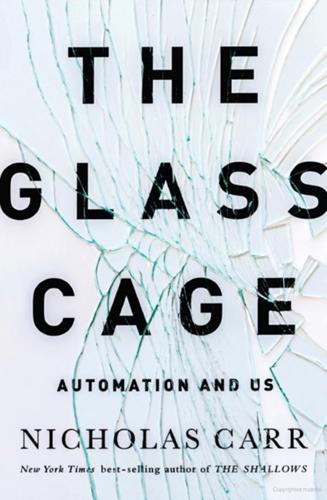
The Glass Cage: Automation and Us
by Nicholas Carr · 28 Sep 2014 · 308pp · 84,713 words
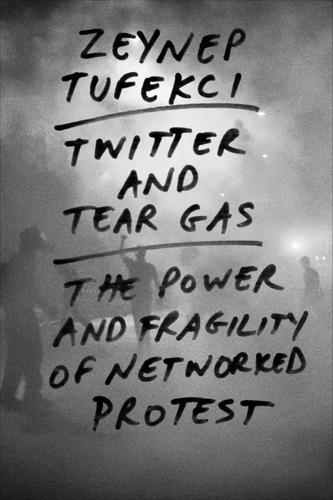
Twitter and Tear Gas: The Power and Fragility of Networked Protest
by Zeynep Tufekci · 14 May 2017 · 444pp · 130,646 words
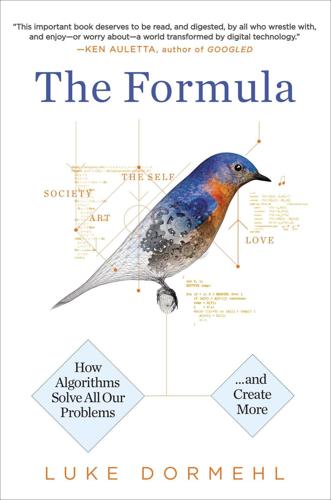
The Formula: How Algorithms Solve All Our Problems-And Create More
by Luke Dormehl · 4 Nov 2014 · 268pp · 75,850 words
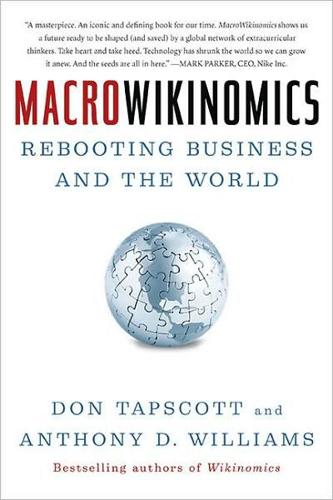
MacroWikinomics: Rebooting Business and the World
by Don Tapscott and Anthony D. Williams · 28 Sep 2010 · 552pp · 168,518 words

Barefoot Into Cyberspace: Adventures in Search of Techno-Utopia
by Becky Hogge, Damien Morris and Christopher Scally · 26 Jul 2011 · 171pp · 54,334 words
The Costs of Connection: How Data Is Colonizing Human Life and Appropriating It for Capitalism
by Nick Couldry and Ulises A. Mejias · 19 Aug 2019 · 458pp · 116,832 words
The End of Absence: Reclaiming What We've Lost in a World of Constant Connection
by Michael Harris · 6 Aug 2014 · 259pp · 73,193 words
Machines of Loving Grace: The Quest for Common Ground Between Humans and Robots
by John Markoff · 24 Aug 2015 · 413pp · 119,587 words
Future Perfect: The Case for Progress in a Networked Age
by Steven Johnson · 14 Jul 2012 · 184pp · 53,625 words

Black Code: Inside the Battle for Cyberspace
by Ronald J. Deibert · 13 May 2013 · 317pp · 98,745 words
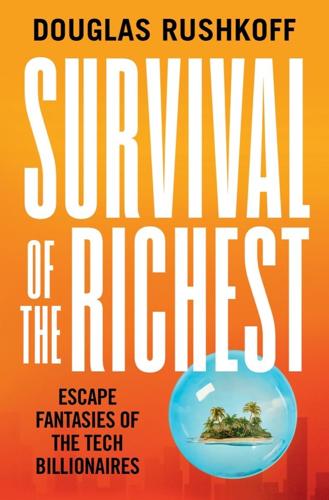
Survival of the Richest: Escape Fantasies of the Tech Billionaires
by Douglas Rushkoff · 7 Sep 2022 · 205pp · 61,903 words
The People vs. Democracy: Why Our Freedom Is in Danger and How to Save It
by Yascha Mounk · 15 Feb 2018 · 497pp · 123,778 words
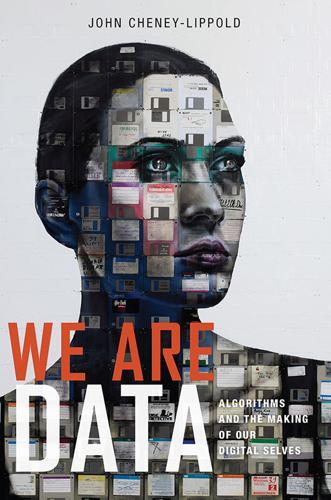
We Are Data: Algorithms and the Making of Our Digital Selves
by John Cheney-Lippold · 1 May 2017 · 420pp · 100,811 words

A Burglar's Guide to the City
by Geoff Manaugh · 17 Mar 2015 · 238pp · 75,994 words

Likewar: The Weaponization of Social Media
by Peter Warren Singer and Emerson T. Brooking · 15 Mar 2018

Virtual Competition
by Ariel Ezrachi and Maurice E. Stucke · 30 Nov 2016
In the Plex: How Google Thinks, Works, and Shapes Our Lives
by Steven Levy · 12 Apr 2011 · 666pp · 181,495 words
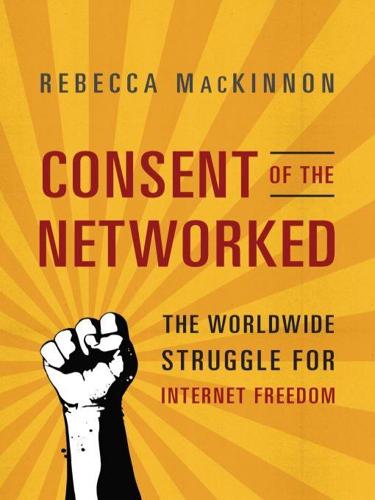
Consent of the Networked: The Worldwide Struggle for Internet Freedom
by Rebecca MacKinnon · 31 Jan 2012 · 390pp · 96,624 words

The Retreat of Western Liberalism
by Edward Luce · 20 Apr 2017 · 223pp · 58,732 words

Listen, Liberal: Or, What Ever Happened to the Party of the People?
by Thomas Frank · 15 Mar 2016 · 316pp · 87,486 words

This Machine Kills Secrets: Julian Assange, the Cypherpunks, and Their Fight to Empower Whistleblowers
by Andy Greenberg · 12 Sep 2012 · 461pp · 125,845 words
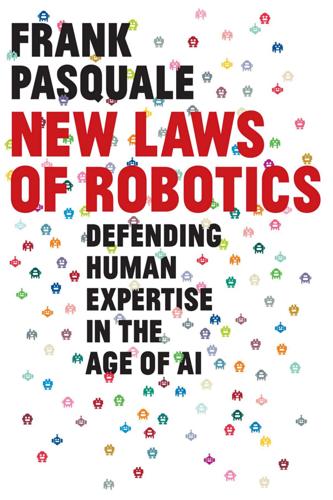
New Laws of Robotics: Defending Human Expertise in the Age of AI
by Frank Pasquale · 14 May 2020 · 1,172pp · 114,305 words
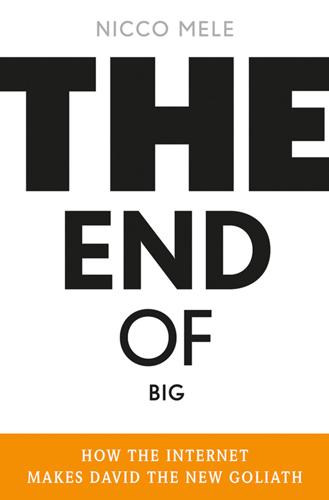
The End of Big: How the Internet Makes David the New Goliath
by Nicco Mele · 14 Apr 2013 · 270pp · 79,992 words
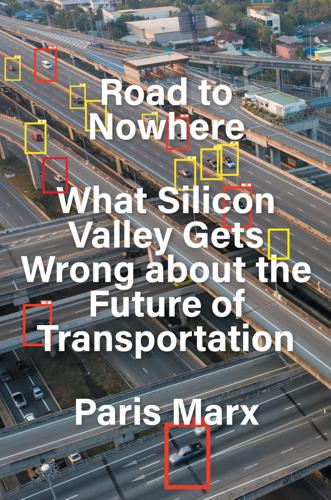
Road to Nowhere: What Silicon Valley Gets Wrong About the Future of Transportation
by Paris Marx · 4 Jul 2022 · 295pp · 81,861 words
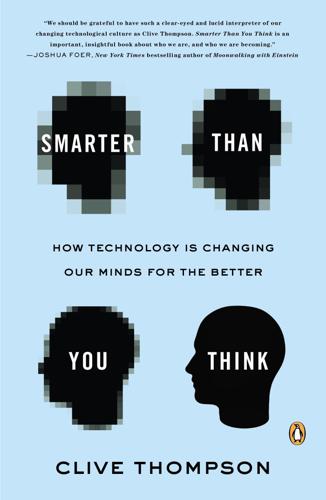
Smarter Than You Think: How Technology Is Changing Our Minds for the Better
by Clive Thompson · 11 Sep 2013 · 397pp · 110,130 words

Fancy Bear Goes Phishing: The Dark History of the Information Age, in Five Extraordinary Hacks
by Scott J. Shapiro · 523pp · 154,042 words
Free Speech: Ten Principles for a Connected World
by Timothy Garton Ash · 23 May 2016 · 743pp · 201,651 words
This Will Make You Smarter: 150 New Scientific Concepts to Improve Your Thinking
by John Brockman · 14 Feb 2012 · 416pp · 106,582 words

The Smart Wife: Why Siri, Alexa, and Other Smart Home Devices Need a Feminist Reboot
by Yolande Strengers and Jenny Kennedy · 14 Apr 2020

Vanished Kingdoms: The Rise and Fall of States and Nations
by Norman Davies · 30 Sep 2009 · 1,309pp · 300,991 words

There's a War Going on but No One Can See It
by Huib Modderkolk · 1 Sep 2021 · 295pp · 84,843 words
The Great Firewall of China
by James Griffiths; · 15 Jan 2018 · 453pp · 114,250 words
Is the Internet Changing the Way You Think?: The Net's Impact on Our Minds and Future
by John Brockman · 18 Jan 2011 · 379pp · 109,612 words
Machine, Platform, Crowd: Harnessing Our Digital Future
by Andrew McAfee and Erik Brynjolfsson · 26 Jun 2017 · 472pp · 117,093 words

Smart Cities: Big Data, Civic Hackers, and the Quest for a New Utopia
by Anthony M. Townsend · 29 Sep 2013 · 464pp · 127,283 words
Pax Technica: How the Internet of Things May Set Us Free or Lock Us Up
by Philip N. Howard · 27 Apr 2015 · 322pp · 84,752 words

The Future of the Professions: How Technology Will Transform the Work of Human Experts
by Richard Susskind and Daniel Susskind · 24 Aug 2015 · 742pp · 137,937 words
Dangerous Ideas: A Brief History of Censorship in the West, From the Ancients to Fake News
by Eric Berkowitz · 3 May 2021 · 412pp · 115,048 words
Breaking News: The Remaking of Journalism and Why It Matters Now
by Alan Rusbridger · 14 Oct 2018 · 579pp · 160,351 words
Deep Work: Rules for Focused Success in a Distracted World
by Cal Newport · 5 Jan 2016

The Age of Surveillance Capitalism
by Shoshana Zuboff · 15 Jan 2019 · 918pp · 257,605 words
The Corruption of Capitalism: Why Rentiers Thrive and Work Does Not Pay
by Guy Standing · 13 Jul 2016 · 443pp · 98,113 words

Utopia Is Creepy: And Other Provocations
by Nicholas Carr · 5 Sep 2016 · 391pp · 105,382 words

The Black Box Society: The Secret Algorithms That Control Money and Information
by Frank Pasquale · 17 Nov 2014 · 320pp · 87,853 words

No Such Thing as a Free Gift: The Gates Foundation and the Price of Philanthropy
by Linsey McGoey · 14 Apr 2015 · 324pp · 93,606 words

Vanished Kingdoms: The History of Half-Forgotten Europe
by Norman Davies · 27 Sep 2011
Revolution in the Age of Social Media: The Egyptian Popular Insurrection and the Internet
by Linda Herrera · 14 Apr 2014 · 186pp · 49,595 words

Computer: A History of the Information Machine
by Martin Campbell-Kelly and Nathan Ensmenger · 29 Jul 2013 · 528pp · 146,459 words
What's Yours Is Mine: Against the Sharing Economy
by Tom Slee · 18 Nov 2015 · 265pp · 69,310 words
Better Living Through Criticism: How to Think About Art, Pleasure, Beauty, and Truth
by A. O. Scott · 9 Feb 2016 · 218pp · 65,422 words

Utopias: A Brief History From Ancient Writings to Virtual Communities
by Howard P. Segal · 20 May 2012 · 299pp · 19,560 words

Hiding in Plain Sight: The Invention of Donald Trump and the Erosion of America
by Sarah Kendzior · 6 Apr 2020
What Algorithms Want: Imagination in the Age of Computing
by Ed Finn · 10 Mar 2017 · 285pp · 86,853 words
The Smartphone Society
by Nicole Aschoff

The Impulse Society: America in the Age of Instant Gratification
by Paul Roberts · 1 Sep 2014 · 324pp · 92,805 words

WikiLeaks and the Age of Transparency
by Micah L. Sifry · 19 Feb 2011 · 212pp · 49,544 words
The Stack: On Software and Sovereignty
by Benjamin H. Bratton · 19 Feb 2016 · 903pp · 235,753 words
The People vs Tech: How the Internet Is Killing Democracy (And How We Save It)
by Jamie Bartlett · 4 Apr 2018 · 170pp · 49,193 words
Live Work Work Work Die: A Journey Into the Savage Heart of Silicon Valley
by Corey Pein · 23 Apr 2018 · 282pp · 81,873 words

The Lonely Century: How Isolation Imperils Our Future
by Noreena Hertz · 13 May 2020 · 506pp · 133,134 words
Data and Goliath: The Hidden Battles to Collect Your Data and Control Your World
by Bruce Schneier · 2 Mar 2015 · 598pp · 134,339 words
Future Crimes: Everything Is Connected, Everyone Is Vulnerable and What We Can Do About It
by Marc Goodman · 24 Feb 2015 · 677pp · 206,548 words

Trees on Mars: Our Obsession With the Future
by Hal Niedzviecki · 15 Mar 2015 · 343pp · 102,846 words
If Mayors Ruled the World: Dysfunctional Nations, Rising Cities
by Benjamin R. Barber · 5 Nov 2013 · 501pp · 145,943 words
The Industries of the Future
by Alec Ross · 2 Feb 2016 · 364pp · 99,897 words

Open Standards and the Digital Age: History, Ideology, and Networks (Cambridge Studies in the Emergence of Global Enterprise)
by Andrew L. Russell · 27 Apr 2014 · 675pp · 141,667 words

Collaborative Society
by Dariusz Jemielniak and Aleksandra Przegalinska · 18 Feb 2020 · 187pp · 50,083 words
Writing on the Wall: Social Media - the First 2,000 Years
by Tom Standage · 14 Oct 2013 · 290pp · 94,968 words

Data and the City
by Rob Kitchin,Tracey P. Lauriault,Gavin McArdle · 2 Aug 2017
Cogs and Monsters: What Economics Is, and What It Should Be
by Diane Coyle · 11 Oct 2021 · 305pp · 75,697 words
Crack-Up Capitalism: Market Radicals and the Dream of a World Without Democracy
by Quinn Slobodian · 4 Apr 2023 · 360pp · 107,124 words

Nexus: A Brief History of Information Networks From the Stone Age to AI
by Yuval Noah Harari · 9 Sep 2024 · 566pp · 169,013 words

Radicals Chasing Utopia: Inside the Rogue Movements Trying to Change the World
by Jamie Bartlett · 12 Jun 2017 · 390pp · 109,870 words

The Digital Party: Political Organisation and Online Democracy
by Paolo Gerbaudo · 19 Jul 2018 · 302pp · 84,881 words

The Cosmopolites: The Coming of the Global Citizen
by Atossa Araxia Abrahamian · 14 Jul 2015 · 138pp · 41,353 words
Reset
by Ronald J. Deibert · 14 Aug 2020
The Charisma Machine: The Life, Death, and Legacy of One Laptop Per Child
by Morgan G. Ames · 19 Nov 2019 · 426pp · 117,775 words
Everything for Everyone: The Radical Tradition That Is Shaping the Next Economy
by Nathan Schneider · 10 Sep 2018 · 326pp · 91,559 words
Bottoms Up and the Devil Laughs
by Kerry Howley · 21 Mar 2023
The New Digital Age: Transforming Nations, Businesses, and Our Lives
by Eric Schmidt and Jared Cohen · 22 Apr 2013 · 525pp · 116,295 words
The Innovators: How a Group of Inventors, Hackers, Geniuses and Geeks Created the Digital Revolution
by Walter Isaacson · 6 Oct 2014 · 720pp · 197,129 words
Age of Ambition: Chasing Fortune, Truth, and Faith in the New China
by Evan Osnos · 12 May 2014 · 499pp · 152,156 words
Automation and the Future of Work
by Aaron Benanav · 3 Nov 2020 · 175pp · 45,815 words
The Twittering Machine
by Richard Seymour · 20 Aug 2019 · 297pp · 83,651 words

The End of Secrecy: The Rise and Fall of WikiLeaks
by The "Guardian", David Leigh and Luke Harding · 1 Feb 2011 · 322pp · 99,066 words
Inventing the Future: Postcapitalism and a World Without Work
by Nick Srnicek and Alex Williams · 1 Oct 2015 · 357pp · 95,986 words

Ground Control: Fear and Happiness in the Twenty First Century City
by Anna Minton · 24 Jun 2009 · 309pp · 96,434 words

Kill All Normies: Online Culture Wars From 4Chan and Tumblr to Trump and the Alt-Right
by Angela Nagle · 6 Jun 2017 · 122pp · 38,022 words

Private Empire: ExxonMobil and American Power
by Steve Coll · 30 Apr 2012 · 944pp · 243,883 words
World Without Mind: The Existential Threat of Big Tech
by Franklin Foer · 31 Aug 2017 · 281pp · 71,242 words

What Money Can't Buy: The Moral Limits of Markets
by Michael Sandel · 26 Apr 2012 · 231pp · 70,274 words
Don't Be Evil: How Big Tech Betrayed Its Founding Principles--And All of US
by Rana Foroohar · 5 Nov 2019 · 380pp · 109,724 words

Age of Anger: A History of the Present
by Pankaj Mishra · 26 Jan 2017 · 410pp · 106,931 words

Come and Take It: The Gun Printer's Guide to Thinking Free
by Cody Wilson · 10 Oct 2016 · 246pp · 70,404 words
Abolish Silicon Valley: How to Liberate Technology From Capitalism
by Wendy Liu · 22 Mar 2020 · 223pp · 71,414 words
The Coming of Neo-Feudalism: A Warning to the Global Middle Class
by Joel Kotkin · 11 May 2020 · 393pp · 91,257 words

Building and Dwelling: Ethics for the City
by Richard Sennett · 9 Apr 2018
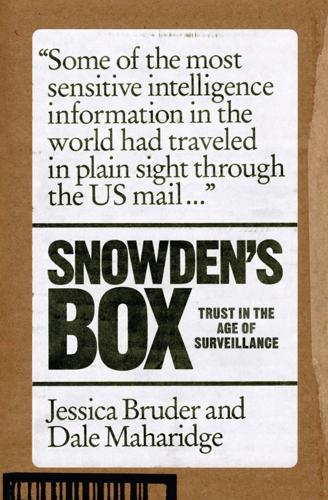
Snowden's Box: Trust in the Age of Surveillance
by Jessica Bruder and Dale Maharidge · 29 Mar 2020 · 159pp · 42,401 words
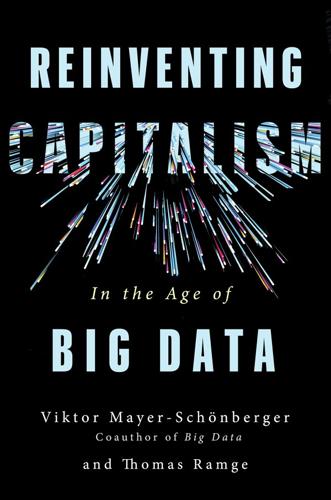
Reinventing Capitalism in the Age of Big Data
by Viktor Mayer-Schönberger and Thomas Ramge · 27 Feb 2018 · 267pp · 72,552 words

Inventor of the Future: The Visionary Life of Buckminster Fuller
by Alec Nevala-Lee · 1 Aug 2022 · 864pp · 222,565 words