Gödel, Escher, Bach
description: a Pulitzer-winning book by Douglas Hofstadter that explores the connections between the works of mathematician Kurt Gödel, artist M.C. Escher, and composer Johann Sebastian Bach.
81 results
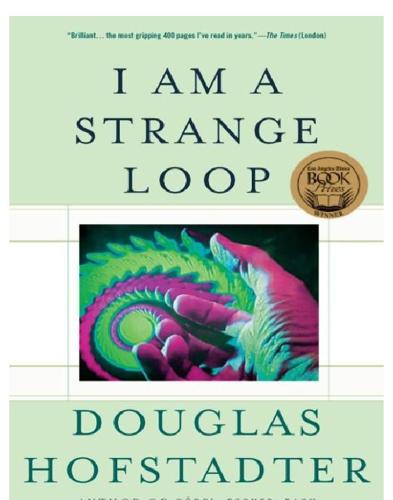
I Am a Strange Loop
by Douglas R. Hofstadter · 21 Feb 2011 · 626pp · 181,434 words
to care for . . . I Am a Strange Loop is a work of rigorous thinking.” — Time “Almost thirty years after the publication of his well-loved Gödel, Escher, Bach, Hofstadter revisits some of the same themes. The purpose of the new book is to make inroads into the nexus of self, self-awareness and
…
look at the world, inside or out, in the same way again.” — Los Angeles Times Book Review “Nearly thirty years after his best-selling book Gödel, Escher, Bach, cognitive scientist and polymath Douglas Hofstadter has returned to his extraordinary theory of self.” — New Scientist “I Am a Strange Loop is thoughtful, amusing and
…
substrates consisting of inanimate matter so compelling that I was convinced that here lay the secret of our sense of “I”, and thus my book Gödel, Escher, Bach came about (and acquired a catchier title). That book, which appeared in 1979, couldn’t have enjoyed a greater success, and indeed yours truly owes
…
the standard phrase I always use to describe my teaching style, my speaking style, and my writing style. In part because of the success of Gödel, Escher, Bach, I have had the good fortune of being given a great deal of freedom by the two universities on whose faculties I have served — Indiana
…
few months later, my appreciation of the phenomenon deepened considerably when I decided to explore it in detail as a visual study for my book Gödel, Escher, Bach. I made an appointment at the Stanford University television studios, and upon arriving I found that the very friendly fellow there had already set up
…
and popularized by Marvin Minsky around 1980). Telepresence versus “Real” Presence Perhaps my most vivid experience of telepresence occurred when I was typesetting my book Gödel, Escher, Bach. This was back in the late 1970’s, when for an author to do any such thing was unheard of, but I had the good
…
it is exactly on the mark) that emanated from both composer and performer. I was naturally filled with gratification when the popularity of my book Gödel, Escher, Bach linked my name in some fashion in the musical community with that of Bach (this was a true honor), and in Bach’s 300th birthyear
…
, 1985. Hennie, Fred. Introduction to Computability. Reading, Mass.: Addison-Wesley, 1977. Hoffmann, Banesh. Albert Einstein, Creator and Rebel. New York: Viking, 1972. Hofstadter, Douglas R. Gödel, Escher, Bach: an Eternal Golden Braid. New York: Basic Books, 1979. (Twentieth-anniversary edition published in 1999.) — — — . “Analogies and Metaphors to Explain Gödel’s Theorem”. The Two
…
-orientedness of systems, blurriness of goals of living creatures goals, shared God: elusiveness of mathematical truth and; not a player of dice; reality of Göd Gödel, Escher, Bach: central message of; dialogues in; linking author with Bach; typesetting of; video feedback photos in; writing of Gödel, Kurt; arithmetizes PM; believer in PM ’s
Complexity: A Guided Tour
by Melanie Mitchell · 31 Mar 2009 · 524pp · 120,182 words
Mitchell The author is grateful to the following publishers for permission to reprint excerpts from the following works that appear as epigraphs in the book. Gödel, Escher, Bach: an Eternal Braid by Douglas R. Hofstadter, copyright © 1979 by Basic Books and reprinted by permission of the publisher. The Dreams of Reason by Heinz
…
be understood completely if you understand its parts, and the nature of their ‘sum.’ ” No one in her left brain could reject reductionism. —Douglas Hofstadter, Gödel, Escher, Bach: an Eternal Golden Braid REDUCTIONISM HAS BEEN THE DOMINANT approach to science since the 1600s. René Descartes, one of reductionism’s earliest proponents, described his
…
produce creatures with such an enormous contrast between their individual simplicity and their collective sophistication? The Brain The cognitive scientist Douglas Hofstadter, in his book Gödel, Escher, Bach, makes an extended analogy between ant colonies and brains, both being complex systems in which relatively simple components with only limited communication among themselves collectively
…
of those strings, and the paradoxes that self-reference can produce, are discussed in a detailed and very entertaining way in Douglas Hofstadter’s book Gödel, Escher, Bach: an Eternal Golden Braid. Similarly, this kind of dual use of information is key to Turing’s proof of the undecidability of the Halting problem
…
purchases. But one purchase I did make was a relatively new book written by a computer science professor at Indiana University, with the odd title Gödel, Escher, Bach: an Eternal Golden Braid. Having majored in math and having visited a lot of museums, I knew who Gödel and Escher were, and being a
…
shore.” Readers, I look forward to the day when we can together tour those new territories of complexity. NOTES Preface “REDUCTIONISM is”: Hofstadter, D. R., Gödel, Escher, Bach: an Eternal Golden Braid. New York: Basic Books, 1979, p. 312. “to divide all the difficulties under examination”: Descartes, R., A Discourse on the Method
…
E. burchelli”: Franks, N. R., Army ants: A collective intelligence. American Scientist, 77(2), 1989, p. 140. “Douglas Hofstadter, in his book Gödel, Escher, Bach”: Hofstadter, D. R., Ant fugue. In Gödel, Escher, Bach: an Eternal Golden Braid. New York: Basic Books, 1979. Chapter 2 “It makes me so happy”: Stoppard, T., Arcadia. New York: Faber
…
excellent expositions of the proof, see Nagel, E. and Newman, J. R., Gödel’s Proof. New York: New York University, 1958; and Hofstadter, D. R., Gödel, Escher, Bach: an Eternal Golden Braid. New York: Basic Books, 1979. “This was an amazing new turn”: Hodges, A., Alan Turing: The Enigma. New York: Simon & Schuster
…
-VCH. For an account of self-replication in DNA and how it relates to mathematical logic and self-copying computer programs, see Hofstadter, D. R., Gödel, Escher, Bach: an Eternal Golden Braid. New York: Basic Books, 1979, pp. 495–548. “reproductive potentialities of the machines of the future’ ”: Quoted in Heims, S. J
…
what actually perceives the meaning”: Some of the many books and articles addressing these issues from a philosophical standpoint are the following: Hofstadter, D. R., Gödel, Escher, Bach: an Eternal Golden Braid. New York: Basic Books, 1979; Dennett, D. R., Consciousness Explained. Boston: Little, Brown, 1991; Bickhard, M. H., The biological foundations of
…
). Material Faith: Thoreau on Science. New York: Mariner Books, 1999, p. 28. “a relatively new book written by a Computer Science professor”: Hofstadter, D. R., Gödel, Escher, Bach: an Eternal Golden Braid. New York: Basic Books, 1979. “an even more impressive array of successor programs”: For descriptions of several of these programs, including
…
Press, 2001. Hofmeyr, S. A. and Forrest, S. Architecture for an artificial immune system. Evolutionary Computation, 8(4), 2000, pp. 443–473. Hofstadter, D. R. Gödel, Escher, Bach: an Eternal Golden Braid. New York: Basic Books, 1979. Hofstadter, D. R. Mathematical chaos and strange attractors. Chapter 16 in Metamagical Themas. New York: Basic
The Infinity Machine: Demis Hassabis, DeepMind, and the Quest for Superintelligence
by Sebastian Mallaby; · 30 Mar 2026 · 607pp · 161,998 words
kid?” another grumbled.[27] But nobody could question the excellence of the kid’s output. * * * • • • Sometime in this period, Molyneux gave Hassabis a copy of Gödel, Escher, Bach, a fire hose of a book that has inspired a remarkable number of future AI scientists.[28] This tome, which won the Pulitzer Prize, delivers
…
] Taken together, Hassabis’s experiences at Bullfrog answered his big post-Liechtenstein question: His mission and purpose would be to build artificial intelligence. Molyneux and Gödel, Escher, Bach had planted the idea: Computers would soon do whatever the brain could do. Iain Banks had supplied a utopian vision of what AI’s realization
…
be written “∀x(Bird(x)→CanFly(x)),” for example.) To the two undergraduates, the limits to this methodology were clear. Silver, like Hassabis, had read Gödel, Escher, Bach: The first name in the book’s title belonged to the mathematician Kurt Gödel, who had proved that, contrary to the Dartmouth pioneers’ presumption, no
…
proof for intelligence. His work on simulations in video games echoed his research on simulations in the mind. And influences as various as Immanuel Kant, Gödel, Escher, Bach, John Daugman’s tutorials, and neuroscience had pushed Hassabis toward the same bottom line: that information was the fundamental unit of reality. The God of
…
ambition was an isolating trait. You had to search to identify collaborators. “I’d never read any of Kurzweil,” Hassabis said. “For me, it was Gödel, Escher, Bach, Asimov, Iain Banks, my own practical work with Molyneux, Blade Runner. Those were my influences. I don’t think I even knew who Kurzweil was
…
be scaled, but not in the next decade or two.[2] Hassabis had reasons to believe that Go could be solved sooner. These began with Gödel, Escher, Bach: What the human brain could do, computers should be able to do. Intuition, or System One thinking, sounded ineffable, impossible to program. But ever since
…
playing strength of the world’s best Go systems, achieving the proficiency of a strong human amateur.[18] The result confirmed the central contention in Gödel, Escher, Bach. Human intuition was not so magical after all. A machine could reproduce it with the trick of mapping one thing onto another. * * * • • • In the early
…
NOTE REFERENCE 26 Cooper, author interview. BACK TO NOTE REFERENCE 27 David Silver and Zoubin Ghahramani, later leading scientists at Google DeepMind, had also read Gödel, Escher, Bach at a formative age. So had Reid Hoffman, who went on to study symbolic systems and become a leading AI entrepreneur. Silver, author interview; Ghahramani
…
, author interview; Hoffman, author interview. BACK TO NOTE REFERENCE 28 Douglas R. Hofstadter, Gödel, Escher, Bach: An Eternal Golden Braid, preface to the twentieth anniversary ed. (Basic Books, 1999), 4. BACK TO NOTE REFERENCE 29 In academic settings in the 1990s
…
TO NOTE REFERENCE 4 Metz, Genius Makers, 63–64. BACK TO NOTE REFERENCE 5 In 2006, no less a futurist than Douglas Hofstadter, author of Gödel, Escher, Bach, had called out the Singularitarians for blending reasonable predictions with utterly wild stuff—utility foglets that could assemble themselves instantly into any object on earth
…
Test (GDT), 262, 272–73, 275–76 Go (game), 22–23, 141–42, 146, 147, 417n22, 417n26 God, AGI and, xix–xx, 73, 114–15 Gödel, Escher, Bach (Hofstadter), 15–18, 147, 403n28 Gödel, Kurt, 25, 392 Goertzel, Ben, 56–57, 72 Google, xvii. See also Gemini Advanced Technology External Advisory Council of
…
Computational Neuroscience Unit and, 50–51, 53–54, 59–62 on Gemini compared with ChatGPT, 345–46 on God and AGI, xix–xx, 114–15 Gödel, Escher, Bach and, 15–18 Google acquisition earnings of, 139 on Google inspecting DeepMind code, 135–36 on Google’s acquisition plans for DeepMind, 117–19 Gopher
The Most Human Human: What Talking With Computers Teaches Us About What It Means to Be Alive
by Brian Christian · 1 Mar 2011 · 370pp · 94,968 words
players, all chess players are artists.” The scientific community, by and large, seemed to agree with that sentiment. Douglas Hofstadter’s 1980 Pulitzer Prize–winning Gödel, Escher, Bach, written at a time when computer chess was over twenty-five years old, advocates “the conclusion that profoundly insightful chess-playing draws intrinsically on central
…
to the core of human nature itself,” Hofstadter says, that computers’ “mere brute-force … [will] not be able to circumvent or shortcut that fact.” Indeed, Gödel, Escher, Bach places chess alongside things like music and poetry as one of the most uniquely and expressively human activities of life. Hofstadter argues, rather emphatically, that
…
. (There are ten thousand billion billion billion billion possible games of chess for every atom in the universe.) As the New York Times explained: In “Gödel, Escher, Bach” [Hofstadter] held chess-playing to be a creative endeavor with the unrestrained threshold of excellence that pertains to arts like musical composition or literature. Now
…
up there, too. If music or literature were created at an artistic level by a computer, I would feel this is a terrible thing.” In Gödel, Escher, Bach, Hofstadter writes, “Once some mental function is programmed, people soon cease to consider it as an essential ingredient of ‘real thinking.’ ” It’s a great
…
, necessarily, but to force a sort of three-card monte where one never becomes sure which envelope one’s in.15 Douglas Hofstadter muses in Gödel, Escher, Bach, “Perhaps works of art are trying to convey their style more than anything else.” I think that when we’re reading a book or watching
…
D. Norman, “Defensive Tool Use in a Coconut-Carrying Octopus,” Current Biology 19, no. 23 (December 15, 2009), pp. 1069–70. 16 Douglas R. Hofstadter, Gödel, Escher, Bach: An Eternal Golden Braid (New York: Basic Books, 1979). 17 Noam Chomsky, email correspondence (emphasis mine). 18 John Lucas, “Commentary on Turing’s ‘Computing Machinery
…
Chess Association; see Anne d’Harnoncourt and Kynaston McShine, eds., Marcel Duchamp (New York: Museum of Modern Art, 1973), p. 131. 6 Douglas R. Hofstadter, Gödel, Escher, Bach: An Eternal Golden Braid (New York: Basic Books, 1979). 7 “the conclusion that profoundly insightful chess-playing”: Douglas Hofstadter, summarizing the position taken by
…
Gödel, Escher, Bach in the essay “Staring Emmy Straight in the Eye—and Doing My Best Not to Flinch,” in David Cope, Virtual Music: Computer Synthesis of Musical
…
Terminator, directed by James Cameron (Orion Pictures, 1984). 6 The Matrix, directed by Andy Wachowski and Larry Wachowski (Warner Bros., 1999). 7 Douglas R. Hofstadter, Gödel, Escher, Bach: An Eternal Golden Braid (New York: Basic Books, 1979). 8 Mark Humphrys, “How My Program Passed the Turing Test,” in Parsing the Turing Test, edited
…
,” IEEE Transactions on Professional Communication 48, no. 2 (2005), pp. 147–60. 4 “unasking” of the question: This phrasing comes from both Douglas R. Hofstadter, Gödel, Escher, Bach: An Eternal Golden Braid (New York: Basic Books, 1979), and Robert Pirsig, Zen and the Art of Motorcycle Maintenance (New York: Morrow, 1974). Pirsig also
…
. 21 Three Colors: White, directed by Krzysztof Kieślowski (Miramax, 1994). 22 David Bellos, “I, Translator,” New York Times, March 20, 2010. 23 Douglas R. Hofstadter, Gödel, Escher, Bach: An Eternal Golden Braid (New York: Basic Books, 1979). 24 “Six Years Later: The Children of September 11,” The Oprah Winfrey Show, September 11, 2007
…
). 36 Takeshi Murata, “Monster Movie” (2005). 37 Kanye West, “Welcome to Heartbreak,” directed by Nabil Elderkin (2009). 38 Kundera, Unbearable Lightness of Being. 39 Hofstadter, Gödel, Escher, Bach. 40 Kundera, Unbearable Lightness of Being. 41 Timothy Ferriss, interview with Leon Ho, Stepcase Lifehack, June 1, 2007. 42 Heather McHugh, “In Ten Senses: Some
In Our Own Image: Savior or Destroyer? The History and Future of Artificial Intelligence
by George Zarkadakis · 7 Mar 2016 · 405pp · 117,219 words
to emerge from meaningless elements. The book created a sensation because, apart from its very serious scientific premise, it was also inspired by art. Entitled Gödel, Escher, Bach: An Eternal Golden Braid, the book used narratives, paradoxes and logical arguments to explore the connection between the Austrian mathematician who discovered the limits of
…
its place in Nature’, University of Skövde, Sweden, 7–11 August 2001. 16Foerster, H. von (1981), Observing Systems. Seaside, Calif.: Intersystems Publications. 17Hofstadter, D. (1979), Gödel, Escher, Bach: An Eternal Golden Braid. New York: Basic Books. 18Hofstadter, D. (2007), I Am a Strange Loop. New York: Basic Books. 19Corballis, M. C. (2014), The
…
London Mathematical Society, pp. 161–228. The paper was based on Turing’s 1938 PhD thesis of the same title (Princeton University). 22Hofstadter, D. (1979), Gödel, Escher, Bach: an Eternal Golden Braid. New York: Basic Books. 13 The Program 1Or ‘memes’, to use Richard Dawkins’ paradigm, where ideas behave like genes and are
Artificial Intelligence: A Guide for Thinking Humans
by Melanie Mitchell · 14 Oct 2019 · 350pp · 98,077 words
select Google AI researchers could hear from and converse with Douglas Hofstadter, a legend in AI and the author of a famous book cryptically titled Gödel, Escher, Bach: an Eternal Golden Braid, or more succinctly, GEB (pronounced “gee-ee-bee”). If you’re a computer scientist, or a computer enthusiast, it’s likely
…
upon the book in 1975, was deeply impressed by the hundred problems in the appendix and wrote about them at length in his own book Gödel, Escher, Bach. That’s where I first saw them. Since childhood, I’ve always loved puzzles, especially ones involving logic or patterns; when I read GEB, I
…
ConvNets that lack what it takes: no existing AI system has anything close to these fundamental human abilities. Active Symbols and Analogy Making After reading Gödel, Escher, Bach and deciding to pursue research in AI, I sought out Douglas Hofstadter, with the hope that I could work on something like Bongard problems. Happily
…
with AI for many years, I am finding the embodiment argument increasingly compelling. 16 Questions, Answers, and Speculations Near the end of his 1979 book, Gödel, Escher, Bach, Douglas Hofstadter interviewed himself about the future of AI. In a section called “Ten Questions and Speculations,” he posed and answered questions not only about
…
of his remarks to the Google group. 3. Jack Schwartz, quoted in G.-C. Rota, Indiscrete Thoughts (Boston: Berkhäuser, 1997), 22. 4. D. R. Hofstadter, Gödel, Escher, Bach: an Eternal Golden Braid (New York: Basic Books, 1979), 678. 5. Ibid., 676. 6. Quoted in D. R. Hofstadter, “Staring Emmy Straight in the Eye
…
with Google Translate’s lack of understanding, see D. R. Hofstadter, “The Shallowness of Google Translate,” The Atlantic, Jan. 30, 2018. 22. D. R. Hofstadter, Gödel, Escher, Bach: an Eternal Golden Braid (New York: Basic Books, 1979), 603. 23. E. Davis and G. Marcus, “Commonsense Reasoning and Commonsense Knowledge in Artificial Intelligence,” Communications
…
(Cambridge, Mass.: MIT Press, 1993). 19. Hofstadter coined the term conceptual slippage in his discussion of Bongard problems in chapter 19 of D. R. Hofstadter, Gödel, Escher, Bach: an Eternal Golden Braid (New York: Basic Books, 1979). 20. Ibid., 349–51. 21. A detailed description of Copycat is given in chapter 5 of
…
Intelligence (Basel, Switzerland: Springer, 2016), 555–72. 18. N. Bostrom, “How Long Before Superintelligence?,” International Journal of Future Studies 2 (1998). 19. D. R. Hofstadter, Gödel, Escher, Bach: an Eternal Golden Braid (New York: Basic Books, 1979), 677–78. 20. From “The Myth of AI: A Conversation with Jaron Lanier,” Edge, Nov. 14
…
of Life Institute G game tree; in checkers; in chess; in Go Gates, Bill GEB, see Gödel, Escher, Bach general or human-level AI General Problem Solver genetic art geofencing Gershwin, Ira Go (board game); see also AlphaGo Gödel, Escher, Bach (book) GOFAI Good, I. J. Goodfellow, Ian Google DeepMind, see DeepMind Google Translate; see also
A World Without Work: Technology, Automation, and How We Should Respond
by Daniel Susskind · 14 Jan 2020 · 419pp · 109,241 words
insurmountable: the researchers merely had to make their own, simple computers more sophisticated.20 As the computer scientist Douglas Hofstadter puts it in his celebrated Gödel, Escher, Bach, it was an “article of faith” for many researchers that “all intelligences are just variations on a single theme; to create true intelligence, AI workers
…
.” Quoted in William Grimes, “Hubert L. Dreyfus, Philosopher of the Limits of Computers, Dies at 87,” New York Times, 2 May 2017. 21. Douglas Hofstadter, Gödel, Escher, Bach: An Eternal Golden Braid (London: Penguin, 2000), p. 579. 22. Daniel Crevier, AI: The Tumultuous History of the Search for Artificial Intelligence (New York: Basic
…
,” Popular Mechanics, 10 February 2014. 9. John Searle, “Watson Doesn’t Know It Won on ‘Jeopardy!’,” Wall Street Journal, 23 February 2011. 10. Douglas Hofstadter, Gödel, Escher, Bach: An Eternal Golden Braid (London: Penguin, 2000), p. 601: “There is a related ‘Theorem’ about progress in AI: once some mental function is programmed, people
…
’ was first proposed to me by Larry Tesler, so I call it Tesler’s Theorem: ‘AI is whatever hasn’t been done yet.’” 11. Hofstadter, Gödel, Escher, Bach, p. 678. 12. Douglas Hofstadter, “Staring Emmy Straight in the Eye—And Doing My Best Not to Flinch” in David Cope, ed., Virtual Music: Computer
…
. 95. 40. George Johnson, “Undiscovered Bach? No, a Computer Wrote It,” New York Times, 11 November 1997. 41. Hofstadter, “Staring Emmy,” p. 34. 42. Hofstadter, Gödel, Escher, Bach, p. 677. 43. H. A. Shapiro, “‘Heros Theos’: The Death and Apotheosis of Herakles,” Classical World 77, no 1 (1983): 7–18. Quotation is from
…
, Glenn W. Most, ed. and trans. Loeb Classical Library 57. London: Harvard University Press, 2006. Hobsbawm, Eric. Industry and Empire. London: Penguin, 1999. Hofstadter, Douglas. Gödel, Escher, Bach: An Eternal Golden Braid. London: Penguin, 2000. ________. “Just Who Will Be We, in 2493?” Indiana University, Bloomington (2003). ________. “Staring Emmy Straight in the Eye—And
The Psychopath Test: A Journey Through the Madness Industry
by Jon Ronson · 12 May 2011 · 274pp · 70,481 words
Being or Nothingness. But I couldn’t work out if he’s a real person or a fictional character. Is he well known?” “He wrote Gödel, Escher, Bach!” she replied, surprised by my lack of knowledge. “It was momentous.” I didn’t reply. “If you’re a geek,” sighed Deborah, “and you’re
…
just discovering the Internet, and especially if you’re a boy, Gödel, Escher, Bach would be like your Bible. It was about how you can use Gödel’s mathematic theories and Bach’s canons to make sense of the
…
-1960s. Furthermore, Being or Nothingness looked like a Hofstadter book. The clean white cover was reminiscent of the cover of Hofstadter’s follow-up to Gödel, Escher, Bach—the 2007 book I Am a Strange Loop. True, the creation of a fake Indiana University student with a fake Facebook page and an unlikely
…
slightly facetious questions and his replies revealed him to be a serious, quite impatient man:Q. You first became known in 1979, when you published “Gödel, Escher, Bach,” a campus classic, which finds parallels between the brains of Bach, M. C. Escher and the mathematician Kurt Gödel. In your new book, “I Am
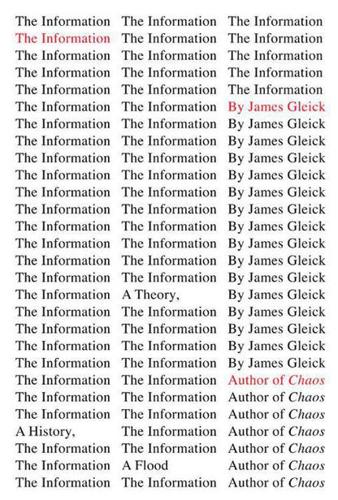
The Information: A History, a Theory, a Flood
by James Gleick · 1 Mar 2011 · 855pp · 178,507 words
, Forme, and Power of a Commonwealth, Eclesiasticall and Civill. London: Andrew Crooke, 1660. Hodges, Andrew. Alan Turing: The Enigma. London: Vintage, 1992. Hofstadter, Douglas R. Gödel, Escher, Bach: An Eternal Golden Braid. New York: Basic Books, 1979. ———. Metamagical Themas: Questing for the Essence of Mind and Pattern. New York: Basic Books, 1985. ———. I
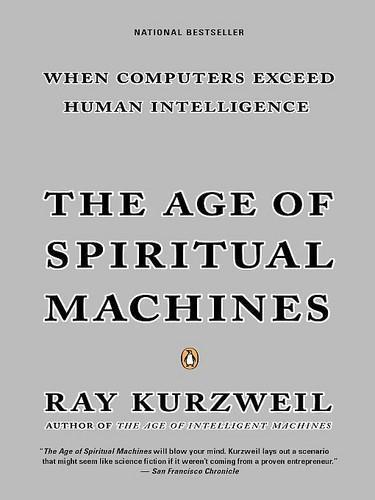
The Age of Spiritual Machines: When Computers Exceed Human Intelligence
by Ray Kurzweil · 31 Dec 1998 · 696pp · 143,736 words
, Jonathan Rées Descartes presents a unified view of Descartes’s philosophy and its relation to other systems of thought. 10 Quoted from Douglas R. Hofstadter, Gödel, Escher, Bach: An Eternal Golden Braid (New York: Basic Books, 1979). 11 “Computing Machinery and Intelligence,” Mind 59 (1950): 433-460, reprinted in E. Feigenbaum and J
…
often referred to as a word “sense.” It is likely that Shakespeare used more than 100,000 word senses. 20 Quoted from Douglas R. Hofstadter, Gödel, Escher, Bach: An Eternal Golden Braid (New York: Basic Books, 1979). 21 Michael Winerip, “Schizophrenia’s Most Zealous Foe,” New York Sunday Times, February 22, 1998. 22
…
: Simon and Schuster, 1983. Hoel, Paul G., Sidney C. Port, and Charles J. Stone. Introduction to Stochastic Processes. Boston: Houghton-Mifflin, 1972. Hofstadter, Douglas R. Gödel, Escher, Bach: An Eternal Golden Braid. New York: Basic Books, 1979. _________. Metamagical Themas: Questing for the Essence of Mind and Pattern. New York: Basic Books, 1985. Hofstadter
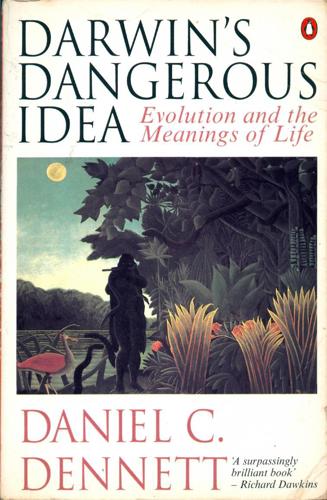
Darwin's Dangerous Idea: Evolution and the Meanings of Life
by Daniel C. Dennett · 15 Jan 1995 · 846pp · 232,630 words
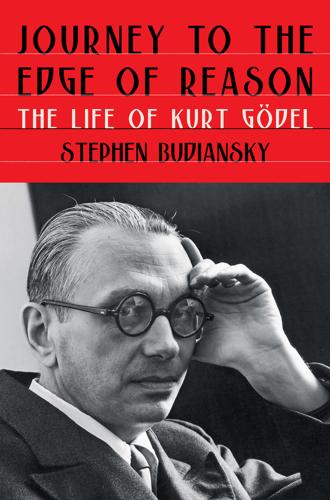
Journey to the Edge of Reason: The Life of Kurt Gödel
by Stephen Budiansky · 10 May 2021 · 406pp · 108,266 words
Dreaming in Code: Two Dozen Programmers, Three Years, 4,732 Bugs, and One Quest for Transcendent Software
by Scott Rosenberg · 2 Jan 2006 · 394pp · 118,929 words
Emergence
by Steven Johnson · 329pp · 88,954 words
The Singularity Is Near: When Humans Transcend Biology
by Ray Kurzweil · 14 Jul 2005 · 761pp · 231,902 words
When Computers Can Think: The Artificial Intelligence Singularity
by Anthony Berglas, William Black, Samantha Thalind, Max Scratchmann and Michelle Estes · 28 Feb 2015
Dawn of the New Everything: Encounters With Reality and Virtual Reality
by Jaron Lanier · 21 Nov 2017 · 480pp · 123,979 words
The Creativity Code: How AI Is Learning to Write, Paint and Think
by Marcus Du Sautoy · 7 Mar 2019 · 337pp · 103,522 words
Rationality: From AI to Zombies
by Eliezer Yudkowsky · 11 Mar 2015 · 1,737pp · 491,616 words
Paper Machines: About Cards & Catalogs, 1548-1929
by Markus Krajewski and Peter Krapp · 18 Aug 2011 · 222pp · 74,587 words
The Master Algorithm: How the Quest for the Ultimate Learning Machine Will Remake Our World
by Pedro Domingos · 21 Sep 2015 · 396pp · 117,149 words
The Alignment Problem: Machine Learning and Human Values
by Brian Christian · 5 Oct 2020 · 625pp · 167,349 words
Hello World: Being Human in the Age of Algorithms
by Hannah Fry · 17 Sep 2018 · 296pp · 78,631 words
Speaking Code: Coding as Aesthetic and Political Expression
by Geoff Cox and Alex McLean · 9 Nov 2012
The Pencil: A History of Design and Circumstance
by Henry Petroski · 2 Jan 1990 · 490pp · 150,172 words
Turing's Vision: The Birth of Computer Science
by Chris Bernhardt · 12 May 2016 · 210pp · 62,771 words
The Golden Ratio: The Story of Phi, the World's Most Astonishing Number
by Mario Livio · 23 Sep 2003
The Innovators: How a Group of Inventors, Hackers, Geniuses and Geeks Created the Digital Revolution
by Walter Isaacson · 6 Oct 2014 · 720pp · 197,129 words
Virus of the Mind
by Richard Brodie · 4 Jun 2009 · 289pp · 22,394 words
Networks, Crowds, and Markets: Reasoning About a Highly Connected World
by David Easley and Jon Kleinberg · 15 Nov 2010 · 1,535pp · 337,071 words
Narrative Economics: How Stories Go Viral and Drive Major Economic Events
by Robert J. Shiller · 14 Oct 2019 · 611pp · 130,419 words
The Joy of Clojure
by Michael Fogus and Chris Houser · 28 Nov 2010 · 706pp · 120,784 words
Architects of Intelligence
by Martin Ford · 16 Nov 2018 · 586pp · 186,548 words
Automate This: How Algorithms Came to Rule Our World
by Christopher Steiner · 29 Aug 2012 · 317pp · 84,400 words
Programming Clojure
by Stuart Halloway and Aaron Bedra · 17 Apr 2012 · 536pp · 73,482 words
Structure and interpretation of computer programs
by Harold Abelson, Gerald Jay Sussman and Julie Sussman · 25 Jul 1996 · 893pp · 199,542 words
How Big Things Get Done: The Surprising Factors Behind Every Successful Project, From Home Renovations to Space Exploration
by Bent Flyvbjerg and Dan Gardner · 16 Feb 2023 · 353pp · 97,029 words
Is God a Mathematician?
by Mario Livio · 6 Jan 2009 · 315pp · 93,628 words
The Man From the Future: The Visionary Life of John Von Neumann
by Ananyo Bhattacharya · 6 Oct 2021 · 476pp · 121,460 words
Infinite Ascent: A Short History of Mathematics
by David Berlinski · 2 Jan 2005 · 158pp · 49,168 words
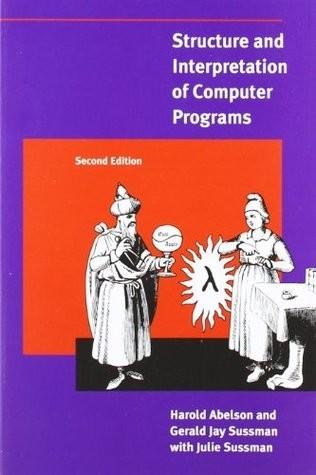
Structure and Interpretation of Computer Programs, Second Edition
by Harold Abelson, Gerald Jay Sussman and Julie Sussman · 1 Jan 1984 · 1,387pp · 202,295 words
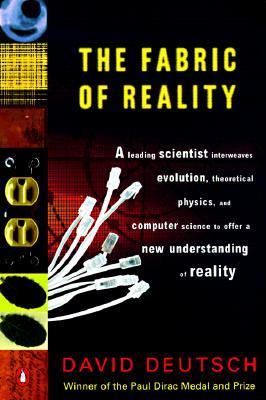
The Fabric of Reality
by David Deutsch · 31 Mar 2012 · 511pp · 139,108 words
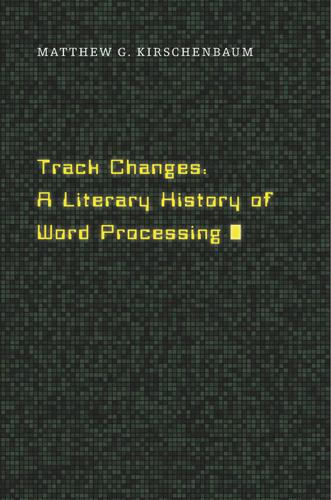
Track Changes
by Matthew G. Kirschenbaum · 1 May 2016 · 519pp · 142,646 words
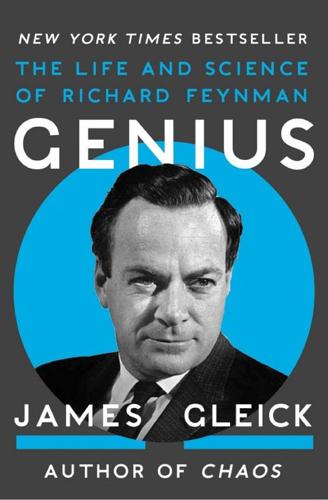
Genius: The Life and Science of Richard Feynman
by James Gleick · 1 Jan 1992 · 795pp · 215,529 words
An Optimist's Tour of the Future
by Mark Stevenson · 4 Dec 2010 · 379pp · 108,129 words
Physics of the Future: How Science Will Shape Human Destiny and Our Daily Lives by the Year 2100
by Michio Kaku · 15 Mar 2011 · 523pp · 148,929 words
Why Information Grows: The Evolution of Order, From Atoms to Economies
by Cesar Hidalgo · 1 Jun 2015 · 242pp · 68,019 words
Deep Thinking: Where Machine Intelligence Ends and Human Creativity Begins
by Garry Kasparov · 1 May 2017 · 331pp · 104,366 words
Super Thinking: The Big Book of Mental Models
by Gabriel Weinberg and Lauren McCann · 17 Jun 2019
Upgrade
by Blake Crouch · 6 Jul 2022 · 396pp · 96,049 words
Life on the Edge: The Coming of Age of Quantum Biology
by Johnjoe McFadden and Jim Al-Khalili · 14 Oct 2014 · 476pp · 120,892 words
Physics in Mind: A Quantum View of the Brain
by Werner Loewenstein · 29 Jan 2013 · 362pp · 97,862 words
The Demon in the Machine: How Hidden Webs of Information Are Finally Solving the Mystery of Life
by Paul Davies · 31 Jan 2019 · 253pp · 83,473 words
Rage Inside the Machine: The Prejudice of Algorithms, and How to Stop the Internet Making Bigots of Us All
by Robert Elliott Smith · 26 Jun 2019 · 370pp · 107,983 words
The Musical Human: A History of Life on Earth
by Michael Spitzer · 31 Mar 2021 · 632pp · 163,143 words
From Bacteria to Bach and Back: The Evolution of Minds
by Daniel C. Dennett · 7 Feb 2017 · 573pp · 157,767 words
The Little Schemer
by Daniel P. Friedman, Matthias Felleisen and Duane Bibby · 1 Jan 1974 · 211pp · 77 words
Superintelligence: Paths, Dangers, Strategies
by Nick Bostrom · 3 Jun 2014 · 574pp · 164,509 words
Global Catastrophic Risks
by Nick Bostrom and Milan M. Cirkovic · 2 Jul 2008
Framers: Human Advantage in an Age of Technology and Turmoil
by Kenneth Cukier, Viktor Mayer-Schönberger and Francis de Véricourt · 10 May 2021 · 291pp · 80,068 words
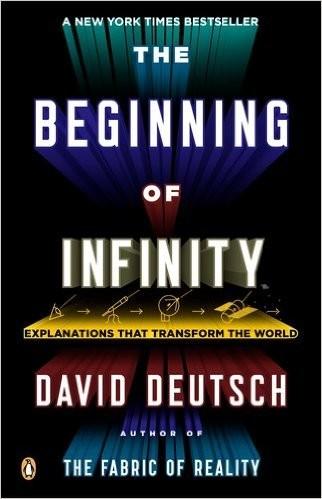
The Beginning of Infinity: Explanations That Transform the World
by David Deutsch · 30 Jun 2011 · 551pp · 174,280 words
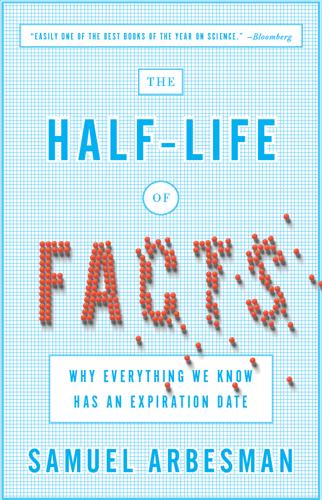
The Half-Life of Facts: Why Everything We Know Has an Expiration Date
by Samuel Arbesman · 31 Aug 2012 · 284pp · 79,265 words
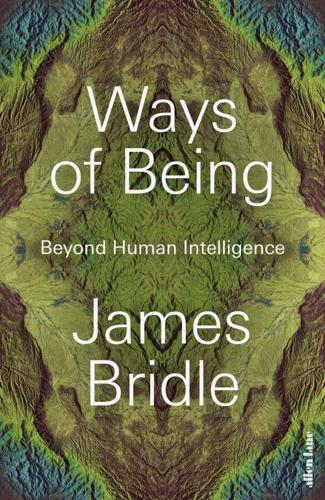
Ways of Being: Beyond Human Intelligence
by James Bridle · 6 Apr 2022 · 502pp · 132,062 words
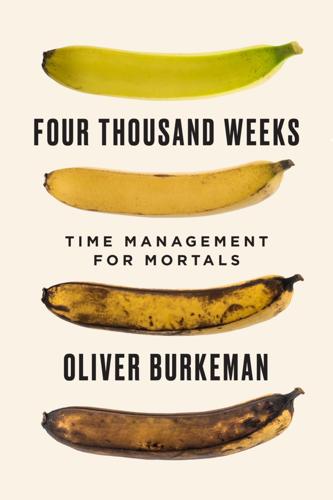
Four Thousand Weeks: Time Management for Mortals
by Oliver Burkeman · 9 Aug 2021 · 206pp · 68,757 words
Word Freak: Heartbreak, Triumph, Genius, and Obsession in the World of Competitive ScrabblePlayers
by Stefan Fatsis · 27 Jul 2001 · 385pp · 25,673 words
The Big Nine: How the Tech Titans and Their Thinking Machines Could Warp Humanity
by Amy Webb · 5 Mar 2019 · 340pp · 97,723 words
Tribe of Mentors: Short Life Advice From the Best in the World
by Timothy Ferriss · 14 Jun 2017 · 579pp · 183,063 words
Lost at Sea
by Jon Ronson · 1 Oct 2012 · 375pp · 106,536 words
The Rationalist's Guide to the Galaxy: Superintelligent AI and the Geeks Who Are Trying to Save Humanity's Future
by Tom Chivers · 12 Jun 2019 · 289pp · 92,714 words
Governing the Commons: The Evolution of Institutions for Collective Action
by Elinor Ostrom · 29 Nov 1990
The Extended Phenotype: The Long Reach of the Gene
by Richard Dawkins · 1 Jan 1982 · 506pp · 152,049 words
Mind Wide Open: Your Brain and the Neuroscience of Everyday Life
by Steven Johnson · 2 Jan 1999 · 294pp · 86,601 words
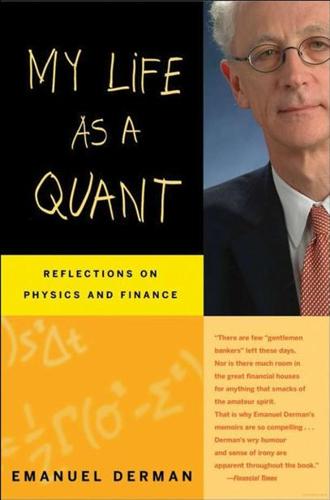
My Life as a Quant: Reflections on Physics and Finance
by Emanuel Derman · 1 Jan 2004 · 313pp · 101,403 words
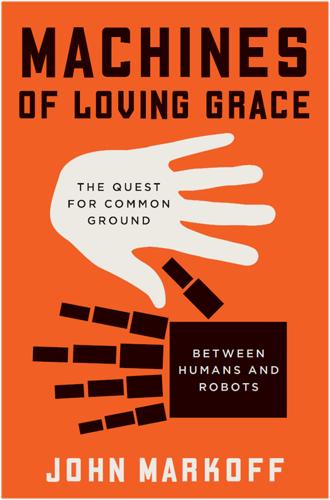
Machines of Loving Grace: The Quest for Common Ground Between Humans and Robots
by John Markoff · 24 Aug 2015 · 413pp · 119,587 words
The Personal MBA: A World-Class Business Education in a Single Volume
by Josh Kaufman · 2 Feb 2011 · 624pp · 127,987 words
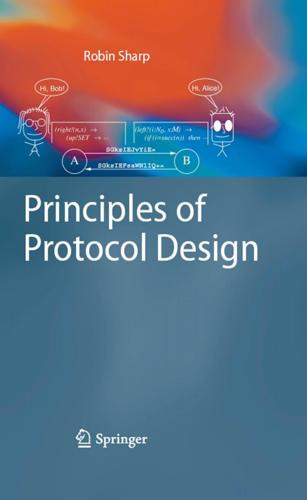
Principles of Protocol Design
by Robin Sharp · 13 Feb 2008
AIQ: How People and Machines Are Smarter Together
by Nick Polson and James Scott · 14 May 2018 · 301pp · 85,126 words
Team Human
by Douglas Rushkoff · 22 Jan 2019 · 196pp · 54,339 words
Broad Band: The Untold Story of the Women Who Made the Internet
by Claire L. Evans · 6 Mar 2018 · 371pp · 93,570 words
The Deep Learning Revolution (The MIT Press)
by Terrence J. Sejnowski · 27 Sep 2018
Transport for Humans: Are We Nearly There Yet?
by Pete Dyson and Rory Sutherland · 15 Jan 2021 · 342pp · 72,927 words