Gabriel Zucman

back to index

description: French economist

93 results

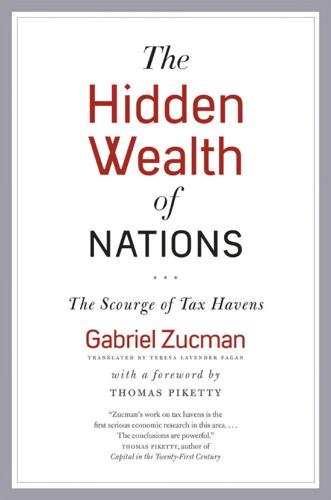
The Hidden Wealth of Nations: The Scourge of Tax Havens

by Gabriel Zucman, Teresa Lavender Fagan and Thomas Piketty  · 21 Sep 2015  · 121pp  · 34,193 words

The Hidden Wealth of Nations The Hidden Wealth of Nations The Scourge of Tax Havens Gabriel Zucman Translated by Teresa Lavender Fagan With a Foreword by Thomas Piketty The University of Chicago Press Chicago and London GABRIEL ZUCMAN is assistant professor at the London school of economics. The University of Chicago Press, Chicago 60637 The

Library of Congress Cataloging-in-Publication Data Zucman, Gabriel, author. [Richesse cachée des nations. English] The hidden wealth of nations: the scourge of tax havens / Gabriel Zucman; translated by Teresa Lavender Fagan; with a foreword by Thomas Piketty. pages; cm Includes bibliographical references and index. ISBN 978-0-226-24542-3 (cloth

you are interested in inequality, global justice, and the future of democracy, then you should definitely read this book. The Hidden Wealth of Nations by Gabriel Zucman is probably the best book that has ever been written on tax havens and what we can do about them. It is nontechnical and lively

holdings of European households). Source: Bergier and Volker Commissions, Swiss National Bank, and calculations by the author (see the online appendix to chapter 1, www.gabriel-zucman.eu. We mustn’t exaggerate the competition that these other centers represent for Switzerland, however. In spite of the decline of its share of the

Switzerland is placed in mutual funds, principally in Luxembourg. Source: Swiss National Bank and calculations by the author (see online annex to chapter 1, www.gabriel-zucman.eu). More important, 60% of the assets belonging to foreigners are attributed to the British Virgin Islands, Panama, and other territories where shell corporations, trusts

the world’s offshore wealth was in Switzerland. Source: Country balance sheets, SNB, and calculations by the author (see online appendix to chapter 2, www.gabriel-zucman.eu). Only Switzerland (and to a lesser extent Luxembourg), however, provides direct information on the stocks of offshore fortunes managed by domestic banks. To have

through unreported offshore accounts cost about $190 billion to governments around the world. Source: Calculations by the author (see online appendix to chapter 2, www.gabriel-zucman.eu). The key source of information on what fraction of offshore wealth is declared versus being invisible to tax authorities comes, again, from Switzerland. Since

52% 1 Gulf countries 800 57% 0 Total 7,600 8.0% 190 Source: Calculations by the author (see online appendix to chapter 2, www.gabriel-zucman.eu). Even where offshore wealth reaches less extreme proportions, it is important to note that this form of evasion benefits almost entirely the wealthiest. In

directive. Figure 5: Who holds accounts in Switzerland? The effect of the 2005 savings tax directive. Source: BNS (see online appendix to chapter 3, www.gabriel-zucman.eu). If all the interest and dividends earned in Switzerland by residents of the European Union were indeed subject to a tax of 35%, this

management, used by all other financial centers. Figure 6: Luxembourg: From steel to Clearstream (% of GDP). Source: Statec (see online appendix to chapter 4, www.gabriel-zucman.eu). The signatories of the Treaty of Rome could not have envisioned the possibility of such an upheaval when they established the bases of European

. In 2013 total income on US direct investment abroad was about $500 billion, 17% coming from the Netherlands, 8% from Luxembourg, and so on. Source: Gabriel Zucman, “Taxing Across Borders: Tracking Personal Wealth and Corporate Profits,” Journal of Economic Perspectives 28, no. 4 (2014): 121–48. In 2004 Congress granted a repatriation

earned by US residents, on average $16 is paid in corporate taxes to the US government (federal and state) and $4 to foreign governments. Source: Gabriel Zucman, “Taxing Across Borders: Tracking Personal Wealth and Corporate Profits,” Journal of Economic Perspectives 28, no. 4 (2014): 121–48. Granted, not all that decline should

battle of citizens against the false inevitability of tax evasion and the impotence of nations. Notes 1. These data are gathered on the website www.gabriel-zucman.eu. This site provides details on all the calculations on which the results presented in this book are based. Numbers, tables, graphs: all can be

letter. This work is largely the result of four years of rigorous, but certainly not definitive, research, which formed the basis of my PhD dissertation: Gabriel Zucman, “Three Essays on the World Distribution of Wealth” (PhD diss., Paris School of Economics, EHESS, 2013). I thank in advance readers who wish to send

suggestions to improve my approach. 2. See Malik Mazbouri, L’Émergence de la place financière suisse (1890–1913) (Lausanne: Antipodes, 2005). 3. Thomas Piketty and Gabriel Zucman, “Capital Is Back: Wealth-Income Ratios in Rich Countries, 1700–2010,” Quarterly Journal of Economics 129, no. 3 (2014). 4. “Keeping Mum,” Economist, February 17

paper, Centre for Governance and Public Policy, Griffith University, 2012, http://www.gfintegrity.org/wp-content/uploads/2014/05/Global-Shell-Games-2012.pdf. 9. Gabriel Zucman, “The Missing Wealth of Nations: Are Europe and the U.S. Net Debtors or Net Creditors?,” Quarterly Journal of Economics 128, no. 3 (2013). 10

several hundreds of billions of dollars. 11. All details are available online in the appendix to chapter 1 at www.gabriel-zucman.eu. 12. For a detailed description of my method, see Gabriel Zucman, “The Missing Wealth of Nations: Are Europe and the U.S. Net Debtors or Net Creditors?,” Quarterly Journal of Economics

128, no. 3 (2013), and the online appendix at www.gabriel-zucman.eu. 13. Philip Lane and Gian Maria Milesi-Ferretti, “The External Wealth of Nations Mark II: Revised Estimates of Foreign Assets and Liabilities, 1970–2004

-suisse.com/tasks/render/file/?fileID=BCDB1364-A105-0560-1332EC9100FF5C83. 19. Adam, “Impact de l’échange automatique d’informations,” p. 8. 20. Thomas Piketty and Gabriel Zucman, “Capital Is Back: Wealth-Income Ratios in Rich Countries, 1700–2010,” Quarterly Journal of Economics 129, no. 3 (2014). 21. Bulletin de statistique et de

, p. 280. See also the budget plan for 1910, Bulletin de statistique et de législation comparée, vol. 1, 1909, p. 627. 22. Niels Johannesen and Gabriel Zucman, “The End of Bank Secrecy?: An Evaluation of the G20 Tax Haven Crackdown,” American Economic Journal: Economic Policy 2014 6, no. 1 (2014): 65–91

, http://gabriel-zucman.eu/files/JohannesenZucman2014. 23. See US Senate, Offshore Tax Evasion: The Effort to Collect Unpaid Taxes on Billions in Hidden Offshore Accounts. Staff Report of

the Permanent Subcommittee on Investigations (Washington, DC: February 2014). See also Gabriel Zucman, “Taxing Across Borders: Tracking Personal Wealth and Corporate Profits,” Journal of Economic Perspectives 28, no. 4 (2014): 121–48. 24. Federal administration of contributions, Directives

(ROC) of the Global Legal Entity Identifier System at http://www.leiroc.org. 29. Part of the material in this chapter was originally published in Gabriel Zucman, “Taxing Across Borders: Tracking Personal Wealth and Corporate Profits,” Journal of Economic Perspectives 28, no. 4 (2014): 121–48. 30. Kimberly A. Clausing, “Tax-Motivated

://www.bloomberg.com/news/2010-10-21/google-2-4-rate-shows-how-60-billion-u-s-revenue-lost-to-tax-loopholes.html. 32. See Gabriel Zucman, “Taxing Across Borders: Tracking Personal Wealth and Corporate Profits,” Journal of Economic Perspectives 28, no. 4 (2014): 121–48. 33. Dhammika Dharmapala, C. Fritz Foley
The Triumph of Injustice: How the Rich Dodge Taxes and How to Make Them Pay

by Emmanuel Saez and Gabriel Zucman  · 14 Oct 2019  · 232pp  · 70,361 words

THE TRIUMPH OF INJUSTICE How the Rich Dodge Taxes and How to Make Them Pay EMMANUEL SAEZ AND GABRIEL ZUCMAN CONTENTS Introduction REINVENTING FISCAL DEMOCRACY Chapter 1INCOME AND TAXES IN AMERICA Chapter 2FROM BOSTON TO RICHMOND Chapter 3HOW INJUSTICE TRIUMPHS Chapter 4WELCOME TO BERMULAND Chapter

Corporations Income Shifting Through Choice of Ownership Structure—A Norwegian Case.” Finnish Economic Papers 23, no. 2 (2010): 73–87. Alstadsæter, Annette, Niels Johannesen, and Gabriel Zucman. “Who Owns the Wealth in Tax Havens? Macro Evidence and Implications for Global Inequality.” Journal of Public Economics 162 (2018): 89–100. ——— . “Tax Evasion and

Inequality.” American Economic Review 109, no. 6 (2019): 2073–2103. Alvaredo, Facundo, Anthony Atkinson, Lucas Chancel, Thomas Piketty, Emmanuel Saez, and Gabriel Zucman. “Distributional National Accounts (DINA) Guidelines: Concepts and Methods Used in the World Wealth and Income Database.” WID Working Paper 2016/1, 2016. Alvaredo, Facundo, Lucas

Chancel, Thomas Piketty, Emmanuel Saez, and Gabriel Zucman. World Inequality Report 2018. Cambridge, MA: Harvard University Press, 2018. Atack, Jeremy, and Peter Passell. A New Economic View of American History from Colonial Times

Reversal of the College Gender Gap.” Journal of Economic Perspectives 20, no. 4 (2006): 133–156. Guyton, John, Patrick Langetieg, Daniel Reck, Max Risch, and Gabriel Zucman. “Tax Evasion by the Wealthy: Measurement and Implications,” UC Berkeley Working Paper 2019. Hall, Challis A. Effects of Taxation on Executive Compensation and Retirement Plans

-papers/. International Monetary Fund. “Corporate Taxation in the Global Economy,” IMF Policy Paper no. 19/007, March 2019. Jakobsen, Katrine, Kristian Jakobsen, Henrik Kleven, and Gabriel Zucman. “Wealth Taxation and Wealth Accumulation: Theory and Evidence from Denmark.” National Bureau of Economic Research Working Paper no. 24371, 2018, forthcoming in Quarterly Journal of

Economics. Johannesen, Niels, and Gabriel Zucman. “The End of Bank Secrecy? An Evaluation of the G20 Tax Haven Crackdown.” American Economic Journal: Economic Policy 6, no. 1 (2014): 65–91. Johnston

. “Optimal Taxation of Top Labor Incomes: A Tale of Three Elasticities.” American Economic Journal: Economic Policy 6, no. 1 (2014): 230–271. ———, Emmanuel Saez, and Gabriel Zucman. “Distributional National Accounts: Methods and Estimates for the United States.” Quarterly Journal of Economics 133, no. 1 (2018): 553–609. ———, and

Is Back: Wealth-Income Ratios in Rich Countries 1700–2010.” Quarterly Journal of Economics 129, no. 3 (2014): 1255–1310. ———, and Gabriel Zucman. “Wealth and Inheritance in the Long Run,” In Anthony B. Atkinson and Francois Bourguignon, eds., Handbook of Income Distribution, Volume 2, 1303–1368. Amsterdam: Elsevier

50, no. 1 (2012): 3–50. ———, and Stefanie Stantcheva. “A Simpler Theory of Optimal Capital Taxation.” Journal of Public Economics 162 (2018): 120–142. ———, and Gabriel Zucman. “Wealth Inequality in the United States since 1913: Evidence from Capitalized Income Tax Data.” Quarterly Journal of Economics 131, no. 2 (2016): 519–578. ———, and

Distributional Tax Incidence: Who Pays Current Taxes vs. Tax Reform Analysis.” UC Berkeley Working Paper 2019. ———, and Gabriel Zucman. “Progressive Wealth Taxation.” Brookings Papers on Economic Activity, 2019b. ———, and Gabriel Zucman. “A National Income Tax.” UC Berkeley Working Paper 2019c. Scheve, Kenneth, and David Stasavage. Taxing the Rich: A History of Fiscal Fairness in

, 2003. Toder, Eric. “Explaining the TCJA’s International Reforms.” Tax Policy Center, Urban Institute and Brookings Institution, February 2, 2018. Tørsløv, Thomas, Ludvig Wier, and Gabriel Zucman. “The Missing Profits of Nations.” National Bureau of Economic Research Working Paper no. 24701, 2018. US Bureau of the Census. Historical Statistics of the United

. ———. “Time for a Wealth Tax?” Boston Review, February 1, 1996. Wright, Ronald. A Short History of Progress. Toronto: House of Anansi, 2004. Wright, Thomas, and Gabriel Zucman. “The Exorbitant Tax Privilege.” National Bureau of Economic Research Working Paper no. 24983, 2018. Zucman, Gabriel. “The Missing Wealth of Nations: Are Europe and the

inferred. W. W. Norton & Co., Inc., is not responsible for third-party content (website, blog, information page, or otherwise). Copyright © 2019 by Emmanuel Saez and Gabriel Zucman All rights reserved First Edition For information about permission to reproduce selections from this book, write to Permissions, W. W. Norton & Company, Inc., 500 Fifth
A World Without Work: Technology, Automation, and How We Should Respond

by Daniel Susskind  · 14 Jan 2020  · 419pp  · 109,241 words

fallen consistently over the last few decades, even though the nominal tax rate—the one actually set by law—has been steady since the 1990s. Gabriel Zucman, the leading scholar of these trends, estimates that the effective tax rate paid by businesses to the US government fell by 10 percent between 1998

Justice (Cambridge, MA: Harvard University Press, 1999), p. 266. 14.  These are pre-tax income, from Appendix Data FS40 in Thomas Piketty, Emmanuel Saez, and Gabriel Zucman, “Distribution National Accounts: Methods and Estimates for the United States,” Quarterly Journal of Economics 133, no. 2 (2018): 553–609. The data is available at

http://gabriel-zucman.eu/usdina/. The bottom 10 percent are omitted, as the authors note, since their pre-tax income is close to zero, and sometimes negative. 15

United States,” published online at https://eml.berkeley.edu/~saez/ (2016); Piketty, Capital in the Twenty-First Century, p. 315. 23.  Emmanuel Saez and and Gabriel Zucman, “Wealth Inequality in the United States Since 1913: Evidence from Capitalized Income Tax Data,” Quarterly Journal of Economics 131:2 (2016): 519–78. This is

drawn from DataFig8-9b in the online data appendix, at http://gabriel-zucman.eu/. 24.  Laura Tyson and Michael Spence, “Exploring the Effects of Technology on Income and Wealth Inequality” in Heather Boushey, J. Bradford DeLong, and Marshall

and 257. 46.  Ibid., p. 257. 47.  Joseph Stiglitz, “Inequality and Economic Growth,” Political Quarterly 86, no. 1 (2016): 134–55. 48.  Emmanuel Saez and Gabriel Zucman, “Wealth Inequality in the United States Since 1913: Evidence from Capitalized Income Tax Data,” Quarterly Journal of Economics 131, no. 2 (2016): 519–78. 49

.  Thomas Piketty and Gabriel Zucman, “Capital Is Back: Wealth–Income Ratios in Rich Countries 1700–2010,” Quarterly Journal of Economics 129, no. 3 (2014): 1255–1310. 50.  Data is from

Twenty-First Century. 19.  Figure 10.1 is for those with a GDP greater than $300 billion in 2007 (from Annette Alstadsæter, Niels Johannesen, and Gabriel Zucman, “Who Owns the Wealth in Tax Havens? Macro Evidence and Implications for Global Inequality,” Journal of Public Economics 162 (2018): 89–100. The figure was

produced by Gabriel Zucman, available at https://gabriel-zucman.eu/offshore/ (accessed September 2018). 20.  Alstadsæter, Johannesen, and Zucman, “Who Owns the Wealth in Tax Havens?,” p. 100. 21.  This reasoning is

), p. 757. 22.  Alstadsæter, Johannesen, and Zucman, “Who Owns the Wealth in Tax Havens?,” figure 5. Figure is adapted from one produced by Gabriel Zucman, available at https://gabriel-zucman.eu/offshore/ (accessed September 2018). 23.  “Taxing Inheritances Is Falling Out of Favour,” Economist, 23 November 2017. 24.  Ibid.; and Caroline Freund and Sarah

basic tax rate in the Republic of Ireland is 20 percent. 27.  This share has gone from 2 to 17 percent; see figure 3 in Gabriel Zucman, “Taxing Across Borders: Tracking Personal Wealth and Corporate Profits,” Journal of Economic Perspectives 28, no. 4 (2014): 121–48. 28.  “Apple Pays Disputed Irish Tax

.com/2012/04/13/taxes-civilize/. 31.  This is figure 5 in Zucman, “Taxing Across Borders.” The figure is adapted from one available at https://gabriel-zucman.eu/ (accessed September 2018). This figure reports decennial averages (e.g., 1990–99 is the average of 1990, 1991 … and 1999). 32.  TRAC, “Millionaires and

. “The Industrial Revolution in Miniature: The Spinning Jenny in Britain, France, and India.” Oxford University Working Paper No. 375 (2017). Alstadsæter, Annette, Niels Johannesen, and Gabriel Zucman. “Tax Evasion and Inequality.” American Economic Review 109, no. 6 (2019): 2073–103. ________. “Who Owns the Wealth in Tax Havens? Macro Evidence and Implications for

University Press, 2014. Piketty, Thomas, and Emmanuel Saez. “A Theory of Optimal Capital Taxation.” NBER Working Paper No. 17989 (2012). Piketty, Thomas, Emmanuel Saez, and Gabriel Zucman. “Distribution National Accounts: Methods and Estimates for the United States.” Quarterly Journal of Economics 133, no. 2 (2018): 553–609. Piketty, Thomas, and

Gabriel Zucman. “Capital Is Back: Wealth–Income Ratios in Rich Countries 1700–2010.” Quarterly Journal of Economics 129, no. 3 (2014): 1255–1310. Pleijt, Alexandra, and Jacob

, Emmanuel, and Thomas Piketty. “Income Inequality in the United States, 1913–1998.” Quarterly Journal of Economics 118, no. 1 (2003), 1–39. Saez, Emmanuel, and Gabriel Zucman. “Wealth Inequality in the United States Since 1913: Evidence from Capitalized Income Tax Data.” Quarterly Journal of Economics 131, no. 2 (2016): 519–78. Salehi
The Meritocracy Trap: How America's Foundational Myth Feeds Inequality, Dismantles the Middle Class, and Devours the Elite

by Daniel Markovits  · 14 Sep 2019  · 976pp  · 235,576 words

, 233. Wealth in tax havens is, for obvious reasons, difficult to find and measure. For some of the complexities, see Annette Alstadsaeter, Niels Johannesen, and Gabriel Zucman, “Who Owns Wealth in Tax Havens: Macro Evidence and Implications for Global Inequality,” NBER Working Paper No. 23805 (September 2017), 8, www.nber.org/papers

-business (concluding that talent has “started taking more of the profits from capital”). nine-tenths of their income from capital: Thomas Piketty, Emmanuel Saez, and Gabriel Zucman, “Distributional National Accounts: Methods and Estimates for the United States,” NBER Working Paper No. 22945 (2016), 26, 49, Figure 8, http

://gabriel-zucman.eu/files/PSZ2016.pdf. Hereafter cited as Piketty, Saez, and Zucman, “Distributional National Accounts.” reaching bottom in 2000: Piketty, Saez, and Zucman, “Distributional National Accounts,”

26, 49, Figure 8. (roughly 49 percent and 53 percent, respectively): Thomas Piketty, Emmanuel Saez, and Gabriel Zucman, “Distributional National Accounts: Methods and Estimates for the United States,” Quarterly Journal of Economics 133, no. 2 (May 2018): 553–609, Figure viii. (when the

decade of the new millennium. These numbers are calculated from the distributional series included in Piketty, Saez, and Zucman, “Distributional National Accounts,” Appendix II, http://gabriel-zucman.eu/files/PSZ2016DataAppendix.pdf. The calculations for the 1 percent are based on Table B2b (also labeled TA2b) and divide the sum of columns 20

Estate Tax Returns,” National Tax Journal 57, no. 2 (June 2004): 453. The 42 percent estimate, which uses household data, comes from Emmanuel Saez and Gabriel Zucman, “Wealth Inequality in the United States Since 1913: Evidence from Capitalized Income Tax Data,” Quarterly Journal of Economics 131, no. 2 (May 2016): 520. Hereafter

by wealthy versus ordinary Americans. Saez and Zucman, “Wealth Inequality in the United States Since 1913,” Appendix, Figures B29–B31, B33, Tables B30–B31, http://gabriel-zucman.eu/files/SaezZucman2016QJEAppendix.pdf.) roughly 20 percent today: See World Top Incomes Database, United States / Pre-tax national income / P99-P100 / Share, October 29, 2018

. dominated by industrial machines: For an effort to identify the sources of wealth in several countries over the past three centuries, see Thomas Piketty and Gabriel Zucman, “Wealth-Income Ratios in Rich Countries 1700–2010,” 6, Figures 9–12, Figure 15, www.parisschoolofeconomics.com/zucman-gabriel/capitalisback/PikettyZucman2013WP.pdf. Piketty and Zucman

Egnal, A Mighty Empire: The Origins of the American Revolution (Ithaca, NY: Cornell University Press, 1988), 14, Table 1.2. See also Thomas Piketty and Gabriel Zucman, Capital Is Back: Wealth-Income Ratios in Rich Countries 1700–2010, Paris School of Economics, July 26, 2013, accessed September 28, 2018, www.parisschoolofeconomics.com
Good Economics for Hard Times: Better Answers to Our Biggest Problems

by Abhijit V. Banerjee and Esther Duflo  · 12 Nov 2019  · 470pp  · 148,730 words

. As we saw, countries with a simple tax code with few loopholes lose less from evasion when taxes go up than the United States.71 Gabriel Zucman has convincingly argued that there are many relatively straightforward things that would help a lot in limiting tax evasion and tax avoidance. Among his ideas

Pavcnik, “Distributional Effects of Globalization in Developing Countries,” Journal of Economic Literature 45, no. 1 (March 2007): 39–82. 19 Thomas Piketty, Li Yang, and Gabriel Zucman, “Capital Accumulation, Private Property and Rising Inequality in China, 1978–2015,” American Economic Review, forthcoming in 2019, working paper version accessed on June 19, 2019

, http://gabriel-zucman.eu/files/PYZ2017.pdf. 20 Topalova, “Factor Immobility and Regional Impacts of Trade Liberalization.” 21 Gaurav Datt, Martin Ravallion, and Rinku Murgai, “Poverty Reduction in

, The Great Reversal: How America Gave Up on Free Markets (Cambridge: Harvard University Press, 2019). 69 Facundo Alvaredo, Lucas Chancel, Thomas Piketty, Emmanuel Saez, and Gabriel Zucman, “World Inequality Report 2018: Executive Summary,” World Inequality Lab, 2018. 70 Mats Elzén and Per Ferström, “The Ignorance Survey: United States,” Gapminder, 2013, https://static

_spending. 28 John Kenneth Galbraith. “Recession Economics.” New York Review of Books, February 4, 1982. 29 Facundo Alvaredo, Lucas Chancel, Thomas Piketty, Emmanuel Saez, and Gabriel Zucman, “World Inequality Report 2018: Executive Summary,” Wid.World, 2017, accessed April 13, 2019, from the World Inequality Lab website: https://wir2018.wid.world/files/download

: Economic Policy 6, no. 1 (2014): 230–71, DOI: 10.1257/pol.6.1.230. 32 Facundo Alvaredo, Lucas Chancel, Thomas Piketty, Emmanuel Saez, and Gabriel Zucman, “World Inequality Report 2018,” Wid.World, retrieved from the World Inequality Lab website: https://wir2018.wid.world/files/download/wir2018-full-report-english.pdf. 33

CEO Pay Increased So Much?,” Quarterly Journal of Economics 123, no. 1 (2008): 49–100. 44 Facundo Alvaredo, Lucas Chancel, Thomas Piketty, Emmanuel Saez, and Gabriel Zucman, “World Inequality Report 2018,” Wid.World, 2017, retrieved from the World Inequality Lab website: https://wir2018.wid.world/files/download/wir2018-full-report-english.pdf

–28. 58 Thomas Piketty, Capital in the Twenty-First Century, trans. Arthur Goldhammer (Cambridge, MA: Harvard University Press, 2014), 550–51, and Emmanuel Saez and Gabriel Zucman, “Alexandria Ocasio-Cortez’s Idea Is Not about Soaking the Rich,” accessed April 20, 2019, https://www.nytimes.com/2019/01/22/opinion/ocasio-cortez

-nfl-nba-and-nhl/#1e35ced969b3. 61 Our discussion in this section and the next draws heavily on the work of Thomas Piketty, Emmanuel Saez, and Gabriel Zucman. A reader who wants to go deeper is enjoined to read Thomas Piketty, Capital in the Twentieth Century, trans. Arthur Goldhammer (Cambridge, MA: Harvard University

Press, 2014); Gabriel Zucman’s The Hidden Wealth of Nations (Chicago: University of Chicago Press, 2015); and Saez’s and Zucman’s forthcoming book, The Triumph of Injustice. 62

and International Migration of Superstars: Evidence from the European Football Market,” American Economic Review 103, no. 5: 1892–1924. 66 Annette Alstadsæter, Niels Johannesen, and Gabriel Zucman, “Tax Evasion and Inequality,” NBER Working Paper 23772, 2018. 67 Thomas Piketty, Capital in the Twenty-First Century, trans. Arthur Goldhammer (Cambridge, MA: Harvard University

? Evidence from a Tax Audit Experiment in Denmark,” Econometrica 79 (2011): 651–92, doi:10.3982/ECTA9113. 72 Gabriel Zucman, “Sanctions for Offshore Tax Havens, Transparency at Home,” New York Times, April 7, 2016; Gabriel Zucman, “The Desperate Inequality behind Global Tax Dodging,” Guardian, November 8, 2017. 73 Henrik Jacobsen Kleven, Camille Landais, Emmanuel

, 2018, accessed June 18, 2018, https://www.oecd.org/tax/tax-policy/revenue-statistics-highlights-brochure.pdf. 2 Emmanuel Saez and Gabriel Zucman to Elizabeth Warren, January 18 2019, http://gabriel-zucman.eu/files/saez-zucman-wealthtax-warren.pdf. 3 Ben Casselman and Jim Tankersly, “Democrats Want to Tax the Wealthy. Many Voters Agree

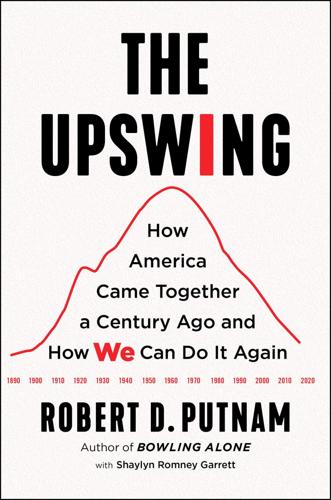
The Upswing: How America Came Together a Century Ago and How We Can Do It Again

by Robert D. Putnam  · 12 Oct 2020  · 678pp  · 160,676 words

income (mid-1980s vs. mid-1970s)—presumably, it takes several years of multimillion-dollar bonuses to afford your first private jet. As Emmanuel Saez and Gabriel Zucman observe, “Income inequality has a snowballing effect on wealth distribution.”38 On the other hand, the dramatic recent increase in wealth inequality has begun to

economic tide lifted all boats.”43 In fact, during this period the dinghies actually rose faster than the yachts. Economists Thomas Piketty, Emmanuel Saez, and Gabriel Zucman report that over these postwar decades the post-tax and transfer income of the poorest 20 percent grew three times faster than the income of

over the last half century have emphasized the same factors that we have just outlined. “In the United States,” argue Thomas Piketty, Emmanuel Saez, and Gabriel Zucman, “the stagnation of bottom 50% incomes and the upsurge in the top 1% coincided with reduced progressive taxation, widespread deregulation (particularly in the financial sector

capital income and nontaxable health and fringe benefits, as well as state and local taxes) over the last ten decades: Thomas Piketty, Emmanuel Saez, and Gabriel Zucman, “Distributional National Accounts: Methods and Estimates for the United States,” The Quarterly Journal of Economics 133, no. 2 (May 2018): 553–609, https://doi.org

: Evidence and Policy Implications,” Contemporary Economic Policy 35, no. 1 (2017), 8. 34 Piketty, Saez, and Zucman, “Distributional National Accounts.” See also Emmanuel Saez and Gabriel Zucman, “Wealth Inequality in the United States Since 1913: Evidence from Capitalized Income Tax Data,” The Quarterly Journal of Economics 131, no. 2 (May 2016): 519

Wealth Recovered?,” Working Paper 24085 (National Bureau of Economic Research, November 2017), https://doi.org/10.3386/w24085. 36 Saez, “Income and Wealth Inequality,” 13. Gabriel Zucman, “Global Wealth Inequality,” Annual Review of Economics 11, no. 1 (August 2, 2019): 109–38, https://doi.org/10.1146/annurev-economics-080218-025852, demonstrates
Capital Without Borders

by Brooke Harrington  · 11 Sep 2016  · 358pp  · 104,664 words

, and citizenship has become, partly thanks to the work of wealth managers. A new state system? Picking up on this theme, recent work by economist Gabriel Zucman has argued that the offshore financial system has grown to be such a threat to the old Westphalian order that it calls into question the

, see Heather Stewart, “Wealth Doesn’t Trickle Down—It Just Floods Offshore, New Research Reveals,” The Guardian, July 21, 2012. For tax loss figure, see Gabriel Zucman, The Hidden Wealth of Nations (Chicago: University of Chicago Press, 2015). 39. Jonathan Beaverstock, Philip Hubbard, and John Short, “Getting Away with It? Exposing the

, Economic Entrenchment, and Growth,” Journal of Economic Literature 43 (2005): 655–720. 48. Jens Beckert, Inherited Wealth (Princeton, NJ: Princeton University Press, 2008), 18. 49. Gabriel Zucman, The Hidden Wealth of Nations (Chicago: University of Chicago Press, 2015), 53. 50. Federico Cingano, “Trends in Income Inequality and Its Impact on Economic Growth

,” paper presented at the annual meeting of the Eastern Economic Association, Boston, 2012. 108. Palan et al.,Tax Havens, 12. 109. Thomas Piketty, “Foreword,” in Gabriel Zucman, The Hidden Wealth Of Nations (Chicago: University of Chicago Press, 2015), viii. 110. Adam Hofri, “The Stripping of the Trust: A Study in Legal Evolution

University Press, 1999 [1790]). 16. Philipp Genschel, “Globalization and the Transformation of the Tax State,” European Review 13 (2005): 60. 17. Thomas Piketty, “Foreword,” in Gabriel Zucman, The Hidden Wealth of Nations (Chicago: University of Chicago Press, 2015), xii. 18. Ibid. See also Ronen Palan, “Trying to Have Your Cake and Eating

, 2015. 71. Richard Bellamy, review of The Cosmopolites: The Coming of the Global Citizen, by Atossa Araxia Abrahamian, New York Times, January 11, 2016. 72. Gabriel Zucman, The Hidden Wealth of Nations (Chicago: University of Chicago Press, 2015), 79. 73. Ibid., 91. 74. Oliver Bullough, “The Fall of Jersey: How a Tax
Dirty Secrets How Tax Havens Destroy the Economy

by Richard Murphy  · 14 Sep 2017  · 241pp  · 63,981 words

$35 trillion. His estimate is based on multiple sources, including wealth managers themselves, and multiple methodologies, but may still be wildly off-target. In contrast, Gabriel Zucman has suggested a somewhat lower figure of about $7.6 trillion – but there are real problems with his work, including the fact that he does

43 per cent. The difference before and after 2008 is significant. What is not clear, however, is whether the amount of wealth offshore has stalled. Gabriel Zucman, in The Hidden Wealth of Nations, suggests that in 1980 around 6 per cent of world wealth was in tax havens, and that by 2013

another estimate that fits a trend of the reported losses being of similar orders of magnitude. The two most striking alternative estimates are those of Gabriel Zucman and the IMF. Zucman, a French economist, first published his estimates of the cost of tax havens in 2013, and repeated them in the English

22 21 Africa 500 30 14 Canada 300 9 6 Russia 200 52 1 Gulf countries 800 57 0 Total 7,600 8 190 Source: gabriel-zucman.eu/files/Zucman2015MissingWealth.xlsx. Zucman’s estimate of the assets held in tax havens is much lower than those of the Tax Justice Network and

billion and $240 billion. This figure is in addition to the costs resulting from assets located in tax havens noted previously, from the likes of Gabriel Zucman and the Tax Justice Network. We can safely conclude that it is likely that, on top of a loss of at least $200 billion because

, Hidden Wealth of Nations, p. 53. 15.Included in the data for Table 1 in the appendix to Chapter 2 of Zucman, ‘Missing Wealth’, at gabriel-zucman.eu. 16.R. Murphy, ‘The Tax Gap: Tax Evasion in 2014 – and What Can Be Done About It’, Public and Commercial Services Union, n.d

The Raging 2020s: Companies, Countries, People - and the Fight for Our Future

by Alec Ross  · 13 Sep 2021  · 363pp  · 109,077 words

still caters to organized crime, the offshore system now serves the whole array of global elites, and the scale of the tax evasion is massive. Gabriel Zucman, an economist at the University of California, Berkeley, estimated in 2015 that about $7.6 trillion in private assets is hidden in global tax havens

off the books and absconding with the money. In these cases, “we’re not talking about tax competition, but of theft pure and simple,” said Gabriel Zucman, the economist and author of The Hidden Wealth of Nations. “Luxembourg or the Cayman Islands offer some taxpayers who wish to do so the possibility

while, the US loses billions per year in taxes. To significantly reduce tax evasion, the international community needs to chip away at banking secrecy. Economist Gabriel Zucman thinks he knows the place to start. In his book The Hidden Wealth of Nations, Zucman proposes creating a “global financial register,” a consolidated log

-taxes-by-shifting-billions-to-bermuda-again; Google Netherlands Holdings B.V., Annual Accounts for Publication Purposes 2018, 4. Where did it receive that license?: Gabriel Zucman, “How Corporations and the Wealthy Avoid Taxes (and How to Stop Them),” New York Times, November 10, 2017, https://www.nytimes.com/interactive/2017/11

/10/opinion/gabriel-zucman-paradise-papers-tax-evasion.html. where the corporate tax rate is 0 percent: “Corporate Tax Rates Table,” https://home.kpmg/xx/en/home/services/tax

],” Forbes, March 23, 2017, https://www.forbes.com/sites/niallmccarthy/2017/03/23/tax-avoidance-costs-the-u-s-nearly-200-billion-every-year-infographic/; Gabriel Zucman, The Hidden Wealth of Nations: The Scourge of Tax Havens (Chicago: University of Chicago Press, 2015), 53, digamo.free.fr/zucman152.pdf. In its 2020

Capitalism, Alone: The Future of the System That Rules the World

by Branko Milanovic  · 23 Sep 2019

legal in that it is corrupt either in origin or in intention (to evade taxes).20 Using data on anomalies in assets positions across countries, Gabriel Zucman (2013, 1322) estimated that in 2008, about $5.9 trillion—8 percent of global household financial wealth, or 10 percent of global GDP—was held

carefully the enabling role of the global financial centers and tax havens. The latter have been extensively discussed—especially those in Switzerland and Luxembourg—by Gabriel Zucman in The Hidden Wealth of Nations (2015). The role of tax havens has also been starkly documented by the release of the Panama Papers and

History 49(1): 1–16. Allen, Robert C. 2017. The Industrial Revolution: A Very Short Introduction. Oxford: Oxford University Press. Alstadsaeter, Annette, Niels Johannesen, and Gabriel Zucman. 2017. “Who Owns the Wealth in Tax Havens? Macro Evidence and Implications for Global Inequality.” NBER Working Paper No. 23805, National Bureau of Economic Research

: Oxford University Press. Moene, Kalle. 2016. “The Social Upper Class under Social Democracy.” Nordic Economic Policy Review 2: 245–261. Novokmet, Filip, Thomas Piketty, and Gabriel Zucman. 2017. “From Soviets to Oligarchs: Inequality and Property in Russia 1905–2016.” WID.world Working Paper Series 2017 / 9, July. Published 2018 in Journal of

: Harvard University Press. Piketty, Thomas. 2014. Capital in the Twenty-First Century, trans. Arthur Goldhammer. Cambridge, MA: Harvard University Press. Piketty, Thomas, Li Yang, and Gabriel Zucman. 2017. “Capital Accumulation, Private Property and Rising Inequality in China, 1978–2015.” WID.world Working Paper Series 2017 / 6, April. https://wid.world/document/t

://pubdocs.worldbank.org/en/816281518818814423/2019-WDR-Concept-Note.pdf. World Inequality Report 2018, coordinated by Facunto Alvaredo, Lucas Chancel, Thomas Piketty, Emmanuel Saez, and Gabriel Zucman. Paris, December 2017. Wu, Guoyou. 2015. The Period of Deng Xiaoping’s Reformation. Beijing: Xinhua Publishing House / Foreign Language Press. Wu, Ximing, and Jeffrey Perloff
Capitalism and Its Critics: A History: From the Industrial Revolution to AI

by John Cassidy  · 12 May 2025  · 774pp  · 238,244 words

. The paper by Auten and Splinter led to an extended back-and-forth with Piketty and his associates. In a 2018 article, Piketty, Saez, and Gabriel Zucman of Berkeley used a new methodology to estimate trends in US pretax and post-tax income. They conceded that “posttax national income is more equally

2020 Democratic primary, the Democratic senators Elizabeth Warren and Bernie Sanders both proposed new wealth taxes. Two of Piketty’s research associates, Emmanuel Saez and Gabriel Zucman, helped to design Warren’s version, which would have imposed an annual tax of 2 percent on fortunes worth between $50 million and $1 billion

was no shortage of proposals to address specific problems. In a 2019 essay, “Economics After Neoliberalism,” Dani Rodrik, Columbia’s Suresh Naidu, and Berkeley’s Gabriel Zucman presented a long list of policy ideas from a new group they had created, Economists for Inclusive Prosperity. The proposals included establishing wage boards in

Households, 1967–2012,” Chartbook of Social Inequality, https://www.russellsage.org/sites/all/files/chartbook/Income%20and%20Earnings.pdf.   8.   Thomas Piketty, Emmanuel Saez, and Gabriel Zucman, “Distributional National Accounts: Methods and Estimates for the United States,” National Bureau of Economic Research Working Paper 22945, December 2016, 43, figure 2.   9.   Maddison

.   Chen and Ravallion, “Developing World,” 42, table 6. 70.   Chen and Ravallion, “Developing World,” 44, table 7. 71.   Lucas Chancel, Thomas Piketty, Emmanuel Saez, and Gabriel Zucman, World Inequality Report 2022, World Inequality Lab; 2021, 56, figure 2.3, https://wir2022.wid.world/www-site/uploads/2023/03/D_FINAL_WIL_RIM

Long-Term Trends,” August 23, 2018, 29, table 3, https://davidsplinter.com/AutenSplinter-Tax_Data_and_Inequality_2018.pdf. 39.   Thomas Piketty, Emmanuel Saez, and Gabriel Zucman, “Distributional National Accounts: Methods and Estimates for the United States,” The Quarterly Journal of Economics 133, no. 2 (May 2018), 576, https

/files/PSZ2018QJE.pdf. 40.   Piketty, Saez, and Zucman, “Distributional National Accounts,” online appendix, Main Data, “Top 1% Income Share: Pre-Tax vs. Post-Tax,” http://gabriel-zucman.eu/usdina. 41.   Gerald Auten and David Splinter, “Income Inequality in the United States: Using Tax Data to Measure Long-Term Trends,” September 29, 2023

Politics of the Commons (Oakland, CA: PM Press, 2019), 1. 54.   Dani Rodrik, Suresh Naidu, and Gabriel Zucman, “Economics After Neoliberalism,” Boston Review, February 27, 2019, https://www.bostonreview.net/forum/suresh-naidu-dani-rodrik-gabriel-zucman-economics-after-neoliberalism. 55.   Samuel Bowles and Wendy Carlin, “Shrinking Capitalism: Components of a New Political Economy

The Economics of Belonging: A Radical Plan to Win Back the Left Behind and Achieve Prosperity for All

by Martin Sandbu  · 15 Jun 2020  · 322pp  · 84,580 words
them. Companies can easily arrange their accounts to make profits show up in the places with the lowest tax rates. The economists Thomas Wright and Gabriel Zucman have shown that US multinationals saw their effective foreign profit tax rate fall from about 35 per cent as late as 1990 to about 20

. 2. Martin Sandbu, “The Productivity Pessimists,” Financial Times, 15 September 2015, https://www.ft.com/content/4b9a52b2-5b8c-11e5-9846-de406ccb37f2. 3. Emmanuel Saez and Gabriel Zucman, The Triumph of Injustice: How the Rich Dodge Taxes and How to Make Them Pay, New York: W. W. Norton, 2019; Tax Justice Now website

in the United States the share is 77 per cent, according to the World Inequality Report (Facundo Alvaredo, Lucas Chancel, Thomas Piketty, Emmanuel Saez, and Gabriel Zucman, “World Inequality Report 2018,” World Inequality Lab report, 2017, https://wir2018.wid.world/.) The wealth threshold to be in the top tenth, meanwhile, is strikingly

, American Economic Association, 27 November 2017, https://www.aeaweb.org/research/charts/sweden-wealth-tax-evasion-reporting; and Katrine Jakobsen, Kristian Jakobsen, Henrik Kleven, and Gabriel Zucman, “Wealth Taxation and Wealth Accumulation: Theory and Evidence from Denmark” (NBER Working Paper 24371, National Bureau of Economic Research, Cambridge, MA, March 2018), https://www

. See Martin Sandbu, “Wealth Tax Redux,” Financial Times 12 September 2019, https://www.ft.com/content/1eeb369e-d3df-11e9-8367-807ebd53ab77. 13. Thomas Wright and Gabriel Zucman, “The Exorbitant Tax Privilege” (NBER Working Paper 24983, National Bureau of Economic Research, Cambridge, MA, September 2018), https://www.nber.org/papers/w24983. 14. Wright

and Zucman, 3. 15. Thomas Tørsløv, Ludvig Wier, and Gabriel Zucman, “The Missing Profits of Nations” (NBER Working Paper 24701, National Bureau of Economic Research, Cambridge, MA, August 2018), https://www.nber.org/papers/w24701. 16

Avoidance and Evasion, CRS Report R40623, Washington, DC: Congressional Research Service, 2015, https://digitalcommons.ilr.cornell.edu/cgi/viewcontent.cgi?article=2387&context=key_workplace; Gabriel Zucman, “Taxing across Borders: Tracking Personal Wealth and Corporate Profits,” Journal of Economic Perspectives 28, no. 4 (Fall 2014): 121–48, http://dx.doi.org/10

Limitarianism: The Case Against Extreme Wealth

by Ingrid Robeyns  · 16 Jan 2024  · 327pp  · 110,234 words
the use of tax havens, which play a key role in the fiscal affairs of the super-rich. In a fascinating study, the French economist Gabriel Zucman pieced together all the available data for estimating the size of tax havens globally, in order to find out who benefits from them, and what

try, ideally, to pay no taxes at all, even if their profits soar into the billions.36 As an example, the economists Emmanuel Saez and Gabriel Zucman have detailed how Google has made use of profit shifting. In 2017, Google Holdings in Bermuda made $22.7 billion in revenue. This entity is

the Long Run of History,” Journal of Economic Literature 49:1 (2011), pp. 3–71; Piketty, Capital; and Lucas Chancel, Thomas Piketty, Emmanuel Saez, and Gabriel Zucman (eds), World Inequality Report 2022 (Cambridge, MA: Harvard University Press, 2022).   3.  ourworldindata.org/a-history-of-global-living-conditions-in-5-charts.   4.  World

(data for 2023). At a rate of return of 4 percent, that would give a child $162,848 on the day they turned eighteen. 31.  Gabriel Zucman, The Hidden Wealth of Nations: The Scourge of Tax Havens (Chicago: University of Chicago Press, 2015). 32.  Data from Annette Alstadsæter, Niels Johannesen, and

Gabriel Zucman, “Tax Evasion and Inequality,” American Economic Review 109:6 (2019), pp. 2073–103. See also idem, “Who Owns the Wealth in Tax Havens? Macro Evidence

fraud. 36.  On profit shifting, see Peter Dietsch, Catching Capital: The Ethics of Tax Competition (New York: Oxford University Press, 2015), and Emmanuel Saez and Gabriel Zucman, The Triumph of Injustice: How the Rich Dodge Taxes and How to Make Them Pay (New York: W. W. Norton, 2019). 37.  Saez and Zucman

/lseppr.72/. 20.  rijksoverheid.nl/documenten/rapporten/2022/07/08/ibo-vermogensverdeling-5-juli-2022. 21.  Facundo Alvaredo, Lucas Chancel, Thomas Piketty, Emmanuel Saez, and Gabriel Zucman, World Inequality Report 2018 (Paris: World Inequality Lab, 2018), pp. 257–60. 22.  See the proposals in the following: Bruce Ackermann and Anne Alstott, The

Capital in the Twenty-First Century

by Thomas Piketty  · 10 Mar 2014  · 935pp  · 267,358 words
, Camille Landais, Ioana Marinescu, Elodie Morival, Nancy Qian, Dorothée Rouzet, Stefanie Stantcheva, Juliana Londono Velez, Guillaume Saint-Jacques, Christoph Schinke, Aurélie Sotura, Mathieu Valdenaire, and Gabriel Zucman. More specifically, without the efficiency, rigor, and talents of Facundo Alvaredo, the World Top Incomes Database, to which I frequently refer in these pages, would

Landais, our collaborative project on “the fiscal revolution” would never have been written. Without the careful attention to detail and impressive capacity for work of Gabriel Zucman, I would never have completed the work on the historical evolution of the capital/income ratio in wealthy countries, which plays a key role in

eighteenth century, which allows us to view the Industrial Revolution in relation to the history of capital. For this I will rely on historical data Gabriel Zucman and I recently collected.31 Broadly speaking, this research is merely an extension and generalization of Raymond Goldsmith’s work on national balance sheets in

of rich countries. Sources and series: see piketty.pse.ens.fr/capital21c. By comparing all the available sources and exploiting previously unused Swiss bank data, Gabriel Zucman was able to show that the most plausible reason for the discrepancy is that large amounts of unreported financial assets are held in tax havens

de Paris, PSE Working Papers (2010). Summary version published in Quarterly Journal of Economics 126, no. 3 (2011): 1071–1131. 31. See Thomas Piketty and Gabriel Zucman, “Capital Is Back: Wealth-Income Ratios in Rich Countries, 1700–2010” (Paris: École d’économie de Paris, 2013). 32. See esp. Raymond Goldsmith, Comparative National

Tax Justice Network, and the intermediate 2010 estimate by Ronen Palan, Richard Murphy, and Christian Chavagneux. 57. The data in Figure 12.6 are from Gabriel Zucman, “The Missing Wealth of Nations: Are Europe and the U.S. Net Debtors or Net Creditors?,” Quarterly Journal of Economics 128, no. 3 (2013): 1321

a service to the companies issuing the securities in question, not to record all the assets owned by a particular individual. On these institutions, see Gabriel Zucman, “The Missing Wealth of Nations: Are Europe and the U.S. Net Debtors or Net Creditors?” Quarterly Journal of Economics 128, no. 3 (2013): 1321

The Tyranny of Merit: What’s Become of the Common Good?

by Michael J. Sandel  · 9 Sep 2020  · 493pp  · 98,982 words
as in 1964, about $35,000. There has been no growth for the median male worker over half a century.” Thomas Piketty, Emmauel Saez, and Gabriel Zucman, “Distributional National Accounts: Methods and Estimates for the United States,” Quarterly Journal of Economics 133, issue 2 (May 2018), pp. 557, 578, 592–93, available

at eml.berkeley.edu/~saez/PSZ2018QJE.pdf ; Facundo Alvaredo, Lucas Chancel, Thomas Piketty, Emmanuel Saez, and Gabriel Zucman, World Inequality Report 2018 (Cambridge, MA: Harvard University Press, 2018), pp. 3, 83–84. Income distribution data for the U.S. and other countries is

national income, compared with 37 percent in Western Europe, 41 percent in China, and 55 percent in Brazil and India. Thomas Piketty, Emmauel Saez, and Gabriel Zucman, “Distributional National Accounts: Methods and Estimates for the United States, Quarterly Journal of Economics 133, issue 2 (May 2018), p. 575, available at eml.berkeley

ETHICS 1. These inequalities are the ones that prevail in the United States today. The income distribution figures are from Thomas Piketty, Emmanuel Saez, and Gabriel Zucman, “Distributional National Accounts: Methods and Estimates for the United States,” Quarterly Journal of Economics 133, issue 2 (May 2018), p. 575. The distribution of wealth

in Coronavirus Crisis,” The Guardian , March 20, 2020, theguardian.com/uk-news/2020/mar/20/government-pay-wages-jobs-coronavirus-rishi-sunak ; Emmanuel Saez and Gabriel Zucman, “Jobs Aren’t Being Destroyed This Fast Elsewhere. Why Is That?,” The New York Times , March 30, 2020, nytimes.com/2020/03/30/opinion/coronavirus

Moneyland: Why Thieves and Crooks Now Rule the World and How to Take It Back

by Oliver Bullough  · 5 Sep 2018  · 364pp  · 112,681 words
, the situation was the same as it was during the 1920s: the country that offered the protection of banking secrecy was Switzerland,’ writes French economist Gabriel Zucman, in his 2015 book The Hidden Wealth of Nations, which delves into the Swiss role in creating Moneyland. This wasn’t exactly a secret. In

intelligent people. It is dark matter and, like dark matter, it can only be studied by recording its effect on things that we can see. Gabriel Zucman, the French economist who has studied Swiss banking, has tried to make these calculations. By analysing the statistical anomalies that banking secrecy creates, he estimates

wealth havens losing their secrecy haven’t played out, yet already the effects are clearly visible in official statistics. According to some recent research from Gabriel Zucman (the French economist at Berkeley), Swiss institutions’ share of the world’s offshore wealth has dipped from around 50 per cent to barely a quarter

-afghanistan-beyond-2014. Thomas Piketty’s monumental work Capital in the Twentieth-first Century (Cambridge, MA and London: Harvard University Press, 2014) is surprisingly readable. Gabriel Zucman’s The Hidden Wealth of Nations: The Scourge of Tax Havens (Chicago, IL: University of Chicago Press, 2015) is fascinating and gloriously brief. Walter Scheidel

Group Press, 2016) was a key source for this chapter, as was the Senate report into the behaviour of UBS, for which he gave evidence. Gabriel Zucman’s The Hidden Wealth of Nations: The Scourge of Tax Havens (Chicago, IL: University of Chicago Press, 2015) was important for the history of the

The Hidden Globe: How Wealth Hacks the World

by Atossa Araxia Abrahamian  · 7 Oct 2024  · 336pp  · 104,899 words
in these banks—from garden-variety certificates of deposit to exotic derivatives—belongs to complete strangers to the country. The University of California, Berkeley, economist Gabriel Zucman found in 2008 that just a third of foreign securities held by private Swiss banks belonged to people who were Swiss, with the remaining two

: a country with an outsize economic influence that everyone has heard of but no one can quite find on a map. According to the economist Gabriel Zucman, the country is hard for observers of the financial world to miss. “Luxembourg has private banks like Switzerland, it has a big mutual fund industry

memorable detail: Amazon’s twenty-six-step tax-restructuring arrangement in Luxembourg was named Project Goldcrest, after the country’s national bird.) Around this time, Gabriel Zucman, then a recently minted PhD who had studied with Thomas Piketty at the Paris School of Economics, began looking into Luxembourg’s role in international

want, and taking a risk on those companies. But the government uses it to say, ‘This is how modern we are! This is something new!’ ” Gabriel Zucman, the economist, shares Schmitz’s view. “Adapting this strategy to the business of space conquest is what being an offshore financial center means,” he says

’s. I also learned a great deal from lawyers Gunjan Sharma and Florentine Voss through their firm Volterra Fietta’s Zoom sessions on space law. Gabriel Zucman’s insights into offshore money flows informed all of this book, but particularly the Luxembourg sections. Bernard Thomas is an indefatigable chronicler of his country

Stakeholder Capitalism: A Global Economy That Works for Progress, People and Planet

by Klaus Schwab  · 7 Jan 2021  · 460pp  · 107,454 words

States, which in this sense looks more like the emerging markets of India and Mexico than the advanced economy it is. Economists Emmanuel Saez and Gabriel Zucman calculated that the wealth held by the one percent richest Americans rose from less than 15 percent in the 1970s to over 40 percent in

-income-shares-perspective/. 48 “Wealth Inequality in the United States since 1913: Evidence from Capitalized Income Tax Data,” Emmanuel Saez and Gabriel Zucman, The Quarterly Journal of Economics, May 2016, http://gabriel-zucman.eu/files/SaezZucman2016QJE.pdf. 49 “Share of Total Income going to the Top 1% since 1900, Within-Country Inequality in Rich

Law School Lina Khan in 2016 wrote a seminal paper (while at Yale), taking a similar stance: “Amazon's Antitrust Paradox.”33 Economists such as Gabriel Zucman, Emmanuel Saez, Kenneth Rogoff, and Nobel Prize winners Paul Krugman and Joseph Stiglitz have also stated Big Tech has “too much power”34 or needs

The Vanishing Middle Class: Prejudice and Power in a Dual Economy

by Peter Temin  · 17 Mar 2017  · 273pp  · 87,159 words

they work hard to reduce their taxes, the 1 percent of the 1 percent also do not hesitate to avoid taxes altogether if they can. Gabriel Zucman estimated that 8 percent of household financial wealth was in tax havens in 2014. This is almost eight trillion dollars, which is a lot of

of America’s Schools. Boston: Houghton Mifflin Harcourt. Rutenberg, Jim. 2015. “Voting Rights Act, a Dream Undone.” New York Times, August 2. Saez, Emmanuel, and Gabriel Zucman. 2016. “Wealth Inequality in the United States since 1913: Evidence from Capitalized Income Tax Data.” Quarterly Journal of Economics 131 (2) (May): 519–578. Sanders

Global Inequality: A New Approach for the Age of Globalization

by Branko Milanovic  · 10 Apr 2016  · 312pp  · 91,835 words
under shell companies in the Cayman Islands (or in Luxemburg, where GNP is only two-thirds of GDP), the issue becomes even more intractable. As Gabriel Zucman (2015) points out, it is intentionally made intractable, so that incomes may be made untraceable and taxes evaded. The gap between one’s original citizenship

Stakeholder Capitalism: A Global Economy That Works for Progress, People and Planet

by Klaus Schwab and Peter Vanham  · 27 Jan 2021  · 460pp  · 107,454 words
States, which in this sense looks more like the emerging markets of India and Mexico than the advanced economy it is. Economists Emmanuel Saez and Gabriel Zucman calculated that the wealth held by the one percent richest Americans rose from less than 15 percent in the 1970s to over 40 percent in

-income-shares-perspective/. 48 “Wealth Inequality in the United States since 1913: Evidence from Capitalized Income Tax Data,” Emmanuel Saez and Gabriel Zucman, The Quarterly Journal of Economics, May 2016, http://gabriel-zucman.eu/files/SaezZucman2016QJE.pdf. 49 “Share of Total Income going to the Top 1% since 1900, Within-Country Inequality in Rich

Law School Lina Khan in 2016 wrote a seminal paper (while at Yale), taking a similar stance: “Amazon's Antitrust Paradox.”33 Economists such as Gabriel Zucman, Emmanuel Saez, Kenneth Rogoff, and Nobel Prize winners Paul Krugman and Joseph Stiglitz have also stated Big Tech has “too much power”34 or needs

The People vs. Democracy: Why Our Freedom Is in Danger and How to Save It

by Yascha Mounk  · 15 Feb 2018  · 497pp  · 123,778 words
Has Improved over Time: Modeling the Changing Standard of Accountability,” American Political Science Review 108, no. 2 (2013): 297–318. 21. See Thomas Piketty and Gabriel Zucman, “Capital Is Back: Wealth-Income Ratios in Rich Countries 1700–2010,” Quarterly Journal of Economics 129, no. 3 (2014): 1255–1310; Emmanuel Saez and

Gabriel Zucman, “Wealth Inequality in the United States since 1913: Evidence from Capitalized Income Tax Data,” Quarterly Journal of Economics 131, no. 2 (2016): 519–578; Branko

, Federal Reserve Bank of St. Louis, adjusted for inflation, https://fred.stlouisfed.org/series/CP. 5. See Online Appendix (Table B3) in Emmanuel Saez and Gabriel Zucman, “Wealth Inequality in the United States since 1913: Evidence from Capitalized Income Tax Data,” Quarterly Journal of Economics 131, no. 2 (2016): 519–578. As

conclude, suggests “the importance of institutional and policy frameworks” in determining outcomes from affluence to inequality. Facundo Alvaredo, Lucas Chancel, Thomas Piketty, Emmanuel Saez, and Gabriel Zucman, eds., The World Inequality Report (Cambridge, MA: Belknap Press of Harvard University Press, 2018). 15. For a recent defense of the economic benefits of higher

Corporate Tax Dodging,” Oxfam America, April 14, 2016, https://www.oxfamamerica.org/static/media/files/Broken_at_the_Top_4.14.2016.pdf. See also Gabriel Zucman, The Missing Wealth of Nations: The Scourge of Tax Havens (Chicago: University of Chicago Press, 2015); and Scott D. Dyreng and Bradley P. Lindsey, “Using

The Great Reversal: How America Gave Up on Free Markets

by Thomas Philippon  · 29 Oct 2019  · 401pp  · 109,892 words
main issue has been corporate tax evasion, which is legal for the most part but costly and inefficient nonetheless. According to research by Berkeley economist Gabriel Zucman, the US loses around $70 billion in tax revenue each year because corporations shift their profits to tax havens.a That is almost one-fifth

protection. We must ensure that big data does not present a barrier to entry, and we must make certain our privacy is protected. * * * a  See Gabriel Zucman’s November 10, 2017, opinion piece in the New York Times, “How corporations and the wealthy avoid taxes.” b  Stack Overflow is a site where

-Ozcan, Thomas Piketty, Howard Rosenthal, Tano Santos, Fiona Scott Morton, Dina Srinivasan, Johannes Stroebel, Jonathan Tepper, Jean Tirole, Nicolas Véron, David Wessel, Luigi Zingales, and Gabriel Zucman. I am grateful to Ian Malcolm and Mark Steinmeyer, who saw promise in my early ideas, to Rob Garver and Katherine Brick, who edited my

Crack-Up Capitalism: Market Radicals and the Dream of a World Without Democracy

by Quinn Slobodian  · 4 Apr 2023  · 360pp  · 107,124 words

the other end, we can see a version of the zone in the tax havens where transnational corporations secrete away their earnings—what the economist Gabriel Zucman calls “the hidden wealth of nations.”7 The flight of corporate profits to these low- or zero-tax jurisdictions costs the United States alone $70

–100.     6.  Aihwa Ong, “Graduated Sovereignty in South-East Asia,” Theory, Culture & Society 17, no. 4 (2000): 68.     7.  Gabriel Zucman, The Hidden Wealth of Nations (Chicago: University of Chicago Press, 2015).     8.  Gabriel Zucman, “How Corporations and the Wealthy Avoid Taxes (and How to Stop Them),” New York Times, November 10, 2017, https

://www.nytimes.com/interactive/2017/11/10/opinion/gabriel-zucman-paradise-papers-tax-evasion.html.     9.  Oliver Bullough, Moneyland: Why Thieves and Crooks Now Rule the World and How to Take It Back (London: Profile

Economic Dignity

by Gene Sperling  · 14 Sep 2020  · 667pp  · 149,811 words

, progressive trade experts and lawmakers have rightly made vigilance through robust enforcement a make-or-break issue for any trade agreement. As Emmanuel Saez and Gabriel Zucman write in their book, The Triumph of Injustice: How the Rich Dodge Taxes and How to Make Them Pay, there is no market structured more

; and J. W. Mason, “Understanding Short-Termism: Questions and Consequences,” Roosevelt Institute, November 6, 2015, https://rooseveltinstitute.org/understanding-short-termism-questions-and-consequences/. 39. Gabriel Zucman, “How Corporations and the Wealthy Avoid Taxes (and How to Stop Them),” New York Times, November 10, 2017, https://www.nytimes.com/interactive/2017/11

/10/opinion/gabriel-zucman-paradise-papers-tax-evasion.html. 40. The White House and the Department of the Treasury, The President’s Framework for Business Tax Reform: An Update

Fully Grown: Why a Stagnant Economy Is a Sign of Success

by Dietrich Vollrath  · 6 Jan 2020  · 295pp  · 90,821 words
happened over the past few decades. The data comes from a new set of distributional national accounts put together by Thomas Piketty, Emmanuel Saez, and Gabriel Zucman, who have gone through the tedious task of taking the national accounting data on GDP that we have been using and matching it up with

on the share of national income going to different income groups was produced by Piketty, Saez, and Zucman (2016). I obtained the data at http://gabriel-zucman.eu/usdina/. The information about the occupation of the top .1% of the income distribution is from Bakija, Cole, and Heim (2008). The salary information

Billionaire, Nerd, Savior, King: Bill Gates and His Quest to Shape Our World

by Anupreeta Das  · 12 Aug 2024  · 315pp  · 115,894 words
idea of a wealth tax became a central talking point in the Democratic presidential primary in 2020. The previous year, the economists Emmanuel Saez and Gabriel Zucman had published The Triumph of Injustice, a historical study of the American tax system that highlighted how taxes for the wealthiest have fallen, while middle

Kahloon, “Thomas Piketty Goes Global,” The New Yorker, March 2, 2020. 11. Emmanuel Saez and Gabriel Zucman, “Exploding Wealth Inequality in the United States,” Washington Center for Equitable Growth, October 20, 2014. 12. Emanuel Saez and Gabriel Zucman, “The Rise of Income and Wealth Inequality in America: Evidence from Distributional Macroeconomic Accounts,” Journal of

. Princeton: Princeton University Press, 2019. Rohm, Wendy Goldman. The Microsoft File: The Secret Case Against Bill Gates. New York: Random House, 1998. Saez, Emmanuel, and Gabriel Zucman. The Triumph of Injustice: How the Rich Dodge Taxes and How to Make Them Pay. New York: W.W. Norton, 2019. Samuel, Lawrence R. The

The Finance Curse: How Global Finance Is Making Us All Poorer

by Nicholas Shaxson  · 10 Oct 2018  · 482pp  · 149,351 words

’s share started to grow sharply, accelerating when he became prime minister, and today Luxembourg is one of the ‘big six’. The graph is from Gabriel Zucman, transl. Teresa Lavender Fagan, Hidden Wealth of Nations: The Scourge of Tax Havens, University of Chicago Press, 2015, with Juncker timings added by David Walch

of estimation, triangulating using three separate statistical methods, combined with ‘investigative economics’ which involves talking to players in the industry. The widely publicised estimates by Gabriel Zucman, at the lower end, were published in his book The Hidden Wealth of Nations, Chicago, 2015. Zucman uses a novel method to estimate assets in

.51–3, quoted in Brooke Harrington, Capital Without Borders: Wealth Managers and the One Percent, Harvard University Press, 2016. 15. Annette Alstadsæter, Niels Johannesen and Gabriel Zucman, ‘Tax Evasion and Inequality’, National Bureau of Economic Research, Working Paper No. 23772, 28 May 2017. The 85–95 per cent undeclared figure comes from

from less than 10 per cent of gross profits in 1994 to around 50 per cent by 2012. Also see Annette Alstadsæter, Niels Johannesen and Gabriel Zucman, ‘Who owns the wealth in tax havens? Macro evidence and implications for global inequality’, Working Paper 23805, NBER, National Bureau of Economic Research, September 2017

The Curse of Cash

by Kenneth S Rogoff  · 29 Aug 2016  · 361pp  · 97,787 words
like Luxembourg, the Virgin Islands, Bahamas, Cypress, Panama, and, of course, Switzerland. In his 2015 book, The Hidden Wealth of Nations, University of California professor Gabriel Zucman has estimated that total foreign financial wealth held in tax havens (including stocks, bonds, and bank accounts) amounts to about $7.6 trillion, or 8

Arguing With Zombies: Economics, Politics, and the Fight for a Better Future

by Paul Krugman  · 28 Jan 2020  · 446pp  · 117,660 words
million, and an additional 1 percent on wealth in excess of $1 billion. The proposal was released along with an analysis by Emmanuel Saez and Gabriel Zucman of Berkeley, two of the world’s leading experts on inequality. Saez and Zucman found that this tax would affect only a small number of

. While the unsavory details revealed by these leaks made headlines right away, their true significance has only become clear with work done by Berkeley’s Gabriel Zucman and associates in cooperation with Scandinavian tax authorities. Matching information from the Panama Papers and other leaks with national tax data, these researchers found that

the U.K. Richard Kogan was, I think, the first person to alert me to the nonexistence of a snowballing-debt problem. Emmanuel Saez and Gabriel Zucman, aside from teaching all of us a huge amount about taxation, helped me out a lot in understanding new Democratic proposals, especially the Warren wealth

Trade Wars Are Class Wars: How Rising Inequality Distorts the Global Economy and Threatens International Peace

by Matthew C. Klein  · 18 May 2020  · 339pp  · 95,270 words
, Brad Setser, Hyun Song Shin, Amir Sufi, Srinivas Thiruvadanthai, Adam Tooze, Kellee Tsai on China’s informal banks, Angel Ubide, Duncan Weldon, Martin Wolf, and Gabriel Zucman. Brad Setser and Harry X. Wu also generously provided us with their data on China’s manufacturing trade, global foreign reserve accumulation, and Chinese productivity

_01.PDF; FactSet, data for companies in the S&P 500 stock index, http://www.factset.com. 29. Thomas R. Tørsløv, Ludvig S. Wier, and Gabriel Zucman, “The Missing Profits of Nations,” NBER Working Paper No. 24701, June 2018. 30. David Barboza, “How China Built ‘iPhone City’ with Billions in Perks for

_MNC.cfm; see also Matthew C. Klein, “What the Foreign Direct Investment Data Tell Us about Corporate Tax Avoidance,” Financial Times, November 23, 2017; and Gabriel Zucman, The Hidden Wealth of Nations (Chicago: University of Chicago Press, 2015). 39. Apple 2017 10-K, https://www.sec.gov/Archives/edgar/data/320193/000032019317000070

Years,” CFR (blog), February 16, 2018, https://www.cfr.org/blog/mapping-capital-flows-us-over-last-thirty-years. 2. Thomas Piketty, Emmanuel Saez, and Gabriel Zucman, “Distributional National Accounts: Methods and Estimates for the United States,” Quarterly Journal of Economics 133, no. 2 (May 2018): 553–609; Emmanuel Saez and

Gabriel Zucman, “Wealth Inequality in the United States since 1913: Evidence from Capitalized Income Tax Data,” Quarterly Journal of Economics 131, no. 2 (May 2016): 519–78;

99%: Mass Impoverishment and How We Can End It

by Mark Thomas  · 7 Aug 2019  · 286pp  · 79,305 words
of those who have their hands on the levers of power. Many members of this group, as research by the eminent economists Emmanuel Saez and Gabriel Zucman shows,7 have found the last thirty-five years to be a time of great progress – their own wealth has soared – and most of their

dangerous process of mass impoverishment means that, in fact, they are not. But the wealth has not disappeared, it merely resides elsewhere. Emmanuel Saez and Gabriel Zucman have painstakingly worked to understand where the wealth does reside in America. Because wealth is so very highly concentrated that missing a few of the

capital increase with the size of the initial endowment; Robert C. Allen for demonstrating the stagnation of wages during the Industrial Revolution; Emmanuel Saez and Gabriel Zucman for their work on wealth inequality in the US over time; The Resolution Foundation for its analysis of the impact of the 2016 budget on

Unsustainable Inequalities: Social Justice and the Environment

by Lucas Chancel  · 15 Jan 2020  · 191pp  · 51,242 words
Piketty, Anthony Atkinson, Emmanuel Saez, and Facundo Alvaredo.1 In 2011, these economists created the World Top Incomes Database (WTID) and invited the collaboration of Gabriel Zucman, a specialist in wealth inequalities and tax avoidance. I was fortunate enough to be asked to join the project in 2015 and am now its

? So long as sanctions are not commensurate with the gains realized through fraud, the chances of real and lasting change are extremely small. The economist Gabriel Zucman has shown that France, Italy, and Germany will need to threaten Switzerland with a 30 percent tariff on exports if they seriously mean to discourage

Origins of Our Times, 2nd paperback ed. (Boston: Beacon Press, 2001). For a specific discussion of the US trajectory see Thomas Piketty, Emmanuel Saez, and Gabriel Zucman, “Distributional National Accounts: Methods and Estimates for the United States” (working paper no. 22945, National Bureau of Economic Research, December 2016), rev. version published in

, “Testing Theories of American Politics: Elit es, Interest Groups, and Average Citizens,” Perspectives on Politics 12, no. 3 (2014): 564–581. 36. Emmanuel Saez and Gabriel Zucman, The Triumph of Injustice (New York: Norton, 2019). 37. Lucas Chancel and Thomas Spencer, “Greasing the Wheel: Oil’s Role in the Global Crisis,” Vox

Social Commission for Asia and the Pacific, May 7, 2018, https://www.unescap.org/publications/inequality-asia-and-pacific-era-2030-agenda-sustainable-development. 11. Gabriel Zucman, The Hidden Wealth of Nations: The Scourge of Tax Havens, trans. Teresa Lavender Fagan (Chicago: University of Chicago Press, 2015). 12. Ibid. 13. See, for

Vassal State

by Angus Hanton  · 25 Mar 2024  · 277pp  · 81,718 words
take. This is even more striking considering that US companies tend to be the most profitable ones. The problem has been steadily growing. According to Gabriel Zucman, a leading tax researcher at the University of California, in recent years at least 55 per cent of foreign profits of US multinationals were redirected

-penalty-in-eu-courts/. 8 ‘Bermuda black hole’, Wikipedia [website], https://en.wikipedia.org/wiki/Bermuda_Black_Hole. 9 Gabriel Zucman et al., ‘The missing profits of nations’ [PDF], Gabriel Zucman [website] (June 2018), https://gabriel-zucman.eu/files/TWZ2018.pdf. 10 Katarzyna Anna Bilicka, ‘Comparing UK tax returns of foreign multinationals to matched domestic firms

American Kleptocracy: How the U.S. Created the World's Greatest Money Laundering Scheme in History

by Casey Michel  · 23 Nov 2021  · 466pp  · 116,165 words

in the counterkleptocracy movement’s arsenal. (Such is the logic behind a thrust of similar proposals, such as the “global asset registry” proposed by economist Gabriel Zucman.24) In hedge funds and private equity, in the perpetual trusts of South Dakota and among escrow agents across the country, in all those other

Jesse Eisinger, “How the IRS Was Gutted,” ProPublica, 11 December 2018, https://www.propublica.org/article/how-the-irs-was-gutted. 33. Emmanuel Saez and Gabriel Zucman, The Triumph of Injustice (New York: W. W. Norton, 2019). 34. Ray Eldon Hiebert, “Ivy Lee: ‘Father of Modern Public Relations,’” Princeton University Library Chronicle

The Smartphone Society

by Nicole Aschoff
tax evasion is not a new problem. Since the mid-1990s, multinationals based in the United States have increasingly shifted profits to offshore tax havens. Gabriel Zucman, an economics professor at UC Berkeley, says American multinationals hide 63 percent of the profits they claim to earn overseas in a handful of tax

Filter Bubble: How the New Personalized Web Is Changing What We Read and How We Think. New York: Penguin, 2011. Piketty, Thomas, Emmanuel Saez, and Gabriel Zucman. “Distributional National Accounts: Methods and Estimates for the United States.” NBER Working Paper 22945. Cambridge, MA: National Bureau of Economic Research, December 2016. Pine, Joseph

The Panama Papers: Breaking the Story of How the Rich and Powerful Hide Their Money

by Frederik Obermaier  · 17 Jun 2016  · 372pp  · 109,536 words

Mossack Fonseca is just one of several major providers of offshore companies; we’re a long way from seeing the overall picture. The French economist Gabriel Zucman tried to make a projection about the percentage of global assets lying in tax havens. He arrived at 8 per cent, around €5,900 billion

these reforms could never be implemented in practice. Certainly, this raises the question: why should the tax havens give in? In fact the French author Gabriel Zucman, in his book The Hidden Wealth of Nations: The Scourge of Tax Havens, has worked through how the automatic exchange of information and the register

The Globalization of Inequality

by François Bourguignon  · 1 Aug 2012  · 221pp  · 55,901 words

points in China between 1995 and 2002,9 but that India’s levels were quasi-­stable between 1991 and 2002.10 8 Thomas Piketty and Gabriel Zucman report a change in the top 1% share from 22% to 24% between 1970 and 2010 in France, and from 18% to 20% in Sweden

a ceiling to tax rates, one that would most likely depend on the tax systems of other countries. The mobility of financial assets is real. Gabriel Zucman estimates that an average of 8% of household fiSee “The Elasticity of Taxable Income with Respect to Marginal Tax Rates: A Critical Review,” Journal of

to find a correlation between economic growth and the average rate of taxation and generally end up with results that are not statistically significant.9 Gabriel Zucman, “The Missing Wealth of Nations: Are Europe and the US Net Debtors or Net Creditors?” Quarterly Journal of Economics 128, no. 3 (2013): 1321–64

Radical Markets: Uprooting Capitalism and Democracy for a Just Society

by Eric Posner and E. Weyl  · 14 May 2018  · 463pp  · 105,197 words

more generous.5 FIGURE I.1: US income shares of top 1% households, including capital gains, before and after taxes. Source: Thomas Piketty, Emmanuel Saez, & Gabriel Zucman, Distributional National Accounts: Methods and Estimates for the United States, Quarterly Journal of Economics (Forthcoming). Is this growth in inequality simply the price of a

, Britain, and France, 1890s to 1990s (Princeton University Press, 2010). 4. Thomas Piketty, Emmanuel Saez, and Gabriel Zucman, Distributional National Accounts: Methods and Estimates for the United States, Quarterly Journal of Economics (Forthcoming). 5. Thomas Piketty & Gabriel Zucman, Capital Is Back: Wealth-Income Ratios in Rich Countries 1700–2010, 129 Quarterly Journal of Economics

they received funding from the Investment Company Institute, an association of investment companies that engages in lobbying and related activities. 51. Thomas Piketty, Emmanuel Saez, & Gabriel Zucman, Distributional National Accounts: Methods and Estimates for the United States (National Bureau of Economic Research, Working Paper No. 22945, 2016). 52. Posner et al., Proposal

Bean Counters: The Triumph of the Accountants and How They Broke Capitalism

by Richard Brooks  · 23 Apr 2018  · 398pp  · 105,917 words

, December 2003) Zucman, Gabriel, ‘Taxing Across Borders: Tracking Personal Wealth and Corporate Profits’ (Journal of Economic Perspectives, US, Vol. 28, No. 4, Fall 2014), http://gabriel-zucman.eu/files/Zucman2014JEP.pdf NEWSPAPER REPORTS Agnew, Harriet, ‘Professional Services: Accounting for Change’, Financial Times, 28 August 2015 Alexander, Delroy; Burns, Greg; Manor, Robert; McRoberts

Fair Shot: Rethinking Inequality and How We Earn

by Chris Hughes  · 20 Feb 2018  · 173pp  · 53,564 words
Basic Income?” Medium, December 12, 2016. https://medium.com/economicsecproj/why-would-a-labor-leader-support-a-universal-basic-income-22d9d37e1514#.qbdr3co1b. Saez, Emmanuel, and Gabriel Zucman. “Wealth Inequality in the United States Since 1913: Evidence from Capitalized Income Tax Data.” Working Paper 20625, National Bureau of Economic Research, October 2014. http

://gabriel-zucman.eu/files/SaezZucman2014.pdf. Salary.com. “North Carolina Physician-Generalist Salaries.” October 30, 2017. http://www1.salary.com/NC/Physician-Generalist-salary.html. Salpukas, Agis. “

Making Sense of Chaos: A Better Economics for a Better World

by J. Doyne Farmer  · 24 Apr 2024  · 406pp  · 114,438 words

reaching opposite conclusions – conclusions that reflect their values more than any underlying science. In an essay titled ‘Economics after Neoliberalism’, Suresh Naidu, Dani Rodrik and Gabriel Zucman unintentionally make this point: Back in 1975, economist Carlos F. Diaz-Alejandro wrote, ‘by now any bright graduate student, by choosing his assumptions [ …] carefully, can

.soc-ph], doi: 10.48550/arXiv.2003.00580. Piketty, Thomas. 2015. The Economics of Inequality. Cambridge, MA: Harvard University Press. Piketty, Thomas, Emmanuel Saez and Gabriel Zucman. 2018. ‘Distributional National Accounts: Methods and Estimates from the United States’. Quarterly Journal of Economics 133 (2): 553-609. Platt, Donovon. 2022. ‘Bayesian Estimation of

EuroTragedy: A Drama in Nine Acts

by Ashoka Mody  · 7 May 2018
-​to-​income ratio increases. The slower the rate of economic growth, the faster the increase in the wealth-​to-​income ratio. Economists Thomas Piketty and Gabriel Zucman find that starting precisely in the early 1970s, wealth-​to-​income ratios increased through much of the industrialized world but especially rapidly in Europe, where

14. http://​perspectives. pictet.com/​wp-​content/​uploads/​2016/​12/​Flash-​Note-​FD-​ECB-​QE​bond-​scarcity-​14-​December-​2016-​1.pdf. Piketty, Thomas, and Gabriel Zucman. 2014. “Capital Is Back: Wealth-​Income Ratios in Rich Countries 1700–​2010.” Quarterly Journal of Economics 129, no. 3: 1255–​1310. Pinto, Brian, and Sergei

The Road to Unfreedom: Russia, Europe, America

by Timothy Snyder  · 2 Apr 2018
–37. Their estimate is that deunionization accounts for between one-fifth and one-third of the increase in inequality. Taxes: Thomas Piketty, Emmanuel Saez, and Gabriel Zucman, Distributional Accounts: Methods and Estimates for the United States (Cambridge, Mass.: National Bureau of Economic Research, 2016), 28. In the era of inevitability Figures in

Grew Broadly Over Three Years, but Inequality Also Widened,” NYT, Sept. 28, 2017. For 7% to 22%, and 220 to 1,120: Emmanuel Saez and Gabriel Zucman, “Wealth Inequality in the United States Since 1913: Evidence from Capitalized Income Tax Data,” National Bureau of Economic Research, Working Paper 20265, Oct. 2014, 1

Rich White Men: What It Takes to Uproot the Old Boys' Club and Transform America

by Garrett Neiman  · 19 Jun 2023  · 386pp  · 112,064 words
. In their 2019 book The Triumph of Injustice: How the Rich Dodge Taxes and How to Make Them Pay, UC Berkeley economists Emmanuel Saez and Gabriel Zucman provide robust evidence that the elite have vanquished progressive taxation in America. Today, most Americans pay similar tax rates, regardless of their socioeconomic status. And

Press, 2020. Pittelman, Karen. Classified: How to Stop Hiding Your Privilege and Use It for Social Change! New York: Soft Skull, 2006. Saez, Emmanuel, and Gabriel Zucman. The Triumph of Injustice: How the Rich Dodge Taxes and How to Make Them Pay. New York: W. W. Norton, 2019. Saunders, Claire, Hazel Songhurst

, 2014). 11. Warren E. Buffett to the shareholders of Berkshire Hathaway, March 1, 1996, https://www.berkshirehathaway.com/letters/1995.html. 12. Emmanuel Saez and Gabriel Zucman, The Triumph of Injustice: How the Rich Dodge Taxes and How to Make Them Pay (New York: W. W. Norton, 2019). 13. “Google Shifted $23

The Light That Failed: A Reckoning

by Ivan Krastev and Stephen Holmes  · 31 Oct 2019  · 300pp  · 87,374 words

-enriching rulers have, despite internal rivalries, managed to stay atop the country’s fragmented society without resorting to historically significant levels of mass violence. Economist Gabriel Zucman calculated that, in 2015, 52 per cent of Russia’s wealth resided outside of the country.104 This political model, neither democratic nor authoritarian, neither

Freedom Is in Danger and How to Save It (Harvard University Press, 2018). 103. Larry Diamond, ‘Liberation Technology’, Journal of Democracy (20 July 2010). 104. Gabriel Zucman, The Hidden Wealth of Nations: The Scourge of Tax Havens (University of Chicago Press, 2016). 105. Franklin Foer, ‘How Kleptocracy Came to America’, The Atlantic

Rethinking the Economics of Land and Housing

by Josh Ryan-Collins, Toby Lloyd and Laurie Macfarlane  · 28 Feb 2017  · 346pp  · 90,371 words

, Virtue, and the Law. Oxford: Oxford University Press. Piketty, Thomas. 2014. Capital in the Twenty-First Century. Cambridge, MA: Harvard University Press. Piketty, Thomas, and Gabriel Zucman. 2013. ‘Capital Is Back: Wealth-Income Ratios in Rich Countries, 1700–2010’. http://www.piketty.pse.ens.fr/files/PikettyZucman2013BookRevQJE.pdf Pollock, Frederick, and Frederic

Rentier Capitalism: Who Owns the Economy, and Who Pays for It?

by Brett Christophers  · 17 Nov 2020  · 614pp  · 168,545 words
housing to owner-occupied dwellings over the past four decades has served to distribute significant amounts of property wealth across several wealth deciles. Thus, as Gabriel Zucman has noted, house price increases in the UK have ‘tended to boost the wealth share of the middle class, since most [of] its wealth is

Bootstrapped: Liberating Ourselves From the American Dream

by Alissa Quart  · 14 Mar 2023  · 304pp  · 86,028 words
them about “carried interest.”) In this way, the Patriotic Millionaires closely follow the blueprint of the University of California at Berkeley economists Emmanuel Saez and Gabriel Zucman, whose study of wealth taxes influenced Senator Elizabeth Warren’s own proposal. That wealth tax would place a 2 percent annual levy on wealth between

Policy Center, accessed January 2021, https://www.taxpolicycenter.org/briefing-book/what-carried-interest-and-how-it-taxed. Warren’s own proposal: Emmanuel Saez and Gabriel Zucman, “Progressive Wealth Taxation,” BPEA Conference Draft, Brookings, Fall 2019, https://www.brookings.edu/bpea-articles/progressive-wealth-taxation/. Also by Saez and Zucman: “Jobs Aren

The Bill Gates Problem: Reckoning With the Myth of the Good Billionaire

by Tim Schwab  · 13 Nov 2023  · 618pp  · 179,407 words

a tightly controlled billionaire philanthropy like the Gates Foundation might be subject to a wealth tax. Collins and Flannery, “Gilded Giving 2022”; Emmanuel Saez and Gabriel Zucman, “Progressive Wealth Taxation,” BPEA Conference Drafts, September 5, 2019, https:// www.brookings.edu/wp-content/uploads/2019/09/Saez-Zucman_conference-draft.pdf. chipping away

. I did this calculation using Gates’s estimated yearly wealth according to the Forbes billionaires list. I ran my calculations by University of California economist Gabriel Zucman, who pointed me to the website taxjusticenow.com, which models how different wealth tax proposals would have changed the personal wealth of the superrich—had

Tightrope: Americans Reaching for Hope

by Nicholas D. Kristof and Sheryl Wudunn  · 14 Jan 2020  · 307pp  · 96,543 words
top .01 percent: David Leonhardt makes this point in an excellent chart using income data (after taxes and transfers) from Thomas Piketty, Emmanuel Saez and Gabriel Zucman, as well as GDP data from the Bureau of Economic Analysis. David Leonhardt, “How the Upper Middle Class Is Really Doing,” The New York Times

about cheating with food stamps: Emelyn Rude, “The Very Short History of Food Stamp Fraud in America,” Time, March 30, 2017. zillionaires hide assets abroad: Gabriel Zucman, “The Hidden Wealth of Nations: The Scourge of Tax Havens,” University of California at Berkeley, presentation, September 2015. He calculates that $36 billion is lost

now owns twice as great a share: These are real incomes after taxes and government transfers, based on data from Thomas Piketty, Emmanuel Saez and Gabriel Zucman. See David Leonhardt, “How the Upper Middle Class in America Is Really Doing,” The New York Times, February 24, 2019. who didn’t graduate from

The System: Who Rigged It, How We Fix It

by Robert B. Reich  · 24 Mar 2020  · 154pp  · 47,880 words
worker; by 2019, the CEO earned three hundred times as much. Wealth inequality has exploded even faster. According to research by economists Emmanuel Saez and Gabriel Zucman, the share of total wealth held by the richest 0.1 percent—about 160,000 American households—went from less than 10 percent to 20

27, 2019. “Hours Worked.” Organization for Economic Cooperation and Development, 2018. Piketty, Thomas, Emmanuel Saez, and Gabriel Zucman. “Distributional Accounts: Methods and Estimates for the United States.” Quarterly Journal of Economics, 2018. Saez, Emmanuel, and Gabriel Zucman. “Wealth Inequality in the United States Since 1913: Evidence from Capitalized Income Tax Data.” Quarterly Journal of

Underwater: How Our American Dream of Homeownership Became a Nightmare

by Ryan Dezember  · 13 Jul 2020  · 279pp  · 87,875 words
2010, housing wealth accounted for about two-thirds of the increase in the U.S. wealth-to-income ratio, according to economists Thomas Piketty and Gabriel Zucman. They found even greater proportions of wealth created by home-price appreciation in other developed countries, such as Canada and the United Kingdom. It was

Dezember, “Blackstone Moves Out of Rental-Home Wager with a Big Gain,” Wall Street Journal, November 21, 2019. Between 1970 and 2010 Thomas Piketty and Gabriel Zucman, “Capital Is Back: Wealth-Income Ratios in Rich Countries 1700–2010,” Quarterly Journal of Economics (2014): 1255–310. It was thanks to rising home prices

The Laundromat : Inside the Panama Papers, Illicit Money Networks, and the Global Elite

by Jake Bernstein  · 14 Oct 2019  · 470pp  · 125,992 words
-trillion-as-the-rich-get-richer. 4 One recent study of three Scandinavian nations: Annette Alstadsaeter, Niels Johannesen, and Gabriel Zucman, “Tax Evasion and Inequality,” preliminary draft paper, May 28, 2017, http://gabriel-zucman.eu/files/AJZ2017.pdf. 5 An estimated 8 percent of the world’s household financial wealth: Annette Alstadsæter, Niels Johannesen

, and Gabriel Zucman, “Who Owns the Wealth in Tax Havens? Macro Evidence and Implications for Global Inequality,” National Bureau of Economic Research, September 2017, http://www.nber.org/

Rethinking Capitalism: Economics and Policy for Sustainable and Inclusive Growth

by Michael Jacobs and Mariana Mazzucato  · 31 Jul 2016  · 370pp  · 102,823 words
for more detailed information). Sources: Economic Policy Institute (left panel); The World Wealth and Income Database. Facundo Alvaredo, Tony Atkinson, Thomas Piketty, Emmanuel Saez and Gabriel Zucman (right panel) In the first three years of the so-called recovery from the Great Recession of 2008–2009—in other words, since the US

Makers and Takers: The Rise of Finance and the Fall of American Business

by Rana Foroohar  · 16 May 2016  · 515pp  · 132,295 words
. Taylor, Robin Greenwood, David Scharfstein, Raghuram G. Rajan, Carmen Reinhart, Ken Rogoff, Thomas Philippon, Robert Atkinson, J. W. Mason, Luigi Zingales, Thomas Piketty, Emmanuel Saez, Gabriel Zucman, Jeff Madrick, George Akerlof, Robert Shiller, John Coates, Karen Ho, Enisse Kharroubi, Claudia Goldin, Lawrence Katz, David Graeber, Charles Calomiris, Stephen H. Haber, Allan H

of Top Earners and the Causes of Changing Income Inequality: Evidence from U.S. Tax Return Data,” Williams College, April 2012. 51. Emmanuel Saez and Gabriel Zucman, “Wealth Inequality in the United States Since 1913: Evidence from Capitalized Income Tax Data,” Working Paper No. 20625, National Bureau of Economic Research, October 2014

Just Keep Buying: Proven Ways to Save Money and Build Your Wealth

by Nick Maggiulli  · 15 May 2022  · 287pp  · 62,824 words

E., Jonathan Skinner, and Stephen P. Zeldes, “Do the Rich Save More?” Journal of Political Economy 112:2 (2004) 397–444. 4 Saez, Emmanuel, and Gabriel Zucman, “The Distribution of US Wealth: Capital Income and Returns since 1913.” Unpublished (2014). 5 “Stress in America? Paying With Our Health,” American Psychological Association (February

Luce, Edward, “Lloyd Blankfien: ‘I Might Find It Harder to Vote for Bernie than for Trump’,” Financial Times (February 21, 2020). 100 Saez, Emmanuel, and Gabriel Zucman, “Wealth Inequality in the United States Since 1913: Evidence from Capitalized Income Tax Data,” The Quarterly Journal of Economics 131:2 (2016), 519–578. 101

The Theft of a Decade: How the Baby Boomers Stole the Millennials' Economic Future

by Joseph C. Sternberg  · 13 May 2019  · 336pp  · 95,773 words
self-discipline of a financial saint, the choice was often to buy a house or not save at all. § The work of Emmanuel Saez and Gabriel Zucman, from whose influential 2016 paper on wealth inequality these numbers are taken, remains controversial. There’s good reason to believe their method for estimating wealth

. Louis Working Paper No. 2016-007A, April 12, 2016. 27. Green and Wachter, “The American Mortgage in Historical and International Perspective.” 28. Emmanuel Saez and Gabriel Zucman, “Wealth Inequality in the United States Since 1913: Evidence from Capitalized Income Tax Data,” Quarterly Journal of Economics 131, no. 2 (May 2016). 29. “Table

The Radical Fund: How a Band of Visionaries and a Million Dollars Upended America

by John Fabian Witt  · 14 Oct 2025  · 735pp  · 279,360 words
Metcalf, “Rockefeller Was Almost Three Times Richer Than Bezos,” Bloomberg Business Week, May 21, 2019. 84 percent of the nation’s wealth: Emmanuel Saez and Gabriel Zucman, “Wealth Inequality in the United States Since 1913: Evidence from Capitalized Income Tax Data,” Quarterly Journal of Economics 131/2 (May 2016): 519, 552. As

al., “Unions and Inequality over the Twentieth Century: New Evidence from Survey Data,” Quarterly Journal of Economics 136 (2021): 1325. inequality shrank: Emmanuel Saez and Gabriel Zucman, “Wealth Inequality in the United States Since 1913: Evidence from Capitalized Income Tax Data,” Quarterly Journal of Economics 131 (2016): 519. 3. uphold: Gitlow v

Fixed: Why Personal Finance is Broken and How to Make it Work for Everyone

by John Y. Campbell and Tarun Ramadorai  · 25 Jul 2025
revealed to be £231,000,” BBC News, March 22, 2024, https://www.bbc.com/news/uk-68534953. 14. Lucas Chancel, Thomas Piketty, Emmanuel Saez, and Gabriel Zucman, World Inequality Report 2022 (World Inequality Lab, 2022), https://wir2022.wid.world/. 15. Measurement of income inequality is difficult because of tax evasion and underreporting

, however. They exclude defined-contribution retirement savings, private businesses, and assets held in family foundations. 18. See, for example, the debate between Emmanuel Saez and Gabriel Zucman, “Wealth inequality in the United States since 1913: Evidence from capitalized income tax data,” Quarterly Journal of Economics 131 (2016): 519–578; and Matthew Smith

Kleptopia: How Dirty Money Is Conquering the World

by Tom Burgis  · 7 Sep 2020  · 476pp  · 139,761 words
war – document’, Reuters, August 3, 1997 a story that reversed the truth: Nick Shaxson, Treasure Islands, The Bodley Head, 2011, pp.49–51 increased tenfold: Gabriel Zucman, The Hidden Wealth of Nations, University of Chicago Press, 2015, p.14 amass a quarter of all increases in incomes: Martin Wolf, ‘Inequality is a

The Economists' Hour: How the False Prophets of Free Markets Fractured Our Society

by Binyamin Appelbaum  · 4 Sep 2019  · 614pp  · 174,226 words
through much of the twentieth century, reaching a nadir at 63.6 percent in 1986. It has been climbing ever since. See Emmanuel Saez and Gabriel Zucman, “Wealth Inequality in the United States Since 1913: Evidence from Capitalized Income Tax Data,” October 2014, National Bureau of Economic Research Working Paper 20625. 118

taxation have declined, while regressive taxes, like the federal payroll tax and state and local sales taxes, have increased. See Thomas Piketty, Emmanuel Saez, and Gabriel Zucman, “Distributional National Accounts: Methods and Estimates for the United States,” Quarterly Journal of Economics 133, no. 2 (May 2018). The study does not consider the

Winners Take All: The Elite Charade of Changing the World

by Anand Giridharadas  · 27 Aug 2018  · 296pp  · 98,018 words

$16,200. One hundred seventeen million people had, in other words, been “completely shut off from economic growth since the 1970s,” Piketty, Emmanuel Saez, and Gabriel Zucman wrote. A generation’s worth of mind-bending innovation had delivered scant progress for half of Americans. The realities of a bifurcating America were part

the uneven spread of the “fruits of change,” see “Distributional National Accounts: Methods and Estimates for the United States,” by Thomas Piketty, Emmanuel Saez, and Gabriel Zucman (National Bureau of Economic Research Working Paper No. 22945, December 2016). On the changing realities of social mobility and the “opportunity to get ahead,” see

Rockonomics: A Backstage Tour of What the Music Industry Can Teach Us About Economics and Life

by Alan B. Krueger  · 3 Jun 2019

More (New York: Hyperion, 2006). 14. Author’s calculations using information from Pollstar Boxoffice Database. 15. Facundo Alvaredo, Lucas Chancel, Thomas Piketty, Emmanuel Saez, and Gabriel Zucman, “World Inequality Report,” World Inequality Lab, 2018. 16. Gerry Mullany, “World’s 8 Richest Have as Much Wealth as Bottom Half, Oxfam Says,” New York

Top Incomes: A Historical and International Perspective,” American Economic Review 96, no. 2 (2006): 200–205. 2. Lucas Chancel Facundo, Thomas Piketty, Emmanuel Saez, and Gabriel Zucman, “2018 World Inequality Report,” World Inequality Lab, 2018. 3. This and other quotes are from Alfred Marshall, Principles of Economics, 8th ed. (London: Macmillan, 1930

Rewriting the Rules of the European Economy: An Agenda for Growth and Shared Prosperity

by Joseph E. Stiglitz  · 28 Jan 2020  · 408pp  · 108,985 words
Working Papers no. 26, Paris: OECD Publishing, July 2016), https://doi.org/10.1787/5jlv74ggk0g7-en; Facundo Alvaredo, Lucas Chancel, Thomas Piketty, Emmanuel Saez, and Gabriel Zucman, World Inequality Report 2018 (Paris: Paris School of Economics, 2017). 3. Brian Sloan, Günther Ebling, Martin Becker, Luis Peragon Lorenzo, and Antonella Caiumi, eds., Taxation

Commission, Sept. 2017), https://ec.europa.eu/taxation_customs/sites/taxation/files/communication_taxation_digital_single_market_en.pdf. 14. Thomas Tørsløv, Ludvig Wier, and Gabriel Zucman, The Missing Profits of Nations (NBER Working Paper 24701, Cambridge, MA: National Bureau of Economic Research, 2018). 15. Organisation for Economic Co-operation and Development

The Glass Half-Empty: Debunking the Myth of Progress in the Twenty-First Century

by Rodrigo Aguilera  · 10 Mar 2020  · 356pp  · 106,161 words
has fallen into negative territory since 2008, that is, the bottom half of all US households are net debtors on average. Source: World Inequality Database, Gabriel Zucman. Figure 6.2: And not just in the US Notes: All improvements in reducing wealth inequality ended in the 1970s–1980s and in the case

, wealth inequality has also worsened in France which proves that redistribution alone will not solve the modern problem of wealth concentration. Source: World Inequality Database, Gabriel Zucman. If this idea sounds vaguely familiar, it certainly has echoes of the Iron Law of Oligarchy, which permeates Scheidel’s theory of why stability appears

The Coming of Neo-Feudalism: A Warning to the Global Middle Class

by Joel Kotkin  · 11 May 2020  · 393pp  · 91,257 words
University Press, 1963), 127–31, 204–7; Daniel Pipes, Russia Under the Old Regime (New York: Scribner, 1974), 48–49, 144. 2 Emmanuel Saez and Gabriel Zucman, “Wealth Inequality in the United States since 1913: Evidence from Capitalized Income Tax Data,” Quarterly Journal of Economics, vol. 131:2 (May 2016), 519. 3

The Plague Year: America in the Time of Covid

by Lawrence Wright  · 7 Jun 2021  · 391pp  · 112,312 words
of Athens: Katherine Kelaidis, “What the Great Plague of Athens Can Teach Us Now,” The Atlantic, March 23, 2020. disparities of wealth: Emmanuel Saez and Gabriel Zucman, “Exploding wealth inequality in the United States,” Equitable Growth, Oct. 20, 2014. 17. I CAN’T BREATHE “a big teddy bear”: Angelina Chapin, “If I

Power, for All: How It Really Works and Why It's Everyone's Business

by Julie Battilana and Tiziana Casciaro  · 30 Aug 2021  · 345pp  · 92,063 words
Capture: How Conservative Activists, Big Businesses, and Wealthy Donors Reshaped the American States—and the Nation (Oxford: Oxford University Press, 2019). 91 Emmanuel Saez and Gabriel Zucman, “Wealth Inequality in the United States since 1913: Evidence from Capitalized Income Tax Data,” The Quarterly Journal of Economics 131, no. 2 (2016): 519–78

Crashed: How a Decade of Financial Crises Changed the World

by Adam Tooze  · 31 Jul 2018  · 1,066pp  · 273,703 words

Rents in the Rise of Inequality” (presentation at “A Just Society” Centennial Event in Honor of Joseph Stiglitz at Columbia University, October 16, 2015), http://gabriel-zucman.eu/files/teaching/FurmanOrszag15.pdf. 39. H. M. Schwartz, “Wealth and Secular Stagnation: The Role of Industrial Organization and Intellectual Property Rights,” Russell Sage Foundation

Give People Money

by Annie Lowrey  · 10 Jul 2018  · 242pp  · 73,728 words

Research, “Who Are the Working Poor in America?,” https://poverty.ucdavis.edu/​faq/​who-are-working-poor-america. the bottom half of earners: Thomas Piketty, Gabriel Zucman, and Emmanuel Saez, “Share of Income for the Top 1 and Bottom 50 percent of the Income Distribution,” raw data, World Wealth & Income Database, wid

The Great Tax Robbery: How Britain Became a Tax Haven for Fat Cats and Big Business

by Richard Brooks  · 2 Jan 2014  · 301pp  · 88,082 words
-secrecy-worsening-index-reveals-0410.aspx 23‌ Niels Johannesen, ‘The End of Bank Secrecy? An Evaluation of the G20 Tax Haven Crackdown’, University of Copenhagen, Gabriel Zucman, Paris School of Economics 31 January 2012. 9. On Her Majesty’s Offshore Service 1‌ House of Commons research paper 01/117, December 2001; http

The Age of Entitlement: America Since the Sixties

by Christopher Caldwell  · 21 Jan 2020  · 450pp  · 113,173 words
Robinson, Business Pioneer”: April Joyner, “Jackie Robinson, Business Pioneer,” Ozy, April 19, 2016. Online at ozy.com. The share of wealth held: Emmanuel Saez and Gabriel Zucman, “Wealth Inequality in the United States Since 1913: Evidence from Capitalized Income Tax Data,” Quarterly Journal of Economics 131, no. 2 (May 2016): 519–78

Ten Lessons for a Post-Pandemic World

by Fareed Zakaria  · 5 Oct 2020  · 289pp  · 86,165 words

where it fell: Ibid, 88. 149 twelve of the sixteen: Ibid. 149 gap has widened dramatically: Facundo Alvaredo, Lucas Chancel, Thomas Piketty, Emmanuel Saez, and Gabriel Zucman, “World Inequality Report 2018,” 46, https://wir2018.wid.world/files/download/wir2018-full-report-english.pdf. 150 highest level since 1928: Markus P. A. Schneider

Evil Geniuses: The Unmaking of America: A Recent History

by Kurt Andersen  · 14 Sep 2020  · 486pp  · 150,849 words

Press, 2007. Piketty, Thomas. Capital in the Twenty-first Century. Translated by Arthur Goldhammer. Cambridge, Mass.: Harvard University Press, 2017. Piketty, Thomas, Emmanuel Saez, and Gabriel Zucman. “Distributional National Accounts: Methods and Estimates for the United States.” Quarterly Journal of Economics 133, no. 2 (2018): 553–609. Plunkert, Lois M. “The 1980

Open: The Progressive Case for Free Trade, Immigration, and Global Capital

by Kimberly Clausing  · 4 Mar 2019  · 555pp  · 80,635 words

members of the population. Figure 2.2: Before 1980, Growth Lifted All Boats. Since Then, Not So Much. Data source: Thomas Piketty, Emmanuel Saez, and Gabriel Zucman, “Distributional National Accounts: Methods and Estimates for the United States.” Working Paper 22945. NBER Working Papers. National Bureau of Economic Research, 2016. That pattern has

Tower of Basel: The Shadowy History of the Secret Bank That Runs the World

by Adam Lebor  · 28 May 2013  · 438pp  · 109,306 words

, O. “The Immunities of the Bank for International Settlements,” American Journal of International Law, Vol. 32, No. 1 (Jan. 1938), 128–134. Johanssen, Niels and Gabriel Zucman. “The End of Bank Secrecy? An Evaluation of the G20 Tax Haven Crackdown,” Working Paper 2012–04, Paris School of Economics, February 2012. Keynes, J

The Only Game in Town: Central Banks, Instability, and Avoiding the Next Collapse

by Mohamed A. El-Erian  · 26 Jan 2016  · 318pp  · 77,223 words
Development, Directorate for Employment, Labor and Social Affairs, December 2014, http://www.oecd.org/social/Focus-Inequality-and-Growth-2014.pdf. 2. Emmanuel Saez and Gabriel Zucman, “Wealth Inequality in the US Since 1913,” NBER Working Paper No. 20615, October 2014. 3. Estelle Sommiller and Mark Price, “The Increasingly Unequal Income States

Sleeping Giant: How the New Working Class Will Transform America

by Tamara Draut  · 4 Apr 2016  · 255pp  · 75,172 words

. 13. Rush, “United Auto Workers Union Drops Lost Vote Appeal.” 14. Greenhouse, “Volkswagen Vote Is Defeat.” Chapter Eight: A Better Deal 1. Emmanuel Saez and Gabriel Zucman, “Wealth Inequality in the United States Since 1913: Evidence from Capitalized Income Tax Data,” Working Paper 20625, National Bureau of Economic Research, October 2014. About

Why We Can't Afford the Rich

by Andrew Sayer  · 6 Nov 2014  · 504pp  · 143,303 words

US national wealth within the 1% Source: Saez, E. and Zacman, G. (2014) ‘The distribution of US wealth, capital income and returns since 1913’, http://gabriel-zucman.eu/files/SaezZucman2014Slides.pdf The global picture is far more extreme, indeed astonishing. Owning the world: figures from an Oxfam report 20147 • The richest 85

Tailspin: The People and Forces Behind America's Fifty-Year Fall--And Those Fighting to Reverse It

by Steven Brill  · 28 May 2018  · 519pp  · 155,332 words

Report,” published in 2016 by the Stanford Center on Poverty and Inequality. Figure 1 in the “Wealth Inequality” section of this report, written by researcher Gabriel Zucman, illustrates these trends. The report can be found here: http://inequality.stanford.edu/​publications/​state-union-report. In 1970 the one-percenters’ share: Ibid. by

The Limits of the Market: The Pendulum Between Government and Market

by Paul de Grauwe and Anna Asbury  · 12 Mar 2017
is Enough? The Love of Money, and the Case for the Good Life (London: Allen Lane, ). . Facundo Alvaredo, Tony Atkinson, Thomas Piketty, Emmanuel Saez, and Gabriel Zucman, The World Wealth and Income Database (WID), <http://www. wid.world>, and Tony Atkinson and Salvatore Morelli, The Chartbook of Income  NO TE S . . . . . . . . . . . Inequality

The Upside of Inequality

by Edward Conard  · 1 Sep 2016  · 436pp  · 98,538 words

, April 12, 2013, https://asociologist.com/2013/04/12/visualizing-inequality-in-the-us-1947-2011. Facundo Alvaredo, Tony Atkinson, Thomas Piketty, Emmanuel Saez, and Gabriel Zucman, “The World Wealth and Income Database,” http://www.wid.world/#Home. Figure 1-2: Effect of Productivity on Wages David Leonhardt and Kevin Quealy, “The

21 Lessons for the 21st Century

by Yuval Noah Harari  · 29 Aug 2018  · 389pp  · 119,487 words

: The Rise and Reign of Vladimir Putin (New York: Knopf Doubleday, 2016). 9 Credit Suisse, Global Wealth Report 2015, 53; Filip Novokmet, Thomas Piketty and Gabriel Zucman, ‘From Soviets to Oligarchs: Inequality and Property in Russia 1905–2016’, July 2017, World Wealth and Income Database; Shaun Walker, ‘Unequal Russia’, Guardian, 25 April

Randomistas: How Radical Researchers Changed Our World

by Andrew Leigh  · 14 Sep 2018  · 340pp  · 94,464 words
lower-income taxpayers. Note too that audit studies can miss income in tax havens, which is strongly skewed towards the top: Annette Alstadsæter, Niels Johannesen & Gabriel Zucman, ‘Tax Evasion and Inequality’, NBER Working Paper No. 23772, Cambridge, MA: NBER, 2017. 35Eric Avis, Claudio Ferraz & Frederico Finan, ‘Do government audits reduce corruption? Estimating

The Deficit Myth: Modern Monetary Theory and the Birth of the People's Economy

by Stephanie Kelton  · 8 Jun 2020  · 338pp  · 104,684 words

/article/testing-theories-of-american-politics-elites-interest-groups-and-average-citizens/62327F513959D0A304D4893B382B992B/core-reader. 78. Facundo Alvaredo, Lucas Chancel, Thomas Piketty, Emmanuel Saez, and Gabriel Zucman, World Inequality Report 2018: Executive Summary, World Inequality Lab, 2017, wir2018.wid.world/files/download/wir2018-summary-english.pdf. 79. “Federal Individual Income Tax Rates

Less Is More: How Degrowth Will Save the World

by Jason Hickel  · 12 Aug 2020  · 286pp  · 87,168 words
to millionaires and billionaires. One way to solve this problem is with a wealth tax (or a solidarity tax, perhaps). The economists Emmanuel Saez and Gabriel Zucman have proposed a 10% annual marginal tax on wealth holdings over $1 billion. This would push the richest to sell some of their assets, thus

People, Power, and Profits: Progressive Capitalism for an Age of Discontent

by Joseph E. Stiglitz  · 22 Apr 2019  · 462pp  · 129,022 words
insights of the growing group of scholars on inequality, including François Bourguignon, Sir Angus Deaton, Ravi Kanbur, Branko Milonovic´, Thomas Piketty, Emmanuel Saez, Raj Chetty, Gabriel Zucman, James Galbraith, and my dear friend and coauthor, the late Tony Atkinson. I also want to acknowledge the influence and important work of Lawrence Mishel

The Third Pillar: How Markets and the State Leave the Community Behind

by Raghuram Rajan  · 26 Feb 2019  · 596pp  · 163,682 words
, 2017, https://www.economist.com/briefing/2017/11/23/taxing-inheritances-is-falling-out-of-favour?frsc=dg%7Ce. 34. Annette Alstadsæter, Niels Johannesen, and Gabriel Zucman, “Tax Evasion and Inequality,” NBER Working Paper No. 23772, September 2017; and Annette Alstadsæter, Martin Jacob, Wojciech Kopczuk, and Kjetil Telle, “Accounting for Business Income

Growth: A Reckoning

by Daniel Susskind  · 16 Apr 2024  · 358pp  · 109,930 words

Tyranny of Merit: What’s Become of the Common Good? (London: Allen Lane, 2020). 45 Feldstein, ‘Underestimating’, p. 145. 46 Thomas Blanchet, Emmanuel Saez and Gabriel Zucman, ‘Real-Time Inequality’, NBER Working Paper No. 30229 (2022); Dennis Fixler, Marina Gindelsky and David Johnson, ‘Measuring Inequality in the National Accounts’, BEA Working Paper

Power and Progress: Our Thousand-Year Struggle Over Technology and Prosperity

by Daron Acemoglu and Simon Johnson  · 15 May 2023  · 619pp  · 177,548 words

Suez Canal Company, 1858‒2008: Between Controversy and Utility. Geneva: Librarie Droz. Boston Review. 2020. “Taxing the Superrich.” Forum, March 17, https://bostonreview.net/forum/gabriel-zucman-taxing-superrich. Bostrom, Nick. 2017. Superintelligence. New York: Dunod. Boudette, Neal. 2018. “Inside Tesla’s Audacious Push to Reinvent the Way Cars Are Made.” New

Restarting the Future: How to Fix the Intangible Economy

by Jonathan Haskel and Stian Westlake  · 4 Apr 2022  · 338pp  · 85,566 words
/Issues/2020/02/07/Macroeconomic-Policy-Product-Market-Competition-and-Growth-The-Intangible-Investment-Channel-49005. Alvardero, Facundo, Lucas Chancel, Thomas Piketty, Emmanuel Saez, and Gabriel Zucman. 2020. World Inequality Report 2018. https://wir2018.wid.world/files/download/wir2018-full-report-english.pdf. Ampudia, Miguel, Thorsten Beck, and Alexander Popov. 2021. “Out

Poverty for Profit

by Anne Kim  · 384pp  · 112,825 words
unpaid federal income tax from this group would increase federal revenues by about $175 billion annually.” John Guyton, Patrick Langetieg, Daniel Reck, Max Risch, and Gabriel Zucman, “Tax Evasion at the Top of the Income Distribution: Theory and Evidence,” NBER Working Paper 28542, March 2021, JEL No. D31,H26, https://www.nber