Golden Age of Capitalism

back to index

description: long period of worldwide economic growth following World War II

48 results

pages: 286 words: 79,305

99%: Mass Impoverishment and How We Can End It
by Mark Thomas
Published 7 Aug 2019

The period from 1945–80 was known in the West as the Golden Age of Capitalism. This was followed, from 1980–2015, by what I shall call the Age of Market Capitalism. As I hope to show you, we have forgotten quite how much better the economy performed during the Golden Age of Capitalism. In July 1957, the British Prime Minister Harold Macmillan addressed a Conservative party rally saying: ‘Go around the country, go to the industrial towns, go to the farms and you will see a state of prosperity such as we have never had in my lifetime – nor indeed in the history of this country.’ And he was right. The Golden Age of Capitalism After the end of the Second World War in 1945, both among the victors and in the defeated countries, there was a clear need to rebuild national economies and a determination that the rebuilding should result in a better world.

What we have forgotten is that after her election as Prime Minister, rather than falling as promised, unemployment shot up further – more than doubling – and peaked at over 10 per cent, five times the previous norm. One area where performance has improved is in control of inflation: in the US, inflation averaged 4.3 per cent during the Golden Age of Capitalism and has been only 3.2 per cent during market capitalism; and in the UK inflation was 6.8 per cent on average during the Golden Age of Capitalism and averaged only 4.3 per cent during the Age of Market Capitalism. So, whether it is in terms of overall economic growth or the prosperity of the typical family, the ‘twenty years of economic growth and prosperity’ that Jeff Duncan, Republican candidate, referred to earlier in the context of Reaganomics are not reflected in the data compiled by the Bureau of Economic Analysis, the Census Bureau or the Bureau of Labor Statistics.

And as we saw in Chapter 2, the Golden Age of Capitalism vastly out-performed the Age of Market Capitalism. The data lend no support to the idea that market-based reforms have been of benefit to the mass of the population of either the US or the UK. The ‘twenty years of economic growth and prosperity’ that Republican politician Jeff Duncan referred to are not recorded in the data compiled by the Bureau of Economic Analysis, the Census Bureau or the Bureau of Labor Statistics. In fact, what the data show is that from 1945 up until about 1980 there was indeed a Golden Age of Capitalism, which has been followed by thirty-five years of poor results on almost every measure.

pages: 318 words: 91,957

The Man Who Broke Capitalism: How Jack Welch Gutted the Heartland and Crushed the Soul of Corporate America—and How to Undo His Legacy
by David Gelles
Published 30 May 2022

The ethos was distilled in a 1932 treatise that essentially made these view sacrosanct in corporate America. The Modern Corporation and Private Property, by Adolf A. Berle Jr. and Gardiner C. Means, argued that companies were inextricably intertwined with their communities and ought to act with a sense of shared responsibility. Those views would shape what came to be known as the Golden Age of Capitalism, a period that lasted from the postwar boom to the stagflation of the 1970s, a stretch when many of the great American employers were at their best. Alfred Sloan, who ran General Motors starting in 1923, drove a tough bargain with organized labor, but was generous with his employees overall.

“The most competitive enterprise on earth” Less than a year after taking over as CEO, Welch took the lectern in the ballroom of the Pierre Hotel in New York to deliver a speech that he hoped would announce his arrival on the scene as a visionary boss who would chart a new course not just for GE, but for the economy at large. As Welch saw it, the postwar balance of power—and GE’s part in it—was hopelessly outdated. The Golden Age of Capitalism was over. With stagflation weighing down the economy and overseas competition on the rise, the need for change was urgent. The collectivist spirit of the postwar years might have helped create the great American middle class, but such idealistic conceptions of business’s role in society were no roadmap for success in the hypercompetitive economy of the 1980s.

What made Welch’s spasm of downsizing so confounding was the fact that GE could have easily afforded to keep the employees in Louisville, Schenectady, and elsewhere on the payroll. GE was more profitable than all but nine other companies in the Fortune 500. Net income was up 7 percent the year Welch took over from Jones. The company had just reported earnings of $1.5 billion. But while Welch had inherited stewardship of “Generous Electric,” the Golden Age of Capitalism was ancient history in his mind. Whereas previous GE chairmen like Swope and Young had embraced the company’s responsibility to its workers, Welch came to the job with a zealot’s conviction that GE simply employed too many people. As he saw it, a smaller workforce would lead to bigger profits.

pages: 263 words: 80,594

Stolen: How to Save the World From Financialisation
by Grace Blakeley
Published 9 Sep 2019

CONTENTS Introduction The Interregnum What is the Alternative? Building the Future Chapter One The Golden Age of Capitalism How Does Change Happen? The Rise of Global Finance The Political Consequences of Social Democracy Never Let a Serious Crisis Go to Waste Chapter Two Vulture Capitalism: The Financialisation of the Corporation The Big Bang Corporate Raiders, Hostile Takeovers and Activist Investors From Downsize and Distribute to Merge and Monopolise Chapter Three Let Them Eat Houses: The Financialisation of the Household The Enemy Within Privatised Keynesianism Blowing Bubbles Financialisation and Politics Chapter Four Thatcher’s Greatest Achievement: The Financialisation of the State Thatcher’s Greatest Achievement PFI: Profits for Investors The Bond Vigilantes Illiberal Technocracy Chapter Five The Crash Bubble Economics Financial Globalisation Securitisation, Shadow Banking and Inter-Bank Lending Bailout Britain Transatlantic Banking Crisis or Structural Crisis of Financial Capitalism?

But between now and then lies an extended moment of crisis — a moment of contingency and uncertainty — a moment during which the logic of capitalism has once again been brought into question. A new economy, and a new society, is slowly being born in the minds of those who know that history will never end. It is up to us to bring that new world into being. CHAPTER ONE THE GOLDEN AGE OF CAPITALISM In 1944, the great and the good met in Bretton Woods, New Hampshire, to discuss rebuilding the world economy in the wake of the bloodiest war in history.1 The American delegation, led by Harry Dexter White, had been sent to ensure that the reins of the global economy were handed from the UK to the US in an orderly fashion.

Whilst the negotiators at Bretton Woods were undoubtedly concerned with securing the profitability of their domestic banking industry — not least the emerging power of Wall Street — just one banker was invited to the summit by the US delegation.4 Between the eating, the drinking, and the flirting, delegates at the conference hammered out an historic agreement for a set of institutions that would govern the global economy during the golden age of capitalism. The world’s currencies would be pegged to the dollar at a pre-determined level, supervised by the Federal Reserve, and the dollar would be pegged to gold. Capital controls were implemented to prevent financiers from the kind of currency speculation that could cause wild swings in exchange rates.

pages: 385 words: 111,807

A Pelican Introduction Economics: A User's Guide
by Ha-Joon Chang
Published 26 May 2014

Capitalism falters: growth slows down and socialism outperforms capitalism The turmoil of the 1914–45 period reached its peak with the outbreak of the Second World War, which killed tens of millions of people, both soldiers and civilians (higher estimates put the death toll at 60 million). The war resulted in the first reversal in the acceleration in economic growth since the early nineteenth century.19 1945–73: The Golden Age of Capitalism Capitalism performs well on all fronts: growth, employment and stability The period between 1945, the end of the Second World War, and 1973, the first Oil Shock, is often called the ‘Golden Age of capitalism’. The period really deserves the name, as it achieved the highest growth rate ever. Between 1950 and 1973, per capita income in Western Europe grew at an astonishing rate of 4.1 per cent per year.

During 1960–80, with per capita income growth of 1.6 per cent per year, Sub-Saharan Africa was the slowest-growing region in the world – Latin America grew at double that rate (3.1 per cent), and East Asia at more than triple that rate (5.3 per cent). However, this is still not a growth rate to be sniffed at. Recall that during the Industrial Revolution, the growth rate of per capita income in Western Europe was only 1 per cent. The middle way: capitalism works the best with appropriate government interventions During the Golden Age of capitalism, government intervention increased enormously in almost all areas in all countries, with the exception of international trade in the rich countries. Despite this, economic performance both in the rich and in the developing countries was much better than before. It has not been bettered since the 1980s, when state intervention was considerably reduced, as I shall show shortly.

EICHENGREEN The European Economy since 1945: Coordinated Capitalism and Beyond (Princeton, NJ: Princeton University Press, 2007). A. GLYN Capitalism Unleashed (Oxford: Oxford University Press, 2007). D. LANDES The Unbound Prometheus (Cambridge: Cambridge University Press, 2003). A. MADDISON Contours of the World Economy, 1-2030 AD (Oxford: Oxford University Press, 2007). S. MARGLIN AND J. SCHOR (EDS.) The Golden Age of Capitalism (Oxford: Clarendon, 1990). D. NAYYAR Catch Up: Developing Countries in the World Economy (Oxford: Oxford University Press, 2013). ‘Any customer can have a car painted any colour that he wants so long as it is black.’ HENRY FORD ‘Let a hundred flowers bloom, let a hundred schools of thought contend.’

pages: 273 words: 93,419

Let them eat junk: how capitalism creates hunger and obesity
by Robert Albritton
Published 31 Mar 2009

While I would argue that each phase of capitalist development has its own “golden age”, many theorists refer to what I would call the golden age of consumerism as the “golden age of capitalism” in general. The celebrated successes of the “golden age of capitalism” were rather superficial for three primary reasons: • • They arose in part because of a never to be repeated American hegemony resulting from a victory in World War II that did not damage the economic infrastructure of the United States. It is a little paradoxical to refer to the most socialist phase of American capitalism as “the golden age of capitalism”. As Brandon puts it, “For the stunning paradox of the McCarthy period and the Cold War years that followed it is that this era of C O N S U M E R I S M A N D U S RO OT S • 53 flaming anti-collectivist rhetoric saw the greatest public investment, in both housing and transport that America had ever known.”6 Many of the achievements were superficial in the sense that they were short-term gains achieved at the cost of truly staggering long-term pain, and some of the gains were reversed by subsequent changes in government policy.

In the future we shall need extensive long-range [ 51 ] 52 L E T T H E M E AT J U N K democratic planning, cooperatives, and for the most part relatively small or mid-sized mixed organic farms that receive significant public support and are encouraged to support each other through various types of cooperative arrangement. I call the so-called “golden age” of capitalism in the United States (roughly 1946–70) the phase of consumerism because mass consumption is so central to it. For instance, between 1945 and 1950 the consumption of autos and household appliances increased by 205 and 240 percent respectively.4 Since the early 1970s this phase of capital accumulation has gradually declined into a transitional phase marked by increasing inequality, violence, social/political decay, economic stagnation, and damage to human and environmental health.

In other words, I explore some of the particular institutional embodiments of capital’s abstract tendencies as they are manifested by the post World War II mode of accumulation most characteristically developed in the United States.14 The dimensions to be discussed are: • • • • • • • consumerism’s profit orientation: petroleum, cars, suburbs and television consumerism, time and speed: unchecked toxicity and life on the run consumerism, space and homogenization: suburbanization and monocultures consumerism and workers: hiding the social costs of hazardous working conditions and low wages consumerism and underconsumption: new forms of debt expansion and advertising consumerism, oligopoly and globalization: a command economy of corporations consumerism and subjectivity: the politics of fear.15 CONSUMERISM’S PROFIT ORIENTATION: PETROLEUM, CARS, SUBURBS AND TELEVISION Petroleum and natural gas are miracle substances in their energy intensity and versatility. The golden age of capitalism in the United States would not have been possible without their inexpensive availability, for it was they that provided the energy that was converted into large increases in productivity, high profit rates and rapid economic growth. One of the main markers for the ending of the golden age was the quadrupling of the price of oil by the C O N S U M E R I S M A N D U S RO OT S 57 Organization of Petroleum Exporting Countries (OPEC) in the early 1970s.16 Other significant markers were the Viet Nam war, America’s abandoning of its Bretton Woods commitment to exchange dollars for gold at $35 an ounce, and the abandonment of the visions of social justice arising out of President Johnson’s “Great Society” programme.17 Petroleum and natural gas generated a chemical revolution, the outcome of which was tens of thousands of new products including pharmaceuticals, plastics, paints, preservatives, solvents, cleaners, synthetic rubber, synthetic fabrics, pesticides, fertilizers, explosives, lubricants and fuels.

pages: 333 words: 76,990

The Long Good Buy: Analysing Cycles in Markets
by Peter Oppenheimer
Published 3 May 2020

But one can still consider these periods ‘super cycles’ because the powerful returns were driven by some very specific structural factors, which remained uninterrupted over long periods of time, even during the corrections. Exhibit 7.1 US Fat and flat periods between secular bull markets (S&P 500, log scale) SOURCE: Goldman Sachs Global Investment Research. 1945–1968: Post-War Boom This period was dominated by the powerful post-war economic boom and is often referred to as ‘The Golden Age of Capitalism’. It was supported by the United States’ initiative to aid Europe economically, known as the Marshall Plan (or the European Recovery Plan), which helped to boost growth and reduce unemployment. Productivity growth was strong, particularly in Europe and East Asia, and the post-war baby boom further strengthened demand.

Hence, earnings are usually strong, causing a 10–15% derating in these low return environments. Last, on average, although interest rates are rising during these flattish periods, strong earnings growth helps to buffer the higher rates and falling valuations; hence, the market hovers rather than falls. Notes 1 Post-war reconstruction and development in the golden age of capitalism. United Nations (2017). World Economic and Social Survey 2017. 2 Norwood, B. (1969). The Kennedy round: A try at linear trade negotiations. Journal of Law and Economics, 12(2), 297–319. 3 The end of the Bretton Woods System. IMF [online]. Available at https://www.imf.org/external/about/histend.htm 4 Modigliani, F., and Cohn, R.

Again, this is not unique to the current cycle. Just as we found with sectors, the largest companies have remained leaders, often with dominant market positions, for long phases reflecting the economic conditions. The biggest companies in the S&P historically have been as follows: 1955–1973: General Motors: during the ‘golden age of capitalism’, General Motors’ earnings more than 10% of the S&P 500. 1974–1988: IBM: the ‘age of mainframes’ (peaked at 7.6% of market cap). 1989–1992: Exxon: a spin-off from Standard Oil, which was dominant for a long period nearly a century earlier (peaked at 2.7% of market cap). 1993–1997: GE: (peaked at 3.5% of market cap). 1998–2000: Microsoft: the ‘age of software’ (peaked at 4.9% of market cap). 2000–2005: GE (again): (peaked 3.5% of market cap). 2006–2011: Exxon (again): (peaked at 5.2% of market cap), although Bank of America and Citigroup were briefly the biggest stocks at points between 2006 and 2007 prior to the financial crisis. 2012 to today: Apple (and sometimes Microsoft): (peaked at 5.0% of market cap).

pages: 261 words: 81,802

The Trouble With Billionaires
by Linda McQuaig
Published 1 May 2013

While the affluent crowd comprising the UK’s top-earning 1 per cent captured fully 16.9 per cent of national income in 1937, that share declined significantly in the early decades after the Second World War. By 1955, the top 1 per cent captured just 9.3 per cent, and by 1978, the top 1 per cent’s share of national income had declined to an all-time low of merely 5.7 per cent. Not surprisingly, this early postwar period has been dubbed the ‘Golden Age of Capitalism’ because it was an era in which capitalism delivered the benefits of economic growth not just to those at the top but broadly across the social spectrum. At the time, this rising level of equality was typically viewed as simply part of the march of progress, part of the evolution towards a more advanced, modern way of life.

But after that boomlet, the economy slipped into recession – a recession that was intensified with deep spending cuts in 1922, and that essentially gripped Britain for the next twenty years. Why didn’t the same scenario unfold after 1945? There were widespread fears that it would. But it didn’t. Instead, the opposite happened. The end of the Second World War ushered in an era often described as the ‘Golden Age of Capitalism’; economic growth rates in Britain were among the highest in British history. What explains this apparent contradiction – a period of sustained economic growth in the face of an apparently crippling level of debt, a combination that seems impossible to imagine today? The postwar boom is typically attributed to market-related forces unleashed by the end of the war, with its pent-up demand.

This lack of interest is particularly notable because, as discussed earlier, the 1940–80 period was also an era of sustained prosperity, suggesting that high taxes and government regulations are compatible with (even supportive of) economic growth. This potent combination of high levels of equality and high levels of economic growth are why the era is sometimes referred to as the ‘Golden Age of Capitalism’. Why, then, do those shaping our economy show so little interest in reproducing a system that provided such significant benefits to such a large swathe of the population? Their answer would undoubtedly be that globalization has fundamentally changed things, that the postwar egalitarian society wouldn’t be able to compete in the global economy.

pages: 365 words: 88,125

23 Things They Don't Tell You About Capitalism
by Ha-Joon Chang
Published 1 Jan 2010

Following the Second World War, there was a rapid growth in progressive taxation and social welfare spending in most of the rich capitalist countries. Despite this (or rather partly because of this – see Thing 21), the period between 1950 and 1973 saw the highest-ever growth rates in these countries – known as the ‘Golden Age of Capitalism’. Before the Golden Age, per capita income in the rich capitalist economies used to grow at 1–1.5 per cent per year. During the Golden Age, it grew at 2–3 per cent in the US and Britain, 4–5 per cent in Western Europe, and 8 per cent in Japan. Since then, these countries have never managed to grow faster than that.

In addition, greater income equality may promote social peace by reducing industrial strikes and crime, which may in turn encourage investment, as it reduces the danger of disruption to the production process and thus to the process of generating wealth. Many scholars believe that such a mechanism was at work during the Golden Age of Capitalism, when low income inequality coexisted with rapid growth. Thus seen, there is no reason to presume that upward income redistribution will accelerate investment and growth. This has not happened in general. Even when there is more growth, the trickle down that occurs through the market mechanism is very limited, as seen in the above comparison of the US with other rich countries with a good welfare state.

During their Industrial ‘Revolution’ in the nineteenth century, per capita income in the economies of Western Europe and its offshoots (North America, Australia and New Zealand) grew between 1 per cent and 1.5 per cent per year (the exact number depending on the exact time period and the country you look at). During the so-called ‘Golden Age’ of capitalism between the early 1950s and the mid 1970s, per capita income in Western Europe and its offshoots grew at around 3.5–4 per cent per year. In contrast, during their miracle years, roughly between the 1950s and the mid 1990s (and between the 1980s and today in the case of China), per capita incomes grew at something like 6–7 per cent per year in the East Asian economies mentioned above.

pages: 482 words: 149,351

The Finance Curse: How Global Finance Is Making Us All Poorer
by Nicholas Shaxson
Published 10 Oct 2018

For growth rates, see for instance ‘The Rise and Fall of the Golden Age: An Historical Analysis of Post-war Capitalism in the Developed Market Economies’, with Glyn, A., Hughes, A., Singh, A., seminar Money, Finance and Trade Reform of WIDER/UNU, Helsinki, published in Marglin, S. and Schor, J. (eds), The Golden Age of Capitalism, Clarendon-Oxford UP, Oxford, 1990, cited in S. Marglin and J. Schor (eds), The Golden Age of Capitalism, Clarendon-Oxford University Press, 1990. Table 2.1 shows annual average GDP growth per capita for sixteen major advanced countries of 1 per cent 1920–70, 1.4 per cent 1870–1913, 1.2 per cent 1913–50, 3.8 per cent 1950–73 and 2 per cent 1973–9.

Massive government-led technological developments during the war were also unleashing waves of industrialisation, and governments continued to invest aggressively in research considered too risky for the private sector.10 Amid all this massive, coordinated government intervention and in some cases astonishingly high tax rates, economic growth in both rich and poor countries was collectively higher – much, much higher – during this period than in any other age of human history, before or since. Western Europe for instance grew at an average 4.1 per cent a year during 1950–73. Trade flourished, even as speculative capital flows were repressed. The era is now often known as the Golden Age of Capitalism.11 As growth powered ahead, economic inequalities fell, inflation was tamed, debts shrank, and financial crises were small and infrequent. This was the American Dream, but on a global scale. ‘Most of our people have never had it so good,’ declared British Prime Minister Harold Macmillan.

A growing global ‘wall of money’ is constantly seeking and finding new ways to burrow into the many nooks and crannies of our economies and our political systems, injecting debt into corporate Britain and into the housing market, and in the process delivering a payload of financial techniques and methods that have transformed the way we think about businesses, our homes, our public services and even our cultural values.25 This global transformation has been accompanied by its ideological cousin, neoliberalism, which has encouraged governments to wrench large parts of what had been regarded as the public sector from government control and feed them to an increasingly financialised private sector. Meanwhile another set of changes was under way in the United States which would turn out to be just as powerful as the Euromarkets in terms of undoing the progressive reforms that had generated such widespread prosperity during the Golden Age of Capitalism. These would deliver a knockout blow not to the Bretton Woods system but to an older but no less powerful democratic tradition: antitrust. And these changes would help create the wealthiest robber barons in world history. 4 The Invisible Fist In September 2017 James Murdoch, the chairman of Sky, said an odd thing.

pages: 142 words: 45,733

Utopia or Bust: A Guide to the Present Crisis
by Benjamin Kunkel
Published 11 Mar 2014

The Marxist will simply add that this bespeaks inadequate wages, in the index of a class struggle going the way of owners rather than workers. In The Enigma of Capital, Harvey coincides with other Marxists in locating the origins of the present crisis in the troubles of the 1970s, when the so-called Golden Age of capitalism following World War II—blessed with high rates of profitability, productivity, wage growth, and expansion of output—gave way to what Brenner called “the long downturn” after 1973. Brenner argued in The Economics of Global Turbulence that this long downturn, with deeper recessions and weaker expansions across every business cycle, reflects chronic overcapacity—another variety of overaccumulation—in international manufacturing, a condition brought about by the maturation of Japanese and German industry by the end of the 1960s, and later compounded by the industrialization of East Asia.

—FDR, radio address, 1937 Of all classic capitalist problems—income inequality, imperialism, the class character of the state, and so on—mass unemployment has probably been the one to trouble living Americans least. From the establishment of FDR’s war economy through the end of the so-called Golden Age of capitalism in the early 1970s, the US matched other major economies in functioning at close to full employment (at least as the term is defined by economic orthodoxy, on which more later). In the troughs of recessions, the unemployment rate might touch 7 percent, but otherwise it wavered between about 3 and 5.5.

pages: 362 words: 132,186

Make Your Own Job: How the Entrepreneurial Work Ethic Exhausted America
by Erik Baker
Published 13 Jan 2025

The war boom reversed the decline in the percentage of the total private-sector American workforce employed in manufacturing and construction that began in the early 1920s. The “production” sector’s share of employment eventually stabilized at a new height after the war before resuming its decline in the late 1950s. Overall unemployment, although it fluctuated more significantly than memories of a “Golden Age of Capitalism” typically acknowledge, hit what would turn out to be its postwar low point in the early 1950s. And in the private sector, a greater percentage of the workers who enjoyed this friendly labor market were unionized than at any other moment in US history. “The population has groped for collective means of regaining individual security,” the radical sociologist C.

This diagnosis was the dark side of the optimistic, progressive vision of entrepreneurial development that many midcentury Americans adopted to understand the “postwar boom.” That boom was real enough, from a macroeconomic perspective, but its reach was far from total, as contemporaries understood well. The “Golden Age of capitalism” was, to say the least, unevenly distributed.4 Much of the postcolonial world remained mired in poverty, which American cold warriors fretted would expose the Global South to the seductions of the Soviet Union and its competing vision of development. The situation was just as dire in parts of the United States, however—not only in the rural Southern communities whose obdurate premodernity had frustrated New Deal planners, but increasingly in the heart of the industrial core.

Ultimately, Peale summarized, “if you believe in your job and in yourself and in the opportunities of your country, and if you believe in God and will work hard and study and put yourself into it . . . you can swing up to any high place to which you want to take your life and your service and your achievement.”71 Beneath the surface of such bromides—indeed, in the very fact that Peale still perceived a market for them—it is possible to discern the profound anxieties that continued to grip the American reading public even during the “golden age” of capitalism. “Many people are tired,” Peale observed. In an astonishing echo of a famous remark of Karl Marx, Peale asserted that “space has been annihilated in the modern world, and apparently we are also attempting to annihilate the factor of time” through the ever-increasing pace of modern life. “We do not realize how accelerated the rate of our lives has become, or the speed at which we are driving ourselves,” Peale warned.72 Peale stopped well short of any truly radical critique of modern capitalist society, of course.

pages: 357 words: 95,986

Inventing the Future: Postcapitalism and a World Without Work
by Nick Srnicek and Alex Williams
Published 1 Oct 2015

At its heart, much of contemporary folk politics therefore expresses a ‘deep pessimism: it assumes we can’t make large-scale, collective social change’.91 This defeatist attitude runs amok on the left – and perhaps with good reason, considering the continued failures of the past thirty years. For centre-left political parties, nostalgia for a lost past is the best that can be hoped for. The most radical content to be found here consists of dreams of social democracy and the so-called ‘golden age’ of capitalism.92 Yet the very conditions which once made social democracy possible no longer exist. The capitalist ‘golden age’ was predicated on the production paradigm of the orderly factory environment, where (white, male) workers received security and a basic standard of living in return for a lifetime of stultifying boredom and social repression.

This includes the reservoir of proto-proletarians (including peasants), but this group also includes unwaged domestic labourers, as well as salaried professionals who are under threat of being returned to the proletariat, often through deskilling (for example, medical professionals, lawyers and academics).41 The importance of this group is that it forms an additional reservoir of labour for capitalism when existing labour markets are tight.42 Finally, in addition to the other strata, a vast number of people are considered economically inactive (including the discouraged, the disabled and students).43 Overall, determining the precise size and nature of the global surplus population is difficult with existing data, and subject to fluctuations as individuals move in and out of categories, but a variety of measures converge to suggest it significantly outnumbers the active working class.44 This is the crisis of work that capitalism faces in the coming years and decades: a lack of formal or decent jobs for the growing numbers of the proletarian population. In an earlier generation, the identification of surplus populations as a problem was an idea that was often derided. During the ‘golden age’ of capitalism, low unemployment, stable jobs, rising wages and rising living standards meant the idea that capitalism produced a surplus humanity enjoyed little material support. Yet, while most leftist thinkers turned to the economic problems of growth for capitalism, an occluded intellectual tradition has instead emphasised the social reproduction problem of surplus populations.

In support of this ideal, economic policies aim to reincorporate the surplus into capitalism as disciplined and waged workers, secured by a hegemonic consensus between the representatives of labour and capital. The apogee of this approach was the postwar period, when working-class struggle and conservative concern with social order positioned full employment as a necessary economic goal.119 In this brief ‘golden age’ of capitalism, unemployment was kept to a minimum, and capital had to seek out pre-capitalist populations around the world in order to expand and accumulate.120 For the most part, job growth was achieved through healthy economic growth that increased the demand for labour.121 Historically, growth of the national economy has often been important in warding off the effects of technological unemployment – either by increasing the output of existing industries or by inventing new industries to employ the displaced workers.

pages: 346 words: 90,371

Rethinking the Economics of Land and Housing
by Josh Ryan-Collins , Toby Lloyd and Laurie Macfarlane
Published 28 Feb 2017

1.3 Landownership and economic rent 1.4 Summary of chapters 2 Landownership and property 2.1 Introduction 2.2 Landownership: origins of the theory and forms 2.3 Landownership as freedom: secure title and economic growth 2.4 Landownership as theft: power and economic rent 2.5 Hypothesis: property is liberty, property is theft 2.6 Responses to the ownership paradox 2.7 Conclusion 3 The missing factor: land in production and distribution 3.1 Introduction 3.2 Classical political economy: land and economic rent 3.3 Land tax or separation as a solution to the problem of economic rent 3.4 Neoclassical economics and the conflation of land with capital 3.5 Problems with the neoclassical account: fundamental differences between land and capital 3.6 Political reasons for the disappearance of land from economic theory 3.7 Land and socialism 3.8 Consequences of the conflation of land and capital today 3.9 Conclusion 4 Land for housing: land economics in the modern era 4.1 Introduction 4.2 The Industrial Revolution and the growth of cities 4.3 1900–1970: world wars and the golden age of capitalism 4.4 1970 onwards: the emergence of ‘residential capitalism’ 4.5 The new political economy of housing 4.6 Conclusion 5 The financialisation of land and housing 5.1 Introduction 5.2 House and land prices, income and bank credit 5.3 Mortgage finance, the ‘lifecycle’ model and the role of collateral 5.4 The history of mortgage and real estate finance in the UK 5.5 Macroeconomic effects of the liberalisation of mortgage credit 5.6 The property–credit nexus and financial fragility 5.7 Conclusion 6 Land, wealth and inequality 6.1 Introduction 6.2 Trends in economic inequality 6.3 Traditional explanations for increasing inequality 6.4 The role of land and economic rent in increasing inequality 6.5 Why inequality matters 6.6 Conclusion 7 Putting land back into economics and policy 7.1 Introduction 7.2 Ownership 7.3 Tax reform 7.4 Financial reform 7.5 Reforms to tenure 7.6 Planning reform 7.7 Changes to economics and national accounting 7.8 Conclusion Bibliography Index FIGURES, TABLES AND BOXES Figures 1.1 Real land and house price indices UK 1945–2008 1.2 Residential property wealth as a % of GDP in advanced economies 4.1 New houses built by tenure 4.2 Trends in tenure type from 1918 to 2013 4.3 Ratio of house prices to gross average earnings 4.4 Homeownership and a ‘low supply equilibrium’ 4.5 Tenure change in England, 1971–2015 5.1 Index of house price to disposable income ratios in five advanced economies 5.2 House prices and mortgage debt compared to income in the UK 5.3 Disaggregated nominal credit stocks (loans outstanding) as % of GDP in the UK since 1963 5.4 Share of bank lending by industry sector, 1986–2014 5.5 The house price-credit feedback cycle 5.6 The role of mortgage credit conditions in affecting consumption in the UK 5.7 Home equity withdrawal in the UK, 1970–2015 6.1 Distribution of total UK household wealth: July 2012 to June 2014 6.2 Trends in growth in average wages and labour productivity in developed economies, 1999–2013 6.3 National wealth to national income ratio 1700–2010 6.4 National wealth to national income ratio 1970–2010, excluding capital gains 6.5 Breakdown of net property wealth: Great Britain, 2008/10–2012/14 6.6 Average net property wealth in the UK 6.7 Percentage of income spent on housing costs by tenure type 6.8 Income inequality from 1961 to 2013–14 before and after housing costs 6.9 Change in average house price to earnings across UK regions, 1983–2014 Tables 5.1 Mortgage market structure across sample of ten economies 6.1 Change in net property wealth between 1985 and 1991 6.2 Net property wealth between 1995 and 2005 6.3 Household net property wealth, individuals by age Boxes 1.1 Neoclassical economics 3.1 Other forms of economic rent 3.2 The secret origins of the Monopoly board game 4.1 Sir Ebenezer Howard’s garden cities 4.2 The New Towns programme 4.3 Keynesian economics 4.4 Monetarism 4.5 The Right to Buy 4.6 The speculative house builder model 4.7 Residual land valuation 4.8 Taxes affecting residential property in the UK 5.1 Credit and money creation by the banking system 5.2 What is financialisation?

In the new, urban and industrial economy that had been created, the problem of rent was still alive and well. But now it found its strongest expression in the housing market, rather than in the agricultural fields that Ricardo had originally used to explain his theory. 4.3 1900–1970: world wars and the golden age of capitalism By the dawn of the twentieth century there was an increasing awareness among social and political elites that the social problems of industrial, urban Britain were rooted in the economic and physical organisation of land and property, triggering interest in how these problems could be overcome at a more systemic level (Simpson et al., 1992).

Figure 4.1 New houses built by tenure (United Kingdom) (source: Office for National Statistics, 2016a) Figure 4.2 Trends in tenure type from 1918 to 2013 (Great Britain) (%) (source: Office for National Statistics, 2016b; figures for 1918 and 1939 are for England and Wales only) Post-war Britain – along with much of the developed world – enjoyed high levels of economic growth, moderate rates of inflation and full employment. Economic policy making was dominated by Keynesian thought (see Box 4.3) and the pursuit of bold social reforms such as the establishment of the welfare state, the nationalisation of the railways and the creation of the National Health Service. This period is often described as the ‘Golden Age of Capitalism’, and lasted until the collapse of the Bretton Woods fixed exchange rate regime in 1971.3 In the mixed economy of the Keynesian era, state-sponsored house building by councils coexisted with development by private firms, and to a much lesser extent by non-profit housing associations. The years in which the state built most were also those in which the market built most, suggesting that state supply caused little if any crowding out of private investment.

pages: 7,371 words: 186,208

The Long Twentieth Century: Money, Power, and the Origins of Our Times
by Giovanni Arrighi
Published 15 Mar 2010

According to McCormick (1989: 99) the 23-year period inaugurated by the Korean War and concluded by the Paris Peace Accords in early 1973, which virtually ended the Vietnam War, was “the most sustained and profitable period of economic growth in the history of world capitalism.” This is the same period that Stephen Marglin and Juliet Schor (1991), among others, have called “the Golden Age of Capitalism”: THE LONG TWENTIETH CENTURY 307 There is little doubt that the quarter century following post-World War II reconstruction was a period of unprecedented prosperity and expansion for the world economy. Between 1950 and 1975 income per person in the developing countries increased on average by 3 per cent p.a., accelerating from 2 per cent in the 1950s to 3.4 per cent in the 1960s.

The increase in capital stock represented an investment boom of historically unprecedented length and vigour. (Glyn et al. 1991: 41-2) There is little doubt that the rate of expansion of the capitalist worldeconomy as a whole at this time was exceptional by historical standards. Whether it was also the best of times for historical capitalism so as to warrant its designation as the golden age of capitalism is another matter. It is not at all clear, for example, whether it was more of a golden age than Eric Hobsbawm’s “Age of Capital” (1848-75) which late nineteenth-century observers thought to have had no precedent since the Age of the Great Discoveries (see chapter 3). If we take average yearly rates of growth of GDP, or of the more elusive entity “capital stock,” over the 25-year period 1950-75 and compare them with those of the 50-year period 1820-70, as Andrew Glyn and his co-authors do, it would seem so.

Power and tbe Multinational Corporation, New York: Basic Books1975. 77Je Political Economy of International Relations, Princeton, NJ: Princeton University Press 1987. Gluckman, Max, Custom and Conflict in Africa, Oxford: Basil Blackwell 1963. Glyn, Andrew, Alan Hughes, Alain Lipietz, and Ajit Singh, “The Rise and Fall of the Golden Age,” in S.A. Marglin and J.B. Schor, eds., 77Je Golden Age of Capitalism: Reinterpreting tbe Postwar Experience, Oxford: Clarendon Press 1991,pp.39—125. Goldstein, Joshua S., Long Cycles: Prosperity and IWzr in tbe Modern Age, New Haven, CT: Yale University Press 1988. 394 THE LONG TWENTIETH CENTURY Goldstein, Joshua S. and David P. Rapkin, “After Insularity.

pages: 460 words: 107,454

Stakeholder Capitalism: A Global Economy That Works for Progress, People and Planet
by Klaus Schwab
Published 7 Jan 2021

Given the national focus on community and economic reconstruction, there was an increase in societal cohesion (which is more deeply discussed in Chapter 4). Between 1945 and the early 1970s, these factors came together to drive a Wirtschaftswunder, or economic miracle, in Germany and the rest of Europe. A similar boom got underway in the United States, Japan, and South Korea (and, initially, in the Soviet Union). The West entered its golden age of capitalism, and the innovations of the Second Industrial Revolution were widely implemented: highways for car and truck transport were built en masse, the age of commercial flying arrived, and container ships filled the sea lanes of the world. In Swabia, too, new technologies were implemented on the back of this economic miracle.

All these innovations enable a given worker to produce the same output, or do the same job, in considerably less time. That in turn allowed companies to increase wages. In the past, the world knew periods of high productivity gains, which translated into high wage growth. During America's golden age of capitalism in the 1950s and 1960s, for example, the annual productivity growth was almost 3 percent per year.34 But productivity gains afterward fell to lower levels, and, problematically, even when productivity did rebound, less of it was translated into take-home pay for American workers. Instead, it remained with the businessowners and executives, a phenomenon known as the “decoupling” of wages from productivity.35 Since the 2007–2009 financial crisis, US productivity growth has fallen to the meager level of 1.3 percent per year.

See China (People's Republic) PepsiCo (US), 250 Persson, Mayson, 149 Peru, 64 Philippines economic recession (1997) in, 98 post-war economy of, 6 predicted economic growth (2020–2021) in, 65–66 tech unicorns of, 66, 67fig Philippon, Thomas, 140, 142 Philips (The Netherlands), 215, 250 Physical capital definition of, 235 New Zealand's Living Standards Framework on, 235fig–236 Pichai, Sundar, 69 Piketty, Thomas, 38 Ping an Insurance, 60 PISA (Programme for International Student Assessment) ranking, 230 Pitchfork protests (2013) [Italy], 86 Pittsburgh (Pennsylvania), 159 Planet at the center of the global stakeholder model, 180fig at the center of the simplified stakeholder model, 178fig–179 a post-COVID world and sustainable economy for the, 251 as the responsibility of every stakeholder, 176 as Stakeholder Capitalism Metrics pillar, 214 See also Environmental issues; People; Stakeholder model Platform on Biodiversity and Ecosystems Services (IPBES) report [2019], 51 Poland Solidarity movement in, 83 stakeholder approaches to major challenges in, 195 Political divisions checks and balances and robust institutions to heal, 185, 193–198 erosion of the political center creating, 80–90 need to overcome our, 194 See also Democracy Political parties erosion of political center of, 80–90 existential crisis facing todays, 188 See also specific party Pollution Asian economic growth and, 72 CO2 emissions, 160, 161, 165–166, 182, 200, 202, 203, 207 impact on natural ecosystems by, 50 microplastics, 50 as negative impact of globalization, 107 WHO guidelines on air, 50 WHO on unsafe air (2019) due to, 72 See also Climate change; Global warming; Greenhouse gases Pony Ma, 60 Population Baby boom (1950s and 1960s), 8, 9, 105, 135, 154, 160 demographic change megatrend, 160–161 GFN of growing global, 48–49 increasing rates of, 48–49 megacities, 159 urbanization megatrend, 159–160 Populism erosion of the political center and rise of, 80–90 increasing nationalism and, 84 Porsche (German manufacturer), 9 Preindustrial Revolution, 45fig, 129–130 Principles of governance description of, 214 as Stakeholder Capitalism Metrics pillar, 214 Productivity growth declining, 33–34 “decoupling” of wages from, 34 during golden age of capitalism, 33–34 Proposition C referendum (San Francisco), 212–213 Prosperity description of the elements of, 214 Legatum Prosperity Index (2019) ranking, 231 as Stakeholder Capitalism Metrics pillar, 214 stakeholder government role in enabling equitable, 178–179, 225 success of New Zealand and Singapore in creating, 249 See also Environment, social, and governance (ESG) objectives; Income equality; People Puar, Puty, 95, 96, 107, 110 Public debt COVID-19 pandemic and increasing, 19, 29–30 increasing rates of predicted, 28 population pyramid and repayment of, 30 Public health care spending dramatic increase (2000–2016) of, 32 in OECD countries, 32 Purchasing power parity (PPP), Financial Times reporting on Asian GDP (2020), 70–71 PwC (US), 126, 215, 250 Q Qambrani, Tanzeela, 245–246 Qing Imperial dynasty (China), 56 QQ social media app (China), 60 Qualcomm, 141 Quebec (Canada), 167 R Racism against Sheedi population in Pakistan, 245–246 Black Lives Matter protests against, 186, 243, 246, 250 history of US school segregation and, 226 redlining practice of housing discrimination, 226 Rapin, Philippe, 163–164 Ravensburger Pact (1997), 17 Ravensburger (Germany), 5, 7, 8, 9, 19, 251 Reagan, Ronald, 77, 122 Redlining practice, 226 Reed, John, 71 “Reefer ships” (1870s), 104, 110 Reform and Opening Up policy (1979) [China], 15, 18, 36, 57, 59, 72 Reformation, 130 Reich, Robert, 122 Reliance Industries (India), 68 Renaissance, 130 Ren Zhenfei, 60 Renzi, Prime Minister (Germany), 81 Republic of Korea.

pages: 460 words: 107,454

Stakeholder Capitalism: A Global Economy That Works for Progress, People and Planet
by Klaus Schwab and Peter Vanham
Published 27 Jan 2021

Given the national focus on community and economic reconstruction, there was an increase in societal cohesion (which is more deeply discussed in Chapter 4). Between 1945 and the early 1970s, these factors came together to drive a Wirtschaftswunder, or economic miracle, in Germany and the rest of Europe. A similar boom got underway in the United States, Japan, and South Korea (and, initially, in the Soviet Union). The West entered its golden age of capitalism, and the innovations of the Second Industrial Revolution were widely implemented: highways for car and truck transport were built en masse, the age of commercial flying arrived, and container ships filled the sea lanes of the world. In Swabia, too, new technologies were implemented on the back of this economic miracle.

All these innovations enable a given worker to produce the same output, or do the same job, in considerably less time. That in turn allowed companies to increase wages. In the past, the world knew periods of high productivity gains, which translated into high wage growth. During America's golden age of capitalism in the 1950s and 1960s, for example, the annual productivity growth was almost 3 percent per year.34 But productivity gains afterward fell to lower levels, and, problematically, even when productivity did rebound, less of it was translated into take-home pay for American workers. Instead, it remained with the businessowners and executives, a phenomenon known as the “decoupling” of wages from productivity.35 Since the 2007–2009 financial crisis, US productivity growth has fallen to the meager level of 1.3 percent per year.

See China (People's Republic) PepsiCo (US), 250 Persson, Mayson, 149 Peru, 64 Philippines economic recession (1997) in, 98 post-war economy of, 6 predicted economic growth (2020–2021) in, 65–66 tech unicorns of, 66, 67fig Philippon, Thomas, 140, 142 Philips (The Netherlands), 215, 250 Physical capital definition of, 235 New Zealand's Living Standards Framework on, 235fig–236 Pichai, Sundar, 69 Piketty, Thomas, 38 Ping an Insurance, 60 PISA (Programme for International Student Assessment) ranking, 230 Pitchfork protests (2013) [Italy], 86 Pittsburgh (Pennsylvania), 159 Planet at the center of the global stakeholder model, 180fig at the center of the simplified stakeholder model, 178fig–179 a post-COVID world and sustainable economy for the, 251 as the responsibility of every stakeholder, 176 as Stakeholder Capitalism Metrics pillar, 214 See also Environmental issues; People; Stakeholder model Platform on Biodiversity and Ecosystems Services (IPBES) report [2019], 51 Poland Solidarity movement in, 83 stakeholder approaches to major challenges in, 195 Political divisions checks and balances and robust institutions to heal, 185, 193–198 erosion of the political center creating, 80–90 need to overcome our, 194 See also Democracy Political parties erosion of political center of, 80–90 existential crisis facing todays, 188 See also specific party Pollution Asian economic growth and, 72 CO2 emissions, 160, 161, 165–166, 182, 200, 202, 203, 207 impact on natural ecosystems by, 50 microplastics, 50 as negative impact of globalization, 107 WHO guidelines on air, 50 WHO on unsafe air (2019) due to, 72 See also Climate change; Global warming; Greenhouse gases Pony Ma, 60 Population Baby boom (1950s and 1960s), 8, 9, 105, 135, 154, 160 demographic change megatrend, 160–161 GFN of growing global, 48–49 increasing rates of, 48–49 megacities, 159 urbanization megatrend, 159–160 Populism erosion of the political center and rise of, 80–90 increasing nationalism and, 84 Porsche (German manufacturer), 9 Preindustrial Revolution, 45fig, 129–130 Principles of governance description of, 214 as Stakeholder Capitalism Metrics pillar, 214 Productivity growth declining, 33–34 “decoupling” of wages from, 34 during golden age of capitalism, 33–34 Proposition C referendum (San Francisco), 212–213 Prosperity description of the elements of, 214 Legatum Prosperity Index (2019) ranking, 231 as Stakeholder Capitalism Metrics pillar, 214 stakeholder government role in enabling equitable, 178–179, 225 success of New Zealand and Singapore in creating, 249 See also Environment, social, and governance (ESG) objectives; Income equality; People Puar, Puty, 95, 96, 107, 110 Public debt COVID-19 pandemic and increasing, 19, 29–30 increasing rates of predicted, 28 population pyramid and repayment of, 30 Public health care spending dramatic increase (2000–2016) of, 32 in OECD countries, 32 Purchasing power parity (PPP), Financial Times reporting on Asian GDP (2020), 70–71 PwC (US), 126, 215, 250 Q Qambrani, Tanzeela, 245–246 Qing Imperial dynasty (China), 56 QQ social media app (China), 60 Qualcomm, 141 Quebec (Canada), 167 R Racism against Sheedi population in Pakistan, 245–246 Black Lives Matter protests against, 186, 243, 246, 250 history of US school segregation and, 226 redlining practice of housing discrimination, 226 Rapin, Philippe, 163–164 Ravensburger Pact (1997), 17 Ravensburger (Germany), 5, 7, 8, 9, 19, 251 Reagan, Ronald, 77, 122 Redlining practice, 226 Reed, John, 71 “Reefer ships” (1870s), 104, 110 Reform and Opening Up policy (1979) [China], 15, 18, 36, 57, 59, 72 Reformation, 130 Reich, Robert, 122 Reliance Industries (India), 68 Renaissance, 130 Ren Zhenfei, 60 Renzi, Prime Minister (Germany), 81 Republic of Korea.

pages: 429 words: 120,332

Treasure Islands: Uncovering the Damage of Offshore Banking and Tax Havens
by Nicholas Shaxson
Published 11 Apr 2011

The first two years after the war marked a brief period when U.S. financial interests dominated policymaking, and the restrictive international order was in abeyance. But the disaster that ensued, and the new economic crisis in 1947, discredited the bankers, and from the following year things became more restrictive. The quarter century that then followed, from around 1949, in which Keynes’s ideas were widely put into place, has become known as the golden age of capitalism: an era of widespread, fast-rising, and relatively untroubled prosperity around the world. As Britain’s prime minister Harold Macmillan put it in 1957, “Most of our people have never had it so good.” From 1950 to 1973, annual growth rates amid widespread capital controls (and extremely high tax rates) averaged 4.0 percent in the United States and 4.6 percent in Europe.

“Only the immense political power of these extractive sectors,” said Hudson, “could have induced their governments to remain so passive in the face of the fiscal drain.” This kind of offshore leakage was relatively restrained in the 1960s if compared to today. Capital flows were strongly regulated, taxes were high, and the offshore system, though alive, was still a fairly modest phenomenon, and the British offshore spiderweb was in its infancy. With the golden age of capitalism in full swing, American households, and particularly the poorest, were seeing tremendous improvements in wealth and welfare; Germans were basking in their Wirtschaftswunder; France was in the midst of its Trente Glorieuses; Italy was installing the springboard for its Il Sorprasso moment, to come twenty years later, when its economy would outgrow Britain’s; and Japan was unleashing its own economic miracle.

Players in each zone were warmly welcomed into the others, in true laissez-faire style, and as the offshore system became more interconnected it grew stronger too, as states competed with each other in races to the bottom on lax financial regulation, tax, and secrecy in order to lure financial capital. This competition also helped force offshore practices steadily onshore, making it harder to tell the two apart. The Bretton Woods system of international cooperation and tight controls over financial flows had collapsed in the 1970s, bringing to an end the so-called golden age of capitalism that followed the Second World War. The world had entered a phase of much slower growth, punctuated by regular financial and economic crises, especially in the developing world. And as all this happened, and the offshore system grew and metastasized all around the global economy, a new and increasingly powerful pinstripe army of lawyers, accountants, and bankers had emerged to make the whole system work.

pages: 192

Kicking Awaythe Ladder
by Ha-Joon Chang
Published 4 Sep 2000

Given that the NDCs had seen a significant development in their institutions since the mid-nineteenth century (see section 3.3.1 of Chapter 3), it is very plausible that at least a part of this growth acceleration was due to the improvements in the quality of their institutions. The vastly superior economic performance of the NDCs during the so-called 'Golden Age of Capitalism' (1950-1973), when compared to that of the periods before and after, also highlights the importance of institutions in generating economic growth and stability. During the Golden Age, the NDCs typically grew at 3-4 per cent p.a. in per capita terms, in contrast to the 1-2 per cent rate that had prevailed before it (see table 4.1) and also in contrast to the 2-2.5 per cent rate that has been typical since its end (see table 4.3 - more on this later).

Historical Machlup, F and Penrose, E, 1950, 'The Patent Controversy in the Nineteenth Century, Journal of Economic History, vol. 10, no. 1. Maddison, A, 1989, The World Economy in the 20tk Century, Paris, OE'CD. 1995, Monitoring the World Economy, Paris, OECD. Magone, J, 1997, European Portugal: The Difficult Road to Sustainable Democracy, London, Macmillan Press. Marglin, S and Schor, J , 1990, eds., The Golden Age of Capitalism, Oxford, Oxford University Press. Marriner, S, 1980, 'English Bankruptcy Records and Statistics before 1850', Economic History Review, vol. 33, no. 3. Marx, K, 1976, Capital, vol. 1, London, Penguin Books. Mata, E, 1987, Pobreza y Asistencia Social en Espana, siglos XVI al XX: Aproximacion Historica, Universidad de Valladolid.

pages: 309 words: 78,361

Plenitude: The New Economics of True Wealth
by Juliet B. Schor
Published 12 May 2010

There is an especially strong political dimension to their economic returns. 15 the fatal flaw of the current growth regime: For the theory of periodic restructuring of growth regimes, in which each growth regime develops a profit-eroding flaw, or contradiction, and the transition out of the “Golden Age” of capitalism, see Marglin and Schor (1990). 15 the human and economic costs: The estimate of 315, 000 deaths and $125 billion in losses from climate change is from Global Humanitarian Forum (2009). A recent estimate of some of the direct health and other costs of burning coal and oil in the United States, which excludes all costs associated with global warming, as well as a number of other major effects, was $120 billion a year (National Research Council 2009). 17 Some historians now argue . . . fossil fuel resources: Wrigley (1990) and Fischer-Kowalski and Haberl (2007). 17 “Fossil fuels were a one-time gift”: McKibben (2007). 17 Europe and Asia deforested in order to grow: Richards (2003) and McNeill (2000). 17 first national study to assess . . . overstatement of growth: Repetto et al. (1989). 17 The situation is even starker in China: GDP overstatement of 8-13 percent in 1990s is from Smil and Yushi (1998); 25 percent now is from Thampapillai, Wu, and Sunderaj (2007). 17 deforestation . . . at $2 trillion to $5 trillion a year: Sukhdev and European Communities (2008). 18 Bureau of Economic Analysis . . . environmental accounts: For a discussion of this history, see Wagner (2001). 18 net loss of $28.2 billion: This and other profitability data is from Repetto and Dias (2006). 19 renewable-energy sector ground to a halt: Galbraith (2009). 19 Hybrid vehicles emit less carbon, but their batteries are toxic: HybridCars.com (2006) and Union of Concerned Scientists (2005). 19 The prices of food and energy: Food and energy prices fell dramatically in the second half of 2008.

Meyer, eds. Forthcoming. The environmental politics of sacrifice. Cambridge, Mass.: MIT Press. Marglin, Stephen A. 2008. The dismal science: How thinking like an economist undermines community. Cambridge, Mass.: Harvard University Press. Marglin, Stephen A., and Juliet B. Schor, eds. 1990. The golden age of capitalism: Reinterpreting the postwar experience. Oxford: Oxford University Press. Margo, Robert. 2000. The labor force in the nineteenth century. In The Cambridge economic history of the United States, vol. 2., edited by Stanley L. Engerman and Robert E. Gallman. New York: Cambridge University Press, 207-44.

pages: 565 words: 134,138

The World for Sale: Money, Power and the Traders Who Barter the Earth’s Resources
by Javier Blas and Jack Farchy
Published 25 Feb 2021

Between 1950 and 1955, more than half of the households in America bought a television. 4 Everywhere new trade routes were opening, as nationalism and protectionism gave way to free trade and global markets. The world economy was growing at the fastest rate on record, driving ever greater consumption of natural resources. The period became known as the Golden Age of Capitalism. 5 Weisser had understood that this new world held unprecedented opportunities for a company whose entire business was international trading – never before had a commodity trader been able to paint on such a global canvas. He was not alone. Around the world, a new generation of commodity traders was exploiting the opportunities created by the booming global economy.

One: The Pioneers 1 This account is based principally on the authors’ interview with Hellmuth Weisser, Theodor’s son, Hamburg, May 2019. 2 ‘Utka neftyanykh monopolii zapada’, TASS, 20 March 1963, interview with Gurov. 3 ‘A Journey Through Time: Milestones of Success’, Marquard & Bahls, accessed: https://www.marquard-bahls.com/en/about-us/history/details/event/show/founding-of-the-gefo-society-for-oil-shipments.html . 4 US Census Bureau: 20th Century Statistics, accessed: https://www.census.gov/prod/99pubs/99statab/sec31.pdf . 5 ‘Post-war reconstruction and development in the Golden Age of Capitalism’, UN World Economic Survey 2017, accessed: https://www.un.org/development/desa/dpad/wp-content/uploads/sites/45/WESS_2017_ch2.pdf . 6 Bernstein, William, A Splendid Exchange: How Trade Shaped the World (London: Atlantic Books, 2008), p. 8. 7 Information on the history of Philipp Brothers is based largely on Waszkis, Helmut, Philipp Brothers: The Rise and Fall of a Trading Giant (Metal Bulletin, 1992).

Tennant, Sons & Co, 57 Calil, Ely, 222 Caltex, 89 Canada, 70 , 75 , 76 , 83 , 170 , 239 , 273 , 286 Caracas, Venezuela, 154 Cargill, 14 , 17 , 25 , 26 , 29 –31 , 57 , 69 , 135 , 170 , 241 , 242 –3 , 326 animal feed trade, 261 billionaires, 19 Communist Bloc, trade with, 30 –31 Continental acquisition (1998), 170 , 173 –4 global financial crisis (2007–8), 243 Great Grain Robbery (1972), 38 –42 , 57 , 69 , 135 , 310 IPO, views on, 277 –8 metals trade, 57 profits, 38 , 248 , 249 shareholders, 277 –8 Soviet Union, trade with, 31 , 38 –42 , 135 Suez Crisis (1956), 36 Tradax International and, 30 , 40 –41 , 242 Ukraine, trade with, 162 Zimbabwe, trade with, 230 –32 Cargill, Margaret, 277 Cargill family, 19 , 249 , 277 Carter, James ‘Jimmy’, 94 Casablanca, Morocco, 33 Casimiro, Didier, 313 Castaño, Enrique, 152 Castro, Fidel, 9 , 48 , 151 –3 , 156 –8 , 161 , 306 caustic washing, 235 , 236 Cayman Islands, 281 , 289 , 308 Central Intelligence Agency (CIA), 43 , 76 , 316 Ceyhan, Turkey, 285 Chad, 206 , 222 , 273 , 294 –6 , 302 Chalmers, David, 64 , 203 Chase Manhattan, 60 Chelsea FC, 148 Chelyabinsk, Russia, 165 Chernoy, Lev, 133 –4 , 139 –44 , 148 Chevron, 32 , 65 , 89 , 170 , 213 –14 , 254 , 255 , 295 Chicago, Illinois, 13 , 102 , 243 , 246 Chile, 85 , 87 , 181 , 190 , 226 China, 17 , 18 , 106 , 130 , 138 , 175 –81 , 187 , 204 , 207 , 210 , 263 , 319 –20 Africa, trade with, 220 , 221 , 224 , 226 ballistic missile development, 43 ChinaOil, 320 coal market, 177 , 188 , 190 , 273 Coastal Corporation, trade with, 64 Cofco, 320 copper consumption, 18 , 179 , 181 , 195 , 226 , 233 coronavirus pandemic (2019–), 315 , 321 cotton consumption, 230 Cultural Revolution (1966–76), 177 economic slowdown (2011–), 315 food price crisis (2007–8), 239 –42 Kurdish crude in, 286 oil market, 179 –80 , 194 –5 , 211 –12 reform and opening-up (1978–2005), 177 –8 rice trade, 177 Unipec, 320 US trade war (2017–), 317 –18 WTO accession (2001), 179 , 196 , 317 Zhuhai Zhenrong, 320 , 326 China Investment Corporation, 262 China National Chemical Corporation, 212 ChinaOil, 320 Chivas Regal, 294 Chocfinger, 251 chocolate, 251 , 318 Citigroup, 194 –5 Claridge’s, London, 272 climate change, 21 , 188 , 255 , 318 , 326 , 327 Clinton, Hillary, 241 Clinton, William ‘Bill’, 97 –8 coal, 21 , 87 , 135 , 177 , 181 , 183 , 186 –93 , 258 , 273 , 318 Coastal Corporation, 64 , 110 , 200 , 203 cobalt, 9 , 223 , 224 , 226 , 273 , 314 , 318 Cobuco, 91 –4 cocoa, 251 , 318 Cofco, 320 coker gasoline, 234 –8 Collins, Phil, 314 Colombia, 131 , 183 , 187 , 258 Cometti, Antonio, 128 Compagnie Tommy, 236 –8 Concord Resources, 245 Congo Belgian Congo (1908–60), 33 , 218 , 222 Democratic Republic of Congo 20 , 85 , 199 , 218 –29 , 258 , 263 , 312 –13 , 314 Free State (1885–1908), 218 Republic of the Congo, 314 Congo river, 218 Conservative Party (UK), 3 , 147 , 273 , 290 Constanta, Romania, 168 ContiFinancial, 170 Continental Grain Company, 39 , 40 , 170 , 173 Convention on Combating Bribery, 275 Cook Colliery, Australia, 186 Cook Industries, 39 , 309 Cool Runnings , 78 copper, 13 , 14 , 15 , 16 , 27 , 35 , 56 , 172 , 233 arsenic in, 233 Australian production, 193 –4 Chinese consumption, 18 , 179 , 181 , 195 Congolese production, 223 , 224 , 225 , 226 –9 , 263 , 314 futures trade, 102 , 193 Glencore, 223 , 224 , 225 , 226 –9 , 258 , 263 , 264 nationalisation and, 85 Soviet production, 135 Sumitomo, 250 Zambian production, 226 , 232 CorElf, 64 corn, 9 , 27 , 30 , 40 , 162 , 171 , 240 , 247 , 253 coronavirus pandemic (2019–), 15 , 249 , 296 , 315 , 321 –5 corruption, 20 , 68 –9 , 98 , 167 , 207 , 247 , 260 , 275 , 308 –15 , 326 in Brazil, 313 –4 in Chad, 294 in China, 314 in Congo, 220 , 225 , 229 in Kurdistan, 288 in Nigeria, 221 in Russian Federation, 213 in Switzerland, 20 , 69 , 310 CÔte d’Ivoire, 20 , 232 , 233 –8 , 251 , 304 , 314 cotton, 230 Crandall, Mark, 88 , 121 , 125 , 126 , 128 , 132 , 238 Credit Suisse 312 credit, 60 –61 Crimea, 300 , 313 Crude Oil Trading, 164 Cuba, 9 , 48 , 77 , 151 –3 , 156 –61 , 165 , 174 , 305 –8 Cubametales, 158 Cubazucar, 158 Cultural Revolution (1966–76), 177 Cushing, Oklahoma, 104 Cyprus, 201 , 211 Czechoslovakia, 22 , 118 Dagli , 88 Dakar, Senegal, 33 Daley, Jim, 16 Dali, Salvador, 198 Dar es Salaam, Tanzania, 232 Dauphin, Claude, 14 , 120 , 122 , 125 , 126 , 128 –30 BNP Paribas, relations with, 304 –8 Cuba, trade with, 159 death (2015), 325 Kurdish oil trade, 286 toxic waste scandal (2006), 235 –7 , 304 Trafigura foundation (1993), 129 –30 Davis, Carlton, 84 Davis, Craig, 124 Davis, Mick China prediction, 175 –6 , 178 , 181 , 192 –3 , 227 Glencore coal mines deal (2001–2), 191 –2 Glencore merger, 264 –5 , 267 , 269 –73 Mount Isa Mines deal (2002), 193 –4 Vale bid (2007), 264 –5 , 269 Déby, Idriss, 294 –6 , 302 Democratic Republic of Congo, 20 , 85 , 199 , 218 –29 , 258 , 263 , 312 –13 , 314 democratisation of information, 316 –17 Deng Xiaoping, 177 Department of Agriculture, US, 70 , 244 Deripaska, Oleg, 147 , 148 , 312 –3 derivatives, 101 –5 , 110 , 114 , 116 , 171 Brent crude, 115 copper, 102 , 193 food, 102 , 104 , 243 , 252 oil, 115 , 195 zinc, 124 Detiger, Jacques, 163 , 165 Deuss, Johannes ‘John’, 64 –6 , 68 , 89 , 90 , 95 , 114 –16 , 122 , 123 , 308 , 325 Deutsche Bank, 130 diamonds, 222 , 223 , 224 diesel, 2 , 5 , 7 , 23 , 24 , 72 , 90 , 164 , 168 , 206 , 232 , 253 Diocletian, Roman Emperor, 252 Dole, Robert ‘Bob’, 253 Dominican Republic, 154 Dreyfuss, Danny, 120 , 131 Drujan, Josef, 288 Druzhba pipeline, 208 DT Group, 230 Dubai, United Arab Emirates, 199 , 281 , 288 , 297 Dublin, Ireland, 281 Duelfer Report (2004), 202 Dunand, Marco, 211 , 216 East India Company, 25 Ebner, Martin, 126 –7 Eilat–Ashkelon pipeline, 43 , 45 , 46 –7 , 49 –51 , 285 –6 Egloff, Eddie, 86 Egypt, 28 food price crisis (2007–8), 240 October War (1973), 53 oil production, 168 Revolution (2011), 247 Six-Day War (1967), 45 Suez Crisis (1956), 36 Eilat–Ashkelon pipeline, 43 , 45 , 46 –7 , 49 –51 , 94 , 285 –6 electric cars, 9 , 223 electricity, 79 , 81 , 172 Elf Aquitaine, 61 , 64 , 170 Elizabethville, Belgian Congo, 33 Elman, Richard, 196 , 277 emerging markets, 17 , 85 Emmitt, Bill, 65 Endt, Friso, 65 Enex, 190 –92 Engelhart Commodities Trading Partners, 244 Enron, 172 –3 , 174 , 195 Equatorial Guinea, 206 , 273 Erbil, Iraq, 198 , 285 , 287 , 289 Es Sider, Libya, 5 –6 Estonia, 209 ethanol, 253 –6 Ethiopia, 232 Euro-Asian Oil, 299 Euromin, 143 , 165 Europe , 322 , 323 , 324 Exmor Group, 288 Exportkhleb, 38 , 135 Exxon, 54 , 78 , 97 , 170 , 316 ExxonMobil, 32 , 44 , 213 , 319 Fair Trade, 318 Fallujah, Iraq, 283 Farmer, Michael, 195 Federal Bureau of Investigation (FBI), 95 , 313 , 327 Fegel, Gary, 259 ferroalloys, 29 , 140 , 146 , 190 , 273 , 275 Ferruzzi, 114 Fina, 170 Financial Services Authority (FSA), 250 Financial Times , 10 , 112 , 278 financialisation, 18 , 101 –5 , 110 , 113 –14 , 252 Finch, Bob, 167 , 207 Flacks, Alan, 49 Flaux, Julian Martin, 169 food price crises (2007–10), 239 –42 , 248 , 250 , 252 , 255 –6 Forbes , 147 Ford, Henry, 253 Foreign Affairs , 52 Foreign Corrupt Practices Act (1977), 310 France, 36 , 70 , 200 , 294 Frank, Ernst, 35 Fransen, David, 7 , 159 Fribourg, Michel, 39 frontier markets, 292 FTSE 100 index, 15 , 269 , 276 , 278 , 282 futures, 101 –3 , 104 , 110 , 113 , 116 backwardation, 193 food, 102 , 104 , 243 , 246 , 252 copper, 102 , 193 oil, 115 , 195 zinc, 124 G7 summit (1979), 70 G12 (traders), 131 Gaddafi, Muammar, 1 , 3 , 4 , 5 , 6 , 8 , 64 , 166 , 247 Gaddafi, Saif al-Islam, 4 gas, 21 , 172 Gdansk, Poland, 210 , 211 Gecamines, 228 Geller, Uri, 224 General Agreement on Tariffs and Trade (1947), 317 Geneva, Switzerland, 63 Genovese, Lucio, 131 , 149 George Town, Cayman Islands 281 Gerald Metals, 143 Germany coal consumption, 183 , 273 East Germany (1949–90), 29 Nazi period (1933–45), 22 , 24 , 26 , 47 , 87 wheat futures ban (1897), 252 West Germany (1949–90), 22 –4 , 28 , 70 Gertler, Dan, 222 –9 , 313 Gibraltar, 49 Gilvary, Brian, 172 Giuliani, Rudolph ‘Rudy’, 97 Glasenberg, Ivan, 11 , 14 , 21 , 131 , 148 , 175 , 181 –5 , 260 –61 , 325 , 326 –7 coal trade, 21 , 185 –94 , 260 Congo, trade with, 225 –9 , 314 IPO (2011), 257 –9 , 263 , 266 –9 , 273 , 274 , 276 Russia, trade with, 300 , 302 , 328 share price crisis (2015), 276 Xstrata merger, 263 –5 , 269 –73 , 276 glasnost , 135 GlaxoSmithKline, 278 Glencore, 9 –12 , 14 , 15 , 21 , 59 , 119 , 130 –32 , 167 –9 , 174 aluminium trade, 205 , 245 bonuses, 131 bribery, use of, 314 Chad, trade with, 295 –6 coal trade, 21 , 186 –93 , 258 , 273 , 318 Congo, trade with, 219 , 222 –9 , 263 , 312 –13 , 314 copper trade, 223 , 224 , 225 , 226 –9 , 263 , 264 , 314 coronavirus pandemic (2019–), 321 –4 corruption probe (2018), 314 debt, 263 , 267 , 276 Enex, 190 –92 foundation (1994), 128 Glasenberg takes over (2002), 185 global financial crisis (2007–9), 265 –6 grain trade, 245 –7 , 273 IPO (2011), 257 –61 , 262 –9 , 273 –9 , 282 , 319 Iraq, trade with, 197 –9 , 202 –3 , 285 , 287 –91 , 292 Jamaica, trade with, 84 , 205 Kurdistan, trade with, 285 , 287 –90 , 292 Nigeria, trade with, 12 , 168 , 314 Oilflow SPV I DAC, 281 –2 , 287 –90 , 292 profits, 248 , 249 Roche, relationship with, 188 –92 , 267 Romania, trade with, 167 –9 Russia, trade with, 143 , 145 –6 , 147 –8 , 300 , 301 –2 share price crisis (2015), 276 shareholders, 19 , 131 –2 , 257 –69 , 273 –5 , 276 Südelektra, 189 –91 Tajikistan, trade with, 162 Venezuela, trade with, 314 women in, 15 Xstrata and, 175 –6 , 178 , 181 , 189 –94 , 263 –73 , 276 , 301 zinc trade, 258 , 273 global financial crisis (2007–9), 243 , 244 , 265 –6 , 292 God squad, 195 gold standard, 51 , 70 –71 Golden Age of Capitalism, 24 Goldman Sachs, 13 , 111 , 130 , 206 , 266 Gorbachev, Mikhail, 135 Gore, Albert ‘Al’, 65 grain, 9 , 14 , 18 , 19 , 25 , 26 , 27 , 170 Cargill, see Cargill, Chinese consumption, 239 –42 food price crises (2007–10), 239 –42 , 248 , 250 , 252 , 255 –6 futures trade, 102 , 243 , 246 Glencore, 245 Great Grain Robbery (1972), 38 –42 , 57 , 69 , 135 , 310 Granaria, 245 Great Grain Robbery (1972), 38 –42 , 57 , 69 , 135 , 310 Green, Pincus, 50 , 52 –3 , 55 , 57 –8 , 60 , 61 , 94 , 97 , 118 , 120 Greenwich, Connecticut, 100 , 113 Grenada, 77 Guatemala, 161 Guinea, 75 Gulf Oil, 36 Gulf War (1990–91), 100 –101 , 106 , 108 –10 , 157 , 200 Gunvor, 20 , 207 –16 , 230 , 262 , 300 , 313 , 314 , 318 , 326 Gurov, Evgeny, 23 , 24 , 35 Gutfreund, John, 108 , 112 , 113 Guyana, 76 Haaretz , 46 Hachuel, Jacques, 60 Hackel, Alexander ‘Alec’, 60 , 98 , 125 Haiti, 154 Hall, Andy, 11 , 105 –13 , 116 , 171 , 173 , 243 , 249 , 325 China trade, 194 –5 Gulf War trade, 100 –101 , 106 –10 , 322 , 323 Hamanaka, Yasuo, 250 Hamze, Alex Hayssam, 226 , 227 Hansen, Mark, 20 , 245 Harrisburg, Pennsylvania, 280 Hart, Hugh, 72 –4 , 78 , 80 Havana, Cuba, 151 –3 Hawrami, Ashti, 291 hedging, 13 , 103 , 105 , 109 , 194 , 228 , 229 , 244 , 265 , 276 Helms–Burton Act (1996), 160 Hendel, Stephen, 111 Heunis, Chris, 89 Hobbs, Jeremy, 250 Holder, Eric, 307 –8 Holocaust (1941–5), 27 Hong Kong, 176 , 183 , 196 , 269 , 277 Horstmann, Udo, 88 , 183 HSBC, 312 Hungary, 31 Hunt Oil, 36 Hussein, Saddam, 9 , 64 debt crisis (1990), 107 Gulf War (1990–91), 101 , 108 , 110 , 157 , 199 –200 , 283 Kurds, relations with, 283 oil surcharges, 200 –201 , 202 , 207 , 210 US invasion (2003), 201 , 283 ICI, 154 Incomed Trading Corporation, 202 India, 17 , 25 , 28 , 48 , 85 , 86 , 180 , 226 Indonesia, 17 , 85 , 180 intelligence networks, 36 International Energy Agency, 70 International Monetary Fund (IMF), 78 , 83 , 252 , 294 , 296 , 303 , 310 International Petroleum Exchange, 115 Iran, 12 , 168 Burundi, trade with, 93 coronavirus pandemic (2019–), 321 Islamic Revolution (1979), 45 , 67 , 88 , 94 , 105 Israel pipeline, 43 , 45 , 46 –7 , 49 –51 , 94 , 285 Marc Rich, trade with, 68 –9 , 94 –7 Marimpex, trade with, 64 OPEC established (1960), 44 Philipp Brothers oil deal (1973), 52 –3 , 55 Rotterdam market trade, 62 sanctions on, 305 , 309 , 312 South Africa, trade with, 88 Taylor in, 154 , 166 US hostage crisis (1979–81), 20 , 94 , 96 US sanctions, 305 , 320 –21 Vitol, trade with, 166 , 309 Iraq, 9 , 197 –203 , 325 Bayoil, trade with, 64 , 203 Coastal Corporation, trade with, 64 , 110 , 200 , 203 debt crisis (1990), 107 Glencore, trade with, 197 –9 , 202 –3 Gulf War (1990–91), 100 –101 , 106 , 108 –10 , 157 , 200 Iran-Iraq War (1980–88), 110 Islamic State in, 283 Kurdistan, 198 , 280 –91 , 295 , 298 , 299 , 302 , 328 oil-for-food programme (1995–2003), 197 –203 , 207 , 210 , 310 OPEC established (1960), 44 Trafigura, trade with, 201 , 203 US-led War invasion (2003–11), 201 , 283 , 311 Vitol, trade with, 201 , 203 , 285 , 286 –7 , 291 , 310 Ireland, 281 iron ore, 175 –6 , 181 , 261 , 264 Islamic State, 8 , 288 , 289 , 302 Israel, 36 Diamond Exchange, 223 Eilat–Ashkelon pipeline, 43 , 45 , 46 –7 , 49 –51 , 94 , 285 –6 Rich’s citizenship, 97 , 98 Six-Day War (1967), 45 Yom Kippur War (1973), 53 Issroff, David, 140 , 146 , 275 Italy, 70 , 321 Ivory Coast, 20 , 232 , 233 –8 , 251 , 304 , 314 J.P.

pages: 82 words: 24,150

The Corona Crash: How the Pandemic Will Change Capitalism
by Grace Blakeley
Published 14 Oct 2020

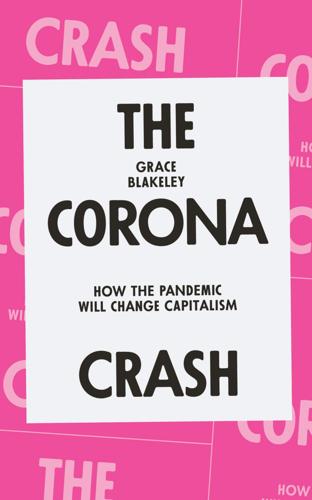
Tom Bottomore, London: Routledge & Kegan Paul, 1981 [1910]. 13 Blakeley, Stolen, ‘Chapter Two: Vulture Capitalism: The Financialisation of the Corporation’. 14 Thomas Philippon, ‘The Economics and Politics of Market Concentration’, NBER Reporter, no. 4, December 2019. 15 Karsten Kohler, Alexander Guschanski and Engelbert Stockhammer, ‘The Impact of Financialisation on the Wage Share: A Theoretical Clarification And Empirical Test’, Cambridge Journal of Economics 43, no. 4 (July 2019). 16 Mimoza Shabani, Judith Tyson, Jan Toporowski and Terry McKinley, ‘The Financial System in the UK’, FESSUD Studies in Financial Systems, no. 14, February 2015. 17 Josh Ryan Collins, Laurie Macfarlane and Toby Lloyd, Rethinking the Economics of Land and Housing, London: Zed Books, 2017. 18 Blakeley, Stolen, ‘Chapter Three: Let Them Eat Houses: The Financialisation of the Household’. 19 Colin Crouch, ‘Privatised Keynesianism: An Unacknowledged Policy Regime’, British Journal of Politics and International Relations 11, no. 3 (August 2009). 20 Adam Tooze, ‘Notes on the Global Condition: Of Bond Vigilantes, Central Bankers and the Crisis, 2008–2017’, 2017, adamtooze.com. 21 Zak Cope, The Wealth of (Some) Nations: Imperialism and the Mechanics of Value Transfer, London: Pluto, 2019. 22 Grace Blakeley, ‘On Borrowed Time: Finance and the UK Current Account Deficit’, Institute for Public Policy Research, Commission on Economic Justice, 2018. 23 Blakeley, Stolen, ‘Chapter One: The Golden Age of Capitalism’. 24 Jeremy Green, ‘Anglo-American Development, the Euromarkets, and the Deeper Origins of Neoliberal Deregulation’, Review of International Studies 42, no. 3 (July 2016): 425–49. 25 Philip Mirowski and Dieter Plehwe, eds, The Road from Mont Pelerin: The Making of the Neoliberal Thought Collective, Cambridge, MA: Harvard University Press, 2009. 26 Grace Blakeley, ‘On Borrowed Time’; Bank of England, ‘North Sea Oil and Gas: Costs and Benefits’, Bank of England Quarterly Statistical Bulletin, March 1982. 27 Office for National Statistics, ‘Changes in the Economy Since the 1970s’, 2019, ons.gov.uk. 28 Cope,The Wealth of (some) Nations. 29 ‘Five facts about the UK service sector’, Office for National Statistics, 29 September 2016. 30 Crouch, ‘Privatised Keynesianism’. 31 ONS, ‘Employees in the UK by Industry: 2018’, Office for National Statistics, 26 September 2019, ons.gov.uk. 32 Blakeley, Stolen. 33 Richard Disney and Guannan Luo, ‘The Right to Buy Public Housing in Britain: A Welfare Analysis’, Journal of Housing Economics 35 (March 2017): 51–68. 34 Collins et al., Rethinking the Economics of Land and Housing. 35 Shabani et al., ‘The Financial System in the UK’. 36 Ibid. 37 Ibid. 38 Thomas Hale, ‘The Bank of England Has a Strange Idea of What QE Achieved’, Financial Times Alphaville, 3 August 2018, ftalphaville.ft.com. 39 Jannes van Loon and Manuel B.

pages: 312 words: 91,835

Global Inequality: A New Approach for the Age of Globalization
by Branko Milanovic
Published 10 Apr 2016

Kuznets cycles may be thought of as a broad concept that subsumes Malthusian cycles in special cases where the “action” that drives inequality up or down takes place almost entirely through the change in the denominator (population). With the Industrial Revolution and the sustained increase in the mean income, the situation changes and wages generally increase pari passu with income (or, during the Golden Age of Capitalism, even faster). There are two important implications of the Industrial Revolution for the behavior of income inequality. First, inequality now can increase more than before because a higher total income allows a part of the population to enjoy much higher incomes without driving everybody else below the starvation point.

But after the First World War, and especially after the Depression and the New Deal in the United States, the two inequalities went their separate ways: while global inequality continued to increase, albeit at a slower pace, American inequality decreased substantially, particularly during the post–World War II period, widely thought today to have been the golden age of capitalism. The parting of the ways continued, but in a reverse direction. After another turning point in the 1980s, global inequality turned stagnant and then, mostly thanks to China’s growth, began to decrease, while US inequality began to rise. As Figure 3.2 shows, the gap between the two, while still enormous, has narrowed.

pages: 307 words: 88,085

SEDATED: How Modern Capitalism Created Our Mental Health Crisis
by James. Davies
Published 15 Nov 2021

During the 1950s and 1960s wherever this model was embraced – from Western Europe to east Asia and the United States – positive economic and social development followed.2 This was the period of expanding social security and health coverage, and of historically low levels of unemployment across many developed nations. Steady economic growth soon became the norm too, reaching an annual average of 4–5 per cent in those areas where the paradigm dominated. For these reasons, this period is now regularly referred to as the Golden Age of Capitalism – a period when personal debt was low, inequality went down, wages went up, social liberalism and civil rights expanded, social mobility grew, unemployment almost disappeared, industrial, scientific and technological innovation unfolded at a steady and productive pace, and sustained international peace (between Western nations at least) was broadly secured.3 By rejecting the 1970s, then, Thatcher was also rejecting an entire economic and social model that had brought high and sustained levels of economic prosperity throughout the 1950s, 1960s and part of the 1970s.

The irony is that these campaigns, by applying this logic, will have unknowingly helped bring about the opposite of what they intended. Chapter One: An Economic Prelude 1 Thatcher, M. (1981), Interview for Sunday Times, Margaret Thatcher Foundation, https://www.margaretthatcher.org/document/104475 (accessed 10 Nov. 2018). 2 Marglin, Stephen A., and Schor, Juliet B. (2011), The Golden Age of Capitalism: Reinterpreting the Postwar Experience, Oxford: Oxford University Press. 3 Kotz, D. M. (2017), The Rise and Fall of Neoliberal Capitalism, Boston: Harvard University Press. 4 Thatcher, M. (1985), Speech to Joint Houses of Congress, Margaret Thatcher Foundation, https://www.margaretthatcher.org/document/105968 (accessed Dec. 2018). 5 In this view he departed strongly from Hegel.

pages: 334 words: 98,950

Bad Samaritans: The Myth of Free Trade and the Secret History of Capitalism
by Ha-Joon Chang
Published 26 Dec 2007

This was partly due to the sense of colonial guilt in countries like Britain and France, but it was mostly because of the more enlightened attitude of the then new hegemon of the global economy, the US, towards the economic development of poorer nations. The result of this enlightened strategy was spectacular. The rich countries experienced the so-called ‘Golden Age of Capitalism’ (1950–73).50Per capita income growth rate in Europe shot up from 1.3% in the liberal golden age (1870–1913) to 4.1%. It rose from 1.8% to 2.5% in the US, while it skyrocketed from 1.5% to 8.1% in Japan. These spectacular growth performances were combined with low income inequality and economic stability.

However, the reader would be surprised to learn that the rich Bad Samaritan countries, which are so keen to preach to developing countries the importance of high real interest rates as a key to monetary discipline, themselves have resorted to lax monetary policies when they have needed to generate income and jobs. At the height of their post-Second-World-War growth boom, real interest rates in the rich countries were all very low – or even negative. Between 1960 and ’73, the latter half of the ‘Golden Age of Capitalism’ (1950–73), when all of today’s rich nations achieved high investment and rapid growth, the average real interest rates were 2.6% in Germany, 1.8% in France, 1.5% in the USA, 1.4% in Sweden and -1.0% in Switzerland.21 Monetary policy that is too tight lowers investment. Lower investment slows down growth and job creation.

pages: 347 words: 99,317

Bad Samaritans: The Guilty Secrets of Rich Nations and the Threat to Global Prosperity
by Ha-Joon Chang
Published 4 Jul 2007

This was partly down to the sense of colonial guilt in countries like Britain and France, but it was mostly because of the more enlightened attitude of the then new hegemon of the global economy, the US, towards the economic development of poorer nations. The result of this enlightened strategy was spectacular. The rich countries experienced the so-called ‘Golden Age of Capitalism’ (1950–73).50Per capita income growth rate shot up from 1.3% in the liberal golden age (1870–1913) to 4.1% in Europe. It rose from 1.8% to 2.5% in the US, while it skyrocketed from 1.5% to 8.1% in Japan. These spectacular growth performances were combined with low income inequality and economic stability.

However, the reader would be surprised to learn that the rich Bad Samaritan countries, which are so keen to preach to developing countries the importance of high real interest rates as a key to monetary discipline, themselves have resorted to lax monetary policies when they have needed to generate income and jobs. At the height of their post-Second-World-War growth boom, real interest rates in the rich countries were all very low – or even negative. Between 1960 and ’73, the latter half of the ‘Golden Age of Capitalism’ (1950–1973), when all of today’s rich nations achieved high investment and rapid growth, the average real interest rates were 2.6% in Germany, 1.8% in France, 1.5% in the USA, 1.4% in Sweden and -1.0% in Switzerland.21 Monetary policy that is too tight lowers investment. Lower investment slows down growth and job creation.

pages: 116 words: 31,356

Platform Capitalism
by Nick Srnicek
Published 22 Dec 2016

‘Gluts for Punishment’. 2016. The Economist, 9 April. http://www.economist.com/news/business/21696552-chinas-industrial-excess-goes-beyondsteel-gluts-punishment (accessed 25 May 2016). Glyn, Andrew, Alan Hughes, Alain Lipietz, and Ajit Singh. ‘The Rise and Fall of the Golden Age’. 1990. In The Golden Age of Capitalism: Reinterpreting the Postwar Experience, edited by Stephen Marglin and Juliet Schor, pp. 39–125. Oxford: Oxford University Press. Goldfarb, Brent, David Kirsch, and David A. Miller. 2007. ‘Was There Too Little Entry During the Dot Com Era?’ Journal of Financial Economics, 86 (1): 100–44.

pages: 409 words: 125,611

The Great Divide: Unequal Societies and What We Can Do About Them
by Joseph E. Stiglitz
Published 15 Mar 2015

King Shaped My Work in Economics” I make a brief allusion to this work—an illustration (like the work on macroeconomics that said that crises couldn’t happen) of how far out of touch with reality some economic models get.1 By contrast, I wrote “The Myth of America’s Golden Age” after reading Thomas Piketty’s book Capitalism in the Twenty-First Century and reflecting back on my youth. Piketty had described this period of my youth as the golden age of capitalism—the one period in which capitalism had not been marked by extremes of inequality. My memories were different: Growing up in dirty, industrial America, marked by high levels of discrimination, inequality, labor strife, episodic unemployment, I hardly thought of it as the golden age of capitalism. President Kennedy had said that “a rising tide lifts all boats”; while there may have been a grain of truth in that statement when he uttered those words in the 60s,2 it was clearly not true half a century later.

pages: 495 words: 138,188

The Great Transformation: The Political and Economic Origins of Our Time
by Karl Polanyi
Published 27 Mar 2001

In the two decades following Speenhamland its endeavors were focused on the stopping of the free use of machinery either by the enforcement of the apprenticeship clauses of the Statute of Artificers or by direct action as in Luddism. This backward-looking attitude lingered on as an undercurrent all through the Owenite movement till the end of the forties, when the Ten Hours Bill, the eclipse of Chartism, and the beginning of the Golden Age of capitalism obliterated the vision of the past. Up to that time the British working class in statu nascendi was a riddle unto itself; and only if one follows with understanding its half-unconscious stirrings is it possible to gauge the immensity of the loss England suffered through the exclusion of the working class from an equal share in national life.

The Chartist leaders were jailed; their adherents, numbered in millions, were derided by a legislature representing a bare fraction of the population, and the mere demand for the ballot was often treated as a criminal act by the authorities. Of the spirit of compromise allegedly characteristic of the British system—a later invention—there was no sign. Not before the working class had passed through the Hungry Forties and a docile generation had emerged to reap the benefits of the Golden Age of capitalism; not before an upper layer of skilled workers had developed their unions and parted company with the dark mass of poverty-stricken laborers; not before the workers had acquiesced in the system which the New Poor Law was meant to enforce upon them was their better-paid stratum allowed to participate in the nation’s councils.

pages: 563 words: 136,190

The Next Shift: The Fall of Industry and the Rise of Health Care in Rust Belt America
by Gabriel Winant
Published 23 Mar 2021

This was not simply because wages were going up to unprecedented levels and inequality was going down but because the future was bright, work paid off, and there was tremendous promise for the next generation.”6 At one level, this argument is undeniable. Jack Metzgar, in his memoir of growing up in a steelworker household in western Pennsylvania, writes, “If what we lived through in the 1950s was not liberation, then liberation never happens in real human lives.” This was when the New Deal order and the golden age of capitalism reached their conjoint apogee. Cowie describes the moment’s emotional fabric as “an expansive sense of possibility,” and there can be no doubt that working-class people saw a dramatic rise in their standard of living and wielded a newfound political and social power.7 Yet something does not add up.

Stankowki Jr., Memory of Steel (Lima, OH: Wyndham Hall Press, 2004), 3. 5. On the economic boom, see Claudia Goldin and Robert A. Margo, “The Great Compression: The Wage Structure of the United States at Mid-century,” Quarterly Journal of Economics 107, no. 1 (1992), 1–34; Stephen A. Marglin and Juliet B. Schor, eds., The Golden Age of Capitalism: Reinterpreting the Postwar Experience (New York: Oxford University Press, 1992); Thomas Piketty, Capital in the Twenty-First Century, trans. Arthur Goldhammer (Cambridge, MA: Harvard University Press, 2014). An excellent example of the contemporary belief in the postwar industrial compact is Clark Kerr, John T.

pages: 194 words: 56,074

Angrynomics
by Eric Lonergan and Mark Blyth
Published 15 Jun 2020

, CESifo Working Paper Series, 7159 (2018), 5. 16.Board of Governors of the Federal Reserve System, “Report on the economic wellbeing of US households in 2017”, 1; https://www.federalreserve.gov/publications/files/2017-report-economic-well-being-us-households-201805.pdf. 17.Board of Governors of the Federal Reserve System, FEDS Notes, “A wealthless recovery”; https://www.federalreserve.gov/econres/notes/feds-notes/asset-ownership-and-the-uneven-recovery-from-the-great-recession-20180913.htm. 18.Anne Case & Angus Deaton, “Mortality and morbidity in the 21st century”, Brookings Papers on Economic Activity, spring 2017; https://www.brookings.edu/wp-content/uploads/2017/08/casetextsp17bpea.pdf. 19.See Stephen Margolin & Juliet Schor, The Golden Age of Capitalism (New York: Oxford University Press, 1992). 20.See Eric Helleiner, States and the Re-emergence of Global Finance (Ithaca, NY: Cornell University Press, 1994). 21.See Juliet Johnson, The Priests of Prosperity (Ithaca, NY: Cornell University Press, 2016). 22.See “Citibank launches $100 million ad campaign”; https://www.marketingsherpa.com/article/citibank-launches-100-million-ad. 23.See Richard Wilkinson & Kate Pickett, The Spirit Level: Why Greater Equality Makes Societies Stronger (London: Allen Lane, 2009). 24.See respectively, Carl Frey & Michael Osborne, “The future of employment” (2013); https://www.oxfordmartin.ox.ac.uk/downloads/academic/The_Future_of_Employment.pdf; Bank of England, “Will a robot takeover my job”; https://www.bankofengland.co.uk/knowledgebank/will-a-robot-takeover-my-job and OECD, “Automation, skills use and training” (2018); https://www.oecd-ilibrary.org/fr/employment/automation-skills-use-and-training_2e2f4eea-en. 25.A search of the Financial Times archives from 2009 to 2020 on the topic “robots and employment” yields 403 results. 26.See Matthew Tracey & Joachim Fels, “70 is the new 65”, Pimco (2016); https://www.pimco.com/en-us/insights/viewpoints/in-depth/70-is-the-new-65-demographics-still-support-lower-rates-for-longer. 27.See Timo Fetzer, “Did austerity cause Brexit?”

pages: 504 words: 143,303

Why We Can't Afford the Rich
by Andrew Sayer
Published 6 Nov 2014

The rich have made a remarkable comeback since the 1970s – the end of the post-war boom – rapidly increasing their share of national income in a large number of countries, Britain included. As Figure 1.1 shows, we are now getting back to early 20th-century levels of inequality between the rich and the rest. Having cornered ‘only’ 5.9–9% of total income before tax in the UK in the early 1950s through to 1978 – ‘The Golden Age of Capitalism’ – the top 1% of ‘earners’ now hoover up 13%. Figure 1.1: Top income shares in the UK, 1913–2011 Source: Alvaredo, F., Anthony B. Atkinson, A.B., Piketty, T. and Saez, E., The world top incomes database, http://topincomes.g-mond.parisschoolofeconomics.eu/ U-shaped curves like that of Figure 1.1 are most striking in the US, the UK, Canada, Ireland and Australia.

At a global level, in low-wage countries a pay increase of just a dollar an hour would boost living standards, increase demand for goods in those countries and yet make only a small difference to the overall cost of export goods.24 A global minimum wage would not only help the poor but make a major contribution to the convergence and contraction strategy that the world needs. But we also need either a maximum pay rate or a very high top rate of tax of 80% or 90%, like we had in ‘The Golden Age’ of capitalism, the 1950s and 1960s, when the high-paid did not whinge about needing incentives. As for what that maximum pay or top tax threshold should be, take your pick – £70,000, £100,000, £150,000, £200,000 or …? Remember, though, that individual carbon footprints correlate with income, and even the lowest of these figures tend to be associated with footprints that exceed the planet’s capacity to absorb them.

pages: 665 words: 146,542

Money: 5,000 Years of Debt and Power
by Michel Aglietta
Published 23 Oct 2018

One of history’s tricks is the fact that measures taken to resolve some urgent problem can produce turning points that alter the course of history, and consequences that no contemporaneous government had even imagined. In putting the monetary system on the gold standard by demonetising silver, the Recoinage Act of 20 November 1695 opened up a new era, bringing about the golden age of capitalism. FROM REFORM IN ENGLAND TO THE INTERNATIONAL GOLD STANDARD The first part of this book showed that the legitimacy of money – grounding its permanent and generalised acceptability – depends on the bedrock of confidence that emanates from the principle of sovereignty. Above, we studied a principle of sovereignty that we called the order of Christendom.

Already there were internal cracks in the Russian Empire, as well as colonial competition (in Lenin’s terms, an interimperialist competition) between the German Empire and the already-established French and British colonial empires. Through the interplay of alliance systems, these factors combined to unleash the cataclysm that brought an explosive end to the golden age of capitalism. 4 The Upheavals of the Twentieth Century World War One irreversibly altered the course of world history. If the reader has grasped the essential message of Chapter 3, she will have understood that the great monetary innovations in history have accompanied transformations in the principles of sovereignty governing societies.

pages: 218 words: 62,889

Sabotage: The Financial System's Nasty Business
by Anastasia Nesvetailova and Ronen Palan
Published 28 Jan 2020

This view has become so well entrenched that the two postwar decades are sometimes referred to as the era of ‘financial repression’,1 an era dominated by manufacturing and productive capital that kept speculative finance at bay. Nostalgically, the short-lived Bretton Woods era is sometimes referred to as ‘the golden age of capitalism’. Whether or not that was a golden age, what seems to have been forgotten is that the financial regulations which kept the financial system stable were designed in the 1930s to tackle, first and foremost, the problem of sabotage head-on. It would be only in the late 1970s and onwards that those regulations intended to challenge sabotage were gradually hollowed out.

pages: 251 words: 76,128

Borrow: The American Way of Debt
by Louis Hyman
Published 24 Jan 2012

Though the Great Depression ended the party of the 1920s, credit found a new privileged position as New Deal policy makers used federally insured mortgages to restart the economy. Out of that calamity, American politicians, industrialists, and financiers reorganized the economy, restraining lending here and promoting lending there to create a postwar United States that economists describe as “the golden age of capitalism.” The upswing in consumption that defined the Roaring Twenties paused only briefly during the Great Depression to take off with gusto after World War II. This postwar consumption continued to be financed by debt, by taking up income before it was earned. Though postwar consumers told their children and grandchildren that they had never borrowed a dime in their lives, debt was the lifeblood of postwar suburbia.

pages: 280 words: 74,559

Fully Automated Luxury Communism
by Aaron Bastani
Published 10 Jun 2019

The history of the twentieth century appeared to confirm that Keynes was right. In the five decades following 1927, despite the Great Depression, the real wages of unskilled workers in US manufacturing increased by 350 per cent, while pay for skilled labour increased by a factor of four. This, as we now know, was the golden age of capitalism, with productivity gains and high growth leading to rising wages and shorter working hours. Whether you were an employee or an industrialist, it was in your rational interest to protect the system. This ended abruptly in the early 1970s, when wages decoupled from improvements to productivity – which now only fed the incomes of the very highest earners.

pages: 823 words: 206,070

The Making of Global Capitalism
by Leo Panitch and Sam Gindin
Published 8 Oct 2012

Maybe we were unduly secure that a major bank that had prospered for many years couldn’t develop big problems.”36 Table 6.2: Economic Indicators US and Europe, 1950–73 and 1973–79 Source: Compiled from Andrew Glyn et al., “The Rise of the Golden Age,” in Stephen A. Marglin and Juliet B. Schor, eds., The Golden Age of Capitalism: Reinterpreting the Postwar Experience, Oxford: OUP, 1990, p. 47, Table 2.6; and from the data appendix to Philip Armstrong, Andrew Glyn, and John Harrison, Capitalism Since World War II, London: Fontana, 1991. Investment here is non-residential capital stock. Amid strong union support for legislation that would put limits on US MNCs moving abroad, a 1975 Harris poll found that only 15 percent of Americans had “a great deal of confidence” in corporate leaders—in contrast to 55 percent a decade earlier.37 The sense among capitalists themselves that their “golden age” was over has been well captured by Robert Rubin, who recalls one of the old partners at Goldman Sachs telling him at the time “that we junior partners would be unlikely to ever do as well financially as the older partners had because there would never be another period as good as the one that had just passed.”38 Nelson Rockefeller, in the Annual Report of the Chase Manhattan Bank, stated that “it is clear to me that the entire structure of our society is being challenged.”39 A prominent corporate lawyer who was later to be appointed to the Supreme Court wrote to the head of the US Chamber of Commerce that “it was time for American business to apply their great talents vigorously to the preservation of the system itself.”40 This was hardly surprising given that the crisis of Keynesianism in the US coincided with the anti–Vietnam War mobilizations, the explosion of African-American frustrations in urban riots, and the radicalization of black workers and unemployed youth.

In the early 1960s, US firms were mainly self-financing, in contrast with German, French, and Japanese corporations, whose profits were insufficient to sustain their great expansion, leading them to rely on their close ties with banks for between 30 and 40 percent of their investments. By the end of the decade US firms would increasingly also come to rely on external financing at home. See Andrew Glyn, Alan Hughes, Alan Lipietz, and Ajit Singh, “The Rise and Fall of the Golden Age,” in Stephen A. Marglin and Juliet B. Schor, eds., The Golden Age of Capitalism: Reinterpreting the Postwar Experience, New York: OUP, 1991, p. 99; and Philip Armstrong, Andrew Glyn, and John Harrison, Capitalism since World War Two, London: Fontana, 1991, p. 189, Table 11.11. 8 As Servan-Schreiber put it: “Recent efforts by European firms to centralize and merge are inspired largely by the need to compete with American giants.”

pages: 327 words: 90,542

The Age of Stagnation: Why Perpetual Growth Is Unattainable and the Global Economy Is in Peril
by Satyajit Das
Published 9 Feb 2016

Today, ordinary people long for this lost idyll of good jobs for life, rising prosperity, social mobility, and egalitarianism. Over the postwar decades, the emphasis would shift from industrial and social to economic and financial agendas, creating a succession of boom-ier booms and bigger busts, culminating in the GFC. The initial phase of postwar expansion—known variously as the Long Boom, the Golden Age of Capitalism, or the New Gilded Age—spanned a period from around 1950 to the early 1970s. In France the thirty years of economic expansion from 1945–75 is known as Les Trente Glorieuses (the Glorious Thirty), rivaling La Belle Époque (the Beautiful Era, which covered the period from 1871 to the beginning of World War I).

pages: 332 words: 93,672

Life After Google: The Fall of Big Data and the Rise of the Blockchain Economy
by George Gilder
Published 16 Jul 2018

His unitary foundation of irreversible physics and his irrefragable golden money have given way to infinite parallel universes and multiple paper moneys manipulated by fiat. Money, like the cosmos, has become relativistic and reversible at will. The three hundred years of Newtonian prosperity having come to an end, the new multiverse seems unable to repeat the miracle of a golden age of capitalism. It is now widely held that citizens are essentially owned by the state on which they depend. Slavery, in the form of servitude to governments, is making a comeback as money transactions become less trustworthy. Fortunately the lineaments of a new system of the world have emerged. It could be said to have been born in early September 1930, when a gold-based Reichsmark was beginning to subdue the gales of hyperinflation that had ravaged Germany since the mid-1920s.

pages: 363 words: 107,817

Modernising Money: Why Our Monetary System Is Broken and How It Can Be Fixed
by Andrew Jackson (economist) and Ben Dyson (economist)
Published 15 Nov 2012

To prevent these flows interfering with the fixed exchange rates, the UK used a combination of capital controls (to limit the outflows due to the acquisition of foreign assets), quantitative and qualitative restrictions on bank lending, and control of interest rates (to limit the availability and demand for domestic credit which could fuel imports). Despite the huge government deficits run up during the war, the destruction of large swathes of Europe, and a highly repressed financial system, from 1945 to 1971 growth was uniformly high and unemployment very low. For these reasons this period is commonly referred to as the golden age of capitalism. Floating exchange rates Between 1945 and 1971 a new dynamic developed. By international agreement, oil had always been priced in US dollars and as a consequence the oil exporting nations of the Middle East had amassed a substantial surplus of dollars, invested mainly in US Government securities (bonds).
pages: 401 words: 115,959

Philanthrocapitalism
by Matthew Bishop , Michael Green and Bill Clinton
Published 29 Sep 2008

Likewise, many of Broad’s fellow philanthrocapitalists share his enthusiasm for supporting the arts. One notable recipient is New York’s recently expanded Museum of Modern Art, which raised $725 million from donors. Commemorated in galleries named after some of them, they include many of the financiers who have made their fortunes during the recent golden age of capitalism: private-equity legend Henry Kravis, hedge fund tycoon Leon Black, and billionaire investor Sid Bass, among others. Giving money to support the arts and academic research is as old as philanthropy itself. In Renaissance Europe, wealthy trading families such as the Medici were benefactors of Michelangelo and other great artists.

pages: 402 words: 126,835

The Job: The Future of Work in the Modern Era
by Ellen Ruppel Shell
Published 22 Oct 2018

“But business leached of any sense of value or purpose, well…no one relishes the idea of coming home exhausted from the office, and explaining to one’s spouse, ‘I’m late because I had to spend more time maximizing shareholder value.’ That’s not a life that would make sense to many people.” To at least some degree, the mid-twentieth-century “Golden Age of Capitalism” was—as Adam Smith might put it—constrained by “common sense”: government, business, and labor somehow managed to work together for mutual interests and, perhaps incidentally, the common good. Business needed workers to produce and distribute goods and services, and labor relied on business for a paycheck.

pages: 442 words: 126,902

Inner Entrepreneur: A Proven Path to Profit and Peace
by Grant Sabatier
Published 10 Mar 2025

Entrepreneurship adds depth and richness to your life Of course, entrepreneurship has always come with risks. But as I’m writing this, it’s never been easier to make money on your own terms, often with little to no start-up costs, overhead, or even needing to leave your home. We are living in the golden age of capitalism. Just imagine life fifty years ago: unless you inherited wealth or were extremely lucky, you picked a career and were stuck. Yes, you got a pension, but you had to work thirty or forty years to earn it, and in the meantime, you had no freedom and no options for how you spent a considerable part of your waking hours.
Stocks for the Long Run, 4th Edition: The Definitive Guide to Financial Market Returns & Long Term Investment Strategies
by Jeremy J. Siegel
Published 18 Dec 2007

The superior returns to equity over the past two centuries might be explained by the growing dominance of nations committed to free-market economics. Who might have expected the triumph of market-oriented economies during the Great Depression of the 1930s and the tumult following World War II? The robustness of world equity prices in recent decades might reflect the emergence of the golden age of capitalism—a system in ascendancy today but whose fortunes could decline in the future. Yet even if capitalism declines, it is unclear which assets, if any, will retain value. In fact, if history is any guide, government bonds in our paper money world may fare far worse than stocks in any political or economic upheaval.

pages: 462 words: 129,022

People, Power, and Profits: Progressive Capitalism for an Age of Discontent
by Joseph E. Stiglitz
Published 22 Apr 2019

CONTENTS Preface PART I LOSING THE WAY 1.Introduction 2.Toward a More Dismal Economy 3.Exploitation and Market Power 4.America at War with Itself over Globalization 5.Finance and the American Crisis 6.The Challenge of New Technologies 7.Why Government? PART II RECONSTRUCTING AMERICAN POLITICS AND ECONOMICS: THE WAY FORWARD 8.Restoring Democracy 9.Restoring a Dynamic Economy with Jobs and Opportunity for All 10.A Decent Life for All 11.Reclaiming America Acknowledgments Notes Index PREFACE I grew up in the golden age of capitalism, in Gary, Indiana, on the southern shore of Lake Michigan. It was only afterward that I found out that was the golden age. At the time, it didn’t seem so golden—I saw massive racial discrimination and segregation, great inequality, labor strife, and episodic recessions. One couldn’t help but see the effects, both on my schoolmates and on the façade of the city.

pages: 585 words: 151,239

Capitalism in America: A History
by Adrian Wooldridge and Alan Greenspan
Published 15 Oct 2018

These men were entrepreneurial geniuses who succeeded in turning the United States into one of the purest laboratories of creative destruction the world has seen: men who grasped that something big but formless was in the air and gave that something form and direction, men who squeezed oil out of the rocks and created industrial machines out of chaos. In a famous passage, Winston Churchill wrote, “At last I had authority to give directions over the whole scene. I felt as if I were walking with destiny.” The men who presided over the industrial scene in this golden age of capitalism were also walking with destiny. The titans all grasped that the material basis of civilization was changing. Carnegie realized that America was entering the steel age. The man who could provide the best steel at the lowest price would be a modern-day King Midas. Rockefeller realized that it was entering the oil age.

The Origins of the Urban Crisis
by Sugrue, Thomas J.
And based on his experiences in Detroit, he probably felt that he could expect little more in another major city. Whatever became of Tecumseh Haines, his choices were few.79 TABLE 5.5 Joblessness in Detroit, 1950–1980 (percent) In the eyes of many at the time, and of most commentators since, the 1950s was a decade of prosperity. The decade was the era of the embourgeoised auto worker, the “golden age of capitalism,” the era of affluence. In the corporate boom of the decade, some workers did indeed attain the dream of economic security and employment stability. But the forces unleashed by automation, decentralization, and relocation wrecked many workers’ lives. Another displaced worker, William Wakeham, worked in one of the most unpleasant jobs in the Ford River Rouge complex, the core room of the iron foundry.

pages: 695 words: 194,693

Money Changes Everything: How Finance Made Civilization Possible
by William N. Goetzmann
Published 11 Apr 2016

I grew up as a child fearing the sound of bomb shelter alarms that would signal nuclear attack—echoes of the historical split between East and West over economics and the financial system. Henry Lowenfeld had only been partially correct when he claimed that a portfolio of securities from around the world would provide a stable return. His theories were based on statistical analysis of the markets in a rare, golden age of capitalism before the rupture of the First World War, the Russian Revolution, the Second World War, Lenin, and Mao. The geographically distributed portfolio would have suffered from Bolshevik and Maoist expropriations, Japanese and German market crashes in the wake of the Second World War, and the loss of assets in Eastern Europe as the iron curtain split Europe in two.

pages: 869 words: 239,167

The Story of Work: A New History of Humankind
by Jan Lucassen
Published 26 Jul 2021

Germonpré, Mietje et al. ‘Large Canids at the Gravettian Predmostí Site, the Czech Republic: The Mandible’, Quaternary International, 359/360 (2014), pp. 261–79. Gier, Erik de. Capitalist Workingman’s Paradises Revisited: Corporate Welfare Work in Great Britain, the USA, Germany and France in the Golden Age of Capitalism 1880–1930 (Amsterdam: Amsterdam UP, 2016). Giersch, C. Pat. ‘“A Motley Throng”: Social Change on Southwest China’s Early Modern Frontier, 1700–1800’, The Journal of Asian Studies, 60(1) (2001), pp. 67–94. Gifford-Gonzalez, Diane. ‘Animal Genetics and African Archaeology: Why it Matters’, African Archaeological Review, 30 (2013), pp. 1–20.