description: theory that history is shaped primarily by extraordinary individuals
33 results
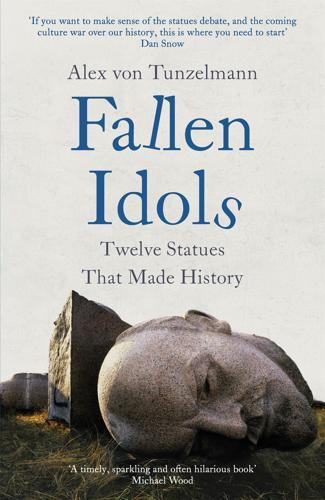
Fallen Idols: Twelve Statues That Made History
by
Alex von Tunzelmann
Published 7 Jul 2021
In 1840, the Scottish writer Thomas Carlyle published On Heroes, Hero-Worship, and The Heroic in History, in which he stated: ‘The History of the world is but the Biography of great men.’ He outlined the Great Man theory, which held that the twists and turns of world events could all be explained by the actions of extraordinary individuals who excelled in divinity, courage, leadership, the arts and so on. (His examples were all men; he included one non-European man, Mohammad.) The Great Man theory has been pulled apart by sociologists, feminists and writers ever since. Academic historians generally regard it as a Victorian relic: interesting as an example of how wealthy nineteenth-century British men understood history as the story of themselves, but far too limited as a way to view history now.
…
‘But I’m afraid I’d be killed.’22 In the state of hyperreality, it is impossible to tell the difference between reality and a simulation of reality. The thing about reality, though, is that it continues to evolve. Sooner or later, the simulation begins to glitch, then ultimately falls apart. 9 Colossus Cecil Rhodes Location: Cape Town, South Africa Put up: 1934 Pulled down: 2015 Thomas Carlyle put forward his Great Man theory of history in 1840. Cecil Rhodes was not born until 1853 – yet he would embody the idea of a Great Man who made history through the force of his will. Rhodes was born a vicar’s son in Hertfordshire. Over the course of a short, dramatic life, he went on to unimaginable wealth and power in southern Africa.
…
What should go in the place of all these fallen statues? In recent years, there have been movements in Britain and the United States to raise more statues of women and people of colour. These campaigns are no doubt well meant, but they do not address the fundamental problem that statues represent the Great Man theory of history. Supplementing the Great Men with a few Great Women represents a cosmetic change, not a meaningful change, in how we think about history. Some may argue that a cosmetic change is better than nothing. It is not. Putting up yet more statues legitimizes the old fashioned idea that history is driven by a few virtuous individuals and we should venerate them.
Think Complexity
by
Allen B. Downey
Published 23 Feb 2012
Many social phenomena, including wars, revolutions, epidemics, inventions, and terrorist attacks, are characterized by long-tailed distributions. If the reason for these distributions is that social systems are critical, that suggests that major historical events may be fundamentally unpredictable and unexplainable. Example 9-9. Read about the Great Man theory of history at http://en.wikipedia.org/wiki/Great_man_theory. What implication does self-organized criticality have for this theory? Chapter 10. Agent-Based Models Thomas Schelling In 1971, Thomas Schelling published “Dynamic Models of Segregation,” which proposes a simple model of racial segregation. The Schelling model of the world is a grid; each cell represents a house.
…
connected graphs, What’s a Graph?, Connected Graphs directed graph, What’s a Graph? regular graph, What’s a Graph? simple graph, What’s a Graph? undirected graph, What’s a Graph? GraphWorld, Representing Graphs grassroots, A New Kind of Engineering gravitation, A New Kind of Science Great Man theory, SOC, Causation, and Prediction grid, Game of Life, Percolation, Sand Piles Guggenheim Museum Bilbao, A New Kind of Engineering H Hacken, Wolfgang, The Axes of Scientific Models Haldane, J.B.S., Falsifiability half-life, What’s a Graph? harmonics, Spectral Density hash function, Hashtables HashMap, Hashtables hashtables, Hashtables Hertz, Spectral Density Hist, Zipf’s Law histograms, Cumulative Distributions hoisting, Spectral Density holism, A New Kind of Model holistic model, Reductionism and Holism, Reductionism and Holism Homo economicus, The Axes of Scientific Models homogeneous, The Axes of Scientific Models hop, Stanley Milgram hurricane, Realism, Instrumentalism I id, Instrumentalism immutable objects, Representing Graphs implementing cellular automata, Implementing CAs implementing Game of Life, Implementing Life in operator, Analysis of Search Algorithms incompleteness, A New Kind of Thinking Incompleteness Theorem, A New Kind of Thinking indeterminism, A New Kind of Thinking indexing, Analysis of Basic Python Operations, Fast Fourier Transform infinite loop, Generators infinite sequence, Iterators inheritance, Representing Graphs, Representing Graphs __init__, Representing Graphs instantiate, CADrawer instrumentalism, A New Kind of Model, Instrumentalism interactions, minimizing, A New Kind of Engineering interface, CADrawer, CADrawer implementing, CADrawer specifying, CADrawer IPython, Summing Lists isolation of components, A New Kind of Engineering __iter__, Iterators iterator, Iterators iteritems, List Comprehensions itertools, Iterators J join, Analysis of Basic Python Operations K Kansas, Stanley Milgram kernel, Implementing Life KeyError, Hashtables Kosko, Bart, A New Kind of Thinking Kuhn, Thomas, Paradigm Shift?
The Evolution of Everything: How New Ideas Emerge
by
Matt Ridley
Microscopic events, at that. Of course, you could argue that the war was unwinnable for the British anyway, and that eventually they would have succumbed even without the mosquitoes. It is important not to substitute a Great Insect theory for a Great Man theory. But then, that rather reinforces the point that the determinants of war were bottom–up ones. Imperial chief executives The Great Man theory lives on as strongly as ever in one field of human endeavour: big business. Even in the age of the internet, most modern companies are set up like feudal fiefs, with a king in charge; or a god invested with a near supernatural reputation, a very large shareholding and a reverberantly hard name like Gates, Jobs, Bezos, Schmidt, Zuckerberg.
…
Montesquieu thus made the distinction between ultimate and proximate causes that became such a useful concept in social science. At times he became an excessive climatic determinist, as he sought inanimate causes for events, but it is little wonder he so annoyed the Church and state, who preferred God and king to get the credit. In the nineteenth century, under the influence of Thomas Carlyle’s ‘Great Man’ theory of history, biography was back. Carlyle said that heroes like Napoleon, Luther, Rousseau, Shakespeare and Mohamed were cause, not effect, of the times they lived in. The influential 1911 edition of the Encyclopaedia Britannica goes to the opposite extreme from the Encyclopédie: social history is buried within biography.
…
The influential 1911 edition of the Encyclopaedia Britannica goes to the opposite extreme from the Encyclopédie: social history is buried within biography. So to read about the post-Roman world you must look up the entry on Attila the Hun. Largely in vain had the philosopher Herbert Spencer* fought back against top–down history, arguing that Carlyle was wrong. Leo Tolstoy too devoted a part of War and Peace to an argument against the Great Man theory. But then the twentieth century seemed to prove Carlyle right, as great men and women – for good and ill – changed history repeatedly: Lenin, Hitler, Mao, Churchill, Mandela, Thatcher. As Boris Johnson, the Mayor of London, has argued in his book The Churchill Factor: How One Man Made History, it is almost impossible to conceive of any other British politician close to power in May 1940 who would have chosen not to negotiate with Hitler in search of peace, however humiliating.
Fluke: Chance, Chaos, and Why Everything We Do Matters
by
Brian Klaas
Published 23 Jan 2024
Zhao, “The Mandate of Heaven and Performance Legitimation in Historical and Contemporary China,” American Behavioral Scientist 53 (3) (2009): 416–33. divine right of kings: For a nuanced discussion on the subject, see G. Burgess, “The Divine Right of Kings Reconsidered,” English Historical Review 107 (425) (1992): 837–61. Great Man Theory: For a discussion of Carlyle’s views and the debate around Great Man Theory, see William Fielding Ogburn, “The Great Man versus Social Forces,” Social Forces 5 (2) (1926): 225–31; and the original discussion: T. Carlyle, On Heroes, Hero-Worship, and the Heroic in History, vol. 1 (Oakland: University of California Press, 1993). Marc Bloch: For a discussion of Bloch’s role in creating the Annales school, see G.
…
In China, the “mandate of heaven” bestowed legitimacy on rulers because they were seen to be driving history forward by advancing the divine will on earth, a concept referred to as the divine right of kings in medieval Europe. In the nineteenth century, the Scottish philosopher Thomas Carlyle turned this mindset into an explicit philosophy of history known as the Great Man Theory. Carlyle argued that leaders of nations and titans of industry had been sent by God to transform the world according to His wishes. “The history of the world,” Carlyle claimed, “is but the biography of great men.” Paradoxically, though, in Carlyle’s version of history, it doesn’t matter who is the Great Man.
…
Because the Great Men were simply implementing a preordained divine plan, you could swap anyone out with no consequences. If it hadn’t been Napoléon, somebody else would have stepped in to do the Lord’s bidding. For Christian Great Man theorists, it was divine prophecy, not personality, that mattered. Over time, the Great Man Theory morphed into something broader, an approach to history that looked to powerful figures to understand why change happened. To understand the War on Terror, study George W. Bush and Osama bin Laden, not underlying trends or social dynamics. This new reading of Great Man history put its faith in counterfactual contingency that pivots on specific mortals, not divine will.
Uberland: How Algorithms Are Rewriting the Rules of Work
by
Alex Rosenblat
Published 22 Oct 2018
Drivers aren’t “happiness engineers” or “code ninjas.”8 THE LEGEND OF SILICON VALLEY It shouldn’t be surprising that Uber has adopted the myth of tech entrepreneurship: after all, the company was started by such entrepreneurs. Travis Kalanick, the most visible cofounder of Uber, is hailed as one of Silicon Valley’s “Great Men.” The Great Man theory of success celebrates America’s technology founder-heroes for their business acumen and their passion, like Microsoft cofounder Bill Gates and Facebook cofounder Mark Zuckerberg. The Silicon Valley “Great Men” typically celebrated are white men. Equally accomplished founders who are not white men tend to get less play—like Yahoo founder Jerry Yang, according to longtime Silicon Valley journalist, Sarah Lacy.9 The meritocratic theory of success has crossed class lines and entered the culture of work embraced by most people in the United States.
…
Drivers commonly suggest opening up Google Maps and locating the nearest coffee shop or fast-food joint. Half-jokingly, some post photos of their pee bottles in forums. Part of what makes Uber so compelling as the future of work is its promise to democratize access to entrepreneurial success. Yet, simultaneously, the Great Man theory de-emphasizes the interdependence between individuals and others—the state, networks, capital, and so on—that can make them successful. The message is that it takes a Steve Jobs or a Travis Kalanick, not a village. The dedication it takes to get your start-up off the ground is not the same dedication it takes to pee into a discarded Coke bottle, but drivers are hustling at every turn.
…
See also sharing economy Gillespie, Tarleton, 110 Girls (tv show), 35 Girls Develop It, 189 Girls Who Code, 189 Glassdoor, 149 global humanitarian crises, 23 GoDaddy, 167 “good bad job,” Uber driving as, 54–55, 59–65, 86 Google: accusation of Uber’s theft of intellectual property of, 192–93; data harvesting by, 164; education support by, 172; Maps, 111–12, 132–33, 206; on Nazism, 167; neutrality logic of, 34, 109–10; slogan of, 165; use of algorithmic technology, 202; user experience of, 20 GPS (global positioning system): driver spoofing of, 242n46; drivers’ use of, 43, 48, 62, 69, 78, 137; mapping apps use of, 111–12, 132–33, 206 gratitude logic, 168–69, 171–77 Gray, Mary L., 163 Great Man theory, 81, 82 Great Recession. See recessions, economic Greece, 23 Greyball program. See “phantom cabs” Griswold, Alison, 68, 72, 122, 191 Gurfinkel, Elie, 157 Gurjinder (driver), 170 Hall, Jonathan, 51 Handy, 27, 175, 229n58 Harford, Barney, 111 Hari (driver), 49–50, 69 Harris, Kamala, 173–74 Hartzog, Woodrow, 162 Harvard Business Review, 51, 193 Heather (driver), 98, 100 hobbyist drivers, 19, 50, 52–56 Holder, Eric, 193 HomeJoy, 27, 171, 175 homelessness, 194 hotel industry, 34.
Utopia Is Creepy: And Other Provocations
by
Nicholas Carr
Published 5 Sep 2016
Thanks to the internet, writes Time’s top editor, Rick Stengel, “the creators and consumers of user-generated content are transforming art and politics and commerce.” They are “the engaged citizens of a new digital democracy.” The mirror on the cover “literally reflects the idea that you, not we, are transforming the information age.” Web 2.0 is battering the Great Man theory of history, writes Lev Grossman in the cover story. Yes, great men were responsible for “many painful and disturbing things that happened in 2006”—from war to global warming to the PlayStation 3 shortage—but “look at 2006 through a different lens and you’ll see another story, one that isn’t about conflict or great men.
…
It’s about the many wresting power from the few and helping one another for nothing and how that will not only change the world, but also change the way the world changes.” Web 2.0 is “really a revolution.” Also part of the cover package is a fawning profile of YouTube founders Chad Hurley and Steve Chen. The duo, proclaims Time, are “the new demiurges of the online world.” Demiurges? Someone might want to tell Lev Grossman that the Great Man theory is still alive and well in the pages of Time. But it’s the cover, really, that contains the subtlest thinking in the issue. Web 2.0, writes Grossman, provides “a chance for people to look at a computer screen and really, genuinely wonder who’s out there looking back at them.” The cover gives Grossman’s words a wry twist, offering a much darker view of the radical personalization of culture.
…
(FTC), 280, 284 feedback loops, 67 Feldman, Morton, 216 Ferriero, David, 272 fiction, effect on brain of, 248–52 filters, information overload and, 90–92 Finnegans Wake (Joyce), 106 first nature, 179–80 Fitbit, 119, 197 Flickr, xvi flight, human quest for, 329–30, 340–42 Fonda, Jane, Wikipedia entry on, 6–7 Food and Drug Administration, 332 Foreman, Richard, 241–42 forensic imagination, 326 45 rpm singles, 44–46, 121 Four-Second Rule, 205 Foursquare, 257 Fox, Justin, 116 France, Google and, 264 Franklin, Benjamin, 325 Friedman, Bruce, 232–33 Friedman, Thomas, 133 Frost, Robert, 145–46, 182, 247–48, 296–99, 302, 304–5, 313 Fuller, Buckminster, 171 Galbraith, John Kenneth, xix Gates, Bill, xvii Jobs compared to, 32–33 Wikipedia entry on, 5–6 Gelernter, David, xvii gender reassignment, 337–38 generational change, 230 generativity, 76–78 gene therapy, 335 genetic engineering, 334–35 geology, 326 Germany, Google and, 283–84 GIFs, 203 Gil, Sandrine, 203–4 Gilligan’s Island, fact-mongering about, 58–62 Gillmor, Dan, 7 Gleick, James, 204 Go, GeForce (avatar), 25 Goldsmith, Kenneth, 216–17 Google, 13, 67, 79, 86–89, 112, 115, 144–46, 162, 181, 195, 199, 204, 205, 226, 253, 257, 321 in AI, 136–37 competition for, 284–85 corporate management of, 16–17 customized searching on, 264–66 early days of, xvii, 279–81 effect on memory of, 98–101 ethical criticism of, 283 failed projects of, 269, 283 goals of, 23–24, 87, 145–46, 239–40, 268 growth and evolving hegemony of, 279–85 international projects of, 283–84 investigations into, 280, 284–85 music streaming by, 207, 209 in online privacy case, 190–94 philosophy of, 279–80, 283 political use of, 319 social stream management by, 166–67 universal book project of, 267–72, 275–77, 283 Google Apps, 283 Google Blog Search, 66 Google Book Search, 268–72, 275–77, 283 Google bus, 170–71, 173 “Google Effects on Memory” (Sparrow, Liu, and Wegner), 98 Google Glass, 131–32, 160–61, 164 Google Maps, 153 Google News, 315, 320 Google Now, 145 Google Play Music, 207 Googleplex, 17, 238 restrooms of, 23–24 Google Reader, 67 Google Serendipity, 13, 15 Google Suggest, 264–65 Google X lab, 195 Gordon, Robert J., 116–17 Gothic High-Tech, 113–15 GPS systems, 56–57, 226, 304 Graham, Lindsay, 314 Grand Theft Auto, 262 Gray, John, 36 Great Man theory, 28–29 Green, Shawn, 93–94 Greenfield, Patricia, 95 Grimmelmann, James, 277 Grossman, Lev, 28–29 Grover, Monte, 185 Guitar Hero (game), 64–65 Gutenberg Galaxy, The (McLuhan), 102–3 hackability, 76–78 HAL (computer), 231, 239, 242 Haldane, J. B. S., 336 Haraway, Donna, 168–69 hardware failure, 112–15 Harmonix Music Systems, 71 Harper, William Rainey, 133–34 Hart, Michael, 278 Harvard University, library of, 269, 270 HathiTrust, 277 Hawking, Stephen, 210 health: bioengineering of, 331–33 computer monitoring of, 149–50, 164, 324 Heaney, Seamus, xxii, 201 hearing loss, 245–46 Hedi, Emperor of China, 286 Heim, Michael, xvii Hellman, Monte, 203 Hendrix, Janie, 126 Hendrix, Jimi, 126 Hennessy, John, 133 Here Comes Everybody (Shirky), 61 Herrera, Luis, 273 hierarchy of innovation, 117–20 hierarchy of needs, 117–19 higher-value tasks, 174–75, 177 Hillis, Danny, 23 Hilton, Paris, 10 history, documentation of, 325–27 Hitachi Business Microscope, 163–64 Hof, Robert, 157 Holland, Norman, 251, 254 Hollerith, Herman, 188 holograms, 126, 109 Homer, 292 Hopkins, Gerard Manley, xxi hormone therapy, 337–38 Horning, Rob, 64–65 “How Google Is Changing Your Brain” (Ward and Wegner), 200 How Sex Changed (Meyerowitz), 338 Hoyt, Clark, 47–48 Huber, Jeff, 195 Huffington Post, 81, 186 human beings: as “analog resources,” 148–50 aspiration as basic to, 340 biological constraints of, 333 codification of, 37–38 eclipsed by technology, 108–9, 187–89, 239–42, 308–9 essence of, 310–13, 339–40 mind vs. body in, 23–24 radical enhancement of, 330–40 superior qualities of, 321–24 Human Condition, The (Arendt), 310–11 humanism, transhumanism and, 338–39 human potential movement, 4 Hunt, Graham, 341–42 Hurley, Chad, 29 Huth, John Edward, 301 hyperlinks, 67, 87, 88, 231–42, 327 hypertext, 14, 223 IBM, 26 Icarus, 329, 340 ideograms, alphabet vs., 234 I Feel Bad About My Neck (Ephron), 330 I Live in the Future & Here’s How It Works (Bilton), 94 image recognition, 137 I’m Feeling Lucky (Edwards), 281, 285 immediacy, 57, 70, 234 immortality, 69–70, 115, 210 see also resurrection impatience, technology-induced, 203–6 implants, 332–33 improvisation, 322 inclusionists, 18–20 industrial revolution, 77, 174–75, 237–38 “informal experience,” 197–98 information overload, 241 filters in, 90–92 information storage: biological vs. digital, 200 cloud-based, 163, 168, 185, 225 information technology, dangers of, 187–89, 190–94 Innis, Harold, 103 “innocent fraud,” xix innovation: as American tradition, 171–72 at Google, 281–82 hierarchy of, 118–20 nostalgia vs., 292 obstacles to, 278 shift in focus of, 116–20 In Pursuit of Silence (Prochnik), 243–44 Instagram, 166, 186, 224, 314, 320 instant gratification, 206 Instant Messaging, 34 intellectual technologies, 235–36 intelligence, effect of internet on, 231–42 interactivity, 106, 223 of e-readers, 252–53 interface, 216–19 internal clocks, 203–4 internet: beneficial aspects of, 231–32 biases reinforced by, 319–20 centralization of, 66–68 commercial aspects of, xvi–xxi, 3, 9, 83–85, 150, 240, 257–58, 320 control of, xx criminal use of, 55, 257–58 in education, 134 effect on paper consumption of, 286 evolution of, 3–4, 225 as free, 8–9 human beings reprogrammed by, 237 idealistic prediction for, 3–4, 9 in illusion of knowledge, 199–200 intellectual technologies subsumed into, 236–37 liberation mythology of, 41–42 manipulation of memory on, 47–48 personal data collected and monitored on, see data-mining political uses of, 314–20 regulation of, 190–94 as restrictive vs. expansive, 8 technical glitches of, 66–67 traffic analysis of, 30 see also Web 2.0, Web 1.0; specific platforms Internet Archive, 272, 277 Introduction to Karl Marx, An (Elster), 64 intuition, 322 inventions, 116–17, 229–30, 287, 301, 305–6 iPad, 74, 142, 289 closed nature of, 76–78 iPhone, 113, 149 children’s apps on, 74 closed nature of, 76 introduction of, 32–33 iPod, 33, 125, 197, 217, 245, 287 Ireland, Google and, 284 “IRL Fetish, The” (Jurgenson), 127 Iron Man suits, 331 Isaacson, Walter, 121 isolation, paradox of connection and, 35–36, 159, 184, 255 iTunes, 41, 42, 125 Jacobs, Alan, 14 Jagger, Mick, 42, 292 James, LeBron, 336–37, 340 James, Rick, 126 James, William, 203 Jampol, Jeff, 126 Jarvis, Jeff, 252 Jefferson, Thomas, xvii, 271, 306, 325 Jenner, Caitlyn, 338 Jennings, Leslie, 16 Jensen, Brennen, 72 Jobs, Steve, 32–33, 76, 113, 115, 121, 162 Johnson, Steven, 13–15, 83–84, 93–94 Jones, Brian, 42 Jones, Mick, 63 Joplin, Janis, 126 Joyce, James, 106 Jurgenson, Nathan, 127–29 Justice Court, European Union, online privacy case in, 191–92 Justice Department, U.S., 269 Kahle, Brewster, 272, 277 Karp, Scott, 10–11, 232 Katriel, Tamar, 186 Keller, Michael, 272 Kelly, Kevin, 4, 5, 8–9 Kennedy, John, 315, 317 Kesey, Ken, 170–71, 173 Keynes, John Maynard, 306, 310 Kidd, David Comer, 252 Kindle, 122, 142–43, 257, 277, 288 Kindle Fire, 142 Kirsch, Adam, 86–87, 89 Kittler, Friedrich A., 235 “Kitty Hawk” (Frost), 299 Knight Capital, 187–88 knowledge: desire vs., 313 illusion of, 199–200, 224 for its own sake, 253 through action, 297–304, 313 wisdom vs., 240 knowledge work, 176, 238 Koch, Christof, 333 Korzybski, Alfred, 303 Kostelanetz, Richard, 184 Kraus, Allen, 47 Kubrick, Stanley, 108, 231, 242 Kurzweil, Fredric, 69–70 Kurzweil, Ray, 49, 69–70, 145 “Lady with the Dog, The” (Chekhov), 250 Lamartine, Alphonse de, 79 language, natural, displaced by digital, 201–2, 214–15 Larkin, Philip, 159, 186 Latour, Bruno, 179–80 Lawrence, D.
Trillions: How a Band of Wall Street Renegades Invented the Index Fund and Changed Finance Forever
by
Robin Wigglesworth
Published 11 Oct 2021
“Can you really run money with stuff?” he asked McQuown,2 in reference to all the reams of computer-generated data he had seen presented at the IBM conference. McQuown argued that a more scientific approach to investing was the future. In his telling, the traditional approach followed a version of the “Great Man” theory first espoused by the nineteenth-century philosopher Thomas Carlyle. Some preternaturally gifted hero would pick stocks that he thought would rise. When his touch inevitably deserted him at some point—and in the 1960s it was invariably a “him”—the investor would simply transfer their hopes onto another Great Man.
…
See Dimensional Fund Advisors DFA Way, 163–64, 165 Diamond, Bob, 198, 202, 203–5 Dimensional Fund Advisors (DFA), 144–51, 159–65 board of directors, 146–47 Butler at, 137–39, 144–48 conferences of, 138, 163–64 factor investing approach of, 156, 159–60, 163, 191 Financial Advisor Services, 163 first fund (9-10 Fund), 148, 150, 151 founding of, 144–46 investment funds, 154, 156, 159–60, 162–64 Klotz’s departure, 156–59 Schroders’ investment, 145, 160 Wheeler at, 138, 161, 162–64 direct indexing, 249–50 diversification, 7, 40–41, 138, 142–43 dividend yield, 263 Donaldson, Lufkin & Jenrette, 35, 109 Doran, Robert, 94–96, 97–99, 102, 116–17, 118, 131, 133 dot-com bubble, 51, 154, 156, 197, 214, 215, 246 Dow, Charles, 27, 29, 152 Dow Jones Industrial Average, 7, 29, 34, 252 Dow Theory, 27, 151–52 Duffield, Jeremy, 94, 124, 125, 129, 130, 134 Dunn, Patricia, xiii, 192–95 background of, 193–94 at BGI, 192–95, 196–99, 201–2, 215, 232 cancer of, 201–2, 215 at Hewlett-Packard, 193, 202 at WFIA, 185–86, 192–95 Dunn, Ruth, 193 Eastman Kodak, 5–6 Eastwood, Clint, 189 École Polytechnique, 23 “Economic Role of the Investment Company, The” (Bogle), 91–92 Eendragt Maakt Magt, 300–301 “Efficient Capital Markets: A Review of Theory and Empirical Work” (Fama), 50 Efficient Frontiersmen, 82 efficient-markets hypothesis, 48–52, 63, 64, 65, 67, 106–7, 152–55, 160, 165, 268, 280 Einstein, Albert, 25 Eisenreich, Gary, 180, 181 Elhauge, Einer, 296–97 Elliott Management, 19, 287–88 Ellis, Charles, “The Loser’s Game,” 35, 109, 186, 276 emerging markets, 257, 258 employee stock options, 194–95 Engel, Louis, 30–31 environmental, social, and governance (ESG), 290–94 “equal-weighted” indices, 76–77 ETFMG Prime Cyber Security ETF (HACK), 241 Evercore, 219 exchange-traded funds (ETFs), 17, 239–46, 262–64 actively managed, 244–46 Amex and Most, 166–68, 173–76, 178–79 BGI and, 196–201, 233–34 biblical, 236–39 bond, 248, 271–73 sustainability-focused, 291–92 thematic, 241–42, 246 exchange-traded products (ETPs), 247–48 executive compensation, 194–95, 289, 296 ExxonMobil, 269–70 Facebook, 255, 256 factor investing, 151, 155 154, 159–60, 191 Fair, Bill, 61n Fair, Isaac and Company, 61 Fama, Eugene, x, 37, 46–52 background of, 46–48 “The Behavior of Stock-Market Prices,” 48–50 at Chicago, 47–50, 140 at DFA, 146–47, 157, 159–60 efficient-markets hypothesis, 48–52, 63, 139, 152, 268, 280 three-factor model, 155–56, 159–60 Wells Fargo and, 70 Fama, Guy, 45–46 Fama, Sallyann Dimeco, 46–47 Fannie Mae, 219 “fat tails,” 49, 51 Federal Reserve, 115, 119, 270, 273 Federal Trade Commission (FTC), 294, 295–96 Feldstein, Paul, 34 Ferguson, Alex, 218 Fernandez, Henry, 259 Fernando, Elizabeth, 274–76, 278–79 Fichtner, Jan, 256–57 FICO (Fair, Isaac and Company), 61 Fidelity Investments, 18, 34, 114, 122, 223, 233, 244, 283 Fina, Philip, 117 Financial Analysts Journal, 34–35, 50, 86, 87–88, 109 financial crisis of 2007-2008, 51, 203–4, 219–21, 236, 275n Financial Times, 252 Fink, Larry, xiii, 206–12, 273 background of, 206–7 at BlackRock, 209–21, 234–35 BGI acquisition, 204–6, 215–16, 222–34, 235 financial crisis and, 219–21 founding, 209–12 IPO, 214–15 MLIM acquisition, 217–19 naming, 213–14 climate change and, 289–93 at First Boston, 207–9 on “Giant Three” scenario, 298–99 Icahn and, 271 Fink, Lori, 206–7, 291 fire insurance, 27–28 First Boston, 207–9 First Chicago Bank, 81, 141–42 Fisher, Lawrence, 32–33, 49, 52–53, 70 fixed commissions, 79, 111 Forbes (magazine), 91n, 105 Ford, Gerald, 115 Ford, Henry, 232–33 Fort Knox, 17 Fortran, 44, 66 Fort Riley, 63 Fortune (magazine), 10, 15, 91, 111–12, 151 401(k) retirement plans, 119, 120 Fouse, William, xi, 53, 72–74 background of, 72–73 on Goebbels, 85, 164 at Wells Fargo, 73–74, 75, 81, 184, 187, 189n, 194 fractional shares, 250 Francis, Glenn, 176 Franklin Custodian Funds, 94 Franklin Templeton, 234 Fraser-Jenkins, Inigo, 242–43, 279 Frater, Hugh, 210, 212, 219 free-rider problem, 279 French, Ken, 155–56 Freud, Sigmund, 31 Friedman, Milton, 24, 41, 141 frontier markets, 257 FTSE Russell, 111n, 252 FTSE 100, 7, 249, 256 Galbraith, John Kenneth, 26 Galbraith, Steven, 11–14 Gauss, Carl Friedrich, 49 Gaussian distribution, 49 General Electric, 115, 143, 220 Getz Bros., 169–70 “Giant Three” scenario, 297–99 Gibson, George Rutledge, 50 Girls Inc., 9, 16 Glass, Lewis & Co., 288–89 Glass-Steagall Act, 75, 122 Goddard, Bruce, 186, 193, 194 Goebbels, Joseph, 85, 164 Golden State Warriors, 56 gold funds, 17, 242, 262–63 Goldman Sachs, 189, 207, 234 Goldstein, Rob, 220–21 Golub, Ben, 209–12, 226 Google, 255, 256 Gore, Al, 293 Gormley, Todd, 290 Gould, Jack, 147 Graham, Benjamin, 7, 52, 83, 152, 154 Graham, Katharine “Kay,” 4, 6, 10, 36 Graham and Dodd Awards, 87 Grantham, Jeremy, 66–68 Grauer, Frederick “Fred,” xii–xiii, 186–93 background of, 186–87 BGI and BlackRock, 228–29, 232 at Merrill Lynch, 187–88 at WFIA, 188–93, 194 departure, 192–93 Great Crash of 1929, 27, 88, 89, 92, 225–26 Great Depression, 26, 30, 39, 40, 88, 122, 169, 214 “Great Man” theory, 57–58 Greece, 258 Green, Michael, 266–71, 281 “greenwashing,” 290 Greenwich Associates, 35, 109 Griffin, Ken, 2 Gross, Bill, 124, 261 Grossman, Blake, 185, 191, 196, 200, 225–26, 227 Grossman, Sanford, 280 Grossman-Stiglitz Paradox, 280 Gucci, 198 Hahnemann Hospital, 130–31 Hallac, Charlie, 211, 212, 219, 229 Hangzhou Hikvision, 259 Harvard Business School, 60, 65–66, 67, 128 Harvard Law School, 296–97, 298 Harvard University, 40, 47, 171, 223, 292 Hauptfuhrer, Barbara, 98n Haynes, Peter, 179n hedge funds, 2, 18, 283 Buffett-Seides wager, 1–2, 3–4, 6, 9–11, 15–17 Hedgehog and the Fox, 88 Heemskerk, Eelke, 256–57 Hellman & Friedman, 201 Herbst, Clarence, 278 Hewlett-Packard, 193, 202 Hirst, Scott, 298 Hogg, David, 285–86 Holland, Mary Onie, 83 Holmes, Douglas, 176 Honeywell, 150 How to Buy Stocks (Engel), 30 Hughes, John, 227 Hume, David, 39 Ibbotson, Roger, 64, 144, 147 IBM, 28, 43, 44, 56–57, 60, 83, 143 IBM Personal Computer, 145 IBM 305 RAMAC, 59 IBM 7090, 44, 56 Icahn, Carl, 271 Illinois Bell, 75, 77, 84 incremental investing, 269 Independent Adviser for Vanguard Investors, 121 indexes, 7, 29–30, 242–44, 251–62.
…
Camp, 75 Investment Company Act of 1940, 177 Investment Company Institute (ICI), 240, 296 Investor’s Business Daily, 137 iShares, 199–202, 239–40, 248, 257 BlackRock acquisition of BGI, 204–5, 215–16, 223, 224–25, 231, 232, 234 CVC ownership, 204–5, 223, 224, 225 iShares Russell 2000 ETF, 200 Ivest Fund, 94–102, 105 Jahnke, William, 184, 185, 194 Janus Henderson, 234 Japanese asset price bubble, 190 Japan’s Government Pension Investment Fund, 292 Jefferson, Thomas, 133 Jegadeesh, Narasimhan, 154 Jensen, Michael, 33–34, 70, 71 JOHNNIAC, 43 Johnson, Edward “Ned,” 114 Journal of Finance, 41, 45, 159 Journal of Financial Economics, 151 Journal of Portfolio Management, 106 JPMorgan, 214, 240, 295 JPMorgan EMBI, 17, 259 Kapito, Robert, xiii at BlackRock BGI acquisition, 203–5, 226–29, 232, 233 founding, 209–12 at First Boston, 207 Kashoggi, Adnan, 161 Keim, Donald, 290 Kendall, Maurice, 36 Kenyon College, 265 Kepler, Johannes, 9 Ketchum, Marshall, 39–40, 50 Ketwich, Abraham von, 300 Keynes, John Maynard, 88 Keystone Investment Management, 53, 66 Kidder Peabody, 220–21 Klotz, Larry, xii, 143 at DFA, 143–44, 145, 147–48, 150 departure, 156–59 Komansky, David, 214 Koopmans, Tjalling, 28 Korean War, 42–43 Kramer, Howard, 177 Kranefuss, Lee, xiii, 198–202 Kroner, Ken, 192, 193, 194, 226, 229, 230–31 LeBaron, Dean, x–xi, 53, 65–68 background of, 65–66 at Batterymarch, 66–68, 78–80, 81, 110 Bogle and Wellington, 102 Lehman Brothers, 203–4 Leland, Hayne, 178 Lerner, Abba, 28 Leuthold Group, 82 “leverage,” 74, 152–53, 247 Levy-Yayati, Eduardo, 261 Lewis, Michael, 163 LGBT rights, 238 Lintner, John, 45 Lipper, Michael, 114 Lippman, Bob, 113 “load,” 36, 92, 115–17 Loeb, Thomas, 77–78n, 81, 83, 184, 194 Long Bets, 9–10, 15 Loomis, Carol, 10, 15 LOR (Leland O’Brien Rubinstein Inc.), 178, 189, 195 Lorie, James “Jim,” x, 37, 70 background of, 31–32 at Chicago, 31–33, 35–36 CRSP data, 31–33, 35–36, 49, 51, 52–53, 58, 277 “Loser’s Game, The” (Ellis), 35, 109, 186, 276 lottery tickets, 154–55 Luskin, Donald, 189–90, 194, 196–97 McCrae, John, 134–35 McFarland, Duncan, 127 Mack, John, 216–17 MacKinnon, Ian, 118n McMaster University, 154 McNabb, Bill, 240–41, 289 McQuown, John “Mac,” x, 53, 55–62, 276 background of, 59–61 at DFA, 145, 146–47 idea for, 143–44 on “Great Man” theory, 57–58 at Smith Barney, 53, 55, 58 at Wells Fargo, 53, 57–59, 61–62, 69–72, 73–74, 110, 141 departure, 81–82, 184 McQuown, Judith, 58, 61 Malkiel, Burton, xi, 163 Amex and ETFs, 168, 172 at Princeton, 53–54, 114–15 A Random Walk Down Wall Street, 54, 115 at Vanguard, 114–15, 127, 168 Bogle-Brennan schism, 131–32, 133 management expenses and fees, 5, 8, 10, 16–17, 26, 80, 84, 194–95 Mandelbrot, Benoit, 48, 49 market indexes.
10% Less Democracy: Why You Should Trust Elites a Little More and the Masses a Little Less
by
Garett Jones
Published 4 Feb 2020
The ABBA Approach to 10% Less Democracy: Take a Chance Economists Benjamin Olken and Benjamin Jones (yes, they have the same first name) wrote an unusual paper comparing the economic outcomes of democracies to the economic outcomes of autocracies. They start off noting the usual—that once you compare apples with apples, autocracies grow at essentially the same rate as democracies on average. But they use that fact as a starting point, not an ending point. They wanted to test the traditional “great man” theory of history—that things really change (on average) when a nation’s leader changes. To look for an answer, they investigate times when a political leader dies unexpectedly and then check to see what happened to the economy’s growth rate over the next few years. The title of their paper asks the right question: “Do leaders matter?”
…
se, 153–54 government credit rating, 130, 134 government debt/sovereign debt, 118–19, 125, 128–29; of Greece, 133, 165; of Italy, 136; ratio of national income to, 136; of United States, 118 government ownership: of banks, 74, 75, 76; of telecoms, 89 government regulation: by administrative court judges, 73; by appointed vs. elected regulators, 73, 80–89; captured regulators, 81–83; vs. central banks, 83, 84, 89; of electricity, 65, 71, 80–85; of employment, 74; financial independence of regulatory agencies, 90–91; independence of regulators, 88–91; judiciary vs. government regulators, 82–83, 88, 90–91; of telecommunications, 65, 80–82, 85–88, 89 grandfathering, 114 “great man” theory of history, 25–26 Greek sovereign debt, 133, 165 Grilli, Vittorio: on independent central banks, 49 gun owners’ rights, 64–65 Gurri, Martin: on Arab Spring, 144–45; on declining public authority, 144–45, 147; The Revolt of the Public and the Crisis of Authority in the New Millennium, 144–45; on social media, 144–45 Hamilton, Alexander: on bondholders, 119, 121, 177–78; Federalist No. 9, 177; First Report on the Public Credit, 128; on political science, 177–78; on republics vs. democracies, 180–81; on reputation, 128; on sovereign debt, 118, 119; on taxation, 118 Handbook of Economic Growth, 24 Hanisch, Carol: on the personal as political, 138 Harlow, Caroline Wolf, 109 Hatch, Orrin, 191n3; relationship with Ted Kennedy, 3 Hayek, Friedrich: on prices, 87; “The Use of Knowledge in Society”, 87 hegemonic political parties, 22 Hegre, Håvard: on levels of democracy, 17; on peace and democracy, 17; on socioeconomic development, 17 Heinlein, Robert: on minimum intelligence for voting, 116–17; voting in Starship Troopers, 106, 116 Helland, Eric: on elected judges and voters, 66–68 Heritage Foundation’s Index of Economic Freedom, 157 Hirschman Albert: on capitalism and peace, 16; The Passions and the Interests, 16 Hive Mind, 6 Hong Kong: foreign judges in, 71–72 Houellebecq, Michel: on Europe as oligarchy, 148, 149, 154 human rights, 20, 66, 102–4, 117, 168, 186 Hungary, 156 Hussein, Saddam, 181 Illinois: redrawn legislative districts in, 38–39 IMF.
Emergence
by
Steven Johnson
This is not gradual, but sudden, as though a switch had been flipped. But there are no switch-flippers, no pacemakers—just a swarm of isolated cells colliding with one another, and leaving behind their pheromone footprints. Histories of intellectual development—the origin and spread of new ideas—usually come in two types of packages: either the “great man” theory, where a single genius has a eureka moment in the lab or the library and the world is immediately transformed; or the “paradigm shift” theory, where the occupants of the halls of science awake to find an entirely new floor has been built on top of them, and within a few years, everyone is working out of the new offices.
…
(Wiener), 125–26 Gödel, Kurt, 42 Gödel, Escher, Bach (Hofstadter), 45, 65 Goethe, Johann Wolfgang von, 125 “Goldberg Variations, The” (Bach), 65, 128 goldsmiths, 101, 102, 104 Google, 117 Gordon, Deborah, 29–33, 40, 74, 76–82, 86, 91, 97–98, 99, 103–4, 120, 123, 164, 179, 245n, 261n Gore, Al, 67 gorillas, 202 gradient detection, 76, 98 Grateful Dead, 148 “great man” theory, 64 Greece, ancient, 111, 147 Growth and Form (Thompson), 236n Guernica (Picasso), 23 guild system, 21, 101–2, 104–7, 124, 125, 148 Gutenberg Galaxy, The (McLuhan), 158 Hamilton, W. D., 238n Hardball, 135 Harmonic Convergence, 113–14 Harvard University, 53 Haussmann, Georges-Eugène, 41, 240n Hayek, Friedrich von, 260n HBO, 219 Hess, Moses, 36 heterarchies, 98 Heywood, Rik, 183, 184, 185 hierarchies, 14–15, 18, 30–31, 33, 98, 132, 136, 145, 148–49, 153, 208, 223, 225, 263n–64n Hillis, Danny, 59, 170–74, 180, 209, 223, 231 Hofstadter, Douglas, 45, 65 Holland, John, 27, 57–59, 64–65 Holldobler, Bert, 60, 75 homeostasis, 138, 140–41, 143, 146–47, 148, 149, 151, 154, 159 Homo habilis, 202 Homo sapiens, 202, 204 homosexuality, 41, 43–44 housing projects, 49–50 Howard, Ebenezer, 146, 147, 259n How the Mind Works (Pinker), 118 Hudson Street (New York City), 50, 93 hunter-gatherers, 252n–53n hypertext, 124, 152, 157, 210 Iberall, Arthur, 110–11, 252n–53n IBM, 57 IBM 701 calculator, 57 Image, The (Boorstin), 134–35 immune system, 65, 103, 128, 249n–50n, 261n Impressionism, 39 inertia laws of, 106 information: feedback on, 201–2, 231 flow of, 9, 44–45, 46, 75–76, 94, 96, 108–9, 116–26, 129, 132, 151, 152, 232–33 incomplete, 188, 200–201 from mental states, 196–97 meta-, 79 networks of, 96–97, 116–26, 134–35, 204–5, 217–18 processing of, 44–45, 53, 108, 116, 117, 118, 126–27, 233, 254n–55n retrieval of, 100, 103 sharing of, 40–41, 107–8, 158, 229–34, 251n–52n storage of, 100, 103, 107, 108, 115, 251n tracking of, 121–26, 181, 205 information theory, 44–45, 46 insects, social, 22, 73, 74, 82–83, 121 intelligence: artificial, see artificial intelligence collective, 9, 29, 33, 62–63, 73–82, 85, 97, 103–4, 108, 115, 120–21, 123, 224, 226, 237n–39n, 255n developmental levels of, 11–12, 18 distributed, 220–24, 232–33 emergent, 99–100, 113–14, 127–29 evolution of, 73, 115–17 global, 114–21, 181 human, 45, 124, 127–29, 208 macro-, 116–17 social, 197–98, 202–3 Interactive Telecommunications Program, 178 Interface Culture (Johnson), 113–14 interfaces, user, 108–9, 206, 211, 251n Internet: chaos vs. order on, 117–23 convergence and, 216–19 cultural impact of, 125–26 databases for, 121–26 decentralization of, 66, 118–21, 204–5, 217–18, 263n–64n emergent intelligence of, 113–14, 127–29 as “global brain,” 114–21, 181 as information network, 96–97, 116–26, 134–35, 204–5, 217–18 online communities on, 17, 148–62, 204–5 self-awareness of, 127–29 as web, 17, 66, 226, 229 inventions, 108–9 Jacobs, Jane, 18, 38, 50–52, 64–65, 89, 91–97, 146–48, 156, 229, 230, 236n–37n, 242n, 247n–48n, 256n–58n Jefferson, David, 59–63, 65, 263n Jennings, Peter, 131 Jodi.org, 175, 178 John Muir Trail, 61–63 Joy, Bill, 114 Joyce, James, 39 Kahle, Brewster, 121–23 karma points, 155–56, 160 Keller, Evelyn Fox, 12–17, 18, 42, 43 Kelly, Kevin, 168–69 kindergarten, 165–66 Klein, Naomi, 225, 226 Krugman, Paul, 89–91, 120, 159 “Krush Kringle” toy, 179–80, 182 Kuhn, Thomas, 48 Kurzweil, Ray, 114, 127, 262n language: body, 195 common, 104 development of, 104 digital, 115 encrypted, 44–45, 240n–41n, 255n–56n syntactical structure of, 44–45, 75–76 see also communication Larry King, 135 Latin language, 104 learning: in artificial intelligence, 52–63, 123–24, 127–29, 173 brain activity and, 133–34 by cities, 101–13, 116, 128, 232–33 by computers, 52–63, 170–74 consciousness and, 102–4 feedback in, 52, 57 open-ended, 57–58, 208 software for, 53–63, 65 Lehrer, Jim, 136 Leiser, David, 243n Leonardo da Vinci, 101 Leslie, Alan, 196 Lewinsky, Monica, 144 libraries, 109, 122, 251n Library of Congress, 122 life insurance, 46–47 life span, 99 Linux, 121, 153 logic: dialectical, 66 of emergence, 66–67 as process, 126–27, 255n swarm, 74, 75, 78, 79, 87, 181, 225–26, 232–33 Logic of Computers Group, 57 Logo, 164, 260n Los Angeles, Calif., 91, 95, 97 Luit (chimpanzee), 197 lurkers, 150–51, 152 McLuhan, Marshall, 158, 161 MacNeil/Lehrer NewsHour, 131, 136 Maeda, John, 174, 178 Maes, Patti, 207 magnetic fields, 140 Malda, Rob, 152–62 Mamucium settlement, 34 management, corporate, 67, 223–24 Manchester, England, 22, 33–43, 52, 67, 113 “manor,” 34–35 Marcus, Steven, 38 Marx, Karl, 36 Massachusetts Institute of Technology (MIT), 52, 53, 207 “master planners,” 82 Mathematical Theory of Communication, The (Shannon), 45–47 mathematics: applied, 16 bio-, 12, 13–14, 15, 42, 43 Matrix, The, 114 mazes, 11 media, mass, 130–36, 137, 143–46, 152, 208–21 meditation, 142–43 medium, message vs., 161–62 memory: cellular, 249n–50n collective, 250n institutional, 64 molecular, 65 spatial, 206–7 textual, 206 middens, ant, 32–33, 97 Middle Ages, 101, 111–12, 113, 116, 249n middle class, 37, 41, 240n Milton, John, 53–54 mind, human: decentralized, 22 interconnectedness of, 9 “reading” of, 195–226 “society” of, 65 see also consciousness Minsky, Marvin, 18, 53, 65, 167–68, 237n “mirror neurons,” 198–99 Miyamoto, Shigeru, 176, 178 moderators, online, 154–57, 160, 260n modular theory, 198–99, 202–3 molecules, 46, 65, 85, 86, 236n Molyneux, Peter, 178 monkeys, 197–99, 202, 262n Monopoly, 158–59, 181 “more is different” principle, 78, 165 Morgan, Lloyd, 242n morphogenesis, 14, 15, 42, 43, 49 Moses, Robert, 38, 50 Ms.
On the Edge: The Art of Risking Everything
by
Nate Silver
Published 12 Aug 2024
It’s easy to be cynical, but it’s unambiguously good for the world that people like Gates, Buffett, and Mark Zuckerberg are donating huge amounts of their wealth to charity and making at least some effort to see that their money is used well.[*2] It’s harder to characterize the motivation of Elon Musk and Jeff Bezos, with their interest in technologies like space exploration. Some of them subscribe to a version of the Great Man Theory—that because of the shortcomings of the Village, they must take the future into their own hands. Whether or not this can be described as altruistic is hard to say. (Space exploration is fantastically expensive, but also has more potential to do good for humanity than typical billionaire pastimes like owning an NBA team.)
…
GO TO NOTE REFERENCE IN TEXT to Bill Gates: Catherine Cheney, “Can This Movement Get More Donors to Maximize Their Impact?,” Devex, November 27, 2018, devex.com/news/sponsored/can-this-movement-get-more-donors-to-maximize-their-impact-90903. GO TO NOTE REFERENCE IN TEXT Great Man Theory: Will Oremus, “Analysis: Elon Musk and Tech’s ‘Great Man’ Fallacy,” The Washington Post, April 27, 2022, washingtonpost.com/technology/2022/04/27/jack-dorsey-elon-musk-singular-solution. GO TO NOTE REFERENCE IN TEXT endorsed MacAskill’s book: Nicholas Kulish, “How a Scottish Moral Philosopher Got Elon Musk’s Number,” The New York Times, October 8, 2022, sec.
…
Strangelove, 344–45, 425 Dryden, Ken, 94 Duke, Annie, 90, 104–5, 116, 120, 230 Dunst, Tony, 95 Dwan, Tom “durrrr,” 96n, 237–38 dystopias, 483 E e/acc (effective accelerationism), 411–12, 483 earning to give, 341–42 economist brain, 483 edge, 13, 21–22, 63, 86, 158, 396n, 483 edge cases, 484 Edwards, Paul, 424n effective altruism (EA) AI and, 21, 344, 348, 355, 359, 380 AI existential risk and, 21, 456, 457 bednets, 479 defined, 352, 484 earning to give and, 341–42 futurism and, 379–80 government spending and, 360n Great Man Theory and, 344 impact of, 357–58 impartiality and, 358–59, 366–67, 377 independence and, 358 overfitting/underfitting and, 361, 361, 362–68 poker and, 347–48, 367 politics and, 377–78 prediction markets and, 369 quantification and, 345–51, 359–60 rationalism and, 354–55 River and, 343 River-Village conflict and, 377 SBF and, 20, 340–42, 343, 374, 397–98, 401 self-interest and, 344–45 Upriver and, 20–21 utilitarianism and, 359–61, 362–63, 533n varying streams of, 355–56, 356, 380–81, 533n wealthy elites and, 344 See also moral philosophy effective hedonism, 375–77, 484 Ehrlich, Paul, 412n, 463–64, 542n Einhorn, David, 222, 336 election forecasting, 13–14, 16–17, 27, 137, 182n, 433, 448n Ellison, Caroline, 385, 387, 388, 396, 397, 401 Elon Musk (Isaacson), 251 Emanuel, Ezekiel, 9 empathy, strategic, 224–25 empiricism, 484 End of History and the Last Man, The (Fukuyama), 467–68 Enlightenment, 434, 456, 461, 462–63, 469, 472, 484, 488 envy-based economy, 329, 484 Enzer, Sam, 382–83, 385–86 epistemic humility, 484 epistemic rationality, 372–73, 495 equilibrium.
The Clockwork Universe: Saac Newto, Royal Society, and the Birth of the Modern WorldI
by
Edward Dolnick
Published 8 Feb 2011
Each generation has its few great mathematicians, and mathematics would not even notice the absence of the others. They are useful as teachers, and their research harms no one, but it is of no importance at all. A mathematician is great or he is nothing.” That is a romantic view and probably overstated, but mathematicians take a perverse pride in great-man theories, and they tend to see such doctrines as simple facts. The result is that mathematicians’ egos are both strong and brittle, like ceramics. Where they focus their gaze makes all the difference. If someone compares himself with his neighbors, then he might preen himself on his membership in an arcane priesthood.
…
Paul’s Cathedral, 5, 33 theaters, 3 Thomas Gresham’s mansion, 3 London Bridge, 29, 30, 32, 78, 78 Louis XIV, xvi, 44, 58, 239, 240 Luther, Martin, 16 Macauley, Thomas, 262 Manuel, Frank, 328n 44 mathematics, 39–40, 42 abstraction and, 73, 195–99, 222 beauty of, 93–94, 94n, 95 binomial theorem, 228 calculus, xiv, 43, 221–22, 241–52, 254–56, 258 of change, 214–15 (see also calculus) Descartes’ coordinate geometry, xiii, 190–93, 226, 227, 228, 240 as escape from ordinary world, 133 Fermat’s last theorem, 138n Galileo’s rule (d = 16 t2), 245, 245–46, 253–55 God as mathematician, 39, 41, 121–25, 127, 132, 157, 294 graphs, 191–92, 192n, 194 great discoveries and youth, 229–31 great-man theories, 267 Greeks and, 39–40, 42, 135–39 imaginary numbers, 196 infinity and, 208, 219–21 as language of nature, xvii, xviii, 6, 41, 93–95, 94n as language of science, 199 moving objects and, 42–43 (see also falling objects; motion) mystical properties of numbers, 130 negative numbers, 195–96, 219 Newton’s Principia as world’s most difficult geometry book, 73 passion for, 132–33 patterns and, 135–39 plain speaking and, 70 Platonic solids, 152–53, 153, 154, 339n 153 prime numbers, 136, 136n problem of square root of 2, 67n proof, 136–37, 139–41, 140 Pythagorean theorem, 137, 137–39, 139, 139–41, 140, 143n ridicule of mathematicians, 87–88 secrecy in, 66–67, 67n sequences, 220, 220n triangle, 149 as universal tool, 214 zero, 195, 219 medicine, 7–8, 53–54, 80–81 Mermin, David, 334n 96 Michelangelo, 231, 307 Michelet, Jules, xvin, 323n xviiifn Micrographia (Hooke), 118, 118–19 microscope, 52, 83n, 114–19 discoveries with, 114–16 fly’s eyes, 118, 119 geometric shapes seen, 120, 336n 120 glory of God and, 117, 119, 120 Hooke and, 114–15, 118, 118–19 Leeuwenhoek and, xiv, 52, 114, 115–16, 116n, 336n 114, 336n 115 Pepys and, 83 sperm cells seen, 115–16, 116n, 336n 115 “Mistress of Vision, The” (Thompson), 348n 295 Molière, 301 Montaigne, Michel de, 112–13 Montesquieu, 125 moon, 138n Newton’s theory of gravity and, 273–77, 276, 305 as a problem for the Greeks, 91n telescope and revelations, 86, 106, 109–10 More, Henry, 99, 128 More, Thomas, 78n Moses, 36 motion, 143, 208, 252.
The Four Pillars of Investing: Lessons for Building a Winning Portfolio
by
William J. Bernstein
Published 26 Apr 2002
One exception to this has been in the emerging markets, where the combination of low asset class returns and high expenses has resulted in a mass exodus of investors. Bill Fouse’s Bright Idea By 1970, professional investors could no longer ignore the avalanche of data documenting the failure of supposed expert money managers. Up until that point, money management was based on the Great Man theory: find the Great Man who could pick stocks and hire him. When he loses his touch, go out looking for the next Great Man. But clearly, that idea was bankrupt: there were no Great Men, only lucky chimpanzees. There is no greater test of character than confrontation with solid evidence that the whole of your professional life has been a lie—that the craft that you have struggled so hard to master is worthless.
…
Financial Corporation, 83 CNBC, 219, 224 Coca-Cola, 166 Cohen, Abby Joseph, 169 Coke, 151 College, saving for, 240 Commercial paper, 260 Commissions brokers, 195–202 financial advisors, 293–294 impact on investment, 4, 5 mutual fund costs, 94–95 Common Sense on Mutual Funds (Bogle), 224 Common Stocks as Long Term Investments (Smith), 65 Company characteristics cyclical companies and risk, 64, 277-278 default and bankruptcy, 69–70 great company/great stock fallacy, 173–175 quality and returns, 34–38 size and returns, 32–34 stock buy-backs, 55, 60 Compound interest, 4 “Consols,” Bank of England, 14–16, 17, 19 Contrarian Market Strategy: The Psychology of Market Success (Dreman), 87 Cooley, Philip L., 231 Corporate bonds, high-quality, 260 Country club syndrome, 178–179, 187 Cowles, Alfred III, 76-78, 87 Cowles Foundation, 77 Crash, stock market, benefits of, 61–62, 62, 145–148, 160–161 Credit market, historical perspective, 6–7 Credit Mobilier scandal, 145 Credit risk, 13, 69–70 CRSP 9-10 Decile index, 248 CRSP (Center for Research in Security Prices), 88 Cubes ETF, 217, 254 Currency gold vs. paper, 16–18 volatility of, 71 Cyclical companies and risk, 64 DaimlerChrysler, 150 Dallas Morning News, 222 Danko, William, 239 DCA (dollar cost averaging), 282–283 “Death of Equities,” Business Week, 154–157 Death on (amortized) schedule, 230–231, 235 Default rate, companies, 69-70, 150n1 “Defined benefit” plan, 212 Defoe, Daniel, 135 Deutsche Bank, 210 Devil Take the Hindmost (Chancellor), 224 DFA (Dimensional Fund Advisors), 81, 103, 123, 216, 257 Digital Equipment, 151 Dimensional Fund Advisors (DFA), 81, 103, 123, 216, 257 Discount brokerage, 199 Discount rate (DR) and Dow Jones Industrial Average, 48-54 explained, 46–47 Gordon Equation, 53–62 vs. present value, 46–48 stock price, 62–63 “true value” of Dow, 51–53 Discounted dividend model (DDM) Dow Jones Industrial Average, 48–54, 49–50 explained, 43–48 real returns and, 68–69 Disney, 158, 166 Displacement, Minsky’s, 136, 140, 144, 145, 148, 149, 152 Diversification and rebalancing, 287–288 Diversified individual stock portfolio, 99-102 Dividend multiple, 57–58, 60–61 Dividends of Dow, 48-51 Gordon Equation, 54–55 growth and retained earnings, 59–60 and real returns, 67–72 stock market crash, as future possibility, 61–62 Diving engines, mania, 134–135 Dollar cost averaging (DCA), 282–283 Dot-com (See Internet/dot-com) Double dipping (broker), 196 Dow 36,000 (Glassman and Hassett), 53, 264 Dow Jones Industrial Average and discounted dividend model (DDM), 48–54, 49–50 DR [See Discount rate (DR)] Dreman, David, 87 Duke of Bridgewater, 141 Dulles, John Foster, 148 Dunn’s Law, 97–98, 102, 215 Durant, William Crapo, 148 Duration of returns, and retirement planning, 237–239 EAFE (Morgan Stanley Capital Index Europe, Australia, and Far East), 33, 109, 117–119 Earnings expectations of growth stocks, 173–175 retained, 59–60 without dividends, 55 East India Company, 142–143 Easy credit, and bubbles, 136 Econometric Society, 77 Econometrica, 77 Edison, Thomas, 132–133 Edison Electric, 133 Edleson, Michael, 283, 285 Education of brokers, 192, 194–195, 200–201 Efficient market hypothesis, 88 Efficient Solutions (software), 235 Ellis, Charles, 61, 96, 214, 225, 244 EMC Inc., 57 Emergencies, saving for, 240 Emerging markets, 31, 37, 38, 72, 94, 95, 124, 125, 156, 188, 255, 257, 268, 272, 274, 276, 283 England (See Britain) Enron, 161 Entertainment, investment as, 171–172, 183-184 Equities (See Stocks) ETFs (exchange-traded funds), 216, 217, 254, 255 eToys, 57 Euphoria, and bubbles, 136 European interest rates, historical perspective, 8–13 Exchange-traded funds (ETFs), 216, 217, 254, 255 Expected returns growth stocks, 173–175 long-term, 55, 70, 71 myopic risk aversion, 172-173, 184-185 overconfidence, 167–169, 181–183 vs. real returns, 68–69 Expense ratio (ER) in mutual fund costs, 94–95 Expenses (See Fees and expenses) Extraordinary Popular Delusions and the Madness of Crowds (Mackay), 151 Fair value of stock market, 47-53 Fama, Eugene, 37, 88-89, 120-121, 186, 257 Federal Reserve Bank, 146, 152, 159, 176 Fee-only financial advisors, 294 Fees and expenses, 401(k), 211–213 Fees and expenses, mutual funds differences in funds, 209–211 Forbes Honor Roll, 222 front load, 207 index funds, 245, 250, 254 load, 79, 203–205, 216 management fees, 206 no-load, 205–206, 215 Fidelity Capital Fund, 83 Fidelity Dividend Growth Fund, 207 Fidelity Magellan, 91–93, 97 Fidelity mutual funds, 205, 207–209, 210 Fidelity Select Technology Fund, 207–209 Fidelity Spartan funds, 216 Fiduciary responsibility of broker (lack of), 192 Financial Analysts Journal, 244 Financial calculator, 230, 237 Financial goals, 229, 239–240 First Quadrant, 88 Fisher, Irving, 43–48, 56, 229 Folios, 102 A Fool and His Money (Rothchild), 224 Forbes, Malcolm, 87–88 Forbes Honor Roll, 222 Forecasting Cowles and, 76-79, 87 investment newsletters and, 77, 78, 86, 87 Foreign stocks and returns asset allocation in portfolios, 116–120, 255–257, 256 growth vs. value stocks, 36–37 stability, societal, 29–32 tax efficiency of, 264 Fortune, 213, 221 Fouse, William, 95-97 French, Kenneth, 33–34, 35–37, 120 Fuller, Russell, 174 Galbraith, John Kenneth, 148 Gambling, 171–172 Garzarelli, Elaine, 169 GDP (gross domestic product) and technological diffusion, 132-133 GE (General Electric), 33, 244 General Electric (GE), 33, 244 General Motors, 65 Gibson, Roger, 225 Gillette, 151 Glass-Stegall Act, 193 Glassman, James, 53, 264 Global Investing (Brinson and Ibbotson), 225 Global stocks (See Foreign stocks) GNMA fund, Vanguard, 216 Go-Go years (1960-1970), 83, 148–151 Goetzmann, William, 30 Gold, (precious metals stocks), 123–124, 155 Gold mining, 69 Gold standard, 16–18, 145–146 Goldman Sachs Corporation, 147–148, 169 Goldman Sachs Trading Corporation, 148 Gordon Equation, 53–62, 192 Government securities, 259–260 Graham, Benjamin Depression-era mortgage bonds, 185 Hollerith Corporation, later IBM, 78 on income production, 44 on investor’s chief problem, 165 pre-1929 stock bubble, 57 Security Analysis, 157–158 Graham, John, 87 Grant, James, 224–225 Great company/great stock fallacy, 173–175, 185 Great Depression fear of short-term losses, 172–173 Fisher’s gaffe, 43 Graham on, 157–158 impact of, 5–6 manias, history of, 145–148 societal stability and DR, 64–65 Great Man theory, 95–96 Greenspan, Alan, 246 Gross domestic product (GDP) and technological diffusion, 132–134 Growth stocks (“good” companies) asset allocation, 247, 248–255, 251–253 earnings expectations of, 173–175 Graham on, 158 returns of, 34-38 “Gunning the Fund,” 207-209 Halley, Edmund, 138 Hammurabi, 7 Hard currency (gold), 16-20 Harrison, John, 142–143 Harvey, Campbell, 87 Hassett, Kevin, 53, 264 Hedge funds, 178–179 Herd mentality and overconfidence, 166-176, 181, 182 Hewlett-Packard, 158 High-quality corporate bonds, 260 High Yield bonds, 69–70 “Hindsight bias,” 8 History of investing and returns (Pillar 2), 127–162 about, xi, 296 ancient, 6–9 bonds, 13–22 European, middle ages to present, 9–13 on risk, 11-13, 22-29, 38-39 stocks investing in U.S., 4–6 outside U.S., 29–32 prior to twentieth century, 20 twentieth century, 20–22 summary on risk and return, 38-39 Treasury bills in twentieth century, 20–22, 23 Hollerith Inc., later IBM, 78 House, saving for, 240 Hubbard, Carl M., 231 IAI, 211 Ibbotson, Roger, 225 IBM (International Business Machines), 78, 83, 150, 151 Immediate past as predictive, behavioral economics, 170–171 “Impact cost,” mutual funds, 84, 85, 92, 94, 208, 211 Impatience, societal, and discounted dividend model (DDM), 46 “In-Between Ida,” asset allocation example, 269-271 Income production and discounted dividend model [discounted dividend model (DDM)], 43–73 Index fund advantages of, 95-105 bonds, 257–263, 258–259 defined, 97 exchange-traded funds (ETFs), 216, 217, 254, 255 performance and efficient market hypothesis, 95–98, 102–104 vs. performance of top 10% funds, 81 sectors in portfolio building, 122–124, 250, 251–253 tax efficient, 99 INEPT (investment entertainment pricing theory), 172 Inflation bond performance, 16-20 and gold standard, 16–18 government response to, 19–20 inflation risk, 13 and stocks, 20, 24 Inflation-adjusted returns earnings growth, 60 stocks, bonds and bills, 19, 20–22 young savers, 237–239 Inflation risk, 13 Information speed of transmission, 131 and stock prices, 89–90 Initial public offering (IPO), 134, 172 In Search of Excellence (Peters), 64 Instant gratification and discounted dividend model (DDM), 46 The Intelligent Asset Allocator (Bernstein, W.), vii, 110 Interest-rate risk, 13 Interest rates in ancient world, 6-8 annuity pricing, 10-12, 13 and bond yields, 10, 16-20 bonds and currency, changes from gold to paper (1900-2000), 17–19 as cultural stability barometer, 8–9 European, 8-13 Fisher’s discount rate (DR), 46–47 historic perspective on bills and bonds, 9-15 risk, 13 International Business Machines (IBM), 78, 83, 150, 151 Internet Capital Group, 152 Internet/dot-com as bubble, 151–152, 153, new investment paradigm, 56–58 Invesco mutual funds, 205 Investment vs. purchase, 45 vs. saving, 134, vs. speculation, 44, 157 Investment advisors (See Advisors, investment) Investment and Speculation (Chamberlain), 157 Investment Company Act of 1940, 161, 203, 213, 217 Investment entertainment pricing theory (INEPT), 172 Investment newsletters, 77, 78, 87 Ip, Greg, 167 IPO (initial public offering), 134, 172 iShares, 251-253, 257 Japan dominance in late 1970s, 66–67, 181–182 technical progress and diffusion, 132 Jensen, Michael, 78–80, 214 Johnson, Edward Crosby, II, 83, 91 Johnson, Edward Crosby, III (“Ned”), 194, 207, 208, 210 Jorion, Phillippe, 30 Journal of Finance, 80, 225 Journalist coverage, 219–225 JTS (junk-treasury spread), 70 Junk bonds, 69–70, 150n1, 260, 263, 283, 288-289 Junk-treasury spread (JTS), 70 Kahneman, Daniel, 166 Karr, Alphonse, 162 Kassen, Michael, 207, 219 Kelly, Walt, 179 Kemble, Fanny, 143 Kemper Annuities and Life, 205, 210 Kemper Gateway Incentive Variable Annuity, 205 Kennedy, Joseph P., Sr., 147 Keynes, John Maynard, 41-42, 18, 221 Kindleberger, Charles, 136–137 Kmart, 34–35 Ladies Home Journal, 65 Large company stocks asset allocation, 244–255, and Fidelity Magellan Fund, 92 rebalancing, 289–290 returns, 32-34, 38, 72 Law, John, 137–138 Leinweber, David, 88 Leveraged buyouts, 150n1 Leveraged trusts, 147–148 Lipper, Arthur, 83 Litton, 149–150 Load funds fees, mutual funds, 79, 196, 203–205, 216 Long Term Capital Management, 129, 179 Long-term credit (See Bonds) Long-term returns asset classes, 16-39 bonds, in asset allocation, 113–114 expected, in asset classes, 70, 71 Gordon Equation, 53–62, 192 stocks, 20-39 LTV Inc., 83 Lumpers vs. splitters in asset mix, 247, 248–255, 251–253 Lynch, Peter, 91–93 Mackay, Charles, 151 Malkiel, Burton, 55, 224 Management fees, mutual funds, 206, 209-211 Manhattan Fund, 83–84 Manias, 129–152 about, 129–130 bubbles (See Bubbles) identification, 153 Internet, 151–152, 153 Minsky’s theory of, 136, 140 new technology, impact of, 130–134 1960-1970 (Go-Go years), 148–151 railroads, 143-145, 158, 159–160 Roaring Twenties, 145–148, 153 space race, 149–150 Margin purchases, 147–148 Market bottom, 153–162 about, 153–154 as best time to invest, 66 buying at, 283 “Death of Equities,” 154–157 Graham on Great Depression, 157–161 panic, 161–162 Market capitalization, 33, 123, 245 Market impact, mutual fund costs, 82, 94–95, 208 Market strategists, 87, 169, 176, 186, 219 Market timing, 87–88, 108, 220 Market value formula, 52 McDonald’s, 150, 158 Mean reversion, 170 Mean variance optimizer (MVO), 108 Media, 219–225 Mellon Bank, 96 Mental accounting, 177, 186 Merrill, Charles Edward, 193–194, 213 Merrill Lynch, 88, 193–194, 200 Microsoft, 59, 166, 185 Miller, Merton, 7 “Millionaire,” origin of term, 138 The Millionaire Next Door (Stanley and Danko), 239 Minding Mr.
Capital Ideas: The Improbable Origins of Modern Wall Street
by
Peter L. Bernstein
Published 19 Jun 2005
“Can you really run money with this stuff?” Cook asked McQuown. McQuown was confident that he could; in fact, he was convinced that there was no other way. He explained to Cook the vacuousness of the traditional methods of portfolio management, which, he pointed out, were little more than “. . . a variation of the Great Man theory. A Great Man picks stocks that go up. You keep him until his picks don’t work any more and you search for another Great Man. The whole thing is a chance-driven process. It’s not systematic and there is lots we still don’t know about it and that needs study.” McQuown recalls that Cook “made me an incredibly attractive offer right on the spot.”
…
With about twenty people sitting around the conference table, the chief investment officer turned to me and said, “Peter, you remind me of a girl who is about to give me the crud!” This man was hardly Vertin’s type. He strode the earth like an invincible warrior. He owned a bright-red car and wore a red sports jacket in a banking environment that was far more conservative than Wells Fargo’s. Like McQuown, Vertin was totally opposed to the dominance of the Great Man theory in the world of professional investing. His own metaphor is perhaps more colorful than McQuown’s. He conjures up a medicine man who tries to cure a patient by jumping up and down, up and down, until finally the mere passage of time cures the patient and the medicine man takes all the credit.
The Best of Kim Stanley Robinson
by
Kim Stanley Robinson
Published 1 Mar 2001
At this point in time the postwar period is usually considered to have ended. The century itself came to a close without any further large wars. Though there had been a number of local conflicts, the existence of nuclear weapons had ended war as practiced in the first half of the century. In the second half, only about five million people died in war. The great man theory considers particles; historical materialism considers waves. The wave/particle duality, confirmed many times by experiment, assures us that neither theory can be the complete truth. Neither theory will serve as the covering law. The defenders of the covering law model reply to its various critiques by stating that it is irrelevant whether historians actually use the model or not; the fact remains that they should.
…
But the way old De Niro continued on to Teheran! The way he extricated all the hostages and got them back safely, even with the choppers dropping like flies. It was great! We need heroes, and history tells the story of the few people who had what it takes to be one. But you’re always downplaying them.” “The Great Man Theory of History,” Pierre-Paul said scornfully. “Sure!” John admitted. “Great Woman too, of course,” nodding quickly at the frowning Melina. “It’s the great leaders who make the difference. They’re special people, and there aren’t many of them. But if you believe Ivan’s films, there aren’t any at all.”
The Return of Marco Polo's World: War, Strategy, and American Interests in the Twenty-First Century
by
Robert D. Kaplan
Published 6 Mar 2018
But would the Holocaust—or World War II in Europe, for that matter—have happened without the singular character of Hitler, who combined an obsession with killing Jews with a talent for operatic, megalomaniacal leadership in the teeth of a massive depression? So, are we back to the so-called great-man theory of history (or dreadful man, in Hitler’s case)? That would be far too simplistic. For the most forceful personalities always operate inside geopolitical contexts that are mechanistic and deterministic. Liberal internationalists credit Richard Holbrooke as the great man who stopped the slaughter in Bosnia in 1995, and whose behind-the-scenes spirit drove the murderous Serbs out of Kosovo in 1999.
Team of Teams: New Rules of Engagement for a Complex World
by
General Stanley McChrystal
,
Tantum Collins
,
David Silverman
and
Chris Fussell
Published 11 May 2015
In October 2004, Zarqawi swore bay’ah, allegiance, to Osama bin Laden, and in return the world’s most famous terrorist formally lent his brand to the man who had once been Ahmad, the good-for-nothing from Zarqa. AQI was born. WHITEBOARDS As members of an entity traditionally focused on targeting terrorist leaders, we in the Task Force were tempted to succumb to the “great man theory” and attribute AQI’s success to Zarqawi. He was undeniably bright and able. His strategy of pitting Sunni against Shia had an evil brilliance. But ideas are cheap; plenty of armchair generals have proposals for winning wars, some of them quite clever, but only those who can actually shape and manage a force capable of doing the job ultimately succeed.
Chaos: Making a New Science
by
James Gleick
Published 18 Oct 2011
He testified, only half-comprehending, before a war crimes commission, and his testimony saved the man. Moving through the world of French academic science, Libchaber rose in his profession, his brilliance never questioned. His colleagues did sometimes think he was a little crazy—a Jewish mystic amid the rationalists, a Gaullist where most scientists were Communists. They joked about his Great Man theory of history, his fixation on Goethe, his obsession with old books. He had hundreds of original editions of works by scientists, some dating back to the 1600s. He read them not as historical curiosities but as a source of fresh ideas about the nature of reality, the same reality he was probing with his lasers and his high-technology refrigeration coils.
Human Frontiers: The Future of Big Ideas in an Age of Small Thinking
by
Michael Bhaskar
Published 2 Nov 2021
With technologies like AI and synthetic biology and the scale and power of super-industrialised civilisations, big ideas now have species-level consequence. This time really is different. Such cascading impact is also found in the social sciences. It's a curious irony that while Karl Marx dismissed the ‘Great Man’ theory of history, he personally altered the trajectories of entire nation states. The mind boggles to think how, in a little under a century, the mind of one mid-Victorian scribbling in the Reading Room of the British Museum impacted billions of lives, with reverberations right up to the present. The small group known as the Mont Pelerin Society, a collection of academics, policy wonks and business executives, managed first to sketch then to establish the neoliberal framework that has dominated international society since the early 1980s.
The Most Powerful Idea in the World: A Story of Steam, Industry, and Invention
by
William Rosen
Published 31 May 2010
It also presents what is still the most analytically persuasive historical theory of invention: Usher, more than anyone else, gives us a toolkit that can be used to analyze and describe just how Rocket (and its component parts) was imagined, designed, and constructed. Before Usher, historians of science hadn’t wandered very far from the same two paths that general historians had trod before them. The first is popularly known as the “Great Man” theory of history, in which events are understood through the actions of a few major actors—in this context, the “Great Inventor” theory—while the second perceives those same events as consequences of immutable laws of history; for the history of science and technology, this frequently meant explaining things as a sort of evolution of inventions by natural selection.
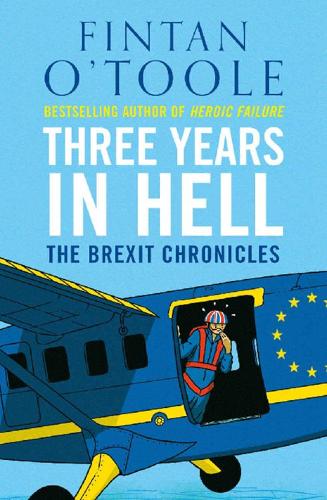
Three Years in Hell: The Brexit Chronicles
by
Fintan O'Toole
Published 5 Mar 2020
This was a crucial moment – polls have since shown that, in what turned out to be a very close-run referendum, Boris, as the mayor of London had branded himself, had a greater influence on voters than anyone else. ‘Character is destiny, said the Greeks, and I agree,’ writes Johnson in The Churchill Factor, his 2014 book about Winston Churchill, which carries the telling subtitle ‘How One Man Made History’. While the book shows Johnson to be a true believer in the Great Man theory of history, his own moment of destiny plays it out as farce, the fate of a nation turning not on Churchillian resolution but on Johnsonian indecision. For Johnson was, in his own words, ‘veering all over the place like a shopping trolley’. On Saturday 20 February, he texted Prime Minister David Cameron to say he was going to advocate for Brexit.
Strategy: A History
by
Lawrence Freedman
Published 31 Oct 2013
But Tolstoy’s wider political influence spread during the rest of the century and affected attempts to develop nonviolent strategies. His general critique had its echoes over the next century. Making sense of Tolstoy’s philosophy of history is no easy task. Indeed the erudition deployed by Isaiah Berlin in his attempt to do so was considered a small masterpiece in itself.5 Tolstoy deplored the “great man theory of history,” the idea that events were best explained by references to the wishes and decisions of individuals who through their position and special qualities were able to push events in one direction rather than another. His objection went beyond the normal complaint about such theories, that they underplayed the importance of broader economic, social, and political trends.
…
It would be odd to assert that European history would have been exactly the same had Napoleon not been born. Accepting that history could not be a pseudo-science did not require denying the possibility of systematic thought and conceptualization. It was also odd to use Napoleon’s performance at Borodino to debunk the great man theory of history. This was, as Gallie notes, “one of the strangest, least typical, of campaigns known to history,” yet Tolstoy uses it to make points of universal validity to be applied to matters far less strange and atypical.6 Tolstoy showed the emperor pretending to be master of events over which in practice he had no control.
Seven Crashes: The Economic Crises That Shaped Globalization
by
Harold James
Published 15 Jan 2023
In a simple version, many people assume that the mid-nineteenth-century surge of globalization was driven by powerful, rhetorically gifted men who took the message of the great original thinkers Adam Smith and David Ricardo on comparative advantage and popularized and familiarized it. This was, after all, still the age of Napoleon, in which a “Great Man” theory of history, propagated by prophets such as Thomas Carlyle, flourished. Richard Cobden and John Bright’s Anti–Corn Law League looked like the model for a political mobilization behind a distinct economic model—free trade and laissez faire. In the late twentieth century, Milton Friedman and Friedrich Hayek were supposed to be the drivers of a new neoliberal globalization.
The Man Who Knew: The Life and Times of Alan Greenspan
by
Sebastian Mallaby
Published 10 Oct 2016
Greenspan’s new habitat—Washington, D.C., as it existed from the late 1960s—could scarcely have been more different from James J. Hill’s unplowed frontier. Nothing could be accomplished in the nation’s capital without cynical tactics and inglorious compromise. Having chosen government as his calling, Greenspan could never hope to match the tycoons who had inspired him. For any chronicler of any outsized life, the great-man theory of history stands as a temptation. The lure is especially enticing during periods that empower heroes, periods featuring military conquest or dramatic change; or periods featuring especially egregious inequality, which concentrates power among a handful of leaders. Philosophers of history, reaching for circumstances in which great men made a clear difference, frequently invoke antiquity: “If there had been no Themistocles there would have been no victory of Salamis,” mused John Stuart Mill, “and had there not, where would have been all our civilization?”
…
“[A]ll things that we see standing accomplished in the world are properly the outer material result . . . of the thoughts that dwelled in the great men sent into the world,” proclaimed the British historian Thomas Carlyle in the classic statement of Victorian hero worship.3 For the biographer of Alan Greenspan, however, the great-man theory of history is a trap. Far from inhabiting a playground for Randian supermen, Greenspan came of age in a very different time: a time of cookie-cutter suburbs, mass-produced consumer goods, an absence of heroic wars, and relatively low inequality. Rather than living in the heyday of individualism, Greenspan confronted imposing collectives: big corporations, big unions, and increasingly big government.
One Less Car: Bicycling and the Politics of Automobility
by
Zack Furness
and
Zachary Mooradian Furness
Published 28 Mar 2010
See also Great Britain English Mods versus rockers, 153 Environmentalism: and automobility, 60, 65; and bicycling, 63, 69, 153; and environmen tal politics, 151; and transportation, 207 Environmental racism, 207 Epperson, Bruce, 70–71, 212, 249n126 Ethnic cleansing and hygiene, 28 Europe, 13, 28, 37, 47, 59–60, 67, 172 Evans, ross, 154 Fast, Tony, 166–167 Faust, Steven, 67 Federal-aid road act (1916), 240n18 Federal Highway act (1921), 240n18 Federal Trade Commission (FTC), 108 Female cycling, 26; and advertising, 21; and bloomers, 20; as empowering, 45; and fiction narratives, 21–22; as liberating, 19–21; and new woman, 21; normalization of, 22; and popular press, 21–22; resistance to, 20; and women of color, 20 Feminist movement and cycling, 20 Ferrell, Jeff, 90 Fey, Kim (aka Kim Fern), 184, 283n44 Fincham, Ben, 129 Finland, 4 Fishburne, laurence, 112 Fisher, Martin, 286n90 Fishman, Barry, 245n74 Fitzpatrick, Jim, 25 Fixed Gear Gallery (Web site), 163 Fláneur, 85 Flink, James, 16 Florida, 269n122 Flow, 200 Ford, Henry, 15, 48–49 Ford, William Clay, Jr., 210 Ford-Smith, Honor, 194 Forester, John, 71, 73, 138, 248n119, 248– 249n120, 249n124, 263n61; and cyclist-inferiority superstition, 72; and vehicular-cycling principle, 70 The 40-Year-Old Virgin (film), 111 France, 28, 237n142; bicycling in, 8 Free market capitalism, 213, 287n99; and poverty, 198, 200 Free ride, 173, 178 Friedman, Thomas, 198 Friends of the Earth, 60 Galdins, robert, 175 Garvey, Ellen, 21–22, 27, 30 Gender and mobility, 180 General Dutch Cyclists Union (anWB), 57 General Motors, 50 Gerken, John, 184 Germany: and the autobahn, 51; bicycling in, 4, 33–34; and living space mythos, 51 Get a Life (television program), 111 Ghana, 187, 191, 201, 287n98 Ghost bikes, 97; and DKny campaign, 160 Giant Bicycle Company, 214–216 Global agreement on Tariffs and Trade (GaTT), 189 Global climate change, 206 Globalization, 13, 188, 213–214 Global South, 186; and automobility, 190 Gluck, Harold, 128 Goodridge, Steven, 74 Gore, al, 206 Gorz, andré, 59, 89, 253–254n64 Graber, Don, 215 Great Britain, 134, 188, 267n104; anti-roads protests and cultural politics in, 150; bicycling in, 135, 242n29; cars and fatalities in, 135; drivers in, 130–131; pedestrian and cyclist fatalities in, 268n117. See also England Greater new york automobile Show and “bike-by” protest, 62 Great Man theory, 199 Green, Harriet, 245n74 Green Hummer project, 94–96 Gridlock, 208–209 Groom, Tom, 34 Grootveld, robert Jasper, 55, 242n50 Grossberg, lawrence, 168 Guerilla Girls, 85 Gulf War, 151 Gurin, David, 61–62, 67 Haiti, 172 Haley Tricycles, 168 Hammond, Charles, 171 Hanson, per, 155 Hard Times Bike Club (HTBC), 154–155 Harmond, richard, 32 Hartman, phil, 110 Harvey, David, 83 Helsinki, Finland, 58 Henderson, leon, 120 Hendley, nate, 64 Henry, Thomas p., 204 Herlihy, David, 33, 235–236n108 Herman, pee-wee (paul reubens), 110 Hicks, Braxie, 148 Higgins, Charles, 91, 106 Highway system, 50–52 Highway Trust Fund, 51–52 Hitler, adolf, 51 Hoey, Kate, 129–130, 135 Hong Kong, 214 Honolulu, Hawaii, 4 Horcha, Stephen, 95 Horton, Dave, 32, 35, 103, 213, 246n99, 257n115 Houle, Jacob, 155 Housing act (1961), 52 Houston, Texas, 104 Hub Co-op, 180 Hues and Company, 293n63 Huffener, Joep, 243n46 Huffy Bicycle Corporation, 214–215, 262n47, 292n51 Human powered Machines, 168 Hunt, nancy rose, 196 Hurricane Katrina, 138 Hygiene: and bicycling, 28–29; and ethnic cleansing, 28; and perpetuation of white race, 28–29 Hygienic Bicycling (Clark), 28 I Heart Huckabees (film), 112 I Like Bikes (film), 260n34 illich, ivan, 66, 68, 192, 246n97 image events, 255n81 The Immortal Class (Culley), 166 imperialism, 194 In and Out (film), 111 incentive pricing, 195 india, 217 indianapolis Bicycle action project, 172 individual mobility and personal freedom, inglis, David, 59 institute for Transportation and Development policy (iTDp), 186–189, 193, 201.
Guns, germs, and steel: the fates of human societies
by
Jared M. Diamond
Published 15 Jul 2005
Like cultural idiosyncrasies, individual idiosyncrasies throw wild cards into the course of history. They may make history inexplicable in terms of environmental forces, or indeed of any generalizable causes. For the pur- poses of this book, however, they are scarcely relevant, because even the most ardent proponent of the Great Man theory would find it difficult to interpret history's broadest pattern in terms of a few Great Men. Perhaps Alexander the Great did nudge the course of western Eurasia's already literate, food-producing, iron-equipped states, but he had nothing to do with the fact that western Eurasia already supported literate, food-produc- ing, iron-equipped states at a time when Australia still supported only non- literate hunter-gatherer tribes lacking metal tools.
America Right or Wrong: An Anatomy of American Nationalism
by
Anatol Lieven
Published 3 May 2010
This tendency is encouraged still further by a naive liberal belief in the natural goodness and perfectibility of "the people," of whatever country.94 Moreover, if "history is bunk," if the study of religion and political culture is to be dismissed as foolish or even wicked "essentialism" (often a barely veiled cover for charges of racism), then the only remaining explanation for a country's successes and failures must lie in "leadership" and the capacity of leaders to understand and adopt the right (U.S.-inspired) policies.95 This analysis essentially means reliance on a form of the "Great Man theory" of history, a superficial and stupid paradigm abandoned or heavily qualified by serious historians half a century ago. As Michael Lind notes, "The devil theory is rather optimistic. Replace devils with angels, and everything will be fine."96 I have lost count of the number of times I have heard commentators on Afghanistan speak of "the warlords" there as if they are some kind of Martian implant, rather than the leaders of powerful groups and the products—vile, but authentic—of local Afghan society, the Afghan heroin trade and the wars which afflicted Afghanistan since the 1970s.
The Ice at the End of the World: An Epic Journey Into Greenland's Buried Past and Our Perilous Future
by
Jon Gertner
Published 10 Jun 2019
Victor wasn’t the only scientist who saw the poles as enduring subjects of interest, but he merged that awareness with action and accomplishment long before the International Geophysical Year in 1957 (see chapter 11). His heightened interest in the scientific study of the poles, in short, was prescient. 25. The “great man” theory of history holds that crucial events and discoveries are determined by the unprecedented actions of heroic, trailblazing characters. The theory was articulated by Thomas Carlyle, the British writer, in 1841. Challenges to the theory, which are numerous and varied (and, to this author, more persuasive), hold that the effect of powerful historical figures is contextual and made possible by social and technological conditions.
Stranger Than Fiction: Lives of the Twentieth-Century Novel
by
Edwin Frank
Published 19 Nov 2024
One way or another, they are a record of Grossman’s growing determination, after so many years of lies, to tell the truth, to get it all out there, and though exposing lies and hypocrisy has been part of what could be described as the twentieth-century novel’s brief, the positive truth Grossman has in mind has rarely been part of the novel’s truth, as I said at the start of this chapter. Grossman’s model in writing the novel had been War and Peace, a novel that Tolstoy notoriously interrupts in midcareer with a long attack on the great man theory of history. Tolstoy is by no means alone among nineteenth-century novelists in shifting from the dramatic to the didactic (Manzoni’s The Betrothed includes a long broadside on the inefficiency of price controls; Les Misérables is an encyclopedia of authorial opinion), and a live tension between presentation and interpretation remains central to the socialist realist aesthetic that Grossman, as a young writer making his way in the 1930s—mentored by Gorky, admiring of Babel—had been formed by.
The Big Fat Surprise: Why Butter, Meat and Cheese Belong in a Healthy Diet
by
Nina Teicholz
Published 12 May 2014
In short, they found themselves unable to continue contributing to their fields, which of course is the very essence of every scientist’s hopes and ambitions. To a surprising degree, in fact, the story of nutritional science is not, as we would expect, one of sober-minded researchers moving with measured, judicious steps. It falls, instead, under the “Great Man” theory of history, whereby strong personalities steer events using their own personal charisma, intelligence, wisdom, or wits. In the history of nutrition, Ancel Keys was, by far, the Greatest Man. * * * I. Death rates from heart disease have declined since the late 1960s, presumably due to more advanced medical care.
The Golden Passport: Harvard Business School, the Limits of Capitalism, and the Moral Failure of the MBA Elite
by
Duff McDonald
Published 24 Apr 2017
Former HBS insider David Ewing refers in his book Inside the Harvard Business School to the School’s “golden rule—its belief that wisdom cannot be told and its insistence on making students think while not trying to tell them what to think.”7 It’s a nice little motto, perfectly indicative of the School’s infatuation with its case teaching technique, but there’s a problem with it: The School is telling them what to think, whether they realize that they’re doing it or not. For one, cases tend to be sanitized versions of corporate (and CEO) heroism, the business school version of the Great Man Theory. It’s a rare HBS case that lays out for all to see an example of sheer ineptitude at the company being profiled. And why is that? Because the School gives companies the opportunity to veto any case that’s not to their liking. That’s called positive bias, and it’s not desirable, no matter what the context.
The Dawn of Everything: A New History of Humanity
by
David Graeber
and
David Wengrow
Published 18 Oct 2021
It is the story of humanity’s original innocence, and unwitting departure from a state of pristine simplicity on a voyage of technological discovery that would ultimately guarantee both our ‘complexity’ and our enslavement. How did this ambivalent story of civilization come about? Intellectual historians have never really abandoned the Great Man theory of history. They often write as if all important ideas in a given age can be traced back to one or other extraordinary individual – whether Plato, Confucius, Adam Smith or Karl Marx – rather than seeing such authors’ writings as particularly brilliant interventions in debates that were already going on in taverns or dinner parties or public gardens (or, for that matter, lecture rooms), but which otherwise might never have been written down.
Why the West Rules--For Now: The Patterns of History, and What They Reveal About the Future
by
Ian Morris
Published 11 Oct 2010
Ancient ships, with their tinder-dry ropes, wooden decks, and cloth sails, could turn into infernos in seconds. Piled on top of one another, panicking to push the fireships away with poles, and with no room to escape, the Romans lost all order. The Vandals came in for the kill, and it was all over. In Chapter 5 I talked about the great-man theory of history, which holds that it is unique geniuses, such as Tiglath-Pileser of Assyria, not grand impersonal forces, such as the Old World Exchange, that shape events. The other side of the great-man coin is the bungling-idiot theory of history: What, we have to ask, would have happened had Basiliskos had the wits not to get trapped against the coast?
Bourgeois Dignity: Why Economics Can't Explain the Modern World
by
Deirdre N. McCloskey
Published 15 Nov 2011
“The less connected with the activity of others our activity is,” he wrote in 1869, “the more free it is; and on the contrary, the more our activity is connected with other people the less free it is.”12 We can raise our arm at will, but for half a million men to invade Russia, Tolstoy argues, more than the individual will of Napoleon was required. The notion is familiar to economists reflecting on the summed wills of suppliers and demanders. But in Tolstoy’s passion to reject the great-man theory of history he made fun of the force of ideas: “A locomotive is moving. Someone asks: What moves it? Some see it as a force directly inherent in heroes, as the peasant sees the devil in the locomotive; others as a force resulting from several other forces, like the movement of the wheels; others again as an intellectual influence, like the smoke that is blown away.”13 Yet, my dear Count, you will admit that if the smoke gets in the eyes of the engineer, or if an idea of putting a high-pressure steam engine on rails inspires the provincial British artisans Richard Trevithick and George Stephenson, then ideas can matter mightily.