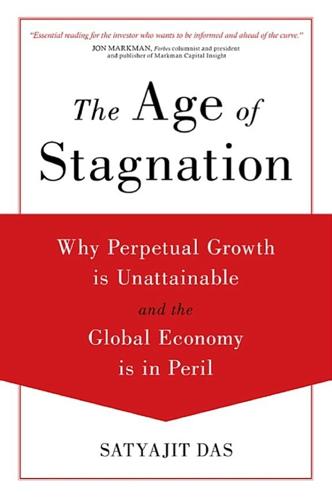
The Age of Stagnation: Why Perpetual Growth Is Unattainable and the Global Economy Is in Peril
by Satyajit Das · 9 Feb 2016 · 327pp · 90,542 words
them, for delivering growth. The Great Moderation was really a Goldilocks economy, reliant on a massive expansion in debt and financial speculation, underwritten by the Greenspan Put. This referred to a practice originated by US Fed chairman Alan Greenspan, and adopted widely, whereby in a financial crisis central banks lowered interest rates
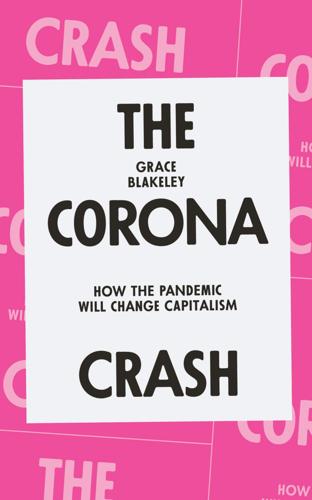
The Corona Crash: How the Pandemic Will Change Capitalism
by Grace Blakeley · 14 Oct 2020 · 82pp · 24,150 words
bond markets described what they saw as a bubble waiting to burst. Similar conclusions were drawn in the UK.8 In fact, ever since the ‘Greenspan put’ that followed the 1987 stock market crash, investors have counted on the fact that policymakers will hold interest rates down in the wake of a
…
Debt Could Be the Next Sub-Prime Crisis, Warns Banking Body’, Guardian, 30 June 2019. 9 Matthew Watson, ‘Re-establishing What Went Wrong Before: The Greenspan Put as Macroeconomic Modellers’ New Normal’, Journal of Critical Globalisation Studies, no. 7 (2014): 80–101. 10 Alfie Stirling, Just about Managing Demand: Reforming the UK
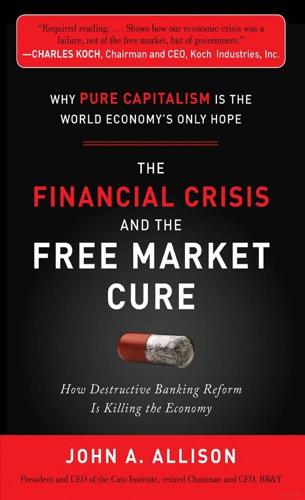
The Financial Crisis and the Free Market Cure: Why Pure Capitalism Is the World Economy's Only Hope
by John A. Allison · 20 Sep 2012 · 348pp · 99,383 words
in business to believe that the Fed had the ability to eliminate downside risk.11 In the stock market, this psychology became known as the Greenspan “put.” If things went bad, you could depend on Greenspan to print money, cut interest rates, and save the economy and the stock market. By 2007
…
expectations. My actual experience in banking and working with business decision makers supports his technical conclusions. Human actions drive economic activity. 11. See Peronet Despeignes, “‘Greenspan Put’ May Be Encouraging Complacency: Moral Hazard May Be Created by the Interventions of the Fed,” Financial Times (London), December 8, 2000, p. 20. See also
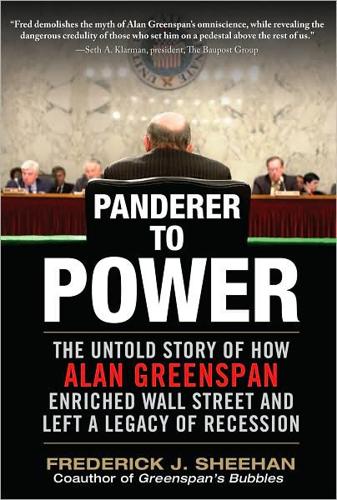
Panderer to Power
by Frederick Sheehan · 21 Oct 2009 · 435pp · 127,403 words
proportion of New Yorkers living under the poverty line rose from 15 percent in 1975 to 23.9 percent in 1985.21 Precursor to the “Greenspan Put” At the beginning of the 1980s, commercial banks were tottering. In the 1970s, they had plowed into the rising market: banks lent to commodity-producing
…
. The Citicorp and Continental Illinois bailouts happened during Paul Volcker’s term at the Fed. What would later be called the “Greenspan put” preceded the future Federal Reserve chairman. (The Greenspan put was the belief that if the markets ever stumbled, Fed Chairman Greenspan would flood the market with money, which would trancate investors
…
and it’s unfortunate. The Fed is doing as good a job as it can do in these circumstances.”40 Regan was a tough cookie. Greenspan put the Fed and Volcker ahead of his own interests. Greenspan’s campaign for Fed chairmanship was subtle. Paul Volcker’s four-year term as chairman
…
claim would become known as the Greenspan Doctrine among economists.7 His open money spigot policy whenever the stock market buckled became known as the “Greenspan put” among speculators. This was a government welfare program with consequences we continue to delay and magnify. 4 Peter Warburton, Debt and Delusion: Central Bank Follies
…
the world told Martin Mayer, “If I get into big trouble, the Fed will come and save me.”34 Retail investors, too, were confident the “Greenspan put” was integrated into Federal Reserve policy. Pandering to the Money Changers In March 1999, Greenspan gave a speech on derivatives. He might have wandered onto
…
2001.47 Short-term rates were lower than the inflation rate. The Federal Reserve Chairman was doing his best to restore the vitality of the “Greenspan put.” The FOMC was taking more interest in houses than in productivity. Mortgage was mentioned 40 times at the December meeting.48 This was anticipated by
…
nation’s credit system and over the large financial institutions. Nevertheless, his influence in the economy and markets has amplified the United States’ problems. The “Greenspan put” has become the “Bernanke put.” Its consequences are far more pervasive than Greenspan’s. (It might be argued that Greenspan would have done much of
…
. “Millions of intelligent investors” may have appreciated the government’s artificial pricing, but if they were, in fact, intelligent, they would have remembered that “the Greenspan put” had failed and led Greenspan to cut the fund’s rate to 1.0 percent. Greenspan was quick to retract any statement from his book
…
, 215 Greenspan, Herbert, 9–10 Greenspan, Rose, 9 Greenspan Doctrine, 106, 193–204, 298, 354 “The Greenspan Fed,” 137–139 Greenspan O’Neil Associates, 98 “Greenspan put,” 79, 106, 189, 249 Greenwich, Connecticut, 323–324, 357 Greif, Lloyd, 319 Gross domestic product (GDP), 234–235 in 1999, 230 in 2006, 325 debt
The Quiet Coup: Neoliberalism and the Looting of America
by Mehrsa Baradaran · 7 May 2024 · 470pp · 158,007 words
boost bank profits, and promised any “backstops” necessary to return banks to profitability. These measures were so common that they came to be called “the Greenspan put.” In response to the “urban crisis,” Greenspan urged nothing, but in response to turbulence in the market, Greenspan hurried to do or say something even
…
balance sheets, lowered interest rates, purchased Treasury bonds to boost bank profits, and promised any backstops necessary to return banks to profitability. The so-called Greenspan put covered up an inherently risky system with Fed funds, allowing risks to mount. Wall Street profits were insured against loss by American taxpayers, a transfer
…
creating such elegant statistical analyses provided false comfort, which in turn only increased risk-taking. And when the models failed to predict the unpredictable, the Greenspan put was available to lull the market back to profitablity. No matter how sophisticated the risk analysis conducted by regulators, it was no substitute for basic
…
, 22–29, 66, 84, 100, 173, 184, 215, 257, 259–61, 294, 296, 304, 342 “The Urban Riots of the 1960s,” 3, 4, 9–10 “Greenspan put, the,” 28 Green v. Connally, 186 Griggs v. Duke Power Co., 116–19 Griswold v. Connecticut, 102, 138, 140 guerrilla tactics, 77, 79 guerrilla warfare
13 Bankers: The Wall Street Takeover and the Next Financial Meltdown
by Simon Johnson and James Kwak · 29 Mar 2010 · 430pp · 109,064 words
out of its 23 percent fall on Black Monday, October 19, 1987. This was the first example of what came to be known as the “Greenspan put”—the idea that if trouble occurred in the markets, the Fed would come to their rescue.* Greenspan cut interest rates sharply in 1998 following the
…
, the put option allows the holder to sell it at a higher-than-market price, and is therefore a form of protection against risk. The “Greenspan put” was thought to be the equivalent of a put option for everyone in the market. * Owning a house has other advantages, such as increased freedom
The Economists' Hour: How the False Prophets of Free Markets Fractured Our Society
by Binyamin Appelbaum · 4 Sep 2019 · 614pp · 174,226 words
any expansion of government interference in the economy. If we advocated anything in terms of government policy, it was deregulation.”63 In the late 1960s, Greenspan put the firm to work in the service of his politics. He volunteered as an adviser to Nixon’s 1968 presidential campaign, making his mark by
Other People's Money: Masters of the Universe or Servants of the People?
by John Kay · 2 Sep 2015 · 478pp · 126,416 words
regained pre-crash levels within a year. The readiness of the US central bank to support the US stock market would become known as ‘the Greenspan put’, and was exercised vigorously (if less effectively) after the new economy bubble burst in 2000. Greenspan retired from the Fed in 2006, aged seventy-nine
…
in London, that turfed him out of office. Close attention to market opinion is a corollary of the Greenspan doctrine. But the focus of the Greenspan put was on equity markets, where supporting consumer confidence through rising asset prices became – and remains – an objective. How did this attention to bond markets, the
…
68–9 and mortgage defaults 97 and risk 73 testimony to Congress 67–8, 240 ‘Greenspan doctrine’ 56, 60, 67, 68, 71, 87, 101, 249 ‘Greenspan put, the’ 242, 249 Grillo, Bepep 306 Grimaldis of Monaco 123 gross domestic product (GDP) 251, 256, 264–5, 265, 266 gross national income (GNI) 265
Age of Greed: The Triumph of Finance and the Decline of America, 1970 to the Present
by Jeff Madrick · 11 Jun 2012 · 840pp · 202,245 words
by cutting rates sharply. The financial markets had come to depend on this ever since his rescue in 1987, and it became known as the “Greenspan put”—a floor Greenspan would always place under securities prices. But now the lower rates were not working. As economist Mark Zandi said, Greenspan realized the
…
it became clear Greenspan was determined to loosen monetary policy to avoid a credit crunch and recession. (It was another example of the so-called Greenspan put.) The Clinton economic boom continued, and stocks rose higher and higher. It was not the self-correcting powers of the markets but aggressive central bank
…
, 14.90, 14.91, 14.92, 14.93, 14.94, 14.95; Volcker compared with, 14.96, 14.97, 14.98, 14.99, 14.100 “Greenspan put,” 244 Greider, William Gross Domestic Product (GDP), 2.1, 2.2, 2.3, 2.4, 3.1, 3.2, 3.3, 3.4, 3.5
In FED We Trust: Ben Bernanke's War on the Great Panic
by David Wessel · 3 Aug 2009 · 350pp · 109,220 words
Gramlich knew, it was nearly impossible to push a regulatory initiative through the Fed without Greenspan’s blessing — and Alan Greenspan gave such blessings sparingly. GREENSPAN PUT TOO MUCH FAITH IN MARKETS AND THE CAPACITY OF BIG-MONEY PLAYERS TO POLICE THE MARKETS IN THEIR OWN SELF-INTEREST Greenspan’s libertarian leanings
The Lords of Easy Money: How the Federal Reserve Broke the American Economy
by Christopher Leonard · 11 Jan 2022 · 416pp · 124,469 words
Extreme Money: Masters of the Universe and the Cult of Risk
by Satyajit Das · 14 Oct 2011 · 741pp · 179,454 words
I.O.U.: Why Everyone Owes Everyone and No One Can Pay
by John Lanchester · 14 Dec 2009 · 322pp · 77,341 words
Financial Fiasco: How America's Infatuation With Homeownership and Easy Money Created the Economic Crisis
by Johan Norberg · 14 Sep 2009 · 246pp · 74,341 words
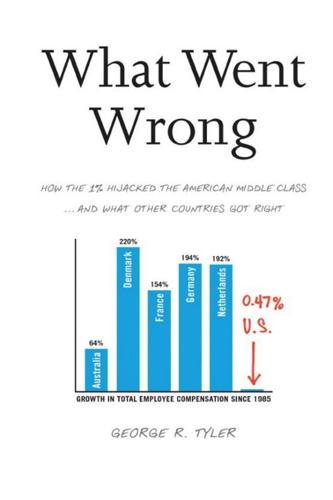
What Went Wrong: How the 1% Hijacked the American Middle Class . . . And What Other Countries Got Right
by George R. Tyler · 15 Jul 2013 · 772pp · 203,182 words
Zero-Sum Future: American Power in an Age of Anxiety
by Gideon Rachman · 1 Feb 2011 · 391pp · 102,301 words
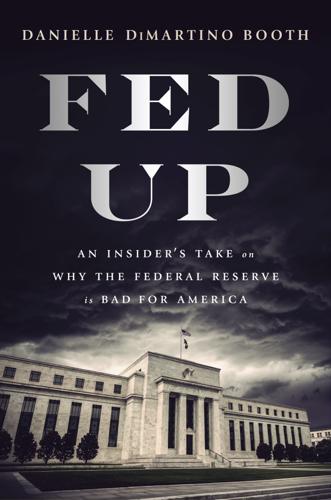
Fed Up: An Insider's Take on Why the Federal Reserve Is Bad for America
by Danielle Dimartino Booth · 14 Feb 2017 · 479pp · 113,510 words
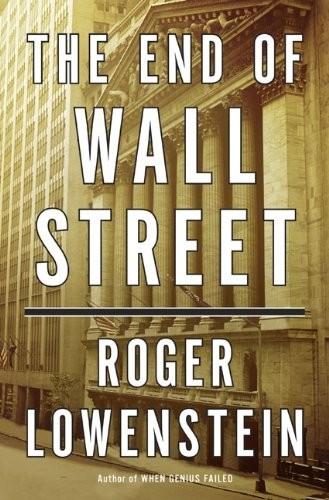
The End of Wall Street
by Roger Lowenstein · 15 Jan 2010 · 460pp · 122,556 words
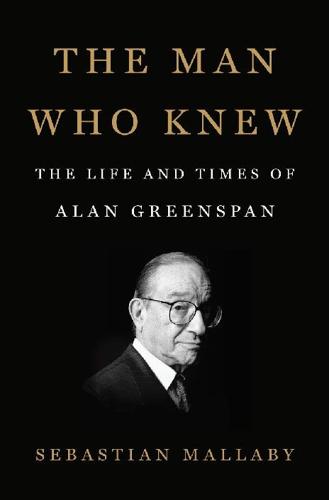
The Man Who Knew: The Life and Times of Alan Greenspan
by Sebastian Mallaby · 10 Oct 2016 · 1,242pp · 317,903 words
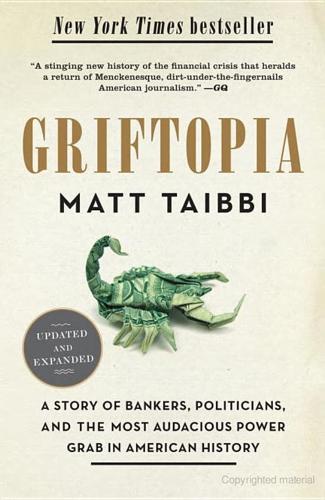
Griftopia: Bubble Machines, Vampire Squids, and the Long Con That Is Breaking America
by Matt Taibbi · 15 Feb 2010 · 291pp · 91,783 words
Crisis Economics: A Crash Course in the Future of Finance
by Nouriel Roubini and Stephen Mihm · 10 May 2010 · 491pp · 131,769 words
The Price of Time: The Real Story of Interest
by Edward Chancellor · 15 Aug 2022 · 829pp · 187,394 words
Unfinished Business
by Tamim Bayoumi · 405pp · 109,114 words
Inside the House of Money: Top Hedge Fund Traders on Profiting in a Global Market
by Steven Drobny · 31 Mar 2006 · 385pp · 128,358 words
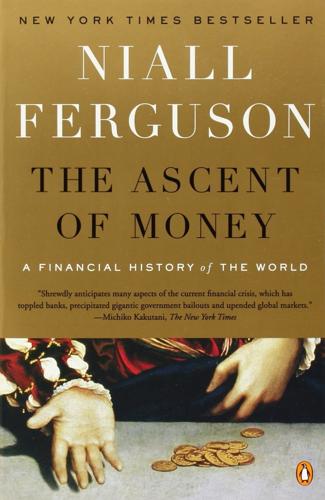
The Ascent of Money: A Financial History of the World
by Niall Ferguson · 13 Nov 2007 · 471pp · 124,585 words
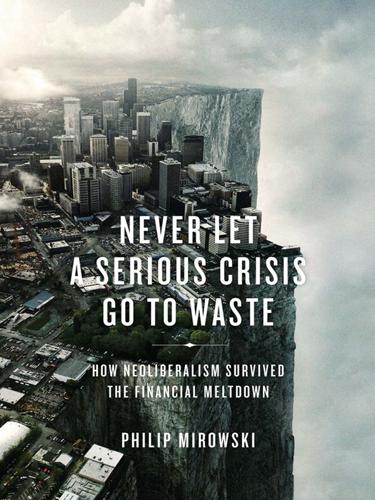
Never Let a Serious Crisis Go to Waste: How Neoliberalism Survived the Financial Meltdown
by Philip Mirowski · 24 Jun 2013 · 662pp · 180,546 words
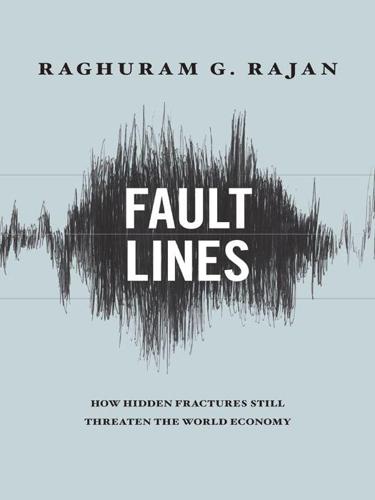
Fault Lines: How Hidden Fractures Still Threaten the World Economy
by Raghuram Rajan · 24 May 2010 · 358pp · 106,729 words
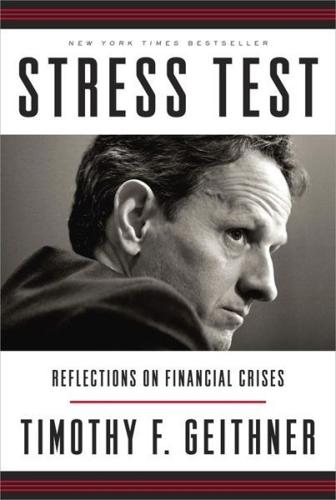
Stress Test: Reflections on Financial Crises
by Timothy F. Geithner · 11 May 2014 · 593pp · 189,857 words
More: The 10,000-Year Rise of the World Economy
by Philip Coggan · 6 Feb 2020 · 524pp · 155,947 words
The Rise and Fall of the Neoliberal Order: America and the World in the Free Market Era
by Gary Gerstle · 14 Oct 2022 · 655pp · 156,367 words
Stigum's Money Market, 4E
by Marcia Stigum and Anthony Crescenzi · 9 Feb 2007 · 1,202pp · 424,886 words
Paper Promises
by Philip Coggan · 1 Dec 2011 · 376pp · 109,092 words
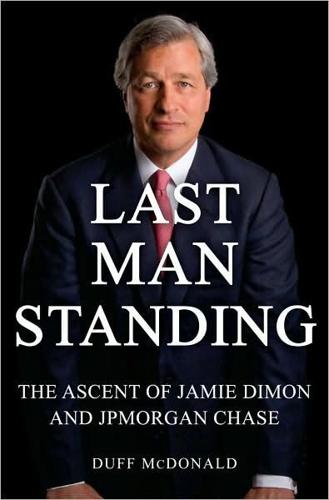
Last Man Standing: The Ascent of Jamie Dimon and JPMorgan Chase
by Duff McDonald · 5 Oct 2009 · 419pp · 130,627 words
The Innovation Illusion: How So Little Is Created by So Many Working So Hard
by Fredrik Erixon and Bjorn Weigel · 3 Oct 2016 · 504pp · 126,835 words
Unelected Power: The Quest for Legitimacy in Central Banking and the Regulatory State
by Paul Tucker · 21 Apr 2018 · 920pp · 233,102 words
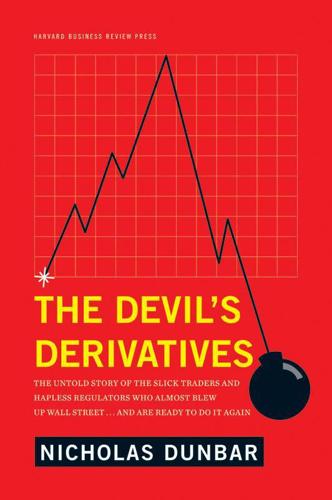
The Devil's Derivatives: The Untold Story of the Slick Traders and Hapless Regulators Who Almost Blew Up Wall Street . . . And Are Ready to Do It Again
by Nicholas Dunbar · 11 Jul 2011 · 350pp · 103,270 words
The End of Indexing: Six Structural Mega-Trends That Threaten Passive Investing
by Niels Jensen · 25 Mar 2018 · 205pp · 55,435 words
Third World America: How Our Politicians Are Abandoning the Middle Class and Betraying the American Dream
by Arianna Huffington · 7 Sep 2010 · 300pp · 78,475 words
Boom and Bust: A Global History of Financial Bubbles
by William Quinn and John D. Turner · 5 Aug 2020 · 297pp · 108,353 words
The Snowball: Warren Buffett and the Business of Life
by Alice Schroeder · 1 Sep 2008 · 1,336pp · 415,037 words
Seven Crashes: The Economic Crises That Shaped Globalization
by Harold James · 15 Jan 2023 · 469pp · 137,880 words
Vulture Capitalism: Corporate Crimes, Backdoor Bailouts, and the Death of Freedom
by Grace Blakeley · 11 Mar 2024 · 371pp · 137,268 words
Financial Market Meltdown: Everything You Need to Know to Understand and Survive the Global Credit Crisis
by Kevin Mellyn · 30 Sep 2009 · 225pp · 11,355 words
Chaos Kings: How Wall Street Traders Make Billions in the New Age of Crisis
by Scott Patterson · 5 Jun 2023 · 289pp · 95,046 words
Republic, Lost: How Money Corrupts Congress--And a Plan to Stop It
by Lawrence Lessig · 4 Oct 2011 · 538pp · 121,670 words
Makers and Takers: The Rise of Finance and the Fall of American Business
by Rana Foroohar · 16 May 2016 · 515pp · 132,295 words
The Invisible Hands: Top Hedge Fund Traders on Bubbles, Crashes, and Real Money
by Steven Drobny · 18 Mar 2010 · 537pp · 144,318 words
Modernising Money: Why Our Monetary System Is Broken and How It Can Be Fixed
by Andrew Jackson (economist) and Ben Dyson (economist) · 15 Nov 2012 · 363pp · 107,817 words
The Quest: Energy, Security, and the Remaking of the Modern World
by Daniel Yergin · 14 May 2011 · 1,373pp · 300,577 words
Debunking Economics - Revised, Expanded and Integrated Edition: The Naked Emperor Dethroned?
by Steve Keen · 21 Sep 2011 · 823pp · 220,581 words
Austerity: The History of a Dangerous Idea
by Mark Blyth · 24 Apr 2013 · 576pp · 105,655 words
The Age of Illusions: How America Squandered Its Cold War Victory
by Andrew J. Bacevich · 7 Jan 2020 · 254pp · 68,133 words
Confidence Game: How a Hedge Fund Manager Called Wall Street's Bluff
by Christine S. Richard · 26 Apr 2010 · 459pp · 118,959 words
The Corruption of Capitalism: Why Rentiers Thrive and Work Does Not Pay
by Guy Standing · 13 Jul 2016 · 443pp · 98,113 words
Hard Times: The Divisive Toll of the Economic Slump
by Tom Clark and Anthony Heath · 23 Jun 2014 · 401pp · 112,784 words
The Meritocracy Trap: How America's Foundational Myth Feeds Inequality, Dismantles the Middle Class, and Devours the Elite
by Daniel Markovits · 14 Sep 2019 · 976pp · 235,576 words
Globalists
by Quinn Slobodian · 16 Mar 2018 · 451pp · 142,662 words
The Evolution of Everything: How New Ideas Emerge
by Matt Ridley · 395pp · 116,675 words
Stolen: How to Save the World From Financialisation
by Grace Blakeley · 9 Sep 2019 · 263pp · 80,594 words
MegaThreats: Ten Dangerous Trends That Imperil Our Future, and How to Survive Them
by Nouriel Roubini · 17 Oct 2022 · 328pp · 96,678 words
Security Analysis
by Benjamin Graham and David Dodd · 1 Jan 1962 · 1,042pp · 266,547 words
Principles: Life and Work
by Ray Dalio · 18 Sep 2017 · 516pp · 157,437 words