Henri Poincaré
description: French mathematician, physicist, engineer, and philosopher of science
114 results
Zen and the Art of Motorcycle Maintenance: An Inquiry Into Values
by Robert M. Pirsig · 1 Jan 1974
, the most eminent scientific man of his generation.” He was an astronomer, a physicist, a mathematician and philosopher all in one. His name was Jules Henri Poincaré. It always seemed incredible to me, and still does, I guess, that Phćdrus should have traveled along a line of thought that had never been
Shape: The Hidden Geometry of Information, Biology, Strategy, Democracy, and Everything Else
by Jordan Ellenberg · 14 May 2021 · 665pp · 159,350 words
built into the way we think about space, location, and motion. We can’t help being geometric. We have, in other words, intuition. The geometer Henri Poincaré, in a 1905 essay, identifies intuition and logic as the two indispensable pillars of mathematical thought. Every mathematician leans in one direction or the other
…
are—only how many there are. Topology is like that but for shapes. In its modern form it comes to us from the French mathematician Henri Poincaré. Him again! It’s a name we’ll be hearing a lot, because Poincaré had a hand in an astonishingly broad range of geometric developments
…
financial center of France. He began studying mathematics at the Sorbonne in the 1890s, taking great interest in the probability courses, which were taught by Henri Poincaré. Bachelier was not a typical student; an orphan, he had to work for his living, and hadn’t received the lycée training that had molded
…
impossible. The language of differential equations was what Ross, Hudson, Kermack, and McKendrick used in their models. Ross had left St. Louis by the time Henri Poincaré delivered his lecture on the final day of the 1904 exposition, but had he seen it, he might have gotten a ten-year head start
…
/. he esteemed his diagram: Bill Casselman, “On the Dissecting Table,” Plus Magazine, Dec. 1, 2000. https://plus.maths.org/content/dissecting-table. “You have doubtless”: Henri Poincaré, The Value of Science, trans. G. B. Halsted (New York: The Science Press, 1907), 23. at least one study: M. J. Nathan, et al., “Actions
…
with Words: The Roles of Action and Pedagogical Language for Grounding Mathematical Proof,” Learning and Instruction 33 (2014): 182–93. when he needed: Jeremy Gray, Henri Poincaré: A Scientific Biography (Princeton: Princeton University Press, 2012), 26. Chapter 2: How Many Holes Does a Straw Have? a 1970 paper: David Lewis and Stephanie
…
the middle, but definitely none who remove a hole from a fully baked no-holed pastry. “I recall above all”: Galina Weinstein, “A Biography of Henri Poincaré—2012 Centenary of the Death of Poincaré,” ArXiv preprint server, July 3, 2012, 6. Accessed at https://arxiv.org/pdf/1207.0759.pdf. the loss
…
of Alsace: Jeremy Gray, Henri Poincaré: A Scientific Biography (Princeton: Princeton University Press, 2012), 18–19. In 1889 he won: June Barrow-Green, “Oscar II’s Prize Competition and the Error
…
Sciences 48, no. 2 (1994): 107–31. precise habits: Weinstein, “A Biography of Henri Poincaré,” 20. the joke in Paris circles: Tobias Dantzig, Henri Poincaré: Critic of Crisis (New York: Charles Scribner’s Sons, 1954), 3. He was not only: Gray, Henri Poincaré, 67. “Geometry is the art”: “La Géométrie est l’art de bien raisonner
…
sur des figures mal faites.” Henri Poincaré, “Analysis situs,” Journal de l’École Polytechnique ser. 2, no. 1 (1895): 2. “The circles he drew
…
”: Dantzig, Henri Poincaré, 3. Noether’s innovation: To be fair to Poincaré, Leopold Vietoris, who was there at the
…
exposition is mostly from D. R. Francis, The Universal Exposition of 1904, vol. 1 (St. Louis: Louisiana Purchase Exposition Company, 1913). “[T]here are symptoms”: Henri Poincaré, “The Present and the Future of Mathematical Physics,” trans. J. W. Young, Bulletin of the American Mathematical Society 37, no. 1 (Dec. 1999): 25. “victorious
…
, says on p. 343 that Bachelier’s grades were quite good. Dreyfus was convicted: All material on Poincaré and the Dreyfus affair is from Gray, Henri Poincaré, 166–69. “[O]ne might fear”: Courtault et al., “Louis Bachelier on the Centenary of Théorie de la Spéculation,” 348. Bachelier did end up: The
…
from Parmanand Singh, “The So-Called Fibonacci Numbers in Ancient and Medieval India,” Historia Mathematica 12, no. 3 (1985): 229–44. “What did the ancients”: Henri Poincaré, “The Present and the Future of Mathematical Physics,” trans. J. W. Young, Bulletin of the American Mathematical Society 37, no. 1 (1999): 26. Chapter 11
…
remarked, while visiting: Melvin Henriksen, “Reminiscences of Paul Erdös (1913–1996),” Humanistic Mathematics Network Journal 1, no. 15 (1997): 7. “he could not find words”: Henri Poincaré, The Value of Science, trans. George Bruce Halsted (New York: The Science Press, 1907), 138. in a movie with everyone: Brandon Griggs, “Kevin Bacon on
…
Chorus of Voices: An Interview with Rita Dove,” Agni 54 (2001), 175. “you also realize”: “A Chorus of Voices,” 175. “What I have just said”: Henri Poincaré, “The Future of Mathematics” (1908), trans. F. Maitland, appearing in Science and Method (Mineola, NY: Dover Publications, 2003), 32. Perelman himself: Luke Harding, “Grigory Perelman
From eternity to here: the quest for the ultimate theory of time
by Sean M. Carroll · 15 Jan 2010 · 634pp · 185,116 words
of the curvature of spacetime, was due almost exclusively to Einstein.) One of the major contributors to special relativity was the French mathematician and physicist Henri Poincaré. While Einstein was the one who took the final bold leap into asserting that the “time” as measured by any moving observer was as good
…
of Life spins, and history repeats itself. But soon after Nietzsche imagined his demon, the idea of eternal recurrence popped up in physics. In 1890 Henri Poincaré proved an intriguing mathematical theorem, showing that certain physical systems would necessarily return to any particular configuration infinitely often, if you just waited long enough
…
of their mutual gravitational pull. (For two bodies it’s easy, and Newton had solved it: Planets move in ellipses.) This problem was tackled by Henri Poincaré, who in his early thirties was already recognized as one of the world’s leading mathematicians. He did not solve it, but submitted an essay
…
ingenious that he was awarded the prize, and his paper was prepared for publication in Mittag-Leffler’s new journal, Acta Mathematica.169 Figure 52: Henri Poincaré, pioneer of topology, relativity, and chaos theory, and later president of the Bureau of Longitude. But there was a slight problem: Poincaré had made a
…
of special relativity, it was legitimately a collaborative effort involving the work of a number of physicists and mathematicians, including George FitzGerald, Hendrik Lorentz, and Henri Poincaré. It was eventually Hermann Minkowski who took Einstein’s final theory and showed that it could be understood in terms of a four-dimensional spacetime
…
, Max Planck area Planck energy Planck length Planck mass Planck’s constant Planck time planetary motion pocket universes. See also baby universes Podolsky, Boris Poincaré, Henri Poincaré recurrence theorem Poincaré transformations Popper, Karl popular culture position possibilism potential energy predestination. See also Future Hypothesis prediction and Boltzmann brains and classical mechanics and
The Perfect Bet: How Science and Math Are Taking the Luck Out of Gambling
by Adam Kucharski · 23 Feb 2016 · 360pp · 85,321 words
it into a successful prediction. After all, isn’t roulette supposed to be random? THERE ARE TWO WAYS to deal with randomness in roulette, and Henri Poincaré was interested in both of them. It was one of his many interests: in the early twentieth century, pretty much anything that involved mathematics had
…
have become the most important object of human knowledge.” Cards and casinos since have inspired many other scientific ideas. We have seen how roulette helped Henri Poincaré develop the early ideas of chaos theory and allowed Karl Pearson to test his new statistical techniques. We also met Stanislaw Ulam, whose card games
The Scientist as Rebel
by Freeman Dyson · 1 Jan 2006 · 332pp · 109,213 words
Newton (Pantheon, 2003). 4. Oxford University Press, 1974. 18 CLOCKWORK SCIENCE TODAY THE NAME of Albert Einstein is known to almost everybody, the name of Henri Poincaré to almost nobody. A hundred years ago the opposite was true. Then, Einstein was a newly appointed technical expert, third class, examining patent applications in
Chaos: Making a New Science
by James Gleick · 18 Oct 2011 · 396pp · 112,748 words
field. In the 1960s, though, he left topology for untried territory. He began studying dynamical systems. Both subjects, topology and dynamical systems, went back to Henri Poincaré, who saw them as two sides of one coin. Poincaré, at the turn of the century, had been the last great mathematician to bring a
…
PROVED CATASTROPHIC Of all the classical physicists and mathematicians who thought about dynamical systems, the one who best understood the possibility of chaos was Jules Henri Poincaré. Poincaré remarked in Science and Method: “A very small cause which escapes our notice determines a considerable effect that we cannot fail to see, and
Infinite Ascent: A Short History of Mathematics
by David Berlinski · 2 Jan 2005 · 158pp · 49,168 words
’s parallel postulate unobtrusively recedes. Lines through a point parallel to a given line? There are lots of them. Writing some thirty years after Lobachevsky, Henri Poincaré provided a far more intuitive model of hyperbolic geometry, one known now as the Poincaré disk. Up to a certain point, the disk is what
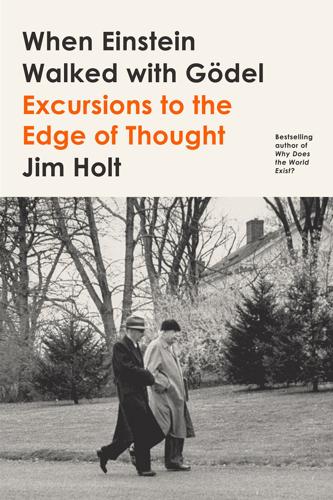
When Einstein Walked With Gödel: Excursions to the Edge of Thought
by Jim Holt · 14 May 2018 · 436pp · 127,642 words
up on the idea of an academic career, telling a friend that “the whole comedy has become boring.” He had recently read a book by Henri Poincaré, a French mathematician of enormous reputation, that identified three fundamental unsolved problems in science. The first concerned the “photoelectric effect”: How did ultraviolet light knock
…
century. It was David Hilbert—a “supergiant,” in Harris’s estimation—who originated “formalism,” which views higher mathematics as a game played with formal symbols. Henri Poincaré (another “supergiant”), Hermann Weyl, and L.E.J. Brouwer were behind “intuitionism,” according to which numbers and other mathematical objects are mind-dependent constructions. Bertrand
…
are too benighted to realize it? “A person who devoted his life to it might perhaps eventually be able to picture the fourth dimension,” wrote Henri Poincaré in the late nineteenth century. He made the task seem rather daunting, but maybe that is because, as a mathematician of peerless spatial intuition himself
…
in the collection of New York’s Metropolitan Museum of Art. Thanks to the efforts of Abbott and Hinton, and to the popular writings of Henri Poincaré in France, the “fourth dimension” had become a household expression by the early twentieth century. It cropped up in the works of authors like Alfred
…
mine.” In some cases, the reaction to Cantor’s theory broke along national lines. French mathematicians, on the whole, were wary of its metaphysical aura. Henri Poincaré (who rivaled Germany’s Hilbert as the greatest mathematician of the era) observed that higher infinities “have a whiff of form without matter, which is
…
in their genre. Could this immersion have something to do with stocking the memory? As an instructive case of creative genius, consider the French mathematician Henri Poincaré, who died in 1912. Poincaré’s genius was distinctive in that it embraced nearly the whole of mathematics, from pure (number theory) to applied (celestial
…
energy—all, fortunately, interconvertible. With Einstein’s theory of relativity, even matter came to be viewed as “frozen” energy. Sooner than give up energy conservation, Henri Poincaré once observed, we would invent new forms of energy to save it. Thanks to Emma Noether’s profoundly beautiful discovery, we know why: the timelessness
E=mc2: A Biography of the World's Most Famous Equation
by David Bodanis · 25 May 2009 · 349pp · 27,507 words
for interviews. Einstein wasn’t one of them. In time a few scientists did begin to hear of his work, and then jealousy set in. Henri Poincaré was one of the glories of Third Republic France, and, along with David Hilbert in Germany, one of the greatest mathematicians in the world. As
…
death by the guillotine. “If I were King,” du Châtelet once wrote, “. . . women would be worth more, and men would gain something new to emulate.” henri poincaré lived for seven years after Einstein’s 1905 publications, still unreconciled to the fact that outside of France he wasn’t recognized as a founder
The Myth of the Rational Market: A History of Risk, Reward, and Delusion on Wall Street
by Justin Fox · 29 May 2009 · 461pp · 128,421 words
is thanks to chance—that is to say, thanks to our ignorance, that we can arrive at conclusions,” wrote the great French mathematician and physicist Henri Poincaré in 1908.3 The greatest tool for building knowledge upon such ignorance was what was called the Gaussian distribution (after German stargazer and mathematician Carl
…
is not simply a tale of ignored genius. There was a major limitation to Bachelier’s work, of which he was well aware. His teacher, Henri Poincaré, made sure of that. While he celebrated the use of the bell curve in the physical sciences, Poincaré thought caution needed to be exercised in
…
clearly into the future was crucial to making equilibrium economics work. It was also crucially problematic. “You regard men as infinitely selfish and infinitely farsighted,” Henri Poincaré wrote to mathematical economist Léon Walras in 1901. Infinite selfishness “may perhaps be admitted in a first approximation,” Poincaré allowed. But the assumption of infinite
…
prices often leap or fall distances bigger than a penny. Then there was the really big issue, one already noted by both Irving Fisher and Henri Poincaré: Human behavior isn’t truly random. Men—and thus investors—at times act like sheep. Macaulay knew firsthand about investor behavior. His father was the
…
envisioned such a market, too, but he had been unwilling to look more than an “instant” into its future. Over any longer period, his professor Henri Poincaré had surely warned him, the tendency of men to behave like ocean-jumping sheep stood in the way of rational theories of market behavior. Merton
…
book by James Surowiecki, but the wording is misleading. Crowds—and markets—possess many useful traits. Wisdom is not one of them. It is as Henri Poincaré wrote a century ago: When men are brought together, they no longer decide by chance and independently of each other, but react upon one another
…
crash were dismissed by Wall Street (and by Irving Fisher). Louis Bachelier French mathematician whose 1900 dissertation, written under the supervision of the great scientist Henri Poincaré, established that short-term financial market movements should be random. He used mathematical tools that presaged Albert Einstein’s work to describe this randomness. Fischer
…
Press Books, 1956). These two books are the source of all Fisher biographical information in this book, except as otherwise noted. 3. Henri Poincaré, The Value of Science: Essential Writings of Henri Poincaré (New York: The Modern Library, 2001), 402. 4. Louis Bachelier, “Theory of Speculation,” in The Random Character of Stock Prices, trans
Against the Gods: The Remarkable Story of Risk
by Peter L. Bernstein · 23 Aug 1996 · 415pp · 125,089 words
Infinite Powers: How Calculus Reveals the Secrets of the Universe
by Steven Strogatz · 31 Mar 2019 · 407pp · 116,726 words
What We Cannot Know: Explorations at the Edge of Knowledge
by Marcus Du Sautoy · 18 May 2016
The Clock Mirage: Our Myth of Measured Time
by Joseph Mazur · 20 Apr 2020 · 283pp · 85,906 words

The Fractalist
by Benoit Mandelbrot · 30 Oct 2012
Where Good Ideas Come from: The Natural History of Innovation
by Steven Johnson · 5 Oct 2010 · 298pp · 81,200 words
Debunking Economics - Revised, Expanded and Integrated Edition: The Naked Emperor Dethroned?
by Steve Keen · 21 Sep 2011 · 823pp · 220,581 words
Six Not-So-Easy Pieces: Einstein’s Relativity, Symmetry, and Space-Time
by Richard P. Feynman, Robert B. Leighton and Matthew Sands · 22 Mar 2011 · 182pp · 51,816 words
The Creativity Code: How AI Is Learning to Write, Paint and Think
by Marcus Du Sautoy · 7 Mar 2019 · 337pp · 103,522 words
The Master and His Emissary: The Divided Brain and the Making of the Western World
by Iain McGilchrist · 8 Oct 2012
Physics in Mind: A Quantum View of the Brain
by Werner Loewenstein · 29 Jan 2013 · 362pp · 97,862 words
Alex's Adventures in Numberland
by Alex Bellos · 3 Apr 2011 · 437pp · 132,041 words
The Misbehavior of Markets: A Fractal View of Financial Turbulence
by Benoit Mandelbrot and Richard L. Hudson · 7 Mar 2006 · 364pp · 101,286 words
Surfaces and Essences
by Douglas Hofstadter and Emmanuel Sander · 10 Sep 2012 · 1,079pp · 321,718 words
The Mind Is Flat: The Illusion of Mental Depth and the Improvised Mind
by Nick Chater · 28 Mar 2018 · 263pp · 81,527 words
A History of France
by John Julius Norwich · 30 Sep 2018 · 482pp · 149,807 words

The Elements of Marie Curie
by Dava Sobel · 20 Aug 2024 · 346pp · 96,466 words
The Physics of Wall Street: A Brief History of Predicting the Unpredictable
by James Owen Weatherall · 2 Jan 2013 · 338pp · 106,936 words
Complexity: A Guided Tour
by Melanie Mitchell · 31 Mar 2009 · 524pp · 120,182 words
The Man Who Invented the Computer
by Jane Smiley · 18 Oct 2010 · 253pp · 80,074 words
Smarter Than You Think: How Technology Is Changing Our Minds for the Better
by Clive Thompson · 11 Sep 2013 · 397pp · 110,130 words
Coming of Age in the Milky Way
by Timothy Ferris · 30 Jun 1988 · 661pp · 169,298 words
A Beautiful Mind
by Sylvia Nasar · 11 Jun 1998 · 998pp · 211,235 words
A Brief History of Time
by Stephen Hawking · 16 Aug 2011 · 186pp · 64,267 words
Is God a Mathematician?
by Mario Livio · 6 Jan 2009 · 315pp · 93,628 words
Prime Obsession:: Bernhard Riemann and the Greatest Unsolved Problem in Mathematics
by John Derbyshire · 14 Apr 2003

Sorting Things Out: Classification and Its Consequences (Inside Technology)
by Geoffrey C. Bowker · 24 Aug 2000

Sorting Things Out: Classification and Its Consequences
by Geoffrey C. Bowker and Susan Leigh Star · 25 Aug 2000 · 357pp · 125,142 words
The Three-Body Problem (Remembrance of Earth's Past)
by Cixin Liu · 11 Nov 2014 · 420pp · 119,928 words
Making Sense of Chaos: A Better Economics for a Better World
by J. Doyne Farmer · 24 Apr 2024 · 406pp · 114,438 words
Lost in Math: How Beauty Leads Physics Astray
by Sabine Hossenfelder · 11 Jun 2018 · 340pp · 91,416 words
The Theory That Would Not Die: How Bayes' Rule Cracked the Enigma Code, Hunted Down Russian Submarines, and Emerged Triumphant From Two Centuries of Controversy
by Sharon Bertsch McGrayne · 16 May 2011 · 561pp · 120,899 words
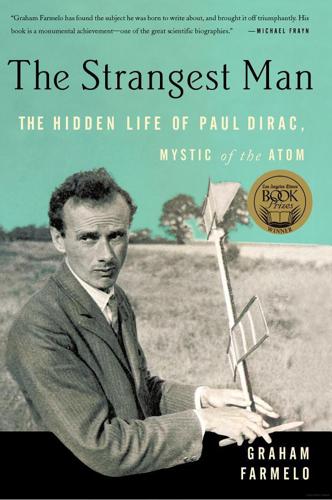
The Strangest Man: The Hidden Life of Paul Dirac, Mystic of the Atom
by Graham Farmelo · 24 Aug 2009 · 1,396pp · 245,647 words
The Information: A History, a Theory, a Flood
by James Gleick · 1 Mar 2011 · 855pp · 178,507 words
The Rise of the Quants: Marschak, Sharpe, Black, Scholes and Merton
by Colin Read · 16 Jul 2012 · 206pp · 70,924 words
Geek Wisdom
by Stephen H. Segal · 2 Aug 2011
The Drunkard's Walk: How Randomness Rules Our Lives
by Leonard Mlodinow · 12 May 2008 · 266pp · 86,324 words
Fluke: Chance, Chaos, and Why Everything We Do Matters
by Brian Klaas · 23 Jan 2024 · 250pp · 96,870 words
Adaptive Markets: Financial Evolution at the Speed of Thought
by Andrew W. Lo · 3 Apr 2017 · 733pp · 179,391 words
God Created the Integers: The Mathematical Breakthroughs That Changed History
by Stephen Hawking · 28 Mar 2007

A Mind at Play: How Claude Shannon Invented the Information Age
by Jimmy Soni and Rob Goodman · 17 Jul 2017 · 415pp · 114,840 words

The Rough Guide to France (Travel Guide eBook)
by Rough Guides · 1 Aug 2019 · 1,994pp · 548,894 words

Lonely Planet France
by Lonely Planet Publications · 31 Mar 2013

France (Lonely Planet, 8th Edition)
by Nicola Williams · 14 Oct 2010
The Great Convergence: Information Technology and the New Globalization
by Richard Baldwin · 14 Nov 2016 · 606pp · 87,358 words
Mindware: Tools for Smart Thinking
by Richard E. Nisbett · 17 Aug 2015 · 397pp · 109,631 words
Descartes' Error: Emotion, Reason and the Human Brain
by António R. Damásio · 1 Jan 1994 · 347pp · 101,586 words
Erwin Schrodinger and the Quantum Revolution
by John Gribbin · 1 Mar 2012 · 287pp · 87,204 words
When Things Start to Think
by Neil A. Gershenfeld · 15 Feb 1999 · 238pp · 46 words
Types and Programming Languages
by Benjamin C. Pierce · 4 Jan 2002 · 647pp · 43,757 words
Trillions: How a Band of Wall Street Renegades Invented the Index Fund and Changed Finance Forever
by Robin Wigglesworth · 11 Oct 2021 · 432pp · 106,612 words
Turing's Cathedral
by George Dyson · 6 Mar 2012
Doughnut Economics: Seven Ways to Think Like a 21st-Century Economist
by Kate Raworth · 22 Mar 2017 · 403pp · 111,119 words
The Evolution of Everything: How New Ideas Emerge
by Matt Ridley · 395pp · 116,675 words
The Better Angels of Our Nature: Why Violence Has Declined
by Steven Pinker · 24 Sep 2012 · 1,351pp · 385,579 words
What Technology Wants
by Kevin Kelly · 14 Jul 2010 · 476pp · 132,042 words
The Fabric of the Cosmos
by Brian Greene · 1 Jan 2003 · 695pp · 219,110 words
Black Box Thinking: Why Most People Never Learn From Their Mistakes--But Some Do
by Matthew Syed · 3 Nov 2015 · 410pp · 114,005 words
Symmetry and the Monster
by Ronan, Mark · 14 Sep 2006 · 212pp · 65,900 words
The Music of the Primes
by Marcus Du Sautoy · 26 Apr 2004 · 434pp · 135,226 words
The Code Breaker: Jennifer Doudna, Gene Editing, and the Future of the Human Race
by Walter Isaacson · 9 Mar 2021 · 700pp · 160,604 words
Big Bang
by Simon Singh · 1 Jan 2004 · 492pp · 149,259 words
Paradox: The Nine Greatest Enigmas in Physics
by Jim Al-Khalili · 22 Oct 2012 · 208pp · 70,860 words
Stolen Focus: Why You Can't Pay Attention--And How to Think Deeply Again
by Johann Hari · 25 Jan 2022 · 390pp · 120,864 words

Fodor's Normandy, Brittany & the Best of the North With Paris
by Fodor's · 18 Apr 2011
Models. Behaving. Badly.: Why Confusing Illusion With Reality Can Lead to Disaster, on Wall Street and in Life
by Emanuel Derman · 13 Oct 2011 · 240pp · 60,660 words
The Human Cosmos: A Secret History of the Stars
by Jo Marchant · 15 Jan 2020 · 544pp · 134,483 words
Lila: An Inquiry Into Morals
by Robert M. Pirsig · 1 Jan 1991 · 497pp · 146,551 words
The Story of Philosophy
by Will Durant · 23 Jul 2012 · 685pp · 203,431 words
Priceless: The Myth of Fair Value (And How to Take Advantage of It)
by William Poundstone · 1 Jan 2010 · 519pp · 104,396 words
A Man for All Markets
by Edward O. Thorp · 15 Nov 2016 · 505pp · 142,118 words
The Vanishing Face of Gaia: A Final Warning
by James E. Lovelock · 1 Jan 2009 · 239pp · 68,598 words
Shorter: Work Better, Smarter, and Less Here's How
by Alex Soojung-Kim Pang · 10 Mar 2020 · 257pp · 76,785 words
Investment: A History
by Norton Reamer and Jesse Downing · 19 Feb 2016
The End of Theory: Financial Crises, the Failure of Economics, and the Sweep of Human Interaction
by Richard Bookstaber · 1 May 2017 · 293pp · 88,490 words
What Kind of Creatures Are We? (Columbia Themes in Philosophy)
by Noam Chomsky · 7 Dec 2015
Turing's Vision: The Birth of Computer Science
by Chris Bernhardt · 12 May 2016 · 210pp · 62,771 words
How the Mind Works
by Steven Pinker · 1 Jan 1997 · 913pp · 265,787 words
The Age of Radiance: The Epic Rise and Dramatic Fall of the Atomic Era
by Craig Nelson · 25 Mar 2014 · 684pp · 188,584 words
Slowdown: The End of the Great Acceleration―and Why It’s Good for the Planet, the Economy, and Our Lives
by Danny Dorling and Kirsten McClure · 18 May 2020 · 459pp · 138,689 words
Fermat’s Last Theorem
by Simon Singh · 1 Jan 1997 · 289pp · 85,315 words
Team of Teams: New Rules of Engagement for a Complex World
by General Stanley McChrystal, Tantum Collins, David Silverman and Chris Fussell · 11 May 2015 · 409pp · 105,551 words
Safe Haven: Investing for Financial Storms
by Mark Spitznagel · 9 Aug 2021 · 231pp · 64,734 words
A Mathematician Plays the Stock Market
by John Allen Paulos · 1 Jan 2003 · 295pp · 66,824 words
Rush Hour: How 500 Million Commuters Survive the Daily Journey to Work
by Iain Gately · 6 Nov 2014 · 352pp · 104,411 words
The Deep Learning Revolution (The MIT Press)
by Terrence J. Sejnowski · 27 Sep 2018
Algorithms to Live By: The Computer Science of Human Decisions
by Brian Christian and Tom Griffiths · 4 Apr 2016 · 523pp · 143,139 words
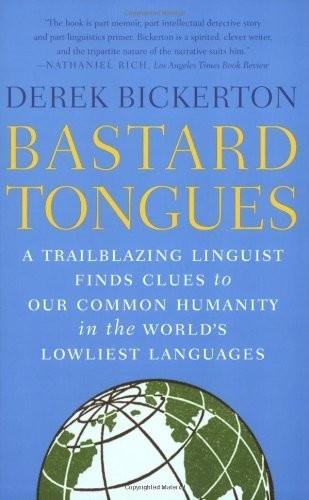
Bastard Tongues: A Trailblazing Linguist Finds Clues to Our Common Humanity in the World's Lowliest Languages
by Derek Bickerton · 4 Mar 2008
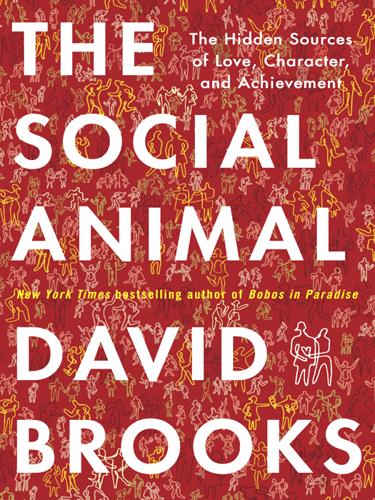
The Social Animal: The Hidden Sources of Love, Character, and Achievement
by David Brooks · 8 Mar 2011 · 487pp · 151,810 words
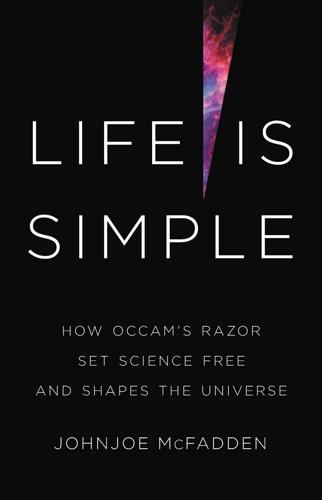
Life Is Simple: How Occam's Razor Set Science Free and Shapes the Universe
by Johnjoe McFadden · 27 Sep 2021

Pathfinders: The Golden Age of Arabic Science
by Jim Al-Khalili · 28 Sep 2010 · 467pp · 114,570 words

The Milky Way: An Autobiography of Our Galaxy
by Moiya McTier · 14 Aug 2022 · 194pp · 63,798 words
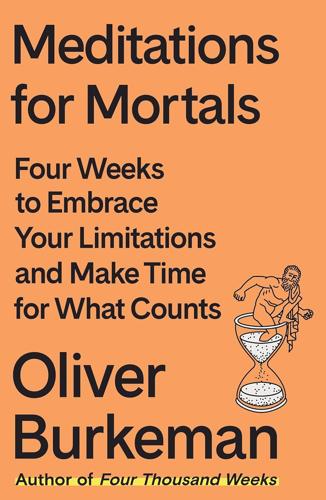
Meditations for Mortals: Four Weeks to Embrace Your Limitations and Make Time for What Counts
by Oliver Burkeman · 8 Oct 2024 · 123pp · 43,370 words
Apollo's Arrow: The Profound and Enduring Impact of Coronavirus on the Way We Live
by Nicholas A. Christakis · 27 Oct 2020 · 475pp · 127,389 words

A Manual for Creating Atheists
by Peter Boghossian · 1 Nov 2013 · 257pp · 77,030 words

The Iron Cage: The Story of the Palestinian Struggle for Statehood
by Rashid Khalidi · 31 Aug 2006 · 357pp · 112,950 words

How to Read a Book
by Mortimer J. Adler and Charles van Doren · 14 Jun 1972 · 444pp · 139,784 words
The Signal and the Noise: Why So Many Predictions Fail-But Some Don't
by Nate Silver · 31 Aug 2012 · 829pp · 186,976 words
Antifragile: Things That Gain From Disorder
by Nassim Nicholas Taleb · 27 Nov 2012 · 651pp · 180,162 words
Limitless: The Federal Reserve Takes on a New Age of Crisis
by Jeanna Smialek · 27 Feb 2023 · 601pp · 135,202 words
Nexus: A Brief History of Information Networks From the Stone Age to AI
by Yuval Noah Harari · 9 Sep 2024 · 566pp · 169,013 words

1873: The Rothschilds, the First Great Depression, and the Making of the Modern World
by Liaquat Ahamed · 1 Jun 2026 · 444pp · 114,108 words
Tesla: Inventor of the Electrical Age
by W. Bernard Carlson · 11 May 2013 · 733pp · 184,118 words
Do Nothing: How to Break Away From Overworking, Overdoing, and Underliving
by Celeste Headlee · 10 Mar 2020 · 246pp · 74,404 words