The Rough Guide to Paris
by Rough Guides · 1 May 2023 · 688pp · 190,793 words
isolation in the atmospheric streets, shabby hotel rooms and smoky bars of interwar Paris, all in Rhys’s spare, dream-like style. French (in translation) Honoré de Balzac The Père Goriot. Biting exposé of cruelty and selfishness in the contrasting worlds of the fashionable faubourg Saint-Germain and a down-at-heel but
The World of Caffeine: The Science and Culture of the World's Most Popular Drug
by Bennett Alan Weinberg and Bonnie K. Bealer · 5 Dec 2000 · 559pp · 174,054 words
not the greater prevalence of cardiac disease of late years have been considerably influenced by the increased consumption of coffee and tea?58 Les Cafêomanes: Honoré de Balzac and the Pleasures and Pains of Caffeine Coffee is an affair of fifteen or twenty days; just the right amount of time to write an
…
opera. —Gioacchino Antonio Rossini (1792–1868) to Balzac Honoré de Balzac (1799–1850), one of the greatest and most prolific storytellers in history, was unquestionably a drug addict. His drug of choice was caffeine. Because he
…
predispositions or tendencies of the body, either hereditary or acquired, that rendered it liable to certain special diseases. 59. Honoré de Balzac, Traité des Excitants Modernes, unpublished translation by Robert Onopa. 60. Arnaud Baschet, Honoré de Balzac: Essai sur l’Homme et sur l’Oeuvre, Paris: Giraud et Dagneau, 1852; Geneva: Slatkin, 1973. Quoted in Graham
The Power Elite
by C. Wright Mills and Alan Wolfe · 1 Jan 1956 · 568pp · 174,089 words
. Marya Mannes, ‘Broadway Speculators,’ The Reporter, 7 April 1955, p. 39. 34. Ernest Haveman, op. cit. 35. Honore de Balzac, The Thirteen (New York: Macmillan, 1901), p. 64. 36. Quoted in Look, 9 February 1954. 37. Honore de Balzac, op. cit. 38. See, for example, ‘Hearings before the Subcommittee on Study of Monopoly Power of the
The Europeans: Three Lives and the Making of a Cosmopolitan Culture
by Orlando Figes · 7 Oct 2019
words after 1852. At a similar stage of his career, in 1833, Balzac was earning thirty francs per thousand words from the Revue de Paris (Honoré de Balzac, Correspondance, ed. Roger Pierrot, vol. 2 (Paris, 1962), p. 280). * There had been a plan for a Picture Gallery which the French – the main contributors
…
. 114–16, 491; PSS, vol. 3, pp. 62, 77, 143. 49. René Bouvier and Édouard Maynial, Les Comptes dramatiques de Balzac (Paris, 1938), p. 85. Honoré de Balzac, Correspondance, ed. Roger Pierrot (Paris, 1962), vol. 2, pp. 621, 740. 50. Pettitt, Patent Inventions, p. 65; Christophe Charle, ‘Le Champ de la production littéraire
…
. 164. 54. Isabelle Diu and Élisabeth Parinet, Histoire des auteurs (Paris, 2013), pp. 344–7. 55. Graham Robb, Balzac: A Biography (London, 1994), p. 239; Honoré de Balzac, ‘Lettre adressée aux écrivains français du XIXe siècle’, in Oeuvres diverses, ed. Pierre-George Castex, vol. 2 (Paris, 1990), p. 1250. 56. Victor Hugo, Oeuvres
Frommer's Paris 2013
by Kate van Der Boogert · 24 Sep 2012
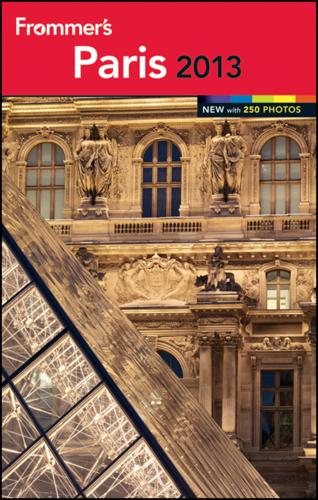
Boissière. Maison de Balzac MUSEUM In the residential district of Passy, near the Bois de Boulogne, sits this modest house with a courtyard and garden. Honoré de Balzac fled to this house in 1840, after his possessions and furnishings were seized, and lived there for 7 years (to see him, you had to
…
peer; it has been called the “grandest address in Paris.” Everybody from Sarah Bernhardt to Oscar Wilde to Richard Wright is resting here, along with Honoré de Balzac, Jacques-Louis David, Eugène Delacroix, Maria Callas, Max Ernst, and Georges Bizet. Colette was taken here in 1954; her black granite slab always sports flowers
The Codebreakers: The Comprehensive History of Secret Communication From Ancient Times to the Internet
by David Kahn · 1 Feb 1963 · 1,799pp · 532,462 words
the main theme of a work that they left no traces in the critical literature. Then, in 1829, literary cryptology took a step sideways when Honoré de Balzac published The Physiology of Marriage, one of the works that make up his immense Human Comedy. It is a long, amusing, sardonic dissertation on marriage
Capital in the Twenty-First Century
by Thomas Piketty · 10 Mar 2014 · 935pp · 267,358 words
especially about the deep structure of inequality, the way it is justified, and its impact on individual lives. Indeed, the novels of Jane Austen and Honoré de Balzac paint striking portraits of the distribution of wealth in Britain and France between 1790 and 1830. Both novelists were intimately acquainted with the hierarchy of
…
average rate of return on land in rural societies is typically on the order of 4–5 percent. In the novels of Jane Austen and Honoré de Balzac, the fact that land (like government bonds) yields roughly 5 percent of the amount of capital invested (or, equivalently, that the value of capital corresponds
…
the cases of Britain and France offers a very good introduction to the subject of wealth. The Nature of Wealth: From Literature to Reality When Honoré de Balzac and Jane Austen wrote their novels at the beginning of the nineteenth century, the nature of wealth was relatively clear to all readers. Wealth seemed
…
in terms of inheritance, which was significantly less reassuring. I return to this crucial question in Part Three. 7. Inequality and Concentration: Preliminary Bearings 1. Honoré de Balzac, Le père Goriot (Paris: Livre de Poche, 1983), 123–35. 2. See Balzac, Le père Goriot, 131. To measure income and wealth, Balzac usually used
…
, 98 percent of it can be saved. If the return is 10 percent, 99 percent can be saved. In any case, consumption is insignificant. 17. Honoré de Balzac, Le père Goriot (Paris: Livre de Poche, 1983), 105–9. 18. In the case of Challenges, there seem to be too few fortunes in the
Lonely Planet France
by Lonely Planet Publications · 31 Mar 2013
were all born in the Loire; Leonardo da Vinci spent the last years of his life here; and luminaries from sculptor Alexander Calder to novelist Honoré de Balzac lived and created in this region. Some, like Jean Gênet, were imprisoned here. Then there were those, like Alexandre Dumas, who were simply inspired here
…
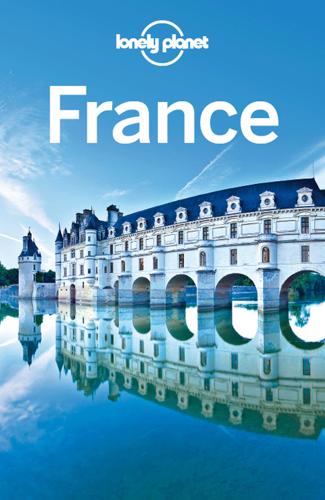
landscaped park. Built in the 1500s on a natural island in middle of the River Indre, the château is one of the Loire’s loveliest: Honoré de Balzac called it a ‘multifaceted diamond set in the River Indre’. Its most famous feature is its open loggia staircase, in the Italian style, overlooking the
…
. Once home to American sculptor Alexander Calder (one of his mobiles sits in the town square), it still celebrates the life of long-time inhabitant Honoré de Balzac (1799–1850), author of La Comédie Humaine. The lovely Musée Balzac ( 02 47 26 86 50; www.musee-balzac.fr; adult/child €5/4; 10am
…
sculptures, his work adorns public monuments all over France, notably at the Panthéon, the Louvre and Père Lachaise cemetery (where he carved many tombstones, including Honoré de Balzac’s). His work forms the cornerstone of this museum, housed in the converted 12th-century Toussaint Abbey and flooded with light through a striking glass
How to Write Like Tolstoy: A Journey Into the Minds of Our Greatest Writers
by Richard Cohen · 16 May 2016
, The Playboy Interview, ed. G. B. Golson (New York: Playboy Press, 1981), p. 66. “did not give life to imaginary beings”: See Mary F. Sandars, Honoré de Balzac: His Life and Writings (New York: Dodd, Mead, 1905), p. 21. “excellent fictitious names”: Allan Gurganus, “The Man Who Loved Cemeteries,” The New York Times
…
Prize: Siddhartha Deb, “The Not-So-Reluctant Renegade,” The New York Times Magazine, March 9, 2014, p. 37. “Lines were drawn”: See Mary F. Sandars, Honoré de Balzac: His Life and Writings, p. 123. John Cheever in just boxer shorts: See Mason Currey, Daily Rituals: How Great Minds Make Time, Find Inspiration, and
Hemingway Didn't Say That: The Truth Behind Familiar Quotations
by Garson O'Toole · 1 Apr 2017 · 376pp · 91,192 words
epigraph:1 Behind every great fortune there is a crime. —Balzac QI believes that this adage was inspired by a sentence that was written by Honoré de Balzac, but the expression has been simplified in an evolutionary process. Here is the original in French from a serialization of Le Père Goriot published in
…
the important 1956 citation.12 1. Mario Puzo, The Godfather (New York: G. P. Putnam’s Sons, 1969), 9 (epigraph). Verified in hard copy. 2. Honoré de Balzac, “Le Père Goriot,” Revue de Paris 12 (1834): 258. Accessed in Google Books, https://goo.gl/EcNnGU. 3. “Old Goriot (Le Père Goriot)” in
…
Humaine, ed. George Saintsbury, trans. Ellen Marriage (London: J. M. Dent, 1896), 124. Accessed in Google Books, https://goo.gl/5ytwfX. 4. Honoré de Balzac, La Comédie Humaine of Honoré de Balzac, trans. Katharine Prescott Wormeley, standard Wormeley ed. (Boston: Hardy, Prat, 1900), 142. Accessed in Google Books, https://goo.gl/S5ZUes. 5. “Conan Doyle’s
Back to Blood
by Tom Wolfe · 1 Jan 2012 · 687pp · 204,164 words
The Discovery of France
by Graham Robb · 1 Jan 2007 · 740pp · 161,563 words
The Reckoning: Financial Accountability and the Rise and Fall of Nations
by Jacob Soll · 28 Apr 2014 · 382pp · 105,166 words
Buzz: The Nature and Necessity of Bees
by Thor Hanson · 1 Jul 2018 · 317pp · 79,633 words

Manias, Panics and Crashes: A History of Financial Crises, Sixth Edition
by Kindleberger, Charles P. and Robert Z., Aliber · 9 Aug 2011
Coffeeland: One Man's Dark Empire and the Making of Our Favorite Drug
by Augustine Sedgewick · 6 Apr 2020 · 668pp · 159,523 words

The Fractalist
by Benoit Mandelbrot · 30 Oct 2012
Reminiscences of a Stock Operator
by Edwin Lefèvre and William J. O'Neil · 14 May 1923 · 650pp · 204,878 words
The Mystery of Charles Dickens
by A. N. Wilson · 3 Jun 2020 · 336pp · 97,204 words
Who Owns This Sentence?: A History of Copyrights and Wrongs
by David Bellos and Alexandre Montagu · 23 Jan 2024 · 305pp · 101,093 words
Daily Rituals: How Artists Work
by Mason Currey · 22 Apr 2013 · 264pp · 68,108 words
Empire of Illusion: The End of Literacy and the Triumph of Spectacle
by Chris Hedges · 12 Jul 2009 · 373pp · 80,248 words
The Last Kings of Shanghai: The Rival Jewish Dynasties That Helped Create Modern China
by Jonathan Kaufman · 14 Sep 2020 · 415pp · 103,801 words
Heart: A History
by Sandeep Jauhar · 17 Sep 2018 · 272pp · 78,876 words
Lonely Planet Paris
by Lonely Planet · 377pp · 100,759 words
Uncommon Grounds: The History of Coffee and How It Transformed Our World
by Mark Pendergrast · 2 Jan 2000 · 564pp · 153,720 words
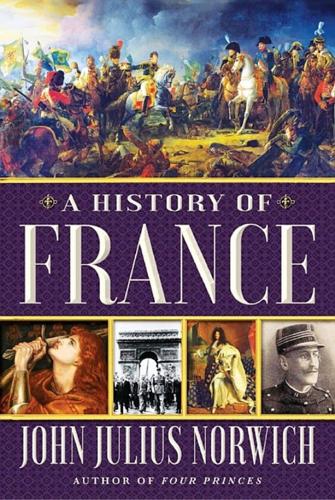
A History of France
by John Julius Norwich · 30 Sep 2018 · 482pp · 149,807 words
The Geek Way: The Radical Mindset That Drives Extraordinary Results
by Andrew McAfee · 14 Nov 2023 · 381pp · 113,173 words
Paris Revealed
by Stephen Clarke · 12 Aug 2012 · 309pp · 87,414 words
Prophecy: Prediction, Power, and the Fight for the Future, from Ancient Oracles to AI
by Carissa Véliz · 21 Apr 2026 · 503pp · 129,255 words
Europe: A History
by Norman Davies · 1 Jan 1996
Cultureshock Paris
by Cultureshock Staff · 6 Oct 2010 · 401pp · 108,855 words
France (Lonely Planet, 8th Edition)
by Nicola Williams · 14 Oct 2010
The Bookshop: A History of the American Bookstore
by Evan Friss · 5 Aug 2024 · 493pp · 120,793 words
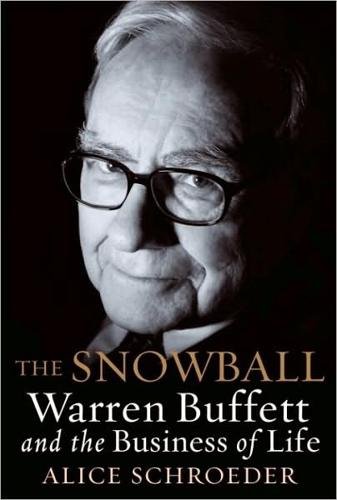
The Snowball: Warren Buffett and the Business of Life
by Alice Schroeder · 1 Sep 2008 · 1,336pp · 415,037 words
The Unclaimed: Abandonment and Hope in the City of Angels
by Pamela Prickett and Stefan Timmermans · 11 Mar 2024 · 405pp · 113,895 words
Stuff: Compulsive Hoarding and the Meaning of Things
by Gail Steketee and Randy Frost · 19 Apr 2010 · 287pp · 93,908 words
The Socialist Manifesto: The Case for Radical Politics in an Era of Extreme Inequality
by Bhaskar Sunkara · 1 Feb 2019 · 324pp · 86,056 words
The Words You Should Know to Sound Smart: 1200 Essential Words Every Sophisticated Person Should Be Able to Use
by Bobbi Bly · 18 Mar 2009 · 251pp · 44,888 words
Broad Band: The Untold Story of the Women Who Made the Internet
by Claire L. Evans · 6 Mar 2018 · 371pp · 93,570 words
A Fine Mess
by T. R. Reid · 13 Mar 2017 · 363pp · 92,422 words
The Information: A History, a Theory, a Flood
by James Gleick · 1 Mar 2011 · 855pp · 178,507 words
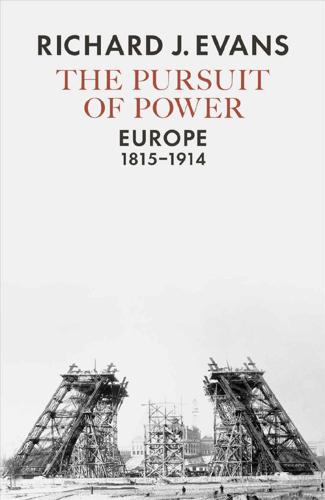
The Pursuit of Power: Europe, 1815-1914
by Richard J. Evans · 31 Aug 2016 · 976pp · 329,519 words
The Secret War Between Downloading and Uploading: Tales of the Computer as Culture Machine
by Peter Lunenfeld · 31 Mar 2011 · 239pp · 56,531 words
The Drama of the Gifted Child: The Search for the True Self
by Alice Miller · 2 Jan 1981 · 142pp · 5,823 words
The Sixth Extinction: An Unnatural History
by Elizabeth Kolbert · 11 Feb 2014 · 308pp · 94,447 words
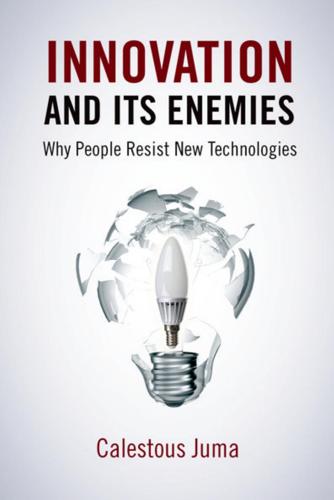
Innovation and Its Enemies
by Calestous Juma · 20 Mar 2017
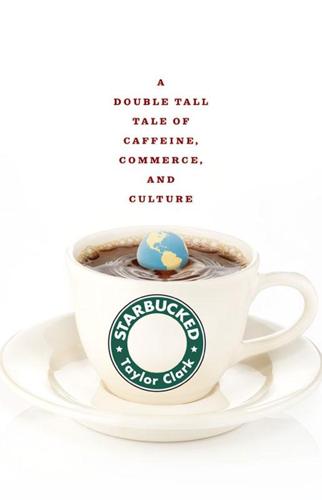
Starbucked: A Double Tall Tale of Caffeine, Commerce, and Culture
by Taylor Clark · 5 Nov 2007 · 304pp · 96,930 words
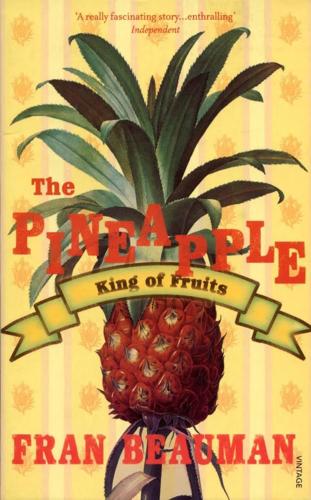
The Pineapple: King of Fruits
by Francesca Beauman · 22 Feb 2011 · 324pp · 101,552 words
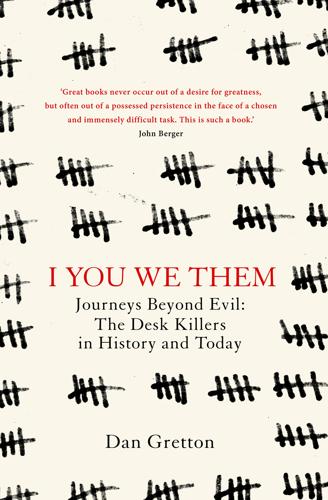
I You We Them
by Dan Gretton
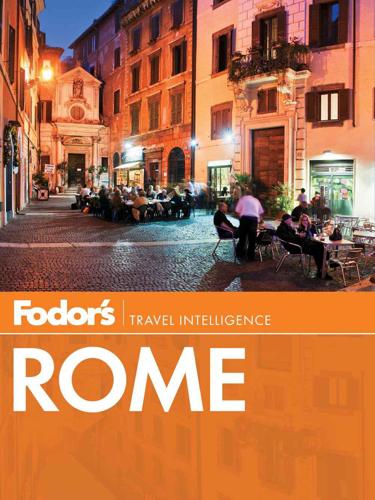
Fodor's Rome: With the Best City Walks and Scenic Day Trips
by Fodor's Travel Publications Inc. · 24 Sep 2012 · 618pp · 159,672 words
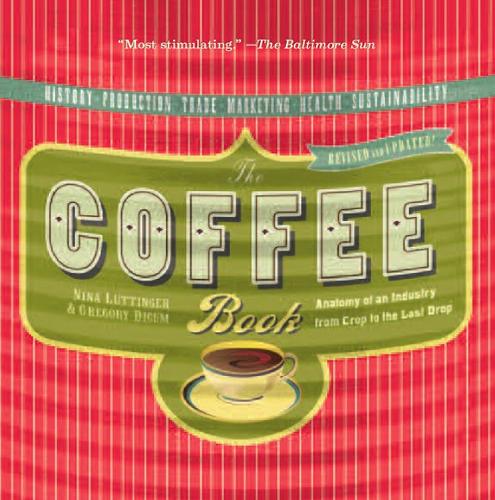
The Coffee Book: Anatomy of an Industry From Crop to the Last Drop
by Gregory Dicum and Nina Luttinger · 1 Jan 1999 · 230pp · 62,294 words
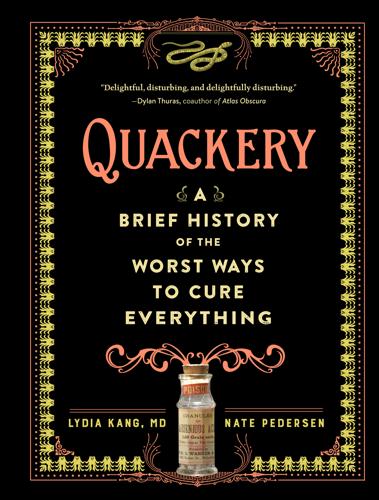
Quackery: A Brief History of the Worst Ways to Cure Everything
by Lydia Kang and Nate Pedersen · 16 Oct 2017
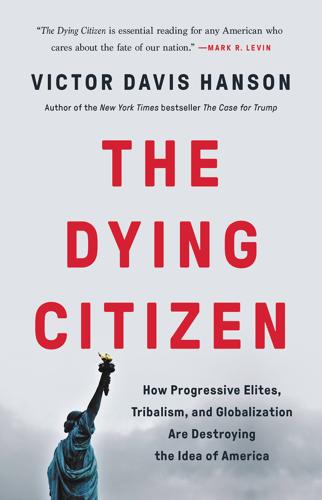
The Dying Citizen: How Progressive Elites, Tribalism, and Globalization Are Destroying the Idea of America
by Victor Davis Hanson · 15 Nov 2021 · 458pp · 132,912 words
How to Read a Book
by Mortimer J. Adler and Charles van Doren · 14 Jun 1972 · 444pp · 139,784 words
Ukraine
by Lonely Planet
Salt: A World History
by Mark Kurlansky · 28 Jan 2003 · 401pp · 122,457 words
Arrival City
by Doug Saunders · 22 Mar 2011 · 366pp · 117,875 words
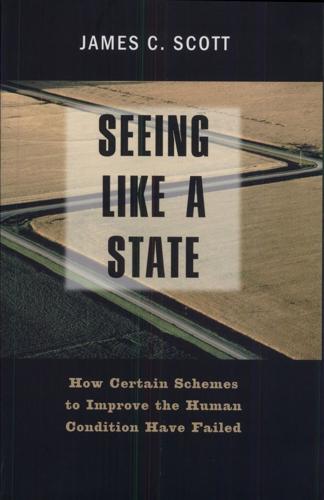
Seeing Like a State: How Certain Schemes to Improve the Human Condition Have Failed
by James C. Scott · 8 Feb 1999 · 607pp · 185,487 words
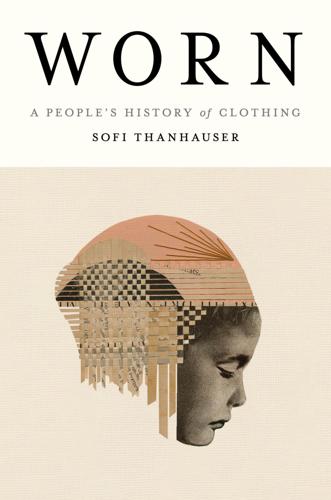
Worn: A People's History of Clothing
by Sofi Thanhauser · 25 Jan 2022 · 592pp · 133,460 words
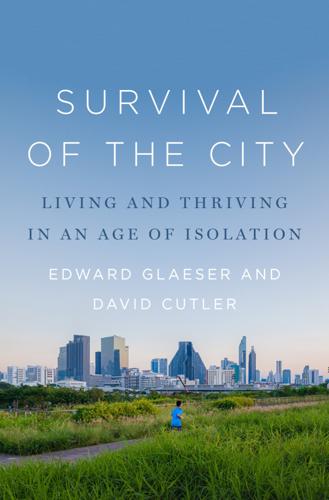
The Survival of the City: Human Flourishing in an Age of Isolation
by Edward Glaeser and David Cutler · 14 Sep 2021 · 735pp · 165,375 words
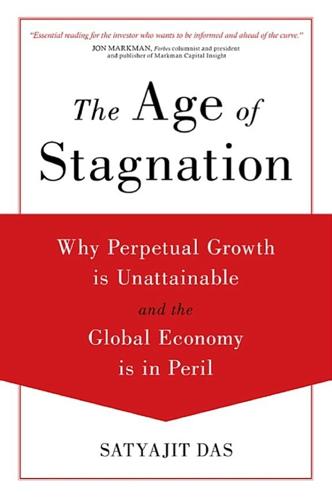
The Age of Stagnation: Why Perpetual Growth Is Unattainable and the Global Economy Is in Peril
by Satyajit Das · 9 Feb 2016 · 327pp · 90,542 words
The Great Inversion and the Future of the American City
by Alan Ehrenhalt · 23 Apr 2012 · 281pp · 86,657 words
Kleptopia: How Dirty Money Is Conquering the World
by Tom Burgis · 7 Sep 2020 · 476pp · 139,761 words
The Coming Anarchy: Shattering the Dreams of the Post Cold War
by Robert D. Kaplan · 1 Jan 1994 · 225pp · 189 words

Germany
by Andrea Schulte-Peevers · 17 Oct 2010
Germany Travel Guide
by Lonely Planet
The Limits of the Market: The Pendulum Between Government and Market
by Paul de Grauwe and Anna Asbury · 12 Mar 2017

On Her Majesty's Nuclear Service
by Eric Thompson · 18 Apr 2018 · 379pp · 118,576 words
The Precariat: The New Dangerous Class
by Guy Standing · 27 Feb 2011 · 209pp · 89,619 words
Sardinia Travel Guide
by Lonely Planet · 890pp · 133,829 words