Jensen Huang
description: American entrepreneur and businessman; founder and CEO of Nvidia
13 results
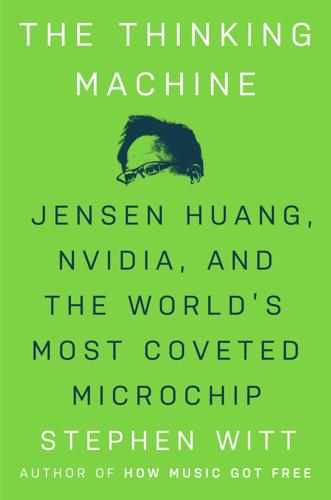
The Thinking Machine: Jensen Huang, Nvidia, and the World's Most Coveted Microchip
by Stephen Witt · 8 Apr 2025 · 260pp · 82,629 words
for the human species cannot be known. At the center of this story is a propulsive, mercurial, brilliant, and extraordinarily dedicated man. His name is Jensen Huang, and his thirty-two-year tenure is the longest of any technology CEO in the S&P 500. Huang is a visionary inventor whose familiarity
…
of technology he later commissioned, but at this tiny rural school. Part I One The Bridge Sometime toward the end of 1973, ten-year-old Jensen Huang rose from bed in his dormitory and set off on the perilous journey to school. Huang, born in Taiwan and raised in Thailand, had recently
…
is thirty days from going out of business.” Even today at Nvidia, this sentence remains the corporate mantra. Five Going Parallel The final argument between Jensen Huang and Curtis Priem lasted for the better part of a day in 1998. No one could remember its precipitating topic, only the long battle in
…
lesson—and they certainly would never forget it.” Realizing that his employees didn’t know how to hire their own replacements, Kirk opted for the Jensen Huang Instructional Method. Deliberately, and with great intentionality, Kirk gathered his engineers together in a conference room. Then Kirk—gentle Kirk, who eschewed conflict and rarely
…
spatula from a hatchet. The age of machine supremacy had begun. Fourteen The Good Year In 2016, Nvidia’s stock price appreciated 224 percent, restoring Jensen Huang to glory and making him a billionaire once again. Yet Nvidia was not the best-performing stock in the S&P that year. The title
…
recent memory,” board member Mark Stevens said. Starboard, in a later corporate filing, expressed admiration for the man they’d once tried to push around. “Jensen Huang is a real visionary in this sector,” the filing dryly noted. * * * • • • Following Mellanox, Huang decided to press his luck. In September 2020 he offered $40
…
Prize in Chemistry for his work on the protein-folding problem. Geoffrey Hinton was simultaneously awarded the 2024 Nobel Prize in Physics. That same year, Jensen Huang was elected to the National Academy of Engineering, an honor many felt was overdue. And all of this—all of this money, all of this
…
war veteran, is asked how he went bankrupt. “Two ways,” he responds. “Gradually and then suddenly.” The same phrase might be used to describe how Jensen Huang got rich. Small changes that had accumulated over two decades of investment were now paying extraordinary dividends. At the beginning of 2023, Huang informed investors
…
national economy would suffer as much as China’s if TSMC went offline. (He called this Taiwan’s “silicon shield.”) Still, when his favorite customer, Jensen Huang, toured the TSMC construction site in Phoenix in 2023, Chang was there to greet him with a smile. China had nothing to compare. The US
…
machine, and with each spin of the fan, with each pulse of the circuits, it got a little smarter. Acknowledgments I would like to thank Jensen Huang and the rest of the team at Nvidia for their time, their candor, and their insight. In particular, I’m grateful to Bob Sherbin, who
The Metaverse: And How It Will Revolutionize Everything
by Matthew Ball · 18 Jul 2022 · 412pp · 116,685 words
initiatives and made similar announcements in the months prior. In May, Microsoft CEO Satya Nadella began to speak of a Microsoft-led “enterprise Metaverse.” Likewise, Jensen Huang, CEO and founder of computing and semiconductor giant Nvidia, had told investors that “the economy in the Metaverse . . . [will] be larger than the economy in
…
to order that shirt and it’s or ultimately it’s an NVIDIA uh, based on NVIDIA. And when I was out at NVIDIA with Jensen Huang, what happens? You could, it’s conceivable. Okay. David, listen to me. Cause this is important. David Faber (DF): I’m reading what the Zuckerberg
…
alongside consumer-facing tech platforms Google, Apple, Facebook, Amazon, and Microsoft as one of the ten largest public companies in the world. Nvidia’s CEO, Jensen Huang, didn’t start his company with the intention of it becoming a gaming giant. In fact, he founded it based on the belief that
…
every single asset, texture, and resolution increase or added frame and player means an additional draw on scarce computing resources. Nvidia’s founder and CEO, Jensen Huang, imagines the next step for immersive simulations as taking us far beyond more realistic-looking explosions or a more animated avatar. Instead, he envisions the
…
, computing, payments, LLCs and 501(c)(3)s, and so on, but they will become key to many experiences, applications, and business models. Nvidia’s Jensen Huang has argued that “blockchains [are] going to be here for a long time and [will] be a fundamental new form of computing,”13 while global
…
while Oculus’s former and now consulting CTO John Carmack usually predicts an even later emergence. Epic’s CEO Tim Sweeney and Nvidia’s CEO Jensen Huang tend to avoid a specific timeline, instead saying the Metaverse will emerge over the coming decades. Google’s CEO Sundar Pichai merely says that immersive
…
yet agree on exactly what the Metaverse is and when it will arrive, most believe it will be worth multiple trillions of dollars. Nvidia’s Jensen Huang predicts the value of the Metaverse will eventually “exceed that” of the physical world. Trying to project the size of the Metaverse economy is a
…
not altogether new questions, but they will become more significant if the Metaverse becomes a multi-trillion-dollar part of the world economy (or, as Jensen Huang expects, more than half of it). Among the darkest visions of the future is one in which the Metaverse is a virtual playground where the
…
Social Network Is Becoming ‘a Metaverse Company,’ ” The Verge, July 22, 2021, accessed January 4, 2022, https://www.theverge.com/. 2. Dean Takahashi, “Nvidia CEO Jensen Huang Weighs in on the Metaverse, Blockchain, and Chip Shortage,” Venture Beat, June 12, 2021, accessed January 4, 2022, https://venturebeat.com/. 3. Data pulled from
…
, 2010, accessed January 5, 2022, https://phys.org/news/2010-12-air-playstation-3s-supercomputer.html. 6. Even Shapiro, “The Metaverse Is Coming. Nvidia CEO Jensen Huang on the Fusion of Virtual and Physical Worlds,” Time, April 18, 2021, accessed January 2, 2022, https://time.com/5955412/artificial-intelligence-nvidia
…
-jensen-huang/. 7. David M. Ewalt, “Neal Stephenson Talks About Video Games, the Metaverse, and His New Book, REAMDE,” Forbes, September 19, 2011. 8. Daniel Ek, “Daniel
…
’s Complexity,” October 25, 2018, accessed January 5, 2022, https://www.foundry.com/insights/film-tv/pixar-tackled-coco-complexity. 2. Dean Takahashi, “Nvidia CEO Jensen Huang Weighs in on the Metaverse, Blockchain, and Chip Shortage,” Venture Beat, June 12, 2021, accessed February 1, 2022, https://venturebeat.com/2021/06/12/nvidia
…
-ceo-jensen-huang-weighs-in-on-the-metaverse-blockchain-chip-shortage-arm-deal-and-competition/. 3. Raja Koduri, “Powering the Metaverse,” Intel, December 14, 2021, accessed January 4
…
Finance,” Financial Times, December 27, 2021, accessed January 4, 2022, https://www.ft.com/content/c4b6d38d-e6c8-491f-b70c-7b5cf8f0cea6. 13. Lizzy Gurdus, “Nvidia CEO Jensen Huang: Cryptocurrency Is Here to Stay, Will Be an ‘Important Driver’ For Our Business,” CNBC, March 29, 2018, accessed February 2, 2022, https://www.cnbc.com
…
/2018/03/29/nvidia-ceo-jensen-huang-cryptocurrency-blockchain-are-here-to-stay.html. 14. Visa, “Crypto: Money Is Evolving,” accessed February 2, 2022, https://usa.visa.com/solutions/crypto.html. 15
The AGI Chronicles
by Kevin Roose · 481pp · 151,124 words
less powerful systems on second-tier hardware. The man Patel thought would ultimately be responsible for dividing the GPU rich from the GPU poor was Jensen Huang, the cofounder and CEO of Nvidia. Three decades earlier, on April 5, 1993, Huang and his friends Chris Malachowsky and Curtis Priem had started Nvidia
…
ways. First, unlike the rest of the AI industry, Google wasn’t required to pay the “Nvidia tax” or to beg for GPU shipments from Jensen Huang. Google worked directly with the overseas factories that manufactured chips—mainly TSMC, in Taiwan—and could customize them to suit its needs. Second, Google wasn
…
a personal fortune, or a cash-gushing business, to fund Anthropic’s infrastructure needs. There was one other tricky detail, which was that Amodei and Jensen Huang, the CEO of Nvidia, couldn’t stand each other. They met for the first time at a dinner in May 2022, at an upscale Chinese
…
create a dystopian, 1984-style surveillance state. That was the worry that drove his support for export controls on GPUs and fueled his beef with Jensen Huang of Nvidia. But underneath the doomerish exterior, there was a more positive side of Amodei’s ambition. He’d briefly worked as a cancer researcher
…
Silver, Jeff Dean, Sergey Brin, Sundar Pichai, Noam Shazeer, Dario Amodei, Daniela Amodei, Jared Kaplan, Sam McCandlish, Chris Olah, Tom Brown, Jack Clark, Amanda Askell, Jensen Huang, the cracked engineers at DeepSeek, the authors of “Attention Is All You Need,” and hundreds of others whose names may be forgotten by history but
…
ed. (draft, 2024). Ilya Sutskever often explained this idea: Author’s interview with Ilya Sutskever. See also “Highlights of the Fireside Chat with Ilya Sutskever & Jensen Huang: AI Today & Vision of the Future,” Nvidia GTC Spring 2023, March 22, 2023, posted to YouTube by Xiao Yang, May 16, 2023, https://youtu.be
…
,” Latent Space (podcast), November 17, 2023, https://www.latent.space/p/semianalysis. Three decades earlier, on April 5, 1993: Brian Caulfield, “NVIDIA Founder and CEO Jensen Huang Returns to Denny’s Where NVIDIA Launched a Trillion-Dollar Vision,” Nvidia (company blog), September 26, 2023. “Everyone from Meta to Microsoft to startups”: Patel
The Everything Blueprint: The Microchip Design That Changed the World
by James Ashton · 11 May 2023 · 401pp · 113,586 words
later.31 TSMC won copious business but did not keep it without ferocious attention to detail. One Friday afternoon in 1999, Nvidia’s co-founder Jensen Huang received a visit from Chang, unaccompanied, carrying just a pencil and black notebook. He was in the area and checking up on a valued customer
…
stories that emerged through 2020 about Nvidia considering the acquisition of Arm. If Arm’s independence was about to be compromised – even though Nvidia CEO Jensen Huang said it would not be when a deal was eventually announced – there was no better time to explore the open-source, royalty-free back-up
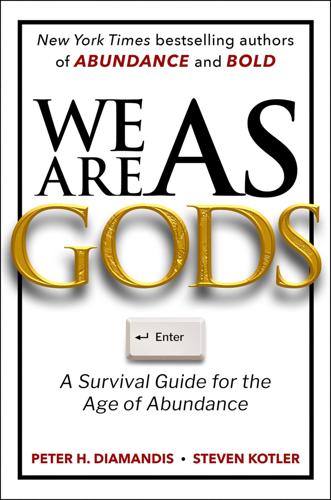
We Are as Gods: A Survival Guide for the Age of Abundance
by Peter H. Diamandis and Steven Kotler · 13 Apr 2026 · 225pp · 76,418 words
a rallying cry for global technology leaders. “We’re heading into a future where technology will unlock abundance in education, healthcare, and opportunity for everyone.” —Jensen Huang, CEO of Nvidia “Artificial intelligence promises a future of unparalleled abundance.” —Vinod Khosla, founder of Khosla Ventures “There will be an age of abundance. No
…
leap so dramatic it stunned the AI community. Overnight, deep learning went from academic curiosity to industry obsession. “This was the big moment,” Nvidia CEO Jensen Huang (whose company makes the GPU powering today’s AI revolution) told Business Insider. “The big bang of deep learning. A pivotal moment that marked the
…
and custom TPU architectures) pushed computational scaling toward one hundred times per year in some domains. See: Jensen Huang, “The Era of Generative AI,” GTC Keynote, Nvidia, “The Era of Generative AI,” GTC Keynote by Jensen Huang, March 2024; Chris Re et al., “Scaling Laws for Foundation Models,” Stanford CRFM Report, 2023, https://crfm
…
. AlexNet slashed the error rate: Krizhevsky, Sutskever, and Hinton, “ImageNet Classification with Deep Convolutional Neural Networks.” “This was the big moment”: Lloyd Lee, “Nvidia CEO Jensen Huang Shouts Out OpenAI Cofounder Ilya Sutskever for Sparking ‘the Big Bang of Deep Learning,’ ” Business Insider, June 22, 2024, https://www.businessinsider.com/nvidia-ceo
…
-jensen-huang-openai-ilya-sutskever-ai-revolution-2024-6. The six years from 2006 to 2012: Giuliano Giacaglia, “A Brief Overview of Deep Learning,” Holloway, November 2,
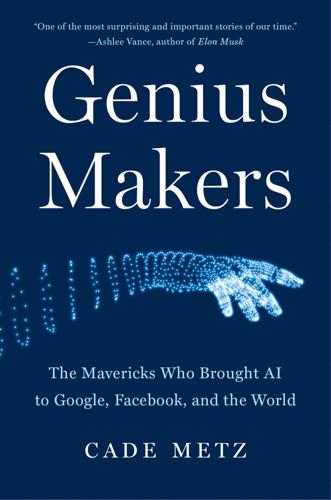
Genius Makers: The Mavericks Who Brought A. I. To Google, Facebook, and the World
by Cade Metz · 15 Mar 2021 · 414pp · 109,622 words
. Before Musk could hire this Swiss researcher, however, someone else did. Days after LeCun got the call from Musk, he fielded an identical request from Jensen Huang, the founder and CEO of Nvidia, and he gave the same answer, which Nvidia acted on without delay. The company’s ambition was to build
…
Chinese tech giant Baidu. AT NVIDIA CLÉMENT FARABET, the Yann LeCun protégé who joined Nvidia’s efforts to build deep learning chips for driverless cars. JENSEN HUANG, CEO. AT CLARIFAI DEBORAH RAJI, the Clarifai intern who went on to explore bias in AI systems at MIT. MATTHEW ZEILER, founder and CEO. IN
Aiming High: Masayoshi Son, SoftBank, and Disrupting Silicon Valley
by Atsuo Inoue · 18 Nov 2021 · 295pp · 89,441 words
them for a lot less at that point in time.’ Roughly three months after announcing SoftBank’s acquisition of Arm, on 20 October Son invited Jensen Huang, founder and chief executive of Nvidia, to his California home for a private meal between just the two of them. Son explains his mindset at
…
expand their own products’ growth. The fourth chapter, which has only just begun, will be AI. ‘Within the realm of AI I believe Nvidia’s Jensen Huang holds the key to the hardware aspects,’ Son says. Huang in turn commented on the possibilities of AI in his video interview with Son at
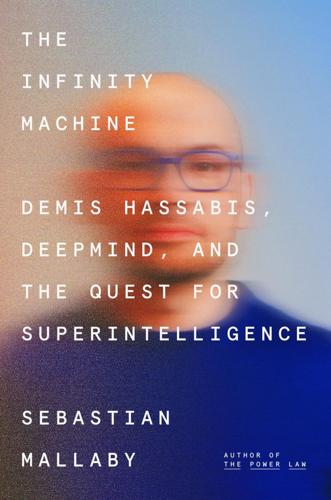
The Infinity Machine: Demis Hassabis, DeepMind, and the Quest for Superintelligence
by Sebastian Mallaby; · 30 Mar 2026 · 607pp · 161,998 words
by Musk on the futurology website Edge.org in November 2014. He deleted it minutes later, but screenshots circulated online. Stephen Witt, The Thinking Machine: Jensen Huang, Nvidia, and the World’s Most Coveted Microchip (Viking, 2025), 149. BACK TO NOTE REFERENCE 1 Metz reports that, also in late 2014, Musk called
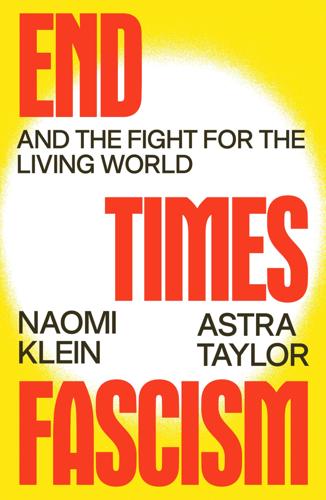
End Times Fascism: And the Fight for the Living World
by Naomi Klein and Astra Taylor · 14 Sep 2026 · 393pp · 124,539 words
Business Insider. Factories Without People Most often, structures like Colossus are referred to as data centers, but Nvidia’s founder and CEO, the leather-jacketed Jensen Huang, insists that they should be called “AI factories” instead. “AI is now infrastructure,” he says, “and this infrastructure, just like the internet, just like electricity
…
now infrastructure”: Caulfield, B., “NVIDIA CEO Envisions AI Infrastructure Industry Worth ‘Trillions of Dollars,’” NVIDIA, May 18, 2025, https://blogs.nvidia.com/blog/computex-2025-jensen-huang. Sam Altman tipped his hand: Confino, P., “Could AI Create a One-Person Unicorn? Sam Altman Thinks So—and Silicon Valley Sees the Technology ‘Waiting
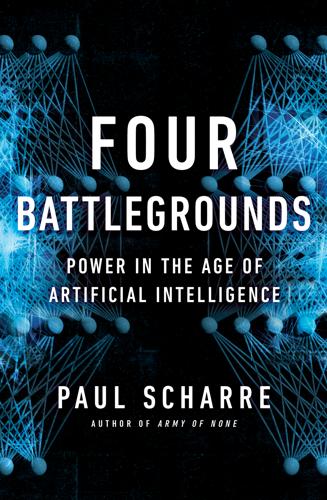
Four Battlegrounds
by Paul Scharre · 18 Jan 2023
2019: Moore’s Law Is Dead, Says Nvidia’s CEO,” CNET, January 9, 2019,https://www.cnet.com/news/moores-law-is-dead-nvidias-ceo-jensen-huang-says-at-ces-2019/; David Rotman, “We’re Not Prepared for the End of Moore’s Law,” MIT Technology Review, February 24, 2020, https://www
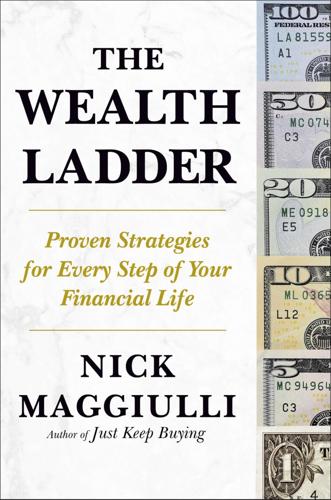
The Wealth Ladder: Proven Strategies for Every Step of Your Financial Life
by Nick Maggiulli · 22 Jul 2025
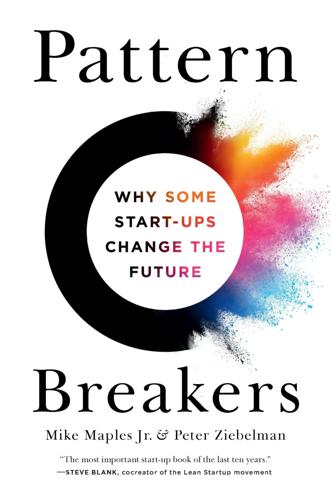
Pattern Breakers: Why Some Start-Ups Change the Future
by Mike Maples and Peter Ziebelman · 8 Jul 2024 · 207pp · 65,156 words
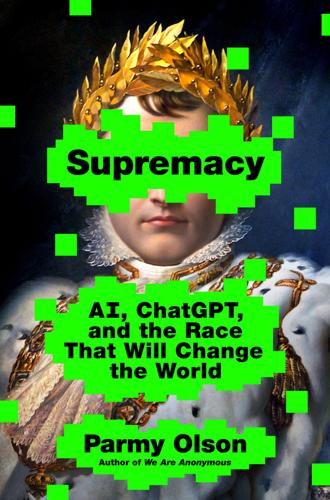
Supremacy: AI, ChatGPT, and the Race That Will Change the World
by Parmy Olson · 284pp · 96,087 words