Kenneth Arrow
description: an American economist notable for his contributions to welfare economics, general equilibrium analysis, and information economics; winner of the Nobel Prize in Economics
138 results
Green Philosophy: How to Think Seriously About the Planet
by Roger Scruton · 30 Apr 2014 · 426pp · 118,913 words
from the full costs of their mistakes, these legal devices encourage risk-taking beyond anything that the market would otherwise allow. In the words of Kenneth Arrow, ‘the law steps in and forces a risk shifting not created in the market-place’.193 Hence in the last two years we have seen
…
Theorem and Paretian Liberal in Roger Scruton, The Palgrave Macmillan Dictionary of Political Thought, London, 2007. For a full account of Arrow’s Theorem see Kenneth Arrow, Social Choice and Individual Values, New Haven, 1990. 188 Hence the proliferation, under Labour governments in Britain, of quasi-autonomous non-government organizations (quangos), through
…
.bepress.com/cas/vol3/iss2/art5 for download of the full article, and www.bepress.com/cas/announce/20081103 for the whole issue that contains Kenneth Arrow’s ‘Discussion’ of this article. See also Richard R. Nelson, ‘The Market Economy, and the Scientific Commons’, working paper to the Laboratory of Economics and
Gaming the Vote: Why Elections Aren't Fair (And What We Can Do About It)
by William Poundstone · 5 Feb 2008
I. Game Theory Kurt Code! • Adolf Hitler· Albert Einstein· Oskar Morgenstern· Bambi· the u.s. Constitution· Joseph Goebbels • God· Kaiser Wilhelm II • John von Neumann" Kenneth Arrow" J\'larxism • Alfred Tarski • intransitivity· Harold Hotelling· ice cream· John Hicks· "Scissors, Paper. Stone" • Duncan Black· the "forty-seven-year-old wife of a machinist
…
recently, any wellinformed person would have told you the answer was a most definite no. They would have cited the work of Nobel-laureate economist Kenneth Arrow and his famous impossibility theorem. In 1948 Arrow devised a logical proof saying (very roughly) that no voting system is perfect. Arrow was not talking
…
equally a tale of attempts to improve the world through logic (and how rarely that works out). In both cases, the story properly begins with Kenneth Arrow's lauded, feared, and long-misunderstood impossibility theorem. 22 THE PROBLEM ONE Game Theory Kurt Giidel, the most brilliant logician of the twentieth century, had
…
. A. "Without Oskar, I would have never written the Theory of Games and Economic BehmJior." No politician could have handled the question better. I met Kenneth Arrow on a sunny afternoon at the Stanford Faculty Club. At age eighty-four, he was vigorous and unpretentious enough to arrive for lunch by bicycle
…
RAND research report in the fall of 1948. Almost 43 GAMING THE VOTE Wa lt Kelly's 19~8 cartoon depicts the memphor that impired Kenneth Arrow; cold ":lr as ehess K~"'e !>el\w.:n H ~rJ)' Tn,m,m ~nd Joseph Stalin, \Vhen democrat and dictator represent millions, ,,'ho ",m
…
wrong. Cinquanta apparently had never heard of the impossibility theorem. If he had, he would have known that he was trying to do exactly what Kenneth Arrow had proved impossible. Loosemoore quickly provided an example of a case where the lSD's new system 46 The Big Bang would fail miserably, and
…
who count the votes decide everything," Upon the 1972 announcement of Arrow's Nobel Prize, Paul Samuelson supplied the now-standard journalist's gloss: "What Kenneth Arrow proved once and for all is that there cannot possibly be ... an ideal voting scheme," To some extent, Arrow's theorem refutes the notion of
…
Dodgson knew of his eighteenthcentury French predecessor. Evidently not. The work of Borda (and Condorcetl had by then been utterly forgotten. In the twentieth century, Kenneth Arrow's rival, Duncan Black, went so far as to examine the 1781 volume of the French Academy proceedings containing Borda's article in the Christ
…
and Rove was much on the minds of the assembled group. A highlight of the conference was dual (and dueling) presentations by Donald Saari and Kenneth Arrow. Both speakers discussed independence of irrelevant alternatives. Arrow had no trouble defending the intuitive reasonableness of his condition. A race between A [Gore] :md B
…
enforces the two-party system. Eliminate vote splitting, and things will be different-how different, no one knows. "The party structure is not a given:' Kenneth Arrow said. "It's a consequence of the electoral structure. So it's pretty hard to disentangle." Plurality voting is the only system that pays no
…
, yes, Reid had been elected to the Senate in 1998 only because of another Libertarian spoiler). There are some big differences between science and politics. Kenneth Arrow remarked on them in my conversation with him. "As a scientist, you can say, 'Oh boy, what I said last year is wrong!'" he explained
…
how to vole in order to SeCure the greatest possible number of seats for the party. Impossibility Theorem The foundation of modern voting theory. Economist Kenneth Arrow (b. 1921) demonstrated that no ranked-choice voting ,ystem can meet a set of commonsense conditions; therefore all such ways of voting are defective. The
…
I Morgenstern presented himself as a man of the world: Steve Brams, interview, New York, Aug, 30, 2005. 31 Claimed relation to Kaiser Friedrich: In Kenneth Arrow's recollection, Morgenstern claimed descent from an illegitimate daughter of Friedrich, See also Sylvia Nasar's A Beautiful Mind (1998), 84. 3J Morgenstern's faults
…
none are pri· marily about Stalin, and all date from 2002 or later. See also urhanlegends.abou1.coml od/dubiousquotesla/stalin_quote,htm. 55 "What Kenneth Arrow proved": Hillinger 2004, 3. 56 Congressiom>l Government: Wilson 1885, 57 "thebigbang":SenI986,1074. 296 Notes 3. A Short History of Vote Splitting 59 "a
How Markets Fail: The Logic of Economic Calamities
by John Cassidy · 10 Nov 2009 · 545pp · 137,789 words
. Friedman’s brand of utopian economics is much better known, but it is the mathematical exposition, associated with names like Léon Walras, Vilfredo Pareto, and Kenneth Arrow, that explains the respect, nay, awe with which many professional economists view the free market. Even today, many books about economics give the impression that
…
started out in theoretical physics, became the research director at Cowles, and he gathered around him an assortment of brilliant young minds. One belonged to Kenneth Arrow, who was born in New York City in 1921 to a family of European Jewish immigrants. During the Great Depression, Arrow’s parents lost almost
…
wasn’t possible: the whole could not be derived from the parts. “In the aggregate, the hypothesis of rational behavior has in general no implications,” Kenneth Arrow wrote in a 1986 article reviewing general equilibrium theory. The authors of a high-level textbook for Ph.D. students made the same point in
…
the costs directly; the insurer foots the bill. One of the first economists to point out how this setup perverts incentives was none other than Kenneth Arrow, the American economist who provided the definitive proof that competitive economies are efficient. But as Arrow frequently pointed out, his work on equilibrium theory didn
…
, “Do Walras’ Identity and Continuity Characterize the Class of Community Excess Demand Functions?” Journal of Economic Theory 6 (1973): 345–54. 70 “In the aggregate . . .”: Kenneth Arrow, “Rationality of Self and Others in an Economic System,” available in R. M. Hogarth and M. W. Reder, eds., Rational Choice (Chicago: University of Chicago
…
UTOPIAN ECONOMICS 97 “One cannot find . . .”: Quoted in John Cassidy, “The Decline of Economics,” New Yorker, December 2, 1996, 54. 98 “I loved the Foundations . . .”: Kenneth Arrow, in William Breit and Barry T. Hirsch, eds., Lives of the Laureates, 4th ed. (Boston: MIT Press, 2004), 279. 100 “[T]he relevant question . . .”: Milton
…
): 948. 158 “the cost of medical care . . .”: Ibid., 961. 158 “Insurance removes the incentive . . .”: Ibid., 962. 159 “really comes down to . . .”: Juan Dubra, “Interview with Kenneth Arrow,” Munich Personal Research Papers in Economics Archive, March 2005, 17, available at http://mpra.ub.uni-muenchen.de/967/1/MPRA_paper_967.pdf. 161
The Myth of the Rational Market: A History of Risk, Reward, and Delusion on Wall Street
by Justin Fox · 29 May 2009 · 461pp · 128,421 words
? The abstract high point of the economic theorizing enabled by such simplifying assumptions came from two young scholars who had worked at the Cowles Commission, Kenneth Arrow and Gerard Debreu.9 In one paper written together and in several separate works in the 1950s, the two men rebuilt economic equilibrium theory from
…
risk entirely. Enough such securities could also bring about something akin to economic perfection. To provide for economic equilibrium in the face of economic uncertainty, Kenneth Arrow had proposed in the 1950s that there needed to be securities for sale representing every possible state of the future. That seemed a purely theoretical
…
—the financial world was moving in that direction. Ross had majored in physics as an undergraduate at Caltech, and then studied economics at Harvard with Kenneth Arrow. He landed a teaching job at the University of Pennsylvania, and discovered options theory when Fischer Black gave a seminar on campus. Ross took to
…
[of imperfect competition] that Samuelson was telling us about.” That’s what they did, mostly by following a path blazed a few years before by Kenneth Arrow. Arrow was one of the most influential economists of the post–World War II era, right up there with (or maybe even ahead of) Samuelson
…
heading in the opposite direction. HERBERT SIMON, WHOSE QUARRELS WITH mainstream economists had helped inspire the rational expectations revolution, returned to the discipline in 1977. Kenneth Arrow was the responsible party, having campaigned to get Simon elected a fellow of the American Economic Association that year. This post gave Simon a prominent
…
, and he had acquired an equally brazen ally up Interstate 95 at Harvard, the precocious Lawrence Summers. As the nephew of both Paul Samuelson and Kenneth Arrow, Summers had the most impressive pedigree of any economist, ever.19 Seen as the brightest star in the dazzling constellation of smart young economists in
…
there were representing different potential states of the world, the closer we would get to the state of perfect economic equilibrium envisioned by his teacher Kenneth Arrow in the 1950s. One could see shades of Harry Markowitz in this argument, too. Give people more ways to invest in and hedge against the
…
Fe economics effort started called a high school acquaintance, economics Nobelist James Tobin, to ask for advice. Tobin told him the effort sounded like something Kenneth Arrow would go for. The ever-curious Arrow agreed, and signed on with the Santa Fe Institute as economics adviser. In 1987 the institute hosted its
…
reach out, coauthoring several papers with mainstream finance scholars and launching a new journal, Quantitative Finance, that included Robert Merton and Myron Scholes (along with Kenneth Arrow and Benoit Mandelbrot) on its advisory board. But his work has yet to really penetrate the academic mainstream either.30 Still, even as they resist
…
? “Right. I think that we’re less than halfway through the development of financial markets. Maybe there’s no end to it.” CAST OF CHARACTERS Kenneth Arrow Economist who in the early 1950s helped formulate, along with Gerard Debreu, the best mathematical model yet of how the invisible hand of the market
…
assessments to money managers battered by the decade’s bear market. In the 1980s he went over to managing money himself. Stephen Ross Student of Kenneth Arrow, co-originator of the binomial option pricing model. Argued that options and other derivatives were bringing the world closer to economic perfection. Founded a money
…
O’Brien of the portfolio insurance firm LOR. Paul Samuelson Greatest American economist of the second half of the twentieth century (although some might favor Kenneth Arrow or Milton Friedman). Finance was just a side interest for him, but he devised the first mathematical proof of the efficient market hypothesis and came
…
solutions to his problems. Winner of the 1978 economics Nobel. Joseph Stiglitz Student of Paul Samuelson and Franco Modigliani who, influenced by the work of Kenneth Arrow, showed how the efficient market hypothesis could not be—in theory at least—entirely true. Co-winner of the 2001 economics Nobel. Lawrence Summers Nephew
…
of Paul Samuelson and Kenneth Arrow. Author of sharp critiques of efficient market finance in the 1980s and early 1990s who went on to be Secretary of Treasury in the Clinton
…
said to have shaped its narrative. Not that any of them should be held responsible for it, of course. George Ainslie, Clifford Asness, Robert Arnott, Kenneth Arrow, Brian Arthur, Malcolm Baker, Nicolas Barberis, Eric Benhamou, Peter L. Bernstein, Peter Bossaerts, Richard Brealey, Michael Brennan, Claude Brinegar, Gary Brinson, Robert Burch, Colin Camerer
…
of Business (Oct. 1986): S181. 3. Others included Kahneman, Tversky, Thaler, Shefrin, and Shefrin’s Santa Clara University colleague Meir Statman, as well as economists Kenneth Arrow, Robert Lucas, Herbert Simon, and George Stigler. 4. Merton H. Miller, “Behavioral Rationality in Finance: The Case of Dividends,” Journal of Business (Oct. 1986): S467
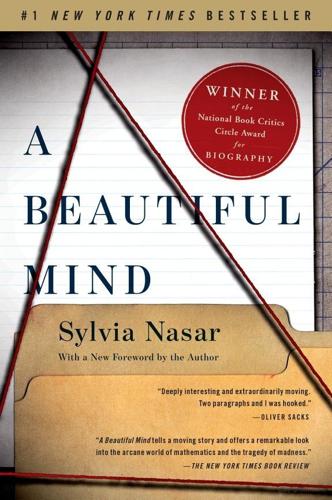
A Beautiful Mind
by Sylvia Nasar · 11 Jun 1998 · 998pp · 211,235 words
moving love story, an account of the centrality of human relationships.” — Richard Wyatt and Kay Jamison, The New England Journal of Medicine “A gripping narrative.” — Kenneth Arrow, Nobel Laureate, The Times Higher Education Supplement Simon & Schuster Paperbacks A Division of Simon & Schuster, Inc. 1230 Avenue of the Americas New York, NY 10020
…
the new methods and tools, including the computer, and attempted to turn economics from a branch of political philosophy into a precise, predictive science. Take Kenneth Arrow, one of the early Nobel Laureates in economics. When Arrow came to RAND in 1948, he was an unknown youngster.17 His famous thesis, written
…
, F. B. Thompson, and H. F. Bohnenblust, such pure mathematicians as John Milnor, statisticians David Blackwell, Sam Karlin, and Abraham Girschick, and economists Paul Samuelson, Kenneth Arrow, and Herbert Simon.13 Most of the RAND military applications of game theory concerned tactics. Air battles between fighters and bombers were modeled as duels
…
Alfred Nobel.” To the public, that is a distinction without much of a difference. The early winners of the economics prize — among them Paul Samuelson, Kenneth Arrow, and Gunnar Myrdal — were generally acknowledged to be intellectual giants and lent their distinction to the prize. And, so far at least, it has become
…
of RAND’s mathematics, economics, and computer groups is based largely on interviews with RAND staff and consultants from the earlv Cold War period, including Kenneth Arrow, 6.26.95; Bruno Augenstein, 6.13.96; Richard Best, 5.22.96; Bernice Brown, 5.22.96; John Danskin, 10.19.95; Martha Dresner
…
. The descriptions of Arrow’s contributions are taken from Mark Blaug, Great Economists Since Keynes (Totowa, N.J.: Barnes & Noble, 1985), pp. 6–9. 18. Kenneth Arrow, professor of economics, Stanford University, interview, 6.26.95. 19. McDonald, interview. 20. Richard Best, former manager of security, RAND Corporation, interview, 5.22.96
…
, interview. 57. Best, interview. 58. Harold Shapiro, interview. 59. Mood, interview. 60. Danskin, interview. 61. Ibid. 62. Best, interview. 13: Game Theory at RAND 1. Kenneth Arrow, interview, 6.26.95. 2. M. Dresher and L. S. Shapley, Summary of RAND Research in the Mathematical Theory of Games (RM-293) (Santa Monica
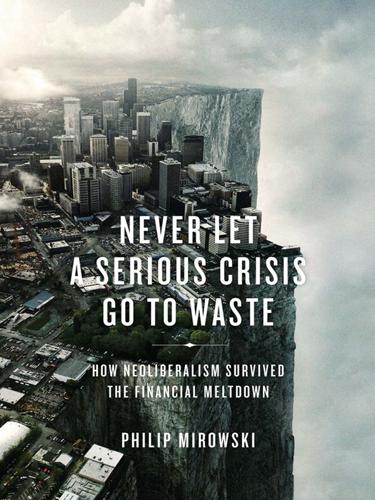
Never Let a Serious Crisis Go to Waste: How Neoliberalism Survived the Financial Meltdown
by Philip Mirowski · 24 Jun 2013 · 662pp · 180,546 words
state health care systems. 86 Hayek, “The Moral Element in Free Enterprise.” 87 In this regard, the nominally left-liberal tradition of “social-choice theory” (Kenneth Arrow, Amartya Sen, John Rawls) by this criterion is virtually as neoliberal as the right-wing tradition of the “public-choice theory” of Buchanan and Tullock
…
Rabin, “A Perspective on Psychology and Economics,” p. 659. Yet even this divergence went too far for the Old Guard of the orthodoxy, such as Kenneth Arrow. The dividing line between the postwar generation of neoclassical economists and the post-1980 cohort is that the former believed they could abjure all dependence
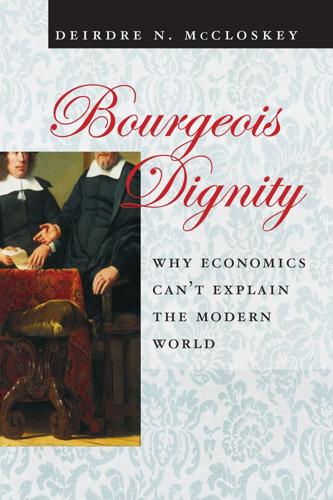
Bourgeois Dignity: Why Economics Can't Explain the Modern World
by Deirdre N. McCloskey · 15 Nov 2011 · 1,205pp · 308,891 words
amiable Paul Anthony Samuelson (1915–2009)—long my mother’s mixed-doubles tennis partner—together with his equally brilliant and equally amiable brother in law, Kenneth Arrow (1921– )—long a distantly friendly colleague of mine. Startlingly, they are joint uncles of the crown prince of Samuelsonian economics, Lawrence Summers. 10. Haidt 2006
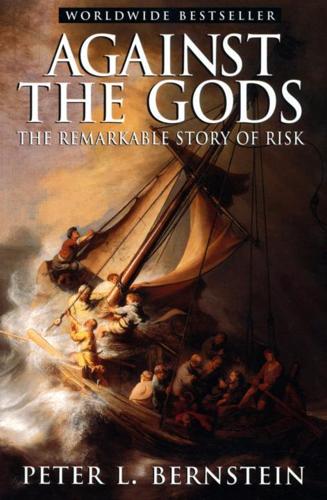
Against the Gods: The Remarkable Story of Risk
by Peter L. Bernstein · 23 Aug 1996 · 415pp · 125,089 words
in order to transform rough drafts into a finished material. The following people also made significant contributions to my work and warrant my deepest appreciation: Kenneth Arrow, Gilbert Bassett, William Baumol, Zalmon Bernstein, Doris Bullard, Paul Davidson, Donald Dewey, David Durand, Barbara Fotinatos, James Fraser, Greg Hayt, Roger Hertog, Victor Howe, Bertrand
…
taken on a deeper significance. The mathematically driven apparatus of modern risk management contains the seeds of a dehumanizing and self-destructive technology. Nobel laureate Kenneth Arrow has warned, "[O]ur knowledge of the way things work, in society or in nature, comes trailing clouds of vagueness. Vast ills have followed a
…
developments in utility theory were new discoveries rather than extensions of Bernoulli's original formulations. Was the fact that Bernoulli wrote in Latin a problem? Kenneth Arrow has pointed out that Bernoulli's paper on a new theory of measuring risk was not translated into German until 1896, and that the first
…
with the uncertainties we face and the risks we take. Some of the most impressive research on this phenomenon has been done by Nobel Laureate Kenneth Arrow. Arrow was born at the end of the First World War and grew up in New York City at a time when the city was
…
. They pass up the possibility of selling later at a higher price in order to avoid uncertainty about the price they will receive. In 1971, Kenneth Arrow, in association with fellow economist Frank Hahn, pointed up the relationships between money, contracts, and uncertainty. Contracts would not be written in money terms "if
…
Theory-in every dreamhouse a heartache-and signs of pathology can no longer be ignored."20 He cites criticisms by Nobel Prize winners Henry Simon, Kenneth Arrow, and Paul Samuelson. He claims that game theory would never have amounted to anything had von Neumann not sold it to the military; he even
…
patiently awaiting their arrival.' I have a hunch that Markowitz, with his focus on volatility, would have been taken by surprise by that mountain lion. Kenneth Arrow, a man who thinks about risks in many different dimensions and who understands the difference between the quantifiable and the messy, would be more likely
…
, confusing, indistinct, or frightening conditions. Not much time to consult the laws of probability. Life is not a game of balla. It often comes trailing Kenneth Arrow's clouds of vagueness. And yet most humans are not utterly irrational beings who take risks without forethought or who hide in a closet when
…
a coal miner or a computer operator. The derivatives we call options, by expanding the variety of risks that can be insured, help to create Kenneth Arrow's ideal world where all risks are insurable. Derivatives are not transactions in shares of stock or interest rates, in human lives, in houses vulnerable
…
Gauss and voluble Quetelet, von Neumann the playful and Morgenstern the ponderous, the religious de Moivre and the agnostic Knight, pithy Black and loquacious Scholes, Kenneth Arrow and Harry Markowitz-all of them have transformed the perception of risk from chance of loss into opportunity for gain, from FATE and ORIGINAL DESIGN
The Rise of the Quants: Marschak, Sharpe, Black, Scholes and Merton
by Colin Read · 16 Jul 2012 · 206pp · 70,924 words
model of expected utility that permitted the inclusion of risk. Then, Leonard Jimmie Savage described how our individual perceptions affect the probability of uncertainty, and Kenneth Arrow was able to include these probabilities of uncertainty in a model that established the existence of equilibrium in a market for financial securities. With the
…
less liquid assets, while Franco Modigliani demonstrated how all these personal financial decisions evolve over one’s lifetime. John von Neumann, Leonard Jimmie Savage, and Kenneth Arrow then incorporated uncertainty into the mix, and Harry Markowitz packaged the state of financial science into Modern Portfolio Theory. However, none of these great minds
…
. Once one recognizes that Jacob Marschak was a common denominator between the great minds of previous volumes that include Leonard Jimmie Savage and Milton Friedman, Kenneth Arrow and Harry Markowitz, and even Franco Modigliani, the root of his influence on their work is compelling. When we discover that Marschak made discoveries that
…
that formed the discipline of finance in the first half of the twentieth century. Like the families of Milton Friedman, Franco Modigliani, Leonard Jimmie Savage, Kenneth Arrow, John von Neumann, and Harry Markowitz, Marschak’s family tree was originally rooted in the Jewish culture and derived from the intellectually stimulating region of
…
methods are now used extensively in finance. The Cowles Commission colleagues also pioneered sophisticated general equilibrium modeling, as represented by the work of Cowles scholars Kenneth Arrow and Gerard Debreu. Beyond Koopmans, Arrow, and Debreu, each of whom were honored with Nobel Prizes, Cowles Commission scholars Trygve Haavelmo, Lawrence Klein, Harry Markowitz
…
well before von Neumann and Morgenstern framed their expected utility hypothesis under risk, Savage outlined an axiomatic approach to decision-making under subjective uncertainty, or Kenneth Arrow described decision-making under various states of nature in financial markets. Marschak had framed the The Theory 23 problem and indicated the direction for its
…
that money, assets, and uncertainty must all be included in our models, and hence incorporated into our fundamental approach to asset pricing. Marschak’s contemporary Kenneth Arrow noted:13 If we take the Keynesian construction seriously, that is, as of a world with a past as well as a future and in
…
-Second World War financial revolution who is less well known than Jacob Marschak. However, the testimonies of great minds in finance, from Milton Friedman to Kenneth Arrow, Leonard Jimmie Savage, and Harry Markowitz, demonstrate his lasting legacy through a combination of his ideas and his generous mentoring of these future Nobel Prize
…
him to take up the mean and variance approach. He influenced Milton Friedman and Leonard Jimmie Savage in their work on risk aversion, and mentored Kenneth Arrow on his theory of general equilibrium in securities markets. He also influenced another student, Roy Radner, in his groundbreaking incorporation of information and uncertainty in
…
we now know as a rational expectations equilibrium.1 Radner went on to establish equilibrium under uncertainty in 1968, and thereby proved an assertion that Kenneth Arrow had made but had not proved more than a decade earlier that a competitive market could still be efficient even if the range of futures
…
the Army Air Force H. H. “Hap” Arnold, the project assembled the very best scientists, mathematicians, and strategists. Such great minds as John von Neumann, Kenneth Arrow, and Harry Markowitz had been associated with RAND during or immediately following the Second World War. After the War, the Corporation became separate from the
…
four ivory towers included the financial luminaries Irving Fischer, John Maynard Keynes, Frank Plumpton Ramsey, Franco Modigliani, Milton Friedman, John von Neumann, Leonard Jimmie Savage, Kenneth Arrow, Harry Markowitz, and Jacob Marschak. Each of these scholars who had brought finance to this breakout point had at least one foot in the study
…
. In the 1950s, Tobin was a Cowles Commission colleague at the same time with Jacob Marschak and Harry Markowitz, Milton Friedman and Leonard Jimmie Savage, Kenneth Arrow and Gerard Debreu, and numerous other Cowles scholars and fellows who were delving into the role of uncertainty while advancing the tools of economic theory
…
natural springboard to finance. Certainly, modern finance flowed out of work by economists, from Irving Fisher to John Maynard Keynes, Milton Friedman, Jacob Marschak, and Kenneth Arrow. However, all these economists who helped forge the foundation of modern finance began in either mathematics or physics, as has Louis Bachelier. Indeed, Merton too
…
of what we thought we previously understood. The reinvention of finance, in fits and spurts, through John Burr Williams and Jacob Marschak, Franco Modigliani and Kenneth Arrow, Harry Markowitz and William Sharpe, and then from Fischer Black and Myron Scholes, each represented a departure from the traditions of finance. Despite the work
…
, 82 (1954), referring to a lecture given on December 6, 1950. 12. Ibid., p. 179. 13. Kenneth Arrow and Frank Hahn, General Competitive Analysis. San Francisco: Holden-Day, 1971, pp. 361 and 369. 6 Applications 1. Kenneth Arrow, “The Theory of Risk Aversion,” in Aspects of the Theory of Risk Bearing. Helsinki: Yrjo Jahnssonin
Adam Smith: Father of Economics
by Jesse Norman · 30 Jun 2018
Alexander Stoddart, 1995. (Chris Dorney/ Alamy) 12. John Maynard Keynes and Henry Morgenthau at Bretton Woods, New Hampshire, July 1944. (Alfred Eisenstaedt/Time/Getty) 13. Kenneth Arrow carrying his Nobel prize, Stockholm 1972. (AP/REX/Shutterstock) 14. Adam Smith medallion by James Tassie, 1787. (National Galleries of Scotland) 15. Back of a
…
OF IT AS AN ECONOMIC JUST-SO STORY. AT THE START OF their highly successful economics textbook, the dauntingly entitled General Competitive Analysis of 1971, Kenneth Arrow and Frank Hahn acknowledged the importance of Adam Smith: There is by now a long and fairly imposing line of economists from Adam Smith to
…
a tribute to genius. This idea was and remains arguably the central insight of mainstream modern economics. But for the lead author of the book, Kenneth Arrow, widely regarded as one of the greatest economists of all time, there was another and more personal reason to start with Smith. In 1954, with
…
product and, potentially, the prices of every other product in the given economy, as the different equivalences worked their way mathematically through the system. When Kenneth Arrow and Gérard Debreu gave their own widely celebrated general equilibrium proof in 1954, then, it was within this broadly neoclassical tradition, and that proof reinforced
…
and perfect justice, there is not in the world a nation which could ever have prospered.’ Substitute ‘markets’ for ‘justice’, and it is a point Kenneth Arrow would have been proud of. It is this Smithian seam of inquiry that Vernon Smith and his fellow workers in experimental economics found themselves mining
…
, bounded rationality and the impact of transaction costs. The best of this work has been rewarded with a hatful of Nobel Prizes. The career of Kenneth Arrow is again a case in point. For one thing, Arrow himself did a great deal of work to explore and explain the negative effects of
…
conference, 1944. Keynes said ‘Economists must leave to Adam Smith alone the glory of the Quarto… and achieve immortality by accident, if at all.’ 13. Kenneth Arrow receiving the Nobel Prize for economics, 1972. No less than Keynes and Hayek, his work stands in dialogue with Smith. 14. Adam Smith on a
…
the very stimulating but more technical ‘On the Future of Macroeconomic Models’ by Olivier Blanchard, in Oxford Review of Economic Policy, 34.1–2, 2018 Kenneth Arrow and Frank Hahn: General Competitive Analysis, Holden-Day 1971. I owe this example to Mark Blaug, ‘No History of Ideas, Please, We’re Economists’, Journal
Deaths of Despair and the Future of Capitalism
by Anne Case and Angus Deaton · 17 Mar 2020 · 421pp · 110,272 words
The Price of Inequality: How Today's Divided Society Endangers Our Future
by Joseph E. Stiglitz · 10 Jun 2012 · 580pp · 168,476 words
The Wealth and Poverty of Nations: Why Some Are So Rich and Some So Poor
by David S. Landes · 14 Sep 1999 · 1,060pp · 265,296 words
Economists and the Powerful
by Norbert Haring, Norbert H. Ring and Niall Douglas · 30 Sep 2012 · 261pp · 103,244 words
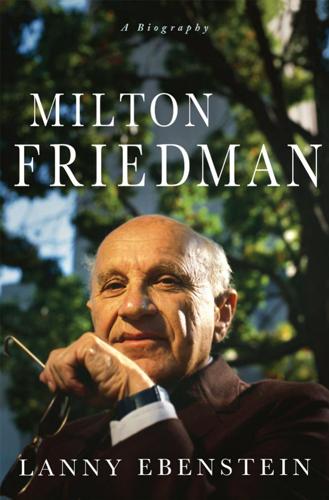
Milton Friedman: A Biography
by Lanny Ebenstein · 23 Jan 2007 · 298pp · 95,668 words
Transaction Man: The Rise of the Deal and the Decline of the American Dream
by Nicholas Lemann · 9 Sep 2019 · 354pp · 118,970 words
Capital Ideas: The Improbable Origins of Modern Wall Street
by Peter L. Bernstein · 19 Jun 2005 · 425pp · 122,223 words
Extreme Money: Masters of the Universe and the Cult of Risk
by Satyajit Das · 14 Oct 2011 · 741pp · 179,454 words
The Economists' Hour: How the False Prophets of Free Markets Fractured Our Society
by Binyamin Appelbaum · 4 Sep 2019 · 614pp · 174,226 words
What's Wrong With Economics: A Primer for the Perplexed
by Robert Skidelsky · 3 Mar 2020 · 290pp · 76,216 words
Economics Rules: The Rights and Wrongs of the Dismal Science
by Dani Rodrik · 12 Oct 2015 · 226pp · 59,080 words
The Economics of Enough: How to Run the Economy as if the Future Matters
by Diane Coyle · 21 Feb 2011 · 523pp · 111,615 words
Capitalism 4.0: The Birth of a New Economy in the Aftermath of Crisis
by Anatole Kaletsky · 22 Jun 2010 · 484pp · 136,735 words
The Tyranny of Experts: Economists, Dictators, and the Forgotten Rights of the Poor
by William Easterly · 4 Mar 2014 · 483pp · 134,377 words
The End of Alchemy: Money, Banking and the Future of the Global Economy
by Mervyn King · 3 Mar 2016 · 464pp · 139,088 words
The Case Against Education: Why the Education System Is a Waste of Time and Money
by Bryan Caplan · 16 Jan 2018 · 636pp · 140,406 words
Phishing for Phools: The Economics of Manipulation and Deception
by George A. Akerlof, Robert J. Shiller and Stanley B Resor Professor Of Economics Robert J Shiller · 21 Sep 2015 · 274pp · 93,758 words
Termites of the State: Why Complexity Leads to Inequality
by Vito Tanzi · 28 Dec 2017
Anarchy State and Utopia
by Robert Nozick · 15 Mar 1974 · 524pp · 146,798 words
The Golden Passport: Harvard Business School, the Limits of Capitalism, and the Moral Failure of the MBA Elite
by Duff McDonald · 24 Apr 2017 · 827pp · 239,762 words
Big Three in Economics: Adam Smith, Karl Marx, and John Maynard Keynes
by Mark Skousen · 22 Dec 2006 · 330pp · 77,729 words
The Irrational Economist: Making Decisions in a Dangerous World
by Erwann Michel-Kerjan and Paul Slovic · 5 Jan 2010 · 411pp · 108,119 words
The Economics Anti-Textbook: A Critical Thinker's Guide to Microeconomics
by Rod Hill and Anthony Myatt · 15 Mar 2010
Culture and Prosperity: The Truth About Markets - Why Some Nations Are Rich but Most Remain Poor
by John Kay · 24 May 2004 · 436pp · 76 words
Finance and the Good Society
by Robert J. Shiller · 1 Jan 2012 · 288pp · 16,556 words
In Pursuit of the Perfect Portfolio: The Stories, Voices, and Key Insights of the Pioneers Who Shaped the Way We Invest
by Andrew W. Lo and Stephen R. Foerster · 16 Aug 2021 · 542pp · 145,022 words
Misbehaving: The Making of Behavioral Economics
by Richard H. Thaler · 10 May 2015 · 500pp · 145,005 words
Traffic: Why We Drive the Way We Do (And What It Says About Us)
by Tom Vanderbilt · 28 Jul 2008 · 512pp · 165,704 words
Making Sense of Chaos: A Better Economics for a Better World
by J. Doyne Farmer · 24 Apr 2024 · 406pp · 114,438 words
Samuelson Friedman: The Battle Over the Free Market
by Nicholas Wapshott · 2 Aug 2021 · 453pp · 122,586 words
Networks, Crowds, and Markets: Reasoning About a Highly Connected World
by David Easley and Jon Kleinberg · 15 Nov 2010 · 1,535pp · 337,071 words
Capital Ideas Evolving
by Peter L. Bernstein · 3 May 2007
The Alignment Problem: Machine Learning and Human Values
by Brian Christian · 5 Oct 2020 · 625pp · 167,349 words
The Upswing: How America Came Together a Century Ago and How We Can Do It Again
by Robert D. Putnam · 12 Oct 2020 · 678pp · 160,676 words
The Irrational Bundle
by Dan Ariely · 3 Apr 2013 · 898pp · 266,274 words
Money and Power: How Goldman Sachs Came to Rule the World
by William D. Cohan · 11 Apr 2011 · 1,073pp · 302,361 words
What They Do With Your Money: How the Financial System Fails Us, and How to Fix It
by Stephen Davis, Jon Lukomnik and David Pitt-Watson · 30 Apr 2016 · 304pp · 80,965 words
The Inner Lives of Markets: How People Shape Them—And They Shape Us
by Tim Sullivan · 6 Jun 2016 · 252pp · 73,131 words
Reinventing the Bazaar: A Natural History of Markets
by John McMillan · 1 Jan 2002 · 350pp · 103,988 words
Trust: The Social Virtue and the Creation of Prosperity
by Francis Fukuyama · 1 Jan 1995 · 585pp · 165,304 words
Radical Markets: Uprooting Capitalism and Democracy for a Just Society
by Eric Posner and E. Weyl · 14 May 2018 · 463pp · 105,197 words
Unelected Power: The Quest for Legitimacy in Central Banking and the Regulatory State
by Paul Tucker · 21 Apr 2018 · 920pp · 233,102 words
Rise of the Robots: Technology and the Threat of a Jobless Future
by Martin Ford · 4 May 2015 · 484pp · 104,873 words
Plenitude: The New Economics of True Wealth
by Juliet B. Schor · 12 May 2010 · 309pp · 78,361 words
The Wealth of Networks: How Social Production Transforms Markets and Freedom
by Yochai Benkler · 14 May 2006 · 678pp · 216,204 words
Strategy: A History
by Lawrence Freedman · 31 Oct 2013 · 1,073pp · 314,528 words
What Money Can't Buy: The Moral Limits of Markets
by Michael Sandel · 26 Apr 2012 · 231pp · 70,274 words
Markets, State, and People: Economics for Public Policy
by Diane Coyle · 14 Jan 2020 · 384pp · 108,414 words
Trillions: How a Band of Wall Street Renegades Invented the Index Fund and Changed Finance Forever
by Robin Wigglesworth · 11 Oct 2021 · 432pp · 106,612 words
Luxury Fever: Why Money Fails to Satisfy in an Era of Excess
by Robert H. Frank · 15 Jan 1999 · 416pp · 112,159 words
Antifragile: Things That Gain From Disorder
by Nassim Nicholas Taleb · 27 Nov 2012 · 651pp · 180,162 words
Radical Uncertainty: Decision-Making for an Unknowable Future
by Mervyn King and John Kay · 5 Mar 2020 · 807pp · 154,435 words
More Than You Know: Finding Financial Wisdom in Unconventional Places (Updated and Expanded)
by Michael J. Mauboussin · 1 Jan 2006 · 348pp · 83,490 words
Artificial Intelligence: A Modern Approach
by Stuart Russell and Peter Norvig · 14 Jul 2019 · 2,466pp · 668,761 words
Doughnut Economics: Seven Ways to Think Like a 21st-Century Economist
by Kate Raworth · 22 Mar 2017 · 403pp · 111,119 words
The Undoing Project: A Friendship That Changed Our Minds
by Michael Lewis · 6 Dec 2016 · 336pp · 113,519 words
Making Globalization Work
by Joseph E. Stiglitz · 16 Sep 2006
Hubris: Why Economists Failed to Predict the Crisis and How to Avoid the Next One
by Meghnad Desai · 15 Feb 2015 · 270pp · 73,485 words
The Evolution of Everything: How New Ideas Emerge
by Matt Ridley · 395pp · 116,675 words
Thinking, Fast and Slow
by Daniel Kahneman · 24 Oct 2011 · 654pp · 191,864 words
SUPERHUBS: How the Financial Elite and Their Networks Rule Our World
by Sandra Navidi · 24 Jan 2017 · 831pp · 98,409 words
A World Without Work: Technology, Automation, and How We Should Respond
by Daniel Susskind · 14 Jan 2020 · 419pp · 109,241 words
How Asia Works
by Joe Studwell · 1 Jul 2013 · 868pp · 147,152 words
The Rise and Decline of Nations: Economic Growth, Stagflation, and Social Rigidities
by Mancur Olson
Human Compatible: Artificial Intelligence and the Problem of Control
by Stuart Russell · 7 Oct 2019 · 416pp · 112,268 words
Hive Mind: How Your Nation’s IQ Matters So Much More Than Your Own
by Garett Jones · 15 Feb 2015 · 247pp · 64,986 words
The Great Economists Ten Economists whose thinking changed the way we live-FT Publishing International (2014)
by Phil Thornton · 7 May 2014
The Euro: How a Common Currency Threatens the Future of Europe
by Joseph E. Stiglitz and Alex Hyde-White · 24 Oct 2016 · 515pp · 142,354 words
The Journey of Humanity: The Origins of Wealth and Inequality
by Oded Galor · 22 Mar 2022 · 426pp · 83,128 words
A Little History of Economics
by Niall Kishtainy · 15 Jan 2017 · 272pp · 83,798 words
When McKinsey Comes to Town: The Hidden Influence of the World's Most Powerful Consulting Firm
by Walt Bogdanich and Michael Forsythe · 3 Oct 2022 · 689pp · 134,457 words
Human Diversity: The Biology of Gender, Race, and Class
by Charles Murray · 28 Jan 2020 · 741pp · 199,502 words
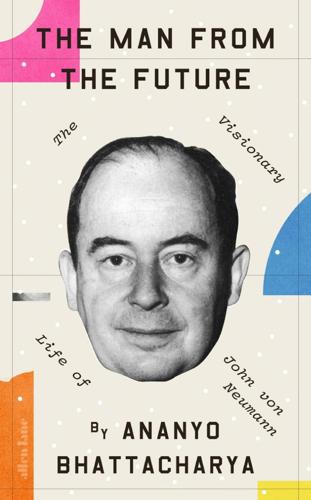
The Man From the Future: The Visionary Life of John Von Neumann
by Ananyo Bhattacharya · 6 Oct 2021 · 476pp · 121,460 words
Power and Progress: Our Thousand-Year Struggle Over Technology and Prosperity
by Daron Acemoglu and Simon Johnson · 15 May 2023 · 619pp · 177,548 words
The Undercover Economist: Exposing Why the Rich Are Rich, the Poor Are Poor, and Why You Can Never Buy a Decent Used Car
by Tim Harford · 15 Mar 2006 · 389pp · 98,487 words
Scale: The Universal Laws of Growth, Innovation, Sustainability, and the Pace of Life in Organisms, Cities, Economies, and Companies
by Geoffrey West · 15 May 2017 · 578pp · 168,350 words
The Ascent of Money: A Financial History of the World
by Niall Ferguson · 13 Nov 2007 · 471pp · 124,585 words
Capitalism Without Capital: The Rise of the Intangible Economy
by Jonathan Haskel and Stian Westlake · 7 Nov 2017 · 346pp · 89,180 words
The Blockchain Alternative: Rethinking Macroeconomic Policy and Economic Theory
by Kariappa Bheemaiah · 26 Feb 2017 · 492pp · 118,882 words
Nerds on Wall Street: Math, Machines and Wired Markets
by David J. Leinweber · 31 Dec 2008 · 402pp · 110,972 words
The Limits of the Market: The Pendulum Between Government and Market
by Paul de Grauwe and Anna Asbury · 12 Mar 2017
Basic Economics
by Thomas Sowell · 1 Jan 2000 · 850pp · 254,117 words
Against Intellectual Monopoly
by Michele Boldrin and David K. Levine · 6 Jul 2008 · 607pp · 133,452 words
More: The 10,000-Year Rise of the World Economy
by Philip Coggan · 6 Feb 2020 · 524pp · 155,947 words
The Classical School
by Callum Williams · 19 May 2020 · 288pp · 89,781 words
Superminds: The Surprising Power of People and Computers Thinking Together
by Thomas W. Malone · 14 May 2018 · 344pp · 104,077 words
Money: 5,000 Years of Debt and Power
by Michel Aglietta · 23 Oct 2018 · 665pp · 146,542 words
Restarting the Future: How to Fix the Intangible Economy
by Jonathan Haskel and Stian Westlake · 4 Apr 2022 · 338pp · 85,566 words
Seven Crashes: The Economic Crises That Shaped Globalization
by Harold James · 15 Jan 2023 · 469pp · 137,880 words
The Seven Rules of Trust: A Blueprint for Building Things That Last
by Jimmy Wales · 28 Oct 2025 · 216pp · 60,419 words
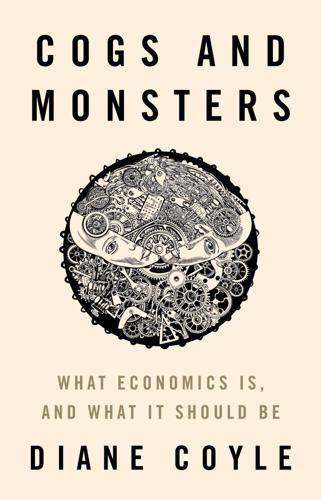
Cogs and Monsters: What Economics Is, and What It Should Be
by Diane Coyle · 11 Oct 2021 · 305pp · 75,697 words
Virtual Competition
by Ariel Ezrachi and Maurice E. Stucke · 30 Nov 2016
The Nature of Technology
by W. Brian Arthur · 6 Aug 2009 · 297pp · 77,362 words
Fooled by Randomness: The Hidden Role of Chance in Life and in the Markets
by Nassim Nicholas Taleb · 1 Jan 2001 · 111pp · 1 words
Capital in the Twenty-First Century
by Thomas Piketty · 10 Mar 2014 · 935pp · 267,358 words
Priceless: The Myth of Fair Value (And How to Take Advantage of It)
by William Poundstone · 1 Jan 2010 · 519pp · 104,396 words
Freakonomics: A Rogue Economist Explores the Hidden Side of Everything
by Steven D. Levitt and Stephen J. Dubner · 11 Apr 2005 · 339pp · 95,988 words
A Man for All Markets
by Edward O. Thorp · 15 Nov 2016 · 505pp · 142,118 words
Twilight of the Elites: America After Meritocracy
by Chris Hayes · 11 Jun 2012 · 285pp · 86,174 words
The Great Surge: The Ascent of the Developing World
by Steven Radelet · 10 Nov 2015 · 437pp · 115,594 words
The Armchair Economist: Economics and Everyday Life
by Steven E. Landsburg · 1 May 2012
The Middleman Economy: How Brokers, Agents, Dealers, and Everyday Matchmakers Create Value and Profit
by Marina Krakovsky · 14 Sep 2015 · 270pp · 79,180 words
Social Life of Information
by John Seely Brown and Paul Duguid · 2 Feb 2000 · 791pp · 85,159 words
Money: The Unauthorized Biography
by Felix Martin · 5 Jun 2013 · 357pp · 110,017 words
The Measure of Progress: Counting What Really Matters
by Diane Coyle · 15 Apr 2025 · 321pp · 112,477 words
Rage Inside the Machine: The Prejudice of Algorithms, and How to Stop the Internet Making Bigots of Us All
by Robert Elliott Smith · 26 Jun 2019 · 370pp · 107,983 words
The Plundered Planet: Why We Must--And How We Can--Manage Nature for Global Prosperity
by Paul Collier · 10 May 2010 · 288pp · 76,343 words
The End of Accounting and the Path Forward for Investors and Managers (Wiley Finance)
by Feng Gu · 26 Jun 2016
The Elusive Quest for Growth: Economists' Adventures and Misadventures in the Tropics
by William R. Easterly · 1 Aug 2002 · 355pp · 63 words
Value of Everything: An Antidote to Chaos The
by Mariana Mazzucato · 25 Apr 2018 · 457pp · 125,329 words
Outnumbered: From Facebook and Google to Fake News and Filter-Bubbles – the Algorithms That Control Our Lives
by David Sumpter · 18 Jun 2018 · 276pp · 81,153 words
Free culture: how big media uses technology and the law to lock down culture and control creativity
by Lawrence Lessig · 15 Nov 2004 · 297pp · 103,910 words
Prisoner's Dilemma: John Von Neumann, Game Theory, and the Puzzle of the Bomb
by William Poundstone · 2 Jan 1993 · 323pp · 100,772 words
The Education of a Value Investor: My Transformative Quest for Wealth, Wisdom, and Enlightenment
by Guy Spier · 8 Sep 2014 · 240pp · 73,209 words
Fortune's Formula: The Untold Story of the Scientific Betting System That Beat the Casinos and Wall Street
by William Poundstone · 18 Sep 2006 · 389pp · 109,207 words
The Healing of America: A Global Quest for Better, Cheaper, and Fairer Health Care
by T. R. Reid · 15 Aug 2009 · 294pp · 85,811 words
The Beginning of Infinity: Explanations That Transform the World
by David Deutsch · 30 Jun 2011 · 551pp · 174,280 words
Human Frontiers: The Future of Big Ideas in an Age of Small Thinking
by Michael Bhaskar · 2 Nov 2021
Postcapitalism: A Guide to Our Future
by Paul Mason · 29 Jul 2015 · 378pp · 110,518 words
The Penguin and the Leviathan: How Cooperation Triumphs Over Self-Interest
by Yochai Benkler · 8 Aug 2011 · 187pp · 62,861 words
The Future of Ideas: The Fate of the Commons in a Connected World
by Lawrence Lessig · 14 Jul 2001 · 494pp · 142,285 words
Sabotage: The Financial System's Nasty Business
by Anastasia Nesvetailova and Ronen Palan · 28 Jan 2020 · 218pp · 62,889 words
The Alternative: How to Build a Just Economy
by Nick Romeo · 15 Jan 2024 · 343pp · 103,376 words
The Accidental Theorist: And Other Dispatches From the Dismal Science
by Paul Krugman · 18 Feb 2010 · 162pp · 51,473 words
Social Democratic America
by Lane Kenworthy · 3 Jan 2014 · 283pp · 73,093 words
Superforecasting: The Art and Science of Prediction
by Philip Tetlock and Dan Gardner · 14 Sep 2015 · 317pp · 100,414 words
Seeing Like a State: How Certain Schemes to Improve the Human Condition Have Failed
by James C. Scott · 8 Feb 1999 · 607pp · 185,487 words
Rockonomics: A Backstage Tour of What the Music Industry Can Teach Us About Economics and Life
by Alan B. Krueger · 3 Jun 2019