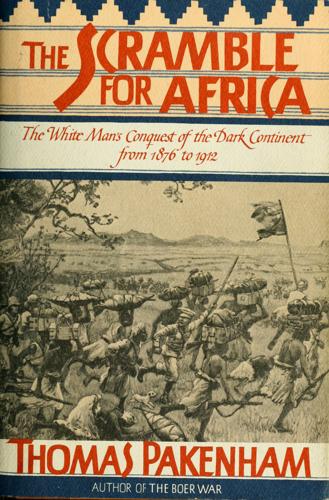
The scramble for Africa, 1876-1912
by Thomas Pakenham · 19 Nov 1991 · 1,194pp · 371,889 words
try to prise the oil-rich Niger from British hands. At the same time Wolseley was struggling up the cataracts of the Nile towards Khartoum, to save Gordon – and the nation’s honour – from defilement by the Mahdi. CHAPTER 13 Too Late? The Sudan 26 September 1884-Z6 January 1883 ‘In the
…
who believed in us as the Mahdi, and surrendered, have been delivered, and those who did not were destroyed…’ Muhammad Ahmad, the Mahdi, to Gordon Pasha of Khartoum, 22 October 1884 ‘From the top of the Serail’, wrote Gordon on 26 September 1884, jotting it down in his journal with the innocence
…
supposed to charm the garrisons out of the Sudan by magic, the baraka of the great pasha, whose feet the Sudanese kissed at Khartoum, crying ‘Sultan’ and ‘Father’. Gordon had strange ideas, but he did not over-estimate the power of his own magic. In those three weeks before the gates of
…
, Gordon had them both executed.) By July the waters began to lap over the sandbanks as the two Niles advanced once again in defence of Khartoum. Gordon was grateful for the chance of putting his grand fleet on the offensive. It was a strange-looking collection. All eight boats had been built
…
Gordon, if they could have done so without abandoning their wives and families. This was the reassurance that Slatin yearned to take to Gordon. With energy and perseverance Khartoum could hold out for months. Knowing the Mahdi’s intentions, Slatin would surely be a godsend to the defence. And perhaps he also
…
subordinates. Sir Herbert Stewart would take the flying column to Metemma and wait there. Sir Charles Wilson, the Chief of Intelligence, would proceed to Khartoum in one of Gordon’s steamers. He was not, it must be repeated, sent to rescue Gordon; he was only to give him a letter, march some
…
in red uniforms through the city ‘to show the people that British troops were near at hand’,35 and then steam back to Metemma, leaving Gordon in Khartoum. Wolseley added, ‘it is always possible’ that the Mahdi would abandon the siege at the mere sight of the terrifying redcoats. Inspired by this
…
the Nile near Metemma. Morale was still precarious. Wolseley had told them to capture the small town of Metemma and send a party on to Khartoum in Gordon’s steamers. No one had prepared them for the experience of meeting 10,000 fanatical warriors out in the desert. They had lost a
…
steamers, three of them sent down by Gordon to meet the rescue expedition the previous autumn. The fourth, the Bordein, had only left Khartoum on 14 December, carrying Gordon’s latest letters and the sixth volume of his journals. Wilson read these carefully, as well he might. The journals concluded with the
…
the drawing room of their cottage in the royal grounds when she was amazed to see a figure in black enter unannounced and unattended. ‘Khartoum has fallen. Gordon is dead,’3 said the figure in sepulchral tones. It was Her Majesty herself, stricken as though she had just been bereaved once again
…
. In her own journal that day the Queen wrote: ‘Dreadful news after breakfast. Khartoum fallen, Gordon’s fate uncertain! All greatly distressed. It is too fearful. The government is alone to blame, by refusing to send the expedition till it was
…
– in all human probability – be still alive. Great God, it is too dreadful to dwell on the hairbreadth by which we failed to save Gordon and Khartoum.’26 Wolseley’s sense that he was an injured man did not, however, prevent him from acting prudently in his own difficulties. In mid-February
…
say, Hartington was primarily responsible. The first was to send troops out to Suakin on the coast of the Sudan: the second was to send Gordon to Khartoum. But both errors he thought ‘pardonable’ since they had been approved by the whole country. Now that the evacuation of the Sudan was also
…
not concern them. After all, as Anderson said, Stanley would go ‘as a private agent of a private Company’. It was nothing like sending Gordon to Khartoum. If Stanley failed to relieve Emin, the British government would not have lost a penny. It was the Egyptian government who would be out of
…
thumb. In 1888 a great change had come over the strategic map of north-east Africa. For three years after the killing of Gordon, the capture of Khartoum and the death of the Mahdi, the Khalifa had been busy strengthening his personal power and eliminating that of his rivals among the faithful
…
boyish dream. Once in possession of Emin’s troops and steamers, he hoped to steam down the Nile, crush the Mahdists and avenge Gordon by re-capturing Khartoum from the south. It was this absurd dream that had dissolved in the light of reality. In other respects Lugard had accomplished prodigies. On
…
. To advance up the Nile towards Dongola was a momentous step. This was the first milestone on the way to reconquer the Sudan, liberate Khartoum, avenge Gordon and secure the whole vast basin of the White Nile, running from the rim of the Congo to the blue mountains of Abyssinia. Ever since
…
miles up the Nile into the Sudan, retracing the steps of Gordon’s last journey, and of Wolseley’s inglorious withdrawal. Talk of taking Khartoum and avenging Gordon was still premature. There was no money in the Egyptian Treasury to pay for the advance beyond Dongola. The advance from the south – Uganda
…
told that the bombardment had failed – just as it had failed in 1885, when the Bordein and Talahaweh sailed up the river to find Gordon dead and Khartoum taken. By the mercy of Allah, the boats of the infidel had been driven off once more and sunk. Neufeld collapsed into despair. But
…
of preparation before it. For him the war had begun thirteen years earlier, on 26 January 1885, that day of shame for Britain, when Khartoum fell and Gordon died. Now it was time for them to repay that debt and wipe the slate clean. So he had sternly reminded his men on
…
sent too late: when Chelmsford’s men were cut down by the Zulus at Isandlwana, Colley’s by the Boers at Majuba and Gordon by the Mahdi at Khartoum. There seemed no fear of that today. Britain was despatching the largest force she had sent overseas since the Crimea. It would be
…
. They sent out as Roberts’s Chief of Staff Britain’s youngest military hero, fifty-two-year-old Major-General Lord Kitchener, victor of Khartoum, avenger of Gordon and the man who was supposed to be immune to ordinary human weaknesses. Within a few days the Cabinet had wished the two men
…
.) G. B. Hill, 1881 Letters of General C. G. Gordon to His Sister, M. A. Gordon, 1888 The Journals of Major-General C. G. Gordon CB at Khartoum, (ed. A. Egmont Hake), 1885 Gordon, R. E., Shepstone: The Role of the Family in the History of South Africa 1820–1900, Cape Town
…
). 34 Colvile, Sudan, 1, 139. Allen, 414–15. 35 Wolseley to Wilson, C. Wilson, Korti to Khartoum. 36 C. Wilson, Korti to Khartoum, 28. 37 Gordon diary, 14 Dec 1884, Gordon, Journals, 395. CHAPTER 14: WELCOME TO A PHILANTHROPIST 1 Courcel to Ferry, 19 Jan 1885, DDF 1st series, 5, no. 528. W
…
in Egypt, 189; welcomes German colonialism, 201, 216; and Bismarck, 214–16; and Gordon in Sudan, 215, 219, 221, 223, 232, 255; and loss of Khartoum and Gordon, 260–1, 263–4; plot against, 262–3; poor health, 261–2; defers resignation, 262, 272; Wolseley on, 265, 268, 270; and evacuation of
…
Niger trade, 186, 188, 198; and Hewett, 192, 197; receives Herbert von Bismarck, 209, 211; and German African claims, 210, 212, 215; and Gordon’s departure for Khartoum, 219; meets Stanley, 247; and Leopold’s Congo plan, 247–9; and fall of Khartoum, 260; and Wolseley’s campaign against Mahdi, 269; 1885
…
, 435, 437, 440, 450 ‘Khaki election’, 1900, 575 Khama, King of the Ngwato, 379, 382, 385, 387 Khama, Bechuana Chief, 493 Khama, Seretse, 669 Khartoum: founded, 75; Gordon besieged in, 215, 217–24, 228–9, 231–5, 238; falls (1885), 255, 259–60, 263–5, 272–3, Mahdi’s rule in, 274
…
, 167, 171 Magersfontein, Battle of, 1899, 570 Maguire, Rochford, 383–4 Mahdi, The (Muhammad Ahmed): rise and mission of, 140, 214, 217, 227–9; and Gordon at Khartoum, 218, 221–3, 225–7, 229–30, 233, 238; appearance and character, 227, 229; attacks and takes Khartoum, 230, 238, 267; Wolseley despises, 233
…
victory in Egypt, 139–40; and Dilke, 180; King Acqua’s petition to, 182–3, 188, 190, 194; criticizes Joseph Chamberlain, 198; and loss of Khartoum and Gordon, 260–1, 263, 270, 430; on evacuation of Sudan, 270; and Gladstone's 1885 resignation, 277; and Salisbury, 277–9; and Gladstone’s 1886
…
Gordon relief expedition, 215, 217, 223–4, 226, 229–35, 238, 264, 541; lends money to Gordon, 219; despises Mahdi, 233–4; and loss of Khartoum and Gordon, 259–60, 265–9; ordered to advance against Mahdi, 263, 265–6, 269; attitude to Gladstone, 265, 268, 270; strategic ideas, 266; on Wilson
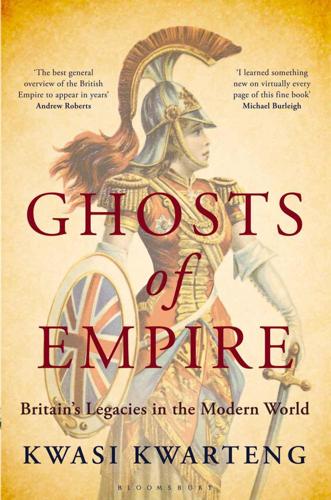
Ghosts of Empire: Britain's Legacies in the Modern World
by Kwasi Kwarteng · 14 Aug 2011 · 670pp · 169,815 words
an accident, which the crowd refused to believe. A group of men broke into the Consulate, wielding pickaxes. In scenes reminiscent of General Gordon’s death in Khartoum, more than fifty years previously, Monck-Mason was struck from behind as he stood on the balcony. It was an unfortunate end to a
…
presented to the Mahdi and his followers.22 It was then decided by Gladstone’s government in London to evacuate the Egyptian garrison in Khartoum, an operation that Gordon was dispatched to oversee; he arrived on 18 February 1884. Charles Gordon is one of those historical figures of whom many people are
…
dimly aware. This is partly because the role of Gordon was successfully played by Charlton Heston in the 1966 film Khartoum, in which Gordon meets his end on the steps of the palace at Khartoum, surrounded by spear-wielding dervishes. Despite being the subject of a Hollywood blockbuster
…
to save Gordon. Belatedly, a Gordon Relief Expedition was dispatched in August 1884, under Sir Garnet Wolseley, another powerful figure of this militaristic age. In Khartoum, Gordon was having sleepless nights and was only too aware that his ability to withstand the siege was limited. The denouement came in January 1885, when
…
for by his ‘great determination’ and his being ‘well versed in every art of fraud and deception’.35 The British response to the disaster Gordon had suffered at Khartoum was to sit and wait. Sir Evelyn Baring, later Lord Cromer, who for so many years effectively ran the nominally independent Egyptian government
…
revolt, which cost 10,000 Mahdist lives, but fewer than fifty British deaths. General Charles George Gordon (1833–85). A brave and committed soldier, Gordon was sent to Khartoum to quell the Mahdist revolt. Mohammed Ahmed (c. 1844–85), a religious leader who claimed to be the ‘Mahdi’, the successor to Mohammed
…
on the Sudan, 1890’, Intelligence Report for the War Office, Cairo, 30 December 1890. 25 Beatty, Charles, His Country was the World: A Study of Gordon of Khartoum, London, 1954, p. 215. 26 Churchill, The River War, p. 29. 27 TNA, PRO 30/57/6, Kitchener papers, Major H. H. Kitchener, ‘The
…
, 2007. Batatu, Hanna, The Old Social Classes and the Revolutionary Movements of Iraq, Princeton, 1978. Beatty, Charles, His Country was the World: A Study of Gordon of Khartoum, London, 1954. Beeching, Jack, The Chinese Opium Wars, London, 1975. Bell, Gertrude, Letters of Gertrude Bell, selected and edited by Gladys Bell, London, 1987
Baghdad Without a Map and Other Misadventures in Arabia
by Tony Horwitz · 1 Jan 1991 · 302pp · 91,517 words
siege to a small British force under the command of Charles George Gordon. “It is a useless place and we could not govern it,” Gordon wrote from Khartoum in 1884. “The Sudan could be made to pay its expenses, but it would need a dictator, and I would not take the post
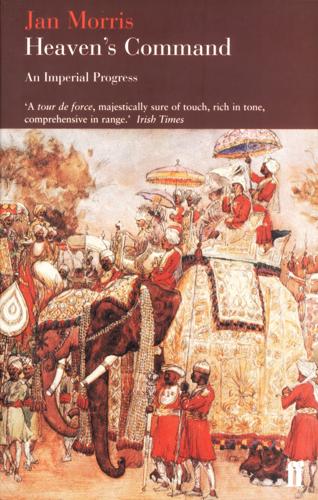
Heaven's Command (Pax Britannica)
by Jan Morris · 22 Dec 2010 · 699pp · 192,704 words
will be forced into a far more serious affair in order to guard Egypt. At present it would be comparatively easy to destroy Mahdi.’ Within Khartoum Gordon exuded confidence and calm. In his cables to the world outside, he seemed in a perpetual state of irritable dither, constantly changing his mind: telegrams
…
Khartoum merchant, ‘at last it came to my turn, and there was no fear left to give me; go, tell all the people in Khartoum that Gordon fears nothing, for God has created him without fear.’ Even so, as the weeks passed without sign of relief, as the messages from Egypt became
…
,’ asked Ruskin once at the beginning of this affair, ‘is the Sudan?’ By now he was sure to know, for the predicament of General Gordon in Khartoum had become the principal preoccupation not merely of the British, but of the world. Almost from the start Gladstone realized what a terrible mistake he
…
Sudan were satisfied thirteen years later when Kitchener conquered the country and annexed it, in fact if not in theory, to the Empire. Gordon’s presence in Khartoum may still be tellingly evoked by a visit to the roof of the palace, now the home of the President of the Sudanese People
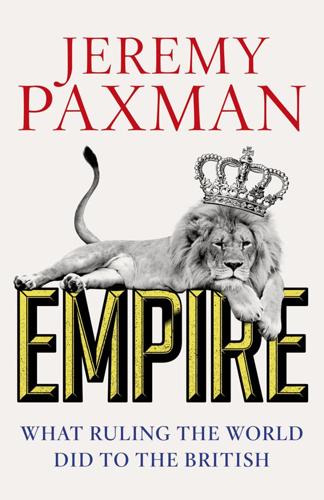
Empire: What Ruling the World Did to the British
by Jeremy Paxman · 6 Oct 2011 · 427pp · 124,692 words
as Richard Burton, were racists. Captain Scott had condemned his men to icy deaths in Antarctica by vainglorious bungling. The sexuality of the hero of Khartoum, General Gordon, was suspect. Robert Baden-Powell, founder of the Boy Scouts, was cracked. The tone of movies had changed, too. David Lean’s portrayal of
…
the newly emergent mass media began to behave in a way which has since become tediously familiar. The Pall Mall Gazette bellowed that Gordon must be dispatched to Khartoum and soon the entire herd was mooing. In no time, there were crowds in the streets chanting ‘Gordon Must Go!’ and the government
…
caved in. But he was emphatically not being sent there to bag another colony: Gordon was to go to Khartoum, evacuate all those who wished to leave, and then report back. The Foreign Secretary himself came to Charing Cross station to see him
…
let them pile up, and then to settle down in the evening and attempt to make out what was going on in his head. General Gordon reached Khartoum in the middle of February, declaring that he came without soldiers, but with God on his side, and entered the city promising to leave
…
the world, at last it came to my turn, and there was no fear left to give me. Go and tell all the people of Khartoum that Gordon fears nothing, for God has created him without fear.’ In his journal, which he decorated with cartoon sketches, he notes that he shares his
…
could steal his wife, Bathsheba), bad-tempered, unreliable, obstinate and self-absorbed. When the Consul General in Cairo reflected on the hero of Khartoum, he concluded that ‘General Gordon does not appear to have possessed any of the qualities which would have fitted him to undertake the difficult task he had in
…
‘a mongrel scum’: Quoted in Longford, A Pilgrimage of Passion, p. 214. 182 ‘not help singing’: Quoted in ibid., p. 215. 182 ‘for I am’: Gordon, Khartoum Journal, pp. 56–7. 182 ‘A man who’: Cromer, Modern Egypt, vol. I, p. 448. 183 ‘That the promises’: Quoted in Moorehead, The White Nile
…
General (London, 1883) Goodman, Jennifer R., Chivalry and Exploration, 1298–1630 (Woodbridge, 1998) Gordon, Charles, General Gordon’s Khartoum Journal, ed. Lord Elton (New York, 1961) ____, The Journals of Major-General C. G. Gordon, C.B., at Khartoum (London, 1885) Gosling, W. G., The Life of Sir Humphrey Gilbert: England’s First Empire Builder
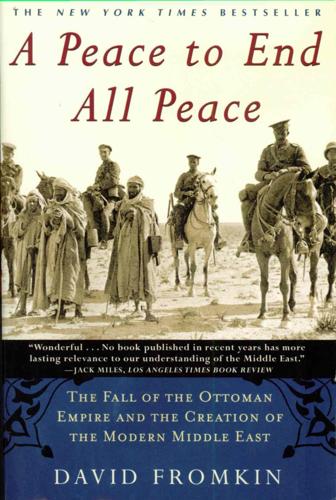
A Peace to End All Peace: The Fall of the Ottoman Empire and the Creation of the Modern Middle East
by David Fromkin · 2 Jan 1989 · 681pp · 214,967 words
York House, St James's Palace, a residence provided for him by King George. He had avenged the murder of General Charles George Gordon in the fall of Khartoum by destroying the empire of the Dervishes and reconquering the Sudan. The French had then attempted to intrude upon Britain's imperial domains
The Gun
by C. J. Chivers · 12 Oct 2010 · 845pp · 197,050 words
public demands for a rescue, ordered General Wolseley, who had brought the first Gatling gun to Africa during the Ashanti War, to go to Gordon’s assistance. Khartoum rests at the juncture of the White and Blue Nile rivers, and General Wolseley initially chose to ascend the river with all of his
…
Beresford, Volume I. (Boston: Little, Brown & Co., 1914), p. 263. 26. Symons, p. 198. 27. Ibid., p. 203. 28. Alex MacDonald, Too Late for Gordon and Khartoum: The Testimony of an Independent Eye-Witness of the Heroic Efforts for Their Relief and Rescue (John Murray, publisher, 1887), p. 241. 29. Beresford, Memoirs
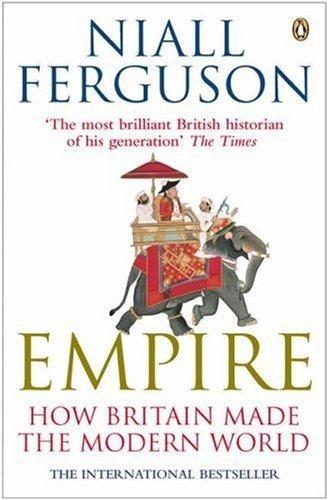
Empire: How Britain Made the Modern World
by Niall Ferguson · 1 Jan 2002 · 469pp · 146,487 words
now determined to ‘smash up the Mahdi’, only to be surrounded, besieged and – nearly a year after his arrival – hacked to pieces. While marooned in Khartoum, Gordon had confided to his diary his growing suspicion that the government in London had left him in the lurch. He imagined the Foreign Secretary, Lord
…
might invest them in the new … Egyptian loan which the House brings out next week.’ When he joined the government following the news of Gordon’s death at Khartoum, Lord Rothschild wrote to him in revealing terms: ‘[Y]our clear judgments and patriotic devotion will help the Govt. and save the country

Posh Boys: How English Public Schools Ruin Britain
by Robert Verkaik · 14 Apr 2018 · 419pp · 119,476 words
on to fight the Islamist army led by Muhammad Ahmad. After holding out for months in hope of a relief column sent from London, Khartoum’s defences fell. Gordon was killed and his severed head paraded around the city. Ahmad proclaimed himself ruler of Sudan, and established a religious state, the Mahdiyah
…
then went to Sandhurst, again behind his father, where he was enrolled as an officer in the 7th Royal Fusiliers. After the fall of Gordon at Khartoum the emboldened armies of Muhammad Ahmad, the self-proclaimed Muslim Mahdi, cut off Equatoria and threatened Cairo, key to Britain’s influence in the region
…
glory on the battlefield. The schools extolled the values and objectives of the Empire by lionising Empire figureheads such as the Duke of Wellington and Gordon of Khartoum. Popular literature of the day was littered with references to battlefield valour and sacrifice in India and Africa. G.A. Henty’s books, The
…
historians blame for Britain’s misguided military strategy is John French (Harrow). French first distinguished himself leading a section of the expedition to relieve General Gordon at Khartoum. While the column was doomed to fail, French showed brave leadership in the forlorn race across Africa. He also had a considerable reputation as
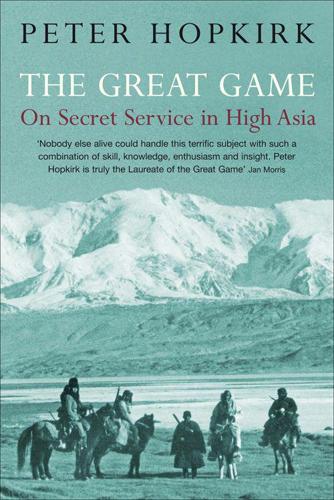
The Great Game: On Secret Service in High Asia
by Peter Hopkirk · 2 Jan 1991 · 580pp · 194,144 words
served abroad on several occasions as a special correspondent of The Times and other journals, on one occasion travelling up the Nile to interview General Gordon at Khartoum. It was during one of these periods of leave that Burnaby made up his mind to visit Russian Central Asia, which was then said
…
’ – as one commentator put it. Many of the British electorate evidently judged it to be the latter, especially as it came so soon after Gordon’s death at Khartoum, which was widely blamed on the government. As a result, in August 1886, the Tories swept back into office under Lord Salisbury, a
After Tamerlane: The Global History of Empire Since 1405
by John Darwin · 5 Feb 2008 · 650pp · 203,191 words
The Empire Project: The Rise and Fall of the British World-System, 1830–1970
by John Darwin · 23 Sep 2009
This Sceptred Isle
by Christopher Lee · 19 Jan 2012 · 796pp · 242,660 words

Egypt Travel Guide
by Lonely Planet
Egypt Travel Guide
by Lonely Planet
Egypt
by Matthew Firestone · 13 Oct 2010
Heroic Failure: Brexit and the Politics of Pain
by Fintan O'Toole · 22 Jan 2018 · 200pp · 64,329 words
The Politics of Pain
by Fintan O'Toole · 2 Oct 2019
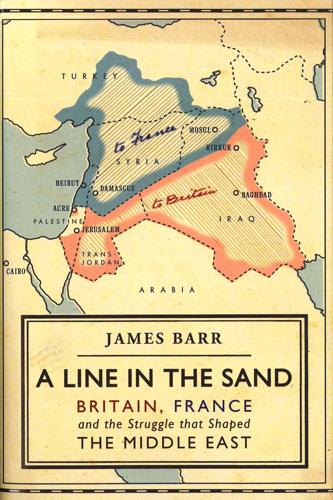
A Line in the Sand: Britain, France and the Struggle for the Mastery of the Middle East
by James Barr · 15 Feb 2011 · 750pp · 169,026 words
Imperial Legacies
by Jeremy Black; · 14 Jul 2019 · 264pp · 74,688 words
Nomads: The Wanderers Who Shaped Our World
by Anthony Sattin · 25 May 2022 · 412pp · 121,164 words
The London Compendium
by Ed Glinert · 30 Jun 2004 · 1,088pp · 297,362 words
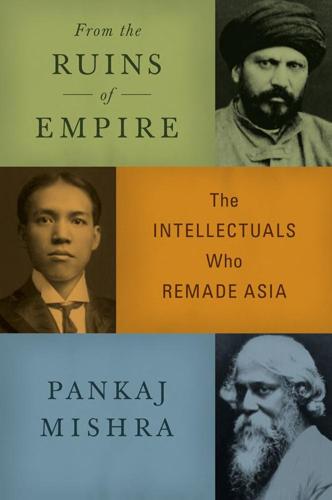
From the Ruins of Empire: The Intellectuals Who Remade Asia
by Pankaj Mishra · 3 Sep 2012
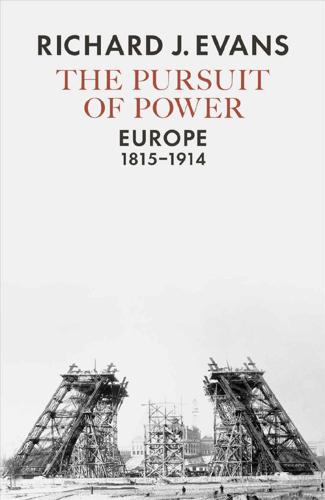
The Pursuit of Power: Europe, 1815-1914
by Richard J. Evans · 31 Aug 2016 · 976pp · 329,519 words

I Never Knew That About London
by Christopher Winn · 3 Oct 2007 · 395pp · 94,764 words
The Pencil: A History of Design and Circumstance
by Henry Petroski · 2 Jan 1990 · 490pp · 150,172 words

Gnomon
by Nick Harkaway · 18 Oct 2017 · 778pp · 239,744 words

To the Ends of the Earth: Scotland's Global Diaspora, 1750-2010
by T M Devine · 25 Aug 2011
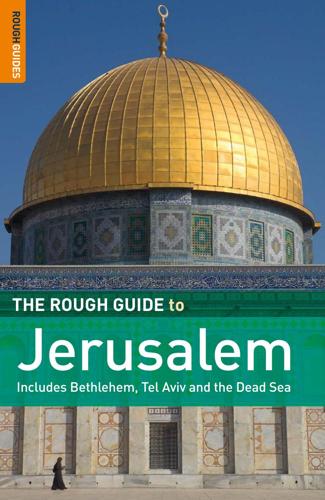
The Rough Guide to Jerusalem
by Daniel Jacobs · 10 Jan 2000
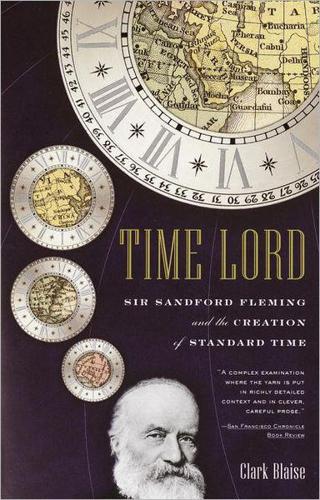
Time Lord: Sir Sandford Fleming and the Creation of Standard Time
by Clark Blaise · 27 Oct 2000 · 240pp · 75,304 words

Where We Are: The State of Britain Now
by Roger Scruton · 16 Nov 2017 · 190pp · 56,531 words
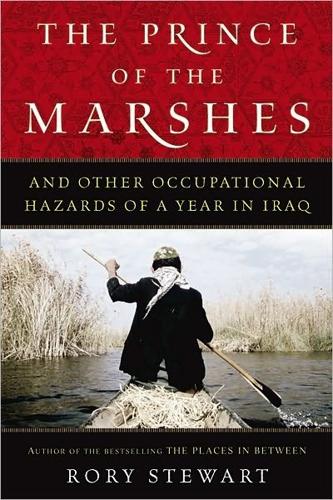
The Prince of the Marshes: And Other Occupational Hazards of a Year in Iraq
by Rory Stewart · 1 Jan 2005 · 407pp · 123,587 words

Brit-Myth: Who Do the British Think They Are?
by Chris Rojek · 15 Feb 2008 · 219pp · 61,334 words
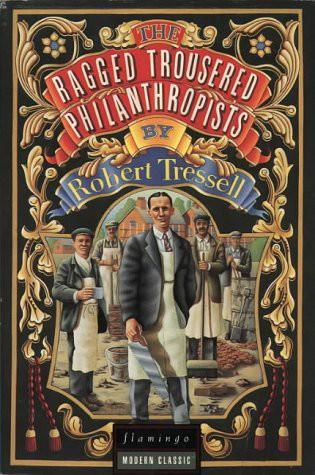
The Ragged Trousered Philanthropists
by Robert Tressell · 31 Dec 1913 · 768pp · 291,079 words
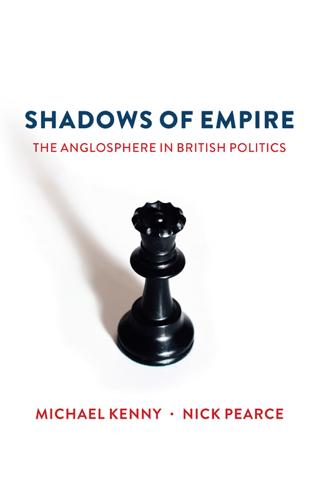
Shadows of Empire: The Anglosphere in British Politics
by Michael Kenny and Nick Pearce · 5 Jun 2018 · 215pp · 64,460 words
Culture and Imperialism
by Edward W. Said · 29 May 1994 · 549pp · 170,495 words

Israel & the Palestinian Territories Travel Guide
by Lonely Planet

Greater: Britain After the Storm
by Penny Mordaunt and Chris Lewis · 19 May 2021 · 516pp · 116,875 words
The Meaning of Everything: The Story of the Oxford English Dictionary
by Simon Winchester · 1 Jan 2003 · 200pp · 71,482 words
Into the Silence: The Great War, Mallory, and the Conquest of Everest
by Wade Davis · 27 Sep 2011