Kleiner Perkins

back to index

description: American venture capital firm

165 results

pages: 935 words: 197,338

The Power Law: Venture Capital and the Making of the New Future
by Sebastian Mallaby
Published 1 Feb 2022

“These were financiers,” Perkins sniffed dismissively.[65] With that, Perkins resolved to finance Tandem’s Series A round without sharing the risk with other partnerships.[66] Shoveling his chips onto the table, he invested $1 million in Tandem in early 1975, receiving 40 percent of the equity: it was the largest bet that Kleiner Perkins made during the 1970s. As Perkins himself confessed, if Tandem had not worked out, there might never have been a second Kleiner Perkins fund.[67] But it did work out. Tandem spent 1975 turning its basic designs into a full-spec blueprint, and by December it had progressed enough to justify a Series B round of financing. Kleiner Perkins put in another $450,000, and this time other investors wanted in as well, so Tandem raised a total of $2 million. A few months later, Tandem made its first sale, and then revenues started to ramp up, multiplying fourteen-fold between 1977 and 1980.[68] Pretty soon, Tandem offered a spectacular demonstration of what became known as Perkins’s law: “market risk is inversely proportional to technical risk,” because if you solve a truly difficult technical problem, you will face minimal competition.[69] Thanks to the high barrier to entry, Tandem’s profit margin remained juicy even as its sales soared.

Kapor’s first stop was John Doerr at Kleiner Perkins. Never mind the excitement about the information superhighway, Kapor urged. Over the next handful of years, the internet would leave Gore’s vision in the dust. Unlike in the case of GO, Doerr was unpersuaded. UUNET was not the sort of company that Kleiner Perkins liked to back. It owned no intellectual property, so was defenseless against larger competitors.[40] It required bucket loads of capital, so Kleiner would be unlikely to generate a home-run multiple.[41] Doerr refused even to meet Adams. Spurned by Kleiner Perkins, Kapor took the project to Accel.

BACK TO NOTE REFERENCE 64 Timeline 1946 The Rockefeller and Whitney families launch experiments with venture capital. 1946 Georges Doriot establishes American Research and Development, a publicly listed venture vehicle. 1957 Reid Dennis forms “the Group,” a club of San Francisco brokers that backs technology startups. 1957 Arthur Rock finances the “Traitorous Eight,” creating Fairchild Semiconductor and kick-starting the West Coast chip industry. 1958 The U.S. federal government begins to subsidize venture funds known as Small Business Investment Companies. 1961 Arthur Rock quits New York to establish the first successful equity-only, time-limited venture partnership, Davis & Rock. 1962 In a speech in San Francisco, Rock explains that venture portfolios need grand slams to “average out the goofs.” 1968 Davis & Rock rewards its backers with a return of more than 22x, outperforming both Warren Buffett and the hedge-fund pioneer Alfred Winslow Jones. 1968 Rock finances Intel, helping two members of the Traitorous Eight repeat the defection of 1957. 1972 American Research and Development closes, signaling the triumph of Rock’s West Coast venture model. 1972 Don Valentine, a veteran of Fairchild Semiconductor, establishes Sequoia Capital. 1972 Eugene Kleiner, a member of the Traitorous Eight, teams up with Hewlett-Packard executive Tom Perkins to found Kleiner Perkins. 1973 Sutter Hill pairs the inventor of the electronic printing wheel with a strong outside CEO, establishing the “Qume model.” 1974 Valentine backs Atari, showing how a hands-on venture capitalist can turn a chaotic company into a winner. 1974 Kleiner Perkins “incubates” Tandem Computers in-house before spinning it out as a startup. 1976 Kleiner Perkins backs Genentech, building it into a success through the device of stage-by-stage financing. 1977 After multiple rejections, Apple secures financing, proving that a network of VCs is superior to a few individuals. 1977 Dick Kramlich and two East Coast partners establish New Enterprise Associates. 1980 Apple and Genentech stage dramatically successful IPOs, anticipating later tech euphoria. 1981 Bob Metcalfe strives to raise venture finance on the East Coast but ends up with West Coast backers, a testimony to the strength of Valley venture capitalists. 1983 Arthur Patterson and Jim Swartz found Accel Capital, the first VC fund to specialize in particular industries. 1983 Following favorable tax and regulatory reforms, U.S. venture funds report assets under management of $12 billion, quadruple the sum of six years earlier. 1987 Sequoia backs Cisco and overhauls its management, ultimately generating the partnership’s first gain of $100 million from a single investment. 1993 After running on the fumes of John Doerr’s charisma, GO fails without dampening Doerr’s appetite for “go big or go home” moon shots. 1993 Israel creates the Yozma Group, a successful government program to promote venture capital. 1993 Accel, NEA, and Menlo Ventures back UUNET, turning the government-run internet into a mass medium. 1994 Kleiner Perkins backs Netscape, transforming the online experience. 1995 Michael Moritz of Sequoia backs Yahoo, emerging as the leader of his firm and later of the venture industry. 1996 Masayoshi Son of SoftBank invests $100 million in Yahoo, heralding the rise of “growth investing” and earning the enmity of Moritz. 1996 John Doerr backs Amazon, signaling his status as the Valley’s top internet investor. 1997 Bob Kagle of Benchmark backs eBay, ultimately generating a profit of $5 billion and demonstrating the power of Benchmark’s small-is-beautiful model. 1998 Sergey Brin and Larry Page raise $1 million without talking to VCs, heralding the rise of angel investing. 1999 Google dictates funding terms to Kleiner Perkins and Sequoia, demonstrating the leverage of software founders. 1999 Shirley Lin of Goldman Sachs finances Alibaba, equipping it with stock options that enable its take-off. 2000 New capital commitments to U.S.

pages: 381 words: 112,674

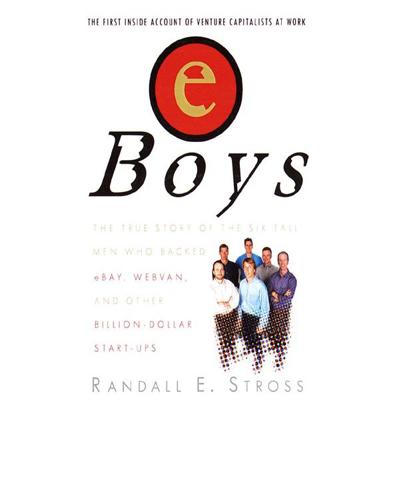
eBoys
by Randall E. Stross
Published 30 Oct 2008

In the fall of 1997 Critical Path’s entrepreneur had first invited Kleiner Perkins to invest in his company, which had just launched its service. The deal bounced to partner Will Hearst, a scion of the publishing family—and one of Kleiner Perkins’s numerous not-Doerrs. Hearst professed an immediate liking, but he could not impel Doerr and the other partners to move; one month, two months, three months went by. For the entrepreneur, a wait so long would have been intolerable were it not for the consoling thought that the leading venture capital firm in the galaxy was saying it might invest in his company. By the time Kleiner Perkins finally got around to tendering an offer, the entrepreneur had been wooed by another venerable Sand Hill Road firm, Mohr Davidow Ventures, founded in 1983.

So young that it had not even finished investing its first fund, Benchmark was the unproven upstart in a feudal, hierarchical guild. Looming over it was Doerr’s firm, venerable Kleiner Perkins, in its twenty-fifth year, snugly—and not a little smugly—ensconced on a throne at the summit. When Beirne told Doerr of his plans to join Benchmark, Doerr tried to persuade him to join Kleiner Perkins instead. Doerr said he would personally champion Beirne’s candidacy. If you were willing to abide complacency for security, Kleiner Perkins was the place to go. But if you liked the climb, if you liked the way partners put team interests foremost, if you liked the idealism of changing the rules of the venture capital game by trying to provide entrepreneurs a level of service that even Dave Beirne would approvingly call maniacal, then Benchmark was the place to be. 2.

John Doerr, for example, excelled at promoting the visibility of John Doerr, but he evinced no ability (or wish) to raise up his partners to the same prominence he enjoyed. (And after hearing so much about Doerr, what entrepreneur who approached his firm, Kleiner Perkins, wanted to be deflected to one of the other partners, an unknown not-Doerr?) Benchmark partners had selected one another on the basis of perceived ability to subordinate individual ego to the larger interests of the collective. It was a self-acknowledged experiment, but they were hopeful that the merits of their alternative model—a partnership of equals—would, in the end, outshine Kleiner Perkins’s heliocentric system that revolved around Doerr. The industry held that it took five years before anyone could tell whether a new venture capitalist was going to be successful, and ten years for a single venture fund to fully mature and do its final accounting, so it would be many years, at best, before Benchmark would be in a position to place its record next to Kleiner’s.

pages: 146 words: 43,446

The New New Thing: A Silicon Valley Story
by Michael Lewis
Published 29 Sep 1999

A few more glamorous deals like that, and Benchmark could offer the same sort of imprimatur as Kleiner Perkinswhich was perhaps the biggest reason that people like Clark sought Kleiner Perkins' money. The Kleiner halo, as it was called. The trouble with the Kleiner halo is that it was as up for grabs as everything else in the Valley. Out of fear of losing yet another very public success to Benchmark, Kleiner Perkins had just paid $25 million for a 33 percent stake in a new company called Google.com. Google.com consisted of a pair of Stanford graduate students who had a piece of software that might or might not make it easier to search the Internet. In short, Kleiner Perkins was already feeling a bit of the pressure on capitalists that Clark, with myCFO, wanted to create a lot more of.

Ergo, Microsoft would seek to dominate the cable Internet industry. @Home was designed to secure the cable industry for Silicon Valley. The important work was in the concepts, so far as Clark was concerned, and the concept for @Home had been at least as much his as Doerr's. And yet Doerr's firm, Kleiner Perkins, had denied Clark the chance to buy a piece of @Home, at least at first. Kleiner Perkins hewed to the old venture capital model, which relegated entrepreneurs like Clark to the sidelines of any business they did not explicitly create. They declined to pay Clark at his new conceptual-artist rates. Clark responded by telling Doerr that he planned to go elsewhere with his concepts.

That is a fucked up partnership, with babies like him as General Partners. Within days Clark had called a meeting with NEA that included John Doerr. Within weeks he had agreed to split the equity into eleven parts, he and Kleiner Perkins each taking four parts and NEA getting only two. In mid-November 1995 the Kleiner employer David Schnell, writing "on behalf of NEA and Kleiner Perkins," sent Clark an e-mail, "reviewing our discussion on your business model." Thanks for getting the NEA and KPCB groups together to share ideas. Like Netscape we believe [Healthscape] should be built first by capturing all the plans, employees and employers in enterprises (eg. corporations, universities, non-profits) with services they demand now and will pay for.

pages: 253 words: 65,834

Mastering the VC Game: A Venture Capital Insider Reveals How to Get From Start-Up to IPO on Your Terms
by Jeffrey Bussgang
Published 31 Mar 2010

The extra fee income undoubtedly helps give them extra room to support rock star advisers like Al Gore and Colin Powell, who in turn help their portfolio companies make valuable connections at the top of important business and government organizations. To be fair, the pattern I’ve just described has played out throughout the industry, not just at Kleiner Perkins. And, of course, anyone would have been thrilled to have been an investor in the Kleiner Perkins fund that invested in Google, no matter how large it was. The point is that many funds have gotten very large, perhaps altering their strategy and the kinds of deals that are in their “sweet spot.” So why should an entrepreneur care about the size of a firm’s fund?

Based on the experience at our firm and the dozens of VCs I interviewed for the book, I calculate that VCs invest in only one out of every three hundred companies to which they are exposed. As I said, they’re looking for a needle in the haystack of deals. I made my first major VC pitch during my second week on the job at Upromise. My partner, Michael Bronner, and I flew out to California to meet with John Doerr and his partners at Kleiner Perkins Caulfield & Byers, generally known as Kleiner Perkins. John Doerr is one of the most famous VCs in history and considered the “center of gravity in the Internet,” according to Jeff Bezos, founder of Amazon.com. After graduating from Harvard Business School, John went to work for Intel in 1974, just as the company was bringing out the 8080 Microprocessor (essentially the first microchip).

When we arrived, the receptionist and support staff made us feel at home offering cold drinks, fresh fruit, magazines, and newspapers—all with warm smiles and welcoming words. I later learned that Kleiner Perkins, like many of the best VC firms, instructs their support staff to treat entrepreneurs like superstars rather than peons begging for money (which we were). Michael and I were ushered into the “fishbowl,” the glass-enclosed conference room where the partner meetings are held. Although we were a bit intimidated to be in front of the entire Kleiner Perkins partnership (which, in addition to Doerr, included other VC legends, like Sun co-founder Vinod Khosla), the pitch started off well.

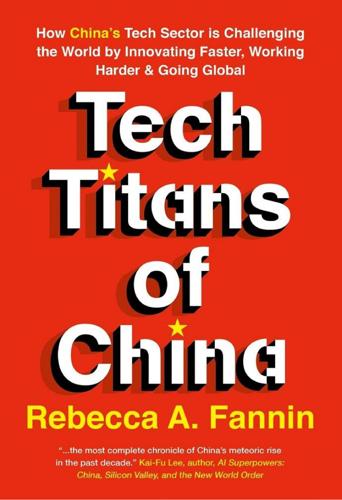
pages: 269 words: 70,543

Tech Titans of China: How China's Tech Sector Is Challenging the World by Innovating Faster, Working Harder, and Going Global
by Rebecca Fannin
Published 2 Sep 2019

Zhou bought out his seven portfolio deals from Kleiner China and pulled them into a new firm, Keytone Ventures, in mid-2009, with many of the same limited partner investors who had backed Kleiner’s inaugural effort in China. Meanwhile, Kleiner Perkins scrambled to stabilize and build up the team and work through investments that didn’t work out because of poor timing or execution or inexperienced entrepreneurs who had never run a business before. Kleiner Perkins wound down its China activities after a team of investors departed in 2017 to form the new early-stage technology investment firm China Creation Ventures, operated in China for China. Kleiner Perkins is left with a skeleton crew in Shanghai to work on past investments. The departure of venture capitalist Mary Meeker from Kleiner Perkins in 2018 was another blow for any further plans for China.

Social commerce innovator Pinduoduo came out of nowhere and caught many venture investors by surprise, and they missed it. China’s venture market has narrowed to a core group of longtime successful firms. Pioneering China investors Kleiner Perkins and Draper Fisher Jurvetson no longer invest there. New independent shops have spun out from Silicon Valley firms: China Creation Ventures from Kleiner Perkins, Long Hill Capital from NEA, and 1955 Capital from Khosla Ventures. “We believe the era of large-scale profitability of Chinese startups has just begun.” Wei Zhou Founder and managing partner, China Creation Ventures More capital is flowing to proven Chinese venture firms from large US pensions such as CalPERS (California Public Employees’ Retirement System) and CalSTRS (California State Teachers Retirement System); sovereign wealth funds, including Singapore’s Temasek and GIC; rich serial entrepreneurs; family offices; fund of funds; and university endowments, including Yale, Princeton, Northwestern, and Duke.

Small teams were stretched to cover the opportunities, partners parachuted in from California couldn’t fill the void, teams hastily put together in new venture outposts clashed, and strategic decisions and tactical moves were called from Silicon Valley rather than the front lines. I remember when Kleiner Perkins founder John Doerr blasted into Beijing and held a press conference in 2007 to launch the US firm and duplicate its successful Valley formula in China. A $360 million fund was raised specifically for China. Two well-regarded Chinese venture capitalists, Tina Ju and Joe Zhou, were handpicked to head up Kleiner Perkins in China. But Zhou bailed one year into the partnership, in early 2008, over incompatible deal-making styles. Zhou bought out his seven portfolio deals from Kleiner China and pulled them into a new firm, Keytone Ventures, in mid-2009, with many of the same limited partner investors who had backed Kleiner’s inaugural effort in China.

pages: 334 words: 104,382

Brotopia: Breaking Up the Boys' Club of Silicon Valley
by Emily Chang
Published 6 Feb 2018

By 1999, women accounted: Brush et al., “Diana Report: Women’s Entrepreneurs 2014: Bridging the Gender Gap in Venture Capital,” dianaproject.org, http://www.babson.edu/Academics/centers/blank-center/global-research/diana/Documents/diana-project-executive-summary-2014.pdf “Please, please, really take”: Ellen Pao v. Kleiner Perkins Caufield & Byers, 1 (Cal. 2012), http://s3.documentcloud.org/documents/358553/pao-complaint.pdf. Pao had a romantic: Heather Somerville, “Timeline: Ellen Pao’s Career, Key Moments at Kleiner Perkins,” Mercury News, March 27, 2015, http://www.mercurynews.com/2015/03/27/timeline-ellen-paos-career-key-moments-at-kleiner-perkins. Pao’s case piled up: Ellen Pao v. Kleiner Perkins Caufield & Byers. her memoir, Reset: Ellen Pao, Reset (New York: Spiegel & Grau, 2017). “white girls—Eastern European”: Ibid. “kill the buzz”: Ellen Pao v. Kleiner Perkins Caufield & Byers.

“The two people who”: Sam Colt, “Ellen Pao Complained She Had Gotten a ‘Demotion’ When Kleiner Perkins Downsized in 2012,” Business Insider, March 3, 2015, http://www.businessinsider.com/ellen-pao-trial-demotion-2015-3. Pao’s story appeared: David Streitfeld, “Ellen Pao Suit Against Kleiner Perkins Heads to Trial, with Big Potential Implications,” New York Times, Feb. 22, 2015, https://www.nytimes.com/2015/02/23/technology/ellen-pao-suit-against-kleiner-perkins-heads-to-trial-with-big-potential-implications.html. tech blogs had a field day: David Streitfeld, “Ellen Pao Loses Silicon Valley Bias Case Against Kleiner Perkins,” New York Times, March 27, 2015, https://www.nytimes.com/2015/03/28/technology/ellen-pao-kleiner-perkins-case-decision.html.

are simply no longer credible. Or acceptable. TO SUE OR NOT TO SUE San Francisco employment lawyer Therese Lawless has taken on hundreds of discrimination cases in Silicon Valley; in 2015, she joined the legal team representing investor Ellen Pao in her lawsuit against the storied venture capital firm Kleiner Perkins Caufield & Byers. Lawless has represented plaintiffs in a variety of industries but says tech is among the worst offenders. The stress I felt after reading through all the “Elephant in the Valley” stories was nothing compared with what this lawyer endures daily. Lawless is ethically bound not to share any specifics, but she did reveal the broad strokes of a few frightening examples from the tech industry.

pages: 280 words: 71,268

Measure What Matters: How Google, Bono, and the Gates Foundation Rock the World With OKRs
by John Doerr
Published 23 Apr 2018

And so: On that balmy day in Mountain View, I came with my present for Google, a sharp-edged tool for world-class execution. I’d first used it in the 1970s as an engineer at Intel, where Andy Grove, the greatest manager of his or any era, ran the best-run company I had ever seen. Since joining Kleiner Perkins, the Menlo Park VC firm, I had proselytized Grove’s gospel far and wide, to fifty companies or more. To be clear, I have the utmost reverence for entrepreneurs. I’m an inveterate techie who worships at the altar of innovation. But I’d also watched too many start-ups struggle with growth and scale and getting the right things done.

With an Intel manager coaching me through the process, I developed more discipline, more constancy. I relied on OKRs to communicate more clearly and help my team get our most important work done. None of this came naturally. It was a second, deeper level of learning objectives and key results. In 1980, an opportunity surfaced at Kleiner Perkins to leverage my technical background in working with new companies. Andy could not fathom why I would want to leave Intel. (He himself put the company ahead of everything, with the possible exception of his grandchildren.) He had an amazing ability to reach into your chest and grab your heart, pull it out, and hold it in his hands in front of you.

Working out of a one-bedroom loft, still plagued by a chronic shortage of engineers, we’d barely gotten our mobile app up and running. But John could tell we were homed in on what mattered. Our objectives were clear and quantified, and we were teacher-obsessed from the start. In February 2014, just before we closed our Series B funding (led by Kleiner Perkins), John pitched us on OKRs. He told us about some companies using them: Intel, Google, LinkedIn, Twitter. Here was a method to keep us focused, to guide and track and support us at every step. And I thought: Why not try it? Goals for Growth That August, the heart of our busy back-to-school season, the Remind app exploded: more than 300,000 student and parent downloads per day.

The Code: Silicon Valley and the Remaking of America
by Margaret O'Mara
Published 8 Jul 2019

Weeks after that, Clark tendered his resignation at SGI and began pitching his old friend Doerr for help with his new venture. Kleiner Perkins put in $5 million, and Mosaic Communications was born.4 The rapid rise of the company that soon was renamed Netscape showed the tightly knit, decades-in-the-making Silicon Valley network in prime form. The leadership Doerr assembled for Netscape was a seasoned mix from tech and other venture-backed new industries, all grade-A men for a grade-A idea. Doerr recruited AT&T Wireless CEO Jim Barksdale, formerly of FedEx; his chosen VP, Mike Homer, was a veteran of Apple. Wilson Sonsini provided outside counsel. Kleiner Perkins itself was bursting at the seams in those days with high-tech venture partners: Sun’s Vinod Khosla, Fairchild and Apple’s Floyd Kvamme, and Regis McKenna, who at Doerr’s urging had joined in 1986 as a general partner.

In September 2018, after reported infighting within Kleiner, Meeker abruptly quit, bringing along several other of its senior late-stage investors to start a new venture firm under her own leadership. Theodore Schleifer, “Mary Meeker, the Legendary Internet Analyst, Is Leaving Kleiner Perkins,” Recode, September 14, 2018, https://www.recode.net/2018/9/14/17858582/kleiner-perkins-mary-meeker-split, archived at https://perma.cc/FJ8S-DVUM. 11. Jesse Drucker, “Kremlin Cash Behind Billionaire’s Twitter and Facebook Investments,” The New York Times, November 5, 2017; Michael Wolff, “How Russian Tycoon Yuri Milner Bought His Way into Silicon Valley,” Wired, October 21, 2011. 12.

Jerry Hirsch, “Elon Musk’s growing empire is fueled by $4.9 billion in government subsidies,” The Los Angeles Times, May 30, 2015; Sarah McBride and Nichola Groom, “Insight: How cleantech tarnished Kleiner and VC star John Doerr,” Reuters Business News, January 15, 2013. 20. David Streitfeld, “Kleiner Perkins Denies Sex Bias in Response to a Lawsuit,” The New York Times, June 14, 2012; Ellen Huet, “Kleiner Perkins’ John Doerr and Ellen Pao: A Mentorship Sours,” Forbes, March 4, 2015. 21. Gené Teare and Ned Desmond, “The first comprehensive study on women in venture capital and their impact on female founders,” TechCrunch, April 19, 2016; “Despite More Women, VCs Still Mostly White Men,” The Information, December 14, 2016. 22.

Alpha Girls: The Women Upstarts Who Took on Silicon Valley's Male Culture and Made the Deals of a Lifetime
by Julian Guthrie
Published 15 Nov 2019

She had become president of Harvard’s venture capital club, which gave her access to industry pioneers. She flew to California for in-person meetings and invited the legends of venture to Harvard to talk to students, including John Doerr, who had left Intel to join the venerable venture firm Kleiner Perkins Caufield & Byers; Reid Dennis of IVP; and MJ Elmore, who worked closely with Dennis. * * * After graduating from Harvard, Sonja, at twenty-seven, was hired at Menlo Ventures, whose firm had offices adjacent to the Reid Dennis–founded IVP on Sand Hill Road. While Sonja could have remained on the East Coast, Sand Hill was her yellow brick road.

She had talked recently with a man named Jeff Bezos, who months earlier had quit his job on Wall Street to launch an online bookstore called Amazon out of his garage, thanks to funding from his parents. Magdalena made it clear to the Menlo group that she and Dan would be talking with other VCs, including Kleiner Perkins Caufield & Byers just up the road, and that they had interest from a number of companies, including Intel. Magdalena shook hands with everyone, including Sonja. But there would be no sisterhood bonding on this day. Magdalena understood Sonja’s polished veneer and knew an outsider when she saw one.

she always knew the numbers on customer acquisition costs; lifetime value ratios; and profit figures as a percentage of the company’s net revenues. In the days that followed the meeting with Page and Brin, Accel put together a term sheet for Google. But Google soon announced that it had taken a $25 million round of equity funding from two firms, Kleiner Perkins Caufield & Byers and Sequoia Capital. VC stars Michael Moritz of Sequoia and John Doerr of Kleiner would join Google’s board of directors. Sequoia, started by Don Valentine, had made early investments in Atari, Apple, Cisco Systems, LSI Logic, Oracle, Electronic Arts, and Yahoo! Doerr, who early in his career had made a name for himself as an engineer at Intel—working Operation Crush when MJ was there—had since coming to Kleiner backed Amazon, WebMD, Intuit, and Sun Microsystems.

pages: 831 words: 98,409

SUPERHUBS: How the Financial Elite and Their Networks Rule Our World
by Sandra Navidi
Published 24 Jan 2017

After graduating with an engineering degree from Princeton University, she went on to Harvard Law School and later to Harvard Business School. She began her career in Silicon Valley and eventually accepted a position at Kleiner Perkins Caufield & Byers. Kleiner Perkins is a highly respected venture capital firm with a mind-blowing track record of successful investments, including Amazon, Google, Netscape, and Genentech. There, Pao became head of staff for billionaire John Doerr, one of Kleiner Perkins’s most successful partners. It was an enviable position at the intersection of tech and finance with invaluable exposure to top people and unique opportunities.

Rachel Abrams, “Skadden to Pay $4.25 Million in Fletcher Bankruptcy Case,” New York Times, March 21, 2014, http://dealbook.nytimes.com/2014/03/21/skadden-to-pay-4-25-million-in-fletcher-bankruptcy-case/. 16. Dan Primack, “How a hedge fund bust ‘may’ relate to Kleiner Perkins suit,” Fortune, July 5, 2012, http://fortune.com/2012/07/05/how-a-hedge-fund-bust-may-relate-to-kleiner-perkins-suit/. David Streitfeld, “Lawsuit Shakes Foundation of a Man’s World of Tech,” New York Times, June 2, 2012, http://www.nytimes.com/2012/06/03/technology/lawsuit-against-kleiner-perkins-is-shaking-silicon-valley.xhtml. Adam Lashinsky and Katie Benner, “A tale of money, sex and power: The Ellen Pao and Buddy Fletcher affair,” Fortune, October 25, 2012, http://fortune.com/2012/10/25/ellen-pao-buddy-fletcher/. 17.

Fletcher even managed to get his attorneys in trouble. The storied law firm of Skadden, Arps settled allegations that it had not adequately protected Fletcher’s investors for $4.5 million.15 At the height of Fletcher’s troubles, his wife, Ellen Pao, launched her own explosive lawsuit against Kleiner Perkins for gender discrimination, alleging that she suffered professional retaliation after spurning the sexual advances of a colleague, Ajit Nazre, and claiming systematic firmwide discrimination. The suit rocked Silicon Valley, which prides itself on its young, innovative, and merit-based culture.

The Man Behind the Microchip: Robert Noyce and the Invention of Silicon Valley
by Leslie Berlin
Published 9 Jun 2005

In exchange for this work, the general partners earned what is called a “carry”—a fixed percentage of the fund’s overall returns.18 In much the same way that Arthur Rock had helped Noyce and Moore incorporate Intel and draw up a business plan, Kleiner Perkins sought to go beyond the traditional investor’s approach that Eugene Kleiner once described as “putting in money and then hoping for the best.” Kleiner Perkins and the other Silicon Valley venture capital firms that soon followed its example recruited on behalf of the companies they supported (called “portfolio companies”), helped the firms contract for accounting and legal work, facilitated introductions to potential customers, and sponsored networking events in which the CEOs of various portfolio companies could discuss common problems and concerns. Kleiner Perkins also developed business ideas in-house with the assistance of “entrepreneurs in residence” or “business incubation” divisions.

Kleiner Perkins also developed business ideas in-house with the assistance of “entrepreneurs in residence” or “business incubation” divisions. These ideas were then spun into portfolio companies in which the venture capitalists invested.19 Kleiner Perkins’s first $8 million fund returned more than 40 times over. Today, Kleiner Perkins Caufield and Byers is the world’s premier venture capital firm, with assets worth more than $1 billion under management.20 NOYCE PLAYED NO ROLE in deciding where other venture capitalists invested his money, but his own investment decisions for the Callanish Fund were guided by a philosophy that his partner Hwoschinsky summarized as “That’s an impossible task.

Noyce most likely among them: in his interview with the author, Eugene Kleiner stressed that it had been very difficult to find limited partners for the first Kleiner Perkins fund. Kleiner and Noyce had already invested in each other’s companies once (Kleiner in Intel and Noyce in Kleiner’s peripherals company Cybercom). It is thus almost certain that Kleiner would have offered Noyce an opportunity to invest in his venture fund. Noyce almost certainly would have taken him up on this offer, but a firm’s list of limited partners is, of course, proprietary. It should be noted, however, that Ann Bowers says that after their 1975 marriage, Noyce was not a limited partner in any Kleiner Perkins fund. 19. Invest and hope: Eugene Kleiner, interview by author. 20.

pages: 199 words: 56,243

Trillion Dollar Coach: The Leadership Playbook of Silicon Valley's Bill Campbell
by Eric Schmidt , Jonathan Rosenberg and Alan Eagle
Published 15 Apr 2019

Bill became the CEO of a startup named GO Corporation, which attempted to create the world’s first pen-based handheld computer (a precursor to the PalmPilot and today’s smartphones). It was an ambitious vision but ahead of its time, and the company shut down in 1994. “GO didn’t go,” Bill was fond of saying. Around that time, Intuit cofounder and CEO Scott Cook, along with his board of directors, was looking to replace himself as CEO. John Doerr, a Kleiner Perkins venture capitalist,* introduced Bill to Scott. At first, the founder wasn’t impressed with the coach. A couple of months passed and Scott still didn’t have a new CEO, so he agreed to meet with Bill again. They went on a walk around a neighborhood in Palo Alto, California, and this time the two clicked.

He was always available to chat with friends, neighbors, colleagues, fellow parents from his kids’ school; he’d give them a hug, listen to whatever was going on, and usually spin some story that helped them gain some perspective, draw some insight, or make a decision. So when Bill stepped down as Intuit’s CEO in 2000 (he remained as chairman until 2016) and was looking for his next challenge, John Doerr invited him to come to Kleiner Perkins, the venerable venture capital firm, and become a coach for its portfolio companies. Venture firms often have “entrepreneurs in residence,” bright, usually young, technologists who work at the firms while they noodle over their next big idea. Why not have an executive in residence, John thought, someone who was seasoned in operations and strategy, to help the firm’s startups through the ups and downs of growth (or lack thereof)?

* * * LOVE THE FOUNDERS One of the outcomes of Microsoft’s failed attempt to buy Intuit was that Bill got to know a woman who at the time was the product manager on Microsoft Money, a product that competed with Intuit. Although the deal failed, she and Bill stayed in touch. She later left Microsoft and joined a Seattle startup called Amazon, and soon thereafter called up Bill and asked for an introduction to John Doerr. Bill made the introductions, and Kleiner Perkins ended up investing in Amazon. A few years later, in 2000, Jeff Bezos, Amazon’s founder and CEO, took some time off to spend time with his family. He had hired a COO, Joe Galli, but when he returned from his leave, the company was struggling. The board, which included Doerr and Scott Cook, was wondering if perhaps Jeff should step aside as CEO and elevate Joe to that role.

pages: 382 words: 105,819

Zucked: Waking Up to the Facebook Catastrophe
by Roger McNamee
Published 1 Jan 2019

I was already paying attention to private companies, because in those days, the competition in tech came from startups, not established companies. Over the next few years, I led three key growth-stage venture investments: Electronic Arts, Sybase, and Radius. The lead venture investor in all three companies was Kleiner Perkins Caufield & Byers, one of the leading venture capital firms in Silicon Valley. All three went public relatively quickly, making me popular both at T. Rowe Price and Kleiner Perkins. My primary contact at Kleiner Perkins was a young venture capitalist named John Doerr, whose biggest successes to that point had been Sun Microsystems, Compaq Computer, and Lotus Development. Later, John would be the lead investor in Netscape, Amazon, and Google.

Rowe Price with John Powell to launch Integral Capital Partners, the first institutional fund to combine public market investments with growth-stage venture capital. We created the fund in partnership with Kleiner Perkins—with John Doerr as our venture capitalist—and Morgan Stanley. Our investors were the people who know us best, the founders and executives of the leading tech companies of that era. Integral had a charmed run. Being inside the offices of Kleiner Perkins during the nineties meant we were at ground zero for the internet revolution. I was there the day that Marc Andreessen made his presentation for the company that became Netscape, when Jeff Bezos did the same for Amazon, and when Larry Page and Sergey Brin pitched Google.

I did not imagine then how big the internet would become, but it did not take long to grasp its transformational nature. The internet would democratize access to information, with benefits to all. Idealism ruled. In 1997, Martha Stewart came in with her home-decorating business, which, thanks to an investment by Kleiner Perkins, soon went public as an internet stock, which seemed insane to me. I was convinced that a mania had begun for dot-coms, embodied in the Pets.com sock puppet and the slapping of a little “e” on the front of a company’s name or a “.com” at the end. I knew that when the bubble burst, there would be a crash that would kill Integral if we did not do something radical.

pages: 615 words: 168,775

Troublemakers: Silicon Valley's Coming of Age
by Leslie Berlin
Published 7 Nov 2017

Between 1969 and 1976, the narrow peninsula south of San Francisco was the site of the most significant and diverse burst of technological innovation of the past 150 years. In the space of thirty-five miles and seven years, innovators developed the microprocessor, the personal computer, and recombinant DNA. Entrepreneurs founded Apple, Atari, Genentech, and the pioneering venture capital firms Sequoia Capital and Kleiner Perkins Caufield & Byers. Five major industries were born: personal computing, video games, advanced semiconductor logic, modern venture capital, and biotechnology. In this same remarkable period, a laboratory at the Stanford Research Institute received the first transmission of data from the Arpanet, the precursor to the Internet.

By July 1976, Reimers’s list of companies to approach about licenses included some giants: Upjohn, Schering, Merck, Pfizer, Lilly, Dow, and DuPont.17 In a small office in San Francisco, another man saw promise where many sensed only peril. Robert Swanson, twenty-eight years old, considered himself an entrepreneur and venture capitalist, even though he had never started a company and had just been fired from a four-year-old venture capital firm, Kleiner & Perkins (today Kleiner Perkins Caufield & Byers). Swanson was a young man who was always busy with friends and always in a hurry. His father, an airplane maintenance crew leader, viewed life as a series of contests to be won. He greeted Swanson after his high school prom by asking “So, Bob, did you give her a smooch?”18 Swanson inherited his father’s competitive spirit.

The Fairchild deal—funding eight young unknown scientists and engineers who had decided to leave their Nobel Prize–winning boss and launch a competitor company—had been revolutionary. Kleiner knew that Coyle was a risk taker. The Genentech offering was similarly radical. “It was science, it was hardly profitable, and it had essentially no revenue,” says Brook Byers, Swanson’s former apartment mate who joined Kleiner & Perkins (now Kleiner Perkins Caufield & Byers) in 1972. Genentech, attempting to be the first new pharmaceutical business launched in many years, would compete against established giants. Without Coyle behind the offering, Byers muses, “no New York investment banker would have paid any attention to it.”5 Perkins suggested that the West Coast investment bank be Hambrecht & Quist, an operation he knew well and whose principals he considered “Boy Scouts” among the cynical moneymakers of investment banking.VII6 Bill Hambrecht and George Quist had launched their partnership a dozen years earlier, in 1968.

We Are the Nerds: The Birth and Tumultuous Life of Reddit, the Internet's Culture Laboratory
by Christine Lagorio-Chafkin
Published 1 Oct 2018

* * * A couple years earlier, a junior partner at Kleiner Perkins Caufield & Byers, one of the world’s largest and most established venture capital firms, which had backed 850 startups with hundreds of millions in funding, had reached out to Wong. Her name was Ellen Pao, and she told Wong she was interested in potentially investing in his latest project. Wong had no new project. He agreed to have coffee with Pao anyway, and they struck up a friendship. During that time, Pao’s life changed dramatically. She’d been involved in a brief affair with another partner at Kleiner Perkins, and she claimed another had made what she saw as inappropriate romantic advances.

She had prepared for the trial during every waking hour not spent at Reddit or with her husband and daughter. Still, she knew that her days on the witness stand would be arduous and emotionally gutting. She later wrote that she believed that Kleiner Perkins had organized a smear campaign against her, including hiring one of the world’s best crisis PR firms. She suspected it had enlisted a troll farm to defame her online. (Brunswick, a firm Kleiner Perkins worked with at the time, said in a statement, “We never have and never would encourage or enlist anyone to ‘troll’ an individual or organization.”) Pao also had heard they had hired workers in India to comb through the more than seven hundred thousand emails she’d turned over in discovery.

Pao would be given the job, and the noncommittal title of “interim CEO.” The Poltergeist The press met Ellen Pao’s ascension to the role of chief executive with excitement: She had already become a feminist hero of Silicon Valley for putting the spotlight on rampant gender discrimination in tech due to her 2012 lawsuit against white-shoe venture capital firm Kleiner Perkins Caufield & Byers. Journalists called her appointment “remarkable,” and lauded the “striking statement” made by Reddit in turning over the reins of one of the most popular sites on the Internet, one laden with lascivious content, to a woman. Her gold-plated résumé (Princeton engineering, Harvard law, Harvard business degrees) as well as her recent accomplishments at Reddit (such as acquiring the popular mobile Reddit reader Alien Blue, and debuting an Ask Me Anything app) were widely praised.

pages: 284 words: 92,688

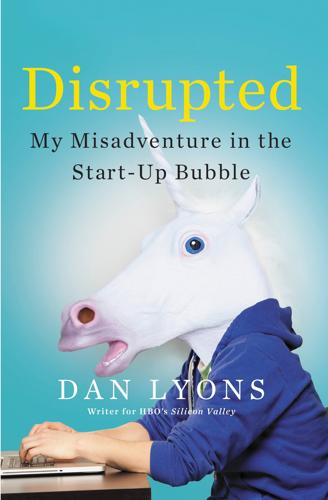
Disrupted: My Misadventure in the Start-Up Bubble
by Dan Lyons
Published 4 Apr 2016

Eugene Kleiner, a co-founder of Kleiner Perkins Caufield & Byers, the legendary VC firm where Doerr works, once said: “Even turkeys can fly in a strong wind.” Kleiner Perkins was founded in 1972 and is one of the oldest, most respected VC firms in Silicon Valley. Kleiner’s maxim about flying turkeys is one of ten “Kleiner’s Laws,” a set of rules that people all over Silicon Valley still live by. Pump money into sales and marketing, generate enough hype, and you can sell almost anything if the market gets frothy enough. “I love bubbles,” Tom Perkins, another co-founder of Kleiner Perkins, once declared. “We made a lot of money in bubbles.”

Venture capitalists openly admit they prefer to invest in twenty-something founders. “The cut-off in investors’ heads is thirty-two,” Paul Graham, who runs an incubator called Y Combinator, once said, adding that, “I can be tricked by anyone who looks like Mark Zuckerberg.” John Doerr, a legendary venture capitalist and partner at Kleiner Perkins, once said he liked to invest in “white male nerds who have dropped out of Harvard or Stanford and they have absolutely no social life. When I see that pattern coming in, it [is] very easy to decide to invest.” Companies prefer the same thing. Forget about getting booted out when you turn fifty.

The photograph appeared on countless websites, but when I asked Google for permission to use it in this book, the company asked what context I would be using it in, and when I told them, they refused. So instead of running the full photograph, I will just show you two of the people in it: The one on the left, with the cone head, is Marc Andreessen of Andreessen Horowitz. The one on the right is John Doerr of Kleiner Perkins Caufield & Byers. Look how smug they are, how sure of themselves! These two grown men wearing the hideous face computer called Google Glass are two of the most respected investors in Silicon Valley, and they represent two of the most important venture capital firms. The photograph from which these images are taken was released as part of the announcement of the Glass Collective, a special fund created to invest in companies that would develop applications for Google Glass, which Andreessen and Doerr described as a “potentially transformative technology.”

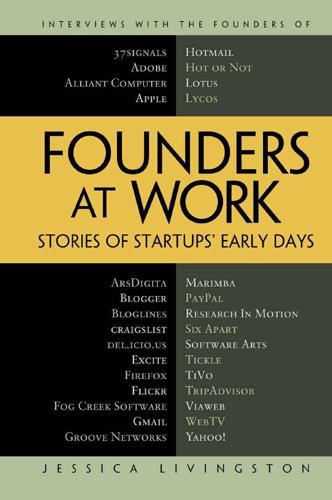
pages: 468 words: 233,091

Founders at Work: Stories of Startups' Early Days
by Jessica Livingston
Published 14 Aug 2008

Brady: There were a couple of seminal events where we thought we were going to get crushed by competitors. The first one was the directory button on the Netscape browser became a search button, and Netscape started selling the right to be linked from that button. Architext (later called Excite), which was funded by Kleiner Perkins, was a bunch of undergraduates from Stanford. They bought the Netscape search button with their venture capital money. Netscape was also funded by Kleiner Perkins. 132 Founders at Work Livingston: Did you make a bid for the button? Brady: We bid up to a certain point in which we felt comfortable that we could make a return on money. After which point, we knew it became “investing in the brand,” and I don’t think we felt comfortable investing in the brand at that point.

Together they put in a couple of hundred thousand to help us get launched and spend 6 months writing a business plan on how to commercialize parallel processing technology. We then contacted Kleiner Perkins, who even then were viewed as one of the premier venture capital firms. We told them that we thought we had a really interesting idea. We weren’t prepared to talk about it, but we would talk about it in about 6 months. We thought, having been at Data General and knowing the computer business very well, it could be something even approaching a revolutionary idea. One of the big wins Kleiner Perkins had in the ’70s was Tandem Computer. Tandem’s gone now, but it was a big hit in the ’70s and early ’80s.

In a kind of Jerry Maguire “you had me at ‘hello’” moment, he takes out his cell phone, calls his assistant and says, “I’m meeting with Joe Kraus and Graham Spencer of Architext and I want you to buy them a 10-gig hard drive.” Which at the time cost like $9,000. And we were forever indebted to him. As it turned out, yes, it did scale. We figured out how to make it scale, and we worked and worked and worked and ultimately put together a $3 million financing with Kleiner Perkins and Geoff Yang’s firm, which was called IVP at the time. Livingston: So you went from your families’ $15,000 to a $100,000 contract to a $3 million VC financing? Kraus: That’s right. Because there wasn’t a lot of angel money around at that time—at least that I knew of or had access to. Livingston: Did the VCs let you keep your original stock?

pages: 232 words: 72,483

Immortality, Inc.
by Chip Walter
Published 7 Jan 2020

But the more he thought about that, the more he realized a for-profit venture that big and complex would require truly serious capital, as in a good $500 million. Maris could carry some pretty heavy water inside GV—in the tens of millions—but nothing that monstrous. For that he would need outside venture capitalists of the Kleiner Perkins, Accel Partners, or Intel Capital variety. And that meant taking discussions to quite another level. One of the people Maris admired most at Google was John Doerr, Kleiner Perkins’s chairman and a longtime Google board member. Compared with Doerr, Maris considered himself a neophyte. He was in his mid-30s. Doerr was somewhere in his early 60s, a legendary investor who, under Barack Obama, had been asked to join the President’s Economic Recovery Advisory Board to repair the shambles of the Great Recession.

Levinson, chair of Apple Inc., and CEO and chair of Genentech, the world’s first biotechnology company. Blake Byers, a Google Ventures colleague and biomedical engineer, had told Maris that if anyone could build a company that could cure aging, Levinson was the guy. Byers knew this because his father, Brook, was one of the original founders of Kleiner, Perkins, Caufield, and Byers (KPCB), arguably Silicon Valley’s most powerful venture capital firm. KPCB had been an early investor in Apple, Google, Amazon, and Genentech. Genentech not only went on to revolutionize medicine and the pharmaceutical industry; it also became one of the inspirations for Michael Crichton’s best-selling novel Jurassic Park.

Doerr had seen more Silicon Valley venture proposals than pileups on the 101 Freeway. Before he met with Doerr, Maris thought it might make sense to create a deck that outlined the heart of his Big Idea. He wanted to shape something powerful, not goofy. And if it was goofy, he figured Doerr would be the man to tell him so straight out. Maris met with Doerr at Kleiner Perkins’s offices in Menlo Park and put the idea to him this way: John, imagine you’re walking along a beach and you find a lamp, and in this lamp you also find a genie. Naturally, it has three wishes. So what do you wish for first? What is the one thing none of us can control? Time, right? At your age, if all goes well, maybe you’ll live another 30 years?

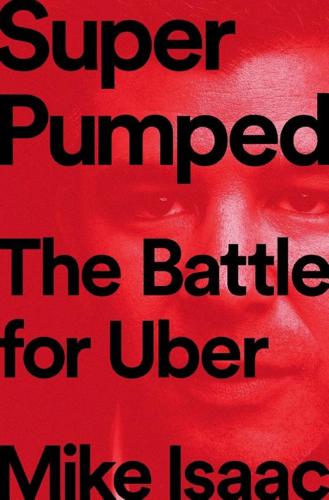
pages: 444 words: 127,259

Super Pumped: The Battle for Uber
by Mike Isaac
Published 2 Sep 2019

Doerr was an unassuming man, slight of frame, with wire-rimmed glasses resting atop his pointed nose. He looked like he would be more at home in a laboratory fabricating silicon chips—something he once did back at Intel in the ’70s—than zooming around the Valley hosting dinners for Barack Obama. As a partner at Kleiner Perkins Caufield & Byers, the storied Menlo Park venture firm, Doerr made an early investment in Netscape, a company that eventually became the world’s first consumer internet browser. Doerr was early to spot the potential of Amazon, back when Jeff Bezos’s operation was selling books in a run-down warehouse in Seattle.

Two months after its release, Demeter had raked in more than a quarter of a million dollars. Top developers in the early weeks of the App Store were seeing anywhere from five thousand to ten thousand dollars in income from app downloads every single day. Other Silicon Valley investors followed suit. Venture funds looked at Kleiner Perkins’ Doerr and the enormous amount of money being poured into apps and started doing the same thing, scouting around the Bay Area for the best and brightest in app development. Nearly overnight, the App Store became the Wild West. As had been the case when Jobs and Steve “Woz” Wozniak imagined the first Apple computer in their garage, the next great revolution in computing could come from anywhere, not just big publishers like Microsoft, Adobe—or even Apple.

But the real winning apps were backed by top-tier venture capitalists, who made connections to potential partnerships with large companies, built pipelines to faster recruiting, offered strategic advice and, of course, turbocharged growth and marketing with millions of dollars in funding. The top-tier firms of the Valley like Sequoia Capital, Kleiner Perkins, Andreessen Horowitz, Benchmark, and Accel all began hunting for new talent. They wanted young, hungry entrepreneurs whose ideas turned into obsessions. They wanted founders who were willing to push themselves—and the rules—to the limit. They wanted to find the founders who spotted opportunities for innovation in the minor annoyances of daily life.

pages: 439 words: 131,081

The Chaos Machine: The Inside Story of How Social Media Rewired Our Minds and Our World
by Max Fisher
Published 5 Sep 2022

The practice of engineers becoming VCs who pick the next generation of dominant engineers kept the ideological gene pool incestuously narrow. Even today, Shockley is only four or so steps removed from virtually every major figure in social media. One of his first hires, an engineer named Eugene Kleiner, later cofounded Kleiner Perkins, the investment firm that hired Doerr. Doerr in turn seeded Amazon and Google, where his advice—lessons he’d learned from Shockley recruits—became the basis of YouTube’s business model. Another Doerr protégé, Netscape founder Marc Andreessen, became a major investor in and board member of Facebook, and personal mentor to Mark Zuckerberg.

Chan culture, expressed in memes and in-jokes now as recognizable as Mickey Mouse, infused the platforms, whose engagement-maximizing features and algorithms absorbed and reified its most extreme tendencies, then amplified them to a world that had no idea what was coming. 4. Gamers WHEN JOHN DOERR, the kingmaking tech investor, unveiled Kleiner Perkins’s $250 million fund for social media startups in late 2010, the person he chose to stand next to him was Bing Gordon. A self-described lacrosse jock, then in his fifties, Gordon sported a frat-boy shag and laced his corporatespeak with “dude” and “awesome.” Before joining Kleiner as an investor, his CV had one bullet spanning 1982 to 2008: Electronic Arts, a video game company.

By early 2015, it was already beginning. Three Opening the Portal 1. The Wake up Call “I THINK THEY weren’t really quite sure what to make of me,” Ellen Pao recalled of her first days at Reddit. “It wasn’t super welcoming.” In the spring of 2013 Pao was a Valley veteran coming off a stint at Kleiner Perkins, the top-flight investment firm. But despite her time at Kleiner, with its enormous fund for social media startups, she had little direct experience with social companies herself. And she stood out in another way: she was a high-ranking woman of color in an industry overwhelmingly, notoriously dominated by men.

System Error: Where Big Tech Went Wrong and How We Can Reboot
by Rob Reich , Mehran Sahami and Jeremy M. Weinstein
Published 6 Sep 2021

Though “venture capital” might evoke the stuffy world of finance, the venture industry fueling Silicon Valley has a decidedly technical mindset. Eugene Kleiner, a cofounder of the legendary venture capital firm Kleiner Perkins, was an engineer by training, who after cofounding Fairchild Semiconductor in the 1950s went on to be an early investor in Intel. John Doerr, now the chairman of Kleiner Perkins and an early investor in Amazon, Google, and Netscape, holds degrees in electrical engineering and began his career at Intel. A key figure in the formation of the dot-com bubble of the late 1990s, Doerr claimed that “we witnessed (and benefited from) the largest legal creation of wealth on the planet.”

The Ecosystem of Venture Capitalists and Engineers Though engineers often develop the technical breakthroughs that can serve as the seeds for the formation of world-changing companies, the growth of those seeds into blooming companies relies on access to capital, the funding necessary to hire more talent, buy equipment, secure office space, and grow the business. For many companies, venture capitalists—VCs for short—are the source of that funding. Sand Hill Road, a street roughly six miles long, is home to more than forty venture capital firms. In 1972, Kleiner Perkins Caufield & Byers—now known as just Kleiner Perkins—opened its doors as the first VC firm on Sand Hill. In 1980, it hired John Doerr away from Intel, where he had internalized the concept of OKRs. Doerr recounted the concept as articulated by Grove: “the key result has to be measurable. But at the end you can look, and say without any arguments: Did I do that or did I not do it?

At the time, many people joked that Amazon.com should change its name to Amazon.org because it wasn’t a profitable business and was likely to remain that way. Doerr understood its long-term potential and secured ownership of more than 10 percent of the company for Kleiner Perkins, joining the Amazon board of directors through his investment. He would later have the distinction of being one of the first VCs to invest in Google in 1999, shortly after the company’s founding. At the time, both Kleiner Perkins and Sequoia Capital—the other eight-hundred-pound gorilla on Sand Hill—were vying hard to be the sole VCs to invest in Google. Larry Page, the cofounder and twenty-six-year-old dropout from Stanford’s computer science PhD program, gave them an ultimatum: they could either invest together or walk away from the deal.

pages: 271 words: 62,538

The Best Interface Is No Interface: The Simple Path to Brilliant Technology (Voices That Matter)
by Golden Krishna
Published 10 Feb 2015

Elise Hu, “New Numbers Back Up Our Obsession with Phones : All Tech Considered,” NPR, October 10, 2013. http://www.npr.org/blogs/alltechconsidered/2013/10/09/230867952/new-numbers-back-up-our-obsession-with-phones 16 “Kleiner Perkins Caufield Byers - Companies,” KPCB, Last accessed September 2014. http://www.kpcb.com/companies 17 “In fact, people check their phones 150 times a day, according to Kleiner Perkins Caufield & Byers’s annual Internet Trends report.” Joanna Stern, “Cellphone Users Check Phones 150x/Day and Other Internet Fun Facts,” ABC News, May 29, 2013. http://abcnews.go.com/blogs/technology/2013/05/cellphone-users-check-phones-150xday-and-other-internet-fun-facts/ 18 “To better understand attitudes about mass mobility, Time, in cooperation with Qualcomm, launched the Time Mobility Poll, a survey of close to 5,000 people of all age groups and income levels in eight countries: the U.S., the U.K., China, India, South Korea, South Africa, Indonesia, and Brazil” Nancy Gibbs, “Your Life Is Fully Mobile,” Time, Aug. 16, 2012. http://techland.time.com/2012/08/16/your-life-is-fully-mobile/ 19 “Meanwhile, some young people say a cracked screen gives you a sort of street cred, like you’ve been through some real-life stuff, even if it happened on the mean streets of Bethesda.”

Unplug your smartphone from the charger, put in your pocket or purse, pull it out to use the interface for a moment, put the phone back in your pocket or purse, pull it out to use the interface for a moment, put the phone back in your pocket or purse, pull it out to use the interface for a moment, put the phone back in your pocket or purse, pull it out to use the interface for a moment, put the phone back in your pocket or purse, pull it out to use the interface for a moment, put the phone back in your pocket or purse, pull it out to use the interface for a moment, put the phone back in your pocket or purse, pull it out to use the interface for a moment, put the phone back in your pocket or purse, pull it out to use the interface for a moment, put the phone back in your pocket or purse, pull it out to use the interface for a moment, put the phone back in your pocket or purse, pull it out to use the interface for a moment, put the phone back in your pocket or purse, pull it out to use the interface for a moment, put the phone back in your pocket or purse, pull it out to use the interface for a moment, put the phone back in your pocket or purse, pull it out to use the interface for a moment, put the phone back in your pocket or purse, pull it out to use the interface for a moment, put the phone back in your pocket or purse, pull it out to use the interface for a moment, put the phone back in your pocket or purse, pull it out to use the interface for a moment, put the phone back in your pocket or purse, pull it out to use the interface for a moment, put the phone back in your pocket or purse, pull it out to use the interface for a moment, put the phone back in your pocket or purse, pull it out to use the interface for a moment, put the phone back in your pocket or purse, pull it out to use the interface for a moment, put the phone back in your pocket or purse, pull it out to use the interface for a moment, put the phone back in your pocket or purse, pull it out to use the interface for a moment, put the phone back in your pocket or purse, pull it out to use the interface for a moment, put the phone back in your pocket or purse, pull it out to use the interface for a moment, put the phone back in your pocket or purse, pull it out to use the interface for a moment, put the phone back in your pocket or purse, pull it out to use the interface for a moment, put the phone back in your pocket or purse, pull it out to use the interface for a moment, put the phone back in your pocket or purse, pull it out to use the interface for a moment, put the phone back in your pocket or purse, pull it out to use the interface for a moment, put the phone back in your pocket or purse, pull it out to use the interface for a moment, put the phone back in your pocket or purse, pull it out to use the interface for a moment, put the phone back in your pocket or purse, pull it out to use the interface for a moment, put the phone back in your pocket or purse, pull it out to use the interface for a moment, put the phone back in your pocket or purse, pull it out to use the interface for a moment, put the phone back in your pocket or purse, pull it out to use the interface for a moment, put the phone back in your pocket or purse, pull it out to use the interface for a moment, put the phone back in your pocket or purse, pull it out to use the interface for a moment, put the phone back in your pocket or purse, pull it out to use the interface for a moment, put the phone back in your pocket or purse, pull it out to use the interface for a moment, put the phone back in your pocket or purse, pull it out to use the interface for a moment, put the phone back in your pocket or purse, pull it out to use the interface for a moment, put the phone back in your pocket or purse, pull it out to use the interface for a moment, put the phone back in your pocket or purse, pull it out to use the interface for a moment, put the phone back in your pocket or purse, pull it out to use the interface for a moment, put the phone back in your pocket or purse, pull it out to use the interface for a moment, put the phone back in your pocket or purse, pull it out to use the interface for a moment, put the phone back in your pocket or purse, pull it out to use the interface for a moment, put the phone back in your pocket or purse, pull it out to use the interface for a moment, put the phone back in your pocket or purse, pull it out to use the interface for a moment, put the phone back in your pocket or purse, pull it out to use the interface for a moment, put the phone back in your pocket or purse, pull it out to use the interface for a moment, put the phone back in your pocket or purse, pull it out to use the interface for a moment, put the phone back in your pocket or purse, pull it out to use the interface for a moment, put the phone back in your pocket or purse, pull it out to use the interface for a moment, put the phone back in your pocket or purse, pull it out to use the interface for a moment, put the phone back in your pocket or purse, pull it out to use the interface for a moment, put the phone back in your pocket or purse, pull it out to use the interface for a moment, put the phone back in your pocket or purse, pull it out to use the interface for a moment, put the phone back in your pocket or purse, pull it out to use the interface for a moment, put the phone back in your pocket or purse, pull it out to use the interface for a moment, put the phone back in your pocket or purse, pull it out to use the interface for a moment, put the phone back in your pocket or purse, pull it out to use the interface for a moment, put the phone back in your pocket or purse, pull it out to use the interface for a moment, put the phone back in your pocket or purse, pull it out to use the interface for a moment, put the phone back in your pocket or purse, pull it out to use the interface for a moment, put the phone back in your pocket or purse, pull it out to use the interface for a moment, put the phone back in your pocket or purse, pull it out to use the interface for a moment, put the phone back in your pocket or purse, pull it out to use the interface for a moment, put the phone back in your pocket or purse, pull it out to use the interface for a moment, put the phone back in your pocket or purse, pull it out to use the interface for a moment, put the phone back in your pocket or purse, pull it out to use the interface for a moment, put the phone back in your pocket or purse, pull it out to use the interface for a moment, put the phone back in your pocket or purse, pull it out to use the interface for a moment, put the phone back in your pocket or purse, pull it out to use the interface for a moment, put the phone back in your pocket or purse, pull it out to use the interface for a moment, put the phone back in your pocket or purse, pull it out to use the interface for a moment, put the phone back in your pocket or purse, pull it out to use the interface for a moment, put the phone back in your pocket or purse, pull it out to use the interface for a moment, put the phone back in your pocket or purse, pull it out to use the interface for a moment, put the phone back in your pocket or purse, pull it out to use the interface for a moment, put the phone back in your pocket or purse, pull it out to use the interface for a moment, put the phone back in your pocket or purse, pull it out to use the interface for a moment, put the phone back in your pocket or purse, pull it out to use the interface for a moment, put the phone back in your pocket or purse, pull it out to use the interface for a moment, put the phone back in your pocket or purse, pull it out to use the interface for a moment, put the phone back in your pocket or purse, pull it out to use the interface for a moment, put the phone back in your pocket or purse, pull it out to use the interface for a moment, put the phone back in your pocket or purse, pull it out to use the interface for a moment, put the phone back in your pocket or purse, pull it out to use the interface for a moment, put the phone back in your pocket or purse, pull it out to use the interface for a moment, put the phone back in your pocket or purse, pull it out to use the interface for a moment, put the phone back in your pocket or purse, pull it out to use the interface for a moment, put the phone back in your pocket or purse, pull it out to use the interface for a moment, put the phone back in your pocket or purse, pull it out to use the interface for a moment, put the phone back in your pocket or purse, pull it out to use the interface for a moment, put the phone back in your pocket or purse, pull it out to use the interface for a moment, put the phone back in your pocket or purse, pull it out to use the interface for a moment, put the phone back in your pocket or purse, pull it out to use the interface for a moment, put the phone back in your pocket or purse, pull it out to use the interface for a moment, put the phone back in your pocket or purse, pull it out to use the interface for a moment, put the phone back in your pocket or purse, pull it out to use the interface for a moment, put the phone back in your pocket or purse, pull it out to use the interface for a moment, put the phone back in your pocket or purse, pull it out to use the interface for a moment, put the phone back in your pocket or purse, pull it out to use the interface for a moment, put the phone back in your pocket or purse, pull it out to use the interface for a moment, put the phone back in your pocket or purse, pull it out to use the interface for a moment, put the phone back in your pocket or purse, pull it out to use the interface for a moment, put the phone back in your pocket or purse, pull it out to use the interface for a moment, put the phone back in your pocket or purse, pull it out to use the interface for a moment, put the phone back in your pocket or purse, pull it out to use the interface for a moment, put the phone back in your pocket or purse, pull it out to use the interface for a moment, put the phone back in your pocket or purse, pull it out to use the interface for a moment, put the phone back in your pocket or purse, pull it out to use the interface for a moment, put the phone back in your pocket or purse, pull it out to use the interface for a moment, put the phone back in your pocket or purse, pull it out to use the interface for a moment, put the phone back in your pocket or purse, pull it out to use the interface for a moment, put the phone back in your pocket or purse, pull it out to use the interface for a moment, put the phone back in your pocket or purse, pull it out to use the interface for a moment, put the phone back in your pocket or purse, pull it out to use the interface for a moment, put the phone back in your pocket or purse, pull it out to use the interface for a moment, put the phone back in your pocket or purse, and plug it in to charge while you sleep. However, not everyone agrees with those usage numbers. The venture capital firm Kleiner Perkins Caufield & Byers (KPCB), which has backed Amazon, AOL, Intuit, Google, and a lot of other companies you might know,16 would disagree with Locket. According to KPCB research, we actually tend to check our phones more often.17 One hundred and fifty times a day, in fact. Unplug your smartphone from the charger, put in your pocket or purse, pull it out to use the interface for a moment, put the phone back in your pocket or purse, pull it out to use the interface for a moment, put the phone back in your pocket or purse, pull it out to use the interface for a moment, put the phone back in your pocket or purse, pull it out to use the interface for a moment, put the phone back in your pocket or purse, pull it out to use the interface for a moment, put the phone back in your pocket or purse, pull it out to use the interface for a moment, put the phone back in your pocket or purse, pull it out to use the interface for a moment, put the phone back in your pocket or purse, pull it out to use the interface for a moment, put the phone back in your pocket or purse, pull it out to use the interface for a moment, put the phone back in your pocket or purse, pull it out to use the interface for a moment, put the phone back in your pocket or purse, pull it out to use the interface for a moment, put the phone back in your pocket or purse, pull it out to use the interface for a moment, put the phone back in your pocket or purse, pull it out to use the interface for a moment, put the phone back in your pocket or purse, pull it out to use the interface for a moment, put the phone back in your pocket or purse, pull it out to use the interface for a moment, put the phone back in your pocket or purse, pull it out to use the interface for a moment, put the phone back in your pocket or purse, pull it out to use the interface for a moment, put the phone back in your pocket or purse, pull it out to use the interface for a moment, put the phone back in your pocket or purse, pull it out to use the interface for a moment, put the phone back in your pocket or purse, pull it out to use the interface for a moment, put the phone back in your pocket or purse, pull it out to use the interface for a moment, put the phone back in your pocket or purse, pull it out to use the interface for a moment, put the phone back in your pocket or purse, pull it out to use the interface for a moment, put the phone back in your pocket or purse, pull it out to use the interface for a moment, put the phone back in your pocket or purse, pull it out to use the interface for a moment, put the phone back in your pocket or purse, pull it out to use the interface for a moment, put the phone back in your pocket or purse, pull it out to use the interface for a moment, put the phone back in your pocket or purse, pull it out to use the interface for a moment, put the phone back in your pocket or purse, pull it out to use the interface for a moment, put the phone back in your pocket or purse, pull it out to use the interface for a moment, put the phone back in your pocket or purse, pull it out to use the interface for a moment, put the phone back in your pocket or purse, pull it out to use the interface for a moment, put the phone back in your pocket or purse, pull it out to use the interface for a moment, put the phone back in your pocket or purse, pull it out to use the interface for a moment, put the phone back in your pocket or purse, pull it out to use the interface for a moment, put the phone back in your pocket or purse, pull it out to use the interface for a moment, put the phone back in your pocket or purse, pull it out to use the interface for a moment, put the phone back in your pocket or purse, pull it out to use the interface for a moment, put the phone back in your pocket or purse, pull it out to use the interface for a moment, put the phone back in your pocket or purse, pull it out to use the interface for a moment, put the phone back in your pocket or purse, pull it out to use the interface for a moment, put the phone back in your pocket or purse, pull it out to use the interface for a moment, put the phone back in your pocket or purse, pull it out to use the interface for a moment, put the phone back in your pocket or purse, pull it out to use the interface for a moment, put the phone back in your pocket or purse, pull it out to use the interface for a moment, put the phone back in your pocket or purse, pull it out to use the interface for a moment, put the phone back in your pocket or purse, pull it out to use the interface for a moment, put the phone back in your pocket or purse, pull it out to use the interface for a moment, put the phone back in your pocket or purse, pull it out to use the interface for a moment, put the phone back in your pocket or purse, pull it out to use the interface for a moment, put the phone back in your pocket or purse, pull it out to use the interface for a moment, put the phone back in your pocket or purse, pull it out to use the interface for a moment, put the phone back in your pocket or purse, pull it out to use the interface for a moment, put the phone back in your pocket or purse, pull it out to use the interface for a moment, put the phone back in your pocket or purse, pull it out to use the interface for a moment, put the phone back in your pocket or purse, pull it out to use the interface for a moment, put the phone back in your pocket or purse, pull it out to use the interface for a moment, put the phone back in your pocket or purse, pull it out to use the interface for a moment, put the phone back in your pocket or purse, pull it out to use the interface for a moment, put the phone back in your pocket or purse, pull it out to use the interface for a moment, put the phone back in your pocket or purse, pull it out to use the interface for a moment, put the phone back in your pocket or purse, pull it out to use the interface for a moment, put the phone back in your pocket or purse, pull it out to use the interface for a moment, put the phone back in your pocket or purse, pull it out to use the interface for a moment, put the phone back in your pocket or purse, pull it out to use the interface for a moment, put the phone back in your pocket or purse, pull it out to use the interface for a moment, put the phone back in your pocket or purse, pull it out to use the interface for a moment, put the phone back in your pocket or purse, pull it out to use the interface for a moment, put the phone back in your pocket or purse, pull it out to use the interface for a moment, put the phone back in your pocket or purse, pull it out to use the interface for a moment, put the phone back in your pocket or purse, pull it out to use the interface for a moment, put the phone back in your pocket or purse, pull it out to use the interface for a moment, put the phone back in your pocket or purse, pull it out to use the interface for a moment, put the phone back in your pocket or purse, pull it out to use the interface for a moment, put the phone back in your pocket or purse, pull it out to use the interface for a moment, put the phone back in your pocket or purse, pull it out to use the interface for a moment, put the phone back in your pocket or purse, pull it out to use the interface for a moment, put the phone back in your pocket or purse, pull it out to use the interface for a moment, put the phone back in your pocket or purse, pull it out to use the interface for a moment, put the phone back in your pocket or purse, pull it out to use the interface for a moment, put the phone back in your pocket or purse, pull it out to use the interface for a moment, put the phone back in your pocket or purse, pull it out to use the interface for a moment, put the phone back in your pocket or purse, pull it out to use the interface for a moment, put the phone back in your pocket or purse, pull it out to use the interface for a moment, put the phone back in your pocket or purse, pull it out to use the interface for a moment, put the phone back in your pocket or purse, pull it out to use the interface for a moment, put the phone back in your pocket or purse, pull it out to use the interface for a moment, put the phone back in your pocket or purse, pull it out to use the interface for a moment, put the phone back in your pocket or purse, pull it out to use the interface for a moment, put the phone back in your pocket or purse, pull it out to use the interface for a moment, put the phone back in your pocket or purse, pull it out to use the interface for a moment, put the phone back in your pocket or purse, pull it out to use the interface for a moment, put the phone back in your pocket or purse, pull it out to use the interface for a moment, put the phone back in your pocket or purse, pull it out to use the interface for a moment, put the phone back in your pocket or purse, pull it out to use the interface for a moment, put the phone back in your pocket or purse, pull it out to use the interface for a moment, put the phone back in your pocket or purse, pull it out to use the interface for a moment, put the phone back in your pocket or purse, pull it out to use the interface for a moment, put the phone back in your pocket or purse, pull it out to use the interface for a moment, put the phone back in your pocket or purse, pull it out to use the interface for a moment, put the phone back in your pocket or purse, pull it out to use the interface for a moment, put the phone back in your pocket or purse, pull it out to use the interface for a moment, put the phone back in your pocket or purse, pull it out to use the interface for a moment, put the phone back in your pocket or purse, pull it out to use the interface for a moment, put the phone back in your pocket or purse, pull it out to use the interface for a moment, put the phone back in your pocket or purse, pull it out to use the interface for a moment, put the phone back in your pocket or purse, pull it out to use the interface for a moment, put the phone back in your pocket or purse, pull it out to use the interface for a moment, put the phone back in your pocket or purse, pull it out to use the interface for a moment, put the phone back in your pocket or purse, pull it out to use the interface for a moment, put the phone back in your pocket or purse, pull it out to use the interface for a moment, put the phone back in your pocket or purse, pull it out to use the interface for a moment, put the phone back in your pocket or purse, pull it out to use the interface for a moment, put the phone back in your pocket or purse, pull it out to use the interface for a moment, put the phone back in your pocket or purse, pull it out to use the interface for a moment, put the phone back in your pocket or purse, pull it out to use the interface for a moment, put the phone back in your pocket or purse, pull it out to use the interface for a moment, put the phone back in your pocket or purse, pull it out to use the interface for a moment, put the phone back in your pocket or purse, pull it out to use the interface for a moment, put the phone back in your pocket or purse, pull it out to use the interface for a moment, put the phone back in your pocket or purse, pull it out to use the interface for a moment, put the phone back in your pocket or purse, pull it out to use the interface for a moment, put the phone back in your pocket or purse, pull it out to use the interface for a moment, put the phone back in your pocket or purse, pull it out to use the interface for a moment, put the phone back in your pocket or purse, pull it out to use the interface for a moment, put the phone back in your pocket or purse, pull it out to use the interface for a moment, put the phone back in your pocket or purse, pull it out to use the interface for a moment, put the phone back in your pocket or purse, pull it out to use the interface for a moment, put the phone back in your pocket or purse, pull it out to use the interface for a moment, put the phone back in your pocket or purse, pull it out to use the interface for a moment, put the phone back in your pocket or purse, pull it out to use the interface for a moment, put the phone back in your pocket or purse, pull it out to use the interface for a moment, put the phone back in your pocket or purse, pull it out to use the interface for a moment, put the phone back in your pocket or purse, pull it out to use the interface for a moment, put the phone back in your pocket or purse, pull it out to use the interface for a moment, put the phone back in your pocket or purse, pull it out to use the interface for a moment, put the phone back in your pocket or purse, pull it out to use the interface for a moment, put the phone back in your pocket or purse, pull it out to use the interface for a moment, put the phone back in your pocket or purse, pull it out to use the interface for a moment, put the phone back in your pocket or purse, pull it out to use the interface for a moment, put the phone back in your pocket or purse, pull it out to use the interface for a moment, put the phone back in your pocket or purse, pull it out to use the interface for a moment, put the phone back in your pocket or purse, pull it out to use the interface for a moment, put the phone back in your pocket or purse, pull it out to use the interface for a moment, put the phone back in your pocket or purse, pull it out to use the interface for a moment, put the phone back in your pocket or purse, pull it out to use the interface for a moment, put the phone back in your pocket or purse, pull it out to use the interface for a moment, put the phone back in your pocket or purse, pull it out to use the interface for a moment, put the phone back in your pocket or purse, pull it out to use the interface for a moment, put the phone back in your pocket or purse, pull it out to use the interface for a moment, put the phone back in your pocket or purse, pull it out to use the interface for a moment, put the phone back in your pocket or purse, pull it out to use the interface for a moment, put the phone back in your pocket or purse, pull it out to use the interface for a moment, put the phone back in your pocket or purse, pull it out to use the interface for a moment, put the phone back in your pocket or purse, pull it out to use the interface for a moment, put the phone back in your pocket or purse, pull it out to use the interface for a moment, put the phone back in your pocket or purse, pull it out to use the interface for a moment, put the phone back in your pocket or purse, pull it out to use the interface for a moment, put the phone back in your pocket or purse, pull it out to use the interface for a moment, put the phone back in your pocket or purse, pull it out to use the interface for a moment, put the phone back in your pocket or purse, and plug it in to charge while you sleep.

See Lockitron deadbolt Deep Blue, contest with Kasparov, 120–130 Denning, Peter J., 165–166 design, best results for, 80 devices, preventing failure of, 204 Dewey Decimal system, 165 digital chores eliminating, 156 performing, 155 dishwashers, washing cycles of, 153 distraction, consequences of, 61–62 Dorsey, Jack, 106 downloading songs, speed of, 30 dropdowns, disregarding, 137, 142 DSP (digital signal processing), 139–140 E EarlySense EverOn sensor, 179–180, 205 educational mindshare, capturing, 127 efficiency, increasing, 148 Elektro robot, 173–175 emergency room, sounds heard in, 178 energy, saving, 148 error message, example of, 131 EULA (end user license agreement), 192 F Facebook, privacy policy of, 190–191 failure examining fear of, 203–204 preventing, 204 solving, 204 talk of, 205 fields, requiring, 132 food, data related to, 136 G Gamestation, 193 Gates, Bill, 59 Gerhardt, Paul, 102 Gilmurray, Damian, 139 Glympse mobile app, 196 Goldman, Jonathan, 169 Goodyear app, 149–150 Google Wallet, 107 GPS (global positioning system), 142 GUIs (graphical user interfaces), 163, 168–170, 176–177, 197 H Hammerbacher, Jeff, 47, 169 hard drive movie storage in 2006, 26 movie storage in 2013, 27 Harter, Andy, 139 head trauma consequences of, 143 detecting, 144 reducing, 144 headlamp, use by doctors, 141–142 health care settings, improving, 178–179 Heron of Alexandria, 200 Hetrick, John W., 200 Hewitt, Lee, 200 history, learning from, 165 Hoffman, Reid, 169 Hopper, Andy, 139 Horton, Dee, 200 hours per day, working, 147 Humphrey, Jason, 62 I IBM’s Deep Blue, contest with Kasparov, 120–130 ideas, filtering, 208 IFTTT service, 157 Inbox Zero, 155–156 individuals, adapting to, 179 information, gathering, 136–137 innovation, 163–164 “innovation” centers, map of, 32–33 interaction, best results for, 80 interactivity, 196 interface examples cars, 35–36 refrigerators, 37–38 restaurant, 41–42 trash can, 39–40 vending machine, 43–44 interfaces best results for, 80 redesigning, 165 using sparingly, 114 Internet speeds in 2000, 28 in 2010, 29 iPhones, sizes from 2007-2014, 99 Israeli research on cancer, 65 iTunes terms and conditions, 189 J Jay-Z, 195 job listings, 45–46 JPMorgan Chase’s Blink system, 107 K Kasparov, Garry, 129–130 Kawasaki, Guy, 34 Kowalczyk, Liz, 178 KPCB (Kleiner Perkins Caulfield & Byers), 92 L laundry loads done weekly, 151 washing cycles, 152, 154 lazy rectangles avoiding, 120 drawing, 113 Leaf app for Nissan car, 117–120 learning from history, value of, 165 legal agreements, 187 light 6500k, 69 brightness of, 69 temperatures, 69, 71 light color, measuring, 71 LinkedIn, 170 Locket, research done by, 89 Lockitron deadbolt, 102–104, 205 lung cancer, incidence of, 65 M machine input embracing, 156 vs. user input, 139–140 using in health settings, 179 Manjoo, Farhad, 105–106 manual transmissions, decline in number of, 201 MasterCard’s Paypass, 107 Matyszczyk, Chris, 105 Mazda 929, 120–121 MC10 sensors, 144 McAfee computer security, 191 McCain, John, 148 McDonald, Aleecia, 189–190 McDonald’s, use of touchscreens by, 106 McKechnie, Alex, 181 McKinsey statistic, 111 media multitasking, effects of, 59–61 melatonin adjustment to pre-light exposure, 70 impact on sleep, 71–72 Metz, Rachel, 102 microphones, use of, 176 Microsoft Office, usage statistic, 189 mobile apps.

The Big Score
by Michael S. Malone
Published 20 Jul 2021

This wasn’t good planning, it was divination. Treybig had first gotten the idea for Tandem after he left Hewlett-Packard in 1973 to join venture capital firm Kleiner, Perkins, Caufield, & Byers in San Francisco. At HP, says Treybig, he first ran into customers, such as banks, that needed a computer that would never break down. “What I saw was that to get a system that wouldn’t fail, customers were spending large amounts of money to modify the computers themselves.” With $1 million in Kleiner Perkins money, Treybig and his three partners founded Tandem in November 1974. Six years later the company broke $100 million in sales.

As a measure of just how hot these companies appeared, most sported heavyweight founders and equally heavyweight investors. For example, VLSI Technology, Inc., was founded by three of the founders of Synertek and eventually run by a former vice president of Motorola, Al Stein. Bendix, Olivetti, Kleiner, Perkins, Caufield, & Byers, and others put up $40 million to get the company started. LSI Logic was founded by the one and only Wilf Corrigan with $90 million in startup money. By 1983, there were at least a half dozen other gate array firms springing up in Silicon Valley, including SPI, one of the latest of Jean Hoerni’s (one of the original Shockley Traitorous Eight) endless number of new companies.

Some were East Coasters who migrated west. Others were homegrown Valley executives who crossed over. These individuals cut their teeth in the early Silicon Valley wars. Some individuals, such as Arthur Rock, Fred Adler, and William “Pitch” Johnson, and such firms as Hambrecht & Quist and Kleiner, Perkins, Caufield, & Byers, have become well known for their ability to spot young winners. But for the most part, it is an anonymous industry. Like all good bankers, venture capitalists tend to seek a low profile, keeping their names out of the newspapers, except of course for the tombstone ads announcing a company going public and on the 10K forms listing major company shareholders.

pages: 278 words: 83,468

The Lean Startup: How Today’s Entrepreneurs Use Continuous Innovation to Create Radically Successful Businesses
by Eric Ries
Published 13 Sep 2011

And continue to innovate in the directions we think will create meaning in the world. Path’s story is just beginning, but already their courage in facing down critics is paying off. If and when they need to pivot, they won’t be hampered by fear. They recently raised $8.5 million in venture capital in a round led by Kleiner Perkins Caufield & Byers. In doing so, Path reportedly turned down an acquisition offer for $100 million from Google.2 THE PIVOT OR PERSEVERE MEETING The decision to pivot requires a clear-eyed and objective mind-set. We’ve discussed the telltale signs of the need to pivot: the decreasing effectiveness of product experiments and the general feeling that product development should be more productive.

About 85% log in at least once a week, and 93% log in at least once a month.” http://​techcrunch.​com/​2005/​09/​07/​85-​of-​college-​students-​use-​facebook/ 3. I first heard the term leap of faith applied to startup assumptions by Randy Komisar, a former colleague and current partner at the venture firm Kleiner Perkins Caufield & Byers. He expands on the concept in his book Getting to Plan B, coauthored with John Mullins. 4. http://​www.​forbes.​com/​2009/​09/​17/​venture-​capital-​ipod-​intelligent-​technology-​komisar.​html 5. “A carefully researched table compiled for Motor magazine by Charles E. Duryea, himself a pioneer carmaker, revealed that from 1900 to 1908, 501 companies were formed in the United States for the purpose of manufacturing automobiles.

Aardvark IMVU Dropbox Intuit Food on the Table Votizen Grockit Wealthfront I have additional interests in companies through my affiliations with venture capital firms. I have invested in or worked with the following firms as either a consultant or as a limited partner. Through these firms, I have equity and relationship interests in many more companies beyond those listed above. 500 Startups Kleiner Perkins Caufield & Byers Floodgate Greylock Partners Seraph Group Acknowledgments I owe a tremendous debt of gratitude to the many people who have helped make The Lean Startup a reality. First and foremost are the thousands of entrepreneurs around the world who have tested these ideas, challenged them, refined them, and improved them.

pages: 403 words: 87,035

The New Geography of Jobs
by Enrico Moretti
Published 21 May 2012

Google may be the most famous example of the importance of mentoring in the history of venture capital. Among early investors in Google was John Doerr, from Kleiner Perkins Caufield & Byers. His early financing was critical to helping Google survive its early years. But even more important was his insistence that Sergey Brin and Larry Page—brilliant engineers, but at the time still naive businessmen—hire an experienced executive as CEO. Doerr’s guidance led the two founders to pick Eric Schmidt, arguably one of the most defining business decisions Google made in its early years. The Kleiner Perkins Caufield & Byers office is only 10 miles from Google. The search for a suitable CEO took almost a year and there were many dead ends, mostly because Brin and Page were reluctant to follow Doerr’s advice and had to be continually prodded by him.

In 2010, I decided to take a sabbatical from my job at the University of California at Berkeley to spend the year at Stanford as a visiting professor. Every morning on my way to work, I would drive along Sand Hill Road in Menlo Park. Sand Hill Road contains the largest concentration of venture capital firms in the world. All major VC firms are located there, including the mythical Sequoia Capital and Kleiner Perkins Caufield & Byers, early backers of the most iconic startups in the history of high tech: Google, Apple, Amazon, Oracle, Yahoo, YouTube, PayPal, Netscape, and Cisco. I often saw young entrepreneurs with big dreams entering one of those low-rise buildings, presumably to pitch their ideas. Those low-rises on Sand Hill Road are where venture capitalists determine the future of commercial innovation.

See Manufacturing Jobs, Steve, [>], [>], [>], [>], [>], [>]–[>] Johnson City–Kingsport–Bristol, Tennessee/Virginia, and cost of living, [>] Johnson & Johnson, [>]–[>] Johnstown, Pennsylvania, and cost of living, [>], [>] Joplin, Missouri, and cost of living, [>] Kahn, Jeff, [>] Kahn, Matthew, [>]–[>] Kain, John F., [>] Kansas City, [>], [>], [>] Katz, Lawrence F., [>]–[>], [>]–[>] Kauffman, Ewing Marion, [>]–[>] Kerr, William, [>] Kleiner Perkins Caufield & Byers, [>] Klepper, Steven, [>] Kline, Pat, [>], [>] Knowledge economy, [>], [>] and paradox of agglomeration, [>] See also at Innovation Knowledge spillovers, [>]–[>], [>], [>]–[>], [>]–[>] from academic researchers, [>] by immigrants, [>] and investment in innovation, [>]–[>] land-use policy harm to, [>] and local investment subsidies, [>] retaining U.S. leadership in, [>] social return on, [>] from university research, [>]–[>] See also Externalities Kodak, [>], [>], [>] Korea (South), [>], [>] Krugman, Paul, [>], [>] Kumar, Neil, [>] Labor markets (U.S.)

pages: 361 words: 81,068

The Internet Is Not the Answer
by Andrew Keen
Published 5 Jan 2015

But in February 2014, the club hosted a controversial eighty-two-year-old multibillionaire speaker who gave a sold-out speech titled “The War on the One Percent,” requiring the presence of three police officers to protect him from a bellicose, standing-room-only crowd.1 A month earlier, Tom Perkins, the cofounder of the Kleiner Perkins Caufield & Byers (KPCB) venture capital firm and “the man most responsible for creating Silicon Valley,” according to his biographer,2 had written an angry letter of complaint to the Wall Street Journal about what he described as San Francisco’s “Progressive Kristallnacht.” The letter was a defense of Silicon Valley’s technological elite—the venture capitalists, entrepreneurs, programmers, and Internet executives of KPCB-backed local Internet companies like Google, Twitter, and Facebook, identified by Perkins as “the successful one percent.”3 It turned out to be the most commented upon letter ever published in the Journal, sparking an intense debate about the nature of the new digital economy.

Simpson’s legal fees.”17 The eighteen-month-old startup went public in August 1995 because Clark rightly feared that Microsoft, back then the world’s most powerful computer software company, nicknamed Godzilla by its competitors because of its fearsome business practices, was about to get into the browser business in order to crush Netscape. Mozilla did indeed elude Godzilla. The public offering was so spectacularly successful that it is now known as the “Netscape Moment” and holds its own mythological place in both Wall Street and Silicon Valley folklore. The IPO realized a payout of $765 million for Kleiner Perkins, which was more than double the value of the entire fund from which the original investment came.18 Clark’s investment of $3 million came to be worth $633 million—which explains why the incorrigibly self-aggrandizing entrepreneur put the identifying number 633MN on the tail of an executive jet he bought with some of his proceeds from the IPO.19 And the just turned twenty-four-year-old Marc Andreessen, who two years earlier had been making $6.85 an hour as a NCSA programmer, was suddenly worth $58 million, thus becoming the first in a long line of boy tycoons minted by the Internet.20 “What happened to Netscape Communications was without parallel,” notes David Kaplan, “and came to define modern Silicon Valley.”21 Netscape’s success drove the first great commercial expansion of the Internet.

In spite of the Webvan disaster, the winner-take-all model had a particular resonance in the e-commerce sector, where the so-called Queen of the Net, the influential Morgan Stanley research analyst Mary Meeker (who is now a partner at KPCB), saw first-mover advantage as critical in dominating online marketplaces. And it was this winner-take-all thinking that led Jeff Bezos, in 1996, to accept an $8 million investment from John Doerr in exchange for 13% of Amazon, a deal that valued the year-old e-commerce startup at $60 million.34 “The cash from Kleiner Perkins hit the place like a dose of entrepreneurial steroids, making Jeff more determined than ever,” noted one early Amazon employee about the impact of the 1996 KPCB investment.35 “Get Big Fast” immediately became Bezos’s mantra. Which is exactly what he did, with Amazon’s value growing to over $150 billion by June 2014, making the Everything Store by far the dominant retailer on the Internet, crushing or acquiring its competitors, monopolizing the mental shelf space of online consumers, selling everything from books, baby gear, and beauty products to shoes, software, and sporting goods.

pages: 362 words: 83,464

The New Class Conflict
by Joel Kotkin
Published 31 Aug 2014

Robert Sorokanich, “Google Just Bought Crazy Walking Robot Maker Boston Dynamics,” Gizmodo, December 14, 2013, http://gizmodo.com/google-just-bought-crazy-walking-robot-maker-boston-dyn-1483235880; Michael Carney, “Gruber: Nest Can Teach Google to Make Hardware. Google Can Help Nest Go Fast,” PandoDaily, January 14, 2014, http://pando.com/2014/01/14/gruber-nest-can-teach-google-to-make-hardware-google-can-help-nest-go-fast. 71. Jessi Hempel, “Kleiner Perkins’ Trae Vassallo: Another Winner in Google’s $3.2 Billion Purchase of Nest,” CNN Money, January 16, 2014, http://tech.fortune.cnn.com/2014/01/16/kleiner-perkins-trae-vassallo-another-winner-in-googles-3-2-billion-purchase-of-nest; Josh Constine, “Who Gets Rich From Google Buying Nest? Kleiner Returns 20X On $20M, Shasta Nets ~$200M,” TechCrunch, January 13, 2014, http://techcrunch.com/2014/01/13/nest-investors-strike-it-rich; Dan Gallagher, “Google Still Feathers Its Nest With Big Bets,” Wall Street Journal, January 23, 2014. 72.

In addition to their other ventures, Google’s recent acquisition of Nest, a company founded by Apple alum Tony Fadell, brings Google into the “smart home” marketplace, part of the so-called “Internet of things,” with its almost infinite capacity for ever greater information hauls from your once “dumb,” but at least private, household appliances.70 In splendid keiretsu fashion, the acquisition also helped Kleiner Perkins, one of the early investors in both Google and Amazon, gain a return of twenty times their original investment.71 In the process, as industry veteran Michael Mace observes, Google has stopped being a “unified product company” and is turning instead into what he calls “a post-modern conglomerate.”

Jon Stiles, Michael Hout, and Henry Brady, “California’s Economic Payoff: Investing in College Access & Completion,” report, April 2012, http://alumni.berkeley.edu/sites/default/files/Californias_Economic_Payoff_Executive_Summary.pdf. 64. Mary Meeker, “USA Inc.: A Basic Summary of America’s Financial Statements,” report, Kleiner Perkins Caufield Byers, February 2011, http://images.businessweek.com/mz/11/10/1110_mz_49meekerusainc.pdf. 65. Mike Shedlock, “Ominous Looking Picture in Healthcare and Education Jobs,” Mish’s Global Economic Trend Analysis, February 7, 2014, http://globaleconomicanalysis.blogspot.com/2014/02/ominous-trends-in-healthcare-and.html. 66.

pages: 197 words: 53,831

Investing to Save the Planet: How Your Money Can Make a Difference
by Alice Ross
Published 19 Nov 2020

Meanwhile companies in the US and Europe went out of business after China introduced its own aggressive subsidies, which, combined with cheaper labour and production costs, helped to flood the market with supply when demand was still low, causing prices to crash. In a now-infamous 2007 TED talk, John Doerr, a partner at Silicon Valley venture capital firm Kleiner Perkins, said: ‘Green technologies – “going green” – is bigger than the Internet. It could be the biggest economic opportunity of the twenty-first century.’ Unfortunately, good ideas do not always equal good investments. A 2016 report from MIT found that venture capital firms spent over $25bn funding clean energy technology start-ups between 2006 and 2011 and lost over half their money.

The company listed on the stock market in 2019 in what was one of the most wildly successful initial public offerings of the year. An article in the Financial Times said that many early investors in Beyond Meat were ‘sitting on eye-watering gains’ after the company was valued at $1.3bn privately but rose to a market capitalisation of $12bn. Those early investors included venture capital firms such as Kleiner Perkins and Obvious Ventures, as well as Morgan Creek Capital Management and Union Grove Venture Partners. Investment in innovative food start-ups doubled in 2019 to hit more than $1bn, according to venture capital firm AgFunder’s 2019 agri-food tech investment report. That was helped by a $300m fund-raising by Impossible Foods, a rival to Beyond Meat, which attracted investment from a range of venture capitalists as well as celebrities, including Jay-Z, Katy Perry and Serena Williams.

AB InBev 176 active funds 30, 31, 41, 83, 96, 97, 98, 125 activist investors 69–77, 84–90, 100–101 advertising 77, 79, 80, 151, 202 AGMs (Annual General Meetings) 70–73, 84, 87, 104 agriculture 85, 120, 145–62; alternative food 22, 145–56; farming 22, 156–9; food waste 149, 159–61; greenhouse gas emissions 148–9, 150, 156–8, 159, 160; high-risk investors 162; low-risk investors 161; medium-risk investors 161–2; vegan diet/alternative meat 146, 149–56, 162 air conditioning 18, 38–9, 164, 170–71, 179, 194 alternative investment market (AIM), London 25, 31–2, 142 Amazon (online retailer) 19, 73–4, 157, 197 American Council for an Energy-Efficient Economy 165 ammonia, green 142–3 Amundi IS Equity Europe Low Carbon fund 63 Angel Academe 155 angel investing 37–9, 43, 155, 156, 160, 162 An Inconvenient Truth (film) 2 Anterra Capital 157, 160 apartheid, South Africa 3, 48, 51–2 Apple 33, 38–9, 91–2, 127 Applied Materials 167 Arctic, energy exploration in 66, 82 As You Sow 83, 104 asset classes see individual asset class name asset managers 11, 12, 58, 74, 88, 89, 90, 95, 119, 168 aviation 18, 22, 99, 129, 140–42, 167, 194, 199 AXA Investment Managers 77, 88, 95 Balk, Josh 146, 153–4 Ballard Power 138 Bank of America Merrill Lynch 6, 84 Bank of England 193 Barclays Bank 48, 73, 75, 182–3, 200 Barry, Michael 45, 46, 51, 55–6, 59, 60 batteries 15, 22, 113, 115–16, 128, 172; battery infrastructure 128; battery swapping 128, 139; charging 22, 113, 128, 130, 139–40, 203; green hydrogen 138; lithium-ion 115–16, 136, 137; role of 136–8 ‘best in class’ companies 7, 10, 92, 100, 134, 161–2, 176 Beyond Carbon 16 Beyond Meat 7, 15, 35, 36, 135, 150, 152–3, 154, 155, 162 Bezos Earth Fund 19 Biffa 174 billionaires, ‘green’ 14–17, 18, 19, 120, 124, 126 biofuels 22, 113, 140–43 biomass 110, 112 Bioy, Hortense 85, 197–8 Birol, Fatih 112, 202–3 BlackRock 14, 25, 26, 88, 89–90, 97, 199 Blood, David 1–2, 54, 135 Bloomberg 15, 104, 133 Bloomberg, Michael 16, 17, 19 Bloomberg New Energy Finance 136, 139 BMO European Equity (BMO Sustainable Opportunities) 11 BMO Responsible Global Equity fund 91–2 BMW 15, 129, 134, 137, 140, 143, 144 BNP Paribas 134, 161, 180, 181 BNY Mellon 177 Bollag, Benjamina 155–6 bonds 20, 26, 31, 32–4, 41, 44, 65, 66, 67; divestment and 65, 66, 67; green bonds 33, 42, 67, 83, 93–6, 195; transition bonds 67 Bond, Simon 67, 94 BP 4, 5, 9, 53, 76, 83, 99–100, 101, 102, 104, 108, 111, 114, 140, 188; net zero emissions by 2050 commitment 76, 79–80, 116, 186, 199; ‘Possibilities Everywhere’ ad campaign 79 Breakthrough Energy Ventures (BEV) 19, 52, 120, 121–2, 123, 124, 135, 137 Brin, Sergey 18 British American Tobacco (BAT) 54, 54n Brown Advisory Sustainable Growth Fund 197 Bruun, Michael 107, 108, 137 ‘Build Back Better’ slogan x, 201 Burger King 151–2, 153–4 Cambridge University 56–7, 65–7, 74–5; Institute for Sustainability Leadership 56–7 Canada Pension Plan Investment Board 137, 140 Candriam SRI Equity Climate Action fund 95, 165–6, 67 Capital Group 88 capital recycling 66, 67 Carbon Brief 198 carbon dioxide emissions 2, 7, 14, 16, 21, 22, 32, 33, 47, 53, 67, 83, 86, 87, 88, 89, 90, 95, 99, 102, 108–9, 168, 169, 180, 184, 191, 194, 202, 203; agriculture and 148–9, 150, 156–8, 159–60; carbon capture, use and storage (CCUS) 5, 117; carbon-offsets 5, 28, 63, 79, 150, 203; carbon price 187–90; coronavirus lockdown and 71, 109–10, 198, 199; disclosing 98, 103; divestment and 50–52; energy efficiency and 164, 165, 168–9, 172, 173, 175, 176, 177, 178; ‘net zero’ targets 5, 63, 71, 74, 76, 78, 79–80, 116, 126, 169, 176–8, 183, 186, 203; Paris Agreement (2015) and 4–5, 10, 42, 73, 74–5, 76, 78, 109–10, 111, 117, 132, 165, 188, 193; peak in 5, 111–12; scope 1 185–6; scope 2 185–6; scope 3 81, 175, 176, 185–7; transport and 129–34, 140–41, 142, 143 Carbon Tracker 53, 66, 180 Carney, Mark 190, 193–4 Cartier 11–12 CDP (formerly the Carbon Disclosure Project) 80–81, 86, 91, 153, 177, 178, 203 cell-based meat 155–6 Chargemaster 140 charging, battery 22, 113, 128, 130, 139–40, 203 charitable giving/philanthropy 5, 13, 14, 16, 19, 43, 123, 124 Chevron 116–17, 140 China 15, 61, 76, 114, 128–9, 131, 132, 164, 166, 170, 175 Church of England 74 circular economy 22, 163–79 cleantech crash (2007–8) 113–14, 171 Clearwater Fine Foods 142 ClientEarth 79 Climate Action 100+ initiative 76, 78, 83, 86, 105 Climate Bonds Initiative 94 Climate Group 86 Climate Leadership Council 188–9 climate solutions funds 6, 42, 125–6 coal 16, 21, 45, 46, 49, 52, 53, 67, 82, 87, 90, 109, 110–11, 112, 125, 183, 184, 187, 198 Columbia Threadneedle 67, 94 coronavirus pandemic ix–x, 22, 55, 64, 71, 90, 109–10, 112, 131, 132, 137, 138, 141, 151, 158, 168, 174, 175, 189, 196–8, 199–200, 201, 202, 203, 204 corporate bonds 32–3, 94 Cramer, Jim 61 Crop One Holdings 158–9 crowdfunding 43, 118, 119 CSM Energy 82–3 Curtis, Richard 40–41, 201 Deloitte 9, 191 Delta Airlines 79 Devon Energy Corp 194 diesel 183–4, 191 Dimensional Global Sustainable Core Equity 63 Dimon, Jamie 188 disruptive companies 52, 146, 153–4, 157, 171 dividends 31, 54, 54n, 55, 61, 68, 70, 80, 126, 144, 197 divestment 20–21, 22, 32, 45–68, 72, 82, 84, 85, 86, 92, 98, 104, 117, 185; capital recycling 66; economic case for 52–9; emissions reductions and 50–52; growth of movement 45–7; history of movement 47–50; how to invest after you divest 62–5; moral grounds 62; outside of equities 65–8; performance grounds 62; public shaming and 60–61 DNV GL 131, 136 Doerr, John 114 Dong Energy 107–8, 137 Draper Esprit 140 Drax 112 DS Smith 175 DWS 11, 77, 168 DyeCoo 173 early-stage investors 18, 38, 64, 121, 135, 140, 142, 148, 155, 179 EDF Energy 140 Edwards, Jenny 69–72, 73, 77, 84 electricity supply 112, 118, 120, 121, 125, 159, 169–70, 172, 185, 187, 194 electrification of transport 7, 10, 15, 29, 64, 73–4, 76, 113, 120, 127–44, 157, 163, 164, 194, 203; cars 7, 10, 15, 29, 64, 76, 103, 119, 129–30, 132–3, 134, 136, 157, 163, 164; mopeds 22, 127, 128 electrofuels 141 Ellen MacArthur Foundation 172 Emirates Flight Catering, Dubai 158 Energy Action Coalition 118 energy, investing in 11, 16, 35, 42, 80, 107–26, 138, 143, 157, 166, 167–8, 202–3; carbon dioxide emissions and 108–10; clean energy solutions 120–24; cleantech, new dawn for 115–20; cleantech crash (2007–8) 113–14, 171; entrepreneurs/Mosaic 118–20; high-risk investors 126; how to invest in clean energy 124–6; low-risk investors 126; medium-risk investors 126; primary energy consumption 111–12; renewable energy investment, history of 113–14; transitioning away from oil and gas/energy transition 19, 21, 39, 76, 84, 110–13, 123, 140, 194 energy efficiency, investing in 22, 33, 110, 161, 163–79, 183, 203; building and construction sectors 168–70; circular economy and 171–6; high-risk investors 178–9; low-risk investors 178; medium-risk investors 178; next-gen investors 170–71; semiconductor companies 143, 166–7, 178; weight reduction, investing in 167–8; zero emission pledges 176–8 engagement/effecting change 69–106; activist shareholders 69–74, 84–90; disclosure, improving 80–84; fund managers 73–4, 77–80; green bonds 93–6; greenwashing 77–80; passive investing 96–104; pension manager, putting pressure on your 90–93; professional fund managers and 75–7; retail investors/small investors 69–74, 84–90 ENI 117, 191 Environmental Recycling Technologies (ERT) 24–5 environmental score, ESG investing and 9, 10–11 see also ESG (environmental, social and governance) investing EO 139–40 equities 20, 26, 30–32, 33–4, 41, 44, 53, 64, 66, 68, 95, 195 ESG (environmental, social and governance) investing 61, 62, 66, 90, 95, 132–3, 147, 181, 182, 183, 184, 190, 191, 195; coronavirus and/future of 196–200; defined 8–12, 29–30, 44, 190, 195; ETFs 97; passive investor 99–104; pension funds and 92, 93; score and debt 82, 98 ETFs (exchange-traded funds) 30, 96–7, 100–1, 102, 124–5 European Investment Bank 94 European Union 103, 129, 130, 141, 169, 176, 183, 186, 191 ex-fossil fuel funds 42, 62, 63, 68, 85, 106 Extinction Rebellion 13 ExxonMobil 53, 61, 89, 116, 117, 188 family offices 18–19, 122–3, 142, 156, 182 Farmobile 157 fashion 28, 62, 175–6 Fidelity 103 financial advisers 12, 27, 29, 43, 44, 49, 95, 105, 182, 184 Financial Conduct Authority 192 financial crisis (2008) 1, 3–4, 17, 29, 114 Financial Stability Board 58 Fink, Larry 14, 90 Fluor 89 food see agriculture Food Freshness Technology 160 Ford Motors 177 fracking 79 FTSE 100 30, 31, 54, 55, 56, 103, 112, 175; Environmental Opportunities All Share index 56; Global All Cap index 56; TPI Climate Transition Index 74 fuel: aerodynamic systems and 39; alternative/biofuels 22, 53, 111, 113, 140–43; cells 10, 138, 142, 144, 154, 166; aviation and see aviation; fossil see individual fuel type fund managers 10, 11, 12, 43, 49, 60–61, 66–7, 89, 95, 97, 98, 105, 108, 143, 181; activist 13, 14, 30, 73–6, 83, 85, 86, 89, 91; energy efficiency and 166, 167, 168, 172; greenwashing and 10–12, 41, 77–81; passive funds and 96, 97, 98; pensions and 39–40; ‘star’ 96; varying definitions of ESG 102, 103, 104 Gates, Bill 17, 18, 19, 52, 120, 126, 137 Generac 195 Generation Investment Management 2, 135 Georgetown University, Washington DC 45, 46, 51, 55–6, 60 Global Commission on the Economy and Climate 63 Global Reporting Initiative 190 Gogoro 128, 139 Goldman Sachs 1, 1n, 54, 77, 82, 107–8, 119, 137, 181, 189 Gore, Al 2, 135, 202 governance, good 8, 9, 40, 56, 61, 73, 88, 92, 98, 99, 103, 184, 195–6, 197 Government Pension Investment Fund of Japan 74, 93, 98, 180 green economy 33, 56, 203 greenhouse gas (GHG) emissions 109, 129, 141, 143, 148, 149, 150, 157–8, 160, 173, 187, 199 see also carbon emissions greenwashing 10, 12, 14, 20, 41, 77, 78, 88, 89, 90, 91, 96, 101, 104, 191, 192–3 Growing Underground 158–9 Hampshire College 46 Hampton Creek 146–7 H&M 62, 175 Harari, Yuval Noah 204 Harvard University 51–2, 67 hedge funds 4, 13, 14, 75–6, 80, 89 Hepburn, Cameron 72, 203 Hermes 83 high-voltage direct current (HVDC) 120–21 Higher Steaks 155–6 Hohn, Christopher 13–14, 80, 89 Howard, Andy 189–90 Howarth, Catherine 192–3 HSBC 88, 174, 175, 176 Hy2gen AG 138 hydrogen 113; aviation solutions 18, 142; batteries 138; blue 138; fuel cells 10, 138, 144, 154, 166; trucks/cars 15, 143 hydropower 131, 137 Hyundai 143 IKEA 160, 173 impact investment 43, 123 Impax Asset Management 77, 90, 157, 166, 176, 195 Impax Environmental Markets fund 90, 166, 172, 173, 175 Impossible Foods 15, 150, 152–3 Indigo 157 Ineos 78–9 ING 82 Ingka Group 160 InstaVolt 139–40 institutional investors 7, 9, 13, 18, 21, 31, 34, 67, 75, 76–7, 87–8, 94, 119, 122, 168, 191, 203 Institutional Investors Group on Climate Change (IIGCC) 76–7, 168, 203 Intergovernmental Panel on Climate Change (IPCC) 2, 5, 149, 160 internal combustion engine (ICE) vehicles 64, 130, 131, 182, 183–4 International Council on Clean Transportation (ICCT) 143 International Energy Agency (IEA) 111–12, 113, 115, 117, 129, 130, 164, 165, 168, 169, 170, 202 International Maritime Organization, The 143 International Monetary Fund (IMF) 56, 58, 187 Invesco Solar ETF 125 Ireland 46–7, 94, 125 Irena 110, 130, 132 iShares Global Clean Energy ETF 124–5 J. P. Morgan 82, 86, 88, 188, 189 Just 147–8 Kellogg Company 83, 155, 161–2 Kingspan 170 Kiverdi 159 Kleiner Perkins 114, 152 Kleinman, Gabe 135–6 Korteweg, Jaap 153 L&G Future World ESG UK Index 9 Legal & General Investment Management (LGIM) 60–61, 74, 88, 98; Climate Impact Pledge report (2018) 61 lending/loans 66, 67, 73, 82, 83, 118–20, 194, 195 Lenzing 173 Lewis, Michael 11, 180, 181, 186 Lightsource Renewable Energy 116 Lilac 137 London Stock Exchange 25, 56 Looney, Bernard 116, 199 low carbon funds 42, 62, 63, 68, 85, 86, 106 Luke, Horace 127–9 Maersk 76 Make My Money Matter movement 40–41, 201 Mallinda 168 Malta (energy company) 121 Maple Leaf 154 Marks & Spencer 69, 71–2 McDonald’s McVegan burger 151 McKinsey 63–4, 128, 202 meat, alternative 7, 10, 15, 18, 22, 35, 36, 149–66 methane 109, 113, 159, 175 micromobility 127–9 Microsoft 7, 19, 62–3, 91, 127, 197 Mintel 150–51 mis-selling 11–12, 101, 193 MIT (Massachusetts Institute of Technology) 114, 122 Mitsui 148 Mizuno, Hiro 93 mopeds, electric 127, 128 Morgan Creek Capital Management 35, 152 Morgan Stanley 79, 181, 200 Morningstar 6, 11, 41, 42, 62, 85, 103, 105, 124, 125, 197–8 Mosaic 118–20 MSCI World Index 2, 30, 97, 97n, 100–101, 102, 103, 104, 184, 185, 191 Musk, Elon 15, 119, 132 mutual funds 30, 62, 143, 161 Nest (workplace pension scheme) 91 Nestlé 76, 155, 177 Netflix 157 New Energy Investment Trust 25–6 New York City 47, 173 next-gen investors 170–71 Northvolt 137 Nutmeg 99–102 nutrition fund 161 NXP Semiconductors 143, 166 Obvious Ventures 135–6, 152 oil and gas companies 7, 9, 16–17, 125, 134, 199, 203; alternative energy investment 4, 78, 83, 85, 107–13, 115–20, 140, 142, 154, 187, 196; banks and 82, 188, 194; Big Oil 4, 53, 55, 113, 115, 116–17, 126; billionaires and 16–17; Climate Leadership Council and 188–9; divestment and 45–7, 50, 51, 52–3, 54, 55–6, 59, 61, 62, 66, 68; greenwashing and 78–9, 101, 191–2; lending to 82; liquidity of shares 59; ‘net zero’ pledges 5, 71, 76, 78, 79–80, 116, 126, 186; oil prices 55, 56, 138, 189, 197; public shaming of 60; scope 3 emissions and 185, 186; subsidies 182; transitioning away from/energy transition 19, 21, 36, 39, 76, 84, 107–20, 123; value traps 59 Olympics (2020) 137 ON Semiconductor 166, 167 Oppenheim, Jeremy 63–5, 93, 142, 190, 194 Orsted 108, 125, 137, 154 ‘overweight’ equities 31 palm oil 141, 191 Paris Agreement (2015) 4–5, 10, 42, 73, 74–5, 76, 78, 109, 111, 117, 132, 165, 188, 193 Parish, Billy 118–20 Parr, Adam 38–9 passive funds 30, 31, 41, 74, 96–104 Patagonia 175, 176 PCAF (Partnership for Carbon Accounting Financials) 186–7 pension funds ix, 4, 7, 13, 20, 39–41, 44, 46, 54, 58, 59, 61, 67, 74, 76, 88, 92, 93, 98, 105, 122, 137, 140, 180, 181, 184, 185, 195; putting pressure on your pension manager 90–93 PetroChina 76 PG&E 58 Philip Morris 177 Philips 82 Pictet Clean Energy fund 125, 138, 143, 161, 166–7 Pod Point 140 Poulsen, Henrik 108 Prime Coalition 123, 168, 170 Pritzker Simmons, Liesel 170, 171, 182 private equity 3, 20, 34–7, 41, 44, 121, 124, 139, 140, 144, 174, 178–9 Procter & Gamble 174 Proterra 135 Provera, Nino Tronchetti 35 public shaming 60, 61–2 Purcell, James 66, 163–4 Quakers 48, 54 Quantum Energy Partners 140 QuantumScape 137 Quidnet Energy 121, 123 Quigley, Dr Ellen 65–6, 67, 74–5 recycling 15, 24–5, 28, 33, 51, 66, 82, 159, 166, 168, 171–2, 173–4, 175, 176, 184 RE100 initiative 86–7 renewable energy see individual type of renewable energy retail investors 3, 7, 8, 13, 31, 34, 36, 39, 61, 66, 73, 74, 77, 84, 90, 93, 95, 96, 101, 104, 195 Richemont 11 risk 4, 6, 7; agriculture and levels of 161–2; angel investing and 37–8; bonds and 33, 34; disclosure of 58, 80–84, 88, 190–91, 199; energy efficiency and 171, 178–9; energy solutions and 122, 124, 125, 126; equities and 31, 32; ESG/climate change risk 8, 13, 16, 17, 55–9, 62, 63, 81, 89, 93, 103, 178, 180, 181–2, 183, 184, 185–7, 189–91, 192, 193, 194, 195, 197, 199; high-risk investors 126, 144, 162, 178–9; low-risk investors 126, 143, 161, 178; measurement of carbon risk 57–8, 62, 63, 81, 84, 103, 178, 181, 185, 186, 189, 190–91, 193; medium-risk investors 126, 143–4, 161–2, 178; private equity 34, 35; regulation and 130; risk appetite 20, 22, 26, 125, 138; spreading 54, 84, 94; transport and 130, 138, 143–4; understanding 24–30 Risley, John 142 RobecoSAM Sustainable Food Equities fund 161 Roessing, Christian 125, 138, 166–8 Royal Ahrend 173 Royal DSM 173 Royal Dutch Shell 4, 5, 49, 50, 53, 55, 69–71, 72, 76, 78, 108, 115, 116, 117, 142, 186 S&P 31, 196; Global Clean Energy index 124–5, 197 Samsung 115, 143 Sarasin & Partners 75, 77, 90, 161 Schroders 49, 73–4, 134, 143, 144, 189–90 SCM Direct 9, 103 scope 3 emissions 81, 175, 176, 185–7 semiconductor companies 143, 166–7, 178 shale gas extraction 53, 79 ShareAction 33, 67, 73, 75, 78, 87–9, 104, 192 share prices 31, 50–51, 53, 56, 59, 60, 61, 65, 75, 132, 138, 154, 199 sharing economy 175 shipping 76, 96, 143, 158 Siam Cement 83 Siemens 90, 103, 125; Gamesa Renewable Energy 103, 125 Silicon Ranch 116 socially responsible investing (SRI) 8, 9, 47–50, 56, 73, 75, 99, 100–102, 123, 147, 200 SolarCity 119 SolarEdge Technologies 125 solar energy 3, 4, 21, 79, 110, 111, 113–14, 115, 116, 117, 118–21, 125, 131, 134, 138, 167 solar loans to homeowners 118–20 Sonnen 115–16 Soros, George 18 sovereign wealth funds 74, 122, 148 SSE 125 standards, global sustainability 190–96 start-ups 15, 18, 27, 36–7, 64, 114, 115, 122, 126, 128, 131, 137, 138, 139, 140, 142, 144, 146, 152, 153, 155–6, 157, 158, 160, 162, 166, 168, 170, 175, 179 subsidies 3, 114, 115, 131, 182, 201 Sustainability Accounting Standards Board 190 Sustainalytics 62, 82, 104 Swarthmore College, Pennsylvania 45 Systemiq 64, 93, 142, 190, 194 Systrom, Nicole 123, 124 Taskforce for Climate-Related Financial Disclosures (TCFD) 58, 88, 190–91, 199 TCI (activist hedge fund) 13–14 Teekay Shuttle Tankers 96 Temasek 148 Terramera 158 Tesla 7, 15, 103, 115, 119, 132–3, 134, 157, 163 Tetrick, Josh 145–8 Thiel, Peter 148 350.org 46, 82 Thunberg, Greta 6 Timberland 172 tobacco holdings 3, 8, 9, 40, 47, 49, 51–2, 54, 101, 103, 177 Tomra Systems 165–6 Too Good to Go 160 Total 76, 117 Toyota 15, 137, 140, 143 Trafigura 138 ‘tragedy of the horizon’ 193–4 transport 7, 21–2, 33, 85, 120, 125, 127–44, 148, 149, 153, 157, 160, 165, 167, 172; battery, role of 136–8; biofuels and aviation 140–43; electrification of 129–40; high-risk investors 144; Horace Luke/electric mopeds 127–9; infrastructure 138–40; low-risk investors 143; medium-risk investors 143–4; shipping 143; venture capitalist firms and 135–6 Treau 170 trees, planting 5, 28, 79, 150, 203 Trimble Navigation 157 Triodos Investment Management 90, 102–3, 187 T.

pages: 801 words: 209,348

Americana: A 400-Year History of American Capitalism
by Bhu Srinivasan
Published 25 Sep 2017

One of the eight men who had formed Fairchild Semiconductor, Eugene Kleiner, would found the venture capital firm Kleiner Perkins in 1972, not coincidentally the year after the Intel IPO. In the same year, Don Valentine, a former Fairchild sales executive, founded Sequoia Capital. Kleiner Perkins and Sequoia would become as intrinsic to Silicon Valley as the entrepreneurs themselves—the equivalent of the grand Hollywood studios, with the entrepreneurs analogous to actors, directors, and producers. Over the next forty-five years, several of America’s most valuable corporations, including three of the top four, would be funded early on by Kleiner Perkins or Sequoia or both. This birth of venture capital—a rebirth, really—was a return to the most American of roots, older than its founders’ democracy.

The burn rate, the rate at which a start-up spends in its quest to become a viable business, was higher than Clark had anticipated. This was partly by design. Sensing the need to move as fast as possible, Clark spent freely to speed progress toward the first commercial Web browser. He then turned to Sand Hill Road, the famed road in Silicon Valley where the major venture capital firms were located. Kleiner Perkins, one of the pioneers in formal venture capital, agreed to put in $5 million for 20 percent of the company. With the money Netscape was able to launch its browser into the marketplace. It was immediately clear that Netscape had a hit. In the first three months, its revenues were nearly $5 million.

Investors who were allotted shares in the IPO at $28 could have effectively doubled their money before even having paid for the shares. The New York Times called it an “investor frenzy.” Jim Clark’s stake, 9.7 million shares, was worth as much as $700 million at one point in the trading day. Kleiner Perkins showed paper gains of over 4,000 percent on its investment of a year earlier—its $5 million was worth more than $200 million. Netscape’s CEO had the best return of all: After all of seven months on the job, Barksdale had a claim on 4.2 million shares through options and grants. Dozens of employees were sitting on millions of dollars in paper profits on their options.

Americana
by Bhu Srinivasan

One of the eight men who had formed Fairchild Semiconductor, Eugene Kleiner, would found the venture capital firm Kleiner Perkins in 1972, not coincidentally the year after the Intel IPO. In the same year, Don Valentine, a former Fairchild sales executive, founded Sequoia Capital. Kleiner Perkins and Sequoia would become as intrinsic to Silicon Valley as the entrepreneurs themselves—the equivalent of the grand Hollywood studios, with the entrepreneurs analogous to actors, directors, and producers. Over the next forty-five years, several of America’s most valuable corporations, including three of the top four, would be funded early on by Kleiner Perkins or Sequoia or both. This birth of venture capital—a rebirth, really—was a return to the most American of roots, older than its founders’ democracy.

The burn rate, the rate at which a start-up spends in its quest to become a viable business, was higher than Clark had anticipated. This was partly by design. Sensing the need to move as fast as possible, Clark spent freely to speed progress toward the first commercial Web browser. He then turned to Sand Hill Road, the famed road in Silicon Valley where the major venture capital firms were located. Kleiner Perkins, one of the pioneers in formal venture capital, agreed to put in $5 million for 20 percent of the company. With the money Netscape was able to launch its browser into the marketplace. It was immediately clear that Netscape had a hit. In the first three months, its revenues were nearly $5 million.

Investors who were allotted shares in the IPO at $28 could have effectively doubled their money before even having paid for the shares. The New York Times called it an “investor frenzy.” Jim Clark’s stake, 9.7 million shares, was worth as much as $700 million at one point in the trading day. Kleiner Perkins showed paper gains of over 4,000 percent on its investment of a year earlier—its $5 million was worth more than $200 million. Netscape’s CEO had the best return of all: After all of seven months on the job, Barksdale had a claim on 4.2 million shares through options and grants. Dozens of employees were sitting on millions of dollars in paper profits on their options.

pages: 207 words: 57,959

Little Bets: How Breakthrough Ideas Emerge From Small Discoveries
by Peter Sims
Published 18 Apr 2011

The key is to take a larger project or goal and break it down into smaller problems to be solved, constraining the scope of work to solving a key problem, and then another key problem. This strategy, of breaking a project down into discrete, relatively small problems to be resolved, is what Bing Gordon, a cofounder and the former chief creative officer of the video game company Electronic Arts, calls smallifying. Now a partner at the venture capital firm Kleiner Perkins, Gordon has deep experience leading and working with software development teams. He’s also currently on the board of directors of Amazon and Zynga. At Electronic Arts, Gordon found that when software teams worked on longer-term projects, they were inefficient and took unnecessary paths. However, when job tasks were broken down into particular problems to be solved, which were manageable and could be tackled within one or two weeks, developers were more creative and effective.

Working with no constraints, or no parameters, was unanimously seen as extremely difficult, if not impossible. Additional resource: Creativity from Constraint by Patricia Stokes, Springer (2006). Smallifying: Term smallifying taken from discussion with Bing Gordon, former chief creative officer of Electronic Arts, now a partner with Kleiner, Perkins, Caulfield & Beyers. Gordon made reference in relation to the software development process and about how developers work better with shorter time frames and smaller teams. Agile development: A dozen interviews, including with Jeff Sutherland, cofounder of SCRUM Agile methodology, Andre Vanier, as well as visit with Genius.com’s agile development teams, as well as other practitioners.

See Imposition of constraints Counterinsurgency methods, 27, 91–95, 103–105, 149–51, 155 Coyle, Daniel, The Talent Code, 163 Cranium, 156–58 Creativity, 7–13, 21, 51, 66, 87, 97, 107–109, 118, 121, 160–62, 197–98 further readings and resources on, 169–71 Csikszentmihalyi, Mihaly, 68, 87 Creativity: Flow and the Psychology of Discovery and Invention, 169 d.school, Stanford University, 12, 63, 134–35 Darden Graduate School of Business, University of Virginia, 10 Dean, Howard, 57 De Bono, Edward, Lateral Thinking: Creativity Step by Step, 169 Definition, 14 Dell, Michael, 110 Dell Computer, 110 Department of Defense (DoD), 86 Depression, 52 Design thinking, 12, 27–28 further readings and resources on, 171–72 Diffusion of ideas, 131–33 Digital animation, 29–32, 41–54, 59–62, 69–76, 105–106, 142–46, 148 Digital Project, 83 Disease, 9 Disney, 30, 32, 59, 60, 61, 75, 79, 146, 149, 159, 186–87 Disney, Lillian, 79 Disney, Walt, 79 Disney Concert Hall, Los Angeles, 77–83, 117 Diversity, 108, 117–30 Docter, Pete, 71–73, 75, 155 Doctrine approved solutions, 24–26 Donahoe, John, 120 Drucker, Peter, Innovation and Entrepreneurship, 167 Dweck, Carol, 36–41, 46–49, 116 Mindset: The New Psychology of Success, 163 Dyer, Jeffrey, 107, 108, 109–111, 114–15, 117–18 E.piphany, 102 Early adopters, 131–40, 146 eBay, 6, 19, 120 Economic crisis (2008), 153 Ecosystem, 136 Edison, Thomas, 7 Education, 14–15, 114–15, 160–61 Montessori, 115 Edwards, John, 125 Effort, 36–41 Eisner, Michael, 60–61 Elastic Compute Cloud (EC2), 7 Electronic Arts, 84 Electrosonic, 112, 113 Enron, 109 Entrepreneurship, 9–11, 28–29, 36, 89, 102–103, 148, 153–54 further readings and resources on, 172–73 See also specific entrepreneurs Evans & Sutherland, 44 Experimental innovation, 5, 7–17, 33, 35, 49, 65, 115, 158 conceptual innovation vs., 180–81 Extreme users, 133–34 Facebook, 57 Failing forward, 53 Failure, 13, 20–21, 25, 33, 35, 36, 90, 160 affordable loss principle, 28–33 growth mind-set and, 35–49 prototyping and, 52–64 Film, 29–32, 146 animated, 29–32, 41–45, 59–62, 69–76, 105–106, 142–46, 148–49, 150, 155, 158–59, 186–87 See also specific films Finding Nemo (film), 43, 52, 59, 60–62, 106, 159 Fixed mind-set, 36–49 Flexibility, 85, 142, 147, 151 Florida, Richard, 118 FM 5-0: The Operations Process, 28 fMRI imaging, 65–67 Ford, Henry, 15 Ford Motors, 25 Fried (Jason) and Hansson (David Heinemeier), Rework, 173 Fuji, 85 Further readings and resources, 163–78 Galenson, David, 7, 97–98, 180–81 Old Masters and Young Geniuses, 170, 180 Gates, Bill, 9 Gates Foundation, 9 Gehry, Frank, 13, 45–46, 51, 54–55, 65, 77–84, 87, 95, 117, 128, 153, 154, 158, 159, 161–62 imposition of constraints, 77–84 prototyping, 54–55, 63, 80, 81 General Electric, 21 General Motors, 15–16, 85 Georgescu, Peter, 12 Gergen, Christopher, 138 Life Entrepreneurs, 138 Germany, 24 Getzels, Jacob, 87 Gianforte (Greg) and Gibson (Marcus), Bootstrapping Your Business, 173 Gladwell, Malcolm, The Tipping Point, 133 Global market, 17 Global Open Innovation, 62 Google, 4–5, 7, 14, 35, 75, 78, 115, 156 Gordon, Bing, 84 Gore, Al, 125 GoTo.com, 4 Grameen Bank, 98, 102 Greene, Diane, 107 Greenspan, Alan, 153 Gregersen, Hal, 107, 108, 109–111, 114–15, 117–18 Growth mind-set, 35–49 Guerrilla warfare, 25–26 Guggenheim, Ralph, 145 Guggenheim Museum, Bilbao, 117 Gulf War (1991), 91 Hampes, William, 74 Hansson (David Heinemeier) and Fried (Jason), Rework, 173 Harvard Business Review, 6, 85, 107, 110 Harvard Business School, 107 Haskins, Casey, 22–26 HBO, 3 Heath, Chip, 138 Made to Stick, 138 Switch, 140 Hedge funds, 109 Hewlett, Bill, 9, 21–22, 28, 33, 120, 159 Hewlett-Packard, 9, 19–22, 28, 33, 88, 120, 159 Hickey, Chris, 104 Hill, Robert, 52 HiPPO, 75 Honda, 85 House, Chuck, 21, 33 Huber, Chet, 15–16 Humor, 73–76 stand-up comedy, 1–3, 12, 13, 32, 109, 128, 131, 133, 135, 140, 141, 151, 154–55 Ideas, diffusion of, 131–33 IDEO, 12, 63, 111 IEDs, 27 Illinois, 55–58 Immersion, 14, 97–116, 152 Imposition of constraints, 77–95, 193 architecture and, 77–84 military and, 91–95 software and, 83–91 Improvisation, 65–69 Incredibles, The (film), 42 India, 98–102 Inquisitiveness, 97–116 Insurgent warfare, 26–27, 91–95, 103–105, 149–51 Intangible factors, 20–21 Intelligence, and growth mind-set, 35–49 Internet, 4–7, 17, 57–58, 87, 89–91, 156 advertising, 4–5 Intuit, 91 Investment banking, 109 iPad, 132 Iraq War, 25–26, 27, 91–95, 103–105, 150 Iron Giant, The (film), 42 Iteration, 14 iTunes, 89 Jacoby, Ryan, 111 Jade, 112 Japan, 25, 85, 108 Jazz, 65–68 Jobs, Steve, 29, 30–32, 42, 43–44, 51, 62, 86, 107–108, 134, 135, 142–46, 148, 151 Johansson, Frans, The Medici Effect, 118, 173–74 Johns Hopkins University, 65 Johnson, Lyndon, 25 Jordan, Michael, 37, 47 Kahney, Leander, Inside Steve’s Brain, 107, 164 Kay, Alan, 31, 162 Kelley, David, 12, 63 Kelley, Tom, The Art of Innovation, 171–72 Kembel, George, 12 Kennedy, John F., 25 Khosla, Vinod, 10, 36 Kilduff, Daniel, 124, 125 Kill-and-capture strategy, 91 KLA Tencor, 19 Kleiner Perkins, 84 Klunkerz, The (documentary), 138 Kynikos Associates, 109 Lafley, A. G., 62–63, 64, 107, 114 The Game-Changer, 174 Lamott, Anne, 53–54 Bird by Bird: Some Instructions on Writing and Life, 53, 164, 190 Landmarks, 141 Lasseter, John, 30, 31, 41, 42, 44, 73, 75, 76, 115, 143–46, 148–49, 186–87 Latifee, H.

pages: 313 words: 94,490

Made to Stick: Why Some Ideas Survive and Others Die
by Chip Heath and Dan Heath
Published 18 Dec 2006

Kaplan and Go Computers For an entrepreneur, having the chance to pitch a business idea to local venture capitalists is a big deal, like a budding actor getting an audition with an independent film director. But having a chance to pitch an idea to Kleiner Perkins—the most prestigious firm in Silicon Valley—is more like a private one-on-one audition with Steven Spielberg. You could walk out a star, or you could walk out having blown the biggest chance of your life. And that’s why twenty-nine-year-old Jerry Kaplan was nervous as he stood in the Kleiner Perkins office in early 1987. His presentation would start in about thirty minutes. Kaplan was a former researcher at Stanford who had quit to work at Lotus in its early days.

Kaplan said that from that point on he hardly had to speak, as partners and associates traded questions and insights that fleshed out his proposal. Periodically, he said, someone would reach out to touch or examine his portfolio. “It had been magically transformed from a stationery-store accessory into a symbol of the future of technology.” A few days later, Kaplan got a call from Kleiner Perkins. The partners had decided to back the idea. Their investment valued Kaplan’s nonexistent company at $4.5 million. What transformed this meeting from a grill session—with an anxious entrepreneur in the hot seat—to a brainstorming session? The maroon portfolio. The portfolio presented a challenge to the boardroom participants—a way of focusing their thoughts and bringing their existing knowledge to bear.

What new technology would have to be invented to make it feasible? This same process was sparked in Sony’s Japanese engineering team by the concept of a “pocketable radio.” Concreteness creates a shared “turf” on which people can collaborate. Everybody in the room feels comfortable that they’re tackling the same challenge. Even experts—even the Kleiner Perkins venture capitalists, the rock stars of the technology world—benefit from concrete talk that puts them on common ground. CLINIC Oral Rehydration Therapy Saves Children’s Lives! THE SITUATION: Each year more than a million children in countries around the world die from dehydration caused by diarrhea.

The Future of Technology
by Tom Standage
Published 31 Aug 2005

Morgan 87, 174 Jamdat 190 Japan 33, 67, 115, 120, 136, 140–1, 146, 163–5, 167–9, 170–1, 191–2, 203, 280–4, 308–9, 311, 333–4 Java programming language 21–2, 25, 86 Johnson & Johnson 240 joint ventures, security issues 67 Jones, Crispin 177 Jung, Udo 142 Jurvetson, Steve 323–4 K Kagermann, Henning 22 Kahan, Steve 60 Kallasvuo, Olli-Pekka 159–60 Kanade, Takeo 333 Kara, Dan 332 Karnik, Kiran 129–30 Khosla, Vinod 321–2 King, Chris 53 Klein, Jordan 45 Kleiner Perkins Caufield & Byers (KPCB) 79, 92, 321–3 Klepper, Steven 38 Klez virus 50–1 Knapp, Julius 213 knowledge see also data...; information power 236 Kotick, Robert 186–8 KPCB see Kleiner Perkins Caufield & Byers KPN 123 Krechmer, Ken 26 Krewell, Kevin 199–200 Kroemer, Herbert 315 Kroto, Harry 310 KTF 167 Kubrick, Stanley 340 Kuekes, Philip 314 Kyoto treaty 275 L Lane, Ray 79, 92, 98, 107 LANs see local area networks laptop computers Bluetooth wireless links 171–2, 173, 214–15, 218 Wi-Fi 209 lasers 315 late adopters 81, 93, 109 Lazarus, Mitchell 209 349 THE FUTURE OF TECHNOLOGY LCD see liquid-crystal display Leake, David 337–8, 340 LEDs see light-emitting diodes LEED standard 300–4 legacy systems 31, 80, 86–7, 90, 92, 117 legal issues ix, 35, 44, 61–2, 74, 121–4, 180, 222–9, 299 see also regulations music downloads 222–9 Lenovo 39 Levitas, Danielle 207 Levy, Alain 224–5 LG 158 Liberty Alliance 27 light-emitting diodes (LEDs) 314–15 Linux 10, 24–5, 31, 38, 101, 109 Lipner, Steve 56 liquid-crystal display (LCD) 230–2 lithium-ion batteries 233, 280–4 Lloyd, Alan 296 local area networks (LANs) 14, 210 Lofgren, Chris 29, 31 long-term architectural investments 31 Longhorn 101–2 LoudEye 165–6 Louis XIV, King of France 179 “Love Bug” computer virus 45 Lovins, Amory 288–9 Lucent 211 Luddites 327 Lux Research 308, 322–3, 325 Lynch, Tom 158, 160, 172 M McCarron, Dean 200 McCarthy, John 336 McDonough, William 300 machines 116–22, 136 McKinsey 113–15, 129, 141, 145, 260 McLarnon, Frank 282–4 McMillan, Bruce 190 McQuade, Tyler 315 Macromedia 39 Maeda, John 78 Magenis, Kevin 208 mainframe computers 24–7, 31, 80, 85–7, 90, 108–9, 117, 151–2 maize 252–6 managed security monitoring (MSM) 72–3 management approaches, security issues 60–3, 69 management software 13–16, 21–2, 88, 117–18 Mankiw, Gregory 144 Mann, Catherine 133, 137–8, 141 Mann, Steve 181 manufacturing processes 113–14, 116, 118–19, 142, 143 350 Marcus, Michael 210 market research 115, 156, 163, 180, 204, 230 Marley, Bob 225 mass production vii, 5, 83, 113–14, 116, 134 Massachusetts Institute of Technology (MIT) 30, 78, 240, 297 Matsumoto, Tsutomu 64 Matsushita 203, 217 maturity, IT industry vii, 4–39 Maxygen 246, 254–5, 258, 261 MBOA see Multiband OFDM Alliance media hubs 202–3 medical applications ix–x, 145, 233, 236–40, 247, 249–50, 256–7, 267–71, 309, 312, 315, 317, 319–20, 327–9, 334, 336 medical records 44 Medis Technologies 278–9 memory cards 204, 207, 219 Mendel Biotechnology 254 Mensch, Peter 226 Mercer 159, 166–7 Mercer, Paul 99–100 Merck 240 mergers and acquisitions 38, 39–40, 87 Merrill Lynch 13, 23–4, 28, 30–1, 80, 323 Meta Group 44, 45–6, 53, 59, 104 meta protocols 26 Metabolix 259–61 metaphors, complexity problems 100–2 methanol 277–9 Mexico 113, 114, 120, 319 Meyyappan, Meyya 311, 315 micropower concepts 289 Microsoft 14, 15, 21–7, 33–4, 37–8, 42–3, 46, 49, 54–6, 67, 72–9, 83–4, 88, 90–1, 94–101, 107–9, 150–8, 177, 189, 202–3, 217, 228, 337–8 added features 55–6, 83–4 AI 337–8 complexity problems 79, 88, 90–1, 94–8, 100–1, 107 digital homes 202–3, 217 goals 150–2 IBM joint initiative 68, 90–1 mobile phones 150, 152–3, 157–8 Nokia 150, 152–3 patches 56, 76 security issues 54–6, 72, 74, 76 Xbox 189, 206–7 middleware 86 Miettinen, Eero 170 Milbourn, Tony 155 mild hybrid cars 293–5 military establishments 32, 42, 69, 72, 195–7, 319, 333, 338–9 “millennium bug” 76, 126, 128 Millennium Pharmaceuticals 242 INDEX Millipede device, IBM 314 Milunovich, Steve 13, 23–4, 80 miniature fuel cells 277–9 MiniDiscs 207 Minor, Halsey 90, 92 Minsky, Marvin 336 mission-critical applications 9, 75 MIT see Massachusetts Institute of Technology mitigation, risk 71–3 Mitnick, Kevin 58 Mitsubishi 334 Mobile Manager 338 mobile phones viii, 52, 94–7, 104, 109, 147, 150–83, 187, 189–90, 212, 214, 220, 280–4 barriers to entry 155–6 Bluetooth wireless links 171–2, 173, 214–15, 218 camera phones 156, 170–2, 179–83, 203 car industry 158–9, 175–6 CDMA2000-1XEV-DO technology 165, 168–9 celebrity customers 173–4 clamshell design 170–1 co-branding trends 161 concepts 147, 150–83, 187, 189–90, 212, 214, 220 crime/crime-prevention considerations 180–3 data services 164–5, 170–1 designs 170–6 developing world 154–6, 169 Europe 163–9, 174 fashions 170–2, 173–4, 175–6 features 150–3, 154–7, 162–9, 170–2, 179–83, 187, 189–90, 220 forecasts 165–9, 174 gaming 187, 189–90 hard disks 208 historical background 154–61, 162–9, 170, 175–6 industrial transformation 154–61 iPod music-players 220 IT features 150–3, 154–7, 162–9, 170–1 lithium-ion batteries 233, 280–4 Microsoft 150, 152–3, 157–8 naming conventions 172 ODMs 156–7 operators 157–61, 162–9 outsourcing 155–6, 158–60 radiation fears 176 revenue streams 151, 154–5, 157, 162–3, 165–6, 174 segmentation issues 167–9 shapes 170–6 social disruptiveness 177–8, 182–3, 326 software 158–9 SOMO... project 177–8 surveillance technology 179–83 Swiss Army-knife design 171–2 swivel design 171 Symbian 158 technical requirements 155–6 techno-jewellery design 172–4 3G networks 151, 162–9, 212 vertical integration 156–61 Vertu brand 173–4 W-CDMA standard 163–4, 168 Wi-Fi threats 212 mobile virtual network operators (MVNOs) 167–8 Mobira Senator, Nokia 280 Modoff, Brian 161 Moffat, Laura 144 Mohr, Davidow Ventures 12 molecule-breeding companies 245–6 molecules, nanotechnology ix–x, 233, 263–4, 306–29 “mom” simplicity test 98 Monsanto 252–4, 320 Moore, Geoffrey 12, 36, 39 Moore, Gordon 4–5, 8–12 Moore’s law 4–5, 8–12 Morgan Stanley 43 Morris, Robert 59, 339 Morse, Samuel 32–3 Moschella, David 36–7 Mossberg, Walter 96 Motorola 58, 96, 120, 125–6, 155–60, 165–6, 230, 277–8 movies ix, 34–5, 95, 169, 186–90, 202–3, 269, 336, 340 MPEG4 206 MPX200 mobile phone 156–7 MRI scans 312–13 MSM see managed security monitoring MTI Micro Fuel Cells 278 MTV 168, 224 Mulchandani, Nand 68–9 multimedia access ix, 34–5, 95–6, 101, 162–9, 202–3 see also music...; video...

The information-technology (it) industry itself is long past denial. Greg Papadopoulos, chief technologist at Sun Microsystems, a maker of “T 78 MAKE IT SIMPLE powerful corporate computers, says that it today is “in a state that we should be ashamed of; it’s embarrassing”. Ray Lane, a venture capitalist at Kleiner Perkins Caufield & Byers, one of the most prominent technology financiers in Silicon Valley, explains: “Complexity is holding our industry back right now. A lot of what is bought and paid for doesn’t get implemented because of complexity. Maybe this is the industry’s biggest challenge.” Even Microsoft, which people like Mr Lane identify as a prime culprit, is apologetic.

As an industry, asps got off to a bad start. The first generation, which sprang up during the dotcom boom, had trouble integrating their applications with their clients’ legacy systems, and ended up recreating the complexity of their clients’ datacentres in their own basements. When the dotcom bubble burst, says Mr Lane at Kleiner Perkins Caufield & Byers in Silicon Valley, those early asps collapsed “because we vcs wouldn’t invest in them any more”. The second generation, however, seems to have cracked the problem of integration, thanks to web services, and is now picking off segments of the software market one by one. idc estimates that asps’ overall revenues will grow from $3 billion in 2003 to $9 billion by 2008.

pages: 237 words: 64,411

Humans Need Not Apply: A Guide to Wealth and Work in the Age of Artificial Intelligence
by Jerry Kaplan
Published 3 Aug 2015

Superhuman omniscient systems observe our individual and group behavior, then guide us to what we purchase, listen to, watch, and read—while the profits quietly pile up elsewhere. You don’t have to look very far to find an example of how this affects you—there’s no waiting on checkout 1 in the Amazon cloud! 6. America, Land of the Free Shipping I first met Jeff Bezos at a 1996 retreat for CEOs of the venture capital firm of Kleiner, Perkins, Caufield and Byers. This may sound like a Davos- or Bohemian Club–style conclave of movers and shakers, but nothing could be farther from the truth. Most of the thirty or so attendees were relative newcomers to the Silicon Valley scene. Jeff was one of the first to realize that the opening of the Internet to commercial use might create significant business opportunities.

Thomas, “Champagne Wishes and Caviar Dreams,” Economic Outlook, March 29, 2013, http://www.carlyle.com/sites/default/files/Economic%20Outlook_Geography%20of%20Final%20Sales_March%202013_FINAL.pdf; “Americas Surpasses China as Luxury Goods Growth Leader Propelled by Chinese Tourism and New Store Openings, Finds Bain & Company’s 2013 Luxury Goods Worldwide Market Study,” Bain & Company, October 28, 2013, http://www.bain.com/about/press/press-releases/americas-surpasses-china-as-luxury-goods-growth-leader.aspx. 14. Stephanie Clifford, “Even Marked Up, Luxury Goods Fly off Shelves,” Business Day, New York Times, August 3, 2011, http://www.nytimes.com/2011/08/04/business/sales-of-luxury-goods-are-recovering-strongly.html?_r=0. 15. This friend is Randy Komisar of Kleiner, Perkins Caufield and Byers. A practicing Buddhist, he has the inexplicable ability to lift the spirits of everyone he comes in contact with. People leave meetings with him feeling refreshed and inspired. Randy has the remarkable knack of making you feel smart, even if he’s just pointed out that you’re a complete idiot.

(TV quiz show), 30, 36, 150, 198–99 job mortgage loans proposal, 13–15, 153–57 jobs. See labor market John, George, 70, 72 Johnson, Lyndon B., 167 Kaiser Permanente, 214n8 Kennedy, John F., ix Keynes, John Maynard, “Economic Possibilities for Our Grandchildren,” 186 kitchen equipment, multipurpose, 46–47 Kiva Systems, 135 Kleiner, Perkins, Caufield and Byers, 95 knowledge engineers, 23 Komisar, Randy, 218n15 Labor Department, 157 labor market, 119–27 advanced technology and, 191 alternatives to paid work and, 185–86 autonomous systems as threat to, 10–12, 20, 126–27, 131–58 average salary and, 116 competition for jobs and, 121–25 conventional economics and, 12 education-work sequence and, 13, 153, 157–58 excess workers and, 158 exclusions from, 170–71 federal measures and, 170, 171–72 historical comparisons and, 115–16, 164, 222n3 job skills and (see skills) letters of intent to hire and, 14, 154, 155 predictions about, 138–39, 140 reasons for working and, 184–85 salaries and, 116, 120, 145 tectonic shifts in, 133–35 turnover (2013) in, 137 workday standardization and, 171 work incentives and, 184–85 working adult statistics and, 172–74, 176.

pages: 239 words: 70,206

Data-Ism: The Revolution Transforming Decision Making, Consumer Behavior, and Almost Everything Else
by Steve Lohr
Published 10 Mar 2015

Nest was cofounded by Tony Fadell, a former Apple executive who designed the iPod, and then headed the iPod and iPhone division until he left in 2009. The other cofounder was Matt Rogers, a younger Apple alumnus. They recruited an impressive team of Silicon Valley talent in hardware, software, design, and data analysis. They won the backing of blue-chip venture capital firms including Kleiner Perkins Caufield & Byers and the investment arm of Google, as well as Generation Investment Management, cofounded by Al Gore and dedicated to environmentally responsible investments. The founders’ pitch was that Nest had a historic opportunity to transform the conventional thermostat from a dumb switch into a clever digital assistant that would save home owners money, reduce energy consumption, and curb pollution.

Fadell talks of conducting A/B experiments, as Google and Facebook do, to test what customers like and don’t like. The only difference is that Nest is doing so with a product that bridges the physical and Internet realms. Not far from the Nest building, in his office at the venture capital firm Kleiner Perkins, Randy Komisar picked up on that same theme. Komisar, like Fadell, has a shaved head, and he has the physique of someone who spends serious time cycling on less traveled roads in Silicon Valley. The two men are cycling buddies, and Komisar is the Kleiner partner who led the firm’s investment in Nest.

(Gordon), 138–40 Iwata, Jon, 48–52 Jelinek, Frederick, 110 Jennings, Ken, 40, 114 Jeopardy, 7, 40, 110, 114 Jobs, Steve, 64–66 Kahneman, Daniel, 66–67, 71, 112, 215 Kanigel, Robert, 208 Kasparov, Garry, 40, 117–18 Katircioglu, Kaan, 61–62 Keene, Kevin, 156 Kelly, John, 54 Kemeny, John, 6–7 Kepler, Johannes, 116 Kim, Heekyung, 75 King, Gary, 15, 211 Kleinberg, Jon, 88 Kleiner Perkins Caufield & Byers, 144, 151–52 KnowMe software, privacy concerns and, 197–202 Kodak cameras, early privacy concerns and, 183–85, 186 Kohn, Dr. Martin, 70–71 Komisar, Randy, 151–52 Koopmans, Tjalling, 114, 116 Kovatch, Patricia, 176 Krugman, Paul, 139–40 Kuhn, Thomas, 175 Kurtz, Thomas, 6–7 Kwan, Nesita, 189 Landsat satellite, 130 Lazowska, Edward, 98 Lenovo, 54 Licklider, J.

pages: 431 words: 107,868

The Great Race: The Global Quest for the Car of the Future
by Levi Tillemann
Published 20 Jan 2015

But there were also others who benefited richly. Among these was a set of brand-new entrants into the automotive world: the venture capital (VC) companies. VC groups invest in the commercialization of technologies that are usually somewhat novel and have market potential. Some of the most prominent firms include Kleiner, Perkins, Caufield & Byers (KPCB); Sequoia; Draper, Fisher, Jurvetson (DFJ); and New Enterprise Associates (NEA). In the world of electric vehicles, KPCB, DFJ, NRG, and Technology Partners were the big dogs. The business model of VCs is to raise large tranches of private capital—what they call “funds”—and then invest that capital in a number of companies with the potential for a rich three-to-five-year payback.

Solyndra became the archetype for a VC-backed company of dubious worth that worked through Washington to secure massive amounts of government funding. When it went bust, its $535 million government-backed loan went underwater. A firestorm of controversy and allegations of political impropriety ensued. Another typical case is that of the VC firm Kleiner, Perkins, Caufield & Byers (KPCB). The firm was a heavy hitter in Washington. Some of its partners were substantial donors to the Democrats and one served on President Obama’s Economic Recovery Advisory Board (now called the Council on Jobs and Competitiveness). KPCB had a $500 million green energy investment portfolio—and much of that portfolio was in trouble.21 Washington came to the rescue.

Some of the funding dispensed by Washington over the years had gone to questionable ventures. Even Chelsea Sexton, an avowed champion of electric cars (and the de facto spokesperson for much of the industry), was critical of the federal government’s role in funding the Finnish EV startup Fisker Automotive. “Who does [Kleiner Perkins] have naked pics of?” she said she asked herself. “Because there wasn’t any other way.” Perhaps no two companies better demonstrated both the perils and promise of the federal government putting its money behind the clean energy economy than Fisker and Tesla. They were both recipients of Advanced Vehicles Technology Manufacturing Program loans, they were both producing $100,000+ sports cars, and they were both newcomers to an entrenched domestic automotive industry.

pages: 385 words: 101,761

Creative Intelligence: Harnessing the Power to Create, Connect, and Inspire
by Bruce Nussbaum
Published 5 Mar 2013

ZDNet, February 8, 2002, accessed September 5, 2012, http://www.zdnet.com/news/ will-merger-hurt-hps-printing-biz/120630. 197 About 300 million have been: HP release, “Twenty Years of Innovation,” http://www.hp.com/hpinfo/newsroom/ press_kits/2008/deskjet20/ bg_deskjet20thannivtimeline.pdf. 197 In 2011, HP’s Imaging: Ibid. 197 A month before: Robinson and Stern, Corporate Creativity, 165. 197 He wandered into the calligraphy: Steve Jobs, text and video of Stanford commencement address, June 12, 2005, posted on the Stanford Report, June 14, 2005, accessed September 4, 2012, http://news.stanford.edu/news/ 2005/june15/jobs-061505.html. 198 Without Peggy Guggenheim: http://en.wikipedia.org/wiki/ Jackson_Pollock; http://totallyhistory.com/jackson-pollock/, accessed September 5, 2012. 198 in Long Island where his Drip paintings: http://totallyhistory.com/jackson-pollock/, accessed September 5, 2012. 198 Guggenheim also introduced: Helen Gent, “Peggy Guggenheim, Mistress of Modernism,” Marie Claire, June 19, 2009, accessed September 5, 2012, http://au.lifestyle.yahoo.com/marie-claire/ features/life-stories/article/-/5869429/peggy-guggenheim-mistress-of-modernism/. 198 Of course, Guggenheim played: Kay Larson, Where the Heart Beats (New York: Penguin Press, 2012), 96–97. 198 More recently, Stanford University: Liz Gannes, “Stanford Professors Launch Coursera with $16M from Kleiner Perkins and NEA,” All Things D, April 18, 2012, accessed September 5, 2012, http://allthingsd.com/20120418/ stanford-professors-launch-coursera-with-16m -from-kleiner-perkins-and-nea/; John Markoff, “Online Education Venture Lures Cash Infusion and Deals with 5 Top Universities,” New York Times, April 18, 2012, accessed September 5, 2012, http://www.nytimes.com/2012/ 04/18/technology/coursera-plans- to-announce-university-partners-for-online-classes.html. 198 one of two VCs who invested: Markoff, “Online Education Venture.” 198 In December 2009, Jesse Genet: http://www.kickstarter.com/projects/ lumi/lumi-co-a-new-textile-printing-technology, accessed September 5, 2012. 199 a printing system based: Morgan Furst, Q&A with Jesse Genet, Source 4 Style, December 22, 2011, accessed September 5, 2012, http://www.source4style.com/trends/the-academy/ qa-with-jesse-genet-printing-with-light/; http://lumi.co/, accessed September 5, 2012. 199 Angoulvant needed $50,000: http://lumi.co/collections/kickstarter, accessed September 5, 2012; http://www.kickstarter.com/projects/ lumi/print-on-fabric-using-sunlight-the-lumi-process, accessed September 5, 2012. 199 Eddie Huang was a twenty-three-year-old: Baohaus story based on interviews with Evan Huang; Fresh Off the Boat, Eddie Huang’s blog, http://thepopchef.blogspot.com/; New York magazine, accessed September 8, 2012, Salon, January 19, 2011; http://www.baohausnyc.com/about.html, accessed September 5, 2012. 200 the small meat-filled buns: Joe DiStefano, “A First Look at Baohaus (in Which I Learn I Fit the Profile), January 11, 2012, accessed September 5, 2012, http://newyork.seriouseats.com/2010/01/ a-first-look-at-baohaus-review-lower-east-side-manhattan-new.html; http://www.baohausnyc.com/about.html, accessed September 5, 2012. 200 Huang wanted to call: Evan Huang, interviews with the author, spring 2012. 200 Eddie’s father may have been: “The Year of Asian Hipster Cuisine,” New York magazine “Grub Street,” July 8, 2012, accessed September 5, 2012, http://newyork.grubstreet.com/2012/ 07/asian_hipster_cuisine.html. 200 Luckily, several of Eddie: Evan Huang, interviews with the author, spring 2012. 201 They arrived in 2009: interviews with Huang, spring 2012; http://thepopchef.blogspot.com/search?

She was full of plans,” John Cage was quoted as saying. “Peggy had the keys to the whole art world.” More recently, Stanford University computer science professors Daphne Koller and Andrew Ng may not have gotten their online education start-up, Coursera, off the ground were it not for $16 million from John Doerr of Kleiner Perkins, one of two VCs who invested in the platform that delivers courses in a variety of subjects in short video episodes. If finding the right professional wanderer proves difficult or simply unappealing, crowdfunding sites like Kickstarter, Kiva, Indiegogo, Crowdtilt, and Wefunder make wanderers out of all of us.

See Crowdfunding; Venture capital Inzozi Nziza (“Sweet Dreams”) ice cream parlor, 158 Iovine, Jimmy, 184 iPad, 208–9, 224 iPhone, 167–71 iPod, 64, 87, 134 IQ testing, 21 iRobot (company), 58–59 Irrigation pumps, 68 Isaacson, Walter, 49, 125, 189, 209 Israel Institute of Technology, 182 Italian Renaissance, 24–25 Ive, Jonathan, 63–64, 125–26, 178, 187–88, 198 Jagger, Mick, 5–6, 8–9 Jamison, Kay Redfield, 7 Japan, 106–7 Jazz music, 25–26 Jelly beans, iMacs and, 187 Jensen, Michael, 230 Jet engines, 161–62 JetSetter program, 133 Job creation for developing world, 69–70 global environment and, 32–33 innovation shortfall and, 236 new companies and, 239 Jobs, Steve aura and, 187–89 charisma of, 208–9, 213–14 at Hewlett-Packard, 48–49 knowledge mining by, 43–44, 56 narrative framing of, 94 playing by, 125–26 as wandering manager, 197–98 Juilliard School, 253 Jungman, Aimee, 129 Juries, creativity assessment, 254–55, 259–60 Kalin, Rob, 164–65 Karim, Jawed, 206–7 Katese, Odile Gakire, 158 Keas (company), 128–31 Keeley, Larry, 14 Kelley, David, 15 Khurana, Rakesh, 212 Kickstarter, 85–88, 170, 198–99, 201–2, 244, 260–61 Kindergarten movement, 136 Kindleberger, Charles, 229 Kiva, 102, 244 Kleiner Perkins (company), 198 Knight, Frank, 120–21, 228–29, 242–43 KNOCK app, 99–100 “Knocking” etiquette, engagement framing and, 99–102 Knowledge domain, 21, 30, 70 engagement framing and, 112 Knowledge mining, 43–83 building foundations for creativity with, 78–83 connecting dots in, 44–45, 58–66 as Creative Intelligence competency, 33–34 donut knowledge in, 45, 66–73 dreams vs. needs in, 73–78 embodiment in, 44–52 immersion in, 44, 52–57 by Steve Jobs, 43–45 types of, 44–45 Kodak, 64, 95, 112 Koller, Daphne, 198 Kopernik, 102 Korea, 264 Kraemer, Thomas, 193 Kremer, Henry, 140–41 Krieger, Mike, 207 LaBarre, Larry, 196 Labs, government and corporate, 13–14 Lady Gaga, 66 Lafley, A.

pages: 666 words: 181,495

In the Plex: How Google Thinks, Works, and Shapes Our Lives
by Steven Levy
Published 12 Apr 2011

But Larry and Sergey had complete confidence. They’d tell Salar that the VCs didn’t need to know the figures unless they were going to commit the money. Page was working the “hiding strategy” even before he had something to hide. The elite of the elite venture capital firms in Silicon Valley was Kleiner Perkins Caufield & Byers. The head was John Doerr, a bony blond man with oversize spectacles who looked a bit like Sherman in the Mr. Peabody cartoons but loomed over Silicon Valley like Bill Russell in the Boston Celtics’ glory years. Originally an engineer at Intel, he joined KPCB in 1980 and rose to the top of the VC heap during the Internet craze, funding Amazon.com and Netscape, among others.

More than a decade after that meeting, Doerr would still marvel at the conversation. “I didn’t think the guy could do it, but I was impressed,” he says. “It had to do with the tone of voice. He wasn’t saying this to impress me or himself. This is what he believed. This was Larry’s ambition, in a very thoughtful, considered way.” Kleiner Perkins wasn’t the only VC that made a connection with Google. Larry and Sergey had also made a big impression on Mike Moritz at Sequoia Capital. Moritz, a former journalist for Time, had made his VC bones by funding Yahoo. Like Doerr, he was inundated with pitches at the tail end of the Internet boom days.

The meeting over, the young executives offered T-shirts to the reporters. They both looked hugely relieved. Though Kamangar had done a good job with the business plan, Brin and Page knew that they needed an experienced hand to run Google’s business operations, ideally someone with a reputation that would bring credibility to the company. From Kleiner Perkins came a recommendation for a thirty-five-year-old Iran-born executive named Omid Kordestani. He was working for Netscape, which had recently been purchased by AOL, and was looking for a new job. As the engine rooms of the tech boom hadn’t yet begun taking water, Kordestani had plenty of choices.

pages: 496 words: 154,363

I'm Feeling Lucky: The Confessions of Google Employee Number 59
by Douglas Edwards
Published 11 Jul 2011

And there she was. Google listed her current contact information as the first result. I tried more searches. They all worked better than they had on AltaVista. I no longer begrudged Google the stationery and the stamp. Other signs pointed to something out of the ordinary. Sequoia Capital and Kleiner Perkins were the Montagues and Capulets of Silicon Valley venture capital (VC) firms. They had enviable success records individually—Yahoo, Amazon, Apple, Cisco Systems, Sun Microsystems—and an intense rivalry that usually kept them from investing in the same startup. Yet together they had poured twenty-five million dollars into the fledgling company.

Then I imagined their reaction to Google's aggressive traffic projections, which showed the company conducting fifty percent of all Internet searches within two years. Even in Silicon Valley, nobody grew that fast. In 1999, you would have needed uncanny foresight or powerful pharmaceuticals to envision Google's future success. Or maybe just money to burn. Kleiner Perkins and Sequoia must have had something, because the two VC firms invested twelve and a half million dollars each, leading cynics in the Valley to define "Googling" as "getting funding without a business plan."* The slide deck said nothing about marketing Google, so my plan would start from scratch.

"They had so much self-confidence that Sergey was convinced he personally could find a cure for AIDS," engineer Chad Lester marveled. And why not? With twenty-five million dollars in the bank, the founders' wild hubris was free to roam the plains. Life gives you few chances to make decisions as if no one else's opinion matters. Google offered just such an opportunity. Venture capitalists John Doerr of Kleiner Perkins and Mike Moritz of Sequoia Capital sat on Google's board,* but the board didn't have control—that belonged to Larry and Sergey. All the board could do was try to guide them. Larry and Sergey had anointed Cindy VP of corporate marketing and put her in charge of public relations and promotion, but not the development of products.

pages: 270 words: 75,803

Wall Street Meat
by Andy Kessler
Published 17 Mar 2003

Banking was it. This was a brilliant move on Frank’s part. It absolutely killed Goldman Sachs in the market. Goldman couldn’t win a mandate to do an IPO for a decent company to save their life. They did Microsoft, because of Mendelson. They did Sun, I think because venture capitalist John Doerr at Kleiner Perkins an investor in Sun, wanted someone to balance Morgan Stanley and Frank Quattrone in the Valley. But Goldman didn’t do much else of quality, until the late ’90s. Even then, they had to relax their standards to win IPO mandates. It may have been a brilliant move, but it was the beginning of the end for research.

Good thing, because the company eventually went public and apparently shipped empty boxes to make their quarter and the whole thing blew up in a huge disaster. We dodged a bullet, but then my phone started ringing. Avid, the leading video editing company out of Tewkesbury, Massachusetts, wanted us to take them public. 3DO, a secretive video game platform company run by Trip Hawkins and backed by Kleiner Perkins, AT&T and TimeWarner, wanted to go public and picked us. They were my deals, but Frankie got Mary Meeker involved with both of them, which annoyed me a bit, but then I stopped caring. The deals were great for me, but unfortunately, a little too late. I had already agreed to move out to the San Francisco area and work with my own shit-bag companies as a partner with Bob Harris at Unterberg Harris.

Not a problem, for there were plenty of companies that 173 Wall Street Meat could quickly adopt the Internet, put dotcom at the end of their name, and get fed to the ducks. Wall Street was happy to oblige, for a modest 7% fee. · · · One of the first high profile deals Frank won was Amazon.com, an online bookseller in Seattle. Morgan Stanley and Mary Meeker put on the big push to get the deal, which, like Netscape, was backed by Kleiner Perkins and venture capitalist John Doerr, who was as hot as a pistol. Jeff Bezos, Amazon’s CEO, had an infectious spirit of doing something yourself the right way. He left New York for points west to pursue his dream. Perhaps he saw the same thing in Frankie. Plus, Frank was early in putting Bezos in front of investors, prominently promoting Amazon at his Technology Group’s conference in December of 1996.

pages: 380 words: 118,675

The Everything Store: Jeff Bezos and the Age of Amazon
by Brad Stone
Published 14 Oct 2013

He started negotiating with the Boston-based General Atlantic, whose partners discussed valuing the company at $10 million, eminently reasonable for a startup on track for $15.7 million in sales and $5.8 million in losses that year. Then John Doerr, a prominent partner at the storied Silicon Valley venture-capital firm Kleiner Perkins Caufield and Byers, heard about the company and flew up to Seattle for a visit. “I walked into the door and this guy with a boisterous laugh who was just exuding energy comes bounding down the steps,” says Doerr, who had backed such winners as Netscape and Intuit. “In that moment, I wanted to be in business with Jeff.”

Bezos was going to do more than establish an online bookstore; now he was set on building one of the first lasting Internet companies. “Jeff was always an expansive thinker, but access to capital was an enabler,” Doerr says. James Marcus, an editorial employee, saw it too, writing in his 2004 memoir Amazonia that “the cash from Kleiner Perkins hit the place like a dose of entrepreneurial steroids, making Jeff more determined than ever.”12 Employees soon learned of a new motto: Get Big Fast. The bigger the company got, Bezos explained, the lower the prices it could exact from Ingram and Baker and Taylor, the book wholesalers, and the more distribution capacity it could afford.

But the IPO raised $54 million and got widespread attention, propelling the company to a blockbuster year of 900 percent growth in annual revenues. Bezos, his parents, and his brother and sister (who had each bought ten thousand dollars’ worth of stock early on) were now officially multimillionaires. And Amazon’s original backers and Kleiner Perkins all saw a healthy return on their investments. But even that was peanuts compared to the coming exponential growth in Amazon’s stock. From New York, Bezos called into the Amazon office on the day of the IPO and asked employees not to overcelebrate the moment or obsess over the stock price. Henry Weinhard’s beer, an inexpensive local brew, was passed around the Seattle offices and then everyone went back to work, although they all occasionally stole furtive glances at Amazon’s stock price.

pages: 275 words: 84,418

Dogfight: How Apple and Google Went to War and Started a Revolution
by Fred Vogelstein
Published 12 Nov 2013

This was considered such conventional wisdom that Schmidt almost didn’t interview for the CEO job because of it. When Google got traction and attracted powerful venture capitalists, Brin and Page often ignored them. The VCs wanted Google to quickly find a professional CEO and settle on a way of making money to support the business. Brin and Page refused to be rushed, and the VCs—Kleiner Perkins and Sequoia Capital—eventually became so angry they almost sued the founders. Schmidt was hired in 2001. He had been CEO of Novell and a top executive at Sun Microsystems, and he, Brin, and Page have shrewdly managed most doubters and enemies since then. They settled on a business model—search advertising—that remade the economics of media and advertising, online and off.

Android Everywhere “It [Android] is”: Brad Stone, “Google’s Andy Rubin on Everything Android” (Bits blog), New York Times, 4/27/2010. It was as if little else: This data comes from Google financial statements as well as from annual presentations by Mary Meeker, the former Wall Street technology analyst and current partner of venture capital firm Kleiner Perkins Caufield & Byers. An electronic poll: I witnessed this poll at the Fortune Brainstorm TECH conference in Aspen, July 2010. “We have a product that allows”: This is from a presentation I saw Schmidt give at the DLD annual technology conference in Munich in January 2011. In the fall of 2010 Vodafone tried: “Customer Backlash Forces Vodafone to Renege on Software Update” (Technology blog), Guardian, 8/12/2010.

Samsung; app store for; AT&T and; Bell and; Bing on; boot loader for; Borchers and; brushed aluminum model of; connection problems of; cost of marketing; development of; dominance of; Facebook and; Forstall/Fadell war and; Google and; Google Maps on; Google search on; Google Voice and; Grignon and; hype surrounding; improvements to; iPad and; and Jobs’s demand of removal of features from Android; and Jobs’s reluctance to build phone; Jobs’s unveiling of; Jobs’s vision for; launch of; limitations and flaws of; mass production of; memory in; model 3G; model 3GS; model 4; model 4S; model 5; movie viewing on; OS X and; patents on features of; preparation for launch of; price of; problems with prototypes of; profitability of; prototypes of; radios in; as revolutionary; sales of; screen material for; screen orientation of; screen size of; secrecy surrounding development of; Siri in; size of; slide-to-unlock feature on; sweatshop labor in making of; switching from Android to; touchscreen on; 2G network for; Verizon and; YouTube on iPod; Borchers and; Fadell and; iTunes and; mini; Motorola and; nano; sales of; shuffle; success of; Touch Isaacson, Walter iTunes; Android and; app store; bookstore; iPod and; monopoly power of; Motorola and; Nexus 7 and; non-Apple devices and; 1-Click buying method and; syncing to computer Ive, Jony; iPad and Java programming language Jha, Sanjay Jobs, Steve; Android and; Apple advertising and; Apple-Google partnership and; Apple investors and; Apple’s closed-platform approach and; AT&T and; Borchers and; Brin and; Bucher and; cancer of; and challenge to Apple’s dominance; credit for innovations taken by; death of; and decision to build phone; entertainment industry and; Fadell and; Flipboard and; Forstall and; Gates and; Google and Android attacked by; Google Voice and; Grignon and; Gundotra and; iconic status of; inner circle of; iPad development and; and iPad’s impact on industry; iPad unveiled by; iPhone antennas and; iPhone as envisioned by; iPhone development and; iPhone 4 and; and iPhone-Google partnership; iPhone instructional video and; iPhone unveiled by; liver transplant of; in meeting with Google executives on Android; Page and; patent-infringement lawsuit threatened against Google by; patents and; product announcements of; return to Apple; Rokr and; Rubin and; Schmidt and; and secrecy surrounding iPhone development; technology as viewed by; Verizon and; wireless carriers as viewed by journalism; magazines, see magazines; newspapers Junipero Serra Freeway Justice Department, U.S. Kamangar, Salar Kaplan, Jerry Kay, Alan Kearney, Phil Kessler, Eric Kindle Kleiner Perkins Koh, Lucy Kordestani, Omid Lady Gaga laptops; Chromebook Pixel; iPad and; netbooks; price of Laser: The Inventor, the Nobel Laureate, and the Thirty-Year Patent War (Taylor) lasers LCDs Lee, Bob Lemley, Mark Lenovo Leopard version of Apple’s OS X Levinson, Arthur Levy, Steven LG; Voyager Linux Lotus Development Corporation Lotus 1-2-3 Loudcloud Lynton, Michael Macintosh Mac mini Macromedia MacRumors Macworld; Jobs’s unveiling of iPhone at magazines; Atavist Malone, John Mansfield, Bob Markoff, John Marvell Electronics McCann advertising agency McCue, Mike McElhinny, Harold McGarryBowen media; books, see books; convergence and, see convergence; magazines, see magazines; movies, see movies; music, see music; newspapers; television, see television Media Rights Capital microprocessors Microsoft; antitrust trial against; Apple as enemy of; Apple’s lawsuit against; convergence and; decline in relevance of; DOS; Google and; and Google as antitrust target; Google’s hiring of engineers at; Gundotra at; HTC and; Intel and; Internet Explorer; iPad and; media holdings of; Netscape vs.; Office; Open Handset Alliance and; size of computing platform compared with Apple; Surface; tablets; telecom investments of; Tellme Networks acquired by Microsoft Windows; Macintosh and; on smartphones; on tablets Miller, Andy mobile phones, see cell phones Monday Night Football Moonshark Moonves, Les Mosaic Internet browser Moss, Tom Mossberg, Walt Mossoff, Adam Motorola; Android and; Apple and; Apple’s lawsuit against; Google’s acquisition of; iPod and; iTunes and; patents of; Razr; Rokr and movies; Facebook and; Netflix and, see Netflix; television as threat to industry; watching on iPhone and iPad Mozilla multitouch technology, see touchscreens music; iPod and, see iPod; iTunes and, see iTunes; piracy and MySpace Napster National Football League (NFL) NBC television network NCR 3125 Neonode Nest netbooks Netflix; House of Cards Netscape New Girl News Corp.

pages: 251 words: 80,831

Super Founders: What Data Reveals About Billion-Dollar Startups
by Ali Tamaseb
Published 14 Sep 2021

Google’s founders developed the PageRank algorithm while at Stanford and hosted Google on Stanford’s domain, as google.stanford.edu, until google.com was registered in 1997. Genentech, the biotechnology corporation, got its start from academic intellectual property. Before Robert Swanson launched the company, he was working as an associate at the recently formed venture capital firm Kleiner Perkins, where he learned about recombinant DNA technology through an investment the firm had made. After Swanson was let go, he remained fascinated by the idea. Now unemployed, he started cold-calling scientists working on the technology. One of them, Herbert Boyer, a professor at University of California, San Francisco, would end up becoming his co-founder.

By the 1960s and early 1970s, venture capital firms were starting to form with the primary goal to invest in high-risk, high-reward technology businesses (at that time, mostly electronics and semiconductor companies). The very first venture capital firm on the West Coast—Draper, Gaither & Anderson—was formed in 1959 in Palo Alto.4 It was followed by Draper and Johnson Investment Company in 1962 and Sutter Hill Ventures in 1964. Venrock Associates was formed in 1969; Kleiner Perkins Caufield & Byers and Sequoia Capital were formed in 1972. Since then, hundreds of venture capital firms have come into existence, owing to regulatory changes and governmental push as well as the emergence of new, high-risk technology companies. Even today, though, the venture capital industry remains small.

They ended up raising a total of $3.5 million in a series A round from unknown angel groups, and another $300,000 in product preorders on Kickstarter. “Every round, for six rounds. Andreessen, Bessemer, Sequoia… they passed again and again.” It was only in the series E round—by which point Peloton’s customer base and revenue numbers were too good to ignore—that well-known VCs like Kleiner Perkins joined the mission and invested. Despite these prominent examples, fundraising was easier for many startups that eventually became billion-dollar companies. As discussed earlier, the billion-dollar group proved able to generate early funding rounds that were almost two times larger than those of the random startups, and they were able to do so in a shorter time period.

pages: 490 words: 117,629

Unconventional Success: A Fundamental Approach to Personal Investment
by David F. Swensen
Published 8 Aug 2005

Prior to the technology mania, venture firms operated in a well-defined hierarchy that gave most firms a 20 percent share of profits, a handful of demonstrably superior firms a 25 percent share of profits, and Kleiner Perkins Caufield & Byers—the dean of the industry—a 30 percent share of profits. Elite firms double-dipped by creating larger profits and keeping a greater share. During the Internet bubble, greed prevailed. Seemingly limitless demand for venture capital investments allowed the rank and file to move from 20 percent to 25 percent profits interests and the superior firms to move from 25 percent to 30 percent profits interests. In an extraordinary act of selflessness and generosity, Kleiner Perkins, which could have moved its share of profits to 40 percent or even 50 percent, kept its profit share at 30 percent.

In an extraordinary act of selflessness and generosity, Kleiner Perkins, which could have moved its share of profits to 40 percent or even 50 percent, kept its profit share at 30 percent. The general partners of Kleiner Perkins, while acutely aware of their market power, no doubt decided to leave the firm’s profit share at 30 percent to benefit the institutional missions of the firm’s endowment and foundation investors. Faced with an opportunity to skew deal terms in the general partners’ favor, venture capitalists reacted with aplomb, in spite of the industry’s mediocre record of adding value. In the aftermath of the bubble, a number of firms reduced fund sizes to more rational levels, reducing the negative impact of excessive fees, but instances of funds reducing the profits interest have yet to come to light.

Treasury bonds and venture capital and Intermediaries Internet, Internet bubble chasing performance and ETFs and mutual-fund flows in mutual-fund portfolio management evaluation and rebalancing and venture capital and Investment Company Act, The Investment Company Institute (ICI) “Investment Trusts, The” (Cabot) Investors, investments, investing: basic principles of education of in future long-term measuring gains and losses in momentum overconfidence of short-term iShares MSCI EAFE iShares MSCI Japan ETF iShares S&P 500 Index Fund Janus Japan Jeffrey, Robert John Hancock Jorion, Phillipe Keynes, John Maynard Kinetics Internet Fund KKR Kleiner Perkins Caufield & Byers Kozlowski, Dennis Late trading Legg Mason Lehman Brothers Asset-Backed Security Index of call option valuation and High-Yield Index of 7 to 10 Year Treasury ETF of TIPS ETF of U.S. Aggregate Index of U.S. Treasury Index of Leibowitz, Martin L. Leverage, leveraging Leveraged buyouts: active management and and alignment of interests characteristics of domestic corporate bonds and high-yield bonds and Lewis, Michael Liberty Young Investor Fund Lipper, Inc.

pages: 439 words: 125,379

The Optimist: Sam Altman, OpenAI, and the Race to Invent the Future
by Keach Hagey
Published 19 May 2025

Within weeks, Wong resigned in part due to the company’s rebellion against his plan to move its offices from San Francisco to the unappealing suburb of Daly City, which had inspired the Malvina Reynolds song about “little boxes made of ticky-tacky” that Pete Seeger made a hit.21 That left Altman to serve as CEO for eight days before handing that title to Ellen Pao, an impressively credentialed Reddit executive best known for suing her former employer, the venture firm Kleiner Perkins, for gender discrimination. Amid the chaos, Reddit co-founder Alexis Ohanian returned as executive chairman, and Altman began reaching out to his somewhat estranged co-founder, Steve Huffman, for advice. Altman and Huffman formed a friendship that they had never really had during their time as YC batchmates a decade earlier, when Altman was wandering around Cambridge alone with his cargo shorts pockets stuffed with mobile phones and Huffman was making risqué jokes on AOL Instant Messenger.

“The fact that we were going to put a cap on their returns? They were like, ‘You’ve got to be kidding. Never. On principle, never.’ So that knocked out a good amount of people.” One of the few investors that this pitch didn’t scare away was Vinod Khosla, the co-founder of Sun Microsystems who had worked at famed venture firm Kleiner Perkins before going on to start his own firm, Khosla Ventures. Khosla Ventures had hired David Weiden not long after Weiden became a Loopt advisor, and Weiden had introduced Altman to his new boss. Khosla had kept in touch with Altman during his time at YC, and the investors shared an interest in AI and nuclear energy. “ ‘You’re one of the few funds that actually cares about the mission more than the return,’ ” Khosla remembers Altman telling him while fundraising.

(magazine), 258 Inception (film), 210 India, 14, 134, 274–75 Indiana Pacers basketball team, 209 Inflection AI, 277 Infogami, 76 Information Technology and Innovation Foundation, 300 Information, The (news site), 311 Infosys, 187, 197, 236 initial coin offering (ICO), 221–22 innovation breakthrough technologies, 153, 207–8 CHIPS and Science Act, 298 computer vision, 168, 182, 184, 247 incremental cost of selling an additional widget, 72 “levers” of change, 154 moonshots, 13, 16, 136, 194 “moving fast and breaking things,” 237 nanotechnology, 144, 164 the need for “adults in the room,” 96–98, 217 the problem of incremental or even fake problems, 132–33, 180 “productizing” technologies, 245 quest for a “new Bell Labs,” 140, 185 self-reinforcing cycle of exponential technological progress, 140 serendipity and, 98 time horizon of, 153, 174, 185 see also software development; tech industry insider information, 144 InstructGPT, 264 insurance industry, 24, 29, 37, 139, 228, 248, 273 Intel Research Seattle, 110–11 intellectual property, 185, 281 Common Crawl, 243–44 copyright, 160n, 220, 243, 244 open-source technologies, 95, 186, 214, 247, 263 in the public domain, 196 Tesla’s patents as openly available, 214 trademark issues, 101 voice called “Sky,” 307–8 Intelligence Age, 314 IntelliGenesis, 145 International, The (global esports championship), 215 Internet Explorer web browser, 272 investing angel investing, 70–74, 81, 123, 138, 150–52, 309 “capped profit” model, 229–30, 304 conflicts of interest, 225, 236, 303 deal flow, 88, 95, 124 Efficient Market Hypothesis, 144 employee shares, 290 follow-on investments, 159 insider information and, 144 issues of equity, 6, 7, 18, 72, 89–91, 94–95, 138, 158, 172, 185, 190, 222, 233–36, 256, 273–74, 302, 306 Lehman Brothers collapse, 116 lessons from the art market’s inefficiency and opacity, 68 limited partners (LPs), 72, 136, 124, 151, 155, 159, 234, 236, 281 massive valuations of tech companies, 71, 73, 138–40, 152, 290 preferred stock, 90 “product-market fit,” 107, 157 profiting off carried interest (“carry”), 73, 158, 281 public funds and private investment, 314 Reddit share offerings, 161, 163 Series A investment round, 89, 101, 125, 136, 156, 158–59 university endowments, 72, 155, 159 volatility, 137 see also Sequoia Capital; startups; tech industry; Y Combinator (YC) IOTA Foundation, 275 iPads, 197 iPhones, 110–16, 118, 119 Irvine, CA, 99, 105 Isaacson, Walter, 171–72 Ishutin, Danil “Dendi,” 215–16 Isilon data storage company, 122 Israel, 179, 274 Istanbul, 232 Ive, Jony, 280 Jacobstein, Mark, 60–61, 97–98, 102, 107–9 jailbreaking the iPhone, 112 Japan, 23, 79, 134 Jin, Berber, 11 Jobs, Steve, 61, 85, 87, 90, 110–16 Johansson, Scarlett, 307–8 John Burroughs School, 15–16, 45–46, 53, 202, 227 Johnson, Boris, 205 Johnson, Charles, 204–5 Józefowic, Rafał, 218 Jump, Brian, 46–48, 51 Justin.tv, 82, 157, 293 Kan, Justin, 76, 81–82, 157, 293 Kansas City, 41, 62, 78, 99 Karnofsky, Holden, 212–13, 234, 266–67 Karpathy, Andrej, 184–86, 189–93, 221, 223 Kasparov, Garry, 191 Kay, Alan, 195–98, 209–10 Kennedy, John, 273–74 Kennedy, Len, 105–6 Kennedy, Leroy, 22 Kepchar, Georgeann, 47 Keyes, Daniel, 140 Khashoggi, Jamal, 232 Khosla Ventures, 230, 235, 257 Khosla, Vinod, 230 Kiko online calendar app, 76, 81 Kingma, Durk, 184 Kingsbury, Kathy, 53 Kirtley, David, 259 Kleiner Perkins venture firm, 162, 230 Knapp, Brian, 106, 109, 121 Knife Fight (film), 292 Koko the gorilla, 210 Kolpino housing complex in Leningrad, 27n Kozmo.com Kit-Kat delivery services, 132 Krisiloff brothers (Matt and Scott), 206–7, 296–97 Krizhevsky, Alex, 178, 182, 266 Kurzweil, Ray, 142, 144, 210 Kushner, Josh, 161, 290 Kutcher, Ashton, 138 Kwon, Jason, 290, 293 L5 Society, 144 Ladue suburb of St.

pages: 1,373 words: 300,577

The Quest: Energy, Security, and the Remaking of the Modern World
by Daniel Yergin
Published 14 May 2011

One of the first venture capital firms that shaped the Silicon Valley system was Kleiner Perkins (later Kleiner Perkins Caufield & Byers), which was founded in 1972. The original partners were Eugene Kleiner, who had fled Vienna with his family to escape the Nazis and later joined an early Silicon Valley start-up, and Tom Perkins, an MIT engineering and Harvard Business School graduate and a Hewlett-Packard veteran, who had been a student in Georges Doriot’s Manufacturing class at the Harvard Business School. Kleiner Perkins set out to further refine the VC business model into something different from traditional finance, and also different from traditional R&D.

But there were others. “It was a combination of energy independence for the United States, the priority to address global warming, and the fact that we had technology that we just didn’t have in 1979,” is how Ray Lane, a partner at Kleiner Perkins, explained his firm’s move into the industry. The sheer scale of the opportunity was very compelling. In its analysis, Kleiner Perkins estimated that the total annual information technology market was $1 trillion a year, while that for energy was $6 trillion. The entry of venture capital into cleantech has gone from the trickle to the veritable flood. Investment in the U.S. cleantech industry went from $286 million in 2001 to $3.7 billion in 2010—a rise of more than ten times.

Kelly, Robert Kelvin, Lord (William Thomson) Kenetech Kennan, George Kennedy, Edward (“Ted”) Kennedy, John Kenya, U.S. embassy bombed in kerogen Kerr-McGee Kerry, John Keynes, John Maynard KGB Khamenei, Ali Khan, A. Q. Khan, German Khatami, Mohammad Khodorkovsky, Mikhail Khomeini, Ayatollah Ruhollah Khosla, Vinod Khrushchev, Nikita Kiev King, David Kissinger, Henry Kistiakowsky, George (Kisty) Kleiner, Eugene Kleiner Perkins (later Kleiner Perkins Caufield & Byers) Koonin, Steven Korea Korean War Kosygin, Alexei Krupp, Fred Kurdistan, Kurds Kuwait Iraq’s invasion of oil of Kwaśniewski, Aleksander Kyoto conference (1997) developed vs. developing countries and Europe vs. U.S. at Kyoto Protocol labor unions in Venezuela Ladoucette, Philippe de Lane, Ray Langen, Eugene La Orchila Larijani, Ali Latin America see also specific places Lawrence Berkeley National Laboratory Lay, Kenneth lead Lebanon, Hezbollah in LEED (the Leadership in Energy and Environmental Design program) Lee Kuan Yew Lehman Brothers Lemoine, Reiner Lenin, Vladimir Leviathan field LG Chem Libya civil war in oil of U.S. relations with Lieberman, Joseph light lightbulbs lighting light-water reactors lignin Limits of Growth, The Linde, Carl von Lindmayer, Joseph Lindzen, Richard liquefied natural gas (LNG) Arun project business model for cost of demand for pipeline politics and in Russia security and suppliers of trains for trucks liquids production Liu Zhenya “Live Better Electrically” campaign Liveris, Andrew loans-for-shares London Callendar in electricity in killer fog in stock exchange in terrorism in Tyndall in Lonely Planet guides Long Island, Shoreham plant in Long Island Power Authority Long-Term Capital Management Los Alamos, N.

pages: 532 words: 139,706

Googled: The End of the World as We Know It
by Ken Auletta
Published 1 Jan 2009

Relying mostly on original angel investors Shriram and Bechtolsheim for business advice, the founders decided early on to seek funding from more than one venture capital firm, so as not to rely on a single source of funds, and to assure their independence by selling no more than one-quarter of the company. They set out to recruit two of the most prominent VC firms in the Valley, Kleiner Perkins Caufield & Byers, whose senior partner John Doerr was a trained engineer who had helped fund such start-ups as Amazon, Netscape, and AOL, and Sequoia Capital, where Oxford-educated former Time magazine reporter Michael Moritz was a partner and an early backer of Yahoo and PayPal. Doerr remembers the meeting vividly.

Nevertheless, Shriram recalled later with a smile, “Sergey mentioned this to Doerr and Moritz and it speeded up the process!” Brin, he said, is no Boy Scout, but rather a sly, dexterous deal maker: “I think of him as Kobe Bryant, a game changer.” ON JUNE 7, 1999, Google issued its first press release announcing that Kleiner Perkins and Sequoia had invested twenty-five million dollars in Google. They also held their first press conference, in a small room in the Gates building at Stanford. Page and Brin, wearing white tennis shirts with the Google logo, sat at a Formica table flanked by Doerr, Shriram, and Moritz. Andy Bechtolsheim, Rajeev Motwani, and Terry Winograd sat in the audience with five reporters.

“wildly self-possessed”: author interview with Barry Diller, March 3, 2009. 53 the founders “were on a mission”: author interview with Susan Wojcicki, September 10, 2007. 54 They set out to recruit: author interview with Ram Shriram, September 16, 2008. Another account of the negotiations with Kleiner Perkins and Sequoia was provided by John Heilemann in GQ, March 2005. 54 Doerr remembers the meeting vividly: author interview with John Doerr, September 18, 2008. 54 “devotion to their dream”: author interview with Michael Moritz, August 23, 2007. 55 “The understanding when we invested”: author interview with Michael Moritz, August 23, 2007. 55 “I think of him as Kobe Bryant”: author interview with Ram Shriram, June 12, 2008. 55 They also held their first press conference: Google home movie, June 7, 1999, shared with author by Google. 56 “Big deal”: author interview with Sergey Brin, September 18, 2008. 56 “We got overwhelmed with traffic”: author interview with Craig Silverstein, September 17, 2007. 56 figure out how to block pornography searches: author interview with Matt Cutts, August 20, 2007. 57 called in a real estate agent: author interview with Susan Wojcicki, April 16, 2008. 57 “Chef Audition Week”: author interview with Marissa Mayer, March 25, 2008. 57 “The fat found in fish”: interview with Charlie Ayers, Advancedengineeringbd .com, March 23, 2008. 57 “I think they were a little bit perturbed”: author interview with Sergey Brin, October 10, 2007. 58 The first place in the valley Al Gore visited...

pages: 222 words: 54,506

One Click: Jeff Bezos and the Rise of Amazon.com
by Richard L. Brandt
Published 27 Oct 2011

Forget the idea of giving the company a total value of $10 million, Bezos and his advisers started thinking about raising $50 million for just part of the company. They went shopping for investors. One thing Bezos has never lacked is faith in himself, even if others didn’t always share that view in Amazon’s early days. So he went straight to the top. His advisory board and some of his employees had connections at Kleiner Perkins Caufield & Byers, so people started making calls to probably the top venture capitalist in Silicon Valley, KPCB’s John Doerr. Doerr didn’t return their phone calls. But other venture capitalists did. It was the precursor to the dot-com era, when any business plan that incorporated the Internet into its model was starting to look like it was written on gold.

“Shel” background information on Bezos and early Amazon meets Bezos net worth of software system, tasks related to Kay, Alan Kelly, Kevin Kindle Bezos introduces Bezos on books, cost approach cost-cutting development of ease of use electronic paper/ink and future of e-books initial sales inspiration for negative factors versus physical books pre-Kindle devices self-published, royalties to Kournikova, Anna KPCB (Kleiner Perkins Caugield & Byers) Lab126 Laventhol, Peter Lawsuits and Barnes & Noble BookLocker antitrust suit sales tax issues and Toys “R” Us and Wal-Mart Lazy G ranch Leather goods Leverage, Bezos approach to Linden, Greg LinkedIn Local booksellers, survival of “Look Inside” feature Lovejoy, Nicholas Lucid, Inc.

pages: 181 words: 52,147

The Driver in the Driverless Car: How Our Technology Choices Will Create the Future
by Vivek Wadhwa and Alex Salkever
Published 2 Apr 2017

Companies such as Amazon and Google have long been planning drone-delivery services, but the first authorized commercial delivery in the United States happened in July 2016, when a 7-Eleven delivered Slurpees, a chicken sandwich, donuts, hot coffee, and candy to a customer in Reno, Nevada.1 In the United Kingdom, an enterprising Domino’s franchisee had made headlines by using a drone copter for deliveries in June 2013. Hundreds of companies delivering by drone are starting up all over the world. Venture-capital firm Kleiner Perkins estimates that there were 4.3 million shipments of drones in 2015 and that the market is growing by 167 percent per year.2 Not since the automobile has a transportation technology spurred such enthusiastic entrepreneurial activity. The barrier to entry into the business of building drones is exceptionally low.

Kevin Kelley, The Inevitable, Viking: New York, 2016. CHAPTER TEN 1. Jonathan Vanian, “7-Eleven Just Used a Drone to Deliver a Chicken Sandwich and Slurpees,” Fortune 22 July 2016, http://fortune.com/2016/07/22/7-eleven-drone-flirtey-slurpee (accessed 21 October 2016). 2. Mary Meeker, “Internet Trends 2015—Code Conference,” Kleiner Perkins Caulfield & Byers, http://www.kpcb.com/blog/2015-internet-trends. 3. Chris Anderson, “How I accidentally kickstarted the domestic drone boom,” WIRED 22 June 2012, http://www.wired.com/2012/06/ff_drones (accessed 21 October 2016). 4. “Malawi tests first unmanned aerial vehicle flights for HIV early infant diagnosis,” UNICEF 14 March 2016, http://www.unicef.org/media/media_90462.html (accessed 21 October 2016). 5.

pages: 500 words: 146,240

Gamers at Work: Stories Behind the Games People Play
by Morgan Ramsay and Peter Molyneux
Published 28 Jul 2011

So, when I got into trouble in 1993, I was talking to him at the Consumer Electronics Show. He said, “My company wants to get bigger. We’ll come buy you.” He got Spectrum Holobyte and Kleiner Perkins to buy us. Spectrum Holobyte was $6 million in sales, and we were $50 million. So, really, Kleiner Perkins bought us. They were the big investors in Spectrum Holobyte at the time. In fact, Vinod Khosla, a famous venture capitalist from Kleiner Perkins, was the guy I negotiated with over that. Ramsay: When did you leave MicroProse? What were the events that led to your departure? Stealey: At 9:26, June 21, 1993. I signed the paperwork at 9:15.

Cheese Pizza Time Theatre, 36 Citizen Siege, 245–247 Civilization, 37, 51 cloud distribution, 190 Cobb, Ron, 226 cofounders lack of at Electronic Arts, 3 of Verant Interactive, 173 collaboration, 1st Playable, 277 Colossal Cave Adventure game, 194 Command Center, Tony Goodman, 62–63 commercial location Bethesda Softworks, 286 Naughty Dog, 307 community, 1st Playable, 277 competition Doug and Gary Carlston, 126, 131 of Electronic Arts, 6–7 faced by High Moon Studios, 254 Computer Quiz, 22 Computer Space, 17, 22 confidentiality, Tobi Saulnier, 273 conservative attitude, of Ken Williams, 200 console games, 186–188 3DO platform development for, 10–12 by Electronic Arts, 8–10 consultants, Wild Bill Stealey, 43 Consumer Electronics Show, 6, 43, 50, 56 consumer retail experience, Apple, 259 contracts Electronic Arts, 5 winning, 84 Cook, Zeb, 96 core businesses, 183 core hours, 310 corporate mindset, at SOE, 178–179 craftsmanship, 1st Playable, 277 Crash 3, 304–305 Crash Bandicoot, 297, 301 Crash Team Racing, 305 Creative Artists Agency (CAA), 109–110 creative directors, Insomniac Games, 327 creativity, stifled by reuse, 88 Cresap McCormick ' Paget, 38 Cresap McCormick, Wild Bill Stealey, 38 criticism dealing with, 180 of games, 89 Croner, Mel, 129 cross-platform online games, 186–188 Crow, Brad, 66–67 CUC International, 202–203 culture at Digital Chocolate, 14 at Electronic Arts, 7–8 at SOE, 180 studio, 31, 117–118 at Verant Interactive, 176 customer relations 1st Playable, 274 focus on at Sierra On-Line, 200 cutouts, Stealey, Wild Bill Stealey, 49 Cyan, 135–136 D D'D (Dungeons ' Dragons) Don Daglow, 144, 149, 151, 158 Tim Cain, 100–101 Dabney, Ted, 17–18, 20, 25, 32 Daglow, Don, 133–168 Daglow Entertainment, Don Daglow, 166 Daly, Ray, 123 Darkwatch game, 252–255 Davidson, Bob, 203 Davidson Software, acquisition of Sierra On-Line, 201–204 DazzleDraw, Doug and Gary Carlston, 129 DC Comics franchise, 185 Dean, Tim, 67 Decker, Tom, 101 Demilt, Eric, 96 Descent to Undermountain, Tim Cain, 94 designers, Sierra On-Line, 203–204 Deus Ex, 108 developers, at Electronic Arts, 4–5 development teams, successful, 255 dial-up time-sharing, invented by Wild Bill Stealey, 38 Digital Chocolate, 1, 12–15 digital distribution, at SOE, 188 Digital Domain, 216–217 digital-state machines, 20 direct distribution, 3 Disney Epic Mickey, 107, 112–115, 119 Disney, Junction Point Studios work with, 112–114 Disruptor, 319 Dombrower, Eddie, 142–143 Dominican University, 132 Doom, Don Daglow, 149 Dott, Eric 1830 board game, 50 Civilization, 51 down-the-barrel perspective, 288 downloadable content, 271 Dream Zone, 299 Dueling Digits, Doug and Gary Carlston, 123 Dungeons ' Dragons (D'D) Don Daglow, 144, 149, 151, 158 Tim Cain, 100–101 E EA (Electronic Arts), 47 Don Daglow, 136, 150, 160–161 Doug and Gary Carlston, 126 founder Trip Hawkins, 1–15 Earl Weaver Baseball, Don Daglow, 142, 145 Edlund, Richard, 216 education, of Ken Williams, 194 Eggs of Steel, 214 Eheler, Brian, 125 Eidos, 108 The Elder Scrolls, 281, 290 Electronic Arts (EA), 47 Don Daglow, 136, 150, 160–161 Doug and Gary Carlston, 126 founder Trip Hawkins, 1–15 Electronic Arts Partners, 324 employees benefits, 1st Playable, 264, 280 early, at Electronic Arts, 3 honesty with, 91 Ensemble Studios, cofounder Tony Goodman, 59–78 Entertainment Software Association (ESA), 183 Entertainment Software Ratings Board (ESRB), 182–183 entrepreneurship, Tony Goodman, 59–65 ESA (Entertainment Software Association), 183 ESRB (Entertainment Software Ratings Board), 182–183 Etak, 17 European operations, Wild Bill Stealey, 48 evergreen games, Doug and Gary Carlston, 127 EverQuest game, 169–178, 185, 187 experience, using at studios, 83 external advisors, 28, 111 F F-15 Strike Eagle, 37 Meier, Sid, 43 Wild Bill Stealey, 44 FaceFighter game, 257 Falcon 3.0, 55 Fallout New Vegas, 89 Tim Cain, 93–96 family life of John Smedley, 172 of Ken Williams, 195–196 of Nolan Bushnell, 23 Family Tree Maker, 127, 129, 131 Fargo, Brian, 94–96 fear-based decisions, danger of making, 244 Feargus Urquhart, 79–91 financial responsibility, Wild Bill Stealey, 45 Fiorito, John, 315 Firaxis Games, 37 Fletcher, Ed, 282, 285 Flight Simulator, Microsoft, 44 Flock, Kelly, 170, 174, 308 Floyd of the Jungle, Sid Meier, 42 Forbes, Walter, 202–203 founding team, lack of at Electronic Arts, 3 franchises Free Realms, 184, 189 overview, 253 SOE, 184–185 free to play Digital Chocolate, 12–13 overview, 188–189 FreeFall Associates, 5 Fries, Ed, 75 funding for Electronic Arts, 3 Juntion Point Studios, 109–110 for Obsidian Entertainment, 81 Oddmob, 249 Oddworld Inhabitants, 225–226, 228–230 for Sierra On-Line, 197–200 G Galactic Saga, Doug and Gary Carlston, 123 garage shop, 23 Garriott, Richard, 111 Garske, Chris, 234 Gates, Bill, 69 Gavin, Andy, 297–298 General Instrument, Wild Bill Stealey, 38 Genesis, Sega, 10 Gibson, Charlie, 211 Girl with a Stick, 322 going public, Doug and Gary Carlston, 131 Gold Box games, Don Daglow, 144, 154, 158 Goldman, Daniel, 248 Goldstein, Jack, 218 Goodman, Rick, 67 Goodman, Tony, 59–78 Granath, Herb, 282 Grant, Ken, 130 graphical massively multiplayer online games, 144–145 Gridiron, 281, 287 GT Interactive, 233–234 H Half-Life 2, Tim Cain, 100, 102–103 Halo, Tony Goodman, 76 Hammond, Eric, 5 hands-on leadership, 83–84 hardware focus on, 20 price of 3DO, 11 Harvard Doug and Gary Carlston, 124 Trip Hawkins, 2 Hasbro Interactive, 51 Hastings, Al, 315, 317–318, 320 Hastings, Brian, 315, 322 Hatch, Fred, 94 Hawkins, Trip, 1–15, 47, 300 Hellcat Ace game, 37 developing, 40 reviewed in Antic Magazine, 41 selling, 40 HessWare, 44 High Moon Studios, 251–256 hiring process at Electronic Arts, 7–8 at High Moon Studios, 252, 254 honesty with employees, 91 Hughes, John, 211 HVAC company, 41 I IBM, funding for Sierra On-Line from, 199 Icewind Dale, 86 iEntertainment Network, 37 independent studio, transforming internal development group into, 252–253 Infinity Engine, BioWare, 86 Insomniac Games, 303, 315–328 intellectual property licensing, 288 intellectual property rights, Tony Goodman, 72–73 interactive games, Digital Chocolate, 13–14 Interactive Magic, 37, 56 internal development group, transforming into independent studio, 252–253 Internews, 132 Interplay overview, 79 Tim Cain, 96 investments, skin in the game, 284 investors Don Daglow, 139–140 Doug and Gary Carlston, 129–130 Tobi Saulnier, 263 Ion Storm, 107 iTunes, 211 J Jack, Katie, 141–142 Jak and Daxter, 306, 308–309 Jensen, Benni, 285 Jochumson, Chris, 125 Jones, Chase, 116 Jones, Chris, 80, 105 Jostens, Inc, Doug and Gary Carlston, 131 Junction Point Studios, 107–119 Disney Epic Mickey, 112–115 funding, 109–110 during independent years, 112–113 mission statement, 117 overview, 107 partners, 111 role of Spector at, 118 startup, 108–109 studio culture, 117–118 K Kahn, Marty, 128 Kassar, Ray, 32 Keef the Thief, 299 Keith, Clinton, 254 Ken Williams, 193–207 Kid Pix, Doug and Gary Carlston, 127 King's Quest game, 199 Kleiner Perkins, 56 Knight Technologies, 170 Kroegel, Chuck, 144 Kung Zhu, 272 Kutaragi, Ken, 215 L La Russa, Tony, 145, 147–149 Landau, Yair, 178 Laudon, Angelo, 66–67 lawsuits, Atari, 28 leaders, cultivating, 116 The Learning Company (SoftKey), Doug and Gary Carlston, 131–132 Lefay, Julian, 285 legitimate software, 81 licenses for massively multiplayer online games, 185–186 middleware, 87 respecting, 84 Tobi Saulnier, 272 Living Books, Doug and Gary Carlston, 127–128 location, of Atari, 23 Lode Runner, Doug and Gary Carlston, 129 The Long Now Foundation, 132, 135 Lord of the Rings, Don Daglow, 158 Lorne Lanning, 209–250 Louie, Gillman, 55 LucasArts, 181–182, 185 Lucasfilm, 84 Lynch, Scott, 98 M M1 Tank Platoon, 48 Madden Football, Don Daglow, 158 Malibu Comics, 251, 256–257 management structure, Insomniac Games, 325–326 managers, at Electronic Arts, 7–8 market crash, Atari's role in, 33 marketing, at Verant Interactive, 176–177 markup method, 184 massively multiplayer online games, 169, 185–186.

pages: 538 words: 147,612

All the Money in the World
by Peter W. Bernstein
Published 17 Dec 2008

Many venture capitalists in Silicon Valley had another distinction: Like the entrepreneurs they backed, they had engineering backgrounds, which gave them the expertise to understand and evaluate the technology that a start-up was developing. Perhaps the leading venture capital firm to emerge was Kleiner Perkins Caufield & Byers. Former Forbes 400 member Vinod Khosla joined KPCB after he “retired” at age thirty from Sun Microsystems, an innovative high-tech company that he had cofounded. Another KPCB partner, John Doerr—a current Forbes 400 member and one of the highest-profile VCs in the Valley—previously worked as an engineer at Monsanto, where he had distinguished himself by inventing computer memory devices.

Another KPCB partner, John Doerr—a current Forbes 400 member and one of the highest-profile VCs in the Valley—previously worked as an engineer at Monsanto, where he had distinguished himself by inventing computer memory devices. The firm played a leading role in the launches of Silicon Valley giants such as Netscape, Compaq Computers, and Sun Microsystems, along with hundreds of others not as well-known. “Kleiner Perkins got fully involved to the point of often getting rid of the management when they came in,” says writer David Kaplan. “In other instances they were present at the creation of a firm. The most famous example is Genentech. The one hundred thousand dollars they invested made billions and essentially created the biotech industry

In 2006, Brin, 33, and Page, 34, were each worth $14.1 billion. * * * Before long, everyone at Stanford was Googling. And it was not much longer before the venture capitalists, many of whom were headquartered just a few miles up the road from Stanford on Sand Hill Road, came knocking with proposals in hand. One of them, Vinod Khosla50 of Kleiner Perkins Caufield & Byers, showed up with an offer from Excite, a company in which he was invested, to buy Google for $750,000. But Brin and Page held out for $1.6 million, and the deal fell through. In 1998, however, they got $100,00051 in start-up capital from another Silicon Valley investor, Andreas von Bechtolsheim, a cofounder of Sun Microsystems, and moved their company from Brin’s dorm room into a bedroom that they rented in a friend’s house.

pages: 371 words: 108,317

The Inevitable: Understanding the 12 Technological Forces That Will Shape Our Future
by Kevin Kelly
Published 6 Jun 2016

“All Time Box Office,” Box Office Mojo, accessed August 7, 2015. 100 million short video clips: Mary Meeker, “Internet Trends 2014—Code Conference,” Kleiner Perkins Caufield & Byers, 2014. Iron Editor challenge: “Sakura-Con 2015 Results (and Info),” Iron Editor, April 7, 2015; and Neda Ulaby, “‘Iron Editors’ Test Anime Music-Video Skills,” NPR, August 2, 2007. than with traditional cinematography: Michael Rubin, Droidmaker: George Lucas and the Digital Revolution (Gainesville, FL: Triad Publishing, 2005). 1.5 trillion photos posted: Mary Meeker, “Internet Trends 2014—Code Conference,” Kleiner Perkins Caufield & Byers, 2014. “database cinema”: Lev Manovich, “Database as a Symbolic Form,” Millennium Film Journal 34 (1999); and Cristiano Poian, “Investigating Film Algorithm: Transtextuality in the Age of Database Cinema,” presented at the Cinema and Contemporary Visual Arts II, V Magis Gradisca International Film Studies Spring School, 2015, accessed August 19, 2015.

“composed entirely of free agents”: Roshni Jayakar, “Interview: John Perry Barlow, Founder of the Electronic Frontier Foundation,” Business Today, December 6, 2000, accessed July 30, 2015, via Internet Archive, April 24, 2006. ranked by the increasing degree of coordination: Clay Shirky, Here Comes Everybody: The Power of Organizing Without Organizations (New York: Penguin Press, 2008). 1.8 billion per day: Mary Meeker, “Internet Trends 2014—Code Conference,” Kleiner Perkins Caufield & Byers, 2014. billions of videos served by YouTube: “Statistics,” YouTube, accessed June 24, 2015. millions of fan-created stories: Piotr Kowalczyk, “15 Most Popular Fanfiction Websites,” Ebook Friendly, January 13, 2015. the socialist promise: “From Each According to His Ability, to Each According to His Need,” Wikipedia, accessed June 24, 2015.

pages: 457 words: 125,329

Value of Everything: An Antidote to Chaos The
by Mariana Mazzucato
Published 25 Apr 2018

Evidence shows that it is only after these high-risk patient funds have been invested that the more risk-averse private financial funds enter, for example private VC.7 In the case of venture capitalists, their real genius appears to lie in their timing: their ability to enter a sector late, after the highest development risks had already been taken, but at an optimum moment to make a killing. While many such investments fail, the few that succeed can make the investment fund in question a fortune, as exemplified by the success of the VC company Kleiner Perkins. In 1976, Kleiner Perkins invested $100,000 in the biotechnology company Genentech, which four years later, during its initial public offering on the stock market, was valued at $300 million. In 2009, Genentech was acquired by a Swiss-based healthcare company, Roche, for $47 billion, making a fortune for the investors.

It meant that, from 1979 onwards, large sums of workers' pensions savings flowed into VC funds - funds on which venture capitalists typically received a management fee of 2 per cent of total volume, as well as 20 per cent ‘carried interest' of profits (i.e. the share of the profits that go to those managing the funds), like private equity.13 In 1984, during a tour of Silicon Valley by the then French President, Frangois Mitterrand, the discrepancy between the venture capitalists' newfound bullishness and their actual achievements was picked up in an exchange between Paul Berg, one of the winners of the Nobel Prize in Chemistry that year, and Tom Perkins (the co-founder of Kleiner-Perkins) boasting about his sector's role in biotech. Berg said: ‘Where were you guys in the '50s and '60s when all the funding had to be done in the basic science? Most of the discoveries that have fuelled [the industry] were created back then.'14 For the venture capitalists, however, the prospect of astonishing profits now lay before them.

pages: 315 words: 115,894

Billionaire, Nerd, Savior, King: Bill Gates and His Quest to Shape Our World
by Anupreeta Das
Published 12 Aug 2024

Female representation in technology and related fields remains lower than in other sectors, including finance and healthcare, especially at the entry level, according to a 2021 report.34 In such an environment, even senior female tech employees have struggled to make it work in Silicon Valley. Ellen Pao, a former partner at Kleiner Perkins who sued the storied venture capital firm in 2012 for discrimination and bias, found herself a pariah amid venture capitalists after her lawsuit, which she lost. In it, she described a culture of all-male networking, including a ski trip to Vail that she was excluded from.35 Susan Fowler, an engineer at Uber, wrote a detailed blog post in 2017 about a hostile work environment at the ride hailing company, describing a culture of sexism, sexual harassment, and retaliation.

Sapna Cheryan, et al., “The Stereotypical Computer Scientist: Gendered Media Representations as a Barrier to Inclusion for Women,” Sex Roles 69 (2013): 58–71. 33. Richard Waters, “Reid Hoffman, Mr. LinkedIn,” Financial Times, March 16, 2012. 34. “Women in the Workplace 2021,” LeanIn.org. 35. Ellen Huet, “Kleiner Perkins Trial Details Firm’s All-Male Ski Trip and Dinner Party,” Forbes, February 25, 2015. 36. Joseph Bernstein, “Elon Musk Has the World’s Strangest Social Calendar,” The New York Times, October 11, 2022. 37. Emily Chang, “Oh My God, This Is So F---ed Up: Inside Silicon Valley’s Secretive, Orgiastic Dark Side,” Vanity Fair, January 2, 2018. 38.

L., 17 Japan, 24 Jassy, Andy, 85 Jay Gatsby (fictional character), 235 Jenner, Edward, 173 Jobs, Eve, 158 Jobs, Laurene Powell, 158, 204, 263 Jobs, Steve, 36, 92–93, 158 see also Apple Johns Hopkins University, 201 Johnson, Boris, 175 Jones, Alex, 246 Joy of Painting, The, 243 JPMorgan Chase, 229–231, 232 Juniper Networks, 33 Just Giving (Reich), 187 Justice Department, see Department of Justice Kalbfleisch, Dorrise, 217–219, 221, 225 Kanter, Jonathan, 86 Kapor, Mitch, 63, 84–85, 156 Kay, Alan, 39 Kennedy, Robert F., Jr., 248 Khan, Lina, 85 Kidder, Tracy, 40 Kiesling, Lydia, 17 King, Gayle, 163–164 Kingdom Holding Company, 213–214 Kirk, Jennifer M., 220–221 Kirkland, Wash., 210 Kirkpatrick, David, 160 Kitsap Sun, 268 KKR (private equity firm), 269 Klawe, Maria, 242–243 Kleiner Perkins, 57 Knight, Phil, 11, 139 Koch brothers, 245, 272 Kraft Heinz, 13 Krawcheck, Sallie, 165 Krueger, Alan B., 264 Kubrick, Stanley, 59 Kumar, Nitish, 200 Kurdziel, Michael, 202 Kurosawa, Akira, 44 Kvas, Kathryn, 249–250 Laguna Beach, Calif., 117 Lakeside School, 51, 66, 261 Lamb, Natasha, 239–241 Land Report, The, 214 Lanai, Hawaii, 154 Lapham, Lewis, 14 Larson, Michael, 208–221 Lasker-Bloomberg Public Service Award, 163 L Brands, 231 Leiweke, Tod, 208 Lemann, Jorge Paulo, 13 Leno, Jay, 65 Lenox Foundation, 120 Leonardo da Vinci Codex, see Codex Leicester Levy, Steven, 97 Ley, Haven, 153 libraries, 98 Lilly Family School of Philanthropy, 21, 29, 170, 202 LinkedIn, 54, 205 Llewellyn, Ann, 210 lobbying, 85 London Summit on Family Planning, 150–151 Loomis, Carol, 120 Loot (TV show), 145 Los Angeles Times, 273 Lotus 1-2-3, 63 Lotus Development Corporation, 63 Lou Gehrig’s disease, 24 Love Don’t Cost a Thing (film), 51 Luke, Gospel of, 167 LVMH (Möet Hennessy Louis Vuitton), 133 Lynas, Mark, 190 Lynch, David, 267 MacAskill, William, 190, 205 Mackey, John, 266 Macmillan (publisher), 166 Made in America (Walton), 17 Magna Carta, 26 “Magnificent Seven,” 44 Mahajan, Manjari, 199 “Making Microsoft Safe for Capitalism” (Gleick), 63 malaria research, 89–90, 276–277 “maleness,” 56–57 Malik, Om, 84 Malone, John, 214 March of Dimes, 24 marriage, 158–159 Masiyiwa, Strive, 193 Massachusetts, 258 Massachusetts Institute of Technology, see MIT Masters, Blake, 272 Mayer, Oscar, 261 McAllister, Ward, 16 McCarthy, Joseph, 245 McCollim, Elena M., 136 McDonald’s, 200, 215 McGoey, Linsey, 185 McNamee, Roger, 213 McNealy, Scott, 41 McVeigh, Timothy, 245 Medina, Wash., 156 Medtronic, 220 mega-donors, 28–29 Menlo Park, Calif., 72 Merkel, Angela, 175 Meta, 10, 18, 44, 84, 85 #MeToo movement, 240 Metropolitan Correctional Center, 231 Metropolitan Museum of Art, 28 Miami Herald, 231 Microsoft and antitrust, 71, 73–74, 79 board of directors, 161 culture of, 25, 68, 78, 111 early years of, 31–37, 41–42, 44 FTC consent decree, 71, 73–74 lawsuit, 238–239 lobbying of, 85 market dominance of, 64–65, 76–79, 81 partnership with Apple, 93 and public relations, 81–82 sexual harassment at, 238–243 stock, 42 see also specific products, e.g., Windows Microsoft Azure, 84, 87 Miller, Bill, 215 Miller, Lauren, 107 Milken, Michael, 40 Minecraft (game), 51 Mister Rogers, see Rogers, Fred MIT (Massachusetts Institute of Technology), 39, 69, 232–233, 247 MIT Media Lab, 222, 232 MITS-Altair, 34 mobile phones, see iPhones Modi, Narendra, 194–195, 198–200 Möet Hennessy Louis Vuitton (LVMH), 133 Mohanan, Manoj, 184–185, 200 Moment of Lift, The (French Gates), 143, 155 Moment of Lift books, 166 Money, 72 Moniz, Amanda B., 22 Monsanto, 119 Morgan, John Pierpont, 20 Morning Consult, 258 Mosaic, 42 Moskovitz, Dustin, 206 Motsepe, Patrice, 223 Mount Sinai Hospital (New York), 158 Moussouris, Katie, 238–239 Movie Maker, 69 MS-DOS, 35 Muglia, Bob, 33, 78, 80 Muise, Doug, 52 Murdoch, Rupert, 10 Musk, Elon, 45, 53–56, 58, 269 Myhrvold, Nathan, 75, 222–223, 228 myths, around start-up founders, 47–49 Nadella, Satya, 86–87, 195, 242–243 NaMo app, 198 Nassar, Nayel, 158 National Archives, 26 National Center for Supercomputing Applications, 42 National Committee for Responsive Philanthropy, 138 National Institute of Allergy and Infectious Diseases (NIAID), 175, 248 National Institutes of Health (NIH), 177, 182 National Medal of Technology, 70 National Museum of American History, 22 National Nutrition Mission, 198 National Philanthropic Trust, 27 National Register of Historic Places, 47 Neilson, Trevor, 99, 179, 202–203 Nelson, Willie, 154 Nerdle, 107 nerds, 37–38, 50–54 Netflix, 44, 103, 187, 256 NetJets, 117 Netscape, 43, 64, 74 Netscape Navigator, 76–77 New England Journal of Medicine, The, 247 New School for Social Research, 199 Newsweek, 97 Newtown, Conn., 246 New York City, 21 New Yorker, The, 84, 190, 232–233, 250 New York magazine, 237 New York Mets, 273 New York Public Library, 26, 119–120, 122–123 New York State, 258 New York Times, The, 16, 43, 50, 190, 219, 237, 259 New York Times Magazine, The, 17, 63 New York University, 187, 244 New York World, The, 24 New York World’s Fair, 10 NeXT, 92 “Next Bill Gates Won’t Look Like the Last One, The” (French Gates), 171 “Next Outbreak?

pages: 232 words: 63,803

Billion Dollar Burger: Inside Big Tech's Race for the Future of Food
by Chase Purdy
Published 15 Jun 2020

The product pitch Tetrick made was striking enough to garner the company $500,000 in seed money from Khosla Ventures, which is known in Silicon Valley for its early-stage investments in space, internet, and biotechnology companies. The firm was founded and is still run by Vinod Khosla, the billionaire cofounder of Sun Microsystems and former partner at storied venture capital firm Kleiner Perkins. Tetrick would later raise more money from Khosla, making it the start-up’s largest investor and major influence over how the company would be run. He also persuaded big names including PayPal and Palantir cofounder Peter Thiel and Salesforce.com founder Marc Benioff to invest. But Tetrick was also garnering interest from abroad.

See also Just Egg; Just Mayo Tetrick’s management style, 100–103, 110 valuation, 104–7 JUST, Inc., technology bioreactor, 42–43, 139 growth medium, 116–17, 201 Orchard system, 38–40 source of starter cells, 31–32 Just Egg, xvi–xvii, 9, 39, 81–82, 83, 181–82, 184–85, 225–26 Justice Department, U.S., 106 Just Mayo, 81–82, 84 egg industry’s assault on, 90–93, 156 formulation, 38 taste tests and reviews, 96–97 Unilever and labeling controversy, 85–90, 97, 160 Kaul, Samir, 103–4, 105–6 Kennedy, Donald, 169 Kenya, 75–76 kerosene, 211 Kerr, Chris, 148 Keystone College, 75 Keystone Pipeline, 91 Khosla, Vinod, 82, 102–5 Khosla Ventures, 82, 102–5, 149 Kleiner Perkins, 82 Klippen, Ken, 165 KLM Royal Dutch Airlines, 49, 51–52, 53 kosher foods, 188–91, 204 KPIX-TV, 89 Krieger, Jess, 41 Kroger, 80, 215, 228 Kshuk, Rom, 118–20 labeling beef industry and cell-cultured meat, 15, 154–58, 162–72, 176–78 cell-cultured meat terminology, xi, 160–62, 177, 191–93 dairy industry and margarine, 158–60, 164, 165, 167–68 Unilever and Just Mayo, 85–90, 97, 160 Lappé, Frances Moore, 144 Lazimy, Udi, 38–39 L-cysteine, 189–90 Levenberg, Shulamit, 116–17, 229 Leviticus, 188 Lewis, Harris, 163 LGBTQ+ community, 207–8 Liberia, 76 Licari, Peter, 42, 43 Li Ka-shing, 82–83, 183–84, 185 Linzey, Andrew, 145 Livorno, 187–88 locavore movement, 197–98, 215–17 Lohman, Sarah, 204 Maas River, 121 Maastricht, 120–21 Maastricht Treaty, 120 Maastricht University, xv, 26, 121 McCartney, Paul, xiv McDonald’s, 80 McDonnell Douglas F-15E Strike Eagle, 141–44 McGeown, Richard, xiv McGuireWoods, 77–79 MacLennan, David, 161 Maloberti, Elisa, 92 margarine, 158–60, 163, 164, 165, 167–68 Mayne, Susan, 173, 176 meat, definition of, 191–93 meat industry.

pages: 387 words: 119,409

Work Rules!: Insights From Inside Google That Will Transform How You Live and Lead
by Laszlo Bock
Published 31 Mar 2015

Less well known is that they moments later received a second $100,000 check from Stanford professor David Cheriton, on whose porch they had met Andy.24 Reluctant to leave Stanford to start a company, Larry and Sergey tried to sell Google but were unable to. They offered it to AltaVista for $1 million. No luck. They turned to Excite and at the urging of Vinod Khosla, a partner at venture capital firm Kleiner Perkins Caufield & Byers, lowered the price to $750,000. Excite passed.iii This was before Google’s first advertising system, AdWords, was launched in 2000, before Google Groups (2001), Images (2001), Books (2003), Gmail (2004), Apps (spreadsheets and documents for businesses, 2006), Street View (2007), and dozens of other products we use every day.

Or consider our engineering promotion process, where potential promotions are reviewed by committee and ratified by a subsequent committee. If a Googler disagrees with the decision, there is an appeals committee, and if that decision isn’t well received there’s an appeal-of-appeals committee. When I described it to Google board member John Doerr, the managing director of venture capital firm Kleiner Perkins Caufield & Byers, he said, “Even as an engineer, I’m amazed that someone would design a process this byzantine.” But it works because these checks and balances ensure that processes are just, and that they’re as transparent as possible—qualities that matter deeply to engineers. In some sales teams, leaders may instead say, “You know what?

is the essential playbook for creating high-performance cultures that liberate people to do their most important work.” —Tom Gardner, founder and CEO, Motley Fool “WORK RULES! is more than a must-read business book. It’s a handbook for high-performance teams that win.” —John Doerr, managing director, Kleiner Perkins Caufield & Byers “Some will think that WORK RULES! is a book about Google. It is, but mostly it is much more: a book about how to build people operating systems that permit any organization to get the smartest decisions from their workforce. Clearly written, evidence-based, with practical guidance and a cogent underlying philosophy, WORK RULES!

pages: 411 words: 119,022

Build: An Unorthodox Guide to Making Things Worth Making
by Tony Fadell
Published 2 May 2022

A small startup filled with fresh faces and few connections wouldn’t have the credibility to get funding. I could already hear the VCs sneer, “Thermostats? Really? You want to make thermostats? The market is tiny and boring and hard.” But one day I was on a bike ride with Randy Komisar. Randy is a longtime friend, mentor, and a partner at the venerable venture firm Kleiner Perkins. We first met when I pitched him on investing in Fuse in 1999. Since I deeply trusted Randy, I decided to test my idea on him and floated the idea of a smart thermostat. He offered to write me a check on the spot. I was exactly the kind of founder investors like. Four failed startups and years of professional disappointment had paved the way for a decade of success.

See also General Magic; iPhone; iPod; Nest Labs; Nest Learning Thermostat; Nest Protect; Philips Nino; Philips Strategy and Ventures Group; Philips Velo at Apple, xviii, 19, 55, 69, 78, 80, 81, 82, 84–86, 91, 93, 96, 117, 136, 163, 237, 303, 320, 374 Apple computer of, xv–xvi biography of, xiv–xix, 294 career of, xiv–xix failures of, xix, 3–4, 181 family of, 163, 175, 176 at Future Shape, xix as mentor, xi–xiv, xix–xx mentors of, xi, xii, 164 passion of, 68–69 at Philips, xvii, 18, 36–37, 45–46, 58, 61, 77, 81, 88, 89, 96, 125, 129–30, 209, 374 programming experience in school, xiv–xv at Quality Computers, xv startups of, xiv, xv–xix, 2, 6, 7, 46, 164, 181, 199 failure analysis of, 135 learning from, 5–6, 7, 9, 10, 13, 19, 119, 223, 253, 264, 329 startups and, 199 finance acquisitions and, 315, 316, 318, 353 product management and, 281, 285, 287 role of, 48 startups and, 182, 210 financial products, 202 Flint, Peter, 107n Free, 199 Frog, 283 Fuse Systems, xviii, 88–92, 89, 208 Future Shape, xix, 365, 374 GAP, 341 Gelsinger, Pat, 321–22 General Magic Bill Atkinson and, 2–3, 12, 27, 165 culture of, 46 Tony Fadell as engineer at, xvi–xvii, 2–3, 6, 7, 10–11, 13, 21, 24, 27, 35, 96, 129–30, 208, 327, 374 failure of, 3, 13, 18, 24, 37, 58, 90, 373 Andy Hertzfeld and, 2–3, 12, 27 launch of, 11–12 Magic CAP, 15 Pierre Omidyar and, 188 Philips as partner and investor in, 36, 37 Pocket Crystal, 1, 2, 12 private network system of, 12 problems with products of, 15 smartphone of, 130 Sony Magic Link, 12–13, 12, 15, 24, 31, 35–36, 58, 139–40 structure of, 10–11, 13 target customer of, 35–36, 58, 130 technology focus of, 15 TeleScript, 15 time constraints for, 139–40 General Magic Movie, 2n Glengarry Glen Ross (film), 296 goals of meetings, 255 moving forward with, 7, 19, 33 product development and, 128 team’s goals powering company goals, 237 Google Ads, 314, 346 all-hands meetings of, 255, 360 Alphabet created by, xix, 314 Android acquisition, 328 culture of, 313, 346, 349, 351–52, 359 disruption and, 123 individual contributors recognized by, 47 job applications with, 23 Nest acquisition of, xix, 304, 310–17, 338, 345–52, 354–55, 359–61, 371 Nest reabsorbed by, 319–20 Nest sold by, 317–19, 367 perks at, 358–59, 362 product managers and, 284 profitability of, 160 project rhythms of, 146 restructuring of, 314 review cycles of, 51 Search, 284, 314, 346 target customer of, 205 Google Facilities, 315 Google Fiber, 314 Google Glass, 16, 119 Google Nest, 55, 80, 278, 313, 314–17, 354–55 Google Store, 312, 317 Google Ventures (GV), 314, 349 Google X, 314 Grove, Andy, 322 Guenette, Isabel, 230 Gurley, Bill, 21 habituation, 262, 262n heroes, connections with, 20–25, 27 Hertzfeld, Andy, 2–3, 12, 20, 27 Hodge, Andy, 92 Hololens, 124 Home Depot, 160, 202 home stereo systems, 87 home theaters, 88, 90 honesty, in management, 44, 51 Honeywell, 117, 124–25, 164, 303–4 human resources (HR) breakpoints and, 255–56 dealing with assholes and, 72–73, 74 hiring and, 29, 215–17, 229–41 interviews and, 21, 258 legal team and, 302, 305 meetings of, 254 quitting and, 76, 81, 85, 86 startups and, 89, 182, 184, 210 team meetings and, 240, 241 team size and, 247 HVAC technicians, 124–25, 166 IBM, 121, 148 ideas chasing process, 171, 172, 173–77, 179, 373 elements of, 171 as painkillers, not vitamins, 172 problems solved by, 171, 172 research on, 171–72, 173, 174, 178 spotting great ideas, 124, 171–79, 180, 182, 327, 328 storytelling and, 172, 174, 177–78 vision for, 178 IDEO, 261, 283 IKEA, 106, 288 imposter syndrome, 37, 50 individual contributors (ICs) crisis and, 220 leadership of, 47 management contrasted with, 43 as managers, 238, 248, 251–53 perspective of, 26–27, 28, 29, 30, 31–33, 48, 58, 331 reverting to, 366 as stars, 47 trajectory in organizations, 47, 251–53 information gathering, 21 Instagram, 156, 205 Intel, 148, 189, 322 intellectual property (IP), 305, 306 internal customers, 30, 32, 233, 325 Inventec, 92 investors and investment angel investors, 173, 189–90, 192, 198–99, 200 board members and, 335, 337, 340–41 cyclical nature of, 90, 190–91 in Nest Labs, 164, 165–66, 177, 178 relationships and, 189–90, 192, 193–98, 199, 200 in Silicon Valley, 90, 192 startups and, 169, 181, 184, 189–200 storytelling and, 111, 178 iPad, 163 iPhone development of, xiv, xviii, 1, 15, 93, 122, 128, 132–33, 140–42, 142, 156, 163, 169, 175, 176, 283, 327–29, 343 glass front face of, 110, 329 launch of, 108–10, 117, 203 profitability of, 156 size of, 130, 131, 132 team of, 234 time constraints on, 140–41 touchscreen keyboard for, 110, 128–33 value of, 156, 176 iPod customer personas for, 287 defining feature of, 120, 140 design of, 263, 267–68 development of, xiv, xviii, 19, 24, 54, 55, 91–92, 91, 119–21, 133–35, 163, 165, 167, 169, 187, 202, 208–9, 268–69, 286, 347 full battery of, 269 iPod-phone model, 141 launch of, 84, 92–93, 92, 96, 108, 117, 133–34, 213 profitability of, 155 tagline “1000 songs in your pocket,” 87, 92, 112–13, 286–87 team of, 234 iPod Nano, 286–87 iPod Touch, 163 Isaacson, Walter, Steve Jobs, 84 iTunes, 119–20, 303 Ive, Jony, 267 Jobs, Steve on analogies, 112–13 on battery life, 121, 287 board of directors meetings and, 334, 339 design thinking and, 267 iPhone development, 15, 128–29, 130, 132, 133, 156 iPhone launch, 108–9 iPod development, 92, 120, 133–35, 187, 208–9, 268–69, 347 on lawsuits, 303 leadership style of, xii, 79, 82, 85, 203, 348, 358 level of detail expected by, 49 on MacWorld conferences, 147–48 on management consulting, 17 on marketing, 271, 277 Not Invented Here Syndrome, 327 as parent CEO, 329 passion of, 69, 70 on processors, 148 respect for, 329–30 Andy Rubin and, 327–28 Wendell Sander and, 24 on “staying a beginner,” 268 storytelling of, 177, 286 vacations of, 207–8 walking of, 214 Joswiak, Greg, 286–87 JPMorgan Chase, 321 Kahneman, Daniel, 171 Kare, Susan, 12 Kelley, David, 261, 283 Kickstarter, 158 Kindle, 118 Kleiner Perkins, 164 Kodak, 122–23, 327 Komisar, Randy, 164, 339–40 lawsuits, 117–18, 300, 302, 303–4 leadership characteristics of, 14, 326–27 crisis and, 221–22 decisions and, 61, 62–63 of individual contributors, 47 of Steve Jobs, xii, 79, 82, 85, 203, 348, 358 mentors and, 257 micromanagement contrasted with, 45 percentage of psychopathic traits in, 65 perspective of, 32 sitting on your idea, 63 for startups, 183 style of, 53 of teams, 37–41, 45, 46, 247 trust of, 62, 64, 330 vision for, 18 legal team contracts and, 300, 302, 305 lawsuits and, 117–18, 300, 302, 303–4 marketing and, 276, 306 outside law firms and, 300–302, 305 product management and, 287, 288, 306 role of, 24, 302–8 sales and, 295 startups and, 227 Le Guen, Sophie, 289 Letterman, David, 311 life, as process of elimination, 238, 253 limited partners (LPs), 189, 192, 198 Linux servers, 201 Lovinsky, Dina, xx Lowe’s, 160 Lutton, Chip, 117, 303, 306, 308 Macintosh, 3, 91, 108, 121, 133–34, 148, 208 McKinsey, 17 MacWorld conferences, 147 MagicBus, 24 Magic CAP, 15 Magic Leap, 16 management.

—Scott Belsky, founder, Behance and CPO, Adobe “Build is the new bible for anyone interested in creating successful products and companies. Fadell’s frank account of an epic period in Silicon Valley is so engrossing, you won’t realize how much you have learned until the finish.” —Randy Komisar, general partner, Kleiner Perkins and author, The Monk and the Riddle “Tony Fadell takes the reader on a rollercoaster ride, revealing what it’s really like to work in Silicon Valley and simultaneously providing a compelling instruction manual for anyone who wants to follow in his footsteps.” —John Markoff, author, Machines of Loving Grace “Tony’s experience can be applied to any builder or creator anywhere in the world.

Genentech: The Beginnings of Biotech
by Sally Smith Hughes

CHAPTER 2 1Boyer oral history, 1994, 72. 2Swanson oral history, 1996/1997, 3. 3Kenneth P. Morse, introduction to ibid., x–xiv. 4Swanson oral history, 1996/1997, 2. 5Ibid., 5. 6Ibid. 7For Silicon Valley’s history, culture, and major figures, see Lécuyer 2006. 8In the late 1970s, Kleiner & Perkins became Kleiner Perkins Caufield & Byers, its current name. For the early history of the firm, see Perkins 2007 and his two oral histories, 2001 and 2009. 9Perkins oral history, 2001, 3. 10Years later Perkins recalled that Kleiner & Perkins’s investment in Cetus was “probably half a million. Which was a big deal in those days.”

Oral history conducted by Sally Smith Hughes, Regional Oral History Office, Bancroft Library, University of California, Berkeley, 2001. Pennica, Diane. 2003. TPA and Other Contributions at Genentech. Oral history conducted by Sally Smith Hughes, Regional Oral History Office, Bancroft Library, University of California, Berkeley, 2004. Perkins, Thomas J. 2001. Kleiner Perkins, Venture Capital, and the Chairmanship of Genentech, 1976–1999. Oral history conducted by Glenn E. Bugos, Regional Oral History Office, Bancroft Library, University of California, Berkeley, 2002. ———. 2009, 2010. Early Bay Area Venture Capitalists: Shaping the Economic and Industrial Landscape.

pages: 455 words: 133,322

The Facebook Effect
by David Kirkpatrick
Published 19 Nov 2010

Abrams was resolute that people on Friendster should use their real names, and he kicked lots of the fakesters off. Aiming in part to solve its expensive technical challenges, the company took a big infusion of money in fall 2003 from two eminent venture capital funds—$13 million from Benchmark Capital and Kleiner Perkins Caufield & Byers. A recent visit to the San Francisco office of Friendster founder Abrams, now operating an online invitations business called Socializr, finds him scruffy-bearded, contrite, and still eager to party. The first thing he does when I walk in is offer me a tequila. He interrupts the interview several times to reiterate the offer, despite my repeated refusals.

By February 9, twelve venture capital firms, four major technology companies, and the Post were actively pursuing Thefacebook for some kind of deal, according to a company document. Parker had decided not even to pursue investors who needed convincing. A few well-known outfits were out of the running. Kleiner Perkins and Benchmark, two of the Valley’s most eminent firms, were both already up to their ears in social networks thanks to their troubled investments in Friendster. Neither wanted anything to do with Thefacebook. For all the impressiveness of the PowerPoint data, there remained significant skepticism toward Thefacebook.

S., 49 Ellison, Nicole, 68 El-Maayirgy, Sherry, 280 email, 16, 67, 188, 274 engagement ads, 260–61 eUniverse, 75 Evans, Katherine, 211 Evite.com, 216 Evolution of God, The (Wright), 202 f8 event, 222–25, 226, 227, 228, 231, 245 Facebook: Accel’s meetings and deal with, 117–18, 119–20, 124–26, 129, 130, 143, 146–47, 170, 183, 318, 320, 322, 323 advertising on, 37–38, 42, 43, 44, 55, 60, 61–62, 101–3, 109–10, 111–12, 132, 139–43, 177–79, 221, 232, 235, 237, 246, 255, 256–68, 270–73, 307 American values and, 278–80 amount of content on, 11–12 board of, 125–26, 138, 146–48, 236, 320–21; see also specific board members capital of, 42, 62, 63, 86 chat on, 219 as circumscribed to university students, 84, 88, 91–92, 100, 149–50 company cars of, 57, 98 company “pages” on, 246 complaints about, 165–66, 189–195, 196, 197, 201, 249, 304, 308–10 conventional media and, 295–98 corporations and, 298–301 Courses application on, 226 customer support requests to, 132–33 data centers of, 225–26, 285 early college-based growth of, 32–33, 34–39, 88, 89, 92, 94, 100, 101, 110–11, 140, 149–51, 179 Emerson Street office of, 117–18, 121, 129, 130–31, 151 exhibitionism and, 13 in expansion beyond colleges, 98, 149–51 expenditures of, 55, 59 “fans” on, 246, 310 friending on, 12–13, 14, 30, 32, 33, 34, 61, 92, 100, 173, 181, 193–94, 297, 312–13 Frisson party for, 103–4 frivolous gatherings organized on, 8 games on, 9, 228–30, 283 glitches in code of, 132 Google’s advertising talks with, 238–39, 242 Google’s desire to buy, 54, 326 groups on, 3–6, 7, 8–9, 93, 151, 189–92, 211, 263–64, 288, 289, 290, 294 growth chart of, 111 hiring and recruitment by, 47, 105, 106, 116, 129, 130–31, 132–34, 135, 138, 157–58, 165–66, 175, 188, 251–54, 256 housing subsidy offered to employees of, 137 human resources rating system at, 255 imitations of, 101, 171, 282, 284–85, 334 immaturity at, 128, 133, 198 incorporations of, 41, 53, 62–63, 99 inspiration for, 28–29 intellectual property theft accusation and lawsuit against, 40–41, 65, 66, 80–85, 97, 173 internal communication issues in, 162–64 investments in, 9–10, 30, 38, 41, 42–44, 53–54, 59, 62, 63, 86, 87–88, 89, 94, 107–27, 129, 130, 183, 232, 236, 244, 246, 284–85, 318, 322–23 invitations on, 216–17 launch of, 29–33, 34, 77, 78, 79 logo of, 30, 145 marketing with, 9, 15, 116 Microsoft’s ad deal with, 178, 179, 235–37, 239, 242–46, 249, 255, 257–58, 261, 273, 326–27 Microsoft’s desire to purchase, 239–42, 285 Mini-Feed on, 189, 220, 303 on mobile devices, 316 MySpace’s interest in buying, 138–39, 153 name change of, 145 News Feed on, see News Feed number of members of, 9, 16, 17, 30–31, 34, 35, 39, 59, 64, 86, 90, 92, 103, 110–11, 131, 151, 153, 177, 196, 197, 227, 250, 261, 267, 270–71, 303, 309, 311, 320, 329, 334 offers to buy, 11, 41, 54, 182–87, 195–98, 239–42, 285, 326 office routine at, 49–54 open registration on, 172, 184, 185, 195, 196–98 ownership of, 9–10, 34, 40, 62–63, 87–90, 94, 95, 96, 112, 113, 124, 126, 147–48, 170, 184, 269, 321, 322 Palo Alto house of, 44, 51, 52, 54–56, 63, 64–65, 86, 94–95 photos on, 33, 99, 153–57, 180, 194, 205, 206, 210, 216–17, 220, 227, 280, 302 platform strategy for, 11, 215–16, 217–34, 262–63, 278, 302, 305–7 “poke” option on, 32, 91, 92, 138, 173 political activism on, 2–6, 7, 8, 15, 192, 288, 289–95 possible IPO of, 321–22 private messaging on, 324 purpose of, 12 rambunctious reputation of, 129 recession and, 272 redesign of, 303, 311 registering of, 26 relationship status on, 194, 205–6 as replacement for address book, 93–94 returning users of, 111, 118 revenue of, 11, 41, 42, 43, 62, 101–2, 110, 112, 159, 170, 178, 232, 262, 273 romantic options on, 32, 91 salaries at, 59, 106 sales offices of, 271 Saverin’s differences with team at, 59–63, 64, 65, 89, 126 in self-promotion to developers, 222–25 servers used for, 29–30, 38, 57–58, 59, 63, 86, 87, 94, 132, 156, 175, 225, 256, 285, 325 shopping on, 316–17 simplicity of, 11, 61, 64, 82, 100, 144–45, 153–54, 276 software used by, 58–59 speed of, 58 stock of, 89–90, 106, 112, 113, 124–25, 133, 147–48, 236, 269, 305, 321, 322 tagging photos on, 154, 155, 156, 157, 212 timing of, 39 translation of, 16, 243, 275, 277, 282, 286, 302 transparency of, 14–15, 200, 202–203, 204–6, 207, 210–11, 214, 287–88, 319, 323 as trusted company, 209, 329–30 unorthodox computer code of, 132 user time spent on, 92–93, 108, 274 as “utility,” 144, 159, 160 valuations of, 43, 89–90, 95, 110, 121, 124, 126, 161, 168, 170, 174, 183, 184, 236, 239, 240, 244, 256, 267, 319, 322–23 Viacom’s desire to purchase, 113, 125, 159–60, 162, 164, 166–67, 168–71, 182 work networks at, 172–74, 185 WTI’s loans to, 95–96, 112–13 Yahoo’s desire to purchase, 182–87, 195–98 see also privacy Facebook Ads, 247–48, 250, 255, 258–59 Facebook API, 219 Facebook Blog, 332 Facebook Connect, 234, 251, 305–7, 314, 328, 335 Facebook credits, 262–63, 329 Facebook Fridays, 299 Facebook Global Monitors, 16, 275, 283, 328 “Facebook Is … Fostering Political Engagement: A Study of Online Social Networking Groups and Offline Participation,” 293 Facebook Lite, 317 Facebook Open Stream API, 314–15 Facebook phone, 282 Facebook Principles, 309 Facelift project, 144–45 Facemash, 23–25, 26, 27, 28, 29, 80, 82, 158 Fake, Caterina, 213 Fanbase, 306 Fanning, Shawn, 46, 48 Farmville, 229–30, 283 Favreau, Jon, 204, 205 Federal Trade Commission, 208–9, 249 Fenton, Peter, 115, 116, 117 Fetterman, Dave, 175, 219, 220 50 Cent, 138 Fight Club, 143 Filo, Jeff, 216 FIOS, 297, 298 First Amendment, 211 Fleischer, Ari, 294 Flickr, 115–16, 153, 213 Fluff Friends, 228 flyers, 102–3, 111 Food Fight, 228 Fortune, 10, 11, 166, 199, 206, 222, 249 Foursquare, 306 Fox, 153 Fragodt, Anikka, 274, 283 France, 16 Freeloader, 48, 73 Freston, Tom, 160, 168, 169 Friedman, Thomas, 7 FriendFeed, 304, 317 Friendster, 28, 29, 31, 70–72, 73, 75–76, 84, 85, 92 in Asia, 282, 283 Facebook’s borrowing from, 27 investments in, 46, 51, 71, 72, 88, 112, 115 success as curse to, 52, 58, 71–72, 74, 79, 86, 130, 132, 144 Frisson, 103–4 Fuerza Latina, 24, 25 Funwall, 231 Future of the Internet, The—and How to Stop It (Zittrain), 310 Gadre, Rudy, 243 Gandhi, Mohandas, 135 Garden State, 143 Gates, Bill, 213, 215, 216, 217, 218, 320 Gawker, 306 Gay, Rowena, 213 Genachowski, Julius, 334 Geocities, 67 Germany, 171, 282–83 gift economy, 287, 288, 293, 295 Gladwell, Malcolm, 103 Glassman, James, 291, 292 Gleit, Naomi, 138, 182, 198 globalization, 9–10, 278 global village, 332 Gmail, 188, 259 Goldberg, Adam, 36 Goldberg, Dave, 253 Goldman Sachs, 43 Google, 16, 104, 151, 165, 209, 245, 256, 275, 291, 297, 318, 323, 325, 331 advertising and, 111, 139, 178, 216, 237, 251, 254, 255, 259 antitrust investigations against, 326, 327 as competitor with Facebook for talent, 129–30, 327 Dodgeball acquired by, 184 Facebook investment of, 126 Facebook purchase as desire of, 54, 326 Facebook’s advertising talks with, 238–39, 241, 242 Friendster purchase proposed by, 71 IPO of, 170, 321 MySpace’s deal with, 177 News Corporation’s deal with, 237–38 Orkut bought by, 78, 87 Sandberg at, 251, 252, 253, 255 Google Android, 316 Google Checkout, 231 Google Docs, 269 Google One, 254 Google Zeitgeist, 238 Gordon, Susan, 92 Gould, Alan, 267 Graffiti, 228 Graham, Don, 107–9, 114, 119, 120–21, 123–24, 136, 254, 320, 321 Great America Theme Park, 198 Green, Joe, 24–25, 30 Causes created by, 224–25, 231–32 Greenspan, Aaron, 79, 81–82, 84–85 Greylock Partners, 170, 319, 322 Grimmelmann, James, 212 Gross National Happiness Index, 332 Grove, Andy, 53 Grown Up Digital (Tapscott), 265 Guantanamo Bay, 290 Gustav, Hurricane, 294 Hagel, John, 203, 299 Haiti, 296 Halicioglu, Taner, 53, 64, 94 Halo, 56, 98 Hamel, Gary, 298 Harper, Julius, 308, 309 Harvard Connection, 26, 40–41, 80–81, 83, 85 launch of, 101 Harvard Crimson, 23, 24, 26, 28, 31, 33, 37–38, 40, 63, 80, 102, 108, 295 Harvard University, 6, 12, 14–15, 17, 19–41, 64, 90, 93, 108, 157, 209, 253, 331 endowment fund of, 114 “facebooks” at, 23, 28, 79, 90 shopping week at, 32 Hasbro, 229 Hi5, 152 Highlights, 311 Hills, The, 167 Hirsch, Doug, 154, 155, 163, 165 HIV, 295 Hoffman, Reid, 72–73, 87–88, 105, 116, 128, 172, 202, 322 “Hollaback Girl” (song), 141, 142, 247 Holtzbrinck publishing firm, 171 Hong Kong, 275, 282, 283 Hotmail, 188, 241–42 houseSYSTEM, 79, 81, 85 HTML, 53, 75 Huffington Post, 298, 306 Hughes, Chris, 14, 21, 30, 35, 45, 107, 293, 322 in departure from Facebook, 269–70 as Facebook spokesman, 40, 64, 103, 134 at Frisson party, 103 and open registration, 195 simplicity pushed by, 64 Hutchison Whampoa, 282 IBM, 67 Iceland, 275 impressions, of engagement ads, 261 InCircle, 78 India, 78, 282 Indonesia, 8, 16, 73, 282, 283, 286, 289–90 information overload, 14 Inside Facebook (Baloun), 137 InsideFacebook.com, 16 Inside Network, 230, 262 instant messaging, 16, 27, 29, 137, 144, 162, 187, 219 Intel, 53, 300, 313–14 Interactive Advertising Bureau, 264 Interpublic Group, 177, 179 Interscope Records, 141, 142 Investment Club, 30 IPC, 187 iPhones, 50, 226, 230, 306, 316 iPod, 218, 300 Iran, 6–7, 8 Israel, 275, 279 Italy, 16, 276, 279, 280 iTunes, 102 Iverson, Joshua, 43 James, Josh, 266 Janzer, Paul, 133 Japan, 276, 281, 282, 283 Jarvis, Jake, 226 JavaScript, 53 Jin, Kang-Xing, 26, 257 Jobs, Steve, 257, 320 Johnson, Kevin, 240, 242 Justice Department, U.S., 327 Kazakhstan, 265 Keep, Elmo, 213 Kelly, Chris, 13, 150, 201, 208 Kendall, Tim, 257 Kennedy, Ted, 294 KickMania, 232 Kirkpatrick, Clara, 219 Kleiner Perkins Caufield & Byers, 71, 112 Korea, 276 Koyi K Utho, 280 Kurds, 291 Lafley, A. G., 176 Laguna Beach, 167 Lane, Sean, 248 Lane, Shannon, 248 Lazerow, Mike, 267 Lebanon, 291 Lessin, Sam, 40, 41, 82 Lester, Amelia, 33, 40 Letterman, David, 290 Levinas, Emmanuel, 93 Levinsohn, Ross, 153 Lexulous, 229 Li, Ping, 121 Licklider, J.

pages: 370 words: 129,096

Elon Musk: Tesla, SpaceX, and the Quest for a Fantastic Future
by Ashlee Vance
Published 18 May 2015

At Tesla, if Elon decides he wants a picture of a bunny rabbit on every gauge for Easter, he can have that done in a couple of hours.”* As Tesla turned into a star of modern American industry, its closest rivals were obliterated. Fisker Automotive filed for bankruptcy and was bought by a Chinese auto parts company in 2014. One of its main investors was Ray Lane, a venture capitalist at Kleiner Perkins Caufield & Byers. Lane had cost Kleiner Perkins a chance to invest in Tesla and then backed Fisker—a disastrous move that tarnished the firm’s brand and Lane’s reputation. Better Place was another start-up that enjoyed more hype than Fisker and Tesla put together and raised close to $1 billion to build electric cars and battery-swapping stations.18 The company never produced much of anything and declared bankruptcy in 2013.

With its elongated lines and sharp edges, the car was stunning and truly original. “It rapidly became clear that he was trying to compete with us,” Lloyd said. As Musk dug into the situation, he discovered that Fisker had been shopping his idea for a car company to investors around Silicon Valley for some time. Kleiner Perkins Caufield & Byers, one of the more famous venture capital firms in Silicon Valley, once had a chance to invest in Tesla and then ended up putting money into Fisker instead. All of this was too much for Musk, and he launched a lawsuit against Fisker in 2008, accusing him of stealing Tesla’s ideas and using the $875,000 Tesla had paid for design work to help get his rival car company off the ground.

pages: 524 words: 130,909

The Contrarian: Peter Thiel and Silicon Valley's Pursuit of Power
by Max Chafkin
Published 14 Sep 2021

Thiel had waited half the day for this, one of two hundred or so tech executives who’d been invited by the White House to meet the new president. Bush, a Harvard MBA who’d styled himself as a businessman even after becoming governor of Texas, had aggressively courted Silicon Valley during and after his campaign, tapping Floyd Kvamme, a venture capitalist with the firm Kleiner Perkins, as his technical and scientific adviser. This had been a departure from tradition since Kvamme was not—like past chairs of the President’s Council of Advisors on Science and Technology—a scientist. Bush opened with a reference to the dot-com bust, noting that “this administration has great confidence in the future of our technology industry” even though “the stock market may be sending a little different message right now.”

His pitch was that Thiel was weird but smart; it would serve him well for the rest of his career. But Thiel wanted more than help raising money now. He wanted Karp to run the thing, and Karp accepted on the spot. For all of Karp’s prowess as a salesman, his early efforts to raise money for Palantir were mostly a failure. Moritz naturally passed, as did Kleiner Perkins, the other top Silicon Valley firm. The company had more luck in Washington, where Thiel relied on the connections he’d made at PayPal and courted many of the key architects of the Bush administration’s surveillance-heavy approach to the War on Terror. These included John Poindexter, the Reagan White House adviser who had been convicted of lying to Congress about secret arms sales to Iran.

Olin Foundation, 42 Johnson, Charles, 197–204, 225–26, 229, 231–33, 239, 242–43, 268, 269, 278–79, 281, 285, 289, 296–97, 318, 333 Jones, Paul, 243 Jordan, David Starr, 13–14, 33, 94, 144 Jordan, Jeff, 89–90 JPMorgan, 118–19, 215, 216 Jungle, The (Sinclair), 14 Juul, 77 Justice Department, 274 Kaczynski, Ted, 252–53 Kalanick, Travis, 76, 77 Karp, Alex, 114–18, 150–52, 154–55, 215–19, 235, 258–59, 264, 283, 287, 311, 312, 317, 319 on Silicon Valley, 317–18 Kasich, John, 224, 236 kayfabe, 262, 282 Kelly, April, 89 Kennedy, Anthony, 33, 39 Kennedy, Donald, 26 Kennedy, Gregory, 33, 39 Kesey, Ken, 162 Kester, Scott, 97 Key, John, 208, 210 Kickstarter, 202 King, Martin Luther, Jr., 178, 303 Kleiner Perkins, 115 Kobach, Kris, 139, 266, 286, 314–15, 328 Koch, Charles, 140 Kogan, Alexander, 220 Köppel, Roger, 328 Kosinski, Michal, 219, 220 Kothanek, John, 78–79 Kotlyar, Grisha, 22 Kratsios, Michael, 248, 255–56, 283 Kristol, William, 42 Krzanich, Brian, 236, 264 Ku Klux Klan, 31 Kushner, Jared, 249, 257, 303, 304 Kvamme, Floyd, 93 Kyl, Jon, 83 Lambert, Hal, 225 Langham, Wallace, 159 Lapham, Lewis, 176 Lashinsky, Adam, 275 Last Ringbearer, The, 175 Law Review, 33 Lean In (Sandberg), viii, 298 Lehman Brothers, 131–33 Less Than Zero (Ellis), 25 Levandowski, Anthony, 328 Levchin, Max, 48–51, 53, 54, 56, 58–59, 67, 70–72, 78–80, 85, 86, 92, 98, 112, 151, 164, 171, 233, 274, 331 Lewinsky, Monica, 47 Lewis, Geoff, 269 Lewis, Michael, 132 libertarianism, 82, 94, 114, 140, 161, 175, 182, 184, 186, 250, 287 competitive government and, 140 seasteading and, 136–38, 169, 192, 229 of Thiel, xiv, 52, 80, 83, 94, 112, 122, 140–41, 209, 250 Thiel Fellowship and, 161, 166, 167 Liberty Defined (Paul), 178 Libra, 302 Lief, Adam, 21, 22 life extension, 23, 325–27, 335 cryonics, 23, 101 Halcyon Molecular, 138, 167–68 Methuselah Foundation, 101, 138 parabiosis, 325–27, 329, 330, 335 SENS Research Foundation, 138, 326–27 LinkedIn, xiii, 105, 107 Linn, Nathan, 33, 53, 101 Lockheed Martin, 147 Lonsdale, Jeff, 136 Lonsdale, Joe, 101, 105, 113, 114, 117, 118, 131, 289–90 Lord of the Rings trilogy (Tolkien), 8, 10, 113, 154, 175, 176, 285 Los Angeles riots, 178 Los Angeles Times, 26 Lotus, 97 Louden, Greg, 16 Lucent Technologies, 223 Luckey, Palmer, 285, 296, 309 Luminar, 271 Lyft, xiii, 189, 190, 269 Lythcott-Haims, Julie, 19 Mac, Ryan, 230 MacNeil/Lehrer Newshour, 26 Majority Report, 287 Manafort, Paul, 237 Mandela, Nelson, 176 marijuana, 179 Markoff, John, 145 Marshall, Roger, 314, 315 Martin, Paul, 53, 67, 70 Marxism, 15 Massie, Thomas, 186 Massyn, Pierre, 5 Mast, Lucas, 99 Masters, Blake, 170–71, 190, 201, 256, 265, 314, 319, 332–33 Matthies, Dennis, 34–35 Mattis, Jim, 283 Maxwell, Megan, 16, 18–19, 32 Mayer, Marissa, 123 McCain, John, 135, 236 McConnell, Mitch, 242 McCormack, Andrew, 97, 98, 209–10 McHugh, John, 216 McHugh, Katie, 204 Mckesson, DeRay, 202 McMaster, H.

pages: 430 words: 135,418

Power Play: Tesla, Elon Musk, and the Bet of the Century
by Tim Higgins
Published 2 Aug 2021

* * * — Finishing the Roadster and developing their high-end follow-up sedan, which they would eventually call Model S, and opening a network of company-owned stores—taken together they would require the kinds of money that even Musk’s large fortune couldn’t support. Musk and the team set out to see who they could raise money from in Silicon Valley. There was no bigger name on Sand Hill Road than Kleiner Perkins, which had been an early backer of Google and Amazon. JB Straubel had a connection at the firm from his days prior to Tesla, when he did some consulting work to make ends meet. KP managing partner Ray Lane, the former no. 2 executive at software company Oracle, came to meet with Eberhard. Lane quickly connected with him, impressed with Eberhard’s smarts and the velocity of ideas that poured out during their conversation.

They questioned whether Eberhard was the right guy to be CEO. “He seems like a crazy scientist,” one told him. Some didn’t like that in their meetings with the Tesla team, Eberhard flat out rejected the notion that experienced automotive industry executives from Detroit might be helpful. The naysaying didn’t dampen Kleiner Perkins head John Doerr’s excitement. But ultimately the partners left it up to Lane—he could pursue the investment if he wanted to. That night he slept on it, and in the morning, he called Musk and Eberhard with the news: he wasn’t going to go further. “I was really excited. I wanted do to it,” Lane recalled.

Fisker intended to focus on the looks of his car and outsource much of the business of engineering to suppliers. It was a strategy more in line with what Martin Eberhard had first envisioned for Tesla than the company’s current, hands-on trajectory. There was an added, even more painful element to the perceived betrayal. Fisker was being funded with an investment from Kleiner Perkins, the venture capital firm that Musk had rebuffed a year earlier. * * * — Straubel found himself at the center of the debate about what Tesla wanted to be when it grew up. His team’s battery pack and its ability to manage thousands of cells without setting off a fireworks show was the most unique thing the company had.

pages: 282 words: 81,873

Live Work Work Work Die: A Journey Into the Savage Heart of Silicon Valley
by Corey Pein
Published 23 Apr 2018

Then, in the late nineties, came another commercial boom, also underwritten by government research: the internet. This time, something changed. Wall Street got involved. “All of a sudden, Silicon Valley got the first taste of the big money,” Ghazi said. Certain venture capital funds, such as Kleiner Perkins and Sequoia, grew large and powerful—even more so after the bubble popped in 2000. The big crash cleared out the competition. While industry down cycles drove lots of people out of business, the surviving players claimed even more ground. This pattern went back a long way. In fact, as my subsequent research revealed, it went back to the beginning

International Brotherhood of Teamsters iRobot ItsThisForThat.com Jacobstein, Neil Jobs, Steve Johnson, Robert Jordan, David Starr Joyner, Istvan JP Morgan Chase Juno Kalanick, Travis Kaufman, Micha Keeton, Kathy Kelly, Kevin Kenna, Jered Kennedy, Anthony Keurig Khan Academy Khosla, Vinod Kissinger, Henry Kjellberg, Felix. See PewDiePie Klein, Michael Klein, Roxanne Kleiner Perkins Kurzweil, Ray Laborize Land, Nick Lee, Rhoda Lifeboat Foundation Lifehacker Lifograph LinkedIn Lockheed Lockheed Martin Lombardi, Steven Lucas, George Luckey, Palmer Lyft Machine Intelligence Research Institute MacLeod, Ken Marshall, Brad Mason, Andrew McCauley, Raymond MCI Communications Mechanical Turk Meetup.com Mercer, Robert Microsoft Millionaires Society Miner, Bob Mishra, Pankaj Modi, Narendra Moldbug, Mencius.

pages: 308 words: 85,880

How to Fix the Future: Staying Human in the Digital Age
by Andrew Keen
Published 1 Mar 2018

The theater in the basement of the new building is full of young tech entrepreneurs and Kapor management, including Mitch Kapor, Ben Jealous, Freada Kapor Klein, and their latest partner, the venture capitalist Ellen Pao, who in 2015 fought a high-profile gender-discrimination suit against the Silicon Valley blue-chip firm Kleiner Perkins Caufield & Byers. By the way, that’s the firm that was cofounded by the late Tom Perkins, the notoriously insensitive billionaire tech investor who, in a 2014 letter to the Wall Street Journal, explicitly compared progressives to Nazis. The $100,000 Kapor Center hackathon is won by a young woman from Chicago called Tiffany Smith.

See media issues Juncker, Jean-Claude, 230–231 Kahle, Brewster, 59–62, 167 Kalanick, Travis, 201–202, 222, 246, 252, 255 Kallen, Bernhard, 188–189 Kallet, Arthur, 49–50 Kaminska, Izabella, 67–68 Kant, Immanuel, 41–42, 200 Kapor, Mitch, 217–225 Kapor Center for Technology and Impact, 217–225 Kapor Klein, Freada, 217–225 Kauffman Foundation, 223–224 Keen, Andrew The Cult of the Amateur, 66, 181 The Internet Is Not the Answer, 61–62, 68–69, 217 TechCrunchTV (television show), 68 Keese, Christoph, 174 Kelman, Glenn, 252–253 Keywell, Brad, 242 Khanna, Parag, 109–113 Kleiner Perkins Caufield & Byers, 220 Knight Foundation, 32–33, 203–204 Kooker, Dennis, 240–241 Korjus, Kaspar, 75, 80 Kotka, Taavi, 75, 80 Krueger, Alan, 253 Kurzweil, Ray, 13 Kütt, Andres, 78–79 Lanier, Jaron, 24, 58 Lee Hsien Loong, 103–105, 109, 112, 117–118, 121 Lee Kuan Yew, 102, 103, 105, 107–109, 115, 117, 146 Lemlich, Clara, 230 Leslie, Ian, 178 libraries, Carnegie’s philanthropy and, 209–211 Licklider, J.

pages: 95 words: 23,041

Mobile First
by Luke Wroblewski
Published 4 Oct 2011

Resources More data, please Morgan Stanley’s Mobile Internet Report was a huge source of supporting facts and information for me. It’s filled with hundreds of slides with data about the biggest trends in mobile (http://bkaprt.com/mf/58). Mary Meeker was the primary author of the Mobile Internet Report and has gone on to publish more of her findings in her new role at Kleiner Perkins (http://bkaprt.com/mf/59). For ongoing mobile market information and data, keep up with Horace Dediu’s articles and pointers on Asymco (http://bkaprt.com/mf/60). I also publish design-related data points about mobile computing and more every Monday on my blog (http://bkaprt.com/mf/61). Mobile first development While this book doesn’t dig into mobile first web development, others have.

pages: 550 words: 154,725

The Idea Factory: Bell Labs and the Great Age of American Innovation
by Jon Gertner
Published 15 Mar 2012

Not incidentally, in the process of backing a winner, everyone involved could get very, very rich. Bell Labs invariably lent some of its genetic material to this process—a number of the new ideas for computers or software relied on transistors or lasers or the Unix programming language, for instance. Eugene Kleiner, moreover, a founding partner at the premier venture capital firm Kleiner Perkins, was originally hired by Bill Shockley at his ill-fated semiconductor company. But the Silicon Valley process that Kleiner helped develop was a different innovation model from Bell Labs. It was not a factory of ideas; it was a geography of ideas. It was not one concentrated and powerful machine; it was the meshing of many interlocking small parts grouped physically near enough to one another so as to make an equally powerful machine.

Perhaps the only thing lacking is that venture firms are averse, understandably, to funding an entrepreneur seeking out new and fundamental knowledge. Without any way to predict the difficulty of obtaining new knowledge, and without any tools to assess its market value, how could someone bet money on it? As one venture capitalist for Kleiner Perkins puts it, “We don’t fund science experiments.” In some respects, then, this leaves a gap. While it is frequently the case that new knowledge can arise from academia or a government laboratory and then secure venture capital afterward, it seems a more difficult proposition in Silicon Valley than it was long ago in New Jersey.

“Davy,” 28–30, 32, 33, 37, 40, 43, 52, 60, 61, 69, 152, 353, 359 Murray Hill complex and, 76 DeButts, John, 273–74, 298 De Forest, Lee, 23 Depression, Great, 36, 37, 41, 43, 75 digital computing, 123, 251 digital information, 129–31, 185, 250–51 digital photography, 261 DiPiazza, Gerry, 293–95 discovery, invention vs., 106–7 Distant Early Warning (DEW) line, 161, 182 “Don’t Write: Telegraph” (Pierce), 202–3 Dorros, Irwin, 239, 264, 265, 333 Drucker, Peter, 302–3, 330 DuBridge, Lee, 157, 245 DuPont, 167 Echo, 212–20, 221, 222, 224, 225, 226, 227, 228, 244, 254, 323, 340 Edison, Thomas, 11–13, 14, 29, 81, 152 carbon granules and, 12, 20 Einstein, Albert, 43, 51, 267 Shannon and, 121, 131–32 Eisenhower, Dwight D., 157, 182, 217–18, 246, 247 electrolytes, 93–94, 95 electromagnetic waves, 235–36 electron diffraction, 37 electronic switching (ESS), 229, 231–34, 235, 260, 261, 290–91 electrons, 15, 42, 43, 83–84, 85, 95, 101 Electrons and Holes in Semiconductors (Shockley), 112 Elizabeth II, Queen, 224 Elmendorf, Chuck, 55, 192–94, 236, 283, 288, 312, 358 energy innovation, 355–56 Engel, Joel, 287–91, 294–95, 354 Epstein, Paul, 15 Espenschied, Lloyd, 63–64 Facebook, 344, 353–54 Fairchild Semiconductor, 251, 252 Fano, Robert, 131 Federal Communications Commission (FCC), 226–27, 260, 270–72, 280–83, 286–88, 290, 295–97, 302, 329 Fermi, Enrico, 43, 60 Feynman, Richard, 42, 63 fiber optics, 258–62, 277–79, 331, 341 testing of, 296–97 field effect, 90–91, 92, 101 Fisk, Jim, 2, 3, 38, 41, 43, 55, 59–60, 68–72, 80, 88, 133, 159, 170, 184–85, 211–13, 234–37, 242, 245–46, 248, 252, 254, 258, 260, 263, 268, 285, 300, 304, 306, 307, 311–13 Baker and, 241–42, 243 retirement of, 266 Fleckenstein, Bill, 237 Fletcher, Harvey, 15, 16, 22, 25, 26, 28, 40, 43, 65, 80, 96, 267 Jewett and, 24 Flexner, Simon, 205 Forrester, Jay, 105–6, 334 Fortune, 142, 163–64, 166, 184–85, 219, 243, 270 Frenkiel, Dick, 284–96, 351 Friis, Harald, 152–53, 174, 196, 206, 209, 213 Fry, Thornton, 122–23 Fuller, Cal, 168–69, 171–72 functional devices, 252 Galambos, Louis, 19–20 Gallatin, Mo., 9–11, 38, 342 Gates, Bill, 4, 357 General Electric (GE), 163, 251, 303, 348 germanium, 86–87, 93–95, 99, 102–4, 107, 109–10, 165–66, 168, 169 purification of, 114, 134 Gibney, Robert B., 93, 96 Ginsparg, Paul, 337 glass, 83 Glennan, Keith, 211 glider planes, 189–90, 192 Goeken, Jack, 271 “Gold Bug, The” (Poe), 124 Golden, William, 157 Goodell, Rae, 313 Google, 341, 344, 353–54 Gordon, Eugene, 109 Gould, Gordon, 255 Gray, Elisha, 17–18, 98 Greene, Harold, 297–98, 299, 302 Gunther-Mohr, Robert, 305–6 Hagelbarger, David, 144, 148 Hagstrum, Homer, 201–2 Hartley, Ralph, 121 Hayes, Brian, 339 Hecht, Jeff, 259 Herriott, Donald, 256 Hewlett, Bill, 308 Hewlett-Packard, 308, 319 Hill, Charles, 179–80 Hoddeson, Lillian, 44, 79, 88, 105 Hoerni, Jean, 181 Holmdel, 213–17, 278, 281 Black Box, 284–85, 331, 338, 339, 340, 354 Crawford Hill, 214–18, 220, 223, 258, 259, 340 horn antenna, 173–74, 206, 207, 209, 215, 223 Howard Hughes Medical Institute, 354–55 How to Build and Fly Gliders (Pierce), 189, 190, 192, 200 Hughes Aircraft, 255 IBM, 348 Kelly as consultant for, 305–6 Imperial College of Science and Engineering, 141 information, 342 digital, 129–31, 185, 250–51 see also communication and messages information theory, 125, 128–30, 135, 136, 141, 142, 149, 151, 185–86, 202, 281, 318–19 innovation, 152–53, 250, 260, 343–44 competition and, 352 energy, 355–56 at Janelia Farm, 355 Kelly’s approach to, 151–52, 186, 211, 343, 345, 347 mistakes in, 262 Morton on, 108–9, 113, 152 spurs to, 153 use of term, 107, 151–52 venture economy and, 347–48 innovation hubs, 355 innovator’s dilemma, 349–50 Institute of Radio Engineers, 203 integrated circuits, 253–54, 260, 261–62, 339 Intel, 290, 308, 341 Internet, 334, 335, 342 invention, 152–53 discovery vs., 106–7 individual genius vs. collaboration in, 133–35 Jakes, Bill, 212–18, 227, 280, 291–92, 295 Jakes, Mary, 214, 215, 216 James, Frank, 10 James, Jesse, 10 Janelia Farm, 354–55 Jansky, Karl, 106 Japan Prize, 359 Javan, Ali, 256 Jet Propulsion, 203 Jet Propulsion Laboratory, 210–11, 214, 215, 325 Jewett, Frank Baldwin, 16–19, 21, 24, 26, 27, 30, 31–33, 36–37, 45, 59, 64, 82, 83, 106, 157, 192, 246, 268, 300, 353, 356 as chairman, 78 Fletcher and, 24 Millikan and, 16–17, 22, 24 Murray Hill complex and, 76–77 transatlantic phone service and, 176 transcontinental phone service and, 21–22 Jobs, Steve, 357 Johns Hopkins University, 14 Johnson, Lyndon B., 223, 247, 248 Kahn, David, 125 Kao, Charles, 258–59, 261 Kappel, Frederick, 219, 220, 223, 231 Kasparov, Garry, 322 Keefauver, Bill, 239 Kelly, Joseph Fennimore, 9–10, 11 Kelly, Katherine, 16, 28, 155 Kelly, Mervin, 2, 3, 9–11, 13, 14, 24, 25, 26, 28–30, 32, 33, 36–38, 40, 41, 44–48, 51, 52, 59–71, 73–74, 78–81, 83, 85, 88, 108, 113–14, 127, 134, 141, 149–62, 163, 165, 169, 170, 172–73, 180, 183–85, 234, 236, 242–46, 249, 253, 266–67, 270–71, 274, 285, 300, 304–7, 311, 339, 342–43, 345–46, 352, 353 amplifier work and, 95–97 as Bell Labs executive vice president, 79, 156 as Bell Labs president, 156, 157 death of, 306–7 early life of, 9–10, 342 gardens of, 155–56, 304 as IBM consultant, 305–6 innovation as viewed by, 151–52, 186, 211, 343, 345, 347 interdisciplinary groups created by, 79–80 lectures about Bell labs given by, 149–52 military work of, 157–62, 307 Millikan and, 16 mobile phones and, 280 Murray Hill complex and, 75–78 Nobel Prize and, 181 Parkinson’s disease of, 306 Pierce and, 195–96, 306–7, 345–46 retirement of, 212, 304–5 Sandia Labs and, 159–60, 271 satellite project and, 210, 211–12, 220, 225 Shockley and, 56, 180–82 transatlantic phone cable and, 176–79 transistor and, 99, 101, 105, 108, 110–13, 180 vacuum tube work of, 33–36, 37, 82, 349 work habits of, 155, 156–57 Kennedy, John F., 224, 247, 248 Kilby, Jack, 251–54, 262 Killian, James, 157, 245 Kim, Jeong, 337–38, 343 Kleiner, Eugene, 181, 346 Kleiner Perkins, 346, 348 Kleinrock, Len, 317, 319 Kogelnik, Herwig, 256–57, 341, 345 Kompfner, Rudi, 198, 199, 201, 207, 210–14, 216, 217, 223, 256–58, 265, 275–77, 323–24, 341 death of, 324 fiber optics and, 259–60, 261, 277 Kwajalein, 293–94 Kyoto Prize, 322 Land, Edwin, 248 Landau, Henry, 190 language, 125–26 lasers, 207, 254–58, 261, 276–79, 341 Lewbel, Arthur, 320 Li, Tingye, 259 light, 275–76 infrared, 254–55 lasers, 207, 254–58, 261, 276–79, 341 optical communications, 256–61; see also fiber optics Lilienthal, David, 160 Lillienfield, Julius, 101 linemen, 49 Lombardo, Guy, 218–19 Long Lines, 25, 173, 269, 301 Los Alamos, 159 Los Angeles Times, 314 Lucent, 335–37, 338, 340, 346 Lucky, Bob, 129, 131, 144, 265, 274, 332, 357, 359 on Baker, 238 Pierce and, 190–91 Macdonald, Stuart, 90, 108, 152 magnetron, 67–69, 70, 71 Maiman, Ted, 255–56 Manhattan Project, 4, 63, 64, 66, 134, 157, 356 Marconi, Guglielmo, 177 masers, 207, 208, 209, 254–55, 359 “Mathematical Theory of Communication, A” (Shannon), 127–32, 133 “Mathematical Theory of Cryptography, A” (Shannon), 124, 125, 131 Mathews, Max, 185–86, 225, 325–26 Mayo, John, 300, 302, 327, 331, 344, 348–50, 353 McCalley, Andrew, 39 McGowan, Bill, 271–72 MCI (Microwave Communications Inc.), 271–74, 299, 328 McMillan, Brock, 127, 132, 133, 136, 138, 156, 211 Mendel, Gregor, 134 messages, see communication and messages Metcalfe, Robert, 264 Microsoft, 341, 353–54 Microwave Communications Inc.

pages: 299 words: 91,839

What Would Google Do?
by Jeff Jarvis
Published 15 Feb 2009

Though Google has hired experts to work on energy in its own R&D labs, it isn’t doing the work alone. As of mid-2008, it had invested $36 million in outside R&D on power in addition to more than $4 million in RechargeIT. Google is not alone in seeing investment opportunities. At Davos, venture capitalist John Doerr of Kleiner Perkins—who invested in Google and sits on its board—held a reception for Bono and Gore (who advises both Google and Kleiner Perkins). Doerr talked about urgent needs and opportunities in energy; by 2008, his firm had raised $1 billion to invest in clean technology. If Google did run a power company, what would it look like? It would give us all the power we could use at the best price possible, and then it would find ways to take advantage of that.

pages: 346 words: 89,180

Capitalism Without Capital: The Rise of the Intangible Economy
by Jonathan Haskel and Stian Westlake
Published 7 Nov 2017

We have also seen that intangibles are often contested: it is harder for Uber to “own” its network of driver-partners than it is for a cab company to own a fleet of cars, and the value of the Uber asset is up for grabs in a way the fleet of cars is not. When we look at successful VC funds and their partners, we see people who are highly networked and personally credible in their fields of investment. In the 1980s, before the Japanese economy became unfashionable, the veteran venture capitalist John Doerr used to say that his firm, Kleiner Perkins, built American “keiretsu,” the interlocking business networks that used to dominate Japanese industry; to put it another way, the firm built informal links between its portfolio companies, allowing them to exploit synergies of intangibles.11 Few people praise Japan’s keiretsu nowadays, but Silicon Valley boasts a VC firm called Keiretsu Capital, and the best funds in the United States, Israel, London, and Stockholm all strive to nurture stables of businesses and exploit commonalities among them.

See also investment; scalability; spillovers; sunkenness; synergies Intel, 174 intellectual property rights (IPRs), 45, 165, 175–76; clearer rules and norms about, 211–14 Intellectual Ventures, 152 interdisciplinarity, 85 interest rates, 92–93 International Monetary Fund (IMF), 93 Internet of Things, 85, 152 investment: definition of, 19–21; examples of changing nature of, 15–19, 239–40; government, 231–34, 234–36; importance of, 3, 15; in intangibles, 3–5, 21–22, 49–52, 202–6, 239–42; measurement of, 36–43; and secular stagnation, 92–93 investors, choices for, 204–6 IPOs, 171–72 Israeli Statistical Bureau, 56 iTunes, 18 Jacobs, Jane, 138, 142 Jacobs spillovers, 138 Jaeger, Bastian, 141 Jaffe, Adam, 105–6 Jarboe, 54 Jefferson, Thomas, 72 Jobs, Steve, 87, 110 John Deere, 76 Jones, Arthur, 16 Jones, Chad, 62 Joy, Bill, 84 Kaggle, 152 kaizen system, 51 Kanban system, 29, 183 Kantor, Shawn, 224 Kasnik, Ron, 204 Katz, Bruce, 215 Katz, Lawrence, 228 Kaufmann, Eric, 141 Kay, John, 161, 167, 169, 205–6 keiretsu system, 176–77 Keynes, John Maynard, 158, 160, 165, 249n1 Khan, Zorina, 75–76 Kleiner Perkins, 176 K-Mart, 187 knowledge: definition of, 63, 64; embodied versus disembodied, 64–65; propositional versus prescriptive, 64–65; scalability of, 66 knowledge-creating companies, 182–83 Knowledge and the Wealth of Nations (Warsh), 62 labor productivity, 96 land use policies, 214–17 Lazonick, William, 127, 170 Leadbeater, Charles, 4, 182, 183, 196 leadership, 197–99 left-behind communities, 122, 141–42 Lerner, Josh, 62, 178, 220 Lev, Baruch, 41, 43, 62, 185, 201–4, 220 Lewellen, Katharina, 171 Lindqvist, Erik, 131 Litton, 80, 85 Living on Thin Air (Leadbeater), 182 LMUK, 23 London View Management Framework, 216 Longitude Prize, 85 Lucas, Robert, 41 MacArthur Foundation Research Network on Opening Governance, 218 Machlup, Fritz, 38, 43 management: authority of, 189; and building a good organization, 194–97; in an intangible-rich world, 191–93; leadership and, 197–99; monitoring and, 188–91; roles of, 189–90 management consulting, 134–35 Manning, Alan, 123 Marrano, Mauro Giorgio, 42 Marshall, Alfred, 62, 147 Marshall-Arrow-Romer spillovers, 62, 138 Marx, Karl/Marxism, 126–27, 191, 243n3 Masood, Ehsan, 36 Massive Open Online Courses.

pages: 340 words: 96,149

@War: The Rise of the Military-Internet Complex
by Shane Harris
Published 14 Sep 2014

And to the extent that Chinese cyber spies are supported by the Chinese military, an American firm could end up launching a private cyber war against a sovereign government. It’s illegal for a company or an individual to hack back against a cyber aggressor. But it’s not against the law to offer the products and services that Endgame does. Endgame has raised more than $50 million from top-flight venture capital firms, including Bessemer Venture Partners, Kleiner Perkins Caufield & Byers, and Paladin Capital. That’s an extraordinary amount of money for a cyber security startup, particularly one specializing in such a controversial field. Rouland stepped down as the CEO of Endgame in 2012, following embarrassing disclosures of the company’s internal marketing documents by the hacker group Anonymous.

See also Stuxnet program Iraq, [>], [>], [>]–[>], [>], [>], [>], [>], [>], [>]–[>], [>] Ironavenger operation, [>] Israel, [>], [>] Italy, [>]–[>] Izz ad-Din al-Qassam Brigades, [>], [>] Johnson & Johnson, [>] Joint Chiefs of Staff, [>], [>]–[>], [>] Joint Special Operations Command (JSOC), [>], [>], [>]–[>], [>] Joint Strike Fighter (F-35), [>]–[>], [>], [>], [>] keystroke monitoring, [>], [>], [>], [>] kill chain, [>]. See also cyber kill chain kill switch provision, [>] Kleiner Perkins Caufield & Byers, [>] Kosovo War, [>] Kuwait, [>] LabMD, [>] law enforcement: city police, [>]; Europol, [>]; “law enforcement sensitive” data, [>], [>]; prosecution, [>], [>]. See also Federal Bureau of Investigation leads, within communications metadata, [>] legal issues: bin Laden mission, [>]–[>]; cyber warfare with Iran, [>]; hacker used by government for illegal activities, [>]; information sharing, [>]; international laws less stringent, [>], [>], [>], [>]; lawsuit against Stratfor, [>]; liability concerns, [>], [>]; no international body/treaty in cyber warfare, [>], [>]; of NSA communication monitoring (see legal issues, monitoring by the NSA); patent rights, [>]; retaliation (see legal issues, private sector retaliation); US law for covert operations vs. international law for military operations, [>] legal issues, monitoring by the NSA: attacking Tor nodes, [>]; of banks, [>]; contact chaining, [>], [>], [>]; under FISA, [>], [>]–[>]; foreign/of foreigners, [>], [>]–[>], [>], [>], [>]; RTRG, [>]–[>]; of individuals vs. groups of people, [>]–[>]; tapping, [>], [>], [>] legal issues, private sector retaliation: by Google, [>]–[>], [>]–[>]; government action campaign, [>]; as illegal, [>], [>]–[>], [>], [>], [>]–[>], [>], [>]; legal permission, [>], [>], [>], [>] legal rulings.

pages: 323 words: 92,135

Running Money
by Andy Kessler
Published 4 Jun 2007

“I like software too, the margins are great, but it’s impossible to protect. Microsoft has a business because they tie Windows to real hardware. Tough to pull that off again. But you can leverage yours with that direct marketing model, and you’ll own the Internet.” “And drop that Doerr guy,” Harris slurred. Kleiner Perkins did the Mosaic deal by themselves, shutting my ass out. Why am I telling you this sad story? Because Mosaic broke the 80-20 barrier. Marc Andreessen was working at the National Center for Supercomputing Applications at the University of Illinois and was sick of typing in command line prompts to get what he wanted from the Internet.

See intellectual property IPOs, 3, 60, 97, 212–16, 248, 293 iron industry, 52–53, 55–57, 59, 125 IRR (internal rate of return), 170–71 Island, 207, 288 Janus, 229 Japan, 134, 175, 204, 257, 259–60, 261 consumer economy and, 68 economic output of, 234 U.S. debt and, 257 yen crisis, 162–65, 168, 292 Japanese Fair Trade Commission, 160 Java (programming language), 151 J-curve, 264–66 JetBlue, 292 job market, 241–45, 246, 261 305 Jobs, Steve, 118, 119, 121, 128 Johns-Manville, 236 Johnson & Johnson, 236 joint-stock companies, 92–93 Jones, Alfred Winslow, 10 JP Morgan, 11, 49, 144, 209 junk bonds, 11 Kapor, Mitch, 121 Karlgaard, Rich, 195 Kay, John, 64 Kaye, William, 9–13, 48, 153 Kessler, Kurt, 245 Kessler, Nancy, 117–18, 193, 194–95, 288 Kilby, Jack, 101 Kittler, Fred, 1–4, 6, 14–17, 29–31, 33–36, 47, 49, 60–62, 73–76, 81–82, 91, 96, 97, 104, 106–7, 138–43, 164, 167, 169, 172, 175, 203, 205, 206, 209–16, 219, 223–26, 246, 288, 295, 296 hedge fund partnership, 144, 151–52 Kleiner Perkins, 195, 197 Kleinrock, Leonard, 183, 184–86, 191 knowledge workers, 121–23 Korea, 1, 3, 134, 208, 234, 259–60 Kotick, Bobby, 50 Kramlich, Dick, 144, 194, 195, 197 labor costs. See outsourcing LANs. See local area networks laptops, 155, 259, 277 Lardner, Dionysius, 93 Larscom, 97 Larson, Bill, 18, 19 laser diode drivers, 81, 84 layer 4–7 switching, 140 306 LCDs, 2, 3, 155, 156–57 Lehman Brothers, 44 Lerner, Sandy, 191 Lewis, Michael, 25 Liar’s Poker (Lewis), 25 Liberate, 176, 177 limited liability corporations, 57 Lincoln Lab (MIT), 187 Linux operating system, 247 liquid crystal displays, 155, 156–57 literacy, 122 local area networks, 187, 188, 189–91, 197, 199 locomotives, 92–93 Logitech, 259 London Metal Exchange, 94 Long Term Capital Management, 11, 163, 166–69 looms, 64–65, 66 Lotus, 200 Lotus 1–2–3 spreadsheet, 66 Lotus Notes, 200 Lovitz, Jon, 262 LSI Logic, 130, 141 Lucent, 290 Lusitania (ocean liner), 95 Lynch, Peter, 27–28 Macromedia, 97 Malaysia, 1, 132, 175, 199, 252, 270, 281 management, 106–7 manufacturing capital investment in, 90–91 design vs., 99–100, 234, 268 intellectual property separated from, 128, 130–35, 136, 234–35, 238, 251, 271 inventions and, 55–56, 58, 89, 125–26, 272 Index job market and, 241–45, 246, 261 outsourced low costs of, 133–35, 175, 251, 258–59 second derivatives, 26–28, 72, 77, 226 See also industrial economy; Industrial Revolution margin surplus, 234, 259, 260, 262–63, 266, 270, 295 importance of, 275, 277, 279, 280–83 PC’s effect on, 258 MAR/Hedge, 169 market demand, 78 components of, 57–59 Marks, Art, 144 Matsushita, 134 Mauretania (ocean liner), 95 Mayfield, 194 MCI, 61, 62, 72 Mead, Carver, 183 Meeker, Mary, 228 memory chips, 124, 126, 127, 154–55, 156 Metcalfe, Bob, 183, 188–91, 202, 290 Metcalfe’s Law, 190, 226 Mexican debt crisis, 164 Michelson, Albert, 190 microchips, 11, 46–47, 102–3, 129–35, 154–55 company sales, 208 development of, 124–28 outsourced manufacture of, 130–35, 199, 252–55, 259 production costs, 141 See also microprocessors Microma, 127–28 Micron Technology, 19–21, 154 Index microprocessors, 101, 123–28 demand for faster, 66 significance of, 125, 183 Microsoft, 61, 69, 97, 128, 142, 194, 207, 260, 270 browser, 199–201 company value, 274 innovative process of, 278 tie-ins by, 197 as top market cap company, 111 See also Windows Microstrategy, 177 Microsystems, 44 Milken, Michael, 11 Miller, George, 223 mining industry, 53, 57–59 MIT, 184, 185, 187 MMC (chip company), 208 momentum funds, 207 Mondale, Walter, 187 Monetary Conference, 264–65 monster markets, 45, 46, 67, 248, 279, 295 Montgomery Securities Hedge Fund conference, 29–33 Moore, Gordon, 103, 124, 128 Moore, Nick, 18–21, 72, 162, 175–81, 188, 208, 217–19, 228–29, 293, 296 Moore’s Law, 103, 124 Morgan Stanley, 11, 24–25, 39–40, 45, 131, 153, 160, 224, 251 Morgan Stanley Tech Conference (2001), 228–29 Morgan Stanley Tokyo, 154 Morley, Edward, 190 Morse Chain, 110 Mosaic Communications, 193, 195, 196–97 Mostek, 127 Motorola, 11, 127 307 mouse inventor of, 118, 119 outsourced manufacture of, 259 MP3.com, 212–16, 226, 248, 293 MP3 files, 206 Mueller, Glenn, 194, 195, 197–98 Mueller, Nancy, 198 music downloading, 202, 205–8, 247 copyright violation, 293 domain rights, 212–16, 226, 248 piracy, 206–7, 263 See also Napster music software, 146–49 mutual funds, 290 nanotechnology, 296 Napoleonic Wars, 25, 271 Napster, 190, 202, 203, 205–7, 213, 248, 263 NASA, 101, 184 NASA/Ames, 187 NASDAQ, 223, 224, 225, 288 Nash, Jack, 14–17, 24, 29, 105, 278 National Center for Supercomputing Applications, 197 NCP, 185 Nelson, Ted, 118 NetApp.

pages: 319 words: 90,965

The End of College: Creating the Future of Learning and the University of Everywhere
by Kevin Carey
Published 3 Mar 2015

Ng also had a cool side job at Google, directing the so-called Google Brain project, which created a billion-connection artificial neural network spread across hundreds of linked computers. Ng had also taught sections of CS221 and had spent fall 2011 putting his own Stanford class in machine learning online. A few months after Udacity was loosed upon the world, John Doerr of Kleiner Perkins Caufield & Byers, one of the original investors in Google, announced that he would be joining the board of a new company, backed by KPCB and led by Ng and a colleague from the Stanford computer science department named Daphne Koller. The company was called Coursera. And while Udacity was busy building a bunch of new courses from scratch, Coursera had a different plan.

Press stores, 163 James, Henry, 32 James, William, 32–33, 45, 47, 250 Jefferson, Thomas, 23, 193 Jews, 46, 53 Jobs, Steve, 126 Johns Hopkins University, 27, 29 Johnson, Lyndon, 55, 56, 61 Jones, Tommy Lee, 165 Jordan, David Starr, 26 Junior college, 55 (see also Community colleges) Kamlet, Mark, 72–73, 251 Kantian philosophy, 251 Kennedy, John F., 165 Kerr, Clark, 53–56 Khan, Salman, 148–49 Khan Academy, 149, 155 Kickstarter, 133 King, Danny, 216, 218 King’s College, 23 Kiva, 133 Kleiner Perkins Caufield & Byers, 153 Knapp, Steven, 43 Koller, Daphne, 153–58, 171 Kosslyn, Stephen, 136–37 Kyoto University, 204 Lancet, 222 Lander, Eric, 1–4, 38–39, 44, 177–78, 221 MIT freshman biology course taught by, 11 (see also Introduction to Biology—The Secret of Life [7.00x]) Land-grant universities, 25–27, 35, 51, 53, 55, 95, 108, 122–23, 168 Learn Capital, 130, 156–57 Leckart, Steven, 149 Legally Blonde (film), 166 Levin, Richard C., 157 Lewin, Walter, 190–91 Liberal arts, 16, 27–31, 237, 241, 244–45 in accreditation standards, 50 core curriculum for, 49 at elite universities, 179 online courses in, 158, 244 PhDs and, 35 rankings and, 59 teaching mission in, 253 training, research, and, 29, 33, 261n (see also Hybrid universities) Lincoln, Abraham, 25 LinkedIn, 66, 217 Litton Industries, 75 Livy, 25 London, University of, 23 Lue, Robert, 178–81, 211, 231 Lyft ride-sharing service, 122 MacArthur, General Douglas, 51, 90 MacArthur “Genius” awards, 2 MacBooks, 132, 144 Madison, James, 23 Manitoba, University of, 150 Maples, Mike, Jr., 128–30, 132 Marine Corps, U.S., 140 Marx, Karl, 45 Massachusetts Bay Colony, Great and General Court of, 22 Massachusetts Institute of Technology (MIT), 37–38, 59, 116, 132, 148, 153, 167–79, 245 admissions to, 39, 161, 212, 214–15, 245 Brain and Cognitive Sciences Complex, 1–4, 143, 173–74 Bush at, 51–52, 79, 125, 168 computer science sequence offered online by, 231, 233 founding of, 29, 167 General Institute Requirements, 14, 190, 241 graduation rate at, 8 hacks as source of pride at, 168–69 joint online course effort of Harvard and, see edX MITx, 169, 173, 203 OpenCourseWare, 107–8, 150, 169, 185, 191 prestige of brand of, 163, 181 Saylor at, 176–90 Secret of Life (7.00x) online offering of, see Introduction to Biology—The Secret of Life (7.00x) tour of campus of, 168, 174 wormhole connecting Stanford and cafeteria at, 174–75, 179, 235 Massive open online courses (MOOCs), 150, 154, 156, 158, 159, 185, 204, 255 global demand for, 225 initial audience for, 214–15 providers of, see names of specific companies and universities Master Plans, 35, 60, 64–65 Master’s degrees, 117, 193, 195–96 Mayo Clinic, 242 Mazur, Eric, 137 “M-Badge” system, 208–9 McGill University, 204 Mellon Institute of Science, 75, 76, 229 Memex, 79, 80 Mendelian genetics, 3, 103–4 Miami-Dade Community College, 64 Microsoft, 128, 139, 145, 146, 188, 204 MicroStrategy, 187–91, 199 Middle States Association of Colleges and Schools, 50 Minerva Project, 133–38, 141, 215, 235, 236, 243 Minnesota, University of, Rochester (UMR), 242–43 Missouri, University of, 208 Moore’s law, 176 Morrill, Justin Smith, 25–26 Morrill Land-Grant Act (1862), 25, 168 Mosaic software program, 126 Mozilla Foundation, 205–8, 218, 248 MS-DOS, 87 Myanganbayar, Battushig, 214, 215 NASDAQ, 177, 188 National Aeronautics and Space Administration (NASA), 208 National Broadcasting Company (NBC), 96 National Bureau of Economic Research, 10 National Institutes of Health, 52 National Instruments, 216 National Manufacturing Institute, 208 National Oceanic and Atmospheric Administration, 208 National Science Foundation, 52 National Survey of Student Engagement, 243 Navy, U.S., 53, 123 Nebraska, University of, 26 Nelson, Ben, 133–35, 139, 181 Netflix, 131, 145 Netscape, 115, 126, 128, 129, 204–5 Newell, Albert, 79, 105 New Jersey, College of, 23 Newman, John Henry, 27–29, 47, 49, 244 Newman Report (1971), 56 Newton, Isaac, 190 New York, State University of, Binghamton, 183–84 New York City public schools, 1, 44 New York Times, 9, 44, 56–57, 107–8, 149, 170 New York University (NYU), 9, 64, 96, 250 Ng, Andrew, 153, 158 Nicomachean Ethics (Aristotle), 17 Nimitz, Admiral Chester W., 90 NLS/Augment, 125 Nobel Prize, 3, 45, 59, 78, 80, 176 Northeastern University, 64 Northern Arizona University, 229–30 Health and Learning Center, 230 Northern Iowa, University of, 55 Norvig, Peter, 149, 170, 227–28, 232 Notre Dame (Paris), cathedral school at, 18 Nurkiewicz, Tomasz, 218 Obama, Barack, 2 Oberlin College, 46 O’Brien, Conan, 166 Oklahoma, University of, 90 Omdurman Islamic University, 88 oNLine system, 125–26 Open Badges, 207 Open source materials and software, 177, 205–6, 215, 223, 232 Organisation for Economic Co-operation and Development, 9, 224 Overeducated American, The (Freeman), 56 Oxford University, 19, 21, 23, 24, 92, 135 Packard, David, 123 Parkinson’s disease, 70 Paris, University of, 18–19, 21, 137 Pauli, Wolfgang, 176 Pauling, Linus, 70 Pausch, Randy, 71–72 Peace Corps, 125 Pellar, Ronald (“Doctor Dante”), 208 Pell Grant Program, 56 Penguin Random House, 146 Pennsylvania, University of, 23, 24, 31 Wharton Business School, 155 Pennsylvania State University, 53 People magazine, 57 Pez dispensers, 146 Phaedrus (Socrates), 20, 98 PhDs, 7, 55, 117, 141, 193, 237, 250, 254 adjunct faculty replacing, 252 college rankings based on number of scholars with, 59 regional universities and community colleges and, 60, 64, 253 as requirement for teaching in hybrid universities, 31–33, 35, 50, 60, 224 Silicon Valley attitude toward, 66 Philadelphia, College of, 23 Philip of Macedon, 92 Phoenix, University of, 114 Piaget, Jean, 84, 227 Piazza, 132 Pittsburgh, University of, 73–76 Pixar, 146 Planck, Max, 45 Plato, 16, 17, 21, 31, 44, 250–51 Portman, Natalie, 165 Powell, Walter, 50, 117 Princeton University, 1–2, 23, 112, 134, 161, 245 Principia (Newton), 190 Protestantism, 24 Public universities, 7, 55, 177, 224, 253 Purdue University, 96, 208 Puritans, 22–24 Queens College, 23 Quizlet, 133 Rafter, 131–32 Raphael, 16, 17 Reader’s Guide to Periodical Literature, 87 Reagan, Ronald, 56 Regional universities, 55, 60, 64 Reid, Harry, 42 Renaissance, 19 Rhode Island, College of, 23 Rhodes Scholarships, 2 Rice University, 204 RNA, 3 Rockstar Games, 230 Roksa, Josipa, 9, 36, 85, 244 Romans, ancient, 16 Roosevelt, Theodore, 165 Ruby on Rails Web development framework, 144 Rutgers University, 23 Sample, Steven, 64 Samsung, 146 San Jose State University, 177 Sandel, Michael, 177 SAT scores, 63, 136–37, 171, 195, 213 Saylor, Michael, 186–93, 199, 201 Saylor.org, 191, 223, 231 Schelling, Friedrich Wilhelm Joseph, 45 School of Athens, The (Raphael), 16 Schopenhauer, Arthur, 45 Science: The Endless Frontier (Bush), 51 Scientific American, 92, 155 Scientific Research and Development, U.S.

pages: 290 words: 90,057

Billion Dollar Brand Club: How Dollar Shave Club, Warby Parker, and Other Disruptors Are Remaking What We Buy
by Lawrence Ingrassia
Published 28 Jan 2020

Pakman liked the subscription model, and the early retention rate was strong. And he liked Dubin’s vision of building a lifestyle brand with clever marketing to Millennials. His biggest worry wasn’t about competing with Gillette. Rather, he was concerned that Dollar Shave Club’s big-name initial seed investors, including Silicon Valley VC firms Kleiner Perkins and Battery Ventures, would decide to invest more and elbow his firm aside. After all, Dollar Shave Club was doing better than even Jones or Pham had dared dream possible; three months after the video was posted on YouTube, it had been viewed 4.75 million times. “We predicted a half million dollars in revenue by the end of 2012.

Crew Jet.com Jiaxing Zichi Trade Co. Jobs, Steve Johnson, Michael Johnson & Johnson Jones, Michael Kai Kalvaria, Selena Kangaroo Kaplan University Katz-Mayfield, Andy Kaziukenas, Juozas Kellogg’s Kerouac, Jack keyword bids Kickstarter Kim, John Brian kitchenware Kiva Systems Kleiner Perkins Kmart Korey, Steph Koulouris, George Krim, Philip Kumar, Adrian Lackenby, Steve Laczay, Tibor Lai, Patricia Lane Bryant Lark & Ro Laseter, Tim last-mile problem laundry detergent L Brands lead generation Le Conte, Thibault Leesa Lensabl LensCrafters Lerer, Ben Lerer Hippeau Levine, Mark Levi Strauss Levy, Brian lifestyle branding lifetime guarantee Lingley, Ann LinkedIn Lively Locus Robotics logistics Lola Lookalike Audience Lord & Taylor L’Oréal Louis Vuitton LTV (lifetime value) luggage rolling smart Lull Lumi Luxottica LVMH Lyft machinery, hair coloring production MacNeil, Thomas Macy’s Made In Madison Reed Mahoney, Patrick malls Mama Bear manufacturing Maridou, Evan Marino, John-Thomas “JT” marketing.

pages: 848 words: 227,015

On the Edge: The Art of Risking Everything
by Nate Silver
Published 12 Aug 2024

Harvard was also near the top of the charts in academic rankings one hundred years ago. That’s not to mention Oxford, which has been around for almost a millennium. Venture capital firms also show plenty of longevity. Sequoia Capital and Kleiner Perkins have been among the top firms since they were founded in 1972. Although a16z and Founders Fund are newer, they’re in essence part of the same chain, since Kleiner Perkins was an early investor in Andreessen’s Netscape and Sequoia was in Thiel’s PayPal. This persistence is not common in other types of businesses. Just one company in the top ten of the Fortune 500 list in 1972—ExxonMobil—was still on the list in 2022, for instance.

He was within his contractual rights to do so, and the men made a substantial profit—the equivalent of about $4 million each in today’s dollars. Still, having had a taste of what it was like to own their own upside, it was hard to go back. Sooner or later, all of them left, forming a diaspora. One of the men, Robert Noyce, would become cofounder at Intel. Another, Eugene Kleiner, would form the venture capital firm Kleiner Perkins. I’m leaving out important parts of the story—like the founding of Hewlett-Packard in 1939 or the adjacency of Silicon Valley to Stanford and Berkeley. The point is, at this stage, a virtuous cycle had begun. Many of the traits we associate with Silicon Valley were established early on. For instance, its workaholic culture and obsession with youth.

Hughes (1925) and Keniston (1957),” Economics in the Rear-View Mirror (blog), April 9, 2019, irwincollier.com/economics-departments-and-university-rankings-by-chairmen-hughes-1925-and-keniston-1957. GO TO NOTE REFERENCE IN TEXT in Andreessen’s Netscape: “Netscape: Bringing the Internet to the World Through the Web Browser,” Kleiner Perkins, kleinerperkins.com/case-study/netscape. GO TO NOTE REFERENCE IN TEXT in Thiel’s PayPal: “PayPal,” Sequoia Capital, sequoiacap.com/companies/paypal. GO TO NOTE REFERENCE IN TEXT list in 1972: “Fortune 500: 1972 Archive Full List 1–100,” CNN Money, money.cnn.com/magazines/fortune/fortune500_archive/full/1972 [inactive].

Big Blues: The Unmaking of IBM
by Paul Carroll
Published 19 Sep 1994

A form er cabdriver, stand-up comedian, and teacher of transcendental meditation, he was portly and, even in those days, given to wearing Hawaiian shirts. Still, he had won some impressive backing from Sevin Rosen and Kleiner Perkins, venture-capital firms that would finance Compaq and most of the other successes in the early PC days. Kapor also had a dynamite business plan that produced the greatest first-year sales that any company in history had yet seen. Kapor didn’t like the idea of dealing with IBM, but Jim Lally from Kleiner Perkins convinced him to spend much of his dwindling budget on a trip to Boca Raton. Kapor initially tried to see Estridge himself. W hen that failed, it took two tries to set up an appointm ent with some­ one a level down.

See Microsoft XT computers, 68, 135-36 ICL Company, 4 Imlav, John, 231 InfoWorld. 82, 88, 368 Intel Company, 34, 36, 37, 71, 72, 73, 75, 103, 111, 119,'120, 122, 124, 125-31, 143, 149, 207, 236, 317, 349, 369 80386 chip, 120-25, 129-31, 142, 146, 236 Intelligent Electronics, 247 Investors Daily, 338 Japanese companies, 5, 60, 61, 129, 132, 133, 170, 203, 207, 236, 242, 243, 253, 256, 326, 342, 343-44, 345, 348, 353-54 Javers, Ron, 302 Jobs, Steve, 4, 19, 32, 60, 78, 86-87, 148, 184-85 Johnson & Johnson, 354 Joy, Bill, 203 Kahn, Philippe, 118 Kalis, Dave, 354 Kaplan, Jerry, 319-22, 324 Kapor, Mitch, 77-79, 145, 320 Katzenbach, Nicholas, 54, 58, 154, 198 Kaypro Company, 4, 36 Keams, David, 51 Kfoury, Ed, 105-6 Khosla, Vinod, 203 Kilbv, Jack, 125, 126 Kildall, Gary, 18, 41 King, Sue, 324 Kirk, Charles, 49 Kleder, John Dean, 363-64 Kleiner Perkins, 77 Kodak Company, 5 Kowal, Charles, 365 Kuehler, Jack, 176, 183-84, 186, 198, 199, 200, 201, 206-9, 232, 234, 236, 240, 242-43, 245, 257, 259, 260-61, 262, 273, 289-92, 293295, 297, 298, 309-10, 315, 344, 346, 370 LaBant, Bob, 275, 276-77 Lally, Jim, 77-78 Lance, Bert, 54 Lautenbach, Dan, 165 Lautenbach, Ned, 165, 166, 222-25, 229 Lautenbach, Terrv, 164-66, 183, 222, 223, 273, 274, 275 Lawten, Bob, 253-56 Learson, Vin, 51, 54 LeGrande, Doug, 283-84 Letwin, Gordon, 73, 103, 186 Levenson, Marc, 342-45 Liddle, Dave, 189, 193, 310 Lillie, Ray, 359-60 Lotus Development, 142, 145, 189, 228, 240, 320 1-2-3 software, 36, 39, 77-78 Low, Paul, 344 Lowe, Bill, 2, 8, 18-19, 21-23, 26, 27, 29, 36, 79, 81-83, 84-85, 88-91, 93, 99, 104-5, 106, 111-13, 114-16, 118, 119, 121-22, 124-25, 131, 132, 135, 136-40, 142-43, 149-50, 152, 168, 171, 183, 213, 223, 227, 237 INDEX Lucente, Angelo, 166 Lucente, Ed, 132, 161-64, 166, 167-68 McCarthy, Jud, 254-55 McCracken, Bill, 330 MacDonald, James F., 1.56 McKenna, Regis, 293-94 McKinsey consulting, 351 McNealy, Scott, 203-4, 316 Management Science America, 231 Mandresh, Dan, 256 Mann, Marvin, 306, 309 Manzi, Jim, 189, 194, 240 Maples, Mike, 186-87 Markell, Bob, 94-95, 96, 114-16 Markkula, Mike, 148 Martin, Hal, 26 Martinson, Jay, 114 MCA Company, 251 Metaphor software, 189, 310 Metcalfe, Bob, 368 Micrografx Company, 279-80 Microsoft, 4, 5, 68, 71, 73, 77, 82-83, 143, 152, 203, 223, 228, 310, 312, 316, 319-20, 331, 349, 369, 370, 371.

pages: 362 words: 99,063

The Education of Millionaires: It's Not What You Think and It's Not Too Late
by Michael Ellsberg
Published 15 Jan 2011

These include: “[T]he risk of working with people you don’t respect; the risk of working for a company whose values are inconsistent with your own; the risk of compromising what’s important; the risk of doing something that fails to express—or even contradicts—who you are. And then there is the most dangerous risk of all—the risk of spending your life not doing what you want on the bet you can buy yourself the freedom to do it later.”3 Randy is a partner at the legendary Silicon Valley venture firm Kleiner Perkins Caufield & Byers. A serious meditator and student of Buddhism for many decades (and a fellow graduate of my alma mater, Brown), he’s one of the only people in Silicon Valley who could talk with equal authority on structuring multihundredmillion-dollar rounds of private equity financing and the finer points of Buddhist philosophy.

See Meaningful work, creating Ilovemarketing.com Institute for Integrative Nutrition Intelligence, practical versus academic Internet marketing guru online presence, building and self-created business and self-education YourName.com, importance of Investments, bootstrapper’s method IQ, and success IronPort Iteration velocity John Paul Mitchell Systems Johnson, Cameron as college non-graduate success, evolution of Jong, Erica Kaufman, Josh Kawasaki, Guy Keillor, Garrison Kennedy, Dan as college non-graduate direct-response marketing Kerkorkian, Kirk Kern, Frank as college non-graduate direct-response marketing on power of selling success, evolution of Kiyosaki, Robert mentor of on power of selling Kleiner Perkins Caufield & Byers Knowledge workers, digital Marxism Komisar, Randy on safety versus risk La Flamme, Jena Cheng sales coaching as college non-graduate Deida relationship training direct-response marketing, use of success, evolution of Lalla, Annie and Eben Pagan Langan, Chris LaPorte, Danielle, success, evolution of Laugh-O-Gram Leadership definitions of and impact on many as new marketing as skill of success Lean Startup Machine Lerer, Ben Levchin, Max Leve, Brett Lifelong learning Linchpin concept Listening, importance of Loucks, Vernon Louis Marx and Company Luck, and success Lupton, Amber Lynda Limited McDermid, Hitch Mailer, Norman Maister, David Making a difference.

pages: 391 words: 97,018

Better, Stronger, Faster: The Myth of American Decline . . . And the Rise of a New Economy
by Daniel Gross
Published 7 May 2012

Now consider all the other software, hardware, and content manufacturers that have found new life, or a reason for being in the first place, in Apple’s world: retailers, movie studios, independent coders, game publishers, Jobs’s biographer Walter Isaacson, the contributors to Fortune’s Apple 2.0 blog, mobile ad networks, analytics firms, and accessories makers. The market for cases, sleeves, and headphones, and other iDevices, is north of $1.5 billion annually. In March 2011 the venture capital firm Kleiner Perkins doubled the size of its two-year-old “iFund,” which backs app makers, to $200 million. Clearly Apple spurs a huge amount of economic activity beyond the wages it pays and the supplies it purchases. Similarly, Google’s $29 billion in 2010 revenues is simply the start of its economic impact. Google’s oft-told tale is impressive.

Kennedy Airport, 7, 123, 208 John Hancock Tower, 49–51 Johnson, Craig and Lucy, 121 Johnson, Vic, 120–21 JPMorgan Chase, 32, 37, 58, 184 Kalinowski, Mark, 138 Katz, Raul, 209 Kentucky, 67, 88, 103, 138, 173 Keystone Foods, 95 KFC, 123, 138–39, 141, 164 King, Bob, 174 Kissinger, Henry, 127 Kleiner Perkins, 201 Korea, South, 103, 161, 174 KPMG, 94–95 Kraemer, Kenneth, 140 Kravitz, Derek, 190 Krugman, Paul, 6, 31 Krutoy, Igor, 84 Kutner, Jack, 65, 68 Lake Forest College, 115, 119–20 Lancey, Stan, 107 Landay, Bill, 109 Landmark Partners, 86 Las Vegas, Nev., 2, 111, 152–53 Lawlor, Scott, 49–50 Lederman, Jaime, 90–91 Legacy Fund, 156–57 Lehman Brothers, 204, 221 collapse of, 1–2, 32–34, 45–46, 53–54, 59, 62, 99, 199, 216 Leventhal, Alan, 49 L.H.

pages: 411 words: 98,128

Bezonomics: How Amazon Is Changing Our Lives and What the World's Best Companies Are Learning From It
by Brian Dumaine
Published 11 May 2020

As he told Vox: “So I threw out this problem to the group: ‘Wouldn’t it be great if customers just gave us a chunk of change at the beginning of the year and we calculated zero for their shipping charges the rest of that year?’ ” Bezos was hooked and launched his Prime service in February of 2005 for a $79 annual fee. To this day there’s debate over the origin of the Prime name. According to Brad Stone’s The Everything Store, Bing Gordon—at the time an Amazon board member and a venture capitalist at Kleiner Perkins—claimed credit for the name. Others at the company say that the name derived from the pallets that needed to be shipped first to meet the two-day or one-day delivery requirements because they were in a “prime” position in the warehouse, nearest to the loading gates. Whoever’s idea it was, Bezos warmed to the name Prime.

While the advertising market is one of Amazon’s fastest-growing new segments, in the long run that business could pale next to another of the company’s undertakings—revolutionizing the health-care industry. John Doerr is one of the world’s most successful venture capitalists. As a partner at the Sand Hill Road powerhouse Kleiner Perkins, he was an early investor in both Google and Amazon. Doerr served on the Amazon board from 1995 to 2010 and is a friend of Bezos’s. In late 2018, he made a stunning prediction at a Forbes health-care conference in New York City. When asked about disruption in the health-care industry, he said: “Amazon has assembled an amazing asset with 120 million people who are Prime subscribers.

pages: 332 words: 97,325

The Launch Pad: Inside Y Combinator, Silicon Valley's Most Exclusive School for Startups
by Randall Stross
Published 4 Sep 2013

A slightly different version of the same paragraph is included earlier in the post. 10. E. B. Boyd, “Where Is the Female Mark Zuckerberg?” San Francisco, December 2011 [posted online November 22, 2011], www.modernluxury.com/san-francisco/story/where-the-female-mark-zuckerberg. Earlier in the year, Aileen Lee, a partner at Kleiner Perkins Caufield & Byers, had published on TC a widely read essay, “Why Women Rule the Internet,” in which she argued that a new batch of e-commerce companies were springing up that addressed female consumers and that a majority of users of Facebook, Zynga, Groupon, and Twitter were female. Aileen Lee, “Why Women Rule the Internet,” TC, March 12, 2011, http://techcrunch.com/2011/03/20/why-women-rule-the-internet/. 11.

S., 200 Ellison, Larry, 161 Envolve, 102–3, 134, 194 Etzel, Chad, 219–20 Europe, 56, 154–55 Eventful, 72 Excelerate Labs, 41, 169, 263n14 Facebook accounts, 107 acquisition offer, 159 Codecademy, 227 employment offers, 52 executives, 60 female users, 256n10 FriendFeed, 63, 265n8 games, 107 Graffiti app, 165 Interview Street, 213 investment opportunity, 137–38 NowSpots, 168 OpenID, 156 photos, 10 scraping pages of, 138 social network, not first, 231 Socialcam, 147 Fake, Caterina, 46 Feld, Brad, 41 Feldman, Susan, 54 Ferdowsi, Arash, 161 Feynman, Richard, 2–3 Field, Chris, 125, 214–15 Finland, 238 FirstVirtual, 105 5-Hour Energy drink, 134 500 Startups, 35, 87 Flickr, 43, 46 Flipboard, 265n1 Flora, Brad, 168–70 Florida, Richard, 254n15 Fong, Matthew, 252n7 Foodspotting, 54 Forbes, 191 Forman, Charles, 225 Founders at Work (Livingston), 46, 204 Four11, 151 Foursquare, 11, 74, 201, 265n1 France, 237, 238 Fridge, The, 73 FriendFeed, 204, 265n8 FSIs (free standing inserts), 208 Gates, Bill, 16, 161 Gaudreau, William, 106–7 Gebbia, Joe, 103, 104 Genesis, 197 Germany, 89, 137, 237, 238 Gilt Groupe, 54, 55 Glengarry Glen Ross (Mamet), 101 Global Accelerator Network, 42 GoCardless, 191 Gold Rush, 30 Goldman Sachs, 98 Google angel backing, 86 AppJet, 64 Apps, 37 Ballinger, Brandon, 70, 71, 135 Buchheit, Paul, 61 cofounders, 162 Conway, Ron, 87 corp dev, 232–33 as employer, 114 founders, 69 garage, 1 Google+, 167 Groups, 80 Holden, Matt, 123, 187 Kiko, 15, 141 Lee, David, 91 Lynch, Sean, 123 Maps, 19 NFC, 153 Rap Genius, 79 Sacca, Chris, 57 searches, 178, 198, 200, 231 Sequoia Capital, 3 Stanford, 86 startups, threat to, 59 Tagstand, 155 venture capital backing, 86 Ventures, 122 Wulff, Fred, 213 Zenter, 37 Graffiti Labs, 164–68, 223–24 Graham, Paul academic background, 2, 24 advice, 77, 78–79, 97, 119–20, 158, 223, 225, 258–59n1 on age of founders, 14, 18, 19–20, 22, 203 Airbnb, 104 Aisle50, 191 angel investor, 86–87 AnyAsq, 167 Artix, 25, 27, 29 Buchheit, Paul, 63 BuySimple, 108–9 CampusCred, 20–21 on cofounders, 23, 162, 262–63n4 Codecademy, 148, 149 on college students, 14, 19–20, 22–23 Collison brothers, 65 criticism of, 150 Demo Day, 35, 206–7 on discrimination, 45 expanding startup ideas, 21, 85, 110, 111, 144, 150, 174, 186–87 face-to-face communication, 17, 38, 217 failure, expected rate of, 14, 37, 219 founder attributes, ideal, 22–23, 36, 179–81, 232 fundraising advice, 96–97 GoCardless, 191 Hacker News, 2 “Hacker’s Guide to Investors,” 86 hackers, 2, 3, 20, 27, 96, 119–20, 237 Harvard Computer Society, 45 Hiptic, 191–92 “How To Start A Startup,” 14, 133 humor, 207, 214, 220–21, 222, 228, 229, 267–68n6 ideas for startups, 19, 65, 68–70, 123 impersonation of, 135, 200 interviewing finalists, 10–13, 17–21, 20–21, 70–71, 72 kick-off meeting, 34–37, 44 Kiko, 16 Launchpad Toys, 128 and Livingston, Jessica, 27 Microsoft, 11, 68–69 MIT, talk at, 22, 203 MongoHQ, 32–33, 96–97 motivation, supplying, 147, 150, 236 naming Y Combinator, 251–52n3 negotiating terms, 13, 252n4 office hours, 39, 62 Parse, 122, 185–86 on poverty, 23 presentation advice, 121–22, 128, 129, 183–93, 200 Prototype Day, 118–19 public speaking, 34–35, 40 quantum of utility, 77 Ralston, Geoff, 158 ramen profitability, 23, 253n2 Rap Genius, 198, 201, 235–36 Reunion Dinner, 222–23 Ridejoy, 10–12, 68–70, 120, 187–88 risk, 14, 159–60 Science Exchange, 171–82 Sift Science, 76 Silicon Valley, 22–23, 35–36, 56, 237, 238, 268n9 Snapjoy, 186–87 Start Fund, 35, 87–88 startups, 39–40, 45, 56–57, 67–68, 236, 237, 268n9 Stripe, 65 swag, 236 Taggar, Harj, 62–63 Tagstand, 151–60 TapEngage, 187 “10 Mistakes That Kill Startups,” 58 time management, 39 Tuesday dinners, 61, 220–22, 228–30 valuations, 220 venture capitalists, 86, 173, 178, 182 Viaweb, 23–27, 29, 42, 62, 86, 133 Vidyard, 104, 120 Wiggins, Adam, 31 women, 45–46, 48, 49, 55, 179 work environment, 24, 25, 36, 42, 133, 230, 261n6 Yahoo, 27, 158 YC partner, 2, 27, 39, 57, 119, 221 Greece, 238 GroupMe, 124 Groupon, 20, 21, 112–13, 114, 115, 231 Aisle50, 191, 208 Codecademy, 216 female users, 256n10 GRP Partners, 106 Gutheim, Philipp, 89, 134–37 Hacker News, 2, 39, 113, 114 Codecademy, 194–95 MongoHQ, 135, 136 Snapjoy, 131 user names, 9 hackers, 2–3 Harley-Davidson, 210 Harvard University, 24, 25, 29 business school, 98 CampusCred, 112 Collison, John, 64 computer society, 45 Harvard Square, 16, 26 HelloFax, 180, 181 Heroku, 4, 30, 31 Buchheit, Paul, 204 Codecademy, 196 high concept, 122, 125, 152, 212 investors, 43, 254n17 MongoHQ, 31, 32, 93 Salesforce.com, 30–31 Snapjoy, 131 Hewlett-Packard, 1 Hidden Markov model, 71 Hipmunk, 212 Hiptic, 191–92 Hoffman, Reid, 77 Holden, Matt, 123, 187, 209 Hong Kong, 17 Horowitz, Ben, 182, 251n2 Horowitz, Eliot, 93 Houston, Drew, 119, 123, 161, 230 Houston, TX, 40 Hewlett-Packard, 165 HTC, 157 Hummer Winblad, 46 I’m In Like With You, 225 IAC, 210 Iba, Aaron, 64, 150, 151, 171–72, 204 Iceland, 17 Imagine K12, 152 Inc., 231 India, 17, 89, 90, 121, 139, 238 inDinero, 52–54 Intel, 1, 165 Interleaf, 24 Internet Dollar, 105 Interview Street, 123–24, 212–13 Iorns, Elizabeth, 46, 163, 171–81, 263–64n11 iPhoto, 43 Ireland, 17, 61, 238 Ithaca, NY, 237 Japan, 154, 237 JavaScript, 124, 149, 187, 193, 194 JOBS Act (Jumpstart Our Business Startups), 205, 265n12 Jobs, Steve, 1, 69, 161 Jolis, Jake, 213, 214 Jordan, 238 Justin.tv, 141–44, 147, 224, 228 Kalvins (pre-Ridejoy), 9–12, 68–70 Kan, Daniel, 229 Kan, Justin appearance, 181 brother Daniel, 229 education, 15, 20 Exec, 229 on Graham, Paul, 147 Justin.tv, 141–44 Kiko, 14, 16, 23 on risk, 15 Shear, Emmett, 162–63 Socialcam, 144 2005, summer batch, 14–16 2012, winter batch, 229 Yale, 140–41 YC partner, 63, 150 Kantor, Mark, 164–68, 223–24 KickLabs, 41 Kicksend, 188–89 Kiko, 14, 16, 23, 59, 64, 140–41, 147 Kleiner Perkins Caufield & Byers, 86, 256n10 Knight Foundation, 168 Knox, Dan, 46, 163, 171–82 Kote, Thejo, 228 Kraft, 208 Kulkarni, Anand, 89–90 Kutcher, Ashton, 206, 214, 265–66n1 Lacker, Kevin, 122 Lala Media, 151–52 LaunchBox Digital, 41 Launchpad Toys, 127–28, 129 Le, Linda, 191–92 Leaky, 194 Lean Cuisine, 36 Lee, Aileen, 256n10 Lee, David, 88–96 LegalZoom, 125–26, 215 Legos, 53, 127, 165 Lehman, Tom, 80–85, 126–27, 196–201, 228, 233–36, 234 Letterman, David, 214 Levchin, Max, 58 Levi Strauss, 30 Levie, Aaron, 54–55 Levy, Steven, 252n5 Lightspeed Venture Partners, 53 LikeALittle, 137 Lil Wayne, 126, 127 Limerick, 61 Lindenbaum, James, 196 LinkedIn, 92 Listia, 210 Litt, Michael, 101–5, 228, 231–33 Live Current Media, 62, 64 Living Social, 113, 231 Livingston, Jessica on buzzwords, 18–19 character judgment, 49 Founders At Work, 46, 204 and Graham, Paul, 27 interviewing finalists, 10, 12, 32, 34, 58 Kiko, 16 Rehearsal Day, 183 on rejection, 50, 100 reviewing applications, 57 Taggar cousins, 58 women, 46, 48, 50 YC partner, 27, 49, 62–63 Zenters, 37 London, 58, 162 Loopt, 11, 63, 252n3 Los Angeles, CA, 20, 51 Los Gatos, CA, 51, 232 Louisville, KY, 47 “The Love Song of J.

pages: 116 words: 31,356

Platform Capitalism
by Nick Srnicek
Published 22 Dec 2016

Global Media and Entertainment Practice. http://www.mckinsey.com/~/media/mckinsey/industries/media%20and%20entertainment/our%20insights/the%20state%20of%20global%20media%20spending/mckinsey%20global%20media%20report%202015.ashx (accessed 25 May 2016). Meeker, Mary. 2016. Internet Trends 2016. Kleiner Perkins Caufield & Byers. http://www.kpcb.com/internet-trends (accessed 30 June 2016). Metz, Cade. 2012. ‘If Xerox PARC Invented the PC, Google Invented the Internet’. Wired, 8 August. http://www.wired.com/2012/08/google-as-xerox-parc (accessed 22 May 2016). Metz, Cade. 2015. ‘Google Is 2 Billion Lines of Code – And It’s All in One Place’.

pages: 311 words: 17,232

Living in a Material World: The Commodity Connection
by Kevin Morrison
Published 15 Jul 2008

The innovations from Silicon Valley have also led to computers light enough to carry around without dislocating your shoulder, with enough power and software to make telephone calls, download documents, book airline tickets, watch a video or listen to any radio station in the world. Clean energy venture capital converts are optimistic that what they were able to achieve in IT they can repeat in energy. Vinod Khosla is a founder of Sun-Microsystems and a partner in venture capital group Kleiner Perkins Caufield & Byers, which helped fund Google and 38 | LIVING IN A MATERIAL WORLD teamed up in 2007 with Al Gore to seek clean and green technology investments. The Indian-born entrepreneur has his own investment firm, Khosla Partners, which has a portfolio of renewable energy investments from cellulosic ethanol to solar technology, plastics, building materials and electrical efficiency.

(Comex) 255 Commodity Future Trading Commission (CFTC) (US) 74, 253, 263 commodity indices 240–2 commodity market manipulation 245–7 Commodity Trading Advisors (CTAs) 238 Congo, copper in 201, 202, 210–11 | 293 Connaughton, James 29, 31 ConocoPhilips 57, 79 Conservation International 93 Continental Power Exchange (CPE) 257, 258 Cooke, Jay 198, 222 n. 18 copper 4, 9, 11 applications 187–90 Congo 201, 202, 210–11 cost 211–13, 214–17 demand 182–5 electrical applications 186–7 in electricity generation 194–5 history 185–6 prices 199–201, 222 n. 17 production 195–8, 199 recycling 183, 184–5 theft 179–82 trade 211–13 under-sea extraction 217 in vehicles 190–4 Copper Export Association 201 Copper Exporters Incorporated 201 Copper Producers’ Association 200 coralconnect.com 260 corn 68–84, 96–8, 98–9, 99–101 hybrids 101–3 GM 104–6 diversity 106–10 Corn Products 233 cotton 166 Countryside Alliance 146 credit crisis (2007) 7 Crocker, Thomas 138 Cruse, Richard 111 D1 Oils 57, 58, 59 Dabhol gas-fired power plant 35 Dales, John 138 Daly, Herman 136 Darwin, Charles 67 Davis, Adam 157 Davis, Miles 183 Day after Tomorrow, The 15 n. 1 De Angelis, Anthony ‘Tino’ 245 De Beers 200, 210 De Soto, Hernando 136 Deere, John 100 deforestation 87, 147 Dennis, Richard 237 Deripaska, Oleg 199 Deutsche Bank 246, 261 294 | INDEX Diamond, Jared 97 DiCaprio, Leonardo 130 Dimas, Stavros 160 distillers’ dried grains with solubles (DDGS) 81 Dittar, Thomas 231 Donchian, Richard 237–8 Donson, Harry 199 dot.com bubble 7, 14, 241, 243 Doud, Gregg 82, 83 Dow Jones-AIG Commodity Index 240 Dresdner Kleinwort 47 Drexel Burnham Lambert 254 Dreyfus, Louis 89 Duke Energy 258 Dunavant, Billy 237 DuPont 102 E85 79 Ealet, Isabelle 259, 260 Earth Sanctuatires 157 Earth Summit Bali 142 Rio 1992 141 Ebay 38 Ecosystem Marketplace 157 Edison, Thomas 17, 95, 186 Ehrlich, Paul 13, 14, 16 n. 9 Population Bomb, The 14 Eisenhower, President 40 El Paso 258 Electric Power Research Institute (EPRI) 153 electric vehicles 54, 191–3 11th Hour, The 130 Elf 261 Elton, Ben 135 Emissions Trading Program 139 Energy Information Administration (EIA) 38 Energy Policy Act 2005 (US) 28 energy security 28–9 Energy Security Act 1980 (US) 74 Enron 35, 164, 165, 213, 246, 257–64 Enron Online 213, 225 n. 40, 257, 258, 259 Environmental Protection Agency (US) 27, 62 n. 17, 75, 139 ethanol 69–70, 73–81, 92, 119 n. 6 see also biofuels Eurex 262 European Climate Exchange 146 European Union 142, 158, 160 Waste Electrical and Electronic Equipment (WEEE) 185 Evelyn, John 127 exchange-traded funds (ETFs) 13, 270 Exxon 32, 50, 52, 261 ExxonMobil 13, 79, 242, 254 Faraday, Michael 186 Farm Credit Administration 76 farm debt crisis 114–15 farm payments 115–16 farm sinks 154–5 Fearnley-Whittingstall 86 Federal Bureau of Investigation 246 Federal Clean Water Act (US) 156 F-gases 131 Firewire 260 Fisher, Mark 266, 269 Fleming, Roddy 219 flex-fuel cars 92–3 Fonda, Jane 114 Food and Agricultural Organization 148, 159 Ford, Bill 267 Ford, President Gerald 30, 115 Ford, Henry 73, 95, 195 Fordlandia 195 forest economics 149–50 forestry carbon credits 147 forests 147–51 Forrest, Andrew 199 Forward Contracts (Regulations) Act 1952 (US) 249 Forward Markets Commission (FMC) 249 Four Winds Capital Management 149, 159, 184 Franklin, Benjamin 157 Freese, Barbara 27 Friedland, Robert 199 Frost Fairs 127 fuel cell vehicles 53, 192–3 Futures Inc. 237 futures trading 235–6, 245, 247–50 gas 21–2 Gas Exporting Countries Forum (GECF) 61 n. 8 gasohol 73 gene shuffling 105 General Atlantic 267, 269 General Motors 53, 54, 191, 193 INDEX genetically modified organism (GMO) seeds 105–6 Glencore 199, 211 Global Forest Resources Assessment 2005 148 Global Initiatives173 n. 28 Global Positioning Systems (GPS) 191 global warming 24–6, 75 Globex 267 glycerin 82 Golder and Associates 206 Goldman 255, 260, 261 Goldman Sachs 57, 146, 254, 259 Goldman Sachs Commodity Index (GSCI) 240, 241 Goldstein Samuelson 245 Google 37, 38 Gore, Al 16 n. 5, 28, 38, 126, 129, 143 Government National Mortgage Association (Ginnie Mae) certificates 146 Grant, President Ulysses S. 214 Greenburg, Marty 269 greenhouse effect 131 greenhouse gas emissions 25, 131 see also carbon dioxide; nitrous oxide Greenspan, Alan 244 Gresham Investment Management 242, 243 Guggenheim brothers 197 Guttman, Lou 251, 255, 259 Hamanaka, Yasuo 246 Hanbury-Tension, Robin 146 Harding, President Warren 103 hedge funds 23640 Henry Moore Foundation 180, 181 Herfindahl, Orris 215, 226 n. 46 Heston, Charlton 15, n. 4 Hezbollah 46 Hi-Bred Corn Company 102 high fructose corn syrup (HFCS) 89–90 Highland Star 219 Hill, James Jerome 215 Homestead Act 1862 (US) 100 Honda 53 Howard, John 133, 171 n. 16 Hu Jintao, President 219 Hub, Henry 257 Humphries, Jon 181 Hunt Brothers 245 Hunter, Brian 246, 247 | 295 Hurricane Katrina 135 Hurricane Rita 134 Hussein, Saddam 48 hybrid cars 53 hydroelectric power 34 hydrogen cars 54 hypoxia zone 111 iAqua 165 IEA 32 IMF 16 n. 6 Inconvenient Truth, An 16 n. 5, 129 Indonesia palm oil 93–4 Integrated Gasification Combined Cycle (IGCC) 31–2 intelligent lighting 38 IntercontinentalExchange (ICE) 246, 261, 262, 265, 266, 267 Intergovernmental Council of Copper Exporting Countries (CIPEC) 203, 204 International Bauxite Association (IBA) 203 International Carbon Action Partnership (ICAP) 144 International Commercial Exchange (ICE) 273 n. 15 International Copper Cartel 201 International Energy Agency (IEA) 19, 25, 26, 40, 140–1, 153, 194 International Monetary Fund 57 International Panel on Climate Change (IPCC) (UN) 24, 132, 134, 147, 149, 170 n. 3 International Petroleum Exchange (IPE) 250, 256, 257, 262, 263, 264, 265 International Thermonuclear Experimental Reactor (ITER) 41 International Tin Council 203 International Treaty on Plant Genetic Resources for Food and Agriculture 107 Iowa Farm Bureau 36, 76, 155 Iowa Stored Energy Park 36 Japanese car market 18 Jardine Matheson 225 n. 40 Jarecki, Dr Henry 242, 243, 244 jatropha 57–9 Jefferson, Thomas 109 Jevons, William Stanley 20 Joint, Charles 181 296 | INDEX Joint Implementation (JI) 151 Jones, Paul Tudor 237, 238 Kabila, Joseph 210 Kanza, T.R. 211 Katanga of Congo 201, 225 n. 37 Kennecott Copper 199 Kennedy, Joseph (Joe) 264 Khosla Partners 38 Khosla, Vinod 37 Kitchen, Louise 258 Kleiner Perkins, Caufield & Byers 37 Kooyker, Willem 237, 238 Kovner, Bruce 237, 238 Krull, Pete 81 Kyoto Protocol 24, 27, 50, 140, 141, 142, 143, 147, 151, 169 n. 2, 194 clean development mechanism (CDM) 151 Lamkey, Kendall 112 Land and Water Resources, Inc. 155 Land Grant College Act (US) 101 Lange, Jessica 114 lead credits 172 n. 20 LED (light-emitting diodes) 38 Lehman brothers 241 Leiter, Joseph 245 Leopold II, King 210 Liebreich, Michael 39 Liffe 267 Lincoln, President Abraham 69, 100, 101, 119 n. 1 Lintner, Dr John 243 liquid coal 33–4 London Clearing House 263 London International Financial Futures and Options Exchange (Liffe) 262 London Metal Exchange (LME) 16 n. 10, 43, 196, 204, 212, 213, 246 Long Term Capital Management (LTCM) 247 Louisiana Light Sweet 253 Lourey, Richard 166, 168 Lovelock, James 131 Lyme Timber Company, The 149 Mackintosh, John 232, 234, 270 Madonna 6 malaria 156 Malthus, Thomas 130 manure lagoons 154–5 Mao, Chairman 210 Markowitz, Harry 243 Marks, Jan 268 Marks, Michel 252, 253, 254, 268 Marks, Rebecca 164, 165 Mars, Forrest E., Jr 60 Matheson, Hugh 225 n. 40 Matif 262 McCain, John 80 McDonalds 89 Megatons to Megawatts programme 42 Melamed, Leo 249–50, 264 Mendel, Gregor (Johann) 102, 122 n. 30 Merrill Lynch 241, 246 Mesa Water 163–4 methane 128, 131, 152, 154 methyl tertiary butyl ether (MTBE) 74 Microsoft 13 Midwestern Regional Greenhouse Gas Reduction Accord 143 milk 88–9 Milken, Michael 254 Millennium Ecosystem Assessment Board 156 Mittal, Laskma 212 Mobile 261 Mocatta Metals 242 Monsanto 106, 108 Montéon, Michael 199 Montgomery, David 138 Moor Capital 237 Moore, Henry 179, 182 Morgan, J.P. 246 Morgan Stanley 254, 255, 259, 260, 261 Muir, John 125 Mulholland, William 162 Murphy, Eddie 256 Murray Darling Basin 165–6 Musk, Elon 38 Nabisco 238–9 Nanosolar 38 Nasdaq 262 Nassar, President 210 National Aeronautics and Space Administration (NASA) 192 National Alcohol Programme (Brazil) 92 National Cattlemen’s Beef Association 82 National Commission on Supplies and Shortages (US) 7, 16 n. 5 National Corn Growers’ Association 80 National Energy Policy (US) 28 INDEX National Petroleum Council (NPC) 30, 50 National Security Space Office (NSSO) (US) 39 NCDEX 248, 249 Nelson, Willie 115 New Deal Farm Laws 103 New Deal for Agriculture 76, 89 New Energy Finance 39 New Farm and Forest Products Task Force 95 New York Board of Trade 240, 255 New York Cocoa Exchange 255 New York Coffee and Sugar Exchange 255 New York Cotton Exchange 237, 252, 255 New York Mercantile Exchange (Nymex) 43, 156, 246, 248, 251, 252, 253, 254, 255, 256, 257, 261, 262, 263, 264, 265, 266, 267, 268, 269 New York Metal Exchange 226 n. 42 New York Stock Exchange (NYSE) 198, 253, 255, 256, 264, 268, 270 Newman, Paul 265 Nicholson, Jack 162 nickel 217–18, 227 n. 50, 227 n. 52 nitrates 110–11 nitrogen oxide emissions 139 nitrous oxide 131, 139, 140, 152 Nixon, President 27, 30, 115, 231, 252 Noble Group 199 North, John Thomas 198, 199, 209 Norton, Gale 163 nuclear energy 34 nuclear power 21, 39–44 Nuexco Trading Corporation 42 Nybot 255, 256, 265 Obama, Barack 79, 80, 143 obesity 121 n. 19 O’Connor, Edmund 231 O’Connor, William 231 OECD 158, 159 oil 44–53 energy content 51–2 palm 93 prices 8–9, 10, 52–3 sands 49–50 shale 50–1, 64 n. 33 shocks 5, 7 soya 82 trading 250–5, 266 Oliver, Jamie 86 onion futures trading 245 | 297 Ontario Teachers’ Fund 244, 272 n. 8 Organization of the Petroleum Exporting Countries (Opec) 4, 9, 10, 22, 44–7, 203, 204, 251, 254 over-the-counter (OTC) trading 16 n. 8, 254–5 Owens Valley rape (1908) 162 Pachauri, Dr Rajendra K. 59 Page, Larry 38 Paley Commission 8 palm oil 93 Palmer, Fred 62 n. 14 Parthenon Capital 156, 267 PayPal 38 Peadon, Brian 165 perfluorocarbon 131 PGGM 244 Phaunos Timber Fund 149 Phelps Dodge 199 Phibro 254 Pickens, T.

pages: 426 words: 105,423

The 4-Hour Workweek: Escape 9-5, Live Anywhere, and Join the New Rich
by Timothy Ferriss
Published 1 Jan 2007

Fail Better BY ADAM GOTTESFELD MOST PRINCETON students love to procrastinate in writing their dean’s date [term] papers. Ryan Marrinan ’07, from Los Angeles, was no exception. But while the majority of undergraduates fill their time by updating their Facebook profiles or watching videos on YouTube, Marrinan was discussing Soto Zen Buddhism via e-mail with Randy Komisar, a partner at the venture capital firm Kleiner Perkins Caufield and Byers, and asking Google CEO Eric Schmidt via e-mail when he had been happiest in his life. (Schmidt’s answer: “Tomorrow.”) Prior to his e-mail, Marrinan had never contacted Komisar. He had met Schmidt, a Princeton University trustee, only briefly at an academic affairs meeting of the trustees in November.

It incorporates actionable principles and short stories ranging from Socrates to Benjamin Franklin and the Bhagavad Gita to modern economists. The Monk and the Riddle: The Education of a Silicon Valley Entrepreneur (192 pages) BY RANDY KOMISAR This great book was given to me by Professor Zschau as a graduation gift and introduced me to the phrase “deferred-life plan.” Randy, a virtual CEO and partner at the legendary Kleiner Perkins, has been described as a “combined professional mentor, minister without portfolio, in-your-face investor, trouble-shooter and door opener.” Let a true Silicon Valley wizard show you how he created his ideal life using razor-sharp thinking and Buddhist-like philosophies. I’ve met him—he’s the real deal.

pages: 379 words: 109,223

Frenemies: The Epic Disruption of the Ad Business
by Ken Auletta
Published 4 Jun 2018

By 2015, Facebook’s size as translated by its market cap or worth was equal to General Electric’s; by 2016, its market cap zoomed past the world’s fourth most-valued corporation, ExxonMobil. By the end of 2016, Facebook collected $27 billion from ads, and basked in profits of $10 billion. Facebook and Google’s size advantage was revealed in the first quarter of 2016 when Mary Meeker of Kleiner Perkins Caufield Byers reported that of every new digital ad dollar, eighty-five cents went to Facebook and Google. Their digital dominance increasingly mattered because digital advertising by 2017 was expected to surpass the $70 billion spent on the number one U.S. ad platform, television. Monopoly fears magnified: “Facebook and Google are a digital duopoly,” Terry Kawaja says.

Mobile is not just “an extension of digital, just a way to reach consumers,” he said. It is perhaps the most important channel to consumers “that has been developed, and it changes the way you live your life, by virtue of the fact that it is always on, it’s 24/7, and we’ve never had this.” In her much-anticipated annual presentation on “The State of the Web,” Mary Meeker of Kleiner Perkins Caufield Byers reported that mobile phone users had rocketed from 80 million worldwide in 1995 to 5.2 billion in 2014, or three quarters of the earth’s population. “We have never in history adopted a technology faster,” Carolyn Everson told a CES audience in January 2016, noting that it took radio thirty-eight years to reach 50 million people and television only thirteen years.

pages: 380 words: 109,724

Don't Be Evil: How Big Tech Betrayed Its Founding Principles--And All of US
by Rana Foroohar
Published 5 Nov 2019

You could argue that the company was a victim of being too early into the market (it launched Bluetooth-enabled devices in the late 1990s), or realizing too late that functions like sleep monitoring and step tracking would soon be performed by apps that lived on iOS and Android platforms, rather than by stand-alone technologies that would warrant their own devices and ecosystems. But you could just as easily argue that this Silicon Valley unicorn, which at its peak boasted a valuation of $3.2 billion and attracted money from the world’s most successful venture capitalists, such as Sequoia Capital, Kleiner Perkins, Andreessen Horowitz, and Khosla Ventures, was a victim of its own success. In a classic case of what’s been dubbed “the foie gras effect,” the company burned through so much money and reached such sky-high valuations that it became, perhaps like one of its users, too rich and fat for its own good.

Page and Brin had the audacity to suggest to their investors that Steve Jobs was the only candidate they would consider, but the VCs made it clear that the two were on another planet if they thought they would get someone like Jobs—already running two public companies and a legend to boot—to come on board. They needed someone smart and savvy, but low-profile enough to play backup singer to the two founders—or at least not expect to be a rock star themselves. That was when John Doerr, a famed partner at Kleiner Perkins, suggested Eric Schmidt, the CEO of the networking company Novell, who’d previously been CTO of Sun Microsystems. He was in his forties. He wore suits. He understood bottom lines. But he was also a real engineer, someone who spoke the language of the founders.8 Like many Silicon Valley elites, Schmidt grew up privileged, the son of a psychologist and a Johns Hopkins professor, raised in Falls Church, Virginia.

pages: 361 words: 107,461

How I Built This: The Unexpected Paths to Success From the World's Most Inspiring Entrepreneurs
by Guy Raz
Published 14 Sep 2020

This is something that Reed Hastings began to understand deeply with Netflix around the same time that Dov Charney was turning inward and going the other way. While the culture is certainly a reflection of the founder in the beginning, Hastings would admit to venture capitalist John Doerr in an interview at a Kleiner Perkins Caufield & Byers CEO Workshop in 2015, “If the cultural roots are strong, then new leadership is developed in that model, and will often continue the culture.” If the roots are unstable, however, and the leadership is constantly changing, the culture will be, too. By consistently firing or driving away talented leaders, Charney managed to yank out by the roots whatever culture there was to speak of at American Apparel, and in filling the vacuum with himself, the culture of American Apparel became the Cult of Dov.

Build a Culture, Not a Cult “what we wanted to be”: Reed Hastings, “Culture Shock,” interview by Reid Hoffman, Masters of Scale (podcast), June 27, 2017, https://mastersofscale.com/reed-hastings-culture-shock/. “We realized we should”: Ibid. “We wanted to make sure”: “Reed Hastings: Building an Iconic Company,” interview with John Doerr, Kleiner Perkins Caufield & Byers CEO Workshop, September 15, 2015, YouTube, https://www.youtube.com/watch?v=BsXXIfqbnRk. “many people becoming candidates”: Hastings, “Culture Shock.” It helped Netflix grow into: Reed Hastings, “How Netflix Changed Entertainment—and Where It’s Headed,” interview by Chris Anderson, TED Conference, July 12, 2018, YouTube, https://www.youtube.com/watch?

pages: 415 words: 114,840

A Mind at Play: How Claude Shannon Invented the Information Age
by Jimmy Soni and Rob Goodman
Published 17 Jul 2017

Oliver’s easygoing nature concealed an intense intellect: “Barney was an intellect in the genius range, with a purported IQ of 180,” recalled one colleague. His interests spanned heaven and earth—literally. In time, he would become one of the leaders of the movement in the search for extraterrestrial life. Tom Perkins, cofounder of the famed Kleiner Perkins venture capital firm, remembered Oliver’s ability to seize on a topic, no matter how obscure. “If the prospect of building devices to communicate with dolphins captured his fancy, that’s what he did for months on end,” Perkins recalled. He was the brains behind “Project Cyclops,” the “ingenious and noble albeit unfulfilled” plan to connect 1,000 100-meter satellite dishes across a thirty-six-square-mile stretch of land with the goal of amplifying radio waves enough to detect interstellar chatter.

(De Rosa), 189 Iowa, University of, 168 Iowa Writers’ Workshop, 167 IQ, nature-nurture debate on, 53 Isaacson, Walter, xiii, 43 Israel, 261 Italy, 14, 131 It Wasn’t All Magic (Burke), 96–97 “Jabberwocky” (Carroll), 234 Jacobs, Irwin, 233 Japan, 97, 194, 261, 264–67 Japan Airlines, 263 jargon, 153 jazz, CS’s passion for, 61, 110, 111, 255 Jefferson, Thomas, 227 Jobs, Steve, xv, 275 Johnson, Lyndon, 258 Josiah Willard Gibbs Lecture, 174 Joyce, James, 111 juggling: bounce vs. toss, 247, 256 CS’s bounce and toss experiment in, 247–48 CS’s lifelong interest in, xi, xv, 228, 247, 249, 250, 266 CS’s robotic jugglers, 256 CS’s unpublished paper on, 250–56, 280–81 mathematics and, 249–50, 251, 254–55 Juggling Club (MIT), 248–49, 268–69 Jupiter, 262 Jutland, Battle of, 26–27 Kahn, David, 151, 159n Kailath, Thomas, 178–79, 234–35, 262 Kaplan, Fred, 91–92 Kaufman, Robert, 171 Kelly, John, 225 Kelly, Mervin, 193, 195 Kelvin, Lord, see Thomson, William, Lord Kelvin Kentucky Fried Chicken, 242 King’s College, Cambridge, 103 Kipling, Rudyard, 120 Kleiner Perkins, 111 Kleinrock, Len, 229, 230, 231–32, 278 Koestler, Arthur, 283–84 Kolmogorov, Andrey, 276 Kompfner, Rudi, 259 Korean War, 197 Krankheit, Hagen (char.), 148n Krupa, Gene, 255 Kyocera, 263 Kyoto Prize in Basic Science, 263–67 Lane Funeral Home, 271 languages: CS’s garbled text experiment on, 146–49 letter frequency in, 3, 146–47, 149–51 redundancy in, 151–53, 158–59 stochastic nature of, 146–53 Lansing, Mich., 5, 6 Laws of Thought, The (Boole), 36 League of Nations, Economic Section of, 79 Legrand, William (char.), 3, 150, 151 Leibniz, Gottfried Wilhelm, 54, 180 Lempel, Abraham, 262 Lend-Lease Act, 105 Leonardo da Vinci, 49 letter frequency, 3–4, 146–47, 149–51 Levi-Strauss, Claude, 111 Lévy, Paul, 177 Lewbel, Arthur, 78, 248, 250, 255–56, 262, 270 Lewes, George Henry, 114 Library Board (Gaylord, Mich.), 7 Life, 188, 205 Lincoln Laboratory, 224 Liversidge, Anthony, 173 logic: binary choice in, xiii Boolean, 35–37, 38–39, 40–41, 54, 72 digitization of, 160–61 as force multiplier, 35 logic gates, 41–42, 43 London, England, 108 Blitz in, 86 London Times, 119–20 Loomis, Alfred Lee, 167 Lord Valentine’s Castle (Silverberg), 252 Los Alamos National Laboratory, 93 Luftwaffe, 86, 167 McCulloch, Warren, 201 McEliece, R.

pages: 401 words: 115,959

Philanthrocapitalism
by Matthew Bishop , Michael Green and Bill Clinton
Published 29 Sep 2008

By bringing the three elements of idea, capital, and business expertise together in one place, venture capitalists have been able to incubate many a new business and to grow them much faster than would be the case otherwise. The venture firm Kleiner Perkins Caulfield & Byers, for instance, nurtured now-huge companies such as Sun Microsystems and Amazon.com. John Doerr and Vinod Khosla, two of the people behind the success of Kleiner Perkins, are now notable philanthropists, particularly engaged in the battle against climate change. In America, the leading exponent of venture philanthropy is generally reckoned to be Mario Morino, an early software millionaire, who in 2000 launched Venture Philanthropy Partners (VPP).

pages: 356 words: 116,083

For Profit: A History of Corporations
by William Magnuson
Published 8 Nov 2022

The first big decision point came when Zuckerberg opted not to return to Harvard for his junior year. Facebook’s prospects were simply too great, its popularity too immense, for him to abandon it and return to school. This was his full-time job now. Another important moment came when Zuckerberg decided to pursue venture capital funds. Ever since the 1970s, when the investment firms Kleiner Perkins and Sequoia Capital had started providing early-stage investments to technology companies, venture capital had become an essential part of most start-up tech companies’ lives. Venture capitalists provided them with needed cash and, in return, received a big stake in the company. The start-up used the cash to fund its operations and get off the ground, without worrying about short-term profits and losses.

The venture capitalists had a chance to make a big profit if the company was successful. It was a win-win. Venture capital firms dominated the Silicon Valley tech scene in the 1990s and early 2000s and controlled vast pools of capital. Receiving an investment from one of the more established venture capital firms, such as Sequoia or Kleiner Perkins, was a mark of honor in Silicon Valley, one that signaled to the world that you had a “big idea.” By the summer of 2004, Zuckerberg realized that Facebook’s growth was taxing the server space the company had been renting, and he needed cash to keep the site functioning smoothly. So in August he met with Peter Thiel, one of the most prominent venture capitalists in Silicon Valley.

pages: 720 words: 197,129

The Innovators: How a Group of Inventors, Hackers, Geniuses and Geeks Created the Digital Revolution
by Walter Isaacson
Published 6 Oct 2014

Von Meister selected a board of directors that symbolized the official passing of the torch to a new breed of Internet pioneers. Among its members were Larry Roberts and Len Kleinrock, architects of the original ARPANET. Another was the pathbreaking venture capitalist Frank Caufield of what had become Silicon Valley’s most influential financial firm, Kleiner Perkins Caufield & Byers. Representing the investment bank Hambrecht & Quist was Dan Case, a smooth and energetic young Rhodes Scholar from Hawaii and Princeton. Dan Case joined von Meister in Las Vegas for the January 1983 Consumer Electronics Show, where CVC’s GameLine was hoping to make a splash.

“I just fell in love with Larry and Sergey,” Bezos declared. “They had a vision. It was a customer-focused point of view.”167 The favorable buzz around Google grew so loud that, a few months later, it was able to pull off the rare feat of getting investments from both of the valley’s rival top venture capital firms, Sequoia Capital and Kleiner Perkins. Silicon Valley had one other ingredient, in addition to a helpful university and eager mentors and venture capitalists: a lot of garages, like the ones in which Hewlett and Packard designed their first products and Jobs and Wozniak assembled the first Apple I boards. When Page and Brin realized that it was time to put aside plans for dissertations and leave the Stanford nest, they found a garage—a two-car garage, which came with a hot tub and a couple of spare rooms inside the house—that they could rent for $1,700 a month at the Menlo Park house of a Stanford friend, Susan Wojcicki, who soon joined Google.

Walter Thompson advertising, ref1 Kahn, Robert, ref1, ref2, ref3, ref4, ref5 Internet created by, ref1 Kapor, Mitch, ref1 Kasparov, Garry, ref1, ref2 Kay, Alan, ref1, ref2, ref3, ref4, ref5, ref6, ref7, ref8, ref9 Dynabook proposed by, ref1, ref2 personal computers foreseen by, ref1, ref2, ref3 recruited to PARC, ref1 Kay, Michael, ref1 Kaypro, ref1 Kelly, John E., III, ref1, ref2 Kelly, Mervin, ref1, ref2, ref3, ref4, ref5 Kelvin, Lord, ref1 Kennedy, John F., ref1, ref2 Kennedy, Robert, ref1 Kennedy, Ted, ref1 Kern County Land Co., ref1 Kesey, Ken, ref1, ref2, ref3, ref4, ref5, ref6, ref7 Kilburn, Thomas, ref1 Kilby, Jack, ref1, ref2, ref3, ref4, ref5 calculator development and, ref1, ref2 Nobel Prize won by, ref1, ref2 resistor desinged by, ref1, ref2 solid circuit of, ref1 Kilby v. Noyce, ref1 Kildall, Gary, ref1 Killian, James, ref1 Kimsey, Jim, ref1, ref2 King, Martin Luther, ref1 King, William, ref1 Kissinger, Henry, ref1, ref2, ref3 Kleiner, Eugene, ref1, ref2 Kleiner Perkins Caufield & Byers, ref1, ref2 Kleinrock, Leonard, ref1, ref2, ref3, ref4, ref5, ref6, ref7, ref8 background of, ref1 on nuclear survivability, ref1 packet switching and, ref1 Kline, Charley, ref1 K-Model, ref1, ref2 Knox, Dillwyn “Dilly,” ref1 Kotok, Alan, ref1, ref2 Kovitz, Ben, ref1 Kubrick, Stanley, ref1, ref2 Kun, Bela, ref1 Kunz, Paul, ref1 Kurzweil, Ray, ref1 Lakeside Mothers Club, ref1, ref2 Lakeside Programming Group, ref1 Lamb, Lady Caroline, ref1, ref2 Lampson, Butler, ref1, ref2 Land, Edwin, ref1, ref2 Landweber, Lawrence, ref1 Lanier, Jaron, ref1 Larson, Chris, ref1 Larson, Earl, ref1 Last, Jay, ref1, ref2, ref3 learning, ref1, ref2, ref3 Leary, Timothy, ref1 Leibniz, Gottfried, ref1, ref2, ref3, ref4, ref5 Leibniz wheel, ref1 Leicester Polytechnic, ref1 Leigh, Augusta, ref1 Leigh, Medora, ref1, ref2 Lensman (Smith), ref1 Leonardo da Vinci, ref1, ref2, ref3 Levy, Steven, ref1, ref2, ref3, ref4 Lewis, Harry, ref1 Li, Yanhong (Robin), ref1 “Libraries of the Future” (Licklider), ref1, ref2, ref3 Library of Congress, ref1 Lichterman, Ruth, ref1 Licklider, J.

pages: 297 words: 35,674

Slide:ology: the art and science of creating great presentations
by Nancy Duarte
Published 15 Nov 2008

Steve Weiss Sara Peyton Dennis Fitzgerald Suzanne Caballero O’REILLY Dan Brodnitz Judy Walthers von Alten Bert Decker Bob Horne Catherine Nunes Cliff Atkinson Jennifer Van Sijll Jerry Weissman Jim Endicott Ron Ricci Stephen Few Judy Hansen Andrey Webb Paula Breen Elaine Cummings Mark Sarpa Print HQ VISTAGE 3194 Barbara Bates Eastwick Ashley Wilkinson INFLUENCED THE BOOK Garr Raynolds WE ♥ OUR CLIENTS Sheri Benjamin Cathy Deb Donna John Marco Matt Ron Sandy FRIENDS They say that if you have just five deep friendships in life you’re a rich person. Well then, I’m filthy rich. Adobe Al Gore Apple Chick-Fil-A Cisco Citrix Department of Energy Electronic Arts Food Network Google Hewlett Packard HGTV Intel Intuit Logitech Kleiner Perkins Medtronic Microsoft Mozilla NetIQ NOAA Nortel Patagonia Pfizer SAP SunPower Symantec TiVo Vantage Point WebEx Wells Fargo William McDonough Nancy Duarte Principal/ CEO Duarte Mark Duarte CFO, Duarte You’ve been a beloved friend who loves me consistently no matter what. Joe FAMILY To the Childs and Duarte family.

pages: 400 words: 124,678

The Investment Checklist: The Art of In-Depth Research
by Michael Shearn
Published 8 Nov 2011

For example, Reed Hastings, founder of movie-rental-by-mail business Netflix, mailed himself a CD in an envelope when he was developing the business. When the envelope arrived undamaged, he had spent only the cost of postage to test one of the business’s key operational risks.9 Similarly, Tom Perkins, founder of Kleiner Perkins, an early investor in companies such as biotechnology business Genentech, counsels, “First, eliminate the risk. Then, grow the business.” Perkins would not make any significant financial commitments to a new venture until certain risks were reduced. This model is commonly used in the Venture Capital (VC) industry where startups are given capital in multiple rounds.

(magazine) income-tax footnote independent thinking, managers industry analysis industry conferences industry consolidation, cost advantages via industry insiders industry primers industry standard, setting Industry Surveys industry change evaluating as a whole history of metrics for a specific inflation risks inflation, effect of infrastructure, growth and initial public offerings (IPOs), researching innovation insider purchases, as indicators integrity, manager and interest rates on debt rising International Financial Reporting Standards (IFRS) internet firms, metrics for internet search interviews, database of Intuit inventory investing opportunities, creating investment bubbles, spotting investment gains, development phase and investment ideas, filtering Investment Intelligence from Insider Trading investment managers, following investment portfolio, existing investments, tracking investor pessimist iPhone IPO. See initial public offering Iron Mountain J.C. Penney J.D. Power and Associates J.P. Morgan Jobs, Steve Johnson & Johnson Jones Soda Company Jong-Yong, Yun Kelleher, Herb key risks Kierlin, Robert Kinder Morgan Energy Partners Kinzel, Dick Kirkland, Carl Kleiner Perkins Kodak Kozlowski, Dennis Krispy Kreme Doughnuts Landry’s Landstar System Lay, Kenneth layoffs, employee treatment LBO. See leveraged buyout Learning Company learning, time spent Lehman Brothers Leonard, Brad Lester, Howard leveraged buyout (LBO) liberal accounting standards lifelong learners, managers as Lincoln Electric Ling, James lions liquidity needs, assessing long-term Lister, Steve The Little Book that Builds Wealth Liz Claiborne loan covenants, evaluating location cost advantages via Loewen Group long-tenured manager long-term performance, compensation plans and long-term planning, strategic plans versus Louis Vuitton Moët Hennessy (LVMH) low-cost countries, competition from LTV LVMH.

pages: 481 words: 120,693

Plutocrats: The Rise of the New Global Super-Rich and the Fall of Everyone Else
by Chrystia Freeland
Published 11 Oct 2012

Once he returned to the West Coast, Hoffman pursued revolution with the same straight-A fervor he had demonstrated in the more structured worlds of Stanford and Oxford. He moved back home with his grandparents and madly tapped into his network. He called old friends. He even got his stepmother to call old friends on his behalf—a nontrivial leg up, since she was a venture capitalist and had once worked with Brook Byers, one of the name partners in Kleiner, Perkins, Caufield and Byers, the VC firm that is to the Valley what Goldman Sachs is to Wall Street. Going back home intensified Hoffman’s belief that a revolution was happening and that he was at risk of missing it. “‘I wish I was here a couple of years ago, when it was really kicking off,’” Hoffman recalls thinking.

N., 241 Kaplan, Jonathan, 174, 176 Kaplan, Steven, 119–20 Kathwari, Farooq, 185–87 Katz, Lawrence, xii, 47, 82, 85, 218, 221 Katzenberg, Jeffrey, 127–30 Kaufmann, Dani, 223–25 Kennedy, Caroline, 72 Kenny, Robert, x Kensington Palace, 74 Khade, Ashok, 45 Khodorkovsky, Mikhail, 77, 107, 162, 163, 196, 236–37 Kim, Vladimir, 103 KKR, 122 Klebahn, Perry, 171–72 Kleiner, Perkins, Caufield and Byers, 183 knowledge economy, 117–19 Koch, David and Charles, 77, 247 Kohn, Donald, 256, 257 Kollontai, Alexandra, 86 Komorowski, Bronislaw, 72 Konrád, György, 89–90, 136, 266 Kovalyev, Sergei, 188 Kraemer, Kenneth, 24–26 Kravis, Henry, 69 Kravis, Marie-Josée, 69 Kristol, Irving, 264–67 Krueger, Alan, 91, 110, 283 Kryvorizhstal, 191–93 Kudrin, Alexei, 72 Kumar, Anil, 121 Kummer, Corby, 112–13 Kuznets, Simon, xi Kuznets curve, xi–xii Lady Gaga, 104, 108–10 Lai Changxing, 156, 162 Lall, Rajiv, 201 Landier, Augustin, 137 lawyers, 101–2, 105–7, 111, 118–19 layoffs, 186–87 LCH Investments, 142 Lehman Brothers, 122, 142, 143, 169, 215, 216 Lemieux, Thomas, 48 Lenin, V.

pages: 468 words: 124,573

How to Build a Billion Dollar App: Discover the Secrets of the Most Successful Entrepreneurs of Our Time
by George Berkowski
Published 3 Sep 2014

Not only do you have a new board member (or two) with the arrival of your first venture-capital investor (hopefully, you haven’t given away too many board seats at this stage), but you have also graduated to the level of a proper ‘portfolio company’. What does that mean? By accepting their investment, you have become part of the investor’s family of businesses. Top VC firms such as USV (Union Square Ventures), Accel Partners, Atomico, Index Ventures and KPCB (Kleiner Perkins Caulfield Byers) encourage lots of interaction among their portfolio companies, to share information and advice, to hang out together. The better the VC, the more widespread and active and well organised this ‘social’ programme is. Being a member of an elite group of companies brings a slew of benefits, namely access to the experience of many other entrepreneurs, often very experienced ones.

Investor Number of Billion-Dollar Startups Invested In4 Sequoia Capital 11 Goldman Sachs 7 New Enterprise Associates 7 Andreessen Horowitz 7 Digital Sky Technologies 7 Khosla Ventures 6 Accel Partners 5 Tiger Global Management 5 T. Rowe Price 5 Founders Fund 5 JP Morgan Chase & Co. 5 Kleiner Perkins Caufield Byers 5 Summary When we approached the $500 million checkpoint at Hailo it was crazy to look back and see how much so many things had changed. A seat-of-the-pants operation transformed itself into a lean, mean operational machine. We had teams in 13 cities and 6 countries. Our marketing team was based in London, but, due to a highly efficient structure, was firing efficiently in all our markets.

pages: 482 words: 121,672

A Random Walk Down Wall Street: The Time-Tested Strategy for Successful Investing (Eleventh Edition)
by Burton G. Malkiel
Published 5 Jan 2015

TheGlobe.com closed its website in 2001. And though Paternot may no longer be living a “disgusting” life, in 2010, he was serving as executive producer of the independent film Down and Dirty Pictures. While the party was still going strong in early 2000, John Doerr, a leading venture capitalist with the preeminent firm of Kleiner Perkins, called the rise in Internet-related stocks “the greatest legal creation of wealth in the history of the planet.” In 2002, he neglected to write that it was also the greatest legal destruction of wealth on the planet. Source: Doonesbury © 1998 G. B. Trudeau. Reprinted with permission of UNIVERSAL UCLICK.

Eliot, 31 Haas, Albert, Jr., 114 HAO, 398 Harvard Business School, 109 Harvard University, 161, 163, 384 Hazard Powder Company, 121 hedge funds, 25, 197, 248 in Internet bubble, 250 oil market destabilization by, 250 Hedgehogging (Biggs), 170 hemline indicator, 146–48 Henry IV, Part I (Shakespeare), 219 herd mentality, 231, 239–43, 253–54 Hewlett-Packard, 69 “Higgledy Piggledy Growth,” 161 high-frequency trading (HFT), 184–85 high-technology boom, see Internet; new issues hindsight bias, 234–35 home insurance, 295 Homestore.com, 89–90 Hong, Harrison, 242, 253 Hoover, Herbert, 53 “hot hand” phenomenon, 145 hot streaks, 235–36 hot tips, 258 housing bubble, 97–104, 105–6, 251 random-walk theory and, 105–6 Hulbert, Mark, 148 Hydro-Space Technology, 58 Ibbotson, Roger, 349–50, 351 Ibbotson Associates, 194, 265 IBM (International Business Machines), 57, 68, 69, 74, 161 “If—” (Kipling), 79 income, 311–12, 355, 362–63 income taxes, 158, 298, 300, 311–13, 317–18, 320, 339, 365n, 378 Incredible January Effect, The, 150 index funds, 254, 367, 379–92, 415 advantages of, 181, 261, 357, 382–85, 397, 411 broad definition of, 395–97 float weighted, 397 general equity, data on, 415 international, 398, 417–18 low-cost, 326, 360 specific portfolio of, 389 tax-managed, 390–92 Individual Retirement Accounts (IRAs), 300–303, 304, 365n, 370, 375, 378 see also Roth IRAs Industry Standard, 91 inertia, 247 inflation, 297, 342, 346 core rate of, 337–38 demand-pull, 337 effect of, on bond returns, 319, 333 effects of, on purchasing power, 28–29, 125n, 306–7, 315 as factor in systematic risk, 224 home prices adjusted for, 101–2 interest rates and, 337–38, 346 predictability of, 340 profits during, 339 real estate investment and, 314 information superhighway, 183 initial public offerings (IPOs), 70, 75, 257 in Internet boom, 84–87 see also new issues in-kind redemption, 391 In Search of Excellence (Peters and Waterman), 233 insiders, 182, 185 Institutional Investor, 218, 221 institutional investors, 56–79, 170, 171, 218 odd-lot theory and, 149 in stock market crash (1987), 152–53 Institutional Investors Study Report, 218 insurance, 294–97 Intel, 384 Intelligent Investor, The (Graham), 119 interest rates, 125–26, 306–7, 321–22, 346 compound, 119–20, 292, 365 on money-market mutual funds, 298 on mortgages, 314 see also rate of return Interferon, 71–72 Internal Revenue Service, 316 International Business Machines, see IBM International Flavors and Fragrances, 69 International Monetary Fund, 387 Internet, 36, 172, 254, 296, 375, 393, 406 bubble in, 79–97, 104–5, 126, 172, 177, 239, 241–42, 249, 252–53, 254, 257, 331, 344 cash-burn rate in, 80 CDs and, 299 media and, 91–93 new-issue craze in, 84–87 security analysts’ promotion of, 88–89 stock valuation in, 81–83, 89–90 valuation metrics of, 89–90 Internet banks, 299 intrinsic value of stocks, 31–33, 35 calculating of, impossibility of, 126–27, 129 determinants of, 161 as maximum price to pay, 130–32, 394 investment: as contemporary way of life, 28–30 defined, 28 fun of, 30 lovemaking vs., 409 speculation vs., 28 investment advisers, 407–8 investment banking and securities analysts, 164, 170–73 Investment Guide, Life-Cycle, 366–67 investment objectives, 306–13 investment pools, 49–50 investment theory, see castle-in-the-air theory; firm-foundation theory; new investment technology investors, professional, performance of, 396, 398 Investors.com, 172 IPOs, see initial public offerings IRAs, see Individual Retirement Accounts Irrational Exuberance (Shiller), 35, 80, 242, 285 “irrational exuberance” speech, 285 iShares, 281 Jackson, Don D., 114 Jagannathan, Ravi, 222 January Effect, 150 JDS Uniphase, 81–82, 83 Jedi, 94 “jingle mail,” 102 Johnson and Johnson, 124 JP Morgan, 97 junk-bond market, 320–21 Justice Department, U.S., 60 Kabuto-cho (Japan’s Wall St.), 76 Kahneman, Daniel, 35, 230, 233, 237–38, 243–44 Kaplan, Philip J., 85 Kennedy, John F., 159, 336 Keynes, John M., 33–34, 54, 57, 66, 169, 189, 250 Kindleberger, Charles, 242 King’s College, 33 Kipling, Rudyard, 79 Kirby, Robert, 227 Kleiner Perkins, 87 Kriezer, Lloyd, 168 Krizelman, Todd, 86 Kubik, Jeffrey, 242, 253 La Crosse and Minnesota Steam Packet Company, 120–21 La Rochefoucauld, 109, 409 Law, John, 42 Lay, Ken, 94–95 Le Bon, Gustave, 37 Lehman Brothers, 152 Leinweber, David, 148 Letterman, David, 252 leverage, 39, 104 Liberty University, 74 life-cycle funds, 370 Life-Cycle Investment Guide, 366–67 life cycles of corporations and industries, 120–21 life insurance, 26, 295–96 Lintner, John, 209 Litton Industries, 64 Lo, Andrew, 139, 286 loading fees, 317, 400 loans: in housing bubble, 98–104 looser standards for, 100–101, 104 Lompoc Federal Prison, 74 Long Term Capital Management, 249 loss aversion, 231, 243–45, 256 “lost decade,” 206–7, 331, 411 Lucent, 83, 90, 166 Lynch, Peter, 132, 176, 184 Macaulay, Thomas B., 329 Mackay, Charles, 38–39 MacKinlay, A.

pages: 824 words: 218,333

The Gene: An Intimate History
by Siddhartha Mukherjee
Published 16 May 2016

To make a medical product, Boyer needed to create a new kind of pharmaceutical company—one that would make medicines out of genes. Three hours and three beers later, Swanson and Boyer had reached a tentative agreement. They would pitch in $500 each to cover legal fees to start such a company. Swanson wrote up a six-page plan. He approached his former employers, the venture firm Kleiner Perkins, for $500,000 in seed money. The firm took a quick look at the proposal and slashed that number fivefold to $100,000. (“This investment is highly speculative,” Perkins later wrote apologetically to a California regulator, “but we are in the business of making highly speculative investments.”) Boyer and Swanson had nearly all the ingredients for a new company—except for a product and a name.

Mertz, “Personal reflections on the origins and emergence of recombinant DNA technology,” Genetics 184, no. 1 (2010): 9–17, doi:10.1534/genetics.109.112144. Swanson came to see Boyer in January 1976: Sally Smith Hughes, Genentech: The Beginnings of Biotech (Chicago: University of Chicago Press, 2011), “Prologue.” Boyer rejected Swanson’s suggestion of HerBob: Felda Hardymon and Tom Nicholas, “Kleiner-Perkins and Genentech: When venture capital met science,” Harvard Business School Case 813-102, October 2012, http://www.hbs.edu/faculty/Pages/item.aspx?num=43569. In 1869, a Berlin medical student: A. Sakula, “Paul Langerhans (1847–1888): A centenary tribute,” Journal of the Royal Society of Medicine 81, no. 7 (1988): 414.

See in vitro fertilization Jablonski, Walter, 128n Jackson, David, 207, 208, 210, 212, 213, 291 Jacob, François, 164, 165–66, 175, 175n, 176, 176n, 177, 178, 215, 228, 314, 392 Jaenisch, Rudolf, 422, 477 Jamison, Kay Redfield, 448–49 Japan, atomic bombing (1945) in, 301 Jenkin, Fleeming, 44–46, 66 Jensen, Arthur, 345 Jews American eugenicists’ concern about, 83 genetic screening of, for Tay-Sachs disease, 291, 342, 350 immigration by, 82, 83 Mengele’s experiments on Jewish twins, 129–30, 129n, 138, 380, 502 Nazi belief in genetic immutability of, 127 Nazi extermination of, 123, 124–25, 137, 457 Nazi policies on scientists and migration of, 130, 131 Nazi racial cleansing laws on, 121–22 Nazi twin studies on, 123 studies of reared-apart twins raised as, 383, 384 Johannsen, Wilhelm, 71, 172 Johns Hopkins Hospital, Moore Clinic, 261 Journal of Hygiene, 114 Judt, Tony, 479 Kafatos, Fotis, 223n Kaiser, Dale, 205 Kaiser Wilhelm Institute, Berlin, 118, 119, 120, 124, 130 kakogenics, 75 Kamin, Leon, 346 Kan, Y. Wai, 280n Kantsaywhere (Galton), 76 Keller, Evelyn Fox, 292 Kerr, John, 193 Kevles, Daniel, 72 Khorana, Har, 168 Kidd, Benjamin, 73 Kiley, Tom, 241 Kimble, Judith, 194, 195 Kimura, Motoo, 333n King, Desmond, 457–58 King, Mary-Claire, 438–39, 440 Kinzler, Ken, 309 Kleiner, Perkins, Caulfield and Byers, 239 Klinefelter syndrome, 267, 269 Kornberg, Arthur, 92, 180, 203, 205, 234, 237 Korsmeyer, Stanley, 194 Kravitz, Kerry, 278, 279, 281 Krebs, Hans, 130, 131 Kretschmar, Gerhard, 122 Kretschmar, Lina, 122 Kretschmar, Richard, 122 lactose metabolism genes turned on or off for, 174–76, 176n, 307n, 392 operon for controlling, 176n, 177 Lamarck, Jean-Baptiste, 42, 44, 57, 60, 61, 126, 395, 406 Lamarckism, 126 Lambda bacteriophage, 207 Lander, Eric Celera’s database and, 319, 320 clone-by-clone assembly approach and, 311 gene patent proposals and, 309 human genome sequencing and, 312, 315, 318, 320 mathematical models for genes from, 302, 311, 320 Langerhans, Paul, 239, 240 language, transformation of words in, 29–30 Laplace, Pierre-Simon, 35 Larkin, Philip, 339 Law for the Prevention of Genetically Diseased Offspring (Sterilization Law), Germany, 121, 124 Leder, Philip, 168 Lederberg, Joshua, 236 legal issues gene cloning and, 230 gene patent controversy and, 308–09 proposed moratorium on use of genomic engineering due to, 477 recombinant DNA technology patent and, 237, 308 Lejeune, Jérôme, 262n Lenz, Fritz, 119 Leopold, Prince, Duke of Albany, 99 Lessing, Doris, 147n leukemia, 405 Levene, Phoebus, 135 Lewis, Ed, 186–87, 188 Lewontin, Richard, 342, 372–73 ligase, 206, 214 Lincoln, Abraham, 261 linguistics, 124, 331, 335, 336 linkage analysis, 109, 286, 378, 439, 445, 445n Linnaeus, Carl, 20 Linnean Society, 39, 53 Lionni, Leo, 190 Lobban, Peter, 205, 207, 208 London School of Economics, 73 Lyell, Charles, 32, 34, 35, 39 lymphoma, 194, 405 Lysenko, Trofim, 126–27, 396, 406 Lysenkoism, 127 Macklin, Ruth, 435 MacLeod, Colin, 136, 137 malnourishment, impact on children of, 393–94 Malthus, Thomas, 36–37, 38–39, 44, 274 Manhattan Project, 140, 232 mania, 388, 448, 449, 492–93 Maniatis, Tom, 223n, 247, 248 Manto, Saadat Hasan, 4 mapmaker genes, 188, 189–90 mapping of genes.

pages: 520 words: 129,887

Power Hungry: The Myths of "Green" Energy and the Real Fuels of the Future
by Robert Bryce
Published 26 Apr 2011

The report goes on to say that consumers who don’t have access to electric power near their cars would need “public charging infrastructure, which manufacturers and others told us could be installed at a relatively low cost of perhaps a few thousand dollars for a new charging box.”37 Despite the myriad challenges facing the electric car business, Congress and the Obama administration are hurling billions of dollars at it. Among the most notable recipients of the government’s largesse: Fisker Automotive. In September 2009, Fisker received a $529 million loan from the U.S. government to help finance its startup costs. One of Fisker’s main financial backers is the venture capital firm Kleiner Perkins Caufield & Byers, a Silicon Valley firm where Al Gore is a partner.38 Fisker wasn’t alone. Nissan got a $1.6 billion loan, and Tesla Motors got a $465 million loan.39 Two Phoenix-based companies, Electric Transportation Engineering and ECOtality, were given $99.8 million in federal stimulus money to help roll out an electric vehicle pilot program in several U.S. cities.40 Johnson Controls, one of America’s biggest battery makers, got a federal grant for $299.2 million to help it build batteries for electric and hybrid cars.

and natural gas nuclear attacks on and nuclear power and nuclear waste ranking of, by GDP and electricity generation(table) Japan Steel Works Jevons Paradox Jevons Paradox and the Myth of Resource Efficiency Improvements, The (Polimeni) Jevons, William Stanley Jobs “green,” and the oil and gas industry John Birch Society Johnson Controls Johnson, Lyndon Joiner, Columbus Marion (“Dad”) Jones, Jerry Joule, James Prescott Joules (J), as a measure of energy Joy Mining Machinery Kansas Kazakhstan Kennedy, Robert F., Jr. Kentucky(fig.)(table) Kerosene Kerry, John Khosla, Vinod Kitimat LNG Kleiner Perkins Caufield & Byers Knowles, Ruth Sheldon Knudson, Tom Kreider, Jan Krupp, Fred Kunstler, James Kyoto Protocol Laboratory for Energy and the Environment Laks, Dan Land required. See Real-estate footprint Lang, Peter Lanthanides (fig.) Laos Lawrence Livermore National Laboratory Lawyers vs. engineers Lay, Ken Lead League of Conservation Voters (LCV) Lee, Rob Lightbridge Corporation Lilienthal, David Lindzen, Richard Liquefied natural gas (LNG) Liquefied petroleum gas (LPG) Lithium Live Earth Long Emergency, The (Kunstler) Los Alamos National Laboratory Louisiana Lovelock, James Lovins, Amory Lustgarten, Abrahm Mahajan, Swadesh Malaysia Manhattan Project Marcellus Shale Marchetti, Cesare Marsa-Ursa offshore oilfield(fig.)

Mastering Private Equity
by Zeisberger, Claudia,Prahl, Michael,White, Bowen , Michael Prahl and Bowen White
Published 15 Jun 2017

Members of a PE firm typically hold all the key directorships and other decision-making positions of both the GP and the investment manager for every fund raised by the firm. Establishing these separate legal entities insulates the PE firm from liabilities related to and its principals from any claims on the PE fund. Examples of notable PE firms are buyout firms Kohlberg Kravis Roberts (KKR) and APAX Partners as well as venture firms Sequoia Capital and Kleiner Perkins Caufield Byers. LIMITED PARTNERS: Investors or LPs contribute by far the largest share of capital to any PE fund raised. LPs participate merely as passive investors, with an individual LP’s liability limited to the capital committed to the fund. Investors active in PE include private and public pension funds, endowments, insurance companies, banks, corporations, family offices, and fund of funds.5 LPs are purely financial investors and cannot be involved in the day-to-day operation or management of the fund or its investee companies without running the risk of forfeiting their limited liability rights.

Bondurant French, Executive Chairman, Adams Street Partners In reflecting on the changes in the private equity industry over the last 45 years, fundraising trends were one of the first things that stood out. Looking at fundraising data for the private equity industry, I was a little taken aback to see that 1960 through 1983 were barely visible on my bar graph, compared to the funds being raised today. In 1972, $225 million was raised for venture funds in the US; buyout funds didn’t exist and Kleiner Perkins was a first time fund. Venture fundraising bottomed in 1975 at $60 million. By 1979, the economy was better, capital gains tax rates had been lowered from 50% to 28%, venture-backed companies were bounding (Intel, Microsoft, Apple, and Genentech), and $800 million was raised for venture funds.

pages: 474 words: 130,575

Surveillance Valley: The Rise of the Military-Digital Complex
by Yasha Levine
Published 6 Feb 2018

They had an initial $100,000 check from Andy Bechtolsheim, the cofounder of Sun Microsystems, a powerful computer company that itself had come out of an ARPA-funded 1970s computer research program at Stanford University.36 The initial small investment was followed by a $25 million tranche from two powerful venture capital outfits, Sequoia Capital and Kleiner Perkins.37 Brin and Page couldn’t be happier. Flush with cash, the two young entrepreneurs hired a couple of their Stanford Digital Library Initiative colleagues and plowed their energy into improving Google’s still-rudimentary search engine. All the early search engine companies, from Lycos to Yahoo!

See also privacy Internet service providers, 127–128, 135–136 Iran: censorship wars and anonymity, 205, 235–236 Iraq: WikiLeaks data, 243 Isenberg, Nancy, 73(quote) Jacobsen, Annie, 20–21, 53 JigSaw, 181–182 Jobs, Steve, 109, 116 Johnson, Roy, 17–18 Jordan: Arab Spring, 248 Kahn, Robert, 93–96 Kapor, Mitch, 135 Kelly, Kevin, 101–102, 132–133 Kennan, George, 231 Kennedy, John F., 13–15, 23–24, 35–36, 65 Kent State University, 75 Kesey, Ken, 107–108 Keyhole Incorporated, 173–176 King, Martin Luther, Jr., 75 Kleiner Perkins, 151 Koogle, Tim, 151 Korean War, 19 Kosovo Privacy Project, 228 Kotkin, Stephen, 233 Kucherena, Anatoly, 254 labor unions, 55–56 Lackey, Ryan, 220 Lansdale, Edward, 21, 24, 31 The Last Stand of the Psychocultural Cold Warriors (Rhode), 66 Latin America CIA propaganda projects, 232–233 training global activists in social media use, 249 law enforcement databases, 80–81 Lee, Micah, 200–201, 214–215 Levy, Steven, 152 Lewman, Andrew, 246 libertarianism, 128–129 Libya: Arab Spring, 248 Licklider, J.C.R., 35–37, 42, 47–53, 57–59, 61, 63–65, 68, 70–71, 76, 111–112, 191 Lincoln, Abraham, 187 Lincoln Lab (MIT), 40–42, 60 Lockheed Martin, 177, 190 Los Angeles Police Department, 79 Lukasik, Stephen, 92 Lycos search engine, 147 Lyon, Matthew, 60 Machine Architecture Group (MAG), 130 Machine-Aided Cognition (MAC), 50 Malone, John, 135 Manning, Chelsea (née Bradley), 243, 267 Marlinspike, Moxie, 257 Massachusetts Institute of Technology (MIT) Cambridge Project, 64–65 cybernetics, 42–46 early defense technology, 41–42 Machine-Aided Cognition, 50 Stanford and, 145 student protests targeting ARPANET, 62–64, 69–71 Mathewson, Nick, 225–226 Mauthausen, Austria, 271–274 May, Timothy C., 185(quote), 203 McCarthy, Eugene, 77–78 McElroy, Neil, 16–17, 91 MCI: privatization of the Internet, 121–124, 127–128 McLaughlin, Andrew, 164, 258 McNamara, Robert, 36 Meredith, Dan, 255 Metcalfe, Jane, 129, 131 Microsoft: NSA PRISM program, 193 Middle East, 247–248 Mid-West News, 79 military activities ARPANET classified data collection, 92–93 ARPANET routing protocols, 96–97 FaceBook involvement in, 180–181 Google involvement in, 5 Google surveillance mirroring military surveillance, 160–165 Kosovo Privacy Project, 228 Negroponte’s MAG, 130 prediction and profiling, 160–161 Project Agile in Vietnam, 24 regional counterinsurgencies, 23 Sputnik I launch, 15–18 Tor funding, 247 Tor Project and the privacy movement, 223–228, 238–239 US counterinsurgency operations in North Vietnam, 21 Vietnam War-era technology, 13–15 WikiLeaks data, 243 Miller, Arthur R., 82–84 MIT Media Lab, 130–131 mouse, computer, 50–51 Murray, Charles, 30 MUSCULAR (NSA program), 191–192 music streaming, 169 Musk, Elon, 180 Nakamoto, Satoshi, 201–202 NASA (National Aeronautics and Space Administration), 18 National Crime Information Center, 80–81 national data banks, 81 National Data Center, 81, 83–84 National Geospatial-Intelligence Agency, 174–175, 177 National Military Command System, 51 National Oceanic and Atmospheric Administration (NOAA), 178–179 National Science Foundation (NSF), 117–122, 127 National Security Agency (NSA) accessing individuals’ cellphone data, 265–266 Amazon’s involvement with, 180 ARPA’s Command and Control, 50 covert communication, 224–225 cryptography technology, 38–39 Edward Snowden’s activities, 252–254 establishment and mandate of, 190–191 Google’s involvement with, 5 hacking and cracking Tor, 264–265 Patriot Act, 141–142 taking down criminal networks, 262–263 Total Information Awareness project, 161 US Army domestic surveillance files, 88–90 See also Snowden, Edward National Security Council Directive 10/2, 231–232 NATO bombing in Kosovo, 228 Naval Research Laboratory, Washington, DC, 224 Nazi Germany tabulation technology in death and labor camps, 56–57 use of IBM machines, 272–273 Negroponte, Nicholas, 129–132, 138 Netflix, 169 Netscape, 102–103 network warfare, 235 networking technology ARPANET, 59–62 ARPANET’s routing system protocols, 93–97 Augmentation Research Center, 50–51, 112 Cambridge Project, 64–65 Command and Control Research program, 48–49 congressional hearings on domestic surveillance, 84–87 counterinsurgency technology, 51–59 increasing private access to, 124–126 Licklider’s “thinking centers,” 57–59 military and intelligence use of ARPANET data, 92–93 NSA PRISM program, 193–196 NSFNET, 118–121 origins of, 6–8 Telecosm, 102 Neuromancer (Gibson), 115 New Communalists, 108–109, 112–113 New Economy, 133–134, 143 Nixon, Richard, 16 North, Newton Dexter, 55–56 North Africa, 247–248 North Korea: Radio Free Asia, 255 North Vietnam: US counterinsurgency operations, 21 NSFNET, 118–119, 122–123, 125–127, 134, 168 nuclear weapons ARPA testing, 18 cybernetics and, 45–46 early Cold War preparation for nuclear war, 231–232 Soviet’s first tests, 37–38 US surveillance on Soviet communications, 21–22 Oakland, California, 1–4 Obama, Barack, 193, 198 Octoputer, 64 Oman: Arab Spring, 248 Omidyar, Pierre, 169–170 onion router, 225, 227 open source code: Tor Project, 223 open source intelligence, 188–190 Open Technology Fund (OTF), 255–257, 259–260 Open Whisper Systems, 210, 257 Operation Argus, 18 Operation Iraqi Freedom, 175 Operation Omynous, 262 Operation Ranch Hand (1962), 15 origins of networking technology, 6–7 packet satellite networking, 94 Page, Larry, 5, 140, 143–155, 157, 159–160, 163–164, 173–174, 195–196 PageRank, 149 Paglen, Trevor, 210 Painter, Rob, 175–176 Pando magazine, 5, 210, 215, 217 Pandora, 169 parallel network.

pages: 427 words: 134,098

Wonder Boy: Tony Hsieh, Zappos, and the Myth of Happiness in Silicon Valley
by Angel Au-Yeung and David Jeans
Published 25 Apr 2023

The other retail space would be the Venture Frogs Restaurant, which Tony gave to his parents, Richard and Judy, to manage with the goal of feeding the founders and other employees working out of the incubator. It would go through several iterations, including noodle dishes and boba. At one point its menu had a tech industry theme, with cocktails named after venture funds on Sand Hill Road, the famous street in Palo Alto where all the biggest firms like Kleiner Perkins and Accel were located. The dishes, meanwhile, were named after tech companies, like SoftBank Chicken Satay and Cisco Chinese Chicken Salad. More than a decade before Adam Neumann, the Israeli entrepreneur and marketing spin doctor who blurred the lines between work, play, and other parts of life with the ethos of the co-working venture WeWork and its residential arm WeLive, Tony fused those elements together at 1000 Van Ness, just as he had done at Harvard.

Groth, Aimee Gruber, Frank grunge rock Guadagnoli, Mark Guadagnoli, Max Guadalajara Guangdong Province, China Guardian Angels Haidt, Jonathan Haines, Pat Hallerman, Elisa Halloween golf tournament Happier (Ben-Shahar) happiness, science of Happiness Hypothesis, The (Haidt) Hard Rock Casino (Vegas) Harvard Bartending School Harvard Student Agencies Harvard University Business School Hawaii Hawk, Tony Hayashi, Kami Henderson, Nevada Henrikson, James Henry, Mike Hill, David Hilton, Paris HitRecord Hof, Wim “the Ice Man” Holacracy Hollis, Brandon homelessness Hong Kong Hsieh, Andrew Chia-Pei “Andy” (brother) childhood and youth and death of Tony and education of Elizabeth Pezzello and Life Is Beautiful and Lux Delux built by Tony’s decline and Tony’s estate and Tony’s mid-career relationship with Tony’s resignation from Zappos and Van Ness condo and works at Zappos Hsieh, Anthony Chia-Hua “Tony” ADHD and Airstream Park and Alfred Lin as partner and check on Alfred’s departure and awards and honors and biohacking and birth of brother Andy and brother Dave and Burning Man and button business as teen and childhood and early youth of Club BIO and conservatorship attempts and costumes and crypto and cult accusations and death of, in New London fire Delivering Happiness company and Delivering Happiness memoir and Delivering Happiness tours and depression and dog Blizzy and dog Blizzy’s death and Downtown Project and Downtown Project focus changed by Downtown Project layoffs and Downtown Project suicides and dress and style at Zappos and drinking and alcoholism and drug-induced psychosis, entourage, and decline of drugs and early jobs and early poems by early reading education of, at Chinese school education of, at Harvard education of, at Miller Creek Elementary and Middle Schools education of, at the Branson School entourage grows in Vegas estate of, and lawsuits Excedrin and family and friends attempt to help with interventions and welfare checks financial crisis of 2008 and fireflies and flow states and Fred Mossler as partner at Zappos and Fred’s departure from Zappos and friendships with Chinese students at NYU and friendship with Holly McNamara and friendship with James Henrikson and friendship with Janice Lopez and friendship with Jenn Lim and friendship with Ying Liu and Gobbler, The, created by happiness mantra and Harvard classmates cruise and hero’s journeys and Holacracy and image and physical appearance of Internet Marketing Solutions and Jewel’s attempts to help job at Oracle and jobs at Harvard and Kanye West and ketamine and Las Vegas real estate portfolio and Las Vegas toast to memory of leadership ability and Life Is Beautiful and LinkExchange founded by LinkExchange sale to Microsoft and LinkExchange sale to Yahoo rejected by market-based dynamics and Mark Guadagnoli builds employee orientation for MDMA or Ecstasy and media and megalomania and Mimi Pham as personal assistant of nitrous oxide (laughing gas; Whip-Its) and NSFWCorp and octopus image and early poem of Ogden building home in Vegas and old friends visit during Downtown Project years Oprah interview and parents and parents and friends cut off by Park City entourage and spending during decline of Park City hospitalizations and Park City move and disturbing behavior of Park City psychotic break and Park City rehab attempt and personality of piano playing and pickup community techniques and poker and polygamy-based parenting and private search for inner peace and public image of, as head of Zappos Quincy House Grille at Harvard and rave scene and “return on community” philosophy and romance and friendship with Michelle D’Attilio romance with Eva Lee romantic relationships and polyamory of Ryan Doherty’s party and weird behavior of Sequoia and Soiled Dove event and Southern Highlands mansion of SpaceX and speaking by stereotypes eluded by Summit conference and SXSW and trips to Hawaii and trip to Alaska and trip to Belcampo farm and trip to Holmstead Ranch Resort and trip to Hong Kong while at Harvard and trip to Mexico as teen to view eclipse and trip to Montana and meltdown by trip to Mount Kilimanjaro and trip to New London from Park City trip to Taiwan and trip to Yosemite and TV appearances of Tyler Williams and Van Ness Avenue home and Club BIO and Venture Frogs and Victor Oviedo asked to join Zappos by, with departure of Fred wealth of, vs. happiness goal WHISKY for Zappos and Winter Camp and as Zappos CEO, after sale to Amazon as Zappos CEO, during dot-com bust Zappos corporate culture and Zappos customer service and Zappos idea first pitched to Zappos launch and early funding and Zappos management and Zappos move to Las Vegas and Zappos name and Zappos resignation by Zappos sale to Amazon and Hsieh, David (brother) Hsieh, Judy Shiao-Ling Lee (mother) Hsieh, Richard Chuan-Kang (father) background and career of death of Tony and intervention and Tony’s estate and Tony’s psychotic breaks and Hsu, Alex Hsu, Eleen Hsu, Maggie Huffington Post hypomania Hypomanic Edge, The (Gartner) IBM Imagine Dragons India “Inside Zappos CEO’s Wild, Wonderful Life” (video) Inspire Theater Inspiring Children Foundation InstaCart Instagram Internet Marketing Solutions Isaac, Mike Jackson, Michael Jansen, Karl Japan Jay-Z Jewel Jobs, Steve John, Elton Johns Hopkins University Medical School Jorgensen, Ben Journeys into the Bright World (Moore and Alltounian) Juliet (Tony’s assistant) Kalanick, Travis Kane, Shawn Kao, Min Karolinska Institutet Karp, Alexander Kate O’Brien’s bar Kentucky warehouse Kessler, Todd ketamine Khosrowshahi, Dara Killers, The Kingdom of Happiness, The (Groth) Kings of Leon Kleiner Perkins Knoll, Kimberly Knowledge Society Koran Kotler, Steven Krawiec, Peter Krippner, Stanley Krupitsky, Evgeny Kushner, Jared Kutcher, Ashton Lagunitas Country Club Lambda Phi Epsilon fraternity Las Vegas. See also Downtown Project; and specific sites death of Tony and map of Oscar Goodman’s early downtown plans in Tony plans to sell his real estate in Tony’s decline and Zappos first located in suburbs of Las Vegas Arts District Las Vegas City Hall Las Vegas Knights Las Vegas Nights (film) Las Vegas Review-Journal Las Vegas Sun Las Vegas Symphony Park Las Vegas Weekly Las Vegas World Market Launchkey Laundromat bar Laundry Room bar Lawn, Mei Lawrence Memorial Hospital (New London) Lazy Stars band Learning Village Lee, Ang Lee, Eva Lee, General Tsai (maternal grandfather) Lee, Peggy (maternal grandmother) Lee, Tony Lehman Brothers LGBTQ community Life Is Beautiful financials and half sold to Wendoh Media Justin Weniger fired from Rehan Choudhry fired from Lilly, John Lim, Jenn Limitless (film) Lin, Alfred leaves Tony for Tellme Networks leaves Zappos for Sequoia LinkExchange and as Zappos COO Zappos early years and Zappos sale to Amazon and LinkExchange sold to Microsoft Yahoo and Little Book of Ketamine, The (Kelly) Liu, Eric Liu, Ying Livestrong Lombardi, Laura Lombardi Sports Lonsdale, Joe Lopez, Janice Los Angeles Los Angeles Magazine Los Del Rio Louie, David Louie, Jen Love, Reggie “Love Shack” (song) low-income housing Lucasfilm Lucas Valley Lundberg, Johan Lux Delux Luxor hotel “Macarena” (song) Madan, Sanjay Magic Castle project Mandel, Steven Mao Zedong marijuana Marin County market-based dynamics Marley the alpaca Maroney, Steve “Steve-O” Mars, Bruno Martin, Amy Jo Maslow’s hierarchy of needs Massachusetts Institute of Technology (MIT) Match.com Matrix, The (film) McCabe, Jen McHale, Patricia McNamara, Holly MDMA (Ecstasy) Megan Thee Stallion Melrose Place (TV show) Mel’s Diner “metaverse” #MeToo movement Mexico Michaud, Mike Microsoft LinkExchange bought by Miller Creek Elementary School (formerly Dixie) Miller Creek Middle School mindfulness Minogue, Kylie “Molecular Thermodynamics and High Pressure Kinetics of Polar Reactions in Solutions” (Richard Hsieh) Monster Energy girls Montana July 4 trips MontBleu Hotel (South Lake Tahoe) Mont Marin Moore, Demi Moore, Marcia Morabito, Angela Moritz, Michael Mossler, Fred Alfred Lin’s departure from Zappos and as check-and-balance for Tony death of Tony and departure from Zappos and Downtown Project and Las Vegas memorial toast to Tony and Life Is Beautiful and Mark Guadagnoli brought to Zappos by Nacho Daddy opened by Ogden building and remarriage and family and Tony’s psychotic break and travels with Tony and Zappos Holacracy campaign and Zappos launch and Zappos leadership team and Zappos sale to Amazon and Mossler, Kalei Mossler, Meghan Motel 6 (Las Vegas) Mount Everest Mount Kilimanjaro MTV multiverse Mumford and Sons Musk, Elon Musk, Kimbal Nacho Daddy NAD (nicotinamide adenine dinucleotide) Nathoo, Nadeem National Aeronautic and Space Administration (NASA) National Drug Intelligence Center National Science Foundation National Taiwan University (NTU) Naughton, Jamie Navy SEALs NBC Necker Island Neighborhood Renewal (Clay) Neon Reverb NeoPlanet Netscape Neumann, Adam New Balance New London, death of Tony in New London Fire Department Newmark, Craig New Orleans Newsom, Gavin Newsom, Jennifer Siebel New York City New York Times, The bestseller list New York University (NYU) Nike 1999 Bar 9th Bridge School Nipton, California “Nitrous Oxide Advantage, The” (video) nitrous oxide (laughing gas; Whip-Its) Nobu Nordstrom norepinephrine NSFWCorp Oasis Motel Obama, Barack “Octopus” (poem by Tony) octopus sculpture Oehm, David Ogden building Olsen, Ashley Olsen, Mary-Kate OpenTable Oracle Orthodox Jews Our Town (Wilder) “Over the Rainbow” (song) Oviedo, Victor Padover, David Page, Larry Pakistani immigrants Palantir Pando Daily Paris Hotel Park, Daniel Park City Andy and death of Tony and intervention attempts and welfare checks in Jewel’s visit to Tony in rehab in Tony moves to Tony’s line of credit in Tony’s psychotic break and decline in Park City Hospital Park City police Parke Davis Company Park on Fremont Parlour Bar Partovi, Ali Partovi, Hadi PayPal PCP Peake, Chris Peake, Christine Pence, Mike Pete’s Brewing Company Pezzello, Elizabeth PGA Tour Pham, Mimi Phi Lambda Upsilon pickup community Pierce, Brock Pillsbury, Skye PlanetRx Playboy Plaza Hotel Poler, Ariel polygamy-style parenting positive psychology Postmates Powder Mountain ski trip Premsrirut, Puoy Prince Princeton University psychedelic mushrooms (psilocybin) Puerto Rico Quincy House Grille rave scene Raytheon Recano, Victoria Re/Code Reddit regression testing Reid, Harry Resort Gaming Group ResultSource return on community (ROC) return on investment (ROI) return on luck (ROL) Rinaudo, Keller Rise of Superman, The (Kotler) Robertson, Brian ROCeteer Rolling Stone Romotive (later Zipline) Roquet, Salvador Ross and Snow Rowland, Mark Rufus Du Sol Russian financial crisis “Sacco, Shelby” (pseudonym) Salesforce.com Salomon Brothers Salon SALT Conference Sanborn, Mark San Francisco San Francisco Chronicle Scaramucci, Anthony Schaefer, Scott Schleifer, Kimberly Schonfeld, Richard Scientist, The (Lilly) Seamless Sears Sequoia Capital serotonin Shanghai Archive of Psychiatry Shanghai Mental Health Center Sherman, Jody ShoeSite.

pages: 168 words: 50,647

The End of Jobs: Money, Meaning and Freedom Without the 9-To-5
by Taylor Pearson
Published 27 Jun 2015

As a society, we’ve hit peak jobs. The era of largely abundant, high-paying jobs that characterized the second half of the twentieth century is gone. Since 1983, the only segment of “jobs” to show significant growth were “Non-Routine Cognitive Jobs.” In other words: creating systems. According to a 2015 report from Kleiner Perkins Caufield & Byers based on data from the US Census Bureau, from 1948–2000, jobs grew 1.7× faster than popuation. Since 2000, the population has grown 2.4× faster than jobs.3 The problem both for us as a society and as individuals is that we’re asking the wrong question: “How do I get a job doing that?”

pages: 166 words: 49,639

Start It Up: Why Running Your Own Business Is Easier Than You Think
by Luke Johnson
Published 31 Aug 2011

Eventually the stress of his difficulties at home combined with the responsibilities of running a company overwhelmed him, and my colleague had a nervous breakdown. Inevitably this led to trouble at the company and a severely impaired investment. If I had been more aware of my ex-colleague’s turmoil at home, I could have reacted more promptly to head off the looming disaster. Tom Perkins, co-founder of the legendary venture capital firm Kleiner Perkins, tells a self-deprecating story in his excellent autobiography Valley Boy (Nicholas Brealey, 2008). He describes how he backed an entrepreneur with whom he had worked some years previously. Since he was familiar with this character, he didn’t bother taking references. However, soon after getting funding, the entrepreneur started exhibiting signs of extreme paranoia.

pages: 172 words: 49,890

The Dhandho Investor: The Low-Risk Value Method to High Returns
by Mohnish Pabrai
Published 17 May 2009

Swenson observed, for example, there just wasn’t much difference in performance between the best- and worstperforming bond fund. But there were huge differences in the performance of the top- and bottom-performing venture capital and private equity funds.3 There isn’t much of a payback from being in a top-performing bond fund, but there are huge benefits from investing in the best venture capitalists like Kleiner Perkins or Sequoia compared to some bottom quartile firm. He leveraged the Yale brand to get into the very best of these funds very early—yielding excellent results for Yale. I enjoyed reading Swensen’s most recent book, Unconventional Success: A Fundamental Approach to Personal Investment.4 The book is written for the individual investor, but it was very surprising for me to read Swensen’s thesis: stick to investing in the indexes.

pages: 218 words: 44,364

The Starfish and the Spider: The Unstoppable Power of Leaderless Organizations
by Ori Brafman and Rod A. Beckstrom
Published 4 Oct 2006

—PROFESSOR K L A U S SCHWAB, executive chairman, World Economic Forum More advance praise for The Starfish and the Spider "From eBay to Google, Skype to craigs list, inspired individuals are catalyzing a marked shift from hierarchies to the wisdom of crowds. On and Rod provide sharp insights into how to avoid becoming the next victim of this market populism, or, if you arc so inclined, the strategies to take on those vulnerable incumbents." —Randy Komisar, author; Stanford professor; partner, Kleiner Perkins Caufield & Byers "Highly readable and highly entertaining. Beckstrom and Brafman make a strong case for the leaderless organization, an approach that is too often unappreciated in today's world." —Robert S. Leaf, international chairman emeritus, Burson-Marsteller "Reading The Starfish and the Spider is like jumping into the minds of two visionaries."

pages: 462 words: 150,129

The Rational Optimist: How Prosperity Evolves
by Matt Ridley
Published 17 May 2010

By contrast in France capital markets were haunted by John Law’s failure, banks haunted by Louis XIV’s defaults, and corporate law haunted by the arbitrary extortions of tax farmers. In an eerie repetition of the same pattern, Silicon Valley owes much of its explosion of novelty to its venture capitalists on Sandhill Road. Where would Amazon, Compaq, Genentech, Google, Netscape and Sun be without Kleiner Perkins Caulfield? It is no coincidence that the growth of technology industries took off after the mid-1970s when Congress freed pension funds and non-profits to invest some of their assets in venture funds. California is not the birthplace of entrepreneurs; it is the place they go to do their enterprising; fully one-third of successful start-ups in California between 1980 and 2000 had Indian- or Chinese-born founders.

Abbasids 161, 178 Abelard, Peter 358 aborigines (Australian): division of labour 62, 63, 76; farming 127; technological regress 78–84; trade 90–91, 92 abortion, compulsory 203 Abu Hureyra 127 Acapulco 184 accounting systems 160, 168, 196 Accra 189 Acemoglu, Daron 321 Ache people 61 Acheulean tools 48–9, 50, 275, 373 Achuar people 87 acid rain 280, 281, 304–6, 329, 339 acidification of oceans 280, 340–41 Adams, Henry 289 Aden 177 Adenauer, Konrad 289 Aegean sea 168, 170–71 Afghanistan 14, 208–9, 315, 353 Africa: agriculture 145, 148, 154–5, 326; AIDS epidemic 14, 307–8, 316, 319, 320, 322; colonialism 319–20, 321–2; demographic transition 210, 316, 328; economic growth 315, 326–8, 332, 347; international aid 317–19, 322, 328; lawlessness 293, 320; life expectancy 14, 316, 422; per capita income 14, 315, 317, 320; poverty 314–17, 319–20, 322, 325–6, 327–8; prehistoric 52–5, 65–6, 83, 123, 350; property rights 320, 321, 323–5; trade 187–8, 320, 322–3, 325, 326, 327–8; see also individual countries African-Americans 108 agricultural employment: decline in 42–3; hardships of 13, 219–20, 285–6 agriculture: early development of 122–30, 135–9, 352, 387, 388; fertilisers, development of 135, 139–41, 142, 146, 147, 337; genetically modified (GM) crops 28, 32, 148, 151–6, 283, 358; hybrids, development of 141–2, 146, 153; and trade 123, 126, 127–33, 159, 163–4; and urbanisation 128, 158–9, 163–4, 215; see also farming; food supply Agta people 61–2 aid, international 28, 141, 154, 203, 317–19, 328 AIDS 8, 14, 307–8, 310, 316, 319, 320, 322, 331, 353 AIG (insurance corporation) 115 air conditioning 17 air pollution 304–5 air travel: costs of 24, 37, 252, 253; speed of 253 aircraft 257, 261, 264, 266 Akkadian empire 161, 164–5 Al-Ghazali 357 Al-Khwarizmi, Muhammad ibn Musa 115 Al-Qaeda 296 Albania 187 Alcoa (corporation) 24 Alexander the Great 169, 171 Alexander, Gary 295 Alexandria 171, 175, 270 Algeria 53, 246, 345 alphabet, invention of 166, 396 Alps 122, 178 altruism 93–4, 97 aluminium 24, 213, 237, 303 Alyawarre aborigines 63 Amalfi 178 Amazon (corporation) 21, 259, 261 Amazonia 76, 138, 145, 250–51 amber 71, 92 ambition 45–6, 351 Ames, Bruce 298–9 Amish people 211 ammonia 140, 146 Amsterdam 115–16, 169, 259, 368 Amsterdam Exchange Bank 251 Anabaptists 211 Anatolia 127, 128, 164, 165, 166, 167 Ancoats, Manchester 214 Andaman islands 66–7, 78 Andes 123, 140, 163 Andrew, Deroi Kwesi 189 Angkor Wat 330 Angola 316 animal welfare 104, 145–6 animals: conservation 324, 339; extinctions 17, 43, 64, 68, 69–70, 243, 293, 302, 338–9; humans’ differences from other 1, 2–4, 6, 56, 58, 64 Annan, Kofi 337 Antarctica 334 anti-corporatism 110–111, 114 anti-slavery 104, 105–6, 214 antibiotics 6, 258, 271, 307 antimony 213 ants 75–6, 87–8, 192 apartheid 108 apes 56–7, 59–60, 62, 65, 88; see also chimpanzees; orang-utans ‘apocaholics’ 295, 301 Appalachia 239 Apple (corporation) 260, 261, 268 Aquinas, St Thomas 102 Arabia 66, 159, 176, 179 Arabian Sea 174 Arabs 89, 175, 176–7, 180, 209, 357 Aral Sea 240 Arcadia Biosciences (company) 31–2 Archimedes 256 Arctic Ocean 125, 130, 185, 334, 338–9 Argentina 15, 186, 187 Arikamedu 174 Aristotle 115, 250 Arizona 152, 246, 345 Arkwright, Sir Richard 227 Armenians 89 Arnolfini, Giovanni 179 art: cave paintings 2, 68, 73, 76–7; and commerce 115–16; symbolism in 136; as unique human trait 4 Ashur, Assyria 165 Asimov, Isaac 354 Asoka the Great 172–3 aspirin 258 asset price inflation 24, 30 Assyrian empire 161, 165–6, 167 asteroid impacts, risk of 280, 333 astronomy 221, 270, 357 Athabasca tar sands, Canada 238 Athens 115, 170, 171 Atlantic Monthly 293 Atlantic Ocean 125, 170 Attica 171 Augustus, Roman emperor 174 Augustus the Strong, Elector of Saxony 184–5 Australia: climate 127, 241, 300, 334; prehistoric 66, 67, 69–70, 127; trade 187; see also aborigines (Australian); Tasmania Austria 132 Ausubel, Jesse 239, 346, 409 automobiles see cars axes: copper 123, 131, 132, 136, 271; stone 2, 5, 48–9, 50, 51, 71, 81, 90–91, 92, 118–19, 271 Babylon 21, 161, 166, 240, 254, 289 Bacon, Francis 255 bacteria: cross fertilisation 271; and pest control 151; resistance to antibiotics 6, 258, 271, 307; symbiosis 75 Baghdad 115, 177, 178, 357 Baines, Edward 227 Baird, John Logie 38 baking 124, 130 ‘balance of nature’, belief in 250–51 Balazs, Etienne 183 bald eagles 17, 299 Bali 66 Baltic Sea 71, 128–9, 180, 185 Bamako 326 bananas 92, 126, 149, 154, 392 Bangladesh 204, 210, 426 Banks, Sir Joseph 221 Barigaza (Bharuch) 174 barley 32, 124, 151 barrels 176 bartering vii, 56–60, 65, 84, 91–2, 163, 356 Basalla, George 272 Basra 177 battery farming 104, 145–6 BBC 295 beads 53, 70, 71, 73, 81, 93, 162 beef 186, 224, 308; see also cattle bees, killer 280 Beijing 17 Beinhocker, Eric 112 Bell, Alexander Graham 38 Bengal famine (1943) 141 benzene 257 Berlin 299 Berlin, Sir Isaiah 288 Bernard of Clairvaux, St 358 Berners-Lee, Sir Tim 38, 273 Berra, Yogi 354 Besant, Annie 208 Bhutan 25–6 Bible 138, 168, 396 bicycles 248–9, 263, 269–70 bin Laden, Osama 110 biofuels 149, 236, 238, 239, 240–43, 246, 300, 339, 343, 344, 346, 393 Bird, Isabella 197–8 birds: effects of pollution on 17, 299; killed by wind turbines 239, 409; nests 51; sexual differences 64; songbirds 55; see also individual species bireme galleys 167 Birmingham 223 birth control see contraception birth rates: declining 204–212; and food supply 192, 208–9; and industrialisation 202; measurement of 205, 403; population control policies 202–4, 208; pre-industrial societies 135, 137; and television 234; and wealth 200–201, 204, 205–6, 209, 211, 212; see also population growth Black Death 181, 195–6, 197, 380 Black Sea 71, 128, 129, 170, 176, 180 blogging 257 Blombos Cave, South Africa 53, 83 blood circulation, discovery of 258 Blunt, John 29 boat-building 167, 168, 177; see also canoes; ship-building Boers 321, 322 Bohemia 222 Bolivia 315, 324 Bolsheviks 324 Borlaug, Norman 142–3, 146 Borneo 339 Bosch, Carl 140, 412 Botswana 15, 316, 320–22, 326 Bottger, Johann Friedrich 184–5 Boudreaux, Don 21, 214 Boulton, Matthew 221, 256, 413–14 bows and arrows 43, 62, 70, 82, 137, 251, 274 Boxgrove hominids 48, 50 Boyer, Stanley 222, 405 Boyle, Robert 256 Bradlaugh, Charles 208 brain size 3–4, 48–9, 51, 55 Bramah, Joseph 221 Branc, Slovakia 136 Brand, Stewart 154, 189, 205 Brando, Marlon 110 brass 223 Brazil 38, 87, 123, 190, 240, 242, 315, 358 bread 38, 124, 140, 158, 224, 286, 392 bridges, suspension 283 Brin, Sergey 221, 405 Britain: affluence 12, 16, 224–5, 236, 296–7; birth rates 195, 200–201, 206, 208, 227; British exceptionalism 200–202, 221–2; climate change policy 330–31; consumer prices 24, 224–5, 227, 228; copyright system 267; enclosure acts 226, 323, 406; energy use 22, 231–2, 232–3, 342–3, 368, 430; ‘glorious revolution’ (1688) 223; income equality 18–19, 218; industrial revolution 201–2, 216–17, 220–32, 255–6, 258–9; life expectancy 15, 17–18; National Food Service 268; National Health Service 111, 261; parliamentary reform 107; per capita income 16, 218, 227, 285, 404–5; productivity 112; property rights 223, 226, 323–4; state benefits 16; tariffs 185–6, 186–7, 223; see also England; Scotland; Wales British Empire 161, 322 bronze 164, 168, 177 Brosnan, Sarah 59 Brown, Lester 147–8, 281–2, 300–301 Brown, Louise 306 Bruges 179 Brunel, Sir Marc 221 Buddhism 2, 172, 357 Buddle, John 412 Buffett, Warren 106, 268 Bulgaria 320 Burkina Faso 154 Burma 66, 67, 209, 335 Bush, George W. 161 Butler, Eamonn 105, 249 Byblos 167 Byzantium 176, 177, 179 cabbages 298 ‘Caesarism’ 289 Cairo 323 Calcutta 190, 315 Calico Act (1722) 226 Califano, Joseph 202–3 California: agriculture 150; Chumash people 62, 92–3; development of credit card 251, 254; Mojave Desert 69; Silicon Valley 221–2, 224, 257, 258, 259, 268 Cambodia 14, 315 camels 135, 176–7 camera pills 270–71 Cameroon 57 Campania 174, 175 Canaanites 166, 396 Canada 141, 169, 202, 238, 304, 305 Canal du Midi 251 cancer 14, 18, 293, 297–9, 302, 308, 329 Cannae, battle of 170 canning 186, 258 canoes 66, 67, 79, 82 capitalism 23–4, 101–4, 110, 115, 133, 214, 258–62, 291–2, 311; see also corporations; markets ‘Captain Swing’ 283 capuchin monkeys 96–7, 375 Caral, Peru 162–3 carbon dioxide emissions 340–47; absorption of 217; and agriculture 130, 337–8; and biofuels 242; costs of 331; and economic growth 315, 332; and fossil fuels 237, 315; and local sourcing of goods 41–2; taxes 346, 356 Cardwell’s Law 411 Caribbean see West Indies Carnegie, Andrew 23 Carney, Thomas 173 carnivorism 51, 60, 62, 68–9, 147, 156, 241, 376 carrots 153, 156 cars: biofuel for 240, 241; costs of 24, 252; efficiency of 252; future production 282, 355; hybrid 245; invention of 189, 270, 271; pollution from 17, 242; sport-utility vehicles 45 The Rational Optimist 424 Carson, Rachel 152, 297–8 Carter, Jimmy 238 Carthage 169, 170, 173 Cartwright, Edmund 221, 263 Castro, Fidel 187 Catalhoyuk 127 catallaxy 56, 355–9 Catholicism 105, 208, 306 cattle 122, 132, 145, 147, 148, 150, 197, 321, 336; see also beef Caucasus 237 cave paintings 2, 68, 73, 76–7 Cavendish, Henry 221 cement 283 central heating 16, 37 cereals 124–5, 125–6, 130–31, 143–4, 146–7, 158, 163; global harvests 121 Champlain, Samuel 138–9 charcoal 131, 216, 229, 230, 346 charitable giving 92, 105, 106, 295, 318–19, 356 Charles V: king of Spain 30–31; Holy Roman Emperor 184 Charles, Prince of Wales 291, 332 Chauvet Cave, France 2, 68, 73, 76–7 Chernobyl 283, 308, 345, 421 Chicago World Fair (1893) 346 chickens 122–3, 145–6, 147, 148, 408 chickpeas 125 Childe, Gordon 162 children: child labour 104, 188, 218, 220, 292; child molestation 104; childcare 2, 62–3; childhood diseases 310; mortality rates 14, 15, 16, 208–9, 284 Chile 187 chimpanzees 2, 3, 4, 6, 29, 59–60, 87, 88, 97 China: agriculture 123, 126, 148, 152, 220; birth rate 15, 200–201; coal supplies 229–30; Cultural Revolution 14, 201; diet 241; economic growth and industrialisation 17, 109, 180–81, 187, 201, 219, 220, 281–2, 300, 322, 324–5, 328, 358; economic and technological regression 180, 181–2, 193, 229–30, 255, 321, 357–8; energy use 245; income equality 19; innovations 181, 251; life expectancy 15; Longshan culture 397; Maoism 16, 187, 296, 311; Ming empire 117, 181–4, 260, 311; per capita income 15, 180; prehistoric 68, 123, 126; serfdom 181–2; Shang dynasty 166; Song dynasty 180–81; trade 172, 174–5, 177, 179, 183–4, 187, 225, 228 chlorine 296 cholera 40, 310 Chomsky, Noam 291 Christianity 172, 357, 358, 396; see also Catholicism; Church of England; monasteries Christmas 134 Chumash people 62, 92–3 Church of England 194 Churchill, Sir Winston 288 Cicero 173 Cilicia 173 Cisco Systems (corporation) 268 Cistercians 215 civil rights movement 108, 109 Clairvaux Abbey 215 Clark, Colin 146, 227 Clark, Gregory 193, 201, 401, 404 Clarke, Arthur C. 354 climate change 328–47, 426–30; costs of mitigation measures 330–32, 333, 338, 342–4; death rates associated with 335–7; and ecological dynamism 250, 329–30, 335, 339; and economic growth 315, 331–3, 341–3, 347; effects on ecosystems 338–41; and food supply 337–8; and fossil fuels 243, 314, 342, 346, 426; historic 194, 195, 329, 334, 426–7; pessimism about 280, 281, 314–15, 328–9; prehistoric 54, 65, 125, 127, 130, 160, 329, 334, 339, 340, 352; scepticism about 111, 329–30, 426; solutions to 8, 315, 345–7 Clinton, Bill 341 Clippinger, John 99 cloth trade 75, 159, 160, 165, 172, 177, 180, 194, 196, 225, 225–9, 232 clothes: Britain 224, 225, 227; early homo sapiens 71, 73; Inuits 64; metal age 122; Tasmanian natives 78 clothing prices 20, 34, 37, 40, 227, 228 ‘Club of Rome’ 302–3 coal: and economic take-off 201, 202, 213, 214, 216–17; and generation of electricity 233, 237, 239, 240, 304, 344; and industrialisation 229–33, 236, 407; prices 230, 232, 237; supplies 302–3 coal mining 132, 230–31, 237, 239, 257, 343 Coalbrookdale 407 Cobb, Kelly 35 Coca-Cola (corporation) 111, 263 coffee 298–9, 392 Cohen, Mark 135 Cold War 299 collective intelligence 5, 38–9, 46, 56, 83, 350–52, 355–6 Collier, Paul 315, 316–17 colonialism 160, 161, 187, 321–2; see also imperialism Colorado 324 Columbus, Christopher 91, 184 combine harvesters 158, 392 combined-cycle turbines 244, 410 commerce see trade Commoner, Barry 402 communism 106, 336 Compaq (corporation) 259 computer games 273, 292 computers 2, 3, 5, 211, 252, 260, 261, 263–4, 268, 282; computing power costs 24; information storage capacities 276; silicon chips 245, 263, 267–8; software 99, 257, 272–3, 304, 356; Y2K bug 280, 290, 341; see also internet Confucius 2, 181 Congo 14–15, 28, 307, 316 Congreve, Sir William 221 Connelly, Matthew 204 conservation, nature 324, 339; see also wilderness land, expansion of conservatism 109 Constantinople 175, 177 consumer spending, average 39–40 containerisation 113, 253, 386 continental drift 274 contraception 208, 210; coerced 203–4 Cook, Captain James 91 cooking 4, 29, 38, 50, 51, 52, 55, 60–61, 64, 163, 337 copper 122, 123, 131–2, 160, 162, 164, 165, 168, 213, 223, 302, 303 copyright 264, 266–7, 326 coral reefs 250, 339–40, 429–30 Cordoba 177 corn laws 185–6 Cornwall 132 corporations 110–116, 355; research and development budgets 260, 262, 269 Cosmides, Leda 57 Costa Rica 338 cotton 37, 108, 149, 151–2, 162, 163, 171, 172, 202, 225–9, 230, 407; calico 225–6, 232; spinning and weaving 184, 214, 217, 219–20, 227–8, 232, 256, 258, 263, 283 Coughlin, Father Charles 109 Craigslist (website) 273, 356 Crapper, Thomas 38 Crathis river 171 creationists 358 creative destruction 114, 356 credit cards 251, 254 credit crunch (2008) 8–10, 28–9, 31, 100, 102, 316, 355, 399, 411 Cree Indians 62 Crete 167, 169 Crichton, Michael 254 Crick, Francis 412 crime: cyber-crime 99–100, 357; falling rates 106, 201; false convictions 19–20; homicide 14, 20, 85, 88, 106, 118, 201; illegal drugs 106, 186; pessimism about 288, 293 Crimea 171 crocodiles, deaths by 40 Crompton, Samuel 227 Crookes, Sir William 140, 141 cruelty 104, 106, 138–9, 146 crusades 358 Cuba 187, 299 ‘curse of resources’ 31, 320 cyber-crime 99–100, 357 Cyprus 132, 148, 167, 168 Cyrus the Great 169 Dalkon Shield (contraceptive device) 203 Dalton, John 221 Damascus 127 Damerham, Wiltshire 194 Danube, River 128, 132 Darby, Abraham 407 Darfur 302, 353 Dark Ages 164, 175–6, 215 Darwin, Charles 77, 81, 91–2, 105, 116, 350, 415 Darwin, Erasmus 256 Darwinism 5 Davy, Sir Humphry 221, 412 Dawkins, Richard 5, 51 DDT (pesticide) 297–8, 299 de Geer, Louis 184 de Soto, Hernando 323, 324, 325 de Waal, Frans 88 Dean, James 110 decimal system 173, 178 deer 32–3, 122 deflation 24 Defoe, Daniel 224 deforestation, predictions of 304–5, 339 Delhi 189 Dell (corporation) 268 Dell, Michael 264 demographic transition 206–212, 316, 328, 402 Denmark 200, 344, 366; National Academy of Sciences 280 Dennett, Dan 350 dentistry 45 depression (psychological) 8, 156 depressions (economic) 3, 31, 32, 186–7, 192, 289; see also economic crashes deserts, expanding 28, 280 Detroit 315, 355 Dhaka 189 diabetes 156, 274, 306 Diamond, Jared 293–4, 380 diamonds 320, 322 Dickens, Charles 220 Diesel, Rudolf 146 Digital Equipment Corporation 260, 282 digital photography 114, 386 Dimawe, battle of (1852) 321 Diocletian, Roman emperor 175, 184 Diodorus 169 diprotodons 69 discount merchandising 112–14 division of labour: Adam Smith on vii, 80; and catallaxy 56; and fragmented government 172; in insects 75–6, 87–8; and population growth 211; by sex 61–5, 136, 376; and specialisation 7, 33, 38, 46, 61, 76–7, 175; among strangers and enemies 87–9; and trust 100; and urbanisation 164 DNA: forensic use 20; gene transfer 153 dogs 43, 56, 61, 84, 125 Doll, Richard 298 Dolphin, HMS 169 dolphins 3, 87 Domesday Book 215 Doriot, Georges 261 ‘dot-communism’ 356 Dover Castle 197 droughts: modern 241, 300, 334; prehistoric 54, 65, 334 drug crime 106, 186 DuPont (corporation) 31 dyes 167, 225, 257, 263 dynamos 217, 233–4, 271–2, 289 dysentery 157, 353 eagles 17, 239, 299, 409 East India Company 225, 226 Easter Island 380 Easterbrook, Greg 294, 300, 370 Easterlin, Richard 26 Easterly, William 318, 411 eBay (corporation) 21, 99, 100, 114, 115 Ebla, Syria 164 Ebola virus 307 economic booms 9, 29, 216 economic crashes 7–8, 9, 193; credit crunch (2008) 8–10, 28–9, 31, 100, 102, 316, 355, 399, 411; see also depressions (economic) ecosystems, dynamism of 250–51, 303, 410 Ecuador 87 Edinburgh Review 285 Edison, Thomas 234, 246, 272, 412 education: Africa 320; Japan 16; measuring value of 117; and population control 209, 210; universal access 106, 235; women and 209, 210 Edwards, Robert 306 Eemian interglacial period 52–3 Egypt: ancient 161, 166, 167, 170, 171, 192, 193, 197, 270, 334; Mamluk 182; modern 142, 154, 192, 301, 323; prehistoric 44, 45, 125, 126; Roman 174, 175, 178 Ehrenreich, Barbara 291 Ehrlich, Anne 203, 301–2 Ehrlich, Paul 143, 190, 203, 207, 301–2, 303 electric motors 271–2, 283 electricity 233–5, 236, 237, 245–6, 337, 343–4; costs 23; dynamos 217, 233–4, 271–2, 289 elephants 51, 54, 69, 303, 321 Eliot, T.S. 289 email 292 emigration 199–200, 202; see also migrations empathy 94–8 empires, trading 160–61; see also imperialism enclosure acts 226, 323, 406 endocrine disruptors 293 Engels, Friedrich 107–8, 136 England: agriculture 194–6, 215; infant mortality 284; law 118; life expectancy 13, 284; medieval population 194–7; per capita income 196; scientific revolution 255–7; trade 75, 89, 104, 106, 118, 169, 194; see also Britain Enron (corporation) 29, 111, 385 Erie, Lake 17 Erie Canal 139, 283 ethanol 240–42, 300 Ethiopia 14, 316, 319; prehistoric 52, 53, 129 eugenics 288, 329 Euphrates river 127, 158, 161, 167, 177 evolution, biological 5, 6, 7, 49–50, 55–6, 75, 271, 350 Ewald, Paul 309 exchange: etiquette and ritual of 133–4; and innovation 71–2, 76, 119, 167–8, 251, 269–74; and pre-industrial economies 133–4; and property rights 324–5; and rule of law 116, 117–18; and sexual division of labour 65; and specialisation 7, 10, 33, 35, 37–8, 46, 56, 58, 75, 90, 132–3, 350–52, 355, 358–9; and trust 98–100, 103, 104; as unique human trait 56–60; and virtue 100–104; see also bartering; markets; trade executions 104 extinctions 17, 43, 64, 68, 69–70, 243, 293, 302, 338–9 Exxon (corporation) 111, 115 eye colour 129 Ezekiel 167, 168 Facebook (website) 262, 268, 356 factories 160, 214, 218, 219–20, 221, 223, 256, 258–9, 284–5 falcons 299 family formation 195, 209–210, 211, 227 famines: modern 141, 143, 154, 199, 203, 302; pessimism about 280, 281, 284, 290, 300–302, 314; pre-industrial 45, 139, 195, 197 Faraday, Michael 271–2 Fargione, Joseph 242 farming: battery 104, 145–6; free-range 146, 308; intensive 143–9; organic 147, 149–52, 393; slash-and-burn 87, 129, 130; subsidies 188, 328; subsistence 87, 138, 175–6, 189, 192, 199–200; see also agriculture; food supply fascism 289 Fauchart, Emmanuelle 264 fax machines 252 Feering, Essex 195 Fehr, Ernst 94–6 female emancipation 107, 108–9, 209 feminism 109 Ferguson, Adam 1 Ferguson, Niall 85 Fermat’s Last Theorem 275 fermenting 130, 241 Ferranti, Sebastian de 234 Fertile Crescent 126, 251 fertilisation, in-vitro 306 fertilisers 32, 129, 135, 139–41, 142, 143, 145, 146, 147, 148, 149–50, 152, 155, 200, 337 Fibonacci 178 figs 125, 129 filariasis 310 Finland 15, 35, 261 fire, invention of 4, 50, 51, 52, 60, 274 First World War 289, 309 fish, sex-change 280, 293 fish farming 148, 155 fishing 62, 63–4, 71, 78–9, 81–2, 125, 127, 129, 136, 159, 162, 163, 327 Fishman, Charles 113 Flanders 179, 181, 194 flight, powered 257, 261, 264, 266 Flinders Island 81, 84 floods 128, 250, 329, 331, 334, 335, 426 Florence 89, 103, 115, 178 flowers, cut 42, 327, 328 flu, pandemic 28, 145–6, 308–310 Flynn, James 19 Fontaine, Hippolyte 233–4 food aid 28, 141, 154, 203 food miles 41–2, 353, 392; see also local sourcing food preservation 139, 145, 258 food prices 20, 22, 23, 34, 39, 40, 42, 240, 241, 300 food processing 29–30, 60–61, 145; see also baking; cooking food retailing 36, 112, 148, 268; see also supermarkets food sharing 56, 59–60, 64 food supply: and biofuels 240–41, 243, 300; and climate change 337–8; and industrialisation 139, 201–2; pessimism about 280, 281, 284, 290, 300–302; and population growth 139, 141, 143–4, 146–7, 192, 206, 208–9, 300–302 Ford, Ford Maddox 188 Ford, Henry 24, 114, 189, 271 Forester, Jay 303 forests, fears of depletion 304–5, 339 fossil fuels: and ecology 237, 240, 304, 315, 342–3, 345–6; fertilisers 143, 150, 155, 237; and industrialisation 214, 216–17, 229–33, 352; and labour saving 236–7; and productivity 244–5; supplies 216–17, 229–30, 237–8, 245, 302–3; see also charcoal; coal; gas, natural; oil; peat Fourier analysis 283 FOXP2 (gene) 55, 375 fragmentation, political 170–73, 180–81, 184, 185 France: capital markets 259; famine 197; infant mortality 16; population growth 206, 208; revolution 324; trade 184, 186, 222 Franco, Francisco 186 Frank, Robert 95–6 Franken, Al 291 Franklin, Benjamin 107, 256 Franks 176 Fray Bentos 186 free choice 27–8, 107–110, 291–2 free-range farming 146, 308 French Revolution 324 Friedel, Robert 224 Friedman, Milton 111 Friend, Sir Richard 257 Friends of the Earth 154, 155 Fry, Art 261 Fuji (corporation) 114, 386 Fujian, China 89, 183 fur trade 169, 180 futurology 354–5 Gadir (Cadiz) 168–9, 170 Gaelic language 129 Galbraith, J.K. 16 Galdikas, Birute 60 Galilee, Sea of 124 Galileo 115 Gandhi, Indira 203, 204 Gandhi, Sanjay 203–4 Ganges, River 147, 172 gas, natural 235, 236, 237, 240, 302, 303, 337 Gates, Bill 106, 264, 268 GDP per capita (world), increases in 11, 349 Genentech (corporation) 259, 405 General Electric Company 261, 264 General Motors (corporation) 115 generosity 86–7, 94–5 genetic research 54, 151, 265, 306–7, 310, 356, 358 genetically modified (GM) crops 28, 32, 148, 151–6, 283, 358 Genghis Khan 182 Genoa 89, 169, 178, 180 genome sequencing 265 geothermal power 246, 344 Germany: Great Depression (1930s) 31; industrialisation 202; infant mortality 16; Nazism 109, 289; population growth 202; predicted deforestation 304, 305; prehistoric 70, 138; trade 179–80, 187; see also West Germany Ghana 187, 189, 316, 326 Gibraltar, Strait of 180 gift giving 87, 92, 133, 134 Gilbert, Daniel 4 Gilgamesh, King 159 Ginsberg, Allen 110 Gintis, Herb 86 Gladstone, William 237 Glaeser, Edward 190 Glasgow 315 glass 166, 174–5, 177, 259 glass fibre 303 Global Humanitarian Forum 337 global warming see climate change globalisation 290, 358 ‘glorious revolution’ (1688) 223 GM (genetically modified) crops 28, 148, 151–6, 283, 358 goats 122, 126, 144, 145, 197, 320 Goethe, Johann von 104 Goklany, Indur 143–4, 341, 426 gold 165, 177, 303 golden eagles 239, 409 golden toads 338 Goldsmith, Edward 291 Google (corporation) 21, 100, 114, 259, 260, 268, 355 Gore, Al 233, 291 Goths 175 Gott, Richard 294 Gramme, Zénobe Théophile 233–4 Grantham, George 401 gravity, discovery of 258 Gray, John 285, 291 Great Barrier Reef 250 Greece: ancient 115, 128, 161, 170–71, 173–4; modern 186 greenhouse gases 152, 155, 242, 329; see also carbon dioxide emissions Greenland: ice cap 125, 130, 313, 334, 339, 426; Inuits 61; Norse 380 Greenpeace 154, 155, 281, 385 Grottes des Pigeons, Morocco 53 Groves, Leslie 412 Growth is Good for the Poor (World Bank study) 317 guano 139–40, 302 Guatemala 209 Gujarat 162, 174 Gujaratis 89 Gustavus Adolphus, King of Sweden 184 Gutenberg, Johann 184, 253 Guth, Werner 86 habeas corpus 358 Haber, Fritz 140, 412 Hadza people 61, 63, 87 Haiti 14, 301, 315 Halaf people 130 Hall, Charles Martin 24 Halley, Edmond 256 HANPP (human appropriation of net primary productivity) number 144–5 Hanseatic merchants 89, 179–80, 196 Hansen, James 426 hanta virus 307 happiness 25–8, 191 Harappa, Indus valley 161–2 Hardin, Garrett 203 harems 136 Hargreaves, James 227, 256 Harlem, Holland 215–16 Harper’s Weekly 23 Harvey, William 256 hay 214–15, 216, 239, 408–9 Hayek, Friedrich 5, 19, 38, 56, 250, 280, 355 heart disease 18, 156, 295 ‘hedonic treadmill’ 27 height, average human 16, 18 Heller, Michael 265–6 Hellespont 128, 170 Henrich, Joe 77, 377 Henry II, King of England 118 Henry, Joseph 271, 272 Henry, William 221 Heraclitus 251 herbicides 145, 152, 153–4 herding 130–31 Hero of Alexandria 270 Herschel, Sir William 221 Hesiod 292 Hippel, Eric von 273 hippies 26, 110, 175 Hiroshima 283 Hitler, Adolf 16, 184, 296 Hittites 166, 167 HIV/AIDS 8, 14, 307–8, 310, 316, 319, 320, 322, 331, 353 Hiwi people 61 Hobbes, Thomas 96 Hock, Dee 254 Hohle Fels, Germany 70 Holdren, John 203, 207, 311 Holland: agriculture 153; golden age 185, 201, 215–16, 223; horticulture 42; industrialisation 215–16, 226; innovations 264; trade 31, 89, 104, 106, 185, 223, 328 Holy Roman Empire 178, 265–6 Homer 2, 102, 168 Homestead Act (1862) 323 homicide 14, 20, 85, 88, 106, 118, 201 Homo erectus 49, 68, 71, 373 Homo heidelbergensis 49, 50–52, 373 Homo sapiens, emergence of 52–3 Hong Kong 31, 83, 158, 169, 187, 219, 328 Hongwu, Chinese emperor 183 Hood, Leroy 222, 405 Hooke, Robert 256 horses 48, 68, 69, 129, 140, 197, 215, 282, 408–9; shoes and harnesses 176, 215 housing costs 20, 25, 34, 39–40, 234, 368 Hoxha, Enver 187 Hrdy, Sarah 88 Huber, Peter 244, 344 Hueper, Wilhelm 297 Huguenots 184 Huia (birds) 64 human sacrifice 104 Hume, David 96, 103, 104, 170 humour 2 Hunan 177 Hungary 222 Huns 175 hunter-gatherers: consumption and production patterns 29–30, 123; division of labour 61–5, 76, 136; famines 45, 139; limitations of band size 77; modern societies 66–7, 76, 77–8, 80, 87, 135–6, 136–7; nomadism 130; nostalgia for life of 43–5, 135, 137; permanent settlements 128; processing of food 29, 38, 61; technological regress 78–84; trade 72, 77–8, 81, 92–3, 123, 136–7; violence and warfare 27, 44–5, 136, 137 hunting 61–4, 68–70, 125–6, 130, 339 Huron Indians 138–9 hurricanes 329, 335, 337 Hurst, Blake 152 Hutterites 211 Huxley, Aldous 289, 354 hydroelectric power 236, 239, 343, 344, 409 hyenas 43, 50, 54 IBM (corporation) 260, 261, 282 Ibn Khaldun 182 ice ages 52, 127, 329, 335, 340, 388 ice caps 125, 130, 313, 314, 334, 338–9, 426 Iceland 324 Ichaboe island 140 ‘idea-agora’ 262 imitation 4, 5, 6, 50, 77, 80 imperialism 104, 162, 164, 166, 172, 182, 319–20, 357; see also colonialism in-vitro fertilisation 306 income, per capita: and economic freedom 117; equality 18–19, 218–19; increases in 14, 15, 16–17, 218–19, 285, 331–2 India: agriculture 126, 129, 141, 142–3, 147, 151–2, 156, 301; British rule 160; caste system 173; economic growth 187, 358; energy use 245; income equality 19; infant mortality 16; innovations 172–3, 251; Mauryan empire 172–3, 201, 357; mobile phone use 327; population growth 202, 203–4; prehistoric 66, 126, 129; trade 174–5, 175, 179, 186–7, 225, 228, 232; urbanisation 189 Indian Ocean 174, 175 Indonesia 66, 87, 89, 177 Indus river 167 Indus valley civilisation 161–2, 164 industrialisation: and capital investment 258–9; and end of slavery 197, 214; and food production 139, 201–2; and fossil fuels 214, 216–17, 229–33, 352; and innovation 38, 220–24, 227–8; and living standards 217–20, 226–7, 258; pessimistic views of 42, 102–3, 217–18, 284–5; and productivity 227–8, 230–31, 232, 235–6, 244–5; and science 255–8; and trade 224–6; and urbanisation 188, 226–7 infant mortality 14, 15, 16, 208–9, 284 inflation 24, 30, 169, 289 influenza see flu, pandemic Ingleheart, Ronald 27 innovation: and capital investment 258–62, 269; and exchange 71–2, 76, 119, 167–8, 251, 269–74; and government spending programmes 267–9; increasing returns of 248–55, 274–7, 346, 354, 358–9; and industrialisation 38, 220–24, 227–8; and intellectual property 262–7, 269; limitlessness 374–7; and population growth 252; and productivity 227–8; and science 255–8, 412; and specialisation 56, 71–2, 73–4, 76–7, 119, 251; and trade 168, 171 insect-resistant crops 154–5 insecticides 151–2 insects 75–6, 87–8 insulin 156, 274 Intel (corporation) 263, 268 intellectual property 262–7; see also copyright; patents intensive farming 143–9 Intergovernmental Panel on Climate Change (IPCC) 330, 331, 332, 333–4, 338, 342, 347, 425, 426, 427, 428 internal combustion engine 140, 146, 244 International Planned Parenthood Foundation 203 internet: access to 253, 268; blogging 257; and charitable giving 318–19, 356; cyber-crime 99–100, 357; development of 263, 268, 270, 356; email 292; free exchange 105, 272–3, 356; packet switching 263; problem-solving applications 261–2; search engines 245, 256, 267; shopping 37, 99, 107, 261; social networking websites 262, 268, 356; speed of 252, 253; trust among users 99–100, 356; World Wide Web 273, 356 Inuits 44, 61, 64, 126 IPCC (Intergovernmental Panel on Climate Change) 330, 331, 332, 333–4, 338, 342, 347, 349, 425, 426, 427, 428 IQ levels 19 Iran 162 Iraq 31, 158, 161 Ireland 24, 129, 199, 227 iron 166, 167, 169, 181, 184, 223, 229, 230, 302, 407 irradiated food 150–51 irrigation 136, 147–8, 159, 161, 163, 198, 242, 281 Isaac, Glyn 64 Isaiah 102, 168 Islam 176, 357, 358 Israel 53, 69, 124, 148 Israelites 168 Italy: birth rate 208; city states 178–9, 181, 196; fascism 289; Greek settlements 170–71, 173–4; infant mortality 15; innovations 196, 251; mercantilism 89, 103, 178–9, 180, 196; prehistoric 69 ivory 70, 71, 73, 167 Jacob, François 7 Jacobs, Jane 128 Jamaica 149 James II, King 223 Japan: agriculture 197–8; birth rates 212; dictatorship 109; economic development 103, 322, 332; economic and technological regression 193, 197–9, 202; education 16; happiness 27; industrialisation 219; life expectancy 17, 31; trade 31, 183, 184, 187, 197 Jarawa tribe 67 Java 187 jealousy 2, 351 Jebel Sahaba cemeteries, Egypt 44, 45 Jefferson, Thomas 247, 249, 269 Jenner, Edward 221 Jensen, Robert 327 Jericho 127, 138 Jevons, Stanley 213, 237, 245 Jews 89, 108, 177–8, 184 Jigme Singye Wangchuck, King of Bhutan 25–6 Jobs, Steve 221, 264, 405 John, King of England 118 Johnson, Lyndon 202–3 Jones, Rhys 79 Jordan 148, 167 Jordan river 127 Joyce, James 289 justice 19–20, 116, 320, 358 Kalahari desert 44, 61, 76 Kalkadoon aborigines 91 Kanesh, Anatolia 165 Kangaroo Island 81 kangaroos 62, 63, 69–70, 84, 127 Kant, Immanuel 96 Kaplan, Robert 293 Kay, John 184, 227 Kazakhstan 206 Kealey, Terence 172, 255, 411 Kelly, Kevin 356 Kelvin, William Thomson, 1st Baron 412 Kenya 42, 87, 155, 209, 316, 326, 336, 353 Kerala 327 Kerouac, Jack 110 Khoisan people 54, 61, 62, 67, 116, 321 Kim Il Sung 187 King, Gregory 218 Kingdon, Jonathan 67 Kinneret, Lake 124 Klasies River 83 Klein, Naomi 291 Kleiner Perkins Caufield & Byers (venture capitalists) 259 knowledge, increasing returns of 248–50, 274–7 Kodak (corporation) 114, 386 Kohler, Hans-Peter 212 Korea 184, 197, 300; see also North Korea; South Korea Kuhn, Steven 64, 69 kula (exchange system) 134 !Kung people 44, 135, 136–7 Kuznets curve 106 Kwakiutl people 92 Lagos 322 Lagrange Point 346 lakes, acidification of 305–6 Lamalera people 87 Lancashire 214, 217, 232, 263 Landes, David 223, 406 Lang, Tim 392 language: and exchange 58; genes for 55; Indo-European 129; and isolationism 73; Neanderthals 4, 55; numbers of languages 73; as unique human development 4 Laos 209 lapis lazuli 162, 164 Lascaux caves, France 6 lasers 272 Lassa fever 307 Laurion, Attica 171 Law, John 29, 259 Lawson, Nigel, Baron 331 Lay, Ken 29, 385 Layard, Richard 25 lead 167, 174, 177, 213 Leadbetter, Charles 290 Leahy, Michael 92 leather 70, 122, 167, 176 Lebanon 167 LeBlanc, Steven 137 LEDs (light-emitting diodes) 21–2 lentils 129 Leonardo da Vinci 196, 251 Levy, Stephen 355 Liang Ying (farm worker) 220 liberalism 108, 109–110, 290 Liberia 14, 316 libertarianism 106 Libya 171 lice 68 lichen 75 life expectancy: in Africa 14, 316, 422; in Britain 13, 15, 284; improvements in 12, 14, 15, 17–18, 205, 284, 287, 298, 316; in United States 298; world averages 47 Life (magazine) 304 light, artificial 13, 16, 17, 20–22, 37, 233, 234, 240, 245, 272, 368 light-emitting diodes (LEDs) 21–2 Limits to Growth (report) 303–4, 420 Lindsey, Brink 102, 109 linen 216, 218 lions 43, 87 literacy 106, 201, 290, 353, 396 Liverpool 62, 283 local sourcing (of goods) 35, 41–2, 149, 392; see also food miles Locke, John 96 Lodygin, Alexander 272 Lombardy 178, 196 Lomborg, Björn 280 London 12, 116, 186, 199, 218, 222, 282; as financial centre 259 longitude, measurement of 261 Longshan culture 397 Los Angeles 17, 142 Lothal, Indus valley 162, 164 Louis XI, King of France 184 Louis XIV, King of France 36, 37, 38, 184, 259 Lowell, Francis Cabot 263 Lübeck 180 Lucca 178, 179 Lunar Society 256 Luther, Martin 102 Luxembourg 331 Lyon 184 Macao 183 MacArthur, General Douglas 141 Macaulay, Thomas Babington, 1st Baron 11, 285–7, 359 McCloskey, Deirdre 109, 366–7 Mace, Ruth 73 McEwan, Ian 47 Machiguenga people 87 MacKay, David 342 McKendrick, Neil 224 McKibben, Bill 293 Macmillan, Harold, 1st Earl of Stockton 16 McNamara, Robert 203 mad-cow disease (vCJD) 280, 308 Madagascar 70, 299 Maddison, Angus 180 Maddox, John 207 Madoff, Bernard 28–9 Maghribis 178, 180 magnesium 213 maize 126, 146–7, 153, 155, 156, 163; for biofuel 240, 241 malaria 135, 157, 275, 299, 310, 318, 319, 331, 336, 353, 428, 429 Malawi 40–41, 132, 316, 318 Malawi, Lake 54 Malay Peninsula 66 Malaysia 35, 89, 242, 332 Mali 316, 326 Malinowski, Bronislaw 134 malnutrition 154, 156, 337 Maltese Falcon, The (film) 86 Malthus, Robert 139, 140, 146, 191, 249, 303 Malthusianism 141, 193, 196, 200, 202, 401 mammoths 68, 69, 71, 73, 302 Manchester 214, 218, 283 Mandell, Lewis 254 manganese 150, 213 mangoes 156, 327, 392 Manhattan 83 manure 147, 150, 198, 200, 282 Mao Zedong 16, 187, 262, 296, 311 Marchetti, Cesare 345–6 Marcuse, Herbert 291 Marie-Antoinette, Queen of France 199 markets (in capital and assets) 9, 258–60 markets (in goods and services): and collective betterment 9–10, 36–9, 103–110, 115–16, 281; disdain for 102–3, 104, 291–2, 358; etiquette and ritual of 133–4; and generosity 86–7; global interdependence 42–3; market failure 182, 250; ‘perfect markets’ 249–50; and population control 210–211; and preindustrial economies 133–4; and trust 98–100, 103; and virtue 100–104, 105; see also bartering; exchange; trade Marne, River 234 Martu aborigines 62 Marx, Karl 102, 104, 107–8, 291, 406 Marxism 101, 217–18, 319, 356 Maskelyne, Nevil 221 Maudslay, Henry 221 Mauritius 187, 316 Mauryan empire 172–3, 201, 357 Maxwell, James Clerk 412 measles 14, 135, 310 meat eating 51, 60, 62, 68–9, 126, 147, 156, 241, 376 Mecca 177 Mediterranean Sea: prehistoric settlements 56, 68–9, 159; trade 89, 164, 167–8, 169, 171, 176, 178 meerkats 87 Mehrgarh, Baluchistan 162 Mehta, Suketa 189 Meissen 185 memes 5 Menes, Pharaoh of Egypt 161 mercury 183, 213, 237 Mersey, River 62 Merzbach valley, Germany 138 Mesopotamia 38, 115, 158–61, 163, 177, 193, 251, 357; see also Assyrian empire; Iraq metal prices, reductions in 213 Metaxas, Ioannis 186 methane 140, 329, 345 Mexico: agriculture 14, 123, 126, 142, 387; emigration to United States 117; hurricanes 335; life expectancy 15; nature conservation 324; swine flu 309 Mexico City 190 Meyer, Warren 281 Mezherich, Ukraine 71 mice 55, 125 Michelangelo 115 Microsoft (corporation) 24, 260, 268, 273 migrations: early human 66–70, 82; rural to urban 158, 188–9, 210, 219–20, 226–7, 231, 406; see also emigration Milan 178, 184 Miletus 170–71 milk 22, 55, 97, 135 Mill, John Stuart 34, 103–4, 108, 249, 274, 276, 279 Millennium Development goals 316 Miller, Geoffrey 44, 274 millet 126 Mills, Mark 244 Ming empire 117, 181–4, 260, 311 Minoan civilisation 166 Mississippi Company 29 Mittal, Lakshmi 268 mobile phones 37, 252, 257, 261, 265, 267, 297, 326–7 Mohamed (prophet) 176 Mohawk Indians 138–9 Mohenjo-Daro, Indus valley 161–2 Mojave Desert 69 Mokyr, Joel 197, 252, 257, 411, 412 monarchies 118, 162, 172, 222 monasteries 176, 194, 215, 252 Monbiot, George 291, 311, 426 money: development of 71, 132, 392; ‘trust inscribed’ 85 Mongolia 230 Mongols 161, 181, 182 monkeys 3, 57, 59, 88; capuchins 96–7, 375 monopolies 107, 111, 166, 172, 182 monsoon 174 Montesquieu, Charles, Baron de 103 moon landing 268–9, 275 Moore, Gordon 221, 405 Moore, Michael 291 Morgan, J.P. 100 Mormonism 205 Morocco 53, 209 Morse, Samuel 272 mortgages 25, 29, 30, 323; sub-prime 296 Moses 138 mosquito nets 318 ‘most favoured nation’ principle 186 Moyo, Dambisa 318 Mozambique 132, 316 Mozart, Wolfgang Amadeus 267 Mugabe, Robert 262 Mumbai 189, 190 murder 14, 20, 85, 88, 106, 118, 201 Murrays’ Mills, Manchester 214 music 70, 115, 266–7, 326 Myceneans 166 Nairobi 322 Namibia 209, 324 Napoleon I 184 NASA 269 Nashville 326 Nassarius shells 53, 56, 65 National Food Service 268 National Health Service 111, 261 nationalisation (of industry) 166, 182 nationalism 357 native Americans 62, 92–3, 138–9 Natufians 125 natural selection 5–6, 27, 49–50, 350 nature conservation 324, 339; see also wilderness land, expansion of Neanderthals 3, 4, 53, 55, 64, 65, 68, 71, 79, 373, 378 Nebuchadnezzar 169 needles 43, 70 Nehru, Jawaharlal 187 Nelson, Richard 5 Nepal 15, 209 Netscape (corporation) 259 New Deal 109 New Guinea: agriculture 123, 126, 387; languages 73; malaria 336; prehistoric 66, 123, 126; tribes 87, 92, 138 New York 12, 16, 83, 169, 190 New York Times 23, 295, 305 New Zealand 17, 35, 42, 70 Newcomen, Thomas 244, 256 newspapers 270, 295; licensing copyrights 267 Newsweek (magazine) 329 Newton, Sir Isaac 116, 256 nickel 34, 213 Niger 208–9, 210, 324 Nigeria 15, 31, 99, 117, 210, 236, 316 Nike (corporation) 115, 188 Nile, River 161, 164, 167, 171 nitrogen fertlisers 140, 146, 147, 149–50, 155, 305 nitrous oxide 155 Nobel Peace Prize 143, 280 ‘noble savage’ 43–4, 135–8 Norberg, Johann 187 Nordau, Max 288 Nordhaus, William 331 Norte Chico civilisation 162–3 North, Douglass 324, 397 North Carolina 219–20 North Korea 15, 116–17, 187, 333 North Sea 180, 185 North Sentinel islanders 67 Northern Rock (bank) 9 Northumberland 407 Norton, Seth 211 Norway 97–8, 332, 344 Norwich 225 nostalgia 12–13, 44, 135, 189, 284–5, 292 Novgorod 180 Noyce, Robert 221, 405 nuclear accidents 283, 293–4, 308, 345, 421 nuclear power 37, 236, 238, 239, 245, 246, 343, 344, 345 nuclear war, threat of 280, 290, 299–300, 333 Obama, Barack 203 obesity 8, 156, 296, 337 obsidian 53, 92, 127 occupational safety 106–7 ocean acidification 280, 340–41 ochre 52, 53, 54, 92 octopi 3 Oersted, Hans Christian 272 Oetzi (mummified ‘iceman’) 122–3, 132–3, 137 Ofek, Haim 131 Ohalo II (archaeological site) 124 oil: and ‘curse of resources’ 31, 320; drilling and refining 242, 343; and generation of electricity 239; manufacture of plastics and synthetics 237, 240; pollution 293–4, 385; prices 23, 238; supplies 149, 237–8, 280, 281, 282, 296, 302–3 old age, quality of life in 18 olive oil 167, 169, 171 Olson, Ken 282 Omidyar, Pierre 99 onchoceriasis 310 open-source software 99, 272–3, 356 Orang Asli people 66 orang-utans 60, 239, 339 organic farming 147, 149–52, 393 Orinoco tar shales, Venezuela 238 Orma people 87 ornament, personal 43, 52, 53, 54, 70, 71, 73 O’Rourke, P.J. 157 Orwell, George 253, 290, 354 Ostia 174 otters 297, 299 Otto I, Holy Roman emperor 178 Ottoman empire 161 Oued Djebanna, Algeria 53 oxen 130, 136, 195, 197, 214–15 oxytocin (hormone) 94–5, 97–8 ozone layer 280, 296 Paarlberg, Robert 154 Pacific islanders 134 Pacific Ocean 184 Paddock, William and Paul 301 Padgett, John 103 Page, Larry 114 Pagel, Mark 73 Pakistan 142–3, 204, 300 palm oil 57–8, 239, 240, 242, 339 Pan Am (airline) 24 paper 282, 304 Papin, Denis 256 papyrus 171, 175 Paraguay 61 Pareto, Vilfredo 249 Paris 215, 358; electric lighting 233; restaurants 264 parrots 3 Parsons, Sir Charles 234 Parthian empire 161 Pasadena 17 Pataliputra 173 patents 223, 263, 264–6, 269, 271, 413–14 patriarchy 136 Paul, St 102 PayPal (e-commerce business) 262 peacocks 174 peanuts 126 peat 215–16 Peel, Sir Robert 185 Pemberton, John 263 pencils 38 penicillin 258 Pennington, Hugh 308 pensions 29, 40, 106 Periplus of the Erythrean Sea, The 174 Persia 89, 161, 171, 177 Persian Gulf 66, 164, 340, 429 Peru 97–8, 126, 162–3, 320, 387; silver 31, 132, 183–4 pessimism: and belief in turning points in history 287–9, 301, 311; natural pessimism of human nature 294–5; in nineteenth century 283–8; in twentieth century 281, 282, 288–91, 292–4, 296–308, 328–9; in twenty-first century 8–9, 17, 28, 281–2, 291–2, 308–311, 314–15; ubiquity of 280–85, 291–2, 294–7, 341, 352 pesticides 151–2, 154, 155, 336; DDT 297–8, 299; natural 298–9 Peto, Richard 298 Petty, Sir William 185, 199, 254, 256 pharmaceutical industry 260, 266 philanthropy 92, 105, 106, 295, 318–19, 356 Philip II, King of Spain 30–31 Philip II of Macedon 171 Philippines 61–2, 89, 234 Philistines 166, 170, 396 Phillips, Adam 103, 292 Phoenicians 166–70, 177 photography 114, 283, 386 physiocrats 42 pi, calculation of 173 pig farming 135, 145, 148, 197 Pinnacle Point, South Africa 52, 83 Pisa 115, 178 plagues 135, 176, 195–6, 197; forecasts of 280, 284, 307–310; see also Black Death plastics 237, 240, 270 Plate, River 186 platinum 213 Plato 292 Plautus 44 ploughing 129–30, 136, 145, 150, 195, 197, 198, 215 pneumonia 13, 353 Polanyi, Karl 164–5 polar bears 338–9 polio 261, 275, 310 political fragmentation 170–73, 180–81, 184, 185 pollution: effects on wildlife 17, 297, 299, 339; and industrialisation 218; pessimism about 293–4, 304–6; reduction in 17, 106, 148, 279, 293–4, 297, 299 polygamy 136 Pomeranz, Kenneth 201–2 Ponzi, Charles 29 Ponzi schemes 28–9 population control policies 202–4, 210–211 population growth: and food supply 139, 141, 143–4, 146–7, 192, 206, 208–9; global population totals 3, 12, 14, 191, 206, 332; and industrialisation 201–2; and innovation 252; pessimism about 190, 193, 202–3, 281, 290, 293, 300–302, 314; population explosions 8, 139, 141, 202, 206, 281; and specialisation 192–3, 351; see also birth rates; demographic transition; infant mortality; life expectancy porcelain 181, 183, 184–5, 225, 251 Porritt, Jonathan 314 Portugal 75, 183, 184, 317, 331 Post-it notes 261 Postrel, Virginia 290–91 potatoes 199 Potrykus, Ingo 154 pottery 77, 158, 159, 163, 168, 177, 225, 251 Pound, Ezra 289 poverty: and charitable giving 106; current levels 12, 15, 16–17, 41, 316, 353–4; and industrialisation 217–20; pessimism about 280, 290, 314–15; reduction in 12, 15, 16–17, 290; and self-sufficiency 42, 132, 200, 202, 226–7; solutions to 8, 187–8, 316–17, 322, 326–8, 353–4 Prebisch, Raul 187 preservatives (in food) 145 Presley, Elvis 110 Priestley, Joseph 256 printing: on paper 181, 251, 252, 253, 272; on textiles 225, 232 prisoner’s dilemma game 96 property rights 130, 223, 226, 320, 321, 323–5 protectionism 186–7, 226 Ptolemy III 171 Pusu-Ken (Assyrian merchant) 165–6 putting out system 226, 227, 230 pygmy people 54, 67 Pythagoras 171 Quarterly Review 284 quasars 275 Quesnay, François 42 racial segregation 108 racism 104, 415 radioactivity 293–4, 345 radios 264–5, 271 railways 252; and agriculture 139, 140–41; opposition to 283–4; speed of 283, 286; travel costs 23 rainforests 144, 149, 150, 240, 243, 250–51, 338 Rajan, Raghuram 317 Rajasthan 162, 164 Ramsay, Gordon 392 rape seed 240 Ratnagar, Shereen 162 ravens 69 Rawls, John 96 Read, Leonard 38 recession, economic 10, 28, 113, 311 reciprocity 57–9, 87, 95, 133 Red Sea 66, 82, 127, 170, 174, 177 Rees, Martin 294 Reformation 253 refrigeration 139 regress, technological 78–84, 125, 181–2, 197–200, 351, 380 Reiter, Paul 336, 428 religion 4, 104, 106, 170, 357, 358, 396; and population control 205, 207–8, 211; see also Buddhism; Christianity; Islam Rembrandt 116 Renaissance 196 research and development budgets, corporate 260, 262, 269 Research in Motion (company) 265 respiratory disease 18, 307, 310 restaurants 17, 37, 61, 254, 264 Rhine, River 265–6 rhinoceroses 2, 43, 51, 68, 73 Rhodes, Cecil 322 Ricardo, David 75, 169, 187, 193, 196, 249, 274 rice 32, 126, 143, 146–7, 153, 154, 156, 198 Rifkin, Jeremy 306 Riis, Jacob 16 Rio de Janeiro, UN conference (1992) 290 risk aversion 294–5 Rivers, W.H.R. 81 Rivoli, Pietra 220, 228 ‘robber-barons’ 23–4, 100, 265–6 Rockefeller, John D. 23, 281 Rocky Mountains 238 Rogers, Alex 340 Roman empire 161, 166, 172, 173–5, 184, 214, 215, 259–60, 357 Rome 158, 175 Romer, Paul 269, 276–7, 328, 354 Roosevelt, Franklin D. 109 Roosevelt, Theodore 288 Rosling, Hans 368 Rothschild, Nathan 89 Rousseau, Jean-Jacques 43, 96, 104, 137 Royal Institution 221 rubber 220 rule of law 116–18, 325 Rumford, Benjamin Thompson, Count 221 rural to urban migration 158, 188–9, 210, 219–20, 226–7, 231, 406 Ruskin, John 104 Russia, post-Soviet 14; oil and gas production 31, 37; population decline 205 Russia, prehistoric 71, 73 Russia, Tsarist 216, 229, 324 Rwanda 14, 316 rye 124, 125, 199, 224, 286 Sachs, Jeffrey 208 Saddam Hussein 161 Sahel region 123, 334 Sahlins, Marshall 133, 135 Sahul (landmass) 66, 67 Salisbury, Wiltshire 194 Salk, Jonas 38, 261 salmon 297 Salmon, Cecil 142 saltpetre 140 Sanger, Frederick 412 Sanskrit 129 São Paulo 190, 315 Sargon of Akkad 164 SARS virus 307, 310 satellites 252, 253 satnav (satellite navigation systems) 268 Saudi Arabia 238 Saunders, Peter 102 Schumpeter, Joseph 113–14, 227, 260, 276, 302 science, and innovation 255–8, 412 Scientific American 280 Scotland 103, 199–200, 227, 263, 315 scrub jays 87 scurvy 14, 258 sea level, changes in 128, 314, 333–4 Seabright, Paul 93, 138 seals (for denoting property) 130 search engines 245, 256, 267 Second World War 289 segregation, racial 108 Seine, River 215 self-sufficiency 8, 33–5, 39, 82, 90, 133, 192, 193, 351; and poverty 41–2, 132, 200, 202, 226–7 selfishness 86, 87, 93–4, 96, 102, 103, 104, 106, 292 Sematech (non-profit consortium) 267–8 Sentinelese people 67 serendipity 257, 346 serfs 181–2, 222 serotonin 156, 294 sexism 104, 136 sexual division of labour 61–5, 136, 376 sexual reproduction 2, 6, 7, 45, 56, 271; of ideas 6–7, 270–72 Sforza, house of 184 Shady, Ruth 162 Shakespeare, William 2; The Merchant of Venice 101, 102 Shang dynasty 166 Shapiro, Carl 265 sheep 97, 176, 194, 197 Shell (corporation) 111 shellfish 52, 53, 62, 64, 79, 92, 93, 127, 163, 167 Shennan, Stephen 83, 133 Shermer, Michael 101, 106, 118 ship-building 185, 229; see also boat-building shipping, container 113, 253, 386 Shirky, Clay 356 Shiva, Vandana 156 Siberia 145 Sicily 171, 173, 178 Sidon 167, 170 Siemens, William 234 Sierra Leone 14, 316 Silesia 222 silicon chips 245, 263, 267–8 Silicon Valley 221–2, 224, 257, 258, 259, 268 silk 37, 46, 172, 175, 178, 179, 184, 187, 225 Silk Road 182 silver 31, 132, 164, 165, 167, 168, 169, 171, 177, 183–4, 213 Silver, Lee 122–3 Simon, Julian 83, 280, 303 Singapore 31, 160, 187 Skhul, Israel 53 slash-and-burn farming 87, 130 slave trade 167, 170, 177, 229, 319, 380; abolition 214, 221 slavery 34, 214–15, 216, 407; ancient Greece 171; hunter-gatherer societies 45, 92; Mesopotamia 160; Roman empire 174, 176, 214; United States 216, 228–9, 415; see also anti-slavery sleeping sickness 310, 319 Slovakia 136 smallpox 13, 14, 135, 310; vaccine 221 smelting 131–2, 160, 230 smiling 2, 94 Smith, Adam 8, 80, 96, 101, 104, 199, 249, 272, 350; Das Adam Smith Problem 93–4; Theory of Moral Sentiments 93; The Wealth of Nations vii, 37–8, 39, 56, 57, 93, 123, 236, 283 Smith, Vernon 9, 90, 192 smoke, indoor 13, 338, 342, 353, 429 smoking 297, 298 Smoot-Hawley Tariff Act 186 soap 176, 215 social networking websites 262, 268, 356 socialism 106, 115, 357, 406 software, computer 99, 257, 272–3, 304, 356 solar energy 216, 243, 244 solar power 234–5, 238, 239, 245–6, 343, 344–5, 408 solar wind 346 solid-state electronics 257 Solomon, Robert 94 Solow, Robert 276 Somalia 14, 316, 337, 353 songbirds 55 Sony (corporation) 261 sorghum 126, 156 South Africa: agriculture 154; economy 316, 322; life expectancy 316; pre-historic 52, 53, 54, 83 South Korea 15, 31, 116–17, 187, 212, 322 South Sea Company 29 Southey, Robert 284–5 Soviet Union 16, 107, 109, 289, 299, 318, 324 soybeans 147, 148, 155, 156, 242 space travel 268–9, 275, 282 Spain: agriculture 129; climate 334; Franco regime 186, 289; Peruvian silver 30–31, 183–4; tariffs 222 spears 6, 43, 48, 50, 52, 70, 80, 81, 91 specialisation: by sex 61–5, 136, 376; and division of labour 7, 33, 38, 46, 61–5, 175; and exchange 7, 10, 33, 35, 37–8, 46, 56, 58, 75, 90, 132–3, 350–52, 355, 358–9; and innovation 56, 71–2, 73–4, 76–7, 119, 251; and population growth 192–3, 351; and rule of law 116, 117–18 speech 2, 55; see also language Spencer, Herbert 108 Spengler, Oswald 289 sperm counts 280, 293, 329 spice trade 167, 175, 176, 177, 179, 185 Spinoza, Baruch de 116 Sputnik 282 squashes (vegetables) 126, 163 Sri Lanka 35, 38, 66, 205, 208, 299 Stalin, Joseph 16, 262 stamp seals 130 Stangler, Dane 294 steam engines 126, 214, 221, 228, 231–2, 244, 256, 258, 270, 271, 413–14 steamships 139, 253, 283 Stein, Gil 159 Stein, Herb 281 stem-cell research 358 Stephenson, George 256, 412 Steptoe, Patrick 306 sterilisation, coerced 203–4 Stern (magazine) 304 Stern, Nicholas, Baron 330–31, 332, 425 Stiner, Mary 64, 69 storms 314, 333, 335 Strabo 174 string 70 strokes (cerebral accidents) 18 Strong, Maurice 311 Subramanian, Arvind 317 subsidies: farming 188, 328; renewable energy supplies 344 subsistence farming 87, 138, 175–6, 189, 192, 199–200 substantivism 164–5 suburbia 108, 110, 190 Sudan 316 suffrage, universal 107 sugar 179, 202, 215 sugar beet 243 sugar cane 240, 241, 242 Sun Microsystems (corporation) 259 Sunda (landmass) 66 sunflowers 126 Sungir, Russia 71, 73 superconductivity, high-temperature 257 Superior, Lake 131 supermarkets 36, 112, 148, 268, 292, 297 surfboards 273 Sussex 285 Swan, Sir Joseph 234, 272 Swaziland 14 Sweden 17, 184, 229, 305, 340, 344 Swift, Jonathan 121, 240 Switzerland 264 swords, Japanese 198–9 Sybaris 170–71 symbiosis 75, 351 synergy 6, 101 Syria 124, 130, 164, 174 Szilard, Leo 412 Tahiti 169 Taiwan 31, 187, 219, 322 Talheim, Germany 138 Tanzania 316, 325, 327–8; Hadza people 61, 63, 87 Tapscott, Don 262 Tarde, Gabriel 5 tariffs 185–7, 188, 222–3 taro (vegetable plant) 126 Tartessians 169 Tasman, Abel 80 Tasmania 78–81, 83–4 Tattersall, Ian 73 Taverne, Dick, Baron 103 taxation: carbon taxes 346; and charitable giving 319; and consumption 27; and declining birth rates 211; early development of 160; and housing 25; and innovation 255; and intergenerational transfer 30; Mauryan empire 172; Roman empire 184; United States 25 Taylor, Barbara 103 tea 181, 182, 183, 202, 327, 392 telegraph 252–3, 257, 272, 412 telephones 252, 261; charges 22–3, 253; mobile 37, 252, 257, 261, 265, 267, 297, 326–7 television 38, 234, 252, 268 Telford, Thomas 221 Tennessee Valley Authority 326 termites 75–6 terrorism 8, 28, 296, 358 Tesco (retail corporation) 112 Tesla, Nikola 234 text messaging 292, 356 Thailand 320, 322 Thales of Miletus 171 Thames, River 17 thermodynamics 3, 244, 256 Thiel, Peter 262 Thiele, Bob 349 Thoreau, Henry David 33, 190 3M (corporation) 261, 263 threshing 124, 125, 130, 153, 198; machines 139, 283 thumbs, opposable 4, 51–2 Thwaites, Thomas 34–5 Tiberius, Roman emperor 174, 259 tidal and wave power 246, 343, 344 Tierra del Fuego 45, 62, 81–2, 91–2, 137 tigers 146, 240 timber 167, 216, 229; trade 158, 159, 180, 202 time saving 7, 22–4, 34–5, 123 Timurid empire 161 tin 132, 165, 167, 168, 213, 223, 303 ‘tipping points’ 287–9, 290, 291, 293, 301–2, 311, 329 Tiwi people 81 Tokyo 190, 198 Tol, Richard 331 Tooby, John 57 tool making: early Homo sapiens 53, 70, 71; machine tools 211, 221; Mesopotamian 159, 160; Neanderthals 55, 71, 378; Palaeolithic hominids 2, 4, 7, 48–51; technological regress 80 Torres Strait islanders 63–4, 81 tortoises 64, 68, 69, 376 totalitarianism 104, 109, 181–2, 290 toucans 146 Toulouse 222 Townes, Charles 272 ‘toy trade’ 223 Toynbee, Arnold 102–3 tractors 140, 153, 242 trade: and agriculture 123, 126, 127–33, 159, 163–4; early human development of 70–75, 89–93, 133–4, 159–60, 165; female-centred 88–9; and industrialisation 224–6; and innovation 168, 171; and property rights 324–5; and trust 98–100, 103; and urbanisation 158–61, 163–4, 167; see also bartering; exchange; markets trade unions and guilds 113, 115, 223, 226 trademarks 264 traffic congestion 296 tragedy of the commons 203, 324 Trajan, Roman Emperor 161 transistors 271 transport costs 22, 23, 24, 37, 229, 230, 253, 297, 408 transport speeds 22, 252, 253, 270, 283–4, 286, 287, 296 trebuchets 275 Tressell, Robert 288 Trevithick, Richard 221, 256 Trippe, Juan 24 Trobriand islands 58 trust: between strangers 88–9, 93, 94–8, 104; and trade 98–100, 103, 104; within families 87–8, 89, 91 Tswana people 321, 322 tungsten 213 Turchin, Peter 182 Turkey 69, 130, 137 Turnbull, William (farm worker) 219 Turner, Adair, Baron 411 turning points in history, belief in 287–9, 290, 291, 293, 301–2, 311, 329 Tuscany 178 Tyneside 231 typhoid 14, 157, 310 typhus 14, 299, 310 Tyre 167, 168–9, 170, 328 Ubaid period 158–9, 160 Uganda 154, 187, 316 Ukraine 71, 129 Ulrich, Bernd 304 Ultimatum Game 86–7 unemployment 8, 28, 114, 186, 289, 296 United Nations (UN) 15, 40, 205, 206, 290, 402, 429 United States: affluence 12, 16–17, 113, 117; agriculture 139, 140–41, 142, 219–20; biofuel production 240, 241, 242; birth rates 211, 212; civil rights movement 108, 109; copyright and patent systems 265, 266; credit crunch (2008) 9, 28–9; energy use 239, 245; GDP, per capita 23, 31; Great Depression (1930s) 31, 109, 192; happiness 26–7; immigration 108, 199–200, 202, 259; income equality 18–19; industrialisation 219; life expectancy 298; New Deal 109; oil supplies 237–8; pollution levels 17, 279, 304–5; poverty 16–17, 315, 326; productivity 112–13, 117; property rights 323; rural to urban migration 219; slavery 216, 228–9, 415; tax system 25, 111, 241; trade 186, 201, 228 Upper Palaeolithic Revolution 73, 83, 235 urbanisation: and development of agriculture 128, 158–9, 163–4; global urban population totals 158, 189, 190; and population growth 209–210; and trade 158–61, 163–4, 167, 189–90; see also rural to urban migration Uruguay 186 Uruk, Mesopotamia 159–61, 216 vaccines 17, 287, 310; polio 261, 275; smallpox 221 Vandals 175 Vanderbilt, Cornelius 17, 23, 24 vCJD (mad-cow disease) 280, 308 Veblen, Thorstein 102 Veenhoven, Ruut 28 vegetarianism 83, 126, 147, 376 Venezuela 31, 61, 238 Venice 115, 178–9 venture capitalists 223, 258, 259 Veron, Charlie 339–40 Victoria, Lake 250 Victoria, Queen 322 Vienna exhibition (1873) 233–4 Vietnam 15, 183, 188 Vikings 176 violence: decline in 14, 106, 201; homicide 14, 20, 85, 88, 106, 118, 201; in pre-industrial societies 44–5, 136, 137–9; random 104 Visby, Gotland 180 vitamin A 353 vitamin C 258 vitamin D 129 Vivaldi, Antonio 115 Vladimir, Russia 71 Vogel, Orville 142 Vogelherd, Germany 70 voles 97 Voltaire 96, 103, 104, 256 Wagner, Charles 288 Wal-Mart (retail corporation) 21, 112–14, 263 Wales 132 Wall Street (film) 101 Walton, Sam 112–13, 263 Wambugu, Florence 154 war: in Africa 316; in hunter-gatherer societies 44–5; threat of nuclear war 280, 290, 299–300; twentieth-century world wars 289, 309; unilateral declarations of 104 water: contaminated 338, 353, 429; pricing of 148; supplies 147, 280, 281, 324, 334–5; see also droughts; irrigation water snakes 17 watermills 176, 194, 198, 215, 216–17, 234 Watson, Thomas 282 Watt, James 221, 244, 256, 271, 411, 413–14 wave and tidal power 246, 343, 344 weather forecasting 3, 4, 335 weather-related death rates 335–6 Wedgwood, Josiah 105, 114, 225, 256 Wedgwood, Sarah 105 weed control 145, 152 Weiss, George David 349 Weitzman, Martin 332–3 Welch, Jack 261 welfare benefits 16, 106 Wellington, Arthur Wellesley, 1st Duke of 89 Wells, H.G. 65, 313, 352, 354 West Germany 289–90 West Indies 202, 216, 310 Western Union (company) 261 Westinghouse, George 234 whales 6, 281, 302 whaling 87, 185, 281 wheat 42, 71, 124, 125, 129, 139, 140, 146–7, 149, 153, 156, 158, 161, 167, 300–301; new varieties 141–3 Wheeler, Sir Mortimer 162 wheels, invention of 176, 274 Whitehead, Alfred North 255 Wikipedia (online encyclopedia) 99, 115, 273, 356 Wilberforce, William 105, 214 Wilder, Thornton 359 wilderness land, expansion of 144, 147, 148, 239, 337–8, 347, 359 wildlife conservation 324, 329 William III, King 223 Williams, Anthony 262 Williams, Joseph 254 Williams, Rowan, Archbishop of Canterbury 102 Wilson, Bart 90, 324 Wilson, E.O. 243, 293 Wiltshire 194 wind power 239, 246, 343–4, 346, 408 wolves 87, 137 women’s liberation 108–9 wool 37, 149, 158, 167, 178, 179, 194, 224 working conditions, improvements in 106–7, 114, 115, 188, 219–20, 227, 285 World Bank 117, 203, 317 World Health Organisation 336–7, 421 World Wide Web 273, 356 World3 (computer model) 302–3 Wrangham, Richard 59, 60 Wright brothers 261, 264 Wright, Robert 101, 175 Wrigley, Tony 231 Y2K computer bug 280, 290, 341 Yahgan Indians 62 Yahoo (corporation) 268 Yangtze river 181, 199, 230 Yeats, W.B. 289 yellow fever 310 Yellow river 161, 167 Yemen 207, 209 Yir Yoront aborigines 90–91 Yong-Le, Chinese emperor 183, 184, 185 Yorkshire 285 Young, Allyn 276 young people, pessimism about 292 Young, Thomas 221 Younger Dryas (climatic period) 125 Yucatan 335 Zak, Paul 94–5, 97 Zambia 28, 154, 316, 317, 318, 331 zero, invention of 173, 251 zero-sum thinking 101 Zimbabwe 14, 28, 117, 302, 316 zinc 213, 303 Zuckerberg, Mark 262 Acknowledgements It is one of the central arguments of this book that the special feature of human intelligence is that it is collective, not individual – thanks to the invention of exchange and specialisation.

pages: 559 words: 155,372

Chaos Monkeys: Obscene Fortune and Random Failure in Silicon Valley
by Antonio Garcia Martinez
Published 27 Jun 2016

Undergrad at MIT, Harvard MBA plus the additional laurels of Baker Scholar, he had had a long career at Microsoft, where he oversaw the creation of MSN, the Yahoo-esque content portal with messaging and email features before Facebook demolished that world, and salon.com.* He then spent a decade at Kleiner Perkins Caufield & Byers (KPCB, or just “Kleiner” among the cognoscenti), the other superlative VC firm alongside Sequoia. After investing in companies and serving on boards, Siegelman had turned to private angel investing as his full-time gig—other than being a serious cyclist, of course; every superaffluent Valley personage with nothing but money and time on his or her hands seemed to spend a good chunk of it perfecting some healthy but useless skill such as road biking or kiteboarding.

See also investors; venture capitalists (VCs) AdGrok, 113, 140–48 startups, 96, 154–55 VCs, 121 Game of Thrones, 324, 382 Gartrell, Alex, 476 Gates, Bill, 148–49, 151 Ge, Hong, 322–23 geeks, 29, 100, 107–8, 198, 268, 396 General Motors, 14, 25–26, 82 geographic data, 301 Getaround, 241–45 Gil, Elad, 192 Gladwell, Malcolm, 367 Gleit, Naomi, 356, 378 Gmail, 78, 103, 286, 324 go-big-or-go-home ethos, 206, 300 go-big-or-go-home strategy, 206 Golding, William, 444–45 Goldman Sachs credit crash, 425 credit derivatives, 26–27 departing, 29–31 ICE and, 492 joining, 15–16 partnership management structure, 16 post, 102 pricing quant, 16–18, 24, 29, 141, 207 traders’ contests, 21–24 trading credit indices, 14 Google acquisitions, 155 Ads, 85, 164 AdSense, 186, 275 AdWords, 106, 186, 222, 286, 300, 364 AdX, 461 alerts, 228 auction of keywords, 80–83 campus, 290 clickthrough rates, 451 employee pampering, 264 Facebook war, 492–93 Google Plus, 286–90, 308, 431–33, 492–93 Google Ventures, 78, 83 joining, 346 logo, 124 monetization, 186 PMs, 192 as publisher, 39 RTB, 41 scheming, 382 shuttle, 339 TGIF, 348 graffiti office art, 332–35 Graham, Paul (“PG”) advice, 231 essay, 46–47, 52–53 first meeting, 90 genius guru, 98 meeting with, 60–62 mythologies, 99 offer from, 63–64 on saying no, 187, 203 on startups, 87 startups and, 157–60 tsunami, 102 Graham, Robin Lee, 496 greed, 44, 74 Grindr, 487 GrokBar, 84–85, 184 GrokPad, 95, 100 Grouped: How Small Groups of Friends Are the Key to Influence on the Social Web (Adams), 367 Groupon, 78 Growth team, 373–79, 395 Guevara, Che, 354 Gundotra, Vic, 433, 493 H-1B visas, 70 hackers black-hat, 314 culture, 284 ethos, 284 hackathons, 262, 364 hacker way, 408 kludge and, 47 lingo, 84 multipurpose, 92 N00b and, 269 roles, 91 Zuckerberg and, 270 hacking all night, 406 building AdGrok, 123 configuration files, 92 defined, 47 on demo, 48 experience, 186 mobile, 229 people and products, 8 harassment, 66–68 Hart, Camille, 4–5 hashing, 387 hate speech, 315 Hemingway, Ernest, 106 Herodotus, 421 Herzl, Theodor, 496 Hoffman, Reid, 88 hogrammers, 400 home-brewing, 406 Houston, Drew, 175 HTC, 282 hybridizing, 341 Hykes, Solomon, 119 IBM, 20, 70, 148–49, 325 ID for Advertising (IDFA), 485 identity consumption patterns and, 385 Facebook, 382, 440 hashing and, 387 matching, 434, 438, 442, 466 name and, 381–82 online, 265, 477 PII, 395 work, 285 immigrant workers, 68–72 initial public offering (IPO) drawn out process, 247 Facebook, 284, 309, 342, 358, 371, 378, 399 lockout period, 409, 495 reevaluation, 417–20 on Wall Street, 124 Zuckerberg and, 342 Instacart, 50 Instagram product department, 493 user growth curve, 490 Intel, 70, 122 intellectual property, 134–35, 204, 252, 471 InterContinental Exchange (ICE), 492 intermodal container, 447–48 Internet advertising Airbnb, 25 characteristics, 36–37 digital advertising, 448 effectiveness, 386 Facebook, 3–4, 8, 279–81, 299, 309, 317, 362–63, 368–69, 393–403, 460 Google Ads, 85, 164 IAB, 448 mobile, 484, 487 multipronged, 39–40 News Feed, 482–84, 488, 492 opting out, 485 programmatic, 396, 435 stack, 439 technologies, 429, 446, 454 Internet Advertising Bureau (IAB), 448 Internet Explorer, 286 Internet Retailer, 173 investors Adchemy, 163 AdGrok, 110–19, 142, 145–47, 161 advertising, 83 angel, 110–13, 115, 117, 154, 206 choosing, 156 common, 397 early stage, 49 money and time, 74 nature of, 115 New York, 101–2 ownership and, 143 pitching to, 53 potential, 140 running game on, 255 YC, 157, 160 iPhones, 74, 198 Irish Data Privacy Audit, 278, 320–23 Islam, 356 Israeli Psychologist, 458, 476 Jacobs, Josh, 438 Java, 181 Jesuits, 456 Jin, Kang-Xing (KX), 209–10, 398 job offers, 252 Jobs, Steve, 112, 149–51, 428 advertising and, 485 genius, 282 Johnson, Mick, 202, 229–31, 332 Johnson, Samuel, 330 Johnston, John, 154 Kayak, 124 Kennedy, John F., 107 Kenshoo, 125 Kesey, Ken, 404 Keyani, Pedram, 262–64, 410 Keys, Alicia, 370 keywords, 80–83, 293 Kildall, Gary, 148–49 Kile, Chris, 145 Kitten initiative, 291–92 launch, 294–95 sausage grinder, 296 Kleiner Perkins Caufield & Byers (KPCB), 110–11 kludge, 47 Kobayashi, Takeru, 21 Koum, Jan, 491 Lady Gaga, 189, 228 Land of Stateless Machines, 231–32, 237, 481 Laraki, Othman, 192 The Last Judgment, 334 lawsuits Adchemy, 133–39, 141–42, 152, 167–68, 203–4 class-action, 81 expensive feints, 74 legal problems, 317 Lessin, Sam, 1, 444 Lewis, Michael, 16, 199, 422 Lexity, 83 Liar’s Poker (Lewis), 16, 199 lifetime value (LTV), 486–87 Likes, 6, 208–14, 451 limited partners (LPs), 155 Lindsay, Roddy, 335 LinkedIn, 43, 78, 124, 162, 279 Linux, 337 liquidity event, 45 LiveRamp, 386 Livingston, Jessica, 60 localhost, 95 lockdown, 287–88 Logout Experience (LOX), 376–77 Loopt, 160–61, 178 Lord of the Flies (Golding), 444–45 Losse, Katherine, 445 Machiavelli, Niccolò, 271 machine-learning models, 310 Madoff scandal, 16 Mai, Susi, 126–27 MaiTai kiteboarding camp, 126 major life event (MLE), 411 mallet finger, 45 Manifest Destiny, 356 Manikarnika, Shreehari (“Hari”), 389, 400–401 Mann, Jonathan (JMann), 14 mapping, 291, 398, 490 Marcus Aurelius, 42 marimbero, 304–5 Marine Corps Scout Snipers, 298 marketing digital, 388–89 duplicity, 443 marketers, 37, 74 MMA, 448 PMM, 277, 366 Martin, Dorothy, 360–61 Marxism, 359 Match.com, 54, 387 Mathur, Nipun, 210 Maugham, W.

pages: 585 words: 151,239

Capitalism in America: A History
by Adrian Wooldridge and Alan Greenspan
Published 15 Oct 2018

The university provided them not just with teaching from some of the world’s leading academics but also with access to some of the world’s most powerful computers (at one point Brin and Page used half the university’s entire bandwidth) and, as their ideas took shape, commercial advice and funding. They got money from both of the Valley’s top venture capitalist companies, Sequoia Capital and Kleiner Perkins. John Doerr of Kleiner Perkins advised them to hire a seasoned manager to run the company and they settled on Eric Schmidt.11 The internet provided entrepreneurs with opportunities to revolutionize every business under the sun just as the railways had done a century or so earlier. In 1994, Jeff Bezos, a thirty-year-old analyst with the D.

pages: 483 words: 145,225

Rebel Code: Linux and the Open Source Revolution
by Glyn Moody
Published 14 Jul 2002

“So we’re all kind of pondering this,” Sifry says, “and then one of us just sort of said, ‘Well, there’s no 800 number for Linux’”—no one to call for support. “And that was really the seed of the idea that became Linuxcare.” The rightness of their new idea was shown by the ease with which they now lined up investors, including such big names as Kleiner Perkins—which had provided the main backing for Netscape—Michael Dell, and Hasso Plattner, CEO of SAP. Linuxcare offers a range of services, including support, consulting, and education. The software embraces the Linux kernel plus “any additional open source application that came with a Linux distribution,” Sifry says.

and source code and TurboLinux Internet Engineering Task Force (IETF) Internet Explorer Internet, the and Domain Name System (DNS) and free software and HyperText Transport Protocol (HTTP) and Internet Engineering Task Force (IETF) and Requests for Comments (RFCs) and the development of Linux and the success of Linux development of Jakarta (computer program) Japan Jargon File Java (computer program) Jeeves (computer program) Jikes (computer program) Jobs, Steve Johnson, Michael Jolitz, Bill Jolitz, Lynne Journalism, open Joy, Bill Julliard, Alexandre Junius, Martin Katz, Roberta K Desktop Environment (KDE) and KDE Free Qt Foundation Kerbango Radio Kerberos Kernels design Linux monolithic versus micro Kimball, Spencer Kirch, Olaf Kleiner Perkins Knuth, Donald Lai, Glenn Le Duke, Dave Le Marois, Jacques Lemmke, Ari Levy, Steven Licenses see Copyright Lieber, Derek LiGNUx Lineo (company) Linux see GNU/Linux see also VA Linux Linuxcare (company) Linux Journal Linux Kernel Version History Linux Network Administrator’s Guide Linux News Linux Today Lisp (List Processing) Machine Incorporated (LMI) Literate Programming Lonnroth, Magnus Love, Ransom Lu, H.J.

pages: 827 words: 239,762

The Golden Passport: Harvard Business School, the Limits of Capitalism, and the Moral Failure of the MBA Elite
by Duff McDonald
Published 24 Apr 2017

Among DFJ’s winners: Tesla Motors, Skype, Baidu, and SolarCity. There is Tom Perkins (’57), the former director of corporate development of Hewlett-Packard who founded Kleiner Perkins along with Gene Kleiner, one of the Fairchild Eight, with $8.4 million in outside capital in 1972. Early investment winners in Tandem Computers and Genentech helped establish Kleiner as the first highly-visible VC brand, which led to expansion and further HBS recruits, including Frank Caufield (’68). The firm, which changed its name in 1977 to Kleiner Perkins Caufield & Byers, dominated the venture market for twenty years. Their most crucial hire: John Doerr (’76), who led investments in Compaq, Netscape, and Amazon.com.3 Theirs is the template that next-generation firms such as Andreessen Horowitz, Sequoia, and all others have followed.

But it was more than that: DEC helped make Boston’s Route 128 the Silicon Valley of the East Coast before there was even much of a Silicon Valley of the West. Doriot’s ARD invested in more than 120 companies, delivering a 17 percent annual return over twenty-one years. His lieutenants went on to found many more, as did former students such as Thomas Perkins and Frank Caufield, two of the cofounders of Kleiner Perkins Caufield & Byers. Doriot biographer Spencer Ante pinpoints Doriot’s biggest misstep: He failed to groom a successor. In particular, his longtime lieutenant William Elfers left ARD in 1965 because he was convinced that Doriot, even though he was approaching seventy, wasn’t about to step aside.

pages: 918 words: 257,605

The Age of Surveillance Capitalism
by Shoshana Zuboff
Published 15 Jan 2019

More queries meant more learning; more learning produced more relevance. More relevance meant more searches and more users.14 By the time the young company held its first press conference in 1999, to announce a $25 million equity investment from two of the most revered Silicon Valley venture capital firms, Sequoia Capital and Kleiner Perkins, Google Search was already fielding seven million requests each day.15 A few years later, Hal Varian, who joined Google as its chief economist in 2002, would note, “Every action a user performs is considered a signal to be analyzed and fed back into the system.”16 The Page Rank algorithm, named after its founder, had already given Google a significant advantage in identifying the most popular results for queries.

Pressure for profit mounted sharply, despite the fact that Google Search was widely considered the best of all the search engines, traffic to its website was surging, and a thousand résumés flooded the firm’s Mountain View office each day. Page and Brin were seen to be moving too slowly, and their top venture capitalists, John Doerr from Kleiner Perkins and Michael Moritz from Sequoia, were frustrated.25 According to Google chronicler Steven Levy, “The VCs were screaming bloody murder. Tech’s salad days were over, and it wasn’t certain that Google would avoid becoming another crushed radish.”26 The specific character of Silicon Valley’s venture funding, especially during the years leading up to dangerous levels of startup inflation, also contributed to a growing sense of emergency at Google.

See also smart-home devices; ubiquitous computing; wearable technologies internet service providers (ISPs): AT&T, 166, 167; turn to surveillance capitalism, 166–172; Verizon, 166–170, 171, 417 In the Age of the Smart Machine (Zuboff), 3–4, 181, 270 invisible hand, 496 iOS platform (Apple), 248 iPhones, 28, 387 iPods, 28, 29–30, 69 iRobot, 235–236 isolation: as category of privacy behavior, 479; and social media, 446, 447, 464; and totalitarianism, 358–359, 397f, 518 Issenberg, Sasha, 123 Italy, 148, 354, 508, 517 iTunes, 28, 29–30 Jana, 421 Japan, 142, 148, 316 Jensen, Michael, 38, 40–41, 106, 181, 370 job polarization, 182 Jobs, Steve, 28 journalism, 506–507; fake news, 507, 509–510 Journal of American Medicine, 250 Kahn, Herman, 219–220 Kaliouby, Rana el, 288, 289, 290 Kegan, Robert, 454, 455 Kelly, Kevin, 95 Keyhole, 117, 142, 311 Kim, Nancy, 49–50 Klein, Michelle, 448 Kleiner Perkins, 68, 72 knowledge: concentration of by Google, 180, 401–402; and dangers of surveillance capitalism, 175; and digital dispossession, 100; dispels the illusion of freedom, 364; and instrumentarianism’s pursuit of totality, 430, 497; as oldest political question, 3–5; surveillance capitalism’s right to, 179; “who knows?”

pages: 864 words: 272,918

Palo Alto: A History of California, Capitalism, and the World
by Malcolm Harris
Published 14 Feb 2023

A Stanford bureaucrat named Niels Reimers created the Office of Technology Licensing (OTL) in 1970, a decade ahead of the government’s official policy change.vi The OTL was operating in a gray area, especially in 1974, when it filed a patent for the recombinant DNA process along with the UCs on behalf of the scientists Herb Boyer and Stanley Cohen. Could you even patent DNA? A lot of scientists in the community said no, and they knew from firsthand experience that it took a lot more people than Boyer and Cohen to develop recombinant DNA. The U.S. Patent and Trademark Office demurred, but Boyer, along with a venture capitalist from Kleiner Perkins named Bob Swanson, saw a road to the market for biotech, and they formed a company in 1976 planning to license and use recombinant DNA. Following the day’s simple scrunching naming conventions, they called it Genentech. Instead of hiring employees, they outsourced work to the Beckman Research Institute, as in Shockley investor and citrus pH measurer Arnold Beckman.

Tim Draper, third in the Silicon Valley Draper VC line and grandson of Herbert Hoover associate General William Draper, took the fortysomethings.ii The Netscape CEO Jim Barksdale took the next decade. Heading the whole operation and covering the old guys was E. Floyd Kvamme, an early Apple executive and Kleiner Perkins director. Only Draper forwent an appointment: Barksdale joined the President’s Foreign Intelligence Advisory Board—not an organization covered with glory during the Bush administration; Kvamme led the President’s Council of Advisors on Science and Technology; and Slayton, with his permanent grin, became consul general and chief of mission to Bermuda.

“Invariably, there are hundreds of obscure problems which may only occur on one page out of the whole web and cause the crawler to crash, or worse, cause unpredictable or incorrect behavior.”21 Like automata from a cautionary fable, crawlers are much easier to create than they are to manage, and this early document has an ominous Sorcerer’s Apprentice energy. But if young Victor Frankenstein had begun his reanimation trials in Silicon Valley, he probably could have picked up $25 million from Sequoia and Kleiner Perkins, just as Larry and Sergey did the next year. If that kind of wild efficiency is dangerous, then venture capitalists didn’t want to be saved. The two computer scientists warned in their paper that “we believe the issue of advertising causes enough mixed incentives that it is crucial to have a competitive search engine that is transparent and in the academic realm,” but that wasn’t going to be Google.

pages: 554 words: 167,247

America's Bitter Pill: Money, Politics, Backroom Deals, and the Fight to Fix Our Broken Healthcare System
by Steven Brill
Published 5 Jan 2015

At about six in the morning on Saturday, October 19, 2013, he emailed John Doerr, a senior partner at Kleiner, Perkins, Caufield & Byers, the Menlo Park–based venture capital powerhouse whose investments include Amazon, Google, Sun, Intuit, and Twitter. Could Doerr call him when he awoke to talk about the healthcare website? Zients asked. When Doerr quickly called back, Zients said, “We’re pulling together this surge of people to do this assessment to see if the site’s fixable or not. We’ve got to do it incredibly quickly. Do you know anyone?” Doerr recommended a relatively new Kleiner, Perkins partner named Mike Abbott, the former chief technology officer at Twitter.

pages: 222 words: 70,132

Move Fast and Break Things: How Facebook, Google, and Amazon Cornered Culture and Undermined Democracy
by Jonathan Taplin
Published 17 Apr 2017

The late famous venture capitalist Tom Perkins decided to defend Silicon Valley’s 1 percent in a rather awkward way in a letter to the editor of the Wall Street Journal: “Writing from the epicenter of progressive thought, San Francisco, I would call attention to the parallels of fascist Nazi Germany to its war on its ‘one percent,’ namely its Jews, to the progressive war on the American one percent, namely the ‘rich.’” Perhaps written from the deck of Perkins’s yacht (one of the world’s largest), the letter was an embarrassment for the other partners at Kleiner Perkins. This sense of class strife in San Francisco could be just a preview of a darker scenario brought about by the robot and artificial-intelligence revolution that Google, Amazon, Facebook, and others are investing in, including the “Uberization” of many tasks. Platforms such as Amazon’s Mechanical Turk allow firms to outsource online piecework, or “crowdwork.”

pages: 211 words: 67,975

The Victory Machine: The Making and Unmaking of the Warriors Dynasty
by Ethan Sherwood Strauss
Published 13 Apr 2020

A notoriously extravagant spender, he claimed one of the most extensive real estate portfolios on earth, to go along with a similarly lavish fleet of superyachts. Even for your average billionaire, entering a bidding war with Larry Ellison was akin to fighting a tank with a bayonet. Conversely, who was Joe Lacob? A successful Kleiner Perkins partner to be sure, but not to the tune of billions. Nor did Lacob have anything resembling Ellison’s fame. On the day of the Warriors team sale, the name “Joe Lacob” had not appeared in the Chronicle since 1998, back when the paper briefly mentioned Joe’s purchase of a San Jose squad in a since defunct women’s basketball league.

pages: 244 words: 66,977

Subscribed: Why the Subscription Model Will Be Your Company's Future - and What to Do About It
by Tien Tzuo and Gabe Weisert
Published 4 Jun 2018

Investor’s Business Daily, October 6, 2016, www.investors.com/news/disney-may-be-out-on-twitter-but-its-mulling-distribution-plans. Age of the Customer Forrester Research, “Age of the Customer,” https://go.forrester.com/age-of-the-customer. new improvements in digital user experiences Kleiner Perkins Caufield Byers, “Internet Trends 2017,” www.kpcb.com/internet-trends. CHAPTER 2: FLIPPING THE RETAIL SCRIPT Consumers already know what to expect Kantar Retail IQ, “2017 U.S. Retail Year in Review,” www.kantarretailiq.com. top fifteen ecommerce marketplaces Michael Wolf, “Activate Tech & Media Outlook 2018,” http://activate.com.

pages: 613 words: 181,605

Circle of Greed: The Spectacular Rise and Fall of the Lawyer Who Brought Corporate America to Its Knees
by Patrick Dillon and Carl M. Cannon
Published 2 Mar 2010

It was held at the San Francisco home of Sanford “Sandy” Robertson, one of Doerr’s fellow high-tech venture capitalists. Doerr had already vowed to his partner Brook Byers that he would “crush” Lerach and his initiative. Now he’d found someone—a Democrat, no less—who could help him do it. With Doerr’s blessing, Randlett virtually ran the anti-Lerach campaign out of Kleiner Perkins’s headquarters on the Sand Hill Road near Stanford University, which that summer and autumn featured a huge banner reading “NO ON 211.” The air war against Lerach was conducted by Goddard Claussen, the top-drawer Sacramento-based media campaign consultancy responsible for the “Harry and Louise” ads that helped derail then–first lady Hillary Clinton’s 1993–94 health care initiative.

The two demoralized Lerach lieutenants also agreed on a temporary solution to their dismay: they adjourned to the bar at Cuneo’s hotel and ordered several rounds of drinks. “We got shitfaced,” Carrick said. MEANWHILE, THE OTHER SIDE was not complacent; far from it. At seven thirty on a Monday morning in early October, the anti-Lerach brain trust gathered in the boardroom of Kleiner, Perkins, Caufield & Byers. The host was John Doerr. Those gathered in his conference room included Tom Proulx and Bill Campbell of Intuit; Hewlett-Packard’s John Young; Cisco Systems’ John Chambers; Ed McCracken of Silicon Graphics; and Judy Estrin of Doerr-backed Precept Software; along with various directors on the boards of Sun Microsystems, Federal Express, and Rockwell International.

pages: 611 words: 188,732

Valley of Genius: The Uncensored History of Silicon Valley (As Told by the Hackers, Founders, and Freaks Who Made It Boom)
by Adam Fisher
Published 9 Jul 2018

Pierre Omidyar: That was part of the inspiration, but frankly it was a small part of it for me… The birth of the idea is definitely a media-enhanced story. Michael Malone: Basically they were just looking at “How do we build a place where you can do auctions?” And once again they weren’t the first. There were other auction sites out there. Steve Westly: OnSale was the big dog; it had been funded by Kleiner Perkins. It was downright scary. Pete Helme: And eBay was a tool for people who liked to do flea markets! Pierre Omidyar: And garage sales and that kind of thing. So that flea market base has really evolved into a market for pretty much everything. Michael Malone: So why did eBay win? Mary Lou Song: The economic genius of what Pierre came up with was that we never interfered with the velocity of the transactions.

Michael Dhuey is a hardware engineer who spent thirty-five years working at Apple. On his first day on the job he had lunch with his heroes, Steve Wozniak and Andy Hertzfeld—and then stayed at the company until his retirement day. John Doerr chairs one of the oldest and most storied venture capital firms in Silicon Valley, Kleiner Perkins Caufield & Byers. He got there by being one of the most successful young VCs in the Valley during the eighties and nineties, famously finding and funding Netscape, Amazon, and Google. Jack Dorsey was the first CEO of Twitter—and perhaps the only chief executive in Silicon Valley to have sported both a nose ring and dreadlocks.

Deep Work: Rules for Focused Success in a Distracted World
by Cal Newport
Published 5 Jan 2016

Hansson doesn’t talk publicly about the magnitude of his profit share from Basecamp or his other revenue sources, but we can assume they’re lucrative given that Hansson splits his time between Chicago, Malibu, and Marbella, Spain, where he dabbles in high-performance race-car driving. Our third and final example of a clear winner in our economy is John Doerr, a general partner in the famed Silicon Valley venture capital fund Kleiner Perkins Caufield & Byers. Doerr helped fund many of the key companies fueling the current technological revolution, including Twitter, Google, Amazon, Netscape, and Sun Microsystems. The return on these investments has been astronomical: Doerr’s net worth, as of this writing, is more than $3 billion.

pages: 270 words: 79,068

The Hard Thing About Hard Things: Building a Business When There Are No Easy Answers
by Ben Horowitz
Published 4 Mar 2014

— CHAPTER 2 — “I WILL SURVIVE” “Did you think I’d crumble? Did you think I’d lay down and die? Oh no, not I I will survive.” —GLORIA GAYNOR, “I WILL SURVIVE” Coming off the success of Netscape, Marc knew all the top venture capitalists in Silicon Valley, so we needed no introductions. Unfortunately for us, Kleiner Perkins, the firm that backed Netscape, had already funded a potentially competitive company. We spoke to all the other top-tier firms and decided to go with Andy Rachleff of Benchmark Capital. If I had to describe Andy with one word, it would be gentleman. Smart, refined, and gracious, Andy was a brilliant abstract thinker who could encapsulate complex strategies into pithy sentences with ease.

pages: 251 words: 76,868

How to Run the World: Charting a Course to the Next Renaissance
by Parag Khanna
Published 11 Jan 2011

Whereas there used to be an unbridgeable “valley of death” between public and private-sector support for renewable energy research, the two now cooperate to commercialize risks from the earliest stages. Governments alone could never identify, fund, and scale up proven biomass, wind, hydro, geothermal, methane capture, and nitrogen-free fertilizer projects as quickly as those who want to profit from these innovations, including Kleiner, Perkins, Caufield & Byers; RNK Capital; and Global Change Associates. Clearinghouses for clean energy trends such as the Climate Group and New Energy Finance have become a vital resource for investors lining up to enter the alternative energy market. The goal is not to find a single breakthrough, but to create an innovation space such as the GreenXchange, in which Nike, Best Buy, Yahoo!

pages: 293 words: 78,439

Dual Transformation: How to Reposition Today's Business While Creating the Future
by Scott D. Anthony and Mark W. Johnson
Published 27 Mar 2017

AWS essentially allows companies to rent, rather than purchase, IT services. Initial customers were smaller companies that couldn’t afford proprietary hardware, but large companies quickly found the speed and flexibility of the service appealing. The potential impact of AWS wasn’t obvious to everyone. As O’Reilly and Tushman note, “When John Doerr of Kleiner Perkins, an Amazon board member, learned of this effort, he wasn’t happy, seeing this as a distraction. But Bezos ignored him, believing that Amazon had a natural cost advantage in this trillion-dollar market.” Of course, Bezos turned out to be right. A report in April 2016 showed that Amazon had about 30 percent of the fragmented market for cloud infrastructure services, outpacing the combined share of Microsoft, IBM, and Alphabet.

pages: 267 words: 72,552

Reinventing Capitalism in the Age of Big Data
by Viktor Mayer-Schönberger and Thomas Ramge
Published 27 Feb 2018

one in four trucks drive empty: Robert Matthams, “Despite High Fuel Prices, Many Trucks Run Empty,” Christian Science Monitor, February 25, 2012, http://www.csmonitor.com/Business/2012/0225/Despite-high-fuel-prices-many-trucks-run-empty. one of the pioneer venture capitalists: “Eugene Kleiner,” Kleiner, Perkins, Caufield, and Byers, http://www.kpcb.com/partner/eugene-kleiner. fear is that as we delegate decisions to machines: See, e.g., Nick Bostrom, Superintelligence: Paths, Dangers, Strategies (Oxford: Oxford University Press, 2014). The end of scarcity: Ibid. “A world of increasing abundance”: Ibid.

pages: 706 words: 202,591

Facebook: The Inside Story
by Steven Levy
Published 25 Feb 2020

Abrams opened Friendster to the public in March 2003, describing it as “an online community that connects people through networks of friends for dating or making new friends.” By then he had received almost half a million dollars from angel investors. People signed up in droves. Then came a big funding round from Kleiner Perkins, the Valley’s prestige venture capital firm. Abrams got a $30 million buyout offer from Google—and turned it down. (A stake in 2003 Google at that size would eventually be worth more than a billion dollars.) By Mark Zuckerberg’s sophomore year of Harvard, Friendster had more than 3 million people registered, including D’Angelo and Zuckerberg

Word had already gotten out among the VCs that an incredibly promising start-up was seeking money. Cohler doesn’t deny spreading the word himself, and Parker—while giving Graham the impression that he was all for the Post investment—was also eager to get a better deal from a Silicon Valley VC. Though the benchmark firm and the top VC at the time, Kleiner Perkins, loved Thefacebook, ultimately their investments in Friendster presented a conflict. The most persistent VC was a company called Accel: one of its partners virtually camped out in front of Thefacebook’s office until he got a pitch. When Accel’s lead investor, Jim Breyer, finally made his offer, it was nearly twice what the Post was offering.

pages: 255 words: 76,495

The Facebook era: tapping online social networks to build better products, reach new audiences, and sell more stuff
by Clara Shih
Published 30 Apr 2009

My undergraduate and graduate advisors and professors at Stanford who with their passion, brilliance, and tireless mentorship helped me understand that the most interesting and worthwhile aspect of technology is how it can positively affect human lives—Armando Fox (now at UC Berkeley), Tina Seelig, Tom Byers, Randy Komisar (Kleiner Perkins Caufield & Byers), Tom Fountain (Mayfield Fund), Eric Roberts, Terry Winograd, Peter Fenton (Benchmark Capital), Rob McGinn, and Michele Tertilt. Jonathan Zittrain and Chris Davies at Oxford, and the Marshall Scholarship. Alberto Savoia, Shona Brown, Ming Wang, Jae Yu, and Magda Escobar for the inspiration and opportunity to work for them at Agitar, Google, the University of Illinois, Fermilab, and PluggedIn, respectively.

pages: 286 words: 82,065

Curation Nation
by Rosenbaum, Steven
Published 27 Jan 2011

LOOK AT THE BIG TRENDS In order to plan ahead and build a curation strategy that fits both your personal skills and the emerging billion-dollar opportunities, let’s set the trends in context. What Is Mobile? There may be no better analyst for Internet trends than Mary Meeker. She is currently a partner in the Silicon Valley venture capital firm of Kleiner Perkins Caulfield & Byers and formerly a managing director at Morgan Stanley, serving as head of the investment bank’s global technology research team. While at Morgan Stanley, her annual report on Web trends was carefully read and well respected. So when Meeker does the math and says that mobile users will exceed desktop users within five years, that’s worth serious consideration.

pages: 239 words: 80,319

Lurking: How a Person Became a User
by Joanne McNeil
Published 25 Feb 2020

Few reporters could resist a jab at GitHub HQ’s replica of the White House Oval Office, complete with a circular carpet emblazoned with the words “The United Meritocracy of GitHub” (the company’s gift to itself after a one-hundred-million-dollar investment from Andreessen Horowitz). A year later, Ellen Pao’s gender discrimination case against her former employer Kleiner Perkins Caufield & Byers went to trial, and the topic of “Women in Tech” became unavoidable. Reporters and pundits began to connect the dots to show that the industry (like every other industry, including the media) was run by white men (CEOs and brogrammers) and yet they were creating the apps and websites that shaped and structured our society and culture.

pages: 316 words: 87,486

Listen, Liberal: Or, What Ever Happened to the Party of the People?
by Thomas Frank
Published 15 Mar 2016

* In truth, the “first tech president” was surely Herbert Hoover, a Stanford graduate who was one of the world’s most prominent engineers before becoming president. As secretary of commerce in the 1920s, Hoover took an interest not only in radio but in the brand-new technology of television. The venture capitalist who regards Obama so highly is John Doerr of Kleiner Perkins Caufield & Byers, according to the Silicon Valley Business Journal, September 22, 2015. * Maintaining her façade of goodness and moral principle has also brought Hillary Clinton occasional distress. One such instance, according to her biographer Carl Bernstein, was the matter of the misplaced billing records from her lawyer days, which became such a sought-after object during the Whitewater investigation of the mid-1990s.

pages: 286 words: 87,401

Blitzscaling: The Lightning-Fast Path to Building Massively Valuable Companies
by Reid Hoffman and Chris Yeh
Published 14 Apr 2018

Spotify uses the proven freemium business model, offering a basic free service and encouraging users to subscribe for higher-quality audio and zero ads. Since its launch in 2008, Spotify has pursued a course of extremely aggressive investment, raising over $2.5 billion in funding from Silicon Valley VCs, such as Founders Fund, Accel, and Kleiner Perkins Caufield & Byers, as well as global investors with scale experience, such as Li Ka-shing’s Horizons and Yuri Milner’s Digital Sky Technologies (DST), while growing from one million paying subscribers in 2011 to sixty million paying subscribers in 2017. It’s worth noting that despite their success in Stockholm, in 2016 Ek and Lorentzon began to fear that policies like restrictive and expensive housing regulations for immigrants and heavy taxation of stock options could make it difficult for Spotify to remain there.

pages: 374 words: 89,725

A More Beautiful Question: The Power of Inquiry to Spark Breakthrough Ideas
by Warren Berger
Published 4 Mar 2014

He got the artistic side of it but not the Buddhist side—the art, but not the heart.” Still, Jobs proved that, for better or worse, you can be both a questioner and a conqueror. Indeed, you can extract practical lessons from beginner’s mind, whether or not you choose to go “full Zen.” Randy Komisar, a partner in the renowned10 Silicon Valley venture capital firm Kleiner Perkins Caufield & Byers, and a Zen practitioner, says the key to adopting this manner of observing and questioning is to make an effort to become, in his word, “detached”—from everyday thoughts, distractions, preconceived notions, habitual behaviors, and even from oneself. “Basically, you begin to observe yourself as if you were a third party.”

pages: 304 words: 91,566

Bitcoin Billionaires: A True Story of Genius, Betrayal, and Redemption
by Ben Mezrich
Published 20 May 2019

And there was no greater place to build the future than Silicon Valley. It was more than a place filled with entrepreneurs toting pitch decks: Silicon Valley was a living, breathing organism. It had a circulatory system, represented by the big name VCs in their low-rise California ranch-style office parks, lined up along nearby Sand Hill Road: first settled by Kleiner Perkins in 1972, the proverbial “Sand Hill” was now home to the likes of Sequoia, Accel, Founders Fund, and Andreessen Horowitz, to name a few. Sand Hill pumped cash into the veins of fetal startups, helping them uncurl their tiny fingers and toes. It had its vital organs, the megacompanies that had taken that lifeblood and grown viable and strong: Google, up in Mountain View, with its massive campus called the Googleplex, sixty buildings teeming with engineers and software developers and AI experts; Apple in Cupertino, on its way to becoming the most valuable company in the world, in the midst of constructing a new headquarters built to look like a massive spaceship that had crashed down to Earth; Facebook, of course, which had first opened its doors just blocks away from where Cameron was standing, and was now located at 1 Hacker Way, spitting out newly minted millionaires every week, inflating the local housing market to the top of the national charts and making the zip codes around Sand Hill the wealthiest in the United States; Intel and Tesla, and Twitter, on and on and on, each as important to the system as a liver or a kidney or a lung.

pages: 299 words: 92,782

The Success Equation: Untangling Skill and Luck in Business, Sports, and Investing
by Michael J. Mauboussin
Published 14 Jul 2012

You can't get there by relying on either skill or luck alone. You need both. This is one of the central themes in Malcolm Gladwell's book, Outliers. As one of his examples, Gladwell tells the story of Bill Joy, the billionaire cofounder of Sun Microsystems, who is now a partner in the venture capital firm Kleiner Perkins. Joy was always exceptionally bright. He scored a perfect 800 on the math section of the SAT and entered the University of Michigan at the age of sixteen. To his good fortune, Michigan had one of the few computers in the country that had a keyboard and screen. Everywhere else, people who wanted to use a computer had to feed punched cards into the machine to get it to do anything (or more likely, wait for a technician to do it).

pages: 332 words: 93,672

Life After Google: The Fall of Big Data and the Rise of the Blockchain Economy
by George Gilder
Published 16 Jul 2018

In the history of the technology, Walmart may prove to be the crucial matrix of success. Lowe’s has followed with widespread adoption of virtual reality to train customers in techniques of home improvement. Entering the “happening” phase, virtual reality pervades the venerable Internet Trends Report by Mary Meeker of Kleiner, Perkins, Caufield & Byers. She reports that consumers are buying headsets at a slow but steady rate, while gaming companies pull in real money on VR titles. Entrepreneurs are often fans of gaming, Meeker notes, citing Elon Musk, Reid Hoffman, and Mark Zuckerberg. Global interactive gaming is becoming mainstream, with 2.6 billion gamers in 2017, up twenty-six-fold in little more than a decade.

pages: 324 words: 89,875

Modern Monopolies: What It Takes to Dominate the 21st Century Economy
by Alex Moazed and Nicholas L. Johnson
Published 30 May 2016

In June 2009, Zynga released FarmVille, a game that ostensibly copied an existing and already popular Facebook game called Farm Town.7 Despite its lack of originality, FarmVille quickly became a mega-hit. Within two months of its release, it had over a million users active each day.8 A month later, Zynga raised $29 million in a funding round led by stalwart venture capital firm Kleiner Perkins Caufield & Byers. FarmVille also was a freemium game. In it, you could create your own farm and grow plants. But to continue advancing, you had to get friends to visit your farm and lend a hand. Or, of course, you could pay. Anyone who was on Facebook at the time will remember the result.

pages: 344 words: 96,020

Hacking Growth: How Today's Fastest-Growing Companies Drive Breakout Success
by Sean Ellis and Morgan Brown
Published 24 Apr 2017

Salesforce similarly holds the release of their big product updates to new yearly events—one in the summer and one in the winter—to keep customers subscribed with the promise of must-have new features. Apple, too, has employed the tactic brilliantly, by keeping customers anxiously awaiting the day when they can upgrade to the shiniest new object the company puts out. Bing Gordon, a venture capitalist at Kleiner Perkins Caufield & Byers, shared how powerful the “Coming Soon” hack can be when he recounted a conversation that he had with HBO chief executive Chris Albrecht. Albrecht had okayed the production of Rome, an original production that is famous for being one of the most expensive shows ever made for television, with a per episode cost of $9 million.

pages: 410 words: 101,260

Originals: How Non-Conformists Move the World
by Adam Grant
Published 2 Feb 2016

“But products don’t create value. Customers do.” For a group of people with no transportation experience, a lot of homework was required to figure out whether the Segway was actually practical. One of the few investors to raise concerns in that area was Aileen Lee, then an associate partner working for Doerr at Kleiner Perkins. In board meetings, Lee asked questions about how the Segway would be used. How would you lock it? Where would you store groceries? She had another big practical concern: the price tag, since “five or eight thousand dollars is a lot of money for a normal person.” Looking back, she says, “I should have stood up more and said, ‘We aren’t getting this right.’”

pages: 331 words: 96,989

Irresistible: The Rise of Addictive Technology and the Business of Keeping Us Hooked
by Adam L. Alter
Published 15 Feb 2017

Smartphone Use in 2015,” PewResearchCenter, April 1, 2015, www.pewInternet.org/2015/04/01/us-smartphone-use-in-2015/; Ericsson Consumer Lab, “TV and Media 2015: The Empowered TV and Media Consumer’s Influence,” September 2015. and 80 percent: Kelly Wallace, “Half of Teens Think They’re Addicted to their Smartphones,” CNN, May 3, 2016, www.cnn.com/2016/05/03/health/teens-cell-phone-addiction-parents/index.html. In 2008, adults: Kleiner Perkins Caulfield & Byers, “Internet Trends Report 2016,” SlideShare, May 26, 2015, www.slideshare.net/kleinerperkins/internet-trends-v1/14-14Internet_Usage_Engagement_Growth_Solid11. In 2000, Microsoft: Microsoft Canada, Consumer Insights, Attention Spans, Spring 2015, advertising.microsoft.com/en/WWDocs/User/display/cl/researchreport/31966/en/microsoft-attention-spans-research-report.pdf.

pages: 340 words: 100,151

Secrets of Sand Hill Road: Venture Capital and How to Get It
by Scott Kupor
Published 3 Jun 2019

The way to think about this is that the opportunity cost of investing in this particular team going after this particular idea is infinite; a decision to invest means that the VC cannot invest in a different team that may come along and ultimately be better equipped to pursue the opportunity. John Doerr, a VC from the firm Kleiner Perkins, is famous for purportedly saying that a cardinal rule of venture capital is “No conflict, no interest,” but the reality of modern VC is that conflict is king. Venture capitalists are de facto unable to invest in businesses pursuing the same opportunity, though of course the definition of conflict is always in the eye of the beholder.

pages: 416 words: 100,130

New Power: How Power Works in Our Hyperconnected World--And How to Make It Work for You
by Jeremy Heimans and Henry Timms
Published 2 Apr 2018

In a space where new power values of openness and freedom were deeply cherished, the old power diktat—however well justified—was always going to land hard. But there was something else going on, too. It was also easy to sense gender dynamics at play on a platform whose users were mostly male. Pao was no low-profile new hire—she was the woman who had just famously sued her former employer, blue-chip venture capitalist firm Kleiner Perkins, for gender-based discrimination. The language of the Change.org petition had more than a hint of misogyny: it cites the lawsuit and refers to Pao as “a manipulative individual who will sue her way to the top.” And in the days that followed, Pao was subjected to the very online harassment she had sought to ban on the platform, including death threats from Reddit’s users and vicious personal attacks, some of them sexually and racially charged.

pages: 433 words: 106,048

The End of Illness
by David B. Agus
Published 15 Oct 2012

Agus is surfing the crest of two great waves of innovation—in information technology and the life sciences. His The End of Illness uses Big Data to decode the personal and molecular basis of disease. And, more important, advance a new model for health where prevention is key.” —JOHN DOERR, partner, Kleiner Perkins Caufield & Byers Can we live robustly until our last breath? Do we have to suffer from debilitating conditions and sickness? Is it possible to add more vibrant years to our lives? In The End of Illness, David B. Agus, MD, one of the world’s leading cancer doctors, researchers, and technology innovators, tackles these fundamental questions, challenging long-held wisdoms and dismantling misperceptions about what “health” means.

pages: 416 words: 106,582

This Will Make You Smarter: 150 New Scientific Concepts to Improve Your Thinking
by John Brockman
Published 14 Feb 2012

The landscape provides much reason for hope, as we continue to innovate and strive to reach the balance and continuity that has served complex biological ecosystems so well for billions of years on Earth. Black Swan Technologies Vinod Khosla Technology entrepreneur and venture capitalist, Khosla Ventures; formerly general partner at Kleiner Perkins Caufield & Byers; founder, Sun Microsystems Think back to the world ten years ago. Google had just gotten started; Facebook and Twitter didn’t exist. There were no smartphones; no one had remotely conceived of the possibility of the hundred thousand iPhone apps that exist today. The few large-impact technologies (versus slightly incremental advances in technologies) that have occurred in the past ten years are black-swan technologies.

pages: 343 words: 102,846

Trees on Mars: Our Obsession With the Future
by Hal Niedzviecki
Published 15 Mar 2015

announces a representative from DirecTV, sponsor of a Stanford hackathon. If you do, you might win a zero-gravity flight, or a trip to Paris, or a flat-screen TV or, even better, a job offer. Tech firms and venture capitalist companies are all over these events. “We want to find the next Mark Zuckerberg and the next Jack Dorsey,” says Andy Chen, a partner at Kleiner Perkins Caufield & Byers, the venture capital firm that sends its people to twenty or more hackathons every year. “If you’re not at a hackathon, you’re at a disadvantage,” Chen explains. “What you learn in class isn’t necessarily as applicable to the work force.” Nobody needs to worry about the college hackathoners getting distracted by their homework: “What’s really cool about this atmosphere is that it’s pretty easy to say ‘Screw it’ when it comes to schoolwork,” says Vikram Rajagopalan, a sophomore from the University of Michigan.

file:///C:/Documents%20and%...
by vpavan
In the end, we were proven right: some two hundred companies had to change their future accounting practices to comply with SAB 101. Two of Silicon Valley's leading lights came to lobby me personally around this time. Cisco Systems CEO John Chambers and venture capitalist John Doerr, a partner in the venture capital firm of Kleiner Perkins Caufield & Byers, showed up in my office in the fall of 1999. They were irritated by a recent FASB proposal to end pooling of interests for mergers. An end to pooling would especially hurt Cisco, which was in the middle of a five-year acquisition spree. Pooling allowed Cisco to inflate earnings by avoiding deductions for billions of dollars' worth of goodwill.

pages: 387 words: 106,753

Why Startups Fail: A New Roadmap for Entrepreneurial Success
by Tom Eisenmann
Published 29 Mar 2021

His pitch, described as “entertaining and irresistible,” struck gold: Talented engineers were not only drawn to Kamen’s venture, they cheerfully accepted below-market salaries for the opportunity to work with the prolific inventor. Investors, too, were like moths to Kamen’s flame: Superstar VC John Doerr of Kleiner Perkins, along with Credit Suisse First Boston and a bevy of CEO angels, all jumped at the opportunity to give him money. However, the charisma that powers a reality distortion field is often—though not always—one of the many manifestations of narcissism. First impressions of narcissists are generally quite positive because they’re frequently charming, skilled orators gifted at reading people and knowing how to engage them.

pages: 272 words: 103,638

Unit X: How the Pentagon and Silicon Valley Are Transforming the Future of War
by Raj M. Shah and Christopher Kirchhoff
Published 8 Jul 2024

See William Lynn, “Defending a New Domain: The Pentagon’s Cyber Strategy,” Foreign Affairs, March/April 2010, https://www.foreignaffairs.com/articles/united-states/2010-09-01/defending-new-domain, and William Lynn, “Remarks at the Global Security Forum, CSIS,” June 8, 2011, https://go.gale.com/ps/i.do?id=GALE%7CA258415558&sid=sitemap&v=2.1&it=r&p=AONE&sw=w&userGroupName=anon%7E8b6bb609&aty=open-web-entry. Chairman of the Joint Chiefs of Staff Martin Dempsey also visited Silicon Valley shortly after being sworn in, visiting Google, Facebook, and the venture capital firm Kleiner Perkins. He went on to make innovation a centerpiece of his tenure as chairman. See for example “Security Paradox—A Public Address by General Martin E. Dempsey, Chairman of the Joint Chiefs of Staff,” Harvard Institute of Politics, April 12, 2012, https://iop.harvard.edu/events/security-paradox-public-address-general-martin-e-dempsey-chairman-joint-chiefs-staff, and “Martin Dempsey Remarks Before the Joint Warfighting Conference,” May 16, 2012, https://www.jcs.mil/Portals/36/Final%20-%20Selected%20Works%20Dempsey_1.pdf.

pages: 416 words: 118,592

A Random Walk Down Wall Street: The Time-Tested Strategy for Successful Investing
by Burton G. Malkiel
Published 10 Jan 2011

TheGlobe.com closed its Web site in 2001. And though Paternot may no longer be living a “disgusting” life, in 2010, he was serving as executive producer of the independent film Down and Dirty Pictures. While the party was still going strong in early 2000, John Doerr, a leading venture capitalist with the preeminent firm of Kleiner Perkins, called the rise in Internet-related stocks “the greatest legal creation of wealth in the history of the planet.” In 2002, he neglected to write that it was also the greatest legal destruction of wealth on the planet. Source: Doonesbury © 1998 G. B. Trudeau. Reprinted by permission of Universal Uclick.

pages: 421 words: 110,406

Platform Revolution: How Networked Markets Are Transforming the Economy--And How to Make Them Work for You
by Sangeet Paul Choudary , Marshall W. van Alstyne and Geoffrey G. Parker
Published 27 Mar 2016

Suddenly, the lightbulb maker can afford to give away a $40 LED in exchange for a share of the ongoing revenues provided by networked services. Platform-based connections among household and personal devices have attracted much of the publicity surrounding the Internet of things. But the potential for transformation in the B2B world is, if anything, even greater. David Mount, a partner at the high-tech investment firm of Kleiner Perkins Caufield and Byers, refers to the coming wave of innovation as the Industrial Awakening. He lists eight markets with the potential to generate new multi-billion-dollar industries based on smart connections among industrial devices: • Security: using platform-based networks to protect industrial assets from attacks • Network: designing, building, and servicing the networks that will link and control industrial tools • Connected services: developing software and systems to manage the new networks • Product as a service: transitioning industrial companies from selling machines and tools to selling services facilitated by platform connections • Payments: implementing new ways to create and capture value from industrial equipment • Retrofits: equipping the $6.8 trillion worth of existing industrial machinery in the U.S. to participate in the new industrial Internet • Translation: teaching a wide array of devices and software systems to share data and communicate with one another • Vertical applications: finding ways to connect industrial tools at various places in the value chain to solve specific problems In total, Mount concludes (drawing on data from a World Economic Forum report) that the Industrial Awakening will generate $14.2 trillion of global output by 2030.13 Economist Jeremy Rifkin has deftly summarized this development, as well as some of its broader implications: There are now 11 billion sensors connecting devices to the internet of things.

pages: 373 words: 112,822

The Upstarts: How Uber, Airbnb, and the Killer Companies of the New Silicon Valley Are Changing the World
by Brad Stone
Published 30 Jan 2017

That spring, with unconventional sources of capital now flooding into Silicon Valley, it raised $250 million from a consortium of investors that included hedge fund Coatue Management, Chinese e-commerce giant Alibaba, and the Founders Fund, the investment vehicle of PayPal co-founder Peter Thiel, and it expanded into twenty-four new U.S. cities, thirteen of which were midsize markets where Uber did not yet operate.21 The battle was on again. A few weeks later, Uber rushed to raise another $1.2 billion in a hastily convened Series D round from the financial firms Fidelity, Wellington, and BlackRock, as well as the venture capital firm Kleiner Perkins. The fund-raising process took all of three weeks, and Kalanick was at his charismatic best, pitching investors a compelling vision of Uber’s future. “If you can make it economical for people to get out of their cars or sell their cars and turn transportation into a service, it’s a pretty big deal,” he told me after the round closed.

pages: 404 words: 115,108

They Don't Represent Us: Reclaiming Our Democracy
by Lawrence Lessig
Published 5 Nov 2019

6 1: VOTERS In 2014, a cofounder of one of Silicon Valley’s greatest venture capital firms caused a stir. Not because he announced the next Google. Or Facebook. Instead, this titan of venture capital created a commotion because of an idea that he promoted as a principle of democracy, an idea that practically every American would find just bizarre. According to Tom Perkins, cofounder of Kleiner, Perkins, the right to vote in America should be tied to the payment of taxes. In his view, you shouldn’t “get to vote unless you pay a dollar of taxes. [And if] you pay a million dollars in taxes, you [should] get a million votes.”7 Perkins’s idea is not actually completely nuts. Many democracies have had some form of plural voting.

pages: 521 words: 110,286

Them and Us: How Immigrants and Locals Can Thrive Together
by Philippe Legrain
Published 14 Oct 2020

Stuart Anderson, ‘Immigrants and Billion Dollar Startups’, National Foundation for American Policy Brief, March 2016. http://nfap.com/wp-content/uploads/2016/03/Immigrants-and-Billion-Dollar-Startups.NFAP-Policy-Brief.March-2016.pdf 3 Dave Lee, ‘Tony Xu, the steady hand steering DoorDash’s delivery empire’, Financial Times, 28 February 2020. https://www.ft.com/content/53e32708-59ea-11ea-a528-dd0f971febbc 4 William Kerr, The Gift of Global Talent: How Migration Shapes Business, Economy & Society, Stanford, 2018, Figure 3.3. https://www.sup.org/books/title/?id=29770 5 Rani Molla, ‘More than half of the most valuable US tech companies were founded by first- or second-generation immigrants’, Vox, 30 May 2018. https://www.vox.com/2018/5/30/17385226/kleiner-perkins-mary-meeker-immigration-tech-founders-jobs-slides-code-conference 6 ‘New American Fortune 500 in 2019: Top American Companies and Their Immigrant Roots’, New American Economy, 22 July 2019. https://data.newamericaneconomy.org/en/fortune500-2019/ 7 The rate of new entrepreneurs was 0.53 percent for immigrants in 2018, which means they are twice as likely to start businesses as the US-born (0.27 percent).

pages: 363 words: 28,546

Portfolio Design: A Modern Approach to Asset Allocation
by R. Marston
Published 29 Mar 2011

So if VC fund returns are persistent, then the next question is whether an investor can obtain access to the better funds. In the VC space, certain firms have established long-run track records which make them particularly sought after. Metrick (2007) identifies some of the most famous such as Sequoia Capital (which invested in Apple, Cisco, Google, and Yahoo) and Kleiner, Perkins Caufield & Byers (which financed Amazon, Genentech, Google, and Sun). Which investors naturally have the best access to firms with such attractive records? The answer probably is that Yale University and others who have been committed to this space for decades probably enjoy the best access.

pages: 445 words: 122,877

Career and Family: Women’s Century-Long Journey Toward Equity
by Claudia Goldin
Published 11 Oct 2021

Phrases such as “sex discrimination” and “gender discrimination,” found by searching the news media, signal the rise of frustration with pay inequity and defiance concerning sexual harassment. In the early 2010s, several high-profile incidents, such as Ellen Pao’s gender discrimination suit against her employer, Kleiner Perkins, and salary disparities between male and female professional soccer teams made the headlines. Flagrant examples of gender pay disparities in Hollywood, on Wall Street, and in Silicon Valley came to light. Women’s resentment grew with the many issues that arose during the 2016 Clinton-Trump presidential race, especially the lewd remarks heard on the Access Hollywood tape and their apparent lack of influence on the outcome of the election.

pages: 598 words: 140,612

Triumph of the City: How Our Greatest Invention Makes Us Richer, Smarter, Greener, Healthier, and Happier
by Edward L. Glaeser
Published 1 Jan 2011

Why would the “traitorous eight” want to leave a paradise packed with Terman-trained engineers? In 1959, Fairchild Semiconductor patented the first integrated circuit. Eventually, the talent also tired of Fairchild’s management. Two of them left Fairchild in 1968 to form Intel. Another left to form the venture capital giant Kleiner Perkins, which would bankroll many of the Valley’s next wave of innovators. The Fairchildren gave the Valley a new set of entrepreneurs, and others soon joined them. Many of the companies formed near Stanford focused on hardware, including Intel, Cisco, and Sun Microsystems. Two former Hewlett-Packard employees, both members of Silicon Valley’s Homebrew Computer Club, mixed hardware and software innovations when they started Apple Computer.

pages: 515 words: 126,820

Blockchain Revolution: How the Technology Behind Bitcoin Is Changing Money, Business, and the World
by Don Tapscott and Alex Tapscott
Published 9 May 2016

—Perianne Boring, Founder and President, Chamber of Digital Commerce “When generational technology changes the world in which we live, we are truly fortunate to have cartographers like Don Tapscott, and now his son Alex, to explain where we’re going.” —Ray Lane, Managing Partner, GreatPoint Ventures; Partner Emeritus, Kleiner Perkins “Don and Alex have written the definitive guidebook for those trying to navigate this new and promising frontier.” —Benjamin Lawsky, Former Superintendent of Financial Services, State of New York; CEO of The Lawsky Group “Blockchain Revolution is an illuminating, critically important manifesto for the next digital age.”

pages: 421 words: 128,094

King of Capital: The Remarkable Rise, Fall, and Rise Again of Steve Schwarzman and Blackstone
by David Carey
Published 7 Feb 2012

Like a pile of poker chips pushed across the table from loser to winner, mounds of capital were being transferred away from traditional industries and investment firms to the technology and venture mavens—from New York to California. This rearranged the map of wealth. Nearly one-quarter of the richest Americans were Californians, Forbes reported in 1998. The next year, John Doerr and Vinod Khosla of Kleiner Perkins Caufield & Byers, perhaps the best-known venture firm, were worth $1 billion each—as much as Henry Kravis and George Roberts, and considerably more than other buyout stars such as Teddy Forstman, Tom Lee, and Tom Hicks. Pete Peterson and Steve Schwarzman didn’t even make the Forbes list. Blackstone couldn’t help but feel the pressure to jump on the bandwagon.

pages: 428 words: 138,235

The Billionaire and the Mechanic: How Larry Ellison and a Car Mechanic Teamed Up to Win Sailing's Greatest Race, the Americas Cup, Twice
by Julian Guthrie
Published 31 Mar 2014

Maybe it was all clicks and eyeballs and maybe he should retire. “The companies were saying it was a new economy, that making money wasn’t the thing,” Larry said to Catz. “The bubble was kind of group insanity. I would hear, ‘Yes, but don’t you love the Webvan idea?’ As a customer, sure, I love it. I especially love that John Doerr and Kleiner Perkins are subsidizing my salad, but the company will never make money.” Larry had made his share of mistakes as he built Oracle, and he didn’t intend to repeat them. In 1990, three years after yet another market crash and in the midst of the savings-and-loan debacle, the beginning of the Gulf War, and a spike in oil prices, Larry was forced to lay off about 10 percent of the workforce, nearly five hundred people.

pages: 520 words: 134,627

Unacceptable: Privilege, Deceit & the Making of the College Admissions Scandal
by Melissa Korn and Jennifer Levitz
Published 20 Jul 2020

Singer helped the kid think through things like which math sequence he’d need to take in order to be considered at certain target schools. The irony is that Singer provided legitimate services and apparently did it quite well. Over the years, he gave regular, aboveboard counseling to children of Joe Montana and Phil Mickelson, and venture capitalist John Doerr of Kleiner Perkins also used Singer for his kids, for test tutoring and run-of-the-mill help on college applications. A Las Vegas chief executive said he hired Singer in 2012 for his daughter after a recommendation from a trusted friend, Mark Mastrov, the Sacramento Kings co-owner. The Vegas family, who hired Singer for basic counseling services at $7,000 a year, kidded with one another that Singer had such a big head, they needed a bigger front door at home.

pages: 377 words: 138,306

Apple in China: The Capture of the World's Greatest Company
by Patrick McGee
Published 13 May 2025

McNealy’s “best offer”: John Markoff, “Sun’s Bid for Apple Computer Placed Below Stock’s Price,” New York Times, January 25, 1996, https://www.nytimes.com/1996/01/25/business/sun-s-bid-for-apple-computer-placed-below-stock-s-price.html. “Fall of an American Icon”: Peter Burrows, “The Fall of an American Icon,” BusinessWeek, February 4, 1996, https://www.bloomberg.com/news/articles/1996-02-04/the-fall-of-an-american-icon. “tried for war crimes”: The venture capitalist was John Doerr, now the chairman of Kleiner, Perkins (Malone, Infinite Loop, 486–87). forty times larger: Malone, Infinite Loop, 226. “the sun, the moon, the stars”: David Rosenthal and Ben Gilbert, “Microsoft, Volume 1,” Acquired (podcast), season 14, episode 4, April 21, 2024, https://www.acquired.fm/episodes/microsoft. His fear was that IBM: Malone, Infinite Loop, 225.

pages: 464 words: 155,696

Becoming Steve Jobs: The Evolution of a Reckless Upstart Into a Visionary Leader
by Brent Schlender and Rick Tetzeli
Published 24 Mar 2015

He also suggested that if developers really wanted to create custom applications for the device, they could always design special websites that would perform the computing tasks on Web servers, with the phone acting simply as a terminal. Steve had already heard from a slew of people, inside and outside the company, that he had whiffed by not opening up the iPhone to outsiders’ applications from the get-go. John Doerr, the managing partner of the most prominent venture capital firm of them all—Kleiner Perkins Caufield & Byers—had become neighborhood friends with Steve after their daughters had met at Palo Alto’s Castilleja School and started having sleepovers. Doerr had never had direct business dealings with Apple, but he knew all the main players there and was tapped into everything in Silicon Valley.

Investment: A History
by Norton Reamer and Jesse Downing
Published 19 Feb 2016

More New Investment Forms 279 table 8.2 Venture Capital Firms 1991 2001 2011 No. of VC Firms in Existence 362 917 842 No. of VC Funds in Existence 640 1,850 1,274 3,475 8,620 6,125 4 45 45 40 325 173 No. of Professionals No. of First Time VC Funds Raised No. of VC Funds Raising Money This Year VC Capital Raised this Year ($B) 1.9 39.0 18.7 VC Capital Under Management ($B) 26.8 261.7 196.9 Avg VC Capital Under Mgt per Firm ($M) 74.0 285.4 233.8 Avg VC Fund Size to Date ($M) 37.4 95.4 110.6 Avg VC Fund Raised this Year ($M) 47.5 120.0 108.1 1,775.0 6,300.0 6,300.0 Largest VC Fund Raised to Date ($M) Source: “2012 National Venture Capital Association Yearbook,” National Venture Capital Asso ciation and Thomson Reuters, last modified 2012, http://www.finansedlainnowacji.pl/wp-content/uploads /2012/08/NVCA-Yearbook-2012.pdf, 9. technology. The first Silicon Valley initial public offerings were of Varian in 1956, HP in 1957, and Ampex in 1958. Sand Hill Road, in Menlo Park, California, became the hub for venture capital institutions, with today’s quite recognizable firms (Sequoia Capital and Kleiner Perkins Caufield & Byers) coming to life in 1972. Furthermore, California has almost four times more venture capital–backed companies than any other state, with a focus in all sectors, but especially consumer Internet.42 Compared to venture capital investment in the United States, the amount of venture capital funds invested in other areas of the world does not reach the same level.

pages: 499 words: 144,278

Coders: The Making of a New Tribe and the Remaking of the World
by Clive Thompson
Published 26 Mar 2019

This was particularly true when female programmers decided to found their own firms and had to interact with the world of venture capital, where about 96 percent of the investors are men. Female founders who’d make a pitch for venture capital would get propositioned for sex by investors. Women who actually became venture capitalists themselves discovered the world could be cartoonishly piggish. That’s what happened to Ellen Pao: While working as an investor for Kleiner Perkins Caufield & Byers, a tech CEO on a private-jet flight bragged about meeting porn star Jenna Jameson, then asked the members what sort of sex workers—“girls”—they liked. (“Ted said that he preferred white girls—Eastern European, to be specific,” Pao later wrote.) So midcareer women in tech were leaving.

pages: 566 words: 163,322

The Rise and Fall of Nations: Forces of Change in the Post-Crisis World
by Ruchir Sharma
Published 5 Jun 2016

“Demographic Transition and Demographic Dividends in Developing and Developed Countries.” United Nations Expert Group Meeting on Social and Economic Implications of Changing Population Age Structures, August 31–September 2, 2005. Meeker, Mary. “Internet Trends: Morgan Stanley Executive Women’s Conference.” Kleiner Perkins Caufield Byers, October 1, 2013. Minder, Raphael. “Car Factories Offer Hope for Spanish Industry and Workers.” New York Times, December 27, 2012. Nair, Prashant. “Indian Pharma in a Global Context.” Citigroup Research, August 14, 2013. Ninan, T. N. “Only ‘Above Average.’” Business Standard, July 25, 2014.

pages: 575 words: 171,599

The Billionaire's Apprentice: The Rise of the Indian-American Elite and the Fall of the Galleon Hedge Fund
by Anita Raghavan
Published 4 Jun 2013

Even though he’d spent a good part of the decade in India, Kumar seemed to understand the Internet space better than most, and he had an impressive network around Silicon Valley with lines into the growing number of Indians becoming titans of technology. He claimed to be close to the Indian-born venture capitalist Vinod Khosla, who had cofounded Sun Microsystems in 1982. Khosla later became a renowned venture capitalist at Kleiner Perkins Caufield & Byers, which, in the thick of the Internet boom, invested in some of the era’s biggest home runs, companies like Amazon, Google, and Netscape. Kumar dropped Khosla’s name frequently in conversation and let it be known that he had gone with Khosla to visit with S. M. Krishna, then chief minister of Karnataka, the state in which the high-tech hub Bangalore is based.

pages: 559 words: 161,035

Class Warfare: Inside the Fight to Fix America's Schools
by Steven Brill
Published 15 Aug 2011

Following the passage of the bill, Schnur had helped Arne Duncan recruit Joanne Weiss, another member of his reform network, to run the program. Weiss’s résumé was perfect. She had been the chief operating officer of the NewSchools Venture Fund, a San Francisco–based nonprofit venture capital group that pools money from wealthy for-profit venture capitalists (such as John Doerr, the founder of Silicon Valley’s Kleiner Perkins Caufield & Byers) who want to support school reform. Over the years, the fund had raised hundreds of millions of dollars and poured it into some of the best charter school networks, including KIPP, Green Dot, Aspire, and Harlem Success. Additional millions had gone to ventures such as Sarah Usdin’s New Schools for New Orleans.

pages: 669 words: 210,153

Tools of Titans: The Tactics, Routines, and Habits of Billionaires, Icons, and World-Class Performers
by Timothy Ferriss
Published 6 Dec 2016

“I would say there are certain children’s books I’ve given a few times, like One Monster After Another by Mercer Mayer. I love that book.” Spirit animal: Bee * * * Tracy DiNunzio Tracy DiNunzio (TW: @TracyDiNunzio, tradesy.com) is a killer. She’s the founder and CEO of Tradesy, which has taken off like a rocket ship. She’s raised $75 million from investors including Richard Branson, Kleiner Perkins, and yours truly, and board members include the legendary John Doerr. Tradesy is on a mission to make the resale value of anything you own available on demand. Their tagline is “Cash in on your closet.” “When You Complain, Nobody Wants to Help You” “I was born with spina bifida, which is a congenital birth defect where your vertebrae don’t form around your spinal cord.

pages: 715 words: 212,449

Homeland: The War on Terror in American Life
by Richard Beck
Published 2 Sep 2024

Tim Draper, third in the Silicon Valley Draper [venture capital] line and grandson of Herbert Hoover associate General William Draper, took the fortysomethings. The Netscape CEO Jim Barksdale took the next decade. Heading the whole operation and covering the old guys was E. Floyd Kvamme, an early Apple executive and Kleiner Perkins director.[13] In order to launch a second phase of tech industry expansion, it wouldn’t be enough just to use the internet to sell things to people. That was just retail business minus the costs of a brick-and-mortar storefront, not something that could produce growth in the necessary magnitude or at the required speed.

pages: 761 words: 231,902

The Singularity Is Near: When Humans Transcend Biology
by Ray Kurzweil
Published 14 Jul 2005

Although I am expected to take up the "promise" side of the debate, I often end up spending most of my time defending his position on the feasibility of these dangers. Many people have interpreted Joy's article as an advocacy of broad relinquishment, not of all technological developments, but of the "dangerous ones" like nanotechnology. Joy, who is now working as a venture capitalist with the legendary Silicon Valley firm of Kleiner, Perkins, Caufield & Byers, investing in technologies such as nanotechnology applied to renewable energy and other natural resources, says that broad relinquishment is a misinterpretation of his position and was never his intent. In a recent private e-mail communication, he says the emphasis should be on his call to "limit development of the technologies that are too dangerous" (see the epigraph at the beginning of this chapter), not on complete prohibition.

The Age of Turbulence: Adventures in a New World (Hardback) - Common
by Alan Greenspan
Published 14 Jun 2007

The computer, satellites, the microprocessor, and the joining of laser and fiberoptic technologies for communications all helped set the stage for the Internet's seemingly sudden and rapid emergence. Business now had an enormous capacity to gather and disseminate information. This accelerated the creative-destruction process as capital shifted from stagnant or mediocre companies and industries to those at the cutting edge. Silicon Valley venture capital firms with names like Kleiner Perkins and Sequoia and investment banks like Hambrecht & Quist suddenly achieved great wealth and prominence by facilitating this money shift. But the financing actually involved, and continues to involve, all of Wall Street. To take a more recent example, compare Google and General Motors. In November 2005, GM announced plans to terminate up to thirty thousand employees and close twelve plants by 2008.