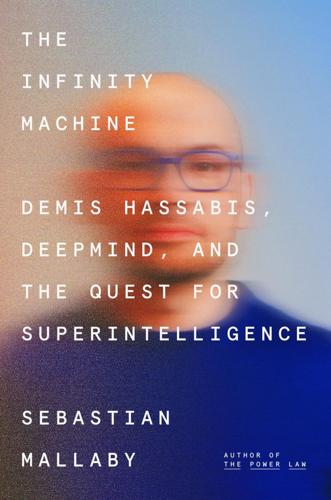
The Infinity Machine: Demis Hassabis, DeepMind, and the Quest for Superintelligence
by Sebastian Mallaby; · 30 Mar 2026 · 607pp · 161,998 words
important things you’re supposed to be doing, or spending time with family. “What I do regard as important is, I want to build a Large Hadron Collider in space.” We were back to his core theme. Money and power were not ends in themselves. They were a means to scientific knowledge. “Life
…
’s very short and there’s not a lot of time to waste if you want to do that sort of project.” The Large Hadron Collider is a particle accelerator created by CERN, buried in a seventeen-mile circular tunnel that straddles the border between France and Switzerland. By smashing subatomic
…
reality at the most fundamental level.” But why do that in space? Hassabis said he was imagining enormous, moon-sized experimental equipment. A sort of Large Hadron Collider Plus Plus. “You are in Alpha Centauri,” he explained, referring to the nearest solar system to Earth’s. “And you are using the gravity of
…
than a century, this debate had resisted resolution. Humans could not actually observe what was happening at anything close to the Planck scale; even the Large Hadron Collider captured subatomic particles at a much cruder resolution. But by building a space-based supercollider to lift nature’s veil, Hassabis aspired to change the
…
, 438n27 Laing, Chris, 177–79, 189–90, 421n9, 421n11 LaMDA, 289, 302, 311 language models, 214–17, 222–23, 284–85, 352–53, 361, 363 Large Hadron Collider, CERN, 387–89 Leavitt, Karoline, 370 LeCun, Yann, 99, 132 on AGI, 86, 88, 320–21, 324, 410n32 on deep learning compared with RL, 196
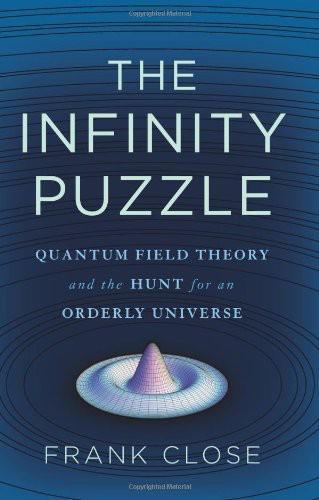
The Infinity Puzzle
by Frank Close · 29 Nov 2011 · 449pp · 123,459 words
golden age. Forty years later, their legacy includes the largest and most ambitious experiments in physics that have ever been attempted: the simulation at the Large Hadron Collider (LHC) at CERN in Geneva of the first moments in the universe after the Big Bang. For more than two thousand years, until ’t Hooft
…
the path from a sideshow of a talk in Amsterdam to a multibillion-dollar worldwide scientific collaboration that hopes to answer such questions at the Large Hadron Collider. part genesis Chapter 1 the point of infinity Abdus Salam arrives in Cambridge from India in 1946 and becomes a theoretical physicist by chance. Paul
…
its manifestation in particle physics, where in the public’s mind it is associated with the name of Peter Higgs, is an aim of the Large Hadron Collider at CERN. However, it turns out that nature has made use of Hidden Symmetry in a wide variety of phenomena, so much so that symmetry
…
. However, it would be three more years before this was finally understood, and a half century before the remarkable implications would be pursued at the Large Hadron Collider. Chapter 9 “the boson that has been named after me,” a.k.a. the hig gs boson How Peter Higgs—and many others—discover the
…
Boson is so famous that its anagram appears in Nick Kemmer’s favorite crossword: the Guardian.1 Ask why CERN in Geneva is building the Large Hadron Collider (LHC), costing some $10 billion,2 and the stock answer will be “to discover the Higgs Boson.” Yet who is Higgs? With such an expensive
…
first tested and then confirmed the predictions of the theory with remarkable success. These have formed the base to today’s conceit that, at the Large Hadron Collider, the final proofs of the whole edifice will be achieved. Third, as those experiments began to confirm the theory, maneuvering for the Nobel stakes began
…
that you keep the tunnel large enough to put a proton accelerator in there one day.”6 The concept that would eventually become the LHC—Large Hadron Collider—was already in John Adams’s mind in 1976, long before LEP had begun. Although the idea of LEP had been born, the route to
…
, the stuff that makes us might turn out to be no more than flotsam in a sea of dark matter. big bang day When the Large Hadron Collider was approved in 1993, some wondered if it would ever become reality. Huge technical challenges had to be overcome; nearly every particle physicist on the
…
. LEP: Large Electron Positron collider at CERN. Lepton: Particles such as electron and neutrino that do not feel the strong force and have spin ½. LHC: Large Hadron Collider; accelerator at CERN. Magnetic moment: Quantity that describes the reaction of a particle to the presence of a magnetic field. Mass: The inertia of a
…
magnetic levitation systems for high-speed transport, and in the world’s largest cryogenic facility—the twenty-seven-kilometer ring of superconducting magnets of the Large Hadron Collider, the particle accelerator at CERN in Geneva. 8. See Chapter 5, note 12. The Cooper Pairs act as bosons, but they do not transmit a
…
/Case’s theorem, 59 CERN ISR (Intersecting Storage Rings), 314 World Wide Web and, 326, 350 Index See also LEP (Large Electron Positron collider); LHC (Large Hadron Collider); SPS (Super Proton Synchrotron) CERN Council, 320, 328 CERN Courier, 152, 308 Charap, John, 160–161 Cherwell, Lord (Frederick Lindemann), 99 Children’s comics (1950s
…
, 189, 253, 255 (fig.), 337, 339, 340, 345 Weinberg and, 253, 256, 277–278, 345 Les Houches summer school, 212–213 Levy, Michel, 213 LHC (Large Hadron Collider) accident/repair, 351–352 Big Bang and, 12, 151–152, 351 credit for findings, 354–355 description, 321, 347, 350–351 hidden symmetry, 123 Higgs
Collider
by Paul Halpern · 3 Aug 2009 · 279pp · 75,527 words
. Collider : the search for world’s smallest particles / by Paul Halpern. p. cm. Includes bibliographical references and index. eISBN : 978-0-470-48621-4 1. Large Hadron Collider (France and Switzerland) 2. Particles (Nuclear physics) 3. European Organization for Nuclear Research. I. Title. QC787.P73H35 2009 539.7’376094—dc22 2009007114 To Joseph
…
; Aaron Stanbro; Kenneth, Alan, Beth, Tessa, Richard, Anita, Emily, and Jake Halpern; and the rest of my family. Prologue Journey to the Heart of the Large Hadron Collider The ATLAS complex, home to the largest scientific measuring device in the world dedicated to particle physics, offers no hint of its grandeur from street
…
took a speedy elevator ride down to what is called “beam level.” Now we were at the same depth as the beam pipes for the Large Hadron Collider (LHC)—the vast ring that will be used to collect protons and other particles, accelerate them in opposite directions, and smash them together at record
…
at the history of elementary particles and the methods used to unravel their secrets. I intend this book not just as a guide to the Large Hadron Collider and the extraordinary discoveries likely to be made there, but also as a scientific exploration of humankind’s age-old quest to identify nature’s
…
the world, built at its headquarters near Geneva, Switzerland. After more than fifteen years of planning and more than eight billion dollars in funding, the Large Hadron Collider (LHC), science’s groundbreaking effort to unlock the deepest secrets of particle physics, is finally complete. It is truly the grandest experiment of all time
…
Solenoid) will employ alternative tracking and calorimetry systems to similarly collect reams of valuable collision data. At a third site, a specialty detector called LHCb (Large Hadron Collider beauty) will search for the decays of particles containing bottom quarks, with the hope of discovering the reason for the dearth of antimatter in the
…
mere trillionth of a second after the Big Bang, and understand the fundamental principles underlying all things. Since we cannot revisit the Big Bang, the Large Hadron Collider (LHC) will serve as a way of reproducing some of its fiery conditions through high-energy particle collisions. Through the relativistic transformation of energy into
…
symmetries spontaneously broke down. Presently the cosmos is thereby a bit of a jumble, like St. Pierre’s. One of the principal missions of the Large Hadron Collider (LHC) involves a kind of archeological expedition—attempting to piece together some of nature’s original symmetries. Searching for these symmetries pertains to the ultimate
…
, however. The Europeans in particular were naturally more interested in seeing CERN succeed than in supporting an American enterprise. That’s around the time the Large Hadron Collider (LHC) project was first proposed—clearly a higher priority for Europe. A New York Times editorial on May 20, 1988, argued that any American funding
…
pronounce.”23 Humanity’s best chance of finding the Higgs boson and possibly identifying some of the lightest supersymmetric companion particles now rests with the Large Hadron Collider. Though it will crash particles together at lower energies than the SSC was supposed to—14 TeV in total instead of 20 TeV—most theoretical
…
out there the LHC will find it. If all goes well, modern physics will soon have cause for celebration. 8 Crashing by Design Building the Large Hadron Collider The age in which we live is the age in which we are discovering the fundamental laws of Nature, and that day will never come
…
labs would be much less likely to happen. By making use of the old seventeen-mile tunnel for the Large Electron-Positron Collider (LEP), the Large Hadron Collider (LHC) serves as the perfect example of accelerator recycling. Digging the LEP tunnel was a colossal undertaking. From 1983 to 1988, it represented the largest
…
the most sizable detector, ATLAS (A Toroidal LHC ApparatuS). Three other detectors, called CMS (Compact Muon Solenoid), ALICE (A Large Ion Collider Experiment), and LHCb (Large Hadron Collider beauty) were placed at additional points around the ring. The designs for each of these detectors took many years of planning. Their approval recognized their
…
those of its namesake theorist) to confer the award. Completing the quartet at the LHC’s interaction points are two sizable specialized detectors: the LHCb (Large Hadron Collider beauty) experiment and ALICE (A Large Ion Collider Experiment). Two other petite detectors will operate near the ATLAS and CMS caverns, respectively: the LHCf
…
(Large Hadron Collider forward) and TOTEM (TOTal Elastic and diffractive cross-section Measurement) experiments. The focus of the LHCb experiment is to produce B-particles (particles containing the
…
the suit, stating that the court did not have jurisdiction over the matter. Trained in nuclear physics, Wagner heads a group called Citizens Against the Large Hadron Collider that he has established to warn against potential doomsday scenarios. One such scenario is the production of microscopic black holes that somehow manage to persist
…
astonishingly diverse range of eventualities. Why spend time worrying about these? Through an extraordinarily unlikely roll of quantum dice, Nima Arkani-Hamed remarked that “the Large Hadron Collider might make dragons that might eat us up.”5 Despite the lighthearted attitude of many of its researchers, though, the CERN organization itself, for the
…
seventy-five years of breathtaking progress, the future of high-energy physics is by no means certain. Much depends on what is found at the Large Hadron Collider (LHC). In the most disappointing case, if no new physics were found at the LHC, the physics community would have to rethink its priorities. Would
…
the mid-2010s, hands-on expertise will once again be key, when the LHC completes a planned upgrade to what is sometimes called the Super Large Hadron Collider. The main purpose of the enhancement is to boost the machine’s luminosity and increase the rate of productive collisions even further. When the collider
…
, But Bitter Memories Remain,” Science 302, no. 5642 (October 3, 2003): 40. 23 Lederman, The God Particle, p. x. 8. Crashing by Design: Building the Large Hadron Collider 1 CERN Communication Group, “LHC the Guide,” CERN-Brochure- 2008-001-Eng, p. 31. 9. Denizens of the Dark: Resolving the Mysteries of Dark Matter
…
of Big Bang theory Big Crunch Big Rip Big Whimper blackbodies Blackett, Patrick black holes Bekenstein’s theory on expansion of first use of term Large Hadron Collider (LHC) research and creation of MACHOs (Massive Compact Halo Objects) and microscopic physics of public concern over Blewett, John Bohr, Niels Born, Max bosons asymmetry
…
at location of public fears of work of Chadwick, James Charge-Parity (CP) violation charginos charm quarks Cherenkov, Pavel Cherenkov detectors Chu, Paul Citizens Against Large Hadron Collider Cline, David Clinton, Bill closed strings closed timeline curves (CTCs) cloud chambers CMS (Composer Muon Solenoid) detector COBE (Cosmic Background Explorer) satellite Cockcroft, John Douglas
…
Cronin, James cryostats Curie, Marie Curie, Pierre D0 Collaboration, Tevatron Dai, J. Dalton, John dark energy definition of gravitational theories on interest in mystery of Large Hadron Collider (LHC) and Supernova Cosmology Project (SCP) on dark matter axions and cold dark matter and definition of gravitational theories on hot dark matter and interest
…
in mystery of Large Hadron Collider (LHC) and MACHOs (Massive Compact Halo Objects) and WIMPs (Weakly Interacting Massive Particles) and Dave, Rahul de Broglie, Louis deceleration of the universe decupole magnets
…
helium hermeticity Hernandez, Paul Herschel, William Hertz, Heinrich hierarchy problem Higgs, Peter Higgs boson CERN particle detector research on description of Higgs’s work with Large Hadron Collider (LHC) search for lepton collider in search for nickname of “God particle” for original reception to first publication of research by Higgs on possibility of
…
Kepler, Johannes Kerst, Donald Kibble, Tom Kirschner, Robert Klein, Oskar Kolb, Adrienne W. Landsberg, Greg Lange, Fritz Large Electron Positron Collider (LEP) large extra dimension Large Hadron Collider (LHC) American researchers at antiprotons and black hole research and braneworld hypothesis and CERN and completion of damage from helium leak in dark energy and
…
particle detectors Lederman, Leon Lee, Tsung Dao Leibniz, Gottfried Leigh, R. G. Lemaitre, Georges length contraction lepton colliders leptons Leucippus LHC. See Large Hadron Collider LHCb (Large Hadron Collider beauty) particle detector LHCf (Large Hadron Collider forward) detector light Einstein’s research on electric charges and invisible region of rainbow of colors of speed of wavelength measurement of lightning
…
. (Milton) Stanley lodestone Lofgren, Edward London, Jack MACHO Project MACHOs (Massive Compact Halo Objects) magnetic fields magnetic monopoles magnetism magnets at Fermilab hadrons as at Large Hadron Collider (LHC) in Superconducting Super Collider (SSC) in synchrotrons Manhattan Project Mann, Alfred K. Manyfold Universe Many World Interpretation Marsden, Ernest matrix mechanics Maxwell, James Clerk
…
cancellation of federal support for funding of location of magnets in opposition to planning and design of rationale for building superconductivity supergroups of researchers Super Large Hadron Collider Supernova Cosmology Project (SCP) Supernova Ia supernovas superpartners Super Proton Synchrotron (SPS) superstring theory supersymmetry (SUSY) gravity and Higgs particle research and implications for Standard
Massive: The Missing Particle That Sparked the Greatest Hunt in Science
by Ian Sample · 1 Jan 2010 · 310pp · 89,838 words
sky. To switch it on is to invite an electricity bill equal to that of a fair-sized city. This is the home of the Large Hadron Collider (LHC), a multibillion-dollar atom smasher run by CERN, the European nuclear research organization, on the outskirts of Geneva. More than twenty countries clubbed together
…
around at a snail’s pace. A particle’s mass is simply a measure of how much it gets bogged down in the field. The Large Hadron Collider was designed to reveal once and for all the true nature of the field that Peter Higgs envisaged. The machine should create ripples in the
…
contain two beams of particles circulating at 7,000 GeV each, or 99.999999 percent of the speed of light. The upgrade was called the Large Hadron Collider (LHC). A hadron, from the Greek hadros, meaning “robust,” is any particle made of quarks, such as a proton. When American particle physicists came together
…
field. And the cluster of fawning men was the Higgs boson. While LEP was running, CERN had one eye on the machine’s successor, the Large Hadron Collider, which they hoped to build in the same underground tunnel. Before the project could be approved, CERN needed to be sure it had the backing
…
its annual subscription to CERN—£55 million a year—and cover the extra costs of taking part in experiments planned for LEP’s successor, the Large Hadron Collider. Waldegrave said the entries—there were 117 of them in all—made him appreciate the importance of finding the Higgs particle. He told physicists: “If
…
to running LEP until 2000, after which it was to be closed down, ripped out of the ground, and replaced with the far more powerful Large Hadron Collider. As the deadline approached, technicians pushed LEP harder and harder, and by the spring of 2000, both beams were charging around the collider’s ring
…
time for both CERN and Fermilab. The European laboratory planned to close its LEP collider the following year and replace it with the more powerful Large Hadron Collider. At Fermilab, engineers were close to finishing a five-year project to boost the Tevatron’s performance. The detectors had been given a $200 million
…
or so left to run and hadn’t destroyed the world yet. What unnerved CERN more was the prospect of a public backlash against the Large Hadron Collider, which was destined to become the most powerful particle collider in the world. If the machine was scrapped because of a collapse in public support
…
visible universe, they saw nothing more than the natural die off of stars through supernova explosions. To get a feel for just how unlikely the Large Hadron Collider was to turn up a nasty surprise, CERN scientists did a calculation. Our own sun is struck constantly by cosmic rays with at least as
…
performance into 2000, its final year of running. There were other good reasons for pushing to higher energies as well. CERN’s next machine, the Large Hadron Collider, would struggle to find the Higgs if it was lighter than around 110 GeV.1 In the LHC, the collisions would produce so much subatomic
…
decided on a compromise. They granted an extension until November 2.10 To run on any longer, they argued, would delay engineering work on the Large Hadron Collider unnecessarily.11 Even if the Higgs boson was there, and the machine kept running until December, the scientists were unlikely to make enough Higgs particles
…
GeV, in spite of the tunnel shaking under the impact of civil-engineering work that was already under way to build LEP’s successor, the Large Hadron Collider. If the plan went ahead and the Higgs boson’s mass was around 115 GeV, as the experiments now suggested, the scientists had a good
…
was scheduled to begin its highest energy run ever in spring 2001 and had a good chance of beating CERN to the Higgs before the Large Hadron Collider was built. The downside of running LEP in 2001 was that it would presumably delay the LHC, a vastly superior machine and the future of
…
lights didn’t go out until midnight. At the meeting, the greatest worry was what impact running LEP for another year would have on the Large Hadron Collider. Lyn Evans, who was managing the LHC project, said the installation schedule would have to be revised. The machine might just be ready in time
…
the hope of persuading management to reverse the decision. During the lobbying effort, someone at the lab sent him an unofficial construction schedule for the Large Hadron Collider. It suggested the machine was already facing delays, and so running LEP in 2001 would have almost no impact on its schedule. When Janot posted
…
straight recommendation from any of the senior scientific committees he’d consulted, so the existing plan to rip out LEP and make way for the Large Hadron Collider had to go ahead. He had cut the Gordian Knot. Staff scientists could hardly believe they had to learn such momentous news from a press
…
away its best chance of bagging the Higgs boson. The U.S. Tevatron scientists would pour all their efforts into finding the particle before the Large Hadron Collider was up and running, he said. “CERN will look ridiculous at having missed the opportunity, and the future of the CERN will be very dark
…
the bet that the Higgs particle would never be found didn’t end with LEP. It carries on to Fermilab’s Tevatron and CERN’s Large Hadron Collider. “I think there’s a good chance that virtual black holes will make it impossible to observe the Higgs, but, of course, if it is
…
boson had been found in 2001, scientists could have beavered away on the implications of its existence while heavy machinery installed LEP’s replacement, the Large Hadron Collider. Ultimately, though, the decision could not be made on the value of the scientific discovery alone. It later emerged that, under Maiani’s leadership, an
…
CERN.23 “Had we run LEP for longer and not come up with anything and then discovered a bloody hole in the finances of the Large Hadron Collider, it could have been ...” Cashmore stops and draws a finger across his throat. “It could have been the end of the subject. It was that
…
dramatic. It was that heavy-duty. The Large Hadron Collider was not a given. People could have pulled the plug. They could have said we were irresponsible, spending money we didn’t have, on an
…
story. The headline for The Times read: “God Particle Disappears Down £6bn Drain.” The piece wondered what the point of CERN’s new project, the Large Hadron Collider, was if its most famous goal was a figment of scientists’ imaginations. Physicists at CERN were apoplectic. What happened sounds like a game of Chinese
…
end of expectations. He explained that even if it didn’t exist, something like it did the same job and would be found by the Large Hadron Collider. The letter was never published. “I wrote to them, faxed them, called them, emailed, everything. I did the whole lot and got nowhere,” he said
…
to arrange the delivery of some exquisite electronics designed to track particles inside the Compact Muon Solenoid, or CMS, detector for the still-in-progress Large Hadron Collider. Conway remembers the trip to CERN that December for other reasons.2 For the best part of the year, his team had played a waiting
…
. Something had gone badly wrong. Evans raced across the campus and into the building, where technical staff were in the final stages of getting the Large Hadron Collider ready to crash particles together. He couldn’t believe his eyes. Alarms were flashing everywhere. The vacuum system was shot, countless magnets were knocked out
…
have been happier. The world’s media had descended on CERN for what they merrily dubbed “Big Bang Day,” the inaugural switch-on of the Large Hadron Collider. For Evans, this was the culmination of fifteen years’ work to design and build the world’s most complex machine. He wasn’t the only
…
had cleared its first major hurdle. A few hours later, protons had been sent both ways around the machine’s 27-kilometer-long racetrack. The Large Hadron Collider was working better than anyone dared hope. It was open for business. As with earlier machines, there were people who thought the
…
Large Hadron Collider was too dangerous to turn on. Walter Wagner, the retired radiation officer who had failed to get an accelerator in New York closed down ten
…
, though, such as exotic particles of dark matter or extra dimensions. The Higgs boson might pop into existence in any of several ways inside the Large Hadron Collider, but scientists predict the most likely route to be when two gluons—the particles that bind quarks together inside protons—slam together and fuse. The
…
to unravel how it gave rise to the particles we see in the universe today. According to mathematicians in Russia, we might hear that the Large Hadron Collider has created Higgs particles by an unlikely route. Two groups in Moscow, led by Irina Aref’eva and Igor Volovich at the Steklov Mathematical Institute
…
and Andrey Mironov at the Lebedev Physics Institute, think the Large Hadron Collider might create time machines.7 Not the kind that H. G. Wells dreamed up in 1895, which looked like Santa had modified his sleigh with
…
wormholes and time travel were possible. The incident at 11:18 A.M. on September 19, 2008, put all hope of new discoveries at the Large Hadron Collider on hold.8 The failure that had sent alarms flashing in the CERN control room was no minor glitch. First, the machine had to be
…
total was likely to be much higher. With no prospect of retraining the magnets any time soon, CERN scientists had to accept that when the Large Hadron Collider was ready to switch on a second time, it could not run safely at full power. The setbacks at CERN were a serious blow for
…
particle physicists. In its history, the Large Hadron Collider endured delays lasting years along with cost overruns and catastrophic accidents. Talking through the events a month before the repairs were finished, Evans was circumspect
…
. “We were all really down, but you cannot dwell on it,” he said. “You have to remember. Nobody had ever built anything like the Large Hadron Collider before.” The year 2009 marked the forty-fifth anniversary of the Higgs particle’s birth, at least in the theoretical equations written down in Peter
…
the history of the Higgs hunt. The Superconducting Supercollider was scrapped by the U.S. Congress in 1993 when it was only partially built. The Large Hadron Collider shut for a year after the catastrophic helium leak. Both of these setbacks, he says, make sense if “God” finds the Higgs particle abhorrent. “This
…
concrete Higgs discovery before 2015. It is entirely possible that the Higgs boson has already been created in particle collisions at the Tevatron and the Large Hadron Collider, but in such small numbers as to go unnoticed. A research paper published by Fermilab scientists in February 2010 illustrates the point.1 A graph
…
. 2 See “Endgame for the Tevatron,” by John Conway, Cosmic Variance blog, September 21, 2009. 3 See CERN symposium, “From the Proton Synchroton to the Large Hadron Collider—50 Years of Nobel Memories in High-Energy Physics,” December 3-4, 2009. Veltman gave his lecture, “The LHC and the Higgs Boson,” on the
…
/sun effects pollution concerns and pushing to limit sabotage Thatcher’s speech and underground location and W/Z particles and Z particles and CERN LHC (Large Hadron Collider) about/description competition with Fermilab’s Tevatron construction/schedule doomsday scenarios and explosion (2008) funding Higgs boson and media on “imaginary” goal repairs/safety system
…
the greatest hunt in science / by Ian Sample. p. cm. Includes bibliographical references and index. eISBN : 978-0-465-02291-5 1. Higgs bosons. 2. Large Hadron Collider (France and Switzerland) I. Title. QC793.5.B62S26 2010 539.7’21—dc22 2010023132
The Search for Superstrings, Symmetry, and the Theory of Everything
by John Gribbin · 29 Nov 2009 · 185pp · 55,639 words
of everything. The kind of energies needed to probe the predictions of M-theory should be achieved at the latest high energy particle accelerator, the Large Hadron Collider (LHC), which is expected to begin operating at CERN in the middle of the first decade of the twenty-first century. This follows, coincidentally, the
…
the energies so far reached in particle colliders, at around 1,000 GeV. This is excellent news, since the next generation of particle accelerator, the Large Hadron Collider at CERN, will be able to probe precisely this energy range, testing the theory of supersymmetry (and doing some other neat tricks discussed in Appendix
…
, but only at about the same relativistic factors. But by the end of the 1990s Brookhaven's Relativistic Heavy Ion Collider (RHIC) and CERN's Large Hadron Collider (LHC) should both become operational. RHIC will run at about 200 GeV per nucleon, while the LHC should reach 300 GeV per nucleon. These are
The Fabric of the Cosmos
by Brian Greene · 1 Jan 2003 · 695pp · 219,110 words
there is a Higgs ocean permeating space, Higgs particles should be among the debris from the high-energy collisions that will take place at the Large Hadron Collider, a giant atom smasher now under construction at Centre Européène pour la Recherche Nuclaire (CERN) in Geneva, Switzerland, and slated to come online in 2007
…
will be only a thousand to a few thousand times that of a proton, and that’s low enough to be within reach of the Large Hadron Collider now being built at CERN. If these string vibrations were to be excited through high-energy collisions, the accelerator’s detectors would light up like
…
scales is far greater than previously thought, tiny black holes could be produced with significantly less compression force than previously believed. Calculations show that the Large Hadron Collider may have just enough squeezing power to create a cornucopia of microscopic black holes through high-energy collisions between protons.7 Think about how amazing
…
that would be. The Large Hadron Collider might turn out to be a factory for producing microscopic black holes! These black holes would be so small and would last for such a
…
far weaker. In Chapter 13, we discussed the possibility that such microscopic black holes might be produced by high-energy proton-proton collisions at the Large Hadron Collider, the particle accelerator now under construction in Geneva, Switzerland, and slated for completion by 2007. That is an exciting prospect. But there is another tantalizing
…
particle as in a Mariano Rivera fastball, and is about 100 million times the size of the particle energies that will be produced by the Large Hadron Collider.6 The puzzling thing is that no known astrophysical process could produce particles with such high energy; experimenters are gathering more data with more sensitive
…
the precise size of the hypothesized extra dimensions, high-energy experiments to be carried out at the newly upgraded facility at Fermilab and at the Large Hadron Collider may reveal processes that appear to violate energy conservation: the energy at the end of a collision may be less than the energy at the
…
finding evidence of extra dimensions, there are a couple of specific motivations for recent upgrades on the accelerator at Fermilab and for building the mammoth Large Hadron Collider. One is to find Higgs particles. As we discussed in Chapter 9, the elusive Higgs particles would be the smallest constituents of a Higgs field
…
chance of discovering a Higgs particle in the near future. And certainly, if Fermilab fails and if the estimated mass range is nonetheless correct, the Large Hadron Collider should produce Higgs particles galore by the end of the decade. The detection of Higgs particles would be a major milestone, as it would confirm
…
of field that theoretical particle physicists and cosmologists have invoked for decades, without any supporting experimental evidence. Another major goal of both Fermilab and the Large Hadron Collider is to detect evidence of supersymmetry. Recall from Chapter 12 that supersymmetry pairs particles whose spins differ by half a unit and is an idea
…
with the Higgs, should Fermilab fail to find evidence of supersymmetry and if the expected mass range of the supersymmetric particles is fairly accurate, the Large Hadron Collider should produce them with ease. The confirmation of supersymmetry would be the most important development in elementary particle physics in more than two decades. It
…
string vibrational patterns could be as low as a thousand times the proton’s mass. Should this be the case, high-energy collisions at the Large Hadron Collider will be akin to a well-hit golf ball ricocheting around the inside of a piano; the collisions will have enough energy to excite many
…
found, and the theory’s predictions of supersymmetric partner particles—their masses, electric charges, and so on— have just been confirmed, spot on, by the Large Hadron Collider. There is no longer any doubt: string theory is the unified theory of the universe. When I dig a little deeper to see who is
…
about 10 billion cosmic ray particles with an energy equivalent to the mass of a proton (about one-thousandth of the design capacity of the Large Hadron Collider) strike each square kilometer of earth’s surface every second (and quite a few pass through your body every second as well), only about one
Neutrino Hunters: The Thrilling Chase for a Ghostly Particle to Unlock the Secrets of the Universe
by Ray Jayawardhana · 10 Dec 2013 · 203pp · 63,257 words
the best description of the subatomic world that we have, and countless experiments over three decades have verified its predictions with exquisite precision. The fabled Large Hadron Collider at CERN, the most powerful and expensive atom smasher ever, was constructed at a jaw-dropping price tag of roughly $9 billion in large part
…
in the universe, and so the search continues for a more effective mechanism. Starting in 2011, one of the five major experiments at CERN’s Large Hadron Collider, the world’s most powerful particle accelerator, occupying a circular tunnel some 27 kilometers (16.8 miles) long near the Swiss-French border, is looking
…
decade with great anticipation. EIGHT SEEDS OF A REVOLUTION The summer of 2012 marked a triumphant capstone for physics. Two separate experiments at the gigantic Large Hadron Collider (LHC) at the CERN laboratory revealed compelling evidence of the Higgs boson, one of the most elusive subatomic particles that theorists had ever concocted. With
…
proton. The researchers had little doubt the bumps signaled the discovery of the Higgs boson. The ATLAS detector, one of the two experiments at the Large Hadron Collider that found evidence for the Higgs boson (cern) Peter Higgs, who was in his eighties by this point, was a guest of honor at the
…
particle accelerators. As Boris Kayser of Fermilab emphasizes, in fact, “Neutrino physics is not terribly expensive. It’s more modest in cost than the LHC [Large Hadron Collider].” For the coming decade, physicists based in the United States expect to shift their focus to the so-called intensity frontier, which involves using intense
…
RENO collaborations presented evidence that the third mixing angle (θ13) is nonzero, and the Daya Bay experiment measured its value. 2012: Two experiments at the Large Hadron Collider at CERN discovered the long-sought Higgs boson, confirming a key prediction of the standard model. 2013: Planck spacecraft’s observations of the cosmic microwave
…
the Higgs field in the standard model that is responsible for endowing some particles with mass. In the summer of 2012, two experiments at the Large Hadron Collider reported evidence of its existence. hydrogen: The lightest and most abundant element in the universe. The most common form of hydrogen contains only a single
…
version, dubbed Super-Kamiokande—helped advance our understanding of neutrinos, notably through the detection of neutrinos from Supernova 1987A and the measurement of neutrino oscillations. Large Hadron Collider: The world’s most powerful particle accelerator, located at the CERN laboratory near Geneva. leptons: A family of elementary particles, including the electron and the
…
not conserve parity. The following year, C. S. Wu and her colleagues found evidence of parity violation in the beta decay of colbalt-60. 154 Large Hadron Collider: The LHCb experiment reported observations of CP violation in 2012: http://lanl.arxiv.org/abs/1202.6251. 155 Ettore Majorana: Sources of biographical information and
The Serious Guide to Joke Writing: How to Say Something Funny About Anything
by Sally Holloway · 2 Nov 2010 · 161pp · 38,039 words
ether! • You just need to spend time looking for them! Why not start now? Chapter Five (PRACTICAL): Double Joke-webs & The Hadron Joke Collider The Large Hadron Collider will accelerate bunches of protons... colliding them head-on..., with each collision spewing out thousands of particles at nearly the speed of light. Scientific American
…
romping round the room but it’s time for something more cerebral. I sit them down and ask them if they’ve heard of the Large Hadron Collider. Most of them have, although they’ve no idea why I’m mentioning it. ‘We’re going to use a similar concept to write jokes
…
find the deeper less obvious ideas which lead to profound jokes, thoughts and musings - a truly wonderful thing. Don’t forget... The purpose of the Large Hadron Collider is to increase our knowledge about the universe. How Stuff Works The purpose of the Hadron Joke Collider is to increase the number of jokes
…
’s advice on how to be a good president...’ So there’ll be no Cuban cigars and definitely no chatting to the interns. Science ‘The Large Hadron Collider has been built to drive particles round at high speed and crash them into each other...’ It cost millions but you could have got a
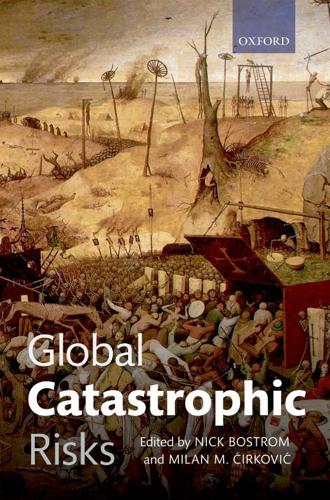
Global Catastrophic Risks
by Nick Bostrom and Milan M. Cirkovic · 2 Jul 2008
eavy Ion Collider to commission an official report in 2000. Concerns have since resurfaced with the construction of more powerful accelerators such as CERN's Large Hadron Collider. Following the Brookhaven report, Frank Wilczek distinguishes three catastrophe scenarios: 1 . Formation of tiny black holes that could start accreting surrounding matter, eventually swallowing up
…
contrast, the whole point of great accelerator projects like the Brookhaven Relativistic Heavy Ion Collider (RHIC) or the Counseil Europeen pour la Recherche Nucleaire (CERN) Large Hadron Collider (LHC) is to produce Global catastrophic risks 348 extreme conditions that take us beyond what is well understood. In that context, safety engineering enters the
…
Index Landauer, R. 1 3 9 Landauer-Brillouin's limit 3 3 1 language, evolution 5 7 Larcher, W . and Bauer, H . 2 1 0 Large Hadron Collider (LHC), CERN 347-8 probability of strangelet production 3 5 3 see also particle collider experiments laser enrichment of uranium 425 Latane, B . and Darley
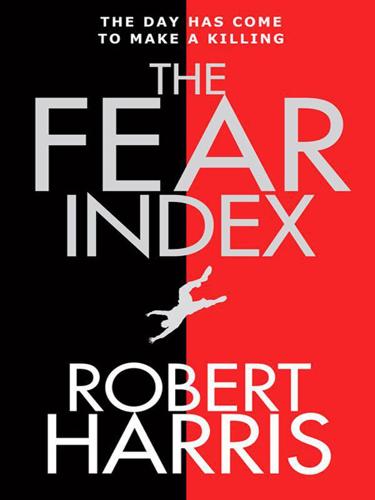
The Fear Index
by Robert Harris · 14 Aug 2011 · 312pp · 91,538 words
Chaumeton for fact-checking; Philippe Jabre of Jabre Capital Partners SA for sharing his knowledge of the financial markets; Dr Ian Bird, head of the Large Hadron Collider Computing Grid Project, for two conducted tours and insights into CERN in the 1990s; Ariane Koek, James Gillies, Christine Sutton and Barbara Warmbein of the
…
how long, Dr Hoffmann?’ ‘Fourteen years.’ Weariness once again almost overtook him. ‘I came out here in the nineties to work for CERN, on the Large Hadron Collider. I was there for about six years.’ ‘And now?’ ‘I run a company.’ ‘Called?’ ‘Hoffmann Investment Technologies.’ ‘And what does it make?’ ‘What does it
…
be only men who applied, usually refugees from the twin miseries of academia: low salaries and high tables. Half a dozen had come from the Large Hadron Collider. Hoffmann would not even consider hiring anyone without a PhD in maths or the physical sciences; all doctoral theses were expected to have been peer
…
, taken in 2001, wearing a yellow hard hat and standing 175 metres below ground in the tunnel that would eventually house the synchrotron of the Large Hadron Collider. The third was of Quarry in evening dress in London receiving the award for Algorithmic Hedge Fund Manager of the Year from a minister in
…
that he had worked in the financial sector for the past eight years; for six years before that he had been employed on developing the Large Hadron Collider. As it happened, Leclerc knew a man, a former inspector in the police, who now worked in security at CERN. He gave him a call
…
section had considered him one of the most brilliant mathematicians on site; that he had switched from the construction of the new particle accelerator, the Large Hadron Collider, to the design of the software and computer systems needed to analyse the billions of pieces of data generated by the experiments; that after a
…
dingy, functional – frosted-glass doors, too-bright strip lighting, institutional lino, grey paintwork – not at all what she had expected for the home of the Large Hadron Collider. But again she could imagine Alex here very easily: it was certainly a much more characteristic habitat of the man she had married than his
…
renowned to be awarded one of the very few non-European scholarships to work at CERN on the Large Electron–Positron Collider, forerunner of the Large Hadron Collider. Most of his colleagues unfortunately had to go off and become quants on Wall Street, where they helped build derivatives rather than particle accelerators. And
…
site at Marseilles in southern France. Data could be transmitted to and received from New York at the same velocity as particles shot around the Large Hadron Collider – a fraction below the speed of light. VIXAL was astride the fastest communications link in Europe. The beam of his torch traced other cables running
The Doomsday Calculation: How an Equation That Predicts the Future Is Transforming Everything We Know About Life and the Universe
by William Poundstone · 3 Jun 2019 · 283pp · 81,376 words
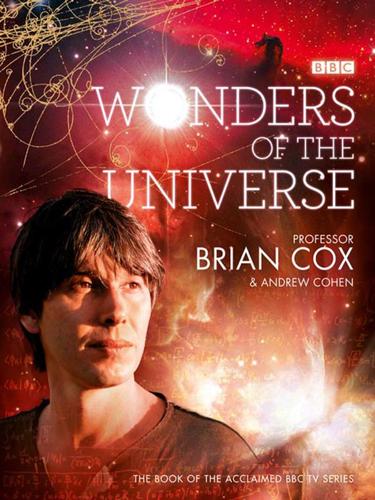
Wonders of the Universe
by Brian Cox and Andrew Cohen · 12 Jul 2011
The Greatest Story Ever Told--So Far
by Lawrence M. Krauss · 21 Mar 2017 · 335pp · 95,280 words
Lost in Math: How Beauty Leads Physics Astray
by Sabine Hossenfelder · 11 Jun 2018 · 340pp · 91,416 words
A Short History of Nearly Everything
by Bill Bryson · 5 May 2003 · 654pp · 204,260 words
The World According to Physics
by Jim Al-Khalili · 10 Mar 2020 · 198pp · 57,703 words
Meantime: The Brilliant 'Unputdownable Crime Novel' From Frankie Boyle
by Frankie Boyle · 20 Jul 2022 · 286pp · 86,480 words
Scale: The Universal Laws of Growth, Innovation, Sustainability, and the Pace of Life in Organisms, Cities, Economies, and Companies
by Geoffrey West · 15 May 2017 · 578pp · 168,350 words
The Knowledge Machine: How Irrationality Created Modern Science
by Michael Strevens · 12 Oct 2020
The Star Builders: Nuclear Fusion and the Race to Power the Planet
by Arthur Turrell · 2 Aug 2021 · 297pp · 84,447 words

Uncharted: How to Map the Future
by Margaret Heffernan · 20 Feb 2020 · 335pp · 97,468 words
Einstein's Dice and Schrödinger's Cat: How Two Great Minds Battled Quantum Randomness to Create a Unified Theory of Physics
by Paul Halpern · 13 Apr 2015 · 282pp · 89,436 words
Think Like a Rocket Scientist: Simple Strategies You Can Use to Make Giant Leaps in Work and Life
by Ozan Varol · 13 Apr 2020 · 389pp · 112,319 words
The Elements of Power: Gadgets, Guns, and the Struggle for a Sustainable Future in the Rare Metal Age
by David S. Abraham · 27 Oct 2015 · 386pp · 91,913 words
We Are the Nerds: The Birth and Tumultuous Life of Reddit, the Internet's Culture Laboratory
by Christine Lagorio-Chafkin · 1 Oct 2018
This Is for Everyone: The Captivating Memoir From the Inventor of the World Wide Web
by Tim Berners-Lee · 8 Sep 2025 · 347pp · 100,038 words
Human Frontiers: The Future of Big Ideas in an Age of Small Thinking
by Michael Bhaskar · 2 Nov 2021
Physics of the Future: How Science Will Shape Human Destiny and Our Daily Lives by the Year 2100
by Michio Kaku · 15 Mar 2011 · 523pp · 148,929 words
Age of Discovery: Navigating the Risks and Rewards of Our New Renaissance
by Ian Goldin and Chris Kutarna · 23 May 2016 · 437pp · 113,173 words
What We Cannot Know: Explorations at the Edge of Knowledge
by Marcus Du Sautoy · 18 May 2016
The God Equation: The Quest for a Theory of Everything
by Michio Kaku · 5 Apr 2021 · 157pp · 47,161 words
Space Chronicles: Facing the Ultimate Frontier
by Neil Degrasse Tyson and Avis Lang · 27 Feb 2012 · 476pp · 118,381 words
The Blockchain Alternative: Rethinking Macroeconomic Policy and Economic Theory
by Kariappa Bheemaiah · 26 Feb 2017 · 492pp · 118,882 words
Rationality: From AI to Zombies
by Eliezer Yudkowsky · 11 Mar 2015 · 1,737pp · 491,616 words
Is the Internet Changing the Way You Think?: The Net's Impact on Our Minds and Future
by John Brockman · 18 Jan 2011 · 379pp · 109,612 words
How to Spend a Trillion Dollars
by Rowan Hooper · 15 Jan 2020 · 285pp · 86,858 words

Infinity in the Palm of Your Hand: Fifty Wonders That Reveal an Extraordinary Universe
by Marcus Chown · 22 Apr 2019 · 171pp · 51,276 words

The Milky Way: An Autobiography of Our Galaxy
by Moiya McTier · 14 Aug 2022 · 194pp · 63,798 words
Open Space: From Earth to Eternity--the Global Race to Explore and Conquer the Cosmos
by David Ariosto · 24 Mar 2026 · 433pp · 116,344 words
What to Think About Machines That Think: Today's Leading Thinkers on the Age of Machine Intelligence
by John Brockman · 5 Oct 2015 · 481pp · 125,946 words
From eternity to here: the quest for the ultimate theory of time
by Sean M. Carroll · 15 Jan 2010 · 634pp · 185,116 words
Reinventing Capitalism in the Age of Big Data
by Viktor Mayer-Schönberger and Thomas Ramge · 27 Feb 2018 · 267pp · 72,552 words
Accessory to War: The Unspoken Alliance Between Astrophysics and the Military
by Neil Degrasse Tyson and Avis Lang · 10 Sep 2018 · 745pp · 207,187 words
Making Sense of Chaos: A Better Economics for a Better World
by J. Doyne Farmer · 24 Apr 2024 · 406pp · 114,438 words

The Strangest Man: The Hidden Life of Paul Dirac, Mystic of the Atom
by Graham Farmelo · 24 Aug 2009 · 1,396pp · 245,647 words
Too Big to Know: Rethinking Knowledge Now That the Facts Aren't the Facts, Experts Are Everywhere, and the Smartest Person in the Room Is the Room
by David Weinberger · 14 Jul 2011 · 369pp · 80,355 words
On the Future: Prospects for Humanity
by Martin J. Rees · 14 Oct 2018 · 193pp · 51,445 words
Science Fictions: How Fraud, Bias, Negligence, and Hype Undermine the Search for Truth
by Stuart Ritchie · 20 Jul 2020
The Myth of Artificial Intelligence: Why Computers Can't Think the Way We Do
by Erik J. Larson · 5 Apr 2021
Reinventing Discovery: The New Era of Networked Science
by Michael Nielsen · 2 Oct 2011 · 400pp · 94,847 words
Life's Greatest Secret: The Race to Crack the Genetic Code
by Matthew Cobb · 6 Jul 2015 · 608pp · 150,324 words
Paradox: The Nine Greatest Enigmas in Physics
by Jim Al-Khalili · 22 Oct 2012 · 208pp · 70,860 words
Designing Data-Intensive Applications: The Big Ideas Behind Reliable, Scalable, and Maintainable Systems
by Martin Kleppmann · 16 Mar 2017 · 1,237pp · 227,370 words

Lonely Planet Switzerland
by Lonely Planet · 3,002pp · 177,561 words
Nuts and Bolts: Seven Small Inventions That Changed the World (In a Big Way)
by Roma Agrawal · 2 Mar 2023 · 290pp · 80,461 words
Designing Data-Intensive Applications: The Big Ideas Behind Reliable, Scalable, and Maintainable Systems
by Martin Kleppmann · 17 Apr 2017
Beyond Weird
by Philip Ball · 22 Mar 2018 · 277pp · 87,082 words
The Golden Ticket: P, NP, and the Search for the Impossible
by Lance Fortnow · 30 Mar 2013 · 236pp · 50,763 words
The Half-Life of Facts: Why Everything We Know Has an Expiration Date
by Samuel Arbesman · 31 Aug 2012 · 284pp · 79,265 words
The Greatest Show on Earth: The Evidence for Evolution
by Richard Dawkins · 21 Sep 2009
Tracers in the Dark: The Global Hunt for the Crime Lords of Cryptocurrency
by Andy Greenberg · 15 Nov 2022 · 494pp · 121,217 words
This Will Make You Smarter: 150 New Scientific Concepts to Improve Your Thinking
by John Brockman · 14 Feb 2012 · 416pp · 106,582 words
Framers: Human Advantage in an Age of Technology and Turmoil
by Kenneth Cukier, Viktor Mayer-Schönberger and Francis de Véricourt · 10 May 2021 · 291pp · 80,068 words
The Future of Fusion Energy
by Jason Parisi and Justin Ball · 18 Dec 2018 · 404pp · 107,356 words
What We Owe the Future: A Million-Year View
by William MacAskill · 31 Aug 2022 · 451pp · 125,201 words

But What if We're Wrong? Thinking About the Present as if It Were the Past
by Chuck Klosterman · 6 Jun 2016 · 281pp · 78,317 words
Erwin Schrodinger and the Quantum Revolution
by John Gribbin · 1 Mar 2012 · 287pp · 87,204 words

The Rough Guide to Switzerland (Travel Guide eBook)
by Rough Guides · 24 May 2022
Big Data Analytics: Turning Big Data Into Big Money
by Frank J. Ohlhorst · 28 Nov 2012 · 133pp · 42,254 words

Them And Us: Politics, Greed And Inequality - Why We Need A Fair Society
by Will Hutton · 30 Sep 2010 · 543pp · 147,357 words
Ten Billion Tomorrows: How Science Fiction Technology Became Reality and Shapes the Future
by Brian Clegg · 8 Dec 2015 · 315pp · 92,151 words
Breaking News: The Remaking of Journalism and Why It Matters Now
by Alan Rusbridger · 14 Oct 2018 · 579pp · 160,351 words

When Einstein Walked With Gödel: Excursions to the Edge of Thought
by Jim Holt · 14 May 2018 · 436pp · 127,642 words
The Runaway Species: How Human Creativity Remakes the World
by David Eagleman and Anthony Brandt · 30 Sep 2017 · 345pp · 84,847 words
New Dark Age: Technology and the End of the Future
by James Bridle · 18 Jun 2018 · 301pp · 85,263 words
Devil Take the Hindmost: A History of Financial Speculation
by Edward Chancellor · 31 May 2000 · 860pp · 227,491 words
The Grand Design
by Stephen Hawking and Leonard Mlodinow · 14 Jun 2010 · 124pp · 40,697 words
How to Speak Money: What the Money People Say--And What It Really Means
by John Lanchester · 5 Oct 2014 · 261pp · 86,905 words
Origin Story: A Big History of Everything
by David Christian · 21 May 2018 · 334pp · 100,201 words
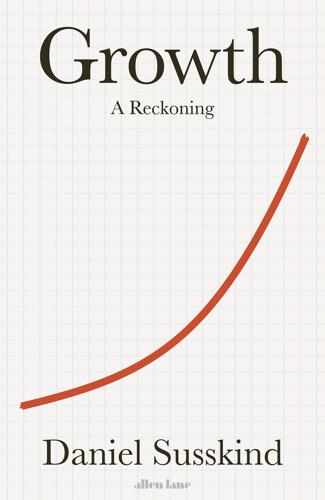
Growth: A Reckoning
by Daniel Susskind · 16 Apr 2024 · 358pp · 109,930 words
The Precipice: Existential Risk and the Future of Humanity
by Toby Ord · 24 Mar 2020 · 513pp · 152,381 words
Calling Bullshit: The Art of Scepticism in a Data-Driven World
by Jevin D. West and Carl T. Bergstrom · 3 Aug 2020
The Invention of Science: A New History of the Scientific Revolution
by David Wootton · 7 Dec 2015 · 1,197pp · 304,245 words

The Alps: A Human History From Hannibal to Heidi and Beyond
by Stephen O'Shea · 21 Feb 2017 · 322pp · 92,769 words
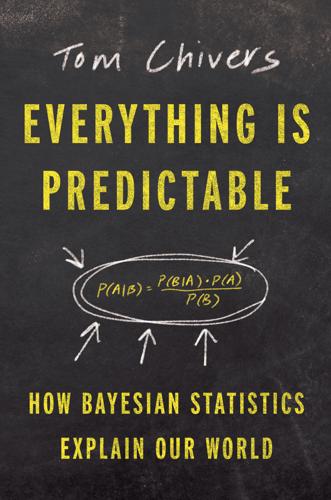
Everything Is Predictable: How Bayesian Statistics Explain Our World
by Tom Chivers · 6 May 2024 · 283pp · 102,484 words

The Internet Is a Playground
by David Thorne · 24 Mar 2010 · 314pp · 69,741 words
Superintelligence: Paths, Dangers, Strategies
by Nick Bostrom · 3 Jun 2014 · 574pp · 164,509 words
Fool Me Twice: Fighting the Assault on Science in America
by Shawn Lawrence Otto · 10 Oct 2011 · 692pp · 127,032 words
Future Politics: Living Together in a World Transformed by Tech
by Jamie Susskind · 3 Sep 2018 · 533pp
Generation A
by Douglas Coupland · 2 Jan 2009 · 312pp · 78,053 words

The Most Good You Can Do: How Effective Altruism Is Changing Ideas About Living Ethically
by Peter Singer · 1 Jan 2015 · 197pp · 59,656 words
Radical Abundance: How a Revolution in Nanotechnology Will Change Civilization
by K. Eric Drexler · 6 May 2013 · 445pp · 105,255 words
Demystifying Smart Cities
by Anders Lisdorf
Learning Scikit-Learn: Machine Learning in Python
by Raúl Garreta and Guillermo Moncecchi · 14 Sep 2013 · 122pp · 29,286 words

Swimming With Sharks: My Journey into the World of the Bankers
by Joris Luyendijk · 14 Sep 2015 · 257pp · 71,686 words
I You We Them
by Dan Gretton
Seven Databases in Seven Weeks: A Guide to Modern Databases and the NoSQL Movement
by Eric Redmond, Jim Wilson and Jim R. Wilson · 7 May 2012 · 713pp · 93,944 words
Possible Minds: Twenty-Five Ways of Looking at AI
by John Brockman · 19 Feb 2019 · 339pp · 94,769 words

High-Frequency Trading
by David Easley, Marcos López de Prado and Maureen O'Hara · 28 Sep 2013

Beautiful Data: The Stories Behind Elegant Data Solutions
by Toby Segaran and Jeff Hammerbacher · 1 Jul 2009
Hadoop: The Definitive Guide
by Tom White · 29 May 2009 · 933pp · 205,691 words
Talk on the Wild Side
by Lane Greene · 15 Dec 2018 · 284pp · 84,169 words
The Water Will Come: Rising Seas, Sinking Cities, and the Remaking of the Civilized World
by Jeff Goodell · 23 Oct 2017 · 292pp · 92,588 words
The Deep Learning Revolution (The MIT Press)
by Terrence J. Sejnowski · 27 Sep 2018
The One Device: The Secret History of the iPhone
by Brian Merchant · 19 Jun 2017 · 416pp · 129,308 words
The Future of the Professions: How Technology Will Transform the Work of Human Experts
by Richard Susskind and Daniel Susskind · 24 Aug 2015 · 742pp · 137,937 words

Future Crimes: Everything Is Connected, Everyone Is Vulnerable and What We Can Do About It
by Marc Goodman · 24 Feb 2015 · 677pp · 206,548 words

Work! Consume! Die!
by Frankie Boyle · 12 Oct 2011

The Lost Decade: 2010–2020, and What Lies Ahead for Britain
by Polly Toynbee and David Walker · 3 Mar 2020 · 279pp · 90,888 words

Underground, Overground
by Andrew Martin · 13 Nov 2012 · 326pp · 93,522 words
Smart Machines: IBM's Watson and the Era of Cognitive Computing (Columbia Business School Publishing)
by John E. Kelly Iii · 23 Sep 2013 · 118pp · 35,663 words
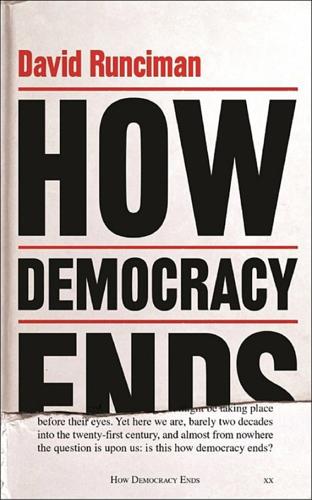
How Democracy Ends
by David Runciman · 9 May 2018 · 245pp · 72,893 words

Vue.js 2 Cookbook
by Andrea Passaglia · 27 Apr 2017 · 550pp · 84,515 words

12 Bytes: How We Got Here. Where We Might Go Next
by Jeanette Winterson · 15 Mar 2021 · 256pp · 73,068 words
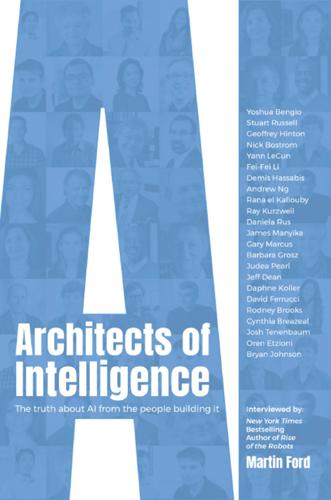
Architects of Intelligence
by Martin Ford · 16 Nov 2018 · 586pp · 186,548 words

Whistleblower: My Journey to Silicon Valley and Fight for Justice at Uber
by Susan Fowler · 18 Feb 2020 · 205pp · 71,872 words
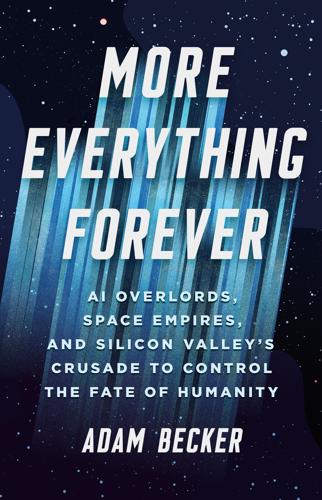
More Everything Forever: AI Overlords, Space Empires, and Silicon Valley's Crusade to Control the Fate of Humanity
by Adam Becker · 14 Jun 2025 · 381pp · 119,533 words
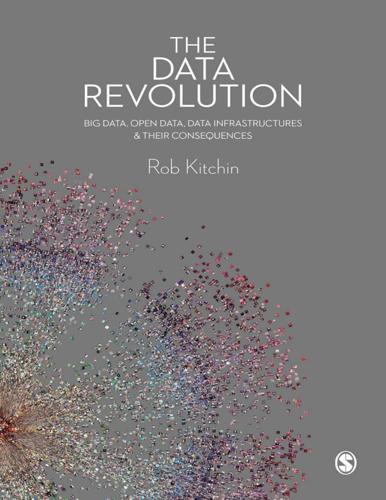
The Data Revolution: Big Data, Open Data, Data Infrastructures and Their Consequences
by Rob Kitchin · 25 Aug 2014
Blockchain: Blueprint for a New Economy
by Melanie Swan · 22 Jan 2014 · 271pp · 52,814 words
Against the Machine: On the Unmaking of Humanity
by Paul Kingsnorth · 23 Sep 2025 · 388pp · 110,920 words
The Rational Optimist: How Prosperity Evolves
by Matt Ridley · 17 May 2010 · 462pp · 150,129 words
How to Make a Few Billion Dollars
by Brad Jacobs · 15 Feb 2024 · 168pp · 46,127 words
Inferior: How Science Got Women Wrong-And the New Research That's Rewriting the Story
by Angela Saini · 29 May 2017 · 296pp · 86,188 words
Letters From an Astrophysicist
by Neil Degrasse Tyson · 7 Oct 2019 · 189pp · 49,386 words

I See You Made an Effort: Compliments, Indignities, and Survival Stories From the Edge of 50
by Annabelle Gurwitch · 6 Mar 2014 · 200pp · 64,050 words

Pathfinders: The Golden Age of Arabic Science
by Jim Al-Khalili · 28 Sep 2010 · 467pp · 114,570 words

Animals
by Emma Jane Unsworth · 2 May 2014
Throwing Rocks at the Google Bus: How Growth Became the Enemy of Prosperity
by Douglas Rushkoff · 1 Mar 2016 · 366pp · 94,209 words
Raw Data Is an Oxymoron
by Lisa Gitelman · 25 Jan 2013
The Intelligence Trap: Revolutionise Your Thinking and Make Wiser Decisions
by David Robson · 7 Mar 2019 · 417pp · 103,458 words
Information Doesn't Want to Be Free: Laws for the Internet Age
by Cory Doctorow, Amanda Palmer and Neil Gaiman · 18 Nov 2014 · 170pp · 51,205 words
Mastering Pandas
by Femi Anthony · 21 Jun 2015 · 589pp · 69,193 words
Elon Musk: A Mission to Save the World
by Anna Crowley Redding · 1 Jul 2019 · 190pp · 46,977 words
Geek Wisdom
by Stephen H. Segal · 2 Aug 2011