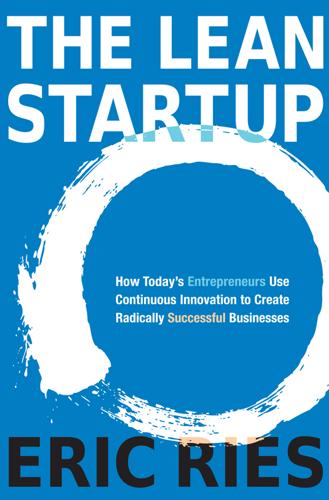
The Lean Startup: How Today’s Entrepreneurs Use Continuous Innovation to Create Radically Successful Businesses
by Eric Ries · 13 Sep 2011 · 278pp · 83,468 words
your quest toward the new and unknown.” —Tim Brown, CEO, IDEO “The road map for innovation for the twenty-first century. The ideas in The Lean Startup will help create the next industrial revolution.” —Steve Blank, lecturer, Stanford University, UC Berkeley Hass Business School “Every founding team should stop for forty-eight
…
hours and read The Lean Startup. Seriously, stop and read this book now.” —Scott Case, CEO, Startup America Partnership “The key lesson of this book is that startups happen in the
…
word startup in the title confuse you. This is a cookbook for entrepreneurs in organizations of all sizes.” —Roy Bahat, president, IGN Entertainment “The Lean Startup is a foundational must-read for founders, enabling them to reduce product failures by bringing structure and science to what is usually informal and an
…
and CROWN and the Rising Sun colophon are registered trademarks of Random House, Inc. Library of Congress Cataloging-in-Publication Data Ries, Eric, 1978– The lean startup / Eric Ries. — 1st ed. p. cm. 1. New business enterprises. 2. Consumers’ preferences. 3. Organizational effectiveness. I. Title. HD62.5.R545 2011 658.1′
…
development ideas, including lean manufacturing, design thinking, customer development, and agile development. It represents a new approach to creating continuous innovation. It’s called the Lean Startup. Despite the volumes written on business strategy, the key attributes of business leaders, and ways to identify the next big thing, innovators still struggle to
…
the world.1 My travels have taken me across countries and continents. Everywhere I have seen the signs of a new entrepreneurial renaissance. The Lean Startup movement is making entrepreneurship accessible to a whole new generation of founders who are hungry for new ideas about how to build successful companies. Although
…
my background is in high-tech software entrepreneurship, the movement has grown way beyond those roots. Thousands of entrepreneurs are putting Lean Startup principles to work in every conceivable industry. I’ve had the chance to work with entrepreneurs in companies of all sizes, in different industries, and
…
of a startup: a human institution designed to create new products and services under conditions of extreme uncertainty. That means entrepreneurs are everywhere and the Lean Startup approach can work in any size company, even a very large enterprise, in any sector or industry. 2. Entrepreneurship is management. A startup is
…
for deciding whether to pivot (changing course with one foot anchored to the ground) or persevere. In “Accelerate,” we’ll explore techniques that enable Lean Startups to speed through the Build-Measure-Learn feedback loop as quickly as possible, even as they scale. We’ll explore lean manufacturing concepts that are
…
a colossal waste of our civilization’s most precious resource: the time, passion, and skill of its people. The Lean Startup movement is dedicated to preventing these failures. THE ROOTS OF THE LEAN STARTUP The Lean Startup takes its name from the lean manufacturing revolution that Taiichi Ohno and Shigeo Shingo are credited with developing at
…
It taught the world the difference between value-creating activities and waste and showed how to build quality into products from the inside out. The Lean Startup adapts these ideas to the context of entrepreneurship, proposing that entrepreneurs judge their progress differently from the way other kinds of ventures do. Progress in
…
Code and product features were tangible to me; I could see them, understand them, and show them off. Learning, by contrast, is frustratingly intangible. The Lean Startup asks people to start measuring their productivity differently. Because startups often accidentally build something nobody wants, it doesn’t matter much if they do it
…
are significant lapses, yet new product development in our modern economy routinely requires exactly this kind of failure on the way to greatness. In the Lean Startup movement, we have come to realize that these internal innovators are actually entrepreneurs, too, and that entrepreneurial management can help them succeed; this is
…
answer. My point? Mark is an entrepreneur just like a Silicon Valley high-tech founder with a garage startup. He needs the principles of the Lean Startup just as much as the folks I thought of as classic entrepreneurs do. Entrepreneurs who operate inside an established organization sometimes are called “intrapreneurs”
…
because of the special circumstances that attend building a startup within a larger company. As I have applied Lean Startup ideas in an ever-widening variety of companies and industries, I have come to believe that intrapreneurs have much more in common with the rest
…
it has recognized the need for a new management paradigm. This is a realization that was years in the making.3 A SEVEN-THOUSAND-PERSON LEAN STARTUP In 1983, Intuit’s founder, the legendary entrepreneur Scott Cook, had the radical notion (with cofounder Tom Proulx) that personal accounting should happen by
…
because IMVU is a software company, a consumer Internet business, or a non-mission-critical application. None of these takeaways is especially useful. The Lean Startup is not a collection of individual tactics. It is a principled approach to new product development. The only way to make sense of its recommendations
…
systematically breaking down a business plan into its component parts and testing each part empirically. In other words, we need the scientific method. In the Lean Startup model, every product, every feature, every marketing campaign—everything a startup does—is understood to be an experiment designed to achieve validated learning. This experimental
…
employees’ willingness to take the time to volunteer, their level of commitment and desire, and the way to best reach them with her message. The Lean Startup model offers a way to test these hypotheses rigorously, immediately, and thoroughly. Strategic planning takes months to complete; these experiments could begin immediately. By starting
…
start learning is waste, no matter how important it might have seemed at the time. To demonstrate, I’ll share several MVP techniques from actual Lean Startups. In each case, you’ll witness entrepreneurs avoiding the temptation to overbuild and overpromise. THE VIDEO MINIMUM VIABLE PRODUCT Drew Houston is the CEO
…
enterprise sales background will recognize this funnel analysis as the traditional sales funnel that is used to manage prospects on their way to becoming customers. Lean Startups use it in product development, too. This technique is useful in many types of business, because every company depends for its survival on sequences
…
of forward motion even though the company was making little progress. What’s interesting is how closely Farb’s method followed superficial aspects of the Lean Startup learning milestones: they shipped an early product and established some baseline metrics. They had relatively short iterations, each of which was judged by its
…
of assigning letter names to each variation.) Although split testing often is thought of as a marketing-specific (or even a direct marketing–specific) practice, Lean Startups incorporate it directly into product development. These changes led to an immediate change in Farb’s understanding of the business. Split testing often uncovers surprising
…
course correction designed to test a new fundamental hypothesis about the product, strategy, and engine of growth. Because of the scientific methodology that underlies the Lean Startup, there is often a misconception that it offers a rigid clinical formula for making pivot or persevere decisions. This is not true. There is
…
Contrary to common belief, lethargy and bureaucracy are not the inevitable fate of companies as they achieve maturity. I believe that with the proper foundation, Lean Startups can grow to become lean enterprises that maintain their agility, learning orientation, and culture of innovation even as they scale. In Chapter 9, we will
…
see how Lean Startups take advantage of the counterintuitive power of small batches. Just as lean manufacturing has pursued a just-in-time approach to building products, reducing the
…
need for in-process inventory, Lean Startups practice just-in-time scalability, conducting product experiments without making massive up-front investments in planning and design. Chapter 10 will explore the metrics startups
…
an established company. I have included an epilogue called “Waste Not” in which I consider some of the broader implications of the success of the Lean Startup movement, place it in historical context (including cautionary lessons from past movements), and make suggestions for its future direction. 9 BATCH In the book Lean
…
develop. But without this foundation, efforts to encourage learning, creativity, and innovation will fall flat—as many disillusioned directors of HR can attest. The Lean Startup works only if we are able to build an organization as adaptable and fast as the challenges it faces. This requires tackling the human challenges
…
development and find ways to be more innovative. They brought together their engineering, product, and design teams to talk through ways they could apply the Lean Startup model. This change initiative had the support of IGN’s senior management, including the CEO, the head of product development, the vice president of engineering
…
updates online, Intuit can release software on a more frequent basis. Soon this program will see the QuickBooks team releasing to customers quarterly.3 As Lean Startups grow, they can use adaptive techniques to develop more complex processes without giving up their core advantage: speed through the Build-Measure-Learn feedback loop
…
. In fact, one of the primary benefits of using techniques that are derived from lean manufacturing is that Lean Startups, when they grow up, are well positioned to develop operational excellence based on lean principles. They already know how to operate with discipline, develop
…
these approaches have allowed me to increase my own learning and, more important, the productivity of the companies I have worked with. Many of the Lean Startup techniques that we pioneered at IMVU are not my original contributions. Rather, they were conceived, incubated, and executed by employees who brought their own creativity
…
for endless numbers of bosses all act as a drag on efficiency. However, the individual efficiency of these specialists is not the goal in a Lean Startup. Instead, we want to force teams to work cross-functionally to achieve validated learning. Many of the techniques for doing this—actionable metrics, continuous
…
. And yet in new product development, entrepreneurship, and innovation work in general we are still using an outdated framework. My hope is that the Lean Startup movement will not fall into the same reductionist trap. We are just beginning to uncover the rules that govern entrepreneurship, a method that can improve
…
it to entrepreneurship will unlock a vast storehouse of human potential. What would an organization look like if all of its employees were armed with Lean Startup organizational superpowers? For one thing, everyone would insist that assumptions be stated explicitly and tested rigorously not as a stalling tactic or a form
…
will also find links there to my blog, Startup Lessons Learned, as well as videos, slides, and audio from my past presentations. Lean Startup Meetups Chances are there is a Lean Startup meetup group near you. As of this writing, there are over a hundred, with the largest in San Francisco, Boston, New York
…
and a comprehensive list of events and other resources is maintained by volunteers on the Lean Startup Wiki: http://leanstartup.pbworks.com/ The Lean Startup Circle The largest community of practice around the Lean Startup is happening online, right now, on the Lean Startup Circle mailing list. Founded by Rich Collins, the list has thousands of entrepreneurs sharing
…
tips, resources, and stories every day. If you have a question about how Lean Startup might apply to your business or industry, it’s a great place to start: http://leanstartupcircle.com/ The Startup Lessons Learned Conference For the past
…
sources for thoughts on viral marketing, startup metrics, and design: http://andrewchenblog.com/ Babak Nivi writes the excellent blog Venture Hacks and was an early Lean Startup evangelist: http://venturehacks.com/. He’s since gone on to create Angel List, which matches startups and investors around the world: http://angel.co/ Other
…
John Mullins and Randy Komisar. http://ericri.es/GettingToPlanB Endnotes Introduction 1. For an up-to-date listing of Lean Startup meetups or to find one near you, see http://lean-startup.meetup.com or the Lean Startup Wiki: http://leanstartup.pbworks.com/Meetups. See also Chapter 14, “Join the Movement.” Chapter 1. Start 1.
…
s entrepreneurial journey, see this Mixergy interview: http://mixergy.com/farbood-nivi-grockit-interview/ Chapter 8. Pivot (or Persevere) 1. http://www.slideshare.net/dbinetti/lean-startup-at-sxsw-votizen-pivot-case-study 2. For more on Path, see http://techcrunch.com/2011/02/02/google-tried-to-buy-path-for-100
…
details of Wealthfront’s continuous deployment setup, see http://eng.wealthfront.com/2010/05/deployment-infrastructure-for.html and http://eng.wealthfront.com/2011/03/lean-startup-stage-at-sxsw.html 5. This description of School of One was provided by Jennifer Carolan of NewSchools Venture Fund. 6. For more on
…
Perkins Caufield & Byers Floodgate Greylock Partners Seraph Group Acknowledgments I owe a tremendous debt of gratitude to the many people who have helped make The Lean Startup a reality. First and foremost are the thousands of entrepreneurs around the world who have tested these ideas, challenged them, refined them, and improved
…
number of startups, large companies, and venture capital firms on business and product strategy, and is an entrepreneur-in-residence at Harvard Business School. His Lean Startup methodology has been written about in the New York Times, the Wall Street Journal, the Harvard Business Review, the Huffington Post, and many blogs.
Secrets of Sand Hill Road: Venture Capital and How to Get It
by Scott Kupor · 3 Jun 2019 · 340pp · 100,151 words
us into a fairer, more robust future, and I can’t think of a wiser person to take us there. Eric Ries, author of The Lean Startup and The Startup Way Introduction I am writing this book from my office on Sand Hill Road, the hallowed Silicon Valley street that holds as
Simple Rules: How to Thrive in a Complex World
by Donald Sull and Kathleen M. Eisenhardt · 20 Apr 2015 · 294pp · 82,438 words
material did not make the final version of the book, Kathy appreciates the terrific efforts of Andrea Sy on Wikipedia and Michael Heinrich on the Lean Startup. Their work will shine somewhere—soon. Finally, successive cohorts of master’s students in Kathy’s course, Strategy in Technology-based Companies (MS&E 270
A World of Three Zeros: The New Economics of Zero Poverty, Zero Unemployment, and Zero Carbon Emissions
by Muhammad Yunus · 25 Sep 2017 · 278pp · 74,880 words
next generation of social business leaders. Young people who are selected to become Y&Y fellows are guided through a unique curriculum that teaches them lean startup principles that help them build successful social businesses that are sustainable and strategically sound. Over a six-month period, Y&Y fellows attend biweekly webinars
Technical Blogging: Turn Your Expertise Into a Remarkable Online Presence
by Antonio Cangiano · 15 Mar 2012 · 315pp · 85,791 words
a blogger (http://steve-yegge.blogspot.com). You’ll find other examples if you search for blogs dedicated to methodologies, such as Agile development or Lean startups. Communication and well-defined ideas are at the heart of most professions. So if you are a programmer, blogging really stands to make you a
Recoding America: Why Government Is Failing in the Digital Age and How We Can Do Better
by Jennifer Pahlka · 12 Jun 2023 · 288pp · 96,204 words
Michael Lewis,” Your Oberver.com, March 5, 2018, https://www.yourobserver.com/article/author-michael-lewis-sarasota-ringling-town-hall-2018. 10. Eric Ries, The Lean Startup: How Today’s Entrepreneurs Use Continuous Innovation to Create Radically Successful Businesses (New York: Currency, 2011). 11. Kate Clark, “Bodega, Once Dubbed ‘America’s Most

Listen, Liberal: Or, What Ever Happened to the Party of the People?
by Thomas Frank · 15 Mar 2016 · 316pp · 87,486 words
Valley, see Cecilia Kang and Juliet Eilperin, “Why Silicon Valley Is the New Revolving Door for Obama Staffers,” Washington Post, February 28, 2015. “Obama’s lean startup” is also known as “18F”; it’s a unit of the General Services Administration. See Elaine Chen, “Building Obama’s
…
Lean Startup in America’s Biggest Bureaucracy,” TechBeacon, July 23, 2015; Jon Gertner, “Inside Obama’s Stealth Startup,” Fast Company, June 15, 2015. 3. The exchange can
Built for Growth: How Builder Personality Shapes Your Business, Your Team, and Your Ability to Win
by Chris Kuenne and John Danner · 5 Jun 2017 · 276pp · 64,903 words
or social trends. And more recently, he’s honed an Explorer-like fascination with cracking the code of complex systems, in this case applying the lean startup framework of rigorous, iterative hypothesis-testing with customers to “evidence-based” entrepreneurship and innovation itself. As he says, “The entrepreneur who is not willing to
…
. He then captained his team of programmers and online marketers while also running interference for them with senior management across Sony. Similar to today’s lean-startup approach, Coopersmith’s team had an early Sony web store up and running, securely accepting credit cards online within a very short time. The team
Peers Inc: How People and Platforms Are Inventing the Collaborative Economy and Reinventing Capitalism
by Robin Chase · 14 May 2015 · 330pp · 91,805 words
’t demand for what you are creating, nothing I have to say in this chapter will help. Steve Blank, a serial entrepreneur who began the Lean Startup movement, captured our experience succinctly in a blog post titled “No Plan Survives First Contact with Customers.”3 GoLoco’s stumbling effort, with its back

Platform Scale: How an Emerging Business Model Helps Startups Build Large Empires With Minimum Investment
by Sangeet Paul Choudary · 14 Sep 2015 · 302pp · 73,581 words
designed before they can be optimized. Optimizing poor design just makes a poorly designed system worse. The discipline of testing and measuring, championed by the Lean Startup movement, is an extremely important one. Entrepreneurs approach solution development by testing the key hypotheses that could lead to business failure. While the discipline of
…
minimum viable platform should ensure that it designs all four actions in the core interaction sufficiently to enable the end-to-end interaction. In the Lean Startup methodology, one often builds out a product by validating a set of hypotheses sequentially. Every iteration of the platform may validate a hypothesis related to
Open for Business Harnessing the Power of Platform Ecosystems
by Lauren Turner Claire, Laure Claire Reillier and Benoit Reillier · 14 Oct 2017 · 240pp · 78,436 words
Modern Monopolies: What It Takes to Dominate the 21st Century Economy
by Alex Moazed and Nicholas L. Johnson · 30 May 2016 · 324pp · 89,875 words
Do More Faster: TechStars Lessons to Accelerate Your Startup
by Brad Feld and David Cohen · 18 Oct 2010 · 326pp · 74,433 words
The Launch Pad: Inside Y Combinator, Silicon Valley's Most Exclusive School for Startups
by Randall Stross · 4 Sep 2013 · 332pp · 97,325 words
Upscale: What It Takes to Scale a Startup. By the People Who've Done It.
by James Silver · 15 Nov 2018 · 291pp · 90,771 words
Growth Hacking Techniques, Disruptive Technology - How 40 Companies Made It BIG – Online Growth Hacker Marketing Strategy
by Robert Peters · 18 May 2014 · 125pp · 28,222 words
Startup Communities: Building an Entrepreneurial Ecosystem in Your City
by Brad Feld · 8 Oct 2012 · 169pp · 56,250 words
Dual Transformation: How to Reposition Today's Business While Creating the Future
by Scott D. Anthony and Mark W. Johnson · 27 Mar 2017 · 293pp · 78,439 words
Start Small, Stay Small: A Developer's Guide to Launching a Startup
by Rob Walling · 15 Jan 2010 · 183pp · 49,460 words
Live Work Work Work Die: A Journey Into the Savage Heart of Silicon Valley
by Corey Pein · 23 Apr 2018 · 282pp · 81,873 words
The Internet Is Not the Answer
by Andrew Keen · 5 Jan 2015 · 361pp · 81,068 words
WTF?: What's the Future and Why It's Up to Us
by Tim O'Reilly · 9 Oct 2017 · 561pp · 157,589 words
Makers
by Chris Anderson · 1 Oct 2012 · 238pp · 73,824 words

Long Game: How Long-Term Thinker Shorthb
by Dorie Clark · 14 Oct 2021 · 201pp · 60,431 words
Masters of Scale: Surprising Truths From the World's Most Successful Entrepreneurs
by Reid Hoffman, June Cohen and Deron Triff · 14 Oct 2021 · 309pp · 96,168 words
Buy Then Build: How Acquisition Entrepreneurs Outsmart the Startup Game
by Walker Deibel · 19 Oct 2018
Shipping Greatness
by Chris Vander Mey · 23 Aug 2012 · 231pp · 71,248 words
Originals: How Non-Conformists Move the World
by Adam Grant · 2 Feb 2016 · 410pp · 101,260 words
Zero to One: Notes on Startups, or How to Build the Future
by Peter Thiel and Blake Masters · 15 Sep 2014 · 185pp · 43,609 words
Ctrl Alt Delete: Reboot Your Business. Reboot Your Life. Your Future Depends on It.
by Mitch Joel · 20 May 2013 · 260pp · 76,223 words

How to Turn Down a Billion Dollars: The Snapchat Story
by Billy Gallagher · 13 Feb 2018 · 359pp · 96,019 words
Abolish Silicon Valley: How to Liberate Technology From Capitalism
by Wendy Liu · 22 Mar 2020 · 223pp · 71,414 words
The End of Nice: How to Be Human in a World Run by Robots (Kindle Single)
by Richard Newton · 11 Apr 2015 · 94pp · 26,453 words
Smartcuts: How Hackers, Innovators, and Icons Accelerate Success
by Shane Snow · 8 Sep 2014 · 278pp · 70,416 words

The Education of Millionaires: It's Not What You Think and It's Not Too Late
by Michael Ellsberg · 15 Jan 2011 · 362pp · 99,063 words
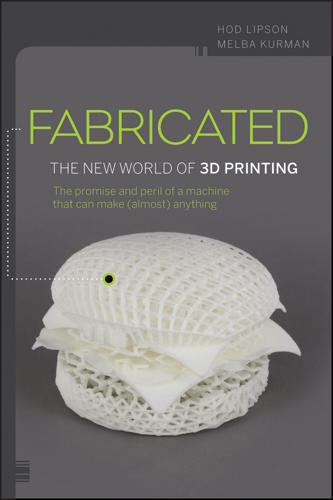
Fabricated: The New World of 3D Printing
by Hod Lipson and Melba Kurman · 20 Nov 2012 · 307pp · 92,165 words
Ask Your Developer: How to Harness the Power of Software Developers and Win in the 21st Century
by Jeff Lawson · 12 Jan 2021 · 282pp · 85,658 words
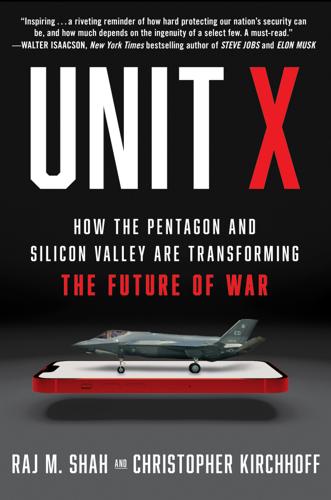
Unit X: How the Pentagon and Silicon Valley Are Transforming the Future of War
by Raj M. Shah and Christopher Kirchhoff · 8 Jul 2024 · 272pp · 103,638 words
We Are the Nerds: The Birth and Tumultuous Life of Reddit, the Internet's Culture Laboratory
by Christine Lagorio-Chafkin · 1 Oct 2018

Zucked: Waking Up to the Facebook Catastrophe
by Roger McNamee · 1 Jan 2019 · 382pp · 105,819 words
Hacking Growth: How Today's Fastest-Growing Companies Drive Breakout Success
by Sean Ellis and Morgan Brown · 24 Apr 2017 · 344pp · 96,020 words
AI Superpowers: China, Silicon Valley, and the New World Order
by Kai-Fu Lee · 14 Sep 2018 · 307pp · 88,180 words
Traction: How Any Startup Can Achieve Explosive Customer Growth
by Gabriel Weinberg and Justin Mares · 5 Oct 2015 · 232pp · 63,846 words
Platform Revolution: How Networked Markets Are Transforming the Economy--And How to Make Them Work for You
by Sangeet Paul Choudary, Marshall W. van Alstyne and Geoffrey G. Parker · 27 Mar 2016 · 421pp · 110,406 words
Why Startups Fail: A New Roadmap for Entrepreneurial Success
by Tom Eisenmann · 29 Mar 2021 · 387pp · 106,753 words
Growth Hacker Marketing: A Primer on the Future of PR, Marketing, and Advertising
by Ryan Holiday · 2 Sep 2013 · 52pp · 14,333 words

Succeeding With AI: How to Make AI Work for Your Business
by Veljko Krunic · 29 Mar 2020
Doing Good Better: How Effective Altruism Can Help You Make a Difference
by William MacAskill · 27 Jul 2015 · 293pp · 81,183 words
Startup CEO: A Field Guide to Scaling Up Your Business, + Website
by Matt Blumberg · 13 Aug 2013 · 561pp · 114,843 words
How to Build a Billion Dollar App: Discover the Secrets of the Most Successful Entrepreneurs of Our Time
by George Berkowski · 3 Sep 2014 · 468pp · 124,573 words
Exponential Organizations: Why New Organizations Are Ten Times Better, Faster, and Cheaper Than Yours (And What to Do About It)
by Salim Ismail and Yuri van Geest · 17 Oct 2014 · 292pp · 85,151 words

Uncanny Valley: A Memoir
by Anna Wiener · 14 Jan 2020 · 237pp · 74,109 words
Subscribed: Why the Subscription Model Will Be Your Company's Future - and What to Do About It
by Tien Tzuo and Gabe Weisert · 4 Jun 2018 · 244pp · 66,977 words
Brave New Work: Are You Ready to Reinvent Your Organization?
by Aaron Dignan · 1 Feb 2019 · 309pp · 81,975 words
The Geek Way: The Radical Mindset That Drives Extraordinary Results
by Andrew McAfee · 14 Nov 2023 · 381pp · 113,173 words
This Is Service Design Doing: Applying Service Design Thinking in the Real World: A Practitioners' Handbook
by Marc Stickdorn, Markus Edgar Hormess, Adam Lawrence and Jakob Schneider · 12 Jan 2018 · 704pp · 182,312 words
The End of Big: How the Internet Makes David the New Goliath
by Nicco Mele · 14 Apr 2013 · 270pp · 79,992 words
User Story Mapping: Discover the Whole Story, Build the Right Product
by Jeff Patton and Peter Economy · 14 Apr 2014 · 289pp · 80,763 words
The Startup Way: Making Entrepreneurship a Fundamental Discipline of Every Enterprise
by Eric Ries · 15 Mar 2017 · 406pp · 105,602 words
Lab Rats: How Silicon Valley Made Work Miserable for the Rest of Us
by Dan Lyons · 22 Oct 2018 · 252pp · 78,780 words
Lean Analytics: Use Data to Build a Better Startup Faster
by Alistair Croll and Benjamin Yoskovitz · 1 Mar 2013 · 567pp · 122,311 words
A More Beautiful Question: The Power of Inquiry to Spark Breakthrough Ideas
by Warren Berger · 4 Mar 2014 · 374pp · 89,725 words
The Year Without Pants: Wordpress.com and the Future of Work
by Scott Berkun · 9 Sep 2013 · 361pp · 76,849 words

Future Crimes: Everything Is Connected, Everyone Is Vulnerable and What We Can Do About It
by Marc Goodman · 24 Feb 2015 · 677pp · 206,548 words
How Big Things Get Done: The Surprising Factors Behind Every Successful Project, From Home Renovations to Space Exploration
by Bent Flyvbjerg and Dan Gardner · 16 Feb 2023 · 353pp · 97,029 words
The Jobs to Be Done Playbook: Align Your Markets, Organization, and Strategy Around Customer Needs
by Jim Kalbach · 6 Apr 2020
Frugal Innovation: How to Do Better With Less
by Jaideep Prabhu Navi Radjou · 15 Feb 2015 · 400pp · 88,647 words

The Boy Who Could Change the World: The Writings of Aaron Swartz
by Aaron Swartz and Lawrence Lessig · 5 Jan 2016 · 377pp · 110,427 words
Little Bets: How Breakthrough Ideas Emerge From Small Discoveries
by Peter Sims · 18 Apr 2011 · 207pp · 57,959 words
Pivot: The Only Move That Matters Is Your Next One
by Jenny Blake · 14 Jul 2016 · 292pp · 76,185 words
Think Like an Engineer: Use Systematic Thinking to Solve Everyday Challenges & Unlock the Inherent Values in Them
by Mushtak Al-Atabi · 26 Aug 2014 · 204pp · 66,619 words
Intertwingled: Information Changes Everything
by Peter Morville · 14 May 2014 · 165pp · 50,798 words
Remote Work Revolution: Succeeding From Anywhere
by Tsedal Neeley · 14 Oct 2021 · 223pp · 60,936 words
New Power: How Power Works in Our Hyperconnected World--And How to Make It Work for You
by Jeremy Heimans and Henry Timms · 2 Apr 2018 · 416pp · 100,130 words
SAM: One Robot, a Dozen Engineers, and the Race to Revolutionize the Way We Build
by Jonathan Waldman · 7 Jan 2020 · 277pp · 91,698 words
The Idealist: Aaron Swartz and the Rise of Free Culture on the Internet
by Justin Peters · 11 Feb 2013 · 397pp · 102,910 words
On the Clock: What Low-Wage Work Did to Me and How It Drives America Insane
by Emily Guendelsberger · 15 Jul 2019 · 382pp · 114,537 words
Kanban in Action
by Marcus Hammarberg and Joakim Sunden · 17 Mar 2014
Disrupted: My Misadventure in the Start-Up Bubble
by Dan Lyons · 4 Apr 2016 · 284pp · 92,688 words
Don't Make Me Think, Revisited: A Common Sense Approach to Web Usability
by Steve Krug · 1 Jan 2000 · 170pp · 45,121 words
The Purpose Economy: How Your Desire for Impact, Personal Growth and Community Is Changing the World
by Aaron Hurst · 31 Aug 2013 · 209pp · 63,649 words
When More Is Not Better: Overcoming America's Obsession With Economic Efficiency
by Roger L. Martin · 28 Sep 2020 · 600pp · 72,502 words
The Obstacle Is the Way: The Timeless Art of Turning Trials Into Triumph
by Ryan Holiday · 30 Apr 2014 · 165pp · 46,133 words
Team Topologies: Organizing Business and Technology Teams for Fast Flow
by Matthew Skelton and Manuel Pais · 16 Sep 2019
The Man Who Broke Capitalism: How Jack Welch Gutted the Heartland and Crushed the Soul of Corporate America—and How to Undo His Legacy
by David Gelles · 30 May 2022 · 318pp · 91,957 words
Mastering Private Equity
by Zeisberger, Claudia,Prahl, Michael,White, Bowen, Michael Prahl and Bowen White · 15 Jun 2017
Inner Entrepreneur: A Proven Path to Profit and Peace
by Grant Sabatier · 10 Mar 2025 · 442pp · 126,902 words
Essential Scrum: A Practical Guide to the Most Popular Agile Process
by Kenneth S. Rubin · 19 Jul 2012 · 584pp · 149,387 words
Black Box Thinking: Why Most People Never Learn From Their Mistakes--But Some Do
by Matthew Syed · 3 Nov 2015 · 410pp · 114,005 words
The Phoenix Project: A Novel About IT, DevOps, and Helping Your Business Win
by Gene Kim, Kevin Behr and George Spafford · 14 Jul 2013 · 395pp · 110,994 words