Mark Shuttleworth
description: South African entrepreneur; second self-funded visitor to the International Space Station
17 results
The Art of Community: Building the New Age of Participation
by Jono Bacon · 1 Aug 2009 · 394pp · 110,352 words
; to the horsemen Daniel Holbach, Jorge Castro, David Planella, Michael Hall, and Nicholas Skaggs on my team at Canonical; and to Rick Spencer, Matt Zimmerman, Mark Shuttleworth, and the LugRadio Team (Adam, Chris, Ade, and Matt). I also want to express huge thanks to the many people who contributed the stories and
…
be easier to justify the value you and your team bring to the company. When I started at Canonical and reported directly to the founder, Mark Shuttleworth, I had pretty much free reign in terms of where I directed my efforts. Mark trusted my judgment and I worked to bring value to
…
, the Community Council, was preparing to elect a new board of governing members. Clearly impressed with Mike’s contributions to the Forums Council and elsewhere, Mark Shuttleworth (the leader of the Ubuntu project) asked Mike if he would consider a nomination to the Community Council. Somewhat stunned yet flattered, Mike considered Mark
…
move forward. So seriously consider appointing a member with the privilege to cast a tie breaking vote in a deadlock situation. In the Ubuntu community, Mark Shuttleworth has this privilege. The Fedora and OpenSuSE Linux distributions have similar roles in place. If you decide to include a tie-breaking role, ensure that
…
those projects: Ubuntu (sponsored by Canonical Ltd.) Of the seven places in the Ubuntu Community Council, only one seat is appointed—that of Canonical founder Mark Shuttleworth, who has tie breaking power. The other six seats are open to anyone, from Canonical or otherwise. Fedora (sponsored by Red Hat) The Fedora Board
…
in Fedora, there would be a deadlock of votes down the middle, allowing the chairperson to cast the deciding vote. The Ubuntu approach is different: Mark Shuttleworth has the only reserved seat. Even with his tie-breaking privilege, it would be difficult to push something through unless it got to a deadlock
…
case study will give you a firm idea of how one large community has approached it, and the lessons learned. In the Beginning... In 2004, Mark Shuttleworth, a South African entrepreneur, founded the Ubuntu project. A longtime user, fan, and contributor to free software, he built his digital certificate company, Thawte, on
…
community has a number of different groups that govern it, all driven by community members. The community has been divided into four primary governing areas: Mark Shuttleworth As the founder and primary sponsor of Ubuntu, Mark is afforded the privilege of a tie breaking vote and of deciding what his employees at
…
Canonical focus their work on. Although “Mark Shuttleworth” appears at the top of Figure 10-1, the Community Council and Technical Board do not report to him; this is purely to illustrate his
…
kick off each assessment with the vital statistics of how that part of the community is structured. Mark Shuttleworth Reports to: No one Number of members: 1 Responsibilities: Special role on Community Council and Technical Board Mark Shuttleworth is the founder and primary sponsor of the Ubuntu project. He has poured millions of dollars
…
MOTU Council. Typically, the first generation of these councils is picked by the highest governing body. As an example, the Community Council was formed by Mark Shuttleworth and the forefathers of Ubuntu. Later councils, such as the Forums Council, had their initial members nominated by the Community Council. When the council term
…
have late-breaking needs that must be satisfied, so I leave a buffer of 5 slots to accommodate these needs. Finally, the list goes to Mark Shuttleworth who takes a final look and typically makes a few amendments (generally, people he wants to go who are not on the list) and then
…
’n’ Data, Hooks ’n’ Data, Plugging your stats into graphs, Visibility Is Key, Ensuring Effective Processes, Ensuring Effective Processes, In the Beginning..., In the Beginning..., Mark Shuttleworth, Mark Shuttleworth, Community Council, Community Council, Technical Board, Technical Board, Team councils, Team councils, Membership, Membership, Ubuntu Member, Ubuntu Member, Ubuntu Member, Ubuntu Member, Ubuntu Member, Ubuntu
…
: Ubuntu, Leading by example: Ubuntu skills acquisition in, Developing Knowledge, Developing Knowledge structure of, Mark Shuttleworth, Mark Shuttleworth, Community Council, Community Council, Technical Board, Technical Board, Team councils, Team councils Community Council, Community Council, Community Council founder and primary sponsor, Mark Shuttleworth, Mark Shuttleworth team councils, Team councils, Team councils Technical Board, Technical Board, Technical Board survey to
…
community, Baking in Openness, Baking in Openness young African as contributor to, Striving for Clarity, Inspiring your community Ubuntu Community Council, Governance, Governance, Commercial sponsorship, Mark Shuttleworth, Mark Shuttleworth, Community Council, Community Council, Community Council, Community Council, Community Council, Technical Board, Technical Board, Developer how items are forwarded to, Community Council, Community Council mandate
…
election to, Governance, Governance MOTU Developers, Developer requirements for, contrasted with Technical Board, Technical Board, Technical Board responsibilities of, Community Council, Community Council role of Mark Shuttleworth on, Mark Shuttleworth, Mark Shuttleworth seats on, Commercial sponsorship Ubuntu Core Developers, Developer Ubuntu Developer Summit (UDS), Reporting, Reporting, Organizing a Summit, Organizing a Summit, The Organizational Team, The
Remix: Making Art and Commerce Thrive in the Hybrid Economy
by Lawrence Lessig · 2 Jan 2009
model is a company called Canonical Ltd., a commercial entity supporting another brand of GNU/Linux called Ubuntu Linux. Launched in 2004 by the entrepreneur Mark Shuttleworth, Ubuntu aims to become “the most widely used Linux system.” Its focus initially has been really really easy desktop distributions. (I’ve experimented with a
…
, Mark Hosier, Joi Ito, Mimi Ito, Don Joyce, Brewster Kahle, Heather Lawver, Declan McCullagh, Dave Marglin, Craig Newmark, Silvia Ochoa, Tim O’Reilly, Philip Rosedale, Mark Shuttleworth, Johan Söderberg, Victor Stone, Jimmy Wales, Jerry Yang, and Robert Young. I have learned a great deal from all of them, and I hope I
…
link #93 (Last visited July 31, 2007); Gary Rivlin, “Leader of the Free World,” Wired, November 2003, available at link #94. 7. All quotes from Mark Shuttleworth taken from an interview conducted March 19, 2007, by telephone. 8. Ted Rheingold, “Don’t Outsource Your Sales,” Dogster & Catster company Blogster, available at link
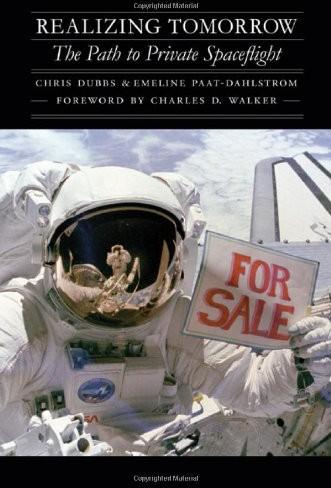
Realizing Tomorrow: The Path to Private Spaceflight
by Chris Dubbs, Emeline Paat-dahlstrom and Charles D. Walker · 1 Jun 2011 · 376pp · 110,796 words
rest of us don't have a job. No investment would be flowing into the industry." One year after Tito's flight, when South African Mark Shuttleworth visited the iss, the criteria for civilian space flight participants were in place, and NASA welcomed with open arms his participation on the Soyuz TM
…
." Dennis Tito's notion that he could fill the role once envisioned for NASA's Citizen in Space was proving true for another space tourist. Mark Shuttleworth, and each private space traveler to follow, would find a unique way to capture something different from their space experience and share it with the
We-Think: Mass Innovation, Not Mass Production
by Charles Leadbeater · 9 Dec 2010 · 313pp · 84,312 words
are not, ever, is egalitarian self-governing democracies. As an example, consider the open-source community that produces Ubuntu, a user-friendly version of Linux. Mark Shuttleworth, Ubuntu’s founder, is like a benevolent dictator and reserves some decisions for himself, such as the design of the Ubuntu website. The heart of
…
with the communities they lead: Craig Newmark, the founder of Craigslist, still calls himself a customer-service rep. Even if they are benevolent dictators, like Mark Shuttleworth, the founder of Ubuntu, they submit themselves to far more transparent and accountable decision-making. Leaders of mass collaborations, like Sydney Brenner, the architect of
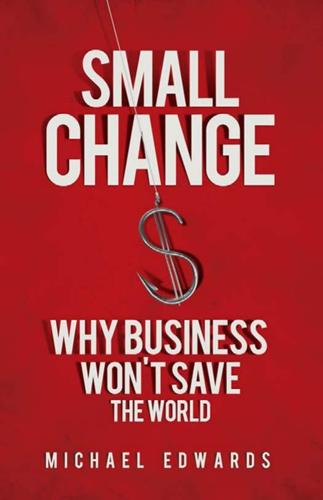
Small Change: Why Business Won't Save the World
by Michael Edwards · 4 Jan 2010
be a small but not unimportant part of the picture as a whole.3 “Are we creating world peace or fundamentally changing the world?” asks Mark Shuttleworth, the South African billionaire backer of open source software such as Ubuntu. “No, but we could shift . . . the amount of innovation per dollar they 90
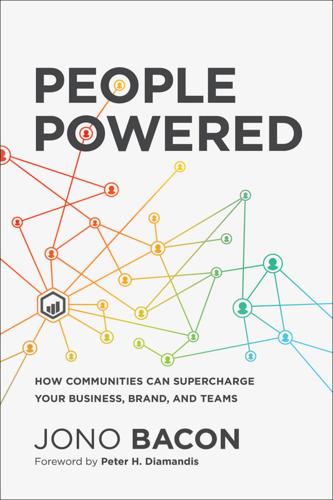
People Powered: How Communities Can Supercharge Your Business, Brand, and Teams
by Jono Bacon · 12 Nov 2019 · 302pp · 73,946 words
, at the tender age of twenty-six, I started a new job at a British company called Canonical. Founded by newly minted South African millionaire Mark Shuttleworth, the company was focused on building a competitor to Microsoft’s Windows operating system monopoly. The twist was that this new operating system, Ubuntu, was

With a Little Help
by Cory Efram Doctorow, Jonathan Coulton and Russell Galen · 7 Dec 2010 · 549pp · 116,200 words
in Communications of the Association for Computing Machinery, December 2008 17 "Chicken Little," written for Gateways, forthcoming from Tor Books, 2010 18 "Epoch," commissioned by Mark Shuttleworth for this volume 19 "I'm Only In It For the Money," written by Russell Galen for this volume 20 ~~-~-~-~-~-~-~-~-~-~-~-~-~-~-~-~-~-~-~-~-~-~-~-~-~-~-~-~-~-~-~-~-~-~-~-~-~-~-~-~-~-~ With a Little Help, Cory
…
it's BIGMAC, out there, in the wild, painfully reassembling himself on compromised 32-bit machines running his patchkit. 2956 Maybe. 2957 ~~-~-~-~-~-~-~-~-~-~-~-~-~-~-~-~-~-~-~-~-~-~-~-~-~-~-~-~-~-~-~-~-~-~-~-~-~-~-~-~-~-~ 2958 Afterword: 2959 Mark Shuttleworth of the Ubuntu project and Canonical commissioned this story; I'd always planned on selling off one commission for this volume, thinking that $10,000
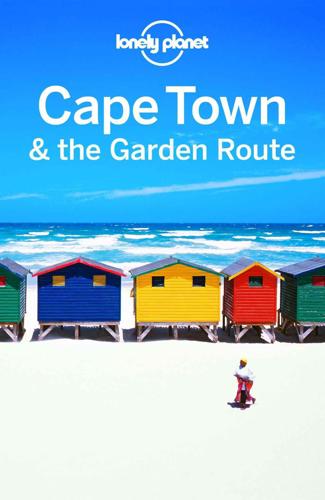
Lonely Planet Cape Town & the Garden Route (Travel Guide)
by Lucy Corne · 1 Sep 2015 · 1,203pp · 124,556 words
as the giant gyroscope (R5 extra) and tons of Lego. There's also a replica of the Soyuz capsule that returned South African tech billionaire Mark Shuttleworth to earth after his trip to the International Space Station. Heart of Cape Town MuseumMUSEUM ( MAP GOOGLE MAP ; %021-404 1967; www.heartofcapetown.co.za
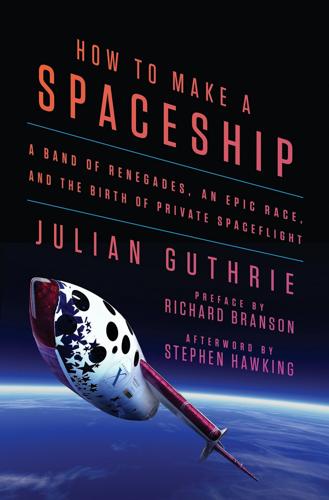
How to Make a Spaceship: A Band of Renegades, an Epic Race, and the Birth of Private Spaceflight
by Julian Guthrie · 19 Sep 2016
had ever flown in space. NASA was not taking paying customers up there. There had been only two tourists—Dennis Tito and South African entrepreneur Mark Shuttleworth—and they’d forked over tens of millions of dollars for rides into orbit aboard Russian launchers. Anousheh listened to Peter in that first meeting
Coders: The Making of a New Tribe and the Remaking of the World
by Clive Thompson · 26 Mar 2019 · 499pp · 144,278 words
18, 2018, http://www.sarahmei.com/blog/2009/04/25/why-rails-is-still-a-ghetto. “to girls what we actually do”: Jun Auza, “Why Mark Shuttleworth Owes FOSS-Women an Apology,” TechSource, September 30, 2009, accessed August 18, 2018, http://www.junauza.com/2009/09/why
…
-mark-shuttleworth-owes-foss-women.html; Chris Ball, “On Keynotes and Apologies,” Blog.printf.net, September 25, 2009, accessed August 19, 2018, https://blog.printf.net/articles/
Python for Unix and Linux System Administration
by Noah Gift and Jeremy M. Jones · 29 Jun 2009 · 603pp · 141,814 words
50 Future Ideas You Really Need to Know
by Richard Watson · 5 Nov 2013 · 219pp · 63,495 words
The New Gold Rush: The Riches of Space Beckon!
by Joseph N. Pelton · 5 Nov 2016 · 321pp · 89,109 words

Affluenza: The All-Consuming Epidemic
by John de Graaf, David Wann, Thomas H Naylor and David Horsey · 1 Jan 2001 · 378pp · 102,966 words
Moondust: In Search of the Men Who Fell to Earth
by Andrew Smith · 3 Apr 2006 · 409pp · 138,088 words
Our Dollar, Your Problem: An Insider’s View of Seven Turbulent Decades of Global Finance, and the Road Ahead
by Kenneth Rogoff · 27 Feb 2025 · 330pp · 127,791 words
Ubuntu 15.04 Server with systemd: Administration and Reference
by Richard Petersen · 15 May 2015