The Information State: Politics in the Age of Total Control
by Jacob Siegel · 24 Mar 2026 · 348pp · 103,246 words
be found in a 1950 book called Empire and Communications by Canadian professor Harold Innis. Today Innis is best known for being a mentor to Marshall McLuhan, the oracle of communications scholarship, but his ideas are in some ways more immediately relevant and accessible than those of his famous student. Innis divided
…
introduced a limiting factor on the Cold War known as mutually assured destruction. The ever-present shadow of nuclear annihilation, paradoxically, made war less violent. Marshall McLuhan called the detonation of the atomic bomb in the Second World War a “historical exclamation mark” punctuating the centuries of brute destruction and inaugurating a
…
invisible. * * * Two books appeared in 1964 that wrestled with the most profound questions of the information age. That year, the great Canadian oracle of technology Marshall McLuhan published his landmark Understanding Media: The Extensions of Man. An eccentric and original thinker whose scholarly background was in literary criticism, McLuhan had been greatly
…
across government, tech and marketing sectors, academia, and NGOs.” As it evolved, the definition of disinformation rapidly expanded. “Real, total war has become information war,” Marshall McLuhan observed in 1967. “It is being fought by subtle electric informational media—under cold conditions, and constantly.” To fight such a war, the concept of
…
sciences” Morgan, “The People-Machine.” “The classic theory of democracy” Morgan, “The People-Machine.” “Machines can do nothing” Morgan, “The People-Machine.” “historical exclamation mark” Marshall McLuhan, Understanding Media: The Extensions of Man (Gingko Press, 1964), 295. “politics, which had been edged” Martin van Creveld, Command in War (Harvard University Press, 1985
…
Blocking and Screening of Offensive Material,” https://www.govinfo.gov/content/pkg/USCODE-2020-title47/html/USCODE-2020-title47.htm. “means of moving information” Herbert Marshall McLuhan, Understanding Me: Lectures and Interviews (McClelland & Stewart, 2010), 30. “There shall be open borders” Robert L. Bartley, “Liberty’s Flame Beckons a Bit Brighter,” Wall
…
” “Global Engagement Center Functional Bureau Strategy,” Functional Bureau Strategy, October 2, 2018, https://permanent.fdlp.gov/gpo149991/FBS_GEC_UNCLASS-508.pdf. “Real, total war” Marshall McLuhan and Quentin Fiore, The Medium Is the Massage: An Inventory of Effects (Bantam Books, 1996), 138. “Information Disorder” Claire Wardle and Hossein Derakhshan, “Information Disorder
The Information: A History, a Theory, a Flood
by James Gleick · 1 Mar 2011 · 855pp · 178,507 words
retrieval. People began to name a successor to the Iron Age and the Steam Age. “Man the food-gatherer reappears incongruously as information-gatherer,”♦ remarked Marshall McLuhan in 1967.♦ He wrote this an instant too soon, in the first dawn of computation and cyberspace. We can see now that information is what
…
quite a bit longer. It covered almost the entire lifetime of the species, writing being a late development, general literacy being almost an afterthought. Like Marshall McLuhan, with whom he was often compared (“the other eminent Catholic-electronic prophet,”♦ said a scornful Frank Kermode), Ong had the misfortune to make his visionary
…
orality was not much missed. Not until the twentieth century, amid a burgeoning of new media for communication, did the qualms and the nostalgia resurface. Marshall McLuhan, who became the most famous spokesman for the bygone oral culture, did so in the service of an argument for modernity. He hailed the new
…
the field he had founded. His research produced dense, theorem-packed papers, pregnant with possibilities for development, laying foundations for broad fields of study. What Marshall McLuhan later called the “medium” was for Shannon the channel, and the channel was subject to rigorous mathematical treatment. The applications were immediate and the results
…
, she began to believe that scholars were too often blinded to the effects of the very medium in which they swam. She gave credit to Marshall McLuhan, whose Gutenberg Galaxy had appeared in 1962, for forcing them to refocus their gaze. In the age of scribes, the culture had only primitive reckonings
…
meaning would force its way back in. —Jean-Pierre Dupuy (2000)♦ THE EXHAUSTION, the surfeit, the pressure of information have all been seen before. Credit Marshall McLuhan for this insight—his most essential—in 1962: We are today as far into the electric age as the Elizabethans had advanced into the typographical
…
: IEEE Press, 1993), 455. ♦ “NOWE USED FOR AN ELEGANT WORDE”: Thomas Elyot, The Boke Named The Governour (1531), III: xxiv. ♦ “MAN THE FOOD-GATHERER REAPPEARS”: Marshall McLuhan, Understanding Media: The Extensions of Man (New York: McGraw-Hill, 1965), 302. ♦ “WHAT LIES AT THE HEART OF EVERY LIVING THING”: Richard Dawkins, The Blind
…
. 5 (14 March 1968). ♦ “HORSES AS AUTOMOBILES WITHOUT WHEELS”: Walter J. Ong, Orality and Literacy, 12. ♦ “LANGUAGE IN FACT BEARS THE SAME RELATIONSHIP”: Jonathan Miller, Marshall McLuhan (New York: Viking, 1971), 100. ♦ “FOR THIS INVENTION WILL PRODUCE FORGETFULNESS”: Plato, Phaedrus, trans. Benjamin Jowett (Fairfield, Iowa: First World Library, 2008), 275a. ♦ “TWO THOUSAND
…
YEARS OF MANUSCRIPT CULTURE”: Marshall McLuhan, “Culture Without Literacy,” in Eric McLuhan and Frank Zingrone, eds., Essential McLuhan (New York: Basic Books, 1996), 305. ♦ “THIS MIRACULOUS REBOUNDING OF THE VOICE”: Pliny
…
CANNOT HELP FEELING”: Phaedrus, trans. Benjamin Jowett, 275d. ♦ “WE ARE IN OUR CENTURY ‘WINDING THE TAPE BACKWARD’ ”: Marshall McLuhan, “Media and Cultural Change,” in Essential McLuhan, 92. ♦ “THE LARGER THE NUMBER OF SENSES INVOLVED”: Jonathan Miller, Marshall McLuhan, 3. ♦ “ACOUSTIC SPACE IS ORGANIC”: Playboy interview, March 1969, in Essential McLuhan, 240. ♦ “MEN LIVED UPON
…
), 14. ♦ “TO WHICH RESULT THAT HORRIBLE MASS OF BOOKS”: Gottfried Wilhelm Leibniz, Leibniz Selections, ed. Philip P. Wiener (New York: Scribner’s, 1951), 29; cf. Marshall McLuhan, The Gutenberg Galaxy (Toronto: University of Toronto Press, 1962), 254. ♦ “THOSE DAYS, WHEN (AFTER PROVIDENCE”: Alexander Pope, The Dunciad (1729) (London: Methuen, 1943), 41. ♦ “KNOWLEDGE
…
, N.J.: Princeton University Press, 2000), 119. ♦ “WE ARE TODAY AS FAR INTO THE ELECTRIC AGE”: Marshall McLuhan, The Gutenberg Galaxy (Toronto: University of Toronto Press, 1962), 1. ♦ “TODAY … WE HAVE EXTENDED OUR CENTRAL NERVOUS SYSTEMS”: Marshall McLuhan, Understanding Media: The Extensions of Man (New York: McGraw-Hill, 1965), 3. ♦ “WHAT WHISPERS ARE THESE
…
, Netherlands: Kluwer, 2000. Gell-Mann, Murray, and Seth Lloyd. “Information Measures, Effective Complexity, and Total Information.” Complexity 2, no. 1 (1996): 44–52. Genosko, Gary. Marshall McLuhan: Critical Evaluations in Cultural Theory. Abingdon, U.K.: Routledge, 2005. Geoghegan, Bernard Dionysius. “The Historiographic Conceptualization of Information: A Critical Survey.” Annals of the History
…
A. “The Magical Number Seven, Plus or Minus Two: Some Limits on Our Capacity for Processing Information.” Psychological Review 63 (1956): 81–97. Miller, Jonathan. Marshall McLuhan. New York: Viking, 1971. ———. States of Mind. New York: Pantheon, 1983. Millman, S., ed. A History of Engineering and Science in the Bell System: Communications
…
of Quantum Information Processing.” Computer 33 (2000): 38–45. Stein, Gabriele. The English Dictionary Before Cawdrey. Tübingen, Germany: Max Neimeyer, 1985. Steiner, George. “On Reading Marshall McLuhan.” In Language and Silence: Essays on Language, Literature, and the Inhuman, 251–68. New York: Atheneum, 1967. Stent, Gunther S. “That Was the Molecular Biology
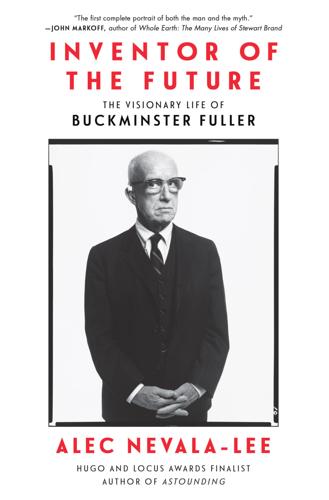
Inventor of the Future: The Visionary Life of Buckminster Fuller
by Alec Nevala-Lee · 1 Aug 2022 · 864pp · 222,565 words
British economist Barbara Ward, and an exceptional figure who connected with Fuller on the first day. Hearing someone call his name, Fuller turned to see Marshall McLuhan, who was brandishing Nine Chains and No More Secondhand God. “I am your disciple,” McLuhan reportedly said. “I’ve joined your conspiracy.” They quickly hit
…
buttons printed with a simple question: “Why haven’t we seen a photograph of the whole Earth yet?” He sent them to public intellectuals, including Marshall McLuhan, and the only one to reply was Fuller, who pointed out that it was possible only to see half the earth at once. Brand was
…
packager named Jerome Agel, who worked with the graphic designer Quentin Fiore on a series of innovative paperbacks, including The Medium Is the Massage by Marshall McLuhan. Agel had met with Fuller to discuss a potential collaboration, and when the project was abruptly reactivated by Bantam Books, the team had only nine
…
Manual for the Entire Universe” and “Utopia Four Comix.” In the latter, Fuller was depicted as part of a team of countercultural superheroes—along with Marshall McLuhan, the feminist Kate Millett, and the academic Charles A. Reich—who turn out to be utterly incapable of dealing with the realities of the inner
…
this exchange coincided with the release of the critic Hugh Kenner’s book Bucky: A Guided Tour of Buckminster Fuller. Kenner, a longtime associate of Marshall McLuhan, had befriended Fuller on Ezra Pound’s advice that “one has an obligation to visit the great men of one’s own time,” and he
…
speaking schedule, which he doubted he could maintain. The financial pressures made it hard to be selective, and the consequences were sometimes embarrassing. Along with Marshall McLuhan, Jonas Salk, and Norman Cousins, Fuller agreed to participate in the fourth International Conference on the Unity of the Sciences, which was scheduled for New
…
. ———. R. Buckminster Fuller. New York: George Braziller, 1962. McKibben, Bill, ed. American Earth: Environmental Writing Since Thoreau. New York: Penguin, 2008. McLuhan, Marshall. Letters of Marshall McLuhan. Edited by Matie Molinaro, Corinne McLuhan, and William Toye. Toronto: Oxford University Press, 1987. Meehan, Patrick J. Frank Lloyd Wright Remembered. Washington, DC: Preservation Press
…
: Divine Arts, 2011). Wozniak was echoing a frequent comparison, with the most common version—“the Leonardo da Vinci of the twentieth century”—often attributed to Marshall McLuhan, who actually praised RBF as “the twentieth century Pythagoras” (McLuhan to Bruce Carrick, September 10, 1974, B375-V6). Janek Kaliczak: Itinerary, February 1, 1982. “the
…
,” in SD, 10229. Fuller drank copiously: Wigley, Buckminster Fuller Inc., 284. “the glorious Bucky”: From the Library of Buckminster Fuller, 80. industry of the future: Marshall McLuhan to RBF, August 11, 1963, and RBF to McLuhan, August 25, 1963, B122-F6. “technology as creator”: McLuhan to RBF, September 17, 1964, in
…
Marshall McLuhan, Letters of Marshall McLuhan, ed. Matie Molinaro, Corinne McLuhan, and William Toye (Toronto: Oxford University Press, 1987), 309. “a necessity”: Ibid. “McLuhan has never”: RBF, “McLuhan, Marshall,” in SD
…
is more than 99 percent invisible” (RBF, Earth, Inc., 62). “He was organizing his present”: Olafur Eliasson, interviewed by author, August 29, 2019. Bill McKibben: “Marshall McLuhan . . . coined the term ‘global village.’ Fuller’s ‘Spaceship Earth’ is the other great description of our planet from the moment of new insight that coincided
From Counterculture to Cyberculture: Stewart Brand, the Whole Earth Network, and the Rise of Digital Utopianism
by Fred Turner · 31 Aug 2006 · 339pp · 57,031 words
as a whole, as well as the political process that brought it into being, hippies from Manhattan to HaightAshbury read Norbert Wiener, Buckminster Fuller, and Marshall McLuhan. Introduction [ 5 ] Through their writings, young Americans encountered a cybernetic vision of the world, one in which material reality could be imagined as an information
…
Cage and Robert Rauschenberg, embraced the systems orientation and even the engineers of the military-industrial research establishment. Together they read Norbert Wiener and, later, Marshall McLuhan and Buckminster Fuller; across the late 1950s and well into the 1960s, they made those writings models for their work. At the same time, both
…
a commune, USCO was more than a performance team. It was a social system unto itself. Through it, Brand encountered the works of Norbert Wiener, Marshall McLuhan, and Buckminster Fuller—all of whom would become key influences on the Whole Earth community—and began to imagine a new synthesis of cybernetic theory
…
to spiritual meditation.”19 In the final moments, the audience was to experience the mystical unity that ostensibly bound together USCO’s members. Comprehensive Designers: Marshall McLuhan and Buckminster Fuller By the mid-1960s, USCO’s performances marked the cutting edge of countercultural art. USCO had built multimedia backdrops for talks by
…
Timothy Leary (whose Millbrook, New York, mansion received regular visits from USCO members) and Marshall McLuhan. In 1966 they supplied multimedia designs for Murray the K’s World—a huge discotheque created within an abandoned airplane hangar—that appeared on the
…
of everyday life and to new electronic communication technologies. These turns grew in large part out of USCO’s engagement with the technocentric visions of Marshall McLuhan and Buckminster Fuller. Each of these theorists depicted technology as a tool for social transformation. At the same time, both turned their backs on the
…
Brand both ways of imagining technology as a source of social transformation and living models of how to become a cultural entrepreneur. By the time Marshall McLuhan came to the attention of the artists in USCO, he had been a professor of English literature, primarily at the University of Toronto, for nearly
…
Whole Earth network for years after that. But in the early 1960s, the linking of the global and the local helped account for much of Marshall McLuhan’s appeal within the emerging counterculture. McLuhan’s simultaneous celebration of new media and tribal social forms allowed people like Stewart Brand to imagine technology
…
ITCHY BOOTS SITTING AROUND IN ONE PLACE VERY LONG.”37 Grafted onto the historical figure of the American cowboy, this new “Cowboy Nomad” is part Marshall McLuhan and part Ken Kesey. He roams, but he takes his electronic (and psychedelic) technology with him. He can’t bear the commercial American landscape or
…
offer. Mobile, wealthy, handsome, completely networked in both the technological and the political sense, Negroponte was a new kind of man. As an echo of Marshall McLuhan, though, he was also the reincarnation of an earlier generation of hero. Like the Media Lab he headed, Negroponte was the living bridge between the
…
group of like-minded friends into a loose confederation they called the Freedom Conspiracy. He read psychologist Wilhelm Reich’s calls for sexual freedom and Marshall McLuhan’s multimedia collage books, and at the same time discovered Ayn Rand. In his senior year, he wrote a long paper on the libertarian stream
…
’s good friends Wyndham Lewis and the anthropologist Edmund Carpenter. For insights into McLuhan’s intellectual biography, see Marchand, Marshall McLuhan; Gordon, Marshall McLuhan; Theall, Virtual Marshall McLuhan; Stamps, Unthinking Modernity; Horrocks, Marshall McLuhan and Virtuality. 22. Theall, Virtual Marshall McLuhan, 30. 23. McLuhan, Gutenberg Galaxy, 252, 31; McLuhan, Understanding Media, 3. 24. At several points in his writing, McLuhan
…
the ‘New Economy’ Measure up to the Great Inventions of the Past?” Journal of Economic Perspectives 14, no. 4 (2000): 49 –74. Gordon, W. Terrence. Marshall McLuhan: Escape into Understanding: A Biography. New York: Basic Books, 1997. Gosse, Van. “A Movement of Movements: The Definition and Periodization of the New Left.” In
…
Hacking a Crime?” Harper’s Magazine, March 1990. Holloway, Mark. Heavens on Earth: Utopian Communities in America, 1680 –1880. New York: Dover, 1966. Horrocks, Christopher. Marshall McLuhan and Virtuality. Cambridge: Icon Books, 2000. Houriet, Robert. Getting Back Together. New York: Coward McCann and Geoghegan, 1971. Hughes, Thomas Park. Rescuing Prometheus. New York
…
: MIT Press, 2001. Marable, Manning. Race, Reform, and Rebellion: The Second Reconstruction in Black America, 1945–1982. Jackson: University Press of Mississippi, 1984. Marchand, Philip. Marshall McLuhan: The Medium and the Messenger. New York: Ticknor and Fields, 1989. Markoff, John. What the Dormouse Said . . . How the 60s Counterculture Shaped the Personal Computer
…
the Information Age. London: Pluto Press, 2004. Tetzeli, Rick. “Managing in a World Out of Control.” Fortune, September 5, 1994. Theall, Donald F. The Virtual Marshall McLuhan. Montreal: McGill–Queen’s University Press, 2001. Thrift, Nigel. “‘It’s the Romance Not the Finance That Makes Business Worth Pursuing’: Disclosing a New Market
Made to Break: Technology and Obsolescence in America
by Giles Slade · 14 Apr 2006 · 384pp · 89,250 words
book, The Hidden Persuaders, in 1957, which revealed how advertisers relied on motivational research to manipulate potential buyers. Others, including Norman Cousins, John Kenneth Galbraith, Marshall McLuhan, Archibald MacLeish, and Victor Papanek, would follow Packard’s lead in pointing out how the media create artificia needs within vulnerable consumers.The sheer volume
…
, there was renewed determination to create an international forum stronger and more effective than the League of Nations had been between the wars. Decades before Marshall McLuhan coined the phrase “global village,” Cousins clearly understood the planetary implications of the previous years of confli t: “The world has at last become a
…
the Soviets. It challenged head-on two of the most basic premises of American ideology: technological superiority and the economic prosperity it supposedly fostered. As Marshall McLuhan would later observe, “The firs sputnik . . . was a witty taunting of the capitalist world by means of a new kind of technological image or icon
…
quasi–public intellectual, Packard hastily constructed books that would prefigu e popular works by Rachel Carson, Betty Friedan, John Kenneth Galbraith, Jules Henry, Christopher Lasch, Marshall McLuhan, and Ralph Nader. Packard was the firs writer to catch this wave. In just three years, he produced three nonfi tion bestsellers in a row
…
DDB put on psychological obsolescence through their VW ads at the very beginning of the 1960s has been with us ever since. THEODORE LEVITT AND MARSHALL MCLUHAN Bernbach was not the only 1960s marketing genius who was obsessed with obsolescence. Fascinated by the economic theories of Joseph Schumpeter and Peter F. Drucker
…
for disassembly” or “green design.” The attraction of obsolescence as a topic of discussion led to one of the oddest phenomena of the 1960s: Herbert Marshall McLuhan. Patience, or impatience, but above all interest on the part of New York’s advertising, artistic, business, educational, electronic, and media leaders turned this Canadian
…
Thomas E. Bonsall, Disaster in Dearborn: The Story of the Edsel (Stanford: Stanford University Press, 2002), esp. chap. 12, “Why the Edsel Failed.” 16. Herbert Marshall McLuhan, Understanding Media: The Extensions of Man (New York: McGraw-Hill, 1964), p. 338. 17. George Nelson, “Obsolescence,” Industrial Design, 3, no. 6 (December 1956): 81
…
impetus behind the life cycle examinations of beverage containers in many nations over the next few years. 62. McLuhan, Understanding Media, p. 24. 63. Herbert Marshall McLuhan, The Gutenberg Galaxy (Toronto: University of Toronto Press, 1962), p. 24. 64. Ibid., pp. 185,42. 65. McLuhan, Understanding Media, p. 230. 66. Ibid., p
…
Brenda Laurel, ed., The Art of Human-Computer Interface Design (New York: Addison Wesley, 1990), p. 189. Johnson, Interface Culture, p. 50. 53. Ibid. Herbert Marshall McLuhan, Understanding Media: The Extensions of Man (New York: McGraw Hill, 1964), p. 24. 54. Herz, Joystick Nation, pp. 5–8. 55. Scott Cohen, Zap! The
The Rise of the Network Society
by Manuel Castells · 31 Aug 1996 · 843pp · 223,858 words
dominated by the typographic mind and the phonetic alphabet order.18 For all his critics (generally turned off by the obscurity of his mosaic language), Marshall McLuhan struck a universal chord when, in all simplicity, he declared that the “medium is the message”: The mode of TV image has nothing in common
The End of Absence: Reclaiming What We've Lost in a World of Constant Connection
by Michael Harris · 6 Aug 2014 · 259pp · 73,193 words
to the printing press to Twitter—is as much an opportunity to be drawn away from something as it is to be drawn toward something. Marshall McLuhan wrote in Understanding Media that “a new medium is never an addition to an old one, nor does it leave the old one in peace
…
designed to deal with such a profoundly unnatural technology. Our devotion to reading feels wholesome, natural, but is in fact a wonderful kind of brainwashing. Marshall McLuhan, having fewer brain scans in his arsenal than Gopnik, speaks in more obscure terms when analyzing the fallout of the printing press. For him, printed
…
earlier conception of reality that had its own value. We see more, yet our vision is blurred; we feel more things, yet we are numbed. Marshall McLuhan argues that whenever we amplify some part of our experience with a given technology, we necessarily distance ourselves from it, too. (A friend of mine
…
view of things. They cut away the “haptic” symphony of senses and perceptions that make up real, lived interaction. The smell of fresh soap, say. Marshall McLuhan, in The Gutenberg Galaxy, writes about the garden of senses that we gave up in order to focus on the purely visual business of reading
…
massive translation. We are the few translators of Before and After. It’s a privileged thing to be a translator, but not an easy thing. Marshall McLuhan foretold our discomfort: Those who experience the first onset of a new technology, whether it be alphabet or radio, respond most emphatically because the new
…
machine itself: Stephan Füssel, “Gutenberg and Today’s Media Change,” Publishing Research Quarterly 16, no. 4 (Winter 2001): 3–10. “a new medium is never”: Marshall McLuhan, Understanding Media: The Extensions of Man (Berkeley, Calif.: Gingko Press, 2003), 237. “I can only describe it personally”: Alberto Manguel, interview with author, April 29
…
Way You Think?: The Net’s Impact on Our Minds and Future (New York: Harper Perennial, 2011), 271. “For the most obvious character of print”: Marshall McLuhan, The Gutenberg Galaxy (Toronto: University of Toronto Press, 1962), 40. “The eye speeded up”: Ibid., 50. “shrill and expansive individualism”: Ibid., 18. On returning to
…
-climb. “school was an invention of the printing press”: Neil Postman, Technopoly: The Surrender of Culture to Technology (New York: Vintage, 1993), 10. Marshall McLuhan argues that whenever we amplify: Marshall McLuhan, Understanding Media: The Extensions of Man, (Berkeley, Calif.: Ginkgo Press, 2003), 63–70. “Welcome to a world through glass”: “What It Does
…
Second Sex (New York: Knopf, 1953), 658. Mobile users check their PlentyofFish: Markus Frind, interview with author, July 31, 2013. Marshall McLuhan, in The Gutenberg Galaxy, writes about the garden of senses: Marshall McLuhan, The Gutenberg Galaxy (Toronto: University of Toronto Press, 1962), 21. PlentyofFish is especially solicitous: Markus Frind, interview with author, July
Utopia Is Creepy: And Other Provocations
by Nicholas Carr · 5 Sep 2016 · 391pp · 105,382 words
July 18, 2011 ONE OF MY FAVORITE YouTube videos is a clip from a 1968 Canadian TV show featuring a debate between Norman Mailer and Marshall McLuhan. The two men, both icons of the sixties, could hardly be more different. Leaning forward in his chair, Mailer is pugnacious, animated, engaged. McLuhan, abstracted
…
a genius or just had a screw loose. Both impressions, it turns out, are justified. As the novelist Douglas Coupland argued in his recent biography, Marshall McLuhan: You Know Nothing of My Work!, McLuhan’s mind was probably situated at the mild end of the autism spectrum. He also suffered from a
…
in love, in government, measure in selfishness, measure in unselfishness.” Measure in measurement, too, would seem advisable. SMARTPHONES ARE HOT October 21, 2014 THE LIGHTBULB, MARSHALL MCLUHAN wrote, is an example of a medium without content. Walk into a dark room and hit the light switch, and the bulb generates a new
…
memory,” Wired’s Clive Thompson has written, “can be an enormous boon to thinking.” But that boon comes at a price. As the media theorist Marshall McLuhan pointed out in the 1960s, media are not just passive channels of information. They supply the stuff of thought, but they also shape the process
…
record, store, and share information will play a crucial role in determining the richness, or sparseness, of its legacy. To put a new spin on Marshall McLuhan’s famous dictum, the medium is the memory. Whether through cave paintings or Facebook posts, we humans have always been eager to record our experiences
…
–57 Mar, Raymond, 250 Marcus, Gary, 333 marketing: for Facebook Home, 156–59 through social media, 53–54 on YouTube, 108–9 Marr, David, 212 Marshall McLuhan: You Know Nothing of My Work! (Coupland), 102 Martin, Paul, 335 Marx, Karl, Marxism, xvii, xviii, 26, 83, 174, 308 Marx, Leo, 131 Maslow, Abraham

The Patient Will See You Now: The Future of Medicine Is in Your Hands
by Eric Topol · 6 Jan 2015 · 588pp · 131,025 words
technology, but the modern age is the age of the electric media . . . electronic media constitutes a break boundary between fragmented Gutenberg man and integral man.” —MARSHALL MCLUHAN, 19664 Way back in 1996, the Seinfeld TV show told the story of the “difficult” patient.5 Elaine Benes, played by Julia Louis-Dreyfus, developed
…
fashion. Knowledge was disseminated widely like never before. Movable type enabled the culture to change far more than at any other time in human history. Marshall McLuhan, “the metaphysician of media,” was asked in 1969 about Gutenberg and why he thought practically every aspect of modern life is a direct consequence of
…
and industrial power, and the typographic trance of the West has endured until today, when the electronic media are at last demesmerizing us.4 If Marshall McLuhan were alive today, he might think we are at a similar break boundary in medicine. But instead of the Gutenberg press, it’s the smartphone
…
of inventions of new media for the transmission of information among persons.” —N. ST. JOHN, 16201 “Man the food-gatherer reappears incongruously as information-gatherer.” —MARSHALL MCLUHAN, 19622 In late 2013, the most expensive book ever sold in the world—Bay Psalm Book—went for $14.2 million.3,4 The book
…
been possible. Although Eisenstein stopped short of claiming that the first industrial revolution was an outgrowth of the printing press, many others have claimed this. Marshall McLuhan, in The Gutenberg Galaxy, wrote: “The invention of typography confirmed and extended the new visual stress of applied knowledge, providing the first uniformly repeatable commodity
…
12, 2014, http://sb484.kersare.net/nova/index.php/wiki/view/page/24. The Road to Emancipation One of my intellectual and visionary heroes is Marshall McLuhan, the original media guru, whom you will note has been widely quoted in this book. Back in 1962, he published The Gutenberg Galaxy: The Making
…
Age (New York, NY: W.W. Norton & Company, 2014), p. 96. 4. “Essay: The Playboy Interview: Marshall McLuhan,” Playboy, March 1969, accessed August 12, 2014, Next Nature, http://www.nextnature.net/2009/12/the-playboy-interview-marshall-mcluhan/. 5. “The Package” (Seinfeld), in Wikipedia, accessed August 12, 2014, http://en.wikipedia.org/wiki/The
To Save Everything, Click Here: The Folly of Technological Solutionism
by Evgeny Morozov · 15 Nov 2013 · 606pp · 157,120 words
”? “The Net” is a term that should appear on the last—not first!—page of our books about digital technologies; it cannot explain itself. Like Marshall McLuhan before him, Carr wants to score, rank, and compare different media and come up with some kind of quasi-scientific pecking order for them (McLuhan
…
as our guide to “the Internet” is to commit to a very particular way of thinking about digital matters. Drawing heavily on the work of Marshall McLuhan, Eisenstein argues that the importance of printing in triggering all the subsequent social transformations had not yet been sufficiently credited (hence she dubbed it the
…
we often take them to be. These platforms actually transform and modify the information they carry; it’s one of the few cases in which Marshall McLuhan’s famous dictum that the medium is the message is actually worth heeding, at least partially, for it forces us to confront the information infrastructure
…
by enjoyment.” Predictable duress that is as enjoyable as sex but involves no coercion: how can exhortation ever compete with this? B. F. Skinner, not Marshall McLuhan, is the real patron saint of “the Internet.” Zichermann and Cunningham are mostly interested in the business applications of gamification—getting people to click things
…
. Norton & Company, 2011), 16. 19 “the Net . . . provides a high-speed system”: ibid., 117. 20 McLuhan went as far as to calculate sense ratios: see Marshall McLuhan, The Gutenberg Galaxy: The Making of Typographic Man (Toronto: University of Toronto Press, 2011), 28. 20 they can do so many other things in so
Amusing Ourselves to Death: Public Discourse in the Age of Show Business
by Neil Postman and Jeff Riggenbach Ph. · 1 Apr 2013 · 204pp · 61,491 words

Whole Earth: The Many Lives of Stewart Brand
by John Markoff · 22 Mar 2022 · 573pp · 142,376 words
Reset
by Ronald J. Deibert · 14 Aug 2020
The Internet Is Not the Answer
by Andrew Keen · 5 Jan 2015 · 361pp · 81,068 words

1968: The Year That Rocked the World
by Mark Kurlansky · 30 Dec 2003 · 538pp · 164,533 words
Boom: Bubbles and the End of Stagnation
by Byrne Hobart and Tobias Huber · 29 Oct 2024 · 292pp · 106,826 words
Paper Knowledge: Toward a Media History of Documents
by Lisa Gitelman · 26 Mar 2014
The Googlization of Everything:
by Siva Vaidhyanathan · 1 Jan 2010 · 281pp · 95,852 words
Trees on Mars: Our Obsession With the Future
by Hal Niedzviecki · 15 Mar 2015 · 343pp · 102,846 words
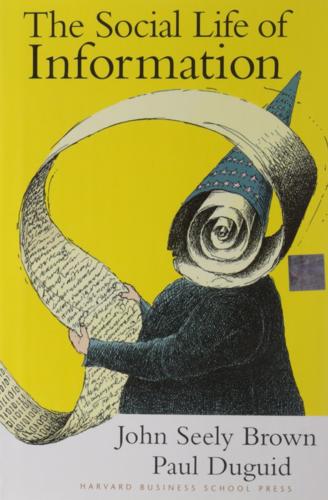
Social Life of Information
by John Seely Brown and Paul Duguid · 2 Feb 2000 · 791pp · 85,159 words
Future Shock
by Alvin Toffler · 1 Jun 1984 · 286pp · 94,017 words
World Without Mind: The Existential Threat of Big Tech
by Franklin Foer · 31 Aug 2017 · 281pp · 71,242 words
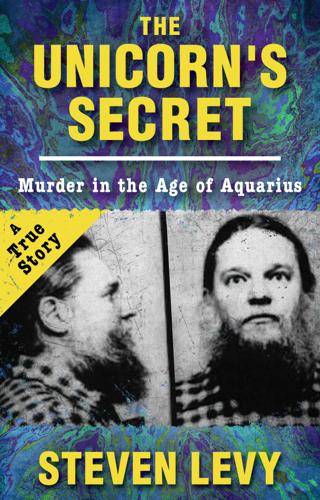
The Unicorn's Secret
by Steven Levy · 6 Oct 2016
Superbloom: How Technologies of Connection Tear Us Apart
by Nicholas Carr · 28 Jan 2025 · 231pp · 85,135 words
Nixonland: The Rise of a President and the Fracturing of America
by Rick Perlstein · 1 Jan 2008 · 1,351pp · 404,177 words
The Moral Animal: Evolutionary Psychology and Everyday Life
by Robert Wright · 1 Jan 1994 · 604pp · 161,455 words
Digital Disconnect: How Capitalism Is Turning the Internet Against Democracy
by Robert W. McChesney · 5 Mar 2013 · 476pp · 125,219 words
Nonzero: The Logic of Human Destiny
by Robert Wright · 28 Dec 2010

Mysteries of the Mall: And Other Essays
by Witold Rybczynski · 7 Sep 2015 · 342pp · 90,734 words
Throwing Rocks at the Google Bus: How Growth Became the Enemy of Prosperity
by Douglas Rushkoff · 1 Mar 2016 · 366pp · 94,209 words
The Great Wave: The Era of Radical Disruption and the Rise of the Outsider
by Michiko Kakutani · 20 Feb 2024 · 262pp · 69,328 words
Free Speech: Ten Principles for a Connected World
by Timothy Garton Ash · 23 May 2016 · 743pp · 201,651 words
The Wealth of Networks: How Social Production Transforms Markets and Freedom
by Yochai Benkler · 14 May 2006 · 678pp · 216,204 words
How to Change Your Mind: What the New Science of Psychedelics Teaches Us About Consciousness, Dying, Addiction, Depression, and Transcendence
by Michael Pollan · 30 Apr 2018 · 547pp · 148,732 words
The Vanishing Neighbor: The Transformation of American Community
by Marc J. Dunkelman · 3 Aug 2014 · 327pp · 88,121 words
Possiplex
by Ted Nelson · 2 Jan 2010

Before the Storm: Barry Goldwater and the Unmaking of the American Consensus
by Rick Perlstein · 17 Mar 2009 · 1,037pp · 294,916 words
The Net Delusion: The Dark Side of Internet Freedom
by Evgeny Morozov · 16 Nov 2010 · 538pp · 141,822 words
Smarter Than You Think: How Technology Is Changing Our Minds for the Better
by Clive Thompson · 11 Sep 2013 · 397pp · 110,130 words
The Brain That Changes Itself: Stories of Personal Triumph From the Frontiers of Brain Science
by Norman Doidge · 15 Mar 2007 · 515pp · 136,938 words
Extreme Money: Masters of the Universe and the Cult of Risk
by Satyajit Das · 14 Oct 2011 · 741pp · 179,454 words
The Attention Merchants: The Epic Scramble to Get Inside Our Heads
by Tim Wu · 14 May 2016 · 515pp · 143,055 words

Aerotropolis
by John D. Kasarda and Greg Lindsay · 2 Jan 2009 · 603pp · 182,781 words
The Empathic Civilization: The Race to Global Consciousness in a World in Crisis
by Jeremy Rifkin · 31 Dec 2009 · 879pp · 233,093 words
Present Shock: When Everything Happens Now
by Douglas Rushkoff · 21 Mar 2013 · 323pp · 95,939 words
The Social Life of Money
by Nigel Dodd · 14 May 2014 · 700pp · 201,953 words
Reaganland: America's Right Turn 1976-1980
by Rick Perlstein · 17 Aug 2020
Howard Rheingold
by The Virtual Community Homesteading on the Electronic Frontier-Perseus Books (1993) · 26 Apr 2012
Age of the City: Why Our Future Will Be Won or Lost Together
by Ian Goldin and Tom Lee-Devlin · 21 Jun 2023 · 248pp · 73,689 words
Everything Bad Is Good for You: How Popular Culture Is Making Us Smarter
by Steven Johnson · 5 Apr 2006 · 250pp · 9,029 words
The Stack: On Software and Sovereignty
by Benjamin H. Bratton · 19 Feb 2016 · 903pp · 235,753 words
Possible Minds: Twenty-Five Ways of Looking at AI
by John Brockman · 19 Feb 2019 · 339pp · 94,769 words
Protocol: how control exists after decentralization
by Alexander R. Galloway · 1 Apr 2004 · 287pp · 86,919 words
A World Without Email: Reimagining Work in an Age of Communication Overload
by Cal Newport · 2 Mar 2021 · 350pp · 90,898 words
The Digital Divide: Arguments for and Against Facebook, Google, Texting, and the Age of Social Netwo Rking
by Mark Bauerlein · 7 Sep 2011 · 407pp · 103,501 words
The People vs Tech: How the Internet Is Killing Democracy (And How We Save It)
by Jamie Bartlett · 4 Apr 2018 · 170pp · 49,193 words
The Facebook Effect
by David Kirkpatrick · 19 Nov 2010 · 455pp · 133,322 words
The Filter Bubble: What the Internet Is Hiding From You
by Eli Pariser · 11 May 2011 · 274pp · 75,846 words
Emergence
by Steven Johnson · 329pp · 88,954 words
Rise of the Machines: A Cybernetic History
by Thomas Rid · 27 Jun 2016 · 509pp · 132,327 words
Augmented: Life in the Smart Lane
by Brett King · 5 May 2016 · 385pp · 111,113 words
Stories Are Weapons: Psychological Warfare and the American Mind
by Annalee Newitz · 3 Jun 2024 · 251pp · 68,713 words
Dawn of the New Everything: Encounters With Reality and Virtual Reality
by Jaron Lanier · 21 Nov 2017 · 480pp · 123,979 words
Life After Cars: Freeing Ourselves From the Tyranny of the Automobile
by Sarah Goodyear, Doug Gordon and Aaron Naparstek · 21 Oct 2025 · 330pp · 85,349 words
Against the Machine: On the Unmaking of Humanity
by Paul Kingsnorth · 23 Sep 2025 · 388pp · 110,920 words
Racing the Beam: The Atari Video Computer System
by Nick Montfort and Ian Bogost · 9 Jan 2009
Basic Income: A Radical Proposal for a Free Society and a Sane Economy
by Philippe van Parijs and Yannick Vanderborght · 20 Mar 2017
The Inevitable: Understanding the 12 Technological Forces That Will Shape Our Future
by Kevin Kelly · 6 Jun 2016 · 371pp · 108,317 words
Nothing to Hide: The False Tradeoff Between Privacy and Security
by Daniel J. Solove · 28 Jun 2011 · 257pp · 72,251 words
The Culture of Narcissism: American Life in an Age of Diminishing Expectations
by Christopher Lasch · 1 Jan 1978
Marx at the Arcade: Consoles, Controllers, and Class Struggle
by Jamie Woodcock · 17 Jun 2019 · 236pp · 62,158 words
Ways of Being: Beyond Human Intelligence
by James Bridle · 6 Apr 2022 · 502pp · 132,062 words
Stolen Focus: Why You Can't Pay Attention--And How to Think Deeply Again
by Johann Hari · 25 Jan 2022 · 390pp · 120,864 words
Fortune's Formula: The Untold Story of the Scientific Betting System That Beat the Casinos and Wall Street
by William Poundstone · 18 Sep 2006 · 389pp · 109,207 words
The Wikipedia Revolution: How a Bunch of Nobodies Created the World's Greatest Encyclopedia
by Andrew Lih · 5 Jul 2010 · 398pp · 86,023 words
Track Changes
by Matthew G. Kirschenbaum · 1 May 2016 · 519pp · 142,646 words
The Better Angels of Our Nature: Why Violence Has Declined
by Steven Pinker · 24 Sep 2012 · 1,351pp · 385,579 words
Future Crimes: Everything Is Connected, Everyone Is Vulnerable and What We Can Do About It
by Marc Goodman · 24 Feb 2015 · 677pp · 206,548 words
Machines of Loving Grace: The Quest for Common Ground Between Humans and Robots
by John Markoff · 24 Aug 2015 · 413pp · 119,587 words
WTF?: What's the Future and Why It's Up to Us
by Tim O'Reilly · 9 Oct 2017 · 561pp · 157,589 words
Business Adventures: Twelve Classic Tales From the World of Wall Street
by John Brooks · 6 Jul 2014 · 452pp · 150,785 words

Hacking Capitalism
by Söderberg, Johan; Söderberg, Johan;

In Europe
by Geert Mak · 15 Sep 2004
The Sirens' Call: How Attention Became the World's Most Endangered Resource
by Chris Hayes · 28 Jan 2025 · 359pp · 100,761 words
The Innovators: How a Group of Inventors, Hackers, Geniuses and Geeks Created the Digital Revolution
by Walter Isaacson · 6 Oct 2014 · 720pp · 197,129 words
How Not to Network a Nation: The Uneasy History of the Soviet Internet (Information Policy)
by Benjamin Peters · 2 Jun 2016 · 518pp · 107,836 words

The Coming Plague: Newly Emerging Diseases in a World Out of Balance
by Laurie Garrett · 31 Oct 1994 · 1,293pp · 357,735 words

Age of Anger: A History of the Present
by Pankaj Mishra · 26 Jan 2017 · 410pp · 106,931 words
What Technology Wants
by Kevin Kelly · 14 Jul 2010 · 476pp · 132,042 words
Is the Internet Changing the Way You Think?: The Net's Impact on Our Minds and Future
by John Brockman · 18 Jan 2011 · 379pp · 109,612 words

The Nanny State Made Me: A Story of Britain and How to Save It
by Stuart Maconie · 5 Mar 2020 · 300pp · 106,520 words
Don't Be Evil: How Big Tech Betrayed Its Founding Principles--And All of US
by Rana Foroohar · 5 Nov 2019 · 380pp · 109,724 words
One Minute to Midnight: Kennedy, Khrushchev and Castro on the Brink of Nuclear War
by Michael Dobbs · 3 Sep 2008 · 631pp · 171,391 words
The Bitcoin Guidebook: How to Obtain, Invest, and Spend the World's First Decentralized Cryptocurrency
by Ian Demartino · 2 Feb 2016 · 296pp · 86,610 words
Black Code: Inside the Battle for Cyberspace
by Ronald J. Deibert · 13 May 2013 · 317pp · 98,745 words
Amateurs!: How We Built Internet Culture and Why It Matters
by Joanna Walsh · 22 Sep 2025 · 255pp · 80,203 words
The Charisma Machine: The Life, Death, and Legacy of One Laptop Per Child
by Morgan G. Ames · 19 Nov 2019 · 426pp · 117,775 words
Pax Technica: How the Internet of Things May Set Us Free or Lock Us Up
by Philip N. Howard · 27 Apr 2015 · 322pp · 84,752 words

In the Age of the Smart Machine
by Shoshana Zuboff · 14 Apr 1988
The Twittering Machine
by Richard Seymour · 20 Aug 2019 · 297pp · 83,651 words
Culture works: the political economy of culture
by Richard Maxwell · 15 Jan 2001 · 268pp · 112,708 words

The Weightless World: Strategies for Managing the Digital Economy
by Diane Coyle · 29 Oct 1998 · 49,604 words
The Winner-Take-All Society: Why the Few at the Top Get So Much More Than the Rest of Us
by Robert H. Frank, Philip J. Cook · 2 May 2011
Game Over Press Start to Continue
by David Sheff and Andy Eddy · 1 Jan 1993 · 500pp · 156,079 words
The Future of the Professions: How Technology Will Transform the Work of Human Experts
by Richard Susskind and Daniel Susskind · 24 Aug 2015 · 742pp · 137,937 words
The Secret War Between Downloading and Uploading: Tales of the Computer as Culture Machine
by Peter Lunenfeld · 31 Mar 2011 · 239pp · 56,531 words
Survival of the Richest: Escape Fantasies of the Tech Billionaires
by Douglas Rushkoff · 7 Sep 2022 · 205pp · 61,903 words
Peers, Pirates, and Persuasion: Rhetoric in the Peer-To-Peer Debates
by John Logie · 29 Dec 2006 · 173pp · 14,313 words
Space Odyssey: Stanley Kubrick, Arthur C. Clarke, and the Making of a Masterpiece
by Michael Benson · 2 Apr 2018 · 614pp · 174,633 words
The Age of Illusions: How America Squandered Its Cold War Victory
by Andrew J. Bacevich · 7 Jan 2020 · 254pp · 68,133 words
Sex, Time, and Power: How Women's Sexuality Shaped Human Evolution
by Leonard Shlain · 2 Aug 2004 · 607pp · 168,497 words
Alone Together
by Sherry Turkle · 11 Jan 2011 · 542pp · 161,731 words
Dealers of Lightning
by Michael A. Hiltzik · 27 Apr 2000 · 559pp · 157,112 words

The Rough Guide to Toronto
by Helen Lovekin and Phil Lee · 29 Apr 2006 · 257pp · 56,811 words
Tools for Thought: The History and Future of Mind-Expanding Technology
by Howard Rheingold · 14 May 2000 · 352pp · 120,202 words
Paper: A World History
by Mark Kurlansky · 3 Apr 2016 · 485pp · 126,597 words
Blockchain Revolution: How the Technology Behind Bitcoin Is Changing Money, Business, and the World
by Don Tapscott and Alex Tapscott · 9 May 2016 · 515pp · 126,820 words
In the Flow
by Boris Groys · 16 Feb 2016 · 230pp · 60,050 words
The Age of Spiritual Machines: When Computers Exceed Human Intelligence
by Ray Kurzweil · 31 Dec 1998 · 696pp · 143,736 words

Jihad vs. McWorld: Terrorism's Challenge to Democracy
by Benjamin Barber · 20 Apr 2010 · 454pp · 139,350 words
This Will Make You Smarter: 150 New Scientific Concepts to Improve Your Thinking
by John Brockman · 14 Feb 2012 · 416pp · 106,582 words

How to Stand Up to a Dictator
by Maria Ressa · 19 Oct 2022
Traders, Guns & Money: Knowns and Unknowns in the Dazzling World of Derivatives
by Satyajit Das · 15 Nov 2006 · 349pp · 134,041 words
Lean Analytics: Use Data to Build a Better Startup Faster
by Alistair Croll and Benjamin Yoskovitz · 1 Mar 2013 · 567pp · 122,311 words
The Currency Cold War: Cash and Cryptography, Hash Rates and Hegemony
by David G. W. Birch · 14 Apr 2020 · 247pp · 60,543 words
The Age of the Infovore: Succeeding in the Information Economy
by Tyler Cowen · 25 May 2010 · 254pp · 72,929 words
We Are Data: Algorithms and the Making of Our Digital Selves
by John Cheney-Lippold · 1 May 2017 · 420pp · 100,811 words
An Empire of Wealth: Rise of American Economy Power 1607-2000
by John Steele Gordon · 12 Oct 2009 · 519pp · 148,131 words
Hard Landing
by Thomas Petzinger and Thomas Petzinger Jr. · 1 Jan 1995 · 726pp · 210,048 words
How We Got to Now: Six Innovations That Made the Modern World
by Steven Johnson · 28 Sep 2014 · 243pp · 65,374 words
Superminds: The Surprising Power of People and Computers Thinking Together
by Thomas W. Malone · 14 May 2018 · 344pp · 104,077 words
I Live in the Future & Here's How It Works: Why Your World, Work, and Brain Are Being Creatively Disrupted
by Nick Bilton · 13 Sep 2010 · 236pp · 77,098 words
Krakatoa: The Day the World Exploded
by Simon Winchester · 1 Jan 2003 · 582pp · 136,780 words
The Snowball: Warren Buffett and the Business of Life
by Alice Schroeder · 1 Sep 2008 · 1,336pp · 415,037 words
Collaborative Futures
by Mike Linksvayer, Michael Mandiberg and Mushon Zer-Aviv · 24 Aug 2010 · 188pp · 9,226 words
The Quiet Damage: QAnon and the Destruction of the American Family
by Jesselyn Cook · 22 Jul 2024 · 321pp · 95,778 words
Slouching Towards Bethlehem
by Joan Didion · 1 Jan 1968 · 184pp · 62,220 words
The Deal of the Century: The Breakup of AT&T
by Steve Coll · 12 Jun 2017 · 450pp · 134,152 words
How to Fix the Future: Staying Human in the Digital Age
by Andrew Keen · 1 Mar 2018 · 308pp · 85,880 words

Zbig: The Life of Zbigniew Brzezinski, America's Great Power Prophet
by Edward Luce · 13 May 2025 · 612pp · 235,188 words

From Satori to Silicon Valley: San Francisco and the American Counterculture
by Theodore Roszak · 31 Aug 1986

Whole Earth Discipline: An Ecopragmatist Manifesto
by Stewart Brand · 15 Mar 2009 · 422pp · 113,525 words
The Future Is Analog: How to Create a More Human World
by David Sax · 15 Jan 2022 · 282pp · 93,783 words

Memory Machines: The Evolution of Hypertext
by Belinda Barnet · 14 Jul 2013 · 193pp · 19,478 words
MacroWikinomics: Rebooting Business and the World
by Don Tapscott and Anthony D. Williams · 28 Sep 2010 · 552pp · 168,518 words
Superclass: The Global Power Elite and the World They Are Making
by David Rothkopf · 18 Mar 2008 · 535pp · 158,863 words

Blood in the Machine: The Origins of the Rebellion Against Big Tech
by Brian Merchant · 25 Sep 2023 · 524pp · 154,652 words
Stakeholder Capitalism: A Global Economy That Works for Progress, People and Planet
by Klaus Schwab · 7 Jan 2021 · 460pp · 107,454 words
The Pirate's Dilemma: How Youth Culture Is Reinventing Capitalism
by Matt Mason
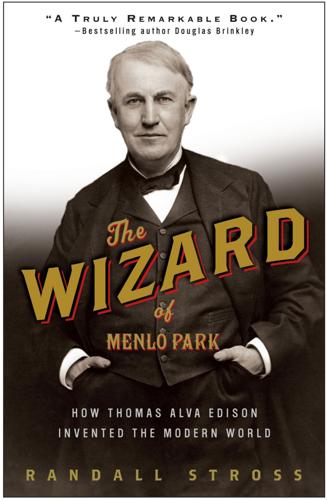
The Wizard of Menlo Park: How Thomas Alva Edison Invented the Modern World
by Randall E. Stross · 13 Mar 2007 · 440pp · 132,685 words

Grand Central: How a Train Station Transformed America
by Sam Roberts · 22 Jan 2013 · 219pp · 67,173 words
Stakeholder Capitalism: A Global Economy That Works for Progress, People and Planet
by Klaus Schwab and Peter Vanham · 27 Jan 2021 · 460pp · 107,454 words
The Singularity Is Near: When Humans Transcend Biology
by Ray Kurzweil · 14 Jul 2005 · 761pp · 231,902 words
Palo Alto: A History of California, Capitalism, and the World
by Malcolm Harris · 14 Feb 2023 · 864pp · 272,918 words
Program Or Be Programmed: Ten Commands for a Digital Age
by Douglas Rushkoff · 1 Nov 2010 · 103pp · 32,131 words
The Transparent Society: Will Technology Force Us to Choose Between Privacy and Freedom?
by David Brin · 1 Jan 1998 · 205pp · 18,208 words
Everything for Everyone: The Radical Tradition That Is Shaping the Next Economy
by Nathan Schneider · 10 Sep 2018 · 326pp · 91,559 words
Intertwingled: The Work and Influence of Ted Nelson (History of Computing)
by Douglas R. Dechow · 2 Jul 2015 · 223pp · 52,808 words
Valley of Genius: The Uncensored History of Silicon Valley (As Told by the Hackers, Founders, and Freaks Who Made It Boom)
by Adam Fisher · 9 Jul 2018 · 611pp · 188,732 words
Randomistas: How Radical Researchers Changed Our World
by Andrew Leigh · 14 Sep 2018 · 340pp · 94,464 words
The Friendly Orange Glow: The Untold Story of the PLATO System and the Dawn of Cyberculture
by Brian Dear · 14 Jun 2017 · 708pp · 223,211 words
Data Action: Using Data for Public Good
by Sarah Williams · 14 Sep 2020

Straphanger
by Taras Grescoe · 8 Sep 2011 · 428pp · 134,832 words
We-Think: Mass Innovation, Not Mass Production
by Charles Leadbeater · 9 Dec 2010 · 313pp · 84,312 words

Nexus: A Brief History of Information Networks From the Stone Age to AI
by Yuval Noah Harari · 9 Sep 2024 · 566pp · 169,013 words
The Formula: How Algorithms Solve All Our Problems-And Create More
by Luke Dormehl · 4 Nov 2014 · 268pp · 75,850 words
How PowerPoint Makes You Stupid
by Franck Frommer · 6 Oct 2010 · 255pp · 68,829 words
Television Is the New Television: The Unexpected Triumph of Old Media in the Digital Age
by Michael Wolff · 22 Jun 2015 · 172pp · 46,104 words
Better Living Through Criticism: How to Think About Art, Pleasure, Beauty, and Truth
by A. O. Scott · 9 Feb 2016 · 218pp · 65,422 words
Piracy : The Intellectual Property Wars from Gutenberg to Gates
by Adrian Johns · 5 Jan 2010 · 636pp · 202,284 words
Team Human
by Douglas Rushkoff · 22 Jan 2019 · 196pp · 54,339 words
Experience on Demand: What Virtual Reality Is, How It Works, and What It Can Do
by Jeremy Bailenson · 30 Jan 2018 · 302pp · 90,215 words
Tribe of Mentors: Short Life Advice From the Best in the World
by Timothy Ferriss · 14 Jun 2017 · 579pp · 183,063 words
Modern Monopolies: What It Takes to Dominate the 21st Century Economy
by Alex Moazed and Nicholas L. Johnson · 30 May 2016 · 324pp · 89,875 words

Player One
by Douglas Coupland · 30 Jun 2011
Bit Rot
by Douglas Coupland · 4 Oct 2016

The Great Influenza: The Story of the Deadliest Pandemic in History
by John M. Barry · 9 Feb 2004 · 667pp · 186,968 words
Everyware: The Dawning Age of Ubiquitous Computing
by Adam Greenfield · 14 Sep 2006 · 229pp · 68,426 words

Places of the Heart: The Psychogeography of Everyday Life
by Colin Ellard · 14 May 2015 · 313pp · 92,053 words
The Comedy Film Nerds Guide to Movies
by Graham Elwood and Chris Mancini · 31 May 2012 · 314pp · 86,795 words

Enshittification: Why Everything Suddenly Got Worse and What to Do About It
by Cory Doctorow · 6 Oct 2025 · 313pp · 94,415 words
Do You Sincerely Want To Be Rich?
by Charles Raw, Bruce Page and Godfrey Hodgson · 16 May 2005 · 552pp · 169,398 words
Googled: The End of the World as We Know It
by Ken Auletta · 1 Jan 2009 · 532pp · 139,706 words
Before Babylon, Beyond Bitcoin: From Money That We Understand to Money That Understands Us (Perspectives)
by David Birch · 14 Jun 2017 · 275pp · 84,980 words
Life Inc.: How the World Became a Corporation and How to Take It Back
by Douglas Rushkoff · 1 Jun 2009 · 422pp · 131,666 words
1989 The Berlin Wall: My Part in Its Downfall
by Peter Millar · 1 Oct 2009 · 220pp · 88,994 words

Rise and Kill First: The Secret History of Israel's Targeted Assassinations
by Ronen Bergman · 30 Jan 2018 · 1,071pp · 295,220 words
Origin Story: A Big History of Everything
by David Christian · 21 May 2018 · 334pp · 100,201 words
A Brief History of Motion: From the Wheel, to the Car, to What Comes Next
by Tom Standage · 16 Aug 2021 · 290pp · 85,847 words
The Power Law: Venture Capital and the Making of the New Future
by Sebastian Mallaby · 1 Feb 2022 · 935pp · 197,338 words
Filterworld: How Algorithms Flattened Culture
by Kyle Chayka · 15 Jan 2024 · 321pp · 105,480 words
Insanely Great: The Life and Times of Macintosh, the Computer That Changed Everything
by Steven Levy · 2 Feb 1994 · 244pp · 66,599 words
The Internet Is Not What You Think It Is: A History, a Philosophy, a Warning
by Justin E. H. Smith · 22 Mar 2022 · 198pp · 59,351 words
Fabricated: The New World of 3D Printing
by Hod Lipson and Melba Kurman · 20 Nov 2012 · 307pp · 92,165 words
The Age of Stagnation: Why Perpetual Growth Is Unattainable and the Global Economy Is in Peril
by Satyajit Das · 9 Feb 2016 · 327pp · 90,542 words
After the Gig: How the Sharing Economy Got Hijacked and How to Win It Back
by Juliet Schor, William Attwood-Charles and Mehmet Cansoy · 15 Mar 2020 · 296pp · 83,254 words
The Fourth Age: Smart Robots, Conscious Computers, and the Future of Humanity
by Byron Reese · 23 Apr 2018 · 294pp · 96,661 words
Lurking: How a Person Became a User
by Joanne McNeil · 25 Feb 2020 · 239pp · 80,319 words
Epic Win for Anonymous: How 4chan's Army Conquered the Web
by Cole Stryker · 14 Jun 2011 · 226pp · 71,540 words
Terms of Service: Social Media and the Price of Constant Connection
by Jacob Silverman · 17 Mar 2015 · 527pp · 147,690 words
Moondust: In Search of the Men Who Fell to Earth
by Andrew Smith · 3 Apr 2006 · 409pp · 138,088 words
You've Been Played: How Corporations, Governments, and Schools Use Games to Control Us All
by Adrian Hon · 14 Sep 2022 · 371pp · 107,141 words
Time Travel: A History
by James Gleick · 26 Sep 2016 · 257pp · 80,100 words
The Dark Net
by Jamie Bartlett · 20 Aug 2014 · 267pp · 82,580 words
Masters of Doom: How Two Guys Created an Empire and Transformed Pop Culture
by David Kushner · 2 Jan 2003 · 240pp · 109,474 words

The Revenge of Analog: Real Things and Why They Matter
by David Sax · 8 Nov 2016 · 360pp · 101,038 words
Hit Makers: The Science of Popularity in an Age of Distraction
by Derek Thompson · 7 Feb 2017 · 416pp · 108,370 words
A Place of My Own: The Architecture of Daydreams
by Michael Pollan · 15 Jan 1997 · 317pp · 107,653 words

The View From Flyover Country: Dispatches From the Forgotten America
by Sarah Kendzior · 24 Apr 2015 · 172pp · 48,747 words
Work! Consume! Die!
by Frankie Boyle · 12 Oct 2011
Magic Internet Money: A Book About Bitcoin
by Jesse Berger · 14 Sep 2020 · 108pp · 27,451 words

Hate Inc.: Why Today’s Media Makes Us Despise One Another
by Matt Taibbi · 7 Oct 2019 · 357pp · 99,456 words

Discardia: More Life, Less Stuff
by Dinah Sanders · 7 Oct 2011 · 267pp · 78,857 words
Kitten Clone: Inside Alcatel-Lucent
by Douglas Coupland · 29 Sep 2014 · 124pp · 36,360 words
50 Future Ideas You Really Need to Know
by Richard Watson · 5 Nov 2013 · 219pp · 63,495 words
Deep Work: Rules for Focused Success in a Distracted World
by Cal Newport · 5 Jan 2016
Computer: A History of the Information Machine
by Martin Campbell-Kelly and Nathan Ensmenger · 29 Jul 2013 · 528pp · 146,459 words
You Are Here: Why We Can Find Our Way to the Moon, but Get Lost in the Mall
by Colin Ellard · 6 Jul 2009 · 293pp · 97,431 words
Rethinking Money: How New Currencies Turn Scarcity Into Prosperity
by Bernard Lietaer and Jacqui Dunne · 4 Feb 2013
The Messy Middle: Finding Your Way Through the Hardest and Most Crucial Part of Any Bold Venture
by Scott Belsky · 1 Oct 2018 · 425pp · 112,220 words
If Mayors Ruled the World: Dysfunctional Nations, Rising Cities
by Benjamin R. Barber · 5 Nov 2013 · 501pp · 145,943 words