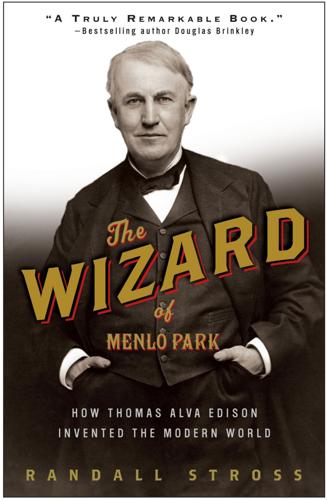
The Wizard of Menlo Park: How Thomas Alva Edison Invented the Modern World
by Randall E. Stross · 13 Mar 2007 · 440pp · 132,685 words
had been misaddressed to Newark; Batchelor, Edison, and their families, along with Edison’s laboratory and its staff, had recently moved to a new location, Menlo Park, New Jersey. The casual mention did not highlight the significance of this move, quite different from the many moves that had preceded it. This time
…
lightly harnessed horses, roads lined with spectators, and frequent “collisions and rows” that brought unwanted attention from the police. In the little residential development of Menlo Park, however, such excitements were nowhere in evidence. Built up too recently to have the benefit of protective shade trees, the houses sat exposed to sunlight
…
about the apparatus upon which Edison was working. What is most remarkable is how unremarkable Preece found the inventive activity there. The isolation of the Menlo Park setting infused the laboratory with a feeling of unbounded creative freedom. It encouraged an outlook that saw far, which also meant that little interest could
…
second life years later, in the 1890s, when converted into the first electric tattoo needle.) Despite the ideal conditions, big ideas did not materialize in Menlo Park. Instead, odds and ends were turned out and marketed by another company that Edison established for this purpose, the American Novelty Company. It sold duplicating
…
Edison that “a good deal of money could be made in selling these small traps.” Judging from the volume of correspondence coming in to the Menlo Park laboratory, the articles in Scientific American and reprints and secondhand digests of the articles carried in various newspapers had spread the word effectively. The task
…
wife Dearly Beloved Cannot invent worth a Damn!!” He redefined their roles with a conventional boundary: his sphere was work; Mary’s, the home. In Menlo Park, the separateness of spheres remained intact even on Sundays, the only day of the week when the laboratory was nominally closed. After the Edisons’ second
…
to being confused, too. The phonograph, described in close detail in the Sun’s long profile “A Marvelous Discovery,” which had started the stampede to Menlo Park, was regarded by many as fantastic. Edison received three hundred letters that denounced the reporter’s mendacity. One professor urged Edison to protect his reputation
…
Typical was this brief item that appeared in several newspapers in June: “Edison has not invented anything since breakfast. The doctor has been called.” In Menlo Park, Edison could read these items and smile; they were harmless. But by July, he had passed through the exhilarating novelty of being well known; now
…
for Edison and the Edison Speaking Phonograph Company to finally make good on their promises to the public. Flouting the phonograph’s patents presented the Menlo Park lab with a crisis. In Edison’s absence, it was left to Batchelor and Johnson to decide how to respond. Reflecting their different personalities,
…
also received word that the Paris Exposition had awarded the grand prize to the phonograph. A perceptive newspaper reporter noticed upon Edison’s return to Menlo Park that blurring of boundary separating the private and the public that we now understand as accompanying the arrival of celebrity. “The people have come to
…
“further necessary investigations and experiments” related to the light. A few days later, some members of the company’s executive committee paid a visit to Menlo Park, and Lowrey did his best to convince Edison that such visits were helpful in making their expectations of progress more realistic. “It is all the
…
Bowdoin College, in Maine, then at Princeton, and had done postgraduate work under Hermann von Helmholtz at Berlin University in Germany. Before being invited to Menlo Park, he had been a temporary subcontractor doing a patent search for Edison in the Astor Library in New York City. In November 1878, Edison offered
…
He acknowledged, and mocked, his own disappointment when it appeared that he and his fellow experimenters would never “see the untold millions roll in upon Menlo Park that my hopes want to see.” And then, in mid-November, the work in the laboratory produced new excitement, when carbonized paper, bent into the
…
boardinghouse of Edison’s neighbor Sarah Jordan was outfitted with lights and opened up to visitors. Just as quickly, the stream of tourists descending upon Menlo Park grew, with hundreds arriving in the daytime, even before nightfall. The laboratory itself was opened to the public, too. The number of people crowding into
…
did not involve bribes, but did involve currying of favor from political operators. Lowrey obtained Edison’s consent to provide a special performance of the Menlo Park magic light show for the New York Board of Aldermen. It’s impossible to determine whether Lowrey was supernaturally savvy, or just plain lucky, but
…
evening that Broadway would be transformed into the Great White Way by Brush Electric. The aldermen missed the spectacle in New York, pulling in to Menlo Park on a private train provided by the Pennsylvania Railroad exactly at the moment when Brush Electric made its Broadway debut. Edison Electric attempted to put
…
especially of his guests’ capacity for Champagne.” When the aldermen woke up the next day, the convivial feelings for Edison with which they had left Menlo Park were replaced by hangovers. Negotiations resumed and the aldermen would not back down from onerous terms, asking the Edison Electric Light Company to pay ten
…
also met “commercial needs,” the segment of the marketplace that Lowrey had attempted to position the Edison Electric Light Company as uniquely capable of addressing. Menlo Park had been the perfect locale for Edison’s laboratory when the quest for novelty would bring eager feature writers to Edison’s door, happy to
…
beaten tracks of men.” In retrospect, he should have taken heart in Edison’s example: Edison had the most reason to appreciate the seclusion of Menlo Park, and yet he acquiesced when necessity tapped on his shoulder, calling him to center stage. CHAPTER SIX IMMERSION FEBRUARY 1881–SEPTEMBER 1882 WHEN THOMAS EDISON
…
gaslights with electric ones were clear enough to the warden of the Maryland state penitentiary in Baltimore, who had seen the electric lights in the Menlo Park demonstration and was eager to install them, “without any red tape,” he promised. This would have entailed installing a small power plant, like the
…
one serving the laboratory in Menlo Park or the company’s office in the brownstone on Fifth Avenue. Such installations, which Edison Electric called “isolated lighting,” did not help the company advance
…
have grabbed all the business it could handle by responding to requests for lights powered by on-site plants. In the three months following the Menlo Park demonstrations, the company received three thousand to four thousand separate applications—so many it had lost accurate count. Thomas Edison’s determination to spurn these
…
space, new equipment, and large technical support staff were everything he would need to succeed in his ambition to eclipse his own earlier achievements in Menlo Park. Two years before, soon after the lab had begun operations, Edison had declared publicly that his inventions should be judged only on the basis of
…
had long been excited by the idea that electrically charged magnets could be used to process iron ore, separating the iron from other material. In Menlo Park, more than ten years earlier, a laboratory notebook recorded experiments he had personally conducted to test the concept. Other inventors had also worked on “magnetic
…
to the community that was his longtime home, as Insull did in Chicago. Edison had always sought isolation to protect his work routines, first in Menlo Park, and then in West Orange, but this isolation left him unaware of what his neighbors thought of him and his factories. When environmental problems, including
…
with an appreciation of the nation’s technical ingenuity. It emerged as Greenfield Village, and contained a full-scale re-creation of Thomas Edison’s Menlo Park laboratory complex built as much as possible with materials salvaged from the original site. Ford had seven railcars deliver soil from the New Jersey site
…
the five hundred invited guests who joined Ford and Edison for the festivities. After the evening banquet, Edison, Ford, and Hoover walked to the unlit Menlo Park laboratory to play a scripted melodrama fancifully re-creating the first lighting of the electric light. The radio announcer solemnly intoned: “Mr. Edison has two
…
.: Rutgers University Press, 1986). Israel, Edison: Paul Israel, Edison: A Life of Invention (New York: John Wiley & Sons, 1998). Jehl, Reminiscences: Francis Jehl, Reminiscences of Menlo Park (Dearborn, Mich.: Edison Institute, 1939). 3v. Josephson, Edison: Matthew Josephson, Edison: A Biography (New York: McGraw-Hill, 1959). Nerney, Edison: Mary Childs Nerney, Thomas A
…
husband on February 11, 1875, the occasion of his twenty-eighth birthday. PTAED, SB178, scrapbook image 11. settled on land in Menlo Park: The proximate reason for Edison’s move to Menlo Park was a dispute he had with the municipality of Newark. Earlier, Edison had rented factory space from a Newark landlord on
…
. A “spider web”: “That Wonderful Edison,” NYW, 29 March 1878, PTAED, MBSB10463. The twelve or so: Bernard S. Finn, “Working at Menlo Park,” in Working at Inventing: Thomas Edison and the Menlo Park Experience, ed. William S. Pretzer (Baltimore: Johns Hopkins University Press, 2002), 34. a disheveled figure: “A Marvelous Discovery,” NYS, 22 February
…
. failed to appreciate: When Edison got back in touch with William Preece in England in early August 1877, three months after Preece’s visit to Menlo Park, Edison spoke excitedly of the speaking version of the telephone, able to articulate human speech, dog barks, cricket chirps—it is “now absolutely perfect,”
…
,” English Mechanic, 30 November 1877, PTAED, MBSB10290X. Edison had shifted his experimental focus: Johnson most likely composed his undated letter on 6 November 1877. The Menlo Park notebooks show that on 1 November 1877 work continued on strips of wax paper (PTAED, QP001779), but on 5 November 1877 Edison proposed using a
…
sufficiently: Alexander Graham Bell to Gardiner Hubbard, n.d., American Telephone and Telegraph Company, Corporate Research Archives, PTAE, 4:187n2. CHAPTER 2. THE WIZARD OF MENLO PARK “The Phonograph is creating”: Edward Johnson to Uriah Painter, 4 January [1878], PTAE, 4:15–17. In early January 1878: Edison’s Toy Contract, 7
…
to Thomas Watson, 24 April 1878, American Telephone and Telegraph Company, Corporate Research Archives, PTAED, X012IAR; “Inventor Edison’s Last.” Hubbard’s letter describes the Menlo Park lab as he saw it when he visited on 23 March 1878. Ladies and gentlemen: “Edison, the Magician,” Cincinnati Commercial, 1 April 1878, PTAED, SB031094a
…
April 1878, PTAE, 4:223–224. another visiting reporter: “Long-Range Chatting,” Philadelphia Times, 3 April 1878, PTAED, MBSB10493X. Ten days after: “The Wizard of Menlo Park,” NYDG, 10 April 1878, PTAED, MBSB10500X. Croffut’s previous attempt: “The Papa of the Phonograph,” NYDG, 2 April 1878, PTAED, MBSB10472. the Mania has broken
…
TAE, 8 October 1878, PTAED, D7831C. The treasurer: Charles Bailey to TAE, 8 October 1878, PTAED, D7831C. A couple of months later: “Two Hours at Menlo Park,” NYDG, 28 December 1878, PTAED, MBSB21091. William Vanderbilt and his friends: TAE to Theodore Puskas, 5 October 1878, PTAE, 4:562. At the beginning of
…
to TAE, 23 December 1878, PTAED, D7820ZDI. In his telling: “Invention by Accident,” NYW, 17 November 1878, PTAED, MBSB21019X. “I have begun”: “Two Hours at Menlo Park.” In January 1879: Calvin Goddard to TAE, 22 January 1879, PTAED, D7920M. Not having heard: William Croffut to TAE, 3 February 1879, PTAED, D7920W. note
…
Farley, 29 December 1878, PTAED, MU005. In November 1878: Francis Upton to Charles Farley, 22 November 1878, PTAED, MU002. Accepting the offer to move to Menlo Park meant Upton could not return to Germany to resume his postgraduate studies. Life in Germany would have been “extremely pleasant,” he wrote his mother, but
…
to spend money. Here I will learn how to earn it.” Francis Upton to Lucy Upton, 7 November 1878, PTAED, MU001. Upon arrival in Menlo Park: “Two Hours at Menlo Park.” Edison referred in a latter to working with “6 experimental assistants.” TAE to Theodore Puskas, 3 January 1879, PTAED, LB004079. Upton arrived on
…
bamboo and incredible stories of his inland travels. See “Frank McGowan’s Journey Through South American Wilds,” NYS, 2 May 1889, PTAED, MBSB2457. Edison designated Menlo Park itself: Francis Upton to Elijah Upton, 9 May 1880, PTAED, MU048. The work was well advanced: Friedel and Israel, Edison’s Electric Light, 179. In
…
. Edison must have been upset: George Barker to TAE, 26 November 1880, PTAED, D8020ZJC. cartoons that turned: Cartoon captioned “The Decadence of the Wizard of Menlo Park,” General Electric Corporation, 1880, cited in David E. Nye, The Invented Self: An Anti-Biography from Documents of Thomas A. Edison (Odense, Denmark: Odense University
…
was a very straightforward invitation to see “an exhibition of Electric Lighting,” without reference to a special feast. Letterpress invitation to exhibition of lighting at Menlo Park, 18 December 1880, HFM & GVRC, Box 47, Folder 47–40, All were alight: “The Aldermen Visit Edison,” NYT, 21 December 1880. Two years before: Jehl
…
, Reminiscences, 690–693. one reporter described Edison: “Rival Electric Lights.” “That’s the last”: “The Wizard of Menlo Park,” NYH, 21 December 1880. It fell to Lowrey: Jehl, Reminiscences, 781–782. Edison did not know: “The Aldermen Visit Edison.” The guests then followed: “Aldermen
…
at Menlo Park,” New York Truth, 21 December 1880, PTAED, MBSB21557X. the aldermen would not back down: “Lightning over Snow,” NYH, 20 January 1881, PTAED, MBSB21573. Brush Electric
…
Plachno (Polo, Ill.: Transportation Trails, 1992), 32. he would do wicked impressions: Jehl, Reminiscences, 996. In its first year: Dyer and Martin, Edison, 361. The Menlo Park laboratory: Jehl, Reminiscences, 862. CHAPTER 6. IMMERSION Only “the very rich”: James D. McCabe, New York by Sunlight and Gaslight (Philadelphia: Douglass Bros.; repr. by
…
.S. Department of the Interior, National Park Service, Edison National Historic Site Library of Congress Cataloging-in-Publication Data Stross, Randall E. The Wizard of Menlo Park: how Thomas Alva Edison invented the modern world / Randall E. Stross. 1. Edison, Thomas A. (Thomas Alva), 1847–1931. 2. Inventors—United States—Biography. 3
Alpha Girls: The Women Upstarts Who Took on Silicon Valley's Male Culture and Made the Deals of a Lifetime
by Julian Guthrie · 15 Nov 2019
Moneymaking PART SEVEN: Life, Death, and Picassos PART EIGHT: The Days of Reckoning PART NINE: The Awakening Author’s Note Acknowledgments PROLOGUE SAND HILL ROAD MENLO PARK, CALIFORNIA Mary Jane Elmore was giddy as she looked down at the rusted-out floorboards of her old green Ford Pinto. She could see the
…
in her new job at the start-up Release, which had office space on the second floor of an old building called Casa Mills in Menlo Park. The company’s goal was to become the largest software distributor over the Internet. The building at 250 Middlefield Road frequently had brownouts, and a
…
start by investing their own money, then raise funds from limited partners. They opened offices in San Francisco’s South of Market district and in Menlo Park. When the story on the founding of Aspect broke, Theresia told a reporter she wanted to invest in great companies, regardless of whether they were
…
target with $200 million, and Melinda was in as an investor through her company Pivotal Ventures. In an ironic twist of fate, Aspect moved from Menlo Park to the office in Palo Alto where Facebook had been located when it first got funding, where Theresia had presented the Series A term sheet
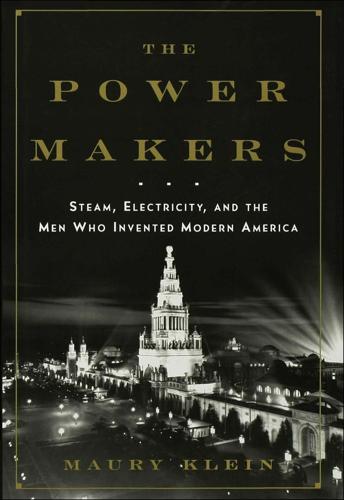
The Power Makers
by Maury Klein · 26 May 2008 · 782pp · 245,875 words
multiplex telegraphs as well as a curious “Electric Pen and Duplicating Press.” Earlier that spring the ambitious young inventor had boldly set up shop at Menlo Park in New Jersey. On June 25 Alexander Graham Bell arrived in Philadelphia to demonstrate three of his telephonic devices to impressed judges, who pronounced them
…
systematic as his personal life was disorderly. Having achieved some success as an inventor, Edison in 1876 brought his family to the obscure hamlet of Menlo Park, New Jersey, and erected what became the first laboratory devoted entirely to the work of invention.32 Hamlet may be too ambitious a description. A
…
telephone research led him to a variation on voice reproduction that thrust him into the public eye in a new role as the “Wizard of Menlo Park.” Paul Israel has called the phonograph “the most important [invention] of Edison’s career. It made his reputation as the ‘Inventor of the Age.’ ”
…
October 1878 it became the first to have ample capital behind the pursuit of its goal.10 Edison understood his mission clearly. He had started Menlo Park to make invention a business, and he never lost that objective. On one occasion he complained to an assistant that one of his colleagues tended
…
and showed them everything. The Herald reporter called him “Professor Edison.” So too was he hospitable to the steady stream of visitors who flocked to Menlo Park to view the Wizard at work on his latest creation, whatever it might be. With the electric light, however, Edison was more secretive, saying that
…
$78,225 in loans from the stockholders—a substantial sum of money in those days. Besides labor and materials, Edison added three new buildings to Menlo Park: an office-library, a steam plant and machine shop, and a glassblowing facility. He bolstered his staff with a chemist, a glassblower, a mathematician,
…
a large light or a blinding light, but a small light having the mildness of gas.19 Having defined his task, Edison harnessed all of Menlo Park’s talent to achieve it. No other inventor commanded the resources Edison had at his disposal, and he used them freely. He surrounded himself with
…
some of the others. Edison agreed even though he had already decided to abandon platinum. Darkness had fallen when the financiers arrived by train at Menlo Park. Ushered into the plush reception room of the library, which at Lowrey’s bidding had been furnished with fine cherry furniture to accommodate Wall Street
…
found both Edison’s and Upton’s houses brightly lit by the new lamps. Edison wanted more money to erect a pilot power station at Menlo Park, but the financiers hesitated. No one yet knew whether the new lamp could be made commercially viable. Edison had allowed only one reporter, Marshall
…
of the New York Herald, to get the full story on condition that he not publish it until the inventor was ready. However, rumors about Menlo Park’s lights began leaking out until the story could no longer be contained. On December 21, 1879, the Herald interrupted its usual parade of murders
…
earlier panic, had dismissed Edison’s lamp as a “philosophical toy,” but the dramatic announcement would “reassure the public whose faith in the ‘Wizard of Menlo Park’ has grown feeble.” The most striking feature of the new lamp was its “unexpected and remarkable simplicity.” Even those devout believers in Edison’s work
…
and his men put the finishing touches on the entire laboratory complex as well as their own houses and other buildings at Menlo Park. He welcomed a friendly Sun reporter to Menlo Park to view the lamp and the system as it extended to houses and buildings about the grounds. Along with his usual
…
select group of men, including a representative of the gas interests. Three days later he arranged a demonstration for his investors, but curiosity seekers flooded Menlo Park as well. After explaining the system he lit one bulb, then another, until twenty burned as evenly and brightly as the first. He also showed
…
the vacuum?” Another suggested that the lamps could be improved by closing up the pores of the glass.44 Throngs of curiosity seekers descended on Menlo Park from every train to mill around the grounds inspecting every facility. Sometimes in their eagerness they damaged displays or equipment despite the efforts of the
…
train departed and they could finally get back to work.45 Few grasped the full significance of the sight before them: The system installed at Menlo Park for experimental and demonstration purposes was nothing less than the first incandescent central power station in the world. It included three Edison dynamos, each rated
…
obscure locations and began work. Then, in December, came the splash of publicity over Edison’s new lamp and his anointment as the Wizard of Menlo Park. Sawyer had long resented dwelling in Edison’s shadow and missed no opportunity to denigrate his more publicized rival. As early as January 1876 he
…
was usually dead tired when he did. Her loneliness and insecurity grew even greater after Edison moved his family to the house he bought in Menlo Park near his laboratory. Even then he seldom came home, absorbed in work or simply preferring the company of the boys. Lonely and unhappy, a
…
playing with them, he had a volatile temper and could be cruel. Most of the time, however, he was simply absent from their lives. At Menlo Park Dot and Dash became pets of the laboratory.9 Although Edison kept his hand in everything, his role gradually evolved into one of director more
…
central station housing large dynamos driven by steam engines. To test and cost every element in the system, Edison began installing a model version at Menlo Park in the spring of 1880. Then, in April, Henry Villard, one of his stockholders, asked Edison to create a lighting system for a new
…
decade; Charles L. Clarke replaced him as Edison’s chief mathematician. By November 11 the factory was ready to begin production. Using lines run from Menlo Park’s machine shop and then its own power plant, it became the first factory to draw all its power from electricity.18 That same summer
…
and install a complete system. The seeming ease with which the Brush system operated successfully contrasted sharply with the absence of any evidence beyond the Menlo Park demonstrations coming from Edison. None of the criticism and hand-wringing fazed Edison, who plodded methodically toward his goal with the single-minded purpose for
…
city was needed, and the board of aldermen predictably expressed concern about the plan to tear up streets. Lowrey arranged for the aldermen to visit Menlo Park for a demonstration of the system. On December 20, 1880, the aldermen dutifully arrived, under the full glare of newspaper publicity. Edison greeted them
…
with handshakes all around and led them off on a jaunt through Menlo Park. After two hours of touring and scientific explanation, much of which passed over the visitors’ heads, Edison led them back inside for a lavish
…
giant “C” model dynamo.29 The first tests took place in January 1881; a month later the machine succeeded in powering all 426 lamps at Menlo Park. Gleefully Edison led a late-night parade to the neighborhood saloon for a round or three of drinks. Further tests led to more improvements until
…
the lamp factory. Later he sold the business for $1.085 million.46 The machine works on Goerck Street absorbed the tools and machinery from Menlo Park in stepping up its operation to produce a variety of dynamos. The Electric Light Company had agreed to use only generators from the Edison shop
…
had already turned out two Jumbo dynamos and 355 smaller generators, with another twelve Jumbos in production. Charles Dean had come to New York from Menlo Park early in 1881 to serve as superintendent of the plant. Like the indispensable Kruesi, Dean could “execute from verbal explanations or rough sketches anything Edison
…
ditched both in favor of a new engine designed by the Arlington & Sims company.48 As the business grew, the once tight-knit core of Menlo Park regulars scattered to new posts. Batchelor had gone to Europe to oversee the installation of isolated plants on the Continent. The business mushroomed after the
…
and his testing instruments to Goerck Street, it hit him like a bombshell. “I had always thought,” he recalled, “that Edison would never give up Menlo Park, that he would return when the urgencies of affairs in New York were over.”49 More than half a century later, through the mists of
…
wrote, “Edison was the high priest, and we ‘boys’ were his followers. I had devoted all my energies in loyal obedience to the cause.”50 Menlo Park faded into the realm between history and myth because Edison had outgrown it. Despite the demands of business, he never stopped being an inventor. Between
…
After Edison gave his first public demonstrations in December 1879, Schuyler ordered Maxim to develop an incandescent lamp. During the summer of 1880 Maxim visited Menlo Park, where Edison devoted an entire day and evening to showing him the lamp and the works. It was a courtesy he showed any electrician who
…
other electricians. In particular he followed Edison’s work closely despite his skepticism about the incandescent light. Sometime during 1879 his curiosity brought him to Menlo Park to see not only the work being done but the “invention factory” itself. Edison greeted him warmly and gave him the grand tour along with
…
old enthusiasm and energy returned. At Lynn the company provided him with all the resources he needed to dive back into inventing. Like Edison at Menlo Park, he assembled a support team in a workshop called the Model Room, which became at once his haven and the command center for the design
…
enough that the family returned to the Gramercy Park house, but during the summer her condition worsened. An anxious Edison took her back to the Menlo Park house where, on August 9, she died unexpectedly of what her daughter called “congestion of the brain,” which was mostly likely a tumor. Finding
…
everywhere, bought his cigars, and even cashed checks for him though she was only twelve.33 Mary’s death also dealt a final blow to Menlo Park. Already most of its activities had been transferred to New York, but her death made Edison reluctant even to visit the place. As the laboratory
…
complex turned into a ghost town, the village of Menlo Park sank back into the obscurity it had possessed before Edison made it famous. In 1921 Francis Jehl, Charles L. Clarke, and William S. Andrews
…
have everything on hand that might be needed in an experiment to avoid delays. Here truly was an invention factory on a scale that dwarfed Menlo Park, which was exactly what Edison intended. It was on one hand a monument to himself, intended to translate his personal visions into products, and
…
to oversee much of the work. His interest in what was then called “counter electric motive force” led him to create an electric railway at Menlo Park to study it. He had developed the low-resistance armature dynamo that served nicely as a motor. As Frank J. Sprague, who became the pioneer
…
dynamos supplied the power through the rails, one rail being positive and the other negative. Since these same generators also powered all the lights at Menlo Park, the electric railway could never operate at the same time as the lighting. For a locomotive John Kruesi built a third dynamo to serve as
…
that our street and elevated railways may at no very distant day be successfully operated by electricity,” most of the railroad men who flocked to Menlo Park to see the electric railway were unimpressed. Frank Thomson, head of the mighty Pennsylvania Railroad, examined the system, rode the train, and pronounced it
…
Edison in 1890 to develop an electric railway system suitable for cities that could not use overhead trolley lines. Edison revived the method used at Menlo Park of using the rails as conductors, but his low-voltage system failed to compete with trolleys and later subways.47 As for Sprague, he signed
…
Edison Company and The Westinghouse Electric Co.,” he observed. Recalling the time Edison had spent with him nearly a decade earlier when Westinghouse had visited Menlo Park in search of a system for his home, and a later meeting at Sigmund Bergmann’s factory, Westinghouse extended an invitation for Edison to come
…
inventive playfulness that enabled Edison to turn out one clever amusement after another or the compulsive pursuit of technical perfection that sustained the Wizard of Menlo Park’s efforts to improve the phonograph.” Instead he looked always to what return the solution of a problem would produce. “Not one of [his]
…
vacuum tube, radio, and television. As an old man Edison became close friends with Henry Ford, who idolized him to the point of reconstructing the Menlo Park laboratory at Greenfield Village in Dearborn, Michigan. The dedication in October 1929 featured Edison and an elderly Francis Jehl re-creating the 1879 birth of
…
far as he could. Later Edison reminded him wryly that “Central Station was coined I think either by myself or some of the boys at . . . Menlo Park in the days when guessing was a substitute for mathematics.”16 The General Electric gang bade him farewell with a lovely dinner at Delmonico’s
…
on, and later making the report.” Carlson assigns Houston a much larger role in the whole process. For a version favoring Edison, see Francis Jehl, Menlo Park Reminiscences, vol. 1 (Dearborn, Mich., 1936), 80–93. 12. New York Herald, December 2, 1875. For more detail, see Paul Israel, Edison: A Life
…
. Passer, Electrical Manufacturers, 86 –88; Jehl, Reminiscences 1:214–15. Passer includes more financial details. Before the new additions, Edison had only three buildings at Menlo Park: the laboratory, a carpenter shop, and the carbon shed. See Jehl, Reminiscences 1:214. 19. Jehl, Reminiscences 1:215; New York Herald, December 11, 1878
…
Light, 55–56. Friedel and Israel call Edison’s grasp of the high-resistance principle a “major breakthrough” that “began to distinguish the work at Menlo Park from what had gone before.” 25. Israel, Edison, 168–70; Friedel and Israel, Edison’s Electric Light, 76. 26. Josephson, Edison, 183–84, 198–
…
58. New York Sun, December 22, 1879. 59. Ibid., December 23, 1879; New York Herald, December 24, 1879; Jehl, Reminiscences 1:395–97. For the Menlo Park episode, see Josephson, Edison, 225–26. 60. New York Sun, December 27, 1879; Scientific American, April 10, 1880, 230. Josephson, Edison, 225, identifies Sawyer as
…
: A Life of Invention (New York, 1988). James, Frank A. J. L. The Correspondence of Michael Faraday, vol. 1 1811–1831 (London, 1991). Jehl, Francis. Menlo Park Reminiscences (Dearborn, Mich., 1936 –41), 3 vols. Johnson, Robert Underwood. Remembered Yesterdays (Boston, 1923). Josephson, Matthew. Edison: A Biography (New York, 1959). Keily, William Eugene
What the Dormouse Said: How the Sixties Counterculture Shaped the Personal Computer Industry
by John Markoff · 1 Jan 2005 · 394pp · 108,215 words
put a stake in the ground at Kepler’s, an eclectic bookstore run by pacifist Roy Kepler that was located on El Camino Real in Menlo Park beginning in the 1950s, and drew a five-mile circle around it, you would have captured Engelbart’s Augment research group at SRI, McCarthy’
…
deeply influenced by the political and cultural climate of the Midpeninsula. Indeed, within Stanford Research Institute, the research center where Engelbart began his work in Menlo Park, his researchers came to be seen as the lunatic fringe. In the midst of this engineers’ world of crewcuts and white shirts and ties arrived
…
as an interdisciplinary research center shortly after World War II on the grounds of what had once been the Hopkins estate, an early mansion in Menlo Park. During the war, the land had been occupied by the U.S. Army, which had built a hospital there in anticipation of a wave
…
a pretty good paper. Why don’t you get him to come to see me?” the Pentagon man said.10 Shortly after Rosen returned to Menlo Park, Engelbart got his first $25,000 research grant, which permitted him to begin playing with scaling concepts in earnest. In May of 1959 he
…
research independently. Largely with his own financial support, he set up the grandly titled International Foundation for Advanced Study on a quiet side street in Menlo Park. During the next four years, initially charging subjects five hundred dollars to participate in a study of LSD and creativity, the foundation ultimately led more
…
Vic Lovell convinced young writer and fellow student Ken Kesey to take part in a series of experiments with psychedelic drugs being conducted at the Menlo Park Veterans’ Administration Hospital. Lovell later became the first coordinator of the Palo Alto Free University, and Kesey introduced the world at large to LSD
…
off campus, to its Midpeninsula counterpart. Roy Kepler had been a World War II conscientious objector, who in the early 1950s had founded the lively Menlo Park institution. Ira Sandperl, who would later be well-known as folksinger Joan Baez’s mentor and a committed Gandhian, was a fixture there, where he
…
a job. On the Peninsula, he received a much warmer reception, and so he shelved the idea of graduate school and went to work in Menlo Park. Although his new job working on a military training system was humdrum, he was soon able to enter a co-op education program and begin
…
oNLine System. Doing so by long distance was a laborious process, but he tried. He had one programmer at the time, who wrote code in Menlo Park and then traveled to Santa Monica to run and debug it, and sometimes Engelbart himself flew down to work on the machines. But SDC had
…
that it crashed repeatedly. A frustrated Engelbart began to explore the idea of remotely connecting to the SDC computer from the Control Data minicomputer in Menlo Park using an early modem. Unfortunately his engineers were never able to make the system communicate reliably. As a result, for the next two years
…
to build his system on a computer that had far less processing power than an Apple II of a decade and a half later. The Menlo Park computer used the magnetic-core memory that Engelbart, Crane, and English had all worked on improving in the fifties. It had a capacity of
…
buildings in place, and the tiny group had sought refuge in one of the ramshackle World War II barracks that dotted the grounds of the Menlo Park campus. The buildings had open crawl spaces beneath their wooden floors, and the Augment team soon gave new meaning to the concept of a raised
…
Foundation for Advanced Study, Myron Stolaroff’s project for continuing his research on the uses of LSD. When Stolaroff and Harman set up shop in Menlo Park in March 1961, they weren’t the only ones on the Midpeninsula exploring the therapeutic uses of LSD. Experiments were already being conducted at the
…
Veterans’ Administration Hospital in Menlo Park, and the Palo Alto Mental Research Institute had also begun introducing local psychiatrists and psychologists, and even writers such as Allen Ginsberg, to psychedelic drugs
…
be sent to Fort Dix for menial duties. Brand declined the invitation and went to Fort Dix, receiving his discharge in 1962. He settled in Menlo Park and began studying to become a professional photographer. Not long afterward, he visited the Stanford computer center with Jim Fadiman and saw a number of
…
algorithm for music synthesis called wave shaping. LeBrun wasn’t the only high school kid to find his way to SAIL. Geoff Goodfellow, a hypercybernetic Menlo Park teenager, had found a job working at SRI and the Network Information Center after the computing manager realized that it was better to have him
…
an impossibly long time into the future. During his travels, Kay also visited the nation’s best computer-science research centers. He spent time in Menlo Park with the Augment Group, where Bill English took him under his wing and introduced him to many of Engelbart’s best young researchers. He traveled
…
1968, and each modem carried data in only a single direction—to connect Engelbart’s keyboard, mouse, and key set to the SDS-940 in Menlo Park. It required a complicated choreography to mix the images from the display screen, a camera that was pointed at Engelbart’s keyboard, and a second
…
camera in Menlo Park to show demonstrations by members of the laboratory research team. At times it seemed to the audience that Engelbart wasn’t quite there, that he
…
what was being executed, as a way of creating auditory feedback. After introducing the project and the system, Engelbart invited Jeff Rulifson on-screen from Menlo Park. Instantly, there he was on the giant display above Engelbart’s head, a serious young man with dark hair, a jacket and tie, and
…
interactive multimedia entertainment on a scale the world hadn’t seen. The computing world was beginning to blend with the counterculture. Operating the camera in Menlo Park for Engelbart’s landmark presentation was Stewart Brand, who by then was a twenty-nine-year-old multimedia producer and a friend of English. He
…
to a new wave of urban refugees who were ill equipped for their newly adopted life. The Whole Earth Truck Store came into existence in Menlo Park just a few doors away from Raymond and Albrecht’s Portola Institute, where Brand was an informal fellow-in-residence. In July of 1968,
…
omnipresent and ambitious Swiss Army knife clipped to his belt, drove around the commune circuit, selling goods and accepting orders.3 Later that year in Menlo Park, with a small staff and the help of his wife, Lois Jennings, he put together the first expanded version of the Whole Earth Catalog,
…
to be able to hear more than low-quality telephone audio. In the final demonstration, the audience heard from both Engelbart’s headset and, from Menlo Park, simple noises like keyboards and the responsive sound of a computer, which added to the impact of what was shown that day. Now, stationed back
…
in Menlo Park at SRI, Brand was running the camera to document the birth of a new kind of computing, and Engelbart publicly thanked him from the stage
…
on. He nodded several times before glancing up at the screen and just briefly breaking into the sad smile that was becoming his trademark. In Menlo Park, the Augment team had no idea how the demonstration had been received, as the video wasn’t two-way. “Did they like it?” someone
…
That was followed by an abortive stint as an SRI consultant working with Burroughs and the National Provincial Bank in England. When he returned to Menlo Park the following year, he still had a job at SRI, but he needed to find something to do and Shaky the Robot, an early robotics
…
the reality of the bureaucracy, it took another three years for the network to be established and the Network Information Center to be created in Menlo Park. In the interim, the Augment Group added an electronic journal and mail to the NLS system. Engelbart gave the task of designing the journal
…
Engelbart was interested in having a remote version of NLS built to make it possible to use the system widely and spread its utility beyond Menlo Park. Duvall agreed as a condition of his relocation to program a simple version of the software that would enable him to work remotely via a
…
ideal opportunity to test the fledgling network. There was a PDP-10 at the University of Utah, and so Andrews transferred his program file from Menlo Park to Utah and then ran it remotely, all from a log cabin in the backwoods of northern California. He found the whole concept to be
…
sixteen demonstrators were arrested, and ninety warrants were issued based on photos taken by right-wing students. The next day, students marched on SRI’s Menlo Park headquarters. Inside Doug Engelbart’s group, there was a brief attempt to use the new NLS as part of a command center in case the
…
looking for a way to explore new educational ideas. It all sounded like great fun, and so Albrecht, who had just remarried, moved to Menlo Park. He hadn’t lost any of his passion for Greek dancing, and he decided to offer a class at the Free University. The events were
…
the Atherton backyard of Doug Engelbart, another folk-dancing devotee. Raymond and Albrecht soon transformed Raymond’s nonprofit into the Portola Institute, housed in downtown Menlo Park just off El Camino Real. There wasn’t a lot of money involved. Initially, Raymond put in some, as did Hewlett-Packard. It wasn’
…
a slide projector that every fifteen seconds projected another scene from Greece on a large wall. When Dymax moved to a tiny shopping center in Menlo Park, a “People’s Computer Center” was created in the adjacent office, and it soon offered terminals connecting to a time-sharing computer service. People
…
minicomputer showed up, which Albrecht had arranged to acquire in trade for his technical-writing work. The machine was delivered to Albrecht’s house in Menlo Park, which at the time was empty. (He was living out another dream—residing with his new wife and young son on a boat at the
…
Irene quickly made their way to California, where father and daughter became itinerants, living in rooms in communal houses in various towns around the Midpeninsula—Menlo Park, Mountain View, Palo Alto—and over the hills in Santa Cruz, the tiny beach town, which had only recently achieved college-town status. Although
…
that someone had scrawled on her back in black marker: I am not lost; my name is Chiqui (nickname). I live at 345 Willow Road, Menlo Park 325-5315. My daddy is here; his name is Fred Moore.8 Officer Calla recognized the young girl immediately; it was the second time she
…
by logging in as another user and so she “linked”—the equivalent of modern chat or instant messaging software—to her friend Miranda back in Menlo Park. “Please send your password so I can use your account for a demonstration,” Weinberg typed, while the all-male group of officers clustered around
…
. A couple of years later, SRI sold the Augment technology to the Tymshare Corporation. Engelbart and the group of remaining ARC researchers moved offices from Menlo Park to Cupertino. An era had ended, a new one was about to begin, and Doug Engelbart had been tossed out into the wilderness. 7 |
…
with them. Larry Tesler, however, had seen something that struck his curiosity. He was then living next door to Fred Moore on Homer Lane in Menlo Park. Both men were single fathers, and they shared a radical political perspective. In the Whole Earth Catalog spirit, Tesler’s activist neighbor argued with him
…
wrote a series of funding proposals for an information-access network to be based at the Whole Earth Truck Store on Santa Cruz Avenue in Menlo Park. Initial reactions were lukewarm, and no funding was forthcoming, but he kept playing with the idea, and in October he established a nonprofit information
…
gave his demonstration in San Francisco in December 1968, Allison was able to watch the remote half of the presentation from a corner of the Menlo Park laboratory. An incurable software hacker, he helped out another group of programmers at SRI who were creating a version of BASIC for a mainframe computer
…
outsiders who had begun to glimpse the idea of computing as a medium, one they could control for their own means. By the early 1970s, Menlo Park had become ground zero for the new search for community that had evolved from the antiwar politics and the drug culture of the previous decade
…
he had ever made before. Albrecht and Moore also teamed up to teach a course they called Electronic Magic Boxes at the Peninsula School, the Menlo Park alternative school. It was a simple course in the fundamentals of electronic design, using digital components to make things like coin tossers, electronic dice,
…
it and brought it with him to the third Homebrew meeting, this time at the Peninsula School, which was housed in a converted mansion in Menlo Park. There was no desk available, so Dompier set up shop on the floor, but when he plugged in his new computer, nothing happened. His
…
longer and been drawn more deeply into the industry that he had helped create. However, his relationship with a woman he was living with in Menlo Park was ending painfully. It was also clear to him that the Homebrew Club was heading in an entrepreneurial direction, and was not going to be
…
Michael Malone called “The Big Score”—more simply put, greed. In fact, it was not long after the Homebrew Computer Club’s first meeting in Menlo Park that the hobbyist conclave began spawning names such as Apple, Osborne Computer, Cromemco, and North Star, owing their roots, directly or indirectly, to the
…
p. 23. 19.Ibid., p. 25. 20.Kary Mullis, Dancing Naked in the Mind Field, New York: Pantheon Books, 1998. 21.Author interview, Don Allen, Menlo Park, Calif., August 22, 2001. 22.Vic Lovell, “The Perry Lane Papers (III): How It Was,” in One Lord, One Faith, One Cornbread, eds. Fred Nelson
…
Viking, 2001), p. 217. 10.Oral history, interview by Eklund. 11.Author interview, William English, Sausalito, Calif., May 11, 2001. 12.Author interview, Don Andrews, Menlo Park, Calif., September 27, 2001. 13.Oral history, interview by Lowood and Adams. 14.Bill English, “Early Computer Mouse Encounters,” presentation sponsored by the Computer History
…
2003. 8.Hiltzik, Dealers of Lightning, pp. 168–69. 9.Author interview, Adele Goldberg, San Francisco, Calif., July 15, 2001. 10.Author interview, Larry Tesler, Menlo Park, Calif., August 27, 2001. 8 | Borrowing Fire from the Gods 1.Fred Moore, letter to Dick Raymond and Point Agents, February 28, 1972, personal papers
The New Geography of Jobs
by Enrico Moretti · 21 May 2012 · 403pp · 87,035 words
331.10973—dc23 2012007933 Printed in the United States of America DOC 10 9 8 7 6 5 4 3 2 1 To Ilaria Introduction Menlo park is a lively community in the heart of Silicon Valley, just minutes from Stanford University’s manicured campus and many of the Valley’s most
…
newly built mini-mansions and low-rise apartment buildings. In 1969, David Breedlove was a young engineer with a beautiful wife and a house in Menlo Park. They were expecting their first child. Breedlove liked his job and had even turned down an offer from Hewlett-Packard, the iconic high-tech giant
…
in the Valley. Nevertheless, he was considering leaving Menlo Park to move to a medium-sized town called Visalia. About a three-hour drive from Menlo Park, Visalia sits on a flat, dry plain in the heart of the agricultural San Joaquin Valley. Its
…
, and cold in the winter. Breedlove liked the idea of moving to a more rural community with less pollution, a shorter commute, and safer schools. Menlo Park, like many urban areas at the time, did not seem to be heading in the right direction. In the end, Breedlove quit his job, sold
…
communities because they thought those communities were better places to raise families. But things did not turn out exactly as they expected. In 1969, both Menlo Park and Visalia had a mix of residents with a wide range of income levels. Visalia was predominantly a farming community with a large population of
…
laborers but also a sizable number of professional, middle-class families. Menlo Park had a largely middle-class population but also a significant number of working-class and low-income households. The two cities were not identical—the
…
typical resident of Menlo Park was somewhat better educated than the typical resident of Visalia and earned a slightly higher salary—but the differences were relatively small. In the late
…
1960s, the two cities had schools of comparable quality and similar crime rates, although Menlo Park had a higher incidence of violent crime, especially aggravated assault. The natural surroundings in both places were attractive. While Menlo Park was close to the Pacific Ocean beaches, Visalia was near the Sierra Nevada range and Sequoia
…
. Fully half of its residents have a college degree, and many have a PhD, making it the fifth best educated urban area in the nation. Menlo Park keeps attracting small and large high-tech employers, including most recently the new Facebook headquarters. By contrast, Visalia has the second lowest percentage of college
…
years—one of the worst performances in the country. For someone like David Breedlove, a highly educated professional with solid career options, choosing Visalia over Menlo Park was a perfectly reasonable decision in 1969. Today it would be almost unthinkable. Although only 200 miles separate these two cities, they might as well
…
be on two different planets. The divergence of Menlo Park and Visalia is not an isolated case. It reflects a broader national trend. America’s new economic map shows growing differences, not just between people
…
losing ground. While in 1969 Visalia did have a small professional middle class, today its residents, especially those who moved there recently, are overwhelmingly unskilled. Menlo Park had many low-income families in 1969, but today most of its new residents have a college degree or a master’s degree and a
…
over a ten-year period in today’s dollars. Skeptics are correct in pointing out that Facebook directly employs only 1,500 workers in its Menlo Park headquarters and another 1,000 scattered around America. While this number is growing rapidly, General Electric and General Motors have about 140,000 and 79
…
passing year, reflecting and possibly exacerbating the effect of growing socioeconomic differences. When David Breedlove, the Silicon Valley engineer mentioned in the introduction, moved from Menlo Park to Visalia in 1969, life expectancy in the two communities was comparable. Today life expectancy in San Mateo County, where
…
Menlo Park is located, is almost six years longer than in Tulare County, where Visalia is located—a remarkable change. The rising inequality in life expectancy among
…
to spend the year at Stanford as a visiting professor. Every morning on my way to work, I would drive along Sand Hill Road in Menlo Park. Sand Hill Road contains the largest concentration of venture capital firms in the world. All major VC firms are located there, including the mythical Sequoia
…
scores of, [>] Chi-Ping Hsu, [>]–[>] Chronicle Building project, [>]–[>], [>] Cincinnati, [>], [>] Cisco, [>], [>], [>] Cities of United States as environment for innovation, [>] Great Divergence in, [>]–[>], [>]–[>], [>] (see also Great Divergence) Menlo Park vs. Visalia, [>]–[>] and metropolitan areas, [>] population rise and fall of, [>]–[>] Clark, Shelby, [>] Class divide, [>] Clean-tech companies, [>] in Fremont, California, [>]–[>], [>] patents for, [>] in San Francisco
…
of concentrations in, [>] and Great Divergence among cities, [>], [>], [>], [>] and wage levels, [>]–[>] lessened number of students in, [>], [>]–[>] and local economy, [>] and wages of unskilled workers, [>]–[>] and Menlo Park vs. Visalia, [>]–[>] and mobility of graduates, [>]–[>], [>] self-selection problem in evaluation of, [>] social return on, [>] tuition increase for, [>] of wives, [>] See also Human capital Colman
…
, Karl, [>] Mathematics, poor U.S. achievement in, [>]–[>] Matheson, Kent, [>] Maveron, [>] Mayo Clinic, [>], [>] McAllen, Texas, [>], [>] McAllen-Edinburg-Pharr-Mission, Texas, [>], [>] McCreary, Colleen, [>] McKinsey consulting company, [>] Medicare, [>] Menlo Park, California, [>], [>], [>], [>]–[>] Visalia contrasted with, [>]–[>], [>] Merced, California, [>], [>], [>], [>], [>] Mercedes, [>] Metropolitan areas, [>] Mexico, PISA scores of, [>] Miami, [>], [>], [>] Microsoft, [>], [>], [>], [>]–[>], [>]–[>], [>]–[>] Cambridge lab of, [>] employee compensation at, [>] and nonprofit sector, [>] patents
…
-by-side work, [>] Video games, [>] Vineland-Milville-Bridgetown, New Jersey, [>], [>] Virtuous cycle of growth (self-reinforcement), [>], [>] through Empowerment Zones, [>] in high-tech world, [>] Visalia, California, [>]–[>], [>], [>], [>], [>] Menlo Park contrasted with, [>]–[>], [>] Von Zastrow, Ben, [>]–[>] Vouchers, relocation, [>]–[>] Wages and salaries city differences in, [>]–[>] and cost of living, [>]–[>] and college education over life span, [>]–[>] economic rent
From Counterculture to Cyberculture: Stewart Brand, the Whole Earth Network, and the Rise of Digital Utopianism
by Fred Turner · 31 Aug 2006 · 339pp · 57,031 words
began to develop an affection for psychedelic drugs. In 1959 Kesey became a subject in a series of experimental protocols at the Veterans Hospital in Menlo Park, sponsored by the CIA’s MK-ULTRA program. Doctors in these experiments gave volunteer subjects various psychedelic drugs and observed their behavior. In return they
…
together around Kesey’s house on Perry Lane on the edge of the Stanford campus. Not long after he began visiting the Veterans Hospital in Menlo Park, Kesey began bringing drugs home. A scene began to emerge: some of the writers from Stanford, the artist Roy Seburn, psychologist Richard Alpert (later known
…
and a member of the Grand Traverse band of the Ottowa. They married in the spring of 1966, and in late 1967 they moved to Menlo Park, where Brand began working at his friend Dick Raymond’s nonprofit educational foundation, the Portola Institute. Founded a year earlier, the Portola Institute housed and
…
couldn’t actually buy any of these goods through the Catalog—to make purchases they would have to visit the Whole Earth Truck Store in Menlo Park, California, or turn to other retailers. But they could write in to recommend new products, to respond to other contributors’ reviews, or to simply describe
…
the outside world. At the start, the Catalog was a fairly modest proposition. After their first foray to the communes, Stewart and Lois returned to Menlo Park, hired two assistants, and, with a small portion of Brand’s inheritance, as well as several thousand dollars Lois had inherited from her grandmother, printed
…
linking proceeded in three stages. In the first phase, between 1968 and 1972, two communities began to mingle within blocks of the WholeEarthCatalog offices in Menlo Park. One, centered around the Stanford Research Institute and composed primarily of engineers, was devoted to the ongoing pursuit of increased human-computer integration. The other
…
these groups in the region maintained offices within a few square blocks of each other and of the offices of the Whole Earth Catalog in Menlo Park. One of the groups consisted of the researchers associated with Douglas Engelbart’s Augmentation Research Center (ARC) at the Stanford Research Institute (SRI) and later
…
mingle operations research, economics, and political forecasting in the process. In the late 1960s and 1970s, with offices just down the road from Stanford in Menlo Park, SRI was permeated with a sense of what Kleiner calls “the sheer, pragmatic, exalting usefulness of system-centered, holistic faith.” Much of that faith had
…
. 33. J. Tetrault and S. Thomas, Country Woman: A Handbook for the New Farmer (New York: Anchor Books, 1975), 97, quoted in Binkley, “Seers of Menlo Park,” 299. 34. Brand quoted in McClanahan and Norman, “Whole Earth Catalog,” 118; Bowker, “How to Be Universal,” 116. 35. Reich and Bihalji-Merin, World from
…
. Albright, Thomas, and Charles Perry. “The Last Twelve Hours of the Whole Earth.” In The Seven Laws of Money, edited by Michael Phillips, 121–27. Menlo Park, CA: Word Wheel; New York: Random House, 1974. Anderson, Philip W., Kenneth Joseph Arrow, David Pines, and Santa Fe Institute. The Economy as an Evolving
…
, CA: Addison-Wesley, 1988. Aneesh, A. Virtual Migration: The Programming of Globalization. Durham, NC: Duke University Press, 2006. Ashby, Gordon, ed. Whole Earth Catalog $1. Menlo Park, CA: Portola Institute, July 1970. Aufderheide, Patricia. Communications Policy and the Public Interest: The Telecommunications Act of 1996. New York: Guilford Press, 1999. Bakardjieva, Maria
…
. The Social Construction of Technological Systems: New Directions in the Sociology and History of Technology. Cambridge, MA: MIT Press, 1987. Binkley, Sam. “The Seers of Menlo Park: The Discourse of Heroic Consumption in the Whole Earth Catalog.” Journal of Consumer Culture 3, no. 3 (2003): 283 –313. Boczkowski, Pablo. Digitizing the News
…
of the Atomic Age. Chapel Hill: University of North Carolina Press, 1994. Brand, Stewart. “Buckminster Fuller.” In Whole Earth Catalog, edited by Stewart Brand, 3. Menlo Park, CA: Portola Institute, 1968. ———. “Civilization and Its Contents.” In Rheingold, Millennium Whole Earth Catalog, 5. ———. The Clock of the Long Now: Time and Responsibility. New
…
Information Economy Is Being Created and Shaped by the Hacker Ethic.” Whole Earth Review 46 (May 1985): 44 –55. ———, ed. The Last Whole Earth Catalog. Menlo Park, CA: Portola Institute, 1971. ———. “Local Dependency.” CoEvolution Quarterly 8 (Winter 1975): 5. ———. The Media Lab: Inventing the Future at MIT. New York: Viking, 1987. ———. “Money
…
: Access to Tools. San Francisco: Point Foundation, 1974. ———. “We Owe It All to the Hippies.” Time 145, special issue, Spring 1995. ———, ed. Whole Earth Catalog. Menlo Park, CA: Portola Institute, Spring 1969. B i b l i o g ra p h y [ 295 ] ———, ed. Whole Earth Catalog
…
. Menlo Park, CA: Portola Institute, Fall 1969. ———, ed. Whole Earth Catalog One Dollar. Menlo Park, CA: Portola Institute, January 1971. ———, ed. Whole Earth Epilog: Access to Tools. San Francisco: Point Foundation, 1974. ———. Whole Earth
…
Press/Doubleday, 1985. Brand, Stewart, Joe Bonner, Jan Ford, Diana Shugart, and Annie Helmuth, eds. The Difficult but Possible Supplement to the Whole Earth Catalog. Menlo Park, CA: Portola Institute, September 1969. Brand, Stewart, Joe Bonner, and Ann Helmuth, eds. The Difficult but Possible Supplement to the Whole Earth Catalog
…
. Menlo Park, CA: Portola Institute, January 1969. ———, eds. The Difficult but Possible Supplement to the Whole Earth Catalog. Menlo Park, CA: Portola Institute, July 1969. Brand, Stewart, Ann Helmuth, Joe Bonner, Tom Duckworth, Lois Brand, and Hal
…
Hershey, eds. The Difficult but Possible Supplement to the Whole Earth Catalog. Menlo Park, CA: Portola Institute, March 1969. Brand, Stewart, Lloyd Kahn, and
…
Sarah Kahn, eds. Whole Earth Catalog. Menlo Park, CA: Portola Institute, Spring 1970. Brand, Stewart, Cappy McClure, Hal Hershey, Mary McCabe, and Fred Richardson, eds
…
. Whole Earth Catalog $1. Menlo Park, CA: Portola Institute, January 1970. Branwyn, Gareth. Whole Earth Review. A Web site available at http://www.streettech.com/ bcp/BCPgraf/CyberCulture/wholeearthreview.html (accessed
…
.” In Smith and Hershey, Whole Earth Catalog One Dollar, 13. Norman, Gurney, and Diana Shugart, eds. Whole Earth Catalog $1. Menlo Park, CA: Portola Institute, March 1970. ———, eds. Whole Earth Catalog One Dollar. Menlo Park, CA: Portola Institute, September 1970. O’Neill, Gerard K. The High Frontier: Human Colonies in Space. Garden City, NY
…
Future: How Xerox Invented, Then Ignored, the First Personal Computer. New York: Morrow, 1988. Smith, J. D., and Hal Hershey, eds. The Whole Earth Catalog. Menlo Park, CA: Portola Institute, Fall 1970. Smith, Marc A. “Voices from the WELL: The Logic of the Virtual Commons.” Master’s thesis, University of California, Los
AC/DC: The Savage Tale of the First Standards War
by Tom McNichol · 31 Aug 2006
the right mind. In 1876, Edison built a state-of-the-art “invention factory” where he could continue his work. He set up shop in Menlo Park, New Jersey, about twenty miles outside New York City, constructing what could be considered the first modern research and development center in the world. The
…
Menlo Park laboratory employed dozens of workers, and later hundreds, all toiling on various Edison projects. His men soon learned to adapt themselves to their boss’s
…
mankind far more than will ever be returned to him under any patent he may ever take out.” The press dubbed him “The Wizard of Menlo Park.” It was a role Edison had been rehearsing for most of his life. c03.qxp 7/15/06 8:46 PM Page 40 c04.qxp
…
seen the newspaper game from the inside during his days on the Grand Trunk Railroad—and journalists were happy to take the train out to Menlo Park to interview such a reliably colorful subject. Edison wanted the publicity not to satisfy his own vanity, but rather to attract Wall Street investors. The
…
total of $300,000 to create a new company, the Edison Electric Light Company. Edison received the money in installments to fund his experiments at Menlo Park; in return he agreed to assign to the newly formed company all his inventions in the lighting field for the next five years. With funding
…
testing the inventor’s spirit. Edison plunged into the task of improving his platinum wire lamp with a world-class laboratory at his disposal. His Menlo Park workshop steadily expanded, growing to a staff of as many as sixty machinists, carpenters, and lab workers. Most of the serious work took place on
…
move forward. As Edison’s chief scientific assis- c04.qxp 7/15/06 8:39 PM Page 51 LET THERE BE LIGHT 51 tant at Menlo Park, Francis Upton, put it, “I have often felt that Mr. Edison got himself purposely into trouble by premature publications and otherwise, so that he would
…
reverberated around the world. In the week following Christmas 1889, hundreds of visitors made a pilgrimage to Menlo Park to see the marvel for themselves, so many that the railroad had to run extra trains to Menlo Park. On New Year’s Eve, the throng grew to several thousand, including a New York Tribune
…
exclamation, ‘There is Edison!’ invariably caused a rush that more than once threatened to break down the timbers of the building.” Those who came to Menlo Park never forgot the sight of the glowing lamps, even if many didn’t understand how they worked. More than one visitor asked Edison how he
…
THE BIG APPLE “My light is perfected,” Edison announced. “I’m now going into the practical production of it.” In February 1881, Edison moved from Menlo Park to New York City to fulfill his next mission: bringing electric power to the Big Apple. He and his staff moved into a four-story
…
be worked out before the system went into place. Edison constructed a large working model of an electrical distribution system on the grounds of his Menlo Park laboratory. Eight miles of electrical wiring were buried in the ground, supplying power to six hundred lamps dotting the property. The model let Edison troubleshoot
…
Man, it was high praise indeed. Tesla and Edison were hardly equals; the two men inhabited vastly different worlds. Edison was the renowned Wizard of Menlo Park, master of a sprawling electrical empire, a man of social standing in New York. Tesla was an unknown electrician who spoke with a strange accent
…
air brake. In the early 1880s, Westinghouse began to turn his attention to electricity. Westinghouse had been one of thousands of spectators at Edison’s Menlo Park lab when the Wizard first demonstrated his incandescent lamp. Electricity had always been technically interesting to Westinghouse; with the success of the Edison system, it
…
.qxp 188 7/15/06 8:44 PM Page 188 FURTHER READINGS IN ELECTRICITY Francis Jehl’s Menlo Park Reminiscences (Edison Institute, 1938) is an endearingly fusty account by one of Edison’s laboratory assistants at Menlo Park. It’s not always reliable on chronology, but it offers a rare view over Edison’s
…
.gov/edis/) recreates the lab where Edison worked the last four decades of his life. Nearby, in the town of Edison, New Jersey (formerly Menlo Park), is the Menlo Park Museum (phone 732-549-3299), which contains an interesting collection of Edisonia, including vintage phonographs and wax recordings. The Memorial to Topsy the Elephant
…
kill animals demonstrated to, 106–107, 108–110, 115; investigated electrocution as execution method, 96–97; recommended using AC to execute criminals, 110–112 Menlo Park Museum, 189 Menlo Park Reminiscences (Jehl), 188 Microsoft, 182 Mimeograph, 36 Morgan, J. P., 45, 62, 65, 131 Morita, Akio, 183 Morse, Samuel, 27 Motion pictures: camera invented
Facebook: The Inside Story
by Steven Levy · 25 Feb 2020 · 706pp · 202,591 words
obstacles to success or even survival. But these were the people Zuckerberg wanted to meet: nerds with dreams. In the giant headquarters he built in Menlo Park, California, among the posters festooning the walls like a giant confetti blast of techno-propaganda were dozens that read BE THE NERD. So while other
…
, many people who supported the other candidate, Hillary Rodham Clinton. For Facebook, the shock was compounded by something else: a huge collective finger pointed toward Menlo Park, California, where the company had its sprawling headquarters. Almost from the minute that the New York Times needle indicating a victor crossed over from the
…
Rosensweig’s house. (Ironic, since Rosensweig was also on the candidate list.) They made arrangements for a longer conversation at the Flea Street café in Menlo Park, a farm-to-table haven for Bay Area foodies that Sandberg adored. They found plenty to talk about. They were so deep in discussion—Zuckerberg
…
from his experience there, he later said, was that “most people at most companies are really shit”—and joined the venture-capital firm Mayfield, in Menlo Park. Every couple of months or so, he and Zuckerberg would get together. Zuckerberg’s combination of chutzpah and shyness appealed to Palihapitiya. Not that Palihapitiya
…
”—a glass-walled area in the center of the vast workspace on the first floor. When Facebook later moved to the former Sun campus in Menlo Park in 2011, he opted for an even less private situation, in a ground-floor office with a large window fronting the courtyard, where a steady
…
finally acquired a house, with actual furniture, only a few hundred feet away from the office.) When Facebook later moved to a remote area of Menlo Park, near salt marshes, he’d continue the practice; during one walk, an executive noticed a large snake close to Zuckerberg’s path. Zuckerberg just kept
…
offerings with regularity. His office was not in New York City or even the financial district in San Francisco but on Sand Hill Road in Menlo Park, where the big VC firms made their bets. He had worked on the Google IPO and recently on LinkedIn’s. And he was friendly with
…
-ringing ceremony on the NASDAQ floor, commemorating the moment when company shares go on sale. Instead, employees gathered in the mall of Facebook’s new Menlo Park campus, where Zuckerberg would ring the bell remotely. It was just as well he stayed in California. At the moment the stock was about go
…
system. NASDAQ postponed the opening, but even when the stock went on sale more than an hour late—to hugs and whoops of joy in Menlo Park—transactions were still delayed. That meant that smaller investors, who had reserved shares at the opening price, were unable to confirm the trades, or to
…
, was questioning whether the post should be removed. The issue came up in the weekly “Sheryl meeting,” a videoconference involving policy executives in DC and Menlo Park. Kaplan argued to leave the post up; others noted the difficulty Facebook would have in explaining why it didn’t act on something that violated
…
the feature until quietly pulling the plug in 2018. * * * • • • AFTER THE TRENDING Topics fiasco, Kaplan suggested that Facebook invite a slate of right-wingers to Menlo Park so the company could convince them that it was giving them a fair shake. Some Facebookers found this an insulting contrast to the virtual snub
…
Black Lives Matter at other times.) In contrast, Facebook was treating a motley lineup of right-wing pundits like rock stars, flying them out to Menlo Park to listen to Zuckerberg and Sandberg’s explanation of how respectfully their posts were treated, even the shrill conspiracy charges from Rush Limbaugh and Glenn
…
. “He was a little enigmatic, but I thought he was trying to do the right thing.” Despite whatever good feelings the meeting engendered, after leaving Menlo Park the conservatives returned to complaining about Facebook’s treatment of them—while piling up millions of views because of their skill in exploiting Facebook’s
…
’—they do that just as much as anybody else does,” a “senior intelligence official” told Time. An angry Senator Mark Warner of Virginia had visited Menlo Park that summer, demanding that Facebook look deeper into the source of fake news. Warner, a member of the Senate Intelligence Committee, had been increasingly critical
…
Facebook campus regularly. He ate a lot of free lunches. He did a presentation. Eventually he would provide consulting services to Facebook and work at Menlo Park for a short stint. “I know Building 20 well,” he says. Meanwhile, Kogan’s lab had grown to fifteen people. A postdoc from Texas named
…
Guardian’s scheduled publication that Saturday, Cadwalladr contacted Facebook. She always had problems getting responses from its communications people. She didn’t know anyone in Menlo Park and had to filter her requests for comment though the UK office. A silence of several days was broken by Facebook’s deputy general counsel
…
’t using the data and had deleted it, we considered it a closed case. In retrospect, that was clearly a mistake.” When Zuckerberg returned to Menlo Park, he appeared at the all-hands meeting like one of the conquerors he had so admired as a young Latin student. But the upbeat mood
…
get any more real.” For years, the halo effect from empowering righteous activists would blind Facebook to the potential for abuses in other countries. From Menlo Park, it was hard to envision how the platform’s political mojo that freed people could just as easily be used by those in power to
…
DC, Bickert had appeared several times before committees, often having to defend Facebook content by invoking rules that made sense only in conference rooms in Menlo Park or K Street. Now we are in a cocktail lounge down the block from the conference and she is recounting Christchurch. The seventeen-minute video
…
must remain, be taken down, or in rare cases, escalated to a manager, who might send the most baffling decision to the policy-crats at Menlo Park. Facebook says that there is no set time limit on each decision, but reporting by journalists and several academics who have done deep dives on
…
so Facebook quickly removed the image. Egeland was annoyed, and tried to repost the photo. Facebook suspended his account. By then, the issue had reached Menlo Park. Bickert’s team now understood that Facebook was censoring a photo of historic value, but supported the takedown. If you make exceptions for one naked
…
that seemed to violate Facebook’s rules. Nearly every time a Facebook representative would testify before Congress, GOP legislators would rant about the conspiracy of Menlo Park liberals to suppress conservative speech. Their complaint was not only that in some cases Facebook took down posts from extremists—the Republicans believed that Facebook
…
claimed, “The errors we made in our 2014 filings were not intentional.” Zuckerberg kept pushing. In early 2017, he insisted that WhatsApp move to the Menlo Park campus. The move was as harmful to WhatsApp’s culture as Acton and Koum feared. The WhatsApp people were accustomed to a different atmosphere from
…
the boisterous, close-quartered dorm-room spirit permeating Facebook’s offices. Porting WhatsApp’s more heads-down vibe to Menlo Park created friction. To Zuckerberg’s credit, he allowed WhatsApp employees to keep their larger desks, and even had the bathrooms remodeled to accommodate them—the
…
that the IGTV videos would be posted to Facebook by default before it could launch the product. The launch, which was to take place in Menlo Park with a live connection to journalists and influencers gathered in Facebook’s East Village New York City office, was a disaster. Instagram had contracted with
…
digital version: Michael M. Grynbaum, “Mark E. Zuckerberg ’06: The Whiz Behind Thefacebook.com,” Harvard Crimson, June 10, 2004. his creations were terrible: Mark Zuckerberg, Menlo Park Town Hall, May 14, 2015, Accessed via Facebook Watch. “Everything was tech”: Randi Zuckerberg made her comments on The Human Code with Laurie Segall podcast
…
-Based Personality Judgments Are More Accurate Than Those Made by Humans,” PNAS 112, no. 4, January 27, 2015: 1037. had gotten a patent: Facebook, Inc., Menlo Park, CA (US) got patent No. US 8,825,764 B2 with Michael Nowak, San Francisco, CA (US); Dean Eckles, Palo Alto, CA (US) as inventors
…
, 21, 522 Zuckerberg’s ambitions for, 14–15, 127, 231, 289, 329–30, 370, 371, 524 ConnectU, 56–57, 60, 72–76 conservatives’ meeting in Menlo Park, 342–43 conspiracy theories, 346, 362, 446 content arbitration on Facebook and artificial intelligence, 452, 455–56 Bickert’s role in, 433–34 and charges
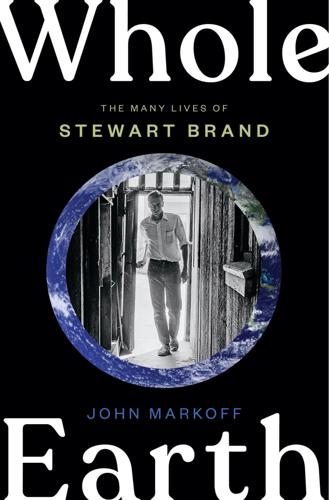
Whole Earth: The Many Lives of Stewart Brand
by John Markoff · 22 Mar 2022 · 573pp · 142,376 words
) | LCCN 2021039443 (ebook) | ISBN 9780735223943 (hardcover) | ISBN 9780735223950 (ebook) Subjects: LCSH: Brand, Stewart. | Technologists—United States—Biography. | Appropriate technology—United States—History. | Whole Earth catalog (Menlo Park, Calif.) | Counterculture—United States—History. | Technology—California, Northern—History. | Futurologists—United States—Biography. | Technological innovations—Social aspects—United States. | Journalism, Technical—United States—History. | California
…
the life of his running shoes, and in 1973 he started a company to sell it.) His clients at SRI ranged from the city of Menlo Park to the 1962 Seattle World’s Fair—he had convinced the fair organizers that the buildings, including the Space Needle, should be permanent. Dick and
…
social, political, and technological forces that would all take shape during the next decade. By 1961 Stolaroff and Harman would establish a research group in Menlo Park to study the relationship between creativity and LSD. One of their first subjects would be a young Stewart Brand. * * * Brand’s early flirtation with libertarianism
…
wrote in his journal. “If a species works it survives; if not, not.” * * * As a junior, Brand had moved off campus to a cottage in Menlo Park. At the time, he had proudly written to his mother that he would be the master of his world. “Essentially, I am alone to study
…
sure, is primarily a matter of timing.” Yet recognizing that he had done something stupid and costly, he sat in front of his cottage in Menlo Park and cried. Later it would become apparent that interest in a romantic relationship was more on his side than hers. Joan Squires was looking for
…
discussion led by Willis Harman, who had the previous year helped launch the International Foundation for Advanced Study, to explore LSD and human creativity, in Menlo Park. It was one of several spin-offs from the Sequoia Seminars, in which a number of the founders had participated. The foundation had begun offering
…
had had LSD enlightenment, and came away with only one doubt: where could I scare together the $500 necessary for the month-long process in Menlo Park.” He’d likened it to skydiving with his body, but he added that these people were skydiving through the universe with their minds. “When they
…
to build Esalen. * * * Run by psychologists and engineers who were collecting data to find a link between the drug and creativity, the LSD experiment in Menlo Park included both an extensive preparation and a debriefing. The first step was to write an extended personal biography. Brand had gone through similar exercises at
…
to try psychedelics. When, in March of 1961, Stolaroff and Harman set up the International Foundation for Advanced Study on a quiet street in downtown Menlo Park, just two miles from the Stanford campus, they weren’t the only ones exploring the therapeutic uses of LSD on the San Francisco Peninsula. Experiments
…
were going on at the Veterans Administration Hospital in Menlo Park, and the Palo Alto Mental Research Institute had already begun introducing local psychiatrists and psychologists and even poets such as Allen Ginsberg to psychedelic drugs
…
, he walked outside and looked up at a full moon. He stood frozen as it receded, transforming itself into three separate dancing images. To the Menlo Park foundation researchers, Brand had proved a tough nut to crack. Their analysis was that he was stuck in here-and-now concepts and resistant to
…
into more inner-generated symbolism, he still kept “one foot on the ground.” It would only be later, during several follow-up sessions, that the Menlo Park psychologists noticed he softened, becoming less defensive, less concerned about how he was perceived, and more accessible and easier to be with. Not surprisingly, the
…
was three years older than Brand, had been introduced to the drug when, to supplement his income, he had participated in government studies at the Menlo Park Veterans Administration Hospital. On a whim, Brand mailed some of the photographs he had taken in Oregon to Kesey, who was in the process of
…
moving over the hill to the small mountain community of La Honda because his cottage on Perry Lane in Menlo Park was being torn down. Brand added a short note: “Pictures were taken this May on the first stage of a brochure job for the Warm
…
, waving the cheese he was holding as if conducting an imaginary orchestra. He had what he had long sought in psychedelics—a transformative experience. In Menlo Park he had felt claustrophobic restrictions; now, release. The experience was sharpened, he wrote in his journal, because his situation felt so dangerous. He was far
…
Earth Catalog. The Brands roamed the country freely during the summer of 1967, intermittently returning to the Bay Area, where they parked their trailer in Menlo Park, just off the Stanford campus, at the home of Diana Shugart, a former Stanford student then working as a social worker, who became a close
…
computing. When Raymond invited Albrecht to join him in creating the Portola Institute, he moved to relatively bucolic and suburban Menlo Park. The institute was housed in an unassuming commercial building in downtown Menlo Park, just off El Camino Real, the original route of the Spanish padres that runs from San Jose to San
…
longer obvious only to the priesthood of engineers and programmers who had access to corporate computers. When Dymax moved to a tiny shopping center in Menlo Park, a People’s Computer Center was created in the adjacent office, and soon terminals were connecting to a time-sharing computer service. People could walk
…
, he added: “Notion: every catalog item pictured is held by a naked lady.” He would never finish reading Spaceship Earth. When he arrived back in Menlo Park, once again something had changed in the way he viewed the world. Early the next morning he drove to the Portola Institute and pitched the
…
you a steering wheel. So would the Catalog. * * * When Brand decided to abandon any notion of going back to the land and instead returned to Menlo Park to explore his “technology,” the location of the Whole Earth Truck Store would prove to be fundamental. Despite his grand plan to become a tool
…
which were hard to find, it mostly sold books, T-shirts, and other clothing, maps, and postcards. Set just across El Camino Real from the Menlo Park business district in four thousand square feet of retail space with a volleyball court in back, the Truck Store was a storefront with a large
…
job. Years later Brand would adopt the mantra “Live small, so you can live large.” Indeed, when the Brands first arrived on Alpine Road in Menlo Park, they lived in a fifteen-foot-long box trailer that had little more than a bed and a tiny kitchen. It was a classic hippie
…
-class neighborhood known as Ladera. Vic Lovell, Shugart’s former boyfriend and a psychology graduate student who alerted Kesey to the LSD experiments at the Menlo Park Veterans Administration Hospital, and Richard Alpert, as well as the writers and Kesey pals Robert Stone and Ed McClanahan, had previously lived just a couple
…
told her it was time to move on. They also told her that Stewart Brand was looking to hire someone for a new project in Menlo Park. Coincidentally, she knew who Brand was: one day walking across Harvard Square after class she had seen this odd fellow in a top hat, standing
…
the garage of Rancho Diablo, a seventy-acre former hippie crash pad with views of the Pacific Ocean. For a while they all commuted from Menlo Park up into the hills to the garage. Later Brand and Jennings moved the two trailers up to Skyline. At one point they lived in the
…
layout. In the summer when it got hot they just opened the garage doors. The first sixty-four-page Catalog was printed at a small Menlo Park printing press located around the corner from the Truck Store, and then the cover, which was printed separately in color, was saddle-stitched to create
…
about the hypertext concept for linking documents that would decades later become the basis of the World Wide Web. The computer itself was located in Menlo Park, just blocks from the Portola Institute. Brand was on hand there to operate a video camera that would relay images of the computer operators to
…
an observer, but there was no video feed of the audience to see the crowd reaction to the demonstration. When Engelbart ended his presentation, the Menlo Park team asked over the microwave relay, “Did they like it?” They waited for what seemed like a very long time, and then the answer came
…
how to get chickens by mail from Iowa, when he met Baldwin. Baldwin told Kahn about the Whole Earth Truck Store, so he drove to Menlo Park to meet Brand. When he read the first issue of the Catalog, he realized that Brand was way ahead of him, and he didn’t
…
pushing far south. The next day the Durkees’ child was born and named Aurora. * * * * * * The Spring 1969 Catalog was produced in the Truck Store in Menlo Park, which turned out to be a mistake resulting in countless interruptions. Afterward, Brand hitchhiked to New Mexico to “clear his head” for what would be
…
have to leave the island they had created. The plastic enclosure—unceremoniously sandwiched between a restaurant and a supermarket in Hayward across the Bay from Menlo Park—was equipped with portable toilets and an emergency “hospital tent.” Unable to get permission for a larger venue, Brand was forced to hold the event
…
the parking lot, soaking sleeping bags, and numbers dwindled further. When the rains continued, the decision was made to evacuate to the Truck Store in Menlo Park. The next morning the police showed up and told them to leave, and Brand had a confrontation with an angry cop that threatened to get
…
general, attention only made him feel worse. He tried to improve his outlook with a visit to Jack Dowling, a gestalt therapist and neighbor in Menlo Park, who had introduced LSD therapy for alcoholics in the early 1960s. Their meetings were ineffective. (Dowling instructed him to shout at a chair that was
…
Brand, and Crosby said he was anxious to meet the Catalog’s creator. On a whim they jumped into Brilliant’s car and headed to Menlo Park and the Truck Store. When Crosby and Brilliant arrived, they were escorted into the back room where Brand was sitting up in bed, editing. If
…
Rensselaer Polytechnic Institute. He had been hired at SRI as part of a futures group led by Willis Harman, one of the founders of the Menlo Park–based LSD group where Brand had taken part in the 1962 drug experiment. (Schwartz had shown up at SRI just in time to be given
…
moved back to North Beach and signed up to take part in an LSD experiment being conducted by the International Foundation for Advanced Study, a Menlo Park–based research group founded by several electronics industry engineers and Stanford professors. For Brand his first LSD experience was an intense and unpleasant one. The
…
-inventor of the computer mouse pointing device. Later Brand would officiate at English’s wedding in the backyard of a home on Homer Lane in Menlo Park. Trained as a mathematician, Lois Jennings was the driving force behind the Whole Earth Catalog. She kept the books, managed the employees, and even worked
…
to his friends living rurally in communes, Brand soon located the Whole Earth Truck Store adjacent to the Portola Institute near the train station in Menlo Park. The store mostly sold books, along with an eclectic mix of tools and other often quirky gear. It was located in the heart of the
…
, but Another Had the Idea First,” New York Times, April 18, 2005. BACK TO NOTE REFERENCE 4 Stewart Brand, “History,” The Last Whole Earth Catalog (Menlo Park, CA: Portola Institute, distributed by Random House, 1971), 439. BACK TO NOTE REFERENCE 5 Brand, “History,” 439. BACK TO NOTE REFERENCE 6 Brand, “History,” 439
…
, 63, 64–65 Varda, Jean, 35, 37, 50–51 Varda, Joan, 74 Vassar College, 13 Venice, Phelan and SB in, 274–75 Veterans Administration Hospital (Menlo Park), 77, 88, 160 Vietnam Day Committee, 121 Vietnam War, 53, 54, 68, 121–22, 149, 205, 241 growing US involvement in, 65 Whole Earth Catalog
An Ugly Truth: Inside Facebook's Battle for Domination
by Sheera Frenkel and Cecilia Kang · 12 Jul 2021 · 372pp · 100,947 words
their perspectives were conveyed in this book, they refused repeated requests for interviews. On three occasions, Sandberg invited us to off-the-record conversations in Menlo Park and New York, with the promise that those conversations would lead to longer interviews for the record. When she learned about the critical nature of
…
and philanthropist; she, business icon and feminist—and have surrounded the inner workings of “MPK,” the shorthand employees use to describe the headquarters’ campus in Menlo Park, with its moat of loyalists and culture of secrecy. Many people regard Facebook as a company that lost its way: the classic Frankenstein story of
…
gone wrong. The truth is far more complex. Chapter 1 Don’t Poke the Bear It was late at night, hours after his colleagues at Menlo Park had left the office, when the Facebook engineer felt pulled back to his laptop. He had enjoyed a few beers. Part of the reason, he
…
meeting known as the “all-hands,” which had a more rigid agenda and featured programs and presentations. A couple hundred employees attended the meeting in Menlo Park, and thousands more watched a livestream of the meeting from Facebook’s offices around the world. In the lead-up to the Q&A following
…
to all employees that had been posted on the general Workplace group.2 In the post, Zuckerberg addressed the brewing scandal at the company’s Menlo Park headquarters over the defacement of Black Lives Matter slogans written on the walls of its office buildings. “‘Black Lives Matter’ doesn’t mean other lives
…
advice. He assured her that he could handle the controversy by convening a meeting of top conservative media executives, think tank leaders, and pundits in Menlo Park. It was critical, however, that Zuckerberg agree to play a prominent role in the event. On May 18, sixteen prominent conservative media personalities and thought
…
leaders—including Glenn Beck of Blaze TV, Arthur Brooks of the American Enterprise Institute, and Jenny Beth Martin of Tea Party Patriots—flew to Menlo Park for the afternoon gathering to air their concerns of political bias. Only Republican Facebook staff were allowed in the room, a former Facebook official said
…
board for the nonprofit child advocacy group Common Sense Media, described a meeting with Sandberg at Facebook’s new offices at One Hacker Way, in Menlo Park. The cofounder of San Francisco–based TPG Capital, one of the largest private equity companies in the nation, Price moved in the same circles of
…
highballs mixed from an old-fashioned bar cart stocked with Johnnie Walker, Jose Cuervo, and a selection of mixers. Those who weren’t based in Menlo Park, including Moran and other members of the threat intelligence team who worked out of DC, often joined by video. Within a year of joining Facebook
…
Lewandowski did not fit the company’s culture or brand. Ultimately, Kaplan was wary of Lewandowski, Washington staff said, and passed on the pitch. In Menlo Park, Zuckerberg sat in the Aquarium, attempting to confront a different type of fallout from the election. In the days following the vote, a narrative had
…
do with his victory. He spoke about Russia, and Putin, in warm, even glowing terms. Facebook’s Washington lobbyists had delivered a clear message to Menlo Park: the suggestion that Russia had done anything to influence the election was not well received by the Trump administration and would be seen as a
…
of his security experts, engineers, and advertising employees and was led by one of Facebook’s earliest employees, Naomi Gleit—began to meet in the Menlo Park offices. They called themselves “Project P”—the P for “propaganda.” The group met daily and discussed its progress on a secure Facebook page. The banner
…
Facebook’s policy team in Washington, but had repeatedly walked away with the feeling that the company was holding something back. Now he was in Menlo Park to confront Sandberg directly. The sofas, where Sandberg preferred to sit for meetings, were ignored, and the group sat formally at the conference table. Warner
…
campaign, they had overlooked the IRA’s highly effective troll army. The discovery of the IRA ads prompted Stamos’s team to double down. In Menlo Park, they were already isolated in their building on the outskirts of the Facebook campus; Moran and a small number of other members of the threat
…
to autism. It was as if she curated her worldview to exclude negative or even critical feedback. When the company had relocated to the new Menlo Park offices, she had even named her conference room “Only Good News.” The uplifting stories were validation both of Facebook’s mission and of her ambition
…
the CEO. Some of Facebook’s lobbyists and communications staff watched a livestream of the hearing in a conference room in the Washington offices. In Menlo Park, executives gathered in a glass conference room with the hearing displayed on one TV screen and their colleagues in DC on videoconference on another. The
…
the most basic details of how Facebook worked. Zuckerberg paused and then smiled. “Senator, we run ads.” The audience chuckled, and executives in Washington and Menlo Park exploded with laughter. In the joint Senate Committee on Commerce and Senate Committee on the Judiciary hearing, the average age of its four leaders was
…
two hours in, if he needed a break, he declined. “You can do a few more,” he said with a small smile. In Washington and Menlo Park, employees cheered. “Oh, he’s feeling good!” one Washington staffer exclaimed. Even younger congressional members made embarrassing errors. “If I’m emailing within WhatsApp, does
…
in much the same way it had been used in the United States and Europe. What happened in other languages was invisible to leaders in Menlo Park. Zuckerberg, for his part, was encouraged by the early results. After Internet.org began rolling out in 2014, he touted how women in Zambia and
…
taking place on Facebook. In the month following the call, a handful of Facebook employees started an informal working group to connect Facebook employees in Menlo Park with activists in Myanmar. The activists were told it would be a direct channel of communication, used to alert the company to any problems. Various
…
. It’s not that they cannot solve this; it’s that they refuse to do what is necessary.”9 On Thursday, Zuckerberg and Sandberg in Menlo Park and Kaplan in Washington, DC, met over videoconference to come up with a response. The fact-checkers and the AI that Sandberg had touted to
…
about Trump’s stance on immigration. The cultural rift between the Washington office and MPK was widening. The Oval Office meeting upset many employees in Menlo Park, but to their counterparts in Washington, Kaplan was simply following the lobbying playbook used across corporate America. His main goal was to preserve the status
…
changes. “Mark still wanted people using Facebook as much as possible, as often as possible.” Sheryl Sandberg sat in a sun-filled garden outside her Menlo Park home surrounded by high-resolution cameras set up to stream a live interview with the Reuters Next media conference. It was January 11, 2021, and
…
her middle school–age children; she and her fiancé, Tom Bernthal, had combined their families. Berthnal’s three children had moved from Los Angeles to Menlo Park and enrolled in school there. Some employees claimed that they weren’t seeing her as often in high-level meetings, but Sandberg’s aides insisted
Anarchy State and Utopia
by Robert Nozick · 15 Mar 1974 · 524pp · 146,798 words
Where Wizards Stay Up Late: The Origins of the Internet
by Katie Hafner and Matthew Lyon · 1 Jan 1996 · 352pp · 96,532 words
Always Day One: How the Tech Titans Plan to Stay on Top Forever
by Alex Kantrowitz · 6 Apr 2020 · 260pp · 67,823 words
How to Turn Down a Billion Dollars: The Snapchat Story
by Billy Gallagher · 13 Feb 2018 · 359pp · 96,019 words
Nine Algorithms That Changed the Future: The Ingenious Ideas That Drive Today's Computers
by John MacCormick and Chris Bishop · 27 Dec 2011 · 250pp · 73,574 words
Wild Ride: Inside Uber's Quest for World Domination
by Adam Lashinsky · 31 Mar 2017 · 190pp · 62,941 words
How We Got to Now: Six Innovations That Made the Modern World
by Steven Johnson · 28 Sep 2014 · 243pp · 65,374 words
More Than You Know: Finding Financial Wisdom in Unconventional Places (Updated and Expanded)
by Michael J. Mauboussin · 1 Jan 2006 · 348pp · 83,490 words
Complexity: A Guided Tour
by Melanie Mitchell · 31 Mar 2009 · 524pp · 120,182 words
The Book of Why: The New Science of Cause and Effect
by Judea Pearl and Dana Mackenzie · 1 Mar 2018

Artificial Whiteness
by Yarden Katz
The Antisocial Network: The GameStop Short Squeeze and the Ragtag Group of Amateur Traders That Brought Wall Street to Its Knees
by Ben Mezrich · 6 Sep 2021 · 239pp · 74,845 words
Valley of Death: How Big Tech Is Fueling the Future of War
by Sharon Weinberger · 21 Sep 2026 · 281pp · 98,857 words
The C++ Programming Language
by Bjarne Stroustrup · 2 Jan 1986 · 923pp · 516,602 words
The People vs Tech: How the Internet Is Killing Democracy (And How We Save It)
by Jamie Bartlett · 4 Apr 2018 · 170pp · 49,193 words
Slide:ology: the art and science of creating great presentations
by Nancy Duarte · 15 Nov 2008 · 297pp · 35,674 words
Chaos Monkeys: Obscene Fortune and Random Failure in Silicon Valley
by Antonio Garcia Martinez · 27 Jun 2016 · 559pp · 155,372 words
Digital Wars: Apple, Google, Microsoft and the Battle for the Internet
by Charles Arthur · 3 Mar 2012 · 390pp · 114,538 words
Future Shock
by Alvin Toffler · 1 Jun 1984 · 286pp · 94,017 words
eBoys
by Randall E. Stross · 30 Oct 2008 · 381pp · 112,674 words
The Chip: How Two Americans Invented the Microchip and Launched a Revolution
by T. R. Reid · 18 Dec 2007 · 293pp · 91,110 words
Troublemakers: Silicon Valley's Coming of Age
by Leslie Berlin · 7 Nov 2017 · 615pp · 168,775 words
Fire in the Valley: The Birth and Death of the Personal Computer
by Michael Swaine and Paul Freiberger · 19 Oct 2014 · 459pp · 140,010 words
The Code: Silicon Valley and the Remaking of America
by Margaret O'Mara · 8 Jul 2019
Selfie: How We Became So Self-Obsessed and What It's Doing to Us
by Will Storr · 14 Jun 2017 · 431pp · 129,071 words
Unacceptable: Privilege, Deceit & the Making of the College Admissions Scandal
by Melissa Korn and Jennifer Levitz · 20 Jul 2020 · 520pp · 134,627 words
How to Make a Few Billion Dollars
by Brad Jacobs · 15 Feb 2024 · 168pp · 46,127 words
Handbook of Modeling High-Frequency Data in Finance
by Frederi G. Viens, Maria C. Mariani and Ionut Florescu · 20 Dec 2011 · 443pp · 51,804 words
Is the Internet Changing the Way You Think?: The Net's Impact on Our Minds and Future
by John Brockman · 18 Jan 2011 · 379pp · 109,612 words
How to Change Your Mind: What the New Science of Psychedelics Teaches Us About Consciousness, Dying, Addiction, Depression, and Transcendence
by Michael Pollan · 30 Apr 2018 · 547pp · 148,732 words
River Out of Eden: A Darwinian View of Life
by Richard Dawkins · 28 Feb 1995 · 141pp · 46,879 words
The Pragmatic Programmer
by Andrew Hunt and Dave Thomas · 19 Oct 1999 · 509pp · 92,141 words
The Art of Computer Programming: Fundamental Algorithms
by Donald E. Knuth · 1 Jan 1974
The Mind in the Cave: Consciousness and the Origins of Art
by David Lewis-Williams · 16 Apr 2004
Guide to LaTeX
by Helmut Kopka and Patrick W. Daly · 15 Feb 2008
Protocol: how control exists after decentralization
by Alexander R. Galloway · 1 Apr 2004 · 287pp · 86,919 words

Advances in Artificial General Intelligence: Concepts, Architectures and Algorithms: Proceedings of the Agi Workshop 2006
by Ben Goertzel and Pei Wang · 1 Jan 2007 · 303pp · 67,891 words
Radical Abundance: How a Revolution in Nanotechnology Will Change Civilization
by K. Eric Drexler · 6 May 2013 · 445pp · 105,255 words
The Mythical Man-Month
by Brooks, Jr. Frederick P. · 1 Jan 1975 · 259pp · 67,456 words
Dear Data
by Giorgia Lupi, Stefanie Posavec and Maria Popova · 5 Sep 2016 · 51pp · 8,543 words
The System: Who Owns the Internet, and How It Owns Us
by James Ball · 19 Aug 2020 · 268pp · 76,702 words
Super Pumped: The Battle for Uber
by Mike Isaac · 2 Sep 2019 · 444pp · 127,259 words
The Quest: Energy, Security, and the Remaking of the Modern World
by Daniel Yergin · 14 May 2011 · 1,373pp · 300,577 words
Palo Alto: A History of California, Capitalism, and the World
by Malcolm Harris · 14 Feb 2023 · 864pp · 272,918 words
Tripping on Utopia: Margaret Mead, the Cold War, and the Troubled Birth of Psychedelic Science
by Benjamin Breen · 16 Jan 2024 · 384pp · 118,573 words
Measure What Matters: How Google, Bono, and the Gates Foundation Rock the World With OKRs
by John Doerr · 23 Apr 2018 · 280pp · 71,268 words
The Men Who United the States: America's Explorers, Inventors, Eccentrics and Mavericks, and the Creation of One Nation, Indivisible
by Simon Winchester · 14 Oct 2013 · 501pp · 145,097 words
The Big Nine: How the Tech Titans and Their Thinking Machines Could Warp Humanity
by Amy Webb · 5 Mar 2019 · 340pp · 97,723 words
Tools for Thought: The History and Future of Mind-Expanding Technology
by Howard Rheingold · 14 May 2000 · 352pp · 120,202 words
Machines of Loving Grace: The Quest for Common Ground Between Humans and Robots
by John Markoff · 24 Aug 2015 · 413pp · 119,587 words
App Kid: How a Child of Immigrants Grabbed a Piece of the American Dream
by Michael Sayman · 20 Sep 2021 · 285pp · 91,144 words
Careless People: A Cautionary Tale of Power, Greed, and Lost Idealism
by Sarah Wynn-Williams · 11 Mar 2025 · 370pp · 115,318 words
The Metropolitan Revolution: How Cities and Metros Are Fixing Our Broken Politics and Fragile Economy
by Bruce Katz and Jennifer Bradley · 10 Jun 2013
Code Complete (Developer Best Practices)
by Steve McConnell · 8 Jun 2004 · 1,758pp · 342,766 words
Googled: The End of the World as We Know It
by Ken Auletta · 1 Jan 2009 · 532pp · 139,706 words
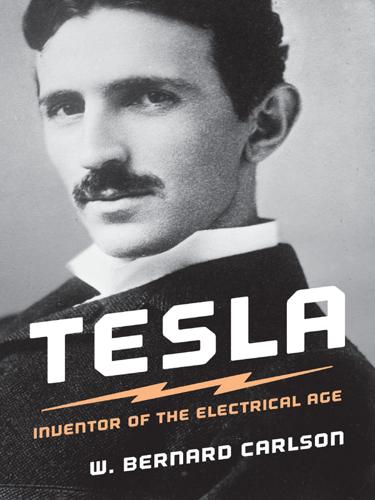
Tesla: Inventor of the Electrical Age
by W. Bernard Carlson · 11 May 2013 · 733pp · 184,118 words
The Coming Plague: Newly Emerging Diseases in a World Out of Balance
by Laurie Garrett · 31 Oct 1994 · 1,293pp · 357,735 words
The Technology Trap: Capital, Labor, and Power in the Age of Automation
by Carl Benedikt Frey · 17 Jun 2019 · 626pp · 167,836 words
Internet for the People: The Fight for Our Digital Future
by Ben Tarnoff · 13 Jun 2022 · 234pp · 67,589 words
How to Be the Startup Hero: A Guide and Textbook for Entrepreneurs and Aspiring Entrepreneurs
by Tim Draper · 18 Dec 2017 · 302pp · 95,965 words
Capitalism: Money, Morals and Markets
by John Plender · 27 Jul 2015 · 355pp · 92,571 words
Barefoot Into Cyberspace: Adventures in Search of Techno-Utopia
by Becky Hogge, Damien Morris and Christopher Scally · 26 Jul 2011 · 171pp · 54,334 words
The Electric Kool-Aid Acid Test
by Tom Wolfe · 1 Jan 1968 · 224pp · 91,918 words
The New Tycoons: Inside the Trillion Dollar Private Equity Industry That Owns Everything
by Jason Kelly · 10 Sep 2012 · 274pp · 81,008 words
Blockchain Chicken Farm: And Other Stories of Tech in China's Countryside
by Xiaowei Wang · 12 Oct 2020 · 196pp · 61,981 words
Superintelligence: Paths, Dangers, Strategies
by Nick Bostrom · 3 Jun 2014 · 574pp · 164,509 words
The Undoing Project: A Friendship That Changed Our Minds
by Michael Lewis · 6 Dec 2016 · 336pp · 113,519 words
Tesla: Man Out of Time
by Margaret Cheney · 1 Jan 1981 · 478pp · 131,657 words
The Upstarts: How Uber, Airbnb, and the Killer Companies of the New Silicon Valley Are Changing the World
by Brad Stone · 30 Jan 2017 · 373pp · 112,822 words
Innovation and Its Enemies
by Calestous Juma · 20 Mar 2017
Mapping Mars: Science, Imagination and the Birth of a World
by Oliver Morton · 15 Feb 2003 · 409pp · 129,423 words
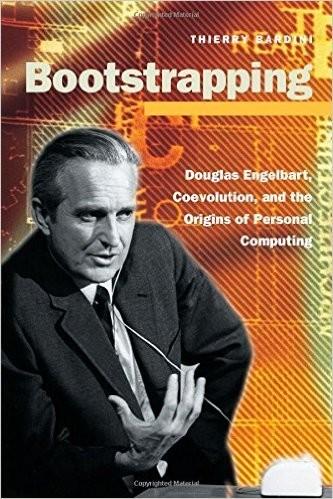
Bootstrapping: Douglas Engelbart, Coevolution, and the Origins of Personal Computing (Writing Science)
by Thierry Bardini · 1 Dec 2000
No Filter: The Inside Story of Instagram
by Sarah Frier · 13 Apr 2020 · 484pp · 114,613 words
Death Glitch: How Techno-Solutionism Fails Us in This Life and Beyond
by Tamara Kneese · 14 Aug 2023 · 284pp · 75,744 words
Attention Factory: The Story of TikTok and China's ByteDance
by Matthew Brennan · 9 Oct 2020 · 282pp · 63,385 words
When the Heavens Went on Sale: The Misfits and Geniuses Racing to Put Space Within Reach
by Ashlee Vance · 8 May 2023 · 558pp · 175,965 words
A Crack in the Edge of the World
by Simon Winchester · 9 Oct 2006 · 482pp · 147,281 words
In the Plex: How Google Thinks, Works, and Shapes Our Lives
by Steven Levy · 12 Apr 2011 · 666pp · 181,495 words
The Dream Machine: J.C.R. Licklider and the Revolution That Made Computing Personal
by M. Mitchell Waldrop · 14 Apr 2001
The Participation Revolution: How to Ride the Waves of Change in a Terrifyingly Turbulent World
by Neil Gibb · 15 Feb 2018 · 217pp · 63,287 words
The Innovators: How a Group of Inventors, Hackers, Geniuses and Geeks Created the Digital Revolution
by Walter Isaacson · 6 Oct 2014 · 720pp · 197,129 words
Lab Rats: How Silicon Valley Made Work Miserable for the Rest of Us
by Dan Lyons · 22 Oct 2018 · 252pp · 78,780 words
The History of the Future: Oculus, Facebook, and the Revolution That Swept Virtual Reality
by Blake J. Harris · 19 Feb 2019 · 561pp · 163,916 words
Phishing for Phools: The Economics of Manipulation and Deception
by George A. Akerlof, Robert J. Shiller and Stanley B Resor Professor Of Economics Robert J Shiller · 21 Sep 2015 · 274pp · 93,758 words
Betrayal of Trust: The Collapse of Global Public Health
by Laurie Garrett · 15 Feb 2000
The Hype Machine: How Social Media Disrupts Our Elections, Our Economy, and Our Health--And How We Must Adapt
by Sinan Aral · 14 Sep 2020 · 475pp · 134,707 words
The Launch Pad: Inside Y Combinator, Silicon Valley's Most Exclusive School for Startups
by Randall Stross · 4 Sep 2013 · 332pp · 97,325 words
The Dying Citizen: How Progressive Elites, Tribalism, and Globalization Are Destroying the Idea of America
by Victor Davis Hanson · 15 Nov 2021 · 458pp · 132,912 words
Ludicrous: The Unvarnished Story of Tesla Motors
by Edward Niedermeyer · 14 Sep 2019 · 328pp · 90,677 words
Inventor of the Future: The Visionary Life of Buckminster Fuller
by Alec Nevala-Lee · 1 Aug 2022 · 864pp · 222,565 words
Human Frontiers: The Future of Big Ideas in an Age of Small Thinking
by Michael Bhaskar · 2 Nov 2021
Hackers: Heroes of the Computer Revolution - 25th Anniversary Edition
by Steven Levy · 18 May 2010 · 598pp · 183,531 words
Exploding the Phone: The Untold Story of the Teenagers and Outlaws Who Hacked Ma Bell
by Phil Lapsley · 5 Feb 2013 · 744pp · 142,748 words
Dealers of Lightning
by Michael A. Hiltzik · 27 Apr 2000 · 559pp · 157,112 words
The Golden Passport: Harvard Business School, the Limits of Capitalism, and the Moral Failure of the MBA Elite
by Duff McDonald · 24 Apr 2017 · 827pp · 239,762 words
Elon Musk: Tesla, SpaceX, and the Quest for a Fantastic Future
by Ashlee Vance · 18 May 2015 · 370pp · 129,096 words
The Rise and Fall of American Growth: The U.S. Standard of Living Since the Civil War (The Princeton Economic History of the Western World)
by Robert J. Gordon · 12 Jan 2016 · 1,104pp · 302,176 words
Power Play: Tesla, Elon Musk, and the Bet of the Century
by Tim Higgins · 2 Aug 2021 · 430pp · 135,418 words
Tubes: A Journey to the Center of the Internet
by Andrew Blum · 28 May 2012 · 314pp · 83,631 words
The Extended Phenotype: The Long Reach of the Gene
by Richard Dawkins · 1 Jan 1982 · 506pp · 152,049 words
Wait: The Art and Science of Delay
by Frank Partnoy · 15 Jan 2012 · 342pp · 94,762 words
We-Think: Mass Innovation, Not Mass Production
by Charles Leadbeater · 9 Dec 2010 · 313pp · 84,312 words
The Seventh Sense: Power, Fortune, and Survival in the Age of Networks
by Joshua Cooper Ramo · 16 May 2016 · 326pp · 103,170 words
Valley of Genius: The Uncensored History of Silicon Valley (As Told by the Hackers, Founders, and Freaks Who Made It Boom)
by Adam Fisher · 9 Jul 2018 · 611pp · 188,732 words
Tech Titans of China: How China's Tech Sector Is Challenging the World by Innovating Faster, Working Harder, and Going Global
by Rebecca Fannin · 2 Sep 2019 · 269pp · 70,543 words
A People’s History of Computing in the United States
by Joy Lisi Rankin
Microserfs
by Douglas Coupland · 14 Feb 1995
Genius Makers: The Mavericks Who Brought A. I. To Google, Facebook, and the World
by Cade Metz · 15 Mar 2021 · 414pp · 109,622 words
The Blind Watchmaker; Why the Evidence of Evolution Reveals a Universe Without Design
by Richard Dawkins · 1 Jan 1986 · 420pp · 143,881 words
Bitcoin Billionaires: A True Story of Genius, Betrayal, and Redemption
by Ben Mezrich · 20 May 2019 · 304pp · 91,566 words
Mastering the VC Game: A Venture Capital Insider Reveals How to Get From Start-Up to IPO on Your Terms
by Jeffrey Bussgang · 31 Mar 2010 · 253pp · 65,834 words
The Success Equation: Untangling Skill and Luck in Business, Sports, and Investing
by Michael J. Mauboussin · 14 Jul 2012 · 299pp · 92,782 words
Common Knowledge?: An Ethnography of Wikipedia
by Dariusz Jemielniak · 13 May 2014 · 312pp · 93,504 words
Brotopia: Breaking Up the Boys' Club of Silicon Valley
by Emily Chang · 6 Feb 2018 · 334pp · 104,382 words
Abolish Silicon Valley: How to Liberate Technology From Capitalism
by Wendy Liu · 22 Mar 2020 · 223pp · 71,414 words
Trillion Dollar Coach: The Leadership Playbook of Silicon Valley's Bill Campbell
by Eric Schmidt, Jonathan Rosenberg and Alan Eagle · 15 Apr 2019 · 199pp · 56,243 words
Becoming Steve Jobs: The Evolution of a Reckless Upstart Into a Visionary Leader
by Brent Schlender and Rick Tetzeli · 24 Mar 2015 · 464pp · 155,696 words
Wall Street Meat
by Andy Kessler · 17 Mar 2003 · 270pp · 75,803 words
Mindware: Tools for Smart Thinking
by Richard E. Nisbett · 17 Aug 2015 · 397pp · 109,631 words
Libertarian Idea
by Jan Narveson · 15 Dec 1988 · 371pp · 36,271 words
The Man Behind the Microchip: Robert Noyce and the Invention of Silicon Valley
by Leslie Berlin · 9 Jun 2005
Americana: A 400-Year History of American Capitalism
by Bhu Srinivasan · 25 Sep 2017 · 801pp · 209,348 words
Steve Jobs
by Walter Isaacson · 23 Oct 2011 · 915pp · 232,883 words
Energy and Civilization: A History
by Vaclav Smil · 11 May 2017
The Red Queen: Sex and the Evolution of Human Nature
by Matt Ridley · 14 Aug 1993 · 474pp · 136,787 words
The Simpsons and Their Mathematical Secrets
by Simon Singh · 29 Oct 2013 · 262pp · 65,959 words
Data Science for Business: What You Need to Know About Data Mining and Data-Analytic Thinking
by Foster Provost and Tom Fawcett · 30 Jun 2013 · 660pp · 141,595 words
The Moon: A History for the Future
by Oliver Morton · 1 May 2019 · 319pp · 100,984 words
From Airline Reservations to Sonic the Hedgehog: A History of the Software Industry
by Martin Campbell-Kelly · 15 Jan 2003
Cataloging the World: Paul Otlet and the Birth of the Information Age
by Alex Wright · 6 Jun 2014
Going Dark: The Secret Social Lives of Extremists
by Julia Ebner · 20 Feb 2020 · 309pp · 79,414 words
Technically Wrong: Sexist Apps, Biased Algorithms, and Other Threats of Toxic Tech
by Sara Wachter-Boettcher · 9 Oct 2017 · 223pp · 60,909 words
Genentech: The Beginnings of Biotech
by Sally Smith Hughes
Your Computer Is on Fire
by Thomas S. Mullaney, Benjamin Peters, Mar Hicks and Kavita Philip · 9 Mar 2021 · 661pp · 156,009 words
Extremely Hardcore: Inside Elon Musk's Twitter
by Zoë Schiffer · 13 Feb 2024 · 343pp · 92,693 words
Capitalism in America: A History
by Adrian Wooldridge and Alan Greenspan · 15 Oct 2018 · 585pp · 151,239 words
The Politics Industry: How Political Innovation Can Break Partisan Gridlock and Save Our Democracy
by Katherine M. Gehl and Michael E. Porter · 14 Sep 2020 · 627pp · 89,295 words
Drugs 2.0: The Web Revolution That's Changing How the World Gets High
by Mike Power · 1 May 2013 · 378pp · 94,468 words
Data Source Handbook
by Pete Warden · 15 Feb 2011 · 39pp · 4,665 words
Cosmos
by Carl Sagan · 1 Jan 1980 · 404pp · 131,034 words
Big Data: A Revolution That Will Transform How We Live, Work, and Think
by Viktor Mayer-Schonberger and Kenneth Cukier · 5 Mar 2013 · 304pp · 82,395 words
The Battery: How Portable Power Sparked a Technological Revolution
by Henry Schlesinger · 16 Mar 2010 · 336pp · 92,056 words

Pearls of Functional Algorithm Design
by Richard Bird · 15 Sep 2010
Racing the Beam: The Atari Video Computer System
by Nick Montfort and Ian Bogost · 9 Jan 2009
Zucked: Waking Up to the Facebook Catastrophe
by Roger McNamee · 1 Jan 2019 · 382pp · 105,819 words
The Marginal Revolutionaries: How Austrian Economists Fought the War of Ideas
by Janek Wasserman · 23 Sep 2019 · 470pp · 130,269 words
Talk to Me: How Voice Computing Will Transform the Way We Live, Work, and Think
by James Vlahos · 1 Mar 2019 · 392pp · 108,745 words
Howard Rheingold
by The Virtual Community Homesteading on the Electronic Frontier-Perseus Books (1993) · 26 Apr 2012
A Time to Build: From Family and Community to Congress and the Campus, How Recommitting to Our Institutions Can Revive the American Dream
by Yuval Levin · 21 Jan 2020 · 224pp · 71,060 words
Custodians of the Internet: Platforms, Content Moderation, and the Hidden Decisions That Shape Social Media
by Tarleton Gillespie · 25 Jun 2018 · 390pp · 109,519 words
The Ape That Understood the Universe: How the Mind and Culture Evolve
by Steve Stewart-Williams · 12 Sep 2018 · 1,132pp · 156,379 words
AI Superpowers: China, Silicon Valley, and the New World Order
by Kai-Fu Lee · 14 Sep 2018 · 307pp · 88,180 words
Palaces for the People: How Social Infrastructure Can Help Fight Inequality, Polarization, and the Decline of Civic Life
by Eric Klinenberg · 10 Sep 2018 · 281pp · 83,505 words
Give People Money
by Annie Lowrey · 10 Jul 2018 · 242pp · 73,728 words
Battle for the Bird: Jack Dorsey, Elon Musk, and the $44 Billion Fight for Twitter's Soul
by Kurt Wagner · 20 Feb 2024 · 332pp · 127,754 words
Electric City
by Thomas Hager · 18 May 2021 · 248pp · 79,444 words
The Horse, the Wheel, and Language: How Bronze-Age Riders From the Eurasian Steppes Shaped the Modern World
by David W. Anthony · 26 Jul 2010 · 658pp · 195,182 words
Running Money
by Andy Kessler · 4 Jun 2007 · 323pp · 92,135 words
The Rise of the Network Society
by Manuel Castells · 31 Aug 1996 · 843pp · 223,858 words
The Village Effect: How Face-To-Face Contact Can Make Us Healthier, Happier, and Smarter
by Susan Pinker · 30 Sep 2013 · 404pp · 124,705 words
Working in Public: The Making and Maintenance of Open Source Software
by Nadia Eghbal · 3 Aug 2020 · 1,136pp · 73,489 words

Future Sex
by Emily Witt · 10 Oct 2016 · 197pp · 64,958 words
The Optimist: Sam Altman, OpenAI, and the Race to Invent the Future
by Keach Hagey · 19 May 2025 · 439pp · 125,379 words
The Runaway Species: How Human Creativity Remakes the World
by David Eagleman and Anthony Brandt · 30 Sep 2017 · 345pp · 84,847 words
The Age of Spiritual Machines: When Computers Exceed Human Intelligence
by Ray Kurzweil · 31 Dec 1998 · 696pp · 143,736 words
Intertwingled: The Work and Influence of Ted Nelson (History of Computing)
by Douglas R. Dechow · 2 Jul 2015 · 223pp · 52,808 words
The Gang That Wouldn't Write Straight: Wolfe, Thompson, Didion, Capote, and the New Journalism Revolution
by Marc Weingarten · 12 Dec 2006 · 363pp · 123,076 words
Silicon City: San Francisco in the Long Shadow of the Valley
by Cary McClelland · 8 Oct 2018 · 225pp · 70,241 words
Your Face Belongs to Us: A Secretive Startup's Quest to End Privacy as We Know It
by Kashmir Hill · 19 Sep 2023 · 487pp · 124,008 words
Vassal State
by Angus Hanton · 25 Mar 2024 · 277pp · 81,718 words
Apple: The First 50 Years
by David Pogue · 10 Mar 2026 · 686pp · 216,944 words
Cuckoo's Egg
by Clifford Stoll · 2 Jan 1989 · 440pp · 117,978 words
Heart of the Machine: Our Future in a World of Artificial Emotional Intelligence
by Richard Yonck · 7 Mar 2017 · 360pp · 100,991 words
Stacy Mitchell
by Big-Box Swindle The True Cost of Mega-Retailers and the Fight for America's Independent Businesses (2006)
Nexus
by Ramez Naam · 16 Dec 2012 · 502pp · 124,794 words
How We Got Here: A Slightly Irreverent History of Technology and Markets
by Andy Kessler · 13 Jun 2005 · 218pp · 63,471 words
Climbing Mount Improbable
by Richard Dawkins and Lalla Ward · 1 Jan 1996 · 309pp · 101,190 words
Open Standards and the Digital Age: History, Ideology, and Networks (Cambridge Studies in the Emergence of Global Enterprise)
by Andrew L. Russell · 27 Apr 2014 · 675pp · 141,667 words
All the Money in the World
by Peter W. Bernstein · 17 Dec 2008 · 538pp · 147,612 words
The Race Underground: Boston, New York, and the Incredible Rivalry That Built America's First Subway
by Doug Most · 4 Feb 2014 · 485pp · 143,790 words
My Start-Up Life: What A
by Ben Casnocha and Marc Benioff · 7 May 2007 · 207pp · 63,071 words
Computer: A History of the Information Machine
by Martin Campbell-Kelly and Nathan Ensmenger · 29 Jul 2013 · 528pp · 146,459 words
Insane Mode: How Elon Musk's Tesla Sparked an Electric Revolution to End the Age of Oil
by Hamish McKenzie · 30 Sep 2017 · 307pp · 90,634 words
Our Posthuman Future: Consequences of the Biotechnology Revolution
by Francis Fukuyama · 1 Jan 2002 · 350pp · 96,803 words
The Contrarian: Peter Thiel and Silicon Valley's Pursuit of Power
by Max Chafkin · 14 Sep 2021 · 524pp · 130,909 words
The Billion-Dollar Molecule
by Barry Werth · 543pp · 163,997 words
The Big Score
by Michael S. Malone · 20 Jul 2021
The Facebook Effect
by David Kirkpatrick · 19 Nov 2010 · 455pp · 133,322 words
Goddess of the Market: Ayn Rand and the American Right
by Jennifer Burns · 18 Oct 2009 · 495pp · 144,101 words
Rough Guide to San Francisco and the Bay Area
by Nick Edwards and Mark Ellwood · 2 Jan 2009
The New New Thing: A Silicon Valley Story
by Michael Lewis · 29 Sep 1999 · 146pp · 43,446 words
Happy City: Transforming Our Lives Through Urban Design
by Charles Montgomery · 12 Nov 2013 · 432pp · 124,635 words
Rise of the Machines: A Cybernetic History
by Thomas Rid · 27 Jun 2016 · 509pp · 132,327 words
The Great Reset: How the Post-Crash Economy Will Change the Way We Live and Work
by Richard Florida · 22 Apr 2010 · 265pp · 74,941 words
The Nerd Reich: Silicon Valley Fascism and the War on Democracy
by Gil Durán · 17 Aug 2026 · 317pp · 114,570 words
Political Order and Political Decay: From the Industrial Revolution to the Globalization of Democracy
by Francis Fukuyama · 29 Sep 2014 · 828pp · 232,188 words
Emergence
by Steven Johnson · 329pp · 88,954 words
Stealing Fire: How Silicon Valley, the Navy SEALs, and Maverick Scientists Are Revolutionizing the Way We Live and Work
by Steven Kotler and Jamie Wheal · 21 Feb 2017 · 407pp · 90,238 words
How Not to Network a Nation: The Uneasy History of the Soviet Internet (Information Policy)
by Benjamin Peters · 2 Jun 2016 · 518pp · 107,836 words
Commodore: A Company on the Edge
by Brian Bagnall · 13 Sep 2005 · 781pp · 226,928 words
Transcend: The New Science of Self-Actualization
by Scott Barry Kaufman · 6 Apr 2020 · 678pp · 148,827 words
The Middleman Economy: How Brokers, Agents, Dealers, and Everyday Matchmakers Create Value and Profit
by Marina Krakovsky · 14 Sep 2015 · 270pp · 79,180 words
Memory Machines: The Evolution of Hypertext
by Belinda Barnet · 14 Jul 2013 · 193pp · 19,478 words
Raw Data Is an Oxymoron
by Lisa Gitelman · 25 Jan 2013
The Misadventures of Awkward Black Girl
by Issa Rae · 10 Feb 2015
Just Giving: Why Philanthropy Is Failing Democracy and How It Can Do Better
by Rob Reich · 20 Nov 2018 · 257pp · 75,685 words
Cogs and Monsters: What Economics Is, and What It Should Be
by Diane Coyle · 11 Oct 2021 · 305pp · 75,697 words
A Culture of Growth: The Origins of the Modern Economy
by Joel Mokyr · 8 Jan 2016 · 687pp · 189,243 words
The death and life of the great American school system: how testing and choice are undermining education
by Diane Ravitch · 2 Mar 2010 · 403pp · 105,431 words
The Art of Computer Programming
by Donald Ervin Knuth · 15 Jan 2001
Competition Overdose: How Free Market Mythology Transformed Us From Citizen Kings to Market Servants
by Maurice E. Stucke and Ariel Ezrachi · 14 May 2020 · 511pp · 132,682 words
Writing on the Wall: Social Media - the First 2,000 Years
by Tom Standage · 14 Oct 2013 · 290pp · 94,968 words
Concepts, Techniques, and Models of Computer Programming
by Peter Van-Roy and Seif Haridi · 15 Feb 2004 · 931pp · 79,142 words
The Age of Cryptocurrency: How Bitcoin and Digital Money Are Challenging the Global Economic Order
by Paul Vigna and Michael J. Casey · 27 Jan 2015 · 457pp · 128,838 words
The Most Human Human: What Talking With Computers Teaches Us About What It Means to Be Alive
by Brian Christian · 1 Mar 2011 · 370pp · 94,968 words
The Paypal Wars: Battles With Ebay, the Media, the Mafia, and the Rest of Planet Earth
by Eric M. Jackson · 15 Jan 2004 · 398pp · 108,889 words
Disrupted: My Misadventure in the Start-Up Bubble
by Dan Lyons · 4 Apr 2016 · 284pp · 92,688 words
The Grid: The Fraying Wires Between Americans and Our Energy Future
by Gretchen Bakke · 25 Jul 2016 · 433pp · 127,171 words
Think Twice: Harnessing the Power of Counterintuition
by Michael J. Mauboussin · 6 Nov 2012 · 256pp · 60,620 words
If Then: How Simulmatics Corporation Invented the Future
by Jill Lepore · 14 Sep 2020 · 467pp · 149,632 words
The Power of Now: A Guide to Spiritual Enlightenment
by Eckhart Tolle · 1 Jan 1997 · 212pp · 64,724 words
Thinking Machines: The Inside Story of Artificial Intelligence and Our Race to Build the Future
by Luke Dormehl · 10 Aug 2016 · 252pp · 74,167 words
The Scandal of Money
by George Gilder · 23 Feb 2016 · 209pp · 53,236 words
The Brain That Changes Itself: Stories of Personal Triumph From the Frontiers of Brain Science
by Norman Doidge · 15 Mar 2007 · 515pp · 136,938 words
The 5 AM Club: Own Your Morning. Elevate Your Life.
by Robin Sharma · 4 Dec 2018 · 325pp · 97,162 words
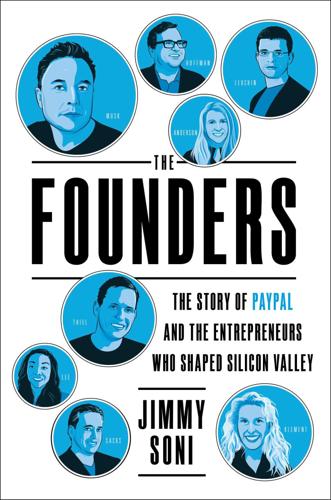
The Founders: The Story of Paypal and the Entrepreneurs Who Shaped Silicon Valley
by Jimmy Soni · 22 Feb 2022 · 505pp · 161,581 words
Dopamine Nation: Finding Balance in the Age of Indulgence
by Anna Lembke · 24 Aug 2021
Spite: The Upside of Your Dark Side
by Simon McCarthy-Jones · 12 Apr 2021
Character Limit: How Elon Musk Destroyed Twitter
by Kate Conger and Ryan Mac · 17 Sep 2024
Supremacy: AI, ChatGPT, and the Race That Will Change the World
by Parmy Olson · 284pp · 96,087 words
Billionaire, Nerd, Savior, King: Bill Gates and His Quest to Shape Our World
by Anupreeta Das · 12 Aug 2024 · 315pp · 115,894 words
Blank Space: A Cultural History of the Twenty-First Century
by W. David Marx · 18 Nov 2025 · 642pp · 142,332 words
Made to Stick: Why Some Ideas Survive and Others Die
by Chip Heath and Dan Heath · 18 Dec 2006 · 313pp · 94,490 words
Tools of Titans: The Tactics, Routines, and Habits of Billionaires, Icons, and World-Class Performers
by Timothy Ferriss · 6 Dec 2016 · 669pp · 210,153 words
Dawn of the New Everything: Encounters With Reality and Virtual Reality
by Jaron Lanier · 21 Nov 2017 · 480pp · 123,979 words
The Billionaire's Apprentice: The Rise of the Indian-American Elite and the Fall of the Galleon Hedge Fund
by Anita Raghavan · 4 Jun 2013 · 575pp · 171,599 words
Lurking: How a Person Became a User
by Joanne McNeil · 25 Feb 2020 · 239pp · 80,319 words
For Profit: A History of Corporations
by William Magnuson · 8 Nov 2022 · 356pp · 116,083 words
Traffic: Genius, Rivalry, and Delusion in the Billion-Dollar Race to Go Viral
by Ben Smith · 2 May 2023
Abundance
by Ezra Klein and Derek Thompson · 18 Mar 2025 · 227pp · 84,566 words
Bit Rot
by Douglas Coupland · 4 Oct 2016
Power Hungry: The Myths of "Green" Energy and the Real Fuels of the Future
by Robert Bryce · 26 Apr 2011 · 520pp · 129,887 words
Age of Context: Mobile, Sensors, Data and the Future of Privacy
by Robert Scoble and Shel Israel · 4 Sep 2013 · 202pp · 59,883 words
Robot Futures
by Illah Reza Nourbakhsh · 1 Mar 2013

A Fiery Peace in a Cold War: Bernard Schriever and the Ultimate Weapon
by Neil Sheehan · 21 Sep 2009 · 589pp · 197,971 words
The Stack: On Software and Sovereignty
by Benjamin H. Bratton · 19 Feb 2016 · 903pp · 235,753 words
Across the Airless Wilds: The Lunar Rover and the Triumph of the Final Moon Landings
by Earl Swift · 5 Jul 2021 · 410pp · 120,234 words

Earth Wars: The Battle for Global Resources
by Geoff Hiscock · 23 Apr 2012 · 363pp · 101,082 words
The Start-Up of You: Adapt to the Future, Invest in Yourself, and Transform Your Career
by Reid Hoffman and Ben Casnocha · 14 Feb 2012 · 176pp · 55,819 words
From Bacteria to Bach and Back: The Evolution of Minds
by Daniel C. Dennett · 7 Feb 2017 · 573pp · 157,767 words
A Short History of Nearly Everything
by Bill Bryson · 5 May 2003 · 654pp · 204,260 words
Growth Hacking Techniques, Disruptive Technology - How 40 Companies Made It BIG – Online Growth Hacker Marketing Strategy
by Robert Peters · 18 May 2014 · 125pp · 28,222 words
Frenemies: The Epic Disruption of the Ad Business
by Ken Auletta · 4 Jun 2018 · 379pp · 109,223 words
Stephen Fry in America
by Stephen Fry · 1 Jan 2008 · 362pp · 95,782 words
Total Recall: How the E-Memory Revolution Will Change Everything
by Gordon Bell and Jim Gemmell · 15 Feb 2009 · 291pp · 77,596 words
Bad Money: Reckless Finance, Failed Politics, and the Global Crisis of American Capitalism
by Kevin Phillips · 31 Mar 2008 · 422pp · 113,830 words
Jim Henson: The Biography
by Brian Jay Jones · 23 Sep 2013 · 702pp · 215,002 words
The End of the Suburbs: Where the American Dream Is Moving
by Leigh Gallagher · 26 Jun 2013 · 296pp · 76,284 words
Quiet: The Power of Introverts in a World That Can't Stop Talking
by Susan Cain · 24 Jan 2012 · 377pp · 115,122 words
The Transhumanist Reader
by Max More and Natasha Vita-More · 4 Mar 2013 · 798pp · 240,182 words
The Fugitive Game: Online With Kevin Mitnick
by Jonathan Littman · 1 Jan 1996
The Best Business Writing 2013
by Dean Starkman · 1 Jan 2013 · 514pp · 152,903 words
Possible Minds: Twenty-Five Ways of Looking at AI
by John Brockman · 19 Feb 2019 · 339pp · 94,769 words
Irresistible: The Rise of Addictive Technology and the Business of Keeping Us Hooked
by Adam L. Alter · 15 Feb 2017 · 331pp · 96,989 words
The End of Astronauts: Why Robots Are the Future of Exploration
by Donald Goldsmith and Martin Rees · 18 Apr 2022 · 192pp · 63,813 words
Kingdom of Characters: The Language Revolution That Made China Modern
by Jing Tsu · 18 Jan 2022 · 408pp · 105,715 words
American Foundations: An Investigative History
by Mark Dowie · 3 Oct 2009 · 410pp · 115,666 words
The Molecule of More: How a Single Chemical in Your Brain Drives Love, Sex, and Creativityand Will Det Ermine the Fate of the Human Race
by Daniel Z. Lieberman and Michael E. Long · 13 Aug 2018 · 287pp · 78,609 words
The WEIRDest People in the World: How the West Became Psychologically Peculiar and Particularly Prosperous
by Joseph Henrich · 7 Sep 2020 · 796pp · 223,275 words
America's Bitter Pill: Money, Politics, Backroom Deals, and the Fight to Fix Our Broken Healthcare System
by Steven Brill · 5 Jan 2015 · 554pp · 167,247 words
The Geography of Nowhere: The Rise and Decline of America's Man-Made Landscape
by James Howard Kunstler · 31 May 1993

Waiting for Superman: How We Can Save America's Failing Public Schools
by Participant Media and Karl Weber · 14 Jun 2010 · 257pp · 68,143 words
Adapt: Why Success Always Starts With Failure
by Tim Harford · 1 Jun 2011 · 459pp · 103,153 words
Investment: A History
by Norton Reamer and Jesse Downing · 19 Feb 2016
Wealth Without a Job: The Entrepreneur's Guide to Freedom and Security Beyond the 9 to 5 Lifestyle
by Phil Laut and Andy Fuehl · 12 Sep 2004 · 290pp · 98,699 words
Move Fast and Break Things: How Facebook, Google, and Amazon Cornered Culture and Undermined Democracy
by Jonathan Taplin · 17 Apr 2017 · 222pp · 70,132 words
Why the West Rules--For Now: The Patterns of History, and What They Reveal About the Future
by Ian Morris · 11 Oct 2010 · 1,152pp · 266,246 words
21 Lessons for the 21st Century
by Yuval Noah Harari · 29 Aug 2018 · 389pp · 119,487 words
The Captured Economy: How the Powerful Enrich Themselves, Slow Down Growth, and Increase Inequality
by Brink Lindsey · 12 Oct 2017 · 288pp · 64,771 words
Gods and Robots: Myths, Machines, and Ancient Dreams of Technology
by Adrienne Mayor · 27 Nov 2018
Startupland: How Three Guys Risked Everything to Turn an Idea Into a Global Business
by Mikkel Svane and Carlye Adler · 13 Nov 2014 · 220pp
Breaking News: The Remaking of Journalism and Why It Matters Now
by Alan Rusbridger · 14 Oct 2018 · 579pp · 160,351 words
Immortality, Inc.
by Chip Walter · 7 Jan 2020 · 232pp · 72,483 words
How to Stand Up to a Dictator
by Maria Ressa · 19 Oct 2022
The Revolution That Wasn't: GameStop, Reddit, and the Fleecing of Small Investors
by Spencer Jakab · 1 Feb 2022 · 420pp · 94,064 words

Fancy Bear Goes Phishing: The Dark History of the Information Age, in Five Extraordinary Hacks
by Scott J. Shapiro · 523pp · 154,042 words
Make Your Own Job: How the Entrepreneurial Work Ethic Exhausted America
by Erik Baker · 13 Jan 2025 · 362pp · 132,186 words
The Atlas of AI: Power, Politics, and the Planetary Costs of Artificial Intelligence
by Kate Crawford · 5 Apr 2021 · 355pp · 89,587 words
How Capitalism Saved America: The Untold History of Our Country, From the Pilgrims to the Present
by Thomas J. Dilorenzo · 9 Aug 2004 · 283pp · 81,163 words
The Sovereign Individual: How to Survive and Thrive During the Collapse of the Welfare State
by James Dale Davidson and William Rees-Mogg · 3 Feb 1997 · 582pp · 160,693 words
Blindside: How to Anticipate Forcing Events and Wild Cards in Global Politics
by Francis Fukuyama · 27 Aug 2007
Coders at Work
by Peter Seibel · 22 Jun 2009 · 1,201pp · 233,519 words
The Evolution of Useful Things
by Henry Petroski · 2 Jan 1992 · 307pp · 97,677 words
The God Delusion
by Richard Dawkins · 12 Sep 2006 · 478pp · 142,608 words

Without Their Permission: How the 21st Century Will Be Made, Not Managed
by Alexis Ohanian · 30 Sep 2013 · 216pp · 61,061 words
How Doctors Think
by Jerome Groopman · 15 Jan 2007 · 292pp · 94,324 words
The Inmates Are Running the Asylum
by Alan Cooper · 24 Feb 2004 · 193pp · 98,671 words
Coming of Age in the Milky Way
by Timothy Ferris · 30 Jun 1988 · 661pp · 169,298 words
The Accidental Investment Banker: Inside the Decade That Transformed Wall Street
by Jonathan A. Knee · 31 Jul 2006 · 362pp · 108,359 words
A Manual for Writers of Research Papers, Theses, and Dissertations, Eighth Edition: Chicago Style for Students and Researchers
by Kate L. Turabian · 14 Apr 2007 · 863pp · 159,091 words
What’s Your Type?
by Merve Emre · 16 Aug 2018 · 384pp · 112,971 words
Don't Be Evil: How Big Tech Betrayed Its Founding Principles--And All of US
by Rana Foroohar · 5 Nov 2019 · 380pp · 109,724 words
Dreaming in Code: Two Dozen Programmers, Three Years, 4,732 Bugs, and One Quest for Transcendent Software
by Scott Rosenberg · 2 Jan 2006 · 394pp · 118,929 words
The Search for Life on Mars
by Elizabeth Howell · 14 Apr 2020 · 530pp · 145,220 words
Utopia Is Creepy: And Other Provocations
by Nicholas Carr · 5 Sep 2016 · 391pp · 105,382 words
The Pencil: A History of Design and Circumstance
by Henry Petroski · 2 Jan 1990 · 490pp · 150,172 words
QI: The Book of General Ignorance - The Noticeably Stouter Edition
by Lloyd, John and Mitchinson, John · 7 Oct 2010 · 624pp · 104,923 words
Targeted: The Cambridge Analytica Whistleblower's Inside Story of How Big Data, Trump, and Facebook Broke Democracy and How It Can Happen Again
by Brittany Kaiser · 21 Oct 2019 · 391pp · 123,597 words
From Satori to Silicon Valley: San Francisco and the American Counterculture
by Theodore Roszak · 31 Aug 1986
The Idea of Decline in Western History
by Arthur Herman · 8 Jan 1997 · 717pp · 196,908 words
Slouching Towards Utopia: An Economic History of the Twentieth Century
by J. Bradford Delong · 6 Apr 2020 · 593pp · 183,240 words
Going Infinite: The Rise and Fall of a New Tycoon
by Michael Lewis · 2 Oct 2023 · 263pp · 92,618 words
Massive: The Missing Particle That Sparked the Greatest Hunt in Science
by Ian Sample · 1 Jan 2010 · 310pp · 89,838 words
Elon Musk: A Mission to Save the World
by Anna Crowley Redding · 1 Jul 2019 · 190pp · 46,977 words
The Price of Everything: And the Hidden Logic of Value
by Eduardo Porter · 4 Jan 2011 · 353pp · 98,267 words
Falling to Earth
by Al Worden · 26 Jul 2011 · 357pp · 121,119 words
Data Mining: Concepts, Models, Methods, and Algorithms
by Mehmed Kantardzić · 2 Jan 2003 · 721pp · 197,134 words
Work Rules!: Insights From Inside Google That Will Transform How You Live and Lead
by Laszlo Bock · 31 Mar 2015 · 387pp · 119,409 words
Lifespan: Why We Age—and Why We Don't Have To
by David A. Sinclair and Matthew D. Laplante · 9 Sep 2019
The Musical Human: A History of Life on Earth
by Michael Spitzer · 31 Mar 2021 · 632pp · 163,143 words
Makers
by Chris Anderson · 1 Oct 2012 · 238pp · 73,824 words
Natural language processing with Python
by Steven Bird, Ewan Klein and Edward Loper · 15 Dec 2009 · 504pp · 89,238 words
Blink: The Power of Thinking Without Thinking
by Malcolm Gladwell · 1 Jan 2005 · 264pp · 90,379 words
The Master Switch: The Rise and Fall of Information Empires
by Tim Wu · 2 Nov 2010 · 418pp · 128,965 words
Your Money or Your Life: 9 Steps to Transforming Your Relationship With Money and Achieving Financial Independence: Revised and Updated for the 21st Century
by Vicki Robin, Joe Dominguez and Monique Tilford · 31 Aug 1992 · 426pp · 115,150 words
What's Mine Is Yours: How Collaborative Consumption Is Changing the Way We Live
by Rachel Botsman and Roo Rogers · 2 Jan 2010 · 411pp · 80,925 words
Falter: Has the Human Game Begun to Play Itself Out?
by Bill McKibben · 15 Apr 2019
An Empire of Wealth: Rise of American Economy Power 1607-2000
by John Steele Gordon · 12 Oct 2009 · 519pp · 148,131 words
The Future of Technology
by Tom Standage · 31 Aug 2005
A Generation of Sociopaths: How the Baby Boomers Betrayed America
by Bruce Cannon Gibney · 7 Mar 2017 · 526pp · 160,601 words
Broad Band: The Untold Story of the Women Who Made the Internet
by Claire L. Evans · 6 Mar 2018 · 371pp · 93,570 words
Exploring the World of Lucid Dreaming
by Stephen Laberge, Phd and Howard Rheingold · 8 Feb 2015
Giving the Devil His Due: Reflections of a Scientific Humanist
by Michael Shermer · 8 Apr 2020 · 677pp · 121,255 words
Empire of Guns
by Priya Satia · 10 Apr 2018 · 927pp · 216,549 words
The Jasons: The Secret History of Science's Postwar Elite
by Ann Finkbeiner · 26 Mar 2007
Sorting Things Out: Classification and Its Consequences
by Geoffrey C. Bowker and Susan Leigh Star · 25 Aug 2000 · 357pp · 125,142 words
Care: The Highest Stage of Capitalism
by Premilla Nadasen · 10 Oct 2023 · 288pp · 82,972 words
Money: The True Story of a Made-Up Thing
by Jacob Goldstein · 14 Aug 2020 · 199pp · 64,272 words
The Airbnb Story: How Three Ordinary Guys Disrupted an Industry, Made Billions...and Created Plenty of Controversy
by Leigh Gallagher · 14 Feb 2017 · 290pp · 87,549 words
Founders at Work: Stories of Startups' Early Days
by Jessica Livingston · 14 Aug 2008 · 468pp · 233,091 words
So You've Been Publicly Shamed
by Jon Ronson · 9 Mar 2015 · 229pp · 67,869 words
Smarter Than You Think: How Technology Is Changing Our Minds for the Better
by Clive Thompson · 11 Sep 2013 · 397pp · 110,130 words
The Sport and Prey of Capitalists
by Linda McQuaig · 30 Aug 2019 · 263pp · 79,016 words
Sorting Things Out: Classification and Its Consequences (Inside Technology)
by Geoffrey C. Bowker · 24 Aug 2000
Energy: A Human History
by Richard Rhodes · 28 May 2018 · 653pp · 155,847 words
The Pattern Seekers: How Autism Drives Human Invention
by Simon Baron-Cohen · 14 Aug 2020
Live Work Work Work Die: A Journey Into the Savage Heart of Silicon Valley
by Corey Pein · 23 Apr 2018 · 282pp · 81,873 words
Four Thousand Weeks: Time Management for Mortals
by Oliver Burkeman · 9 Aug 2021 · 206pp · 68,757 words
We Are as Gods: A Survival Guide for the Age of Abundance
by Peter H. Diamandis and Steven Kotler · 13 Apr 2026 · 225pp · 76,418 words

The new village green: living light, living local, living large
by Stephen Morris · 1 Sep 2007 · 289pp · 112,697 words
The Global Citizen: A Guide to Creating an International Life and Career
by Elizabeth Kruempelmann · 14 Jul 2002
The Information: A History, a Theory, a Flood
by James Gleick · 1 Mar 2011 · 855pp · 178,507 words
The Future of Ideas: The Fate of the Commons in a Connected World
by Lawrence Lessig · 14 Jul 2001 · 494pp · 142,285 words
Fatal System Error: The Hunt for the New Crime Lords Who Are Bringing Down the Internet
by Joseph Menn · 26 Jan 2010 · 362pp · 86,195 words
Creativity, Inc.: Overcoming the Unseen Forces That Stand in the Way of True Inspiration
by Ed Catmull and Amy Wallace · 23 Jul 2009 · 325pp · 110,330 words
The Driver in the Driverless Car: How Our Technology Choices Will Create the Future
by Vivek Wadhwa and Alex Salkever · 2 Apr 2017 · 181pp · 52,147 words
Momma and the Meaning of Life
by Irvin D. Yalom · 31 Jul 1999 · 283pp · 82,161 words
To Sell Is Human: The Surprising Truth About Moving Others
by Daniel H. Pink · 1 Dec 2012 · 243pp · 61,237 words
The Digital Doctor: Hope, Hype, and Harm at the Dawn of Medicine’s Computer Age
by Robert Wachter · 7 Apr 2015 · 309pp · 114,984 words
Four Arguments for the Elimination of Television
by Jerry Mander · 1 Jan 1977
Between Human and Machine: Feedback, Control, and Computing Before Cybernetics
by David A. Mindell · 10 Oct 2002 · 759pp · 166,687 words
Evil Geniuses: The Unmaking of America: A Recent History
by Kurt Andersen · 14 Sep 2020 · 486pp · 150,849 words
Mindf*ck: Cambridge Analytica and the Plot to Break America
by Christopher Wylie · 8 Oct 2019
Kings of Crypto: One Startup's Quest to Take Cryptocurrency Out of Silicon Valley and Onto Wall Street
by Jeff John Roberts · 15 Dec 2020 · 226pp · 65,516 words
Likewar: The Weaponization of Social Media
by Peter Warren Singer and Emerson T. Brooking · 15 Mar 2018
Dawn of the Code War: America's Battle Against Russia, China, and the Rising Global Cyber Threat
by John P. Carlin and Garrett M. Graff · 15 Oct 2018 · 568pp · 164,014 words
The Friendly Orange Glow: The Untold Story of the PLATO System and the Dawn of Cyberculture
by Brian Dear · 14 Jun 2017 · 708pp · 223,211 words
The Six: The Untold Story of America's First Women Astronauts
by Loren Grush · 11 Sep 2023 · 375pp · 127,360 words
The Shadow of the Wind
by Carlos Ruiz Zafón · 15 Nov 2004 · 544pp · 162,085 words
Hype: How Scammers, Grifters, and Con Artists Are Taking Over the Internet―and Why We're Following
by Gabrielle Bluestone · 5 Apr 2021 · 329pp · 100,162 words
Culture and Prosperity: The Truth About Markets - Why Some Nations Are Rich but Most Remain Poor
by John Kay · 24 May 2004 · 436pp · 76 words
Why Things Bite Back: Technology and the Revenge of Unintended Consequences
by Edward Tenner · 1 Sep 1997
Life After Google: The Fall of Big Data and the Rise of the Blockchain Economy
by George Gilder · 16 Jul 2018 · 332pp · 93,672 words
Eon
by Greg Bear · 2 Jan 1985 · 641pp · 153,921 words
Lethal Passage
by Erik Larson · 27 Jul 2011 · 291pp · 87,296 words
The Oil and the Glory: The Pursuit of Empire and Fortune on the Caspian Sea
by Steve Levine · 23 Oct 2007 · 568pp · 162,366 words
Panderer to Power
by Frederick Sheehan · 21 Oct 2009 · 435pp · 127,403 words
The Age of Radiance: The Epic Rise and Dramatic Fall of the Atomic Era
by Craig Nelson · 25 Mar 2014 · 684pp · 188,584 words
Surveillance Valley: The Rise of the Military-Digital Complex
by Yasha Levine · 6 Feb 2018 · 474pp · 130,575 words
Coders: The Making of a New Tribe and the Remaking of the World
by Clive Thompson · 26 Mar 2019 · 499pp · 144,278 words
The Comedy Film Nerds Guide to Movies
by Graham Elwood and Chris Mancini · 31 May 2012 · 314pp · 86,795 words
Masters of Management: How the Business Gurus and Their Ideas Have Changed the World—for Better and for Worse
by Adrian Wooldridge · 29 Nov 2011 · 460pp · 131,579 words
How to Fix the Future: Staying Human in the Digital Age
by Andrew Keen · 1 Mar 2018 · 308pp · 85,880 words
The Pyramid of Lies: Lex Greensill and the Billion-Dollar Scandal
by Duncan Mavin · 20 Jul 2022 · 345pp · 100,989 words
The Making of Prince of Persia: Journals 1985-1993
by Jordan Mechner · 30 Jan 2012 · 256pp · 58,652 words
The Art of Rest: How to Find Respite in the Modern Age
by Claudia Hammond · 5 Dec 2019 · 249pp · 81,217 words
The Key Man: The True Story of How the Global Elite Was Duped by a Capitalist Fairy Tale
by Simon Clark and Will Louch · 14 Jul 2021 · 403pp · 105,550 words
The Case for Space: How the Revolution in Spaceflight Opens Up a Future of Limitless Possibility
by Robert Zubrin · 30 Apr 2019 · 452pp · 126,310 words
Revenge of the Tipping Point: Overstories, Superspreaders, and the Rise of Social Engineering
by Malcolm Gladwell · 1 Oct 2024 · 283pp · 85,644 words
The Color of Money: Black Banks and the Racial Wealth Gap
by Mehrsa Baradaran · 14 Sep 2017 · 520pp · 153,517 words
Androids: The Team That Built the Android Operating System
by Chet Haase · 12 Aug 2021 · 580pp · 125,129 words
Empire of the Sum: The Rise and Reign of the Pocket Calculator
by Keith Houston · 22 Aug 2023 · 405pp · 105,395 words
This Is How They Tell Me the World Ends: The Cyberweapons Arms Race
by Nicole Perlroth · 9 Feb 2021 · 651pp · 186,130 words
Unbroken: A World War II Story of Survival, Resilience, and Redemption
by Laura Hillenbrand · 16 Nov 2010 · 554pp · 164,923 words
The greatest trade ever: the behind-the-scenes story of how John Paulson defied Wall Street and made financial history
by Gregory Zuckerman · 3 Nov 2009 · 342pp · 99,390 words
Rise of the Warrior Cop: The Militarization of America's Police Forces
by Radley Balko · 14 Jun 2013 · 465pp · 134,575 words
David and Goliath: Underdogs, Misfits, and the Art of Battling Giants
by Malcolm Gladwell · 30 Sep 2013 · 271pp · 82,159 words
Future Crimes: Everything Is Connected, Everyone Is Vulnerable and What We Can Do About It
by Marc Goodman · 24 Feb 2015 · 677pp · 206,548 words
Genius: The Life and Science of Richard Feynman
by James Gleick · 1 Jan 1992 · 795pp · 215,529 words
Bad Blood: Secrets and Lies in a Silicon Valley Startup
by John Carreyrou · 20 May 2018 · 359pp · 110,488 words
Hit Makers: The Science of Popularity in an Age of Distraction
by Derek Thompson · 7 Feb 2017 · 416pp · 108,370 words
The Pentagon's Brain: An Uncensored History of DARPA, America's Top-Secret Military Research Agency
by Annie Jacobsen · 14 Sep 2015 · 558pp · 164,627 words
Billion Dollar Loser: The Epic Rise and Spectacular Fall of Adam Neumann and WeWork
by Reeves Wiedeman · 19 Oct 2020 · 303pp · 100,516 words
The Rise and Fall of the Neoliberal Order: America and the World in the Free Market Era
by Gary Gerstle · 14 Oct 2022 · 655pp · 156,367 words
The Enlightened Capitalists
by James O'Toole · 29 Dec 2018 · 716pp · 192,143 words
The Ransomware Hunting Team: A Band of Misfits' Improbable Crusade to Save the World From Cybercrime
by Renee Dudley and Daniel Golden · 24 Oct 2022 · 392pp · 114,189 words
Capitalism and Its Critics: A History: From the Industrial Revolution to AI
by John Cassidy · 12 May 2025 · 774pp · 238,244 words
Volt Rush: The Winners and Losers in the Race to Go Green
by Henry Sanderson · 12 Sep 2022 · 292pp · 87,720 words
1491
by Charles C. Mann · 8 Aug 2005 · 666pp · 189,883 words
Gambling Man
by Lionel Barber · 3 Oct 2024 · 424pp · 123,730 words
The War Below: Lithium, Copper, and the Global Battle to Power Our Lives
by Ernest Scheyder · 30 Jan 2024 · 355pp · 133,726 words
The Everything Blueprint: The Microchip Design That Changed the World
by James Ashton · 11 May 2023 · 401pp · 113,586 words
Turing's Cathedral
by George Dyson · 6 Mar 2012
Darwin Among the Machines
by George Dyson · 28 Mar 2012 · 463pp · 118,936 words
Come and Take It: The Gun Printer's Guide to Thinking Free
by Cody Wilson · 10 Oct 2016 · 246pp · 70,404 words
What Should I Do With My Life?
by Po Bronson · 2 Jan 2001 · 446pp · 138,827 words
Coming Apart: The State of White America, 1960-2010
by Charles Murray · 1 Jan 2012 · 397pp · 121,211 words
The Art of Computer Programming: Sorting and Searching
by Donald Ervin Knuth · 15 Jan 1998
I'm Feeling Lucky: The Confessions of Google Employee Number 59
by Douglas Edwards · 11 Jul 2011 · 496pp · 154,363 words
Wired for War: The Robotics Revolution and Conflict in the 21st Century
by P. W. Singer · 1 Jan 2010 · 797pp · 227,399 words
Atrocity Archives
by Stross, Charles · 13 Jan 2004 · 404pp · 113,514 words
The Everything Store: Jeff Bezos and the Age of Amazon
by Brad Stone · 14 Oct 2013 · 380pp · 118,675 words
Simple and Usable Web, Mobile, and Interaction Design
by Giles Colborne · 14 Sep 2010
Shoe Dog
by Phil Knight · 25 Apr 2016 · 399pp · 122,688 words
Messy: The Power of Disorder to Transform Our Lives
by Tim Harford · 3 Oct 2016 · 349pp · 95,972 words
Loonshots: How to Nurture the Crazy Ideas That Win Wars, Cure Diseases, and Transform Industries
by Safi Bahcall · 19 Mar 2019 · 393pp · 115,217 words
How to Make a Spaceship: A Band of Renegades, an Epic Race, and the Birth of Private Spaceflight
by Julian Guthrie · 19 Sep 2016
The Economists' Hour: How the False Prophets of Free Markets Fractured Our Society
by Binyamin Appelbaum · 4 Sep 2019 · 614pp · 174,226 words
Netflixed: The Epic Battle for America's Eyeballs
by Gina Keating · 10 Oct 2012 · 347pp · 91,318 words
Atomic Accidents: A History of Nuclear Meltdowns and Disasters: From the Ozark Mountains to Fukushima
by James Mahaffey · 15 Feb 2015
Shampoo Planet
by Douglas Coupland · 28 Dec 2010
It's Not TV: The Spectacular Rise, Revolution, and Future of HBO
by Felix Gillette and John Koblin · 1 Nov 2022 · 575pp · 140,384 words
Like, Comment, Subscribe: Inside YouTube's Chaotic Rise to World Domination
by Mark Bergen · 5 Sep 2022 · 642pp · 141,888 words
Owning the Sun
by Alexander Zaitchik · 7 Jan 2022 · 341pp · 98,954 words
The Great Bridge: The Epic Story of the Building of the Brooklyn Bridge
by David McCullough · 1 Jun 2001 · 848pp · 240,351 words
The New Urban Crisis: How Our Cities Are Increasing Inequality, Deepening Segregation, and Failing the Middle Class?and What We Can Do About It
by Richard Florida · 9 May 2016 · 356pp · 91,157 words
Surfaces and Essences
by Douglas Hofstadter and Emmanuel Sander · 10 Sep 2012 · 1,079pp · 321,718 words
Polaroids From the Dead
by Douglas Coupland · 1 Jan 1996
Red Mars
by Kim Stanley Robinson · 23 Oct 1992 · 660pp · 213,945 words
King of Capital: The Remarkable Rise, Fall, and Rise Again of Steve Schwarzman and Blackstone
by David Carey · 7 Feb 2012 · 421pp · 128,094 words
Countdown: Our Last, Best Hope for a Future on Earth?
by Alan Weisman · 23 Sep 2013 · 579pp · 164,339 words
Titan: The Life of John D. Rockefeller, Sr.
by Ron Chernow · 1 Jan 1997 · 1,106pp · 335,322 words
Bill Marriott: Success Is Never Final--His Life and the Decisions That Built a Hotel Empire
by Dale van Atta · 14 Aug 2019 · 520pp · 164,834 words

Please Report Your Bug Here: A Novel
by Josh Riedel · 17 Jan 2023 · 287pp · 85,518 words
The Passenger
by AA.VV. · 23 May 2022 · 192pp · 59,615 words
GCHQ
by Richard Aldrich · 10 Jun 2010 · 826pp · 231,966 words
Twitter and Tear Gas: The Power and Fragility of Networked Protest
by Zeynep Tufekci · 14 May 2017 · 444pp · 130,646 words

Aerotropolis
by John D. Kasarda and Greg Lindsay · 2 Jan 2009 · 603pp · 182,781 words
Thank You for Being Late: An Optimist's Guide to Thriving in the Age of Accelerations
by Thomas L. Friedman · 22 Nov 2016 · 602pp · 177,874 words
Eastern USA
by Lonely Planet
USA Travel Guide
by Lonely, Planet

California
by Sara Benson · 15 Oct 2010
The End of Traffic and the Future of Transport: Second Edition
by David Levinson and Kevin Krizek · 17 Aug 2015 · 257pp · 64,285 words
The Future Won't Be Long
by Jarett Kobek · 15 Aug 2017 · 510pp · 138,000 words
Life as a Passenger: How Driverless Cars Will Change the World
by David Kerrigan · 18 Jun 2017 · 472pp · 80,835 words
The Unwinding: An Inner History of the New America
by George Packer · 4 Mar 2014 · 559pp · 169,094 words