Moscow, December 25th, 1991
by Conor O'Clery · 31 Jul 2011 · 449pp · 127,440 words
of the Soviet Union, 1995—1991, president of the Soviet Union, 1990—1991 Gorbacheva, Irina, daughter of Mikhail and Raisa Gorbachev Gorbacheva, Raisa, wife of Mikhail Gorbachev Grachev, Andrey, Gorbachev’s press secretary Grachev, Pavel, army general, sided with Yeltsin in August coup Grishin, Viktor, Moscow party chief, 1967—1985 Kalugin,
…
highest levels (and out of sight of the public) by shouts, tears, reminiscences, and melodrama. It climaxes in a final act of surrender by Mikhail Gorbachev to Boris Yeltsin, two extraordinary men who despised each other and whose interaction shaped modern Russia. In reconstructing the events of this midwinter day, I
…
Sergey Yulyevich Witte in his resignation letter as prime minister in 1906 During his six years and nine months as leader of the Soviet Union, Mikhail Gorbachev is accompanied everywhere by two plainclothes colonels with expressionless faces and trim haircuts. They are so unobtrusive that they often go unnoticed by the president
…
Soviet Union remains a nuclear superpower. This all changes on December 25, 1991. At 7:00 p.m., as the world watches on television, Mikhail Gorbachev announces that he is resigning. The communist monolith known as the Union of Soviet Socialist Republics is breaking up into separate states. He has no
…
are two contrasting figures whose baleful interaction has changed the globe’s balance of power. It is the culmination of a struggle for supremacy between Mikhail Gorbachev, the urbane, sophisticated communist idolized by the capitalist world, and Boris Yeltsin, the impetuous, hard-drinking democrat perceived as a wrecker in Western capitals.
…
stagnated and then collapsed. The center lost control. On December 25, 1991, the country that defeated Hitler’s Germany simply ceases to exist. In Mikhail Gorbachev’s words, “One of the most powerful states in the world collapsed before our very eyes.” It is a stupendous moment in the story of
…
collapse of the USSR will mark the “end of history,” with the universalization of Western liberal democracy as the final form of human government. Mikhail Gorbachev created the conditions for the end of totalitarianism, and Boris Yeltsin delivered the death blow. But neither is honored in Russia in modern times as
…
president’s office to record the final hours. The only televised interviews given by the great Russian rivals are to U.S. news channels. Mikhail Gorbachev considers himself a personal friend of President Bush, who in the end tried to help him sustain a reformed Soviet Union. Boris Yeltsin courts the
…
world. There is a clue, however, in Pravda. In a single paragraph on page one, the Communist Party newspaper notes, without comment, that President Mikhail Gorbachev will make a major announcement, live on state television, before the day is out. CHAPTER 2 DECEMBER 25: SUNRISE The heavy snow on the spruce
…
right arm. The wrinkles on her once porcelain complexion reveal the torment of watching her husband shrink in stature day by day. To Raisa, Mikhail Gorbachev is a man of destiny. Indeed many superstitious people have interpreted the distinctive birthmark on his head as an omen. But Mikhail and Raisa themselves
…
morning he has many matters to contemplate, some pleasant, some less so. Today he will emerge triumphant from his long and nasty feud with Mikhail Gorbachev. He acknowledges to himself that the motivations for many of his actions are embedded in his bitter conflict with the Soviet president. Just recently his
…
sensed the dangers and the need for improvement. That was why they had turned to the youngest and most energetic comrade in the top ranks, Mikhail Gorbachev. Born on March 2, 1931, in a village on the fertile steppes of southern Russia, Gorbachev was an earnest communist from his teenage days.
…
atop the Kremlin towers, replacing the copper two-headed eagles, symbols of imperial Russia, which were there in prerevolutionary times. Before entering his office Mikhail Gorbachev leaves the television crew and slips into a small room off the corridor, where his hairdresser, a young woman, is waiting to give him his
…
, he feels, “the environment itself is trying to eject us.” CHAPTER 5 THE STORMING OF MOSCOW Less than a year after he took office, Mikhail Gorbachev summoned Communist Party leaders from all over the Soviet Union to a great congress in the Kremlin. As Moscow city boss, Boris Yeltsin saw to
…
. He undermined the demoralized USSR government by first withholding Russian taxes and then taking ownership of Soviet government ministries and the currency mint. All that Mikhail Gorbachev is left with are titles, a small staff, and the nuclear suitcase. Before Gorbachev’s glasnost, the newspapers were dull, mendacious, and heavily censored.
…
Cuéllar to regard as official agents of the Russian Federation all the diplomats who until that day were Soviet representatives. Only three years ago, Mikhail Gorbachev dazzled the General Assembly with his sweeping vision of a new world order for the twenty-first century that would be regulated by the two
…
President Herzog, and the red flag with hammer and sickle is hoisted over the ancient Russian Compound in Jerusalem. This anomaly arises from a promise Mikhail Gorbachev made two months previously, when he still had some authority, to his Israeli counterpart, Yitzhak Shamir, that he would restore Soviet-Israeli relations broken
…
past the Kievsky Railway Station, around Luzhniki sports stadium, back northeast by Gorky Park, and around the ramparts of the Kremlin two miles distant, where Mikhail Gorbachev is also grabbing a quick lunch and fighting fatigue and the onset of influenza as he prepares for the speech that will mark his transition
…
from Moscow party chief to the junior post of first deputy chairman of the state committee for construction. CHAPTER 9 BACK FROM THE DEAD Mikhail Gorbachev’s warning to Boris Yeltsin in November 1987 that he would never let him into politics again left the former Moscow party chief with a
…
in control of himself.”6 CHAPTER 13 DICTATORSHIP ON THE OFFENSIVE In the wake of the Russian parliament’s declaration of sovereignty in June 1990, Mikhail Gorbachev and Boris Yeltsin had the option of trying to destroy each other or of entering into a political alliance. Something drastic had to be
…
Radio Rossiya, the voice of Yeltsin’s parliament, which had been granted a frequency in December. It had carried factual reports from Lithuania that infuriated Mikhail Gorbachev personally, according to Yeltsin’s radio controller, Oleg Poptsov. Kravchenko protested that shutting it down would cause a scandal. Gorbachev insisted that it be restricted
…
him there, Yeltsin found, “exceeded all my expectations.” CHAPTER 14 DECEMBER 25: MIDAFTERNOON By three o’clock in the afternoon of December 25, 1991, Mikhail Gorbachev is able at last to relax. Everything is ready. There is nothing more to be done in preparation for his farewell address. Ted Koppel and
…
Kremlin office, now ceremonial residence of President Medvedev. Author CHAPTER 18 DECEMBER 25: DUSK With less than sixty minutes left before his resignation address, Mikhail Gorbachev is at last mentally and physically ready. His speech has been printed out for him in large letters to read on air. He is satisfied
…
want to destroy the elected council. The shock therapy Yeltsin is applying to the ailing Russian economy was mooted more than a year earlier when Mikhail Gorbachev flirted with, then abandoned, a five-hundred-day plan to convert the floundering command system to a market economy. One of its authors, Grigory
…
whitewashed Hall of Meetings, where a drugged and distressed Yeltsin was brought from his hospital bed four years ago to be shamed by party leader Mikhail Gorbachev for daring to challenge his leadership and privileges. He is working there with Jean Foglizzo, who arrived in Moscow shortly before as representative of the
…
presence of any Russian journalists or TASS photographers. Neither were there any other Western journalists. Tom greeted me and said to please hang around as Mikhail Gorbachev would talk to CNN after the televised speech. I soon found out it was going to be his resignation speech.” Liu squats in front
…
. “Gorbachev says to them, ‘Nyet, nyet!’”3 “We were about to go live on Russian television and around the world with the resignation of Mikhail Gorbachev, the dissolution of the Soviet Union, and the conveyance of power to Boris Yeltsin,” recalled Johnson. “And I am standing one person away from Gorbachev
…
plan. CHAPTER 23 THE DEAL IN THE WALNUT ROOM The details of the transition of power were worked out during a nine-hour encounter between Mikhail Gorbachev and Boris Yeltsin two days before the Soviet president gave his resignation address on the evening of December 25, 1991.1 After the conspiracy
…
on March 11, 1985, the day after the death of Soviet leader Konstantin Chernenko, that the Politburo of the Communist Party agreed to make Mikhail Gorbachev general secretary of the party and undisputed leader of the Soviet Union. Sitting beneath alabaster chandeliers at the end of the long teakwood table with
…
replacing its Marxist heart.” He believes that the end of the Cold War was made possible because of the bold brand of leadership practiced by Mikhail Gorbachev and President Ronald Reagan. “That Christmas Day, the unimaginable happened,” he wrote. “The Soviet Union disappeared. Without a fight, without a war, without a
…
nuclear button.” All that remains for him “is to clear out some personal effects, some papers.” But Boris Yeltsin has not finished tormenting his rival. Mikhail Gorbachev, like everyone else, expects that the Soviet flag will continue flying over the Senate dome until December 31. Russian and world media were told specifically
…
DECEMBER 27: TRIUMPH OF THE PLUNDERERS Just before 8 a.m. on Friday, December 27, a little over a day and a half after Mikhail Gorbachev announced he was ceasing his activities as president of the USSR, Russian president Boris Yeltsin leaves his apartment at 54 Second Tverskaya-Yamskaya Street, as
…
they stride purposefully along the red runner in the corridor and burst into the anteroom of the presidential office to confront the receptionist on duty. Mikhail Gorbachev has not yet arrived. He has an appointment at 11 a.m. in the presidential office with a group of journalists from the Japanese
…
nuclear nations and in light of Iran’s nuclear ambitions, the hands are moved forward again to six minutes to midnight.) Freed from presidential responsibilities, Mikhail Gorbachev helps Raisa in the evening to put their new homes in order. “We were forced to move to different lodgings within twenty-four hours,”
…
later, after the broadcast of a documentary about ethnic conflict in the Caucasus, which annoys him. The rivals rushed to bring out self-serving biographies: Mikhail Gorbachev—Memoirs and Boris Yeltsin’s Zapiski Prezidenta (Notes of the President), published in English as The Struggle for Russia. Yeltsin gets a $450,000
…
members leap to their feet and give a prolonged standing ovation when he declares, “By the grace of God, America won the Cold War.” Mikhail Gorbachev is deeply offended. Bush’s triumphalism feeds into the perception, already widespread in Russia, that the former Soviet president is to blame for the loss
…
a country in which everyone can feel a citizen.” Varennikov walks free after all charges are dropped and claims that his acquittal is proof of Mikhail Gorbachev’s guilt. In 2008, a year before he dies, the former general presents the case in favor of Stalin in a popular nationwide television
…
Cemetery. Putin, then in the second of two four-year terms as president, declares the day of his funeral a national day of mourning. Mikhail Gorbachev goes to the burial and offers faint praise, extending his condolences “to the family of a man on whose shoulders rested many great deeds for
…
; together with the life of Boris Yeltsin, a piece of his own life had been torn away.” Two years later, at age seventy-eight, Mikhail Gorbachev announces that he is returning to politics with the creation of a new political party, the Independent Democratic Party of Russia, which he cofounds with
…
78. 10 Palazchenko, My Years with Gorbachev and Shevardnadze, 289. 11 Ibid., 189. 12 Beschloss and Talbott, At the Highest Levels, 224-226. 13 Burlatsky, Mikhail Gorbachev-Boris Yeltsin, 41. 14 Brown, The Gorbachev Factor, 102. 15 Chernyaev, My Six Years with Gorbachev, 280. 16 Beschloss and Talbott, At the Highest Levels
…
Nancy Reagan, 400-403,443-446. 11 Bush and Scowcroft, A World Transformed, 6. 12 Gorbacheva, I Hope, 7. 13 Ibid., 180. 14 Dougary, “Mikhail Gorbachev.” 15 Muratov, “Mikhail Gorbachev.” 16 Grachev, Final Days, 187. Chapter 15: Hijacking Barbara Bush 1 Mickiewicz, Changing Channels, 96-97. 2 Shane, Dismantling Utopia, 180. 3 Colton, Yeltsin
…
Raisa’s diary of the coup, 817-824. 7 Dobbs, Down with Big Brother, 391. 8 Bush and Scowcroft, A World Transformed, 532. 9 Muratov, “Mikhail Gorbachev.” 10 Bechloss and Talbott, At the Highest Levels, 444-445. 11 Remnick, Lenin’s Tomb, 495. 12 Khasbulatov, The Struggle for Russia, 170-184.
…
Shakhnazarov, Tsena Svobody, 309. 7 Chernyaev, 1991, diary entry for December 28, 1991. 8 Androunas, “A Letter from Moscow.” 9 Gorbachev, Memoirs, 866. 10 Muratov, “Mikhail Gorbachev.” 11 Chernyaev, 1991, diary entry for December 27, 1991. 12 Gorbacheva, I Hope, photograph. Chapter 29: The Integrity of the Quarrel 1 Martin, “Oleg Looks
…
“I Never Lied to Her, I Couldn’t Now.” 17 Steele, “Russians Say Sorry.” 18 Nemtsov, Ispoved Buntarya, 57. 19 Sandle, Gorbachev, 274. 20 Dougary, “Mikhail Gorbachev.” 21 Putin with Gevorkyan, Timakova, and Kolesnikov, First Person, 94. 22 Interview with BBC, October 28, 2010. BIBLIOGRAPHY Alexandrov, Mikhail. Uneasy Alliance: Relations Between Russia
…
Brzezinski, Zbigniew, and Paige Sullivan, eds. Russia and the Commonwealth of Independent States: Documents, Data, and Analysis. Armonk, NY: M. E. Sharpe, 1997. Burlatsky, Fyodor. Mikhail Gorbachev-Boris Yeltsin: Skhvatka [Fight]. Moscow: Sobraniye, 2008. Bush, George, and Brent Scowcroft. A World Transformed. New York: Knopf, 1998. Chernyaev, Anatoly. Byl li u Rossii
…
: Times Books, 1995. Doder, Dusko. Shadows and Whisper: Power Politics Inside the Kremlin from Brezhnev to Gorbachev. New York: Random House, 1986. Dougary, Ginny. “Mikhail Gorbachev: The Man Who Changed the World.” Times (London), September 5, 2009. www.ginnydougary.co.uk/2009/09/07/the-man-who-changed-the-world/ Dunlop
…
Moran, John P. From Garrison State to Nation-State: Political Power and the Russian Military Under Gorbachev and Yeltsin. Westport, CT: Praeger, 2002. Muratov, Dmitry. “Mikhail Gorbachev: I Too Could Have Reigned to My Heart’s Content.” Novaya Gazeta, February 17, 2011. Murray, Donald. A Democracy of Despots. Boulder: Westview Press, 1996
The Last Empire: The Final Days of the Soviet Union
by Serhii Plokhy · 12 May 2014
President George H. W. Bush of the United States, the cautious and often humble leader of the Western world, whose backing of Soviet president Mikhail Gorbachev and insistence on the security of the nuclear arsenals prolonged the existence of the empire but also ensured its peaceful demise; Boris Yeltsin, the boorish
…
fall of the Soviet Union, many of the principals in my story have published their memoirs. These include books by George H. W. Bush, Mikhail Gorbachev, Boris Yeltsin, and Leonid Kravchuk, as well as the recollections of their advisers and other participants. While the stories told by eyewitnesses and participants in
…
by suspicion,” read a speech prepared by the president’s staff for the signing of a new treaty to reduce nuclear arsenals. “That year, Mikhail Gorbachev assumed leadership of the Soviet Union, put many monumental changes into motion. He began instituting reforms that basically changed the world. And in the United
…
to describe dissidents. In the Foreign Ministry, Kozyrev was one of the young diplomats who slowly but surely pushed their bosses, Eduard Shevardnadze and Mikhail Gorbachev included, to go on from a broadly defined policy of glasnost to a public embrace of freedom of speech and human rights as internationally recognized
…
, it appeared from Yeltsin’s analysis, might fail militarily but succeed politically. The key figure deciding the fate of the coup might again be Mikhail Gorbachev. In the previous few days, Yeltsin had managed to expose the illegality of the coup and establish his own legitimacy by demanding Gorbachev’s release
…
Cold War superpowers that had competed in the Middle East for decades, funding and arming opposing sides in the Arab-Israeli conflict. George Bush and Mikhail Gorbachev served as official cosponsors of the conference. “President Bush and President Gorbachev request your acceptance of this invitation,” read the letter addressed to potential participants
…
international crisis—the invasion of Kuwait by Saddam Hussein’s Iraq a few months earlier. In Paris, responding to a direct request from President Bush, Mikhail Gorbachev agreed to cosponsor a resolution of the United Nations Security Council authorizing the use of force against Saddam Hussein. Gorbachev overruled his hard-line advisers
…
from office by British voters. Now there were well-grounded fears that Madrid could become the last international conference of another heavyweight in international politics—Mikhail Gorbachev. “Reports [[arrived]] recently that he might not be around long,” recorded Bush in his diary on the eve of his departure for Madrid. “The
…
.’ Watching the live broadcast with my colleagues, I felt that they, like me, were surprised Gorbachev had pulled it off.”38 George Bush and Mikhail Gorbachev at a press conference after signing the START1 agreement on the reduction of nuclear arsenals. Gorbachev managed to persuade his military to agree to unprecedented
…
Bush Presidential Library and Museum) Time is up. Russian prime minister Ivan Silaev and future Ukrainian president Leonid Kravchuk check their watches as a worried Mikhail Gorbachev looks on. In the fall of 1991 Gorbachev found it increasingly difficult to deal with the two largest Soviet republics. Kremlin, Moscow, 1991. (ITAR
…
occasion of Gorbachev’s resignation and declare American victory in the Cold War. (George Bush Presidential Library and Museum) V. VOX POPULI 13 ANTICIPATION MIKHAIL GORBACHEV WAS SITTING in his office at the government resort of Novo-Ogarevo. It was the afternoon of November 25, eleven days after the previous meeting
…
no announcement at all.18 ON NOVEMBER 30, three days after the White House leak and the day before the Ukrainian referendum, President Bush called Mikhail Gorbachev to explain the turn in American policy, of which Gorbachev was already aware. It was a conversation neither leader was looking forward to. When
…
after the signing of the Belavezha Agreement, Boris Yeltsin arrived at the Kremlin in a heavily guarded procession of automobiles. He was coming to see Mikhail Gorbachev, the president of the now allegedly defunct Soviet Union. Yeltsin’s bodyguards were prepared for the worst. Their chief, Colonel Aleksandr Korzhakov, had a
…
Kremlin and reverberated throughout the world, Michael R. Beschloss and Strobe Talbott, two distinguished American foreign policy pundits, boarded a plane for Moscow to interview Mikhail Gorbachev. The invitation had come from people in Gorbachev’s immediate circle. Beschloss, the author of several books on the American presidency, and Talbott, a foreign
…
a party crasher from whom everyone wanted to distance himself.40 17 THE BIRTH OF EURASIA ON DECEMBER 17, THE DAY JAMES BAKER left Moscow, Mikhail Gorbachev and Boris Yeltsin met to discuss the transition of power from Union to Commonwealth authorities. “The presidents agreed that the process of managing the
…
Prime Minister John Major of Britain, and, half an hour before his resignation speech, Hans-Dietrich Genscher, the German foreign minister. In his own memoirs, Mikhail Gorbachev would put a more positive spin on his last supper at the Kremlin: “Together with me were the closest friends and colleagues who shared with
…
though the electoral process. The outcome of the competition between the popularly elected president of Russia, Boris Yeltsin, and the president of the USSR, Mikhail Gorbachev, appointed to his position by parliament—a struggle that reached its crescendo in the last months of 1991—shows the decisive power of electoral politics
…
over the main actors of the drama reconstructed in this book. Mikhail Gorbachev unleashed a reform that showed the predilection of modern revolutions for eating their own children. If the French Revolution was an inspiration to the
…
Bush, “State of the Union Address,” January 28, 1992. C-SPAN http://www.c-spanvideo.org/program/23999-1 2. “Statement on the Resignation of Mikhail Gorbachev as President of the Soviet Union,” December 25, 1991, Bush Presidential Library, Public Papers, http://bushlibrary.tamu.edu/research/public_papers.php?id=3790&year
…
Beschloss and Talbott, At the Highest Levels, 415. 13. Beschloss and Talbott, At the Highest Levels, 411–412; “Memorandum of Conversation. Extended Bilateral Meeting with Mikhail Gorbachev of the USSR, July 30, 1991,” Bush Presidential Library, Memcons and Telcons, http://bushlibrary.tamu.edu/research/pdfs/memcons_telcons/1991-07-30—Gorbachev%20
…
[1].pdf. 14. Strobe Talbott, “Mikhail Gorbachev and George Bush: The Summit Goodfellas,” Time, August 5, 1991. 15. Beschloss and Talbott, At the Highest Levels, 405–406. 16. Jane’s Strategic
…
Politbiuro TsK KPSS po zapisiam Anatoliia Cherniaeva, Vadima Medvedeva, Georgiia Shakhnazarova (1985–1991) (Moscow, 2000), 695–696. 18. “Memorandum of Conversation. Extended Bilateral Meeting with Mikhail Gorbachev of the USSR, July 30, 1991,” Bush Presidential Library, Memcons and Telcons, http://bushlibrary.tamu.edu/research/pdfs/memcons_telcons/1991-07-30—Gorbachev%20
…
in Moscow: Bush and Gorbachev Sign Pact to Curtail Nuclear Arsenals, Join in Call for Mid-East Talks,” New York Times, August 1, 1991. 27. Mikhail Gorbachev, Memoirs (New York, 1995), 624. 28. Gorbachev, Memoirs, 624; Cherniaev, Sovmestnyi iskhod, 968–969. 29. Internal Points for Bessmertnykh Meeting, July 28, 1991, James
…
PA, 1997), 305–306; “Dmitriy Timofeyevich Yazov,” The Trip of President Bush to Moscow and Kiev, July 30–August 1, 1991, Bush Presidential Library. 4. Mikhail Gorbachev, Memoirs (New York, 1995), 624–625; Palazhchenko, My Years, 300–301; Michael R. Beschloss and Strobe Talbott, At the Highest Levels: The Inside Story of
…
Levels, 103–104. 25. Gates, From the Shadows, 503; Bush and Scowcroft, A World Transformed, 142–143; Colton, Yeltsin, 172. 26. “Luncheon with President Mikhail Gorbachev of the USSR,” July 30, 1991, Bush Presidential Library, Memcons and Telcons, http://bushlibrary.tamu.edu/research/pdfs/memcons_telcons/1991-07-30—Gorbachev%20
…
: The Plot Against the Jewish Doctors, 1948–1953 (New York, 2004), 313–325; Medvedev, Chelovek za spinoi, 147–148; Nikolai Zen’kovich, Mikhail Gorbachev, zhizn’ do Kremlia (Moscow, 2001), 587. 12. Mikhail Gorbachev, Memoirs (New York, 1995), 631; Valentin Varennikov, Nepovtorimoe (Moscow, 2001), vol. 6, pt. 3; Valerii Boldin, Krushnie p’edestala, Shtrikhi
…
21. Dunlop, “The August 1991 Coup and Its Impact on Soviet Politics,” 111; Stepankov and Lisov, Kremlevskii zagovor, 186–187; Krasnoe ili beloe, 251. 22. Mikhail Gorbachev, Memoirs (New York, 1995), 632–640; Anatolii Cherniaev, Sovmestnyi iskhod. Dnevnik dvukh ėpokh, 1972–1991 gody (Moscow, 2008), 982–983; Stepankov and Lisov, Kremlevskii zagovor
…
141–142; Dunlop, “The August 1991 Coup and Its Impact on Soviet Politics.” 23. Bush and Scowcroft, A World Transformed, 531–532; “Telecon with President Mikhail Gorbachev of the USSR,” August 21, 2011, Bush Presidential Library, Memcons and Telcons, http://bushlibrary.tamu.edu/research/pdfs/memcons_telcons/1991-08-21—Gorbachev.pdf
…
po zapisiam Anatoliia Cherniaeva, Vadima Medvedeva, Georgiia Shakhnazarova (1985–1991) (Moscow, 2000), 497–498; Vadim Medvedev, V komande Gorbacheva. Vzgliad iznutri (Moscow, 1994), 199–200; Mikhail Gorbachev, Memoirs (New York, 1995), 641. 5. “Press-konferentsiia prezidenta SSSR,” Pravda, August 23, 1991; V Politbiuro TsK KPSS, 497–498. 6. “Rossiiskii trikolor, kak
…
vol. 1, Normativnye akty. Ofitsial’nye soobshcheniia, ed. S. M. Shakhrai (Moscow, 2009), 863; Chugaev and Shcheporkin, “Pravitel’stvo uvoleno, parlament prodolzhaet rabotat’,” 4. 23. Mikhail Gorbachev, Memoirs (New York, 1995), 649–651; Boris Yeltsin, The Struggle for Russia, trans. Catherine A. Fitzpatrick (New York, 1994), 108; Soiuz mozhno bylo sokhranit’, 317
…
Debate over the Union; Nicholas Burns to Ed Hewett, “Response to the Soviet Embassy on the USSR Borders,” April 1, 1991, ibid.; George Bush to Mikhail Gorbachev, draft of August 27, 1991, Bush Presidential Library, Presidential Records, National Security Council, Nicholas R. Burns and Ed A. Hewett Series, USSR Chronological Files:
…
Weapons,” September 27, 1991, Bush Presidential Library, Public Papers, http://bushlibrary.tamu.edu/research/public_papers. php?id=3438&year=1991&month=9; Telcon with Mikhail Gorbachev, president of the USSR, September 27, 1991, Bush Presidential Library, Memcons and Telcons, http://bushlibrary.tamu.edu/research/pdfs/memcons_telcons/1991-09-27—Gorbachev
…
Scowcroft, A World Transformed, 544–545; Cherniaev, Sovmestnyi iskhod, 990; Pankin, The Last Hundred Days, 107; Bush and Scowcroft, A World Transformed, 547; “Telecon with Mikhail Gorbachev, President of the Union of Soviet Socialist Republics,” October 5, 1991, Bush Presidential Library, Memcons and Telcons, http://bushlibrary.tamu.edu/research/pdfs/memcons_telcons
…
1994), 219. 9. Gaidar, Dni porazhenii i pobed, 253. 10. Ibid., 256–259, 261–264. 11. Aven and Kokh, “El’tsin sluzhil nam!” 12. Ibid.; Mikhail Gorbachev, Poniat’ perestroiku (Moscow, 2006), 347. 13. Georgii Shakhnazarov, Tsena svobody. Reformatsiia Gorbacheva glazami ego pomoshchnika (Moscow, 1993), 281–282; Soiuz mozhno bylo sokhranit’, 323–324
…
10. 7. Anatolii Cherniaev, Sovmestnyi iskhod. Dnevnik dvukh ėpokh, 1972–1991 gody (Moscow, 2008), 995–996, 1004; Pankin, The Last Hundred Days, 230–232. 8. Mikhail Gorbachev, Memoirs (New York, 1995), 663; “Telcon with Prime Minister Felipe Gonzalez of Spain,” August 19, 1991, Bush Presidential Library, Memcons and Telcons, http://bushlibrary.tamu
…
Izvestiia, November 29, 1991; S. Tsikora, “Ukraina: za den’’ do vystradannoi voli,” Izvestiia, November 29, 1991; Cherniaev, Sovmestnyi iskhod, 1028–1029. 21. Telcon with President Mikhail Gorbachev of the USSR, November 30, 1991, Bush Presidential Library, Memcons and Telcons, http://bushlibrary.tamu.edu/research/pdfs/memcons_telcons/1991-11-30—Gorbachev.pdf
…
285; Kravchenko, “Belarus’ na rasput’e.” 32. Kebich, Iskushenie vlast’iu, 202–203. 33. Evgenii Shaposhnikov, Vybor. Zapiski glavnokomanduiushchego (Moscow, 1993), 125–127. 34. Ibid.; Mikhail Gorbachev, Memoirs (New York, 1995), 659; Shakhrai, “Nam udalos’”; Gaidar, “Za riumkoi”; Gaidar, Dni porazhenii i pobed, 148–150; “Belovezhskoe ėkho,” NTV, December 11, 2011. 35
…
, 2000), 736–739; “M. Gorbachev o situatsii v strane i o sebe,” Izvestiia, December 12, 1991; Palazhchenko, My Years, 352. 16. Nikolai Portugalov, Memo to Mikhail Gorbachev, December, 1991, Gorbachev Foundation Archive, fond 5, no. 10866.1. 17. Cherniaev, Sovmestnyi iskhod, 1036; “Gorbachev brosaet vyzov ‘Slavianskomu Soiuzu,’” Izvestiia, December 10, 1991.
…
SEAZ,” Izvestiia, December 19, 1991; Soiuz mozhno bylo sokhranit’, 488–492. 21. Anatolii Cherniaev, Sovmestnyi iskhod. Dnevnik dvukh ėpokh, 1972–1991 gody (Moscow, 2008), 1037; Mikhail Gorbachev, Memoirs (New York, 1995), 660. 22. Boris El’tsin, “My perezhili tragicheskii ėksperiment,” Rossiiskaia gazeta, December 19, 1991. 23. “Kakie rabochie i predstavitel’nye organy
…
25–26. 9. Pavel Palazhchenko, My Years with Gorbachev and Shevardnadze: The Memoir of a Soviet Interpreter (University Park, PA, 1997), 364–366; “Telecon with Mikhail Gorbachev, President of the Soviet Union,” December 25, 1991, Bush Presidential Library, Memcons and Telcons, http://bushlibrary.tamu.edu/research/pdfs/memcons_telcons/1991-12-25
…
populiaren. Po krainei mere v Moskve,” Nezavisimaia gazeta, December 19, 1991. 13. Cherniaev, Sovmestnyi iskhod, 1042–1043; Evgenii Shaposhnikov, Vybor. Zapiski glavnokomanduiushchego (Moscow, 1993), 136; Mikhail Gorbachev, Memoirs (New York, 1995), 671–672; Soiuz mozhno bylo sokhranit’, 507; Palazhchenko, My Years, 366–367; O’Clery, Moscow, 231–237. 14. O’Clery, Moscow
…
Gorbachev,” Bush Presidential Library, Presidential Records, National Security Council, Nicholas R. Burns Series, Chronological Files: December 1991, no. 1. Cf. “Statement on the Resignation of Mikhail Gorbachev as President of the Soviet Union,” December 25, 1991, Bush Presidential Library, Public Papers, http://bushlibrary.tamu.edu/research/public_papers.php?id=3790&year
…
28, 1991, Bush Presidential Library, Public Papers, http://bushlibrary.tamu.edu/research/public_papers.php?id=3792&year=1991&month=12. 22. James Baker to Mikhail Gorbachev, December 29, 1991, James A. Baker Papers, box 110, folder 10. 23. O’Clery, Moscow, 261–262; Cherniaev, Sovmestnyi iskhod, 1043–1044; Grachev, Gorbachev,
…
/conversations/Matlock/matlock-con4.html. 7. George F. Kennan, “Witness to the Fall,” New York Review of Books, November 1995, 7–10, here 7. 8. Mikhail Gorbachev, Memoirs (New York, 1995), 1046. 9. Mark Beissinger, “The Persistent Ambiguity of Empire,” Post-Soviet Affairs no. 11 (1995); Mark R. Beissinger, “Rethinking Empire
Gorbachev: His Life and Times
by William Taubman
Gorbachev speechwriter in Stavropol. GONZÁLEZ, FELIPE Spanish prime minister, 1982–1996. GOPKALO, PANTELEI Maternal grandfather of Gorbachev. GOPKALO, VASILISA Maternal grandmother of Gorbachev. GORBACHEV, ALEKSANDR Mikhail Gorbachev’s brother. GORBACHEV, ANDREI Paternal grandfather of Gorbachev. GORBACHEV, MARIA Mother of Gorbachev. GORBACHEV, SERGEI Father of Gorbachev. GORBACHEV, STEPANIDA Paternal grandmother of Gorbachev. GORBACHEV
…
a feeling that Russian men frequently admit having. But there were also tensions in the extended family. His paternal grandfather, Andrei Gorbachev, was “very authoritarian,” Mikhail Gorbachev remembers. Andrei and Gorbachev’s father, Sergei, grew estranged, even coming to blows on at least one occasion. But Grandfather Andrei, too, had a soft
…
to the point of arrogance. Gorbachev summarized his own outlook this way: “We were poor, practically beggars, but in general I felt wonderful.”5 Young Mikhail Gorbachev with his maternal grandparents, Pantelei and Vasilisa Gopkalo. THE PREHISTORY OF THE STAVROPOL area where Gorbachev was raised can be traced from the first millennium
…
at least he could return to the capital. The plenum released Yefremov from his Stavropol post and unanimously ratified the selection, made in Moscow, of Mikhail Gorbachev as his successor. The USSR consisted of fifteen republics. Russia, by far the largest, contained eighty-three regions or provinces, dominated by regional party
…
average age was over seventy, November 7, 1980. Left to right: Mikhail Solomentsev, Vladimir Dolgikh, Viktor Grishin, Pyotr Demichev, Mikhail Suslov, Konstantin Chernenko, Leonid Brezhnev, Mikhail Gorbachev, Nikolai Tikhonov, Yuri Andropov, Andrei Kirilenko, Andrei Gromyko. Gorbachev concentrated on his own job—agriculture. The 1978 harvest seemed a fine one, record-breaking, in
…
of the Warsaw Pact’s Standing Consultative Committee, June 11–16, 1988. Left to right clockwise around the table: Erich Honecker, Wojciech Jaruzelski, Nicolae Ceauşescu, Mikhail Gorbachev, Gustáv Husák, Todor Zhivkov. EARLY ON, GORBACHEV’S West European strategy didn’t seem much clearer. His predecessors had hoped to drive a wedge between
…
. Post, “Assessing Leaders at a Distance: The Personality Profile,” in The Psychological Assessment of Political Leaders (Ann Arbor: University of Michigan Press, 2003), 83. 17 Mikhail Gorbachev, “Slishkom chasto proshchal,” Novaia gazeta, December 25, 2003, in Karen Karagez’ian and Vladimir Poliakov, eds., Gorbachev v zhizni (Moscow: Ves’ mir, 2016), 64–
…
Narratives and Their Relations to Psychosocial Adaptation in Midlife Adults and Students,” Personality and Social Psychology Bulletin 27, no. 4 (April 2001): 474–85. 3 Mikhail Gorbachev, Zhizn’ i reformy, 2 vols. (Moscow: Novosti, 1995), 1:57. 4 Don P. McAdams, The Person: An Introduction to Personality Psychology (Fort Worth, TX:
…
M. Zdravomyslova, executive director of the Gorbachev Foundation, October 18, 2015, Moscow. 46 Gorbachev, Naedine s soboi, 34. 47 Gorbachev, Zhizn’, 1:45; see also Mikhail Gorbachev, Memoirs (New York: Doubleday, 1995), 28. 48 Gorbachev, Zhizn’, 1:42. 49 Ibid., 43; Gorbachev, Memoirs, 28; Gorbachev, Naedine s soboi, 37; Valentina Lezvina, “
…
zemliakom,” 53. 71 Gorbachev, Zhizn’, 1:51. 72 Kuchmaev, Kommunist s bozhei otmetinoi, 26. 73 Gorbachev, Zhizn’, 1:51; Lezvina, “Razgovor s zemliakom,” 53. 74 Mikhail Gorbachev and Zdeněk Mlynář, Conversations with Gorbachev: On Perestroika, the Prague Spring, and the Crossroads of Socialism, trans. George Shriver (New York: Columbia University Press, 2002
…
; Gorbachev’s talk at George Mason University, March 25, 2009. 79 Gorbachev, Zhizn’, 1:52. 80 Ibid. 81 Brown, Gorbachev Factor, 26–27; Zenkovich, Mikhail Gorbachev, 35. 82 Zenkovich, Mikhail Gorbachev, 35; Lezvina, “Razgovor s zemliakom,” 53. 83 Author’s interview with former Gorbachev classmate, name unknown, July 6, 2005, Krasnogvardeisk, Russia. 84 Kuchmaev
…
Mlynář, Nightfrost in Prague, 25–26. 64 Gorbachev, Zhizn’, 1:66. 65 Ibid., 66–67; Mlynář, Nightfrost in Prague, 27. 66 Gorbachev, Zhizn’, 1:68; Mikhail Gorbachev, “My prosto byli drug dlia druga. Vsiu zhizn’,” Obshchaia gazeta, November 29, 1999. 67 Mamardashvili recollections in Raisa Gorbacheva: Shtrikhi, 18–39. 68 Gorbachev, Naedine
…
Drugoe litso (Moscow: “Respublika,” 1996). 54 Author’s interviews with Ivan Zubenko, July 7, 2005, August 1, 2008, Stavropol. 55 Grigory Gorlov, quoted in Zenkovich, Mikhail Gorbachev, 158. 56 Author’s interview with Nikolai Paltsev, July 5, 2005, Stavropol. 57 Author’s interview with Vitaly Mikhailenko, July 8, 2005, Zheleznovodsk; Mikhailenko, Kakim
…
64 Gorbachev, Memoirs, 131. 65 Gorbachev, Zhizn’, 1:213; Gorbachev, Memoirs, 131–32. 66 Gorbachev, Zhizn’, 1:214–16. 67 Ibid., 218–22; Vitaly Marsov, “Mikhail Gorbachev: Andropov ne poshel by daleko v reformatsii obshchestva,” Nezavisimaia gazeta, November 11, 1992. 68 Cherniaev, Moia zhizn’ i moe vremia, 443–48. 69 Markus Wolf
…
lomat’ cherez koleno, po-kovboiski,” Obshchaia gazeta, April 4, 1996. 96 Gorbachev, Poniat’ perestroiku, 56, 58. 97 Grachev, Gorbachev, 131; Marina Zavada and Yurii Kulikov, “Mikhail Gorbachev: My s Raisoi byli priviazanny drug k drugu na smert’,” Izvestiia, January 12, 2007, http://izvestia.ru/news/320650; also see Bobrova, “Posledniaia ledi.” 98
…
Chernyaev, My Six Years with Gorbachev, 23. 71 Gorbachev, Zhizn’, 2:311–12. 72 Savranskaya, Blanton, and Zubok, Masterpieces of History, 137. 73 Transcript of Mikhail Gorbachev’s Conference with CC CPSU Secretaries, March 15, 1985, ibid., 217–19. 74 See Svetlana Savranskaya, “The Logic of 1989: The Soviet Peaceful Withdrawal from
…
Juli 1990,” in Küsters and Hofmann, Deutsche Einheit, 1342. 79 Spohr and Reynolds, Transcending the Cold War, 221. 80 Aleksandr Galkin and Anatolii Cherniaev, eds., Mikhail Gorbachev i germanskii vopros: Sbornik dokumentov, 1986–1991 (Moscow: Ves’Mir Izdatelstvo, 2006), 495–503; Zelikow and Rice, Germany Unified, 335–38. 81 Beschloss and Talbott
…
Braithwaite’s diary entry, September 14, 1990, in Braithwaite, “Moscow Diary, 1988 to 1992,” 201. 99 Cited in Brutents, Nesbyvsheesia, 425. 100 Galkin and Cherniaev, Mikhail Gorbachev i germanskii vopros, 563. 101 Including grants to support the continuing presence of Soviet troops in East Germany, their withdrawal to the USSR, and their
…
273. 114 Gorbachev, Zhizn’, 2:214–15. 115 Chernyaev’s diary, October 23, 1990, entry, in Sovmestnyi iskhod, 883–84. 116 Gorbachev, Zhizn’, 2:215; “Mikhail Gorbachev—Nobel Lecture,” Nobelprize.org, accessed February 7, 2015, http://www.nobelprize.org/nobel_prizes/peace/laureates/1990/gorbachev-lecture.html. CHAPTER 16: TO THE COUP
…
Sovetskii pisatel’, 2001). 2 Anatoly Chernyaev diary, September 13 entry, in Sovmestnyi iskhod, 758; Chernyaev, My Six Years with Gorbachev, 167. 3 Personal communication from Mikhail Gorbachev via Pavel Palazhchenko, January 14, 2016. 4 Chernyaev’s diary, August 3, 1991, entry, in Sovmestnyi iskhod, 969. 5 Raisa Gorbachev’s diary, August 4
…
1993), 204; Amy Knight, Spies without Cloaks: The KGB’s Successors (Princeton, NJ: Princeton University Press, 1996), 19; Vladislav Manakhov, “Valentin Pavlov: ‘Esli khotite sam Mikhail Gorbachev byl i chlenom GKChP,” Pravda, April 12, 1996. 34 John B. Dunlop, “The August 1991 Coup and Its Impact on Soviet Politics,” Journal of Cold
…
98, 207–65. 45 Grachev, Gorbachev, 381, 386. CHAPTER 18: FINAL DAYS: AUGUST–DECEMBER 1991 1 Gorbachev: Izbrannyi (sbornik) (Moscow: Novaia gazeta, 2011), 25–26; Mikhail Gorbachev, Posle kremlia (Moscow: Ves’ mir Izdatelstvo, 2014), 346. 2 Gorbachev: Izbrannyi (sbornik), 26. 3 Excerpt from Chernyaev’s diary, in Raisa: Vospominaniia, 156. 4 Press
…
www.gorby.ru/en/. 4 Natali’ia Zelnorova, “Ia nauchilas’ prosto zhit’,” in Raisa: Vospominaniia, 318. 5 Gorbachev, Posle kremlia, 31, 346; Zavada and Kulikov, “Mikhail Gorbachev”; Vladimir Malevannyi, “Molitva bez svechei,” Nezavisimaia gazeta, September 10, 1999, 168 edition, sec. 9, http://www.gorby.ru/gorbacheva/publications/show_25914/; recollections of Aleksandr
…
-Shakh, “Raisa Gorbacheva: Ia nikogda,” ibid., 160. 35 “Mne nikto ne strashen,” Obshchaia gazeta, May 16, 1996. 36 Gorbachev, Posle kremlia, 110. 37 Valerii Vyzhutovich, “Mikhail Gorbachev: K prezidentskim vyboram nuzhno sozdat’ shirokuiu koalitsiiu demokraticheskikh sil,” Izvestiia, December 28, 1995. 38 Marina Shakina, “ ‘V 1991 godu ia byl slishkom samouveren,’ ” Nezavisimaia gazeta
…
, December 12, 1995. 39 Vyzhutovich, “Mikhail Gorbachev.” 40 “Stranu nel’zia lomat’ cherez koleno, po-kovboiski.” 41 “Mne nikto ne strashen.” 42 Ibid. 43 Krementsova, “Liubimaia zhena,” in Raisa: Vospominaniia, 168. 44
…
“Posledniaia ledi,” in Raisa: Vospominaniia, 290. 52 Author’s interview with Luydia Budyka, August 3, 2008, Stavropol. 53 Chiesa and Cucurnia, “Edinstvennaia,” 252–53. 54 Mikhail Gorbachev, Naedine s soboi (Moscow: Grin strit, 2012), 233. Translation here and below draws on working English translation by Pavel Palazhchenko. 55 Author’s interview with
…
fortitude, respected Mikhail Sergeyevich, and to Raisa Maksimovna, courage as she battles her illness and a speedy recovery.” 63 Cited ibid. 64 Zavada and Kulikov, “Mikhail Gorbachev.” 65 Gorbachev, Naedine s soboi, 235–37. 66 Chiesa and Cucurnia, “Edinstvennaia,” 254. 67 Gorbachev, Naedine s soboi, 12–13; author’s interview with
…
. Honestly, I don’t want to live.” Vitaly Mansky, Gorbachev: After the Empire, 2001. 71 Eroshok, “Irina Virganskaia-Gorbacheva,” 116. 72 Zavada and Kulikov, “Mikhail Gorbachev.” 73 “Mikhail Gorbachev: Zhenit’sia ia ne sobiraius’.” 74 Author’s interview with Muratov, May 12, 2013, New York City. 75 As conveyed to former ambassador Matlock, who
…
9, 2007; Irina Gorbachev’s remarks, quoted in Gorbachev, Posle kremlia, 240–41. 94 Lezvina, “Razgovor s zemliakom,” 58. 95 “Soured” cited by Steve Rosenberg, “Mikhail Gorbachev Denounces Putin’s ‘Attack on Rights,’ ” BBC News Europe, March 7, 2014, http://www.bbc.com/news/world-europe-21695314; Gorbachev, Posle kremlia, 267, 269
…
Times, 1992, http://www.nytimes.com/1992/01/29/us/state-union-transcript-president-bush-s-address-state-union.html?pagewanted=all. 104 Anna Beligzhanina, “Mikhail Gorbachev: ‘Ia rad, chto Krym prisoedinilsia k Rossii,’ ” Komsomol’skaia pravda, March 18, 2014, http://msk.kp.ru/print/26207/3093031; Nechepurenko, “Gorbachev on Russia
…
and Ukraine”; Andrei Arkhangelsii, “Mikhail Gorbachev: ‘Nado izmenit’ atmosferu’,” Ogonek, February 2, 2015. 105 Schepp and Sandberg, “I Am Truly and Deeply Concerned.” 106 Author’s interviews with Gorbachev, October 19
…
, 311; Zubok cites N. N. Kozlova, Gorizonty povsednevnosti sovetskoi epokhi: Golosa iz khora (Moscow: Institute of Philosophy, 1996). 3 Vinogradov, “The Paradox of Mikhail Gorbachev,” in Millennium Salute to Mikhail Gorbachev on His 70th Birthday, 46. 4 Jeremi Suri, “To Get Big Things Done We Should Strip Demands on the President,” Dallas Morning Star
…
soveta SSSR, 1990. Devlin, Kevin. Some Views of the Gorbachev Era. Radio Free Europe Research, 1985. RAD Background Report. Galkin, Aleksandr, and Anatolii Cherniaev, eds. Mikhail Gorbachev i germanskii vopros: Sbornik dokumentov, 1986–1991. Moscow: Ves’ mir, 2006. Gorbachev: Izbrannyi (sbornik). Moscow: Novaia gazeta, 2011. Gorbachev, Mikhail. Izbrannye rechi i stat’
…
. Stavropol. OTHER INTERVIEWS A. Benediktov interview with Gorbachev. February 15, 2009. Radio station “Ekho Moskvy.” Cartledge, Bryan. British Diplomatic Oral History Project. 2007. Telen’, Liudmila. “Mikhail Gorbachev: ‘Chert poberi, do chego my dozhili!’ ” Radio svoboda October 22, 2009. Radio station “Ekho Moskvy.” Other interviews are contained in various articles in the Soviet
…
cheloveka, 2006. ———. Neizvestnyi Andropov: Politicheskaia biografiia Iuriia Andropova. Moscow: Prava cheloveka, 1999. Medvedev, Zhores. Gorbachev. New York: W. W. Norton, 1986. A Millennium Salute to Mikhail Gorbachev on His 70th Birthday. Moscow: R. Valent, 2001. Mlynář, Zdeněk. Nightfrost in Prague: The End of Humane Socialism. Translated by Paul Wilson. New York: Karz
…
Free Press, 1991. Zelikow, Philip, and Condoleezza Rice. Germany Unified and Europe Transformed: A Study in Statecraft. Cambridge, MA: Harvard University Press, 1997. Zenkovich, Nikolai. Mikhail Gorbachev: Zhizn’ do Kremlia. Moscow: Olma-Press, 2001. Zubkova, Elena. Russia after the War: Hopes, Illusions and Disappointments, 1945–1957. Translated by Hugh Ragsdale. Armonk, NY
…
October 19, 1991. Berg, Steve. “A Calm Capital Contrasts with a Frantic, Fidgeting Gorbachev-Crazed Twin Cities.” Minneapolis Star Tribune, June 1, 1990. Braterskii, Aleksandr. “Mikhail Gorbachev predstavil svoiu novuiu knigu.” Gazeta.ru, November 21, 2014. Brown, Archie. “The Change to Engagement in Britain’s Cold War Policy.” Journal of Cold War
…
svechei.” Nezavisimaia gazeta, September 10, 1999, 168 edition, sec. 9. http://www.gorby.ru/gorbacheva/publications/show_25914/. Manakhov, Vladislav. “Valentin Pavlov: ‘Esli khotite, sam Mikhail Gorbachev byl i chlenom GKChP.” Pravda, April 12, 1996. Maraniss, David, and John Lancaster. “Chilly Weather, Warm Welcome in the Twin Cities.” Washington Post, June 4
…
, 1990. Marsov, Vitaly. “Mikhail Gorbachev: Andropov ne poshel by daleko v reformatsii obshchestva.” Nezavisimaia gazeta, November 11, 1992. McAdams, Don P., Jeffrey Reynolds, Martha Lewis, Allison H. Patten, and Phillip
…
Life Narratives and Their Relations to Psychosocial Adaptation in Midlife Adults and Students.” Personality and Social Psychology Bulletin 27, no. 4 (April 2001): 474–85. “Mikhail Gorbachev: Zhenit’sia ia ne sobiraius’.” Komsomol’skaia pravda. March 2, 2001. http://www.kp.ru/daily/22504/7900/. Mlynář, Zdeněk. “Il mio compagno di
…
vnutrennogo golosa.” Narodoselenie, no. 1 (2006). Roberts, Steven V. “President Charms Students, But His Ideas Lack Converts.” New York Times, June 1, 1988. Rosenberg, Steve. “Mikhail Gorbachev Denounces Putin’s ‘Attack on Rights.’ ” BBC News Europe, March 7, 2014. http://www.bbc.com/news/world-europe-21695314. Rosenblatt, Robert A. “Gorbachev Tempts
…
“Gorby’s Choice.” Wall Street Journal, December 1, 2007. “Writer Admits Yeltsin Source Is Nonexistent.” Washington Post, September 21, 1989. Zavada, Marina, and Yurii Kulikov. “Mikhail Gorbachev: My s Raisoi byli priviazanny drug k drugu na smert’.” Izvestiia, January 12, 2007. http://izvestia.ru/news/320650. Zubok, Vladislav. “New Evidence on the
Post Wall: Rebuilding the World After 1989
by Kristina Spohr · 23 Sep 2019 · 1,123pp · 328,357 words
homeland, Europe is our future. François Mitterrand, 1987 Peace is not unity in similarity but unity in diversity, in the comparison and conciliation of differences. Mikhail Gorbachev, 1991 Politics needs a sense of the possible, also of what is acceptable to others. Helmut Kohl, 2009 Contents Cover Title Page Copyright Dedication Epigraph
…
China’s Economic Reach, 2015 Introduction Economic crisis in the Soviet Union … War in the Gulf … Chaos in Yugoslavia … A Stalinist coup against Soviet leader Mikhail Gorbachev … Mobilisation across the whole Eastern bloc … Soviet invasion of the Balkans … The West calls up reservists and puts civil defence on highest alert … At dawn
…
triangle that particularly mattered was formed by the Soviet Union, the United States and the Federal Republic of Germany: on one level, the political leaders – Mikhail Gorbachev, George H. W. Bush and Helmut Kohl;[5] on another their foreign ministers – Eduard Shevardnadze, James Baker and Hans-Dietrich Genscher.[6] It was within
…
of the Cold War to a new era. Although this was led by the West, and particularly by US president George Bush, the Soviet leader Mikhail Gorbachev was also willing to buy into the process as part of an effort to reorient the Soviet Union’s official ideology towards the ‘common’ values
…
overly focused on the relationship between the two men at the apex of their respective states. Bush, Kohl and other Western leaders all clung to Mikhail Gorbachev rather than engaging with the deeper problems of the unravelling Soviet Union. At the end of 1991, the USSR totally disintegrated, forcing Bush to take
…
was abuzz that evening. Thousands of New Yorkers and tourists lined the streets, cheering, waving and giving thumbs-up signs behind the police barricades as Mikhail Gorbachev rode down Broadway in a forty-seven-car motorcade. Gorbymania in Manhattan Suddenly, in front of the Winter Garden Theater where the musical Cats was
…
back of his limo and saw four attractive women. I knew that his society had not come that far yet in terms of capitalist decadence.’ Mikhail Gorbachev certainly did not share Donald Trump’s ideal of decadence. Nevertheless, he was clearly fascinated by the market economy. Bystander Joe Peters reckoned that Gorbachev
…
his Fourteen Points in 1918 or since Franklin Roosevelt and Winston Churchill promulgated the Atlantic Charter in 1941 has a world figure demonstrated the vision Mikhail Gorbachev displayed.’[20] But others looked behind the occasion and the rhetoric. The Christian Science Monitor, for instance, drew attention to what Gorbachev did not say
…
. Washington, Moscow and Beijing formed a strategic triangle whose dynamics were always in flux. Bush was well aware that, a year before he assumed office, Mikhail Gorbachev had already formally proposed a summit meeting with the Chinese leadership – the first since Khrushchev and Mao had met in 1959 on the brink of
…
forces of democratic protest and communist oppression collided violently and with dramatic global consequences in China’s Forbidden City. * On 15 May, just before noon, Mikhail Gorbachev landed at Beijing’s airport to begin a historic four-day trip to China. Descending the steps of his blue-and-white Aeroflot jet, he
…
Europe. This was a challenge to the Cold War order as a whole – and one that only the two superpowers could address. After pussyfooting around Mikhail Gorbachev for half a year, George H. W. Bush had no choice but to engage. Chapter 2 Toppling Communism: Poland and Hungary The 4th of June
…
the heart of Europe. Chapter 4 Securing Germany in the Post-Wall World The 3rd of December 1989. It was almost incredible. George Bush and Mikhail Gorbachev, the leaders of the United States and the Soviet Union, sitting together in Malta, relaxed and joking, in a joint press conference at the end
…
-four international leaders gathered at the Kléber International Conference Centre near the Arc de Triomphe in Paris. Top of the list were George Bush and Mikhail Gorbachev, but Kohl, Mitterrand and Thatcher were also there; likewise Havel from Czechoslovakia and Mazowiecki from Poland. All came with their foreign ministers or some other
…
had party coups in the Soviet Union and elections in Britain. Now it seemed to be the other way round.’[207] During the Paris summit, Mikhail Gorbachev was also absorbed by problems at home – indeed the very cohesion of the USSR as a unitary state. The Baltic republics, having all made clear
…
decisive and cool under pressure. The other is detached and quick to give in. Foreign Bush can be stubborn about China, deft toward Europe and Mikhail Gorbachev, gutsy in taking out Manuel Noriega. Domestic Bush trades his tax pledge for nothing.[110] Despite all the plaudits about foreign policy, Bush’s 11
…
the hard work we put in on this relationship’, insisting ‘I am anxious that it stays strong. Some criticise us for staying too close to Mikhail Gorbachev.’ But he assured Shevardnadze, ‘We will deal with him with respect and friendship as long as he is president.’[202] Chapter 7 Russian Revolution The
…
guarantee for us. We will keep working in the country and out to keep cooperation going.’ Bush laughed with relief. ‘Sounds like the same old Mikhail Gorbachev, one full of life and confidence. Once you get back we’ll talk about what to work on since our talks in Moscow.’ ‘OK, George
…
before there was an even greater turn to the right or shift into disintegration’. And the way to that was to ‘maintain our relations with Mikhail Gorbachev’ until successfully completing at least the Gulf mission, the START treaty and ensuring that CFE did not unravel.[150] The policy of sticking with Gorbachev
…
at such moments of world-historical transition. Helmut Kohl, the impresario of German unification, articulated a similar view. ‘These are historically significant years,’ he told Mikhail Gorbachev during their Moscow summit in July 1990. ‘Such years come and go. The opportunities have to be used. If one does not act, they will
…
Reagan’s shoes – still seemed the tongue-tied apprentice, overshadowed by the Soviet leader, a global cult figure. By the end of December 1991, however, Mikhail Gorbachev’s political career was over and his country no longer existed, while George Bush appeared the arbiter of the world’s fortunes. In three short
…
-violent revolution’. Soldiers did shoot into the crowds; tanks rolled down boulevards and into the Square, crushing demonstrators under their tracks. Deng Xiaoping was no Mikhail Gorbachev. He had no compunction about using force to keep communism in power in China. And so 4 June 1989 came to mark a historic divide
…
start in the early months of his presidency, Bush also developed a cordial relationship with his Soviet opposite number: ‘I liked the personal contact with Mikhail Gorbachev,’ he later wrote, ‘I liked him.’[7] As a result, a degree of genuine trust was fostered and this laid the basis for productive statecraft
…
1998 and 29 April 1999, Berlin ‘FCO Witness Seminar: Berlin in the Cold War 1949–1990 & German Unification 1989–1990’. Lancaster House (16 October 2009). ‘Mikhail Gorbachev’s 1988 Address to the UN: 30 Years Later’. SAIS – Johns Hopkins University, Washington DC (6 December 2018). Panel Discussion with Andrei Kozyrev, Pavel Palazhchenko
…
Power and Political Change: Key Issues and Concepts Routledge 2012. For ‘1989’ as the result of ‘reform from above’ by national communist elites sanctioned by Mikhail Gorbachev, see for example Stephen Kotkin with Jan T. Gross Uncivil Society: 1989 and the Implosion of the Communist Establishment Modern Library 2009; Constantine Pleshakov There
…
the Cold War Oxford UP 2014. For a comparison of Soviet and Chinese economic reforms, see Chris Miller The Struggle to Save the Soviet Economy: Mikhail Gorbachev the Collapse of the USSR Univ. of North Carolina Press 2016; Stephen Kotkin ‘Review Essay – The Unbalanced Triangle: What Chinese–Russian Relations Mean for the
…
(89)18), pp. 1–6; and Office Memorandum Christensen to Whittome 4.10.1990 pp. 1–2 Back to text 9. Geir Lundestad ‘“Imperial Overstretch”, Mikhail Gorbachev and the End of the Cold War’ CWH 1, 1 (2000) pp. 1–20; Arne Westad The Global Cold War p. 379 Back to text
…
Chernyaev – Notes from a Meeting of the Politburo 31.10.1988 Archive of the Gorbachev Foundation Moscow (hereafter AGF) Digital Archive Wilson Center (hereafter DAWC); Mikhail Gorbachev Memoirs Bantam 1997 p. 459; Politburo meeting 24.11.1988, printed in V Politbyuro TsK KPSS. Po zapisyam Anatoliya Chernyaeva, Vadima Medvedeva, Georgiya Shakhnazarova, 1985
…
. 433 Back to text 14. See video of UN speech c-span.org/video/?5292-1/gorbachev-united-nations Back to text 15. Address by Mikhail Gorbachev at the UN General Assembly Session (Excerpts) 7.12.1988 CWIHP Archive. See also video of UN speech c-span.org/video/?5292-1/gorbachev
…
-united-nations; and video of ‘Mikhail Gorbachev’s 1988 Address to the UN: 30 Years Later’, Panel Discussion with Andrei Kozyrev, Pavel Palazhchenko, Thomas W. Simons Jr, and Kristina Spohr at SAIS
…
INF treaty. Indeed, Soviet officials now denied that his departure reflected unhappiness in the military over the cutbacks. Back to text 23. See video of ‘Mikhail Gorbachev’s 1988 Address to the UN: 30 Years Later’ youtube.com/watch?v=Mi6NkWIJuzo Cf. Pavel Palazhchenko My Years with Gorbachev and Shevardnadze: The Memoir
…
the NSRs, which he oversaw, were a ‘stalling exercise’ by the Bush administration vis-à-vis the Kremlin. See his commentry on the video of ‘Mikhail Gorbachev’s 1988 Address to the UN: 30 Years Later’ youtube.com/watch?v=Mi6NkWIJuzo. See for NSR 3, NSR 4, NSR 5 fas.org/irp
…
. Politburo meeting 16.7.1987 ‘Following the trip of the delegation of the Supreme Council to China’, printed in V. Politbyuro TsK KPSS p. 207. Mikhail Gorbachev Perestroika: New Thinking for Our Country and the World Collins 1987 Back to text 72. Shakhnazarov quoted in Sergey Radchenko Unwanted Visionaries: The Sovet Failure
…
, 475; cf. Charles Moore Margaret Thatcher: The Authorised Biography, vol. 2 Allen Lane 2015 pp. 240–1 Back to text 98. Record of Conversation between Mikhail Gorbachev and Margaret Thatcher, 6.4.1989, printed in Svetlana Savranskaya et al. (eds) Masterpieces of History: The Peaceful End of the Cold War in Europe
…
text 127. See Notepad Entry of Teimuraz Stepanov-Mamaladze 17.5.1989 HIA-TSMP: Notepad 15.5.1989 DAWC; and Excerpts from the Conversation between Mikhail Gorbachev and Rajiv Gandhi 15.7.1989 AGF DAWC Back to text 128. ‘1,000,000 Protestors Force Gorbachev to Cut Itinerary: The Center of Beijing
…
The End of the Cold War 1985–1991 Pan Books 2015 p. 385. On Gorbachev–Deng ‘58–85’, see also Excerpts from the Conversation between Mikhail Gorbachev and Rajiv Gandhi 15.7.1989 AGF DAWC Back to text 133. Michael Parks & David Holley ‘30-Year Feud Ended by Gorbachev, Deng: Leaders Declare
…
China–Soviet Ties Are Normalised’ LAT 16.5.1989 Back to text 134. Soviet transcript of meeting between Mikhail Gorbachev and Deng Xiaoping (Excerpts), 16.5.1989 DAWC. For a Chinese version of the record of conversation see also DAWC Back to text 135. Ibid
…
text 147. GHWBPL Telcon of Kohl–Bush talks 15.6.1989 Oval Office p. 1 Back to text 148. See Excerpts from the Conversation between Mikhail Gorbachev and Rajiv Gandhi 15.7.1989 AGF DAWC Back to text 149. State Department Bureau of Intelligence and Research ‘China: Aftermath of the Crisis’ 27
…
Burying Mao: Chinese Politics in the Age of Deng Xiaoping Princeton UP 1996 pp. 18–20 Back to text 167. Excerpts from the Conversation between Mikhail Gorbachev and Rajiv Gandhi 15.7.1989 AGF DAWC Back to text 168. Note by Vladimir Lukin regarding Soviet–Chinese Relations 22.8.1989 GARF f
…
’ NYT 5.7.1989. On the French perspective of Gorbachev’s Paris visit, see Bozo Mitterrand pp. 60–3 Back to text 56. Speech by Mikhail Gorbachev to the Council of Europe in Strasbourg – ‘Europe as a Common Home’ 6.7.1989 Council of Europe – Parliamentary Assembly Official Report 41st ordinary session
…
(1990–1991)’ Revue internationale et stratégique 82 (2011/2) pp. 18–28; Andrei Grachev ‘From the Common European Home to European Confederation: François Mitterrand and Mikhail Gorbachev in Search of a Road to a Greater Europe’ in Bozo et al. (eds) Europe and the End of the Cold War. For an external
…
text 201. Kohl cited in Apple Jr ‘East and West Sign Pact to Shed Arms in Europe’ Back to text 202. Speech by Soviet President Mikhail Gorbachev to the Second Summit of CSCE Heads of State or Government in Paris 19.11.1990 osce.org/mc/16155?download=true Back to text
…
a Soviet Role in Middle East Peace Talks’ NYT 11.9.1990 Back to text 99. ‘Joint News Conference of President Bush and Soviet President Mikhail Gorbachev in Helsinki, Finland’ 9.9.1990 APP. See also Bill Keller ‘Junior Partner No More, Gorbachev Raises Role to Major Player in Crisis’ NYT 11
…
property’, see Michael Dobbs ‘Gorbachev Rebukes Estonia on Soviet “Crisis”’ WP 28.11.1988. See also Brown Seven Years p. 203 Back to text 17. Mikhail Gorbachev Sobranie Sochinenii vol. 14 (April–June 1989) Ves’ Mir 2009 p. 295 Back to text 18. See IMFA-AWP JSSE B3/F3 Teresa Ter-Minassian
…
.1991; Francis X. Clines ‘Rally Takes Kremlin Terror and Turns It into Burlesque’ NYT 29.3.1991 Back to text 137. Matlock Autopsy p. 471; Mikhail Gorbachev The August Coup: The Truth and the Lessons HarperCollins 1991 p. 13; Entries 14.3.1991 and 20.3.1991 The Diary of Anatoly S
…
. 1–8 Back to text 182. Remarks at the Arrival Ceremony in Moscow 30.7.1991 APP; The President’s News Conference with Soviet President Mikhail Gorbachev in Moscow 31.7.1991 APP Back to text 183. Soviet Record of Main Content of Conversation between Gorbachev and Bush, First Private Meeting, Moscow
…
here pp. 876–7. No US transcript of this discussion has been released Back to text 184. The President’s News Conference with Soviet President Mikhail Gorbachev in Moscow 31.7.1991 APP. Cf. Keith Badger ‘Soviet Trade Favor Costs US Little’ NYT 31.7.1991 Back to text 185. TLSS doc
…
APP Back to text 4. ‘Dawn of a New Era’ NYT 2.2.1992 Back to text 5. Bush’s Statement on the Resignation of Mikhail Gorbachev as President of the Soviet Union 25.12.1991 APP Back to text 6. The President’s News Conference 26.12.1991 APP Back to
…
B. 350 List of Illustrations Here Gorbymania in Manhattan, 7 December 1988 (Richard Drew/AP/Shutterstock) Here George H. W. Bush with Ronald Reagan and Mikhail Gorbachev, Governors Island, 7 December 1988 (Courtesy Ronald Reagan Library) Here George and Barbara Bush in the Forbidden City, 25 February 1989 (Diana Walker/The LIFE
The End of the Cold War: 1985-1991
by Robert Service · 7 Oct 2015
7. THE SOVIET QUARANTINE 8. NATO AND ITS FRIENDS 9. WORLD COMMUNISM AND THE PEACE MOVEMENT 10. IN THE SOVIET WAITING ROOM PART TWO 11. MIKHAIL GORBACHËV 12. THE MOSCOW REFORM TEAM 13. ONE FOOT ON THE ACCELERATOR 14. TO GENEVA 15. PRESENTING THE SOVIET PACKAGE 16. AMERICAN REJECTION 17. THE STALLED
The Dead Hand: The Untold Story of the Cold War Arms Race and Its Dangerous Legacy
by David Hoffman · 1 Jan 2009 · 719pp · 209,224 words
the center of the drama are two key figures, both of them romantics and revolutionaries, who sensed the rising danger and challenged the established order. Mikhail Gorbachev, the last leader of the Soviet Union, abhorred the use of force and championed openness and "new thinking" in hopes of saving his troubled country
…
this situation their actions were perfectly justified because in accordance with international regulations the aircraft was issued with several notices to land at our airfield." Mikhail Gorbachev, a younger, rising star among the aging Politburo members, said, "The aircraft remained above our territory for a long time. If it went off track
…
tons of anthrax a year. 28 ---------- 6 ---------- THE DEAD HAND In the final weeks of his life, Andropov had few visitors. One of them was Mikhail Gorbachev, the youngest member of the Politburo, who had been Andropov's protege. They met for the last time in December 1983. "When I entered his
…
most promising candidates was a member of the younger generation, a man with a broader view--Mikhail Gorbachev.27 ---------- PART ---------- TWO ---------- 8 ---------- "WE CAN'T GO ON LIVING LIKE THIS" Five weeks after Reagan was reelected, Mikhail Gorbachev and his wife, Raisa, were driven from London through rolling English farmland to Chequers, the elegant
…
Reagan what Gorbachev had said to her: "Tell your friend President Reagan not to go ahead with space weapons."13 To understand the rise of Mikhail Gorbachev, who, with Reagan, would change the world in the years ahead, we must first reach back a half century into the tumultuous events that confronted
…
televised speech on March 23, 1983. [Ray Lustig/Washington Post] The nuclear accident at Chernobyl in April 1986 was a turning point for Soviet leader Mikhail Gorbachev. [Reuters] Marshal Sergei Akhromeyev, chief of the Soviet General Staff, played a key role in Gorbachev's drive to slow the arms race. [RIA Novosti
…
, devilishly challenging, often defying a chance to declare absolute success. In trying to prevent something, the most consequential and terrifying metric was failure. ---------- EPILOGUE ---------- When Mikhail Gorbachev shook hands for the first time with Ronald Reagan at Geneva on November 19, 1985, the two superpowers had amassed about sixty thousand nuclear warheads
…
from several interviews as well as his eventful eight years in office, and my understanding further enriched by publication of his memoir and private diary. Mikhail Gorbachev granted two interviews for this book, and I benefited from his memoir and extensive writing and public speaking. Anatoly Chernyaev gave me his personal recollections
…
thousand tons, Penza five hundred tons and Stepnogorsk three hundred tons, for a total of eighteen hundred a year. CHAPTER 6: THE DEAD HAND 1 Mikhail Gorbachev, Memoirs (New York: Doubleday, 1996), p. 152. 2 Angus Roxburgh, The Second Russian Revolution (London: BBC Books, 1991), p. 17; and Archie Brown, The Gorbachev
…
where otherwise noted, Margaret Thatcher's recollections are from her memoir, The Downing Street Years (New York: HarperCollins, 1993), pp. 452-453, and 459-463. Mikhail Gorbachev's recollections are chiefly from his Memoirs in English and in Russian, Zhizn' i reformi, two vols. (Moscow: Novosti, 1995). In some cases, as noted
…
, 1996), p. 329. 2 Reagan diary, April 19, 1985. Reagan acknowledged in his memoir, "I can't claim that I believed from the start that Mikhail Gorbachev was going to be a different sort of Soviet leader." Reagan, An American Life (New York: Simon & Schuster, 1990), p. 614. 3 Reagan, An American
…
Smolny speech was two days later. Serge Schmemann, "First 100 Days of Gorbachev: A New Start," New York Times, June 17, 1985, p. 1. 4 Mikhail Gorbachev, Memoirs (Moscow: Novosti, 1995), p. 201. 5 Chernyaev, p. 33, and diary May 22, 1985. 6 Chernyaev, p. 29, and diary April 11, 1985. 7
…
was published in 2006, V Politburo TsK KPSS: Po Zapisyam Anatolia Chernyaeva, Vadima Medvedeva, Georgiya Shakhnazarova, 1985-1991 (Moscow: Alpine Business Books, 2006). 16 See Mikhail Gorbachev: Selected Speeches and Articles(Moscow: Progress, 1987), p. 341. 17 National Security Decision Directive 196, Nov. 1, 1985. 18V Politburo, p. 32. 19United States Nuclear
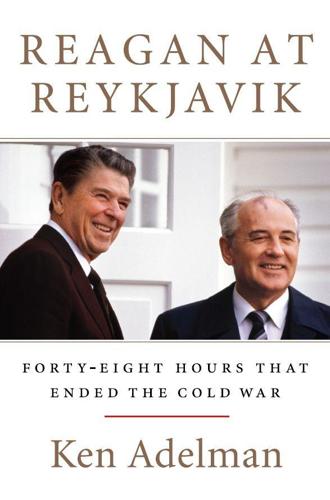
Reagan at Reykjavik: Forty-Eight Hours That Ended the Cold War
by Ken Adelman · 5 May 2014 · 372pp · 115,094 words
island, in a reputedly haunted house with rain lashing against its windowpanes, where they experience the most amazing things. The summit between Ronald Reagan and Mikhail Gorbachev on October 11 and 12, 1986, was like nothing before or after—with its cliffhanging plot, powerful personalities, and competing interpretations over the past quarter
…
interpretation will be laid out in the final chapter, bolstered by such standard methods of substantiation as expert witnesses, evidence, and logic. One such witness, Mikhail Gorbachev, has been clear over the years. U.S. Secretary of State George Shultz, at Reagan’s side during Reykjavik, had a conversation with the last
…
home, he was ready to take on the world. That morning he was headed to Iceland, of all places, to negotiate about nuclear weapons with Mikhail Gorbachev. Negotiating was something Reagan loved to do, something he felt he was good at doing, something he most wanted to do with a Soviet leader
…
during Politburo meetings and then made assignments to its members. In essence, he was Gorbachev’s all-purpose notetaker and task-tracker. IN OCTOBER 1986 MIKHAIL Gorbachev was, like Ronald Reagan, at the height of his power. But unlike Reagan, who had been dubbed “the Teflon President” and who appeared worry-free
…
in 1986.” It was not an auspicious start to a critical weekend. Friday, October 10, 1986 Keflavik International Airport, Iceland, 1:18 p.m. When Mikhail Gorbachev stepped off his plane, a sudden gust of wind on that raw, blustery day made him grab his gray fedora and falter a bit, almost
…
beside me, and said, “It’s no deal.” With iconic moments in history, it is often hard to reconstruct exactly what happened. Ronald Reagan and Mikhail Gorbachev leaving that small room—after more than ten and a half hours of what Gorbachev later called “debates that became very pointed in their last
…
of church bells across Berlin. Bernstein called it “a historic moment sent from above.” (Zentralbild ADN/picture-alliance/dpa/AP Images) On June 10, 2004, Mikhail Gorbachev unexpectedly appeared in the Rotunda of the U.S. Capitol to pay his last tribute to Ronald Reagan, lying in state. After standing a few
…
on the legitimacy of the Soviet system suddenly seemed like small potatoes. Ronald Reagan was no longer the main person undermining the regime’s foundations. Mikhail Gorbachev was. WHILE TENSIONS WERE WAXING in Moscow, they were waning in Washington. Iran-Contra had stripped Ronald Reagan of the sparkle he had in the
…
voice of God—announced: “The president of the United States and the general secretary of the Communist party of the Soviet Union.” Ronald Reagan and Mikhail Gorbachev entered the East Room side by side, having strolled down the long red carpet of the Cross Hall adorned with the haunting portrait of John
…
of that era, was sublime in understatement when acknowledging “little understanding in the Warsaw Pact for Hungary’s decision.” THE NEXT MONTH, ON October 7, Mikhail Gorbachev went to Berlin to help celebrate the fortieth anniversary of that Communist regime. Gorbachev greeted the seventy-seven-year-old East German leader, Erich Honecker
…
unhappy past. There were problems aplenty. But given the one problem they had faced for more than forty years, these were problems they welcomed. MEANWHILE, MIKHAIL GORBACHEV WAS facing problems he did not welcome. Much to his historic glory, the Soviet leader allowed the 1989 revolutions to take their course without sending
…
fourth paragraph, and several sentences into it at that, when I read the most shocking news of all: “Marshal Sergei Akhromeyev, military adviser to President Mikhail Gorbachev and former armed forces chief of staff, had committed suicide.” Dobbs allocated only two of his twenty-five paragraphs to Akhromeyev, not mentioning that he
…
life. I struggled until the end. AKHROMEYEV 24 AUGUST 1991 Just recently, I learned that there may be a third suicide note, one written to Mikhail Gorbachev, which may be released after Gorbachev’s death. If such a letter exists, it could reveal Akhromeyev’s involvement with the coup and motivation for
…
a classic mystery thriller à la Agatha Christie, then the question naturally arises, “Who done it?” In this case, we know who—Ronald Reagan and Mikhail Gorbachev. But we are less sure of the “it.” Now, long after the political theater has ended, just how—and how much—did Reykjavik matter? To
…
conference at the Reagan Library entitled “A World Without Nuclear Weapons” featuring statements by the U.N. secretary general, the prime minister of Japan, and Mikhail Gorbachev. The keynoter was, once again, Shultz, who began his talk by asking all those present to give a rousing three cheers for Reagan and what
…
before, lamented what might have been. Their lament raises the fascinating “what if” parlor game known as counter-factual history. What if Ronald Reagan and Mikhail Gorbachev had signed an agreement eliminating all their nuclear weapons at Reykjavik? In counter-factual history, we can never know. After all, it’s tough enough
…
contention, to which I subscribe, is backed by testimony of key participants and beneficiaries, by logic, and by evidence. First, a bit of expert testimony. Mikhail Gorbachev—as expert a witness as you could get—said explicitly that from Reykjavik sprang the “elimination of the Cold War.” To him, “Reykjavik marked a
…
no one else he would rather be than Ronald Reagan and no role he would rather play than president of the United States. Gorbachev Revisited Mikhail Gorbachev is likewise sui generis. He’s unique by the extent of his being reviled at home and revered abroad and by his being heralded for
…
love.” He fixed those bright eyes on Nancy, and then slowly closed them. She considered it the greatest gift ever. When the news reached Moscow, Mikhail Gorbachev hailed President Reagan for paving “the way for the end of the Cold War.” In New York, Henry Kissinger said simply that “Ronald Reagan ended
…
, and wording for this project—as she has throughout all our projects, including that of sharing a life together. Notes INTRODUCTION 1 “Truly Shakespearean passions”: Mikhail Gorbachev, letter to the prime minister of Iceland, the mayor of Reykjavik, and participants of the seminar on the tenth anniversary of the summit, September 10
…
U.S. Improvised,” Washington Post, February 16, 1987. 2 “wearying and grueling arguments”: Ibid. 2 “no one can continue to act as he acted before”: Mikhail Gorbachev, Reykjavik: Results and Lessons (Moscow, 1990). 3 “No summit since Yalta”: Don Oberdorfer, From the Cold War to a New Era: The United States and
…
. SATURDAY IN REYKJAVIK 82 According to legend: The legend and history are summarized by Astporsdottir from Icelandic sources. 83 wine-colored blotch: Eleanor Hoover, “Whatever Mikhail Gorbachev’s Other Worries, the Birthmark on His Head Isn’t One of Them,” People, November 18, 1985; “Photographs Show Mark on Gorbachev’s Head,” Associated
…
,” University of Virginia, Miller Center, October 13, 1986, http://millercenter.org/president/speeches/detail/5865. 207 The general secretary opened: The speech is contained in Mikhail Gorbachev, Reykjavik: Results and Lessons (Moscow, 1990). All italics in the text are mine, not his. 209 The top administration troika: The figures on U.S
…
president: Taken from Reykjavik newspapers in June 2004, as reported and translated by Astporsdottir. 335 In an op-ed piece for the New York Times: Mikhail Gorbachev, “A President Who Listened,” New York Times, June 7, 2004. 337 nearly a hundred and forty years earlier: Rudolph Bush, “A Time to Remember,” Chicago
…
, “Ronald Reagan 1911–2004: Our Final Hail to the Chief,” Newsday, June 12, 2004. 337 the state funeral: I was startled to read later that Mikhail Gorbachev was there at the funeral, since neither Carol nor I saw him that morning. Otherwise, I would have gone over and greeted him. 337 musical
…
, Todor, 280 About the Author Ken Adelman was President Ronald Reagan’s arms control director. He was at Reykjavik during the 1986 superpower summit with Mikhail Gorbachev, and accompanied President Reagan at three superpower summits in all. He has also served as a U.S. ambassador to the United Nations and as
Chernobyl: The History of a Nuclear Catastrophe
by Serhii Plokhy · 1 Mar 2018 · 465pp · 140,800 words
conflicting political actors in Ukraine—the Ukrainian communist establishment and the nascent democratic opposition—discovered a common interest in opposing Moscow, and especially Soviet leader Mikhail Gorbachev. In December 1991, when Ukrainians voted for their country’s independence, they also consigned the mighty Soviet Union to the dustbin of history—it was
…
. And yet, with the communist religion in crisis, it suddenly appeared to have found a new messiah in a relatively young, energetic, and charismatic leader: Mikhail Gorbachev. This was to be the fifty-four-year-old Gorbachev’s first congress as general secretary of the party, and he was well aware that
…
presented an interesting spectacle whose main features went back to Stalin’s times. At ten in the morning, the party’s Politburo members, led by Mikhail Gorbachev, marched to the podium. Like most people, Briukhanov knew them from their portraits, which were displayed on public buildings all over the Soviet Union. Among
…
interview with Briukhanov appeared in the newspaper without that warning.23 2 ROAD TO CHERNOBYL ON THE evening of March 6, 1986, as the invigorated Mikhail Gorbachev hosted a reception in the Kremlin Palace for the foreign guests of the congress—most of them representatives of communist parties who had come to
…
deliver products to the construction site in a timely fashion. Kyzyma had learned media tactics long before the era of glasnost, or openness, declared by Mikhail Gorbachev and his reformers. In the spring of 1980, Kyzyma and Briukhanov were summoned to Moscow to report to the deputy prime minister of the all
…
that did not matter. Ostensibly, work on the weekend closest to Lenin’s birthday was a volunteer activity, but in reality, party officials demanded it. Mikhail Gorbachev skipped the occasion, as he was on an official visit to the German Democratic Republic, pushing his “acceleration” ideas there, but his compatriots did not
…
:00 a.m. on April 26, awakening the most powerful man in the land, the general secretary of the Communist Party of the Soviet Union, Mikhail Gorbachev. The message was that there had been an explosion and fire at the Chernobyl nuclear power plant, but the reactor was intact. Gorbachev’s first
…
of April 27 by Vladimir Dolgikh, the Central Committee secretary in charge of the energy sector.10 On the morning of April 28, Dolgikh informed Mikhail Gorbachev and the entire Soviet leadership in person that Unit 4 had been destroyed by the blast and had to be buried. The process had begun
…
to deal with the Chernobyl explosion as well. Original silence about the Chernobyl accident at home and abroad also followed the Ozersk pattern. In 1986, Mikhail Gorbachev, Nikolai Ryzhkov, and their subordinates in Moscow and Kyiv had a model they could follow not only for dealing with the nuclear disaster, but also
…
the imposition of martial law in Poland. Now they were finally being resumed as a result of the first meeting between President Ronald Reagan and Mikhail Gorbachev in Geneva in December 1985. There the two leaders had sized each other up and decided, despite major ideological and philosophical differences, that they could
…
suspected, the Chernobyl nuclear plant was part of a military-run program.12 On the next day, April 30, Soviet diplomats delivered a message from Mikhail Gorbachev to Ronald Reagan. The message confirmed that the accident had taken place. “They say that a leak of radioactive material has required the partial evacuation
…
was acknowledged, although it was called not a city but a settlement; and the public was assured that radiation levels were being closely monitored. As Mikhail Gorbachev, Nikolai Ryzhkov, and their Politburo colleagues released limited information on the disaster, their main challenge was to balance the desire to maintain a degree of
…
ensembles dressed in traditional Ukrainian costumes and young people carrying portraits of Marx, Engels, and Lenin, as well as photos of Politburo members, starting with Mikhail Gorbachev. The marchers are lightly dressed: it is a warm, sunny morning. Many came with small children; some fathers are seen bearing them on their shoulders
…
agents were busy confiscating leaflets that, in their opinion, contained “tendentious fabrications about the consequences of the accident at the Chernobyl atomic energy station.”31 Mikhail Gorbachev never took responsibility for what happened in Kyiv that day, but he did later admit that holding the parade was a mistake. “Rallies were not
…
transport and protect it. They followed orders, and by midday on May 2 the vehicle was at the Chernobyl nuclear plant. Rumor had it that Mikhail Gorbachev himself was going to visit the damaged power plant.1 Gorbachev never came—his first visit to Chernobyl would take place almost two years after
…
radioactive contamination. The name of one of the nearby villages, Strakholissia, or Fearsome Forest, suddenly took on a new and disturbing meaning. 13 CHINA SYNDROME MIKHAIL GORBACHEV and his colleagues had a full agenda for their Politburo meeting on May 5, 1986. But apart from reports on May Day parades that had
…
. Boris Shcherbina personally sent an angry telegram asking the Kyiv authorities to stop spreading panic and cancel preparations for the partial evacuation.20 IN MOSCOW, Mikhail Gorbachev felt increasingly concerned about the international fallout resulting from the Soviet mishandling of the Chernobyl crisis. “What’s going on there? I’m very anxious
…
years and decades, death and disability rates among the liquidators would significantly exceed those in the general population.17 V RECKONING 15 WAR OF WORDS MIKHAIL GORBACHEV finally broke his public silence on May 14, eighteen days after the disaster. “Good evening, comrades!” he said, beginning his televised address to the country
…
showed, however, that the streets of Kyiv, which should have been full of people welcoming the athletes and cheering for their team, were empty.10 MIKHAIL GORBACHEV, always sensitive about his image abroad, was watching the rising wave of Western criticism of him and his government with great concern. He even complained
…
of his career in construction, Briukhanov estimated that it was about 50 meters long and 20 meters wide. At the head of the table sat Mikhail Gorbachev, with Politburo members to his left and right. The meeting lasted from 11:00 a.m. to 7:00 p.m. without a lunch break
…
an unfortunate accident, while the guilty were being justly punished. With the reactor buried and the uncomfortable truth about the explosion apparently buried with it, Mikhail Gorbachev was finally able to launch his political and economic reforms. The future looked promising, if not entirely bright. Unanticipated by many in Moscow and in
…
, he made a name for himself as a novelist with books based on his experience of the war. In June 1986, in an appeal to Mikhail Gorbachev highlighting the impact of the Chernobyl catastrophe on his republic, he wrote: “We are not about to make an ‘all-European’ stir, but we realize
…
public sphere with their concerns about the harmful effects of the Chernobyl disaster on public health and the environment came in June 1988. That month, Mikhail Gorbachev convened a major party forum, the Nineteenth Communist Party Conference, which adopted a program of political reform, opening the door to the first relatively free
…
beginning. In 1989, popular movements all over the Soviet Union would write on their banners slogans linking nuclear safety with national liberation. 19 NUCLEAR REVOLT MIKHAIL GORBACHEV first visited the Chernobyl nuclear plant on February 23, 1989, almost three years after the catastrophe. He never explained why it had taken him so
…
the groundwaters of the Dnieper River Basin, changed flow of groundwater beneath Unit 4 and thus made the foundations of the sarcophagus less stable.2 Mikhail Gorbachev had little to offer the struggling power plant by way of new funds, as the Soviet economy was in free fall, accelerated by declining oil
…
industrial town known chiefly as the birthplace of Leonid Brezhnev but later reviled as one of the most polluted cities in the Soviet Union. Once Mikhail Gorbachev opened the discussion at the Congress of People’s Deputies, Yaroshinskaya and Shcherbak put themselves on the speakers’ list, hoping to get a chance to
…
“No to the Fascist Union!”1 A few days earlier, on August 19, hardliners in Moscow, led by the KGB chief, Vladimir Kriuchkov, had ousted Mikhail Gorbachev and created an emergency committee that sought to reverse the Soviet president’s democratic reforms. The plotters isolated Gorbachev at his summer mansion in the
…
. The XXVII Congress of the Comunist Party of the Soviet Union, which set new targets for the development of the nuclear industry. On the podium: Mikhail Gorbachev, Nikolai Ryzhkov, Yegor Ligachev, and Volodymyr Shcherbytsky, who would play an important role in dealing with the consequences of the Chernobyl accident and in the
…
Factor (Oxford, 1997), 24–129; Andrei Grachev, Gorbachev’s Gamble: Soviet Foreign Policy and the End of the Cold War (Cambridge, 2008), 9–42. 5. Mikhail Gorbachev, Zhizn’i reformy, book 1, part 2, chapter 9 (Moscow, 1995); Valerii Boldin, Krushenie p’edestala: Shtrikhi ko portretu M. S. Gorbacheva (Moscow, 1995), 158
…
, The Truth About Chernobyl, 172–173. CHAPTER 8: HIGH COMMISSION 1. Galina Akkerman, “Gorbachev: Chernobyl’ sdelal menia drugim chelovekom,” Novaia gazeta, March 2, 2006; cf. Mikhail Gorbachev, Memoirs (New York, 1996), 189. 2. Aleksandr Liashko, Gruz pamiati: Vospominaniia, vol. 3, Na stupeniakh vlasti, part 2 (Kyiv, 2001), 342–343; Elena Novoselova, “Nikolai
…
. “Iz rabochei zapisi zasedaniia Politbiuro TsK KPSS, April 28, 1986,” in R. G. Pikhoia, Sovetskii Soiuz: Istoriia vlasti, 1945–1991 (Novosibirsk, 2000), 429–431. 6. Mikhail Gorbachev, Memoirs (New York, 1996), 189; Elena Novoselova, “Nikolai Ryzhkov: Razdalsia zvonok pravitel’stvennoi sviazi—na Chernobyle avariia,” Rossiiskaia gazeta, April 25, 2016. 7. Wayne King
…
, Archive SBU, fond 16, op. 1, no. 1120. 3. Archie Brown, The Gorbachev Factor (Oxford, 1997); Chris Miller, The Struggle to Save the Soviet Economy: Mikhail Gorbachev and the Collapse of the USSR (Chapel Hill, NC, 2016). 4. Vakhtang Kipiani and Vladimir Fedorin, “Shcherbitskii skazal—kakoi durak pridumal slovo ‘perestroika’?” Ukraïns’ka
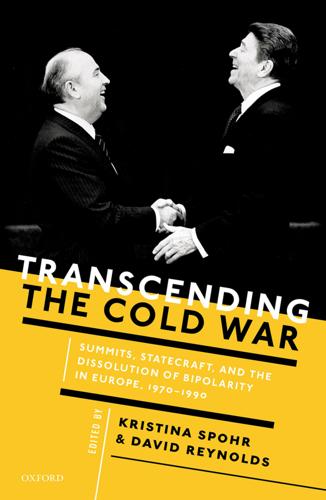
Transcending the Cold War: Summits, Statecraft, and the Dissolution of Bipolarity in Europe, 1970–1990
by Kristina Spohr and David Reynolds · 24 Aug 2016 · 627pp · 127,613 words
, act 4, scene 3 Let’s say ‘to hell with the past’. We’ll do it our way and get something done. Ronald Reagan to Mikhail Gorbachev, Geneva, 20 November 1985 Contents List of Illustrations List of Abbreviations List of Contributors Acknowledgements Introduction Thawing the Cold War 1 Erfurt and Kassel, 1970
…
bargaining. ARKS, DJR, March 2016 Introduction They were an unlikely pair and it was an almost inconceivable moment. American President George H.W. Bush and Mikhail Gorbachev, Secretary General of the Communist Party of the Soviet Union, sat together, relaxed and joking, in a joint press conference on 3 December 1989, at
…
dialogue was frozen out. The ensuing arms race was a prime concern of a new series of superpower summits eventually initiated by Ronald Reagan and Mikhail Gorbachev in 1985, after a pause of some six years. Their encounters in Geneva (November 1985), Reykjavik (October 1986), Washington (December 1987), and Moscow (May–June
…
reporter whether he still believed that his hosts were ‘the evil empire’, he recanted: ‘I was talking about another time, another era.’ Standing beside him, Mikhail Gorbachev felt vindicated; via backchannels in March he had urged Reagan to make precisely such a statement. The president’s words signalled an acknowledgement that a
…
president, a fourth Soviet leader who was actually interested in dialogue stuck around long enough for them to meet. Geneva: A Spark of Mutual Trust Mikhail Gorbachev acceded to power on 11 March 1985. Born in 1931, he was a generation younger than his predecessors, as well as most of the Politburo
…
Security Archive, George Washington University, Washington, DC, electronic briefing book (henceforth NSAEBB), no. 251, doc. no. 4, http://nsarchive.gwu.edu/NSAEBB/NSAEBB251/4.pdf. Mikhail Gorbachev, Memoirs (New York, 1996), 590. 2. General overviews include Raymond L. Garthoff, The Great Transition: American-Soviet Relations and the End of the Cold War
…
February 1987, 2, NSAEBB no. 238, http://nsarchive.gwu.edu/NSAEBB/NSAEBB238/russian/Final1987-02-26%20Politburo.pdf. 79. Brown, The Gorbachev Factor, 122–6; Mikhail Gorbachev, Perestroika: New Thinking for Our Country and the World (New York, 1987). 80. Shultz, Turmoil and Triumph, 884. 81. Garthoff, The Great Transition, 312–13
…
bound together by invisible ideological strings because, if socialism was abandoned by the Soviet Union, it was difficult to imagine its survival in China. With Mikhail Gorbachev pressing full steam ahead with political reforms amid spiralling change throughout the Soviet bloc, his visit to Beijing carried toxic implications for China and its
…
same path as Poland’. This was a concession that the CCP could not and would not make.32 It was in this dramatic atmosphere that Mikhail Gorbachev arrived in China for the first Sino-Soviet summit in thirty years. Beijing was a sea of banners and placards. Students packed the streets leading
…
Failure in Asia at the End of the Cold War (New York, 2014), 172–80. 20. Czechoslovak Translation of the Soviet Summary of Conversations Between Mikhail Gorbachev and Li Peng in Moscow, 8 January 1986, Central State Archives (SÚA), Prague: UV KSC. See Parallel History Project, http://kms2.isn.ethz.ch/serviceengine
…
Wall: The Revolutionary Legacy of 1989 (New York, 2009), 111–12. 33. Liang Zhang et al., eds, The Tiananmen Papers (New York, 2002), 143. 34. Mikhail Gorbachev, Sobranie Sochinenii, vol. 15 (Moscow, 2010), 261. 35. Zhang Ganghua and Li Peng, Li Peng liu si ri ji zhen xiang: Fu lu Li Peng
…
, 2010). 36. Oleg Troyanovskii, Cherez Gody i Rasstoyaniya: Istoriya Odnoi Sem’yi (Over Years and Distances) (Moscow, 1997), 373. 37. Excerpts from the conversation between Mikhail Gorbachev and Deng Xiaoping, 16 May 1989, http://digitalarchive.wilsoncenter.org/document/116536. 38. Ibid. 39. George Bush, The President’s News Conference, 30 May, 1989
…
with one last spat’, New York Times, 10 June 1989, 1. Aleksandr Lukin, Medved’ Nablyudaet Za Drakonom (Moscow, 2007), 280. 45. Excerpts from conversation between Mikhail Gorbachev and Rajiv Gandhi, 15 July 1989, http://digitalarchive.wilsoncenter.org/document/119291.pdf?v=6a44a2603e0ef9559df45d0b2d1d461a. 46. Gorbachev Foundation, Moscow, Record of the Politburo meeting, 4
…
World Transformed, 148. 51. GBPL, Office of the President, Daily Files, Folder: Saturday, 11 November 1989. 52. Bush and Scowcroft, A World Transformed, 149. 53. Mikhail Gorbachev, Memoirs (London, 1996), 497. 54. Bush-Gorbachev question-and-answer session, Malta, 3 December 1989, APP website, http://www.presidency.ucsb.edu/ws/index.php
…
, as media theatre but in its own way intimate and in fact one of the most significant moments in the dénouement of the Cold War. Mikhail Gorbachev and Helmut Kohl had met that morning in Moscow but then the Soviet leader flew the German chancellor down to his dacha near Arkhyz, in
…
, and Konstantin Chernenko in March 1985. Only then did the Soviet elite reluctantly jump a generation from men born before World War One, to choose Mikhail Gorbachev, born in 1931. Crucially, Gorbachev was not haunted by 1941 and, as part of the university-educated middle class of the Khrushchev years, he had
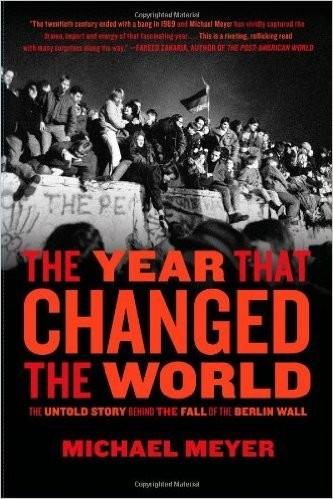
The Year That Changed the World: The Untold Story Behind the Fall of the Berlin Wall
by Michael Meyer · 7 Sep 2009 · 323pp · 95,188 words
get into the magazine. I couldn’t believe my good fortune. For fifty years, Europe had been frozen. Now a new man was in charge: Mikhail Gorbachev. Change was afoot. You could feel it. I remember, vividly, thinking I would have perhaps a year or two to see the old Europe, a
…
of seeking to contain the former Soviet Union, as previous administrations had done, the United States under Ronald Reagan chose to confront it. He challenged Mikhail Gorbachev not only to reform the Soviet system from within but to “tear down this wall.” Yet other factors figured in this equation, not least a
…
of all that Reagan hated about communism, and he punched out his words with angry force—a direct exhortation, delivered personally, to the Soviet leader Mikhail Gorbachev. Reagan began slowly, speaking of other American presidents who had come to Berlin, John F. Kennedy and Jimmy Carter, honoring their duty to speak out
…
1987, he faced a new phenomenon—a challenge to which confrontation, he came to conclude over time, was no answer. That was the ascent of Mikhail Gorbachev as general secretary of the communist party of the Soviet Union on March 11, 1985. Gorbachev hit the Soviet landscape like a giant meteor from
…
. It was a basket case. Shortages of basic goods were endemic and people lived in suppressed despair and deprivation. The other thing Honecker feared was Mikhail Gorbachev. East Germans had cheered when he last visited Berlin. “Gorbi, Gorbi,” they called out. “The people made it clear,” writes Peter Wyden in his masterful
…
step down.” At this, I laughed. Across Eastern Europe, so many “reformers” were spouting such talk of “openness” and “change,” echoing their patron in Moscow, Mikhail Gorbachev, chanting his mantra of glasnost and perestroika. But if Gorbachev seemed to mean it, the leaders of his Warsaw Pact satellite nations did not. These
…
entrepreneurs and where people can have more hope for the future.” Moscow might have something to say about that, I noted. Would a setback for Mikhail Gorbachev in Russia overturn the applecart of reforms here in Hungary? Might the Russians even intervene, as in 1956? “Gorbachev has taken the lid off a
…
. If the incoming team might logically have been expected to build on the momentum of their predecessors in the Reagan administration, particularly in relations with Mikhail Gorbachev and the Soviet bloc, it was not to be. The newly designated secretary of state, James Baker, made that crystal clear. “There was a deliberate
…
Spring. And so, Jaruzelski acted. By 1989, however, circumstances were very different. There was no external threat, real or imagined. Meeting in Moscow in 1986, Mikhail Gorbachev had told Jaruzelski that, henceforth, Poland’s problems were its own to solve. Then came the Soviet leader’s speech to the UN, in December
…
. Nemeth wanted to make sure he was not going too far, or too fast. Only one person could answer that question. So Nemeth wrote to Mikhail Gorbachev, asking for a meeting in the first week of March. His timing was influenced by another factor. Communist party secretary Karoly Grosz planned to see
…
, marking the beginning of this auspicious year. “The Wall will last another hundred years.” Nothing on his political horizon clouded his prospects. To the east, Mikhail Gorbachev might be championing change. Poland and Hungary were chasing their aberrant path to socialism. But the GDR itself had never seemed so outwardly solid. There
…
day after the vote. That afternoon, at 3 p.m., Jaruzelski summoned top government officials and party leaders to his office. He had spoken to Mikhail Gorbachev. “Our defeat is total,” he told them. “A political solution will have to be found.” By that he meant no violence. The communists would have
…
his first Warsaw Pact summit. He was nervous, but he knew his enemies could only act with Soviet support. The man who could give it, Mikhail Gorbachev, sat roughly opposite, about thirty feet away on the other side of the large rectangle of flag-draped conference tables. As Ceausescu ranted on, calling
…
the lurch and joining the other side? This will have grave consequences for you!” Nemeth shrugged off the threat, knowing it was empty. Days before, Mikhail Gorbachev had told Chancellor Helmut Kohl that under no circumstances would Moscow intervene. Even without that assurance, Nemeth had decided: the time was ripe to deliver
…
marking the fortieth anniversary of the German Democratic Republic. There would be parades, festivals, fireworks and many receptions where potential allies could innocently be approached. Mikhail Gorbachev would be there, along with the heads of the entire Warsaw Pact. The conspirators agreed that they would try to send the Soviet leader a
…
hundred thousand fresh-faced Freie Deutsche Jugend—Free German Youth—would march. Very Important People were arriving—the leaders of the East bloc, among them Mikhail Gorbachev. None knew, of course, that for most it would be their last hurrah. As for Honecker himself, it was as if fate were weaving three
…
War: London, New York, Washington. They stand here and there, vaguely incongruous, providing shade for lunching bankers or secretaries, oblivious to their once ominous portent. Mikhail Gorbachev deserves enormous credit. He was the geopolitical demiurge, the prime mover that set all else in motion. Without him, the history of Eastern Europe and
…
core. But the push to collapse came less from the outside than from within. Once the containing pressure of the Soviet system was lifted by Mikhail Gorbachev, they essentially imploded. This is not to diminish Ronald Reagan’s contribution to ending the Cold War. To the contrary, it is important to recognize
…
Bradley Lightbody’s The Cold War, 1999. For the ultimate indictment of communism, I refer to Perestroika: New Thinking for Our Country and the World, Mikhail Gorbachev, 1987. “Chernobyl turned me into a different person,” Gorbachev writes in his book Manifesto for the Earth, 2006. The higher the future Soviet leader rose
…
did not. Indeed, its defense budget was essentially unchanged through the 1980s, as Peter Scoblic notes in a thoroughly researched book, Us vs. Them, 2008. Mikhail Gorbachev, among others, long before he came to power and Reagan’s military buildup had gotten under way, recognized that Moscow should reduce its military spending
Afgantsy: The Russians in Afghanistan, 1979-89
by Rodric Braithwaite · 15 Jan 2011 · 618pp · 146,557 words
The Cold War: Stories From the Big Freeze
by Bridget Kendall · 14 May 2017 · 559pp · 178,279 words
Lost Kingdom: The Quest for Empire and the Making of the Russian Nation
by Serhii Plokhy · 9 Oct 2017 · 476pp · 138,420 words
The Cold War: A New History
by John Lewis Gaddis · 1 Jan 2005 · 392pp · 106,532 words
The Wars of Afghanistan
by Peter Tomsen · 30 May 2011 · 1,118pp · 309,029 words
1983: Reagan, Andropov, and a World on the Brink
by Taylor Downing · 23 Apr 2018 · 400pp · 121,708 words
Not One Inch: America, Russia, and the Making of Post-Cold War Stalemate
by M. E. Sarotte · 29 Nov 2021 · 791pp · 222,536 words
Oil: Money, Politics, and Power in the 21st Century
by Tom Bower · 1 Jan 2009 · 554pp · 168,114 words
The Cold War: A World History
by Odd Arne Westad · 4 Sep 2017 · 846pp · 250,145 words
Europe: A History
by Norman Davies · 1 Jan 1996
The Enemy Within
by Seumas Milne · 1 Dec 1994 · 497pp · 161,742 words
The Oil and the Glory: The Pursuit of Empire and Fortune on the Caspian Sea
by Steve Levine · 23 Oct 2007 · 568pp · 162,366 words
Roller-Coaster: Europe, 1950-2017
by Ian Kershaw · 29 Aug 2018 · 736pp · 233,366 words

The Secret World: A History of Intelligence
by Christopher Andrew · 27 Jun 2018
A Short History of Russia
by Mark Galeotti · 1 May 2020 · 163pp · 47,912 words
The Illegals: Russia's Most Audacious Spies and Their Century-Long Mission to Infiltrate the West
by Shaun Walker · 15 Apr 2025 · 465pp · 155,902 words
There Is Nothing for You Here: Finding Opportunity in the Twenty-First Century
by Fiona Hill · 4 Oct 2021 · 569pp · 165,510 words
The Atlantic and Its Enemies: A History of the Cold War
by Norman Stone · 15 Feb 2010 · 851pp · 247,711 words
Londongrad: From Russia With Cash; The Inside Story of the Oligarchs
by Mark Hollingsworth and Stewart Lansley · 22 Jul 2009 · 471pp · 127,852 words
The Marshall Plan: Dawn of the Cold War
by Benn Steil · 13 Feb 2018 · 913pp · 219,078 words
Next Stop Execution: The Autobiography of Oleg Gordievsky
by Oleg Gordievsky · 13 Apr 2015 · 438pp · 146,246 words
The Quest: Energy, Security, and the Remaking of the Modern World
by Daniel Yergin · 14 May 2011 · 1,373pp · 300,577 words
A History of Future Cities
by Daniel Brook · 18 Feb 2013 · 489pp · 132,734 words
The Collapse: The Accidental Opening of the Berlin Wall
by Mary Elise Sarotte · 6 Oct 2014 · 587pp · 119,432 words
From Peoples into Nations
by John Connelly · 11 Nov 2019
Checkpoint Charlie
by Iain MacGregor · 5 Nov 2019 · 401pp · 119,043 words

In Europe
by Geert Mak · 15 Sep 2004
Zbig: The Life of Zbigniew Brzezinski, America's Great Power Prophet
by Edward Luce · 13 May 2025 · 612pp · 235,188 words
Vanished Kingdoms: The Rise and Fall of States and Nations
by Norman Davies · 30 Sep 2009 · 1,309pp · 300,991 words
Zero-Sum Future: American Power in an Age of Anxiety
by Gideon Rachman · 1 Feb 2011 · 391pp · 102,301 words
Beyond the Wall: East Germany, 1949-1990
by Katja Hoyer · 5 Apr 2023
The Age of Turbulence: Adventures in a New World (Hardback) - Common
by Alan Greenspan · 14 Jun 2007
Betrayal of Trust: The Collapse of Global Public Health
by Laurie Garrett · 15 Feb 2000
Chinese Spies: From Chairman Mao to Xi Jinping
by Roger Faligot · 30 Jun 2019 · 615pp · 187,426 words
Command and Control: Nuclear Weapons, the Damascus Accident, and the Illusion ofSafety
by Eric Schlosser · 16 Sep 2013 · 956pp · 267,746 words
The Future of War
by Lawrence Freedman · 9 Oct 2017 · 592pp · 161,798 words
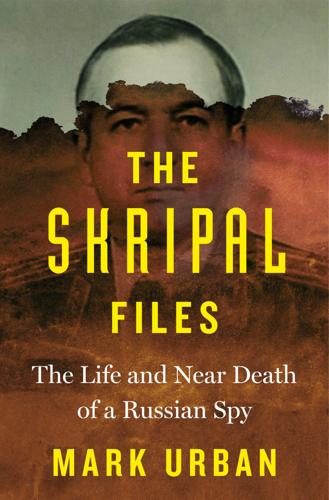
The Skripal Files
by Mark Urban · 291pp · 85,908 words
The end of history and the last man
by Francis Fukuyama · 28 Feb 2006 · 446pp · 578 words
Super Continent: The Logic of Eurasian Integration
by Kent E. Calder · 28 Apr 2019
The Defence of the Realm
by Christopher Andrew · 2 Aug 2010 · 1,744pp · 458,385 words
How Not to Network a Nation: The Uneasy History of the Soviet Internet (Information Policy)
by Benjamin Peters · 2 Jun 2016 · 518pp · 107,836 words

Vanished Kingdoms: The History of Half-Forgotten Europe
by Norman Davies · 27 Sep 2011
Accessory to War: The Unspoken Alliance Between Astrophysics and the Military
by Neil Degrasse Tyson and Avis Lang · 10 Sep 2018 · 745pp · 207,187 words
London Review of Books
by London Review of Books · 14 Dec 2017 · 174pp · 58,894 words
Private Empire: ExxonMobil and American Power
by Steve Coll · 30 Apr 2012 · 944pp · 243,883 words
The Achilles Trap: Saddam Hussein, the C.I.A., and the Origins of America's Invasion of Iraq
by Steve Coll · 27 Feb 2024 · 738pp · 196,803 words
The America That Reagan Built
by J. David Woodard · 15 Mar 2006
The Age of Radiance: The Epic Rise and Dramatic Fall of the Atomic Era
by Craig Nelson · 25 Mar 2014 · 684pp · 188,584 words
Making the Future: The Unipolar Imperial Moment
by Noam Chomsky · 15 Mar 2010 · 258pp · 63,367 words
Roads to Berlin
by Cees Nooteboom and Laura Watkinson · 2 Jan 1990 · 378pp · 120,490 words
Behind the Berlin Wall: East Germany and the Frontiers of Power
by Patrick Major · 5 Nov 2009 · 669pp · 150,886 words
Berlin 1961: Kennedy, Khrushchev, and the Most Dangerous Place on Earth
by Frederick Kempe · 30 Apr 2011 · 762pp · 206,865 words
Ghost Wars: The Secret History of the CIA, Afghanistan, and Bin Laden, from the Soviet Invasion to September 10, 2011
by Steve Coll · 23 Feb 2004 · 956pp · 288,981 words
Kleptopia: How Dirty Money Is Conquering the World
by Tom Burgis · 7 Sep 2020 · 476pp · 139,761 words

The Dream of Europe: Travels in the Twenty-First Century
by Geert Mak · 27 Oct 2021 · 722pp · 223,701 words
The Great War for Civilisation: The Conquest of the Middle East
by Robert Fisk · 2 Jan 2005 · 1,800pp · 596,972 words
Strange Rebels: 1979 and the Birth of the 21st Century
by Christian Caryl · 30 Oct 2012 · 780pp · 168,782 words
The World in 2050: Four Forces Shaping Civilization's Northern Future
by Laurence C. Smith · 22 Sep 2010 · 421pp · 120,332 words
Who Rules the World?
by Noam Chomsky
The Divided Nation: A History of Germany, 1918-1990
by Mary Fulbrook · 14 Oct 1991 · 934pp · 135,736 words
Burning Down the Haus: Punk Rock, Revolution, and the Fall of the Berlin Wall
by Tim Mohr · 10 Sep 2018 · 370pp · 107,791 words
The New Map: Energy, Climate, and the Clash of Nations
by Daniel Yergin · 14 Sep 2020
Hopes and Prospects
by Noam Chomsky · 1 Jan 2009
Fall: The Mysterious Life and Death of Robert Maxwell, Britain's Most Notorious Media Baron
by John Preston · 9 Feb 2021 · 374pp · 110,238 words
Why the West Rules--For Now: The Patterns of History, and What They Reveal About the Future
by Ian Morris · 11 Oct 2010 · 1,152pp · 266,246 words
Total Recall: My Unbelievably True Life Story
by Arnold Schwarzenegger and Peter Petre · 30 Sep 2012 · 900pp · 241,741 words
The Tragedy of Great Power Politics
by John J. Mearsheimer · 1 Jan 2001 · 637pp · 199,158 words
The WikiLeaks Files: The World According to US Empire
by Wikileaks · 24 Aug 2015 · 708pp · 176,708 words
The Prize: The Epic Quest for Oil, Money & Power
by Daniel Yergin · 23 Dec 2008 · 1,445pp · 469,426 words
The Road to Unfreedom: Russia, Europe, America
by Timothy Snyder · 2 Apr 2018
The Powerful and the Damned: Private Diaries in Turbulent Times
by Lionel Barber · 5 Nov 2020
Kissinger: A Biography
by Walter Isaacson · 26 Sep 2005 · 1,330pp · 372,940 words
The Better Angels of Our Nature: Why Violence Has Declined
by Steven Pinker · 24 Sep 2012 · 1,351pp · 385,579 words
Plutocrats: The Rise of the New Global Super-Rich and the Fall of Everyone Else
by Chrystia Freeland · 11 Oct 2012 · 481pp · 120,693 words
McMafia: A Journey Through the Global Criminal Underworld
by Misha Glenny · 7 Apr 2008 · 487pp · 147,891 words
Under the Loving Care of the Fatherly Leader: North Korea and the Kim Dynasty
by Bradley K. Martin · 14 Oct 2004 · 1,509pp · 416,377 words

Superforecasting: The Art and Science of Prediction
by Philip Tetlock and Dan Gardner · 14 Sep 2015 · 317pp · 100,414 words
Killing Thatcher: The IRA, the Manhunt and the Long War on the Crown
by Rory Carroll · 15 Mar 2023 · 456pp · 128,481 words
The Rise and Fall of the Neoliberal Order: America and the World in the Free Market Era
by Gary Gerstle · 14 Oct 2022 · 655pp · 156,367 words
Merchant of Death: Money, Guns, Planes, and the Man Who Makes War Possible
by Stephen Braun and Douglas Farah · 1 Apr 2008 · 459pp · 109,490 words
In the Graveyard of Empires: America's War in Afghanistan
by Seth G. Jones · 12 Apr 2009 · 566pp · 144,072 words
The Narrow Corridor: States, Societies, and the Fate of Liberty
by Daron Acemoglu and James A. Robinson · 23 Sep 2019 · 809pp · 237,921 words
Atomic Obsession: Nuclear Alarmism From Hiroshima to Al-Qaeda
by John Mueller · 1 Nov 2009 · 465pp · 124,074 words
Consent of the Networked: The Worldwide Struggle for Internet Freedom
by Rebecca MacKinnon · 31 Jan 2012 · 390pp · 96,624 words
When They Go Low, We Go High: Speeches That Shape the World – and Why We Need Them
by Philip Collins · 4 Oct 2017 · 475pp · 156,046 words
Does Capitalism Have a Future?
by Immanuel Wallerstein, Randall Collins, Michael Mann, Georgi Derluguian, Craig Calhoun, Stephen Hoye and Audible Studios · 15 Nov 2013 · 238pp · 73,121 words
Chokepoints: American Power in the Age of Economic Warfare
by Edward Fishman · 25 Feb 2025 · 884pp · 221,861 words
One Minute to Midnight: Kennedy, Khrushchev and Castro on the Brink of Nuclear War
by Michael Dobbs · 3 Sep 2008 · 631pp · 171,391 words
The Human Tide: How Population Shaped the Modern World
by Paul Morland · 10 Jan 2019 · 405pp · 121,999 words
The Abandonment of the West
by Michael Kimmage · 21 Apr 2020 · 378pp · 121,495 words
America in the World: A History of U.S. Diplomacy and Foreign Policy
by Robert B. Zoellick · 3 Aug 2020
The Light That Failed: A Reckoning
by Ivan Krastev and Stephen Holmes · 31 Oct 2019 · 300pp · 87,374 words
Civilization: The West and the Rest
by Niall Ferguson · 28 Feb 2011 · 790pp · 150,875 words
To the Edge of the World: The Story of the Trans-Siberian Express, the World's Greatest Railroad
by Christian Wolmar · 4 Aug 2014 · 323pp · 94,406 words
Leading From the Emerging Future: From Ego-System to Eco-System Economies
by Otto Scharmer and Katrin Kaufer · 14 Apr 2013 · 351pp · 93,982 words
Destined for War: America, China, and Thucydides's Trap
by Graham Allison · 29 May 2017 · 518pp · 128,324 words
A Paradise Built in Hell: Extraordinary Communities That Arise in Disaster
by Rebecca Solnit · 31 Aug 2010
On the Road: Adventures From Nixon to Trump
by James Naughtie · 1 Apr 2020

The Silk Roads: A New History of the World
by Peter Frankopan · 26 Aug 2015 · 1,042pp · 273,092 words
Farewell
by Sergei Kostin and Eric Raynaud · 14 Apr 2011 · 485pp · 148,662 words
On Her Majesty's Nuclear Service
by Eric Thompson · 18 Apr 2018 · 379pp · 118,576 words
City Squares: Eighteen Writers on the Spirit and Significance of Squares Around the World
by Catie Marron · 11 Apr 2016 · 195pp · 58,462 words
The Billion Dollar Spy: A True Story of Cold War Espionage and Betrayal
by David E. Hoffman · 9 May 2016
The Great Firewall of China
by James Griffiths; · 15 Jan 2018 · 453pp · 114,250 words
After the Fall: Being American in the World We've Made
by Ben Rhodes · 1 Jun 2021 · 342pp · 114,118 words
America at the Crossroads: Democracy, Power, and the Neoconservative Legacy
by Francis Fukuyama · 20 Mar 2007 · 214pp · 57,614 words
The Cold War
by Robert Cowley · 5 May 1992 · 546pp · 176,169 words
Tools of Titans: The Tactics, Routines, and Habits of Billionaires, Icons, and World-Class Performers
by Timothy Ferriss · 6 Dec 2016 · 669pp · 210,153 words
The Signal and the Noise: Why So Many Predictions Fail-But Some Don't
by Nate Silver · 31 Aug 2012 · 829pp · 186,976 words
After the Berlin Wall
by Christopher Hilton · 15 Dec 2011 · 306pp · 92,704 words
This Is Not Propaganda: Adventures in the War Against Reality
by Peter Pomerantsev · 29 Jul 2019 · 240pp · 74,182 words
EuroTragedy: A Drama in Nine Acts
by Ashoka Mody · 7 May 2018
Blindside: How to Anticipate Forcing Events and Wild Cards in Global Politics
by Francis Fukuyama · 27 Aug 2007
China's Future
by David Shambaugh · 11 Mar 2016 · 261pp · 57,595 words
A World in Disarray: American Foreign Policy and the Crisis of the Old Order
by Richard Haass · 10 Jan 2017 · 286pp · 82,970 words
The Controlled Demolition of the American Empire
by Jeff Berwick and Charlie Robinson · 14 Apr 2020 · 491pp · 141,690 words
No Is Not Enough: Resisting Trump’s Shock Politics and Winning the World We Need
by Naomi Klein · 12 Jun 2017 · 357pp · 94,852 words
Modern China: A Very Short Introduction
by Rana Mitter · 25 Feb 2016 · 193pp · 46,052 words
Influence: Science and Practice
by Robert B. Cialdini · 1 Jan 1984 · 405pp · 121,531 words
Days of Fire: Bush and Cheney in the White House
by Peter Baker · 21 Oct 2013
Cuba: An American History
by Ada Ferrer · 6 Sep 2021 · 723pp · 211,892 words
The End of the Free Market: Who Wins the War Between States and Corporations?
by Ian Bremmer · 12 May 2010 · 247pp · 68,918 words
The Apocalypse Factory: Plutonium and the Making of the Atomic Age
by Steve Olson · 28 Jul 2020 · 378pp · 103,136 words
The Gods of New York: Egotists, Idealists, Opportunists, and the Birth of the Modern City: 1986-1990
by Jonathan Mahler · 11 Aug 2025 · 559pp · 164,804 words
Game Over Press Start to Continue
by David Sheff and Andy Eddy · 1 Jan 1993 · 500pp · 156,079 words
Billions & Billions: Thoughts on Life and Death at the Brink of the Millennium
by Carl Sagan · 11 May 1998 · 272pp · 76,089 words
Deep Thinking: Where Machine Intelligence Ends and Human Creativity Begins
by Garry Kasparov · 1 May 2017 · 331pp · 104,366 words
Active Measures: The Secret History of Disinformation and Political Warfare
by Thomas Rid
Pity the Nation: Lebanon at War
by Robert Fisk · 1 Jan 1990 · 1,208pp · 364,966 words
The Extreme Centre: A Warning
by Tariq Ali · 22 Jan 2015 · 160pp · 46,449 words
Inside British Intelligence
by Gordon Thomas
Nonviolence: The History of a Dangerous Idea
by Mark Kurlansky · 7 Apr 2008 · 186pp · 57,798 words
1968: The Year That Rocked the World
by Mark Kurlansky · 30 Dec 2003 · 538pp · 164,533 words
The Precipice: Existential Risk and the Future of Humanity
by Toby Ord · 24 Mar 2020 · 513pp · 152,381 words
The Age of Illusions: How America Squandered Its Cold War Victory
by Andrew J. Bacevich · 7 Jan 2020 · 254pp · 68,133 words
Off the Rails: 10,000 Km by Bicycle Across Russia, Siberia and Mongolia to China
by Chris Hatherly and Tim Cope · 31 Aug 2013 · 382pp · 118,547 words
Left Behind
by Paul Collier · 6 Aug 2024 · 299pp · 92,766 words
The Pentagon's Brain: An Uncensored History of DARPA, America's Top-Secret Military Research Agency
by Annie Jacobsen · 14 Sep 2015 · 558pp · 164,627 words
1946: The Making of the Modern World
by Victor Sebestyen · 30 Sep 2014 · 476pp · 144,288 words
Liberalism at Large: The World According to the Economist
by Alex Zevin · 12 Nov 2019 · 767pp · 208,933 words
Bomb Scare
by Joseph Cirincione · 24 Dec 2011 · 293pp · 74,709 words
The Long Boom: A Vision for the Coming Age of Prosperity
by Peter Schwartz, Peter Leyden and Joel Hyatt · 18 Oct 2000 · 353pp · 355 words
Trend Commandments: Trading for Exceptional Returns
by Michael W. Covel · 14 Jun 2011
The Great Surge: The Ascent of the Developing World
by Steven Radelet · 10 Nov 2015 · 437pp · 115,594 words
The Unwomanly Face of War: An Oral History of Women in World War II
by Svetlana Alexievich · 1 Jan 1985 · 356pp · 111,428 words
Dark Territory: The Secret History of Cyber War
by Fred Kaplan · 1 Mar 2016 · 383pp · 105,021 words
Free World: America, Europe, and the Surprising Future of the West
by Timothy Garton Ash · 30 Jun 2004 · 329pp · 102,469 words
Global Catastrophic Risks
by Nick Bostrom and Milan M. Cirkovic · 2 Jul 2008
On the Grand Trunk Road: A Journey Into South Asia
by Steve Coll · 29 Mar 2009 · 413pp · 128,093 words
More From Less: The Surprising Story of How We Learned to Prosper Using Fewer Resources – and What Happens Next
by Andrew McAfee · 30 Sep 2019 · 372pp · 94,153 words
The Party: The Secret World of China's Communist Rulers
by Richard McGregor · 8 Jun 2010
Tunnel 29
by Helena Merriman · 24 Aug 2021 · 333pp · 101,677 words
1989 The Berlin Wall: My Part in Its Downfall
by Peter Millar · 1 Oct 2009 · 220pp · 88,994 words
The Socialist Manifesto: The Case for Radical Politics in an Era of Extreme Inequality
by Bhaskar Sunkara · 1 Feb 2019 · 324pp · 86,056 words
Insight Guides Iceland
by Insight Guides · 6 Dec 2024 · 415pp · 110,831 words

Stealth
by Peter Westwick · 22 Nov 2019 · 474pp · 87,687 words
Killing Hope: Us Military and Cia Interventions Since World War 2
by William Blum · 15 Jan 2003
Superclass: The Global Power Elite and the World They Are Making
by David Rothkopf · 18 Mar 2008 · 535pp · 158,863 words
Live and Let Spy: BRIXMIS - the Last Cold War Mission
by Steve Gibson · 2 Mar 2012 · 377pp · 121,996 words
Animal Spirits: The American Pursuit of Vitality From Camp Meeting to Wall Street
by Jackson Lears
Revenge of the Tipping Point: Overstories, Superspreaders, and the Rise of Social Engineering
by Malcolm Gladwell · 1 Oct 2024 · 283pp · 85,644 words
Capitalism and Its Critics: A History: From the Industrial Revolution to AI
by John Cassidy · 12 May 2025 · 774pp · 238,244 words
From Beirut to Jerusalem
by Thomas L. Friedman · 1 Jan 1989 · 639pp · 212,079 words
Shutdown: How COVID Shook the World's Economy
by Adam Tooze · 15 Nov 2021 · 561pp · 138,158 words
The Power of Geography: Ten Maps That Reveal the Future of Our World
by Tim Marshall · 14 Oct 2021 · 383pp · 105,387 words
The Wrecking Crew: How Conservatives Rule
by Thomas Frank · 5 Aug 2008 · 482pp · 122,497 words
More: The 10,000-Year Rise of the World Economy
by Philip Coggan · 6 Feb 2020 · 524pp · 155,947 words
Owning the Earth: The Transforming History of Land Ownership
by Andro Linklater · 12 Nov 2013 · 603pp · 182,826 words
Dark Towers: Deutsche Bank, Donald Trump, and an Epic Trail of Destruction
by David Enrich · 18 Feb 2020 · 399pp · 114,787 words
Animal Spirits: How Human Psychology Drives the Economy, and Why It Matters for Global Capitalism
by George A. Akerlof and Robert J. Shiller · 1 Jan 2009 · 471pp · 97,152 words
God Is Back: How the Global Revival of Faith Is Changing the World
by John Micklethwait and Adrian Wooldridge · 31 Mar 2009 · 518pp · 143,914 words
Chaos Kings: How Wall Street Traders Make Billions in the New Age of Crisis
by Scott Patterson · 5 Jun 2023 · 289pp · 95,046 words
How Long Will Israel Survive Threat Wthn
by Gregg Carlstrom · 14 Oct 2017 · 337pp · 100,541 words
Fallen Idols: Twelve Statues That Made History
by Alex von Tunzelmann · 7 Jul 2021 · 337pp · 87,236 words
Dataclysm: Who We Are (When We Think No One's Looking)
by Christian Rudder · 8 Sep 2014 · 366pp · 76,476 words
Just Listen: Discover the Secret to Getting Through to Absolutely Anyone
by Mark Goulston M. D. and Keith Ferrazzi · 31 Aug 2009
What We Say Goes: Conversations on U.S. Power in a Changing World
by Noam Chomsky and David Barsamian · 1 Oct 2007
A History of Modern Britain
by Andrew Marr · 2 Jul 2009 · 872pp · 259,208 words
Hedgehogging
by Barton Biggs · 3 Jan 2005
Disrupt and Deny: Spies, Special Forces, and the Secret Pursuit of British Foreign Policy
by Rory Cormac · 14 Jun 2018 · 407pp
Range: Why Generalists Triumph in a Specialized World
by David Epstein · 1 Mar 2019 · 406pp · 109,794 words
On Grand Strategy
by John Lewis Gaddis · 3 Apr 2018 · 461pp · 109,656 words
The Wise Men: Six Friends and the World They Made
by Walter Isaacson and Evan Thomas · 28 Feb 2012 · 1,150pp · 338,839 words
The Rough Guide to Berlin
by Rough Guides · 550pp · 151,946 words
The Code: Silicon Valley and the Remaking of America
by Margaret O'Mara · 8 Jul 2019
Deaths of Despair and the Future of Capitalism
by Anne Case and Angus Deaton · 17 Mar 2020 · 421pp · 110,272 words
A Fiery Peace in a Cold War: Bernard Schriever and the Ultimate Weapon
by Neil Sheehan · 21 Sep 2009 · 589pp · 197,971 words
The Information State: Politics in the Age of Total Control
by Jacob Siegel · 24 Mar 2026 · 348pp · 103,246 words

Lonely Planet Iceland
by Lonely Planet · 394pp · 104,952 words
GCHQ
by Richard Aldrich · 10 Jun 2010 · 826pp · 231,966 words
No Such Thing as Society
by Andy McSmith · 19 Nov 2010 · 613pp · 151,140 words
Sandworm: A New Era of Cyberwar and the Hunt for the Kremlin's Most Dangerous Hackers
by Andy Greenberg · 5 Nov 2019 · 363pp · 105,039 words
The Googlization of Everything:
by Siva Vaidhyanathan · 1 Jan 2010 · 281pp · 95,852 words

The Science of Fear: How the Culture of Fear Manipulates Your Brain
by Daniel Gardner · 23 Jun 2009 · 542pp · 132,010 words
Sun in a Bottle: The Strange History of Fusion and the Science of Wishful Thinking
by Charles Seife · 27 Oct 2009 · 356pp · 95,647 words
Thinking in Systems: A Primer
by Meadows. Donella and Diana Wright · 3 Dec 2008 · 243pp · 66,908 words
Every Nation for Itself: Winners and Losers in a G-Zero World
by Ian Bremmer · 30 Apr 2012 · 234pp · 63,149 words
The Industries of the Future
by Alec Ross · 2 Feb 2016 · 364pp · 99,897 words
Going Dark: The Secret Social Lives of Extremists
by Julia Ebner · 20 Feb 2020 · 309pp · 79,414 words
Age of Discovery: Navigating the Risks and Rewards of Our New Renaissance
by Ian Goldin and Chris Kutarna · 23 May 2016 · 437pp · 113,173 words
Warnings
by Richard A. Clarke · 10 Apr 2017 · 428pp · 121,717 words
Stasiland: Stories From Behind the Berlin Wall
by Anna Funder · 19 Sep 2011
Divided: Why We're Living in an Age of Walls
by Tim Marshall · 8 Mar 2018 · 256pp · 75,139 words
Trumpocalypse: Restoring American Democracy
by David Frum · 25 May 2020 · 319pp · 75,257 words
Operation Chaos: The Vietnam Deserters Who Fought the CIA, the Brainwashers, and Themselves
by Matthew Sweet · 13 Feb 2018 · 493pp · 136,235 words
Protest and Power: The Battle for the Labour Party
by David Kogan · 17 Apr 2019 · 458pp · 136,405 words
The Last Kings of Shanghai: The Rival Jewish Dynasties That Helped Create Modern China
by Jonathan Kaufman · 14 Sep 2020 · 415pp · 103,801 words
I You We Them
by Dan Gretton
Trade Wars Are Class Wars: How Rising Inequality Distorts the Global Economy and Threatens International Peace
by Matthew C. Klein · 18 May 2020 · 339pp · 95,270 words
Everything Is Predictable: How Bayesian Statistics Explain Our World
by Tom Chivers · 6 May 2024 · 283pp · 102,484 words
Berlin: Life and Death in the City at the Center of the World
by Sinclair McKay · 22 Aug 2022 · 559pp · 164,795 words
Slouching Towards Utopia: An Economic History of the Twentieth Century
by J. Bradford Delong · 6 Apr 2020 · 593pp · 183,240 words

Lonely Planet Malta & Gozo
by Lonely Planet · 233pp · 61,033 words
America Right or Wrong: An Anatomy of American Nationalism
by Anatol Lieven · 3 May 2010
If Mayors Ruled the World: Dysfunctional Nations, Rising Cities
by Benjamin R. Barber · 5 Nov 2013 · 501pp · 145,943 words
The Future Is Asian
by Parag Khanna · 5 Feb 2019 · 496pp · 131,938 words
Palo Alto: A History of California, Capitalism, and the World
by Malcolm Harris · 14 Feb 2023 · 864pp · 272,918 words
Our Enemies Will Vanish: The Russian Invasion and Ukraine's War of Independence
by Yaroslav Trofimov · 9 Jan 2024 · 399pp · 112,620 words
Open Space: From Earth to Eternity--the Global Race to Explore and Conquer the Cosmos
by David Ariosto · 24 Mar 2026 · 433pp · 116,344 words
Winning the War on War: The Decline of Armed Conflict Worldwide
by Joshua S. Goldstein · 15 Sep 2011 · 511pp · 148,310 words
Comedy Writing Workbook
by Gene Perret · 1 Jan 1990
Enlightenment Now: The Case for Reason, Science, Humanism, and Progress
by Steven Pinker · 13 Feb 2018 · 1,034pp · 241,773 words
The Road Not Taken: Edward Lansdale and the American Tragedy in Vietnam
by Max Boot · 9 Jan 2018 · 972pp · 259,764 words
Thank You for Being Late: An Optimist's Guide to Thriving in the Age of Accelerations
by Thomas L. Friedman · 22 Nov 2016 · 602pp · 177,874 words
Stakeholder Capitalism: A Global Economy That Works for Progress, People and Planet
by Klaus Schwab and Peter Vanham · 27 Jan 2021 · 460pp · 107,454 words
China's Good War
by Rana Mitter
The Third Industrial Revolution: How Lateral Power Is Transforming Energy, the Economy, and the World
by Jeremy Rifkin · 27 Sep 2011 · 443pp · 112,800 words
An Edible History of Humanity
by Tom Standage · 30 Jun 2009 · 282pp · 82,107 words
Small Data: The Tiny Clues That Uncover Huge Trends
by Martin Lindstrom · 23 Feb 2016 · 295pp · 89,430 words
Everybody Loses: The Tumultuous Rise of American Sports Gambling
by Danny Funt · 20 Jan 2026 · 285pp · 100,897 words
ZeroZeroZero
by Roberto Saviano · 4 Apr 2013 · 442pp · 135,006 words
Pax Technica: How the Internet of Things May Set Us Free or Lock Us Up
by Philip N. Howard · 27 Apr 2015 · 322pp · 84,752 words
Stakeholder Capitalism: A Global Economy That Works for Progress, People and Planet
by Klaus Schwab · 7 Jan 2021 · 460pp · 107,454 words
Predator: The Secret Origins of the Drone Revolution
by Richard Whittle · 15 Sep 2014 · 455pp · 131,569 words
Green Tyranny: Exposing the Totalitarian Roots of the Climate Industrial Complex
by Rupert Darwall · 2 Oct 2017 · 451pp · 115,720 words
Maphead: Charting the Wide, Weird World of Geography Wonks
by Ken Jennings · 19 Sep 2011 · 367pp · 99,765 words
QI: The Second Book of General Ignorance
by Lloyd, John and Mitchinson, John · 7 Oct 2010 · 469pp · 97,582 words
Adapt: Why Success Always Starts With Failure
by Tim Harford · 1 Jun 2011 · 459pp · 103,153 words
How Markets Fail: The Logic of Economic Calamities
by John Cassidy · 10 Nov 2009 · 545pp · 137,789 words
Armed Humanitarians
by Nathan Hodge · 1 Sep 2011 · 390pp · 119,527 words
Extreme Money: Masters of the Universe and the Cult of Risk
by Satyajit Das · 14 Oct 2011 · 741pp · 179,454 words
Geography of Bliss
by Eric Weiner · 1 Jan 2008 · 361pp · 111,500 words
A People's History of the United States
by Howard Zinn · 2 Jan 1977 · 913pp · 299,770 words
Models. Behaving. Badly.: Why Confusing Illusion With Reality Can Lead to Disaster, on Wall Street and in Life
by Emanuel Derman · 13 Oct 2011 · 240pp · 60,660 words
Progress: Ten Reasons to Look Forward to the Future
by Johan Norberg · 31 Aug 2016 · 262pp · 66,800 words
The Space Barons: Elon Musk, Jeff Bezos, and the Quest to Colonize the Cosmos
by Christian Davenport · 20 Mar 2018 · 390pp · 108,171 words
Them And Us: Politics, Greed And Inequality - Why We Need A Fair Society
by Will Hutton · 30 Sep 2010 · 543pp · 147,357 words
On Power and Ideology
by Noam Chomsky · 7 Jul 2015
A Game as Old as Empire: The Secret World of Economic Hit Men and the Web of Global Corruption
by Steven Hiatt; John Perkins · 1 Jan 2006 · 497pp · 123,718 words
Basic Economics
by Thomas Sowell · 1 Jan 2000 · 850pp · 254,117 words
Rogue States
by Noam Chomsky · 9 Jul 2015
Imagining India
by Nandan Nilekani · 25 Nov 2008 · 777pp · 186,993 words
Prisoners of Geography: Ten Maps That Explain Everything About the World (Politics of Place)
by Tim Marshall · 10 Oct 2016 · 306pp · 79,537 words
The King of Oil: The Secret Lives of Marc Rich
by Daniel Ammann · 12 Oct 2009 · 479pp · 102,876 words
Homo Deus: A Brief History of Tomorrow
by Yuval Noah Harari · 1 Mar 2015 · 479pp · 144,453 words
An Empire of Wealth: Rise of American Economy Power 1607-2000
by John Steele Gordon · 12 Oct 2009 · 519pp · 148,131 words
The Profiteers
by Sally Denton · 556pp · 141,069 words
Who Are We—And Should It Matter in the 21st Century?
by Gary Younge · 27 Jun 2011 · 298pp · 89,287 words
Winds of Change
by Peter Hennessy · 27 Aug 2019 · 891pp · 220,950 words
Losing Earth: A Recent History
by Nathaniel Rich · 4 Aug 2018 · 148pp · 45,249 words
Seapower States: Maritime Culture, Continental Empires and the Conflict That Made the Modern World
by Andrew Lambert · 1 Oct 2018 · 618pp · 160,006 words
American Kleptocracy: How the U.S. Created the World's Greatest Money Laundering Scheme in History
by Casey Michel · 23 Nov 2021 · 466pp · 116,165 words
The Long Game: China's Grand Strategy to Displace American Order
by Rush Doshi · 24 Jun 2021 · 816pp · 191,889 words
Tobacco: A Cultural History of How an Exotic Plant Seduced Civilization
by Iain Gately · 27 Oct 2001 · 434pp · 124,153 words
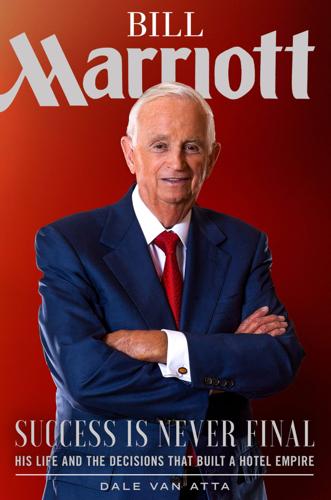
Bill Marriott: Success Is Never Final--His Life and the Decisions That Built a Hotel Empire
by Dale van Atta · 14 Aug 2019 · 520pp · 164,834 words
"Live From Cape Canaveral": Covering the Space Race, From Sputnik to Today
by Jay Barbree · 18 Aug 2008 · 386pp · 92,778 words
When the Heavens Went on Sale: The Misfits and Geniuses Racing to Put Space Within Reach
by Ashlee Vance · 8 May 2023 · 558pp · 175,965 words
Editing Humanity: The CRISPR Revolution and the New Era of Genome Editing
by Kevin Davies · 5 Oct 2020 · 741pp · 164,057 words
The Laundromat : Inside the Panama Papers, Illicit Money Networks, and the Global Elite
by Jake Bernstein · 14 Oct 2019 · 470pp · 125,992 words
Nuclear War: A Scenario
by Annie Jacobsen · 25 Mar 2024 · 444pp · 105,807 words
The New Tourist: Waking Up to the Power and Perils of Travel
by Paige McClanahan · 17 Jun 2024 · 206pp · 78,882 words
Seven Crashes: The Economic Crises That Shaped Globalization
by Harold James · 15 Jan 2023 · 469pp · 137,880 words
The Authoritarians
by Robert Altemeyer · 2 Jan 2007 · 298pp · 87,023 words
Magic Pill: The Extraordinary Benefits and Disturbing Risks of the New Weight-Loss Drugs
by Johann Hari · 7 May 2024 · 315pp · 98,972 words
Empty Vessel: The Story of the Global Economy in One Barge
by Ian Kumekawa · 6 May 2025 · 422pp · 112,638 words
The Smartest Guys in the Room
by Bethany McLean · 25 Nov 2013 · 778pp · 233,096 words
The Deluge: The Great War, America and the Remaking of the Global Order, 1916-1931
by Adam Tooze · 13 Nov 2014 · 1,057pp · 239,915 words
Too big to fail: the inside story of how Wall Street and Washington fought to save the financial system from crisis--and themselves
by Andrew Ross Sorkin · 15 Oct 2009 · 351pp · 102,379 words
Sapiens: A Brief History of Humankind
by Yuval Noah Harari · 1 Jan 2011 · 447pp · 141,811 words
Made to Break: Technology and Obsolescence in America
by Giles Slade · 14 Apr 2006 · 384pp · 89,250 words
Central Europe Travel Guide
by Lonely Planet
The Edifice Complex: How the Rich and Powerful--And Their Architects--Shape the World
by Deyan Sudjic · 27 Nov 2006 · 441pp · 135,176 words
Alcohol: A History
by Rod Phillips · 14 Oct 2014 · 531pp · 161,785 words
The Coming Plague: Newly Emerging Diseases in a World Out of Balance
by Laurie Garrett · 31 Oct 1994 · 1,293pp · 357,735 words
Philanthrocapitalism
by Matthew Bishop, Michael Green and Bill Clinton · 29 Sep 2008 · 401pp · 115,959 words
Culture and Imperialism
by Edward W. Said · 29 May 1994 · 549pp · 170,495 words
The Long Good Buy: Analysing Cycles in Markets
by Peter Oppenheimer · 3 May 2020 · 333pp · 76,990 words
The Future of Fusion Energy
by Jason Parisi and Justin Ball · 18 Dec 2018 · 404pp · 107,356 words
Europe old and new: transnationalism, belonging, xenophobia
by Ray Taras · 15 Dec 2009 · 267pp · 106,340 words
Why Nations Fail: The Origins of Power, Prosperity, and Poverty
by Daron Acemoglu and James Robinson · 20 Mar 2012 · 547pp · 172,226 words
Decisive: How to Make Better Choices in Life and Work
by Chip Heath and Dan Heath · 26 Mar 2013 · 316pp · 94,886 words
The Snowball: Warren Buffett and the Business of Life
by Alice Schroeder · 1 Sep 2008 · 1,336pp · 415,037 words
Into Thin Air: A Personal Account of the Mt. Everest Disaster
by Jon Krakauer · 25 Aug 2009 · 283pp · 98,673 words
The Wires of War: Technology and the Global Struggle for Power
by Jacob Helberg · 11 Oct 2021 · 521pp · 118,183 words
This Sceptred Isle
by Christopher Lee · 19 Jan 2012 · 796pp · 242,660 words
The Age of Stagnation: Why Perpetual Growth Is Unattainable and the Global Economy Is in Peril
by Satyajit Das · 9 Feb 2016 · 327pp · 90,542 words
Republic, Lost: How Money Corrupts Congress--And a Plan to Stop It
by Lawrence Lessig · 4 Oct 2011 · 538pp · 121,670 words
Private Island: Why Britain Now Belongs to Someone Else
by James Meek · 18 Aug 2014 · 232pp · 77,956 words
Pirates and Emperors, Old and New
by Noam Chomsky · 7 Apr 2015
You Are What You Speak: Grammar Grouches, Language Laws, and the Politics of Identity
by Robert Lane Greene · 8 Mar 2011 · 319pp · 95,854 words
Blueprint for Revolution: How to Use Rice Pudding, Lego Men, and Other Nonviolent Techniques to Galvanize Communities, Overthrow Dictators, or Simply Change the World
by Srdja Popovic and Matthew Miller · 3 Feb 2015 · 202pp · 8,448 words
Germany Travel Guide
by Lonely Planet
The Default Line: The Inside Story of People, Banks and Entire Nations on the Edge
by Faisal Islam · 28 Aug 2013 · 475pp · 155,554 words
Culture and Prosperity: The Truth About Markets - Why Some Nations Are Rich but Most Remain Poor
by John Kay · 24 May 2004 · 436pp · 76 words
Gray Day: My Undercover Mission to Expose America's First Cyber Spy
by Eric O'Neill · 1 Mar 2019 · 299pp · 88,375 words
It's Better Than It Looks: Reasons for Optimism in an Age of Fear
by Gregg Easterbrook · 20 Feb 2018 · 424pp · 119,679 words
Notes From an Apocalypse: A Personal Journey to the End of the World and Back
by Mark O'Connell · 13 Apr 2020 · 213pp · 70,742 words
Lonely Planet Poland
by Lonely Planet · 892pp · 229,939 words
Pocket Rough Guide Berlin (Travel Guide eBook)
by Rough Guides · 16 Oct 2019 · 212pp · 49,082 words

Enemies and Neighbours: Arabs and Jews in Palestine and Israel, 1917-2017
by Ian Black · 2 Nov 2017 · 674pp · 201,633 words
On Time and Water
by Andri Snaer Magnason · 15 Sep 2021 · 272pp · 77,108 words
The Scientist as Rebel
by Freeman Dyson · 1 Jan 2006 · 332pp · 109,213 words
Life at the Speed of Light: From the Double Helix to the Dawn of Digital Life
by J. Craig Venter · 16 Oct 2013 · 285pp · 78,180 words
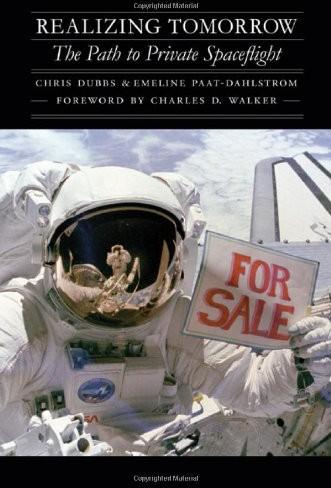
Realizing Tomorrow: The Path to Private Spaceflight
by Chris Dubbs, Emeline Paat-dahlstrom and Charles D. Walker · 1 Jun 2011 · 376pp · 110,796 words
All the Money in the World
by Peter W. Bernstein · 17 Dec 2008 · 538pp · 147,612 words
Fallen Astronauts: Heroes Who Died Reaching for the Moon
by Colin Burgess and Kate Doolan · 14 Apr 2003 · 521pp · 125,749 words
The 100 Best Vacations to Enrich Your Life
by Pam Grout · 14 May 2007 · 304pp · 87,702 words
1,000 Places to See in the United States and Canada Before You Die, Updated Ed.
by Patricia Schultz · 13 May 2007 · 2,323pp · 550,739 words
Tribe of Mentors: Short Life Advice From the Best in the World
by Timothy Ferriss · 14 Jun 2017 · 579pp · 183,063 words
What's Next?: Unconventional Wisdom on the Future of the World Economy
by David Hale and Lyric Hughes Hale · 23 May 2011 · 397pp · 112,034 words
The Market for Force: The Consequences of Privatizing Security
by Deborah D. Avant · 17 Oct 2010 · 872pp · 135,196 words
Bali & Lombok Travel Guide
by Lonely Planet
How the Mind Works
by Steven Pinker · 1 Jan 1997 · 913pp · 265,787 words
The Singularity Is Near: When Humans Transcend Biology
by Ray Kurzweil · 14 Jul 2005 · 761pp · 231,902 words
Paper Knowledge: Toward a Media History of Documents
by Lisa Gitelman · 26 Mar 2014
Lonely Planet Iceland (Travel Guide)
by Lonely Planet, Carolyn Bain and Alexis Averbuck · 31 Mar 2015
The Rough Guide to Prague
by Humphreys, Rob
Buyology
by Martin Lindstrom · 14 Jul 2008 · 83pp · 7,274 words
Dangerous Ideas: A Brief History of Censorship in the West, From the Ancients to Fake News
by Eric Berkowitz · 3 May 2021 · 412pp · 115,048 words
Bedsit Disco Queen: How I Grew Up and Tried to Be a Pop Star
by Tracey Thorn · 7 Feb 2013
The Code Book: The Science of Secrecy From Ancient Egypt to Quantum Cryptography
by Simon Singh · 1 Jan 1999
Toast
by Stross, Charles · 1 Jan 2002
Quiet: The Power of Introverts in a World That Can't Stop Talking
by Susan Cain · 24 Jan 2012 · 377pp · 115,122 words
Uncommon Grounds: The History of Coffee and How It Transformed Our World
by Mark Pendergrast · 2 Jan 2000 · 564pp · 153,720 words
Ashes to Ashes: America's Hundred-Year Cigarette War, the Public Health, and the Unabashed Triumph of Philip Morris
by Richard Kluger · 1 Jan 1996 · 1,157pp · 379,558 words
The Ascent of Money: A Financial History of the World
by Niall Ferguson · 13 Nov 2007 · 471pp · 124,585 words

Fodor's California 2014
by Fodor's · 5 Nov 2013 · 1,540pp · 400,759 words
Bobos in Paradise: The New Upper Class and How They Got There
by David Brooks · 1 Jan 2000 · 142pp · 18,753 words
All Your Base Are Belong to Us: How Fifty Years of Video Games Conquered Pop Culture
by Harold Goldberg · 5 Apr 2011 · 329pp · 106,831 words
The New Economics: A Bigger Picture
by David Boyle and Andrew Simms · 14 Jun 2009 · 207pp · 86,639 words
Germany
by Andrea Schulte-Peevers · 17 Oct 2010
It's Our Turn to Eat
by Michela Wrong · 9 Apr 2009 · 403pp · 125,659 words
Hot: Living Through the Next Fifty Years on Earth
by Mark Hertsgaard · 15 Jan 2011 · 326pp · 48,727 words
Understanding Power
by Noam Chomsky · 26 Jul 2010
Cocaine Politics: Drugs, Armies, and the CIA in Central America
by Peter Dale Scott and Jonathan Marshall · 1 Jan 1991
Fantasyland: How America Went Haywire: A 500-Year History
by Kurt Andersen · 4 Sep 2017 · 522pp · 162,310 words
The Once and Future Liberal: After Identity Politics
by Mark Lilla · 14 Aug 2017 · 91pp · 24,469 words
Israel: A Concise History of a Nation Reborn
by Daniel Gordis · 17 Oct 2016 · 632pp · 171,827 words
The Panama Papers: Breaking the Story of How the Rich and Powerful Hide Their Money
by Frederik Obermaier · 17 Jun 2016 · 372pp · 109,536 words
How to Fail: Everything I’ve Ever Learned From Things Going Wrong
by Elizabeth Day · 3 Apr 2019 · 284pp · 95,029 words
Lonely Planet Norway (Travel Guide)
by Lonely Planet and Donna Wheeler · 1 Apr 2015 · 1,510pp · 218,417 words
Top Dog: The Science of Winning and Losing
by Po Bronson and Ashley Merryman · 19 Feb 2013 · 407pp · 109,653 words
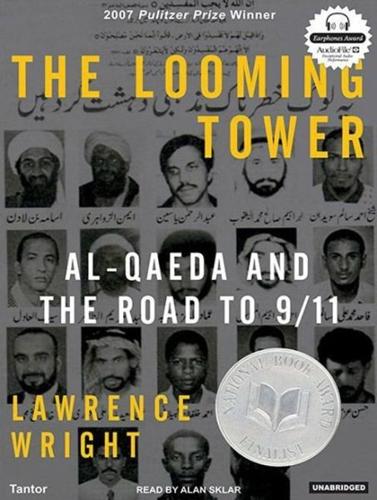
The Looming Tower: Al-Qaeda and the Road to 9/11
by Lawrence Wright · 26 Sep 2006 · 604pp · 177,329 words
50 Psychology Classics
by Tom Butler-Bowdon · 14 Oct 2007 · 363pp · 109,374 words
The Antidote: Happiness for People Who Can't Stand Positive Thinking
by Oliver Burkeman · 1 Jul 2012 · 211pp · 69,380 words
Moondust: In Search of the Men Who Fell to Earth
by Andrew Smith · 3 Apr 2006 · 409pp · 138,088 words
Bibi: The Turbulent Life and Times of Benjamin Netanyahu
by Anshel Pfeffer · 30 Apr 2018 · 530pp · 154,505 words

Them: Adventures With Extremists
by Jon Ronson · 1 Jan 2001 · 341pp · 87,268 words
Amusing Ourselves to Death: Public Discourse in the Age of Show Business
by Neil Postman and Jeff Riggenbach Ph. · 1 Apr 2013 · 204pp · 61,491 words
Samsung Rising: The Inside Story of the South Korean Giant That Set Out to Beat Apple and Conquer Tech
by Geoffrey Cain · 15 Mar 2020 · 540pp · 119,731 words

Tightrope: Americans Reaching for Hope
by Nicholas D. Kristof and Sheryl Wudunn · 14 Jan 2020 · 307pp · 96,543 words
The Rights of the People
by David K. Shipler · 18 Apr 2011 · 495pp · 154,046 words
The Patterning Instinct: A Cultural History of Humanity's Search for Meaning
by Jeremy Lent · 22 May 2017 · 789pp · 207,744 words
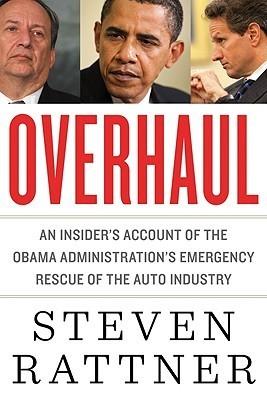
Overhaul: An Insider's Account of the Obama Administration's Emergency Rescue of the Auto Industry
by Steven Rattner · 19 Sep 2010 · 394pp · 124,743 words
The Challenge for Africa
by Wangari Maathai · 6 Apr 2009 · 288pp · 90,349 words

Lotharingia: A Personal History of Europe's Lost Country
by Simon Winder · 22 Apr 2019
Fed Up!: Success, Excess and Crisis Through the Eyes of a Hedge Fund Macro Trader
by Colin Lancaster · 3 May 2021 · 245pp · 75,397 words
How to Be the Startup Hero: A Guide and Textbook for Entrepreneurs and Aspiring Entrepreneurs
by Tim Draper · 18 Dec 2017 · 302pp · 95,965 words
The Rise and Fall of the British Nation: A Twentieth-Century History
by David Edgerton · 27 Jun 2018
Messing With the Enemy: Surviving in a Social Media World of Hackers, Terrorists, Russians, and Fake News
by Clint Watts · 28 May 2018 · 324pp · 96,491 words
Energy: A Human History
by Richard Rhodes · 28 May 2018 · 653pp · 155,847 words
Twitter and Tear Gas: The Power and Fragility of Networked Protest
by Zeynep Tufekci · 14 May 2017 · 444pp · 130,646 words
Map of a Nation: A Biography of the Ordnance Survey
by Rachel Hewitt · 6 Jul 2011 · 595pp · 162,258 words
Lonely Planet Iceland
by Lonely Planet
Polaroids From the Dead
by Douglas Coupland · 1 Jan 1996
The Greatest Capitalist Who Ever Lived: Tom Watson Jr. And the Epic Story of How IBM Created the Digital Age
by Ralph Watson McElvenny and Marc Wortman · 14 Oct 2023 · 567pp · 171,072 words
Can We Talk About Israel?: A Guide for the Curious, Confused, and Conflicted
by Daniel Sokatch · 18 Oct 2021 · 556pp · 95,955 words
Fantasyland
by Kurt Andersen · 5 Sep 2017
Why the Jews?: The Reason for Antisemitism
by Dennis Prager and Joseph Telushkin · 1 Nov 2007 · 289pp · 81,679 words
Among the Braves: Hope, Struggle, and Exile in the Battle for Hong Kong and the Future of Global Democracy
by Shibani Mahtani and Timothy McLaughlin · 7 Nov 2023 · 348pp · 110,533 words
MegaThreats: Ten Dangerous Trends That Imperil Our Future, and How to Survive Them
by Nouriel Roubini · 17 Oct 2022 · 328pp · 96,678 words
The Rough Guide to Poland
by Rough Guides · 18 Sep 2018 · 976pp · 233,138 words
The Rough Guide to Australia (Travel Guide eBook)
by Rough Guides · 14 Oct 2023 · 1,955pp · 521,661 words
Secrets of the Sprakkar
by Eliza Reid · 15 Jul 2021
The Rationalist's Guide to the Galaxy: Superintelligent AI and the Geeks Who Are Trying to Save Humanity's Future
by Tom Chivers · 12 Jun 2019 · 289pp · 92,714 words
Money: The True Story of a Made-Up Thing
by Jacob Goldstein · 14 Aug 2020 · 199pp · 64,272 words