Mitch Kapor
description: an American entrepreneur best known for founding Lotus Development Corporation and designing Lotus 1-2-3, a spreadsheet application.
87 results
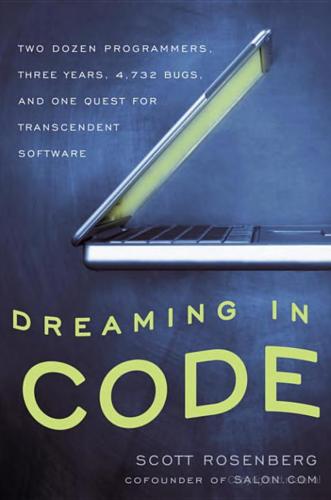
Dreaming in Code: Two Dozen Programmers, Three Years, 4,732 Bugs, and One Quest for Transcendent Software
by Scott Rosenberg · 2 Jan 2006 · 394pp · 118,929 words
Street in San Francisco. Laptops opened up and locked on to WiFi signals, coffee cups steamed, dogs roamed, and people chatted. Then, with no fanfare, Mitch Kapor poked his head through the double doors and said, “Here’s someone you know.” He led in an oddly familiar-looking tall man in a
…
began more modestly, with a small irritation, an everyday annoyance—an itch. Back in 2001, a Microsoft Exchange server sat in a closet just outside Mitch Kapor’s office in downtown San Francisco. The closet was hardly where Kapor wanted to spend his time, but as the first responder when there were
…
, you can’t have one person or one company guarding their secrets. You have to have everybody share in knowledge.” In the spring of 2001, Mitch Kapor established the Open Source Applications Foundation as a nonprofit organization and hired its first employees. He needed, as he later put it, some “people with
…
project would endow computers with, Engelbart responded, “You’re gonna do all that for the computers. What are you going to do for the people?” Mitch Kapor always cited Engelbart as one of his inspirations, and Agenda was in a sense a descendant of NLS. Although more modest in its ambitions and
…
of the will.” Today’s software creators are improbable heirs to that binary mind-set. As he started imagining the project that would become Chandler, Mitch Kapor was certainly an optimist. It was a dark winter for the software industry, the bottom of a down cycle. But he had the financial wherewithal
…
appear at first to be lightweight and reversible, turn out to have all the gravity and consequence of poured concrete. In the spring of 2001, Mitch Kapor, Morgen Sagen, and Al Cho began meeting regularly to talk about the software they were going to build. During his last year at Excite@Home
…
no Moore’s Law for software. Chips may double in capacity every year or two; our brains don’t. When John Anderson, Andy Hertzfeld, and Mitch Kapor sat down in the summer of 2002 to select the programming language OSAF would use, they did not need to remind one another of this
…
have some floors to travel. But it was enough to excite the software enthusiasts and open source devotees who noticed the announcement. The word that Mitch Kapor was working on an innovative new “interpersonal information manager” hit the geek street with a jolt. Press coverage spread out in widening circles from Gillmor
…
provides this extremely specific feature that I have been using for many years and can’t live without. Outlook blows. Microsoft sucks. Slashdot’s headline, “Mitch Kapor’s Outlook-Killer,” set the tone of the publicity: Kapor was taking on Gates. Chandler would slay Outlook. Up with open source; down with Microsoft
…
-up companies. OSAF certainly benefited from this timing: It was a bright light on a dark plain, and it beckoned to programmers looking for projects. Mitch Kapor had always figured that the organization would depend on both paid employees and altruistic volunteers, and in Andy Hertzfeld it already had one high-profile
…
on. When two Stanford grad students started up Yahoo! in 1994, the name was a smart-alecky acronym for Yet Another Hierarchical Officious Oracle. If Mitch Kapor was sure of anything about Chandler, it was that he didn’t want the project to be “Yet Another”—not yet another Outlook clone, not
…
was taking notes and poked his snout onto my keyboard. I was startled, but I can’t say I was surprised. Chandler was one of Mitch Kapor’s two labradoodles, and the labradoodles had the run of the office. Chandler and Cosmo, café-au-lait-colored and irrepressible, were the top dogs
…
the center. If a programmer isn’t the best person to make the decisions that collectively constitute a software program’s design, then who is? Mitch Kapor has always been passionate about the nuts and bolts of software design, from the broadest philosophical questions to the most mundane details of fit and
…
. Montulli returned to Lake Tahoe to plot new start-up ventures. In July 2003, as Andi Vajda began digging the foundations for the Chandler repository, Mitch Kapor established an informal working group with John Anderson, Andy Hertzfeld, and later Michael Toy to hash out a plan for building Chandler’s user interface
…
on the proper approach to building it. And he had some ideas of his own about how it should be done. “The question is,” said Mitch Kapor, deep in the middle of a long meeting in a series of long meetings, “How do we sequence things to avoid spending an infinite amount
…
Toy—had made “Should we look at Mozilla again?” into a regular OSAF refrain. But what really brought the question back into the spotlight was Mitch Kapor’s new role as chairman of the Mozilla Foundation. Originally, Mozilla’s core programmers mostly held jobs on Netscape’s payroll, and when Netscape got
…
their manager”—it turned out that he honestly felt he hadn’t been doing a very good job. He explained his decision to me later. “Mitch Kapor is spending millions of dollars a year and does not want to have responsibility for little details. He wants to find someone to make sure
…
button and menu—is represented as a piece of data in Chandler’s own repository. “So can you make these changes live, on the fly?” Mitch Kapor asks. “Yes, you don’t have to write code,” Anderson answers. Just alter the data, and what you see on screen will change. “Even at
…
cycle.;-)” At OSAF, where dogs roamed the halls and a canine face festooned the flagship product, the term dogfooding felt just right; it had, as Mitch Kapor put it, “positive connotations.” As work on Chandler plodded forward in the first half of 2004, Kapor and his team became steadily more convinced that
…
the U.S. Department of Justice.) Dusseault worked on several different server projects, including early versions of the Microsoft Exchange Server that would later bedevil Mitch Kapor’s weekends. Dusseault’s arrival marked a number of firsts for OSAF. She was the first full-fledged Microsoft veteran to join the project. She
…
, there was one fewer snake hissing on the pavement. It’s a Monday afternoon late in June 2004. Chao Lam and Lisa Dusseault step into Mitch Kapor’s sunlight-flooded office and sit down around a small round table near the door. Kapor joins them. Their agenda: planning for Canoga, the eventual
…
the need for the browser to trade messages with the server for every single action you chose to perform. (That problem had figured prominently in Mitch Kapor’s rationale for not building Chandler as a Web-based application.) It made the Web browser work a little more like the kind of “rich
…
say. Joel Spolsky is in this group. A former Microsoft project manager, he worked on Excel, the Microsoft Office spreadsheet that seized first place from Mitch Kapor’s Lotus 1-2-3 in the early nineties and has held it ever since. When Spolsky left Microsoft to found his own small software
…
there in the hotel lobby. For one thing, 37 Signals had only one developer, so it avoided the whole Brooks’s Law quagmire—just as Mitch Kapor had in his original work on Lotus 1-2-3, which was mostly written by a single programmer, Jonathan Sachs. Coordination among developers simply wasn
…
and CIOs of big corporations may be cumbersome and expensive. But they are still—just as much as the little spreadsheets that Dan Bricklin and Mitch Kapor introduced to the world a quarter century ago—made of “thought-stuff” (to recall Frederick Brooks’s term). And so every piece of software that
…
’s leakage. Things go wrong.” For users this means that sometimes your computer behaves in bizarre, perplexing ways, and sometimes you will want to, as Mitch Kapor said in his Software Design Manifesto, throw it out the window. For programmers it means that new tools and ideas that bundle up some bit
…
speech at an ACM conference in 2004, he pointed to his laptop as if it had insulted him and—using exactly the same image that Mitch Kapor had two decades before in the “Software Design Manifesto”—exclaimed: “I’m just sick of the stupidity of these things! I want to throw this
…
. It’s not just that some problems recur with such eerie regularity in the making of software that the whole undertaking can feel (as both Mitch Kapor and Jaron Lanier had complained at different times) like the time-travel loop in the movie Groundhog Day. It’s that recurrence is also another
…
source code for three years was not the same thing as building an open source community. As Chandler 0.6 neared completion, Ted Leung sent Mitch Kapor a report assessing OSAF’s successes and failures in its open source efforts. He found that of approximately 4,400 total bugs logged in Bugzilla
…
history provides a wealth of examples of programs that flourished after hard times or returned to life after consignment to oblivion. On Technology, the company Mitch Kapor founded after Lotus, produced only a fraction of the software that Kapor had hoped it would, but its MeetingMaker group scheduling program has remained in
…
generation to take another bite at the problem, always someone somewhere who will welcome “Yet Another” program. In the spring of 2002, around the time Mitch Kapor and the early members of the Chandler team were beginning to zero in on their new software’s architecture, Kapor made the tech news headlines
…
making any bets. In 2005, three years after placing his Long Bet with Kurzweil, years spent clambering through the trenches of real-world software development, Mitch Kapor stands by his wager. “I would double down with Ray in an instant,” he says. “I don’t run into anybody who takes his side
…
found at http://hci.stanford.edu/bds/1-kapor.htm. “We took the plan out”: From “Painful Birth: Creating New Software Was Agonizing Task for Mitch Kapor Firm” by Paul B. Carroll, Wall Street Journal, May 11, 1990. CHAPTER 3 PROTOTYPES AND PYTHON “a crew of twenty people”: Artist Chris Cobb’s
…
GEEKS “They get along well with other dogs”: The labradoodle description is from http://www.dogbreedinfo.com/labradoodle.htm. “We are already too large”: From Mitch Kapor’s blog posting, Making Design Decisions: Some Principles, December 29, 2002, at http://blogs.osafoundation.org/mitch/000097.htm# 000097. “The name for my pain
…
Today, June 29, 2003, at http://www.usatoday.com/tech/news/2003-06-29-gates-longhorn_x.htm. “Our head count has been fairly flat”: Mitch Kapor blog posting on August 3, 2003, at http://blogs.osafoundation.org/mitch/000313.htm# 000313. “Do you have any advice for people”: Linus Torvalds, quoted
…
are embodied.”: Kapor’s essay accompanying the Long Bet is at http://www.longbets.org/1. ACKNOWLEDGMENTS This book could not have been written without Mitch Kapor’s willingness to open the Chandler project’s doors to me. At the time he first did so, neither of us expected that I would
…
answer my questions about their work and themselves. The following people sat for extended interviews: John Anderson, Philippe Bossut, Donn Denman, Lisa Dusseault, Andy Hertzfeld, Mitch Kapor, Chao Lam, Ted Leung, Rys McCusker (via email), Lou Montulli, Sheila Mooney, Katie Parlante, Stuart Parmenter, Morgen Sagen, Brian Skinner, Michael Toy, Andi Vajda, and
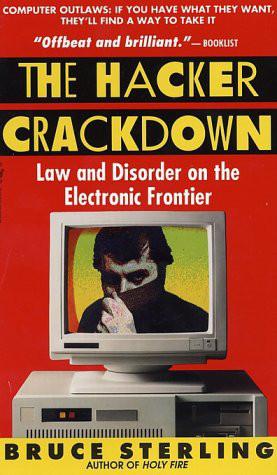
The Hacker Crackdown
by Bruce Sterling · 15 Mar 1992 · 345pp · 105,722 words
, Los Angeles, Miami, Newark, Phoenix, Pittsburgh, Richmond, Tucson, San Diego, San Jose, and San Francisco. May. FBI interviews John Perry Barlow re NuPrometheus case. June. Mitch Kapor and Barlow found Electronic Frontier Foundation; Barlow publishes CRIME AND PUZZLEMENT manifesto. July 24-27. Trial of Knight Lightning. 1991 February. CPSR Roundtable in Washington
…
Godwin, its chief attorney, were confronting federal law enforcement MANO A MANO for the first time ever. Ever alert to the manifold uses of publicity, Mitch Kapor and Mike Godwin had brought their own journalist in tow: Robert Draper, from Austin, whose recent well-received book about ROLLING STONE magazine was still
…
six-page document about 911 service. Nagle made an ironic comment to this effect in Telecom Digest. From there, Nagle was put in touch with Mitch Kapor, and then with Neidorf's lawyers. Sheldon Zenner was delighted to find a computer telecommunications expert willing to speak up for Neidorf, one who was
…
closest friends shun him as a federal criminal. He owed his lawyers over a hundred thousand dollars, despite a generous payment to the defense by Mitch Kapor. Neidorf was not found innocent. The trial was simply dropped. Nevertheless, on September 9, 1991, Judge Bua granted Neidorf's motion for the "expungement and
…
that it had credibility. It had also established that it had teeth. In the fall of 1991 I travelled to Massachusetts to speak personally with Mitch Kapor. It was my final interview for this book. # The city of Boston has always been one of the major intellectual centers of the American republic
…
and tropical prints, not so much garish as simply cheerful and just that little bit anomalous. There is just the whiff of hacker brimstone about Mitch Kapor. He may not have the hard-riding, hell-for-leather, guitar-strumming charisma of his Wyoming colleague John Perry Barlow, but there's something about
…
." Then he dropped out and went to Silicon Valley. The inventors of VisiCalc, the Apple computer's premier business program, had shown an interest in Mitch Kapor. Kapor worked diligently for them for six months, got tired of California, and went back to Boston where they had better bookstores. The VisiCalc group
…
. "Well, Lotus ... we BOUGHT it." "Oh. You BOUGHT it?" "Yeah." "Sort of like the Bell System buying Western Union?" Kapor grins. "Yep! Yep! Yeah, exactly!" Mitch Kapor was not in full command of the destiny of himself or his industry. The hottest software commodities of the early 1980s were COMPUTER GAMES—the
…
, then Kapor would likely have much the same fortune Gates has—somewhere in the neighborhood of three billion, give or take a few hundred million. Mitch Kapor has all the money he wants. Money has lost whatever charm it ever held for him—probably not much in the first place. When Lotus
…
VERY opposed to techno-utopias. Every time I see one, I either run away, or try to kill it." It dawns on me then that Mitch Kapor is not trying to make the world safe for democracy. He certainly is not trying to make it safe for anarchists or utopians—least of
…
all for computer intruders or electronic rip-off artists. What he really hopes to do is make the world safe for future Mitch Kapors. This world of decentralized, small-scale nodes, with instant global access for the best and brightest, would be a perfect milieu for the shoestring attic
…
capitalism that made Mitch Kapor what he is today. Kapor is a very bright man. He has a rare combination of visionary intensity with a strong practical streak. The Board
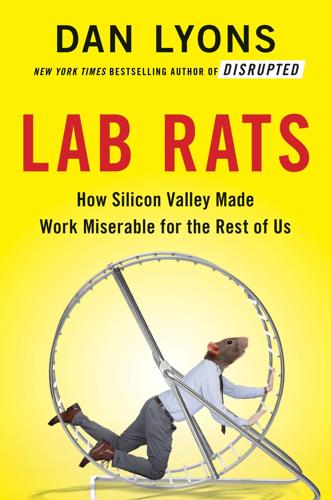
Lab Rats: How Silicon Valley Made Work Miserable for the Rest of Us
by Dan Lyons · 22 Oct 2018 · 252pp · 78,780 words
in Oakland, and while demographics have shifted recently, African Americans still represent about a quarter of the population. By setting up shop here in Oakland, Mitch Kapor and Freada Kapor Klein, the husband-and-wife team behind Kapor Capital, were sending a message—they were not part of that other world. Unlike

The Power Law: Venture Capital and the Making of the New Future
by Sebastian Mallaby · 1 Feb 2022 · 935pp · 197,338 words
to the mother ship. The partnership’s reputation swelled, and Silicon Valley flourished. Chapter Six Planners and Improvisers One day in 1987, an entrepreneur named Mitch Kapor was sitting in his private jet, flying from Boston to San Francisco. “Bear with me,” he told his guest, a software engineer called Jerry Kaplan
…
not sure,” Doerr replied. “I may have to be in Tokyo.”[4] Doerr seemed too busy to notice material possessions—an affect that appealed to Mitch Kapor’s yogic sensibilities. He went about in a utilitarian van, dressed in rumpled khakis and plain button-down shirts, and was said to own a
…
their schedules to arrange a layover at St. Louis airport. Doerr met Kaplan at the gate, and they hammered out a deal: together, Kleiner Perkins, Mitch Kapor, and Vinod Khosla would purchase a third of Kaplan’s project for $1.5 million. Doerr would become chairman. Kapor and Khosla would serve as
…
a product, and Khosla seemed to agree. The second financing had pegged GO’s value at $6 million. Before anyone could endorse Khosla’s caution, Mitch Kapor weighed in. He wanted to double GO’s value. “Twelve million!” he announced ebulliently. Kaplan looked over at Doerr, expecting him to tamp down Kapor
…
sort of incremental advance that could have been achievable. “They should have got the thing to work in a small area like UPS delivery guys,” Mitch Kapor reflected later. “GO showed me the downside for entrepreneurs of Kleiner’s approach. If it couldn’t be a home run, Kleiner did not care
…
a mass medium that democratized information and changed lives was best entrusted to the private sector. At this stage in the story, none other than Mitch Kapor made an entrance. While his pen-computing venture struggled to raise capital, Kapor experienced another one of his epiphanies. Gore’s government-led fiber-optic
…
the internet had required typing commands like “Telnet 192.100.81.100.” Now users could simply click on words or images to summon web pages. Mitch Kapor’s epiphany was proving right. The UUNET version of the information future trumped that of the U.S. vice president. For the investors in UUNET
…
Adams felt properly rewarded. “I’d like to thank you again for nudging me in the right direction all those years ago,” he wrote to Mitch Kapor after the flotation. “I’ve got $138 million. Pretty surreal,” he added.[61] There was a coda to the UUNET story, and it reinforced the
…
years earlier. Before the mid-1990s, semiretired technology executives had sometimes turned their hands to investing: Mike Markkula had backed and shepherded the fledgling Apple; Mitch Kapor had financed and counseled GO and UUNET.[9] But it took the booming tech market of the middle and late 1990s to turn this “angel
…
he reached into his network and produced a grown-up executive willing to work for the company.[20] Shriram was serving the same role that Mitch Kapor had played in preparing UUNET to pitch investors. In May 1999, the Googlers duly set out to meet the venture capitalists. But, having raised money
…
talked him down. When his temper threatened to blow up a deal, they knew how to smooth things over. On one such occasion in 1983, Mitch Kapor showed up at the Kleiner office to pitch Lotus Development. For no evident reason, Perkins flew into a fury. “I don’t see why I
…
I was crazy,” Severino marveled. BACK TO NOTE REFERENCE 94 CHAPTER SIX: PLANNERS AND IMPROVISERS Frank Rose, “Mitch Kapor and the Lotus Factor,” Esquire, Dec. 1984, 358, classic.esquire.com/article/1984/12/1/mitch-kapor-and-the-lotus-factor. BACK TO NOTE REFERENCE 1 The story that follows about GO is distilled from
…
REFERENCE 32 O’Dell, interview by the author, June 2, 2018. BACK TO NOTE REFERENCE 33 Kapor, author interview. BACK TO NOTE REFERENCE 34 Mitch Kapor, “Oral History of Mitch Kapor,” interview by Bill Aspray, Computer History Museum, Nov. 19, 2004, 12. BACK TO NOTE REFERENCE 35 Kapor to Ben Rosen, reproduced in full
…
, 368 toxic culture of Uber, 360, 365–67 Kaplan, Jerry, 120–28 GO Corp., 122–28 Lotus Development, 120–21 Kaplan, Steven N., 436n, 450n Kapor, Mitch, 120–28 Electronic Frontier Foundation, 436n GO Corp. investment, 122–28, 175 Lotus Development investment, 120–21, 135, 264 UUNET investment, 134–39, 141–42
…
, is pictured second from the left. On the far left is his young partner, John Doerr. Frank Caufield, far right, called Doerr “a little Mozart.” Mitch Kapor (left) a former teacher of transcendental meditation, founded the software pioneer Lotus Development, generating a big win for Kleiner Perkins and John Doerr (right) when
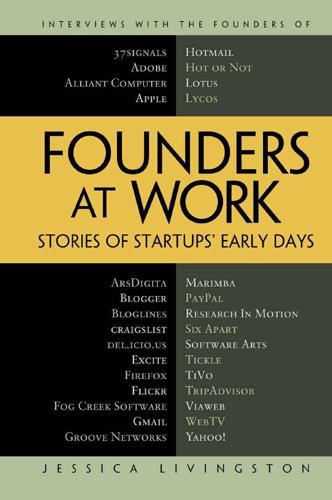
Founders at Work: Stories of Startups' Early Days
by Jessica Livingston · 14 Aug 2008 · 468pp · 233,091 words
to make introductions: Jim Baum, Patrick Chung, Mark Coker, Jay Corscadden, Rael Dornfest, Jed Dorsheimer, Randy Farmer, Steve Frankel, Anand Gohel, Laurie Glass, James Hong, Mitch Kapor, Morgan Ley, Mike Palmer, Tom Palmer, Bryan Pearce, Andrew Pojani, Will Price, Ryan Singel, Langley Steinert, Chris Sacca, and Zak Stone. Thanks to Kate Courteau
…
much, Lotus! It was the right thing for them to do, business-wise. But also it was the right thing for them to do, and Mitch [Kapor] was very good about that, to save us from bankruptcy. It was just a few million bucks to take us out of our misery, to
…
the company, but they wanted me to spend a year working for them, and I was not happy about this at all. I ran into Mitch Kapor on an airplane, and we talked. That’s Monday. Friday night, Lotus bought our company—they bought the assets of the company. So finally we
…
, it’s a principal. Bob Frankston (standing) and Dan Bricklin, circa 1982 C H A P T 6 E R Mitchell Kapor Cofounder, Lotus Development Mitch Kapor founded Lotus Development with Jonathan Sachs in 1982. Their spreadsheet software, Lotus 1-2-3, quickly surpassed VisiCalc to become the new industry standard. VisiCalc
…
collaboration applications. Later he wanted to develop collaboration software of his own, but couldn’t find funding. After he led the development of Lotus Symphony, Mitch Kapor and Jonathan Sachs decided to invest in Ozzie’s idea, which would become Lotus Notes. Instead of working as an employee, Ozzie founded Iris Associates
…
. Livingston: Did you use your own money for Groove? Ozzie: Yes, I funded the first few years myself. But eventually I took some money from Mitch Kapor and then others. Not so much because I needed it at that point, but because I knew that, ultimately, you cannot accomplish something completely on
…
, I first wrote the spec for Groove in 1982. But I couldn’t find funding for the idea. So in 1983 I was hired by Mitch Kapor and Jonathan Sachs at Lotus Development, just after Lotus 1-2-3 release 1 had shipped. I did a small amount of work on 1

How to Fix the Future: Staying Human in the Digital Age
by Andrew Keen · 1 Mar 2018 · 308pp · 85,880 words
men. The four-story reinvented building over the Bay in downtown Oakland is everything that the Battery claims to be, but isn’t. Created by Mitch Kapor—the founder of the software giant Lotus, which was acquired in 1995 by IBM for $3.5 billion—and his wife, Freada Kapor Klein, a
…
creation of jobs for the underprivileged. The theater in the basement of the new building is full of young tech entrepreneurs and Kapor management, including Mitch Kapor, Ben Jealous, Freada Kapor Klein, and their latest partner, the venture capitalist Ellen Pao, who in 2015 fought a high-profile gender-discrimination suit against
…
the “toxic” culture of the rideshare start-up.24 And after revelations about 500 Startups CEO Dave McClure’s systematic sexual harassment of female entrepreneurs, Mitch Kapor—a limited partner in one of the 500 Startups investment funds—publicly stated his intention to ask for his money back from the fund.25
…
low-income and disadvantaged kids who all went on to attend college. Other alternative innovation networks are also emerging in Oakland, with the goal, in Mitch Kapor’s words, to “do tech differently.”27 These include Hack the Hood, a group that prepares low-income youth of color for a career in
…
and Freada Kapor, “An Open Letter to the Uber Board and Investors,” Medium, February 23, 2017. 25. Sarah Lacey, “After McClure Revelations, 500 Startups Lp Mitch Kapor Says He’ll Ask for His Money Back,” Pando, June 30, 2017. 26. Josh Constine, “Uber Investors Who Called It ‘Toxic’ Are Satisfied by Plans
…
Kalanick, Travis, 201–202, 222, 246, 252, 255 Kallen, Bernhard, 188–189 Kallet, Arthur, 49–50 Kaminska, Izabella, 67–68 Kant, Immanuel, 41–42, 200 Kapor, Mitch, 217–225 Kapor Center for Technology and Impact, 217–225 Kapor Klein, Freada, 217–225 Kauffman Foundation, 223–224 Keen, Andrew The Cult of the
The Code: Silicon Valley and the Remaking of America
by Margaret O'Mara · 8 Jul 2019
to do the same thing those days, but Rosen sensed something was different about this one. His name was Mitch Kapor, and his company was called Lotus Development Corporation. Tech had been blowing Mitch Kapor’s mind ever since he’d picked up a copy of Ted Nelson’s Computer Lib soon after graduating
…
came from the Silicon Valley celebrities who made it their first online hangout, including Grateful Dead lyricist John Perry Barlow, journalist Steven Levy, Lotus founder Mitch Kapor, and of course Brand himself. The bland Ohioans running CompuServe (now owned by even blander tax preparer H&R Block) couldn’t compete with The
…
competitor tech companies, engineers grimly referred to Gates’s company as “The Death Star.” The destructive swath that Microsoft cut through the software industry, Lotus’ Mitch Kapor concluded darkly, had turned early-1990s Silicon Valley into “the Kingdom of the Dead.”30 THE NETWORK IS THE COMPUTER As Bill Gates trained his
…
unapologetically liberal Congressman Don Edwards.3 Silicon Valley’s “information wants to be free” crowd was incensed too. In the years after leaving Lotus Software, Mitch Kapor had found his next chapter online, at the WELL. There, Kapor had started to post extensively on the issues he cared most about: software design
…
NSF started to pull down the walls of its online garden, changing the terms of its “acceptable use policy” to permit business transactions online.16 Mitch Kapor ran with a crowd that made no bones about its antipathy for government. Along with Barlow, one of his EFF co-founders was John Gilmore
…
more, he now was being asked by Gore himself to beef up the campaign’s broad-brush technology policy. Barram, in turn, invited John Sculley, Mitch Kapor, and others to chime in. Kapor took politicians’ bold promises with a grain of salt, but he sensed that this was just the kind of
…
chaos was part of what made it so powerful. “Life in cyberspace seems to be shaping up exactly like Thomas Jefferson would have wanted,” wrote Mitch Kapor, “founded on the primacy of individual liberty and a commitment to pluralism, diversity, and community.” The politicians shouldn’t mess it up.39 But an
…
its academic roots, as a decentralized, networked world where no one was in control. The telecoms couldn’t ration, the spooks couldn’t spy; instead, Mitch Kapor’s small-scale, independent, Jeffersonian vision could bloom. After a century of everything getting bigger—government, business, systems of social organization—the small and the
…
collaborators put it in 1994—meaning that it was as lightly regulated as possible. The extraordinary new generation of thinking machines channeled the spirit of Mitch Kapor’s Jeffersonian Internet: an independent, decentralized forum of many voices. Their designers remained resolute in their commitment to not take sides. As these powerful tools
…
creation of the extraordinary creative explosion of the online era looked on in dismay at what all this freedom had wrought. “We were astoundingly naïve,” Mitch Kapor remarked regretfully as he looked out at the upended political landscape. “We couldn’t imagine what is now obvious: if people have bad motives and
…
Hardy, April 20, 2015, September 19, 2017, August 28, 2018 Pitch Johnson, May 26, 2015 Jennifer Jones, November 14, 2014 Tom Kalil, August 7, 2017 Mitch Kapor, September 19, 2017 Roberta Katz, November 12, December 10, 2014 Guy Kawasaki, January 26, February 12, 2015 Chop Keenan, March 17, 2016 Floyd Kvamme, February
…
, 1985): 16; Katherine Maxfield, Starting Up Silicon Valley: How ROLM became a Cultural Icon and Fortune 500 Company (Austin, Tex.: Emerald Book Co., 2014). 28. Mitch Kapor, interview with the author, October 19, 2017, Oakland, Calif.; Udayan Gupta, Done Deals: Venture Capitalists Tell Their Stories (Cambridge, Mass.: Harvard Business School Press, 2000
…
-Times, May 11, 1990, 16. 3. John Markoff, “Drive to Counter Computer Crime Aims at Invaders,” The New York Times, June 3, 1990, 1. 4. Mitch Kapor, interview with the author, September 19, 2017, Oakland, Calif. 5. Fred Turner, From Counterculture to Cyberculture: Stewart Brand, the Whole Earth Network, and the Rise
…
Out,” Wired, March 8, 2016. 29. Thiel, “Trump Has Taught Us This Year’s Most Valuable Political Lesson,” The Washington Post, September 6, 2016. 30. Mitch Kapor, interview with the author, September 19, 2017. DEPARTURE: INTO THE DRIVERLESS CAR 1. This also was a reminder of the Pentagon spending still lurking behind
…
, 78, 80, 398 Jones, Edward W., 25–26 Jones, Jennifer, 200 Jordan, David Starr, 18 Joy, Bill, 275, 277 Kalil, Tom, 299 Kamifuji, Tom, 149 Kapor, Mitch, 240–41, 258, 275, 286, 291–92, 295–96, 300, 301, 370, 404 Karp, Alex, 385 Katz, Roberta, 79, 345 Kay, Alan, 129, 130, 312
Crypto: How the Code Rebels Beat the Government Saving Privacy in the Digital Age
by Steven Levy · 15 Jan 2002 · 468pp · 137,055 words
produce the program. But he spent much of 1982 unsuccessfully seeking start-up funding. In early 1983, he set out to pitch his vision to Mitch Kapor, the founder of Lotus, which had recently released a spreadsheet called 1-2-3 that immediately supplanted VisiCalc as the industry gold standard. Kapor’s
…
it. In a memo Ozzie wrote about security issues, he identified the problem that his groupware product faced, both in protecting privacy and establishing authenticity: Mitch Kapor wants to send mail to Jim Manzi [Lotus’s second-in-command] about some (perhaps sensitive) subject. Mitch sends it to Jim. First, although this
…
conventional cryptosystem. They figured the proper combo was RSA as a key-exchange algorithm and DES to actually scramble the message content. Around that time, Mitch Kapor got an unsolicited letter from Ron Rivest. I don’t know if you have any need for this, the letter went, but there’s this
…
’Brien had demanded earlier. In fact, one of his chief criticisms of his predecessors was their ridiculous financial demands. Meanwhile, Ozzie had convinced Lotus CEO Mitch Kapor that public key technology was essential to Notes and it was time to come in with a solid offer. Lotus dangled before the troubled crypto
…
that summer, to be executed in October, when Bidzos would go to Lotus’s new headquarters on the Charles River in Cambridge, and he and Mitch Kapor would both sign the contract. But when the RSA contingent arrived that day they sensed a profound disarray at Lotus. Sitting in the waiting room
…
, Bidzos reached for a copy of the Wall Street Journal. On the front page was one of its trademark ink-pen portraits—of Mitch Kapor. It accompanied a story that said that Kapor was resigning from Lotus to pursue those ever-compelling personal goals. Essentially, the former transcendental meditation teacher
…
fortune from being one of the original programmers at Sun Microsystems—he had been employee number five—but left in 1986. In 1990, along with Mitch Kapor and Grateful Dead lyricist John Perry Barlow, he’d founded the Electronic Frontier Foundation (EFF) to enforce civil liberties in the digital age, and had
…
-5, ref-6, ref-7, ref-8, ref-9 Kallstrom, James, ref-1, ref-2, ref-3 Kammer, Raymond, ref-1, ref-2, ref-3 Kapor, Mitch, ref-1, ref-2, ref-3, ref-4, ref-5 Karn, Phil, ref-1, ref-2 Kaufman, Charles, ref-1 Keane, William, ref-1 Kelly

The Friendly Orange Glow: The Untold Story of the PLATO System and the Dawn of Cyberculture
by Brian Dear · 14 Jun 2017 · 708pp · 223,211 words
in developing a version for the IBM PC. In the meantime, Jonathan Sachs had left Data General to team up with a local software entrepreneur, Mitch Kapor, to create a new spreadsheet they were calling 1-2-3. The company they formed was called Lotus Development Corporation. Lotus 1-2-3 enjoyed
…
was an opportunity to address a software product void that few even knew was coming. Sachs continued to pester Ozzie, urging him to come meet Mitch Kapor and at least hear him out. So he did, first meeting him at a computer convention where Lotus 1-2-3 was the hit of
…
Johnson; Keith Johnson; Lee Johnson; Mark A. Johnson; Roger Johnson; Douglas W. Jones; Jeremy Jones; Steve Jones; Richard Jorgensen; Ted Kaehler; Dennis Kane; Samuel Kaplan; Mitch Kapor; Goran Karlsson; Kent Karraker; Aaron Karsh; Milton Katz; Luke Kaven; Len Kawell; Alan Kay; Greg Kearsley; B Keefe; Mark Kehrli; Andrew Keller; Elaine Keller; David
…
. (2009a) 2009-11-18 (Del Mar, CA). Johnson, Roger. (2009b) 2009-12-19. Johnson, Roger. 2010-06-22. Johnson, Roger. 2014-06-23 (Encinitas, CA). Kapor, Mitch. 2003-01-23. Karsh, Aaron. 2012-12-11. Kaven, Luke. 2003-10-08. Kay, Alan. 1987-10-20 (Los Angeles, CA). Kay, Alan. 1988-02
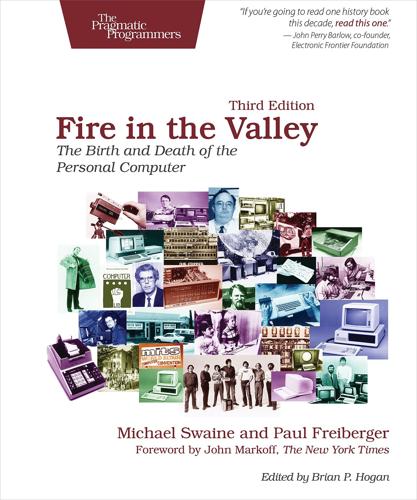
Fire in the Valley: The Birth and Death of the Personal Computer
by Michael Swaine and Paul Freiberger · 19 Oct 2014 · 459pp · 140,010 words
Green, Dick Heiser, Carl Helmers, Kent Hensheid, Andy Hertzfeld, Ted Hoff, Thom Hogan, Rod Holt, Randy Hyde, Peter Jennings, Steve Jobs, Bill Joy, Philippe Kahn, Mitch Kapor, Vinod Khosla, Guy Kawasaki, Gary Kildall, Joe Killian, Dan Kottke, Barbara Krause, Tom Lafleur, Jaron Lanier, Phil Lemons, Phil Levine, Andrea Lewis, Bill Lohse, Mel
…
’t want to be a part of it any longer. The Electronic Frontier At the height of his power and influence at Lotus Development Corporation, Mitch Kapor walked away from it all. Lotus had grown large very quickly. The first venture capital arrived in 1982, Lotus 1-2-3 shipped in January
…
1983, and that year the company made $53 million in sales. By early 1986 some 1,300 people were working for Lotus. Working for Mitch Kapor. The growth was out of control, and it was overwhelming. Rather than feeling empowered by success, Kapor felt trapped by it. It occurred to him
…
was perfectly logical. Kapor didn’t really fault it as a business decision. But what satisfaction was there in dumbing down your company? * * * Figure 94. Mitch Kapor Kapor went from teaching transcendental meditation to founding one of the most successful companies in personal computing’s boom days to defending individual rights in
…
the information age. (Courtesy of Mitch Kapor) Lotus just wasn’t fun anymore. So Kapor resigned. He walked out the door and never looked back. This act left him with a question
Masters of Deception: The Gang That Ruled Cyberspace
by Michelle Slatalla and Joshua Quittner · 15 Jan 1995

From Counterculture to Cyberculture: Stewart Brand, the Whole Earth Network, and the Rise of Digital Utopianism
by Fred Turner · 31 Aug 2006 · 339pp · 57,031 words

Steve Jobs
by Walter Isaacson · 23 Oct 2011 · 915pp · 232,883 words
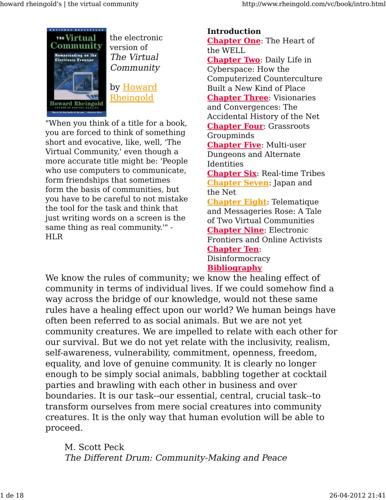
Howard Rheingold
by The Virtual Community Homesteading on the Electronic Frontier-Perseus Books (1993) · 26 Apr 2012
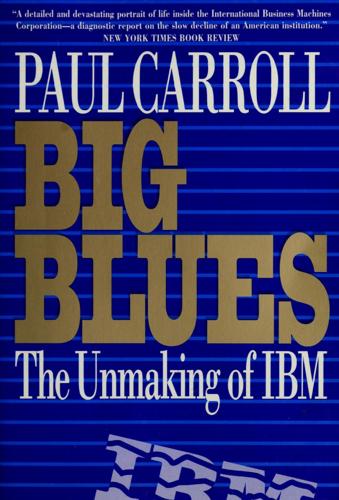
Big Blues: The Unmaking of IBM
by Paul Carroll · 19 Sep 1994
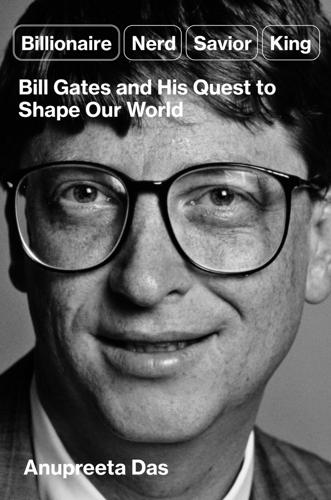
Billionaire, Nerd, Savior, King: Bill Gates and His Quest to Shape Our World
by Anupreeta Das · 12 Aug 2024 · 315pp · 115,894 words

Surveillance Valley: The Rise of the Military-Digital Complex
by Yasha Levine · 6 Feb 2018 · 474pp · 130,575 words

Super Pumped: The Battle for Uber
by Mike Isaac · 2 Sep 2019 · 444pp · 127,259 words

Empire of the Sum: The Rise and Reign of the Pocket Calculator
by Keith Houston · 22 Aug 2023 · 405pp · 105,395 words

Machines of Loving Grace: The Quest for Common Ground Between Humans and Robots
by John Markoff · 24 Aug 2015 · 413pp · 119,587 words

Whole Earth: The Many Lives of Stewart Brand
by John Markoff · 22 Mar 2022 · 573pp · 142,376 words

After the Gig: How the Sharing Economy Got Hijacked and How to Win It Back
by Juliet Schor, William Attwood-Charles and Mehmet Cansoy · 15 Mar 2020 · 296pp · 83,254 words
Apple: The First 50 Years
by David Pogue · 10 Mar 2026 · 686pp · 216,944 words
The Crisis of Crowding: Quant Copycats, Ugly Models, and the New Crash Normal
by Ludwig B. Chincarini · 29 Jul 2012 · 701pp · 199,010 words

We-Think: Mass Innovation, Not Mass Production
by Charles Leadbeater · 9 Dec 2010 · 313pp · 84,312 words
Cult of the Dead Cow: How the Original Hacking Supergroup Might Just Save the World
by Joseph Menn · 3 Jun 2019 · 302pp · 85,877 words

From Airline Reservations to Sonic the Hedgehog: A History of the Software Industry
by Martin Campbell-Kelly · 15 Jan 2003
The Future of Ideas: The Fate of the Commons in a Connected World
by Lawrence Lessig · 14 Jul 2001 · 494pp · 142,285 words

The End of Big: How the Internet Makes David the New Goliath
by Nicco Mele · 14 Apr 2013 · 270pp · 79,992 words

The Singularity Is Nearer: When We Merge with AI
by Ray Kurzweil · 25 Jun 2024
The Seventh Sense: Power, Fortune, and Survival in the Age of Networks
by Joshua Cooper Ramo · 16 May 2016 · 326pp · 103,170 words

The Singularity Is Near: When Humans Transcend Biology
by Ray Kurzweil · 14 Jul 2005 · 761pp · 231,902 words

Computer: A History of the Information Machine
by Martin Campbell-Kelly and Nathan Ensmenger · 29 Jul 2013 · 528pp · 146,459 words
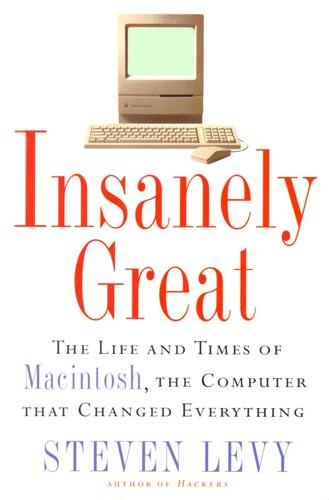
Insanely Great: The Life and Times of Macintosh, the Computer That Changed Everything
by Steven Levy · 2 Feb 1994 · 244pp · 66,599 words

No Such Thing as a Free Gift: The Gates Foundation and the Price of Philanthropy
by Linsey McGoey · 14 Apr 2015 · 324pp · 93,606 words
The Wikipedia Revolution: How a Bunch of Nobodies Created the World's Greatest Encyclopedia
by Andrew Lih · 5 Jul 2010 · 398pp · 86,023 words

Dawn of the New Everything: Encounters With Reality and Virtual Reality
by Jaron Lanier · 21 Nov 2017 · 480pp · 123,979 words

The Net Delusion: The Dark Side of Internet Freedom
by Evgeny Morozov · 16 Nov 2010 · 538pp · 141,822 words
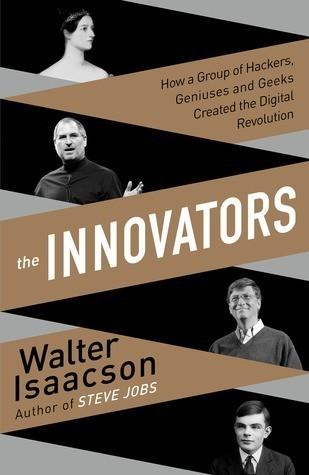
The Innovators: How a Group of Inventors, Hackers, Geniuses and Geeks Created the Digital Revolution
by Walter Isaacson · 6 Oct 2014 · 720pp · 197,129 words

This Machine Kills Secrets: Julian Assange, the Cypherpunks, and Their Fight to Empower Whistleblowers
by Andy Greenberg · 12 Sep 2012 · 461pp · 125,845 words
Free Ride
by Robert Levine · 25 Oct 2011 · 465pp · 109,653 words
The Inevitable: Understanding the 12 Technological Forces That Will Shape Our Future
by Kevin Kelly · 6 Jun 2016 · 371pp · 108,317 words
Ask Your Developer: How to Harness the Power of Software Developers and Win in the 21st Century
by Jeff Lawson · 12 Jan 2021 · 282pp · 85,658 words
Clock of the Long Now
by Stewart Brand · 1 Jan 1999 · 194pp · 49,310 words

Alpha Girls: The Women Upstarts Who Took on Silicon Valley's Male Culture and Made the Deals of a Lifetime
by Julian Guthrie · 15 Nov 2019
Rise of the Machines: A Cybernetic History
by Thomas Rid · 27 Jun 2016 · 509pp · 132,327 words
Dawn of the Code War: America's Battle Against Russia, China, and the Rising Global Cyber Threat
by John P. Carlin and Garrett M. Graff · 15 Oct 2018 · 568pp · 164,014 words
Joel on Software
by Joel Spolsky · 1 Aug 2004 · 370pp · 105,085 words
Throwing Rocks at the Google Bus: How Growth Became the Enemy of Prosperity
by Douglas Rushkoff · 1 Mar 2016 · 366pp · 94,209 words

Binge Times: Inside Hollywood's Furious Billion-Dollar Battle to Take Down Netflix
by Dade Hayes and Dawn Chmielewski · 18 Apr 2022 · 414pp · 117,581 words

Machine, Platform, Crowd: Harnessing Our Digital Future
by Andrew McAfee and Erik Brynjolfsson · 26 Jun 2017 · 472pp · 117,093 words

Content: Selected Essays on Technology, Creativity, Copyright, and the Future of the Future
by Cory Doctorow · 15 Sep 2008 · 189pp · 57,632 words

Fortunes of Change: The Rise of the Liberal Rich and the Remaking of America
by David Callahan · 9 Aug 2010

Physics of the Future: How Science Will Shape Human Destiny and Our Daily Lives by the Year 2100
by Michio Kaku · 15 Mar 2011 · 523pp · 148,929 words
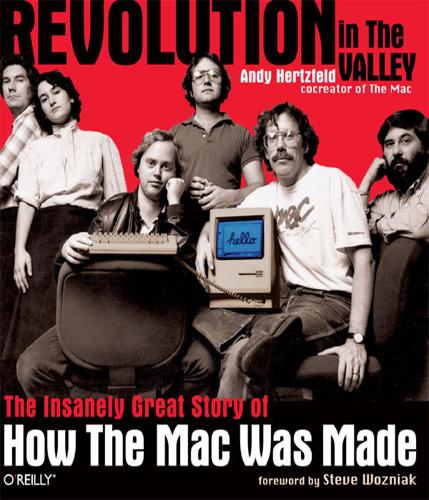
Revolution in the Valley: The Insanely Great Story of How the Mac Was Made
by Andy Hertzfeld · 19 Nov 2011
The Best of 2600: A Hacker Odyssey
by Emmanuel Goldstein · 28 Jul 2008 · 889pp · 433,897 words

Running Money
by Andy Kessler · 4 Jun 2007 · 323pp · 92,135 words

The Atlantic and Its Enemies: A History of the Cold War
by Norman Stone · 15 Feb 2010 · 851pp · 247,711 words

Architects of Intelligence
by Martin Ford · 16 Nov 2018 · 586pp · 186,548 words

Super Founders: What Data Reveals About Billion-Dollar Startups
by Ali Tamaseb · 14 Sep 2021 · 251pp · 80,831 words

Prediction Machines: The Simple Economics of Artificial Intelligence
by Ajay Agrawal, Joshua Gans and Avi Goldfarb · 16 Apr 2018 · 345pp · 75,660 words

Hustle and Gig: Struggling and Surviving in the Sharing Economy
by Alexandrea J. Ravenelle · 12 Mar 2019 · 349pp · 98,309 words

The Great Firewall of China
by James Griffiths; · 15 Jan 2018 · 453pp · 114,250 words
Hacking Capitalism
by Söderberg, Johan; Söderberg, Johan;
Rule of the Robots: How Artificial Intelligence Will Transform Everything
by Martin Ford · 13 Sep 2021 · 288pp · 86,995 words

This Is for Everyone: The Captivating Memoir From the Inventor of the World Wide Web
by Tim Berners-Lee · 8 Sep 2025 · 347pp · 100,038 words

Whistleblower: My Journey to Silicon Valley and Fight for Justice at Uber
by Susan Fowler · 18 Feb 2020 · 205pp · 71,872 words

Emergence
by Steven Johnson · 329pp · 88,954 words
Barefoot Into Cyberspace: Adventures in Search of Techno-Utopia
by Becky Hogge, Damien Morris and Christopher Scally · 26 Jul 2011 · 171pp · 54,334 words

More Everything Forever: AI Overlords, Space Empires, and Silicon Valley's Crusade to Control the Fate of Humanity
by Adam Becker · 14 Jun 2025 · 381pp · 119,533 words

Exponential: How Accelerating Technology Is Leaving Us Behind and What to Do About It
by Azeem Azhar · 6 Sep 2021 · 447pp · 111,991 words

Triumph of the Yuppies: America, the Eighties, and the Creation of an Unequal Nation
by Tom McGrath · 3 Jun 2024 · 326pp · 103,034 words

Rebel Ideas: The Power of Diverse Thinking
by Matthew Syed · 9 Sep 2019 · 280pp · 76,638 words

The Road Ahead
by Bill Gates, Nathan Myhrvold and Peter Rinearson · 15 Nov 1995 · 317pp · 101,074 words

Silicon City: San Francisco in the Long Shadow of the Valley
by Cary McClelland · 8 Oct 2018 · 225pp · 70,241 words

Little Brother
by Cory Doctorow · 29 Apr 2008 · 398pp · 120,801 words

The Purpose Economy: How Your Desire for Impact, Personal Growth and Community Is Changing the World
by Aaron Hurst · 31 Aug 2013 · 209pp · 63,649 words

How We Got Here: A Slightly Irreverent History of Technology and Markets
by Andy Kessler · 13 Jun 2005 · 218pp · 63,471 words

The Lights in the Tunnel
by Martin Ford · 28 May 2011 · 261pp · 10,785 words
The Lean Startup: How Today’s Entrepreneurs Use Continuous Innovation to Create Radically Successful Businesses
by Eric Ries · 13 Sep 2011 · 278pp · 83,468 words

The Wealth of Networks: How Social Production Transforms Markets and Freedom
by Yochai Benkler · 14 May 2006 · 678pp · 216,204 words
The Upstarts: How Uber, Airbnb, and the Killer Companies of the New Silicon Valley Are Changing the World
by Brad Stone · 30 Jan 2017 · 373pp · 112,822 words
The Fugitive Game: Online With Kevin Mitnick
by Jonathan Littman · 1 Jan 1996

Sorting Things Out: Classification and Its Consequences (Inside Technology)
by Geoffrey C. Bowker · 24 Aug 2000

Algorithms of Oppression: How Search Engines Reinforce Racism
by Safiya Umoja Noble · 8 Jan 2018 · 290pp · 73,000 words

Confessions of a Crypto Millionaire: My Unlikely Escape From Corporate America
by Dan Conway · 8 Sep 2019 · 218pp · 68,648 words

Sorting Things Out: Classification and Its Consequences
by Geoffrey C. Bowker and Susan Leigh Star · 25 Aug 2000 · 357pp · 125,142 words