
Never Let a Serious Crisis Go to Waste: How Neoliberalism Survived the Financial Meltdown
by Philip Mirowski · 24 Jun 2013 · 662pp · 180,546 words
Soros. It turns out to have been far more pervasive than that. From the White Mountains to Mont Pèlerin On March 5–7, 2009, the Mont Pèlerin Society (MPS) held a special meeting at Ground Zero of the global economic meltdown, New York City, to discuss the implications of the tremors for their
Keynes Hayek: The Clash That Defined Modern Economics
by Nicholas Wapshott · 10 Oct 2011 · 494pp · 132,975 words
as I am concerned, the man I knew is dead.” In the following ten years, such was Robbins’s disgust that he resigned from the Mont Pelerin Society in protest at Hella’s treatment and made no contact with Hayek. The two men were reconciled only after Hella’s death, when Robbins attended
…
lead us to social disintegration and the concentration camp?” The disappointing reviews, and sales, of The Constitution of Liberty coincided with a crisis in the Mont Pelerin Society, which, after years of dwindling membership and attendance, became riven by factionalism, personal animosity, and infighting whose details were so embarrassingly petty they have not
…
living without the honorific prefix “von,” in Freiburg he began calling himself “von Hayek” again. Although in 1964 Hayek was made honorary president of the Mont Pelerin Society, the turmoil in the organization added to his sense of failure. He felt isolated and, worse, ignored. As he recalled in 1978, “Most of the
…
been plotting. SIXTEEN Hayek’s Counterrevolution Friedman, Goldwater, Thatcher, and Reagan, 1963–88 Hayek’s darkest hour came just before dawn. He had warned the Mont Pelerin Society that it might take decades before the flaws in Keynes’s theories became evident. What he did not grasp was that the prospect of salvation
…
At the end of the war he returned to Chicago and began to adopt the free-market ideas of Frank Knight and George Stigler. One Mont Pelerin Society member, Stanley Dennison,3 a Cambridge economist, encouraged Friedman to apply for a Fulbright scholarship, which he received, to study at Cambridge, and that is
…
.”10 Friedman could be generous to a fault about Hayek’s many achievements. “Friedrich Hayek’s influence has been tremendous,” he gushed after the 1975 Mont Pelerin Society meeting in Hillsdale, Michigan. “His work is incorporated in the body of technical economic theory; has had a major influence on economic history, political philosophy
…
/int_miltonfriedman.html. 31 Samuelson, “A Few Remembrances of Friedrich von Hayek (1899–1992).” 32 Robbins’s full Statement of Aims, April 8, 1947, The Mont Pelerin Society, http://www.montpelerin.org/montpelerin/mpsGoals.html. 33 Collected Works, vol. 4: Fortunes of Liberalism, p. 192. 34 Interview of Milton Friedman, October 1, 2000
…
, Commanding Heights, PBS. 35 Quoted by William Buckley in his address to the Mont Pelerin Society, Hillsdale College, Hillsdale, Mich., August 26, 1975, in William F. Buckley Jr., Let Us Talk of Many Things: The Collected Speeches (Basic Books, New York
Licence to be Bad
by Jonathan Aldred · 5 Jun 2019 · 453pp · 111,010 words
was unsurprising that Hayek came to be seen as the intellectual leader of the group assembled at Mont Pèlerin (soon to be known as the Mont Pèlerin Society). Both Friedman and Director were in attendance. On 1st April, the first day of their meeting, Hayek set out the task they faced – saving Britain
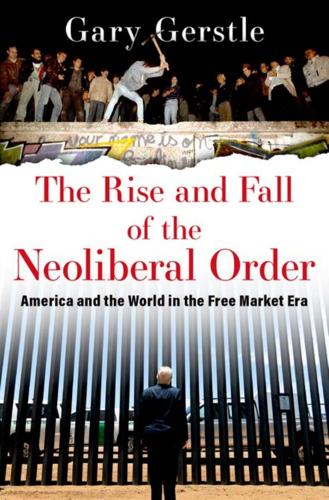
The Rise and Fall of the Neoliberal Order: America and the World in the Free Market Era
by Gary Gerstle · 14 Oct 2022 · 655pp · 156,367 words
architect of neoliberalism, grasped how marginal laissez-faire liberalism had become, which may explain the isolated Swiss mountain he chose in 1947 to found the Mont Pelerin Society where classical liberal ideas might survive the new age of Keynesianism and collectivism. There they would regenerate and be repackaged as a new set of
…
from the center-left (he had once been literary editor of the Nation) to the right, entering Hayek’s orbit as a member of the Mont Pelerin Society along the way. He found Eisenhower’s politics repellent, a betrayal of Republican Party principles. Early in Eisenhower’s presidency, Hazlitt sounded an alarm, calling
…
two convocations usually regarded as the founding moments of the movement—the Colloque Lippmann held in Paris in 1938, and the first meeting of the Mont Pelerin Society in Switzerland in 1947. Accounts of neoliberalism’s history customarily shift from Europe to America from the 1940s onward, tracking the movement as it transited
…
by Friedrich Hayek. The participants at Mont Pèlerin, under Hayek’s leadership, were aware of the difficulty and intended to overcome it by making the Mont Pelerin Society into an exceptionally disciplined and focused network of thinkers. Membership in the society was by invitation only; invitees were to be carefully vetted; new members
…
would bear fruit, especially once Hayek and von Mises arrived in the United States in the years after Mont Pèlerin to nourish them. But these Mont Pelerin Society crusaders would never succeed in imparting to American neoliberalism a singular shape or meaning.30 For that reason, it may be better to understand postwar
…
American neoliberalism three quite distinct strategies of reform, or clusters of policy initiatives, each crystallizing in the twenty years between the first meeting of the Mont Pelerin Society and the late 1960s, when the crackup of the New Deal order gave neoliberal reformers their opportunity to gain influence in American politics. The first
…
a world transformed by personal liberty and by a system of “free” economic exchange. As neoliberal thinking began to migrate from the salons of the Mont Pelerin Society and the University of Chicago into districts of American politics, this dimension of neoliberal reform loomed larger and larger. Those who embraced it imagined that
…
and destroy the liberty-loving civilization that generations of Americans had painstakingly built there. These were the arguments that Henry Hazlitt, the Newsweek columnist and Mont Pelerin Society member, was making in the 1950s.43 These were also the claims that Milton Friedman was circulating through his writings, especially his celebrated treatise Capitalism
…
think tank charged with promoting free market principles and policies. Heritage quickly developed ties to Mont Pelerin circles through Edwin Feulner, a Hayekian acolyte and Mont Pelerin Society member who would succeed Weyrich as Heritage president in 1977. Heritage established a reputation as the most politically aggressive think tank in the neoliberal firmament
…
were outraged by this regulation, which they regarded as an assault on free speech. Ed Feulner, head of the Heritage Foundation and member of the Mont Pelerin Society, declared that government had no right to tell broadcast media what they should air. The Constitution, Feulner argued, had intended that the press constitute a
…
often inserted a hyphen into this label when describing themselves) seemed to know much about the neoliberals who had gathered at Colloque Lippmann and the Mont Pelerin Society in Paris and Switzerland forty to fifty years earlier. Yet the choice of this term to define themselves seems to have been driven by the
…
, Free Enterprise: An American History (New Haven, CT: Yale University Press, 2019). Chapter 3 1.The phrase “thought collective” to describe the aspirations of the Mont Pelerin Society appears in Philip Mirowski and Dieter Plehwe, eds., The Road from Mont Pelerin: The Making of the Neoliberal Thought Collective (Cambridge, MA: Harvard University Press
…
of the welfare state for allegedly promoting all the wrong behaviors among the poor. Written from a neoliberal perspective (Murray became a member of the Mont Pelerin Society in 2000), Losing Ground purported to demonstrate that welfare programs encouraged the poor to stay on welfare rather than to look for work; to deepen
…
–14 minority unemployment, 130–31 Misery Index, 64 Mises, Ludwig von, 9, 73–74, 86–88 Modi, Narendra, 276 Momentum, 278–79 Mondale, Walter, 137 Mont Pelerin Society, 23, 73–74, 87–88, 126–27, 135–36 Montgomery Bus Boycott (1955), 50–51 Moral Majority, 12–13, 120–21, 163 Morris, Dick, 156
Globalists
by Quinn Slobodian · 16 Mar 2018 · 451pp · 142,662 words
und Soziale Marktwirtschaft: Gesellschaft und Politik im Ordoliberalismus (Baden-Baden: Nomos Verlagsgesellschaft, 1991); Bernhard Walpen, Die offenen Feinde und ihre Gesellschaft: Eine hegemonietheoretische Studie zur Mont Pelerin Society (Hamburg: VSA-Verlag, 2004); Mirowski and Plehwe, The Road from Mont Pèlerin. For more recent work, see Angus Burgin, The Great Persuasion: Reinventing Free Markets
…
zur sozialen Marktwirtschaft: Stationen des Neoliberalismus in Deutschland (Opladen: Leske und Budrich, 2004); Philip Plickert, Wandlungen des Neoliberalismus: Eine Studie zu Entwicklung und Ausstrahlung der “Mont Pelerin Society” (Stuttgart: Lucius und Lucius, 2008); Ben Jackson, “Freedom, the Common Good, and the Rule of Law: Lippmann and Hayek on Economic Planning,” Journal of the
…
Werk Wilhelm Röpkes, vol. 1 (Frankfurt am Main: Peter Lang, 1992), 86. 57. Bernhard Walpen, Die offenen Feinde und ihre Gesellschaft: Eine hegemonietheoretische Studie zur Mont Pelerin Society (Hamburg: VSA-Verlag, 2004), 278. 58. On Röpke’s critique of the welfare state, see Keith Tribe, Strategies of Economic Order: German Economic Discourse, 1750
…
. 140. Röpke used the expression in a letter to Alexander Rüstow. Quoted in Philip Plickert, Wandlungen des Neoliberalismus: Eine Studie zu Entwicklung und Ausstrahlung der “Mont Pelerin Society” (Stuttgart: Lucius und Lucius, 2008), 189. 141. On Spiritual Mobilization, see Phillips-Fein, Invisible Hands, 71–74. 142. Hunold to Röpke, March 20, 1964, RA
Free Market Missionaries: The Corporate Manipulation of Community Values
by Sharon Beder · 30 Sep 2006 · 273pp · 34,920 words
symposia.65 THINK TANKS DOWN UNDER 137 Table 9.1 Some key people and their published connections – past and present Organization Founded IPA Liberal Party Mont Pelerin Society CIS CrossRoads Centre 2000 AIPP 1943 1945 1947 1976 1977 1979 1983 John Elliott66 Elders IXL Ray Evans67 Western Mining Andrew Hay68 Fed. of Employers
Inventing the Future: Postcapitalism and a World Without Work
by Nick Srnicek and Alex Williams · 1 Oct 2015 · 357pp · 95,986 words
. A chance meeting with a Swiss businessman in 1945 gave Hayek the financial means to put his ideas into action.17 Thus was born the Mont Pelerin Society (MPS): a closed intellectual network that provided the basic ideological infrastructure for neoliberalism to ferment.18 It is no exaggeration to say that almost all
…
populations and the continued imposition of austerity all heighten the need to rethink work and prepare for the new crises of capitalism. Just as the Mont Pelerin Society foreshadowed the crisis of Keynesianism and prepared a full-spectrum set of responses, so too should the left prepare for the coming crisis of work
…
requires empirical and experimental work to identify the parts of these various fields that are operating to reinforce the present general direction of society. The Mont Pelerin Society is a good example of this. Painstakingly aware of the ways in which Keynesianism was the hegemonic common sense of its time, the MPS undertook
…
be changed over time. Foundations and journalists are particularly well placed to make efforts at changing media narratives.43 It was no accident that the Mont Pelerin Society included numerous journalists among its members. This communication also has to be achieved in a way that resonates with everyday conversation. The jargon of academics
…
can only be carried out in specialist bodies that are able to retain a certain distance from the hurly-burly of everyday politics. As the Mont Pelerin Society understood, some intellectual efforts need to be devoted less to immediate and pressing concerns, and more to the development of long-term proposals. These would
…
, 129, 133–5, 163–5, 176, 182 Mirowski, Philip, 66 modernity, 23, 63, 69–85, 86, 131, 176, 181 modernisation, 23, 60, 63, 137, 174 Mont Pelerin Society, 54, 86, 134, 164, 166 MPS, 55, 56, 58, 66, 67, 134 Move Your Money, 44 Murray, Charles, 59 Musk, Elon, 179 National Union of
The Marginal Revolutionaries: How Austrian Economists Fought the War of Ideas
by Janek Wasserman · 23 Sep 2019 · 470pp · 130,269 words
Feinde, 101–17. See also Burgin, Great Persuasion. On Röpke, see Strote, Lions and Lambs. 9. “Program of the Eight Meetings (1947–1957) of the Mont Pelerin Society,” Folder 1, Box 4, MPS. 10. Hayek, “Historians and the Future of Europe,” Box 5, MPS. On ordoliberalism, see Ptak, Ordoliberalismus; Kolev, “Leitideen.” On these
…
, Wesley C. Foreword to Wieser, Social Economics, ix–xii. Mohr, Charles. “Three of the Men Who Serve as Goldwater’s Advisers.” NYT, March 31, 1964. Mont Pèlerin Society. “Statement of Aims.” Accessed January 19, 2019. https://www.montpelerin.org/statement-of-aims. Morgenstern, Oskar. The Limits of Economics. London: Hodge, 1937. ———. On the
Crack-Up Capitalism: Market Radicals and the Dream of a World Without Democracy
by Quinn Slobodian · 4 Apr 2023 · 360pp · 107,124 words
democracy.40 Friedman filmed the scenes for Free to Choose while he was in Hong Kong for another occasion: the biennial general meeting of the Mont Pelerin Society. Founded by the Austrian-British economist Friedrich Hayek in 1947 to defend against the threat of creeping socialism and the welfare state, the MPS was
…
color and partially tolerate capitalism? Deng was proposing a subdivision of the nation-state, which did not scan to contemporary minds.85 Few of the Mont Pelerin Society intellectuals hobnobbing at the Mandarin and the Excelsior realized they were arriving at a world-historical moment of flux as China realigned the energies of
…
the zone.31 HOW TO BUILD A TAX HAVEN read another, and meant it like a good thing.32 Thatcher’s advisor Alan Walters (another Mont Pelerin Society member) said they’d like to turn Britain into “one big Enterprise Zone.”33 But if tax dollars were being drawn from one part of
…
to foreign investors.16 At the head of the commission was Leon Louw, a South African who had attended the Hong Kong meeting of the Mont Pelerin Society on Friedrich Hayek’s invitation.17 Louw was born in 1948 into a conservative Afrikaner family in the mining town of Krugersdorp—a town whose
…
alliance was Murray Rothbard. Born in the Bronx in 1926, he came up through the world of neoliberal think tanks, becoming a member of the Mont Pelerin Society in the 1950s.4 Throughout his career, he developed a particularly radical version of libertarianism known as anarcho-capitalism. He had no tolerance for government
…
at Stanford University, the Heritage Foundation in Washington, DC and the Institute of Economic Affairs in London.”6 He also became a member of the Mont Pelerin Society in 1977, co-translated the abridged Reader’s Digest version of Hayek’s Road to Serfdom into Dutch, and did a Dutch translation of Milton
…
idea that would become his trademark: the tax-free T-zone, which would also be defined by deregulation.8 He introduced the notion at a Mont Pelerin Society meeting in Paris that was opened by then-mayor Jacques Chirac, who praised Hayek for diagnosing the ills performed under the banner of “social justice
…
,” Reason, April 1, 1985, https://reason.com/1985/04/01/ciskeis-independent-way/. 17. George Stigler to Max Thurn, April 7, 1978. Hoover Institution Archives, Mont Pelerin Society Papers, Box 20, Folder 5. 18. Claire Badenhorst, “Meet Leon Louw of the FMF; Marxist Turned Free Marketeer: The Alec Hogg Show,” Biz News, September
…
of Afrikaner Nationalism, 1934–1948 (Cambridge: Cambridge University Press, 1983). On the broader debate over economic policy between economic liberals and conservatives in which other Mont Pelerin Society neoliberals were involved see Antina von Schnitzler, “Disciplining Freedom: Apartheid, Counterinsurgency, and the Political Histories of Neoliberalism,” in Market Civilizations: Neoliberals East and South, ed
…
population did not need to be educated into the market—they simply needed to have their inherent market natures liberated. As leading neoliberal voice and Mont Pelerin Society member Michael O’Dowd put it in a Free Market Foundation publication in 1992, “The rights-protecting Germanic tribes that survived into the Middle Ages
…
. 44. Ray Kennedy, “Lawyers Seek Retrial for ‘Death-Squad Hitman,’” Times (London), November 20, 1989, The Times Digital Archive, Gale. 45. John Blundell was a Mont Pelerin Society member, head of the Institute for Humane Studies, and later head of the Atlas Economic Research Foundation and the Charles Koch Foundation. John Blundell, “Africa
…
2, no. 1 (January 1991): 8. 51. As noted in the article, it was first presented as a talk at the regional meeting of the Mont Pelerin Society in Rio de Janeiro in September 1993. Murray N. Rothbard, “Nations by Consent: Decomposing the Nation-State,” Journal of Libertarian Studies 11, no. 1 (Fall
…
quoted in Rudie Kagie, “Bemiddelaar in staatsgrepen,” Argus 1, no. 7 (May 30, 2017): 14. 7. New member list, 1977, Stanford University, Hoover Institution Archives, Mont Pelerin Society Papers, Box 19, folder 4. The same year, he hosted a special meeting of the MPS in Amsterdam attended by former German chancellor and fellow
…
, “Europe: Free-Market Ideas Sprout in Brussels,” Wall Street Journal, February 29, 1984, ProQuest Historical Newspapers. 9. Alain Siaens, “Les zones franches,” Hoover Institution Archives, Mont Pelerin Society Papers, Box 25, Folder 7. 10. Michael van Notten, De tewerkstellingszone als politiek breekijzer (Sint Genesius Rode: Institutum Europaeum, 1982). 11. “Wie gelooft in het
…
Honduran Zones for Employment and Economic Development,” 290–96. The CAMP was a who’s who of global neoliberals. One-third were members of the Mont Pelerin Society. See Nina Ebner and Jamie Peck, “Fantasy Island: Paul Romer and the Multiplication of Hong Kong,” International Journal of Urban and Regional Research 46, no
…
, Daniel Modi, Narendra Mogadishu, Somalia Mohammed bin Salman Moldbug, Mencius. See also Yarvin, Curtis Monaco monarchy monetary systems money, denationalization of Moneyland money laundering Montenegro Mont Pelerin Society (MPS) Moore, Gordon Moore, Stephen Moore’s law “most-favored-nation” principle multinational corporations multiplayer online role-playing games Mumbai, India Mumford, Lewis municipalism, revival
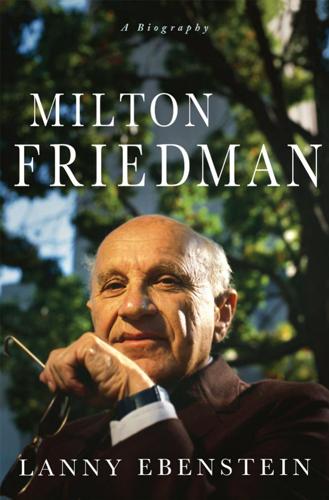
Milton Friedman: A Biography
by Lanny Ebenstein · 23 Jan 2007 · 298pp · 95,668 words
evidence that the name “Chicago school of economics” was not used before the postwar era. Writing in his memoirs about the first meeting of the Mont Pelerin Society, a group of libertarian-oriented academics and others, in 1947, he quoted journalist John Davenport as saying that these participants included a “sprinkling of what
…
’s later career as an economic writer for the general public. Friedman, Stigler, and others attended the first meeting in 1947 of what became the Mont Pelerin Society—an international association of classical liberal and libertarian academics and a few journalists and political figures—in Switzerland. This was Friedman’s first trip outside
…
they refer to it, in Paris, sailing from New York on the SS Queen Elizabeth. They then proceeded to Belgium for a meeting of the Mont Pelerin Society. Thereafter they went to Poland and the Soviet Union. The trip to the Soviet Union began inauspiciously. Milton and Rose decided to travel by bus
…
. In addition to the AEA, Friedman was involved in many other organizations, professional and otherwise. Between 1970 and 1972, he served as president of the Mont Pelerin Society, a term that coincided with the society’s twenty-fifth anniversary. He took advantage of this occasion to write on the society’s future: Our
…
and more effective. Needless to say,... not many members agreed with this idea. The old rule, “once organized, never disbanded” is as true in the Mont Pelerin Society as it is in other societies and especially in government bureaucracies.34 Other organizations in which Friedman has been involved include the Intercollegiate Society of
…
Friedman and Hayek were two of three advisers to the chapter’s publication, the New Individualist Review. Friedman was enthusiastic about the influence of the Mont Pelerin Society, the ISI, and the New Individualist Review. In a 1981 introduction to a republication of the journal, he writes that “two organizations... served to channel
…
liberal and libertarian thought stirring in the early 1960s, before the Vietnam War tracked popular discussion, especially among the young, in a leftward direction—the Mont Pelerin Society and ISI. In a January 1964 article, published shortly before the leftward political dam broke around the globe, Friedman said that a classical liberal or
…
was a director of ISI. The Philadelphia Society is, in the words of historian of conservatism George Nash, a “kind of American equivalent of the Mont Pelerin Society.”37 The members (now several hundred strong) meet in conferences to give and discuss papers, to network, and to socialize in an atmosphere of those
…
of Chicago for several weeks from the London School of Economics. They became even better acquainted the following year at the first meeting of the Mont Pelerin Society. Friedman’s first extant letter to Hayek is dated January 2, 1947, accepting an invitation to the Mont Pelerin gathering: It is hard for us
…
Hayek was at Chicago, Friedman participated regularly in his seminar. They became particularly close in the late 1950s, when Friedman became more active in the Mont Pelerin Society (he did not attend a conference, after the first one, until 1957), and when he and Hayek served as advisers to the Intercollegiate Society of
…
most recognized publicly, thought. Friedman praised Hayek highly. He wrote in a 1976 foreword to a collection of essays on Hayek by members of the Mont Pelerin Society: “From the time I first read some of his works, and even more from the time... I first met Friedrich Hayek, his powerful mind, his
…
–738. 30. Ibid., 736. 31. Friedman-Ebenstein correspondence (May 5, 2005). 32. Lester Telser–Ebenstein interview (2004). 33. R. M. Hartwell, A History of the Mont Pelerin Society (Indianapolis: Liberty Fund, 1995), 161–162. 34. In Frazer, vol 1, 179–180. 35. Milton Friedman, introduction to New Individualist Review (Indianapolis: Liberty Press, 1981
…
, 238–39 entrepreneurial ventures, 14 Fulbright recipient, 80 Hoover Institution, 197–98 influence, 1–2, 46, 73, 88, 159, 210–214, 238 monetarist, 115–17 Mont Pelerin Society president, 164 National Bureau of Economic Research, 37 National Resources Committee, 33–37, 101, 135, 167 New Individualist Review advisor, 165, 216 Newsweek column, 169
…
on Mises, 221 on MIT, 157 on A Monetary History of the United States, 127–28 on monetary policy, 108, 115–16, 232–33 on Mont Pelerin Society, 164 on his mother, 11 on New Deal Washington, 33–34 on Nixon, 185, 188 on Nobel prize, 191 on Phillips Curve, 160 on planned
…
supply and, 115–28 monetary velocity, 23–24, 110, 161 money supply, 160–61, 168, 171, 211, 213, 218 decline in, 18, 113, 119–22 Mont Pelerin Society, 132, 136, 148, 164–66, 215–16, 219 Morgenthau, Henry, 42–43 Moynihan, Daniel Patrick, 171 Mundell, Robert, 90 NAIRU (nonaccelerating inflation rate of unemployment
Samuelson Friedman: The Battle Over the Free Market
by Nicholas Wapshott · 2 Aug 2021 · 453pp · 122,586 words

Stolen: How to Save the World From Financialisation
by Grace Blakeley · 9 Sep 2019 · 263pp · 80,594 words

No Such Thing as a Free Gift: The Gates Foundation and the Price of Philanthropy
by Linsey McGoey · 14 Apr 2015 · 324pp · 93,606 words
Ayn Rand Cult
by Jeff Walker · 30 Dec 1998 · 525pp · 146,126 words
The Establishment: And How They Get Away With It
by Owen Jones · 3 Sep 2014 · 388pp · 125,472 words
The Economists' Hour: How the False Prophets of Free Markets Fractured Our Society
by Binyamin Appelbaum · 4 Sep 2019 · 614pp · 174,226 words
The Quiet Coup: Neoliberalism and the Looting of America
by Mehrsa Baradaran · 7 May 2024 · 470pp · 158,007 words
Utopia for Realists: The Case for a Universal Basic Income, Open Borders, and a 15-Hour Workweek
by Rutger Bregman · 13 Sep 2014 · 235pp · 62,862 words
Goddess of the Market: Ayn Rand and the American Right
by Jennifer Burns · 18 Oct 2009 · 495pp · 144,101 words
A Brief History of Neoliberalism
by David Harvey · 2 Jan 1995 · 318pp · 85,824 words
The Finance Curse: How Global Finance Is Making Us All Poorer
by Nicholas Shaxson · 10 Oct 2018 · 482pp · 149,351 words
The Corruption of Capitalism: Why Rentiers Thrive and Work Does Not Pay
by Guy Standing · 13 Jul 2016 · 443pp · 98,113 words

Doughnut Economics: Seven Ways to Think Like a 21st-Century Economist
by Kate Raworth · 22 Mar 2017 · 403pp · 111,119 words
Cogs and Monsters: What Economics Is, and What It Should Be
by Diane Coyle · 11 Oct 2021 · 305pp · 75,697 words
Money and Government: The Past and Future of Economics
by Robert Skidelsky · 13 Nov 2018

A Generation of Sociopaths: How the Baby Boomers Betrayed America
by Bruce Cannon Gibney · 7 Mar 2017 · 526pp · 160,601 words
Socialism Sucks: Two Economists Drink Their Way Through the Unfree World
by Robert Lawson and Benjamin Powell · 29 Jul 2019 · 164pp · 44,947 words
The Trouble With Billionaires
by Linda McQuaig · 1 May 2013 · 261pp · 81,802 words
Owning the Sun
by Alexander Zaitchik · 7 Jan 2022 · 341pp · 98,954 words
Capitalism and Its Critics: A History: From the Industrial Revolution to AI
by John Cassidy · 12 May 2025 · 774pp · 238,244 words

To Serve God and Wal-Mart: The Making of Christian Free Enterprise
by Bethany Moreton · 15 May 2009 · 391pp · 22,799 words
Strange Rebels: 1979 and the Birth of the 21st Century
by Christian Caryl · 30 Oct 2012 · 780pp · 168,782 words
The Fourth Revolution: The Global Race to Reinvent the State
by John Micklethwait and Adrian Wooldridge · 14 May 2014 · 372pp · 92,477 words
Nervous States: Democracy and the Decline of Reason
by William Davies · 26 Feb 2019 · 349pp · 98,868 words
What Would the Great Economists Do?: How Twelve Brilliant Minds Would Solve Today's Biggest Problems
by Linda Yueh · 4 Jun 2018 · 453pp · 117,893 words
How Did We Get Into This Mess?: Politics, Equality, Nature
by George Monbiot · 14 Apr 2016 · 334pp · 82,041 words
The Wrecking Crew: How Conservatives Rule
by Thomas Frank · 5 Aug 2008 · 482pp · 122,497 words
Age of Greed: The Triumph of Finance and the Decline of America, 1970 to the Present
by Jeff Madrick · 11 Jun 2012 · 840pp · 202,245 words

The Politics of Bitcoin: Software as Right-Wing Extremism
by David Golumbia · 25 Sep 2016 · 87pp · 25,823 words
The Cost of Inequality: Why Economic Equality Is Essential for Recovery
by Stewart Lansley · 19 Jan 2012 · 223pp · 10,010 words

The Fair Trade Scandal: Marketing Poverty to Benefit the Rich
by Ndongo Sylla · 21 Jan 2014 · 193pp · 63,618 words
Adam Smith: Father of Economics
by Jesse Norman · 30 Jun 2018
After Nations: The Making and Unmaking of a World Order
by Rana Dasgupta · 27 Apr 2026 · 686pp · 188,424 words
The Euro and the Battle of Ideas
by Markus K. Brunnermeier, Harold James and Jean-Pierre Landau · 3 Aug 2016 · 586pp · 160,321 words
How Markets Fail: The Logic of Economic Calamities
by John Cassidy · 10 Nov 2009 · 545pp · 137,789 words
Worldmaking After Empire: The Rise and Fall of Self-Determination
by Adom Getachew · 5 Feb 2019

Palo Alto: A History of California, Capitalism, and the World
by Malcolm Harris · 14 Feb 2023 · 864pp · 272,918 words

Unelected Power: The Quest for Legitimacy in Central Banking and the Regulatory State
by Paul Tucker · 21 Apr 2018 · 920pp · 233,102 words
Wealth and Poverty: A New Edition for the Twenty-First Century
by George Gilder · 30 Apr 1981 · 590pp · 153,208 words
Battling Eight Giants: Basic Income Now
by Guy Standing · 19 Mar 2020
Reimagining Capitalism in a World on Fire
by Rebecca Henderson · 27 Apr 2020 · 330pp · 99,044 words
The Triumph of Injustice: How the Rich Dodge Taxes and How to Make Them Pay
by Emmanuel Saez and Gabriel Zucman · 14 Oct 2019 · 232pp · 70,361 words
Human Frontiers: The Future of Big Ideas in an Age of Small Thinking
by Michael Bhaskar · 2 Nov 2021
Extreme Money: Masters of the Universe and the Cult of Risk
by Satyajit Das · 14 Oct 2011 · 741pp · 179,454 words
Selfie: How We Became So Self-Obsessed and What It's Doing to Us
by Will Storr · 14 Jun 2017 · 431pp · 129,071 words

Transaction Man: The Rise of the Deal and the Decline of the American Dream
by Nicholas Lemann · 9 Sep 2019 · 354pp · 118,970 words
The Glass Half-Empty: Debunking the Myth of Progress in the Twenty-First Century
by Rodrigo Aguilera · 10 Mar 2020 · 356pp · 106,161 words
The Evolution of Everything: How New Ideas Emerge
by Matt Ridley · 395pp · 116,675 words
The Innovation Illusion: How So Little Is Created by So Many Working So Hard
by Fredrik Erixon and Bjorn Weigel · 3 Oct 2016 · 504pp · 126,835 words
Liberalism at Large: The World According to the Economist
by Alex Zevin · 12 Nov 2019 · 767pp · 208,933 words

Piracy : The Intellectual Property Wars from Gutenberg to Gates
by Adrian Johns · 5 Jan 2010 · 636pp · 202,284 words
The Great Economists: How Their Ideas Can Help Us Today
by Linda Yueh · 15 Mar 2018 · 374pp · 113,126 words
The Divide: A Brief Guide to Global Inequality and Its Solutions
by Jason Hickel · 3 May 2017 · 332pp · 106,197 words
Rethinking Capitalism: Economics and Policy for Sustainable and Inclusive Growth
by Michael Jacobs and Mariana Mazzucato · 31 Jul 2016 · 370pp · 102,823 words

Ayn Rand and the World She Made
by Anne C. Heller · 27 Oct 2009 · 756pp · 228,797 words
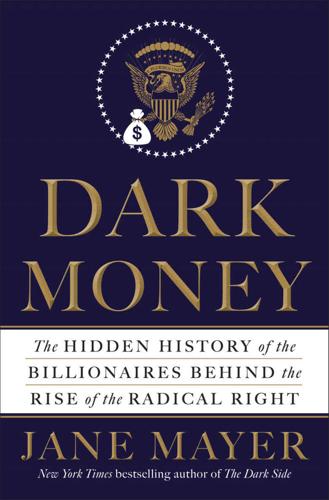
Dark Money: The Hidden History of the Billionaires Behind the Rise of the Radical Right
by Jane Mayer · 19 Jan 2016 · 558pp · 168,179 words

Inequality and the 1%
by Danny Dorling · 6 Oct 2014 · 317pp · 71,776 words

Brexit, No Exit: Why in the End Britain Won't Leave Europe
by Denis MacShane · 14 Jul 2017 · 308pp · 99,298 words
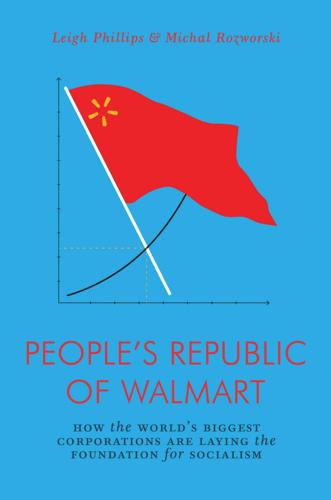
The People's Republic of Walmart: How the World's Biggest Corporations Are Laying the Foundation for Socialism
by Leigh Phillips and Michal Rozworski · 5 Mar 2019 · 202pp · 62,901 words