Mother of all demos
description: computer demonstration by Douglas Engelbart
46 results
Apple: The First 50 Years
by David Pogue · 10 Mar 2026 · 686pp · 216,944 words
a split screen, word processing, hyperlinks, networking, and remote collaboration. The shell-shocked audience gave him a standing ovation for what became known as “the mother of all demos.” Doug Engelbart demonstrating his vision for future computers. The seeds of some of Xerox PARC’s early ideas, in other words, had been sown ten
…
into 800,000 shares, worth $17.6 million. In today’s dollars, that’s about $73 million. “He stole PARC’s ideas.” Doug Engelbart’s “mother of all demos” audience in 1968 included a contingent of executives from, of all places, Xerox, who brought some of what they saw that night to Xerox PARC
Insanely Great: The Life and Times of Macintosh, the Computer That Changed Everything
by Steven Levy · 2 Feb 1994 · 244pp · 66,599 words
a no-hands mike, talked them through, a calming voice from Mission Control as the truly final frontier whizzed before their eyes. It was the mother of all demos. Engelhart's support staff was as elaborate as one would find at a modern Grateful Dead concert. The viewers saw a projection of Doug Engelbart
Valley of Genius: The Uncensored History of Silicon Valley (As Told by the Hackers, Founders, and Freaks Who Made It Boom)
by Adam Fisher · 9 Jul 2018 · 611pp · 188,732 words
myth. The oldest of them have acquired the sheen of legend. Doug Engelbart’s 1968 demonstration of his new computer system is known as the Mother of All Demos. Steve Jobs and Steve Wozniak have become archetypes: the Genius Entrepreneur and the Genius Engineer. Collectively, these tales serve as the Valley’s distinctive folklore
…
, Engelbart sat onstage with a giant video screen projected behind him, and a mouse at his fingertips. Then, in what has become known as “the Mother of All Demos,” Engelbart showed off what his computer could do. Stewart Brand: I participated in the demo part of the show itself. Bill Paxton: Stew was behind
…
you can start a company. The fledgling company made its first big splash in 1977 at the inaugural West Coast Computer Faire which—like the Mother of All Demos a decade before—was held at Brooks Hall in San Francisco’s Civic Center. The confab was a coming-out party for the talented hackers
…
. But what impressed Jobs most about the Alto was the mouse. He was twenty-four at the time—too young to have attended Engelbart’s Mother of All Demos—but he fixated on the mouse, which was Engelbart’s most fundamental breakthrough. With the mouse one could point and click, cut and paste, doodle
The Friendly Orange Glow: The Untold Story of the PLATO System and the Dawn of Cyberculture
by Brian Dear · 14 Jun 2017 · 708pp · 223,211 words
Alto, California, given by Douglas Engelbart of the Stanford Research Institute on his “NLS” or “oN-Line System.” Known in the history books as “The Mother of All Demos,” the event marked a turning point in thinking about computers, what they could be used for, and how they were best designed. Engelbart walked his
Fire in the Valley: The Birth and Death of the Personal Computer
by Michael Swaine and Paul Freiberger · 19 Oct 2014 · 459pp · 140,010 words
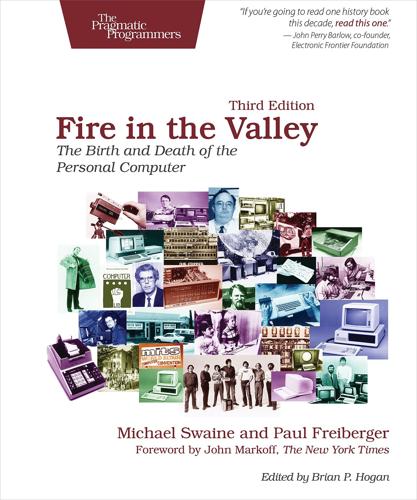
about to undergo a fundamental change. And it would be Apple that would introduce this new vision of the personal computer to the world. The Mother of All Demos It was, by all accounts, one of the most impressive technology demonstrations since the atomic-bomb test at Alamogordo, New Mexico. In December 1968, the
…
was a screen, on which much of the demonstration would play out. * * * Figure 70. The mother of all demos The input devices used by Douglas Engelbart at the 1968 Fall Joint Computer Conference when he put on “the mother of all demos” (Courtesy of Doug Engelbart) The demo was like opening a window into the future. It showed
…
in a lifetime, and he was still a young man. When he finished, the audience gave him a standing ovation. It was later called “the mother of all demos,” and the National Museum of American History (at the Smithsonian) has preserved elements of it. That’s appropriate. It was historic. Computer scientist Alan Kay
Intertwingled: The Work and Influence of Ted Nelson (History of Computing)
by Douglas R. Dechow · 2 Jul 2015 · 223pp · 52,808 words
Ted was and is advocating. I am especially grateful to Ted for introducing me to Douglas Engelbart, another amazing visionary, the man who gave “the mother of all demos.” Engelbart showed creative ways of organizing work and ideas, and of collaborating online. An attorney customer of ours created a program to organize legal arguments
…
still trying to grapple with the concept of a person sitting in front of a screen and exploring information in real-time after Doug’s mother of all demos in 1968. That demo took years—over 20 years—to filter through properly. There was, however, an attempt to build part of Nelson’s vision
The One Device: The Secret History of the iPhone
by Brian Merchant · 19 Jun 2017 · 416pp · 129,308 words
, word processors, hypertext, videoconferencing, and windows, he showed them off by using them in real time. The tech journalist Steven Levy would call it “the mother of all demos,” and the name stuck. A video feed shared the programs and technologies being demoed onscreen. It was a far cry from the more polished product
…
computing that, through the smartphone, has indeed begun the supplanting of the PC as the primary way we most often trade information. Though Engelbart’s mother of all demos became legendary among the computer crowd, it was an outsider, it seems, who would turn Steve on to the format he later became famous for
Dawn of the New Everything: Encounters With Reality and Virtual Reality
by Jaron Lanier · 21 Nov 2017 · 480pp · 123,979 words
designs that have become building blocks of our lives. Sometimes Ivan’s demo is called the “best demo ever,” while Doug’s is called “the mother of all demos,” even though Ivan’s was earlier. 6. Hope it’s okay to include a snarky definition. Snark is one of those qualities that looks better
The Secret War Between Downloading and Uploading: Tales of the Computer as Culture Machine
by Peter Lunenfeld · 31 Mar 2011 · 239pp · 56,531 words
few of them ever had the kind of immediate, public impact that Engelbart did in 1968. For that was the year that he gave the “mother of all demos,” a public display of his innovations and vision to an audience of his peers along with a younger generation that he would inspire. At SRI
…
, but in making a better, more creative life. 159 GENERATIONS When people talk about Engelbart’s presentation of the NLS (“oN-Line System”) as the “mother of all demos” what they mean is that something about the reality of the thing—the realtime manipulation, the new input device, and the sheer totality of it
Move Fast and Break Things: How Facebook, Google, and Amazon Cornered Culture and Undermined Democracy
by Jonathan Taplin · 17 Apr 2017 · 222pp · 70,132 words
file linking, revision control, and a collaborative real-time editor.” But for the moment no one was sure that what would later be called the Mother of All Demos would work. Doug had told someone at NASA earlier in the week that he was going to show the system publicly—“Maybe it’s a
Steve Jobs
by Walter Isaacson · 23 Oct 2011 · 915pp · 232,883 words
Troublemakers: Silicon Valley's Coming of Age
by Leslie Berlin · 7 Nov 2017 · 615pp · 168,775 words
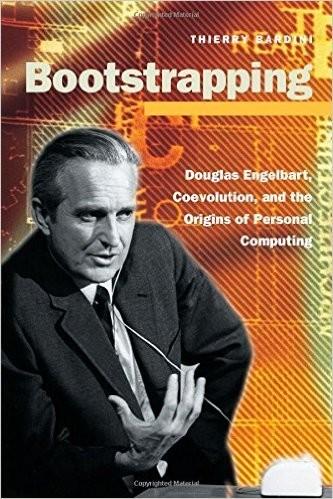
Bootstrapping: Douglas Engelbart, Coevolution, and the Origins of Personal Computing (Writing Science)
by Thierry Bardini · 1 Dec 2000
Track Changes
by Matthew G. Kirschenbaum · 1 May 2016 · 519pp · 142,646 words
Machines of Loving Grace: The Quest for Common Ground Between Humans and Robots
by John Markoff · 24 Aug 2015 · 413pp · 119,587 words
From Counterculture to Cyberculture: Stewart Brand, the Whole Earth Network, and the Rise of Digital Utopianism
by Fred Turner · 31 Aug 2006 · 339pp · 57,031 words
Palo Alto: A History of California, Capitalism, and the World
by Malcolm Harris · 14 Feb 2023 · 864pp · 272,918 words
The Code: Silicon Valley and the Remaking of America
by Margaret O'Mara · 8 Jul 2019
User Friendly: How the Hidden Rules of Design Are Changing the Way We Live, Work & Play
by Cliff Kuang and Robert Fabricant · 7 Nov 2019
Selfie: How We Became So Self-Obsessed and What It's Doing to Us
by Will Storr · 14 Jun 2017 · 431pp · 129,071 words
Hit Refresh: The Quest to Rediscover Microsoft's Soul and Imagine a Better Future for Everyone
by Satya Nadella, Greg Shaw and Jill Tracie Nichols · 25 Sep 2017 · 391pp · 71,600 words
Broad Band: The Untold Story of the Women Who Made the Internet
by Claire L. Evans · 6 Mar 2018 · 371pp · 93,570 words
The System: Who Owns the Internet, and How It Owns Us
by James Ball · 19 Aug 2020 · 268pp · 76,702 words
Drugs 2.0: The Web Revolution That's Changing How the World Gets High
by Mike Power · 1 May 2013 · 378pp · 94,468 words
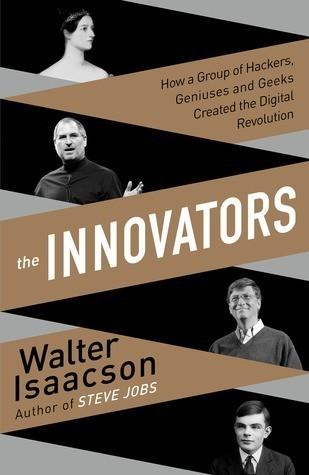
The Innovators: How a Group of Inventors, Hackers, Geniuses and Geeks Created the Digital Revolution
by Walter Isaacson · 6 Oct 2014 · 720pp · 197,129 words
The End of Big: How the Internet Makes David the New Goliath
by Nicco Mele · 14 Apr 2013 · 270pp · 79,992 words
What the Dormouse Said: How the Sixties Counterculture Shaped the Personal Computer Industry
by John Markoff · 1 Jan 2005 · 394pp · 108,215 words
Barefoot Into Cyberspace: Adventures in Search of Techno-Utopia
by Becky Hogge, Damien Morris and Christopher Scally · 26 Jul 2011 · 171pp · 54,334 words
Artificial Unintelligence: How Computers Misunderstand the World
by Meredith Broussard · 19 Apr 2018 · 245pp · 83,272 words
A People’s History of Computing in the United States
by Joy Lisi Rankin
This Is for Everyone: The Captivating Memoir From the Inventor of the World Wide Web
by Tim Berners-Lee · 8 Sep 2025 · 347pp · 100,038 words
Cataloging the World: Paul Otlet and the Birth of the Information Age
by Alex Wright · 6 Jun 2014

Whole Earth: The Many Lives of Stewart Brand
by John Markoff · 22 Mar 2022 · 573pp · 142,376 words
Power and Progress: Our Thousand-Year Struggle Over Technology and Prosperity
by Daron Acemoglu and Simon Johnson · 15 May 2023 · 619pp · 177,548 words
Boom: Bubbles and the End of Stagnation
by Byrne Hobart and Tobias Huber · 29 Oct 2024 · 292pp · 106,826 words
Capitalism Without Capital: The Rise of the Intangible Economy
by Jonathan Haskel and Stian Westlake · 7 Nov 2017 · 346pp · 89,180 words
Rise of the Machines: A Cybernetic History
by Thomas Rid · 27 Jun 2016 · 509pp · 132,327 words

Loonshots: How to Nurture the Crazy Ideas That Win Wars, Cure Diseases, and Transform Industries
by Safi Bahcall · 19 Mar 2019 · 393pp · 115,217 words
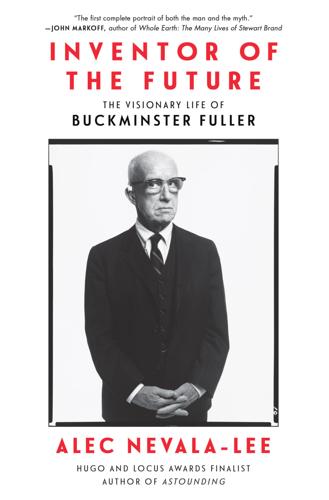
Inventor of the Future: The Visionary Life of Buckminster Fuller
by Alec Nevala-Lee · 1 Aug 2022 · 864pp · 222,565 words
NeuroTribes: The Legacy of Autism and the Future of Neurodiversity
by Steve Silberman · 24 Aug 2015 · 786pp · 195,810 words
Road to Nowhere: What Silicon Valley Gets Wrong About the Future of Transportation
by Paris Marx · 4 Jul 2022 · 295pp · 81,861 words
Intertwingled: Information Changes Everything
by Peter Morville · 14 May 2014 · 165pp · 50,798 words
How to Change Your Mind: What the New Science of Psychedelics Teaches Us About Consciousness, Dying, Addiction, Depression, and Transcendence
by Michael Pollan · 30 Apr 2018 · 547pp · 148,732 words

Zucked: Waking Up to the Facebook Catastrophe
by Roger McNamee · 1 Jan 2019 · 382pp · 105,819 words
What Algorithms Want: Imagination in the Age of Computing
by Ed Finn · 10 Mar 2017 · 285pp · 86,853 words
Artificial Intelligence: A Modern Approach
by Stuart Russell and Peter Norvig · 14 Jul 2019 · 2,466pp · 668,761 words