Oliver Burkeman

back to index

description: British journalist, essaist and non-fiction writer

31 results

pages: 123 words: 43,370

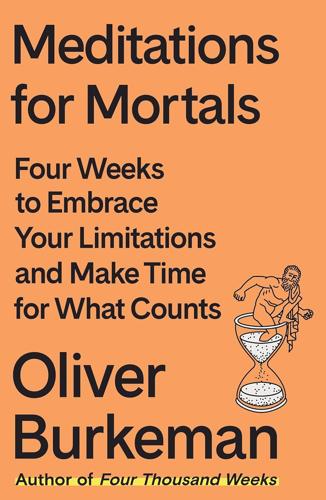
Meditations for Mortals: Four Weeks to Embrace Your Limitations and Make Time for What Counts
by Oliver Burkeman
Published 8 Oct 2024

: On the importance of staying distractible Scruffy hospitality: On finding connection in the flaws Meaninglessness Look for the life task: On what reality wants Inconceivable: On the solace of doubt What matters: On finding your way Mean-spiritedness Don’t stand in generosity’s way: On the futility of ‘becoming a better person’ Need for control It’s worse than you think: On the liberation of defeat Three hours: On finding focus in the chaos A good time or a good story: On the upsides of unpredictability Nonproductivity Against productivity debt: On the power of a ‘done list’ Decision-hunting: On choosing a path through the woods Rules that serve life: On doing things dailyish Three hours: On finding focus in the chaos Overwhelm at the difficulty of challenges see Dauntedness Overwhelm at the quantity of tasks see Busyness Perfectionism It’s worse than you think: On the liberation of defeat Kayaks and superyachts: On actually doing things Rules that serve life: On doing things dailyish The reverse golden rule: On not being your own worst enemy Set a quantity goal: On firing your inner quality controller Pessimism It’s worse than you think: On the liberation of defeat You can’t care about everything: On staying sane when the world’s a mess C’est fait par du monde: On giving it a shot Powerlessness see Disempowerment Problems in general You need only face the consequences: On paying the price Just go to the shed: On befriending what you fear Develop a taste for problems: On never reaching the trouble-free phase Procrastination Kayaks and superyachts: On actually doing things Decision-hunting: On choosing a path through the woods Just go to the shed: On befriending what you fear Putting things off Kayaks and superyachts: On actually doing things Stop being so kind to Future You: On entering time and space completely How to start from sanity: On paying yourself first Regret Decision-hunting: On choosing a path through the woods A good time or a good story: On the upsides of unpredictability You can’t hoard life: On letting the moments pass Relationship troubles It’s worse than you think: On the liberation of defeat You need only face the consequences: On paying the price Allow other people their problems: On minding your own business Rush see Hurry Sadness in general You can’t care about everything: On staying sane when the world’s a mess The reverse golden rule: On not being your own worst enemy Sadness at the transience of life You can’t hoard life: On letting the moments pass What matters: On finding your way Self-criticism Against productivity debt: On the power of a ‘done list’ The reverse golden rule: On not being your own worst enemy Stop being so kind to Future You: On entering time and space completely Timidity C’est fait par du monde: On giving it a shot Unfinished business Finish things: On the magic of completion Just go to the shed: On befriending what you fear Worry about the future see Fear of the future Worry about other people’s opinions You need only face the consequences: On paying the price Allow other people their problems: On minding your own business Scruffy hospitality: On finding connection in the flaws Writers’ block It’s worse than you think: On the liberation of defeat Three hours: On finding focus in the chaos Set a quantity goal: On firing your inner quality controller ALSO BY OLIVER BURKEMAN Four Thousand Weeks: Time Management for Mortals The Antidote: Happiness for People Who Can’t Stand Positive Thinking Help! How to Become Slightly Happier and Get a Bit More Done A Note About the Author Oliver Burkeman worked for many years at The Guardian, where he wrote a popular weekly column on psychology, “This Column Will Change Your Life.” His books include the New York Times bestseller Four Thousand Weeks: Time Management for Mortals and The Antidote: Happiness for People Who Can’t Stand Positive Thinking.

On the importance of staying distractible Week Four SHOWING UP Day Twenty-Two Stop being so kind to Future You On entering time and space completely Day Twenty-Three How to start from sanity On paying yourself first Day Twenty-Four Scruffy hospitality On finding connection in the flaws Day Twenty-Five You can’t hoard life On letting the moments pass Day Twenty-Six Inconceivable On the solace of doubt Day Twenty-Seven C’est fait par du monde On giving it a shot Day Twenty-Eight What matters On finding your way Epilogue Imperfectly onward Acknowledgments Further Reading Index of Afflictions Also by Oliver Burkeman A Note About the Author Copyright Farrar, Straus and Giroux 120 Broadway, New York 10271 Copyright © 2024 by Oliver Burkeman All rights reserved Originally published in 2024 by The Bodley Head, Great Britain Published in the United States by Farrar, Straus and Giroux First American edition, 2024 Parts of this book have previously appeared in the author’s email newsletter, The Imperfectionist.
His books include the New York Times bestseller Four Thousand Weeks: Time Management for Mortals and The Antidote: Happiness for People Who Can’t Stand Positive Thinking. You can sign up for email updates here. You can subscribe to Oliver Burkeman’s email newsletter, The Imperfectionist, at oliverburkeman.com. Thank you for buying this Farrar, Straus and Giroux ebook. To receive special offers, bonus content, and info on new releases and other great reads, sign up for our newsletters. Or visit us online at us.macmillan.com/newslettersignup For email updates on the author, click here. Contents Title Page Copyright Notice Epigraph Introduction The imperfect life Week One BEING FINITE Day One It’s worse than you think On the liberation of defeat Day Two Kayaks and superyachts On actually doing things Day Three You need only face the consequences On paying the price Day Four Against productivity debt On the power of a ‘done list’ Day Five Too much information On the art of reading and not reading Day Six You can’t care about everything On staying sane when the world’s a mess Day Seven Let the future be the future On crossing bridges when you come to them Week Two TAKING ACTION Day Eight Decision-hunting On choosing a path through the woods Day Nine Finish things On the magic of completion Day Ten Look for the life task On what reality wants Day Eleven Just go to the shed On befriending what you fear Day Twelve Rules that serve life On doing things dailyish Day Thirteen Three hours On finding focus in the chaos Day Fourteen Develop a taste for problems On never reaching the trouble-free phase Week Three LETTING GO Day Fifteen What if this were easy?

pages: 572 words: 94,002

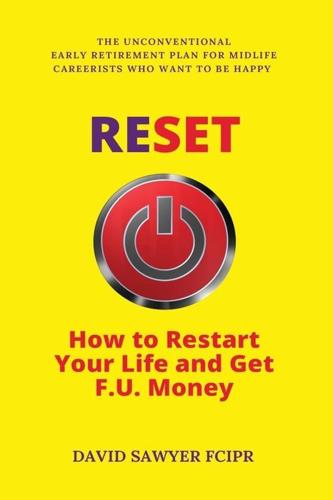
Reset: How to Restart Your Life and Get F.U. Money: The Unconventional Early Retirement Plan for Midlife Careerists Who Want to Be Happy
by David Sawyer
Published 17 Aug 2018

[115] I have plastic boxes: “Advantus Corporation 13-1/4-Inch-by-12-3/4-Inch-by-6-Inch Cropper.” toreset.me/115. [116] Ryan Holiday: “Ryan Holiday – Wikipedia.” toreset.me/116. [117] Anne Lamott: “Anne Lamott – Wikipedia.” toreset.me/117. [118] Robert Greene: “Robert Greene (American author) – Wikipedia.” toreset.me/118. [119] Oliver Burkeman: “Oliver Burkeman | The Guardian.” toreset.me/119. [120] Vladimir Nabokov: “Vladimir Nabokov – Wikipedia.” toreset.me/120. [121] Ludwig Wittgenstein: “Ludwig Wittgenstein – Wikipedia.” toreset.me/121. [122] Audible: “Audible UK – Audiobooks | Start Your Free 30-Day Trial | Audible.co.uk.” toreset.me/122

I use index cards for books, blogs, conversations I overhear at the club, memories, etc. They’re in my coat pocket when I fetch the kids from school. I leave them handy in the locker at the swimming pool (where I do much of my best thinking). And I run with them. Sound weird? Well, I’m in good company. Ryan Holiday[116], Anne Lamott[117], Robert Greene[118], Oliver Burkeman[119], Ronald Reagan, Vladimir Nabokov[120] and Ludwig Wittgenstein[121] all use (d) the humble index card to catalogue and organise their thoughts. If you’re serious about embarking on this digital journey, buy a hundred-pack of 127 x 76mm ruled index cards for less than a pound, rescue a shoebox from the attic and stick a few marker-penned notecards on their end to act as dividers.

In Parts V and VI, I outline 11 core principles and 12 do’s and don’ts to live your life by. All of these will help you battle through that mental fog to live a life of purpose. What follows now are five tactics I’ve specifically used to declutter my mind, so I can achieve what I want. A: Journaling/Morning Pages I first read about Morning Pages in Oliver Burkeman’s column[185]. I then bought one of author Julia Cameron’s spin-off books The Artist’s Way for Parents[186]. For one year, every morning I got out of bed, sat on the toilet, opened my – inevitably – Moleskine notebook, and wrote whatever was in my head until I’d filled three pages. It clears your head “as if you’re sending a telegram to the Universe[187]”.

pages: 243 words: 59,662

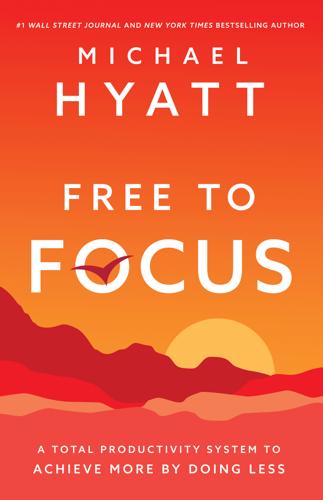
Free to Focus: A Total Productivity System to Achieve More by Doing Less
by Michael Hyatt
Published 8 Apr 2019

ACTIVATE: Beat Interruptions and Distractions 205 Put Your Focus to Work 223 Acknowledgments 229 Notes 233 Index 245 About the Author 251 Back Ads 252 Back Cover 256 Stepping into Focus What will your life have been, in the end, but the sum total of everything you spent it focusing on? OLIVER BURKEMAN I think I’m having a heart attack!” Of all ways to end a relaxing dinner, this is among the worst. I was a publishing executive in Manhattan on business. A colleague and I were finishing a delicious meal after a busy day when the chest pain began. I didn’t want to concern my friend or embarrass myself, so I ignored it for a while, hoping it would pass.

“Information consumes the attention of its recipients,” he explained, and “a wealth of information creates a poverty of attention.”1 Information is no longer scarce. But attention is. In fact, in a world where information is freely available, focus becomes one of the most valuable commodities in the workplace. But for most of us, work is the hardest place to find it. The truth is we live and labor in the Distraction Economy. As journalist Oliver Burkeman says, “Your attention is being spammed all day long.”2 And stemming the flow of inputs and interruptions can seem impossible. Consider email. Collectively, we send over two hundred million emails every minute.3 Professionals start the day hundreds deep with hundreds more on the way.4 But don’t stop there.

Every day we’re constantly making value judgments, deciding what’s truly worth our focus. Early in my career, I’m afraid to say, I chose busyness far too often. Now I know these trade-offs make it impossible to give my high-value tasks, health, relationships, and personal pursuits the time and attention—the focus—they deserve. And, as Oliver Burkeman asks, “What will your life have been, in the end, but the sum total of everything you spent it focusing on?”17 The pace of work in the Distraction Economy can be relentless. How often do you feel like Alice, running as fast as you can just to stay in place—and twice as fast as that to get ahead?

pages: 206 words: 68,757

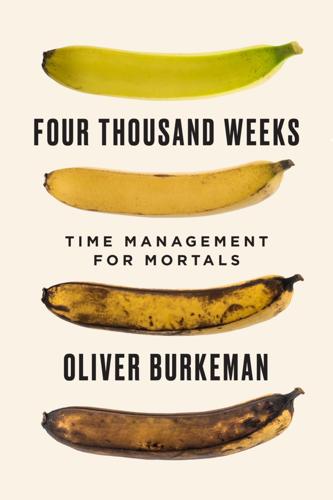
Four Thousand Weeks: Time Management for Mortals
by Oliver Burkeman
Published 9 Aug 2021

ALSO BY OLIVER BURKEMAN The Antidote: Happiness for People Who Can’t Stand Positive Thinking Help! How to Become Slightly Happier and Get a Bit More Done ALLEN LANE an imprint of Penguin Canada, a division of Penguin Random House Canada Limited Canada • USA • UK • Ireland • Australia • New Zealand • India • South Africa • China Published in Allen Lane hardcover by Penguin Canada, 2021 Simultaneously published in the United States by Farrar, Straus and Giroux, 120 Broadway, New York, 10271 Copyright © 2021 by Oliver Burkeman All rights reserved. Without limiting the rights under copyright reserved above, no part of this publication may be reproduced, stored in or introduced into a retrieval system, or transmitted in any form or by any means (electronic, mechanical, photocopying, recording or otherwise), without the prior written permission of both the copyright owner and the above publisher of this book.

Without limiting the rights under copyright reserved above, no part of this publication may be reproduced, stored in or introduced into a retrieval system, or transmitted in any form or by any means (electronic, mechanical, photocopying, recording or otherwise), without the prior written permission of both the copyright owner and the above publisher of this book. www.penguinrandomhouse.ca LIBRARY AND ARCHIVES CANADA CATALOGUING IN PUBLICATION Title: Four thousand weeks : time management for mortals / Oliver Burkeman. Names: Burkeman, Oliver, author. Identifiers: Canadiana (print) 20200318063 | Canadiana (ebook) 20200318152 | ISBN 9780735232464 (hardcover) | ISBN 9780735232471 (EPUB) Subjects: LCSH: Time management. Classification: LCC HD69.T54 B87 2021 | DDC 640/.43—dc23 Ebook ISBN 9780735232464 Book design by Gretchen Achilles, adapted for ebook Cover design by Matthew Flute Cover image © Xinzheng / Getty Images a_prh_5.7.0_c0_r0 To Heather and Rowan It’s the very last thing, isn’t it, we feel grateful for: having happened.

Classification: LCC HD69.T54 B87 2021 | DDC 640/.43—dc23 Ebook ISBN 9780735232464 Book design by Gretchen Achilles, adapted for ebook Cover design by Matthew Flute Cover image © Xinzheng / Getty Images a_prh_5.7.0_c0_r0 To Heather and Rowan It’s the very last thing, isn’t it, we feel grateful for: having happened. You know, you needn’t have happened. You needn’t have happened. But you did happen. —DOUGLAS HARDING What makes it unbearable is your mistaken belief that it can be cured. —CHARLOTTE JOKO BECK Contents Cover Also by Oliver Burkeman Title Page Copyright Dedication Epigraph Introduction: In the Long Run, We’re All Dead Part I: Choosing to Choose 1. The Limit-Embracing Life 2. The Efficiency Trap 3. Facing Finitude 4. Becoming a Better Procrastinator 5. The Watermelon Problem 6.

pages: 211 words: 69,380

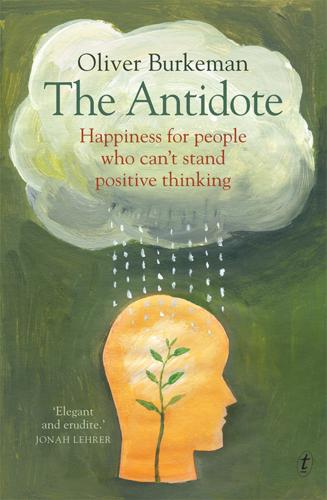
The Antidote: Happiness for People Who Can't Stand Positive Thinking
by Oliver Burkeman
Published 1 Jul 2012

Oliver Burkeman is a feature writer for the Guardian. He is winner of the Foreign Press Association’s Young Journalist of the Year award, and has been shortlisted for the Orwell Prize. He writes a popular weekly column on psychology, ‘This Column Will Change Your Life’, and has reported from London, Washington and New York, where he currently lives. oliverburkeman.com textpublishing.com.au oliverburkeman.com The Text Publishing Company Swann House 22 William Street Melbourne Victoria 3000 Australia Copyright © Oliver Burkeman, 2012 All rights reserved. Without limiting the rights under copyright above, no part of this publication shall be reproduced, stored in or introduced into a retrieval system, or transmitted in any form or by any means (electronic, mechanical, photocopying, recording or otherwise), without the prior permission of both the copyright owner and the publisher of this book.

First published in Great Britain by Canongate Books, 2012 Published in Australia by The Text Publishing Company, 2012, by arrangement with Canongate Books Cover design by W.H. Chong National Library of Australia Cataloguing-in-Publication data: Author: Burkeman, Oliver. Title: antidote : happiness for people who can’t stand positive thinking / Oliver Burkeman. ISBN: 9781921922671 (pbk.) ISBN: 9781921921483 (ebook : epub) Subjects: Happiness. Self-actualisation (Psychology) Positive psychology. Negativity (Philosophy) Dewey Number: 152.42 To my parents I have always been fascinated by the law of reversed effort. Sometimes I call it ‘the backwards law’.

‘The quest for certainty blocks the search for meaning’: Erich Fromm, Man for Himself (New York: Macmillan, 1947), 45. ‘To be a good human’: In Bill Moyers, A World of Ideas (New York: Doubleday, 1989), 448. 5: Who’s There? ‘a slow movement at first’: All quotations from Eckhart Tolle are drawn either from my meeting with him, or from his books The Power of Now and A New Earth. See Oliver Burkeman, ‘The Bedsit Epiphany’, The Guardian, 11 April 2009; Eckhart Tolle, The Power of Now (Novato, California: New World Library, 1999) and A New Earth (New York: Dutton, 2005). ‘supremely powerful and cunning’: This and following quotes are from René Descartes, Meditations on First Philosophy, Trans.

pages: 331 words: 96,989

Irresistible: The Rise of Addictive Technology and the Business of Keeping Us Hooked
by Adam L. Alter
Published 15 Feb 2017

In 2000, Marylanders: Running Streak Association website: www.runeveryday.com/; active list of runners: www.runeveryday.com/lists/USRSA-Active-List.html; see also: Katherine Dempsey, “The People Who Can’t Not Run,” The Atlantic, June 4, 2014, www.theatlantic.com/health/archive/2014/06/streakers-in-sneakers/371347/; Kevin Helliker, “These Streakers Resolve to Run Every Day of the Year,” Wall Street Journal, January 1, 2015, www.wsj.com/articles/these-streakers-resolve-to-run-every-day-of-the-year-1419986806. Writing for the: Oliver Burkeman, “Want to Succeed? You Need Systems, Not Goals,” Guardian, November 7, 2014, www.theguardian.com/lifeandstyle/2014/nov/07/systems-better-than—goals-oliver-burkeman. See also: Scott Adams, How to Fail at Everything and Still Win Big: Kind of the Story of My Life (New York: Portfolio, 2014). Sam Polk published: Background on Polk from an interview with Polk, and from his op-ed: Sam Polk, “For the Love of Money,” New York Times, January 14, 2014, www.nytimes.com/2014/01/19/opinion/sunday/for-the-love-of-money.html.

“I really felt better after ending it,” she recalled, though she’s now one hundred days deep into a new streak. Old goals, it turns out, die hard. — Streaks uncover the major flaw with goal pursuit: you spend far more time pursuing the goal than you do enjoying the fruits of your success. Even if you succeed, success is brief. Writing for the Guardian, human behavior expert Oliver Burkeman explained: When you approach life as a sequence of milestones to be achieved, you exist “in a state of near-continuous failure.” Almost all the time, by definition, you’re not at the place you’ve defined as embodying accomplishment or success. And should you get there, you’ll find you’ve lost the very thing that gave you a sense of purpose—so you’ll formulate a new goal and start again.

And at Broadside, thanks to Whitney Peeling and the entire Broadside team. For reading earlier drafts of Irresistible, sharing their ideas, and patiently answering my questions, thanks to Nicole Airey, Dean Alter, Jenny Alter, Ian Alter, Sara Alter, Chloe Angyal, Gary Aston Jones, Nicole Avena, Jessica Barson, Kent Berridge, Michael Brough, Oliver Burkeman, Hilarie Cash, Ben Caunt, Rameet Chawla, John Disterhoft, Andy Doan, Natasha Dow Schüll, David Epstein, Bennett Foddy, Allen Frances, Claire Gillan, Malcolm Gladwell, David Goldhill, Adam Grant, Melanie Green, Mark Griffiths, Hal Hershfield, Jason Hirschel, Kevin Holesh, Margot Lacey, Frank Lantz, Andrew Lawrence, Tom Meyvis, Stanton Peele, Jeff Peretz, Ryan Petrie, Sam Polk, Cosette Rae, Aryeh Routtenberg, Adam Saltsman, Katherine Schreiber, Maneesh Sethi, Eesha Sharma, Leslie Sim, Anni Sternisko, Abby Sussman, Maia Szalavitz, Isaac Vaisberg, Carrie Wilkens, Bob Wurtz, and Kimberly Young.

pages: 304 words: 96,930

Starbucked: A Double Tall Tale of Caffeine, Commerce, and Culture
by Taylor Clark
Published 5 Nov 2007

On Howard Schultz and the early days of Starbucks, see Howard Schultz and Dori Jones Yang, Pour Your Heart into It: How Starbucks Built a Company One Cup at a Time (New York: Hyperion, 1997); Hugo Kugiya, “Seattle’s Coffee King,” Seattle Times, December 15, 1996; Kathryn Robinson, “Bean Town: How Starbucks Created a Coffee-Crazy Seattle — and a Horde of Competitors,” Seattle Weekly, August 2, 1989; Jennifer Reese, “The High Church of Starbucks,” Salon, November 24, 1997; Oliver Burkeman, “Howard’s Way,” Guardian, October 20, 2000; Andrew Davidson, “The Man with Grounds for Global Success,” Sunday Times (London), September 14, 2003; and “The Success of Starbucks Coffee,” Larry King Live transcript, CNN, November 22, 1997. Page 53. Howard Schultz: Profile, BBC Four documentary, June 8, 2002.

David Brooks, Bobos in Paradise: The New Upper Class and How They Got There (New York: Simon & Schuster, 2000). Page 94. Howard Schultz and Dori Jones Yang, Pour Your Heart into It: How Starbucks Built a Company One Cup at a Time (New York: Hyperion, 1997). Page 96. David Shields, “The Capitalist Communitarian,” New York Times Magazine, March 24, 2002. Page 97. Oliver Burkeman, “Howard’s Way,” Guardian, October 20, 2000. Page 98. Dave Barry, “A Tall Order, Grammatically,” Miami Herald, October 10, 2004. Page 100. On design at Starbucks, two particularly useful sources were Virginia Postrel, The Substance of Style: How the Rise of Aesthetic Value Is Remaking Commerce, Culture, and Consciousness (New York: HarperCollins, 2003); and Arthur Rubinfeld and Collins Hemingway, Built for Growth: Expanding Your Business Around the Corner or Across the Globe (Upper Saddle River, NJ: Wharton School Publishing, 2005).

On Starbucks China and the Forbidden City uproar, see Keith Bradsher, “Starbucks Aims to Alter China’s Taste in Caffeine,” New York Times, May 21, 2005; Janet Adamy, “Different Brew: Eyeing a Billion Coffee Drinkers, Starbucks Pours It On in China,” Wall Street Journal, November 29, 2006; John Pomfret, “Tempest Brews Over Coffee Shop: U.S. Chain Stirs Ire in Beijing’s Forbidden City,” Washington Post, November 23, 2000; and Martin Fackler, “The Forbidden City Gets a Starbucks,” Associated Press, November 28, 2000. Page 259. Oliver Burkeman, “Howard’s Way,” Guardian, October 20, 2000. Page 260. Mark D. Fefer, “Flappuccino: Arabs Boycott Starbucks,” Seattle Weekly, June 26, 2002. Daniel Gross’s Slate piece, “Don’t Buy American,” can be found at http://www.slate.com/id/2112272/. Page 261. For a good look at the future of Starbucks, see Barbara Kiviat, “The Big Gulp at Starbucks,” Time, December 10, 2006; Elizabeth M.

pages: 292 words: 76,185

Pivot: The Only Move That Matters Is Your Next One
by Jenny Blake
Published 14 Jul 2016

I encourage you to dig deeper into anything that grabbed you. For the full reading list, visit PivotMethod.com/toolkit. Introduction A Whole New Mind by Daniel H. Pink Antifragile by Nassim Nicholas Taleb The Second Machine Age by Erik Brynjolfsson and Andrew McAfee The Antidote by Oliver Burkeman The Start-Up of You by Reid Hoffman and Ben Casnocha Plant The Power of Full Engagement by Jim Loehr and Tony Schwartz Finding Your Own North Star by Martha Beck The Big Leap by Gay Hendricks Body of Work by Pamela Slim Choose Yourself by James Altucher Scan So Good They Can’t Ignore You by Cal Newport The First 20 Hours by Josh Kaufman Tribes by Seth Godin Stand Out by Dorie Clark Essentialism by Greg McKeown Pilot The Lean Startup by Eric Ries Eat That Frog!

complement technology, rather than compete: Erik Brynjolfsson and Andrew McAfee, The Second Machine Age: Work, Progress, and Prosperity in a Time of Brilliant Technologies (New York: W. W. Norton, 2014), 153–54, 189–200. Leverage refers to: Ibid. it is futile to ask: Geoff Colvin, Humans Are Underrated: What High Achievers Know That Brilliant Machines Never Will (New York: Portfolio/Penguin, 2015), 42, 44; Oliver Burkeman, “Are Machines Making Humans Obsolete?” Guardian, September 18, 2015. Chapter 7: Make Yourself Discoverable “Well-being is enhanced”: Brian R. Little, Me, Myself, and Us: The Science of Personality and the Art of Well-Being (New York: PublicAffairs, 2014), 196. suggests aiming for “1,000 True Fans”: Kevin Kelly, “1,000 True Fans,” KK.org, March 4, 2008, kk.org/thetechnium/1000-true-fans/.

pages: 254 words: 81,009

Busy
by Tony Crabbe
Published 7 Jul 2015

He is also an honorary research fellow in the field of organizational psychology at Birkbeck College, University of London. He lives with his family in Spain, but spends a considerable amount of time consulting in the UK and the US. Notes Epigraph 1. Oliver Burkeman, The Antidote: Happiness for People Who Can’t Stand Positive Thinking (Edinburgh: Canongate Books, 2012). Kindle edition. Preface: Busting Busy 1. Oliver Burkeman, The Antidote: Happiness for People Who Can’t Stand Positive Thinking (Edinburgh: Canongate Books, 2012). Kindle edition. 2. Edward M. Hallowell, M.D. and John J. Ratey, M.D., Delivered from Distraction: Getting the Most Out of Life with Attention Deficit Disorder (New York: Ballantine Books, 2006). 3.

pages: 250 words: 96,870

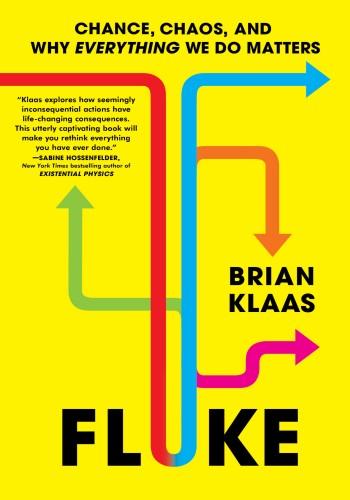
Fluke: Chance, Chaos, and Why Everything We Do Matters
by Brian Klaas
Published 23 Jan 2024

Humans have long been baffled by the so-called mind-body problem, the question of whether there is something fundamentally different between what we think of as our minds and the physical, chemical structures of the brain. If we happily accept that the lungs and liver are just organized chunks of tissue and cells containing chemicals, why should the brain be any different? But Chalmers highlighted something deeper. As the writer Oliver Burkeman summarized the conundrum, “How could the 1.4 kilogram lump of moist, pinkish-beige tissue inside your skull give rise to something as mysterious as the experience of being that pinkish-beige lump, and the body to which it is attached?” It’s the question of being a human—and we don’t have a clue.

Glass, “John Graunt and His Natural and Political Observations,” Proceedings of the Royal Society of London 159 (974) (1963): 2–37. “resemblance betwixt those objects”: See David Hume, The Philosophical Works of David Hume (Outlook Verlag, 2020). hard problem of consciousness: D. J. Chalmers, “Facing Up to the Problem of Consciousness,” Journal of Consciousness Studies 2 (3) (1995): 200–219. “1.4 kilogram lump”: Oliver Burkeman, “Why Can’t the World’s Greatest Minds Solve the Mystery of Consciousness?,” Guardian, 21 January 2015. “fill a few holes”: “A Few Holes to Fill,” Nature Physics 4 (2008): 257. collapse into a single position: For an overview of key concepts in quantum physics, see Michael G. Raymer, Quantum Physics: What Everyone Needs to Know (Oxford: Oxford University Press, 2017); and Sean Carroll, Something Deeply Hidden: Quantum Worlds and the Emergence of Spacetime (New York: Penguin, 2019).

pages: 428 words: 103,544

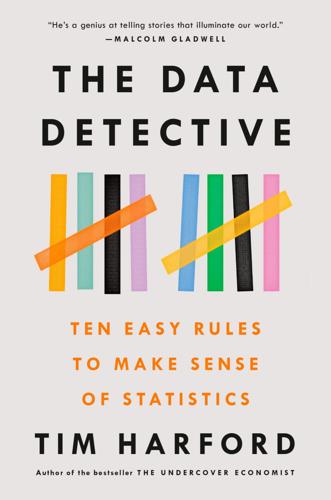
The Data Detective: Ten Easy Rules to Make Sense of Statistics
by Tim Harford
Published 2 Feb 2021

Author correspondence with Kris De Meyer, October 27, 2018. 22. Gordon Pennycook et al., “Understanding and Reducing the Spread of Misinformation Online,” PsyArXiv, November 13, 2019, DOI: 10.31234/osf.io/3n9u8; also see Oliver Burkeman, “How to Stop the Spread of Fake News? Pause for a Moment,” Guardian, February 7, 2020, https://www.theguardian.com/lifeandstyle/2020/feb/07/how-to-stop-spread-of-fake-news-oliver-burkeman. 23. G. Pennycook and D. G. Rand, “Lazy, Not Biased: Susceptibility to Partisan Fake News Is Better Explained by Lack of Reasoning Than by Motivated Reasoning,” Cognition, 2018, https://doi.org/10.1016/j.cognition.2018.06.011. 24.

pages: 188 words: 54,942

Drone Warfare: Killing by Remote Control
by Medea Benjamin
Published 8 Apr 2013

Drone Program,” The Los Angeles Times, December 28, 2011. 213 Ibid. 214 Jane Perlez, “Karachi Turns Deadly Amid Pakistan’s Rivalries,” The New York Times, November 19, 2010. 215 Greg Miller, “Al-Qaeda Targets Dwindle as Group Shrinks,” The Washington Post, November 22, 2011. 216 Shatha Al-Harazi, “Yemenis Question the Killing of 16-year-old Al-Awlaki’s Son,” Yemen Times, October 19, 2011. 217 “Drones shape life in Gaza,” The Washington Post, December 3, 2011. 218 “Precisely Wrong: Gaza Civilians Killed by Israeli Drone-Launched Missiles,” Human Rights Watch, June 2009. 219 Yotam Feldman and Uri Blau, “Consent and Advise,” Haaretz, January 29, 2009. 220 Tara Mckelevey, “Inside the Killing Machine,” The Daily Beast, February 13, 2011. 221 Jane Mayer, “The Predator War,” The New Yorker, February 26, 2009. 222 Harold Hongju Koh, “The Obama Administration and International Law,” U.S. Department of State, March 25, 2010. 223 Hunter Miller, “British-American Diplomacy: The Caroline Case,” Avalon Project - Yale Law School. 224 Oliver Burkeman and Julian Borger, “War critics astonished as US hawk admits invasion was illegal,” The Guardian, November 20, 2003. 225 Declan Walsh, “US extends drone strikes to Somalia,” The Guardian, June 30, 2011. 226 Greg Miller, “Under Obama, an Emerging Global Apparatus for Drone Killing,” The Washington Post, December 27, 2011. 227 “The Laws of War,” Human Rights Investigations, Last updated: Apr 30, 2011. 228 “Court Dismisses Targeted Killing Case On Procedural Grounds Without Addressing Merits,” ACLU Press Release, December 7, 2010. 229 Daphne Eviatar, “Pressure Mounts on Obama Administration to Release Legal Justification for al-Awlaki Killing,” The Huffington Post, October 6, 2011. 230 Noah Feldman, “Obama Team’s Al-Awlaki Memo Furthered Bush Legacy,” Bloomberg, October 17, 2011. 231 Megan Mitchell, “Osama Bin Laden Won’t Be Brought in Alive,” U.S.

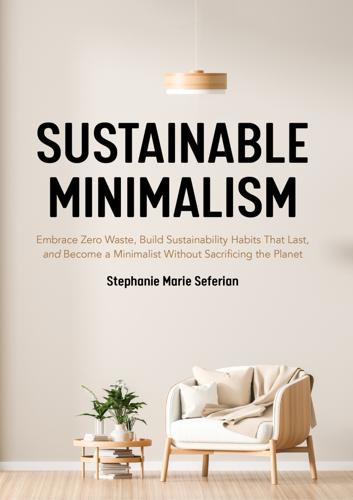
Sustainable Minimalism: Embrace Zero Waste, Build Sustainability Habits That Last, and Become a Minimalist Without Sacrificing the Planet (Green Housecleaning, Zero Waste Living)
by Stephanie Marie Seferian
Published 19 Jan 2021

The New York Times, January 11, 2009, https://www.nytimes.com/2009/01/12/nyregion/12clean.html. 122 Navarro, “It May Market.” 123 Marguerite Ward, “A Brief History of the 8-Hour Workday, Which Changed How Americans Work,” CNBC, May 3, 2017, https://www.cnbc.com/2017/05/03/how-the-8-hour-workday-changed-how-americans-work.html. 124 Schools and Staffing Survey, (Washington, DC: National Center for EducationStatistics, 2008), https://www.nces.ed.gov/surveys/sass/tables/sass0708_035_s1s.asp. 125 Oliver Burkeman, “This Column Will Change Your Life: How Long Does itReally Take to Change a Habit? The Guardian, October 9, 2009, https://www.theguardian.com/lifeandstyle/2009/oct/10/change-your-life-habit-28-day-rule. 126 Connor Simpson, “What It’s Like to Work for a Nine-Year-Old in a Sweatshop,”The Atlantic, October 12, 2013, https://www.theatlantic.com/international/archive/2013/10/what-its-work-nine-year-old-sweatshop/310039. 127 D.

pages: 195 words: 60,471

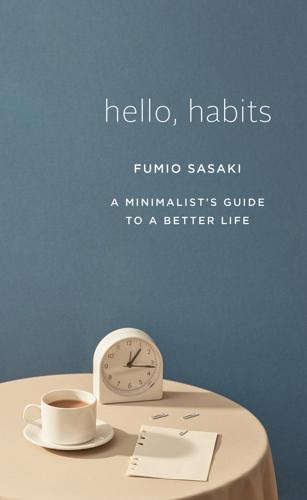
Hello, Habits
by Fumio Sasaki
Published 6 Nov 2020

“Nothing goes right no matter what I do.” Meditation, which gives you a third-party perspective, is an effective method to reexamine such beliefs. Step 12: Realize that enthusiasm won’t occur before you do something The problem … isn’t that you don’t feel motivated; it’s that you imagine you need to feel motivated. —Oliver Burkeman Back when I didn’t have a habit of exercising every day, I realized that it was more difficult to actually go to the gym than it was to lift weights or run when I got to the gym. I never have a problem making up my mind to go home when I’m lifting weights. I don’t have a problem deciding whether to run another step further when I’m in the middle of a run, either.

pages: 245 words: 64,288

Robots Will Steal Your Job, But That's OK: How to Survive the Economic Collapse and Be Happy
by Pistono, Federico
Published 14 Oct 2012

list=PLA27CEA1B8B27EB67 Course | Quantum Entanglements: Part 3 (Spring 2007) http://www.youtube.com/playlist?list=PL5F9D6DB4231291BE 228 For the scientific evidence in support of the list, see The Happiness Advantage: The Seven Principles of Positive Psychology That Fuel Success and Performance at Work, Shawn Achor, 2010; and Help!: How to Become Slightly Happier and Get a Bit More Done, Oliver Burkeman, 2011. 229 23 and 1/2 hours: What is the single best thing we can do for our health?, Dr. Mike Evans. http://www.youtube.com/watch?&v=aUaInS6HIGo 230 If money doesn’t make you happy, then you probably aren’t spending it right, Elizabeth W. Dunn, Daniel T. Gilbert, Timothy D. Wilson, 2011. Journal of Consumer Psychology.

pages: 233 words: 65,893

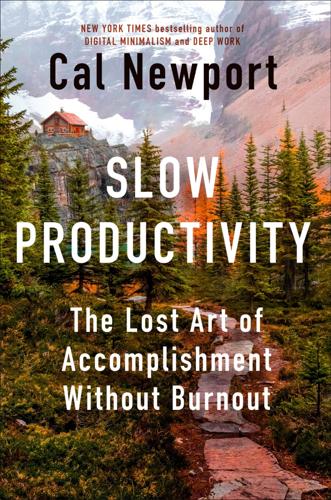
Slow Productivity: The Lost Art of Accomplishment Without Burnout
by Cal Newport
Published 5 Mar 2024

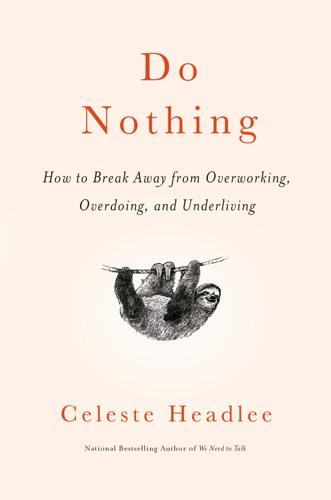
Between the spring of 2020 and the summer of 2021, a period spanning less than a year and a half, at least four major books were published that took direct aim at popular notions of productivity. These included Celeste Headlee’s Do Nothing, Anne Helen Petersen’s Can’t Even, Devon Price’s Laziness Does Not Exist, and Oliver Burkeman’s delightfully sardonic Four Thousand Weeks. This exhaustion with work was also reflected in multiple waves of heavily reported social trends that crested one after another during the pandemic. First there was the so-called Great Resignation. Though this phenomenon encompassed retreats from labor force participation in many different economic sectors, among these many sub-narratives was a clear trend among knowledge workers to downgrade the demands of their careers.
pages: 246 words: 74,404

Do Nothing: How to Break Away From Overworking, Overdoing, and Underliving
by Celeste Headlee
Published 10 Mar 2020

“could be applied with equal facility”: Scott Cutlip, The Unseen Power: Public Relations, a History (Hillsdale, NJ: Lawrence Erlbaum Associates, 1994), 168. “Those who manipulate this unseen mechanism”: Edward Bernays, Propaganda (Brooklyn: IG Publishing, 1928), 9–10. “The most pernicious thing”: Oliver Burkeman, “Why You Feel Busy All the Time (When You’re Actually Not),” BBC.com, September 12, 2016. “The goal was never to be idle”: Tim Ferriss, “24 Hours with Tim Ferriss: A Sample Schedule,” Tim.blog, March 10, 2008. “Maybe all the time I spend”: John Pavlus, “Confessions of a Recovering Lifehacker,” Lifehacker.com, May 29, 2012.

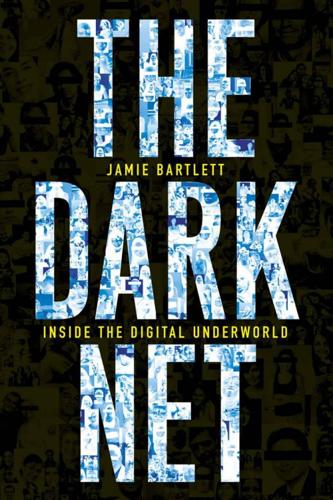
pages: 267 words: 82,580

The Dark Net
by Jamie Bartlett
Published 20 Aug 2014

Bergen, J. and Strathern, B., Who Matters Online: Measuring Influence, Evaluating Content and Countering Violent Extremism in Online Social Networks, International Centre for the Study of Radicalisation. p.50 ‘In early 2007, supporters of . . .’ Burkeman, O., ‘Exploding pigs and volleys of gunfire as Le Pen opens HQ in virtual world’, Guardian, 20 January 2007 (http://www.theguardian.com/technology/2007/jan/20/news.france, accessed 24 December 2013). The Guardian’s Oliver Burkeman, using an avatar, tracked the party down to Axel, another Second Life neighbourhood, ‘where they had rebuilt their headquarters and were engaging a handful of opponents in relatively restrained debate’. Au, Wagner James, ‘Fighting the Front’, 15 January 2007, New World Notes (http://nwn.blogs.com/nwn/2007/01/stronger_than_h.html, accessed 24 December 2013).

pages: 307 words: 87,373

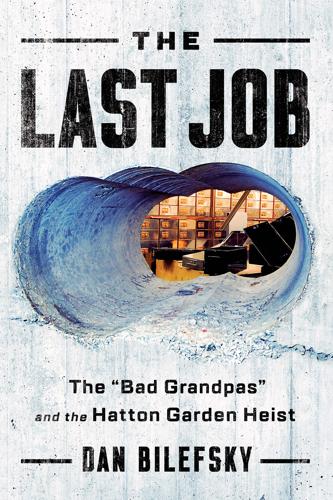
The Last Job: The Bad Grandpas and the Hatton Garden Heist
by Dan Bilefsky
Published 22 Apr 2019

“History of the London Diamond Bourse,” London Diamond Bourse. 8.Interview with George Katz, London, November 1, 2016. 9.Interview with Jacob Meghnagi, London, November 1, 2016. 10.Tom Pettifor and Nick Sommerlad, One Last Job (London: Mirror Books, 2016), 199. 11.Interview with George Katz, London, November 1, 2016. 12.Geoffrey Howse, Murder and Mayhem in North London (Barnsley, UK: Pen and Sword Books, 2010), 182. 13.Metropolitan Police Service, Operation Spire, witness statement of Manish Bavishi, May 21, 2015, 350. 14.Metropolitan Police Service, Operation Spire, witness statement of Kelvin Stockwell, April 20, 2015, 27–29. 15.Interview with Roy Ramm, London, March 8, 2016. 16.Rachel Lichtenstein, Diamond Street: The Hidden World of Hatton Garden (London: Penguin Books, 2013), 112–13. 17.Paul Lashmar, “Jewellery and Junk,” Independent, August 11, 1998. 18.Paul Lashmar and Richard Hobbs, “The Garden of British Crime: How London’s Jewellery District Became a Nursery for Villains,” Conversation, March 9, 2016. 19.Will Bennett, “£7m Diamond Raiders Beat Combination Locks,” Independent, July 16, 1993. 20.Oliver Burkeman, “If He Could Get Away with It Here, No Lock in the World Is Safe,” Guardian, July 17, 2003. 21.Interview with Jacob Meghnagi, London, November 1, 2016. Chapter 5 The Firm Plots 1.“World’s First ATM Machine Turns to Gold,” Reuters, June 27, 2017. 2.Letter from Teikoku Bank Limited to Mosler Safe Company, May 22, 1950. 3.Elizabeth Rosenthal, “Near Arctic, Seed Vault Is a Fort Knox of Food,” New York Times, February 29, 2008. 4.Metropolitan Police Service, Operation Spire, transcripts relating to audio recordings of Mercedes E200 CP13BGY, 483. 5.Interview with Freddie Foreman, London, March 29, 2017. 6.Interview with Kevin Lane, London, January 16, 2017. 7.Paul Lashmar, “Hatton Garden Ringleader Brian Reader Also Masterminded Lloyds Baker Street Heist 45 Years Ago,” Independent, January 15, 2016. 8.Interview with Craig Turner, London, February 3, 2017. 9.Metropolitan Police Service, Operation Spire, witness statement of Lionel Wiffen, May 29, 2015, 78–80. 10.Stuart McGurk, “Hatton Garden: The Biggest Jewel Heist in British History,” GQ, May 19, 2016. 11.Metropolitan Police Service, Operation Spire, witness statement of Lionel Wiffen, May 29, 2015, 79. 12.Metropolitan Police Service, Operation Spire, witness statement of Lionel Wiffen, May 29, 2015, 80. 13.Metropolitan Police Service, Operation Spire, witness statement of Katya Lewis, June 1, 2015, 99–100. 14.Metropolitan Police Service, Operation Spire, witness statement of Katya Lewis, June 1, 2015, 99–100.

pages: 249 words: 81,217

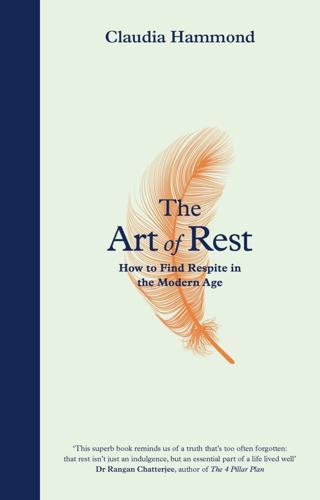
The Art of Rest: How to Find Respite in the Modern Age
by Claudia Hammond
Published 5 Dec 2019

There are dozens of time-management techniques which claim to help you to make more efficient use of both your working and leisure hours, but few have been tested empirically and cramming more tasks into a shorter time is inherently unrestful. Maybe it’s true that you waste some time at work chatting and you could concentrate harder all day and leave work a little earlier, but perhaps it’s having some fun with colleagues and checking Instagram every now and then that makes your job enjoyable, or bearable even. The writer Oliver Burkeman suggests that if you constantly feel pressed for time, you should actively decide what you’re going to stop doing. He suggests leaving a book group, for example. Or accepting that you’ll never be a good cook and giving up attempting complicated recipes. Or ceasing to make the effort to chase that friend who is always so hard to pin down to a date.

pages: 407 words: 90,238

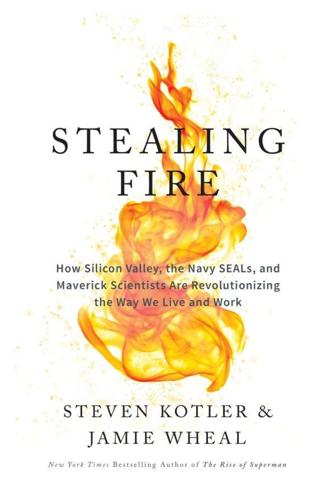
Stealing Fire: How Silicon Valley, the Navy SEALs, and Maverick Scientists Are Revolutionizing the Way We Live and Work
by Steven Kotler and Jamie Wheal
Published 21 Feb 2017

As Archbishop of Canterbury John Tillotson later noted”: John Tillotson, Sermons Preached on a Number of Occasions (London: For S. A. Gellibrand, 1674). 2. Oprah Winfrey teamed up”: Jesse McKinley, “The Wisdom of the Ages, for Now Anyway,” New York Times, March 23, 2008. 3. A New Earth attracted ten million: Oliver Burkeman, “The Bedsit Epiphany,” Guardian, April 10, 2009; Jennifer Fermino, “Pope Francis Tells Crowd of 20,000 ‘God Is Living in Our Cities’ at Madison Square Garden Mass, Closing Out NYC Visit,” New York Daily News, September 25, 2005; Alice Philipson, “The Ten Largest Gatherings in History,” Telegraph, January 19, 2015. 4.

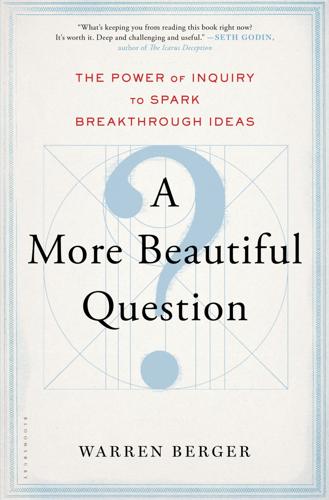
pages: 374 words: 89,725

A More Beautiful Question: The Power of Inquiry to Spark Breakthrough Ideas
by Warren Berger
Published 4 Mar 2014

I’m grateful to the following people for the significant time spent talking to me for this book: the inspirational Min Basadur, the remarkable Van Phillips, Charles Warren, David Kord Murray, Randy Komisar, Gauri Nanda, Deborah Meier, and Hal Gregersen. And I want to mention a few people who shared their time and didn’t get quoted: Geoff Deane of Intellectual Ventures, Naomi Simson, Dennis Bartels of the Exploratorium museum, and Oliver Burkeman. I’d like to give special mention here to the Right Question Institute, and the two people who created it, Dan Rothstein and Luz Santana. I believe the work they’re doing on behalf of teaching the art of questioning is unquestionably valuable. And I should also acknowledge and thank some people who provided inspiration at the formative stages: the designer Bruce Mau, whose “Ask Stupid Questions” principle was a starting point for me; the designer Brian Collins, who first suggested that “stupid questions” can also (in some cases) be thought of as “beautiful questions”; and TED founder Richard Saul Wurman, who was the first “master questioner” I interviewed (and who, in the process, questioned most of my questions).

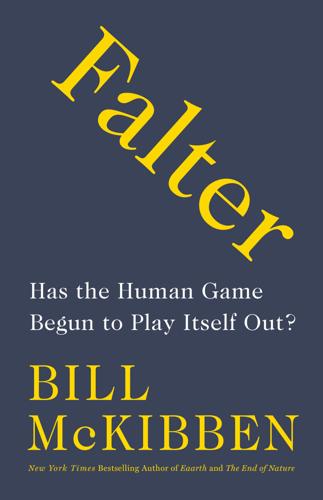
Falter: Has the Human Game Begun to Play Itself Out?
by Bill McKibben
Published 15 Apr 2019

Benjamin Franta, “Shell and Exxon’s Secret 1980s Climate Change Warnings,” Guardian, September 19, 2018. 9. Jason M. Breslow, “Investigation Finds Exxon Ignored Its Own Early Climate Change Warnings,” pbs.org, September 16, 2015. 10. Russell and Kennedy, Horsemen of the Apocalypse, p. 20–21. 11. Oliver Burkeman, “Memo Exposes Bush’s New Green Strategy,” Guardian, March 3, 2003. 12. Ruairí Arrieta-Kenna, “Almost 90% of Americans Don’t Know There’s Scientific Consensus on Global Warming,” vox.com, July 6, 2017. 13. Russell and Kennedy, Horsemen of the Apocalypse, p. 30. 14. Rupert Neate, “ExxonMobil CEO: Ending Oil Production ‘Not Acceptable for Humanity,’” Guardian, May 25, 2016. 15.

pages: 387 words: 110,820

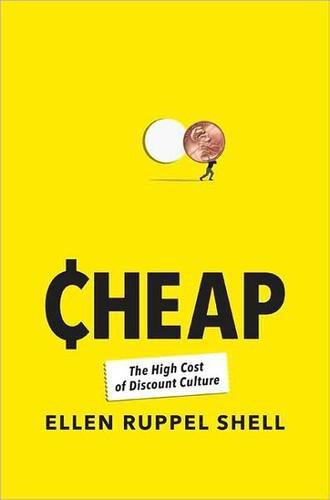
Cheap: The High Cost of Discount Culture
by Ellen Ruppel Shell
Published 2 Jul 2009

Edwards, “The Law, Marketing and Behavioral Economics of Consumer Rebates,” Stanford Journal of Law, Business & Finance 12, (2007), 362. 119 redemption rate data:: Redemption rates are equal to the number of successful redemptions divided by the number of units sold. 119 make public this side of their business: See Tim Silk and Chris Janiszewski, “Managing Mail-In Rebate Promotions: An Empirical Analysis of Purchase and Redemption,” Sauder School of Business, University of British Columbia, working paper, 24. 119 “what the manufacturer had in mind”: Catherine Greenman, “The Trouble with Rebates,” New York Times, September 16, 1999, G1. 119 consider their time too valuable: Widespread speculation that a subgroup of consumers choose not to bother because they don’t want to take the time doesn’t qualify as an explanation. 120 is considered an abject failure: Timothy Guy Silk, “Examining Purchase and Non-Redemption of Mail-In Rebates: The Impact of Offer Variables on Consumers’ Objective and Subjective Probabilities of Redeeming,” dissertation, University of Florida, 2004, 6. 120 “without encouraging redemptions”: Ibid., 7. 122 to buy the product: Carrie Heilman, Kyryl Lakishyk, Sonja Radas, “The Effectiveness of In-Store Free Samples on Sample Takers,” 2006, available online at http://www.commerce.virginia.edu/faculty__research/Research/Papers/FreeSa- mples__July26__2006.pdf. 123 “five shillings besides”: From the essay “Advice to a Young Tradesman Written in the Year 1748,” in Autobiography of Benjamin Franklin (New York: Macmillan Company, 1921), 188. 123 “an opportunity cost”: Diip Soman, “The Mental Accounting of Sunk Time Costs: Why Time Is Not Like Money,” Journal of Behavioral Decision Making 14, no 3 (2001), 169-85. 123 we tend to underestimate its value: Richard Thaler, “Mental Accounting Matters,” Journal of Behavioral Decision Making 12 (1999), 183-206. CHAPTER SIX: DEATH OF A CRAFTSMAN 125 “let’s pull the legs off”: Oliver Burkeman, “The Miracle of Almhult,” The Guardian, June 17, 2004. 125 among the world’s richest men: In March 2008, Forbes magazine estimated Kamprad’s fortune at U.S. $31 billion, making him the seventh richest person in the world, while other sources, such as the Swedish business weekly Veckans Affärer, argue that he is in fact the wealthiest.

pages: 356 words: 106,161

The Glass Half-Empty: Debunking the Myth of Progress in the Twenty-First Century
by Rodrigo Aguilera
Published 10 Mar 2020

And rather than argue the point on philosophical or historical grounds as Lasch and other critics have done, today’s generation of optimists offer a barrage of facts and figures to prove it, along with a standard set of talking points highlighting humanity’s ongoing victory over things like poverty, war and violence, disease, and all the other factors that once made human life “nasty, brutish, and short”.3 Although a few of these people were known to me long before the idea for this book materialized, the knowledge that there was a growing ecosystem behind this narrative came after reading a 2017 Guardian long read by author and columnist Oliver Burkeman titled “Is the World Really Better than Ever?” This piece, which I recommend reading prior to moving on to Chapter One, gives a full dramatis personae of the characters involved in this ecosystem, and gives them the name that I will use to describe them throughout the rest of this book, the “New Optimists”: The loose but growing collection of pundits, academics and thinktank operatives who endorse this stubbornly cheerful, handbasket-free account of our situation have occasionally been labelled “the New Optimists”, a name intended to evoke the rebellious scepticism of the New Atheists led by Richard Dawkins, Daniel Dennett and Sam Harris.

pages: 360 words: 113,429

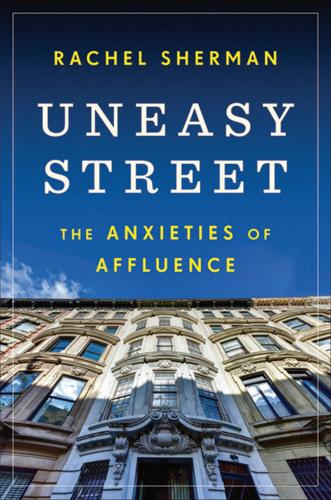
Uneasy Street: The Anxieties of Affluence
by Rachel Sherman
Published 21 Aug 2017

I am grateful to participants in the Craft of Ethnography workshop at Columbia, to members of the New School’s GIDEST seminar, and to students and colleagues at my department’s Brown Bag series, who read and commented on this work, as well as to the many audiences who have listened to me present on this project during the long course of its development. For their continued interest, encouragement, and help in a range of ways, I thank Michael Burawoy, Oliver Burkeman, Jeff Golick, David Herbstman, Dara Levendosky, Ruth Milkman, Debra Minkoff, Deirdre Mullane, Tim Murphy, Andy Perrin, Allison Pugh, Raka Ray, Juliet Schor, Steve Shohl, Sandy Silverman, Kim Voss, Paul VanDeCarr, and Viviana Zelizer. I also thank the Mentos, who always made me laugh, and my longtime crew of Neskowinners, who helped come up with the title.

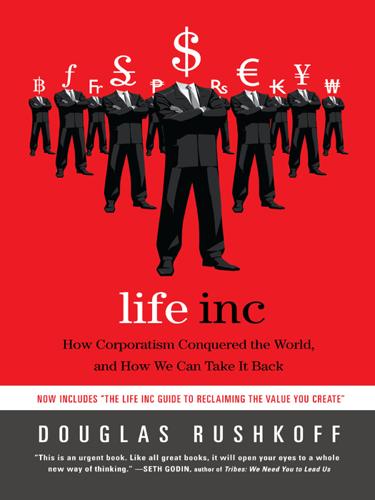
pages: 422 words: 131,666

Life Inc.: How the World Became a Corporation and How to Take It Back
by Douglas Rushkoff
Published 1 Jun 2009

.: MIT Press, 2005). 151 The think-tank logicians at Rand Rand corporation, or Research and Development Corporation, is a global policy think tank created originally for the U.S. Air Force in 1943, and then spun off as a nonprofit corporation in 1948. The official Rand site is http://www.rand.org/. 151 They tested their ideas on Oliver Burkeman, “Cry Freedom,” The Guardian, March 3, 2007. 152 “It is understood not to be” John Nash spoke to filmmaker Adam Curtis in the BBC documentary The Trap, dir. Adam Curtis (United Kingdom: BBC Two, 2007). 152 The Scottish psychologist R. D. Laing Laing had some evidence on his side. In the infamous “Rosenhan Experiment,” fake patients went to psychiatric institutions and managed to get faulty diagnoses as suffering from mental disorders.

pages: 535 words: 158,863

Superclass: The Global Power Elite and the World They Are Making
by David Rothkopf
Published 18 Mar 2008

Bush was presented Alexandra Robbins, Secrets of the Tomb: Skull and Bones, the Ivy League, and the Hidden Paths of Power (Boston: Little, Brown, 2002), 126. 261 “Skull and Bones is not some ordinary” Ron Rosenbaum, “Skull and Bones, Denying Its Rite, Suckers AOL-TW,” New York Observer, July 14, 2002. 261 David Brooks, a conservative columnist “Skull and Bones: Secret Yale Society Includes America’s Power Elite,” 60 Minutes, June 13, 2004. 261 the Carlyle group, which manages more than $56 billion Company profile, www.carlyle.com. 262 its roster of prominent employees Melanie Warner, “Down the Rabbit Hole,” Fortune, March 18, 2002. 262 Even the younger Bush had a stint Jamie Doward, “Ex-Presidents Club Gets Fat on Conflict,” Guardian, March 23, 2003. 262 “Conspiracy theorists that obsess” Dan Briody, The Iron Triangle: Inside the Secret World of the Carlyle Group (Hoboken: John Wiley, 2003), 158. 263 newspaper articles and business magazine cover stories For example, a Carlyle feature by Emily Thornton et al., “Carlyle Changes Its Stripes,” made the cover of BusinessWeek, February 12, 2007. 263 in 1990 Carlyle started buying up defense-related assets Doward, “Ex-Presidents’ Club.” 263 took the company public Mark Fineman, “Arms Buildup Is a Boon to Firm Run by Big Guns,” Los Angeles Times, January 10, 2002. 263 Its $73 million purchase Terence O’Hara, “Carlyle Shows It’s Still Tops in Defense,” Washington Post, February 13, 2006. 263 He purportedly made a phone call Warner, “Down the Rabbit Hole.” 263 “The problem comes when” Oliver Burkeman and Julian Borger, “The Ex-Presidents’ Club,” Guardian, October 13, 2001. 263 One of Carlyle’s cofounders told The Nation Tim Shorrock, “Crony Capitalism Goes Global,” Nation, April 1, 2002. 263 “Since 9/11, USIS’s acquisition” Briody, Iron Triangle, 152. 264 Shafig bin Laden, one of Osama’s numerous brothers Warner, “Down the Rabbit Hole.” 264 As one top-level Carlyle employee Ibid. 266 One antiglobalist website, NewsWithViews Available at www.newswithviews.com. 266 “Business leaders go to Davos” Available at www.foe.co.uk. 266 “Davos is … the most visible symbol” Jeff Faux, “The Party of Davos,” Nation, February 13, 2006. 266 now generating more than $85 million a year World Economic Forum, “Annual Report 2005/06,” www.weforum.org. 267 The facts about the meeting are well known “About Us,” WEF website, www.weforum.org. 267 As Henri Schwamm, former vice president Jean-Christophe Graz, “How Powerful Are Transnational Elite Clubs?

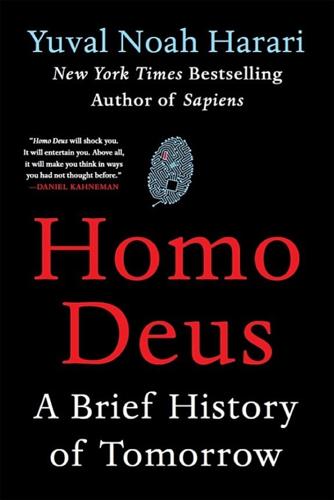
pages: 479 words: 144,453

Homo Deus: A Brief History of Tomorrow
by Yuval Noah Harari
Published 1 Mar 2015

Nelson et al., ‘Enhancing Vigilance in Operators with Prefrontal Cortex Transcranial Direct Current Stimulation (TDCS)’, NeuroImage 85 (2014), 909–17; Melissa Scheldrup et al., ‘Transcranial Direct Current Stimulation Facilitates Cognitive Multi-Task Performance Differentially Depending on Anode Location and Subtask’, Frontiers in Human Neuroscience 8 (2014); Oliver Burkeman, ‘Can I Increase my Brain Power?’, Guardian, 4 January 2014, http://www.theguardian.com/science/2014/jan/04/can-i-increase-my-brain-power, accessed 9 January 2016; Heather Kelly, ‘Wearable Tech to Hack Your Brain’, CNN, 23 October 2014, http://www.cnn.com/2014/10/22/tech/innovation/brain-stimulation-tech/, accessed 9 January 2016. 7.

pages: 579 words: 160,351

Breaking News: The Remaking of Journalism and Why It Matters Now
by Alan Rusbridger
Published 14 Oct 2018

The bid ran into regulatory hurdles and was then overtaken when Disney and then Comcast made rival bids for parts of Murdoch’s empire. 17 Let Us Pay? 1. Starr, P. The Creation of the Media; see Bibliography 2. ‘Goodbye to the Age of Newspapers (Hello to a New Era of Corruption)’, New Republic, 4 March 2009; Paul Starr 3. Quoted in ‘Newspapers Last Bastion Against Political Corruption’; Oliver Burkeman, Guardian, 27 March 2009 4. A reasoned case for the power of ‘open information’ had been advanced in 2004 by the author James Surowiecki in his book The Wisdom of Crowds; see Bibliography. 5. An inquest found he had been unlawfully killed. The policeman who struck him was found not guilty after the jury deliberated for four days.

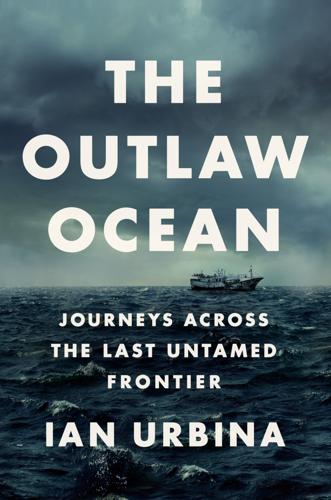
The Outlaw Ocean: Journeys Across the Last Untamed Frontier
by Ian Urbina
Published 19 Aug 2019

More recently, WikiLeaks explored: Katrin Langhans, “Newer Sealand,” Süddeutsche Zeitung and the Panama Papers, April 25, 2016. They were often called seasteads: My full bibliography on seasteading is as follows: Jerome Fitzgerald, Sea-Steading: A Life of Hope and Freedom on the Last Viable Frontier (New York: iUniverse, 2006); “Homesteading the Ocean,” Spectrum, May 1, 2008; Oliver Burkeman, “Fantasy Islands,” Guardian, July 18, 2008; Patri Friedman and Wayne Gramlich, “Seasteading: A Practical Guide to Homesteading the High Seas,” Gramlich.net, 2009; Declan McCullagh, “The Next Frontier: ‘Seasteading’ the Oceans,” CNET News, Feb. 2, 2009; Alex Pell, “Welcome Aboard a Brand New Country,” Sunday Times, March 15, 2009; Brian Doherty, “20,000 Nations Above the Sea,” Reason, July 2009; Eamonn Fingleton, “The Great Escape,” Prospect, March 25, 2010; Brad Taylor, “Governing Seasteads: An Outline of the Options,” Seasteading Institute, Nov. 9, 2010; “Cities on the Ocean,” Economist, Dec. 3, 2011; Jessica Bruder, “A Start-Up Incubator That Floats,” New York Times, Dec. 14, 2011; Michael Posner, “Floating City Conceived as High-Tech Incubator,” Globe and Mail, Feb. 24, 2012; Josh Harkinson, “My Sunset Cruise with the Clever, Nutty, Techno-libertarian Seasteading Gurus,” Mother Jones, June 7, 2012; Stephen McGinty, “The Real Nowhere Men,” Scotsman, Sept. 8, 2012; Michelle Price, “Is the Sea the Next Frontier for High-Frequency Trading?