Killing Pablo: The Hunt for the World's Greatest Outlaw
by
Mark Bowden
Published 1 Dec 2007
"If I did not agree to come talk to you, they could easily kill me or my family." Then the man offered the colonel $6 million, a bribe from Pablo Escobar to call off the hunt. More specifically, the officer explained: "Continue the work, but do not do yourself or Pablo Escobar any real damage." Escobar also wanted a list of any snitches in his own organization. Sometimes the fate of an entire nation can hinge on the integrity of one man. Police Col. Hugo Martinez had been handed a suicide mission in 1989 - hunting down drug kingpin Pablo Escobar. This was during the Colombian government's first war against Escobar, before Martinez was called back in 1992 to rejoin the hunt.
…
He calls Los Pepes criminals, former associates of Escobar's who turned against him, originally working as informants, and then as killers. "They began to employ against Pablo Escobar the same kind of terror he employed," Martinez said recently. "Pablo Escobar would set off a bomb in Bogota, and Los Pepes would set three against Escobar's interests, his family, or the criminal group he headed. It was a black spot on the Search Bloc, because Pablo Escobar manipulated the media very well. Whether writing or speaking, he always publicly claimed that the Search Bloc was in fact Los Pepes. However, Los Pepes and our group did not share any links at all."
…
He calls Los Pepes criminals, former associates of Escobar's who turned against him, originally working as informants, and then as killers. "They began to employ against Pablo Escobar the same kind of terror he employed," Martinez said recently. "Pablo Escobar would set off a bomb in Bogota, and Los Pepes would set three against Escobar's interests, his family, or the criminal group he headed. It was a black spot on the Search Bloc, because Pablo Escobar manipulated the media very well. Whether writing or speaking, he always publicly claimed that the Search Bloc was in fact Los Pepes. However, Los Pepes and our group did not share any links at all."
At the Devil's Table: The Untold Story of the Insider Who Brought Down the Cali Cartel
by
William C. Rempel
Published 20 Jun 2011
“What I can tell you,” Mario went on, “is that these people have a serious problem with Pablo Escobar. He’s bombing their businesses, threatening their families—it’s a terrible situation.” Jorge’s expression abruptly hardened to a glare. “Don’t tell me—we’re going to see the Cali cartel guys?” By January 1989, everyone in Colombia knew about the raging feud between Escobar’s Medellín cartel and his rivals in Cali. For nearly a year, headlines carried gruesome accounts of bombings, dismemberments, and shootings. The number of innocent-bystander deaths mounted. Like most of his friends and cohorts, Jorge feared and loathed Pablo Escobar. The drug boss had declared war on the Colombian government in a campaign to overturn Bogotá’s extradition treaty with Washington.
…
It was almost immediately reinstated, under Colombian law, by presidential decree—but Escobar’s campaign of violence against the government clearly was working. Then, in late 1987, with Medellín drug bosses already at war with the Bogotá government over extradition, Pablo Escobar picked another fight—this one with his Cali cartel rivals. EL DOCTOR AND THE GENTLEMEN IT ALL STARTED IN NEW YORK CITY. A PAIR OF MID-LEVEL TRAFFICKERS had a falling-out over a woman. One trafficker killed the other. Back home in Colombia, blood demanded blood. The dead man’s friends were allies of Pablo Escobar’s, and they turned to the Medellín boss to avenge their loss. The shooter was a dead man, Escobar vowed. This sent the frightened killer to another drug boss—Hélmer “Pacho” Herrera—seeking sanctuary.
…
ON THE NIGHT that Jorge Salcedo joined the fight against Pablo Escobar, the four Cali bosses who recruited him operated the fastest-growing criminal enterprise on the planet—the Walmart, or the Google, of narco-trafficking. The chief of U.S. drug enforcement would declare it “the most well-organized and well-financed crime organization in history.” The partnership of Cali and north Cauca valley traffickers grew out of the longtime criminal association of old friends. Chepe Santacruz and the Rodríguez Orejuela brothers started out as car thieves and kidnappers and moved into cocaine in the 1970s—about the same time as Pablo Escobar and his Medellín associates.
ZeroZeroZero
by
Roberto Saviano
Published 4 Apr 2013
• • • The very blond girl who appears on bars of soap and school notebooks all over Colombia has become, now more than ever, a friendly presence in her hometown, offering gaiety and comfort. To the rest of the world it seems that Medellín has lost the one person who had made it famous—Pablo Escobar. But for those who live there, Natalia’s shining star attests to all things good and beautiful and eases the anxiety created by the death of Colombia’s lord and master. Yes, because if on the one hand there’s a sense of relief, on the other there’s a sense of fear. Fear of a vacuum. Not of the vacuum itself, but rather of who and how many will step forward to fill it. Pablo Escobar was killed in the same year as Major Fratini, Monkey’s fraternal friend. Now that the king is dead, all those who were his enemy can try to elbow their way in.
…
Now that the king is dead, all those who were his enemy can try to elbow their way in. The guerrillas come forward, Cali gains ground, and a vigilante group calling itself Los Pepes, for Perseguidos por Pablo Escobar, or People Persecuted by Pablo Escobar—which seems like a sarcastic response to MAS—puffs out its chest. The rival Cali cartel had bribed Los Pepes to get rid of Escobar, and Los Pepes’ members had sown terror primarily in his own fiefdom. Now what will they do, these men trained and equipped for killing? Will they leave? Will they want a slice of territory to manage? The only thing people know for sure is that there’s no hoping Los Pepes will simply fade away.
…
(DEA), 24–34, 51–55, 61, 91–92, 148–52, 157–62, 178, 185–86, 198, 222, 223, 239, 245, 255, 280–81, 300, 321, 327, 359, 362 drug trafficking: air transport in, 55, 190–91, 198, 202, 313 arrests and imprisonment for, 25, 31–34, 40–44, 47, 48, 53–61, 93, 97 author’s reporting on, 5–15, 78–90, 91, 168, 186–87, 240, 289–90, 310, 312–13, 337–42, 371–78 banks used by, 129, 222–26, 241, 247–52, 270–71, 274 bosses in, 5–15, 20–21, 25, 28–29, 34, 39–58, 93, 98–99, 168, 172–75 bribes and corruption by, 21, 22–23, 48, 60, 127, 221–22 cartels for, 20–21, 24, 27, 28, 29–31, 33, 34, 41–46, 49, 50–71, 89–90; see also specific cartels children used by, 94, 96–97, 115, 127, 313, 352 competition in, 29–31, 34, 51, 57–60, 103, 125–27 dealers in, 25, 33, 112–24, 312 economic impact of, 28–29, 34, 51–52, 125–27 envy and fear in, 17–18, 28, 42–43, 47, 148, 183, 188, 196 extortion in, 64, 174, 263–66 front businesses for, 173–80, 192–93, 196–97 honor code in, 5–15, 68–69, 96–97, 200–201, 204, 264 informers in, 5–15, 19–34, 51, 59, 91–96, 131, 148–61, 213, 236 international operations of, 51–52, 377–78 kidnappings in, 66, 68, 99, 101, 102, 143, 154–55, 160–62, 169, 212, 267–68 mafia control of, 5–15, 23, 63, 76, 93, 374 management of, 15, 22, 29–31, 33, 53, 93–94, 125–27 media coverage of, 24, 34, 46, 53–55, 163–64 money laundering in, 48, 64, 78, 127, 129, 192–200, 251–57 paramilitary forces and, 48–49, 62–63, 80–90, 91, 93–96; see also specific forces police operations for, 5–15, 19–34, 59, 94, 97, 99–100, 219–36; see also specific operations political impact of, 28, 32, 37, 70–71, 100, 154–57 profits from, 21–22, 44–45, 51–52, 73–77, 118–19, 216–17 rewards offered for, 50, 92, 97, 99 risks in, 187, 219, 301, 305–9 rules of, 8–12, 65–66, 210–11, 261–62, 264, 319–20 social impact of, 61–64, 68–69, 95, 105–11 torture used in, 24–34, 45–46, 60, 67–68, 95–102, 140, 160–62, 205 trafficking methods of, 15–18, 22, 28–33, 39–43, 47, 53, 78–94, 148, 154–57 violence as result of, 20–21, 40–47, 56, 68–71, 78–90, 91, 92–103 wars in, 20–21, 34, 42–45, 50–51, 60, 65–69 women involved in, 129, 133–36, 219–26, 357–66, 367 zones designated for, 29–31, 42–43, 57–60, 93–94, 125–27 see also specific drugs and markets, 169 DuBois, Joe, 91–92 Dugan, John, 245–46 Duisburg, Germany, 168, 202 Durango, Mexico, 25, 367–70 ecstasy (drug), 51, 283 Ecuador, 102, 114, 179, 330, 333–34 Edwards, Lucy, 250–52 Ejército de Liberación Nacional (National Liberation Army) (ELN), 157 Ejército Popular de Liberación (Popular Liberation Army) (EPL), 140 Ejército Revolucionario Popular Antiterrorista de Colombia (Popular Revolutionary Anti-Terrorist Army of Colombia) (ERPAC), 165 El Aro, Colombia, 153–54 El Bigotito (clown), 95–96 El Búfalo plantation, 23–24 El Cincuenta y siete discothèque, 101 Eldredge, John, 61 El Hummer (head of Los Zetas in the Reynosa area), 101 Elle, 354–55 El Paso, Tex., 44, 61, 127 El Salvador, 348–56 Emilia Romagna, Italy, 195–96, 198, 251–52 Eola (sniffer dog), 345 Epaminonda, Angelo, 212 ephedrine, 119 Erythroxylum coca, 113–14 Erythroxylum novogranatense, 113–14 Escobar, Pablo (El Magico), 21, 22, 28–29, 127–29, 130, 139, 140, 142, 149, 150, 161, 164, 170, 217, 223, 239, 259, 280, 281, 294 Esparragoza Moreno, Juan José (El Azul), 41–42 Espinoza Pérez, Juan Napoleón, 354 Espinoza Ramírez, Juan Diego (El Tigre), 364, 365 ethanol, 113, 118 ether, 113, 118 Eugenio Montale nursery school, 340 Eural Trans Gas, 287 Euromaidan, 286 European Monitoring Centre for Drugs and Drug Addiction, 314–15 European Union (EU), 286–87, 302 Fabergé eggs, 271–72 Fainberg, Ludwig (Tarzan), 278–82 Falcone, Giovanni, 151, 192, 255 Federal Bureau of Investigation (FBI), 28, 41, 59, 80, 91–92, 222, 251, 252, 263, 268–69, 273–74, 276, 279, 284, 306, 351 Federal Judicial Police, Mexican, 31, 59, 62 Félix Gallardo, Miguel Ángel (El Padrino), 20, 21–23, 24, 25, 28–31, 32, 34, 39, 40, 57–60, 256, 362–63, 364 Ferraro, Loredana, 219, 225 FEZ (Los Zetas special forces), 95–96 Figueroa, Sandra, 329 Filiberto Fuduli, 172 Finance Guard, Italian, 229–30, 234–35, 302, 328, 329, 332, 344–45 Fiorenzuola d’Arda, Italy, 203 First Interamericas Bank of Panama, 129 First San Fernando Massacre (2010), 102–3 Firtaš, Dmitro, 285, 286–87 Fish Scales cocaine, 118 Fiumicino (Rome Airport), 202, 239, 327, 330, 332, 345 Florence, 344–45 Flores, Margarito and Pedro, 51 Florida, 294, 360–61 Florida Cocaine War, 360–61 “Flower Deal, The,” 235–36 Fonseca Carrillo, Ernesto (Don Neto), 20, 24, 31, 32, 39, 44 Forgione, Francesco, 204 Fortugno, Francesco, 170–71 Fox, Vicente, 69–70 France, 213, 216, 236, 291, 314, 315 Fratini, Walter, 139–40 Frispa (mule dog), 346 Fuduli, Bruno, 171–206, 292 Fuentes, Daniel, 91–92 Fuentes Ávila, José Luis, 365 Fuerzas Armadas Revolucionarias de Colombia (Revolutionary Armed Forces of Colombia) (FARC), 33, 141, 142–43, 153–57, 176, 188, 189 Fuerzas Especiales de Arturo (FEDA), 48–49 Futur Program, 196 Gambino family, 279 García Ábrego, Humberto, 59 García Ábrego, Juan, 30, 59 García Márquez, Gabriel, 129 García Simental, Teodoro (El Teo), 366–67 Garza Ayala, Víctor, 368 Gaviria, Alejandro, 248 Gaviria, Lucia, 135–36, 137, 143–48, 157–60 Gazprom, 285–86 Geneva, Switzerland, 255–57 Genoa, 291, 329, 333 Genovese family, 276 Gioia Tauro, Italy, 172, 177, 179, 180, 183, 198, 201, 291, 302, 305, 330, 332, 333, 334 Gioiosa Jonica, Italy, 170, 173, 174–75, 185, 186, 191, 193, 199, 215 Giovanni Falcone and Paolo Borsellino Club, 168, 193 Girati group, 340 global economy, 131–32, 173, 194, 241–42, 246–50, 287 Glugech, Valeri (Globus), 273 Godoy, Leonel, 65 Gofas, Antonios (the Gentleman), 231–32 Golden Triangle, 25, 38 gomeros (opium peasants), 16–20, 62 Gómez, Sergio (El Checo), 59 Gómez Herrera, Salvador (El Chava), 59–60 Gómez Martínez, Servando (La Tuta), 64 Gomorrah (film), 339 Gorbachev, Mikhail, 29 Graham, Makeeba, 334 Granarolo, Italy, 196, 198–99 Grand Hotel Baglioni, 196 Gratteri, Nicola, 238 Great Alliance for Change, 154 Great Britain, 119, 154, 243–46, 249–50, 314–15 Greece, 232–33 Grupo Aeromóvil de Fuerzas Especiales (Special Forces Airmobile Group) (GAFE), 92, 94 Guadalajara, Mexico, 24–28, 31, 32, 39, 40–41, 45, 50, 67–68, 128, 190 Guamuchilito, Mexico, 44 Guardian, 287 Guatemala, 80–90, 91, 94, 357 Guildford, England, 328 Guinea-Bissau, 315–25 Gulf cartel, 43, 44, 57–63, 91–92, 93, 98, 185, 256, 296, 304 Gutiérrez Guzmán, Manuel Jesús (Manolo), 306 Gutiérrez Rebollo, José de Jesús, 45 Guzmán, Yovanna, 135 Guzmán Decena, Arturo (El Z1), 92, 97, 98 Guzmán Loera, Arturo (El Pollo), 43–44 Guzmán Loera, Joaquín Archivaldo (El Chapo; Shorty), 30, 39–56, 65–66, 67, 98, 306, 357, 369 Guzmán López, Édgar, 48 hacienda Campamento, 136–41, 143 Hacienda Nápoles, 128 Hamburg, 180 Harding, Luke, 287 hashish, 237, 296 HBUS, 253–54 Heidi (Locatelli’s secretary), 222 Hello Kitty logo, 303 Hermes Forensic Solutions, 249 Hermitage Museum, 271 Hermosillo, Mexico, 45 Hernández, Hugo, 102 heroin, 35, 49, 51, 120, 185, 213–16, 221, 231–32, 273, 279 Herrera, Hélmer (Pacho), 129 Hezbollah, 254–55 Highway 101, 102 Highway 105, 68 Historical Clarification Commission, Guatemalan, 84 Homer, 288–89 Homies Unidos, 352 homing pigeons, 112 Hong Kong, 195, 303 Hotel Roma, 232 house arrest, 195–96, 213, 227, 238, 252 Howell, Kiana, 334 HSBC, 253–54 Huánuco coca, 114 human trafficking, 61, 289 Hungary, 269–70, 271, 272, 278 hydrochloric acid, 75, 113, 118 ideograms, 303–4 “Igres” investigation, 229–30 Iliad, The (Homer), 288–89 Il Papavero clothing store, 215 inert cuts, 118 Inkombank, 270–71 Intercontinental Hotel, 150–51 International Book Fair (2011), 67–68 International Criminal Tribunal for the Former Yugoslavia, 257 International Monetary Fund (IMF), 247, 249 Internet, 43, 49, 54, 67, 93, 94, 103, 162, 182, 236, 237 INTERPOL, 32, 42, 237, 239, 264 Interstate 25 (I-25), 61 Interstate 35 (I-35), 42, 61 Irish Republican Army (IRA), 154 Irvine, Calif., 362 Islamic terrorism, 187, 319 Israel, 154, 260–61, 268–69, 279, 282 Italy: arrests and imprisonment in, 168, 171–81, 185–206, 213, 216, 298, 300 banks in, 192–93, 198–99, 251–52 bribery and corruption in, 221–22 cocaine market in, 119, 167–206, 210–40, 291, 297–302, 377–78 Colombian operations in, 131, 164, 170, 173–206, 213, 216, 217–18, 222–23, 227–36, 247 drug trafficking in, 119, 167–81, 185–206 economy of, 173, 178, 247–48 emigration from, 213–14 extraditions to, 193–94, 221–22, 236 fugitives in, 174, 238–40 government of, 168, 170, 204–5 gross domestic product of (GDP), 168 harbor facilities of, 177, 178–81, 183, 185, 186, 191, 198, 201, 343–47 informers in, 151, 171–85, 213 kidnappings in, 169, 212 legal system of, 169, 201, 236, 251–52 mafia control in, 115–19, 151, 168–69, 192, 195, 200–211, 217–20, 230, 236, 239, 247, 269, 273, 308 media coverage in, 171, 198, 199, 200, 204 money laundering in, 192–200, 251–52, 254 murders in, 191, 195, 212, 221, 337–42 National Lottery of, 193, 337–38 ’ndrangheta organization in, 167–206, 213–14, 215, 216, 217, 218, 229–30, 234, 298 police operations in, 172, 175, 178–206, 219–22, 238, 281; see also specific operations Russian mafia in, 251–52, 258, 280–81 “tree” organizational structure in, 167–71, 175, 178, 182, 184, 186–87, 188, 192, 193–94, 199, 200, 203 U.S. relations with, 168, 178, 185–86 violence in, 168, 169, 191, 195–200, 205, 212, 221, 337–42 war on drugs in, 168, 178, 185–86 see also specific cities and regions Ivan’kov, Vjaceslav Kirillovic (Japoncik; Little Jap), 261–62, 268, 272–74, 277, 284 Izar Castro, Héctor (El Teto), 101 Janukovic, Viktor, 286 Jardines del Humaya cemetery, 50 Jasevic, Aleksandr, 280 Jesús Fernández Mafla, Tiberio de, 130, 142 Jiménez Panesso, Germán, 360 Jobs, Steve, 132 John Lackland, King of England, 298 Johnny (Nigerian drug trafficker), 317–25 Jolly Hotel, 225 Joumaa, Ayman, 254–55 Julius Meinl stores, 263 Justice Department, U.S., 250 Kaibiles, 80–90, 91, 94, 96 Karlovy Vary, Czech Republic, 276 Kennedy, John F., Jr., 362 Kerviel, Jérôme, 247 KGB, 265 King Rose Hotel, 196, 198–99 Knapp, Marcos, 64 Knights Templar Cartel, 62, 68–69 152 “know your customer” profiles, 256 Kololo II (yacht), 299–300 Kowenhoven, Peter, 287 Kramer, Michael, 198 Kristal (sniffer dog), 346 Kudriavceva, Svetlana, 251 Labin (sniffer dog), 344–45 La Dirección (the Command), 94 Lagos, Nigeria, 334 La Guaira, Venezuela, 179–80 La Maga (Mara member), 352–53 Laredo, Tex., 61, 96–97 Las Dos Erres, Guatemala, 84 La Spezia, Italy, 302 Las Ventanas (the Windows), 94 Latin America, 15, 34, 37, 52, 74, 80–91, 133–35, 157, 160, 187, 210, 230–32, 254, 283–84, 295, 306, 309, 322, 377–78 see also specific countries Laura (cocaine addict), 117 Lavormarmi, 175, 177 Lazcano Lazcano, Heriberto (El Lazca), 97–98 Lebanese Canadian Bank, 254–55 Lehman Brothers, 247–48 Léopold Sédar Senghor airport, 320–21 Levinson, Robert, 267 Libera, 204, 208–9 Liberia, 321 Lidl Italia supermarkets, 197 lidocaine, 119 Lima, Peru, 331 Limbadi quarries, 172 Linnet (yacht), 299–300 Lisbon, 317–25 Little Odessa, 262, 268, 274, 279, 289 “Little One” (Mara member), 352 Livorno, Italy, 198, 291, 327, 331, 346–47 llipta coke, 112–13 Loaiza Ceballos, Henry (The Scorpion), 130 loan sharks, 173, 181–85, 201 Locatelli, Pasquale Claudio (Mario; Diabolik), 211–13, 215, 216–27, 236–37, 238, 305 Locri, Italy, 170–71 Lombardy, Italy, 179, 193, 212, 216 London Interbank Offered Rate (LIBOR) scandal, 249 LOPAV S.p.A., 237 López, Griselda, 53 Los Aboytes, 62 Los Angeles, 145, 350, 352 Los Cadetes de Linares, 49 Los Halcones (the Falcons), 94 Los Leopardos (the Leopards), 94 Los Mañosos (the Clever Ones), 94 Los Mochis, Mexico, 102 Los Negros, 42–43 Los Niños Zetas, 96–97 Los Pepes (Persequidos por Pablo Escobar) (People Persecuted by Pablo Escobar), 140, 142 Los Zetas, 43, 48, 50, 64, 65–66, 69, 92–103, 185, 186, 252, 304, 368–70 Lo Zio (Uncle) (drug trafficker), 205 Lucà, Nicola, 193 Lucenti, Luigi (‘o Cinese; the Chinese), 340 Luciano, Charles (Lucky), 259 Macchia della Quartarella woods, 346 Macrì, Antonio (U Zi; Uncle), 214 Madoff, Bernard (Bernie), 246–47 Madrid, 222, 236, 237, 238, 239, 306, 308 Maersk Sealand, 179, 292 Maesano brothers, 330 Magnex 2000, 272 Málaga, Spain, 234 Malherbe de León, Óscar, 59 Mali, 318–19, 321 Mamadu (drug mule), 315–25 Manaus, Brazil, 180 Mancuso, Diego, 175 Mancuso, Vincenzo, 172 Mancuso family, 172–80, 183, 199 Mancuso Dereix, Gianluigi, 137, 143, 164 Mancuso D’Angiolella, Salvatore (don Salvador), 136, 137 Mancuso Gómez, Salvatore (El Mono; The Monkey), 133, 134, 136–40, 152, 153–54, 157, 160, 162–66, 172, 174–75, 187, 189, 200 Manzanillo, Mexico, 364–65 Mapello, Italy, 237 Mapu Lautaro, 350 Mara 13 (Mara Salvatrucha), 351 Mara 18, 351, 353, 355 Marando, Pasquale, 183, 184, 191, 215, 229 Marando, Rosario, 230 maras (El Salvadoran gangs), 304, 348–56 Mara Salvatrucha, 351–52 marble quarries, 172, 177–78, 180 marijuana, 20–24, 34, 38, 51, 65, 113, 194, 198, 282–83 Mariposa (yacht), 299–300 Mariposa cocaine, 118 Marmo Imeffe, 177, 179–80 Maronna ‘ra Muntagna (Madonna of the Mountain), 176 Marseilles, 215, 216 Más que nada (sailboat), 300 Massa Lombarda, Italy, 197 Massolino, Guido, 299 Master Endeavour (ship), 318 Matamoros, (Mexico) 30, 57, 59, 60, 91–92, 97, 100 Mata Zetas (Cártel de Jalisco Nueva Generación), 66–68 Matteotti, Giacomo, 346 Mauritania, 322 Mazara del Vallo, Italy, 230 Medellín cartel, 20–21, 33, 127–28, 131, 138, 139, 144, 145, 147, 149–50, 158, 160, 176, 189, 223, 256, 295, 311, 357–62 Mejía, Carlos Alberto (Pipe), 222–23 Mejía, Daniel (Danielito), 160, 161–62, 248 Melara, José Alejandro, 353 Melato, Alessandro, 297 Melato, Andrea, 297–98 Melato, Antonio, 298 “Memory of Silence,” 84 methamphetamines, 51, 63, 65 Mexico: armed forces of, 23–24, 44–45, 49, 60, 62, 69–70, 92 bribery and corruption in, 27, 31, 41, 44–45, 100 cartels of, 210, 243–46, 252–53, 255, 292–93, 302–7, 364–70; see also specific cartels cocaine trafficking in, 37–39, 126, 243–46 292–293, 306–7 Colombian operations in, 127–28, 129, 131, 152, 157, 158, 186 currency exchanges in, 243–46 drug enforcement in, 19–32, 64–65, 68, 69–71, 158 government of, 45, 49, 50–55, 64–65, 69–71, 92, 95, 99, 257 Italian operations in, 186, 190–91 legal system of, 70, 257 money laundering in, 252–57 narco-state of, 69–71, 131, 132 opium production of, 16–20 peasants in, 16–20, 23, 40, 58, 75–76 police force of, 25, 27, 31, 42, 48, 50, 59, 100, 293 U.S. border with, 20–22, 39–40, 44, 53, 57, 60, 61, 69–70, 102, 289–90, 328 U.S. relations with, 28, 31, 41, 58, 158, 366 see also specific cities and states Meza López, Santiago (El Pozolero), 367 M5 construction company, 196 MI-8 Soviet helicopters, 281–82 Miami, 148–51, 157–60, 224–25, 245, 273, 279, 360–61, 362 Miceli, Salvatore, 214, 220, 229, 230, 232, 233, 234 Michajlov, Sergej (Michas), 263, 268, 276–77 Michajlova, Ljudmila, 265–77 Michoacán, Mexico, 28, 62, 63, 64–66, 70 Michoacán Family, 61–66, 68, 95, 152 Middle East, 254–55 Mike (sniffer dog), 344 Milan, 179, 203, 205, 213, 215, 230, 298, 335–36 Milan–Malpensa Airport, 179 Millennium cartel, 67 Milošević, Slobodan, 257 Mirage II (ship), 231–32, 292 Miss Colombia pageant, 134–35, 150 “mobbing,” 244 Moby-Dick (Melville), 289 Mogilevic, Semën Judkovic (Brainy Don; Don Seva; Pàpa), 251, 259–78, 284–87 Molè family, 335 “Money Laundering: Latest Developments and Regulations” (Edwards), 250–52 monopolies, 127, 217, 291 Montalto, Tonino, 229 Montería, Colombia, 136–37, 139, 143, 165, 174 Monti, Maria ( undercover agent), 224–26 Montoya, Diego (the Cyclist), 295, 364 Morabito, Saverio, 213, 216 Morelia, Mexico, 63, 65 Moreno (Mara member), 352 Moreno González, Nazario (El Chayo; El Más Loco), 61–62 morphine, 18–19 Moscow, 260, 261, 262–63, 266, 267–68, 271, 276, 285 “mother ships,” 291–92, 299 motorboats, 296–97, 299 Movement for Peace with Justice and Dignity, 71 MP5 submachine guns, 93 Muerte a Secuestradores (Death to Kidnappers) (MAS), 139, 140, 142 murders, 40–41, 45–47, 56, 58, 59–60, 65–66, 78–90, 91, 95–100 Mussolini, Benito, 346 Muzak (ship), 231 Naftogaz Ukrainy, 285–86 Namibia, 234 Naples, 231, 237, 281, 291, 301, 328, 329, 337–47 narco-banners, 95 narcobloqueo (narco roadblock), 292–93 narco dollars, 205–6, 222–23 Narcotics Traffickers Rehabilitation Program, 159 NASDAQ, 132 National Crime Squad, British, 243 National Criminal Intelligence Service, British, 277 National Institute to Combat Drugs, Mexican, 45 Na Waie, Batista Tagme, 316 Nepomuceno Guerra, Juan, 59 Netherlands, 234–36, 291, 308, 312, 332 neurotransmitters, 35–36, 120 New York, N.Y., 5–15, 129, 185, 186, 262, 268, 273–74, 276, 359–60 New York Stock Exchange, 73 New Zealand, 195 Nicotera, Italy, 172, 199 Nieuwe Revu, 235 Nigeria, 322, 323, 334 Nigoline di Corte Franca, Italy, 219 No. 48 (‘O muorto che parla; dead man talking), 338 No. 62 (‘o muort’ acciso; death by murder), 338 Nollino, Andrea, 339, 340 norepinephrine, 36 Norte del Valle cartel, 131, 135, 152, 159, 160, 295, 302, 364 Northern Ireland, 154–55 Nuevo Laredo, Mexico, 42, 43, 98, 99–100, 328 obšcak (criminal fund), 265 Ochoa Restrepo, Fabio, 139, 158 Oct Challenger (ship), 298–99 Odyssey, The (Homer), 298 Office of Foreign Assets Control blacklist, 185–86 Office of the Attorney General, U.S., 38–39 Oficina de Envigado (Office of Envigado), 161–62, 165 Olive Tree Party, 170 omertà code, 340 Onorata Società (Honored Society), 170, 171, 175, 176, 187, 195 Onwumere, Peter Christopher, 323 Operación Leyenda (Operation Legend), 31–33 Operation Crimine-Infinito, 168, 193 Operation Dark Waters, 306 Operation Decollo (Take-Off), 178–81, 189, 192–94, 196, 197, 198, 199, 200 Operation Decollo bis, 192 Operation Decollo Money, 192–93, 198 Operation Decollo ter, 192, 197, 199 Operation Dinero, 222–26 Operation Magna Charta, 298 Operation Meta, 330 Operation Millennium, 158 Operation Overloading, 202 Operation Reckoning, 185–86, 191 Operation Sword, 277–78 Operazione Solare, 185–86, 191 opium, 16–21, 25, 28, 31, 34, 38–40, 62, 282–83 Opnor (ship), 321 Orange Revolution, 285 Orechovskaja group, 263 Oseguera Ramos, Nemesio (El Mencho), 67 Oslo Accords, 154–55 Osorio Chong, Miguel Ángel, 54, 70 Ospedaletto, Italy, 302 Overdose (sailboat), 300 Paderno Dugnano, Italy, 168, 193 Padua, Italy, 329 Palace of the Thousand and One Nights, 45 Palermo, Caterina, 220 Palermo, Giuseppe, 235 Palermo maxi-trial, 169 Palestine, 143 Palo Borracho, 329 Palo della Banda dell’Ortica, 212 Palombini Bar, 225 Panama, 150, 231, 319 Pannunzi, Alessandro, 218, 229, 230, 238 Pannunzi, Roberto (Bebè), 211, 213–22, 226, 227–36, 238–40, 305 Pannunzi, Simona, 218 Papp, Katalin, 269 Paraguay, 334 Paramaribo, Suriname, 335 paranoia, 36, 123, 374 Paris, France, 119, 314 Paris, Natalia, 133–36, 137, 140, 143–49, 151, 157–60 Parma, Italy, 238 Parrita (paramilitary), 138–39 Partido Revolucionario Institucional (PRI) (Institutional Revolutionary Party), 100 Paso Fino horses, 223 Pastrana, Andrés, 154–57, 158 PATRIOT Act (2001), 242, 254 Patrullas de Autodefensa Civil, 84 Pay de Limón (sniffer dog), 345 Pearl cocaine, 117–18 Pelle, Antonio (‘Ntoni Gambazza) , 202 Peña Nieto, Enrique, 54, 68, 70 Peru, 232 phencyclidine, 113 Picasso, Pablo, 223 Pictet Cie, 255–57 piedra muñeca marble, 177, 180 Ping ideogram, 304 Pinochet, Augusto, 350 Piraeus, Greece, 233 Piromalli, Francesco and Giuseppe (Roly-poly brothers), 230–31 Piromalli family, 172, 305 Pistoleros, 360 Pistone, Joe, 80 Pizza Connection, 255 Pizzata, Bruno, 202–3, 205 Plan Colombia, 155–57 plastic surgery, 45–46 plata o plomo (money or lead), 127, 130 Platì, Italy, 193, 194, 215, 216, 217, 218, 229, 230 Pocho (sniffer dog), 343–44 Poh Lin (ship), 332 Policía Federal Ministerial (PFM), Mexican, 101 Polsi, San Luca, Italy, 168, 186–87, 194 Ponte San Pietro, Italy, 237 Ponzi schemes, 273–74 Poptún training camp, 86–87 Porky’s strip club, 279–80 Portugal, 297, 317–25, 333 Posada, Rosa María, 154 Posadas Ocampo, Juan Jesús, 40–41 potassium carbonate, 75 Poveda, Christian, 348–56 Prague, 275–76, 277 Presidential Security Service, Russian, 269 Prestieri, Maurizio, 226–27 Progreso, Mexico, 98, 329 Project Coronado, 64–65 prostitution, 94, 135, 269–70 Puente Grande prison, 41 Puma, Commander (AFI commander), 101 Pupone (Big Baby) (real estate agent), 202 Putin, Vladimir, 285–86 racehorses, 223, 252–53 Ragal (sniffer dog), 345 Rambo (paramilitary), 188 Ramírez Treviño, Mario Armando (El Pelón; X20), 61 Ramiro (drug dealer), 184, 190 Reagan, Ronald, 29 Red Ribbon Week, 33–34 Resortito (clown), 95–96 Reta, Rosalío, 96–97 Revelation, Book of, 375 Rex (mule dog), 346 Reyes, Fernando, 47 Reynosa, Mexico, 60, 101 RHM Trust Bank, 222–23 Riina, Salvatore (Totò), 259 Rijeka, Croatia, 180 Rimini, Italy, 251 Rodríguez Orejuela brothers, 129, 142 Roizis, Griša (the Cannibal), 279–81 Romanò, Attilio, 339 Romano, Lino, 339, 340 Rome, 202, 215, 225, 227, 230, 232, 239–40, 300, 331 Romero Vázquez, Jesús Antonio, 100 Rosarno, Italy, 193, 202–3, 298 RosUkrEnergo, 285–87 Rotterdam, 291, 308, 332 Royal Air Maroc, 323–24 Royal Bank of Scotland, 249–50, 252 Rubens, Peter Paul, 223 Ruello, Nello, 204 Russia: arms trafficking in, 272, 273, 282, 283 arrests and imprisonment in, 260, 263, 275–76, 284–85 banking in, 270–71, 274 cocaine trafficking in, 279–82, 283, 287 drug addiction in, 282–83 economy of, 265–67, 270–71, 285–87 gas exports of, 285–87 mafia of, 251–52, 258–87, 289, 294 money laundering in, 251, 260, 268–69, 273, 276–78, 281, 283–84 prisons of, 260, 262, 265 prostitution in, 269–70 protection rackets in, 263–66 violence in, 263–68, 273, 285 see also Soviet Union sailing vessels, 296–300 St.
Cocaine Nation: How the White Trade Took Over the World
by
Thomas Feiling
Published 20 Jul 2010
This pushed cultivation south: by the time the Mexican fumigation programme drew to a close, 75 per cent of the marijuana smoked in the United States was being grown on the north coast of Colombia.34 When demand for cocaine in the United States started to grow in the late 1970s, two cartels met it. The Medellín cartel was headed by Pablo Escobar, who was instrumental in bringing Mafia culture from the village to the comunas (shanty communities) of the city. Capos like Escobar took charge of communities that had until their arrival been completely lawless, imposing order and managing all types of criminal enterprise. Pablo Escobar built a neighbourhood for the poor of Medellín, which he named after himself, and football pitches for the children. On one occasion, he showered the residents of a poor neighbourhood in Medellín with dollar bills thrown from his helicopter.
…
His brother Santiago has been investigated on charges of cocaine trafficking, and has been associated with a paramilitary group known as the Twelve Apostles.74 José Ortulio Gaviria, a nephew of Pablo Escobar, is one of the president’s closest advisers. Alvaro Uribe Velez has brushed off all such talk as rumours and happenstance. What should we make, then, of a list of Colombian drug traffickers published by the Pentagon’s Defense Intelligence Agency in 1991, in which one Alvaro Uribe Velez figures at number 82, described as ‘a close personal friend of Pablo Escobar’ and ‘dedicated to collaboration with the Medellín cartel at high government levels’?75 The rhetoric of the war on drugs might suggest that the president should be extradited to Miami (many years ago, his father was due to be extradited, but was ordered to be released by the governor of Antioquia’s office).76 But the reality is that Uribe Velez’s shady past suits Washington because it makes him a hostage to American bidding in a region in which they have lost much of their ability to influence events.
…
The Shower was based in Kingston’s Tivoli Gardens, ‘the mother of all garrisons’ and the main distribution centre for cocaine and guns in Jamaica. It moved into Miami in 1984, and from there started running first ganja, then cocaine, and eventually heroin to New York City. The Shower Posse also moved into British drugs markets. When Pablo Escobar was killed in 1993, the Cali cartel took over many of the Medellín cartel’s cocaine-smuggling routes and contacts. The Cali cartel wanted to open new markets for their product in Europe, so they recruited the Shower to sell their cocaine for them in the United Kingdom. With the money they earned, the Shower bought guns to send back to their affiliates in Kingston.
Cocaine Politics: Drugs, Armies, and the CIA in Central America
by
Peter Dale Scott
and
Jonathan Marshall
Published 1 Jan 1991
The Reagan Administration had apparently found a new target for its War on Drugs: not the veterans o f the old Matta-Ocampo-International Connection, but their junior colleagues, the Ochoas and Pablo Escobar from Medellin. The New Target under Reagan and Bush: Medellin and Narcoterrorism In 1980, when Reagan was elected, the DEA considered the Cali traffickers more important than those in Medellin. In 1 9 7 7 -7 8 , when Gilberto Rodriguez Orejuela o f Cali owned his own airline, DEA had just missed arresting Jorge Ochoa in Miami for selling cocaine in the Dadeland Twin Theatres parking lot. As late as 1976, Pablo Escobar, a former car thief, was listed in Colombian drug files as a transporter, or “m ule.”76 Nevertheless, in 1983 the DEA had begun to talk o f a new enemy in Colombia, the Medellin trafficking cartel, with Ochoa and Escobar as kingpins.
…
Seal in fact solved the problem by landing the CIA-prepared plane at Homestead Air Force Base, but he could hardly have alleviated the concerns o f the Ochoas by telling them this. 117Iran-Contra Report, Appendix B, 12, 830; cf. 829. 118Kerry hearings, IV, 157. 119North diary entry for July 31, 1984. One DEA-assisted book claims that the photos show Pablo Escobar and Gonzalo Rodriguez Gacha (Gugliotta and Leen, Kings of Cocaine, 163), and another, Pablo Escobar alone (“Seal said th a t. . . Gonzalo Rodriguez Gacha was off camera,” Shannon, Desperados, 152). 120Gugliotta and Leen, Kings of Cocaine, 162. 226 / Notes to Pages 1 0 1 -7 121Shannon, Desperados, 156. 122North diary for June 26, 1984, quoted in Gugliotta and Leen, Kings of Cocaine, 167; cf.
…
In November 1984, Argentina’s civilian government issued an international warrant for his arrest, accusing him o f working with drug and arms traffickers in a conspiracy to overthrow the new government.151 In 1985 he was reported by the Italian press to be “entrenched in Miami” and to have become “one o f Latin America’s chief drug traffickers,” along with Bolivia’s former president, General Garcia Meza.152 U.S. authorities finally arrested him in 1987 and, after a long extradition proceeding, deported him in May 1988. (His attorney in that case, Josue Prada, was indicted a few months later in a huge drug conspiracy case with Pablo Escobar and Jose Gonzalo Rodriguez Gacha, two leaders o f the Medellin cocaine cartel.)153 By the time he fell, however, Suarez M ason’s narcoterrorist methods had left an indelible mark on the Contras and the Reagan administration’s approach to the covert war against the Nicaraguan Sandinistas. In the late 1970s, as part o f Argentina’s war o f ideological frontiers, Suarez Mason began exporting “dirty war” veterans to several Central American countries to provide leadership to local military death squads.
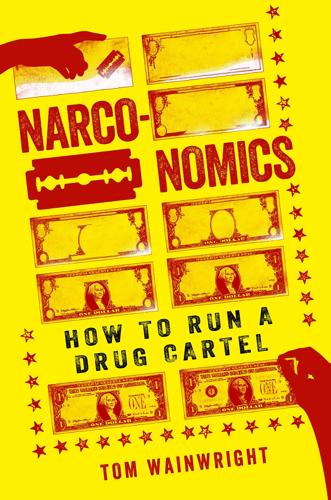
Narconomics: How to Run a Drug Cartel
by
Tom Wainwright
Published 23 Feb 2016
Until this point, cocaine, then a relatively little-used drug in the United States, had only been smuggled on a small scale. When Lehder and Jung were released from prison in 1976, they set about changing that forever. Within a couple of years they were importing the drug by the ton, hooking up with Pablo Escobar’s Medellín cartel in Colombia to send planeloads of cocaine to the United States via Norman’s Cay, a small island in the Bahamas that they used as their base. If one person can claim to have gotten America hooked on coke, Carlos Lehder is as good a candidate as any. Lehder’s extraordinary rise shows how criminal careers can be built on the foundations of a stint in prison.
…
Because of the difficulty involved in hiring new employees, and in making new contacts in the import and export game, drug traffickers may in fact be more forgiving of mistakes than legitimate firms, they suggest: “Given the impediments to information flows in these markets, relationships may be even more important than in legal markets.” What is the key to building relationships that last? Drug dealers don’t generally have reputations for being diplomatic types. But smoothing over potential areas of conflict has been a factor in the success of many big cartels. Pablo Escobar devised a basic system of insurance against lost cocaine shipments, which helped to avoid disputes and persuade legitimate businesspeople in Medellín to invest in his transactions (this in turn enabled his cartel to embed itself deeper within Colombian society). Benefits for valued contractors can sometimes be surprisingly generous.
…
Traffickers even spark fashion trends: after Édgar Valdez Villareal, a beefy cartel henchman incongruously known as the Barbie Doll, on account of his blond hair, was arrested wearing a distinctive green Ralph Lauren polo shirt, clothes stalls around Mexico City quickly started selling copies to young men who wanted to mimic the look. Something similar happens in Western countries, where drug traffickers are often portrayed in a romantic way that glosses over their crimes. Johnny Depp played a lovable Colombian American capo in Blow, a movie about the rise of Pablo Escobar’s Medellín cartel. Escobar’s son, Juan Pablo, has written a book about his dad, in which he describes his father’s early criminal business selling fake diplomas to his high-school friends. Howard Marks, a convicted drug trafficker from Britain, wrote an autobiography entitled Mr. Nice (one of his pseudonyms) and made a living giving talks in which he described his criminal career as a grand adventure.
Lonely Planet Colombia (Travel Guide)
by
Lonely Planet
,
Alex Egerton
,
Tom Masters
and
Kevin Raub
Published 30 Jun 2015
It also runs a paid fruit-themed tour to Medellín's largest market. You need to reserve online to secure your spot. Paisa RoadGUIDED TOURS (%317-489-2629; www.paisaroad.com) Runs the original Pablo Escobar–themed tour (COP$40,000) as well as sociable football tours (COP$50,000) on weekends where you'll sit among the most passionate supporters at a national league match. PROFITING FROM PABLO Even after his death, infamous cocaine warlord Pablo Escobar Gaviria keeps on making money. When backpackers started flowing back into Medellín – something only made possible by the fall of the Medellín Cartel boss – a couple of young local entrepreneurs sensed an opportunity.
…
In his acceptance speech he remarks that while Europeans value the continent's art, they have no respect for its political movements. 1982 Pablo Escobar is elected to the Colombian Congress; President Belisario Betancur grants amnesty to guerrilla groups and frees hundreds of prisoners; Colombia abandons plans to hold the World Cup. 1984 Justice Minister Rodrigo Lara Bonilla is assassinated for supporting an extradition treaty with the US. 1990 The M-19 demilitarizes; the cartels declare war on the government and the extradition treaty, and a government building near the Paloquemao market in Bogotá is destroyed by a bomb. 1993 One-time Congress member – and a more famous cocaine warlord – Pablo Escobar is killed a day after his 44th birthday on a Medellín rooftop by Colombian police aided by the US. 1995 The towns of San Agustín and Tierradentro in Colombia's southwest, with their many mysterious statues, carvings and burial tombs, are added to the Unesco World Heritage Sites list. 2000 Colombia and the USA agree on the expansive Plan Colombia to cut coca cultivation by 2005; the US eventually spends over US$6 billion with no drop in cocaine production over its first decade. 2002 President Álvaro Uribe is elected on an uncompromising anti-FARC ticket; he launches an immediate and effective clampdown. 2004 Carlos 'El Pibe' Valderrama, the flamboyantly coiffured midfielder, is included in Pelé's FIFA 100 list of greatest living footballers, chosen by the soccer legend to celebrate the 100th anniversary of FIFA. 2006 Uribe is swept to power once more as his 'Democratic Security' policy brings stability and prosperity for many. 2006 Up to 20,000 AUC paramilitaries disarm in return for lenient sentences for their massacres and human rights abuses. 2006 Shakira's 'Hips Don't Lie' breaks the 10-million mark in global sales and hits the number one spot in 25 countries – becoming the most successful song worldwide that year. 2008 The FARC is duped into handing over its highest-value hostage, French-Colombian presidential candidate, Ingrid Betancourt, to the Colombian army. 2008 The FARC announces that its founder, Manuel 'Sureshot' Marulanda has died, aged 78, of a heart attack in the jungle. 2009 The country's secret service is accused by the public prosecutor of tapping the phones of thousands of journalists, politicians, activists and NGO workers, and using the information to harass and threaten them. 2009 The UN calls false positives 'systemic,' and confirms thousands of cases, vindicating claims made for years by NGOs dubbed as terrorist sympathizers by the Uribe government. 2010 Colombia receives 1.4 million foreign visitors, according to official statistics, shaking off its decades-long reputation as a danger zone as President Uribe's security measures hit home. 2010 Juan Manuel Santos, from an influential family and former Defense Minister under Uribe, is elected as president in a landslide victory. 2011 Alfonso Cano, leader of the FARC and its chief ideologue, is killed in a bombing raid, raising hopes of an end to the conflict. 2011 A US–Colombia free trade deal is agreed to by US Congress after years of deliberation and delay over Democrats' concerns over human rights. 2012 Negotiations between the Colombian government and the FARC aimed at bringing a lasting peace to Colombia begin in Havana, Cuba. 2014 Colombia's most famous writer, Nobel laureate Gabriel García Márquez, dies in Mexico City. 2014 Juan Manuel Santos wins a second term as president, defeating his opponent with just 51% of the vote. 2014 The FARC announce an indefinite ceasefire against the Colombian army after two years of peace negotiations in Havana, Cuba.
…
Museo Histórico PolicíaMUSEUM (Museum of Police History; MAP GOOGLE MAP ; www.policia.gov.co; Calle 9 No 9-27; h8am-5pm Tue-Sun)F This surprisingly worthwhile museum not only gets you inside the lovely ex-HQ (built in 1923) of Bogotá's police force, but gives you 45 minutes or so of contact time with English-speaking, 18-year-old local guides who are serving a one-year compulsory service with the police (interesting tales to be heard). The best parts otherwise follow cocaine-kingpin Pablo Escobar's demise in 1993 – his Harley Davidson (a gift to a cousin) and his personal Bernadelli pocket pistol, otherwise known as his 'second wife.' Museo de la Independencia – Casa del FloreroMUSEUM (Casa del Florero; MAP GOOGLE MAP ; www.quintadebolivar.gov.co/museoindependencia; Calle 11 No 6-94; adult/student COP$3000/2000, free Sun; h9am-5pm Tue-Fri, 10am-4pm Sat & Sun) Just after Napoleon overcame Spain in 1810, local Creole Antonio Morales supposedly came to this late-16th-century home and demanded an ornate vase from its Spanish owner, which led to a fistfight on the street (plus one shattered vase) – eventually spurring a rebellion.
Kill Chain: The Rise of the High-Tech Assassins
by
Andrew Cockburn
Published 10 Mar 2015
In such an atmosphere, it was hardly surprising that Nixon-era ideas about assassinating major traffickers swung back into fashion in Washington. In Colombia, the main source of supply for the American cocaine market, the business had been consolidated during the 1980s into a limited number of “cartels,” of which the two richest and most powerful were based in the cities of Cali and Medellín. Among these major traffickers, Pablo Escobar, the dominant figure of the Medellín cartel, was to become an object of obsessive interest to American law enforcement as he successfully evaded U.S.-assisted manhunts before negotiating an agreement with the Colombian government in 1991, under which he took up residence in a “prison” that he had built himself in the hills above his home city.
…
It might have been possible to arrive at such a verdict intuitively, especially when the kingpin strategy in its most lethal form came to be applied to terrorists and insurgents, but this was a rare occasion in which the conclusion was based on hard data, undeniable facts. For example, in the last month of 1993, Pablo Escobar’s once massive cocaine smuggling organization was in tatters, and he himself was alone and being hunted through the streets of Medellín. If the premise of the DEA strategy—that the way to cut drug supplies was to eliminate kingpins—had been correct, his situation should have resulted in a disruption of supply.
…
exclaimed one grandmother to a visiting American reporter. “Wait till the United States figures out what it really means,” added another local resident. “Hell, maybe they’ll approve, since it’s really a victory for free enterprise. No more monopoly controlling the market and dictating what growers get paid. It’s just like when they shot Pablo Escobar: now money will flow to everybody.” This assessment proved entirely correct. As the big cartels disappeared, the business reverted to smaller groups that managed to maintain production and distribution quite satisfactorily, especially as they were closely linked either to the Marxist FARC guerrillas or to the Fascist antiguerrilla paramilitary groups allied with the Colombian government and tacitly supported by the United States.
Hype: How Scammers, Grifters, and Con Artists Are Taking Over the Internet―and Why We're Following
by
Gabrielle Bluestone
Published 5 Apr 2021
The slick commercial venture exploded onto America’s social media feeds in December of 2016, as hundreds of verified influencers—blue-check Instagram celebrities with tens of millions of combined followers—started posting the same ambiguous burnt sienna square, suggesting their fans #joinme by purchasing tickets to the mysterious event. The festival organizers who had hired the internet stars to promote the event were promising ticket buyers “two transformative weekends” of fabulous luxury on a private island formerly owned by Pablo Escobar, where they’d be flown in on private jets, pampered by a dedicated wellness team and nourished with meals designed by celebrity chef Stephen Starr. A follow-up commercial—a medley of half-naked twenty-something models interspersed with stock footage of other music festivals—subsequently went viral, and Vogue immediately deemed it the “supermodel antidote to the winter blues,” recommending the festival as a way to “preemptively fix that Coachella FOMO.”1 (Vogue has since edited any references to Fyre from the piece, though it lives on in the URL.)
…
And if there was any chance of pulling it off, Giunta said, the Fyre team would have to stage it on Norman’s Cay, the larger of the two islands Fyre had been considering. Unbeknownst to Giunta and most of the Fyre team, however, McFarland had recently been served with a cease and desist on their lavish promo video by the owners of Norman’s, whose one rule was that the company not promote that it had once been linked to an attorney for Pablo Escobar. After the video not only referenced Escobar but claimed that he himself had actually owned it, Saddleback Cay was the only option left. Unfortunately, the feasibility report concluded, “Upon scouting Saddleback Cay, we do not foresee a plausible solution to this island hosting FYRE Festival 2017, and recommend a date target of 2018 and beyond for Saddleback as the potential festival grounds.”
…
Around the same time, Brown resigned abruptly from the festival, sending along with his termination an invoice for $68,106 for services rendered by his company, Institute. By March 14, when newly hired talent producer Chloe Gordon visited the site for the first time, there was still nothing to show. “This was not a model-filled private cay that was owned by Pablo Escobar. This was a development lot covered in gravel with a few tractors scattered around. There was not enough space to build all the tents and green rooms they would need. There was not a long, beautiful beach populated by swimming pigs. There were, however, a lot of sand flies that left me looking like I had smallpox,” she observed in New York magazine’s The Cut a few weeks later.
Our 50-State Border Crisis: How the Mexican Border Fuels the Drug Epidemic Across America
by
Howard G. Buffett
Published 2 Apr 2018
The level of impunity for so long triggered brazen behavior because “They know it will be the people below” who take the fall for their illegal acts, Casar told the Times.23 Is Colombia a model? One question I continue to research: Is there a model for how a country has successfully battled and recovered from extreme criminal elements once they become so deeply entrenched? Some point to Colombia as a model of a nation that was dominated by the criminal element during the years of Pablo Escobar and the Medellín cocaine cartel. The leadership of Colombia vowed to break the cocaine cartels’ grip and it sought help. Plan Colombia was a fifteen-year initiative beginning in 2000, in which the United States sent aid and military support to Colombia, trained Colombian forces, and provided helicopters, weapons, and other technology to help the government secure its territory from violent insurgents and disrupt the activity of criminal cartels.
…
Charlie’s observation prompted me to look into this history, and I learned that Boston’s well-known Cabot family made some of its vast fortune in opium and later made large grants to Harvard and also to MIT, according to historian and author James Bradley.1,2 Boston’s Russell & Co. merchant fleet was considered the largest American opium dealer, and the Russell family funded Yale’s famous Skull and Bones society. A man named Warren Delano worked for Russell & Co.—Delano as in President Franklin Delano Roosevelt, Warren’s grandson. According to Bradley, Delano was known as the “opium king of China.” It’s bizarre to think of Cabots and Roosevelts as nineteenth-century Pablo Escobars and El Chapos. They did not terrorize their own communities in the United States, but they became wealthy and powerful by running for-profit, global operations that exploited demand for an illegal drug in a foreign country. They obtained opium from British governors, who oversaw its production in Turkey and India, and then sold it to China, which was flush with cash from selling tea and silk to the West but buying very little in return.
…
But as the example of the Chinese sending ships full of methamphetamine precursor chemicals to Mexico demonstrates, we cannot afford not to act. Others who might benefit from a destabilized Western Hemisphere are acting in ways that undermine our security. We can look to Colombia, which has undergone a transformation since the days of Pablo Escobar. In partnership with the United States and others, the government restored order in its institutions, ended a fifty-year-old conflict, and over time the people are taking their country back. Foreign investment from many partners is increasing. Signs of progress I have had a series of meetings in El Salvador with government officials that make me optimistic that the time is right to make some strategic investments in El Salvador to strengthen the justice system.
Raising Lazarus: Hope, Justice, and the Future of America’s Overdose Crisis
by
Beth Macy
Published 15 Aug 2022
former Purdue secretary: Nancy Camp, author interview, October 5, 2020. Michael Jackson: Richard Esposito, “Exclusive: Police Say Michael Jackson ‘Heavily Addicted to OxyContin,’” ABC News, June 25, 2009. “didn’t want to hear”: Nancy Camp, author interview, October 5, 2020. “Pablo Escobar of the new millennium”: Emma Ockerman, “A Friend Once Warned the Billionaire Behind OxyContin That He ‘Could Become Pablo Escobar of the New Millennium,’” Vice.com, May 29, 2019. “the Sacklers’ cathedral”: Michael S. Quinn, letter to United States Bankruptcy Court, “Limited Objection of the Ad Hoc Committee on Accountability to Debtors’ Motion to Extend the Preliminary Injunction,” Chapter 11, Case No. 12-23649, Southern District of New York, filed March 19, 2021.
…
He’d never created a website before, but he knew how to Google, and he wanted to make sure that Congress saw it Monday morning first thing. He also posted a scathing objection on Judge Drain’s docket, featuring a recently released 2002 e-mail from a friend of Richard Sackler’s: “I hate to say this, but you could become the Pablo Escobar of the new millennium,” warned the doctor friend. Back then, teenagers at a nearby private high school had been approaching classmates with offers to buy OxyContin; one told the doctor it was “a designer drug and sort of like heroin.” In his objection, Quinn expounded on the comparison: “When the Colombian government finally made a show of enforcement against Escobar, that country’s judiciary oversaw a special arrangement, in which the drug dealer was given his own private prison, especially built on a hill overlooking his hometown.
I See You Made an Effort: Compliments, Indignities, and Survival Stories From the Edge of 50
by
Annabelle Gurwitch
Published 6 Mar 2014
There’s something wonderfully satisfying about acknowledging your mediocrity and still persevering, except in sudoku. I don’t understand sudoku. I never have, I never will, I can’t even look at it without getting a headache, and the fact that it’s been shown to ward off Alzheimer’s fills me with a fury that even meditation can’t cure. Here is the inner monologue of the mediocre meditator: Pablo Escobar. What ever happened to him, and what’s the name of that Latino actor who plays both drug lords and cops? What time is it? I can’t believe I bought a house that you can hear the freeway from even though it’s over a mile away. Damn it. Never buy a house without checking it out at night when the neighborhood is quiet.
…
Sure, in the distant future, bands of nonconformists determined to exercise their freedom to wear colorful socks will form a liberation movement: Free Our Colored Socks, FOCS, will become a rallying cry for the small population oppressed by the tyranny of dichromatic hosiery, but until then, we will be united and status equalized by our feet. Miguel Sandoval! He was amazing in that movie about Pablo Escobar, Blow. Is it considered memory loss if you can eventually come up with the name you were trying to remember? What time is it? Okay, it’s only been nineteen minutes but who’s counting? I’m just going to round up to twenty. Only 13,400-ish minutes of meditation to go this year. I deserve some cake.
Kleptopia: How Dirty Money Is Conquering the World
by
Tom Burgis
Published 7 Sep 2020
O’Brien, ‘Trump, Russia and a Shadowy Business Partnership’, Bloomberg, June 21, 2017, bloomberg.com/opinion/articles/2017-06-21/trump-russia-and-those-shadowy-sater-deals-at-bayrock an old hotel at the far end of Lake Geneva: Bayrock presentation; Iliyas Khrapunov interview he asked Felix: Iliyas Khrapunov interview secured exemptions: Interview with Elise Bean, former staff director and chief counsel to Senator Carl Levin’s Senate Permanent Subcommittee on Investigations, Washington, DC, 2017 flagged them as suspicious: Tom Burgis, ‘US prime property is magnet for illicit wealth, warns Treasury’, Financial Times, February 23, 2017, ft.com/content/3b1b583e-f9ea-11e6-bd4e-68d53499ed71 sixty-three Russians: Nathan Layne, Ned Parker, Svetlana Reiter, Stephen Grey and Ryan McNeill, ‘Russian elite invested nearly $100 million in Trump buildings’, Reuters, March 17, 2017, reuters.com/investigates/special-report/usa-trump-property Pablo Escobar: Sergio N. Candido, ‘Safe found at Pablo Escobar house in Miami Beach will be kept in bank vault – for now’, Miami Herald, January 26, 2016, miamiherald.com/news/local/community/miami-dade/miami-beach/article56514733.html dropped more than $1 million: US government forfeiture proceedings in the Jacksonville Division of the US District Court for the Middle District of Florida, against 4866 Yacht Basin Drive and other property, amended verified complaint, March 18, 2015, star.worldbank.org/corruption-cases/sites/corruption-cases/files/Toure_MDFLA_Amendedy%20Complaint_Mar2015.pdf, and settlement, February 1, 2016, worldbank.org/corruption-cases/sites/corruption-cases/files/Toure_MDFLA_Settlement%20 Agreement_02012016.pdf.
…
Florida was popular with Latin Americans and Africans, as well as the usual ex-Soviets. Around Sunny Isles in the south of the state, sixty-three Russians, many of them politically connected back home, spent $98 million on properties in seven luxury towers erected by a single American developer. Pablo Escobar, prime mover of the Colombian drug barons, took a waterfront mansion in Miami Beach, complete with underfloor safe. In steamy Jacksonville on the Atlantic, a young widow called Mamadie Touré arrived in 2009 from the destitute West African state of Guinea. Through LLCs, she dropped more than $1 million to buy three delightful suburban family homes and a restaurant (where diners complained that the fresh strawberries concealed tinned peaches).
Lethal Passage
by
Erik Larson
Published 27 Jul 2011
Under Wayne Daniel and his partners, the new RPB faced an array of business obstacles not typically included in the syllabi at Harvard Business School. One partner was convicted of bribing a prosecutor to drop a client’s drug charge. Two others, Robert Morgan and John “Jack” Leibolt, got involved in the narcotics smuggling operations of Pablo Escobar-Gaviria and the Medellín Cartel. Morgan was convicted in 1979 for smuggling two tons of marijuana into Florida and was sentenced to thirty years in prison. Leibolt, according to a sweeping 1989 indictment of the Medellín Cartel, once piloted a plane for the cartel and, in September 1979, supplied the group with six silencer-equipped machine guns.
…
No. 4178, Philadelphia, 1992. Court transcript. US-AF U.S. vs. Amir Faraz. U.S. District Court, Norfolk. CR 91–154-N. US-CW U.S. vs. Curtis Williams. U.S. District Court, Norfolk. CR-88–145-N. March 1, 1989. US-DA U.S. vs. Dean Archer. U.S. District Court, Norfolk. CR 91–4-N. US-PEG U.S. vs. Pablo Escobar-Gaviria, et al. U.S. District Court, Jacksonville, Florida 89–29-CR-J-16. Indictment, February 24, 1989, 12, 13, 14. U.S.-SWD U.S. vs. SWD Inc. and RPB Industries Inc. U.S. District Court, Atlanta. CR-86–22A. Federal Records Center, Atlanta. VA-NE Virginia vs. Nicholas Elliot. Circuit Court, Virginia Beach, Virginia.
McMafia: A Journey Through the Global Criminal Underworld
by
Misha Glenny
Published 7 Apr 2008
CHAPTER 11 March of Fear Soldiers The road to Jamundí, fifteen miles south of Cali, is quite a tour. First I drive past the training ground of Cali America Soccer Club, owned by the Rodríguez-Orejuela clan, a.k.a. the Cali cartel. A few miles farther on, I am astonished to see a full-size bull ring belonging to the Ochoa brothers, erstwhile partners of the late Pablo Escobar in the Medellín cartel. Jamundí is a favored recreational destination for narco-traffickers (as they are universally known in Colombia), where they have built grand fincas, complete with lakes, full-size floodlit soccer pitches, indoor and outdoor pools—all on the same property. Right at the far end, the fincas stop abruptly and the modest dwellings of the impecunious Indians begin.
…
The Cali cartel was one of the top three cocaine clans to emerge in Colombia during the 1970s and 1980s. In an agreement with the other two clans, who were based in Medellín, the Cali cartel had carved up the U.S. export market with precision—New York belonged to Cali. Anyone exporting there would have to link up with their operation. In 1981 and 1982, the Ochoa clan, partners in crime with Pablo Escobar in the Medellín cartel, convened a series of meetings at their ranch, Las Margaritas, to which the major cartel bosses from around Colombia were invited. The most senior delegation to join Escobar and the Ochoas were the Rodríguez-Orejuela brothers, Gilberto and Miguel, who controlled the Cali cartel.
…
First, they agreed to fund a clandestine organization, MAS, Muertes a Secuestradores (Death to the Kidnappers), a private militia that would later blossom into the more powerful and organized right-wing paramilitary the AUC. Second, they agreed to carve up the North American cocaine market—Escobar was awarded the color code yellow for Miami, the Ochoas were blue for Los Angeles, and the Cali cartel was red for New York. Although he enjoyed a reputation as the most notorious narco-trafficker, Pablo Escobar was not in fact as successful as the Rodríguez-Orejuela brothers. These two had first come to the attention of the police for their role in a series of high-profile kidnappings in the late 1960s. By the mid-seventies, the elder brother, Gilberto, had gathered sufficient funds to buy a light aircraft with which he ferried the semi-refined coca paste from Peru to Cali.
Empire of Pain: The Secret History of the Sackler Dynasty
by
Patrick Radden Keefe
Published 12 Apr 2021
—Rolling Stones (1966) CONTENTS Prologue: The Taproot BOOK I PATRIARCH 1 A Good Name 2 The Asylum 3 Med Man 4 Penicillin for the Blues 5 China Fever 6 The Octopus 7 The Dendur Derby 8 Estrangement 9 Ghost Marks 10 To Thwart the Inevitability of Death BOOK II DYNASTY 11 Apollo 12 Heir Apparent 13 Matter of Sackler 14 The Ticking Clock 15 God of Dreams 16 H-Bomb 17 Sell, Sell, Sell 18 Ann Hedonia 19 The Pablo Escobar of the New Millennium 20 Take the Fall BOOK III LEGACY 21 Turks 22 Tamperproof 23 Ambassadors 24 It’s a Hard Truth, Ain’t It 25 Temple of Greed 26 Warpath 27 Named Defendants 28 The Phoenix 29 Un-naming Afterword Acknowledgments A Note on Sources Notes Prologue THE TAPROOT the new york headquarters of the international law firm Debevoise & Plimpton occupy ten floors of a sleek black office tower that stands in a grove of skyscrapers in midtown Manhattan.
…
“People say stupid things when they are angry.” It was ludicrous, obviously, for her to have thought that she, a lowly legal secretary with a drug problem, would ever stand a chance against the Sacklers and Purdue. “Yeah. I am going to buy the company,” she said wryly. “I don’t think so.” Chapter 19 THE PABLO ESCOBAR OF THE NEW MILLENNIUM on the last tuesday in August 2001, a subcommittee of the U.S. House of Representatives gathered for an unusual hearing in a municipal building in Bensalem, a small township in Bucks County, Pennsylvania. The hearing had been convened by a Pennsylvania congressman, James Greenwood, who chaired the subcommittee on oversight and investigations of the House Energy and Commerce Committee.
…
For such a brainy guy, Richard was able to sustain an impressive degree of emotional and cognitive detachment from reality. In 2002, another friend, an anesthesiologist, got in touch. The man informed Richard that at his daughter’s tony private school, OxyContin was now considered “a designer drug, sort of like heroin.” The anesthesiologist said, “I hate to say this but you could become the Pablo Escobar of the new millennium.” Richard was not alone among the Sacklers in feeling that the family had nothing to apologize for and no amends to make. The different wings of the family, the A side and the B side, often struggled to find common ground. But on this much, they were in agreement. It was a collective denial, one that came to pervade not just the family but the ranks of their company.
This Is Your Country on Drugs: The Secret History of Getting High in America
by
Ryan Grim
Published 7 Jul 2009
In 2003, Canada restricted bulk pseudoephedrine exports, and the next year the number fell to 55. As the Iowa cops easily understood, wiping out meth labs in the United States did almost nothing to reduce meth supply. It only strengthened the hand of the Mexicans. Ever since the U.S. crackdown in Colombia, which led to the death of Pablo Escobar in 1993 and the arrest or killing of many other narco-leaders, the Mexicans had gradually been taking control of drug trade. During the same decade, one-party rule in Mexico was coming to an end, as the Institutional Revolutionary Party (Partido Revolucionario Institucional, or PRI) began to lose its decades -long grip on power.
…
University of Maryland professor Peter Reuter notes that prohibition makes illegal businesses difficult to sell, which would limit growth to the life of the owner. In theory, a business could be taken over by a relative—or by force—and continue apace, as long as the new owner knew what he was doing. But because employee loyalty is often to the owner himself—say, Pablo Escobar—rather than to the firm, the new boss might have some trouble keeping things together. Escobar suggests what at first seems to be a counterargument, if the man’s operation was even a fraction the size of legend. In 1989, Forbes listed history’s favorite narco-trafficker as one of the world’s ten richest people.
Streetfight: Handbook for an Urban Revolution
by
Janette Sadik-Khan
Published 8 Mar 2016
Among the planet’s 7 billion people, the city of Medellín probably doesn’t ring many bells. It’s likely that those who recognize the name know it more for its drug-laced reputation than for its culture or geographical beauty, let alone its transportation innovation. During the 1980s, Medellín was the seat of Pablo Escobar’s drug cartel, the cocaine trafficking empire that epitomized the bloody drug wars. Wedged between two ridges of the Andes mountains, the city’s population of 2.4 million paisas, as residents call themselves, was governed less by the government than by the cartel, as Escobar offered bounties for the heads of police officers and other rivals.
…
Auckland Design Office, Auckland Council From waterfront revitalization to transit expansion to shared street projects like this one on Elliott Street downtown, the so-called City of Cars is remaking itself into a twenty-first-century city of people. Auckland Design Office, Auckland Council There’s no better example of the transformative power of transportation on communities than Medellín, Colombia. Once the seat of Pablo Escobar’s notorious drug cartel, the city has transformed itself over the last twenty years with efforts to reconnect neighborhoods. A twenty-eight-story series of escalators connects the Comuna Trece area built into a ridge in the Andes with the city core. The three lines of the Metrocable system connect the steep, hillside barrios to the city’s metro, cutting in half a two-and-a-half-hour commute and breathing new life into once-crime-plagued neighborhoods.
Atlas Obscura: An Explorer's Guide to the World's Hidden Wonders
by
Joshua Foer
,
Dylan Thuras
and
Ella Morton
Published 19 Sep 2016
The Armando Armero foundation has established a Memory Interpretation Center on the site, where visitors can learn about the buried city and the volcano that destroyed it. The ruins of Armero are a 5-hour drive west of Bogotá, Colombia’s capital. 4.966666 74.827318 Pablo Escobar’s Hippos PUERTO TRIUNFO, ANTIOQUIA Notorious Colombian cocaine baron Pablo Escobar once lived on this sprawling estate, spending his days riding his hovercraft over its many lakes, wandering among his collection of vintage cars, and strolling through his zoo filled with hippopotamuses and exotic birds. Escobar was killed in a hail of gunfire by the Colombian police in 1993, and the hacienda became dilapidated.
…
Peters, 20 Ruins of the MV Plassey, 14 Sacred City of Caral-Supe, 405 Santa Claus, 297 Sewell, 397 Spreepark, 45 Steetley Magnesite, 5 Steinart Hall, 372 Suakin, 194 Sunken City, 281 Umatilla Chemical Depot, 292 Uranium City, 264 Val-Jalbert Ghost Town, 274 Varosha Beach Resort, 51 White City Ruins, 281 see also Lost Cities and Towns SCIENCE MUSEUMS AND EXPERIMENTS Alchemy Museum, 78 American Computer Museum, 313 Birthplace of Tesla Museum and Memorial Center, 77 Boomeria, 287 California Science Center, 281 Centennial Bulb, 286 Dymaxion Chronofile, 279 Edison’s Last Breath, 328 Electronic Museum, 80 Ether Dome, 372 Gottfried Knoche’s Mummy Lab, 411 Griffith Observatory’s Tesla Coil, 281 Hessdalen AMS, 107 Holmdel Horn Antenna, 356 IceCube Research Station, 447 Instituto Butantan, 394 Integratron, 279 Mapimí Silent Zone, 417 Marconi National Historic Site, 268 Mark I, 372 Moore Lab of Zoology, 281 Musée des Arts et Métiers, 37 Nikola Tesla Museum, 94 Phone Booth on a Roof, 322 Pitch Drop Experiment, 232 Quiet Zone, 366 Reed College Research Reactor, 291 Sound Garden, 294 Wilhelm Reich Museum, 370 World’s Quietest Room, 329 SELF-BUILT CASTLES Bishop Castle, 298 Cano’s Castle, 299 Château Laroche, 333 Coral Castle, 299 Don Justo’s Self-Built Cathedral, 68 Moussa Castle, 120 Mystery Castle, 299 Palais Idéal, 38 Rubel Castle, 299 Solomon’s Castle, 299 Taródi Vár Castle, 80 Tower of Eben-Ezer, 30 STRANGE ARCHITECTURE Abita Mystery House, 346 Abuja Airplane House, 203 Amargosa Opera House and Hotel, 284–285 Arcosanti, 297 Arctic architecture, 262–263 Ateneo Grand Splendid, 383 Atomium, 30 Aurora Ice Museum, 377 Binoculars Building, 281 Blackfriars Playhouse, 351 Bob Baker Marionette Theater, 281 Bok Tower Gardens, 342 Boswell Embalming Bottle House, 260 Boulders of Monsanto, 66 Bridge to Nowhere, 243 Britannia Panopticon Music Hall, 20 Bruno Weber Skulpturenpark, 72 Carriolu Miniature Village, 40 Chan, 405 Chand Baori Stepwell, 132 Cigar Band House, 65 Clown Motel, 300 Concrete Parthenon, 351 Dans le Noir, 37 Discovery Hut, 447 Drottningholms Palace Theater, 110 Dunmore Pineapple, 20 Free Spirit Spheres, 259 Gbadolite, 207 Gold Pyramid House, 322 Greatstone Sound Mirrors, 8 Hobbiton, 240 House of Balls, 329 House of Evgeny Smolik, 92 House of Plastic Bottles, 386 House on the Rock, 334 Igloolik Research Station, 263 Infinite Corridor (MIThenge), 372 Karl Junker House, 45 Kowloon Walled City Park, 151 Kremsmunster Observatory, 25 Kruševo Makedonium, 83 Kyaiktiyo Balancing Pagoda, 177 Loretto Chapel Stairs, 305 Lumilinna Snow Castle, 102 Magic Mountain Hotel, 397 Maison Picassiette, 33 McElroy Octagon House, 287 Mini Taj Mahal, 128 Minimundus, 25 Mistake House, 321 La Mona, 418 Moonhole, 442 Mudhif Houses, 116 Nakasuk School, 263 Naucalpan, 417 New Lucky Restaurant, 132 Newgrange Mound, 15 Nördlingen, 41 Painted Village, 85 Palacio Barolo, 385 Paper House, 373 Passetto di Borgo, 58 Ponte City Apartments, 216 Pope Leo’s Bathroom, 57 President’s Room, 118 Quinta da Regaliera, 67 Radio City Music Hall’s Secret Apartment, 359 Rundetårn, 100 Ryugyong Hotel, 164–165 Salar de Uyuni, 388 Sam Kee Building, 258 Santa’s Workshop, 104 727 Fuselage Home, 421 Shackleton’s Hut, 449 Skellig Michael, 15 Solar Power Towers, 70 Solomon’s Castle, 299 Stiltsville, 340 Swallow’s Nest, 98 Tash Rabat, 137 Teatro Amazonas, 395 Tower of Eben-Ezer, 30 Trick Fountains of Hellbrunn Palace, 28 Upside-Down House, 83 Venetian Palace Diorama, 372 Watts Tower, 281 Wilson’s Stone Igloo, 447 Winchester Mystery House, 279 Wishbones of McSorley’s Old Ale House, 359 Wuppertal Suspension Railway, 46 see also Pyramids; Self-built Castles, Towers, and Homes STRANGE FLORA AND FAUNA Abu Dhabi Falcon Hospital, 123 Adak National Forest, 378 African Dream Root, 393 Archie the Giant Squid, 12–13 blue-ringed octopus, 228 box jellyfish, 228 Chocolate Hills, 178 coastal taipan, 229 Cochrane Polar Bear Habitat, 273 Colossal Squid, 244 Dzanga Bai, 206 eye worm, 154 Firefly Squid of Toyama Bay, 156–157 Franklin Park Zoo Bear Pens, 372 Grant Museum of Zoology, 10 Guinea worms, 154 gympie gympie, 229 hemlock, 4 Huachuma, 392 Huberta the Hippo, 216 Iboga, 393 Impaled Stork, 47 Jellyfish Lake, 248 Jigokudani Park, 160 Knight’s Spider Web Farm, 375 lake monsters, 368–369 Litchfield Termite Mounds, 234 loa loa, 154 Maasai Ostrich Farm, 210 Manú National Park, 405 Monarch Butterfly Biosphere Reserve, 417 Musk Ox Farm, 377 Narcisse Snake Orgy, 261 Pablo Escobar’s Hippos, 399 Pangolin Rehabilitation Center, 169 Pitcher Plants of Kinabalu, 176 Rat King, 38 Sacred Crocodile Pond, 199 Salvia divinorum, 392 Seneca White Deer, 360 Skunk Ape Research Headquarters, 341 Sloth Sanctuary, 422 Socotra Island, 124 stonefish, 228 Swimming Pigs, 426 Sydney funnel-web spider, 229 Synchronized Fireflies of Kampung Kuantan, 176 tapeworms, 154 Thousand-Year Rose, 44 Three-Century Labyrinth, 65 Tortoises of Aldabra, 222 Ueno Zoo Escaped Animal Drill, 155 University of Florida Bat Houses, 340 Vallée de Mai, 221 Victoria Amazonica, 395 Wallabies of Lambay, 17 Wichita Mountains Buffalo Herd, 317 Zoological Museum at Vietnam National University, 184 Zoological Museum (Bologna), 52 Zoological Museum (Cluj-Napoca), 86 see also Trees STRANGE TOWNS AND CITIES Auroville, 132 Castellfollit de la Roca, 70 Ciudad Mitad del Mundo, 402 Colonia Tovar, 410 Darra Adam Khel, 140 Dwarf Empire, 146 Fordlândia, 395 Fucking, Austria, 25 Ganvie, 196 Garbage City, 188 Giethoorn, 64 Hallstatt, 150 Kampong Ayer, 168 Kijong-dong, 163 Kingdom of Women, 146 Nova Cidade de Kilamba, 213 Oyotunji African Village, 350 PhinDeli Town, 318 Setenil de las Bodegas, 70 Villa Baviera, 397 Vulcan, 257 Walled City of Shibam, 124 Whittier, Alaska, 377 SUPERNATURAL Badlands Guardian, 258 Betty and Barney Hill Archive, 374 Cassadaga, 342 Child-Eater of Bern, 73 Devil’s Footprint, 41 Devils’ Museum, 83 Devil’s Tramping Ground, 348 Fairy Circles, 215 Gurdon Light, 339 Hook & Ladder 8, 359 International Cryptozoology Museum, 367 Lily Dale Assembly, 360 Marree Man, 234 Mary King’s Close, 20 Mumtaz Begum, 140 Musée de la Magic, 37 Museo de las Brujas, 70 Museum of Witchcraft and Magic, 7 Oregon Vortex, 289 Robert the Doll, 342 TAXIDERMY Agriculture Museum of Budapest, 81 August von Spiess Museum of Hunting, 87 Deyrolle Taxidermy, 34 Grip the Raven, 364 TEMPLES, CHURCHES, AND MONASTERIES Angelus Temple, 281 Astronomical Clock of Besançon Cathedral, 33 Beer Bottle Temple, 183 Cao Dai Holy See, 184 Cathedral of Junk, 308 Cathedral of Our Lady of the Angels, 281 Chained Books of Hereford Cathedral, 5 Chapel Oak, 33 Chapel of the Snows, 447 Chicago Temple, 320 Church of St.
Future Crimes: Everything Is Connected, Everyone Is Vulnerable and What We Can Do About It
by
Marc Goodman
Published 24 Feb 2015
Advances in synthetic biology won’t just raise a host of ethical and privacy problems; they will create criminal ones as well—opportunities Crime, Inc. is eager to exploit to its advantage. Bio-cartels and New Opiates for the Masses Organized crime has always made money from drugs—lots of it. At the height of his reign, Colombia’s Pablo Escobar reportedly was bringing $60 million every single day into his “company” coffers. More recently, Mexico’s Joaquín “El Chapo” Guzmán Loera was estimated to be worth billions, earning him a place on the Forbes wealthiest list. Their business expertise lay mostly in agriculture and logistics: growing plants, distilling their products into substances that made people high, and distributing them around the world.
…
Rapidly advancing changes in digital biology may also disintermediate existing incumbents in the narcotics trade. Just as Microsoft took the personal PC away from IBM, and Apple took the mobile phone from Nokia and BlackBerry, it may be a student at MIT who obviates the need for a Colombia-based Pablo Escobar of tomorrow. Moreover, if Craig Venter is right and we will all have bio-printers at home, why not just print my own THC or oxycodone—evaporating billions in profits from legacy players and creating new leaders in the bio-cartels of tomorrow. Hacking the Software of Life: Bio-crime and Bioterrorism In the nearer term, I think various developments in synthetic biology are quite disconcerting.
…
,” Time, Feb. 20, 2012. 54 Meanwhile, under Danish law: Statens Serum Institut, “The Danish Neonatal Screening Biobank,” http://www.ssi.dk. 55 And what happens: Andrew Pollack, “DNA Evidence Can Be Fabricated, Scientists Show,” New York Times, Aug. 18, 2009; Dan Frumkin et al., “Authentication of Forensic DNA Samples,” Forensic Science International: Genetics 4, no. 2 (2010): 95–103, doi:10.1016/j.fsigen.2009.06.009. 56 The engineered samples: Fiona Macrae, “DNA Evidence Can Be Fabricated and Planted at Crime Scenes, Scientists Warn,” Mail Online, Aug. 19, 2009. 57 “discreet DNA samples”: Sharon Begley, “Citing Privacy Concerns, U.S. Panel Urges End to Secret DNA Testing,” Reuters, Oct. 11, 2012. 337 Organized crime has always made money: Erin Carlyle, “Billionaire Druglords,” Forbes, March 13, 2012. 58 At the height: Bijan Stephen, “Pablo Escobar’s Hippos Are Running Wild in Colombia,” Time, June 28, 2014. 59 Though narcos have been using: Jeremy McDermott, “Drug Lords Develop High-Yield Coca Plant,” Telegraph, Aug. 27, 2004; Goodman, “What Business Can Learn from Organized Crime.” 60 You could just take: Marc Goodman, “A Vision for Crimes in the Future,” TED Talk, July 2012. 61 E. coli bacteria: “Bakterien können ohne viel Aufwand Cannabis-Wirkstoff produzieren,” derStandard.at, Aug. 17, 2010, http://derstandard.at/; Luc Henry, “Instead of Poppies, Engineering Microbes,” Discover, Sept. 9, 2014; “A New Opium Pipe,” Economist, Aug. 30, 2014. 62 Later it was discovered: Joel O.
Dreamland: The True Tale of America's Opiate Epidemic
by
Sam Quinones
Published 20 Apr 2015
The public officials gave what Kuykendall considered elected-official responses, appeasing no one. He drove home to Albuquerque that night. The politicians’ presence told him that they knew things were bad. He had always told younger agents to focus on the biggest dealer wherever they were stationed. That dealer may not be Pablo Escobar, he would say, but the biggest dealer in a small town is still a problem to that town. The next day, Kuykendall opened a case against Chimayo’s three heroin clans. Liberace Shows the Way Portsmouth, Ohio By the end of the 1990s, Dr. David Procter was one of the few people doing well in Portsmouth, Ohio.
…
“Nobody was supposed to get them but cancer patients,” Hall said. Plus in 1999 the state put in its prescription-monitoring program. With Kentucky off-limits, Hall found an Oxy connection through a Floyd County friend in Detroit. He also found other connections in Dayton and Toledo. He had read about New York mafioso John Gotti and Colombian drug lord Pablo Escobar years before. OxyContin allowed him, a man without much else in his life, to imagine following in their footsteps. He began driving regularly up to Ohio and Detroit for pills. These connections were reliable enough so that things got bad in Floyd County where OxyContin was concerned. But in 2004 Floyd County began to get a lot worse.
Economic Dignity
by
Gene Sperling
Published 14 Sep 2020
Rockefeller’s oil business came from collusion with major railroads to keep competitors’ prices artificially high, among other tactics.43 The price-fixing alliance afforded Rockefeller and other larger refineries not only lower freight prices but also the power to force small refineries to sell their businesses to him at a loss.44 If they refused to sell, Rockefeller assured them that there was little to no chance of their business surviving.45 When my wife—a TV writer—wrote for Netflix’s Narcos, the first line she told me from her research of Colombian drug lord Pablo Escobar was how he offered a “choice” to the elected officials he wanted to bribe: ¿Plata o plomo? Silver or lead? This money-or-a-bullet coercion was experienced by small oil refiners who felt “entirely at the mercy” of Standard Oil’s monopoly power.46 Tarbell’s motivation to take down Rockefeller was no doubt inspired in part by the devastating harm to small business owners from his brute oil monopoly that she saw up close.
…
Someone who controlled it could dominate or humiliate any competitor based on brute force—not on quality or price competition. According to Tim Wu, “Rockefeller liked to offer his smaller rivals the choice first popularized by Genghis Khan: Join the Empire or face complete destruction.”18 Whether attributed to Genghis Khan or Pablo Escobar, this type of “silver or lead” domination is what forced the smaller oil refiners in the Cleveland area (including Pennsylvania) to sell Rockefeller their operations at cut rates, and led to Tarbell’s father’s economic demise and his best friend’s suicide. This episode is still referred to as the “Cleveland Massacre.”19 While the Interstate Commerce Act of 1887 and antitrust lawsuits against railroads—beginning with Teddy Roosevelt’s breakup of the Northern Securities Company in 1904—eventually put constraints on the type of railroad abuse that Rockefeller deployed in the Cleveland Massacre, the example remains relevant to the types of market structures we should avoid today to prevent new forms of such brute domination.
The Rough Guide to South America on a Budget (Travel Guide eBook)
by
Rough Guides
Published 1 Jan 2019
Bolívar dies in self-imposed exile in Santa Marta. 1853 Colombia adopts a constitution that includes a prohibition against slavery. 1886 Nueva Granada becomes the Republic of Colombia, after Christopher Columbus. 1899–1902 The War of a Thousand Days, the bloody three-year-long civil war born of escalated antagonism between the Conservative and Liberal political parties. 1903 With the support of the US navy, Panama secedes from Colombia. 1948 The assassination of the working class’s greatest advocate, Bogotá’s populist mayor, Jorge Eliécer Gaitán, begins the massive rioting known as El Bogotazo, which catalyzes a decade of partisan bloodletting, La Violencia, leaving 200,000 dead. 1953 General Rojas Pinilla leads a military coup and begins negotiations to demobilize armed groups and restore peace and order. 1954 The group that would develop into Communist-linked Fuerzas Armadas Revolucionarios Colombianos (FARC) forms among the countryside peasants as a response to the violence and repression suffered by the rural population at the hands of the military. 1958 The Conservative and Liberal parties become a united National Front, agreeing to share power, with each party holding office alternately for four years. 1964 US-backed military attacks lead to violent clashes between the government and armed guerrilla groups. The leftist National Liberation Army (ELN) and Maoist People’s Liberation Army (EPL) are founded and civil war erupts. 1982 Gabriel García Márquez wins the Nobel Prize in Literature. Pablo Escobar is elected as a Congress member. 1984 The government intensifies efforts to do away with drug cartels, as violence by narco-trafficker death squads and left-wing terrorists escalates. 1985 Members of radical leftist guerrilla group Movimiento 19 de Abril (M-19) take over the Palace of Justice, killing eleven judges and nearly a hundred civilians. 1986 Pope John Paul II visits Colombia.
…
Pablo Escobar is elected as a Congress member. 1984 The government intensifies efforts to do away with drug cartels, as violence by narco-trafficker death squads and left-wing terrorists escalates. 1985 Members of radical leftist guerrilla group Movimiento 19 de Abril (M-19) take over the Palace of Justice, killing eleven judges and nearly a hundred civilians. 1986 Pope John Paul II visits Colombia. A grandiose cathedral is built in preparation in Chiquinquirá. 1990 Drug cartels declare war on the government after it signs an extradition treaty with the US. 1993 Drug kingpin Pablo Escobar is shot dead evading arrest. 1995 San Agustin and Tierradentro are recognized as UNESCO World Heritage Sites. 1999 Plan Colombia, aimed at tackling the country’s cocaine production, is launched, with backing from the US. Spraying destroys coca fields and food crops alike. 2002 Álvaro Uribe Vélez is elected president on a platform of law and order. 2006 Around 20,000 AUC paramilitaries claim to disarm in return for lenient sentences for massacres and other human rights abuses.
…
Museo Histórico Policía Friendly young English-speaking police officers provide free guided tours of the Museo Histórica Policía (C 9 no. 9–27; Tues–Sun 9am–5pm; free; policia.gov.co/historia/museo), which are really worthwhile just to hear about their experiences. The basement is largely given over to a display on the notorious 499-day police hunt for drug lord Pablo Escobar, and includes his Bernadelli pistol, also known as his “second wife”, and there’s a great view across the city from the roof. Museo Militar Run by the military, the Museo Militar (C 10 no. 4–92; Tues–Sun 8.30am–4.30pm; free; ID required; bit.ly/1BaVJNE) showcases weaponry through the ages, jaunty military uniforms, model battleships, anti-aircraft guns and other articles relating to the art of war.
Insight Guides South America (Travel Guide eBook)
by
Insight Guides
Published 15 Dec 2022
Civil war followed, with fighting between civilians, police, and soldiers reaching unprecedented levels of brutality. At least 300,000 people lost their lives in the struggle. By 1953, armed peasant groups had begun to develop a clear revolutionary philosophy, forming the Revolutionary Armed Forces (FARC). Fact By the end of the 1980s, Medellín drug cartel boss Pablo Escobar had an estimated wealth of US$3 billion, making him the 14th richest man in the world at the time, according to Forbes magazine. Fearful of a Communist advance, the Liberals and Conservatives quickly united, and in 1957 they agreed to share power for the next 16 years, thus ensuring that there would be no real change.
…
Meanwhile, the various peasant armies in the countryside dragged on their battle with the armed forces, a fight that continued until 2016, when the FARC – holder of the extremely dubious title of the oldest guerrilla force in the continent – finally agreed to lay down its arms. Drug economy The presidency of Virgilio Barco (1986–90) opened the way for full competition in democratic elections but the government now had to battle against a new force – the Medellín drug cartel, headed by Pablo Escobar, that controlled 80 percent of the world traffic in cocaine. Carnival celebrations in Barranquilla. iStockphoto Escobar died in a hail of bullets in 1993, and the rival Cali cartel was put down during the 1990s. However, this fragmented the drug business rather than ending it, as the trade shifted to left-wing guerrillas, right-wing paramilitaries, and Mexican drug lords.
Economic Gangsters: Corruption, Violence, and the Poverty of Nations
by
Raymond Fisman
and
Edward Miguel
Published 14 Apr 2008
While this has traditionally been the intellectual domain of sociologists and psychologists, it’s central to corruption reform, and in the next chapter we economists will have our say. 75 Chapter Four ½ Nature or Nurture? Understanding the Culture of Corruption I The Curious Case of Dr. Antanas Mockus n October 1994, Antanas Mockus, a professor of philosophy and mathematics, was elected mayor of Bogotá, Colombia, by a landslide. Bogotá was still reeling from the legacy of Pablo Escobar and the drug wars of the previous decade. Crime was rampant—the city held the dubious distinction of being the murder capital of the world, with over 4,200 homicides in 1993 alone—and the municipal government was notoriously corrupt. Bogotanos were fed up and Mockus, an “antipolitician” by his own account, who had never held public office, was charged with the seemingly impossible task of creating order amidst chaos.
HWFG: Here We F**king Go
by
Chris McQueer
Published 8 Nov 2018
You can’t believe that doctors could be so callous. You shrug your shoulders. ‘I mean, aye, I suppose.’ ‘Well this wisnae yer average sepsis victim. This wummin wis the burd ae this hardman gangster fae Govan. None ae yer small time Paul Ferris type stuff. This cunt wis international. Fucking Pablo Escobar wi a Rangers season ticket.’ The door to the pub opens again. It’s a man and a woman this time. A well turned-out couple. They sit at the bar, a few seats away from the two burly men. ‘He wis stawnin there as soon as we wheeled oot his burd. Aw excited tae see her new hawns. He wanted tae stick an engagement ring oan her fur a wee surprise when she woke up.
Confessions of a Crypto Millionaire: My Unlikely Escape From Corporate America
by
Dan Conway
Published 8 Sep 2019
In the years and decades ahead, it gives us a shot to revolutionize institutions the way double-entry bookkeeping did seven hundred years ago. And it might let outsiders like me storm the castle. Now, to the fucking money. My story involves large sums of money. When the boom was on, I felt like Pablo Escobar, with a chirpy attitude and a closet full of dad jeans. But my story is messy and unconventional. I’m not a traditional tech bro who struck it rich by getting in early. I had a lot more to lose when I went down the rabbit hole. I was a forty-four-year-old father of three with a conventional life on the edge of the Silicon Valley bubble.
The Reluctant Carer: Dispatches From the Edge of Life
by
The Reluctant Carer
Published 22 Jun 2022
In the forty-odd years since, I have barely seen him in there. ‘Careful, now,’ I say as I lay out the tablets. She doesn’t answer but her look, I think, says, ‘Please don’t tell me what to do when I have so little distance left to run.’ When the principals are safely horizontal I repair to my lair and watch Narcos. I can relate to Pablo Escobar right now. Although I note that, despite murdering hundreds, he never ran drugs to his own mother. I make a mental note to pitch a series set on our landing to Netflix, turn out the lights and take my taste of oblivion. 5 November 2017 A quick phone call, late morning. I hear Dad stumble through condolences and realize what this is.
Against All Enemies
by
Tom Clancy
and
Peter Telep
Published 13 Jun 2011
Further, the publisher does not have any control over and does not assume any responsibility for author or third-party websites or their content. WE THINK AL-QAEDA IS BAD, BUT THEY’VE GOT NOTHING ON THE CARTELS. —unidentified senior FBI agent, El Paso, Texas EVERYONE HAS A PRICE. THE IMPORTANT THING IS TO FIND OUT WHAT IT IS. —Pablo Escobar IN MEXICO YOU HAVE DEATH VERY CLOSE. THAT’S TRUE FOR ALL HUMAN BEINGS BECAUSE IT’S A PART OF LIFE, BUT IN MEXICO, DEATH CAN BE FOUND IN MANY THINGS. —Gael García Bernal AGAINST ALL ENEMIES CONTENTS PROLOGUE 1 DECISIONS 2 MOVEMENT 3 FERTILE GROUND 4 THE GOOD SONS 5 FATHER FIGURE 6 VERSE OF THE SWORD 7 TRAVEL PLANS 8 JORGE’S SHADOW 9 CONFIANZA 10 INDOC AND BUD/S 11 JOINT TASK FORCE JUÁREZ 12 ALLIES AND ENEMIES 13 WHERE WE BELONG 14 A SANGRE FRÍA 15 THE BUILDER AND THE MULE 16 BACKSEAT DRIVER 17 SOME HAVE MONEY AND GUNS 18 THE SLEEPING DOG 19 NEW ALLIANCES 20 DIVERSIONS 21 BULLETPROOF 22 TAKING THE FALL 23 BUITRES JUSTICIEROS 24 HE THAT DIES PAYS ALL DEBTS 25 IF I RETREAT, KILL ME 26 ATTEMPTS 27 AL RESCATE 28 INSOMNIO 29 THE ONLY EASY DAY 30 DEAR LADY 31 RITES OF PASSAGE 32 PAWNS IN THE KINGDOM OF HEAVEN 33 HE MUST NEVER LEARN ABOUT THE CARTEL 34 THE HAND OF FATIMA 35 REVELATIONS AND RESERVE 36 ZONA DE GUERRA 37 TWO DESTINIES 38 BY INVITATION ONLY 39 THE FIRE IN THEIR HANDS 40 CHANGE OF PLANS 41 IMPACT 42 DEVASTATION 43 THE MORE THINGS CHANGE 44 COLD-TRAILING 45 THE WATER WAS THEIR HOME EPILOGUE Prologue RENDEZVOUS FOXTROT 0215 Hours, Arabian Sea 5 Miles South of the Indus River Coast of Pakistan A DARKENED SHIP is a burdened ship, Moore thought as he stood outside the pilothouse of the OSA-1 fast attack craft Quwwat.
…
“Rojas is the leader of the Juárez Cartel? He’s always been a person of interest to us, but there’s never been any real evidence to pin on him. How can you be sure?” “Oh, I’m sure. He’s threatened me personally. And he’s buried himself behind a wall of beautiful lies so that no one can ever touch him. He has the audacity of Pablo Escobar and the resources of Bill Gates. He is the smartest and most powerful drug trafficker in the history of the world.” “Do your men know this? Are they aware of how powerful their enemy is?” Zúñiga shook his head. “They don’t need to know that. It’s too depressing to discuss with them, so we don’t talk about it …” Moore slowly nodded.
The End of Money: Counterfeiters, Preachers, Techies, Dreamers--And the Coming Cashless Society
by
David Wolman
Published 14 Feb 2012
When a bill-counting machine at a bank or casino gets contaminated by even a single note, that cocaine residue can then show up on a huge number of bills subsequently run through the same machine.6 (Interestingly, the most coke-ified bills in the country were found in Washington, D.C., while the fewest were found in Salt Lake City.) Another recent study found that 99 percent of England’s paper money was contaminated with cocaine, an indicator to the good people of Britain that the Bank of England must have bought its bill counters from none other than the late Pablo Escobar. My distaste for cash has intensified of late because of my efforts to avoid it. I’ve been clean for almost four months now, with few noticeable hassles. Cash has already been bumped so far to the periphery of our daily lives that it wasn’t proving difficult to steer clear of cash-only restaurants and parking meters.
Dangerous Personalities: An FBI Profiler Shows You How to Identify and Protect Yourself From Harmful People
by
Joe Navarro
and
Toni Sciarra Poynter
Published 6 Oct 2014
Every serial rapist, pimp, pedophile, trafficker in humans, and mobster is a predator. So are those who target the elderly or children for abuse. Some we read about; some are so famous or notorious that they’re immortalized in books and in the movies. Bank robber Jesse James, Butch Cassidy, Jack the Ripper, John Dillinger, Al Capone, Pablo Escobar, Ian Brady, James “Whitey” Bulger Jr., and the “Dapper Don” John Gotti are all predators. The only difference is their particular preference for exploitation or criminal behavior. While prisons are full of these individuals, far more walk the streets. You don’t have to be killed or raped to be severely harmed by predators.
Radical Cities: Across Latin America in Search of a New Architecture
by
Justin McGuirk
Published 15 Feb 2014
Of the city’s 2.7 million inhabitants, about half live in these informal settlements in the hills that encircle the city. Meanwhile, the decline of the traditional industries in the 1970s ushered in a new one, the cocaine business, which a few Medellín entrepreneurs controlled with all the acumen for which they are renowned. The legend among them was Pablo Escobar, who ran the Medellín cartel through the 1980s and early 90s. Organised crime became a haven for the unemployed, and through his semi-militarised gangs Escobar ruled the comunas. The off-the-scale violence statistics cited earlier were a consequence of the various fronts opened in the complex war against Escobar.
The Growth Delusion: Wealth, Poverty, and the Well-Being of Nations
by
David Pilling
Published 30 Jan 2018
It does, of course, count guns, which are legal in America but illegal in much of Europe. The treatment of drugs in America (a heavy user) and Colombia (an important supplier) is entirely different. Colombia has traditionally counted drugs as part of its economic activity, though their contribution has been declining. In 2010 it fell sharply following the demise of Pablo Escobar’s Medellin cartel. At its peak, in the late 1980s, according to Ricardo Rocha, an economist at Bogotá’s Rosario University, cocaine amounted to 6.3 percent of Colombia’s GDP.8 By 2010 the cartels were no longer pulling their weight and their contribution had slipped to a measly 1 percent. These things make a difference.
Methland: The Death and Life of an American Small Town
by
Nick Reding
Published 1 Jul 2009
The Medellín and Cali cartels had relied on Bahamians, Dominicans, and Americans to distribute and sell their cocaine. Those businesses were, according to the embassy official in Mexico City, highly centralized. Their movements were predictable, and decisions came from the top—most famously from Pablo Escobar. In contrast, the DTOs, said the official, are decentralized and protean. They rely only on Mexican nationals to distribute and sell their products, making it harder for DEA to infiltrate the organizations. Because individual distributors have more decision-making power, the movements of the organization as a whole are much less predictable.
There's a War Going on but No One Can See It
by
Huib Modderkolk
Published 1 Sep 2021
If they were to be believed, the Russians were a grave menace, especially online. ‘How come?’ I asked. ‘How do the Russians work and what do our agencies know about them?’ I wanted to get a better handle on how Dutch intelligence measures up. My source told me about this one Russian hacker named Evgeniy Bogachev. He was notorious – the Pablo Escobar of the cyberworld. Then he added, ‘Could be the Netherlands has something on him.’ Sometimes that one nugget is all I get, which means I need to find more people to verify it. Often, I can’t. Dozens of these snippets of information and subtle leads come my way each year that end up going nowhere.
The New Urban Crisis: How Our Cities Are Increasing Inequality, Deepening Segregation, and Failing the Middle Class?and What We Can Do About It
by
Richard Florida
Published 9 May 2016
But more than that, it was a way of organizing and structuring stops for the jitneys and simple buses that residents could use to get around in Kampala, Uganda, and other rapidly expanding African cities. I saw a couple of other ingenious solutions for local connectivity during my visit to Medellín. Not long ago, the city was one of the most violent and lawless in the world, overrun by drug kingpin Pablo Escobar and his notorious Medellín Cartel. Communa 13, Medellín’s poorest neighborhood—and one of its most notorious—was cut off from the center of the city, and hence from employment and educational opportunities, by its elevation. Its 12,000 residents had to negotiate vertiginous paths and stairways, the equivalent of a twenty-eight-story building, to get into or out of the neighborhood.
Griftopia: Bubble Machines, Vampire Squids, and the Long Con That Is Breaking America
by
Matt Taibbi
Published 15 Feb 2010
He added, with a completely straight face, “Betting against markets is usually precarious at best.” Some said he was just naïve, or merely incompetent, but in the end, Greenspan was most likely just lying. He castrated the government as a regulatory authority, then transformed himself into the Pablo Escobar of high finance, unleashing a steady river of cheap weight into the crack house that Wall Street was rapidly becoming. ——— Greenspan’s response to the horrific collapse of the tech bubble in 2000–2001 was characteristic and predictable. More than $5 trillion worth of wealth had been destroyed in worthless tech stocks, but instead of letting investors feel the pain they deserved, Greenspan did what he had always done: he flooded the market with money all over again and inflated a new bubble.
Drugs 2.0: The Web Revolution That's Changing How the World Gets High
by
Mike Power
Published 1 May 2013
Discos of the era, such as New York’s glamorous Studio 54, were packed with prancing celebrities with pristinely powdered noses, while the far funkier Loft, run by DJ David Mancuso, took dancers on an all-night journey into the light in a ritualized, almost ceremonial urban setting where LSD was the favoured intoxicant. For all their differences, the contexts in which these drugs were taken, though, were similar – polysexual, multi-racial, music-driven. The cocaine that powered such venues enriched Colombian narcotrafficker Pablo Escobar by three billion dollars in 1989, and the undoubted glamour of the scene was presumably lost on the thousands of Colombians slain by the smugglers. In the 1980s came crack, the more potent, smokeable form of the drug that has ravaged inner cities, where it found favour for its lower price and harder hit.
No Rules Rules: Netflix and the Culture of Reinvention
by
Reed Hastings
and
Erin Meyer
Published 7 Sep 2020
But at Sky, everything had to be approved by the CEO. The CEO was the one person who didn’t get it. He killed that idea in about three and a half minutes. Paolo was hired at Netflix to promote shows to Italians. The popular Netflix original Narcos was one series he was sure would be a big hit. It’s the story of the Colombian drug lord Pablo Escobar. Pablo is handsome, with 1980s coiffed hair and a bushy mustache. “Despite all the deplorable things he does you find yourself rooting for him,” explains Paolo. “Italians—who love Mafia shows—were going to love it. Over dozens of wakeful evenings pacing in my flat, I developed a plan for how to get all of Italy hooked.
The Pay Off: How Changing the Way We Pay Changes Everything
by
Gottfried Leibbrandt
and
Natasha de Teran
Published 14 Jul 2021
US securities account for close to half of the market value of all securities: $85 trillion out of $180 trillion. 29. Follow the money: payment trails and the fight against financial crime ‘We’ve been doing this backwards. We’ve been following the drugs to get to the bad guys. What if we chased the money?’ With that change in approach, US federal agent Robert Mazur and his team exposed Pablo Escobar’s drug network, an act that led to the indictment of eighty-five drug lords and corrupt bankers and the collapse of the Bank of Credit and Commerce International. One of the largest money-laundering banks in the world, with branches in seventy-eight countries, BCCI’s downfall not only showcased how informative payment trails can be, but also evidenced their politically charged international nature.
GCHQ
by
Richard Aldrich
Published 10 Jun 2010
‘You are always looking over your shoulder here,’ remarked one local – even council workmen digging a hole in the road ‘means MI5, GCHQ, and the installation of monitoring devices’.17 These British monitoring aircraft use a technology that was developed during the drug wars in Colombia in the early 1990s, when the sigint agencies were involved in a technical war against well-resourced cocaine cartels. Once Pablo Escobar, the head of the Medellin drugs cartel, had been killed in December 1993, other drug lords became more anxious about the vulnerability of their cell phones. Their response was to frequently change their phones to confuse the eavesdroppers. Remarkably, they could even make use of scanners to steal the identities of the phones of passers-by, which were then cloned.
…
The sigint agencies have merely been handed the impossible task of making an interconnected society perfectly secure and risk-free, against the background of a globalised world that presents many unpredictable threats, and now has few boundaries or borders to protect us. Who, then, is to blame for the rapid intensification of electronic surveillance? Instinctively, many might reply Osama bin Laden, or perhaps Pablo Escobar. Others might respond that governments have used these villains as a convenient excuse to extend state control. At first glance, the massive growth of security activity, which includes not only eavesdropping but also biometric monitoring, face recognition, universal fingerprinting and the gathering of DNA, looks like a direct response to new kinds of miscreants.
Top Secret America: The Rise of the New American Security State
by
Dana Priest
and
William M. Arkin
Published 5 Sep 2011
It had its pick of partners and swallowed up the ones it wanted. It acquired or teamed up with half a dozen organizations, including the ultrasecret Technical Operations Support Activity, or TOSA6—one of several names for an organization previously known as the Intelligence Support Activity, The Activity, and Grey Fox—which had helped kill drug kingpin Pablo Escobar in Colombia in 1993 and which has its own extraordinary eavesdropping and aviation abilities. JSOC also partnered with the National Security Agency’s new expeditionary force, with Britain’s SAS,7 and with the special forces equivalents in Jordan, Australia, and Poland, all of whom have taken orders from the Americans, and have also been wounded and killed under their command.
Better, Stronger, Faster: The Myth of American Decline . . . And the Rise of a New Economy
by
Daniel Gross
Published 7 May 2012
Grupo Phoenix had to help them get passports. Davis came back with straw hats, coffee, and emeralds for his girlfriend and mother, and an appreciation for Colombia. “A lot of people want to think it’s a Third World country, a horrible place to be. You only knew the things you heard about Colombia—drugs, Pablo Escobar,” he said. “We went down there and felt very safe.” On the weekend colleagues took them sightseeing to Monseratte, the hill overlooking Bogotá, and to Zipaquirá, the underground salt cathedral. “This is the first company I’ve worked for where I can pick up the phone and call the CEO and talk to him about a problem,” said Davis.
Trick Mirror: Reflections on Self-Delusion
by
Jia Tolentino
Published 5 Aug 2019
Instead, the twenty-five-year-old had been busy building a career on the principle that a person could front his way into any desired reality, and he’d also tapped into a deep vein of customers who were eager to believe the same. McFarland put up a website and started selling tickets to a once-in-a-lifetime festival on “Fyre Cay,” which he described as a private island formerly owned by the Colombian drug lord Pablo Escobar. Fyre Festival advertised a slate of major musical acts, a highly Instagrammable party, and super-deluxe accommodations. Attendees could choose between tiers of fancy housing options—the most expensive of which, the “Artist’s Palace,” cost $400,000 for four beds in a bespoke, stand-alone beach house, plus eight VIP tickets and dinner with a performer.
Step by Step the Life in My Journeys
by
Simon Reeve
Published 15 Aug 2019
I only stopped seeing him much later after I started dating my future wife Anya, and felt the partying and shallower social side of life needed to end so I could focus on my relationship. That was in the future, though. When I first met Spacey in the early 2000s I was writing, but no longer about terrorism. In the aftermath of 9/11 I was approached by a former Colombian judge who had personally investigated and waged war against Pablo Escobar, at one time the world’s biggest drugs trafficker and ‘narco-terrorist’. She had been the target of multiple, extraordinary assassination attempts by an army of hitmen. A surface-to-surface missile had been fired at her home inside an army base. She had helped to defeat the Medellin Cartel, but then had to flee to the United States, where a huge chunk of the federal budget for protecting foreign dignitaries was spent on keeping her alive.
The Panama Papers: Breaking the Story of How the Rich and Powerful Hide Their Money
by
Frederik Obermaier
Published 17 Jun 2016
This was closely followed by a second company, which owns a villa in Costa Rica that is later confiscated and put at the disposal of Costa Rica’s National Olympic Committee (NOC), but to all intents and purposes still belongs to Quintero’s shell company, for which Jürgen Mossack acts as a nominee director. When, a few years ago, Costa Rica’s NOC officially requests Mossack Fonseca to hand over the villa once and for all, Jürgen Mossack refuses. He explains in writing that even the legendary drug baron Pablo Escobar is ‘a baby’ compared to Caro Quintero and under no circumstances does he want ‘to be among those Quintero visits after he is released’.1 Quintero is indeed released in 2013 after nearly thirty years in jail and he has apparently paid no visit to Jürgen Mossack thus far. Quintero is, however, once more one of the world’s most wanted criminals.
Merchant of Death: Money, Guns, Planes, and the Man Who Makes War Possible
by
Stephen Braun
and
Douglas Farah
Published 1 Apr 2008
Their reports reached the highest tiers of Clinton’s administration.14 Clarke quickly expanded his portfolio into other transnational issues. He pressed NSC officials to consider using a presidential emergency designation to target Russian organized crime syndicates. He also played a behind-the-scenes role in the covert American effort to apprehend Colombian cocaine kingpin Pablo Escobar.15 As his influence grew, so did its trappings. He won a third-floor office with a vaulted ceiling in the Old Executive Office Building—a suite once occupied by Colonel Oliver North, the secretive White House aide at the center of the Reagan administration’s Iran-contra scandal. Clarke’s aggressive approach and relentless focus on the perils posed by terrorism in general, and al Qaeda in particular, impressed like-minded Clinton staffers.
Nomad Capitalist: How to Reclaim Your Freedom With Offshore Bank Accounts, Dual Citizenship, Foreign Companies, and Overseas Investments
by
Andrew Henderson
Published 8 Apr 2018
Dateline: Medellin, Colombia A full day had gone by with the members of my inner circle at a small group mastermind event in Medellin. On day two, we woke up to breakfast at the city’s best hotel. Over our arepas and fresh-squeezed juice, we discussed the investment opportunities in Colombia and the fact that the average American thought Pablo Escobar was still running the place. “They would never believe the truth,” James – a younger guy from Michigan who had come to scope out the city – chuckled. “I mean, who would believe that the former drug capital of the world is now a thriving capitalist market?” “I’m glad it still has a bad reputation,” Linda chimed in.
Number Go Up: Inside Crypto's Wild Rise and Staggering Fall
by
Zeke Faux
Published 11 Sep 2023
One Bahamian bank was run by a notorious Wall Street swindler who’d fled to the Caribbean to avoid a U.S. fraud investigation. Another served as a conduit for the Central Intelligence Agency to fund clandestine operations against Cuba. One cocaine smuggler, a megalomaniacal neo-Nazi working with Pablo Escobar, bought his own island and deposited so much dirty cash that some Bahamian banks started charging him a 1 percent counting fee. In 1967, a new Black prime minister, Lynden Pindling, evicted the Bay Street Boys from power. The corruption continued under his watch. A study in 1979 estimated that the “flow of criminal and tax evasion money” in the Bahamas was as much as $20 billion annually.
The Deepest Map
by
Laura Trethewey
Published 15 May 2023
The agents had befriended them, bought from them, and secretly recorded them before arresting them.41 The same day as the raid, state officials held a press conference on Operation Timucua at the Museum of Florida History in downtown Tallahassee. The reaction was unimpressed, even hostile. “A defendant allegedly sold a box of about 90 assorted artifacts to an undercover agent for a grand total of $100—not quite Pablo Escobar territory,” wrote an opinion editor in the Tampa Bay Times after Operation Timucua. “. . . Might this dragnet have been better dubbed Operation Overblown?”42 Both the public and the media seemed more concerned about the taxpayer dollars spent on cracking down on a few guys collecting rocks. Even though the heavy-handed tactics of Operation Timucua are fairly typical of US law enforcement, those tactics are not typically leveled against white men without criminal records pursuing what many considered to be a harmless hobby.
Life as We Made It: How 50,000 Years of Human Innovation Refined--And Redefined--Nature
by
Beth Shapiro
Published 15 Dec 2021
And if the hippo population grew to be large enough to feed a nation of meat-eaters, then they would certainly produce a lot of waste, which would have to go somewhere. Some answers come from an experiment of sorts taking place today in Colombia, where a herd of hippos lives on and around the estate of the late Colombian drug lord Pablo Escobar. The experiment began when Escobar brought four hippos to his estate in the 1980s. When he died, they were deemed too difficult to remove and left to their own devices. Today, the population has grown to more than 50 hippos, proving that hippos can survive and reproduce on their own outside Africa.
Crack-Up Capitalism: Market Radicals and the Dream of a World Without Democracy
by
Quinn Slobodian
Published 4 Apr 2023
(The generic name of its holding company was Western International Ground Maintenance Organization.)32 A few decades later, the International Confederation of Free Trade Unions accused Liechtenstein of facilitating investments into apartheid South Africa.33 An Austrian company built a plant in South Africa through an anonymous Liechtenstein subsidiary, while a British business selling asbestos sourced from South African mines to the United States used a Liechtenstein shell company to avoid sanctions.34 As for individuals with Liechtenstein connections, they included the Nigerian military ruler Sani Abacha as well as the newspaper tycoon Robert Maxwell, who siphoned his employees’ pensions into a secret account in Liechtenstein.35 Intelligence reports also linked the Colombian drug lord Pablo Escobar and the Zairean dictator Mobuto Sese Seko to banks of the microstate.36 Even more prominent were Ferdinand and Imelda Marcos, who used Liechtenstein trusts to stash away some of their embezzled fortune, estimated at $1–$5 billion. (When they wanted money, they would send the phrase Happy Birthday to their Swiss banker, who would retrieve cash from Liechtenstein and then contact their agent in Hong Kong for delivery to Manila.)37 Another notable client was the Ukrainian president Viktor Yanukovych, whose lavish holiday residence was technically owned by a company in the tony London neighborhood of Fitzrovia, which was, in turn, owned by P&A Corporate Services Trust of Vaduz.
No Filter: The Inside Story of Instagram
by
Sarah Frier
Published 13 Apr 2020
They promoted a video that showed a dreamlike experience ready to be Instagrammed: all of them together, hanging out in the Bahamas, frolicking on the beach in bikinis, dancing on yachts, and taking out Jet Skis on clear blue waters. Marketed as the party of a lifetime, the music festival was supposed to take place on a private island in the Caribbean owned by former Colombian drug kingpin Pablo Escobar, over “two transformative weekends,” featuring experiences “on the boundaries of the impossible,” the video promised. The festival food would come from a celebrity chef. Tickets ran up to $12,000—or more, if you wanted to reside in the $400,000 “artist’s villa” and hang out with one of the performers.
Binge Times: Inside Hollywood's Furious Billion-Dollar Battle to Take Down Netflix
by
Dade Hayes
and
Dawn Chmielewski
Published 18 Apr 2022
“This is a good way to explore women and incarceration, issues of identity, issues of race and subverting people’s expectations of these people and what their stories are, who they are as fully dimensionalized beings. I can’t tell you I knew it would be a global sensation. I knew I loved it.” Behind these two brand-defining hits came a gritty drama about the life of Colombian drug lord Pablo Escobar, Narcos; the opulently mounted historical drama The Crown; and the bracingly retro science fiction thriller Stranger Things. The decision to make House of Cards reshaped the company and the industry, and it also continues to resonate quite literally on the Netflix platform itself. Each original Netflix show starts with a mnemonic (also called an audio signature) based on the “double knock” of Frank Underwood at the end of the show’s second season.
Finance and the Good Society
by
Robert J. Shiller
Published 1 Jan 2012
They merely imagine that they are praiseworthy within the con nes of a moral philosophy that they perceive as sharing with their social group. Economic development is in substantial measure the development of a social milieu in which it is harder and harder to find others who will truly feel that corrupt behavior is actually praiseworthy. Pablo Escobar, the notorious Colombian drug lord, had hundreds of public gures, including a presidential candidate, assassinated, and he even had a commercial passenger airliner bombed, killing 110 people. When he was nally hunted down and killed by Colombian security forces in 1993, his mother, Hermilda Gaviria, demonstrated a strong conviction that her son, however brutal, was a good man because of what he had done for his family and the poor people in his community.
The Great Divide: Unequal Societies and What We Can Do About Them
by
Joseph E. Stiglitz
Published 15 Mar 2015
The location itself was symbolic: Once notorious for its drug gangs, Medellín now has a well-deserved reputation as one of the most innovative cities in the world. The tale of the city’s transformation holds important lessons for urban areas everywhere. In the 1980s and 1990s, cartel bosses like the infamous Pablo Escobar ruled Medellín’s streets and controlled its politics. The source of Escobar’s power was not just the hugely profitable international cocaine trade (fueled by demand in the United States), but also extreme inequality in Medellín and Colombia. On the steep Andean slopes of the valley that cradles the city, vast slums, virtually abandoned by the government, provided a ready supply of recruits for the cartels.
The Laundromat : Inside the Panama Papers, Illicit Money Networks, and the Global Elite
by
Jake Bernstein
Published 14 Oct 2019
The Olympic Committee wanted Mossack, as a director of the company, “to donate” the property to the committee to avoid a complicated judicial process. Giving away property that still technically belonged to one of the world’s most fearsome drug traffickers seemed ill-advised to Mossack. The firm decided that the Mossfon directors would resign their positions. The Costa Ricans would have to solve their legal issues on their own. “Pablo Escobar was a child nursing at his mother’s breast compared to R. Caro Quintero!” Mossack explained in Spanish in an email, referring to the notorious Colombian drug kingpin. “I don’t want to be among those he will visit after he leaves prison.” Mossack’s instincts for self-preservation proved prescient.
American Kleptocracy: How the U.S. Created the World's Greatest Money Laundering Scheme in History
by
Casey Michel
Published 23 Nov 2021
The new law required American banks to fill out a SAR—disclosing who the customer was, what they deposited, what type of wrongdoing bank employees suspected, whether they’d tried to bribe the teller, etc.—and file it with the Treasury Department. Beyond that, the banks had no other legal obligations; once they filed the SAR about a certain client, they could continue to work with that client—even if that client had, say, just identified themselves as Pablo Escobar’s sister or Slobodan Milosevic’s nephew, or dragged in a dozen duffle bags full of shrink-wrapped bills. Bankers should be on the lookout for suspicious financial flows, the government said—but they don’t need to actually stop working with those suspicious figures. “U.S. banks can file the SAR, and get on with the business,” the anticorruption watchdog Global Witness once wrote.
Tracers in the Dark: The Global Hunt for the Crime Lords of Cryptocurrency
by
Andy Greenberg
Published 15 Nov 2022
Guzman had started his career hunting drug-laden speedboats by night in helicopters off the coast of Puerto Rico, and he’d risen through the agency’s ranks following a series of massive Caribbean and South American cases. Working years earlier under the legendary agent Javier Peña—whose investigation and takedown of Pablo Escobar in the 1970s had made Peña one of the protagonists of the Netflix series Narcos—Guzman’s team had in 2010 helped the Dominican Republic and Puerto Rican governments track down and capture the most wanted drug kingpin in the region, José Figueroa Agosto. Now, as a supervisor in the Bangkok office, he prioritized, above all else, maintaining a hand-in-glove relationship with the Thai police’s DEA equivalent, known as the Narcotics Suppression Bureau.
Very Bad People: The Inside Story of the Fight Against the World’s Network of Corruption
by
Patrick Alley
Published 17 Mar 2022
It’s one thing to use corruptly obtained funds to buy the odd mansion or yacht, but what do you do if you want to get serious money out of the country you stole it from and into a place where it’s secure, where you can spend it at will and where it’s pleasant to live? And how do you keep the hounds of law enforcement off the scent? The Colombian drug lord Pablo Escobar had fleets of small boats and planes transporting hundreds of millions of dollars in cash to the US and various Caribbean islands, and even then he had too much to move and had to bury bales of the stuff all over the Colombian countryside. But that’s clumsy. One of the best ways to do it comes down to a simple question.
Dirty Wars: The World Is a Battlefield
by
Jeremy Scahill
Published 22 Apr 2013
The NSDD and the finding referred to a plan to form lethal CIA “action teams,” but they reportedly authorized cooperation with JSOC forces. JSOC operators liaised with foreign military forces throughout Latin America and the Middle East to combat hostage takers. They were also involved in the operation that led to the killing of Colombian drug lord Pablo Escobar in Medellín in 1993. Such operations led to the rise of a force of American fighters with a unique set of skills in counterinsurgency warfare. By the end stages of the Cold War, JSOC operators had become the most elite, seasoned combat veterans in the US military arsenal. In the 1990s, they went on to play central, but secret, roles in the wars in the Balkans, Somalia, Chechnya, Iran, Syria and throughout Africa and Asia.
…
Cole, “Operation Urgent Fury: Grenada,” Joint History Office, Office of the Chairman of the Joint Chiefs of Staff, 1997. 51 “the use of sabotage, killing”: Robert Chesney, “Military-Intelligence Convergence and the Law of the Title 10/Title 50 Debate,” Journal of National Security Law and Policy 5 (2012): 539–629. 52 Pablo Escobar: See Mark Bowden, Killing Pablo: The Hunt for the World’s Greatest Outlaw (New York: Penguin Books, 2001), pp. 147, 259. 52 former Yugoslavia: Paula Broadwell, with Vernon Loeb, All In: The Education of General David Petraeus (New York: Penguin Press, 2012), pp. 148–153; Smith, Killer Elite, pp. 192–193. 52 secret presidential directive: “Joint Special Operations Command (JSOC),” GlobalSecurity.org, accessed October 1, 2012, www.globalsecurity.org/military/agency/dod/jsoc.htm. 52 Waco, Texas: Philip Shenon, “Documents on Waco Point to a Close Commando Role,” New York Times, September 5, 1999. 52 World Cup, Summer Olympics: “Joint Special Operations Command (JSOC),” GlobalSecurity.org. 52 “transnational threats”: Eric Schmitt, “Commandos Get Duty on U.S.
The Coke Machine: The Dirty Truth Behind the World's Favorite Soft Drink
by
Michael Blanding
Published 14 Jun 2010
Civilian “self-defense” groups, or autodefensas, had existed in Colombia for decades, authorized by law in 1965. But the paramilitaries didn’t come into their own until the mid-1980s, when some businessmen and ranchers banded together in Colombia’s Middle Magdalena Valley under a grizzled rancher named Ramón Isaza. Boosted by drug money from Pablo Escobar’s Medellín cartel, they began killing FARC and ELN “tax collectors,” cutting up their bodies and sinking them in the rivers. Soon they were conducting increasingly brutal massacres in villages and towns suspected of giving support to guerrillas and targeting policemen and liberal politicians to silence opposition.
Chasing the Scream: The First and Last Days of the War on Drugs
by
Johann Hari
Published 20 Jan 2015
There would be many more bullets, but I was going to learn on my journey that Arnold Rothstein has not yet died. Every time he is killed, a harder and more vicious version of him emerges to fill the space provided by prohibition for a global criminal industry. Arnold Rothstein is the start of a lineup of criminals that runs through the Crips and the Bloods and Pablo Escobar to Chapo Guzman—each more vicious because he was strong enough to kill the last. As Harry Anslinger wrote in 1961: “One group rose to power over the corpses of another.”65 It is Darwinian evolution66 armed with a machine gun and a baggie of crack. And I was going to see that, like Rothstein, Harry Anslinger is reincarnated in ever-tougher forms, too.
Nothing Personal: My Secret Life in the Dating App Inferno
by
Nancy Jo Sales
Published 17 May 2021
Millennial men came of age witnessing the glorification of the baller, the player, as never before seen in American pop culture. And it hasn’t stopped. It’s an image which was successfully exploited by the guys behind 2017’s infamous Fyre Festival—the promo video for which pushed the idea that attendees would party like players, surrounded by supermodels on “Pablo Escobar’s island.” Millennial fraudster Billy McFarland, who wanted so much to be a baller himself, was the mastermind behind the debacle. But most significantly, I think, millennials were the first generation of men to grow up with the Internet, with cell phones, social media, and online porn—all innovations led by men in deeply sexist industries: tech and porn.
Narcotopia
by
Patrick Winn
Published 30 Jan 2024
THE PRODIGY Wei Xuegang is without question the greatest Golden Triangle narcotics trafficker of all time. The story of how he rose to such heights, however, has never been told in full—in large part because Wei so doggedly clings to secrecy, preserving even pedestrian details of his life from public scrutiny. That’s not the only reason though. With other narco-lords—Pablo Escobar or Wei’s former mentor, Khun Sa—the United States has built up their legends, making giants of these outlaws, so that when felled they’ll make a huge splash. But drawing attention to Wei is riskier. His biography is littered with inconvenient facts. More than once, his life has intersected with clandestine US programs in ways that do not flatter the American government or its allies.
Secrets and Lies: Digital Security in a Networked World
by
Bruce Schneier
Published 1 Jan 2000
And the Department of Defense is prototyping micro air vehicles, the size of small birds or butterflies, that can scout out enemy snipers, locate hostages in occupied buildings, or spy on just about anybody. The ability to trail someone remotely has existed for a while, but it is only used in exceptional circumstances (except on TV). In 1993, Colombian drug lord Pablo Escobar was identified partly by tracking him through his cellular phone usage: a technique known as pinpointing. In 1996, the Russian Army killed Chechnyan leader Dzholar Dudayev with an air-to-surface missile after pinpointing his location from the transmissions of his personal satellite phone. The FBI found the truck belonging to the Oklahoma City federal building’s bomber because agents collected the tapes from every surveillance camera in the city, correlated them by time (the explosion acted as a giant synch pulse), and looked for it.
The Best Business Writing 2013
by
Dean Starkman
Published 1 Jan 2013
Rising opioid abuse means that drug overdoses are now the single largest cause of accidental death in America. They surpassed traffic accidents in 2009, the most recent CDC data available. Paradoxically, the legality of prescription painkillers makes their abuse harder to tackle. There is no Pablo Escobar to capture or kill. Authorities must contend with an influential lobby of industry representatives and doctors who argue against more restrictions, saying they would harm legitimate patients. And lawmakers have been reluctant to have the federal government track Americans’ prescriptions, leaving states to piece together a patchy, fragmented response.
Corporate Warriors: The Rise of the Privatized Military Industry
by
Peter Warren Singer
Published 1 Jan 2003
Much like what has a happened with rogue currency traders in international financial markets, PMFs can easily find a hospitable business environment either w7here regulation is w7eak due to a lack of governance or where the host state sees them as useful tools for its own foreign policy goals.1S In addition to the firms discussed previously that provided training to ji- hadist groups, another striking example of this phenomenon is Spearhead Limited, an Israeli PMF that reportedly has specialized in working with rebel groups and drug cartels. Run by a former Lt. Colonel in the Israeli Army, the firm is reputed to have provided military assistance to the forces of Colombian drug lords Pablo Escobar and Jose Gonzalo Rodriguez Gacha, two of the Medellin cartel's most violent bosses. I ater, the firm was reputed to have provided training to the Cali cartel and to right-wing paramilitary death squads. These groups were linked to the assassinations of two Colombian presidential candidates and an airline bombing that left ill people dead.19 In the aftermath of the bombing, the firm's president was convicted by an Israeli court for illegally exporting military arms and information to a Colombian paramilitary group.
Adventures in the Anthropocene: A Journey to the Heart of the Planet We Made
by
Gaia Vince
Published 19 Oct 2014
It’s an inspiring example of how no-go areas of violence and terror can be turned around using good local planning, intelligent governance and investment in infrastructure. Plus, the use of controversial police tactics to rid the city of its infamous drug gangs. In the 1990s, Medellín was the headquarters of the international cocaine trade, lorded over by Pablo Escobar, a man so rich that he once offered to pay off Colombia’s $10 billion national debt. Stories about Escobar’s phenomenal wealth are many (some here regard him as a hero because of his donations to the poor) and include his payments to hitmen of $1,000 per cop killed, that he once burned $2 million in cash to keep warm while on the run, and that he spent $1,000 a week on elastic bands to wrap his stacks of cash, writing off 10% in notes nibbled by rats in the warehouses where he kept his bundles of $100 bills.
Model Thinker: What You Need to Know to Make Data Work for You
by
Scott E. Page
Published 27 Nov 2018
In a single day, each initial bacterial cell spawns over a billion offspring.2 Their growth stops when the physical constraint of your sinuses leaves them no room. Food constraints, predators, and lack of space all reduce growth. Some species, such as deer in suburban America or the hippos brought to Colombia by drug lord Pablo Escobar, encounter few constraints on growth and their population grows rapidly, though not at bacterial rates.3 A convex function with a positive slope increases at an increasing value. A convex function with a negative slope becomes less steep. A convex function with an initially large negative slope will flatten.
How Money Became Dangerous
by
Christopher Varelas
Published 15 Oct 2019
Tiny cameras were installed throughout the building, and the DEA had figured out how to tap into the Andonians’ own security system, allowing them to watch live feeds of everything going on inside Nazareth’s office during their thirteen-month sting investigation. They called the case Operation Polar Cap. Nazareth had been laundering money for Pablo Escobar’s Medellín drug cartel, the biggest and baddest Colombian exporter of cocaine. In an elaborate scheme that involved scores of operatives in several US cities—primarily New York, Los Angeles, and Atlanta (which explained the imported prostitutes)—boxes of loose cash, labeled “gold scrap,” would be shipped to Andonian Brothers, and Nazareth would count the money, often with the help of prostitutes.
Spies, Lies, and Algorithms: The History and Future of American Intelligence
by
Amy B. Zegart
Published 6 Nov 2021
The fifty-two-mile canal played such a vital role in commercial and military transit, it had been controlled by the United States ever since its construction in 1914, though there were plans to return it to Panamanian control by the year 2000.119 Noriega had helped U.S. intelligence in the past, but he was no Boy Scout. CIA assets usually aren’t. Noriega was known to play both sides, funneling information to American enemies. He was one of the world’s biggest drug traffickers, providing logistical support and financial safe havens for Pablo Escobar’s cocaine empire. And he was notorious for brutalizing his domestic political opponents in Panama with anti-riot squads wielding steel pipes and baseball bats.120 Noriega was widely believed to have murdered political opponents, including Hugo Spadafora, whose headless body was found in a mail bag along the Costa Rican border.121 In 1988, he was organizing anti-U.S. demonstrations where he brandished a machete and shouted, “Not one step back!”
Hope Dies Last: Visionary People Across the World, Fighting to Find Us a Future
by
Alan Weisman
Published 21 Apr 2025
Chapter Thirteen A Tale of Three Cities In 1950, two-thirds of humanity was rural, one-third urban—a ratio expected to reverse by 2050. What hope, if any, does that portend? i. Innovate Carlos Delgado grew up hearing bombs, and watching their smoke waft over Medellín from his classroom windows when Pablo Escobar’s drug cartel practically ruled the city. One of his friends had his house blown up. Things had calmed somewhat by 1995 when he entered the University of Antioquia, which had seen five faculty chairmen assassinated during the previous decade. Escobar was finally dead, but Colombia’s long-standing civil war raged on.
The Rise and Fall of Nations: Forces of Change in the Post-Crisis World
by
Ruchir Sharma
Published 5 Jun 2016
Medellín built a lift system of gondolas to reach slums that cling to the hillsides surrounding the city, making it possible for slum residents to find jobs and classes downtown. Since 1991 the city’s annual murder rate has fallen from 380 per 100,000 residents to 30. The mansion where local drug kingpin Pablo Escobar was shot dead by police is now a stop on a popular tourist bus line, and Medellín bustles with an optimism that contrasts dramatically with the frustration and fatalism of many Latin American cities. Another second-city boom is unfolding in Vietnam, thanks largely to its manufacturing prowess.
The Library: A Fragile History
by
Arthur Der Weduwen
and
Andrew Pettegree
Published 14 Oct 2021
Most countries outside Europe were not democracies, and faced more imminent problems, of poverty, low levels of literacy and the integration of competing racial and ethnic groups struggling for supremacy, along with corruption in government agencies. The flaws in the UNESCO approach were well demonstrated by the establishment of three model libraries, first and most successfully in India (1950, Delhi), then Colombia (1954, in Medellín, later home to the notorious drug cartel founded by Pablo Escobar) and Nigeria (1957). These were intended as beacons of the best practice of European libraries, without much sensitivity to local circumstances in the countries in which they were placed. In the Nigerian library, most of the users were locally based Europeans: literacy rates in the indigenous population were below 10 per cent.
Not a Good Day to Die: The Untold Story of Operation Anaconda
by
Sean Naylor
Published 1 Mar 2005
A barrel-chested man with a viselike handshake his aides felt compelled to warn visitors about, Harrell was a legendary special operator. He had spent all but eighteen months between December 1985 and July 2000 in a variety of jobs in Delta and JSOC, rising to command Delta between 1998 and 2000. Harrell was no stranger to manhunts. As Delta’s C Squadron commander, he had tracked drug kingpin Pablo Escobar in Colombia and warlord Mohammed Farah Aidid in Somalia. Later, in the 1990s, he helped locate and capture war criminals in the Balkans. Despite his background, Harrell was not in charge of any “door-kickers” in Afghanistan. Since July 2000 he had headed CENTCOM’s Joint Security Directorate, which oversaw the protection of U.S. forces across CENTCOM’s slice of the globe.