The Paradox of Choice: Why More Is Less
by Barry Schwartz · 1 Jan 2004 · 241pp · 75,516 words
More Is Less Barry Schwartz For Ruby and Eliza, with love and hope Contents Prologue. The Paradox of Choice: A Road Map PART I WHEN WE CHOOSE Chapter 1. Let’s Go Shopping Chapter 2. New Choices PART II HOW WE CHOOSE Chapter 3.
…
.S. Ideas, interviews, & features included in a new section… Acknowledgments About the Author Praise Other Books by Barry Schwartz Copyright About the Publisher Prologue The Paradox of Choice: A Road Map ABOUT SIX YEARS AGO, I WENT TO THE GAP TO BUY A PAIR OF JEANS. I tend to wear my jeans until
…
Indicators Research, 1999, 46, 137–155. Reprinted with kind permission of Kluwer Academic Publishers. P.S. Ideas, interviews, & features included in a new section… The Paradox of Choice by Barry Schwartz About the author Meet the Author About the book Q&A with Barry Schwartz Read on Further Reading About the author Meet
…
the Author Barry Schwartz is the Dorwin Cartwright Professor of Social Theory and Social Action at Swarthmore College. Since the publication of The Paradox of Choice, he has written about choice overload for Scientific American, the New York Times, Parade magazine, Slate, The Chronicle of Higher Education, the Times (London), Higher
…
researching how individuals choose their romantic partners. Schwartz lives with his wife in Philadelphia, Pennsylvania. About the book Q&A with Barry Schwartz Since The Paradox of Choice was originally published in January 2004, I have had many opportunities to discuss the book. I’ve given perhaps twenty lectures, I’ve done about
…
that it might not be true that more choice and more autonomy imply better results. And then one day I went shopping for jeans. The Paradox of Choice started there. “The market has its place, but that place isn’t every place.” What percentage of the population consists of maximizers? BARRY SCHWARTZ: I
…
, it is impossible to say what percentage of the population is one or the other. “And then one day I went shopping for jeans. The Paradox of Choice started there.” What makes people maximizers? BARRY SCHWARTZ: We don’t know the answer to this question. It is possible that overwhelming choice contributes to
…
of this, but your effort to get the best car will interfere with your desire to be a good friend.” Read on Further Reading THE PARADOX OF CHOICE is hardly the last word on the topic of choice and its relation to freedom, autonomy, and well-being. Indeed, in some respects it is
…
want to explore and learn more about how this theory applies to society as a whole, I recommend a book that I wrote before The Paradox of Choice—The Costs of Living: How Market Freedom Erodes the Best Things in Life. In it, I argue—as Robert E. Lane similarly argues in The
…
Kuttner. I also want to recommend a book that would have influenced my own except that it was published only a month or so before Paradox of Choice came out. In The Progress Paradox: How Life Gets Better While People Feel Worse, Gregg Easterbrook argues that by almost every imaginable measure of well
…
Chronicle of Higher Education. He lives in Philadelphia, PA. Visit www.AuthorTracker.com for exclusive information on your favorite HarperCollins author. Praise for The Paradox of Choice “The Paradox of Choice has a simple yet profoundly life-altering message for all Americans. Schwartz’s eleven practical, simple steps to becoming less choosey will change much in
…
Schwartz shows that there is vastly too much choice in the modern world. This promiscuous amount of choice renders the consumer helpless and dissatisfied. The Paradox of Choice is a must read for every thoughtful person.” —MARTIN E. P. SELIGMAN, author of Learned Optimism and Authentic Happiness “Today’s world offers us more
…
regret, missed opportunities and feelings of inadequacy…. Schwartz offers helpful suggestions of how we can manage our world of overwhelming choices.” —St. Petersburg Times “The Paradox of Choice is genuine and useful. The book is well-reasoned and solidly researched.” —New York Observer “Schwartz has clearly put his finger on a national mood
…
has plenty of insightful things to say about the perils of everyday life.” —Booklist “The Paradox of Choice is this year’s ‘must read’ book.” —Guardian (London) “With its clever analysis, buttressed by sage New Yorker cartoons, The Paradox of Choice is persuasive.” —BusinessWeek Also by Barry Schwartz The Battle for Human Nature: Science, Morality, and
…
Living: How Market Freedom Erodes the Best Things in Life Psychology of Learning and Behavior Behaviorism, Science, and Human Nature Learning and Memory Copyright THE PARADOX OF CHOICE: WHY MORE IS LESS. Copyright © 2004 by Barry Schwartz. All rights reserved under International and Pan-American Copyright Conventions. By payment of the required fees
API Design Patterns
by Jj Geewax · 19 Jul 2021 · 725pp · 168,262 words
.1 Granularity vs. simplicity The first, very broad, spectrum that many of our choices will lie on is one of choice. In the book The Paradox of Choice (Harper Perennial, 2004), Barry Schwartz discusses how more choice for consumer products doesn’t always lead to happier buyers. Instead, the overwhelming number of choices
Decisive: How to Make Better Choices in Life and Work
by Chip Heath and Dan Heath · 26 Mar 2013 · 316pp · 94,886 words
state of the literature as of the early 2000s was summarized by Barry Schwartz, who argued strongly for choice overload in his 2004 book The Paradox of Choice: Why More Is Less (New York: HarperCollins). We wrote about the choice-overload research in our books Switch and Made to Stick, citing research by
Technical Blogging: Turn Your Expertise Into a Remarkable Online Presence
by Antonio Cangiano · 15 Mar 2012 · 315pp · 85,791 words
’t bother doing this. In my experience, these icon buttons are a waste of time, as almost no one actually clicks them. It’s the paradox of choice at work. If you ask me to take one, two, or a maximum of three actions, I may do so. If you offer me fifteen
Microtrends: The Small Forces Behind Tomorrow's Big Changes
by Mark Penn and E. Kinney Zalesne · 5 Sep 2007 · 458pp · 134,028 words
of choice in both products and identities is confusing, paralyzing—even depressing. As Malcolm Gladwell wrote about in Blink and Barry Schwartz described in The Paradox of Choice, having twenty-four options of jam will draw shoppers in, but having six options of jam will actually trigger more sales. Having too many choices
The Refusal of Work: The Theory and Practice of Resistance to Work
by David Frayne · 15 Nov 2015 · 336pp · 83,903 words
: Verso. Salecl, R. (2011) The Tyranny of Choice, London: Profile Books. Schor, J. (1998) The Overspent American, New York: Harper Perennial. Schwartz, B. (2004) The Paradox of Choice: Why More Is Less, New York: Harper Collins. Sen, A. (1999) Development as Freedom, Oxford, New York: Oxford University Press. Sennett, R. (1998) The Corrosion
I Will Teach You To Be Rich
by Sethi, Ramit · 22 Mar 2009 · 357pp · 91,331 words
can lead to decision paralysis, a fancy way of saying that with too much information, we do nothing. Barry Schwartz writes about this in The Paradox of Choice: Why More Is Less: . . . As the number of mutual funds in a 401(k) plan offered to employees goes up, the likelihood that they will

The End of Ownership: Personal Property in the Digital Economy
by Aaron Perzanowski and Jason Schultz · 4 Nov 2016 · 374pp · 97,288 words
November 29, 2015. 60. List of Crest Toothpaste Products, http://crest.com/en-us/products/toothpaste, accessed November 29, 2015. 61. See Barry Schwartz, The Paradox of Choice: Why More Is Less (New York: HarperCollins, 2003); Sheena S. Iyengar and Mark R. Lepper, “When Choice Is Demotivating: Can One Desire Too Much of
The Elements of Choice: Why the Way We Decide Matters
by Eric J. Johnson · 12 Oct 2021 · 362pp · 103,087 words
options is very complicated.6 By complicated, we mean that adding options sometimes hurts but can also help. Barry Schwartz, who popularized the phrase “the paradox of choice” in his book of the same name, reflects on this: In academic literature, there have been a couple of papers published that question how generalizable
…
Too Many Options? A Meta-Analytic Review of Choice Overload”; Chernev, Böckenholt, and Goodman, “Choice Overload: A Conceptual Review and Meta-Analysis.” 7. Schwartz, The Paradox of Choice: Why More Is Less. 8. We could also look at the probability of presenting one of the top two, three, four, etc., or the quality
…
. “What Moderates the Too-Much-Choice Effect?” Psychology and Marketing 26, no. 3 (April 2009): 229–53. doi:10.1002/mar.20271. Schwartz, Barry. The Paradox of Choice: Why More Is Less. HarperCollins, 2004. Shaban, Hamza. “Uber Will Ban Passengers with Low Ratings.” Washington Post, May 29, 2019. https://www.washingtonpost.com/technology
…
, 127 out-of-pocket costs, 174–76 overdraft protection, 5–6 OxyContin, 317–18 Packard, Vance, 300 Pailhès, Alice, 305 Pandora, Music Genome Project, 277 “paradox of choice,” 167 Parag, Pathak, 162 path comparisons, 35–39, 36 path integration, 35–39, 36 Pathways to Technology School, 183 Patient Protection and Affordable Care Act
Empire of Things: How We Became a World of Consumers, From the Fifteenth Century to the Twenty-First
by Frank Trentmann · 1 Dec 2015 · 1,213pp · 376,284 words
more academic vein, see esp. Juliet B. Schor, The Overspent American: Why We Want What We Don’t Need (New York, 1999); Barry Schwartz, The Paradox of Choice: Why More is Less (New York, 2005); Avner Offer, The Challenge of Affluence: Self-control and Well-being in the United States and Britain since
…
and Justice’, in: Binstock & George, eds., Handbook of Aging and the Social Sciences, 456–78; and Attias-Donfut, ed., Solidarités. CHAPTER 12 1. Schwartz, The Paradox of Choice: Why More is Less. 2. UK Audit Commission, ‘Acute Hospital Portfolio: Review of National Findings’ (2001): 220 million meals. McDonald’s sold around 700 million
Rapt: Attention and the Focused Life
by Winifred Gallagher · 9 Mar 2009 · 280pp · 75,820 words
Competition Overdose: How Free Market Mythology Transformed Us From Citizen Kings to Market Servants
by Maurice E. Stucke and Ariel Ezrachi · 14 May 2020 · 511pp · 132,682 words
The Skeptical Economist: Revealing the Ethics Inside Economics
by Jonathan Aldred · 1 Jan 2009 · 339pp · 105,938 words
The Economics of Enough: How to Run the Economy as if the Future Matters
by Diane Coyle · 21 Feb 2011 · 523pp · 111,615 words
Your Money: The Missing Manual
by J.D. Roth · 18 Mar 2010 · 519pp · 118,095 words
What Technology Wants
by Kevin Kelly · 14 Jul 2010 · 476pp · 132,042 words
Evil by Design: Interaction Design to Lead Us Into Temptation
by Chris Nodder · 4 Jun 2013 · 254pp · 79,052 words
Future Files: A Brief History of the Next 50 Years
by Richard Watson · 1 Jan 2008
Switch: How to Change Things When Change Is Hard
by Chip Heath and Dan Heath · 10 Feb 2010 · 307pp · 94,069 words
Bi-Rite Market's Eat Good Food: A Grocer's Guide to Shopping, Cooking & Creating Community Through Food
by Sam Mogannam and Dabney Gough · 17 Oct 2011
More Joel on Software
by Joel Spolsky · 25 Jun 2008 · 292pp · 81,699 words
Designing Your Life: How to Build a Well-Lived, Joyful Life
by Bill Burnett and Dave Evans · 12 Sep 2016 · 202pp · 64,725 words
Beautiful Data: The Stories Behind Elegant Data Solutions
by Toby Segaran and Jeff Hammerbacher · 1 Jul 2009
Consumed: How Markets Corrupt Children, Infantilize Adults, and Swallow Citizens Whole
by Benjamin R. Barber · 1 Jan 2007 · 498pp · 145,708 words
Engineering Security
by Peter Gutmann
Willful: How We Choose What We Do
by Richard Robb · 12 Nov 2019 · 202pp · 58,823 words
Addiction by Design: Machine Gambling in Las Vegas
by Natasha Dow Schüll · 19 Aug 2012

Lonely Planet Kauai
by Lonely Planet, Adam Karlin and Greg Benchwick · 18 Sep 2017 · 831pp · 110,299 words
Busy
by Tony Crabbe · 7 Jul 2015 · 254pp · 81,009 words
Transcend: The New Science of Self-Actualization
by Scott Barry Kaufman · 6 Apr 2020 · 678pp · 148,827 words
Presentation Zen Design: Simple Design Principles and Techniques to Enhance Your Presentations
by Garr Reynolds · 14 Aug 2010
When Einstein Walked With Gödel: Excursions to the Edge of Thought
by Jim Holt · 14 May 2018 · 436pp · 127,642 words
The 4-Hour Body: An Uncommon Guide to Rapid Fat-Loss, Incredible Sex, and Becoming Superhuman
by Timothy Ferriss · 1 Dec 2010 · 836pp · 158,284 words
Skin in the Game: Hidden Asymmetries in Daily Life
by Nassim Nicholas Taleb · 20 Feb 2018 · 306pp · 82,765 words
Alone Together
by Sherry Turkle · 11 Jan 2011 · 542pp · 161,731 words
The Best Interface Is No Interface: The Simple Path to Brilliant Technology (Voices That Matter)
by Golden Krishna · 10 Feb 2015 · 271pp · 62,538 words
The Filter Bubble: What the Internet Is Hiding From You
by Eli Pariser · 11 May 2011 · 274pp · 75,846 words
Randomistas: How Radical Researchers Changed Our World
by Andrew Leigh · 14 Sep 2018 · 340pp · 94,464 words
What's Mine Is Yours: How Collaborative Consumption Is Changing the Way We Live
by Rachel Botsman and Roo Rogers · 2 Jan 2010 · 411pp · 80,925 words
Geography of Bliss
by Eric Weiner · 1 Jan 2008 · 361pp · 111,500 words
The Subtle Art of Not Giving a F*ck: A Counterintuitive Approach to Living a Good Life
by Mark Manson · 12 Sep 2016 · 176pp · 54,784 words
The Happiness Hypothesis: Finding Modern Truth in Ancient Wisdom
by Jonathan Haidt · 26 Dec 2005 · 405pp · 130,840 words
The Moral Landscape: How Science Can Determine Human Values
by Sam Harris · 5 Oct 2010 · 412pp · 115,266 words
Made to Stick: Why Some Ideas Survive and Others Die
by Chip Heath and Dan Heath · 18 Dec 2006 · 313pp · 94,490 words
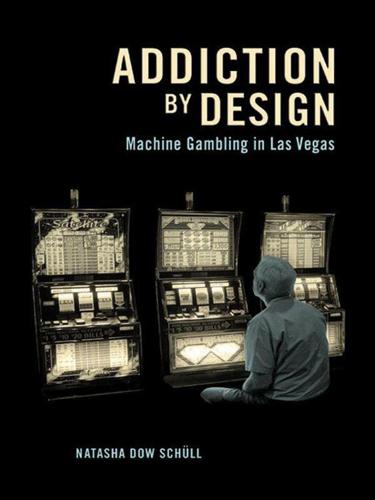
Addiction by Design: Machine Gambling in Las Vegas
by Natasha Dow Schüll · 15 Jan 2012 · 632pp · 166,729 words
The Formula: How Algorithms Solve All Our Problems-And Create More
by Luke Dormehl · 4 Nov 2014 · 268pp · 75,850 words
Affluenza: The All-Consuming Epidemic
by John de Graaf, David Wann, Thomas H Naylor and David Horsey · 1 Jan 2001 · 378pp · 102,966 words
Hooked: How to Build Habit-Forming Products
by Nir Eyal · 26 Dec 2013 · 199pp · 43,653 words
Designing for the Social Web
by Joshua Porter · 18 May 2008 · 201pp · 21,180 words
Open for Business Harnessing the Power of Platform Ecosystems
by Lauren Turner Claire, Laure Claire Reillier and Benoit Reillier · 14 Oct 2017 · 240pp · 78,436 words
50 Psychology Classics
by Tom Butler-Bowdon · 14 Oct 2007 · 363pp · 109,374 words
User Friendly: How the Hidden Rules of Design Are Changing the Way We Live, Work & Play
by Cliff Kuang and Robert Fabricant · 7 Nov 2019
Soulful Simplicity: How Living With Less Can Lead to So Much More
by Courtney Carver · 26 Dec 2017 · 183pp · 60,223 words
You Are Now Less Dumb: How to Conquer Mob Mentality, How to Buy Happiness, and All the Other Ways to Outsmart Yourself
by David McRaney · 29 Jul 2013 · 280pp · 90,531 words
Elsewhere, U.S.A: How We Got From the Company Man, Family Dinners, and the Affluent Society to the Home Office, BlackBerry Moms,and Economic Anxiety
by Dalton Conley · 27 Dec 2008 · 204pp · 67,922 words
Never Enough: When Achievement Culture Becomes Toxic-And What We Can Do About It
by Jennifer Breheny Wallace · 21 Aug 2023 · 309pp · 86,747 words
Artificial Unintelligence: How Computers Misunderstand the World
by Meredith Broussard · 19 Apr 2018 · 245pp · 83,272 words
Fooled by Randomness: The Hidden Role of Chance in Life and in the Markets
by Nassim Nicholas Taleb · 1 Jan 2001 · 111pp · 1 words
The Wisdom of Frugality: Why Less Is More - More or Less
by Emrys Westacott · 14 Apr 2016 · 287pp · 80,050 words
The Productive Programmer
by Neal Ford · 8 Dec 2008 · 224pp · 48,804 words
The Economics Anti-Textbook: A Critical Thinker's Guide to Microeconomics
by Rod Hill and Anthony Myatt · 15 Mar 2010
The Complacent Class: The Self-Defeating Quest for the American Dream
by Tyler Cowen · 27 Feb 2017 · 287pp · 82,576 words
Super Thinking: The Big Book of Mental Models
by Gabriel Weinberg and Lauren McCann · 17 Jun 2019
The Revenge of Analog: Real Things and Why They Matter
by David Sax · 8 Nov 2016 · 360pp · 101,038 words
Leading From the Emerging Future: From Ego-System to Eco-System Economies
by Otto Scharmer and Katrin Kaufer · 14 Apr 2013 · 351pp · 93,982 words
Inner Entrepreneur: A Proven Path to Profit and Peace
by Grant Sabatier · 10 Mar 2025 · 442pp · 126,902 words
Crisis Economics: A Crash Course in the Future of Finance
by Nouriel Roubini and Stephen Mihm · 10 May 2010 · 491pp · 131,769 words
The Messy Middle: Finding Your Way Through the Hardest and Most Crucial Part of Any Bold Venture
by Scott Belsky · 1 Oct 2018 · 425pp · 112,220 words

Vassal State
by Angus Hanton · 25 Mar 2024 · 277pp · 81,718 words
Team Geek
by Brian W. Fitzpatrick and Ben Collins-Sussman · 6 Jul 2012 · 209pp · 54,638 words
The 4-Hour Workweek: Escape 9-5, Live Anywhere, and Join the New Rich
by Timothy Ferriss · 1 Jan 2007 · 426pp · 105,423 words
We-Think: Mass Innovation, Not Mass Production
by Charles Leadbeater · 9 Dec 2010 · 313pp · 84,312 words
Success and Luck: Good Fortune and the Myth of Meritocracy
by Robert H. Frank · 31 Mar 2016 · 190pp · 53,409 words
Tools of Titans: The Tactics, Routines, and Habits of Billionaires, Icons, and World-Class Performers
by Timothy Ferriss · 6 Dec 2016 · 669pp · 210,153 words
The Antidote: Happiness for People Who Can't Stand Positive Thinking
by Oliver Burkeman · 1 Jul 2012 · 211pp · 69,380 words
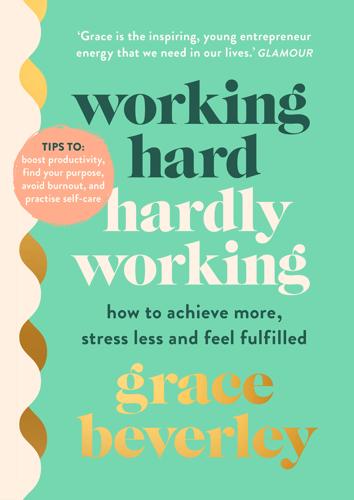
Working Hard, Hardly Working
by Grace Beverley

The Barefoot Investor: The Only Money Guide You'll Ever Need
by Scott Pape · 22 Nov 2016 · 229pp · 64,697 words
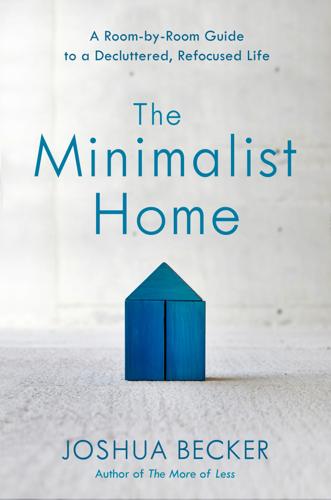
The Minimalist Home: A Room-By-Room Guide to a Decluttered, Refocused Life
by Joshua Becker · 18 Dec 2018 · 238pp · 67,971 words
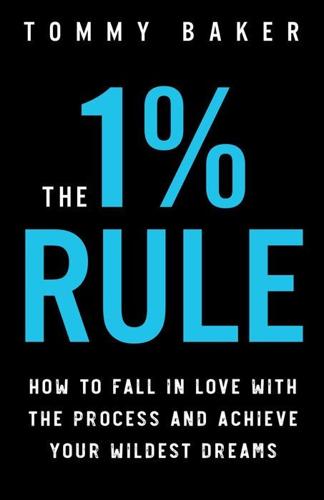
The 1% Rule: How to Fall in Love With the Process and Achieve Your Wildest Dreams
by Tommy Baker · 18 Feb 2018 · 170pp · 46,126 words
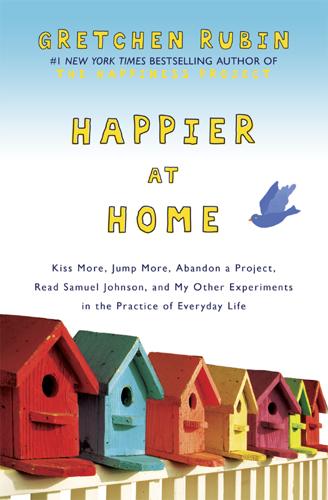
Happier at Home: Kiss More, Jump More, Abandon Self-Control, and My Other Experiments in Everyday Life
by Gretchen Rubin · 3 Sep 2012 · 265pp · 79,747 words
Capital Allocators: How the World’s Elite Money Managers Lead and Invest
by Ted Seides · 23 Mar 2021 · 199pp · 48,162 words
Why We Work
by Barry Schwartz · 31 Aug 2015 · 86pp · 27,453 words