The Physics of Wall Street: A Brief History of Predicting the Unpredictable
by James Owen Weatherall · 2 Jan 2013 · 338pp · 106,936 words
. One of his colleagues, in reviewing his work, became confused by Bachelier’s notation. Believing he had found an error, he sent the document to Paul Lévy, a younger but more famous French probability theorist. Lévy, examining only the page on which the error purportedly appeared, confirmed the Dijon mathematician’s suspicions
…
to studying Zipf’s and Pareto’s work, he was familiar with a third kind of distribution, discovered by one of his professors in Paris, Paul Lévy. It was Lévy who, upon reading a small section of one of Bachelier’s papers, concluded that Bachelier’s work was plagued with errors. Much
…
the mean — which accounts for why Mandelbrot and Houthakker originally believed that the mean did not exist. “. . . discovered by one of his professors in Paris, Paul Lévy”: Mandelbrot offers some biographical background on Lévy in Mandelbrot (1982) and describes his interactions with him in Mandelbrot and Hudson (2004). “. . . a class of probability
The Misbehavior of Markets: A Fractal View of Financial Turbulence
by Benoit Mandelbrot and Richard L. Hudson · 7 Mar 2006 · 364pp · 101,286 words
, Gevrey soon spotted a glaring mathematical error. When the academic committee met to decide the professorship, Gevrey brandished a letter from the eminent French probabilist, Paul Lévy in Paris, confirming the fault. Result: “Bachelier was blackballed,” as Lévy ruefully recalled years later, in correspondence with me. By then, Lévy regretted the incident
…
” on the subject before writing his own, Bachelier complained. He concluded with an insinuation typical of the time: “Without doubt, it is inconceivable that M. Paul Lévy had wanted, by a sort of last-minute trick, to favor un coreligionnaire.” Lévy was a Jew. Given Bachelier’s temper, it is remarkable that
…
student days. After the war, I was at the École Polytechnique, one of France’s “Ivy League,” the Grandes Écoles. One of my professors was Paul Lévy, a well-known mathematician, and the same man who had unintentionally played so decisive a role in Bachelier’s life story. Lévy was independently wealthy
…
. London: Routledge, 1999, IV, 210-240. Mandelbrot, Benoit B. 1962b. Sur certains prix spéculatifs: faits empiriques et modèle basé sur les processus stables additives de Paul Lévy. Comptes Rendus (Paris) 254 : 3968-3970. • Reprint: Mandelbrot 1997b, 2004b. Mandelbrot, Benoit B. 1962c. The variation of certain speculative prices. IBM Research Report NC-87
The Fractalist
by Benoit Mandelbrot · 30 Oct 2012
to the Académie des Sciences to a chair held by the great scientist Henri Poincaré, then for a long time by Hadamard, followed briefly by Paul Lévy (to be introduced in due time). A record of Szolem’s brilliance and the reasons for his being quickly and widely accepted is found in
…
had the flu. The social custom in question persisted. Peeking ahead, it led some to expect that I would marry Hadamard’s granddaughter or perhaps Paul Lévy’s grandniece. Also, the alumni of the school I was to attend held regular dances to introduce their daughters to up-and-coming recruits. I
…
(1907–79), a Jew from Alexandria, Egypt, was there and spoke reassuringly: Polytechnique was of course second best, but fine, since I would study under Paul Lévy. That moment was my introduction to a great man and a major figure in the exciting field of probability theory. This encounter with Loève earned
…
days of French science—1800 to 1850, later extended by Henri Poincaré (class of 1873). Science suffered a long and painful low between my teacher Paul Lévy’s class (1904) and—roughly—mine (1947). In my years, very few graduates became officers, yet the school was run like a strict military academy
…
killed by an assumption that looks mathematically “natural” but was not chosen by nature. Professors Julia and Lévy Our pure mathematics teachers Gaston Julia and Paul Lévy differed in innumerable ways. When I was their student, the Paris mathematical world respected neither, and these two men and Szolem had no love for
…
Brard Recommends Caltech In the real world of Paris and Carva in 1947, the most obvious person to ask for advice was neither Szolem nor Paul Lévy, but rather the professor of applied mathematics, Roger Brard (1907–77). A naval engineer, he held the rank of admiral and headed a large bassin
…
with the diagnosis and the cure. Although his numerous papers in probability theory are no longer quoted, Carva viewed him as very practical (contrary to Paul Lévy) and put him in charge of all topics in applied mathematics. Ambitious Carva students focused solely on their graduation rank had no need for advisers
…
default, the task fell to the sitting professor of probability theory and mathematical physics. That chair’s prestige had climaxed with the great Henri Poincaré. Paul Lévy had amply deserved and desperately wanted it, but the Sorbonne faculty first chose the miscast Maurice Fréchet (1878–1973), and then a scientific lightweight, savvy
…
, making my life extremely interesting and varied. But, like at Caltech, I didn’t accomplish much new. Eventually, inspiration did come from my Carva teachers Paul Lévy and Gaston Julia—but only through their work. Had I sought their advice, I am sure I would not have taken it. 15 Postdoctoral Grand
…
came about one day during a chat with Oppie on the commuter train. John von Neumann Many pure mathematicians I knew well—like Szolem or Paul Lévy—were not attuned to other fields. John von Neumann (1903–57) was a man of many trades—all sought after—and a known master of
…
French universities and the academic market flipped from puny to wide open. In a short time, this would have a major impact on me. Paul Lévy Getting to know Paul Lévy was one of my few academic accomplishments in 1954–55. He never had a formal disciple, I never had a formal teacher, and
…
Credit 22.2) I provided the data with an intellectual home—not surprisingly, one that hardly any practical person knew of at that time. Indeed, Paul Lévy’s teachings had familiarized me with a curio he called stability and I prefer to call Lévy stability. Hence, I could identify the behavior as
…
. In 1964, when I returned to IBM, I realized that the Hausdorff dimension I had learned first from Henry McKean at Princeton and later from Paul Lévy was ready to move from esoterica to reality. In the context of prices, the measurement of volatility was the Hausdorff dimension. In the context of
Being Wrong: Adventures in the Margin of Error
by Kathryn Schulz · 7 Jun 2010 · 486pp · 148,485 words
, explained it as thoroughly as possible, and—although the act must have felt woefully inadequate—apologized. He then contacted the chief of his department and Paul Levy, the hospital’s CEO, and told them about the situation. Reviewing the case, Levy and other BIDMC higher-ups decided that the mistake was serious
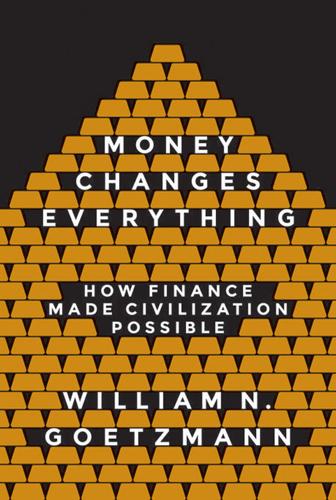
Money Changes Everything: How Finance Made Civilization Possible
by William N. Goetzmann · 11 Apr 2016 · 695pp · 194,693 words
mathematician who both carried the mantle of French mathematical finance and who also believed he had discovered its fatal flaw. Mandelbrot was a student of Paul Lévy’s—the son of the man who gave Bachelier bad marks at his examination at the École Polytechnique in 1900. Lévy’s research focused on
…
, which resulted in a rule about risk increasing with the square root of time. Likewise, Louis Bachelier more formally developed a random-walk stochastic process. Paul Lévy formalized these prior random walk models into a very general family of stochastic processes referred to as Lévy processes. Brownian motion was just one process
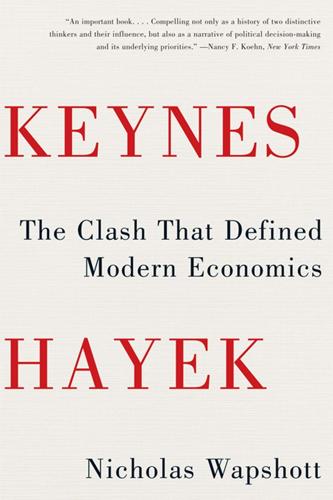
Keynes Hayek: The Clash That Defined Modern Economics
by Nicholas Wapshott · 10 Oct 2011 · 494pp · 132,975 words
an original and critical eye, as did Rockwell Stensrud. I was delighted that my research led to a reinvigoration of my long-standing friendship with Paul Levy, a distinguished historian of the Bloomsbury Group. I should hasten to add that I am wholly responsible for what errors of fact or judgment may
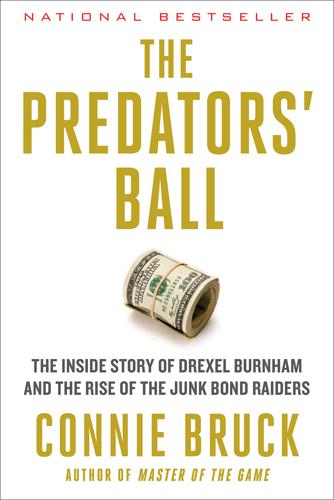
The Predators' Ball: The Inside Story of Drexel Burnham and the Rise of the JunkBond Raiders
by Connie Bruck · 1 Jun 1989 · 507pp · 145,878 words
kill them. If there were a way of reducing or removing those charges, these companies might survive and ultimately return to health. Drexel investment banker Paul Levy, who would come to specialize in this area, stated that its key is the concept of the “flexible balance sheet,” or adapting to a company
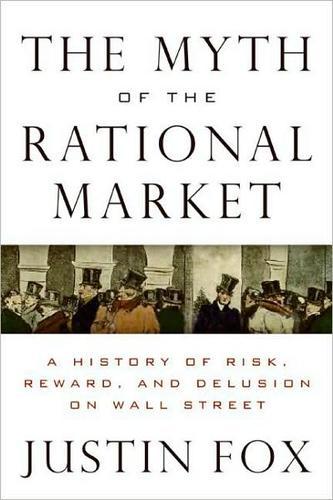
The Myth of the Rational Market: A History of Risk, Reward, and Delusion on Wall Street
by Justin Fox · 29 May 2009 · 461pp · 128,421 words
colleagues, meanwhile, were nonplussed by his interest in markets. On a bibliography of Bachelier’s writings found in the files of the great French mathematician Paul Lévy is scrawled the complaint, “Too much on finance!”8 IRVING FISHER WAS ABLE TO go where Bachelier did not because he had more than just
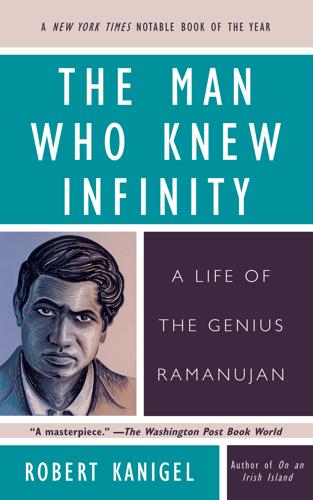
The Man Who Knew Infinity: A Life of the Genius Ramanujan
by Robert Kanigel · 25 Apr 2016
. G. E. Moore, philosophical guru of the Apostles and Hardy’s “father” from fifteen years before, agonized over his stance on it. And Hardy, as Paul Levy writes in his biography of Moore, “soon became one of the people whose opinions on the war most interested [him].” For two years Hardy’s

Worth Dying For: The Power and Politics of Flags
by Tim Marshall · 21 Sep 2016 · 276pp · 78,061 words
stars for the fifteen Council members; however, one of the stars represented the Saarland, then a part of France but previously part of Germany. As Paul Levy, who was then Head of Information and who actually drew up the final design, explains: ‘The Germans were against fifteen because that would suggest a
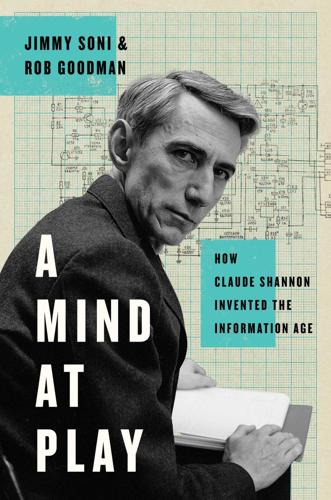
A Mind at Play: How Claude Shannon Invented the Information Age
by Jimmy Soni and Rob Goodman · 17 Jul 2017 · 415pp · 114,840 words

Moon Coastal Oregon
by Judy Jewell and W. C. McRae · 13 Jul 2020 · 366pp · 105,894 words
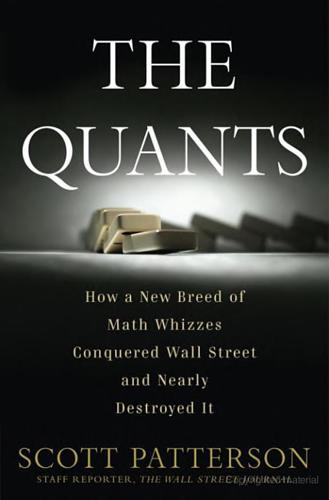
The Quants
by Scott Patterson · 2 Feb 2010 · 374pp · 114,600 words
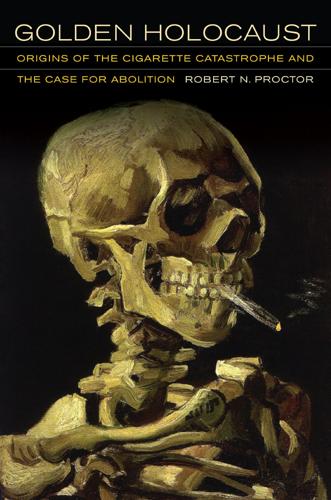
Golden Holocaust: Origins of the Cigarette Catastrophe and the Case for Abolition
by Robert N. Proctor · 28 Feb 2012 · 1,199pp · 332,563 words
Adaptive Markets: Financial Evolution at the Speed of Thought
by Andrew W. Lo · 3 Apr 2017 · 733pp · 179,391 words
The Art of Computer Programming
by Donald Ervin Knuth · 15 Jan 2001
Swindled: the dark history of food fraud, from poisoned candy to counterfeit coffee
by Bee Wilson · 15 Dec 2008 · 384pp · 122,874 words
Capital Ideas: The Improbable Origins of Modern Wall Street
by Peter L. Bernstein · 19 Jun 2005 · 425pp · 122,223 words
Extreme Money: Masters of the Universe and the Cult of Risk
by Satyajit Das · 14 Oct 2011 · 741pp · 179,454 words

Dark Laboratory: On Columbus, the Caribbean, and the Origins of the Climate Crisis
by Tao Leigh. Goffe · 14 Mar 2025 · 441pp · 122,013 words
Crucible: The Long End of the Great War and the Birth of a New World, 1917-1924
by Charles Emmerson · 14 Oct 2019 · 950pp · 297,713 words
An Impeccable Spy: Richard Sorge, Stalin’s Master Agent
by Owen Matthews · 21 Mar 2019 · 589pp · 162,849 words

Autistic Community and the Neurodiversity Movement: Stories From the Frontline
by Steven K. Kapp · 19 Nov 2019