The Most Good You Can Do: How Effective Altruism Is Changing Ideas About Living Ethically
by Peter Singer · 1 Jan 2015 · 197pp · 59,656 words
United States of America. Library of Congress Cataloging-in-Publication Data Singer, Peter, 1946– The most good you can do: how effective altruism is changing ideas about living ethically / Peter Singer. pages cm. — (Castle lectures in ethics, politics, and economics) Includes bibliographical references and index. ISBN 978-0-300-18027-5 (cloth :
…
Nick Beckstead and Matt Wage and available at: www.effective-altruism.com/preventing-human-extinction. A fuller statement of the argument about the roles of reason and emotion in motivating altruism can be found in chapter 2 of Katarzyna de Lazari-Radek and Peter Singer, The Point of View of the Universe (Oxford:
…
Oxford University Press, 2014). Peter Singer University Center for Human Values, Princeton University & School of Historical and Philosophical
…
giving to the poor, see Luke 10:33, 14:13, and Matthew 25:31–46. 7. See www.aaronmoore.com.au. The statement is from Peter Singer, Practical Ethics, 3d ed. (Cambridge: Cambridge University Press, 2011), 200. A similar statement appears in my “Famine, Affluence and Morality,” Philosophy and Public Affairs
…
. Anonymous comment made in a discussion forum about earning to give on Peter Singer’s Practical Ethics online course, April 2014. 14. It is possible to value equality for its own sake and still be very supportive of effective altruism. Philosophers who are sympathetic to some form of egalitarianism and also supportive
…
-organization-sandy-victims–600-debit-cards-article–1.1204224. 8. Paul Niehaus provided information for this section. 9. Peter Singer, “Animal Liberation,” New York Review of Books, April 5, 1973. 10. For details, see Peter Singer, Ethics into Action: Henry Spira and the Animal Rights Movement (Lanham, Md.: Rowman and Littlefield, 1998). Chapter
…
Methods of Ethics, 382. The following account of Sidgwick’s view of how ethical judgments can be motivating draws on Katarzyna de Lazari-Radek and Peter Singer, The Point of View of the Universe (Oxford: Oxford University Press, 2014). 17. The Methods of Ethics, 40, 500. Chapter 8. One Among Many
…
Chicago Press, 2012). Asma acknowledges his indebtedness to Williams on page 183, note 22. 2. For a fuller account, see Katarzyna de Lazari-Radek and Peter Singer, “The Objectivity of Ethics and the Unity of Practical Reason,” Ethics 123 (2012): 9–31; for critical discussion, see http://peasoup.typepad.com/peasoup/
…
2012/12/ethics-discussions-at-pea-soup-katarzyna-de-lazari-radek-and-peter-singer-the-objectivity-of-ethics–1.html, and Guy Kahane, “Evolution and Impartiality,” Ethics 124 (2014): 327–41. 3. Rachel Maley, “Choosing to Give,” The
…
-Esteem (Montreal: McGill-Queens University Press, 1996), 7. 17. T. M. Scanlon, What We Owe to Each Other (Cambridge: Harvard University Press, 1998). 18. Peter Singer, Ethics into Action: Henry Spira and the Animal Rights Movement (Lanham, Md.: Rowman and Littlefield, 1998), 197. 19. For discussion, see Shih Chao-hwieh, Buddhist
…
the same issue, pages 23–24. For discussion of the broader question of the methods used to reach such figures, see John McKie, Jeff Richardson, Peter Singer, and Helga Kuhse, The Allocation of Health Care Resources: An Ethical Evaluation of the “QALY” Approach (Aldershot, U.K.: Ashgate Publishing, 1998). 3. For
…
to-death/. 6. Animal Charity Evaluators, FAQ, Position Statement. See http://www.animalcharityevaluators.org/about/faq/ and http://www.animalcharityevaluators.org/about/position-statement/. 7. Peter Singer, Animal Liberation (1975; reprint, New York: Harper, 2009), chap. 1; for support for my claim that at a philosophical level the argument against speciesism
…
. 4, 5. Note, however, that since writing that I have become more sympathetic to hedonism rather than preference utilitarianism. See Katarzyna de Lazari-Radek and Peter Singer, The Point of View of the Universe (Oxford: Oxford University Press, 2014), chaps. 8, 9. For other views on the killing of animals, see
…
2013), no. 9, http://www.existential-risk.org/faq.html. 9. Henry Sidgwick, The Methods of Ethics, 7th ed. (London: Macmillan, 1907), 415. 10. See Peter Singer, Practical Ethics, 3d ed. (Cambridge: Cambridge University Press, 2011), 88–90, 107–19; for a more recent account of my views on this topic that
…
is fuller than I can present here, see Katarzyna de Lazari-Radek and Peter Singer, The Point of View of the Universe (Oxford: Oxford University Press, 2014), 361–77. 11. The most influential critique of views that give priority
…
(ii) Zaki, Radi, (i) Parts of this book were given as the Castle Lectures in Yale’s Program in Ethics, Politics, and Economics, delivered by Peter Singer at Yale University in 2013. The Castle Lectures were endowed by Mr. John K. Castle. They honor his ancestor the Reverend James Pierpont, one of
Life You Can Save: Acting Now to End World Poverty
by Peter Singer · 3 Mar 2009 · 190pp · 61,970 words
ALSO BY PETER SINGER Democracy and Disobedience Animal Liberation Practical Ethics Marx Animal Factories (with James Mason) The Expanding Circle Hegel The Reproduction Revolution (with Dean Wells) Should the
…
the end, and look honestly and carefully at our situation, assessing both the facts and the ethical arguments, you will agree that we must act. PETER SINGER THE ARGUMENT 1. Saving a Child On your way to work, you pass a small pond. On hot days, children sometimes play in the pond
…
world so that we come to see helping those in great need as an indispensable part of what it is to live an ethical life. PETER SINGER June 2010 Acknowledgments An invitation from Professor Julian Savulescu to give the 2007 Uehiro Lectures in Practical Ethics at Oxford University got me started on
…
. Is It Wrong Not to Help? 1. Peter Unger, Living High and Letting Die (New York: Oxford University Press, 1996). 2. For further discussion see Peter Singer, The Expanding Circle, (Oxford: Clarendon Press, 1981), pp. 136, 183. For futher examples, see www.unification.net/ws/theme015.htm. 3. Luke 18:22-25
…
OECD or the Giving USA data. See Center for Global Prosperity, Index of Global Philanthropy, Hudson Institute, 2008, available at http://gpr.hudson.org/. 4. Peter Singer, “The Singer Solution to World Poverty,” The New York Times Sunday Magazine, September 5, 1999. 5. Glennview High School is Seider’s fictional name for
…
. 22. Alan Ryan, as quoted by Michael Specter in “The Dangerous Philosopher,” The New Yorker, September 6, 1999. 23. http://www.muzakandpotatoes.com/2008/02/peter-singer-on-affluence.html. 4. Why Don’t We Give More? 1. C. Daniel Batson and Elizabeth Thompson, “Why Don’t Moral People Act Morally? Motivational
…
, The Unresponsive Bystander (New York: Appleton-Century-Crofts, 1970), p. 58.1 am grateful to Judith Lichtenberg, “Famine, Affluence and Psychology,” in Jeffrey Schaller, ed., Peter Singer Under Fire (Chicago: Open Court, forthcoming 2009) both for suggesting the relevance of this research and for this and other references. 20. Bib Latane and
…
. Elizabeth Corcoran, “Ruthless Philanthropy,” www.Forbes.com, June 23, 2008. 26. For a fuller discussion of the relevance of our evolved psychology to ethics, see Peter Singer, The Expanding Circle: Ethics and Sociobiology (New York: Farrar, Straus & Giroux, 1981). 5. Creating a Culture of Giving 1. See Bib Latane and John Darley
…
. ed. (Cambridge, MA.: Harvard University Press, 1999), p. 112. 3. See Richard Arneson, “What Do We Owe to Distant Needy Strangers?” in Jeffrey Schaler (ed.), Peter Singer Under Fire (Chicago: Open Court, forthcoming 2009). 4. For Gates’s speech, see www.gatesfoundation.org/MediaCenter/Speeches/Co-ChairSpeeches/BillgSpeeches/BGSpeechWHA-050516.htm?version
…
. 5831 (June 15, 2007), pp. 1622-25. 24. For more information about Henry Spira, see Peter Singer, Ethics into Action: Henry Spira and the Animal Rights Movement (Lanham, MD.: Rowman and Littlefield, 1998). ABOUT THE AUTHOR PETER SINGER was born in Melbourne, Australia, in 1946, and educated at the University of Melbourne and the
…
Human Values at Princeton University, and since 2005, Laureate Professor at the University of Melbourne, attached to the Centre for Applied Philosophy and Public Ethics. Peter Singer first became well known internationally after the publication of Animal Liberation. He is the author of many other books, as well as of the major
…
world.” Singer is married and has three daughters and three grandchildren. His recreations, apart from reading and writing, include hiking and surfing. Copyright © 2009 by Peter Singer All rights reserved. RANDOM HOUSE and colophon are registered trademarks of Random House, Inc. Library of Congress Cataloging-in-Publication Data Singer, Peter The life
…
you can save : acting now to end world poverty / Peter Singer p. cm. Includes index. eISBN: 978-1-58836-779-2 1. Charity. 2. Humanitarianism. 3. Economic assistance. 4. Poverty. I. Title. HV48.S56 2009 362
Doing Good Better: How Effective Altruism Can Help You Make a Difference
by William MacAskill · 27 Jul 2015 · 293pp · 81,183 words
Will MacAskill, a leader of the effective altruism movement and a rising star in philosophy, now displays his talent for telling stories that pack a punch. This must-read book will lead people to change their careers, their lives, and the world, for the better.” —Peter Singer, Ira W. DeCamp professor of bioethics
…
not have any control over and does not assume any responsibility for author or third-party websites or their content. Version_1 To Toby Ord, Peter Singer, and Stanislav Petrov, without whom this book would not have been written CONTENTS PRAISE FOR DOING GOOD BETTER TITLE PAGE COPYRIGHT DEDICATION INTRODUCTION Worms and
…
Naik, Anthony Obeyesekere, Rossa O’Keeffe-O’Donovan, Toby Ord, Michael Peyton Jones, Duncan Pike, Alex Richard, Jess Riedel, Josh Rosenberg, Matt Sharp, Carl Shulman, Peter Singer, Imma Six, Pablo Stafforini, Shayna Strom, Tim Telleen-Lawton, Derek Thompson, Ben Todd, Helen Toner, Robert Wiblin, Boris Yakubchik, Vincent Yu, Pascal Zimmer, and
…
least sexy development program there is”: Private conversation with Grace Hollister, June 2014. I helped to develop the idea of effective altruism: Toby and I were both heavily influenced by Peter Singer’s arguments for the moral importance of giving to fight poverty, made in “Famine, Affluence, and Morality,” Philosophy and Public
…
own money on the line, the importance of spending that money as effectively as possible seemed imperative. Peter Singer has since become a powerful advocate for effective altruism: see The Most Good You Can Do: How Effective Altruism Is Changing Ideas About Living Ethically (New Haven, CT: Yale University, 2015). (the number of
…
://www.cheatneutral.com/. I will spare you the grim details here: If you’re interested in further reading, I recommend picking up a copy of Peter Singer and Jim Mason, The Way We Eat: Why Our Food Choices Matter (New York: Holtzbrinck Publishers, 2006). Of all the animals raised for food:
The Righteous Mind: Why Good People Are Divided by Politics and Religion
by Jonathan Haidt · 13 Mar 2012 · 539pp · 139,378 words
1990a. 10. The first published mention of the three ethics was Shweder 1990b. The major statement of the theory is Shweder et al. 1997. 11. Peter Singer is the most prominent utilitarian philosopher of our time. See P. Singer 1979. 12. It need not be a soul in anything like the Christian
…
.com/postpartisan.html. 6. TASTE BUDS OF THE RIGHTEOUS MIND 1. Examples in philosophy include Jeremy Bentham, R. M. Hare, and Peter Singer. In psychology, morality is often operationalized as altruism or “prosocial behavior.” It’s about getting more people to help more people, ideally strangers. Even the Dalai Lama defines an ethical
The Happiness Hypothesis: Finding Modern Truth in Ancient Wisdom
by Jonathan Haidt · 26 Dec 2005 · 405pp · 130,840 words
at the University of Pennsylvania, I discovered the weakness of moral reasoning in myself. I read a wonderful book— Practical Ethics—by the Princeton philosopher Peter Singer.16 Singer, a h u m a n e consequentialist, shows how we can apply a consistent c o n c e r n for
Willful: How We Choose What We Do
by Richard Robb · 12 Nov 2019 · 202pp · 58,823 words
multitudes. It stems from concern over the well-being of everyone in the world, often including animals. The Australian philosopher Peter Singer, a prominent advocate of effective altruism, abides by the principle that people who live in rich countries are morally obligated to support charities that aid the global poor. He equates spending
…
. 2 (1956): 129–138. Singer, Peter. “The Drowning Child and the Expanding Circle.” New Internationalist, April 5, 1997. https://newint.org/features/1997/04/05/peter-singer-drowning-child-new-internationalist (accessed February 2, 2019). Skidelsky, Robert. John Maynard Keynes: The Economist as Saviour, 1920–1937. London: Macmillan, 1992. Smith, Adam. An
The Blank Slate: The Modern Denial of Human Nature
by Steven Pinker · 1 Jan 2002 · 901pp · 234,905 words
of war, infanticide as a form of birth control, and the legal ownership of women—have vanished from large parts of the world. The philosopher Peter Singer has shown how continuous moral progress can emerge from a fixed moral sense.18 Suppose we are endowed with a conscience that treats other persons
…
it does suggest that something may have been right about the theory of human nature that guided its architects. The left needs a new paradigm. —Peter Singer, A Darwinian Left (1999)43 Conservatives need Charles Darwin. —Larry Arnhart, “Conservatives, Design, and Darwin” (2000)44 What’s going on? That voices of the
…
we now treat lobsters, and our incomprehension of such deeds may be compared with animal rights activists’ incomprehension of ours. It is no coincidence that Peter Singer, the author of The Expanding Circle, is also the author of Animal Liberation. The observation that people may be morally indifferent to other people who
The Rationalist's Guide to the Galaxy: Superintelligent AI and the Geeks Who Are Trying to Save Humanity's Future
by Tom Chivers · 12 Jun 2019 · 289pp · 92,714 words
the world, then we should think carefully (and use numbers) to establish how we should spend our careers. The spiritual godfather of the movement is Peter Singer. He’s an Australian moral philosopher, based at Princeton, who in 1972 published an essay entitled ‘Famine, Affluence and Morality’.1 Singer is a utilitarian
…
humans (a very conservative figure: Buck Shlegeris, the young Effective Altruist and Rationalist we met earlier, told me he rated it about a quarter, and Peter Singer told me that wasn’t ridiculous), you should care as much about the world’s chickens as you do about the entire population of the
…
. That’s a massive and ongoing bunfight in moral philosophy, and, as MacAskill said, there’s no clear answer on it. When I spoke to Peter Singer, he pointed out that there’s a difference between future lives and possible lives. ‘It’s highly probable that there will be humans living on
…
AI risk is crowding out all other charity; it’s not even monopolising Effective Altruism. It accounted for about 30 per cent of total OpenPhil grants in 2017, but OpenPhil is only one of several organisations. And Peter Singer, who is very probably the best-known moral philosopher alive today and the absolute
…
Sabisky, Anna Salamon, Buck Shlegeris, Catherine Hollander, David Gerard, Diana Fleischman, Helen Toner, Holden Karnofsky, Katja Grace, Michael Story, Mike Levine, Murray Shanahan, Nick Bostrom, Peter Singer, Rob Bensinger, Robin Hanson, Scott Alexander, Toby Ord, Toby Walsh and everyone else who spoke to me. Plus grudging thanks to Eliezer Yudkowsky who did
…
-endorses-clinton-johnson-or-stein/ 5. SSC survey results 2018 http://slatestarcodex.com/2018/01/03/ssc-survey-results-2018/ 38: The Effective Altruists 1. Peter Singer, ‘Famine, affluence, and morality’, Philosophy and Public Affairs, vol. 1(1), Spring 1972, pp. 229–43 (rev. edn) https://www.utilitarian.net/singer/by/1972
The Price of Life: In Search of What We're Worth and Who Decides
by Jenny Kleeman · 13 Mar 2024 · 334pp · 96,342 words
lives as possible, and the good that you do can be objectively measured. And bettered. The grandfather of the EA approach is the utilitarian philosopher Peter Singer. His 1975 book, Animal Liberation, says that we should care equally about any being that has the capacity to suffer, even if we can’t
…
die on the streets of this city; the leading cause of death is overdose, followed by suicide, homicide and chronic medical conditions. To use philosopher Peter Singer’s analogy, the ‘drowning child’ in the Bay Area is the woman sleeping rough on the pavement outside your office, and the people who work
…
had been taking the ideas of cost-effectiveness very seriously.’ There was an energy and optimism to Toby that drew Will in, he says. ‘With Peter Singer, the framing was always obligation – that you are acting wrongly unless you do this. Whereas Toby was very upbeat.’ Will switched to study ethics, and
…
good you do as a doctor in the US, I’m pretty confident you will do more good with your donations,’ he replies with relish. ‘Peter Singer’s analogy,’ I say. ‘Is ignoring a leaflet from an effective charity the same as walking past a drowning child?’ ‘Morally, yes, it is the
…
, while Australia’s ‘Zero Covid’ policy didn’t mean zero deaths, it fared far better than most. One of Melbourne’s most influential residents is Peter Singer, the utilitarian philosopher who has inspired millions of vegans and billions in philanthropic donations. Singer is an uncompromising, polarizing figure, happy to use cold calculus
Number Go Up: Inside Crypto's Wild Rise and Staggering Fall
by Zeke Faux · 11 Sep 2023 · 385pp · 106,848 words
. But he relaxed as we started talking about how he’d decided to become a hyperaggressive capitalist. His inspiration was an Australian moral philosopher named Peter Singer. In 1971, Singer, then a student at the University of Oxford, began posing a deceptively simple ethical question: If you walked by a child drowning
…
endorsement, “im quitting music and becoming an intern for @ftx_official ok.” GO TO NOTE REFERENCE IN TEXT If you walked by a child drowning: Peter Singer, “Famine, Affluence, and Morality,” Philosophy & Public Affairs 1, no. 3 (1972): 229–43. Singer notes in the paper that he wrote it in 1971. GO

More Everything Forever: AI Overlords, Space Empires, and Silicon Valley's Crusade to Control the Fate of Humanity
by Adam Becker · 14 Jun 2025 · 381pp · 119,533 words
Behave: The Biology of Humans at Our Best and Worst
by Robert M. Sapolsky · 1 May 2017 · 1,261pp · 294,715 words
The Better Angels of Our Nature: Why Violence Has Declined
by Steven Pinker · 24 Sep 2012 · 1,351pp · 385,579 words
Against Empathy: The Case for Rational Compassion
by Paul Bloom · 281pp · 79,464 words
On the Edge: The Art of Risking Everything
by Nate Silver · 12 Aug 2024 · 848pp · 227,015 words
What Money Can't Buy: The Moral Limits of Markets
by Michael Sandel · 26 Apr 2012 · 231pp · 70,274 words
Prophecy: Prediction, Power, and the Fight for the Future, from Ancient Oracles to AI
by Carissa Véliz · 21 Apr 2026 · 503pp · 129,255 words
Just Giving: Why Philanthropy Is Failing Democracy and How It Can Do Better
by Rob Reich · 20 Nov 2018 · 257pp · 75,685 words
The Alignment Problem: Machine Learning and Human Values
by Brian Christian · 5 Oct 2020 · 625pp · 167,349 words

Supremacy: AI, ChatGPT, and the Race That Will Change the World
by Parmy Olson · 284pp · 96,087 words
Going Infinite: The Rise and Fall of a New Tycoon
by Michael Lewis · 2 Oct 2023 · 263pp · 92,618 words
The God Delusion
by Richard Dawkins · 12 Sep 2006 · 478pp · 142,608 words
Mindwise: Why We Misunderstand What Others Think, Believe, Feel, and Want
by Nicholas Epley · 11 Feb 2014 · 369pp · 90,630 words
Giving the Devil His Due: Reflections of a Scientific Humanist
by Michael Shermer · 8 Apr 2020 · 677pp · 121,255 words
The Quiet Coup: Neoliberalism and the Looting of America
by Mehrsa Baradaran · 7 May 2024 · 470pp · 158,007 words
Moral Ambition: Stop Wasting Your Talent and Start Making a Difference
by Bregman, Rutger · 9 Mar 2025 · 181pp · 72,663 words
Enlightenment Now: The Case for Reason, Science, Humanism, and Progress
by Steven Pinker · 13 Feb 2018 · 1,034pp · 241,773 words
The Strange Order of Things: The Biological Roots of Culture
by Antonio Damasio · 6 Feb 2018 · 289pp · 87,292 words
The Evolution of God
by Robert Wright · 8 Jun 2009
What We Owe the Future: A Million-Year View
by William MacAskill · 31 Aug 2022 · 451pp · 125,201 words
The Optimist: Sam Altman, OpenAI, and the Race to Invent the Future
by Keach Hagey · 19 May 2025 · 439pp · 125,379 words
Darwin's Dangerous Idea: Evolution and the Meanings of Life
by Daniel C. Dennett · 15 Jan 1995 · 846pp · 232,630 words

To Save Everything, Click Here: The Folly of Technological Solutionism
by Evgeny Morozov · 15 Nov 2013 · 606pp · 157,120 words
The Precipice: Existential Risk and the Future of Humanity
by Toby Ord · 24 Mar 2020 · 513pp · 152,381 words
No Such Thing as a Free Gift: The Gates Foundation and the Price of Philanthropy
by Linsey McGoey · 14 Apr 2015 · 324pp · 93,606 words
The Irrational Bundle
by Dan Ariely · 3 Apr 2013 · 898pp · 266,274 words
The Price of Everything: And the Hidden Logic of Value
by Eduardo Porter · 4 Jan 2011 · 353pp · 98,267 words
Chaos Kings: How Wall Street Traders Make Billions in the New Age of Crisis
by Scott Patterson · 5 Jun 2023 · 289pp · 95,046 words
The Great Experiment: Why Diverse Democracies Fall Apart and How They Can Endure
by Yascha Mounk · 19 Apr 2022 · 442pp · 112,155 words
Our Posthuman Future: Consequences of the Biotechnology Revolution
by Francis Fukuyama · 1 Jan 2002 · 350pp · 96,803 words
Billionaire, Nerd, Savior, King: Bill Gates and His Quest to Shape Our World
by Anupreeta Das · 12 Aug 2024 · 315pp · 115,894 words
Rationality: What It Is, Why It Seems Scarce, Why It Matters
by Steven Pinker · 14 Oct 2021 · 533pp · 125,495 words
Philanthrocapitalism
by Matthew Bishop, Michael Green and Bill Clinton · 29 Sep 2008 · 401pp · 115,959 words
Limitarianism: The Case Against Extreme Wealth
by Ingrid Robeyns · 16 Jan 2024 · 327pp · 110,234 words
The Sinner and the Saint: Dostoevsky and the Gentleman Murderer Who Inspired a Masterpiece
by Kevin Birmingham · 16 Nov 2021 · 559pp · 155,777 words
The New Digital Age: Transforming Nations, Businesses, and Our Lives
by Eric Schmidt and Jared Cohen · 22 Apr 2013 · 525pp · 116,295 words
Bourgeois Dignity: Why Economics Can't Explain the Modern World
by Deirdre N. McCloskey · 15 Nov 2011 · 1,205pp · 308,891 words
Fair Shot: Rethinking Inequality and How We Earn
by Chris Hughes · 20 Feb 2018 · 173pp · 53,564 words
Growth: A Reckoning
by Daniel Susskind · 16 Apr 2024 · 358pp · 109,930 words
The Alternative: How to Build a Just Economy
by Nick Romeo · 15 Jan 2024 · 343pp · 103,376 words
What to Think About Machines That Think: Today's Leading Thinkers on the Age of Machine Intelligence
by John Brockman · 5 Oct 2015 · 481pp · 125,946 words

Geek Heresy: Rescuing Social Change From the Cult of Technology
by Kentaro Toyama · 25 May 2015 · 494pp · 116,739 words
When Einstein Walked With Gödel: Excursions to the Edge of Thought
by Jim Holt · 14 May 2018 · 436pp · 127,642 words

Stubborn Attachments: A Vision for a Society of Free, Prosperous, and Responsible Individuals
by Tyler Cowen · 15 Oct 2018 · 140pp · 42,194 words

The Techno-Human Condition
by Braden R. Allenby and Daniel R. Sarewitz · 15 Feb 2011
The Ancestor's Tale: A Pilgrimage to the Dawn of Evolution
by Richard Dawkins · 1 Jan 2004 · 734pp · 244,010 words
The Singularity Is Nearer: When We Merge with AI
by Ray Kurzweil · 25 Jun 2024
The Bill Gates Problem: Reckoning With the Myth of the Good Billionaire
by Tim Schwab · 13 Nov 2023 · 618pp · 179,407 words
Work: A History of How We Spend Our Time
by James Suzman · 2 Sep 2020 · 909pp · 130,170 words
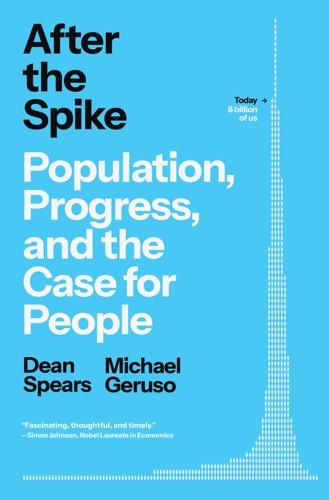
After the Spike: Population, Progress, and the Case for People
by Dean Spears and Michael Geruso · 7 Jul 2025 · 264pp · 96,174 words
The Most Powerful Idea in the World: A Story of Steam, Industry, and Invention
by William Rosen · 31 May 2010 · 420pp · 124,202 words
The Upside of Irrationality: The Unexpected Benefits of Defying Logic at Work and at Home
by Dan Ariely · 31 May 2010 · 324pp · 93,175 words
The Economics Anti-Textbook: A Critical Thinker's Guide to Microeconomics
by Rod Hill and Anthony Myatt · 15 Mar 2010
Equal Is Unfair: America's Misguided Fight Against Income Inequality
by Don Watkins and Yaron Brook · 28 Mar 2016 · 345pp · 92,849 words
New Laws of Robotics: Defending Human Expertise in the Age of AI
by Frank Pasquale · 14 May 2020 · 1,172pp · 114,305 words
Libertarian Idea
by Jan Narveson · 15 Dec 1988 · 371pp · 36,271 words
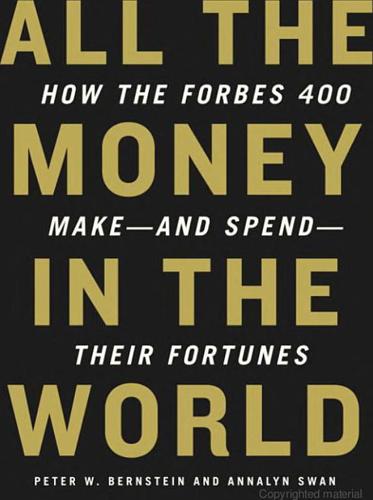
All the Money in the World
by Peter W. Bernstein · 17 Dec 2008 · 538pp · 147,612 words
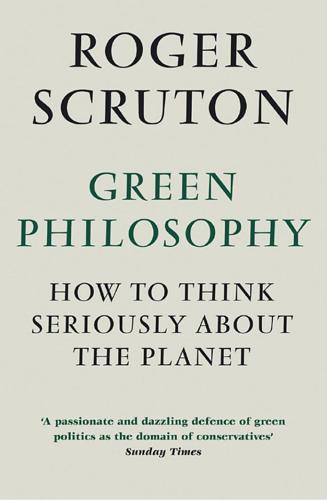
Green Philosophy: How to Think Seriously About the Planet
by Roger Scruton · 30 Apr 2014 · 426pp · 118,913 words
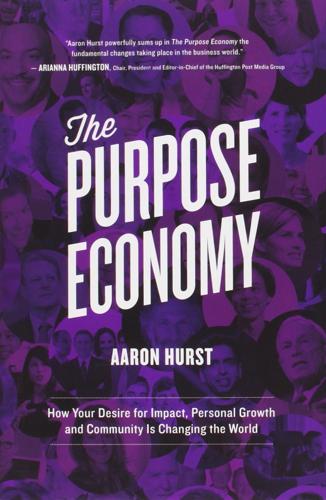
The Purpose Economy: How Your Desire for Impact, Personal Growth and Community Is Changing the World
by Aaron Hurst · 31 Aug 2013 · 209pp · 63,649 words
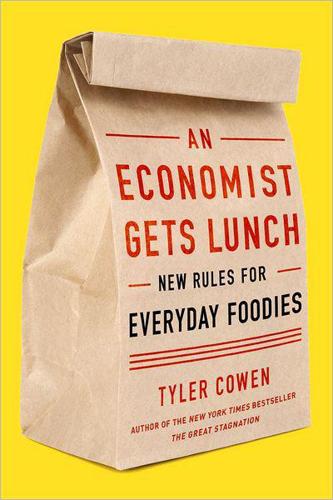
An Economist Gets Lunch: New Rules for Everyday Foodies
by Tyler Cowen · 11 Apr 2012 · 364pp · 102,528 words
Tools of Titans: The Tactics, Routines, and Habits of Billionaires, Icons, and World-Class Performers
by Timothy Ferriss · 6 Dec 2016 · 669pp · 210,153 words
The Road to Somewhere: The Populist Revolt and the Future of Politics
by David Goodhart · 7 Jan 2017 · 382pp · 100,127 words