Shoshana Zuboff
description: American sociologist, professor emerita at Harvard Business School and author
100 results
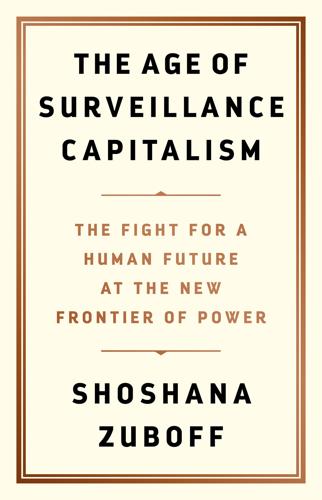
The Age of Surveillance Capitalism
by Shoshana Zuboff · 15 Jan 2019 · 918pp · 257,605 words
Copyright Copyright © 2019 by Shoshana Zuboff Hachette Book Group supports the right to free expression and the value of copyright. The purpose of copyright is to encourage writers and artists to
…
) that are not owned by the publisher. Library of Congress Cataloging-in-Publication Data Names: Zuboff, Shoshana, 1951- author. Title: The age of surveillance capitalism : the fight for a human future at the new frontier of power / Shoshana Zuboff. Description: First edition. | New York : PublicAffairs, 2018. | Includes bibliographical references and index. Identifiers: LCCN 2018003901
…
the end, one faces the page in solitude. Anything in this book that falls short of the trust invested in me is my responsibility alone. SHOSHANA ZUBOFF is the Charles Edward Wilson Professor emerita at Harvard Business School and a former faculty associate at the Berkman Klein Center for Internet and Society
…
literally beg you to read/ingest this book.” —Tom Peters, coauthor of In Search of Excellence “The Age of Surveillance Capitalism is brilliant and essential. Shoshana Zuboff reveals capitalism’s most dangerous frontier with stunning clarity: The new economic order of surveillance capitalism founded on extreme inequalities of knowledge and power. Her
…
I believe this is the most important book of our time.” —Doc Searls, author of The Intention Economy, and editor-in-chief of Linux Journal “Shoshana Zuboff has produced the most provocative compelling moral framework thus far for understanding the new realities of our digital environment and its anti-democratic threats. From
…
that stunningly reveals the essence of twenty-first-century society, and offers a dire warning about technology gone awry that we ignore at our peril. Shoshana Zuboff has somehow escaped from the fishbowl in which we all now live and introduced to us the concept of water. A work of penetrating intellect
…
, “The Best Investment Since 1926? Apple,” New York Times, September 22, 2017, https://www.nytimes.com/2017/09/22/business/apple-investment.html. 4. See Shoshana Zuboff and James Maxmin, The Support Economy: How Corporations Are Failing Individuals and the Next Episode of Capitalism (New York: Penguin, 2002), 230. 5. Henry Ford
…
for Everything,’” TechCrunch, http://social.techcrunch.com/2016/05/09/siri-creator-shows-off-first-public-demo-of-viv-the-intelligent-interface-for-everything. 46. Shoshana Zuboff, In the Age of the Smart Machine: The Future of Work and Power (New York: Basic, 1988), 381. 47. Zuboff, In the Age of the
…
boyd, “I Tweet Honestly, I Tweet Passionately: Twitter Users, Context Collapse, and the Imagined Audience,” New Media & Society 13, no. 1 (2011): 114–33. 64. Shoshana Zuboff, file note, November 9, 2017, Queen’s University, Kingston, Ontario. 65. Ben Marder, Adam Joinson, Avi Shankar, and David Houghton, “The Extended ‘Chilling’ Effect of

In the Age of the Smart Machine
by Shoshana Zuboff · 14 Apr 1988
IN THE AGE OF THE SMART MACHINE The Future of Work and Power SHOSHANA ZUBOFF BASIC BOOKS, INC., PUBLISHERS NEW YORK "Home" reprinted by permission; @ 1984 John Witte. Originally in The New Yorker. Library of Congress Cataloging-in-Publication Data Zuboff, Shoshana, 1 95 1- In the age of the smart machine. Includes index
…
, 1982), 97. 29. Ibid., 98. 30. Bendix, Work and Authority 323; see Fox, IIManagerial Ideology," 369; for a more extensive discussion of this point see Shoshana Zuboff, liThe Work Ethic and Work Organization," in Jack Barbash, ed., The Work Ethic: A Critical Analysis (Madison, WI: Industrial Relations Research Association, 1983), 165-73
…
Studies (New York: New York University Press, 1987), 251-304. 10. For a more elaborate discussion of this view of traditional work organiza- tion, see Shoshana Zuboff, "I Am My Own Man: The Democratic Vision and Workplace Hierarchy," in Robert Schrank, ed., Industrial Democracy at Sea: Author- ity and Democracy on a

The Computer Boys Take Over: Computers, Programmers, and the Politics of Technical Expertise
by Nathan L. Ensmenger · 31 Jul 2010 · 429pp · 114,726 words
computer specialists—in many respects the paradigmatic “knowledge workers” of post-industrial society—within this troubled framework of crisis, conflict, and contested identity? If, as Shoshona Zuboff has suggested, computer-based technologies are not simply neutral artifacts, but rather “embody essential characteristics that are bound to alter the nature of work within
…
(1999): 24–29. 16. John Shore, “Why I Never Met a Programmer I Could Trust,” Communications of the ACM 31, no. 4 (1988): 372. 17. Shoshana Zuboff, In the Age of the Smart Machine: The Future of Work and Power (New York: Basic Books, 1988). 18. Thomas Gieryn, “Boundary-Work and the
…
–214. New York: Oxford University Press, 1996. Zaphyr, P. A. “The Science of Hypology” (letter to editor). Communications of the ACM 2 (1) (1959): 4. Zuboff, Shoshana. In the Age of the Smart Machine: The Future of Work and Power. New York: Basic Books, 1988. Zussman, Robert. Mechanics of the middle class
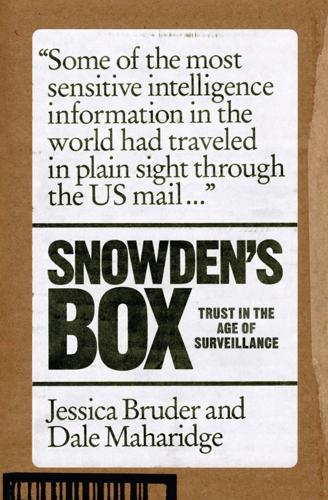
Snowden's Box: Trust in the Age of Surveillance
by Jessica Bruder and Dale Maharidge · 29 Mar 2020 · 159pp · 42,401 words
sold via software updates. The “smarter” they get, the better such devices become at extracting continuous — and ever-greater — profits from users worldwide. The writer Shoshana Zuboff has referred to this model as “surveillance capitalism,’’ and most ordinary folk have more to fear from it than they do from the NSA. A
…
2018; Ronan De Renesse, “Digital Assistant and Voice AI–Capable Device Forecast: 2016–21,” Ovum, April 28, 2017, ovum.informa.com. p. 99 surveillance capitalism: Shoshona Zuboff, The Age of Surveillance Capitalism: The Fight for a Human Future at the New Frontier of Power (PublicAffairs, 2019). p. 101 Amazon technology analyzes human
…
Trade Center: 9/11, 52–3, 91 World War I, 142 World War II, 106, 118 Wyden, Ron, 8, 93 Yahoo, 48 Zelensky, Volodymyr, 11 Zuboff, Shoshana, 99 Zuckerberg, Mark, 137, 140
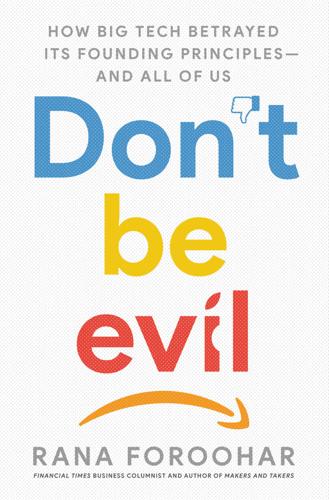
Don't Be Evil: How Big Tech Betrayed Its Founding Principles--And All of US
by Rana Foroohar · 5 Nov 2019 · 380pp · 109,724 words
and socially. The changes Big Tech has wrought have become one of the most pressing economic issues of our time. Harvard Business School professor emerita Shoshana Zuboff and other scholars have decried the rise of “surveillance capitalism,” which is, as Zuboff defines it, “a new economic order that claims human experience as
…
be rebranded as real estate. Third was that free exchanges of goods and services could be rebranded as money. In 2015, academic and tech scholar Shoshana Zuboff posited a fourth fiction for the age of Big Tech—that reality itself was undergoing the same kind of metamorphosis. “Data about the behaviors of
…
order to ensure its supremacy—and by all accounts, the Googlers understood that, too. In fact, that was one of their major competitive advantages. As Shoshana Zuboff lays out in her book The Age of Surveillance Capitalism, Page, Brin, and Schmidt (along with Hal Varian) were the first in Silicon Valley to
…
Market Economy to Provision Compute Resources Across Planet-wide Clusters.”)41 Predictably, his theories of the new data economics tended to favor his employer. As Shoshana Zuboff has written, in the sort of surveillance capitalism practiced by Google and other Big Tech firms, “Contract and the rule of law are supplanted by
…
supportive were Barry Lynn, Rafi Martina, Frank Pasquale, Jonathan Taplin, Tristan Harris, Roger McNamee, Kiril Sokoloff, Nick Johnson, Rob Johnson, John Battelle, Tim O’Reilly, Shoshana Zuboff, Elvir Causevic, Luther Lowe, Shivaun Raff, Lina Khan, Bill Janeway, B. J. Fogg, Glen Weyl, Luigi Zingales, Michael Wessel, Anya Schiffrin, Joseph E. Stiglitz, David
…
. 17. Rana Foroohar, “Silicon Valley Has Too Much Power,” Financial Times, May 14, 2017; Foroohar, “Echoes of Wall Street in Silicon Valley’s Grip.” 18. Shoshana Zuboff, The Age of Surveillance Capitalism: The Fight for a Human Future at the New Frontier of Power (New York: Public Affairs, 2019), introductory page. 19
…
. Shoshana Zuboff, “Big Other: Surveillance Capitalism and the Prospects of an Information Civilization,” Journal of Information Technology, April 17, 2015. 20. Niall Ferguson, The Square and the
…
On-Demand Economy,” Data and Society, accessed May 9, 2019, https://datasociety.net/initiatives/future-of-labor/mapping-inequalities-across-the-on-demand-economy/. 62. Shoshana Zuboff, “Big Other: Surveillance Capitalism and the Prospects of an Information Civilization,” Journal of Information Technology, April 17, 2015. 63. Wikipedia, s.v. “The Great Transformation
…
the Plex: How Google Thinks, Works, and Shapes Our Lives (New York: Simon & Schuster, 2011), 237–38. 8. Ibid., 80–81. 9. Author interview. 10. Shoshana Zuboff, The Age of Surveillance Capitalism: The Fight for a Human Future at the New Frontier of Power (New York: Public Affairs, 2019), 101. 11. Ibid
…
Plex: How Google Thinks, Works, and Shapes Our Lives (New York: Simon & Schuster, 2011), 117. 39. Ibid., 12. 40. Ibid., 14. 41. Ibid., 202. 42. Shoshana Zuboff, “Big Other: Surveillance Capitalism and the Prospects of an Information Civilization,” Journal of Information Technology, April 17, 2015. 43. Ibid., 15. 44. Rana Foroohar, “The
…
to Get Inside Our Heads. New York: Knopf, 2016. ———. The Curse of Bigness: Antitrust in the New Gilded Age. New York: Columbia Global Reports, 2018. Zuboff, Shoshana. The Age of Surveillance Capitalism: The Fight for a Human Future at the New Frontier of Power. New York: Public Affairs, 2019. ABOUT THE AUTHOR
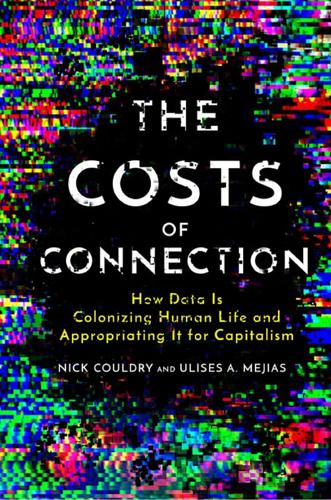
The Costs of Connection: How Data Is Colonizing Human Life and Appropriating It for Capitalism
by Nick Couldry and Ulises A. Mejias · 19 Aug 2019 · 458pp · 116,832 words
(because human beings use them), this capturing facility becomes available to reshape that social space too. Long before the general availability of the internet, sociologist Shoshana Zuboff predicted that the computerization of inputs to production would transform the workplace by changing flows of information and the forms of authority and power sustained
…
capitalist system.”24 Our thesis is that primitive accumulation does not precede capitalism but goes hand in hand with it. We follow authors such as Shoshana Zuboff, Julie Cohen, and Saskia Sassen25 in recognizing an emergent phase of primitive accumulation so unique and historically significant that it deserves treatment as a new
…
; thanks to Urs Gasser, Becca Tabasky, and Carey Andersen for their generous support and to Elettra Bietti for her solidarity. Thanks to Bruce Schneier and Shoshana Zuboff for inspiring conversations at that time. And thanks to Mary Ann Hart for the rent of her apartment in Cambridge, Massachusetts, which provided a wonderful
…
“industrial intelligentization,” including “smart logistics” (China Copyright and Media, “Artificial Intelligence”). 36. In particular, the work of Julie Cohen, Vincent Mosco, Bruce Schneier, Joseph Turow, Shoshana Zuboff, and, in the world of fiction, Dave Eggers. 37. Marx, Capital, vol. I, 102. Chapter 1 1. Wylie, “I’ve Been Getting a Lot of
…
Internet—And How to Stop It. New Haven, CT: Yale University Press, 2008. Žižek, Slavoj. Living in the End Times. 2nd ed. London: Verso, 2011. Zuboff, Shoshana. “Big Other: Surveillance Capitalism and the Prospects of an Information Civilization.” Journal of Information Technology 30, no. 1 (2015): 75–89
…
. Zuboff, Shoshana. In the Age of the Smart Machine. New York: Basic Books, 1988. Zuckerberg, Ethan. “The Internet’s Original Sin.” The Atlantic, August 14, 2014. Zuckerberg,
…
, 178 Wylie, Christopher, 3 Yahoo!, 225n14 Yammer (Microsoft), 65 Yandex, 55 Yang, K. Wayne, xi Yeung, Karen, 140 Young, Robert, 76 YouTube, 44, 49, 59 Zuboff, Shoshana, 20, 27–28 Zuckerberg, Mark, 7, 17, 19, 27, 137–38. See also Facebook CULTURE AND ECONOMIC LIFE Diverse sets of actors create meaning in
Internet for the People: The Fight for Our Digital Future
by Ben Tarnoff · 13 Jun 2022 · 234pp · 67,589 words
ads they were more likely to click on, which pleased advertisers. Money poured in and the investors were happy. In The Age of Surveillance Capitalism, Shoshana Zuboff describes this moment as a turning point not only in the history of Google but in the history of capitalism. In her view, the discovery
…
2008, Zuckerberg hired Sheryl Sandberg, who had over-seen Google’s transformation into an advertising company, as his chief operating officer. Sandberg thus became, in Shoshana Zuboff’s memorable phrase, “the ‘Typhoid Mary’ of surveillance capitalism.” The online mall of social media would look a bit different than the online mall of
…
mean that the individuals behind those eyeballs are necessarily clicking on the ads, much less buying anything. It would be a mistake to suggest, as Shoshana Zuboff often does, that Zuckerberg and his fellow surveillance capitalists have built a mind-control machine. Zuckerberg may want his customers—advertisers—to believe he has
…
Edwards, it would take three more years of development before Google’s logs analytics tool, “Sawmill,” was “activated” in 2003; see 344–45. See also Shoshana Zuboff, The Age of Surveillance Capitalism: The Fight for a Human Future at the New Frontier of Power (New York: PublicAffairs, 2019), 67–70. 90, Google
…
, Subprime Attention Crisis, 76. 96, Immense amounts of data … Zuboff on mind control: See for example Zuboff, The Age of Surveillance Capitalism, 293–328, and Shoshana Zuboff, “You Are Now Remotely Controlled,” New York Times, January 24, 2020. 97, This is not to downplay … “Attention is commodified …”: Ibid., 42–43. 7. Elastic
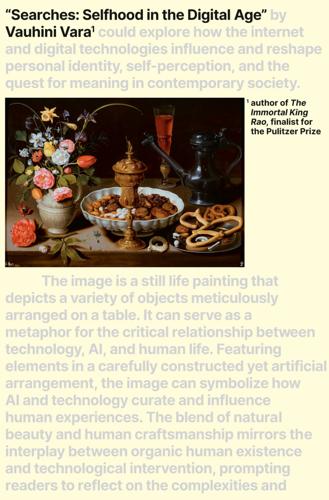
Searches: Selfhood in the Digital Age
by Vauhini Vara · 8 Apr 2025 · 301pp · 105,209 words
field in Western Pennsylvania, killing 2,996 people. In her landmark book The Age of Surveillance Capitalism, the scholar and Harvard Business School professor emerita Shoshana Zuboff describes what was happening in Silicon Valley and Washington, D.C., while I was too immersed in my own private disaster to notice. Though my
…
its stock price, Facebook’s value increased by about $500 billion. The company, renamed Meta, is worth more than $1 trillion as of this writing. * * * — Shoshana Zuboff has warned that big tech companies’ unequal access to knowledge about people is facilitating an “epistemic coup” in four stages: first, corporations extract our information
…
100,000 years ago—as the talent that brought about religions, then cities, states, and societies, then empire, then capitalism, then technological capitalism (and what Shoshana Zuboff calls surveillance capitalism). Steve Jobs was most celebrated for his aesthetic genius, but his genius at learning from others was just as important to Apple
…
during a period of political and technological upheaval within China, around the fourth century B.C. The anecdote about the well sweep reminds me of Shoshana Zuboff’s writings about the interdependency of technological and political change. I can imagine a corporation building a modern well sweep embedded with a sensor from
…
the language used in Silicon Valley’s products reinscribed majoritarian ideals, and, through this, the power of the powerful and the oppression of the oppressed. Shoshana Zuboff, in The Age of Surveillance Capitalism, had argued that the extraction and productization of the raw material of human experience, as conveyed through all the
…
, much like Big Tobacco or Big Oil. “Most people find it difficult to withdraw from these utilities, and many ponder if it is even possible,” Shoshana Zuboff writes. I don’t take issue with the substance of Zuboff’s message, and yet it feels to me that it sidesteps a particularly difficult
…
these Countries; appear forth without delay, and take the oath of Allegiance to the Spanish King, as his Vassals.” In The Age of Surveillance Capitalism, Shoshana Zuboff notes that these sorts of declarations, as the philosopher of language John Searle has pointed out, represent “a particular way of speaking and acting that

How to Stand Up to a Dictator
by Maria Ressa · 19 Oct 2022
with artificial intelligence, manipulated us with it, and created behavior at a scale that brought out the worst in humanity. Harvard Business School professor emerita Shoshana Zuboff called this exploitative business model “surveillance capitalism.”41 We all let it happen.42 Facebook today favors moneymaking over public safety. Its company lobbying efforts
…
dissemination of information online. The Real Facebook Oversight Board consisted of experts demanding that Facebook change the policies that were destroying our world. One was Shoshana Zuboff, the academic who had coined the term “surveillance capitalism.” The others were Roger McNamee, one of the first Silicon Valley investors in Facebook; Rashad Robinson
…
revisit ideas within that new context, immersing myself in exhilarating conversations and explorations at Harvard. One of the highlights was the time I spent with Shoshana Zuboff, whose work had influenced me so deeply. We had worked together virtually for more than a year at the Real Facebook Oversight Board, among other
…
, “The Goal Is to Automate Us: Welcome to the Age of Surveillance Capitalism,” Guardian, January 20, 2019, https://www.theguardian.com/technology/2019/jan/20/shoshana-zuboff-age-of-surveillance-capitalism-google-facebook. 42.There are four books about Facebook that I would recommend: David Kirkpatrick’s The Facebook Effect: The Inside
…
, 2010) traces the beginning and the development of Mark Zuckerberg. Published in 2010, it came out at a time of wonder. On the business model, Shoshana Zuboff coined the term surveillance capitalism in 2019; see The Age of Surveillance Capitalism: The Fight for a Human Future at the New Frontier of Power
…
—We Are the Pawns,” Guardian, February 2, 2019, https://www.theguardian.com/books/2019/feb/02/age-of-surveillance-capitalism-shoshana-zuboff-review. 45.Shoshana Zuboff wants the market in our behavioral data, like the slave trade, abolished. She and I, along with Roger McNamee and other Facebook critics, meet as
They Don't Represent Us: Reclaiming Our Democracy
by Lawrence Lessig · 5 Nov 2019 · 404pp · 115,108 words
. Indeed, I want to exaggerate here so you don’t miss my point. My argument is fundamentally different from the work of surveillance skeptics, like Shoshana Zuboff. Her magisterial book, The Age of Surveillance Capitalism, tells a terrifying story of the emergence of a new form of capitalism that trades fundamentally on
…
the sacrifice was worth it. But all of the sacrifice here is so that some can sell more ads. A “bet-the-farm commitment,” as Shoshana Zuboff puts it, “for the sake of [advertising] revenues.”122 A business that literally did not exist in anything like its present form twenty years ago
…
compelling accounts, see Wu, The Attention Merchants; McChesney and Nichols, Death and Life of American Journalism. For the most comprehensive and theorized recent account, see Shoshana Zuboff, The Age of Surveillance Capitalism: The Fight for a Human Future at the New Frontier of Power (New York: PublicAffairs, 2019). 60.Lawrence Lessig, The
…
–165 Woodbury, Dick, 237–238 Wu, Tim, 74, [123n119], 202–203, 294n119 You’re More Powerful Than You Think (Liu), 249 Zittrain, Jonathan, [111n92], 290n92 Zuboff, Shoshana, 110–111, 113, 114–115, [119n113], [121n117], 122, 125, 293n113, 294n117 Zuckerberg, Mark, 109, 117, [121n116], 293n116 About the Author LAWRENCE LESSIG is the Roy
…
most important idea: We the people are endowed with the inalienable right to rule ourselves, free from the tyranny of kings, dictators, plutocrats, or computers.” —Shoshana Zuboff, author of The Age of Surveillance Capitalism “Lessig has long been the leading voice on how corruption undermines American democracy. In this book, he trains
The New Ruthless Economy: Work & Power in the Digital Age
by Simon Head · 14 Aug 2003 · 242pp · 245 words

The Lonely Century: How Isolation Imperils Our Future
by Noreena Hertz · 13 May 2020 · 506pp · 133,134 words
Digital Empires: The Global Battle to Regulate Technology
by Anu Bradford · 25 Sep 2023 · 898pp · 236,779 words

Why We Drive: Toward a Philosophy of the Open Road
by Matthew B. Crawford · 8 Jun 2020 · 386pp · 113,709 words
Power and Progress: Our Thousand-Year Struggle Over Technology and Prosperity
by Daron Acemoglu and Simon Johnson · 15 May 2023 · 619pp · 177,548 words

The Smart Wife: Why Siri, Alexa, and Other Smart Home Devices Need a Feminist Reboot
by Yolande Strengers and Jenny Kennedy · 14 Apr 2020

Uncharted: How to Map the Future
by Margaret Heffernan · 20 Feb 2020 · 335pp · 97,468 words
The Twittering Machine
by Richard Seymour · 20 Aug 2019 · 297pp · 83,651 words
Reset
by Ronald J. Deibert · 14 Aug 2020

Track Changes
by Matthew G. Kirschenbaum · 1 May 2016 · 519pp · 142,646 words

An Ugly Truth: Inside Facebook's Battle for Domination
by Sheera Frenkel and Cecilia Kang · 12 Jul 2021 · 372pp · 100,947 words
Stolen Focus: Why You Can't Pay Attention--And How to Think Deeply Again
by Johann Hari · 25 Jan 2022 · 390pp · 120,864 words

The Age of Extraction: How Tech Platforms Conquered the Economy and Threaten Our Future Prosperity
by Tim Wu · 4 Nov 2025 · 246pp · 65,143 words
Platform Capitalism
by Nick Srnicek · 22 Dec 2016 · 116pp · 31,356 words

Paper Knowledge: Toward a Media History of Documents
by Lisa Gitelman · 26 Mar 2014

Artificial Whiteness
by Yarden Katz
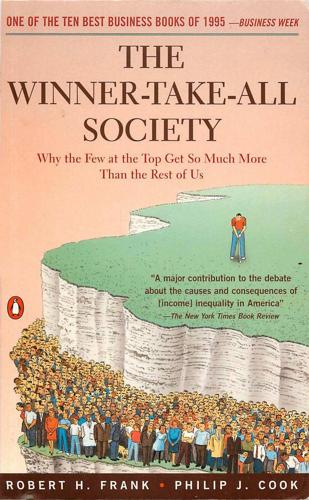
The Winner-Take-All Society: Why the Few at the Top Get So Much More Than the Rest of Us
by Robert H. Frank, Philip J. Cook · 2 May 2011

Blank Space: A Cultural History of the Twenty-First Century
by W. David Marx · 18 Nov 2025 · 642pp · 142,332 words

The Sirens' Call: How Attention Became the World's Most Endangered Resource
by Chris Hayes · 28 Jan 2025 · 359pp · 100,761 words
The Information State: Politics in the Age of Total Control
by Jacob Siegel · 24 Mar 2026 · 348pp · 103,246 words

The Rise of the Network Society
by Manuel Castells · 31 Aug 1996 · 843pp · 223,858 words
Frenemies: The Epic Disruption of the Ad Business
by Ken Auletta · 4 Jun 2018 · 379pp · 109,223 words

Power, for All: How It Really Works and Why It's Everyone's Business
by Julie Battilana and Tiziana Casciaro · 30 Aug 2021 · 345pp · 92,063 words
Empire of AI: Dreams and Nightmares in Sam Altman's OpenAI
by Karen Hao · 19 May 2025 · 660pp · 179,531 words

Border and Rule: Global Migration, Capitalism, and the Rise of Racist Nationalism
by Harsha Walia · 9 Feb 2021
New Laws of Robotics: Defending Human Expertise in the Age of AI
by Frank Pasquale · 14 May 2020 · 1,172pp · 114,305 words
System Error: Where Big Tech Went Wrong and How We Can Reboot
by Rob Reich, Mehran Sahami and Jeremy M. Weinstein · 6 Sep 2021
Human + Machine: Reimagining Work in the Age of AI
by Paul R. Daugherty and H. James Wilson · 15 Jan 2018 · 523pp · 61,179 words
Click Here to Kill Everybody: Security and Survival in a Hyper-Connected World
by Bruce Schneier · 3 Sep 2018 · 448pp · 117,325 words
Why Things Bite Back: Technology and the Revenge of Unintended Consequences
by Edward Tenner · 1 Sep 1997

Butler to the World: How Britain Became the Servant of Tycoons, Tax Dodgers, Kleptocrats and Criminals
by Oliver Bullough · 10 Mar 2022 · 257pp · 80,698 words

Fancy Bear Goes Phishing: The Dark History of the Information Age, in Five Extraordinary Hacks
by Scott J. Shapiro · 523pp · 154,042 words
The Smartphone Society
by Nicole Aschoff

Animal Spirits: The American Pursuit of Vitality From Camp Meeting to Wall Street
by Jackson Lears

Doppelganger: A Trip Into the Mirror World
by Naomi Klein · 11 Sep 2023
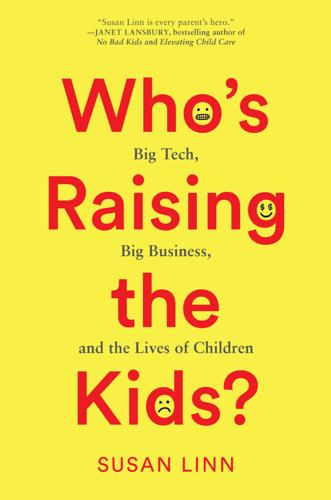
Who’s Raising the Kids?: Big Tech, Big Business, and the Lives of Children
by Susan Linn · 12 Sep 2022 · 415pp · 102,982 words

Nexus: A Brief History of Information Networks From the Stone Age to AI
by Yuval Noah Harari · 9 Sep 2024 · 566pp · 169,013 words

Social Life of Information
by John Seely Brown and Paul Duguid · 2 Feb 2000 · 791pp · 85,159 words

Superbloom: How Technologies of Connection Tear Us Apart
by Nicholas Carr · 28 Jan 2025 · 231pp · 85,135 words
The Means of Prediction: How AI Really Works (And Who Benefits)
by Maximilian Kasy · 15 Jan 2025 · 209pp · 63,332 words
Competition Overdose: How Free Market Mythology Transformed Us From Citizen Kings to Market Servants
by Maurice E. Stucke and Ariel Ezrachi · 14 May 2020 · 511pp · 132,682 words
Democracy's Data: The Hidden Stories in the U.S. Census and How to Read Them
by Dan Bouk · 22 Aug 2022 · 424pp · 123,180 words
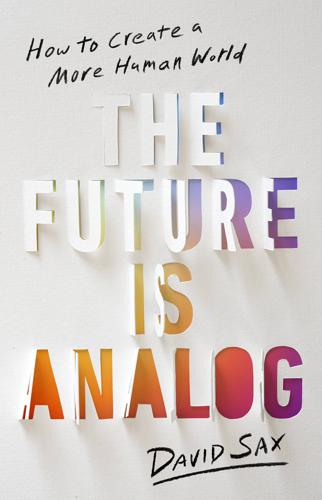
The Future Is Analog: How to Create a More Human World
by David Sax · 15 Jan 2022 · 282pp · 93,783 words

The Revolutionary Center: The Lost Genius of Liberalism
by Adrian Wooldridge · 7 Apr 2026 · 342pp · 129,097 words

The Cheating Culture: Why More Americans Are Doing Wrong to Get Ahead
by David Callahan · 1 Jan 2004 · 452pp · 110,488 words

Mood Machine: The Rise of Spotify and the Costs of the Perfect Playlist
by Liz Pelly · 7 Jan 2025 · 293pp · 104,461 words
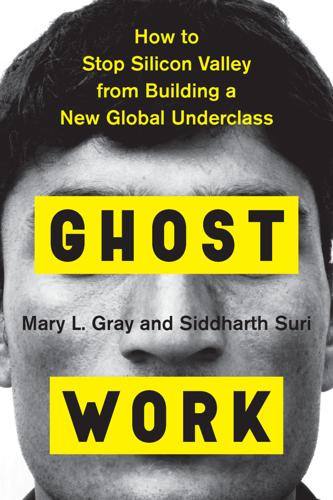
Ghost Work: How to Stop Silicon Valley From Building a New Global Underclass
by Mary L. Gray and Siddharth Suri · 6 May 2019 · 346pp · 97,330 words
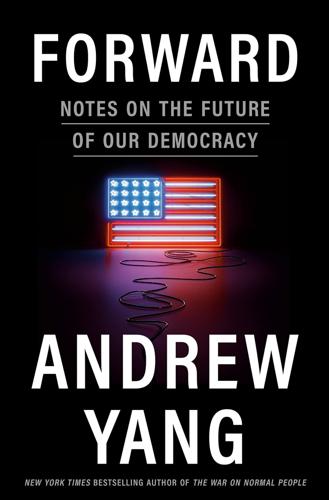
Forward: Notes on the Future of Our Democracy
by Andrew Yang · 15 Nov 2021
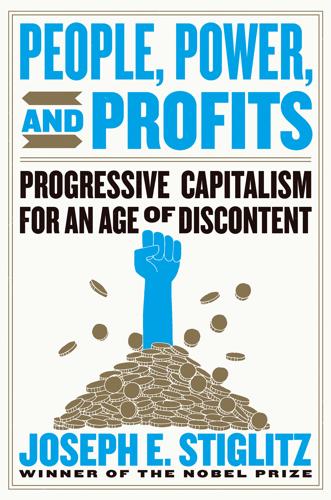
People, Power, and Profits: Progressive Capitalism for an Age of Discontent
by Joseph E. Stiglitz · 22 Apr 2019 · 462pp · 129,022 words

12 Bytes: How We Got Here. Where We Might Go Next
by Jeanette Winterson · 15 Mar 2021 · 256pp · 73,068 words

Mine!: How the Hidden Rules of Ownership Control Our Lives
by Michael A. Heller and James Salzman · 2 Mar 2021 · 332pp · 100,245 words

Code Dependent: Living in the Shadow of AI
by Madhumita Murgia · 20 Mar 2024 · 336pp · 91,806 words

Power Button: A History of Pleasure, Panic, and the Politics of Pushing
by Rachel Plotnick · 24 Sep 2018 · 359pp · 105,248 words
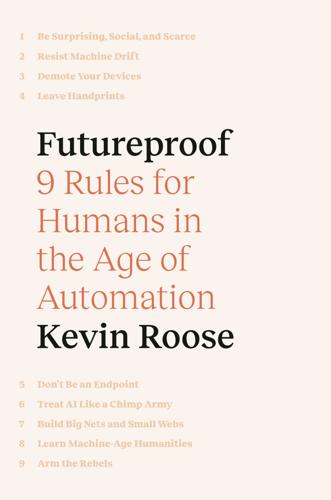
Futureproof: 9 Rules for Humans in the Age of Automation
by Kevin Roose · 9 Mar 2021 · 208pp · 57,602 words

Arriving Today: From Factory to Front Door -- Why Everything Has Changed About How and What We Buy
by Christopher Mims · 13 Sep 2021 · 385pp · 112,842 words
The System: Who Owns the Internet, and How It Owns Us
by James Ball · 19 Aug 2020 · 268pp · 76,702 words

Four Battlegrounds
by Paul Scharre · 18 Jan 2023
Our Own Devices: How Technology Remakes Humanity
by Edward Tenner · 8 Jun 2004 · 423pp · 126,096 words

What Should I Do With My Life?
by Po Bronson · 2 Jan 2001 · 446pp · 138,827 words

Ghost Road: Beyond the Driverless Car
by Anthony M. Townsend · 15 Jun 2020 · 362pp · 97,288 words

Exponential: How Accelerating Technology Is Leaving Us Behind and What to Do About It
by Azeem Azhar · 6 Sep 2021 · 447pp · 111,991 words

Designing Data-Intensive Applications: The Big Ideas Behind Reliable, Scalable, and Maintainable Systems
by Martin Kleppmann · 17 Apr 2017
Data and Goliath: The Hidden Battles to Collect Your Data and Control Your World
by Bruce Schneier · 2 Mar 2015 · 598pp · 134,339 words
Facebook: The Inside Story
by Steven Levy · 25 Feb 2020 · 706pp · 202,591 words
Lurking: How a Person Became a User
by Joanne McNeil · 25 Feb 2020 · 239pp · 80,319 words

The Lost Bank: The Story of Washington Mutual-The Biggest Bank Failure in American History
by Kirsten Grind · 11 Jun 2012 · 549pp · 147,112 words
Augmented: Life in the Smart Lane
by Brett King · 5 May 2016 · 385pp · 111,113 words
Ours to Hack and to Own: The Rise of Platform Cooperativism, a New Vision for the Future of Work and a Fairer Internet
by Trebor Scholz and Nathan Schneider · 14 Aug 2017 · 237pp · 67,154 words
Tools and Weapons: The Promise and the Peril of the Digital Age
by Brad Smith and Carol Ann Browne · 9 Sep 2019 · 482pp · 121,173 words

The Wake-Up Call: Why the Pandemic Has Exposed the Weakness of the West, and How to Fix It
by John Micklethwait and Adrian Wooldridge · 1 Sep 2020 · 134pp · 41,085 words

Designing Data-Intensive Applications: The Big Ideas Behind Reliable, Scalable, and Maintainable Systems
by Martin Kleppmann · 16 Mar 2017 · 1,237pp · 227,370 words
The Autonomous Revolution: Reclaiming the Future We’ve Sold to Machines
by William Davidow and Michael Malone · 18 Feb 2020 · 304pp · 80,143 words

Building and Dwelling: Ethics for the City
by Richard Sennett · 9 Apr 2018

Mindf*ck: Cambridge Analytica and the Plot to Break America
by Christopher Wylie · 8 Oct 2019

Human Compatible: Artificial Intelligence and the Problem of Control
by Stuart Russell · 7 Oct 2019 · 416pp · 112,268 words
Humankind: A Hopeful History
by Rutger Bregman · 1 Jun 2020 · 578pp · 131,346 words

Filterworld: How Algorithms Flattened Culture
by Kyle Chayka · 15 Jan 2024 · 321pp · 105,480 words
Vulture Capitalism: Corporate Crimes, Backdoor Bailouts, and the Death of Freedom
by Grace Blakeley · 11 Mar 2024 · 371pp · 137,268 words
Survival of the Richest: Escape Fantasies of the Tech Billionaires
by Douglas Rushkoff · 7 Sep 2022 · 205pp · 61,903 words

The Big Fix: How Companies Capture Markets and Harm Canadians
by Denise Hearn and Vass Bednar · 14 Oct 2024 · 175pp · 46,192 words
Badvertising
by Andrew Simms · 314pp · 81,529 words
The Problem With Work: Feminism, Marxism, Antiwork Politics, and Postwork Imaginaries
by Kathi Weeks · 8 Sep 2011 · 350pp · 110,764 words

The Future of the Professions: How Technology Will Transform the Work of Human Experts
by Richard Susskind and Daniel Susskind · 24 Aug 2015 · 742pp · 137,937 words
We-Think: Mass Innovation, Not Mass Production
by Charles Leadbeater · 9 Dec 2010 · 313pp · 84,312 words
From Counterculture to Cyberculture: Stewart Brand, the Whole Earth Network, and the Rise of Digital Utopianism
by Fred Turner · 31 Aug 2006 · 339pp · 57,031 words
Digital Dead End: Fighting for Social Justice in the Information Age
by Virginia Eubanks · 1 Feb 2011 · 289pp · 99,936 words
The Cultural Logic of Computation
by David Golumbia · 31 Mar 2009 · 268pp · 109,447 words
How Boards Work: And How They Can Work Better in a Chaotic World
by Dambisa Moyo · 3 May 2021 · 272pp · 76,154 words
Bottoms Up and the Devil Laughs
by Kerry Howley · 21 Mar 2023

AI in Museums: Reflections, Perspectives and Applications
by Sonja Thiel and Johannes C. Bernhardt · 31 Dec 2023 · 321pp · 113,564 words