Slavoj Žižek
description: a Slovenian philosopher and cultural critic known for his work on psychoanalysis, Marxism, and critical theory
65 results
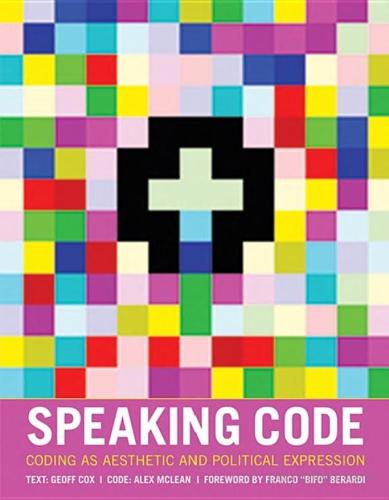
Speaking Code: Coding as Aesthetic and Political Expression
by Geoff Cox and Alex McLean · 9 Nov 2012
that is preordained but not fully known, speech is also retroactive: it is speech in-itself, or speech that preexists itself, “speech before speech,” as Slavoj Žižek explains.14 Things are decided before they are enacted in actuality, and in this sense are always ready to be executed. 4 example@speakingcode:code
…
to the politics of work through the Office suite of programs. 9. Louis Althusser, “Ideology and Ideological State Apparatuses: Notes Toward an Investigation” (1969), in Slavoj Žižek, ed., Mapping Ideology (London: Verso, 1997), 131. To explain, “ideological 112 Notes to Pages 2–6 State apparatuses” include the family, schools, church, legal apparatus
…
language taking two main forms, in which speech privileges time over space and writing space over time. 13. Althusser, “Ideology and Ideological State Apparatuses.” 14. Slavoj Žižek, The Ticklish Subject: The Absent Centre of Political Ontology (London: Verso, 1999), 60. 15. Judith Butler, Excitable Speech: A Politics of the Performative (London: Routledge
…
of real history—in that it has “no history of its own.” See Louis Althusser, “Ideology and Ideological State Apparatuses: Notes Toward an Investigation,” in Slavoj Žižek, ed., Mapping Ideology (London: Verso, 1997), 122. 9. Pall Thayer, Repeating History (2009; available at http://pallit.lhi.is/microcodes/contr.php?code _id=28
…
narrativized versions (see Wolfgang Ernst and Friedrich Kittler). Instead of linear history, something far more recursive is presented. 14. Slavoj Žižek, “Hegel’s ‘Logic of Essence’ as a Theory of Ideology,” in The Žižek Reader, ed. Elizabeth Wright and Edmond Wright (Oxford: Blackwell, 1999), 225–250. 15. Heinz von Foerster, Cybernetics of Cybernetics
…
the separation of the “negated system’s ‘real’ death from its ‘symbolic’ death . . . the system has to die twice.” See Slavoj Žižek, The Ticklish Subject: The Absent Centre of Political Ontology (London: Verso, 1999), 72. Or to put it in straightforward Marxist terms: producers take over the
…
reading. 6. Hayles, My Mother Was a Computer, 17–30. 7. Judith Butler, Excitable Speech: A Politics of the Performative (London: Routledge, 1997), 1. 8. Slavoj Žižek, Violence (London: Profile Books, 2008), 52, 58. He also refers to the hegemonic operations of language in the work of Laclau and the ontological violence
…
), somewhat explained by the statement, “Every something is an echo of Nothing,” in Silence: Lectures and Writings (Middletown, CT: Wesleyan University Press, 1961), 131. 24. Slavoj Žižek, The Ticklish Subject: The Absent Centre of Political Ontology (London: Verso, 1999), 72. He is explaining the gap that separates the negated system’s “real
…
/en/All-Problems-of-Notation-Will-be-Solved-by -the-Masses. Žižek, Slavoj. “Hegel’s ‘Logic of Essence’ as a Theory of Ideology.” In The Žižek Reader, ed. Elizabeth Wright and Edmond Wright. Oxford: Blackwell, 1999. Žižek, Slavoj, ed. Mapping Ideology. London: Verso, 1997. Žižek, Slavoj. The Ticklish Subject: The Absent Centre of Political Ontology. London: Verso
…
, 1999. Žižek, Slavoj. Violence. London: Profile Books, 2008. Index 4chan, 69, 73 action, 1
…
–86 Wiener, Norbert, 111n5, 120n27 WikiLeaks, 69, 78 Winogrand, Terry, 6 Wittgenstein, Ludwig, 32, 35 www_hack, 82 Young, La Monte, 22 Yuill, Simon, 64 Žižek, Slavoj, 3, 42–43, 102, 103, 104, 122n63, 131n106, 132n8, 133n24 149

Utopia or Bust: A Guide to the Present Crisis
by Benjamin Kunkel · 11 Mar 2014 · 142pp · 45,733 words
Logic of Neoliberalism 3. Robert Brenner: Full Employment and the Long Downturn 4. David Graeber: In the Midst of Life We Are in Debt 5. Slavoj Žižek: The Unbearable Lightness of “Communism” 6. Boris Groys: Aesthetics of Utopia Guide to Further Reading Introduction To the disappointment of friends who would prefer to
…
that could always be made when other justifications failed. It’s in light of this change that the next-to-last essay here argues, against Slavoj Žižek and others, that the left needs to supplement its anticapitalism with a basic conception of another order, a sort of minimum utopian program (no doubt
…
that enables life to be distributed socially … The first duty of every citizen is to insist on having money on reasonable terms. April 2012 5 Slavoj Žižek: The Unbearable Lightness of “Communism” Marxism has tended to be, since the first collaborations of Marx and Engels, a thorough critique of capitalist society from
…
bridge across the chasm nor the institutions lying on the other side could be imagined. These are the reduced circumstances in which the Slovenian philosopher Slavoj Žižek has been, for at least the past dozen years or so, the world’s best-known Marxist thinker. With graphomaniacal productivity and postmodern range
…
has said he isn’t a Marxist—and yet more philo-communist. His recent Communist Postscript (2009) joins the efforts of other contemporary thinkers, notably Slavoj Žižek and Alain Badiou, to revive communism as the rallying cry of the left. The differences go further. Where Adorno insisted on the artist’s deep
…
Marxist criticism and, through historically situated readings of classic novels by Balzac and Conrad among others, an exemplary demonstration of the practice. My discussions of Slavoj Žižek and Boris Groys differ from the other pieces in this collection in that they aren’t exactly appreciations. Still, these writers have provoked my admiration
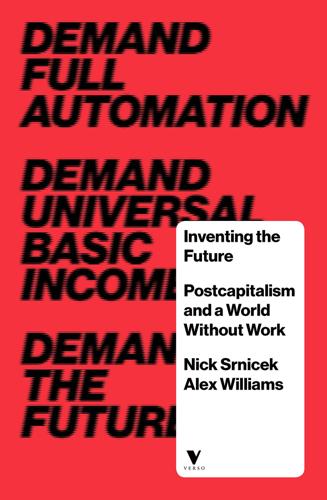
Inventing the Future: Postcapitalism and a World Without Work
by Nick Srnicek and Alex Williams · 1 Oct 2015 · 357pp · 95,986 words
utopias imagined worlds that overcame the problems posed by rapid urbanisation and conflicting ethnicities.44 These worlds not only model solutions, but illuminate problems. As Slavoj Žižek notes in his discussion of Thomas Piketty, the seemingly modest demand to implement a global tax actually implies a radical reorganisation of the entire global
…
19: 6 (2014). 64.Ernesto Laclau, ‘Identity and Hegemony: The Role of Universality in the Constitution of Political Logics’, in Judith Butler, Ernesto Laclau and Slavoj Žižek, eds, Contingency, Hegemony and Universality: Contemporary Dialogues on the Left (London: Verso, 2011), p. 50. 65.The classical mark of ideology today is that it
…
feeds on cynicism, or, as Slavoj Žižek puts it, ideology works even (and especially) if you do not believe in it. See Slavoj Žižek, The Sublime Object of Ideology (London/New York: Verso, 1989). 66.Mirowski, Never Let a Serious Crisis
…
University Press, 2014). 41.Ernesto Laclau, ‘Identity and Hegemony: The Role of Universality in the Constitution of Political Logics’, in Judith Butler, Ernesto Laclau and Slavoj Žižek, eds, Contingency, Hegemony and Universality: Contemporary Dialogues on the Left (London: Verso, 2011). 42.Nora Sternfeld, ‘Whose Universalism Is It?’, transl. Mary O’Neill, 2007
…
book will focus predominantly on the first. 55.Alex Gourevitch, ‘Labor Republicanism and the Transformation of Work’, Political Theory 41: 4 (2013), p. 597. 56.Slavoj Žižek, ‘Utopia and Its Discontents’, interview with Slawomir Sierakowski, 23 February 2015, at lareviewofbooks.org. 57.Karl Marx, Wage-Labour and Capital & Value, Price and Profit
…
. 16. 43.Zygmunt Bauman, Socialism: The Active Utopia (London: Routledge, 2011), p. 13. 44.Kilgore, Astrofuturism, pp. 237–8; Stites, Revolutionary Dreams, p. 33. 45.Slavoj Žižek, ‘Towards a Materialist Theory of Subjectivity’, Birkbeck, London, 22 May 2014, podcast available at backdoorbroadcasting.net. 46.Weeks, Problem with Work, p. 204. 47.Ruth
…
, 59, 100, 104 World Trade Organisation, 6 World War II, 46, 54, 56, 57, 115, 156 Zapatistas, 11, 22, 26, 35 zero-hours contracts, 93 Žižek, Slavoj, 140 Zuccotti Park, 31, 32
Hacking Capitalism
by Söderberg, Johan; Söderberg, Johan;
of our time, America, just as Karl Marx had predicted.11 Similar ideas have been voiced by the Slovenian philosopher Slavoj Zizek. In a paraphrase of Vladimir Lenin’s famous endorsement of electricity, Zizek exclaimed in a tongue-in-cheek way that: “socialism = free access to the Internet + power to the soviets”.12
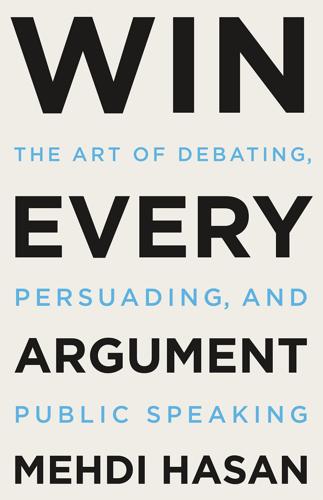
Win Every Argument: The Art of Debating, Persuading, and Public Speaking
by Mehdi Hasan · 27 Feb 2023 · 307pp · 93,073 words
England to Kyiv in Ukraine. I’ll share secrets from my televised bouts with the likes of Erik Prince, John Bolton, Michael Flynn, Douglas Murray, Slavoj Žižek, Steven Pinker, and Vitali Klitschko, among many others. I’ll also unpack lessons on the art of rhetoric from luminaries ranging from the ancient Greek
…
” and “booby traps,” too. Consider this exchange I had with the Slovenian philosopher and proud Marxist Slavoj Žižek, in 2016. Žižek appeared on UpFront to discuss his book Refugees, Terror and Other Troubles with the Neighbors. Žižek is often seen as a man of the left, but as I went through his book, I
…
on your side, all weighing in against your opponent. And if your opponent isn’t careful, their own words turn against them, too. Steven Pinker, Slavoj Žižek, John Bolton. These are sharp and savvy interlocutors. But if you have receipts, you don’t need to be intimidated by the intellect, qualifications, or
…
) Young Earth creationism YouTube Zhang Wei-wei Zimmer, John zingers brevity and defined listening and most effective picking moment for preparation and spontaneity and Zionism Žižek, Slavoj zone, getting in ABOUT THE AUTHOR Mehdi Hasan is an award-winning British American journalist, anchor, and author. He is the host of The Mehdi
Humankind: Solidarity With Non-Human People
by Timothy Morton · 14 Oct 2017 · 225pp · 70,180 words
). 27.Claude Lévi-Strauss, Structural Anthropology, trans. Claire Jacobson and Brooke Grundfest Schoepf (New York: Basic Books, 1963), 134–35. This is well discussed in Slavoj Žižek, The Parallax View (Boston: MIT Press, 2006), 25. 28.See Giorgio Agamben, Homo Sacer: Sovereign Power and Bare Life, trans. Daniel Heller-Roazen (Stanford: Stanford
…
University Press, 2010), 1.516–29; Introductory Lectures on Aesthetics, trans. Bernard Bosanquet, introduction and commentary by Michael Inwood (London: Penguin, 1993), 85–86. 6.Slavoj Žižek on Alien: Resurrection in Sophie Fiennes, dir., The Pervert’s Guide to Cinema (ICA Projects, 2006). 7.Karl Marx, Grundrisse: Foundations of the Critique of
…
.Immanuel Kant, Anthropology from a Pragmatic Point of View, ed. Robert B. Louden, introduction by Manfred Kuehn (Cambridge: Cambridge University Press, 2006), 416–17. 3.Slavoj Žižek, “The Cologne Attacks were an Obscene Version of Carnival,” New Statesman, January 13, 2016, newstatesman.com, accessed January 15, 2016. 4.Norman Geras, Marx and
…
Swedenborg, Emanuel 53 Tolstoy, Leo 111 Török, Mária 183 Wagner, Adolph 57 Whitehead, Alfred North 175 Wilde, Oscar 11 Wittgenstein, Ludwig 15, 32, 93, 95 Žižek, Slavoj 185

After Europe
by Ivan Krastev · 7 May 2017 · 100pp · 31,338 words
inequality between classes once had.”16 The Crisis and the Left In his reflections on the impact of the refugee crisis on Europe, Slovenian philosopher Slavoj Žižek comments on Elisabeth Kübler-Ross’s classic study On Death and Dying.17 In her book, Kübler-Ross offers the well-known scheme of the
…
://www.opendemocracy.net/people-newright/article_306.jsp. 13. Ayelet Shachar, The Birthright Lottery: Citizenship and Global Inequality (Cambridge, MA: Harvard University Press, 2009). 14. Slavoj Žižek, “The Cologne Attacks Were an Obscene Version of Carnival,” New Statesman 13 (January 2016). 15. “History of the World Values Survey Association,” http://www.worldvaluessurvey
…
?CMSID=History. 16. Raymond Aron, The Dawn of Universal History: Selected Essays from a Witness to the Twentieth Century (New York: Basic Books, 2002). 17. Slavoj Žižek, “We Can’t Address the EU Refugee Crisis without Confronting Global Capitalism,” In These Times, September 9, 2015. http://inthesetimes.com/article/18385
Revolution in the Age of Social Media: The Egyptian Popular Insurrection and the Internet
by Linda Herrera · 14 Apr 2014 · 186pp · 49,595 words
presence of the police state remained intact. As technologies became more advanced, the government continued to try to censor media content and monitor citizens’ communications. Slavoj Žižek refers to economic liberalization without political liberalization as “authoritarian capitalism,” or “capitalism with Asian values.” The government ministries that oversaw the communications and information sectors
…
of change,” but with little thought to fundamental questions about change towards what, why, and for whom. In the video series Big Think, Slovenian philosopher Slavoj Žižek delivers a message to activists about the value of thinking. He recognizes that people feel pressured to urgently do something in response to a deteriorating
…
Arab Awakening, Oxford: Oxford University Press, 2012, 11. 3.Ibid., 12. 4.P. Freire, Pedagogy of the Oppressed, New York: Continuum, 1993, 21. 5.S. Žižek, “Slavoj Žižek: Don’t Act. Just Think,” YouTube, from the series Big Think. 6.The video was leaked by the RASSD news network (www.rassd.com) on
…
, 21, 30–1, 152 and Egypt, 124, 127 and the Green Revolution, 39–40 and Khaled Said, 62, 75, 77 and Tunisia, 104–5, 112 Žižek, Slavoj, 11, 154 This eBook is licensed to Edward Betts, edward@4angle.com on 03/31/2016 On the Typeface This book is set in Minion
The Stack: On Software and Sovereignty
by Benjamin H. Bratton · 19 Feb 2016 · 903pp · 235,753 words
becomes the scope of design, the registration of labor, the touchpoint of advertising, and even (perhaps especially) the domain of activist belief, sacred and secular. Slavoj Žižek's definition of “the Real” as that which is negatively defined by fantasy is here given a literal, if dull, gloss.51 If so motivated
…
(or Los Angeles, at least) is controlled by skinless reptile aliens and that humans live in a state of somnambulant delirium. See, for one example, Slavoj Žižek, “Through the Glasses Darkly,” In These Times, October 29, 2008, http://inthesetimes.com/article/3976/through_the_glasses_darkly. Regarding AR then, the wearing of
…
, 347 Young, Neil, 412n69 Yugoslavian civil war, 23 Zaera-Polo, Alejandro, 166–167, 175 Zee Town, Facebook, 185 zero-sum economics, 336 zettaflop computing, 102 Žižek, Slavoj, 241, 426n46, 427n51 zombie jurisdictions, 296 zone of habitation, 22 Zuckerberg, Mark, 185
Dreaming in Public: Building the Occupy Movement
by Amy Lang and Daniel Lang/levitsky · 11 Jun 2012 · 537pp · 99,778 words
demographics change day to day, hour to hour. This is, on the one hand, a beautiful strength, a real chance for imaginative dialogue in what Slavoj Žižek rightly calls2 a deeply ideological time; on the other hand, as The New Yorker’s Hendrik Hertzberg cautions,3 we have yet to see whether
…
social systems overnight through this movement, the reality is that this is a long-term struggle. And there is always the danger of co-optation. Slavoj Žižek warned Occupy Wall Street that: ‘The problem is the system that pushes you to give up. Beware not only of the enemies. But also of
…
park at any time, and it becomes both a tool of radical equalization and an embodied ritual of spending time in the movement. Cornel West, Slavoj Žižek, Joseph Stiglitz, Naomi Klein, Russell Simmons, Michael Moore and other public figures who have come to the park to express solidarity all used the people
…
27, 86, 155, 173 see also children and students Youngstown 227 Zapatistas 21, 48, 64, 230, 233 Zena (at Occupy Boston) 128 Ziolkowski, Thad 42 Žižek, Slavoj 162, 169, 261 Zuccotti Park, New York 15, 34 see also Liberty Plaza Zunguzungu (blogger) 110 About New Internationalist We are an independent not-for

Addiction by Design: Machine Gambling in Las Vegas
by Natasha Dow Schüll · 15 Jan 2012 · 632pp · 166,729 words
Addiction by Design: Machine Gambling in Las Vegas
by Natasha Dow Schüll · 19 Aug 2012
The Social Life of Money
by Nigel Dodd · 14 May 2014 · 700pp · 201,953 words
Doppelganger: A Trip Into the Mirror World
by Naomi Klein · 11 Sep 2023

The COVID-19 Catastrophe: What's Gone Wrong and How to Stop It Happening Again
by Richard Horton · 31 May 2020 · 106pp · 33,210 words
Black Pill: How I Witnessed the Darkest Corners of the Internet Come to Life, Poison Society, and Capture American Politics
by Elle Reeve · 9 Jul 2024
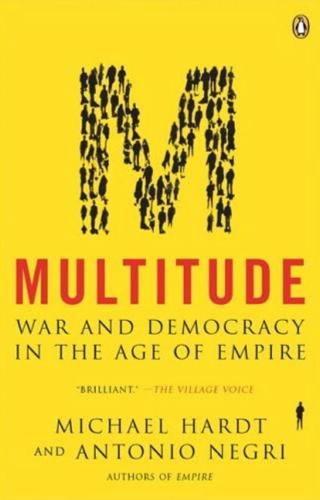
Multitude: War and Democracy in the Age of Empire
by Michael Hardt and Antonio Negri · 1 Jan 2004 · 475pp · 149,310 words

Britain Etc
by Mark Easton · 1 Mar 2012 · 411pp · 95,852 words
Picnic Comma Lightning: In Search of a New Reality
by Laurence Scott · 11 Jul 2018 · 244pp · 81,334 words
To Save Everything, Click Here: The Folly of Technological Solutionism
by Evgeny Morozov · 15 Nov 2013 · 606pp · 157,120 words
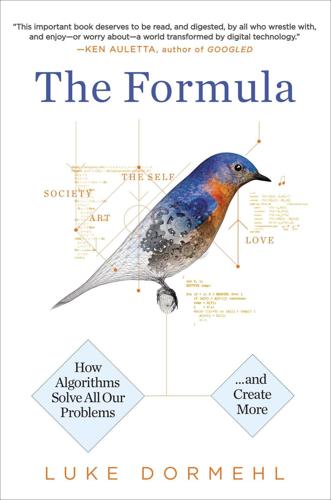
The Formula: How Algorithms Solve All Our Problems-And Create More
by Luke Dormehl · 4 Nov 2014 · 268pp · 75,850 words
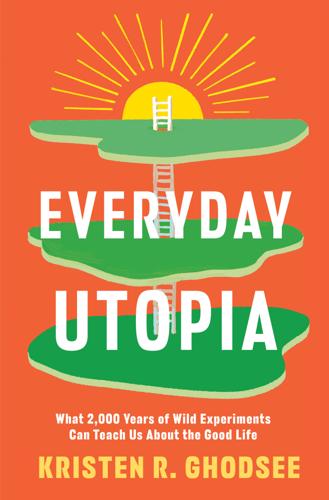
Everyday Utopia: What 2,000 Years of Wild Experiments Can Teach Us About the Good Life
by Kristen R. Ghodsee · 16 May 2023 · 302pp · 112,390 words
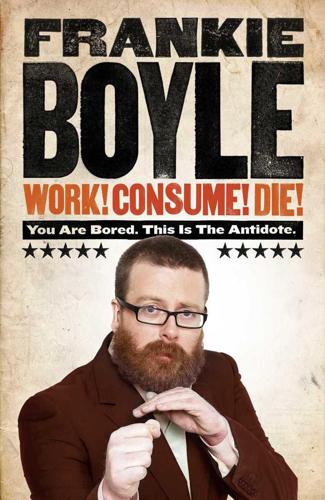
Work! Consume! Die!
by Frankie Boyle · 12 Oct 2011
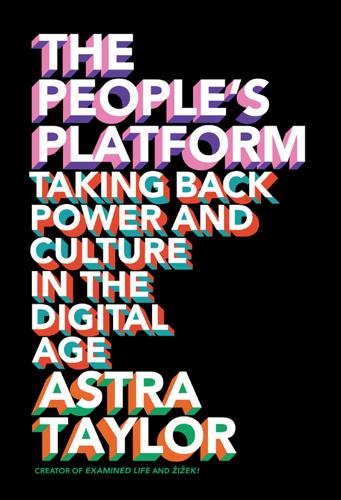
The People's Platform: Taking Back Power and Culture in the Digital Age
by Astra Taylor · 4 Mar 2014 · 283pp · 85,824 words
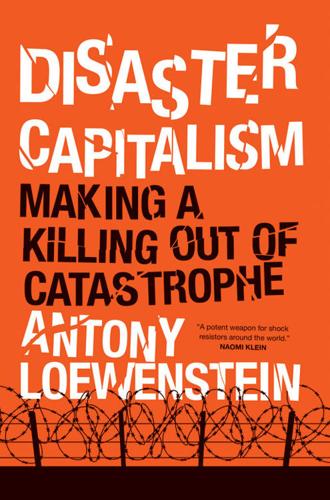
Disaster Capitalism: Making a Killing Out of Catastrophe
by Antony Loewenstein · 1 Sep 2015 · 464pp · 121,983 words
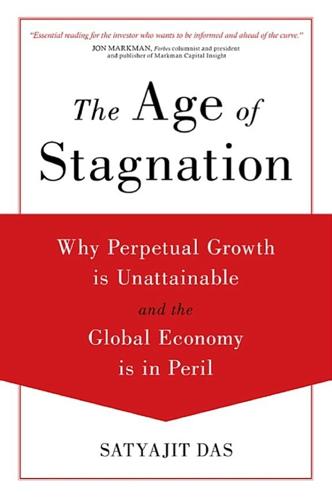
The Age of Stagnation: Why Perpetual Growth Is Unattainable and the Global Economy Is in Peril
by Satyajit Das · 9 Feb 2016 · 327pp · 90,542 words
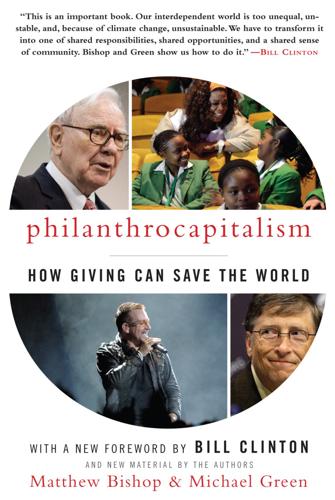
Philanthrocapitalism
by Matthew Bishop, Michael Green and Bill Clinton · 29 Sep 2008 · 401pp · 115,959 words
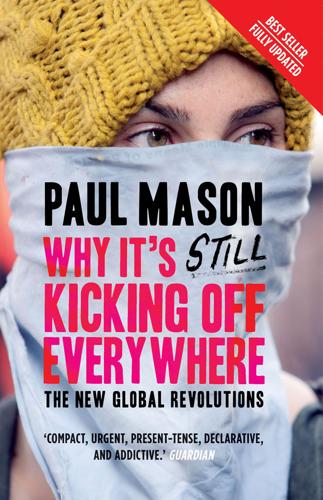
Why It's Still Kicking Off Everywhere: The New Global Revolutions
by Paul Mason · 30 Sep 2013 · 357pp · 99,684 words
The Digital Party: Political Organisation and Online Democracy
by Paolo Gerbaudo · 19 Jul 2018 · 302pp · 84,881 words
The Glass Half-Empty: Debunking the Myth of Progress in the Twenty-First Century
by Rodrigo Aguilera · 10 Mar 2020 · 356pp · 106,161 words
The Happiness Industry: How the Government and Big Business Sold Us Well-Being
by William Davies · 11 May 2015 · 317pp · 87,566 words
The Better Angels of Our Nature: Why Violence Has Declined
by Steven Pinker · 24 Sep 2012 · 1,351pp · 385,579 words
The Net Delusion: The Dark Side of Internet Freedom
by Evgeny Morozov · 16 Nov 2010 · 538pp · 141,822 words
Everything for Everyone: The Radical Tradition That Is Shaping the Next Economy
by Nathan Schneider · 10 Sep 2018 · 326pp · 91,559 words

From eternity to here: the quest for the ultimate theory of time
by Sean M. Carroll · 15 Jan 2010 · 634pp · 185,116 words
Fully Automated Luxury Communism
by Aaron Bastani · 10 Jun 2019 · 280pp · 74,559 words
It's Better Than It Looks: Reasons for Optimism in an Age of Fear
by Gregg Easterbrook · 20 Feb 2018 · 424pp · 119,679 words
Amateurs!: How We Built Internet Culture and Why It Matters
by Joanna Walsh · 22 Sep 2025 · 255pp · 80,203 words
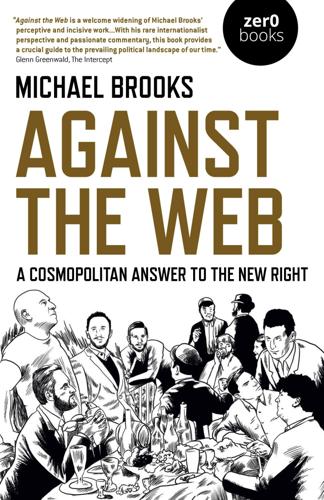
Against the Web: A Cosmopolitan Answer to the New Right
by Michael Brooks · 23 Apr 2020 · 88pp · 26,706 words
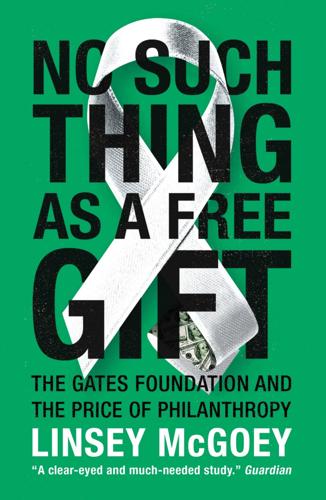
No Such Thing as a Free Gift: The Gates Foundation and the Price of Philanthropy
by Linsey McGoey · 14 Apr 2015 · 324pp · 93,606 words
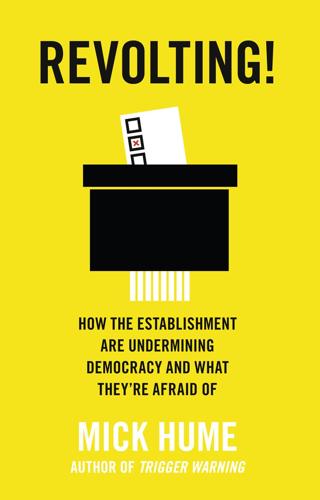
Revolting!: How the Establishment Are Undermining Democracy and What They're Afraid Of
by Mick Hume · 23 Feb 2017 · 228pp · 68,880 words
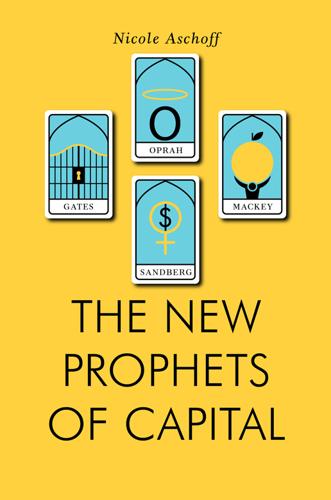
The New Prophets of Capital
by Nicole Aschoff · 10 Mar 2015 · 128pp · 38,187 words
Extreme Money: Masters of the Universe and the Cult of Risk
by Satyajit Das · 14 Oct 2011 · 741pp · 179,454 words
Collaborative Futures
by Mike Linksvayer, Michael Mandiberg and Mushon Zer-Aviv · 24 Aug 2010 · 188pp · 9,226 words
Iron Curtain: The Crushing of Eastern Europe, 1945-1956
by Anne Applebaum · 30 Oct 2012 · 934pp · 232,651 words
This Is Not Normal: The Collapse of Liberal Britain
by William Davies · 28 Sep 2020 · 210pp · 65,833 words
On the Road to Kandahar: Travels Through Conflict in the Islamic World
by Jason Burke · 21 May 2025 · 323pp · 108,377 words
Rebooting Democracy: A Citizen's Guide to Reinventing Politics
by Manuel Arriaga · 1 Jan 2014 · 124pp · 30,520 words
Human Frontiers: The Future of Big Ideas in an Age of Small Thinking
by Michael Bhaskar · 2 Nov 2021
What We Cannot Know: Explorations at the Edge of Knowledge
by Marcus Du Sautoy · 18 May 2016
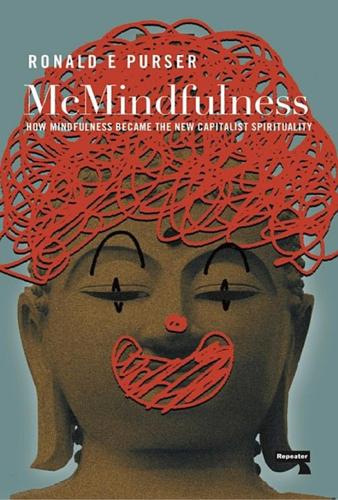
McMindfulness: How Mindfulness Became the New Capitalist Spirituality
by Ronald Purser · 8 Jul 2019 · 242pp · 67,233 words

Stuff White People Like: A Definitive Guide to the Unique Taste of Millions
by Christian Lander · 5 Aug 2008 · 287pp · 9,386 words

The Geeks Shall Inherit the Earth: Popularity, Quirk Theory, and Why Outsiders Thrive After High School
by Alexandra Robbins · 31 Mar 2009 · 509pp · 147,998 words
Broke: How to Survive the Middle Class Crisis
by David Boyle · 15 Jan 2014 · 367pp · 108,689 words
Because We Say So
by Noam Chomsky

Three Years in Hell: The Brexit Chronicles
by Fintan O'Toole · 5 Mar 2020 · 385pp · 121,550 words
Summer of Our Discontent: The Age of Certainty and the Demise of Discourse
by Thomas Chatterton Williams · 4 Aug 2025 · 242pp · 76,315 words
The Costs of Connection: How Data Is Colonizing Human Life and Appropriating It for Capitalism
by Nick Couldry and Ulises A. Mejias · 19 Aug 2019 · 458pp · 116,832 words
Wall Street: How It Works And for Whom
by Doug Henwood · 30 Aug 1998 · 586pp · 159,901 words
Nomad Citizenship: Free-Market Communism and the Slow-Motion General Strike
by Eugene W. Holland · 1 Jan 2009 · 265pp · 15,515 words
Hunger: The Oldest Problem
by Martin Caparros · 14 Jan 2020 · 684pp · 212,486 words
The Cultural Logic of Computation
by David Golumbia · 31 Mar 2009 · 268pp · 109,447 words
A Primer on Utopian Philosophy: An Introduction to the Work of Ernst Bloch
by Jonathan Greenaway · 29 Mar 2024 · 49pp · 14,870 words
The Empathy Exams: Essays
by Leslie Jamison · 30 Mar 2014
Why Women Have Better Sex Under Socialism: And Other Arguments for Economic Independence
by Kristen R. Ghodsee · 20 Nov 2018 · 211pp · 57,759 words