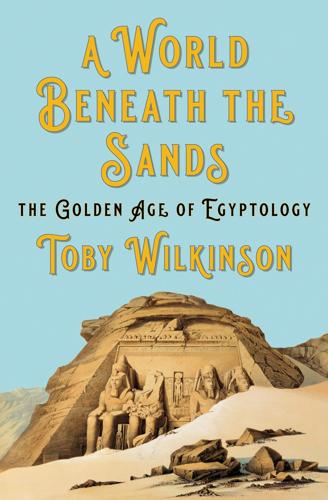
A World Beneath the Sands: The Golden Age of Egyptology
by Toby Wilkinson · 19 Oct 2020
’s system of decipherment beyond doubt, and he was the first to tackle the question of Egypt’s prehistoric past. At the opening of the Suez Canal in 1869, Lepsius led the new Prussian crown prince (later Emperor Friedrich III) on a Nile cruise, and from 1874 until his death he was director
…
‘viceroy’ rather than ‘pasha’) was suspicious of Mariette’s motives, wondering if the real purpose of his visit was to advance French interests in the Suez Canal project. But he graciously made a steamer available for Mariette’s personal use, and the Frenchman lost no time in initiating new digs throughout the
…
in the east. But Napoleon’s defeat at the Battle of the Nile shifted the balance of power in Egypt, and the dream of a Suez Canal remained just that, a dream. What it needed to turn it into reality was an Egyptian ruler as ambitious as Darius, a presiding genius with
…
changes of ruler in the Nile Valley – before the project could be brought to fruition. The presiding genius, and the name forever associated with the Suez Canal, was the Frenchman Ferdinand de Lesseps. Born in the year of Napoleon’s self-elevation from consul to emperor, de Lesseps grew up with French
…
arrived in Alexandria on 7 November that very year, and within a month had received a royal concession granting him the right to build a Suez Canal. A few months later, back in Paris, de Lesseps convened engineers from across Europe – he diplomatically included a representative from Britain, as well as French
…
visit of 1831, was likewise against the plan. Sir Gardner Wilkinson, by now the grand old man of British Egyptology, declared his opposition to the Suez Canal on the grounds that ‘it could obviously destroy our Indian trade & throw it into the hands of the Austrians, Greeks, French, Russians and all petty
…
opposition from London, de Lesseps pressed ahead, raising the necessary funds by issuing shares in the newly formed Compagnie universelle du canal maritime de Suez (Suez Canal Company). On 25 April 1859, the first spadeful of earth was cut at the Mediterranean end of the canal’s route – named Port Said in
…
even grander visions for Egypt than his uncle. Under mounting British pressure, the Ottoman sultan in Constantinople eventually agreed to issue an ultimatum to the Suez Canal Company, asserting that Said’s concession had never been ratified by the Sublime Porte.46 Britain and France, at loggerheads, agreed to the establishment of
…
Khafra had been swallowed up by the sands of Giza for over forty centuries, so events after 1869 were not kind to the French. Less than a year after Eugénie’s triumphal progress along the Suez Canal and up the Nile, her husband was overthrown, bringing an end to the Second Empire and
…
. De Lesseps’s great achievement, which should have secured French economic interests in Egypt, instead led to a rapid expansion of British trade through the Suez Canal.48 And as for Mariette, while he was lauded in Egypt, he found much less favour in his home country. It has been said that
…
.24 While Abbas had looked to England, Said and then Ismail turned to France. Nothing summed up the Franco-Egyptian relationship more powerfully than the Suez Canal project. But, in contrast to the wide-eyed wonder of most Western commentators, Lucie saw the human cost behind the impressive statistics. ‘Everyone is cursing
…
the French here,’ she wrote. ‘Forty thousand men always at work at the Suez Canal at starvation-point, does not endear them to the Arabs. There is great excitement as to what the new Pasha will do. If he ceases
…
drink of choice), and his extravagance was notorious, especially when it came to entertaining foreign guests. When Empress Eugénie visited Egypt in 1869, for the official opening of the Suez Canal, Ismail ordered an eight-mile long road to be laid from central Cairo to enable her ‘to drive out to the Pyramids
…
progress that caused him to remodel and modernize not just central Cairo, but virtually the whole of Egypt. In addition to his greatest project, the Suez Canal, opened in the year of Duff Gordon’s death, he presided over the reclamation of 1.25 million acres of desert land, and the construction
…
1862 to a colossal $443 million in 1875. Unable to meet the interest payments, Ismail decided to sell his 44 per cent holding in the Suez Canal Company to raise some much-needed cash. The British government spotted an opportunity to take a strategic stake in a crucial communication link with India
…
the Rothschilds. The deal was presented to Parliament as a fait accompli. As a contemporary observer noted: ‘The purchase of four million pounds’ worth of Suez Canal shares by the British Government was not merely an evidence of Ismail Pasha’s dwindling resources; it gave England a foothold in addition to the
…
of victory. He was wrong. A British expeditionary force landed at Alexandria on 16 August, soon to be joined by another from India, sealing the Suez Canal at both ends. As the net tightened, Arabi’s forces began to desert their leader. The decisive battle, fought at Tel el Kebir on 13
…
, his health began to fail and he died in Florida on 23 February 1915. The same day, Turkish troops crossed the Sinai to attack the Suez Canal. During his years in Egypt, Davis had amassed an impressive collection of antiquities, which he called ‘the child of my mind’.88 On his death
…
in 1909 with a trio of significant events. First, there was the visit by Empress Eugénie, her first to Egypt since she had opened the Suez Canal four decades earlier. On her way from central Cairo to the pyramids she passed along the avenue which she had ceremonially planted on her earlier
…
administration took a decidedly laissez-faire approach to other sectors of the economy. It was the French who dominated the sugar industry and controlled the Suez Canal. They also ran most of the best schools in the country. All Cairo’s main hotels (Shepheard’s, the Gezira Palace and the Savoy) were
…
Mansfield (1971): 4. 46.Mansfield (1971): 5. 47.Quoted in Sattin (1988): 62. 48.British trade accounted for two-thirds of the tonnage through the Suez Canal the year after it opened, rising to 79 per cent within a decade; see Wilson (1964): 48. 49.Reid (2002): 113. 50.Quoted in Piacentini
…
Said’s visit 196 Prussia, rivalry with 228–9 Reign of Terror 51 restoration of monarchy 53, 64–5 Revolution 50 Second Republic 175, 177 Suez Canal 202–3, 204, 206 Third Republic 206, 229 Treaty of Frankfurt 230 war with Prussia 229–30 Franco-Tuscan expedition to Egypt Abu Simbel 96
…
–4 post-First World War 405 protectorate of Egypt see British protectorate of Egypt Queen Victoria’s death 337 reduced influence in Egypt 337–8 Suez Canal 202–3, 203–4, 246 tourism to Egypt 134, 235 Great Pyramid, Giza 9, 10, 16–17, 19, 26–7, 38, 138, 143, 159, 265
…
relationship 217 German-Egyptian relationship 231 granted independent sovereignty 245 modernization/Europeanization 215–16, 218, 227–8, 235 palace 227 profligacy 219, 223–4, 227 Suez Canal 203–4, 204–5, 206, 217–18, 246 Sultan Abdel’s visit 217 title ‘khedive’ 223 visit to Europe 224–5 Ismail/Tahrir Square museum
…
–6 Upper Nubia 165 published works 169–72 return to Prussia 167 Royal Library directorship 172 scholarship approach 365 study trip in Europe 148–52 Suez Canal opening 171–2 Wilkinson’s house, staying at 120 Les Ruines (Volney) 20 Letters from Egypt (Duff Gordon) 222–3 Letters from Egypt, Ethiopia, and
…
to France 189 Said’s visit to France 196 sarcophagus Plate 11, 207, 333 as spy for Napoleon III 196 study tour in Europe 190 Suez Canal opening 205–6 Valley of the Kings, difficulties excavating 411 Mary, Queen 416 Maspero, Gaston arrival in Egypt 256 asked to return to Egypt 311
…
independence 133 First World War 374, 376 German influence 361–2 Greek rebellion 89–90 reoccupation of Egypt 29 status of Turks in Egypt 114 Suez Canal debate 203–4 war with Italy 367 Wilhelm II’s tour 359 Our Inheritance in the Great Pyramid (Smyth) 265 ‘Ozymandias’ (Shelley) 36 Pagerie, Rose
…
the Gods and Heroes of Greece (Niebuhr) 213 Strabo 12, 180 strike of 1879 248 Stukeley, William 18, 56 Sudan 272, 273, 312, 320, 423 Suez Canal Britain buying Ismail’s shares 246 Britain’s opposition 202–3, 203–4 commencement of digging 203 Commission of Arbitration 204 cost 204 engineering team
…
203 Le Père’s survey 27, 200, 201 length 204 opening ceremony 171–2, 204–5 Said Pasha’s concession 202 Turkish attack on 350 Suez Canal Company 203, 204, 246 Suez Crisis 428 al-Su’ud, Abdullah Abu 197–8 el-Tahtawi, Rifa’a Rafi 133, 135, 204 Talleyrand, Charles de
…
to Egypt 160–1 publishing book 123 publishing travel memoirs 124 relationships in Egypt 115–16, 128–9 returning to Egypt 122–3, 140–1 Suez Canal 203, 205 Thebes, study of 121–2 Topography of Thebes field guide 124–5 tourism, views on 140–1, 157–8 Turkish persona 105, 114
Egypt Travel Guide
by Lonely Planet
an intense Nubian musical ritual called a zar (Click here) El Tanboura Hall Another traditional-music incubator in Cairo, this space sees regular shows by Suez Canal–area artists and others (Click here) Eskaleh This Nubian cultural centre and hotel offers guests a chance to immerse in local food and music (Click
…
tradition via the Copts. It’s celebrated by all Egyptians, who picnic in parks, on riverbanks and even on traffic islands. El-Limbo Egypt’s Suez Canal area has many distinct folk traditions, including this effigy-burning party held every year in Port Said, right before Shamm al-Nassim. Rooted in 19th
…
Straits of Gubal , a series of coral pinnacles just beneath the surface of the sea, famous for snagging ships trying to navigate north to the Suez Canal. This is where the majority of Egypt’s shipwrecks, including the Thistlegorm, lie. Heading south, the best reefs are found around the many offshore islands
…
one of the family-friendly restaurants. For shipping on an even larger scale, stop in Port Said and watch the massive freighters go through the Suez Canal. Top of section regions at a glance Cairo Entertainment History Shopping Watching Cairo is the very model of a modern megalopolis, and just watching the
…
west, mobbed in summer as Egyptians escape the heat. One nicer spot is Sidi Abdel Rahman, near the WWII battleground of El Alamein. Click here Suez Canal Nostalgia Ancient History Industry Ismailia & Port Said Squint just right in downtown Ismailia and Port Said, and you can almost see the be-fezzed pashas
…
Oasis Great Sand Sea ALEXANDRIA & THE MEDITERRANEAN COAST ALEXANDRIA AROUND ALEXANDRIA Aboukir Rosetta (Ar-Rashid) MEDITERRANEAN COAST El Alamein Sidi Abdel Rahman Marsa Matruh Sallum SUEZ CANAL Port Said Ismailia Suez RED SEA COAST Red Sea Monasteries El-Gouna Hurghada Safaga Al-Quseir Marsa Alam & Around Eastern Desert Berenice Shalatein SINAI SINAI
…
Paris’ then-recent makeover; the khedive even called in mastermind French planner Baron Haussmann as a consultant. He wanted the palace finished for the 1869 opening of the Suez Canal, to impress visiting dignitaries, but its 500 rooms weren’t completed until 1874. It was the royal residence until the monarchy was abolished
…
at the time of research. Its collection includes a supremely elegant train car built for Empress Eugénie on the occasion of the opening of the Suez Canal. Al-Fath Mosque Mosque Offline map Google map On the south side of the square is Cairo’s pre-eminent orientation aid, Al-Fath Mosque
…
a luxury hotel: its core is a lavish palace built by Khedive Ismail to house Empress Éugenie when she visited for the opening of the Suez Canal in 1869. A stroll through gives a sense of its original grandeur. Head straight through and down the stairs to further grand old sitting rooms, then
…
-y Sudanese folk group (Thursday, 9.30pm, E£20), and El Tanboura Band (Friday, 9.30pm, E£20), playing simsimiyya, a musical style from the Suez Canal region. Tamarai Club, Lounge ( 2456 6666; www.tamarai-egypt.com; Nile City Towers, 2005C Corniche el-Nil; minimum E£250 Thu-Sat) Strawberry-guava martinis
…
( 2393 0381; cnr Sharia Talaat Harb & Sharia al-Bustan); Downtown ( 2392 7680; 6 Sharia Adly) Bus The main bus station, for all destinations in the Suez Canal area, Sinai, the deserts, Alexandria and Upper Egypt, is Cairo Gateway (Mina al-Qahira, Turgoman Garage; Sharia al-Gisr, Bulaq; Orabi), 400m west of the
…
to April), book several days in advance. Marsa Matruh Watania runs a train to the Mediterranean coast three times a week during the summer season. Suez Canal Delays on this route are common; going by bus is more efficient. If you’re determined to travel by train, the best option is to
…
slightly sinister flair by North Korean artists. A large circular mural and diorama depicts the Egyptian forces breaching of the Bar Lev Line on the Suez Canal, while a stirring commentary (in Arabic only) recounts the heroic victories. It neatly skips over the successful Israeli counterattacks. The exhibition is about 2.5km
…
there were political and engineering difficulties. In 1956, after the World Bank refused the promised loan for the project, Nasser ordered the nationalisation of the Suez Canal, which sparked the Suez Crisis in which France, the UK and Israel invaded the canal region. But Nasser got his way and also won additional
…
thousands of acres in what is now the Nubian Desert between Toshka and the New Valley, a project ex-president Mubarak has likened to the Suez Canal and Aswan High Dam in its scale. Numbers aside, the contrast between this enormous body of water and the remote desert stretching away on all
…
£35 for a whole car) takes you to the border crossing at Amsaad. For visa details, Click here Top of section Suez Canal Includes » Port Said Ismailia Suez Why Go? The Suez Canal, Egypt’s glorious triumph of engineering over nature, dominates this region, slicing through the sands of the Isthmus of Suez for
…
here) Abou Essam (Click here) Best Places to Stay New Palace Hotel (Click here) Hotel de la Poste (Click here) Mercure Forsan Island (Click here) Suez Canal Highlights Commute from Africa to Asia in 15 minutes flat by jumping on the ferry (Click here) from Port Said to Port Fuad and sampling
…
allure of the centre is enough of a reason to visit but the main attraction, and the reason for the town’s establishment, is the Suez Canal. The raised pedestrian-only boardwalk running along the waterfront provides up-close views over the canal’s northern entry point, and the free ferry that
…
Compound B2 4Italian ConsulateC2 5 Military Museum A1 6 Old Canal Shipping Agency Building C2 7Simon Arzt Department Store BuildingC2 8 Stone Plinth D1 9 Suez Canal House B4 10 Woolworth's Building C3 Sleeping 11 Holiday Hotel C2 12Hotel de la PosteC3 13 Mereland Hotel B3 14 New Continental B3 15
…
the boat terminal at the southwestern end of Sharia Palestine and hop aboard the ferry to Port Fuad to travel upon the waters of the Suez Canal for free. Ferries leave about every 10 minutes throughout the day and the quick journey offers panoramic views of all the canal action. Once deposited
…
Offline map Google map that once held a statue of Ferdinand de Lesseps, until it was torn down in 1956 with the nationalisation of the Suez Canal. Suez Canal House Historic Building Offline map Google map (Commercial Basin) If you’ve ever seen a picture of Port Said, it was probably of the striking
…
green domes of the Suez Canal House, which was built in time for the inauguration of the canal in 1869. As it’s currently fenced off (it’s not open to the public), the best way to get
…
of Port Said’s Sharia Palestine was originally meant to host a colossal lighthouse in statue form to celebrate the incredible achievement of completing the Suez Canal. Inspired by the massive statues at Abu Simbel (Click here), French sculptor Frédéric-Auguste Bartholdi designed a torch-bearing Egyptian woman who would tower over
…
. Taxi There are plenty of blue-and-white taxis around Port Said. Fares for short trips within the town centre average E£3. The Suez Canal The Suez Canal represents the culmination of centuries of effort to enhance trade and expand the empires of Egypt by connecting the Red Sea with the Mediterranean Sea
…
two sea levels. British reports detected that mistake several years later but it was Ferdinand de Lesseps, the French consul to Egypt, who pursued the Suez Canal idea through to its conclusion. In 1854, de Lesseps presented his proposal to the Egyptian khedive Said Pasha, who authorised him to excavate the canal
…
. When two small fleets, one originating in Port Said and the other in Suez, met at the new town of Ismailia on 16 November 1869, the Suez Canal was declared open and Africa was officially severed from Asia. Ownership of the canal remained in French and British hands for the next 86 years
…
force. In what came to be known as the ‘Suez Crisis’, they were forced to retreat in the face of widespread international condemnation. Today, the Suez Canal remains one of the world’s most heavily used shipping lanes and toll revenues represent one of the largest contributors to the Egyptian state coffers
…
the unremarkable statue from the street. The attractive grounds of the majestic residence between the garden and the museum belong to the head of the Suez Canal Authority and are off limits to the public. De Lesseps’ House Historic Building Offline map Google map (Mohammed Ali Quay) The residence of the one
…
-Quseir and for some time it was the main import channel for the spice trade from India to Britain. However, the opening of the Suez Canal in 1869 put an end to all this and the town’s decline accelerated, with only a brief burst of prosperity as a phosphate-processing centre in
…
were encouraged to move to the oases. The government has built a new pipeline, called the Al-Salam Canal, to bring fresh water from the Suez Canal to various areas of North Sinai that have been targeted for resettlement. Tourism, too, has brought great changes. Surveys estimate that Sharm el-Sheikh has
…
civic projects were built, among them the pyramids, the canal cut through from the Nile to the Red Sea and, in the 19th century, the Suez Canal. Old Habits Even when the old gods were long dead, and roads and railways ran alongside the river, the Nile exerted its magic and its
…
mosque, which stands in the Northern Cemetery (Click here). The opera Aida was originally commissioned for the opening ceremony of the Suez Canal, but Verdi was late delivering. Rigoletto was performed in 1869 and Aida first performed on Christmas Eve, 1871, two years after the opening. The funding for the Mamluks’ great buildings
…
East. Famed as an American icon, the monument now known as the Statue of Liberty was originally intended to stand at the mouth of the Suez Canal. Napoleon’s forces weren’t always successful. In 1798, a British fleet under Admiral Nelson had been criss-crossing the Mediterranean trying to find the
…
revenues were directed into ever-grander schemes. Grandest of all was the Suez Canal, which opened in 1869 to great fanfare and an audience that included European royalty, including Empress Eugenie of France. Packaging Tourism In 1869, with the opening of the Suez Canal, the Khedive (Viceroy) Ismail announced that Egypt was now part of Europe
…
. The Veiled Protectorate The British had no desire to make Egypt a colony: their main reason for involvement was to ensure the safety of the Suez Canal. So they allowed the heirs of Mohammed Ali to remain on the throne, while real power was concentrated in the hands of the British agent
…
Egypt Emerging from the Ashes After years of demonstrations, strikes and riots against foreign rule, an Anglo-Egyptian showdown over a police station in the Suez Canal zone provided the spark that ignited the capital. Shops and businesses owned or frequented by foreigners were torched by mobs and many landmarks of 70
…
to tell the whole 5000 year story. In the year of his inauguration, Nasser successfully faced down Britain and France in a confrontation over the Suez Canal, which was mostly owned by British and French investors. On 26 July, the fourth anniversary of King Farouk’s departure, Nasser announced that he had
…
nationalised the Suez Canal to finance the building of a great dam that would control the flooding of the Nile and boost Egyptian agriculture. A combined British, French and
…
in ancient and early 20th-century Egypt. When the shooting stopped six days later, Israel controlled all of the Sinai Peninsula and had closed the Suez Canal (which didn’t reopen for another eight years). A humiliated Nasser offered to resign, but in a spontaneous outpouring of support, the Egyptian people wouldn
…
and Cairo, is built by British engineer Robert Stephenson. The line, extended to Suez in 1858, carries Europeans heading East until the opening of the Suez Canal. 1859 Ferdinand de Lesseps, a French engineer, sees work begin on his project to build a canal between the Mediterranean and Red seas, making it
…
the quickest way from Europe to the East. The canal takes 10 years to complete. 1869 Khedive Ismail, Mohammed Ali’s grandson, opens the Suez Canal. The British, who had preferred a railway, soon take control of the waterway as the quickest route to their Eastern empire
…
Having bankrupted the country, running up debts of more than £100m, Khedive Ismail is forced to abdicate but not before selling his shares in the Suez Canal to Britain. 1882 British troops invade to suppress nationalist elements in the army. Although they officially restore power to the khedive, Britain effectively rules Egypt
…
title of Sultan of Egypt. 1922 Britain grants Egypt independence, but reserves the right to defend Egypt, its interests in Sudan and, most importantly, the Suez Canal, where Britain continues to maintain a large military presence. 1922 Howard Carter discovers the tomb of Tutankhamun. The first great Egyptological discovery in the age
…
tomb contains more than 3000 objects and takes 10 years to excavate. 1936 The Anglo-Egyptian treaty committed British troops to confining themselves to the Suez Canal and to leaving Egypt within 20 years. 1942 The German Field Marshal Rommel pushes his tanks corps across the Libyan coast and into Egypt, causing
…
. By the summer, Nasser and his fellow Free Officers have overthrown King Farouk and established the Republic of Egypt. 1956 After President Nasser nationalises the Suez Canal, British, French and Israeli forces attack the canal zone, but are forced to retreat. 1967 Egypt, Syria and Jordan are defeated by Israel in the
…
’s farmland by 30%. Around 50,000 Nubians and many monuments are relocated. 1973 In October, Egyptian forces attack and cross Israeli defences along the Suez Canal. Although the Egyptians are repulsed and Israel threatens Cairo, the war is seen as an Egyptian success. 1981 President Sadat is assassinated, an event precipitated
…
the task of providing for the entire country, this Delta region ranks among the world’s most intensely cultivated lands. To the east, across the Suez Canal, is the triangular wedge of Sinai. It’s a geological extension of the Eastern Desert; the terrain here slopes from the high mountain ridges, which
…
and photographs for the New York Times and other publications. Now that he’s a father, his Egyptian friends call him Abu Lucas. Jessica Lee Suez Canal, Red Sea Coast, Sinai Jessica escaped small-town New Zealand and high-tailed it for the road at the age of 18, spending much of
Egypt
by Matthew Firestone · 13 Oct 2010
Egyptian Museum Around Cairo Nile Valley: Beni Suef to Qena Nile Valley: Luxor Nile Valley: Esna to Abu Simbel Western Desert Alexandria & the Mediterranean Coast Suez Canal Red Sea Coast Diving the Red Sea Sinai Directory Transport Health Language Glossary The Authors Behind the Scenes Map Legend Return to beginning of chapter
…
projects were built, among them the pyramids, the canal cut through from the Nile to the Red Sea and, in the 19th century, the Suez Canal. Old Habits Even when the old gods were long dead, and roads and railways ran alongside the river, the Nile exerted its magic and its
…
boomed as production in the USA was disrupted by civil war, and revenues were directed into ever-grander schemes. Grandest of all was the Suez Canal, which opened in 1869 to great fanfare and an audience that included European royalty, including Empress Eugenie of France. In the same year that Khedive (Viceroy) Ismail
…
industry that was to become one of Egypt’s core businesses – mass tourism. * * * The opera Aida was originally commissioned for the opening ceremony of the Suez Canal, but Verdi was late delivering and it was first performed on Christmas Eve, 1871, two years after the opening. * * * Khedive Ismail had taken on more
…
army. * * * Famed as an American icon, the monument now known as the Statue of Liberty was originally intended to stand at the mouth of the Suez Canal. * * * The Veiled Protectorate The British had no desire to make Egypt a colony: their main reason for involvement was to ensure the safety of the
…
Suez Canal. So they allowed the heirs of Mohammed Ali to remain on the throne, while real power was concentrated in the hands of the British agent
…
Cairo was set on fire. After years of demonstrations, strikes and riots against foreign rule, an Anglo-Egyptian showdown over a police station in the Suez Canal zone provided the spark that ignited the capital. Shops and businesses owned or frequented by foreigners were torched by mobs and many landmarks of 70
…
many to sell up and ship out. In the year of his inauguration, Nasser successfully faced down Britain and France in a confrontation over the Suez Canal, which was mostly owned by British and French investors. On 26 July, the fourth anniversary of King Farouk’s departure, Nasser announced that he
…
had nationalised the Suez Canal to finance the building of a great dam that would control the flooding of the Nile and boost Egyptian agriculture. A combined British, French and
…
forces east of Suez. Israel struck first. When the shooting stopped six days later, Israel controlled all of the Sinai Peninsula and had closed the Suez Canal (which didn’t reopen for another eight years). A humiliated Nasser offered to resign, but in a spontaneous outpouring of support, the Egyptian people wouldn
…
helped make the Camp David peace talks possible. * * * On 6 October 1973, the Jewish holiday of Yom Kippur, Egypt launched a surprise attack across the Suez Canal. Its army beat back Israel’s superior forces and crossed their supposedly impregnable line of fortifications. Although these initial gains were later reversed, Egypt’s
…
to Suez in 1858 and was popular with Europeans heading to India and the Far East until the opening of the Suez Canal. 1869 Khedive Ismail, Mohammed Ali’s grandson, opens the Suez Canal. The British, who had preferred a railway, soon take control of the waterway as the quickest route to their empire
…
Egypt. 1922 Britain ends the protectorate and grants Egypt independence, but reserves the right to defend Egypt, its interests in Sudan and, most importantly, the Suez Canal, where Britain continues to maintain a large military presence. 1922 Howard Carter discovers the tomb of Tutankhamun. The first great Egyptological discovery in the age
…
000 Nubians and many monuments, and extends Egypt’s farmland by 30%. 1973 In October, Egyptian forces attack and cross the Israeli defences along the Suez Canal. Although the Egyptians are repulsed and Israel threatens Cairo, the war is seen as an Egyptian success. 1981 President Sadat is assassinated, an event precipitated
…
the task of providing for the entire country, this Delta region ranks among the world’s most intensely cultivated lands. To the east, across the Suez Canal, is the triangular wedge of Sinai. A geological extension of the Eastern Desert, terrain here slopes from the high mountain ridges, which include Mt Sinai
…
by Paris’ recent makeover; the khedive even called in mastermind French planner Baron Haussmann as a consultant. He wanted the palace finished for the 1869 opening of the Suez Canal, to impress visiting dignitaries, but its 500 rooms weren’t completed until 1874. It was the royal residence until the monarchy was abolished
…
-Sun) with a beautiful but somewhat dilapidated collection of old locomotives, including one built for Empress Eugénie on the occasion of the opening of the Suez Canal. On the south side of the square is Cairo’s pre-eminent orientation aid, Al-Fath Mosque (Map). Completed in the early 1990s, the
…
memorial to the 1973 ‘victory’ over Israel. A large 3D mural and diorama depicts the Egyptian forces breaching of the Bar Lev Line on the Suez Canal, while a stirring commentary (in Arabic only) recounts the heroic victories. Interestingly it skips over the successful Israeli counterattacks. Both sides accepted a UN-
…
Superjet ( 2290 9017) has services to Sharm el-Sheikh at 7.30am, 3.15pm, 10.45pm (E£65 to E£75, five to six hours). Suez Canal All Suez buses depart from Cairo Gateway. East Delta Travel Co travels to Ismailia (E£20, three hours) and Suez (E£15 to E£20
…
, around 12. Student discounts of 30% are available in both classes. You must buy your tickets at least a couple of days in advance. SUEZ CANAL Delays on this route are commonplace; going by bus is much more efficient. If you’re determined to travel by train, Click here for more
…
there were political and engineering difficulties. In 1956, after the World Bank refused the promised loan for the project, Nasser ordered the nationalisation of the Suez Canal, which sparked the Suez Crisis in which France, the UK and Israel invaded the canal region. But Nasser got his way and also won additional
…
irrigate thousands of acres in what is now the Nubian Desert between Toshka and the New Valley, a project President Mubarak has likened to the Suez Canal and Aswan High Dam in its scale. Numbers aside, the contrast between this enormous body of water and the remote desert stretching away on
…
service to Sharm el-Sheikh (E£110, eight to 10 hours) at 9pm; West Delta has one at 9pm (E£80 to E£90). SUEZ CANAL & RED SEA COAST Superjet has a daily evening service to Hurghada (E£90 to E£100, nine hours). West Delta has several services a day
…
to Alexandria (E£28, eight hours). A service taxi to Marsa Matruh will cost about E£12. Return to beginning of chapter Suez Canal * * * PORT SAID ISMAILIA SUEZ * * * The Suez Canal is truly one of the world’s greatest engineering marvels. Slicing through the sands of the Isthmus of Suez, the canal separates mainland
…
Egypt from the Sinai Peninsula as well as Africa from Asia. At 163km in length, the Suez Canal facilitates the transit of more than 20,000 ships a year between the Mediterranean and the Red Sea, and serves as the lifeline of the
…
Egyptian economy. Despite these impressive statistics, the Suez Canal is not well set up for tourism, unlike its Panamanian counterpart. Strict security measures prevent tourists from transiting the canal on private boats and independent
…
, the canal’s urban trio offers an altogether distinctive experience. In contrast with the temples, pyramids and ruins that characterise other parts of Egypt, the Suez Canal offers an intriguing combination of belle époque architecture, modern shipping infrastructure and portside energy. * * * HIGHLIGHTS Stroll along the waterfront while admiring the graceful 19th-
…
beginning of chapter PORT SAID 066 / pop 570,000 Port Said’s main attraction, and the reason for its establishment on the Mediterranean, is the Suez Canal. The enormous ships and tankers lining up to pass through the canal’s northern entrance are an impressive sight to behold. Although heavily damaged in
…
colonial buildings. The city is also home to the leafy suburb of Port Fuad, which can be reached by a free ferry that crosses the Suez Canal – perfect for anyone who doesn’t own their own yacht. Orientation Port Said is connected to the mainland by a bridge to the south
…
you’ve ever seen a picture of Port Said, it was probably of the striking green domes of the Suez Canal House, which was built in time for the inauguration of the canal in 1869. Unfortunately, the interior of the building is off limits to visitors. TOWN CENTRE The heart of Port Said
…
a large stone plinth that once held a statue of Ferdinand de Lesseps, until it was torn down in 1956 with the nationalisation of the Suez Canal. Although the statue was restored at the expense of the French government in the early 1990s, it has yet to be re-erected. MILITARY
…
1½ hours) depart hourly between 6am and 7pm. Buses to Suez (E£14, 2½ to three hours) depart at 10am and 3.30pm. * * * THE SUEZ CANAL The Suez Canal represents the culmination of centuries of effort to enhance trade and expand the empires of Egypt by connecting the Red Sea with the Mediterranean Sea
…
two sea levels. British reports detected that mistake several years later but it was Ferdinand de Lesseps, the French consul to Egypt, who pursued the Suez Canal idea through to its conclusion. In 1854, de Lesseps presented his proposal to the Egyptian khedive Said Pasha, who authorised him to excavate the canal
…
When two small fleets, one originating in Port Said and the other in Suez, met at the new town of Ismailia on 16 November 1869, the Suez Canal was declared open and Africa was officially severed from Asia. Ownership of the canal remained in French and British hands for the next 86 years
…
. In what came to be known as the ‘Suez Crisis’, they were forced to retreat in the face of widespread international condemnation. Today, the Suez Canal remains one of the world’s most heavily used shipping lanes and toll revenues represent one of the largest contributors to the Egyptian state coffers
…
by and named after Pasha Ismail, who was khedive of Egypt in the 1860s while the Suez Canal was being built. The city was also the temporary home of Ferdinand de Lesseps, the director of the Suez Canal Company, who lived here until the canal was completed. Not surprisingly, Ismailia grew in the
…
west. * * * LIBERTY ON THE CANAL New York’s Statue of Liberty was originally designed to stand in Port Said at the entrance to the Suez Canal. Inspired by the colossal statues at Abu Simbel (Click here), French sculptor Frédéric-Auguste Bartholdi formulated the idea of a huge statue of a woman
…
the unremarkable statue from the street. The attractive grounds of the majestic residence between the garden and the museum belong to the head of the Suez Canal Authority and are off limits to the public. DE LESSEPS’ HOUSE The residence of the one-time French consul to Egypt used to be
…
the interior only if you’re a VIP of some sort, as the building currently serves as a private guest house for visitors of the Suez Canal Authority. If you’re not a privileged guest, you might be interested to know that de Lesseps’ bedroom looks as if it has hardly
…
SUEZ 062 / pop 500,000 Balmy, bustling Suez sprawls around the shores of the gulf where the Red Sea meets the southern entrance of the Suez Canal. Although it was heavily damaged during the 1967 and 1973 wars with Israel, little evidence of the devastation remains. While the rebuilt main streets
…
Quseir and for some time it was the main import channel for the spice trade from India to Britain. However, the opening of the Suez Canal in 1869 put an end to all this and the town’s decline accelerated, with only a brief burst of prosperity as a phosphate-processing centre in
…
Straits of Gubal, a series of coral pinnacles just beneath the surface of the sea, famous for snagging ships trying to navigate north to the Suez Canal. This is where the majority of Egypt’s shipwrecks, including the Thistlegorm, lie. Heading south, the best reefs are found around the many offshore
…
submerged islands at the southern entrance to the Straits of Gubal has snagged more ships than any other reef group since the opening of the Suez Canal in 1869. The most famous ships in this marine graveyard are the Carnatic, which went down in 1879, and the nearby wrecks of two Greek cargo
…
encouraged to move to the oases. The government has built a new pipeline, called the Al-Salam Canal, to bring fresh water from the Suez Canal to various areas of North Sinai that have been targeted for resettlement. Agriculture is to be expanded dramatically, roads are being paved and desalination plants
…
and by the Mubarak Peace Suspension Bridge, both of which connect to main arteries to Cairo. The 1.6km-long tunnel, which goes under the Suez Canal near Suez, was completed in 1982 and named after a martyr of the 1973 war. It is open 24 hours. There are frequent buses connecting
…
few roads, such as the Cairo–Alexandria Desert Hwy, the Cairo–Fayoum road and the road through the Ahmed Hamdi Tunnel (which goes under the Suez Canal near Suez), are subject to tolls. Many roads have checkpoints where police often ask for identity papers, so make sure you’ve got your
…
by Sufi mugzzabin to achieve unity with God Return to beginning of chapter The Authors MATTHEW D FIRESTONE Coordinating Author, Cairo, Egyptian Museum, Around Cairo, Suez Canal, Red Sea Coast, Diving the Red Sea, Sinai Matthew trained as an anthropologist and epidemiologist, though he abandoned a promising academic career in favour of
Unfinished Empire: The Global Expansion of Britain
by John Darwin · 12 Feb 2013
to bear the main brunt of financial ‘reform’), must be forced out of power. The clinching argument was the threat that it posed to the Suez Canal, the short route to India. A naval ‘demonstration’ at Alexandria went badly wrong. Far from inducing an Egyptian collapse, the bombardment provoked a furious mob
…
, and much was easily flooded. It would be hard to manoeuvre and to move quickly. Instead Wolseley chose to land at Ismailia, halfway down the Suez Canal, where the contingent from India could join him. The main advantage of this, apart from being closer to Cairo (only some seventy-five miles away
…
ships north from the Cape between March and October and then blowing them south in the rest of the year. Before the cutting of the Suez Canal, it was possible to send mail and even some passengers (always in fear of the plague) via Egypt and the Red Sea or down the
…
lower margins than their British counterparts. They reached into parts of Asia and Africa that European merchants overlooked or disdained. With the opening of the Suez Canal in 1869, the linkages between the eastern and western economy became much stronger. By the 1870s, it becomes possible to speak of a global economy in
…
faced an insidious new challenge. India was to be modernized. The British pressed ahead with the building of railways. The telegraph, the steamship and the Suez Canal drew India closer to Europe. The circulation of news, information and ideas between Europe and India and across the Indian subcontinent began to speed up
…
from Greece to the eastern borders of Persia. For it was here that they expected to have to defend their short route to India (after 1869, the Suez Canal), and exclude any rival from Egypt or the land approaches to the Persian Gulf, with its access to India.39 India, indeed, became the
…
concern for their izzat, the fear that chaos in Egypt would trigger great power intervention beyond their control, and the ever-growing importance of the Suez Canal, pushed Gladstone’s cabinet into a ‘temporary occupation’ in 1882. It was a risky commitment that exposed them to fierce condemnation by the other great
…
Empire threw its lot in with Germany and Austria-Hungary in October 1914, its armies posed an immediate threat to two key British interests: the Suez Canal, close to Ottoman Palestine; and the large Anglo-Persian Oil Company depot at Abadan near Basra. Behind the need to protect these great installations lurked
…
navies that might challenge British command of the sea were the American and the Japanese. To shuttle their fleet between West and East quickly, the Suez Canal was more vital than ever. And then there was air power. Cairo was already emerging as the hub of air movement, civilian and military, linking
…
Britain to India and soon to Australia via the Middle East air corridor. ‘The Gulf is becoming,’ wrote a Times correspondent in 1935, ‘the Suez Canal of the air, an essential channel of communication with India, Singapore and Australia.’53 But as British leaders well knew, what mattered most was what
…
the jumping off point for the invasion of British Malaya and the Dutch East Indies. Mussolini was emboldened to try to seize Egypt and the Suez Canal, and before very long dragged Germany after him. The British at home faced the almost hourly threat of invasion, stalled for the moment by victory
…
in Palestine ended in ignominy in 1948, they were more determined than ever to impose their imperium on the Arab Middle East and control the Suez Canal. Self-rule in Africa they thought at least a generation away. And they did not think that building a welfare state at home would conflict
…
industrial heartland in south Russia from their Middle East airbases. That meant maintaining Britain’s special position as the regional hegemon, and keeping the huge Suez Canal base with its workshops, stores, camps and training grounds – a great military enclave whose western boundary was a stone’s throw from Cairo.19 So
…
East. ‘It would be a grave error,’ remarked a State Department official, ‘to press at this time for the withdrawal of the British from the Suez Canal Zone.’28 There was even less reason to press for political change in colonial Africa. Washington blithely accepted the imperialists’ claim that their rule would
…
of a battleship.31 The crisis began when the Egyptian leader Colonel Nasser, charting a treacherous course from military coup to populist dictatorship, nationalized the Suez Canal and its revenues. Nasser’s perilous gamble (as it seemed at that moment) was prompted by outrage at the withdrawal of American-led funding for
…
: The Anglo-Protestant Elite of Montreal 1900–1950 (Montreal, 1990). 61. A. R. Wallace, The Malay Archipelago [1869] (Oxford, 1986), p. 32. 62. See D. A. Farnie, East and West of Suez: The Suez Canal in History (Oxford, 1969). 63. The main shipping routes to Australia and New Zealand largely bypassing the Asian
Egypt Travel Guide
by Lonely Planet
& the Mediterranean Coast Alexandria & the Mediterranean Coast Highlights Alexandria Around Alexandria Aboukir Rosetta (Ar-Rashid) Mediterranean Coast El Alamein Sidi Abdel Rahman Marsa Matruh Sallum Suez Canal Suez Canal Highlights Port Said Ismailia Suez Red Sea Coast Red Sea Coast Highlights Red Sea Monasteries El-Gouna Hurghada Safaga Al-Quseir Marsa Alam & Around Eastern
…
Cairo hosts an intense Nubian musical ritual called a zar. El Tanboura Hall Another traditional-music incubator in Cairo, this space sees regular shows by Suez Canal–area artists and others. Eskaleh This Nubian cultural centre and hotel offers guests a chance to immerse in local food and music. Bedouin knowledge Wilderness
…
not blowing, the air is pleasantly fresh. This is the shoulder season for tourism, and archaeological sites begin to empty out. zEl-Limbo Egypt’s Suez Canal area has many distinct folk traditions, including this effigy-burning party held every year in Port Said, right before Shamm al-Nassim. Rooted in 19th
…
Straits of Gubal, a series of coral pinnacles just beneath the surface of the sea, famous for snagging ships trying to navigate north to the Suez Canal. This is where the majority of Egypt’s shipwrecks lie, including the WWII wreck of the Thistlegorm, famously discovered in the 1950s by Jacques
…
of many family-friendly restaurants. AFreighters For shipping on an even larger scale, stop in Port Said and watch the massive freighters go through the Suez Canal. Regions at a Glance Cairo People Watching Cairo, the very model of a modern megalopolis, is perfect for watching the human parade at night.
…
pleasures here include fresh fish dinners on Alexandria’s corniche and beaches strung out to the west, mobbed in summer as Egyptians escape the heat. Suez Canal Ismailia & Port Said Squint just right in downtown Ismailia and Port Said, and you can almost see the pashas and European dandies who built the
…
Paris’ then-recent makeover; the khedive even called in mastermind French planner Baron Haussmann as a consultant. He wanted the palace finished for the 1869 opening of the Suez Canal, to impress visiting dignitaries, but its 500 rooms weren’t completed until 1874. It was the royal residence until the monarchy was abolished
…
due to open in 2015. Its collection includes a supremely elegant railway carriage built for Empress Eugénie on the occasion of the opening of the Suez Canal. Al-Fath MosqueMOSQUE ( MAP GOOGLE MAP ; Midan Ramses) On the south side of Midan Ramses is Cairo’s pre-eminent orientation aid, Al-Fath
…
a luxury hotel: its core is a lavish palace built by Khedive Ismail to house Empress Éugenie when she visited for the opening of the Suez Canal in 1869. A stroll inside gives a sense of its original grandeur. Head straight through and down the stairs to grand old sitting rooms, then into
…
trance-y Sudanese folk group (Thursday, 9.30pm; E£20), El Tanboura Band (Friday, 9.30pm; E£20), playing simsimiyya, a musical style from the Suez Canal region, and occasionally other folk bands from Egypt (check the website for listings). El GenainaCONCERT VENUE ( MAP GOOGLE MAP ; %2363 7081; www.mawred.org; Sharia
…
al-Bustan) and Sharia Adly ( MAP GOOGLE MAP ; %2390 0999; 6 Sharia Adly; h9am-8pm). Bus The main bus station, for all destinations in the Suez Canal area, Sinai, the deserts, Alexandria and Upper Egypt, is Cairo Gateway (Turgoman Garage; GOOGLE MAP ; Sharia al-Gisr, Bulaq; mOrabi), 400m west of the Orabi
…
to April), book several days in advance. Marsa Matruh Watania runs a train to the Mediterranean coast three times a week during the summer season. Suez Canal Delays on this route are common; going by bus is more efficient. If you’re determined to travel by train, the best option is
…
slightly sinister flair by North Korean artists. A large circular mural and diorama depicts the Egyptian forces' breaching of the Bar Lev Line on the Suez Canal, while a stirring commentary (in Arabic only) recounts the heroic victories. It neatly skips over the successful Israeli counterattacks. The exhibition is about 2.
…
there were political and engineering difficulties. In 1956, after the World Bank refused the promised loan for the project, Nasser ordered the nationalisation of the Suez Canal, which sparked the Suez Crisis in which France, the UK and Israel invaded the canal region. But Nasser got his way and also won additional
…
irrigate thousands of hectares in what is now the Nubian Desert between Toshka and the New Valley, a project ex-president Mubarak likened to the Suez Canal and Aswan High Dam in its scale. Numbers aside, the contrast between this enormous body of water and the remote desert stretching away on
…
the full Marsa Matruh fare. Sinai West & Mid Delta has one daily service to Sharm el-Sheikh (E£100, eight to 10 hours) at 9pm. Suez Canal & Red Sea Coast Super Jet has a daily evening service to Hurghada (E£100, nine hours). West & Mid Delta has four services per day
…
30. Servees (E£5, or E£35 for a whole car) to the Libyan border crossing at Amsaad depart when full. Suez Canal Suez Canal Highlights Port Said Ismailia Suez Suez Canal Why Go? The Suez Canal, Egypt’s glorious triumph of engineering over nature, dominates this region, slicing through the sands of the Isthmus of Suez for
…
over the skies across the Canal Zone. Best Places to Eat AEl Borg APizza Pino ANefertiti Best Places to Stay AMercure Forsan Island AHoliday Hotel Suez Canal Highlights 1 Exploring the faded grandeur of Port Said's waterfront quarter and then feasting on superfresh seafood along the Corniche 2 Commuting from Africa
…
the yesteryear allure of the centre is enough to prompt a visit, the main attraction, and the reason for the town’s establishment, is the Suez Canal. The raised pedestrian-only boardwalk running along the waterfront provides views over the canal’s northern entry point, allowing travellers to admire the passing supertanker
…
of Liberty and which instead once held a statue of Ferdinand de Lesseps, until it was torn down in 1956 with the nationalisation of the Suez Canal. East of here, on Sharia 23rd of July, is the Italian consulate building ( MAP GOOGLE MAP ; Sharia 23rd of July ), erected in the 1930s
…
you’ve ever seen a picture of Port Said, it was probably of the striking green domes of the Suez Canal House, which was built in time for the inauguration of the canal in 1869. At the time of writing it was fenced off (and not open to the public), so the best
…
them, as well as an odd collection of UXOs (unexploded ordnance). DON'T MISS CROSSING THE CANAL Keen to travel across the waters of the Suez Canal but don’t have your own yacht? Not best buddies with the captain of a supertanker? Stroll down to the ferry terminal ( GOOGLE MAP )
…
of Port Said’s Sharia Palestine was originally meant to host a colossal lighthouse in statue form to celebrate the incredible achievement of completing the Suez Canal. French sculptor Frédéric-Auguste Bartholdi designed a torch-bearing Egyptian woman, who would tower over the canal’s entrance to symbolise ‘Egypt carrying the
…
see the unremarkable statue from the street. De Lesseps’ HouseHISTORIC BUILDING ( MAP GOOGLE MAP ; Mohammed Ali Quay) Unfortunately unless you're a guest of the Suez Canal Authority (the house is their private guesthouse) you can only admire the exterior of the one-time residence of the French consul to Egypt from
…
the public beaches charge between E£3 and E£5. For a taxi between town and the beaches expect to pay E£5. THE SUEZ CANAL The Suez Canal represents the culmination of centuries of effort to enhance trade and expand the empires of Egypt by connecting the Red Sea with the Mediterranean Sea
…
When two small fleets, one originating in Port Said and the other in Suez, met at the new town of Ismailia on 16 November 1869, the Suez Canal was declared open and Africa was officially severed from Asia. Ownership of the canal remained in French and British hands for the next 86 years
…
. In what came to be known as the ‘Suez Crisis’, they were forced to retreat in the face of widespread international condemnation. Today, the Suez Canal remains one of the world’s most heavily used shipping lanes. In August 2014 plans to further increase traffic along the canal were announced by
…
of Al-Quseir and for some time it was the main import channel for the spice trade from India to Britain. The opening of the Suez Canal in 1869 put an end to all this, however, and the town’s decline accelerated, with only a brief burst of prosperity as a phosphate-processing
…
changed. That image has been shattered by recent events, but some things remain: Egypt’s location, its huge population and its control of the Suez Canal ensure that it is still a major player in the region. Even with the turmoil following the downfall of two presidents in as many years
…
Muslims. Famed as an American icon, the monument now known as the Statue of Liberty was originally intended to stand at the mouth of the Suez Canal. Sunni or Shia? The shift of Egypt’s capitals was matched by instability in the Arab empire, whose power centre moved from Mecca to
…
1801, the French agreed to an armistice and departed. The opera Aida was originally commissioned for the opening ceremony of the Suez Canal, but Verdi was late delivering. Rigoletto was performed in 1869 and Aida first performed on Christmas Eve, 1871, two years after the opening. The Albanian Kings The French and then
…
boomed as production in the USA was disrupted by civil war, and revenues were directed into ever-grander schemes. Grandest of all was the Suez Canal, which opened in 1869 to great fanfare and an audience that included European royalty, including Empress Eugenie of France. Khedive Ismail, Mohammed Ali's grandson, had taken
…
The Veiled Protectorate The British had no desire to make Egypt a colony: their main reason for involvement was to ensure the safety of the Suez Canal. So they allowed the heirs of Mohammed Ali to remain on the throne, while the real power was concentrated in the hands of the British
…
and following the death of General Charles Gordon in Khartoum in 1885, British troops became involved on the middle Nile. Under the 'veiled protectorate' the Suez Canal was secured, Egypt’s finances bolstered, the bureaucracy and infrastructure improved, and there were some social advances. But the situation became ever more frustrating for
…
war. As a young Egyptian officer during WWII, Anwar Sadat was imprisoned by the British for conspiring with German spies. PACKAGING TOURISM In 1869, with the opening of the Suez Canal, the Khedive (Viceroy) Ismail announced that Egypt was now part of Europe, not Africa. Wherever it was, the massive amounts the khedive
…
from the Ashes After years of demonstrations, strikes and riots against foreign rule, in 1952 an Anglo-Egyptian showdown over a police station in the Suez Canal zone provided the spark that ignited the capital. Shops and businesses owned or frequented by foreigners were torched by mobs and many landmarks of 70
…
many to sell up and ship out. In the year of his inauguration, Nasser successfully faced down Britain and France in a confrontation over the Suez Canal, which was mostly owned by British and French investors. On 26 July, the fourth anniversary of King Farouk’s departure, Nasser announced that he
…
had nationalised the Suez Canal to finance the building of a great dam that would control the flooding of the Nile and boost Egyptian agriculture. When a combined British, French
…
and following up with a ground assault. When the shooting stopped six days later, Israel controlled all of the Sinai Peninsula and had closed the Suez Canal (which didn’t reopen for another eight years). A humiliated Nasser offered to resign, but in a spontaneous outpouring of support, the Egyptian people
…
and Cairo, is built by British engineer Robert Stephenson. The line, extended to Suez in 1858, carries Europeans heading east until the opening of the Suez Canal. 1858 The British explorers Richard Burton and John Hanning Speke reach Lake Victoria and recognise it as the main source of the White Nile. 1859
…
Mediterranean and Red Seas, making it the quickest way from Europe to the East. The canal takes 10 years to complete. 1869 Khedive Ismail, Mohammed Ali’s grandson, opens the Suez Canal. The British, who had preferred a railway, soon take control of the waterway as the quickest route to their Eastern empire
…
bankrupted the country, running up debts of more than £100 million, Khedive Ismail is forced to abdicate but not before selling his shares in the Suez Canal to Britain. 1882 British troops invade to suppress nationalist elements in the army. Although they officially restore power to the khedive, Britain effectively rules Egypt
…
title of Sultan of Egypt. 1922 Britain grants Egypt independence, but reserves the right to defend Egypt, its interests in Sudan and, most importantly, the Suez Canal, where Britain continues to maintain a large military presence. 1922 Howard Carter discovers the tomb of Tutankhamun. The first great Egyptological discovery in the age
…
tomb contains more than 3000 objects and takes 10 years to excavate. 1936 The Anglo-Egyptian treaty commits British troops to confine themselves to the Suez Canal and to leave Egypt within 20 years. 1942 The German Field Marshal Rommel pushes his tanks corps across the Libyan coast and into Egypt, causing
…
. By the summer, Nasser and his fellow Free Officers have overthrown King Farouk and established the Republic of Egypt. 1956 After President Nasser nationalises the Suez Canal, British, French and Israeli forces attack the canal zone, but are forced to retreat. 1967 Egypt, Syria and Jordan are defeated by Israel in
…
s farmland by 30%. Around 50,000 Nubians and many monuments are relocated. 1973 In October, Egyptian forces attack and cross Israeli defences along the Suez Canal. Although the Egyptians are repulsed and Israel threatens Cairo, the war is seen as an Egyptian success. 1981 President Sadat is assassinated, an event precipitated
…
the task of providing for the entire country, this Delta region ranks among the world’s most intensely cultivated lands. To the east, across the Suez Canal, is the triangular wedge of Sinai. It’s a geological extension of the Eastern Desert; the terrain here slopes from the high mountain ridges,
…
a plot where he can tread mudbricks and build himself a house. He tweets about Egypt and travel @anthonysattin. Jessica Lee Alexandria & the Mediterranean Coast, Suez Canal, Red Sea Coast, Sinai Jessica first visited Egypt in 2004 and fell in love with late-night ahwa sessions, kushary and the Egyptian sense of
A Pipeline Runs Through It: The Story of Oil From Ancient Times to the First World War
by Keith Fisher · 3 Aug 2022
. At the major eastern Mediterranean trading port of Beirut, Russian rapidly replaced American kerosene and Lane & Macandrew began shipping Russian oil to India via the Suez Canal.122 Not surprisingly, incidents of fires and explosions multiplied with the increasing trade in these highly flammable and volatile liquids – whether in barrels, in more
…
a Foreign Office minute recorded, ‘The independence of Acheh should be guaranteed.’165 But the geopolitical landscape was changing. From the opening of the Suez Canal in 1869 and the turn from sail to steam, the quickest route for sea trade between Europe and China now passed through the Malacca Straits between the
…
challenged by the arrival of Russian case-oil, shipped from Batum in just one month – thanks to the Suez Canal.177 By linking the waters of the Mediterranean and the Red Sea, the Suez Canal made it possible for shipping to bypass the long route south around Africa’s Cape of Good Hope and
…
conditions in the Red Sea and Indian Ocean, and could move under its own steam through the Canal.178 Prior to the opening of the Suez Canal in 1869, one of the basic parameters of international commerce and military strategy had been that any large movement of goods or troops between Europe and
…
French and British control over his national finances, and Disraeli took the opportunity to buy up the Khedive’s 45 per cent stake in the Suez Canal Co. for £4 million, arranged with a loan from Lord Rothschild. Disraeli wrote to Queen Victoria, ‘It is vital to Your Majesty’s authority and
…
it followed that when Russia declared war on Turkey in April 1877, the British government issued a warning that its routes to India, including the Suez Canal, must not be threatened and it sent six warships to Port Said: ‘An attempt to blockade or otherwise interfere with the Canal or its approaches
…
of offensive or defensive warfare, and are definitely leagued together against all possible antagonists, whether on this side or on the other side of the Suez Canal.’188 ‘THE BATTLE FOR ALL CHRISTENDOM’ During the period of Anglo-French Dual Control, Egyptians felt ever more acutely their subservience to the European powers
…
, Sherif Pasha, in favour of a more authoritarian figure, and sold off the country’s remaining 15 per cent share of the profits of the Suez Canal Co.190 Egyptians’ deep resentment at increasing European control and exploitation of their country now began to well up as a broad-based demand for
…
had just invaded Tunis, might be gaining too much power in the region and – again, contrary to the evidence – that the Egyptians might close the Suez Canal, which was now overtaking the Cape route in shipping tonnage. After an emergency Cabinet meeting following the French seizure of Tunis, Foreign Office UnderSecretary Sir
…
has never been so promising an opportunity for a grand Mohammedan uprising against England as there is at the present moment. With Egypt and the Suez Canal in the power of a Mohammedan leader already at war with England, with the Mohammedans of India longing to repeat the sepoy rebellion, and with
…
Ottoman Turkey would never recover from this violation of the Sultan’s sovereignty.223 THE MARKETS OF THE WORLD By taking the route via the Suez Canal, Russian case-oil became a major new feature in Far Eastern trade. In 1887 cargo ships took a million cases of Russian kerosene through the
…
bulk handling of oil would pay off handsomely.225 The biggest obstacle, requiring significant investment, was to build a more advanced tanker to meet the Suez Canal Co.’s strict safety criteria. Both Standard Oil and Bnito had already been refused applications for tanker access, so Samuel commissioned a leading tanker designer
…
a blueprint for a new Suez-compliant tanker. In mid-1891 the design was rated as safe by Lloyd’s insurers and accepted by the Suez Canal Co. as meeting its regulations. Samuel signed an exclusive nine-year contract with the Rothschilds to sell Bnito kerosene east of Suez, and he placed
…
, costly to make, expensive to handle, easy to be damaged, and always prone to leak, the promoters intend to ship in tank-steamers via the Suez Canal, and discharge wherever the demand is greatest into reservoirs … and if the sanguine anticipations of the promoters are realised, the Eastern case-oil trade must
…
-plate manufacturers – the Murex left Hartlepool docks on 26 July, filled its tanks with 4,000 tons of kerosene at Batum and passed through the Suez Canal on 24 August. Arriving at Singapore’s Freshwater Island, it unloaded part of its liquid cargo and then continued on to Bangkok with its remaining
…
had been reported by the British consul at Bushire that Russia was making its mark on the kerosene trade of the Gulf region, via the Suez Canal and India: ‘the cheapness of the Russian oil enables it to compete against superior American qualities.’138 Now, however, under the renewed Reuter concession, the
…
at its sites in the Dutch East Indies.299 However, with the merger, supplies from Sumatra and Borneo surged, assisted by the decision of the Suez Canal authorities to allow the passage of gasoline in bulk, while further supplies arrived from Romania, and from Grozny in Russia’s North Caucasus.300 Similarly
…
of London.45 As Russia’s Baltic fleet steamed all the way to the Yellow Sea – some by the Cape route and others via the Suez Canal – its lack of global coaling stations meant that even with supplies provided by its ally, France, and by Germany, it continually ran low on fuel
…
freighting of this oil to Europe would involve delay, especially if the Cape route had to be followed’, in other words, if shipment via the Suez Canal were to be impeded, which would also incur the additional cost of freight.47 As a cautionary tale, during the TurkishItalian War of 1912, the
…
prompted D’Arcy to suggest that the British government buy some of these shares, which ‘would be a great coup for the Govt., almost a Suez Canal over again’.140 As several other investors made moves to acquire the Persian shares, Britain’s consul general at Isfahan responded to the perceived danger
…
land from Europe only in one place – Egypt. The loss of Egypt would mean for England not only the end of her dominion over the Suez Canal, and of her connections with India and the Far East, but would probably entail the loss of her possessions in Central and East Africa. The
…
India Office in early 1912, ‘The APOC urge that as fuel oil cannot be remuneratively shipped from the Persian Gulf to markets west of the Suez Canal in competition with oil produced from Russia and Rumanian oilfields, the only likely outlet for Persian oil, other than the Admiralty, is with the Indian
…
in actual British territory and within a shorter open sea voyage from the United Kingdom than the route from the Persian Gulf either via the Suez Canal or the Cape … The Admiralty regret any extension of influence which may tend to a greater monopoly in the oil fuel market by powerful combinations
…
told its readers, Since Lord Beaconsfield, with the financial cooperation of the Rothschilds, purchased on behalf of the British Government a controlling interest in the Suez Canal, there has been no similar transaction comparable in importance to the oil deal announced on Saturday … The policy underlying the new announcement, considered apart from
…
purchase of oil fields.298 The Observer, however, agreed with Churchill that the financial undertaking is promising and as legitimate … as holding shares in the Suez Canal or building our own warships. It must be carefully noted that the British Government is not the pioneer in this form of State enterprise. The
…
losing France as an ally also raised the possibility that the normal route taken by Shell’s tankers – from the Dutch East Indies via the Suez Canal and the Mediterranean – might be rendered impassable. Although the company’s tankers could take the alternative, much longer Cape route, they – along with all of
…
. 181. Quoted in Harrison, Gladstone, 45. 162. Quoted in Farnie, East and West, 73; Pudney, Suez, ch. 8; Brown, ‘Who Abolished’. 183. ‘The Suez Canal’, Economist (20 November 1869); Fletcher, ‘Suez’, 564. 184. Coffin, Our New Way, 507. 185. Quoted in Pudney, Suez, 182; Harrison, Gladstone, 51–3; Marlowe, Anglo-Egyptian, 90–8
…
, ‘Impending Petrol Famine’, 61. 299. ‘Petroleum Spirit from the Far East’, Petroleum World (27 January 1906); Jones, State, 42. 300. Henriques, Marcus, 489–99; ‘The Suez Canal and the Carriage of Benzine’, Petroleum Review (27 April 1907); ‘Another Red Letter Day for Bulk Benzine’, ibid. (10 October 1908); ‘The Petroleum Trade of
…
. N. Spon, 1868). Falola, Toyin, Colonialism and Violence in Nigeria (Bloomington, IN: Indiana University Press, 2009). Farnie, D. A., East and West of Suez: The Suez Canal in History, 1854–1956 (Oxford: Clarendon Press, 1969). Fay, Sidney Bradshaw, The Origins of the World War (New York: Macmillan, 1928). Feis, Herbert, Europe: The
…
, M. L., ‘Some Origins of German Petroleum Policy (1900–1914)’, Southwestern Social Science Quarterly 26, no. 2 (September 1945). Fletcher, Max E., ‘The Suez Canal and World Shipping, 1869–1914’, Journal of Economic History 18, no. 4 (December 1958). ——, ‘From Coal to Oil in British Shipping’, Journal of Transport History 3, no. 1
…
/300, in Qatar Digital Library (http://www.qdl.qa/archive/81055/vdc_100028928516.0x00000a). Other Correspondence Respecting the Passage of Petroleum in Bulk through the Suez Canal, House of Commons (June 1892) C.6556. Eele, Hancock and Portlock, ‘Manufacture of Pitch, Tar, &c.’, British Patent No. 330 (29 January 1694). Report from
…
for British navy, 433, (478–80), (482), (494) protectionism, 414, 478–80, 482 Royal Dutch-Shell in, 417, 476, 478–80, 482, 494 see also Suez: Canal Eisenhower, Dwight, 236 Elgin, Lord, 322 Elibank, Lord Murray of, 507 Elizabeth I, Queen, 43, 161 Elizabeth Watts, 117 Emery, Lewis, Jr, 152, 153–4
…
Mazut Co., 251, 254 and Mesopotamia, 379, 507 and Persia, 308, 315, 411 and Royal Dutch-Shell, 412, 417, 425, (449), 477, 494, 523 and Suez Canal, 233, 237, 242–3, 487 Tank Storage and Carriage Co., 219 Rouse, Henry, 109–10 Royal Commission on Fuel and Engines see navy, British Royal
…
Anglo-Persian Oil Co. Suart, Alfred, 217, 218, 249, 251, 253, 265, 270 submarines/U-boats, 327, 332, (433), 445, 447, 455, 500–1, 539 Suez Canal: British government stake in, 233–4, (456), 487, 492; strategic importance of, 228, 231–4, 237, 241, 346, (363), 438, 460; tanker route, 217, 231
…
, 217; Vulcanus, 447; W.L. Hardison, 267; Zoroaster, 209, Fig. 7; see also Tank Syndicate trade, early 219 see also Dardanelles Strait; Lane & Macandrew; ‘Shell’; Suez: Canal; ‘Shell’ tanks/armoured cars see motor vehicles Tano Syndicate Ltd., 322 Tarbell, Ida, 178, 389–90 Tassart, L.C., 379 Taube, Johann, 34 Teagle, Walter
…
/Britain Bank of England, 115, (254) Board of Trade, 80, 87, (115), 510, 512, 514 and Burma see India: Burma (Myanmar) and Egypt see Egypt; Suez: Canal early petroleum, 35–7 and Nigeria see Nigeria oil imports: civilian, 30–1, 117, 120, 138, 209, 217, 219, (248), 254–5, 282–3, 285
The Empire Project: The Rise and Fall of the British World-System, 1830–1970
by John Darwin · 23 Sep 2009
naval gateway to Asia from European waters. The prime function of Egypt, occupied by the British in 1882, was to preserve British use of the Suez Canal and protect the ‘Clapham Junction’ of imperial communications. Malta, Aden, Ceylon, Singapore, Hong Kong, Esquimalt (on Vancouver Island), the Falklands and Halifax, Nova Scotia, formed
…
-continent with its layer upon layer of cultures, religions and peoples. They had rushed in to protect their short sea route to India through the Suez Canal and occupied Egypt in 1882. They fought an arduous war after 1914 to protect the approaches to Egypt and the Persian Gulf against Germany's
…
the New World's trade with the Old – just as it was for the seaborne trade between Europe and Asia until the cutting of the Suez Canal in 1869. By 1815, London had replaced Amsterdam as the financial centre of Europe, partly because of the wartime blockade of the European mainland, partly because
…
strengthened by the technological changes that favoured British business: the spread of the steamship to South America, West Africa and (with the opening of the Suez Canal) to the Indian Ocean and East Asia; and by the telegraph as a vector of credit as well as price information. As the exchanges between
…
. India was now to be much more thoroughly integrated into Britain's pattern of trade and investment – a process accelerated by the cutting of the Suez Canal and the extension of the telegraph and submarine cable. But, as quickly became clear, the military foundations of the new British Raj also demanded a
…
Europe's new Afro-Asian trading partners and her strategic value as the ‘highway’ to the East (drastically increased with the completion of the Suez Canal in 1869) all made an Anglo-French accord with the ruling power in Cairo of the greatest urgency. But the prospects of an agreement with Arabi were
…
rising volume of long-distance trade, seaborne travel became faster, cheaper and more regular, lowering the start-up costs of merchant enterprise. After 1870, the Suez Canal changed the geography of shipping in the Indian Ocean in Europe's favour. The expanding telegraph network carried the ‘information-head’ of market intelligence into
…
lawful trade. In East Africa, the impetus behind British commercial activity came not from London or Liverpool but from India. With the cutting of the Suez Canal and the new short steamship route between Europe and India, opening up ‘branch lines’ into the Persian Gulf and East Africa became much more attractive
…
, attracting trade and investment by the speed with which its great programme of public works was extending the cotton production of the Nile delta. The Suez Canal, the engineering marvel of its day, symbolised the importance to the international economy of Egypt's openness to foreign interests and influences.66 The eagerness
…
. Railway mileage tripled in the decade after 1870 to 4,000 miles and reached 10,000 miles in 1892.69 With the opening of the Suez Canal in 1869, and the arrival of the submarine cable in 1872, Australia's long isolation seemed less forbidding. But Europe was still thirty days’ steaming away
…
influences as the frequency, speed, volume and cost of communications with the West were transformed by the telegraph, railways, steamships and the opening of the Suez Canal.21 Information from, or about, India became available in Britain in greater quantity, and from a much wider variety of unofficial sources, especially the English
…
interest of the diamond fields against taxation and state interference. But, by 1883, Rhodes had grasped the importance of the ‘Road to the North’, the ‘Suez Canal of South Africa’ as he called it, stretching away from Kimberley towards Mafeking, Tuli and Bulawayo, capital of Lobengula's Ndebele state. By controlling access
…
was a much later mythology.96 Australian leaders were more sympathetic than Canadian leaders to Britain's Middle Eastern travails: Australia's interest in the Suez Canal was second to none. Where differences arose between Australia and Britain, it was over Australia's claim to the German ex-colonies in the South
…
of a naval task force from Europe to defend British interests in the Asia-Pacific from the Singapore base. Hence the vital importance of the Suez Canal as the wind-pipe of Empire was notched up still further. Nor was it only a matter of sea-power. The value of air routes
…
British had constructed an air route to India to which they attached great importance.189 ‘The Gulf is becoming’, wrote a Times correspondent breathlessly, ‘the Suez Canal of the air, an essential channel of communication with India, Singapore and Australia.’190 Since the early 1920s, the British had preferred to make their
…
country, and the region's most developed economy. Cairo's Al-Azhar mosque was the greatest centre of learning in the Islamic world. With the Suez Canal, the port of Alexandria, its airports and railways, its agrarian resources and its large pool of labour, Egypt was a uniquely valuable asset to Britain
…
the Middle East, Britain's defence system there would have to be pushed further north, but with no guarantee that either the oilfields or the Suez Canal could be saved in a war. Even in peacetime, maintaining internal security in the Middle East ‘will involve a formidable military commitment’.4 It is
…
East or back ‘home’ to Europe. The practical closure of the Mediterranean to shipping for much of the war had diminished the value of the Suez Canal, but its importance in peacetime was expected to rise sharply. Finally, the strategic importance of the Middle East region had been emphasised still further by
…
's spheres of influence was not on Moscow's agenda. Stalin demanded a role at the Straits (as the counterpart to British control of the Suez Canal); his army remained in northern Iran; and Moscow laid claim to a share in the trusteeship of the Italian colonies in Libya (the prize the
…
tie Cairo in to a system of regional defence under British command. The key issue here was the right to reactivate the bases in the Suez Canal Zone if an external threat was detected. In May 1946, after much internal debate between the soldiers and diplomats, the British declared themselves willing to
…
and the ageing King Abdullah; with Iran and the special position enjoyed by the Anglo-Iranian Oil Company; and above all with Egypt and the Suez Canal Zone. Indeed, for the British, Egypt remained the irreplaceable centrepiece of their Middle East imperium. It was not just a matter of their huge complex
…
of bases in the Suez Canal Zone. There was also the vast depot at Tel el-Kebir (the Plassey of Egypt). Egyptian labour and Egypt's ports and railways were equally
…
wasting disease became painfully visible at the heart of Britain's Middle Eastern imperium. As we have seen, quite apart from the value of the Suez Canal Zone as the main base from which Britain's regional presence could be supplied and reinforced in time of war, and the need to use
…
Zealanders expected the British to behave imperially, especially when it came to safeguarding the Suez route to the South Pacific. On the future of the Suez Canal, the New Zealand press was even more unbending than the Conservative diehards in Britain.25 At the height of the Suez crisis in November 1956
…
may even have hinted at his private approval. As the Queen's first minister, he did not wish to preside over the liquidation of the Suez Canal base, that great symbol of empire. Like Hankey, he feared that, once a withdrawal began, it would become a rout. Then ‘many in our own
…
was even more daring than the Soviet arms deal. On 26 July, with all British troops safely out of the Canal Zone, he nationalised the Suez Canal Company, an Anglo-French enterprise with a substantial British government holding. It was an astonishing move. It seemed to prove beyond doubt that his ultimate
…
blunder, and wreck Western influence at a critical time. The British hoped for international action, but the legal case against Nasser was transparently weak (the Suez Canal Company was after all an Egyptian company). Once Dulles made clear that he did not favour action against Nasser to extract the Canal dues (reversing
…
. 1, p. 30: Instruction to De Staal (Russian ambassador in London), 8 June 1884. 26. See D. A. Farnie, East and West of Suez: the Suez Canal in History (Oxford, 1969), esp. p. 294; and A. G. Hopkins’ scintillating critique in ‘The Victorians and Africa: A Reconsideration of the Occupation of Egypt
…
. 65. See the views of the financier Ernest Cassel, in Kynaston, Golden Years, p. 513. 66. D. A. Farnie, East and West of Suez: The Suez Canal in History (Oxford, 1969). 67. See G. Baer, A History of Landownership in Modern Egypt (1962). 68. See J. I. Cole, Colonialism and Revolution in
…
G. B. Pant, 25 November 1937, Rothermund, Depression, p. 249. 189. D. H. Cole, Imperial Military Geography (1935), ch. XI, pp. 290–4. 190. ‘The Suez Canal of the Air: A Stay in Bahrein’, The Times, 12 June 1935. 191. See D. K. Fieldhouse, Western Imperialism in the Middle East 1914–1958
…
–5 Stephensen, P. K. 453 sterling 434–5, 509–12, 543–7, 548, 558–9, 562–3, 579–80, 539–47 Suez base 590–605 Suez Canal 61, 122, 590–605 Suez crisis 600–5 Syria 317, 378–80 Tanganyika 570–1, 614, 618, 621–2, 625 tariff reform 255, 271, 285
The Pursuit of Power: Europe, 1815-1914
by Richard J. Evans · 31 Aug 2016 · 976pp · 329,519 words
steam several times over, to make regular long-haul journeys possible. Coaling stations allowed steamships to carry more cargo, and the opening of the Suez Canal in 1869 saved nearly 4,000 miles on the China run. The hegemony of British shipping was ensured by the largest naval force in the world, which
…
in 1872: both ships left Shanghai on 18 June, and arrived back in London on 19 and 10 October respectively. The opening of the Suez Canal in 1869 gave a key advantage to steamers, since sailing ships still had to go via the Cape of Good Hope. Competition was even fiercer for transatlantic
…
losses totalled 90,000. In May the Russian Baltic fleet reached the scene of the conflict after many months, having been denied use of the Suez Canal by the British, who were allied to the Japanese and had been annoyed by Russian ships firing on their fishing vessels in the North Sea
…
build a canal across the Suez isthmus. Employing over one and a half million workers, the construction project lasted fifteen years. The canal opened in 1869, though it was not fully completed until 1871. Crucially, it made very little money to start with, while Isma’il had invested so much in
…
prosecution only by fleeing to London. The exchange of Zanzibar for Heligoland reflected a major British concern that the new route to India via the Suez Canal should be properly protected by a string of British possessions and coaling stations along the east African coast. In 1886 and 1890 the exchange was
…
Germany, the Italians acquired territory in the horn of Africa to provide them with ports where Italian ships could refuel before or after negotiating the Suez Canal. There were also scattered Spanish and Portuguese possessions deriving mostly from trading or coaling stations. Large areas of the Sahara and equatorial west and central
…
new west African colonies economically important, whereas east African colonies from Egypt southwards were mainly of significance in protecting the route to India through the Suez Canal. Apart from a small number of states like Zanzibar, Brunei, Tonga, Malaya or most importantly Egypt, they did not retain indigenous rulers but were directly
…
all he could to bolster the British Empire at home and abroad. In 1875 he secured for Britain a controlling interest in the French-built Suez Canal, vital for communications with India. By the time his premiership came to an end in 1880, he had mobilized British forces in Afghanistan and south
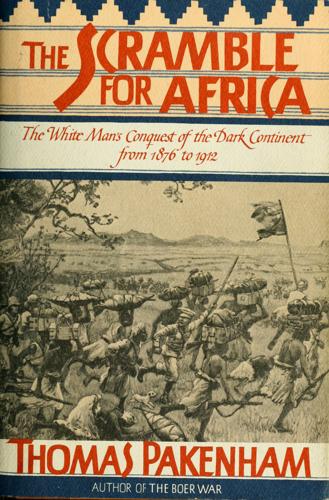
The scramble for Africa, 1876-1912
by Thomas Pakenham · 19 Nov 1991 · 1,194pp · 371,889 words
one of Europe’s richest men, as he had inherited 15 million francs (£600,000) from his parents, which he soon increased by gambling with Suez Canal shares. He could afford it and he would rope in some bankers to form a financial syndicate. He asked an emissary to sound the Spanish
…
geographical conference on Central Africa. No one suspected how this modest conference would start to reshape the history of the continent as dramatically as the Suez Canal, opened seven years earlier. Naturally Jules Devaux ridiculed the whole business. ‘I am caught up, despite myself,’ he grumbled, ‘in this damned African affair: a
…
to ban the slave trade in his dominions. He had also guided the Prince of Wales on a visit to Egypt and the newly opened Suez Canal. But he had no experience of imposing his will on tetchy white colonials. Carnarvon reassured him. This would be no ordinary job. If all went
…
occupation permanent after 1806. The Cape then guarded the only direct sea-lanes to India and beyond. In 1877, despite the opening of the Suez Canal in 1869, two-thirds of Britain’s trade with India and the East still took the Cape route, and to guard it Britain needed not only a
…
on every side: badgered by the decrepit Turkish Sultan, his nominal sovereign; bullied by the Great Powers who grew fat on the success of the Suez Canal; bled white by every money-lender in Europe, to whom he had pawned his country to pay for that same empire. There was one last
…
British investment in railways. Said, who favoured the French, was much more daring than Abbas. He gave Ferdinand de Lesseps the momentous concession for the Suez Canal. However, by the time he died, the French-built canal was only half-way through the sands of the isthmus. It was Ismael who squared
…
viceroy’s throne. Indeed the first steps down that slippery path had been taken by his easy-going predecessor, Said. The terms for building the Suez Canal, imposed on Said by Lesseps and his brother financiers, fell little short of exploitation. Egypt lost the transit trade across the isthmus, yet Said had
…
paying foreigners the exorbitant interest on earlier loans. Where would it end? To the tune of Verdi’s Aida – commissioned for the opening of the Suez Canal – the country was marching grandly into bankruptcy. In 1875 Ismael could only keep the wolf from the door by selling to the British government his
…
last big asset, his £4 million holding in the Suez Canal shares. Next year the wolf was back at the door and he was technically bankrupt. He defaulted on the interest on foreign loans. The European
…
clear who was in control of events, Arabi or the mob. And if it was Arabi, what were his intentions? Did his takeover threaten the Suez Canal? In early July the commander of the British fleet at Alexandria, Admiral Seymour, requested permission from the Cabinet to bring matters to a head. He
…
his line of advance. He had plumped for the longest and safest route, the Canal. And here fortune favoured the cautious. Lesseps, head of the Suez Canal Company, and passionate to protect his brainchild from violation, had explained to Arabi that the Powers intended to respect the neutrality of the Canal in
…
his old pugnacity. Egypt continued to be the government’s bed of nails. The French were furious about a British plan to build a second Suez Canal and the plan collapsed. There was a debate on Egypt in June during which Gladstone was outraged by the sneers of the Tories. How dare
…
the idiotic Cabinet of 1854 declared war against Russia.19 Personally Wolseley thought that the Cape of Good Hope was more important strategically than the Suez Canal, and so the Canal could be controlled well enough from a base on Cyprus. That is why Britain should ‘clear out of the Sudan and
…
delta in West Africa, there were vital British interests at stake. The island of Zanzibar had become the most prosperous port between Durban and the Suez Canal. Its imports and exports combined were believed to total £2 million. Most of its imports were manufactured goods from Britain or India, and its trade
…
colonial bureaucracy. The French could also establish a naval base, threatening the sea-lanes to India and the East, almost as if they controlled the Suez Canal. There was nothing for it, said the FO in September 1884, but to make a British protectorate of Kilimanjaro, served by a port on the
…
dealing with a question upon the proper treatment of which depends the whole future of this Colony. I look upon this Bechuanaland territory as the Suez Canal of the trade of this country, the key of its road to the interior. The question before us is this: whether the Colony is to
…
victor. At least he had taken the first vital step towards building an empire in the north. At no cost to himself, he had his ‘Suez Canal’ between the Transvaal and the Kalahari desert, and had saved the road to the north. But who would finance the much more expensive second step
…
Ismael Pasha, Khedive of Egypt: central African ambitions, 71, 73, 77–9, 281; and Cairo riot, 72–3; character and background, 74–5, 77; and Suez Canal, 77–8; and slave trade, 77, 79, 81–3; and Egyptian economy, 77–8, 124, 128; Gordon and, 78–9, 81–4; downfall, 84–5
…
; proposed liberation, 469; French expeditions in, 506, 522–3; Kitchener’s campaign in, 517, 522, 539–41; military railway, 541; see also Fashoda; Khartoum; Nile Suez Canal, 73, 75, 77, 133–6 Suleiman (son of Zebehr Pasha), 83, 219, 221 Suleiman ibn Nasr, 347 Suleiman ibn-Sef, 348 Susi (Livingstone’s follower
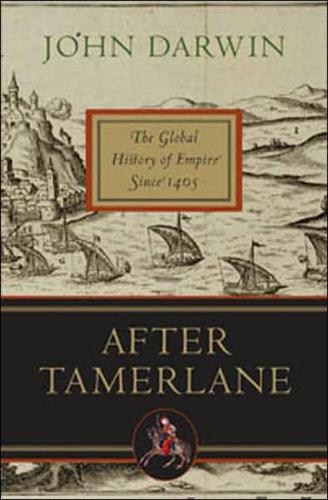
After Tamerlane: The Global History of Empire Since 1405
by John Darwin · 5 Feb 2008 · 650pp · 203,191 words
China. In the 1860s and ’70s, India and China were linked to Europe by telegraph. But the greatest change came with the opening of the Suez Canal in 1869, cutting weeks off the sea route to India, speeding the transit of passengers and mail, and breaking down the barrier (as much psychological as
…
no matter what else, you will soon feel that you have met your match in special intelligence and information.’114 For Said and Ismail, the Suez Canal was meant to crown their achievements.115 The costs would be high, but the pay-off tremendous. Its income would bring them a new stream
…
effective control over Egypt’s finances) quickly turned into a crisis at home over who would bear the real burden of the foreign demands. The Suez Canal – the booster rocket towards full independence – became the Trojan Horse of foreign control, and (quite literally) the invasion route for alien rule. Iran was more
…
areas of the world, carving corridors of access into regions where travel had been difficult (and costly) and information scarce. The opening of the Suez Canal in 1869 meant the extension eastward of the steamship lines and their scheduled services, creating the great trunk road of merchant shipping all the way to Shanghai
…
were becoming steadily busier – reducing the cost of connecting its trade to the main global circuits. This was particularly obvious in East Africa, where the Suez Canal and the much heavier traffic between Europe and Asia brought a commercial revolution to the Indian Ocean and the East African coast.9 But it
…
khedivate (or viceroyalty) of Egypt, whose go-ahead dynasty had tried to modernize the country with almost reckless haste around the grand centrepiece of the Suez Canal – one of the greatest engineering achievements of the nineteenth century. The ruler in Cairo had borrowed deeply from European lenders. But when his revenues sagged
…
persecuted (or worse) by the Muslim mob. In London there were two other aspects that affected ministerial thinking. Though there was little evidence that the Suez Canal was directly at risk, its strategic value was already immeasurable as the vital route through which British troops could be sent to India if a
…
was to be steadily expanded. The main driving force behind the newglobal economy was the great improvement in transport and its extension worldwide. Between 1869, when the Suez Canal opened, and 1914, when the Panama Canal was finished, much of the rest of the world was drawn into the nexus of communications that
…
million only thirty years later.67 Cape Town grew rapidly to serve the up-country eldorados of diamonds and gold. Bombay took advantage of the Suez Canal to dominate India’s westbound trade and extend its influence into the Persian Gulf.68 Singapore continued its meteoric rise as the western gateway into
…
). They preferred this indirect rule as a less confrontational way of securing what they wanted: a monopoly of foreign influence and absolute security for the Suez Canal, the lifeline of their empire in the East. Egypt, they argued, could never enjoy a ‘real’ independence. But after March 1919 no Egyptian minister would
…
– in 1922 to Egypt, a decade later to Feisal’s Iraq – as a quid pro quo for Britain’s control of their strategic zones, the Suez Canal especially. Even Transjordan had been given its own (Hashemite) king. Despite the trauma of partition, the Arab Middle East had not been transformed into a
…
Greece and Egypt, the strategic bastion of British Middle Eastern power. If the British lost Cairo (the grand centre of their imperial communications) and the Suez Canal, the road would be open for an Axis advance to the Persian Gulf and (eventually) the frontiers of India. For Hitler, ironically, the Italian advance
…
so it appeared. They had made Cairo the centre of a huge operational sphere in the Mediterranean as much as in the Middle East. The ‘Suez Canal Zone’, demarcated in the Anglo-Egyptian treaty of 1936, was a great military enclave, housing thousands of troops, as well as workshops and stores, training
…
this confrontation. When a loan to pay for Egypt’s Aswan High Dam was stalled in Washington, there was no going back. Nasser expropriated the Suez Canal, then jointly owned by Britain and France. It seemed an act of bravado. But perhaps Nasser guessed that the British would find it hard to
…
’s political weakness. Thinly disguised as an intervention between the forces of Egypt and Israel (in whose invasion they colluded), Anglo-French occupation of the Suez Canal was meant to humiliate Nasser and ensure his collapse. The key to Nasser’s survival was the enormous appeal of his act of defiance to
…
, currency and domestic mercantile networks kept them at bay. Nor was time on their side. It was well after mid-century before railway construction, the Suez Canal, the steamship and the telegraph brought even maritime Asia into the same proximity as transatlantic economies had long had with Europe. The timing was especially
…
. 114. J. R. McCoan, Egypt (New York, 1876), p. 91. 115. The best modern study is D. A. Farnie, East and West of Suez: The Suez Canal in History, 1854–1956 (Oxford, 1969). 116. For the best study of Egypt’s social and political crisis, A. SchÖ lch, ‘Egypt for the Egyptians
…
–9 Spain 56–65, 95, 97, 107, 164, 185 Stalin, Joseph 401, 405–6, 433 steam 195–6 steamships 300 Suez 35, 249 Suez Canal 289, 309, 332 Suez Canal Zone 431, 453 Suez Crisis 458 sugar 108–9, 136 Sun Yat-sen 353, 398 Suraj ud-Daula 177 Sweden 122 Syria 384–5
The Great Sea: A Human History of the Mediterranean
by David Abulafia · 4 May 2011 · 1,002pp · 276,865 words
Money Changes Everything: How Finance Made Civilization Possible
by William N. Goetzmann · 11 Apr 2016 · 695pp · 194,693 words
Blood, Iron, and Gold: How the Railways Transformed the World
by Christian Wolmar · 1 Mar 2010 · 424pp · 140,262 words
Ghosts of Empire: Britain's Legacies in the Modern World
by Kwasi Kwarteng · 14 Aug 2011 · 670pp · 169,815 words
Diamonds, Gold, and War: The British, the Boers, and the Making of South Africa
by Martin Meredith · 1 Jan 2007 · 649pp · 181,179 words
Frommer's Egypt
by Matthew Carrington · 8 Sep 2008

Manias, Panics and Crashes: A History of Financial Crises, Sixth Edition
by Kindleberger, Charles P. and Robert Z., Aliber · 9 Aug 2011
To the Ends of the Earth: Scotland's Global Diaspora, 1750-2010
by T M Devine · 25 Aug 2011
A History of France
by John Julius Norwich · 30 Sep 2018 · 482pp · 149,807 words
Energy and Civilization: A History
by Vaclav Smil · 11 May 2017
Butler to the World: How Britain Became the Servant of Tycoons, Tax Dodgers, Kleptocrats and Criminals
by Oliver Bullough · 10 Mar 2022 · 257pp · 80,698 words
The Europeans: Three Lives and the Making of a Cosmopolitan Culture
by Orlando Figes · 7 Oct 2019
The Power of Geography: Ten Maps That Reveal the Future of Our World
by Tim Marshall · 14 Oct 2021 · 383pp · 105,387 words
The Rise of the Israeli Right: From Odessa to Hebron
by Colin Shindler · 29 Jul 2015 · 439pp · 166,910 words
Technological Revolutions and Financial Capital: The Dynamics of Bubbles and Golden Ages
by Carlota Pérez · 1 Jan 2002
Aerotropolis
by John D. Kasarda and Greg Lindsay · 2 Jan 2009 · 603pp · 182,781 words
Lonely Planet Cape Town & the Garden Route (Travel Guide)
by Lucy Corne · 1 Sep 2015 · 1,203pp · 124,556 words
The Mini Rough Guide to Malta (Travel Guide eBook)
by Rough Guides · 14 Mar 2022 · 130pp · 33,900 words
The Invention of Science: A New History of the Scientific Revolution
by David Wootton · 7 Dec 2015 · 1,197pp · 304,245 words
Cabin Fever: The Harrowing Journey of a Cruise Ship at the Dawn of a Pandemic
by Michael Smith and Jonathan Franklin · 14 Jul 2022 · 244pp · 78,238 words
Lonely Planet Malta & Gozo
by Lonely Planet · 233pp · 61,033 words
The Long Twentieth Century: Money, Power, and the Origins of Our Times
by Giovanni Arrighi · 15 Mar 2010 · 7,371pp · 186,208 words
1873: The Rothschilds, the First Great Depression, and the Making of the Modern World
by Liaquat Ahamed · 1 Jun 2026 · 444pp · 114,108 words
The Emperor's New Road: How China's New Silk Road Is Remaking the World
by Jonathan Hillman · 28 Sep 2020 · 388pp · 99,023 words
Heaven's Command (Pax Britannica)
by Jan Morris · 22 Dec 2010 · 699pp · 192,704 words
Power and Progress: Our Thousand-Year Struggle Over Technology and Prosperity
by Daron Acemoglu and Simon Johnson · 15 May 2023 · 619pp · 177,548 words
The Prize: The Epic Quest for Oil, Money & Power
by Daniel Yergin · 23 Dec 2008 · 1,445pp · 469,426 words
Liberalism at Large: The World According to the Economist
by Alex Zevin · 12 Nov 2019 · 767pp · 208,933 words
A Splendid Exchange: How Trade Shaped the World
by William J. Bernstein · 5 May 2009 · 565pp · 164,405 words
Europe: A History
by Norman Davies · 1 Jan 1996
From the Ruins of Empire: The Intellectuals Who Remade Asia
by Pankaj Mishra · 3 Sep 2012
Lonely Planet Egypt
by Lonely Planet · 476pp · 132,840 words
Empire: What Ruling the World Did to the British
by Jeremy Paxman · 6 Oct 2011 · 427pp · 124,692 words
This Sceptred Isle
by Christopher Lee · 19 Jan 2012 · 796pp · 242,660 words
Jerusalem: The Biography
by Simon Sebag-Montefiore · 27 Jan 2011 · 1,364pp · 272,257 words
The House of Morgan: An American Banking Dynasty and the Rise of Modern Finance
by Ron Chernow · 1 Jan 1990 · 1,335pp · 336,772 words
The Rough Guide to Egypt (Rough Guide to...)
by Dan Richardson and Daniel Jacobs · 1 Feb 2013
The Boundless Sea: A Human History of the Oceans
by David Abulafia · 2 Oct 2019 · 1,993pp · 478,072 words
Krakatoa: The Day the World Exploded
by Simon Winchester · 1 Jan 2003 · 582pp · 136,780 words
The Great Bridge: The Epic Story of the Building of the Brooklyn Bridge
by David McCullough · 1 Jun 2001 · 848pp · 240,351 words
Crude Volatility: The History and the Future of Boom-Bust Oil Prices
by Robert McNally · 17 Jan 2017 · 436pp · 114,278 words
The Discovery of France
by Graham Robb · 1 Jan 2007 · 740pp · 161,563 words
The Rise and Fall of the Great Powers: Economic Change and Military Conflict From 1500 to 2000
by Paul Kennedy · 15 Jan 1989 · 1,477pp · 311,310 words
Super Continent: The Logic of Eurasian Integration
by Kent E. Calder · 28 Apr 2019
Great Continental Railway Journeys
by Michael Portillo · 21 Oct 2015
The Bohemians: Mark Twain and the San Francisco Writers Who Reinvented American Literature
by Ben Tarnoff · 20 Mar 2014 · 404pp · 118,759 words
Arabs: A 3,000 Year History of Peoples, Tribes and Empires
by Tim Mackintosh-Smith · 2 Mar 2019
Empire of Cotton: A Global History
by Sven Beckert · 2 Dec 2014 · 1,000pp · 247,974 words
CultureShock! Egypt: A Survival Guide to Customs and Etiquette (4th Edition)
by Susan L. Wilson · 20 Dec 2011
The Rise and Fall of the British Nation: A Twentieth-Century History
by David Edgerton · 27 Jun 2018
Fortune's Bazaar: the Making of Hong Kong: The Making of Hong Kong
by Vaudine England · 16 May 2023 · 308pp · 122,100 words
The Codebreakers: The Comprehensive History of Secret Communication From Ancient Times to the Internet
by David Kahn · 1 Feb 1963 · 1,799pp · 532,462 words
Empire: How Britain Made the Modern World
by Niall Ferguson · 1 Jan 2002 · 469pp · 146,487 words
The Man Who Saved the Union: Ulysses Grant in War and Peace
by H. W. Brands · 1 Oct 2012 · 939pp · 274,289 words
The Deluge: The Great War, America and the Remaking of the Global Order, 1916-1931
by Adam Tooze · 13 Nov 2014 · 1,057pp · 239,915 words
Palo Alto: A History of California, Capitalism, and the World
by Malcolm Harris · 14 Feb 2023 · 864pp · 272,918 words
The Battle of Bretton Woods: John Maynard Keynes, Harry Dexter White, and the Making of a New World Order
by Benn Steil · 14 May 2013 · 710pp · 164,527 words
Paris 1919: Six Months That Changed the World
by Margaret Macmillan; Richard Holbrooke; Casey Hampton · 1 Jan 2001
Upheaval: Turning Points for Nations in Crisis
by Jared Diamond · 6 May 2019 · 459pp · 144,009 words
Britain's Europe: A Thousand Years of Conflict and Cooperation
by Brendan Simms · 27 Apr 2016 · 380pp · 116,919 words
The Rough Guide to Australia (Travel Guide eBook)
by Rough Guides · 14 Oct 2023 · 1,955pp · 521,661 words
How We Got Here: A Slightly Irreverent History of Technology and Markets
by Andy Kessler · 13 Jun 2005 · 218pp · 63,471 words
The Great War for Civilisation: The Conquest of the Middle East
by Robert Fisk · 2 Jan 2005 · 1,800pp · 596,972 words
The Revolutionary Center: The Lost Genius of Liberalism
by Adrian Wooldridge · 7 Apr 2026 · 342pp · 129,097 words
Why the West Rules--For Now: The Patterns of History, and What They Reveal About the Future
by Ian Morris · 11 Oct 2010 · 1,152pp · 266,246 words
Culture and Imperialism
by Edward W. Said · 29 May 1994 · 549pp · 170,495 words
Israel: A Simple Guide to the Most Misunderstood Country on Earth
by Noa Tishby · 5 Apr 2021 · 338pp · 101,967 words
Inflated: How Money and Debt Built the American Dream
by R. Christopher Whalen · 7 Dec 2010 · 488pp · 144,145 words
The Relentless Revolution: A History of Capitalism
by Joyce Appleby · 22 Dec 2009 · 540pp · 168,921 words
Engines of War: How Wars Were Won & Lost on the Railways
by Christian Wolmar · 1 Nov 2011 · 410pp · 122,537 words
Israel: A Concise History of a Nation Reborn
by Daniel Gordis · 17 Oct 2016 · 632pp · 171,827 words
Empireland: How Imperialism Has Shaped Modern Britain
by Sathnam Sanghera · 28 Jan 2021 · 430pp · 111,038 words
To the Edge of the World: The Story of the Trans-Siberian Express, the World's Greatest Railroad
by Christian Wolmar · 4 Aug 2014 · 323pp · 94,406 words
Uncommon Grounds: The History of Coffee and How It Transformed Our World
by Mark Pendergrast · 2 Jan 2000 · 564pp · 153,720 words
A Peace to End All Peace: The Fall of the Ottoman Empire and the Creation of the Modern Middle East
by David Fromkin · 2 Jan 1989 · 681pp · 214,967 words
Railways & the Raj: How the Age of Steam Transformed India
by Christian Wolmar · 3 Oct 2018 · 375pp · 109,675 words
The Rough Guide to England
by Rough Guides · 29 Mar 2018
Spineless: The Science of Jellyfish and the Art of Growing a Backbone
by Juli Berwald · 14 May 2017 · 397pp · 113,304 words

In Europe
by Geert Mak · 15 Sep 2004
How the World Ran Out of Everything
by Peter S. Goodman · 11 Jun 2024 · 528pp · 127,605 words

Lonely Planet Panama (Travel Guide)
by Lonely Planet and Carolyn McCarthy · 30 Jun 2013

France (Lonely Planet, 8th Edition)
by Nicola Williams · 14 Oct 2010

The Strangest Man: The Hidden Life of Paul Dirac, Mystic of the Atom
by Graham Farmelo · 24 Aug 2009 · 1,396pp · 245,647 words
Mr Five Per Cent: The Many Lives of Calouste Gulbenkian, the World's Richest Man
by Jonathan Conlin · 3 Jan 2019 · 604pp · 165,488 words
Winds of Change
by Peter Hennessy · 27 Aug 2019 · 891pp · 220,950 words
Civilization: The West and the Rest
by Niall Ferguson · 28 Feb 2011 · 790pp · 150,875 words
The Great Game: On Secret Service in High Asia
by Peter Hopkirk · 2 Jan 1991 · 580pp · 194,144 words
Prisoners of Geography: Ten Maps That Explain Everything About the World (Politics of Place)
by Tim Marshall · 10 Oct 2016 · 306pp · 79,537 words
Hirohito and the Making of Modern Japan
by Herbert P. Bix · 1 Jan 2000 · 1,056pp · 275,211 words
Shadows of Empire: The Anglosphere in British Politics
by Michael Kenny and Nick Pearce · 5 Jun 2018 · 215pp · 64,460 words
The Habsburgs: To Rule the World
by Martyn Rady · 24 Aug 2020 · 461pp · 139,924 words

The Road Not Taken: Edward Lansdale and the American Tragedy in Vietnam
by Max Boot · 9 Jan 2018 · 972pp · 259,764 words
A History of Zionism
by Walter Laqueur · 1 Jan 1972 · 965pp · 267,053 words
Rule Britannia: Brexit and the End of Empire
by Danny Dorling and Sally Tomlinson · 15 Jan 2019 · 502pp · 128,126 words
Map of a Nation: A Biography of the Ordnance Survey
by Rachel Hewitt · 6 Jul 2011 · 595pp · 162,258 words
A History of Future Cities
by Daniel Brook · 18 Feb 2013 · 489pp · 132,734 words
Dreams and Shadows: The Future of the Middle East
by Robin Wright · 28 Feb 2008 · 648pp · 165,654 words
Seven Crashes: The Economic Crises That Shaped Globalization
by Harold James · 15 Jan 2023 · 469pp · 137,880 words
An Empire of Wealth: Rise of American Economy Power 1607-2000
by John Steele Gordon · 12 Oct 2009 · 519pp · 148,131 words
1,000 Places to See in the United States and Canada Before You Die, Updated Ed.
by Patricia Schultz · 13 May 2007 · 2,323pp · 550,739 words
Horizons: The Global Origins of Modern Science
by James Poskett · 22 Mar 2022 · 564pp · 168,696 words
A Dominant Character
by Samanth Subramanian · 27 Apr 2020

The Dream of Europe: Travels in the Twenty-First Century
by Geert Mak · 27 Oct 2021 · 722pp · 223,701 words
The Great Railroad Revolution
by Christian Wolmar · 9 Jun 2014 · 523pp · 159,884 words
The English
by Jeremy Paxman · 29 Jan 2013 · 364pp · 103,162 words
I Never Knew That About London
by Christopher Winn · 3 Oct 2007 · 395pp · 94,764 words
The Dark Cloud: How the Digital World Is Costing the Earth
by Guillaume Pitron · 14 Jun 2023 · 271pp · 79,355 words
The River of Lost Footsteps
by Thant Myint-U · 14 Apr 2006

A Beautiful Mind
by Sylvia Nasar · 11 Jun 1998 · 998pp · 211,235 words
Engineers of Dreams: Great Bridge Builders and the Spanning of America
by Henry Petroski · 2 Jan 1995
The Cold War
by Robert Cowley · 5 May 1992 · 546pp · 176,169 words
The River at the Centre of the World
by Simon Winchester · 1 Jan 1996 · 498pp · 153,927 words
Outposts: Journeys to the Surviving Relics of the British Empire
by Simon Winchester · 31 Dec 1985 · 382pp · 127,510 words
Titan: The Life of John D. Rockefeller, Sr.
by Ron Chernow · 1 Jan 1997 · 1,106pp · 335,322 words
More: The 10,000-Year Rise of the World Economy
by Philip Coggan · 6 Feb 2020 · 524pp · 155,947 words
The Sirens of Mars: Searching for Life on Another World
by Sarah Stewart Johnson · 6 Jul 2020 · 400pp · 99,489 words
The Secret World: A History of Intelligence
by Christopher Andrew · 27 Jun 2018
Winning the War on War: The Decline of Armed Conflict Worldwide
by Joshua S. Goldstein · 15 Sep 2011 · 511pp · 148,310 words
The Wealth and Poverty of Nations: Why Some Are So Rich and Some So Poor
by David S. Landes · 14 Sep 1999 · 1,060pp · 265,296 words
Lonely Planet France
by Lonely Planet Publications · 31 Mar 2013
The Rough Guide to Jerusalem
by Daniel Jacobs · 10 Jan 2000
The Tragedy of Great Power Politics
by John J. Mearsheimer · 1 Jan 2001 · 637pp · 199,158 words
Running Money
by Andy Kessler · 4 Jun 2007 · 323pp · 92,135 words
Crucible: The Long End of the Great War and the Birth of a New World, 1917-1924
by Charles Emmerson · 14 Oct 2019 · 950pp · 297,713 words
George Marshall: Defender of the Republic
by David L. Roll · 8 Jul 2019
The Taste of Empire: How Britain's Quest for Food Shaped the Modern World
by Lizzie Collingham · 2 Oct 2017 · 452pp · 130,041 words
The Price of Time: The Real Story of Interest
by Edward Chancellor · 15 Aug 2022 · 829pp · 187,394 words

How Big Things Get Done: The Surprising Factors Behind Every Successful Project, From Home Renovations to Space Exploration
by Bent Flyvbjerg and Dan Gardner · 16 Feb 2023 · 353pp · 97,029 words
Why Nations Fail: The Origins of Power, Prosperity, and Poverty
by Daron Acemoglu and James Robinson · 20 Mar 2012 · 547pp · 172,226 words
The Idea of Decline in Western History
by Arthur Herman · 8 Jan 1997 · 717pp · 196,908 words
Atlantic: Great Sea Battles, Heroic Discoveries, Titanic Storms & a Vast Ocean of a Million Stories
by Simon Winchester · 27 Oct 2009 · 522pp · 150,592 words
Communal Luxury: The Political Imaginary of the Paris Commune
by Kristin Ross · 6 Apr 2015 · 175pp · 52,122 words
Adriatic: A Concert of Civilizations at the End of the Modern Age
by Robert D. Kaplan · 11 Apr 2022 · 500pp · 115,119 words
How to Hide an Empire: A History of the Greater United States
by Daniel Immerwahr · 19 Feb 2019

England: Seven Myths That Changed a Country – and How to Set Them Straight
by Tom Baldwin and Marc Stears · 24 Apr 2024 · 357pp · 132,377 words
Capitalism and Its Critics: A History: From the Industrial Revolution to AI
by John Cassidy · 12 May 2025 · 774pp · 238,244 words
The Gun
by C. J. Chivers · 12 Oct 2010 · 845pp · 197,050 words
Capital in the Twenty-First Century
by Thomas Piketty · 10 Mar 2014 · 935pp · 267,358 words
Tel Aviv 2015: The Retro Travel Guide
by Claudia Stein · 30 Mar 2015 · 143pp · 43,096 words
Structures: Or Why Things Don't Fall Down
by J. E. Gordon · 1 Jan 1978 · 382pp · 112,061 words
The Ages of Globalization
by Jeffrey D. Sachs · 2 Jun 2020
The Dawn of Eurasia: On the Trail of the New World Order
by Bruno Macaes · 25 Jan 2018 · 287pp · 95,152 words
A Concise History of Modern India (Cambridge Concise Histories)
by Barbara D. Metcalf and Thomas R. Metcalf · 27 Sep 2006
Owning the Earth: The Transforming History of Land Ownership
by Andro Linklater · 12 Nov 2013 · 603pp · 182,826 words

Barcelona
by Damien Simonis · 9 Dec 2010
Dirty Secrets How Tax Havens Destroy the Economy
by Richard Murphy · 14 Sep 2017 · 241pp · 63,981 words
The Cold War: Stories From the Big Freeze
by Bridget Kendall · 14 May 2017 · 559pp · 178,279 words
Grand Transitions: How the Modern World Was Made
by Vaclav Smil · 2 Mar 2021 · 1,324pp · 159,290 words
Imagine a City: A Pilot's Journey Across the Urban World
by Mark Vanhoenacker · 14 Aug 2022 · 393pp · 127,847 words
Last Train to Paradise: Henry Flagler and the Spectacular Rise and Fall of the Railroad That Crossed an Ocean
by Les Standiford · 4 Aug 2003 · 259pp · 73,473 words
Rough Guide DIRECTIONS Venice
by Jonathan Buckley
Danube (Panther)
by Claudio Magris · 10 Jan 2011 · 459pp · 154,280 words
Zero to One: Notes on Startups, or How to Build the Future
by Peter Thiel and Blake Masters · 15 Sep 2014 · 185pp · 43,609 words
Destined for War: America, China, and Thucydides's Trap
by Graham Allison · 29 May 2017 · 518pp · 128,324 words
Israel & the Palestinian Territories Travel Guide
by Lonely Planet
Immigration worldwide: policies, practices, and trends
by Uma Anand Segal, Doreen Elliott and Nazneen S. Mayadas · 19 Jan 2010 · 492pp · 70,082 words
Atomic Accidents: A History of Nuclear Meltdowns and Disasters: From the Ozark Mountains to Fukushima
by James Mahaffey · 15 Feb 2015
Obliquity: Why Our Goals Are Best Achieved Indirectly
by John Kay · 30 Apr 2010 · 237pp · 50,758 words
War and Gold: A Five-Hundred-Year History of Empires, Adventures, and Debt
by Kwasi Kwarteng · 12 May 2014 · 632pp · 159,454 words
Reinventing Capitalism in the Age of Big Data
by Viktor Mayer-Schönberger and Thomas Ramge · 27 Feb 2018 · 267pp · 72,552 words
Seeing Like a State: How Certain Schemes to Improve the Human Condition Have Failed
by James C. Scott · 8 Feb 1999 · 607pp · 185,487 words

The Lies That Bind: Rethinking Identity
by Kwame Anthony Appiah · 27 Aug 2018 · 285pp · 83,682 words
The Professor and the Madman: A Tale of Murder, Insanity and the Making of the Oxford English Dictionary
by Simon Winchester · 27 Sep 1998 · 215pp · 72,133 words
The Future of War
by Lawrence Freedman · 9 Oct 2017 · 592pp · 161,798 words
The Planets
by Dava Sobel · 1 Jan 2005 · 190pp · 52,570 words
Greece
by Korina Miller · 1 Mar 2010
Cosmos
by Carl Sagan · 1 Jan 1980 · 404pp · 131,034 words
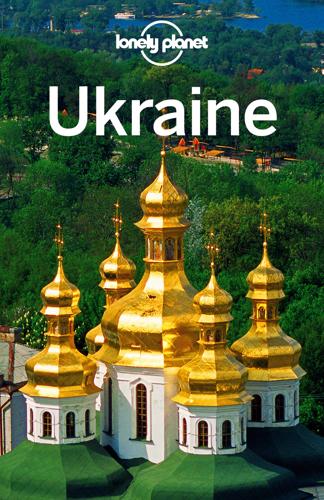
Ukraine
by Lonely Planet

Central America
by Carolyn McCarthy, Greg Benchwick, Joshua Samuel Brown, Alex Egerton, Matthew Firestone, Kevin Raub, Tom Spurling and Lucas Vidgen · 2 Jan 2001
Drinking in America: Our Secret History
by Susan Cheever · 12 Oct 2015 · 263pp · 81,542 words

The Orchid Thief: A True Story of Beauty and Obsession
by Susan Orlean · 1 Jan 1998
Slouching Towards Utopia: An Economic History of the Twentieth Century
by J. Bradford Delong · 6 Apr 2020 · 593pp · 183,240 words
Capital
by Rana Dasgupta · 14 May 2014 · 506pp · 158,215 words
Cities in the Sky: The Quest to Build the World's Tallest Skyscrapers
by Jason M. Barr · 13 May 2024 · 292pp · 107,998 words
Markets, State, and People: Economics for Public Policy
by Diane Coyle · 14 Jan 2020 · 384pp · 108,414 words

Fodor's Barcelona
by Fodor's · 5 Apr 2011
Peak Car: The Future of Travel
by David Metz · 21 Jan 2014 · 133pp · 36,528 words
Ten Myths About Israel
by Ilan Pappe · 1 May 2017 · 196pp · 58,886 words

One Day in August: Ian Fleming, Enigma, and the Deadly Raid on Dieppe
by David O’keefe · 5 Nov 2020 · 1,243pp · 167,097 words
The Levelling: What’s Next After Globalization
by Michael O’sullivan · 28 May 2019 · 756pp · 120,818 words
Money: Vintage Minis
by Yuval Noah Harari · 5 Apr 2018 · 97pp · 31,550 words
Hijacking the Runway: How Celebrities Are Stealing the Spotlight From Fashion Designers
by Teri Agins · 8 Oct 2014 · 357pp · 88,412 words
Financial Market Meltdown: Everything You Need to Know to Understand and Survive the Global Credit Crisis
by Kevin Mellyn · 30 Sep 2009 · 225pp · 11,355 words
Before Babylon, Beyond Bitcoin: From Money That We Understand to Money That Understands Us (Perspectives)
by David Birch · 14 Jun 2017 · 275pp · 84,980 words
Surrender or Starve: Travels in Ethiopia, Sudan, Somalia, and Eritrea
by Robert D. Kaplan · 1 Jan 1988 · 233pp · 75,477 words
Scale: The Universal Laws of Growth, Innovation, Sustainability, and the Pace of Life in Organisms, Cities, Economies, and Companies
by Geoffrey West · 15 May 2017 · 578pp · 168,350 words