The Boring Company

back to index

21 results

pages: 190 words: 46,977

Elon Musk: A Mission to Save the World
by Anna Crowley Redding
Published 1 Jul 2019

Elon Musk, interview by Chris Anderson. 148. Elon Musk, “The Boring Company Information Session.” 149. Elon Musk, “The Boring Company Information Session.” 150. Elon Musk, “The Boring Company Information Session.” 151. Elon Musk, interview by Chris Anderson. 152. Elon Musk, “The Boring Company Information Session.” 153. Elon Musk, “The Boring Company Information Session.” 154. Elon Musk, interview by Joe Rogan. 155. Brooks, Spaceballs. 156. Elon Musk, interview by Joe Rogan. 157. Emanuel, “Boring Company Chicago O’Hare.” 158. Emanuel, “Boring Company Chicago O’Hare.” 159. Elon Musk, interview by Sal Khan. 160.

Elon Musk, interview by Sal Khan. 160. Elon Musk, interview by Sal Khan. 161. Elon Musk, “The Boring Company Information Session.” 162. Elon Musk, interview by Chris Anderson. 163. Elon Musk, “The Boring Company Information Session.” 164. Vance, p. 43. 165. Strauss, “Elon Musk.” 166. Paine, Do You Trust This Computer? 167. Paine, Do You Trust This Computer? 168. Cellan-Jones, “Stephen Hawking Warns.” 169. Elon Musk, interview by Joe Rogan. 170. OpenAI, openai.com. 171. Elon Musk, interview by Joe Rogan. 172. Paine, Do You Trust This Computer? 173. Elon Musk, interview by Joe Rogan. 174.

Telegraph (London), 4 Aug. 2007. www.telegraph.co.uk/culture/3666994/One-more-giant-leap.html. Dornoch Cathedral. “Welcome.” www.dornoch-cathedral.com/index.html. Elliott, Hannah. “Elon Musk to Divorce from Wife Talulah Riley.” Forbes, 18 Jan. 2012. www.forbes.com/sites/hannahelliott/2012/01/18/elon-musk-to-divorce-wife-talulah-riley/#6b5d8e9571b2. Emanuel, Rahm. “Boring Company Chicago O’Hare Announcement.” News conference with Elon Musk in Chicago, 14 June 2018. YouTube video, 28:09. youtu.be/CnobWh5iloE. Erwin, Sandra. “SpaceX Wins $130 Million Military Launch Contract for Falcon Heavy Rocket.” Space.com, 24 June 2018. shar.es/a1NCjP. Etherington, Darrell. “Tesla Officially Acquires SolarCity.”

pages: 295 words: 81,861

Road to Nowhere: What Silicon Valley Gets Wrong About the Future of Transportation
by Paris Marx
Published 4 Jul 2022

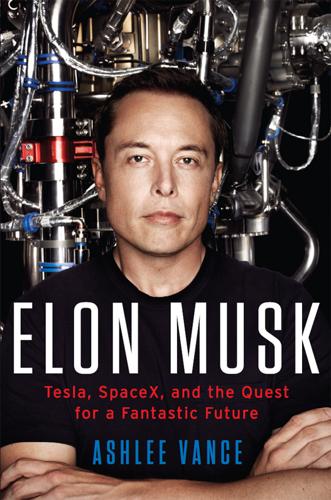
Turner, “The Fundamental Law of Road Congestion: Evidence from US Cities,” American Economic Association 101:6, 2011. 6 Ashlee Vance, Elon Musk: Tesla, SpaceX, and the Quest for a Fantastic Future, HarperCollins, 2015. 7 “The Boring Company Event Webcast,” The Boring Company, December 19, 2018, YouTube.com. 8 Ibid. 9 Aarian Marshall, “Elon Musk Reveals His Awkward Dislike of Mass Transit,” Wired, December 14, 2017, Wired.com. 10 Ibid. 11 “The Boring Company Event Webcast,” The Boring Company. 12 Laura J. Nelson, “Elon Musk Unveils His Company’s First Tunnel in Hawthorne, and It’s Not a Smooth Ride,” Los Angeles Times, December 18, 2018, Latimes.com. 13 Dennis Romero, “Vintage Roller Coaster Fans See Familiar Tech in Elon Musk’s Loop Tunnel,” NBC News, December 28, 2018, Nbcnews.com. 14 Alissa Walker, “Stop Calling Elon Musk’s Boring Tunnel Public Transit,” Curbed, January 8, 2020, Archive.curbed.com. 15 “The Boring Company Event Webcast,” The Boring Company. 16 Jenna Chandler and Alissa Walker, “Elon Musk First Envisioned Double-Decker 405 before Tunnel Idea,” Curbed, November 9, 2018, La.curbed.com. 17 E.V.

Meanwhile, several years earlier he had also announced a visionary intercity transportation system called Hyperloop that he had no intention of pursuing and which he later admitted was unveiled with the goal of killing the high-speed rail line being built in California.6 Musk did not want the government to build a state-of-the-art train system; instead, he wanted to distract people with a technology that would not be feasible for at least several decades while keeping people reliant on personal vehicles. And that same trickery was at the center of what came to be called the Boring Company. By 2017, Musk was building a test tunnel on SpaceX’s property in Hawthorne, an area in southwest Los Angeles, and he was already pumping up the expectations for how his tunnel-boring company and the transport system it was purportedly planning to create would transform the way we move. Initially, he claimed he was planning to build between ten and thirty layers of tunnels beneath the streets of Los Angeles; by 2018, that had grown to one hundred, or even more as they were needed.

As the initial tweet suggested, Musk was motivated by traffic, and that was backed up by his later statements that traffic was “soul-destroying.” He went so far as to say the traffic in Los Angeles had gone from “seventh level of hell to like eighth level of hell” since he had moved there.7 Musk’s motivation for the Boring Company was to alleviate this traffic, but he proposed an incredibly inefficient—even unworkable—means of achieving it, and that became more apparent the more he tried to make his underground transportation system a reality. In Musk’s mind, the problem with transportation was that it existed only on the surface. As he described it: the inherent problem with the way cities are constructed is that you’ve got all these tall buildings that are in 3D and then a road network in 2D, and then everyone wants to go in and out of the 3D building at the same time.

Character Limit: How Elon Musk Destroyed Twitter
by Kate Conger and Ryan Mac
Published 17 Sep 2024

CNET, June 4, 2009. cnet.com/culture/tony-la-russa-sues-twitter-over-alleged-fake-tweets. GO TO NOTE REFERENCE IN TEXT Balajadia also made some public appearances on behalf of the Boring Company: Marshall, Aarian. “Elon Musk Now Wants to Dig Another Tunnel under LA.” Wired, January 23, 2018. wired.com/story/elon-musk-boring-company-culver-city. GO TO NOTE REFERENCE IN TEXT Chapter 36: Elections connections to Big Oil and climate change denial: Brooks, Emily. “Elon Musk Featured at Kevin McCarthy’s GOP Retreat in Wyoming.” The Hill, August 17, 2022. thehill.com/blogs/blog-briefing-room/news/3605110-elon-musk-featured-at-kevin-mccarthys-gop-retreat-in-wyoming.

“Not having a global platform that is truly free speech is dangerous for all.” Steve Davis, head of the Boring Company, also chimed in. Like Afshar, he idolized the entrepreneur, though people who knew him said he took it even a tad further. Davis saw Musk as his North Star, and his life’s mission was to help Musk achieve his idol’s dreams. As Birchall would tell others: “If Elon asked Steve to jump out of a window, he would do it.” Musk had texted his tweet announcing his offer to the Boring Company’s head early on Thursday morning along with ideas for a “Plan B” to build a “blockchain-based version of Twitter.”

Pravda would be a “media” organization, Birchall wrote in paperwork that listed him as its leader. In truth, he was just the figurehead. When needed by Musk, Birchall would assume titles for the billionaire’s charitable foundation; his brain-computer interface start-up Neuralink; and the Boring Company, his tunneling start-up. (Under Birchall, little would come of Pravda.) With Tesla sputtering to produce enough cars to meet its leaders’ projections that spring, Musk spent more time confined to the company’s factory as his Twitter account became one of his few links to the outside world. That May, his tweet output quadrupled from April, as he cultivated a parasocial relationship with his followers.

pages: 332 words: 127,754

Battle for the Bird: Jack Dorsey, Elon Musk, and the $44 Billion Fight for Twitter's Soul
by Kurt Wagner
Published 20 Feb 2024

His net worth was $270 billion, making him the richest person in the world. And now he was ready to add another complex challenge to his to-do list: restore free speech to the world. It was time to buy Twitter. * * * Part of what made Elon Musk’s initial bid for Twitter so hard to understand was that Musk, despite his oodles of money and fame and success, had the sense of humor of a twelve-year-old boy. At The Boring Company, Musk once created and sold a flamethrower to the general public after a joke he saw in one of his favorite movies, Spaceballs. A joke from another comedy, The Dictator, featuring Sacha Baron Cohen, was inspiration for Musk’s decision to make SpaceX’s Starship rocket “more pointy.”

Ellison had indeed chipped in $1 billion after his text exchange with Musk a few weeks earlier. Sequoia Capital, one of the tech industry’s most illustrious venture capital firms, was in for $800 million; the firm had already invested in several of Musk’s other ventures, including X.com, SpaceX, and even The Boring Company. Andreessen Horowitz, another prominent VC firm, was in for $400 million. Musk had rounded up a total of $7.1 billion in pledges. He was chipping away. Musk visited Twitter’s San Francisco office for the first time on a Friday evening, May 6, to meet with some of the company’s management team and start the due diligence process that he’d initially waived in his rush to buy the company.

Dozens of SpaceX and Tesla engineers, led by Musk’s cousins James and Andrew, also showed up to meet with Twitter engineers and review the company’s code. Steve Davis, the president of Musk’s tunnel company, The Boring Company, would draw eyerolls from Twitter employees when news eventually circulated that he wasn’t just helping out but actually living in the office with his partner and newborn child. Employees immediately started referring to Musk’s group of advisors as “the goons.” The group quickly fanned out, embedding themselves into the various pockets of Twitter’s business. Spiro met with the legal and policy groups, Birchall and Gracias with sales and marketing.

pages: 501 words: 114,888

The Future Is Faster Than You Think: How Converging Technologies Are Transforming Business, Industries, and Our Lives
by Peter H. Diamandis and Steven Kotler
Published 28 Jan 2020

By 2025, the company plans to have multiple projects under construction and running initial passenger testing.” So think about this timetable: Autonomous car rollouts by 2020. Hyperloop certification and aerial ridesharing by 2023. By 2025—going on vacation might have a totally different meaning. Going to work most definitely will. And Musk was just getting started. The Boring Company Elon Musk’s main residence in Los Angeles is located in Bel Air, a seventeen-mile trek from SpaceX’s Hawthorne-based offices. On the best of days, his commute takes thirty-five minutes—but December 17, 2016 (coincidentally the anniversary of the first Wright brothers flight), was not the best of days.

Am going to build a tunnel boring machine and just start digging…” @elonmusk—17 Dec 2016: “It shall be called ‘The Boring Company’ ” @elonmusk—17 Dec 2016: “Boring, it’s what we do” @elonmusk—17 Dec 2016: “I am actually going to do this” And he did. Eight months later, on July 20, the anniversary of the Apollo moon landing, Musk tweeted again: “Just received verbal govt approval for The Boring Company to build an underground NY-Phil-Balt-DC Hyperloop. NY-DC in 29 mins.” In the spring of 2018, with $113 million of Musk’s own money, the Boring Company began boring. They started construction on both ends of the line in DC and New York, while also starting on a 10.3-mile Maryland stretch that will eventually connect the two.

Raises $113 Million for Tunnels, Hyperloop,” Bloomberg, April 16, 2018, See: https://www.bloomberg.com/news/articles/2018-04-16/musk-s-boring-co-raises-113-million-for-tunnels-and-hyperloop. a three-stop subway: Aarian Marshall, “Las Vegas Orders Up a Boring Company Loop,” Wired, May 22, 2019. electric boring machines: Ed Oswald, “Here’s Everything You Need to Know About the Boring Company,” Digital Trends, February 26, 2019. the International Astronautical Congress in Adelaide, Australia: For the full address, check out: https://www.youtube.com/watch?v=tdUX3ypDVwI. Musk announced his intentions to retire his current rocket fleet: Darrell Etherington, “SpaceX aims to Replace Falcon 9, Falcon Heavy and Dragon with One Spaceship,” Techcrunch, September 28. 2017. See: https://techcrunch.com/2017/09/28/spacex-aims-to-replace-falcon-9-falcon-heavy-and-dragon-with-one-spaceship/.

pages: 562 words: 201,502

Elon Musk
by Walter Isaacson
Published 11 Sep 2023

Fortunately, I really don’t like doing illegal drugs.” Flamethrower Musk had come to the Joe Rogan studio bearing a gift for his podcast host: a plastic flamethrower with The Boring Company logo on it. Together they played with the toy, gleefully shooting its short propane flame as Sam Teller and the studio staff dodged and laughed. The flamethrower was a good metaphor for Musk himself. He took glee in blurting out eyebrow-singeing comments. The idea came after the company merchandised “Boring Company” hats and sold out fifteen thousand of them. “What’s next?” Musk asked. Someone suggested a toy flamethrower. “Oh my God, let’s do it,” Musk responded.

Musk took charge of the factory floor, playing the role of a feverish field marshal. “It was a frenzy of insanity,” he says. “We were getting four or five hours’ sleep, often on the floor. I remember thinking, ‘I’m like on the ragged edge of sanity.’ ” His colleagues agreed. Musk called in reinforcements, including his most loyal lieutenants: Mark Juncosa, his engineering sidekick at SpaceX, and Steve Davis, who headed The Boring Company. He even enlisted his young cousin James Musk, son of Errol’s younger brother, who had just graduated from Berkeley and joined the Tesla Autopilot team as a coder. “I got a call from Elon saying be at the Van Nuys airstrip in an hour,” he says.

He was referring to a dozen Thai soccer players who had been trapped by a flood while exploring a cave. “I suspect that the Thai govt has this under control, but I’m happy to help if there is a way to do so,” Musk tweeted. Then his action-hero impulse kicked in. Working with engineers at SpaceX and The Boring Company, he began building a pod-like mini-submarine that, he thought, could be sent into the flooded cave to rescue the boys. Sam Teller got a friend to let them use a school swimming pool for testing that weekend, and Musk began tweeting pictures of the device. The saga became a global news story, some criticizing Musk for grandstanding. Early on Sunday morning, July 8, he checked with a leader of the rescue team in Thailand to make sure that what he was building might be useful.

pages: 329 words: 100,162

Hype: How Scammers, Grifters, and Con Artists Are Taking Over the Internet―and Why We're Following
by Gabrielle Bluestone
Published 5 Apr 2021

Tyler Sonnemaker, "The Hackers Who Took Over the Twitter Accounts of Joe Biden and Elon Musk May Have Made Off With as Much as $120,000 Worth of Bitcoin—But We May Never Know for Sure," Business Insider, July 16, 2020, https://www.businessinsider.com/twitter-hackers-joe-biden-elon-musk-received-120000-bitcoin-payments-2020-7. 61. Bill Ruthhart and John Byrne, "Chicago Taps Elon Musk’s Boring Company to Build High-Speed Transit Tunnels That Would Tie Loop with O’Hare," Chicago Tribune, June 14, 2018, https://www.chicagotribune.com/politics/ct-met-ohare-high-speed-transit-elon-musk-boring-company-20180613-story.html. 62. Jack Holmes, "A Trump Surrogate Drops the Mic: ‘There’s No Such Thing as Facts,’" Esquire, December 1, 2016, https://www.esquire.com/news-politics/videos/a51152/trump-surrogate-no-such-thing-as-facts/. 63.

For one thing, Musk’s SpaceX rockets also keep blowing up on the launchpad, including one model that destroyed a $200 million satellite owned by Facebook in the process. And then there’s his high-tech Hyperloop plan to revolutionize underground travel, an exciting idea on paper that he’s yet to successfully implement in real life. But it has been a great way of marketing his tunnel-boring company. At least I have to presume that’s what led Chicago mayor Rahm Emanuel to sign a deal with Musk in 2018 to create a $1 billion high-speed tunnel system in Chicago. The project was supposed to whisk nineteen hundred people an hour to O’Hare Airport in less than twelve minutes via sealed pods mounted atop electric sleds.61 But just a few months later, Musk announced that instead of pods, he would be using modified Teslas instead, a bait and switch that saw a mass-transit project suddenly transformed into an individual one.

The project was supposed to whisk nineteen hundred people an hour to O’Hare Airport in less than twelve minutes via sealed pods mounted atop electric sleds.61 But just a few months later, Musk announced that instead of pods, he would be using modified Teslas instead, a bait and switch that saw a mass-transit project suddenly transformed into an individual one. With Emanuel now out of office and the proposed transit limited to individual cars, the project now seems unlikely to proceed. And overhyped Boring Company hyperloop plans in Nevada, Virginia, and California have hit similar tunnel walls. But to hear Musk tell it, the projects are all moving lightspeed ahead. It’s “kind of a standard rationalization to make that ‘Yes, I just have this one little problem I have to overcome and once I overcome that, then I’m going to have it. All we’ve got to do is get the financial footing that we need and then we can pull it all off,’” Prentice said.

pages: 348 words: 119,358

The Long History of the Future: Why Tomorrow's Technology Still Isn't Here
by Nicole Kobie
Published 3 Jul 2024

In Magic Motorways, the ideal he points to enthusiastically is the Hudson Tunnel in New York, which segregates cars from other traffic, has no crossroads, keeps vehicles in separate lanes and encourages driving at a constant speed. These days, few people would admire it as a traffic-curing marvel. Still, those driving conditions were his aim – and that vision may sound familiar to followers of Tesla CEO Elon Musk, with his Boring Company wanting to drill tunnels beneath cities for congestion-free in-city driving. Like Musk, Bel Geddes had another idea, one which dovetailed neatly with bespoke motorways: driverless cars. He predicted that ‘cars that are automatically controlled, which can be driven safely even with the driver’s hands off the wheel’ would arrive by the 1960s.

But in 2022, SpaceX quietly removed a test tube from its own parking lot, reportedly on the order of city authorities, after it had blocked pedestrian access for six years. The whole shebang however did give us a new Musk-founded company for building tunnels quickly and cheaply: The Boring Company – worth it for the name alone. While Musk may or may not be serious about the hyperloops, his PDF sparked an entire industry, including companies like Hardt, Zeleros, Hyperloop Transportation Technologies (which recently abandoned an attempt to go public) and Hyperloop One. The latter has shifted away from passengers to freight, which raises the question: what boxes need to be moved that quickly at such a high cost?

To be clear: these aren’t full-sized pods but tiny prototypes – this is a futuristic model railway show. Student teams work on pods throughout the year and then reveal their progress at competitions like EHW, and previous ones run by SpaceX between 2015 to 2019. There’s no mention of Musk, SpaceX or his tunnelling startup The Boring Company here, beyond one attendee’s bright yellow shirt proclaiming ‘not a BORING competition’. But the projects these students strive all year on are unquestionably tied to Musk, who sparked the hyperloop industry with a 58-page white paper detailing the technology in 2013, before all but dropping out of the race.

pages: 389 words: 112,319

Think Like a Rocket Scientist: Simple Strategies You Can Use to Make Giant Leaps in Work and Life
by Ozan Varol
Published 13 Apr 2020

Eric Ralph, “SpaceX to Leverage Boring Co. Tunneling Tech to Help Humans Settle Mars,” Teslarati, May 23, 2018, www.teslarati.com/spacex-use-boring-company-tunneling-technology-mars; CNBC, “SpaceX President Gwynne Shotwell on Elon Musk and the Future of Space Launches,” video, YouTube, uploaded May 22, 2018, https://youtu.be/clhXVdjvOyk. 77. The discussion on the Boring Company is based on the following sources: Boring Company, “FAQ,” www.boringcompany.com/faq; Elon Musk, “The Future We’re Building—and Boring,” TED talk, April 2017, www.ted.com/talks/elon_musk_the_future_we_re_building_and_boring. 78.

Back to the Future, by Robert Zemeckis and Bob Gale and directed by Robert Zemeckis (Universal Pictures, 1985). The quote was uttered by the character Emmet “Doc” Brown as he and his friends prepare to blast off to another time-traveling adventure. 79. Laura Bliss, “Dig Your Crazy Tunnel, Elon Musk!,” City Lab, December 19, 2018, www.citylab.com/transportation/2018/12/elon-musk-tunnel-ride-tesla-boring-company-los-angeles/578536. 80. Boring Company, “Chicago,” www.boringcompany.com/chicago. 81. Boring Company, “Las Vegas,” www.boringcompany.com/lvcc. 82. Antoine de Saint-Exupéry, The Wisdom of the Sands (New York: Harcourt, Brace and Company, 1950), 155. 83. “Alan Kay, Educator and Computing Pioneer,” TED speaker personal profile, March 2008, www.ted.com/speakers/alan_kay. 84.
pages: 278 words: 91,332

Carmageddon: How Cars Make Life Worse and What to Do About It
by Daniel Knowles
Published 27 Mar 2023

“There is no real limit to how many levels of tunnel you can have,” he argued, preempting the rebuttal that the tunnels would quickly fill up just as fast as the roads overground. Despite how much I disagree with him, I think Musk genuinely is a visionary. And he has put more than just his voice behind this tunneling idea. In 2016 he launched the rather well-named firm, The Boring Company. Initially a subsidiary of SpaceX, Mr. Musk’s space firm, the idea is that it might do for drilling underground tunnels what SpaceX has done for putting satellites into space. SpaceX has, it is fair to say, proven to be anything but bionic duckweed.

Hilariously, sometimes the cars even get backed up in the tunnel, causing a traffic jam. If you don’t believe me, search on YouTube for Tesla tunnel traffic jam. And the trouble with this is that it means that the tunnel is simply not very efficiently used. The Boring Company says that the capacity of the original first tunnel, to the Convention Center, is about 4,500 passengers per hour. By comparison, a single New York City subway station can handle 50,000 passengers per hour in each direction. Musk is sacrificing perhaps 95 percent of the potential capacity of his tunnels. And that figure of 4,500 is actually an optimistic estimate, since it assumes that every passenger is not traveling in a normal Tesla.

It will carry 57,000 passengers per hour and supposedly cost the Nevada taxpayer nothing. It will link the convention center to the city’s airport, as well as to various casino hotels on the Las Vegas Strip and to a new football stadium. And it is not just Las Vegas where the Boring Company intends to build these tunnels. Musk has apparently also talked to the mayor of Miami, Francis Suarez, about building one there. Suarez released a video in February 2021 promising a “project that will have the maximum utility for our residents for the least amount of money.” Another is apparently planned for Fort Lauderdale, connecting the beach to downtown with a length of about 2.5 miles across.

pages: 343 words: 92,693

Extremely Hardcore: Inside Elon Musk's Twitter
by Zoë Schiffer
Published 13 Feb 2024

He told the group they’d reconvene the next day. If he didn’t get a straight answer, they’d all be fired. After that, no one else tried to challenge Musk’s reality. Musk’s fraught takeover of Twitter had captivated the country for months. The genius behind Tesla, SpaceX, The Boring Company, and Neuralink had grandly declared that his next mission was to restore free speech to the public town square. “This is a battle for the future of civilization,” Musk tweeted in November 2022. “If free speech is lost even in America, tyranny is all that lies ahead.” But now, in early 2023, after months of firing staffers, banning journalists, and twisting content policies into pretzels, the acquisition increasingly looked like a vanity project.

He’d build a “blockchain-based version of twitter” where users paid a small amount of Dogecoin to tweet. Rather than rid Twitter of crypto spam, he’d build his own app and integrate crypto into the very foundation of the product. Like Kimbal, Davis, a former bar-owner-turned-CEO of Musk’s tunnel-digging firm, The Boring Company, seemed to take the half-baked idea seriously. “Amazing!” he said. It took Musk a little over two weeks to realize that, for technical reasons, his dream of “blockchain Twitter [wasn’t] possible.” It would take too much computing power to ferry user data around the globe. In the end, only big entities would be able to handle it, which defeated the purpose of running a decentralized network.

—in a moment made to go viral, rather than to comfort the employees who wondered what it would be like to work under their volatile new leader. Twitter had seventy-five hundred employees. The sink tweet got 1.4 million Likes. Musk arrived with an entourage. Dozens of engineers from Tesla, SpaceX, Neuralink, and The Boring Company were seen around the office in the days to come, along with a host of advisers: Jason Calacanis and Antonio Gracias; the former chief operating officer of PayPal David Sacks; Musk’s lawyer Alex Spiro; a venture capitalist named Pablo Mendoza; and the wealth manager Jared Birchall, among others. Officially, the group was called the “transition team.”

pages: 261 words: 76,645

How the Railways Will Fix the Future: Rediscovering the Essential Brilliance of the Iron Road
by Gareth Dennis
Published 12 Nov 2024

Before being given the kibosh, the CAM had tempted various consultants to embarrass themselves and generate visualisations of what the system might look like, and these laughably trended towards four- or even two-seat cars. Loop gave us the most prominent recent example, and it was lapped up by the authorities in Las Vegas — with a notable exception being the city’s mayor, Carolyn Goodman, who having pointed out that the Boring Company had no experience and that other cities had rejected their proposals, was left thinking (in her own words), “What are we, dumb here?” She was spot on. Musk’s gimmicky attempt to “solve traffic” was announced initially via a promotional video, in April 2017, which included bus-like vehicles (these were later dropped). His system was to include elevators that would drop these buses — later just Teslas — via a hole in the road down to a spaghetti-like tangle of subterranean burrows, exploiting an infinitely tunnelable geology to send cars from point to point with nothing getting in the way.

A tunnelled bus system, bizarrely named the Cambridgeshire Autonomous Metro, or CAM for short, which promised to transform transportation in the region. Interestingly, it wasn’t limited to Cambridgeshire, wasn’t autonomous, and certainly wasn’t a metro. But more on these minor details in a moment. Meanwhile, back in Las Vegas, 2020 saw Elon Musk’s aptly named Boring Company nearing the end of its initial construction phase of the Las Vegas Loop. Originally proposed as a tunnelled rapid-transit system using platoons of autonomous people movers, we now know that it is little more than a lane of traffic buried underground, with a fleet of regular Tesla taxis shuttling a few people between stops.

By the 1930s, another frontier was opened up by local business owners and the American mafia in the form of Las Vegas’s now (in)famous gambling industry, responding to a demand for entertainment on the part of the workforce building what is now the Hoover Dam. Roll forwards to the 2010s, and the Las Vegas authorities took a gamble on two Musk-adjacent ventures perceived as being on the cutting edge of a new frontier in transport systems: the Boring Company’s Loop and Hyperloop One (later Virgin Hyperloop, later Hyperloop One again). We’ve talked plenty about Loop, but let us now talk in a bit more detail about hyperloop. Hyperloop has been particularly effective in sapping public research funding, journalistic attention and administrative capacity.

pages: 328 words: 90,677

Ludicrous: The Unvarnished Story of Tesla Motors
by Edward Niedermeyer
Published 14 Sep 2019

By 2017, however, there had been several unmistakable red flags: claiming that he tweets under the influence of a dangerous cocktail of Ambien and alcohol and admitting he might be bipolar certainly raised eyebrows in some corners. Combined with his ever-growing collection of ambitious ventures—including the Boring Company’s plan to revolutionize tunneling, the Hyperloop tunnel-based transport concept, Neuralink’s “implantable brain-computer interface,” and OpenAI’s effort to promote “friendly artificial intelligence”—it seemed that Musk was beginning to lose himself in an endless quest for more hype. His increasingly erratic behavior burst into the spotlight in 2018, when an escalating series of Twitter conflicts with journalists, analysts, and critics led to a full-scale assault on stock analysts and the media.

YouTube video, June 30, 2015. https://youtu.be/1llEcjAIDjY INDEX A AC Propulsion, 23, 24, 26–27, 31, 37, 43, 49 Advanced Driver Assistance Systems (ADAS), 124, 132–133 AEB (Automatic Emergency Braking), 125, 127 Anderson, Sterling, 140, 171 Andreessen, Marc, 41 Apple, 41, 95 Aptera, 11 Audi, 114, 203–204 auto industry, xi, 1–3, 11, 16, 42, 78–79, 197 Automatic Emergency Braking (AEB), 125, 127 Automotive News, 2 AutoNation, 99–100 autonomous cars, 163–179 Level 4, 175–176 Level 5, 170, 172, 175–176, 178 and Mobileye, 167–170 obstacles to, 171–179 as robotaxis, 166–167 Tesla’s master plan for, 163–167 Autopilot system, 88, 120–133, 140, 155, 161, 165, 167–173, 176–178, 212, 223, 228 Autosteer, 125 B Baer, Drake, 23, 30 Banks, Azealia, 219 barriers to entry, 35, 56 batteries fast-charging, 205 improvements in, 35 lead-acid, 23–24, 197 lithium-ion, 22–24, 26, 34 for Model S, 90–91, 200 Panasonic, 77, 183–184 production of, 48, 67–69, 183–184, 188–189, 205, 206 for Tesla Roadster, 37–38 battery swapping, 4, 5, 12, 88, 93, 108, 114–119 Begley, Ed, Jr., 45 Beijing Auto, 206 Bentley, 200–201, 203–204 Bitcoin, 104 Black Sheep Planet (blog), 99 Bloomberg News, 124, 189 Bloomberg View, 2 The Boring Company, 16 Brammo, 11–12 branding, 16, 18, 59–63, 225–234 environmentalism as, 231–232 large screen as Tesla’s, 225–231 Elon Musk’s role in, 232–234 Brin, Sergey, 44 Brown, Joshua, 127–133 Brownlee, Marques, 96 Bugatti Chiron, 214 BusinessInsider, 23, 30, 189 BuzzFeed, 218 C Cadillac, 132, 204 Cadillac Super Cruise system, 132 California, 3, 34, 48, 70, 170–171 California Air Resources Board (CARB), 12, 46, 118–119 carbon fiber reinforced plastic (CFRP), 39, 48 Chanos, Jim, 103–105 China, 11, 204–207 Christensen, Clayton, 195–197 Chrysler Corporation, 2–3, 11, 15, 34, 88 Citroën (company), 193–195, 209 Citroën, André, 194–195 CleanTechnica, 100 Clooney, George, 61 CNBC, 189 Cocconi, Alan, 13, 24 Coda, 11 collisions, 127–133 Consumer Reports, 143 continuous improvement, 58 The Contrarian Investor, 96 Cordaro, Peter, 148–149, 151, 154–155 culture of Tesla, 51–52, 60 D The Daily Beast, 2 Daimler, 67–68, 75, 76, 81, 83, 159, 160, 204 Dediu, Horace, 56 defects, 59, 149–162 non-disclosure agreements surrounding, 149–151, 152, 155–156 “stealth recalls” due to, 160–161 Delphi, 171 Deming, W.

Headlines lauded the company’s world-saving mission as well as its cars’ extraordinary features, such as the super quick zero-to-sixty acceleration option that Musk nicknamed “Ludicrous Mode.” And at a time when heroic public figures were an increasingly rare commodity, Musk’s centrality to Tesla’s capitalistic, technological, and environmental ambitions (to say nothing of his numerous other techno-utopian causes, including SpaceX, Hyperloop, The Boring Company, Neuralink . . . and, of course, the company whose success provided the funding for all of them, PayPal) made both him and his car company even more appealing. As Tesla’s brand solidified and its stock took off, Musk poured gas on the fire.

pages: 251 words: 80,831

Super Founders: What Data Reveals About Billion-Dollar Startups
by Ali Tamaseb
Published 14 Sep 2021

pages: 370 words: 129,096

Elon Musk: Tesla, SpaceX, and the Quest for a Fantastic Future
by Ashlee Vance
Published 18 May 2015

pages: 441 words: 127,950

Rocket Dreams: Musk, Bezos and the Trillion-Dollar Space Race
by Christian Davenport
Published 6 Sep 2025

Starship, by contrast, is designed to land at its original launch site and get prepped for another ascent in a matter of hours. Precise landings, Musk knows, would also be critical for landing on the moon, or Mars. IN EARLY 2018, Starship was still just one of Musk’s obsessions, which also included the Boring Company, which was digging underground tunnels to alleviate traffic, and Neuralink, the venture that would plant computer chips into people’s brains. Then called “Big Falcon Rocket,” or BFR (though everyone knew the F didn’t actually stand for Falcon), it existed more in Musk’s imagination than on SpaceX’s launch pads. But Musk wasn’t the only one dreaming about a new generation of rockets, capable of taking humans farther into space than ever before.

pages: 307 words: 90,634

Insane Mode: How Elon Musk's Tesla Sparked an Electric Revolution to End the Age of Oil
by Hamish McKenzie
Published 30 Sep 2017

Not only is he calling the shots at Tesla, but he’s also running SpaceX, a $20 billion enterprise with more than a few ambitions of its own, which include sending astronauts to the International Space Station, a space Internet subdivision, driving the development of cheap reusable rockets, and, ultimately, colonizing Mars. As if he were somehow bored by this trifling workload, Musk has also taken on a host of other side projects, such as Neuralink, a brain-computer interface start-up he cofounded, the Boring Company, which plans to make tunnels for cars, and the Hyperloop, another of his pet interests. Can he do it all? The job juggling certainly comes with pressures. On July 30, 2017, Musk published a series of tweets that almost amounted to a psychological confessional. Responding to a fan who tweeted that Musk’s Instagram account showed an “amazing life,” the CEO wrote: “The reality is great highs, terrible lows and unrelenting stress.”

pages: 279 words: 85,453

Breaking Twitter: Elon Musk and the Most Controversial Corporate Takeover in History
by Ben Mezrich
Published 6 Nov 2023

A sense, intuition, maybe. Clouds gathering, humidity rising, a tightness in the air. Deep down, in his molecules, he had the sudden feeling that something was heading his way. CHAPTER TWO March 25, 2022 A little after 1:30 a.m. Elon Musk, CEO and techno-king of Tesla, CEO and chief engineer of SpaceX, founder of Neuralink and the Boring Company, soon to be the richest man in the world, lay on his back in an alcove tucked into the labyrinthine, glass-and-steel entrails of a ten-million-square-foot alien spaceship, crash landed on a scar of sand and brush twelve miles outside the city of Austin, Texas.

pages: 390 words: 108,171

The Space Barons: Elon Musk, Jeff Bezos, and the Quest to Colonize the Cosmos
by Christian Davenport
Published 20 Mar 2018

“There were a lot of people that were quite bright,” said Juncosa, who would become the company’s vice president of vehicle engineering. “And not boring. They all had a big fire under their ass and were quite crazy.” Juncosa wasn’t sure that the company would ever be successful. “How are we going to figure out how to make a spaceship that took an incredible amount of people in the sixties, when we didn’t have those resources?” he wondered. But here they were “fighting our fucking hardest,” all following Musk, believing that he always “figures out how to make the magic happen.” BY THE TIME Mosdell showed up, the company had moved into a new, bigger facility in Hawthorne, a former Boeing 747 fuselage factory not far from the Los Angeles airport.

pages: 505 words: 161,581

The Founders: The Story of Paypal and the Entrepreneurs Who Shaped Silicon Valley
by Jimmy Soni
Published 22 Feb 2022

“We would attend these exec meetings where you’ve got twenty-plus people in a room!” remembered an exasperated Sacks. CEO Bill Harris bore the brunt of the blame for the slowdown. “He never solved the 2x problem,” one executive recalled, alluding to the talent duplication following mergers. By way of example, some pointed to the fact that both companies had senior leaders who oversaw finance—both of whom were named David (Jaques and Johnson). Harris faced not just the operational complexities of a newly combined business but a newly combined team of mammoth personalities. Of the four executives at the top—Levchin, Musk, Thiel, and himself—Harris would say, with a laugh, “Four guys, not a single one of us [had] an ego that would fit in a large gymnasium.”

pages: 452 words: 126,310

The Case for Space: How the Revolution in Spaceflight Opens Up a Future of Limitless Possibility
by Robert Zubrin
Published 30 Apr 2019