Vint Cerf

back to index

description: American computer scientist (born 1943)

83 results

pages: 675 words: 141,667

Open Standards and the Digital Age: History, Ideology, and Networks (Cambridge Studies in the Emergence of Global Enterprise)
by Andrew L. Russell
Published 27 Apr 2014

Larry Roberts, the Arpanet pioneer who was now deeply involved in the effort to use virtual circuits as a foundation for the design of X.25, also attended the meeting. 66 Cerf, INWG 88. 67 Cerf was the chairman of INWG in May 1975 and had appointed Pouzin to be chairman of the INWG Protocol Design Committee responsible for “technical issues in the design of an internetwork communication protocol.” 68 Louis Pouzin and Vint Cerf, “Vote for a Basic End-to-End Protocol,” May 1975, INWG 85, McKenzie Collection. 69 Vint Cerf, “GENERAL NOTE #85 on Voting Procedures,” July 1975, INWG 91, McKenzie Collection. 70 Cerf, INWG 91; McKenzie, “INWG and the Conception of the Internet,” 69. 71 John Day, “35 Years Ago Internetworking Was Headed in the Right Direction, Then Someone Got the Bright Idea for IP and Botched the Whole Thing,” August 2011, courtesy of the author; McKenzie, “INWG and the Conception of the Internet,” 69. 72 Vint Cerf, Alex McKenzie, Roger Scantlebury, and Hubert Zimmermann, “End-to-End Protocol,” September 4, 1975, INWG 95, McKenzie Collection; Vint Cerf, Alex McKenzie, Roger Scantlebury, and Hubert Zimmermann, “Proposal for an Internetwork End-to-End Protocol,” July 29, 1975, INWG 96, McKenzie Collection. 73 Louis Pouzin, “Meeting of the CCITT Rapporteur’s Group on Packet Switching, Geneva, May 26–27, 1975,” August 1975, INWG 97, McKenzie Collection; Louis Pouzin, “Meeting of the CCITT Rapporteur Group on Packet Switching – Geneva, 16–19 September, 1975,” INWG 101, McKenzie Collection; Sirbu and Zwimpfer, “The Case of X.25,” 40. 74 Vint Cerf, “End-to-End Protocol Voting Procedure,” December 1, 1975, INWG 102, McKenzie Collection. 75 The fractions occurred because voting privileges were extended only to institutions, not individuals.

Kahn, “A Protocol for Packet Network Intercommunication,” IEEE Transactions on Communications Com-22 (1974): 637–648. 37 Dave McLimont, “A CCITT Thinkpiece,” January 15, 1974, INWG 45, McKenzie Collection; Donald Davies, “CCITT Contribution by IFIP WG6.1,” August 1974, INWG 69, McKenzie Collection. 38 Vint Cerf, “INWG Meeting in Stockholm, August 10–11, 1974,” April 1, 1974, INWG 53, McKenzie Collection. 39 Cerf, INWG 53; Vint Cerf, “Minutes of the Stockholm Meeting of IFIP WG6.1, August 10–11, 1974 (Aboard the good ship BORE I),” December 20, 1974, INWG 73, McKenzie Collection. 40 Franklin F. Kuo, “INWG Workshop Report: University of Hawaii, 6–7 January 1974,” March 19, 1974, INWG 52, McKenzie Collection. 41 Kuo, INWG 52 (emphasis added). 42 Franklin F.

The shift from “Program” to “Protocol” indicated that the Transmission Control Program had been revised to include two distinct functions, which Cerf and his colleagues referred to as the Transmission Control Protocol and the Internet Protocol. 58 Vint Cerf and Robert Kahn, “HOST and PROCESS Level Protocols for Internetwork Communication,” September 13, 1973, INWG 39, McKenzie Collection. 59 Louis Pouzin, “A Proposal for Interconnecting Packet Switching Networks,” March 1974, INWG 60, McKenzie Collection. On “Catenet,” see also Vint Cerf, “The Catenet Model for Internetworking,” July 1978, Internet Engineering Note 48, http://www.rfc-editor.org/ien/ien48.txt (accessed October 24, 2012). 60 Hubert Zimmermann and Michel Elie, “”Standard Host/Host Protocol for Heterogeneous Computer Networks,” April 1974, INWG 61, McKenzie Collection; McKenzie, “INWG and the Conception of the Internet,” 67–69. 61 Robert E.

pages: 379 words: 108,129

An Optimist's Tour of the Future
by Mark Stevenson
Published 4 Dec 2010

I’m still a good ten yards from the door when it opens in anticipation to reveal a tall, healthy-looking man in his mid-sixties, immaculate in a three-piece suit, with a welcoming smile framed by a well-kept grey beard. ‘Hello,’ he says and extends a hand. This is Vinton, known as ‘Vint,’ whose success has had a fundamental impact on the world. Vint is one of the men who invented the Internet. As we take seats in the library (it is that kind of neighbourhood) he hands me his card: ‘Vint Cerf. Google. Chief Internet Evangelist.’ ‘I tried for archduke,’ he jokes. The job title, he tells me, is a reflection of the fact that he’s ‘spent decades trying to get more Internet built and persuading people it’s a good thing to do.’ It’s a mission he’s still on. ‘It’s something I still need to do because there’s only one-third of the world’s population online,’ he says.

‘It’s an ingrained habit of not wanting to look like everybody else,’ he tells me. ‘I wear them all the time. I wear them on flights so if I lose my luggage I’m still properly dressed for any event. I remember having to meet the Bulgarian president and prime minister and the airline lost my luggage for four days. I got along just fine.’ Vint Cerf: old school, meticulous, playful – and smart as hell. I’m hoping Vint can give me the big picture on our increasing interconnectedness. After all, he was in at the ground floor of the Internet and now works on the top one. He’s a man with a career-length view on the technology, which for a technology as young as the Net is about the longest view you can have.

‘The good side of it is that we encounter people we never would have encountered, we have an opportunity to rub ideas together we might never have had the chance to explore – and I think that’s incredibly powerful,’ says Vint. Perhaps this is why staff at the Italian edition of Wired magazine nominated the Internet/Web for the 2010 Nobel Peace Prize and Vint Cerf, Bob Kahn and Tim Berners-Lee to be the recipients if it’s accepted. But connecting people is only a fraction of the Internet’s story. As Cerf has written: In the next decade, around 70% of the human population will have fixed or mobile access to the Internet at increasingly high speeds. We can reliably expect that mobile devices will become a major component of the Internet, as will appliances and sensors of all kinds.

pages: 352 words: 96,532

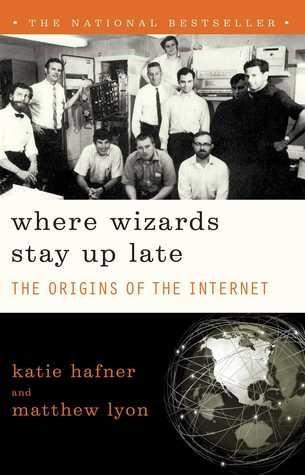
Where Wizards Stay Up Late: The Origins of the Internet
by Katie Hafner and Matthew Lyon
Published 1 Jan 1996

For years Ornstein stayed off the Net, and for years he eschewed e-mail. Of everyone, Vint Cerf was perhaps the most celebrated this weekend. He was the person most of the press turned to for quotes on the Internet’s origins. In early 1994 he had left Kahn’s Corporation for National Research Initiatives to return to MCI as a senior vice president and help build the company’s Internet businesses. His reputation was well known throughout the company. At an MCI operations center in North Carolina someone had hung a sign: “Vint Cerf is the Father of the Internet, but we’re the mothers that have to make it work!”

While Barker and Ornstein were reasonably certain that the problem was fixed, they had no way of knowing for sure unless the machine ran for a few consecutive days without crashing. And they didn’t have a few days. Heart had already approved shipping the first Interface Message Processor to California the next day. IMP Number One was almost out the door. 5 Do It to It Truett Steve Crocker and Vint Cerf had been best friends since attending Van Nuys High School in L.A.’s San Fernando Valley. They shared a love for science, and the two spent more than a few Saturday nights building three-dimensional chess games or trying to re-create Edwin Land’s experiments with color perception. Vint was a wiry, intense, effusive kid.

“If somebody had dropped a bomb on the Washington Hilton, it would have destroyed almost all of the networking community in the U.S. at that point,” observed Kahn. Not to mention the international community, for even Donald Davies, father of the term “packet-switching,” had come over from England to see how this would all work out. “It was just an amazing experience,” said Vint Cerf. “Hacking away and hollering and screaming and saying, ‘No, no . . . you got this one wrong. ’Getting all the details right.” At the end of Saturday (the conference opened on Monday), the BBN TIP was like a king on a throne of wire running to all corners of the room. AT&T had done its job and turned up at the right moment with the right line.

pages: 720 words: 197,129

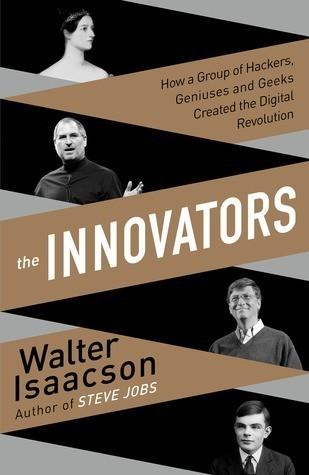
The Innovators: How a Group of Inventors, Hackers, Geniuses and Geeks Created the Digital Revolution
by Walter Isaacson
Published 6 Oct 2014

Cerf oral history, Computerworld. 104. Robert Kahn oral history, conducted by Michael Geselowitz, Feb. 17, 2004, IEEE History Center. 105. Vint Cerf oral history, conducted by Judy O’Neill, Apr. 24, 1990, Charles Babbage Institute; Vint Cerf, “How the Internet Came to Be,” Nov. 1993, http://www.netvalley.com/archives/mirrors/cerf-how-inet.html. 106. Robert Kahn oral history, conducted by David Allison, Apr. 20, 1995, Computerworld Honors Program. 107. “The Poems,” RFC 1121, Sept. 1989. 108. Author’s interview with Vint Cerf. 109. Hafner and Lyon, Where Wizards Stay Up Late, 1163. 110. David D. Clark, “A Cloudy Crystal Ball,” MIT Laboratory for Computer Science, July 1992, http://groups.csail.mit.edu/ana/People/DDC/future_ietf_92.pdf. 111.

Stephen Crocker, “Host Software,” RFC 1, Apr. 7, 1969, http://tools.ietf.org/html/rfc1. 99. Crocker, “How the Internet Got Its Rules.” 100. Vint Cerf, “The Great Conversation,” RFC 2555, Apr. 7, 1999, http://www.rfc-editor.org/rfc/rfc2555.txt. 101. “The IMP Log: October 1969 to April 1970,” Kleinrock Center for Internet Studies, UCLA, http://internethistory.ucla.edu/the-imp-log-october-1969-to-april-1970/; Segaller, Nerds, 92; Hafner and Lyon, Where Wizards Stay Up Late, 2336. 102. Vint Cerf oral history, conducted by Daniel Morrow, Nov. 21, 2001, Computerworld Honors Program; Hafner and Lyon, Where Wizards Stay Up Late, 2070 and passim; Abbate, Inventing the Internet, 127 and passim. 103.

Intel 4004 microprocessor unveiled. Ray Tomlinson invents email. 1972 Nolan Bushnell creates Pong at Atari with Al Alcorn. 1973 1973 Alan Kay helps to create the Alto at Xerox PARC. Ethernet developed by Bob Metcalfe at Xerox PARC. Community Memory shared terminal set up at Leopold’s Records, Berkeley. Vint Cerf and Bob Kahn complete TCP/IP protocols for the Internet. 1974 Intel 8080 comes out. 1975 Altair personal computer from MITS appears. Paul Allen and Bill Gates write BASIC for Altair, form Microsoft. First meeting of Homebrew Computer Club. Steve Jobs and Steve Wozniak launch the Apple I. 1977 The Apple II is released. 1978 First Internet Bulletin Board System. 1979 Usenet newsgroups invented.

pages: 234 words: 67,589

Internet for the People: The Fight for Our Digital Future
by Ben Tarnoff
Published 13 Jun 2022

A People’s History of the Internet 3, On November 22, 1977, a van … My discussion of the 1977 experiment draws from Don Nielson, “The SRI Van and Computer Internetworking,” Core Magazine 3, no. 1 (February 2002): 2–6; Vinton Cerf, interview by Judy O’Neill, April 24, 1990, Charles Babbage Institute; Vinton Cerf, “How the Internet Came to Be,” netvalley.com; Cade Metz, “Bob Kahn, The Bread Truck, and the Internet’s First Communion,” Wired, August 13, 2012; Cade Metz, “How a Bread Truck Invented the Internet,” The Register, November 12, 2007; Vint Cerf and Bob Kahn, “30th Anniversary of Internetting with TCP/IP,” filmed November 7, 2007, at the Computer History Museum in Mountain View, California, YouTube; Barbara Denny, Paal Spilling, and Virginia Strazisar Travers, “Birth of the Internet,” filmed November 7, 2007, at the Computer History Museum in Mountain View, California, YouTube; Vint Cerf et al., “Internet Milestone—30th Anniversary 3-Network Transmission,” filmed November 7, 2007, at the Computer History Museum in Mountain View, California, https://youtu.be/lapwgqzWC5g.

The irony of this phenomenon is that, while it represents a new stage in the evolution of the internet, it also represents something of a return. The DARPA researchers who created the protocol in the 1970s envisioned a network with mobile nodes. For the Pentagon to get the most out of its computers, Vint Cerf later said, “the computers have to be where the people are.” The universal language of the internet would put the computers where the people were by making the mainframe accessible from the battlefield. And because the forces in the battlefield weren’t fixed in place, the internet couldn’t be either.

Making efficient use of the cargo bay is one consideration, but there are a number of others, such as whether the plane might land while taking enemy fire. Generating the optimal “load plan” is a complicated calculation. In the late 1970s, DARPA thought the internet could help. At the time, making the load plan was a manual job. “Guys would run around with little stubby pencils and paper trying to figure it out,” Vint Cerf later recalled. A group of DARPA contractors came up with an alternative. They put together a demonstration at Fort Bragg, North Carolina, home to the XVIII Airborne, that used the internet to automate the process. A computer sat on the tarmac, plugged into a packet radio. An operator sat at the computer and, through the new internet protocol, accessed a program running on another, larger computer connected to ARPANET.

pages: 347 words: 100,038

This Is for Everyone: The Captivating Memoir From the Inventor of the World Wide Web
by Tim Berners-Lee
Published 8 Sep 2025

American computer engineers working for the Pentagon in the late 1960s and early 1970s had laid the foundations for the internet by building the earliest hardware and making some of the first cross-network connections, but well into the 1980s there was disagreement over what the lingua franca of this global network would be. To my eyes, the best-designed protocol was something called TCP/IP (it combines the Transmission Control Protocol with the Internet Protocol). It was developed by two American network engineers, Vint Cerf and Bob Kahn, both of whom I would later have the pleasure of meeting. (Cerf and Kahn are sometimes called the ‘fathers’ of the internet.) Their protocol used ‘packets’, breaking information into small pieces at one end of the communication, then recombined them into something intelligible at the other end.

Ben Segal was CERN’s internet evangelist, and he waged a long and patient battle within the organization to abandon the international standard for the upstart American one – and he succeeded. Segal was intense, and very passionate about having one internet, rather than American and European versions which couldn’t talk to one another – there were enough language problems already. He even brought in Vint Cerf to give a talk on the advantages of the IP system. He eventually won, and by 1988, everyone at CERN had an internet-facing email address. (OSI fell from favour and was eventually abandoned.) Email was the internet’s first killer app, and everyone at CERN used it. Another popular internet application was newsgroups, which served a need somewhat similar to the one Reddit does today, except it was decentralized – there was no central server.

He had a far-sighted vision for putting technology in public hands, and his funding came at a critical time. He did not invent the internet, but there is no politician, anywhere, who can claim as much influence on the subsequent development of the internet as Al Gore. My words echo those of the true inventors of the internet, Vint Cerf and Bob Kahn: ‘No one in public life has been more intellectually engaged in helping to create the climate for a thriving Internet than the Vice President.’ (Gore and I would eventually meet and share mutual respect.) While I maintained control of the HTTP, HTML and URL protocols, and a web server which would run anywhere, at CERN we had simple text browsers which only ran on the NeXT computer.

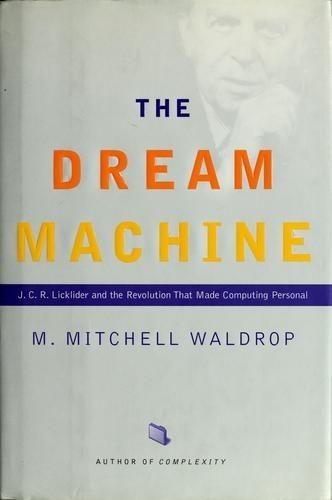
The Dream Machine: J.C.R. Licklider and the Revolution That Made Computing Personal
by M. Mitchell Waldrop
Published 14 Apr 2001

And when that happened, the UCLA computer-a big Sigma 7 machine from Scientific Data Systems-had better have something to say. Fortunately, the home team didn't lack for manpower. The "UCLA Mafia" of graduate students included Crocker himself, who seemed to have a knack for be- coming the ringleader of any group he was in; his old high school buddy from Van Nuys, Vint Cerf; Jon Postel, who would eventually take over the editorship of the RFC (and would continue in that role until his death in 1998); and a number of others-not to mention a flock of associated secretaries, program- mers, managers, undergraduates, and faculty members. Len Kleinrock's Network Measurement Center at UCLA now comprised some forty people, a small army by academic standards.

He showed me how it worked. You could sequence a bit at a time through this thing. And when I plugged it in-it worked! It was fine!" One problem down. On the software front, meanwhile, in an effort to make their Sigma 7 computer do what ARPA was paying them to do, which was gather real-time data on network performance, Vint Cerf and several others were graft- ing a series of hurried modifications into their homegrown time-sharing system, designated SEX, the Sigma Experimental system (official handbook: "The SEX User's Manual"). And Crocker was in charge of the software that would actually talk to the IMP. "We were naturally running a bit late," he would recall in RFC 1000.

But my job was Lick's computer: get IMP number six hooked into the PDP-10." He did-and very soon, since he was now one of the few people on the planet THE INTERGALACTIC NETWORK 321 who had successfully connected anything at all to the network, Metcalfe found himself becoming an "Arpanet facilitator." "That was a group that included me, Jon Postel, Steve Crocker, Vint Cerf, and a bunch of others," he says. "Our job was wandering around helping people get on the Arpanet. Now, this was the Vietnam era, so we all had these huge beards, and here we were on air force bases! In fact, Postel and I were once asked to leave an Officers Club because of our beards-although Steve remembers it was because of our blue jeans!"

pages: 587 words: 117,894

Cybersecurity: What Everyone Needs to Know
by P. W. Singer and Allan Friedman
Published 3 Jan 2014

—Jonathan Zittrain, Professor of Law and Professor of Computer Science at Harvard University, and author of The Future of the Internet—And How to Stop It “Singer and Friedman do a highly credible job of documenting the present and likely future risky state of cyber-affairs. This is a clarion call.” —Vint Cerf, “Father of the Internet,” Presidential Medal of Freedom winner “I loved this book. Wow. Until I read this astonishing and important book, I didn’t know how much I didn’t know about the hidden world of cybersecurity and cyberwar. Singer and Friedman make comprehensible an impossibly complex subject, and expose the frightening truth of just how vulnerable we are.

Internet implies connecting many different networks, in this case these various other computer networks beyond ARPANET that soon emerged but remained unlinked. The challenge was that different networks used very different underlying technology. The technical problem boiled down to abstracting these differences and allowing efficient communication. In 1973, the solution was found. Vint Cerf, then a professor at Stanford, and Robert Khan of ARPA refined the idea of a common transmission protocol. This “protocol” established the expectations that each end of the communication link should make of the other. It began with the computer equivalent of a three-way handshake to establish a connection, continuing through how each party should break apart the messages to be reassembled, and how to control transmission speeds to automatically detect bandwidth availability.

Each upgrade brought greater demand, the need for more capacity, and independently organized infrastructure. The architecture of a “backbone” that managed traffic between the different regional networks emerged as the efficient solution. This period also saw the introduction of the profit motive in Internet expansion. For instance, by this point Vint Cerf had joined the telecommunications firm MCI. In 1983, he led efforts to start MCI mail, the first commercial e-mail service on the Internet. By the late 1980s, it became obvious that managing the nascent Internet was not the business of the research community. Commercial actors could provide the necessary network services supporting the Internet and become avid consumers as well.

pages: 523 words: 143,139

Algorithms to Live By: The Computer Science of Human Decisions
by Brian Christian and Tom Griffiths
Published 4 Apr 2016

“Did the receiver crash? Are they just slow?”: Tyler Treat, “You Cannot Have Exactly-Once Delivery,” Brave New Geek: Introspections of a software engineer, March 25, 2015, http://bravenewgeek.com/you-cannot-have-exactly-once-delivery/. “end-to-end retransmissions to recover”: Vint Cerf, interviewed by Charles Severance, “Computing Conversations: Vint Cerf on the History of Packets,” 2012. “you just say, ‘Say that again’”: Ibid. “The world’s most difficult word to translate”: Oliver Conway, “Congo Word ‘Most Untranslatable,’” BBC News, June 22, 2004. “If at first you don’t succeed”: Thomas H. Palmer, Teacher’s Manual (1840), attested in The Oxford Dictionary of Proverbs, 2009.

It can refer to a physical or logical path between two entities, it can refer to the flow over the path, it can inferentially refer to an action associated with the setting up of a path, or it can refer to an association between two or more entities, with or without regard to any path between them. —VINT CERF AND BOB KAHN Only connect. —E. M. FORSTER The long-distance telegraph began with a portent—Samuel F. B. Morse, standing in the chambers of the US Supreme Court on May 24, 1844, wiring his assistant Alfred Vail in Baltimore a verse from the Old Testament: “WHAT HATH GOD WROUGHT.” The first thing we ask of any new connection is how it began, and from that origin can’t help trying to augur its future.

Packet Switching What we now think of as “the Internet” is actually a collection of many protocols, but the chief among them (so much so that it’s often referred to more or less synonymously with the Internet) is what’s known as Transmission Control Protocol, or TCP. It was born from a 1973 talk and a 1974 paper by Vinton “Vint” Cerf and Robert “Bob” Kahn, who laid out a proposal for the language of—as they imagined calling it—an “internetwork.” TCP initially used telephone lines, but it’s more appropriately regarded as the evolution of the mail rather than the phone. Phone calls use what’s called “circuit switching”: the system opens a channel between the sender and the receiver, which supplies constant bandwidth between the parties in both directions as long as the call lasts.

pages: 287 words: 86,919

Protocol: how control exists after decentralization
by Alexander R. Galloway
Published 1 Apr 2004

And sometimes not so far around the globe. Of the twenty-five or so original protocol pioneers, three of them—Vint Cerf, Jon Postel, and Steve Crocker—all came from a single high school in Los Angeles’s San Fernando Valley.6 Furthermore, during his long tenure as RFC editor, Postel was the single gatekeeper through whom all protocol RFCs passed before they could be published. Internet historians Katie Hafner and Matthew Lyon describe 5. Jake Feinler, “30 Years of RFCs,” RFC 2555, April 7, 1999. 6. See Vint Cerf ’s memorial to Jon Postel’s life and work in “I Remember IANA,” RFC 2468, October 1988. Chapter 4 122 this group as “an ad-hocracy of intensely creative, sleep-deprived, idiosyncratic, well-meaning computer geniuses.”7 There are few outsiders in this community.

The Net does not rely on the text as its primary metaphor; it is not based on value exchange; it is not time-based like film or video; it is not narrative Form 69 A packet radio test van at SRI International in 1979 with the Army 18th Airborne Corps. Packet radio, ARPAnet, and packet satellite nets were the first three networks making up the Internet. Chapter 2 70 Vint Cerf in Johannesburg, South Africa, in 1974 demonstrating the ARPAnet. This was the first such demonstration of ARPAnet in South Africa. It was done in conjunction with a conference sponsored by the International Federation of Information Processing Societies (IFIPS). Form 71 in a conventional sense; its terms are not produced in a differential relationship to some sort of universal equivalent.

Chapter 4 136 versity teamed up to create a new protocol for the intercommunication of different computer networks. In September 1973 they presented their ideas at the University of Sussex in Brighton and soon afterward finished writing the paper “A Protocol for Packet Network Intercommunication,” which was published in 1974 by the IEEE. In that same year Vint Cerf, Yogen Dalal, and Carl Sunshine published “Specification of Internet Transmission Control Program” (RFC 675), which documented details of TCP for the first time. RFC editor Jon Postel and others assisted in the final protocol design.36 Eventually this new protocol was split in 1978 into a two-part system consisting of TCP and IP.

pages: 361 words: 81,068

The Internet Is Not the Answer
by Andrew Keen
Published 5 Jan 2015

But the problem was that ARPANET’s success led to the creation of other packet-switching networks—such as the commercial TELENET, the French CYCLADES, the radio-based PRNET, and the satellite network SATNET—which complicated internetworked communication. So Kahn was right. ARPANET wasn’t the Internet. And he was right, too, about TCP/IP, the two protocols that finally realized Licklider’s dream of an intergalactic computer network. Bob Kahn and Vint Cerf met at UCLA in 1970 while working on the ARPANET project. In 1974 they published “A Protocol for Packet Network Intercommunication,” which laid out their vision of two complementary internetworking protocols that they called the Transmission Control Protocol (TCP) and the Internet Protocol (IP)—TCP being the service that guarantees the sending of the stream and IP organizing its delivery.

There would be a single global information space.44 In 1984, when Berners-Lee returned to CERN and discovered the Internet, he also returned to his larger vision of a single global information space. By this time, he’d discovered the work of Vannevar Bush and Ted Nelson and become familiar with what he called “the advances” of technology giants like Donald Davies, Paul Baran, Bob Kahn, and Vint Cerf. “I happened to come along with time, and the right interest and inclination, after hypertext and the Internet had come of age,” Berners-Lee modestly acknowledged. “The task left to me was to marry them together.”45 The fruit of that marriage was the World Wide Web, the information management system so integral to the Internet that many people think that the Web actually is the Internet.

Everything, that is, except the illusion of our own histories. CHAPTER SEVEN CRYSTAL MAN The Ministry of Surveillance If we really do make our own histories, then who exactly made the Internet? Technology historian John Naughton claims it was the RAND telecom engineer Paul Baran. TCP/IP inventors Bob Kahn and Vint Cerf say they created it. Others award the honor to “As We May Think” author Vannevar Bush or to J. C. R. Licklider, the “Man-Computer Symbiosis” visionary who dreamed up the Intergalactic Computer Network. More literary types even suggest that the Argentine writer Jorge Luis Borges, the author of stories like “The Library of Babel” and “Funes the Memorious,” about “infinite libraries and unforgetting men,”1 imagined the Internet before anyone else.

pages: 418 words: 128,965

The Master Switch: The Rise and Fall of Information Empires
by Tim Wu
Published 2 Nov 2010

But it wasn’t quite the universal network Licklider envisioned, one that could connect any network to any other. To achieve that goal of a true, universal computer network, one would need a universal language. One would need an Esperanto for computers. In 1973, this was the problem facing two young computer science graduate students named Vint Cerf and Robert Kahn. One memorable afternoon in 2008 in a small Google conference room equipped with a whiteboard, I asked Vint Cerf what exactly was the problem he had been trying to solve when he designed the Internet protocol.4 The answer surprised me. As Cerf explained it, he and Kahn were focused on developing not some grand design but rather a very much ad hoc accommodation.

In this sense, some measure of regulation by the government was, of course, to be expected. But even this fact cannot justify a total freeze on commercial television lasting nearly two decades. The contrast with early radio is instructive. When Hoover headed the agency, virtually anyone was welcome to run a primitive station, an environment that the Internet pioneeer Vint Cerf would later term “permissionless innovation.” To run a television station, however, one had to apply to the FCC for an experimental license, subject to strict standards for obtaining it and for keeping it. A licensed broadcaster had to file regular reports, and show, among other things: That he intended to engage in bona fide experimental operations related to television; … That he had adequate financial responsibility, engineering personnel and sufficient equipment and facilities to carry out a research program.18 It was based on these standards that the FCC rejected John Logie Baird’s plans for entering the U.S. market via a joint venture with WMCA in New York.

While we cannot say exactly that the network pioneers of the 1970s were disciples of these or any particular thinker, there is no denying the general climate of thought in which computer scientists were living, along with everybody else. Coming of age concurrently with an ideological backlash against centralized planning and authority, the Internet became a creature of its times. In 1982 Vint Cerf and his colleagues issued a rare command, drawing on the limited power they did have over their creation. “If you don’t implement TCP/IP, you’re off the Net.”16 It was with that ultimatum that the Internet truly got started, as computer systems around the world came online. As with many new things, what was there at first was more impressive in a conceptual sense than in terms of bells and whistles, but as usual, it was the human factor that made the difference, as those who joined could suddenly email or discuss matters with fellow computer scientists—the first “netizens.”

pages: 268 words: 76,702

The System: Who Owns the Internet, and How It Owns Us
by James Ball
Published 19 Aug 2020

As part of the team who built the first precursor to the internet, Crocker helped set the rules, working to build some of the protocols that power the internet – and how it is governed – to this day. He’s in the ‘Internet Hall of Fame’,3 one of a small group of its ‘pioneers’ – the handful of graduate students who built the internet (the most famous of whom, Vint Cerf, still works for Google as its ‘chief internet evangelist’).4 Crocker went on to serve as the chair of the body which governs the way the internet handles how web addresses work, and has had senior roles overseeing the security of some its core networks. As Crocker tells it, the story of the internet’s earliest days isn’t quite the free-spirited, revolutionary tale that some might imagine.

To build one doing both left a lot of details to work out, so the institutions had a meeting – the very beginning of the internet. ‘In August ’68 representatives from the first four sides were called together to meet each other and get going on this,’ says Crocker. ‘We were not the heads of the projects we were working on, we were staff or grad students from whatever. As it happens, Vint Cerf and I were both at UCLA and we went to that first meeting. SRI and Santa Barbara and Utah all sent representatives and a few other onlookers – call it a dozen people. The person who organised the meeting came with some notes about what we might think about. We said, that’s fine, but we wanted to think about a more general framework, because we could see that if we went through all the trouble to build the software that would make it go, you’d want to use it for a lot more complicated things.’

That idea is so ingrained to modern life that it seems obvious, the only way things could be – but it was the result of a string of deliberate decisions, forced compromises and practical solutions along the early days of ARPANET and the internet. The basis of how the internet works was set out – in Request For Comment 67510 – in December 1974, by a team of developers led by Vint Cerf. Traffic on the internet still flows based on the system, known as TCP/IP, set out in that document. The ‘TCP’, Transmission Control Protocol, governed how data could reliably be sent through this network of networks with minimal errors, allowing communications to be broken up into ‘packets’ of data which were then reassembled into coherent form at their destination – a crucial component of such a network.11 This ‘packet’ system works differently from the way phone calls worked at the time.

pages: 515 words: 126,820

Blockchain Revolution: How the Technology Behind Bitcoin Is Changing Money, Business, and the World
by Don Tapscott and Alex Tapscott
Published 9 May 2016

Brown, CTO, R3 CEV (former Executive Architect for Industry Innovation and Business Development, IBM) Vitalik Buterin, Founder, Ethereum Patrick Byrne, CEO, Overstock Bruce Cahan, Visiting Scholar, Stanford Engineering; Stanford Sustainable Banking Initiative James Carlyle, Chief Engineer, MD, R3 CEV Nicolas Cary, Cofounder, Blockchain Ltd. Toni Lane Casserly, CEO, CoinTelegraph Christian Catalini, Assistant Professor, MIT Sloan School of Management Ann Cavoukian, Executive Director, Privacy and Big Data Institute, Ryerson University Vint Cerf, Co-creator of the Internet and Chief Internet Evangelist, Google Ben Chan, Senior Software Engineer, BitGo Robin Chase, Cofounder and Former CEO, Zipcar Fadi Chehadi, CEO, ICANN Constance Choi, Principal, Seven Advisory John H. Clippinger, CEO, ID3, Research Scientist, MIT Media Lab Bram Cohen, Creator, BitTorrent Amy Cortese, Journalist, Founder, Locavest J-F Courville, Chief Operating Officer, RBC Wealth Management Patrick Deegan, CTO, Personal BlackBox Primavera De Filippi, Permanent Researcher, CNRS and Faculty Associate at the Berkman Center for Internet and Society at Harvard Law School Hernando de Soto, President, Institute for Liberty and Democracy Peronet Despeignes, Special Ops, Augur Jacob Dienelt, Blockchain Architect and CFO, itBit and Factom Joel Dietz, Swarm Corp Helen Disney, (formerly) Bitcoin Foundation Adam Draper, CEO and Founder, Boost VC Timothy Cook Draper, Venture Capitalist; Founder, Draper Fisher Jurvetson Andrew Dudley, Founder and CEO, Earth Observation Joshua Fairfield, Professor of Law, Washington and Lee University Grant Fondo, Partner, Securities Litigation and White Collar Defense Group, Privacy and Data Security Practice, Goodwin Procter LLP Brian Forde, Former Senior Adviser, The White House; Director, Digital Currency, MIT Media Lab Mike Gault, CEO, Guardtime George Gilder, Founder and Partner, Gilder Technology Fund Geoff Gordon, CEO, Vogogo Vinay Gupta, Release Coordinator, Ethereum James Hazard, Founder, Common Accord Imogen Heap, Grammy-Winning Musician and Songwriter Mike Hearn, Former Google Engineer, Vinumeris/Lighthouse Austin Hill, Cofounder and Chief Instigator, Blockstream Toomas Hendrik Ilves, President of Estonia Joichi Ito, Director, MIT Media Lab Eric Jennings, Cofounder and CEO, Filament Izabella Kaminska, Financial Reporter, Financial Times Paul Kemp-Robertson, Cofounder and Editorial Director, Contagious Communications Andrew Keys, Consensus Systems Joyce Kim, Executive Director, Stellar Development Foundation Peter Kirby, CEO and Cofounder, Factom Joey Krug, Core Developer, Augur Haluk Kulin, CEO, Personal BlackBox Chris Larsen, CEO, Ripple Labs Benjamin Lawsky, Former Superintendent of Financial Services for the State of New York; CEO, The Lawsky Group Charlie Lee, Creator, CTO; Former Engineering Manager, Litecoin Matthew Leibowitz, Partner, Plaza Ventures Vinny Lingham, CEO, Gyft Juan Llanos, EVP of Strategic Partnerships and Chief Transparency Officer, Bitreserve.org Joseph Lubin, CEO, Consensus Systems Adam Ludwin, Founder, Chain.com Christian Lundkvist, Balanc3 David McKay, President and Chief Executive Officer, RBC Janna McManus, Global PR Director, BitFury Mickey McManus, Maya Institute Jesse McWaters, Financial Innovation Specialist, World Economic Forum Blythe Masters, CEO, Digital Asset Holdings Alistair Mitchell, Managing Partner, Generation Ventures Carlos Moreira, Founder, Chairman, and CEO, WISeKey Tom Mornini, Founder and Customer Advocate, Subledger Ethan Nadelmann, Executive Director, Drug Policy Alliance Adam Nanjee, Head of Fintech Cluster, MaRS Daniel Neis, CEO and Cofounder, KOINA Kelly Olson, New Business Initiative, Intel Steve Omohundro, President, Self-Aware Systems Jim Orlando, Managing Director, OMERS Ventures Lawrence Orsini, Cofounder and Principal, LO3 Energy Paul Pacifico, CEO, Featured Artists Coalition Jose Pagliery, Staff Reporter, CNNMoney Stephen Pair, Cofounder and CEO, BitPay Inc.

In July 2015, a large group of scientists and researchers, including Stephen Hawking, Elon Musk, and Steve Wozniak, issued an open letter calling for a ban on the development of autonomous offensive weapons beyond meaningful human control.53 “The nightmare headline for me is, ‘100,000 Refrigerators Attack Bank of America,’” said Vint Cerf, widely regarded as the father of the Internet. “That is going to take some serious thinking not only about basic security and privacy technology, but also how to configure and upgrade devices at scale,” he added, noting that no one wants to spend their entire weekend typing IP addresses for each and every household device.54 We do not recommend broad regulation of DAEs and the IoT or regulatory approvals.

Barely four years old was the Internet Engineering Task Force, an international community that handles many aspects of Internet governance. The International Corporation for Assigned Names and Numbers (ICANN), which delivers essential services such as domain names, was six years away from existence; and Vint Cerf and Bob Kahn were just recruiting people for what would ultimately become the Internet Society. The second generation of the Internet enjoys much of the same spirit and enthusiasm for openness and aversion to hierarchies, manifested in the ethos of Satoshi, Voorhees, Antonopoulos, Szabo, and Ver.

pages: 272 words: 103,638

Unit X: How the Pentagon and Silicon Valley Are Transforming the Future of War
by Raj M. Shah and Christopher Kirchhoff
Published 8 Jul 2024

Norton, 2010); Andrew Cockburn, Kill Chain: The Rise of the High-Tech Assassins (Henry Holt, 2015); and Sharon Weinberger, The Imagineers of War: The Untold Story of DARPA, The Pentagon Agency That Changed the World (Vintage Books, 2018). “There is a lot of misunderstanding”: Troy Wolverton, “Vint Cerf Defended Google’s Project Maven,” Business Insider, December 13, 2018, https://www.businessinsider.com/vint-cerf-defended-googles-project-maven-defense-pilot-program-2018-12. Defense Innovation Board devised a set of principles: Defense Innovation Board, “AI Principles: Recommendations of the Ethical Use of Artificial Intelligence by the Department of Defense,” U.S.

—Admiral James Stavridis (US Navy, Ret.), 16th Supreme Allied Commander of NATO, and author of 2054: A Novel “PULLS NO PUNCHES… shows what’s possible once you get out of the old-think box. While this is the story of the Pentagon’s epiphany, it can apply just as well to businesses mired in habit and in need of resuscitation. And it’s a fun read, too.” —Vint Cerf, winner of the A.M. Turing Award and a cofounder of the Internet “INTRIGUING. From back-room bureaucratic battles to venture capital pitches, Unit X recounts one of the most significant junctures in U.S. military history. It should be required reading for anyone interested in understanding technology and American national security.”

This was actually a lucky break, because we didn’t want it. OSD’s email system experienced outages and security breaches so often that the joke was: if we ever lost a war, it would be because we couldn’t email each other. We’d met the enemy, and it was us. The system was so bad that when Chris was working with Vint Cerf, who had cofounded the Internet while at DARPA, one of Cerf’s own emails bounced back. You know your IT system is in trouble when the founder of the Internet can’t get through. So, we thought, why not just use Gmail? Every startup had long ago figured out that it’s far cheaper and more secure to let the enterprise professionals at Google, Microsoft, or Amazon run your network for you.

pages: 282 words: 92,998

Cyber War: The Next Threat to National Security and What to Do About It
by Richard A. Clarke and Robert Knake
Published 15 Dec 2010

The “open Internet” people believe that if you wish to read The Communist Manifesto, or research treatments for venereal disease, or document China’s human rights violations, or watch porn online, your access to that information will not be free if anyone knows that you are looking at it. But does that mean that everything should be done on one big, anonymous, open-to-everyone network? That’s how Vint Cerf and others see the Internet, and they’ll be damned if they’re gonna agree to change it. When I worked in the White House, I proposed something I called “Govnet,” a private network for the internal working of federal agencies that would deny access to those who could not really prove who they were (maybe with a special fob). Vint Cerf thought that was an awful idea, one that would erode the open Internet, beginning a trend of cutting it up into lots of little networks.

Trusted people ran all those sixty computers. A precondition for joining the network was that you were a known entity committed to promoting scientific advancement. And with so few people, if anything bad got on the network, it would not be hard to get it off and to identify who had put it there. Then Vint Cerf left ARPA and joined MCI. Vint is a friend, a friend with whom I fundamentally disagree about how the Internet should be secured. But Vint is one of those handful of people who can legitimately be called “a father of the Internet,” so what he thinks on Internet issues usually counts for a lot more than what I say.

But if we worked at a bank, the IRS, or the train company, or (say it loudly) the electric company, we would use one of these new secure, special-purpose intranets when we were at work. Cyber war could still target these intranets, but their diversity, their use of separate routers and fiber, and their highly secured internals would make it very unlikely that they could all be taken down. Vint Cerf and those devoted to one big everybody-goes-everywhere, interconnected web won’t like it, but change must come. 6. “IT’S POTUS” Those were the words our hypothetical White House official heard in chapter 2. Most of the time, those are words you never want to hear, at least when somebody is shoving a phone in your direction in a crisis.

pages: 330 words: 91,805

Peers Inc: How People and Platforms Are Inventing the Collaborative Economy and Reinventing Capitalism
by Robin Chase
Published 14 May 2015

Agency for International Development, “Fighting Ebola: A Grand Challenge for Development,” www.usaid.gov/grandchallenges/ebola. 14. Walter Isaacson, “Where Innovation Comes From,” Wall Street Journal, September 26, 2014, www.wsj.com/articles/a-lesson-from-alan-turing-how-creativity-drives-machines-1411749814. 15. “Vint Cerf Pt. 1,” The Colbert Report, July 15, 2014, http://thecolbertreport.cc.com/videos/08a2dg/vint-cerf-pt—1. 16. Gordon Rosenblatt, “Google’s Biggest Competitor Is Amazon,” Medium.com, October 18, 2014, https://medium.com/@gideonro/the-google-amazon-slugfest-8a3a07a1d6dd. 17. Intergovernmental Panel on Climate Change, “Climate Change 2014: Synthesis Report,” November 1, 2014, https://www.ipcc.ch/report/ar5/syr. 18.

While we have to trick ourselves into “thinking slow,” taking the time to make the mathematical and rational calculations, this type of analysis is easy for computers. The optimal Peers Inc platforms allow computers to do what they do best—complex and not-so-complex math—and deliver the results to people, allowing us to engage in what we do best: creativity, pattern recognition, and contextualizing. In an interview on The Colbert Report, Vint Cerf, the Internet pioneer, remarked “[There are] about 3 billion people online right now. Every time they come up with new ways of using the Internet, we all gain something from that.”15 Over the last twenty years, as we’ve explored the powers the Internet can bring us, companies—the Inc—have figured out that individuals actually have a huge amount to offer.

Often government financing does come with strings attached. In many states, federal financing of highways requires that the state mandate use of seatbelts or specific speed limits. Sometimes these government rules feel appropriate; sometimes they feel unnecessarily restrictive. Every time I see Vint Cerf (one of the Internet’s founding fathers) and Tim Berners-Lee (creator of the World Wide Web, the visible part of the Internet), I am struck by their personal humility and life choices. Instead of figuring out how to cash out on the government-funded research that led to their inventions, they tirelessly work to ensure that these public goods remain public.

pages: 222 words: 70,132

Move Fast and Break Things: How Facebook, Google, and Amazon Cornered Culture and Undermined Democracy
by Jonathan Taplin
Published 17 Apr 2017

Strikingly, the Internet was created with government funding and built on the principles of decentralization—principles we need to find our way back to if we are to overcome the power of corporate monopolies in the digital age. Since 2010 I have run the Annenberg Innovation Lab at the University of Southern California, where I have been lucky enough to work with many of the pioneers of the Internet, including Tim Berners-Lee, Vint Cerf, and John Seely Brown. I was also the founder of one of the first streaming-video-on-demand company, Intertainer, which deployed high-quality video over the Internet ten years before YouTube went online. I am a committed believer in the power of technology. I have used Internet tools such as my blog on Medium to work out some of the ideas in this book.

Every piece of code—HTML, TCP/IP—was donated to the ARPANET project royalty-free. Of course DARPA had its own reasons for funding Doug Engelbart’s research, deeply interwoven with Cold War paranoia and post–nuclear attack “survivability,” but that was irrelevant to the purpose and the idealism of Engelbart, Brand, Vint Cerf, Tim Berners-Lee, and a host of other geniuses who made the Internet. But ultimately the connection with the military led to the undoing of Engelbart’s NLS vision. By 1969 the antiwar demonstrations outside the SRI building were a daily occurrence. Inside, the research team, which was growing quickly—thanks to increasing DARPA investment after the successful San Francisco demo—began to break into two factions: computer geeks and countercultural humanists.

The best recording ever of Ray Charles is Ray Charles Live from a 1959 Atlanta stadium show with a big band. This is where you can find the inexorably cathartic and impossibly slow “Drown in My Own Tears.” Chapter Three: Tech’s Counterculture Roots Although I never got to meet Doug Engelbart, I was fortunate enough to have spent time with some of the founders of the Internet, including Vint Cerf, Tim Berners-Lee, and most especially John Seely Brown, who has been a mentor to me for the past seven years. Thierry Bardini, Bootstrapping: Douglas Engelbart, Coevolution, and the Origins of Personal Computing (Palo Alto: Stanford University Press, 2000). Fred Turner, From Counterculture to Cyberculture (Chicago: University of Chicago Press, 2008), and John Markoff, What the Dormouse Said (New York: Viking, 2005), are both wonderful resources around the story of the early Internet.

pages: 344 words: 104,077

Superminds: The Surprising Power of People and Computers Thinking Together
by Thomas W. Malone
Published 14 May 2018

At any given moment, is there an overall shortage of workers or jobs? How would we, as workers, learn to pick a portfolio of tasks that didn’t bore us or exhaust us while providing the income we needed? How could we improve our skills for the new things that need to be done? And how would our norms of what it means to be a good worker change? Internet pioneer Vint Cerf and his coauthor, David Nordfors, think of a system like this as a way to “disrupt unemployment.”9 But even more than that, I think it’s a way to create groups that are more intelligent than any we’ve ever known before on our planet by picking the people who are best for every task from the entire population of the whole world.

Bob Gibbons provided extensive comments on the comparisons of different species of superminds in chapter 11; Randy Davis gave me detailed comments on technical (and many other) issues in numerous chapters; and all of the following provided other useful comments: Rob Laubacher, Patrick Winston, Erik Duhaime, Jeff Cooper, Ian Straus, Vint Cerf, Judy Olson, Mel Blake, Mark Klein, Anita Woolley, David Engel, and Laur Fisher. I am also grateful to four people whose work influenced this book more than is reflected in citations alone. First, Douglas Engelbart (1925–2013), who invented the computer mouse and did other pioneering work on interactive computing environments, is perhaps more than any other single person responsible for the idea that groups of people and computers—together—can be more intelligent than either can alone.

—Vernor Vinge, Hugo Award–winning science fiction author and originator of the “technological singularity” concept “Malone takes us on an intentional journey into thinking about thought, intelligence, reasoning, and consciousness. He sees these notions in extremely broad terms that have changed my views of what it means to ‘think’—a property that emerges from aggregations and organized structures. I may never see a four-legged table the same way again!” —Vint Cerf, vice president at Google and one of the “fathers of the Internet” “A remarkable journey into the basic structures—markets, hierarchies, democracies, and more—that have advanced civilization throughout history and now bring us to a turning point where the complex problems facing humanity can be addressed by people and computers working together in totally new ways.

pages: 302 words: 85,877

Cult of the Dead Cow: How the Original Hacking Supergroup Might Just Save the World
by Joseph Menn
Published 3 Jun 2019

The most famous member of the Cult of the Dead Cow was elsewhere much of the time, fighting his own demons and, after 9/11, America’s demons as well. What he saw made him very afraid. Mudge knew as much as anyone about the basic failings of tech security and about their root causes. The internet’s inventors built it on trust and it got loose in its test version, before Vint Cerf and his team could come up with reliable security. It still ran that way. All software has bugs, some of which can be exploited. Layering software on software makes it less secure. The software vendors had all escaped legal liability for poor craftsmanship and had little incentive to devote significant resources to making their products safer.

See Anthony, Sam 20/20 (television news), 109 2600 (publication), 19, 25–26, 38, 49, 91–92 in-person meetings of, 46–47, 53, 72–73, 104 Twitter, 140, 147, 149, 156, 167, 172, 191–192, 210–211 parody account, 164–165, 170 Tymnet, 28 u4ea, 50 United Nations (UN), 86–87, 96–97, 101–102, 136 United States Congress, 4–5, 145, 176, 182–183, 190–191, 200–201, 206–207, 212 United States government, 3, 48, 54, 103–104, 133, 139, 166, 184 Bill of Rights, 19 Customs and Border Protection (CBP), 144–145 cyberespionage by, 113–114, 119, 139, 161–162, 176 Department of Defense, 38, 74, 78, 122, 176, 177, 179–180, 181 Department of Homeland Security, 176 Department of Justice, 100 Department of State, 86, 104, 143–144, 145, 170 Foreign Intelligence Surveillance Court, 198 Joint Special Operations Command (JSOC), 117 military, 47, 128–129, 149 Secret Service, 24–25, 26–28 US code, 144–145 White House, 57, 115, 176, 191 See also FBI; law enforcement Universal Declaration of Human Rights, 101–102 University of Alabama, 53 University of California at Berkeley, 123 University of Michigan, 123, 211 University of Texas, 206 University of Toronto, 131, 133 University of Windsor, 86 Unix, 14, 56, 57 USA Today (newspaper), 67 user data, 121–122, 151, 212 Vanity Fair (magazine), 202, 204 VAX, 47 venture capital, 109–110, 112–113, 124, 184 Veracode, 121, 183–186 VICE (online publication), 165, 170 Videodrome (film), 42 Vietnam War, 18, 86, 143 Villeneuve, Nart, 131–137 Vint Cerf, 175 viruses, computer, 81–82, 120, 167, 176 antivirus industry, 29, 66, 78, 83, 107, 167–168, 210 Visa, 145, 149 Von Von Von, 187 vulnerabilities, software, 167, 177, 188, 206, 209 exploits, 33, 57, 78, 119, 122, 133, 164, 167 zero-day vulnerabilities, 119–122, 210 See also bugs w00w00, 47, 104, 123, 152, 211 Wallenstrom, Joel, 124 Walton, Greg, 99–103, 135–137 warfare, cyber, 116, 131, 134, 136–138, 172, 192, 196 War Games (film), 9, 13, 42, 54 Warner, Mark, 182–183 Washington Post (newspaper), 73–74, 143, 151 Watt, Stephen, 122–123 website defacement, 98, 132, 147, 149 weev.

Courtesy of cDc During the L0pht’s 2000 farewell party in Boston, Christien Rioux caught up with Laird Brown under a banner filled with handles. Courtesy Abby Fichtner In early 2000, President Bill Clinton held the first White House meeting on cybersecurity, speaking with Mudge Zatko and internet co-inventor Vint Cerf. Courtesy of the White House Two early cDc Ninja Strike Force members, Limor Fried and Window Snyder. One of the initial leaders of the maker movement, Fried became the first female engineer on the cover of Wired magazine. Snyder played critical security roles at Microsoft and Apple, where she set the stage for the company to appeal a court order to break into a terrorist’s iPhone.

pages: 308 words: 85,880

How to Fix the Future: Staying Human in the Digital Age
by Andrew Keen
Published 1 Mar 2018

This summit, held in San Francisco’s Inner Richmond district, near the Golden Gate Bridge, at the headquarters of the Internet Archive—the world’s largest nonprofit digital library—captured the disenchantment with the current web that exists among many other leading technologists. Attended by such internet founding fathers as Berners-Lee and Vint Cerf—the inventor of the TCP/IP protocol that created the all-important “universal rulebook”8 for global online communications, a code to enable the smooth running of the networked commons—the summit called for a return to the original sharing ideals of the web. “We originally wanted three things from the internet—reliability, privacy, and fun,” Brewster Kahle, the summit organizer and the founder of the Internet Archive, told me when I visited him at his funky offices in a defunct Christian Science church.

To fix the future, we have to go back to 1995. You’ll remember there was even a parallel event in the same month as the Berlin conference—the “Decentralized Web Summit” at San Francisco’s Internet Archive, featuring many of the internet’s original architects, including the inventor Berners-Lee and the TCP/IP creator Vint Cerf. Everyone, it seems, on both sides of the Atlantic, is nostalgic for the future. “The web’s creator looks to reinvent it,” as the New York Times described this June 2016 event, which brought together privacy advocates and pioneers of such peer-to-peer technologies as blockchain to discuss a “new phase of the internet.”1 Brewster Kahle, the Internet Archive founder and summit organizer, believes that the time is now right for a radical re-decentralization of digital power.

The future has finally caught up with us, he tells me when I visit him at his office in San Francisco’s Inner Richmond district. “Now is the time to finally create a decentralized web,” he says, “by building values into the code itself.” It’s not a “trivial” task, he says, but it can be done. “I asked Vint Cerf how difficult it was to build the original internet,” Kahle tells me. “And Cerf replied, ‘It took one year with a room of five or six guys.’” The first time around, Kahle confesses, speaking about the original digital revolution, “we made it too hard for individual creators to get paid for their work.”

pages: 476 words: 125,219

Digital Disconnect: How Capitalism Is Turning the Internet Against Democracy
by Robert W. McChesney
Published 5 Mar 2013

Masha Zager, “Santa Monica City Net: How to Grow a Network,” Broadband Communities, May–June 2011, 44–47. 121. Higginbotham, “Verizon to Buy Cox Spectrum.” 122. Wu, Master Switch, 285. 123. MacKinnon, Consent of the Networked, 121. 124. Erick Schonfeld, “Vint Cerf Wonders If We Need to Nationalize the Internet,” TechCrunch, June 25, 2008, techcrunch.com/2008/06/25/vint-cerf-wonders-if-we-need-to-nationalize-the-internet. 125. Citation and link to video of Obama statement in: Timothy Karr, “Obama FCC Caves on Net Neutrality—Tuesday Betrayal Assured,” Huffington Post, Dec. 20, 2010, huffingtonpost.com/timothy-carr/obama-fcc-caves-on-net-ne_b_799435.html. 126.

1 Of course, the charge against Gore was false but became an urban legend.2 His actual claim was merely that as a member of Congress he had played a key role in channeling funds to support the development of what would become the Internet.3 The person often regarded as the father of the Internet defended Gore, with little effect: “VP Gore was the first or surely among the first of the members of Congress to become a strong supporter of advanced networking while he served as Senator,” Vint Cerf stated. “While it is not accurate to say that VP Gore invented the Internet, he has played a powerful role in policy terms that has supported its continued growth and application, for which we should be thankful.”4 This episode demonstrated how quickly the true history of the Internet had been swallowed up in collective amnesia and replaced by the mythology of the free market.5 In fact, the entire realm of digital communication was developed through government-subsidized-and-directed research during the post–World War II decades, often by the military and leading research universities.

“In many countries,” MacKinnon points out, “a lack of net neutrality makes censorship—whether by companies, government, or some mix of the two—much easier to implement and much less publicly visible, let alone accountable.”123 There was also support for Net neutrality from the business community, especially from powerful firms like Google, which did not want to be shaken down by ISPs in order to get on their networks. In 2008 a frustrated Vint Cerf, by then a Google executive, asked if it might not be better if the Internet data-pipe infrastructure were “owned and maintained by the government, just like the highways.”124 Candidate and later president Barack Obama loudly announced that he would “take a back seat to no one in my commitment to net neutrality,” and that it would be the centerpiece of his communications policy regime.125 The formal Net neutrality policy that the FCC approved in December 2010 maintained effective neutrality for the wired ISPs but effectively abandoned it for the wireless ISPs, where much of the action was moving.

pages: 521 words: 118,183

The Wires of War: Technology and the Global Struggle for Power
by Jacob Helberg
Published 11 Oct 2021

Every minute, we now send nearly 190 million emails, tweet 350,000 times, upload over 500 hours of content to YouTube, and post 450,000 new photos to Facebook.16 You can trace a line between that first mass email and the fact that one-fifth of Americans confess that they’re effectively never offline.17 For much of ARPANET’s early existence, the network was essentially a group of loosely connected regional computer clusters, each with its own unique language and rules. It took a pair of researchers named Vint Cerf and Robert Kahn to develop a shared protocol in 1983—known ever since as “transmission control protocol/Internet protocol,” or TCP/IP—that would connect these distinct clusters, allowing the network to grow beyond the insular confines of research institutions.18 That expansion was not universally welcomed.

These humiliations are hardly a distant memory; when Trump and President Xi Jinping first met in April 2017, Xi treated Trump to a lecture on this unhappy history.85 Later that year, Xi declared that China was entering a “new era” and “must take center stage in the world.”86 In Beijing’s view, that means asserting full control over Hong Kong, regaining control over “breakaway” territories like Taiwan, expanding Chinese influence throughout the Asia-Pacific, and challenging the United States for global supremacy. “The signs that China is gearing up to contest America’s global leadership are unmistakable, and they are ubiquitous,” write Hal Brands and Jake Sullivan.87 And in Vint Cerf and Tim Berners-Lee’s ingenious creation, the Chinese Communist Party saw a new way to advance their old ambitions. * * * Two years before the Tiananmen massacre, the first email was sent from China. It traveled 4,500 miles from Beijing to Berlin. In hindsight, the message set a rather ominous tone: “Across the Great Wall we can reach every corner in the world.”88 Chinese use of the Internet subsequently skyrocketed.

Despite serving in an ostensibly neutral role, Zhao has stated that “there is no proof so far” of any security concerns about Huawei110 and called Belt and Road “an express train that once you get on, you can join forces with China and develop along with the country.”111 It was at this venerable telecommunication association that, in late 2019, Vint Cerf and Bob Kahn’s TCP/IP protocol found itself in the crosshairs. Recall that these transfer protocols are the instructions that govern how the digital packets that comprise your email should be broken down and reassembled when they get to their destination. The current standard has been described as operating like an “agnostic postman that simply moves boxes around,” making it a critical part of the Internet’s open nature.

pages: 474 words: 130,575

Surveillance Valley: The Rise of the Military-Digital Complex
by Yasha Levine
Published 6 Feb 2018

A few weeks after Cooke’s testimony, the ARPANET was officially absorbed by the Defense Communications Agency, which ran the communications systems for the entire Pentagon. In other words, even if still somewhat experimental, the ARPANET was the definition of an operational military network.60 Military Internet In the summer of 1973, Robert Kahn and Vint Cerf locked themselves in a conference room at the upscale Hyatt Cabana El Camino Real just a mile south of Stanford. The Cabana was the most glamorous hotel in Palo Alto, having hosted the Beatles in 1965, among other celebrities. Kahn was stocky and had thick black hair and sideburns. Cerf was tall and lanky, with an unkempt beard.

“We deployed a whole bunch of packet radio gear and computer terminals and small processors to Fort Bragg with the 18th Airborne Corps and for several years did a whole bunch of field exercises. We also deployed them to the Strategic Air Command in Omaha, Nebraska, and did a series of exercises with them. In some cases, the outcome of the applications that we used were so good that they became part of the normal everyday operation.” Of course, Vint Cerf wasn’t the only one working out practical military applications for the ARPANET. Congressional reports and internal ARPA documents from the 1970s are full of examples of the armed services putting the network to use in a variety of ways, from wirelessly transmitting submarine locator sensor data, to providing portable communication in the field, teleconferencing, remote maintenance of computer equipment, and military supply chain and logistics management.69 And, of course, all of this was intertwined with ARPA’s work on “intelligent systems”—building the data analysis and predictive technologies Godel and Licklider initiated a decade earlier.70 This was the great thing about ARPANET technology: it was a general-purpose network that could carry all sorts of traffic.

In 2006, Painter’s Google Federal went on a hiring spree, snapping up managers and salespeople from the army, air force, CIA, Raytheon, and Lockheed Martin.109 It beefed up its lobbying muscle and assembled a team of Democratic and Republican operatives. Google even grabbed ARPA’s old show pony: Vint Cerf, who, as Google’s vice president and chief Internet evangelist, served as a symbolic bridge between Google and the military. While Google’s public relations team did its best to keep the company wrapped in a false aura of geeky altruism, company executives pursued an aggressive strategy to become the Lockheed Martin of the Internet Age.110 “We’re functionally more than tripling the team each year,” Painter said in 2008.111 It was true.

pages: 281 words: 95,852

The Googlization of Everything:
by Siva Vaidhyanathan
Published 1 Jan 2010

In fact, every Google employee I met offered a much more modest, utilitarian vision of the company’s effects on the world than either its critics or its champions express. Google employees for the most part consider themselves to be engineers doing a job, solving a problem or two, generating or perfecting algorithms that make computers manipulate data. Some of the big thinkers at the company, such as Vint Cerf (often called the “father of the Internet”), see the process of mastering information search as a noble cause but still downplay Google’s influence.53 Other major public voices of the company, such as Marissa Mayer, frequently describe the jobs Google is doing in matter-of-fact terms. Explaining in her 2008 speech why the iconic blank search screen, containing only an empty search box, a logo, and a copyright notice, emerged from a company so blessed with brilliant engineers and devoted to monumental tasks, she said, “It’s sort of more about expedient solutions and much less about grand or broad design.”54 Seen from the inside, then, Google is a place to get things done.

For more than four years, I lived every day with and through as many Google products and services as I could. For several weeks, I tried to write this book using Google Docs instead of my default word processing program. This book would not exist without the cooperation of the people who work at Google and YouTube: in particular, Peter Barron, Dan Clancy, Vint Cerf, Hal Varian, Alex Macgillivray, Glenn Otis Brown, and Jennie Johnson. They welcomed me on several visits, gave me their valuable time, and tolerated my mistakes and overstatements as I presented draft sections of the book on my blog, Googlizationofeverything.com. Most important, they have produced some astounding products that I have used extensively in the research and composition of all my work, not just this book.

Fred Turner, “Burning Man at Google: A Cultural Infrastructure for New Media Production,” New Media Society 11, nos. 1–2 (2009): 73–94. 51. Yochai Benkler, The Wealth of Networks: How Social Production Transforms Markets and Freedom (New Haven, CT: Yale University Press, 2006). 52. Dalton Conley, Elsewhere, U.S.A. (New York: Pantheon Books, 2009). 53. Siva Vaidhyanathan, “Interview with Vint Cerf of Google,” The Googlization of Everything, blog, January 2, 2009, www.googlizationofe verything.com. 54. Mayer, Google I/O ’08 Keynote Address. 55. Joe Nocera, “On Day Care, Google Makes a Rare Fumble,” New York Times, July 5, 2008. 56. “Corporate Information—Our Philosophy,” Google.com, www .google.com/corporate/tenthings.html, accessed August 12, 2010. 57.

pages: 523 words: 148,929

Physics of the Future: How Science Will Shape Human Destiny and Our Daily Lives by the Year 2100
by Michio Kaku
Published 15 Mar 2011

All calculations done on a quantum computer are uncertain, so you have to repeat the experiment many times. So 2 + 2 = 4, at least sometimes. If you repeat the calculation of 2 + 2 a number of times, the final answer averages out to 4. So even arithmetic becomes fuzzy on a quantum computer. No one knows when one might solve this problem of decoherence. Vint Cerf, one of the original creators of the Internet, predicts, “By 2050, we will surely have found ways to achieve room-temperature quantum computation.” We should also point out that the stakes are so high that a variety of computer designs have been explored by scientists. Some of these competing designs include: • optical computers: These computers calculate on light beams rather than electrons.

But the essential functions of a starship may be miniaturized by nanotechnology so that perhaps millions of tiny nanoships might be launched to the nearby stars, only a fraction of which actually make it. Once they arrive on a nearby moon, they might create a factory to make unlimited copies of themselves. Vint Cerf, one of the original creators of the Internet, envisions tiny nanoships that can explore not just the solar system but eventually the stars themselves. He says, “The exploration of the solar system will be made more effective through the construction of small but powerful nano-scale devices that will be easy to transport and deliver to the surface, below the surface, and into the atmospheres of our neighboring planets and satellites ….

story_­id=04803. 11 “From the point of view of physics”: Alexis Madrigal, “Scientist Builds World’s Smallest Transistor, Gordon Moore Sighs with Relief,” Wired, www.­wired.­com/­wiredscience/­2008/­04/­scientists-­buil/­. 12 “It’s about the smallest”: Ibid. 13 “By 2050, we will surely have found ways to achieve”: Vint Cerf, “One Is Glad to Be of Service,” in Denning, p. 229. 14 “Think of a mobile device”: Sharon Gaudin, “Intel Sees Future with Shape-shifting Robots, Wireless Power,” Computerworld, August 22, 2008, www.­computerworld.­com/­s/­article/­9113301/­Intel_­sees_­future_­with_­shape_­shifting_­robots_­wireless_­power­?

pages: 535 words: 158,863

Superclass: The Global Power Elite and the World They Are Making
by David Rothkopf
Published 18 Mar 2008

Wright Mills observed that the U.S. power elite Mills, Power Elite, 274. 311 His firm also owns forty-seven companies Nelson Schwartz, “Wall Street’s Man of the Moment,” Fortune, February 2007. 311 Li Ka-shing, the chairman Kroll and Fass, “The World’s Billionaires.” 311 Richard Li ranked 754th Ibid. 312 almost half of the twenty-five richest people in China Ibid. 312 millionaires in China increased by 6.8 percent Merrill Lynch and Capgemini, “World Wealth Report,” June 2006. 312 the number of billionaires vaulted Robin Kwong, “China’s Billionaires Begin to Add Up,” Financial Times, October 22, 2007. 312 Chinese were among the largest sources Kroll and Fass, “The World’s Billionaires.” 316 In ICANN, the Internet pioneer Vint Cerf Vint Cerf, interview with the author, 2006. 317 It is linked to views such as those Anne-Marie Slaughter, A New World Order (Princeton: Princeton University Press, 2004). ACKNOWLEDGMENTS Hundreds of people gave generously of their time to make this book possible. Their intelligence, energy, help, and kindness have made the process of writing it a continuous pleasure for me.

For instance, Internet domain names are managed through an association of ICANN (Internet Corporation for Assigned Names and Numbers), CENTR (Council of European National Top-Level Domain Registries), the World Intellectual Property Organization, the United Nations, and the private sector. The process has been complex and sometimes tense, but it has produced a number of global agreements on the management of key elements of the global electronic commons that is the Internet. In ICANN, the Internet pioneer Vint Cerf sees an emerging model for what global governance institutions might look like: “We have something of an interesting experiment because it is a multistakeholder organization. It includes governments, private sector, civil society, and the academic world. The attempt to draw those different sectors together in order to do policy development has certainly been a lesson if nothing else.

Some of those deserving of special thanks in this regard and who I am able to thank here include: Prince Turki al Faisal, Charlene Barshefsky, Senator Evan Bayh, Sandy Berger, Nancy Birdsall, Admiral Dennis Blair, Philippe Bourguignon, Lael Brainard, Hilda Ochoa Brillembourg, Leon Brittan, Steve Chase, Kurt Campbell, Vint Cerf, Heng Chee Chan, Juan Claro, Riccardo Claro, David Cole, Ibrahim Dabdoub, Richard Darman, Anita Dunn, Alejandro Foxley, Arminio Fraga, Thomas Friedman, Al From, Timothy Geithner, Jorge Gerdau Johanpeter, Louis Gerstner, Hank Greenberg, Francisco Gros, Rajat Gupta, Richard Haass, Peter Hakim, Victor Halberstadt, William Haseltine, Richard Holbrooke, Robert Hormats, General James Jones, General George Joulwan, John Judis, General John Jumper, Susan Kaufman Purcell, Robert Kimmitt, Jim Kimsey, Henry Kissinger, Anthony Lake, Jennifer Linker, Haakon Lorentzen, Edward Ludwig, Andronico Luksic, Kishore Mahbubani, Thierry Malleret, Mark Malloch Brown, Jorge Marshall, Jessica Mathews, William McDonough, Thomas F.

pages: 395 words: 116,675

The Evolution of Everything: How New Ideas Emerge
by Matt Ridley

The internet revolution might have happened ten years earlier if academics had not been dependent on a government network antipathetic to commercial use. Well, then, perhaps we should forget about who was funding the work, and at least give credit to the individuals without whom the internet would never have happened. Paul Baran was first with the notion of packet switching, Vint Cerf invented the TCP/IP protocols that proved crucial to allowing different programs to run on the internet, and Sir Tim Berners Lee developed the worldwide web. Yet there is a problem here, too. Can anybody really think that these things – or their equivalents – would not have come into existence in the 1990s if these undoubtedly brilliant men had never been born?

Given all we know about the ubiquitous phenomenon of simultaneous invention, and the inevitability of the next step in innovation once a technology is ripe (see Chapter 7), it is inconceivable that the twentieth century would have ended without a general, open means of connecting computers to each other so that people could see what was on other nodes than their own hard drive. Indeed, the notion of packet switching – and even the name we now use for it – occurred independently to a Welshman named Donald Davies just a short time after Baran stumbled on it. Vint Cerf shares the credit for TCP/IP with Bob Kahn. So, while we should honour individuals for their contributions, we should not really think that they made something come into existence that would not have otherwise. The names would be different, and some of the procedures too, but an alternative internet would exist today whoever had lived.

A decision by the Court of Justice of the European Union in 2014 – that people should be allowed to insist on the deletion from search results of old stories about themselves, even if these were true – was a gift for crooks of all kinds. And then there’s real censorship, of the kind done by the Chinese state in particular. The number of countries that censor the internet has grown steadily, and now stands at more than forty. The tradition of what Vint Cerf calls ‘permissionless innovation’ is crucial to the success of the internet, and is under explicit attack from governments and busybodies all around the world who insist that all innovation must seek permission. The International Telecommunications Union, a United Nations body with 193 members, has been lobbied by several governments to extend its control over the internet, grab power over the registration of domain names and bring in international rules banning, for instance, the use of anonymity.

pages: 229 words: 68,426

Everyware: The Dawning Age of Ubiquitous Computing
by Adam Greenfield
Published 14 Sep 2006

It could have been designed differently, but it wasn't. Somebody made the decision that the cause of optimal network efficiency was best served by such an "end-to-end" architecture.* * In this case, the identity of the "somebody" in question is widely known: The relevant design decisions were set forth by Robert E. Kahn and Vint Cerf, in a 1974 paper called A Protocol for Packet Network Intercommunication. The identity of responsible parties will not always be so transparent. Lessig believes that this engineering decision has had the profoundest consequences for the way we present ourselves on the net and for the regulability of our behavior there.

We've seen that a provision along these lines appears to exist, in the form of something called IPv6, but what exactly does this cryptic little string mean? In order to fully understand the implications of IPv6, we have to briefly consider what the Internet was supposed to be "for" in the minds of its original designers, engineers named Robert E. Kahn and Vint Cerf. As it turns out, Kahn and Cerf were unusually prescient, and they did not want to limit their creation to one particular use or set of uses. As a result, from the outset it was designed to be as agnostic as possible regarding the purposes and specifications of the devices connected to it, which has made it a particularly brilliant enabling technology.

pages: 295 words: 66,912

Walled Culture: How Big Content Uses Technology and the Law to Lock Down Culture and Keep Creators Poor
by Glyn Moody
Published 26 Sep 2022

uri=CELEX%3A32000L0031&from=en 460 https://web.archive.org/web/20220603094009/https://curia.europa.eu/jcms/upload/docs/application/pdf/2011-11/cp110126en.pdf 461 https://web.archive.org/web/20220618190328/http://copyrightblog.kluweriplaw.com/2021/08/09/youtube-and-cyando-injunctions-against-intermediaries-and-general-monitoring-obligations-any-movement/ 462 https://web.archive.org/web/20220701134156/https://en.wikipedia.org/wiki/General_Data_Protection_Regulation 463 https://web.archive.org/web/20220618190351/https://gdpr-info.eu/art-22-gdpr/ 464 https://web.archive.org/web/20180713064910/https://www.theguardian.com/technology/2018/jun/20/eu-votes-for-copyright-law-that-would-make-internet-a-tool-for-control 465 https://web.archive.org/web/20220402115757/https://www.politico.eu/wp-content/uploads/2018/06/copyright-email-to-MEPs.docx 466 https://web.archive.org/web/20220402115757/https://www.politico.eu/wp-content/uploads/2018/06/copyright-email-to-MEPs.docx 467 https://web.archive.org/web/20220618203153/https://copybuzz.com/copyright/meps-email-says-article-13-will-not-filter-the-internet-juri-meps-tweet-says-it-will/ 468 https://web.archive.org/web/20220701134919/https://en.wikipedia.org/wiki/Independent_Music_Companies_Association 469 https://web.archive.org/web/20180704010146/http://impalamusic.org/content/copyright-say-no-scaremongering-and-yes-creators-getting-paid 470 https://web.archive.org/web/20220701135001/https://en.wikipedia.org/wiki/David_Kaye_%28academic%29 471 https://web.archive.org/web/20220428083157/https://www.ohchr.org/sites/default/files/Documents/Issues/Opinion/Legislation/OL-OTH-41-2018.pdf 472 https://web.archive.org/web/20220618203237/https://en.wikipedia.org/wiki/Vint_Cerf 473 https://web.archive.org/web/20220618203338/https://internethalloffame.org/vint-cerf 474 https://web.archive.org/web/20220618203358/https://en.wikipedia.org/wiki/Tim_Berners-Lee 475 https://web.archive.org/web/20220618203414/https://www.w3.org/People/Berners-Lee/ 476 https://web.archive.org/web/20220618203428/https://en.wikipedia.org/wiki/Jimmy_Wales 477 https://web.archive.org/web/20220620000819/https://twitter.com/Jimmy_wales 478 https://web.archive.org/web/20180708003333/https://www.eff.org/files/2018/06/13/article13letter.pdf 479 https://web.archive.org/web/20180708003333/https://www.eff.org/files/2018/06/13/article13letter.pdf 480 https://web.archive.org/web/20220618213154/https://felixreda.eu/2018/09/ep-endorses-upload-filters/ 481 https://web.archive.org/web/20220618213222/https://www.europarl.europa.eu/news/en/press-room/20180906IPR12103/parliament-adopts-its-position-on-digital-copyright-rules 482 https://web.archive.org/web/20220618214015/https://www.techdirt.com/2018/12/12/legacy-copyright-industries-lobbying-hard-eu-copyright-directive-while-pretending-that-only-google-is-lobbying/ 483 https://web.archive.org/web/20220618214015/https://www.techdirt.com/2018/12/12/legacy-copyright-industries-lobbying-hard-eu-copyright-directive-while-pretending-that-only-google-is-lobbying/ 484 https://web.archive.org/web/20220618214041/https://corporateeurope.org/en/2018/12/copyright-directive-how-competing-big-business-lobbies-drowned-out-critical-voices 485 https://web.archive.org/web/20220618214059/https://en.wikipedia.org/wiki/Catherine_Stihler 486 https://web.archive.org/web/20220618214120/https://en.wikipedia.org/wiki/Creative_Commons 487 https://web.archive.org/web/20220704134108/https://walledculture.org/interview-catherine-stihler-creative-commons-the-eu-copyright-directive-and-civil-societys-role/ 488 https://web.archive.org/web/20220618214136/https://en.wikipedia.org/wiki/Formal_trilogue_meeting 489 https://web.archive.org/web/20220618214155/https://felixreda.eu/2018/11/eu-council-upload-filters/ 490 https://web.archive.org/web/20190320092740/https://juliareda.eu/2019/01/copyright-hits_wall/ 491 https://web.archive.org/web/20220618214225/https://www.techdirt.com/2019/03/25/new-report-germany-caved-to-france-copyright-deal-russian-gas/ 492 https://web.archive.org/web/20190320092739/https://www.eff.org/deeplinks/2019/01/german-government-abandons-small-businesses-worst-parts-eu-copyright-directive 493 https://web.archive.org/web/20190321012132/https://www.change.org/p/european-parliament-stop-the-censorship-machinery-save-the-internet 494 https://web.archive.org/web/20190220103450/https://www.faz.net/aktuell/wirtschaft/diginomics/tausende-menschen-demonstrieren-gegen-urheberrechtsreform-16045816.html 495 https://web.archive.org/web/20190321104438/https://www.dw.com/en/thousands-in-berlin-protest-eus-online-copyright-plans/a-47753399 496 https://web.archive.org/web/20220620092750/https://twitter.com/AralePyon/status/1096714251153092609 497 https://web.archive.org/web/20220701135233/https://en.wikipedia.org/wiki/Sven_Schulze 498 https://web.archive.org/web/20220618224045/https://www.techdirt.com/2019/02/19/german-politician-thinks-gmail-constituent-messages-are-all-faked-google/ 499 https://web.archive.org/web/20220618224104/https://edri.org/our-work/join-the-ultimate-action-week-against-article-13/ 500 https://web.archive.org/web/20190216094123/https://medium.com/@EuropeanCommission/the-copyright-directive-how-the-mob-was-told-to-save-the-dragon-and-slay-the-knight-b35876008f16 501 https://web.archive.org/web/20220618224855/https://europeancommission.medium.com/the-copyright-directive-how-the-mob-was-told-to-save-the-dragon-and-slay-the-knight-b35876008f16 502 https://web.archive.org/web/20220618224933/https://www.techdirt.com/2019/03/01/why-is-eu-parliament-pushing-fake-propaganda-hollywood/ 503 https://web.archive.org/web/20220618225007/http://www.fosspatents.com/2019/02/germanys-federal-data-protection.html 504 https://web.archive.org/web/20220704114049/https://www.ohchr.org/en/news/2019/03/eu-must-align-copyright-reform-international-human-rights-standards-says-expert 505 https://web.archive.org/web/20220704114049/https://www.ohchr.org/en/news/2019/03/eu-must-align-copyright-reform-international-human-rights-standards-says-expert 506 https://web.archive.org/web/20220618225049/https://nextcloud.com/blog/130-eu-businesses-sign-open-letter-against-copyright-directive-art-11-13/ 507 https://www.google.com/maps/d/u/0/viewer?

pages: 362 words: 86,195

Fatal System Error: The Hunt for the New Crime Lords Who Are Bringing Down the Internet
by Joseph Menn
Published 26 Jan 2010

In the longer term, the chances for serious improvement in Internet security depend on an initial hard look at where things are and how they got there. Not only is the system broken, but it was never supposed to be particularly secure in the first place. “We didn’t design the network to defend against these things,” said Vint Cerf, who was co-author of one of the core Internet protocols before chairing ICANN. “My thought at the time, thirty-five years ago, was not to build an ultra-secure system, because I couldn’t even tell if the basic ideas would work.” Cerf, who has a generally upbeat tone about most things, gives the impression that he remains pleasantly surprised that the Internet has continued to function and thrive—even though, as he put it, “We never got to do the production engineering,” the version ready for prime time.

The next year, Deutsche Telekom and Japanese computer maker NEC said they would each give $750,000 annually for similar work at a new Clean Slate Lab at Stanford University. In the longer term, Barrett said, “If we could build ships to put people on a separate planet, we should be able to articulate a specification for a protocol that would make society flourish digitally. We need an Apollo Project, with Vint Cerf and others. That would be pretty exciting. A new protocol could solve network neutrality, security, other flaws, DDoS attacks, and all kinds of scaling issues. Am I sure it’s doable? Absolutely.” EPILOGUE ANDY CROCKER RETIRED FROM THE Serious Organised Crime Agency, the squad that absorbed the United Kingdom’s National Hi-Tech Crime Unit, in 2009.

pages: 501 words: 145,097

The Men Who United the States: America's Explorers, Inventors, Eccentrics and Mavericks, and the Creation of One Nation, Indivisible
by Simon Winchester
Published 14 Oct 2013

Two Americans are most commonly associated with creating these proprieties of computer conversation, jointly becoming the Miss Manners, if you like, of the cyberworld. Joseph Licklider, Vint Cerf, and Robert Kahn can fairly be said to have conceived and invented the basic structure of the modern Internet—with a memo from Licklider in 1963 first suggesting the need for a network of connected computers. Cerf and Kahn were awarded the Presidential Medal of Freedom in 2005; Licklider died in 1990, before the implications of the Internet were fully realized. One was Vint Cerf, the other Robert Kahn. Working as government employees together at DARPA, the pair devised ways of slicing digitized information into tiny packets, sending these packets in cleverly arranged order down the wires connecting the computers, and then reassembling the packets in the distant computer into a precise copy of the information.

(Courtesy of Stephen White) Nikola Tesla. (pd.) “PWA Rebuilds the Nation” poster. (Courtesy of David Rumsey Map Collection, www.davidrumsey.com) Reginald Fessenden and his transmitter lab. (pd.) Family grouped around a radio receiver. (Courtesy of Stephen White) Johnny Carson. (pd.) Joseph Licklider. (pd.) Vint Cerf. (Courtesy of Joi Ito, 2007) Robert Kahn. (pd.) Google server farm. (Photograph by Connie Zhou; courtesy of Google) AUTHOR’S NOTE On Independence Day, July 4, 2011, I swore a solemn oath before a federal judge on the afterdeck of the warship USS Constitution in Boston Harbor, and by doing so I became, after half a century of dreaming, a naturalized American citizen.

Likewar: The Weaponization of Social Media
by Peter Warren Singer and Emerson T. Brooking
Published 15 Mar 2018

This meant that the networks couldn’t easily link up. They were each setting their own rules about everything from how to maintain the network to how to communicate within it. Unless a common protocol could be established to govern a “network of networks” (or “internet”), the spread of information would be held back. This is when Vint Cerf entered the scene. While figures like J.C.R. Licklider and Robert W. Taylor had conceived ARPANET, Cerf is rightfully known as the “father of the internet.” As a teenager, he learned to code computer software by writing programs to test rocket engines. As a young researcher, he was part of the UCLA-Stanford team that connected the Pentagon’s new network.

The National Science Foundation took over from the Pentagon and moved to create a more efficient version of ARPANET. Called NSFNET, it proved faster by an order of magnitude and brought in new consortiums of users. The 28,000 internet users in 1987 grew to nearly 160,000 by 1989. The next year, the now outdated ARPANET was quietly retired. Vint Cerf was there to deliver the eulogy. “It was the first, and being first, was best, / But now we lay it down to ever rest. / . . . / Of faithful service, duty done, I weep. / Lay down thy packet, now, o friend, and sleep.” While the internet and the military were ostensibly dividing, other worlds were on the brink of colliding.

storyId=106775685. 34 “I’ve lost Middle America”: Louis Menand, “Seeing It Now,” The New Yorker, July 9, 2012, https://www.newyorker.com/magazine/2012/07/09/seeing-it-now. 35 fifteen university computer labs: Ryan, A History of the Internet, loc. 490. 35 its first international connection: Ibid., loc. 613. 36 The “@” symbol: Ian Peter, “The History of Email,” NetHistory, http://www.nethistory.info/History%20of%20the%20Internet/email.html. 36 The email subject: Judy Malloy, “The Origins of Social Media,” in Social Media Archeology and Poetics, edited by Judy Malloy (Cambridge, MA: MIT Press, 2016), 10. 36 “we had a social medium”: Vint Cerf, phone interview with authors, May 23, 2016. 36 Yumyum: Ibid. 37 a good stress test: Ryan, A History of the Internet, loc. 1446. 37 the humble emoticon: “Original Bboard Thread in Which :-) Was Proposed,” Carnegie Mellon University School of Computer Science, http://www.cs.cmu.edu/~sef/Orig-Smiley.htm. 37 old and familiar things: This is not an uncommon phenomenon.

pages: 392 words: 108,745

Talk to Me: How Voice Computing Will Transform the Way We Live, Work, and Think
by James Vlahos
Published 1 Mar 2019

These were all ploys to trick people into thinking that the bot was actually human, and to a degree, the gambits worked. When thirty-three psychiatrists were shown anonymized transcripts of Parry’s responses and those of real schizophrenics, the psychiatrists were unable to reliably single out which ones had come from the chatbot. The fame of Eliza and Parry only grew when the pioneering computer scientist Vint Cerf, who would later be credited as one of the creators of the internet, had the delightful idea of hooking up the bot therapist and bot patient over a computer network to chat. (Today, on YouTube, you can find videos of Alexa talking to Siri.) The transcript of a session that took place on September 18, 1972, shows that Eliza patiently asked questions while Parry carried on about a bad day at a horse-racing track.

Freeman and Company, 1976), 3. 74 “What I had not realized”: Weizenbaum, Computer Power and Human Reason, 7. 75 When thirty-three psychiatrists were shown anonymized transcripts: Ayse Saygin et al., “Turing Test: 50 Years Later,” Minds and Machines, no. 10 (2000), 463–518, https://is.gd/3x06nX. 75 The fame of Eliza and Parry: Vint Cerf, “PARRY Encounters the DOCTOR”, unpublished paper, January 21, 1973, https://goo.gl/iUiYn2. 76 In his PhD dissertation: Terry Winograd, “Procedures as a Representation for Data in a Computer Program for Understanding Natural Language,” PhD dissertation, Massachusetts Institute of Technology, 1971. 77 “Grasp the pyramid”: “Winograd’s Shrdlu,” Cognitive Psychology 3, no. 1 (1972), https://goo.gl/iZXNHT. 78 The very first game to feature: Dennis Jerz, “Somewhere Nearby Is Colossal Cave: Examining Will Crowther’s Original ‘Adventure’ in Code and in Kentucky,” Digital Humanities Quarterly 1, no. 2 (2007), https://goo.gl/9uIhr. 79 “Playing adventure games without tackling”: “Colossal Cave Adventure Page,” website created by Rick Adams, https://goo.gl/M0O1kp. 80 If you told it, “I like friends,”: information about TinyMUD, Gloria, and Julia, unless otherwise noted, from Michael Mauldin, interview with author, January 16, 2018. 80 “A primary goal of this effort”: Michael Mauldin, “Chatterbots, TinyMUDs, and the Turing Test,” Proceedings of the Twelfth National Conference on Artificial Intelligence, 1994, https://goo.gl/88WmCz. 81 “Julia, where is Jambon”: Michael Mauldin, chat logs emailed to author, January 16, 2018. 83 “Very few of the conversations”: this quote and subsequent information about the Loebner Prize contest bot from Mauldin, “Chatterbots, TinyMUDs, and the Turing Test.” 5.

pages: 383 words: 105,021

Dark Territory: The Secret History of Cyber War
by Fred Kaplan
Published 1 Mar 2016

Clinton replied, a bit distantly, “Yeah, Gore’s always going on about ‘e-commerce.’ ” Still, Clarke persuaded the president to hold a summit in the White House Cabinet Room, inviting twenty-one senior executives from the major computer and telecom companies—AT&T, Microsoft, Sun Microsystems, Hewlett-Packard, Intel, Cisco, and others—along with a handful of software luminaries from consulting firms and academia. Among this group was the now-famous Peiter Zatko, who identified himself on the official guest list as “Mudge.” Zatko came into the meeting starstruck, nearly as much by the likes of Vint Cerf, one of the Internet’s inventors, as by the president of the United States. But after a few minutes of sitting through the discussion, he grew impatient. Clinton was impressive, asking insightful questions, drawing pertinent analogies, grasping the problem at its core. But the corporate execs were faking it, intoning that the attack had been “very sophisticated” without acknowledging that their own passivity had allowed it to happen.

He didn’t elaborate on the point, but everyone knew what he meant by “incentives”: if an attack took place, no one would get punished, no stock prices would tank, and it would cost no more to repair the damage than it would have cost to obstruct an attack in the first place. The room went silent. Finally, Vint Cerf, the Internet pioneer, said, “Mudge is right.” Zatko felt flattered and, under the circumstances, relieved. As the meeting broke up, with everyone exchanging business cards and chatting, Clarke signaled Zatko to stick around. A few minutes later, the two went into the Oval Office and talked a bit more with the president.

pages: 492 words: 118,882

The Blockchain Alternative: Rethinking Macroeconomic Policy and Economic Theory
by Kariappa Bheemaiah
Published 26 Feb 2017

Blockchain is at the forefront of today’s technological and financial innovation with pulpits prophesizing its creation being equivalent to the invention of the Internet. This is amusing to hear, as the history of the technology behind the Blockchain goes back well before the publication of Satoshi’s paper in October 2008, and is intimately linked with the technology of the Internet. In 1974 Vint Cerf and Robert Khan created the TCP/IP protocol as a way to time-share the use of the ARPANet hardware architecture. A protocol is like manners. When we say “Thank you” to someone, the normal response we expect to hear is “You’re welcome.” There is no rule that states that someone has to do this, but it remains a protocol of communication that is commonly followed.

While the Blockchain was first created by a single person/group (Satoshi Nakamoto), what it represents is decades’ worth of research and development in cryptography, encryption, economics, and game theory—all subjects that have been funded massively by governments. Had it not been for the ARPANet, Vint Cerf and Bob Khan would have never received the necessary funding to develop packet-switching data and you would not be reading this book had that happened. The development of technology is hence a collective production of wealth and it is for this reason that we need to turn the narrative of capitalism and show that there is no separation between free markets and the state.

pages: 453 words: 114,250

The Great Firewall of China
by James Griffiths;
Published 15 Jan 2018

With no small amount of trepidation, but a large amount of trust in Postel, the admins, from Sweden to Japan to the US, did so, effectively cleaving the internet in two, with one part run out of Network Solutions in Virginia, and the other from Postel’s server in California.13 The risks of such a move were huge, as one expert put it at the time: “If we break the root, everything fails.”14 Postel, however, as one of the inventors of much of the technology involved, knew this better than anyone, and had set up his server to mirror that of Network Solutions, meaning that most users did not notice the power grab taking place. The ‘test’, as Postel would later describe it, was intended as a shot across the bows of the US government, and a protest at Washington’s decision months before to block an attempt by Postel and fellow internet pioneer Vint Cerf to create a new public–private partnership that would take over internet governance from Network Solutions.15 As well as a pointed demonstration of his own power, Postel also exposed a gaping vulnerability in the existing system – after a series of frantic meetings and calls between government officials, network admins, Postel’s bosses at USC, and Postel himself, in which the government agreed to endorse the internet pioneer’s ‘test’ explanation, officials also made it clear that future tampering with the root would be treated as a criminal offence.16 In the wake of the ‘test’, the government agreed to transfer some of its authority over the internet to the newly created Internet Corporation for Assigned Names and Numbers (ICANN),17 a non-profit tasked with promoting “the global public interest in the operational stability of the internet”.18 ICANN was based on a proposal drawn up by Postel, which reflected, in his words, “the consensus judgment of the global internet community”.19 Unfortunately, however, after a career spent working towards this point, Postel would not live to see his goals fully realised – he died of heart complications on 16 October 1998, just a month after ICANN was founded.

Its members are nominated and appointed by (for the most part) democratically elected governments, and are in theory accountable to those voters, but meetings often take place behind closed doors and receive little press attention. All this changed as WCIT (pronounced ‘wicket’) approached. Amid rumblings that the ITU would use the meeting as an opportunity to take control of the internet, civil society groups and internet pioneers began to sound the alarm. In May, Vint Cerf, one of the inventors of TCP/IP and a long-time collaborator of Jon Postel, wrote in The New York Times that “a new front in the battle for the internet is opening at the International Telecommunications Union”. Cerf and others feared the ITU would attempt to replace ICANN as the main authority for internet naming and numbering, or pass onerous restrictions on online speech, such as requiring real-name identification for all internet users.1 While the ITU denied it was planning a power grab, many of its proponents did not help its case.

pages: 786 words: 195,810

NeuroTribes: The Legacy of Autism and the Future of Neurodiversity
by Steve Silberman
Published 24 Aug 2015

It didn’t occur to me until much later that Larry’s keen sensitivity to sound might provide a link between his daughter’s condition and the tribe of industrious hermits who invented the modern digital world. A few months later, I started working on a profile of one of the most highly regarded female technologists in Silicon Valley, an entrepreneur named Judy Estrin. As a graduate student at Stanford in the 1970s, she helped Vint Cerf develop the TCP/IP protocols that form the backbone of the Internet. Judy went on to a successful career, launching startups in the male-dominated tech industry. To fill out Judy’s personal story, I reached out to her brother-in-law Marnin Kligfeld, and asked him if I could interview him at home.

Ultimately, the future of computing belonged not to the Big Iron mainframes and networks of “dumb terminals” that McCarthy loved but to the smart little machines that the members of the Homebrew Computer Club were soldering together in their garages. The task of claiming the power of the computing for the many remained to be done by Internet pioneers like Vint Cerf and Tim Berners-Lee—and an autistic engineer who launched the first social network for the people in a record store in Berkeley. V Lee Felsenstein had engineering in his blood. His grandfather, William T. Price, made a fortune by shrinking the design of diesel engines so they could fit into trains and trucks.

Perl.com, 2000. http://www.perl.com/pub/2000/10/begperl1.html he derived it from the parable of the “pearl of great price”: Larry Wall, interview with the author, 2000. laziness, impatience, and hubris: Programming Perl, Larry Wall, Jon Orwant, and Tom Christiansen. O’Reilly Media, 3rd ed., 2000, p. xix. she helped Vint Cerf develop the TCP/IP protocols: Closing the Innovation Gap: Reigniting the Spark of Creativity in a Global Economy, Judy Estrin. McGraw-Hill, 2008. “No two people with autism are the same”: An Anthropologist on Mars, Oliver Sacks. Knopf, 1995. more likely to be engineers: “Is There a Link between Engineering and Autism?”

User Friendly: How the Hidden Rules of Design Are Changing the Way We Live, Work & Play
by Cliff Kuang and Robert Fabricant
Published 7 Nov 2019

You sit at the end of a long line of inventions that might never have existed but for people with disabilities: the keyboard on your phone, the telecommunications lines it connects with, the inner workings of email. In 1808, Pellegrino Turri built the first typewriter so that his blind lover, Countess Carolina Fantoni da Fivizzano, could write letters more legibly. In 1872, Alexander Graham Bell invented the telephone to support his work helping the deaf. And in 1972, Vint Cerf programmed the first email protocols for the nascent internet. He believed fervently in the power of electronic letters, because electronic messaging was the best way to communicate with his wife, who was deaf, while he was at work. Perhaps one day someone will write a history of the internet in which that great series of tubes will emerge not as some miracle of technical progress meant to connect people faster and easier but rather a chain of inventions each meant to help more and more types of people to better communicate.

That project, in turn, morphed and melded into a retooling of Skype that provided real-time captioning—then real-time language translation, so that people could hold conference calls without speaking each other’s language. In each case, making technology more assistive spawned innovations whose scope was far greater than the initial germ. This brings to mind Pellegrino Turri and his typewriter, Alexander Graham Bell and his telephone, and Vint Cerf and email—these were inventors who all started with people with disabilities in mind but eventually helped us all. But the difference is that while each of those inventors stumbled upon an analogue that helped them invent something that everyone else could use, Microsoft was starting with the analogues.

Bootstrapping: Douglas Engelbart, Coevolution, and the Origins of Personal Computing (Writing Science)
by Thierry Bardini
Published 1 Dec 2000

After the initial stages of planning, most of the collaborative effort was taken on by the Network Working Group (NWG), a more formal reorganization of the informal committees of contractors decided by Larry Roberts (Norberg and O'Neill 1996, 167). In fact, Roberts organized the network implementation around three different teams with various contracts and links between them: the NWG itself; 6 Leonard Kleinrock and his team of graduate students (in- cluding Steve Crocker, Vint Cerf, and Jon Postel) at UCLA, which was to be- ARPANET, E-matl, and est 185 come the Network Measurement Center (NMC); and finally, Douglas Engel- bart and his staff, which was to become the Network Information Center (NIC). Early in the history of the NWG, Elmer Shapiro insisted that "the work of the group should be fully documented."

For a while, ARPANET e-mail was indeed the most "natural extension" of TENEX: Tomlinson and BBN gave the program to the other sites on the net- work that were running TENEX, where it was inserted as the command MAIL and ran as an extension of the File Transfer Protocol (Salus 1995, 95). Soon it was adapted to the other computers on the network, such as the IBM 360 and the XDS Sigma 7. Other individuals, such as Steve Crocker and Larry Roberts himself, started to improve the application as soon as it was released. Larry Roberts's program was called RD, for "read." Vint Cerf recalled that Larry actually may have been the first one to write a reasonable program to parse e-mail. He wrote a TECO program that would. . . let's see, the way I remember it now IS that we used to send e-maIl on the Telnet channel of an FTP [File Trans- fer Protocol] connection. And the message would be appended to a file with a par- ticular name, like mail.txt or something like that.

pages: 212 words: 49,544

WikiLeaks and the Age of Transparency
by Micah L. Sifry
Published 19 Feb 2011

SIFRY of their competitors, in short a raft of new uses that had been impossible before.”3 By late 1994, other partners were joining in Malamud’s quirky venture. MIT, NYU, Sun Microsystems, MCI Communications, R. R. Donnelly & Sons, and Time Inc. announced they were working to expand the databases provided to include patents, trademarks, and all current SEC filings. As Vint Cerf, one of the creators of the Internet (who was then at MCI and now works for Google as its senior Internet evangelist), said at the time, “I think the rest of the world is listening to how valuable it is for a government to provide information to its citizens.”4 By the summer of 1995, Malamud was providing SEC records on a same-day basis, thanks to donations from two private companies.

pages: 223 words: 52,808

Intertwingled: The Work and Influence of Ted Nelson (History of Computing)
by Douglas R. Dechow
Published 2 Jul 2015

My other iOS apps include the following:1.fleeting moment: which is a hybrid of a still and moving image; 2.flipic: which takes a picture with front and back camera on an iphone at the same time and presents the picture as a 3d ‘card’; 3.3dpic: which allows you to take 3D pictures on an iPhone; and 4.Name The Face: an app to help you learn people’s names from pictures of their faces. Finally, I put together The Future of Text Symposium. It has been running for 3 years now. Ted has honoured me by taking part twice. Vint Cerf has also taken part, both as a panelist and sponsor. Academics from The British Museum, The Natural History Museum, Oxford, Princeton, and a number of other institutions have also participated. It’s a full day event talking about the future of text: why it’s important and how it can develop. The format is as follows:1.a participant gives a 10 min presentation; 2.the presentation is followed by ten minutes of questions; and 3.then we move on to the next presentation.

pages: 170 words: 51,205

Information Doesn't Want to Be Free: Laws for the Internet Age
by Cory Doctorow , Amanda Palmer and Neil Gaiman
Published 18 Nov 2014

And yet our policies about Internet access continue to lag behind that reality. It’s a human-rights catastrophe in the offing. Is Internet access really a human right? The UN, the EU, Finland, and many other governmental entities describe Internet access as a human right. But not everyone agrees. Vint Cerf, the distinguished computer scientist whose work was critical to the very invention of the Internet, published a 2012 op-ed in the New York Times saying that access to the Internet wasn’t a human right in itself, but merely a conduit for delivering human rights. I understand where he’s coming from, but respectfully disagree.

pages: 184 words: 53,625

Future Perfect: The Case for Progress in a Networked Age
by Steven Johnson
Published 14 Jul 2012

The intelligence in the network, in other words, was centralized; decisions about what kind of information should be prioritized in the network were executed in these dominant machines. ARPANET, on the other hand, was a network of equals, of peers. No single machine had authority over the others. In this sense, the intelligence of the system was said to exist at the “edges of the network,” not at its core. Several years after the launch of ARPANET, Vint Cerf and Bob Kahn designed the TCP/IP protocols that became the common language of the Internet—the global network of networks. Their design included two crucial new principles that effectively increased the diversity of the network. First, TCP/IP was specifically engineered so that other networks could communicate through the Internet via “gateways.”

pages: 209 words: 54,638

Team Geek
by Brian W. Fitzpatrick and Ben Collins-Sussman
Published 6 Jul 2012

Fitzpatrick Ben Collins-Sussman Published by O’Reilly Media Beijing ⋅ Cambridge ⋅ Farnham ⋅ Köln ⋅ Sebastopol ⋅ Tokyo Praise for Team Geek “This delicious book speaks to your inner geek! Even if you do not consider yourself a geek, the advice is worth the time to read anyway.” — Vint Cerf “I’ve been working with engineers for over 30 years, and in that time I’ve learned that engineering is as much about people as it is science and technology, but most engineers put little or no effort into understanding how to work with others. If you want to be more effective and efficient at creating and innovating, then this book is for you

pages: 219 words: 63,495

50 Future Ideas You Really Need to Know
by Richard Watson
Published 5 Nov 2013

This will mean that the precise identity, location and status of everything—and possibly everyone—can be identified, and future actions or conditions can be predicted. “I used to tell jokes about Internet-enabled lightbulbs. I can’t tell jokes about it anymore—there already is an Internet-connected lightbulb.” Vint Cerf, VP and Chief Internet Evangelist at Google In this future world, physical and virtual objects start to merge and each is augmented either by its physical form or by a digital presence. For example, every real building might have a complete digital replica right down to individual door handles, which can then be communicated with to access information about when the features were installed, and by whom, as well as how often they’ve been used or what a typical failure rate might be.

pages: 561 words: 157,589

WTF?: What's the Future and Why It's Up to Us
by Tim O'Reilly
Published 9 Oct 2017

Networks such as NPL in the United Kingdom and ARPANET in the United States were the first packet-switched networks, but by the early 1970s there were dozens, if not hundreds, of incompatible networks, and it had become obvious that some method of interoperability was needed. (To be fair, J. C. R. Licklider, the legendary DARPA program manager, had called for interoperable networks a full decade earlier.) In 1973, Bob Kahn and Vint Cerf realized that the right way to solve the interoperability problem was to take the intelligence out of the network and to make the network endpoints responsible for reassembling the packets and requesting retransmission if any packets had been lost. Seemingly paradoxically, they had figured out that the best way to make the network more reliable was to have it do less.

You inspire me and are a testament to the fact that a corporation too is a human augmentation, enabling us to do things that we could never accomplish on our own. Over my years in the technology industry, I’d like to single out as mentors and sources of inspiration, directly or indirectly, Stewart Brand, Dennis Ritchie, Ken Thompson, Brian Kernighan, Bill Joy, Bob Scheifler, Larry Wall, Vint Cerf, Jon Postel, Tim Berners-Lee, Linus Torvalds, Brian Behlendorf, Jeff Bezos, Larry Page, Sergey Brin, Eric Schmidt, Pierre Omidyar, Ev Williams, Mark Zuckerberg, Saul Griffith, and Bill Janeway. I have drawn my map by studying the world you have helped to create. NOTES The pagination of this electronic edition does not match the edition from which it was created.

pages: 558 words: 164,627

The Pentagon's Brain: An Uncensored History of DARPA, America's Top-Secret Military Research Agency
by Annie Jacobsen
Published 14 Sep 2015

At the time, Kahn called what he was working on an “internetwork.” Soon it would be shortened to Internet. This network of ARPA nodes was growing, and Kahn wanted to devise a common language, or protocol, so that all new nodes could communicate with the existing nodes in the same language. To do this, Kahn teamed up with another DARPA program manager named Vint Cerf, and together the men invented the concept of Transmission Control Protocol (TCP) and Internet Protocol (IP), which would allow new nodes seamless access to the ARPANET. Today, TCP/IP remains the core communications protocol of the Internet. By 1973 there were thirty-six ARPANET nodes connected via telephone lines, and a thirty-seventh, in Hawaii, connected by a satellite link.

Thorpe went back to school, to the Naval War College in Newport, Rhode Island, and in January 1981 he was assigned to DARPA, on loan from the Air Force. He was made a program manager in the Systems Science Division, next door to the Information Processing Technology Office that was being run by Bob Kahn, the man who, together with Vint Cerf, had invented the Transmission Control Protocol/Internet Protocol (TCP/IP). Thorpe recalls what an exciting time it was at DARPA, “the center of the universe for gadgets.” DARPA was located at 1400 Wilson Boulevard in Arlington, Virginia, and the Systems Science Division had its own demonstration facility across the street, “a place to try out all the new gadgets, take them apart, put them back together again, or maybe integrate one with another system.”

pages: 568 words: 164,014

Dawn of the Code War: America's Battle Against Russia, China, and the Rising Global Cyber Threat
by John P. Carlin and Garrett M. Graff
Published 15 Oct 2018

Systems, by and large, were wide open, with security measures turned off by default. Network technicians could turn on security systems such as passwords if they wanted, but doing so went against the spirit of collaboration. “We didn’t focus on how you could wreck this system intentionally,” recalled one of the original inventors of the networked age, Vint Cerf, who, with others, spent years tweaking the system to work, often literally sketching on paper how computers could talk to one another. “You could argue with hindsight that we should have, but getting this thing to work at all was non-trivial.”15 ARPANET, an early network founded by the Pentagon as a place for scientists and engineers to share information, started in 1969 at UCLA; additional “nodes” were soon added at places like UC–Santa Barbara, the Stanford Research Institute, the University of Utah, MIT, and Harvard.

On January 1, 1983, ARPANET shifted over to a new system protocol known as TCP/IP, the transmission control protocol/internet protocol, that allowed multiple regional and national networks to be stitched together in a common language, encompassing people far beyond the clubby world of higher education and professional research, and leading the user base to soar into the hundreds and then thousands. The internet had arrived. Vint Cerf and Robert Kahn and the others who designed the TCP/IP system had considered including encryption in the foundation of the internet, but it proved too complicated—and, besides, the National Security Agency had made clear it wasn’t all that thrilled for the network to have cryptography baked into its transmissions.

The Singularity Is Nearer: When We Merge with AI
by Ray Kurzweil
Published 25 Jun 2024

BACK TO NOTE REFERENCE 62 To read the Asilomar AI Principles in full for yourself, along with the regularly updated list of signatories, see “Asilomar AI Principles,” Future of Life Institute, 2019, https://futureoflife.org/ai-principles. BACK TO NOTE REFERENCE 63 One of the fathers of the internet, Vint Cerf, wrote a helpful essay expanding on DARPA’s role in the internet’s creation. See Vint Cerf, “A Brief History of the Internet and Related Networks,” Internet Society, accessed March 5, 2023, https://www.internetsociety.org/internet/history-internet/brief-history-internet-related-networks. BACK TO NOTE REFERENCE 64 “Asilomar AI Principles,” Future of Life Institute.

pages: 218 words: 63,471

How We Got Here: A Slightly Irreverent History of Technology and Markets
by Andy Kessler
Published 13 Jun 2005

Of course, they were right for another 30 years, but packet switching would eventually be trouble for circuit-switched phone networks. With the success of its network, ARPA became DARPA, to remind everyone it was “Your Defense Dollars At Work.” The Network Control Protocol was OK for 15 nodes, but something new was needed for larger networks. Bob Kahn and Vint Cerf worked out the future and published a paper called “A Protocol for Packet Network Intercommunication,” which describe TCP or Transmission Control Program. Coupled with IP or Internet Protocol, TCP/IP has been the backbone of the Internet ever since. Metcalfe actually was a member of the research staff at MIT and a PhD student at Harvard working on ARPA contracts.

pages: 234 words: 63,149

Every Nation for Itself: Winners and Losers in a G-Zero World
by Ian Bremmer
Published 30 Apr 2012

I hope you think Every Nation for Itself proves a clear exception to the rule. If it is, it’s because I’ve benefited from all sorts of brilliant folks helping me figure out which end is up. My gratitude to all my friends and colleagues willing to listen to my thoughts and improve upon them: Peter Apps, Matthew Bishop, Vint Cerf, Steve Clemons, Jared Cohen, Sam DiPiazza, Catherine Fieschi, Chrystia Freeland, David Fromkin, Martina Gmur, Ken Griffin, Nikolas Gvosdev, Guy Hands, Ken Hersh, Zachary Karabell, Tom Keene, Parag Khanna, Sallie Krawcheck, Dan and Eric Loeb (no relation), Steve Mann, Maziar Minovi, Bijan Mossavar-Rahmani, Nader Mousavizadeh, Martin Nagele, Mary Pang, Niko Pfund, Juan Pujadas, Gideon Rachman, Doug and Heidi Rediker, Joel Rosenthal, Marci Shore, Doug Shuman, Martin Sorrell, Larry Summers, Nick Thompson, Enzo Viscusi, Fareed Zakaria, and Bob Zoellick.

pages: 247 words: 68,918

The End of the Free Market: Who Wins the War Between States and Corporations?
by Ian Bremmer
Published 12 May 2010

My friend Jim Hoge at Foreign Affairs immediately took up the argument and talked it up, providing me with a forum or three with some of the best analytical minds on global thinking to hone the eventual book. As it took shape, I bounced my ideas and the ever-evolving manuscript off lots of friends. Thanks to Vint Cerf, Sam Di Piazza, Bill Emmott, Catherine Fieschi, David Fromkin, Ken Griffin, Harry Harding, Ho Ching, Adi Ignatius, Art Kleiner, Sallie Krawcheck, Scott Malcomson, Steve Mann, Maziar Minovi, Mary Pang, Niko Pfund, Juan Pujadas, Joel Rosenthal, Nouriel Roubini, Kirsten Sandberg, Tad Sano, Marci Shore, Tom Stewart, Nick Thompson, Antoine van Agtmael, and Enzo Viscusi.

pages: 236 words: 77,098

I Live in the Future & Here's How It Works: Why Your World, Work, and Brain Are Being Creatively Disrupted
by Nick Bilton
Published 13 Sep 2010

Lee, Gina Blaber, Brady Forrest, Kenyatta Cheese, Matt Buchanan, Andrea Sheehan, Scott Beale, Ori, Mor Naaman, Kim Naci, Mike Sharon, Jason Brush, Derek Gottfrid & Nick Thuesen, Jeff Koyen, Peter Ng, Bruce Headlam, Rex Sorgatz, Chad and Summer, Jennifer Magnolfi, Kio Stark, Nick Kristoff, John & Deirdre, Bob and Jamie, Ryan B., Marc and Tiff, Max and Roisin, Andrei K., Kevin E., Morgan, Leanne Citrone, Michael Citrone, Wuca & Pillow, Terry Bilton, Sandra and David Reston, Eboo Bilton and Weter, Betty and Len Bilton, Stephen, Amanda, Ben and Posh Jacobs, Daniel Jacobs, Ivan & Elsa Marin, Nathalie Marin, Chris Marin, Andy, Carm, George Jr., George Sr., Sonia, Joe, Chela, Tony, Jim, Andrea, Stephanie, Jessica, Lindsay, Diego and Yvonne, Cesar and Beatriz Southside, Sam H., Ariel Kaminer, Vint Cerf, Larry and Sergey, Tim Berners-Lee, Steve Jobs, and Bill Gates. Smallest, But Not Least Pixel, Hip Hop, & Magnolia. Kthxbye! notes and sources The following sources represent a portion of the research and interviews used for this book. Additional links, reference papers, and interview quotes can be found online at nickbilton.com.

The Pattern Seekers: How Autism Drives Human Invention
by Simon Baron-Cohen
Published 14 Aug 2020

Thankfully, in 2018 there were only fifteen plane crashes across the world, which equates to one per three million flights.24 The products of modern engineering are successful simply because they work, and the hyper-systemizing engineers who designed and installed them remain anonymous and invisible. Many of us have experienced the frustration of a jammed pepper grinder. No matter how hard you try to turn the crank, nothing comes out, as if the wheel of the grinder has stopped working. But often the grinder isn’t the problem: the issue is congestion. Vint Cerf, who back in 1973 invented the TCP/IP protocol, a system for electronic communication, became interested in how congestion arose in his pepper grinder.25 First, he dropped a handful of peppercorns into it all at once and saw that the mill got blocked. Then he poured peppercorns in one at a time, and they didn’t get stuck, but instead flowed out smoothly.

pages: 271 words: 79,355

The Dark Cloud: How the Digital World Is Costing the Earth
by Guillaume Pitron
Published 14 Jun 2023

Some experts, like Agnès Crepet, head of software longevity & IT at Fairphone, reckon that Facebook has gone too far in its data collection policy, and that users are steadily moving away from the American tech titan’s services. 69 duckduckgo.com 70 This is precisely what is offered by French telecommunications service provider TeleCoop, ‘the first cooperative teleco operator committed to the ecological and social transition’. See telecoop.fr 71 This seems to be the opinion of US engineer and digital pioneer Vint Cerf, born in 1943, who said ‘internet access will become a privilege, not a right’. 72 ‘En 2050, Internet sera-t-il toujours debout?’ [‘In 2050, will the internet still be standing?’], CNET France, 1 October 2019. 73 Interview with Jelle Slenters, head of business development for EMEA (Europe, Middle East, Africa) at Sims Lifecycle Services, 2020. 74 Interview with Philippe Luce, 2020.

pages: 743 words: 201,651

Free Speech: Ten Principles for a Connected World
by Timothy Garton Ash
Published 23 May 2016

They report to shareholders, and the value of their stock seesaws with the latest results.139 This tension is especially acute in companies like Google, Facebook and Twitter, which see themselves as part of a global movement for ‘internet freedom’. Google did, after all, employ one of the founding fathers of the internet, Vint Cerf, with the official title Chief Internet Evangelist.140 When I talk to senior staff of these internet giants, I find their language lurches queasily between that of a First Amendment free speech scholar and that of a salesman. One minute, it is ‘no prior restraint’, the next ‘our new product’. In the end, you are left wondering whether you are being sold freedom disguised as dishwasher powder or dishwasher powder disguised as freedom.

For Toronto, see Garton Ash et al. 2013, 12 15. for ‘postmigrants’ see Timothy Garton Ash, ‘Freedom & Diversity: A Liberal Pentagram for Living Together’, New York Review of Books, 22 November 2012, http://www.nybooks.com/articles/archives/2012/nov/22/freedom-diversity-liberal-pentagram/ 16. see Darnton 2009, 21–23 17. see Zittrain 2008, 27 and his online source available at http://perma.cc/RN6R-4JS2 18. see Post 2009, 30 19. the Oxford English Dictionary attributes it to Vint Cerf et al., ‘Request for Comments’ (1974). See also Internet Society, ‘Brief History of the Internet’, http://perma.cc/SNY8-TYAE 20. Mueller 2004, 86 21. Berners-Lee 1999, chapters 2–4; see also the original website at http://perma.cc/MWR3-VASS 22. see ‘The End of Moore’s Law’, The Economist, 19 April 2015, http://www.economist.com/blogs/economist-explains/2015/04/economist-explains-17 and John Markoff, ‘Smaller, Faster, Cheaper, Over’, New York Times, 27 September 2015, http://www.nytimes.com/2015/09/27/technology/smaller-faster-cheaper-over-the-future-of-computer-chips.html.

pages: 314 words: 83,631

Tubes: A Journey to the Center of the Internet
by Andrew Blum
Published 28 May 2012

It would commemorate not only the IMP itself but the historical moment. “It was amazing, this group of really smart people collected in the same time and the same place,” Kleinrock said. “It happens, it’s sort of periodic, when you get this kind of golden era.” Indeed, the group assembled in his lab that fall formed a core group of Internet hall of famers, notably Vint Cerf (now “Chief Internet Evangelist” at Google), who cowrote the Internet’s most important operational code—what is known as the TCP/IP protocol—with Steve Crocker, also Kleinrock’s student, and Jon Postel, who managed the Internet Assigned Numbers Authority for years and was a key mentor to an entire generation of network engineers.

Shady Characters: The Secret Life of Punctuation, Symbols, and Other Typographical Marks
by Keith Houston
Published 23 Sep 2013

MacKenzie, “Early Codes: The Stretch Code,” in Coded Character Sets: History and Development (Boston: Addison-Wesley, 1980), 67–75. 56.American Standards Association, Sectional Committee on Computers and Information Processing, X3 and Business Equipment Manufacturers Association (U.S.), American Standard Code for Information Interchange: Sponsor: Business Equipment Manufacturers Association. Approved June 17, 1963 (Washington, DC: American Standards Association, 1963). 57.Shannon Cochran, “Morse Code Meets the Internet,” in Dr. Dobb’s Journal: Software Tools for the Professional Programmer 29 (Manhasset, NY: CMP Media, May 2004), 14. 58.Vint Cerf, “RFC 20: ASCII Format for Network Interchange,” October 16, 1969, http://tools.ietf.org/html/rfc20; Oxford English Dictionary, “Commercial, adj. and n.,” Oxford English Dictionary, http://www.oed.com/view/Entry/37081 [last accessed August 29, 2012]. 59.Peter Marks, “Festival Review/Theater; Goethe’s Password?

pages: 299 words: 91,839

What Would Google Do?
by Jeff Jarvis
Published 15 Feb 2009

Barack Obama said he inhaled and no one gasped. Who are we to throw stones when Google moves us all into glass towns? In Googley terms: Life is a beta. But still, I hear, hasn’t life become too public? What has become of privacy? “Nothing you do ever goes away and nothing you do ever escapes notice,” Vint Cerf, one of the fathers of the internet and most recently a Google executive, told an audience in Seattle. Then he added—please note, with irony—“There isn’t any privacy, get over it.” He’s right. I say privacy is one of the most overused fear words of the age. Privacy is not the issue. Control is. We need control of our personal information, whether it is made public and to whom, and how it is used.

pages: 290 words: 94,968

Writing on the Wall: Social Media - the First 2,000 Years
by Tom Standage
Published 14 Oct 2013

But it did not seem quite that straightforward when I started, and I am very grateful to all those who helped me develop my thesis, provided leads and suggestions, or shared their opinions in interviews. In particular, I would like to thank Craig Newmark, An Xiao Mina, Jay Rosen, Henry Jenkins, Vint Cerf, Tim Berners-Lee, Wael Ghonim, Matt Locke, and Andrew Lintott. John Micklethwait, Emma Duncan, Ann Wroe, Oliver Morton, Rob Gifford, and Gady Epstein, all colleagues at the Economist, provided help of various kinds along the way. I am also grateful to George Gibson, Jackie Johnson, and Katinka Matson for their continued support and encouragement throughout the writing process.

pages: 291 words: 90,200

Networks of Outrage and Hope: Social Movements in the Internet Age
by Manuel Castells
Published 19 Aug 2012

It was deliberately designed by scientists and hackers as a decentered, computer communication network able to withstand control from any command center. It emerged from the culture of freedom prevailing in the university campuses in the 1970s (Markoff 2006). It was based on open source protocols from its inception, the TCP/IP protocols developed by Vint Cerf and Robert Kahn. It became user friendly on a large scale thanks to the World Wide Web, another open source program created by Tim Berners-Lee. In continuity with this emphasis on autonomy building, the deepest social transformation of the Internet came in the first decade of the twenty-first century, from the shift from individual and corporate interaction on the Internet (the use of email, for instance), to the autonomous construction of social networks controlled and guided by their users.

pages: 384 words: 93,754

Green Swans: The Coming Boom in Regenerative Capitalism
by John Elkington
Published 6 Apr 2020

At least some—and probably most—of the technologies we are now developing with such enthusiasm and dedication will end up strangling key elements of our future. Not that you would guess it from talking to most people at the cutting edge of technology. For most of the time, inventors and innovators see the future through the proverbial rose-tinted spectacles. I recall sitting alongside internet pioneer Vint Cerf at a Gallup-hosted dinner when someone asked him why his generation hadn’t foreseen the problems we are now struggling with as hackers, cyber-bandits, and secret services test the internet to its limit? His answer was that, at the time, he and his colleagues were fighting so hard to get the internet to stand on its own feet they could hardly imagine a world where it would be so advanced that it could generate such nightmare scenarios.

pages: 282 words: 93,783

The Future Is Analog: How to Create a More Human World
by David Sax
Published 15 Jan 2022

We need actual shared space, not increasingly complex virtual versions of shared space. We don’t need the future to “feel real,” as Zuckerberg promised. We need to confront reality, not cower from it in some interactive cartoon. “I am persuaded that we all recognize that an all-digital existence sucks,” said Vint Cerf, one of the world’s most respected computer scientists, credited as one of the “fathers of the internet” for creating the IP protocol and email, among other innovations. “What’s important is what I’ve missed,” Cerf told me in mid-2021, speaking from his Palo Alto home, dressed in one of the bespoke three-piece suits that are his trademark look.

pages: 326 words: 103,170

The Seventh Sense: Power, Fortune, and Survival in the Age of Networks
by Joshua Cooper Ramo
Published 16 May 2016

When you wander into a deep part of Google’s technical database systems, you’re touching his work. When you talk to your phone, the interface bubbles with some of his patents. How did Baran’s 1960s idea of a survivable, packet-based system at ARPANET become the Internet? Danny was part of a cluster of dirty-fingernail engineers—computing pioneers such as Vint Cerf and Jon Postel—who’d done the work to make it possible. His centrality in that project was memorialized in a famous speech he once delivered in which he described having one of the very first Internet domain names in history—and then whipped out a sheaf of bound pages that represented the entire Internet address list at the time.

pages: 347 words: 97,721

Only Humans Need Apply: Winners and Losers in the Age of Smart Machines
by Thomas H. Davenport and Julia Kirby
Published 23 May 2016

We’re encouraging the many convenings that are happening already to surface the decisions that must be made about artificial intelligence and its impacts—and the more international they are, the better. When a major business-oriented conference like the Global Drucker Forum focuses on a theme like “Claiming our Humanity in the Digital Age,” that can only be for the good. When Google’s Vint Cerf and technology thinker David Nordfors found a group called i4j (Innovation for Jobs) it can only get more people thinking about the changes that could be made to ameliorate the negative impacts of automation. In both these cases and other settings, another important thing is going on: Experts from the social sciences are adding their perspectives to those working on the technologies themselves.

pages: 340 words: 97,723

The Big Nine: How the Tech Titans and Their Thinking Machines Could Warp Humanity
by Amy Webb
Published 5 Mar 2019

The Big Nine are under intense pressure—from Wall Street in the United States and Beijing in China—to fulfill shortsighted expectations, even at great cost to our futures. We must empower and embolden the Big Nine to shift the trajectory of artificial intelligence, because without a groundswell of support from us, they cannot and will not do it on their own. Vint Cerf, who codesigned the early protocols and architecture for our modern internet, uses a parable to explain why courageous leadership is vitally important in the wake of emerging technologies like artificial intelligence.1 Imagine that you are living in a tiny community at the base of a valley that’s surrounded by mountains.

pages: 346 words: 97,890

The Road to Conscious Machines
by Michael Wooldridge
Published 2 Nov 2018

Our anonymous prehistoric ancestors who first harnessed fire should surely be forgiven for not anticipating the climactic changes that would result from burning fossil fuels. British scientist Michael Faraday, inventing the electric generator in 1831, probably didn’t anticipate the electric chair. Karl Benz, who patented the automobile in 1886, surely could not have foretold the million deaths a year that his invention would be causing a century in the future. And Vint Cerf, inventor of the Internet, probably didn’t imagine terrorist groups sharing beheading videos via his innocent creation. Like all these technologies, AI will have adverse consequences that will be felt on a global scale, and like all these technologies, it will be abused. These consequences may not be quite as dramatic as the Terminator narrative that I sought to dispel in the previous chapter, but they are the ones that we and our descendants will need to grapple with in the decades to come.

pages: 903 words: 235,753

The Stack: On Software and Sovereignty
by Benjamin H. Bratton
Published 19 Feb 2016

When those forms are computational (as for Google), that passage is the capitalized translation of interactions into data and data into interactions, and the movement of these into and out of central locations (such as strongly defended data centers). As we will see, the genealogy of platforms is diverse and seemingly contradictory. Roman urban planners, the encyclopedia of John Wilkins, Charles Babbage, the Commissioners’ Grid Plan of 1811, John Maynard Keynes, Friedrich Hayek, Lady Ada Byron, Vint Cerf, and others, all contribute to the parentage of platforms, and it is their eccentricity and exteriority from normal state and market institutional models, combining elements of these as well as of machine engineering, that has made them so successful in redrawing the effective terms of global systems.

For The Stack, the OSI model serves as a literal and technical prototype for how network architectures operate between very small and large scales and, as the primary abstraction, or universal diagram, for how its heterogeneous participants can arrange communication in a vertical assemblage, now at a megastructural scale. The network stacks conceived in the 1970s and 1980s by teams led by Vint Cerf (TCP/IP) and Charlie Bachmann (OSI) (among many others) were designed to solve complex but very specific transmission and communication problems. The big idea was not to disrupt modern geopolitics. However, for The Stack, we recognize them to represent a more universal topography and geographic machine, one that we may come to see as having real effects of a similar order of magnitude as the loop topologies ratified at Westphalia.

pages: 397 words: 110,130

Smarter Than You Think: How Technology Is Changing Our Minds for the Better
by Clive Thompson
Published 11 Sep 2013

That includes Tricia Wang, An Xiao Mina, Debbie Chachra, Liz Lawley, Zeynep Tufekci, Clay Shirky, Brooke Gladstone, Tom Igoe, Max Whitney, Terri Senft, Misha Tepper, Fred Kaplan, Howard Rheingold, danah boyd, Liz Lawley, Nick Bilton, Gary Marcus, Heidi Siwak, Ann Blair, Eli Pariser, Ethan Zuckerman, Ian Bogost, Fred Benenson, Heather Gold, Douglas Rushkoff, Rebecca MacKinnon, Cory Menscher, Mark Belinsky, Quinn Norton, Anil Dash, Cathy Marshall, Elizabeth Stock, Philip Howard, Denise Hand, Robin Sloan, Tim Carmody, Don Tapscott, Steven Johnson, Kevin Kelly, Nina Khosla, Laura Fitton, Jillian York, Hilary Mason, Craig Mod, Bre Pettis, Glenn Kelman, Susan Cain, Noah Schachtman, Irin Carmon, Matthew Battles, Cathy Davidson, Linda Stone, Jess Kimball, Phil Libin, Kati London, Jim Marggraff, Dan Zalewski, Sasha Nemecek, Laura Miller, Brian McNely, Duncan Watts, Kenyatta Cheese, Nora Abousteit, Deanna Zandt, David Wallis, Nick Denton, Alissa Quart, Stan James, Andrew Hearst, Gary Stager, Evan Selinger, Steven Demmler, and Vint Cerf. I’m grateful to Nicholas Carr for pushing forward my thinking about memory and creativity in The Shallows. More than a decade ago, Carl Goodman and Rochelle Slovin from the American Museum of the Moving Image first inspired me to think about the role of moving image in our thought. My apologies to the many colleagues I’ve inadvertently left out here; human memory being, as I’ve written, rather fragile, this is a necessarily incomplete list.

Human Frontiers: The Future of Big Ideas in an Age of Small Thinking
by Michael Bhaskar
Published 2 Nov 2021

Around 1970 something new began with de-industrialising, de-materialising economies and a slowing growth after the end of the ‘special century’.62 A shift became evident in technology, capitalism, society and culture.63 ARPANET, the precursor to the Internet, went live in 1969. Intel's first microprocessor was launched in November 1971, two hundred years after Richard Arkwright's mill at Cromford in Derbyshire ignited the Industrial Revolution.64 Two years later came the first instance of genetic engineering. A year after that, Vint Cerf and Bob Kahn published the TCP/IP protocols governing the Internet. The Information Age was born. In this context it's premature to talk about a 3IR and especially a 4IR, overly narrow periodisations of the present and future.65 Rather, both are instances of a new era that began around 1970 and is still in progress.

Hacking Capitalism
by Söderberg, Johan; Söderberg, Johan;
Instead the users quickly found out how to communicate with each other through their Minitels. Most of the traffic was driven by conversations between users and by erotic bill boards, so called ‘messageries roses’.6 The Internet, the network of networks, took shape as these diverging net-clusters were joined together. To cope with a growing diversity of standards, Robert Kahn and Vint Cerf designed a system of gateways in the mid 1970s. The Transmission-Control-Protocol (TCP) and Internet Protocol (IP) links together and carries the traffic over the many networks of Internet. The increased flexibility of computer hardware has allowed important advances in the utilisation of computers to be made solely on the level of software code.

pages: 481 words: 121,669

The Invisible Web: Uncovering Information Sources Search Engines Can't See
by Gary Price , Chris Sherman and Danny Sullivan
Published 2 Jan 2003

The Internet and the Visible Web 3 In 1973 the U.S. Defense Advanced Research Projects Agency (DARPA) initiated another research program to allow networked computers to communicate transparently across multiple linked networks. Whereas the ARPANET was just one network, the new project was designed to be a “network of networks.” According to Vint Cerf, widely regarded as one of the “fathers” of the Internet, “This was called the Internetting project and the system of networks which emerged from the research was known as the ‘Internet’” (Cerf, 2000). It wasn’t until the mid 1980s, with the simultaneous explosion in use of personal computers, and the widespread adoption of a universal standard of Internet communication called Transmission Control Protocol/Internet Protocol (TCP/IP), that the Internet became widely available to anyone desiring to connect to it.

pages: 387 words: 119,409

Work Rules!: Insights From Inside Google That Will Transform How You Live and Lead
by Laszlo Bock
Published 31 Mar 2015

Other exceptional Googlers include Diane Tang—one of only a handful of engineers to earn the accolade of Google Fellow, an honorific reserved only for those who have had the greatest technical contributions—who for years led the team focused on making sure ad quality continued to improve and recently took on a confidential project at Google[x]. Dr. Hal Varian, who literally wrote the book on microeconomics, leads our economics team. Charlotte Monico, a London-based member of our people operations team, is one of over a dozen Googlers to have taken part in the Olympic games. Vint Cerf, known as “the co-father of the Internet” for his seminal work co-inventing the Internet, is our lead evangelist. The inventor of the optical mouse (Dick Lyon) and founders or cofounders of Excite (Joe Kraus and Graham Spencer), Ushahidi (a crowdsourcing utility that allows citizen journalists and eyewitnesses to report violence in Africa, created by Ory Okolloh), Chrome (Sundar Pichai and Linus Upson), and Digg (Kevin Rose) work alongside one another and tens of thousands of other remarkable people.

pages: 320 words: 87,853

The Black Box Society: The Secret Algorithms That Control Money and Information
by Frank Pasquale
Published 17 Nov 2014

For more on the relative importance of fast and slow violence, see Rob Nixon, Slow Violence and the Environmentalism of the Poor (Cambridge: Harvard University Press, 2011). 197. Jathan Sadowski, “Why We Should Wash Our Hands of ‘CyberHygiene,’ ” Slate (blog), June 13, 2013, http://www.slate.com /blogs/future_tense /2013/06/19/cyber_hygiene _vint _cerf _s _concept _of _personal _cybersecurity _is _problematic.html. 198. Finn Brunton and Helen Nissenbaum, “Political and Ethical Perspectives on Data Obfuscation,” in Privacy, Due Process and the Computational Turn, ed. Mireille Hildebrandt and Katja de Vries (New York: Routledge, 2013), 171; Finn Brunton and Helen Nissenbaum, “Vernacular Resistance to Data Collection and Analysis: A Political Theory of Obfuscation,” First Monday 16, no. 5 (May 2011), http://firstmonday.org/article/view/3493/2955. 199.

pages: 464 words: 127,283

Smart Cities: Big Data, Civic Hackers, and the Quest for a New Utopia
by Anthony M. Townsend
Published 29 Sep 2013

As author Howard Rheingold describes it, transdisciplinarity “means educating researchers who can speak languages of multiple disciplines—biologists who have an understanding of mathematics, mathematicians who understand biology.”36 Architects and engineers of smart cities will need to draw on both informatics and urbanism simultaneously. There are about a dozen people in the world today who can do this proficiently. One of them, Adam Greenfield, argues that future designers of smart cities, “will have to be at least as familiar with the work of Jane Jacobs . . . as they are with that of Vint Cerf,” the computer scientist widely considered to be one of the founding fathers of the Internet.37 To be effective in getting their designs built, they will need to deeply understand smart systems and their risks and benefits, and be able to explain it all to nonexpert stakeholders. To date, the few transdisciplinarians working on smart cities are mostly technologists or scientists dabbling in urbanism.

The Book of Why: The New Science of Cause and Effect
by Judea Pearl and Dana Mackenzie
Published 1 Mar 2018

They are used in speech-recognition software, in spam filters, in weather forecasting, in the evaluation of potential oil wells, and in the Food and Drug Administration’s approval process for medical devices. If you play video games on a Microsoft Xbox, a Bayesian network ranks your skill. If you own a cell phone, the codes that your phone uses to pick your call out of thousands of others are decoded by belief propagation, an algorithm devised for Bayesian networks. Vint Cerf, the chief Internet evangelist at another company you might have heard of, Google, puts it this way: “We’re huge consumers of Bayesian methods.” In this chapter I will tell the story of Bayesian networks from their roots in the eighteenth century to their development in the 1980s, and I will give some more examples of how they are used today.

pages: 505 words: 138,917

Open: The Story of Human Progress
by Johan Norberg
Published 14 Sep 2020

When Licklider started working at ARPA, he convinced his colleagues to work with network technology. The ‘package-sharing’ way of sending information was borrowed by American and British academics, and also suggested at the RAND Corporation. More networks were developed and there was a need for more efficient communication between them. ARPA’s Robert Kahn, also from BBN, together with Vint Cerf at Stanford University created the TCP/IP protocol that linked the networks into an open architecture. Since the pioneers primarily wanted to share processor time at mainframe computers, they could have made the decision to block other applications. But they had sufficient understanding of the limitations of their own imagination to make the platform open and unspecified so that others could later use it as they saw fit, for e-mail, the world wide web and other applications.

How to Make a Spaceship: A Band of Renegades, an Epic Race, and the Birth of Private Spaceflight
by Julian Guthrie
Published 19 Sep 2016

He also invented a mass driver to move materials mined on the Moon into Earth orbit. *The ARPANET was the first packet-switched network. Packet-switched networks were the work of many hands: Leonard Kleinrock (UCLA) and Paul Baran (RAND), as well as Bob Kahn (DARPA), who is related to futurist and nuclear strategist Herman Kahn, and Vint Cerf, who connected with Kleinrock at UCLA, worked with Kahn at DARPA, and works at Google. ARPANET was all about breaking down messages into little self-contained packets like postcards that have a “from” and “to” address and can shuttle through a heterogeneous network of cooperating computers. As long as all the computers share enough information about what the “from” and “to” addresses mean, they can forward the little packets to their eventual destination.

pages: 602 words: 177,874

Thank You for Being Late: An Optimist's Guide to Thriving in the Age of Accelerations
by Thomas L. Friedman
Published 22 Nov 2016

Irwin: The Cell Phone Guy It was wonderful for consumers for all these networking breakthroughs to occur, but someone had to pack them into a phone you could carry in your pocket to get the full frontal revolution—and no individual was more responsible for this mobile phone revolution than Irwin Jacobs. In the pantheon of the great innovators who launched the Internet age—Bill Gates, Paul Allen, Steve Jobs, Gordon Moore, Bob Noyce, Michael Dell, Jeff Bezos, Marc Andreessen, Andy Grove, Vint Cerf, Bob Kahn, Larry Page, Sergey Brin, and Mark Zuckerberg—save a few lines for Irwin Jacobs, and add Qualcomm to the list of important companies you’ve barely heard of. Qualcomm is to mobile phones what Intel and Microsoft together were to desktops and laptops—the primary inventor, designer, and manufacturer of the microchips and software that run handheld smartphones and tablets.

pages: 651 words: 186,130

This Is How They Tell Me the World Ends: The Cyberweapons Arms Race
by Nicole Perlroth
Published 9 Feb 2021

It didn’t make its money tracking purchases, or searches, or from targeted advertising. It was, Cook told me over one of our meetings that year, what he valued most about Apple. And the letters were getting to him. So when President Obama invited Cook, along with Randall Stephenson, the chief executive of AT&T, Vint Cerf, one of the internet’s pioneers, and civil liberties activists to the White House to discuss the collateral damage from Snowden in August 2013, Cook carried the letters with him. By then the companies were accelerating long-held plans to encrypt customers’ data, and Washington—the FBI in particular—worried that things were not just “going dark” but blind.

pages: 677 words: 206,548

Future Crimes: Everything Is Connected, Everyone Is Vulnerable and What We Can Do About It
by Marc Goodman
Published 24 Feb 2015

The need for new approaches is exigent given that our off-line systems of jurisdiction and justice may be fundamentally incompatible with our ever-expanding online world. For example, we have police departments working in cyberspace, but where are the cyber fire departments, as the Internet pioneer Vint Cerf appropriately asks? When your neighbor’s house catches fire and threatens yours, the goal should be not to arrest your neighbor’s house for arson but rather to prevent yours from burning down. While law enforcement is clearly in order for criminal matters, there are a whole host of other options that may work better as a means of dealing with the growing mountain of cyber threats.

pages: 864 words: 272,918

Palo Alto: A History of California, Capitalism, and the World
by Malcolm Harris
Published 14 Feb 2023

In the Hawaiian archipelago, where long-distance wired networking between terminals and computers was less practical, scientists built ALOHAnet, the first wireless network, using radio.i The American network expanded in the ’80s along with civilian funding for university computer research. CSNET connected computer science departments to five new supercomputers financed by the National Science Foundation. NSFNET hooked up the dozen or so regional academic networks that extended from university communities and, led by Stanford’s Vint Cerf, developed the use of a standard set of transmission and networking protocols, which became the two-part Transmission Control Protocol/Internet Protocol, or TCP/IP, still in use today.ii To implement this code, researchers assigned it to dedicated computers that became known as routers for the way they routed traffic according to a given protocol.