
The Future of the Internet: And How to Stop It
by Jonathan Zittrain · 27 May 2009 · 629pp · 142,393 words
participation as new services and software are designed and deployed. In addition, much of that software is geared toward making political and artistic expression easier. Yochai Benkler has examined the opportunities for the democratization of cultural participation offered by the Internet through the lens of liberal political theory: The networked information economy
…
volunteer their PCs to detect and patch vulnerabilities among their designated friends’ PCs.10 The value of aggregating data from individual sources is well known. Yochai Benkler approvingly cites Google Pagerank algorithms over search engines whose results are auctioned, because Google draws on the individual linking decisions of millions of Web sites
…
to those found at the code layer also exist at the content layer. While patent does not significantly affect content, legal scholars Lawrence Lessig and Yochai Benkler, as well as others, have underscored that even the most rudimentary mixing of cultural icons and elements, including snippets of songs and video, can potentially
…
as “peer production.” The Dynamics of Peer Production The aggregation of small contributions of individual work can make once-difficult tasks seem easy. For example, Yochai Benkler has approvingly described the National Aeronautics and Space Administration’s (NASA’s) use of public volunteers, or “clickworkers.”26 NASA had a tedious job involving
…
many who gave time and thought as sounding boards, whether in conversation or in reacting to drafts. They include David Allen, Alison Aubry, David Barron, Yochai Benkler, danah boyd, John Bracken, Sergey Brin, Sarah Brown, Bob Carp, Federica Casarova, Julie Cohen, Paul David, Rex du Pont, Einer Elhauge, Zelda Fischer, Sarah Garvey
…
-end establishes the internet as a commons). for an overview of the debate about the perceived values at stake in end-to-end arguments, see yochai benkler, e2e map (dec. 1, 2000) (unpublished paper from the policy implications of end-to-end workshop at stanford law school), http://cyberlaw.stanford.edu/e2e
…
-end openness as an organizing principle against which to measure programmability and active networking). 3. For more about the value of amateur content creation, see YOCHAI BENKLER, WEALTH OF NETWORKS 190—96 (2006); DAN GILLMOR, WE THE MEDIA (2006). For further discussion of amateur technological innovation, see infra Ch. 3. CHAPTER 1
…
STALL 1. Benkler points out that, since 2002, IBM’s revenues from Linux-related services have exceeded those for intellectual property transfer, licensing, and royalties. YOCHAI BENKLER, THE WEALTH OF NETWORKS 47 (2006). CHAPTER 4. THE GENERATIVE PATTERN 1. See KEVIN BURNS, TCP/IP ANALYSIS AND TROUBLESHOOTING TOOLKIT 5-28 (2003), available
…
2007, the SourceForge front page reported that there were 158,761 projects. SourceForge.net, http://sourceforge.net (last visited Sep. 29, 2007). 45. See generally Yochai Benkler, Coase’s Penguin, or, Linux and the Nature of the Firm, 112 YALE L.J. 369, 371 (2002) (“At the heart of the economic engine
…
:30 GMT). 61. JOHN STUART MILL, ON LIBERTY AND OTHER ESSAYS 75 (John Gray ed., 1998). 62. Id. 63. YOCHAI BENKLER, THE WEALTH OF NETWORKS 275 (2006). 64. Id. at 277; see also Yochai Benkler, Freedom in the Commons: Towards a Political Economy of Information, 52 DUKE L.J. 1245, 1248—49 (2003) (“Together
…
following orders, to become peers in common productive enterprises. And they can ameliorate some of the inequalities that markets have often generated and amplified.”). 65. Yochai Benkler, Sharing Nicely: On Shareable Goods and the Emergence of Sharing as a Modality of Economic Production, 114 YALE L.J. 273 (2004). 66. See
…
Yochai Benkler & Helen Nissenbaum, Commons-based Peer Production and Virtue, 14 J. POL. PHIL. 394 (2006) (arguing that socio-technical systems of commons-based peer production offer
…
and Ted Stevens (Nov. 5, 2001), available at http://www.eff.org/IP/DMCA/20011105_eff_sssca_letter.html (discussing the proposed SSSCA). 47. See Yochai Benkler, Free as the Air to Common Use: First Amendment Constraints on Enclosure of the Public Domain, 74 N.Y.U. L. REV. 354 (1999) (asserting
…
that expansive intellectual property rights constrain the availability of information); Yochai Benkler, Through the Looking Glass: Alice and the Constitutional Foundations of the Public Domain, 66 LAW& CONTEMP. PROBS. 173, 216—18 (2003) (criticizing the NET Act
…
. 28, 1999), available at http://riaa.com/news_room.php (follow “1999” hyperlink; then follow “Next” hyperlink; then select press release). 88. See, e.g., Yochai Benkler, Free as the Air to Common Use: First Amendment Constraints on Enclosure of the Public Domain, 74 N.Y.U. L. REV. 354, 414—29
…
at Research Conference on Comm’cn, Info. and Internet Pol’y), http://web.si.umich.edu/tprc/ papers /2005/453/tprc_GoodNeighbors.pdf 11. See YOCHAI BENKLER, THE WEALTH OF NETWORKS 285-87 (2006). 12. Cf. Alasdair MacLNTYRE, Seven Traits for the Future, 9 HASTINGS CTR. REP. 5, 6—7 (1979) (discussing
…
). 76. See, e.g., LAWRENCE LESSIG, FREE CULTURE: HOW BIG MEDIA USES TECHNOLOGY AND THE LAW TO LOCK DOWN CULTURE AND CONTROL CREATIVITY (2004). 77. YOCHAI BENKLER, THE WEALTH OF NETWORKS 278 (2006). 78. Id. at 275. 79. 17 U.S.C § 504 (West 2006). 80. See Creative Commons, Choose a License
…
VA. J.L. & TECH. 9 (2004), available at http://www.vjolt.net/vol9/issue3/v9i3_a09-Palfrey.pdf (discussing the imperfections of filtration). 83. See Yochai Benkler, Some Economics of Wireless Communications, 16 HARV. J.L. & TECH. 25 (2002) (suggesting that open wireless networks will be more efficient at optimizing wireless communications
…
’s results and further efforts is available at the clickworkers site. See Clickworkers, http://clickworkers.arc.nasa.gov/top (last visited June 1, 2007). 26. YOCHAI BENKLER, THE WEALTH OF NETWORKS 69 (2006). 27. See supra note 25 and accompanying text. 28. Luis von Ahn, Presentation for Google TechTalk on Human Computation
…
(2004) (noting how not having facial feedback with those we are addressing online allows us to ignore any negative emotional responses to our statements). 129. Yochai Benkler, Sharing Nicely: On Shareable Goods and the Emergence of Sharing as a Modality of Economic Production, 114 YALE L.J. 273 (2004). 130. See John
…
America, 203–4 bank vaults, 32 Barlow, John Perry, 161 BBC (British Broadcasting Corporation), 121 BBS (bulletin board system) software, 25–26 Beesley, Angela, 143 Benkler, Yochai, 91–92, 93, 98, 99, 146, 160, 192, 193, 206, 207, 228 Benner, Mary, 24 Berkman Center. See Harvard University, Berkman Center Berners-Lee, Tim
The Future of Ideas: The Fate of the Commons in a Connected World
by Lawrence Lessig · 14 Jul 2001 · 494pp · 142,285 words
Spleens was my first introduction to the issues that I address here; James Boyle the person has been a steady, invaluable guide since. Jack Balkin, Yochai Benkler, Mark Lemley, Jessica Litman, David Post, and Pam Samuelson have all taught me far more than I could return to them. My work on this
…
book were read by a number of people. I am grateful to those who offered critical (and sometimes especially critical) comments—in particular Bruce Ackerman, Yochai Benkler, David Bollier, Scott Hemphill, Dewayne Hendricks, Tom Maddox, Charles Nesson, Richard A. Posner, Barbara van Schewick, Timothy Wu, and Robert Young. My research was aided
…
within a communications system that together make communications possible. The idea is taken from perhaps the best communications theorist of our generation, NYU law professor Yochai Benkler.12 As he uses the idea, it helps organize our thought about how any communications system functions. But in organizing our thought, his work helps
…
that the process of creativity has changed. But the constraints on creativity and innovation were different. This difference can be expressed at each layer of Yochai Benkler's system. Because the physical, and code, and content layers were controlled differently, the opportunities for innovation were different. We all know about these differences
…
nature accounts for its innovation. See, e.g., Noonan, “Internet Decentralization,” 198 (“In spite of its commons nature, or perhaps because of it"). 12 See Yochai Benkler, “From Consumers to Users: Shifting the Deeper Structures of Regulation,” Federal Communications Law Journal 52 (2000): 561, 562-63 (“These choices occur at all levels
…
, Brown, 1992), 673 (saying the Supreme Court's rationale for different spectrum regulation rules “is economic nonsense"). Ronald Coase, however, made the idea famous. See Yochai Benkler, “Overcoming Agoraphobia: Building the Commons of the Digitally Networked Environment,” Harvard Journal of Law & Technology 11 (1998): 287, 316-17. 15 As Coase wrote: “But
…
maximization will force competitive band managers to devise better technical means to increase wireless communications traffic.”) 18 The source of the skepticism is traced, as Yochai Benkler describes, to Claude E. Shannon, “Communication in the Presence of Noise,” Proceedings of the IRE 37 (1949): 10, and Claude E. Shannon, “A Mathematical Theory
…
is being employed to determine the resultant transmitted bandwidth. Robert C. Dixon, “Why Spread Spectrum?,” IEEE Communication Society Magazine (July 1975): 21-25. See also Yochai Benkler, “From Consumers to Users: Shifting the Deeper Structures of Regulation Toward Sustainable Commons and User Access,” Federal Communications Law Journal 52 (2000): 561, 576-77
…
different from Gilder's and Reed's in that it requires money to get access. In the middle is Yochai Benkler, who is agnostic about the technology but clear about the constitutional norm. See Yochai Benkler, “Siren Songs and Amish Children: Autonomy, Information, and Law,” New York University Law Review 76 (2000): 23, 81
…
,” Federal Communications Law Journal 34 (1982): 167, 173; Robert Means and Deborah Cohn, “Common Carriage of Natural Gas,” Tulane Law Review 59 (1985): 529. As Yochai Benkler writes, however, “after the internal combustion engine was invented, it was not a better system for awarding railroad franchises that was needed, but a well
…
-regulated commons like our national highway system.” Yochai Benkler, “The Commons as a Neglected Factor of Information Policy” (paper presented at Telecommunications Policy Research Center conference, October 3-5, 1998), 68. And indeed, the
…
MPAA, “MPAA Average Negative Costs,” slide 14 of 44 (visited June 21, 2001), http://www.mpaa.org/ useconomicreview/2000Economic/slide.asp?ref=14. 10 As Yochai Benkler writes, “[M]ainstream economics very clearly negates the superstition that if some property rights in information are good, then more rights in information are even
…
better.” Yochai Benkler, “A Political Economy of the Public Domain: Markets in Information Goods Versus the Marketplace of Ideas,” in Expanding the Boundaries of Intellectual Property: Innovation Policy
…
Industry Association of America, Hilary Rosen Press Conference Statement, February 12, 2001, available at http://www.riaa.com/News_Story.cfm?id=371. 42 As Yochai Benkler writes, “[I]ncreases in intellectual property rights are likely to lead, over time, to concentration of a greater portion of the information production function in
…
the hands of large commercial organizations that vertically integrate new production with inventory management.” Yochai Benkler, “The Commons as a Neglected Factor of Information Policy,” October 3-5, 1998, 74. Likely, and we might add, have. Compare, as David Isenberg points
…
request if laying unknown bids elsewhere is allowed. How those requests are handled would determine how efficiently the system could work. 5 See, e.g., Yochai Benkler, “From Consumers to Users: Shifting the Deeper Structures of Regulation Toward Sustainable Commons and User Access,” Federal Communications Law Journal 52 (2000): 561; Eli Noam
…
, “Spectrum Auctions: Yesterday's Heresy, Today's Orthodoxy, Tomorrow's Anachronism,” Journal of Law & Economics 41 (1998): 765; Yochai Benkler, “Overcoming Agoraphobia: Building the Commons of the Digitally Networked Environment,” Harvard Journal of Law & Technology 11 (1997): 287. 6 See Hazlett, “Spectrum Flash Dance”; Gregory
…
in information production differently. This is so because information is not only an output of information production, but also one of its most important inputs.” Yochai Benkler, “The Commons as a Neglected Factor of Information Policy,” (paper presented at the Telecommunications Policy Research Conference (October 5, 1998): 70. Thus, “the availability of
…
.C.C.R. 1576, ¶96 (1997). But why should U-NII devices respond to second-generation MSS devices, rather than the other way around? See Yochai Benkler, “Overcoming Agoraphobia,” 338, n. 225. 21 FCC Regulations, part 97, subpart A, section 97.1, available at http://www.arrl.org/ FandES/field/regulations/news
…
same ownership). 4 47 U.S.C. §301 (2001). 5 FCC Regulations, part 97, available at http://www.arrl.org/FandES/field/regulations/ news/part97/. Yochai Benkler proposes that the FCC reopen U-NII proceedings to further free spectrum about the 6 GHz layer. Benkler, “Overcoming Agoraphobia,” 297. Similarly, the FCC could
The Wealth of Networks: How Social Production Transforms Markets and Freedom
by Yochai Benkler · 14 May 2006 · 678pp · 216,204 words
Information Exclusivity International "Harmonization" Countervailing Forces The Problem of Security Chapter 12 - Conclusion: The Stakes of Information Law and Policy Blurb Endnotes Index Copyright © 2006 Yochai Benkler. All rights reserved. Subject to the exception immediately following, this book may not be reproduced, in whole or in part, including illustrations, in any form
…
Head," Nature, December 14, 2005, available at ‹http://www.nature.com/news/2005/051212/full/438900a.html›. 25. ‹http://www.techcentralstation.com/111504A.html›. 26. Yochai Benkler, "Coase's Penguin, or Linux and the Nature of the Firm," Yale Law Journal 112 (2001): 369. 27. IBM Collaborative User Experience Research Group, History
…
Flows: Results (2003), ‹http://www.research.ibm.com/history/results.htm›. 28. For the full argument, see Yochai Benkler, "Some Economics of Wireless Communications," Harvard Journal of Law and Technology 16 (2002): 25; and Yochai Benkler, "Overcoming Agoraphobia: Building the Commons of the Digitally Networked Environment," Harvard Journal of Law and Technology 11 (1998
…
, Creation of the Media, 131-133. 53. Starr, Creation of the Media, 135. 54. The following discussion of the birth of radio is adapted from Yochai Benkler, "Overcoming Agoraphobia: Building the Commons of the Digitally Networked Environment," Harvard Journal of Law and Technology 11 (Winter 1997-1998): 287. That article provides the
…
al., "Public Sector Collaboration for Agricultural IP Management," Science 301 (2003): 174. 123. This table is a slightly expanded version of one originally published in Yochai Benkler, "Commons Based Strategies and the Problems of Patents," Science 305 (2004): 1110. 124. Wim Broothaertz et al., "Gene Transfer to Plants by Diverse Species of
…
," Southern California Law Review 68 (1995): 1239, 1248-1253. 185. 86 F.3d 1447 (7th Cir. 1996). 186. For a more complete technical explanation, see Yochai Benkler, "An Unhurried View of Private Ordering in Information Transactions," Vanderbilt Law Review 53 (2000): 2063. 187. James Boyle, "Cruel, Mean or Lavish? Economic Analysis, Price
…
W. Fisher III, Hale and Dorr Professor of Intellectual Property Law, Harvard University, and directory, Berkman Center for Internet and Society 834 "A magnificent achievement. Yochai Benkler shows us how the Internet enables new commons-based methods for producing goods, remaking culture, and participating in public life. The Wealth of Networks is
…
Head," Nature, December 14, 2005, available at ‹http://www.nature.com/news/2005/051212/full/438900a.html›. 25. ‹http://www.techcentralstation.com/111504A.html›. 26. Yochai Benkler, "Coase's Penguin, or Linux and the Nature of the Firm," Yale Law Journal 112 (2001): 369. 27. IBM Collaborative User Experience Research Group, History
…
Flows: Results (2003), ‹http://www.research.ibm.com/history/results.htm›. 28. For the full argument, see Yochai Benkler, "Some Economics of Wireless Communications," Harvard Journal of Law and Technology 16 (2002): 25; and Yochai Benkler, "Overcoming Agoraphobia: Building the Commons of the Digitally Networked Environment," Harvard Journal of Law and Technology 11 (1998
…
, Creation of the Media, 131-133. 53. Starr, Creation of the Media, 135. 54. The following discussion of the birth of radio is adapted from Yochai Benkler, "Overcoming Agoraphobia: Building the Commons of the Digitally Networked Environment," Harvard Journal of Law and Technology 11 (Winter 1997-1998): 287. That article provides the
…
al., "Public Sector Collaboration for Agricultural IP Management," Science 301 (2003): 174. 123. This table is a slightly expanded version of one originally published in Yochai Benkler, "Commons Based Strategies and the Problems of Patents," Science 305 (2004): 1110. 124. Wim Broothaertz et al., "Gene Transfer to Plants by Diverse Species of
…
," Southern California Law Review 68 (1995): 1239, 1248-1253. 185. 86 F.3d 1447 (7th Cir. 1996). 186. For a more complete technical explanation, see Yochai Benkler, "An Unhurried View of Private Ordering in Information Transactions," Vanderbilt Law Review 53 (2000): 2063. 187. James Boyle, "Cruel, Mean or Lavish? Economic Analysis, Price
Future Politics: Living Together in a World Transformed by Tech
by Jamie Susskind · 3 Sep 2018 · 533pp
, whose early guidance helped to get the project off the ground. Fred Popplewell’s research was enormously useful. I have benefitted deeply from conversations with Yochai Benkler, Alex CanforDumas, Amber Case, Matt Clifford, David Cox, Primavera De Filippi, Gabriella Fee, Howard Gardner, Josh Glancy, Philip Howard, Laurence Lessig, Andrew Perlman, Michael Sandel
…
of Creative Commons, a collaboration-friendly copyright system that encourages the use and adaptation of content by others without further permission by the originator. As Yochai Benkler argues in The Wealth of Networks (2006) and The Penguin and the Leviathan (2011), it’s not that human nature has changed in the last
…
, and Russell L. Hanson (New York: Cambridge University Press, 1995), 1. 16. LudwigWittgenstein,Tractatus Logico-Philosophicus (Abingdon: Routledge, 2001), 68 (5.6). 17. C.f. Yochai Benkler, The Wealth of Networks: How Social Production Transforms Markets and Freedom (New Haven and London: Yale University Press, 2006), 17: ‘Different technologies make different kinds
…
/company> (accessed 30 November 2017). 22. YouTube for Press <https://www.youtube.com/intl/en-GB/yt/ about/press/> (accessed 30 November 2017). 23. See Yochai Benkler, The Wealth of Networks: How Social Production Transforms Markets and Freedom (New Haven and London:Yale University Press, 2006) and The Penguin and the Leviathan
…
to Critique of Hegel’s Philosophy of Law. Introduction, in Karl Marx and Frederick Engels: Collected Works Vol. 3. (London: Lawrence & Wishart, 1975), 187. 10. Yochai Benkler, The Wealth of Networks: How Social Production Transforms Markets and Freedom (New Haven & London: Yale University Press, 2006), 130. 11. Benkler, Wealth of Networks, 168
…
. 12. Yochai Benkler, ‘Degrees of Freedom, Dimensions of Power’, Daedalus 145, no. 1 (Winter 2016), 21. 13. Eric Schmidt and Jared Cohen, The New Digital Age: Reshaping the
…
Role of Information Technology, eds. E. J. Dommering and Lodewijk F. Asscher (The Hague: TMC Asser, 2006), 69. 14. Jasanoff, Ethics of Invention, 171. 15. Yochai Benkler, ‘Degrees of Freedom, Dimensions of Power’, Daedalus 145, no. 1 (Winter 2016), 23. 16. Pasquale, Black Box Society, 94. 17. See Jaron Lanier, Who Owns
…
Democracy (Third Edition) (Cambridge: Polity, 2006), 237–42; Amy Gutmann and Dennis Thompson, Why Deliberative Democracy? (Princeton: Princeton University Press, 2004), 10–14. 3. See Yochai Benkler, The Wealth of Networks: How Social Production Transforms Markets and Freedom (New Haven and London: Yale University Press, 2006). 4. See e.g. Robert Faris
…
-the-collected-works-of-john-stuart-mill-volumexix-essays-on-politics-and-society-part-2#lf0223-19_head_002> (accessed 8 December 2017). See generally Yochai Benkler, The Wealth of Networks: How Social Production Transforms Markets and Freedom (New Haven and London: Yale University Press, 2006). See Beth Simone Noveck, Wiki Government
…
, Public Domain, 11. OUP CORRECTED PROOF – FINAL, 30/05/18, SPi РЕЛИЗ ПОДГОТОВИЛА ГРУППА "What's News" VK.COM/WSNWS Notes 431 64. Ibid. 65. Yochai Benkler, The Wealth of Networks: How Social Production Transforms Markets and Freedom (New Haven and London:Yale University Press, 2006), 96. 66. Benkler, Wealth of Networks
…
. Cambridge, Mass: Harvard University Press, 1986. OUP CORRECTED PROOF – FINAL, 28/05/18, SPi РЕЛИЗ ПОДГОТОВИЛА ГРУППА "What's News" VK.COM/WSNWS Bibliography 441 Benkler, Yochai. The Wealth of Networks: How Social Production Transforms Markets and Freedom. New Haven and London: Yale University Press, 2006
…
. Benkler, Yochai. ‘Networks of Power, Degrees of Freedom’. International Journal of Communication 5 (2011): 721–55. Benkler, Yochai. The Penguin and the Leviathan: How Cooperation Triumphs over Self-Interest. New York: Crown Publishing, 2011. Benkler, Yochai. ‘Degrees of Freedom, Dimensions of Power’. Daedalus 145, no. 1
…
. T. Owned: Property, Privacy, and the New Digital Serfdom. Cambridge: Cambridge University Press, 2017. Faris, Robert, Hal Roberts, Bruce Etling, Nikki Bourassa, Ethan Zuckerman, and Yochai Benkler. ‘Partisanship, Propaganda, and Disinformation: Online Media and the 2016 U.S. Presidential Election’. Berkman Klein Center Research Paper <https://papers.ssrn.com/sol3/papers.cfm
…
, 413, 417 Bates, James 134, 135 Baughman, Shawnee 407 BBC 373, 379, 381, 385, 405 Belamaire, Jordan 386 Belgium 129 Beniger, Andrew J. 369, 389 Benkler,Yochai 368, 370, 378, 398, 399, 400, 412, 416, 431 cooperative behaviour 45 networked information environment 145 smartphones 146 493 Bentham, Jeremy 126, 195 Berkman Center

Blockchain Revolution: How the Technology Behind Bitcoin Is Changing Money, Business, and the World
by Don Tapscott and Alex Tapscott · 9 May 2016 · 515pp · 126,820 words
technological wave and, as he has done so often, Tapscott is out there, now with son Alex, surfing at dawn. It’s quite a ride.” —Yochai Benkler, Berkman Professor of Entrepreneurial Legal Studies, Harvard Law School “If you work in business or government, you need to understand the blockchain revolution. No one
…
Bavitz, Managing Director, Cyberlaw Clinic, Harvard Law School Geoff Beattie, Chairman, Relay Ventures Steve Beauregard, CEO and Founder, GoCoin Mariano Belinky, Managing Partner, Santander InnoVentures Yochai Benkler, Berkman Professor of Entrepreneurial Studies, Harvard Law School Jake Benson, CEO and Founder, LibraTax Tim Berners-Lee, Inventor, World Wide Web Doug Black, Senator, Canadian
…
themselves begin to ossify. Most thinkers understand that innovation typically comes from the edge of the firm, not from its core. Harvard University law professor Yochai Benkler agrees: “Monopolies may have lots of money to invest in R&D but typically not the internal culture of pure and open exploration that is
…
in turn make it harder to game the system. So firms could go beyond transaction cost to tackle the elephant in the boardroom—agency cost. Yochai Benkler told us, “What’s exciting to me about blockchain technology is that it can enable people to function together with the persistence and stability of
…
efficiency and reward them for the value they create. Peer production communities can be “commons-based peer production,” a phrase coined by Harvard Law professor Yochai Benkler.18 Sometimes called social production, also Benkler’s term, this system means that goods and services are produced outside the bounds of the private sector
…
believe in because it’s familiar—into a relationship based on transparency. Surely food producers have an appetite for that.37 7. The Enterprise Collaborators Yochai Benkler spoke about how blockchain technology could facilitate peer-to-peer collaboration within firms, and between firms and peers of all sorts. “I’m excited about
…
organizations can use innovations for good and for evil, and that has been true across a broad range of technologies, from electricity to the Internet. Yochai Benkler, author of the seminal work The Wealth of Networks, told us, “Technology is not systematically biased in favor of inequality and structure of employment; that
…
the Future (New York: Crown Business, 2014). 9. Lord Wilberforce, The Law of Restrictive Trade Practices and Monopolies (Sweet & Maxwell, 1966), 22. 10. Interview with Yochai Benkler, August 26, 2015. 11. John Hagel and John Seely Brown, “Embrace the Edge or Perish,” Bloomberg, November 28, 2007; www.bloomberg.com/bw/stories/2007
…
%20moves%20from%20department%20Y%20to%20department% 20X&f=false. 26. Elliot Jaques, “In Praise of Hierarchy,” Harvard Business Review, January–February 1990. 27. Interview with Yochai Benkler, August 26, 2015. 28. Tapscott and Ticoll, The Naked Corporation. 29. Werner Erhard and Michael C. Jensen, “Putting Integrity into Finance: A Purely Positive Approach
…
). Wikinomics defined seven such business models. The list has been extended here. 18. Commons-based Peer Production is a term developed by Harvard Law professor Yochai Benkler in the seminal article “Coase’s Penguin,” The Yale Law Journal, 2002; www.yale.edu/yalelj/112/BenklerWEB.pdf. 19. http://fortune.com/2009/07
…
/20/information-wants-to-be-free-and-expensive/. 20. Interview with Yochai Benkler, August 26, 2015. 21. Interview with Dino Mark Angaritis, August 7, 2015. 22. Andrew Lih, “Can Wikipedia Survive?,” The New York Times, June 20, 2015
…
/2015/07/07/verisart-plans-to-use-the-blockchain-to-verify-the-authencity-of-artworks/. 29. Interview with Yochai Benkler, August 26, 2015. 30. Interview with David Ticoll, August 7, 2015. 31. Interview with Yochai Benkler, August 26, 2015. 32. www.nytimes.com/2013/07/21/opinion/sunday/friedman-welcome-to-the-sharing-economy
…
“The Transparent Burger,” Wired, March 2004; http://archive.wired.com/wired/archive/12.03/start.html?pg=2%3ftw=wn_tophead_7. 38. Interview with Yochai Benkler, August 26, 2015. 39. Called “the wiki workplace” in Wikinomics. 40. CAPTCHA stands for “Completely Automated Public Turing Test to Tell Computers and Humans Apart
…
. Interview with Steve Omohundro, May 28, 2015. 62. The Silver Stallion, chapter 26; www.cadaeic.net/cabell.htm, accessed October 2, 2015. 63. Interview with Yochai Benkler, August 26, 2015. Chapter 11: Leadership for the Next Era 1. Stephan Tual, “Announcing the New Foundation Board and Executive Director,” Ethereum blog, Ethereum Foundation
…
, 170–72, 175–78 Barclays, 68–69, 75 Barclays Accelerator, 68–69 Barhydt, Bill, 187–88 Beauregard, Steve, 297 Behavioral change, 257 Bengloff, Rich, 230 Benkler, Yochai, 94, 107, 277 new business models, 129–30, 134, 135, 139 Bernanke, Ben, 294 Berners-Lee, Tim, 281 Big Brother, 244, 274–75 Big data
Remix: Making Art and Commerce Thrive in the Hybrid Economy
by Lawrence Lessig · 2 Jan 2009
1:54:46 AM 50 REMI X Wealth of Nations teaches us about the phenomenal power of markets to adjust. But these markets adjust, as Yochai Benkler’s The Wealth of Networks powerfully teaches, in light of the baseline allocation of rights. Policy makers must assure that rights are not allocated in
…
have effective tools for assessing quality. And more important, we have increasingly famous examples of blogs outdoing traditional media in delivering both quality and truth. Yochai Benkler catalogs a host of cases where bloggers did better than mainstream media in ferreting out the truth, such as uncovering the truth about Trent Lott
…
economies only: a commercial economy, a sharing economy, and a hybrid of the two. Following the work of many, but in particular of Harvard professor Yochai Benkler,1 by a “commercial economy,” I mean an economy in which money or “price” is a central term of the ordinary, or normal, exchange. In
…
was cheaper than producing the product inside the firm. It would produce the product in house when the costs of the market were too high. Yochai Benkler summarizes the point: [P]eople use markets when the gains from doing so, net of transaction costs, exceed the gains from doing the same thing
…
the possible terms of the exchange within a sharing economy—the one way in which it cannot be defined is in terms of money. As Yochai Benkler puts it, in commercial economies “prices are the primary source of information about, and incentive for, resource allocation”; in sharing economies “non-price-based social
…
error rates . . . , a cheap and timely analysis could still be useful. In some applications, noisy data can still yield a valid statistical result.”70 As Yochai Benkler describes: “What the NASA scientists running this experiment had tapped into was a vast pool of five-minute increments of 80706 i-xxiv 001-328
…
the age of the hybrid.1 Every interesting Internet business is now, or is becoming, a hybrid. The reasons are not hard to see. As Yochai Benkler describes, A billion people in advanced economies may have between two billion and six billion spare hours among them, every day. In order to harness
…
(New York: HarperCollins, 1994), 432; Lawrence S. Kaplan, Thomas Jefferson: Westward the Course of Empire (Wilmington, Del.: Scholarly Resources, 1999), 27. 8. As Harvard professor Yochai Benkler describes it: Music in the nineteenth century was largely a relational good. It was something people did in the physical presence of each other: in
…
through presence. It provided opportunities for artists to live and perform locally, or to reach stardom in cultural centers, but without displacing the local performers. Yochai Benkler, The Wealth of Networks (New Haven, Conn.: Yale University Press, 2006), 50–51. 9. Henry Jenkins, Convergence Culture: Where Old and New Media Collide (New
…
of Music (Washington, D.C.: Consumer Federation of America, 2007). 33. Bainwol and Sherman, “Explaining the Crackdown.” Chapter 6. Two Economies: Commercial and Sharing 1. Yochai Benkler, “Sharing Nicely: On Shareable Goods and the Emergence of Sharing as Modality of Economic Production,” Yale Law Journal 114 (2004): 273-358. 2. Ronald E
…
, John Perry, 67 barter economies, 180 Baumol, William, 230 Beam-it, 135 Beatles, 74, 75, 255 Becker, Don, 180 Behlendorf, Brian, 164, 183, 242–43 Benkler, Yochai, 50, 58, 59, 62, 118, 140, 146, 169, 172, 176, 178 Berners-Lee, Tim, 58, 221 Bezos, Jeff, 125, 129, 136 Biancolo, Jim, 126 BigChampagne
Data and Goliath: The Hidden Battles to Collect Your Data and Control Your World
by Bruce Schneier · 2 Mar 2015 · 598pp · 134,339 words
’s extraordinarily expensive: $72 billion a year in the US. But it’s also costly to our society, both domestically and internationally. Harvard law professor Yochai Benkler likens NSA surveillance to an autoimmune disease, because it attacks all of our other systems. It’s a good analogy. The biggest cost is liberty
…
—a potential result of all this new technology—and it’s something we need to think about carefully before we implement it. As law professor Yochai Benkler said, “Imperfection is a core dimension of freedom.” SECRECY CREEP Secrecy generally shrouds government surveillance, and it poses a danger to a free and open
…
, the church is worried: Joshua Eaton (15 Aug 2014), “Challenging the surveillance state,” UU World, http://www.uuworld.org/ideas/articles/297088.shtml. Yochai Benkler likens NSA surveillance: Yochai Benkler (13 Sep 2013), “Time to tame the NSA behemoth trampling our rights,” Guardian, http://www.theguardian.com/commentisfree/2013/sep/13/nsa-behemoth-trampling
…
crime impossible?” Harvard Journal of Law and Public Policy 36, http://www.harvard-jlpp.com/wp-content/uploads/2013/04/36_2_795_Rich.pdf. Yochai Benkler said: Yochai Benkler (4 Dec 2013), “System and conscience: NSA bulk surveillance and the problem of freedom,” Center for Research on Computation and Society, Harvard University, http
…
://crcs.seas.harvard.edu/event/yochai-benkler-crcs-lunch-seminar and https://www.youtube.com/watch? v=6EUueRpCzpw. secrecy is necessary: William E. Colby (1976), “Intelligence secrecy and security in a free
…
share terrorism-related suspicious activity reports are effective,” Report GAO-13-233, http://www.gao.gov/assets/660/652995.pdf. led to just one success: Yochai Benkler (8 Oct 2013), “Fact: The NSA gets negligible intel from Americans’ metadata. So end collection,” Guardian, http://www.theguardian.com/commentisfree/2013/oct/08/nsa
…
is revealed for first time,” Guardian, http://www.theguardian.com/world/2013/nov/19/court-order-that-allowed-nsa-surveillance-is-revealed-for-first-time. Yochai Benkler (16 Oct 2013), “How the NSA and FBI foil weak oversight,” Guardian, http://www.theguardian.com/commentisfree/2013/oct/16/nsa-fbi-endrun-weak-oversight
…
/06/what-we-dont-know-about-spying-on-citizens-scarier-than-what-we-know/276607. The clever thing about this: Yochai Benkler delineated criteria that the courts can use to decide this. Yochai Benkler (Jul 2014), “A public accountability defense for national security leakers and whistleblowers,” Harvard Review of Law and Policy 8, http
…
://benkler.org/Benkler_Whistleblowerdefense_Prepub.pdf. Someone like Snowden: Yochai Benkler makes the case that the smartest thing the US could do is to give Edward Snowden immunity and let him return to the US
…
. Yochai Benkler (8 Sep 2014), “Want to reform the NSA? Give Edward Snowden immunity,” Atlantic, http://www.theatlantic.com/politics/archive/2014/09/want-to-reform-the-
…
Baker, Stewart, 23 banks, data mining by, 137 base rate fallacy, 323–24 Bates, John, 172, 337 behavior: anomalous, 39 data mining and, 38–40 Benkler, Yochai, 99, 341–42 Bentham, Jeremy, 32, 97 Beria, Lavrentiy, 92 Bermuda, NSA recording of all phone conversations in, 36 Berners-Lee, Tim, 210 Bill of
…
rich overview of the technologies and practices leading us toward surveillance society and the diverse solutions we must pursue to save us from that fate.” —Yochai Benkler, Berkman Professor of Entrepreneurial Legal Studies at Harvard Law School and author of The Wealth of Networks “Data, algorithms, and thinking machines give our corporations
New Power: How Power Works in Our Hyperconnected World--And How to Make It Work for You
by Jeremy Heimans and Henry Timms · 2 Apr 2018 · 416pp · 100,130 words
human: ones that offer worker protections and security, provide freedom and dignity, and release creativity and ultimately value. 12 THE FUTURE: A FULL-STACK SOCIETY Yochai Benkler is a professor at Harvard who has spent the past twenty years writing and thinking about the possibilities of technology-enabled collaboration and mass participation
…
greatly surprised to hear that both men thought they had won. In May 2012, Carr declared victory with the marvelously titled blog post: “Pay Up, Yochai Benkler!,” underlining his view that “the dominant production systems in most online media categories are commercial ones.” Benkler retaliated a week later with a post of
…
to all who shared their insight and knowledge: Mayor Steve Adler, Yun Mi Antorini, Phil Aroneanu, Hila Lifshitz-Assaf, Douglas Atkin, Ben Balter, Zachary Barrows, Yochai Benkler, Nadia Bolz-Weber, Randy Bretz, Letitia Browne-James, Craig Calhoun, Harry Campbell, Jennifer Carlson, Alexandra Cavoulacos, Perry Chen, Joe Deshotel, Alex Fiechter, Aria Finger, Natalie
…
-Benkler wager”: Rick Kazman, “The Carr-Benkler Wager and Its Implications for ULS Software Engineering,” Association for Computing Machinery, May 10, 2008. “nonmarket-based cooperation”: Yochai Benkler, The Wealth of Networks (New Haven, CT: Yale University Press, 2006). “techno-anarcho-utopian magnum opus”: Matthew Ingram, “The Carr-Benkler Wager and the Peer
…
Networks,” International Journal of Technology, Knowledge, and Society 4 (2008): 7. “We could decide to appoint”: Yochai Benkler, “Carr-Benkler Wager Revisited,” Yochai Benkler’s blog, May 7, 2012. www.blogs.harvard.edu. “Pay Up, Yochai Benkler!”: Nicholas Carr, “Pay Up, Yochai Benkler,” Rough Type (blog), May 1, 2012. www.roughtype.com. “For investors, no less than”: Benkler, “Carr
…
-Benkler Wager Revisited.” The early flourish of something like: Couchsurfing International, July 2017. www.couchsurfing.com. “I’m thrilled that you’re writing”: Yochai Benkler, discussion with authors, December 2, 2016. “What’s interesting is that if you teach”: Ibid. “Benkler’s dream”: Benkler, “Carr-Benkler Wager Revisited.” “Kickstarter is

The Future of the Professions: How Technology Will Transform the Work of Human Experts
by Richard Susskind and Daniel Susskind · 24 Aug 2015 · 742pp · 137,937 words
. 17 <http://www.ey.com> (accessed 23 March 2015). 18 Atul Gawande, The Checklist Manifesto (2010), 34. 19 Gawande, The Checklist Manifesto, 36. 20 See Yochai Benkler, The Wealth of Networks—How Social Production Transforms Markets and Freedom (2006). 21 <http://www.tripadvisor.co.uk>. 22 See Eric Topol, The Patient Will
…
not inclined to contribute to others where there is no obvious and direct payoff to themselves. One of the leading academic commentators on the Internet, Yochai Benkler, in his book The Penguin and the Leviathan, strives to make sense of this apparent generosity, of the way in which ‘co-operation triumphs over
…
economies. The Internet has revolutionized how we produce information and the knowledge foundations of our society.97 What motivates people to exhibit this ‘nonmarket’ behaviour? Yochai Benkler’s explanation is a useful starting-point: ‘people contribute their time and effort, for free, because they think it’s the right thing to do
…
March 2015). 93 <http://wikipedia.org> (accessed 23 March 2015). 94 A important literature on mass collaboration emerged in the mid-2000s. See e.g. Yochai Benkler, The Wealth of Networks (2006), Don Tapscott and Anthony Williams, Wikinomics (2006), Charles Leadbetter, We-Think (2008), and Cass Sunstein, Infotopia (2006). For a more
…
Sponsoring it’, Sept. 2013 <http://www.linuxfoundation.org/publication/linux-foundation/who-writes-linux-2013> (accessed 24 March 2015). 96 Daren Brabham, Crowdsourcing (2013). 97 Yochai Benkler, The Penguin and the Leviathan (2011), 23. 98 Benkler, The Penguin and the Leviathan, 182. 99 See <http://www.retailresearch.org/onlineretailing.php> (accessed 24
…
public—things like clean air, street-lighting, and national security, are public goods in the formal economic sense, and in the more general sense. 4 Yochai Benkler, The Wealth of Networks: How Social Production Transforms Markets and Freedom (2006), 37. 5 Kenneth Neil Cukier and Viktor Mayer-Schönberger, ‘The Rise of Big
…
Susskind, The End of Lawyers?, 43. Also see Richard Susskind, Tomorrow’s Lawyers (2013), 29–31. 20 ‘Workers on Tap’, Economist, 3 Jan. 2015. 21 Yochai Benkler, ‘The Battle between Capital and Labour’, Financial Times, 23 Jan. 2015. 22 <http://creativecommons.org>. On creative commons generally, see Lawrence Lessig, The Future of
…
other, non-financial motivation—they want to make better legal guidance and medical advice available because, for example, it is intrinsically good to do so. Yochai Benkler explores this phenomenon in detail in his book The Penguin and the Leviathan. And he is infused with optimism: For the commons has finally come
…
2015). 37 Garrett Hardin, ‘The Tragedy of the Commons’, Science, 162: 3859 (1968), 1243–8. 38 Jeremy Rifkin, The Zero Marginal Cost Society (2014). 39 Yochai Benkler, The Wealth of Networks (2006), 153. 40 Benkler, The Wealth of Networks, 221–2. 41 Carol Rose, ‘The Comedy of the Commons: Commerce, Custom, and
…
Half?’, Digital Humanities (2014). <http://www.genizah.org/professionalPapers/MyOtherHalf.pdf> (accessed 7 March 2015). Benkler, Yochai, The Wealth of Networks (New Haven: Yale University Press, 2006). Benkler, Yochai, The Penguin and the Leviathan (New York: Crown Business, 2011). Benkler, Yochai, ‘The Battle between Capital and Labour’, Financial Times, 23 Jan. 2015. Berlin, Isaiah, Karl Marx
…
, 21–2, 126, 282 Autor, David 214, 292, 294 Ayasdi 82 Baggini, Julian 244–5 baristas 244–5 beliefs 42, 62, 141, 239, 267, 289 Benkler, Yochai 180, 191, 299 bespoke production 244–5 bespoke service 101, 105–6, 137 move away from 102 BetterDoctor 48, 129, 181, 219, 249 BeyondCore 82

The Googlization of Everything:
by Siva Vaidhyanathan · 1 Jan 2010 · 281pp · 95,852 words
little or no “command and control.” Burning Man, Turner concludes, is a distillation of the “cultural infrastructure” that nurtures Google, a spiritual manifestation of what Yochai Benkler calls “commons-based peer production.”51 As the sociologist Dalton Conley has described, many of the most highly rewarded workers—those on the creative side
…
in the 1990s, cultural and communication theorists started asking whether it would enable the generation of a “global public sphere,” or, in the words of Yochai Benkler, a “networked public sphere.”53 Influenced perhaps too much by Marshall McLuhan’s model of a global village, scholars, journalists, and activists drove Habermasian terms
…
, Google became the market leader among search engines by outsourcing editorial judgment to the larger collective of Web authors (or, as the Harvard law professor Yochai Benkler puts it, “peer producers”).19 Back in the late twentieth century, every other search engine used some combination of embedded advertising (site owners paid for
…
in the completion of the book. Legal scholars who have helped me work through this material include Randy Picker, Michael Madison, Ann Bartow, Lawrence Lessig, Yochai Benkler, Mark Lemley, Pamela Samuelson, Mahadevi Sundar, Chris Sprigman, Julie Cohen, Molly Van Howeling, Lolly Gasaway, Anupam Chander, Shubha Ghosh, Mike Godwin, and Tim Wu. Neil
…
declare itself the custodian of hundreds of years of human book learning. But just as influential to me was a single sentence in one book, Yochai Benkler’s monumental Wealth of Networks. In a chapter that outlines the prospects for what he calls “the networked public sphere,” Benkler warns that the Internet
…
. My answer: not yet, but we are getting there. This is my third book, and the third one inspired by the work and words of Yochai Benkler. It’s an honor just to hang out in his shadow. Hundreds of librarians around the world guided and inspired my thoughts on Google and
…
). 50. Fred Turner, “Burning Man at Google: A Cultural Infrastructure for New Media Production,” New Media Society 11, nos. 1–2 (2009): 73–94. 51. Yochai Benkler, The Wealth of Networks: How Social Production Transforms Markets and Freedom (New Haven, CT: Yale University Press, 2006). 52. Dalton Conley, Elsewhere, U.S.A
…
, see Calhoun, Habermas and the Public Sphere; Bruce Robbins and the Social Text Collective, The Phantom Public Sphere (Minneapolis: University of Minnesota Press, 1993). 53. Yochai Benkler, The Wealth of Networks: How Social Production Transforms Markets and Freedom (New Haven, CT: Yale University Press, 2006), 212–61. 54. Marshall McLuhan, The Global
…
associate a print-centered nostalgic phenomenon with the cacophony of cultural NOTES TO PAGES 137– 41 245 and political activities in global cyberspace. Others, like Yochai Benkler and Howard Rheingold, see the practice of “peer production” and the emergence of impressive and efficient organizational practices as a sign that Habermas’s dream
…
Its Rivals Rewrote the Rules of Business and Transformed Our Culture (New York: Portfolio, 2005). 19. Yochai Benkler, The Wealth of Networks: How Social Production Transforms Markets and Freedom (New Haven, CT: Yale University Press, 2006). 20. Yochai Benkler, “Coase’s Penguin, or, Linux and the Nature of the Firm,” Yale Law Journal 112
…
the Real World and Crashing the System (New York: Basic Books, 2004). 8. Collins, Morgan, and Patrinos, “The Human Genome Project.” ACK NOW LEDGMENTS 1. Yochai Benkler, The Wealth of Networks: How Social Production Transforms Markets and Freedom (New Haven, CT: Yale University Press, 2006), 261. This page intentionally left blank INDEX
…
–33 Band, Jonathan, 169 Barron, Peter, 106–7, 110 Basque nationalism, 146 Beacon program, on Facebook, 90–92 Belgium, 106, 141 Benhabib, Seyla, 147, 148 Benkler, Yochai, 71, 137, 188, 245n54 Bentham, Jeremy, 111, 112 Berlin Wall, fall of, 122 bibliometrics. See citation-review systems Bing (search engine), 21, 24, 25 Blair
Digital Disconnect: How Capitalism Is Turning the Internet Against Democracy
by Robert W. McChesney · 5 Mar 2013 · 476pp · 125,219 words

After the Gig: How the Sharing Economy Got Hijacked and How to Win It Back
by Juliet Schor, William Attwood-Charles and Mehmet Cansoy · 15 Mar 2020 · 296pp · 83,254 words
The Zero Marginal Cost Society: The Internet of Things, the Collaborative Commons, and the Eclipse of Capitalism
by Jeremy Rifkin · 31 Mar 2014 · 565pp · 151,129 words
The Sharing Economy: The End of Employment and the Rise of Crowd-Based Capitalism
by Arun Sundararajan · 12 May 2016 · 375pp · 88,306 words
The People's Platform: Taking Back Power and Culture in the Digital Age
by Astra Taylor · 4 Mar 2014 · 283pp · 85,824 words
The Innovators: How a Group of Inventors, Hackers, Geniuses and Geeks Created the Digital Revolution
by Walter Isaacson · 6 Oct 2014 · 720pp · 197,129 words

We-Think: Mass Innovation, Not Mass Production
by Charles Leadbeater · 9 Dec 2010 · 313pp · 84,312 words
They Don't Represent Us: Reclaiming Our Democracy
by Lawrence Lessig · 5 Nov 2019 · 404pp · 115,108 words

Working in Public: The Making and Maintenance of Open Source Software
by Nadia Eghbal · 3 Aug 2020 · 1,136pp · 73,489 words
Consent of the Networked: The Worldwide Struggle for Internet Freedom
by Rebecca MacKinnon · 31 Jan 2012 · 390pp · 96,624 words
#Republic: Divided Democracy in the Age of Social Media
by Cass R. Sunstein · 7 Mar 2017 · 437pp · 105,934 words

Hacking Capitalism
by Söderberg, Johan; Söderberg, Johan;
Common Knowledge?: An Ethnography of Wikipedia
by Dariusz Jemielniak · 13 May 2014 · 312pp · 93,504 words

The Filter Bubble: What the Internet Is Hiding From You
by Eli Pariser · 11 May 2011 · 274pp · 75,846 words

Cognitive Surplus: Creativity and Generosity in a Connected Age
by Clay Shirky · 9 Jun 2010 · 236pp · 66,081 words

The Age of Extraction: How Tech Platforms Conquered the Economy and Threaten Our Future Prosperity
by Tim Wu · 4 Nov 2025 · 246pp · 65,143 words
Ours to Hack and to Own: The Rise of Platform Cooperativism, a New Vision for the Future of Work and a Fairer Internet
by Trebor Scholz and Nathan Schneider · 14 Aug 2017 · 237pp · 67,154 words
Smart Mobs: The Next Social Revolution
by Howard Rheingold · 24 Dec 2011
The Penguin and the Leviathan: How Cooperation Triumphs Over Self-Interest
by Yochai Benkler · 8 Aug 2011 · 187pp · 62,861 words
Hacking Politics: How Geeks, Progressives, the Tea Party, Gamers, Anarchists and Suits Teamed Up to Defeat SOPA and Save the Internet
by David Moon, Patrick Ruffini, David Segal, Aaron Swartz, Lawrence Lessig, Cory Doctorow, Zoe Lofgren, Jamie Laurie, Ron Paul, Mike Masnick, Kim Dotcom, Tiffiniy Cheng, Alexis Ohanian, Nicole Powers and Josh Levy · 30 Apr 2013 · 452pp · 134,502 words
What's Mine Is Yours: How Collaborative Consumption Is Changing the Way We Live
by Rachel Botsman and Roo Rogers · 2 Jan 2010 · 411pp · 80,925 words

The Constitution of Knowledge: A Defense of Truth
by Jonathan Rauch · 21 Jun 2021 · 446pp · 109,157 words
Reinventing Discovery: The New Era of Networked Science
by Michael Nielsen · 2 Oct 2011 · 400pp · 94,847 words

Superbloom: How Technologies of Connection Tear Us Apart
by Nicholas Carr · 28 Jan 2025 · 231pp · 85,135 words
Internet for the People: The Fight for Our Digital Future
by Ben Tarnoff · 13 Jun 2022 · 234pp · 67,589 words
Plenitude: The New Economics of True Wealth
by Juliet B. Schor · 12 May 2010 · 309pp · 78,361 words

Digital Empires: The Global Battle to Regulate Technology
by Anu Bradford · 25 Sep 2023 · 898pp · 236,779 words
Coding Freedom: The Ethics and Aesthetics of Hacking
by E. Gabriella Coleman · 25 Nov 2012 · 398pp · 107,788 words

What's Yours Is Mine: Against the Sharing Economy
by Tom Slee · 18 Nov 2015 · 265pp · 69,310 words
The Internet Trap: How the Digital Economy Builds Monopolies and Undermines Democracy
by Matthew Hindman · 24 Sep 2018
The Wikipedia Revolution: How a Bunch of Nobodies Created the World's Greatest Encyclopedia
by Andrew Lih · 5 Jul 2010 · 398pp · 86,023 words
Where Good Ideas Come from: The Natural History of Innovation
by Steven Johnson · 5 Oct 2010 · 298pp · 81,200 words

Delete: The Virtue of Forgetting in the Digital Age
by Viktor Mayer-Schönberger · 1 Jan 2009 · 263pp · 75,610 words
The Myth of Artificial Intelligence: Why Computers Can't Think the Way We Do
by Erik J. Larson · 5 Apr 2021
Real World Haskell
by Bryan O'Sullivan, John Goerzen, Donald Stewart and Donald Bruce Stewart · 2 Dec 2008 · 1,065pp · 229,099 words

Here Comes Everybody: The Power of Organizing Without Organizations
by Clay Shirky · 28 Feb 2008 · 313pp · 95,077 words
How Not to Network a Nation: The Uneasy History of the Soviet Internet (Information Policy)
by Benjamin Peters · 2 Jun 2016 · 518pp · 107,836 words
Future Perfect: The Case for Progress in a Networked Age
by Steven Johnson · 14 Jul 2012 · 184pp · 53,625 words

Without Their Permission: How the 21st Century Will Be Made, Not Managed
by Alexis Ohanian · 30 Sep 2013 · 216pp · 61,061 words
Twitter and Tear Gas: The Power and Fragility of Networked Protest
by Zeynep Tufekci · 14 May 2017 · 444pp · 130,646 words

Free Speech: Ten Principles for a Connected World
by Timothy Garton Ash · 23 May 2016 · 743pp · 201,651 words

Building and Dwelling: Ethics for the City
by Richard Sennett · 9 Apr 2018

Liars and Outliers: How Security Holds Society Together
by Bruce Schneier · 14 Feb 2012 · 503pp · 131,064 words

The Attention Merchants: The Epic Scramble to Get Inside Our Heads
by Tim Wu · 14 May 2016 · 515pp · 143,055 words
Protocol: how control exists after decentralization
by Alexander R. Galloway · 1 Apr 2004 · 287pp · 86,919 words
The Inevitable: Understanding the 12 Technological Forces That Will Shape Our Future
by Kevin Kelly · 6 Jun 2016 · 371pp · 108,317 words

To Save Everything, Click Here: The Folly of Technological Solutionism
by Evgeny Morozov · 15 Nov 2013 · 606pp · 157,120 words

Collaborative Futures
by Mike Linksvayer, Michael Mandiberg and Mushon Zer-Aviv · 24 Aug 2010 · 188pp · 9,226 words

Designing for the Social Web
by Joshua Porter · 18 May 2008 · 201pp · 21,180 words

Breaking News: The Remaking of Journalism and Why It Matters Now
by Alan Rusbridger · 14 Oct 2018 · 579pp · 160,351 words

Utopia Is Creepy: And Other Provocations
by Nicholas Carr · 5 Sep 2016 · 391pp · 105,382 words
Postcapitalism: A Guide to Our Future
by Paul Mason · 29 Jul 2015 · 378pp · 110,518 words
The Master Switch: The Rise and Fall of Information Empires
by Tim Wu · 2 Nov 2010 · 418pp · 128,965 words
The Metropolitan Revolution: How Cities and Metros Are Fixing Our Broken Politics and Fragile Economy
by Bruce Katz and Jennifer Bradley · 10 Jun 2013
The Revolt of the Public and the Crisis of Authority in the New Millennium
by Martin Gurri · 13 Nov 2018 · 379pp · 99,340 words

Speaking Code: Coding as Aesthetic and Political Expression
by Geoff Cox and Alex McLean · 9 Nov 2012

Nomad Citizenship: Free-Market Communism and the Slow-Motion General Strike
by Eugene W. Holland · 1 Jan 2009 · 265pp · 15,515 words
The Digital Divide: Arguments for and Against Facebook, Google, Texting, and the Age of Social Netwo Rking
by Mark Bauerlein · 7 Sep 2011 · 407pp · 103,501 words
MacroWikinomics: Rebooting Business and the World
by Don Tapscott and Anthony D. Williams · 28 Sep 2010 · 552pp · 168,518 words
Is the Internet Changing the Way You Think?: The Net's Impact on Our Minds and Future
by John Brockman · 18 Jan 2011 · 379pp · 109,612 words

WikiLeaks and the Age of Transparency
by Micah L. Sifry · 19 Feb 2011 · 212pp · 49,544 words
One Way Forward: The Outsider's Guide to Fixing the Republic
by Lawrence Lessig · 12 Feb 2012 · 88pp · 22,980 words

Black Code: Inside the Battle for Cyberspace
by Ronald J. Deibert · 13 May 2013 · 317pp · 98,745 words

Designing Social Interfaces
by Christian Crumlish and Erin Malone · 30 Sep 2009 · 518pp · 49,555 words

Whiplash: How to Survive Our Faster Future
by Joi Ito and Jeff Howe · 6 Dec 2016 · 254pp · 76,064 words

Cybersecurity: What Everyone Needs to Know
by P. W. Singer and Allan Friedman · 3 Jan 2014 · 587pp · 117,894 words

Beautiful Visualization
by Julie Steele · 20 Apr 2010
Rage Inside the Machine: The Prejudice of Algorithms, and How to Stop the Internet Making Bigots of Us All
by Robert Elliott Smith · 26 Jun 2019 · 370pp · 107,983 words

The Black Box Society: The Secret Algorithms That Control Money and Information
by Frank Pasquale · 17 Nov 2014 · 320pp · 87,853 words

Custodians of the Internet: Platforms, Content Moderation, and the Hidden Decisions That Shape Social Media
by Tarleton Gillespie · 25 Jun 2018 · 390pp · 109,519 words

Death Glitch: How Techno-Solutionism Fails Us in This Life and Beyond
by Tamara Kneese · 14 Aug 2023 · 284pp · 75,744 words

Likewar: The Weaponization of Social Media
by Peter Warren Singer and Emerson T. Brooking · 15 Mar 2018

This Is Not Normal: The Collapse of Liberal Britain
by William Davies · 28 Sep 2020 · 210pp · 65,833 words
The Cultural Logic of Computation
by David Golumbia · 31 Mar 2009 · 268pp · 109,447 words

The Death of Truth: Notes on Falsehood in the Age of Trump
by Michiko Kakutani · 17 Jul 2018 · 137pp · 38,925 words

Competition Overdose: How Free Market Mythology Transformed Us From Citizen Kings to Market Servants
by Maurice E. Stucke and Ariel Ezrachi · 14 May 2020 · 511pp · 132,682 words

Connectography: Mapping the Future of Global Civilization
by Parag Khanna · 18 Apr 2016 · 497pp · 144,283 words
Makers at Work: Folks Reinventing the World One Object or Idea at a Time
by Steven Osborn · 17 Sep 2013 · 310pp · 34,482 words

The Facebook Effect
by David Kirkpatrick · 19 Nov 2010 · 455pp · 133,322 words

The Power of Pull: How Small Moves, Smartly Made, Can Set Big Things in Motion
by John Hagel Iii and John Seely Brown · 12 Apr 2010 · 319pp · 89,477 words
The Tyranny of Merit: What’s Become of the Common Good?
by Michael J. Sandel · 9 Sep 2020 · 493pp · 98,982 words

The Age of Surveillance Capitalism
by Shoshana Zuboff · 15 Jan 2019 · 918pp · 257,605 words

The Business Blockchain: Promise, Practice, and Application of the Next Internet Technology
by William Mougayar · 25 Apr 2016 · 161pp · 44,488 words
Republic, Lost: How Money Corrupts Congress--And a Plan to Stop It
by Lawrence Lessig · 4 Oct 2011 · 538pp · 121,670 words
Click Here to Kill Everybody: Security and Survival in a Hyper-Connected World
by Bruce Schneier · 3 Sep 2018 · 448pp · 117,325 words
Merchants of Truth: The Business of News and the Fight for Facts
by Jill Abramson · 5 Feb 2019 · 788pp · 223,004 words
Uberland: How Algorithms Are Rewriting the Rules of Work
by Alex Rosenblat · 22 Oct 2018 · 343pp · 91,080 words
People, Power, and Profits: Progressive Capitalism for an Age of Discontent
by Joseph E. Stiglitz · 22 Apr 2019 · 462pp · 129,022 words
Democracy for Sale: Dark Money and Dirty Politics
by Peter Geoghegan · 2 Jan 2020 · 388pp · 111,099 words

Messing With the Enemy: Surviving in a Social Media World of Hackers, Terrorists, Russians, and Fake News
by Clint Watts · 28 May 2018 · 324pp · 96,491 words
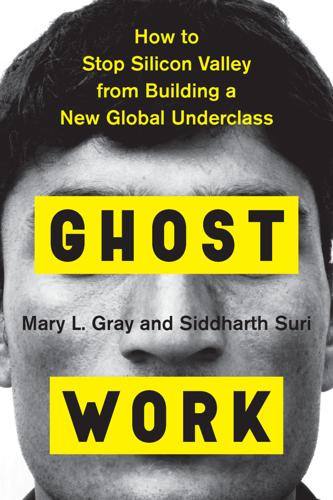
Ghost Work: How to Stop Silicon Valley From Building a New Global Underclass
by Mary L. Gray and Siddharth Suri · 6 May 2019 · 346pp · 97,330 words

How Everything Became War and the Military Became Everything: Tales From the Pentagon
by Rosa Brooks · 8 Aug 2016 · 548pp · 147,919 words

The Meritocracy Trap: How America's Foundational Myth Feeds Inequality, Dismantles the Middle Class, and Devours the Elite
by Daniel Markovits · 14 Sep 2019 · 976pp · 235,576 words