Fifty Degrees Below
by Kim Stanley Robinson · 25 Oct 2005 · 560pp · 158,238 words
guy who didn’t follow right in his footsteps.” “You did that?” Frank said. “Yeah well,” Zeno said. He looked away, shrugged. “That was my Zeno’s paradox moment I guess. I mean if you’re always only halfway there, then you can’t ever step on no mine, right?” Frank laughed. “It
Paradox: The Nine Greatest Enigmas in Physics
by Jim Al-Khalili · 22 Oct 2012 · 208pp · 70,860 words
BC. As an example in pure logic it couldn’t be simpler. But don’t be fooled; in this chapter we will consider several of Zeno’s paradoxes and finish off by bringing his ideas right up to date with a version of one that can only be explained using quantum theory. Well
Zero: The Biography of a Dangerous Idea
by Charles Seife · 31 Aug 2000 · 233pp · 62,563 words
were stumped by the problem, but they did find the source of the trouble: infinity. It is the infinite that lies at the heart of Zeno’s paradox: Zeno had taken continuous motion and divided it into an infinite number of tiny steps. Because there are an infinite number of steps, the Greeks
Infinite Powers: How Calculus Reveals the Secrets of the Universe
by Steven Strogatz · 31 Mar 2019 · 407pp · 116,726 words
. During the Inquisition, the renegade monk Giordano Bruno was burned alive at the stake for suggesting that God, in His infinite power, created innumerable worlds. Zeno’s Paradoxes About two millennia before the execution of Giordano Bruno, another brave philosopher dared to contemplate infinity. Zeno of Elea (c. 490–430 BCE) posed a
The Drunkard's Walk: How Randomness Rules Our Lives
by Leonard Mlodinow · 12 May 2008 · 266pp · 86,324 words
meaning of expectation. Chapter 5: The Dueling Laws of Large and Small Numbers The extent to which probabilities are reflected in the results we observe…Zeno’s paradox, the concept of limits, and beating the casino at roulette. Chapter 6: False Positives and Positive Fallacies How to adjust expectations in light of past
The Infinite Book: A Short Guide to the Boundless, Timeless and Endless
by John D. Barrow · 1 Aug 2005 · 292pp · 88,319 words
idea that motion is possible is not quite so obvious at all. He produced four arguments to show that motion is impossible. These arguments, or ‘Zeno’s Paradoxes’ as they became known, were never refuted in ancient times and continue to attract serious attention even today. The first two21 draw on the mystery
The Clockwork Universe: Saac Newto, Royal Society, and the Birth of the Modern WorldI
by Edward Dolnick · 8 Feb 2011 · 439pp · 104,154 words
take a certain amount of time to cross to the halfway point, and then more time to cross half the remaining distance, and so on. Zeno’s paradox. If it takes 1 second to walk to the middle of a room, and ½ second more to walk half the rest of the way, and
The Clock Mirage: Our Myth of Measured Time
by Joseph Mazur · 20 Apr 2020 · 283pp · 85,906 words
THE CLOCK MIRAGE Also by Joseph Mazur Euclid in the Rainforest: Discovering Universal Truth in Logic and Math (2006) Zeno’s Paradox: Unraveling the Ancient Mystery behind the Science of Space and Time (2008) What’s Luck Got to Do with It? The History, Mathematics, and Psychology
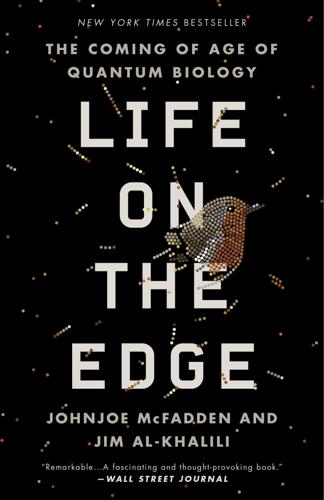
Life on the Edge: The Coming of Age of Quantum Biology
by Johnjoe McFadden and Jim Al-Khalili · 14 Oct 2014 · 476pp · 120,892 words
that resolution had to wait until the invention of calculus in the seventeenth century, more than two thousand years after Zeno posed his puzzle. Nevertheless, Zeno’s paradox survives, at least in name, in one of the most peculiar features of quantum mechanics. Quantum arrows really can be frozen in time by the
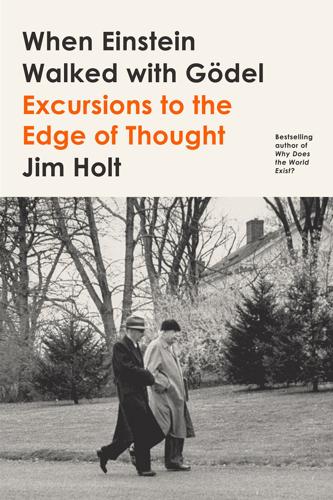
When Einstein Walked With Gödel: Excursions to the Edge of Thought
by Jim Holt · 14 May 2018 · 436pp · 127,642 words
merely “potential one”—this is something we never encounter in the natural world. The idea of infinity was long regarded with suspicion, if not horror. Zeno’s paradoxes seemed to show that if space could be divided up infinitely into infinitesimal segments, then motion would be impossible. Aquinas argued that infinite numbers were
Labyrinths
by Jorge Luis Borges, Donald A. Yates, James E. Irby, William Gibson and André Maurois · 1 Jan 1962 · 276pp · 91,719 words
Money for Nothing
by Thomas Levenson · 18 Aug 2020 · 495pp · 136,714 words
Alex's Adventures in Numberland
by Alex Bellos · 3 Apr 2011 · 437pp · 132,041 words
The Simulation Hypothesis
by Rizwan Virk · 31 Mar 2019 · 315pp · 89,861 words
The Master and His Emissary: The Divided Brain and the Making of the Western World
by Iain McGilchrist · 8 Oct 2012
The Doomsday Calculation: How an Equation That Predicts the Future Is Transforming Everything We Know About Life and the Universe
by William Poundstone · 3 Jun 2019 · 283pp · 81,376 words
Seven Databases in Seven Weeks: A Guide to Modern Databases and the NoSQL Movement
by Eric Redmond, Jim Wilson and Jim R. Wilson · 7 May 2012 · 713pp · 93,944 words
Aurora
by Kim Stanley Robinson · 6 Jul 2015 · 488pp · 148,340 words
The God Delusion
by Richard Dawkins · 12 Sep 2006 · 478pp · 142,608 words
Engineering Security
by Peter Gutmann
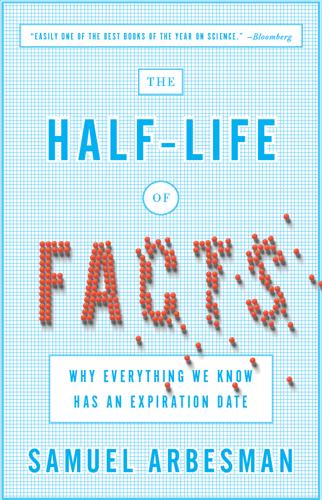
The Half-Life of Facts: Why Everything We Know Has an Expiration Date
by Samuel Arbesman · 31 Aug 2012 · 284pp · 79,265 words
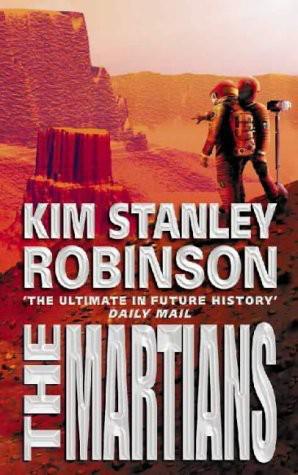
Martians
by Kim Stanley Robinson · 6 Jul 1999 · 443pp · 131,268 words
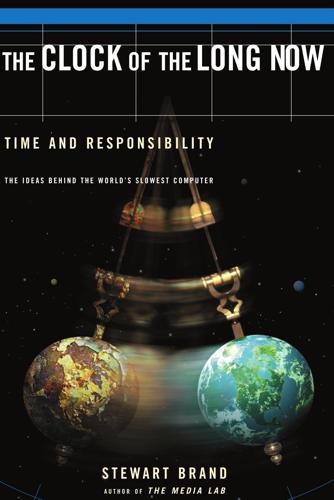
Clock of the Long Now
by Stewart Brand · 1 Jan 1999 · 194pp · 49,310 words
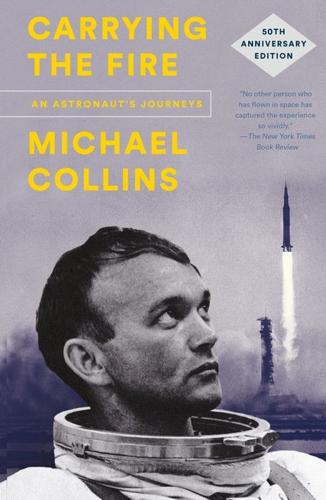
Carrying the Fire: An Astronaut's Journeys: 50th Anniversary Edition
by Michael Collins and Charles A. Lindbergh · 15 Apr 2019
The Forever War
by Dexter Filkins · 15 Sep 2008 · 385pp · 115,697 words
The Man Who Solved the Market: How Jim Simons Launched the Quant Revolution
by Gregory Zuckerman · 5 Nov 2019 · 407pp · 104,622 words
Why Stock Markets Crash: Critical Events in Complex Financial Systems
by Didier Sornette · 18 Nov 2002 · 442pp · 39,064 words
Artificial Intelligence: A Modern Approach
by Stuart Russell and Peter Norvig · 14 Jul 2019 · 2,466pp · 668,761 words
God Created the Integers: The Mathematical Breakthroughs That Changed History
by Stephen Hawking · 28 Mar 2007
How the Mind Works
by Steven Pinker · 1 Jan 1997 · 913pp · 265,787 words
Work Rules!: Insights From Inside Google That Will Transform How You Live and Lead
by Laszlo Bock · 31 Mar 2015 · 387pp · 119,409 words
Quicksilver
by Neal Stephenson · 9 Sep 2004 · 1,178pp · 388,227 words
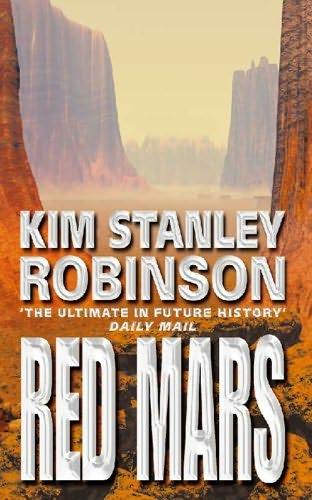
Red Mars
by Kim Stanley Robinson · 23 Oct 1992 · 660pp · 213,945 words
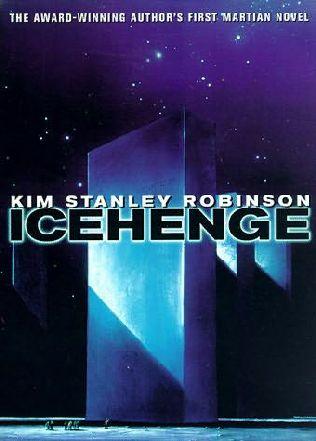
Icehenge
by Kim Stanley Robinson · 29 May 1994 · 334pp · 103,508 words
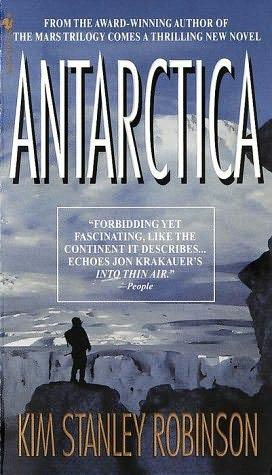
Antarctica
by Kim Stanley Robinson · 6 Jul 1987 · 607pp · 185,228 words
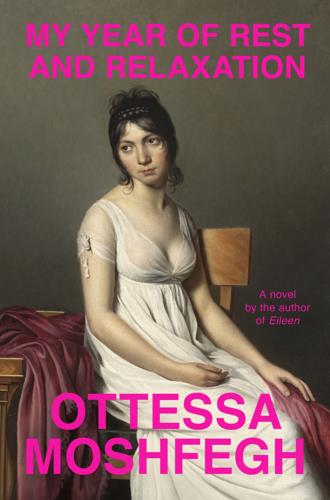
My Year of Rest and Relaxation: A Novel
by Ottessa Moshfegh · 9 Jul 2018 · 217pp · 69,892 words
The Quants
by Scott Patterson · 2 Feb 2010 · 374pp · 114,600 words
A Burglar's Guide to the City
by Geoff Manaugh · 17 Mar 2015 · 238pp · 75,994 words
The Best of Kim Stanley Robinson
by Kim Stanley Robinson · 1 Mar 2001 · 493pp · 172,533 words
Blue Mars
by Kim Stanley Robinson · 23 Oct 2010 · 824pp · 268,880 words
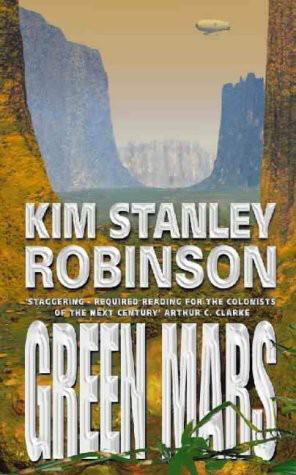
Green Mars
by Kim Stanley Robinson · 23 Oct 1993 · 746pp · 239,969 words
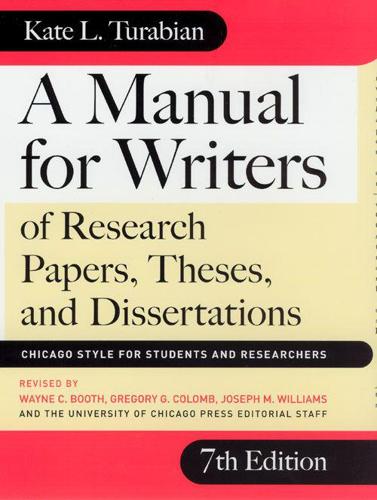
A Manual for Writers of Research Papers, Theses, and Dissertations, Eighth Edition: Chicago Style for Students and Researchers
by Kate L. Turabian · 14 Apr 2007 · 863pp · 159,091 words

Roads: An Anthropology of Infrastructure and Expertise (Expertise: Cultures and Technologies of Knowledge)
by Penny Harvey and Hannah Knox · 22 Jun 2015 · 262pp · 73,439 words
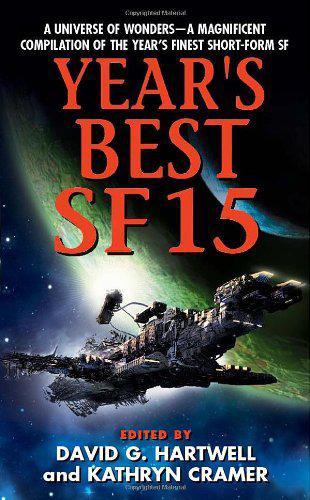
Year's Best SF 15
by David G. Hartwell; Kathryn Cramer · 15 Aug 2010 · 573pp · 163,302 words
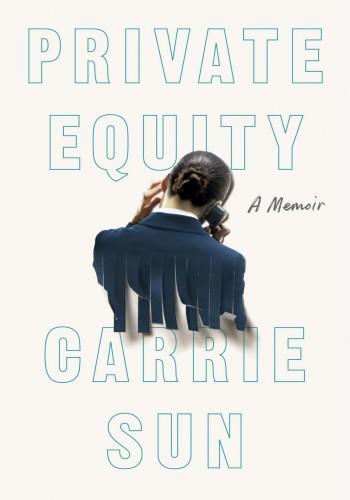
Private Equity: A Memoir
by Carrie Sun · 13 Feb 2024 · 267pp · 90,353 words
The Blank Slate: The Modern Denial of Human Nature
by Steven Pinker · 1 Jan 2002 · 901pp · 234,905 words