access to space

back to index

60 results

pages: 376 words: 110,796

Realizing Tomorrow: The Path to Private Spaceflight
by Chris Dubbs , Emeline Paat-dahlstrom and Charles D. Walker
Published 1 Jun 2011

Throughout the i96os, Bono worked on numerous SSTO designs, convinced that these craft were the solution to cheaper access to space. His projects included the Reusable Orbital Modular Booster and Utility Shuttle (ROMBUS), an intercontinental passenger vehicle called Pegasus, a troopcarrying rocket called Icarus, and a rocket sled-propelled design known as the Hyperion SSTO. To Hudson's way of thinking, Bono had got hung up on the "bigger is better" concept of designing spacecraft, and consequently kept running into technical design problems to satisfy the weight requirements. Hudson, on the other hand, had come to the conclusion that the "simple SSTO" was the solution to cheaper access to space. After reading Bono's book in 1969, Hudson recalls, "I immediately wrote Phil a letter, saying that while I was impressed with his concepts, he was missing the boat by thinking the government would fund these new ideas."

In the pomp of this event, it was easy to imagine a tidal shift in access to space, as if the whole private space industry had just stepped forward to stand on a more even footing with NASA. If current schedules stand, in 2010 NASA is expected to retire its three space shuttles and rely on SpaceX's Falcon 9 for access to the iss. Although its life may be extended, current plans are to deorbit the iss in zo16, when Bigelow Aerospace may begin parking private stations in Earth orbit and beyond. On that December evening, as SpaceShipTwo stood bathed in dramatic spotlight, decades of dreams for private access to space took on substance. Along with Burt Rutan, dozens of other individuals and companies that have been working to push the boundaries of space access now stand poised to stake their claim on the cosmos.

Based on the concept of simple parts, industrial-grade production, a lowerperformance propulsion system, and the reusability of key components, Sea Dragon was the original design for what would come to be called the "big, dumb booster." It was a space truck, a space "ship," designed to provide economical access to space. Aerojet's 1963 report to NASA pegged the cost of lifting payload to orbit with the Sea Dragon at $20 to $30 per pound. When the design was finished, Truax's team made a presentation to the Future Projects Branch at Marshall. "Our presentation left them aghast and incredulous," Truax recalled.

pages: 328 words: 96,141

Rocket Billionaires: Elon Musk, Jeff Bezos, and the New Space Race
by Tim Fernholz
Published 20 Mar 2018

“But motivation doesn’t matter if there’s no way to go. If you’re just banging at a brick wall, nothing will happen. The cost of access to space was increasing with each passing year. If there’s not some attempt to make a significant impact on rocket technology and reduce the cost of access to space and improve the reliability, ultimately it wouldn’t matter. No amount of motivation would do anything.” Thus, Musk proposed starting a new company to build these rockets and lower the cost of access to space: Space Exploration Technologies Corporation. The US firms with the technical capacity for the task of space exploration were not, in his judgment, fundamentally interested in making a proper business of doing so, thanks largely to their reliance on government business.

The promised rate of shuttle flights, as well as government subsidies of $50 million per launch to rent out the shuttle’s spacious cargo bay, had convinced most US rocket makers to mothball their operations at the beginning of the decade. It had also, in 1980, helped convince a consortium of European countries to fund Arianespace, a rocket maker that would guarantee their own access to space. Indeed, the US reliance on just one launch vehicle for space access had worried some Americans, especially as delays and cost overruns in the shuttle program mounted, but it was not until Challenger that the government was forced to reckon with the consequences of its policy. “The government put all their eggs in one basket,” John Garvey, a veteran aerospace engineer who began his career the year of the Challenger disaster and spent the following decades developing rocket technology at McDonnell Douglas, Boeing, and a series of space start-ups, told me.

By the year 2000—that beautiful round number that a generation of science fiction authors used as a watchword for a dawning space age—the United States still hadn’t solved the problem created by the Challenger disaster fourteen years before. Yet the dreams of science fiction readers hardly mattered to the people who controlled the space program. This was no time for the United States, at that moment enjoying a period of global hegemony, to lose its ability to get to orbit. The military desperately wanted access to space, especially in its new role as something of a global police force in the post-Soviet, pre-9/11 era. Enforcing a no-fly zone over Saddam Hussein’s Iraq, the most active military mission at the time, relied on satellite communications and imaging and positioning technology. Without the ability to maintain a constellation of satellites in orbit, the United States would be in no position to project military force around the world.

pages: 390 words: 108,171

The Space Barons: Elon Musk, Jeff Bezos, and the Quest to Colonize the Cosmos
by Christian Davenport
Published 20 Mar 2018

The press release announcing the Independence Avenue stunt not only hyped the new rocket as “a major breakthrough in the cost of access to space.” It derided the competition as being four times more expensive and far less reliable. SpaceX also exploited the fact that NASA was still grounded ten months after the Space Shuttle Columbia blew up, killing all seven astronauts on board. “With the grounding of the Space Shuttle creating a backlog in hitchhiker satellite deliveries, there is a great need for new means of access to space,” it read, touting the Falcon 1’s ability to eventually be reusable. At the eight p.m. reception, as the NASA officials, congressional staffers, and FAA officials milled about, Musk made his case in a short speech that SpaceX was the answer to a stagnant space industry.

Allen’s vision was like that of his fellow Space Barons—to lower the cost of space travel and make it more accessible. Bezos had said that inexpensive, reliable access to space would touch off the kind of “dynamic, entrepreneurial explosion of thousands of companies in space that I have witnessed over the last twenty-one years on the Internet.” Allen also saw parallels between the space frontier and the Internet. “When such access to space is routine, innovation will accelerate in ways beyond what we can currently imagine,” he said. “That’s the thing about new platforms: when they become easily available, convenient, and affordable, they attract and enable other visionaries and entrepreneurs to realize more new concepts.… “Thirty years ago, the PC revolution put computing power into the hands of millions and unlocked incalculable human potential.

Billions of dollars spent on big government programs might be good pork for particular districts where the rockets are manufactured, but they run against free-market forces and would not yield anything, he warned. “PLEASE, PLEASE do not give companies billions of our dollars to play around with experimental programs,” he wrote in his testimony to the Senate committee. “You will create jobs by spending public money, but you absolutely will not produce low-cost commercial access to space.” Then in 2000, months after the company had successfully test fired one of its engines—a fiery projection of force designed to show NASA and the aerospace industry that the company was legitimate—the space agency went and did what Beal had feared it would. It announced it would pursue a multibillion-dollar program, known as the Space Launch Initiative, for the development of space vehicles designed to replace the shuttle and be reusable.

pages: 321 words: 89,109

The New Gold Rush: The Riches of Space Beckon!
by Joseph N. Pelton
Published 5 Nov 2016

On investing $275 million in New Space: “We seek to assist human exploration and the discovery of beneficial resources, whether in Low Earth Orbit (LEO), on the moon, in deep space or on Mars”. (Robert Bigelow, CEO of Budget Suites and Bigelow Aerospace.) On a space elevator providing low-cost access to space: “It’s a phenomenal enabling technology that would open up our Solar System to humankind. It will be robotic, and then 10–15 years after that we’ll have six to eight elevators that are safe enough to carry people.” (Peter Swan, lead author of the International Academy of Astronautics (IAA) report on space elevators.)

Clearly the challenge in a world of astral abundance and artificially intelligent robotic workers, is finding ways to motivate people to strive and be productive outside the old patterns of work, wealth accumulation, status, civil, political, economic, cultural and religious strife and old patterns of unrest and warfare. Developing Commercial Space Transport Is Only Phase One The key to all this is new commercial transportation systems offering lower and lower costs for access to space. Elon Musk at SpaceX, Sir Richard Branson at Virgin Galactic and Paul Allen, providing the backing to build the first spaceplane and the giant Stratolauncher, are just three examples of space billionaires creating the new commercial systems that can go cheaply into space . The world community is slowly beginning to recognize that space is not some luxury to spend money on to explore, but it is truly the next frontier—a frontier whose settlement, use and exploitation in sustainable ways may be our very pathway to ultimate survival as a species.

The Key Elements of the Post-Industrial New Space Economy There are lots of things that we can expect to happen in the New Space economy that, if not today then within the next two decades. Important new capabilities and industries will join today’s multi-billion dollar space industries that today include satellite communications , remote sensing, and space navigation . These coming New Space industries will include: Space Transport and Low-Cost Access to Space: Commercial launch systems and hypersonic transport across the oceans. These systems of the 2020s may in time give way to even lower cost and more reliable ways to get into space. These might include tethers or so-called space elevators, or mag-lev systems . Many of the key new technologies can be used here on Earth, the Moon or other planetary bodies.

pages: 398 words: 105,032

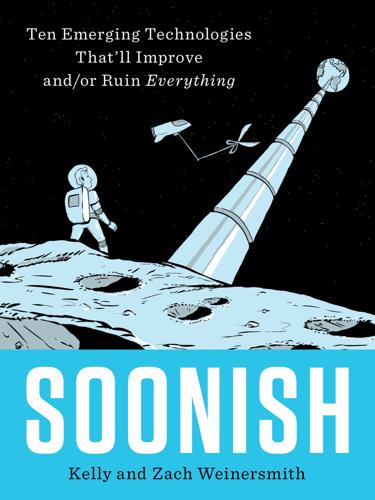
Soonish: Ten Emerging Technologies That'll Improve And/or Ruin Everything
by Kelly Weinersmith and Zach Weinersmith
Published 16 Oct 2017

It’s starting to get crowded, with the rate of collisions increasing. Cheap access to space may mean more space debris. That said, if space launches get cheap, we might be able to invest in some sort of space cleanup vehicle. According to Mr. van Pelt, “It becomes really an economic issue because if you’ve got your multi-hundreds-of-millions-of-dollars telecom satellite and it gets damaged by some debris, I mean there’s a real price tag on that. You get insurance, the insurance goes up because there’s more and more space debris.” In the longer term, cheap access to space would make space settlements more feasible, which might result in genetic differences between Earthbound and non-Earthbound humans.

You fed us, cared for us when we were sick, watched Ada when we couldn’t, and made sure we came up for air now and then. We will always appreciate what you did to make our dream real. This book is as much yours as ours.* CONTENTS Title Page Copyright Dedication 1. INTRODUCTION: Soonish. Emphasis on the Ish SECTION 1 The Universe, Soonish 2. CHEAP ACCESS TO SPACE: The Final Frontier Is Too Damn Expensive 3. ASTEROID MINING: Rummaging Through the Solar System’s Junkyard SECTION 2 Stuff, Soonish 4. FUSION POWER: It Powers the Sun, and That’s Nice, but Can It Run My Toaster? 5. PROGRAMMABLE MATTER: What If All of Your Stuff Could Be Any of Your Stuff?

Kelly and Zach Weinersmith Weinersmith Manor, September 2016 P.S. We also want you to know about this one experiment in which undergrads were forced to breathe through one nostril, then take exams. It’s kinda relevant. We promise. SECTION 1 The Universe, Soonish 2. Cheap Access to Space The Final Frontier Is Too Damn Expensive Up, up the long, delirious, burning blue I’ve topped the wind-swept heights with easy grace. Where never lark, or even eagle flew— And, while with silent, lifting mind I’ve trod The high untrespassed sanctity of space, —Put out my hand, and touched the face of God

pages: 183 words: 51,514

Mission to Mars: My Vision for Space Exploration
by Buzz Aldrin and Leonard David
Published 1 Apr 2013

The option clearly was a flexible path, somehow. At the time I felt that we had an option of extending space shuttle flights, perhaps developing a shuttle-derived capability. But soon it became clear that extending the shuttle program was not an economically viable thing to do, so now we have a gap in America’s independent access to space. I did believe the Bush vision for space was a good, albeit flawed, notion. It moved away from the space shuttle and the International Space Station and back to exploration, somewhere—even though back to the moon with government astronauts was not to my liking. I did concur that Constellation required extensive reevaluation.

That decision will come back over and over again—haunting the future of American leadership in space. The space shuttle itself was a bad judgment. It placed humans and cargo together—a fundamental error. That compromise of a design meant the crew flew alongside cargo—both wrapped in safety standards that unnecessarily boosted the cost of access to space. China’s Tiangong-1 space lab module, illustrated at left, and Shenzhou-VIII spacecraft (Illustration Credit 1.9) I believe that the two-stage, fully reusable booster that we started and then gave up for the shuttle would have ended up separating crew and cargo, not putting the two together.

Also, honestly, I’m not a supporter of humans riding large, solid rocket motors, a technology that keeps popping up out of the casket. Commercial launch companies haven’t put forward reusable launchers either, because it’s cheaper for them—in the short term—to throw away the rockets. One of my prime directives is to launch humanity into a new era of affordable access to space. In the late 1990s I put together a dedicated team of experienced rocket engineers and aerospace entrepreneurs to form the rocket design company Starcraft Boosters, Inc. Over the years, I have valued, in particular, the counsel of my business partner Hubert Davis, the company’s chief engineer, a former NASA engineer who has wrestled some challenging assignments in defining space transportation systems.

pages: 476 words: 118,381

Space Chronicles: Facing the Ultimate Frontier
by Neil Degrasse Tyson and Avis Lang
Published 27 Feb 2012

. § 2466 Shuttle pricing policy; Congressional findings and declaration of purpose The Congress finds and declares that– (1) the Space Transportation System is a vital element of the United States space program, contributing to the United States leadership in space research, technology, and development; (2) the Space Transportation System is the primary space launch system for both United States national security and civil government missions; (3) the Space Transportation System contributes to the expansion of United States private sector investment and involvement in space and therefore should serve commercial users; (4) the availability of the Space Transportation System to foreign users for peaceful purposes is an important means of promoting international cooperative activities in the national interest and in maintaining access to space for activities which enhance the security and welfare of mankind; (5) the United States is committed to maintaining world leadership in space transportation; (6) making the Space Transportation System fully operational and cost effective in providing routine access to space will maximize the national economic benefits of the system; and (7) national goals and the objectives for the Space Transportation System can be furthered by a stable and fair pricing policy for the Space Transportation System. 42 U.S.C. § 14713 Acquisition of space science data (a) Acquisition from commercial providers The Administrator shall, to the extent possible and while satisfying the scientific or educational requirements of the National Aeronautics and Space Administration, and where appropriate, of other Federal agencies and scientific researchers, acquire, where cost effective, space science data from a commercial provider.

Like the first American astronauts, Yang was a fighter pilot. The choice of Yang, together with other posturings within China’s space program, such as the kinetic kill of a defunct but still-orbiting weather satellite by a medium-range ballistic missile, causes some American analysts to see China as an adversary, with the capacity to threaten US access to space as well as US assets that reside there. Wouldn’t it be a curious twist of events if China’s vigorous response to our denial of their participation in the International Space Station turns out to be the very force that sparks another series of competitive space achievements in America, culminating this time around in a manned mission to Mars?

Indeed, the president did deliver more than one speech that day—or rather, his single coherent plan had different consequences for different people. As an academic with a long-term view, I focused on Obama’s thirty-year vision for NASA, and I celebrated it. But to somebody who wants uninterrupted access to space, in their own country’s launch vehicle, controlled by their own country’s astronauts, any halt to our space access is simply unacceptable. It’s worth remembering that during the halt in shuttle launches that followed the Columbia tragedy, the Russians were happy to “shuttle” our astronauts back and forth to the International Space Station aboard their reliable Soyuz capsule.

pages: 304 words: 89,879

Liftoff: Elon Musk and the Desperate Early Days That Launched SpaceX
by Eric Berger
Published 2 Mar 2021

* * * In the spring of 2016, Amazon founder Jeff Bezos invited a handful of reporters into his rocket factory in Kent, Washington. No media had been allowed inside before, but Bezos’s secretive, fifteen-year-old space company named Blue Origin was finally beginning to reveal the full scope of its plans. Like Musk, Bezos had identified low-cost access to space as the key hurdle standing between humans and moving out into the Solar System. He, too, had begun building reusable rockets. Over the course of three hours, Bezos led a tour through his glossy factory, at turns showing off Blue Origin’s tourist spacecraft, hefty rocket engines, and large 3D printers.

They just never really believed in it until, suddenly, the static fire happened, and they woke up.” The Air Force had good reason to doubt the promises of start-up rocket companies, as several had come through Vandenberg before. Their backers talked the same kind of talk that Musk did, about lowering the cost of access to space, offering a dedicated rocket for small satellites, and fundamentally changing the aerospace industry with newer technology and leaner operations. And inevitably, they fizzled out. One of the most memorable had been the American Rocket Company, or Amroc, founded in 1985 by George Koopman. A colorful figure in Southern California, Koopman’s interests spanned from Hollywood to space travel to the occult.

“We want to target a reduction of 90 percent over the current launch costs,” Koopman said. “We started a company to go into the business of transporting things to and from Earth orbit, a package delivery service. We wanted to be like Federal Express or UPS, and that is still precisely our objective.” Like Musk, he wanted to make access to space routine, so that people could get on with doing business in space, and spreading the sphere of human activity far off of planet Earth. James French, who had a distinguished two-decade career at NASA’s Jet Propulsion Laboratory working on the Mariner, Viking, and Voyager missions, signed on as Amroc’s chief engineer.

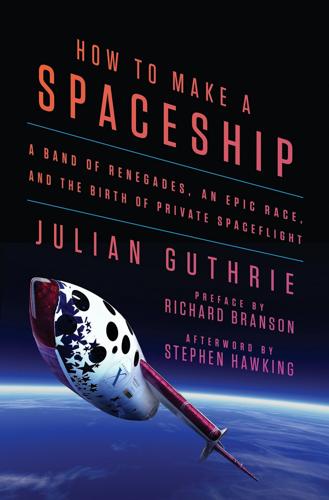
How to Make a Spaceship: A Band of Renegades, an Epic Race, and the Birth of Private Spaceflight
by Julian Guthrie
Published 19 Sep 2016

After Worden arrived at Peter’s home, they had a long and winding discussion about humanity’s expansion into space. Worden was no longer a fan of the space shuttle, saying it had been “an interesting experiment that didn’t work.” It didn’t allow man to go back to the Moon or on to Mars, and it failed in its primary mission of providing routine and affordable access to space. Soon, Worden and Peter agreed to set up a follow-up meeting about International Microspace. That face-to-face occurred in Worden’s office in Washington. The discussion ranged from the space shuttle to Brilliant Pebbles, a program under design that would send a swarm of small and smart satellites into orbit to be used as a missile defense.

When he read that his grandfather had sat on a beach and studied his own hand as a sort of time travel to primitive life, Morgan’s mind drifted to Apollo 13 astronaut James Lovell as he famously looked back at Earth from space, put his hand up to the window, and realized he could hide all of Earth with just his thumb. Morgan was certain that the world needed the XPRIZE; that peace and wisdom were attainable through access to space. He intended to talk onstage about the need to inspire a new generation of dreamers. Morgan had another motivation that went beyond giving a speech: he wanted to help his older brother find his passion again. As dozens of members of the press and about one hundred invited guests filed into the staging area under the Gateway Arch, Peter took a moment to look around.

Soon, though, whispers circulated that he had the magical designation of an “accredited investor,” a high net worth individual who could make risky investments. Suddenly, around every corner came a new pitch. That’s when Carmack discovered the XPRIZE. He also learned about the $250,000 CATS (Cheap Access to Space) Prize, which would be given to the first private team to launch a 4.4-pound payload into space, 124 miles or higher, by November 8, 2000. Carmack wasn’t sure whether to finance a team for one or both contests, but he was certain of a few things: He wasn’t in this for the money—none of his work had ever been about the money.

Amazing Stories of the Space Age
by Rod Pyle
Published 21 Dec 2016

The later space shuttle, also intended as a reusable, robust, Earth-to-orbit infrastructure, was anything but cost-effective, and turned out to be as expensive (and less reliable) than the Apollo system it replaced. And had the Saturn V/Apollo spacecraft system been built in larger numbers and used for decades, it could have turned out to be an affordable and reliable approach to permanent access to space. For proof of this, one need only look as far as the long-serving Soyuz rocket and spacecraft design of the Russians, soon to enter its fiftieth year of reliable service. As for the “permanence” of a lunar base…well, nobody at the time seemed to fully appreciate the challenges of living off-Earth, not the air force, not the army, and not even NASA.

Dyna-Soar in profile and top view (this drawing is from a test model). The spaceplane was about thirty-five feet in overall length, with a wingspan of about twenty feet. While it was miniscule compared to the later space shuttle, if successful it could have given the US an entirely different type of access to space. Image from DOD/USAF. The high-speed runway landing would have been accomplished on three skids—inflated tires would not have survived the reentry heating. These skids looked like truncated skis; the front skid was a solid alloy tray, and the rear skids looked similar but had exotic metal bristles on them to prevent melting when they made contact with the runway at about 230 mph.

He said that the X-20 program placed too much emphasis on high-tech and a steerable, gliding reentry when there was no real quantifiable reason for this capability. If the primary goal was to get men and weapons into space, NASA's ballistic capsule approach seemed sufficiently suited to the task. The same week he canceled the X-20 Dyna-Soar in December 1963 he announced the Manned Orbiting Laboratory program, which would give the air force access to space via NASA's technology, specifically the Gemini capsule. When the X-20 was canceled, the final design had been settled on and was being prototyped. The spacecraft would have had a trans-stage rocket engine on the back for final boost and orbital changes, and capabilities, over time, as a suborbital bomber, high-speed test vehicle, reconnaissance platform, satellite deployment vehicle, and, possibly, armed Soviet satellite interceptor.

pages: 375 words: 113,230

Reentry: SpaceX, Elon Musk, and the Reusable Rockets That Launched a Second Space Age
by Eric Berger
Published 23 Sep 2024

But a few names who came up in interviews were engineers like Mike Rossoni and John Lindauer, who built new turbopumps for the Merlin engine from scratch; engineers such as Darin Van Pelt, Eric Murray, and Will Heltsley in Merlin development; and avionics engineers Jon Barr, Dennis Fong, and Kenny Boronowski, who worked on thermal protection for reentry. They all believed in the importance of what they were doing. “We realized that this made a huge fucking material difference in the world,” Kellie said. “We’re not just chucking shit into the ocean and waving goodbye anymore. We’re reusing hardware. We’re dropping the cost of access to space. This was important for humanity. So we all put a shitload of effort into it because we believed what we were doing.” A very different kind of recovery mission So why was SpaceX putting so much effort into landing rockets at sea instead of dry land? The common conception of a rocket launch is that a vehicle blasts off from the surface of the Earth and travels straight up into the sky.

Range safety analysts predicted the Falcon 9 flyback would produce a sonic boom comparable to the major 2013 Chelyabinsk meteor event in Russia, damaging buildings and homes in the Cape Canaveral area and causing widespread damage. There was little data to refute these claims, which came as part of a lengthy and official-looking 100-page report defending the analysis. Alongside those claims came a stark warning that the United States would lose assured access to space, possibly for years, due to damage of critical launch facilities. Why was there such caution? Unless the military is in the midst of a war, it is a risk-averse operation. Asses are on the line if there is a screwup. Monteith knew the buck stopped with him and that by making the call to allow SpaceX to land at Cape Canaveral, it was his particular ass in the line of fire.

But watching this rocket come back to Earth and land at sea was science fiction becoming fact before my eyes. I no longer felt sad about missing the feats of Apollo. I grew truly excited about being alive now, to see where this would lead us in spaceflight. Musk had thoughts as well. “I think it’s another step toward the stars,” he said. “In order for us to really open up access to space, we’ve got to achieve full, rapid reusability. It will take us a few years to make that smooth and efficient. One day we’ll hose the rocket down, add the propellant, and fly again.” That day may yet come. But in the near term, Musk’s primary goal was increasing the launch rate. There were so many customers, like Matt Desch and his Iridium satellites, waiting to fly.

pages: 441 words: 127,950

Rocket Dreams: Musk, Bezos and the Trillion-Dollar Space Race
by Christian Davenport
Published 6 Sep 2025

In every respect—power, capability, cost, design, technology—Starship surpasses every other rocket before it, representing a light-years’ leap forward—the difference between horse-drawn covered wagons and locomotives. For perspective: Assembling the International Space Station required forty-two rocket launches; Starship could do it in five. Just as important is the fact that Starship is designed to be fully reusable, a feature that will drastically reduce the cost of access to space. Instead of being ditched into the ocean, as has been the practice for most of the history of space exploration—something Musk has compared to throwing away an airplane after each flight—both the booster and the spacecraft are designed to land and be reflown. SpaceX mastered the art of rocket reusability years ago with its Falcon 9 booster, built to hoist satellites and astronauts to low Earth orbit.

Musk, the South African–born entreprenuer, had founded SpaceX in 2002, after earning about $180 million from the sale of his company PayPal to eBay. Since reading science fiction in his childhood, notably Isaac Asimov’s Foundation series, he had been fascinated with space and certain that Mars was key to humanity’s future. With SpaceX, Musk’s goal was reducing the cost of access to space, an endeavor that would help bring about the most significant achievement that humanity could accomplish in his lifetime: becoming a multiplanetary species. In June 2017, I traveled to interview Musk at SpaceX headquarters in Hawthorne, California, just outside of Los Angeles. If there was an aesthetic to the decor there, it could have been called Mars chic.

He began thinking that Blue, even more than Amazon, would define his legacy, and that the opportunities in space could rival those produced by the Internet. “If I’m eighty years old, and I’m looking back on my life, and I can say that I put in place, with the help of my teammates at Blue Origin, the heavy-lifting infrastructure that had made access to space inexpensive so that the next generation could have the entrepreneurial explosion like I saw on the Internet, I’ll be a very happy eighty-year-old,” he said during an event in Washington. IF BLUE WERE going to compete with SpaceX and open space to the masses, it would need a rocket that, unlike New Shepard, would be able to make it to orbit.

pages: 379 words: 108,129

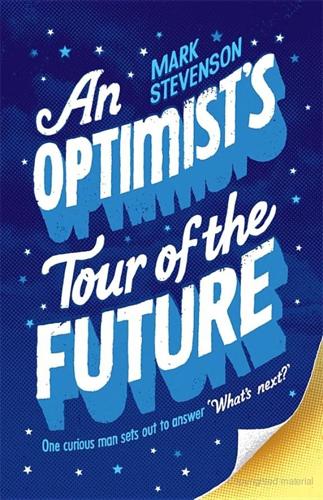
An Optimist's Tour of the Future
by Mark Stevenson
Published 4 Dec 2010

While most of us understand that idea in abstract, widespread access to space will bring the message home. ‘With space as a single frontier, the entire planet is one civilisation,’ says Jeff. ‘It transforms the mindset. That’s the idea that keeps me going. That’s the big one.’ It’s the complete opposite of the ambitions that characterised the space race. The spirit of Mojave has perhaps less to do with being ‘the biggest, baddest kid on the block.’ More about ‘humanity, you need to get out more.’ A lot of people might argue that we don’t need to go into orbit to make us reflective about our role as stewards of the Earth, but as access to space becomes cheaper it can’t help but subtly shift our perspective as a species.

It has helped reduce our consumption of fossil fuels thanks to the existence of GPS routing; bolstered global communications networks; and the development of new drugs and materials have stemmed from experiments in low gravity. But for most people, and most governments, the price tag and the rewards have a less than direct correlation. But what if access to space became radically cheaper and started to deliver real value-for-money in the eyes of the world? For instance, the moon is an abundant source of Helium-3, a non-radioactive form of helium that has been proposed as a clean nuclear fuel. The asteroid belt is awash with precious minerals. What if we could put an end to many resource shortages by mining the lifeless rocks of the solar system?

Risk is part of the deal here, and part of the attraction. Like everyone I meet at Mojave, Stuart has a deep-seated belief in the need for human beings to push boundaries and to explore. Commercial ambitions are subsumed into a higher aim than a simple search for profit. Pretty much everyone I speak to sees access to space as a battlefront for saving the human soul. ‘We are creatures that require exploration, it’s in our DNA,’ Stuart says. ‘Humans require risk-taking, they require bold leadership that is willing to investigate the things they don’t know, because every society that has gone safe has fallen. I was raised out west where the night sky was this gorgeous canopy of stars and you could dream big.

pages: 745 words: 207,187

Accessory to War: The Unspoken Alliance Between Astrophysics and the Military
by Neil Degrasse Tyson and Avis Lang
Published 10 Sep 2018

Lastly, we have the engineer, who makes all things possible—enabling science to facilitate warfare. The astrophysicist, however, does not make the missiles or the bombs. Astrophysicists make no weapons at all. Instead, we and the military happen to care about many of the same things: multi-spectral detection, ranging, tracking, imaging, high ground, nuclear fusion, access to space. The overlap is strong, and the knowledge flows in both directions. Astrophysicists as a community, like most academics, are overwhelmingly liberal and antiwar, yet we are curiously complicit in this alliance. Accessory to War: The Unspoken Alliance Between Astrophysics and the Military explores this relationship from the earliest times of celestial navigation in the service of conquest and hegemony to the latest exploitations of satellite-enabled warfare.

We do propose that space shall never become the route of march for tyrants and totalitarians and, as we have dedicated our resources in the past to maintain the freedom of the seas and security of the skies, so shall we dedicate our capacity to maintain the neutrality of space.136 Johnson’s opponent in the 1964 presidential election, Senator Barry Goldwater—a brigadier general in the Air Force Reserve and a man comfortable with the use of nuclear weapons—was not a fan of neutrality. In his view, space research should be directed by the military, “with national security and control of the access to space as primary goals.” What America needed ASAP were antimissile missiles, laser weapons (the laser itself had been invented by American scientists at Bell Labs just four years earlier), and a manned space station in near-Earth orbit. Daily surveillance of nearby space would be crucial. According to Goldwater, America had to “move beyond just sailing into space.”

Space power is about having the knowledge, the material capability, and the will to take strong, daring actions far beyond the limits of Earth’s atmosphere. When politicians talk about space power, they’re referencing nations that belong to the small but influential spacefarers club. When warfighters talk about it, they’re referencing the means to deter, defend, and destroy and also, if warranted, to deny adversaries access to space for their own military or even civil purposes. Space power enables communication, intimidation, surveillance, dominance, threat assessment, and, yes, scientific research in ways and at distances never before possible. It’s the prime agent of remote control and instant action. The space update of Mao Zedong’s aphorism “political power grows out of the barrel of a gun” might be “political power grows out of the high ground of space.”

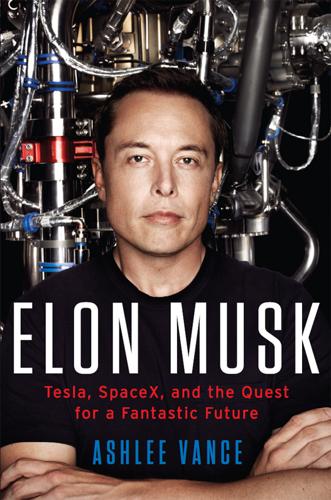
pages: 370 words: 129,096

Elon Musk: Tesla, SpaceX, and the Quest for a Fantastic Future
by Ashlee Vance
Published 18 May 2015

“We’re all hanging out in this cabana at the Hard Rock Cafe, and Elon is there reading some obscure Soviet rocket manual that was all moldy and looked like it had been bought on eBay,” said Kevin Hartz, an early PayPal investor. “He was studying it and talking openly about space travel and changing the world.” Musk had picked Los Angeles with intent. It gave him access to space or at least the space industry. Southern California’s mild, consistent weather had made it a favored city of the aeronautics industry since the 1920s, when the Lockheed Aircraft Company set up shop in Hollywood. Howard Hughes, the U.S. Air Force, NASA, Boeing, and myriad other people and organizations have performed much of their manufacturing and cutting-edge experimentation in and around Los Angeles.

While many of the people he encountered came off as eccentric dreamers, Musk seemed grounded, knowledgeable, and capable. “I talked to people building ray guns and things in their garages. It was clear that Elon was different. He was a visionary who really understood the rocket technology, and I was impressed with him.” Like the military, scientists wanted cheap, quick access to space and the ability to send up experiments and get data back on a regular basis. Some companies in the medical and consumer-goods industries were also interested in rides to space to study how a lack of gravity affected the properties of their products. As good as a cheap launch vehicle sounded, the odds of a private citizen building one that worked were beyond remote.

“While drawing upon the ideas of many prior launch vehicle programs from Apollo to the X-34/Fastrac, SpaceX is privately developing the entire Falcon rocket from the ground up, including both engines, the turbo-pump, the cryogenic tank structure and the guidance system,” the company announced on its website. “A ground up internal development increases difficulty and the required investment, but no other path will achieve the needed improvement in the cost of access to space.” The SpaceX executives Musk hired were an all-star crew. Mueller set to work right away building the two engines—Merlin and Kestrel, named after two types of falcons. Chris Thompson, a onetime marine who had managed the production of the Delta and Titan rockets at Boeing, joined as the vice president of operations.

pages: 490 words: 132,502

A City on Mars: Can We Settle Space, Should We Settle Space, and Have We Really Thought This Through?
by Kelly Weinersmith and Zach Weinersmith
Published 6 Nov 2023

What a pity that in our moment of triumph we did not forswear the familiar Iwo Jima scene and plant instead a device acceptable to all: a limp white handkerchief, perhaps, symbol of the common cold, which, like the moon, affects us all, unites us all. —E. B. White, the Charlotte’s Web guy The Moon Agreement[*] In 1979, an agreement was struck that would have not just fixed most of the problems described above—it would’ve created an international regime that strictly regulated human access to space resources. If it had been ratified, perhaps today’s would-be asteroid miners would have to first consult with some kind of International Space Authority for exploitation rights. In addition to sounding awesome, having such a framework would likely spare humanity from any current concerns about a conflict-inducing Moon Race Part Two.

Most commonly, theorists claim that war is fundamentally about scarcity, so if space access solves scarcity, it solves war. For example, in Dr. Avis Lang and Dr. Neil deGrasse Tyson’s book Accessory to War they argue that “what’s contested on Earth because of scarcity is typically common in space. . . . Even if control of [access to space resources] rests in the hands of people you’d hate to be in control of anything, the resources themselves will not be scarce—and it’s scarcity that breeds conflict.” Similar claims from other thinkers say that war is about land, so space’s new land will end war. An even more circuitous claim says that war isn’t about resources, but rather about people thinking that war is about resources—a problem that will be solved by the abundance of space.

From Antarctica to Outer Space: Life in Isolation and Confinement. New York: Springer, 1990. Harrison, Jean-Pierre. The Edge of Time: The Authoritative Biography of Kalpana Chawla. Saratoga, CA: Harrison Publishing, 2011. Harrison, Todd, Andrew Hunter, Kaitlyn Johnson, and Thomas Roberts. Implications of Ultra-Low-Cost Access to Space. Washington, D.C.: Center for Strategic & International Studies, 2017. Harrison, Todd, Kaitlyn Johnson, and Thomas G. Roberts. “Space Threat Assessment 2019.” Aerospace Security Project. Washington, D.C.: Center for Strategic and International Studies, April 2019. https://csis-website-prod.s3.amazonaws.com/s3fs-public/publication/190404_SpaceThreatAssessment_interior.pdf.

pages: 570 words: 151,609

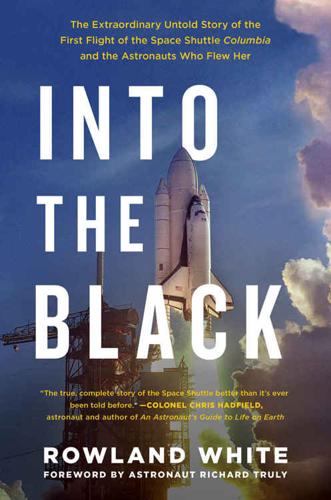
Into the Black: The Extraordinary Untold Story of the First Flight of the Space Shuttle Columbia and the Astronauts Who Flew Her
by Rowland White and Richard Truly
Published 18 Apr 2016

As a member of a committee identifying flight crew requirements, he’d successfully argued for a new category of astronaut, the payload specialist, for which years of dedicated training as part of the NASA Astronaut Office would not be required. When a report by two of his researchers at Ames later concluded that, unlike Mercury, Gemini and Apollo, medical requirements for a Shuttle flight were only that someone should be in “reasonably good physical shape,” it confirmed Mark’s belief that the Shuttle would dramatically broaden access to space. His wife, Marion, he imagined, might quibble at the idea of him being described as a romantic, but when it came to space, he was prepared to concede that he was. “Even poets,” he wrote, could travel into space, “then share the experience with everyone.” He certainly hoped that he would one day fly aboard the Shuttle himself

Throughout the Shuttle’s development it appeared that it would go on to become as much of a military asset as a civilian one. Things didn’t quite work out as had been envisaged. And while the Shuttle was certainly to perform a substantial number of useful military missions, it did not end up providing the Pentagon’s only access to space. In fact, it’s possible that the Shuttle’s main contribution to national security came rather more indirectly, but no less significantly for that. • • • In the autumn of 1985, two Soviet cosmonauts, Igor Volk and Rimantas Stankyavichus, sat in the cockpit of a large black-and-white delta-winged airplane at the threshold of the 17,700-foot-long runway at Zhukovsky Flight Test Center near Moscow.

Ultimately, Buran, flying unmanned, would complete just two orbits before returning to the runway at Baikonur Cosmodrome in 1988. She never flew again and, following the breakup of the Soviet Union in 1991, the whole program was consigned to the scrap heap. SIXTY-SEVEN The promise of the reusable Shuttle was that in providing regular access to space it would also reduce the cost of it. That never happened. The idea that it might be possible to recover the Shuttle from the runway, dust her down, bolt her to another external tank and set of solid rocket boosters, then relaunch her was never realistic. While those who instigated the program had imagined the redundancy and reliability built into the Shuttle might allow launches when, for instance, one of the four computers failed to synch with the others, it never happened.

pages: 609 words: 159,043

Come Fly With Us: NASA's Payload Specialist Program
by Melvin Croft , John Youskauskas and Don Thomas
Published 1 Feb 2019

Very early in the program it was proposed that the military would fly their own people on the shuttle to carry out these missions. The space shuttle was also going to be NASA’s platform for the continued human exploration of space for the foreseeable future, and management of the shuttle was assigned to the Johnson Space Center (JSC). But NASA also touted that it would have the capability to provide low-cost access to space for scientists without requiring them to become career astronauts. NASA, attempting to divide work equitably among its major centers, then chose the Marshall Space Flight Center (MSFC) located in Huntsville, Alabama, as the lead center for Spacelab. Competition between the major NASA centers, including JSC and MSFC, was common, and although MSFC was given control of Spacelab, it wasn’t clear who would interface with the academic world that would develop the experiments destined to fly aboard NASA’s new research facility.

But even with the momentum building up toward regular DoD shuttle operations, the air force and the NRO had begun to lament the continuously slipping schedule of what was supposed to become their sole launch vehicle. Proponents for a mixed-fleet strategy, most notably Undersecretary of the Air Force Edward Aldridge, pushed to ensure rapid, timely access to space for the intelligence-gathering fleet of spy satellites. Within the Special Projects Office, the first signs of frustration had already become evident back in March 1983, when Gen. Ralph Jacobson convened a meeting of the first MSE group for what would come to be known as the Saturday Morning Massacre.

Garn would have no vote on their nominations, but he wielded a pretty big stick in controlling the purse strings of NASA. Over small talk, Garn related to Beggs and Mark that he had told Lovelace of his brazen aspiration. Both men were already aware of Garn’s audacious yearning, and Bingham recalled Mark’s response: “But of course you should fly. The whole purpose of the space shuttle is to have routine access to space. What better way to demonstrate that than to fly a member of Congress?” What he likely meant was, How much more money can we get for NASA if we allow you to fly? That, Bingham said, was all Garn needed to hear. “Up till that point, it had been kidding and wishful thinking and that sort of thing, playfulness.”

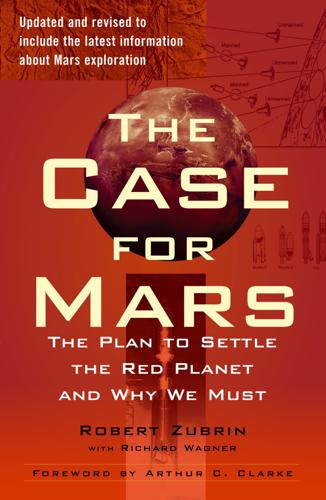
pages: 452 words: 126,310

The Case for Space: How the Revolution in Spaceflight Opens Up a Future of Limitless Possibility
by Robert Zubrin
Published 30 Apr 2019

But that was in the days before cost-plus contracting and, moreover, was done by an industry management whose best patriotic impulses were being called forth into action by national leadership unmatched in quality, seriousness, and public spirit since that time. Even in the present period, the industry has displayed a professionalism and commitment to engineering excellence that has made NASA's robotic exploration and space astronomy programs—for example—epic successes. But reducing the cost of access to space is absolutely not one of its priorities. But now, with the advent of entrepreneurial space launch companies led by visionaries who seek to reduce costs to the minimum—both because they are visionaries and because much of the money they are spending is their own—all that is about to change. Instead of running 300 percent overhead rates to inflate cost-plus billings to the government, these companies are ramming them down to the 20–30 percent typical of the commercial world.

Were it possible to generate electric power in space for terrestrial consumption at competitive rates, the market would be nearly unlimited. Vast numbers of huge SPS systems would then be built, and their construction and operation would require a huge fleet of reusable medium- and heavy-lift launch vehicles. Truly cheap access to space with booster systems of every payload capacity would be rapidly developed, and the doorway to the final frontier thrown wide open. According to advocates, such as Princeton professor Gerard O'Neill, such commerce could then provide the economic foundation for the development of large colonies, literally cities in space, in high Earth orbits, and this vision has served to motivate many space entrepreneurs, notably Blue Origin founder Jeff Bezos.

If Russia or China hopes to compete with such a Western military space initiative, there is only one way they could do it: they would need to also become free. In which case, there will be no war. THE LEAP BEYOND EARTH ORBIT We are living on the brink of a new space age. Entrepreneurs have opened the way toward cheap access to space. As a result, all sorts of commercial activities in near-Earth space will soon become not only practical but profitable, and consequently, they will happen. The invisible hand is unstoppable. If someone can make money doing something, it will be done, for good or ill, regardless of the wishes of kings, presidents, religions, or secret police.

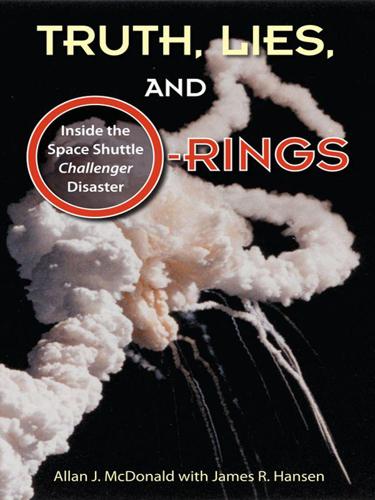
pages: 787 words: 249,157

Truth, Lies, and O-Rings: Inside the Space Shuttle Challenger Disaster
by Allan J McDonald and James R. Hansen
Published 25 Apr 2009

I thought I was going back to my old job, but instead was asked to help assess the potential of using the Space Shuttle SRBs for application to a new expendable launch vehicle being solicited by the air force. American space policy at the time was to discontinue further production of the nation's existing expendable launch vehicles—the Atlas, Delta, and Titan—and fly all future military, civil, and commercial payloads on the Space Shuttle. The air force wanted to maintain assured-access-to-space in the event of a Shuttle failure, so it was preparing to issue a request for proposal for a complementary expendable launch vehicle (CELV). This CELV would have the payload capability to geostationary orbit nearly equal to that of the Shuttle. It was suspected that what the air force really wanted was to upgrade its Titan 34D heavy-lift launch vehicle to increase its payload.

The Titan, on the other hand, required extensive launchpad modifications and creation of a whole new standing army for launch operations on both coasts, a requirement complicated by the fact that the government's existing plan was to close down the Titan launch facilities. Our SRB-X concept had three strikes against it from the beginning. It was to be a NASA-derived vehicle rather than one from the air force. It did not provide assured access to space if access was lost as a result of an SRB failure on the Shuttle. Finally, NASA's pricing policy for the SRB-X was not as competitive as it could have been. It appeared that NASA looked at the CELV program as a way to reduce costs on the Shuttle by passing the costs off to the air force. Though most everyone thought that if the Shuttle failed, it would most likely be a result of an SSME or orbiter failure, one could not discount the possibility of an SRB failure, which, if it occurred, would stand down both the Shuttle and the SRB-X.

Albeit with many challenges, the space agency was riding high, enjoying strong support in the White House and in Congress and a high degree of confidence from the American people. The only threat to NASA was the development of the complementary expendable launch vehicle that had been pushed through Congress by the air force to provide the DOD assured-access-to-space in the event of a Shuttle failure. NASA was concerned that once the CELV became operational, the air force would abandon the Shuttle, jeopardizing the twenty-four-launches-per-year rate on which NASA's budget for the late 1980s was predicated—and further having its budget threatened by the needs of a multibillion dollar West Coast Shuttle launch complex at Vandenberg.

pages: 352 words: 87,930

Space 2.0
by Rod Pyle
Published 2 Jan 2019

As space entrepreneurial efforts proceed, especially those carrying humans, more risk will be assumed, and we must collectively learn to accept it, within the regulations, rules, and processes that will be established to mitigate and minimize that risk. For any commercial spaceflight company to succeed, it must be able to provide frequent, reliable, and affordable access to space while generating a profit. But the challenges of conducting safe spaceflight in an airline-like business model are substantial. You can see why this is a realm best suited to billionaire investors—it takes a lot of time and money to accomplish, and no revenue is generated during the development and testing period.

“But what we need to do is find that turning point that’s going to allow us to increase lifting capacity, and reusability is going to give us an opportunity to reduce cost. That’s why we started with New Shepard, our suborbital vehicle. We think that over the next five to ten years, suborbital vehicles like New Shepard are going to offer better access to space, not just for space tourists but also to scientists who have technologies they want to demonstrate in a microgravity environment.”72, 73 According to statements made by Bezos in late 2018, the New Shepard should begin ferrying tourists and researchers on suborbital hops in 2020. The New Shepard booster comes in for a landing during a test flight.

pages: 445 words: 105,255

Radical Abundance: How a Revolution in Nanotechnology Will Change Civilization
by K. Eric Drexler
Published 6 May 2013

To my eyes, however, every model in Limits shared a crucial defect: When the authors framed their models of world dynamics, they included only the Earth. That is to say, the authors had set aside as irrelevant almost the whole of the universe—and at a time when men still walked on the Moon and looked far beyond. At the time, NASA promised low-cost access to space. At the time, bold dreams flourished and the world beyond Earth seemed within practical reach. The restricted vision embodied in Limits to Growth raised questions that led me to explore what might be found outside the world it had framed—to look outward, at first, toward deep space, but later inward, to explore the potential of technologies in the nanoscale world.

Transportation Lower cost production, stronger, lighter materials, engines with higher power density and efficiency, zero-emission energy sources—all these can lower the cost of transportation, including its environmental impacts. The greatest advantages will appear where costs are high and performance is critical, in aerospace systems in general, and space systems in particular. The cost of access to space today has surprisingly little to do with energy requirements and has everything to do with the cost, mass, and reliability of vehicles. Decades ago, the cost of spaceflight blocked the dream of space settlement, but that barrier will drop. TRANSFORMING ENERGY, RESOURCES, AND AGRICULTURE Industrial equipment, construction, and transportation constitute a large portion of modern economies, and changes in their material basis will have pervasive effects, including changes in resource supply and demand.

pages: 425 words: 116,409

Hidden Figures
by Margot Lee Shetterly
Published 11 Aug 2016

Not only were the brain busters not heading to Mars and the outer planets, but by December 1972, they had left their final footprints on the Moon. The summit of humanity’s knowledge crashed into low-orbit reality. The NASA of the 1970s was interested in “routine, quick-reaction and economical access to space.” The agency would never return to the glory of the Apollo years. But despite the downsizing of everything—budgets, workforce, expectations—the will to explore the world beyond Earth’s atmosphere did not, would not, could not go away. Mary Jackson managed to surf Langley’s turmoil even as the sections, branches, and divisions around her recombined with greater frequency, the work groups at the bottom of the organization chart transforming like shards in a great NASA kaleidoscope.

Benson, Quieting the Boom: The Shaped Sonic Boom Demonstrator and the Quest for Quiet Supersonic Flight (Washington, DC: National Aeronautics and Space Administration, 2013), 8. 252 “death of pets and the insanity of livestock”: Ibid, 7. 253 “164 million”: “Exploring in Aeronautics: An Introduction to Aeronautical Sciences Developed at the NASA Lewis Research Center,” NASA Lewis Research Center, 1971, 1. 253 Langley announced a sweeping reorganization: Edgar M. Cortright, “Reorganization of Langley Research Center,” September 24, 1970. 253 to a total of 3,853 from its peak of 4,485: Hansen, Spaceflight Revolution, 102. 253 “routine, quick-reaction and economical access to space”: “Tenth Anniversary of John Glenn’s Space Flight Observed,” Langley Researcher, March 3, 1972. 254 Mary took FORTRAN classes: Jackson Personnel File. 254 She made so many speeches: “Speaker’s Bureau,” Langley Researcher, February 20, 1976. 254 “We have to do something like this”: “Personnel Profiles,” Langley Researcher, April 2, 1976. 255 organized the retirement party for Kazimierz Czarnecki: “Retirement Parties,” Langley Researcher, December 15, 1978. 255 papers to her name: Mary Jackson, “Mary W.

Paint Your Town Red
by Matthew Brown
Published 14 Jun 2021

The issue of land use, ownership and rent extends from the macro to the micro, including housing and access to parks and green space. Both of these have become increasingly crucial issues under Covid-19, as private renters whose income has been affected by the pandemic face the threat of eviction, and unequal access to space in which to socialise and exercise affects the physical and mental health of poorer communities, making worse the UK’s existing racial and class divides. In the UK, the lockdown has starkly highlighted the inequalities between households with access to gardens or local parks, and those confined to overcrowded HMOs or bringing up families in small flats without space for exercise or leisure.

pages: 189 words: 49,386

Letters From an Astrophysicist
by Neil Degrasse Tyson
Published 7 Oct 2019

Radio telescopes on the far side (FYI: there is no permanent “dark side”) led the list. And a few other interesting projects got people’s attention. But overall, we will be piggybacking exploration missions because we can, not because we have made it a priority. And the greatest gains to astrophysics may simply be access to space-based architecture with no direct relevance to lunar surface activities. 4.Proof of liquid water in Mars is not what matters here. It’s that the evidence points to this conclusion, and that is enough to justify further investigation. For if it’s true, then the chances of life as we know it on Mars grow exponentially.

pages: 183 words: 54,731

Asteroid Mining 101: Wealth for the New Space Economy
by John Lewis
Published 22 Jul 2014

Access to these resource-rich environments requires the ability to operate deep in a planetary gravity well and to escape from it: since Jupiter and Saturn’s gravitational potentials are excessive, Uranus and Neptune emerge as the more promising targets if some form of high-thrust nuclear propulsion (NTP or fusion) is available. Our present concerns about exhausting resources should be viewed in the context of our exponentially growing knowledge of the Solar System in which we live. We also must acknowledge the dawning of a new era of low-cost access to space through competitive private launch services, which makes space travel much more accessible to commercial and private travelers. Our present zero-sum game of competition for ever-dwindling terrestrial resources need not be the model for our future. Instead, we may choose a limitless future by turning to the vast ocean of energy and resources that lies around us.

pages: 569 words: 156,139

Amazon Unbound: Jeff Bezos and the Invention of a Global Empire
by Brad Stone
Published 10 May 2021

While Bezos and Musk seemed like-minded in their respective space ambitions, they had philosophical differences driving their companies. Musk’s oft-stated goal was to colonize Mars and make humans a “multi-planetary species” as an insurance policy against calamity on Earth. Bezos believed “that of all the planets in the solar system, Earth is by far the best one,” and that lowering the cost of access to space was the path to putting large, vibrant populations onto space stations, where they could harvest solar energy and mine the abundant metals and other resources from the surface of the moon. Bezos hypothesized that at the current rate of population growth and energy use, humanity would have to start rationing resources within several generations, leading to a society of stasis.

“I’m pursuing this work, because I believe if we don’t, we will eventually end up with a civilization of stasis, which I find very demoralizing. I don’t want my great-grandchildren’s great-grandchildren to live in a civilization of stasis.” His generation’s destiny, he explained, was to lower the cost of access to space and unleash the same forces of creativity that had unlocked the golden age of innovation on the internet. The goal was a trillion humans one day living and working throughout the solar system on space stations that operated on the plentiful power of the sun. This soaring objective was inspired by one of Bezos’s favorite space theorists, the late physicist Gerard K.

The Orbital Perspective: Lessons in Seeing the Big Picture From a Journey of 71 Million Miles
by Astronaut Ron Garan and Muhammad Yunus
Published 2 Feb 2015

According to George Abbey, former head of the Johnson Space Center, the Soviets wanted to continue working with the Americans on joint missions after the Apollo–╉Soyuz mission, but the Americans did not wish to continue. Instead, the Americans saw their own space 13 14â•…  L O O K I N G S K Y WARD shuttle on the horizon, with its revolutionary promise of relatively safe, inexpensive access to space and a flight rate of fifty to sixty missions per year. It was envisioned that the shuttle would herald a new era of U.S. space exploration, including enabling the construction of a massive space station. With all these things on the horizon, the United States didn’t see a compelling reason to continue to partner with the Soviets.

pages: 219 words: 63,495

50 Future Ideas You Really Need to Know
by Richard Watson
Published 5 Nov 2013

Alternatively, if you’d like a faster opinion on likely funeral dates just visit deathclock.com the condensed idea Living forever timeline 2100 Human beings start migration to far-flung galaxies 2150 Typical humanoid life span is 584 2200 Children heavily taxed to reduce overcrowding on planet XB-1987 2250 Having children is made illegal on Earth 2255 Children kept illegally 2275 Average life span now over 800 2300 Transhumanism declared a giant mistake 36 Alt.Space & space tourism “Alt.Space” is a term that hasn’t quite taken off yet. It’s a phrase that is just starting to emerge, used to describe private spaceflight, especially that provided by a new breed of companies intent on offering low-cost access to space through the creation of novel technologies or business models. As such, Alt.Space companies are competing directly with NASA and other national or international government space organizations. Who, just a few decades ago, would have thought that billionaires would one day be in a race to invade space?

pages: 199 words: 62,204

The Passenger: Paris
by AA.VV.
Published 26 Jun 2021

Jacques Chirac left to the city of Paris the Musée du Quai Branly, which now bears his name, while Nicolas Sarkozy, after realising that he had greatly underestimated the importance of culture during his five years in power, extended the Palais de Tokyo a few weeks before the elections, a rush job that didn’t include any real building work; the work that was undertaken can be summed up as the addition of a door that allowed public access to spaces not previously used. Finally, François Hollande opened the Philharmonie in 2015 – a project in which he did not really have much interest but which, located on the Boulevard Périphérique, symbolises that the future of Paris is no longer simply in Paris but with its suburbs. Since taking office in 2017 Emmanuel Macron has yet to launch a project for a building that will one day bear his name – after all, you can’t demand budget cuts, launch an austerity programme and have the money to build a new monument to yourself.

pages: 558 words: 175,965

When the Heavens Went on Sale: The Misfits and Geniuses Racing to Put Space Within Reach
by Ashlee Vance
Published 8 May 2023

The rhetoric surrounding space has changed quickly, too. Nations used to spend billions upon billions of dollars to show off the abilities of their scientists and ensure the security of their citizens. Space activities were interlinked with nationalism and patriotism. When the billionaires such as Musk and Bezos came along, they pitched access to space as a noble, necessary quest that would fulfill humankind’s destiny. They espoused the ideas that we are explorers by nature and we generate optimism among all people by pushing our intelligence and technology to its limits and journeying toward the unknown, if for no other reason than to make sure our species survives and thrives.

What they should be doing, as he saw it, was changing the way humans reached and interacted with space. Someone needed to make a cheap rocket that could fly cheap satellites to space and do so on an almost daily basis. If such a rocket existed and companies and scientists knew they could count on it, humans’ relationship with space would alter in a fundamental way. They would think of access to space as a given, and all sorts of possibilities would arise. Beck had found his calling. Ever the engineer, he broke down what he needed to do next into a series of steps: Start a company. Raise some money. Build something small first. Gain confidence. Then build something bigger. Raise more money.

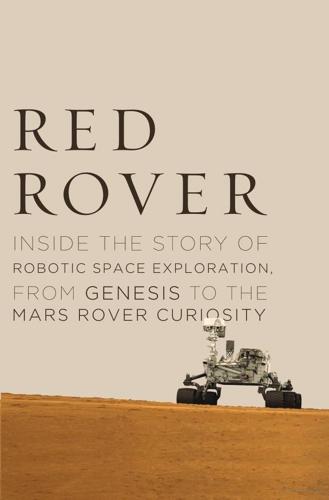
pages: 265 words: 79,896

Red Rover: Inside the Story of Robotic Space Exploration, From Genesis to the Mars Rover Curiosity
by Roger Wiens
Published 12 Mar 2013

The eighties had been a terrible decade for planetary exploration. Between 1978 and 1989, not a single spacecraft had been launched to the Moon or to another planet. There were no Mars missions after Viking. NASA was in a rut. The agency had poured its resources into developing the space shuttle, which promised—but never delivered—cheap access to space. After several years of delays, the first shuttle was put into orbit in 1981. Over the next several years NASA focused on increasing the shuttle fleet and the number of yearly flights. But within five years of the first launch, the Challenger disaster reminded everyone that space flight was still a risky proposition.

pages: 224 words: 73,737

Poverty Safari: Understanding the Anger of Britain's Underclass
by Darren McGarvey
Published 2 Nov 2017

If it’s not a building, then it’s an area for people to occupy at their leisure. However, when you consider the word ‘centre’, not as a noun but as a verb, it can have a profound impact on your conception of what a community centre can be. Or, more to the point, what it ought to be. Rather than merely providing warmth, shelter or access to space or activities, a community centre can orientate, engage, educate and inspire people, creating a higher vibration of community consciousness and shared purpose that often leads to increased wellbeing, higher quality of life and, ultimately, social cohesion. However, if you walk into any community centre in your town or city then what you are likely to find is a once proud local institution breathing its heart-breaking agonal gasp.

pages: 434 words: 77,974

Mastering Blockchain: Unlocking the Power of Cryptocurrencies and Smart Contracts
by Lorne Lantz and Daniel Cawrey
Published 8 Dec 2020

It’s important for developers to understand the various terms being floated regarding how to define tokens: Utility Utility in the context of tokens means that a blockchain-based cryptocurrency must have some use outside of financial speculation. There are several longstanding projects attempting to do this in the blockchain world. One of the best-known is Filecoin, where tokens grant users access to space on a decentralized cloud storage platform. Security A security, as defined by the SEC, is an investment contract. Designed to provide a promise of a return, investment contracts are regulated devices used around the world for fundraising. For this reason, the tokens proposed in many ICOs could be considered securities.

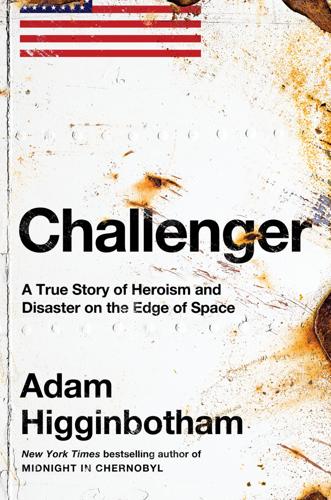
pages: 523 words: 204,889

Challenger: A True Story of Heroism and Disaster on the Edge of Space
by Adam Higginbotham
Published 14 May 2024

But before he could fly, Slayton had been grounded by an irregular heart rhythm, and moved into management as the first Chief of the Astronaut Office. Placed in charge of all crew selection and flight assignment for the Apollo missions, Slayton came to embody the arrogance and contempt with which many astronauts treated the managers and flight surgeons who policed their access to space; he also occasionally covered for the missteps and recklessness of his military-trained colleagues. After Gene Cernan had crashed a NASA helicopter while buzzing women sunbathing on a beach near Cape Canaveral in 1971, Slayton concealed the true cause of the accident from Center Director Chris Kraft—to ensure that his good friend Geno did not lose his place as commander of the final mission to the moon.

* * * While the Kennedy ground crews struggled to get Columbia into orbit, a mile to the north Challenger stood waiting on Pad 39B, rising blindingly white above the palmetto and banana palms of Merritt Island by day, brilliantly lit by the beams of the xenon searchlights at night—and apparently ready to carry her own crew into orbit. It was the first time two shuttles had ever sat on their launchpads at the same time. From a distance, this spectacle seemed at last to make concrete NASA’s long-held promise of “routine access to space” in a single, photogenic image; the reality was more precarious. The facilities at the Cape were already stretched to the breaking point by the overlapping launch preparations: the dress rehearsal for the 51-L launch, with Dick Scobee and the crew strapped into their seats on the launchpad for a mock countdown, was delayed twice when Columbia failed to take off; there weren’t even enough beds in the crew quarters to accommodate the fourteen men and women on both missions simultaneously, forcing some of them to fly repeatedly back and forth to Houston in mid-January.

pages: 259 words: 94,135

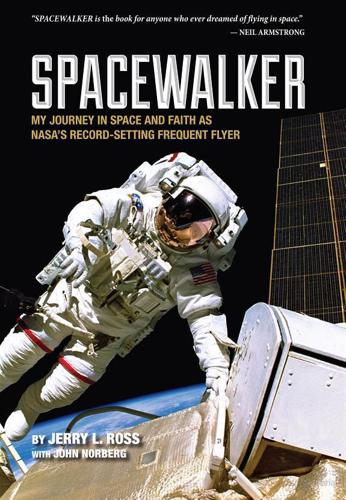
Spacewalker: My Journey in Space and Faith as NASA's Record-Setting Frequent Flyer
by Jerry Lynn Ross and John Norberg
Published 31 Jan 2013

Apollo astronauts Neil Armstrong, Jim Lovell, and Gene Cernan testified to Congress against the Obama administration proposal to cancel the Constellation program. All of us in the Astronaut Office were cheering for them when they spoke. They spoke for us. In response to a question of what he believed the US spaceflight priorities ought to be, Neil Armstrong responded: 1. Maintain US leadership in space 2. Guarantee US access to space 3. Continue to explore the solar system I couldn’t agree more! Human space exploration not only expands our knowledge, but also drives innovation and industries that enhances everyone’s daily lives and benefits economies on our home planet. Human space exploration engages the American workforce in developing new technologies required not only for meeting the challenges of leaving Earth, but also for meeting the challenges of a changing world.

pages: 310 words: 89,653

The Interstellar Age: Inside the Forty-Year Voyager Mission
by Jim Bell
Published 24 Feb 2015

We could experience Earth-and-moon solar eclipses, transits of Mercury or other planets, flights through active comet tails, flybys and landings on near-Earth asteroids, perhaps even visits to Voyager and other ancient spacecraft. Such excursions may never become as routine as airline travel is today, but I believe that the trend will surely be toward safer, more affordable, and more personally meaningful access to space for regular citizens. Earth and Moon “Firsts” from Space. TOP LEFT: Lunar Orbiter I’s first whole Earth photo from space. TOP RIGHT: Apollo 8 color Earthrise photo from lunar orbit. BELOW: First image of the Earth and Moon together from Voyager 1. Voyager and the Golden Record.

pages: 327 words: 90,542

The Age of Stagnation: Why Perpetual Growth Is Unattainable and the Global Economy Is in Peril
by Satyajit Das
Published 9 Feb 2016

Russia's annexation of parts of Ukraine and its support for separatists have resulted in economic sanctions and reprisals. Russia has retaliated, focusing on markets in the Far East for its energy exports, which has implications for current European dependence on Russian gas and oil. Tensions even threaten access to space, due to reliance on Russian launch capabilities following the end of the US Space Shuttle program. The peace dividend from the end of the Cold War may reverse with rising defense spending. The costs of humanitarian relief operations, as well as refugees and illegal immigration driven by instability, are increasing.
Voyage
by Stephen Baxter
Published 23 May 2011

People don’t want this, Mike; the war is fucking up the economy too comprehensively.” Ben, gratifyingly, looked startled to hear her swear. “Well, I doubt Nixon’s going to buy it all anyhow,” Ben said. “The word is he’s leaning a little toward the Space Shuttle, as the one element in the STG proposals to preserve over all the rest. Because it promises low-cost access to space. On the other hand, Nixon likes heroes…” “But he’s backed into a corner, by what Kennedy said to Armstrong and Muldoon in July,” Mike said. “And by the pro-Mars statements he’s been issuing ever since.” York grunted. “Nixon hates Kennedy. Besides, Kennedy’s just another opportunist. Do you really think he would have continued pumping funds into Apollo the way Johnson did, if he hadn’t been invalided out of the White House back in ’63?

The gender thing. “What problems, for Christ’s sake? That I won’t be able to fit my flight helmet over my bouffant hairstyle? Joe, it’s 1981—” “Give me a break, Natalie. Look, it might have been different if we’d ever built the shuttle, if we had big roomy ships to carry seven or eight to orbit, if access to space had ever become routine. Then we would be flying women every month. But we don’t. So you work it out. If you have a mixed crew, you need extra facilities. Personal hygiene. Privacy. It’s all avoidable payload weight. And that’s not a good thing when you’re planning an eighteen-month deep-space mission.”

pages: 367 words: 99,711

Sundiver
by David Brin
Published 15 Jan 1995

“They say, ‘You Citizens think I’m violent, well then by damn I will be!’ Most of the Probationers would never do anything to hurt anybody, whatever their P-tests say. But faced with this stereotype they become what they’re reputed to be!” “That may or may not be true,” Nielsen said. “But given the situation as it stands, for Probationers to get access to space ...” Jacob sighed. “You’re right, of course. It can’t be allowed to happen. Not yet. “On the other hand, we can’t allow the Feds to whip up public hysteria over this either. It’d just aggravate matters and put off a later, more severe form of rebellion.” Nielsen looked worried. “You aren’t going to suggest that the Terragens Council get involved in the Probation laws, are you?

Rogue State: A Guide to the World's Only Superpower
by William Blum
Published 31 Mar 2002

Integrating Space Forces into warfighting capabilities across the full spectrum of conflict...During the early portion of the 21st century, space power will also evolve into a separate and equal medium of warfare...The emerging synergy of space superiority with land, sea and air superiority will lead to Full Spectrum Dominance...Development of ballistic missile defenses using space systems and planning for precision strikes from space offers a counter to the worldwide proliferation of WMD [weapons of mass destruction]... Space is a region with increas-ing commercial, civil, international and military interests and invest-ments. The threat to these vital systems is also increasing...Control of Space is the ability to assure access to space, freedom of operations within the space medium and an ability to deny others the use of space, if required...Control of Space is a complex mission that casts USCINCSPACE [US Commander-in-Chief of space] in a classic warfighter role and mandates an established AOR [area of responsibility].54...With regard to space dominance, we have it, we like it, and we're going to keep it.55...We will engage terrestrial targets someday—ships, airplanes, land targets—from space...We're going to fight in space.

pages: 370 words: 97,138

Beyond: Our Future in Space
by Chris Impey
Published 12 Apr 2015

President Dwight Eisenhower used his farewell address to warn of the dangers of the “military-industrial complex.”22 It’s ironic that this five-star general and two-term president—the quintessential Washington insider—issued such a clarion call against concentration of influence within and around the government. He said: “We must guard against the acquisition of unwarranted influence, whether sought or unsought, by the military-industrial complex. The potential for disastrous use of misplaced power exists, and will persist.”23 The analogy between access to space and access to information seems to break down. However, the connection is uncanny when we recall the current controversy over the highly sophisticated and intrusive harvesting of personal data over the Internet by the US Government. To understand the potential of space tourism, it’s helpful to look at the growth of the Internet.

pages: 375 words: 102,166

The Genetic Lottery: Why DNA Matters for Social Equality
by Kathryn Paige Harden
Published 20 Sep 2021

Read Carl Brigham, a Princeton psychology professor and an early proponent of intelligence testing, on “the race question,” and he is trying to figure out how much Nordic, Alpine, and Mediterranean “blood” immigrants from each European country have.11 Wave after wave of European immigrants—Italians, the Irish, Jews—were not initially considered part of the “White” dominant class in the United States.12 This social contingency of how race is defined is inescapable, because race (unlike ancestry) is an inherently hierarchical concept that serves to structure who has access to spaces and social power. Second, whether people are socially categorized as different races does not correspond to their degree of ancestral genetic difference in any straightforward way. African ancestry populations, in particular, are remarkable for their genetic diversity, with some African groups being more different from each other than Europeans are from East Asians.
Falter: Has the Human Game Begun to Play Itself Out?
by Bill McKibben
Published 15 Apr 2019

Indeed, there’s something earnest and boyish about the whole spacefaring effort, something more likeable than busting unions back home on earth. As Bezos put it recently, “If I’m 80 years old and looking back on my life, and I can say that I put in place the heavy-lifting infrastructure that made access to space cheap and inexpensive,” then “I’ll be a very happy 80-year-old.”1 Why go to space? “So that the next generation could have the entrepreneurial explosion like I saw on the internet,” said Bezos, conjuring up a vision of brown-and-yellow UPS shuttles delivering printer cartridges to the rings of Saturn.2 (Sometime this year, Vodafone and Nokia plan to set up a mobile phone network on the moon.)3 Or to escape the wreckage of planet Earth.

pages: 286 words: 101,129

Spaceman: An Astronaut's Unlikely Journey to Unlock the Secrets of the Universe
by Mike Massimino
Published 3 Oct 2016

But this ambitious, long-term goal would require short-term sacrifice. The money to pay for it would come from retiring the shuttle in 2010 once the assembly of the space station was complete. In the end, the shuttle was a victim of the compromises that gave birth to it. The shuttle was sold as routine, everyday access to space, but in hindsight that was a bold overstatement. It was always a dangerous, expensive vehicle to fly. Before Columbia, we calculated the odds of a total loss of shuttle and crew at about 1 in 150. After Columbia, that was revised to about 1 in 75. By contrast, the risk of losing a fighter jet in Vietnam was around 1 in 1,500.
pages: 431 words: 118,074

The Ultimate Engineer: The Remarkable Life of NASA's Visionary Leader George M. Low
by Richard Jurek
Published 2 Dec 2019

Day coined the term “von Braun paradigm,” which he boiled down to a linear and progressive strategy for interplanetary space travel as proposed by von Braun in his earlier work. Von Braun explained his strategy in a series of visionary articles in Collier’s magazine between 1952 and 1954. In short, the von Braun paradigm starts with rapid, airplane-style access to space via a reusable space shuttle, progresses on to building a space station, and then extends out to trips to the moon and then on to Mars and beyond. It’s a linear, iterative approach to eventual deep-space exploration, which Low endorsed. In assessing the current state of planning and technological capabilities in 1958, Low was convinced that human versus machine space exploration held some of the most promise.

pages: 519 words: 118,095

Your Money: The Missing Manual
by J.D. Roth
Published 18 Mar 2010

Tips for Renters One advantage to renting over buying is you have a lot more options, so make the most of it. Be choosy; don't settle for the first thing you see. Pick a neighborhood close to work or school, and one with stores and entertainment options. If exercise is important to you, find a spot that gives you access to spaces for biking or running. By finding a rental in a walkable neighborhood, or next to a bus or train line, you can save tons by not owning a car (see Car-Free Living). Tip To find out how walkable an address is, check out WalkScore.com, which calculates how close it is to things like restaurants, libraries, and grocery stores.
pages: 415 words: 123,373

Inviting Disaster
by James R. Chiles
Published 7 Jul 2008

And the arrival at Edwards Air Force Base in California proved that the “flying brick” could indeed land safely despite having no engine power at the time and thus no second chance. Successful flight or not, the Reagan administration cut $604 million from the space budget about this time. NASA knew that flying once a week was impossible for the time being. But it still promised routine access to space, and the schedule for the coming years showed a steady push in the pace. By 1984 it was clear from the numbers that things were not going as quickly as planned. That year, NASA had promised twelve launches but delivered five. NASA came under intense pressure to maintain a reliable launch schedule for its satellite customers.

Autonomous Driving: How the Driverless Revolution Will Change the World
by Andreas Herrmann , Walter Brenner and Rupert Stadler
Published 25 Mar 2018

Virtual information is projected onto the windows, allowing the passengers to dive into a completely different world. For example, the passengers can be transported into a journey through London in the year 1900 to experience the city in a totally different era. The autonomous vehicle thus teaches history in a previously unimaginable way by facilitating a new access to space and time. If one wants to find 409 410 Epilogue: Brave New World out what the future could bring, one selects the year 2100 for example to be inspired by the ideas of designers, urban planners and architects. One can also use one’s time in the car to gain a preview of the fashion for the coming summer.

pages: 437 words: 126,860

Case for Mars
by Robert Zubrin
Published 27 Jun 2011

The use of scramjets or air-augmented rockets on even part of the launch trajectory of a single-stage-to-orbit (SSTO) vehicle would greatly increase its payload. This is exactly what is needed to meet the logistics demands of a developing Mars settlement, which will call for the cheap delivery of large amounts of cargo to orbit, and beyond. The colonization of Mars is thus central to the development of the technologies that will give us cheap access to space. ELECTRIC PROPULSION The key metric of a rocket’s performance is its specific impulse, the number of seconds it can use a pound of propellant to make a pound of thrust. The best chemical rockets available today have a specific impulse of about 450 seconds, while nuclear thermal rockets can get about 900 seconds.

Doppelganger: A Trip Into the Mirror World
by Naomi Klein
Published 11 Sep 2023

It’s not going to work from an epidemiologic perspective and it’s not going to work from a transmission perspective unless we actually have vaccine going to all countries.” (As doppelgangers teach us, walling off that which is inherently connected rarely ends well.) There were also social costs inside wealthy countries to placing so much of the virus-control strategy on vaccinations and verification apps. Whenever access to spaces and services requires a smartphone and QR codes, it further marginalizes those who are unhoused and otherwise vulnerable and are less likely to have access to those tools—“the viral underclass,” as the author Steven W. Thrasher has described the already marginalized groups who are treated as disposable during times of pandemic.

pages: 541 words: 146,445

Spin
by Robert Charles Wilson
Published 2 Jan 2005

Under the influence of the stimulant Jase seemed particularly fond of the word obviously. "Obviously," he said, "it's a selective filter. We know it filters the energy reaching the surface of the Earth. So the Hypotheticals want to keep us, or at least the terrestrial ecology, intact and alive, but then why grant us access to space? Even after we attempted to nuke the only two Spin-related artifacts anyone has ever found? What are they waiting for, Ty? What's the prize?" "Maybe it's not a prize. Maybe it's a ransom. Pay up and we'll leave you alone." He shook his head. "It's too late for them to leave us alone. We need them now.
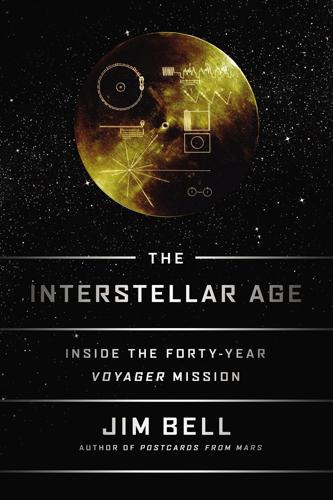
pages: 532 words: 155,470

One Less Car: Bicycling and the Politics of Automobility
by Zack Furness and Zachary Mooradian Furness
Published 28 Mar 2010

Teenagers, especially those considered “at-risk,” seem to benefit substantially from their participation in these programs, as they are model examples of service learning that utilize experiential pedagogy.17 in some cases, bicycle education programs are integrated into other community initiatives aimed at preventing youth violence, such as Cycles of Change in Oakland (California) and neighborhood Bike Works in philadelphia. it is significant that these efforts provide young people access to spaces based not on discipline or surveillance, but cooperation and mentorship. Hands-on atmospheres, like the ones facilitated in community bike shops, help to teach kids of all ages self-discipline, patience, respect, and cooperation, values that are sometimes “hard to grasp in the traditional classroom.”18 For example, the processes of bicycle assembly and repair require a working knowledge of mathematics, engineering, and reasoning skills that are frequently neglected in educational settings where these principles are by necessity, or pedagogical choice, taught without tangible materials or real-world applications most young people consider valuable.19 Cyclists who work with children or teenagers recognize that bicycle programs are successful when they encourage students to cultivate their own interests and/or aesthetics. as a result, certain groups actively incorporate artistic and creative practices into their programs, far beyond the basics of bicycle construction, maintenance, or bike safety.

pages: 717 words: 150,288

Cities Under Siege: The New Military Urbanism
by Stephen Graham
Published 30 Oct 2009

Widening corporate ownership of public space means that legal norms now legitimize consumption whilst proscribing begging, homelessness, busking, skateboarding, cycling, and political activity.’54 Such trends are closely linked to the growth of ‘zero-tolerance’ urban policing. Security regimes centre on achieving ‘controlled urbanity’, which involves the removal, demonization or incarceration of failed consumers; the installation of new means of controlling access to space; and the establishment of key facilities for entrepreneurial urban leisure, tourism, and sports mega-events. Policing focus increasingly addresses ‘quality of life’ crimes – the behaviours and bodies seen to be out of place and transgressive within the polarizing geographies of highly unequal cities.

pages: 501 words: 145,943

If Mayors Ruled the World: Dysfunctional Nations, Rising Cities
by Benjamin R. Barber
Published 5 Nov 2013

It is not just its novelty that makes it of interest, but its relevance to the great urban dilemma I introduced in the opening chapters: how to reclaim and incorporate into the city that natural bounty of the countryside surrendered by immigrants on their fateful journey from country to town. Since urbanity entails an increase in density and proximity and hence a loss of access to space and solitude, offering equal access to the assets that return these benefits to the city—nature, parks, green spaces, waterfronts—becomes a key tactic in securing true urban equality. Especially when we recall that urban life is largely coastal or water-oriented and that access to water as a feature of nature can be a key factor in achieving equality.

The Mission: A True Story
by David W. Brown
Published 26 Jan 2021

And every single one of them canceled Constellation. Cancelation, though, didn’t come easy. The White House was ready to delete it, and Lori doubly so. Private sector rocket companies such as Space Exploration Technologies Corporation (SpaceX) and Blue Origin were promising to deliver the holy grail of exploration: cheap access to space, with costs falling by tens to hundreds of millions of dollars per launch. This was so clearly the future, so obviously the way to go. What were we even doing building big government rockets? Why not do what Dan Goldin had wanted to do all those years ago? Hand over the keys! NASA, though, was not ready to change.

pages: 558 words: 164,627

The Pentagon's Brain: An Uncensored History of DARPA, America's Top-Secret Military Research Agency
by Annie Jacobsen
Published 14 Sep 2015

According to DARPA documents, “at HTV-2 speeds, flight time between New York City and Los Angeles would be less than 12 minutes.” The Mach 20 drone will be able to strike any target, anywhere in the world, in less than an hour. As the Defense Department grows increasingly reliant on satellite technology, DARPA must provide the Pentagon with “quick, affordable and routine access to space,” says DARPA. The XS-1 experimental space drone, announced in the fall of 2013, is DARPA’s seminal hypersonic low-earth-orbit drone, designed to be able to fly faster on consecutive around-the-world missions than any other drone in U.S. history. Specifics about the weapons systems on board the XS-1 are classified.

After Apollo?: Richard Nixon and the American Space Program
by John M. Logsdon
Published 5 Mar 2015

In the statement, which based on a draft prepared by Bill Anders, Nixon declared “I have decided was today that the United States should proceed at once with the development of an entirely new type of space transportation system designed to help transform the space frontier of the 1970’s into familiar territory.” The statement added “the space shuttle will give us routine access to space by sharply reducing costs in dollars and preparation time . . . Most of the new system will be recovered and used again and again—up to 100 times. The resulting economies may bring operating costs down to as low as one-tenth of those for present launch vehicles.” The shuttle would “take the place of all present launch vehicles except the very smallest and the very largest.”

pages: 816 words: 242,405

A Man on the Moon
by Andrew Chaikin
Published 1 Jan 1994

To Mattingly, that means the unglamorous but crucial work of making space pay its way, and he is trying to do just that. At General Dynamics Mattingly is working on revamping the venerable Atlas booster, a descendent of the rocket that put John Glenn in orbit in 1962. He hopes the Atlas will help open up cheaper access to space, so that the next generation can do the things he can only dream about. And when space begins to turn a profit, Mattingly says, then it will be time to explore again. “We will go to Mars. And who knows what we'll find? Once again it will be the journey that is the true test, as much as what you learn when you get there."

pages: 1,233 words: 239,800

Public Places, Urban Spaces: The Dimensions of Urban Design
by Matthew Carmona , Tim Heath , Steve Tiesdell and Taner Oc
Published 15 Feb 2010

• Fit – the degree to which the form and capacity of spaces matches the pattern of behaviours that people engage in or want to engage in. • Access – the ability to reach other persons, activities, resources, services, information or places, including the quantity and diversity of elements that can be reached. • Control – the degree to which those who use, work or reside in places can create and manage access to spaces and activities. Two meta-criteria – ‘efficiency’ and ‘justice’ – underpinned the basic dimensions. Efficiency related to the relative costs of creating and maintaining a place for any given level of attainment of the above environmental dimensions, while justice related to the way in which environmental benefits were distributed.