Plenitude: The New Economics of True Wealth
by Juliet B. Schor · 12 May 2010 · 309pp · 78,361 words
clean energy. The new conventional view is that climate change can be solved by innovative technologies and market incentives such as a price for (or tax on) carbon. There’s palpable excitement about plug-in hybrids, smart grids and smart homes, renewable energy, and reflective roofs, as well as a significant government role
…
ways to circum-vent rebound effects. Keeping the price of energy high is key. But even this isn’t a panacea. If there’s a tax on carbon, and those tax receipts are spent, they too create demand for products and, by extension, for more emissions. Even if we manage to shift out
…
-being. It’s how efficiently we produce, not how much we produce, that determines how well off we are. Victor also worked through scenarios for taxing carbon, and showed that emissions can fall even as the economy produces rising GDP per person, declining unemployment and poverty, and a reduction in government debt
European Spring: Why Our Economies and Politics Are in a Mess - and How to Put Them Right
by Philippe Legrain · 22 Apr 2014 · 497pp · 150,205 words
keep working could provide increased funding for education and training. Costly subsidies for renewable energy and environmentally dubious biofuels ought to be replaced with a tax on carbon consumption (see Chapter 10). Governments could then cut taxes on labour, creating jobs and boosting living standards. At the EU level, the budget for 2014
…
in developing low-carbon technologies that could be deployed elsewhere, nor a role model for the rest of the world in crafting low-emissions policies. Tax carbon consumption How could Europe do better? It is worth persevering with efforts to agree a global deal to limit carbon emissions; the chances of success
…
deploying those new technologies worldwide. The next step is to jettison the ineffective, corporate boondoggle that is the ETS and replace it with a tax on carbon consumption. A carbon tax that rose steadily over time would provide some predictability for businesses, enable them to better plan long-term investments and encourage them to try
…
developing promising technologies. Importantly, governments wouldn’t be trying to second-guess the best technologies or pick winners among the many clean-tech companies. A carbon tax would be flexible: it could be raised or lowered at will, depending on how conditions evolve. It would be transparent and impartial, imposing the same
…
that would enable governments to cut other taxes, rather than providing corporate handouts to polluters as ETS emissions permits do. A tax on carbon consumption would be better than both the ETS and a tax on carbon production because it would actually reduce Europeans’ carbon emissions, rather than shifting them overseas (or achieving very little). While
…
taxing carbon production would have a similar impact if the whole world was doing it, taxing carbon consumption is much more effective if only Europe and
…
have less incentive to lobby politicians against putting a price on carbon and politicians would no longer have an incentive to impose protectionist “border-adjustment taxes” on carbon-intensive imports. Instead, the carbon consumption tax could be levied much like value-added tax is, on local as well as foreign production. Better still
…
more newcomers and reforming pension systems. Last but not least, to cope with radically uncertain climate change, Europe needs better incentives for research and a tax on carbon consumption. Adaptability is a key feature of a successful advanced economy; dynamism another. Adaptability involves coping with and making the most of changing circumstances; dynamism
…
. Scrap the EU’s ineffective emissions-trading scheme and its costly command-and-control approach to tackling climate change and introduce a transparent and flexible tax on carbon consumption and ample incentives for research. Replace income tax with a progressive expenditure tax that would boost savings and productive investment and tax unearned income
The Centrist Manifesto
by Charles Wheelan · 18 Apr 2013 · 104pp · 30,990 words
that are consistent with what is good for society overall. As a result, economists across the political spectrum have embraced pollution taxes, such as a carbon tax, as a better way to raise government revenue than taxing productive activities like work, savings, and investment. Gary Becker—a Nobel Prize winner from the
…
University of Chicago, a disciple of Milton Friedman, and one of the most articulate contemporary proponents of free markets—is on record as favoring a carbon tax. So is former Federal Reserve chairman Alan Greenspan (who was a close friend of Ayn Rand while she was alive). Another persistent and persuasive advocate
…
for some kind of carbon tax is Harvard economist Gregory Mankiw, who is the author of one of the most popular economics textbooks in America. More important in this context, Mankiw
…
University of Chicago polled an ideologically diverse group of prominent economists about their views on a carbon tax; 96 percent of the economists polled answered either “agree” or “strongly agree” that a twenty-dollar-per-ton tax on carbon emissions would be better for the U.S. economy than an income tax increase that raised
…
-based manufacturer of solar panels that received large federal subsidies before going bankrupt). Think about it: If we tax income, people work less. If we tax carbon, they pollute less. You don’t have to win the Nobel Prize in economics to understand that logic (though to reiterate, those who have won
…
system taxes most heavily. Given our environmental challenges, particularly climate change, the United States ought to lean more heavily on “green taxes,” such as a carbon tax. Taxing pollution raises revenues so that we can tax productive activities more lightly—like working, saving, and investing. There is ample room to improve the
…
“social cost” of any activity. Coal is not a “cheap” source of energy when its environmental impacts are taken into account. Pollution taxes, particularly a tax on carbon emissions, would encourage cost-effective conservation; consumers and companies can respond in whatever ways make the most economic sense to them. Any tax on pollution
…
date of the exact quote is unknown, but it was during the fall of 1991. 26 “Rick Santorum’s Ride,” Economist, January 7, 2012. 27 “Carbon Taxes II,” IGM Forum, Initiative on Global Markets, Chicago Booth, December 4, 2012, http://www.igmchicago.org/igm-economic-experts-panel/poll-results?SurveyID=SV_8oABK2TolkGluV7
Net Zero: How We Stop Causing Climate Change
by Dieter Helm · 2 Sep 2020 · 304pp · 90,084 words
from the IEM, at the same time the EU pursued a more competitive market-based general carbon policy. Although the European Commission toyed with a carbon tax back in 1991, it was captured by lobbying for a permits scheme by industry and the incumbent utilities. The EU Emissions Trading System (EU
…
then allowed these to trade to establish the EU ETS carbon price.[10] The great advantage to the lobbyists of a permits scheme over a carbon tax is that the permits were given out free to the existing polluters (grandfathered), and hence the initial income effects stay with the polluters rather
…
border price, as we shall see, has the rather neat property that it incentivises others who want to export to us to impose their own carbon tax. This, and not the UN top-down Paris approach, might actually broaden and deepen the coalition of the willing. PART TWO The Net Zero
…
advocates. But piecemeal distributional measures and specific subsidies only scratch the surface. They need to go deeper, and this involves taxation. For the left the carbon tax might raise the money, but it is seen as regressive (although this is far from uncontroversial). The obvious answer for the left is to use
…
polluters – especially rich ones – would be able to get away with their pollution. They also raise the question of the behavioural consequences, in that a carbon tax may lead people to believe that in paying it they have discharged their moral responsibilities for causing climate change. That flight abroad for an extra
…
holiday does not come with a big dose of guilt if a carbon tax is paid. These are serious objections, and they are about much more than just carbon. The use of pricing generally for these sorts of
…
that the target is achieved, or the target can be turned into quantity-based permits, which will trade at a price similar to the alternative carbon tax.[3] In both cases, the end goal is achieved – in theory.[4] It turns out very differently in practice, which is why the major
…
make money out of the EU ETS in a way that they would find much more difficult if confronted by a uniform carbon tax. Given that the case for a carbon tax is so powerful, why hasn’t it happened? Here again the politics resurfaces. The politicians do not want to confront voters
…
with the costs of their pollution, and a carbon tax does this very much ‘in your face’. Recall the earlier discussion about the myth that decarbonisation will not cost much, if anything, and the easy
…
a recent example, joining other diverse examples stretching from Hungary to Chile to Iran. The lesson to take from this political reluctance to introduce a carbon tax at an appropriate level is that voters need to be told the truth. Pretending that decarbonisation is cheap, by hiding behind the subsidies and permits
…
carbon floor price, despite heavy lobbying by industry to weaken it. The domain of the tax and the carbon border price What exactly should the carbon tax be on? The answer to this depends on the targets and their specification. If the targets are intended to reduce global warming and, in particular
…
of everything from steel to beef faces a competitive disadvantage. It is one reason why both steel and agriculture have needed subsidies, exclusion from domestic carbon taxes and protectionist tariffs. Recall too that it is also one reason why, despite the fall in European domestic emissions, global emissions kept going up over
…
domestically with precision either, and it does not need to be. Not to have a border tax, while at the same time having a domestic carbon tax, is precisely wrong. What we want to be is roughly right, to go in the right direction. Practically, the place to start is with
…
illegal under WTO rules. There are two obvious responses to this. First, WTO rules do in fact allow for environmental adjustments, and so the border tax on carbon, tied to an explicit environmental target, and applied on the same basis domestically, would probably be fine. Second, the WTO faces far greater challenges to
…
way. The really great thing about carbon border taxes is that they also encourage a bottom-up incentive for other countries to introduce their own carbon taxes.[8] Think about the position of the country sending carbon-intensive imports to the UK. The tax is collected at the border and paid
…
a critical mass and these powerful incentives will cascade through the global economies as every trading country now has an interest in putting a domestic carbon tax in place. A successful border tax is then one that withers away, a victim of its own success. It internationalises the carbon price. This
…
be on producers or consumers? As with most taxes, the trick is to be pragmatic. Imported oil, gas and coal can pick up the carbon tax when they are used, which means that the tax falls on petrol and diesel at the filling station, and on the power station when it
…
right. Who fixes the price Fixing and revising taxes is currently mainly a finance ministry function, but this is not necessarily the right approach for carbon taxes. It lacks credibility. The task of government is to fix the targets – such as net zero by 2050. In the UK it is the
…
whether the tax will be levied at the border. The delivery body takes the tax design and the carbon budgets as given, and adjusts the carbon tax on, say, an annual basis. It might also give guidance on what it expects the tax to be, say, five years out, projecting over
…
and an explanation for each tax change at the annual reviews, the market gets an element of stability in making its investments. The annual carbon tax review might be appended to the annual progress reports on the carbon budgets. The key thing is to make sure it is simple and credible
…
such taxation causes: the market will be uncertain; there will be lots of lobbying by vested interests; and the consequence will be that the carbon tax will have to be higher for any given carbon reductions. This is what happened when the Treasury set the interest rates, and it is why
…
key to this trick is credibility. Why should you believe that some future government will stick to the targets and be willing to allow the carbon tax to rise? Might not a Trump or a Farage come along at some stage and simply ditch the tax in a populist gesture? What
…
to do with the money Carbon taxes have the potential to raise a lot of money. It is even possible that they could raise almost as much as income taxes or
…
two different activities, and that the Treasury should raise money as efficiently as possible through taxes, and quite separately decide how it is spent. The carbon tax revenues go into the general government pot, which is then spent on the various things that the government decides, such as health, education, defence,
…
the level of the carbon revenue. With this approach in mind, and if the government has a given total spending target, one use of the carbon tax revenues might be to lower other taxes. The government could rely on taxing bads, like carbon, rather than taxing good things like labour, and
…
probably to spend on carbon-intensive goods? Or will it be a relief of income tax or VAT, and on which levels and classes? The carbon tax both reduces aggregate demand and changes the relative prices. The recycling just changes the relative prices, keeping up total spending. In the longer term,
…
such a recycling approach would be enormous, and it would have the paradoxical consequence of the spending on lowering emissions leading to a lower initial carbon tax. Say, for example, the tax revenues subsidised renewables. A lot more would be built through the subsidies (which are a negative tax) paid out
…
approach is more expensive and hence voters will pay even more in total to meet the overall net zero consumption target. Not to choose the carbon tax route with the border adjustment is to choose a higher-cost route, and not being willing to impose these costs means that the government
…
the bonus of more oil extracted. The former is a step towards net zero; the latter is not. This might work out if the carbon tax is set at the right level and applied to the oil extracted. But it would not be a good result if there is no proper
…
. The trees are needed in order to get to net zero, and the companies trying to get to net zero should be cutting emissions. The carbon tax – the polluter price – is what should do the work here. But you might be thinking, is it not a good idea to have polluting
…
construction, the carbon store remains. But if the wood is burnt in a biomass plant, then at this point, having paid for the sequestration, the carbon tax should now apply. Drax, for example, should be taxed on its biomass-burning emissions, just as it should be taxed for burning coal. Even
…
it. Requiring each and every company to offset its emissions is neither necessary nor desirable if each and every company is already paying through the carbon tax for the pollution it is causing. The government has a further advantage in investing in natural sequestration. A company will struggle to capture the benefits
…
aims to do exactly that, but whether it is fully and properly implemented, and over what timescale, remains to be seen.[8] With the carbon tax revenues to hand, the second option for government is to use a portion of these to invest in green infrastructures, some of which would have
…
argued that the government should directly subsidise at least one major demonstration project. But why not go further? Why not use the revenues from a carbon tax to build, own and operate CCS pipelines and a series of storage wells? A new company – let’s call it British CCS – could receive
…
monies from the carbon tax and invest in the sequestration. Instead of each company trying to offset its own emissions through CCS, the government could do it. The resulting activity
…
bit of research and find out what they actually do, but in principle you can do this. Better still would be to have a proper carbon tax in place. Then you would be paying for the cost of the carbon you emit, and at net zero this will be equal to
…
I can offset, and so can companies and governments. We can all just get on with it, especially in the absence of a proper carbon tax. Adding natural sequestration and CCS to the suite of options gets us a long way down the road to addressing carbon consumption, and hence to
…
gain and hence offsetting. Together these incentivise innovation, R&D and a carbon consumption response. Making the changes: start with the polluter pays and the carbon tax The polluter-pays principle dictates a carbon price, applied both domestically and at the border. Domestically, petrol and diesel are already taxed very heavily. Indeed
…
, once the full supply chain is considered, the energy tax already approximates what a carbon tax would look like in terms of levels. This is how it works. The price of crude oil on the international market is much higher than
…
the OPEC Tax is the dominant carbon price in the world, and it applies universally across all countries, although some subsidise their consumers. A carbon tax would be on top of the world oil price. It is the difference between the marginal costs and the world oil price, plus the carbon
…
of the various sectors takes place in the lowest-cost way. Put another way, the fact that all the fossil fuels currently have different implicit carbon taxes makes decarbonisation more costly than it needs to be, and hence makes the politics harder too. It is incredibly inefficient. Increasing fuel duty in the
…
no doubt that they have been responsible for a lot of innovation. There can also be little doubt that, in the absence of an adequate carbon tax, such regulatory approaches are going to be necessary to force through a sufficiently rapid switch to electric vehicles. Applied at the border too – and
…
and grow those subsidies. Once a rule is set it is very hard to get rid of, unless there is some countervailing vested interest. Unlike carbon taxes, regulation is easy to capture, and it usually is captured.[14] Urban regulation and planning The other pollutants from transport are mainly local in their
…
substitution is possible. That public transport can be electric: directly, or indirectly via hydrogen. Provide the public goods: innovation, R&D and the new infrastructures Carbon taxes, augmented by regulation, make polluters pay, and that means those of us who drive the cars and expect our goods to be delivered to our
…
the consequences. The greater the ‘gain’ bit in net gain, the more the consequences are ameliorated. The difficult bits: aviation and shipping Even with a carbon tax and the pricing of all the other pollutants, and with regulations and standards, there will remain some tough challenges to tackle emissions from transport. Of
…
we need an electricity system capable of harnessing active demand and generating decentralised low-carbon electricity. Public finances would be transformed. There would be a carbon tax, and pollution charges would make up quite a lot of government revenues. They might be enough to reduce taxes on labour, like income tax and
…
have piled up. This is where the easy fantasy of a green new deal drops away, and especially the assumption that if we have a carbon tax, the money can just be recycled back to us to spend. While it is true that it is better to tax ‘bads’ like pollution
…
air forces do in wars to their enemies. We ought to pay for it. One way to do this is to put some of the carbon tax revenues into an environmental fund, and use this fund to make the investment in the infrastructures, pay down some of the costs of electrification
…
and Prosperous Land, I called this a Nature Fund. Expanded to incorporate climate change, the scope of the Fund could be correspondingly broader. With a carbon tax, the economics will be transformed anyway, as the relative price of carbon-intensive stuff will go up a lot, including carbon-intensive energy. We have
…
227 electric pollution and 216–18 ethics of 107–10 floor price 115, 117, 208 for imports 11, 13 prices or quantities/EU ETS versus carbon taxes 110–13 setting 113–15 transport and 192–9 what to do with the money 121–4 where to levy the tax 119–20 who
…
–200 internal combustion engine 181–2 net gain and offsets (reducing travel versus buying out your pollution) 201–3 oil 183–4 polluter pays/carbon tax 192–6 shipping 203–5 urban regulation and planning 198–9 vehicle standards 196–8 see also individual type of transport Treasury, UK 120–2
The Price Is Wrong: Why Capitalism Won't Save the Planet
by Brett Christophers · 12 Mar 2024 · 557pp · 154,324 words
-vis the former rather than the latter. That is to say, they generally did little to make conventional technologies less competitive, for example by introducing carbon taxes and therefore making those technologies more costly. Instead, they sought to make renewables more competitive. This was renewables carrots rather than fossil fuel sticks. The
…
things up between expensive renewables and cheap fossil fuels, but which, to date, policymakers have been much more reluctant to countenance – which is to say, taxes on carbon. Take your hand off the lever of renewables subsidies, governments, in short, are told, and keep it off the lever of
…
carbon taxes. VI The problem, of course, is that, a decade on from the first promises that their unprecedented cheapness would see renewables rapidly begin to supplant
…
himself, would, he admitted, ‘argue that renewables may have lower social costs than carbon-intensive energy forms.’ But that, he insisted, ‘is an argument for taxing carbon intensive energy forms and not for subsidising renewables’. Interestingly, parts of the left have, in recent years, formulated arguments about government support for the private
…
capture 26 carbon dioxide (CO2) emissions xvii, 3, 4–5, 8–9, 326–7, 341–3 Carbon Emission Reduction Facility (CERF) 116–17, 291–2 carbon tax 129 Carbon Tracker 127, 130–1 Carney, Mark xxviii–xxix Carr, Housley xxv Carroll, Bobby 376, 378 causes, of European energy crisis (2021–22) 317
Enlightenment Now: The Case for Reason, Science, Humanism, and Progress
by Steven Pinker · 13 Feb 2018 · 1,034pp · 241,773 words
industrialists and bankrollers of climate change denial, in helping to defeat a 2016 Washington state ballot initiative that would have implemented the country’s first carbon tax, the policy measure which almost every analyst endorses as a prerequisite to dealing with climate change.52 Why? Because the measure was “right-wing friendly
…
It begins with carbon pricing: charging people and companies for the damage they do when they dump their carbon into the atmosphere, either as a tax on carbon or as a national cap with tradeable credits. Economists across the political spectrum endorse carbon pricing because it combines the unique advantages of governments and
…
externality (another name for the collective costs in a public goods game, or the damage to the commons in the Tragedy of the Commons). A carbon tax, which only governments can impose, “internalizes” the public costs, forcing people to factor the harm into every carbon-emitting decision they make. Having billions of
…
the atmosphere for free. Without carbon pricing, fossil fuels—which are uniquely abundant, portable, and energy-dense—have too great an advantage over the alternatives. Carbon taxes, to be sure, hit the poor in a way that concerns the left, and they transfer money from the private to the public sector in
…
: An Exchange,” New York Review of Books, April 26, 2012. 51. Climate justice: Foreman 2013. 52. Klein vs. carbon tax: C. Komanoff, “Naomi Klein Is Wrong on the Policy That Could Change Everything,” Carbon Tax Center blog, https://www.carbontax.org/blog/2016/11/07/naomi-klein-is-wrong-on-the-policy-that-could
…
-change-everything/; Koch brothers vs. carbon tax: C. Komanoff, “To the Left-Green Opponents of I-732: How Does It Feel
…
?” Carbon Tax Center blog, https://www.carbontax.org/blog/2016/11/04/to-the-left-green-opponents-of-i-732
…
-how-does-it-feel/. Economists’ statement on climate change: Arrow et al. 1997. Recent arguments for the carbon tax: “FAQs,” Carbon Tax Center blog, https://www.carbontax.org/faqs/. 53. “Naomi Klein on Why Low Oil Prices Could Be a Great Thing,” Grist, Feb. 9, 2015
…
Pathways Project 2015; Pacala & Socolow 2004; Williams et al. 2014; http://deepdecarbonization.org/. 74. Carbon tax consensus: Arrow et al. 1997; see also “FAQs,” Carbon Tax Center blog, https://www.carbontax.org/faqs/. 75. How to implement a carbon tax: “FAQs,” Carbon Tax Center blog, https://www.carbontax.org/faqs/; Romer 2016. 76. Nuclear power as the new
…
inequality; economics capital punishment abolition of, 208–213, 209 cognitive bias study referencing, 359–60 homosexual behavior criminalized, 223 Capp, Al, 297 Caracas, Venezuela, 172 carbon tax, 139, 145–6, 149 Carey, John, 247 Caribbean countries, 89, 175, 201, 203 Carlson, Robert, 307 Carroll, Sean, 385 Carter Center, 65 Carter, Jimmy, 67
…
morality and, 428, 431 See also Plato classical liberalism. See Enlightenment, the Clemenceau, Georges, 341 climate change, 136–54 carbon capture and storage, 150–51 carbon taxes, 139, 145–6, 149 climate justice movement, 138–9, 141–2 cognitive impediments to understanding, 140 decarbonization, 142–6, 143–4, 150–52 denial of
…
, 335 happiness ranking of, 475n30 terrorist deaths in, 193 Szilard, Leo, 308 Taiwan, 85, 85, 200 Taliban, 67, 240 Tan, Amy, 284 Taoism, 23, 204 taxes carbon tax, 139, 145–6, 149 economic freedom compatible with, 365, 483nn39,42 libertarians and, 364–5 poverty mitigated by, 107, 115–16 Trump and, 335 Taylor
The Great Escape: Health, Wealth, and the Origins of Inequality
by Angus Deaton · 15 Mar 2013 · 374pp · 114,660 words
possible to use a tax to make people pay attention to a social cost that they would otherwise ignore. A classic example is a global tax on carbon, which would do much to combat global warming. But that strategy also illustrates the problem, which is that setting such a tax would require a
…
; mortality from, 134–35, 134f, 140–41; prostate, 140, 141; screening tests for, 141–42; treatment of, 141 Cape Verde, foreign aid received by, 277 carbon taxes, 242 Card, David, 197 cardiovascular disease: mortality from, 31, 111, 136–37, 136f, 139–40, 141; smoking and, 131, 137; treatment of, 130, 137–40
…
, 48; life expectancies in, 67–68, 70; mortality rates in, 68–70, 68f, 72; smallpox in, 84; vital registration system of, 72 Szreter, Simon, 97 taxes: carbon, 242; in democracies, 295; income, 199–200, 203, 204–5, 212; progressive, 199–200, 261 Taya, Maaouya Ould Sid’Ahmed, 301 technical assistance, 278, 321
Power Hungry: The Myths of "Green" Energy and the Real Fuels of the Future
by Robert Bryce · 26 Apr 2011 · 520pp · 129,887 words
14 - The United States Lags in Energy Efficiency CHAPTER 15 - The United States Can Cut CO Emissions by 80 Percent by 2050, and ... CHAPTER 16 - Taxing Carbon Dioxide Will Work CHAPTER 17 - Oil Is Dirty CHAPTER 18 - Cellulosic Ethanol Can Scale Up and Cut U.S. Oil Imports CHAPTER 19 - Electric Cars
…
.”60 The myth that the United States can (or will) substantially cut its carbon dioxide emissions is closely related to the belief that placing a tax on carbon will ignite a revolution in alternative-energy technologies. And that belief leads to the next myth-busting opportunity: Any scheme to
…
tax carbon is doomed to failure. The better strategy: taxing neurotoxins. CHAPTER 16 Taxing Carbon Dioxide Will Work FORGET IT. No matter how many times world leaders meet in places such as Rio, Kyoto
…
, Copenhagen, Mexico City, or Tulsa, the countries of the world will never agree on a global scheme to tax carbon dioxide. The disparity between the wealthy countries and the developing countries—particularly when it comes to the availability of electricity—is simply too great to
…
developing countries, such as China, India, and Indonesia, will agree to policies that will effectively restrain their economic growth. Policymakers should forget about attempting to tax carbon dioxide or limit emissions of that gas. Instead, they should aggressively pursue taxes or caps on the emissions of neurotoxins, particularly those that come from
…
nuclear power and See also Global climate change; Kyoto Protocol; Zero-emissions Carbon footprint Carbon intensity, reductions in, comparing (fig.) “Carbon neutral” claims, issue with Carbon tax, myth involving Cardinal Mine(fig.) Carter, Jimmy Causation, issue of Cellulosic ethanol Center on Global Change Central African Republic CEPOS (Danish Center for Political Studies
Common Wealth: Economics for a Crowded Planet
by Jeffrey Sachs · 1 Jan 2008 · 421pp · 125,417 words
, solar, or nuclear) or to use a CCS approach. Mileage standards could be imposed on automobiles in the same manner. An alternative would be to tax carbon dioxide emissions and to subsidize any CCS activities. Such a tax could be easily collected by taxing the underlying carbon-based fuel and then offering
…
will ultimately agree to phase in a set of industrial standards (for power, automobiles, cement, steel, and other key sectors) augmented by a gradually rising tax on carbon emissions, a subsidy for sequestration, and perhaps some limited use of a tradable permit system. It is worth noting that revenues from a
…
carbon tax or from auctioning carbon permits could be used to finance public goods or perhaps to offset other distortionary taxes. LIVING WITH CLIMATE CHANGE Climate change
A Fine Mess
by T. R. Reid · 13 Mar 2017 · 363pp · 92,422 words
. Flat Broke 7. The Defining Problem; the Taxing Solution 8. Convoluted and Pernicious Strategies 9. The Single Tax, the Fat Tax, the Tiny Tax, the Carbon Tax—and No Tax At All 10. The Panama Papers: Sunny Places for Shady Money 11. Simplify, Simplify 12. The Money Machine Epilogue: The Internal Revenue
…
.) Would it work? As it happens, about a dozen countries have actually tried this innovation. From the left, there have been repeated proposals for a carbon tax, designed to reduce fossil fuel emissions and thus encourage development of “green” forms of energy. As it happens, Australia actually tried this innovation—and quickly
…
.9 France, of course, had both the inheritance tax and the wealth tax—not to mention the health insurance tax, the Social Security tax, the carbon tax, the income tax, the capital gains tax, and a national sales tax of 20% on almost everything you could buy—when François Hollande finally imposed
…
. government, has become just another minor revenue source. There are already many of those. 9. THE SINGLE TAX, THE FAT TAX, THE TINY TAX, THE CARBON TAX—AND NO TAX AT ALL Thomas Piketty’s surprising bestseller, Capital in the Twenty-First Century, sold nearly a million copies in the year after
…
on tax issues in the U.S. Congress. — ANOTHER NEW FORM OF TAX that has been tested around the world in recent years is the carbon tax—that is, a tax on carbon-based fuels and emissions of carbon dioxide into the atmosphere. As with the soda pop and financial transaction taxes, the
…
carbon tax has two purposes: it would raise revenue for government, of course, but it should also serve to offset the production of greenhouse gases (mainly, carbon
…
additional tax revenue at the same time, all the better. A 2015 study by the International Monetary Fund set forth the basic argument for the carbon tax in a nation (like the United States) that is running large government deficits: In the absence of mitigating measures, rising atmospheric concentrations of carbon dioxide
…
the medium to longer term because of higher interest costs and growing spending for Social Security and the government’s major health care programs. . . . A carbon tax—that is, a tax on the carbon content of fossil fuels (or on their carbon emissions)—could help address both of these problems
…
. Carbon taxes are potentially the most effective and cost-effective policies for reducing CO2 emissions. . . . These taxes could also raise substantial revenues for easing fiscal pressures and/
…
or funding reductions in other taxes.5 Carbon taxes come in various shapes and sizes, but there are basically three ways to tax CO2 emissions. The emissions tax measures how much CO2 pours out
…
carbon, so coal is taxed higher than crude oil, and oil is taxed higher than natural gas. Economists at the IMF prefer this form of carbon tax, which avoids the need to install complex emission gauges on smokestacks and such. Coal mines and oil wells already know how many tons or barrels
…
they are selling to the power company, so it is easy to compute the carbon tax they have to pay. Because the coal and oil companies will pass the tax on to their customers through higher prices, this type of tax
…
to calculate and collect the tax each time a motorist fills her tank. There is theoretically a lot of margin in the United States to tax carbon by increasing the gas tax, because America’s taxes on motor fuel are much lower than those in most other countries. The New York Times
…
would reduce gasoline consumption and thus reduce imports of oil from the Middle Eastern countries that finance terrorist groups. A common way to implement the carbon tax is through a quasi-market mechanism called an emissions-trading system. There are dozens of these operating at the multinational, national, state, and local levels
…
Advisers under George W. Bush, agrees: “There is little doubt in my mind that for dealing with global climate change, the best policy includes a tax on carbon emissions.”6 But bipartisan backing from academic economists doesn’t necessarily make a difference when it comes to tax policy in the United States. In
…
conflicted that Julia Gillard, the candidate of the Labor Party (the Australian equivalent of our Democrats), made a solemn pledge that “there will be no carbon tax under the government I lead.” So much for solemn pledges. When no party won a majority in the election, Gillard decided to cut a deal
…
to form a coalition government that would make her prime minister. The price was straightforward: to get the Greens’ support, Gillard agreed to pass a carbon tax, to be imposed on mines, power plants, factories, and airlines. This new tax took effect in July 2012 and had one immediate impact: everybody’s
…
, cutting carbon emissions became a far less popular policy in Australia. The opposition parties pounced. Because every home and business used electricity, they called the carbon tax “a great big new tax on everything.” They labeled Julia Gillard “Ju-Liar Gillard” for going back on her no-tax promise. The media magnate
…
’s equivalent of our Republicans. The Liberal leader, Tony Abbott, based his entire campaign on a promise to “axe the tax.” The backlash against the carbon tax was so intense that Gillard’s own Labor Party dumped her in 2013 and replaced her with a more popular former Labor prime minister. But
…
it was too late. Abbott’s party won the election, and the new conservative Parliament repealed the carbon tax just two years after it took effect. The Wall Street Journal (another Murdoch property) warned that Australia’s action “could highlight the difficulty in implementing
…
additional measures to reduce carbon emissions.” Many Australians agreed, including those who had supported the carbon tax. “What we have learned,” said Professor Bill Butcher, a tax expert at the University of New South Wales in Sydney, “is that people are enthusiastic
…
J. Kotlikoff, “Abolish the Corporate Income Tax,” New York Times, Jan. 6, 2014. Chapter 9: The Single Tax, the Fat Tax, the Tiny Tax, the Carbon Tax—and No Tax At All 1. All these quotations come from Henry George, Progress and Poverty: An Inquiry into the Cause of Industrial Depressions and
…
and Evidence” (International Monetary Fund working paper 11/54, Mar. 2011). 5. Ian Parry, Adele Morris, and Roberton C. Williams III, eds., Implementing a US Carbon Tax (New York: Routledge, 2015), xxiii. 6. Summers and Mankiw quoted in ibid., frontispiece. Chapter 10: The Panama Papers: Sunny Places for Shady Money 1. Steven
…
, 40, 55, 143–44, 161, 163, 211, 223, 255 Austen, Jane, 121 austerity measures, 34, 42, 52, 112, 127, 129 Austin, Texas, 26 Australia and carbon tax, 8, 189–91 tax deductions in, 36, 41, 89–90 tax rates of, 19, 21, 146, 175 tax revenues of, 15, 17 VAT in, 228
…
, 121–25, 128, 136, 139, 171–73 capital investment, 23, 56, 102, 114, 123, 136–39, 168 capitalists/capitalism, 29, 94, 101–3, 114, 170 carbon tax, 8, 133, 185–91 carried-interest preference, 137–39 cars, 107–8, 128 electric, 36, 71–73, 80, 251 fuel efficiency of, 21, 39–40
…
–27, 168, 175, 180, 221 Egypt, 200, 239 Eisenhower, Dwight, 2 electronic trading, 181–84 emissions. See carbon tax Energy Improvement and Extension Act of 2008, 71–73 environment, 51, 168, 189, 191. See also carbon tax Environmental Protection Agency, 39–40 equality, economic, 120, 124 estate tax, 6, 45, 129–32, 192, 246
The Story of Stuff: The Impact of Overconsumption on the Planet, Our Communities, and Our Health-And How We Can Make It Better
by Annie Leonard · 22 Feb 2011 · 538pp · 138,544 words

Red-Blooded Risk: The Secret History of Wall Street
by Aaron Brown and Eric Kim · 10 Oct 2011 · 483pp · 141,836 words
Success and Luck: Good Fortune and the Myth of Meritocracy
by Robert H. Frank · 31 Mar 2016 · 190pp · 53,409 words
Everything for Everyone: The Radical Tradition That Is Shaping the Next Economy
by Nathan Schneider · 10 Sep 2018 · 326pp · 91,559 words
The Joy of Tax
by Richard Murphy · 30 Sep 2015 · 233pp · 71,775 words

A World in Disarray: American Foreign Policy and the Crisis of the Old Order
by Richard Haass · 10 Jan 2017 · 286pp · 82,970 words

The Future of Fusion Energy
by Jason Parisi and Justin Ball · 18 Dec 2018 · 404pp · 107,356 words

Ways of Being: Beyond Human Intelligence
by James Bridle · 6 Apr 2022 · 502pp · 132,062 words
The Sport and Prey of Capitalists
by Linda McQuaig · 30 Aug 2019 · 263pp · 79,016 words
The Day the World Stops Shopping
by J. B. MacKinnon · 14 May 2021 · 368pp · 109,432 words
The Euro: How a Common Currency Threatens the Future of Europe
by Joseph E. Stiglitz and Alex Hyde-White · 24 Oct 2016 · 515pp · 142,354 words
The Switch: How Solar, Storage and New Tech Means Cheap Power for All
by Chris Goodall · 6 Jul 2016 · 271pp · 79,367 words
Investing to Save the Planet: How Your Money Can Make a Difference
by Alice Ross · 19 Nov 2020 · 197pp · 53,831 words
Chaos Kings: How Wall Street Traders Make Billions in the New Age of Crisis
by Scott Patterson · 5 Jun 2023 · 289pp · 95,046 words
No Is Not Enough: Resisting Trump’s Shock Politics and Winning the World We Need
by Naomi Klein · 12 Jun 2017 · 357pp · 94,852 words

The Impulse Society: America in the Age of Instant Gratification
by Paul Roberts · 1 Sep 2014 · 324pp · 92,805 words
Unsustainable Inequalities: Social Justice and the Environment
by Lucas Chancel · 15 Jan 2020 · 191pp · 51,242 words

The new village green: living light, living local, living large
by Stephen Morris · 1 Sep 2007 · 289pp · 112,697 words
Capitalism 3.0: A Guide to Reclaiming the Commons
by Peter Barnes · 29 Sep 2006 · 207pp · 52,716 words
Why Your World Is About to Get a Whole Lot Smaller: Oil and the End of Globalization
by Jeff Rubin · 19 May 2009 · 258pp · 83,303 words
MacroWikinomics: Rebooting Business and the World
by Don Tapscott and Anthony D. Williams · 28 Sep 2010 · 552pp · 168,518 words
The End of Doom: Environmental Renewal in the Twenty-First Century
by Ronald Bailey · 20 Jul 2015 · 417pp · 109,367 words
Better, Stronger, Faster: The Myth of American Decline . . . And the Rise of a New Economy
by Daniel Gross · 7 May 2012 · 391pp · 97,018 words
What We Need to Do Now: A Green Deal to Ensure a Habitable Earth
by Chris Goodall · 30 Jan 2020 · 154pp · 48,340 words
Global Catastrophic Risks
by Nick Bostrom and Milan M. Cirkovic · 2 Jul 2008
A Little History of Economics
by Niall Kishtainy · 15 Jan 2017 · 272pp · 83,798 words
Insane Mode: How Elon Musk's Tesla Sparked an Electric Revolution to End the Age of Oil
by Hamish McKenzie · 30 Sep 2017 · 307pp · 90,634 words
Ten Technologies to Save the Planet: Energy Options for a Low-Carbon Future
by Chris Goodall · 1 Jan 2010 · 297pp · 95,518 words
It's Better Than It Looks: Reasons for Optimism in an Age of Fear
by Gregg Easterbrook · 20 Feb 2018 · 424pp · 119,679 words
Battling Eight Giants: Basic Income Now
by Guy Standing · 19 Mar 2020
More From Less: The Surprising Story of How We Learned to Prosper Using Fewer Resources – and What Happens Next
by Andrew McAfee · 30 Sep 2019 · 372pp · 94,153 words
Growth: A Reckoning
by Daniel Susskind · 16 Apr 2024 · 358pp · 109,930 words
Capital in the Twenty-First Century
by Thomas Piketty · 10 Mar 2014 · 935pp · 267,358 words
That Used to Be Us
by Thomas L. Friedman and Michael Mandelbaum · 1 Sep 2011 · 441pp · 136,954 words
Give People Money
by Annie Lowrey · 10 Jul 2018 · 242pp · 73,728 words
The Darwin Economy: Liberty, Competition, and the Common Good
by Robert H. Frank · 3 Sep 2011
Imagining India
by Nandan Nilekani · 25 Nov 2008 · 777pp · 186,993 words
The Default Line: The Inside Story of People, Banks and Entire Nations on the Edge
by Faisal Islam · 28 Aug 2013 · 475pp · 155,554 words
Rewriting the Rules of the European Economy: An Agenda for Growth and Shared Prosperity
by Joseph E. Stiglitz · 28 Jan 2020 · 408pp · 108,985 words
Making Globalization Work
by Joseph E. Stiglitz · 16 Sep 2006
Private Empire: ExxonMobil and American Power
by Steve Coll · 30 Apr 2012 · 944pp · 243,883 words
People, Power, and Profits: Progressive Capitalism for an Age of Discontent
by Joseph E. Stiglitz · 22 Apr 2019 · 462pp · 129,022 words
Upheaval: Turning Points for Nations in Crisis
by Jared Diamond · 6 May 2019 · 459pp · 144,009 words

Days of Fire: Bush and Cheney in the White House
by Peter Baker · 21 Oct 2013
How to Run the World: Charting a Course to the Next Renaissance
by Parag Khanna · 11 Jan 2011 · 251pp · 76,868 words

21 Lessons for the 21st Century
by Yuval Noah Harari · 29 Aug 2018 · 389pp · 119,487 words
The Captured Economy: How the Powerful Enrich Themselves, Slow Down Growth, and Increase Inequality
by Brink Lindsey · 12 Oct 2017 · 288pp · 64,771 words
Straight Talk on Trade: Ideas for a Sane World Economy
by Dani Rodrik · 8 Oct 2017 · 322pp · 87,181 words
For Profit: A History of Corporations
by William Magnuson · 8 Nov 2022 · 356pp · 116,083 words
Remix: Making Art and Commerce Thrive in the Hybrid Economy
by Lawrence Lessig · 2 Jan 2009
WTF?: What's the Future and Why It's Up to Us
by Tim O'Reilly · 9 Oct 2017 · 561pp · 157,589 words
The Green New Deal: Why the Fossil Fuel Civilization Will Collapse by 2028, and the Bold Economic Plan to Save Life on Earth
by Jeremy Rifkin · 9 Sep 2019 · 327pp · 84,627 words

Evil Geniuses: The Unmaking of America: A Recent History
by Kurt Andersen · 14 Sep 2020 · 486pp · 150,849 words
Financing Basic Income: Addressing the Cost Objection
by Richard Pereira · 5 Jul 2017 · 177pp · 38,221 words
Green Philosophy: How to Think Seriously About the Planet
by Roger Scruton · 30 Apr 2014 · 426pp · 118,913 words
Arguing With Zombies: Economics, Politics, and the Fight for a Better Future
by Paul Krugman · 28 Jan 2020 · 446pp · 117,660 words
Peers Inc: How People and Platforms Are Inventing the Collaborative Economy and Reinventing Capitalism
by Robin Chase · 14 May 2015 · 330pp · 91,805 words
With Liberty and Dividends for All: How to Save Our Middle Class When Jobs Don't Pay Enough
by Peter Barnes · 31 Jul 2014 · 151pp · 38,153 words
This Changes Everything: Capitalism vs. The Climate
by Naomi Klein · 15 Sep 2014 · 829pp · 229,566 words
Everything Under the Sun: Toward a Brighter Future on a Small Blue Planet
by Ian Hanington · 13 May 2012 · 258pp · 77,601 words
The Great Divide: Unequal Societies and What We Can Do About Them
by Joseph E. Stiglitz · 15 Mar 2015 · 409pp · 125,611 words
Nomad Century: How Climate Migration Will Reshape Our World
by Gaia Vince · 22 Aug 2022 · 302pp · 92,206 words
Cities in the Sky: The Quest to Build the World's Tallest Skyscrapers
by Jason M. Barr · 13 May 2024 · 292pp · 107,998 words
Economics Rules: The Rights and Wrongs of the Dismal Science
by Dani Rodrik · 12 Oct 2015 · 226pp · 59,080 words
Four Futures: Life After Capitalism
by Peter Frase · 10 Mar 2015 · 121pp · 36,908 words
Age of Discovery: Navigating the Risks and Rewards of Our New Renaissance
by Ian Goldin and Chris Kutarna · 23 May 2016 · 437pp · 113,173 words
The Weather Makers: How Man Is Changing the Climate and What It Means for Life on Earth
by Tim Flannery · 10 Jan 2001 · 427pp · 111,965 words
Basic Income: A Radical Proposal for a Free Society and a Sane Economy
by Philippe van Parijs and Yannick Vanderborght · 20 Mar 2017
Taming the Sun: Innovations to Harness Solar Energy and Power the Planet
by Varun Sivaram · 2 Mar 2018 · 469pp · 132,438 words
The Triumph of Injustice: How the Rich Dodge Taxes and How to Make Them Pay
by Emmanuel Saez and Gabriel Zucman · 14 Oct 2019 · 232pp · 70,361 words
MegaThreats: Ten Dangerous Trends That Imperil Our Future, and How to Survive Them
by Nouriel Roubini · 17 Oct 2022 · 328pp · 96,678 words

Break Through: Why We Can't Leave Saving the Planet to Environmentalists
by Michael Shellenberger and Ted Nordhaus · 10 Mar 2009 · 454pp · 107,163 words
Inventing the Future: Postcapitalism and a World Without Work
by Nick Srnicek and Alex Williams · 1 Oct 2015 · 357pp · 95,986 words
Tomorrowland: Our Journey From Science Fiction to Science Fact
by Steven Kotler · 11 May 2015 · 294pp · 80,084 words

Care to Make Love in That Gross Little Space Between Cars?: A Believer Book of Advice
by The Believer, Judd Apatow and Patton Oswalt · 6 Mar 2012
Peak Everything: Waking Up to the Century of Declines
by Richard Heinberg and James Howard (frw) Kunstler · 1 Sep 2007 · 235pp · 65,885 words
Progress: Ten Reasons to Look Forward to the Future
by Johan Norberg · 31 Aug 2016 · 262pp · 66,800 words
Pattern Breakers: Why Some Start-Ups Change the Future
by Mike Maples and Peter Ziebelman · 8 Jul 2024 · 207pp · 65,156 words
Independent Diplomat: Dispatches From an Unaccountable Elite
by Carne Ross · 25 Apr 2007 · 212pp · 68,690 words
The Planet Remade: How Geoengineering Could Change the World
by Oliver Morton · 26 Sep 2015 · 469pp · 142,230 words
Makers
by Chris Anderson · 1 Oct 2012 · 238pp · 73,824 words
Twilight of Abundance: Why the 21st Century Will Be Nasty, Brutish, and Short
by David Archibald · 24 Mar 2014 · 217pp · 61,407 words

The Year's Best Science Fiction: Twenty-Sixth Annual Collection
by Gardner Dozois · 23 Jun 2009 · 1,263pp · 371,402 words
On the Future: Prospects for Humanity
by Martin J. Rees · 14 Oct 2018 · 193pp · 51,445 words
Grand Transitions: How the Modern World Was Made
by Vaclav Smil · 2 Mar 2021 · 1,324pp · 159,290 words
What We Owe the Future: A Million-Year View
by William MacAskill · 31 Aug 2022 · 451pp · 125,201 words
Escape From Model Land: How Mathematical Models Can Lead Us Astray and What We Can Do About It
by Erica Thompson · 6 Dec 2022 · 250pp · 79,360 words
The Mesh: Why the Future of Business Is Sharing
by Lisa Gansky · 14 Oct 2010 · 215pp · 55,212 words

The Windup Girl
by Paolo Bacigalupi · 15 Sep 2009 · 523pp · 144,971 words
Fifty Degrees Below
by Kim Stanley Robinson · 25 Oct 2005 · 560pp · 158,238 words
Warnings
by Richard A. Clarke · 10 Apr 2017 · 428pp · 121,717 words
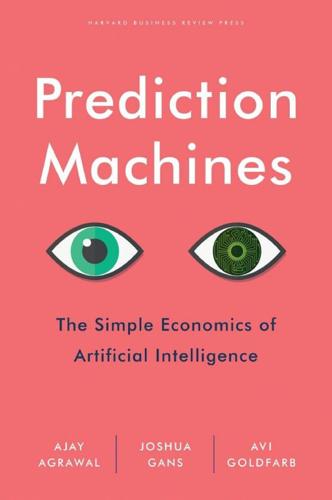
Prediction Machines: The Simple Economics of Artificial Intelligence
by Ajay Agrawal, Joshua Gans and Avi Goldfarb · 16 Apr 2018 · 345pp · 75,660 words
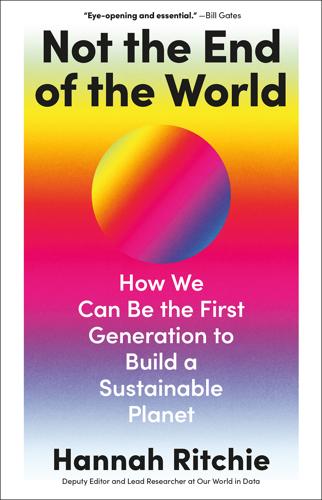
Not the End of the World
by Hannah Ritchie · 9 Jan 2024 · 335pp · 101,992 words
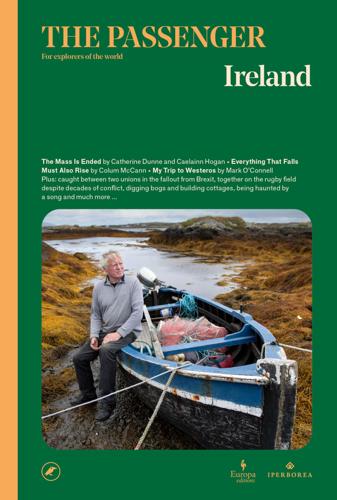
The Passenger
by The Passenger · 27 Dec 2021 · 202pp · 62,397 words
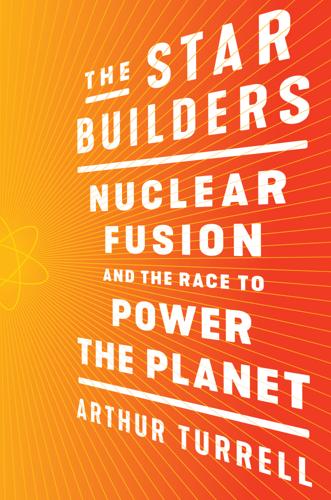
The Star Builders: Nuclear Fusion and the Race to Power the Planet
by Arthur Turrell · 2 Aug 2021 · 297pp · 84,447 words
Adaptive Markets: Financial Evolution at the Speed of Thought
by Andrew W. Lo · 3 Apr 2017 · 733pp · 179,391 words

With a Little Help
by Cory Efram Doctorow, Jonathan Coulton and Russell Galen · 7 Dec 2010 · 549pp · 116,200 words
Human Frontiers: The Future of Big Ideas in an Age of Small Thinking
by Michael Bhaskar · 2 Nov 2021
How to Talk to a Science Denier: Conversations With Flat Earthers, Climate Deniers, and Others Who Defy Reason
by Lee McIntyre · 14 Sep 2021 · 407pp · 108,030 words
Money in the Metaverse: Digital Assets, Online Identities, Spatial Computing and Why Virtual Worlds Mean Real Business
by David G. W. Birch and Victoria Richardson · 28 Apr 2024 · 249pp · 74,201 words
Rationality: What It Is, Why It Seems Scarce, Why It Matters
by Steven Pinker · 14 Oct 2021 · 533pp · 125,495 words
What Would Google Do?
by Jeff Jarvis · 15 Feb 2009 · 299pp · 91,839 words
The Great Disruption: Why the Climate Crisis Will Bring on the End of Shopping and the Birth of a New World
by Paul Gilding · 28 Mar 2011 · 337pp · 103,273 words
Earth Wars: The Battle for Global Resources
by Geoff Hiscock · 23 Apr 2012 · 363pp · 101,082 words
Whole Earth Discipline: An Ecopragmatist Manifesto
by Stewart Brand · 15 Mar 2009 · 422pp · 113,525 words
Mobility: A New Urban Design and Transport Planning Philosophy for a Sustainable Future
by John Whitelegg · 1 Sep 2015 · 224pp · 69,494 words
No Ordinary Disruption: The Four Global Forces Breaking All the Trends
by Richard Dobbs and James Manyika · 12 May 2015 · 389pp · 87,758 words
Saudi America: The Truth About Fracking and How It's Changing the World
by Bethany McLean · 10 Sep 2018
Adventures in the Anthropocene: A Journey to the Heart of the Planet We Made
by Gaia Vince · 19 Oct 2014 · 505pp · 147,916 words
The People's Republic of Walmart: How the World's Biggest Corporations Are Laying the Foundation for Socialism
by Leigh Phillips and Michal Rozworski · 5 Mar 2019 · 202pp · 62,901 words
Green Swans: The Coming Boom in Regenerative Capitalism
by John Elkington · 6 Apr 2020 · 384pp · 93,754 words
What's Wrong With Economics: A Primer for the Perplexed
by Robert Skidelsky · 3 Mar 2020 · 290pp · 76,216 words
The Soil Will Save Us
by Kristin Ohlson · 14 Oct 2014
Automation and the Future of Work
by Aaron Benanav · 3 Nov 2020 · 175pp · 45,815 words
The New Nomads: How the Migration Revolution Is Making the World a Better Place
by Felix Marquardt · 7 Jul 2021 · 250pp · 75,151 words
The Dark Cloud: How the Digital World Is Costing the Earth
by Guillaume Pitron · 14 Jun 2023 · 271pp · 79,355 words
Don't Even Think About It: Why Our Brains Are Wired to Ignore Climate Change
by George Marshall · 18 Aug 2014 · 298pp · 85,386 words
How to Blow Up a Pipeline
by Andreas Malm · 4 Jan 2021 · 156pp · 49,653 words
Making Sense of Chaos: A Better Economics for a Better World
by J. Doyne Farmer · 24 Apr 2024 · 406pp · 114,438 words
May Contain Lies: How Stories, Statistics, and Studies Exploit Our Biases—And What We Can Do About It
by Alex Edmans · 13 May 2024 · 315pp · 87,035 words
Let them eat junk: how capitalism creates hunger and obesity
by Robert Albritton · 31 Mar 2009 · 273pp · 93,419 words
Thank You for Being Late: An Optimist's Guide to Thriving in the Age of Accelerations
by Thomas L. Friedman · 22 Nov 2016 · 602pp · 177,874 words
Stakeholder Capitalism: A Global Economy That Works for Progress, People and Planet
by Klaus Schwab and Peter Vanham · 27 Jan 2021 · 460pp · 107,454 words
Living in a Material World: The Commodity Connection
by Kevin Morrison · 15 Jul 2008 · 311pp · 17,232 words

Straphanger
by Taras Grescoe · 8 Sep 2011 · 428pp · 134,832 words
Ghost Road: Beyond the Driverless Car
by Anthony M. Townsend · 15 Jun 2020 · 362pp · 97,288 words
The War Below: Lithium, Copper, and the Global Battle to Power Our Lives
by Ernest Scheyder · 30 Jan 2024 · 355pp · 133,726 words
Stakeholder Capitalism: A Global Economy That Works for Progress, People and Planet
by Klaus Schwab · 7 Jan 2021 · 460pp · 107,454 words
Open: The Story of Human Progress
by Johan Norberg · 14 Sep 2020 · 505pp · 138,917 words
American Marxism
by Mark R. Levin · 12 Jul 2021 · 314pp · 88,524 words
How to Avoid a Climate Disaster: The Solutions We Have and the Breakthroughs We Need
by Bill Gates · 16 Feb 2021 · 314pp · 75,678 words
Growth: From Microorganisms to Megacities
by Vaclav Smil · 23 Sep 2019
Green Metropolis: Why Living Smaller, Living Closer, and Driving Less Are Thekeys to Sustainability
by David Owen · 16 Sep 2009 · 313pp · 92,907 words

Fodor's Dordogne & the Best of Southwest France With Paris
by Fodor's Travel Publications Inc. · 18 Apr 2011
Rise of the Robots: Technology and the Threat of a Jobless Future
by Martin Ford · 4 May 2015 · 484pp · 104,873 words
The Economics of Enough: How to Run the Economy as if the Future Matters
by Diane Coyle · 21 Feb 2011 · 523pp · 111,615 words
The Plundered Planet: Why We Must--And How We Can--Manage Nature for Global Prosperity
by Paul Collier · 10 May 2010 · 288pp · 76,343 words
Gusher of Lies: The Dangerous Delusions of Energy Independence
by Robert Bryce · 16 Mar 2011 · 415pp · 103,231 words
Adapt: Why Success Always Starts With Failure
by Tim Harford · 1 Jun 2011 · 459pp · 103,153 words
The Corona Crash: How the Pandemic Will Change Capitalism
by Grace Blakeley · 14 Oct 2020 · 82pp · 24,150 words
The End of Growth
by Jeff Rubin · 2 Sep 2013 · 262pp · 83,548 words
The Rational Optimist: How Prosperity Evolves
by Matt Ridley · 17 May 2010 · 462pp · 150,129 words
A Sea in Flames: The Deepwater Horizon Oil Blowout
by Carl Safina · 18 Apr 2011
The Price of Everything: And the Hidden Logic of Value
by Eduardo Porter · 4 Jan 2011 · 353pp · 98,267 words
Triumph of the City: How Our Greatest Invention Makes Us Richer, Smarter, Greener, Healthier, and Happier
by Edward L. Glaeser · 1 Jan 2011 · 598pp · 140,612 words
How Markets Fail: The Logic of Economic Calamities
by John Cassidy · 10 Nov 2009 · 545pp · 137,789 words
An Economist Gets Lunch: New Rules for Everyday Foodies
by Tyler Cowen · 11 Apr 2012 · 364pp · 102,528 words
The New Economics: A Bigger Picture
by David Boyle and Andrew Simms · 14 Jun 2009 · 207pp · 86,639 words
The Evolution of Everything: How New Ideas Emerge
by Matt Ridley · 395pp · 116,675 words
The Best Business Writing 2013
by Dean Starkman · 1 Jan 2013 · 514pp · 152,903 words

Why America Must Not Follow Europe
by Daniel Hannan · 1 Mar 2011 · 31pp · 7,670 words
Walkable City: How Downtown Can Save America, One Step at a Time
by Jeff Speck · 13 Nov 2012 · 342pp · 86,256 words
Fool Me Twice: Fighting the Assault on Science in America
by Shawn Lawrence Otto · 10 Oct 2011 · 692pp · 127,032 words
Postcapitalism: A Guide to Our Future
by Paul Mason · 29 Jul 2015 · 378pp · 110,518 words
Mythology of Work: How Capitalism Persists Despite Itself
by Peter Fleming · 14 Jun 2015 · 320pp · 86,372 words
Business Lessons From a Radical Industrialist
by Ray C. Anderson · 28 Mar 2011 · 412pp · 113,782 words
The Butterfly Defect: How Globalization Creates Systemic Risks, and What to Do About It
by Ian Goldin and Mike Mariathasan · 15 Mar 2014 · 414pp · 101,285 words

Zero-Sum Future: American Power in an Age of Anxiety
by Gideon Rachman · 1 Feb 2011 · 391pp · 102,301 words
The 100-Year Life: Living and Working in an Age of Longevity
by Lynda Gratton and Andrew Scott · 1 Jun 2016 · 344pp · 94,332 words
The Power Surge: Energy, Opportunity, and the Battle for America's Future
by Michael Levi · 28 Apr 2013
Future Files: A Brief History of the Next 50 Years
by Richard Watson · 1 Jan 2008
The Stack: On Software and Sovereignty
by Benjamin H. Bratton · 19 Feb 2016 · 903pp · 235,753 words
The End of Accounting and the Path Forward for Investors and Managers (Wiley Finance)
by Feng Gu · 26 Jun 2016
Superminds: The Surprising Power of People and Computers Thinking Together
by Thomas W. Malone · 14 May 2018 · 344pp · 104,077 words
Apocalypse Never: Why Environmental Alarmism Hurts Us All
by Michael Shellenberger · 28 Jun 2020

The Uninhabitable Earth: Life After Warming
by David Wallace-Wells · 19 Feb 2019 · 343pp · 101,563 words
This Is Not a Drill: An Extinction Rebellion Handbook
by Extinction Rebellion · 12 Jun 2019 · 138pp · 40,525 words
Trumpocalypse: Restoring American Democracy
by David Frum · 25 May 2020 · 319pp · 75,257 words
Falter: Has the Human Game Begun to Play Itself Out?
by Bill McKibben · 15 Apr 2019
There Is No Planet B: A Handbook for the Make or Break Years
by Mike Berners-Lee · 27 Feb 2019
The Growth Delusion: Wealth, Poverty, and the Well-Being of Nations
by David Pilling · 30 Jan 2018 · 264pp · 76,643 words
The Little Book That Builds Wealth: The Knockout Formula for Finding Great Investments
by Pat Dorsey · 1 Mar 2008 · 141pp · 40,979 words
Impact: Reshaping Capitalism to Drive Real Change
by Ronald Cohen · 1 Jul 2020 · 276pp · 59,165 words
The Wisdom of Frugality: Why Less Is More - More or Less
by Emrys Westacott · 14 Apr 2016 · 287pp · 80,050 words
Losing Earth: A Recent History
by Nathaniel Rich · 4 Aug 2018 · 148pp · 45,249 words
The New Map: Energy, Climate, and the Clash of Nations
by Daniel Yergin · 14 Sep 2020

Green and Prosperous Land: A Blueprint for Rescuing the British Countryside
by Dieter Helm · 7 Mar 2019 · 348pp · 102,438 words
Decoding the World: A Roadmap for the Questioner
by Po Bronson · 14 Jul 2020 · 320pp · 95,629 words
Bezonomics: How Amazon Is Changing Our Lives and What the World's Best Companies Are Learning From It
by Brian Dumaine · 11 May 2020 · 411pp · 98,128 words

Artificial Intelligence: A Modern Approach
by Stuart Russell and Peter Norvig · 14 Jul 2019 · 2,466pp · 668,761 words
Reimagining Capitalism in a World on Fire
by Rebecca Henderson · 27 Apr 2020 · 330pp · 99,044 words
The Climate Book: The Facts and the Solutions
by Greta Thunberg · 14 Feb 2023 · 651pp · 162,060 words
Slowdown: The End of the Great Acceleration―and Why It’s Good for the Planet, the Economy, and Our Lives
by Danny Dorling and Kirsten McClure · 18 May 2020 · 459pp · 138,689 words
Climate Change
by Joseph Romm · 3 Dec 2015 · 358pp · 93,969 words
The Ministry for the Future: A Novel
by Kim Stanley Robinson · 5 Oct 2020 · 583pp · 182,990 words

Fancy Bear Goes Phishing: The Dark History of the Information Age, in Five Extraordinary Hacks
by Scott J. Shapiro · 523pp · 154,042 words
How to Spend a Trillion Dollars
by Rowan Hooper · 15 Jan 2020 · 285pp · 86,858 words
The Quest: Energy, Security, and the Remaking of the Modern World
by Daniel Yergin · 14 May 2011 · 1,373pp · 300,577 words
Quality Investing: Owning the Best Companies for the Long Term
by Torkell T. Eide, Lawrence A. Cunningham and Patrick Hargreaves · 5 Jan 2016 · 178pp · 52,637 words
The Ones We've Been Waiting For: How a New Generation of Leaders Will Transform America
by Charlotte Alter · 18 Feb 2020 · 504pp · 129,087 words

The Passenger: Paris
by AA.VV. · 26 Jun 2021 · 199pp · 62,204 words
The Elements of Choice: Why the Way We Decide Matters
by Eric J. Johnson · 12 Oct 2021 · 362pp · 103,087 words
The Capitalist Manifesto
by Johan Norberg · 14 Jun 2023 · 295pp · 87,204 words
What If We Get It Right?: Visions of Climate Futures
by Ayana Elizabeth Johnson · 17 Sep 2024 · 588pp · 160,825 words
These Strange New Minds: How AI Learned to Talk and What It Means
by Christopher Summerfield · 11 Mar 2025 · 412pp · 122,298 words

A New History of the Future in 100 Objects: A Fiction
by Adrian Hon · 5 Oct 2020 · 340pp · 101,675 words
Rethinking Capitalism: Economics and Policy for Sustainable and Inclusive Growth
by Michael Jacobs and Mariana Mazzucato · 31 Jul 2016 · 370pp · 102,823 words
What's Next?: Unconventional Wisdom on the Future of the World Economy
by David Hale and Lyric Hughes Hale · 23 May 2011 · 397pp · 112,034 words

The Controlled Demolition of the American Empire
by Jeff Berwick and Charlie Robinson · 14 Apr 2020 · 491pp · 141,690 words
Cryptoassets: The Innovative Investor's Guide to Bitcoin and Beyond: The Innovative Investor's Guide to Bitcoin and Beyond
by Chris Burniske and Jack Tatar · 19 Oct 2017 · 416pp · 106,532 words
The Rise and Fall of American Growth: The U.S. Standard of Living Since the Civil War (The Princeton Economic History of the Western World)
by Robert J. Gordon · 12 Jan 2016 · 1,104pp · 302,176 words
The Age of Turbulence: Adventures in a New World (Hardback) - Common
by Alan Greenspan · 14 Jun 2007
Our Dollar, Your Problem: An Insider’s View of Seven Turbulent Decades of Global Finance, and the Road Ahead
by Kenneth Rogoff · 27 Feb 2025 · 330pp · 127,791 words

The Dream of Europe: Travels in the Twenty-First Century
by Geert Mak · 27 Oct 2021 · 722pp · 223,701 words

The Brussels Effect: How the European Union Rules the World
by Anu Bradford · 14 Sep 2020 · 696pp · 184,001 words
New Laws of Robotics: Defending Human Expertise in the Age of AI
by Frank Pasquale · 14 May 2020 · 1,172pp · 114,305 words
Wars, Guns, and Votes: Democracy in Dangerous Places
by Paul Collier · 9 Feb 2010 · 264pp · 74,313 words

Nudge: Improving Decisions About Health, Wealth, and Happiness
by Richard H. Thaler and Cass R. Sunstein · 7 Apr 2008 · 304pp · 22,886 words
Naked Economics: Undressing the Dismal Science (Fully Revised and Updated)
by Charles Wheelan · 18 Apr 2010 · 386pp · 122,595 words
Sacred Economics: Money, Gift, and Society in the Age of Transition
by Charles Eisenstein · 11 Jul 2011 · 448pp · 142,946 words
One Billion Americans: The Case for Thinking Bigger
by Matthew Yglesias · 14 Sep 2020
The Second Machine Age: Work, Progress, and Prosperity in a Time of Brilliant Technologies
by Erik Brynjolfsson and Andrew McAfee · 20 Jan 2014 · 339pp · 88,732 words
Good Economics for Hard Times: Better Answers to Our Biggest Problems
by Abhijit V. Banerjee and Esther Duflo · 12 Nov 2019 · 470pp · 148,730 words
Social Democratic America
by Lane Kenworthy · 3 Jan 2014 · 283pp · 73,093 words
Open: The Progressive Case for Free Trade, Immigration, and Global Capital
by Kimberly Clausing · 4 Mar 2019 · 555pp · 80,635 words
The Entrepreneurial State: Debunking Public vs. Private Sector Myths
by Mariana Mazzucato · 1 Jan 2011 · 382pp · 92,138 words
Fortunes of Change: The Rise of the Liberal Rich and the Remaking of America
by David Callahan · 9 Aug 2010
The Lights in the Tunnel
by Martin Ford · 28 May 2011 · 261pp · 10,785 words
The Age of Stagnation: Why Perpetual Growth Is Unattainable and the Global Economy Is in Peril
by Satyajit Das · 9 Feb 2016 · 327pp · 90,542 words
Fault Lines: How Hidden Fractures Still Threaten the World Economy
by Raghuram Rajan · 24 May 2010 · 358pp · 106,729 words
Republic, Lost: How Money Corrupts Congress--And a Plan to Stop It
by Lawrence Lessig · 4 Oct 2011 · 538pp · 121,670 words
Aftershock: The Next Economy and America's Future
by Robert B. Reich · 21 Sep 2010 · 147pp · 45,890 words
The Great Divergence: America's Growing Inequality Crisis and What We Can Do About It
by Timothy Noah · 23 Apr 2012 · 309pp · 91,581 words
Doughnut Economics: Seven Ways to Think Like a 21st-Century Economist
by Kate Raworth · 22 Mar 2017 · 403pp · 111,119 words
The End of Traffic and the Future of Transport: Second Edition
by David Levinson and Kevin Krizek · 17 Aug 2015 · 257pp · 64,285 words
American Made: Why Making Things Will Return Us to Greatness
by Dan Dimicco · 3 Mar 2015 · 219pp · 61,720 words
Pity the Billionaire: The Unexpected Resurgence of the American Right
by Thomas Frank · 16 Aug 2011 · 261pp · 64,977 words
Affluenza: The All-Consuming Epidemic
by John de Graaf, David Wann, Thomas H Naylor and David Horsey · 1 Jan 2001 · 378pp · 102,966 words

Fodor's Normandy, Brittany & the Best of the North With Paris
by Fodor's · 18 Apr 2011
The Populist Explosion: How the Great Recession Transformed American and European Politics
by John B. Judis · 11 Sep 2016 · 177pp · 50,167 words
Tailspin: The People and Forces Behind America's Fifty-Year Fall--And Those Fighting to Reverse It
by Steven Brill · 28 May 2018 · 519pp · 155,332 words
Why We Can't Afford the Rich
by Andrew Sayer · 6 Nov 2014 · 504pp · 143,303 words
Endless Money: The Moral Hazards of Socialism
by William Baker and Addison Wiggin · 2 Nov 2009 · 444pp · 151,136 words
When to Rob a Bank: ...And 131 More Warped Suggestions and Well-Intended Rants
by Steven D. Levitt and Stephen J. Dubner · 4 May 2015 · 306pp · 85,836 words
More: The 10,000-Year Rise of the World Economy
by Philip Coggan · 6 Feb 2020 · 524pp · 155,947 words
Dark Money: The Hidden History of the Billionaires Behind the Rise of the Radical Right
by Jane Mayer · 19 Jan 2016 · 558pp · 168,179 words
The Levelling: What’s Next After Globalization
by Michael O’sullivan · 28 May 2019 · 756pp · 120,818 words
Revolution Française: Emmanuel Macron and the Quest to Reinvent a Nation
by Sophie Pedder · 20 Jun 2018 · 337pp · 101,440 words
India's Long Road
by Vijay Joshi · 21 Feb 2017
The Decadent Society: How We Became the Victims of Our Own Success
by Ross Douthat · 25 Feb 2020 · 324pp · 80,217 words
A Generation of Sociopaths: How the Baby Boomers Betrayed America
by Bruce Cannon Gibney · 7 Mar 2017 · 526pp · 160,601 words
Green Economics: An Introduction to Theory, Policy and Practice
by Molly Scott Cato · 16 Dec 2008
The Economics of Belonging: A Radical Plan to Win Back the Left Behind and Achieve Prosperity for All
by Martin Sandbu · 15 Jun 2020 · 322pp · 84,580 words

The Last President of Europe: Emmanuel Macron's Race to Revive France and Save the World
by William Drozdiak · 27 Apr 2020 · 241pp · 75,417 words
A Pelican Introduction: Basic Income
by Guy Standing · 3 May 2017 · 307pp · 82,680 words
The Wake-Up Call: Why the Pandemic Has Exposed the Weakness of the West, and How to Fix It
by John Micklethwait and Adrian Wooldridge · 1 Sep 2020 · 134pp · 41,085 words
Value of Everything: An Antidote to Chaos The
by Mariana Mazzucato · 25 Apr 2018 · 457pp · 125,329 words
Basic Income And The Left
by henningmeyer · 16 May 2018
The Unknowers: How Strategic Ignorance Rules the World
by Linsey McGoey · 14 Sep 2019
The Divide: A Brief Guide to Global Inequality and Its Solutions
by Jason Hickel · 3 May 2017 · 332pp · 106,197 words
The Deficit Myth: Modern Monetary Theory and the Birth of the People's Economy
by Stephanie Kelton · 8 Jun 2020 · 338pp · 104,684 words

Ten Lessons for a Post-Pandemic World
by Fareed Zakaria · 5 Oct 2020 · 289pp · 86,165 words
The Great Demographic Reversal: Ageing Societies, Waning Inequality, and an Inflation Revival
by Charles Goodhart and Manoj Pradhan · 8 Aug 2020 · 438pp · 84,256 words
How to Fix the Future: Staying Human in the Digital Age
by Andrew Keen · 1 Mar 2018 · 308pp · 85,880 words
Uncomfortably Off: Why the Top 10% of Earners Should Care About Inequality
by Marcos González Hernando and Gerry Mitchell · 23 May 2023
Markets, State, and People: Economics for Public Policy
by Diane Coyle · 14 Jan 2020 · 384pp · 108,414 words
Vulture Capitalism: Corporate Crimes, Backdoor Bailouts, and the Death of Freedom
by Grace Blakeley · 11 Mar 2024 · 371pp · 137,268 words
Essential: How the Pandemic Transformed the Long Fight for Worker Justice
by Jamie K. McCallum · 15 Nov 2022 · 349pp · 99,230 words
Power and Progress: Our Thousand-Year Struggle Over Technology and Prosperity
by Daron Acemoglu and Simon Johnson · 15 May 2023 · 619pp · 177,548 words
Cancelling Billionaires Before They Cancel Us: The Urgent Case for a Wealth Tax
by Linda McQuaig and Neil Brooks · 3 Mar 2026 · 291pp · 83,422 words
The Great Reversal: How America Gave Up on Free Markets
by Thomas Philippon · 29 Oct 2019 · 401pp · 109,892 words
Liberalism at Large: The World According to the Economist
by Alex Zevin · 12 Nov 2019 · 767pp · 208,933 words
The Accidental Theorist: And Other Dispatches From the Dismal Science
by Paul Krugman · 18 Feb 2010 · 162pp · 51,473 words