The Rise and Fall of American Growth: The U.S. Standard of Living Since the Civil War (The Princeton Economic History of the Western World)
by Robert J. Gordon · 12 Jan 2016 · 1,104pp · 302,176 words
157 acres in 1930, still substantial from Bryce’s European perspective.69 In light of Frederick Jackson Turner’s much-discussed 1893 hypothesis of the closing of the frontier, it is somewhat surprising to note, as shown in table 4–2, that substantially more than two-thirds of American farm dwellings in existence in
The Meritocracy Myth
by Stephen J. McNamee · 17 Jul 2013 · 440pp · 108,137 words
schooling was the result of major changes in the structure of occupational opportunities. With continuing industrialization, technological change, the rise of large corporations, and the closing of the frontier, by the end of the nineteenth century opportunities for becoming a self-made man had declined precipitously (see chapter 7). America was no longer a
The Better Angels of Our Nature: Why Violence Has Declined
by Steven Pinker · 24 Sep 2012 · 1,351pp · 385,579 words
Council UNESCO motto UNESCO Trafficking Statistics Project UNICEF Child Survival Revolution and violence against women United States: American Revolution armed forces of capital punishment in closing of the frontier and Cold War, see Cold War culture war in deaths in decivilization in 1960s, demographics of geographical distribution of homicides in as great power homicide
Capitalism in America: A History
by Adrian Wooldridge and Alan Greenspan · 15 Oct 2018 · 585pp · 151,239 words
world of giant corporations. It needed instead a complete constitutional revolution—a powerful prime minister on the British model supported by vigorous party discipline. THE CLOSING OF THE FRONTIER The development of a European-style elite on the East Coast coincided with the closing of the American frontier in the West. The open frontier
…
frontier had gone, and with its going had closed the first period of American history.30 Turner overstated his case. Productivity growth accelerated after the closing of the frontier: indeed the completion of America’s internal market, with the integration of the West Coast, made it easier to conquer new economic frontiers. America remained
…
infinite possibility to a land of limits and trade-offs. Bryan was the obvious man to give expression to this new America, limited by the closing of the frontier, topped by a new ruling class, and roiling with discontent. Nobody was better at proclaiming, “I’m mad as hell and I’m not going
…
a distance, to seek a fortune or make a name.”3 Though Frederick Jackson Turner worried that America’s pioneer spirit had ended with the closing of the frontier in 1893, the country’s enthusiasm for mobility continued unabated. The United States has rightly regarded itself as a land of entrepreneurs, where it is
…
, 173, 178, 325 Clifford, Clark, 277 Clifton, Robert, 116 climate, 33–34 Clinton, Bill, 331–32, 343, 344, 346, 367, 372, 406 Clinton, Hillary, 415 closing of the frontier, 179–81 Club of Rome, 300 coal, 10, 19, 49, 51, 55, 88, 127–28, 173, 229 Coca-Cola, 91, 215 Cody, William F., 110
…
Sidney, 178 Weber, Max, 22 WebMD, 403 Welch, Jack, 335–36, 391–92 “welfare capitalism,” 208–9 Wellington, Arthur, 137 Wells, David, 97 West, the closing of the frontier, 179–81 rise of (westward expansion), 110–22 Western Union, 138, 147–48 Westinghouse, 280, 335, 359 Westinghouse, George, 110, 203 whaling, 36–37 wheat
The State and the Stork: The Population Debate and Policy Making in US History
by Derek S. Hoff · 30 May 2012
unique demography—and anxieties about it—on the American fabric. Most famously, University of Wisconsin historian Frederick Jackson Turner argued in 1893 that the recent “closing” of the frontier threatened American democracy; recourse to the cheap lands in the lightly populated West had provided an egalitarian safety valve to the teeming populations of the
…
decades before the Civil War. Apprehension of enlargement did not, as is often supposed, develop merely in response to the “closing of the frontier” at the end of the nineteenth century. True, the closing of the frontier led many white Americans to worry that their nation had “filled up”—and, given the era’s mass immigration from Southern
…
nation and numbers, pouring into the West, and rushing headlong into the hurly-burly of industrial capitalism, republican anxieties about population growth remained. Indeed, the “closing of the frontier” in the late nineteenth century seemed to confirm the old fear that America lived on borrowed demographic time. Yet in these same years, the birth
…
animated the sectional crisis. Yet many scholars date the arrival of widespread population anxiety to the end of the nineteenth century. They suggest that the “closing” of the frontier (after the Census of 1890, the Census Bureau noted the absence of a clear geographic line of westward settlement), economic depression in the 1890s, accelerating
…
Although this narrative exaggerates population optimism in the nineteenth century, it holds some validity. As David Wrobel chronicles in The End of American Exceptionalism, the closing of the frontier provided intellectual undercurrents that buttressed American Malthusianism. Hence Richard T. Ely, arguably America’s most famous economist at the turn of the century and one
…
closer look at the era’s political-economic expertise reveals that economists disagreed fervently on population matters—in short, many seemed to have missed the closing-of-the-frontier memo. By the turn of the twentieth century, economists divided into pro- and anti-Malthusian camps largely along political lines, with conservatives generally expressing reservations
…
anti–population growth thought. Progressive intellectuals such as Walter Weyl, one of the founders of the New Republic, were captivated by the metaphor of the closing of the frontier and utilized Malthusian arguments to call for new frontiers of social democracy.80 Further, postfrontier concerns with the possible exhaustion of America’s natural resources
…
with, and did not foster, orthodox Malthusianism. The popular culture had expressed Malthusian anxieties, such as the trope of the heroic untamed cowboy, since the “closing of the frontier,”89 but the eugenics movement, which peaked in the 1910s and 1920s, worried more about population quality than quantity and integrated various opinions of Malthus
…
Address, many thoughtful Americans feared permanent scarcity.7 On the one hand, these fears extended the land-based sense of scarcity that matured after the “closing of the frontier” in the 1890s, animated progressive-era debates over the nation’s stock of natural resources, and reappeared in the 1920s discussion about the need to
…
details of KeynesHansen theory, they latched onto the idea that the US had entered a new economic era in which the ill effects of the closing of the frontier required unprecedented levels of state intervention.121 Sen. Hugo Black (D-Ala.) put it this way in 1937 in support of minimum-wage and maximum
…
smoothly with support for the cessation of aggregate population growth. To begin with, population experts and New Dealers thought about migration in terms of the closing of the frontier. Malthusian fears subsided somewhat during the 1930s, given the prospect of population decline, but the sense of having arrived at a new era of diminishing
…
. And the very idea of moving people around the map of the United States like a chessboard exposed a sense of national maturity. If the closing of the frontier had signaled the end of supposed rugged economic individualism, population redistribution was state action designed to replace the Turnerian safety valve afforded by the frontier
…
twentieth century, liberal economists resisted the Malthusianism expressed by the Gilded Age’s conservative theorists and by a popular culture recoiling at the so-called closing of the frontier, and yet, by the 1920s, an expert consensus emerged that the nation’s optimum population would be lower than its current one. In the 1930s
The Abandonment of the West
by Michael Kimmage · 21 Apr 2020 · 378pp · 121,495 words
of American foreign policy. The historian Frederick Jackson Turner indicated this obliquely in the lecture he gave in Chicago during the fair. He noted the closing of the frontier: “And now, four centuries from the discovery of America, the frontier was gone, and with its going has closed the first period of American history
The Tyranny of Merit: What’s Become of the Common Good?
by Michael J. Sandel · 9 Sep 2020 · 493pp · 98,982 words
opportunity, now threatened by “the development of a hereditary aristocracy of wealth.” He cited Frederick Jackson Turner, the Harvard historian who had argued that the closing of the frontier cut off the traditional avenue of American opportunity—the ability to move west, to cultivate land, and to rise through effort and ingenuity unshackled by

Ellul, Jacques-The Technological Society-Vintage Books (1964)
by Unknown · 7 Jun 2012
because they were applying their technical instru ment, in which generous or sentimental motives had no place. The technicians as technicians told us that the closing of the frontier was disastrous; as men, they might have approved of the action for ideological reasons. It is not at all certain that technicians are still capable
The End of Work
by Jeremy Rifkin · 28 Dec 1994 · 372pp · 152 words
the market. From the first century of American nationhood, these two powerful philosophical orientations worked hand-in-hand to conquer a continent. With the official closing of the frontier in 1890, the millennial and utilitarian energies that had so distinguished the frontier character were redirected to a new frontier-modem science and technology. The
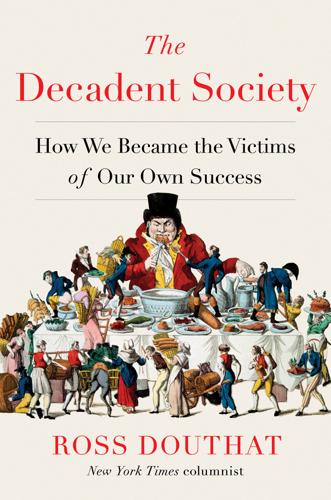
The Decadent Society: How We Became the Victims of Our Own Success
by Ross Douthat · 25 Feb 2020 · 324pp · 80,217 words
a great variety of morbid symptoms appear. —Antonio Gramsci pity this busy monster, manunkind, not. Progress is a comfortable disease… —e. e. cummings INTRODUCTION The Closing of the Frontier The peak of human accomplishment and daring, the greatest single triumph of modern science and government and industry, the most extraordinary endeavor of the American
Money and Government: The Past and Future of Economics
by Robert Skidelsky · 13 Nov 2018
Stuck: How the Privileged and the Propertied Broke the Engine of American Opportunity
by Yoni Appelbaum · 17 Feb 2025 · 412pp · 115,534 words
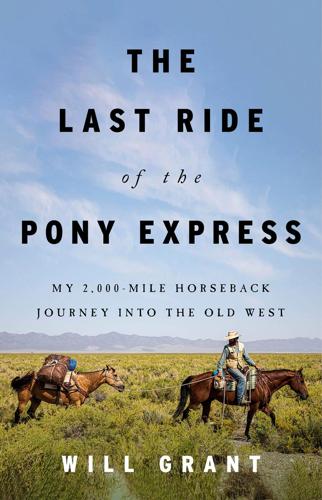
The Last Ride of the Pony Express: My 2,000-Mile Horseback Journey Into the Old West
by Will Grant · 14 Oct 2023 · 246pp · 82,965 words
Time Lord: Sir Sandford Fleming and the Creation of Standard Time
by Clark Blaise · 27 Oct 2000 · 240pp · 75,304 words
The Men Who United the States: America's Explorers, Inventors, Eccentrics and Mavericks, and the Creation of One Nation, Indivisible
by Simon Winchester · 14 Oct 2013 · 501pp · 145,097 words