corporate personhood
description: notion that corporations can have some legal rights, responsibilities and accountability
41 results
Gilded Rage: Elon Musk and the Radicalization of Silicon Valley
by Jacob Silverman · 9 Oct 2025 · 312pp · 103,645 words
didn’t coordinate with or donate directly to a politician’s campaign). That resulted in an explosion of super PACs, as big businesses were granted “corporate personhood” and First Amendment rights that made them even more influential political actors.5 It has become impossible to imagine an American electoral system that isn
We the Corporations: How American Businesses Won Their Civil Rights
by Adam Winkler · 27 Feb 2018 · 581pp · 162,518 words
Deal and Warren courts of the mid-twentieth century that first extended liberty rights to corporations. This long view also illuminates the nuanced role of corporate personhood in the story of corporate rights. Many critics of Citizens United believe that corporations have the same rights as individuals because the Supreme Court defines
…
constitutional amendment to overturn Citizens United is based on this idea, declaring that only human beings are people under the terms of the Constitution. Yet corporate personhood has played only a secondary role in the corporate rights movement. While the Supreme Court has on occasion said that corporations are people, the justices
…
members. This alternative way of thinking about the corporation has paved the way for the steady expansion of corporate rights. Indeed, as we will see, corporate personhood has traditionally—and surprisingly—been used to justify limits on the rights of corporations. * * * CORPORATIONS AND THE CONSTITUTION are more intimately linked than one
…
centuries. Over the course of that history, the corporationalists would prove to be far more successful. Another issue on which corporationalists and populists disagreed was corporate personhood. From the start, the Supreme Court has wrestled with whether corporations should be considered “people” under the Constitution and what exactly that might mean.
…
that corporations are not people under the language of the Constitution and do not have the rights of people. Yet, as we will see, corporate personhood has played only a small role in the expansion of constitutional rights to corporations. While the Supreme Court has said from time to time that
…
obscuring and hiding the corporate person rather than exalting it. Beginning with Bank of the United States v. Deveaux, and for most of American history, corporate personhood has been deployed in precisely the opposite way from how today’s critics of Citizens United imagine. Counterintutively, it has usually been populist opponents of
…
corporations who have argued in favor of corporate personhood. For them, treating corporations as people was a way to limit the rights of corporations. And many of the most important Supreme Court decisions extending
…
rights to corporations did not rely on corporate personhood at all. More commonly, the Supreme Court rejected the idea that a corporation was an independent, legal person with rights and duties all its
…
own, and instead allowed the corporation to claim the rights of its members. To understand the role of corporate personhood in American constitutional law requires a careful examination of the Bank of the United States case, which was the first Supreme Court case on the
…
of law that Blackstone had explained in his Commentaries: corporations were their own independent legal entities, separate and apart from their members. For Johnson, however, corporate personhood did not mean that corporations had the same constitutional rights as individuals. It meant the opposite. Corporations only had those rights appropriate for such a
…
the personal gratitude of one justice and the warm appreciation of all the others.33 Key’s argument for limiting corporate rights was centered on corporate personhood. “But it is said that you may raise the veil which the corporate name interposes, and see who stand behind it,” said Key, in
…
has largely been a struggle between the disparate poles of personhood and piercing, between populists and corporationalists. Today’s critics of Citizens United often blame corporate personhood for the Supreme Court’s expansive protection of corporate rights. Yet historically, the logic of personhood has usually been employed by populists seeking to narrow
…
rights case, Dartmouth College v. Woodward, decided a decade later. Although some have mistakenly interpreted that language in Dartmouth College to mean that Marshall embraced corporate personhood, in fact he meant the opposite. Marshall was saying that corporations were too ethereal to be the basis for constitutional rights and that, instead, the
…
court’s corporate rights cases hold other surprises too. It was the Taney court, not the Marshall court, that first embraced the concept of corporate personhood. The Taney court justices treated the corporation as if it were a person—that is, as an independent legal entity with rights and responsibilities distinct
…
—piercing the corporate veil to look past the corporate entity and allow companies to exercise the same rights as their members—the Taney court saw corporate personhood as a way to limit the rights of corporations. Moreover, as we will see, the Taney court’s approach to corporate rights would eventually
…
who wish to see the Supreme Court restrict the constitutional rights of corporations, looking back to Webster’s era reveals a potential model. By embracing corporate personhood, rather than piercing the corporate veil, the Taney court imposed boundaries on the rights of corporations. * * * “IT WAS IN THE YEAR 1818 that an
…
from the traditions of corporate law but in this sense at least adhered to the rhetoric of the Revolution.23 Marshall’s opinion flirted with corporate personhood, and it has occasionally been misunderstood to support the idea that corporations are people in the eyes of the law. Corporations, he wrote, were
…
in Dartmouth College as “an artificial being, invisible, intangible, and existing only in contemplation of law,” he was offering a justification for once again rejecting corporate personhood. The artificiality and invisibility of the corporation made it appropriate to look right through the corporation to focus instead on the members.24 The impact
…
that the happiness and well being of every citizen depends on their faithful preservation.” A CORPORATE REFORMER, CHIEF JUSTICE ROGER TANEY EMPLOYED THE PRINCIPLES OF CORPORATE PERSONHOOD TO LIMIT THE RIGHTS OF CORPORATIONS. Taney’s decision in Charles River Bridge Company would eventually be recognized as a historic ruling that expanded competition
…
stock if a corporation went bankrupt, but their personal assets were completely shielded from that corporation’s creditors. Limited liability, then, was a function of corporate personhood. The corporation was its own, independent person in the eyes of the law, and it had legal rights—or, in this instance, legal obligations—wholly
…
first time the Supreme Court ruled explicitly against extending a constitutional right to corporations. And unlike the Marshall court’s corporate rights cases, Earle embraced corporate personhood. Because a corporation was its own legal person, its rights and duties were separate and distinct from those of its members. Corporations had only those
…
rights appropriate for this unique and special type of legal entity, one that already enjoyed special legal privileges, such as limited liability. Corporate personhood served as a limit on the rights of corporations and a basis for distinguishing corporations from ordinary people. The decision was not all bad news
…
was incorporated in South Carolina, its home state, and that, not the citizenship of the Louisville’s members, should control. The court explicitly relied on corporate personhood: a corporation “seems to us to be a person, though an artificial one, inhabiting and belonging to that state, and therefore entitled for the
…
the persistency with which he continues the fight.”18 Although Justice Miller’s opinion in the Slaughter-House Cases had nothing directly to do with corporate personhood, the question raised by the case was related: Did the Fourteenth Amendment create a barrier to laws regulating economic activity? Miller answered in the
…
would provisions thus limited appear in the fundamental law of a great people!” Field supported broad constitutional protections for corporations, but he did not embrace corporate personhood—at least in anything more than a superficial way. While his circuit court opinion insisted that a corporation does count as a “person” under the
…
whose interests were reducible to those of stockholders. Years earlier, in 1869, he had authored an opinion for the Supreme Court that did rest on corporate personhood. Paul v. Virginia was a rehash of Bank of Augusta v. Earle, the Taney court decision holding that corporations were not protected by the
…
premises in the Southern Pacific cases, where he looked to the rights of the corporation’s members. Perhaps he only used the reasoning of corporate personhood in Paul because he was repeating the arguments found in the Taney court precedent. Or perhaps it was that Field’s views about corporate rights
…
, including rights of privacy, abortion, and marriage. Field also spearheaded the recognition of corporate rights to equal protection and due process, although for him corporate personhood was merely a textual hook. Corporations were not really people in the sense of having rights of their own. They had rights merely as a
…
Daniel Webster, and Stephen Field by referring to corporations as “associations of people.” Amidst his confusing and inconsistent language, however, Brown’s logic rested on corporate personhood; that is, like the Taney court, he approached the corporation as an independent legal actor, separate and distinct from the members who composed it. Edwin
…
court did something the Supreme Court of the United States has only occasionally done in constitutional law cases involving corporations by embracing the principle of corporate personhood. The court said that the identity and rights of the Park’s owner do not determine the scope and nature of the corporation’s
…
months, displayed signs testifying to the role they believed cases like Citizens United played in distorting democracy: “Corporations Are Not People,” “Democracy Not Corporatization,” “Revoke Corporate Personhood.” They claimed to speak for the “99 percent,” the broad mass of Americans who lacked the money and influence to fight against big business and
…
notable gaffes of his campaign, Romney replied, “Corporations are people, my friend.”1 Romney’s comment, caught on video, touched off a storm of criticism. Corporate personhood had become a controversial catchphrase since Citizens United, and Romney was accused of repeating the same mistake as the Supreme Court by suggesting that corporations
…
that when it came to policymaking one should ignore the corporate entity and focus instead on the people behind it. Dating back to Blackstone, however, corporate personhood in the law has traditionally meant that corporations are independent entities whose rights and obligations are separate and distinct from the rights and obligations of
…
the rights of corporations, which deployed those rights to overturn a regulation of their business practices. Yet, as with many previous Supreme Court cases invoking corporate personhood, the underlying logic of Hobby Lobby reflected instead piercing the corporate veil. “A corporation is simply a form of organization used by human beings to
…
corporate form and focused instead on the people who made up the corporation. Properly understood, Alito’s decision, like Citizens United, represented a rejection of corporate personhood. Instead of treating the corporation as an independent legal entity, with rights separate from those of its members—as the Taney court did in the
…
be made on both sides—at least the court would be focused on the corporation, not the Greens.12 Over the course of American history, corporate personhood has not led to expansive constitutional protections. In fact, when the Supreme Court has broken from its usual pattern and treated a corporation as
…
the corporation on the rights of the people associated together within it. While calling corporations “people,” the justices have usually rejected the core principle of corporate personhood: the independent legal standing of the corporation, with rights and duties separate and distinct from those of its members. Lawyers and historians have extensively studied
…
and immunities of citizens under the comity clause of Article IV of the Constitution. 1853: Marshall v. Baltimore & Ohio Railroad Company – The Taney court uses corporate personhood to make corporations more easily amenable to suit in federal court. PROPERTY BUT NOT LIBERTY RIGHTS, 1861–1935 1882: San Mateo County v. Southern Pacific
…
e.g., Margaret M. Blair and Elizabeth Pollman, “The Derivative Nature of Corporate Constitutional Rights,” 56 William & Mary Law Review 1673 (2015); Elizabeth Pollman, “Reconceiving Corporate Personhood,” 2011 Utah Law Review 1629; Reuven S. Avi-Yonah, “Citizens United and the Corporate Form,” 2010 Wisconsin Law Review 999; Darrell A. H. Miller, “Guns
…
A Framework for Understanding Corporate Constitutional Rights,” 64 UCLA Law Review 452 (2017); Anne Tucker, “Flawed Assumptions: A Corporate Law Analysis of Free Speech and Corporate Personhood in Citizens United,” 61 Case Western Reserve Law Review 497 (2010); Monica Youn, “First Amendment Fault Lines and the Citizens United Decision,” 5 Harvard Law
…
Others,” 30 Constitutional Commentary 335 (2015); David H. Gans and Douglas T. Kendall, “A Capitalist Joker: The Strange Origins, Disturbing Past, and Uncertain Future of Corporate Personhood in American Law,” 44 John Marshall Law Review 643 (2010); Jeff Clements, Corporations Are Not People: Reclaiming Democracy From Big Money and Global Corporations (2d
…
American Political Thought, 54. 58. See David H. Gans and Douglas T. Kendall, “A Capitalist Joker: The Strange Origins, Disturbing Past, and Uncertain Future of Corporate Personhood in American Law,” 44 John Marshall Law Review 643 (2010). 59. See Louisville, Cincinnati & Charleston Railroad Company v. Letson, 43 U.S. 497 (1844).
…
“Corporate Criminal Accountability: A Brief History and an Observation,” 60 Washington University Law Quarterly 393 (1982); Daniel Lipton, “Corporate Capacity for Crime and Politics: Defining Corporate Personhood at the Turn of the 20th Century,” 96 Virginia Law Review 1911, 1954 (2010); William Blackstone, Commentaries on the Laws of England, ed. Robert Malcolm
…
Historical Background of Corporate Legal Personality,” 35 Yale Law Journal 655 (1926); P. Q. Johnson, “Law and Legal Theory in the History of Corporate Responsibility: Corporate Personhood,” 35 Seattle University Law Review 1135 (2012); New York Central & Hudson River Railroad Co. v. United States, 212 U.S. 481 (1909). 30. See
…
federal-judge-jim-browning.htm. 16. See Swepi, LP v. Mora County, 81 F.Supp.3d 1075 (D. N.M. 2015). CREDITS Frontspiece: “We the Corporate Personhood,” by Brian Corr. Originally for The Subjective Theatre Company. Page xii: Courtesy of New York City Parks Photo / Art & Antiquities. Page 1: Private Collection ©
Ways of Being: Beyond Human Intelligence
by James Bridle · 6 Apr 2022 · 502pp · 132,062 words
a modern corporation. For this ‘corporate AI’, pleasure is growth and profitability, and pain is lawsuits and drops in shareholder value. Corporate speech is protected, corporate personhood recognized, and corporate desires are given freedom, legitimacy and sometimes violent force by international trade laws, state regulation – or lack thereof – and the norms and
Throwing Rocks at the Google Bus: How Growth Became the Enemy of Prosperity
by Douglas Rushkoff · 1 Mar 2016 · 366pp · 94,209 words
corresponding limitations on campaign donations. And these cases all trace back to the most hard-fought battle of all, won during Lincoln’s era, of corporate “personhood” itself.6 The objective, true to the corporation’s three other core commands, was to give railway corporations the same rights to land as that
Occupy
by Noam Chomsky · 2 Jan 1994 · 75pp · 22,220 words
’s vision has already impacted city council proposals, debates and resolutions, such as the case of New York City Council Resolution 1172, which formally opposes corporate personhood and calls for an amendment to the U.S. Constitution to permanently ban it. The resolution creates clear dividing lines between the rights of corporations
…
Occupy Foreclosure Auction Blockade January 27, 2012, In These Times. †† Bailey McCann, “Cities, states pass resolutions against corporate personhood,” January 4, 2012, CivSource. http://civsourceonline.com/2012/01/04/cities-states-pass-resolutions-against-corporate-personhood/ ‡‡ Emily Ramshaw and Jay Root, “A New Rick Perry Shows Up to GOP Debate,” The Texas Tribune, October
…
decent future are not very high. QUESTIONS FROM OCCUPY BOSTON Regarding fixing political dysfunction in this country, what about enacting a Constitutional amendment to abolish corporate personhood or to get corporate money out of politics? These would be very good things to do, but you can’t do this or anything else
…
people to understand what this is about, and what they can do about it, and what the consequences are of not doing anything about it. Corporate personhood is an important case in point, but pay attention to what it is. We should think about it. We’re supposed to worship the U
…
only participant, in the campaign to accelerate the threat. All of those are things that you can do. We should have those proposals. Dealing with corporate personhood is another proposal, but I would suggest that it be broadened to deal with the distortion—the gross distortion—in the concept of person, which
…
couple of days ago, New York City’s City Council, probably under the influence of the Occupy movement, passed a resolution, unanimously I think, against corporate personhood. The resolution establishes that “corporations are not entitled to the entirety of protections or ‘rights’ of natural persons, specifically so that the expenditure of corporate
…
the movement by protecting the right of the 99 percent’s freedom of assembly and right to speak without being violently attacked; and 3) end corporate personhood. The three goals overlap and are interdependent. We are interested in learning what your position is on mainstream filtering, the repression of civil liberties, and
…
. There are a lot of ways to go about overcoming that; some reach as far as organizing for constitutional conventions in order to take away corporate personhood. We’re not anywhere near that. There are a bunch of more short-term things that are possible. We happen to be in a primary
Less Is More: How Degrowth Will Save the World
by Jason Hickel · 12 Aug 2020 · 286pp · 87,168 words
obeying the iron law of capital. Over the past 500 years, an entire infrastructure has been created to facilitate the expansion of capital: limited liability, corporate personhood, stock markets, shareholder value rules, fractional reserve banking, credit ratings – we live in a world that’s increasingly organised around the imperatives of accumulation. From
…
must seek to expand democracy wherever possible. That means kicking big money out of politics; it means radical media reform; strict campaign finance laws; reversing corporate personhood; dismantling monopolies; shifting to co-operative ownership structures; putting workers on company boards; democratising shareholder votes; democratising institutions of global governance; and managing collective resources
Let them eat junk: how capitalism creates hunger and obesity
by Robert Albritton · 31 Mar 2009 · 273pp · 93,419 words
. Economist (2000) “A survey of agriculture and technology”, March 25. Economist (2003) “A survey of food”, December 13. Edwards, J. and Morgan, M. (2004) “Abolish corporate personhood”, [online] <www.reclaimdemocracy.org/personhood/edwards_morgan_corporate.html>. Eisenitz, G. (1997) Slaughterhouse, New York: Prometheus. Ellis, H. (2007) Planet Chicken, London: Sceptre. Ellwood, W
California Burning: The Fall of Pacific Gas and Electric--And What It Means for America's Power Grid
by Katherine Blunt · 29 Aug 2022 · 470pp · 107,074 words
do as they like,” he said. In the United States, where corporations have wielded power since the charter of the British colonies, the concept of corporate personhood is rooted in a United States Supreme Court case heard three decades after the ratification of the Constitution. The 1809 decision, involving Alexander Hamilton’s
…
evolving subject, with two recent Supreme Court cases—Citizens United v. Federal Election Commission and Burwell v. Hobby Lobby Stores—thrusting the controversial idea of corporate personhood into the public consciousness. The idea of corporate liability, meanwhile, is almost as old as PG&E, stemming from a 1909 Supreme Court case involving
…
had crested after the recession and plateaued during the plodding recovery. Citizens United and Hobby Lobby, the Supreme Court cases that took expansive views on corporate personhood, had been decided in the middle of it all, fanning the flames of mistrust. Overturning Citizens United became part of the rallying cry of the
…
show), 162–63 Clinton, Bill, 75 coal, 56 cogeneration, 55, 56 Commonwealth Edison, 39 community choice aggregation, 105 cooperative model, 237–40 corporate liability, 152 corporate personhood, 151–52 CPUC. See California Public Utilities Commission (CPUC) Cutten, Charles, 43 D Dalton, Greg, 162, 163 Dalzell, Tom, 92–93, 104, 113, 114, 115
…
–60, 163–80 alternate fine initially sought and later dropped by prosecutors in, 153, 179–80 closing arguments in, 176–77 corporate liability and, 152 corporate personhood and, 151–52 dismissal motions, filing of, 159–60 Earley addresses charges, 149–51, 153 federal pipeline safety law violations charges, 148, 150 grand jury
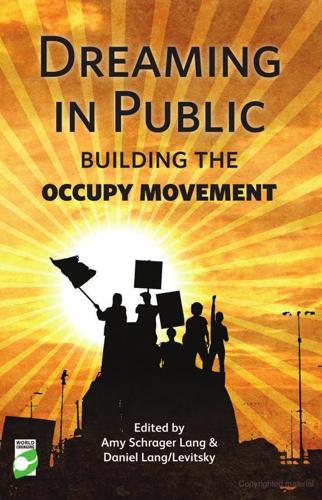
Dreaming in Public: Building the Occupy Movement
by Amy Lang and Daniel Lang/levitsky · 11 Jun 2012 · 537pp · 99,778 words
a separate decision-making structure through which to work, enabling the rest to use GA to consider ‘larger’ ideas, for instance, the constitutional amendment abolishing corporate personhood and overthrowing Citizens United. Regardless, on Friday 28 October a 9/10ths vote (note: not consensus) passed the Spokes Council Model, and there will no
…
Street and then the local Occupy Boston began to gain their legs and solidify their place in the public discourse, so too did an analysis. Corporate personhood, bank bailouts, executive bonuses and general Wall Street excess at the expense of democracy were at the top of the list of grievances. Personal stories
…
protection and other social safety net programs, needs to be the context in which other demands such as financial industry regulation and an end to corporate personhood are placed. Messaging and tactics deployed against direct attacks to the social safety net that hit poor communities the hardest, with that distinctive Occupy analysis
…
, culture, history and economics that moves deeper into a social-change model, one that re-envisions how our society meets the needs of everyone. Ending corporate personhood, for example, will not restore funding to much-needed programs and services. It will not restore dignity and comfort to those left in the cold
Hopes and Prospects
by Noam Chomsky · 1 Jan 2009
as persons of flesh and blood,50 rights since expanded far beyond those of persons, notably by the mislabeled “free trade agreements.” The conception of corporate personhood evolved alongside the shift of power from shareholders to managers, and finally to the doctrine that “the powers of the board of directors…are identical
…
with the powers of the corporation.”51 As corporate personhood and managerial independence were becoming established in law, the control of corporate management of the economy had reached the stage that elicited Woodrow Wilson’s
…
, Christopher, 3, 18–19 “Convergence program” and “Convergence plus,” 180–81, 203 Cooper, Helene, 137 cooperative security location (CSL), 58–59 corporate law, 30–31 corporate personhood debate, 31–35 corporations, nature of, 30–31 Correa, Rafael, 57 “crisis of democracy,” 98 Crocker, Ryan, 132 Cuba, 14, 22, 49–53 economic warfare
…
, 49, 51 Fourteen Points (Woodrow Wilson), 48 Framework Agreement of 1994, 138 France, 80 Franklin, Bruce, 56 Franks, Tommy, 57 Fraser, Doug, 218 free speech, corporate personhood and, 32–34 “free trade,” 6, 37, 78, 93 criticism of the term, 90 drug trade and, 78–79 “free circulation of labor” and, 29
…
Stiglitz, Joseph, 86, 220 Stimson, Henry, 118 Story, Joseph, 19 STRATCOM, 165–66 structural adjustment, 106 Suharto, 43 Summers, Lawrence, 219–21 Supreme Court, 34 corporate personhood and, 31–35 Syria, 139, 144, 239 Iraq and, 125–26, 239 Obama and, 239, 249 U.S. raid of, 239 Taiwan, 9 Talabani, Jalal
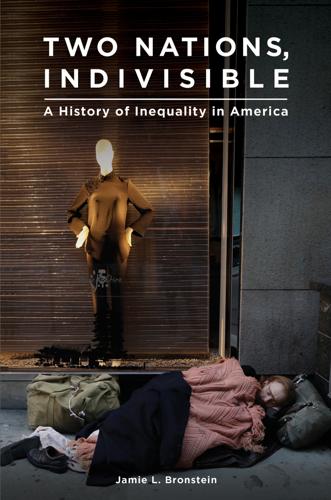
Two Nations, Indivisible: A History of Inequality in America: A History of Inequality in America
by Jamie Bronstein · 29 Oct 2016 · 332pp · 89,668 words
Team Human
by Douglas Rushkoff · 22 Jan 2019 · 196pp · 54,339 words
A Hacker's Mind: How the Powerful Bend Society's Rules, and How to Bend Them Back
by Bruce Schneier · 7 Feb 2023 · 306pp · 82,909 words
Behave: The Biology of Humans at Our Best and Worst
by Robert M. Sapolsky · 1 May 2017 · 1,261pp · 294,715 words
The Hidden Globe: How Wealth Hacks the World
by Atossa Araxia Abrahamian · 7 Oct 2024 · 336pp · 104,899 words
The Age of Surveillance Capitalism
by Shoshana Zuboff · 15 Jan 2019 · 918pp · 257,605 words
To Serve God and Wal-Mart: The Making of Christian Free Enterprise
by Bethany Moreton · 15 May 2009 · 391pp · 22,799 words
The Corporation: The Pathological Pursuit of Profit and Power
by Joel Bakan · 1 Jan 2003
Literary Theory for Robots: How Computers Learned to Write
by Dennis Yi Tenen · 6 Feb 2024 · 169pp · 41,887 words
Freedom
by Daniel Suarez · 17 Dec 2009 · 427pp · 112,549 words
Who Rules the World?
by Noam Chomsky
The Democracy Project: A History, a Crisis, a Movement
by David Graeber · 13 Aug 2012 · 284pp · 92,387 words
Chokepoint Capitalism
by Rebecca Giblin and Cory Doctorow · 26 Sep 2022 · 396pp · 113,613 words
Cloudmoney: Cash, Cards, Crypto, and the War for Our Wallets
by Brett Scott · 4 Jul 2022 · 308pp · 85,850 words
Republic, Lost: How Money Corrupts Congress--And a Plan to Stop It
by Lawrence Lessig · 4 Oct 2011 · 538pp · 121,670 words
Capitalism 3.0: A Guide to Reclaiming the Commons
by Peter Barnes · 29 Sep 2006 · 207pp · 52,716 words
Days of Destruction, Days of Revolt
by Chris Hedges and Joe Sacco · 7 Apr 2014 · 326pp · 88,905 words
What to Think About Machines That Think: Today's Leading Thinkers on the Age of Machine Intelligence
by John Brockman · 5 Oct 2015 · 481pp · 125,946 words
Stacy Mitchell
by Big-Box Swindle The True Cost of Mega-Retailers and the Fight for America's Independent Businesses (2006)
Palo Alto: A History of California, Capitalism, and the World
by Malcolm Harris · 14 Feb 2023 · 864pp · 272,918 words
Making the Future: The Unipolar Imperial Moment
by Noam Chomsky · 15 Mar 2010 · 258pp · 63,367 words
The Cigarette: A Political History
by Sarah Milov · 1 Oct 2019
A Game as Old as Empire: The Secret World of Economic Hit Men and the Web of Global Corruption
by Steven Hiatt; John Perkins · 1 Jan 2006 · 497pp · 123,718 words
Owning the Sun
by Alexander Zaitchik · 7 Jan 2022 · 341pp · 98,954 words
The Curse of Bigness: Antitrust in the New Gilded Age
by Tim Wu · 14 Jun 2018 · 128pp · 38,847 words
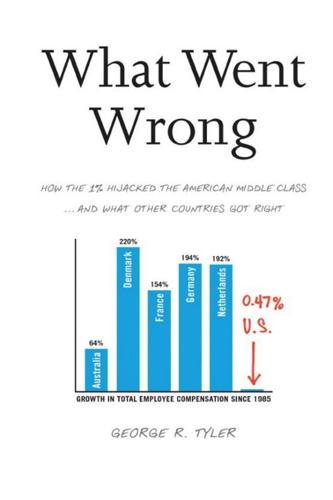
What Went Wrong: How the 1% Hijacked the American Middle Class . . . And What Other Countries Got Right
by George R. Tyler · 15 Jul 2013 · 772pp · 203,182 words
A Generation of Sociopaths: How the Baby Boomers Betrayed America
by Bruce Cannon Gibney · 7 Mar 2017 · 526pp · 160,601 words
The Ones We've Been Waiting For: How a New Generation of Leaders Will Transform America
by Charlotte Alter · 18 Feb 2020 · 504pp · 129,087 words
The View From Flyover Country: Dispatches From the Forgotten America
by Sarah Kendzior · 24 Apr 2015 · 172pp · 48,747 words
Power Systems: Conversations on Global Democratic Uprisings and the New Challenges to U.S. Empire
by Noam Chomsky and David Barsamian · 1 Nov 2012
Rage Inside the Machine: The Prejudice of Algorithms, and How to Stop the Internet Making Bigots of Us All
by Robert Elliott Smith · 26 Jun 2019 · 370pp · 107,983 words