Iain M Banks - The Culture complete works
by Iain M. Banks · 5,095pp · 1,429,463 words
every scientific/technological stage over the following two millennia, the Book of Truth called it right, whether it was on electromagnetism, radioactivity, atomic theory, the cosmic microwave background, hyperspaciality, the existence of aliens or the patternings of the energy grid that lay between the nested universes. The language was even quite clear, too
Space Chronicles: Facing the Ultimate Frontier
by Neil Degrasse Tyson and Avis Lang · 27 Feb 2012 · 476pp · 118,381 words
Telephone Laboratories by the physicists Arno Penzias and Robert Wilson. The signal from this heat is an omnipresent, omnidirectional ocean of light—often called the cosmic microwave background—that today registers about 2.7 degrees on the “absolute” temperature scale and is dominated by microwaves (though it radiates at all wavelengths). This discovery
…
of discovery does not require that you understand, either in advance or after the fact, what you’ve discovered. That’s what happened with the cosmic microwave background. It also happened with gamma-ray bursts. Mysterious, seemingly random explosions of high-energy gamma rays scattered across the sky were first detected in the
…
when gravitational events in the universe—collisions, explosions, collapsed stars—are routinely observed. In principle, we might one day see beyond the opaque wall of cosmic microwave background radiation to the Big Bang itself. Like Magellan’s crew, who first circumnavigated Earth and saw the limits of the globe, we would then have
…
was launched in 2001, reached the Sun–Earth L2 in a couple of months and is still librating there, having busily taken data on the cosmic microwave background—the omnipresent signature of the Big Bang. And having set aside a mere 10 percent of its total fuel, the WMAP satellite nevertheless has enough
…
–11 Cook, James, 160 Cooperative Research and Development Agreements (CRDAs), 303–8 Copernican principle, 34, 36 Copernicus, Nicolaus, 34, 97, 115, 118 Corey, Cyrus, 212 cosmic microwave background, 92, 94–95, 176 cosmic perspective, 258, 259–61 cosmochemistry, 30 Cosmos (TV show), 256 Cosmos 1 spacecraft, 166, 170 Cosmos 954 satellite, 168 Cronkite
…
US rivalry with, 5–6, 59, 79, 87, 121–27, 133, 192, 219 see also Sputnik space, space exploration: colonization of, 57, 60, 102–3 cosmic microwave background in, 92, 94–95 cross-discipline endeavor in, 24–25, 230 culture and, 72–74, 147–48, 210–11 early attitudes toward, 217–18 economic
The Grand Design
by Stephen Hawking and Leonard Mlodinow · 14 Jun 2010 · 124pp · 40,697 words
first direct observations supporting the idea didn’t come until 1965, with the discovery that there is a faint background of microwaves throughout space. This cosmic microwave background radiation, or CMBR, is the same as that in your microwave oven, but much less powerful. You can observe the CMBR yourself by tuning your
…
only a few millimeters across. Today the universe is vastly larger and cooler, but we can observe the remnants of that early period in the cosmic microwave background radiation that permeates all space. Black hole • a region of space-time that, due to its immense gravitational force, is cut off from the rest
Accessory to War: The Unspoken Alliance Between Astrophysics and the Military
by Neil Degrasse Tyson and Avis Lang · 10 Sep 2018 · 745pp · 207,187 words
lamp and, if its bulb is incandescent, infrared light as well. Meanwhile, across the universe, an ancient, persistent, pervasive sea of microwave radiation forms the cosmic microwave background, a legacy of the Big Bang. Most celestial goings-on emit light in multiple wavelengths simultaneously. For example, the explosion of a massive star—a
…
or Herschel. Some things, such as stellar nurseries, glow brilliantly in infrared but are almost completely dark in the visible range. So, too, is the cosmic microwave background. Yet in spite of all the mind-blowing discoveries made in invisible wavelengths since the end of World War II, visible-light detectors still yield
…
star; a vast intergalactic void that is helping to propel our galaxy through space by repelling it; an as-yet-unexplained cool region in the cosmic microwave background (imprint from the Big Bang) that may offer the first evidence of the multiverse. They’ve found a large, dim, relatively nearby spheroidal galaxy, similar
…
-1) satellites, 204–5, 228, 500n Corporation for Public Broadcasting, 289 Cosgrove, Denis, 89 Cosimo II de’ Medici, 53, 442–43n Cosmic Discovery (Harwit), 151 cosmic microwave background, 171, 199, 399 cosmic rays, 6, 214, 218 counterspace, 236, 237, 322, 373, 393–94, 478–79nn, 531n Counterspace Operations: Air Force Doctrine Document, 322
From eternity to here: the quest for the ultimate theory of time
by Sean M. Carroll · 15 Jan 2010 · 634pp · 185,116 words
nucleosynthesis.” We can observe the abundance of such elements today and obtain spectacular agreement with the predictions of the Big Bang model. We also observe cosmic microwave background radiation. The early universe was hot as well as dense, and hot things give off radiation. The theory behind night-vision goggles is that human
…
average out the local idiosyncrasies, on very large scales the universe looks pretty much the same everywhere. Nowhere is this more evident than in the cosmic microwave background. Every direction we look in the sky, we see microwave background radiation that looks exactly like that from an object glowing serenely at some fixed
…
fluctuations are called anisotropies—tiny departures from the otherwise perfectly smooth temperature of the background radiation in every direction. Figure 8: Temperature anisotropies in the cosmic microwave background, as measured by NASA’s Wilkinson Microwave Anisotropy Probe. Dark regions are slightly colder than average, light regions are slightly hotter than average. The differences
…
universe is expanding or contracting: It represents an increase in entropy. So the relative smoothness of the early universe, illustrated in the image of the cosmic microwave background, reflects the very low entropy of those early times. THE UNIVERSE IS NOT STEADY The Big Bang model seems like a fairly natural picture, once
…
at an event in the past.” When we try to reconstruct the history of the universe, it’s tempting to look at (for example) the cosmic microwave background and say, “I can see what the universe was like almost 14 billion years ago; I don’t have to appeal to any fancy Past
…
Hypothesis to reason my way into drawing any conclusions.” That’s not right. When we look at the cosmic microwave background (or light from any other distant source, or a photograph of any purported past event), we’re not looking at the past. We’re observing
…
objects around them than they are losing energy from Hawking radiation. That would be true even if the only external source of energy were the cosmic microwave background, at a temperature of about 3 Kelvin. In order for a black hole to be hotter than the microwave background is today, it would have
…
same number and kind of particles would come in and go out, and in the aggregate they would be basically indistinguishable. (The smoothness of the cosmic microwave background convinces us that the uniformity of our universe extends out to the boundary of our patch, even if we’re not sure how far it
…
(discussed in the next chapter) must be true; astronomers tended to be more cautious. Today, this belief is even more common, as evidence from the cosmic microwave background has shown that the small variations in density from place to place in the early universe match very well with what inflation would predict. But
…
quite low. If someone asked you what the “temperature of the universe” is right now, you might say 2.7 Kelvin, the temperature of the cosmic microwave background radiation. That’s pretty cold; 0 Kelvin is the lowest possible temperature, room temperature is about 300 Kelvin, and the lowest temperature ever achieved in
…
to explain about the conditions we observe in our early universe, from the geometry of space to the pattern of density perturbations observed in the cosmic microwave background. Although we do not yet have definitive proof that inflation occurred, it has been arguably the most influential idea in cosmology over the last several
…
about. Completely coincidentally, Guth had gone to a lecture some time earlier by Princeton physicist Robert Dicke, one of the first people to study the cosmic microwave background. Dicke’s lecture, held at a Cornell event called “Einstein Day,” pointed out several loose ends in the conventional cosmological model. One of them was
…
closer (in time) to the Big Bang, so fewer events lie in their past. Consider different points that we observe when we look at the cosmic microwave background on opposite sides of the sky, as shown in Figure 77. The microwave background shows us an image of the moment when the universe became
…
A comes inside the horizon by the time we get to B. Figure 77: The horizon problem. We look at widely separated points on the cosmic microwave background and see that they are at nearly the same temperature. But those points are far outside each other’s horizons; no signal could have ever
…
for what kinds of perturbations in density we should see in the early universe. It’s those primordial perturbations that imprint temperature fluctuations in the cosmic microwave background, and eventually grow into stars, galaxies, and clusters. So far, the kinds of perturbations predicted by inflation match the observations very well.262 It’s
…
technologies, has changed all that; unanticipated wonders have been revealed, from the acceleration of the universe to the snapshot of early times provided by the cosmic microwave background.303 Now it is the turn for ideas to catch up to the reality. We have interesting suggestions from inflation, from quantum cosmology, and from
…
the late universe (today) has frozen out long ago, and we are no longer in equilibrium even when you ignore gravity. (The temperature of the cosmic microwave background is about 3 Kelvin, so if we were in equilibrium, everything around you would be at a temperature of 3 Kelvin.) 235 The speed of
…
energy to make the universe flat. Subsequently, astronomers have been able to measure the curvature directly, by using the pattern of temperature fluctuations in the cosmic microwave background as a kind of giant triangle (Miller et al., 1999; de Bernardis et al., 2000; Spergel et al., 2003). This method indicates strongly that the
…
out not to be necessary—the dark energy has exactly the right amount of energy density to make the universe flat, and observations of the cosmic microwave background strongly indicate that it really is flat (Spergel et al., 2003). But that’s okay, because out of the panic came a clever idea—how
…
. The Blind Watchmaker. New York: W. W. Norton, 1987. de Bernardis, P. et al., BOOMERanG Collaboration. “A Flat Universe from High-Resolution Maps of the Cosmic Microwave Background Radiation.” Nature 404 (2000): 955-59. Dembo, A., and Zeitouni, O. Large Deviations Techniques and Applications. New York: Springer-Verlag, 1998. Deser, S., Jackiw, R
…
and possibilism and white holes atomic clocks atomic nuclei atomic theory autonomous evolution of the universe Avicenna Avogadro’s Number baby universes background radiation. See cosmic microwave background radiation background time Back to the Future (1985) Baker, Nicholson Banks, Tom Bekenstein, Jacob Bekenstein-Hawking entropy Bell, John Bennett, Charles Berlioz, Hector Bernoulli, Daniel
…
conservation of energy Contact (Sagan) continuity108 contracting universe . See also Big Crunch; bouncing-universe cosmology contraction of space coordinate systems Copenhagen interpretation n Copernican Principle cosmic microwave background radiation and the Big Bang and de Sitter space discovery of and the early universe and fluctuations and Hawking radiation and the horizon problem and
…
inflationary cosmology and memory and mixing and possibilism and Principle of Indifference and statistical mechanics and string theory and time asymmetry microwave background radiation. See cosmic microwave background radiation Middle Hypothesis Milky Way galaxy Minkowski, Hermann Minkowski space Minsky, Marvin Misner, Charles Mittag-Leffler, Gösta mixing molecular chaos moments and definition of time
…
state of physical systems and time before Big Bang and uncertainty principle wave function of the universe quarks quartz watches quasars qubit radiation. See also cosmic microwave background radiation, Hawking radiation-ray radiation and anisotropies and the early universe and energy budget of Earth and general relativity matter contrasted with and reconstruction of
Wonders of the Universe
by Brian Cox and Andrew Cohen · 12 Jul 2011
light both day and night. However, some of this hidden light is not quite a featureless glow; the long wavelength universal glow known as the Cosmic Microwave Background (CMB) in fact displays minute variations in its wavelength. The CMB carries with it an image of our universe as it was just after its
…
is now visible to us only in the microwave and radio parts of the spectrum. This faint, long, wavelength universal glow is known as the Cosmic Microwave Background, or CMB, and its discovery in 1964 by Arno Penzias and Robert Wilson was key evidence in proving that the Universe began in a Big
…
see in the most redshifted Hubble Space Telescope data – the formation of the first galaxies – and their seeds are the minute fluctuations visible in the Cosmic Microwave Background Radiation. This detailed picture of the Universe in its infancy was pieced together from data collected over several years by the Wilkinson Microwave Anisotropy Probe
…
reigns supreme, and tiny quantum fluctuations before inflation would have been magnified by the rapid expansion to form the denser regions we observe in the Cosmic Microwave Background spectrum. If inflationary theory is correct, the CMB is therefore a window onto a time in the life of the Universe far earlier than 400
…
the first protons and neutrons which were later to form the nuclei of the first atoms – mostly hydrogen and helium. After the emission of the cosmic microwave background, around 400,000 years after the Big Bang, the pace of events became more sedate. According to current understanding, the Universe will continue to expand
…
Chankillo, Peru 201–3, 201, 202, 203 Chesterton, G.K. 8 Clark, Alvan Graham 231 Clausius, Rudolf 214, 215, 217 cosmic clock 39, 40–1 Cosmic Microwave Background (CMB) 66, 69, 70–1 Cosmos (Sagan) 177 ‘cosmological redshift’ 64–5 Crab Nebula 176, 176, 177, 179, 180, 180, 181, 181, 182 D dark
The Case for Space: How the Revolution in Spaceflight Opens Up a Future of Limitless Possibility
by Robert Zubrin · 30 Apr 2019 · 452pp · 126,310 words
windows blurred or completely blocked by the Earth's atmosphere. These include the WideField InfraRed Space Telescope (WFIRST),3 the Gravitational Wave Surveyor,4 the Cosmic Microwave Background Surveyor,5 the Far InfraRed Surveyor,6 the Lynx X-Ray Surveyor,7 the Habitable Exoplanet Imaging Mission,8 the Origins Space Telescope,9 and
…
theory applied to the universe, 262–63 computers, early, 233–34 constants, role of in physics, 260–61 Coons, Steve, 148 Coppi, Bruno, 176–77 Cosmic Microwave Background Surveyor, 251 cosmic rays, 104, 132, 135, 167, 192, 253, 259, 339 cost-plus contracting, 22–24, 330–31 COTS (Commercial Orbital Transportation Services), 330
Life Is Simple: How Occam's Razor Set Science Free and Shapes the Universe
by Johnjoe McFadden · 27 Sep 2021
convinced that Penzias and Wilson had indeed discovered the microwave remnant of the Big Bang. What most impressed both teams was the smoothness of the cosmic microwave background (CMB), as it was later called. It had, as far as they could tell, exactly the same intensity wherever they looked in the sky. Their
…
their own microwave detector into space, the Planck Space Observatory, and confirmed both the faint ripples and the extraordinary uniformity of the CMB. FIGURE 2: Cosmic microwave background. The CMB is a kind of photograph taken of the universe when it was less than the size of the Milky Way. Its uniformity tells
…
roles in our existence. The first was to help make galaxies. This was something of a puzzle because, as Neil Turok noted (see Introduction), the cosmic microwave background (CMB) is extremely smooth, indicating that at its birth the universe was very simple, being very smooth and rather dull. If it had stayed this
…
to inhabit, it will be the simplest. When inhabitants of these universes, like Robert Wilson and Arno Penzias, peer into the heavens to discover their cosmic microwave background and perceive its incredible smoothness, they, like Neil Turok, will remain baffled at how their universe has managed to do so much from such a
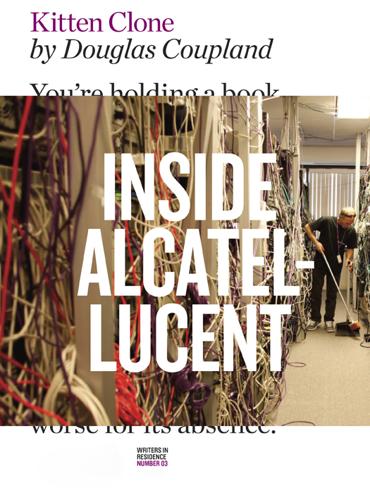
Kitten Clone: Inside Alcatel-Lucent
by Douglas Coupland · 29 Sep 2014 · 124pp · 36,360 words
? Check. In 1964, in Crawford Hill, two Bell Labs scientists, Arno Penzias and Robert Wilson, used a radar antenna called the Holmdel Horn to find cosmic microwave background radiation, evidence to confirm the expanding universe. For this, they won the 1978 Nobel Prize, so don’t be deceived by the unassuming community college

Big Bang
by Simon Singh · 1 Jan 2004 · 492pp · 149,259 words
be coming from all directions because it had existed everywhere in the universe at the moment of recombination. Anybody who could detect this so-called cosmic microwave background radiation (CMB radiation) would prove that the Big Bang really happened. Immortality was waiting for whoever could make the measurement. Unfortunately, Alpher and Herman were
…
was grim, the Big Bang was not yet a lost cause. The model could be salvaged and its credibility boosted if somebody could detect the cosmic microwave background radiation predicted by Alpher and Herman. Unfortunately, nobody could be bothered to look for it. Meanwhile, the situation for those who supported the idea of
…
galaxies existed in the early universe and should therefore be observable only at great distances, which effectively provides a window onto the early universe 5. Cosmic microwave background (CMB) radiation This echo of the Big Bang should still be detectable with sufficiently sensitive equipment 6. Age of the universe The universe is apparently
…
appear to be evenly distributed, because they can be born anywhere and at any time out of the matter created in between old galaxies 5. Cosmic microwave background (CMB) radiation There was no Big Bang so there was no echo, which is why we cannot detect it 6. Age of the universe The
…
assigned to a sub-category of the radio spectrum known as microwaves, which is why this Big Bang echo came to be known as the cosmic microwave background (CMB) radiation. The existence or non-existence of the CMB radiation was critical to the Big Bang versus Steady State debate, and is listed as
…
Ryle; young galaxies (e.g. quasars) are observed, but only at great distances, as they would have existed only just after the Big Bang 5. Cosmic microwave background (CMB) radiation This echo of the Big Bang was predicted by Gamow, Alpher and Herman, and was found by Penzias and Wilson 6. Age of
…
can be born anywhere and at any time out of the matter created in between old galaxies, but this is not backed by observation 5. Cosmic microwave background (CMB) radiation Cannot explain the observed CMB radiation 6. Age of the universe There is no evidence for anything older than 20 billion years, yet
…
prevented any further scattering of the light, which ever since has been sailing through the universe largely unhindered. This light has become known as the cosmic microwave background (CMB) radiation, a sort of luminous echo of the Big Bang, which was predicted by Gamow, Alpher, and Herman, and detected by Penzias and Wilson
…
determined. These stars therefore play an important role in determining the cosmic distance scale. CMB radiation See cosmic microwave background radiation. COBE (Cosmic Background Explorer) A satellite launched in 1989 to make accurate measurements of the cosmic microwave background (CMB) radiation. Its DMR detector provided the first evidence for variations in the CMB radiation, indicative of
…
the early universe that led to galaxy formation. Copernican model The Sun-centred model of the universe, proposed by Nicholas Copernicus in the sixteenth century. cosmic microwave background (CMB) radiation A pervasive ‘sea’ of microwave radiation emanating almost uniformly from every direction in the universe, which dates back to the moment of recombination
…
of about 3,000°C. From that moment, electromagnetic radiation was able to travel through the universe almost unhindered; today we detect it as the cosmic microwave background radiation. redshift An increase in the wavelength of emitted light caused by the emitter’s recessional velocity and the resulting Doppler effect. In cosmology this
…
the head of the Far Infrared Absolute Spectrophotometer team. M.D. Lemonick, Echo of the Big Bang (Princeton University Press, 2003) The story of the cosmic microwave background radiation and the WMAP satellite. F. Hoyle, G.R. Burbidge and J.V. Narlikar, A Different Approach to Cosmology (CUP, 2000) The authors, who remain
…
-4, 42, 46,49,53, 63,70; errors exposed 53-4; planetary phases predicted 63-6; Sun-centred universe 38, 41, 174 cosmic density 228 cosmic microwave background (CMB) radiation 473,476,Table 4,6; detected as noise 430-8; predicted 333-4,336, 430; satellites 453-63, 458, 461,471, 481, 482
The World According to Physics
by Jim Al-Khalili · 10 Mar 2020 · 198pp · 57,703 words

What We Cannot Know: Explorations at the Edge of Knowledge
by Marcus Du Sautoy · 18 May 2016
First Light: Switching on Stars at the Dawn of Time
by Emma Chapman · 23 Feb 2021 · 265pp · 79,944 words
The Fabric of the Cosmos
by Brian Greene · 1 Jan 2003 · 695pp · 219,110 words
The Last Stargazers: The Enduring Story of Astronomy's Vanishing Explorers
by Emily Levesque · 3 Aug 2020
Where Good Ideas Come from: The Natural History of Innovation
by Steven Johnson · 5 Oct 2010 · 298pp · 81,200 words
Neutrino Hunters: The Thrilling Chase for a Ghostly Particle to Unlock the Secrets of the Universe
by Ray Jayawardhana · 10 Dec 2013 · 203pp · 63,257 words
Coming of Age in the Milky Way
by Timothy Ferris · 30 Jun 1988 · 661pp · 169,298 words
A Brief History of Time
by Stephen Hawking · 16 Aug 2011 · 186pp · 64,267 words
The Three-Body Problem (Remembrance of Earth's Past)
by Cixin Liu · 11 Nov 2014 · 420pp · 119,928 words
Lost in Math: How Beauty Leads Physics Astray
by Sabine Hossenfelder · 11 Jun 2018 · 340pp · 91,416 words
A Grand and Bold Thing: An Extraordinary New Map of the Universe Ushering
by Ann K. Finkbeiner · 16 Aug 2010 · 225pp · 65,922 words
Collider
by Paul Halpern · 3 Aug 2009 · 279pp · 75,527 words

Wireless
by Charles Stross · 7 Jul 2009
The Greatest Story Ever Told--So Far
by Lawrence M. Krauss · 21 Mar 2017 · 335pp · 95,280 words
The God Equation: The Quest for a Theory of Everything
by Michio Kaku · 5 Apr 2021 · 157pp · 47,161 words
The Doomsday Calculation: How an Equation That Predicts the Future Is Transforming Everything We Know About Life and the Universe
by William Poundstone · 3 Jun 2019 · 283pp · 81,376 words
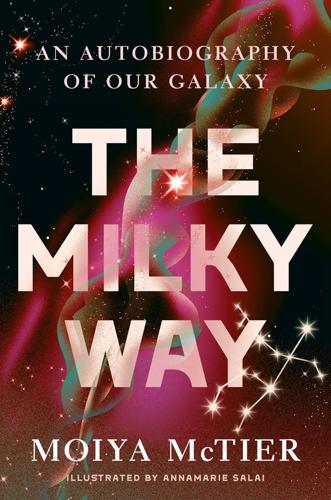
The Milky Way: An Autobiography of Our Galaxy
by Moiya McTier · 14 Aug 2022 · 194pp · 63,798 words
Human Frontiers: The Future of Big Ideas in an Age of Small Thinking
by Michael Bhaskar · 2 Nov 2021
Engineering Infinity
by Jonathan Strahan · 28 Dec 2010 · 360pp · 101,636 words
Beyond Weird
by Philip Ball · 22 Mar 2018 · 277pp · 87,082 words

Origin Story: A Big History of Everything
by David Christian · 21 May 2018 · 334pp · 100,201 words
Diaspora
by Greg Egan · 1 Jan 1997 · 337pp · 93,245 words
Einstein's Fridge: How the Difference Between Hot and Cold Explains the Universe
by Paul Sen · 16 Mar 2021 · 444pp · 111,837 words
How to Spend a Trillion Dollars
by Rowan Hooper · 15 Jan 2020 · 285pp · 86,858 words
Stephen Hawking
by Leonard Mlodinow · 8 Sep 2020 · 209pp · 68,587 words

Quarantine
by Greg Egan · 13 Dec 1994 · 266pp · 78,986 words
Global Catastrophic Risks
by Nick Bostrom and Milan M. Cirkovic · 2 Jul 2008
House of Suns
by Alastair Reynolds · 16 Apr 2008 · 635pp · 186,208 words
How to Make a Spaceship: A Band of Renegades, an Epic Race, and the Birth of Private Spaceflight
by Julian Guthrie · 19 Sep 2016
The Singularity Is Nearer: When We Merge with AI
by Ray Kurzweil · 25 Jun 2024
Einstein's Unfinished Revolution: The Search for What Lies Beyond the Quantum
by Lee Smolin · 31 Mar 2019 · 385pp · 98,015 words

Atlas Obscura: An Explorer's Guide to the World's Hidden Wonders
by Joshua Foer, Dylan Thuras and Ella Morton · 19 Sep 2016 · 1,048pp · 187,324 words
Deep Utopia: Life and Meaning in a Solved World
by Nick Bostrom · 26 Mar 2024 · 547pp · 173,909 words
The Portable Atheist: Essential Readings for the Nonbeliever
by Christopher Hitchens · 14 Jun 2007 · 740pp · 236,681 words
More Everything Forever: AI Overlords, Space Empires, and Silicon Valley's Crusade to Control the Fate of Humanity
by Adam Becker · 14 Jun 2025 · 381pp · 119,533 words
Day We Found the Universe
by Marcia Bartusiak · 6 Apr 2009 · 412pp · 122,952 words

Uncharted: How to Map the Future
by Margaret Heffernan · 20 Feb 2020 · 335pp · 97,468 words